

Okay, I’ll continue then...
To be continued...
FOGO: THE VOLCANO ISLAND
Rising 2,829 meters above sea level, Pico do Fogo ("Peak of Fire") is the highest point in Cape Verde and the country’s only active volcano.
Expressive graffiti (São Filipe)
Our stay on Fogo will unfold in two parts: first, we’ll spend three days in what feels like another planet—exploring the surreal landscapes of the caldera—before wrapping up with a visit to São Filipe, the island’s main town.
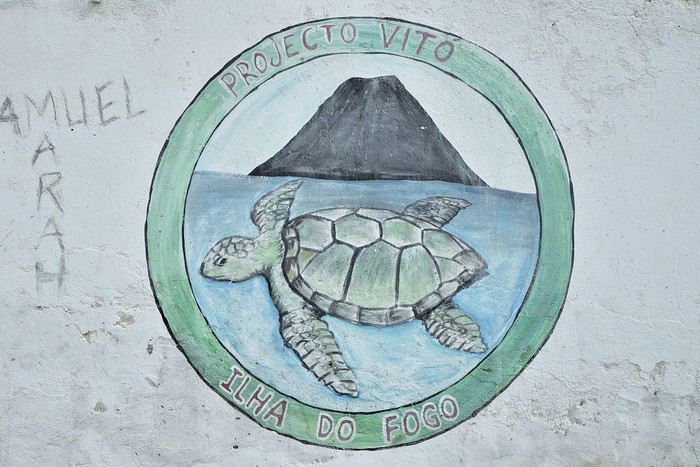 Graffiti (São Filipe)
> Living inside an active volcano!
What makes Pico do Fogo famous is that it’s one of the few active volcanoes in the world that’s still inhabited.
- The 2014 eruption
Inside this nine-kilometer-wide caldera, where craters have sprouted like mushrooms over time and eruptions, about a thousand people lived until November 23, 2014.
That day, the volcano erupted. Lava spread across much of the caldera over the following days and weeks, slowly but surely swallowing every home in its path. Though there were no casualties—thanks to a timely evacuation—the small hamlets there were nearly wiped off the map.
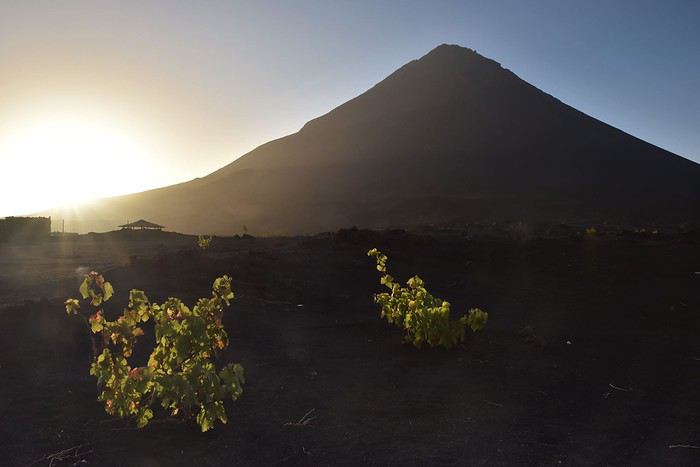 Photo: Pico do Fogo between two eruptions—the devastating 2014 one and the next to come...
But let’s start from the beginning. To reach the crater from São Filipe, you take an aluguer (a shared minibus taxi). Since its daily schedule didn’t align with our flight’s arrival, we had to take a "private" taxi, arranged by José, who runs a guesthouse in the heart of the caldera, right at the foot of the Grand Pico, the main crater. We shared the ride with Leïla, a Moroccan traveler we quickly bonded with and spent the next three days exploring alongside.
First, we drove for an hour on a winding road, climbing from sea-level São Filipe up to the caldera, perched at around 2,000 meters. There, we entered the vast crater via a poorly maintained paved road.
But soon after entering the caldera, the road was cut off by a three- or four-meter-high lava flow. We had to take a detour—a secondary track carved out in the weeks following the eruption.
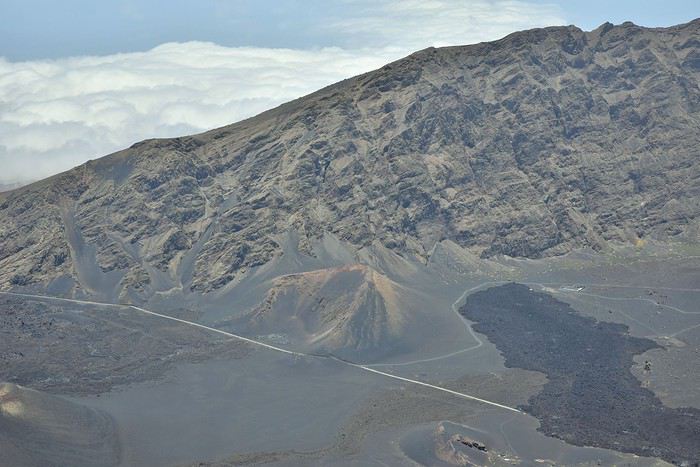 Photo: Arrival in the caldera, seen from the Grand Pico—the white line is the road blocked by lava; the gray one is the detour track.
The landscape was both lunar and mesmerizing, so much so that we barely noticed the 45-minute drive to the village. The place is called Chã das Caldeiras. In theory, that’s the caldera’s name, but in practice, it’s what everyone calls the village—or rather, the hamlets rebuilt at the bottom of the caldera.
When we arrived at Pensão Casa José Doce, where we’d be lucky enough to spend three unforgettable days and nights, we were greeted by Carole. French, she’s also José’s wife, the Cape Verdean owner of the place.
For the guesthouse’s construction and decor, they didn’t have to look far: volcanic rocks and hardened lava pieces were used, their colors varying depending on the eruption’s date.
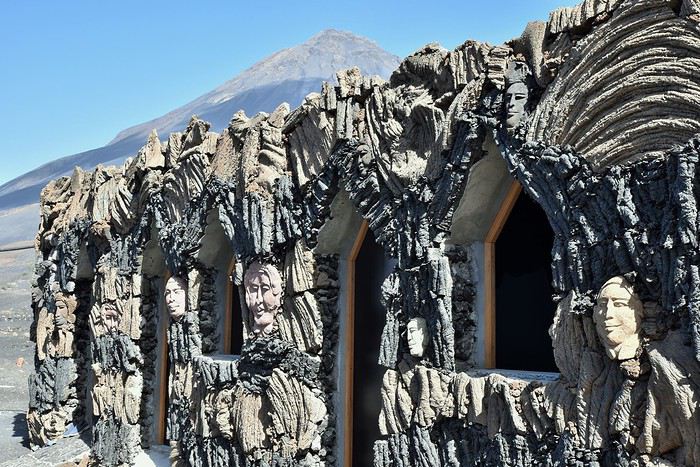
Photo: Pensão Casa José Doce—the guesthouse at the foot of the volcano.
In 2014, José was incredibly lucky: out of the 22 guesthouses in the crater at the time, his was one of only two that weren’t buried under lava. It stopped just ten meters from his walls.
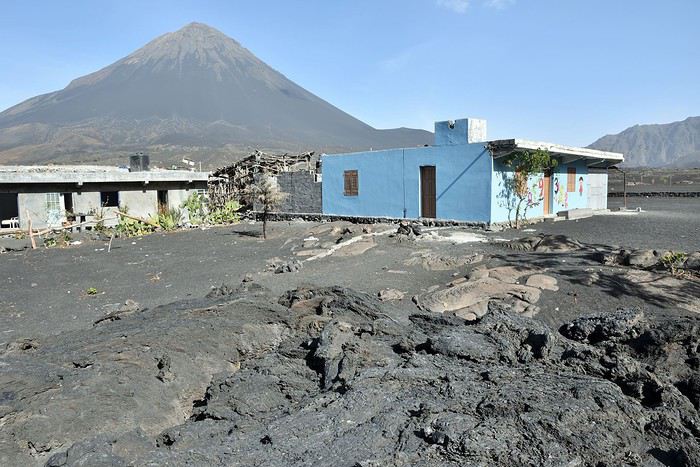
Photo: In 2014, the lava (foreground) stopped ten meters from José’s guesthouse (the gray building on the left).
José explained that during the two-and-a-half months the 2014 eruption lasted, residents had to live temporarily in São Filipe and couldn’t return to the crater. They scoured satellite images online, trying to see if their homes had been swallowed. The waiting—and above all, the helplessness they felt in the face of nature’s fury—was unbearable.
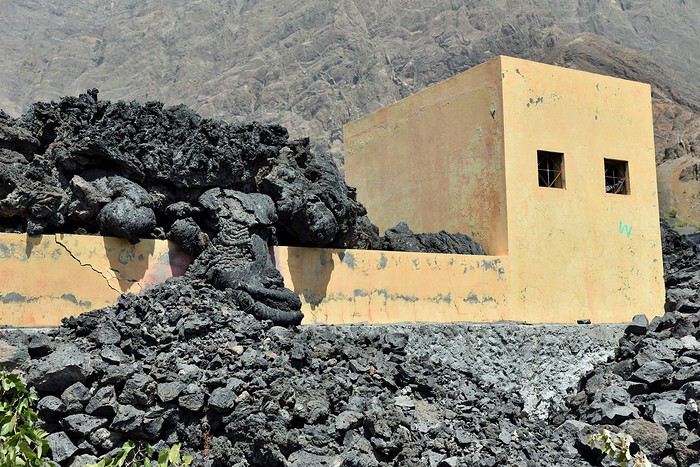
Sometimes, the lava would stop just meters from a house and stall. People thought their home was saved. But a few days later, it would inexorably resume its advance, devouring everything in its path.
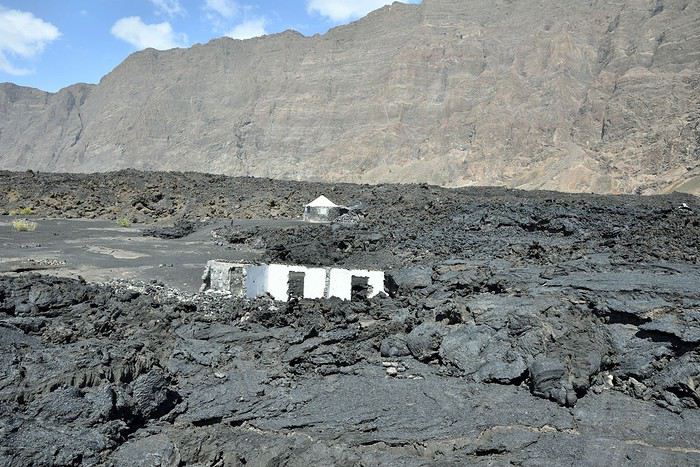
Here, the landscape is one of total desolation. Yet after the eruption, the inhabitants of this surreal place, armed with extraordinary courage, decided to return and rebuild everything. Without any help, because the authorities consider that in case of another eruption...
José then shared how he feels: he was born here, grew up here, has always lived here, and there’s no way he’d let himself be uprooted. Everyone here thinks the same. So these people, who’d been forced from their homes by nature, decided to rebuild everything. Through patience, perseverance, and sheer hard work, they pulled off the impossible. Alone. Without help.
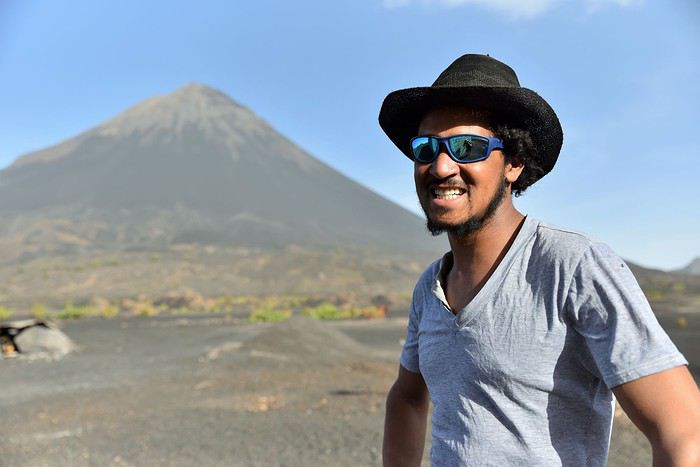
José
José couldn’t stop telling us the story of his village—his story. He went on to explain that the church had also been submerged by the lava flow. Here’s all that’s left of it.
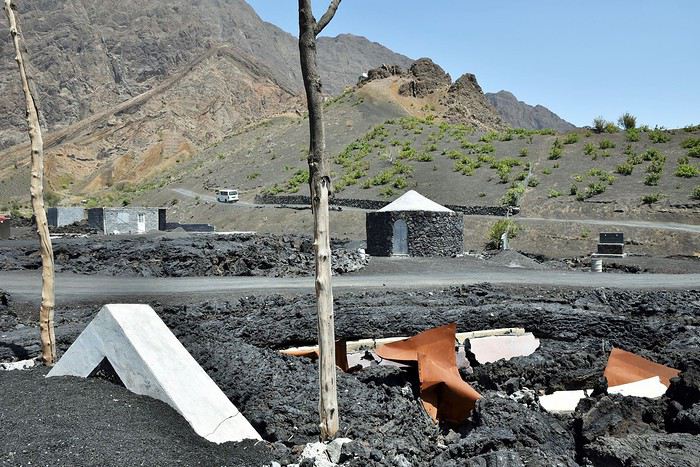
Photo: In the foreground, the engulfed church; on the left, the top of its pediment.
Since then, a small Adventist church has been rebuilt on the lava, at the foot of the caldera’s walls.
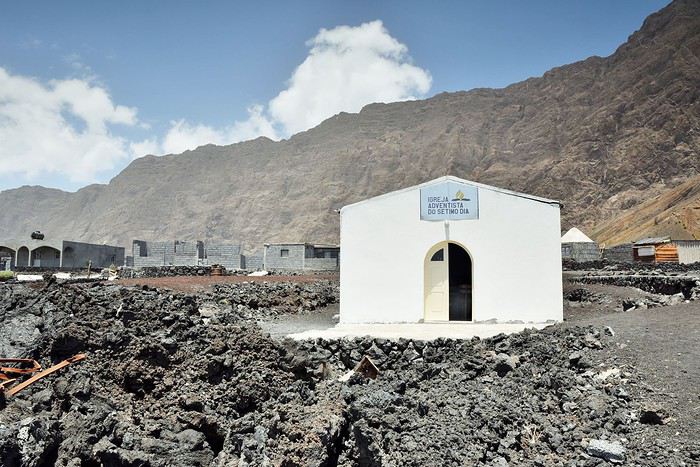
A little further on, the wine cooperative suffered the same fate as the church.
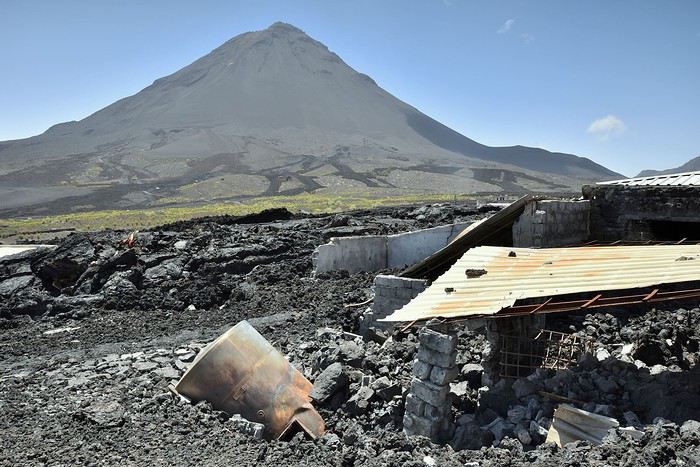
When José told me he’d seen the wine burn, I struggled to picture the scene. But standing in front of the disaster’s remnants, I suddenly understood much better what happened here.
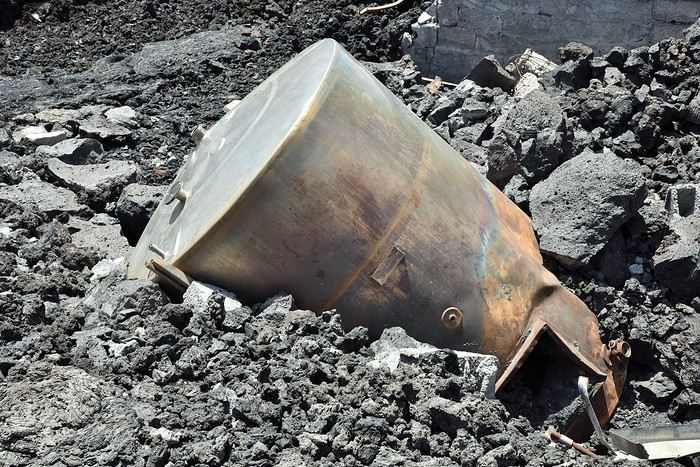
Photo: A wine vat carried away by the lava.
As for the cellar, there’s not much left of it either.
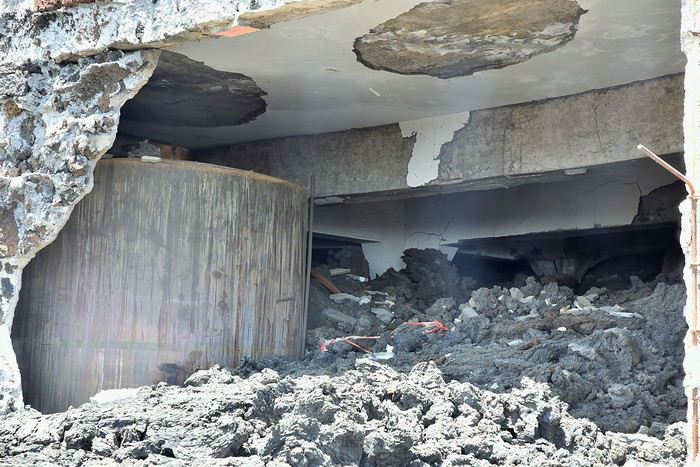 Photo: The cellar’s interior was completely devastated by the lava.
In 2014, no Western country covered this eruption or its impact on the locals. Except for Portugal, which still has ties to its former Cape Verdean colony. The silence was baffling to us after seeing this wasteland—and to some volcanologists, who called it "the forgotten eruption."
If this story feels eye-opening, such adversity hasn’t embittered the people here. They see rebuilding everything as normal.
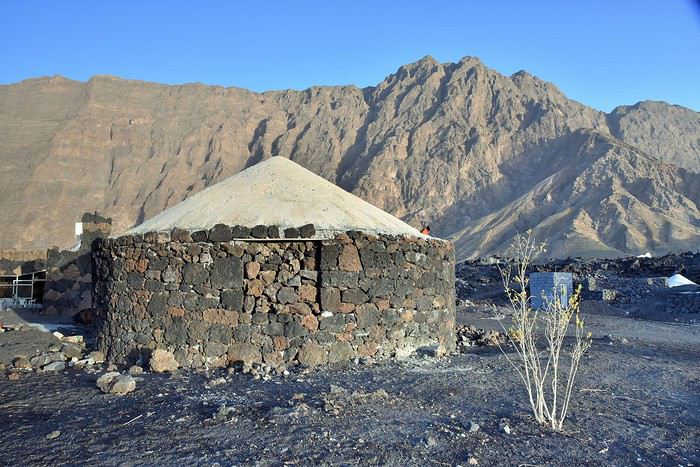
What’s more, the reconstruction followed local traditions. You can see many typical circular houses, built with stones spewed by the volcano, which even inspired the roofs’ shape.
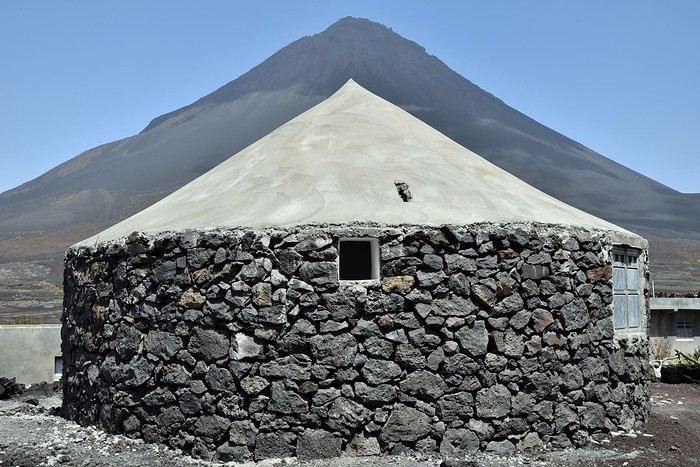 Photo: Chã das Caldeiras—a traditional house.
Today, life has returned to normal, though the uniqueness of this place makes daily life challenging, as Carole explained. For example, there’s no running water: it has to be delivered by truck and stored in tanks so you can still take a shower.
There’s barely any electricity either: a few solar panels only heat shower water or recharge cameras for passing travelers. At night, candles are the only light.
Also, to get supplies, you have to leave the crater and shop in São Filipe—not exactly a quick trip to the corner store, but a three- or four-hour round trip.
Still, the locals have adapted. They know their volcanic soil is surprisingly fertile for plants, vegetables, and fruit trees. It might seem odd, but everything grows here—and grows well.

Photo: A pomegranate tree at the foot of the volcano.
Pomegranates, quinces, figs, mangoes, potatoes, beans, etc.—fruits and vegetables thrive here. So do coffee and, of course, grapes, since the volcano’s specialty is Manecom, the famous local wine.
Our first evening in this incredible place was approaching. The sun wasn’t quite ready to set, but as it dipped, it quickly cast the caldera’s interior into shadow beneath its towering walls. A few locals were enjoying the last light of day, playing soccer in the volcanic dust next to the latest lava flow.
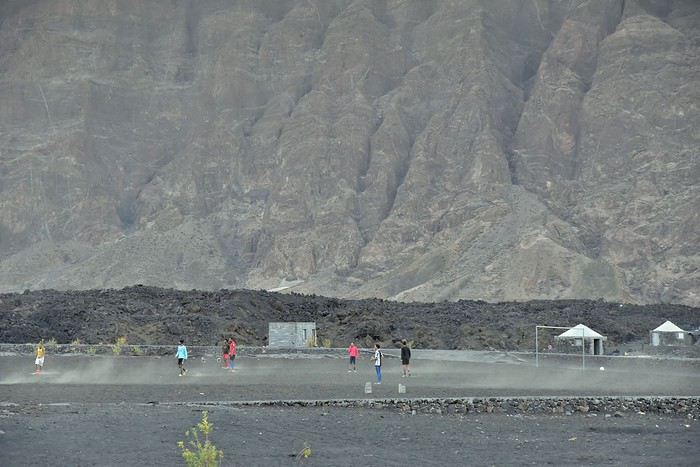
After a day of emotional stories and visits, it was time for us to turn in—especially since we’d be climbing the Grand Pico at dawn, a notoriously strenuous hike. Still, I couldn’t resist capturing the place at night before going to bed.
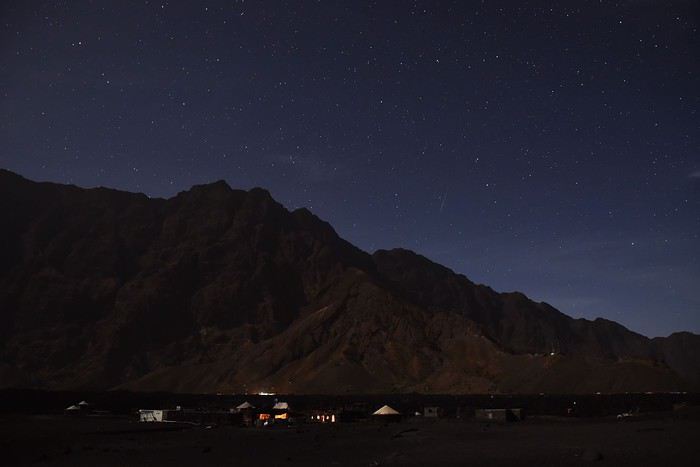 The caldera’s walls.
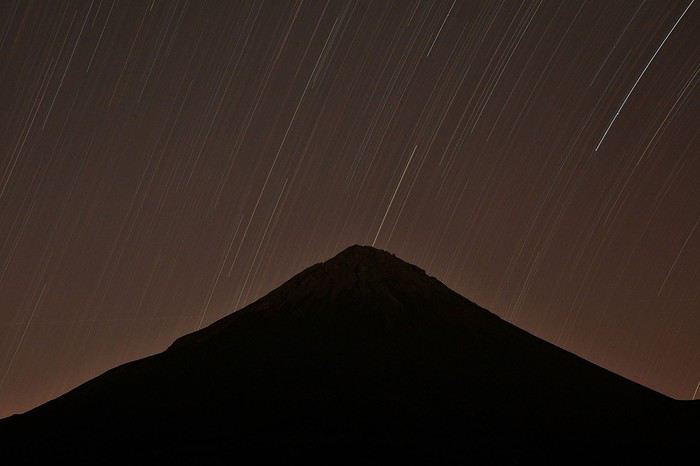
To be continued: The Grand Pico ascent...
To be continued...
FOGO: THE VOLCANO ISLAND
Rising 2,829 meters above sea level, Pico do Fogo ("Peak of Fire") is the highest point in Cape Verde and the country’s only active volcano.
Expressive graffiti (São Filipe)
Our stay on Fogo will unfold in two parts: first, we’ll spend three days in what feels like another planet—exploring the surreal landscapes of the caldera—before wrapping up with a visit to São Filipe, the island’s main town.
Graffiti (São Filipe)> Living inside an active volcano!
What makes Pico do Fogo famous is that it’s one of the few active volcanoes in the world that’s still inhabited.
- The 2014 eruption
Inside this nine-kilometer-wide caldera, where craters have sprouted like mushrooms over time and eruptions, about a thousand people lived until November 23, 2014.
That day, the volcano erupted. Lava spread across much of the caldera over the following days and weeks, slowly but surely swallowing every home in its path. Though there were no casualties—thanks to a timely evacuation—the small hamlets there were nearly wiped off the map.
Photo: Pico do Fogo between two eruptions—the devastating 2014 one and the next to come...But let’s start from the beginning. To reach the crater from São Filipe, you take an aluguer (a shared minibus taxi). Since its daily schedule didn’t align with our flight’s arrival, we had to take a "private" taxi, arranged by José, who runs a guesthouse in the heart of the caldera, right at the foot of the Grand Pico, the main crater. We shared the ride with Leïla, a Moroccan traveler we quickly bonded with and spent the next three days exploring alongside.
First, we drove for an hour on a winding road, climbing from sea-level São Filipe up to the caldera, perched at around 2,000 meters. There, we entered the vast crater via a poorly maintained paved road.
But soon after entering the caldera, the road was cut off by a three- or four-meter-high lava flow. We had to take a detour—a secondary track carved out in the weeks following the eruption.
Photo: Arrival in the caldera, seen from the Grand Pico—the white line is the road blocked by lava; the gray one is the detour track.The landscape was both lunar and mesmerizing, so much so that we barely noticed the 45-minute drive to the village. The place is called Chã das Caldeiras. In theory, that’s the caldera’s name, but in practice, it’s what everyone calls the village—or rather, the hamlets rebuilt at the bottom of the caldera.
When we arrived at Pensão Casa José Doce, where we’d be lucky enough to spend three unforgettable days and nights, we were greeted by Carole. French, she’s also José’s wife, the Cape Verdean owner of the place.
For the guesthouse’s construction and decor, they didn’t have to look far: volcanic rocks and hardened lava pieces were used, their colors varying depending on the eruption’s date.
Photo: Pensão Casa José Doce—the guesthouse at the foot of the volcano.
In 2014, José was incredibly lucky: out of the 22 guesthouses in the crater at the time, his was one of only two that weren’t buried under lava. It stopped just ten meters from his walls.
Photo: In 2014, the lava (foreground) stopped ten meters from José’s guesthouse (the gray building on the left).
José explained that during the two-and-a-half months the 2014 eruption lasted, residents had to live temporarily in São Filipe and couldn’t return to the crater. They scoured satellite images online, trying to see if their homes had been swallowed. The waiting—and above all, the helplessness they felt in the face of nature’s fury—was unbearable.
Sometimes, the lava would stop just meters from a house and stall. People thought their home was saved. But a few days later, it would inexorably resume its advance, devouring everything in its path.
Here, the landscape is one of total desolation. Yet after the eruption, the inhabitants of this surreal place, armed with extraordinary courage, decided to return and rebuild everything. Without any help, because the authorities consider that in case of another eruption...
José then shared how he feels: he was born here, grew up here, has always lived here, and there’s no way he’d let himself be uprooted. Everyone here thinks the same. So these people, who’d been forced from their homes by nature, decided to rebuild everything. Through patience, perseverance, and sheer hard work, they pulled off the impossible. Alone. Without help.
José
José couldn’t stop telling us the story of his village—his story. He went on to explain that the church had also been submerged by the lava flow. Here’s all that’s left of it.
Photo: In the foreground, the engulfed church; on the left, the top of its pediment.
Since then, a small Adventist church has been rebuilt on the lava, at the foot of the caldera’s walls.
A little further on, the wine cooperative suffered the same fate as the church.
When José told me he’d seen the wine burn, I struggled to picture the scene. But standing in front of the disaster’s remnants, I suddenly understood much better what happened here.
Photo: A wine vat carried away by the lava.
As for the cellar, there’s not much left of it either.
Photo: The cellar’s interior was completely devastated by the lava.In 2014, no Western country covered this eruption or its impact on the locals. Except for Portugal, which still has ties to its former Cape Verdean colony. The silence was baffling to us after seeing this wasteland—and to some volcanologists, who called it "the forgotten eruption."
If this story feels eye-opening, such adversity hasn’t embittered the people here. They see rebuilding everything as normal.
What’s more, the reconstruction followed local traditions. You can see many typical circular houses, built with stones spewed by the volcano, which even inspired the roofs’ shape.
Photo: Chã das Caldeiras—a traditional house.Today, life has returned to normal, though the uniqueness of this place makes daily life challenging, as Carole explained. For example, there’s no running water: it has to be delivered by truck and stored in tanks so you can still take a shower.
There’s barely any electricity either: a few solar panels only heat shower water or recharge cameras for passing travelers. At night, candles are the only light.
Also, to get supplies, you have to leave the crater and shop in São Filipe—not exactly a quick trip to the corner store, but a three- or four-hour round trip.
Still, the locals have adapted. They know their volcanic soil is surprisingly fertile for plants, vegetables, and fruit trees. It might seem odd, but everything grows here—and grows well.
Photo: A pomegranate tree at the foot of the volcano.
Pomegranates, quinces, figs, mangoes, potatoes, beans, etc.—fruits and vegetables thrive here. So do coffee and, of course, grapes, since the volcano’s specialty is Manecom, the famous local wine.
Our first evening in this incredible place was approaching. The sun wasn’t quite ready to set, but as it dipped, it quickly cast the caldera’s interior into shadow beneath its towering walls. A few locals were enjoying the last light of day, playing soccer in the volcanic dust next to the latest lava flow.
After a day of emotional stories and visits, it was time for us to turn in—especially since we’d be climbing the Grand Pico at dawn, a notoriously strenuous hike. Still, I couldn’t resist capturing the place at night before going to bed.
The caldera’s walls.To be continued: The Grand Pico ascent...