


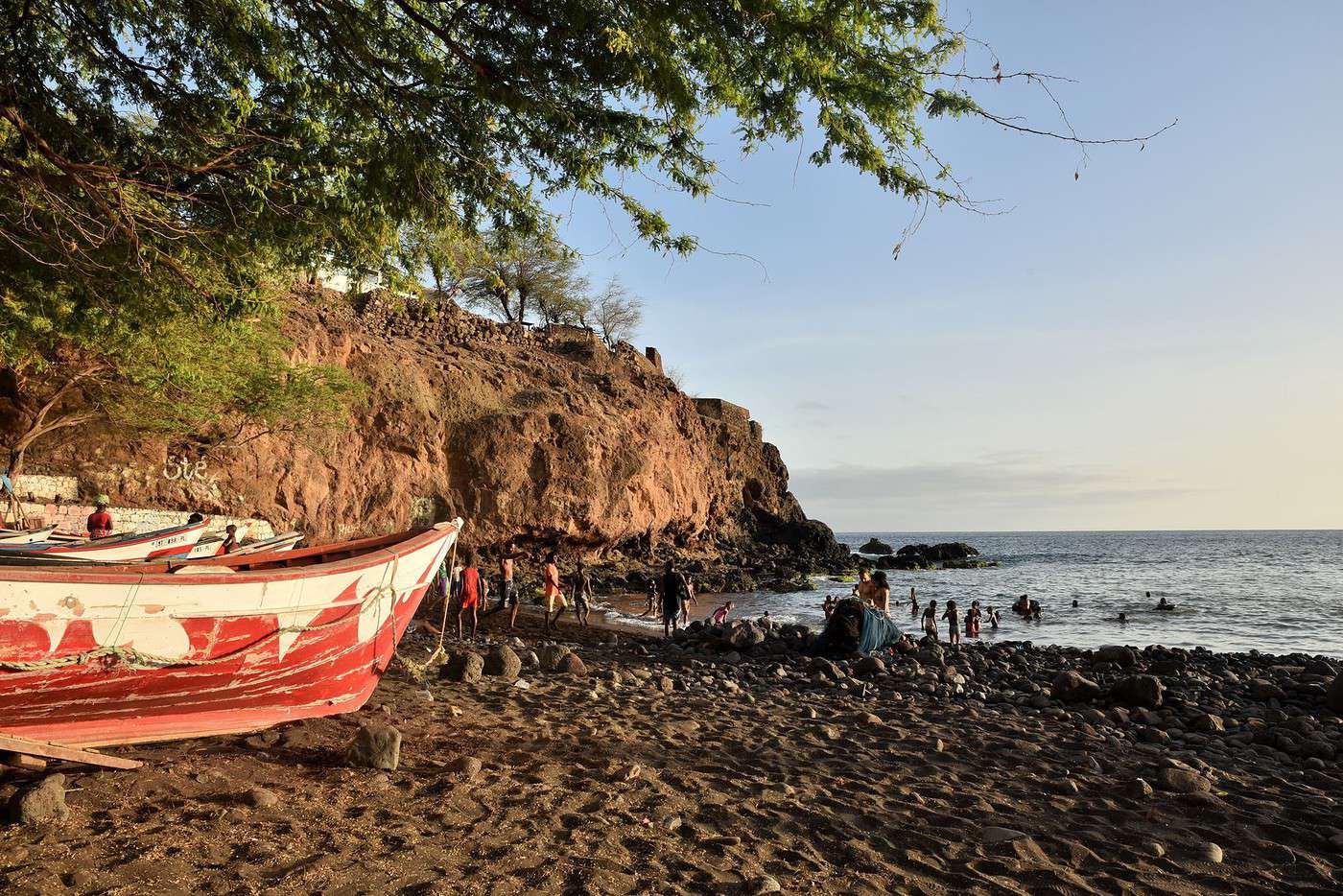
This island is both the largest and the most populated in the archipelago. We’ll quickly visit two of the most renowned spots on the island: the charming towns of Cidade Velha and Tarrafal.
> Cidade Velha, the country’s former capital
Cidade Velha is located just half an hour by car from Praia Airport. We arrive in the late afternoon, just as the sunset light is at its most beautiful.
We spend the evening on a lovely beach lined with a few restaurants, particularly pleasant and very popular with locals.
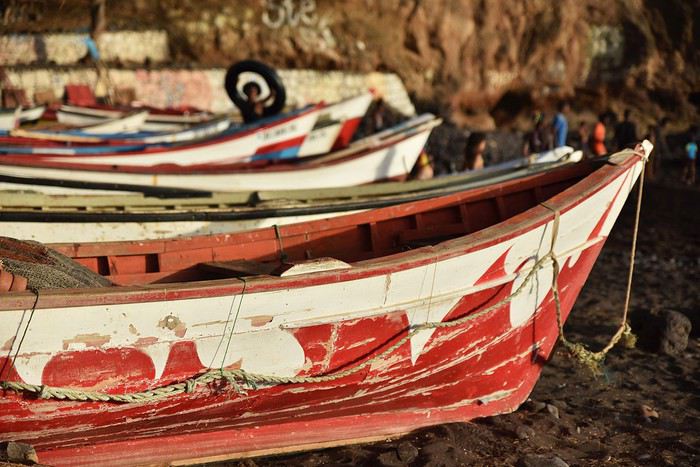
In 2009, Cidade Velha became the first site in the country to be inscribed by UNESCO as a World Heritage Site.
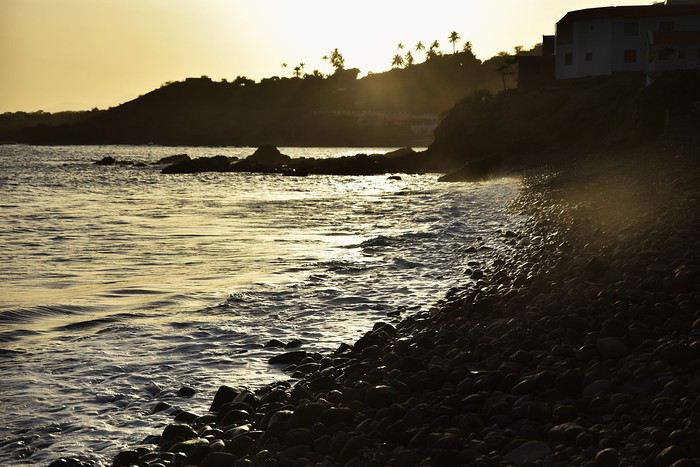
It’s far from the first impression the city gives today when seen from its pretty beach, but Cidade Velha was once an important maritime crossroads in the slave trade between Africa and the Americas.
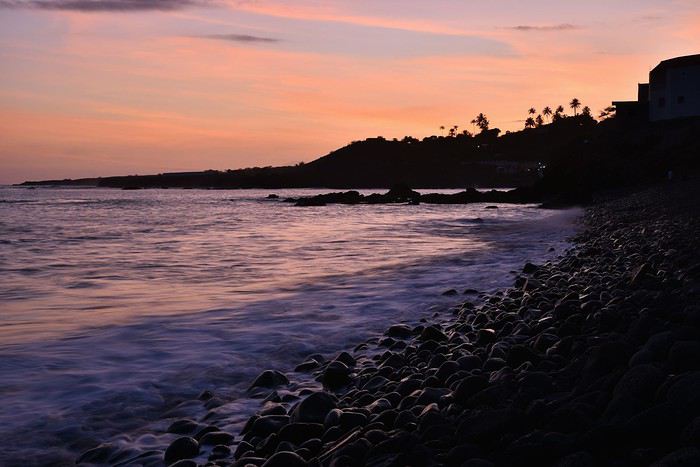
And speaking of that, once night falls, we pass by the famous pilhourino (pillory): this is where rebellious slaves were tied to be publicly tortured, often to death. When we saw it, we didn’t yet know what it represented, and it was only afterward that we learned its history! Looking back, we found the contrast striking between the completely innocuous appearance of this small post and the horror it symbolizes.
We won’t have time to see more in this historically rich city that’s really worth a visit. The next morning, we have to cancel the tour we’d planned because I got a bit mixed up with our schedule, and we end up having to leave in a hurry for our next stop...
As we leave the city, we pass by the remains of the vast building where slaves were packed before their departure for the Americas, in ships where conditions were inhumane.
> Tarrafal, the seaside town in the northwest
It’s in Tarrafal, located nearly two hours by car from the capital, that we’ll spend our last two days in Cape Verde.
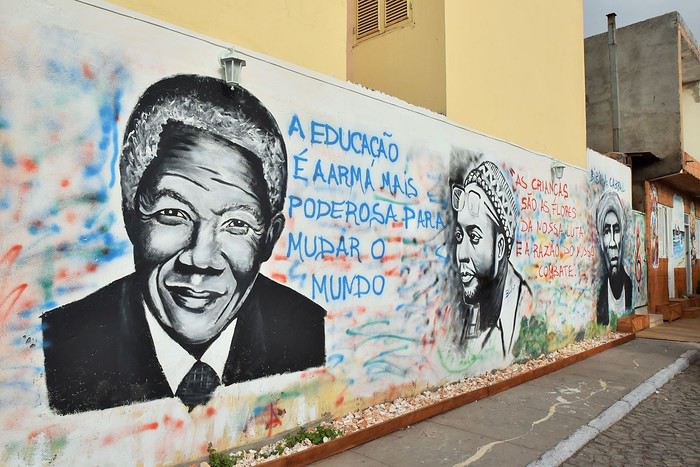
We stay at a small hotel right in town, the Tarrafal's Meeting Point. It’s located a hundred meters from a colorful market and a five-minute walk from a lovely beach lined with coconut trees.
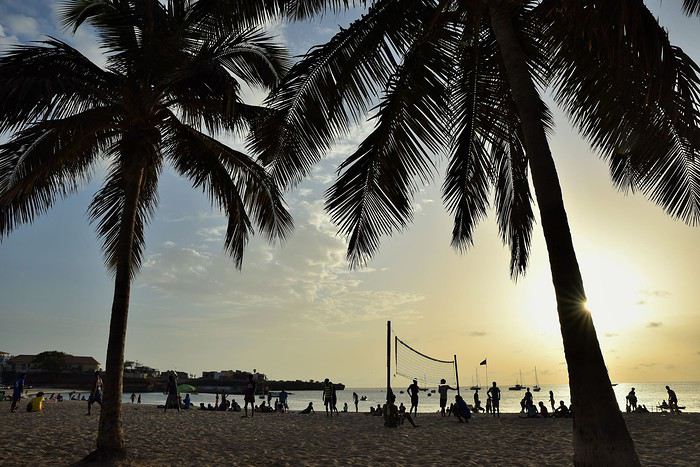
The spot is sheltered, so the sea is calm, and with no waves, we can snorkel peacefully among the rocks at the end of the beach. While not exceptional, the place is quite pretty and has plenty of fish right from the shore.
The end of our stay is slightly spoiled by a little mishap: on the second day, Victor wakes up with a fever of nearly 41°C! We treat him with our travel medical kit, including a broad-spectrum antibiotic that’s come in handy before when we were far from civilization in more or less isolated places. Since then, we never leave home without it on our trips. Everything will return to normal for him after a short stay at the hospital.
Conclusion: Regarding Santiago, we only scratched the surface, as this island is full of places to discover and hikes to do. Maybe next time on another trip to this country that charmed us...
> Cidade Velha, the country’s former capital
Cidade Velha is located just half an hour by car from Praia Airport. We arrive in the late afternoon, just as the sunset light is at its most beautiful.
We spend the evening on a lovely beach lined with a few restaurants, particularly pleasant and very popular with locals.
In 2009, Cidade Velha became the first site in the country to be inscribed by UNESCO as a World Heritage Site.
It’s far from the first impression the city gives today when seen from its pretty beach, but Cidade Velha was once an important maritime crossroads in the slave trade between Africa and the Americas.
And speaking of that, once night falls, we pass by the famous pilhourino (pillory): this is where rebellious slaves were tied to be publicly tortured, often to death. When we saw it, we didn’t yet know what it represented, and it was only afterward that we learned its history! Looking back, we found the contrast striking between the completely innocuous appearance of this small post and the horror it symbolizes.
We won’t have time to see more in this historically rich city that’s really worth a visit. The next morning, we have to cancel the tour we’d planned because I got a bit mixed up with our schedule, and we end up having to leave in a hurry for our next stop...
As we leave the city, we pass by the remains of the vast building where slaves were packed before their departure for the Americas, in ships where conditions were inhumane.
> Tarrafal, the seaside town in the northwest
It’s in Tarrafal, located nearly two hours by car from the capital, that we’ll spend our last two days in Cape Verde.
We stay at a small hotel right in town, the Tarrafal's Meeting Point. It’s located a hundred meters from a colorful market and a five-minute walk from a lovely beach lined with coconut trees.
The spot is sheltered, so the sea is calm, and with no waves, we can snorkel peacefully among the rocks at the end of the beach. While not exceptional, the place is quite pretty and has plenty of fish right from the shore.
The end of our stay is slightly spoiled by a little mishap: on the second day, Victor wakes up with a fever of nearly 41°C! We treat him with our travel medical kit, including a broad-spectrum antibiotic that’s come in handy before when we were far from civilization in more or less isolated places. Since then, we never leave home without it on our trips. Everything will return to normal for him after a short stay at the hospital.
Conclusion: Regarding Santiago, we only scratched the surface, as this island is full of places to discover and hikes to do. Maybe next time on another trip to this country that charmed us...