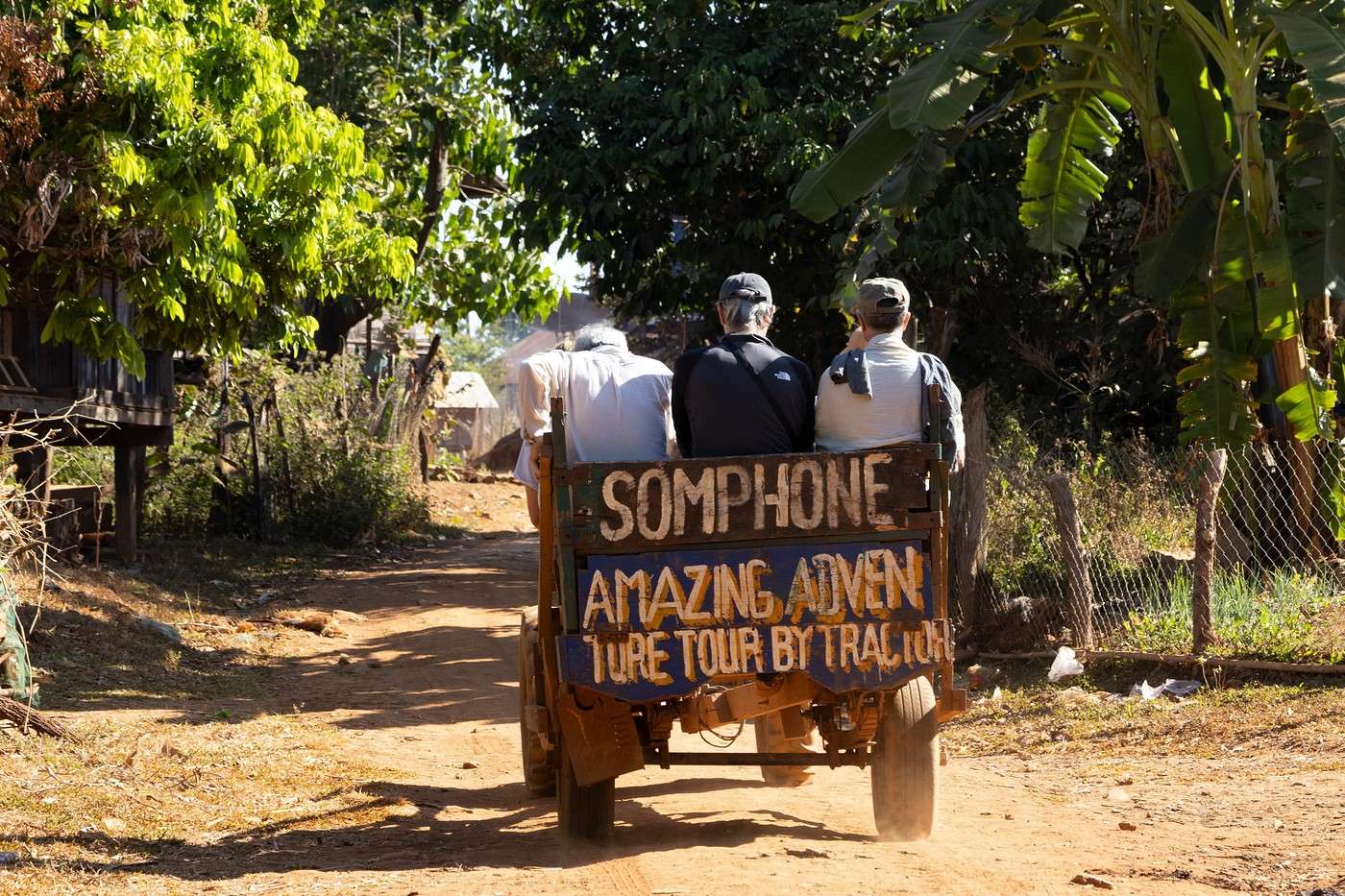
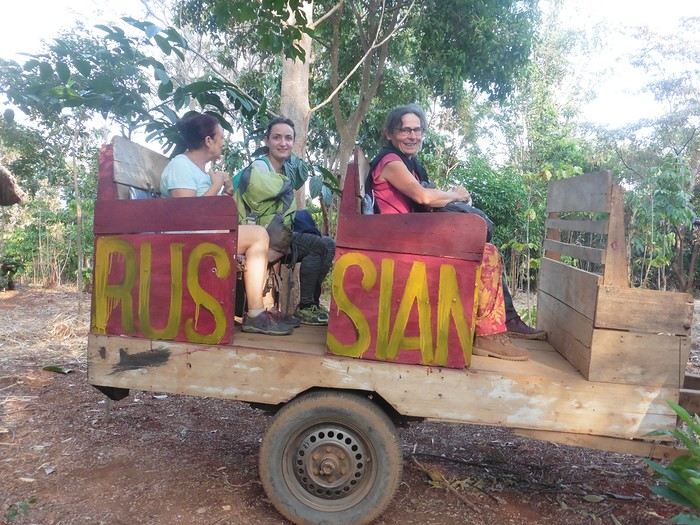
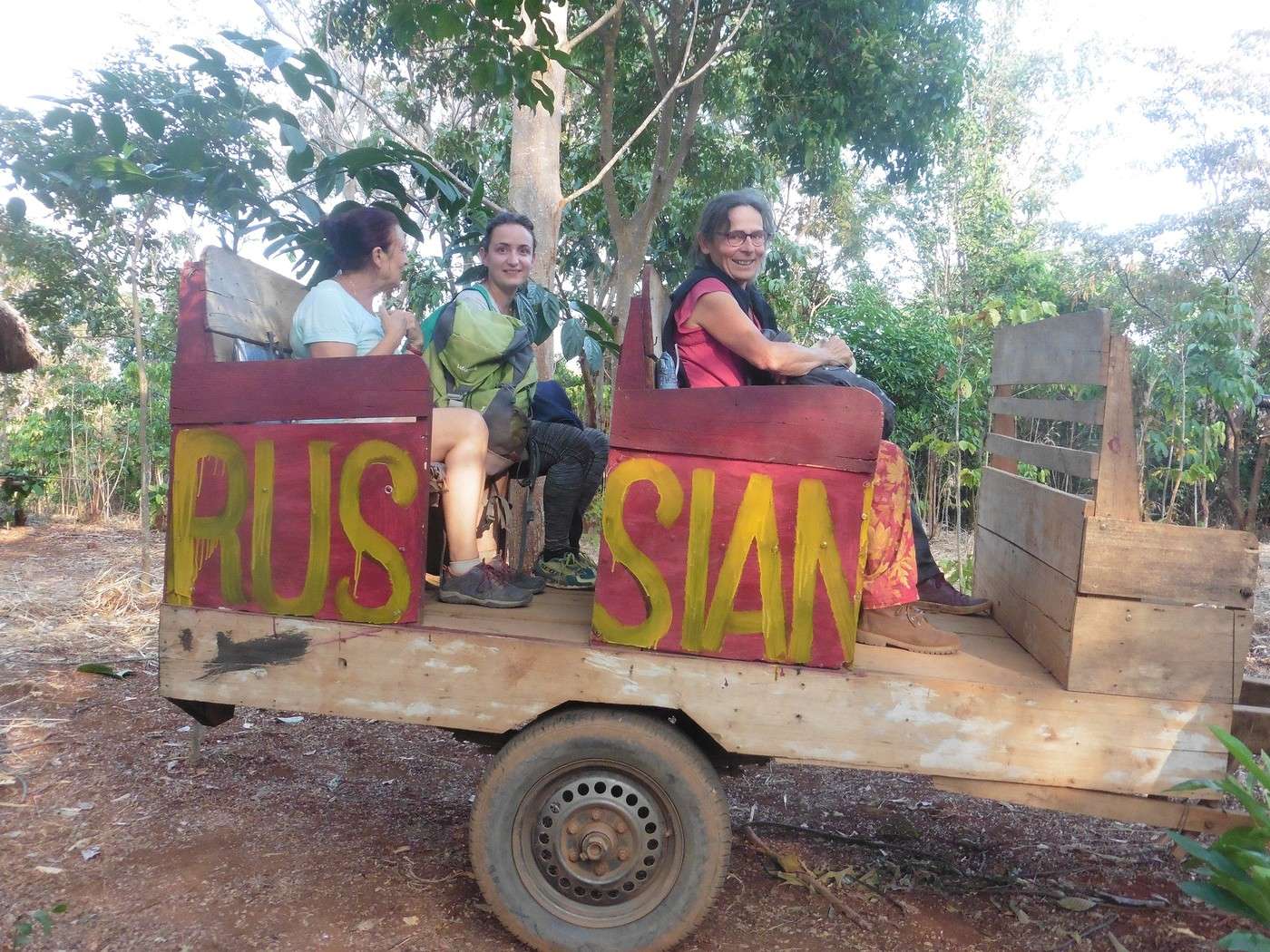
« Somphone’s amazing tractor adventure tour » !
In the text! That’s what’s written on the back of the cart that transports visitors for the discovery tour.
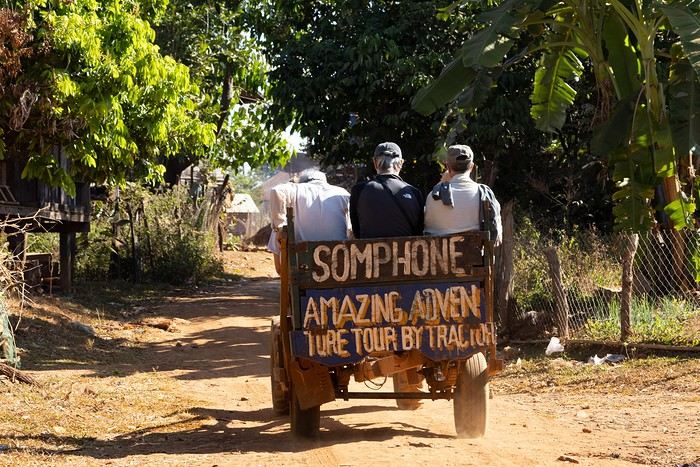
Somphone doesn’t hold back on hyperbole. But the little adventure he offers actually lets us step—even just a little—into the daily material and spiritual life of the villagers.
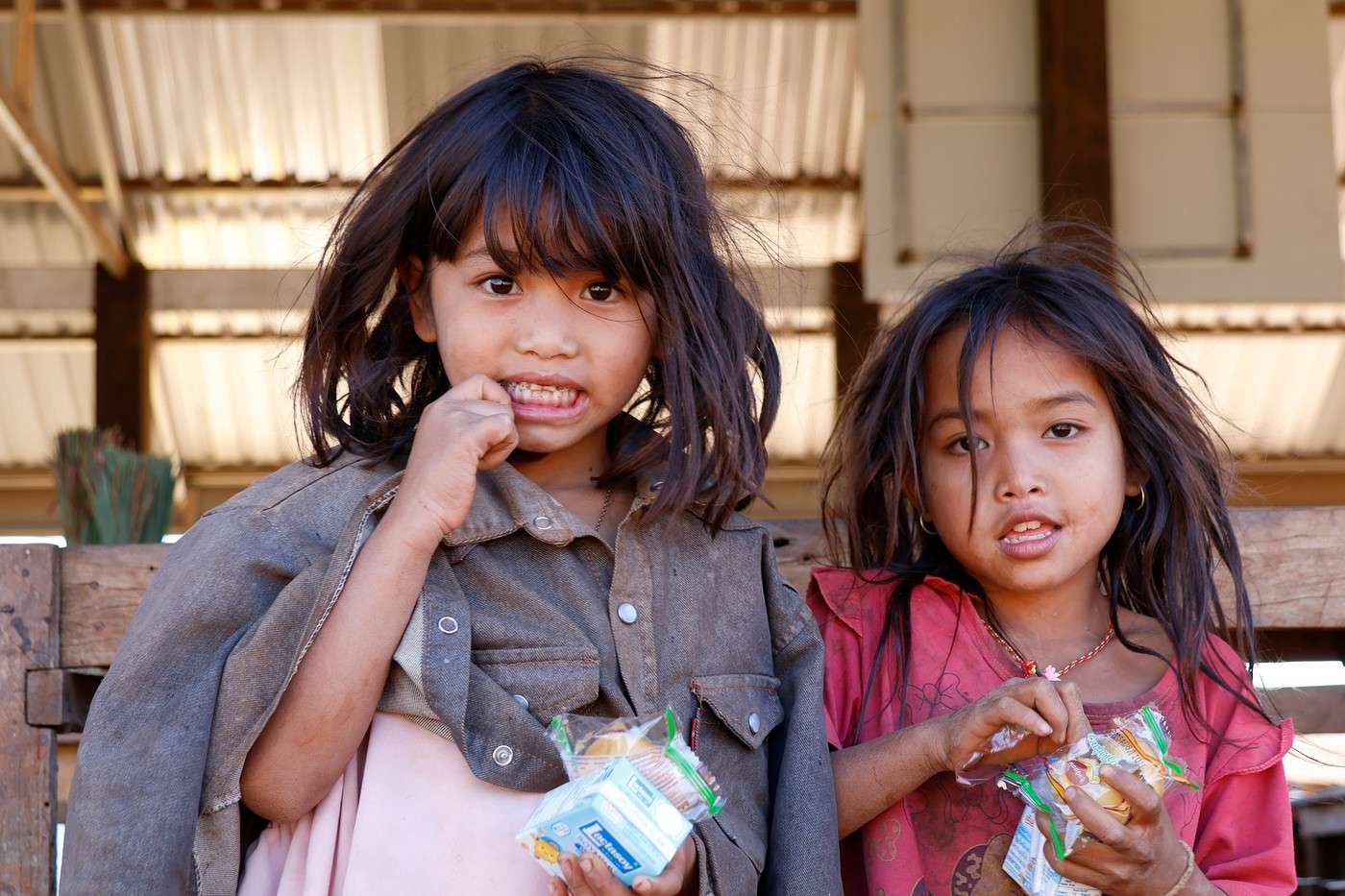
Nathalie isn’t coming, worried about protecting her broken ribs, and Kate is staying too. They’ll take the opportunity to do some portraits in the part of the village next to the camp.
So we set off in a group of about ten, a small convoy. And in a cloud of smoke, the two rattling tractors speed down the dusty path. The first few minutes are tricky—the cart lurches from side to side, and I have to hold onto the railings to avoid falling. But I quickly find the right position, bracing myself firmly on the seat. Like horseback riding or camel trekking, “it’s all about balance,” as Nathalie would say.
First stop in front of a small agro-industrial facility for growing and processing cassava. Men are feeding the roots into a grinder to make a paste that will later become flour. Or at least, that’s what I roughly understood—I’ll admit I wasn’t listening too closely.
As we leave, I spot a large building by the roadside that looks like a church. The presence of this Christian place of worship in the heart of the Bolovens region catches my attention. I’d like to ask Somphone about it, but the engine noise drowns out my voice, and I give up.
We leave the road, and the tractors turn onto a path, stopping almost immediately at the edge of a small wood. It doesn’t look special—what are we doing here?
The explanations in English are a bit hard for me to follow, but I gather it’s a sacred forest. Somphone tells us about the deeply rooted animist beliefs in the rural Bolovens world—the power of trees and plants, the strong connection to the surrounding nature, healing rituals, and protection ceremonies performed by shamans. One word keeps coming up: “Phi,” which means “spirit” in Lao.
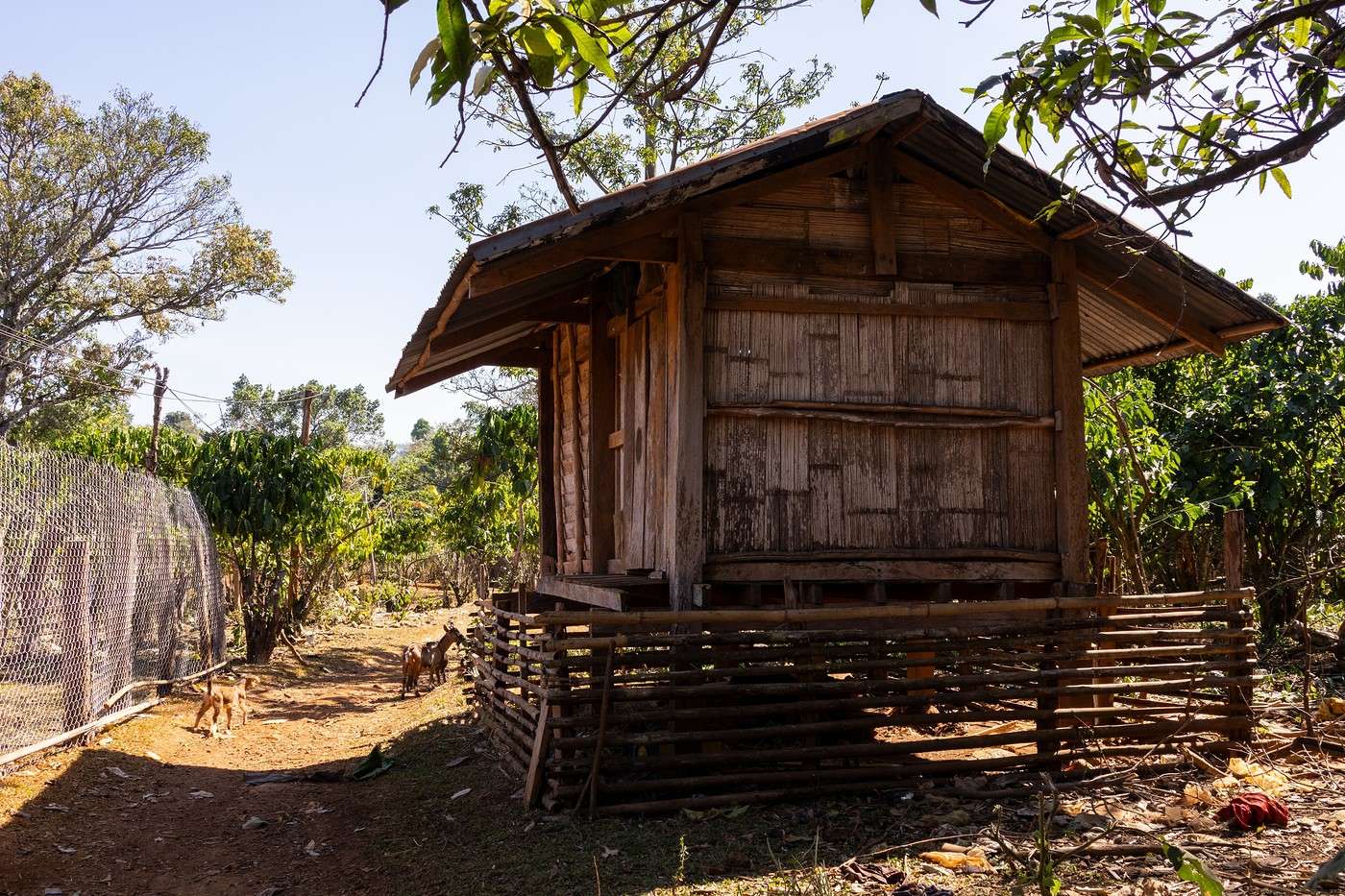
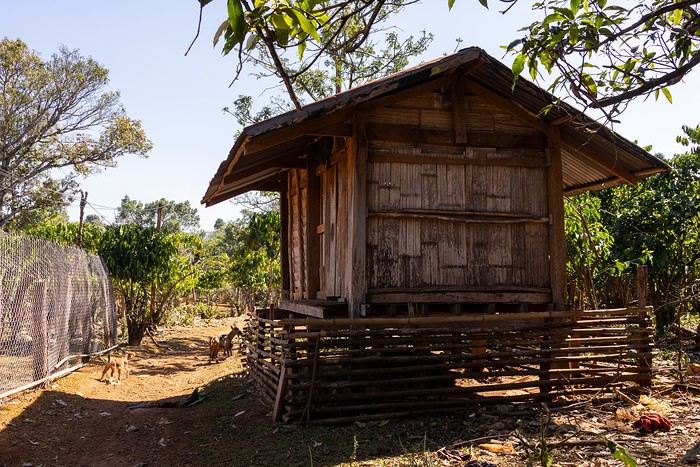
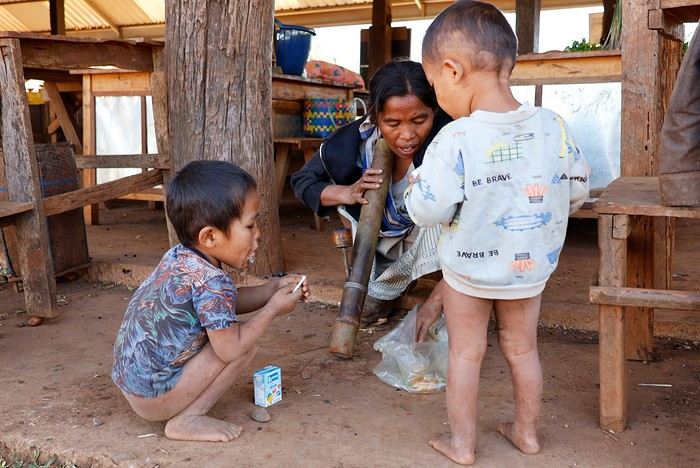
As the tour goes on, I start to understand the village’s layout: Ban Koh Phoung Tai isn’t a homogeneous whole but a collection of scattered clusters, often based on ethnic identity. The hamlet we’re in is mainly inhabited by the Katu ethnic group, who speak a different language from Lao. In the small central square stands an altar dedicated to the village’s protective spirits.
Somphone doesn’t belong to this ethnic group, and he isn’t animist. He explains that the village’s social fabric is held together by essential communal practices and Buddhism, which bridges the different groups. Thanks to the young English-speaking tourist who translated all this for me along the way.
The morning comes to an end. And Somphone, probably eager to get back, revs up the tractor. I hold on tight: “it’s all about balance.” When the girls see me arrive, they gasp in shock: “What happened to your hair? It’s red!” The red dust and wind of the Bolovens have given me a new color. Bruno, trying to be nice, says it makes me look younger... Thanks, Bruno...
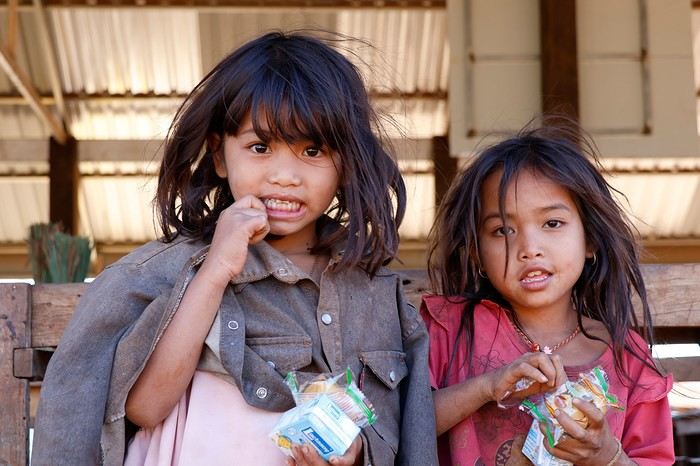
It’s time to say goodbye—our driver is waiting. Somphone walks us back to the parking lot at the top of the village. We thank him warmly for his hospitality, his kindness, and the way he shared a bit of his life with us. He hugs each of us in farewell—a gesture he must do often, of course. But the strength of his embrace feels sincere, even emotional. As if to say, *I thank you too.*
In Lao, Somphone means “worthy of blessing.”
Tad Lo Waterfall: One last stop for the road?
Nathalie has an appointment at 6 PM at the private hospital in Paksé to have her stitches removed. So we have plenty of time to enjoy the plateau’s landscapes a little longer.
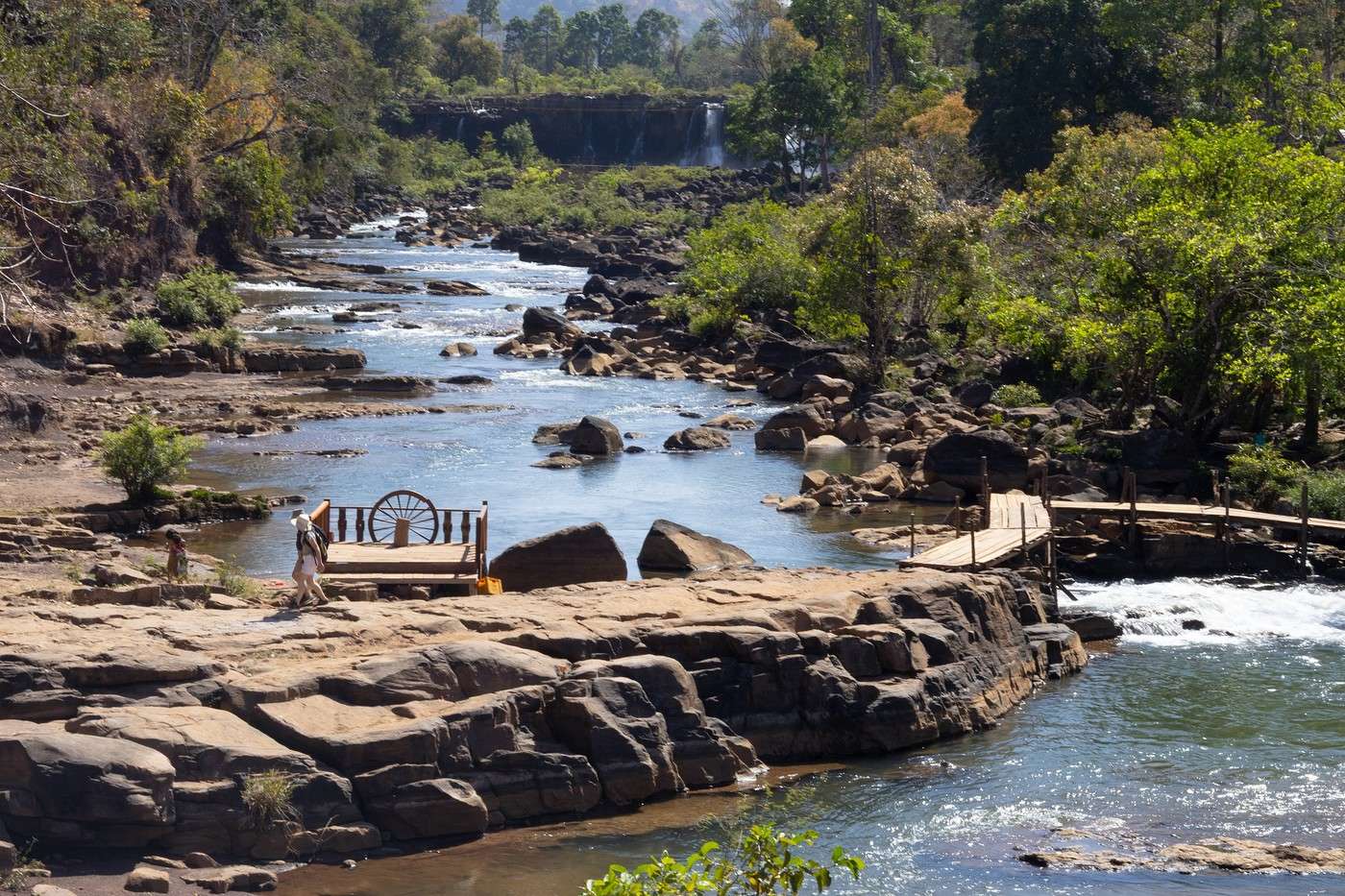
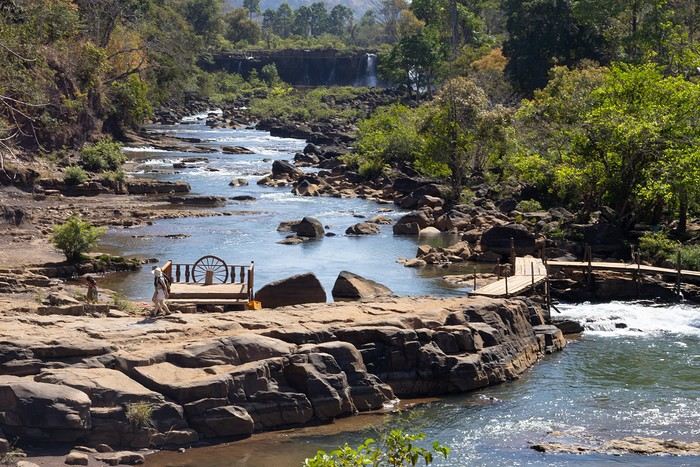
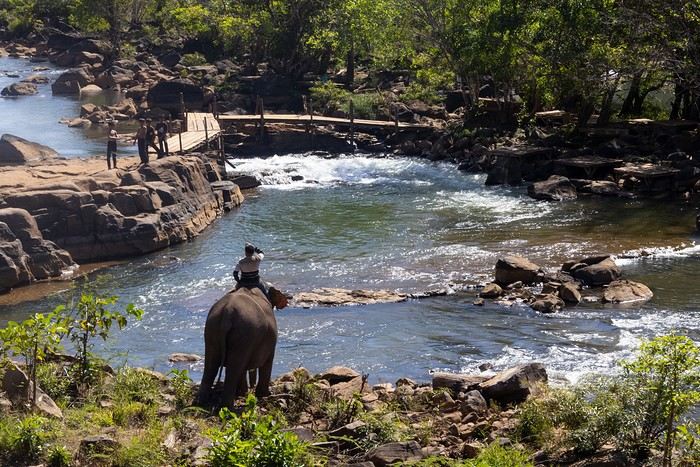
Lunch break at the foot of the majestic Tad Lo waterfalls. But after Luang’s falls, Don Khon’s, yesterday’s, and today’s, we’re starting to feel a bit jaded. First-world problems?
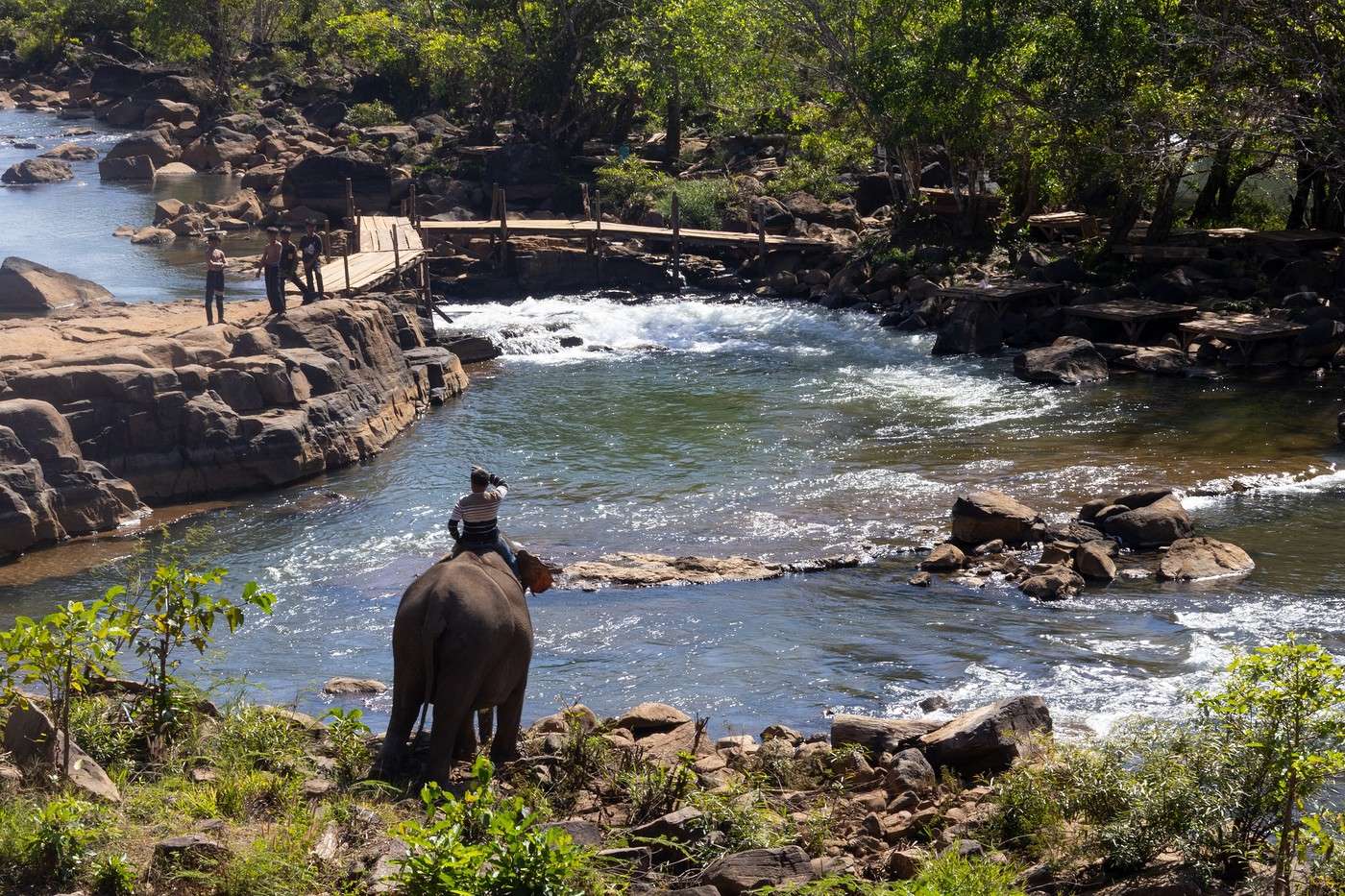
We eat on a shaded terrace overlooking the site. Behind us, the powerful cataract pours its foaming waters, while below, the calmer blue stream welcomes a guided elephant taking a dip. Jaded? Really?
A temple in the forest
The driver left the main road and turned onto a side route. Another waterfall???
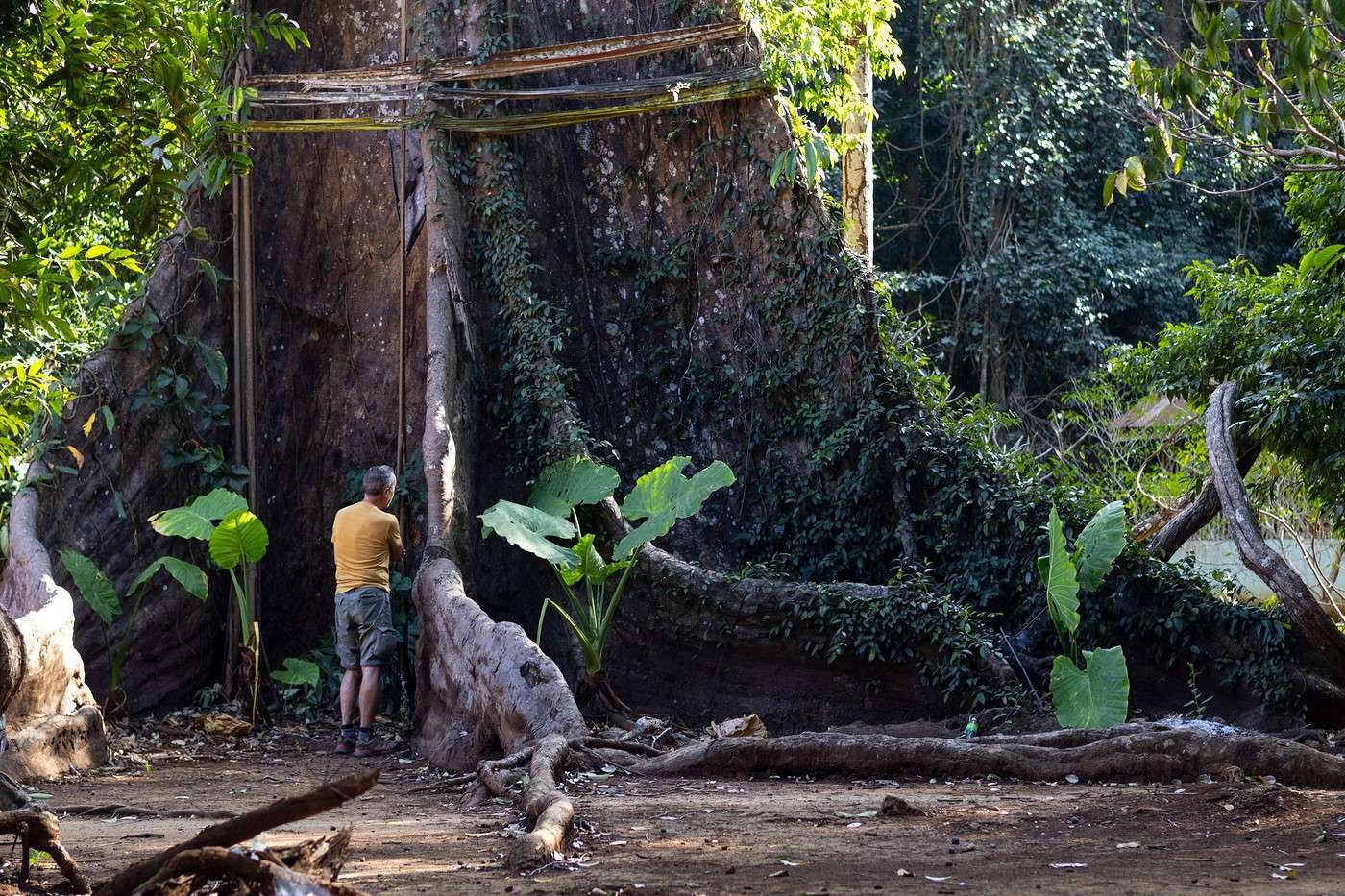
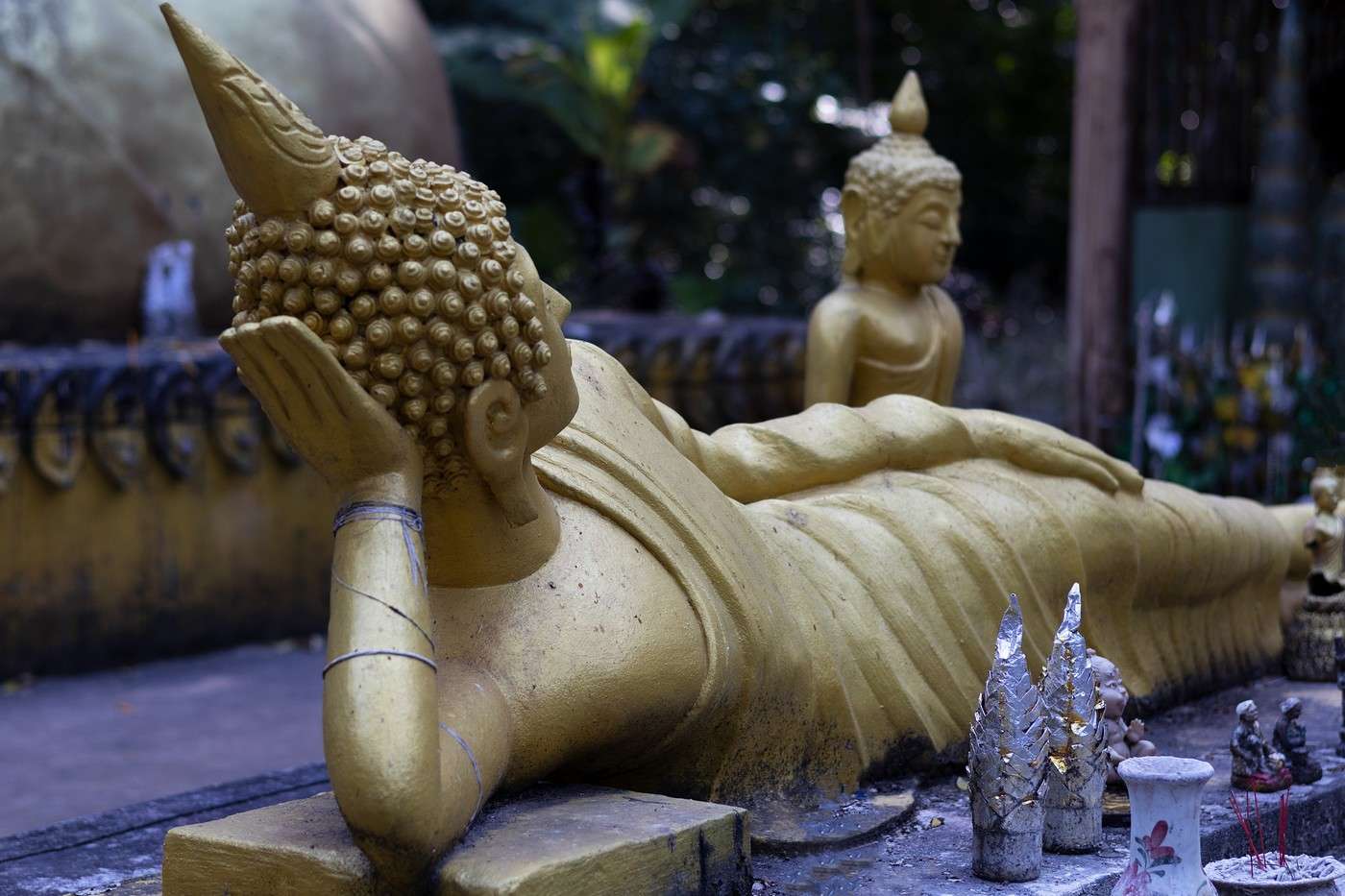
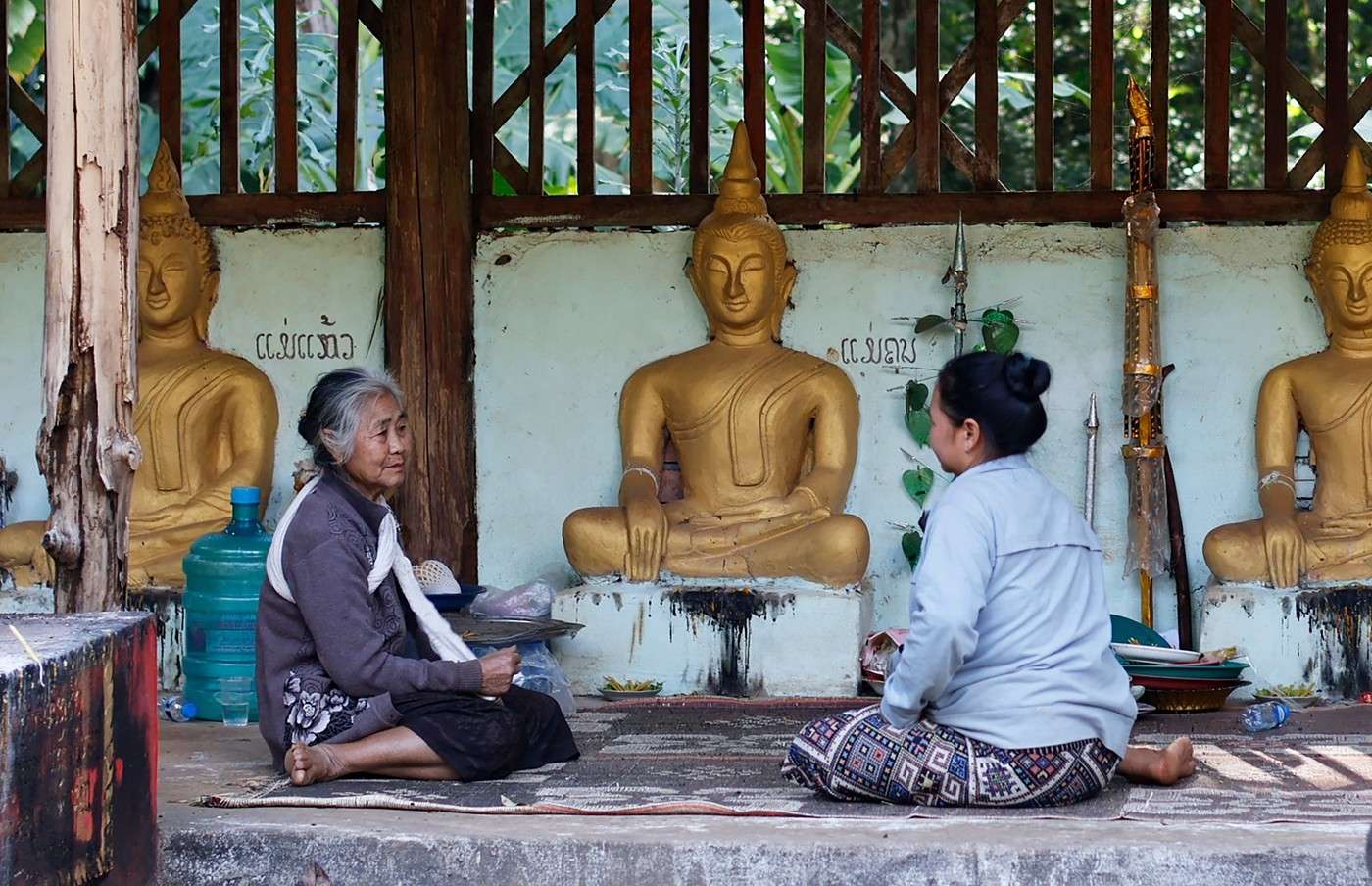
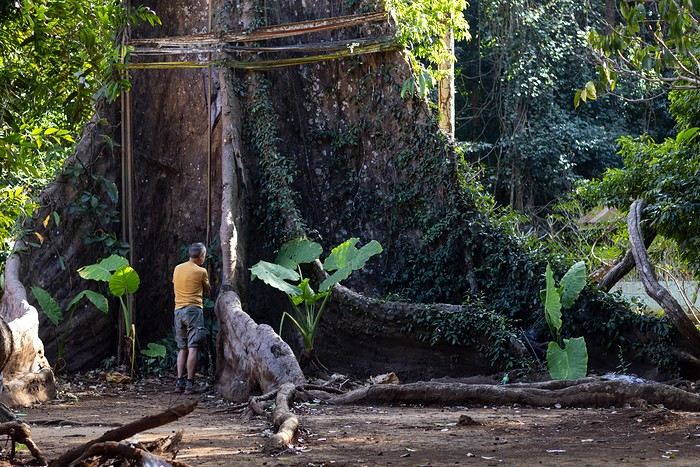
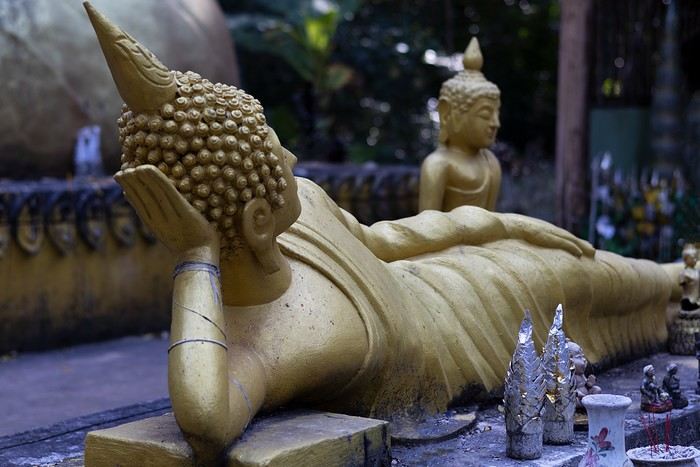
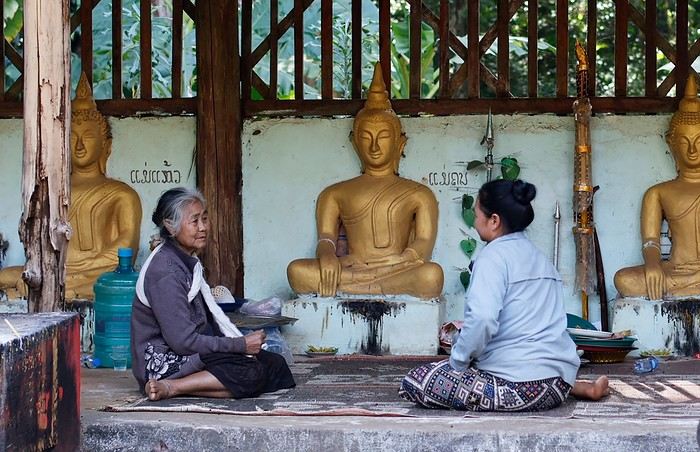
We pass through a monumental gate guarded by two grimacing yaksha to enter a dense grove of gigantic trees. I don’t think I’ve ever seen anything like them—they look ancient, *very* ancient. At the end of the path, a towering Buddha in meditation, eyes half-closed, a faint smile on his lips. Under a covered gallery lined with statues, two women sit with their legs folded, chatting. We’re in a wat-pa, a forest temple. And beneath these venerable trees filtering the light, I sense a perfect harmony between nature and humanity. The temple is in the forest, but the forest *is* the temple...
Back to Paksé’s “Jardin Hôtel”
Our host is as welcoming as ever. He’s moved us to a room on the upper gallery.
Just enough time for Nathalie and Bruno to change and shower before they head to the hospital.
Less than an hour and a half later, they’re back. The scar is long but discreet and well-shaped. A travel wound. But well done, Nath—you got through those tough moments with courage, always making sure not to ruin our trip. Thanks.
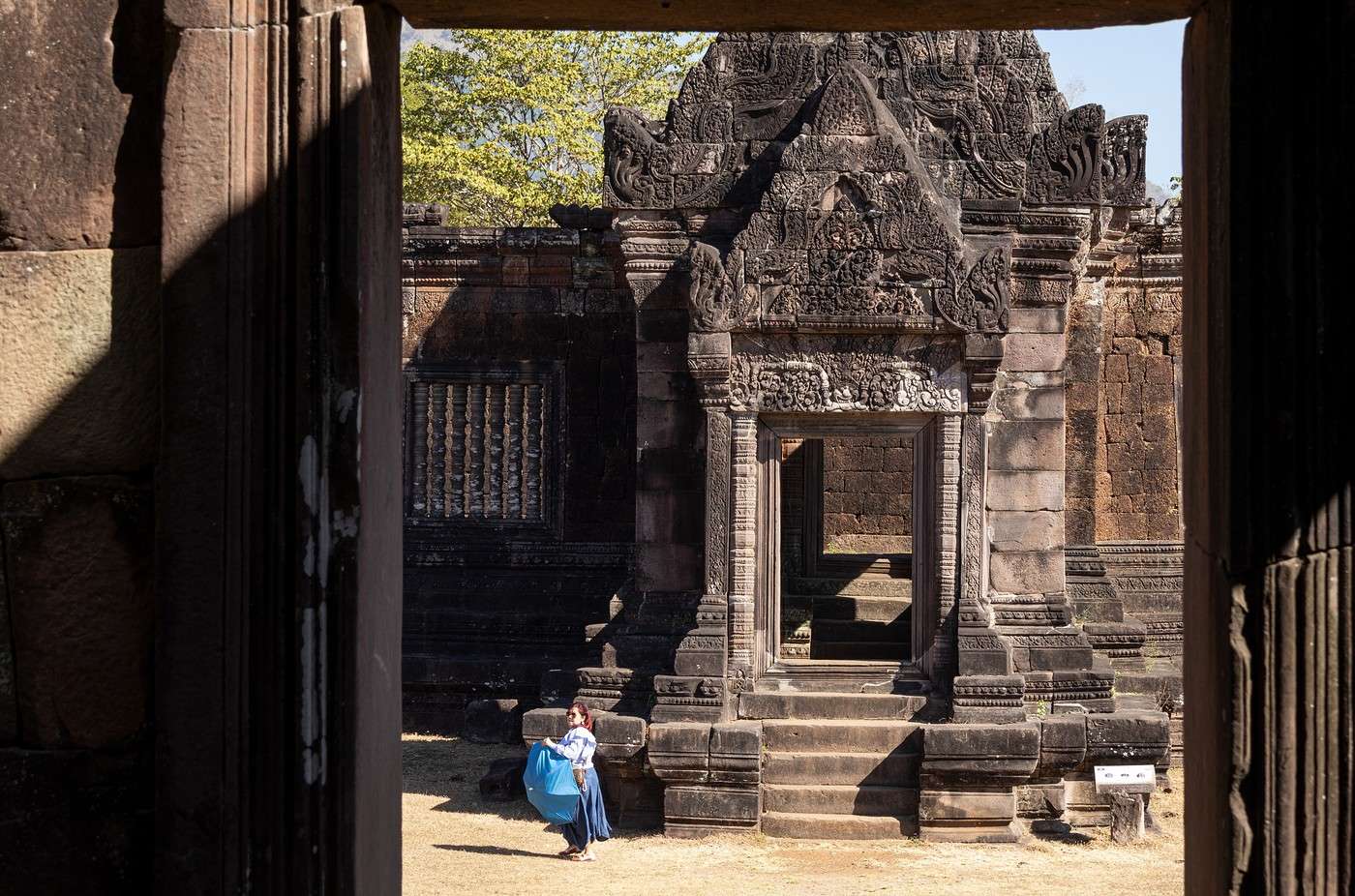
Tomorrow’s our last day in Laos. We’re off to Champassak to visit Vat Phou. To forget Angkor?