in Entre deux voyages › Carnets de voyage
Six-week trip to Mexico (page 11 of 12)
Discussion started by GeorgesOZ on 2019-12-05
226 replies
This thread has been translated into English.
Six-week trip to Mexico
Nimou74 · 2020-04-21 · Message 201 of 227
This travel journal is still so amazing. I'm loving it. Thanks! 🙂
Six-week trip to Mexico
GeorgesOZ · 2020-04-21 · Message 202 of 227
Still as amazing this travel journal. I'm loving it. Thanks! 🙂
Thanks Anne-Claire! That's really nice of you to say. 🙂
Six-week trip to Mexico
Michant · 2020-04-21 · Message 203 of 227
Neil Young et Cortés - Romantic distortions
Your analysis of the "romantic distortions" about Mexico really resonated with me, especially the current "Tibetomania" that, in the wake of Tibet’s recent misfortunes, has turned it into some kind of Himalayan Buddhist Eden.
There’s no question that China’s occupation of Tibet, the brutal repression, and the forced sinicization it has endured—leading to what’s been called a "cultural genocide"—must be strongly condemned.
But hasn’t it been forgotten that, until it fell into the hands of the Chinese PLA in 1950, Tibet was an extraordinarily backward and brutal feudal society? The vast majority of the population was reduced to serfdom and silence, dominated by the overwhelming power of lamas who grew rich at the expense of their peasants and waged war among themselves.
I hope I won’t get torn apart by the ghost of Alexandra David-Néel… 🤪
Six-week trip to Mexico
GeorgesOZ · 2020-04-21 · Message 204 of 227
lamas who grew rich at the expense of their peasants and waged war against each other?
Warring lamas—doesn’t sound very Buddhist, tut tut tut!
I have Buddhist affinities, but the naivety of some who only see "all beautiful, all kind" really gets on my nerves. What can you say when you see the repressive attitude in Myanmar against non-Buddhist minorities? The silence of the Buddhist majority is deafening.
Similarly, the rampant practice of "tamboun" in Thailand, which results in the enrichment of monks.
PS: Popes were sometimes warlords in medieval Europe. And let’s not even talk about wealth!
Six-week trip to Mexico
GeorgesOZ · 2020-04-21 · Message 205 of 227
Romantic Distortions (Again)
After that detour through Asia, let’s get back to Mexico. Or at least, get a little closer. I was talking about the romanticization of Indigenous peoples "of all feathers." There’s another striking example: the romanticization of the Sioux in the well-known film *Dances with Wolves* by Kevin Costner. The movie was praised for flipping the old "good whites – bad Indians" equation of classic films. It was celebrated for its cultural, historical, and aesthetic value.
Sure, sure, but there’s criticism.
One issue with Costner’s approach is that the Sioux are portrayed as "beautiful and kind," while the Pawnees who appear in the film are "ugly and evil." All historical accounts describe the Pawnees as victims of the Sioux (who were far more powerful). The Sioux are also heroic, while 3 out of 4 Pawnees are cowardly.
This black-and-white portrayal is frustrating and, in my opinion, detracts from the film’s value.
It was appreciated that Indigenous roles were given to Native American actors. But that’s only partially true. Only the main one of the 4 Pawnees in question is played by a Native American (Wesley Studi, who is Cherokee—he excels in unsympathetic Indigenous roles). The other 3 are clearly white actors.
The film’s hero, played by Kevin Costner, is an American officer named John Dunbar, who integrates into a Sioux tribe. The real-life John Dunbar was a missionary… among the Pawnees!
When the hero expresses his admiration for the Sioux, one of their qualities he highlights is being very "family oriented" ("centrés sur la famille"). It’s such a modern (Anglo-Saxon) expression that it really rings false.
Kevin Costner himself has Cherokee ancestry (a drop or two of blood)—he could’ve done better.
Six-week trip to Mexico
Aquilegia · 2020-04-21 · Message 206 of 227
Let's overlook the odd use of "lay" (past tense of "to lie") which means "lay". Why not "stood" = "was, stood"?
Because "On the shore lay Montezuma" sounds better to the ear than "stood" in English (my native language). "Lay" isn’t always literal. Anyway, song lyrics are poetry.
Six-week trip to Mexico
Frmi31 · 2020-04-21 · Message 207 of 227
Don't mix up the Maya, Aztecs, and the various Native American tribes from the USA!
Six-week trip to Mexico
GeorgesOZ · 2020-04-22 · Message 208 of 227
Cholula – Museum and (more) geography
We took a big detour through Tibet and the great prairies of North America. 😉 No surprise there, since a real trip always opens thematic doors to other journeys (including virtual ones). I’ll admit I’m fond of a few good digressions, especially these days when we have to spend almost all our time at home. We’ve got the time!
I left you at the top of the Cholula pyramid. Well, we finally tear ourselves away from gazing at Popocatépetl. The tickets we bought include a visit to the museum. We find the museum at the northeast corner of the pyramid. The young man at the reception tells us no, we’re not at the right museum—this is the Regional Museum of Cholula. But no worries, entry is free, he says with a big smile. 🙂 Since we’re here, let’s check it out!
The ground-floor rooms cover Cholula’s geography. Ah, just the kind of thing that grabs me! We’re told that during the Cretaceous period, there was only a sea where Mexico is today. You could’ve gone from the Atlantic to the Pacific without a hitch. Good thing Ferdinand Vicomte de Lesseps wasn’t born yet—he’d have been out of a job! 😉
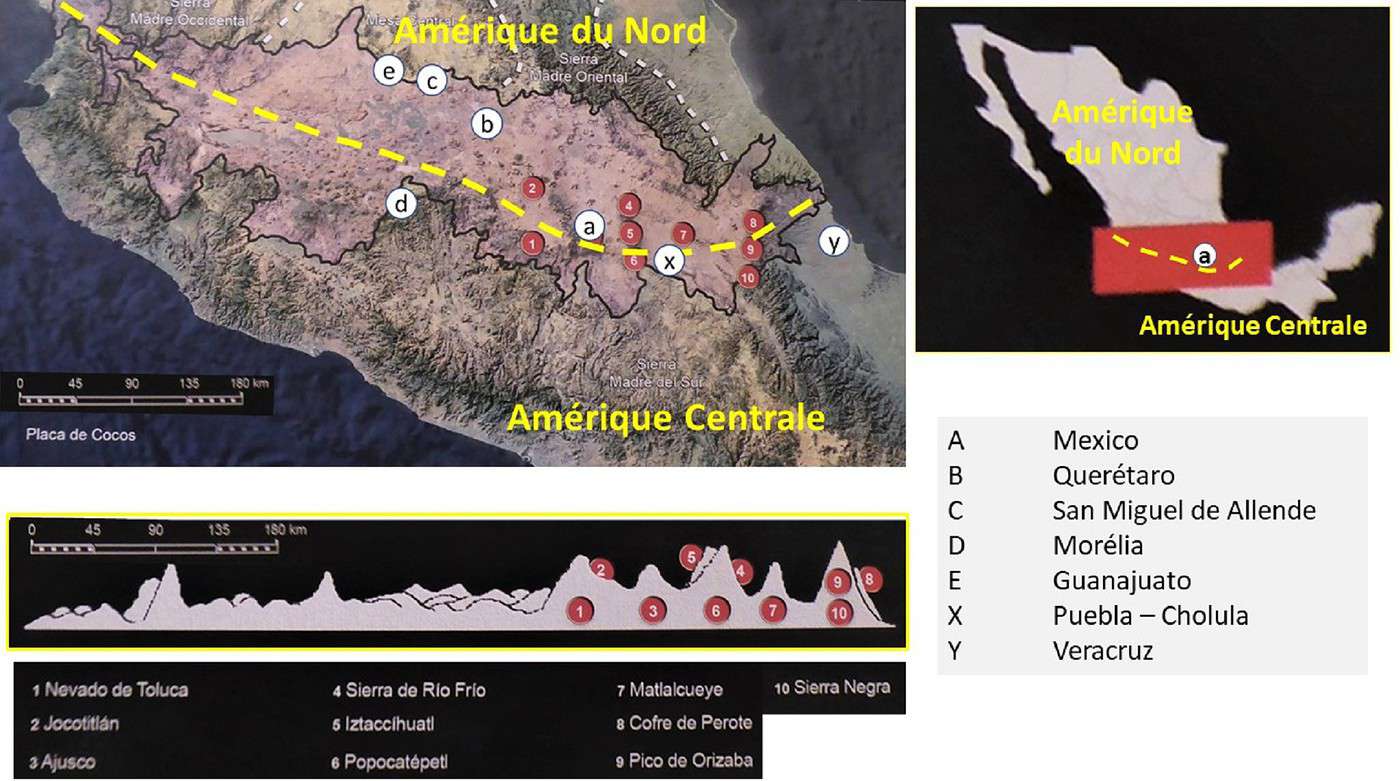
I’ve touched on this before when we took the flight from Mexico City to Villahermosa and flew over the mountains of the "Mexican Volcanic Axis," an important west-east geological feature. This volcanic axis is caused by the subduction of the Cocos tectonic plate under the North American plate. The subduction starts along the Pacific coast of southern Mexico, hundreds of kilometers to the south, but the slope of the Cocos plate’s "dive" northward is gentle, so volcanic activity shows up much farther away. This activity is relatively recent (it only started 25 million years ago).
The volcanic range is considered the geological divide between North America and Central America. I fiddled with the photos taken at the museum to show this clearly. I added yellow dashed lines to mark the projection axis corresponding to the cross-section showing the main volcanoes (numbered 1 to 10). I also added the locations of the cities we visited—plus Veracruz on the Caribbean coast for its historical importance. Finally, the inset shows the position of this central zone of Mexico at the scale of the whole country, clearly distinguishing the two important geographical areas: Mexico City straddles North and Central America. Admit it—that’s not common!
And now everyone understands why VF’s Destinations tab lists Mexico under two different categories!
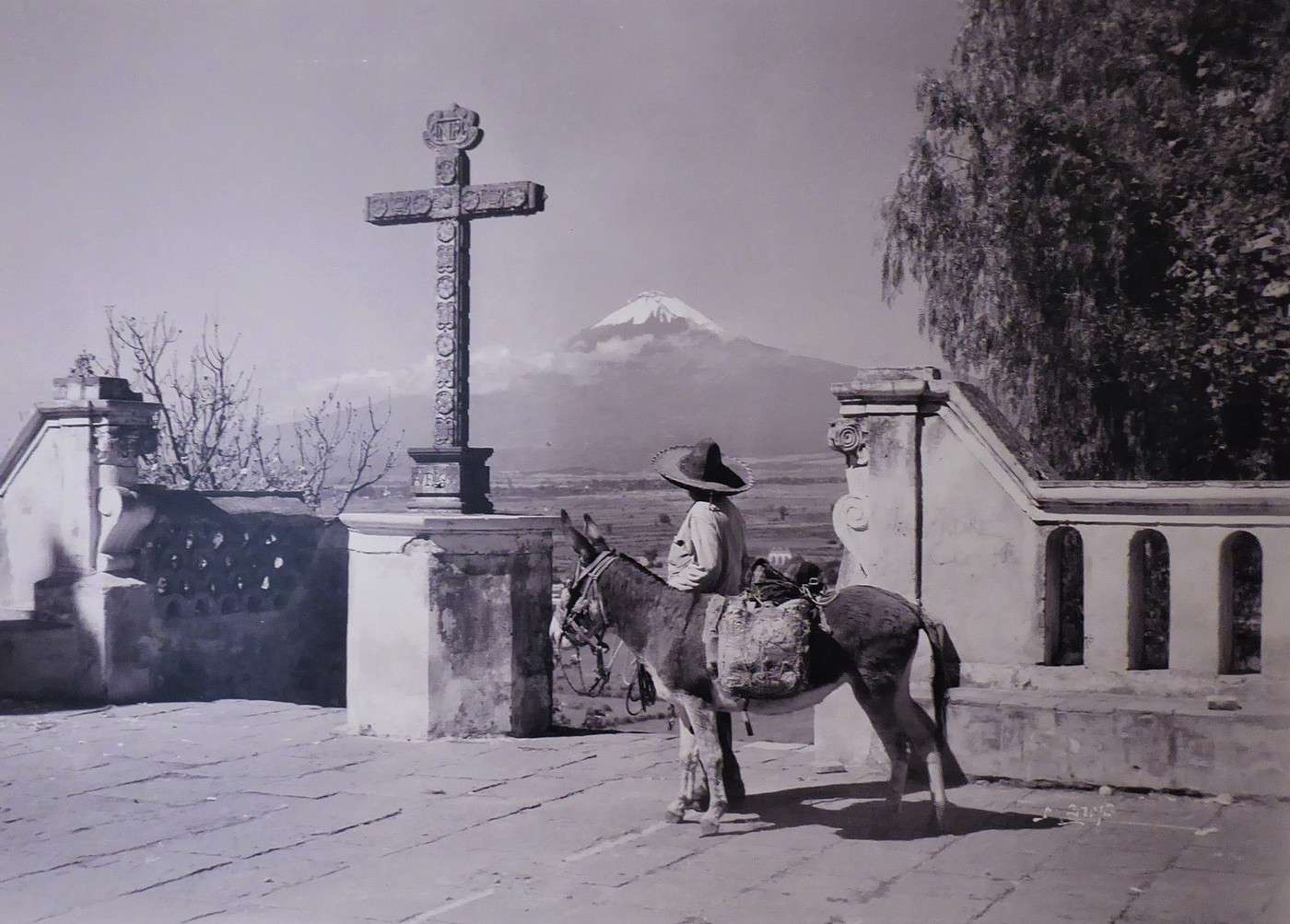
All that, plus this great photo of a Mexican farmer standing in front of Popocatépetl with his donkey, wearing the famous Mexican sombrero—mythical sombreros that I don’t think anyone wears anymore these days.
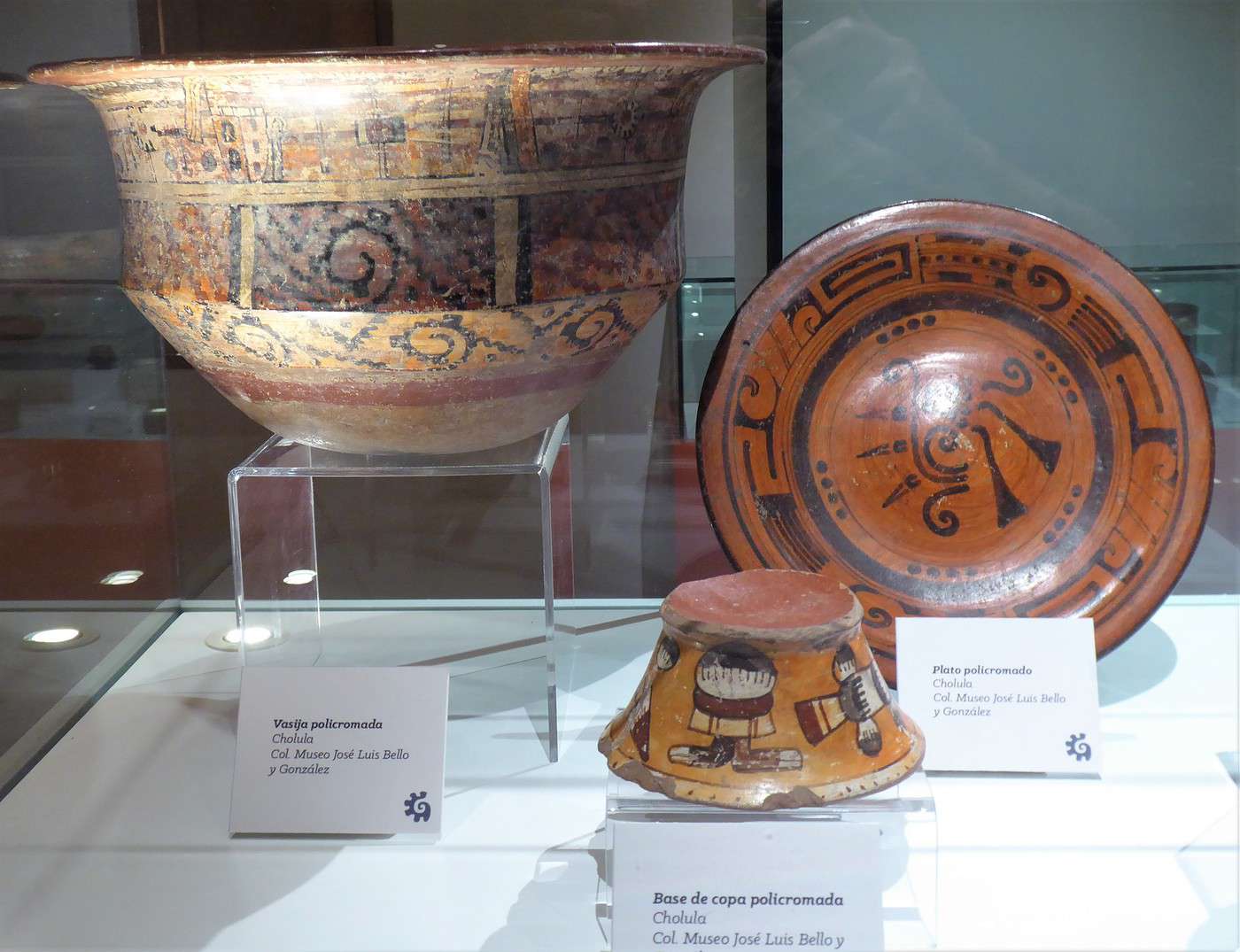
Upstairs, the museum features a superb collection of pre-Columbian artifacts, mostly Aztec and Cholultec pieces. It’s a Cholula museum: it takes care to point out that Cholula had its own distinct cultural identity. And it’s mentioned with obvious pride that Moctezuma ate from Cholula’s polychrome pottery!
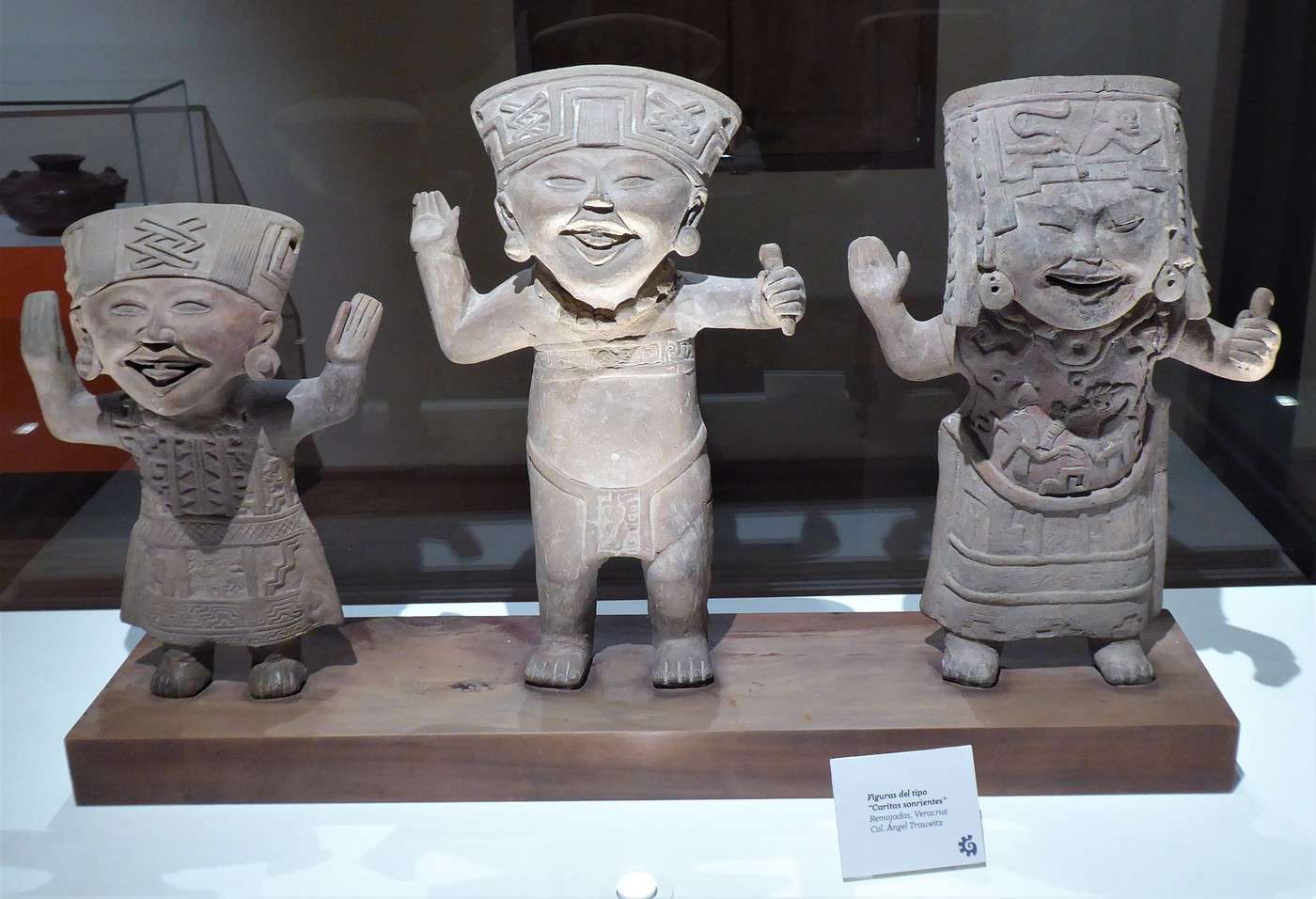
There’s this group of three people bursting into laughter—something I hadn’t seen before. Usually, these cultures seem pretty severe. These pieces come from the Veracruz region.
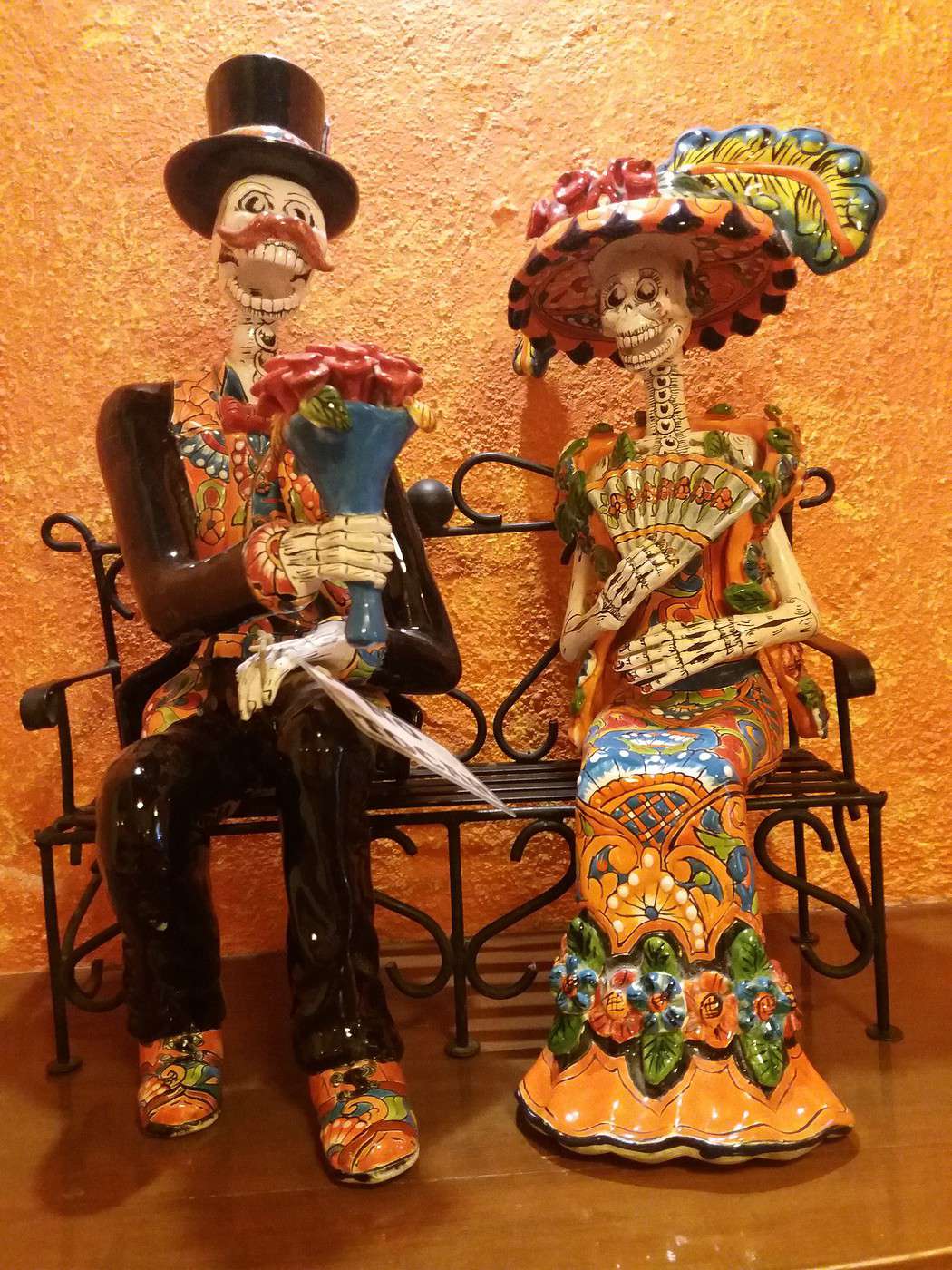
After leaving the museum, we’d still have to cross the street to visit the pyramid museum (the one our tickets are for), but we’ve had our fill for the day, and it’s time to think about food. Ten minutes later, we’re settling in at Garibaldi, the upscale (relatively speaking) restaurant on a corner of the Zócalo. Mexican dolls decorate the niches along the walls, grinning at us with their skeleton teeth. Nothing like that to whet our appetites! Actually, we eat very well for 370 pesos, or 17 €. For two people, that’s really reasonable.
That’s all for this batch! Hasta luego!
Six-week trip to Mexico
Memphre · 2020-04-22 · Message 209 of 227
Hi everyone,
It’s with obvious pride that we mention that Moctezuma ate from polychrome tableware from Cholula!
Proof, we need proof… We want evidence showing Moctezuma eating from such tableware…😎
In the Ciudad Victoria region, there’s a curiosity (?) called « Moctezuma’s Table, » but no tableware has ever been seen there…
For the mountain range(s), I’ll stick with the ''Sierra,'' Oriental, Central, and Occidental… it simplifies things😛
Having driven through them several times, I remember these winding mountains are just as impressive as the Pyrenees or the Alps.
I can still hear my wife’s comments: ''Are we ever going to stop turning?''😛
The ''breathtaking'' views—or even ''heart-stopping'' ones—are in those areas…
Today, April 22nd, with lockdown, snow, and -7°C outside, thanks again to Georges for sending us a bit of Mexican sunshine (the real one…!)
Six-week trip to Mexico
GeorgesOZ · 2020-04-25 · Message 210 of 227
Cholula – Textiles
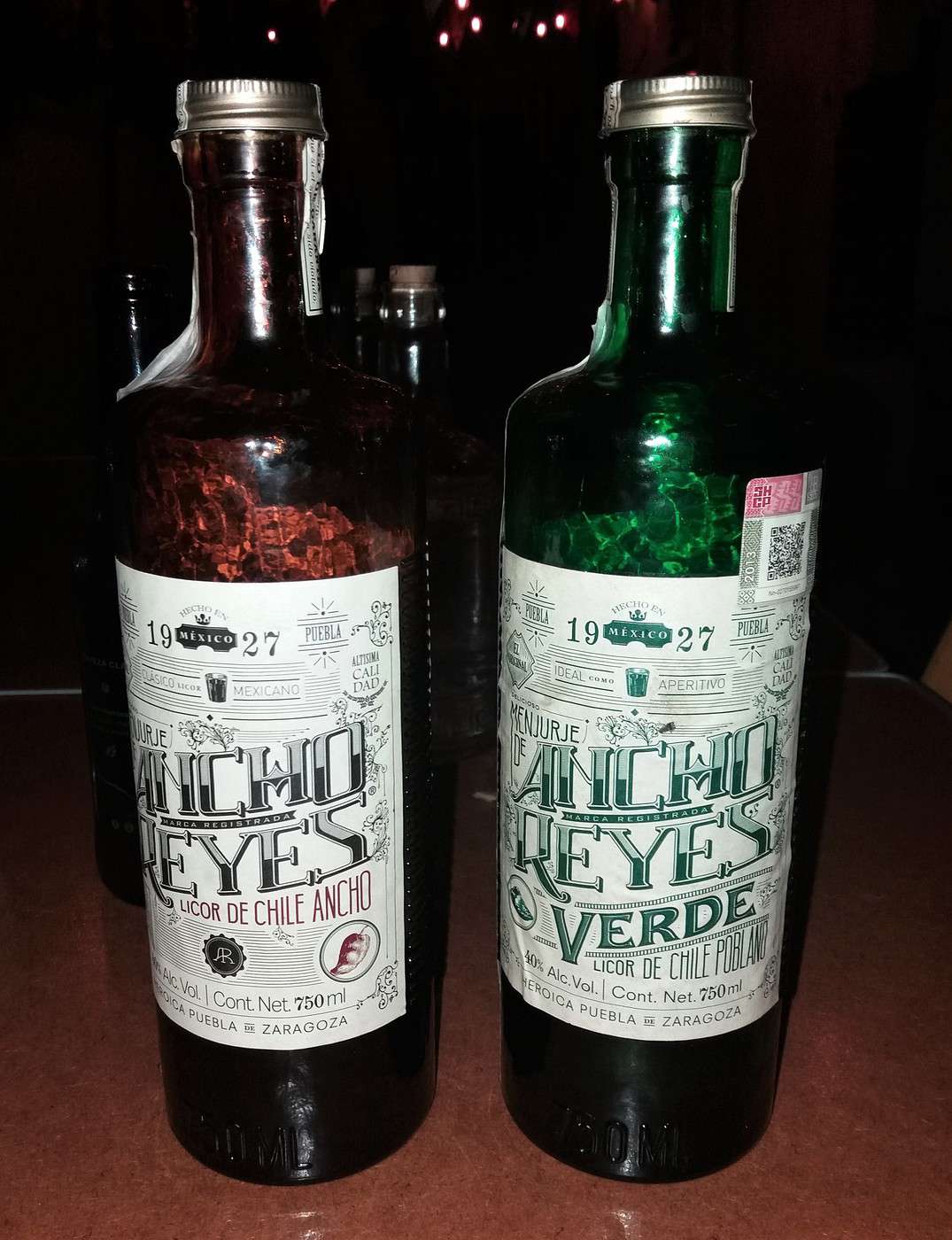
On our second night in Cholula, no mistake, we went back to the mezcalería we’d tried the night before. This time, I gave in to a cocktail made with pulque, mezcal, and strawberry juice: the »ometeotl«, a very Nahuatl name. It wasn’t the best drink I’ve ever had, but it was okay. Since we liked the place, we ate there and had two or three more drinks. After downing my third of a liter of cheap stuff—only 70 pesos—the temptation lingered: there was something on the long drink menu that intrigued me, alcohol made from chili peppers. It was the « licor de chile poblano »—how could I resist a name like that, especially since it came in green and red? A bit pricier, but it was better… and surprisingly, it didn’t burn your mouth off.
Another night where we blew our budget: a total of 500 pesos, or about 23 or 24 € for the two of us.
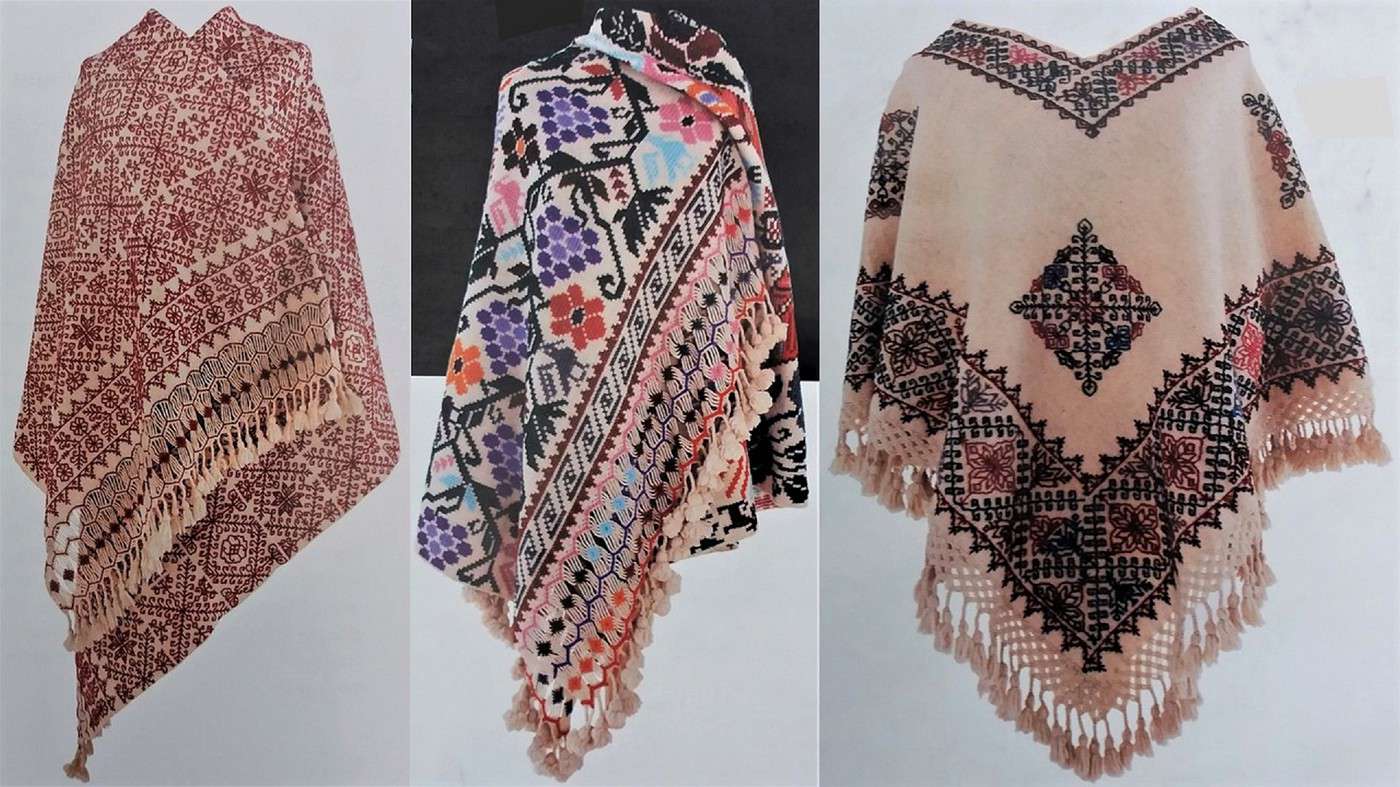
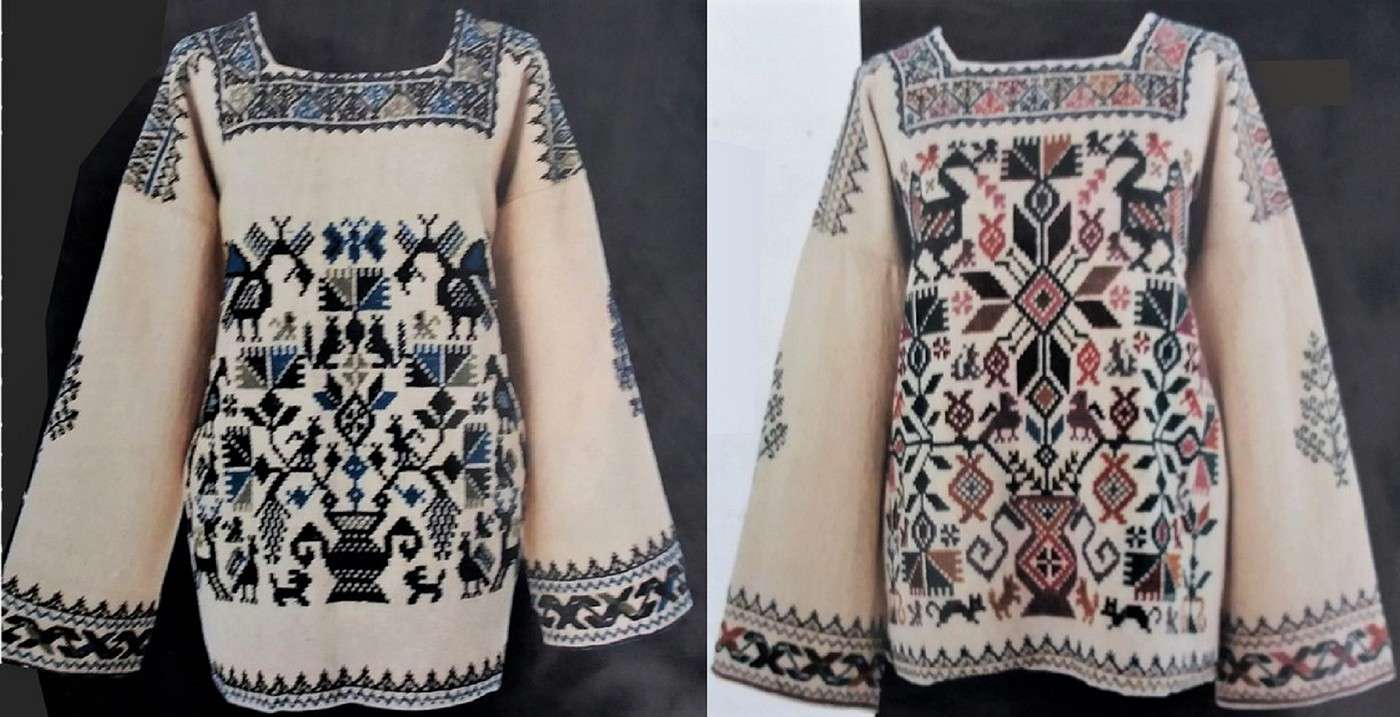
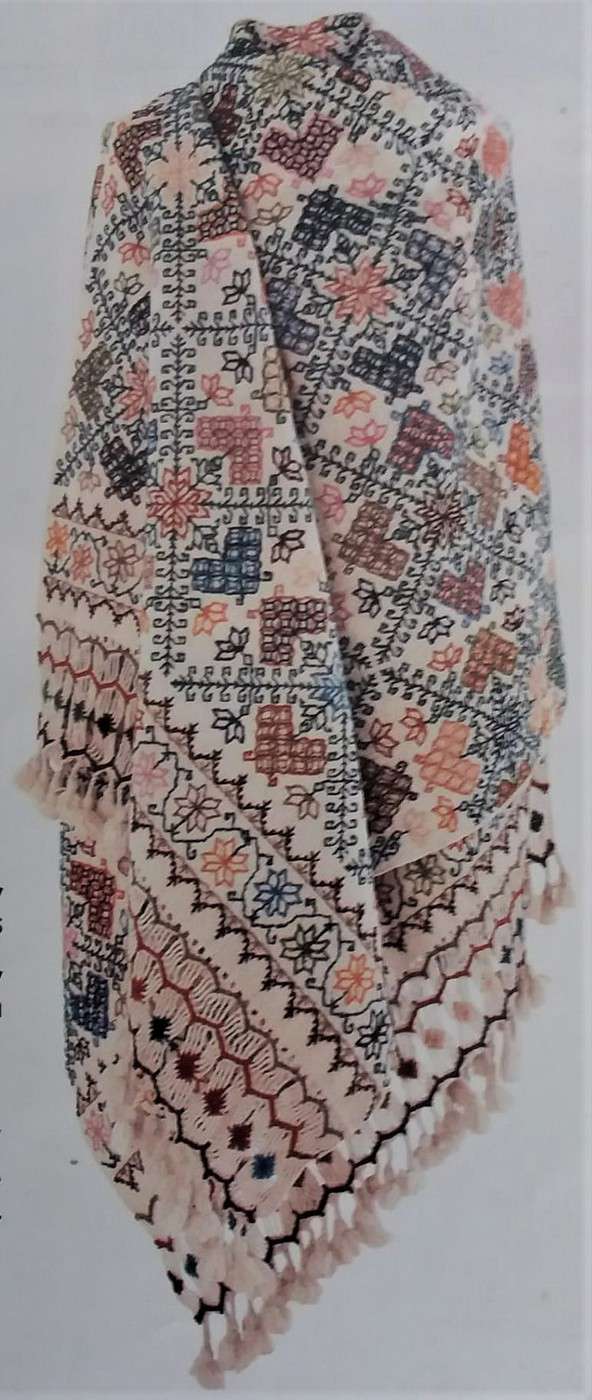
At the hotel, I spotted a catalog of « huipils », capes, shawls, bags, and other textiles woven and embroidered by a community somewhere in the state of Puebla.
The wool is dyed using animal and plant-based dyes—nothing chemical. Mineral pigments are also used. The scarlet or crimson red comes from cochineal (an insect). The deep blue is made from Indigofera suffruticosa, a shrub native to this part of the world—hence the name « indigo ». The etymology of the word "indigo" reminds us of the connection between India and the Americas, born from the confusion of 15th- and 16th-century Europeans: the Roman purple came from the East, and they spoke of the « indicum », meaning "from India."
My photos aren’t great—I took them quickly with my phone. Plus, I had to "enhance" them so they’d be large enough to upload to VF, which is why they’re pixelated. But you’ll agree with me: these textiles are truly stunning, almost museum pieces. 😎
So, I made a note of the region where these textiles are made, with the idea of visiting next time I’m in Mexico. It’s 100% Nahua country and pretty off the beaten path. 😉 Oh, and by the way, I’ll add another nail to the coffin of that silly dichotomy between the so-called "Colonial Mexico" and "other Mexicos."
Six-week trip to Mexico
Frmi31 · 2020-04-25 · Message 211 of 227
You want to talk about the Huipil, the traditional clothing of Mayan women?
The ones you’re showing are ponchos and jackets worn in cold weather.
Six-week trip to Mexico
Frmi31 · 2020-04-25 · Message 212 of 227
I have 3 Huipils and 1 Poncho at home
Six-week trip to Mexico
Michant · 2020-04-25 · Message 213 of 227
Hi there,
But you’ll agree with me: these textiles are truly magnificent, almost museum pieces.
I showed these shawls and huipils to my wife. I got a "meh," a pretty clear pout... 🤪
She prefers things from Asia (I’d brought her pashminas from Kashmir). So now I know where I stand!
On the other hand, for museum pieces, she’s all in! 😛
Six-week trip to Mexico
GeorgesOZ · 2020-04-25 · Message 214 of 227
You want to talk about the huipil clothing of Maya women
those you show are ponchos and jackets worn in cold weather
Huipils aren’t exclusive to the Maya, far from it. In fact, it seems the word comes from Nahuatl: "huipilli" means "decorated dress or blouse" in Nahuatl. The Maya equivalent would be "hipil". I’ll admit I can’t say much more—I’m sure there are people way more knowledgeable about this than me.
I didn’t necessarily mean to show huipils with the few photos above; I just picked some that seemed representative of what this community produces. Actually, they’re more like shawls (I think) but also "quexquémitl" (what you call "ponchos").
Note: this production is in wool. In warmer parts of the country, it’d be cotton instead.
By the way, outside the Maya world, do you really know much about Mexico?
Six-week trip to Mexico
GeorgesOZ · 2020-04-25 · Message 215 of 227
I showed these shawls and huipils to my wife. I got a "meh," a pretty clear pout... 🤪
She prefers things from Asia (I’d brought her pashminas from Kashmir). So now I know what to expect!
But for museum pieces, it’s a yes! 😛
Personally, what interests me most are blankets and other items you can use at home, rather than clothes to wear outside. For a woman, there are more possibilities, I think—wearing a blouse or draping an "exotic" shawl is fun. She’s never one to shy away from local outfits. 😉 But as they say, to each their own, right?
You mention pashminas from Kashmir. Without a doubt, Kashmir produces high-quality crafts. But I’ve seen so many pashminas... (of all qualities, even in India).
Kashmir would open a whole chapter on India, but since it’s much bigger than Mexico, we’d never get through it easily! For textiles, it’s amazing, to put it briefly.
Six-week trip to Mexico
Michant · 2020-04-25 · Message 216 of 227
By the way, after leaving the Maya world, do you really know much about Mexico?
It's a religion! 😎
https://voyageforum.com/v.f?post=10124274;a=10124274
Six-week trip to Mexico
Memphre · 2020-04-25 · Message 217 of 227
Hello
But you’ll agree with me: these textiles are truly magnificent, almost museum pieces.
I showed these shawls and huipils to my wife. I got a "meh," a clear pout... 🤪
She prefers things from Asia (I’d brought her pashminas from Kashmir). So now I know what to expect!
On the other hand, for museum pieces, she’s all in! 😛
Hi,
The huipils (blouses or shirts with square necklines and long or short sleeves) worn in certain regions of Mexico and throughout Guatemala are especially remarkable for their colors and designs, which are stunning in the context of their countries of origin..😛
I’ve bought colorful, embroidered shirts in Guatemala because I found them so beautiful! But those clothes don’t fit in outside of Guatemala, and the same goes for some so-called Mayan clothes from Mexico.
Out of context, they become... "folkloric" clothes...!!!
Nowadays, when it’s time to return and think about gifts, we lean toward practical yet beautiful items, like tablecloths (mantel), ceramic plates (from Dolores Hidalgo), or margarita-specific glasses (from San Luis Potosí).
The advantage of traveling by road... and filling up the car trunk! 😏
Six-week trip to Mexico
GeorgesOZ · 2020-04-25 · Message 218 of 227
….Out of context, these become "folkloric" clothes…..!!!…
Nowadays, when it comes time to return and think about possible gifts, we lean toward the practical…..
That’s exactly what I think. I only wear those exotic clothes I bought (mostly) in India or Bangladesh in the Y region of Thailand—they’re so comfortable, especially in hot weather. In Europe, people would think I’m crazy.
As for Y, she can wear whatever she wants pretty much anywhere. 😎😉
So, I also focus a lot on practical things (home textiles).
Six-week trip to Mexico
Joss34 · 2020-04-25 · Message 219 of 227
I get her "offbeat" side better now.
How can someone knowingly choose a religion that even the locals no longer practice (at least seriously) and that required human sacrifices and blood to appease the Gods.
Six-week trip to Mexico
GeorgesOZ · 2020-04-25 · Message 220 of 227
I get her "quirky" side better now.
How can someone knowingly choose a religion that even the locals don’t practice anymore (at least not seriously) and that required human sacrifices and blood to appease the Gods.
Oh? That’s something new. Can you explain?