March 26 to March 30. MAJULI
My host walks me to the side of the road, and we wait 5 minutes for the bus to arrive. Here, everyone travels seated, which is really nice. Along the way, we pass tea gardens on both sides of the road. It’s the start of the picking season, and the women are at work.
In Jorhat, I take a rickshaw to Neematighat, 12 km away, where the ferry terminal to Majuli Island is located. The crossing takes an hour by ferry—it’s pretty slow, and the ferry is full. It carries cars, motorcycles, goods, and pedestrians.
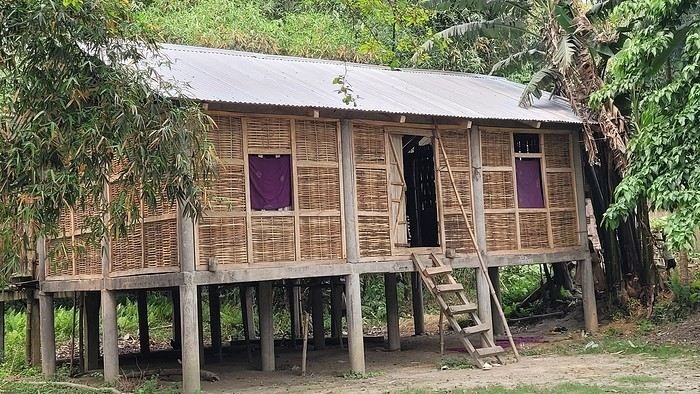
We arrive at Dakhinpat, and as soon as I get off the ferry, I’m quickly picked up by a shared taxi driver. We have to wait until the car is full to leave—that means 10 passengers—and we head to Garamur. When we arrive, I easily find a tuk-tuk that takes me to Ananda’s place. We stop by the restaurant, and an employee leads me down the path to the accommodations—simple, clean bamboo bungalows side by side. The place is really nice and peaceful. I spend the afternoon relaxing. I meet the owner, who suggests a tuk-tuk tour for the next day. We go to the restaurant, where maps of this part of the island are displayed. We plan the next day’s visit to the most important satras. The distances are too far to cover by bike, so I’ll need to hire a tuk-tuk for the day.
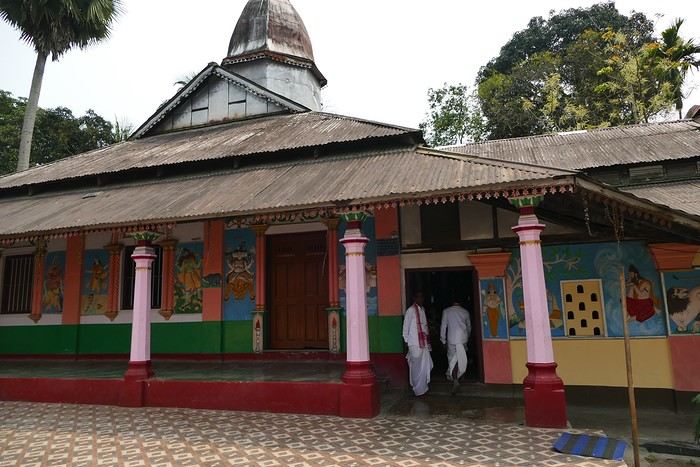
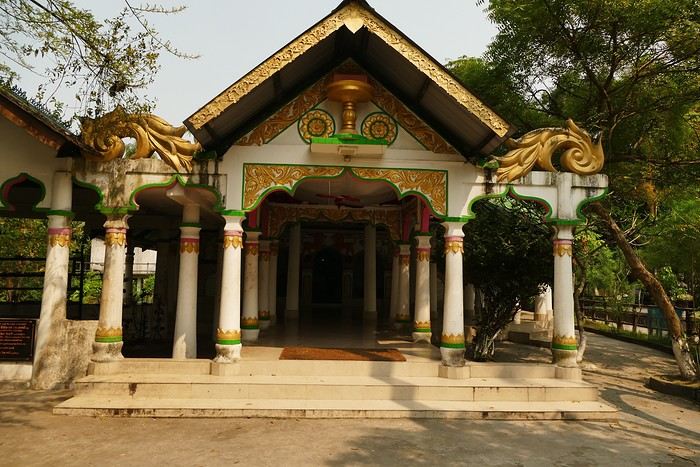
satra = Hindu monastery. Of the 65 satras that once existed on the island, only 22 remain today, all dedicated to Vishnu and also serving as cultural centers.
The monks are known for their traditional dances and songs, but you have to come during the festivals—unfortunately, there aren’t any right now.

Thursday, March 27. The rickshaw driver, Binud, picks me up at 8:15 AM and takes me to Chamagari Satra. This is the center of mask culture in Majuli.
When we arrive, I see the masks displayed on the outer walls.

A small room on the side is filled with heads representing various mythological characters and creatures.

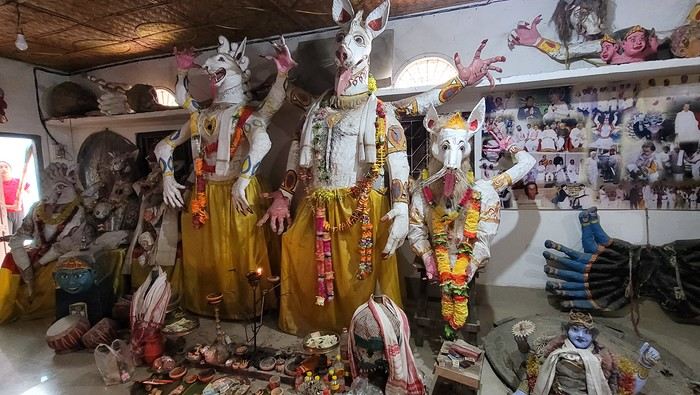
Across from it, another room where young monks are working on making new masks. These masks are used in bhaonas, traditional plays where actors wear them to portray mythological stories. The masks representing demons are the most beautiful.
Some masks are made for sale to tourists.

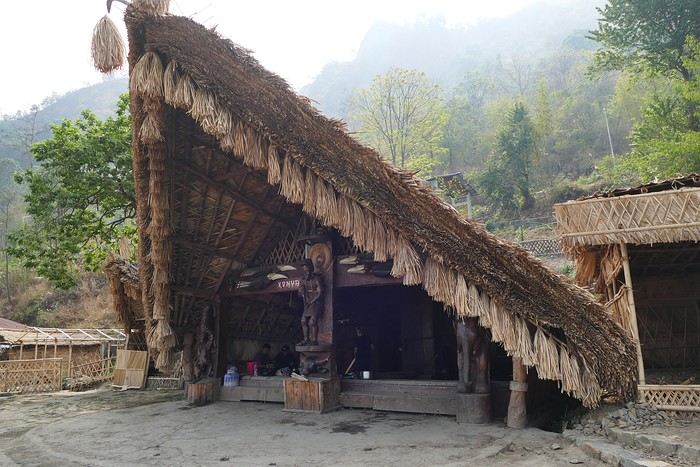
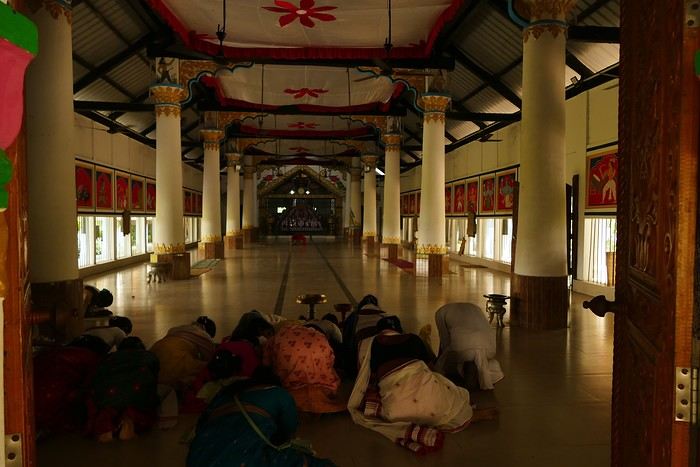
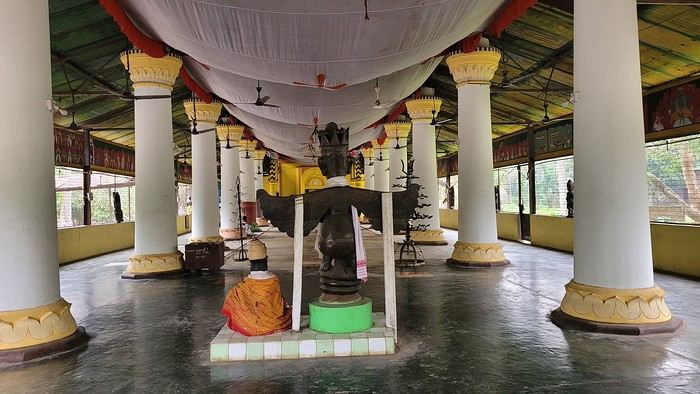
A little farther on, the monastery resembles a large hall with openings on the sides where devotees come to pray. At the back of the hall, a section is reserved for the sacred, with deities. The prayer hall is called a namghar.
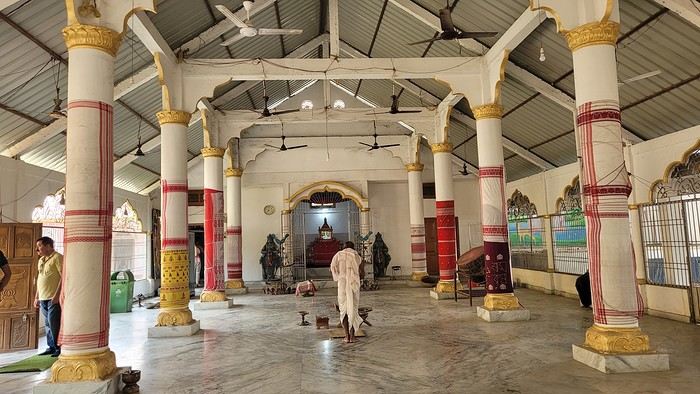
Around the monastery, rows of living quarters for the monks. Each has a room with a shared kitchen and toilet.
Young monks often arrive at the monastery as early as age seven. They’re taken in by the elders and receive an education, spending years mastering the arts taught at the satra.
We head to the potters’ village, Salmora Gaon.
When we arrive, Binud stops near a very traditional kiln. The fire is at the bottom, and on the upper level, pots are stacked on top of each other and covered with earth, which hardens during firing.
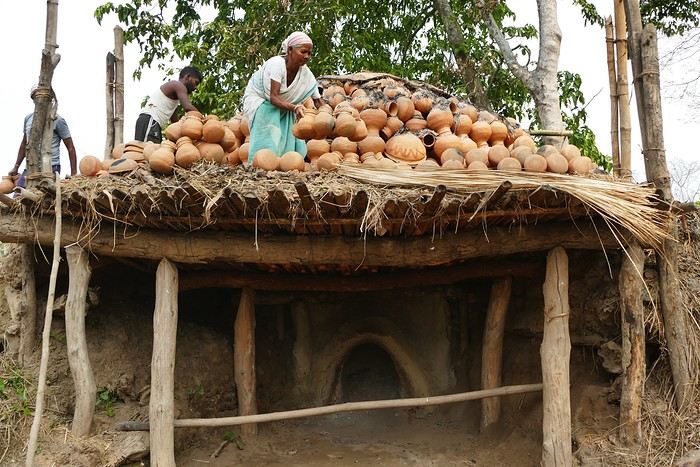

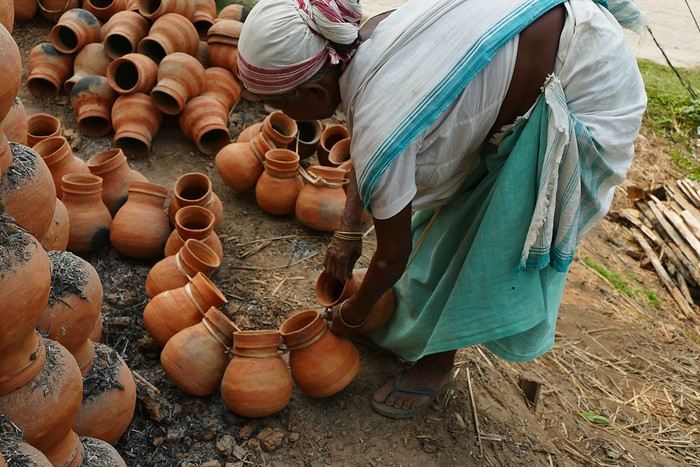
A woman and two men are unloading the still-warm pots. She ties the pots together with bamboo vines to lower them to the side of the road.
















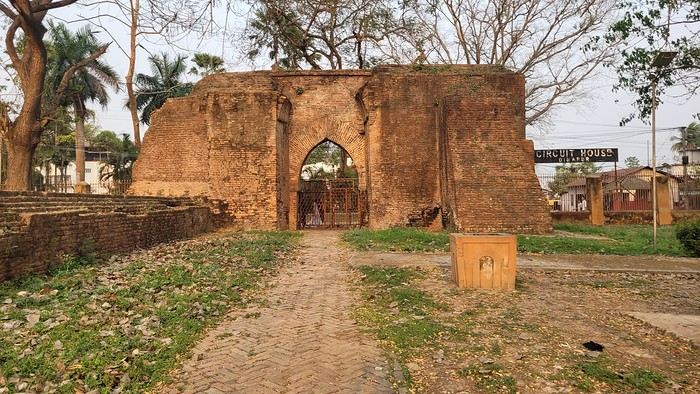
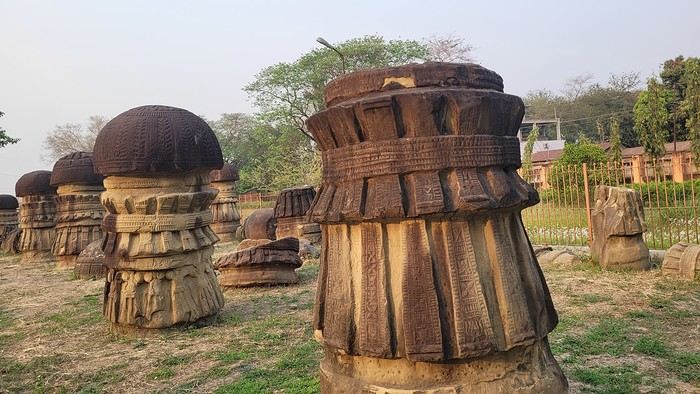 Only the fort gate remains.