Northern to Southern Alsace
A short hop after Rosheim, the fifty most attractive kilometers of the Wine Route begin in Obernai. This town of 13,000 inhabitants enjoys a fair amount of tourist success.
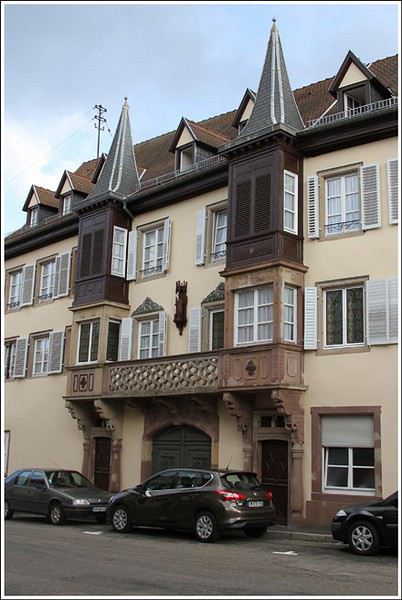
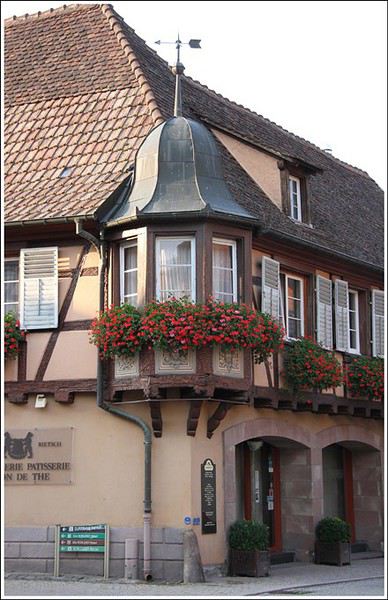
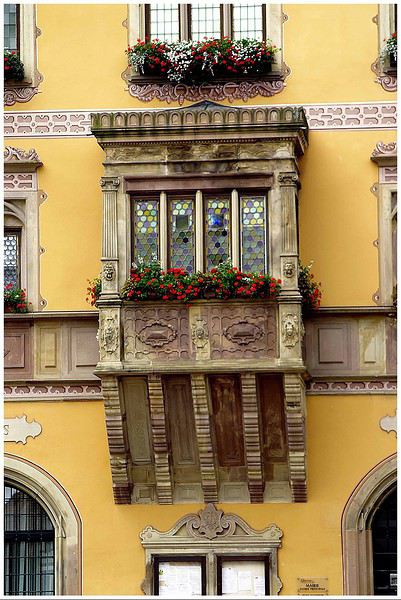
The town center is surrounded by ramparts where you can take a pleasant stroll. Right in the center, the market square and the belfry square follow one another. You’ll see beautiful old houses with colorful roofs, the old town hall with its impressive belfry over 50 meters tall, and the lovely Renaissance well with its flowers and buckets. All around, as you’d expect, restaurants and bakeries. Take a walk through the surrounding streets—there are lots of interesting buildings. For our part, we really liked the Chapel of the Mount of Olives, next to the cemetery behind Saint Peter’s Church.


For those with the time or interest, two significant sites lie in the hills west of Obernai. First, there’s Mont Sainte-Odile, a pilgrimage site where Saint Odile, the patron saint of Alsace, is buried. It has everything: a church, cloister, chapels, and a sarcophagus. At nearly 800 meters above sea level, deep in the forest. If you take one of the paths descending from it into the woods, you might come across the mysterious Pagan Wall, built by the Celts at least 22 centuries ago for reasons still completely unknown today.
Finally, about ten kilometers further west, the remains of the Struthof camp. Also high up in the forest, this was the only WWII concentration camp located in France. The sinister entrance gate, the photo exhibits, and the sight of the rooms where monstrous experiments were carried out leave visitors speechless. We’ve seen images like this a thousand times in films, but standing in front of such a place in real life is something else entirely. It’s not exactly a "must-see," but it’s an essential visit for the sake of remembrance...