Haute couture
To leave the comfort and safety of the oasis, you’ve got to shake up your body, but you can’t let your mind dry up. And to nourish it, nothing beats the road. So I plant the willing gardener and tear off for a getaway north to the Central Kalahari, if the beast cooperates and if the temperature forecasts above 40°C are revised downward. For the occasion, I’m wearing long shorts over socks and boots: in the high veld, I’ll be incognito.
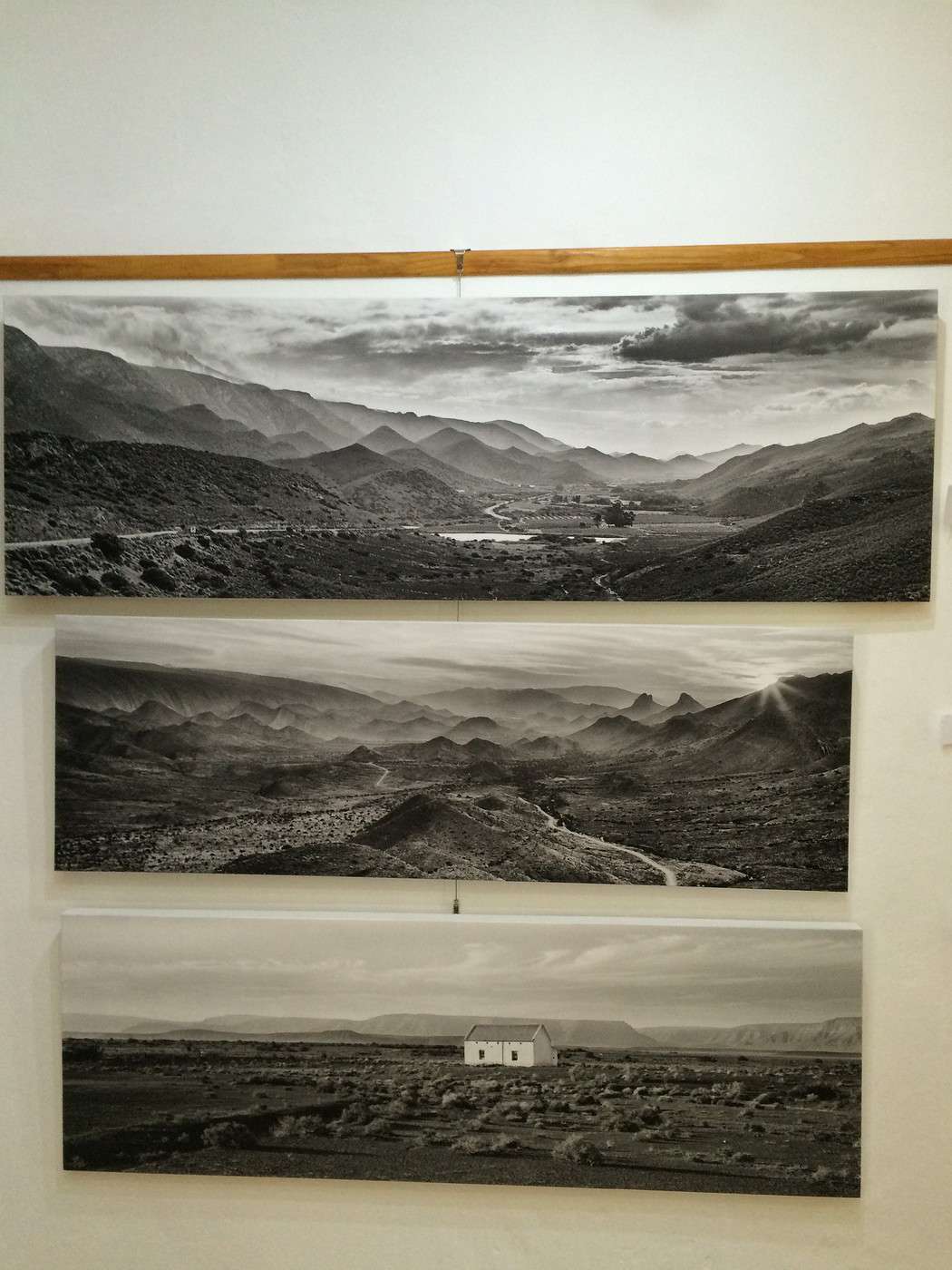
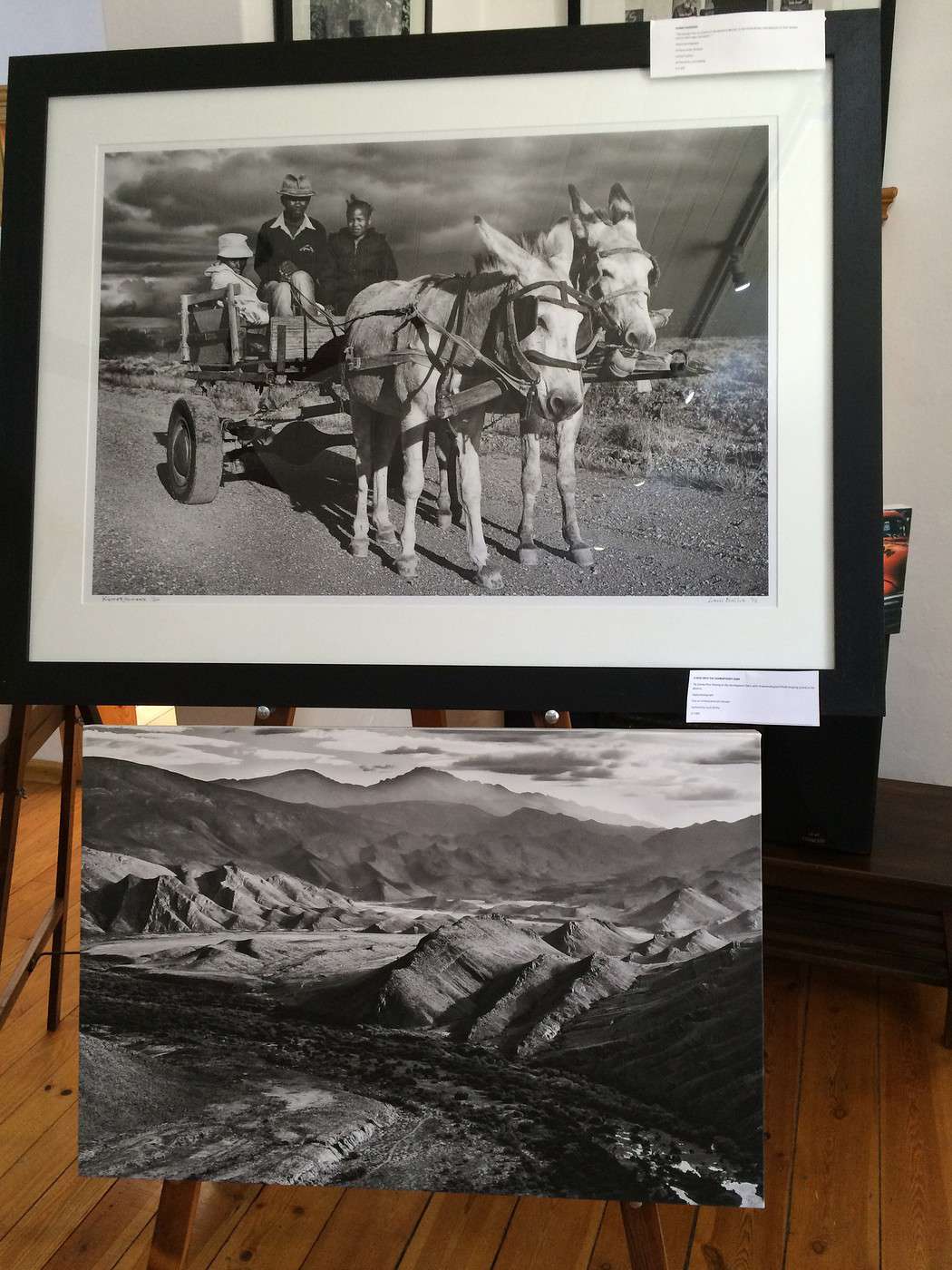
After a few hours, I reach the Great Escarpment, which leads to the Upper Karoo plateau with a modest elevation gain of seven hundred meters—enough to create two different agricultural regions. In winter, the herds stay at the foot of the escarpment, moving up for summer grazing. Even today, this transhumance is done on foot, and I’ll cross or overtake three columns of over a thousand head each. Unfortunately, no chance to chat about fabrics with the ragged shepherds who only understand Afrikaans.
I’ve set out to take these west-to-east tracks, climbing one, descending the next—one stitch right-side out, one wrong-side out. It’s a disjointed journey. I’m holding the thread, but sometimes I have to go around a needle, other times slip through an eye.
What the shepherds cover in three or four days takes me only a few hours, but I’ve been doing this for three years straight. This year, the already-sheared sheep are moving earlier than usual: there’s no water left in the Lower Karoo’s reservoirs and barely anything left to graze on. On the plateau, the natural depressions are dry, but the man-made reservoirs still hold water, and the vegetation is more bronze than brown.


*
Seen on TV
Jesus Superstar. Several thousand people, all dressed in their Sunday best, are gathered in a hall to listen to the preacher’s sermon. In this case, it’s a preacher—a blunt, Black woman with the voice of Janis Joplin in Summertime and the cadence of Patti Smith in the prelude to Horses. A drummer and two guitarists accompany her, underscoring her words with chords and rolls.
Dozens of believers lie on the floor, writhing or frozen, somewhere between an epileptic fit and a hypnotic trance. The sermon’s intensity doesn’t let up, and the collapsed are carried off, or those struggling are dragged away, to pile up those who’ve lost it. (1)
Whatever Pascal (Blaise, the inventor of the precautionary principle) might bet, it’s understood these questions appeal more to the spirit than to reason—but not to the point of losing it entirely!
I don’t buy it.
The sermons are interspersed with ads for the usual church-branded gadgets (stickers, magnets, pens, T-shirts, caps...). At the bottom of the screen, 24/7 prayer lines scroll by. Is this reality TV or infomercial?
I was watching Tswane TV, which operates part-time. Faith, the full-time rival channel, is barely less intense.
Cioran comes to mind: *‘Without the vigilance of irony, how easy it would be to found a religion! All it would take is letting the onlookers gather around our loquacious trances.’*
(1) Between rival churches, miracles are weapons. Last year, a preacher asked a woman to lie down on the stage—the altar?—and had a 250-pound speaker placed on her, assuring her he’d handle the miracle and she wouldn’t feel a thing. Indeed, she didn’t flinch: her ribcage caved in, and she died at the hospital. The apprentice sorcerer had confused *heavy* with *Lourdes*.
*
"Crunch crunch crunch"
That’s how the tow truck driver describes the noise the Defender is making to his mechanic buddy over the phone. He’s holding the phone with one hand, scratching himself with the other, and steering with his knees—reassuring to feel rescued. The night before, alerted by jerky movements, I barely made it to a roadside campsite. When I tried to maneuver, I couldn’t engage any gear. I tried all 28 possible combinations, but the car just crunched (*crunch crunch crunch*) and didn’t budge an inch.
At the garage of a Land Rover enthusiast and specialist—yes, they exist—the boss confirms the issue in ten seconds (a worn gear between the gearbox and transfer case) and announces with a big smile that he has the part in stock. It’s one of the beast’s Achilles’ heels—which seems to have more than four.
*
Serves him right!
I’m driving over 80 km/h on a gravel track in the Karoo Highlands. With this oversteering donkey I call a ride, that speed already demands full attention.
A cloud of dust approaches from behind, too fast to be a dust devil—so it’s a devil of a man. He must be doing 120 km/h, so to let him pass, I ease off the gas and pull as far left as possible.
The custom is to slow down during overtaking to avoid stone chips, then thank the other driver by flashing your hazards, to which they respond with a headlight flash. But he does neither, gripping the wheel like his life depends on it.
I just catch a glimpse of sheep and their shepherd in the back of a pickup, the former getting their wool ruffled and the latter, clinging to the sides, swallowing dust without complaint. Not sure the sheep are in that much of a hurry! I’ll see them again at the Fraseburg slaughterhouse and have a word with the driver about the rock that chipped my windshield.
The dust cloud pulls ahead, leaves me in the dust, then stops. A few minutes later, I catch up. The jack’s already out: all that’s left of the rear right tire is shreds. It must’ve taken nerves of steel and experience to keep the sheep from becoming casualties. I check if he needs help, without mentioning the windshield chip. Each day has enough trouble of its own.
*
Depending on who you are...
Arriving from the heights, you’d think it’s an Italian town: all you see is a forest of yews. But once in Murraysburg, the illusion fades—I’m definitely in an African town. On the sidewalks, cows and donkeys prune the trees, while goats take care of the trash.
The yews shade the wealthy’s well-kept cemetery. In the adjacent poor cemetery, a dense forest of stone mounds and wooden crosses rises. No trees, no plants: the goats handle the upkeep. A few newly rich have bled themselves dry for veined marble.
*
Communalism
Communalism to protect oneself from the other was apartheid’s doctrine. Twenty years later, people still largely live among their own, but it’s true elsewhere too—it might even be a growing trend.
The Oranians built a town on a 3,000-hectare private property. Two main criteria for admission: being Afrikaner and not employing any workers or domestic help—implied, non-white—meaning you do everything yourself. You’ll see whites pushing lawnmowers or wheelbarrows, wielding hammers and pickaxes, or driving tractors.
For barely over a thousand inhabitants, the town has five or six different places of worship, all Protestant. The language used is Afrikaans, exclusively, and the country’s old flag flies over the town.
In fact, I didn’t see any mixed-race people, let alone Black ones. Only whites, and not particularly refined ones. Maybe they should consider mixing things up?
*
My night with the sisters
Located in the Great Karoo, the farm is vast enough to contain the Three Sisters—three flat-topped mountains that could just as well be brothers. Nicolette insists that after Table Mountain, the Three Sisters are the country’s most iconic. Yeah, right! The family’s been here since 1830, when the ancestor, en route to the Diamond Rush, was left for dead. Nursed back to health by a passing Hottentot, he continued to Kimberley, where he quickly found two diamonds valuable enough to buy the farm. The current generation running Three Sisters Farm is down to three sisters who find the coincidence amusing. They manage 14,000 contiguous hectares where sheep and goats roam, along with a few horses and five different antelope species. Baboons and elusive leopards are also at home. Precipitation and temperatures have been recorded in large brown notebooks since 1911, and Michelle confirms this is the worst drought in a century. The current farmhouse—abandoned in the late 19th century after the wells dried up—is nestled in a valley where water still flows abundantly. Tortoises and porcupines have come down from the mountain to vacation in the park, waiting for better days.
If I dared, I’d suggest that resting on the past and under their braided crowns won’t secure the future, that the rooms could use an upgrade, and that repairs to the workers’ housing wouldn’t be a luxury. But too many signs point to a lack of means.
At dusk, the sisters’ father settles on the terrace with his daily brandy and invites me to join him. Often, he raises his eyebrows: he’s not entirely convinced by female management.
Later, under a waxing moon and against my better judgment, I witness a marital spat between Michelle and her husband. On one hand, she wears the pants; on the other, they seem unaccustomed to having guests.
As I’m about to retire, a man in his forties approaches me. He’d been dining with the owners, childhood friends. He’s been living in exile in Australia for twelve years, holds a good job in Adelaide, is married to an Australian with two daughters—but every year, he has to come back here, alone. Why?
His answer, sad and laconic, like an obvious truth: *‘Because this is my country.’*
At dawn, we learn a beer truck broke into the farm. Coming down from the mountain, it forgot to stop at the intersection, plowed straight through two fence lines, used the raised railway as a ramp, lost half its cargo on landing, and rolled into the veld.
When we arrive, about fifteen pickups have already driven through the breach, and looters are loading their beds with packs and pallets. The locals know they’ll be left with the plastic and shattered glass to clean up to prevent fires.
*
…/...
I don’t know if swallows’ brains are divided into two hemispheres, but they’d never think of changing now. Me? I would.