Our initial research on Chiang Mai already promises new and unique activities for our next visit, and we’d happily return.
Our journey south begins here.
On departure day, a receptionist found us a car driver (yes, a car) for the same price as a tuk-tuk. The boyfriend, the brother, the uncle, or the boyfriend of the uncle’s brother? Who knows.
We’d made it clear from the start that we were heading to the Arcade bus station to get to Lampang. Once our bags were loaded, the young man pointed to a building. That’s where we tried to buy tickets for a big bus, but despite repeated attempts—including with someone who spoke a little English—we were always directed to minivans, told there were no big buses.
Joel got annoyed: he went outside, found a guard in his booth, and was pointed to the same kind of building—but on the other side of the road. So we hauled ourselves and our luggage over and quickly realized it’s best to stick to our guns and persevere, or risk getting scammed. Within two minutes, we each had a ticket for 66 baht on a mid-sized air-conditioned bus. The trip took about 1.5 hours for just under 100 kilometers.
As soon as we arrived at Lampang’s bus terminal, a songthaew driver offered to take us to our hotel for 170 baht. We politely declined and quickly found another songthaew where people were already boarding.
Sure enough, at 2 x 20 baht, the price was much more reasonable.
Lampang is famous for its horse-drawn carriage rides. The drivers have formed a union, which means fixed prices for set routes—but you can also negotiate a custom route. Currently, it costs around 400 baht for a one-hour ride. Though it sounded a bit romantic, we didn’t end up trying it.
For our short stay downtown, we chose the Pin Hotel, which offers an excellent value for money. Sure, there’s no pool, but the superior room with breakfast costs just 15.50 €. We were given a spacious room on a high floor (with an elevator). The balcony offered a great view. The mattresses weren’t top-tier—we noticed a hint of firmness—but they wouldn’t bother anyone except those with extreme sensitivity. We did note that the bathroom door could’ve been replaced at least 15 years ago.
This hotel is perfect for budget travelers looking for a bit of comfort.
As usual, there’s no need to eat at the hotel—the lunch is overpriced at 140 baht.
In the early afternoon, the heat was so intense that a nap with the curtains drawn was a must. We needed a little rest before tackling our planned walk.
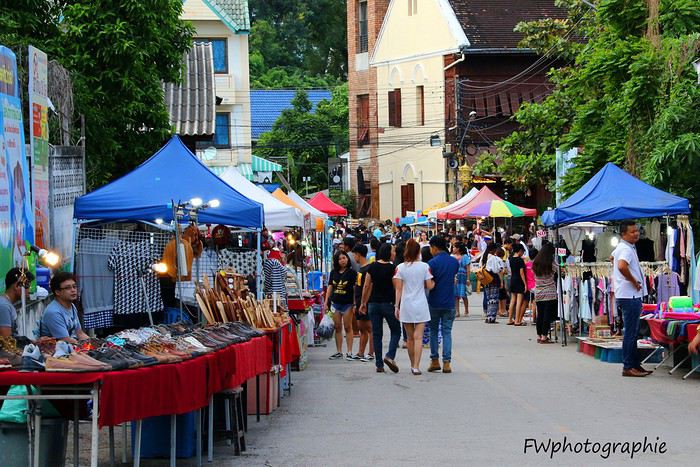
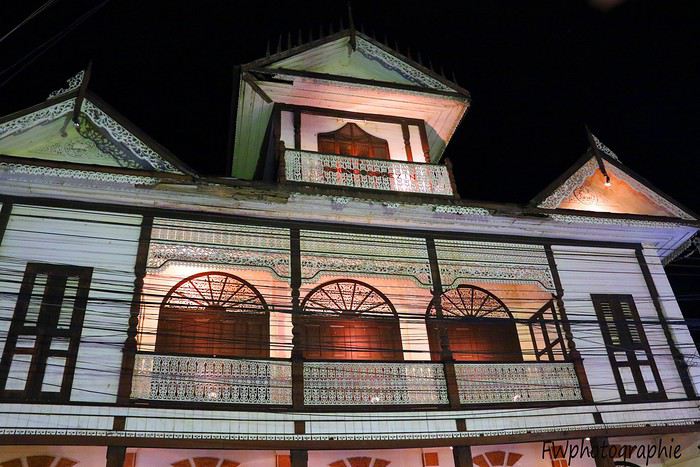
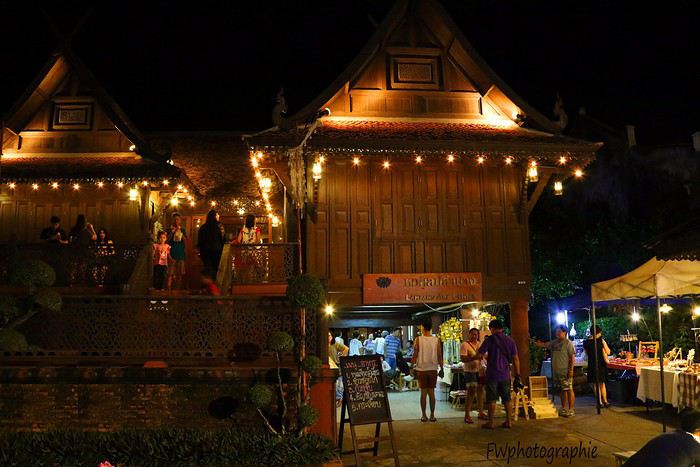
We headed north toward the river and soon found ourselves on Talad Gao Road, lined with beautiful Sino-European-style buildings. Before Chiang Mai rose to prominence, Lampang had its own golden age. Trade flourished here, peaking in the early 20th century. This street hosts the evening market, officially from 5 PM to 9 PM on Saturdays and Sundays.
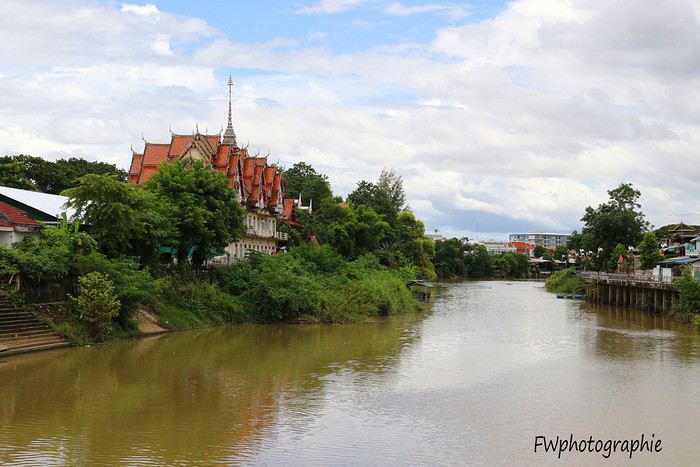
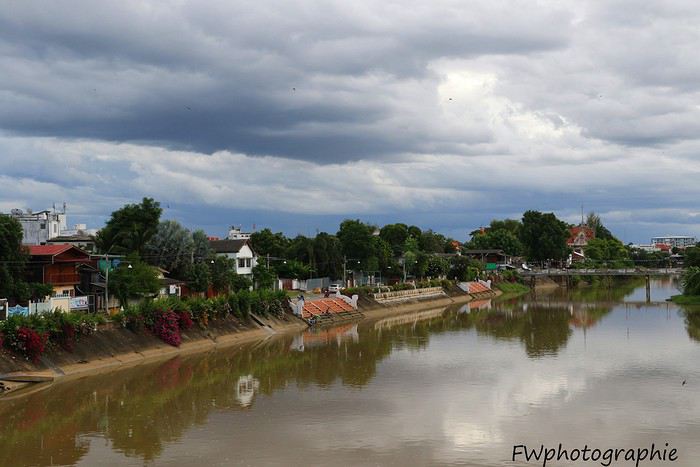
We quickly reached the Ratchadapisek Bridge, which spans the Wang River. It was once a wooden bridge, the longest in Thailand. The current version, made of iron and concrete with arches, looks like a railway bridge and dates back to 1917. Sure, traffic is heavy, but there are pedestrian paths on both sides. In the late afternoon, you can watch a large colony of swallows flying above and below the bridge in an endless, acrobatic dance as they feed.
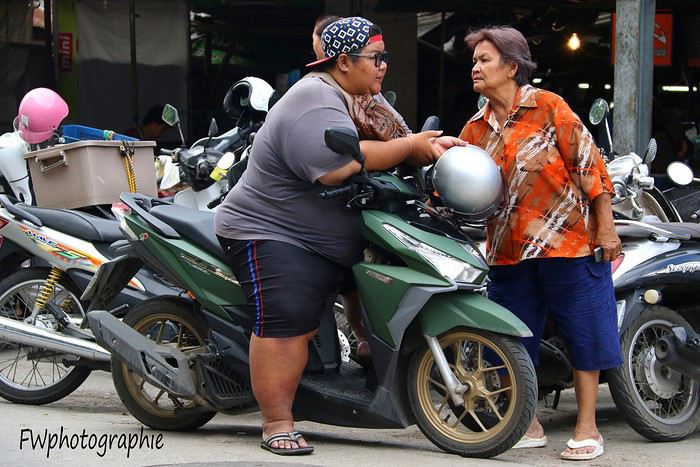
Right after the bridge, on the right, is a covered market. In this sleepy provincial town, the scene is already as authentic as it gets—just a stone’s throw from Chiang Mai’s rock ‘n’ roll bars. Naturally, we lingered to soak it all in.
We strolled eastward. It’s nicer to take the alley along the river rather than the parallel street.
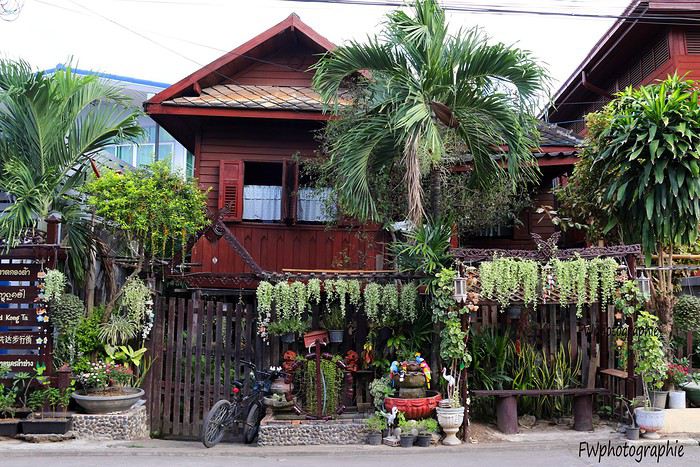
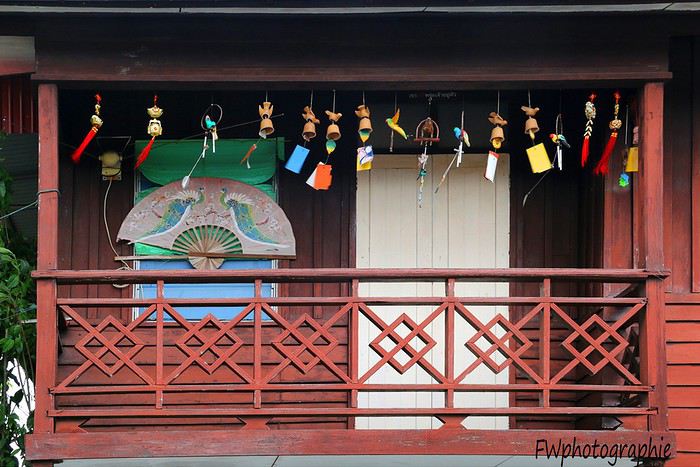
Suddenly, it’s peaceful, with old traditional wooden houses appearing alongside newer ones—wooden upper floors and concrete ground floors, some with well-kept gardens.
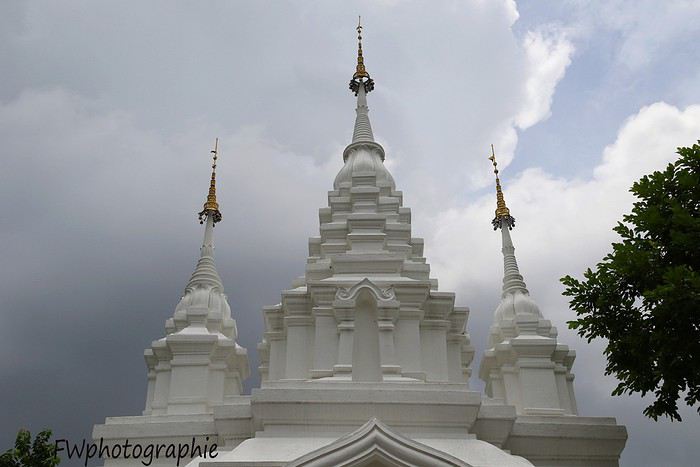
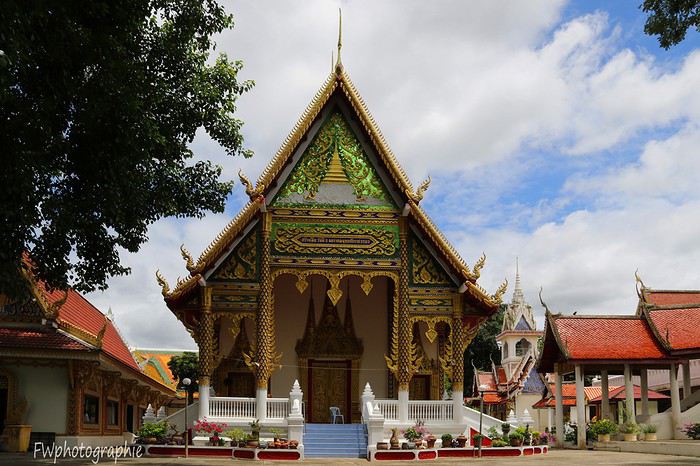
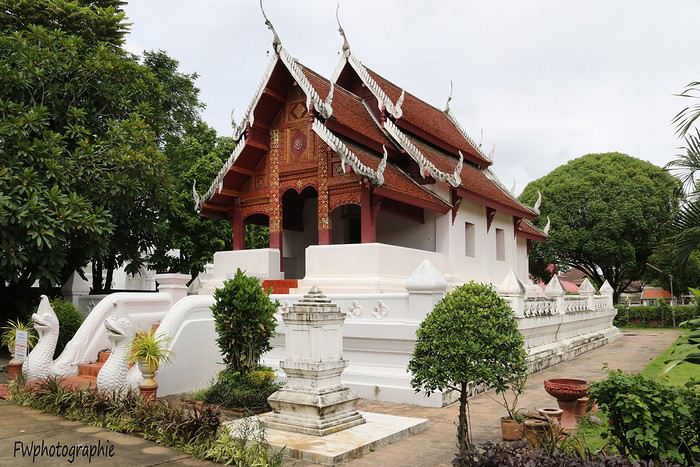
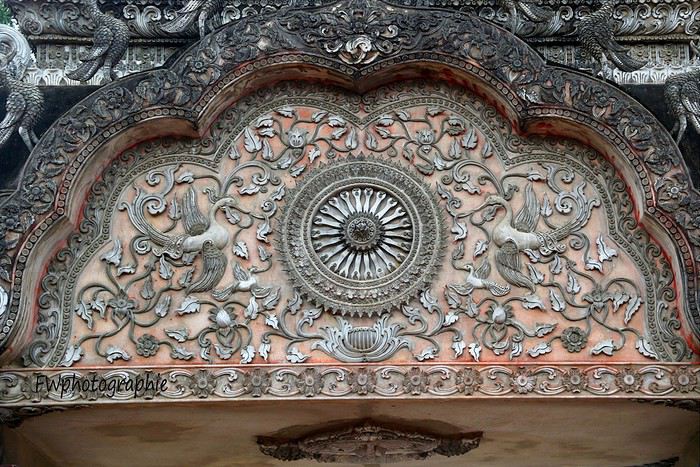
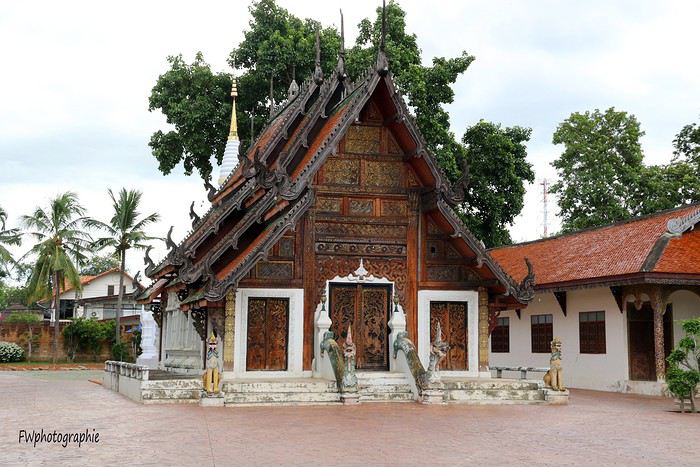
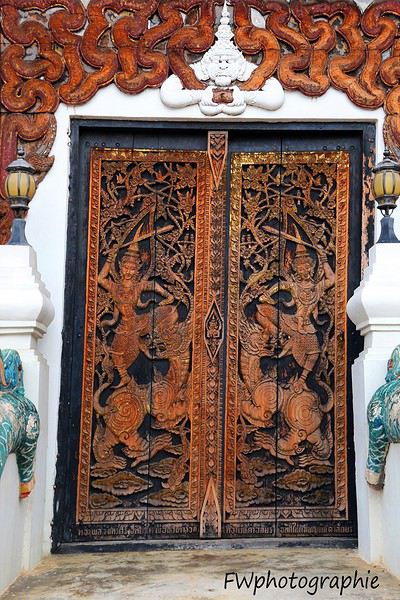
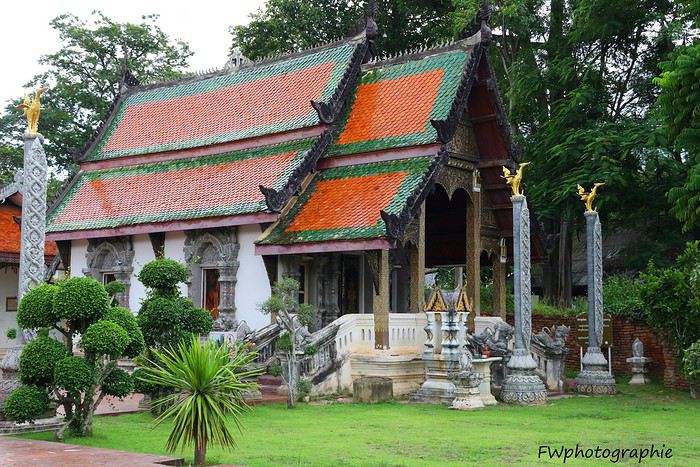
Further on, we came across the small Wat Pratu Pong, once located at one of the city’s gates.
Though it’s one of the oldest temples in the province, officially dating back to 1577, it gleams like new after a clear and proper renovation.
Given the time, there wasn’t a soul around—well, except maybe a cat. Still, we admired its beautiful entrance gate.
We kept wandering, and it wasn’t long before the looming storm broke. With no shelter nearby and our tiny umbrella, we looked for refuge. An open gate, two friendly guys chatting by a long-roofed hut—perfect. We invited ourselves in.
Of course, we were warmly welcomed, and they even invited us to wait inside their hut.
A sign indicated it was the provincial forestry office. Somehow, we managed a little conversation, and everyone had a good laugh. How many times has Thailand’s no-fuss attitude put us at ease?
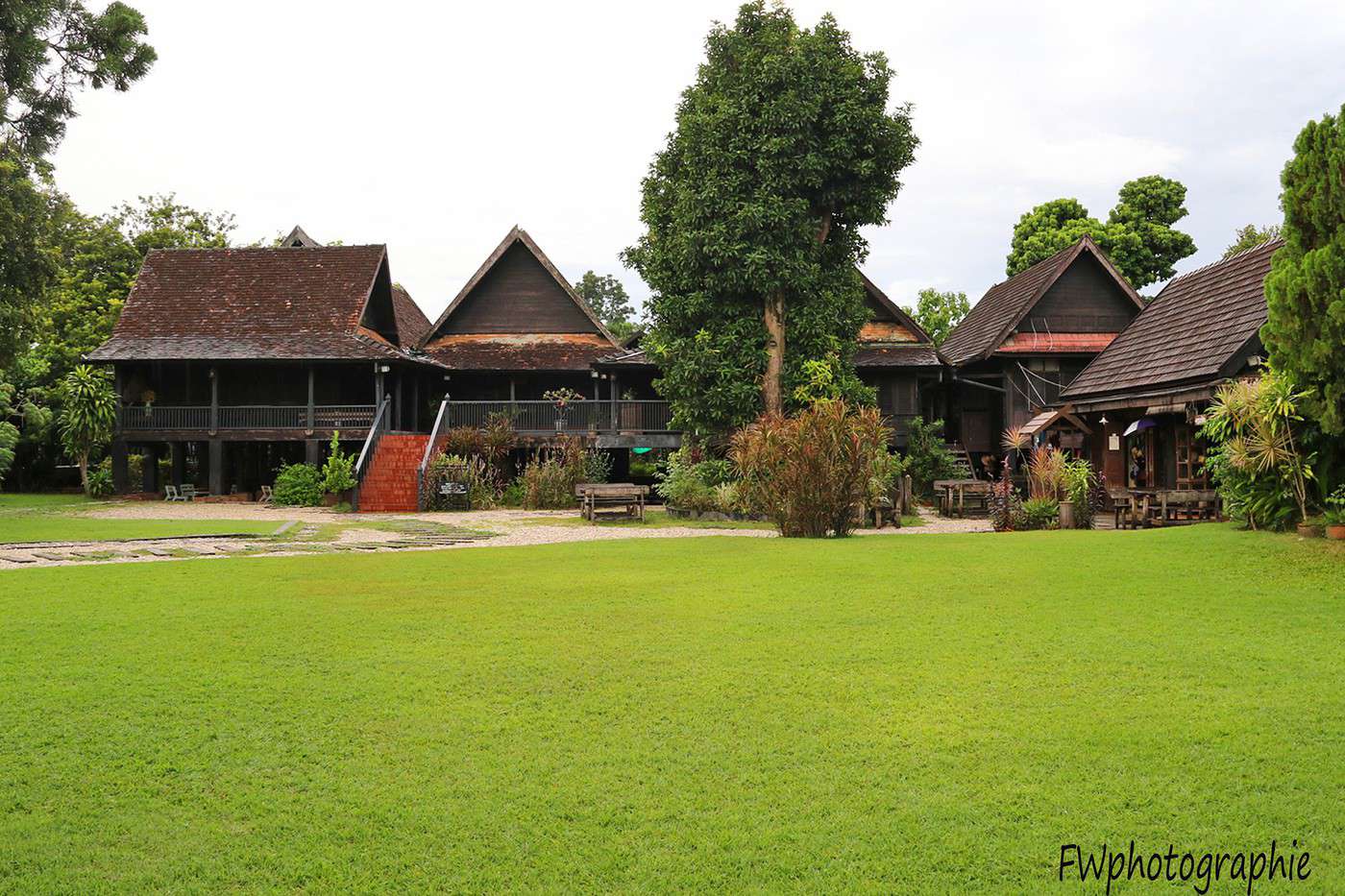
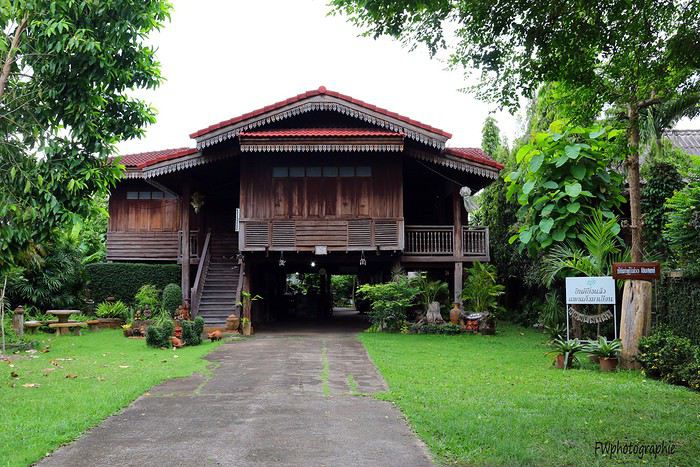
Luckily, the storm was brief. We pressed on to Ban Sao Nok on Ratwattana Road, where a group of beautiful teak houses stands on a large plot. Built in 1895 in a mix of Lanna and Burmese styles, they were once a reception hall for the municipality and are now a museum. Open from 10 AM to 5 PM, we didn’t get a chance to go inside. But when you start late and get lost in the joy of wandering, by the time evening rolls around and your legs are tired, you suddenly realize you still have to make it back. The last stretch was the least energetic, especially since Lampang was the hardest place to find a restaurant that suited us.
Our lucky star led us to the New Seafood Restaurant on Suan Dok Road. It’s a large open-air hall with another air-conditioned room at the back. There are also tables on the sidewalk. At one end of the main hall, the entire width is taken up by the kitchen, where you can watch the cooks at work—including one in a tall white chef’s hat with a curved tip. Yes, we saw the Thai white Smurf chef!
On the sidewalk, a grill with shrimp, crabs, and clams completes the scene.
The first young waiter who tried to take our order quickly realized he was out of his depth and wisely gave up. It happens. Judging by the looks of the other servers, it wasn’t looking promising.
But one of the "customers" wasn’t a customer—he was the owner. Suddenly, he was there, and not only did he understand a few words of English, but he got the gist. We were served quickly, and for 240 baht, you get—without a doubt—the best seafood curry in coconut milk in all of Thailand. In terms of price, quantity, and taste, you’d be hard-pressed to find better. And it’s *phet phet*—meaning the chili isn’t sanitized like in tourist spots. Not *too* spicy, but enough to give Joel a free sauna session for his forehead and nose. In every way, this place is a must-visit.
On our way back to the hotel, we spotted a street vendor and, for 20 baht, enjoyed a perfectly ripe pineapple. Long live small businesses!