Back to the discussion

in Entre deux voyages › Carnets de voyage

Three weeks in Japan with the family (page 2 of 9)

Discussion started by Bluequark on 2018-04-02

173 replies

This thread has been translated into English.


Three weeks in Japan with family

Bluequark · 2018-04-08 · Message 21 of 174

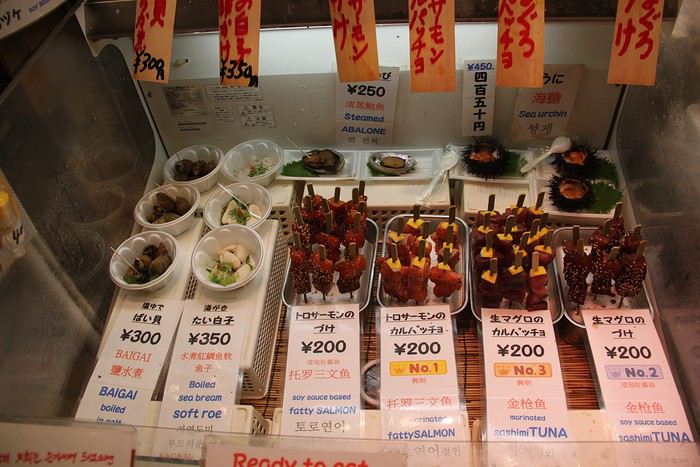
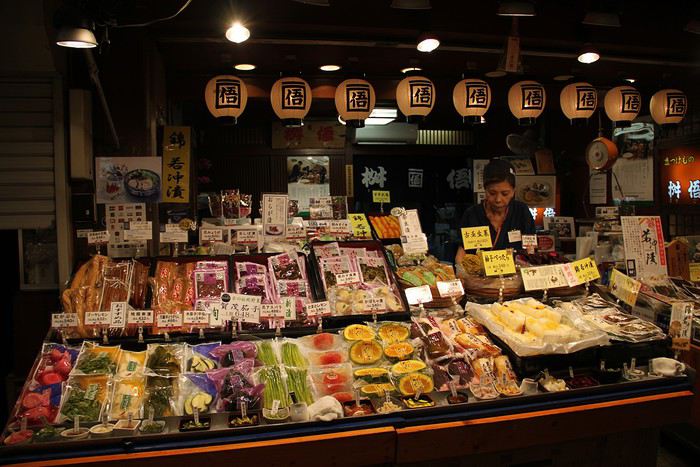
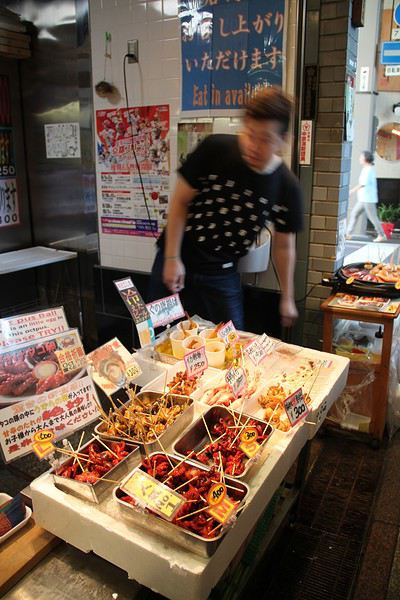
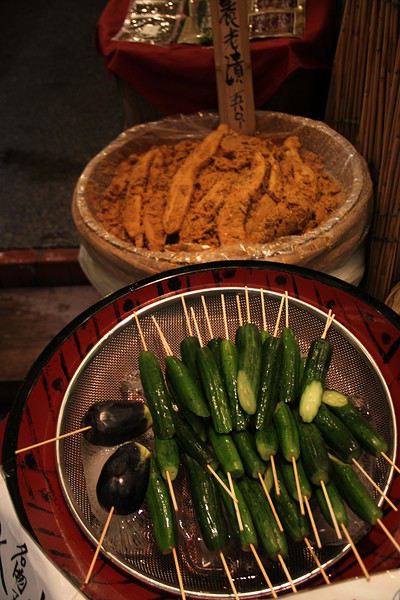
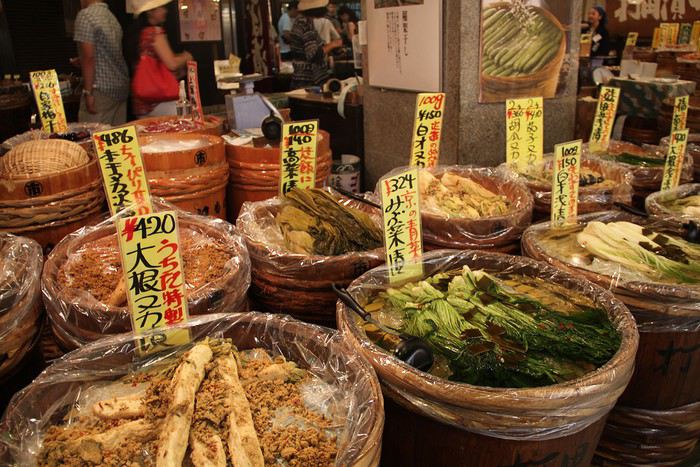
With the afternoon well underway, it’s time to head to Nishiki Market. I was worried it might be almost closed, but no—there’s still plenty of life and lots of fun foods to try. We have a great time wandering through the market and taking photos of all the quirky things that seem so unusual to our European eyes. I take the chance to pick up a few specialties for tonight (some delicious eggplants with a slightly tangy sauce and what turned out to be fish cakes—though they weren’t as good as the eggplants).


Three weeks in Japan with family

Bluequark · 2018-04-08 · Message 22 of 174

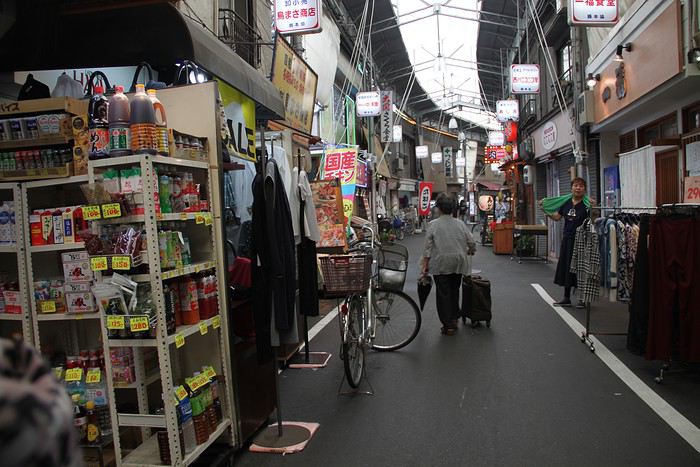
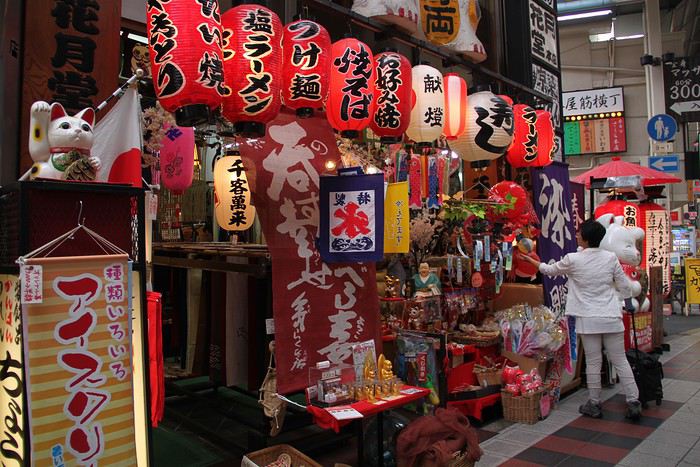
On our way back, we (almost) stumble upon the Termachi shopping arcade. Perfect timing—I wanted to see it. These covered, air-conditioned pedestrian streets dedicated to shopping, called *shotengai*, are a classic Japanese feature we’ll encounter again in Hiroshima.

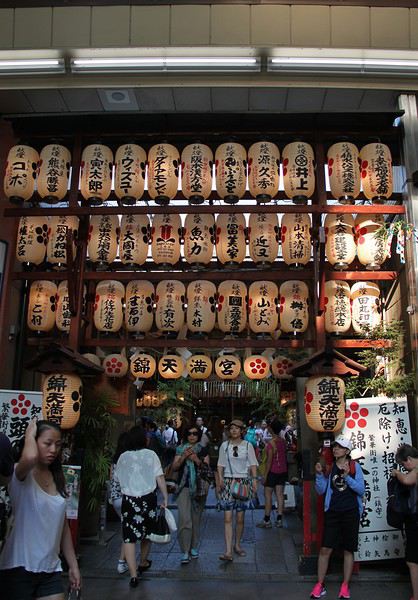
A Shinto shrine right in the middle of the shops.


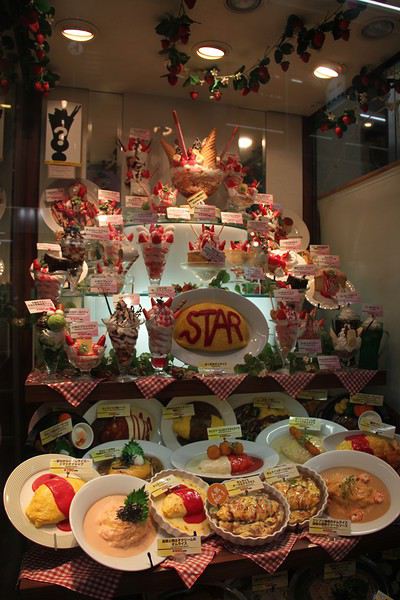
Tea salon storefront. Almost all restaurants have these plastic food displays outside.


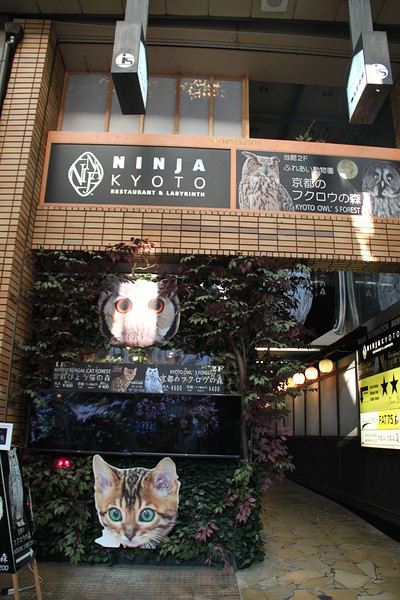
A cat and owl café where you can pet the animals for a set time.


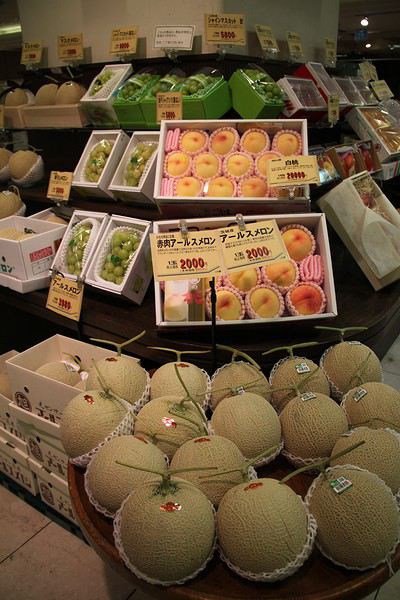
A quick stop at the Takashimaya (a department store chain) basement in the area to finish our shopping for tonight’s meal, and then it’s back home. Today’s daily pass was well worth it. :)


Three weeks in Japan with family

Masterpo · 2018-04-08 · Message 23 of 174

These kinds of covered, pedestrian-only shopping streets that are also air-conditioned—shotengai—are a classic Japanese feature we’ll see again in Hiroshima.

You’ll find them in most cities. They’re great for rainy days, for example...

Takayashima (department store chain)

More like the anagram: Takashimaya

Three weeks in Japan with family

Miniatura · 2018-04-10 · Message 24 of 174

Hello,

Wow, it all looks amazing and makes me want to go there.

As for cults, they’re spreading in Europe too, and we just let it happen.

In Spain, they’re on the beaches!!!

Three weeks in Japan with family

Bluequark · 2018-04-14 · Message 25 of 174

Good evening,

Ho, all of this is magnificent and makes you want to go.

Thanks. Travel journals are made for that, and it's great if it makes you want to go.

As for cults, they’re proliferating in Europe too, and we let it happen.

Uh... I never talked about cults.

I’ll continue (a little°)

Tuesday, August 2: Osaka with Osaka Safari – Fushimi Inari

Two highlights for the day: visiting Osaka with Osaka Safari in the morning and Fushimi Inari in the afternoon.

I discovered Osaka Safari (osakasafari.com/) on Anaïs and Pedro’s blog (www.anaisetpedro.com/) (which I highly recommend, by the way, to anyone thinking of going to Japan—or anywhere else). The concept: a walk through Osaka’s neighborhoods with Angelo, an expat married to a Japanese woman who speaks fluent Japanese. The tour is adaptable to your interests, with explanations about Japan, various anecdotes, and photography tips. Due to Angelo’s availability, only this half-day was possible. Oh well, we’ll make a round trip from Kyoto.

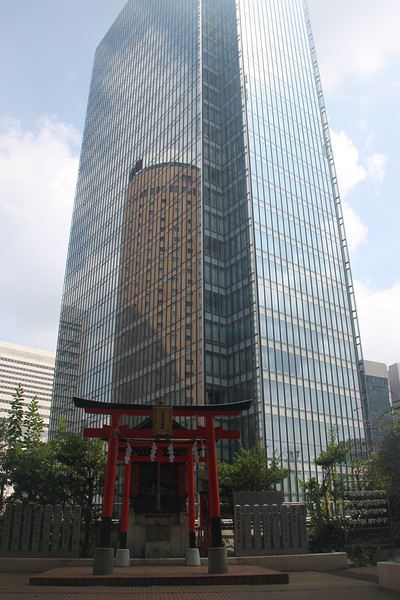
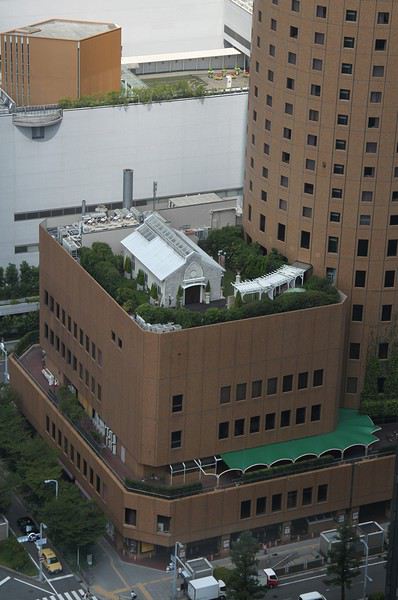
First, a little tour around Umeda Station, the meet-up spot. “Tradition and modernity”

That’s a chapel for weddings—well, mostly for wedding photos. :)


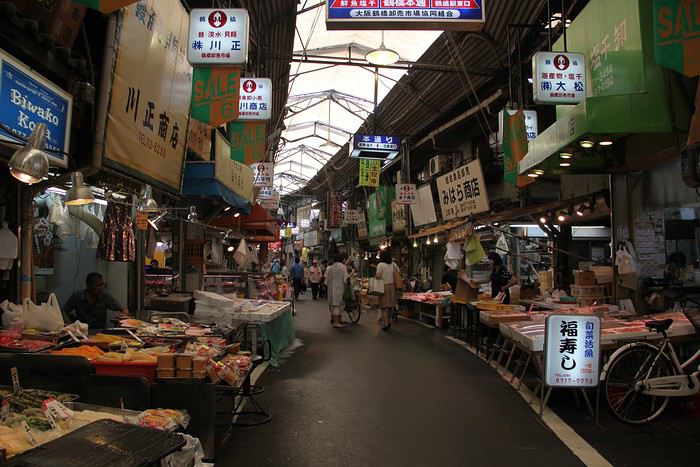
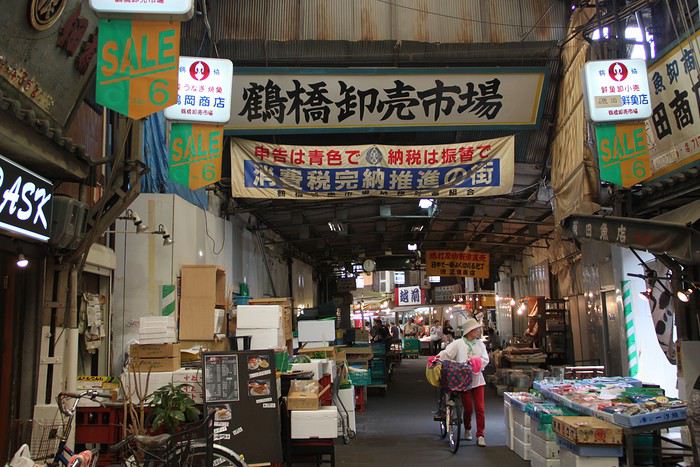
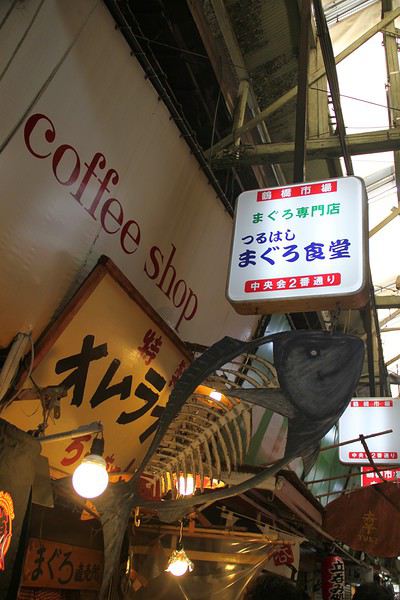
And off we go to Tsuruhashi, in eastern Osaka, on the edge of the Korean district (Osaka has a large Korean community, the biggest in Japan—150,000 people, I read (www.vivrelejapon.com/...atown-quartier-coree)), for a stroll through a charming, old-fashioned market.

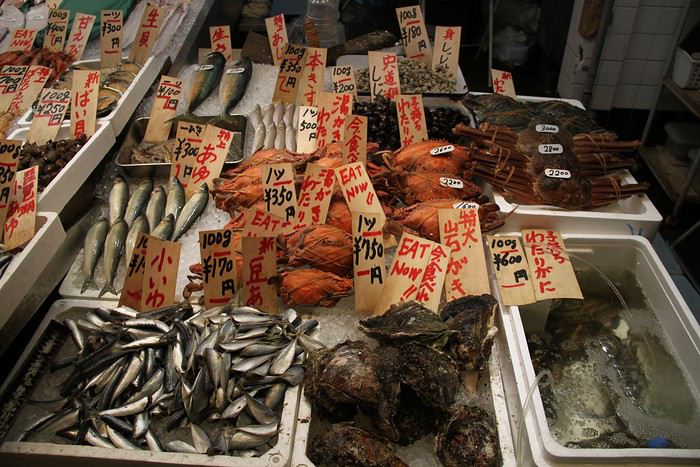
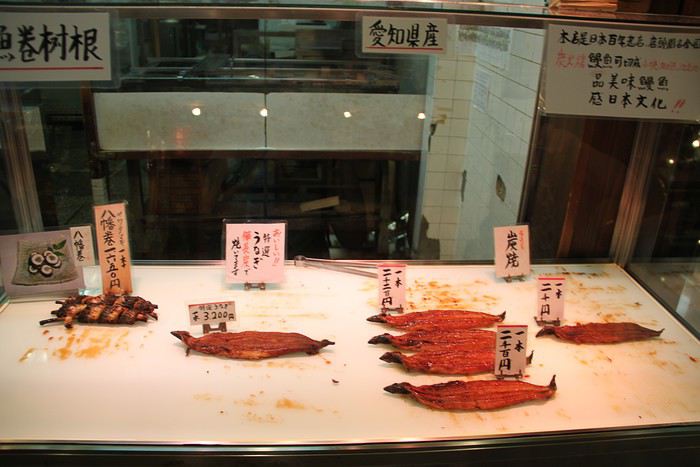
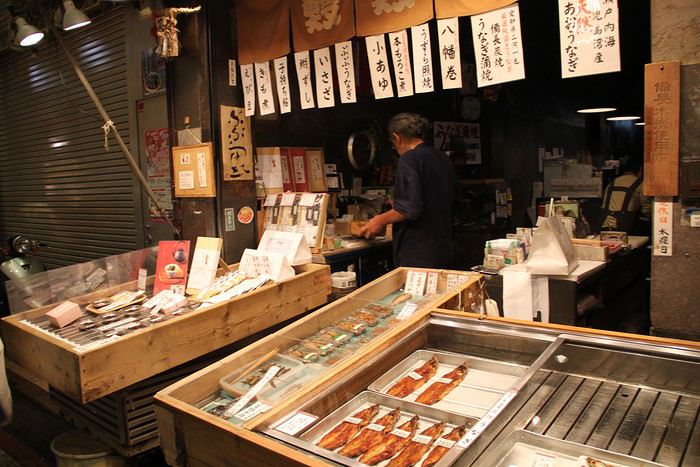
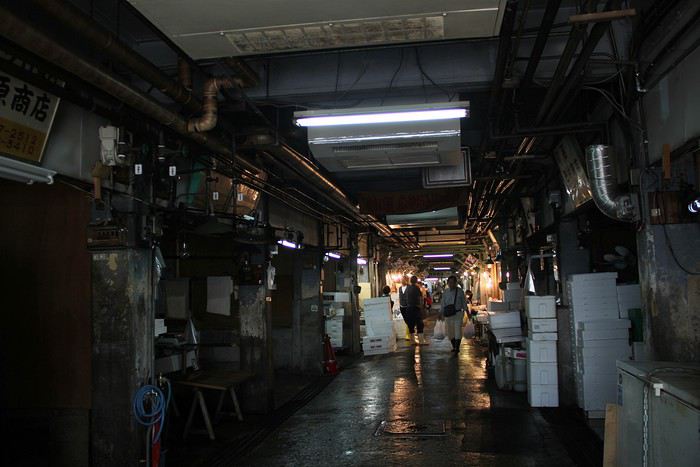
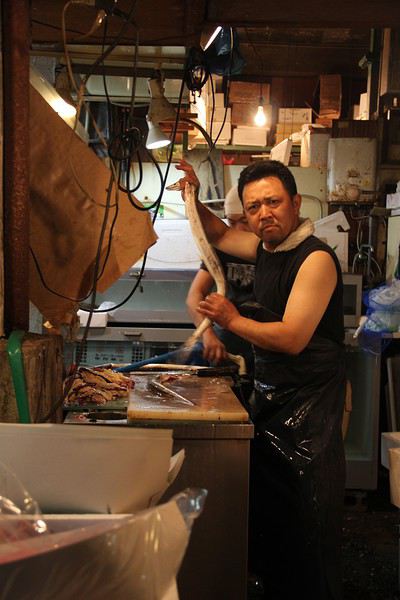
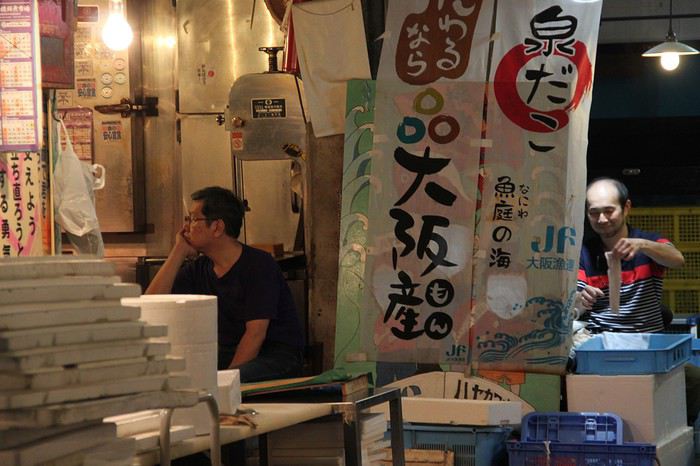
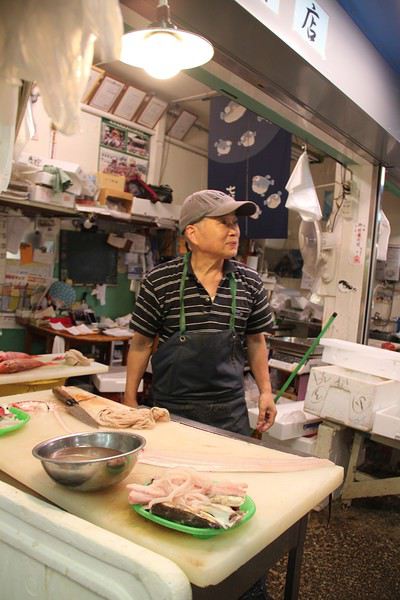
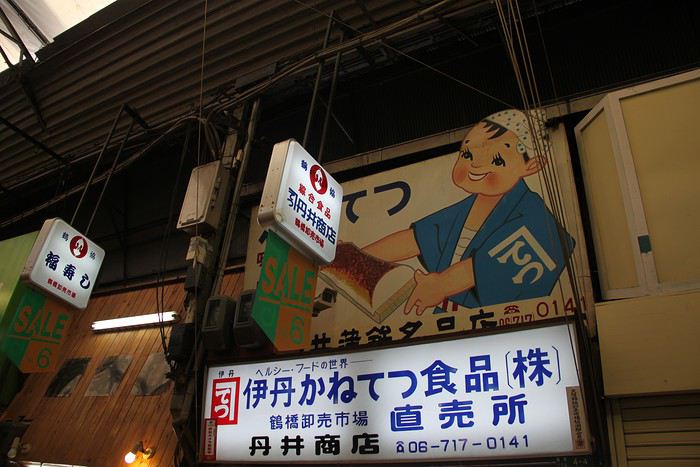
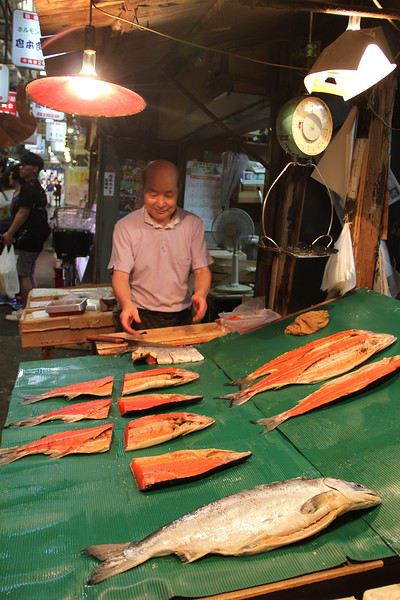
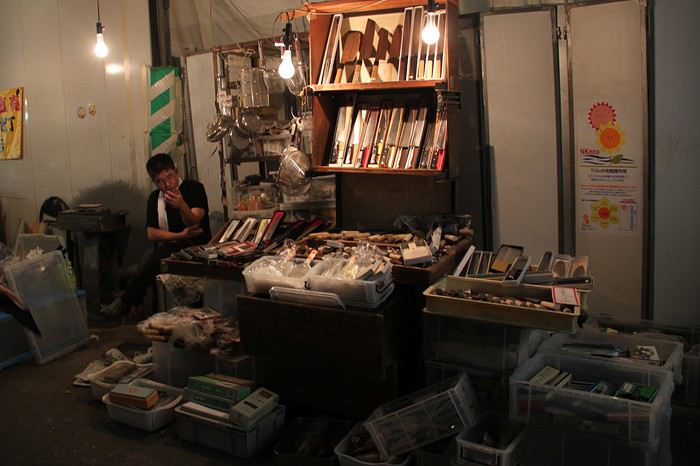
Our first stop is the fish market, a bit of a makeshift place located under the railway tracks. Though there are still a few fish on the stalls, the market is about to close, and the fishmongers are busy. But thanks to Angelo’s presence, we’re welcomed with open arms. The people are friendly and happy to chat with us. We watch an impressive, precision fish-cutting demonstration, check out the tuna tanks, and discover unknown foods… I even get to “play” with an octopus that takes a liking to me, leaving some lovely hickeys on my arm that last for days. Everyone has a good laugh.


Three weeks in Japan with the family

Bluequark · 2018-04-14 · Message 26 of 174

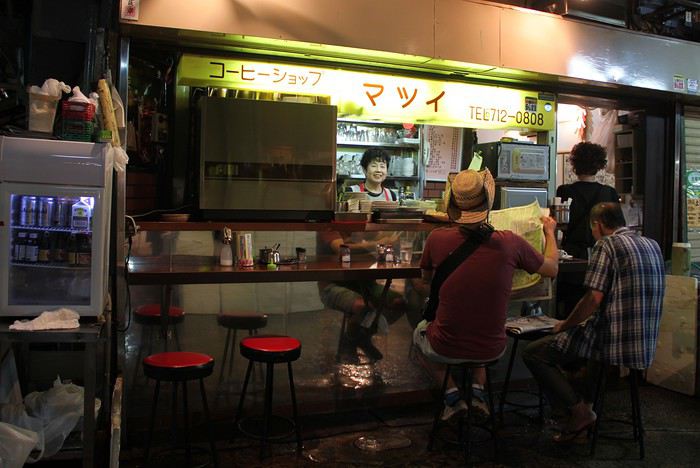
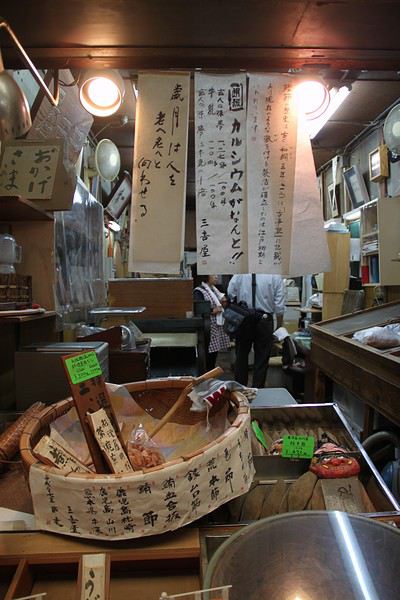
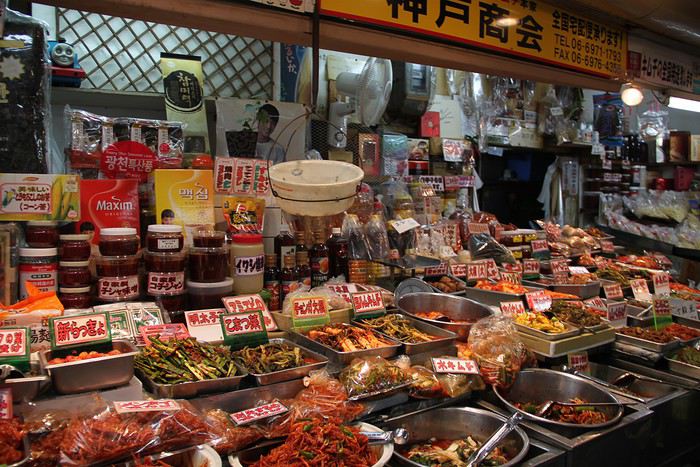
We continue with the rest of the market. Everywhere, people smile at us, want us to taste things, offer us others—we left with a whole bunch of little gifts: tomatoes, a milk drink, plums... and they ask us about our lives, our impressions of Japan...


The basin serves as a cash register and holds the customers' money. When I say Japan is a safe country...


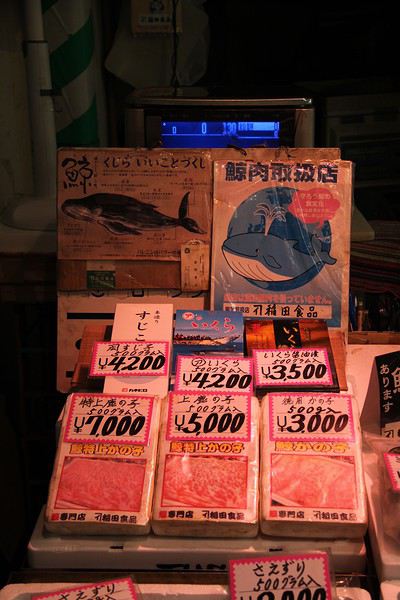
You can even find whale. 🙁

Street vendor.


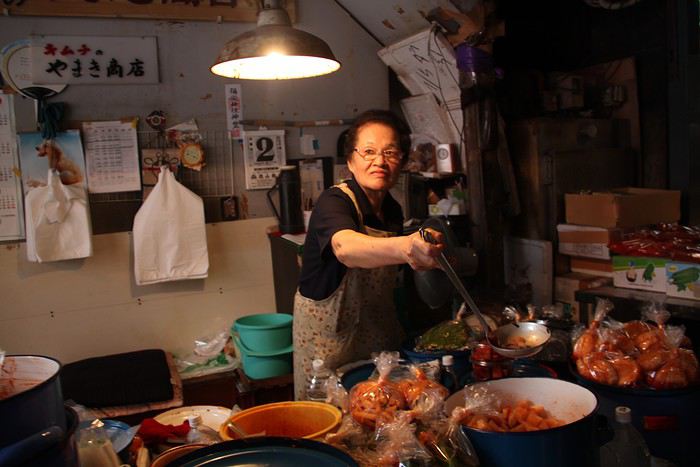
This lady insisted on letting us taste and retaste her dishes.


It was a really great stroll with Angelo, allowing for lots of interactions with the vendors and providing plenty of explanations.

Three weeks in Japan with the family

Sunsun · 2018-04-15 · Message 27 of 174

Can't wait for the rest!

Three weeks in Japan with family

Bullus · 2018-04-15 · Message 28 of 174

I'm also jumping on board to follow this travel journal 😉 I'm planning to spend 15 days in Japan next year, at Easter. Thanks for sharing your experience!

Three quick questions already: - When you arrived in Osaka, if I understood correctly, you didn’t activate your JR Pass? What type of ticket did you get instead?

- Do you have any good accommodation recommendations to share?

- The crowds in Kyoto scare me... Your story confirms what we read everywhere about it 😕 In situations like this, I think the only solution is to arrive very early at the sites. What time were you there to visit the temples?

Looking forward to the rest of your updates...

Three weeks in Japan with family

Kujila · 2018-04-15 · Message 29 of 174

In this kind of situation, I think the only solution is to arrive very early at the sites you want to visit. What time were you there to visit the temples?

Tour operators usually pack as many temples as possible into a short time and start early in the morning. It's generally around lunchtime that there are fewer people.

That said, if you really want to avoid crowds, you should start by avoiding weekends and not necessarily cramming too many temple visits into your itinerary... Japan (including Kyoto) isn’t just about its temples.

Three weeks in Japan with the family

Bluequark · 2018-04-15 · Message 30 of 174

Thanks! :)

Three weeks in Japan with family

Bluequark · 2018-04-15 · Message 31 of 174

Hi,

Thanks for your note.

- When arriving in Osaka, if I understood correctly, you didn’t activate your JR Pass? What type of ticket did you get?

Actually, I had bought a daily JR tpass that I had to get activated. It’s the cheapest option for a train trip, but I’m not sure it was a good idea—there isn’t much savings, and we had to queue to get it activated. I could’ve done without that extra wait after the trip from Paris.

- Do you have any good accommodation recommendations to share?

All the Airbnbs we stayed in were fine, but none were unforgettable enough to recommend absolutely. I’ll share the guesthouse references later in the story. If there’s a specific place you’re looking for, let me know—I’ll tell you where we went and what we thought of it.

The crowds in Kyoto scare me... Your story confirms what we read everywhere about it 😕 In situations like this, I think the only solution is to arrive very early at the sites. What time were you there to visit the temples?

We never got up very early—except in Miyajima—so I can’t tell you if it’s crowded at opening time. In museums and such, we noticed fewer people in the late afternoon, probably because everything closes so early. We even got caught out a few times. About Kyoto, don’t worry: yes, there are crowds at the main monuments, but as soon as you step away from them, the crowds disappear.

Looking forward to the rest, I hope...

I’ll continue.

So, next up

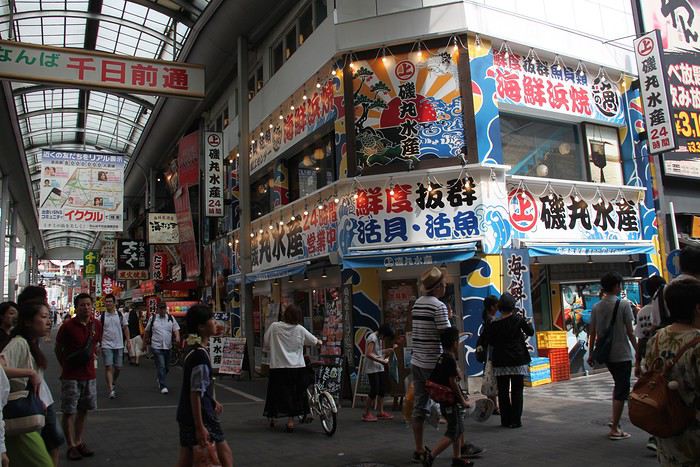
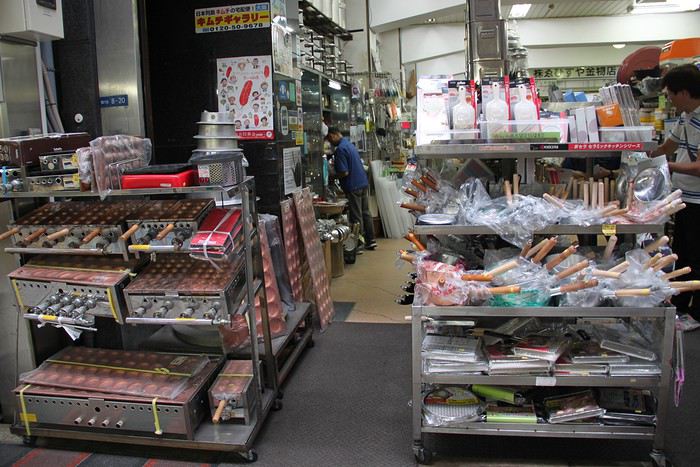
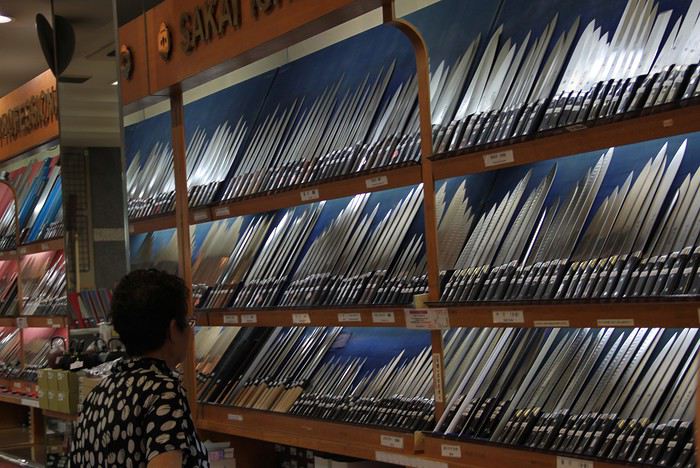
We head to Namba and Sennichimae Doguyasuji, the street for kitchen utensils.


The visit ends way too soon for our liking. We had a great morning. Angelo is a passionate Osaka local who wants to share and help people love his city. He succeeds perfectly. I really recommend it. After a few more tips, Angelo leaves us near several restaurants. For lunch, we choose a Tonkatsu restaurant, a Japanese specialty with a special breadcrumb coating called panko, much lighter than our European breadcrumbs (www.cuisine-japon.fr/panko/). As always in Japan, the entire meal—dish and sides—is served on a tray.

Three weeks in Japan with the family

Bluequark · 2018-04-15 · Message 32 of 174

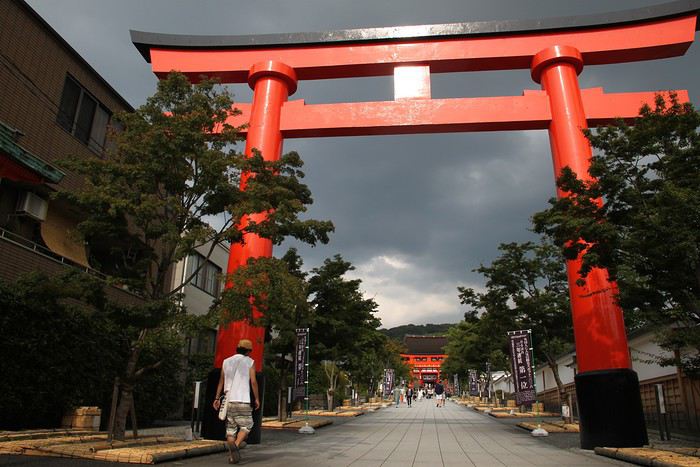
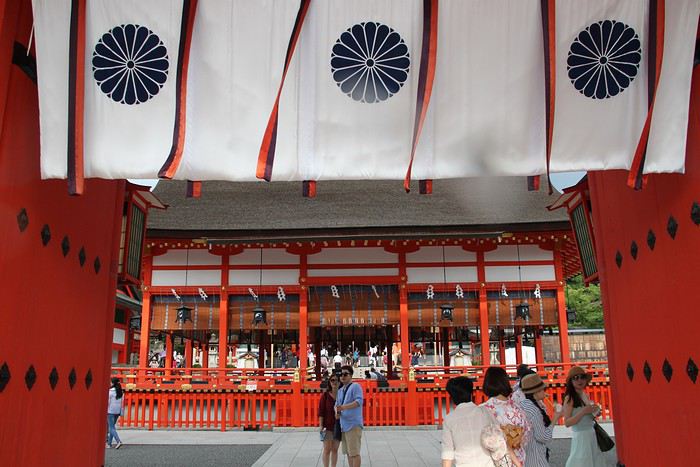
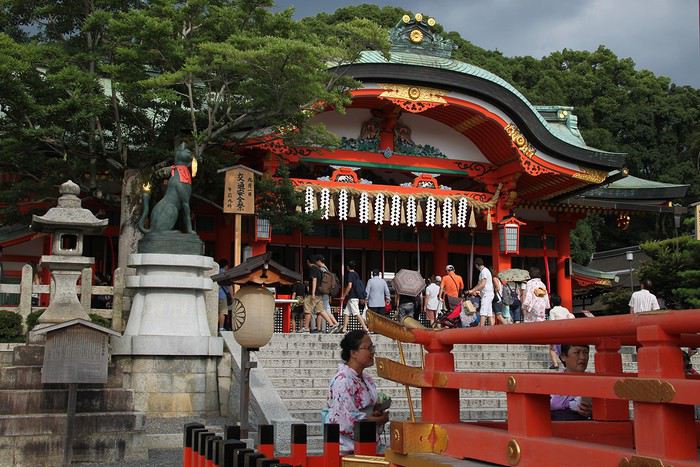
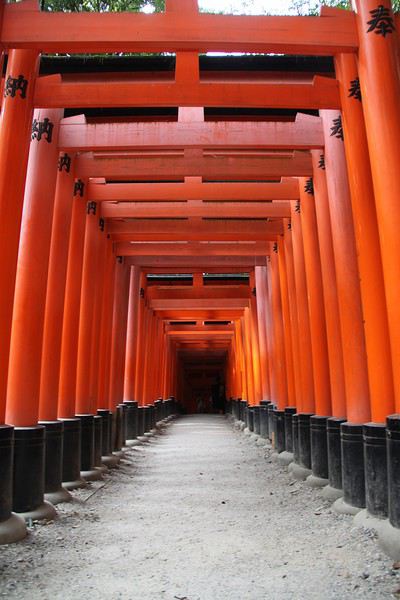
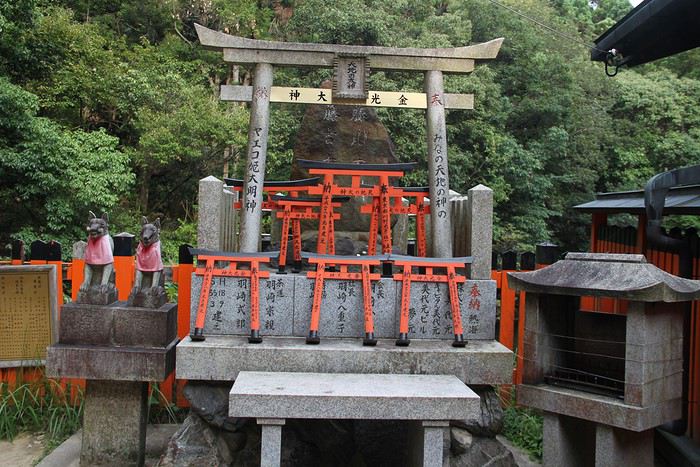
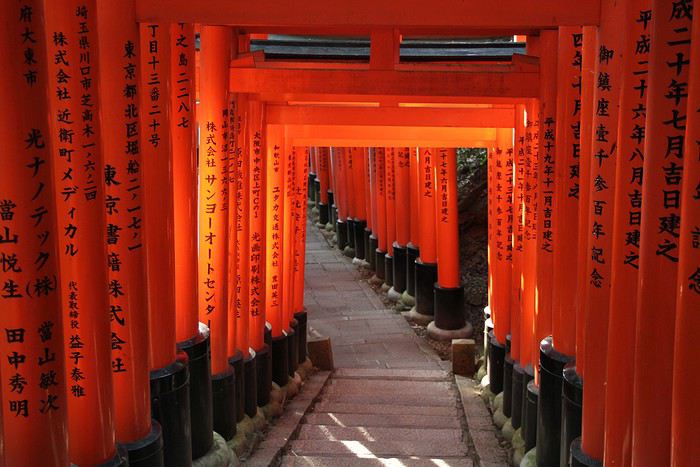
With our bellies full, we head back to Kyoto—or more precisely, to Fushimi Inari, the Shinto shrine with its 10,000 torii gates.


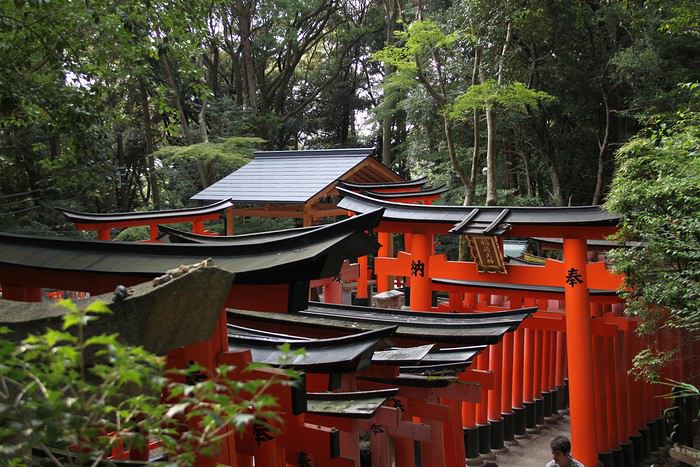
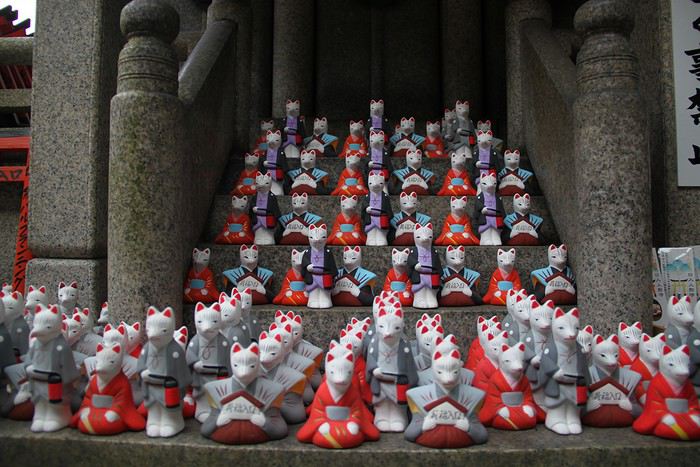
At the lower part of the shrine, it’s packed with people, and we feel like we’re in a subway corridor rather than in the middle of nature. Luckily, the crowd thins out quickly, and we can continue our climb at a more relaxed pace. All along the path, the fox, messenger of Inari, the kami (goddess) of rice, keeps us company. (More details here: www.joranne.com/...rquoi-le-renard.html)


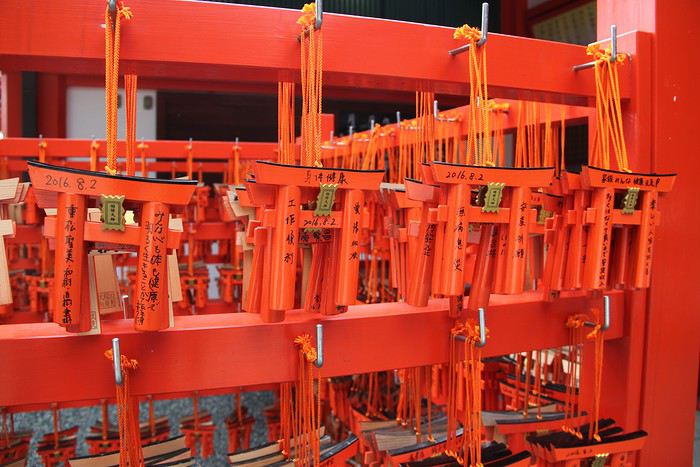
These pretty inscriptions, to our European eyes, are actually the names of the torii sponsors. The most prominent torii gates can cost over a million yen. The view of Kyoto at the end of our climb. We’re not quite sure where we stopped—none of the three maps we came across matched the others. Maps in Japan are actually quite surprising: first, they’re not oriented north-south but based on the environment. What’s in front of the reader corresponds to the top of the map, what’s behind to the bottom, left is left, and right is right. More logical but unusual. Also, and most importantly, they’re often not to scale but functional maps. This means intersections are correctly positioned relative to each other, but the distances between them aren’t accurate. It’s often misleading and can lead to a few surprises.

Three weeks in Japan with family

Bluequark · 2018-04-15 · Message 33 of 174

Wednesday, August 3: On the way to Naoshima

While preparing for our trip, I stumbled upon Naoshima—the art island—thanks to Anaïs and Pedro’s blog, if I remember correctly. In the 1980s, the president of Benesse Corporation, a company active in education, decided to transform Naoshima, a small island in the Seto Inland Sea, into a major cultural and artistic hub. Today, it’s home to several museums and numerous artworks scattered across the island.

As I dug deeper, I discovered that this year, the Setouchi Triennale, an international contemporary art festival, is taking place. From March to November, several islands in the Seto Inland Sea, including Naoshima, host multiple art installations. setouchi-artfest.jp/en/. That was all it took for us to decide to spend a few days in the area. Our plan: Naoshima and Teshima, which houses another Benesse museum.

For those interested in the region, here’s a list of sites to explore:

benesse-artsite.jp/en/ for everything about Benesse museums; ogijima.fr/, a blog by an expat dedicated to the islands of the Seto Inland Sea and Takamatsu; setouchiexplorer.com/, the same blog in English, this time focused on the Triennale; unoportinn.com/local-tips/, the info-packed page from the hotel where we stayed. .

After some hesitation, we chose Uno, on the "mainland," as our base for these few days. Several reasons for this choice: accommodations on Naoshima are limited. There’s the hotel attached to the Benesse House Museum, but it’s way over our budget. There’s also the Tsutsujiso, but when I tried to book, only the yurts were available. Without air conditioning, I feared the worst, and the location is far from restaurants. Since we also want to visit Teshima, Uno isn’t a bad choice in the end, even if ferry schedules make travel a bit restrictive. For our stay, I had booked two rooms at Uno Slope House (unoslopehouse.com/), which has great reviews online. But the owner had since opened a hotel in the center (unoportinn.com/) and no longer operated the guesthouse. He offered to switch us. The upside: the hotel is super central, just a 2-minute walk from the train station and 3 minutes from the ferry docks. The downside: the road in front of the hotel isn’t super busy, but it’s noisy due to trucks. Since I’m ultra-sensitive to noise, the traffic was pretty bothersome. The others weren’t as bothered.

For now, we’re leaving Kyoto and experiencing the shinkansen, Japan’s famous bullet trains with their pointy noses. They’re really comfortable and spacious, and they’re so stable—no swaying like France’s TGV. The restrooms are a masterpiece of customer service: spacious enough to fit a wheelchair with room to turn around, and there’s even a sink outside the toilet.

Three weeks in Japan with the family

Bluequark · 2018-04-15 · Message 34 of 174

We changed trains in Okayama, caught a regional train, made a second change, and then we were in Uno. We quickly dropped off our luggage at the hotel and set off immediately to catch the ferry. The next one wasn’t for several hours.

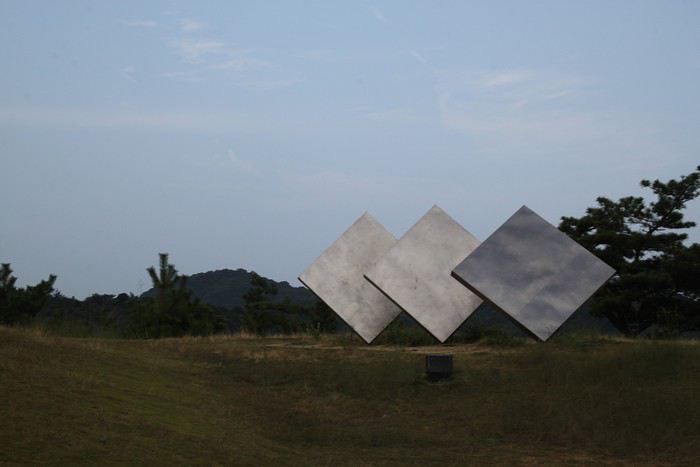
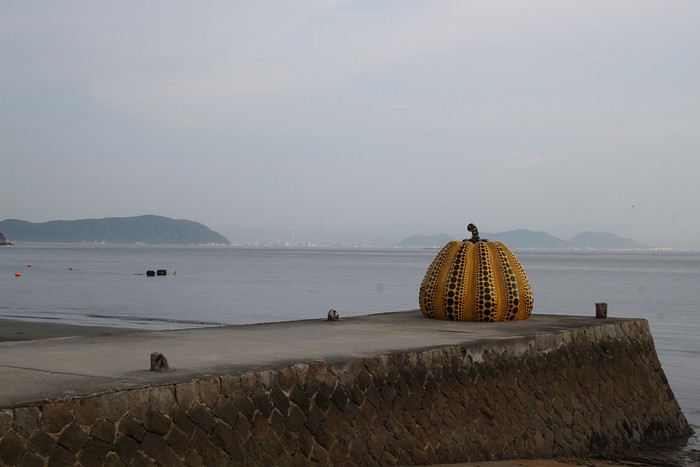
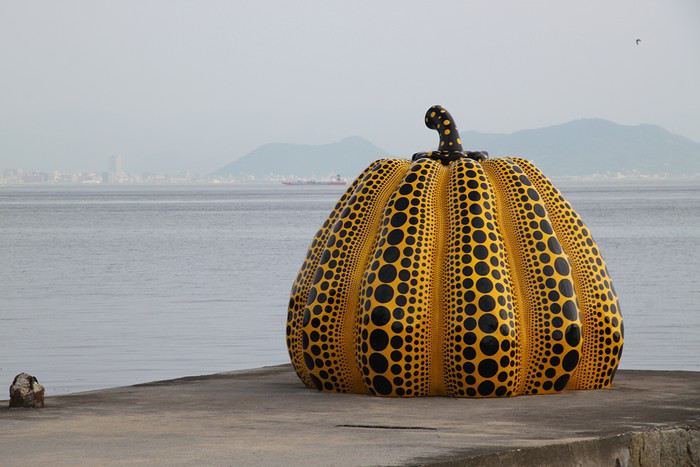
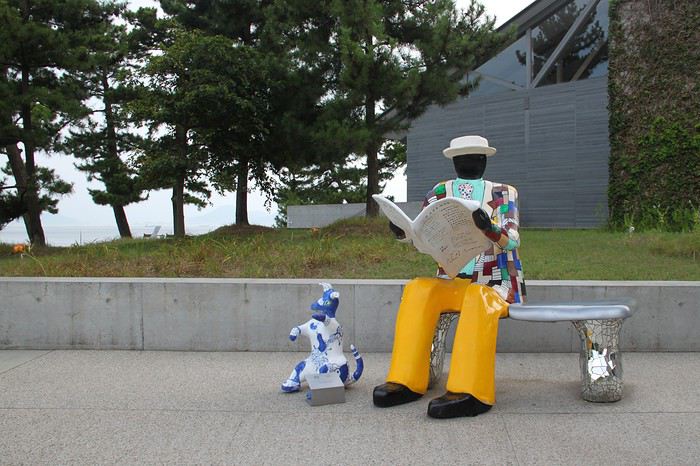
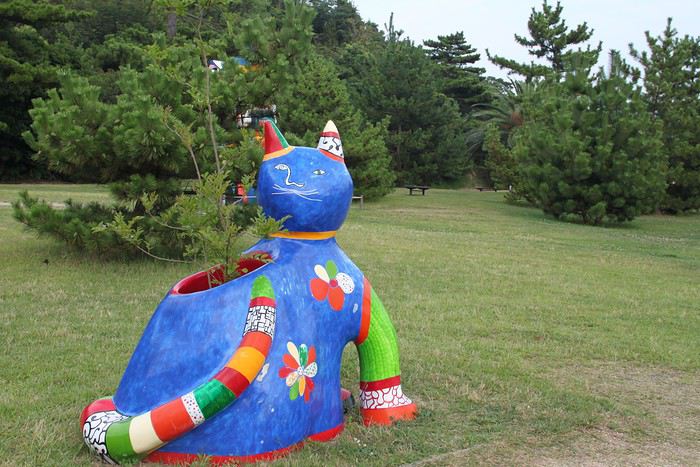
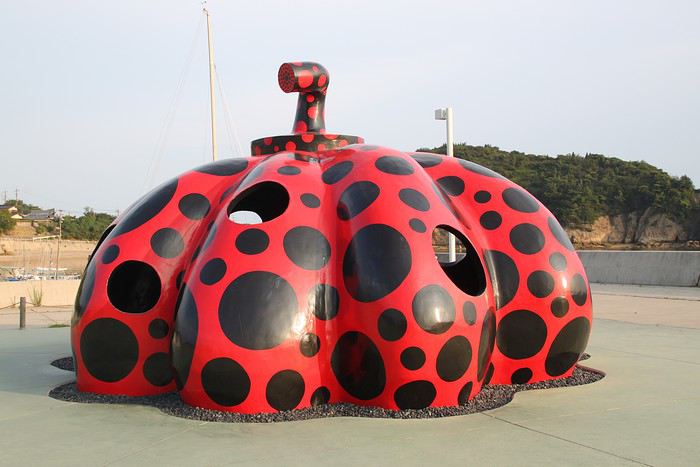
In Uno, we bought the Triennale pass (since we were also going to Teshima, there was no doubt it would be worth it), rented bikes, and stopped for a meal. Then we set off to explore the island. We decided to skip the installations in the villages for now and start with the Benesse Art Site, which groups together the two main museums and a few "permanent" statues, including Yayoi Kusama’s famous pumpkin and many works by Niki de Saint Phalle. With the heat, the few hills on the island made us sweat a lot. The site itself, which covers a significant part of the island, is off-limits to bikes (and cars, of course). So we left our rides in the parking lot at the entrance. The intense heat and scorching sun made us decide to take the free shuttle that serves all the main points of interest. We opted to go straight to the farthest building and walk back leisurely when the sun was less intense. The farthest building is the Chichu Art Museum, which houses four of Monet’s *Water Lilies*. It’s one of those museums that, like the Guggenheim in Bilbao or the Louis Vuitton Foundation in Paris, is a work of art in itself. Its architect, Tadao Ando, designed it around the artworks it was meant to house. Although the entire museum is underground, only natural light illuminates the works through a clever system of light wells and reflections. (unpointculture.com/...-museum-de-naoshima/)

When we arrived, there was no line—what luck, though we didn’t know it yet. I should mention that in Japan, unlike in France, museums seem much less crowded in the afternoon than in the morning.

The first room is dedicated to the *Water Lilies*. Access is limited: no more than 10 people are allowed in at the same time (hence our "luck"), and you have to take off your shoes. The floor is made of small white marble tiles. The paintings are lit by indirect light coming from slits in the ceiling around the edges of the room. This lighting gives the space a somewhat unreal feel. Undeniably, an experience.

The museum also houses a work by Walter de Maria, which was less impressive, and pieces by James Turrell, including a sensory experience based on a pretty mind-blowing optical illusion. We left the museum completely won over, exclaiming, "The Japanese really know their stuff!"

Putting our plan into action—"let’s walk back to the parking lot at a leisurely pace"—we headed to the Lee Ufan Museum, which didn’t impress us much. For those in a hurry, it’s a non-essential stop.

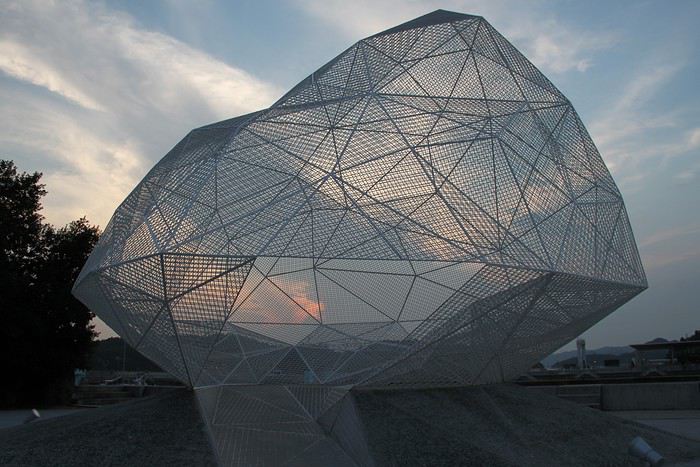
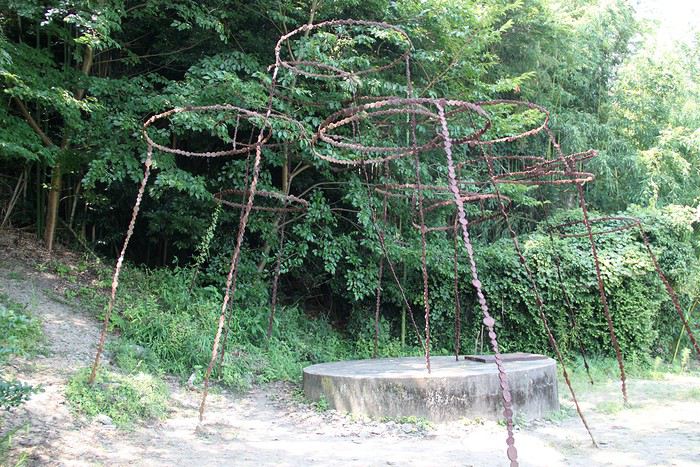
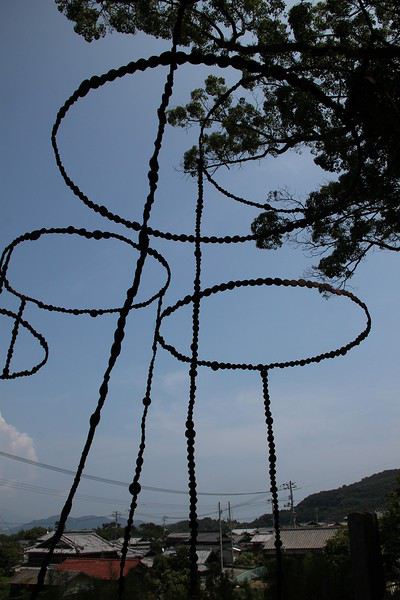
Somehow, we missed *Slag Buddha 88* by Tsuyoshi Ozawa—88 small Buddha statues made from industrial waste on Teshima. I’d spotted them before coming and really wanted to see them.

The Benesse House Museum was closed. We’d have to come back.

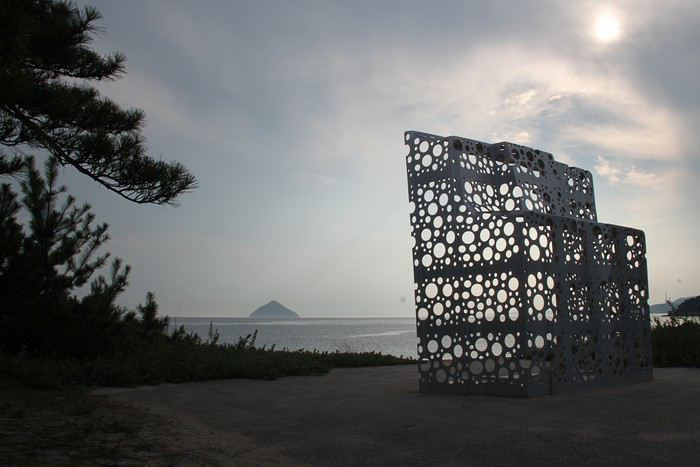
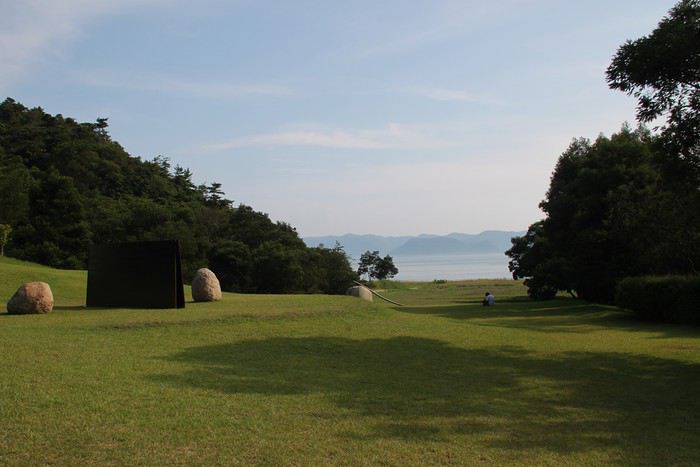
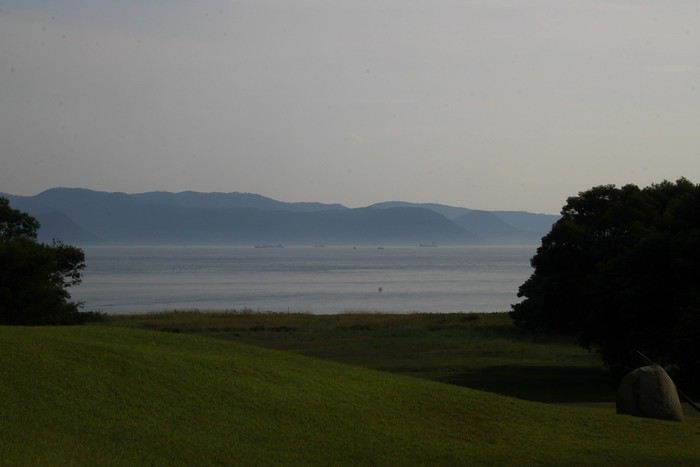
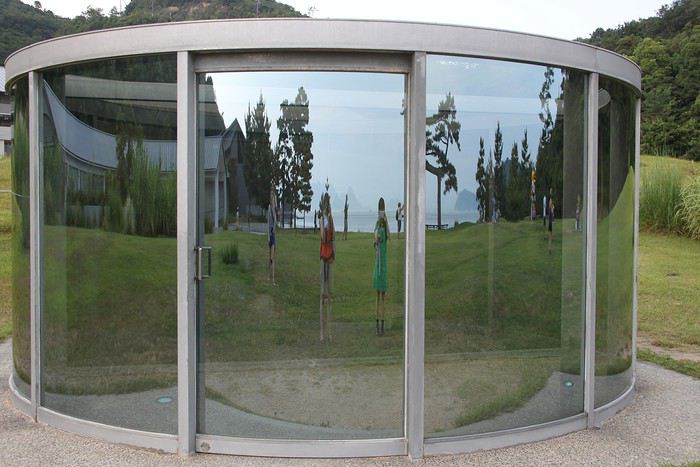
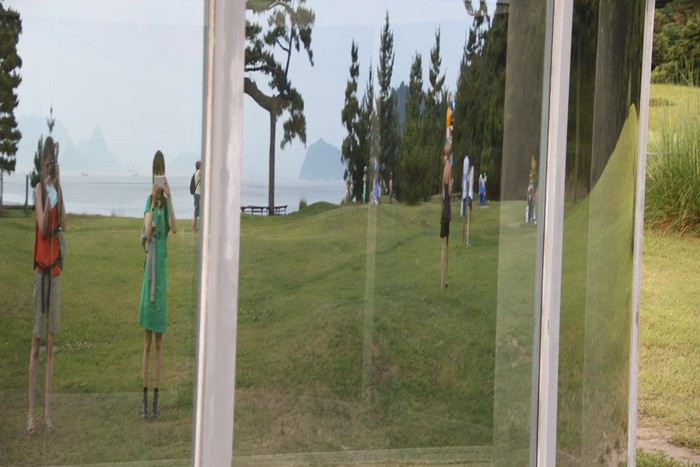
A first promontory features many artworks. The Seto Inland Sea is also stunning.


A few more minutes of walking, and there it was—the famous pumpkin. The lawn in front of the restaurant, featuring—among other things—works by Niki de Saint Phalle.


Three weeks in Japan with the family

Bluequark · 2018-04-15 · Message 35 of 174

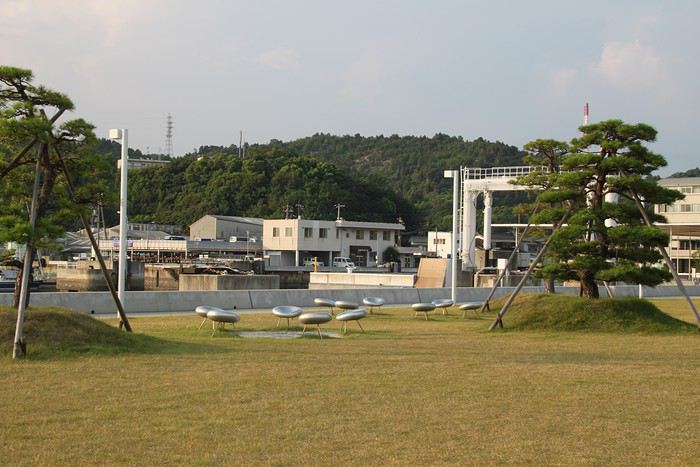
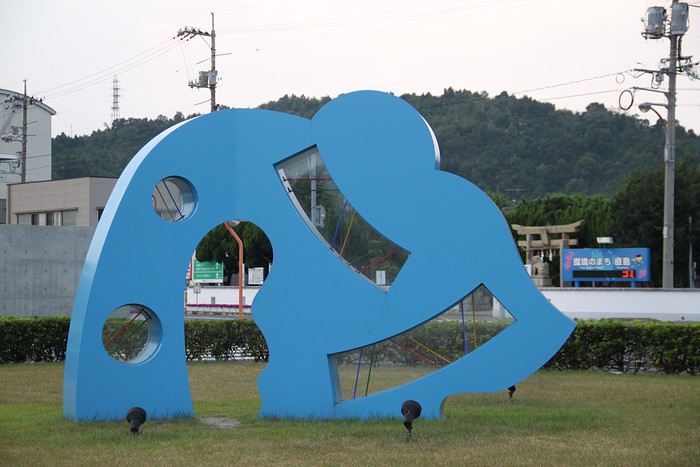
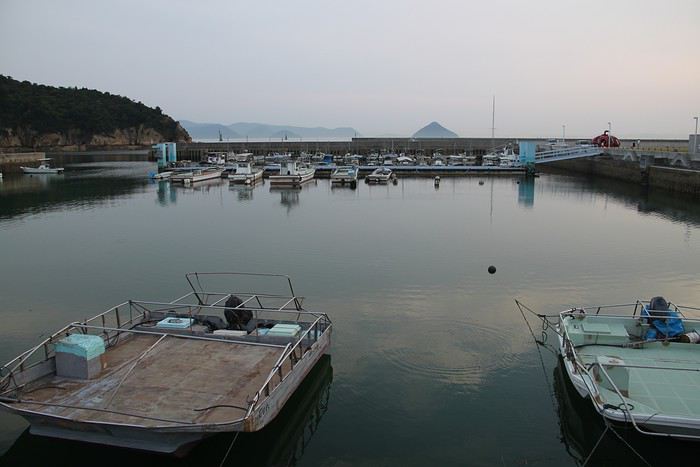
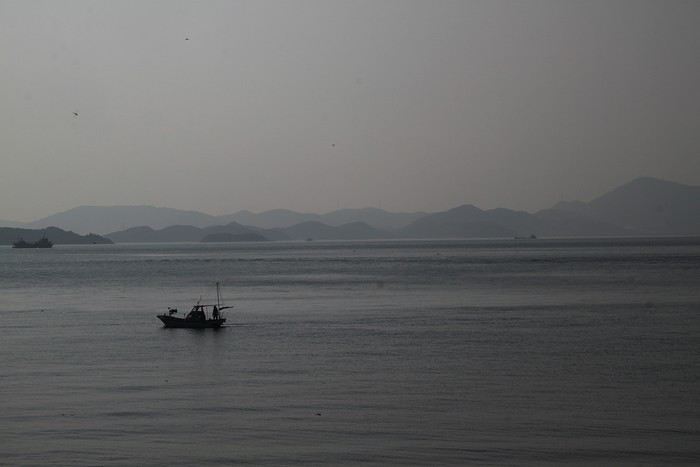
After picking up our bikes, we head straight back to Miyanoura port—we’ve got to stick to the rental shop’s schedule. The solid half-hour we have before the ferry arrives lets us explore the few artworks around the port.


- and wonder what those strange boats are actually for. (Anyone know?)

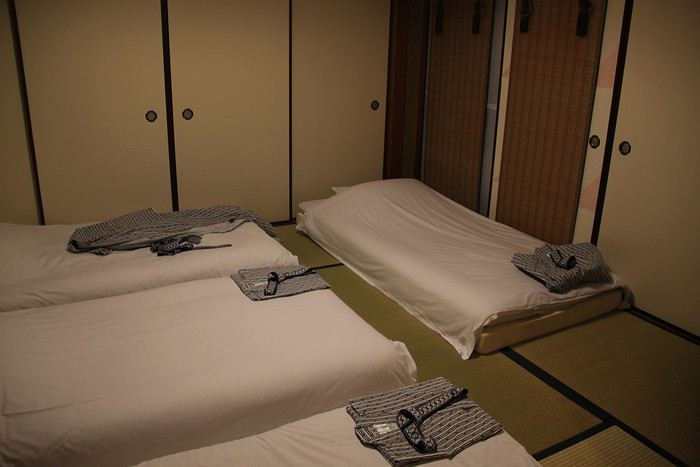
Once we arrive at the hotel, we fully settle into our room, complete with futons and yukatas (summer kimonos). The kids are thrilled. Another source of surprise and amusement: even though the bathroom is private, it’s not en-suite but down the hall. Funny setup. There are also washing machines available, so we take advantage of them.


For dinner, we head to one of the restaurants recommended by the hotel (they’ve got a whole series of handy little cards to help guests, covering Naoshima, Teshima, Uno, etc.). Again, it’s quite small, with only a few dishes on offer—but everything’s delicious.

Three weeks in Japan with family

Nat1009 · 2018-04-15 · Message 36 of 174

Hello, Can't wait for the next part! Your story is a goldmine of info for planning our upcoming trip. Can't wait for the next part.

Three weeks in Japan with family

Bluequark · 2018-04-15 · Message 37 of 174

Thanks. I’m glad you found it helpful!

Thursday, August 4: Teshima

This second day is dedicated to Teshima. Teshima is a bit like Naoshima was 10–15 years ago—larger and hillier. Sadly known in the 1980s for being a dumping ground for toxic waste, it now houses another Benesse museum, the Teshima Art Museum, a few other permanent artworks, the Shima Kitchen restaurant (www.shimakitchen.com/en/) designed by Ryo Abe, and, of course, the Triennale. Less known to the general public, it attracts far fewer tourists, mostly Japanese. The crowd is discreet and respectful.

Following advice we read online, we rent electric bikes this time. This choice might raise a few smiles, but these things are truly magical: on flat roads, they’re just like normal bikes, but as soon as the road climbs, the electric motor kicks in, so all you have to do is keep pedaling at a steady pace without much effort. Try one, and you’ll be sold.

Wanting to repeat the trick from the day before, we head straight for the Teshima Art Museum. We make a quick stop at “Tom Na H-iu” (benesse-artsite.jp/en/art/tom-na-h-iu.html) by Mariko Mori. The artwork is hidden in the middle of the forest. The path to get there is muddy, so pristine white boots are provided to spare our shoes. Very Japanese.
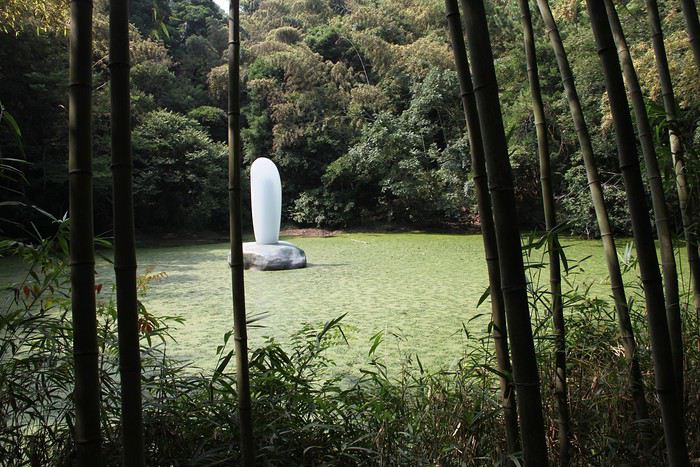


Photos aren’t normally allowed, but I think I bent the rules a little. The piece is connected to the neutrino detector at the Kamioka Observatory and lights up every time a neutrino is detected. Given how hard it is to catch a neutrino, we weren’t surprised that our brief visit didn’t let us see it light up.

Ouch! Upon arriving at the Teshima Art Museum, we find it’s already full. But as is typical in Japan, everything is well organized—tourists don’t cluster in long, chaotic lines waiting for space to open up. Instead, entry slots are scheduled every 15 minutes, and a hostess gives each visitor a ticket with the time they need to return to buy their ticket and enter. (If only museums in Paris could take a page from their book.) Our turn is in half an hour, so we decide to wait nearby in the shade rather than rush back and forth in the heat to another installation.

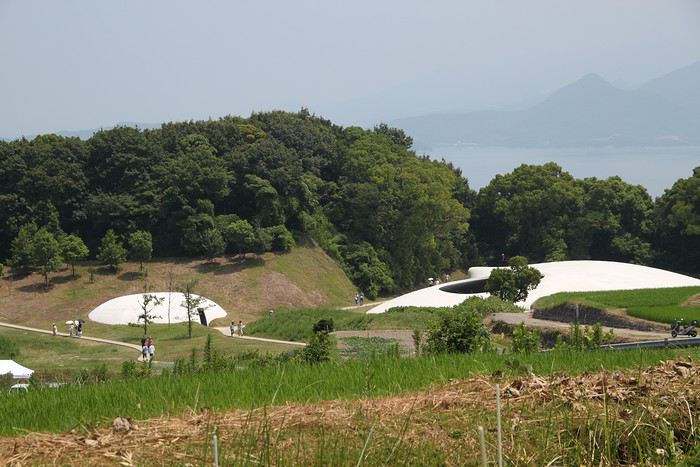
The Teshima Art Museum is a museum-work taken to its ultimate form: designed by Ryue Nishizawa and Rei Nato, the museum is essentially one massive artwork. **SPOILER ALERT**—I’d advise readers planning to visit to skip the next few lines to keep the surprise intact. It’s actually an enormous, curved hall with two roughly elliptical skylights. Everything is white, even the hostesses who manage entry. Again, you have to take off your shoes to enter. People sit directly on the floor. Talking is prohibited. Thanks to a clever system and a hydrophobic coating, water droplets meander across the floor, forming intricate networks. The whole experience has a slightly mystical vibe. Described like this, it might not sound particularly exciting, but in person, it’s really something.

Another great experience. “The Japanese just don’t quit!” What I love about them—among a thousand other things—is that when they set out to do something, they go all in. Here, the goal is to make modern art accessible to as many people as possible, and they’ve created a one-of-a-kind museum-work in the middle of nowhere.
Three weeks in Japan with family

Bluequark · 2018-04-15 · Message 38 of 174

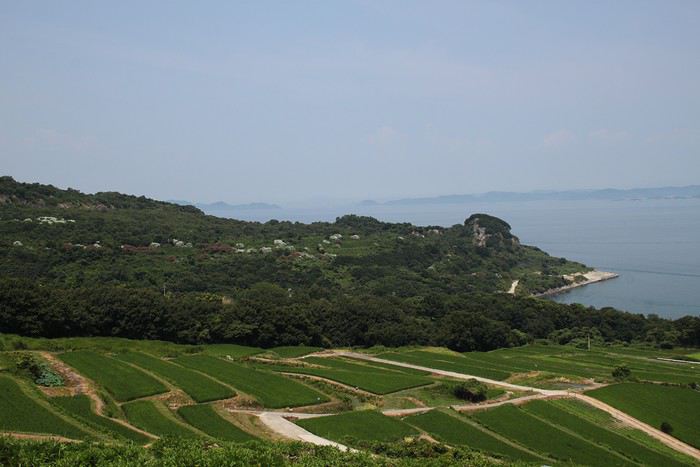
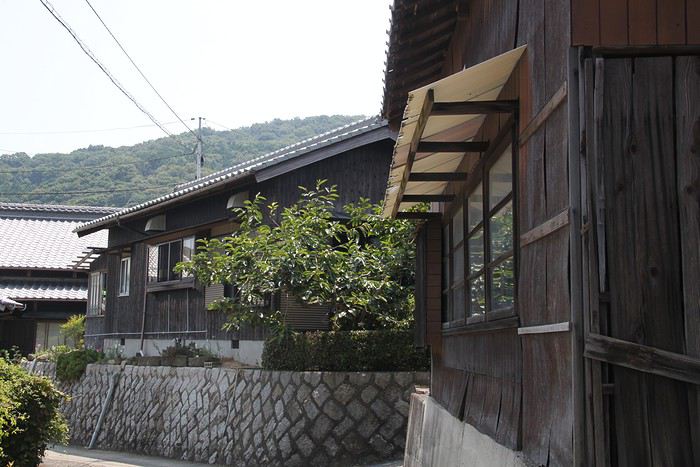
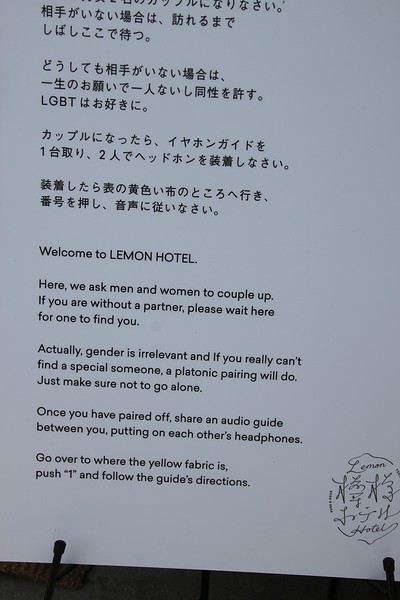
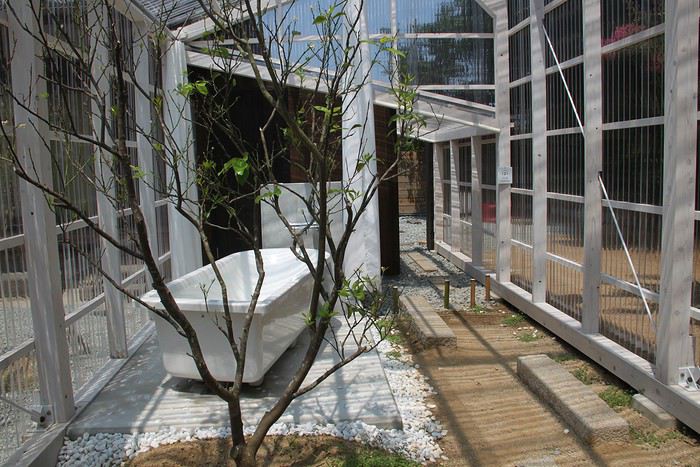
A quick stroll through the rice fields overlooking the museum, and then we head up to the top of the village to reserve four spots at Shima Kitchen. While waiting for our time slot, we have enough time to explore the surroundings and a few installations. Among them, the "Storm House" (Janet Cardiff and Geaorge Bures Miller), which simulates a storm, as the name suggests. You enter the house, settle in, and a storm breaks out. Pretty mind-blowing. Another great experience. Then there's the "Hotel Lemon" (Smiles), with a pretty wacky visit. This one is done as a couple with an audio guide that invites you to complete mini-challenges. Nothing too scary, I assure everyone. Even though I still walk along sidewalks avoiding stepping on the crocodile lines, I had a lot of fun trying to avoid the fictional alligators in the fake pond. But you have to play along, otherwise, there's no charm. It also really helps to be in pairs—the coordination efforts add to the fun. The visit was filled with laughter and ended with even more laughter.


Three weeks in Japan with the family

Bluequark · 2018-04-15 · Message 39 of 174

Just a little more effort and it’s « Particles in the Air » by Noe Aoki.


With a cute little shrine nearby.


We didn’t really connect with « Your First Colours » by Pipilotti Rist, though. All I remember is a hazy impression of colors flashing in the dark without much charm.

But that’s not all—it’s time to eat! We sat Japanese-style and enjoyed local dishes from two set menus: fish or vegetarian curry. Another great moment.

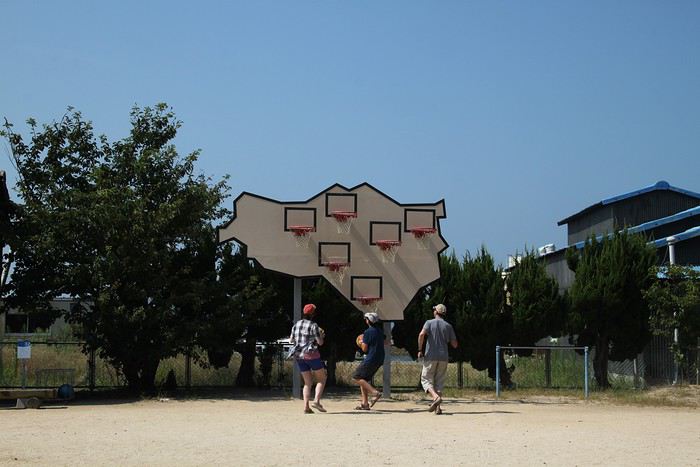
Off we go! We hop back on our bikes and head toward the port. We stopped by « No Wins - Multibasket » by Jasmina Llobet and Luis Fernandez Pons. There were balls available, and I had a bit of trouble getting my three little ones away before they got heatstroke.


A few more pedal strokes and we reached « Les Archives du Cœur » by Christian Boltanski (ogijima.fr/...ves-coeur-boltanski/). A slightly unsettling experience: heartbeats are played in a dark room, lit only by a faint bulb flickering more or less in time with the heartbeat you hear. You can even feel the vibrations of the beats. For an extra fee, you can record and listen to your own heartbeat.


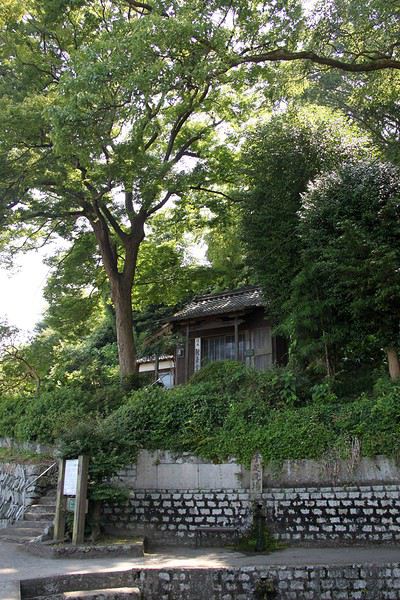
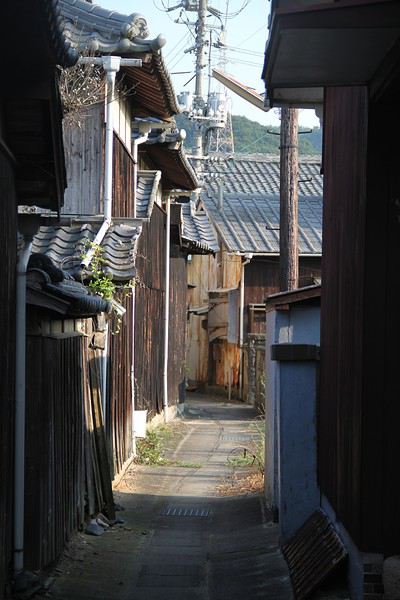
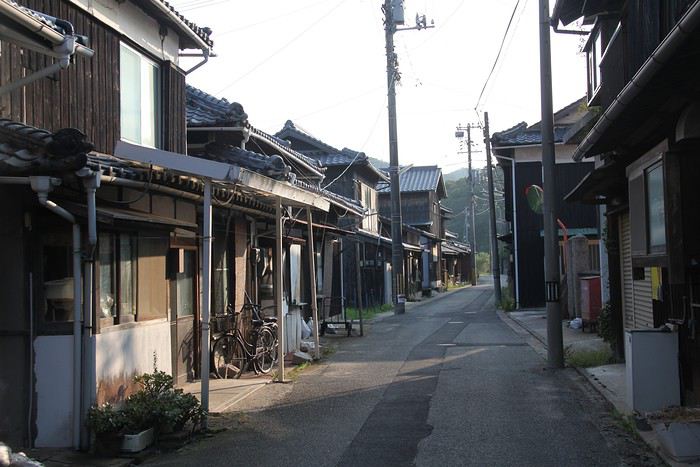
We then spent a good while searching for installation 33 around the village, but no luck. Turns out it’s only part of the autumn program—we realized that later. No installation 33, then, but we still discovered a lovely village.


Three weeks in Japan with the family

Bluequark · 2018-04-15 · Message 40 of 174

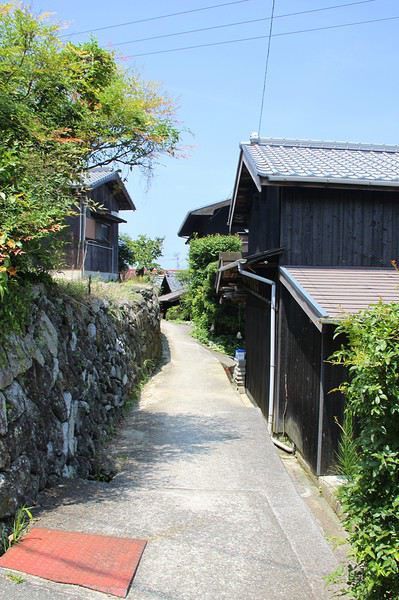
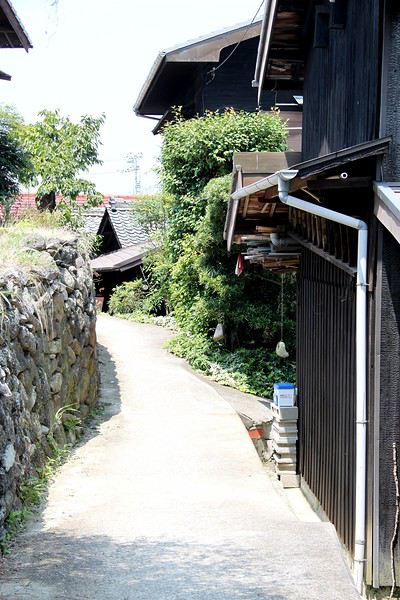
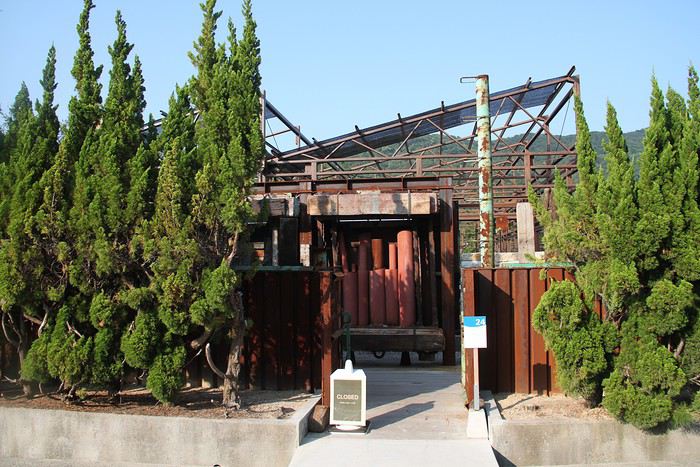
The day flew by faster than we wanted, and we didn’t have time to explore the south of the island. We decide to head back to their place and arrive just in time to visit the « Teshima Yooko House », the result of a collaboration between architect Yuko Nagayama and painter Tadanori Yokoo. No photos allowed inside, so here’s the exterior, which gives a—very—vague idea. (For more photos, see here: http://www.archdaily.com/472507/teshima-yokoo-house-yuko-nagayama-and-associates). In a few words, the house is super playful with its light, color, and mirror effects. I really loved the glass floor in the “living room” and the river flowing underneath.
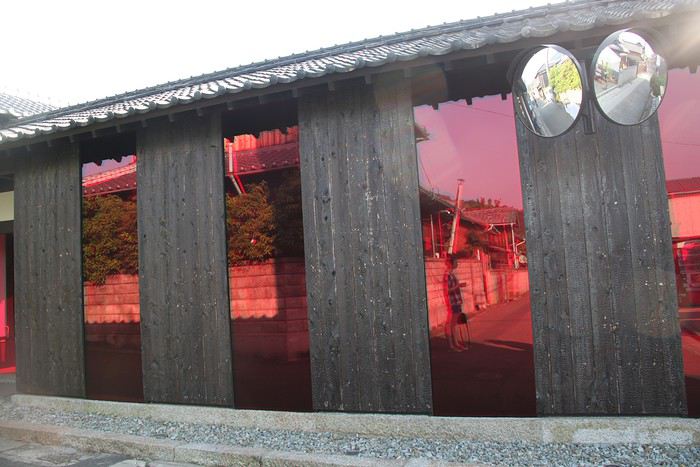


When we get there, « Needle Factory » by Shono Ohtake is about to close. We only have time for a quick look inside. Again, no photos allowed. So, the exterior it is.


Next up is another fruitless search to find Tobias Rehberger’s psychedelic café « Was du liebst, bringt dich auch zum Weinen », which I’d seen photos of online (https://setouchiexplorer.com/du-liebst-bringt-dich-auch-zum-weinen/). Turns out it was actually closed at that hour. No coffee, then, but another lovely discovery in the village.


Our kids put it best—we *loved* exploring Teshima. Wandering the island through its rice fields and villages in search of the different artworks was really cool. I’m already promising myself that when we retire—yes, that’s a long way off—we’ll come back in the spring during a Triennale and visit other small islands too.

Tonight, we’re heading back to the same restaurant as last night—it was such a hit. Yep, we’re creatures of habit.

VoyageForum — the largest community of French-speaking travellers.