The sequel!
The GPS finally cooperated! It took us to Lecce and, even better, to an avenue with parking available without crossing any ZTLs.
I had set it to go to the center: we ended up on the edge of the historic center, between the Duomo and the Basilica!
One downside, though: it's almost noon, and the detour to the Abbey cut into our time to explore the city's details...
We have a meet-up at 2 PM with a guide we contacted online before leaving; for the rest of the morning, we decided to stick to Piazza del Duomo and its immediate surroundings. This square is the baroque living room of the city—perfect for a start!
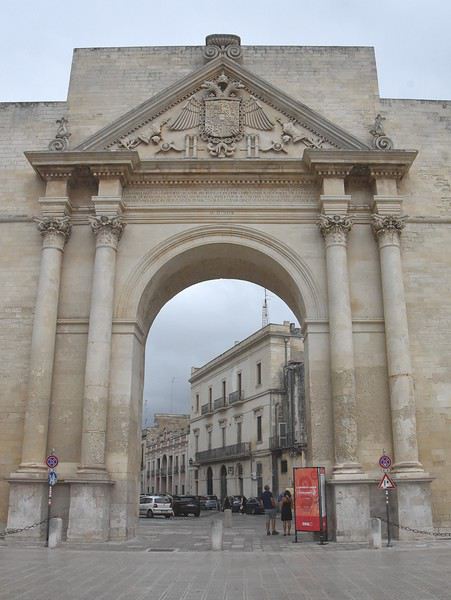
We head down through Porta Napoli... The palaces and churches of the city change color as the hours pass. Built from Lecce’s golden stone, they’re bright in the morning and turn golden in the evening light!
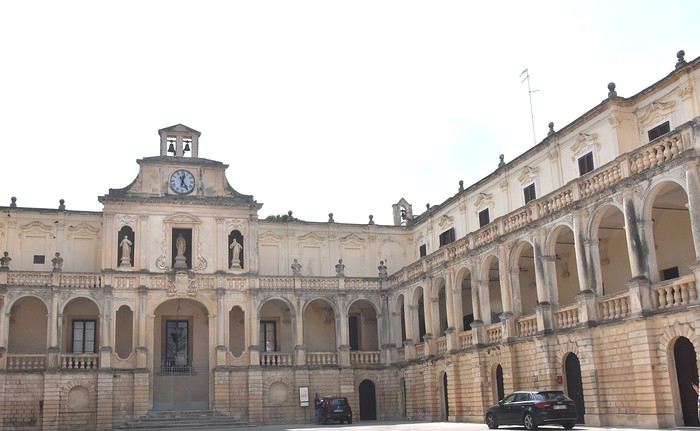
On the Piazza, we buy a combined ticket (5 sites, among the city’s most interesting) at the entrance of the Palazzo del Seminario. This will let us enter the different monuments during our afternoon visit.
A bit rushed, we visit the palace and its cloister (Sacred Art Museum) before diving into the Duomo...
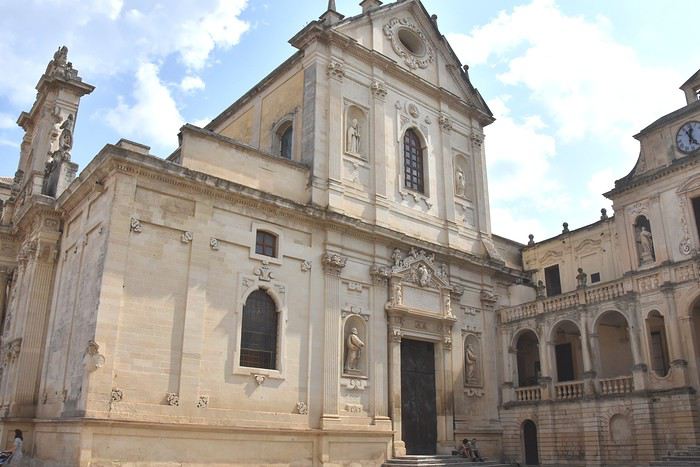
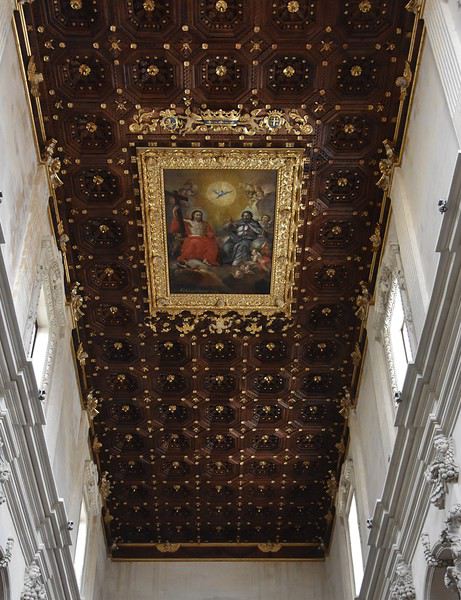
Admire the intricately carved and decorated coffered ceiling—you’ll find the same style in many of the city’s churches!
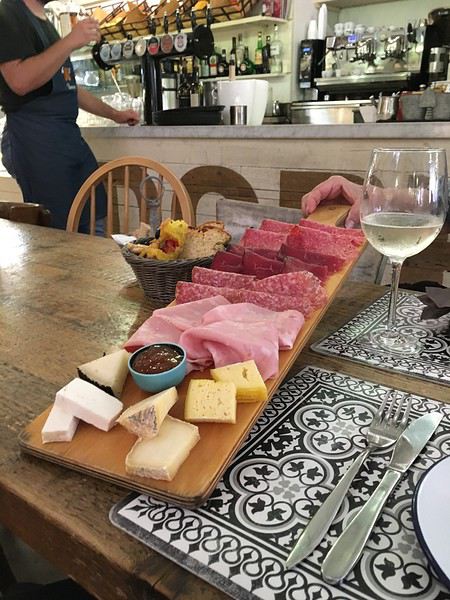
Time flies: there’s a well-placed wine bar behind the cathedral, and we stop there to recharge. A beautiful platter of assorted cured meats does the trick, facing a counter that would make even a vegetarian drool!
At 2 PM, we’re back at the city gate, and for the first time, we’re about to do a guided tour (unusual for us)—and hold on tight—it’s in a *rickshaw*!!!
A quick explanation: the sights in the city are relatively spread out, and rumor has it you need two days to see everything on foot... so renting a bike is the norm.
My husband is *definitely* allergic to that kind of thing (no comment...) and wasn’t *too* opposed to what the rental places also offered: a two-seater carriage hitched to... a bike.
So, a charming young woman pedaled us around while sharing fun anecdotes.
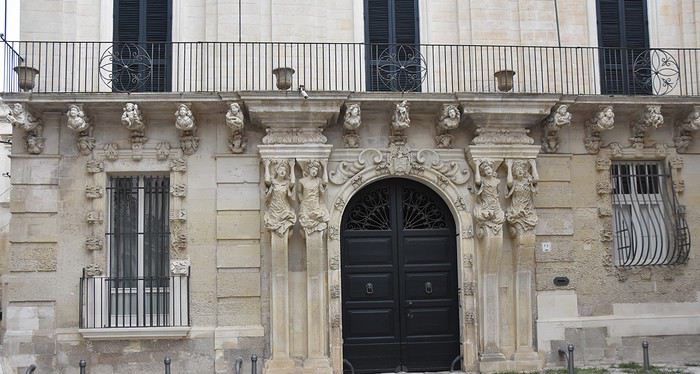
We let ourselves be driven through some very scenic streets, comparing the magnificent sculpted balconies that decorate each palace. Our attention was drawn to their shape.
It seems the architects adapted the wrought iron to the curve of ladies’ dresses: since a straight balcony would wrinkle the fabric of their beautiful skirts, they designed curved balconies to let the ladies sit comfortably. *Se non è vero...*
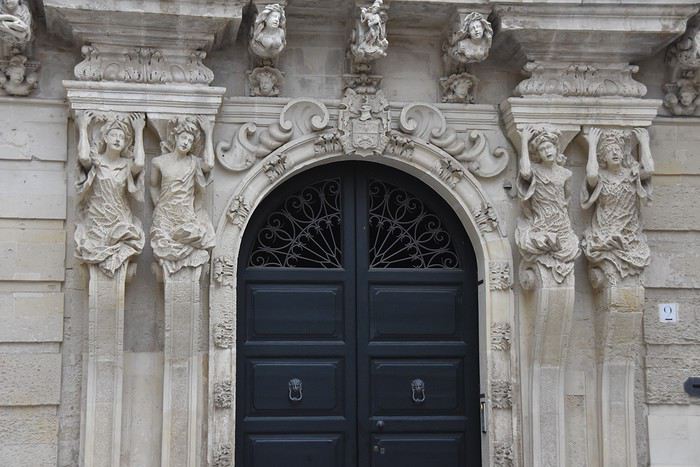
Here are a few examples: on the left, a window with a straight balcony, and on the right, a curved one! Also, admire the caryatids adorning the facades!
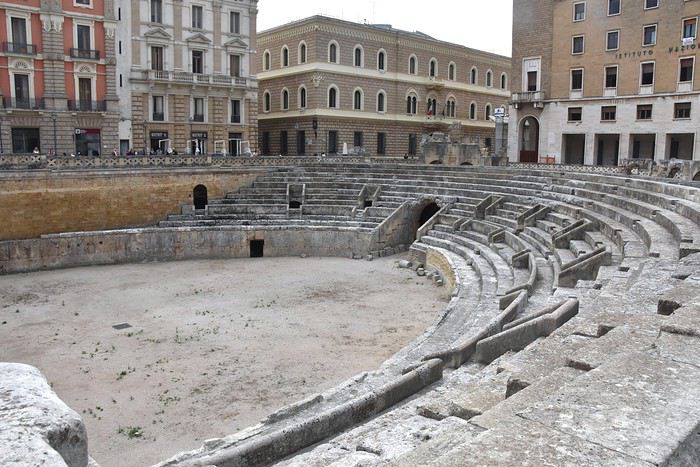
We pass by the arena, remarkably restored since it was once used to build palaces...
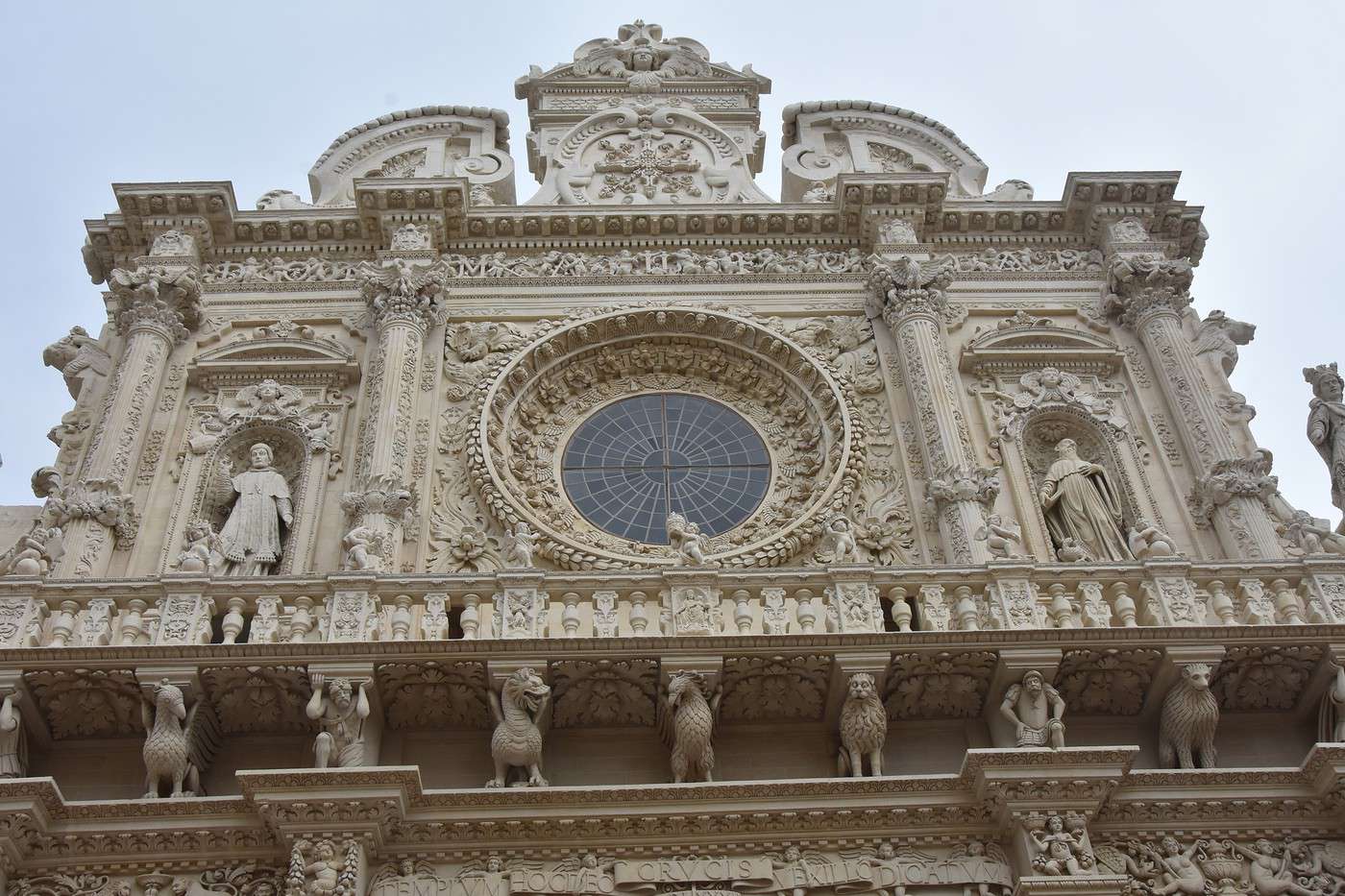
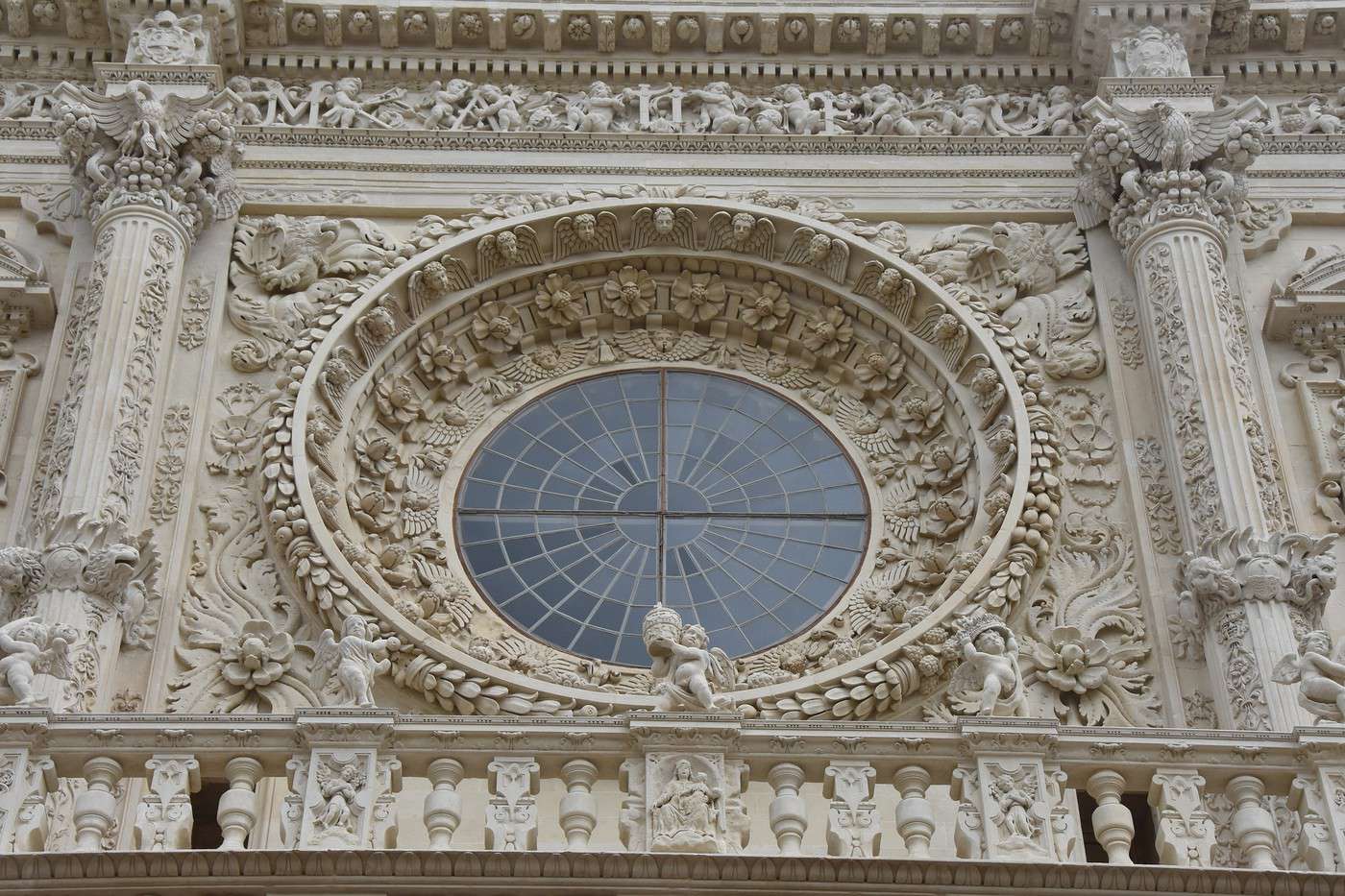
The tour culminates, after visiting other churches and neighborhoods, at Basilica Santa Croce, very close to the Palazzo dei Celestini. Its facade is so decorated with garlands and clusters of fruit that it’s almost over-the-top...
It’s now the seat of the Province, and at the back, you can enjoy a beautiful public garden.
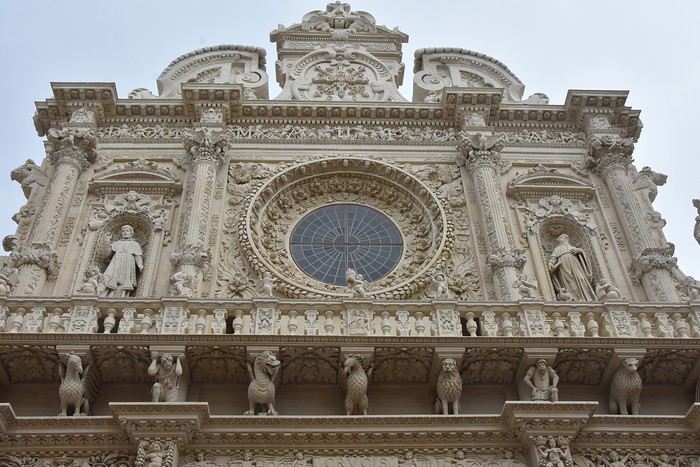
Back to the Basilica: it’s the most accomplished expression of Lecce’s baroque. It was designed to impress the people with its grandiose splendor.
Its first architect, Gabriele Riccardi, created the first level, which is quite sober: a frieze dotted with strange creatures and garlands...
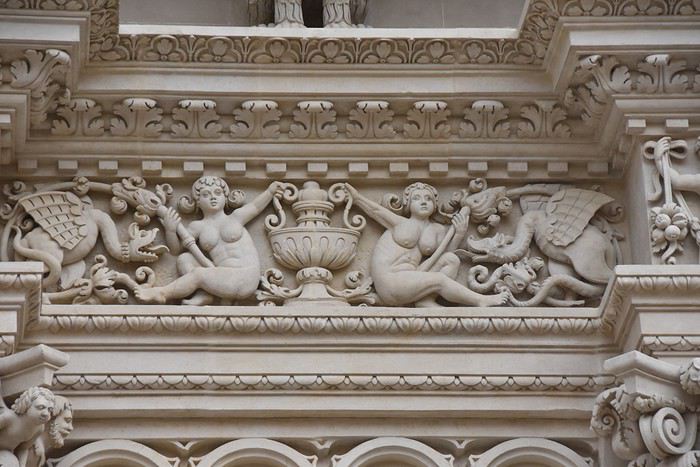
Look at the upper levels: the difference is striking!
Giuseppe Zimbalo, who continued the work, imagined an extravagant decor symbolizing the Battle of Lepanto, the victory of Christian forces over heresy. He used countless hard-to-decipher symbols, like griffins, dragons, and lions opposed to cherubs wearing tiaras and crowns.
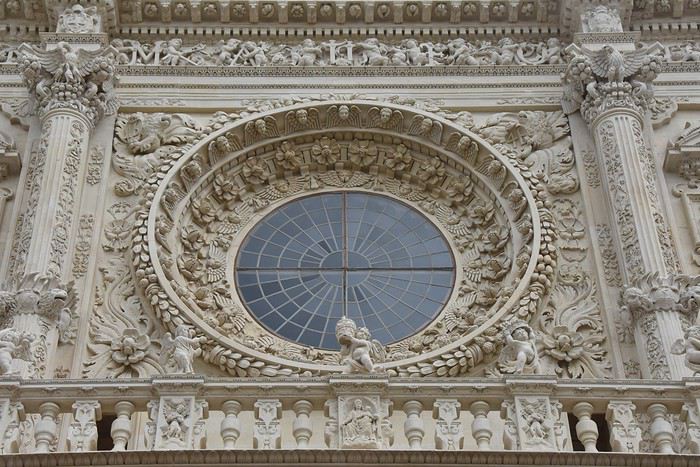
A peek inside: it’s Renaissance in style and lavishly decorated with marble inlay, ornate columns, and few gildings...
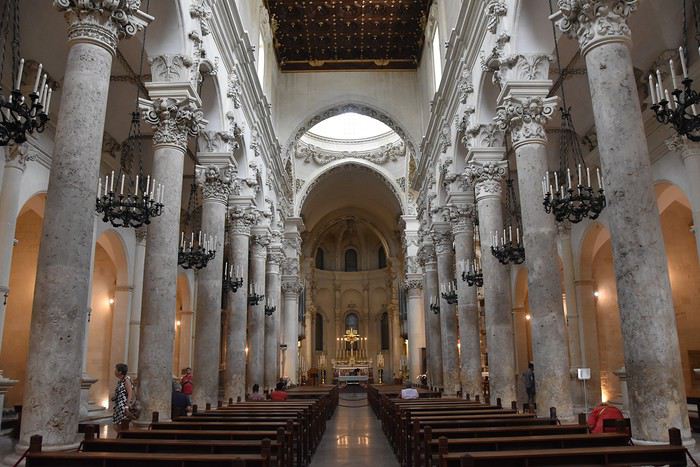
Tomorrow, after a good night’s rest, we’ll change our base. Fingers crossed the GPS behaves!