in Entre deux voyages › Carnets de voyage
From Ol Pejeta to Tsavo West (Kenya) (page 2 of 15)
Discussion started by Pygmalion19 on 2019-12-17
286 replies
This thread has been translated into English.
From Ol Pejeta to Tsavo West (Kenya)
Pygmalion19 · 2019-12-21 · Message 21 of 287
Coming down this hill toward the wetlands, we saw:
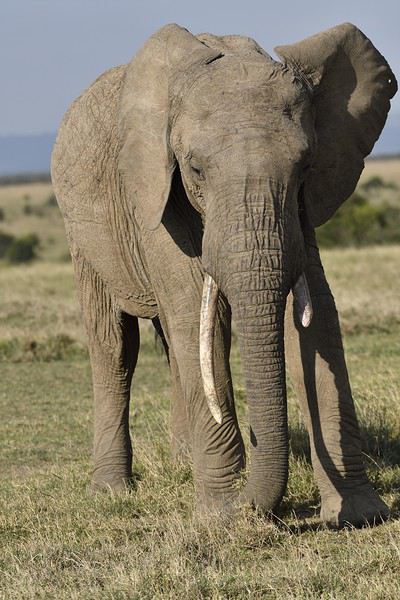
a werewolf! Thanks, I see you're following along ;) We also spotted some birds—not a huge number, but still:
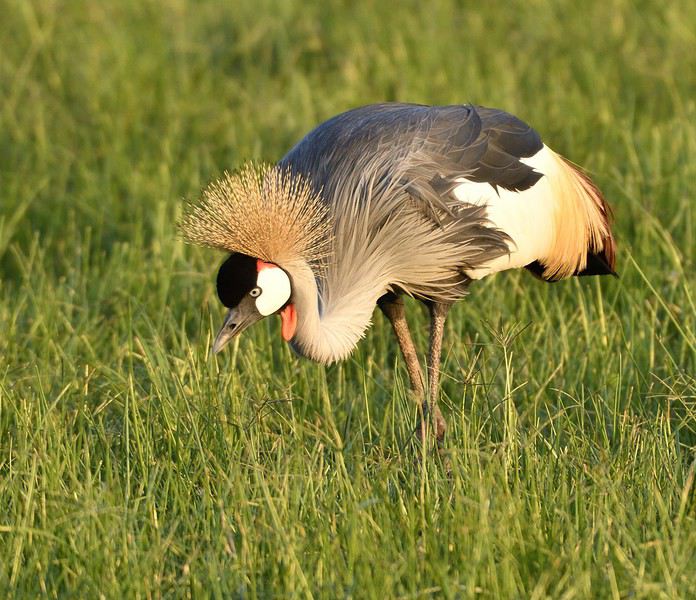
Grey Crowned Crane or *Balearica regulorum*—also called Royal Cranes by some. Phew! Its range: East Africa, including Kenya.
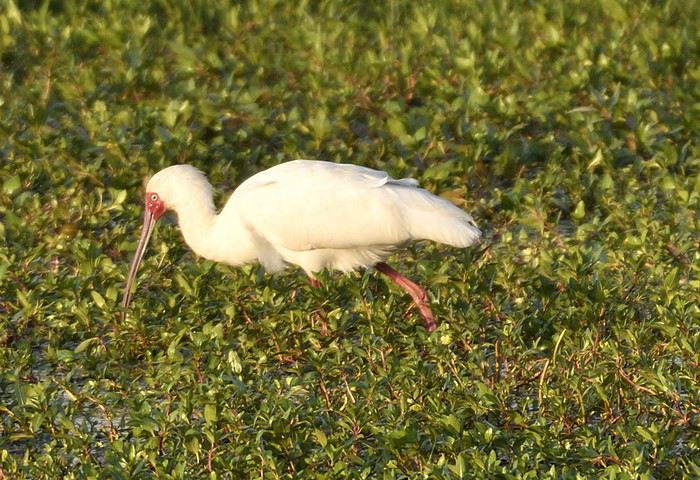
African Spoonbill or *Platalea alba*—also known as the African spoonbill ;) And it wasn’t alone, even if it looks that way in the photo!
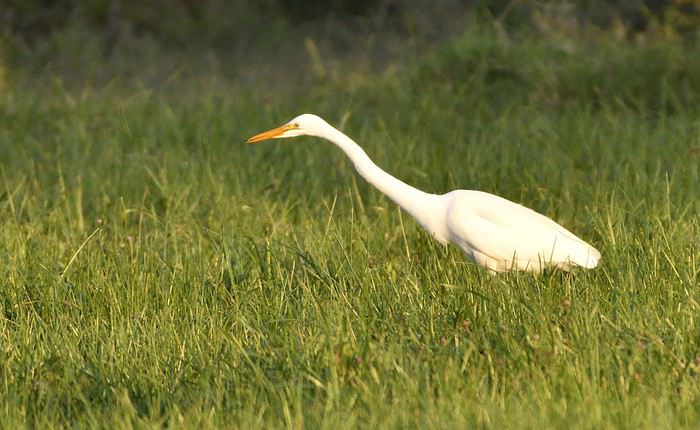
Great Egret,
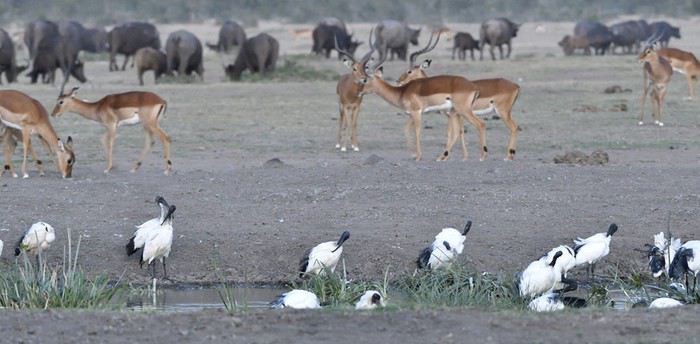
Sacred Ibises later in the day near the watering hole. We also saw Black-headed Heron, rollers, African owls, and Cattle Egrets. All share this habitat with other species they benefit from.
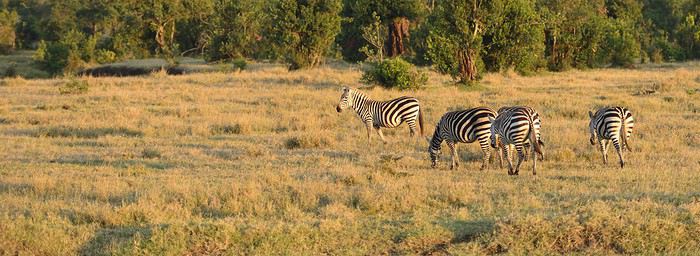
A few shots at sunset, when at the end of the day, vegetation, birds, and wildlife are bathed in golden light.
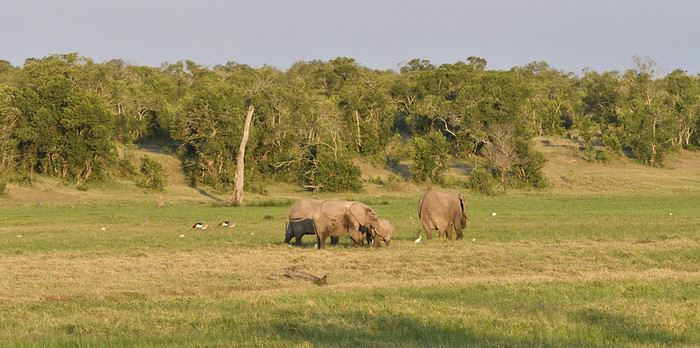
We enjoyed this small, peaceful park without going overboard. We could’ve even explored it without a guide. It’s nothing extraordinary—the species we saw aren’t unique, and the atmosphere isn’t as "powerful" as elsewhere. But seeing them is always a pleasure, and our visit helped support the place. A great spot for a first taste of African wildlife.
That’s it for Ol Pejeta, for today and tomorrow. The story picks up after the holidays—next stop: Samburu country.
Happy holidays to everyone!
From Ol Pejeta to Tsavo West (Kenya)
Rouquine38 · 2019-12-21 · Message 22 of 287
Happy holidays, Eric, and thanks for all these amazing photos that make me want to go meet the animals! 😊
From Ol Pejeta to Tsavo West (Kenya)
Pygmalion19 · 2019-12-21 · Message 23 of 287
Good evening Isabelle, and thank you for the compliment and your wishes! :)
From Ol Pejeta to Tsavo West (Kenya)
Blesl · 2019-12-21 · Message 24 of 287
Hi Éric,
I’ve been reading your really interesting travel journal closely, and it helped me spot a small detail.
The most common crane in Kenya (and Tanzania, and southern Africa in general) is the Grey Crowned Crane, [*Balearica regulorum*], which has a grey neck (hence the "Grey")—not the Black Crowned Crane, [*Balearica pavonina*], which has a black neck (hence the "Black") and is found in West Africa.
Thanks for sharing!
BL
From Ol Pejeta to Tsavo West (Kenya)
Safrou · 2019-12-31 · Message 25 of 287
Hello, hello,
Thanks for the link. I didn’t mess up too badly, and by running like a cheetah, I caught up with the group 😉
And well, it was worth the wait for the carriage.
In my bean bag, I put rice (which doesn’t sprout), and the guides and/or staff are happy to take it 😉
Elands as the first animal—wow, I would’ve loved that.
Never seen chimps in Kenya; according to the map, it’s a sanctuary. You can spend hours watching their expressions.
Then cheetahs (wow, I’m still in awe—pick me up on the way out). I don’t think a lone cheetah would go after a zebra—it’s way too big—but a coalition certainly could. Four of them took down a wildebeest in Kgalagadi.
Black-headed heron—it’s called *melanocephalus*.
I’m over the moon, obviously. Thanks!
Ready for more—*happy end of the year* 🙂
From Ol Pejeta to Tsavo West (Kenya)
Sylvie56 · 2019-12-31 · Message 26 of 287
Ready for the next part, happy end of the year 🙂
Yes Eric, it was really nice following you in Ol Pejeta, but now we’re looking forward to the next part in 2020 for sure 😉. Heading to Samburu if I understood correctly......
Just like Anne-Marie, I love Cape elands—they’re the largest African antelopes. They’re usually shy, but in the Laikipia area, we see them relatively often.
Quick note: there are no springboks in Kenya (they’re mostly seen in Southern Africa). To me, this gazelle is a Thomson’s (cheetahs’ favorite prey...).
Happy New Year’s Eve to everyone!
From Ol Pejeta to Tsavo West (Kenya)
Safrou · 2019-12-31 · Message 27 of 287
Small note: there are no springboks in Kenya (they’re usually seen in Southern Africa). To me, this gazelle is a Thomson’s (cheetahs’ favorite prey...)
Oops, that slipped out
For Lichtenstein’s hartebeest too, I had doubts, but it seems there’s very little difference between these hartebeests 😛
I’ve opened each of them at least 3 times. "snipe"
From Ol Pejeta to Tsavo West (Kenya)
Pygmalion19 · 2019-12-31 · Message 28 of 287
Good evening Sylvie,
Small note: there are no springboks in Kenya (they’re usually seen in Southern Africa). To me, this gazelle is a Thomson’s (cheetahs’ favorite prey).
You’re absolutely right, Sylvie. I’m embarrassed. I’ll make the corrections right away.
Yes, Eric, it was really nice following you in Ol’Pejeta, but now we’re looking forward to the next part in 2020, no doubt ;). Heading to Samburu if I understood correctly..
Yes! Yes! I’m thinking about it, but right now, between work and life, it’s hard to focus.
From Ol Pejeta to Tsavo West (Kenya)
Pygmalion19 · 2019-12-31 · Message 29 of 287
Hi Anne Marie,
It’s not easy to identify this bubal indeed. I’m putting out a call! The credit card’s ready.
Happy New Year’s Eve.
From Ol Pejeta to Tsavo West (Kenya)
Pygmalion19 · 2019-12-31 · Message 30 of 287
Hi again Anne Marie
Never seen Chimps in Kenya, according to the map it's a sanctuary. You can spend hours watching their expressions.
Yes, that's right, it's an enclosed place, well built, super well protected to take in these primates that are so mistreated elsewhere. The guide took us there... felt like we were teleported. The visit is included in the Ol Pejeta entrance fee, but it's good form to leave a tip.
From Ol Pejeta to Tsavo West (Kenya)
Pygmalion19 · 2019-12-31 · Message 31 of 287
Good evening everyone,
Well, since I’m the only one who didn’t drink, we’re taking the A2 safely as we head north, leaving Mount Kenya on our right:
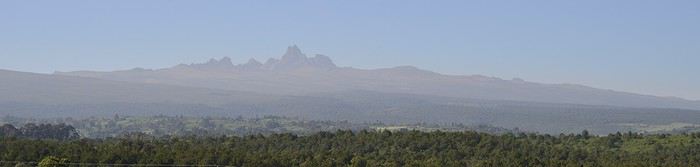
The landscapes roll by peacefully. They’re dry and rocky. Across these semi-arid expanses, a few acacias grow. There are herds of goats, and some camels too, on the roadside, which will likely be shipped to Mombasa for Arab countries. Then we leave the paved road for a dirt track, which we’ll leave for another track before reaching the gate:
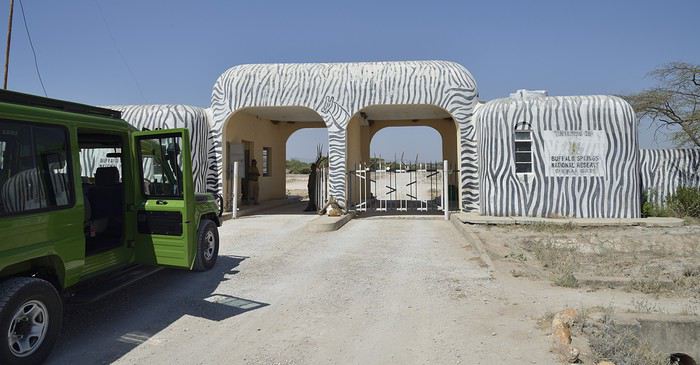
Barely three hours of driving for nearly 130 km. It has to be said, the average speed is pretty tame—the road is easy and well-traveled, the track passable but not busy. However, the signage leaves a lot to be desired. As usual, John handles the formalities, and our first encounter will be this graceful animal:
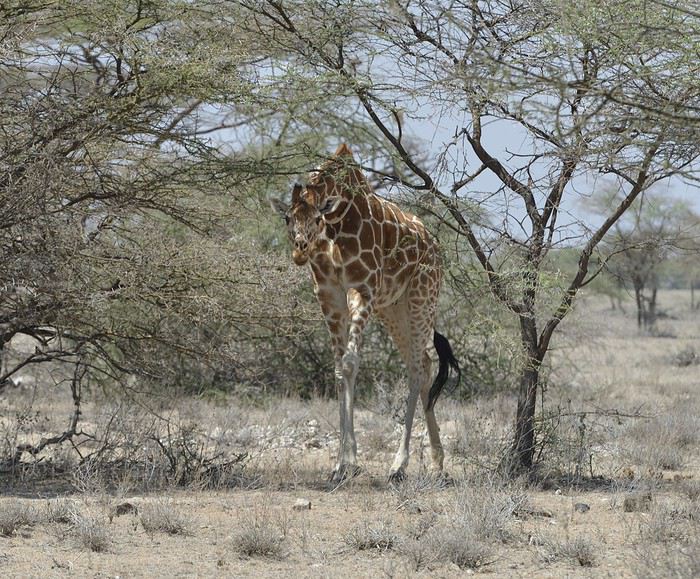
Graceful, certainly, but also curious—this reticulated giraffe, which we’ve already seen in Ol Pejeta. However, they probably weren’t native there. Their true home is here, between the Samburu and Buffalo Springs reserves.
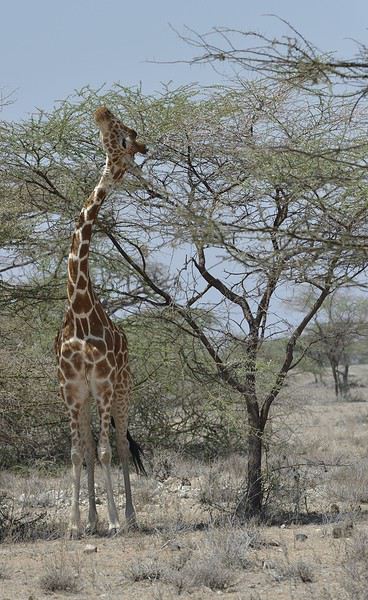
These two parks form the heart of our visit to Kenya. In these not-very-large areas—along with Sheba—several species survive that are hard to spot elsewhere (except maybe in zoos). We’re talking about the reticulated giraffe, the Grévy’s zebra, the gerenuk, the vulturine guineafowl, and lions with short manes...
From Ol Pejeta to Tsavo West (Kenya)
Pygmalion19 · 2020-01-01 · Message 32 of 287
Still on the way to the lodge, we quickly encounter the second of our six "greats" in this park (the first being the reticulated giraffe). Why these six? Because you only find them here and in the surrounding areas, nowhere else.
)
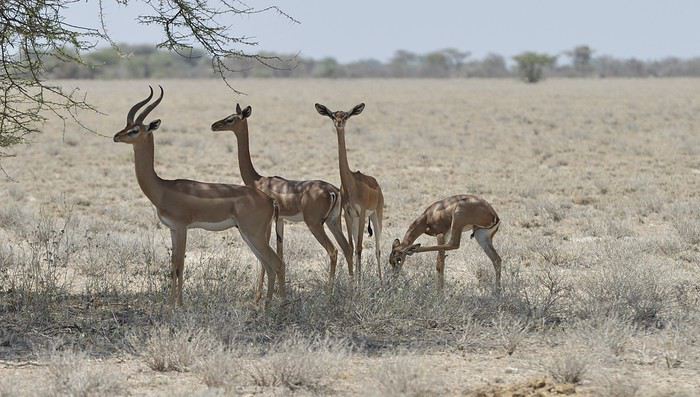
Gerenuk gazelle: litocranius walleri, a very beautiful antelope. We’ll see many in the reserve, very few in Meru, and none at all in Amboseli and Tsavo West.
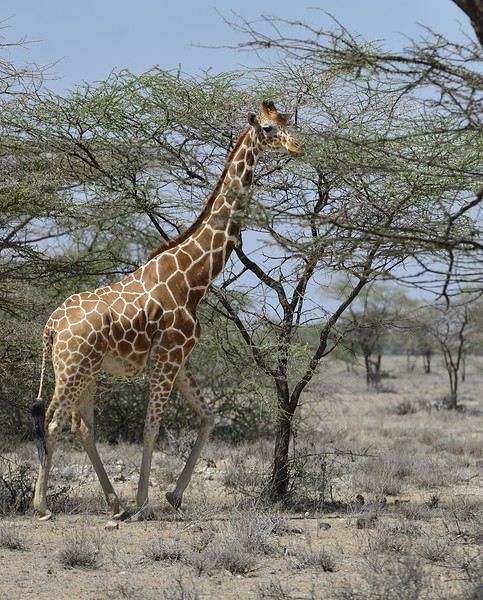
For our first sighting, the reticulated giraffe Giraffa cameleopardalis
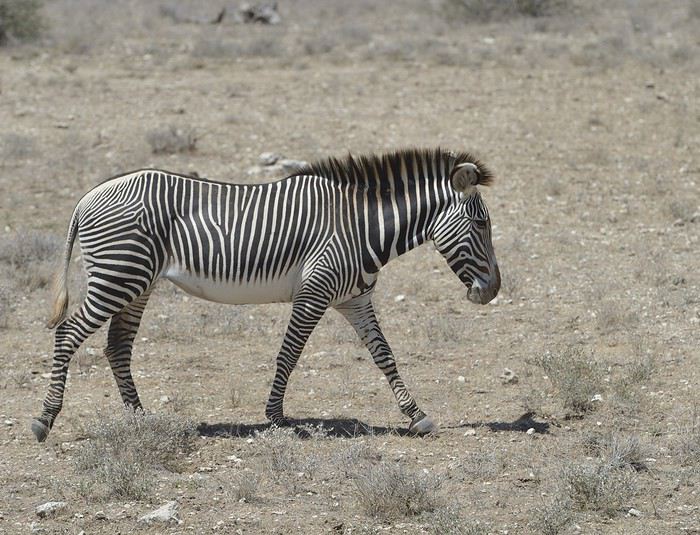
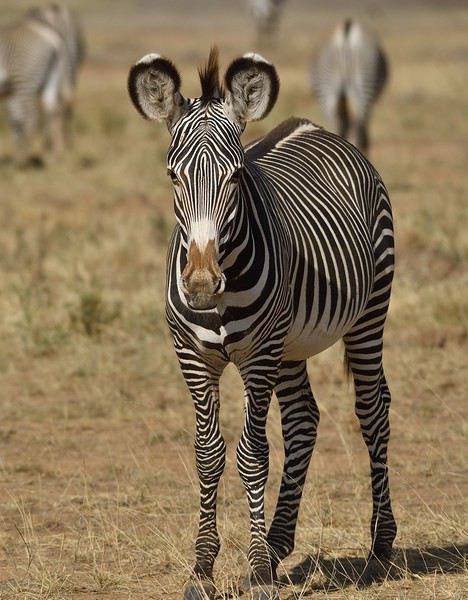
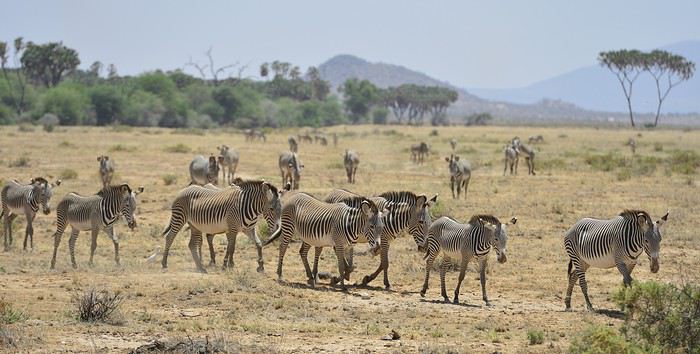
Then, still on the track, our third great: the Grevy’s zebra or Equus grevyi, which we only saw in Samburu and in decent numbers.
Side profile:
Front view:
In numbers:
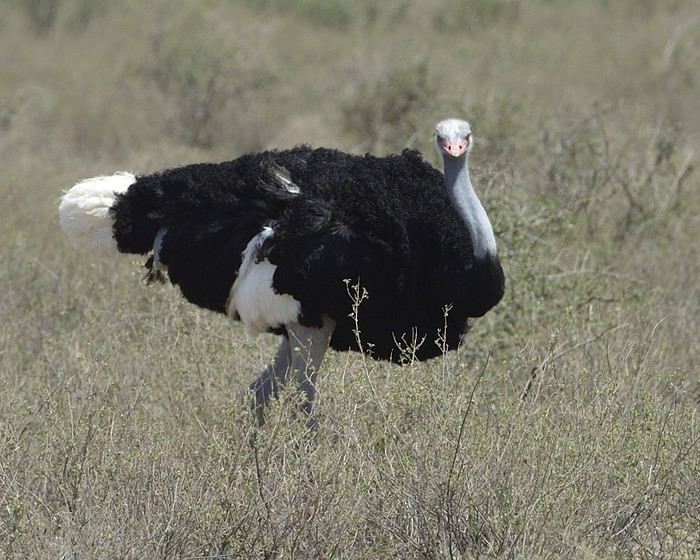
One more to go: the Somali ostrich Struthio molybdophanes, distinct from the common African ostrich. Here’s a male—what a magnificent animal, right?
The fifth and sixth won’t be shown just yet. Until then, I’ve got a meet-up in replay to catch up on the documentary series about the lions of Ruaha. For those of us who are late to the party, "replay" is a great solution.
From Ol Pejeta to Tsavo West (Kenya)
Pygmalion19 · 2020-01-01 · Message 33 of 287
We're nearing the lodge and the Ewaso River. Wildlife is becoming more abundant, and the landscapes are shifting. The savanna is giving way to forested areas along the banks of the Ewaso.
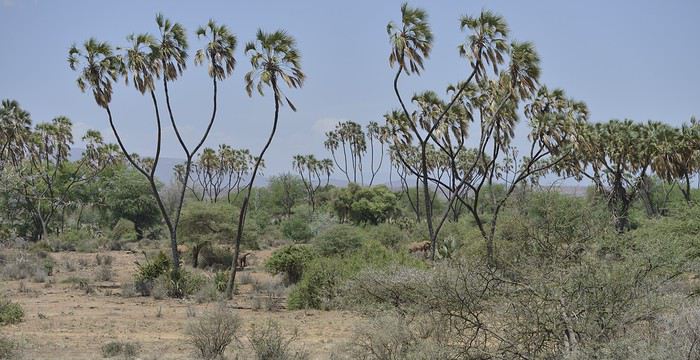
It was scorching hot despite the altitude (close to 800m). A fierce wind swirled in the distance, and the air was thick with dust. We were approaching lunchtime, passing Grevy’s zebras calmly making their way to the river.
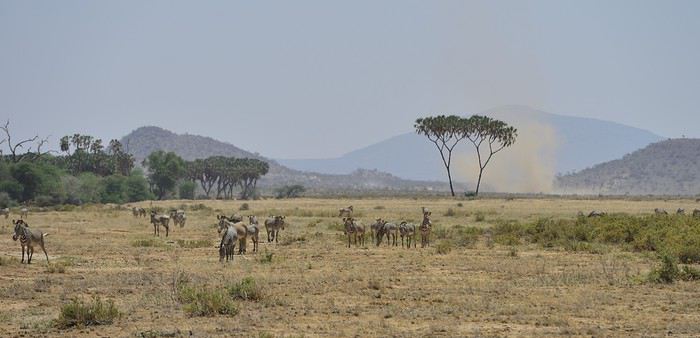
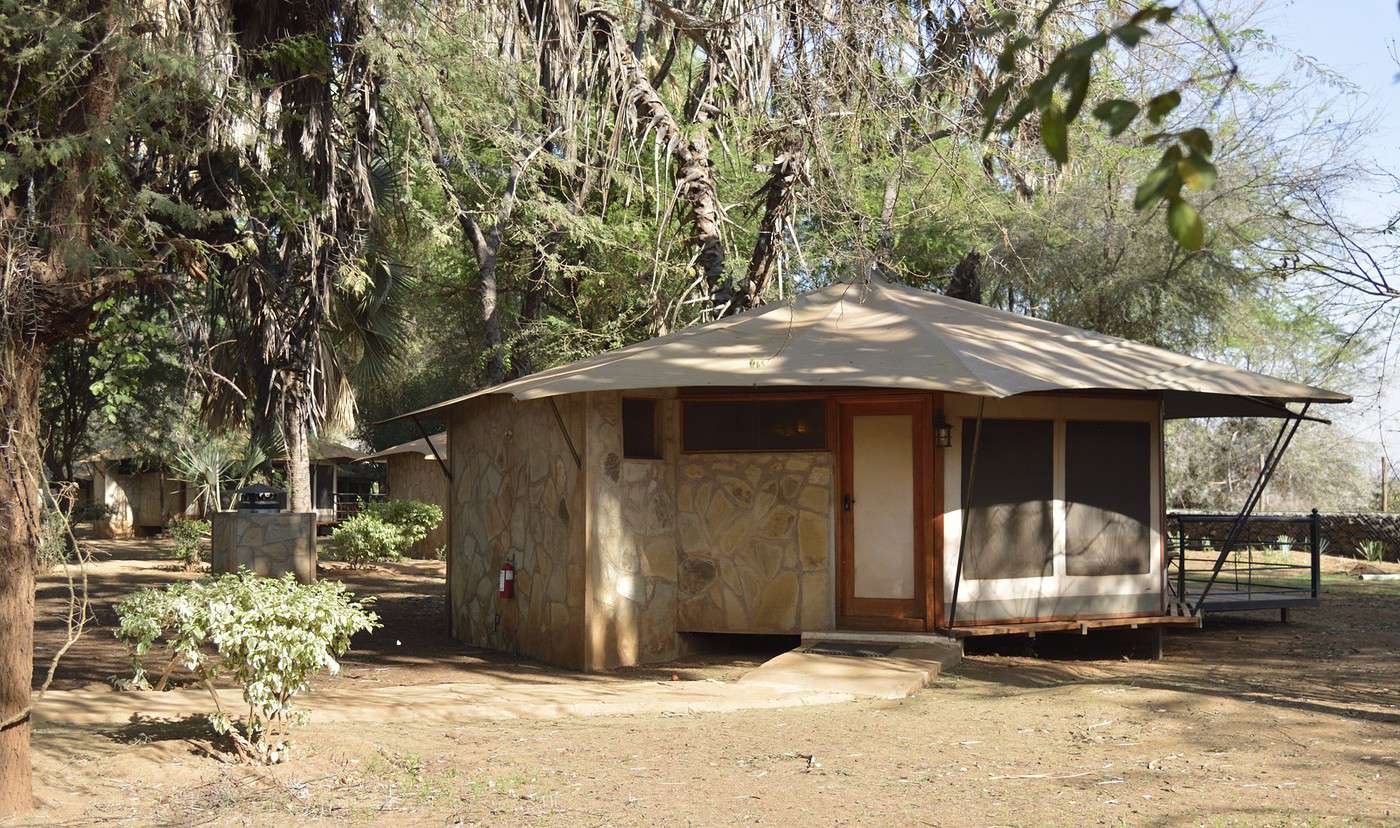
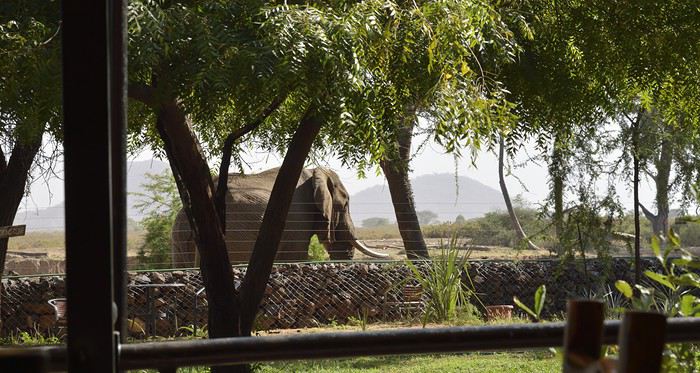
Here we are at the lodge, a spot under the trees on the riverbank. Our "semi-permanent tent" is protected from wildlife—especially elephants—by a low wall and an electric fence. I regretted this barrier, as it creates a separation from the bush... Oh well! Though when I say "protected," I mean from large mammals—not baboons and vervet monkeys, which invade the camp in troops. Whatever you do, don’t feed them. Once hand-fed by humans, these animals become bold and dangerous. A sobering lesson from Ihaha Camp in Botswana, where rangers had to cull an entire group.
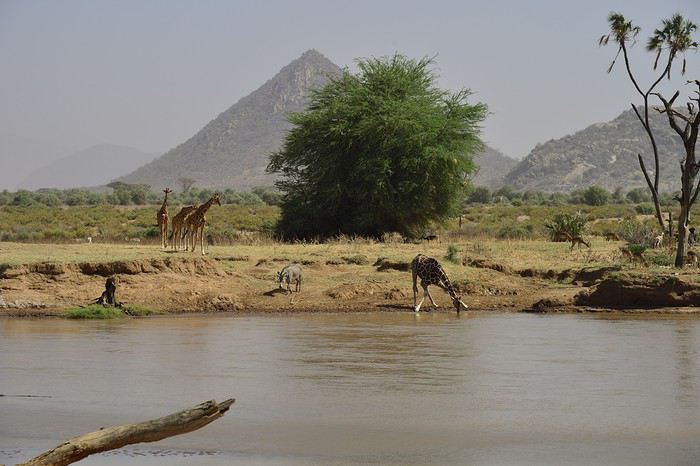
Across the river, the opposite bank is frequented by the park’s wildlife:
From Ol Pejeta to Tsavo West (Kenya)
Rjulie95 · 2020-01-02 · Message 34 of 287
For those looking for the excellent documentary, it's "The Lion's Law"
From Ol Pejeta to Tsavo West (Kenya)
Pygmalion19 · 2020-01-02 · Message 35 of 287
Hi Régis,
You’re keeping up🙂! Happy New Year, Régis! The Lion’s Law is also available on YouTube (all three episodes).
From Ol Pejeta to Tsavo West (Kenya)
Blesl · 2020-01-02 · Message 36 of 287
Grey Crowned Crane or Balearica pavinina or Grey Crowned Cranes. There were several at the observation spot. Its range: East Africa, including Kenya.
Happy holidays to everyone
Hi Éric,
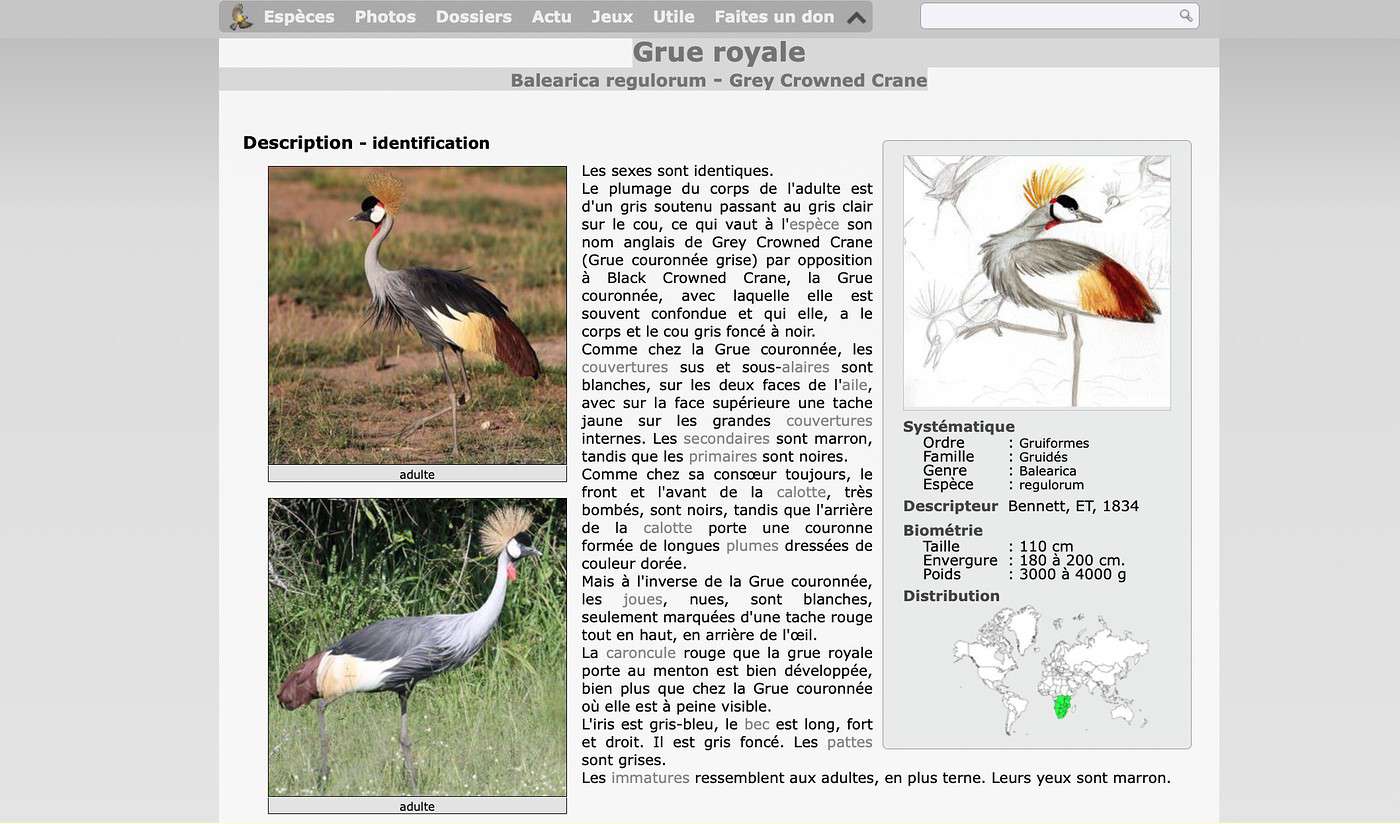
I thought you had replied to this topic, but I don’t see your response. So, I’ll hammer the point home—not for you, since you already know, but for your many readers (who are right to be so numerous). There’s a mix-up between the different French-English vernacular names and the binomial scientific name in Latin. *Grey Crowned Crane* is correct, not Balearica pavonina or *Grue couronnée*.
The crane in your photo is a Grey Crowned Crane, Balearica regulorum, the one commonly seen in Kenya and Tanzania, recognizable by its grey neck and the patch on its cheek where the upper white part is much more prominent than the red.

The Black Crowned Crane, Balearica pavonina, is characterized by a dark, often black neck and a cheek patch where the red occupies at least half (the lower part) of the patch. Its usual range doesn’t include Kenya—except at the far western edge—or Tanzania.
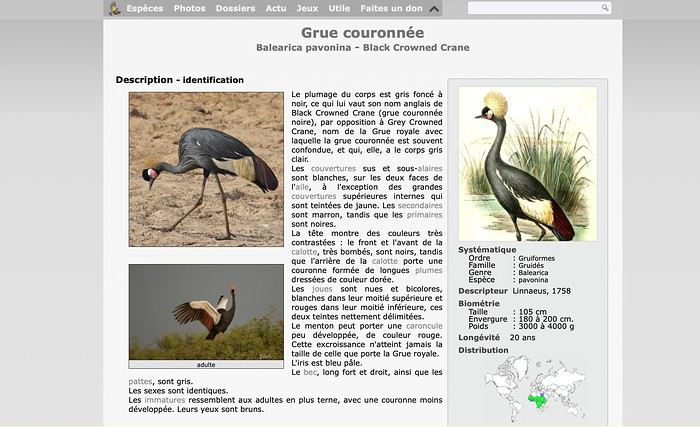
But, you might ask, doesn’t the oiseaux.net page include Kenya? That’s an oversight on this otherwise excellent site (my partner is a moderator there, so I can say that 😉). It doesn’t distinguish between an occasional presence—like a sighting once in a hundred years—and the bird’s regular habitat. HBW makes that distinction:

Same with the IUCN site (VU Vulnerable status):
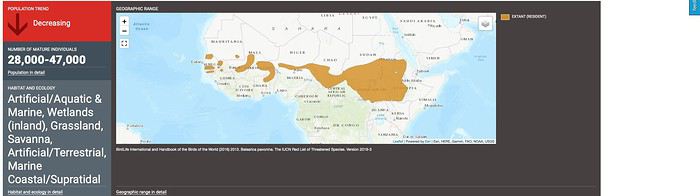
This little inaccuracy doesn’t affect the overall quality of your travel journal, which is already proven—just look at your many readers, including yours truly and my partner.
I’ll take this opportunity to wish you a great (and productive—there’s work to be done! Get typing!) year.
BL
From Ol Pejeta to Tsavo West (Kenya)
Rjulie95 · 2020-01-02 · Message 37 of 287
Yeah, I’d already forgotten—happy New Year, Eric, and to all the readers of this travel journal! 🙂
From Ol Pejeta to Tsavo West (Kenya)
Pygmalion19 · 2020-01-02 · Message 38 of 287
Hi Bernard,
What a real mess these names are... can't biologists just speak properly🙂!
According to my East Africa Field Guide, "Grey Crowned Crane," also known as the grey crowned crane or royal crane in vernacular, or Balaerica regulorum in universal terms. Balaerica pavonina pavonina, or the black crowned crane and "Black crowned crane" in vernacular, also exists quite distinctly as mentioned. Its range is different too, mainly on the West African coast.
So, we call it the royal crane, but not our Kenyan friends, who rightly see it as a grey crowned crane. I’d actually be inclined to name it that way rather than royal crane. Because both of our cranes have that regal look, blue blood and all!
As for our taxonomists, they’re also right, but in their own opinion more than others! Indeed, in their detached language, it’s a Balaerica regulorum. So when I say royal crane = grey crowned crane, I’m just as correct and within my rights—these names aren’t mutually exclusive. But with Balaerica regulorum, there’s no confusion possible.
Such a headache 😉 these identifications... I’m off to cool it down with a good beer.
From Ol Pejeta to Tsavo West (Kenya)
Safrou · 2020-01-02 · Message 39 of 287
Good evening, everyone,
I don’t know either place, but I’d also say Grey Crowned Crane. And watch out—once again, birds can’t read, ha! ha! ha!
PS: It might also be due to the translation. Locally, they probably call it Grey Crowned Crane, which is where the translation comes from. 😛
From Ol Pejeta to Tsavo West (Kenya)
Pygmalion19 · 2020-01-02 · Message 40 of 287
Hi Anne Marie,
PS it might also be due to the translation—on the spot they surely call it Grey Crowned Crane 😛
…which means "Grue couronnée grise" in French! Anne Marie, we agree! This name is actually less confusing because it matches observations better than the term "Grue Royale." But the most accurate of all is *Balearica regulorum*! Now that’s no joke… We could also call it "grue royale" for this grey crowned crane, as long as we specify it.