Good for you, good for you if you're laughing, Joël, but still, I can hear you from here: "Yeah, sure, the sea, the desert, the wadis, the people, the old stones, and the mountains are all great, but where are the oases?".
Well, oases can be found just about everywhere, but we stopped at the one in Misfah Al Abriyeen (bless you! 😄).

This village is renowned as the most beautiful in the country, so we were a bit worried about an atmosphere like Mont Saint-Michel with its buses and crowds of visitors! But while it’s just as stunning as Mont Saint-Michel in its own very different way, in terms of crowds, it felt like we were back in April 2020 when the whole planet was in lockdown.
And that’s pretty much the case everywhere, even though we’re in peak tourist season!! Pure bliss!
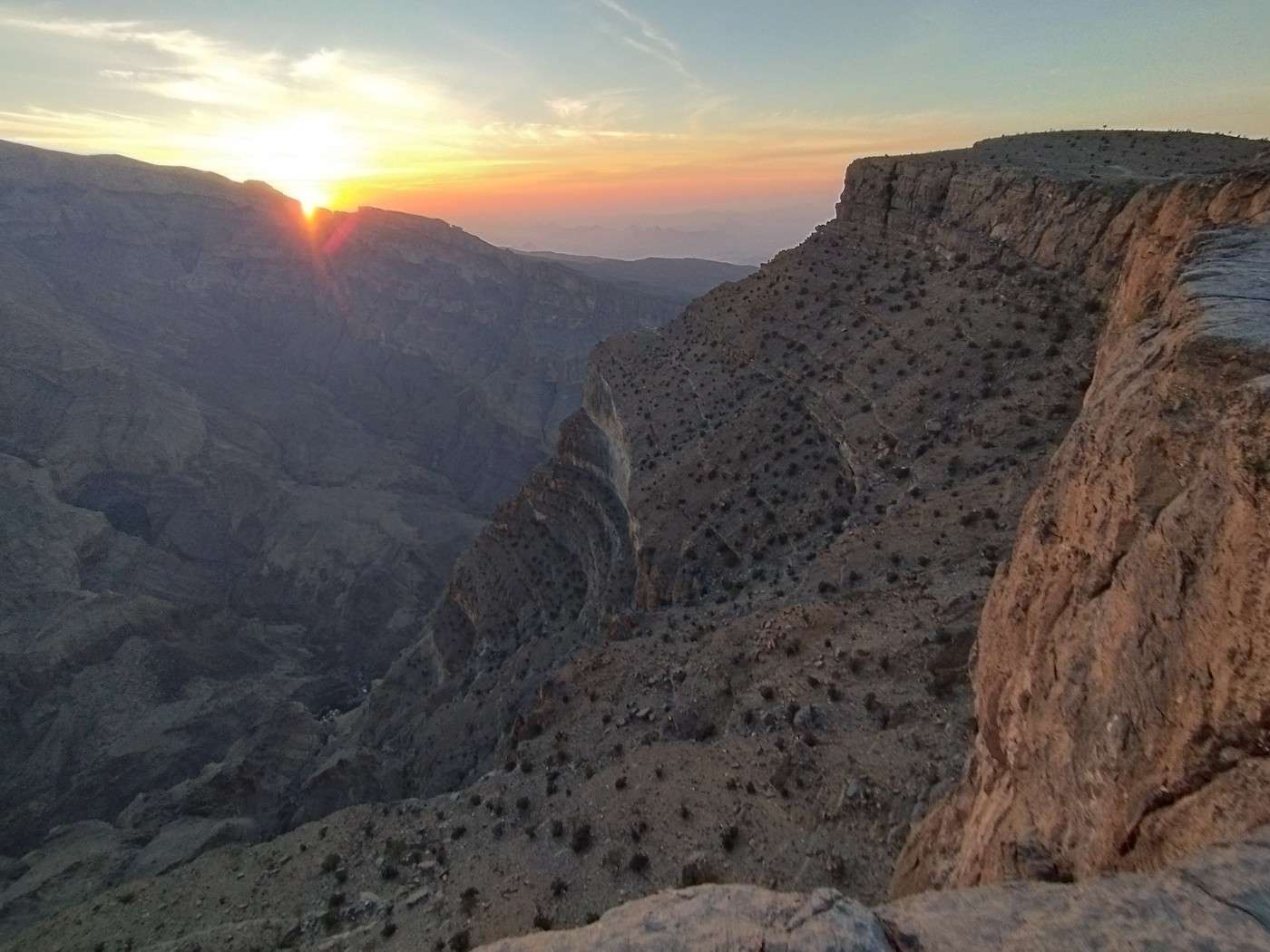
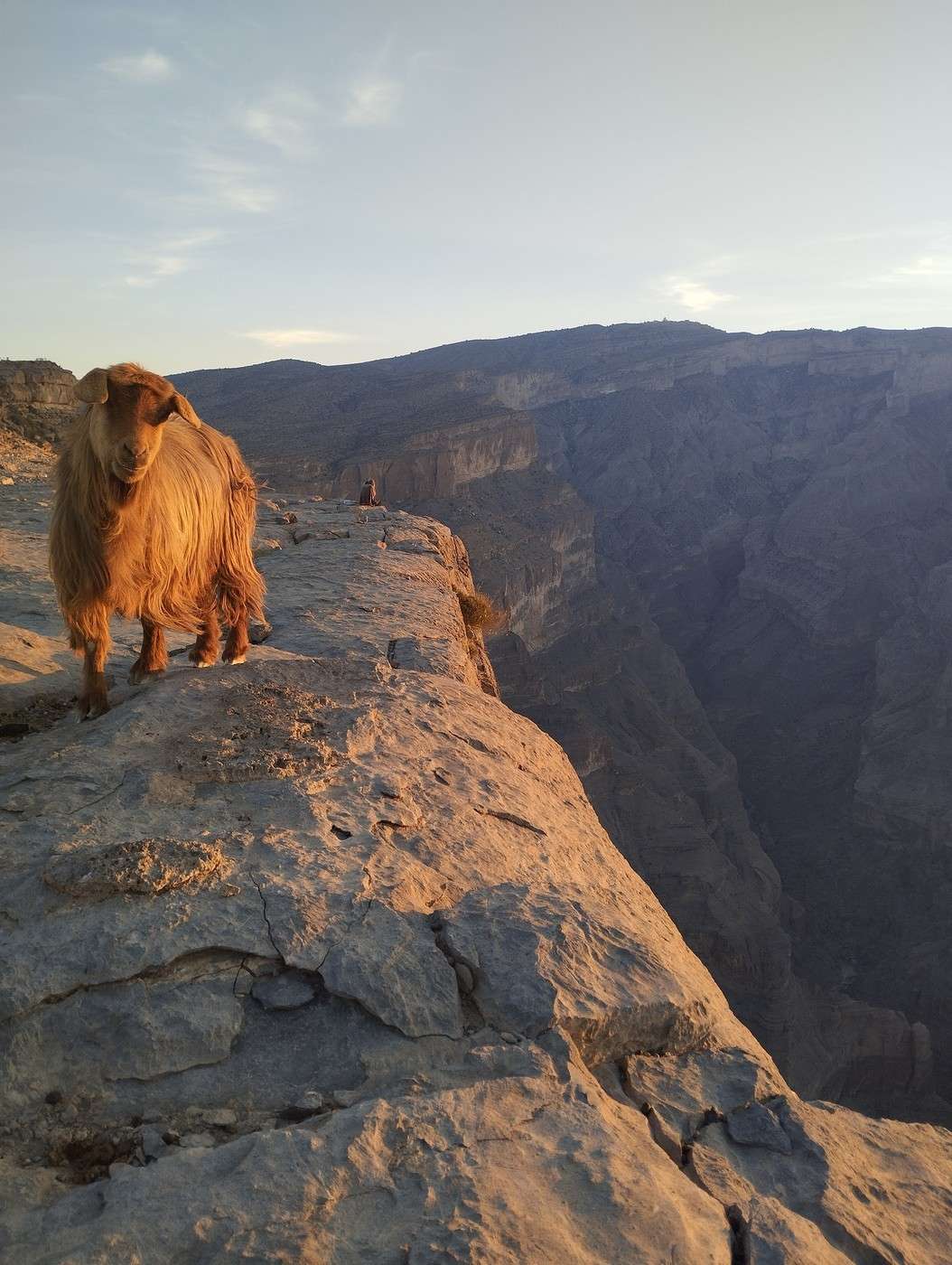
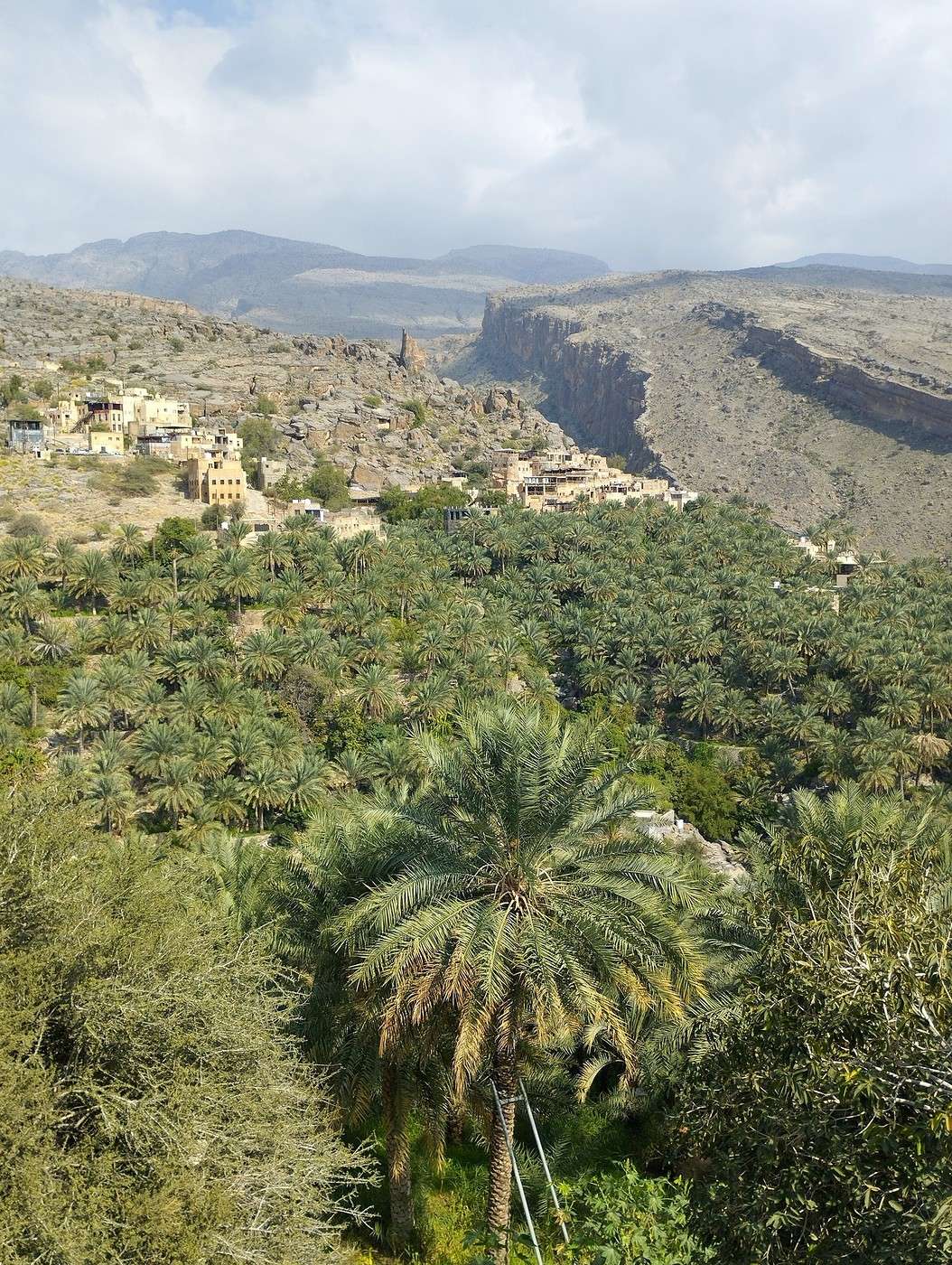
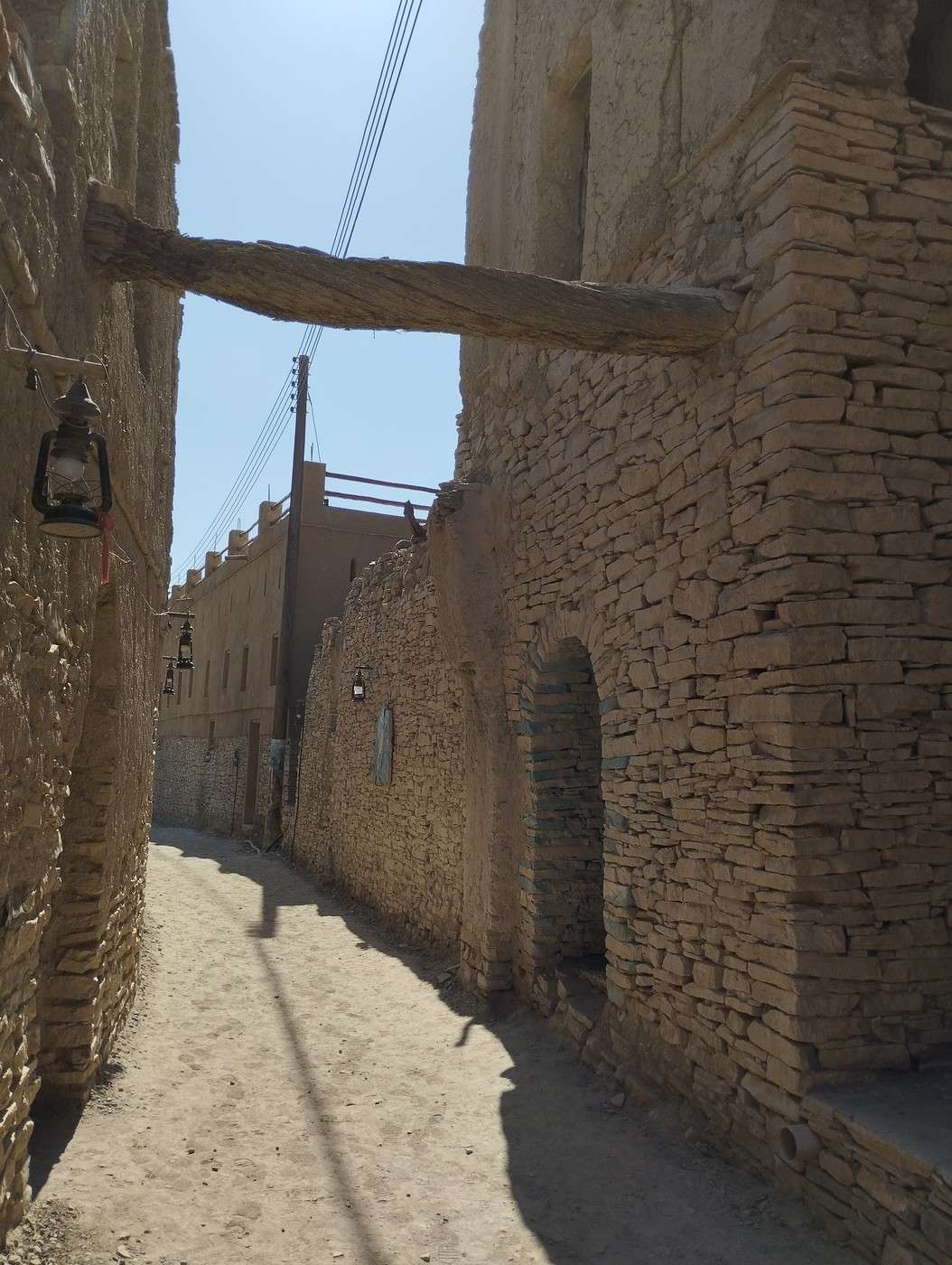
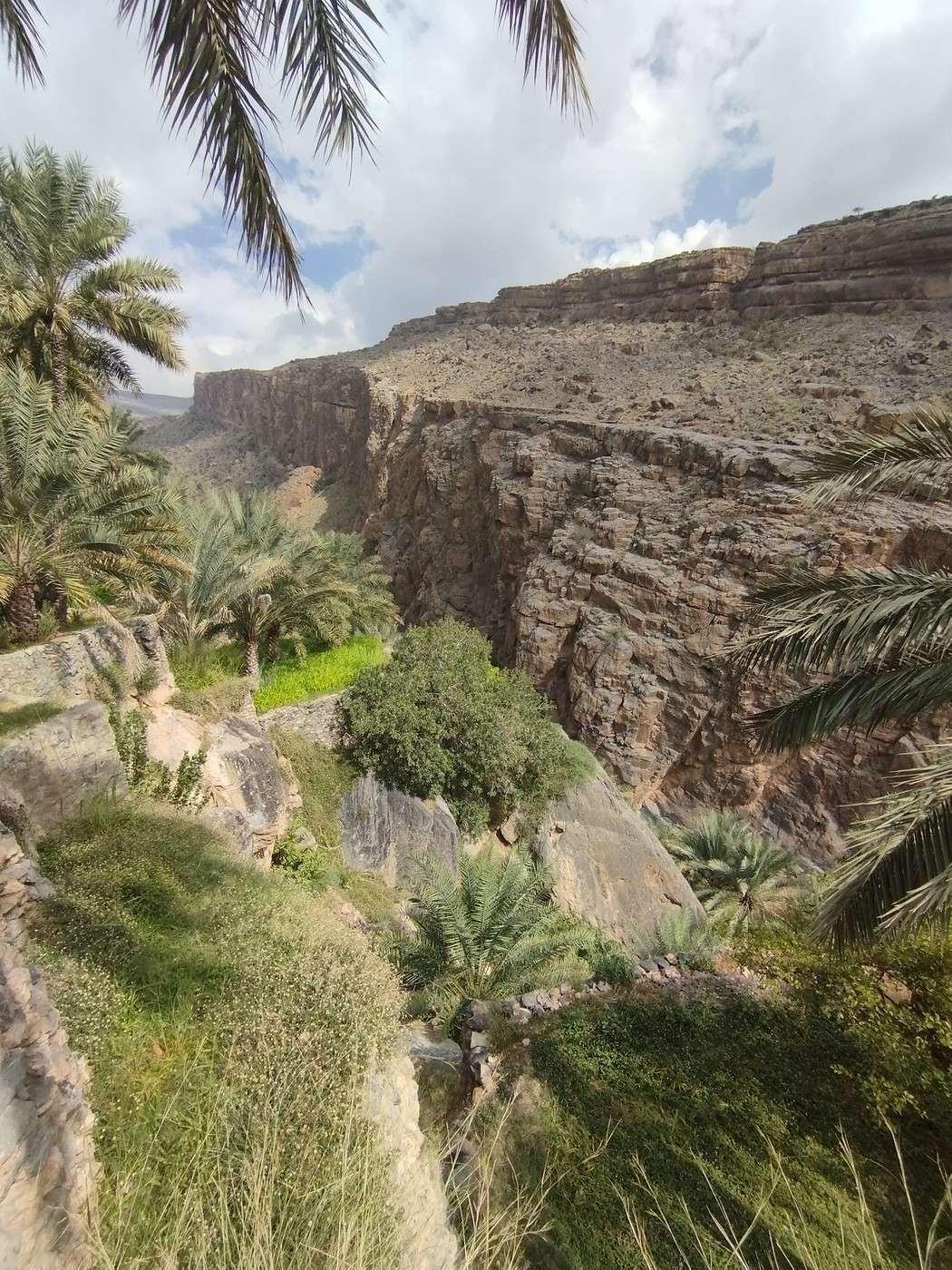
Anyway, Misfat was built into the side of hills facing what looks like a canyon.

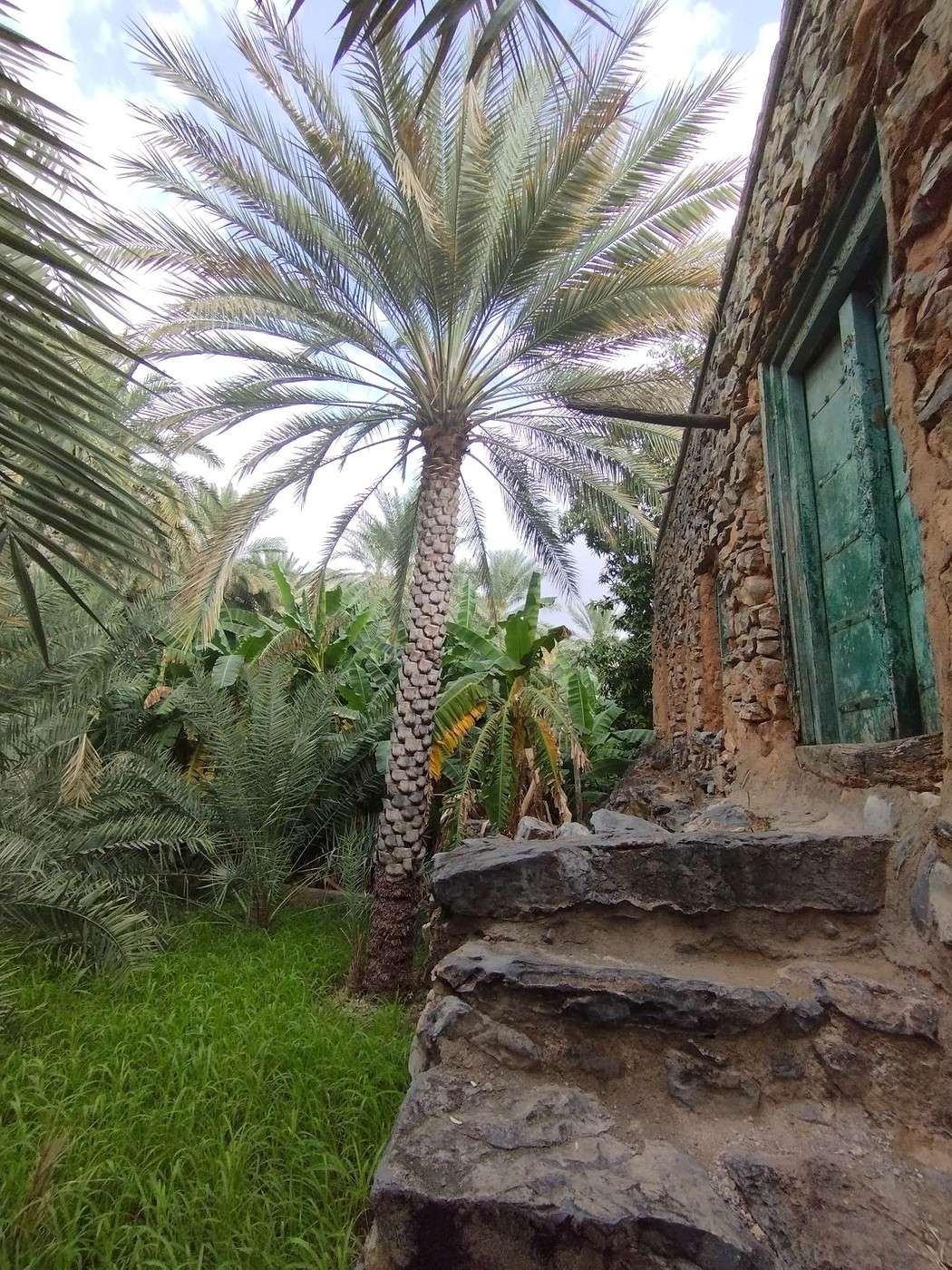
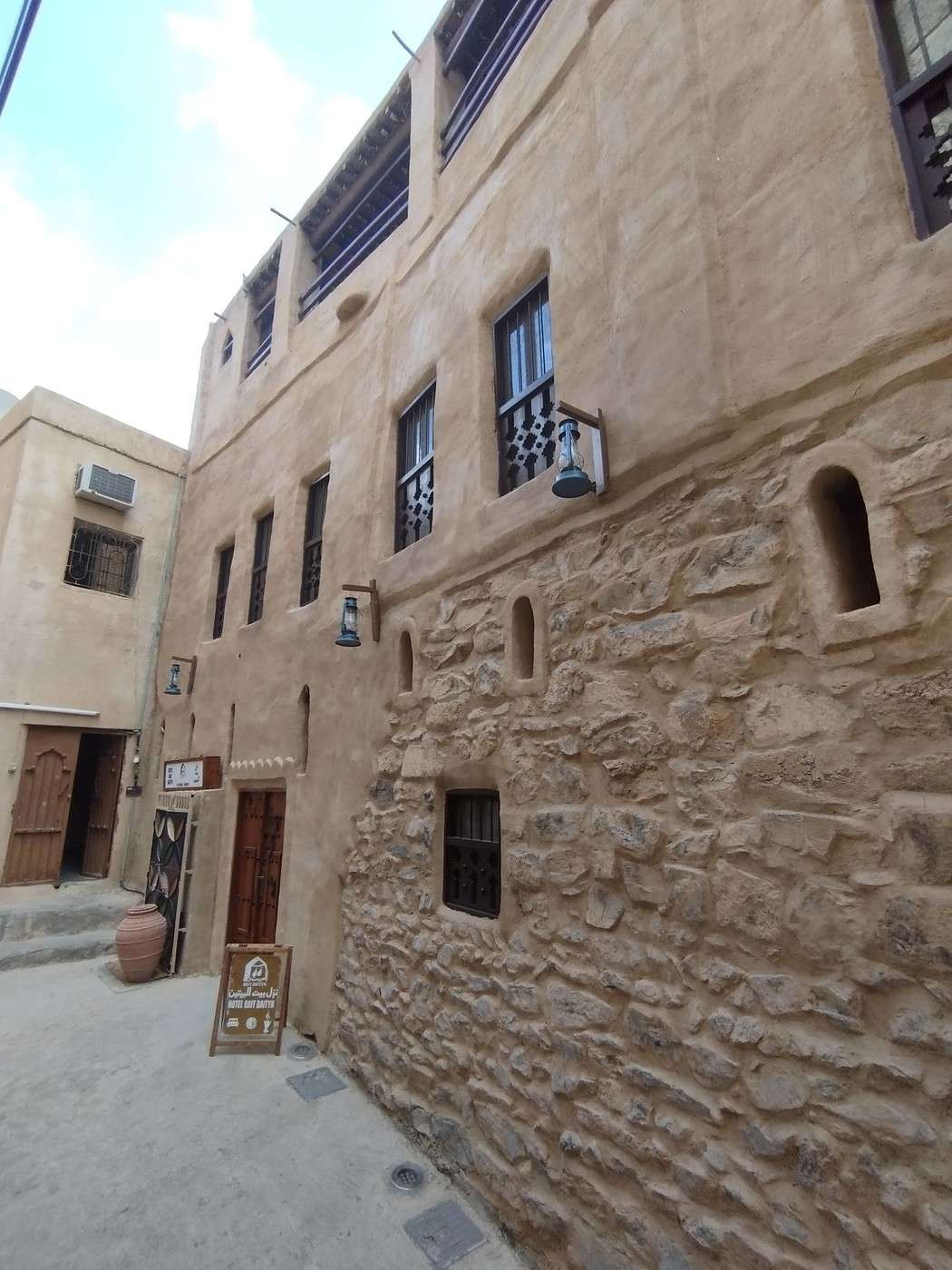
It’s made entirely of earth and stone, and it’s super well-maintained.

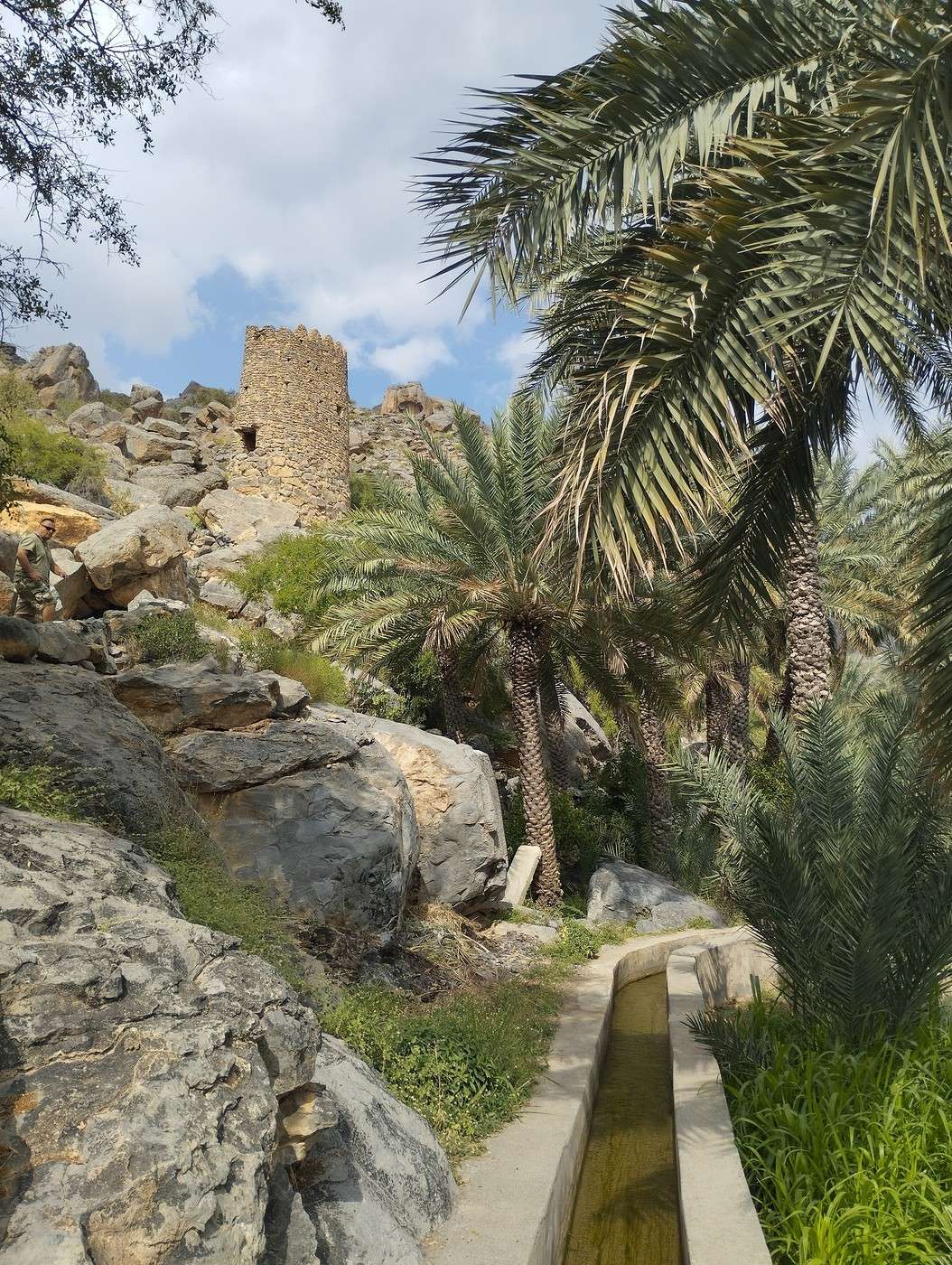
Its oasis was built in terraces with a falaj system that’s been around in this country for 4,500 years to share water fairly among villagers.

It’s one of the local specialties—there are over 3,000 still functioning in the country.
And to save you from being as confused as I was at first, we call it a FALAJ and plural AFLAJ.

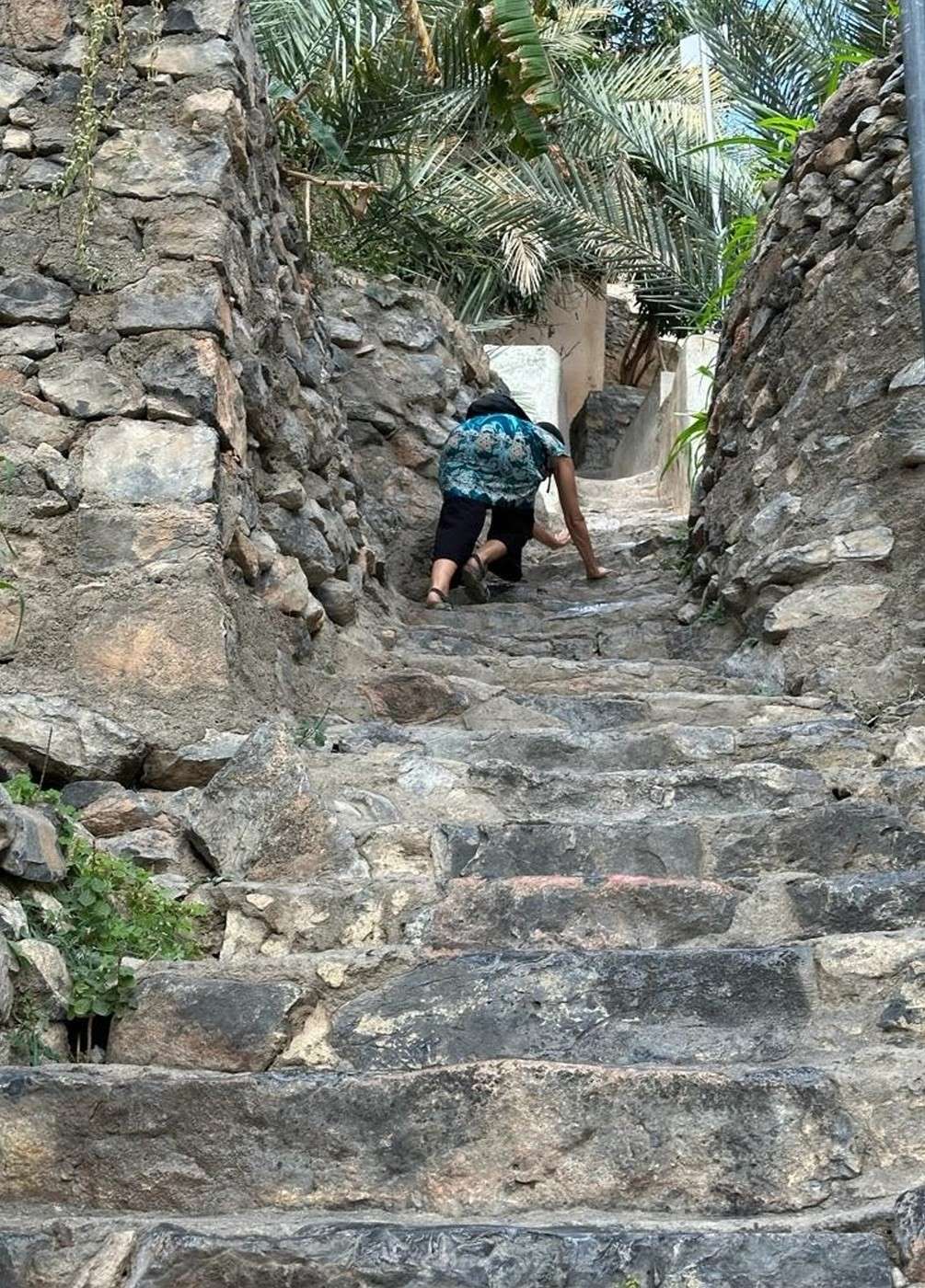
As usual, it’s gorgeous, and the temperature underneath is perfect with a gentle breeze... but obviously, given the setting, it’s also quite the workout (by the end, you won’t recognize us! 😄).

After a 2-hour walk, we hit the road to Muscat, which is just stunning the whole way, with massive mountains plunging down to the tarmac (though just behind them are the millions of power lines that line every highway).
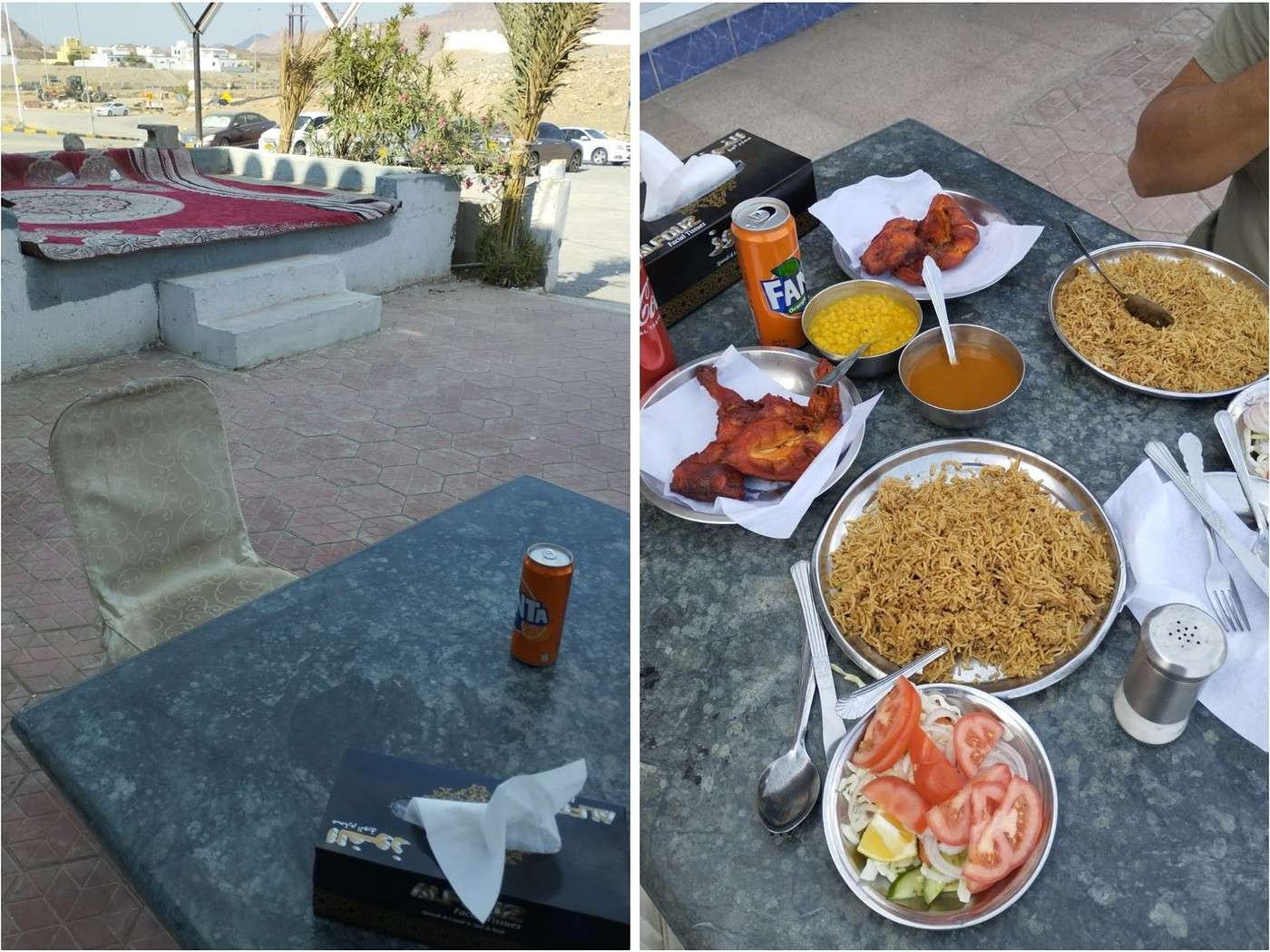
We made a quick stop at an authentic Indian truck stop we love, with an excellent chicken tandoori.

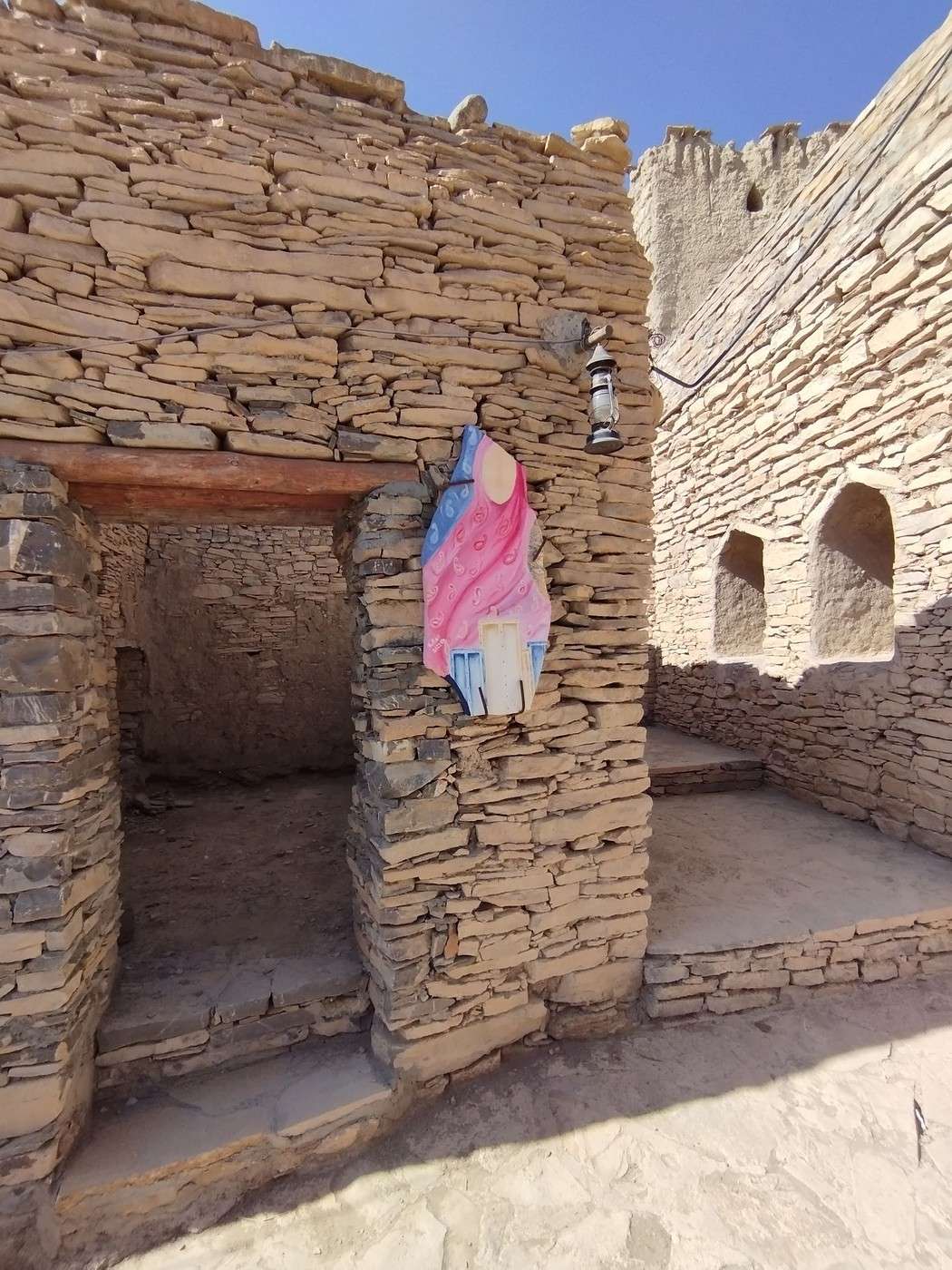
Then, while I was snoring in the car, Lulu spotted a gorgeous palm grove. A quick glance at Google Maps, and I discovered an abandoned, partially restored village called Hart Al-Ain-Imti.
Hmm, that sounds promising—a break was definitely in order. And sure enough, it was truly enchanting, and like everything in this country, it was done with great taste.

You can even do some urban exploring here if you want—some abandoned houses are wide open to the elements.

Plus, the vibe was just right—so peaceful, really quiet, despite the presence of a cute little coffee shop.
But of course, it was closed (ah, it’s been a while since I’ve seen that! 😅).
We arrived in Muscat at a hotel chosen for its proximity to our meet-up tomorrow morning.
It’s a huge hotel that didn’t really excite us since we always prefer tiny guesthouses whenever possible.
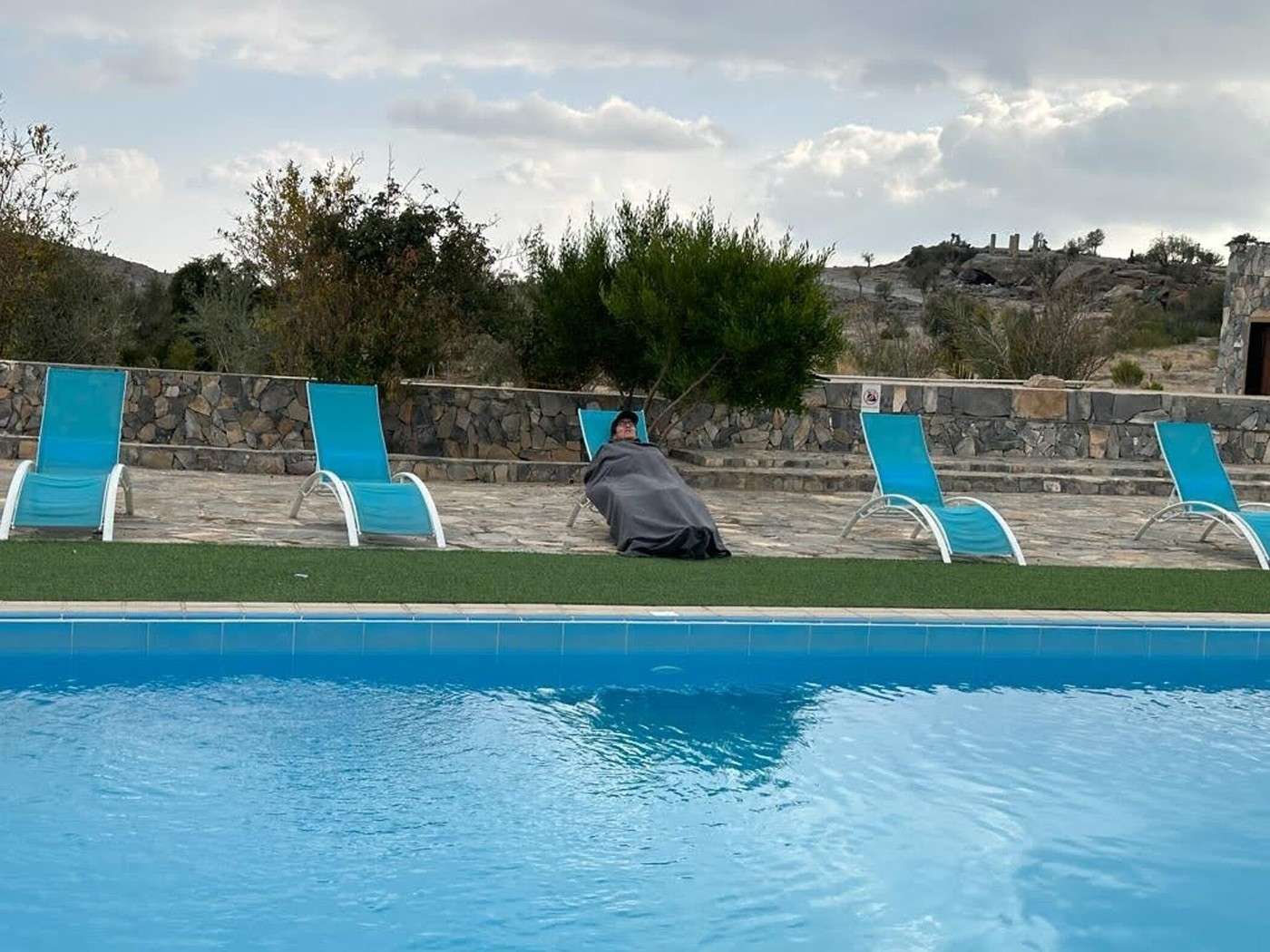
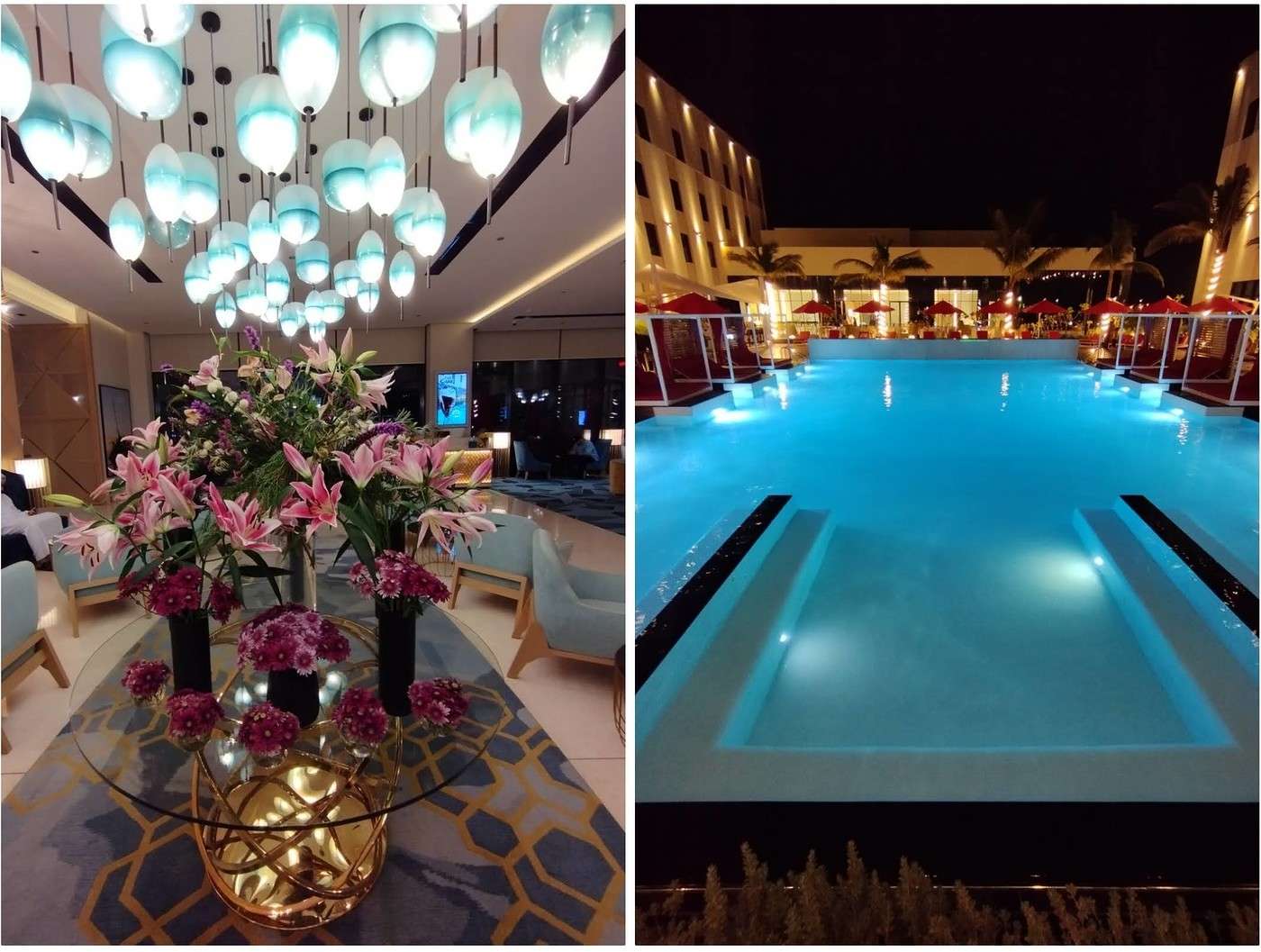
But then we walked in and were greeted by a monumental bouquet of fresh, fragrant lilies, plush carpets so soft you’re afraid to lose your flip-flop in them, massive, colorful light fixtures, and a heated Olympic-sized pool lined with bright red loungers!!

I’ll admit, after the Indian dive we’d just left, my head was spinning a little! 😄
And then I had a moment of doubt: did I accidentally add an extra zero to the Omani Rials?
Nope, not even close: 70 € per night for a 31 m² room with a pool view!!
Beyond this surprising luxury for us, the most interesting thing here is undoubtedly the human diversity: Western women in bikinis, Indian women in saris, Muslim women in chadors, and many in burkas.
Among the men, it’s the same: Emiratis with red keffiyehs draped over their shoulders, French explorers, English traders, and, of course, mostly Omanis, all in their dishdashas.
And all these people cross paths everywhere in the hotel, frequenting the same places (like a mom in a black chador watching her kid in the wading pool while a blonde in a bikini swims just a few steps away).
The icing on the cake at dinner that evening: behind us, a reception with people in formal attire—an African man in a long white robe with fringed epaulettes, another with a green sash across his red shirt, and several Omanis with their kandjars gleaming at their belts!
And they were all seated with the women present, whether veiled or not (in this culture, they usually eat separately).
You see, Franck, I think this is probably where I understood why you haven’t left the Middle East in over two years. And if I’m right, that’s a big revelation for me:
Are there really countries where such different people can live in harmony?