11 national parks in France, 63 in the United States, and... 157 in Thailand, with nearly 180 expected by 2030!
They vary greatly in size, with the largest covering between 1,000 and 3,000 km².
Countless hikes and treks can be done in them, offering stunning landscapes, hot springs, caves, diverse vegetation including remarkable trees, tribal villages, and countless waterfalls—some more spectacular than others.
National park status makes access easier for visitors, with proper access roads, fairly basic toilets, and sometimes small restaurants or food stalls.
While entry is often free or costs just a few dozen baht for locals, it’s a different story for foreigners, who are assumed to be wealthy. And well, they *are* foreigners anyway.
Depending on the park, you’ll pay between 100 and 400 baht for entry, plus, if applicable, 30 baht for your vehicle. The pricing logic isn’t always clear—a park with a 100 baht entry fee might turn out to be far more beautiful and interesting than one charging 200 or 300 baht.
Finding reliable information and useful details for most of these parks can be a challenge. In my opinion, the national tourism office should really step up its game here.
Note that it’s best to avoid weekends, as many Thais visit for a day trip or picnic. You might also want to check public holidays, when entry is free.
Be careful during the rainy season, as some parks may close. A waterfall is beautiful, but when it’s pouring rain and the water is overflowing with landslides, it can quickly turn into a tropical nightmare.
As an example, here’s a tiny national park in a southern province, featuring a seven-tiered waterfall, a spectacular centuries-old tree, and large boulders scattered everywhere. Off the beaten path, like so many others...
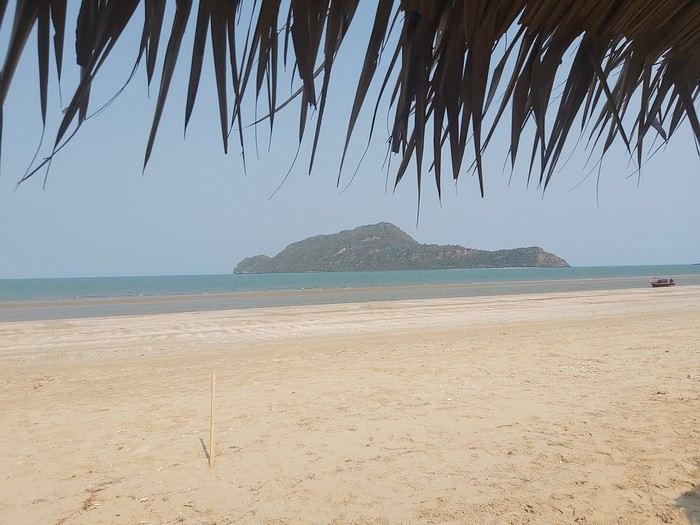
In the last photo, I spotted the shark-head rock.