Back to the discussion

in Entre deux voyages › Carnets de voyage

Back in Tunisia (live account) (page 3 of 3)

Discussion started by Sinforosa on 2026-04-11

58 replies

This thread has been translated into English.


Back in Tunisia (live account)

Mraissa · 2026-04-27 · Message 41 of 59

Hi Marie, A few thoughts on your many posts... Just so you know, the Mahdia Museum is at the entrance to the medina, next to the Skifa el Kahla. When you're on the terrace, you can see the medina, the borj, the cemetery, and the new town. I see all the kids in the family doing homework on ecology, cleanliness, and the waste problem. Sports associations or those linked to the sea organize lots of clean-up operations, and in Mahdia, it's to clean the marine cemetery, the Punic port, the port, and the beaches. Not much info on the ecological transition. But it's always been a habit to be very careful with water, and the whole Sahel region has been suffering since hotel complexes like Port El Kantaoui were built. For years, users have been used to storing water to deal with the daily cuts in the late afternoon. But they still need to supply the pools and other flower-filled gardens of the hundreds of hotels built all over Tunisia. Many hotels have closed since then, leaving derelict buildings in all the tourist towns... In Tozeur, the construction of the golf course and its operation disrupted the entire water distribution. At the time the golf course was being built, users in the mountain oases just a few dozen kilometers away didn’t have water in their homes. It took me years to realize this! I know how louages work, but I don’t know what routes they offer, so it’s incomprehensible to me that you’d go from Sfax to Monastir without stopping in Mahdia. Also, in the south, when you went from Kébili to Gabès to get back to Matmata. As I’ve already told you, the road and the kilometers worry me, and I always try to do as few as possible. Yes, the gardens around the presidential palace were dismantled so that real estate developers could make nice speculations. They’re beautiful properties. Indeed, there are beautiful mural ceramics at the palace and on all the little bungalows around it, made by the Tunisian artist Abdelaziz Gorgi. If you ever want to go back to see the north and the fertile plains of Kroumirie, it’ll have to be in the spring. For Djerba, it can be any time of year, and you can also go see the ksour... We try not to go in the middle of winter—too cold—or in the middle of summer—too hot. Safe travels and looking forward to hearing from you soon.
Back in Tunisia (live account)

Sinforosa · 2026-04-27 · Message 42 of 59

Gabes is kind of the hub for shared taxis heading south, and you always end up passing through it. If I’d gone from Matmata to Tataouine, I would’ve had to go back through Gabes.

The Kebili-Gabes trip takes 20 or 30 minutes, and the shared taxi fills up fast.

The Sfax-Monastir shared taxi is direct—it doesn’t stop in Mahdia. That’s the advantage of shared taxis over buses: they’re faster because they go straight through.

How shared taxis work is simple: you tell them where you want to go, and they’ll point you to the right route. If it’s direct, they’ll show you the direct shared taxi; otherwise, they’ll tell you where to change. I think going from Tataouine to Monastir would’ve taken me about 5 or 6 hours.

The route I took in February was easier by shared taxi—I’ll talk more about that in my wrap-up.

Otherwise, the best way to do this route is to fly into Tozeur. There’s no direct flight from Nice, but there is from Paris, for example.

I wasn’t sure about going to Mahdia (plus the places you’d recommended were fully booked), and I thought there was more to see in Monastir. I also thought the metro would be faster (though I’d been told the shared taxi was better).

Otherwise, there’s maybe the taxi option—the Swiss tourist left for Sousse for 30 dinars.

I don’t get how I missed the Mahdia museum...

Anyway, I’ll be boarding soon (unless there’s a delay).

Back in Tunisia (live update)

Sinforosa · 2026-04-27 · Message 43 of 59

My Tunisair flight just landed a few minutes ago. It took off 5 minutes early and arrived 15 minutes ahead of schedule—just like on the way there, a meal was served on board.

Now I’m waiting for one last transport to get home.

I’ll be back on the forum for a full recap and some photos, and later I’ll put together a shorter travel journal on MyAtlas.

Back in Tunisia (live story)

Sinforosa · 2026-05-01 · Message 44 of 59

Hi there,

For those interested, I just saw a really interesting short documentary on Arte from four days ago about President Bourguiba and women's rights in Tunisia. For example, we learn that he was the one who gave Tunisian women the right to become actresses. At the end of the documentary, there’s an interview with an actress who says she performed many plays by Federico García Lorca (where women play a big role) at the Théâtre Municipal de Tunis.

Here’s the link—if it doesn’t open, just search for "Arte La Tunisie de Bourguiba". https://youtu.be/RmjX-Tt12CU?si=W5dGIUE_2lBqp0jd

Back in Tunisia (live travelogue)

Sinforosa · 2026-05-02 · Message 45 of 59

Can't wait to see some photos,

Hi Béatrice,

I just uploaded a few photos to go with my posts. Still need to do Sfax, finish Tozeur, and then I’ll write up a summary.

Back from Tunisia (live travelogue)

Sinforosa · 2026-05-08 · Message 46 of 59

SUMMARY

I loved this trip and I’m already planning to return to Tunisia at the end of the year with family to visit Chenini, Guermassa, and Djerba.

This trip let me discover a Tunisia very different from my first visit—a more rural Tunisia with stunning landscapes. If the first trip was a change of scenery, this one was even more so.

■ BUDGET

For Western tourists, Tunisia is a very affordable destination, whether for hotels, restaurants, museums, tourist sites, or public transportation.

In the souks, you have to negotiate prices.

For those without a car who occasionally hire a driver, you can also negotiate the price.

When it comes to taxis, it’s best to check the going rates by asking your hotel or locals, because some drivers tend to inflate prices when dealing with tourists.

■ TRANSPORTATION

I got around by *louage*, a cheap, practical, and fast mode of transport (they go direct) that lets you travel with locals.

Traveling by *louage* in this part of the country was a bit harder than during my first trip, but it’s not impossible since *louages* go almost everywhere.

For places not served by *louages*, it’s not at all difficult to find transport. In Tozeur and Tamerza, I went through an agency and was alone with the driver, who stopped whenever I wanted to take photos. There’s no set return time for the tour—you spend as much time as you want. Each time, they were drivers, not guides. For Tamerza, I’ll refer you to what I wrote earlier to see other transport options.

In Matmata, it’s not complicated either—there’s someone on a motorcycle who spots tourists arriving without a car or organized tour and offers his services.

In Matmata, there’s a tourist office and a tourism brigade that can give you someone’s contact info, but I think there’s only this one guy on a motorcycle (Maler). Maler is the boss—he doesn’t go with clients who leave with a driver. You can choose where you want to go (just agree beforehand).

In Nefta, I mentioned that, tired of waiting for a taxi to go to *la Corbeille*, I asked a shopkeeper if I could walk there, and he closed his stationery store to take me for free.

I had other offers to take me by car, but I think the safest option is to use an official agency and not follow just anyone off the street.

■ TRAVELING AS A SOLO WOMAN

Since I’m used to traveling alone in Latin America, I think Tunisia is much safer for a solo woman.

I met a Spanish woman and a Swiss woman in their sixties and fifties, respectively, who were traveling alone. They’d already been to Tunisia before, alone or with others. I also met a Dutch woman in her twenties traveling alone in a rental car.

As in many countries, I try to use common sense and not draw too much attention to myself.

In Matmata (and other places with a fairly "traditional" way of life), I was surprised to see tourists walking around practically naked, in shorts so short you could see their butts and tops barely bigger than a bra...

But hey, last summer I saw tourists in pretty much the same outfits in a church in Guatemala, surrounded by Indigenous women in long skirts, and at the entrance of Barcelona Cathedral, they have to put up a sign saying you can’t enter in a swimsuit or shirtless... It seems like some tourists ignore where they are—it’s just a (changing) backdrop where they walk around in the same outfit.

■ TOURIST CROWDS

It’s far from mass tourism, and I had no trouble finding accommodation the day before or the same day. It’s also not hard to find a driver for the next day or even the same day.

In Matmata, a lot of tourists come from Djerba on tourist buses as part of organized trips, and they don’t stay overnight.

■ WHAT I LOVED ♥️

I loved everything, especially the desert since it was my first experience in the Sahara.

I even enjoyed Sfax, which isn’t a very touristy city. Even if it’s not a "must-see," you can stop there.

I’ll make a travel journal on MyAtlas with more photos and add a review of the hotels where I stayed. I’ll post the link to the journal here.


Back in Tunisia (live travelogue)

Babouandco · 2026-05-08 · Message 47 of 59

Thanks Marie for adding those photos that illustrate your story. I really admire that you can do a live travelogue—I’m totally incapable of that... I just jot down a few notes in a travel journal while I’m there, which (I admit) often become pretty cryptic to decipher when I get back... 😛 You really enjoyed this trip with a stronger focus on nature, that’s great! Until now, I only knew the Atacama Desert in Chile, a place with stunning landscapes but not a sand desert. So this was my first time in the Sahara, and I loved it!

Same here! I know the Atacama Desert—it’s gorgeous—and I’d love to discover the Sahara. Your account is giving me ideas!

Thanks for sharing, and see you soon.

Back in Tunisia (live account)

Sinforosa · 2026-05-09 · Message 48 of 59

I know the Atacama Desert—it’s stunning—and I’d love to discover the Sahara.

Hi Béatrice,

The Sahara Desert experience is truly unique. As I mentioned, I’d love to go back, but differently this time.

You really need to do your research to avoid places overrun by quads and 4x4s.

On MyAtlas, I’ll share more details about the camp I stayed in. The location is gorgeous, but I have mixed feelings about the camp itself.

Apparently, this camp is well-known. As I mentioned earlier, two Tunisian tourism ministers visited it. I know some Italian rally motorcycle riders have stayed there, and just two days ago, I saw a video on the camp’s Facebook page of two Spanish women snowboarding down a dune with Ahmed, the owner. You can see the logo of Spain’s public broadcaster, RTVE, in the video—I think they’re Spanish journalists filming a report.

I also really loved the Matmata, Toujane, and Tamezret regions. The photos aren’t great because it was noon—the worst time for pictures. And for Chbika, it was late in the day, and the oasis was already in shadow.

For those living in Paris, Transavia has direct flights to Tozeur and Djerba, which makes it much easier to explore southern Tunisia.

I have more time to write a proper account when I’m on vacation than when I’m back at work, but I couldn’t do it live for trips longer than two weeks.

Back in Tunisia (live travel journal)

Sinforosa · 2026-05-29 · Message 49 of 59

Hi there,

For those who are interested, I’ve finished the travel journal on MyAtlas. The text is shorter than here, there are a few different photos, and I’ve added more details about the hotels: https://www.myatlas.com/borboleta/de-retour-en-tunisie

Back in Tunisia (live travel journal)

Calaf · 2026-05-29 · Message 50 of 59

Hi there

Great travel journal, thanks! Tozeur: the golf course was wanted by a son-in-law of Ben Ali, a way to "inflate the bill" according to locals who weren’t fooled!

Back in Tunisia (live travel journal)

Mraissa · 2026-05-29 · Message 51 of 59

Thank you and well done, Marie, for this beautiful travel journal. You’ve visited so many places I love—Tozeur, Souad’s little museum, the mountain oases where I adore hiking through the canyons, Douz, the Bourguiba palace/museum in Monastir, Mahdia and its vast seaside cemetery, Matmata, Toujane and Tamezret, Monji Bouras’s small Berber museum... You still have some spots to explore: Cap Bon, Nabeul, Hammamet, Korbous and its hot springs, Bizerte, Tabarka, the storks of Ain Draham, the pottery made by the women of Sejnane, the wheat fields of Kroumirie, and in the south, you haven’t seen the Ksour yet. Avoid July and August—they’re way too hot and crowded. You’re brave to use public transport; I’ve always traveled with my own vehicle. I take the train sometimes, but I’m too scared of louages. Just a little note: the dates are called *deglet nour* or "fingers of light." Looking forward to your next adventures! !

Back in Tunisia (live travelogue)

Sinforosa · 2026-05-31 · Message 52 of 59

Tozeur: the golf course was wanted by a son-in-law of Ben Ali,

Hi there,

On this forum, I read a 2007 travel journal where the author said the brickworks were going to be moved because the smoke bothered the golfers... 20 years later, the brickworks are still in the same place, and the golf course has disappeared. But in Tozeur, I asked several times if there had really been grass there—I found it hard to believe—and online, I saw there was even a small lake in the middle of the grass.

About Ben Ali, it might seem surprising when you live in France, but everyone tells me it was better back then. Two days ago, I was talking about Tunisia with a young French woman of Tunisian origin—she’s 21—and she told me, "It was better before!" I asked her how she could remember that time since she was very young and lived in France, and she said she could play outside at her house in La Marsa; there was more security than today. Other Tunisians talk about rising prices, etc... Anyway, I was pretty surprised the first time someone told me it was better under Ben Ali.

Back in Tunisia (live travel journal)

Poste42 · 2026-05-31 · Message 53 of 59

Well, no surprises there! In Djerba there’s a gulf, but the island has no fresh water. Spot the mistake.

Back in Tunisia (live account)

Calaf · 2026-05-31 · Message 54 of 59

Hello,

I experienced the Ben Ali era and the post-Ben Ali period... (I was there in 2011 when he fled)

Indeed, as long as you didn’t get involved in politics or were part of the RCD, you were left alone. Of course, the so-called "secret" police constantly patrolled in unmarked Isuzu pickups—though everyone knew who they were. You’d give a *bakchich* to the officer at an intersection—especially at the end of the month when they stopped a lot of people—or on the road. They tried with me, circling the car, looking for an excuse, but I didn’t understand... ;-) Or at the Governorate or Municipality for a document—no luck, guys! But Tunisians were used to it and saw it as an unavoidable fate. Yes, life was peaceful and easygoing, and it wasn’t expensive because basic food was subsidized to keep the peace. Afterward, for many Tunisians, the word "democracy" meant "anything goes—I do what I want, and now it’s my turn to get rich and swindle my neighbor."

The golf course, overpriced as usual—all major projects were in the hands of "The Family"—wasn’t very green, even if it was *too* green for my taste. It dried up a beautiful nearby waterfall that kids used to swim in and killed thousands of palm trees.... Ras El Aïn is now a wasteland. The *oueds* that ran through nearby hamlets and served as washing spots are dry and filled with plastic "sachets" and waste! And some hidden corners of the oasis are used as dumping grounds.... No one seems to realize it—it’s heartbreaking.

Sorry for the long post

Back in Tunisia (live account)

Sinforosa · 2026-05-31 · Message 55 of 59

Hi there,

Even if you haven’t been to Tozeur before, you get a sense of desolation—today, many hotels are closed, the horse-drawn carriages don’t have many customers, and from the terrace of Café Berbère, you can see an abandoned hotel with very dry palm trees, etc. I also noticed quite a bit of trash near the El Oued hotel, but in Tunisia, it’s everywhere.

Nefta is even worse—they call it the dead city. As for the mountain oases, they benefit little from tourism, which is mostly just passing through (day-trippers coming from Tozeur).

In the 2007 travel journal I mentioned earlier, the author paid more for a room at the Tamerza Palace hotel than I did in 2026 (and she specified she’d negotiated the price). Maybe that’s because there were more guests back then than there are today.

Otherwise, compared to the Ben Ali era, from what I’ve been told, today "anything goes"—but in the worst way. One day in a *louage*, the driver was smoking (window open) and even tossed a small bag out the window. A man next to me, who was telling me about Tunisia before, said that under Ben Ali, the driver wouldn’t have smoked or thrown anything out the window (he explained why). He also talked about black-market gasoline sold on the side of the road, etc. According to him, in Tunisia today, everyone does whatever they want and couldn’t care less...

Several people told me the Revolution didn’t change anything—people are pretty disillusioned. It’s sad.

Back in Tunisia (live travelogue)

Sinforosa · 2026-05-31 · Message 56 of 59

In Djerba there’s a gulf, yet there’s no fresh water on the island. Spot the mistake.

We know tourism guzzles a lot of water (hotels, pools, golf courses), but sooner or later some countries—especially those around the Mediterranean—are gonna run smack into the reality of climate change (long droughts and heatwaves).

In some places, like Spain, they turn to seawater desalination, but that’s not without environmental consequences: the brine dumped back into the sea wrecks marine ecosystems, and desalination plants are massive energy hogs—they need oil to run, and we all know how fossil fuels drive CO₂ emissions.

Back in Tunisia (live account)

Sinforosa · 2026-05-31 · Message 57 of 59

You still have places to see: Cap Bon, Nabeul, Hammamet, Korbous and its hot springs, Bizerte, Tabarka, the storks of Ain Draham, the pottery of the women of Sejnane, the wheat fields of Kroumirie, and in the south you haven't seen the Ksour yet.

Small detail: dates are called "deglet nour" or "fingers of light."

Good evening Michèle,

On MyAtlas, I corrected and added the full name of the dates. I knew that "nour" means "light," but I didn’t know the translation of "deglet." The name of these dates is lovely.

Yes, there are still so many places I haven’t seen. I definitely plan to return to Tunisia—maybe in December to visit Djerba and the ksour I missed this time. In 2025, the Douz Sahara Festival in December coincided with my vacation. If it aligns with my vacation again in 2026, I’d love to attend and also see the Thursday animal market.

On my list of places to visit are the Kerkennah Islands. I thought about them when I was in Sfax—I’m not sure if they’re worth it or what the best season is.

There are also the sites of Dougga, Bulla Regia, Sbeitla...

Anyway, if I need advice, I know yours is always good.

About louages: having taken dozens of chicken buses in mountainous regions of Guatemala and El Salvador, I find louages much less dangerous. Even though, on the way into Sfax, the louage hit a moped—luckily, no consequences for the two older gentlemen on it. In Latin America, there’s even a risk of armed robbery (with knives or guns) inside buses or at bus stations.

Back in Tunisia (live account)

Sinforosa · 2026-06-19 · Message 58 of 59

Hello,

On VoyageForum, there’s a "Books" forum for reading suggestions, but since this is about Tunisia, I’m posting here.

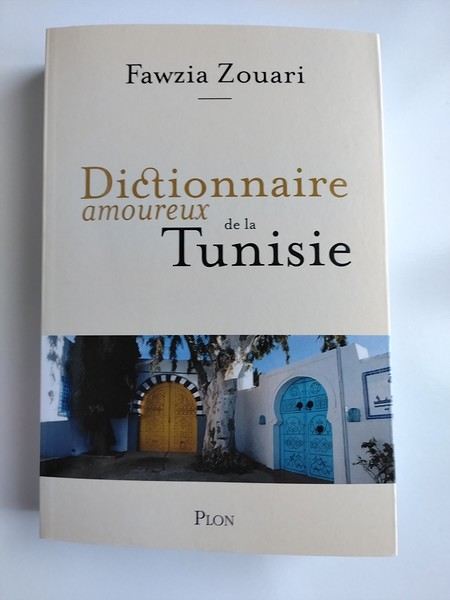
This is a nearly 500-page book about Tunisia that just came out: Dictionnaire amoureux de la Tunisie by Fawzia Zouari (Plon editions).

In the introduction, the author recounts how a Tunisian student at New York University asked his classmates what they thought of his country, and they replied that Tunisia was a place with beautiful beaches and spicy food.

In this book, Fawzia Zouari sets out to show that Tunisia is a small country in size but big in history. She clarifies that she’s not a historian and admits to glossing over Tunisia’s flaws, asking, "Isn’t that the spirit of a love dictionary?" She emphasizes that it’s neither a history book nor a travel guide.

The dictionary starts with the great fashion designer Azzedine Alaïa, who came from nothing (he used to hem dresses for wealthy women and even did housework), and ends with the Zitouna, the Great Mosque of Tunis—one of the oldest on the continent—which was long a center of religious studies and closed under President Bourguiba’s rule.

It features iconic Tunisian places: Tunis, Kairouan, Sfax, Sidi Bou Saïd, Tozeur, La Goulette, the Municipal Theatre of Tunis (rumored to be demolished in the late 1980s to make way for a shopping mall), and more...

There’s a chapter on the "secrets of the medina" of Tunis and the impasse Sidi Abdallah Guech—it’s fascinating, and I’ll let readers discover those secrets for themselves. I’d read Le désastre de la maison des notables by Amira Ghenim, where an episode takes place in that alley, and this chapter added to what I already knew.

The dictionary also includes emblematic trees vital to the country, like the olive tree and the palm tree.

Cuisine is covered too, with the must-try harissa, as well as kémia, lablabi, mloukhia, and Tunisian couscous, which she says "outshines the rest of the Maghreb’s couscous in how it’s presented, with a plethora of toppings—fried peppers with cumin, hard-boiled eggs, fava beans, etc..." (Moroccans and Algerians, take note!).

You’ll find many personalities, like former presidents Ben Ali and Bourguiba, feminist Gisèle Halimi, historian Sophie Bessis, Baron d’Erlanger, and lesser-known figures (painters, filmmakers, etc.), such as Shasha Guiga, Ammar Belghit, Ferid Boughedir, Aboulkacem Chebbi, Barg Ellil, Ben Yahmed Béchir, and Abderrazak Cheraït—who was mayor of Tozeur (a city museum bears his name) and dreamed of turning Tozeur into an international shopping hub like Dubai!

There’s also Tahar Haddad, a pioneer of feminism and an inspiration for reforms that freed Tunisian women from centuries-old constraints. The book by Amira Ghenim mentioned earlier touches on him too.

A chapter is dedicated to singer Saliha, whom I recently heard about thanks to a short report by Arte.

Many other Tunisian figures are featured, as well as Western personalities linked to Tunisia: Châteaubriand, Flaubert, Maupassant, Paul Klee, and more...

One particularly interesting entry is about the repeated relocations of Bourguiba’s equestrian statue in Tunis.

Other entries include: Carthage, chikha (or the spirit of celebration), cinema, Christianity in Tunisia, circumcision, the Personal Status Code, coups d'État (Tunisian-style), dates, Dido, the School of Tunis (painting), feminism, "fous de la mer" (sea lovers), "fous du village" (village eccentrics), Hammamet, the Islam of Enlightenment, Italians of Tunisia, jasmine, the revolution’s diary, Jews of Tunisia, literature, marriage, mosaics, the Islamist movement, the national movement, oases, the Jasmine Revolution, spirituality, stambali, Tunisianness, tourism, the Tunisian, and more...

It’s an enjoyable and very informative book—you’ll learn a lot about Tunisia, so it’s worth reading before or after your trip!


Back in Tunisia (live story)

Pedri · 2026-09-14 · Message 59 of 59

Hi there, and congratulations on this project—it sounds like an amazing adventure in the Hoggar! Just so you know, if you ever consider a trip to Tunisia too (Southern Tunisian desert or beaches), you can easily rent a 4x4 through Allo Auto. It’s super handy for sand treks or getting to the coast. Have a great trip!

VoyageForum — the largest community of French-speaking travellers.