Back to the discussion

in Entre deux voyages › Carnets de voyage

16 days with family in La Gomera (Canary Islands) (page 3 of 3)

Discussion started by Pagaljavab on 2026-08-14

53 replies

This thread has been translated into English.


16 days with family in La Gomera (Canary Islands)

Pagaljavab · 2026-08-29 · Message 41 of 54

Day 10, Thursday, August 6: Hermigua/El Corralete, Las Hayas, Valle Gran Rey, boat trip along the west coast of La Gomera, Valle Gran Rey (Playa de Las Vueltas), Las Hayas, Garajonay Natural Park (El Bailadero trail, Hermigua/El Corralete)

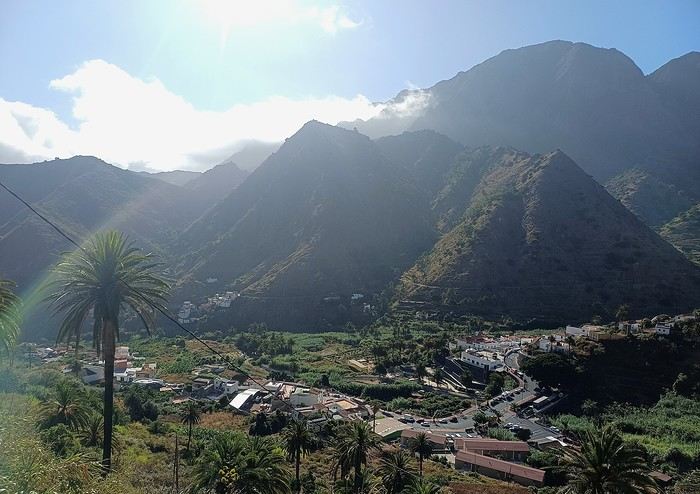
This morning, we wake up earlier because we’re heading back on time to our first place of stay, Valle Gran Rey, since we’ve booked a whale-watching boat trip. It’s cooler and more humid, and the view from the window—misty mountains above the sea and lush green fields—is still breathtaking.
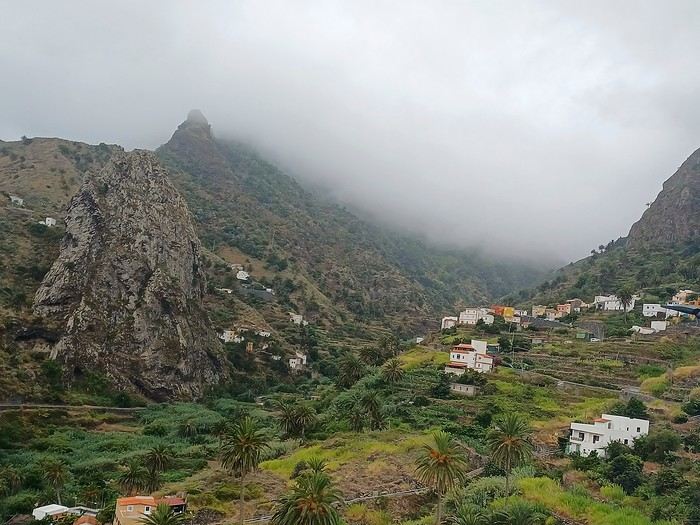
Once again, it’s Magali’s gofio pancakes that give us the energy to retrace our route back to Valle Gran Rey via the Garajonay Park forest. The village of Las Hayas has become our usual stop for a quick five-minute break when the kids start feeling queasy from the winding road. Just enough time to stretch our legs at the edge of the forest and admire the secluded houses nestled in nature.
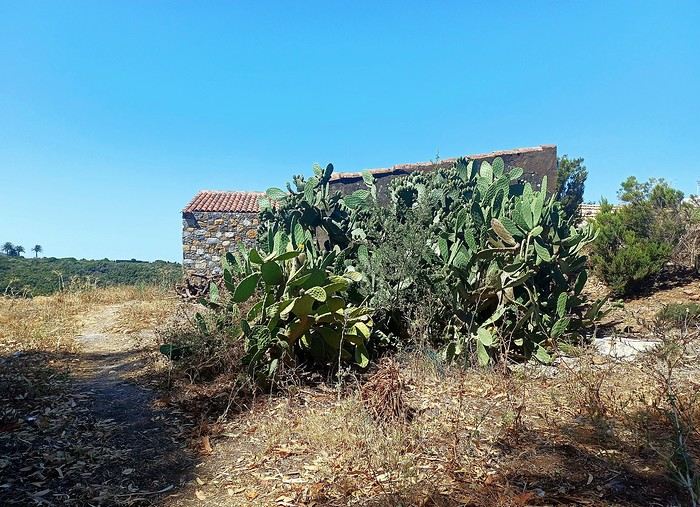
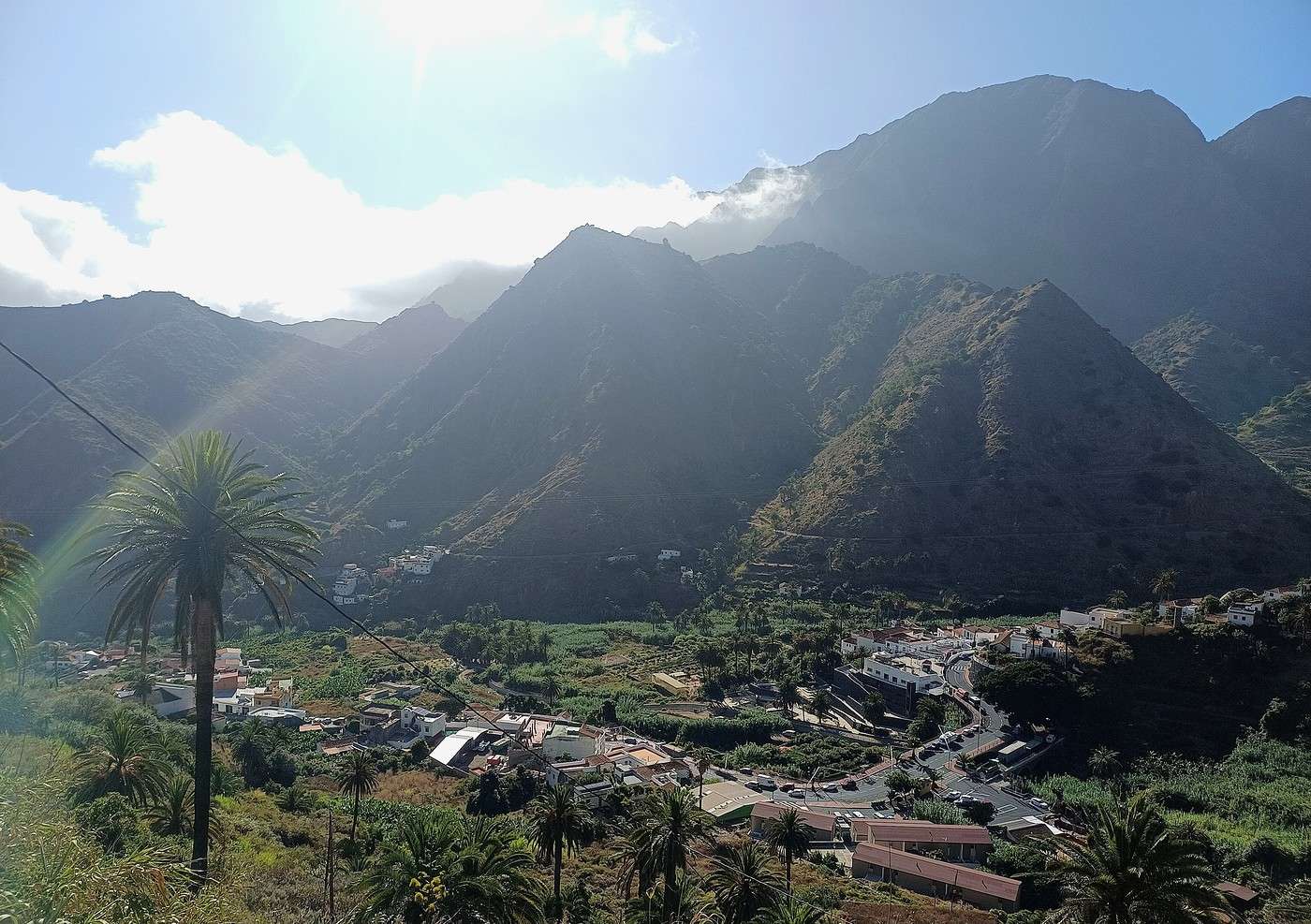
After about an hour and 45 kilometers, we’re once again facing the stunning landscape of the Valley of the Great King, which never fails to enchant us. From the GM-1, we spot Buena Vista, our old house perched on the heights of La Calera. First, we stop by Cicar at the port of Valle Gran Rey because a warning light came on in our trusty Opel Corsa. Phew, it was just the oil level... We then park by the beach to have lunch at Mango, the first restaurant we tried in La Gomera, right across from our favorite beach in La Calera. Magali and I share a delicious mixed salad with local fruits, along with a plate of fried goat cheese, another local specialty. This beachside restaurant is always a safe bet. Afterward, we head back to the port where we’re meeting the Oceano Whale Watching team. Magali stops by a pharmacy to buy seasickness pills because she knows herself well...
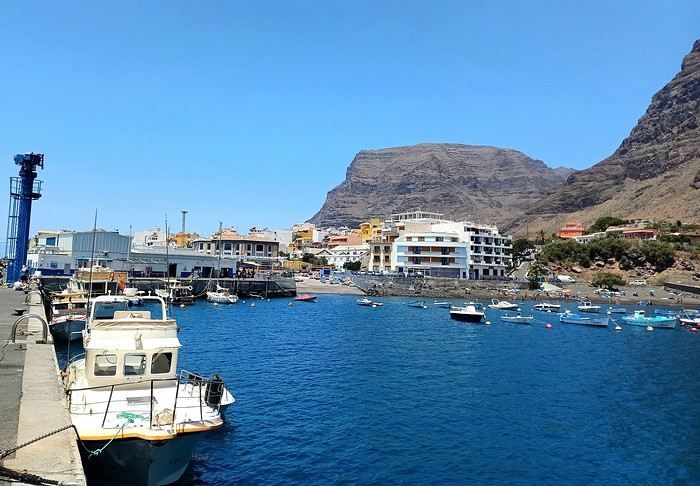
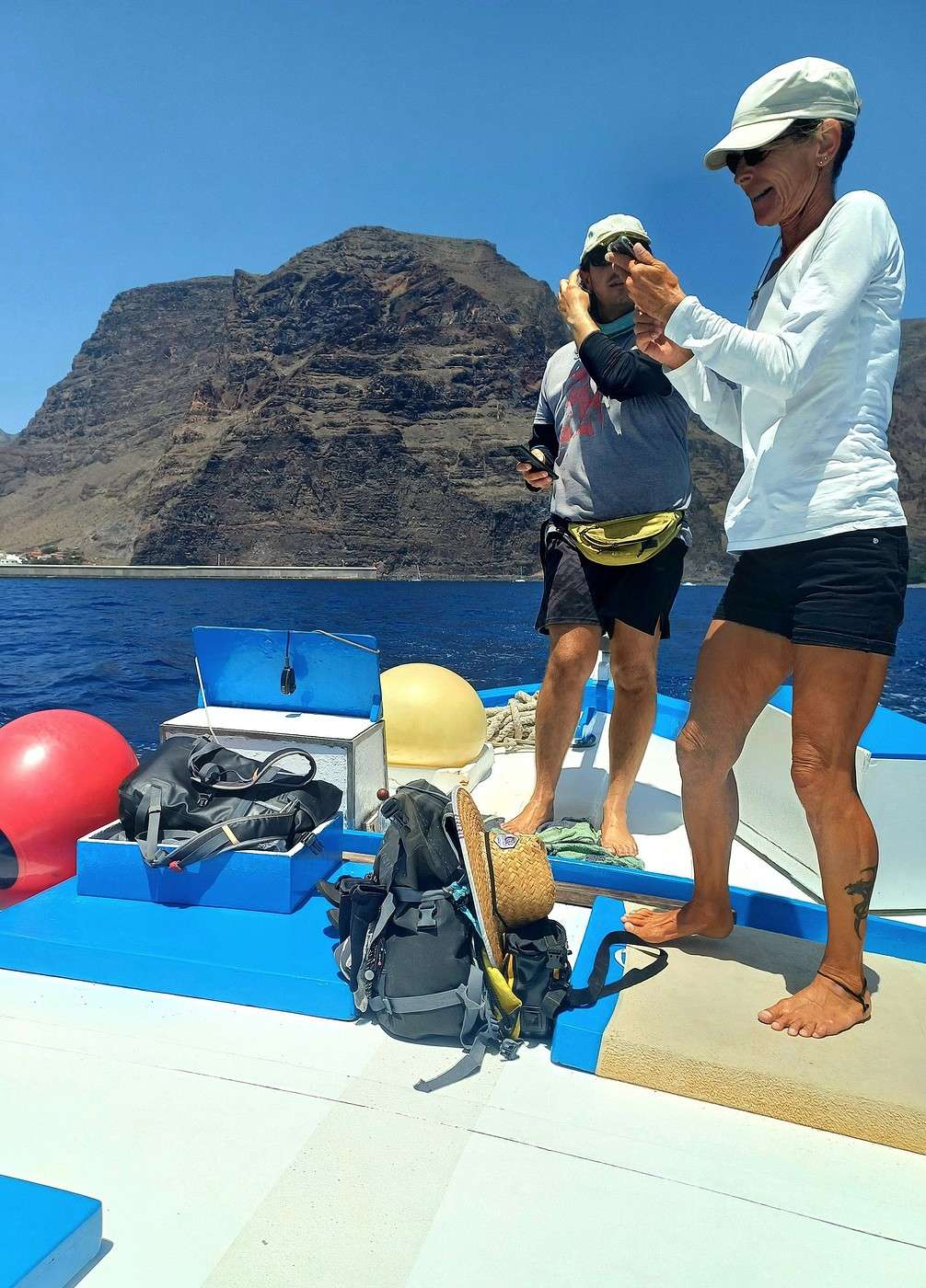
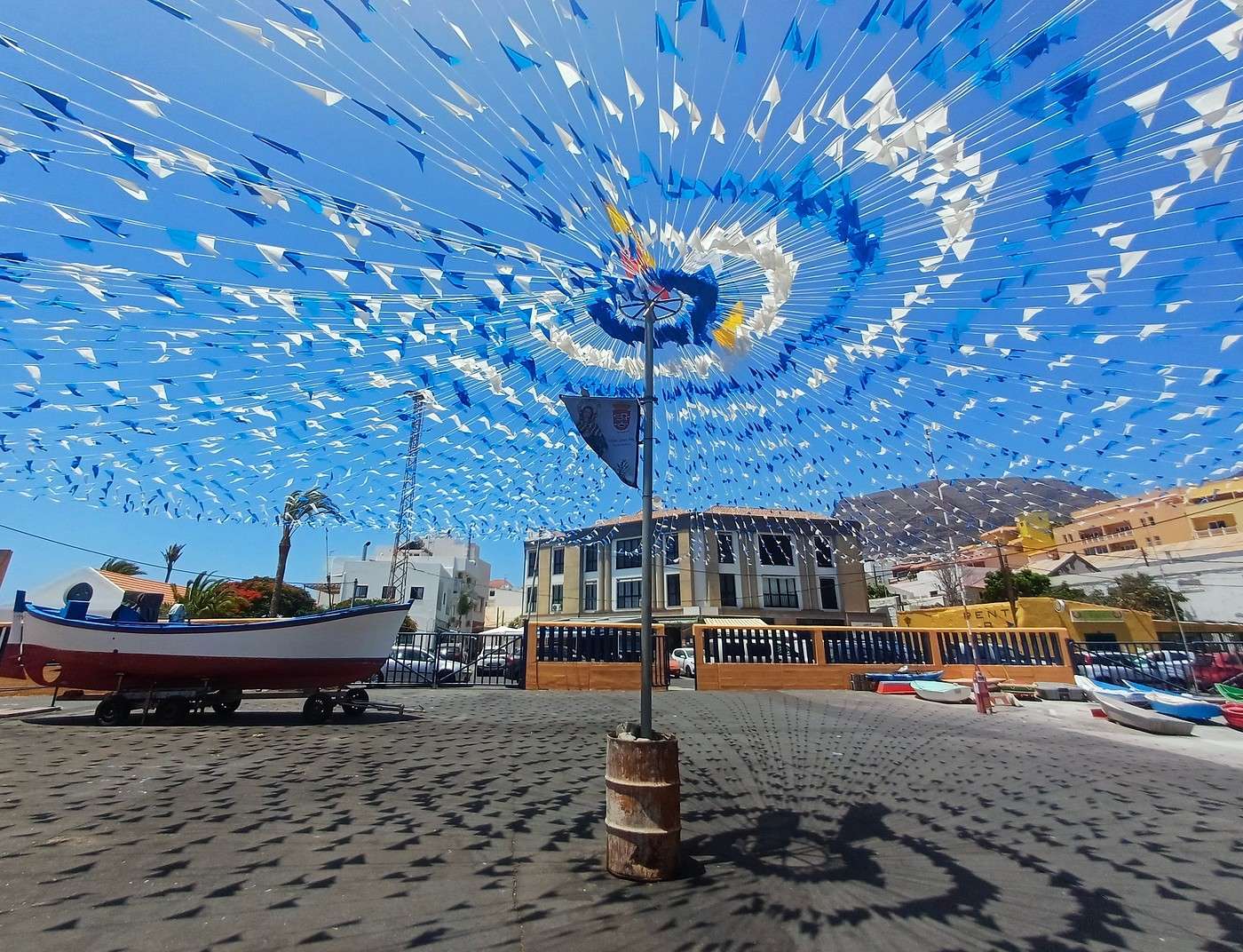
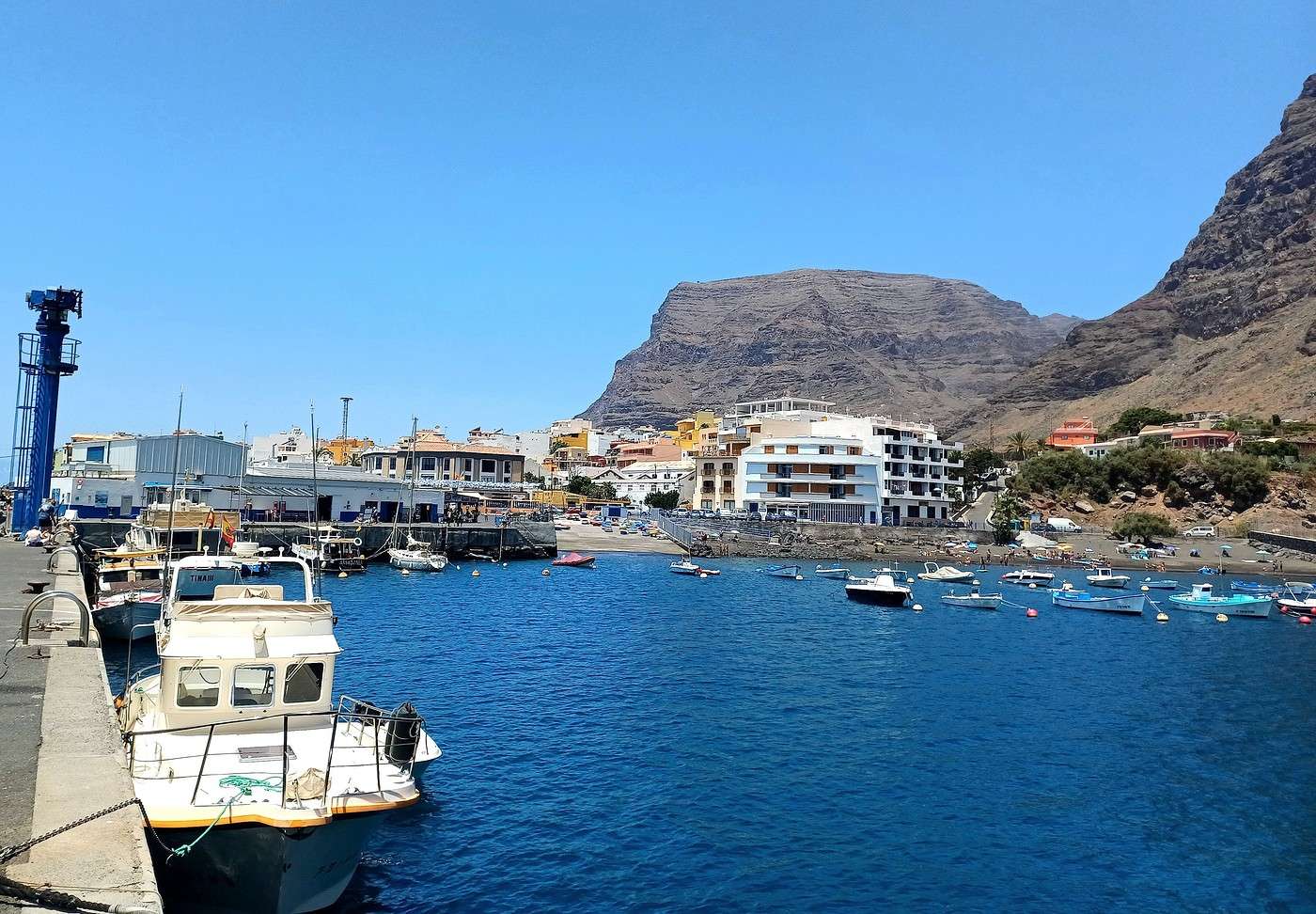
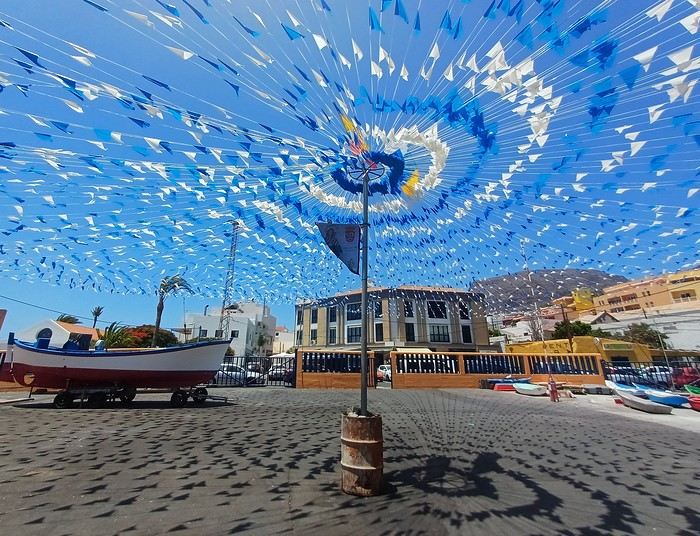
We enter the small port where a colorful religious festival seems to be preparing. We look for our boat along the quay. Oceano Whale Watching is a German-run agency and the most reputable in La Gomera, especially due to its ecological commitment and protection of cetaceans. After finally finding the boat, we’re greeted by the Spanish captain and our German guide, who helps us make the slightly acrobatic descent down the ladder from the quay. It’s a very small boat limited to ten people: just us, a German family, and a German couple. Once the safety instructions are given and the guide reminds us that sightings of marine animals—especially whales, which everyone hopes to see—are never guaranteed, our boat leaves the port and heads out to sea.
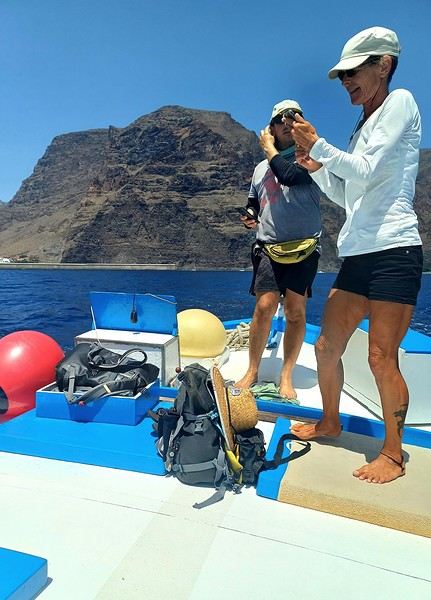
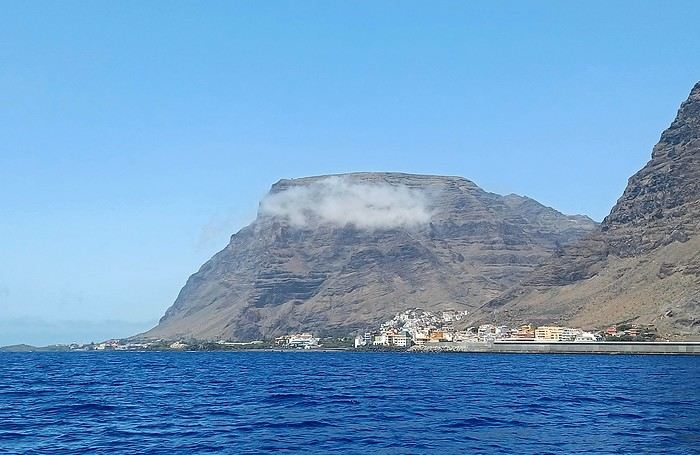
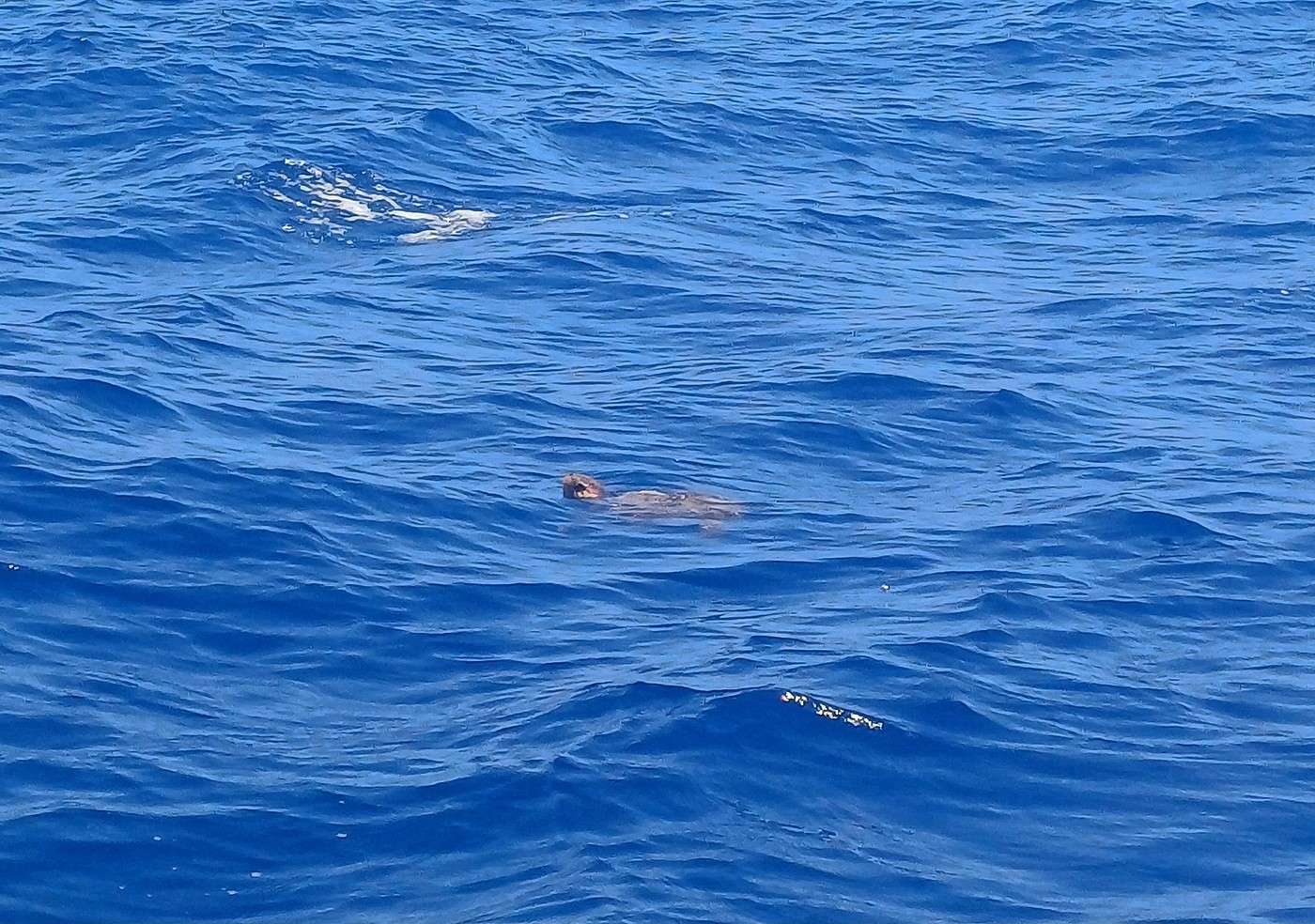
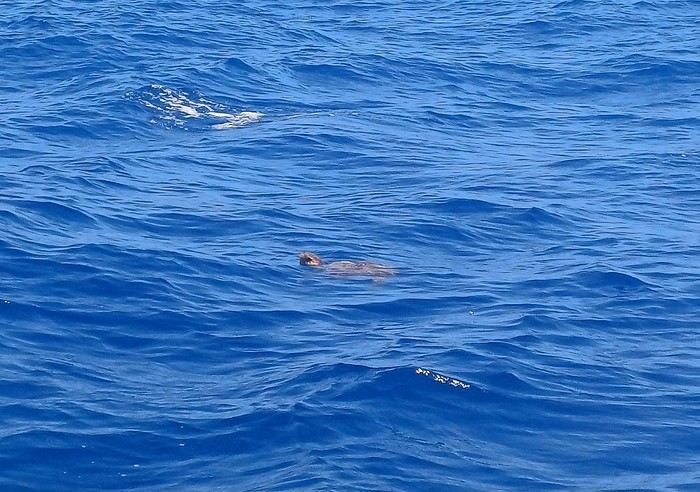
The energetic guide moves back and forth to give us explanations or returns to the captain to search for the best spots with her binoculars. Whenever she spots a floating plastic bag, she jumps onto the small deck with a net to remove the intruder from the Big Blue. Théo, wearing his life jacket, starts getting sleepy. We tuck him in at the end of the bench by the edge of the boat, and the guide covers him with a shawl to protect him from the sun. He falls asleep right away... Soon, one of the German tourists spots something near the railing. It’s a pair of sea turtles! The captain cuts the engine and approaches slowly. The turtles swim at the surface for a minute before diving back under the waves. This is promising! Except the waves are rocking us pretty hard, and Magali, despite the pill, starts sweating bullets and feeling sick. Forbidden from using the toilet—otherwise, the guide assures her she’d be stuck there for 3 hours—she has to vomit overboard and lies down on one side of the bench, with Théo on the other. She doesn’t even have the energy to turn her head when we come across another turtle, even more visible, swimming proudly with its little head above water.
But from then on... it’s a bust. We sail along the Gomeran coast toward the south while moving a bit farther offshore, but we don’t find anything except the inevitable Cory’s shearwaters floating offshore like ducks in a pond. However, the guide teaches us more about these birds, which live only at sea and come ashore only to breed and lay their eggs on rocky coasts. That’s why their eerie cries can be heard when night falls. Far from being frightening, they’re actually victims—clumsy on land, they become easy prey for stray cats and dogs. They seemed more numerous and noisy during the full moon, even though they apparently only leave the sea on moonless nights. If the full moon excites them even more than usual, I noticed that in Valle Gran Rey, the Teguerguenche and Adivino mountains block the moon for much of the night. And in Hermigua, we don’t hear any shearwaters.

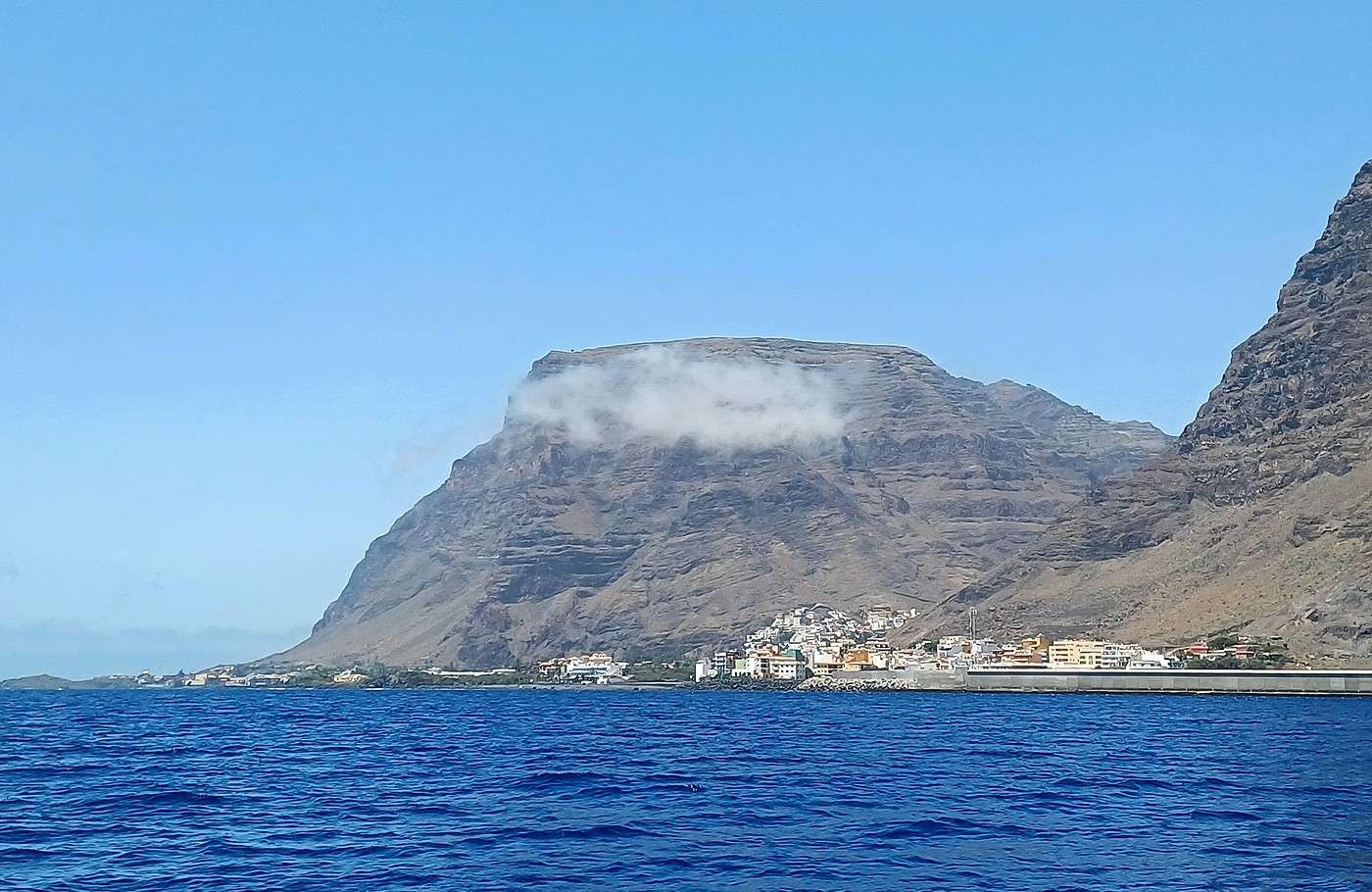
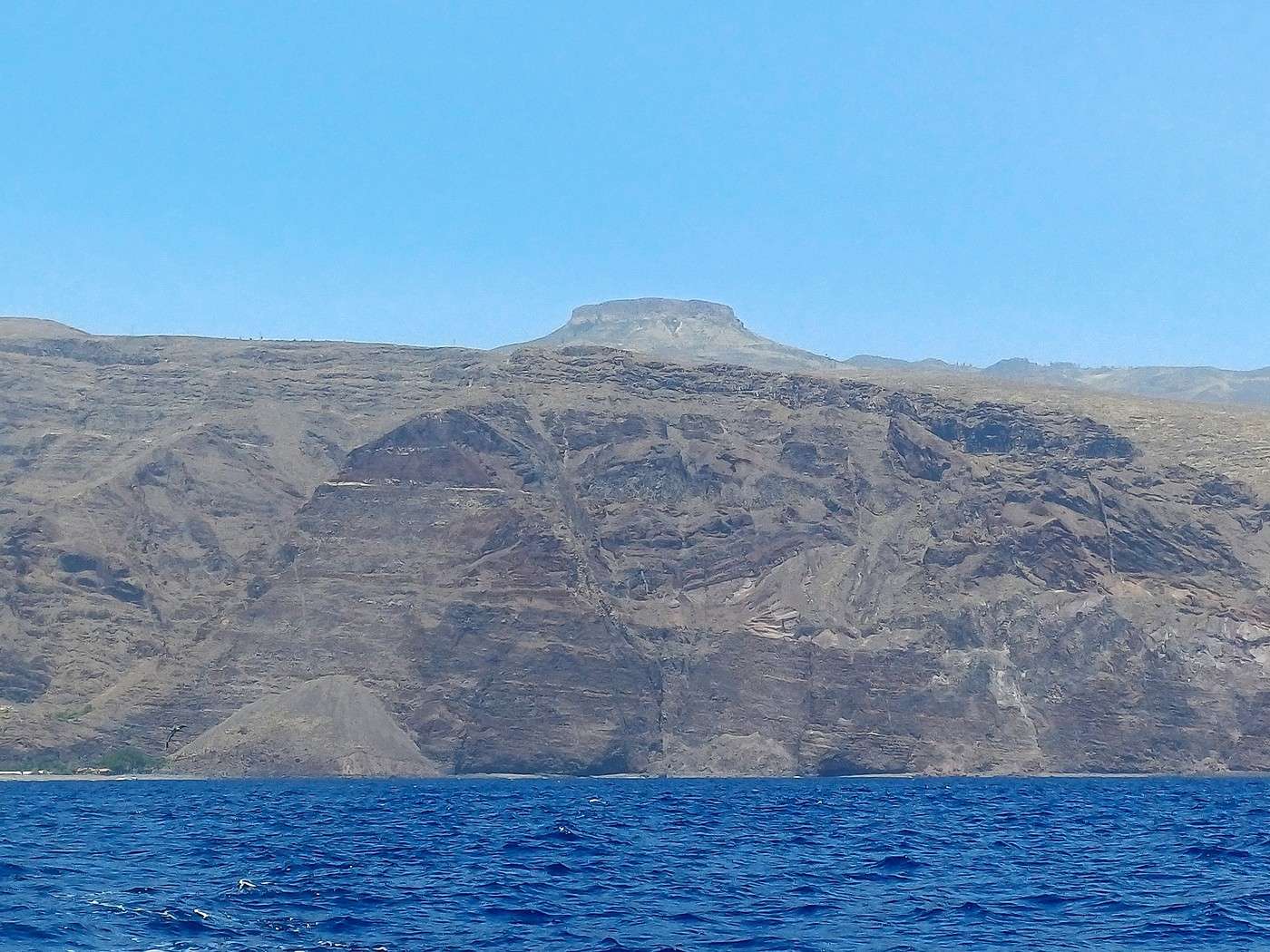
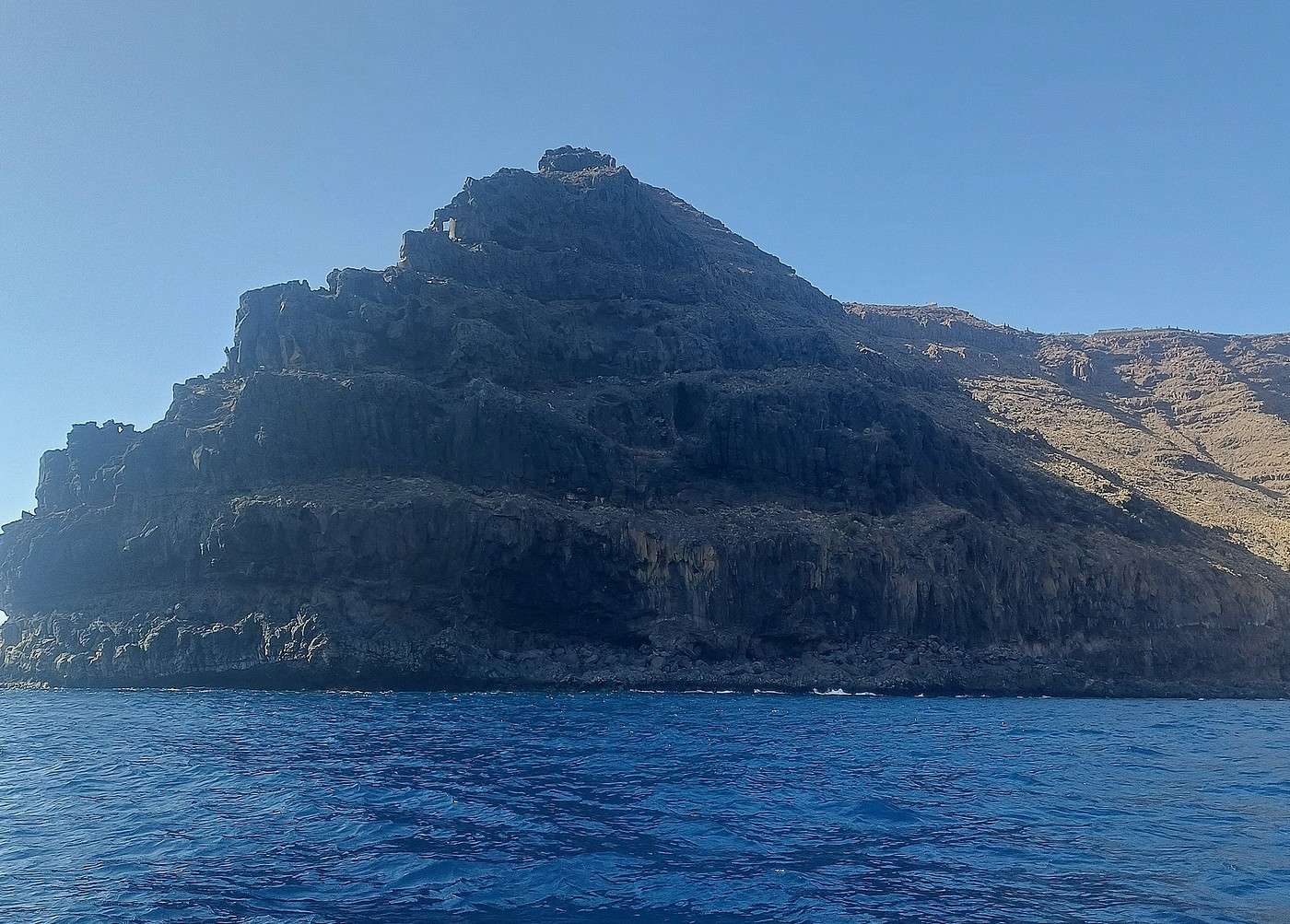
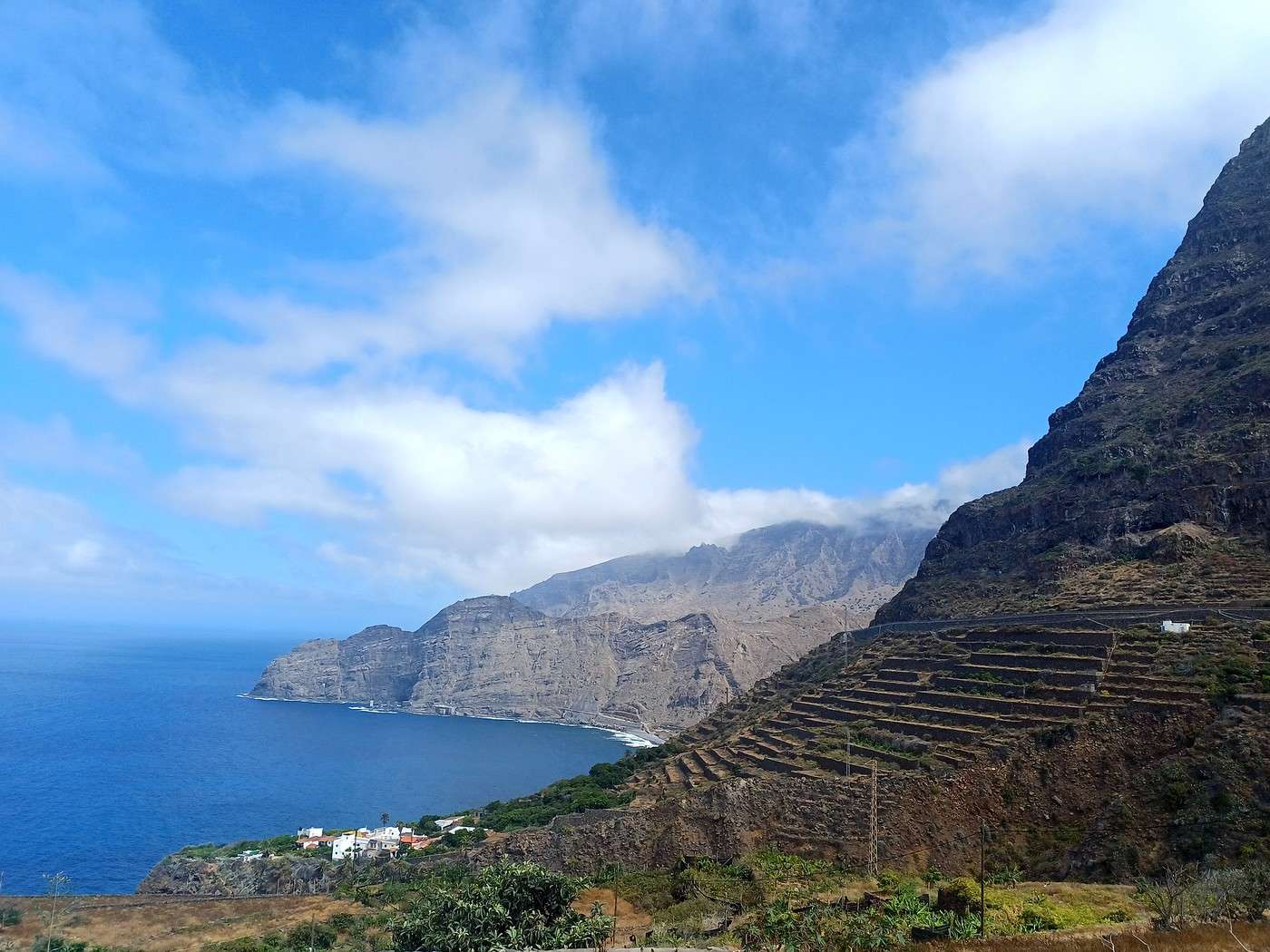
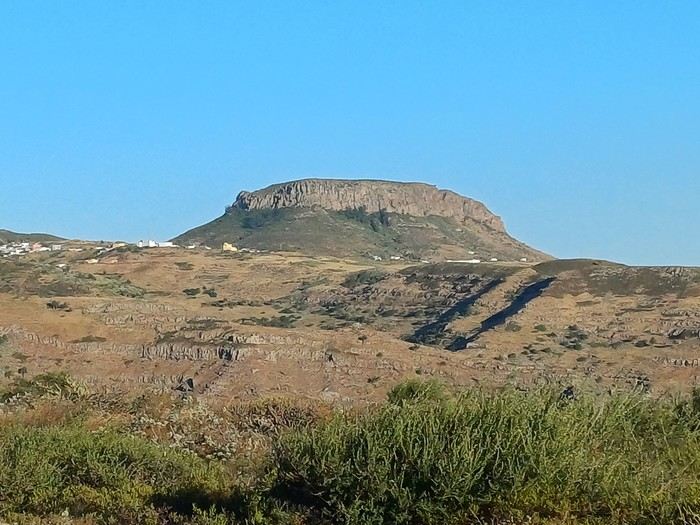
We also spot some amusing flying fish. At first glance, I thought they were big dragonflies! As we reach the south of La Gomera, near Santiago, we see the hazy outline of Teide before turning back. It seems our guide and captain have given up hope of spotting anything else... Still, we sail along the coast to admire beautiful volcanic formations, sea caves, a few secluded beaches, and the island’s peaks, like the impressive Fortaleza de Chipude at 1,243 meters, especially striking from the ocean.
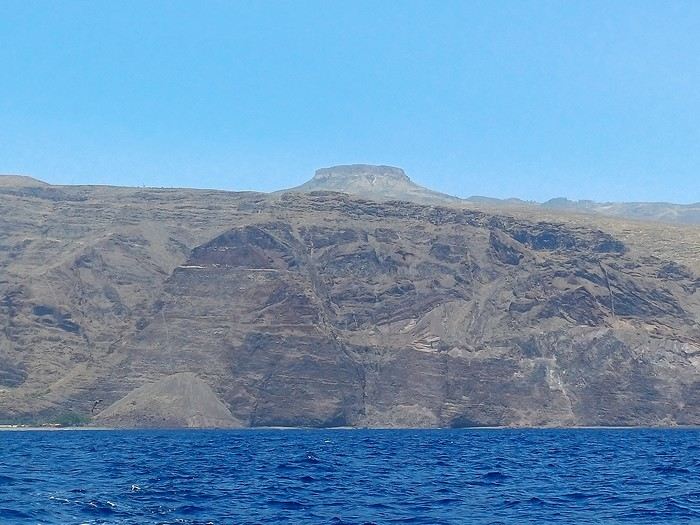
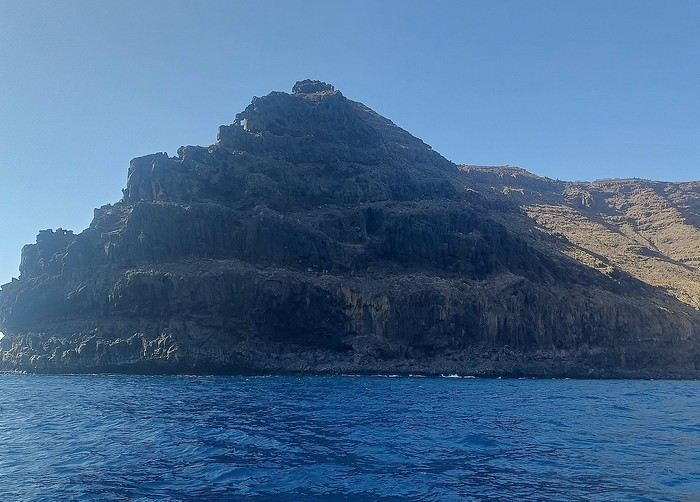
But everyone understands it’s over, even though the guide keeps moving around, miming to call the whales to her. As we retreat, the wind carries away Théo’s cap, which had woken up in the meantime, into the vast ocean: he starts crying, inconsolable. We turn back, and thanks to her experience, the guide manages to spot the blue cap in the blue water in less than a minute and scoops it up with the net—I never would’ve thought that possible. Without a doubt, the highlight of the trip! In the end, we return to the small port almost empty-handed.
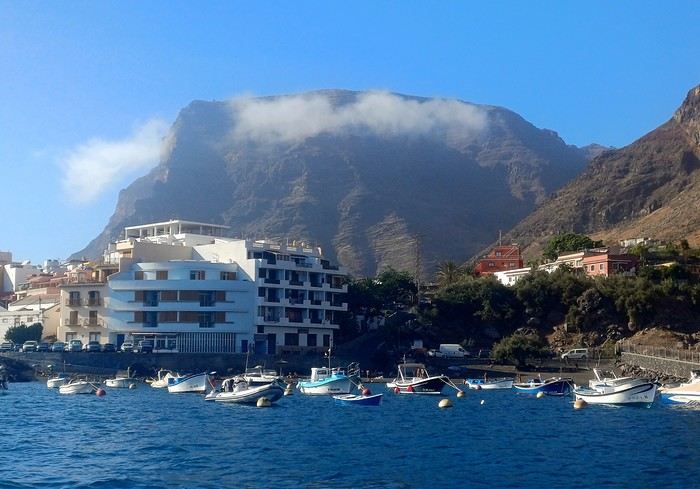


The guide apologizes that we didn’t see any whales or dolphins. As a sign of Oceano Whale Watching’s commitment, she hands out small flyers to sign a petition against whale hunting. We disembark, thanking them because even if we didn’t see much, they made the trip enjoyable... if not essential, especially given the rather high price. It was nice, but still a bit disappointing. That’s how it goes—you can’t order whales to come to you...
16 days with family in La Gomera (Canary Islands)

Pagaljavab · 2026-08-29 · Message 42 of 54

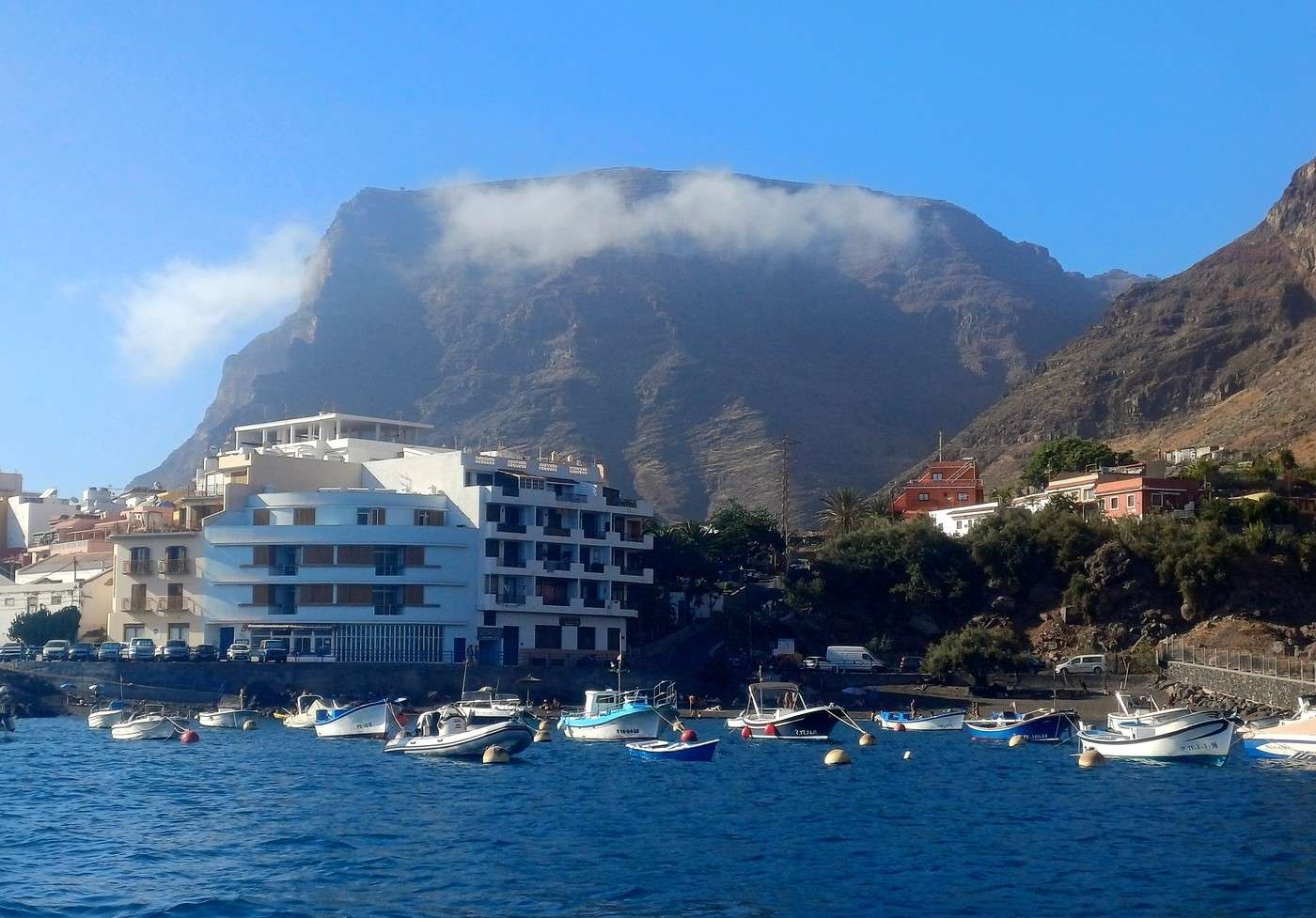
Our guide suggests we take a little rest by the sea before hitting the road again. Just past the dock, we stop for a short break at Las Vueltas, the small black-sand beach in the harbor—nice and calm with no currents, where the little boats are moored. We watch Théo splash around in his armbands while Magali recovers a bit from her seasickness, especially since we’re about to tackle the winding mountain road between Valle Gran Rey and Hermigua.

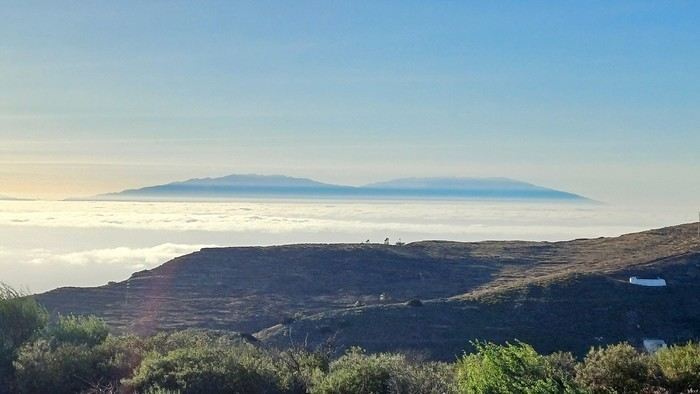
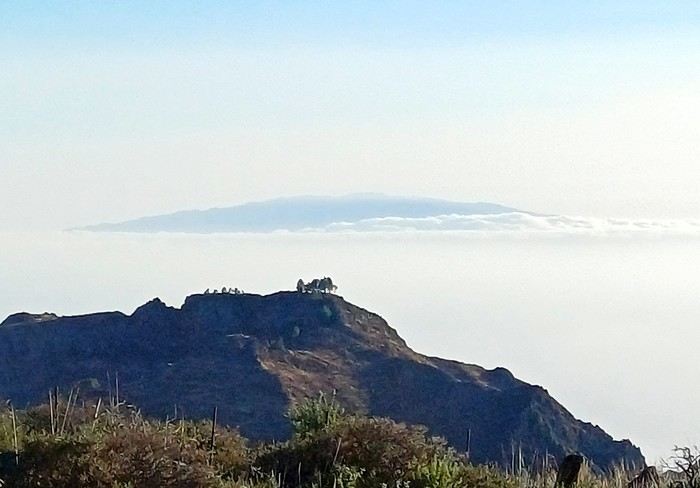
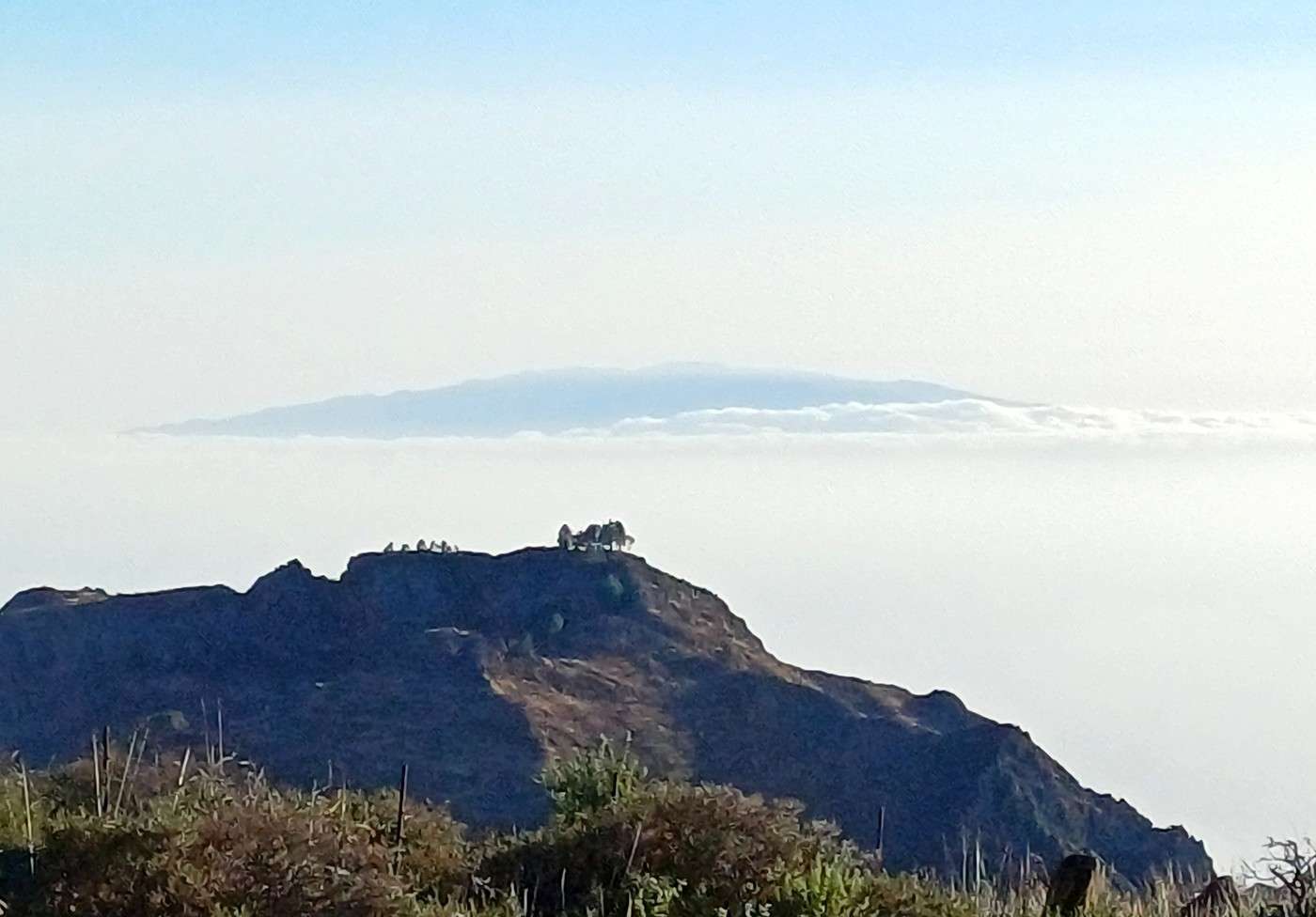
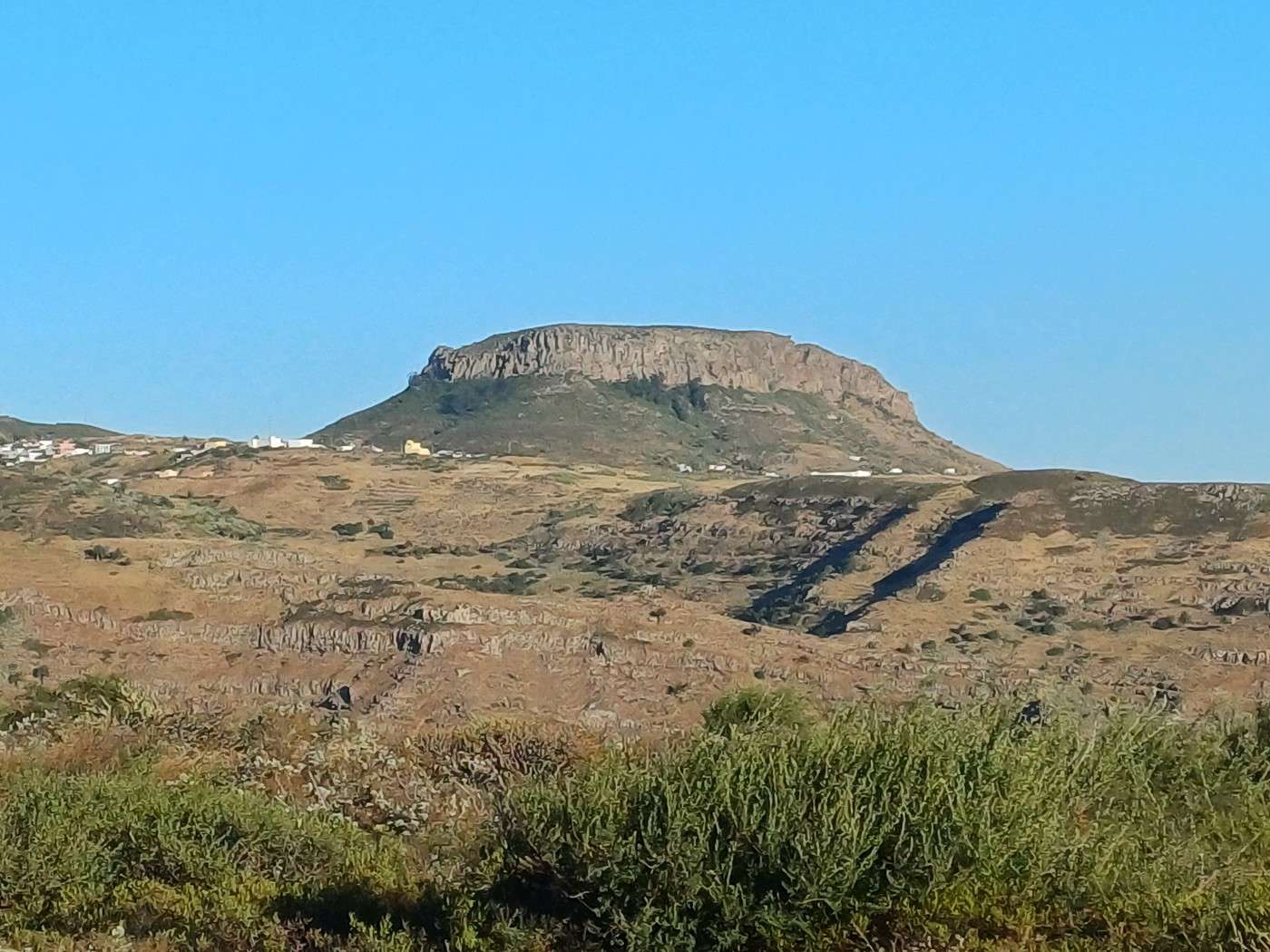
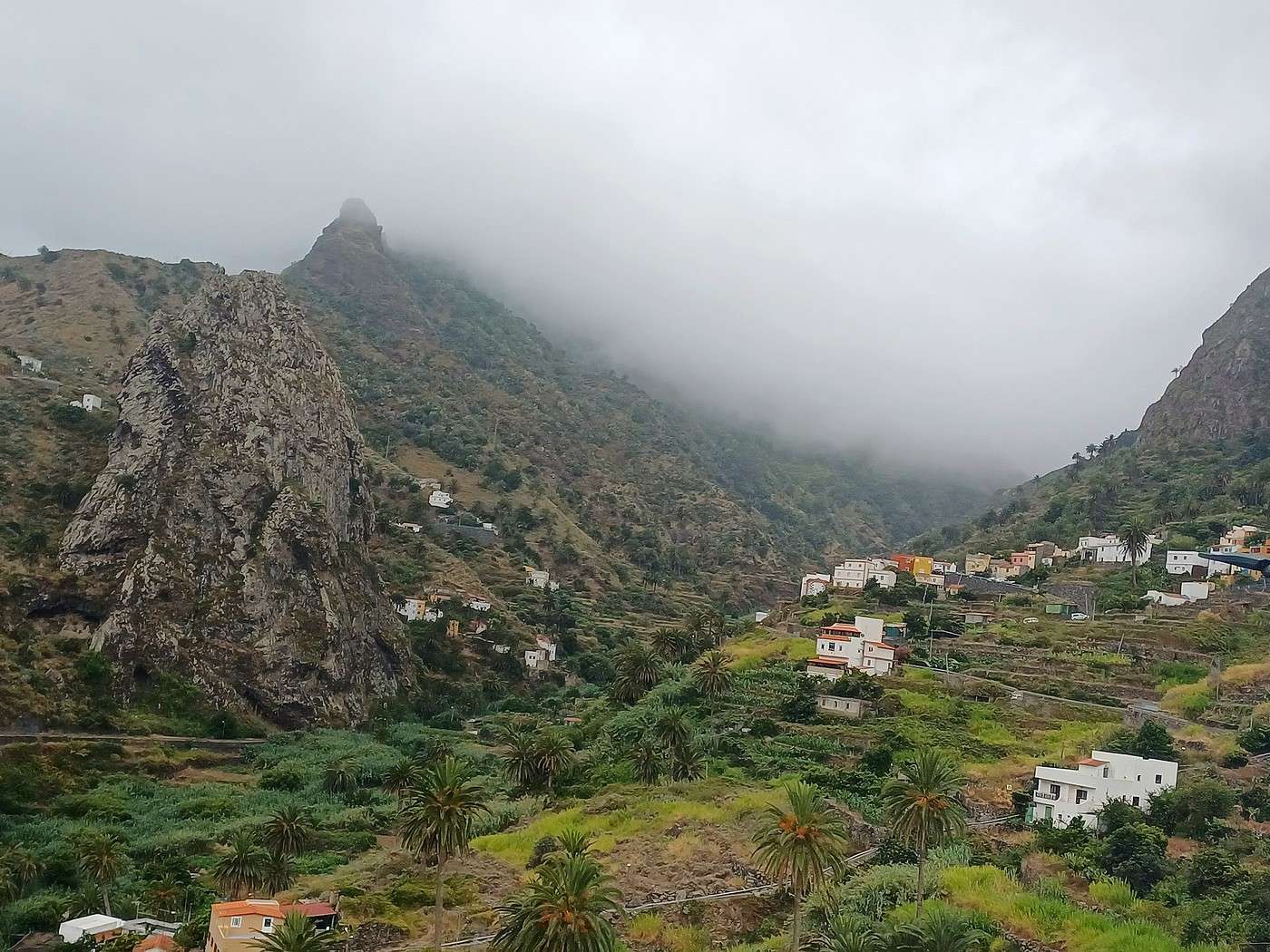
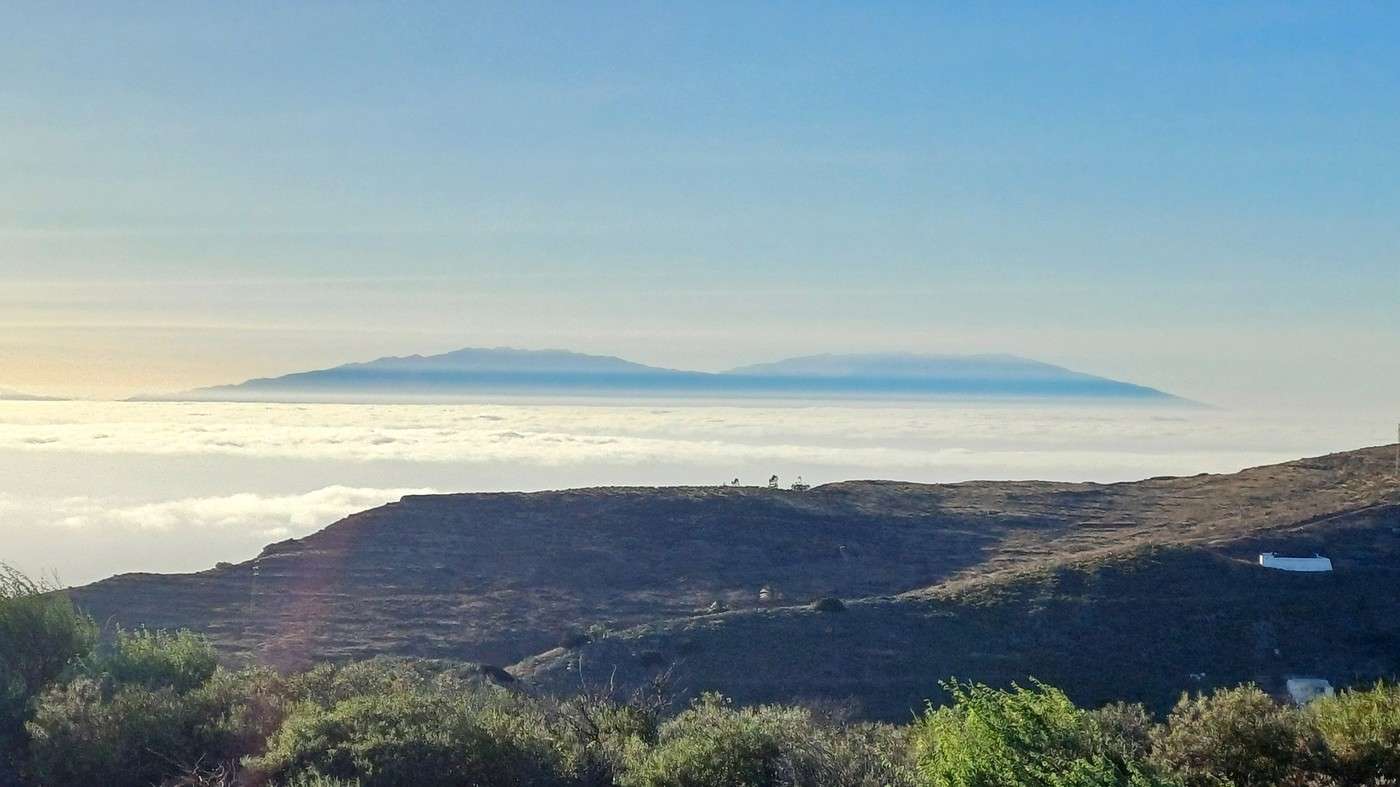
Driving through the heights of Las Hayas, our usual stop, the elevation above the mist and the glorious late-afternoon weather give us a paradise-like view of the island of La Palma and also El Hierro! So, we have no choice but to stop again at Las Hayas to snap a few shots from the village cemetery, on a red-earth plateau, where you can also see the inevitable Fortaleza de Chipude from another angle.
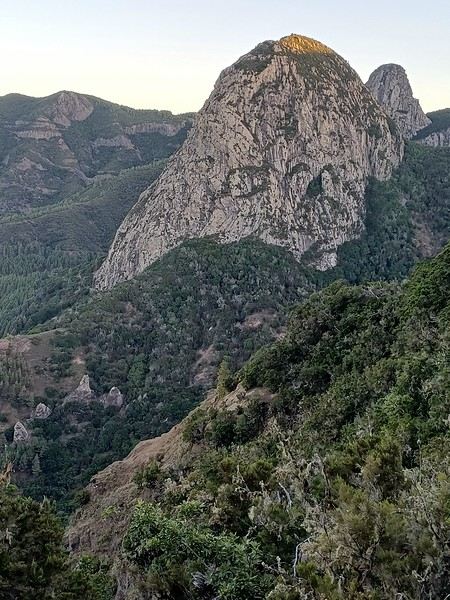
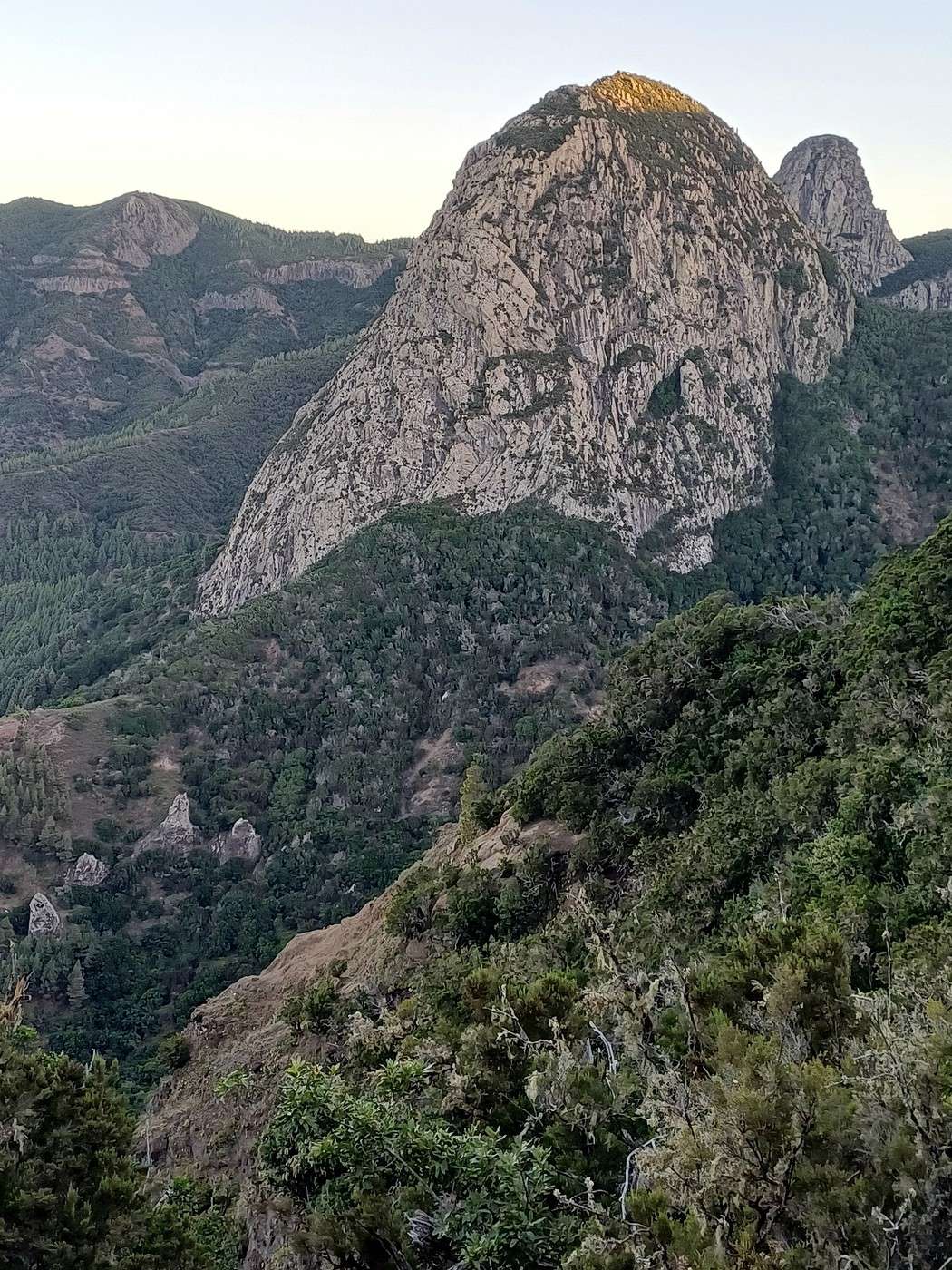
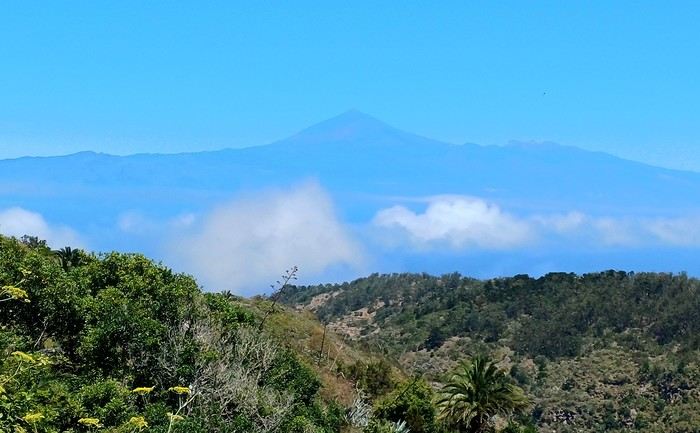
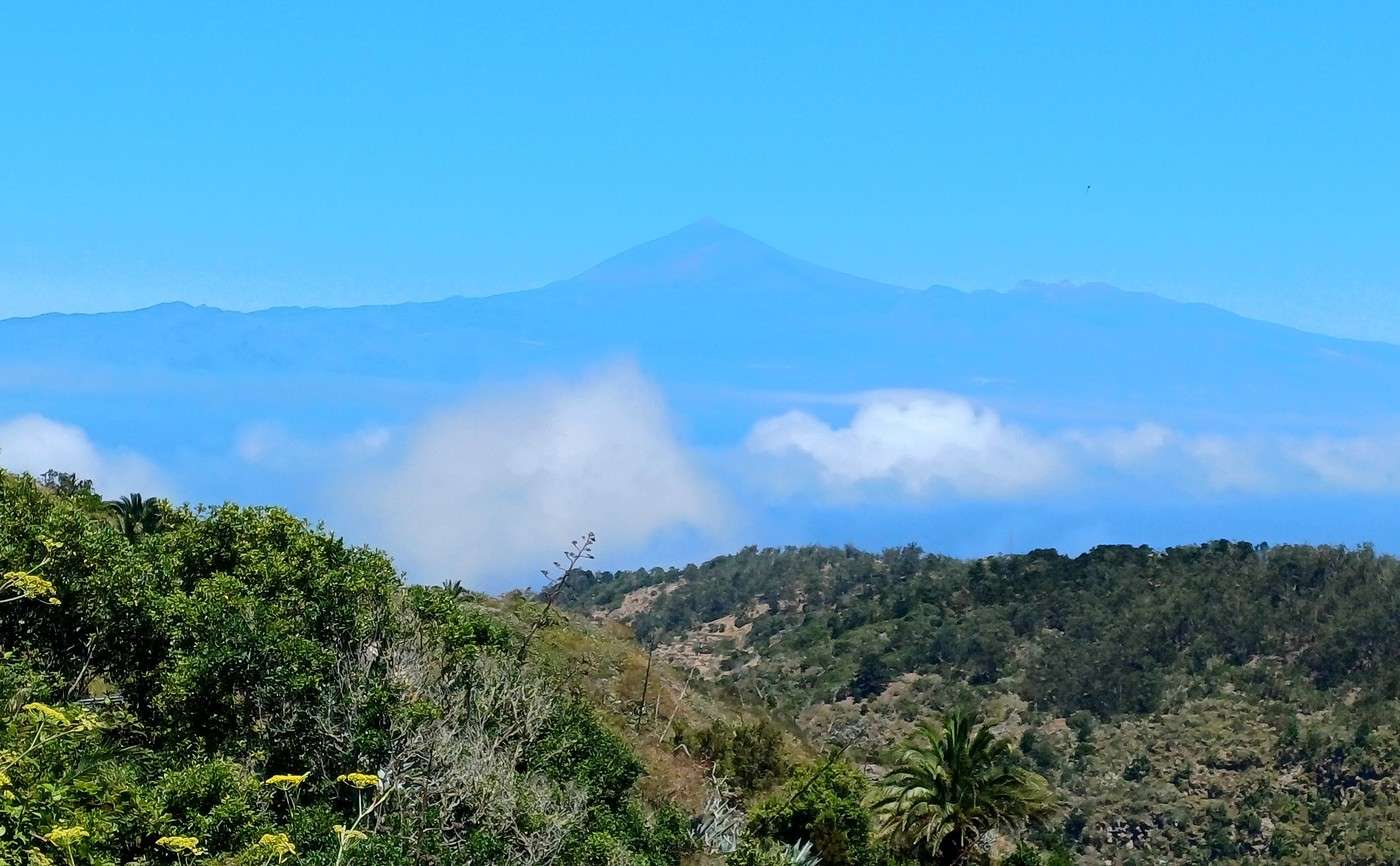
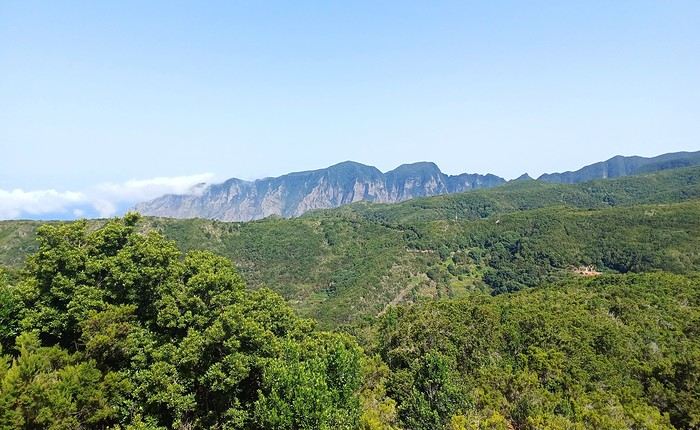
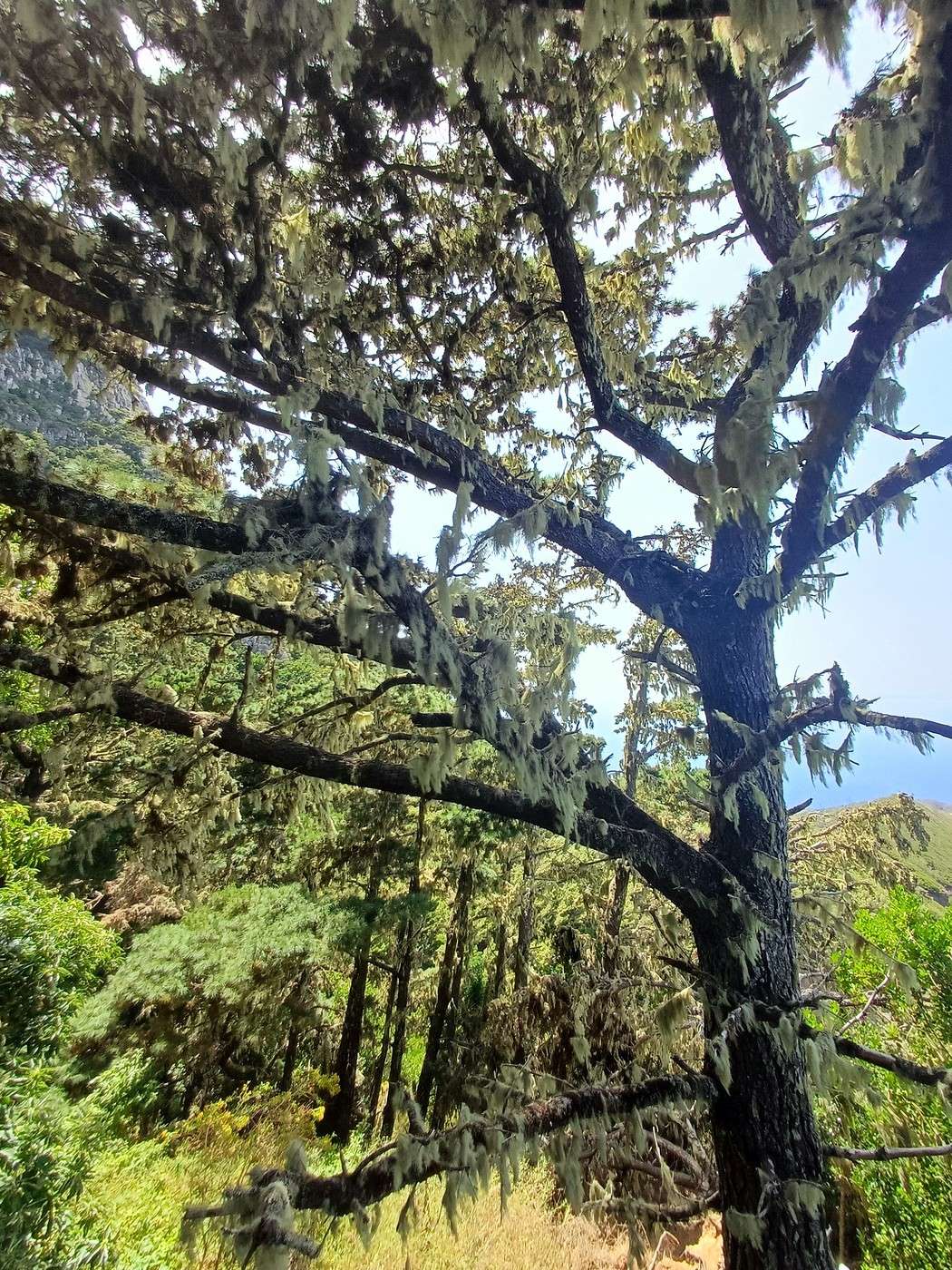
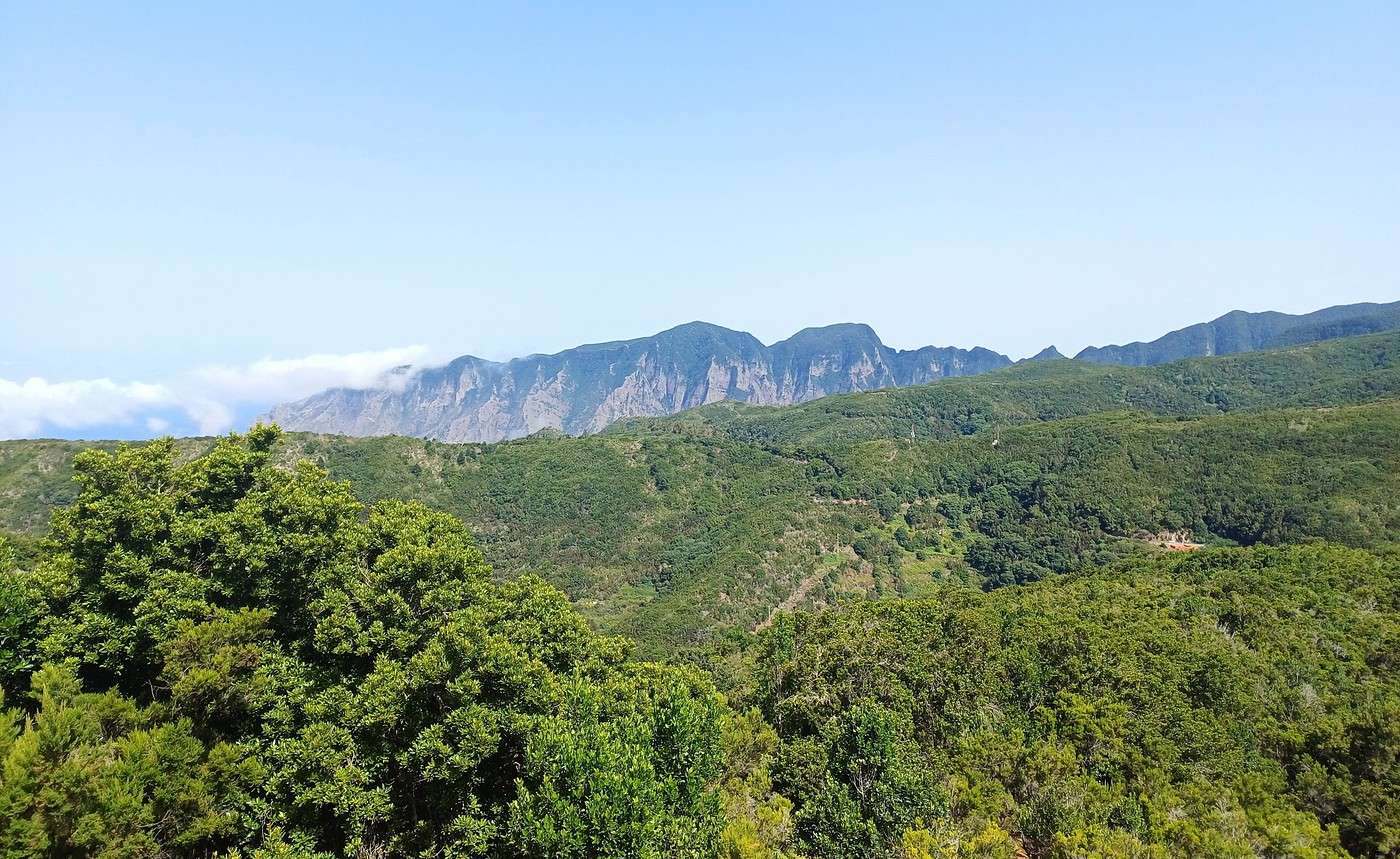
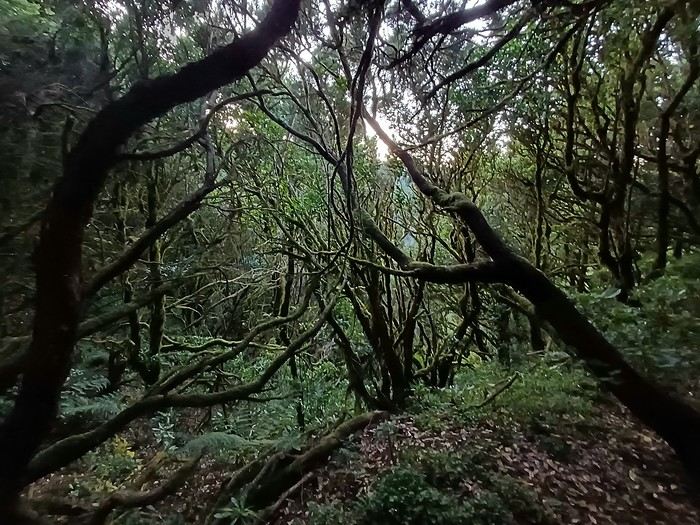
After continuing on the road through Garajonay Park, it’s Teide on the other side that towers above all the highest peaks of La Gomera—it’s so close that from the forest, it looks like it’s on our island! The weather conditions are just perfect this afternoon for clearly spotting the neighboring Canary Islands. As soon as we spot a clearing, we pull over. As usual, it’s a hiking trail: the El Bailadero viewpoint (dance floor). Legend has it that witches used to dance here and put naughty children in sacks to take them to the clearing of Laguna Grande, a few kilometers away. After the demystified Cory’s shearwaters, here’s another story that comes in handy as an effective way to keep Théo in line! More prosaically, the walk offers a breathtaking panoramic view of the massive roc d’Agando, which the last rays of the sun crown with a luminous cap, as well as the laurisilva canopy, a thick green mantle covering the surrounding massifs and stretching down to the valley floor.

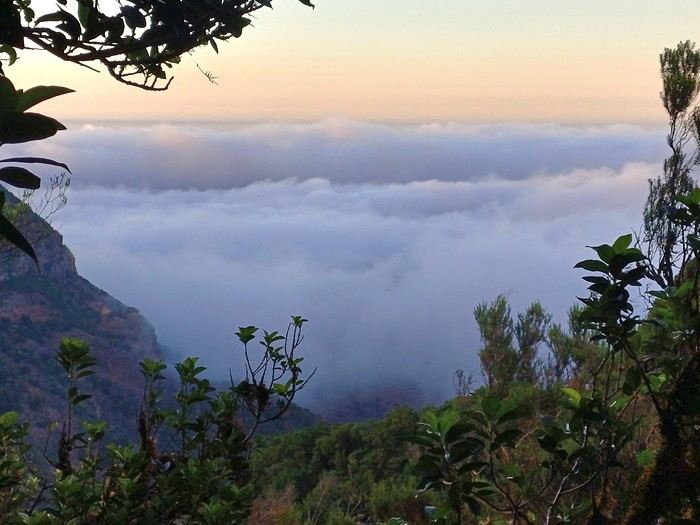
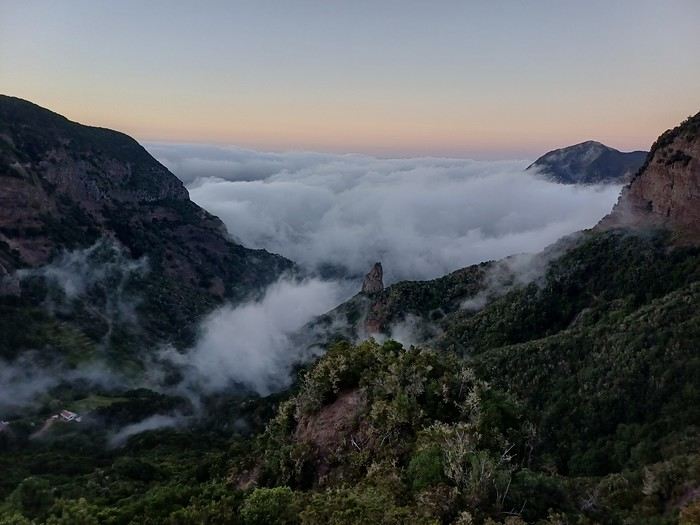
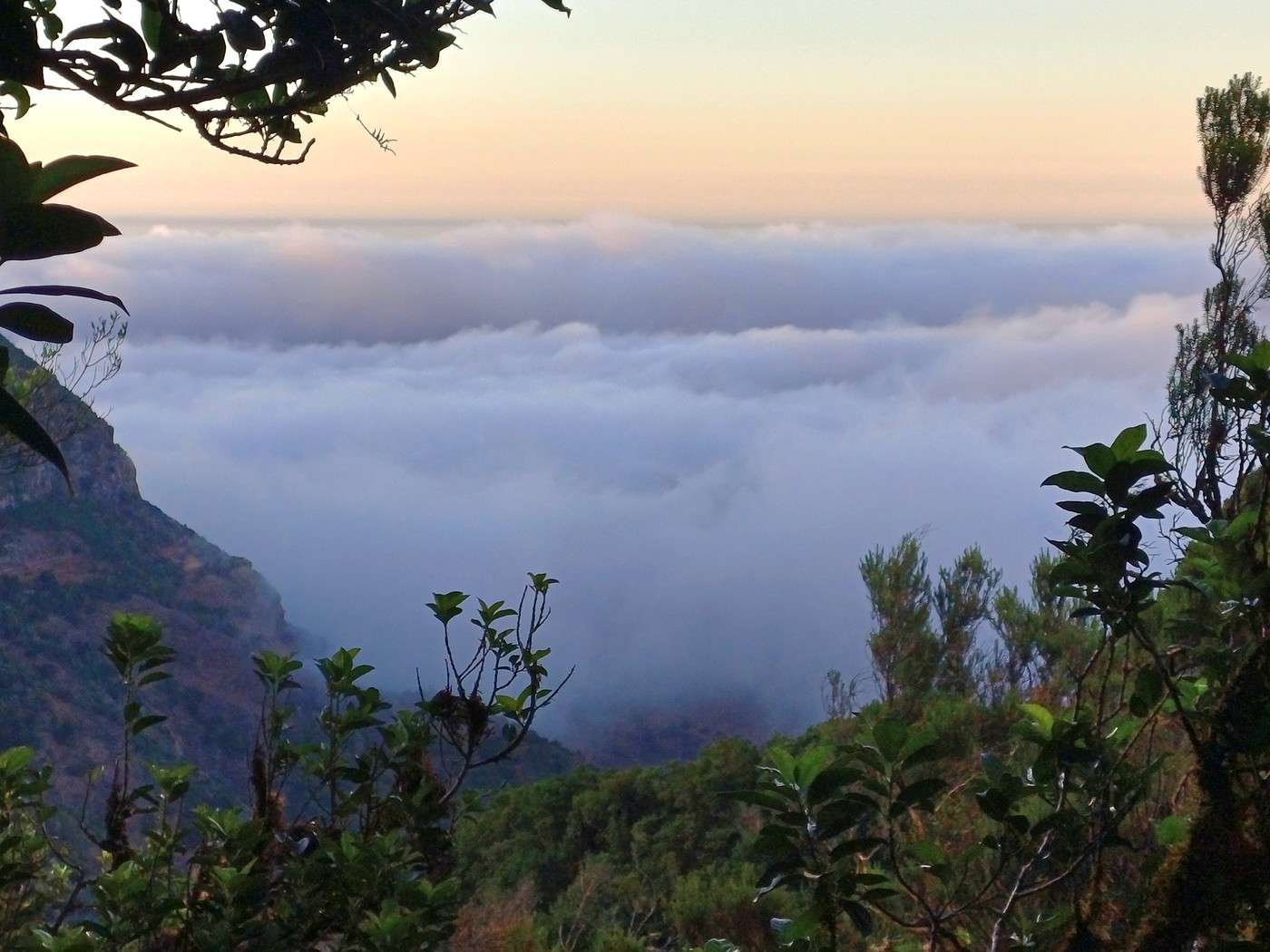
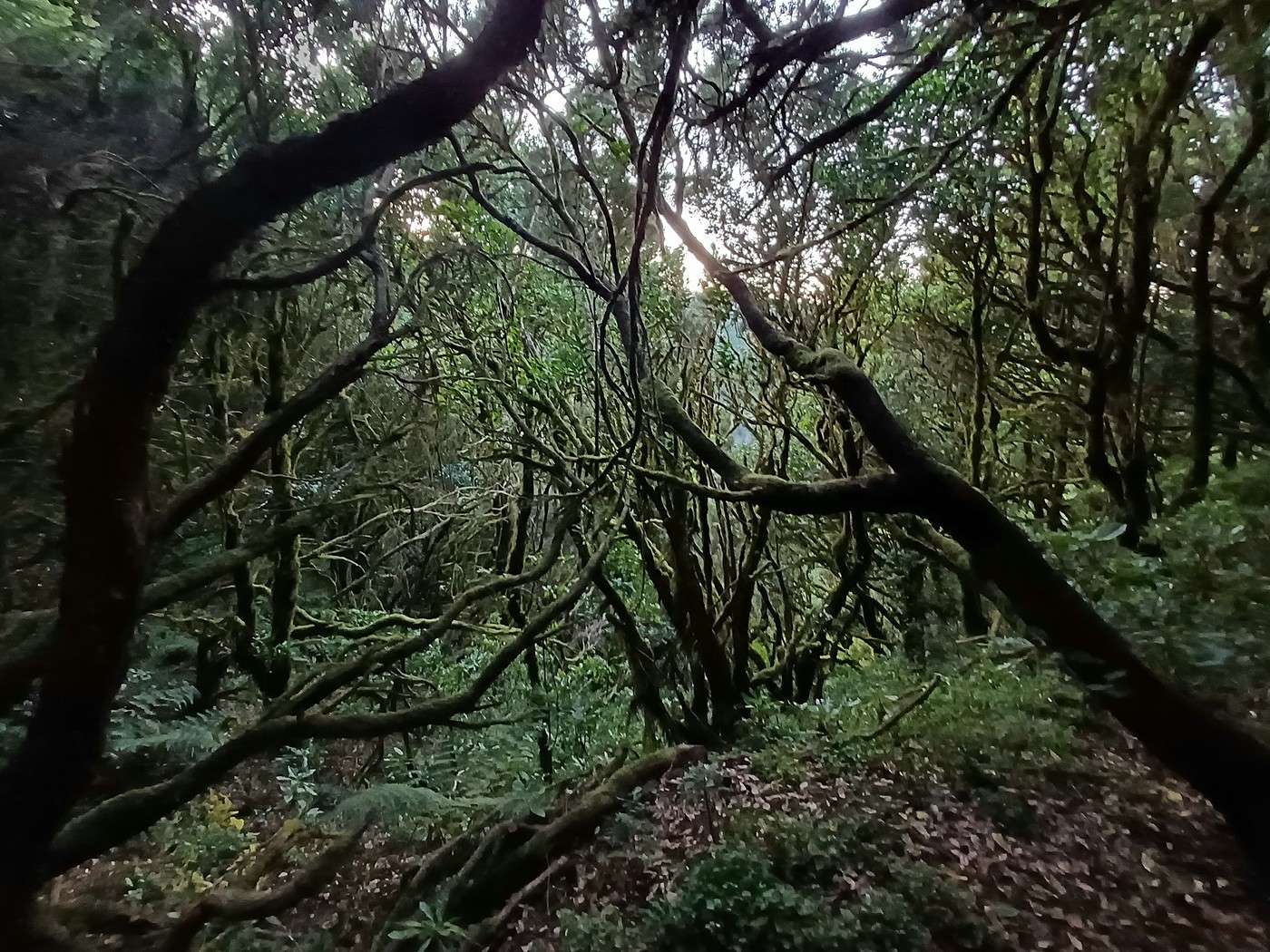
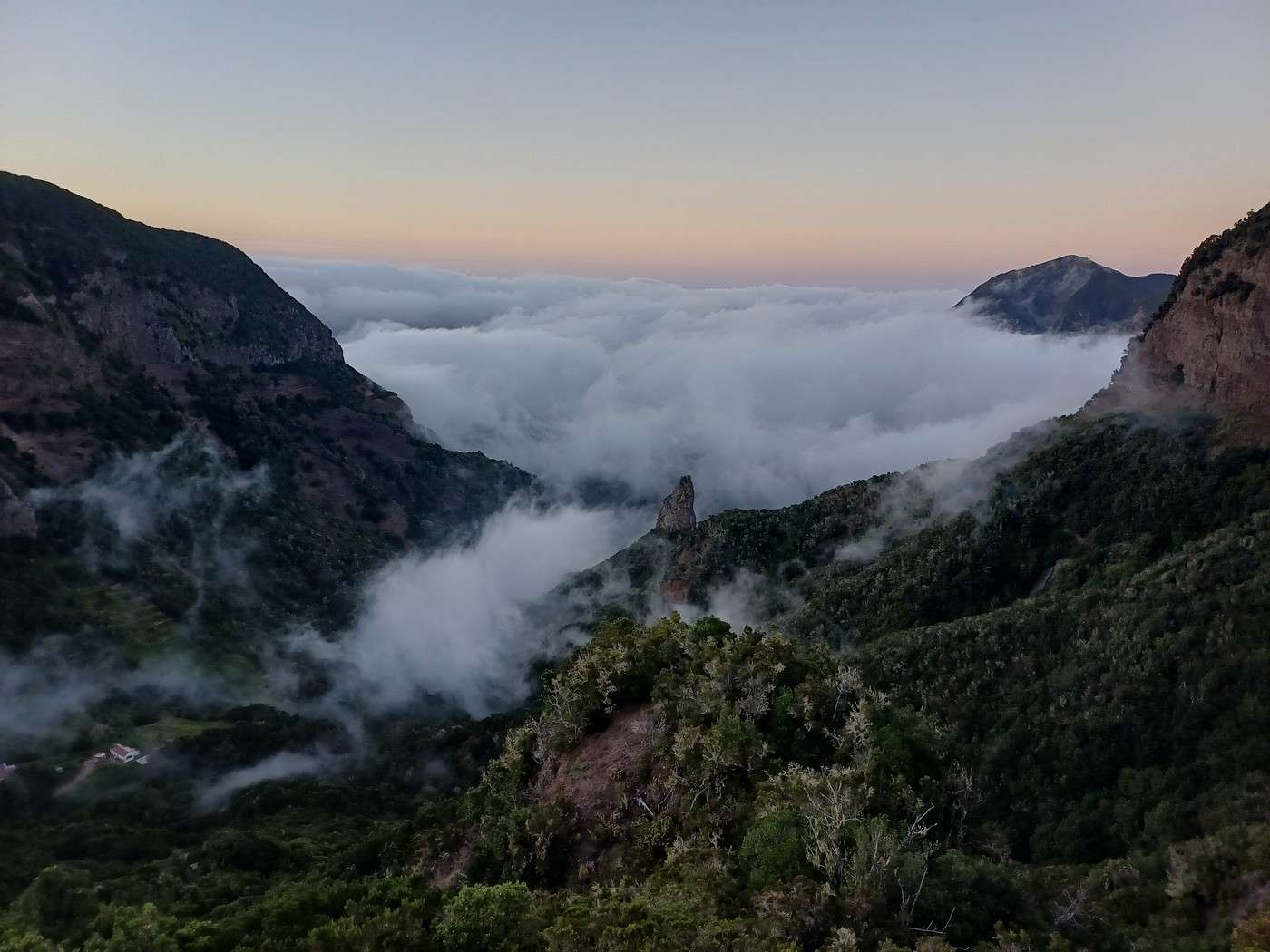
Despite the sun starting to dip in the forest, we set off on a short trail: a little downhill path, about a kilometer long, through the twisted laurels that leads us to the small mirador de El Rejo. What a surprise: in front of us, a vast, foamy sea of clouds spills over from the ocean between the two massifs that frame the Hermigua valley, hiding Teide but creating a paradise-like vision for our amazed eyes. We take a little time to soak in the view before heading back up quickly, as night is starting to fall and we need to cross the small stretch of forest again (and before the witches arrive, of course). Then it’s always a pleasure to drive through this unique laurel forest, which the twilight makes even more mysterious.
Back in the car, we drive the few minutes to Hermigua and our hamlet of El Corralete with Orquesta Wamampy’s song "La Gomera Es" playing—it’s been our soundtrack for these winding roads since the start of the trip. Since it’s a bit late, I whip up a quick cucumber-tomato salad with our usual chorizo, Iberian mortadella, and cheese, all washed down with a cold Dorada, as always. At night, the party atmosphere down below seems to have intensified compared to the previous evening, and the sound of Canarian music drifting through our open windows to let in the cool air lulls us into the same exotic Hispanic-island reverie as the night before.

16 days in La Gomera (Canary Islands) with the family

Pagaljavab · 2026-09-07 · Message 43 of 54

Day 11, Friday, August 7, Hermigua/El Corralete, Abrante viewpoint, Agulo, Hermigua/El Corralete

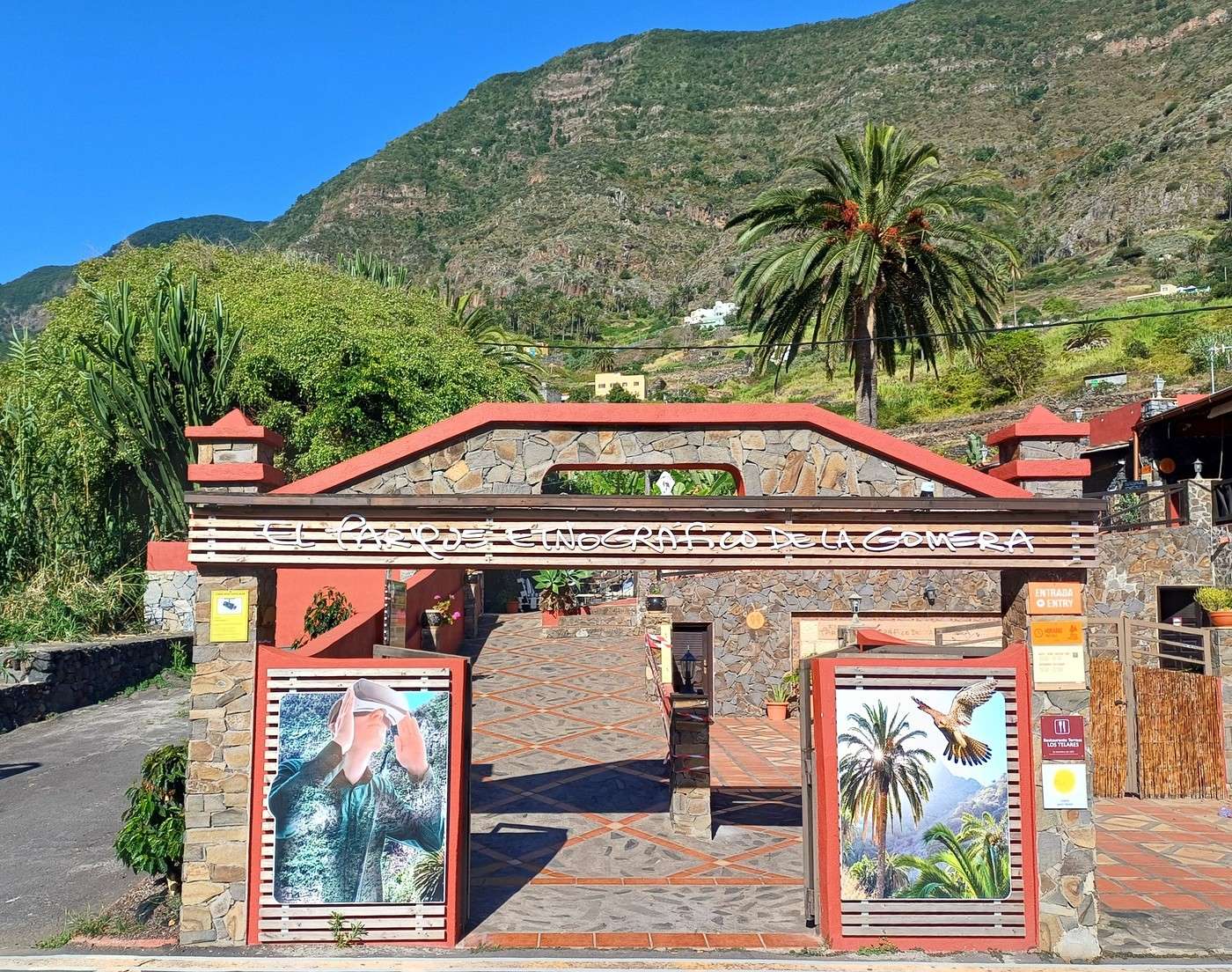
A new day dawns over the mountains facing us, and each morning brings its own unique atmosphere and color. Today, a radiant sun pierces the light mist for a truly stunning spectacle. For this morning, we planned to visit the La Gomera Ethnographic Park-Museum, located on the main road in Hermigua, across from the village square where the festival takes place every evening. We had noticed there was an ethnographic museum a little further down in Hermigua, but when we passed by on other days, it seemed to be permanently closed. It’s likely that the idea behind this park-museum—apparently more lively, immersive, and interactive—was to create a more attractive way to discover Gomeran culture than two small rooms filled with poorly labeled everyday objects behind glass cases. The park-museum is also paired with Los Telares restaurant, which offers authentic Canarian cuisine in a gourmet version. That said, it doesn’t really tempt us since it’s expensive, and we’ve already had our fill of delicious and affordable traditional Gomeran food so far.
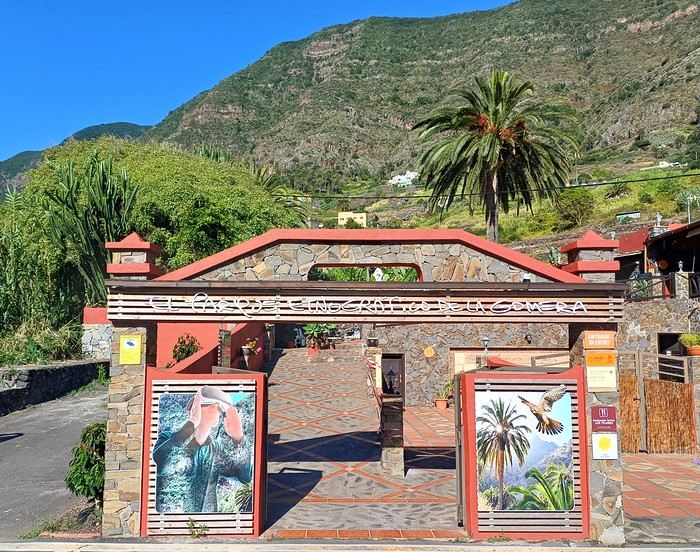
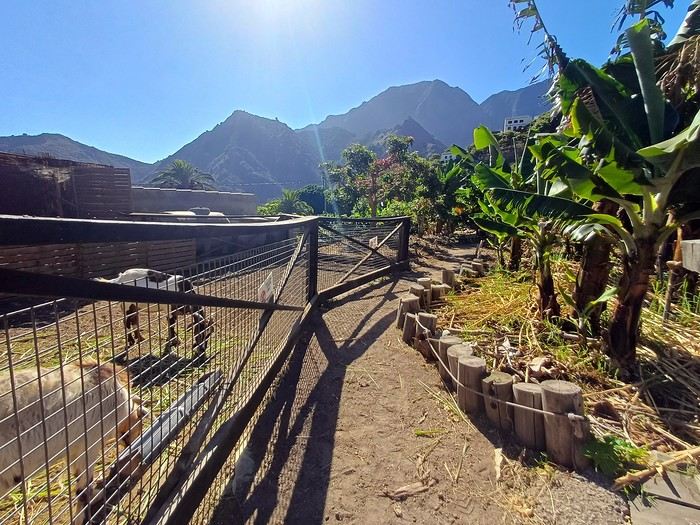
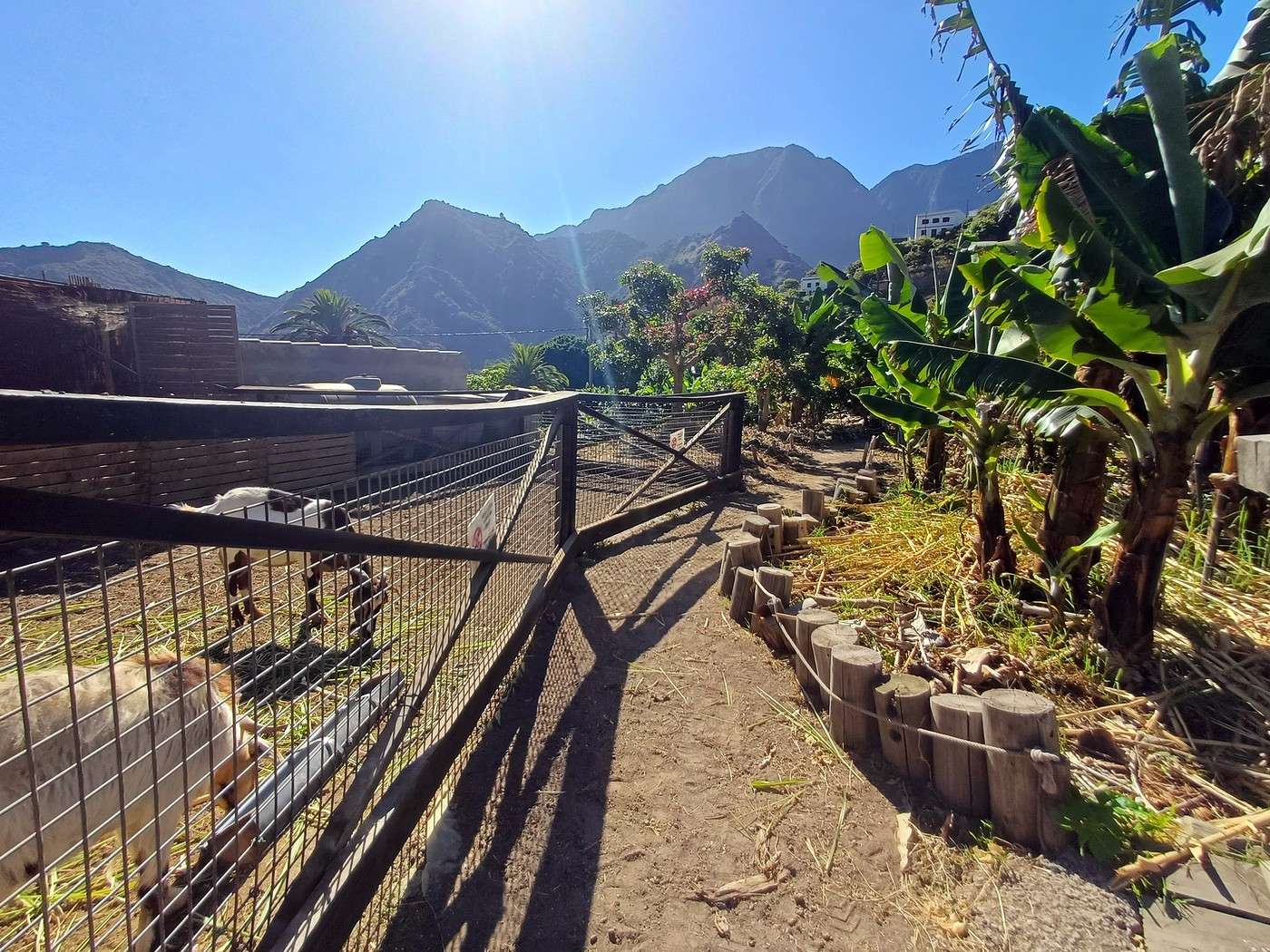
We climb the steps next to the restaurant, where the museum’s shop is located—the entrance is through there. The place has just opened, and a young woman welcomes us to explain how the visit works. It’s a self-guided audio tour through the large garden of an old farm that’s now ecological. It’s actually one of the terraces we’ve seen from our Casa Yaya up above. We’ve already walked through many plantations since we arrived, but it’s really informative to put a name or a story to the trees and plants we see all over La Gomera. Many of the fruit trees that populate the island—banana trees, mango trees, and avocado trees—aren’t native; they were brought back from the Americas starting in the 16th century, since the Canary Islands were a key stopover for ships traveling to and from Europe. The iconic palm tree, however, is endemic to the island and has always played an important role in the culture of the aboriginal Guanches. The tour then moves on to a livestock enclosure with goats and chickens, followed by a small house displaying ethnographic objects—perhaps those from the old museum—like the famous wooden bowl with a handle used to serve the island’s beloved potaje de berros everywhere. We learn that this bowl isn’t of colonial origin; in fact, it’s been around for ages, as it was already used by the Guanches and later adopted by the Spanish. Like many other artifacts on display, it reflects the deep cultural blending between indigenous and Castilian traditions that gives Canarian—and especially Gomeran—culture its uniqueness. One of the highlights of the visit is the old gofio mill, the island’s last water-powered mill, still in operation. It helps explain the system of draining water sources from the mountains to the valleys, and most importantly, how the ubiquitous and delicious gofio is made. Various grains and legumes are roasted before the heavy stone mill, powered by hydraulic flow, grinds them into this tasty flour with a slightly caramelized, toasted flavor. The visit ends with a virtual reality flyover of Hermigua’s small bay using a drone footage headset. The cliffside descents at high speed are a hit with the kids, while they gave us even more dizziness than La Gomera’s winding roads...
At the shop, the steep prices of traditional items like the soup bowl we’d grown fond of (80 € each) finally convince us to save our money! We do splurge on a few decorative postcards, one of the few affordable things, featuring symbolic images of La Gomera in the style of old colonial posters. Meanwhile, the kids leave with a whistle that lets them effortlessly imitate the silbo, La Gomera’s whistled language. Though the visit isn’t free like at other cultural sites on the island, the price (12 € for four—probably 3.50 € per person and 1.50 € for the little one) is low, and the experience was as enjoyable as it was educational.

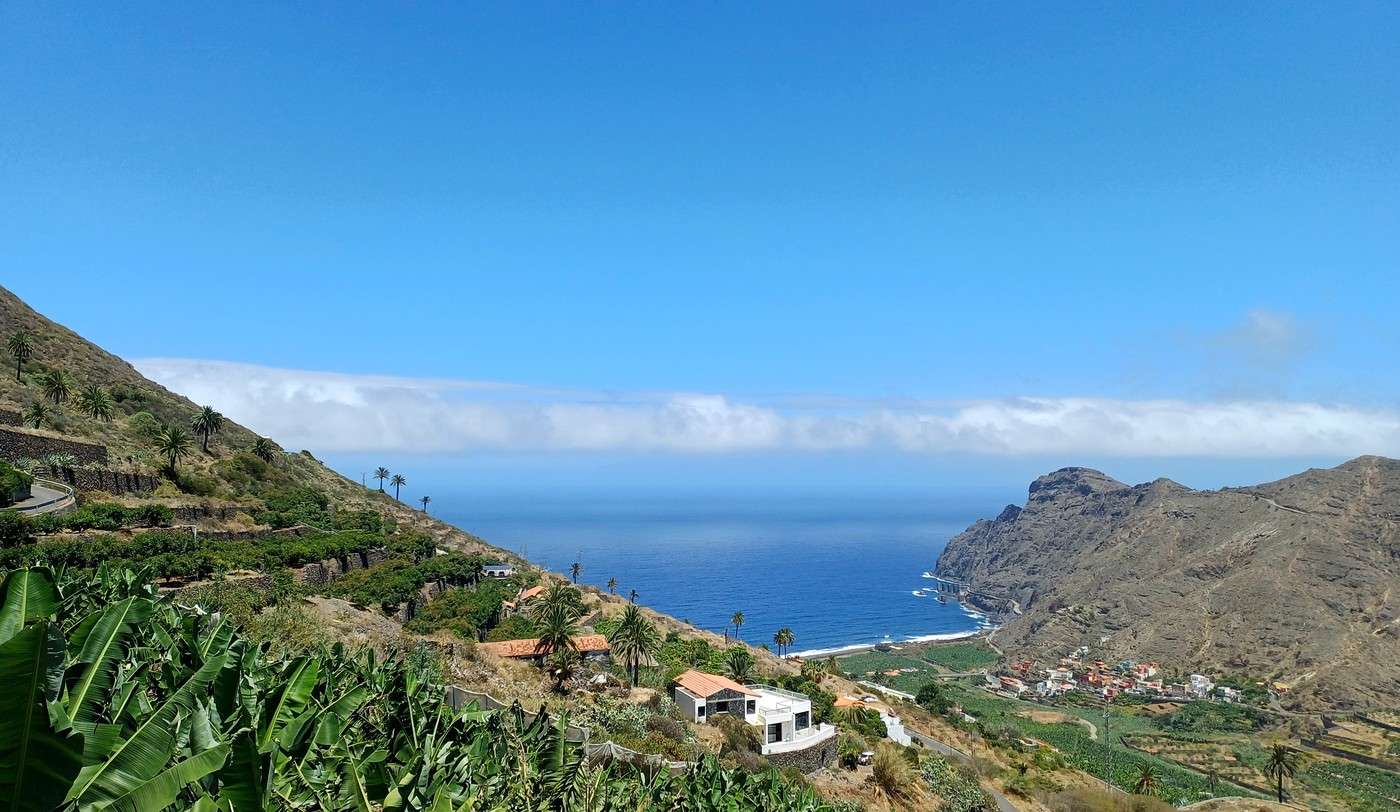
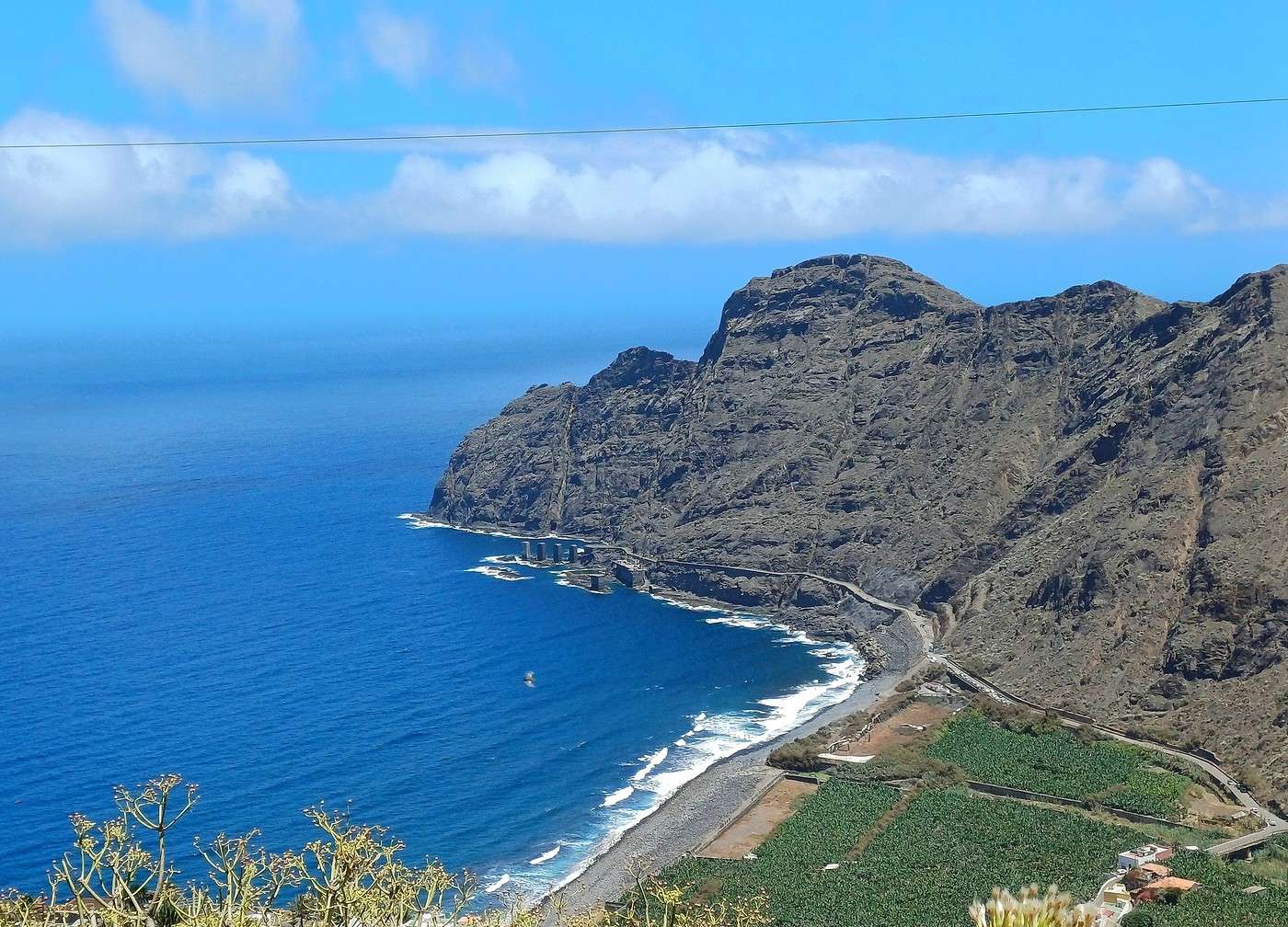
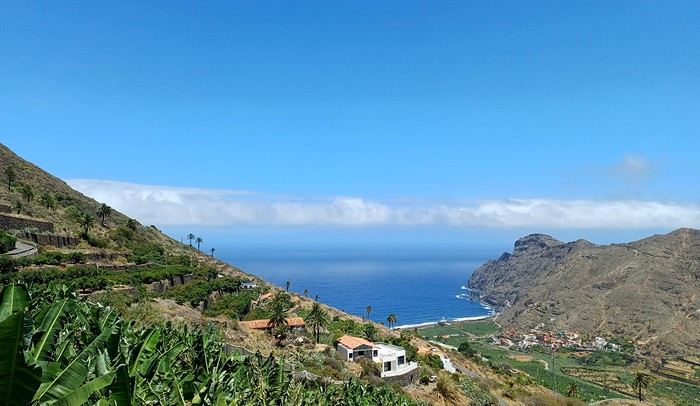
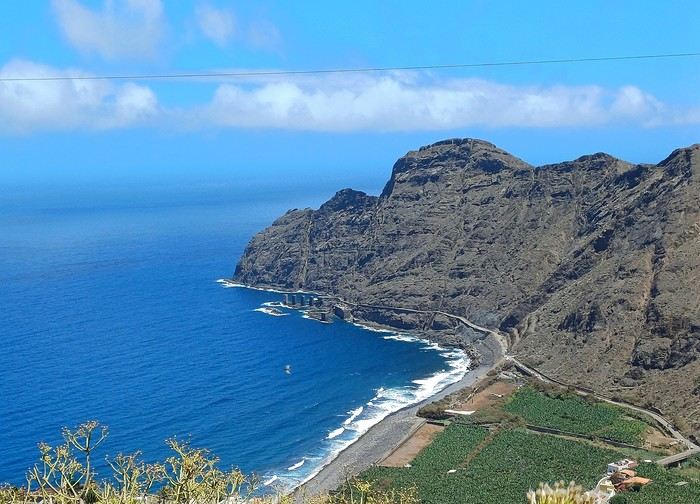
In the afternoon, after a laundry break, lunch, and some rest, we hit the road again for the village of Agulo, just 4 kilometers from Hermigua, described as "the jewel of La Gomera" or even "the most beautiful village in Spain." First, we drive toward the Abrante viewpoint, reputed to be the most impressive on the island. From our small road through the hamlets, we take a side road that offers a breathtaking view of Hermigua Bay, the dock, and the island of Tenerife in the mist—one of the scenes we saw in virtual reality at the museum, but thankfully at a slower pace this time.

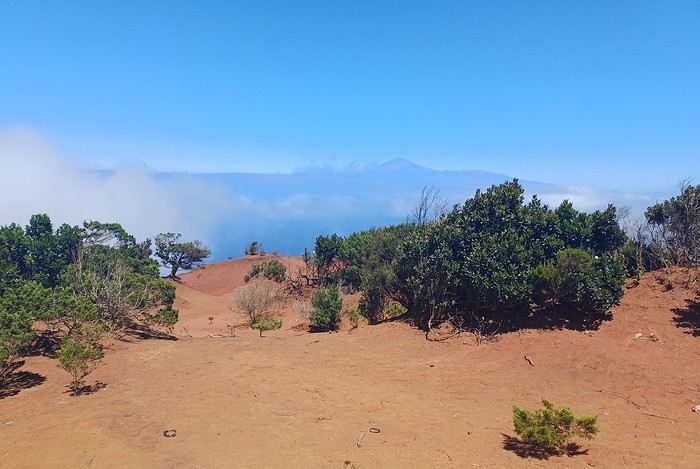
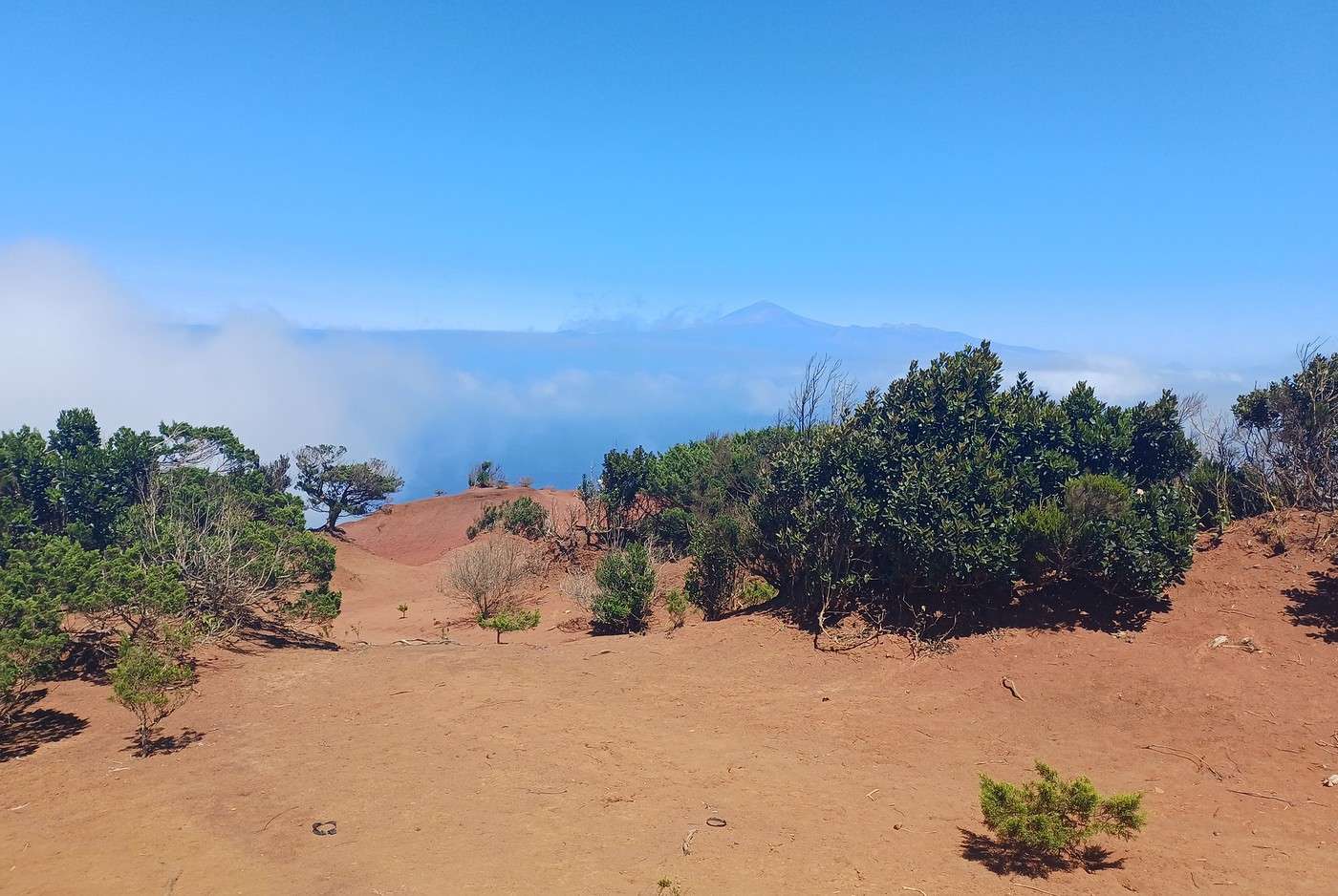
Contrary to what we thought, this small mountain road only serves hamlets and doesn’t give us a shortcut to the viewpoint. So we head back down to Hermigua, pass through the village of Agulo, and take a steep road up. Even before turning onto the small road to the viewpoint, Mount Teide appears right in front of us, as if it were part of La Gomera!

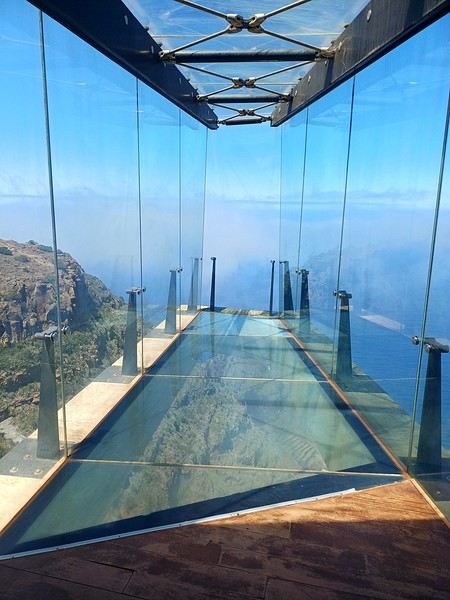
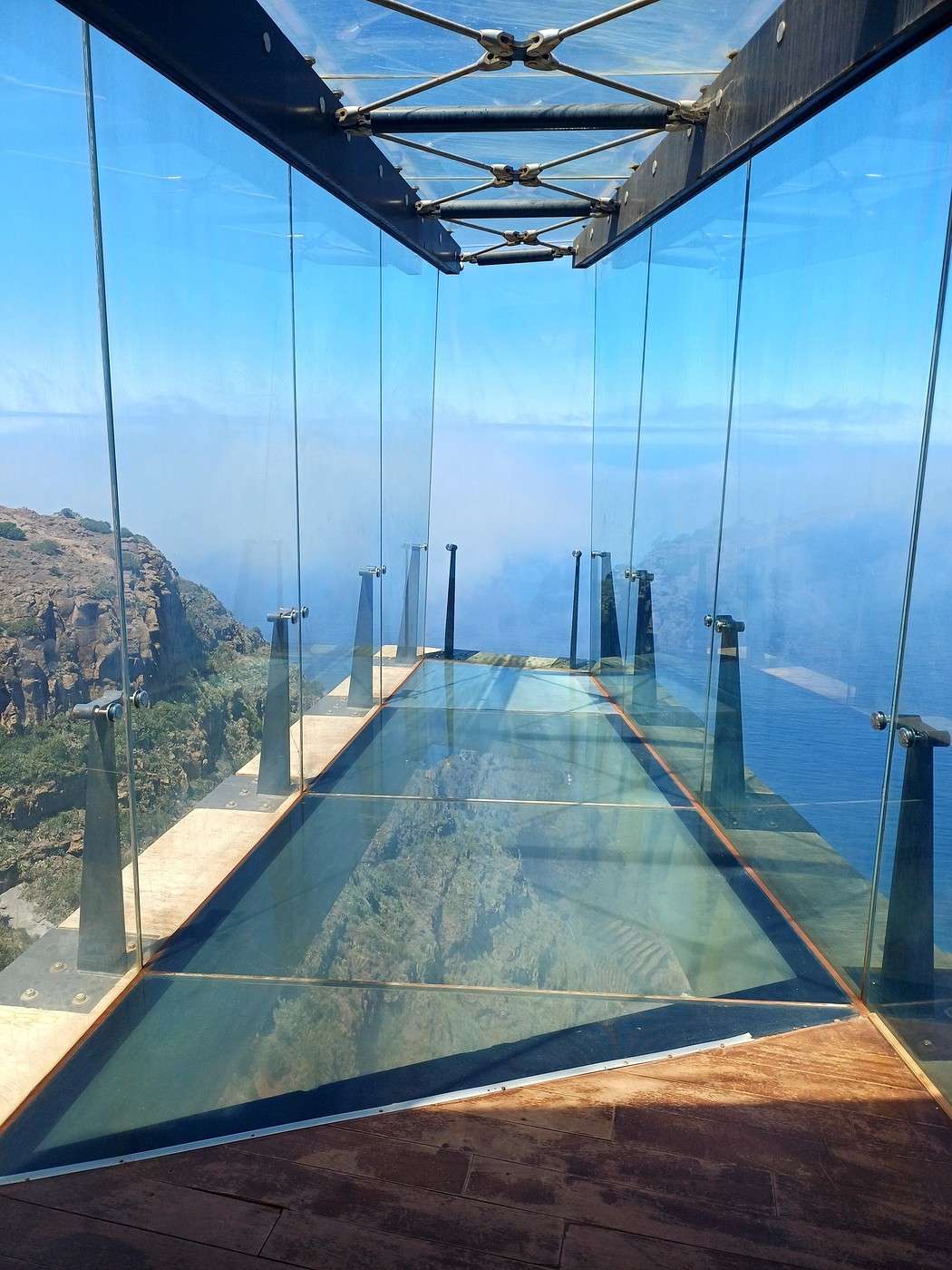
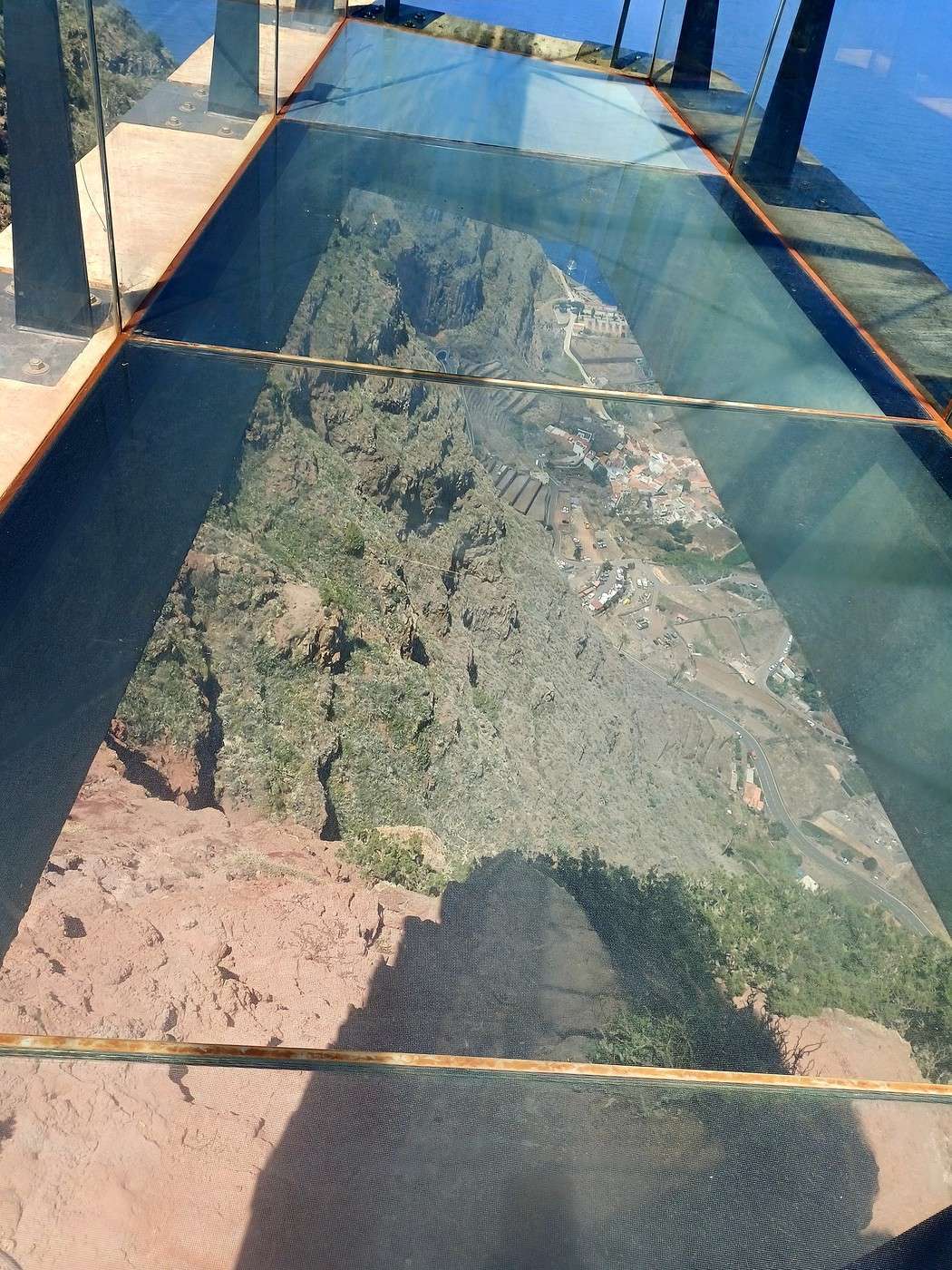
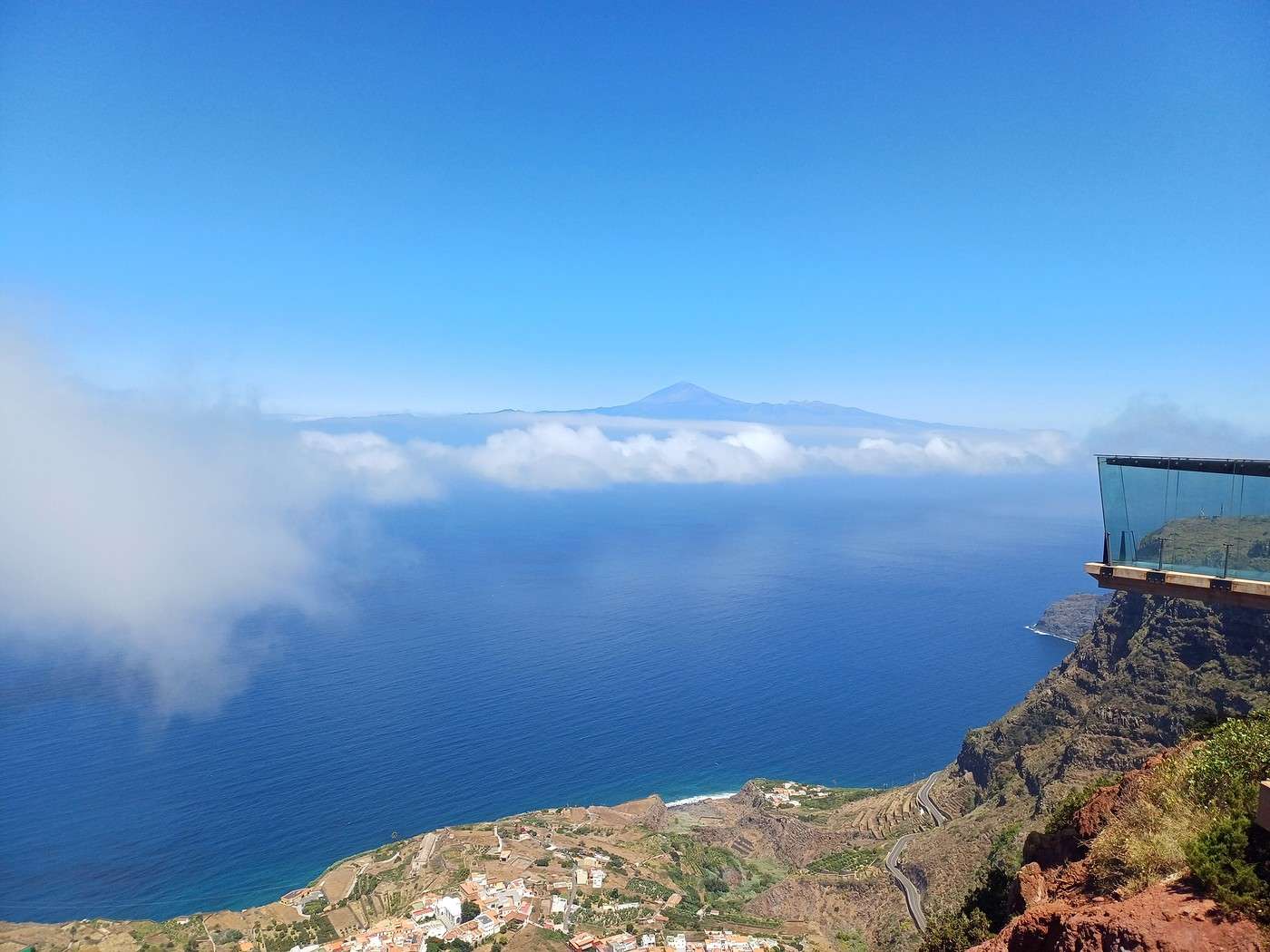
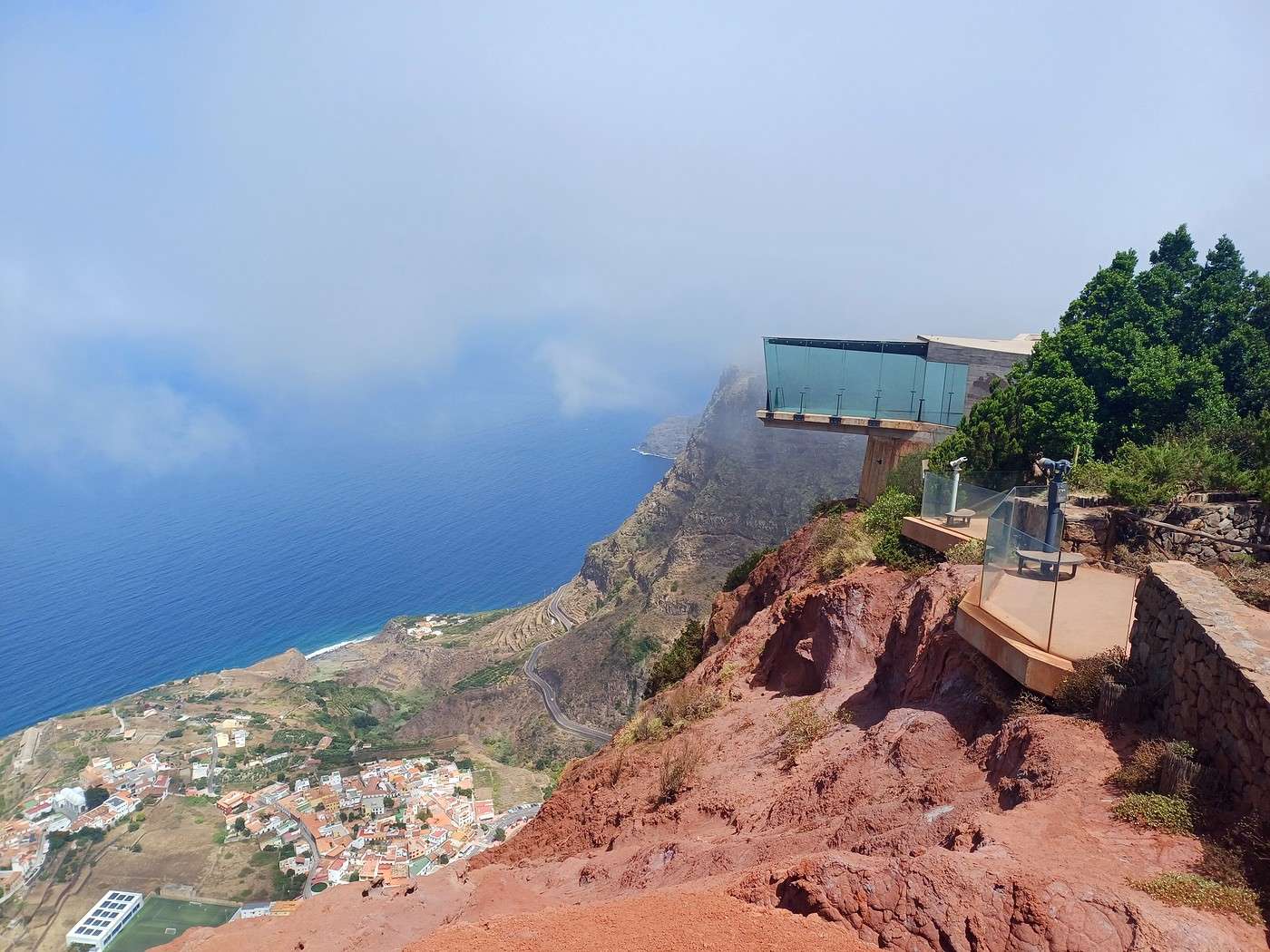
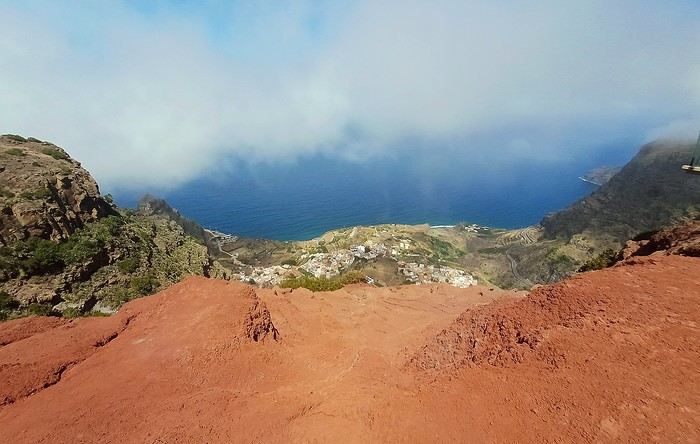
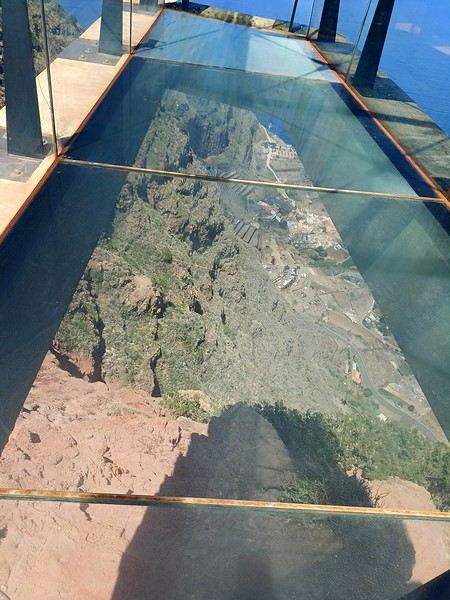
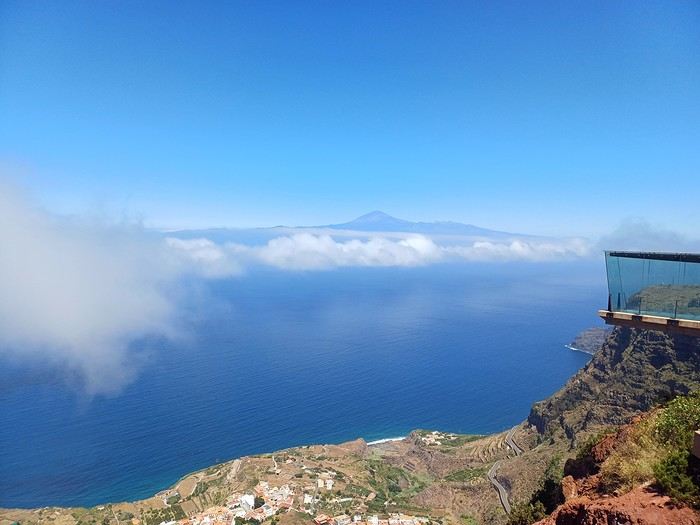
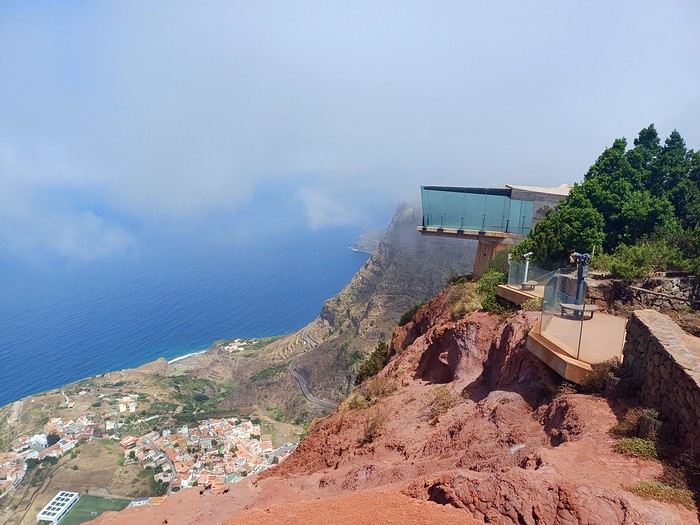
Further on, we park at the Abrante viewpoint, which is very different from the other viewpoints on the island. This one isn’t just a lookout point—it’s a sleek, 7-meter-long glass cabin, entirely transparent and suspended in mid-air, over 600 meters high and 400 meters straight down: not for the faint-hearted or those afraid of heights—look straight ahead! I admit it took me a few minutes and some focus before I could take my first steps into the cabin, where the void beneath the thick glass floor must make more than a few people panic. The kids, on the other hand, couldn’t care less and run back and forth as if they were walking down the street. Agulo beneath our feet, the terraced fields balancing on steep mountainsides, the valley, Tenerife, and the ocean stretching as far as the eye can see—this is the most beautiful panorama in La Gomera.
16 days with family in La Gomera (Canary Islands)

Pagaljavab · 2026-09-07 · Message 44 of 54

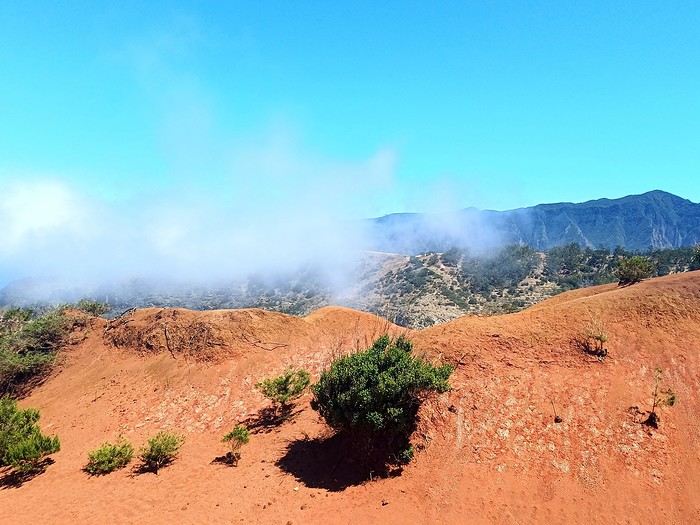
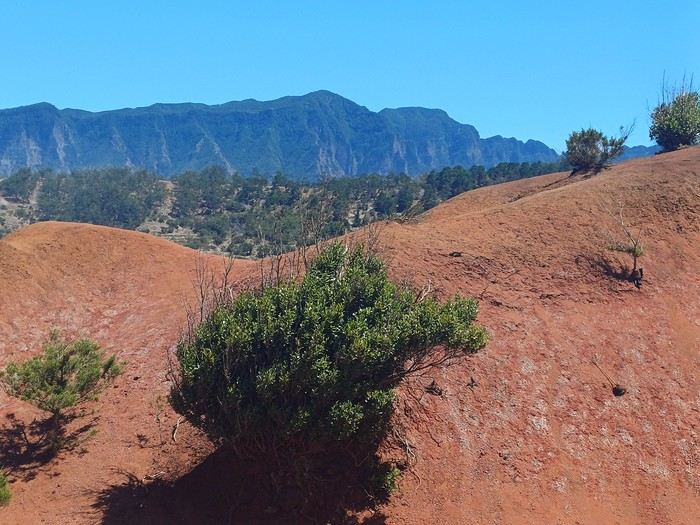
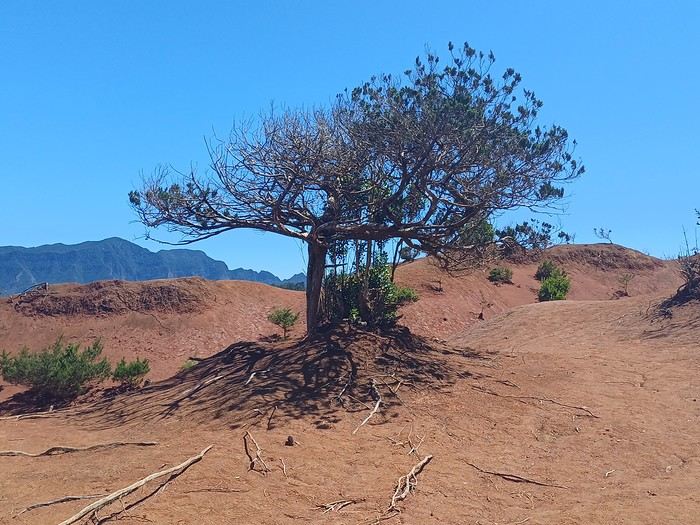
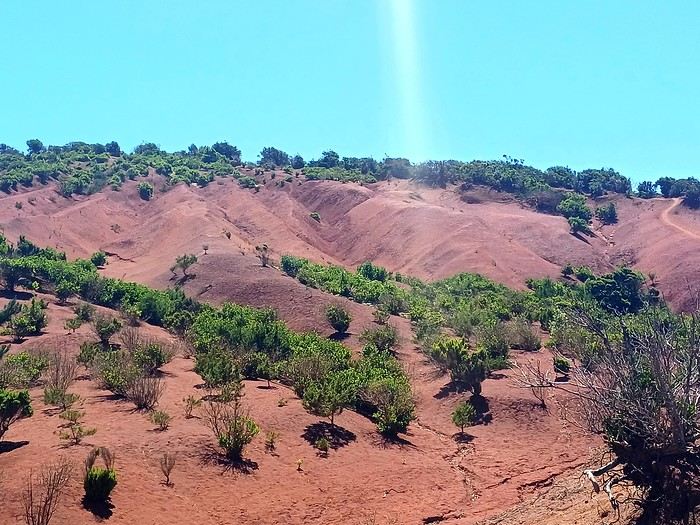
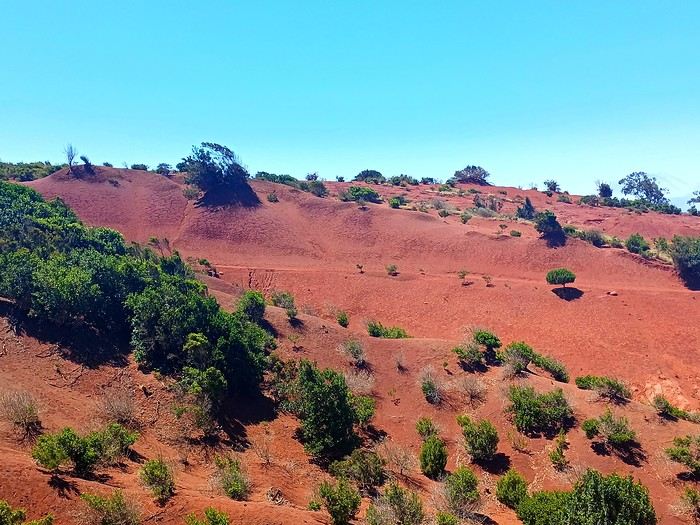
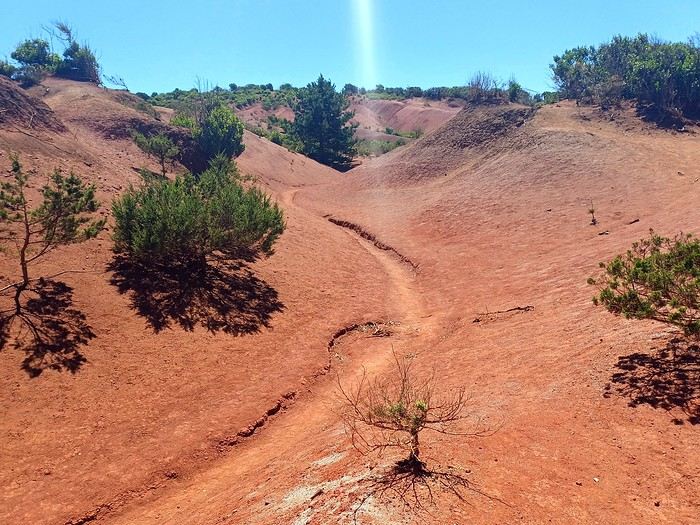
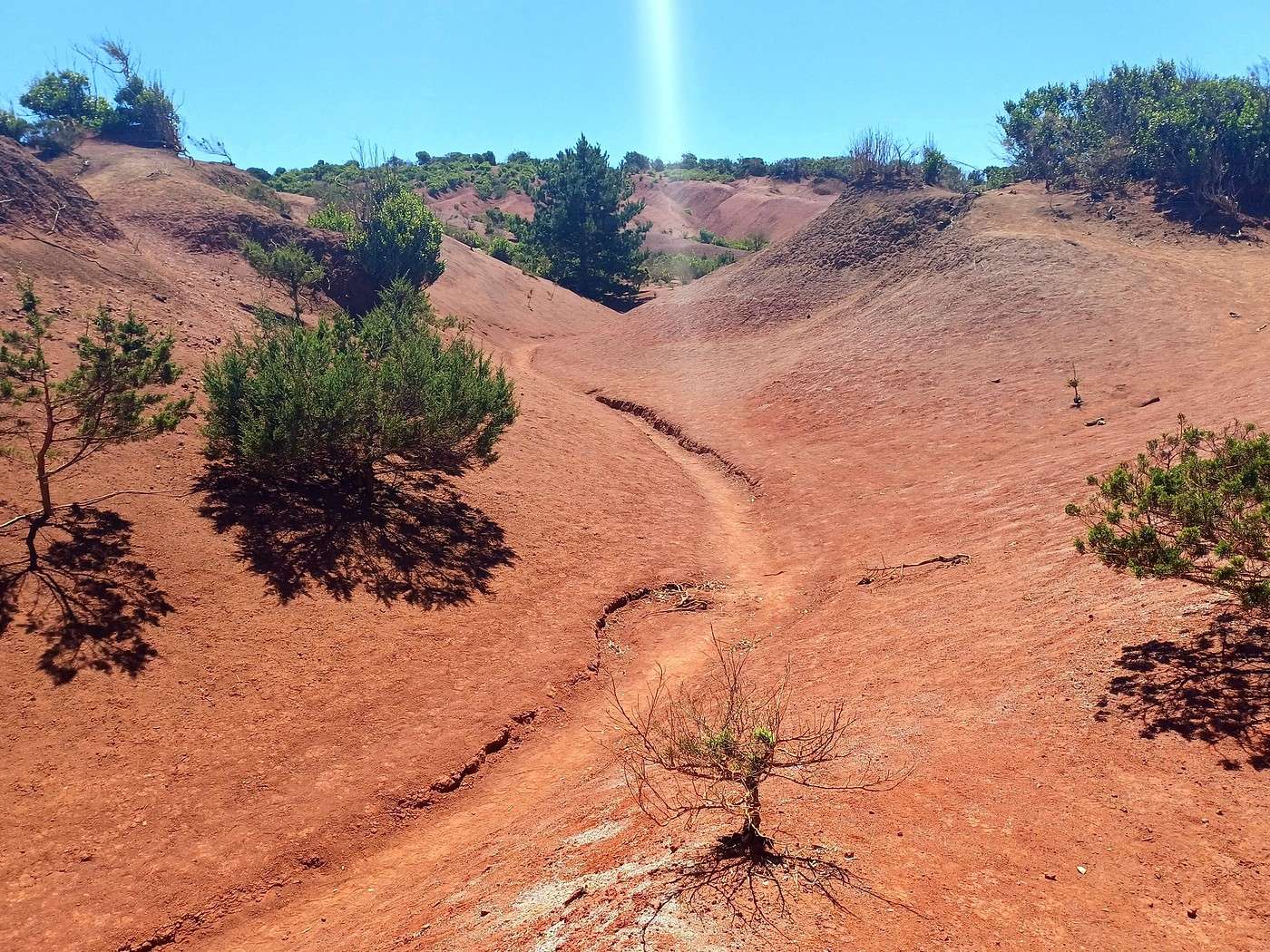
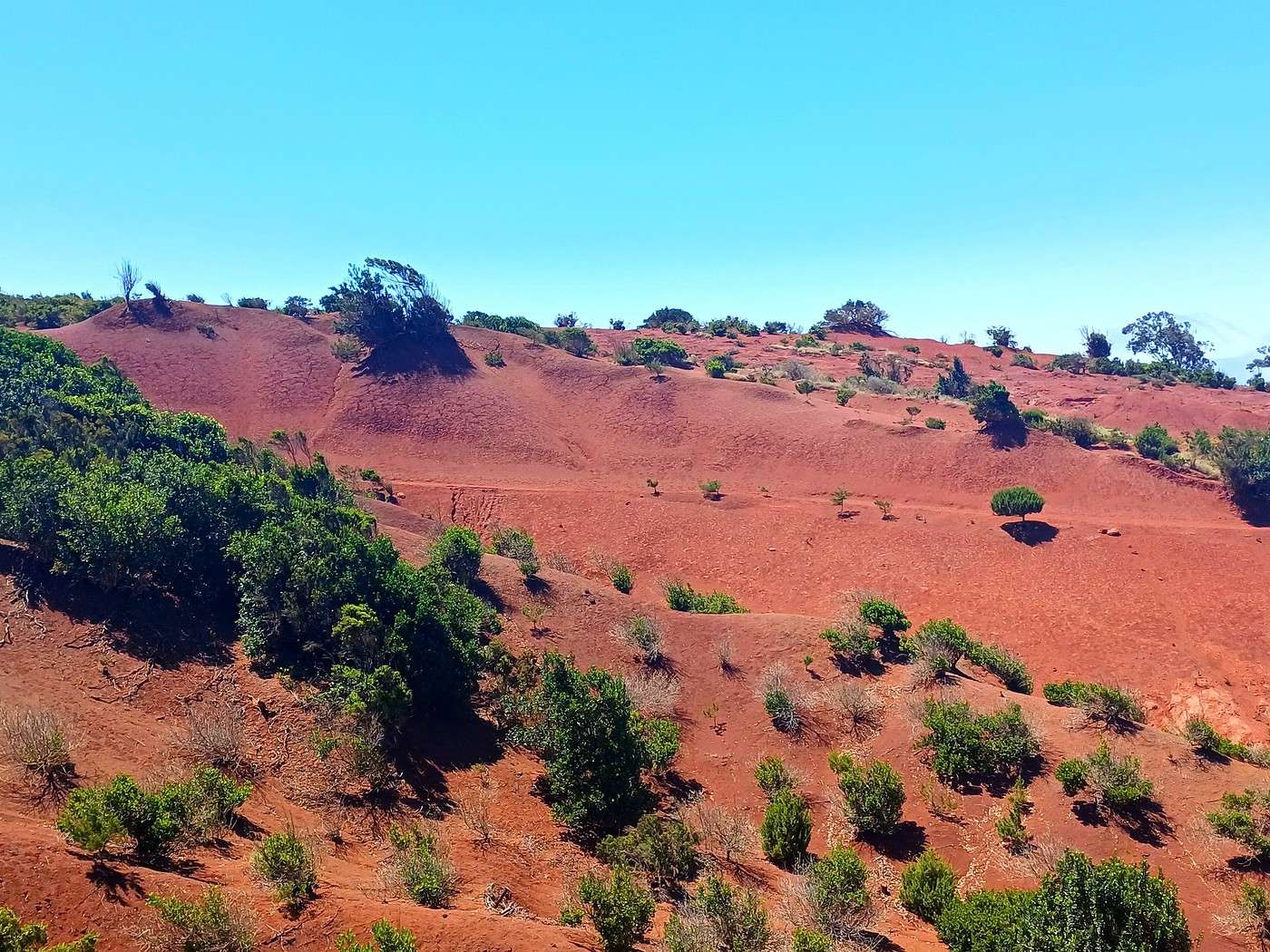
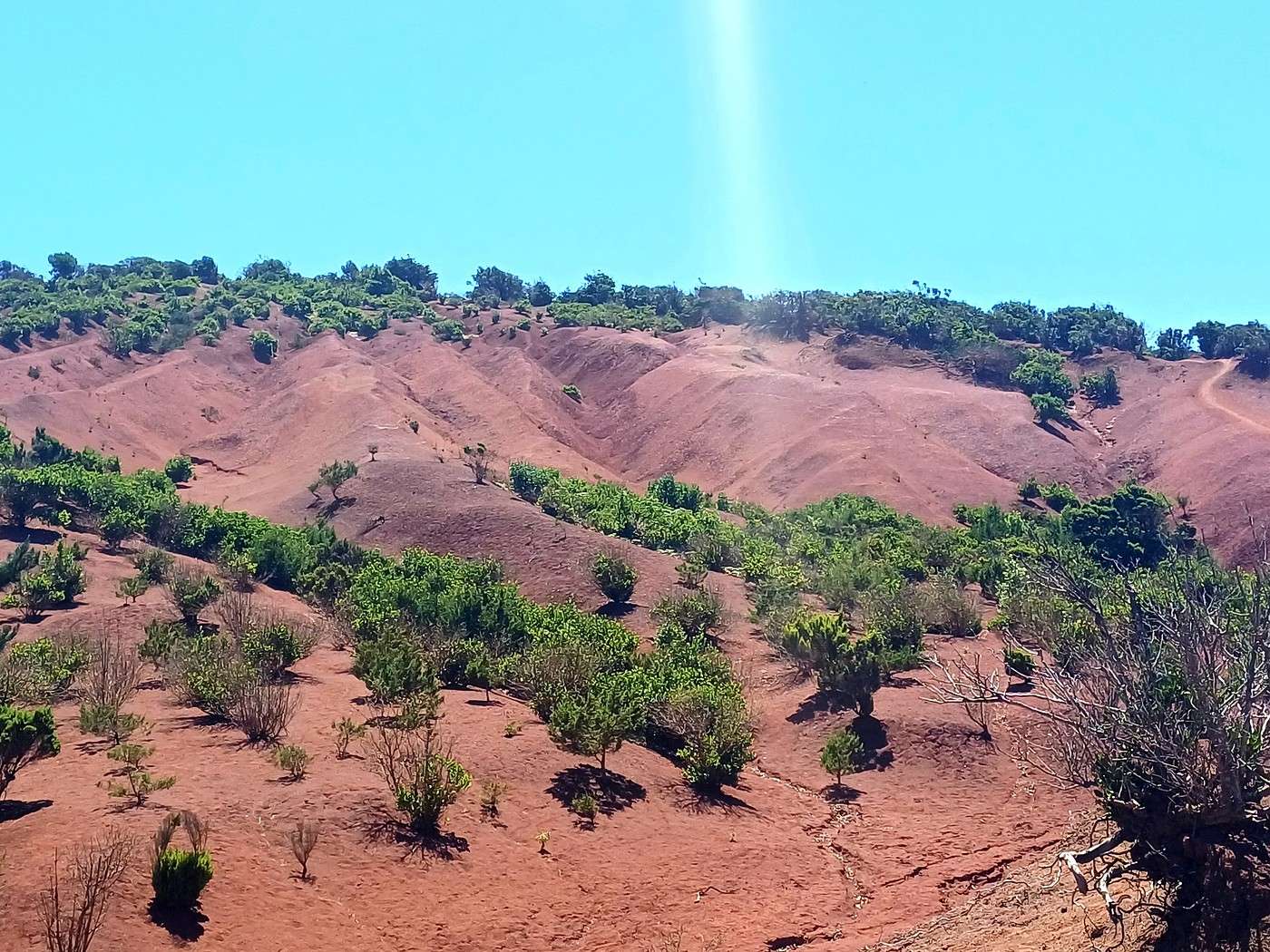
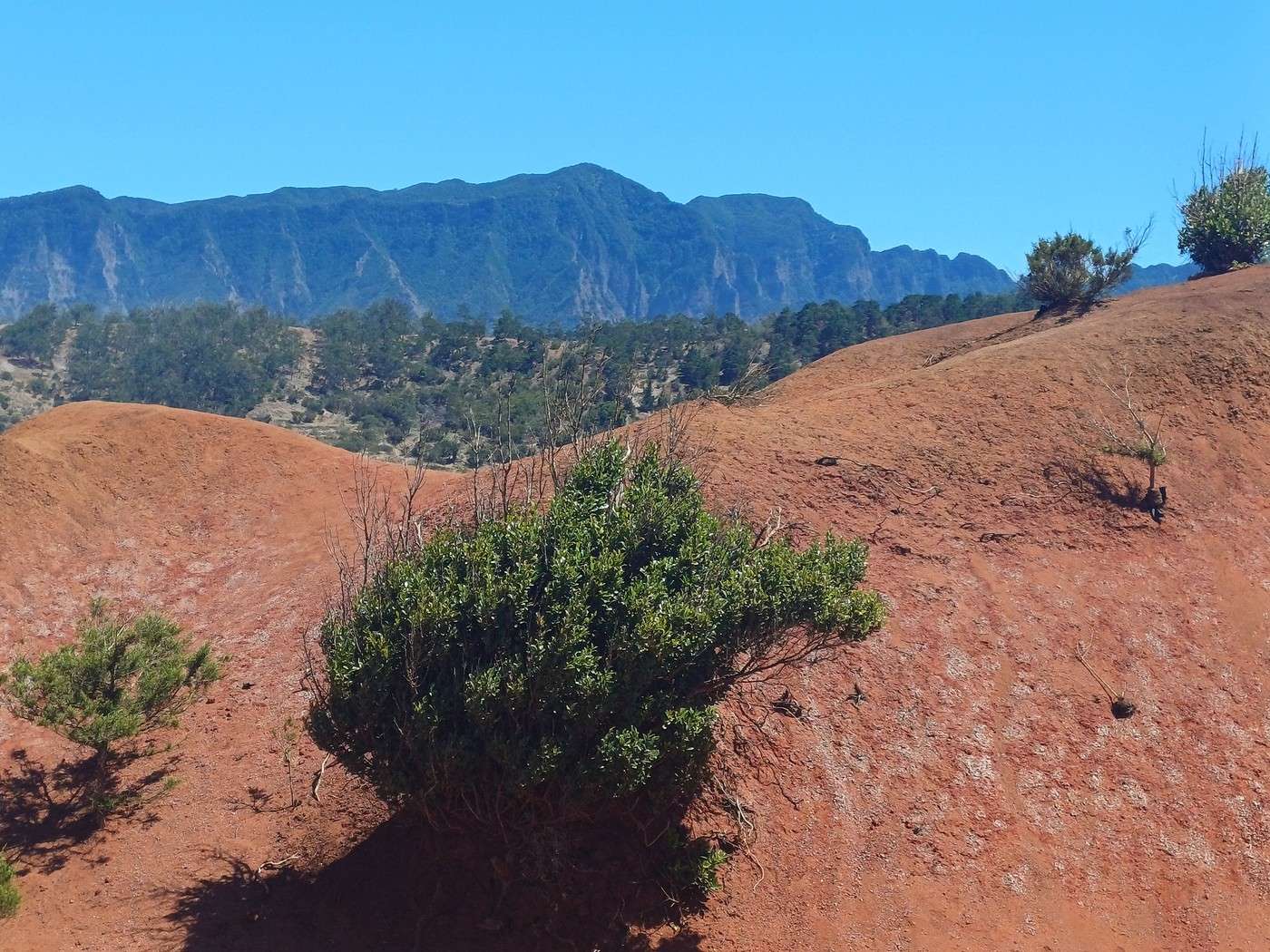
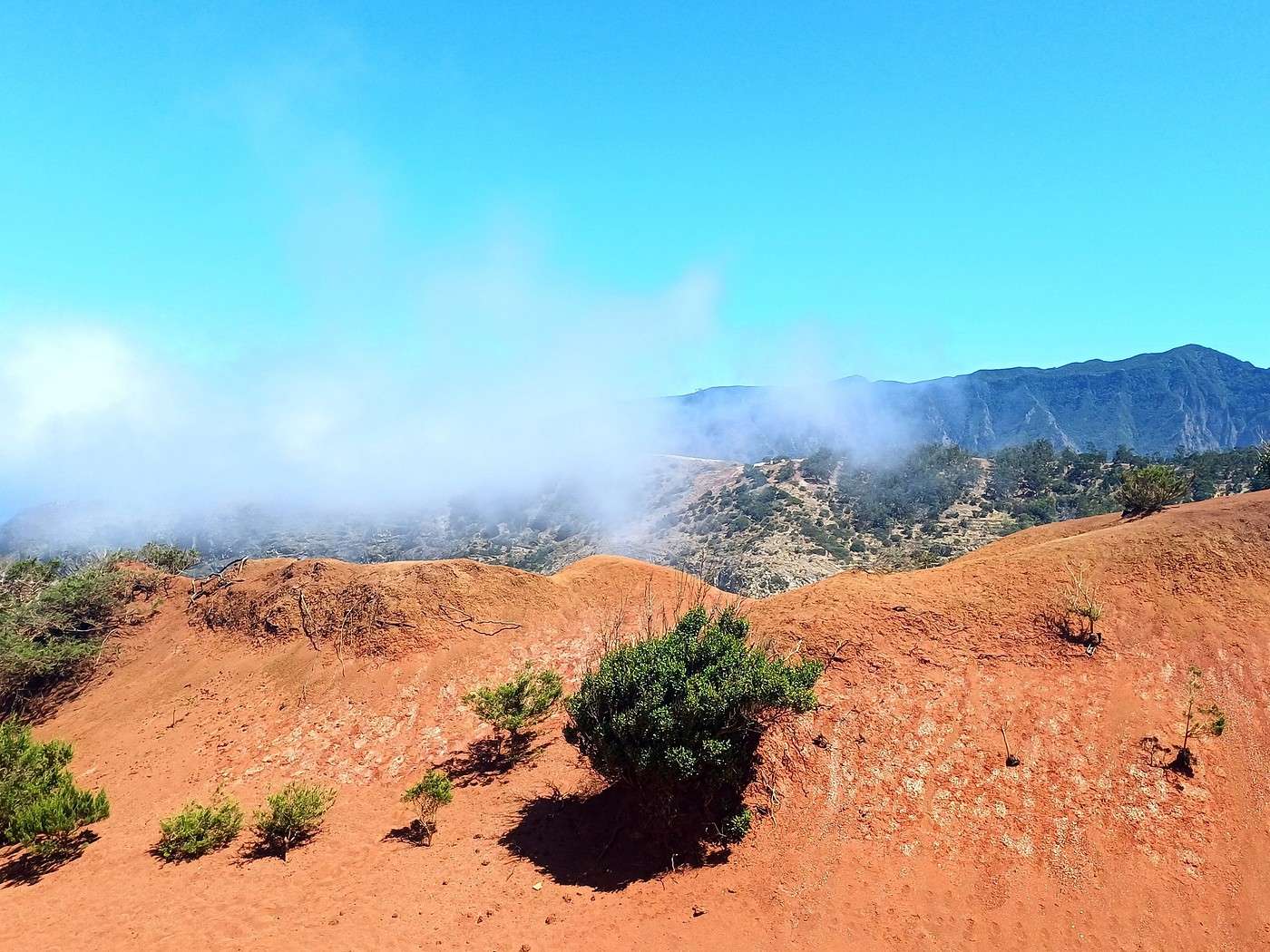
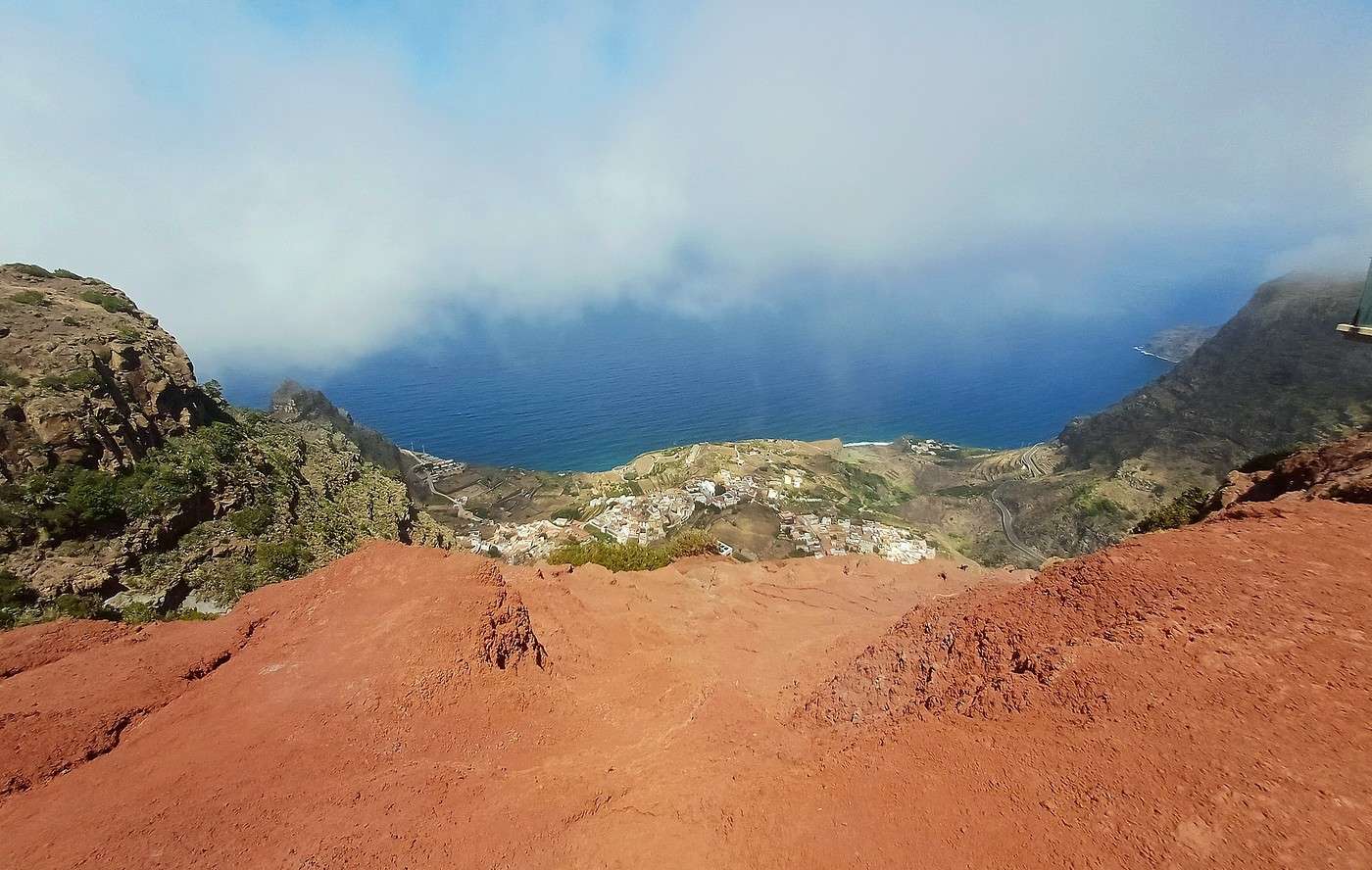
What’s more, the lookout tower stands at a site where three landscapes converge in a stunning palette of colors: the deep terracotta red of Montaña Roja, which we tread with delight; the lush green of Garajonay Park stretching toward the neighboring mountain; and the endless blue of the Atlantic Ocean and sky.

For thrill-seekers who didn’t get enough of a rush from the cabin, you can lean right over the cliff’s edge above the drop for the feeling of diving straight toward Agulo (not recommended).

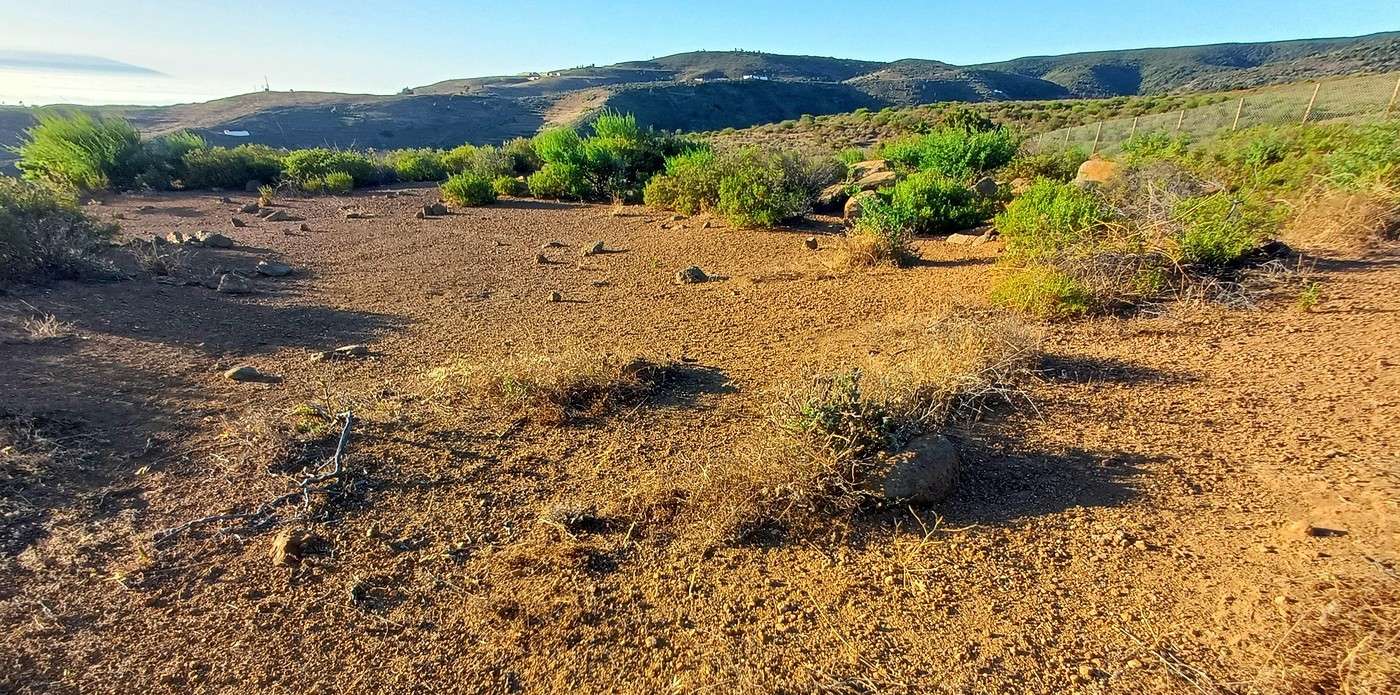
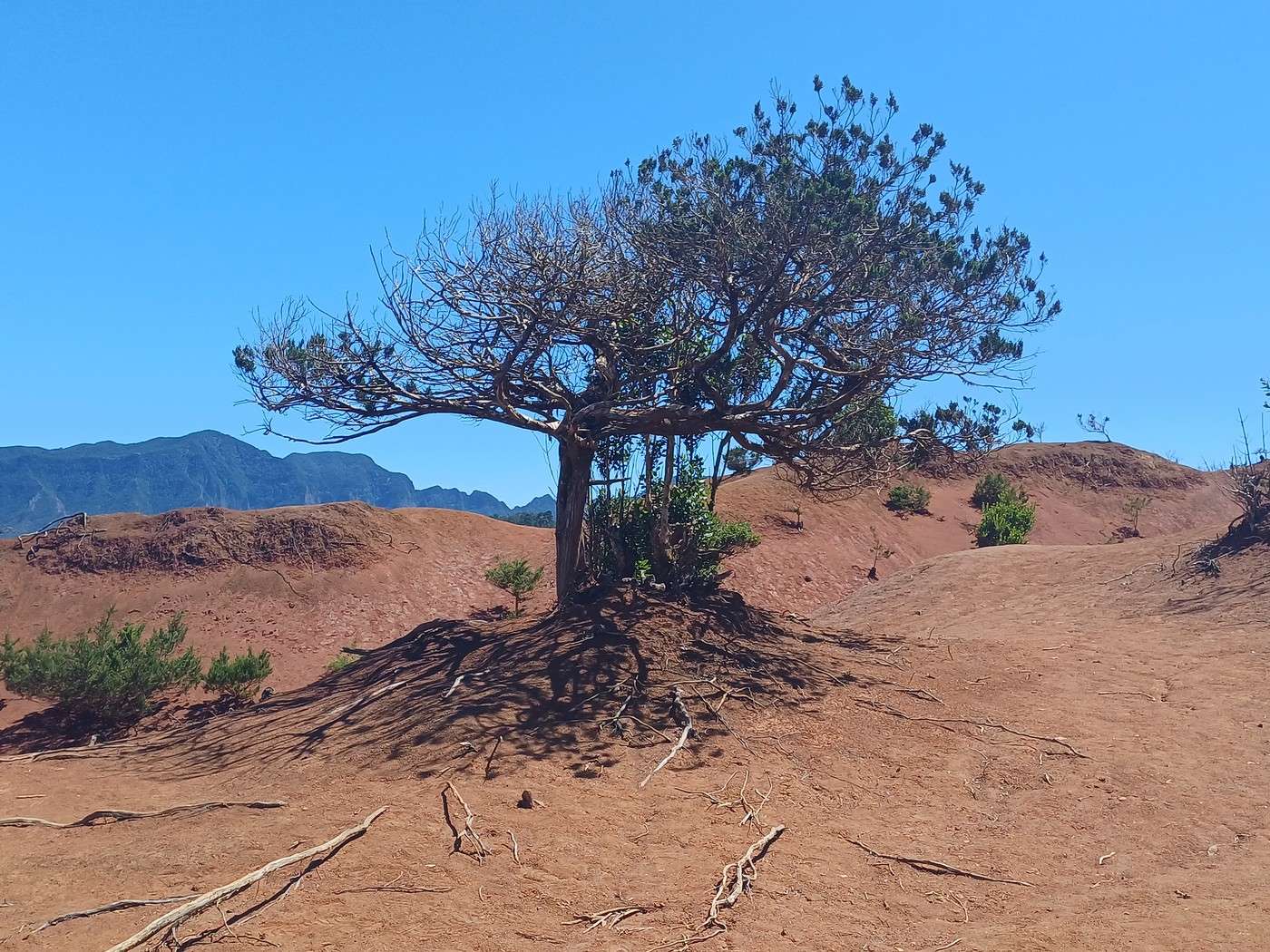
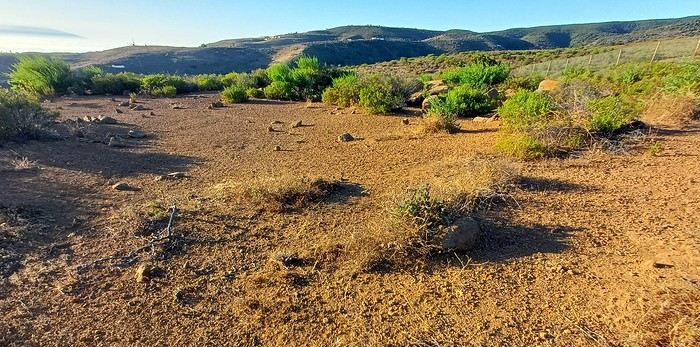
We wrap up our visit with a short walk across the red dunes, where the dry, sparse vegetation creates that iconic, almost Martian landscape of La Gomera.

16 days with family in La Gomera (Canary Islands)

Pagaljavab · 2026-09-07 · Message 45 of 54

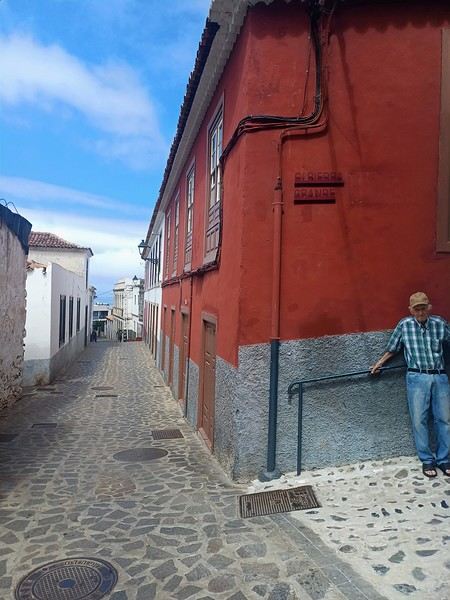
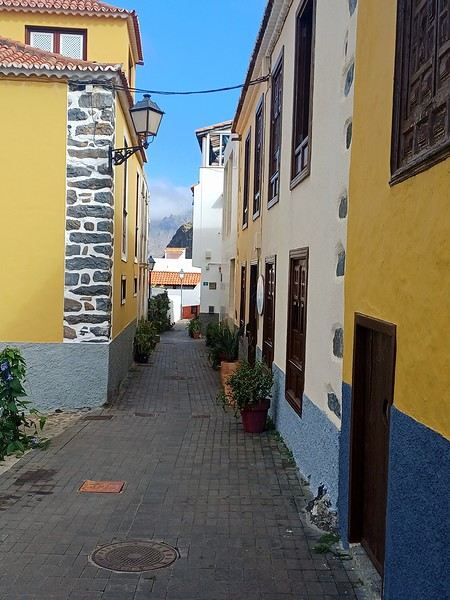
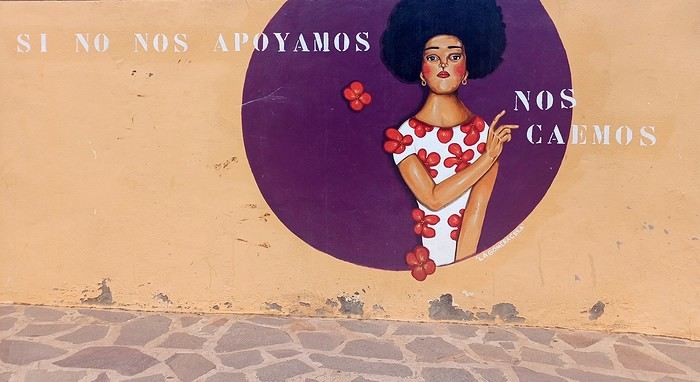
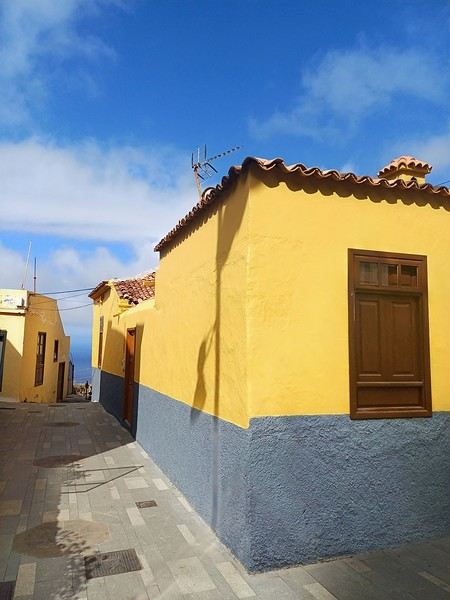
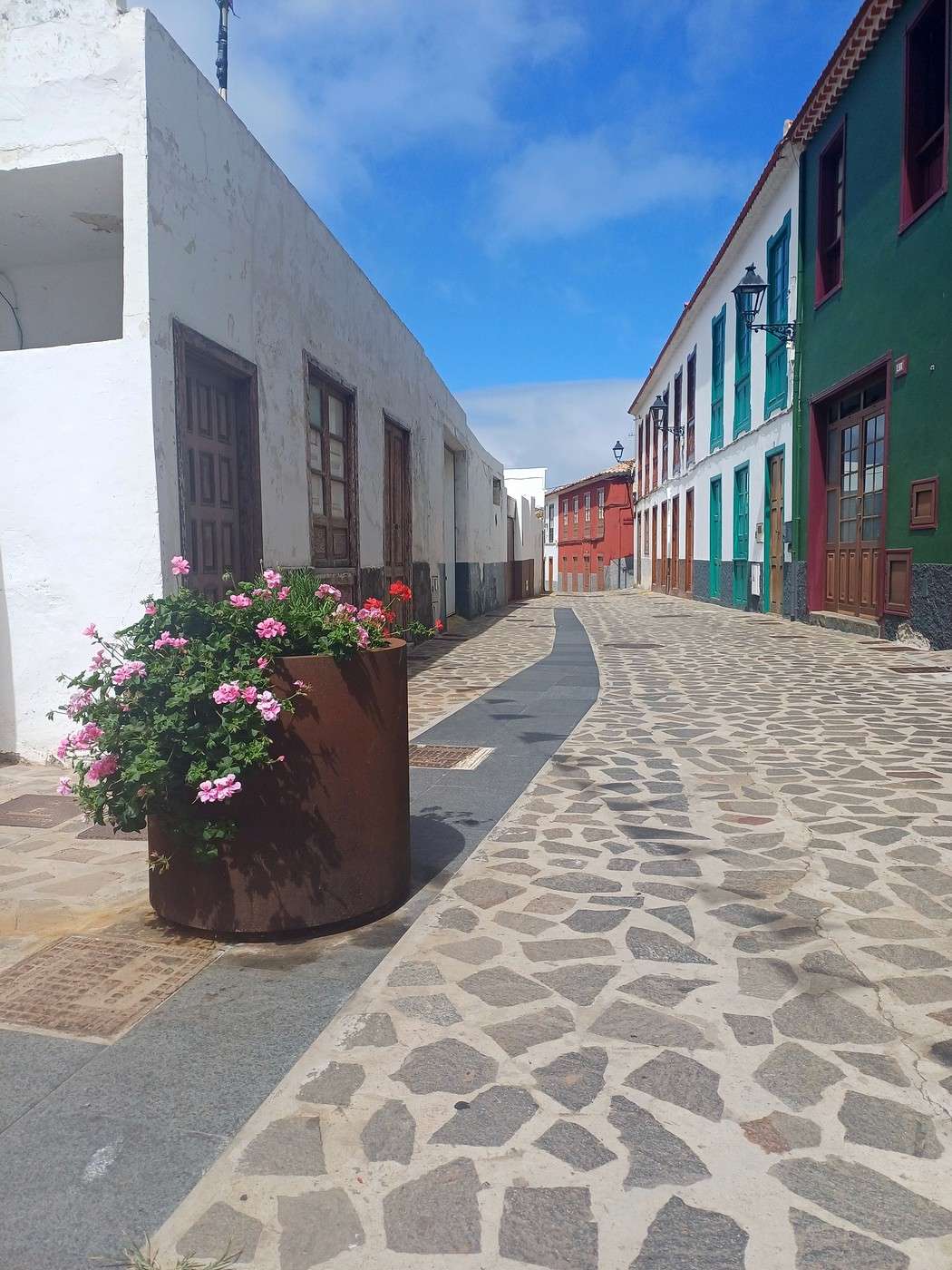
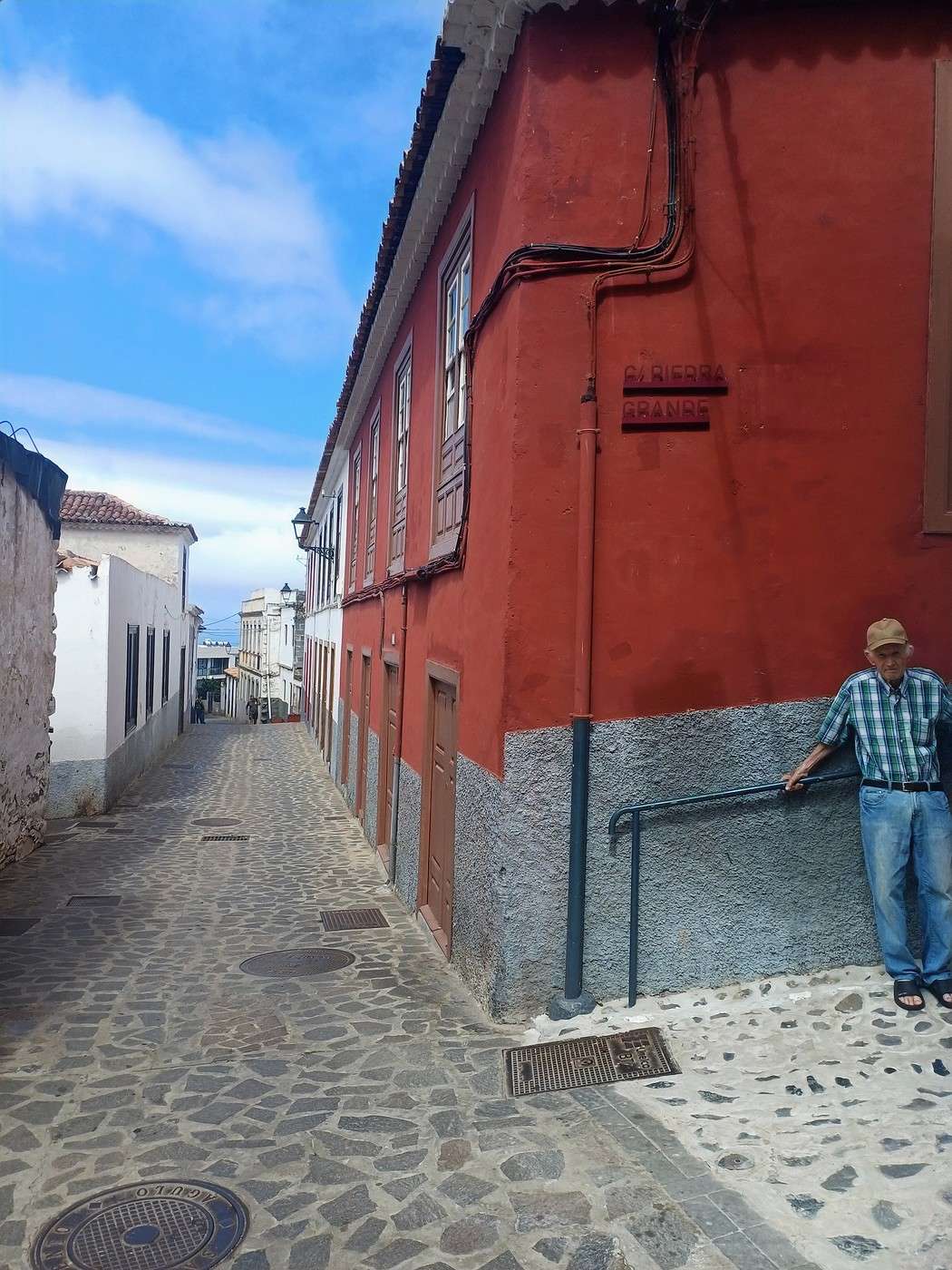
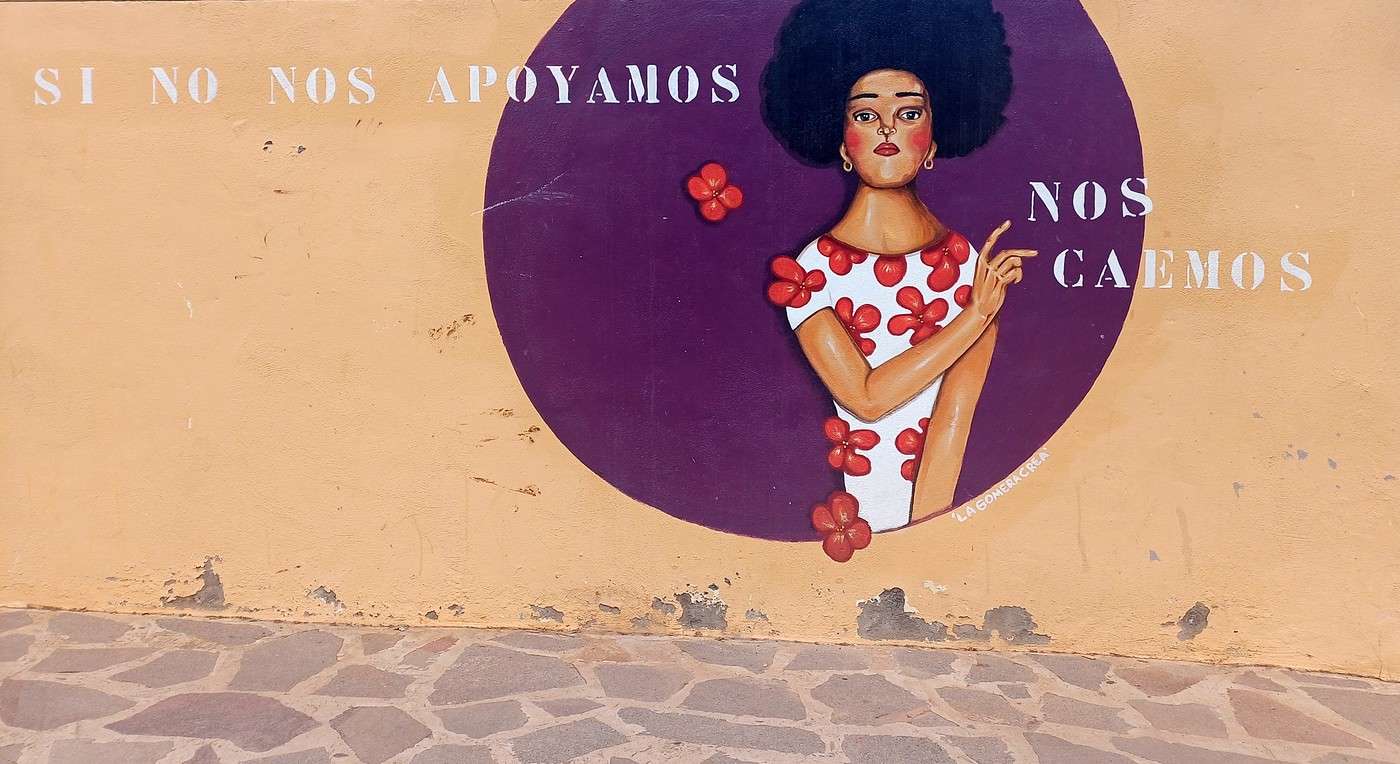
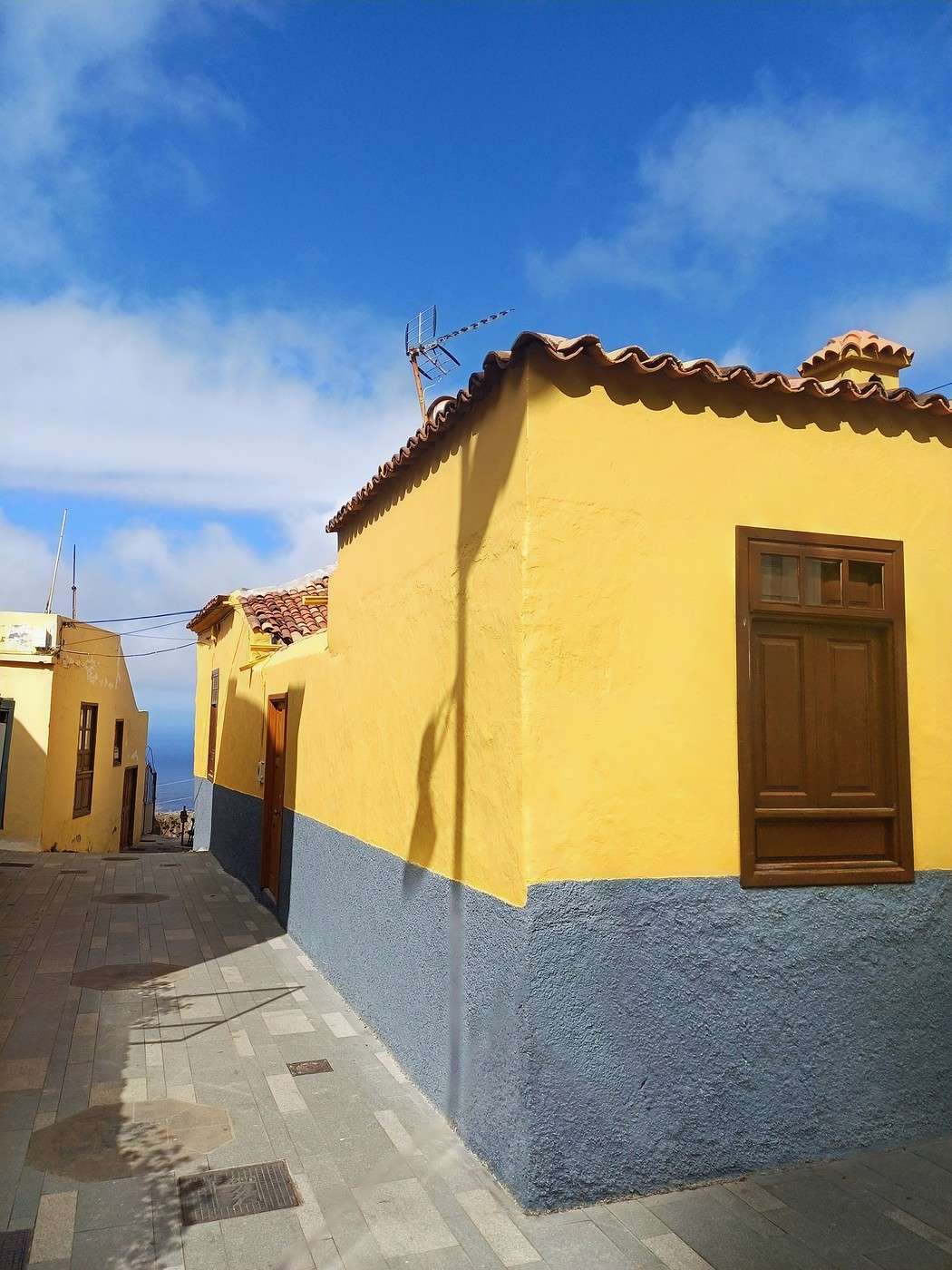
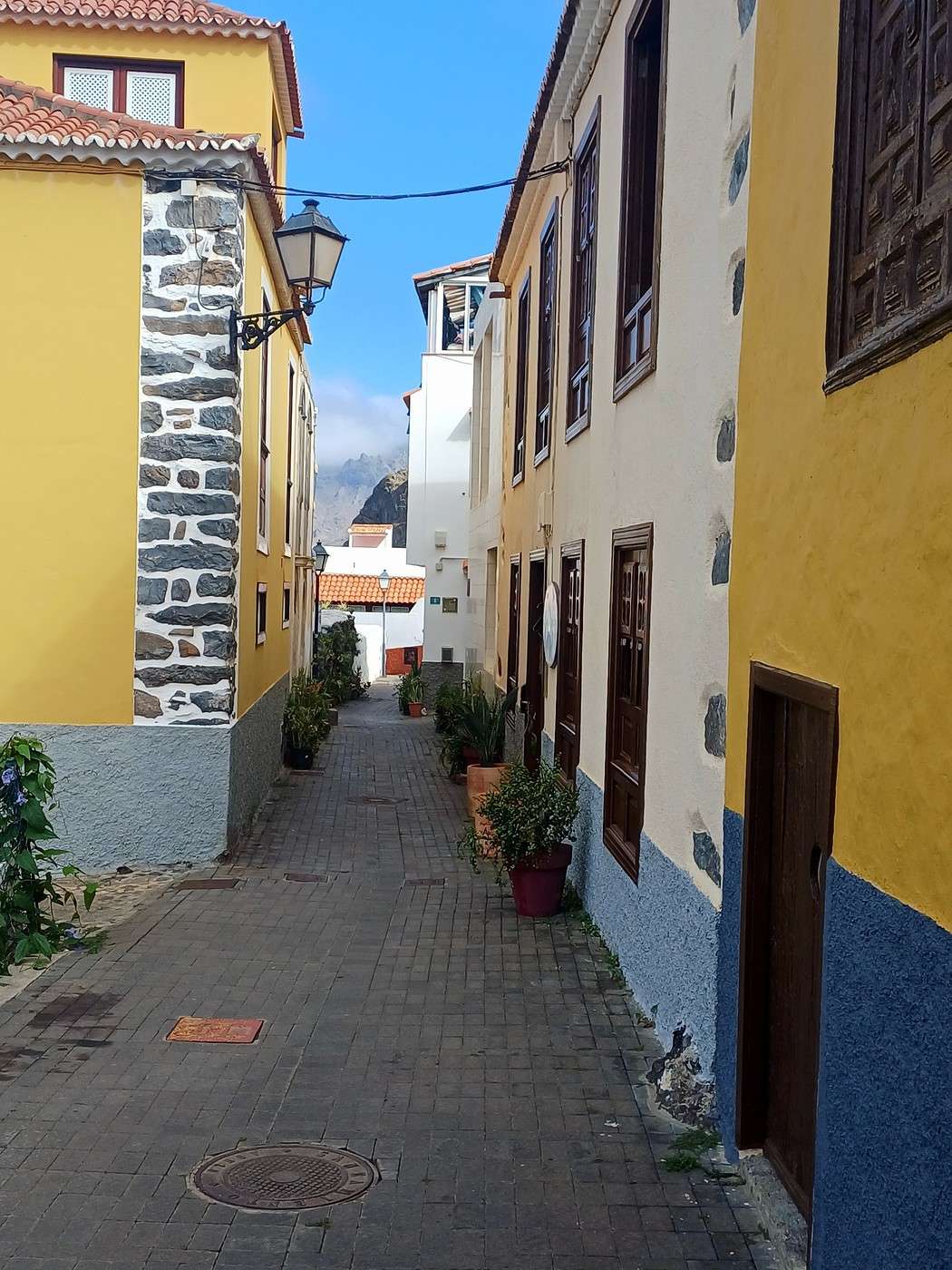
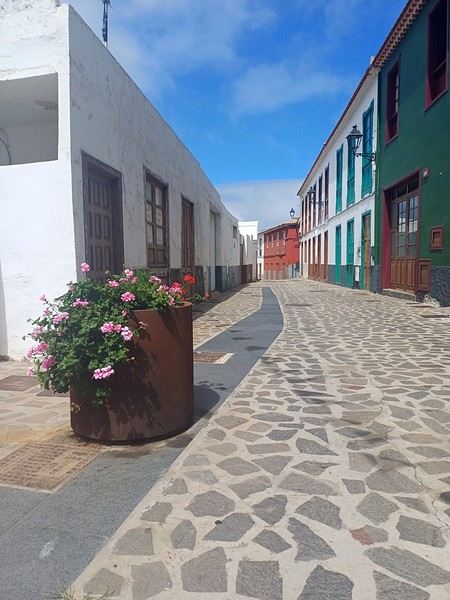
We’re taking the red Opel Corsa back down this winding road with tight hairpin turns toward Agulo to visit the renowned village. A handy "urban circuit" is signposted to help you explore the area’s variety. It first passes through the historic center of Agulo, with its charming cobbled and flower-lined streets and colorful houses—one of which belonged to the painter José Aguiar (whom I didn’t know), born in Cuba and returned to his homeland in the very late 19th century, like many Gomeros. The walls of the village school are decorated with feminist murals. We’ve come across this kind of activism several times in La Gomera, which makes us think it might be a significant social issue here... Small world—we also run into the employee from the ethnographic park-museum in Hermigua who welcomed us this morning, heading back to her beautiful traditional home.

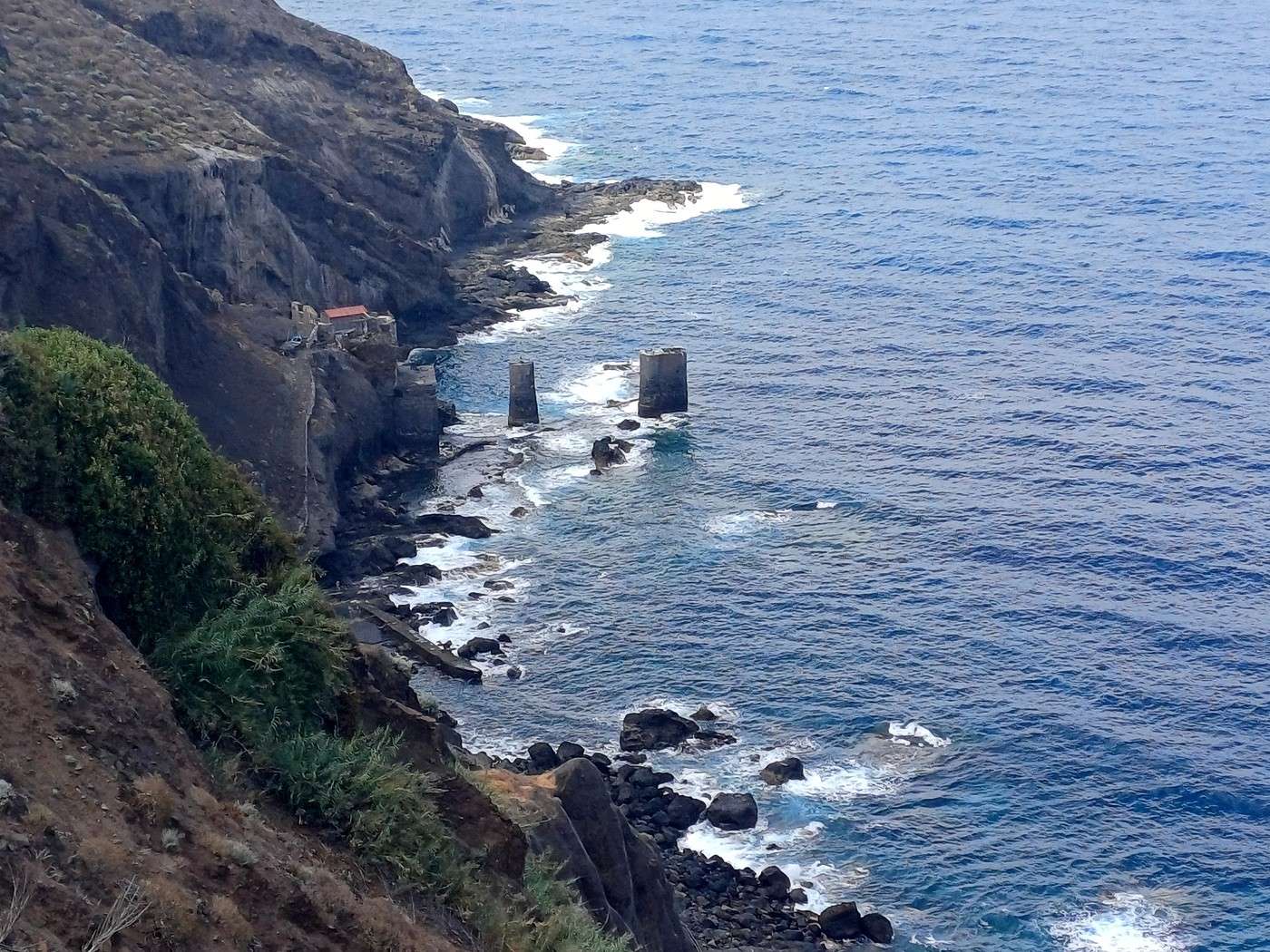
The village gradually gives way to small farms and lush terraced gardens, at the end of which a breathtaking view of the ocean and the entire bay stretches from the old Agulo pier with its two pillars in the east to the Hermigua pier with its four pillars in the west, which we know well. You can even spot people swimming in a natural pool in the first one, though it seems pretty risky to us...

The route then climbs back up toward the village, reaching the church and its adorable little square, where you can still catch glimpses of the ocean through narrow alleys like shutters between the painted houses.


Less romantic but still practical, the visit ends in front of the Spar by the Hermigua road where we’re parked. Agulo is undeniably a must-visit spot. While I found it a bit like a "museum village"—highlighted because of its status as the "pearl of La Gomera"—its natural setting and surroundings are among the most stunning on the island.

16 days with family in La Gomera (Canary Islands)

Pagaljavab · 2026-09-07 · Message 46 of 54

Back to Casa Yaya for a quick freshen-up because tonight, we’re tempted by a very traditional restaurant in Hermigua, le Chácaras, whose reputation for mousse de gofio hasn’t fallen on deaf ears.

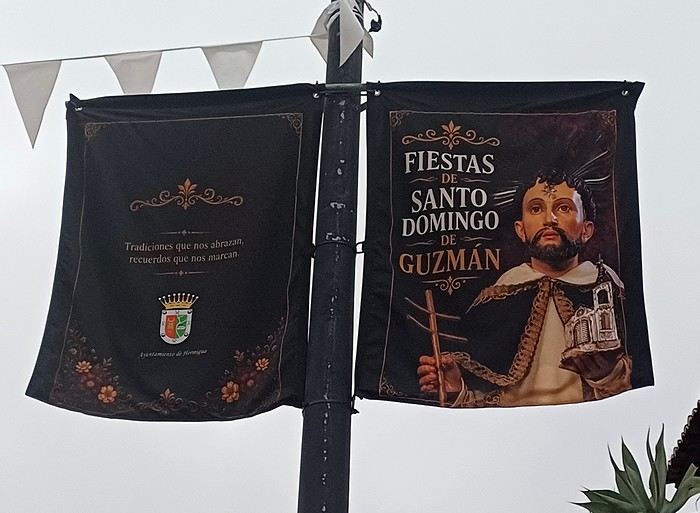
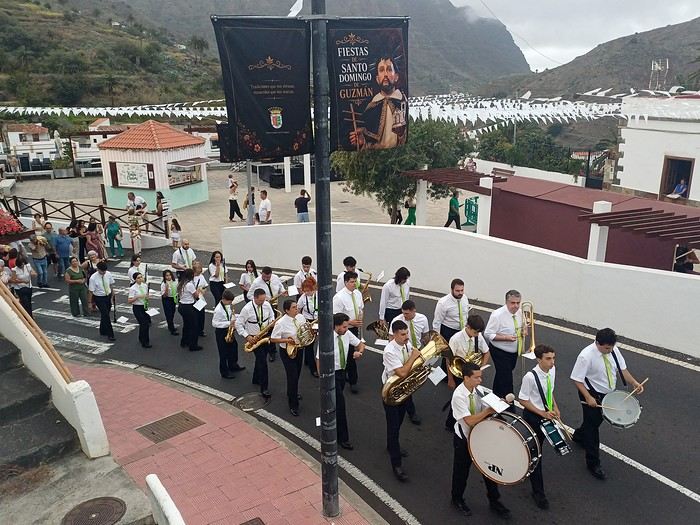
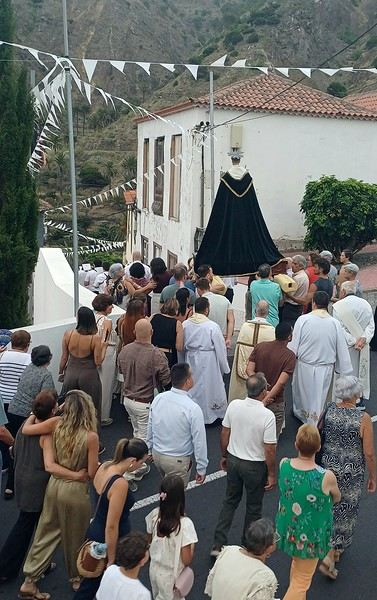
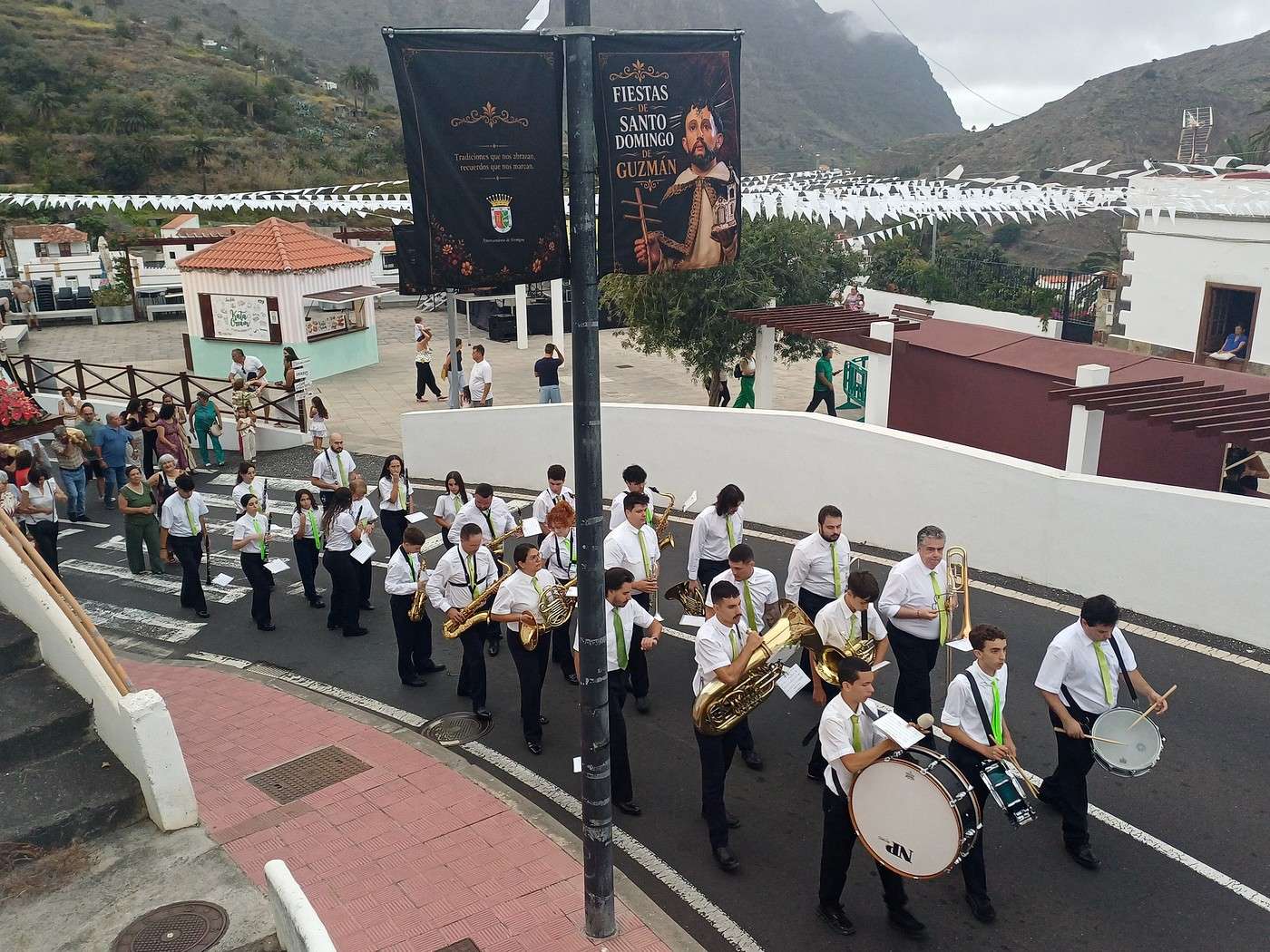
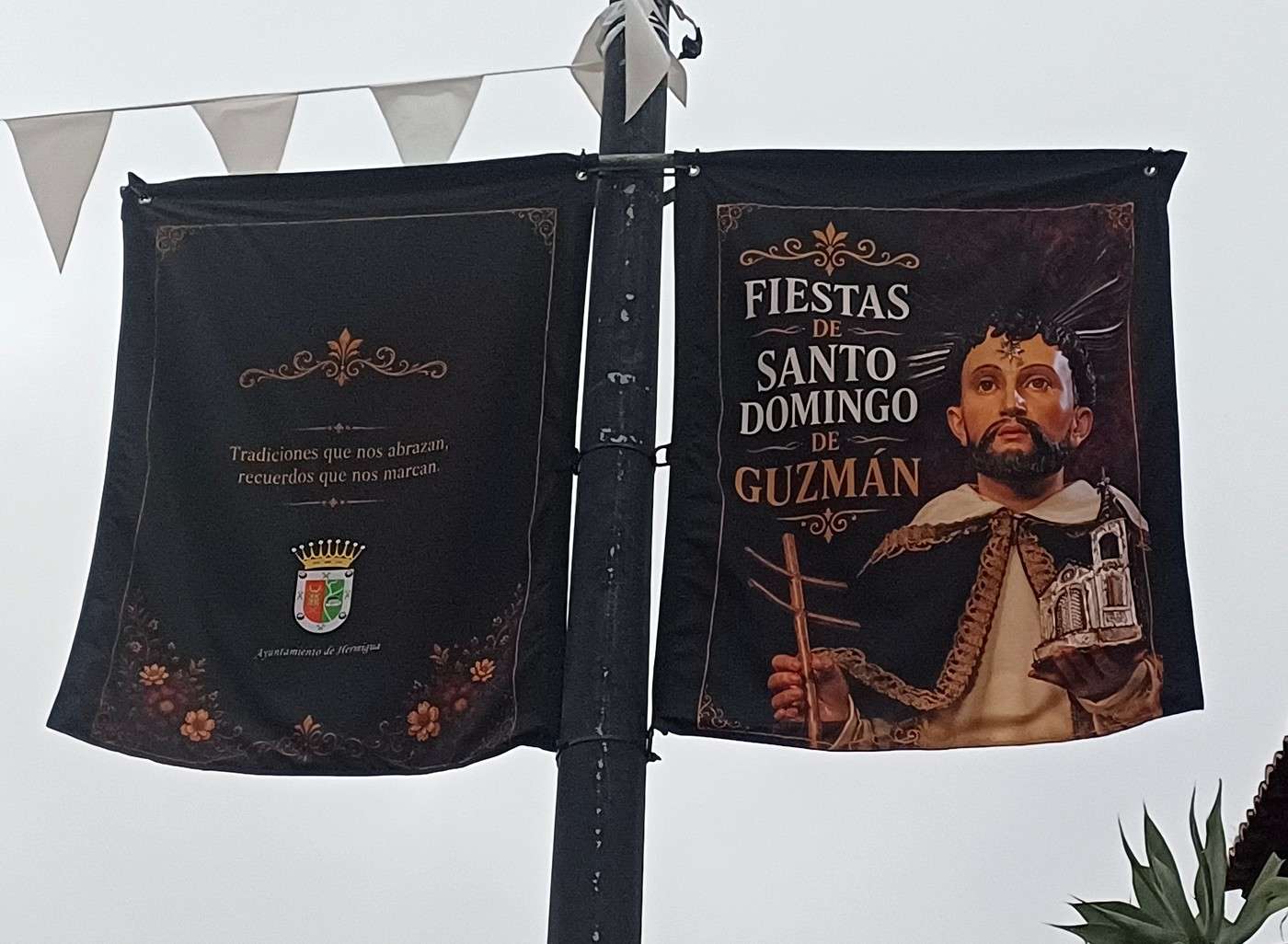
As we’re about to start the walk, we hear the music of a brass band. Our plunging view lets us see that a procession has gathered near the village square. The elders from the hamlet of El Estanquillo had told us: today is the first important moment of the fête de Santo Domingo de Guzmán.

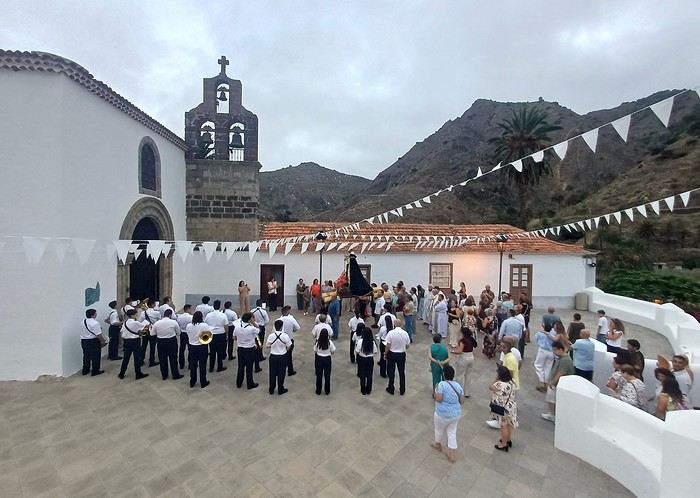
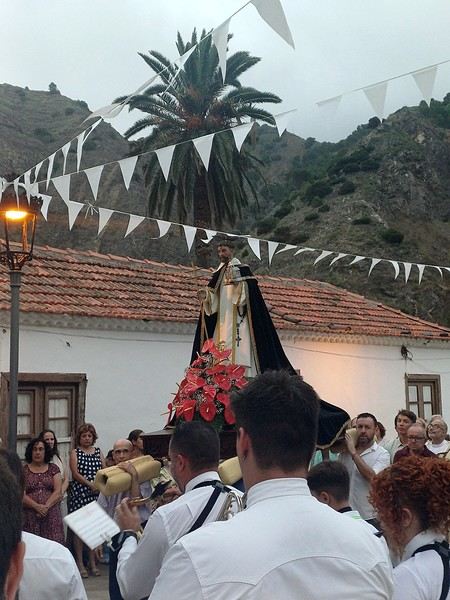
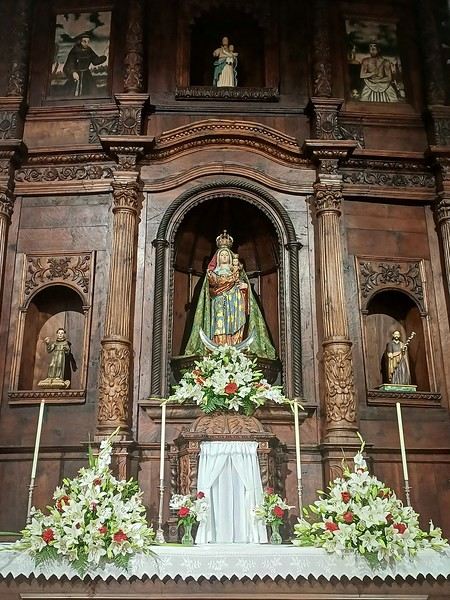
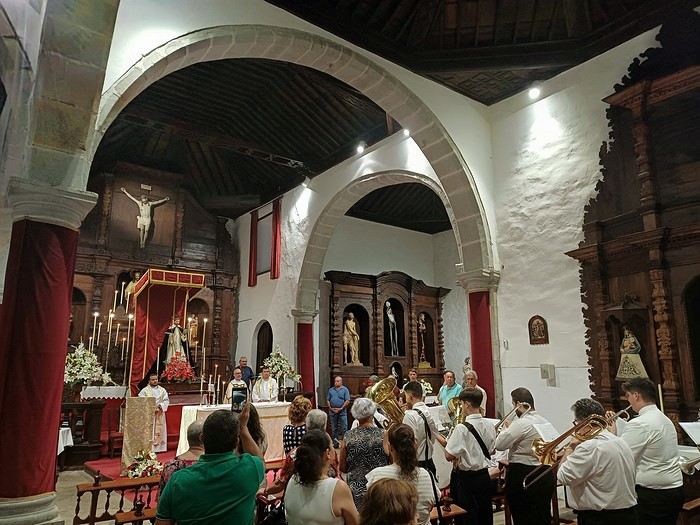
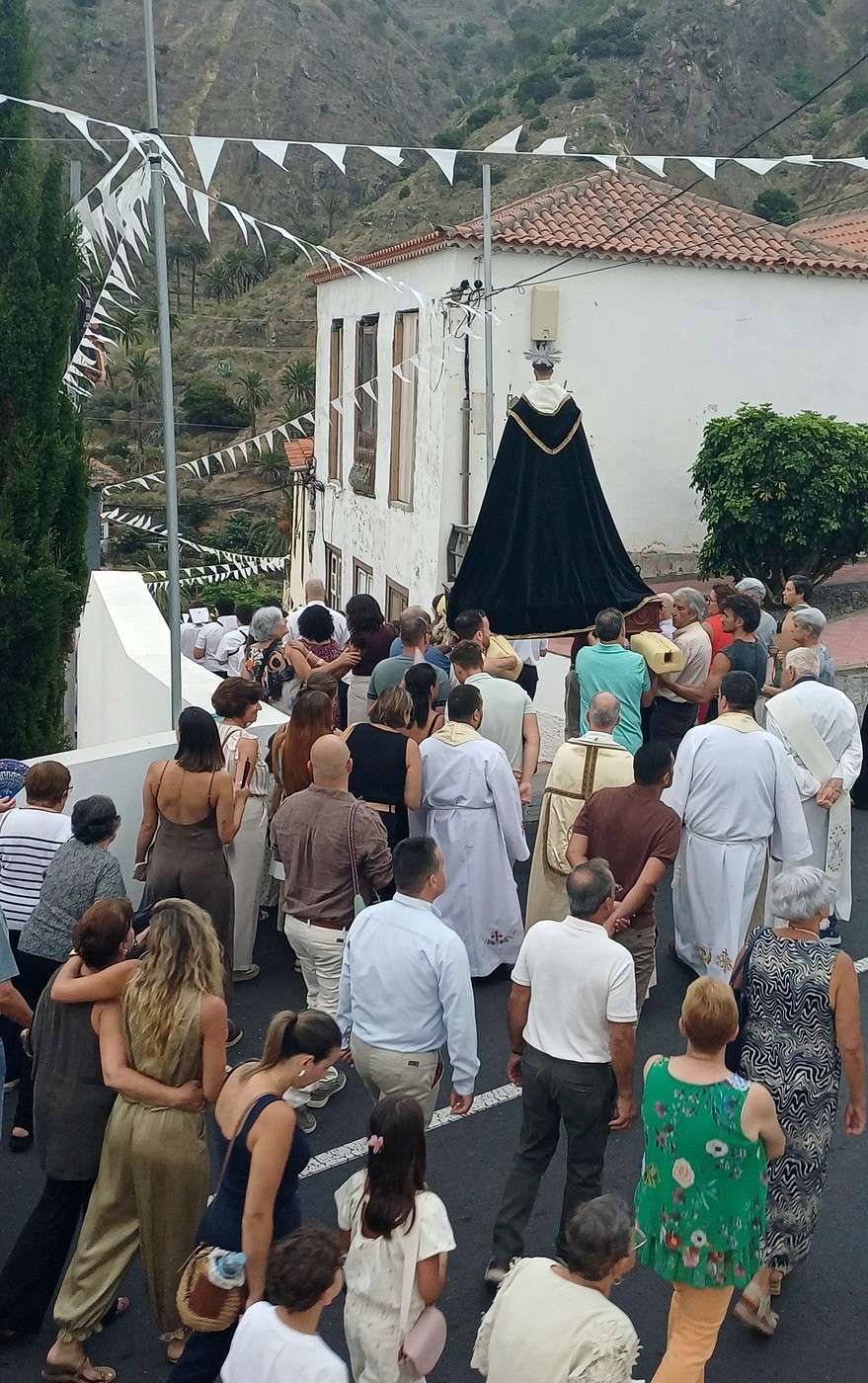
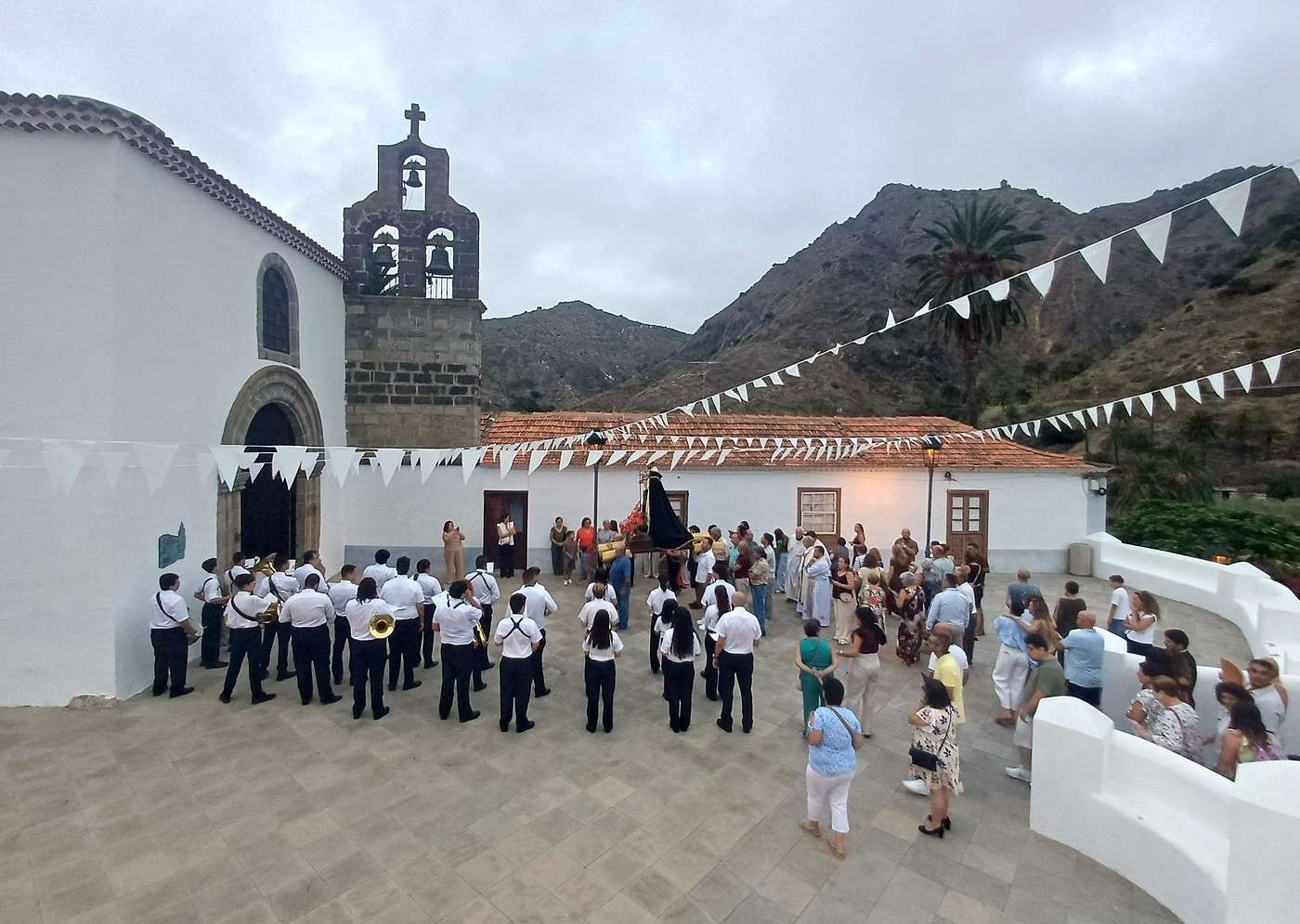
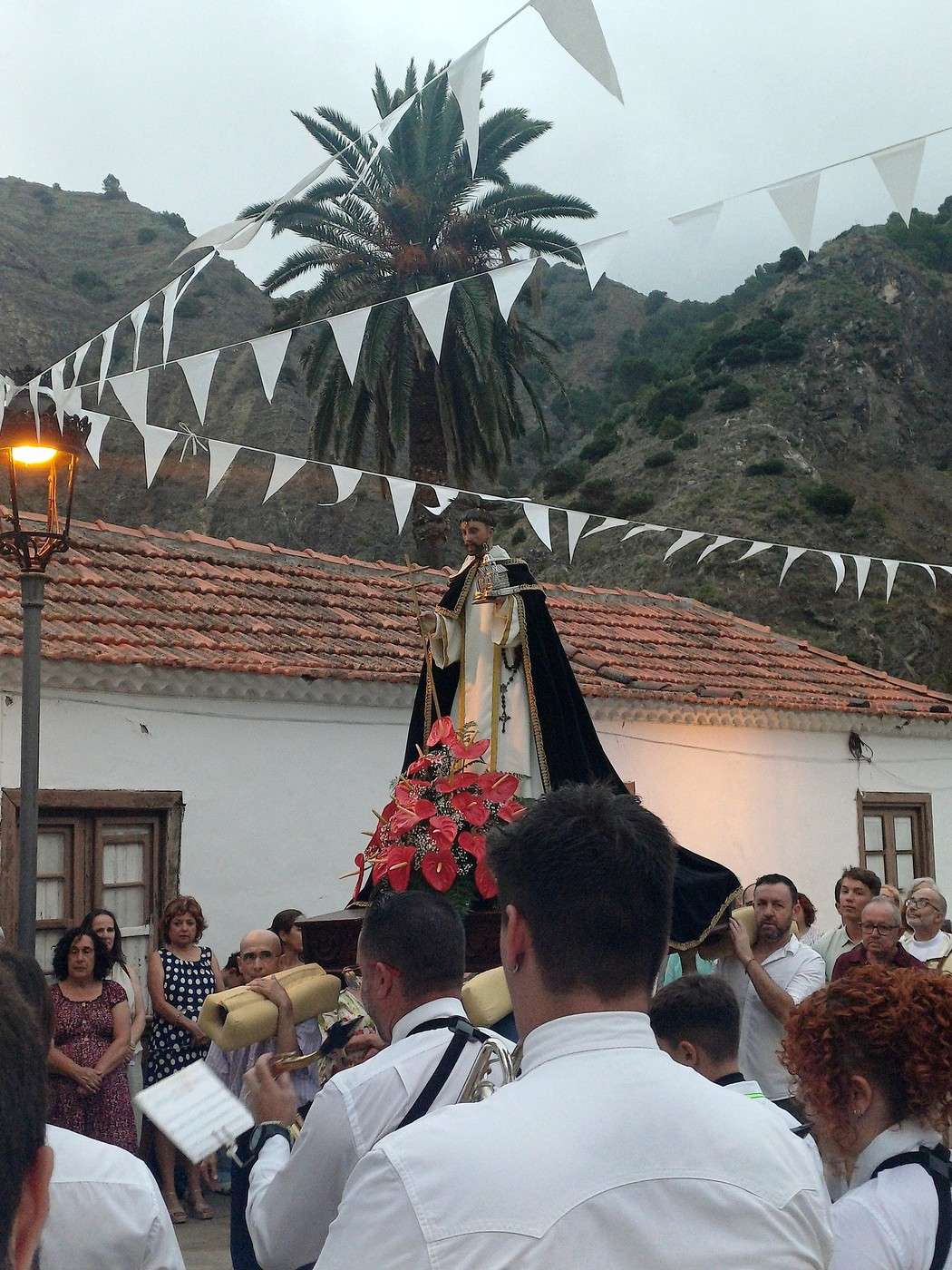
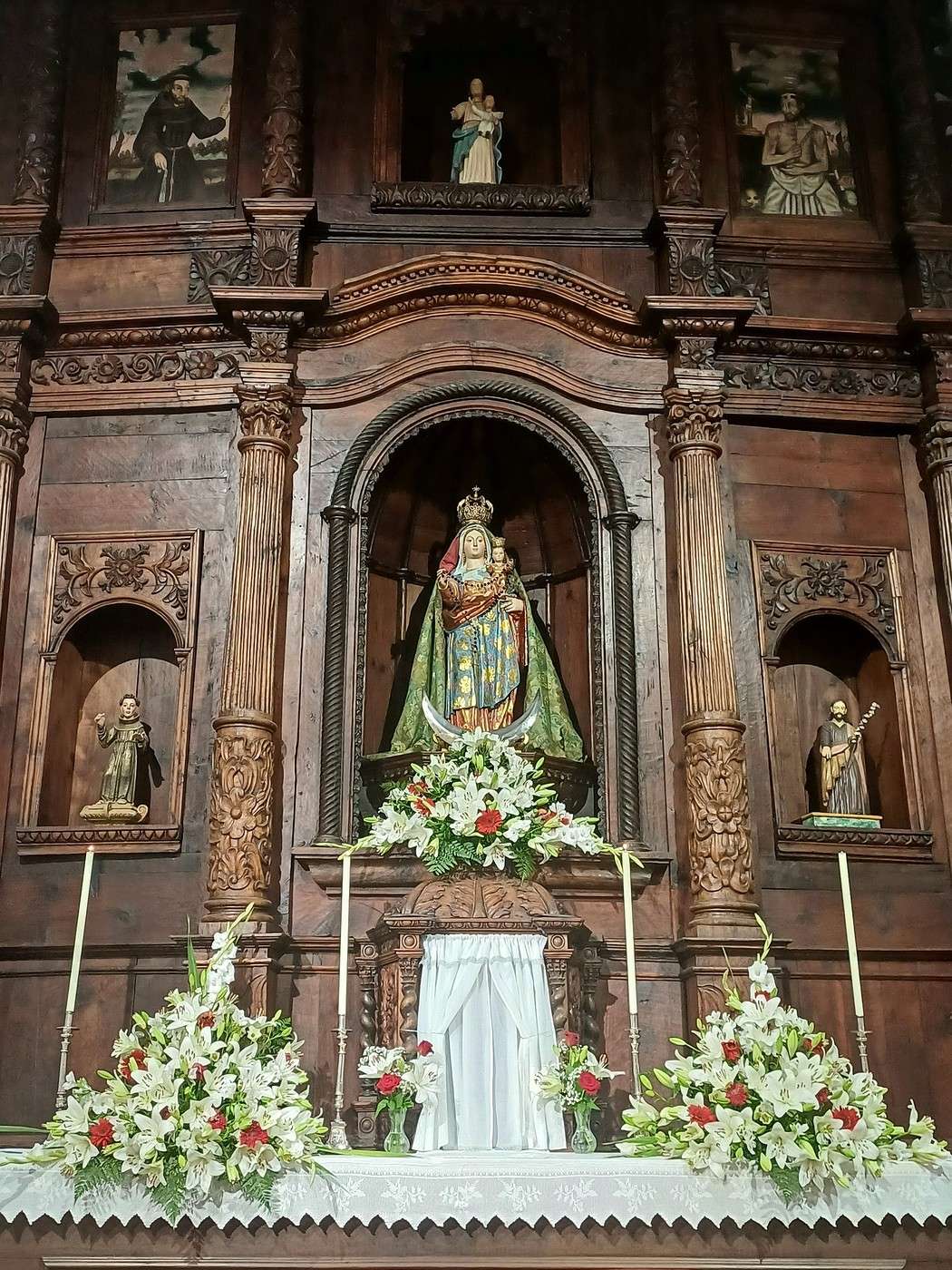
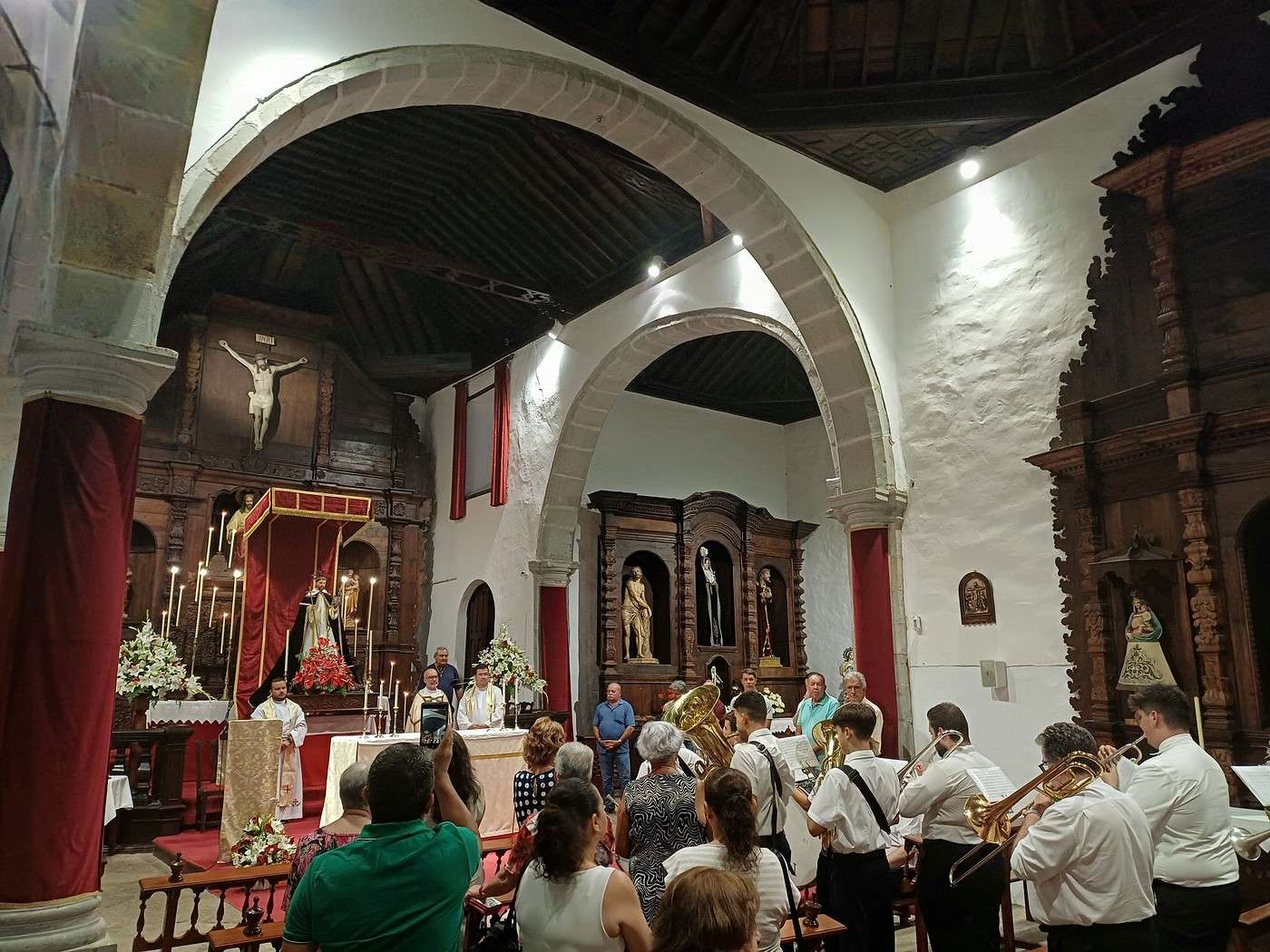
Stumbling upon one of the year’s big religious festivals during our trip was a happy coincidence, and we don’t want to miss it. But won’t we miss the main celebrations if the procession is about to leave and we still have to walk down that 2-kilometer path? We don’t hesitate too long and set off at full speed, walking along the hamlets and terraces, then racing down the slope near the rochers géants de Pedro y Petra, those two lovers cursed to be side by side yet eternally separated according to legend (or two massive lava projections, according to science)—even more intimidating up close. The upside is that from up high, we can watch the procession making a small loop through Hermigua. Surprisingly, Théo is keeping up well, even though the brass band is slowly heading back toward the church. With Kelyandre, we find a shortcut that cuts through houses at the edge of the terraced fields, saving us from the full loop. We arrive at the roadside just as the procession does. Magnificent! Luckily, we didn’t take the car because the Guardia Civil is blocking both sides of the road. At the front, drums and brass instruments, followed by the group carrying the paso, a brotherhood float with a life-sized effigy of Saint Dominic, then the villagers in their finest clothes. The statue is headed toward the Santo Domingo de Guzmán church, where it will return to its place after getting some fresh air. The saint is then stopped in front of the sanctuary entrance, where the brass band plays solemn tunes, even the Spanish anthem, in front of the devout in prayer. It’s no joke, and we wonder, as the drums echo, if we’re sticking out like a sore thumb and if the crowd might, in a moment of madness, decide to offer us as a sacrifice to their patron saint… Fortunately, that’s not the case, and we even enter the sacred grounds with the procession, where the effigy is placed under a canopy behind the altar as the priests begin mass. We feel privileged to be in the front row for such an important event for the Gomeros.

Still, our original goal was to have dinner at the restaurant. So we discreetly leave the church to head to le Chácaras (named after the small traditional Gomeran percussion instrument), just 5 minutes away. “¿Tiene una reserva?” the server in a stylish apron asks us. Uh… not really… It’s just that on a festival day like this, almost the entire population of Hermigua is eating out. Our advantage is that mass has just started! The server secretly leads us to a table, finger to his lips in a hush gesture. Maybe we’ll be served faster, which would be great because we’re starving. The server spoils us and plays with Théo, who’s taken out his silbo whistle for a whistling duel. While not fancy, the place aims for a slightly upscale vibe with pseudo-traditional decor. The potaje de berros is prepared in a finer version but just as good as what we know, pairing perfectly with fried goat cheese drizzled with palm honey. The squid isn’t bad at all, and for dessert, the quesillo (Canarian cheesecake) is a delight, while the mousse de gofio is as light as a cloud above Teide. Another great intuition! On our way out, a villager approaches us to chat, and we sense his kindness and genuine hospitality—just like everywhere in La Gomera. All that’s left is to head back up the hill in the dark. Perfect for digestion, and anyway, the cool evening air in Hermigua makes the return trip easy all the way back to Casa Yaya.
Meanwhile, the sacred ceremony below has given way to a wild pagan celebration. Tonight, the band and the crowd are unleashed, and the sound system is cranked up even louder. By the end of the night, the singer is rallying the crowd with “Hermiguaaaaaa! Agulooooo!” to whip up a crowd that’s clearly in a trance from the Caribbean-inspired rhythms. It’s not looking good for recovering from this packed day. The Canarian daydreams from the night before are turning into a sleepless night for some…

16 days with family in La Gomera (Canary Islands)

Pagaljavab · 2026-09-18 · Message 47 of 54

Day 12, Saturday, August 8: Hermigua/El Corralete, Vallehermoso, Chorros de Epina, Garajonay Natural Park, Hermigua/El Corralete

After a restless night in Hermigua, waking up was definitely a bit tough. I eventually managed to fall asleep, lulled by the music, which wasn’t the case for Magali—she barely got any sleep and assured me the festivities wrapped up around 5 AM with the sound of car horns, as vehicles seemed to struggle to leave the area. Despite that, it’s a beautiful day, and there’s still some of my famous banana gofio flan left to get us going. Today, we planned to visit Vallehermoso in the neighboring valley, a place we hadn’t explored yet and that’s reputed to be one of La Gomera’s "must-see" spots. Apparently, there’s a rather special "natural" pool that caught our attention.

Even though it’s the neighboring valley, it still takes half an hour of winding roads to cover 20 kilometers. That said, it’s shorter than most of the trips we’ve been making. The Opel Corsa cruises along to the rhythm of "La Gomera Es" by the Gomeran orchestra Wamampy—a song I discovered while searching for typical island music at the start of the trip and linked in the beginning of this travel journal. It’s become our travel anthem, and there’s not a single drive where we don’t play it at least two or three times.

Once again, it’s at a mirador that the Beautiful Valley reveals itself. It shares similarities with the other valleys we’ve seen so far but has its own uniqueness. We expected something green and humid like its neighbor Hermigua, but no—it’s drier and rockier, a bit like Alojera. What gives Vallehermoso its green, mountainous reputation isn’t the village itself but the fact that its municipality stretches far into the hinterland, and curiously, the main part of Garajonay Park is included.

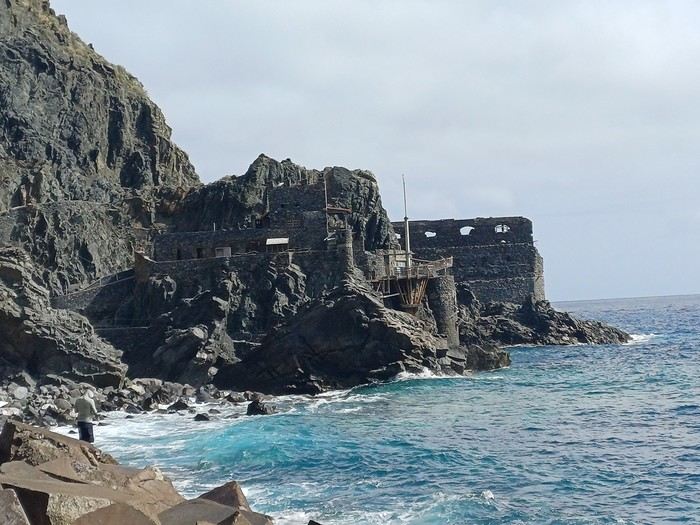
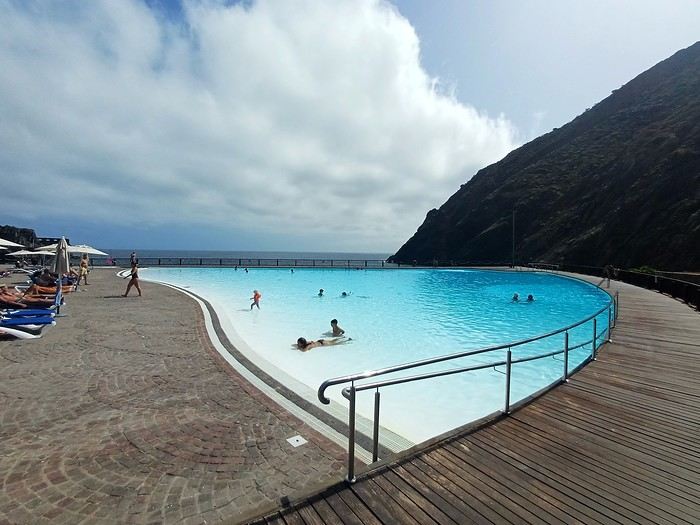
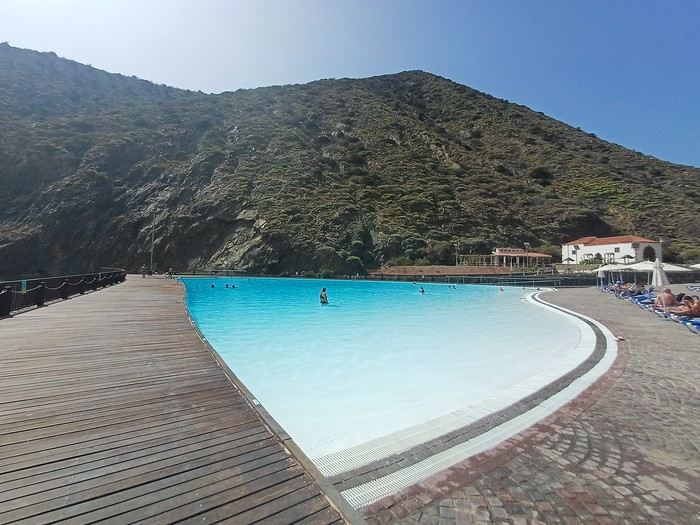
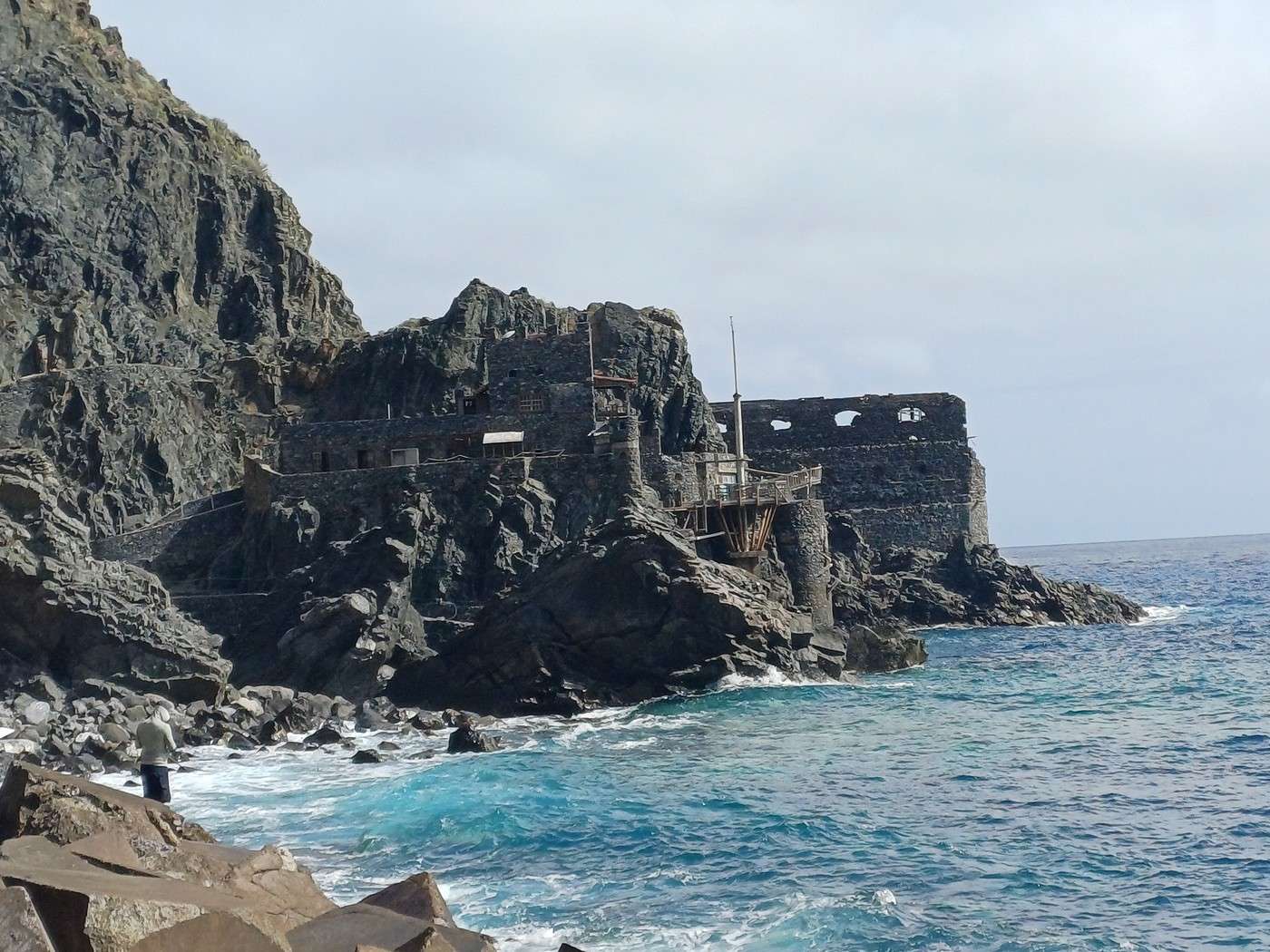
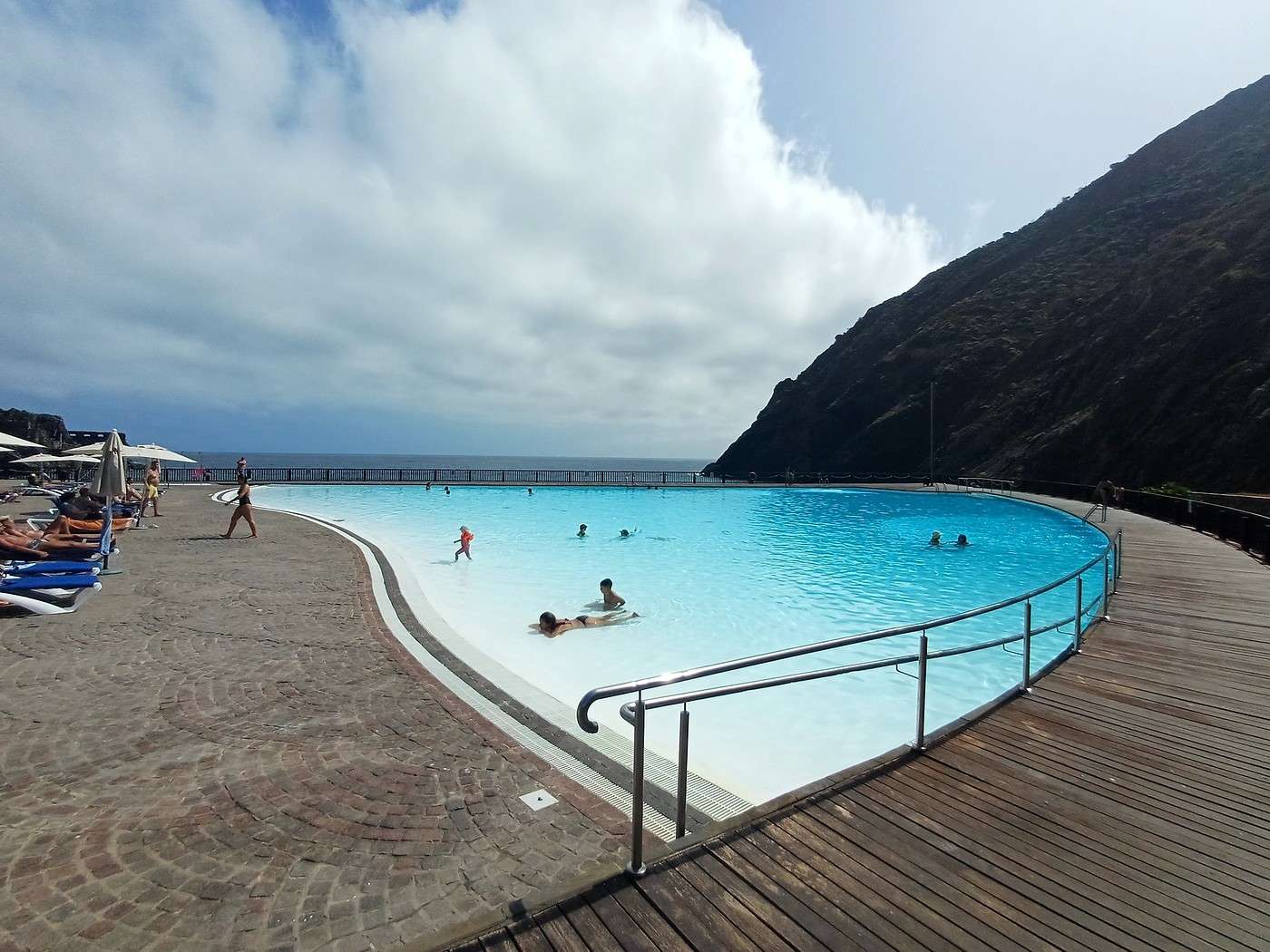
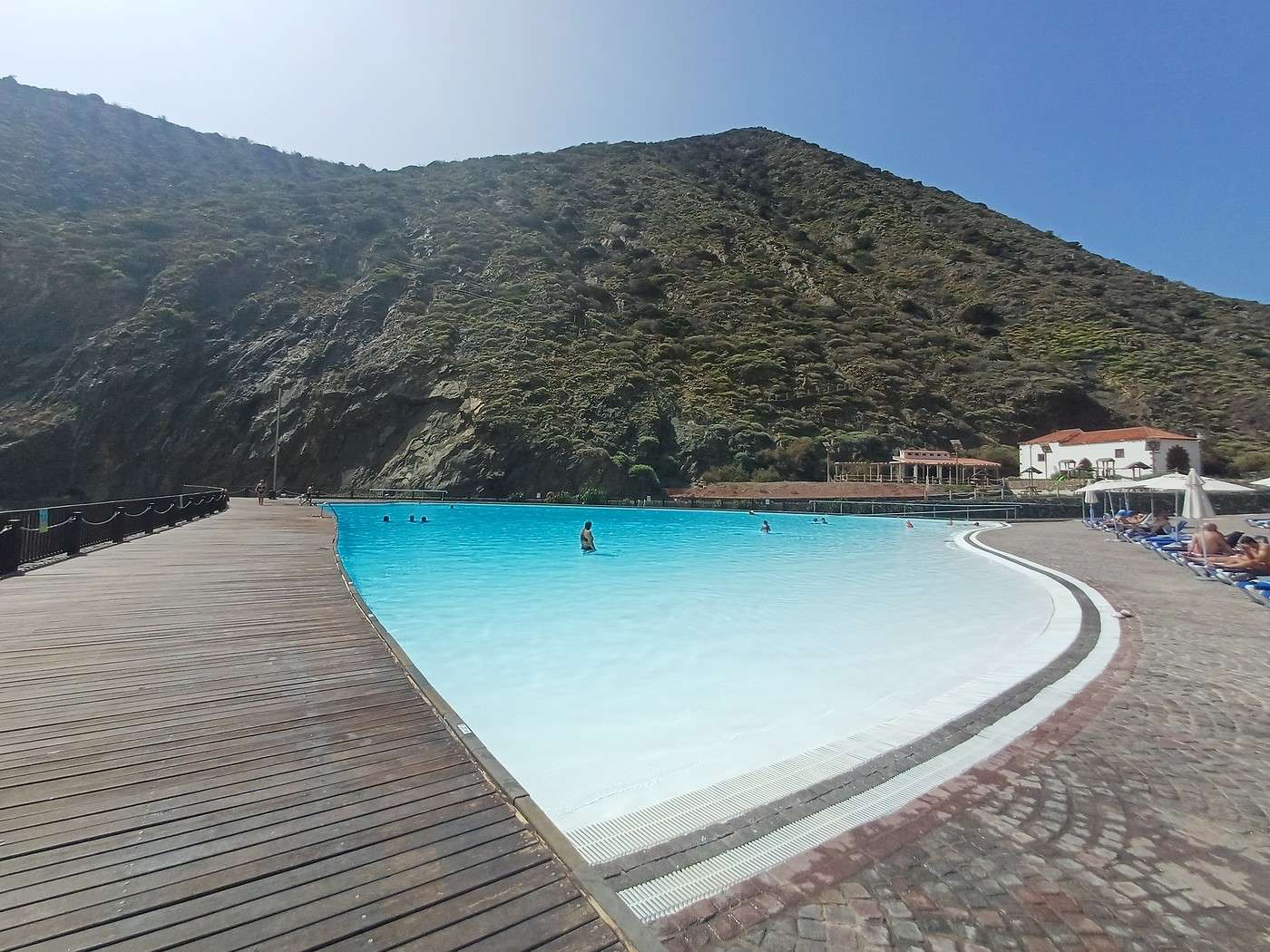
Once we arrive at the bottom, we don’t linger in the town since we want to take advantage of the swim while it’s not too late. We head toward the Vallehermoso beach, 3 kilometers down the road, and arrive at a seafront with a pebble beach surrounded by cliffs, an old pier, and powerful waves that don’t exactly invite a dip. Facing the ocean is the Vallehermoso maritime park, that surprising pool that looks like a vacation club, built by the sea to give it the feel of a sanitized natural pool. Visually, it’s quite striking and definitely tempting. We came a bit on a whim since we didn’t even think to check if it was closed or what the opening hours were. Luckily, a small group of Spanish tourists is waiting at the entrance where three little food trucks are parked—a sign it’ll probably open soon. We got lucky: we arrived at 10:45 AM, and opening time is listed as 11 AM. And great news—but not surprising after 11 days in La Gomera—the entry is free. I take the opportunity to snap a few photos near the remains of the Vallehermoso pier.

When I get back, the group at the entrance has quadrupled! The Spanish tourists are chatting about their experiences on the different Canary Islands while a lifeguard comes to open up. All the families rush to grab the free lounge chairs, and within seconds, there’s not a single one left. We’ve got ours! It’s not that the pool can hold that many people—maybe thirty at most—but the spots are limited. The place is surprisingly new, clean, and well-equipped for a free entry: there’s even a building with changing rooms, showers, and restrooms, and lifeguards who spend more time making sure no one brings in food or drinks (consumption is only allowed outside). Of course, the highlight is the pool itself—a lovely basin with a small paddling area, both filled with chlorinated seawater (a first for me!). It’s really pleasant for swimming while watching the ocean just below. It’s like a resort pool made public, giving off the vibe of a natural pool—minus the waves, of course. Perfect for both kids and adults, we spend a good hour swimming before heading out to eat. We’d barely started gathering our things when a Spanish family rushed over to ask if we were leaving—our lounge chairs were already claimed! All in all, a fun discovery, and we don’t regret it.

Back in the small center of Vallehermoso, it’s tough to find parking. Though it’s not overrun with crowds, the place still attracts quite a few visitors. We choose Tasca El Carraca, another traditional Canarian restaurant with a rustic vibe that we love. The kids play it safe with spaghetti, while our ropa vieja, a local stew of meat and chickpeas, is good… but way too salty. It’s true that Gomeros—and Spaniards in general—tend to salt their dishes generously, but this was almost inedible! Even the dessert was just okay. A miss, a bad day, or maybe we just didn’t make the right choices. Too bad.

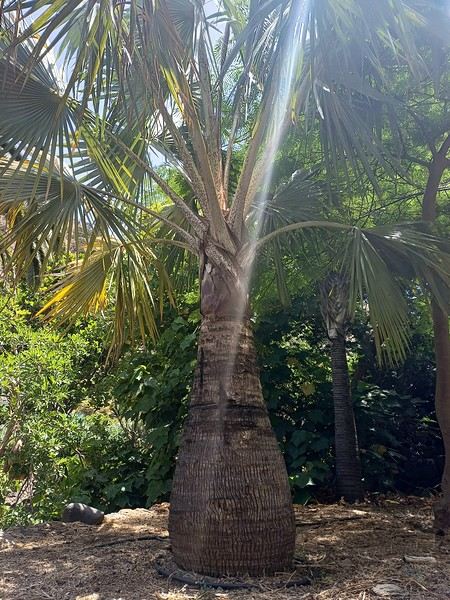
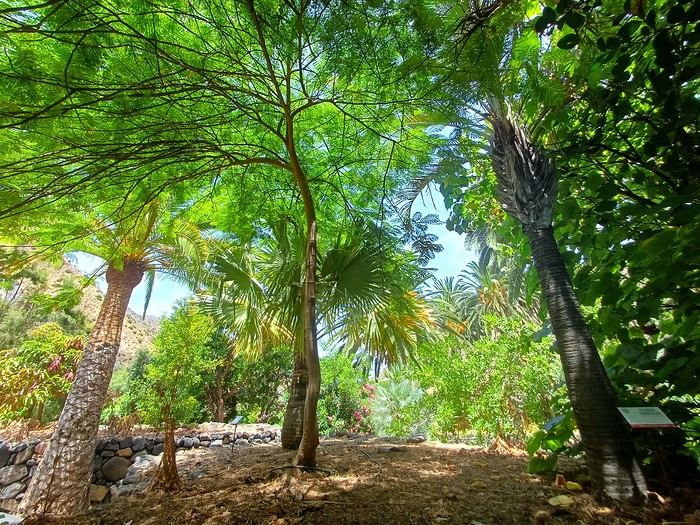
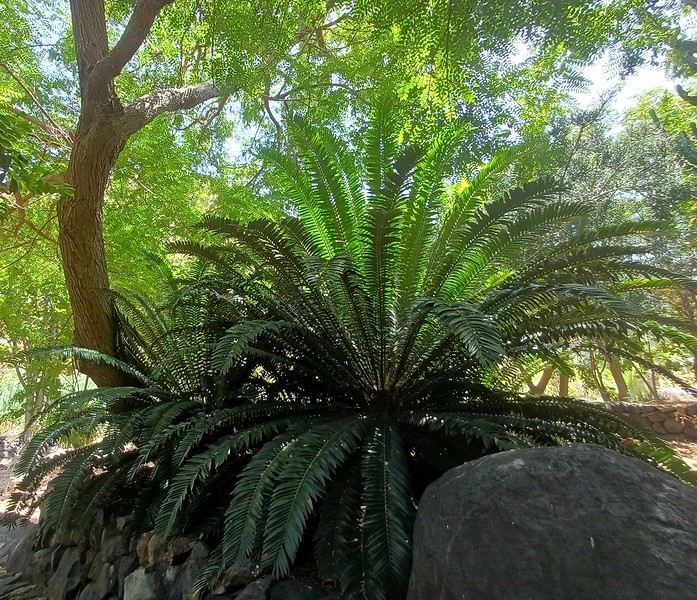
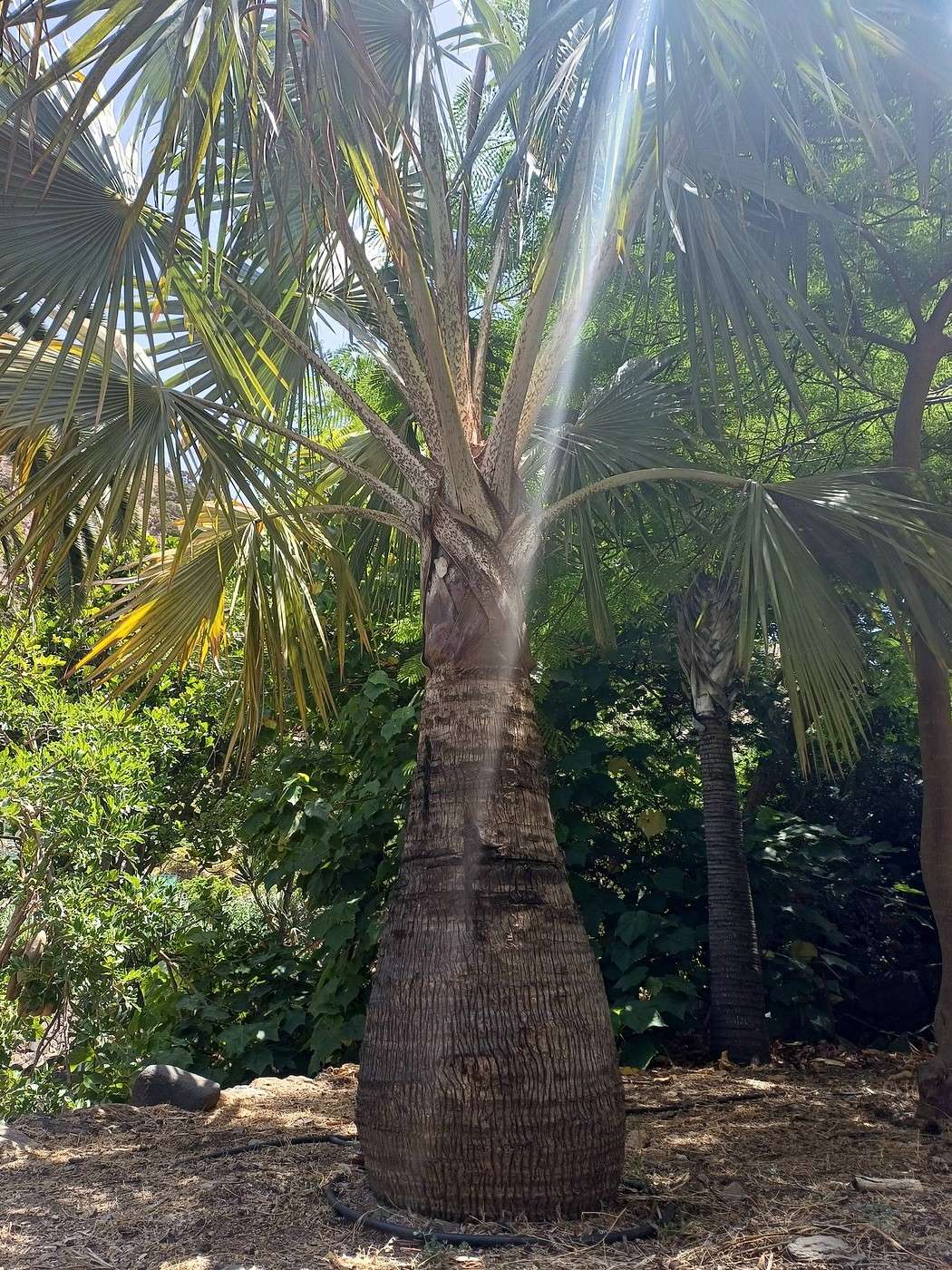
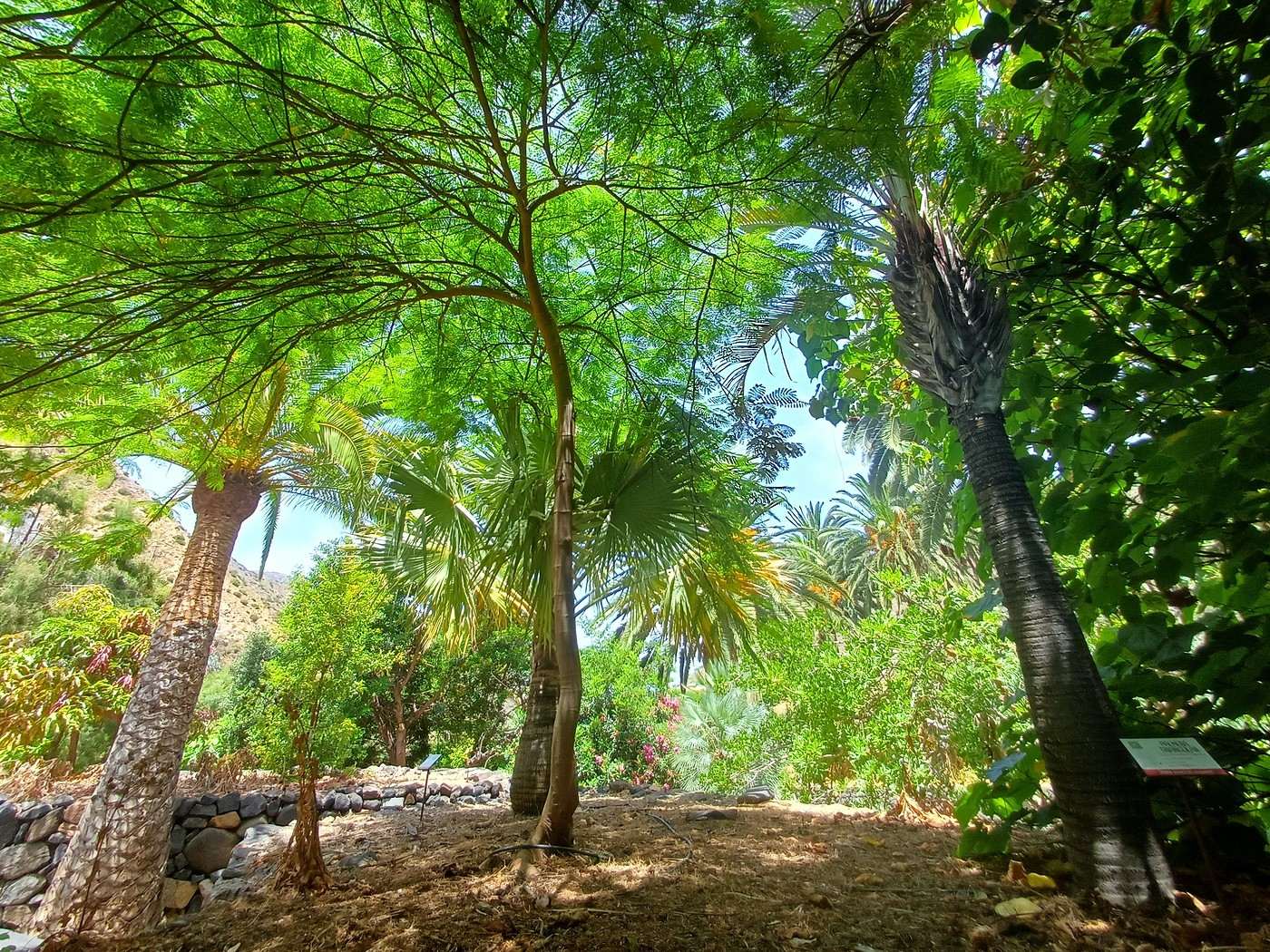
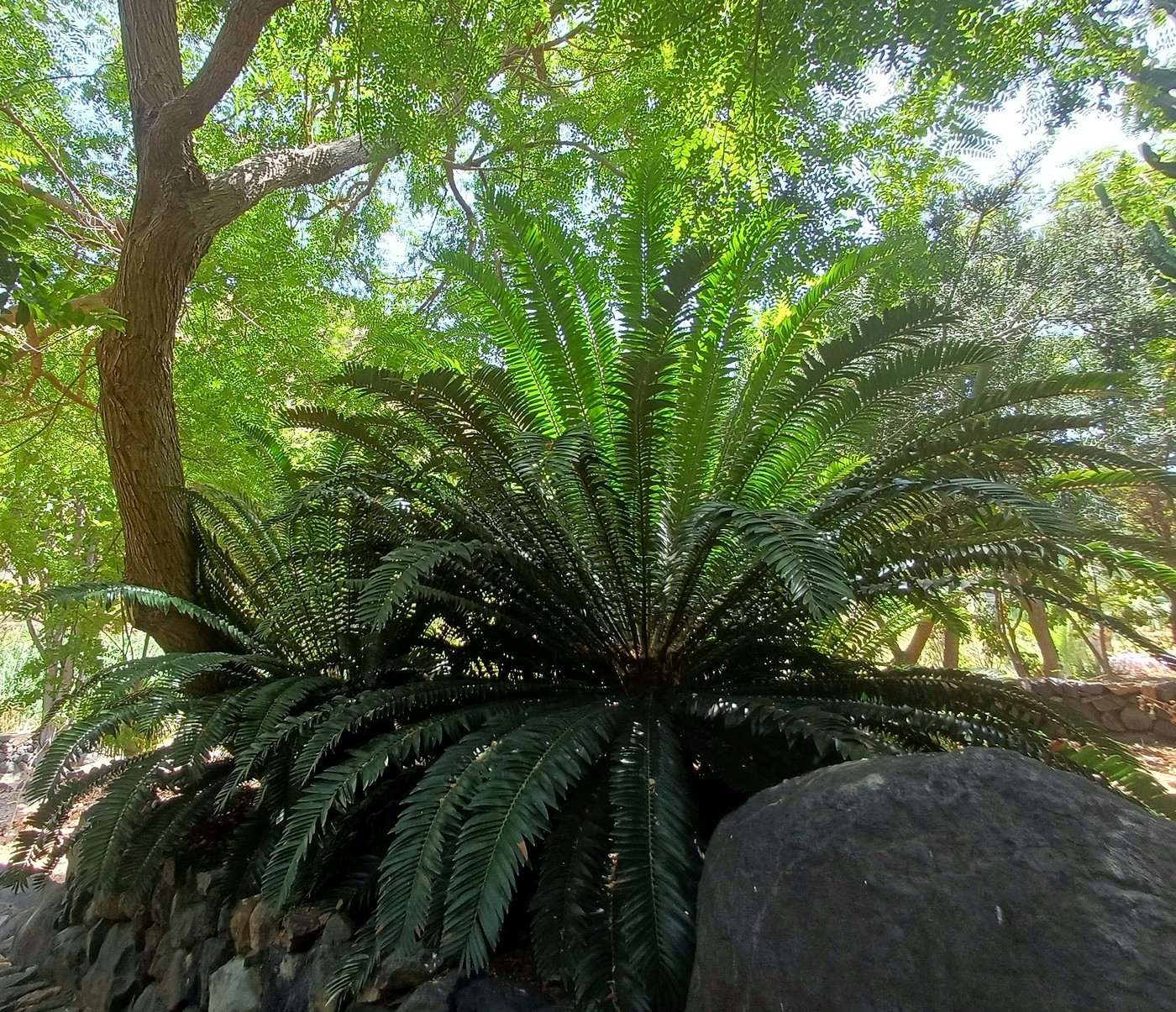
It’s scorching hot here, so we decide to visit the Vallehermoso botanical garden, halfway between the village and the ocean. A great idea since, once again, it’s free. This garden, located in the valley bed—as is often the case for cultivable spaces in La Gomera—might be one of the few wooded spots around. It offers a walk through exotic trees, some with unusual shapes, from around the world and the Canary Islands, including a few species we’ve encountered often on our journey. A perfect post-meal stroll—pleasant, educational, and shady!

So, what’s the verdict on Vallehermoso? Nice, but nothing more. We’ve already seen so many beautiful things in La Gomera that this valley seemed less spectacular than others. Still, the pool and botanical garden were enjoyable stops.

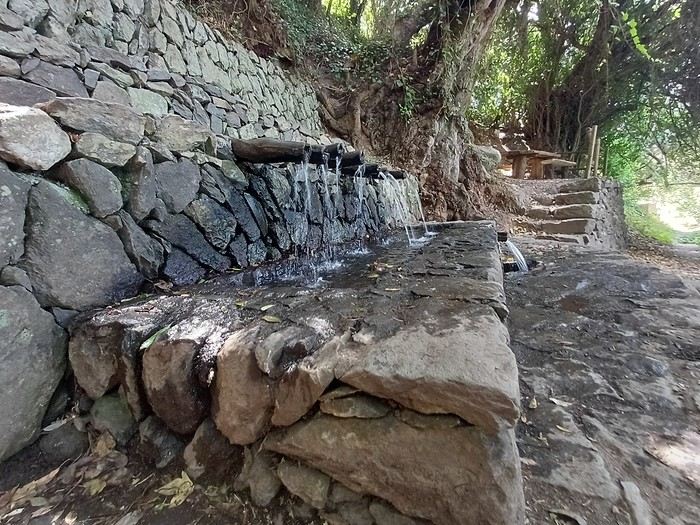
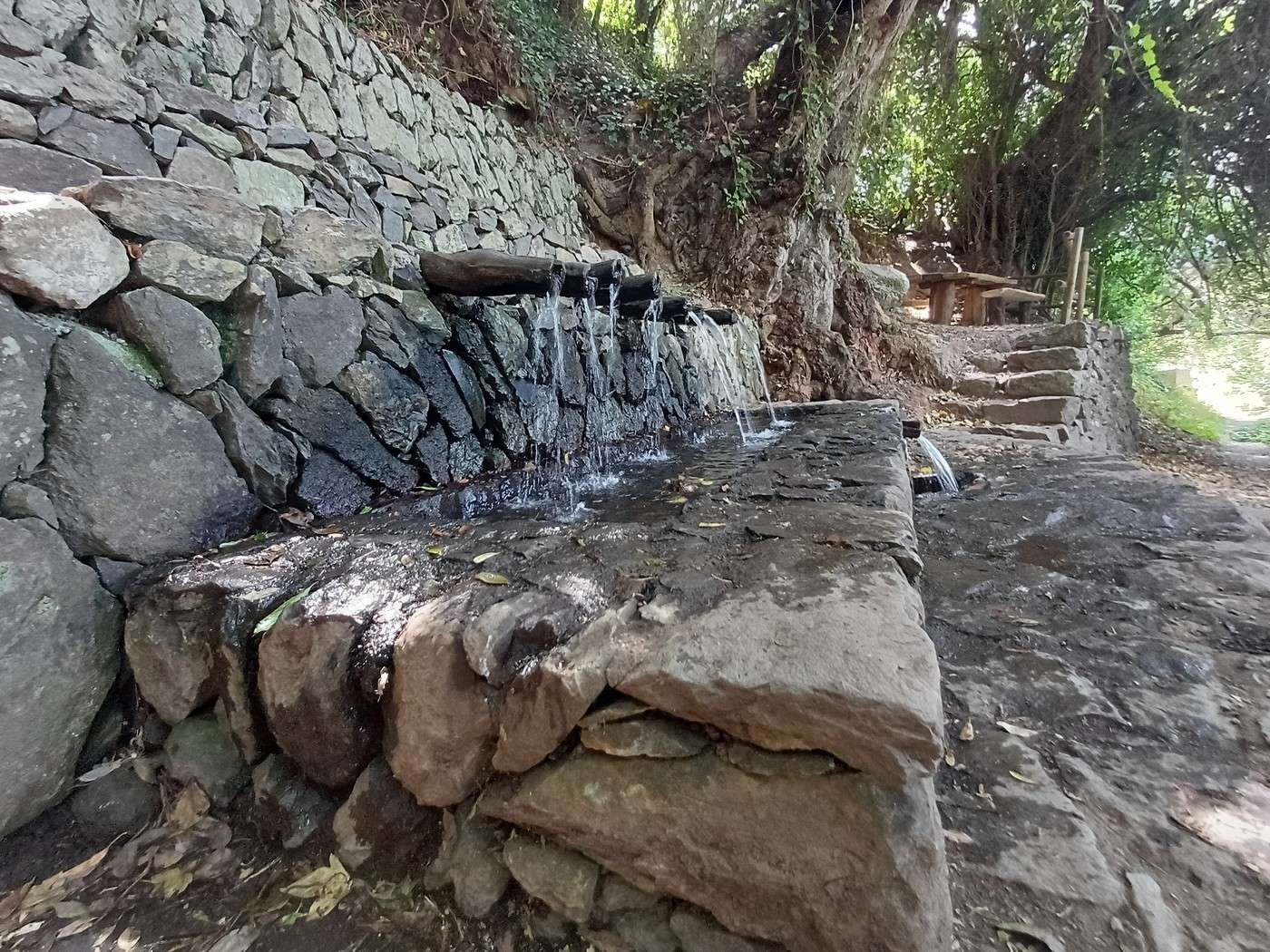
It’s still early, and we have time for one more little outing. On the road between Vallehermoso and Alojera, at the edge of Garajonay Park, are the Chorros de Epina. A ten-minute walk into the forest from the road leads to a spring with reputedly medicinal water flowing from a fountain divided into seven small wooden spouts. Legend has it that men should drink from the even-numbered spouts and women from the odd ones to find love and marry within the year. It’s totally useless for us, but we play along like the few other visitors there. The water is pure and refreshing, which isn’t unpleasant. Of course, nothing’s ever clear with these legends—the oldest one mentions only four spouts, another says the seventh is reserved for witches, and the parking sign says the opposite of the fountain sign about who should drink from even or odd spouts. So, you never really know if you’re leaving blessed or cursed! Either way, it was a nice, easy walk.

On the way back to Hermigua, we make a quick stop at a viewpoint to admire the expanse of Garajonay’s laurel forest canopy.

Back in Hermigua, we pop into the Spar for some shopping. At Casa Yaya, I improvise a vegetarian Indian masala with whatever’s on hand. The Indian flavor isn’t quite there, but it’s still tasty. It’s Saturday night, and after the religious ceremony, the pagan festivities are at their peak of frenzy, noise, and madness. The atmosphere has been building all week, reaching its climax tonight. The orchestra and villagers seem to be letting loose all their frustrations of the year down in the square. Saint Dominic is probably watching all this with a worried eye… This time, I’m the one pulling an all-nighter, just like Magali the night before, listening to the car horns of people trying to leave the party. It was fun the first few days, but we’re hoping this is the last night!

16 days with family in La Gomera (Canary Islands)

Djalma · 2026-10-07 · Message 48 of 54

Hi there, I’d read your entire travel journal before we left and thought everything was perfectly planned—almost too perfectly. You really put in a lot of effort, especially with that detailed study of La Gomera’s history and geography. You’re one of the few here who tackle such niche topics, like the origins of an island’s settlement, for example.

We just got back from our trip, absolutely thrilled, having partly drawn inspiration from your account. Partly because we travel a bit differently—no kids, and we’re mainly motivated by hiking. On that note, I didn’t expect the heat to be so intense in autumn, and I can only imagine how tough it must’ve been for you in July, even on short walks, except maybe in Garajonay Park, sheltered by the forest. Elsewhere, we often hit over 30°C, and we were sweating hard around Imada/Benchijigua, as well as on the climb up the "cliff" from Agulo to the Abrante viewpoint!

We were lucky to find two places to stay with an excellent quality-to-price ratio in stunning settings. The first was above Las Rosas, near Agulo—a secluded house in the vegetation, 2 km from the village! The second was in Alojera, a super well-equipped house with a balcony and terrace overlooking the sea, and no buildings around... The day before yesterday, I thought of you while we were climbing the "Fortaleza" (a sacred and historic site). We started early to beat the heat and finished the hike by barely noon... What to do next? We headed to the La Vista restaurant, right in the middle of the forest, where we found ourselves in 10°C cooler temps and thick fog! The watercress stew was pure bliss for me. Grilled tuna, papas arrugadas, and a mixed salad followed—everything was super filling, and with two drinks, it cost us 25 € for two! A really great spot! Then, a second, slightly more monotonous hike under the forest canopy...

16 days with family in La Gomera (Canary Islands)

Djalma · 2026-10-07 · Message 49 of 54

Looking back at your travel journal, I saw you passed through El Guro (the artists' village) and started this hike rated as moderate but to avoid with kids... (check out the 80 photos) https://www.komoot.com/fr-fr/smarttour/31530637

We often find the "difficult" rating exaggerated, but here it was the opposite: the hike labeled "moderate" because it’s short turned out to be a real obstacle course—really tough through the reeds and papyrus at first, then through the bushes, and finally scrambling over rocks. It took us a good 2 hours just to cover barely 2 km! Luckily, the finale at the waterfall was pure bliss!

16 days with family in La Gomera (Canary Islands)

Pagaljavab · 2026-10-08 · Message 50 of 54

Hi Jean-Michel,

Glad you liked La Gomera and that this travel journal (which isn’t even finished, just to remind you) was able to help a bit.

I’d read your entire journal before we left and thought everything was perfectly planned. Too much, even.


I’m really into historical, geographical, and socio-anthropological topics, and I read a lot about what I can find before a trip. I often include a little cultural introduction in my travel journals because this research really helps shape our trips. If it interests some people, great—if not, others can skip ahead. For La Gomera, all that historical context stayed with us throughout our journey and gave the kids some powerful images.

On that last point, I didn’t think we’d suffer so much from the heat in autumn, and I can imagine that for you in July, even on short hikes, it must’ve been tough—except in Garajonay Park, sheltered by the forest. Elsewhere, we often hit over 30°C, and we really sweated it out around Imada/Benchijigua, same for the climb up the "cliff" from Agulo to the Abrante viewpoint!


Even in July-August, we didn’t expect it to be *that* hot, since we’d chosen the Canary Islands for their mild summer climate. Even in Garajonay Park, it was often warm, though more manageable. The only place we found real coolness was in Hermigua’s microclimate and its valley. But in autumn? Must be the effects of climate change.

We were lucky to have two accommodations with an excellent quality-price ratio in an exceptional setting. The first, above Las Rosas near Agulo: an isolated house in the vegetation, 2 km from the village! And the second in Alojera—a super well-equipped house with a balcony and terrace overlooking the sea, with no buildings around...


We loved those two spots. I didn’t mention it in my unfinished journal: I think it was the second-to-last day, we took a walk in the heights of Las Rosas, and it was gorgeous. We really appreciated that hamlet and the surrounding ones for how remote they felt. Not a single tourist in sight.

We climbed the "Fortaleza" (a sacred and historical site) early in the morning to avoid the heat, and we finished the hike by barely noon... What to do next? We headed to the La Vista restaurant in the middle of the forest, where we found ourselves with 10 degrees less and in thick fog! The *potaje de berros* was a real treat for me.


That was the best option! We ended up at La Vista three times—it’s a fantastic spot: absolutely authentic food, cheap, and right in the park!

16 days with family in La Gomera (Canary Islands)

Pagaljavab · 2026-10-08 · Message 51 of 54

We often find that the "difficult" rating is exaggerated, but this time it was the opposite: The hike labeled as "moderate" because it was rather short turned out to be a real obstacle course—very tough through the reeds and papyrus at first, then through the thickets, and finally over rocks to climb. We took a good 2 hours to cover barely 2 km! Luckily, the finale at the waterfall was pure bliss!


So we must’ve stopped with the kids right where the difficult part was supposed to begin because we turned back after moving a little into the start of that reed area. The first half of the hike was easy, even for our 4-year-old. We didn’t continue because the day was starting to fade. We’d planned to come back to reach the waterfall, but based on what you’re saying, we made the right call not going with the kids—especially since I’m not sure the waterfall wasn’t dry in August...

16 days with family in La Gomera (Canary Islands)

Djalma · 2026-10-08 · Message 52 of 54

These were two places we really loved. I didn’t mention them in my incomplete travel journal: I think it was the second-to-last day, we took a walk on the heights of Las Rosas, and it was stunning. We truly enjoyed this hamlet and the surrounding ones for their really remote feel. Not a single tourist in sight.


We particularly loved Alojera (aside from the more intense heat), along with the whole area between Arure, Taguluche, Tazo, and Arguamul—total middle of nowhere! The hikes were tough but spectacular. We didn’t see a single other hiker there!

It was the best possible option! We ended up at La Vista three times—it’s truly an excellent spot: absolutely authentic cuisine, affordable, and right in the park!


We really liked the restaurant... I hadn’t read much good about it, especially about the red-haired waitress, but she was charming with us, and we were served right after arriving. The setting is nice with the vegetation cover, but for hikes, it’s pretty average since there are rarely any views. We did 2 or 3, including Alto Garajonay. With kids, though, it’s ideal. Otherwise, for restaurants on the island, there was one in Las Hayas—Amparo—which was really good, and also La Vieja Escuela in Agulo. To wrap up, in two weeks (we didn’t slack off!), we only “explored” the northern half of La Gomera. We’ll have to go back for the southern part!
16 days with family in La Gomera (Canary Islands)

Djalma · 2026-10-08 · Message 53 of 54

We were planning to go back to reach the waterfall, but based on what you're saying, we made the right call not going with the kids—especially since I wasn’t sure the waterfall would even have water in August...


You made the right choice. There’s a section where they’ve installed a rope that’s actually quite treacherous. On the way back, we realized we could’ve avoided it, but it’s hard not to wade through the papyrus reeds and bushes in some spots. It’s not a long hike, but the going is so tough you can’t even see the end! The waterfall isn’t Iguazu Falls, but it’s still really nice. Like everywhere else, we were alone since the Spaniards don’t really get moving before noon! We ran into a few Germans on the way back...

16 days with family in La Gomera (Canary Islands)

Ouonva · 2026-11-05 · Message 54 of 54

Thanks for this travel journal about a lesser-known Canary Island.

I’d never heard of those super noisy birds before!

VoyageForum — the largest community of French-speaking travellers.