Oman, at the edge of the sands and the horizon
Al-Ayn, 5,000 years back in time!
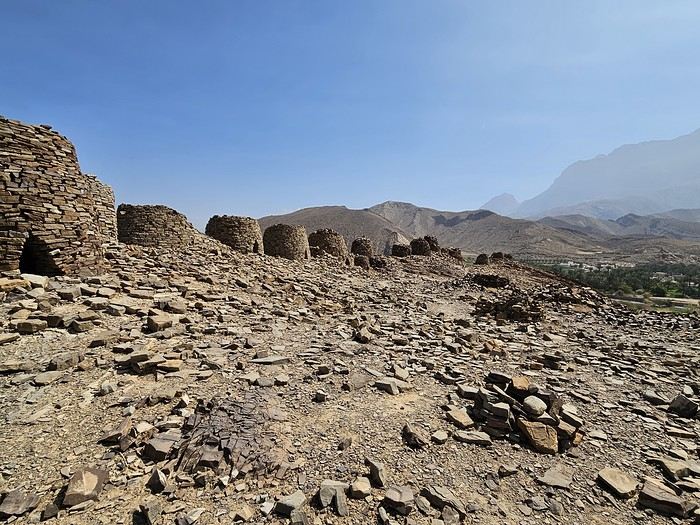
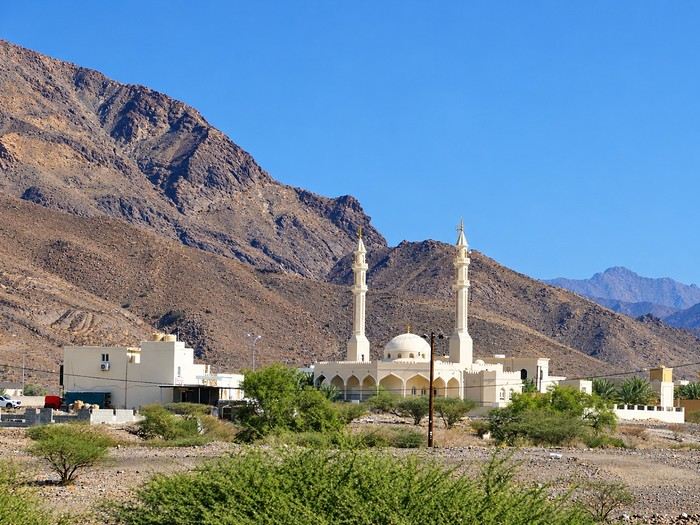
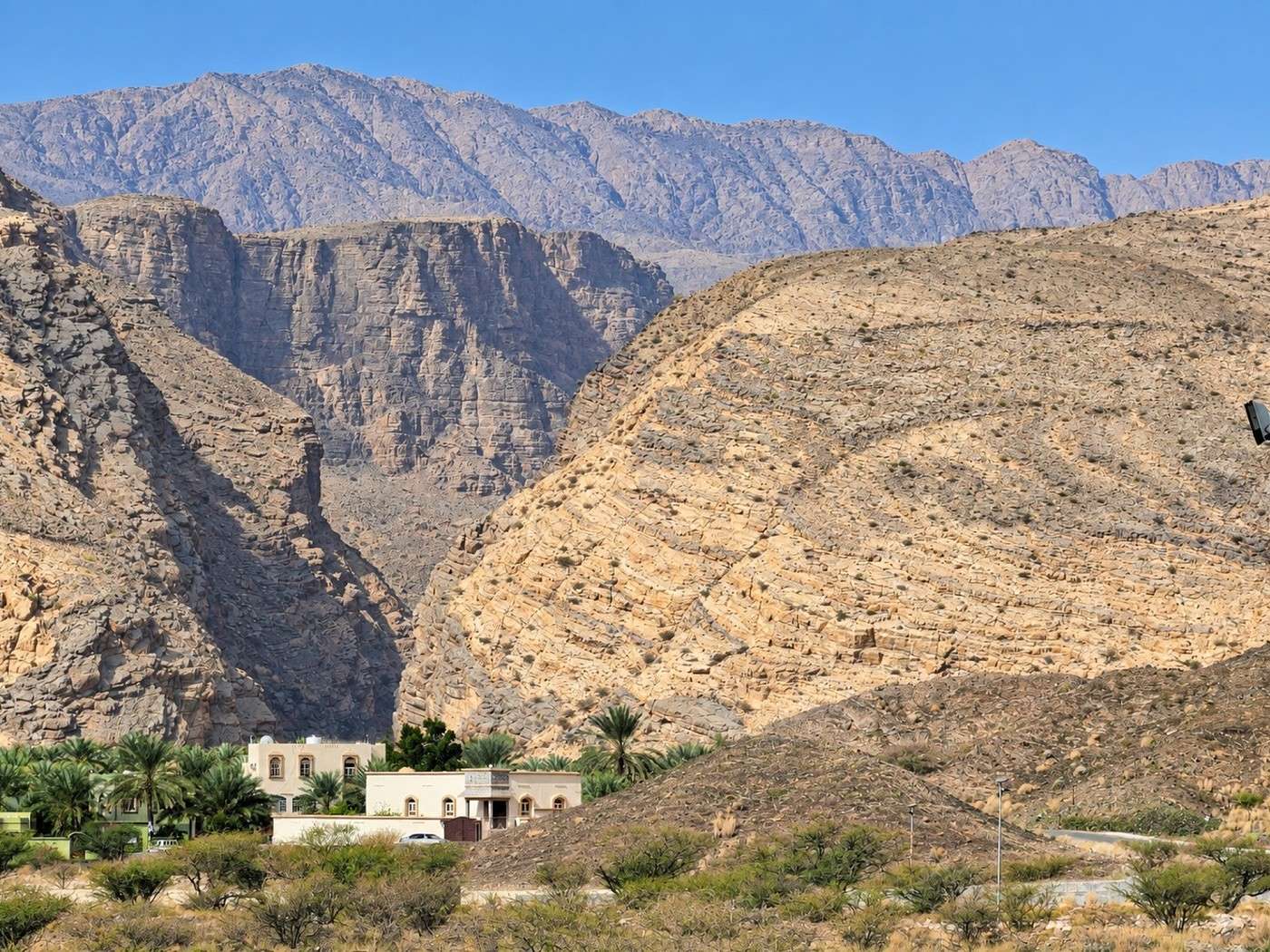
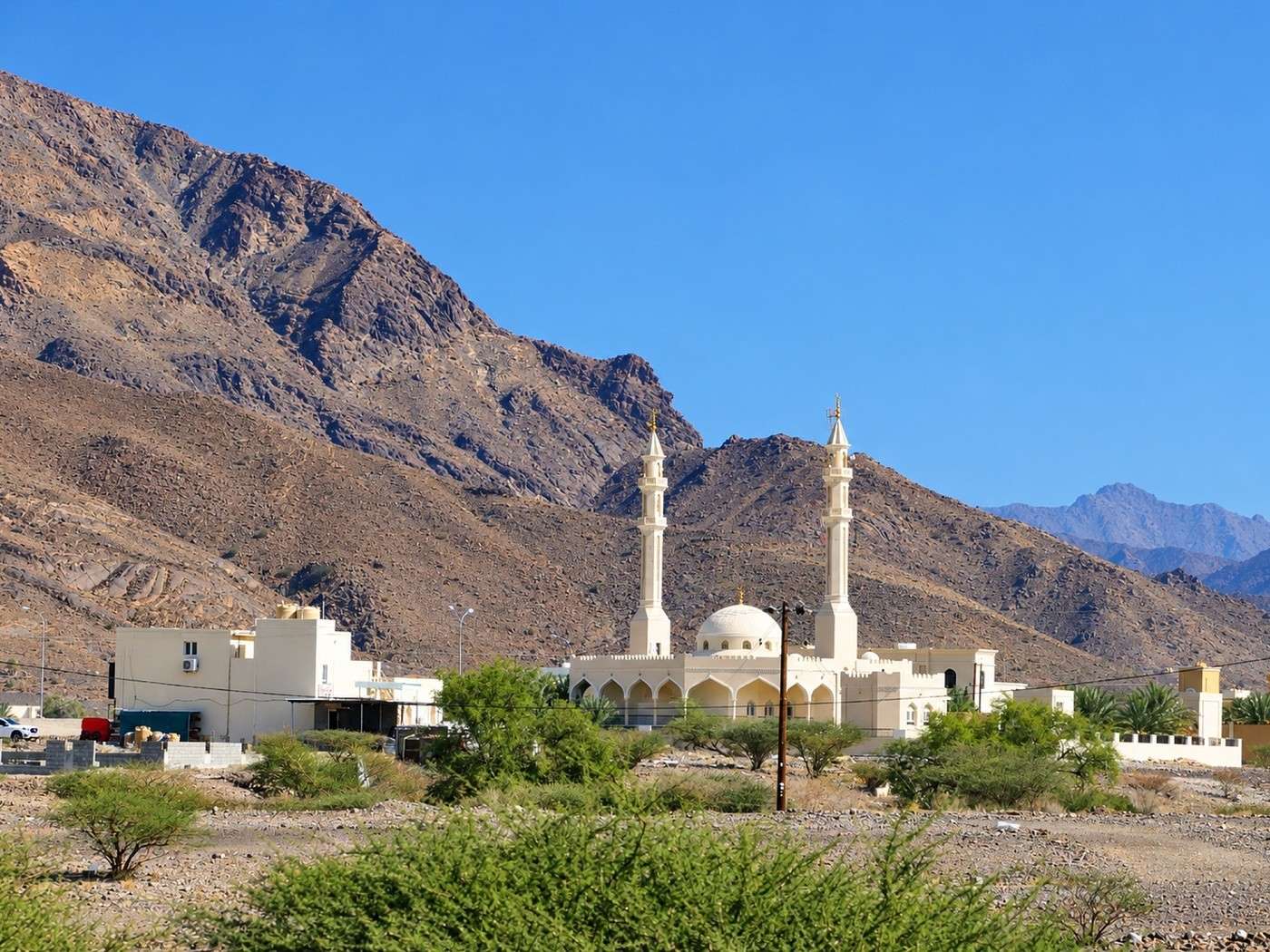
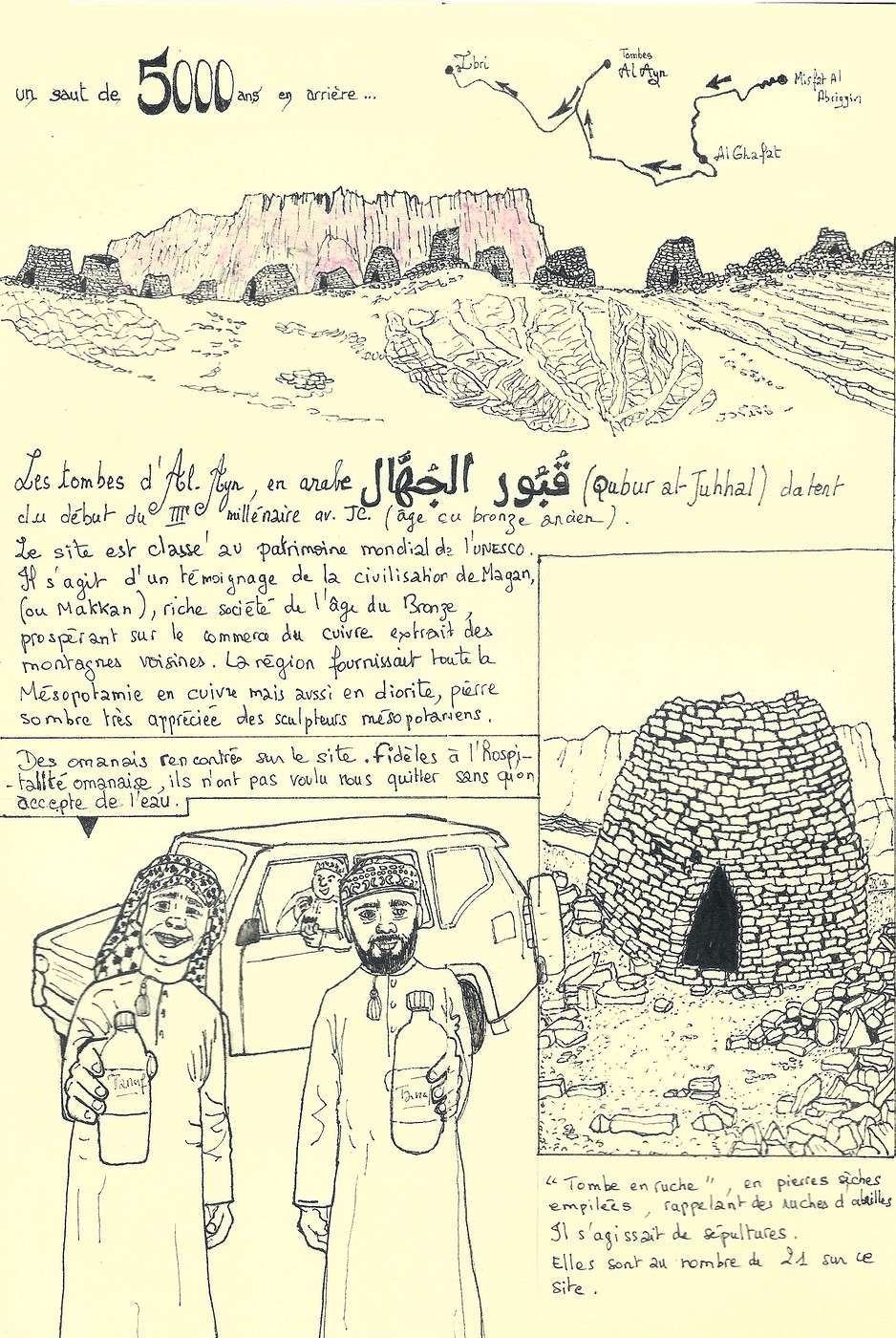
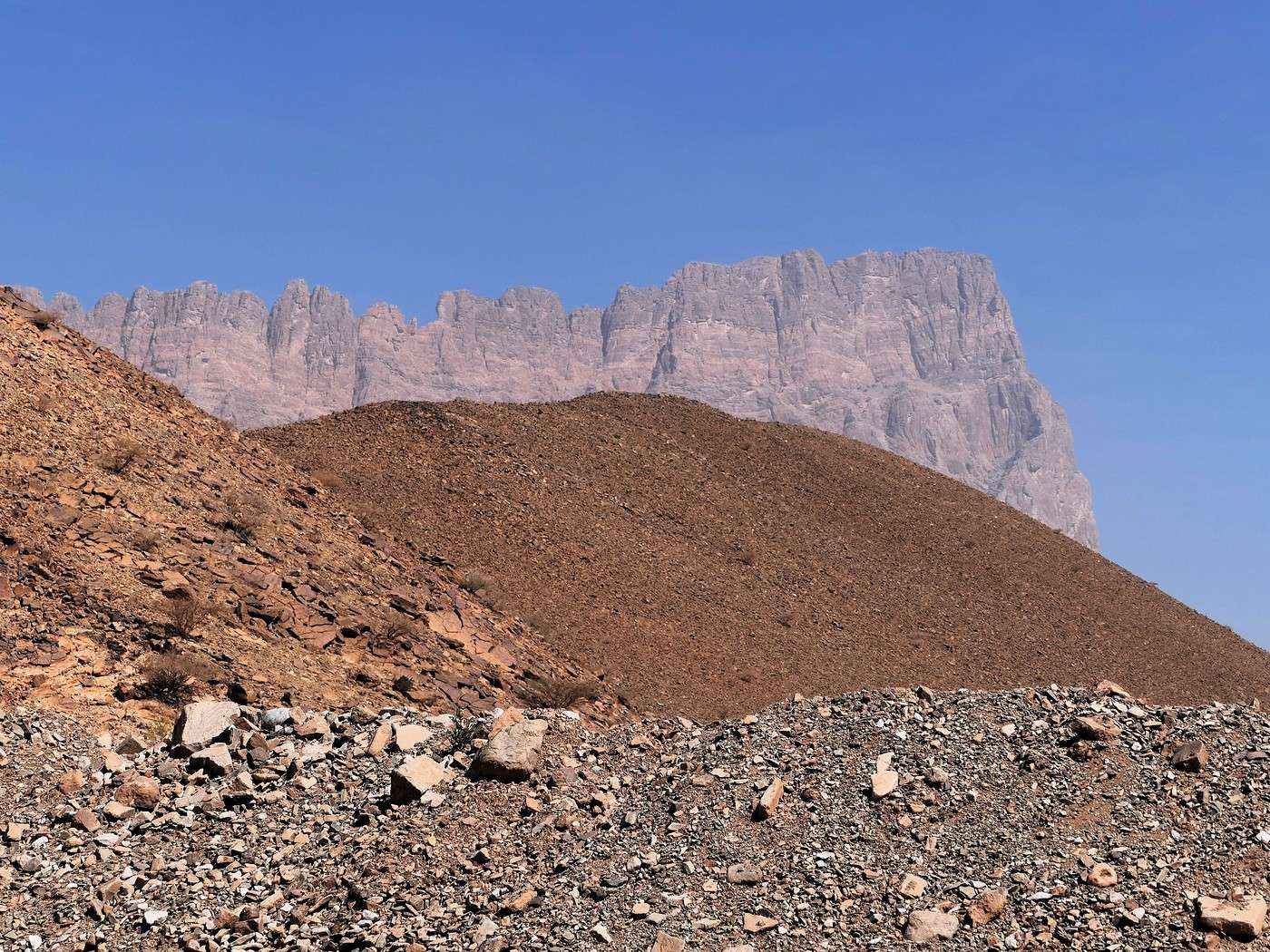
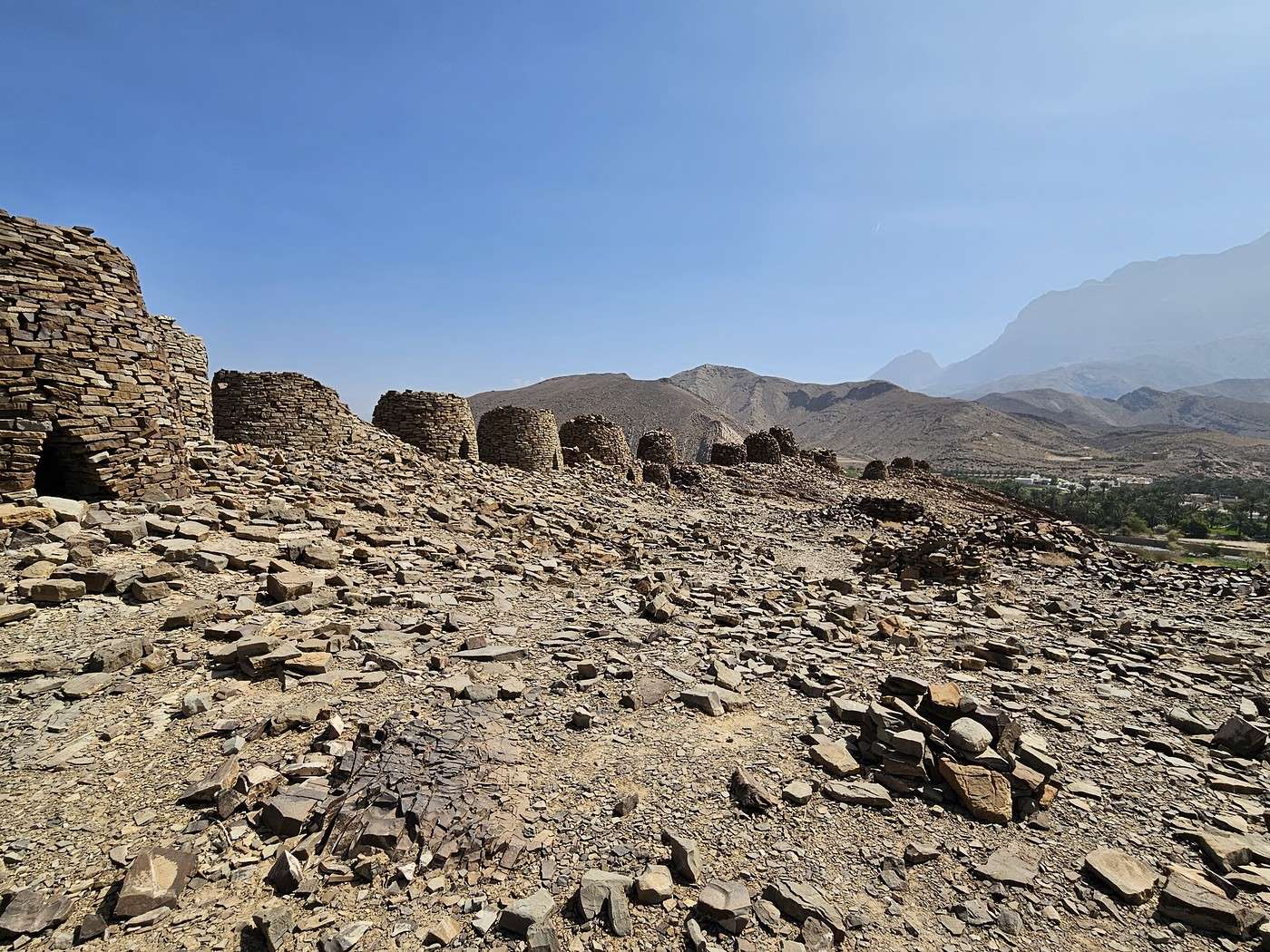
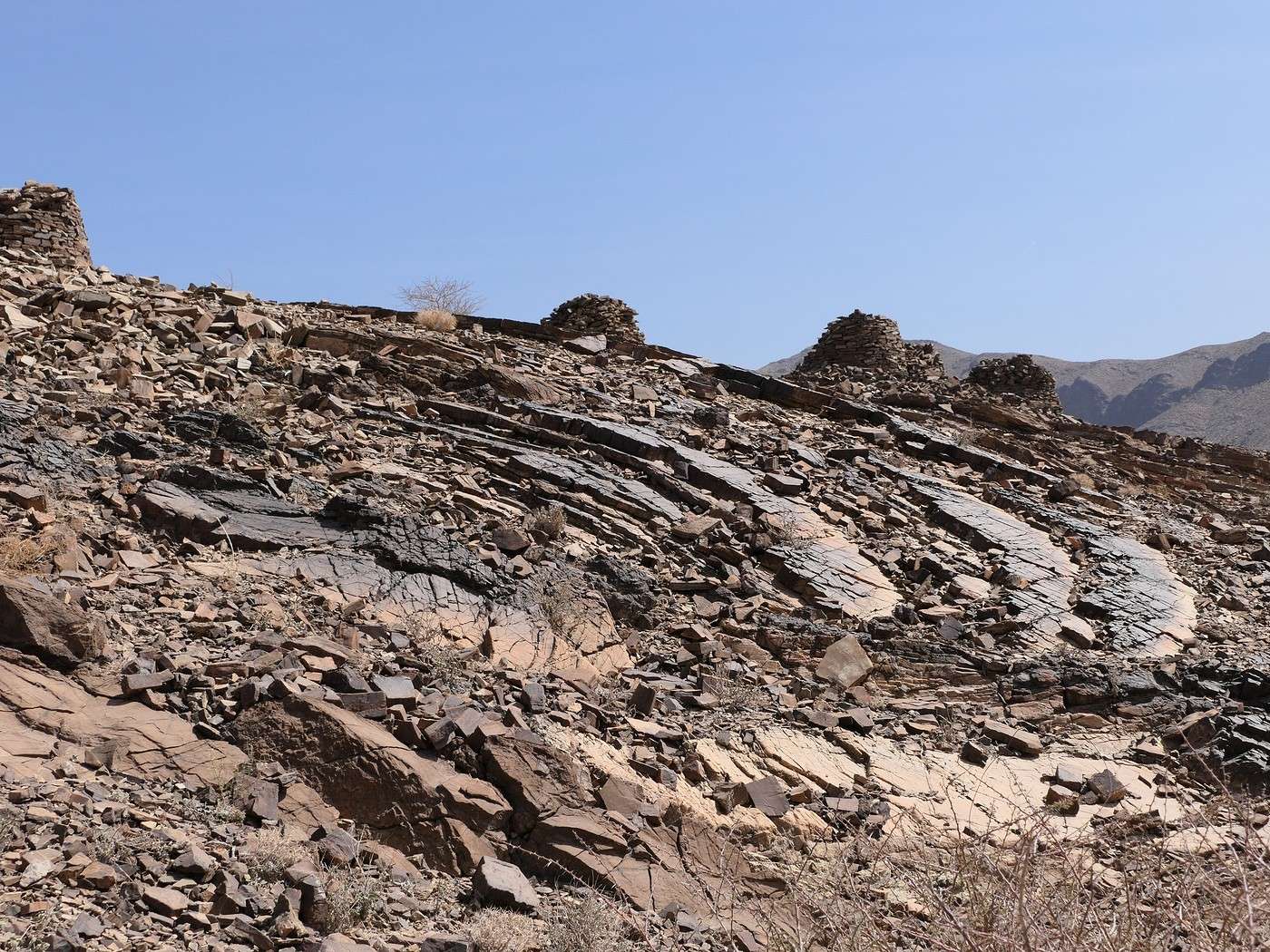
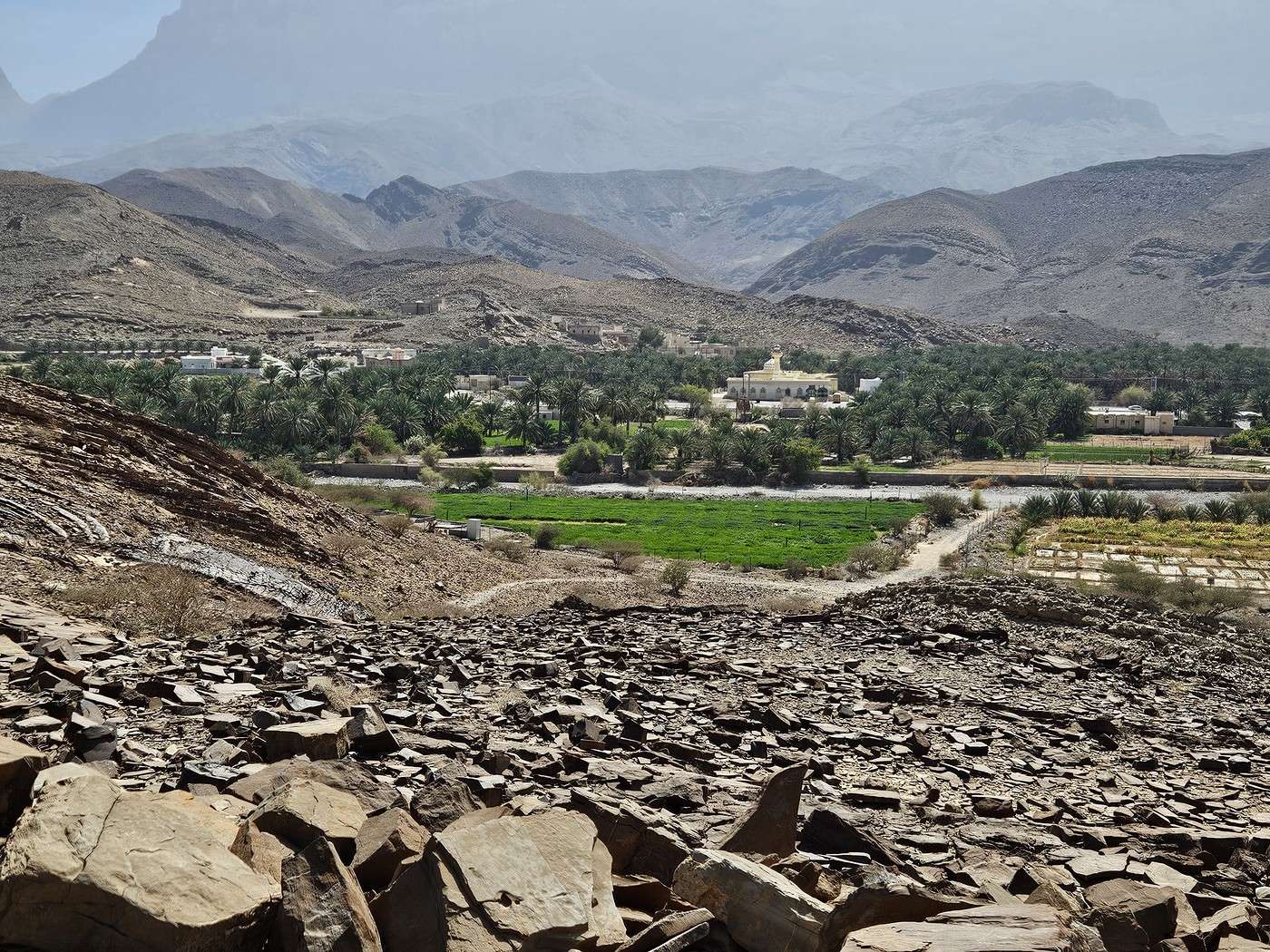
In Al Ayn, we park along the main road (*), just past a mosque on the right. The site is somewhere to the left—we know we have to walk a few hundred meters: first cross the wadi, dry this season, that runs along the road, then follow walls bordering gardens, cross the other arm of the dry wadi, and take a rocky path. There’s no sign, but at some point, you start seeing the tombs in the distance, on the ridge of a large hill that, as you get closer, looks like a massive pile of pink sandstone slabs.
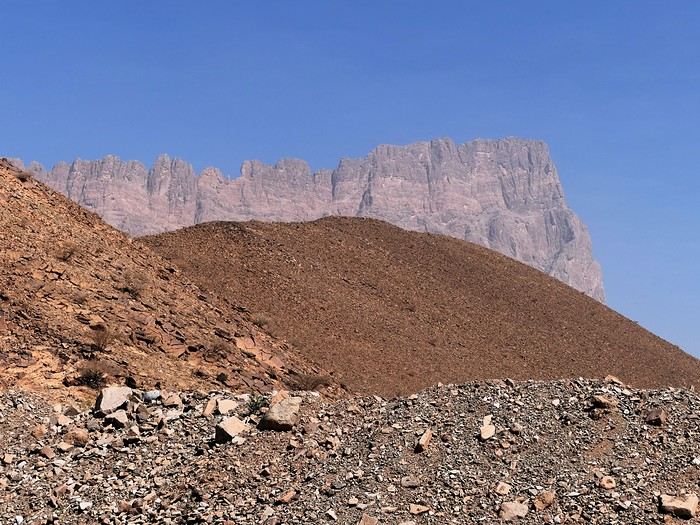
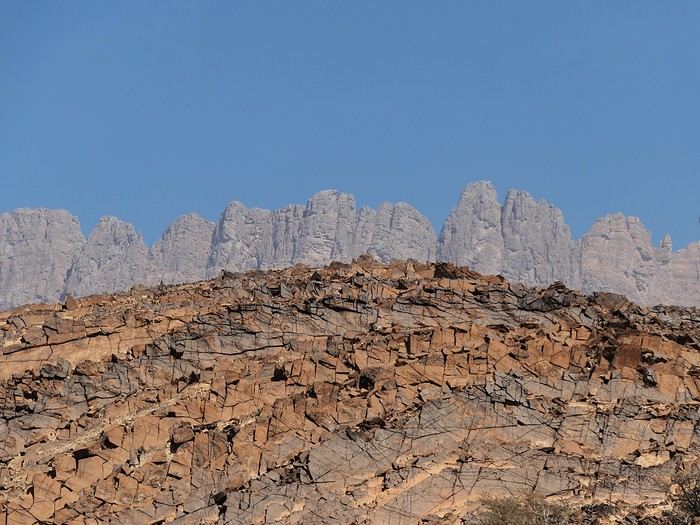
We climb the hill from the wrong side—the steepest one—with no trail because we followed some Omanis who overtook us in a 4x4 and bounded up like goats at full speed. One of them stayed in the 4x4, giving us a friendly wave while eating dates.
Up there, it’s incredible. This site is fantastic.
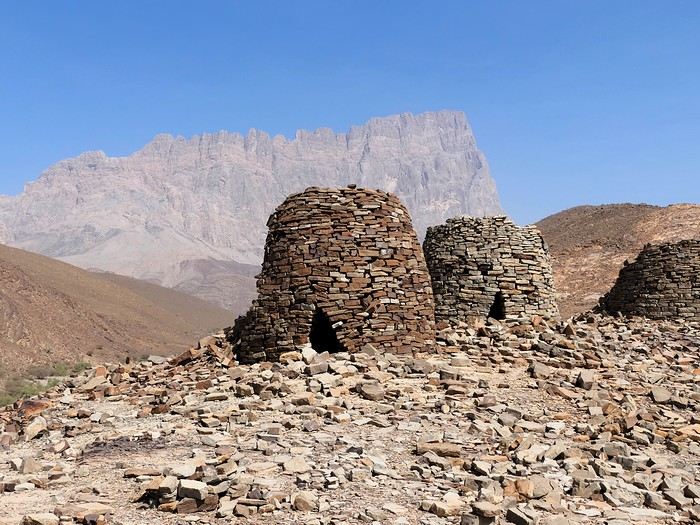
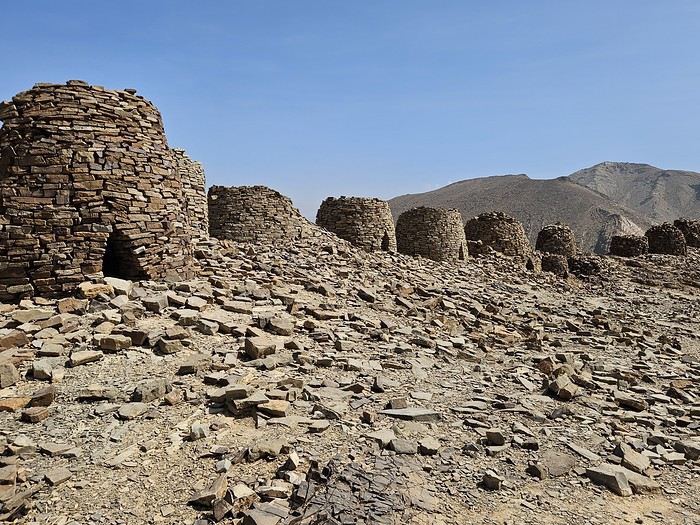
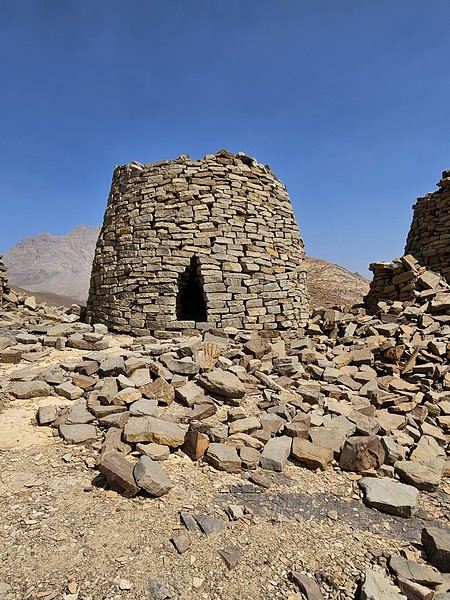
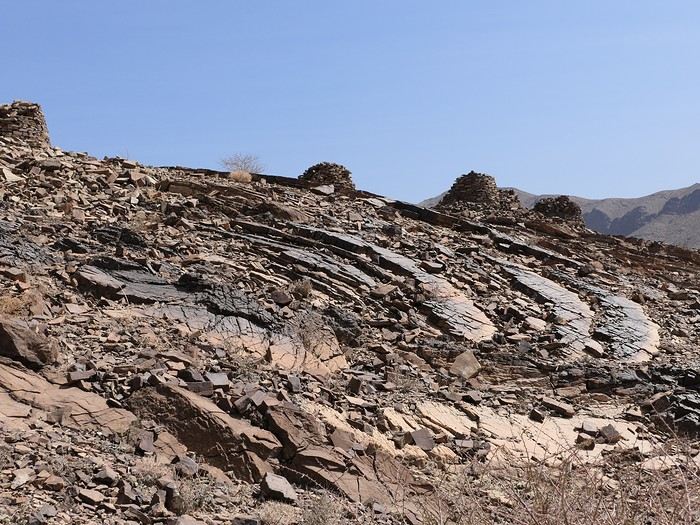
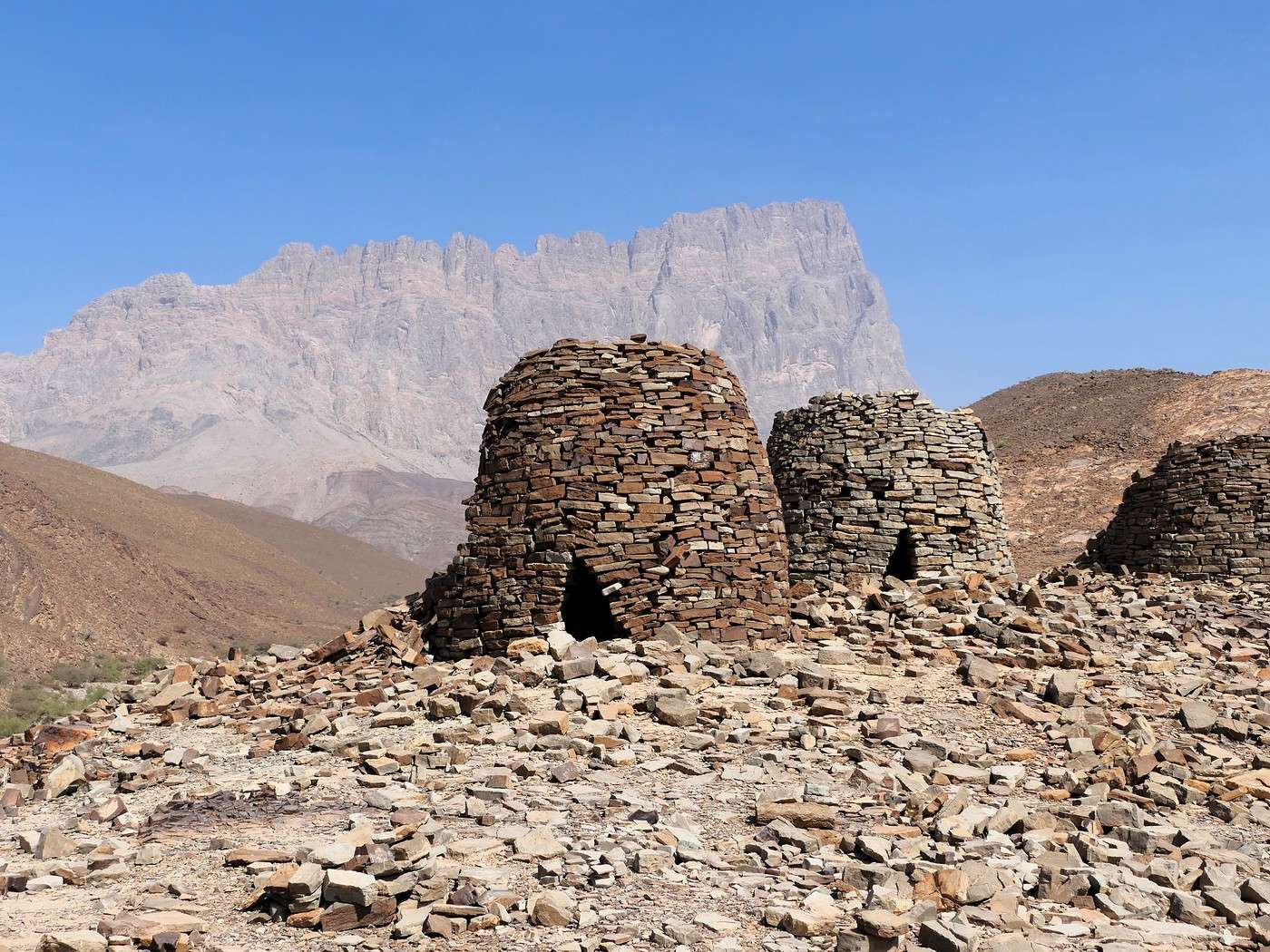
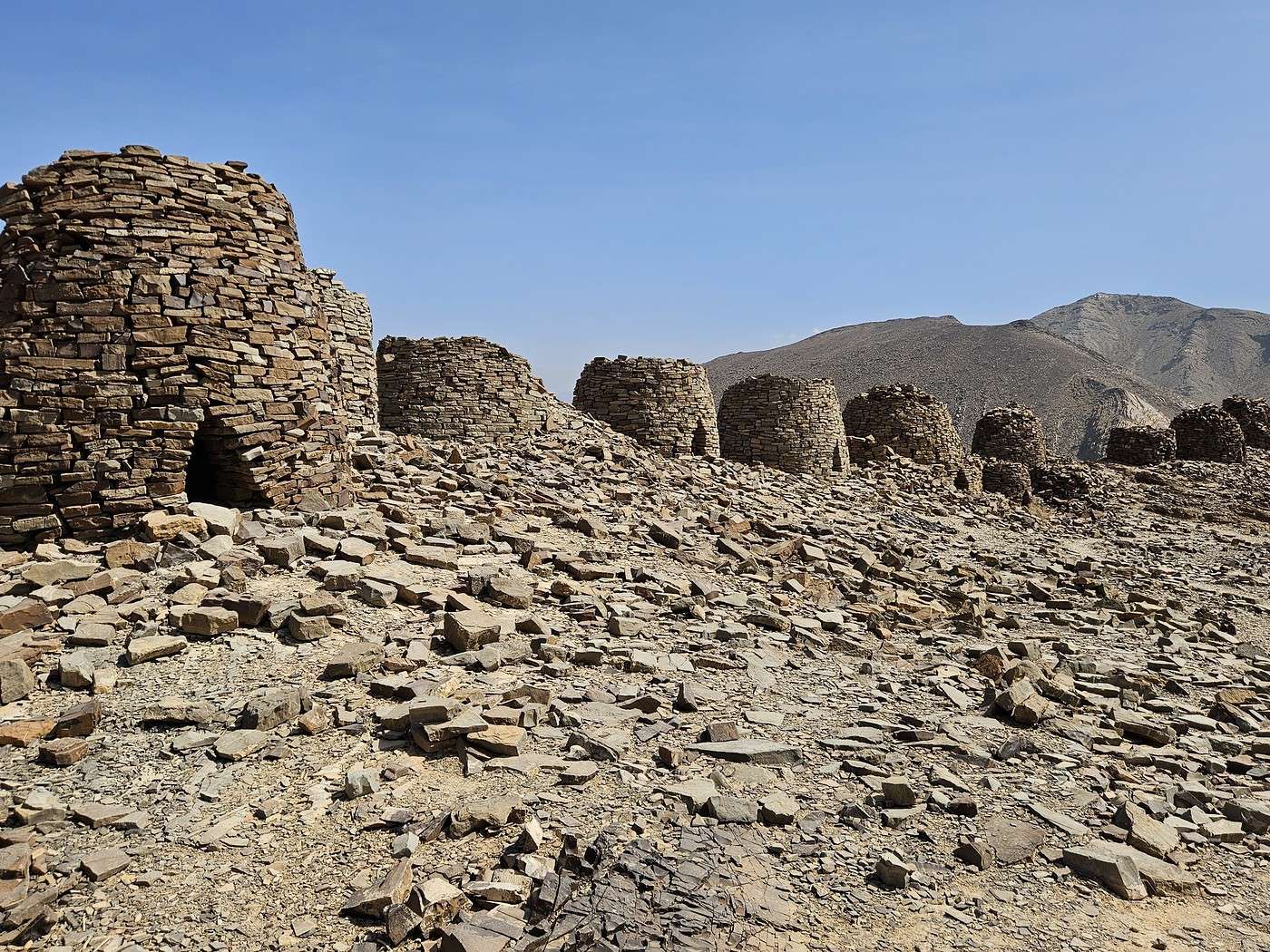
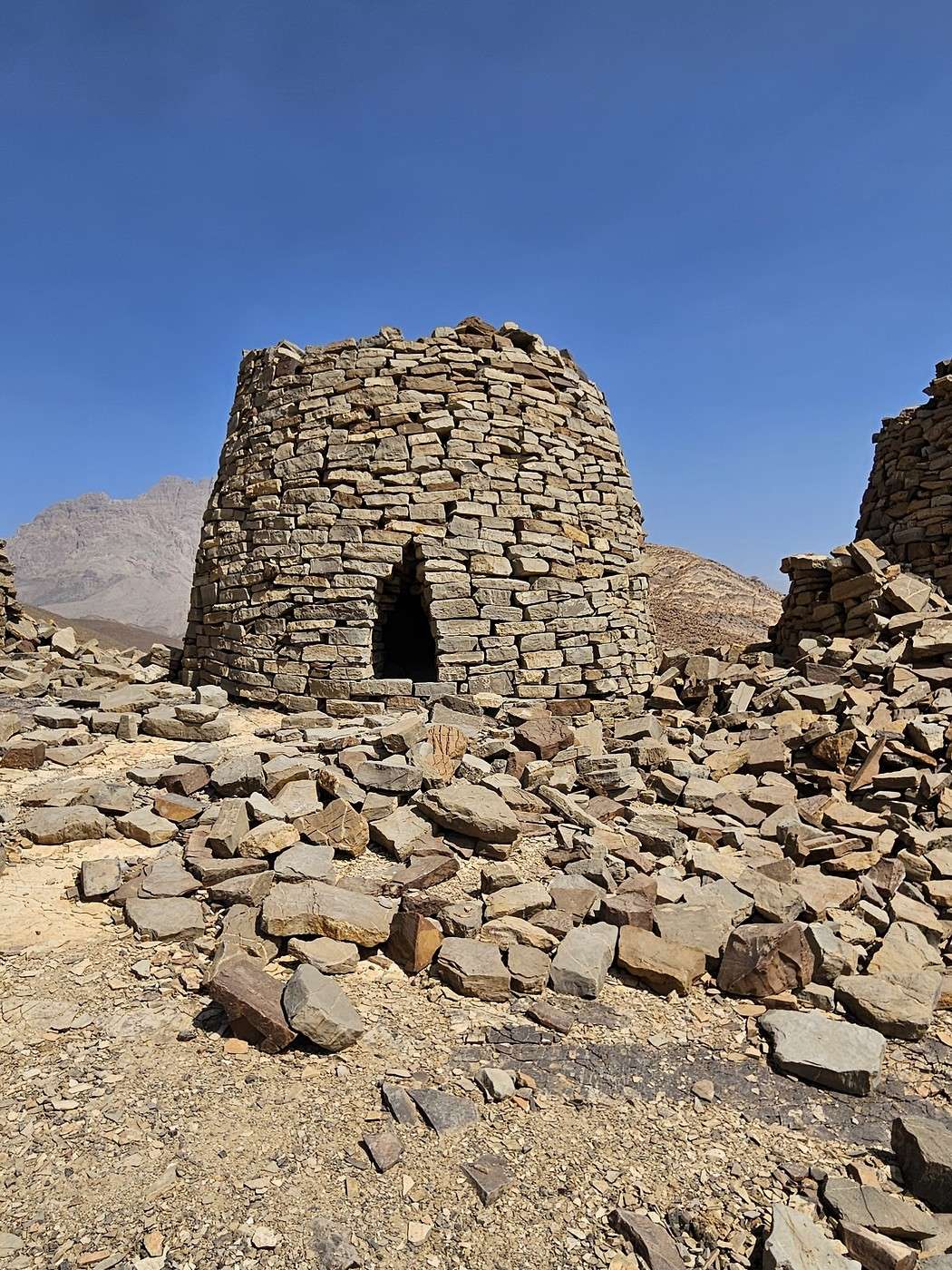
We’re speechless in front of the alignment of these 21 tombs on the ridge, in astonishing condition considering they’re made of dry stones (no binder of any kind). Of course, they’re empty (5,000 years, after all).
After wandering around a bit, we head back down the easy side, following a trail. The 4x4 is waiting there now, the driver still busy eating dates... The two young Omanis who visited at the same time as us come over. We chat a little—they want to know who we are, where we’re from, and why we’re visiting this site. They think we climbed the hill well for our age (oh, these youngsters!), and they insist we take two bottles of water, which one of them runs to get from the 4x4. It’s a kind gesture we accept with warm thanks, even though we’ve got plenty of water in our car.
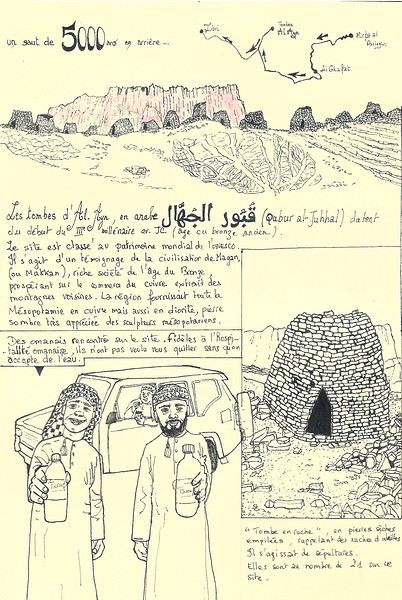
We leave, enchanted by this visit. These are now, ahead of the Egyptian pyramids (4,600 years for the oldest at Saqqara), the oldest human constructions we’ve ever seen.
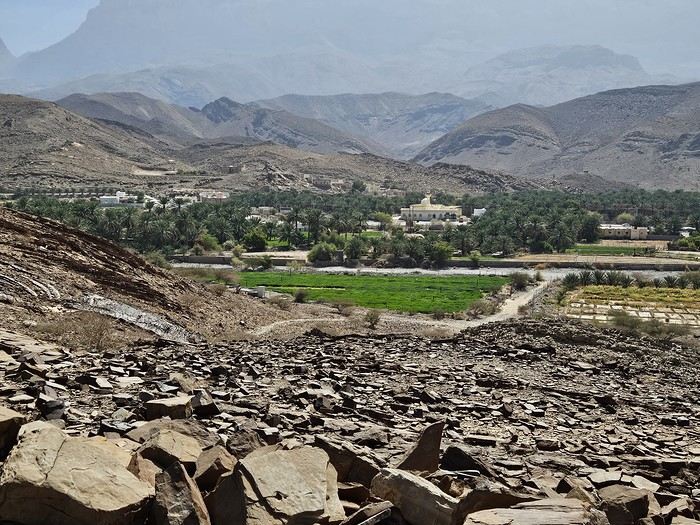
(*) When arriving in Al Ayn, continue on the road called either "Al Gafath road" or "Wadi al Ayn road," heading toward Gayl Subay. After passing a recent mosque on the right, you can park.
On leaving Al-Ayn, if we’d had a 4x4, we could’ve pushed on to the nearby Wadi Damm, which looks stunning, but we were short on time—it seems to deserve at least half a day.
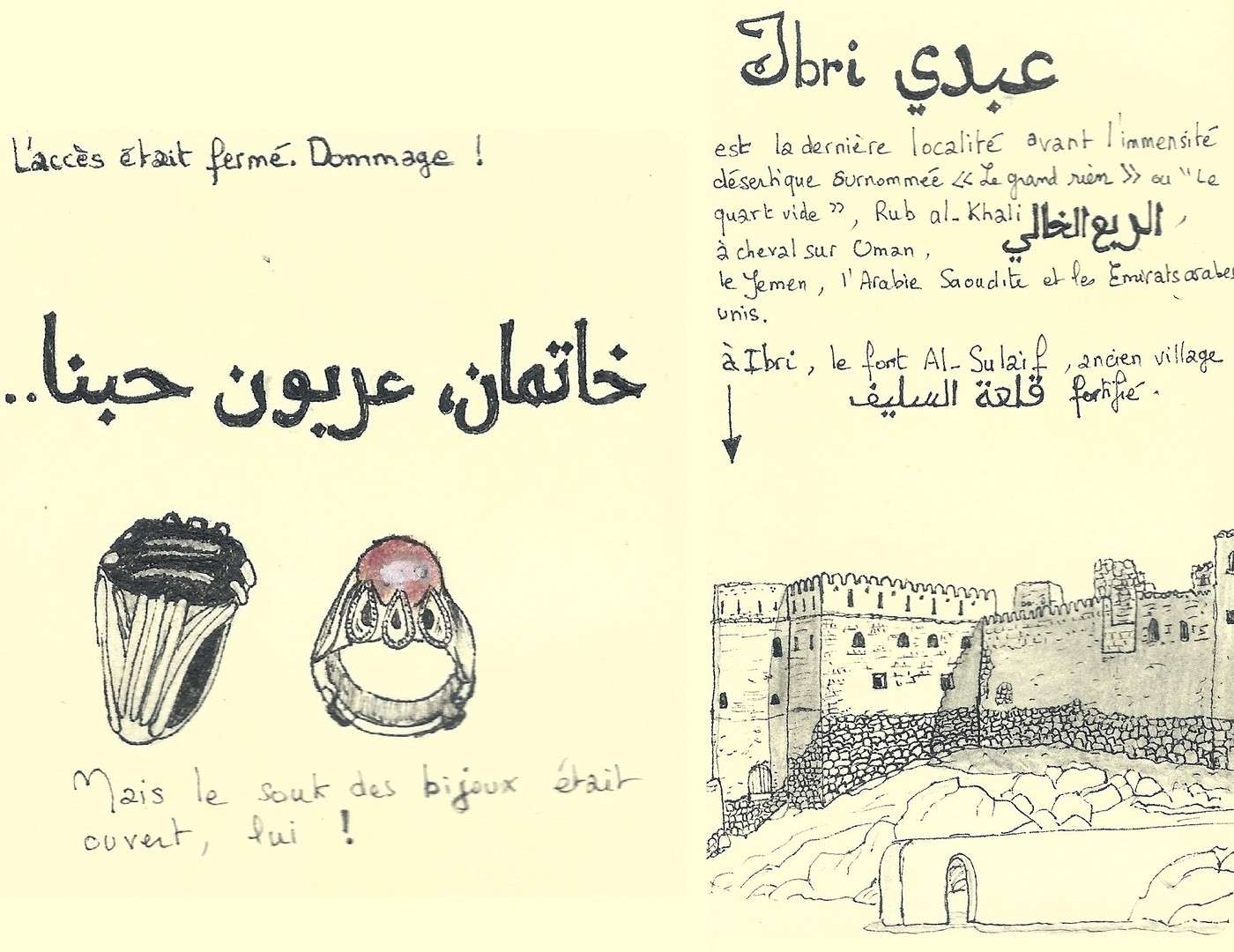
Heading to IBRI!
In Al Ayn, we park along the main road (*), just past a mosque on the right. The site is somewhere to the left—we know we have to walk a few hundred meters: first cross the wadi, dry this season, that runs along the road, then follow walls bordering gardens, cross the other arm of the dry wadi, and take a rocky path. There’s no sign, but at some point, you start seeing the tombs in the distance, on the ridge of a large hill that, as you get closer, looks like a massive pile of pink sandstone slabs.
We climb the hill from the wrong side—the steepest one—with no trail because we followed some Omanis who overtook us in a 4x4 and bounded up like goats at full speed. One of them stayed in the 4x4, giving us a friendly wave while eating dates.
Up there, it’s incredible. This site is fantastic.
We’re speechless in front of the alignment of these 21 tombs on the ridge, in astonishing condition considering they’re made of dry stones (no binder of any kind). Of course, they’re empty (5,000 years, after all).
After wandering around a bit, we head back down the easy side, following a trail. The 4x4 is waiting there now, the driver still busy eating dates... The two young Omanis who visited at the same time as us come over. We chat a little—they want to know who we are, where we’re from, and why we’re visiting this site. They think we climbed the hill well for our age (oh, these youngsters!), and they insist we take two bottles of water, which one of them runs to get from the 4x4. It’s a kind gesture we accept with warm thanks, even though we’ve got plenty of water in our car.
We leave, enchanted by this visit. These are now, ahead of the Egyptian pyramids (4,600 years for the oldest at Saqqara), the oldest human constructions we’ve ever seen.
(*) When arriving in Al Ayn, continue on the road called either "Al Gafath road" or "Wadi al Ayn road," heading toward Gayl Subay. After passing a recent mosque on the right, you can park.
On leaving Al-Ayn, if we’d had a 4x4, we could’ve pushed on to the nearby Wadi Damm, which looks stunning, but we were short on time—it seems to deserve at least half a day.
Heading to IBRI!
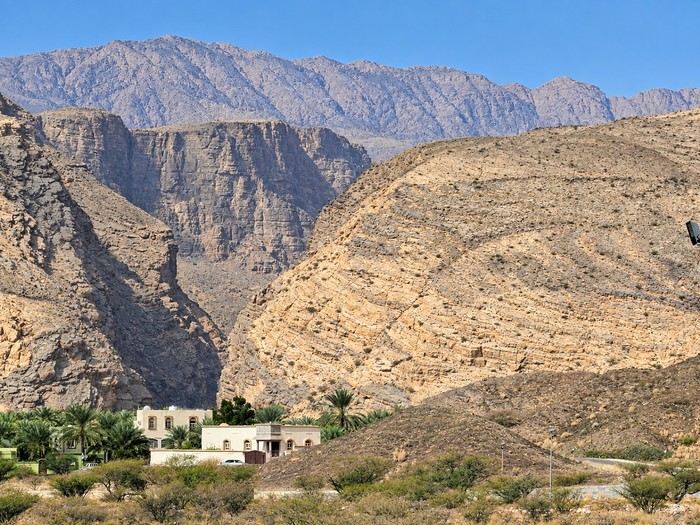
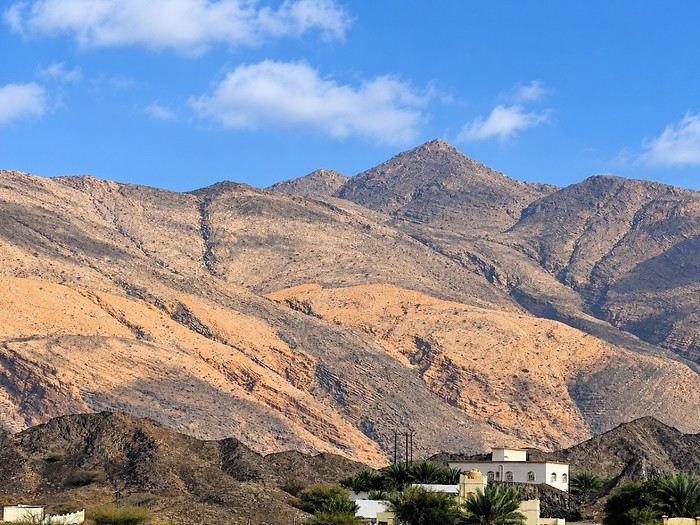
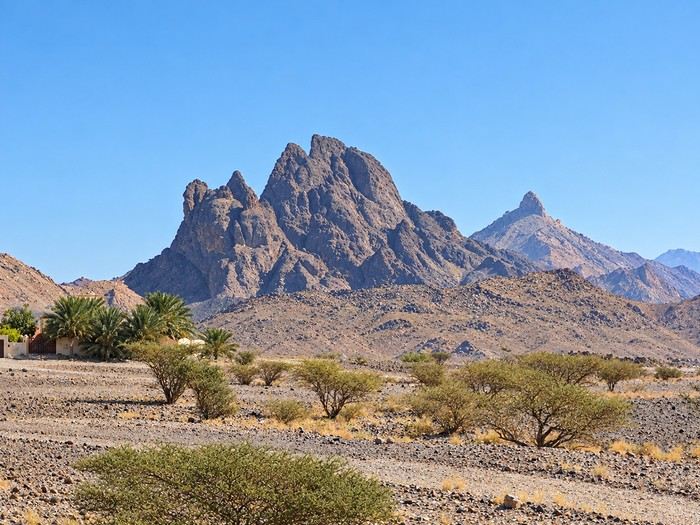
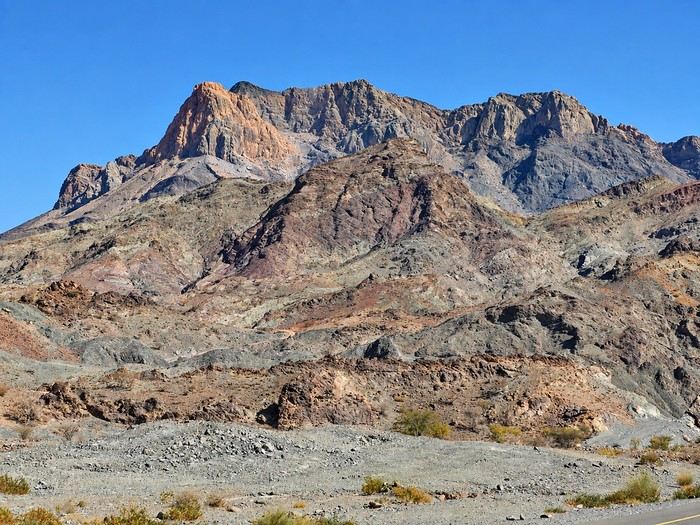
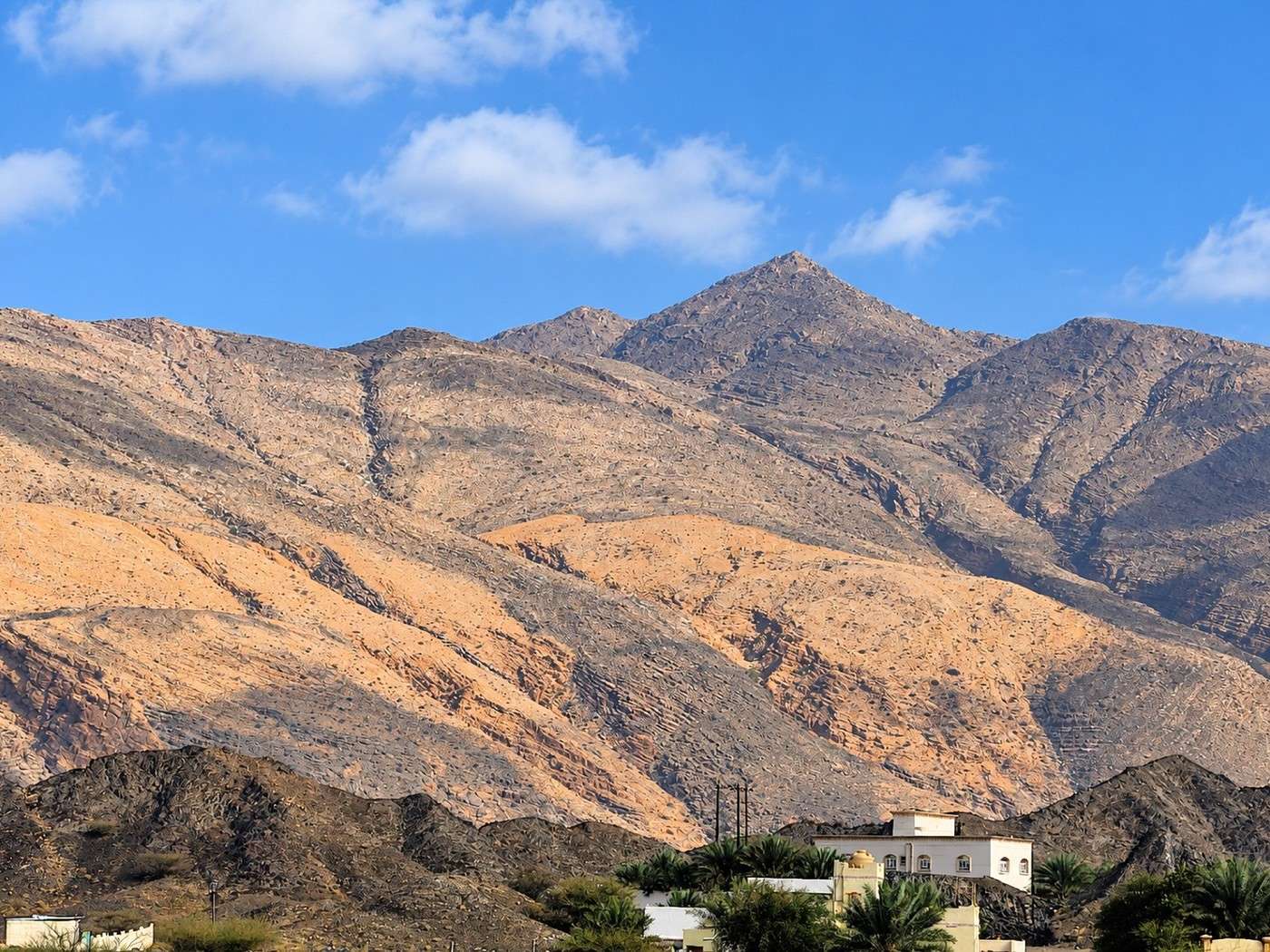
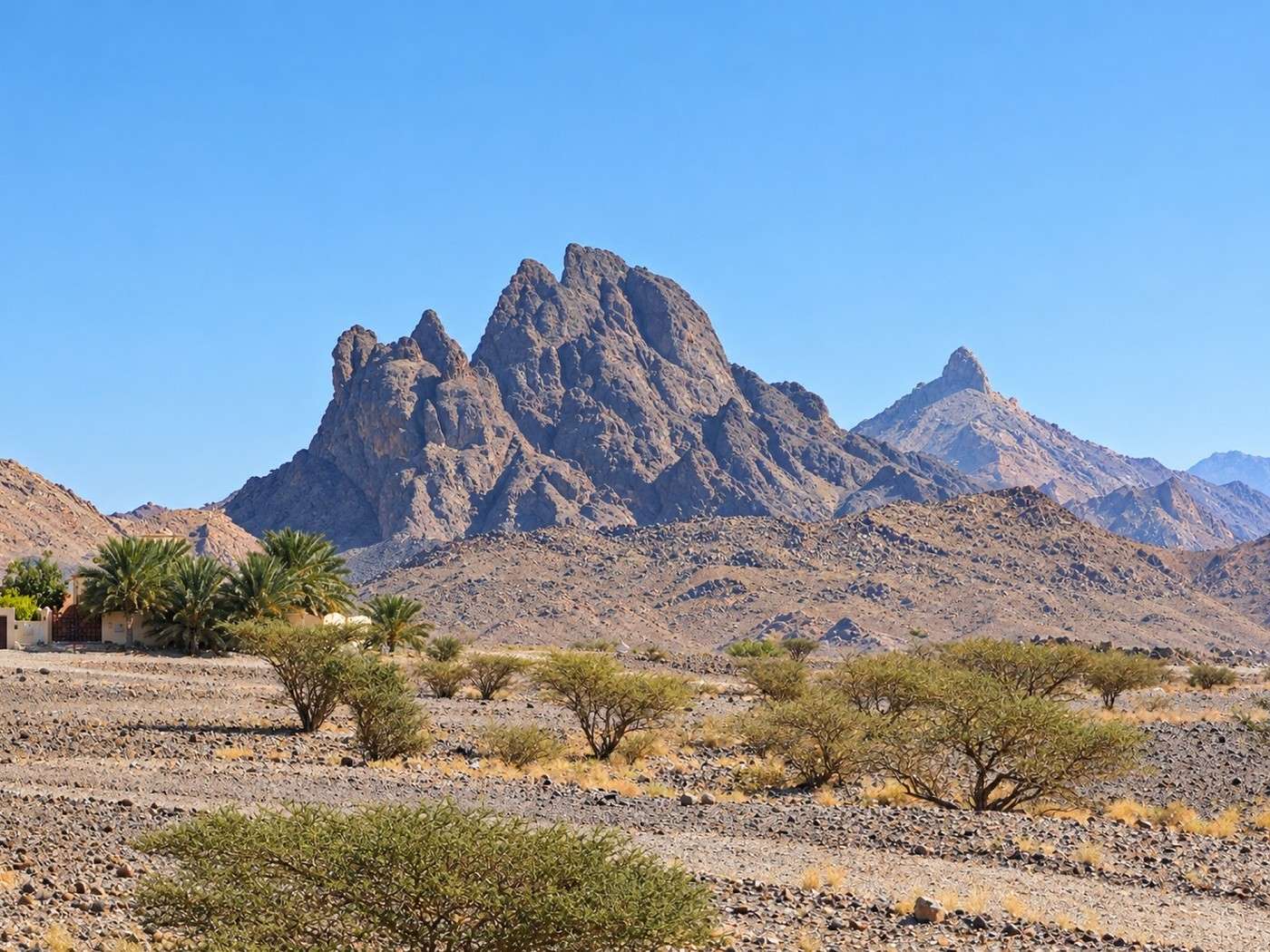
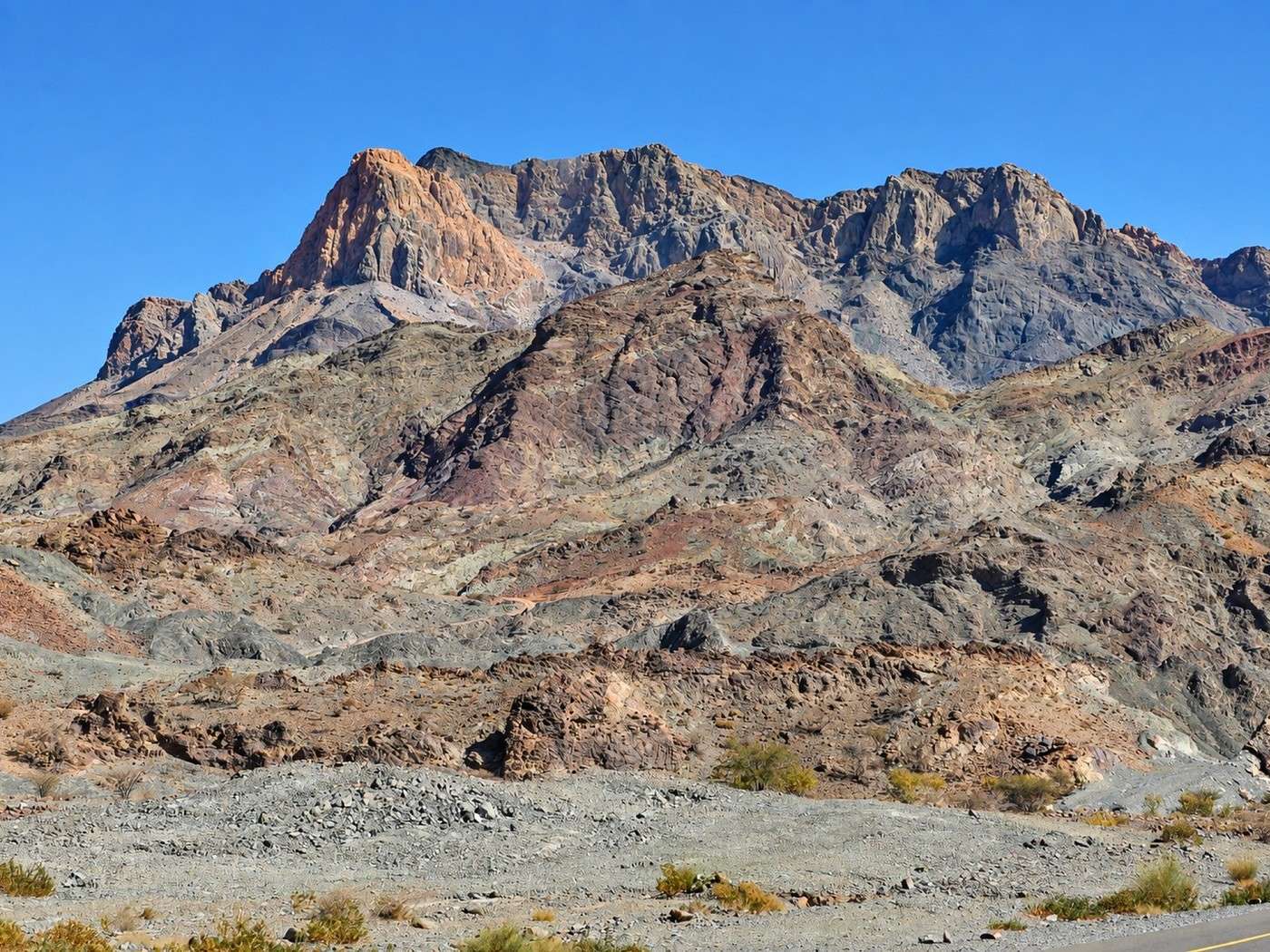
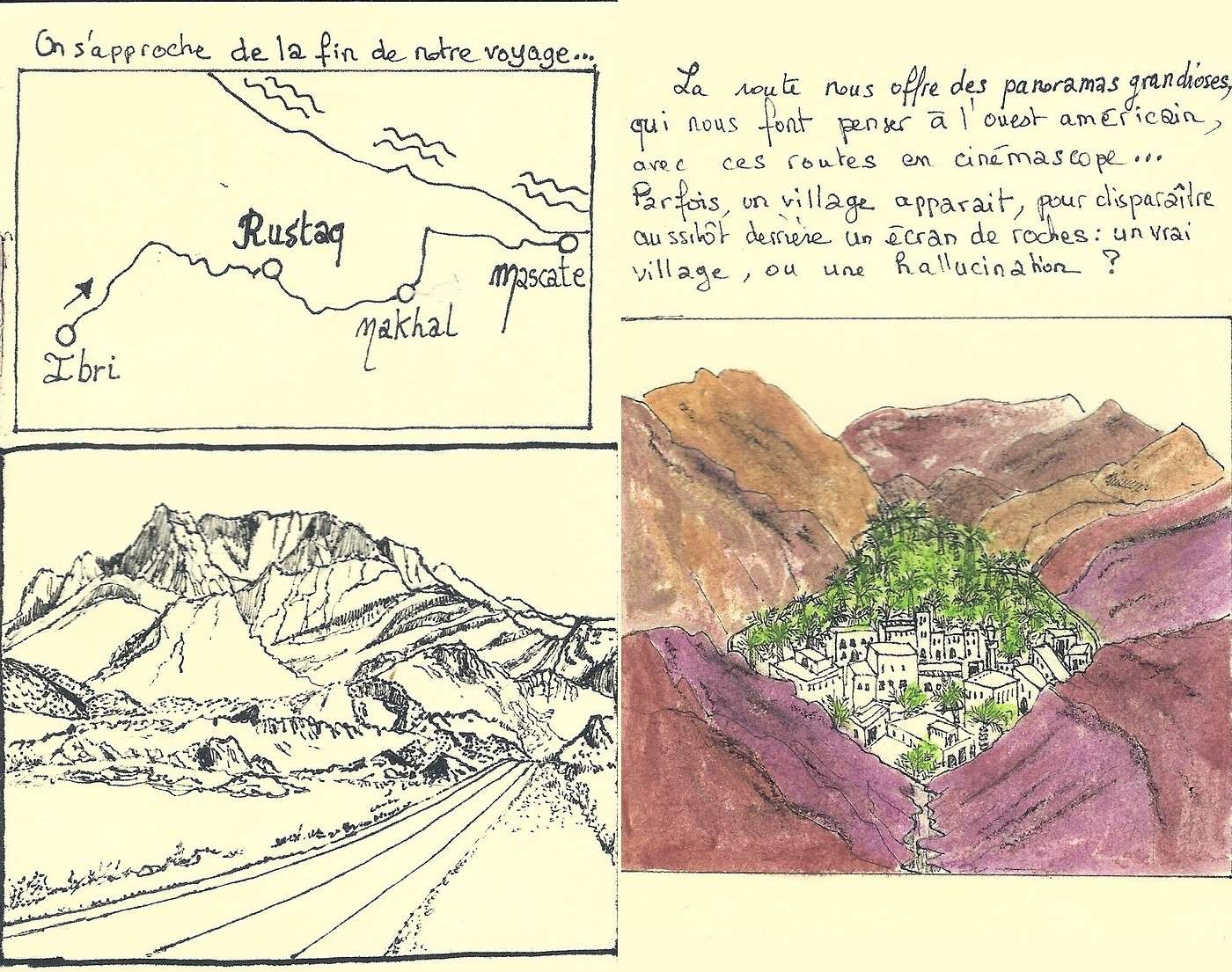
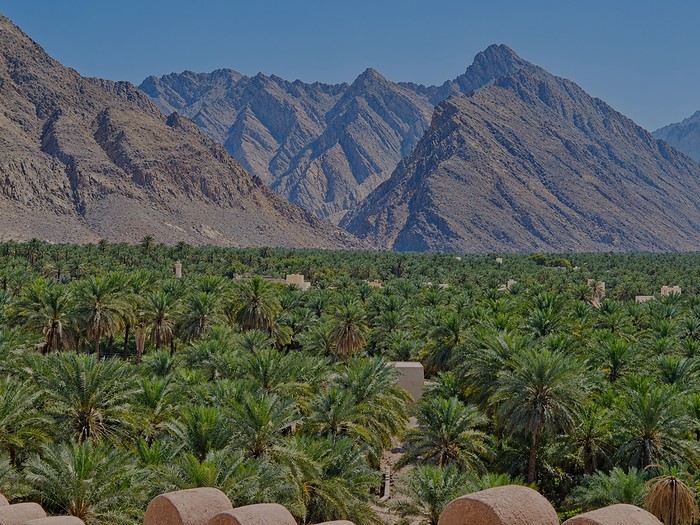
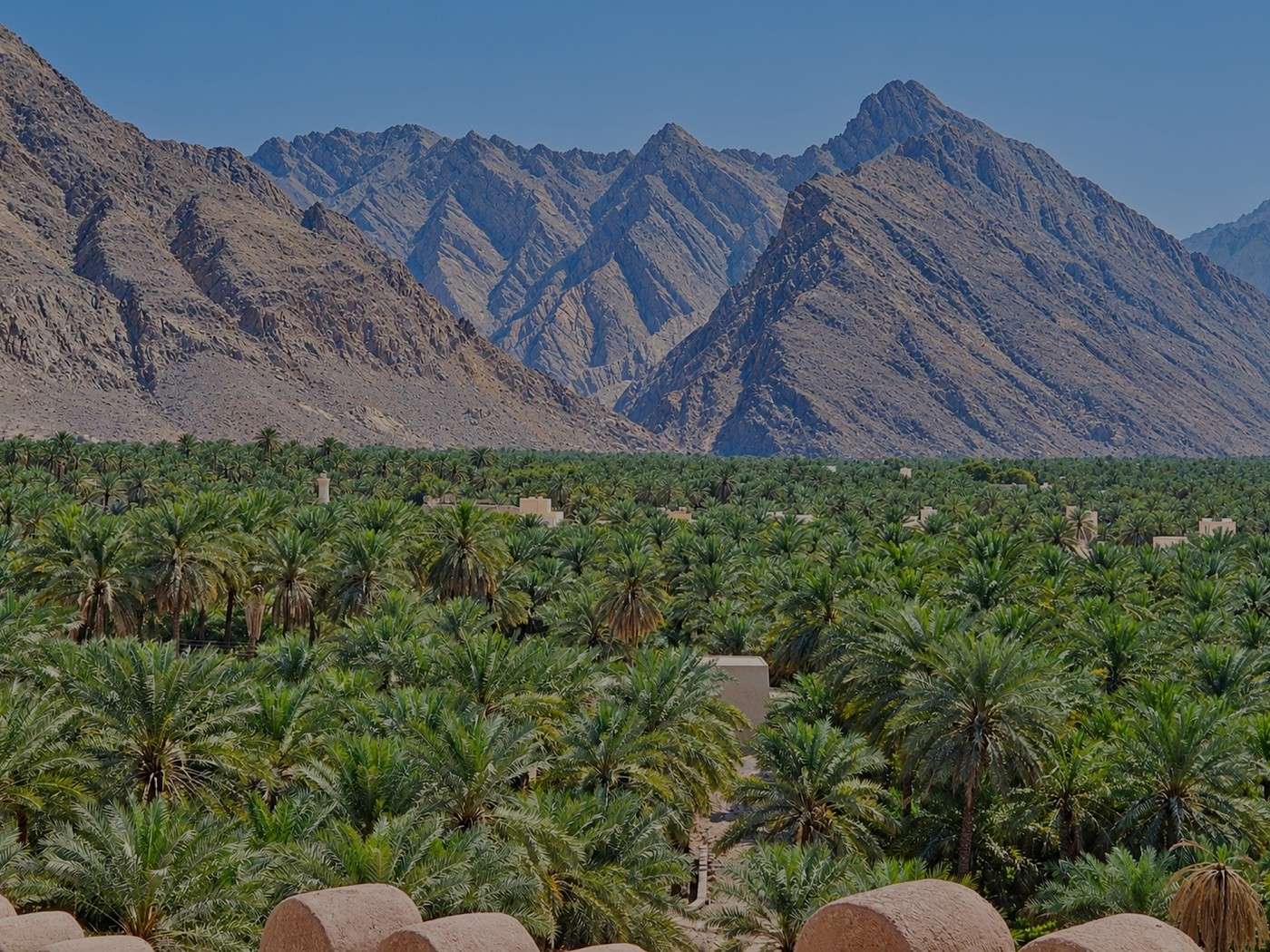
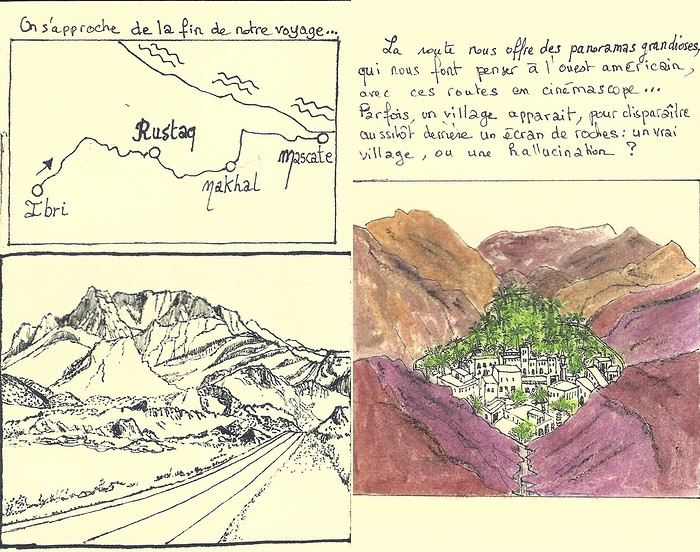 From Ibri, the road is stunning—we follow the Hajar Mountains on the northern side (opposite to where we were before), offering beautiful mineral landscapes interspersed with fleeting glimpses of villages hidden in wadis, surrounded by trees. We also spot villas in the scorching heat, enclosed by high walls with branches peeking out, hinting at lush gardens likely fed by wells tapping into underground water reserves.