in Entre deux voyages › Carnets de voyage
Southwest USA Road Trip Part II (page 3 of 4)
Discussion started by Mitch341 on 2026-09-22
78 replies
This thread has been translated into English.
The Southwest USA Road Trip Part II
Mitch341 · 2026-10-05 · Message 41 of 79
Thursday, August 20.
We leave Albuquerque for Amarillo. And here we are on the 66! The Mother Road!
Let’s step out of the travel journal for a moment to talk about the history of this legendary road.
You know it connected Chicago to Santa Monica, covering nearly 3,940 kilometers between 1926 and 1985, the year it was officially decommissioned.
So it wasn’t really the road of the Westward Expansion anymore. Its history belongs to another era of America.
Three time zones, eight states crossed—just like that!
This was the route taken in the 1930s by thousands of families hit by the Great Depression and the Dust Bowl. Bankrupt farmers, many from the Great Plains, headed toward California to try to survive and find work.
Another westward journey, in the end. But this time, not to conquer territories—just to try to live.
So, what’s this famous Route 66 like these days? For my part, I traveled or followed it for nearly 1,000 kilometers between Williams and Amarillo.
There are interesting spots, completely remote places, impassable stretches of road that sometimes end in the middle of nowhere, a few touristy areas that lean heavily on the presence of Route 66, and some pure US-style oddities.
But let’s be clear: a road trip on Route 66 takes preparation.
Don’t expect attractions, visits, old diners, restored gas stations, and Cadillacs all along the way. Far from it! And don’t hesitate to leave Route 66.
Santa Fe, for example, is well worth the detour via the old Route 66 loop. And while you’re in the area, why not head up to the Grand Canyon north of Flagstaff?
It’d be a shame to miss it just because it’s not *exactly* on the Mother Road!
Between Williams and Amarillo, I didn’t see many bikers. Very few cars either.
Route 66 here often runs parallel to the Interstate 40, sometimes just a few dozen meters away, and it’s not always in the best condition.
You’re driving along peacefully, sometimes alone in the world, while cars and huge American trucks pass you on the Interstate right next to you. A unique vibe. And in the end, not much is really done to attract tourists.
In Tucumcari, for example, you see old motels, a few former gas stations, signs, and quite a few abandoned buildings.
But not much else.
And as for abandoned gas stations and motels, we’d see just as many later on the roads of Texas between Amarillo and Dallas.
Actually, I’m not at all dismissing Route 66! I’m just putting things into perspective.
We’re really happy to have covered a good part of it, and no matter what anyone says, there’s something special about driving on a road whose number alone evokes a whole part of American history that fascinates me so much.
But you have to accept that today’s Route 66 is sometimes very different from the image sold in tourist brochures.
And maybe that’s part of its charm.
It’s possible that the stretches west of Williams, toward California, are livelier and more geared toward Mother Road tourism.
Devoting a trip solely to Route 66 is totally doable. And in my opinion, motorcycles should rule!
A Harley, obviously. Well...
When you look at the cost of renting a Harley in the U.S., the excitement might fade a little.
So there’s another solution.
The blue Mobylette!
Just imagine: Chicago to Santa Monica on a good old blue Mobylette, with saddlebags, a bowl helmet, and a little French flag in the back.
At least then, you wouldn’t just be *visiting* Route 66.
You’d become an attraction on Route 66!
Southwest USA Road Trip Part II
Mitch341 · 2026-10-05 · Message 42 of 79
Leaving Albuquerque is easy. In barely five minutes, we're on the Interstate 40, heading toward Amarillo.
And quickly, we start passing enormous convoys transporting wind turbine blades.
When I say enormous, that’s an understatement!
To be honest, I’ve never seen so many wind farms during a trip. Here in New Mexico, but especially later in Texas as we got closer to Dallas.
Wind turbines as far as the eye can see.
It’s massive.
Well, actually, that’s America for you!
Everything here seems built on a slightly different scale than ours. The roads, the trucks, the distances, the landscapes... and clearly the wind turbines too.
So we drive calmly at the speed recommended by the appropriate signs.
Well... recommended... Let’s say the speed limit, which is much wiser, especially since we start spotting a police car parked peacefully on the median strip now and then.
And what a median strip! So wide that in France, we probably could’ve built a parking lot, a roundabout, and two buildings on it.
Here, no.
It’s just the highway’s median strip.
Welcome to America!
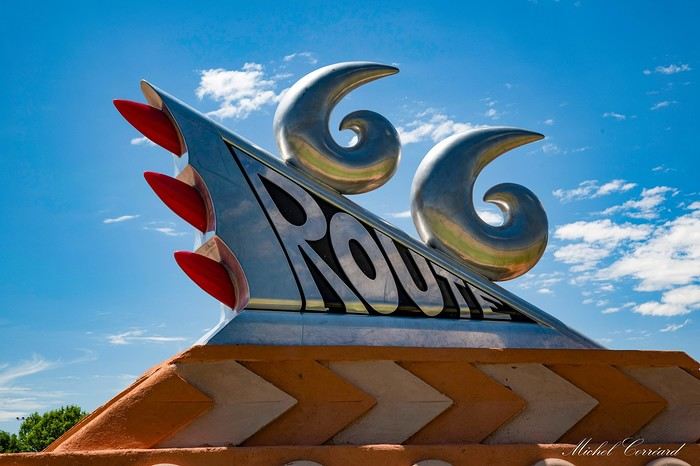
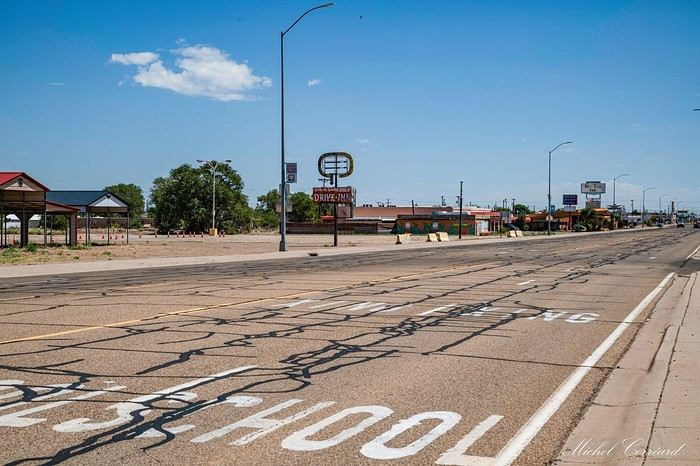
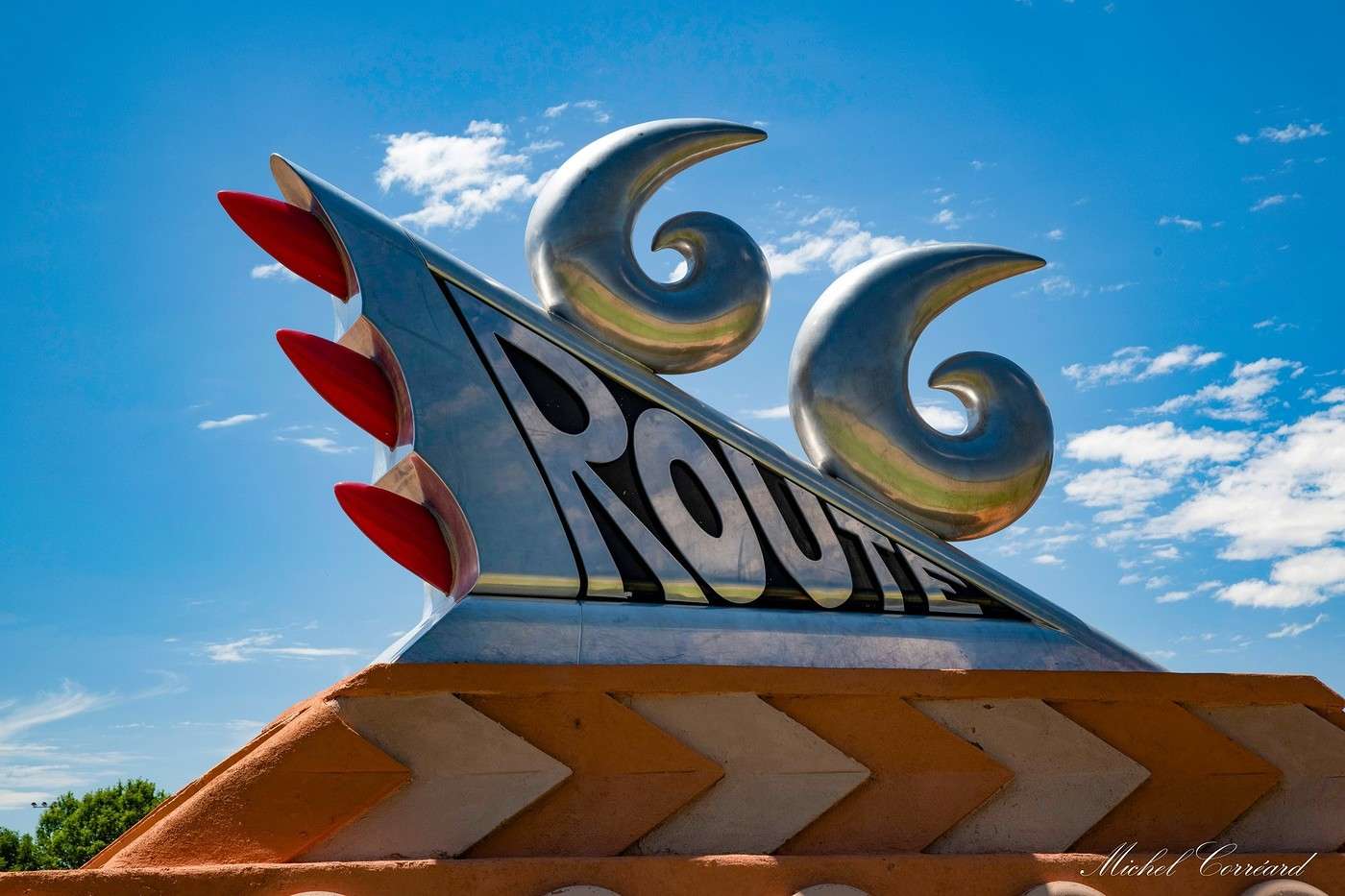
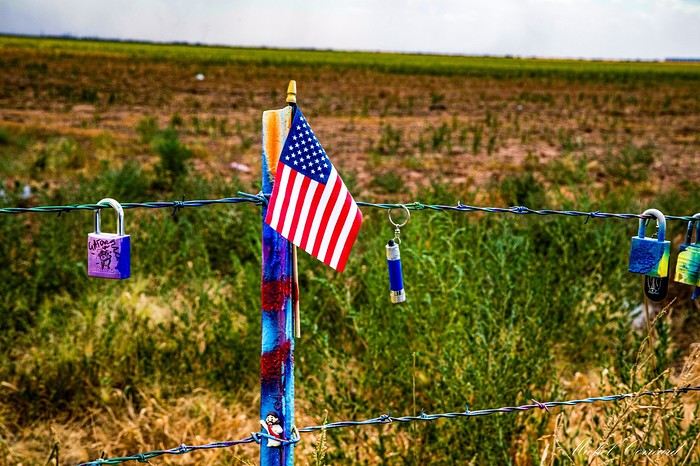
We make our first photo stop at the Tucumcari site in New Mexico. Here stands the monument dedicated to Route 66. There are abandoned gas stations, motels, and a road that’s seen better days. Photos taken, and back on the road.
To be honest, this road trip isn’t focused on Route 66. Otherwise, we would’ve spent 8 hours driving between Albuquerque and Amarillo. Stopping systematically for the same shots—my wife would’ve expressed her discontent.
So, I’m posting just two photos here. Forgive me, as the rest is planned for an exhibit in April 2027.
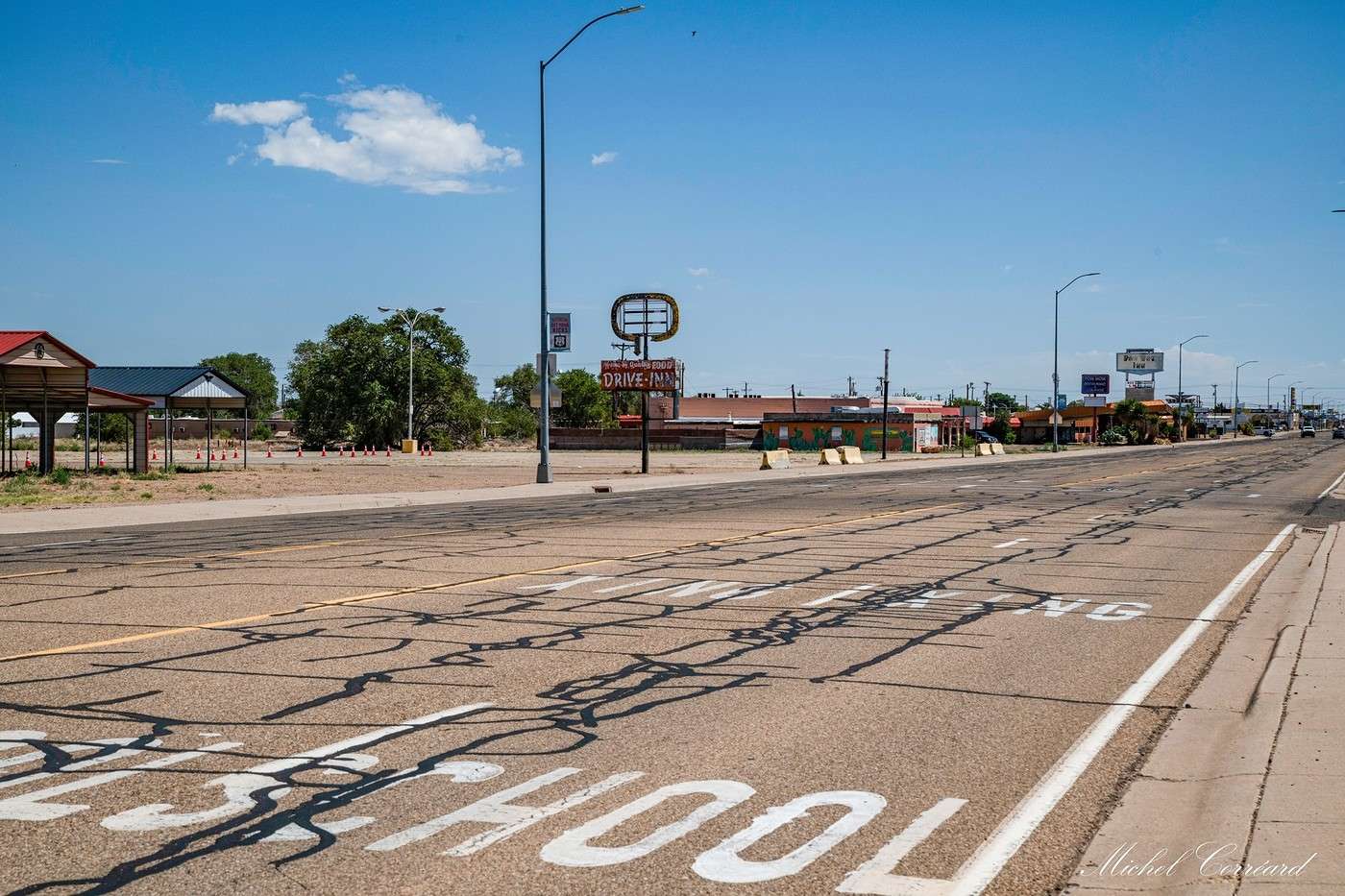
Southwest USA Road Trip Part II
Cheesecake14 · 2026-10-05 · Message 43 of 79
Hi Mitch,
I think you’re being a bit too lenient with Route 66—this French myth littered with highways.
But hey, let the road tripper hunt for that brick fallen from the abandoned motel, buy their "made in China" license plate, and bake on that long stretch of road.
Oh, I’m being a little provocative here...
Best regards,
Southwest USA Road Trip Part II
Mitch341 · 2026-10-05 · Message 44 of 79
Hi Mitch,
I think you're being pretty lenient with Route 66, that French myth littered with highways.
But let the road tripper search for the brick fallen from the abandoned motel, buy their "made in China" license plate, and bake on that long ribbon of road.
Oh, I’m being a bit provocative here...
Best regards
Yes, it’s true—I *am* being lenient. I don’t want to come off as the odd one out either. There’s still a beautiful history with this Route 66. Families came from Hell to Paradise, didn’t they? Let our fellow travelers dream, my dear.
As for me, I baked in the sun—but no license plate, no bricks! Just a bottle of Jack’s from an Arizona gas station. 😉
Southwest USA Road Trip Part II
Mitch341 · 2026-10-06 · Message 45 of 79
So here we are on Route 66, heading toward Amarillo.
We hit the road again after our stop in Tucumcari. The villages roll by along Route 66... and the same sights keep coming back: abandoned motels, deserted gas stations, closed shops.
Either everyone’s off at the seaside for the summer, or there really aren’t many people on this intercity Route 66!
The road is super wide, as you know. Back in France, with that much space, developers and politicians would’ve already slapped down four-lane highways—very much in our own style—along with two shopping malls, two un-air-conditioned schools, and, just for show, a brand-new cultural center that no one would quite know what to do with.
So, we’re driving.
The car camera’s rolling, and since I’ve already got five or six hours of footage, I can tell I’ll be spending some winter evenings sorting through all this...
And soon, we’re approaching a spot that’s become iconic for Route 66 tourists. So, of course, I’ve got to check it out myself—if only to see it with my own eyes.
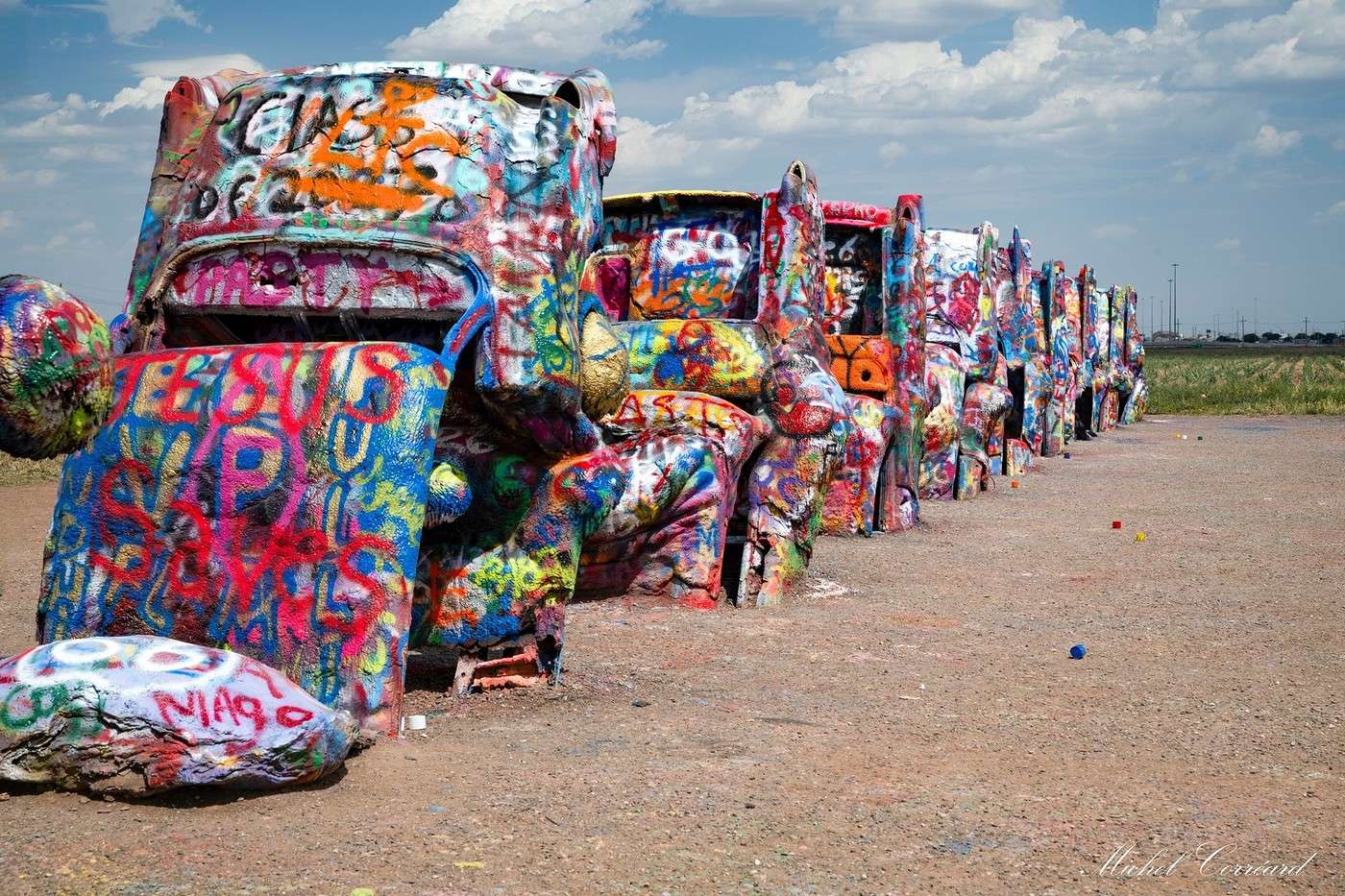
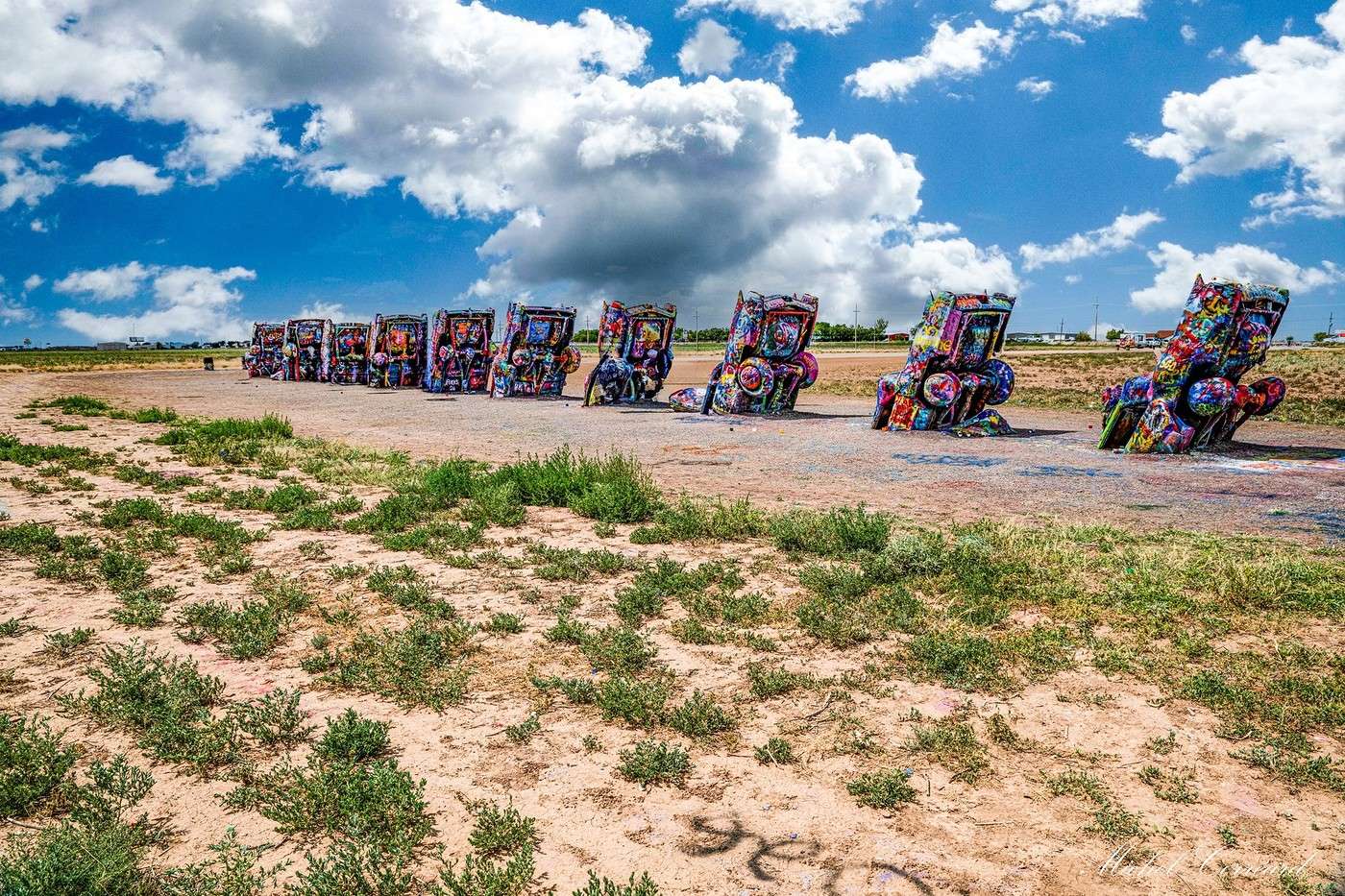
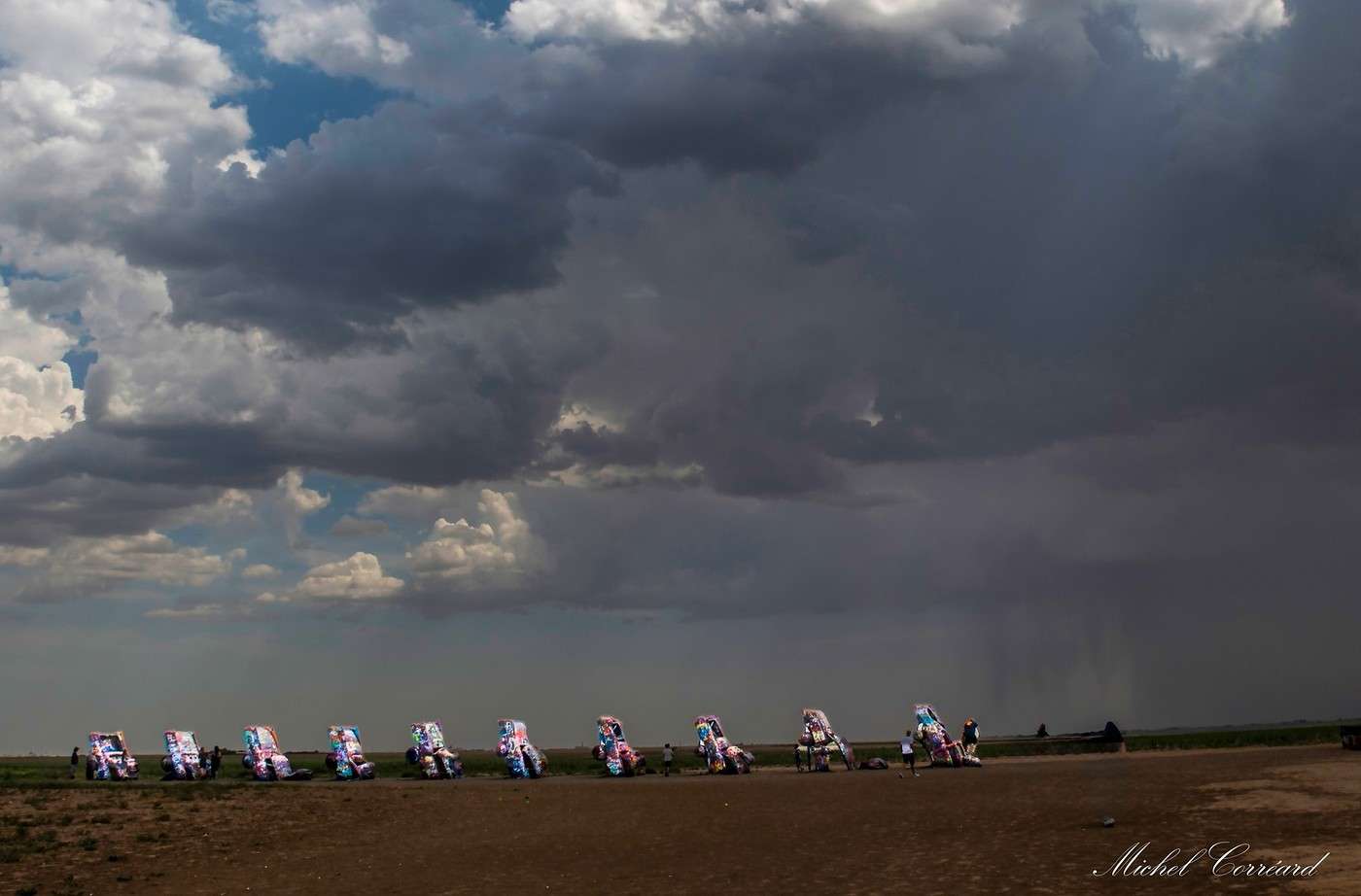
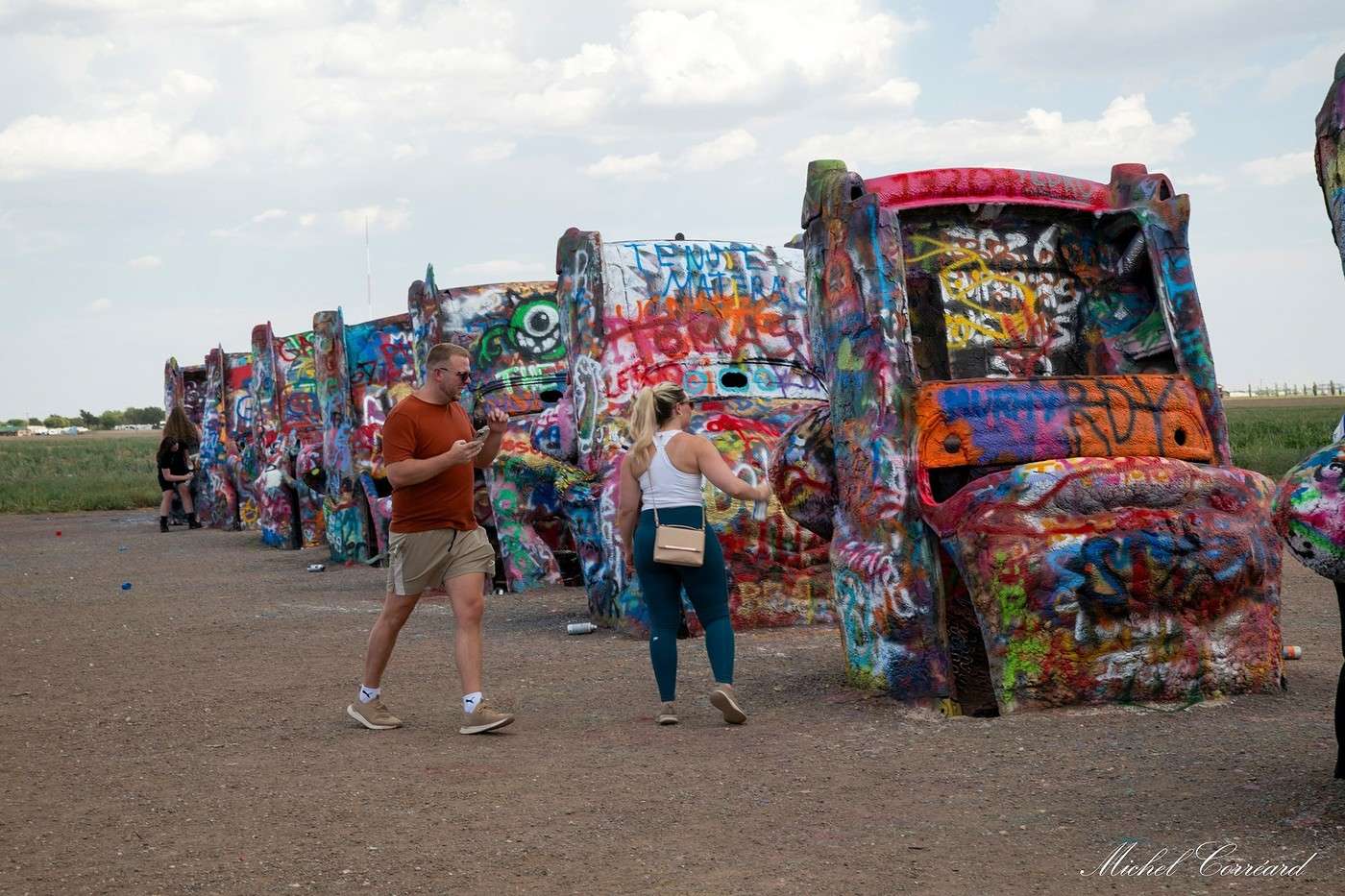
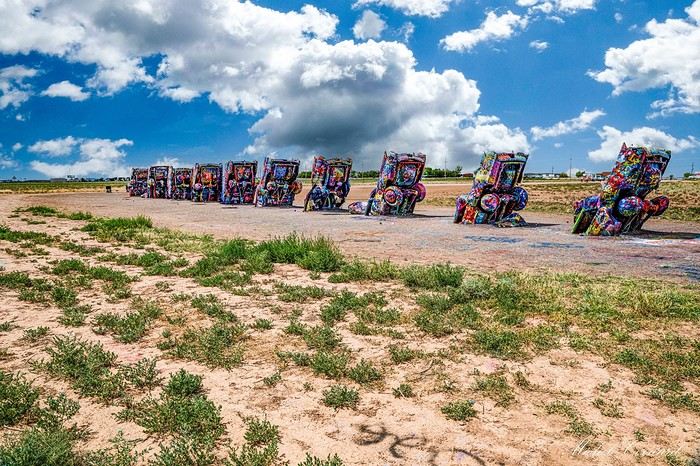
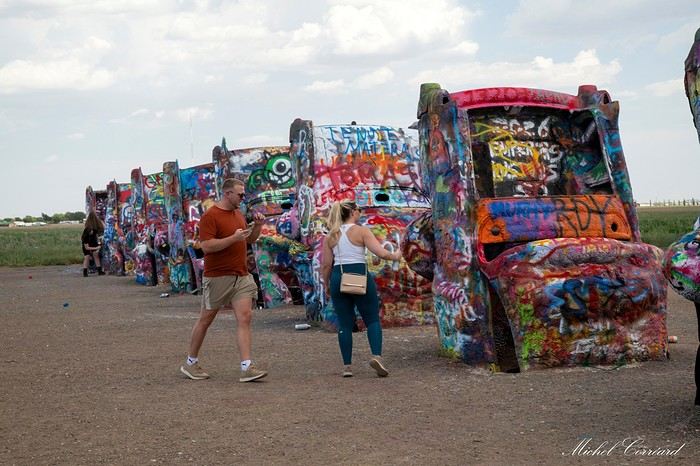
I’m talking about: the Cadillac Ranch!
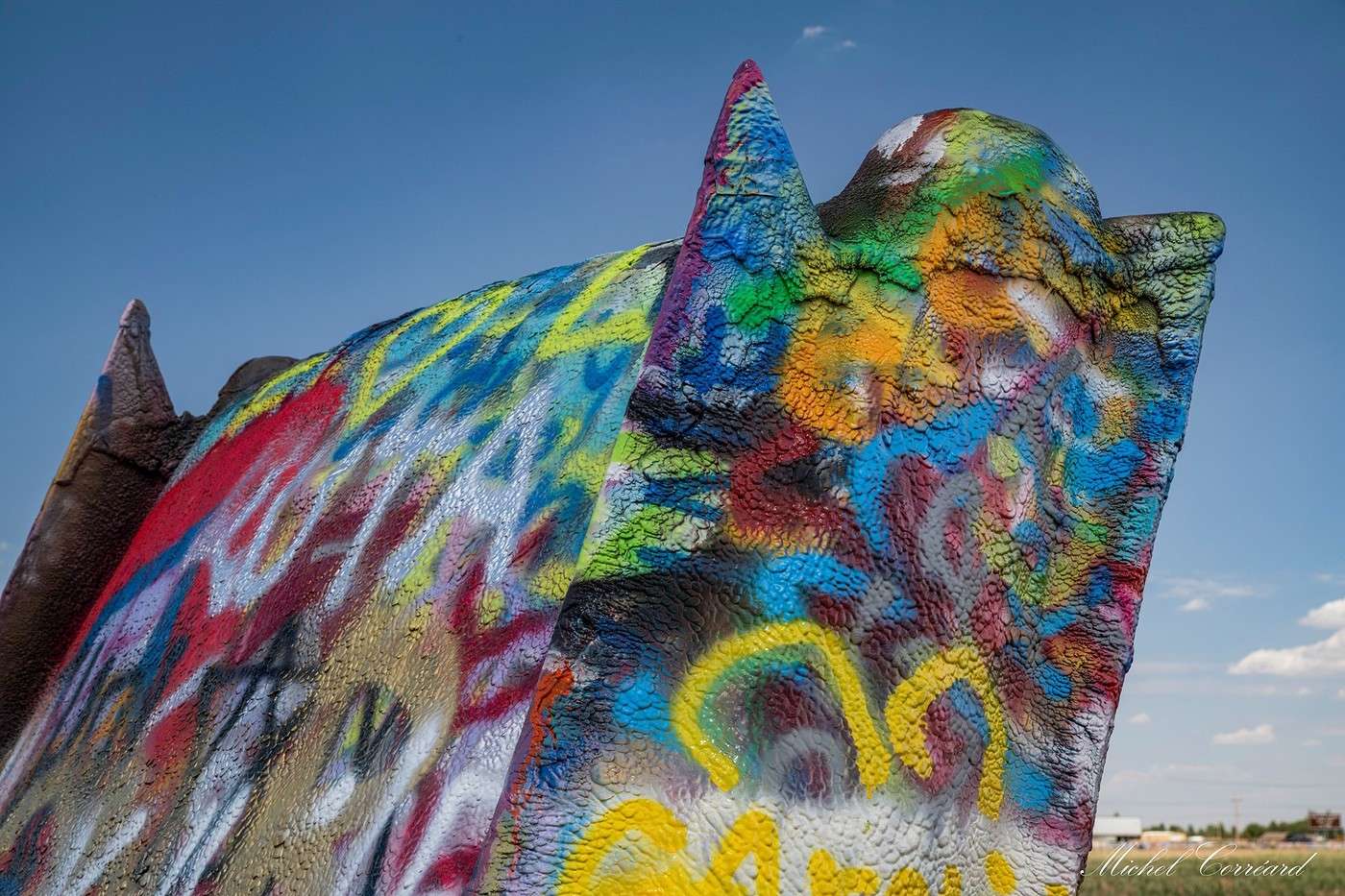
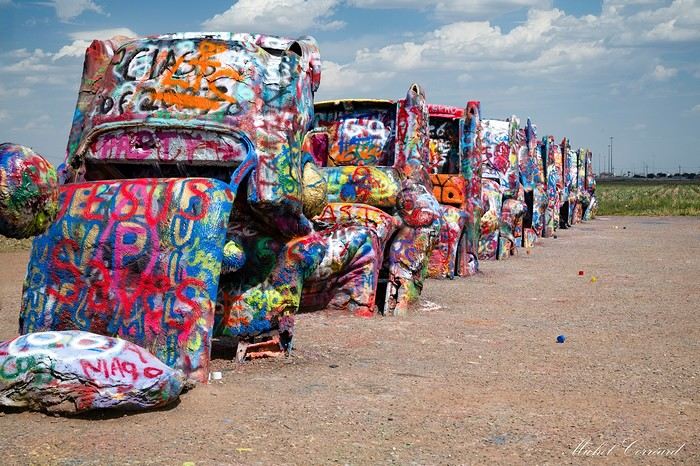
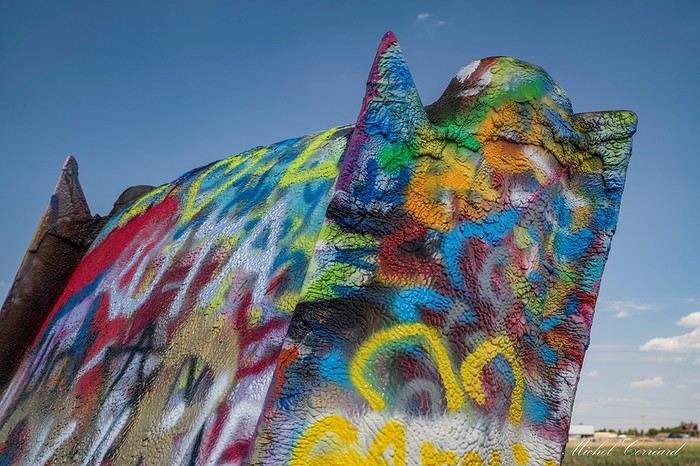
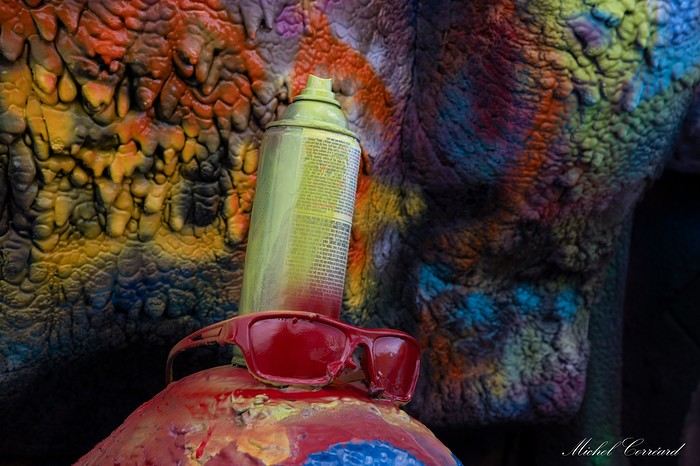
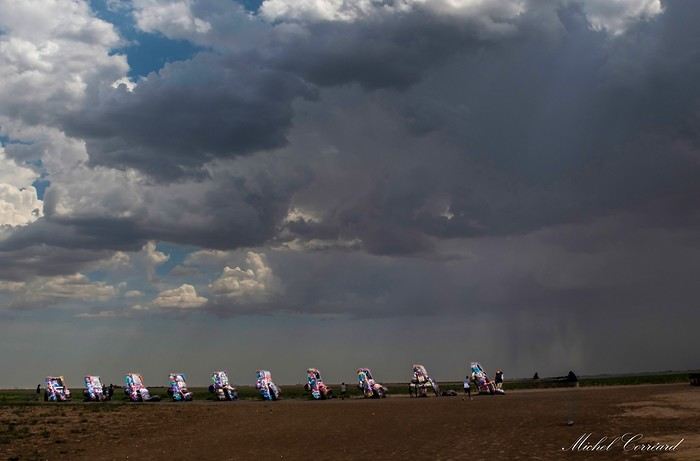
Cadillacs planted in the ground, noses in the dirt and tails in the air. That’s it.
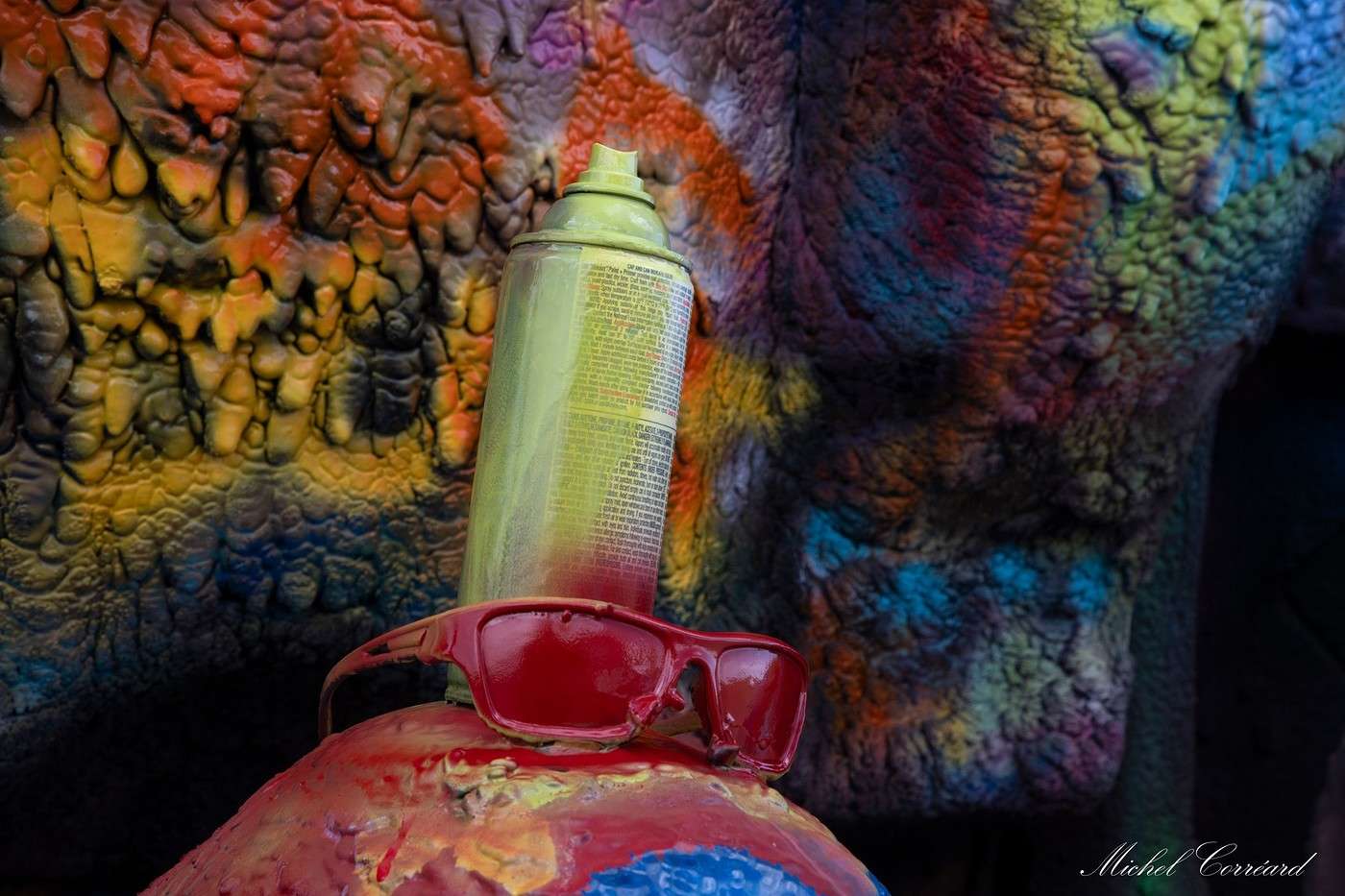
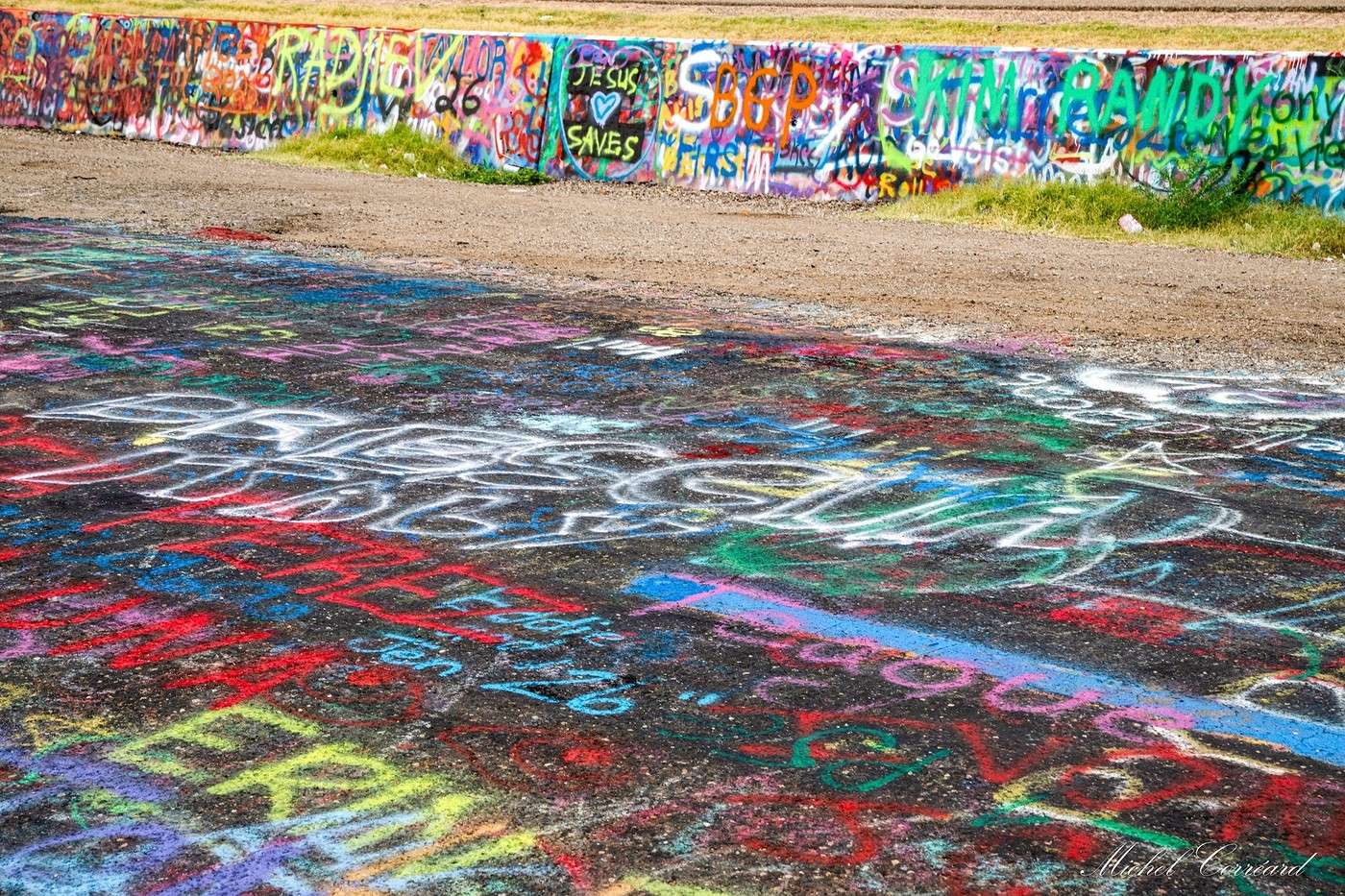
A food truck serves up a little of everything, and nearby, a small truck sells spray paint cans. Because here, the rule is simple: you buy your can and...
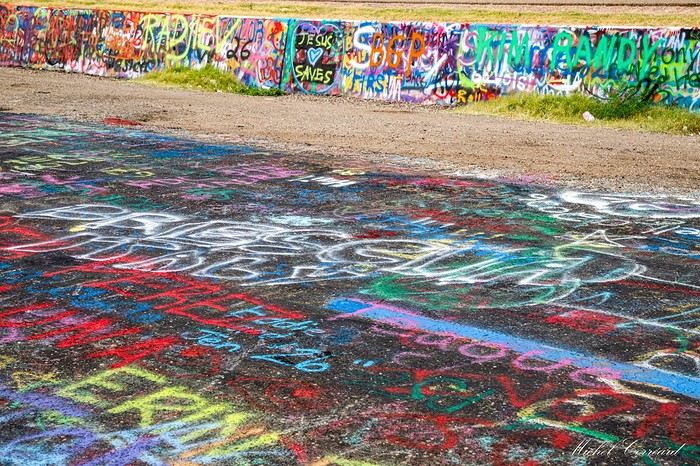
Go on, Ginette, tag those poor Cadillacs!
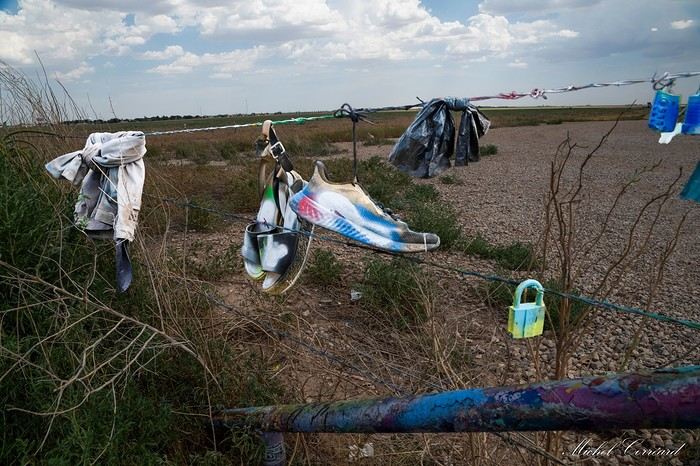
Layers of paint have been piling up for years. Empty cans litter the ground, trash cans are overflowing, and the whole scene sometimes looks more like a body shop gone wrong than a contemporary art piece.
A friendly tourist even offers to let us finish his spray paint can since he’s done with his masterpiece.
— No way, sir! Not happening!
I refuse to add another layer—literally or figuratively.
Wrapped in my dignity and my flat-out refusal to contribute to the general thickening of the Cadillacs’ paint jobs, I still thank him politely.
Because with all the layers of paint piled onto those poor cars over the decades, the day they need to be pulled out of there, it won’t be a tow truck you’ll need to call—it’ll be an 80-ton crane!
Alright...
That’s also part of the tourist Route 66. What can you do...
But let’s admit it—you can still get some pretty cool shots here.
Let’s not be negative to the bitter end, for heaven’s sake!
Southwest USA Road Trip Part II
Mitch341 · 2026-10-06 · Message 46 of 79
We finally arrive at the hotel in Amarillo.
Downtown, well located for access, with paid parking during the day... but free at night. Go figure. But since it’s free, we’re definitely not going to question it!
Okay, I admit I might have gone a little overboard with the hotel choice: Embassy Suites, 550 S Buchanan Street, at the corner of SE 6th Avenue, Amarillo.
And, like in El Paso and a few other hotels we’ve come across on our trip, we get two free drinks at the bar. Now that’s a business policy I can fully support.
We check in, head up to check out the suite, and a few minutes later, I sneak back down on the sly to the bar for a well-deserved pint. It’s already packed. Clearly, in Amarillo, people know how to unwind at the end of the day.
The bartender strikes up a conversation and asks what brings me to this "middle of nowhere."
I explain our journey—the Route 66, our crossing of New Mexico, our stop in Amarillo... And just like that, the guy transforms into a Texas tourism ambassador: — You absolutely have to visit Palo Duro Canyon! It’s the second-largest canyon in the U.S.!
Well, there you go!
The guy’s really selling it!
The second-largest canyon in the U.S... No big deal, right?
I mentally file the info away between sips of beer. After all, since we’re here, we might as well see for ourselves if the bartender’s laying it on a bit thick for his beloved Texas.
And I’m starting to get how Americans work: for them, everything’s big, huge, gigantic, exceptional... and, if possible, the biggest in the world. Or at least the second-biggest.
But actually, tonight, we’ve got a mission! And what a mission!
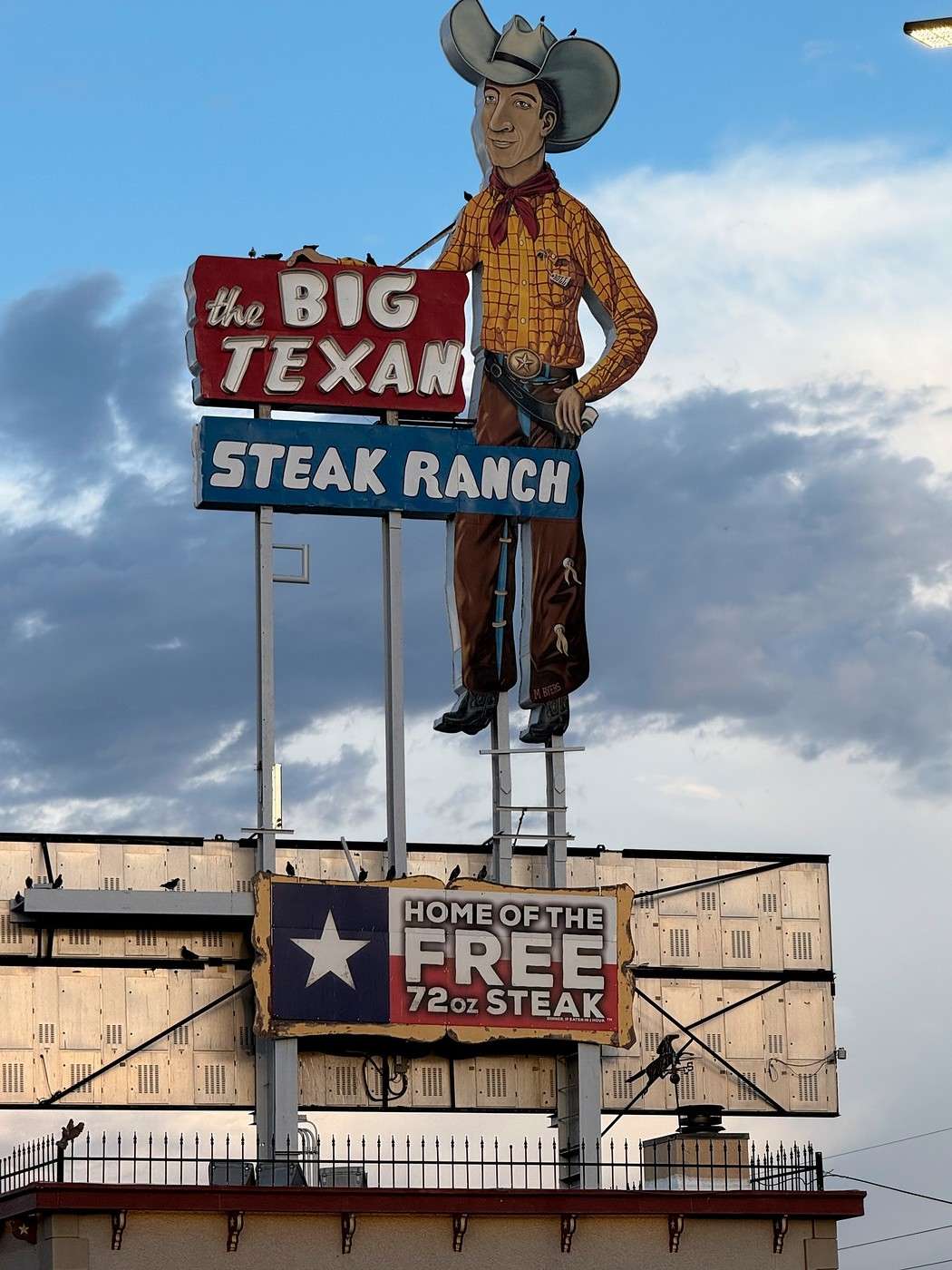
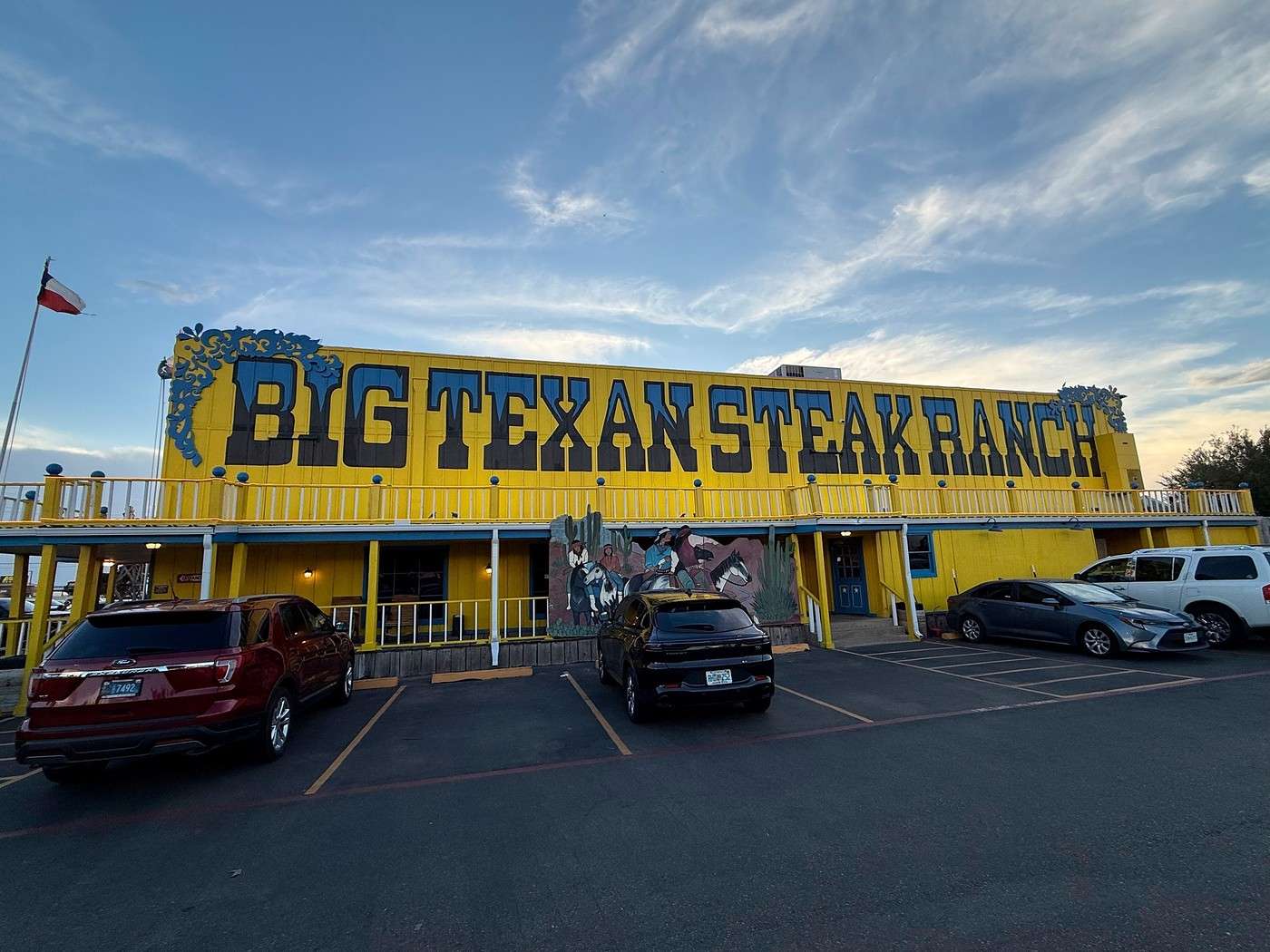
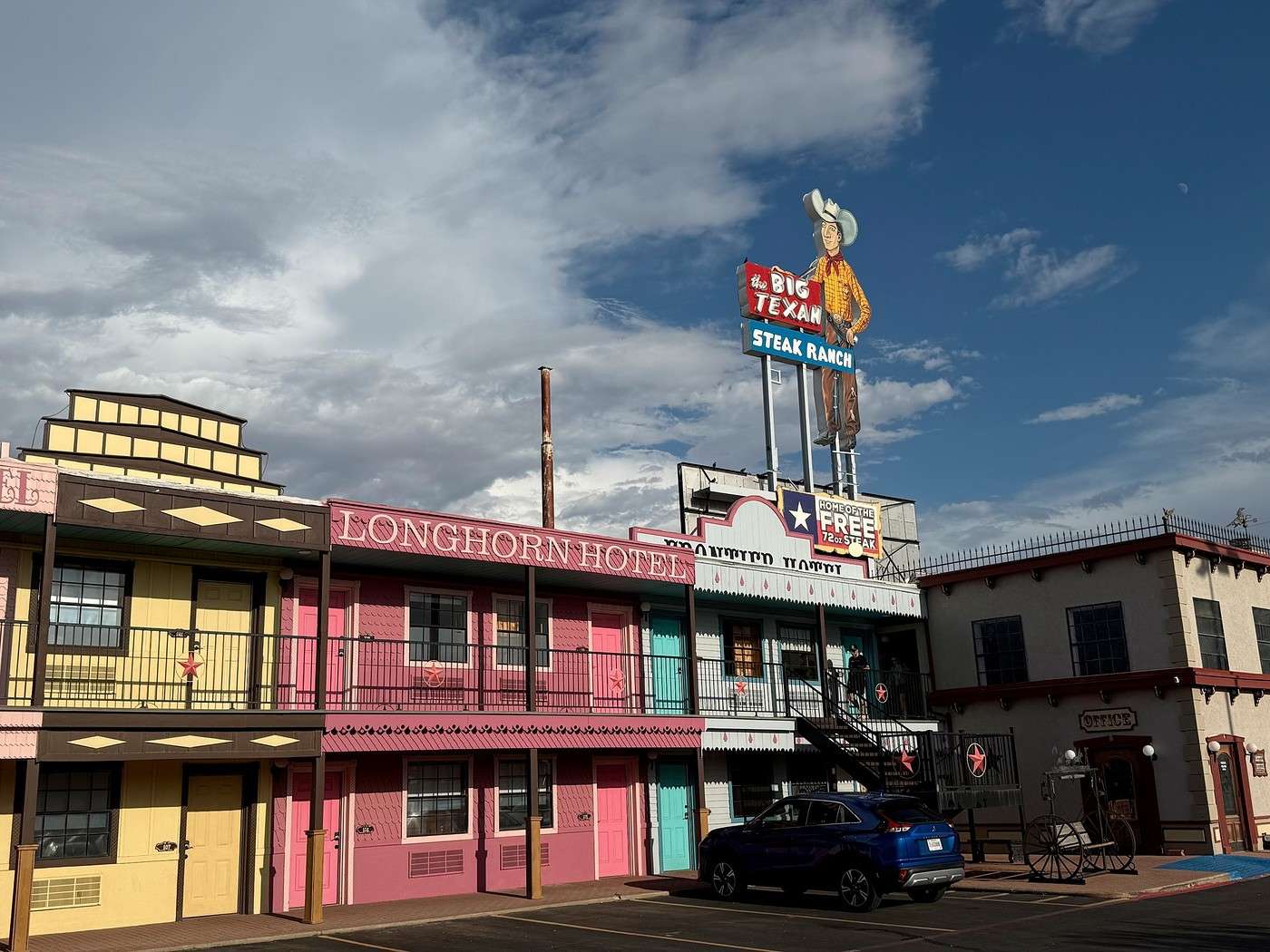
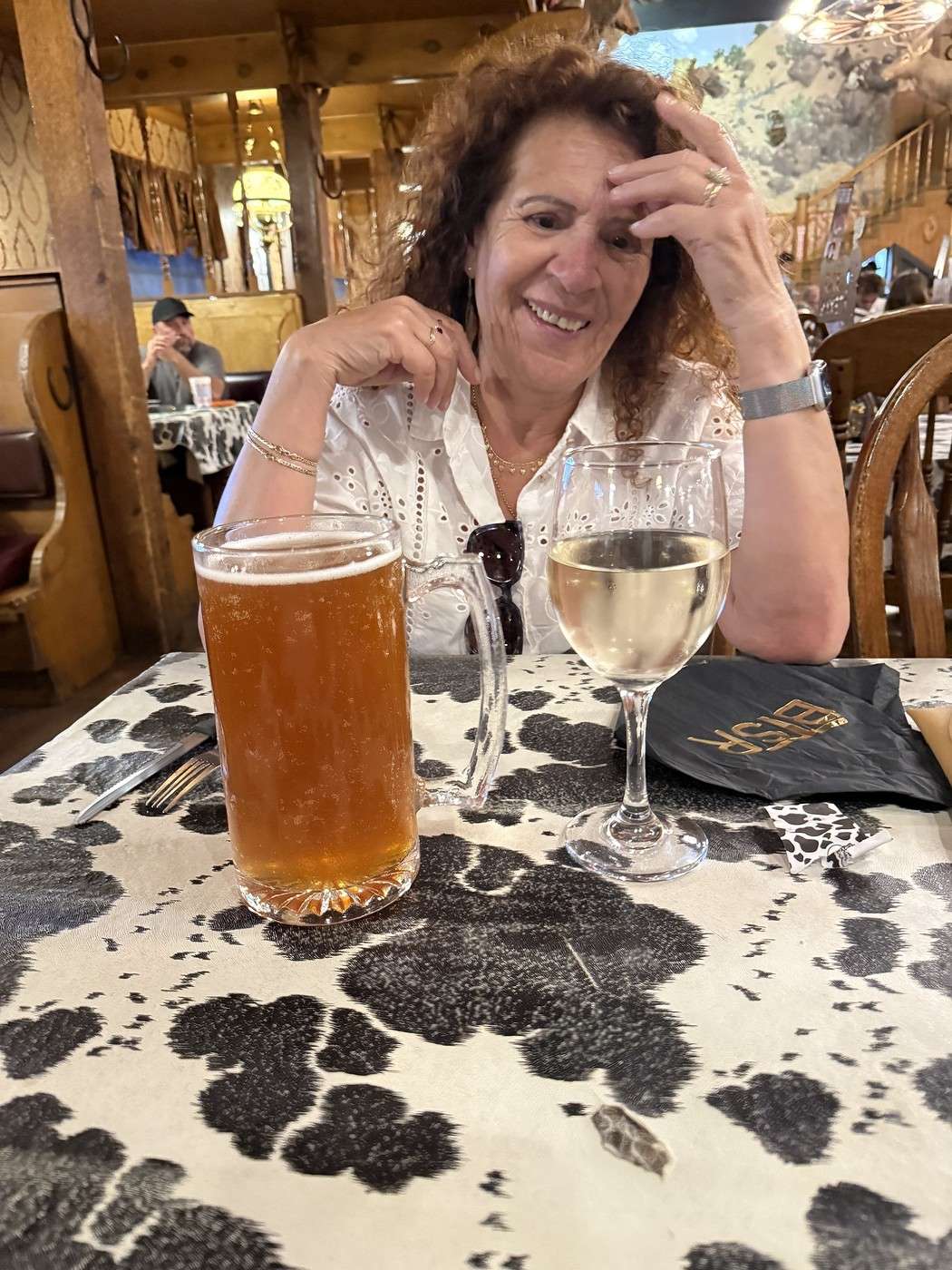
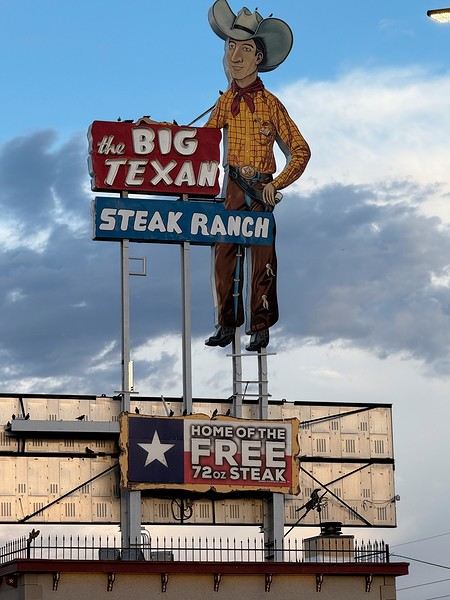
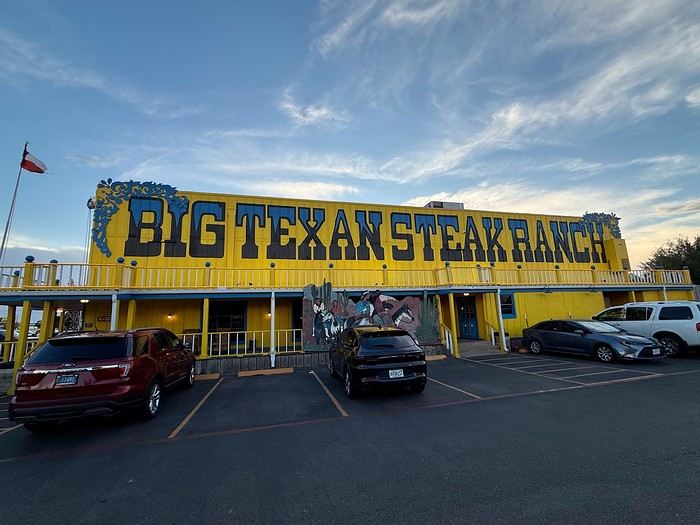
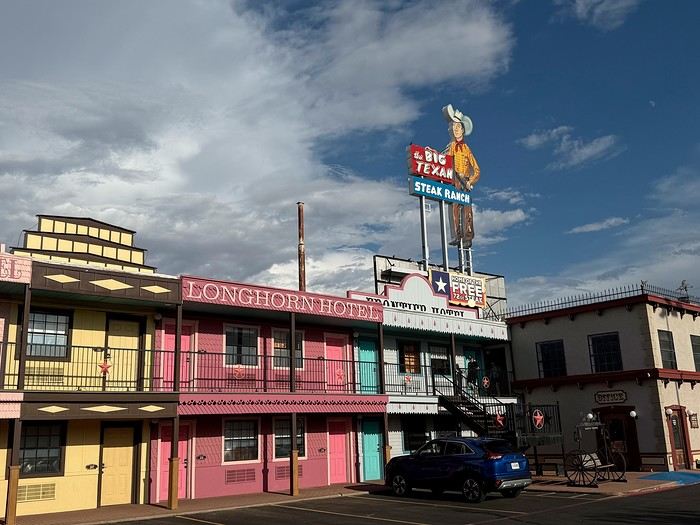
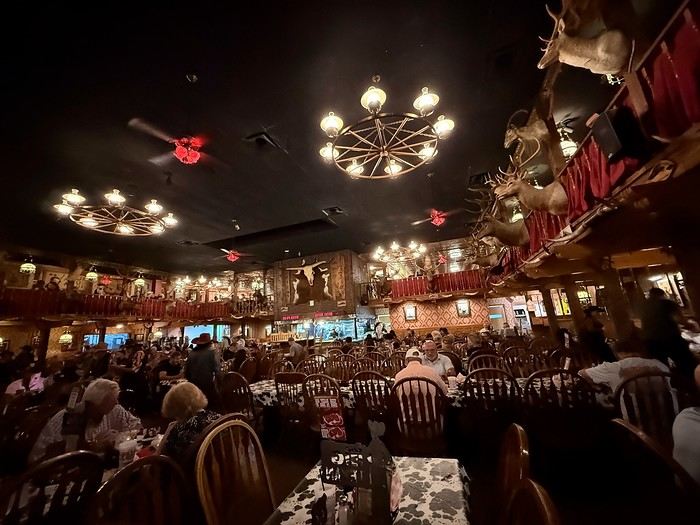
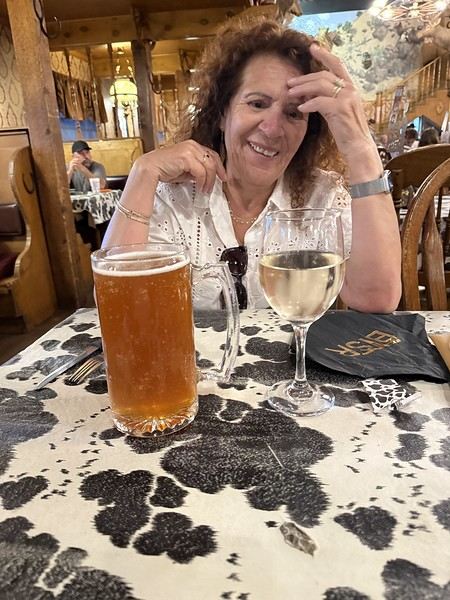
We’re heading to dinner at the Big Texan Steak Ranch & Brewery. And most importantly... Brewery!
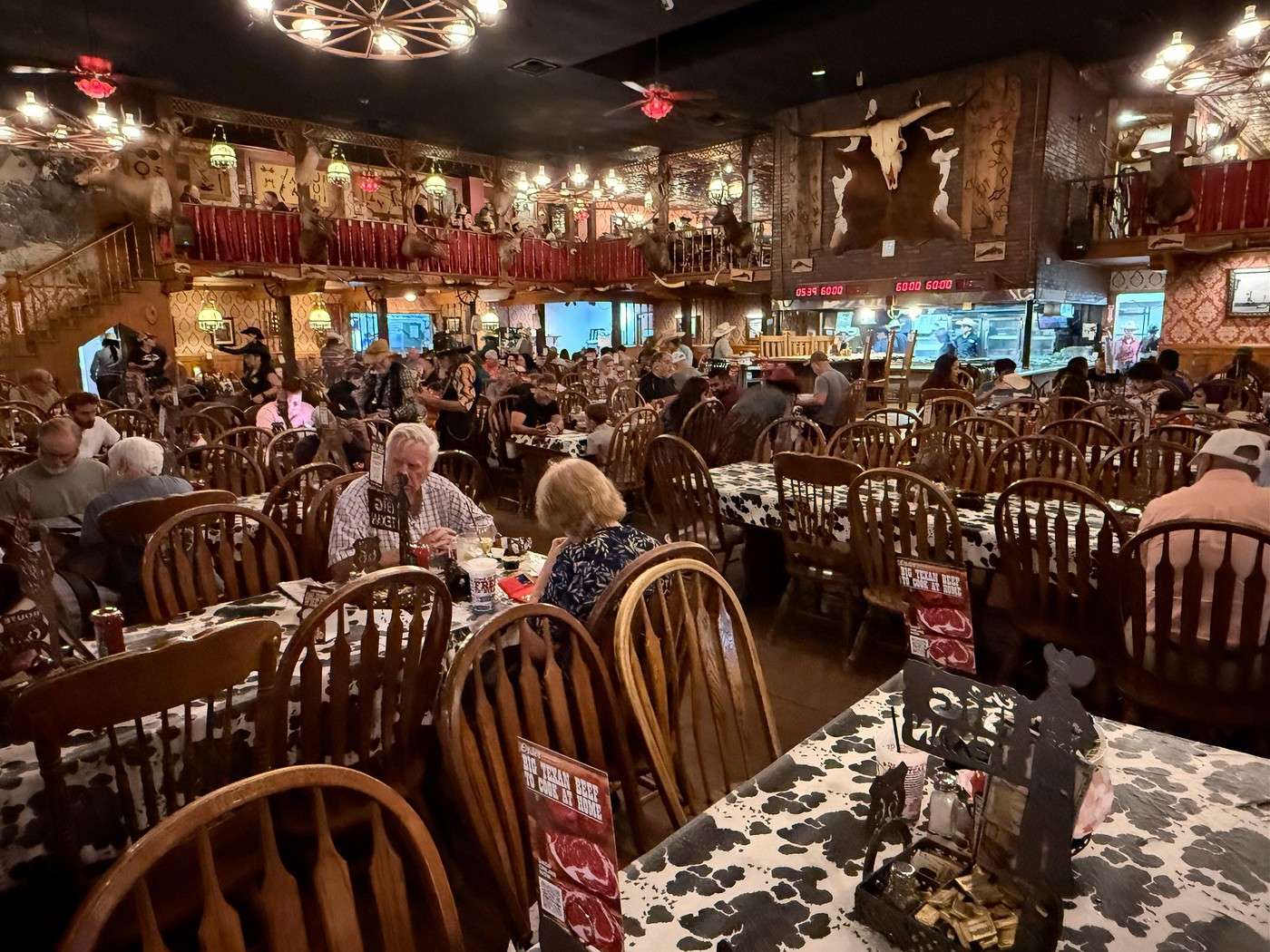
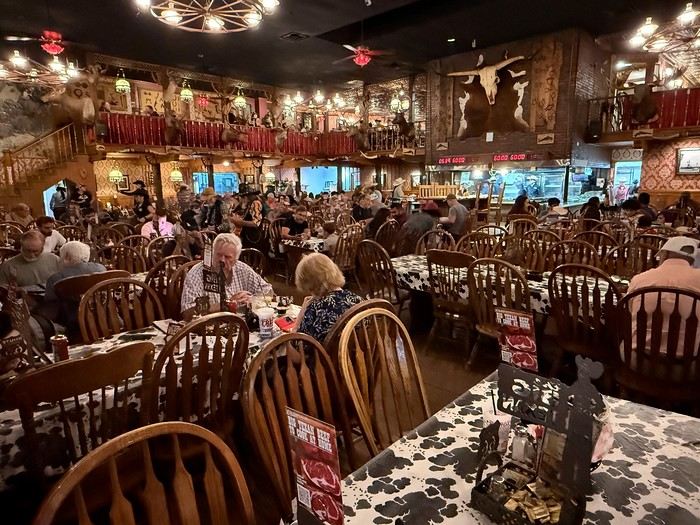
It’s not far from the hotel. We find parking pretty easily and step into what I’d happily call the Temple of Meat!
The ultimate paradise for hungry carnivores! The holy grail for grill lovers, smoke, embers, and beef cuts that have clearly never heard of vegetarianism.
I’m in my element!
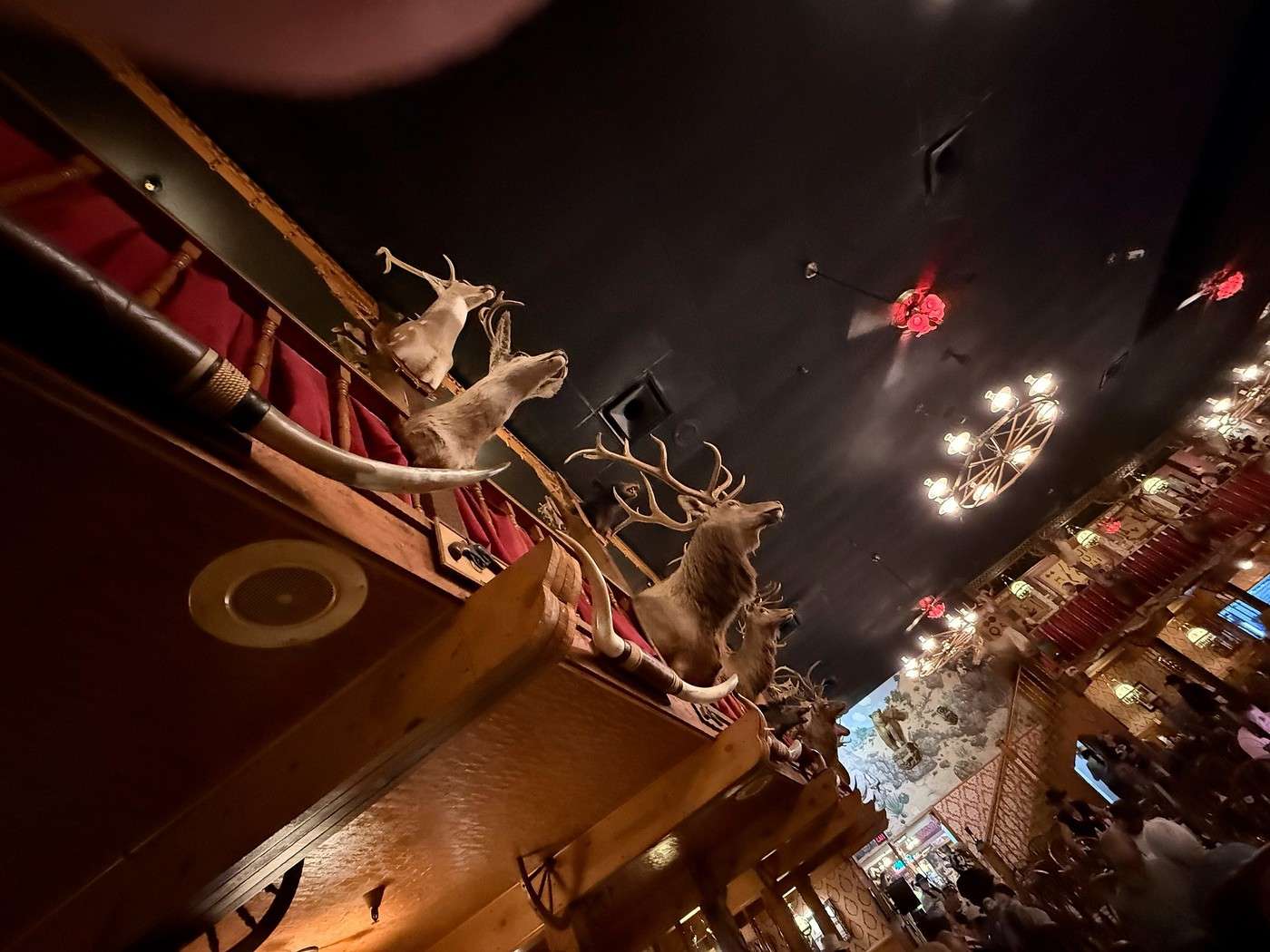
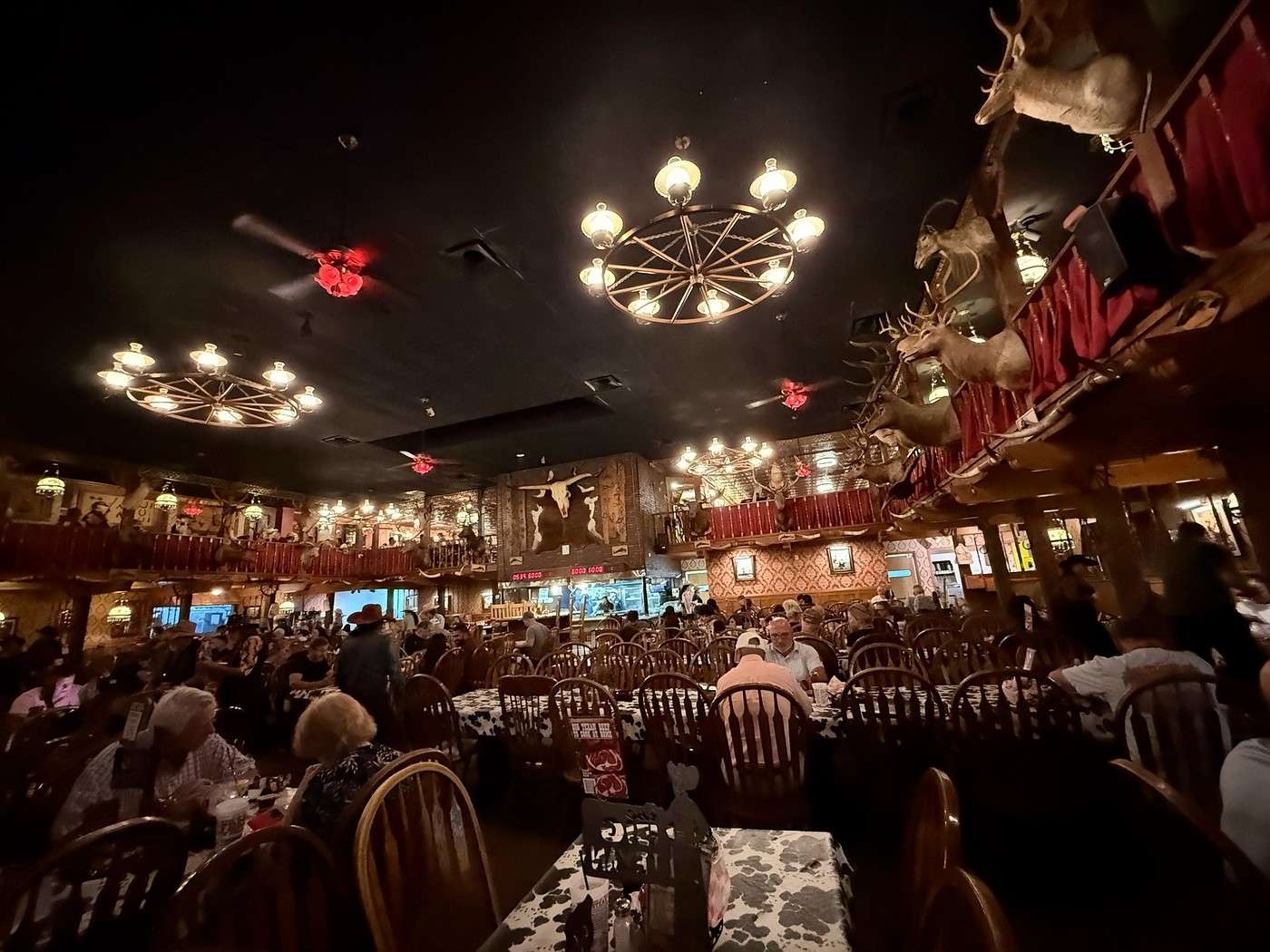
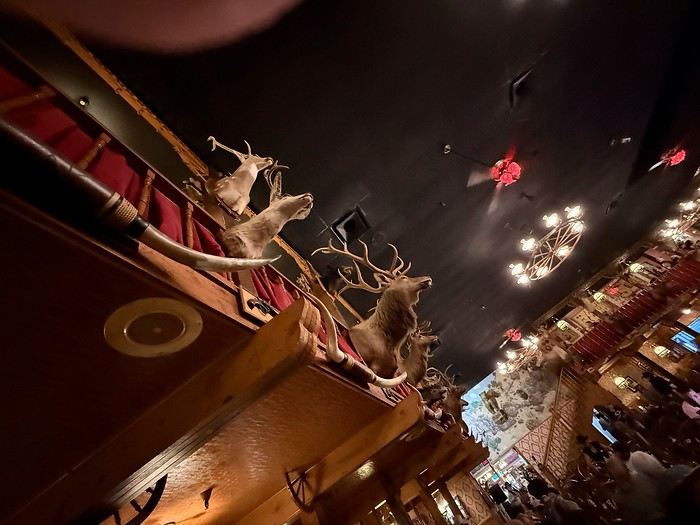
It’s a bit like those big Bavarian taverns: packed, loud, lively, and decked out in decor. You come here to eat, sure, but also for the vibe.
Side note: I almost never eat meat at restaurants.
You see, I’ve got an extremely refined palate that only truly tolerates Salers, Aubrac, and, if necessary, Limousin beef. I know. It’s a tough life.
We’re seated quickly, and I’m handed the menu, trying to make sense of the options.
And then...
Ecco! My choice is made. A 600-gram steak, a beer, and that’s it!
My wife, on the other hand, goes for something a bit more moderate—much more in line with what the doctor ordered. A lot lighter.
Then the meat arrives. And what meat it is!
A gorgeous cut, cooked just about perfectly, topped with a crushed pepper crust that’s absolutely spot-on. A side of crispy fries rounds it out.
Well, I’ve got to say—it’s excellent! Who knew even a die-hard Salers, Aubrac, and Limousin fan could occasionally embrace international flavors.
A fantastic experience, all around, with staff that’s super friendly despite the slightly "factory-like" feel of this massive restaurant.
And of course, before leaving, there’s the obligatory stop at the gift shop. Because here, everything ends with a gift shop. And in this gift shop...
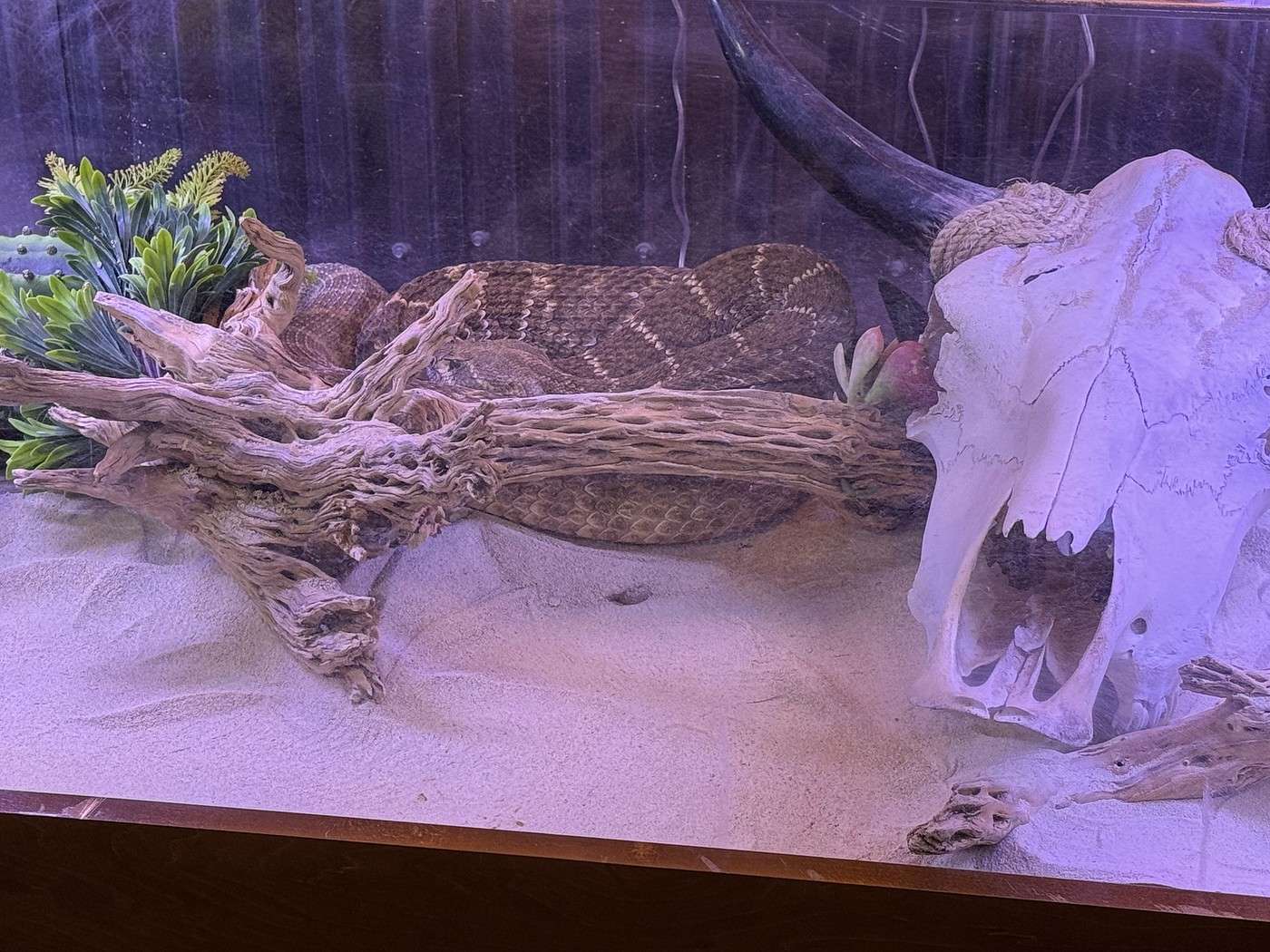
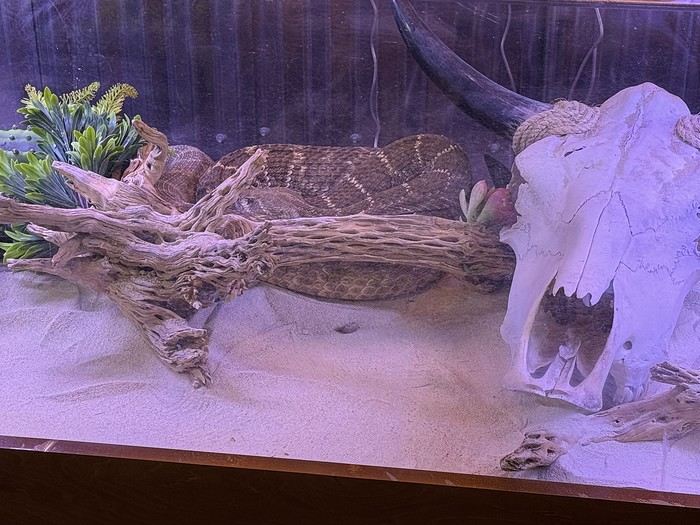
A terrarium. And inside this terrarium...
A huge sleeping rattlesnake! Another one!
They’re everywhere, these guys!
After the ones we’ve spotted (or looked for) since arriving in the American Southwest, now they’re even showing up in restaurant gift shops.
Anyway, a great Texas evening.
Meat, beer, noise, a rattlesnake, and a massive hotel to crash in afterward.
Really, the only thing missing was a cowboy on horseback in the lobby to complete the scene.
Oh, and by the way...
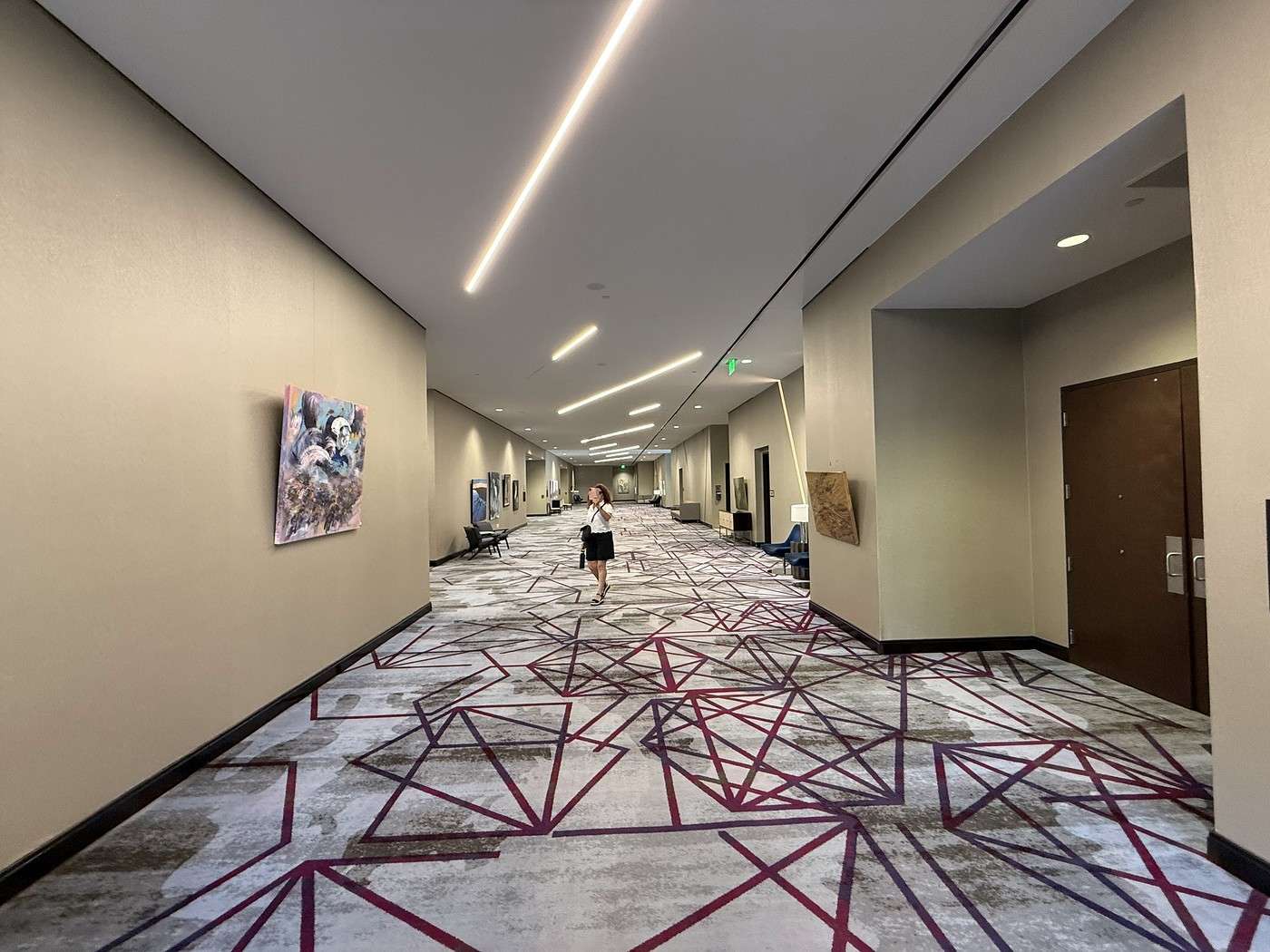
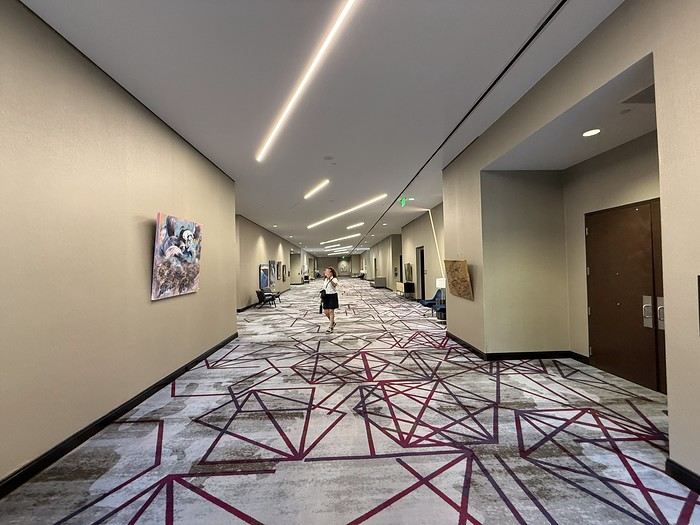
This hotel is huge!
Off to Big Texas Steak!
Southwest USA Road Trip Part II
Mitch341 · 2026-10-06 · Message 47 of 79
Friday, August 21.
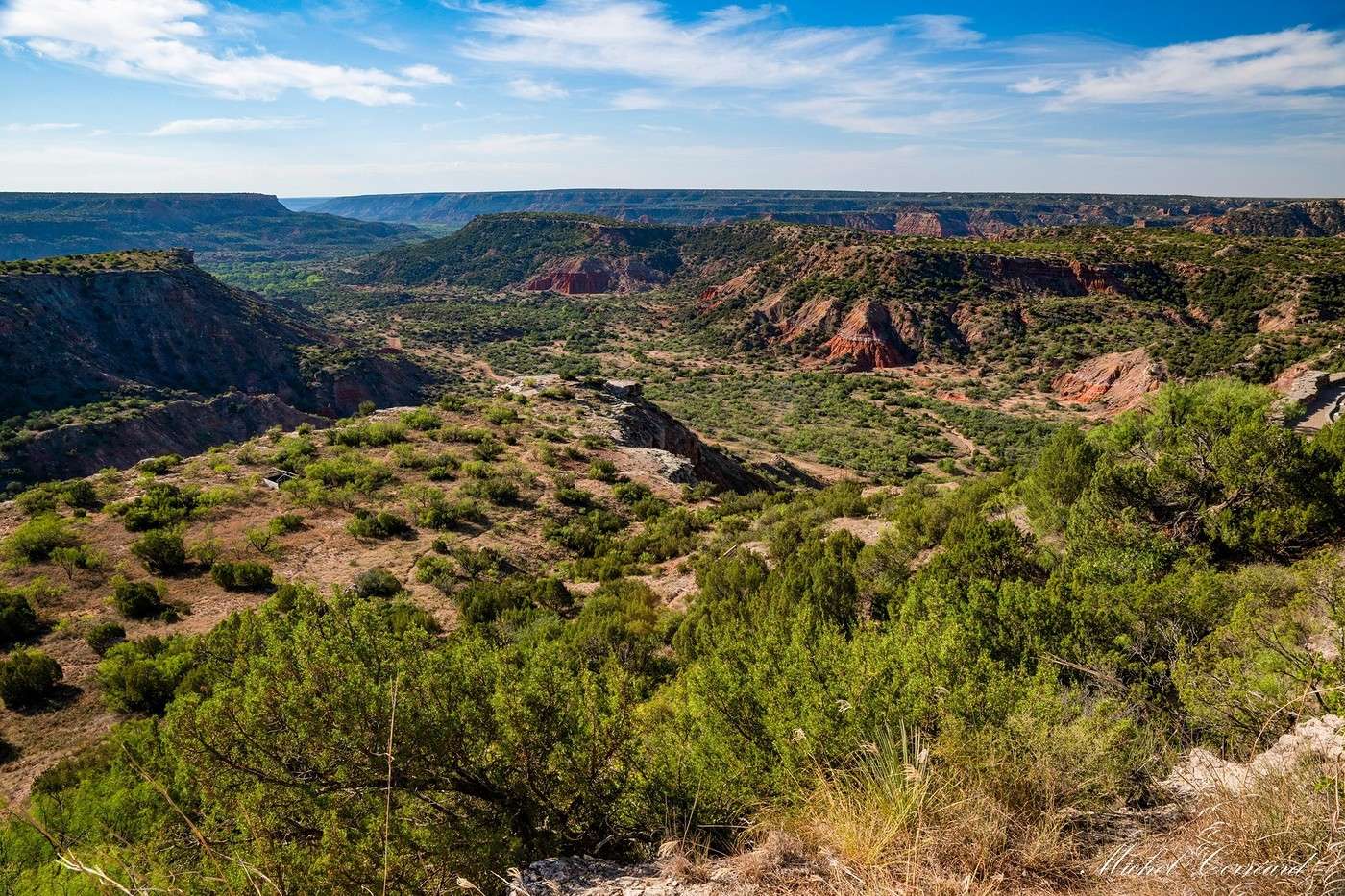
So we take the car to go not far from here to Palo Duro Canyon.
It’s supposed to be stunning.
In fact, remember, it’s supposed to be the second-largest canyon in the United States!
At least, that’s what our friendly bartender sold me last night.
Let’s go see for ourselves...
And we’ll judge for ourselves.
We arrive at the service booth marking the park entrance. It’s a State Park, so our America the Beautiful Pass doesn’t work here.
Alright.
Entry is $8 per car. At that price, we’re hardly going to complain.
We make our first stop at the Visitor Center. It’s not huge, but it’s pretty nice and, as usual, largely geared toward the gift shop.
A few bits of info, a few souvenirs, a quick look around, and we’re back on the road.
Because here, the real draw is driving down into the canyon and exploring it by car.
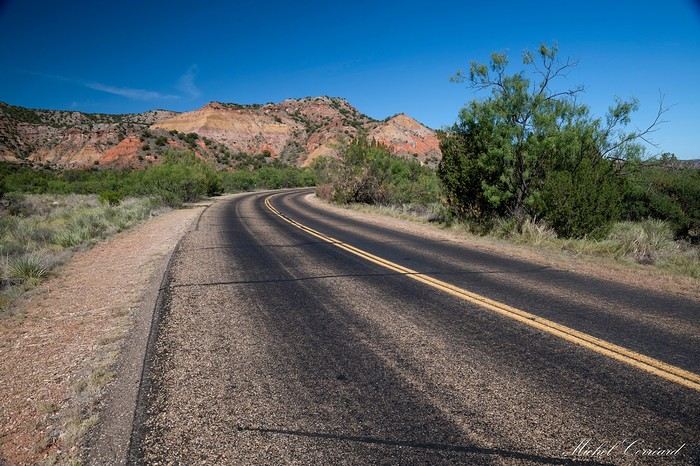
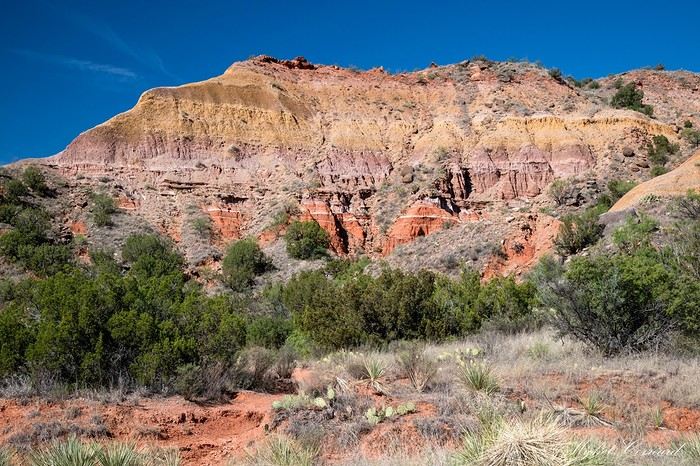
So we start the loop. The road winds between the rock walls, descends to the canyon floor, then lets you drive quietly through the park. Several stops are set up, and there are plenty of places to pull over.
There’s even water, with a few streams running through the canyon floor.
The spot must be especially nice in spring when the vegetation comes back to life and temperatures are still bearable.
Because this morning...
It’s hot.
Really hot, even.
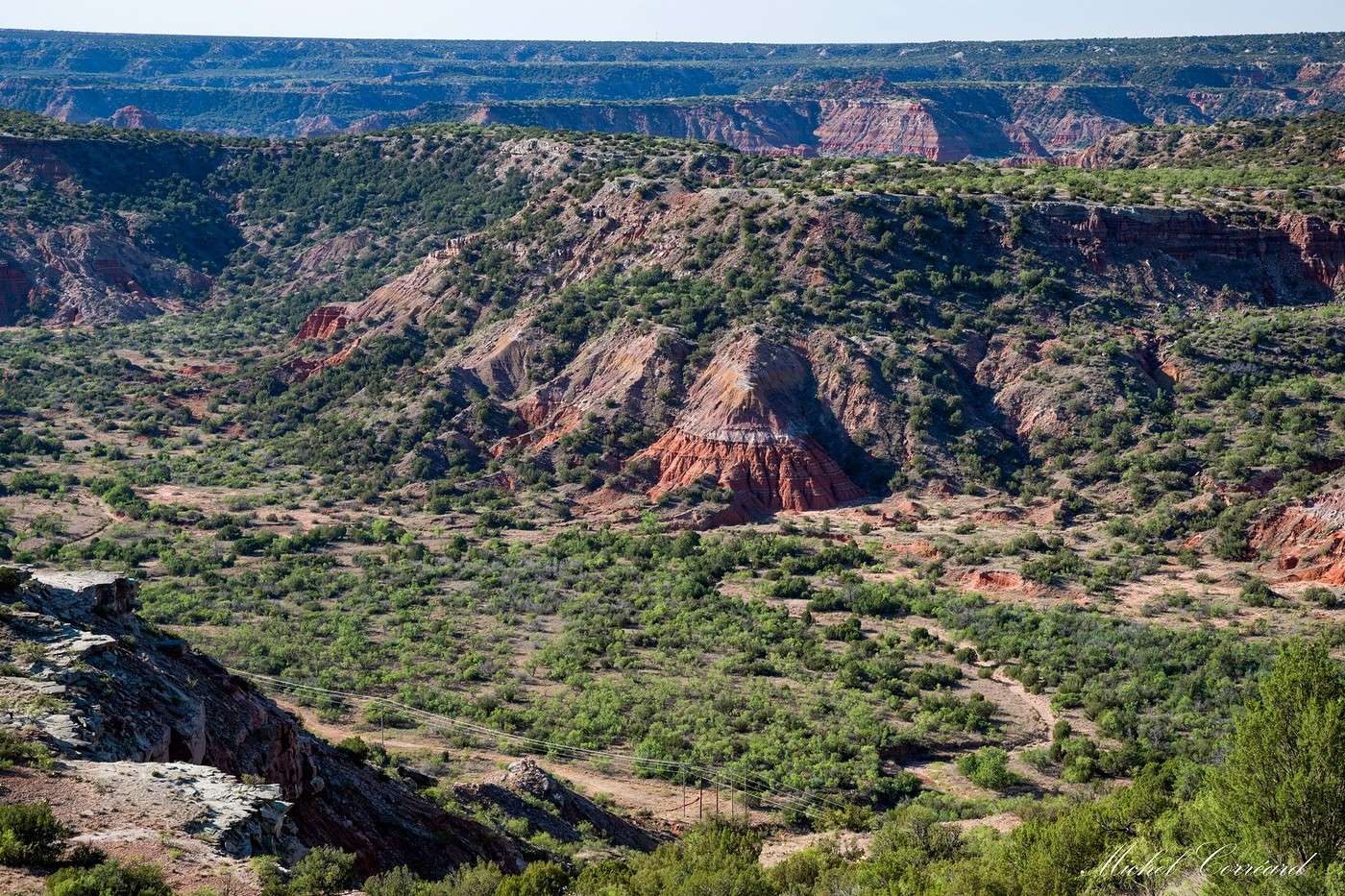
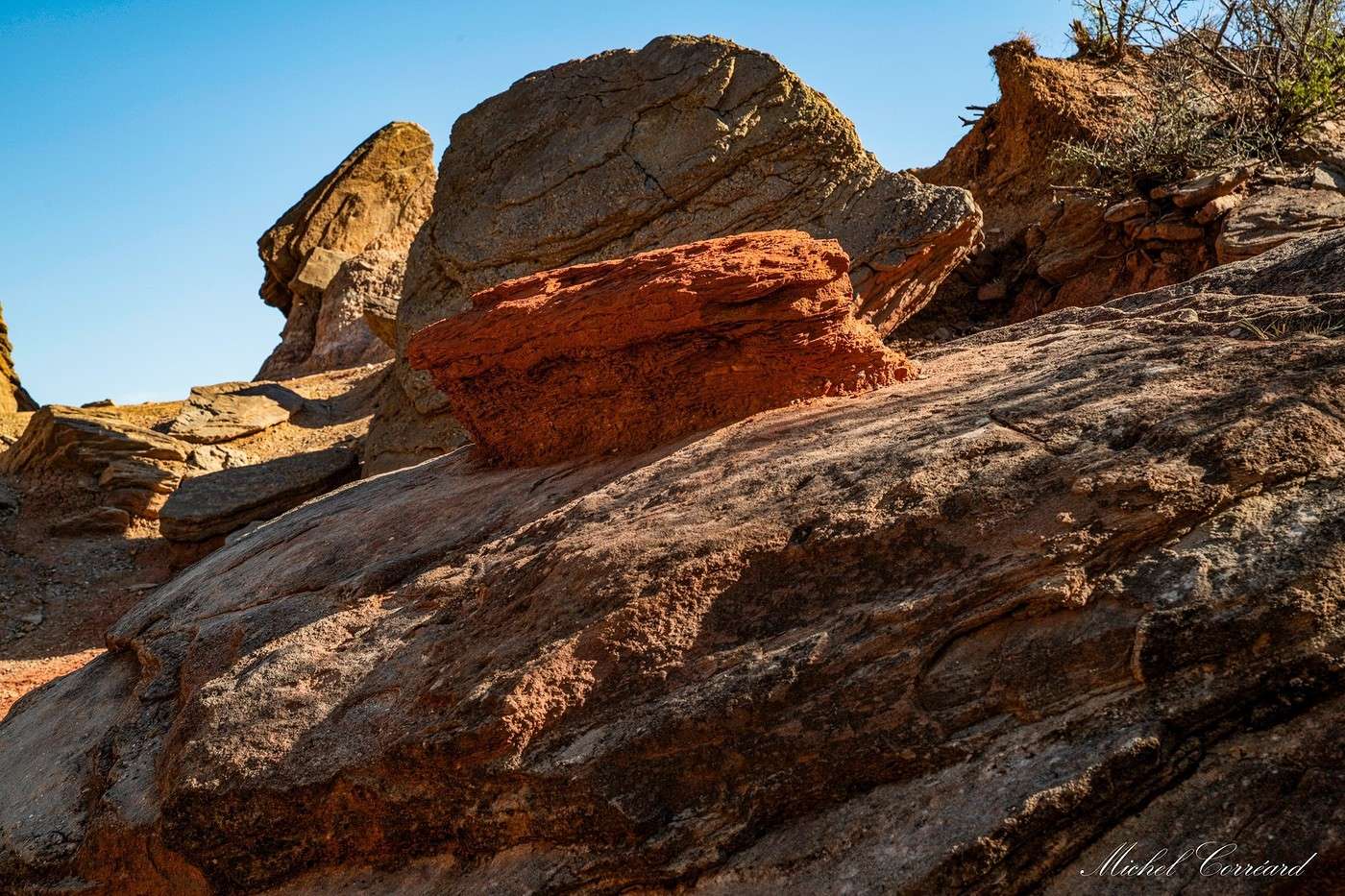
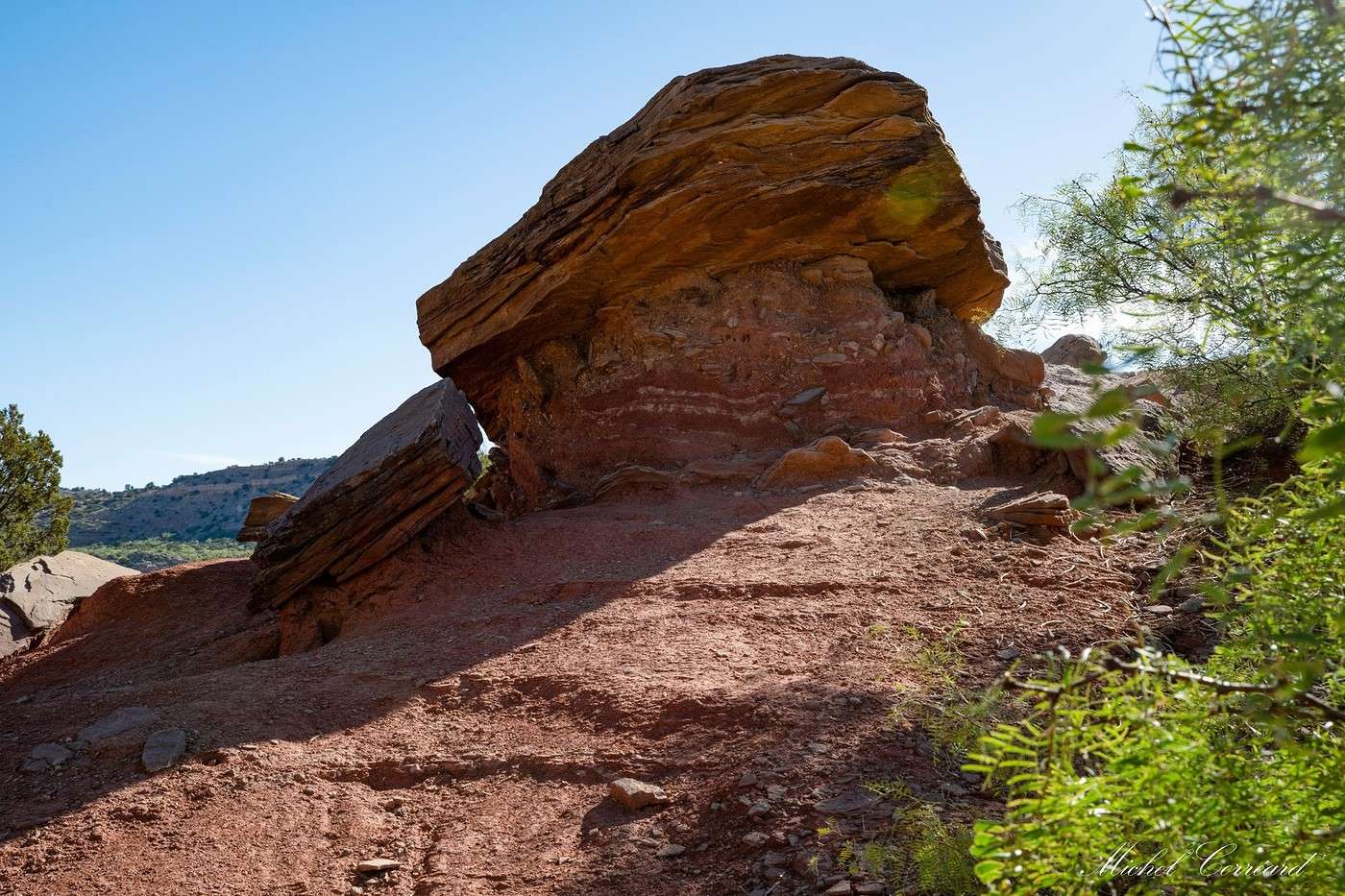
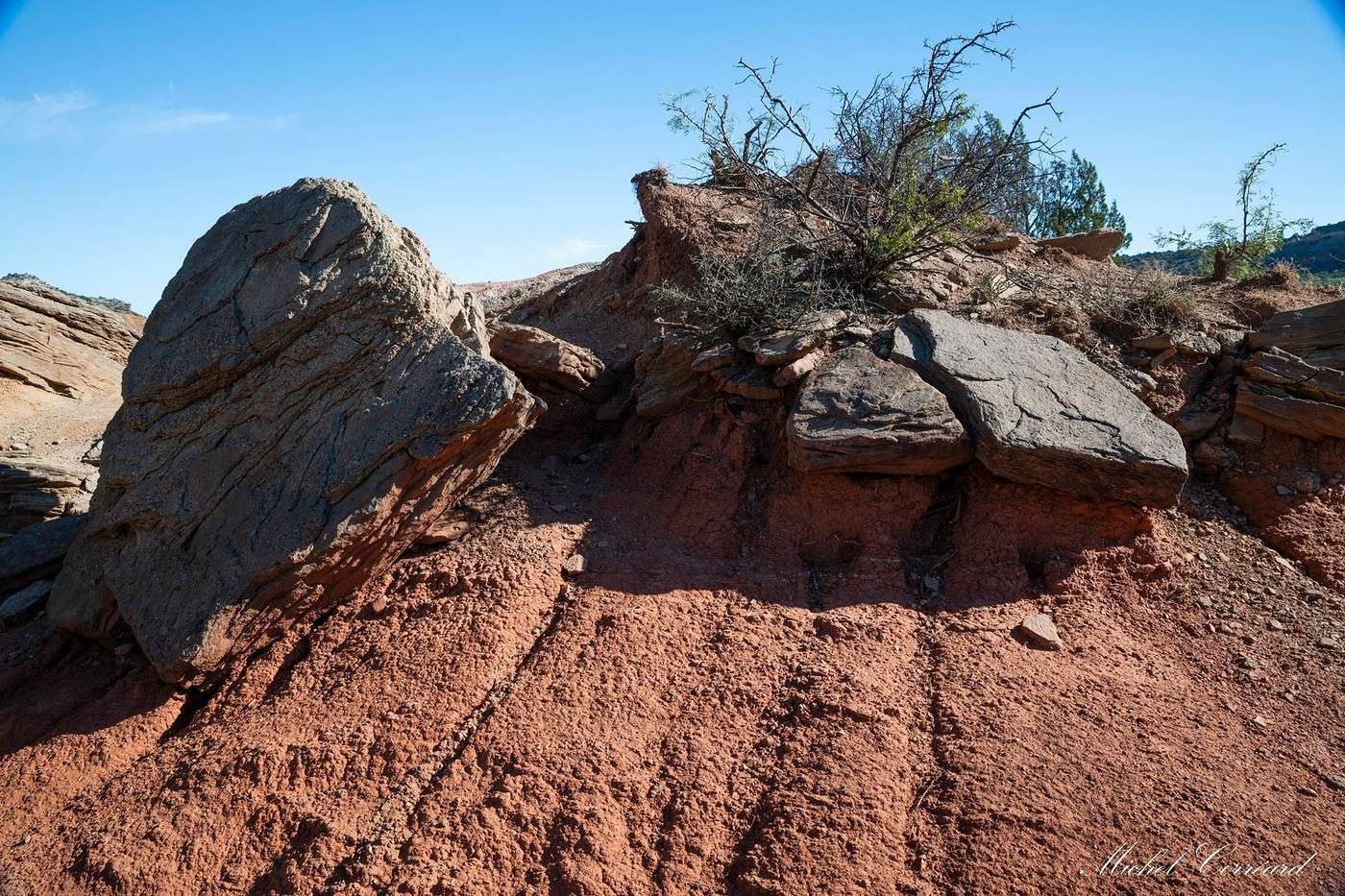
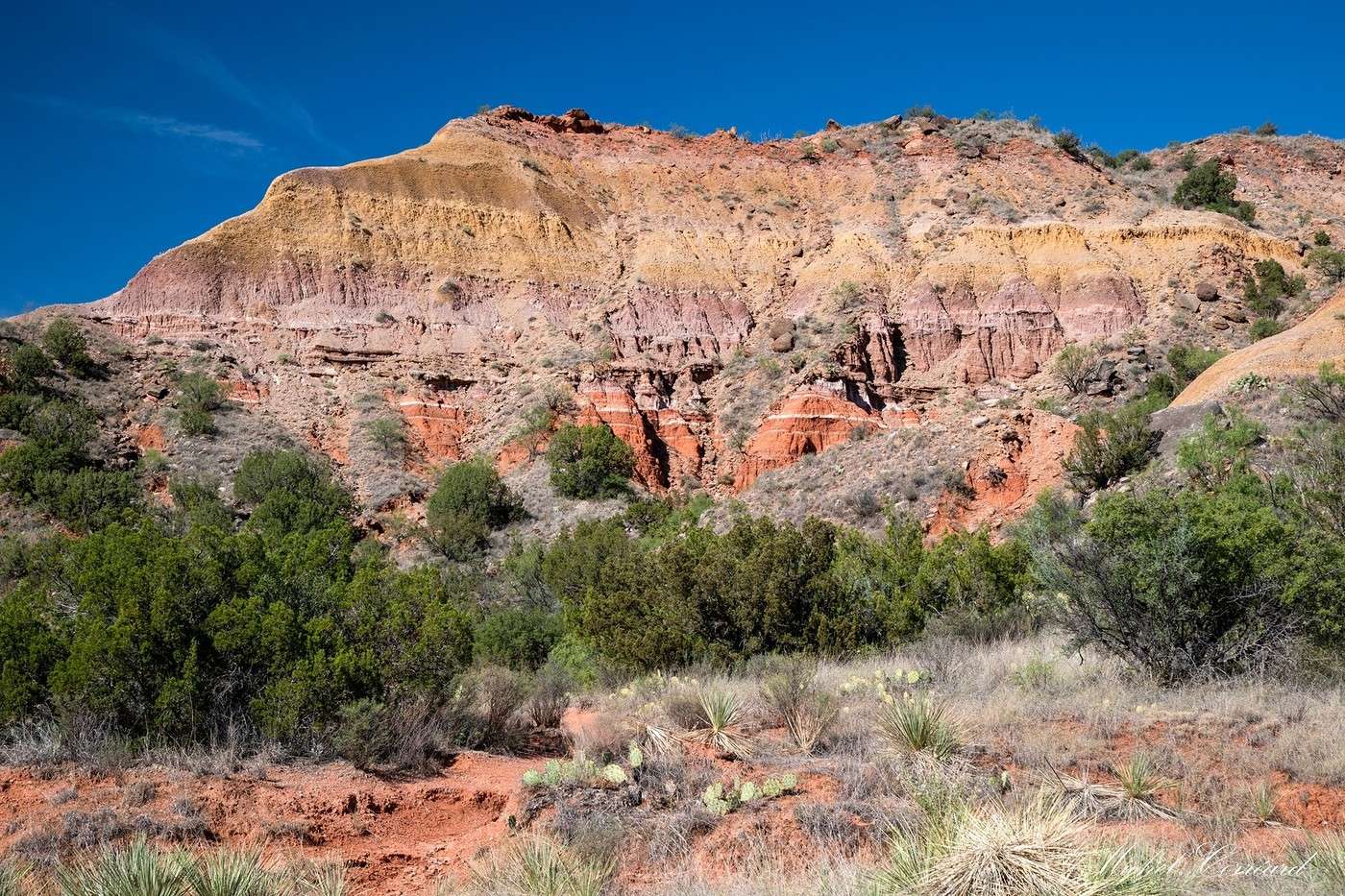
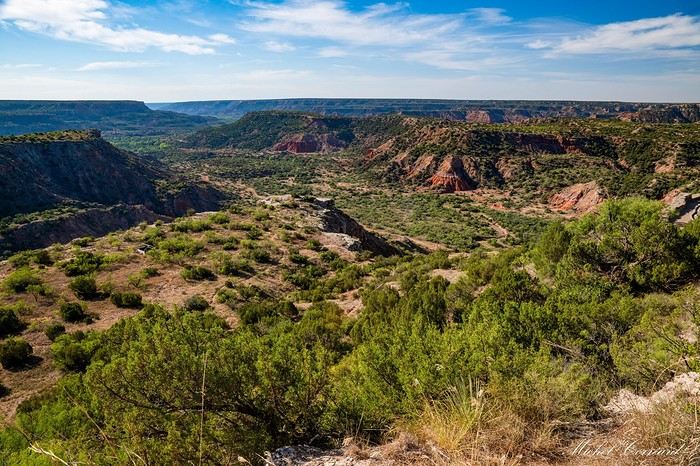
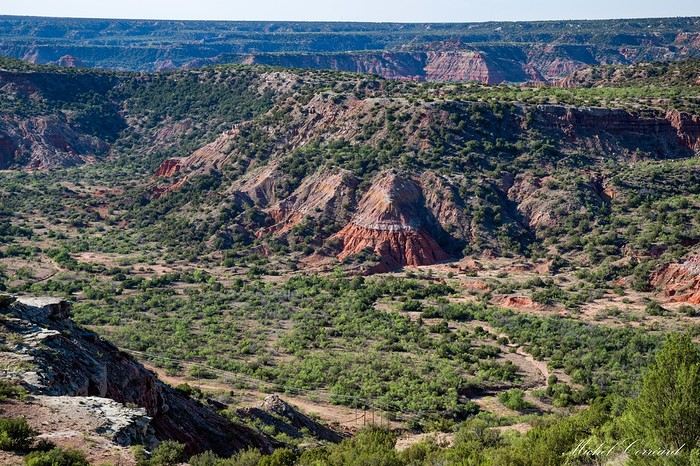
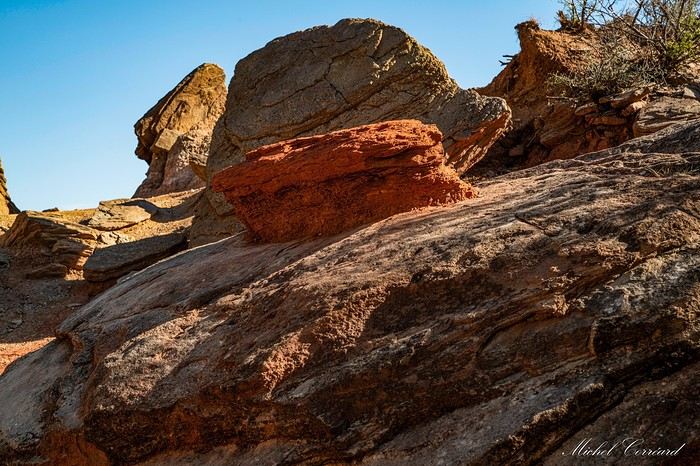
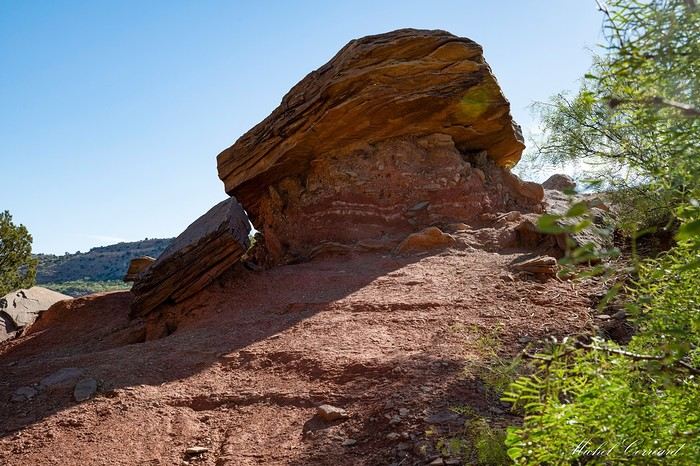
Texas in the middle of August clearly isn’t making any special effort to welcome French tourists. We continue our loop calmly, stopping here and there, admiring the different rock formations, taking a few photos...
And then comes the verdict.
Well.
It’s pretty.
It’s pleasant.
It’s interesting.
But not enough to lose sleep over...
Let’s not get carried away!
After the landscapes we’ve seen since Arizona and New Mexico, and especially after our bartender’s over-the-top enthusiasm—he practically sold it to me as the Grand Canyon’s little brother—I’ll admit I was a little underwhelmed.
But after all, we came to see.
We saw.
So now we can have a perfectly informed opinion on the matter.
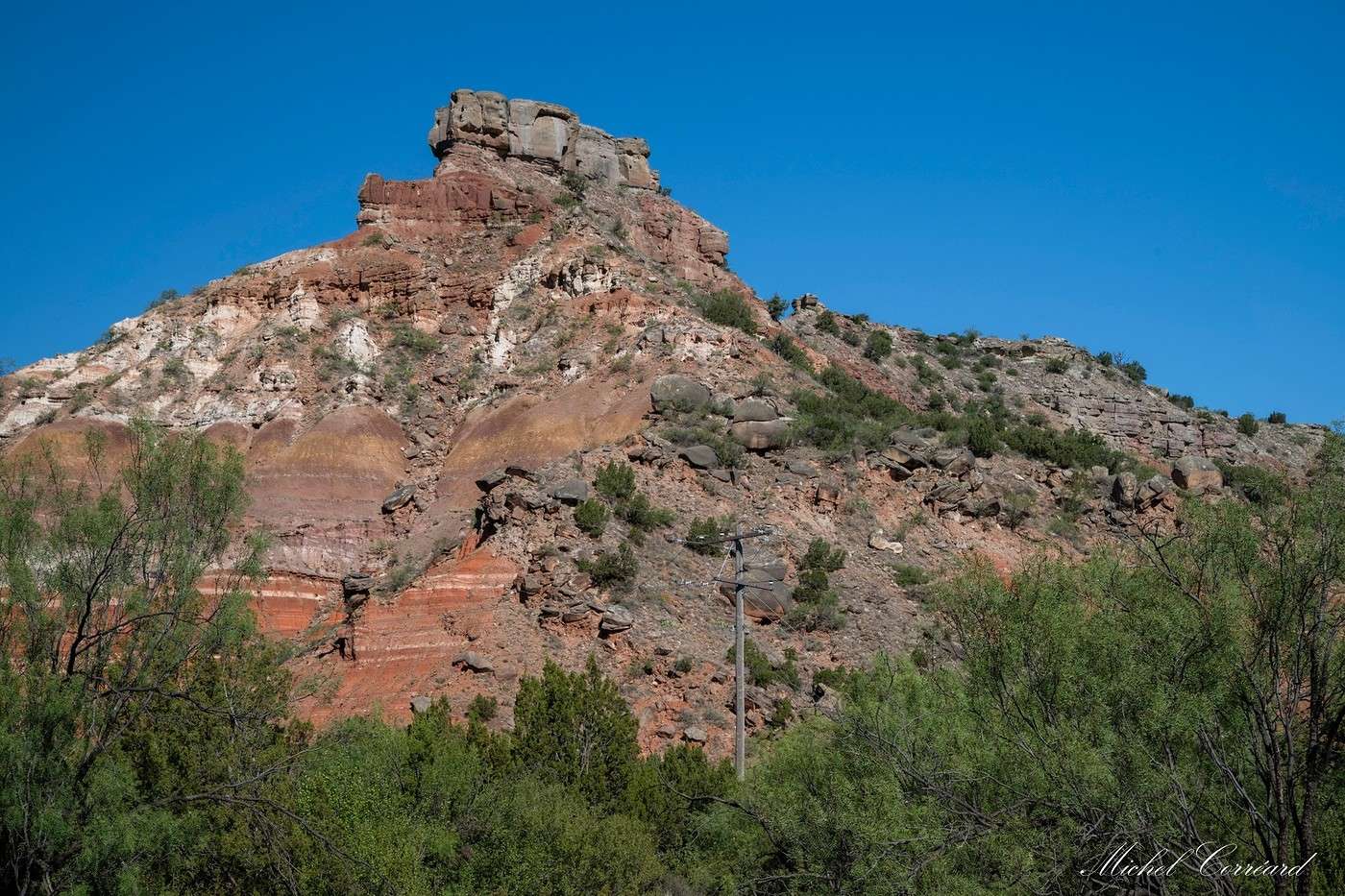
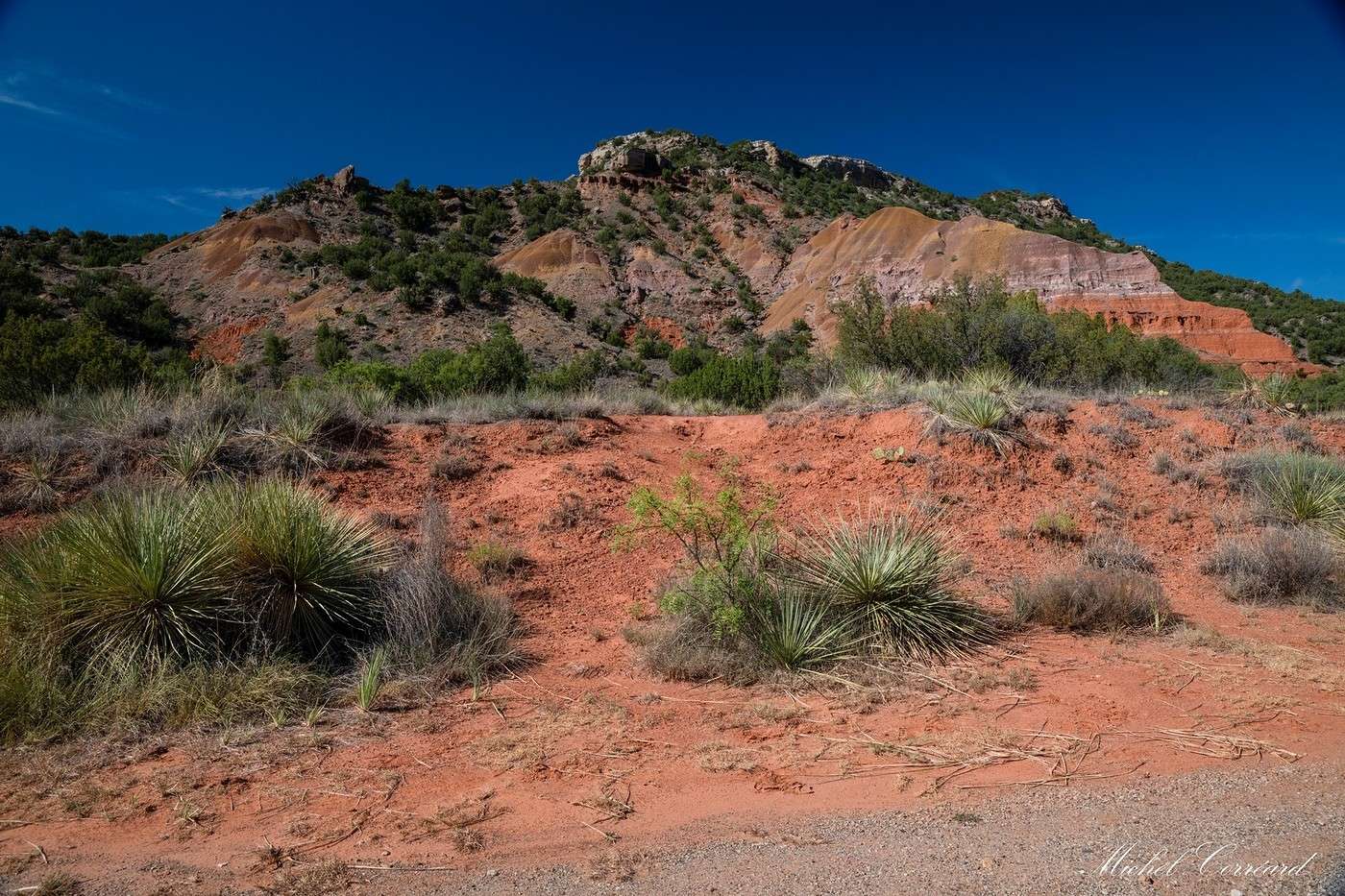
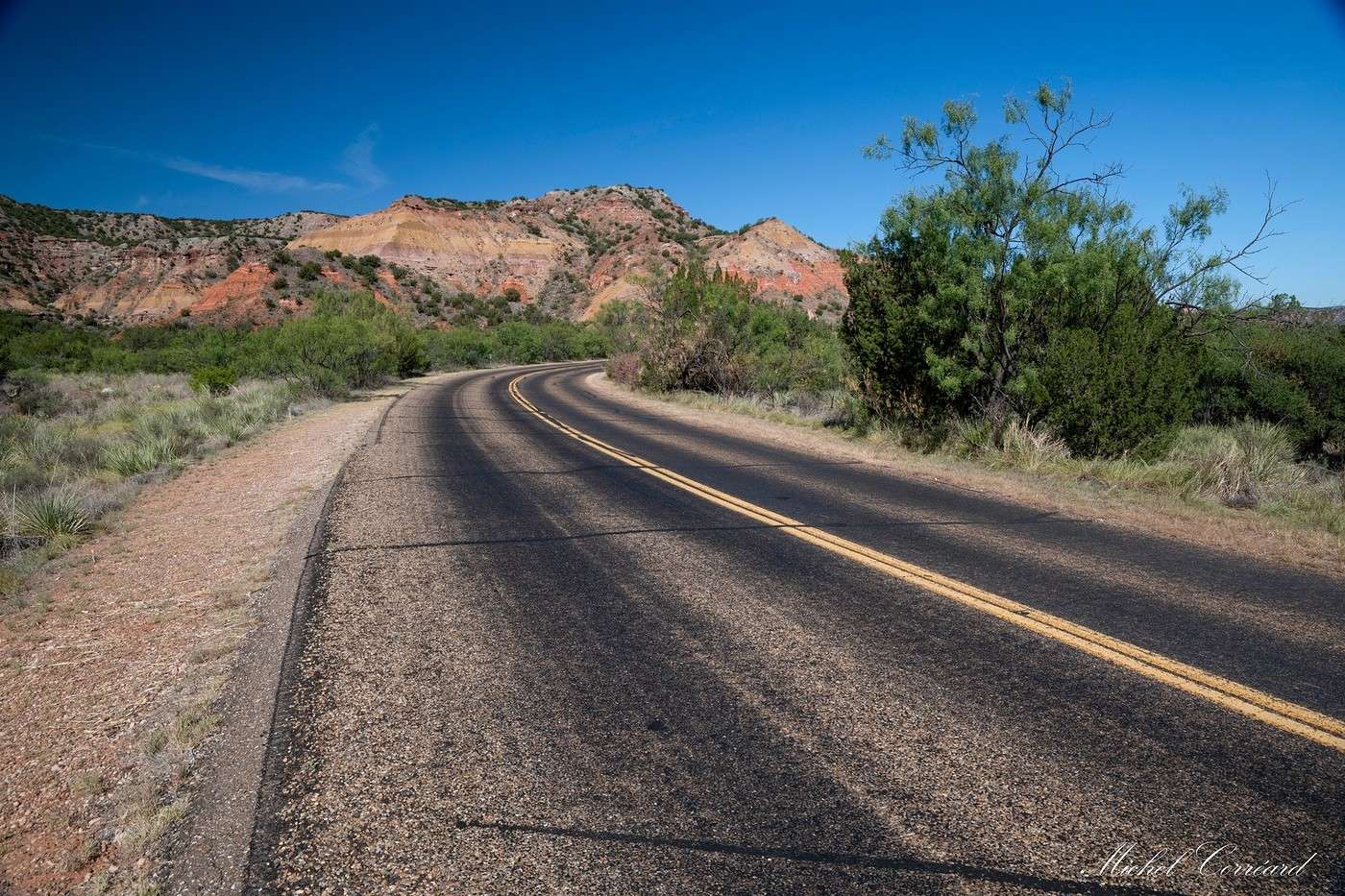
Alright, some photos!
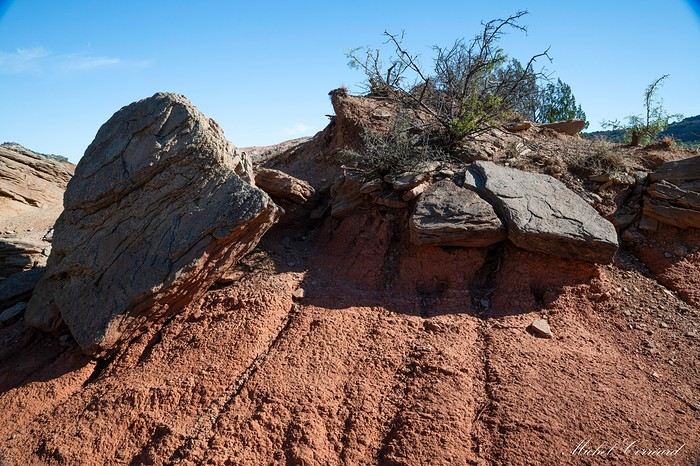
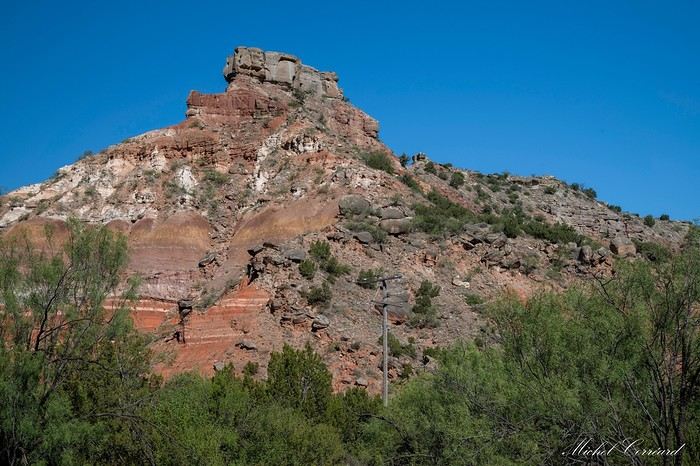
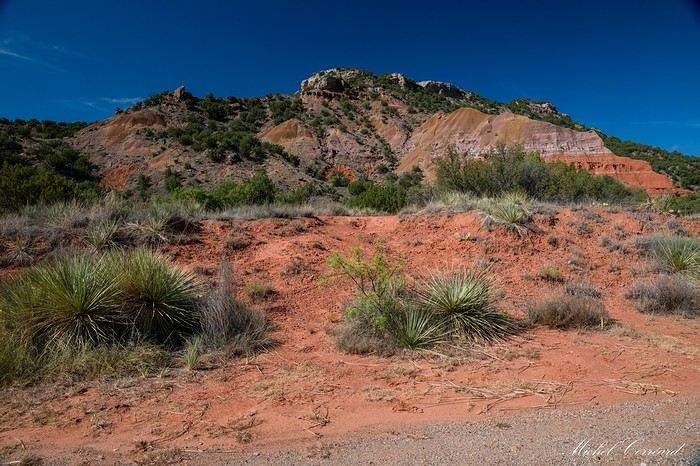
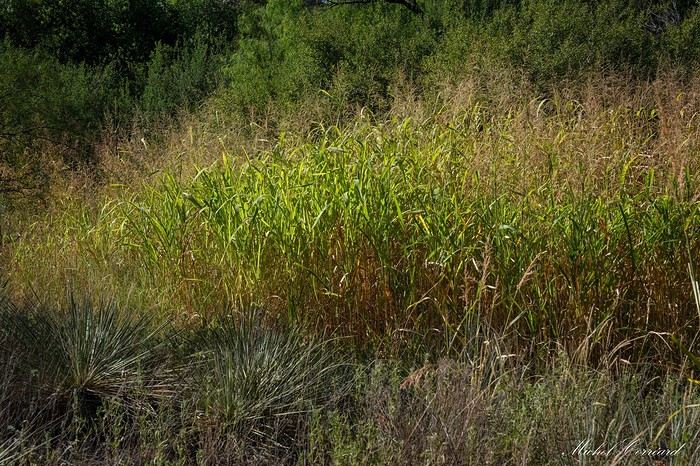
Southwest USA Road Trip Part II
Mitch341 · 2026-10-07 · Message 48 of 79
We're leaving Palo Duro Canyon after another stop at the Visitor Center. My wife had spotted a bracelet there for my humble self—a bracelet I’d end up losing not long after, once we were back in France.
What a shame!
What’s next on the itinerary? Well, it’s a place I’d discovered while planning the road trip using Google Maps.
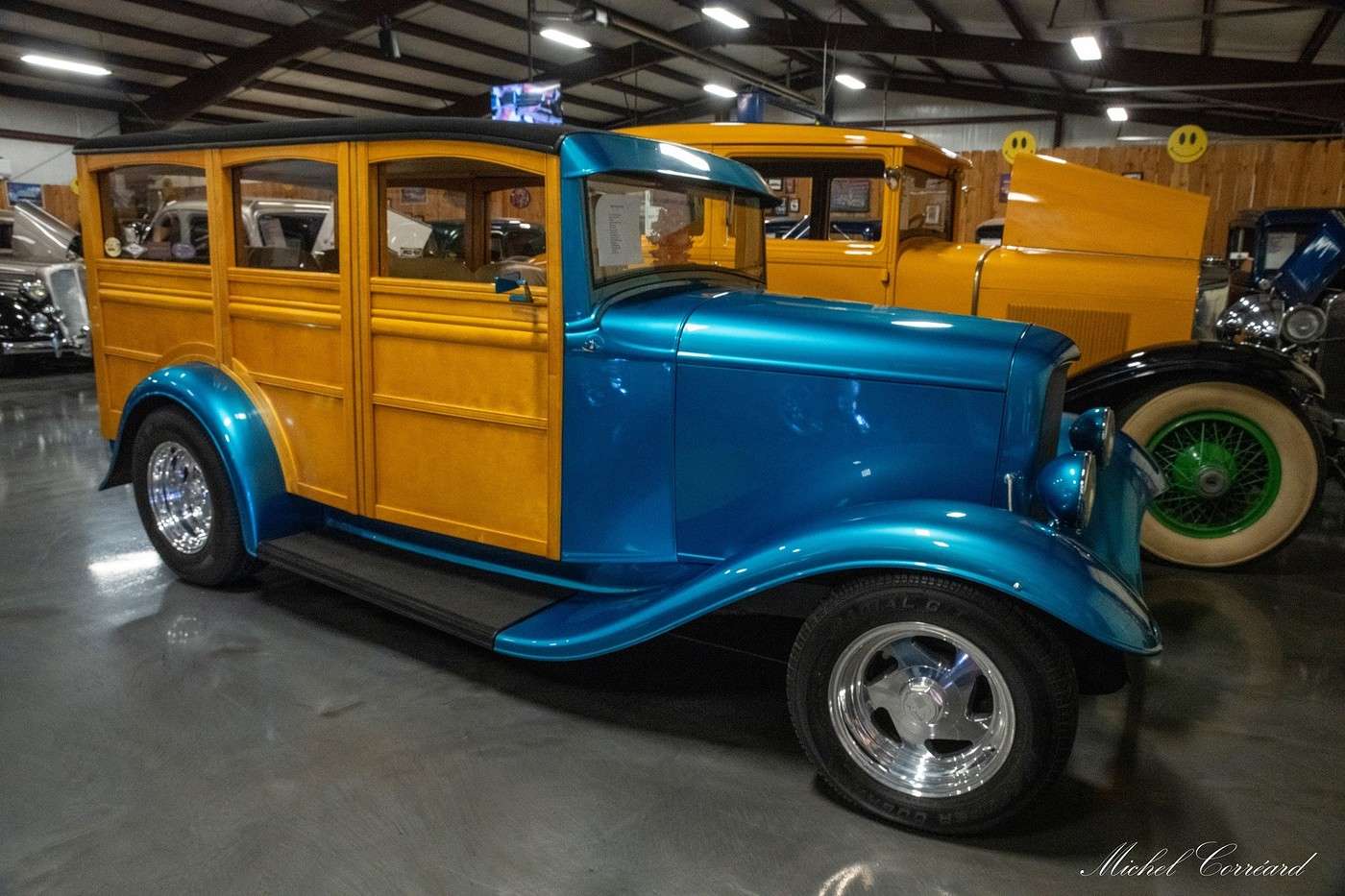
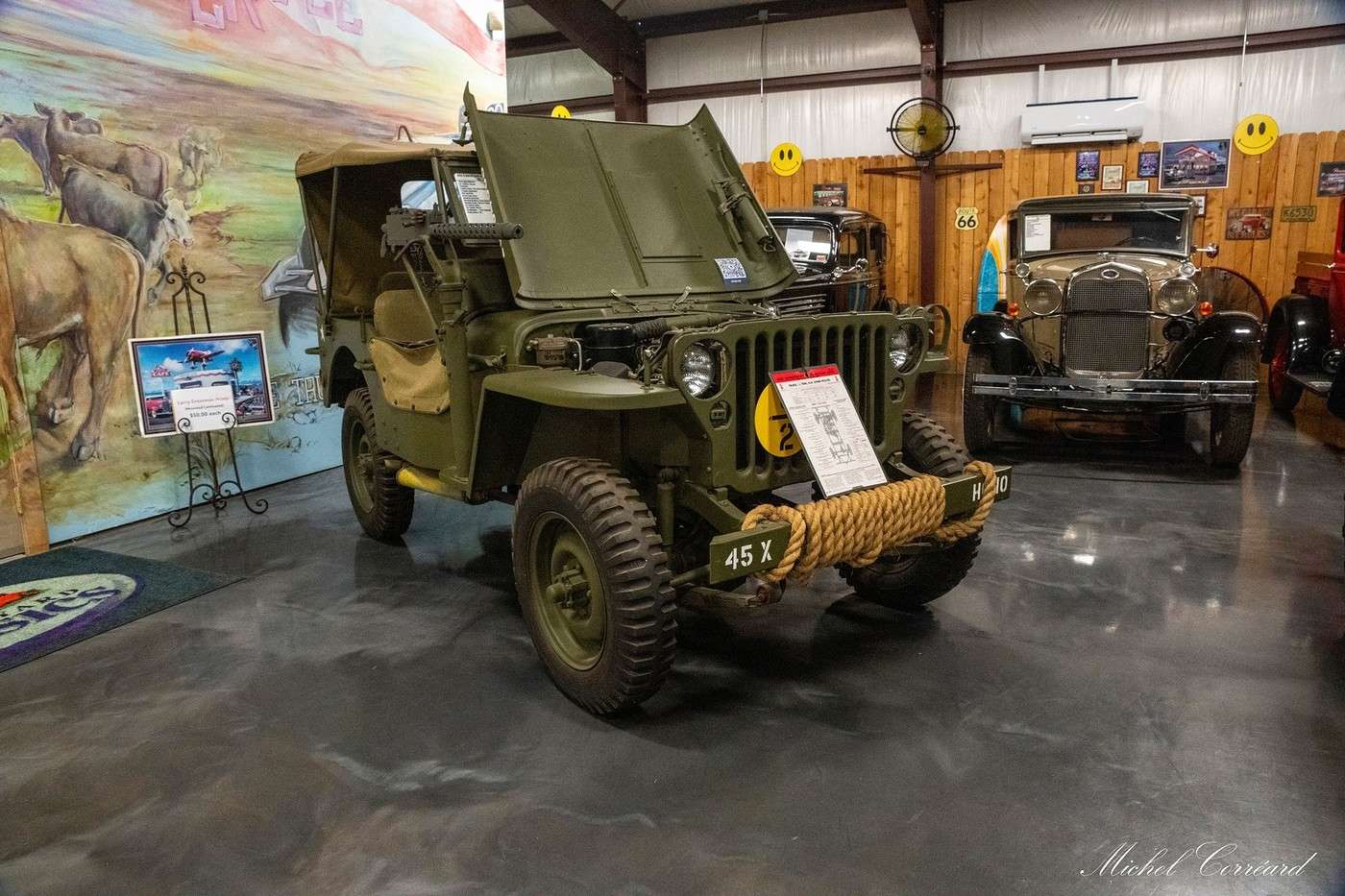
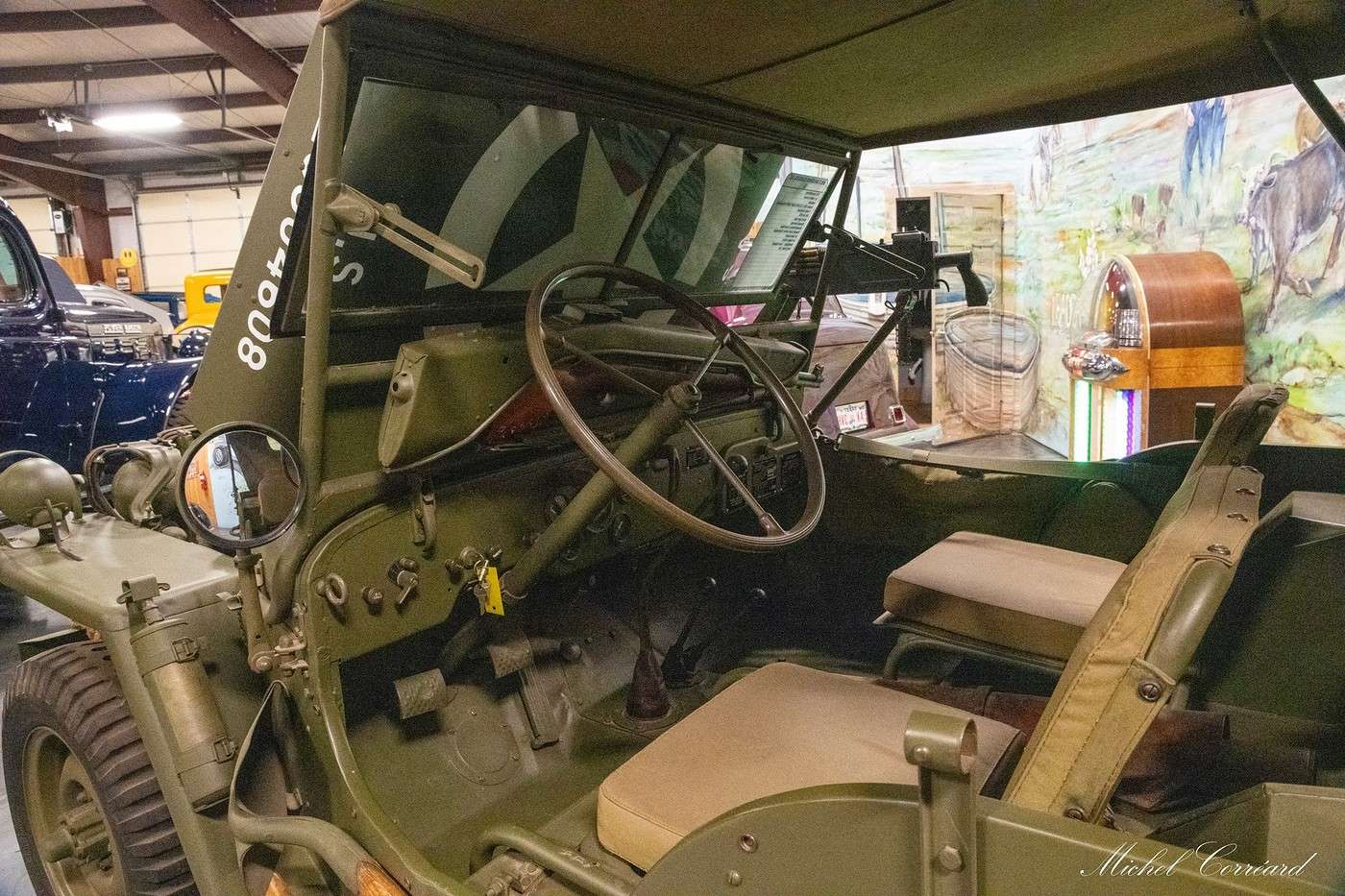
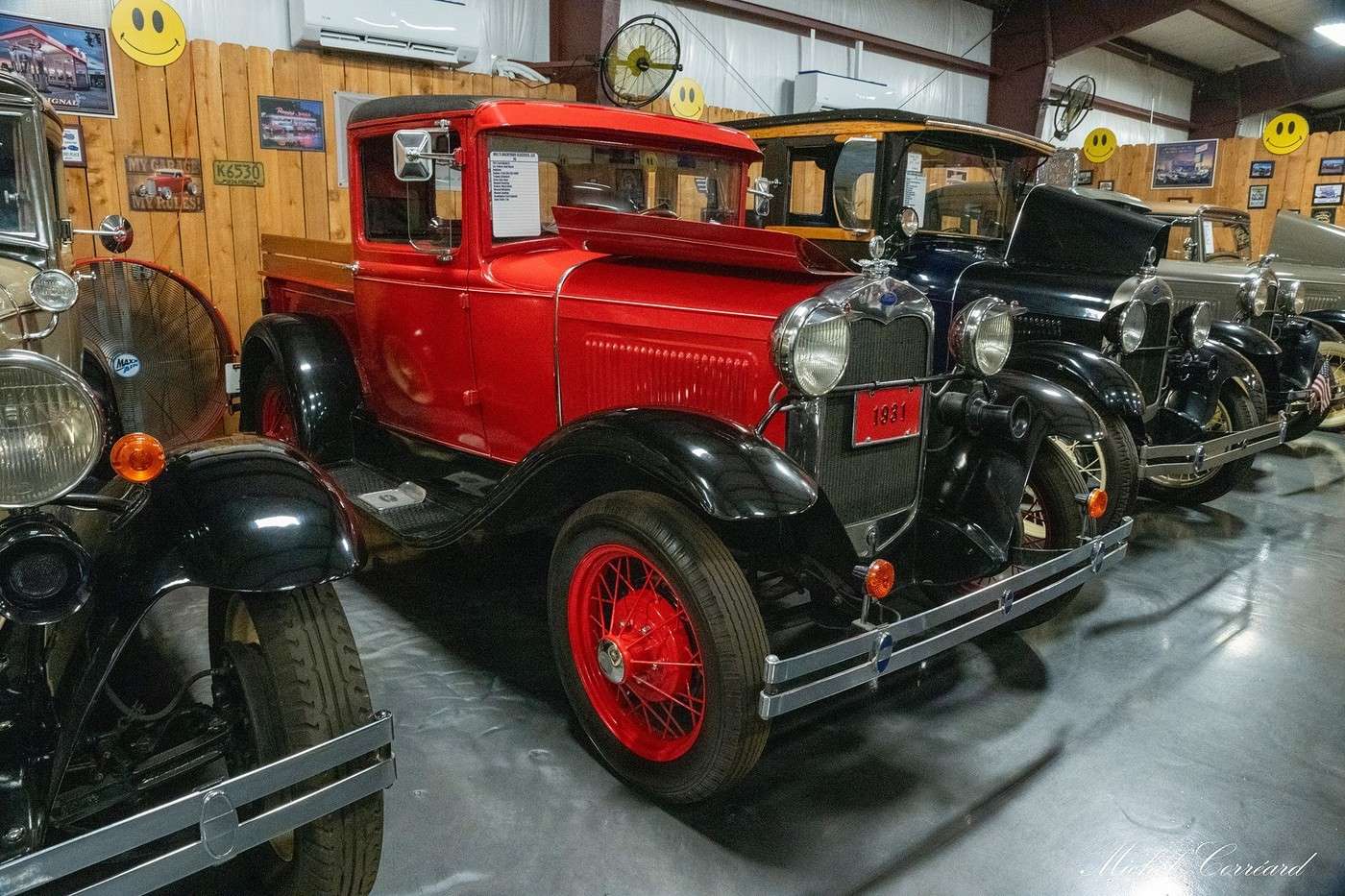
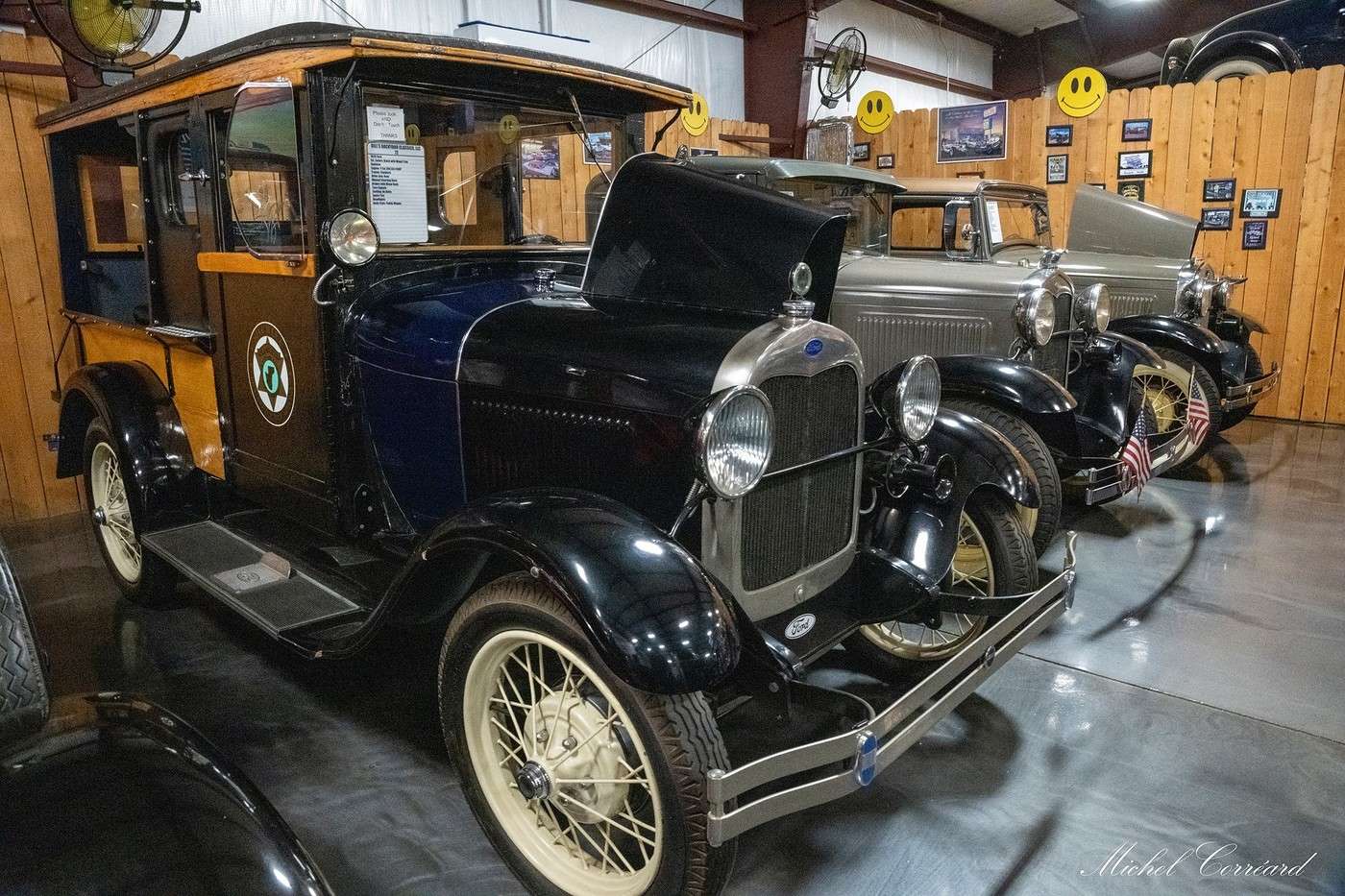
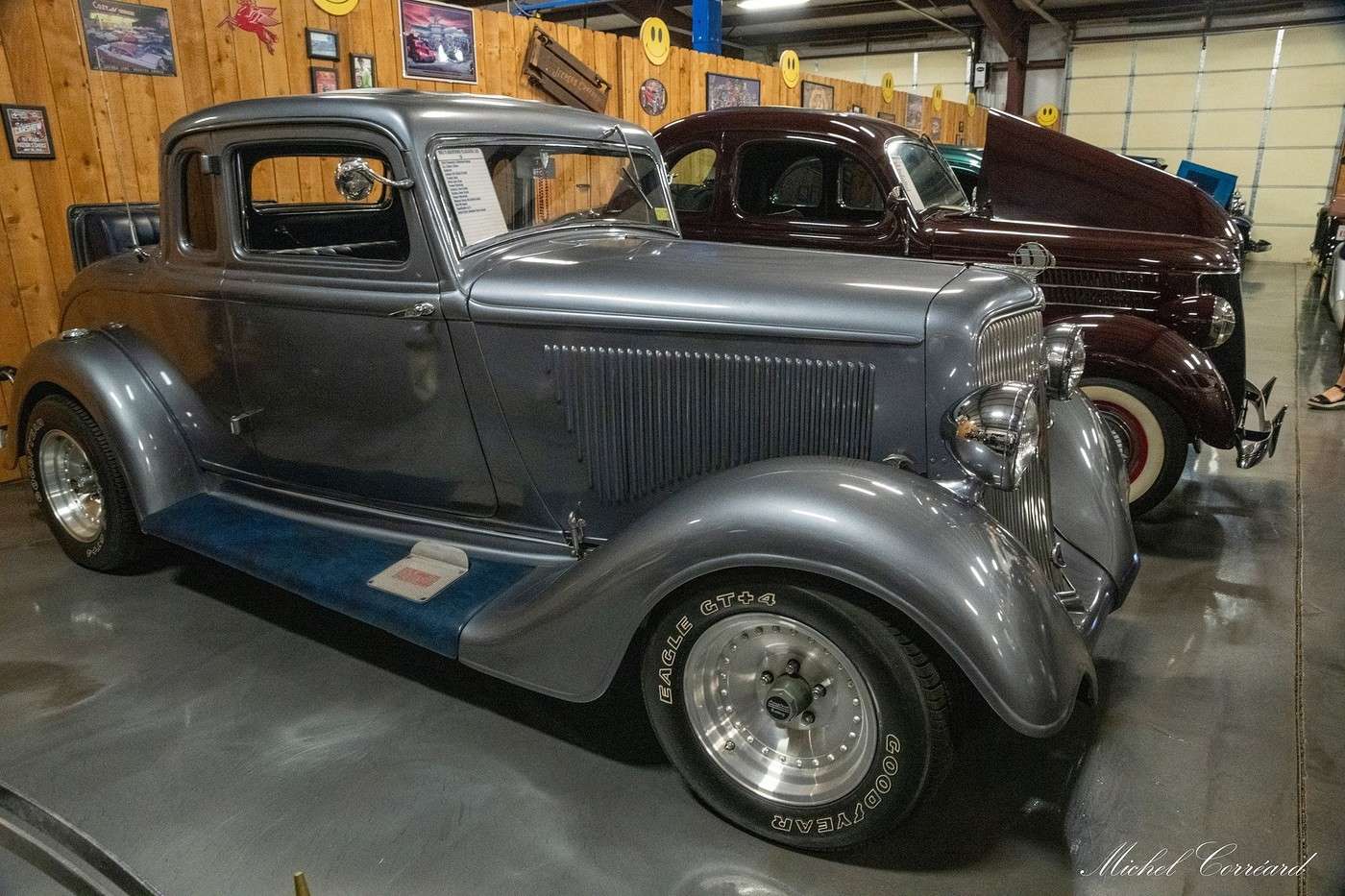
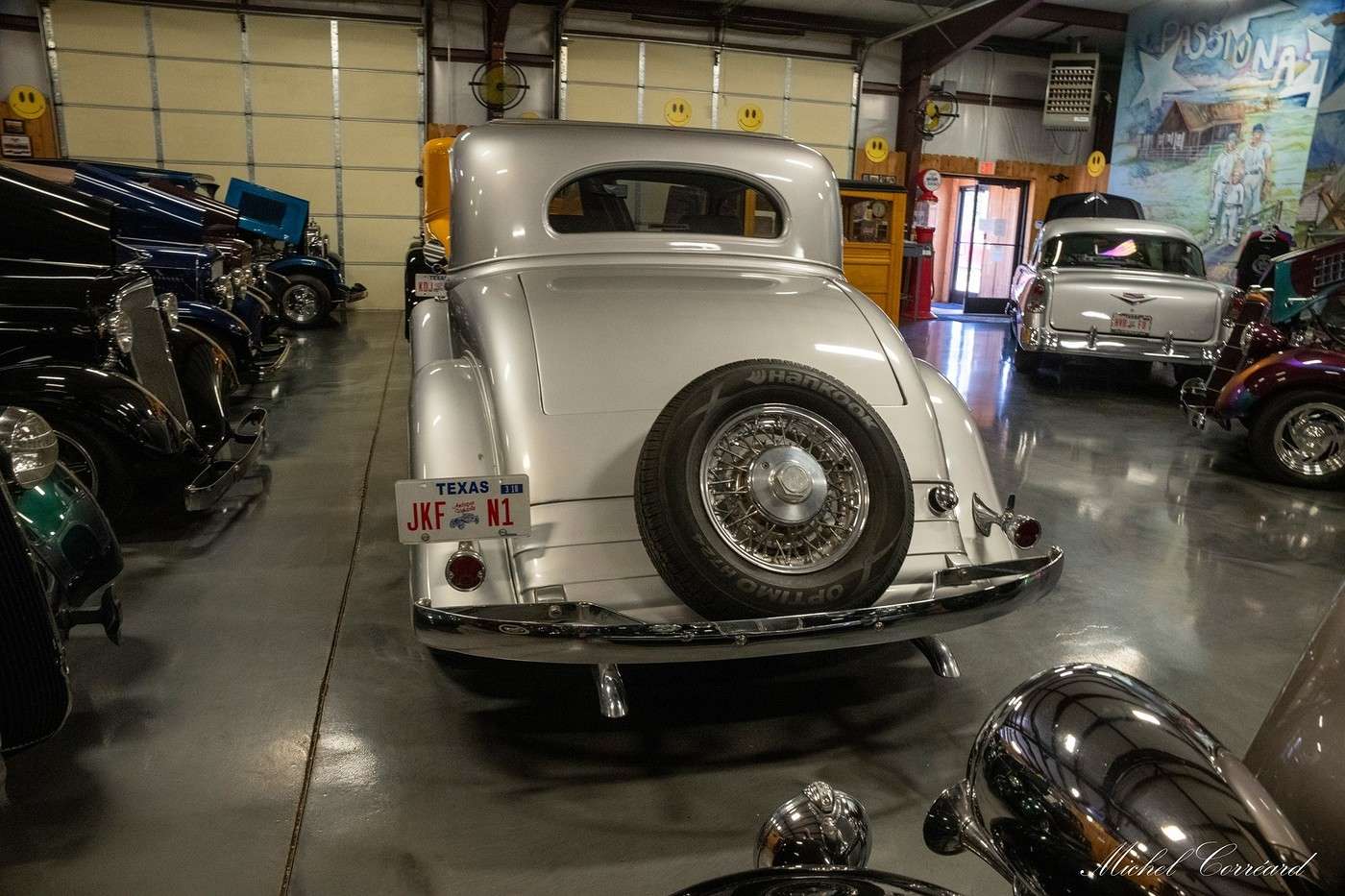
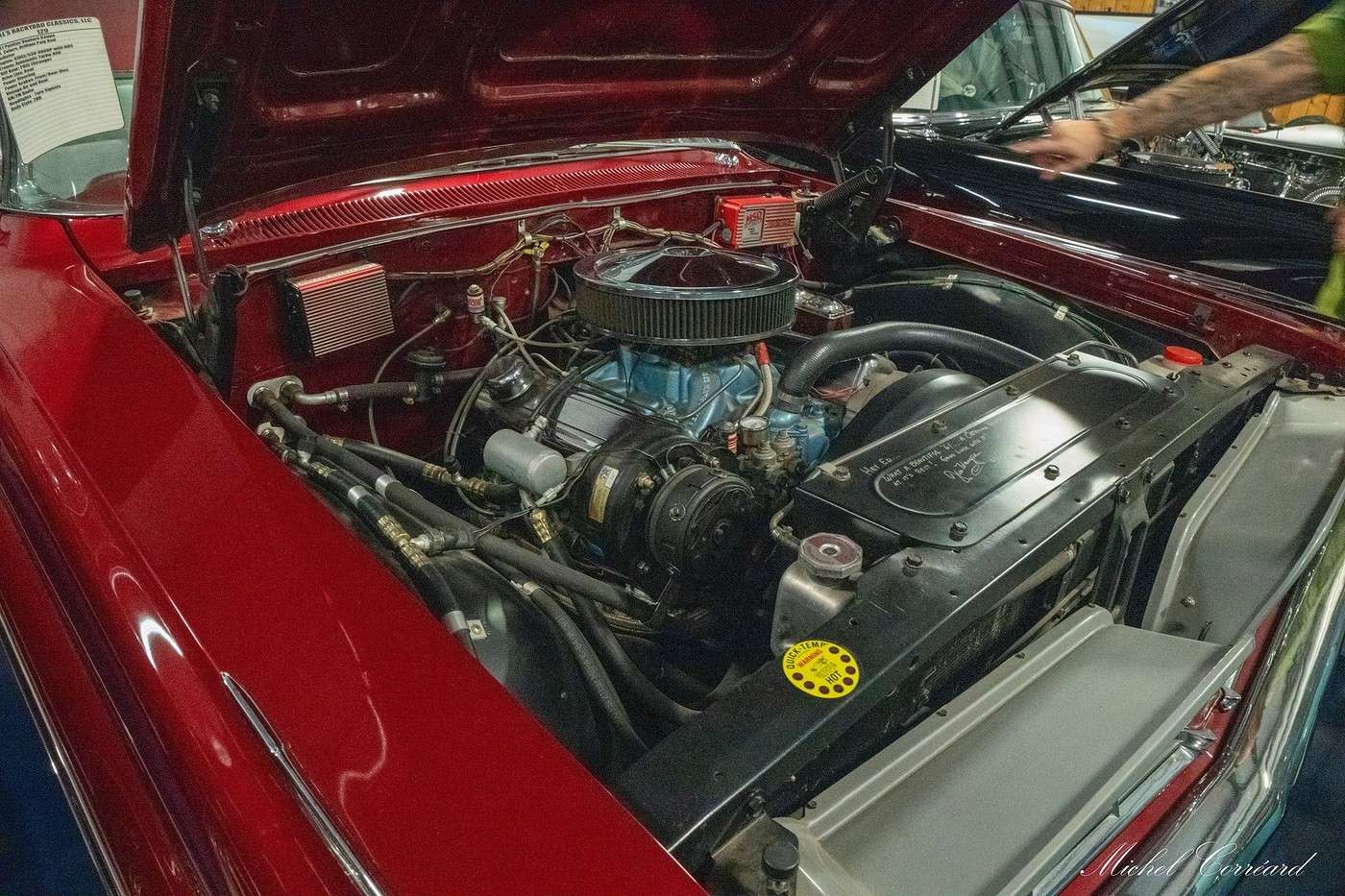
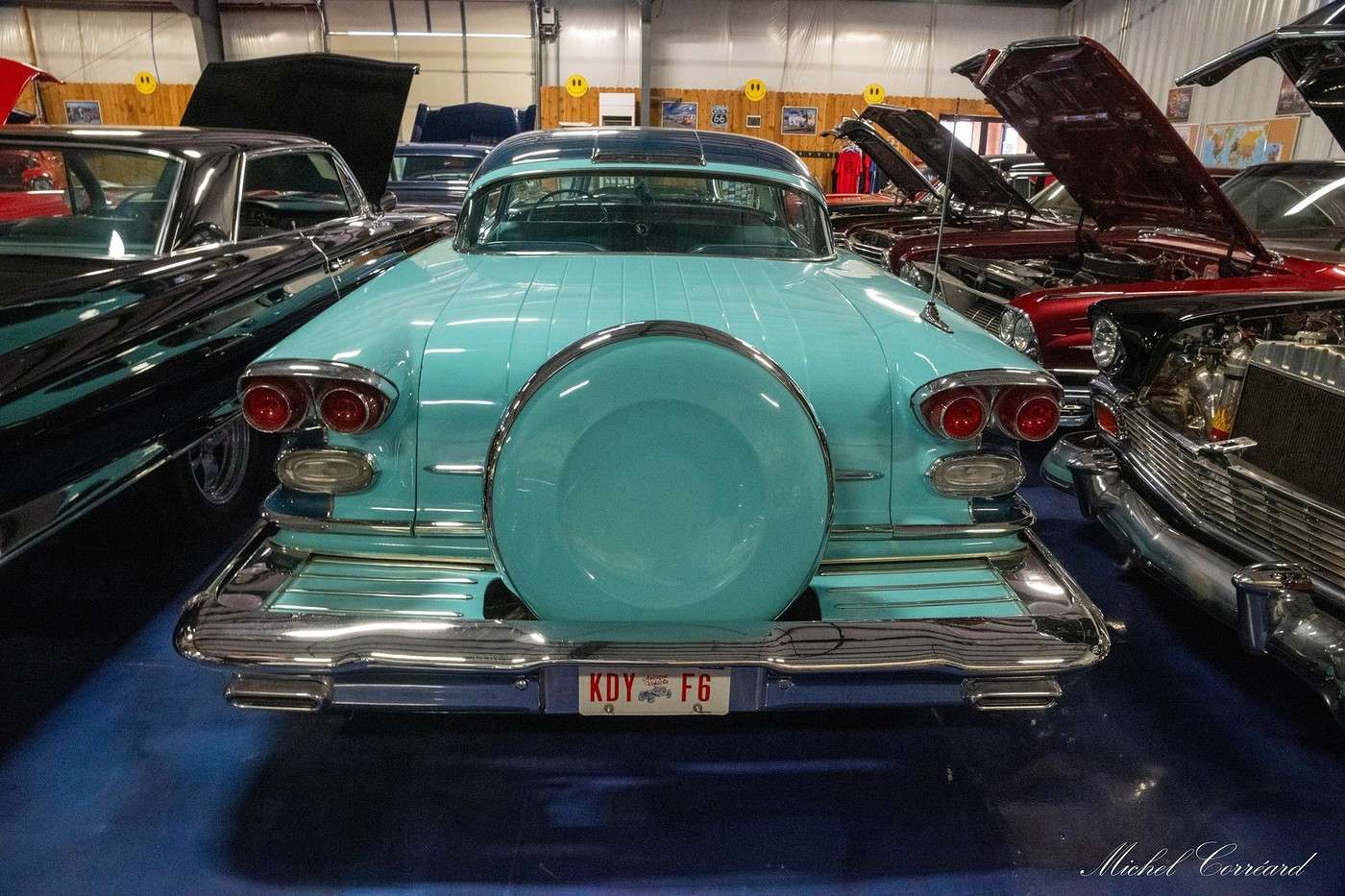
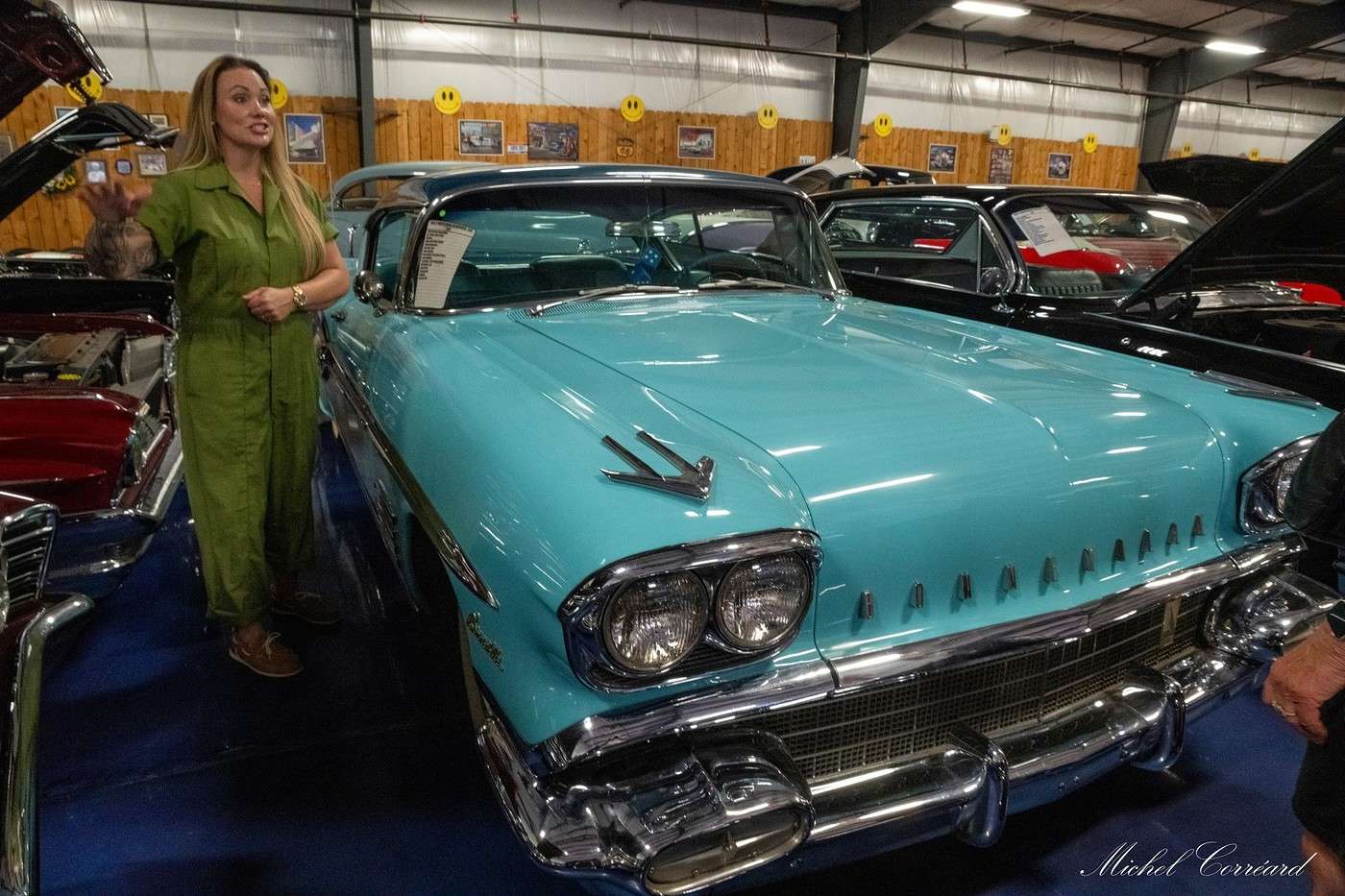
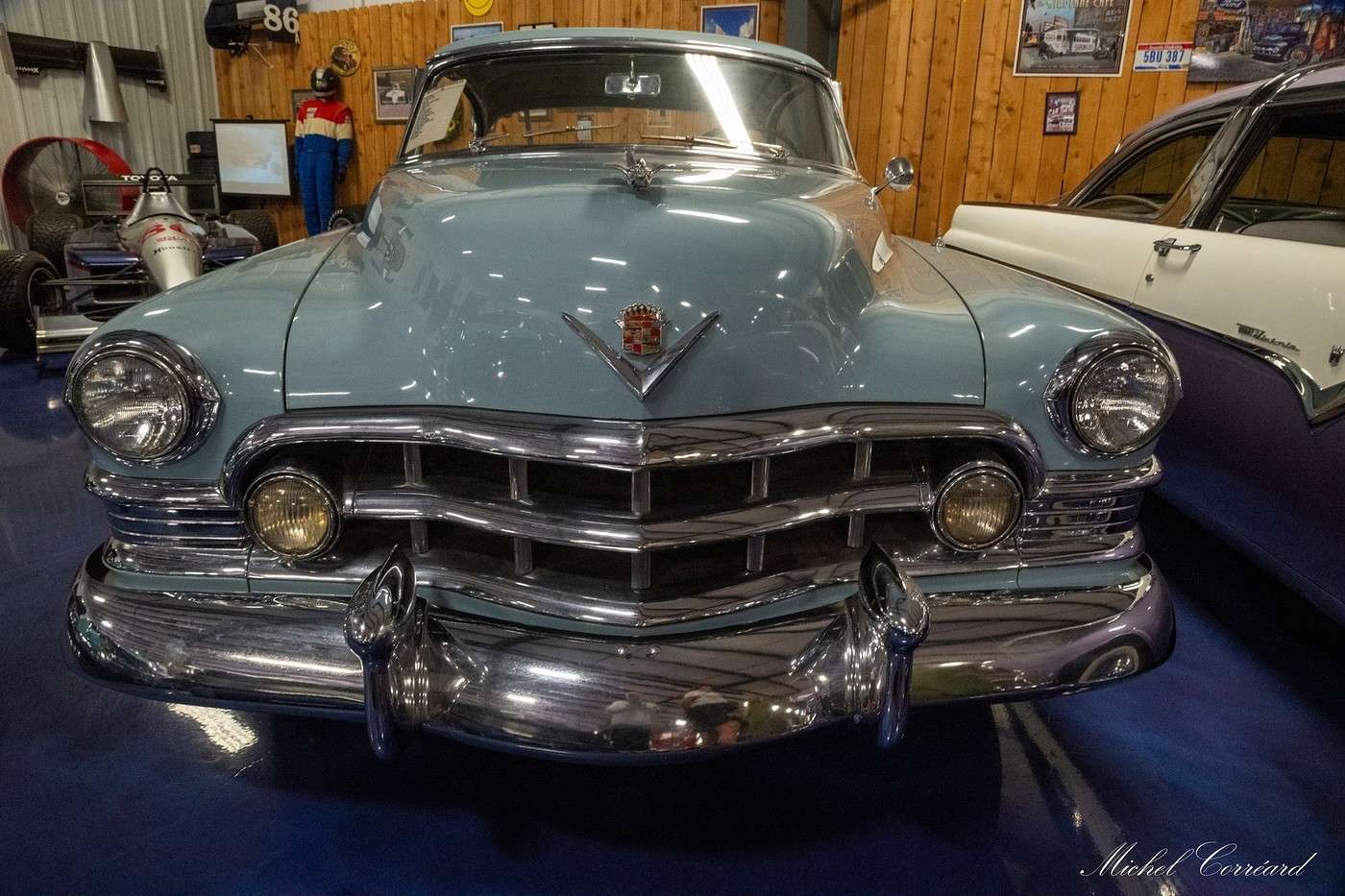
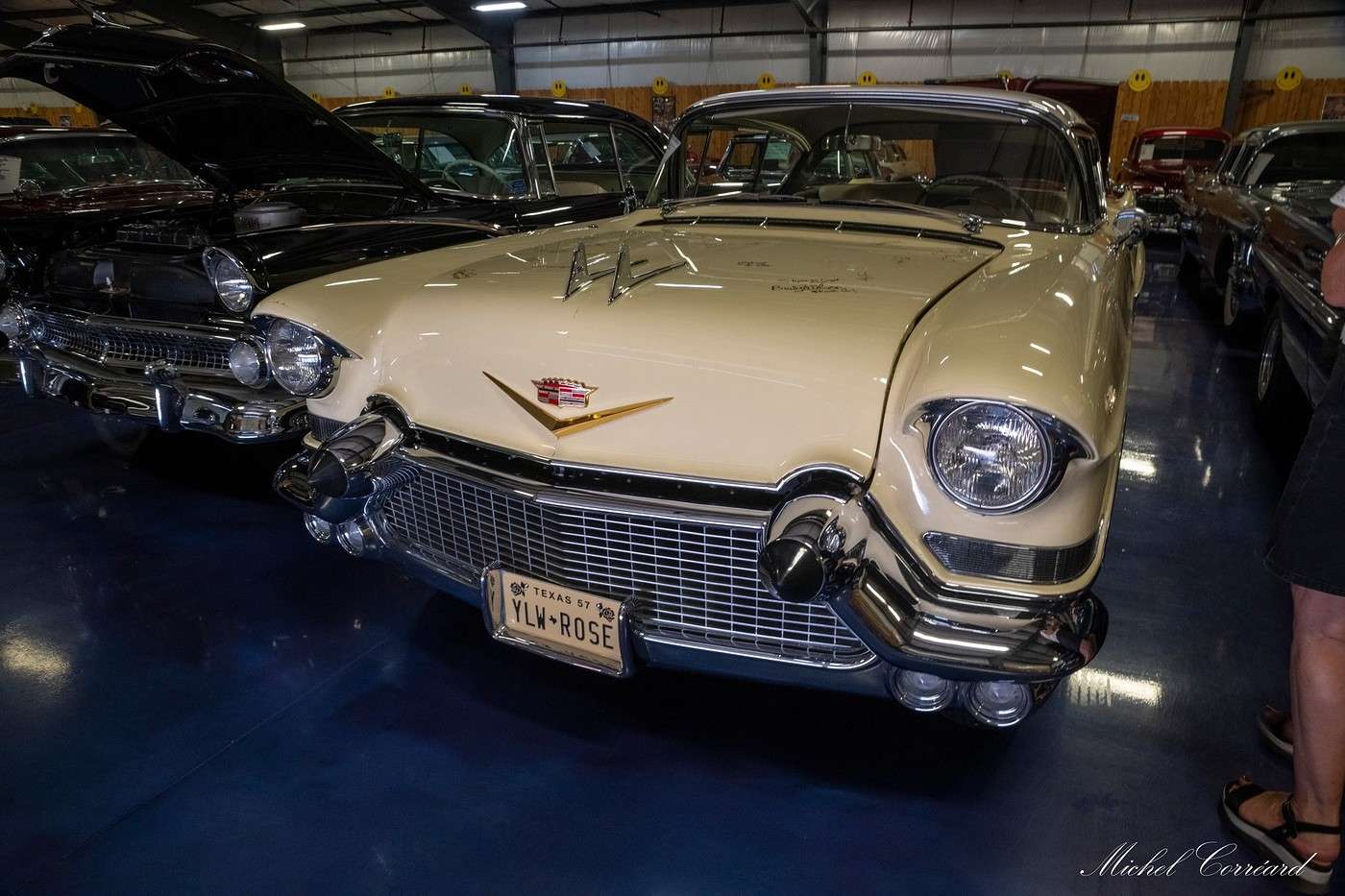
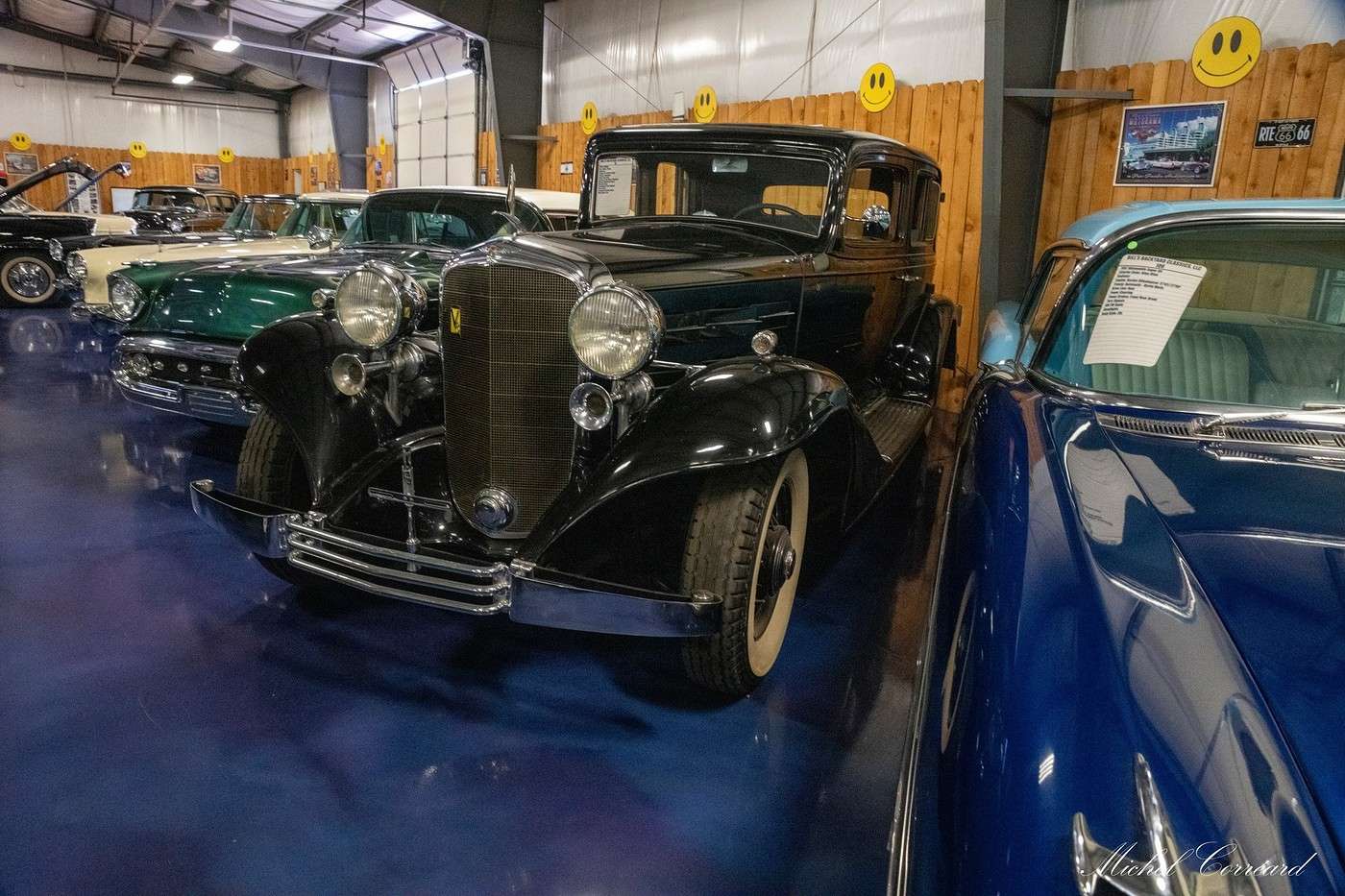
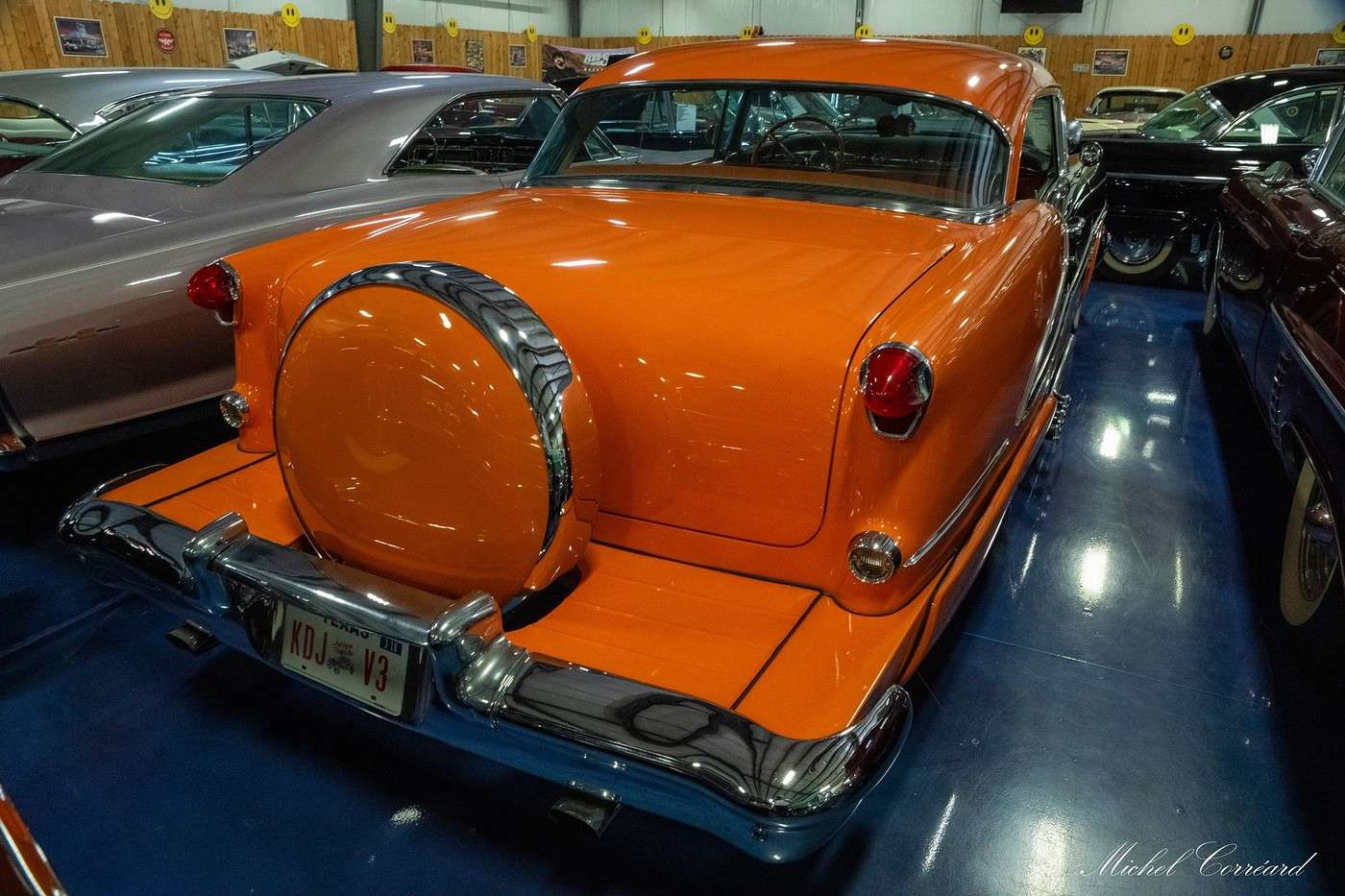
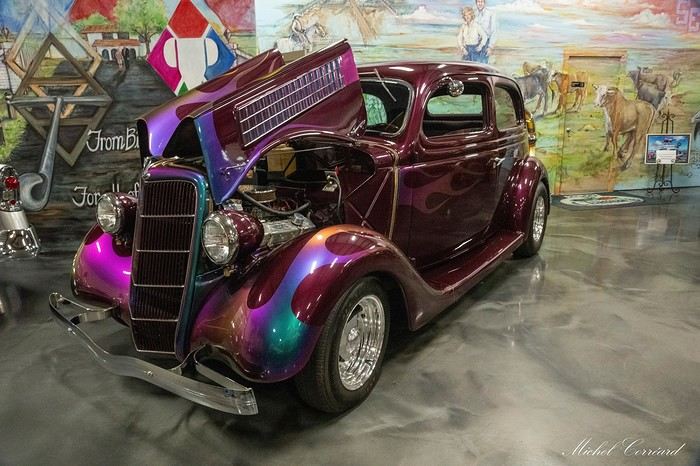
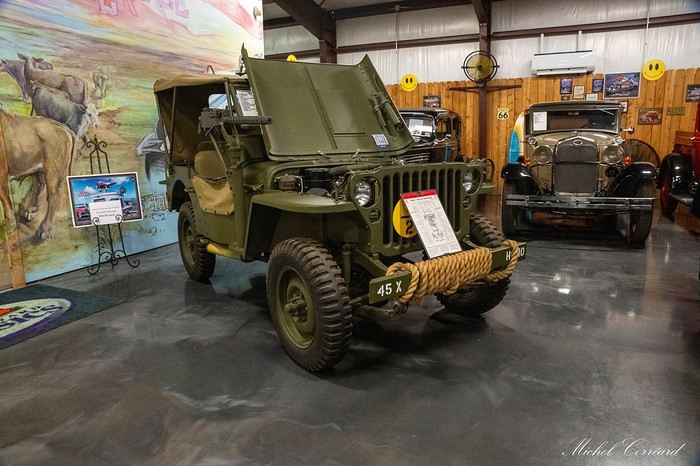
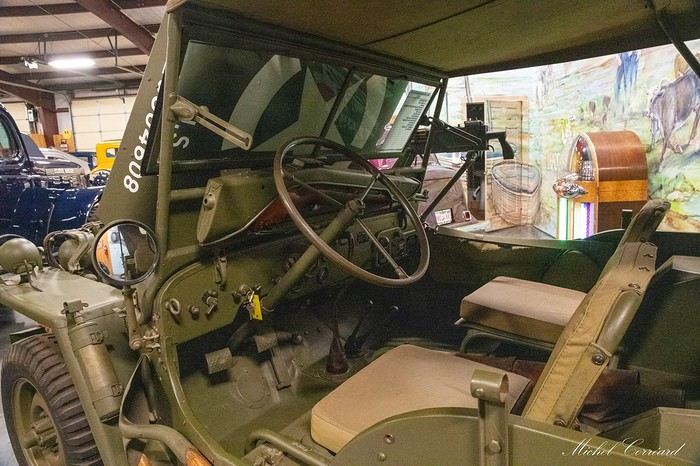
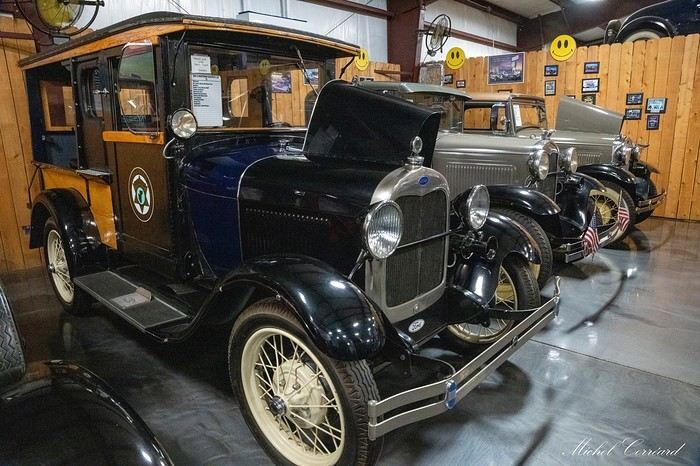
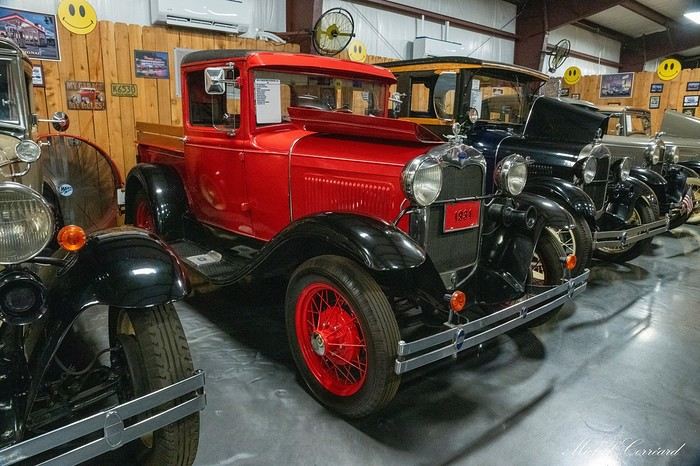
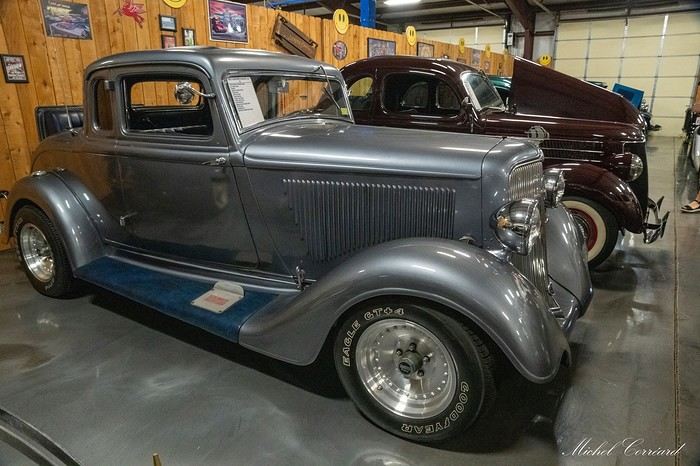
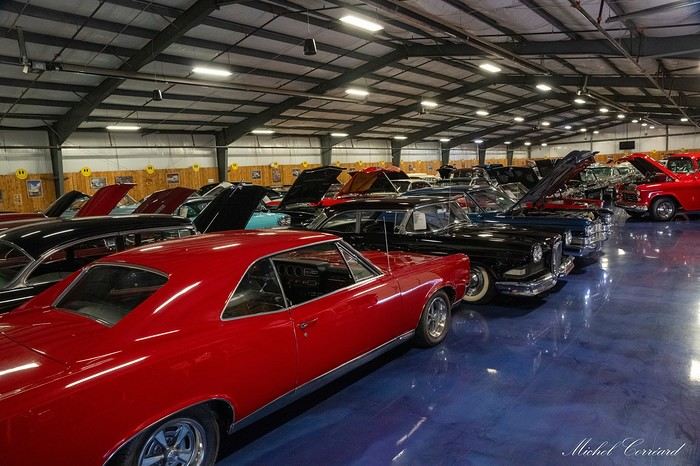
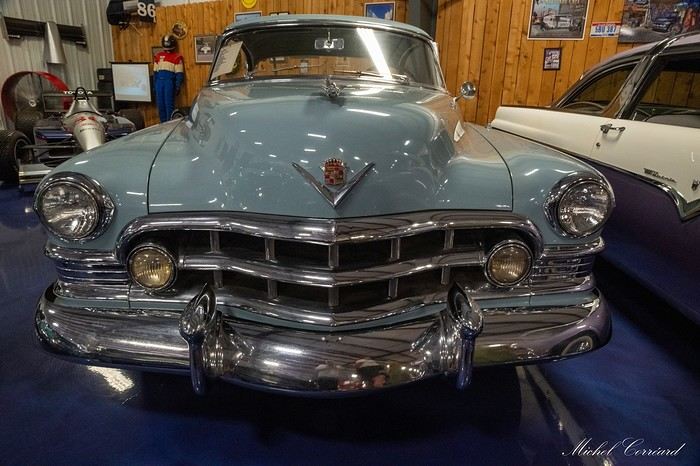
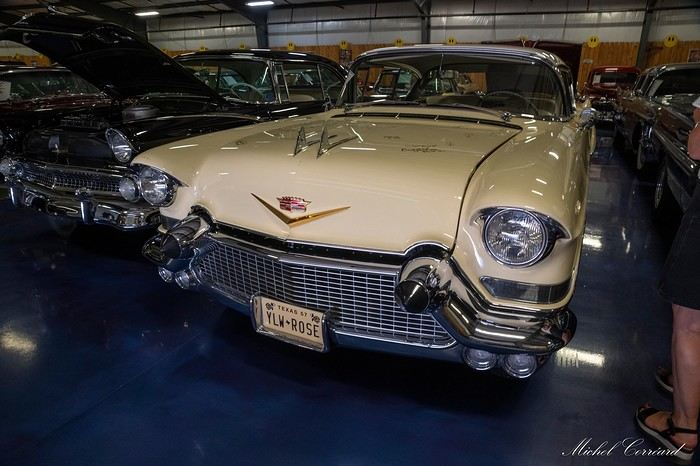
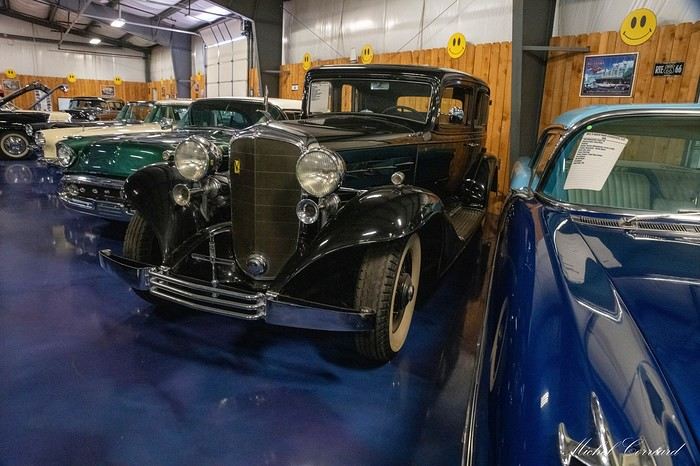
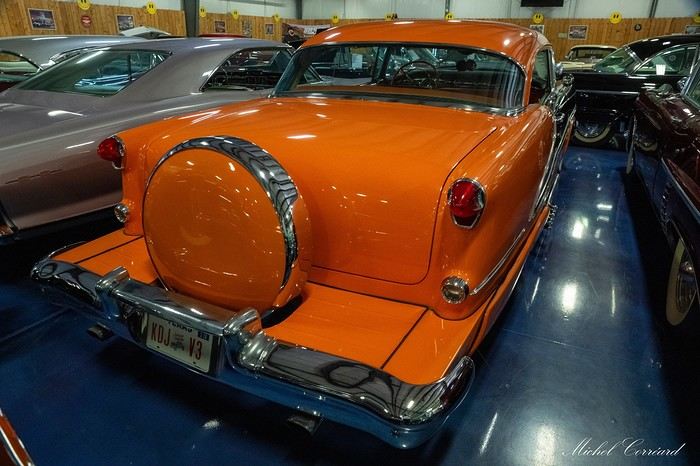
Bill’s Backyard Classics, a museum dedicated to vintage American cars.
A small building that, from the outside, really doesn’t look like much.
And then you’ll probably think:
“Wait, isn’t the old guy usually in an aviation museum today?”
And you’d be right!
I’m pretty eclectic when it comes to museum visits. Well, except maybe for modern art. The kind you find in New York, where I admit I sometimes struggle to understand why an upside-down chair in the middle of a room deserves three pages of explanation.
Though, of course, there’s one major exception: Salvador Dalí, whose work I find absolutely fascinating and whose genius I consider undeniable.
Anyway, back to the cars.
We park in front of the building and step into a first room where a few vintage cars are already on display, looking absolutely stunning.
An elderly gentleman greets us and takes the very reasonable entrance fee. In the corner, an older woman is seated—his wife, we assume—while a younger woman (charming, by the way, which doesn’t hurt) is engrossed in her phone.
We start exploring the relatively small room, surrounded by vehicles that literally breathe American history.
And then, the first pleasant surprise: the elderly gentleman quietly follows us and begins telling us the stories behind the models on display.
Because here, it’s clear they didn’t just buy a few old cars to line up in a hangar.
He restored them himself.
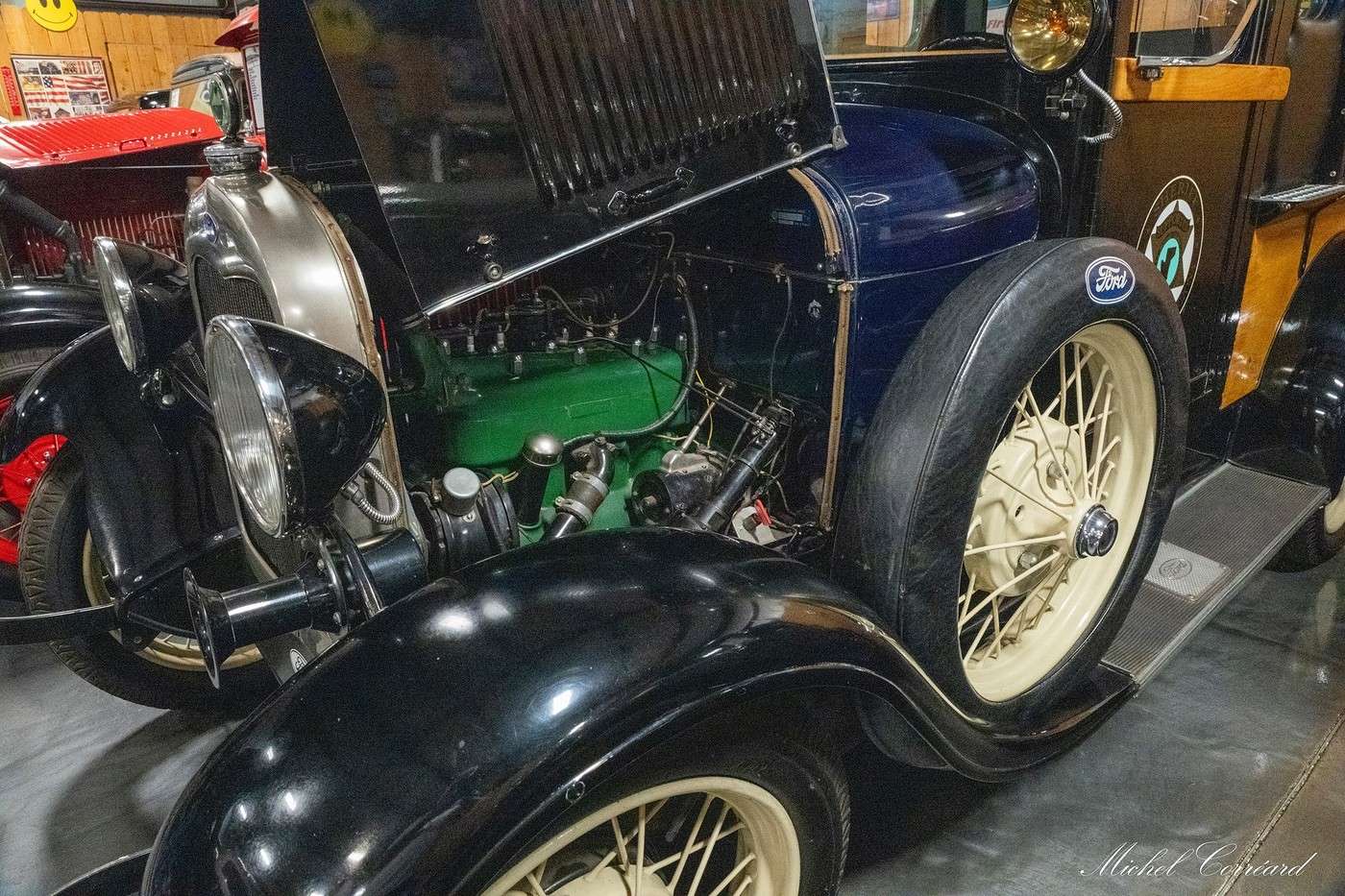
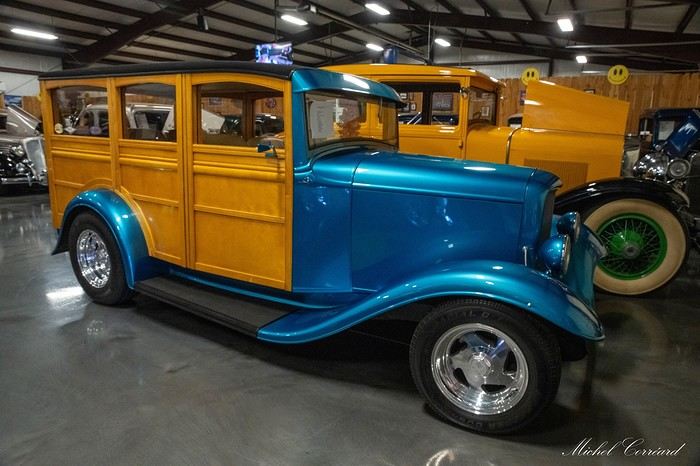
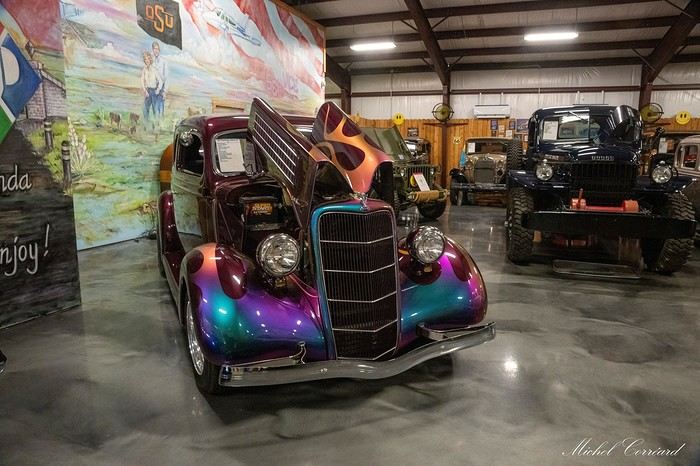
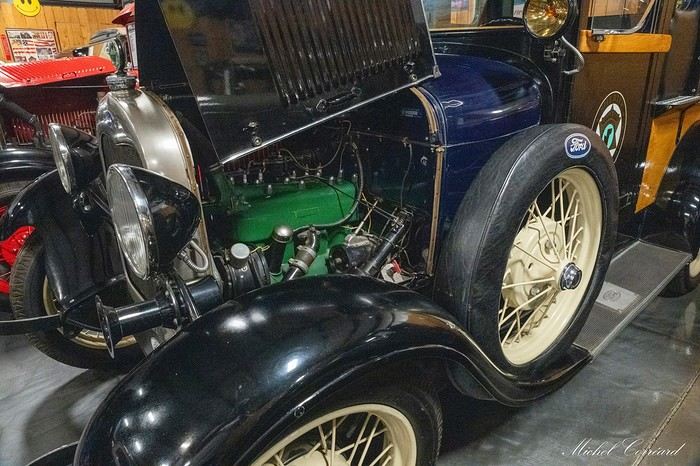
So, of course, when he talks about his cars, he knows exactly what he’s talking about. He explains the models, the unique features, the restorations he’s done—with the kind of passion you immediately recognize in people who don’t just collect objects but have a real connection with them. And what cars they are!
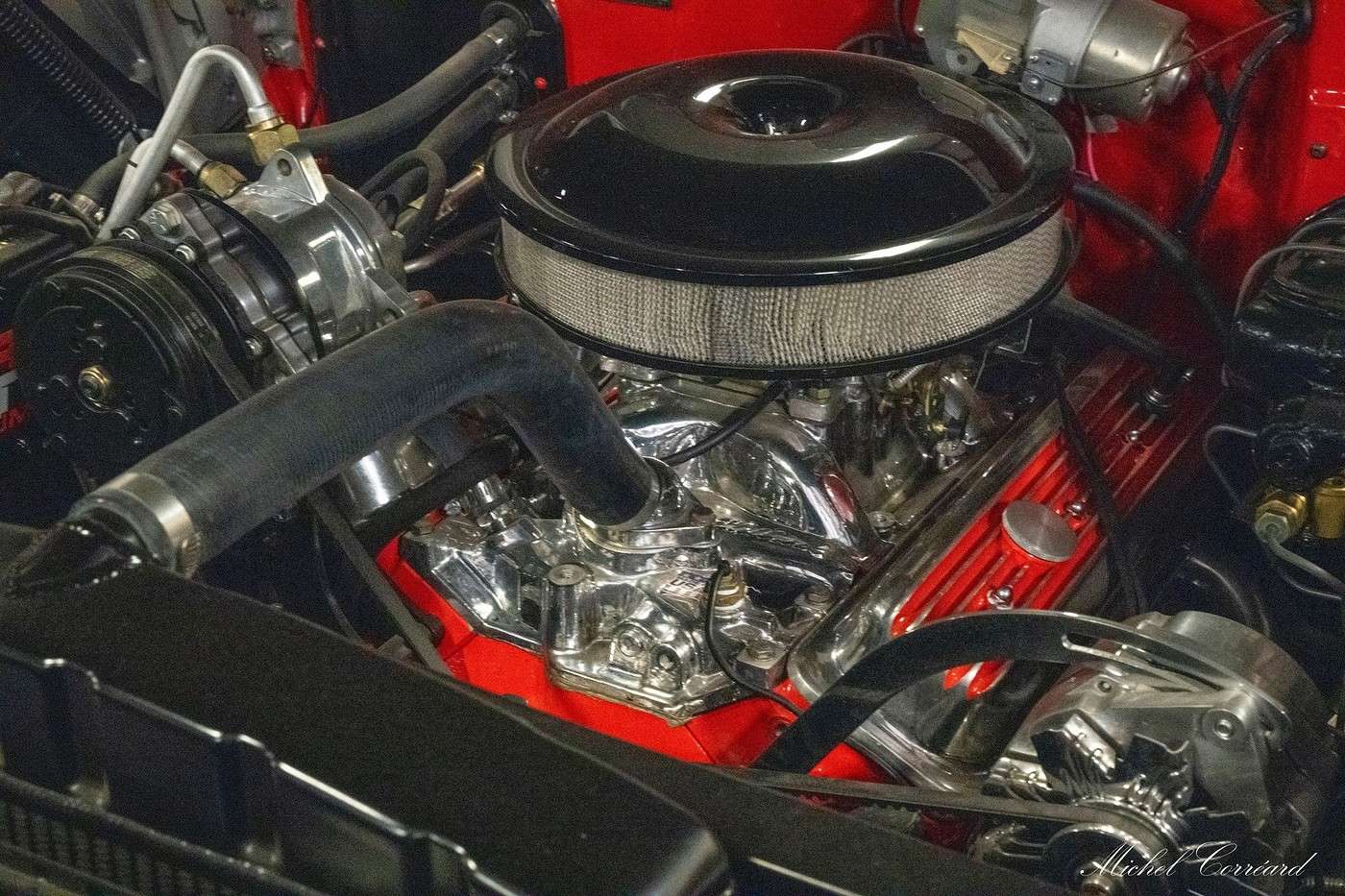
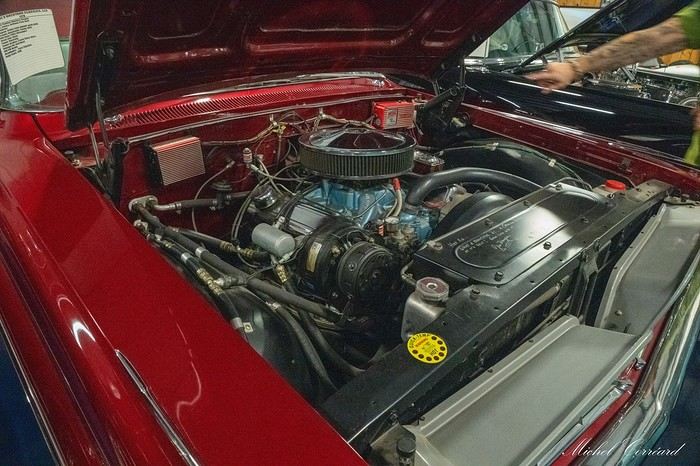
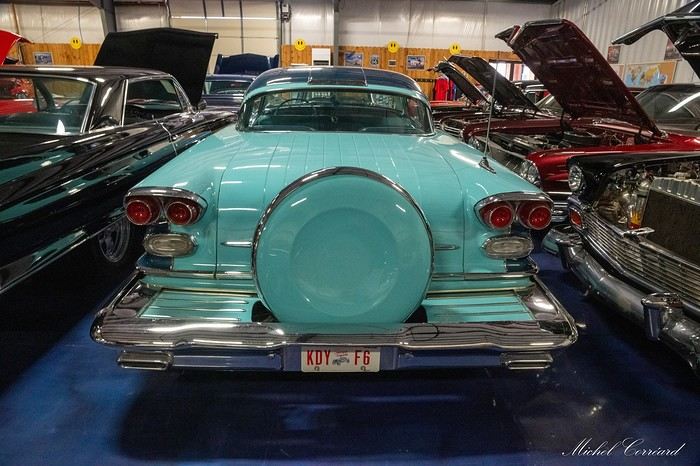
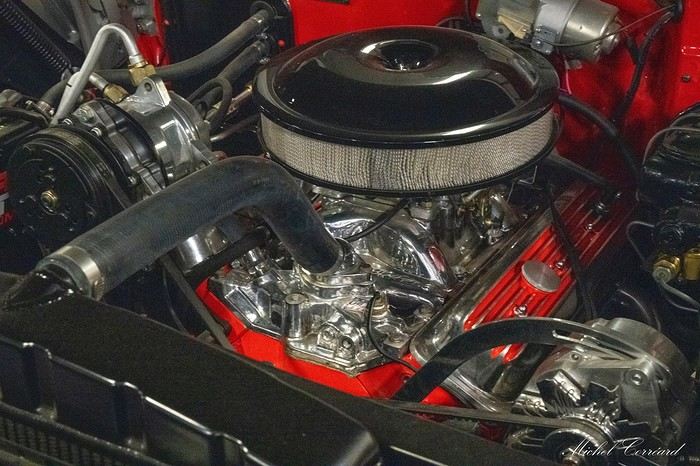
Massive bodies, chrome details, grilles you don’t see anymore, interiors from another era, and engines that must’ve guzzled enough gas to make a European environmentalist faint.
No doubt about it: we’re definitely in America.
And in front of us, some true marvels...
Southwest USA Road Trip Part II
Mitch341 · 2026-10-07 · Message 49 of 79
Once the visit to this little room was over, we still couldn’t help thinking it was a bit pricey for so little to see. Oh well! We’re still French, after all, with that solid reputation for grumbling that sticks to us even on the other side of the Atlantic.
And then...
Just as despair started to set in, the American miracle happened!
We were about to experience the same wonder as the pioneers who, after weeks of bumping along in their wagons, finally discovered the wild lands of New Mexico, the vast deserts of Arizona, and the fish-filled waters of the Pecos River, teeming with hundreds of cyprinids and other predators!
Well, for the fish, I’m not entirely sure. Or even convinced, for that matter.
But it sounds good in the text. Yeah, just like that.
Because behind that modest first room was something we never could have imagined.
Our long quest was finally coming to an end. Our search for happiness was about to find its epilogue!
And then the charming lady finally put down her phone, stood up, and asked us to follow her. But of course, ma’am!
I stayed cautious, though. My wife was right there, and I’d heard that American women aren’t always receptive to the legendary subtleties of French flirting.
So...
Be careful, man!
Stay calm, look straight ahead, keep your hands in your pockets, and follow the lady.
Just to clarify for the grumpy souls who might take this literally: it’s humor!
And off we went behind our charming guide, still with no idea what awaited us behind the door...
A modest door.
It opened.
And then...
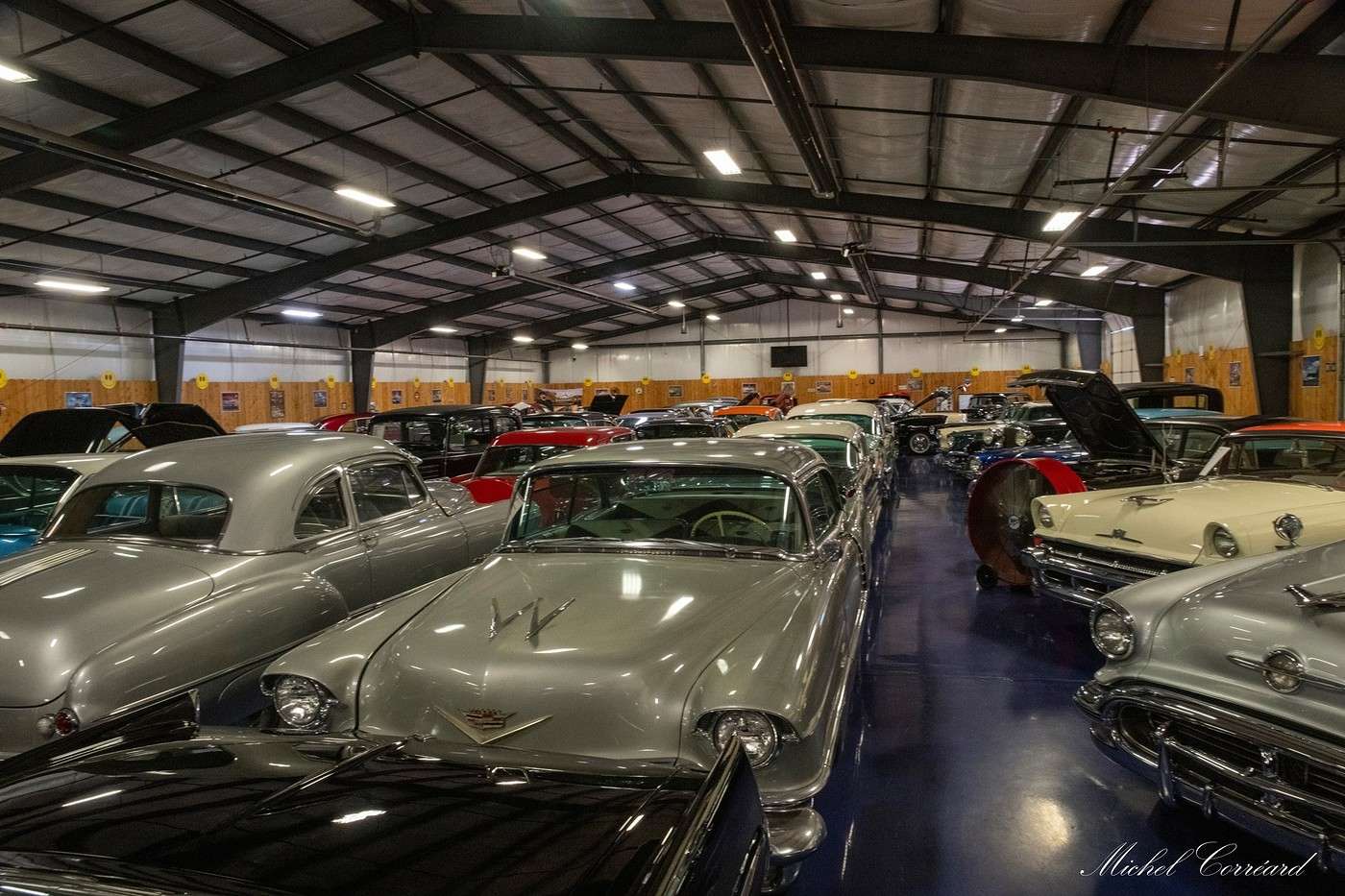
Cars!
Cars, cars, and more cars!
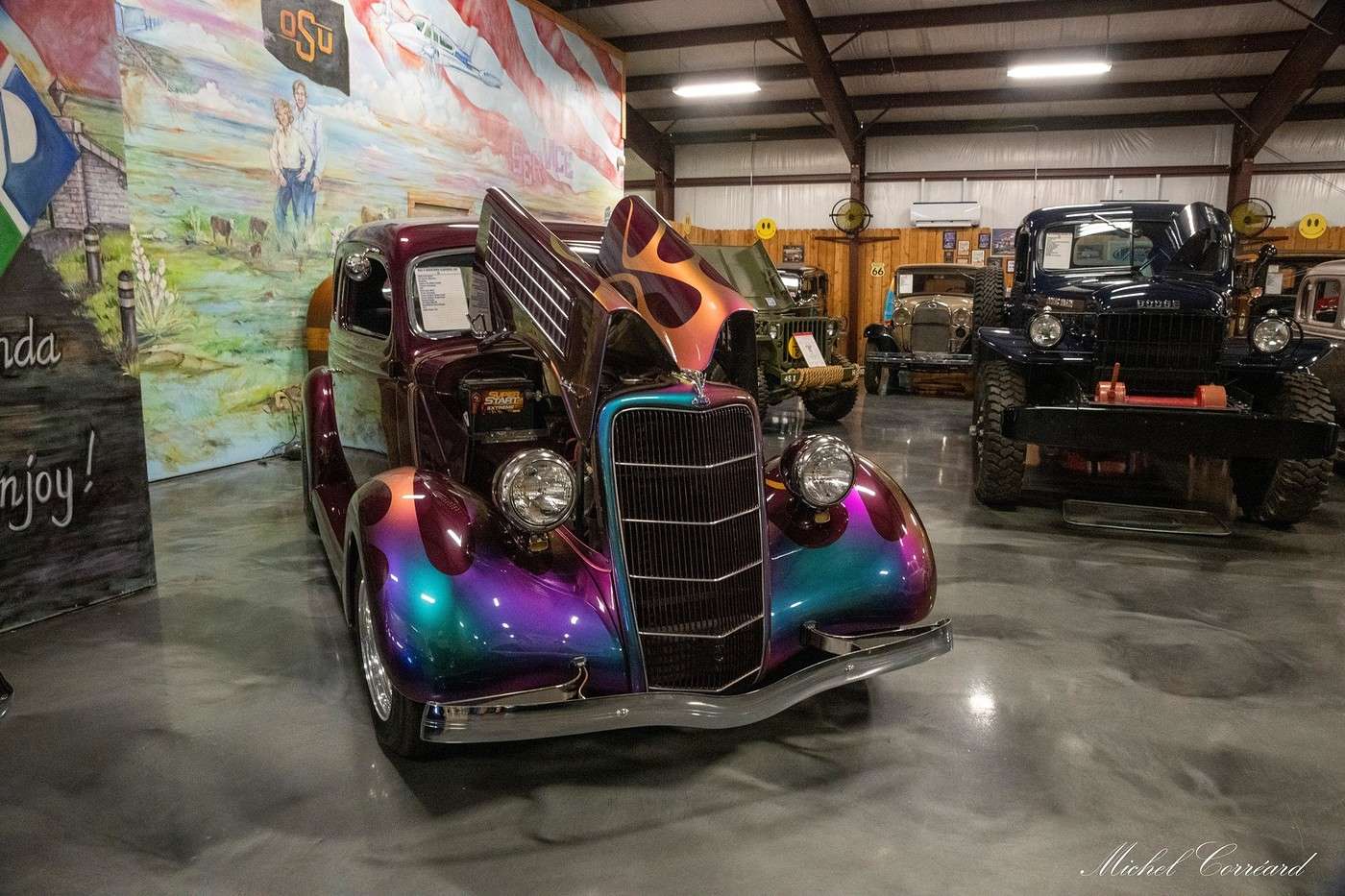
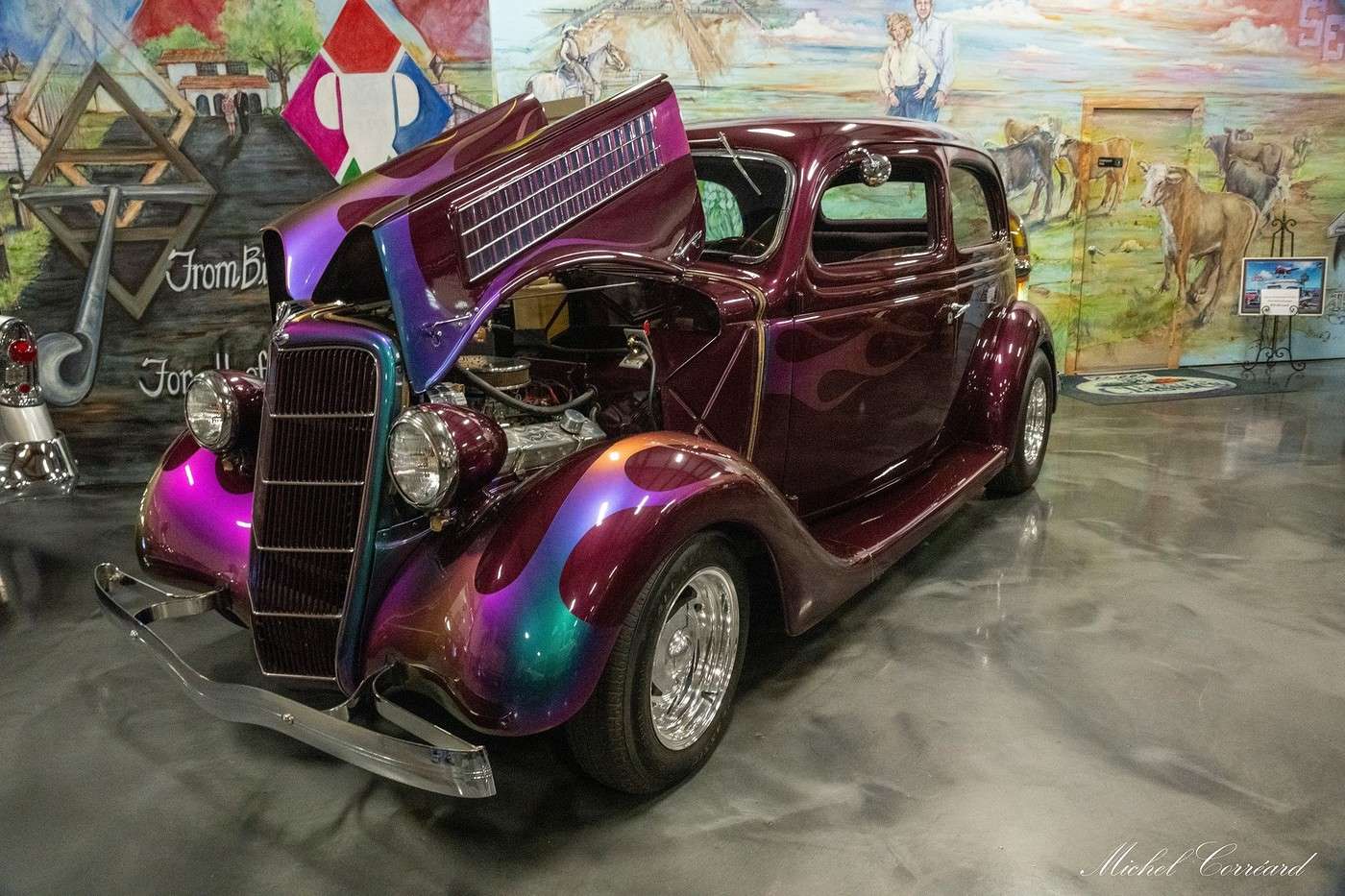
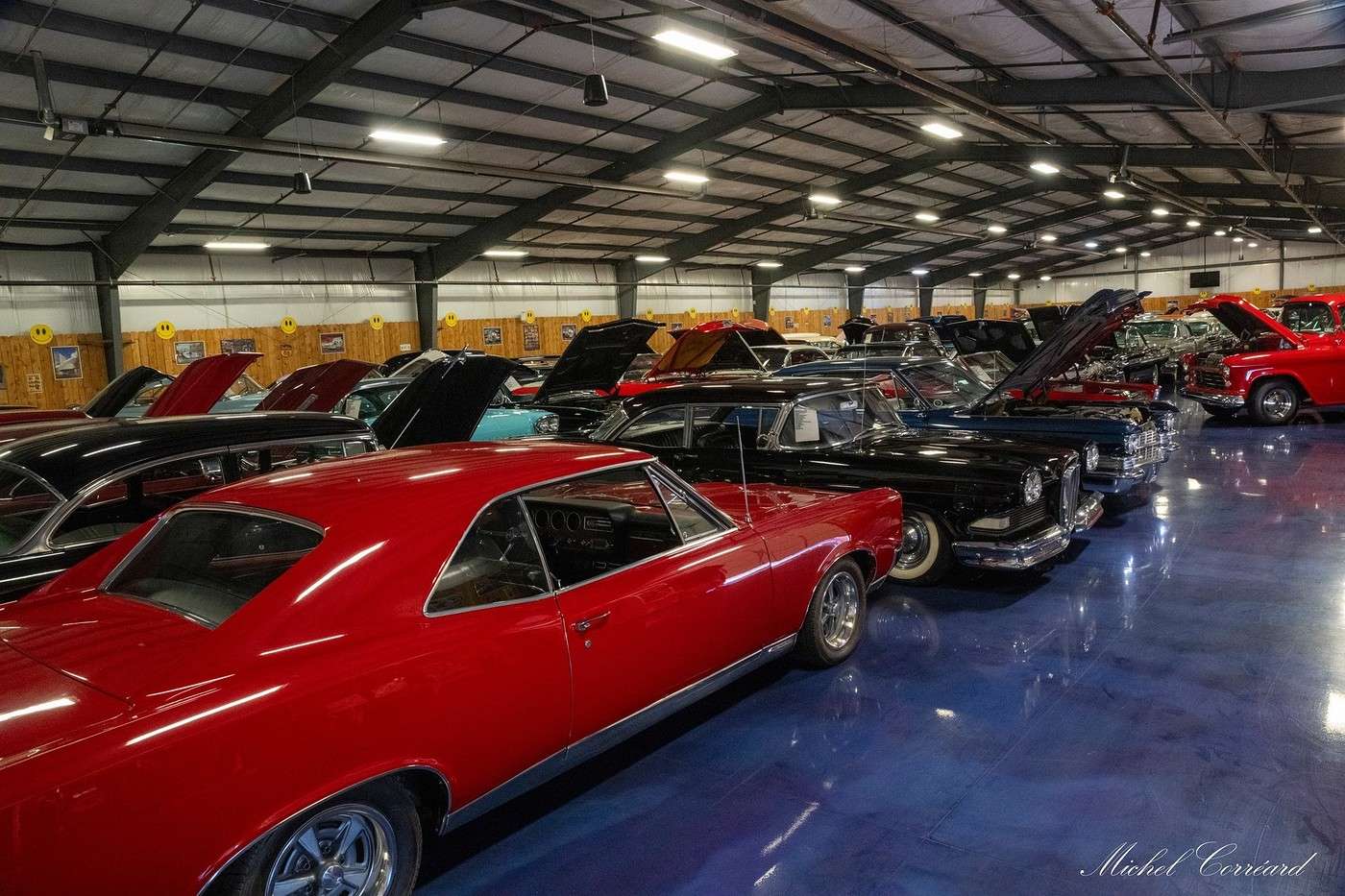
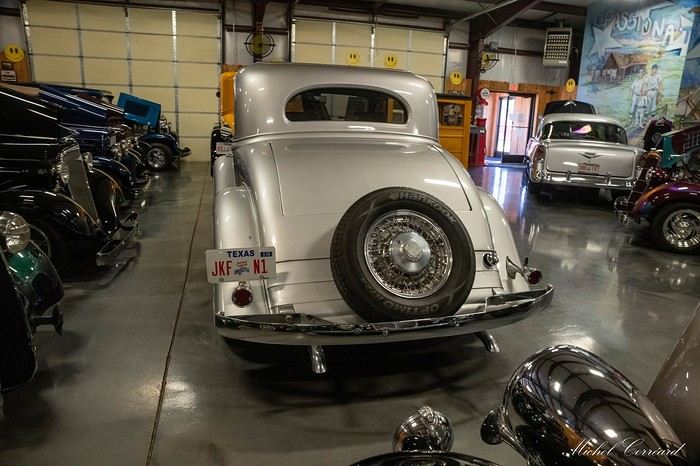
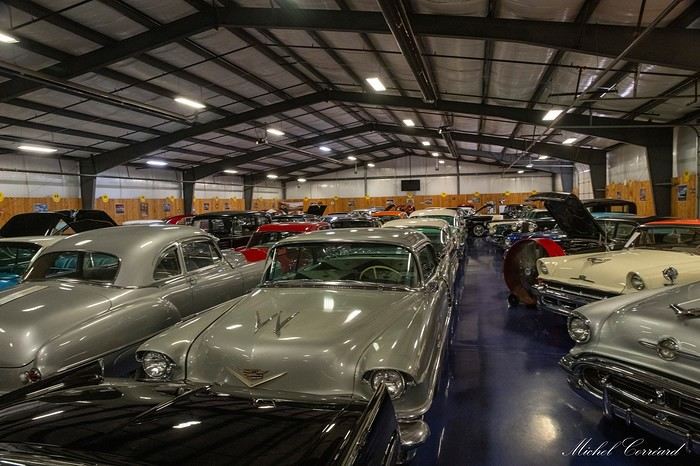
Behind that little room was actually a sizable hangar filled with vintage automobiles. I didn’t count how many there were, but trust me: there are plenty!
And what cars they were!
The only issue, in the end, was that the hangar was almost too small to hold them all. The cars were parked so close together that it was sometimes hard to step back enough to admire them properly.
No problem!
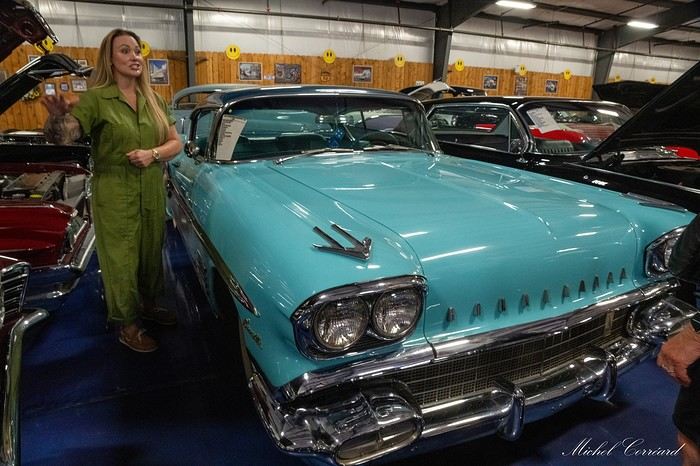
The charming lady guided us through the visit, and we quickly realized she wasn’t just there to open the door.
She knew her stuff!
Models, years, features, quirks—she had all the details on every car on display and shared them with passion.
It was a real feast for the eyes... and the ears!
We moved from one car to the next, surrounded by chrome, massive grilles, endless bodywork, and those classic American car lines that tell the story of an entire era.
And our little grumble from earlier about the entrance fee?
Well...
We take it all back!
At the end of the visit, a final thoughtful touch in the Texas heat: we were given a nice cold bottle of water. Simple, but effective!
We left enchanted by this discovery, which I once again owe to the long hours I spent scouring Google Maps while planning the road trip.
Bill’s Backyard Classics: a truly beautiful museum, authentic, run by enthusiasts, and not to be missed if you’re passing through Amarillo.
You see, you should never judge a place by the size of its door...
Sometimes you just have to open it!
Alright...
Photos!
Southwest USA Road Trip Part II
Mitch341 · 2026-10-07 · Message 50 of 79
We then head back to the hotel, stopping by Walmart for some essential shopping.
But since we're in Amarillo, we decide to take a detour down SW 6th Avenue.
It’s actually the old alignment of Route 66 through the city, and, of course, it’s recommended by pretty much every tourist site dedicated to the Mother Road.
So let’s check it out!
We drive down the avenue without stopping, not even to take a few photos.
I have to say, the neighborhood doesn’t seem all that inviting, and, most of all, we don’t exactly feel a strong sense of safety. And that’s putting it mildly...
So we drive slowly and observe from the car.
A little color, a few facades that remind us of Route 66, some antique shops, a Tex-Mex restaurant...
And that’s it!
Not much more.
Oh, right!
A souvenir shop.
Of course! We’re on Route 66—gotta be able to leave with the traditional magnet, metal sign, or regulation T-shirt!
In short, this stretch of the legendary Mother Road won’t leave us with an unforgettable memory.
A little color, some antique shops, a Tex-Mex place, a souvenir shop... and that’s it!
This time, we’re heading straight to the hotel.
Once we arrive, we take a little rest in the room before heading back down to enjoy the complimentary drink offered by the hotel.
Two good glasses of red wine with some raw veggies. Not bad at all.
There are a lot of people around the bar and in the lobby. I observe, as always.
Men in their forties, burly guys—my personal take? Lumberjack types—with a good pint in front of them. Couples chatting quietly, others a bit louder... In short, it’s lively.
And then, watching the comings and goings, I spot two men dressed entirely in black.
Then two more.
And a few more...
Hmm, interesting.
A rabbis’ convention?
Nope!
No kippahs in sight.
But there *is* a little white cloth around their necks...
Ah!
Clergymen!
Got it!
And not exactly the country priest stepping out of his old 4L.
Impeccably tailored black suits, crisp shirts, polished shoes... Two of them, in particular, must have suits straight out of Armani.
Pure class!
They look like George Clooney and Brad Pitt who’ve taken holy orders, strolling calmly through a packed lobby.
With representatives like that, I bet Sundays in the temples aren’t boring!
Okay, okay...
I’m joking!
Let’s stop the nonsense.
Back to the room for some well-deserved restorative sleep.
The day was long, the cars were many, the wine was good, and the clergymen were elegant.
Tomorrow is another day.
Southwest USA Road Trip Part II
Mitch341 · 2026-10-10 · Message 51 of 79
Saturday, August 22. The final leg between Amarillo and Dallas... The end is near.
After breakfast and realizing our clergymen friends had clearly wrapped up their symposium, we checked out of the hotel and left Amarillo.
And honestly, the stay was pretty nice!
It wasn’t exceptional, sure, but what can you do—Amarillo was on our route. So, we might as well take the chance to explore this Texas city a bit. And hey, we’re not about to turn down a little fun!
We loaded the luggage into the car—a task now perfectly rehearsed after all these weeks on American roads—and hit the legendary Route 66 for a short stretch. But all good things must come to an end!
Soon, we turned right onto US Highway 287, heading toward Dallas Fort Worth International Airport, where we had to return our trusty four-wheeled steed.
A little over 500 kilometers still lay ahead. One last big drive across Texas, with its small towns, long straightaways, and landscapes rolling by outside the windshield.
And once again, we saw those now-familiar sights: abandoned motels, gas stations from another era—permanently closed—and roadside diners that clearly served their last cup of coffee ages ago.
The signs are sometimes still there, the buildings too, but life has left the place.
Truth is, Route 66 isn’t the only one bearing witness to this shift in America’s roadside and economic landscape.
The old national highways, which once supported countless small independent businesses, have gradually lost their customers to big highway infrastructure, hotel chains, mega gas stations, and standardized fast-food joints.
The little guys got swallowed by the big corporations.
That’s just how it is.
And in a way, it’s kind of sad. Behind those abandoned facades were families, shops, stories, and probably some colorful characters.
Today, all that’s left are empty buildings, parking lots overgrown with weeds, and billboards still advertising businesses that vanished years ago.
But that’s America for you—a country that moves forward, transforms, builds, abandons, and starts over somewhere else. Progress, apparently!
Alright, enough economic philosophy for this morning. We’ve still got a few hundred kilometers to cover before handing back the keys.
And it’s on this road that I finally spot the famous American oil wells, complete with their equally famous pumpjacks—those big metal structures swaying tirelessly up and down like giant pendulums.
Because contrary to what you might think, oil doesn’t always gush out of the ground on its own! When the natural pressure of a reservoir isn’t enough to bring it to the surface, you’ve got to give it a little help. And that’s exactly what these machines do. And pumpjacks? They’re everywhere!
On the right, on the left, in the middle of fields—sometimes alone, sometimes clustered by the dozens. They pump away quietly, unconcerned by the world passing by.
Welcome to Texas!
Here, oil is part of the landscape, the history, and—of course—the economy. It’s no coincidence that black gold has played a huge role in this state’s fortune.
And me, behind the wheel, I’m just taking in these machines I’ve seen so many times in American movies. This time, it’s not the movies. They’re right there in front of me!
After this long drive, we finally reach the Dallas metro area.
First order of business—and not a small one: finding a gas station to top off the tank. The last thing we need is the rental company charging us for a few liters of gas at vintage champagne prices!
Tank filled, we head to the Rent a Car Return at Dallas Fort Worth Airport.
And there, a rather pleasant surprise!
We’re greeted by an employee of Congolese origin who speaks perfect French. A few words exchanged in Molière’s language, and our trusty steed is officially returned. Vehicle inspection? Not a chance!
He takes the keys, and that’s pretty much it. Quick, efficient, no ceremony or farewell speech.
And as a reward for his remarkable speed, he gets our travel cooler!
A gift he probably didn’t even know existed five minutes earlier. But after all these weeks of loyal service, our cooler deserved a second life on American soil. Now we’re pedestrians again!
We head to the airport shuttle terminal, where a particularly friendly driver guides us through this maze of terminals. And—bonus—she loves France!
Turns out, we’ve met quite a few Francophile Americans on this trip. Despite what you might hear here and there, our old country still has some fans across the Atlantic.
We take the shuttle to the terminal where we can catch a taxi to our downtown hotel.
Thirty-five minutes later and $75 less in the vacation fund!
Welcome to Dallas! Here we are at the Crowne Plaza Dallas Downtown by IHG.
The hotel is right in the city center, which should let us explore Dallas without needing a car. Perfect timing, since we just returned ours! Off to the 11th floor.
The room is pretty spacious—big enough, at least, for our luggage, which seems to have mysteriously multiplied over the weeks.
The bathroom, though? Tiny! You practically need a traffic plan to get in and out without bumping into something.
But hey, given the price and location, we’re not about to complain. Plus, the place has a bar on the ground floor and a pool.
Well, when I say *pool*...
A *theoretically* usable pool!
Because for our arrival, it’s closed. And for a reason that definitely deserves some explanation.
Apparently, a guest *accidentally* forgot the basic rules of aquatic hygiene and relieved themselves in the pool.
Unintentionally, of course! Result: closure, draining, and refilling.
Nothing too unusual so far.
Except the refilling is being done with what looks like a regular garden hose!
So, given the amount of water needed, let’s just say we’ve got a better chance of seeing palm trees sprout in the parking lot than using that pool before we leave. Not looking good!
But no big deal. After all the kilometers we’ve just covered, I’m not sure we’d have the energy for a few laps anyway.
We settle into our room, unpack, and decide to head down to the bar for a drink.
And there, another great surprise!
We strike up a conversation with some American tourists and end up having a really fun, laugh-filled moment.
That’s one of the things I love about these trips: those spontaneous encounters, those easygoing exchanges, those chats that start with small talk and end in fits of laughter.
No need to have known each other for twenty years to have a good time! After this really nice break, we head back to our room.
Tonight, no big gastronomic adventure in Dallas. Just a light dinner with the few supplies we have left.
And to be honest, we’re *really* tired. The kilometers, the visits, the hotel changes, and all those weeks on American roads are finally catching up with us.
As much as we love traveling, our bodies are calling in their dues!
So tonight, rest.
Dallas can wait a few hours.
Tomorrow is another day.
The Southwest USA Road Trip Part II
Mitch341 · 2026-10-10 · Message 52 of 79
An unexpected encounter in a Dallas bar!
Let's take a moment to look back on this rather pleasant meeting at the bar in our hotel in Dallas.
We arrive in a large room with a circular bar in the center. Behind the counter, a single bartender who seems to be somewhere else entirely, while several customers dine quietly or enjoy a few drinks.
"Hello! Good afternoon!"
And so on and so forth! Just the usual pleasantries!
We get a response in English spoken at a speed that far exceeds our comprehension skills. I end up explaining that we’re just French tourists and, while we can get by in Shakespeare’s language, it’d still be better to slow down a bit!
And then, surprise!
Everyone applauds!
"Vive la France! Vive la France!"
Well now! That’s a welcome we definitely weren’t expecting!
A man comes over to us and strikes up a conversation. His name is John!
John! In the United States! What an extraordinary coincidence! We really had to cross the Atlantic to meet an American named John!
Anyway, our new friend explains that he’s celebrating his 60th birthday today and that everyone here is simply his family!
They all come from a town on the Texas-Louisiana border and made the trip to properly celebrate this milestone.
And that’s not all!
To mark the occasion, this cheerful family gave him tickets to see Carlos Santana, who’s performing tonight in a Dallas venue!
Good heavens! Santana! Here! Tonight!
That’s info that doesn’t fall on deaf ears!
I immediately pull out my phone and check the internet, hoping to snag a couple of tickets. After all, seeing a Santana concert during our American road trip would be pretty amazing!
Alas, three times alas!
Sold out! No tickets left!
Not a single seat available! What a shame! We were so close to hearing this guitar legend, and now fate has decided otherwise.
Oh well, no use crying over it. We’re not going to ruin our evening over it!
Especially since the pints are arriving!
The conversation continues in a particularly warm atmosphere. We joke, laugh, and exchange thoughts on France, the U.S., and our trip. In short, one of those totally unexpected moments that also make our American adventures so special.
Meanwhile, our poor bartender keeps moving behind his circular counter, looking like a man who’s lost the instruction manual for his own establishment! He’s completely out of it! You’d think the bar was spinning faster than him!
But who cares! The pints are good, the people are lovely, and the laughter is plentiful.
And that’s how a simple stop at our hotel bar turned into a memorable encounter with an American family celebrating John’s 60th birthday!
Finally, after a few good beers and some hearty laughs, we say goodbye to our new friends.
One last "Happy Birthday, John!", a few handshakes, and we head back to our room.
No Santana tonight, sure, but another great American encounter to add to our travel journal.
And in the end, it’s often these little unexpected moments, far from tourist circuits and planned visits, that leave the best memories.
Alright, off to bed! Tomorrow’s another day!
Southwest USA Road Trip Part II
Mitch341 · 2026-10-11 · Message 53 of 79
Sunday, August 23.
Dallas, a Sunday morning before America wakes up...
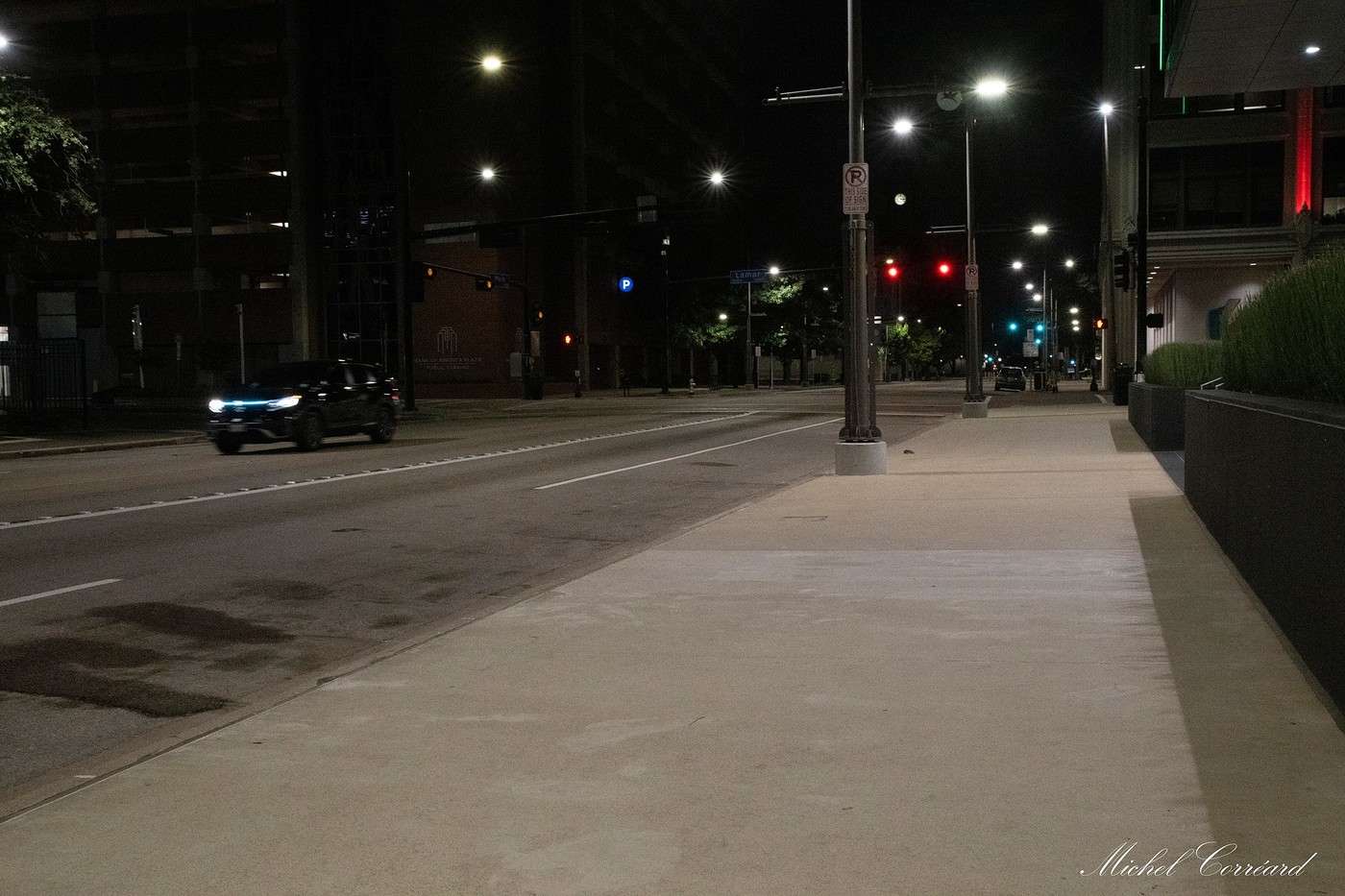
I’m up early. Really early!
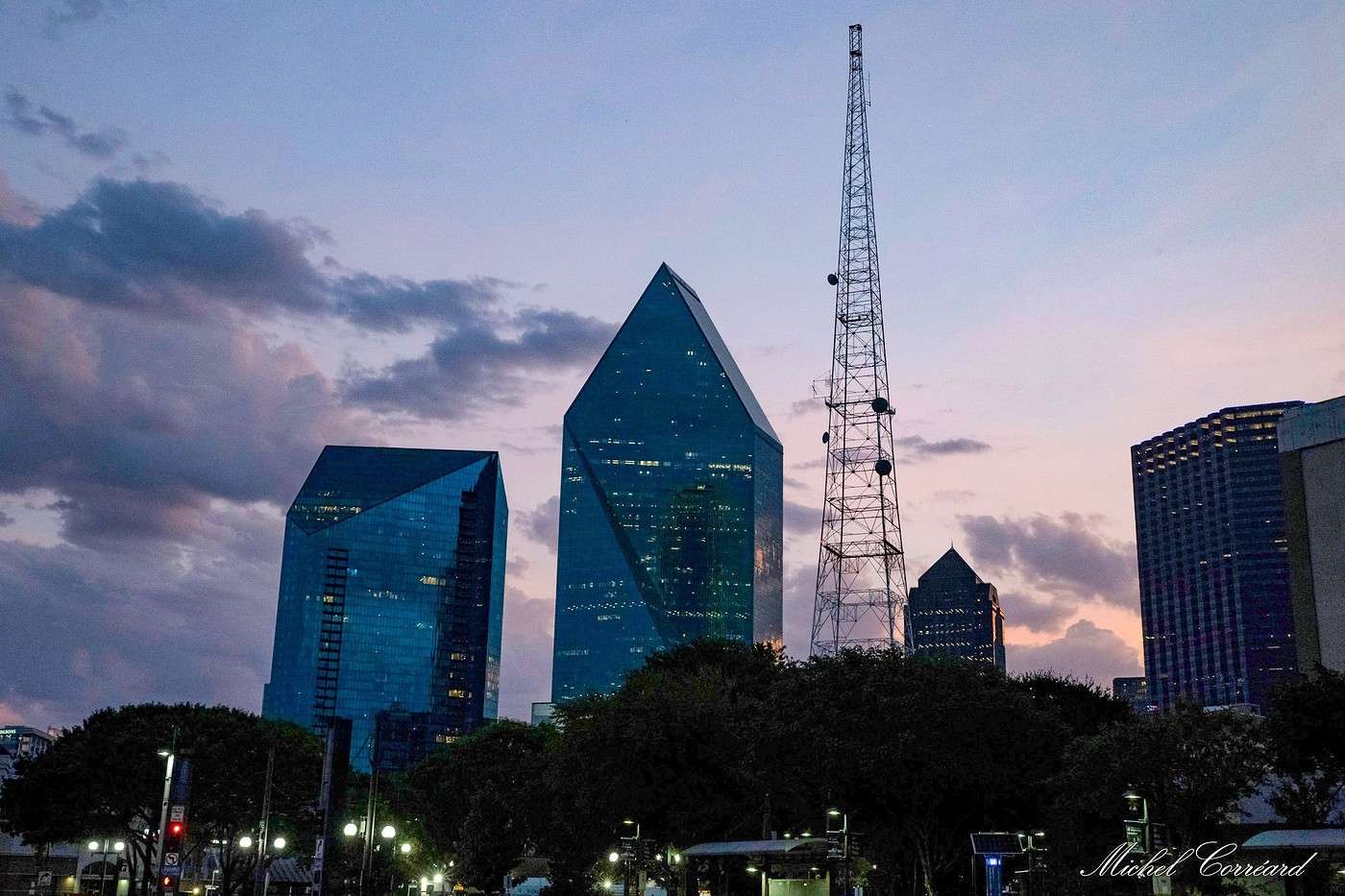
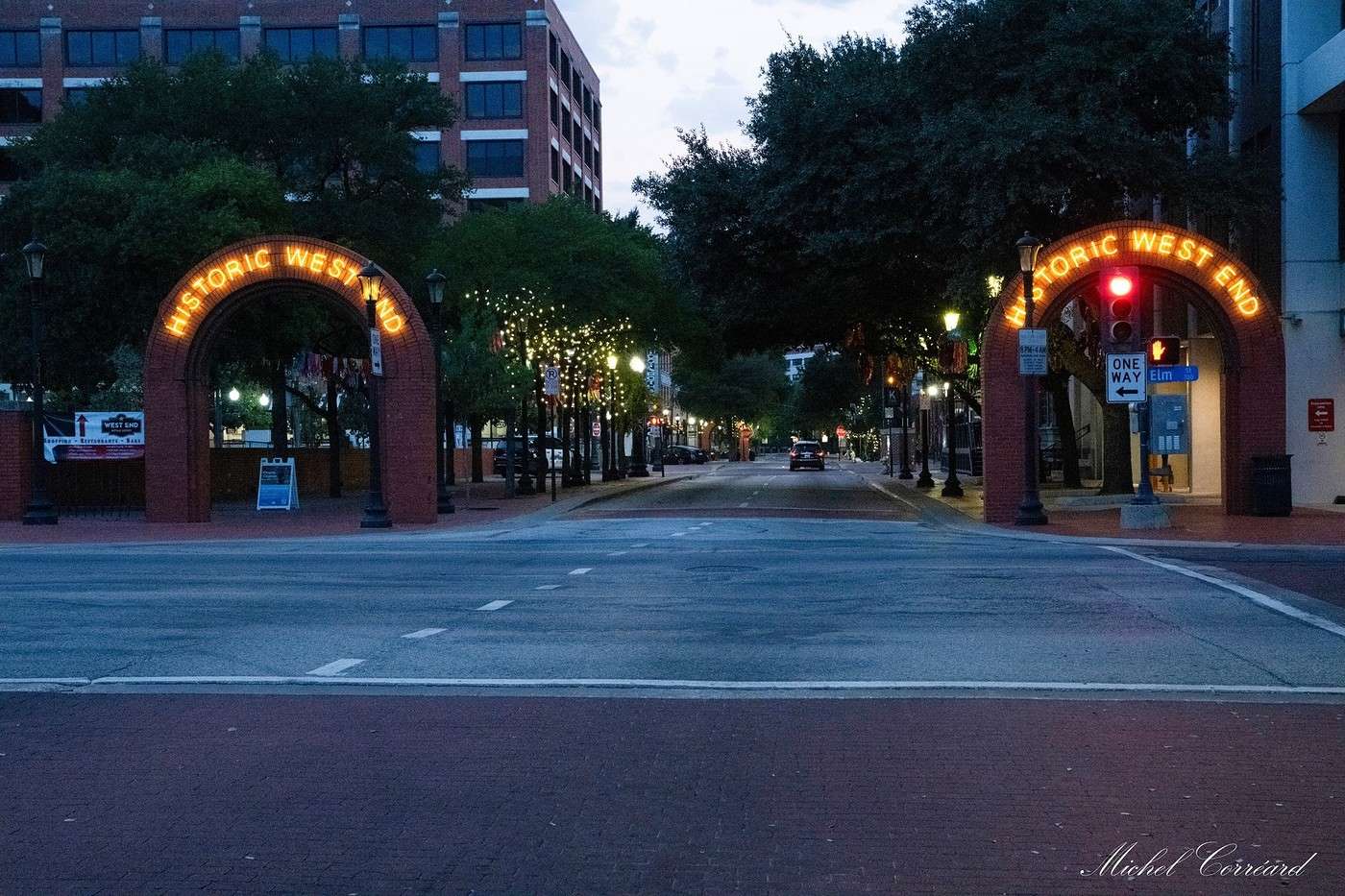
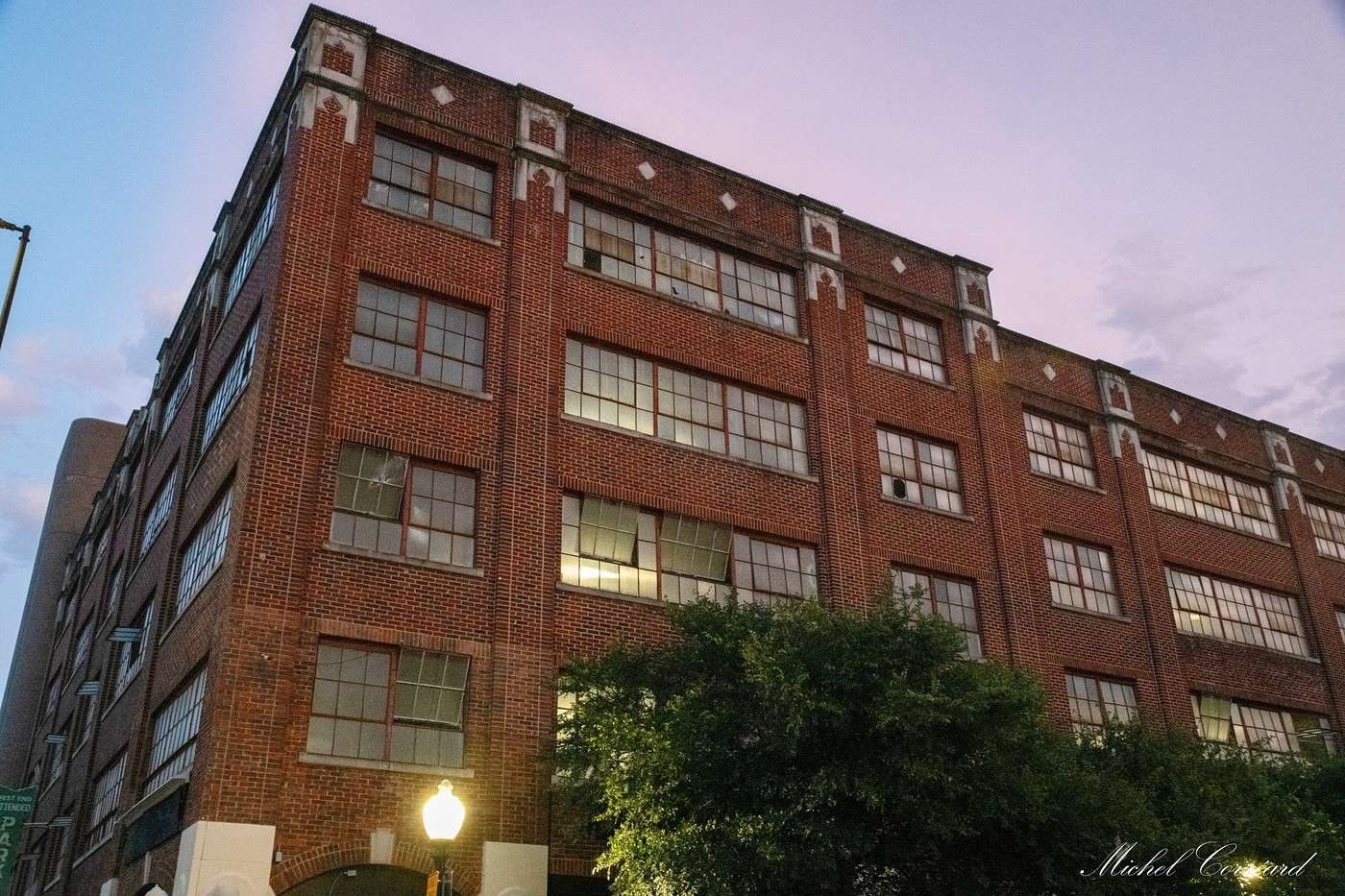
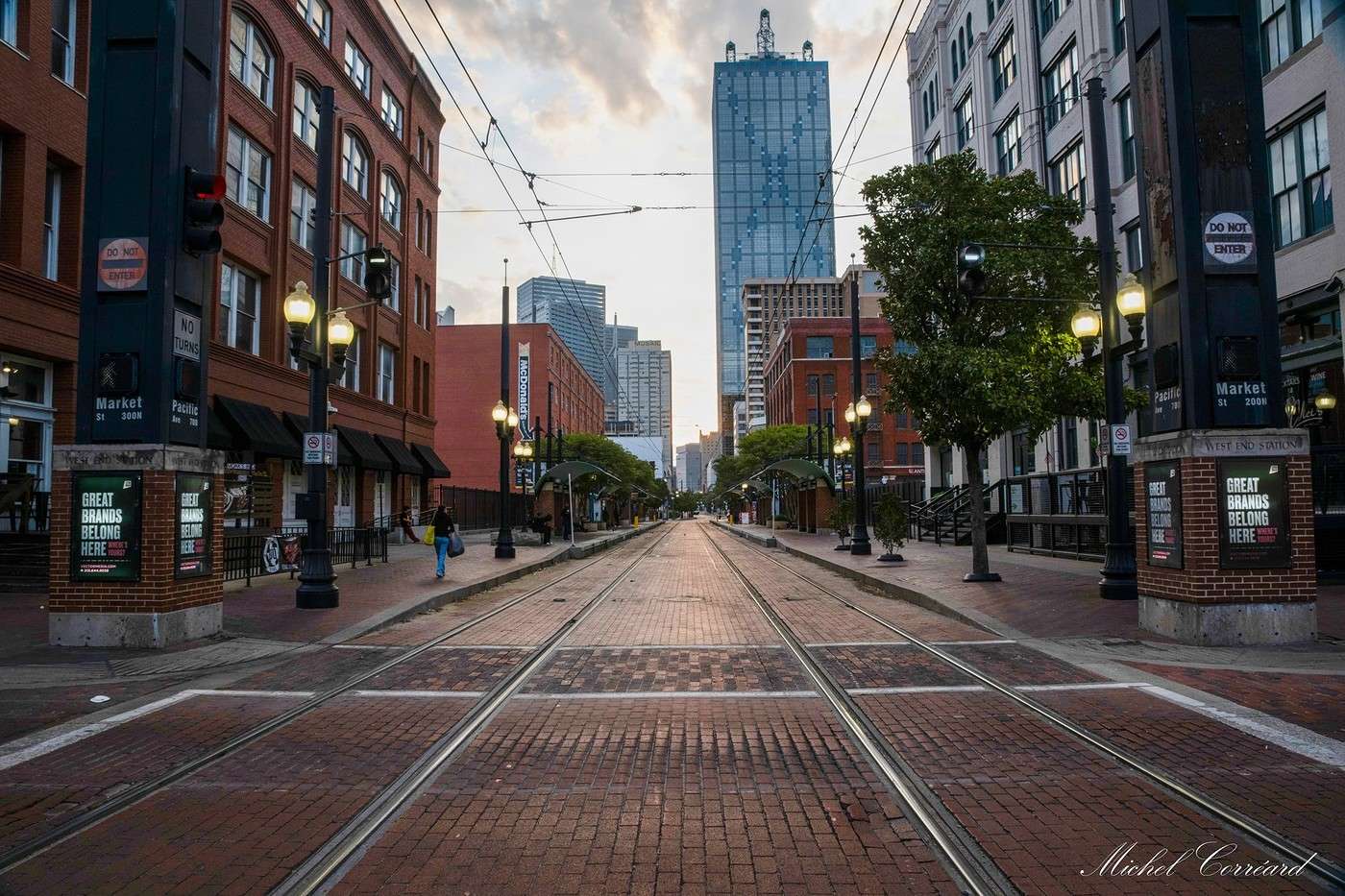
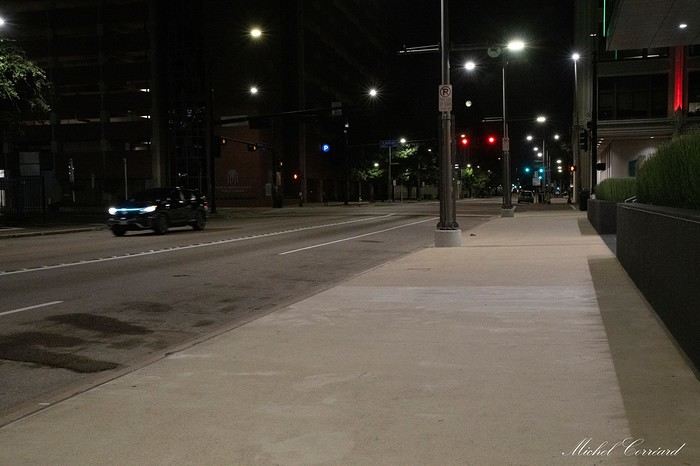
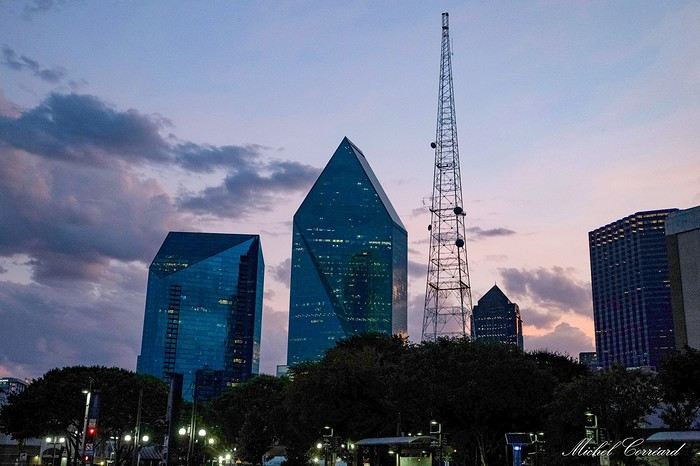
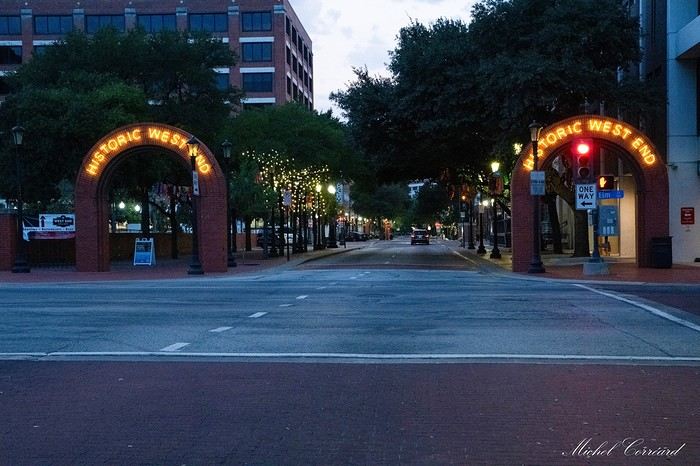
Outside, it’s still dark. My wife is sleeping peacefully, and for my part, I decide to grab my camera gear and head down to wander the empty streets of Dallas.
After all, might as well take advantage of this early hour to snap a few shots before the city wakes up.
Well... That is, if it ever does wake up!
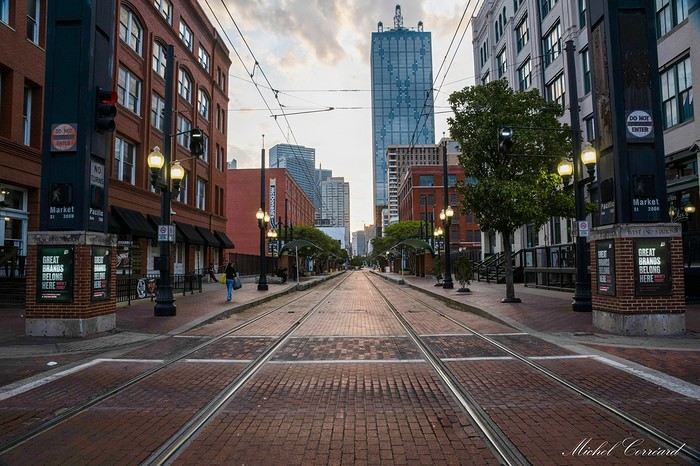
Because, truth be told, downtown Dallas is essentially one massive business district, with its skyscrapers, offices, endless avenues, and sidewalks that, on this Sunday morning, definitely aren’t seeing the crowds of the Champs-Élysées!
Dallas...
Apart from JR Ewing, its ruthless world, and President John Fitzgerald Kennedy, I have to admit the city doesn’t exactly overflow with tourist attractions in my eyes.
And it’s Sunday!
Might as well say all the conditions are perfect for some wild excitement!
Just my kind of vibe!
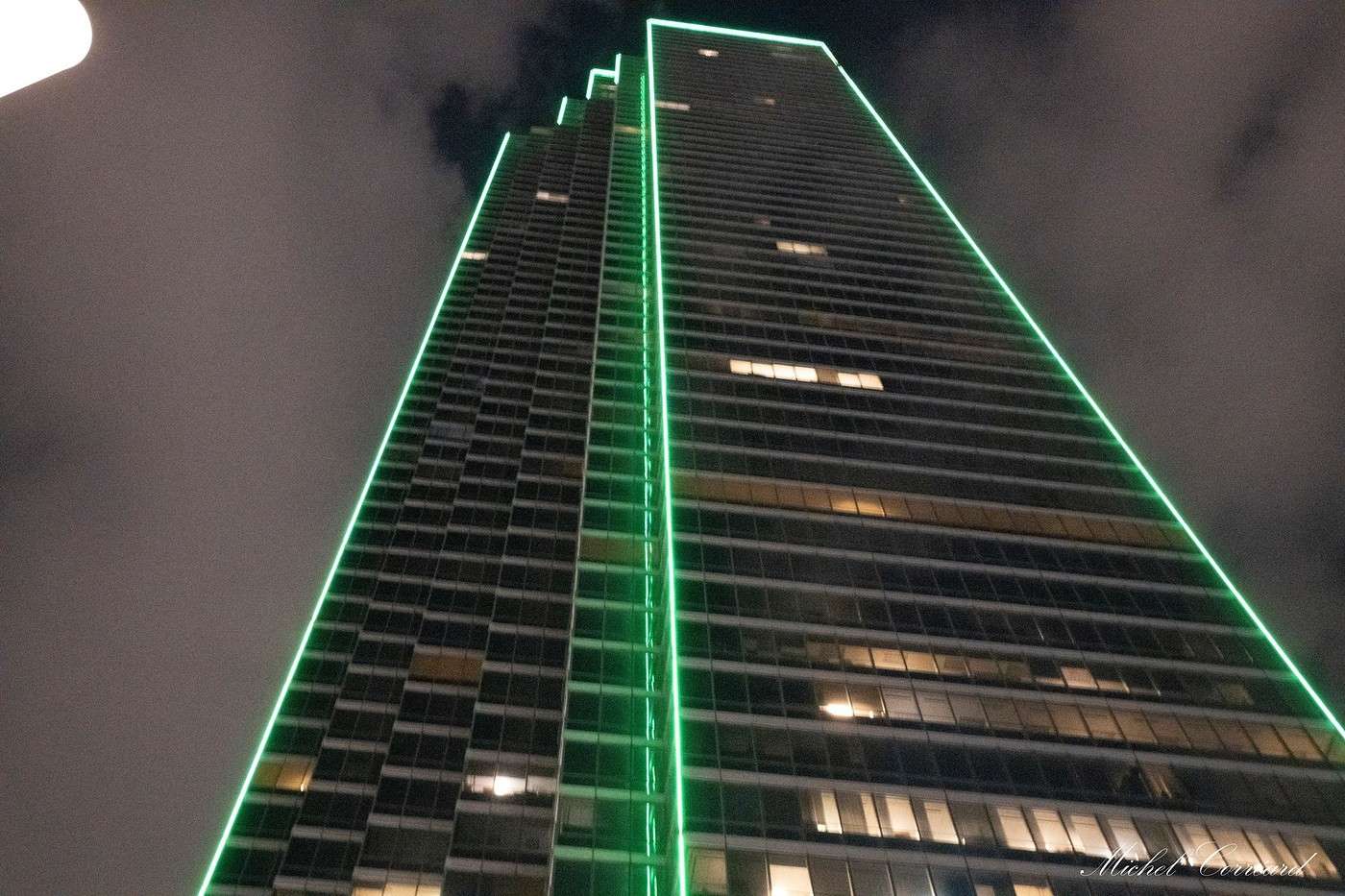
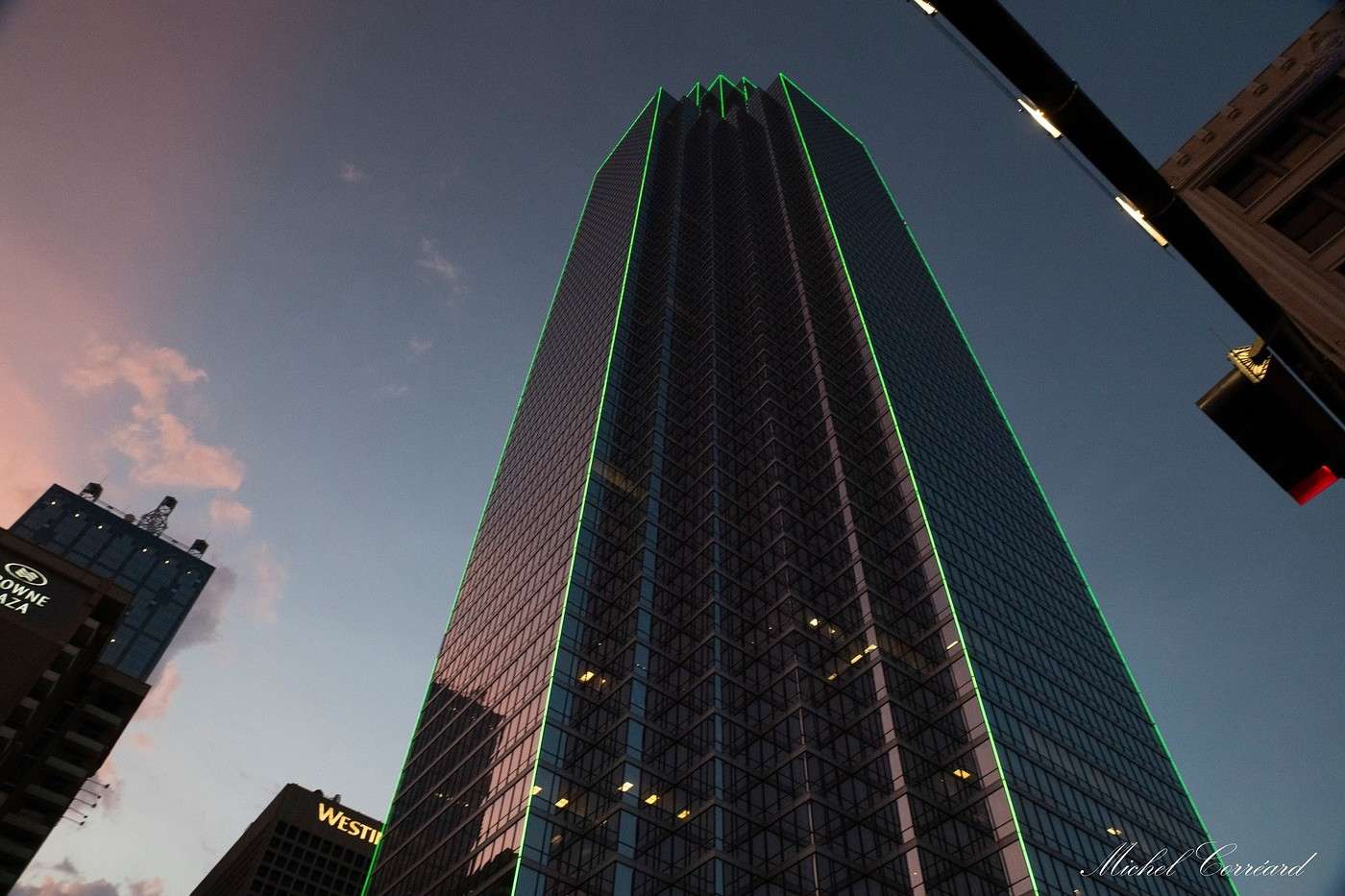
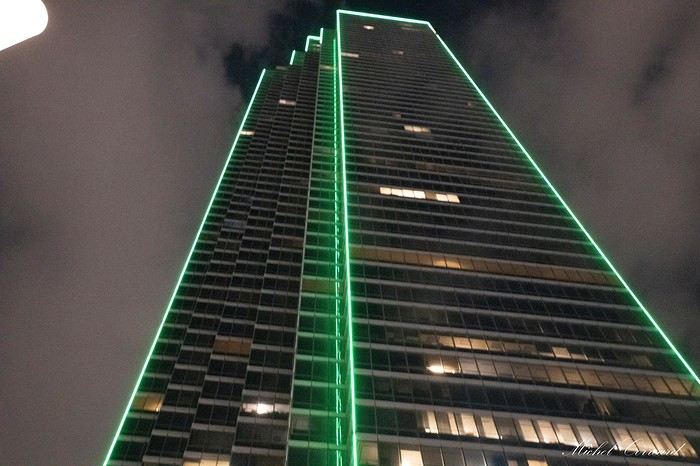
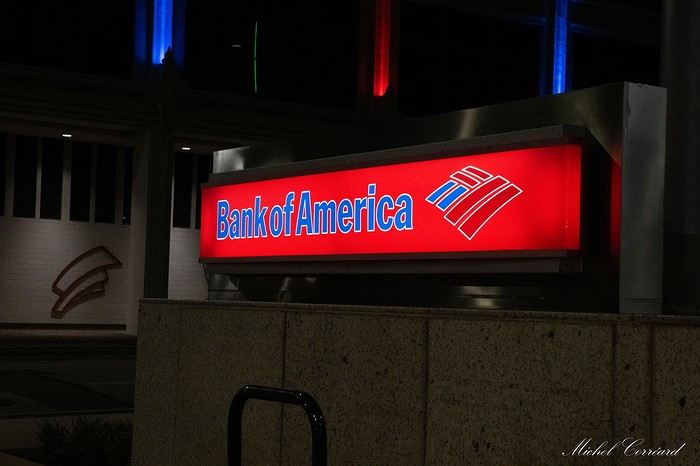
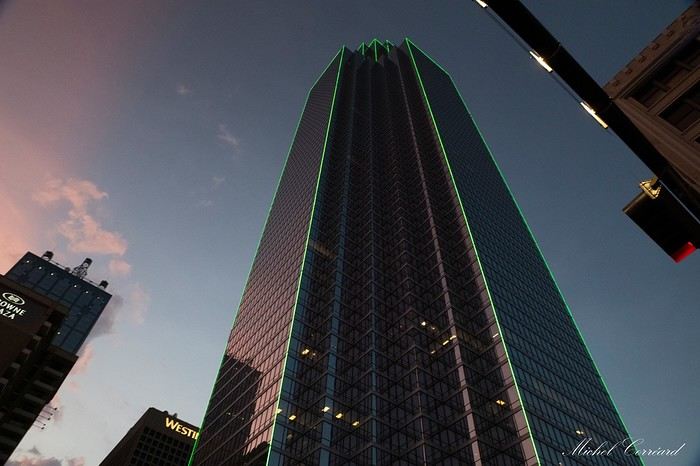
Our hotel is right next to a huge skyscraper whose green lights dominate the neighborhood.
I’m talking about the Bank of America Plaza!
A true monument of glass and steel that seems to remind the whole city that money never sleeps.
Wow!!!
Big Capital sure knows how to put on a show, doesn’t it!
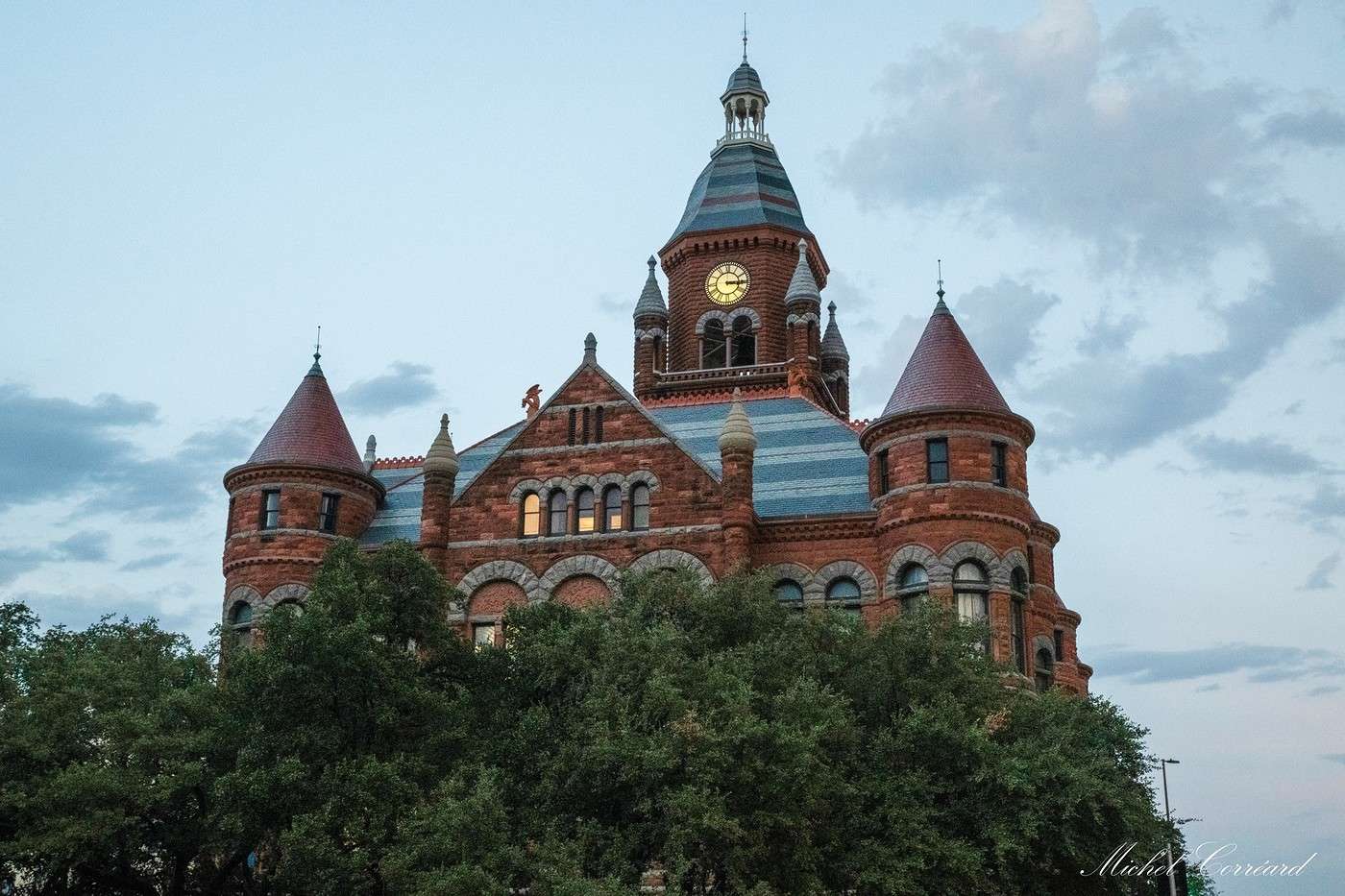
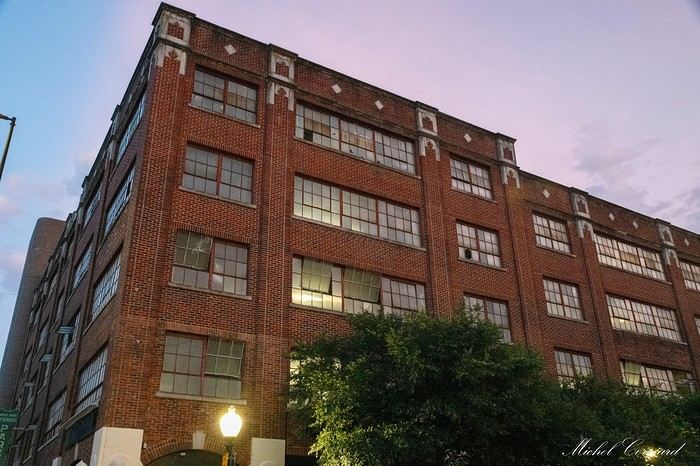
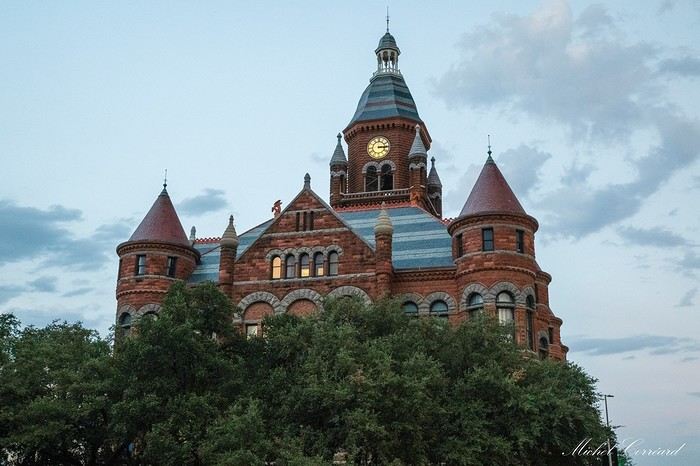
I keep walking, camera in hand, enjoying these empty streets, the perspectives between the buildings, and the first glimmers of daylight starting to timidly light up the Texan city.
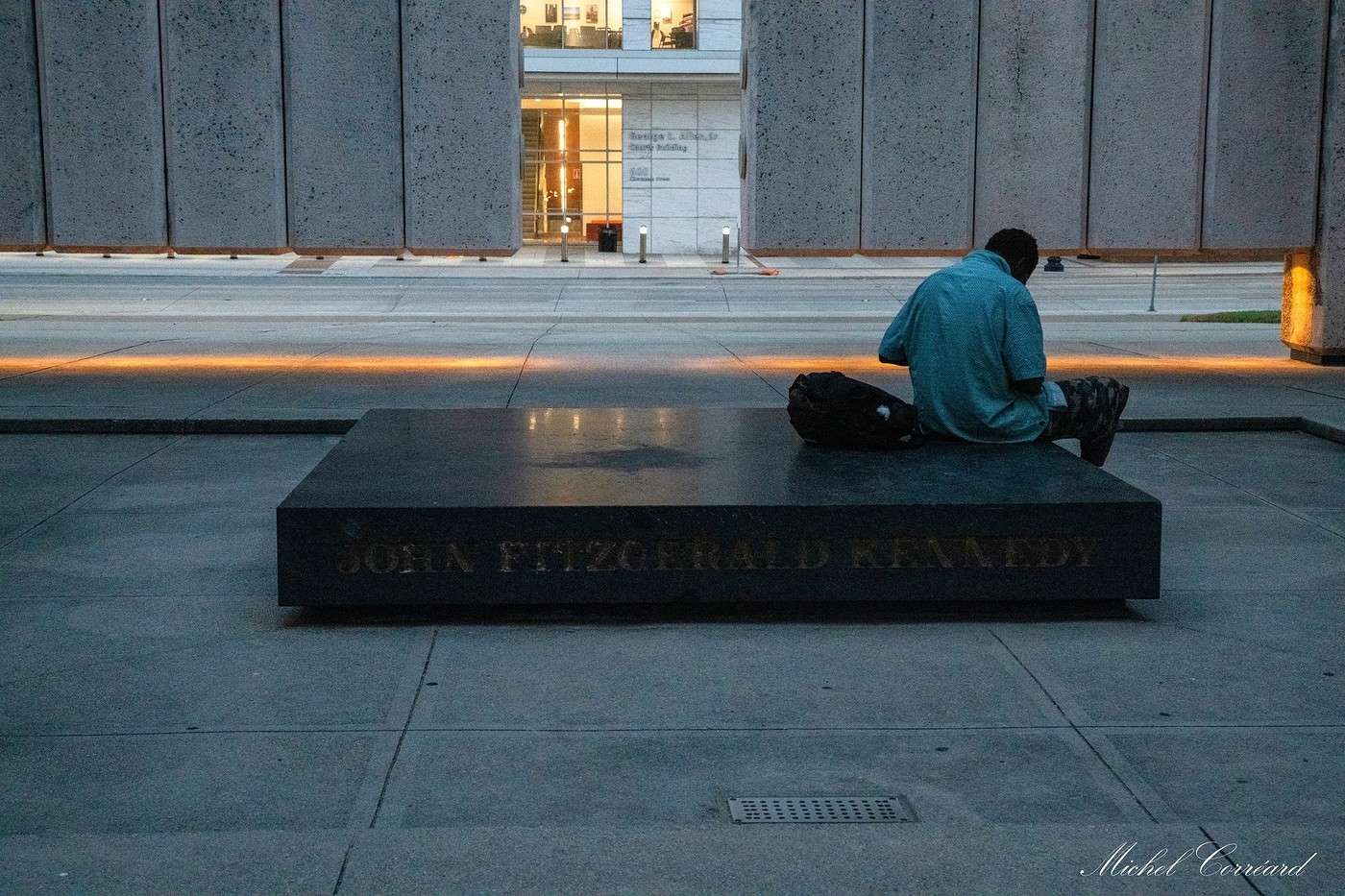
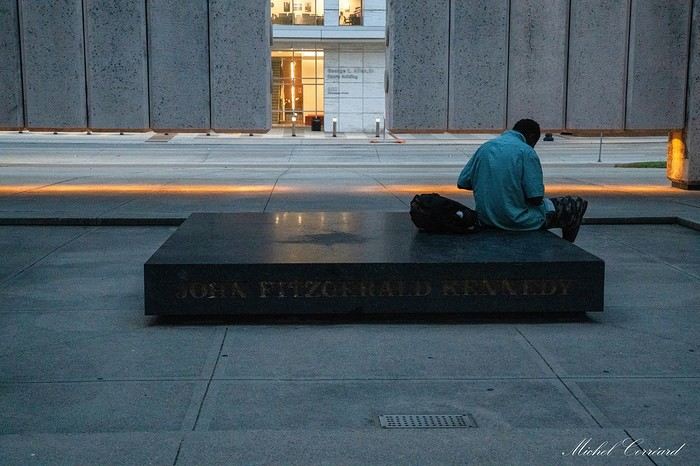
As I wander, my steps lead me to the memorial dedicated to John Fitzgerald Kennedy.
A place steeped in history, of course.
Dallas will forever be linked to that November 22, 1963, when the 35th President of the United States was assassinated just a few hundred meters from here.
I approach the monument.
And then, an unexpected scene.
An African-American man is calmly sitting on the black marble of the memorial. He’s rolling a joint, seemingly unconcerned by the solemnity of the place.
I pause for a moment.
The image is striking.
On one side, this monument built in memory of a president who embodied, for many Americans, the hope of a fairer society, a nation capable of overcoming its divisions and discrimination.
On the other, this man, alone, sitting there in the silence of a Sunday morning, busy preparing his own little pleasure.
Is he dreaming, too, of that better America Kennedy promised?
Or maybe not at all! Maybe he couldn’t care less about JFK, American history, or grand presidential promises.
After all, I don’t know.
But photography is also about that: capturing a moment, an attitude, an unlikely encounter between a place, a person, and our own perspective.
And sometimes, a simple scene tells a bigger story than the grandest speeches.
The contrast between the grandeur of the symbol and the ordinariness of everyday life hits me.
Kennedy’s America, the one of hopes and big ambitions, facing ordinary America, the one that keeps living, dreaming, or just rolling a joint on the steps of History.
There’s something deeply American about it.
At least, that’s how I feel.
And this image, I think I’ll remember it for a long time.
Because, in the end, that morning, I wasn’t just photographing Dallas. I was also capturing a little piece of America, with all its contradictions.
The Southwest USA Road Trip Part II
Mitch341 · 2026-10-11 · Message 54 of 79
Dallas – Sunday morning: a rendezvous with History at the Sixth Floor Museum
Back at the hotel after my little photographic escapade through the deserted streets of Dallas, I stop by our tiny bathroom.
Tiny is actually a particularly fitting term! You’d think American architects, who are usually so used to thinking big, would sometimes decide to skimp on the square footage dedicated to personal hygiene!
Anyway!
Once our morning preparations are done, we head downstairs for our usual breakfast.
The room is pretty empty, actually.
And on second thought, it’s easy to see why!
Given the price charged and the quality of what’s offered, it’s no surprise that guests aren’t exactly lining up.
In fact, this is something we noticed in pretty much every hotel we stayed at during our American road trip.
An American breakfast, when it’s not included in the room rate, can quickly turn into a small financial operation where the value for money is frankly disappointing!
But we’re not here to critique the U.S. hotel industry this morning. We have a date with History!
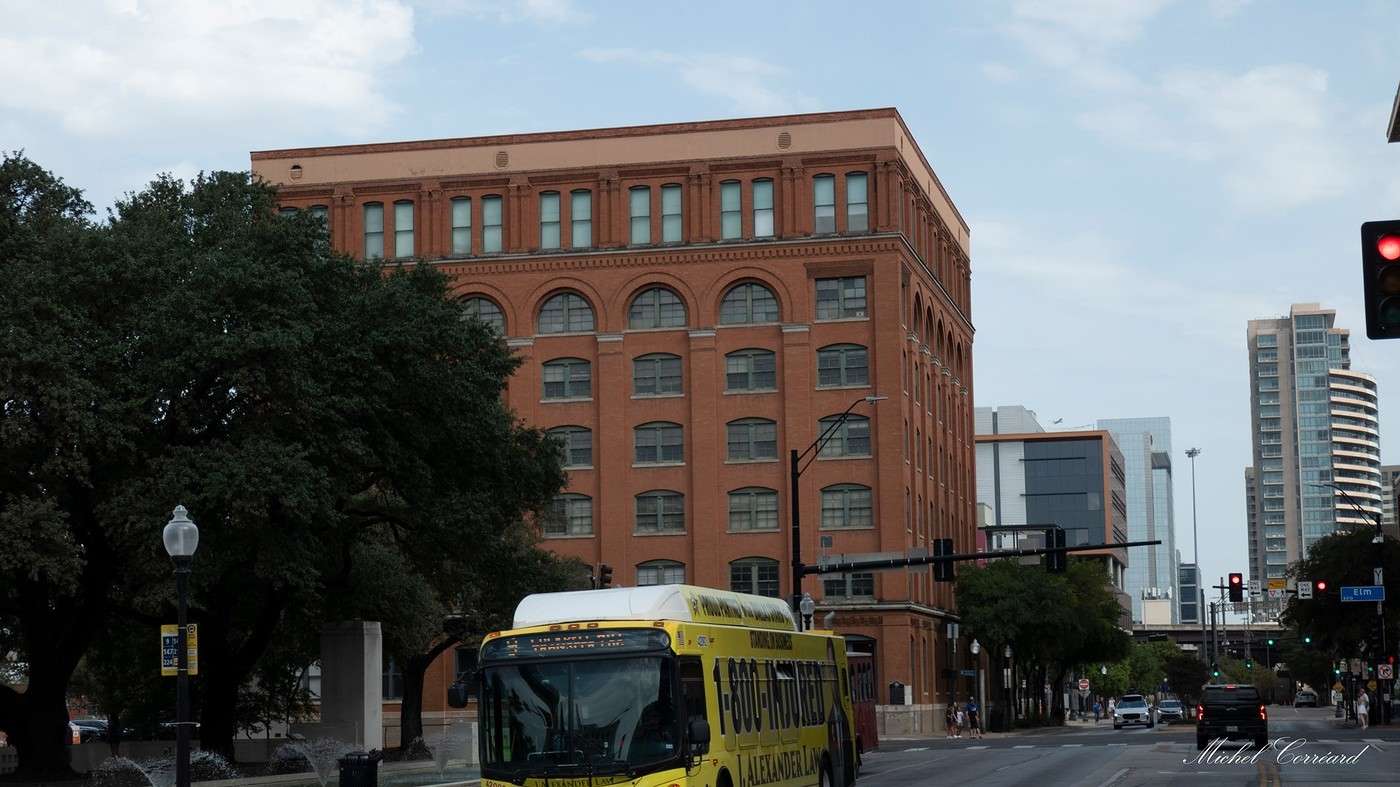
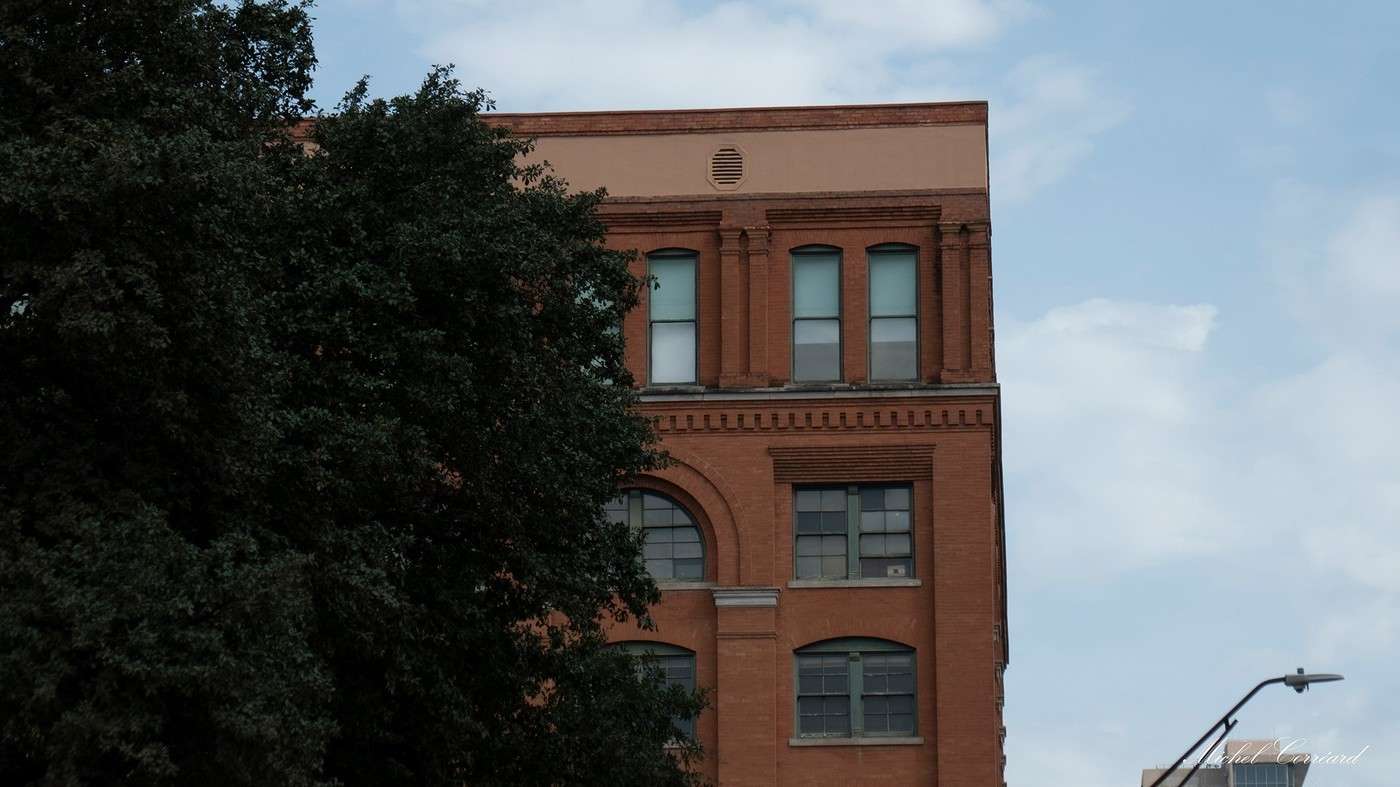
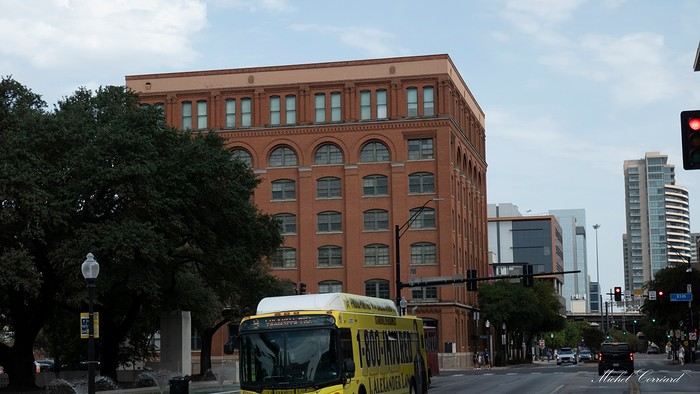
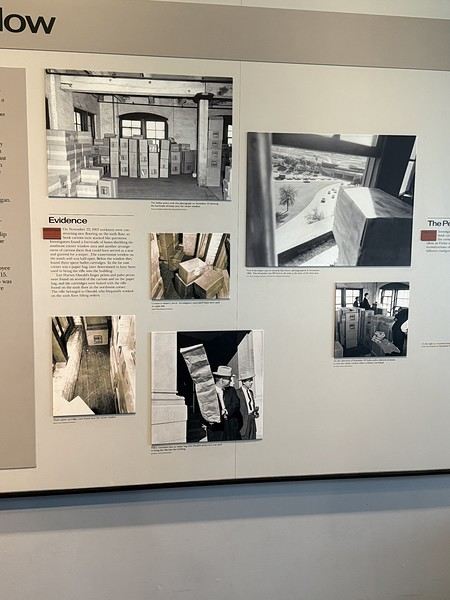
At exactly ten o’clock, we’ve booked our entry to the Sixth Floor Museum at Dealey Plaza.
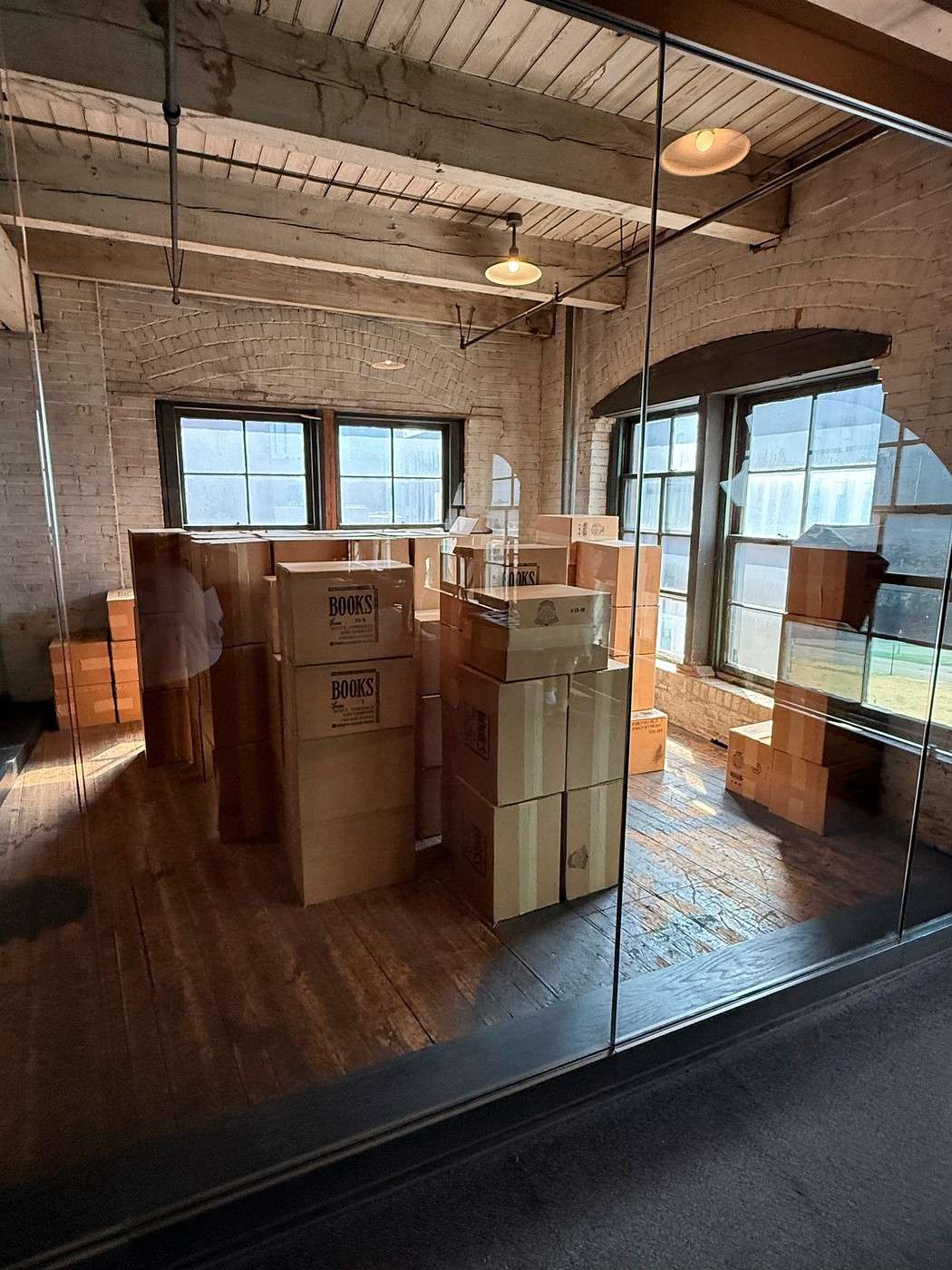
You’ve probably guessed that this is the museum dedicated to the assassination of President John Fitzgerald Kennedy, that fateful November 22, 1963, which would forever mark U.S. history.
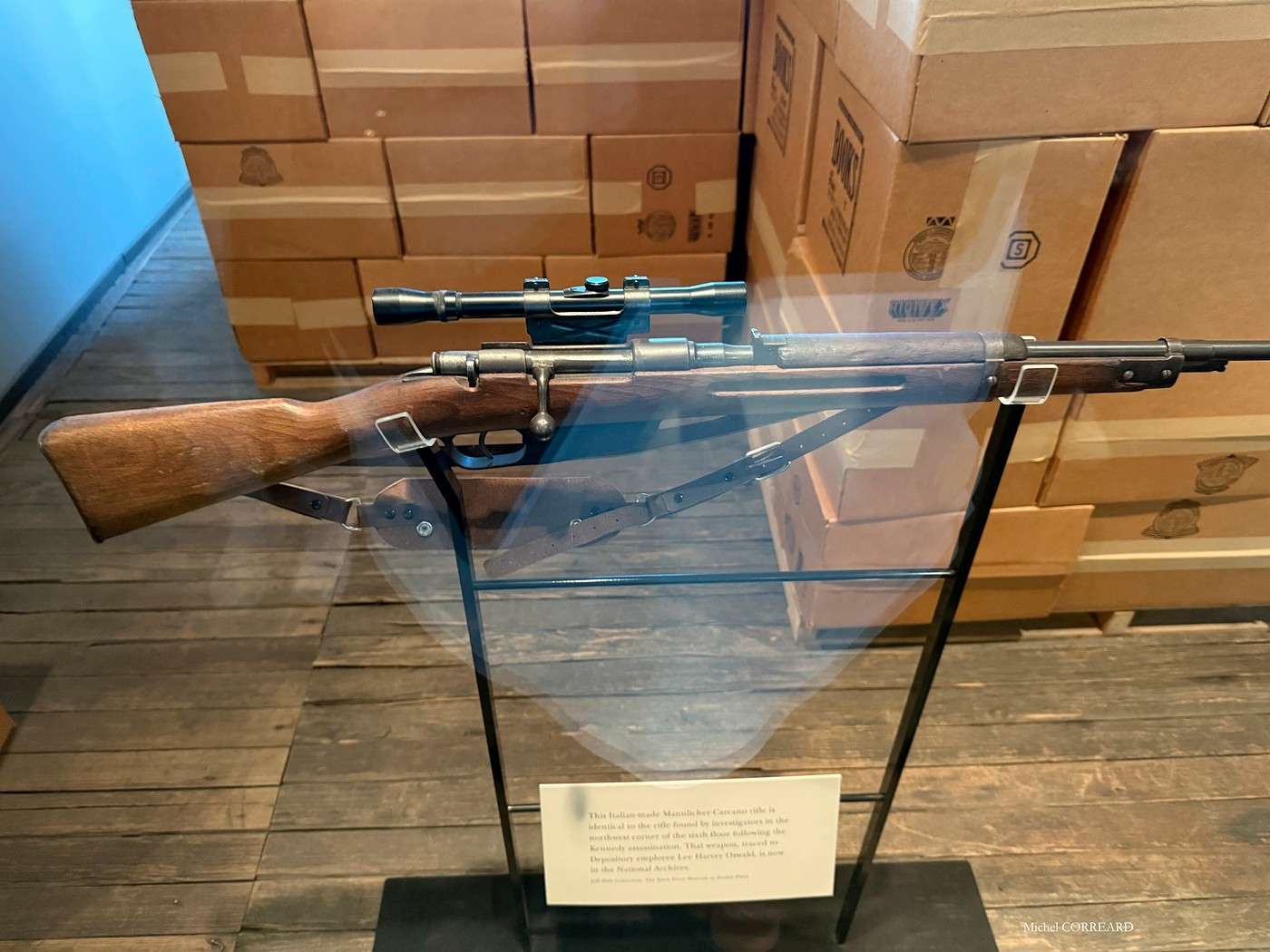
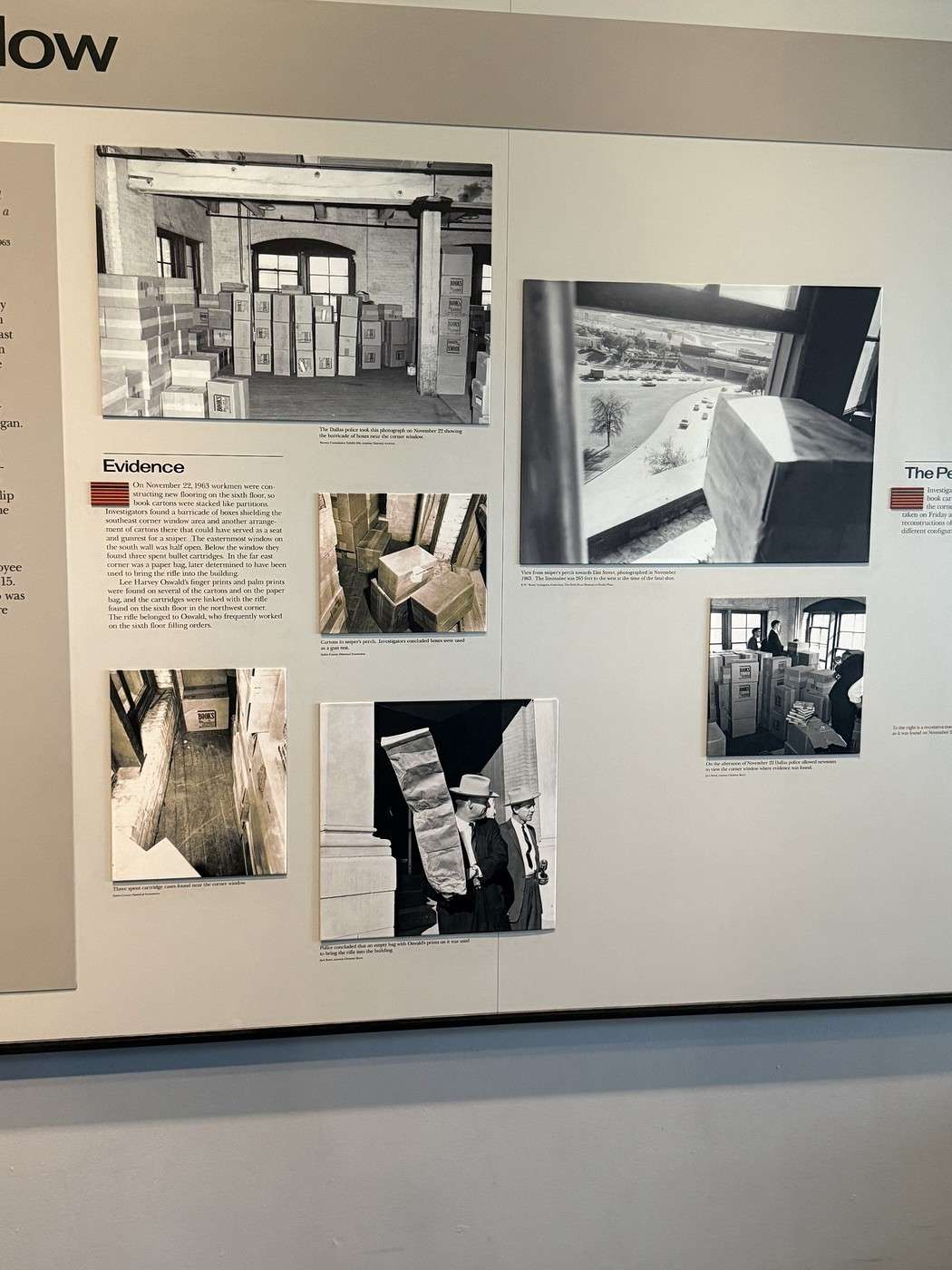
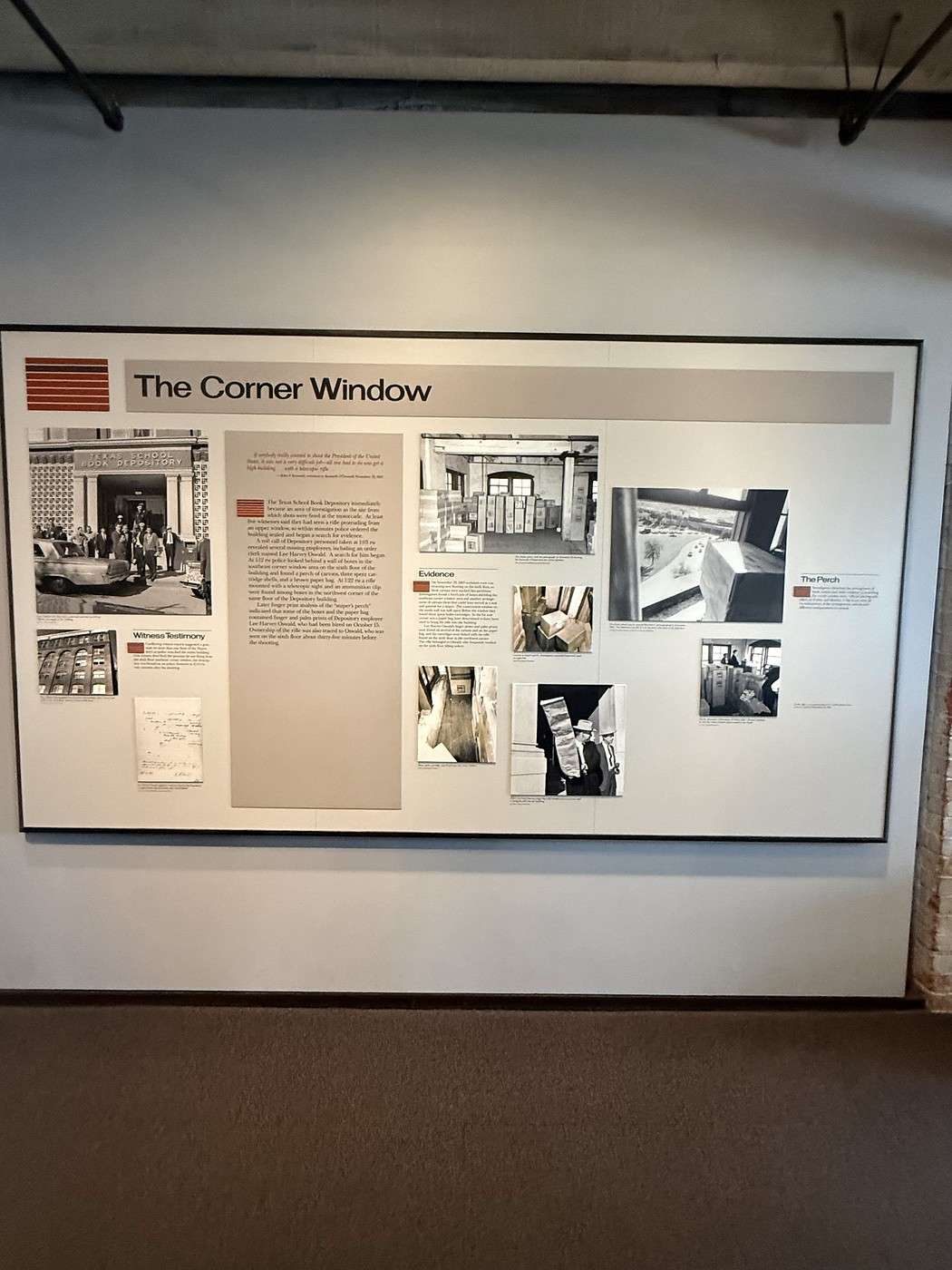
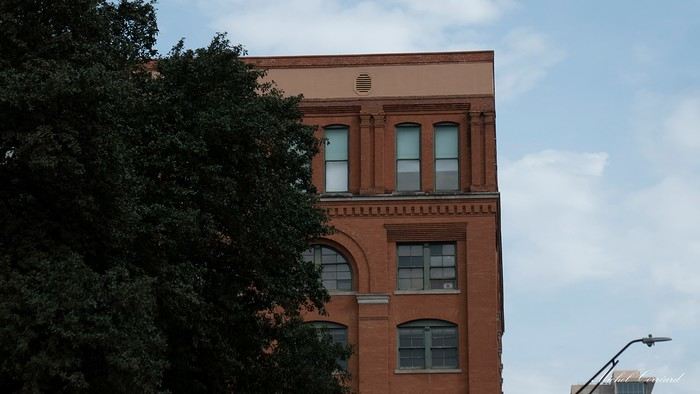
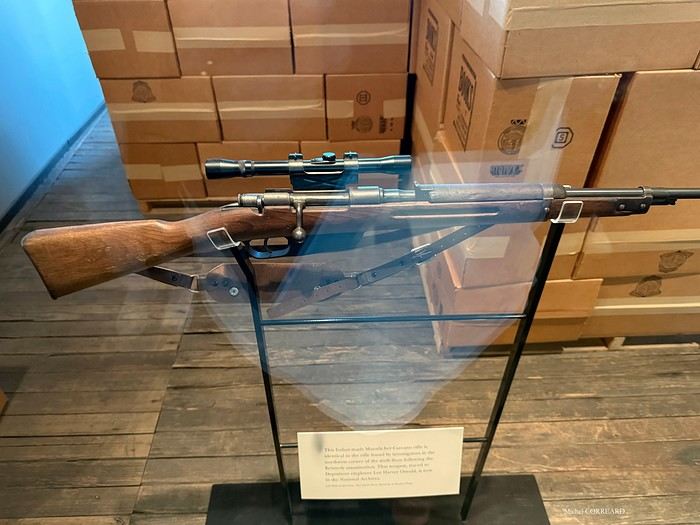
The museum is located in the former Texas School Book Depository, the building from which, according to the official investigation, Lee Harvey Oswald allegedly fired at the presidential motorcade.
Needless to say, this isn’t just any museum.
First surprise at the entrance: cameras and camcorders are banned, but phones are allowed!
Go figure!
My Nikon would be a threat to the peace of the place, but a phone capable of taking high-definition photos and videos is no problem?
The mysteries of American regulations!
That said, I end up taking very few pictures. Not for lack of interest—quite the opposite. But probably out of respect for this place, what it represents, and that tragic day whose images circled the globe.
There are places where you feel more of a need to look, understand, and reflect than to snap photos.
And this is one of them.
On this Sunday morning, the museum is packed with visitors. Clearly, we’re not the only ones wanting to revisit this painful chapter of American history.
We take our time.
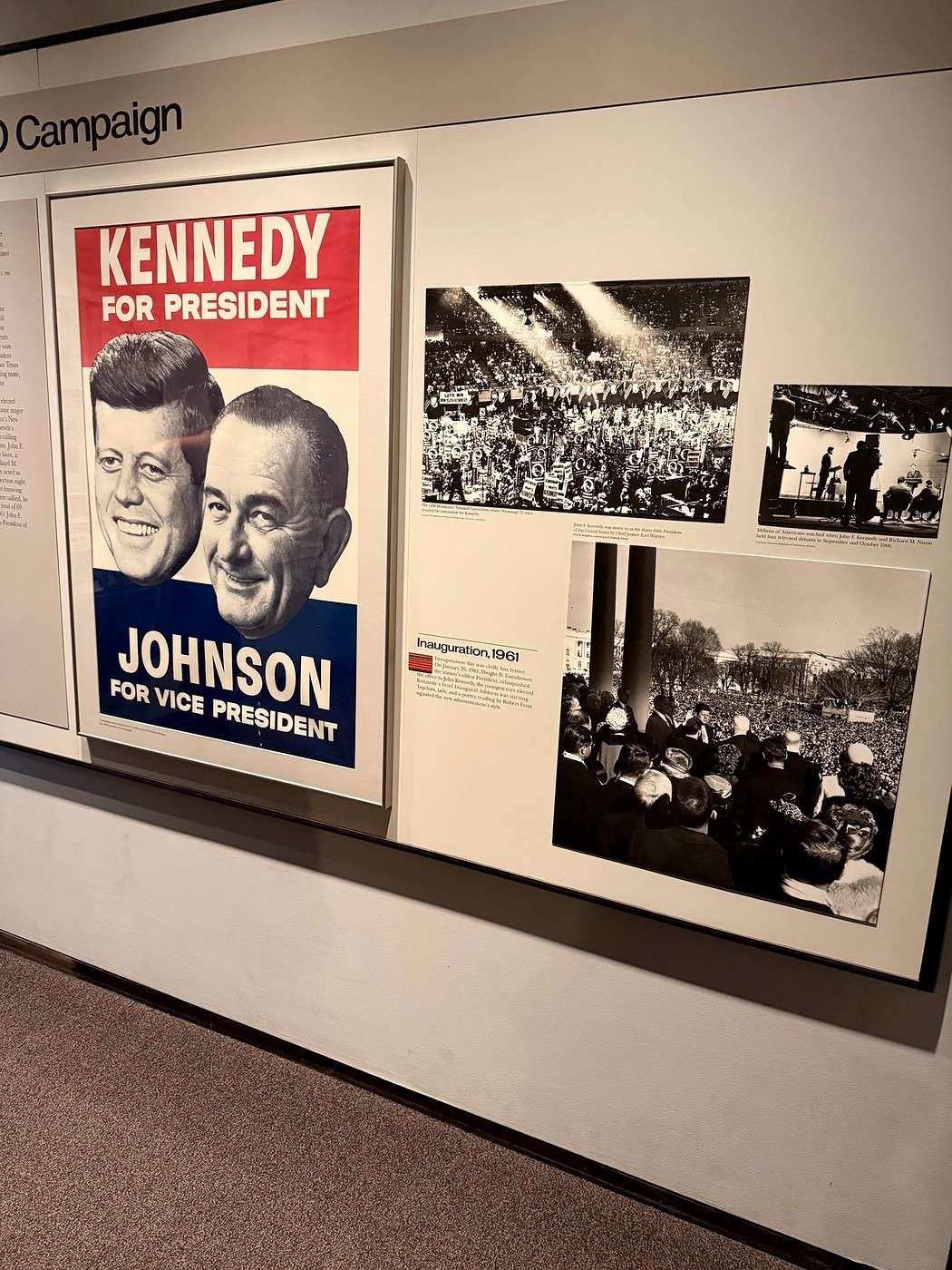
The sixth floor, the heart of the exhibit, recounts the events, the political and social context of the time, the president’s visit to Texas, and, of course, the circumstances of the assassination.
Photographs, documents, testimonies, archival footage...
All of it immerses us in that early 1960s America.
An America looking toward the future but that would brutally lose its president in a matter of seconds on a Dallas street.
And then there’s that unsettling closeness to the very scene of the tragedy.
We’re not just looking at photographs hanging on museum walls.
We’re in the building that played a central role in the story of this assassination.
And that changes everything.
We continue our visit on the upper floor, where an exhibit focuses on the press and how the events were reported to the public.
The American press!
Quite the topic!
Here, freedom of the press enjoys particularly strong constitutional protection, guaranteed by the famous First Amendment.
An institution in itself, with its strengths, occasional excesses, but also its fundamental role in American democratic life.
And when it comes to Kennedy’s assassination, it’s impossible not to think about the enormous role played by journalists, photographers, and TV networks in broadcasting this tragedy.
The images from Dallas have crossed decades.
Some have become iconic.
And more than sixty years later, they continue to provoke questions, fascination, and sometimes division.
We spend a long time in this museum, barely noticing the hours passing.
I could, of course, expand here on my thoughts about the circumstances of the assassination, the investigations, the testimonies, the gray areas, and the countless controversies still surrounding that day.
But that would open a chapter far broader than our simple tourist visit.
And I fully intend to come back to it!
Because I, too, have my own take on that tragic November 22, 1963.
But all in good time.
For now, we’re in Dallas, at the heart of Dealey Plaza, and this visit will undoubtedly be one of the most memorable moments of our time in the city.
Some places you visit out of curiosity. Others you leave with more questions than when you arrived.
For me, the Sixth Floor Museum falls into that second category.
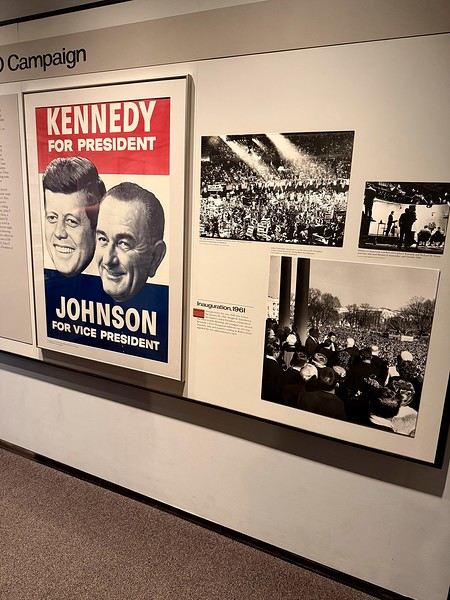
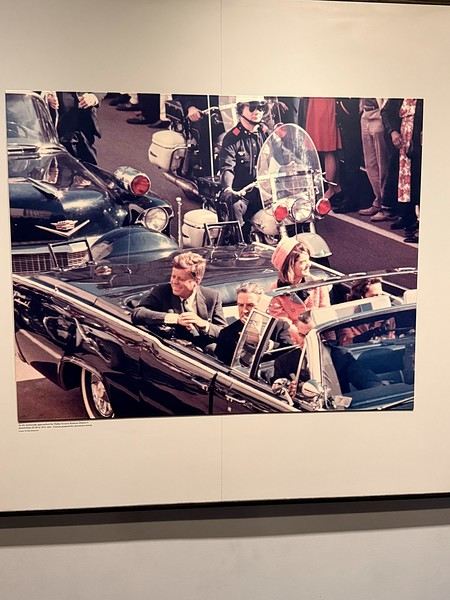

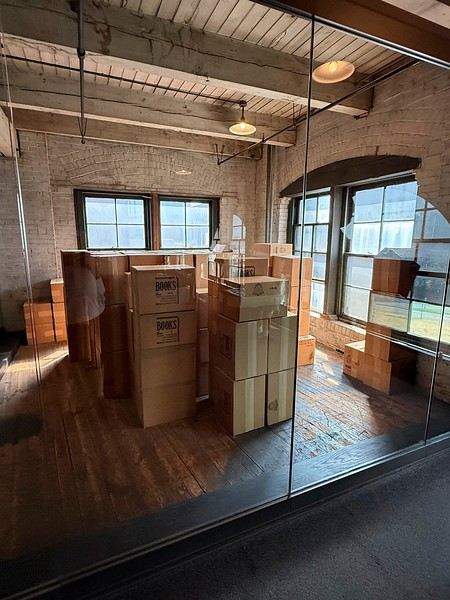
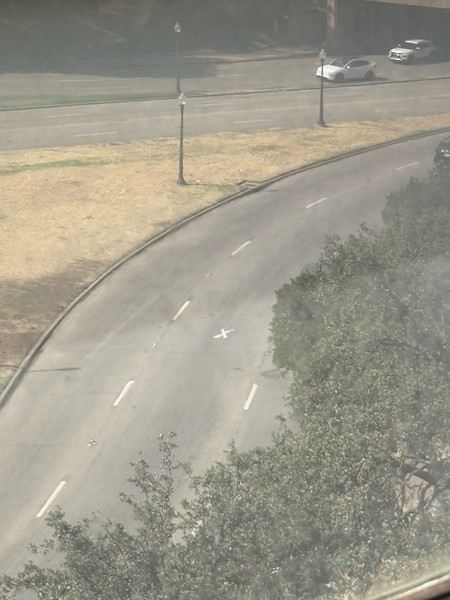
The Southwest USA Road Trip Part II
Mitch341 · 2026-10-11 · Message 55 of 79
Dallas – Dealey Plaza: A question that haunts me...
After exploring both floors of the Sixth Floor Museum, dedicated to the assassination of President John Fitzgerald Kennedy, I come out with a lot of images in my mind.
And above all, with quite a few questions!
Because while this visit helps to better understand the events of that tragic day on November 22, 1963, it doesn’t necessarily clear up all the questions.
Far from it!
And among those that come to mind, there’s one that seems particularly important to me.
Why was the presidential motorcade route organized this way?
Let me explain.
We’re talking about the President of the United States, riding in an open limousine through a city where the political climate was particularly tense at the time.
And yet, his motorcade took a route that led it through Dealey Plaza, including a sharp turn right next to a multi-story building overlooking the street.
A location that, in hindsight, raises serious security concerns.
Of course, it’s always easy to rewrite history after the fact.
But I can’t help wondering about the choices made by those responsible for presidential protection.
Why this route? Why this turn? And what were the constraints that led to this path being chosen?
So many questions that I’ll try to answer with a few elements.
Because before discussing the assassination itself, it seems essential to understand the layout of the area.
Why was this route chosen?
Historical documents provide a fairly precise answer: the motorcade was supposed to reach the Dallas Trade Mart, where Kennedy was expected for an official luncheon.
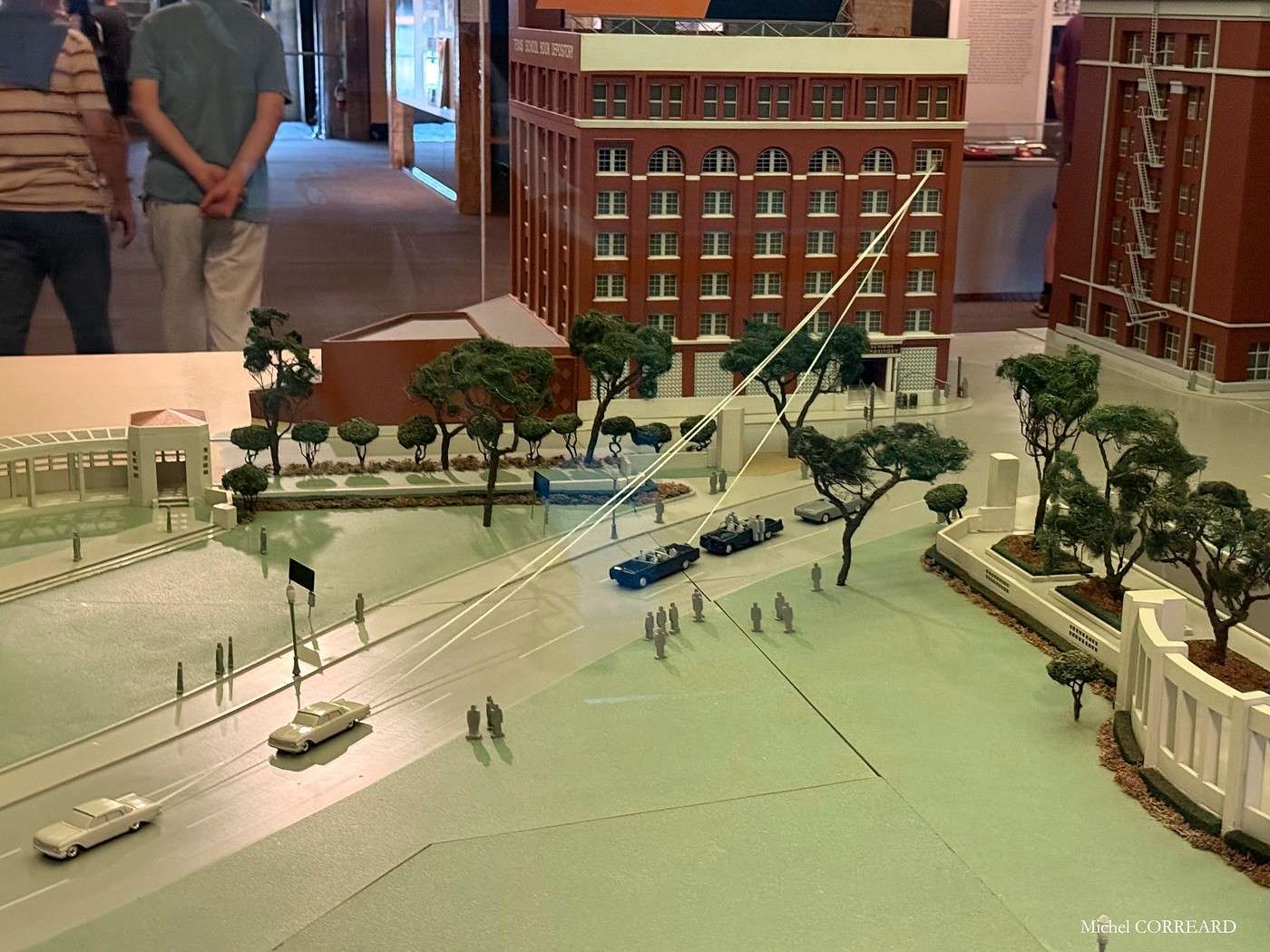
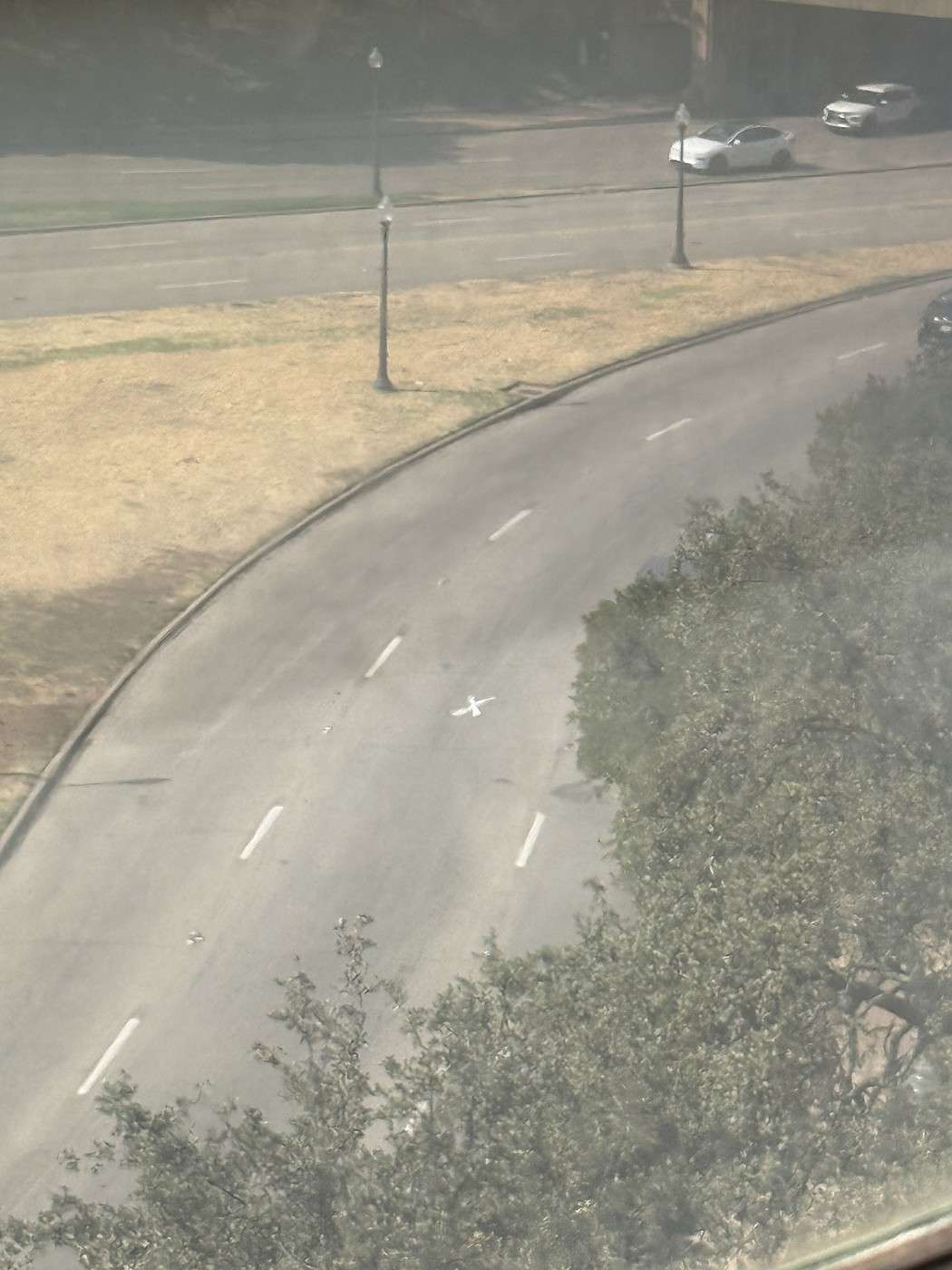
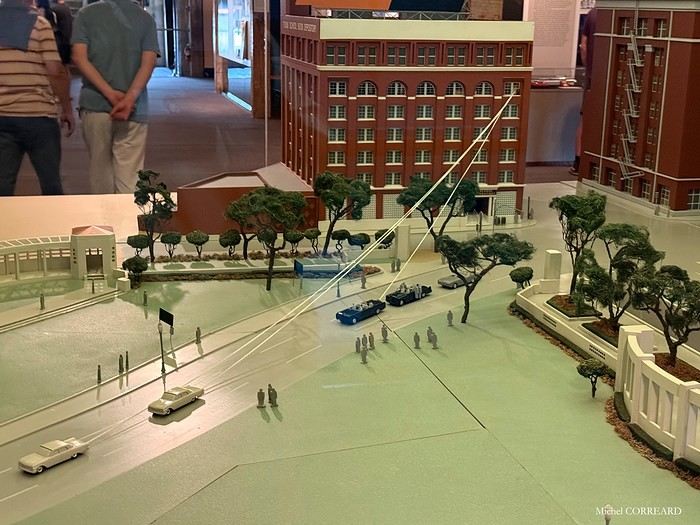
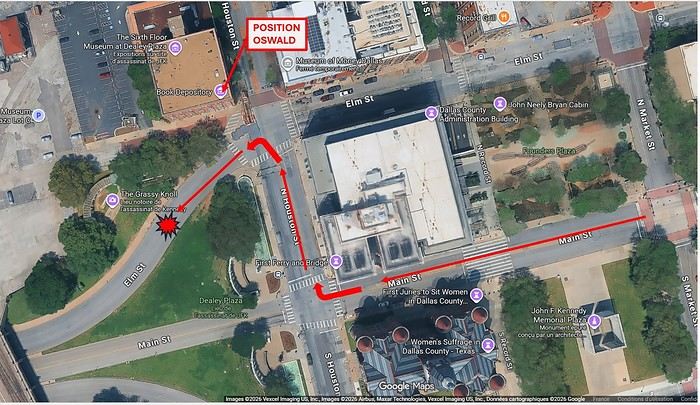
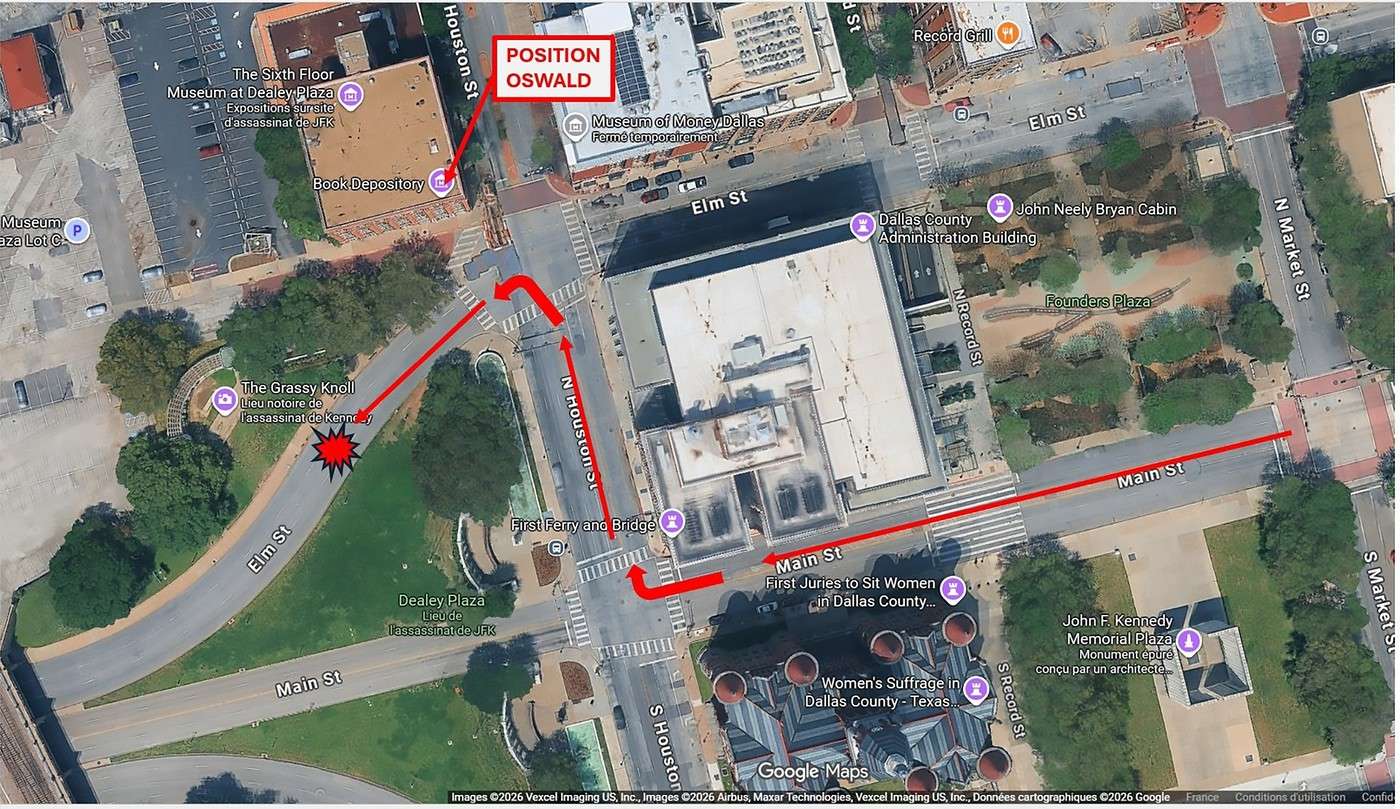
Passing through Main Street allowed the president to greet the crowd. But a median prevented direct access to the Stemmons Freeway from that avenue. The motorcade therefore had to turn onto Houston Street, then onto Elm Street, passing in front of the Texas School Book Depository.
This choice had a major consequence: the very sharp turn onto Elm Street forced the limousine to slow down significantly, to about 18 km/h, right next to the building where Oswald was located according to the official investigation.
Another interesting point: a later U.S. congressional inquiry established that the choice of the Trade Mart, rather than another reception venue that had been considered, itself influenced the route and security conditions.
So, from a close protection standpoint, it’s a perfectly legitimate question: why accept such a slowdown right at the foot of buildings overlooking the motorcade?
This doesn’t prove that the route was designed to facilitate the attack. However, it does raise serious questions about the risk assessment conducted at the time.
The Southwest USA Road Trip Part II
Mitch341 · 2026-10-11 · Message 56 of 79
Dealey Plaza – Why this terrible zigzag?
But let’s get back to that nagging question that’s been on my mind since our visit to the Sixth Floor Museum.
What were the fundamental reasons the presidential motorcade took this zigzag route, which unfortunately created the conditions for the assassination?
The explanation is primarily geographical and tied to the organization of the presidential trip.
President Kennedy was expected at the Dallas Trade Mart, where he was to deliver a speech at an official luncheon. This trip was also part of an important political and electoral context for the president.
To reach this venue from downtown, the motorcade had to access the Stemmons Freeway.
Take a close look at the aerial photograph of Dealey Plaza.
You’ll notice that the extension of Main Street didn’t allow direct access to this highway.
So, another route had to be taken.
And that’s where things get particularly interesting.
The motorcade first had to leave Main Street by making a sharp right turn onto Houston Street, then, a few dozen meters later, a sharp left turn to enter Elm Street.
Two consecutive turns!
And not just any turns!
The second one, especially tight, forced the vehicles to slow down considerably.
Right at that spot, the open-top presidential limousine would pass by the Texas School Book Depository.
A multi-story building offering a direct line of sight onto the street.
Starting to see why I’m questioning this?
So, we have a U.S. president riding in an open vehicle, a route requiring reduced speed, buildings towering over the path, and an urban layout making immediate acceleration in the turns nearly impossible.
In terms of close protection, this is a pile-up of vulnerability factors that deserves some thought!
Sure, the route made sense for reaching the luncheon venue.
But is traffic logic necessarily compatible with the security needs of a head of state?
That’s the whole question!
Because when you look at the site, it’s immediately clear that this series of turns created conditions particularly unfavorable for protecting the motorcade.
Reduced speed, a predictable trajectory, an open vehicle, and elevated positions directly overlooking its path.
All the elements of a dangerous situation were in place.
Now, I’m not claiming this route was deliberately designed to facilitate the assassination. That would be a completely different assertion, one that would require evidence.
But I’m simply noting that the constraints of this route unfortunately made the president particularly vulnerable.
And that’s exactly what strikes me when I look at this aerial photograph after walking the area on foot.
The tragedy of Dealey Plaza isn’t just about the gunshots on November 22, 1963. It also raises a fundamental question: how could a presidential protection detail have accepted such a configuration?
Sadly, we know what happened next.
And history, well, it can’t be rewritten.
Southwest USA Road Trip Part II
Mitch341 · 2026-10-11 · Message 57 of 79
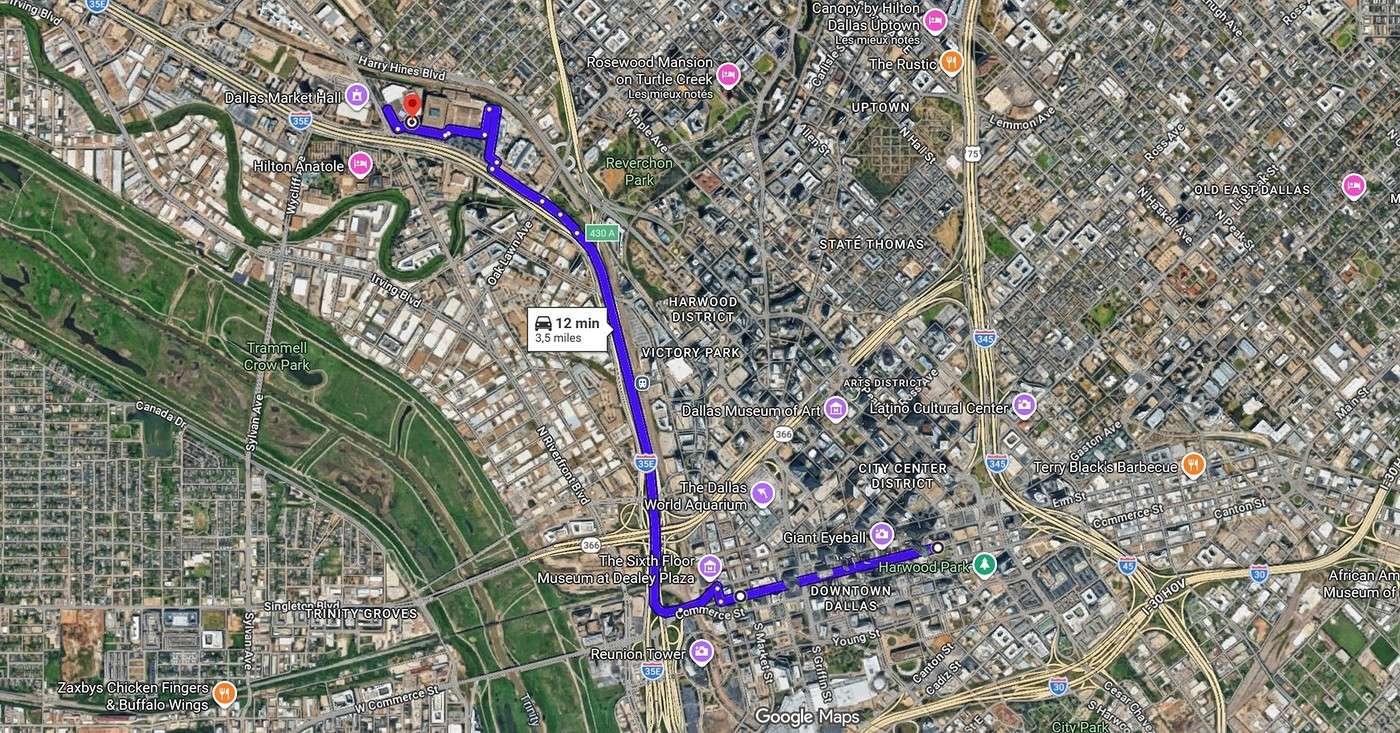
Second image: from Dealey Plaza to the Dallas Trade Mart
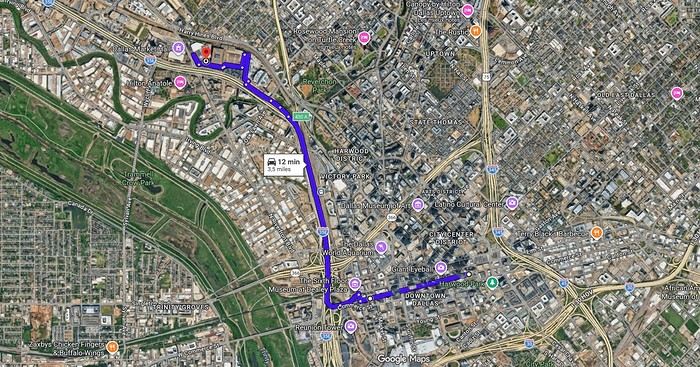
This second aerial photograph gives us a bit of perspective and helps better understand the geography of the area.
In the lower part of the image, you can see Dealey Plaza and the famous Sixth Floor Museum.
Further to the northwest is the Dallas Market Center area, where President Kennedy was expected for an official luncheon and a speech at the Dallas Trade Mart.
Only a few kilometers separate the two locations.
And yet!
To reach the Stemmons Freeway from Main Street, the presidential motorcade had to take a particularly restrictive route.
It was impossible to simply continue straight on Main Street to access the highway directly.
Instead, the motorcade had to turn right onto Houston Street, then make that infamous sharp left turn onto Elm Street.
And it was precisely at this spot that the motorcade would find itself in a highly vulnerable situation.
An open-top limousine, a considerably reduced speed, and a building directly overlooking the president’s path.
A setup that, even today, leaves me baffled.
Of course, it’s easy to rewrite history sixty years after the events.
But having personally worked on security and risk management issues, I can’t help but look at this situation from that angle.
A route can perfectly meet traffic requirements while still presenting significant vulnerabilities in terms of protection.
And that’s exactly what strikes me here.
Was this route simply the most convenient, or had the risks it posed to the President of the United States truly been assessed?
I don’t claim to rewrite the conclusions of the official investigations.
But one thing seems clear: the layout of the area and the slowdown imposed on the motorcade created particularly unfavorable conditions for its security.
And unfortunately, just a few seconds were enough to make Dealey Plaza go down in history.
Southwest USA Road Trip Part II
Mitch341 · 2026-10-11 · Message 58 of 79
Who killed Kennedy? Between certainties, suspicions, and questions...
Who killed John Fitzgerald Kennedy?
That’s a question that, more than sixty years after that tragic day on November 22, 1963, continues to spark a lot of debate.
And where do I fit into all this?
Well, I don’t have the answer any more than the rest of the world does!
That said, if I had to lean toward one hypothesis, I’d probably look toward the side of Cosa Nostra, the American Mafia.
And I’ll tell you why.
First, there’s the president’s father, Joseph Kennedy, known as Joe Kennedy.
A significant figure, immensely wealthy and influential, whose business dealings and connections have fueled many stories. He was notably rumored to have ties with organized crime and some rather shady business activities.
The reality of some of these relationships is still debated by historians.
But let’s continue.
There are also numerous testimonies and accusations about mafia networks intervening in favor of John Kennedy during the 1960 presidential election, particularly in Chicago.
The true extent of this support and its impact on the election results has never been definitively established.
But let’s imagine for a moment that some mob bosses did indeed contribute to his election.
With those people, nothing is free!
A favor calls for a return on investment.
And usually, those bills don’t stay unpaid for long!
So, what happens once Kennedy is in the White House?
He appoints his brother Robert, known as Bobby, as Attorney General—essentially the federal Minister of Justice.
And the least we can say is that Bobby Kennedy didn’t show much gratitude toward the mafia organizations!
Quite the opposite, in fact!
He launched a major judicial offensive against organized crime, its leaders, its networks, and its financial interests.
In other words, some mob bosses must have found the joke pretty unfunny!
Just imagine the situation.
You think you helped elect a president, expecting at least some peace in return.
And then his own brother declares war on you!
That’s enough to cause some serious frustration in the Cosa Nostra families!
From there, it’s only a small step to imagining revenge.
But I won’t take that step as if it were proven fact.
Because the rest is largely based on hypotheses, contested testimonies, and speculation.
Conspiracy? No conspiracy?
Involvement of the military-industrial complex, which might have disapproved of some of Kennedy’s decisions, particularly his hesitations and choices regarding American involvement in Vietnam?
Political score-settling? Intelligence services? Cuba?
Who knows!
The theories are endless, and since 1963, everyone seems to have developed their own.
But there’s one event that personally strikes me the most.
The assassination of Lee Harvey Oswald by Jack Ruby on November 24, 1963.
Just two days after the Dallas attack!
Oswald, the main suspect in the president’s assassination, was shot point-blank in the Dallas police headquarters, in front of TV cameras.
His killer?
Jack Ruby, a nightclub owner with some questionable connections, and whose ties to individuals linked to organized crime were documented.
And here, let me ask you this:
A man suspected of assassinating the President of the United States, eliminated before he could even stand trial!
That’s pretty extraordinary, isn’t it?
In the world of Cosa Nostra, getting rid of someone who might talk isn’t exactly an unknown method.
An operative who knows too much can quickly become a problem.
And in that world, problems are sometimes dealt with permanently.
So, naturally, Oswald’s execution by Ruby strongly reminds me of certain mafia methods.
To me, this looks like a Cosa Nostra signature.
But resemblance isn’t proof.
Investigations didn’t establish that Ruby acted on orders from the Mafia, nor did they prove that Oswald was an operative for that organization.
And that’s the whole difficulty of this case!
Historical facts are one thing. The interpretations we make of them are another.
Still, I can’t help but think that the rapid disappearance of the main suspect deprived American justice of a trial that might have shed light on many gray areas.
So, who killed Kennedy?
Officially, Lee Harvey Oswald is identified as the one who fired the fatal shots.
But the question of possible accomplices continues to raise questions and controversies.
And for my part, the mafia trail remains the one that holds my attention the most.
Not because I have any revelations, but because the sequence of events, the interests at stake, and certain methods used seem troubling enough to warrant this reflection.
And of course, all of this is just my own analysis!
I’m neither a historian specializing in this case, nor an FBI investigator, much less a holder of any state secrets!
Just a Frenchman passing through Dallas, who took the time to visit the sites, observe, reflect, and ask a few questions.
And who, like many others, left Dealey Plaza with more questions than answers.
After all, doubt doesn’t prevent reflection. And reflection doesn’t force us to turn our convictions into certainties.
That’s my take on this tragic day.
Everyone can form their own opinion.
The Southwest USA Road Trip Part II
Benishoes · 2026-10-11 · Message 59 of 79
I’ve always been fascinated by the story of President Kennedy’s assassination—frustrated, too, by never knowing the truth about the perpetrators and any possible masterminds. I lived through it as a child when my parents were listening to the radio broadcasting his death live. The unfolding events were later illustrated by television images: the president shot, Jackie covered in blood climbing onto the car in a desperate attempt to protect her husband, the chase starting from a movie theater and Oswald’s arrest, Ruby’s bizarre revenge almost live, the funeral at Arlington, and the investigation that led nowhere with the sterile Warren Report.
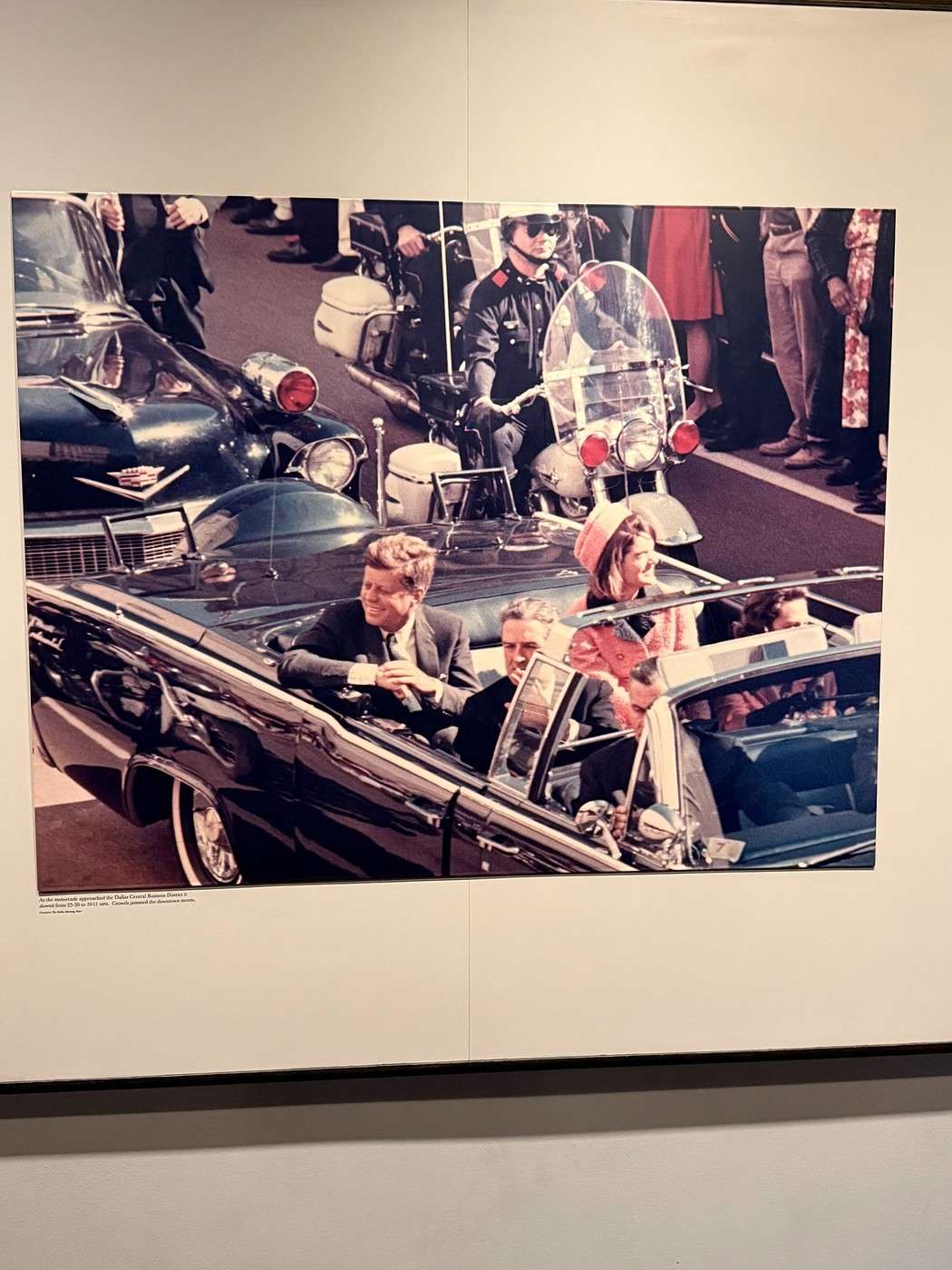
History says the president didn’t want a car with a closed roof and ultimately ignored his security team’s warnings to be cautious.
But how I’d love to visit these places and see for myself what’s myth and what’s real—something that’s captivated me since I was young, just like all those Hollywood myths!
The Southwest USA Road Trip Part II
Mitch341 · 2026-10-11 · Message 60 of 79
This story of the assassination of the popular President Kennedy fascinates me and has always fascinated me, with the frustration of not knowing the truth about the perpetrators and any possible masterminds. I experienced it as a child when my parents listened to the radio broadcasting his death live. With the unfolding episodes illustrated by television images: the president shot and Jackie, covered in blood, desperately climbing onto the car to protect her husband; the chase starting from a movie theater and Oswald’s arrest; Ruby’s curious act of revenge almost live; the funeral at Arlington and the investigation that led nowhere with the sterile Warren Report.
History says the president didn’t want a car with a closed roof and ultimately ignored his security team’s warnings to be cautious.
But how I’d love to visit these places and see for myself what’s myth and what truly struck me from a young age, like all those Hollywood myths!
Ah, these questions!
And it’s precisely when you’re on the spot in Dallas that some of these questions take on a whole new dimension.
About Jackie Kennedy, you’ve hit on something interesting. JFK was fully aware of his wife’s immense popularity among Americans. Her presence by his side in that convertible Lincoln Continental was also part of the image of a young, elegant presidential couple close to the people.
But your other two questions are even more intriguing.
Why wasn’t the sixth floor of the Texas School Book Depository considered a strategic location?
The presidential motorcade was set to pass right by this building, with windows offering a clear view of Elm Street. From a close-protection standpoint, this position was clearly a risk.
However, it’s important to put the events in the context of 1963. The Secret Service’s protection procedures were very different from today’s. Systematically securing windows, buildings, and dominant positions along a presidential route wasn’t done with the rigor we now expect.
And regarding Oswald, the question is indeed disturbing.
This former Marine had defected to the Soviet Union in 1959 before returning to the U.S. in 1962. His background had drawn the attention of federal authorities.
He was hired at the Texas School Book Depository in October 1963, just weeks before the assassination.
The real question isn’t just why he wasn’t monitored, but why the information already held by different agencies didn’t lead to identifying the potential risk he posed near the presidential route.
And that’s where coordination failures between services become a major issue.
One detail deserves special attention: the FBI knew as early as November 1, 1963, that Oswald worked in that building. Agent James Hosty had even confirmed his employment on November 4. Yet the Secret Service wasn’t informed. The Warren Commission explicitly criticized this failure.
Another key point: Oswald was hired on October 16, while the final motorcade route wasn’t decided until November 18. This timeline alone doesn’t prove his recruitment was planned for the attack.
That’s what makes this case so fascinating: we have to distinguish between established facts, proven negligence, and conspiracy theories.
And ultimately, the question I find most interesting is this: how could several federal agencies each have such important information without collectively grasping the consequences?
Sixty-three years later, this question remains just as relevant.
On a side note, I remember some comments from the time of the assassinations of General Carlo Alberto dalla Chiesa in Palermo in 1982, and then the judges Giovanni Falcone and Paolo Borsellino, also in Sicily, in 1992.
Three men who had dared to take on the Mafia head-on and paid with their lives.
At the time, some experts on Mafia affairs had this chilling yet revealing remark:
"The Mafia killed a U.S. president! So, of course, they’re capable of assassinating a general or a judge!"
That phrase has stayed with me.
Of course, the Mafia’s involvement in Kennedy’s assassination has never been formally proven. But this comment perfectly illustrated the power attributed to this criminal organization, its connections, and its ability to strike at the highest levels of government.
And when you know the history of the Sicilian Mafia, its methods, and its sometimes shady ties with certain political and economic circles, you understand why such questions have lingered for decades.
So, was the Mafia behind JFK’s assassination?
I don’t know. But I certainly wouldn’t dismiss this hypothesis out of hand.
And, once again, this is just my own analysis.
Ah, these questions that remain without certain answers...