6th leg: Kyaik Hti Yo (Golden Rock) and Bago – one night at the Golden Rock, then back to Yangon
For the final stretch of our trip, I had some doubts during the planning. Once we ruled out the west coast due to time constraints (to keep the previous legs comfortable), we were left with a short two-day finale.
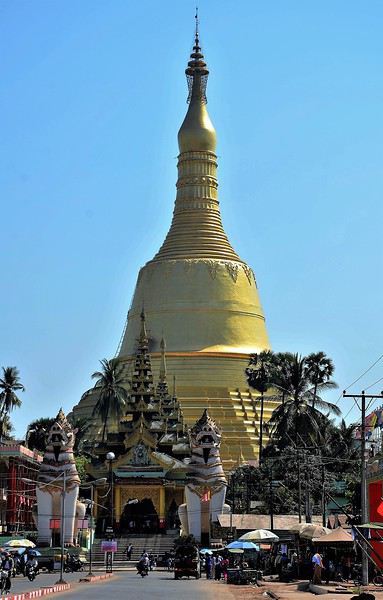
After thinking it over, I settled on the Golden Rock, which also let us stop in Bago on the way back—a place that seemed full of potential.
We arrived early at Yangon Airport (8:30 AM) and met up with To Wen, who had welcomed us when we first landed in Myanmar. Off we went on a four-plus-hour drive, including stops (some planned, others spontaneous).
Around 3 PM, we reached the small town that serves as the starting point for the Golden Rock.
Two options: hike up (7 hours) or take a truck-bus... I’ll let you guess which we chose.
These converted dump trucks are more like cattle cars than buses. You climb a ladder to reach the benches in the truck bed. A guy barks orders at everyone (mostly his fellow countrymen—we barely got scolded) to squeeze in as tight as possible. Makes sense: they’re paid per passenger, so they cram in as many as they can—everyone seated, though.
The fare is minimal: 2,000 kyats per person. For more comfort, you can ride in the driver’s cab, but that’ll cost you five times as much. We stuck with the truck bed and waited for it to fill up with pilgrims, villagers, and a few other tourists.
Then, we were off on a wild 45-minute ascent! The ride was bumpy, but being packed in like sardines kept us from getting tossed around too much.
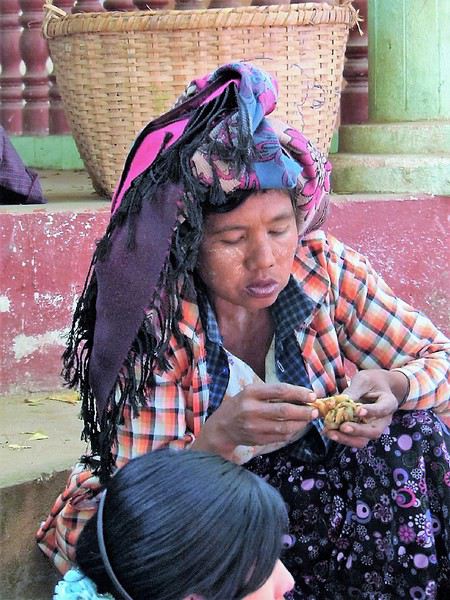
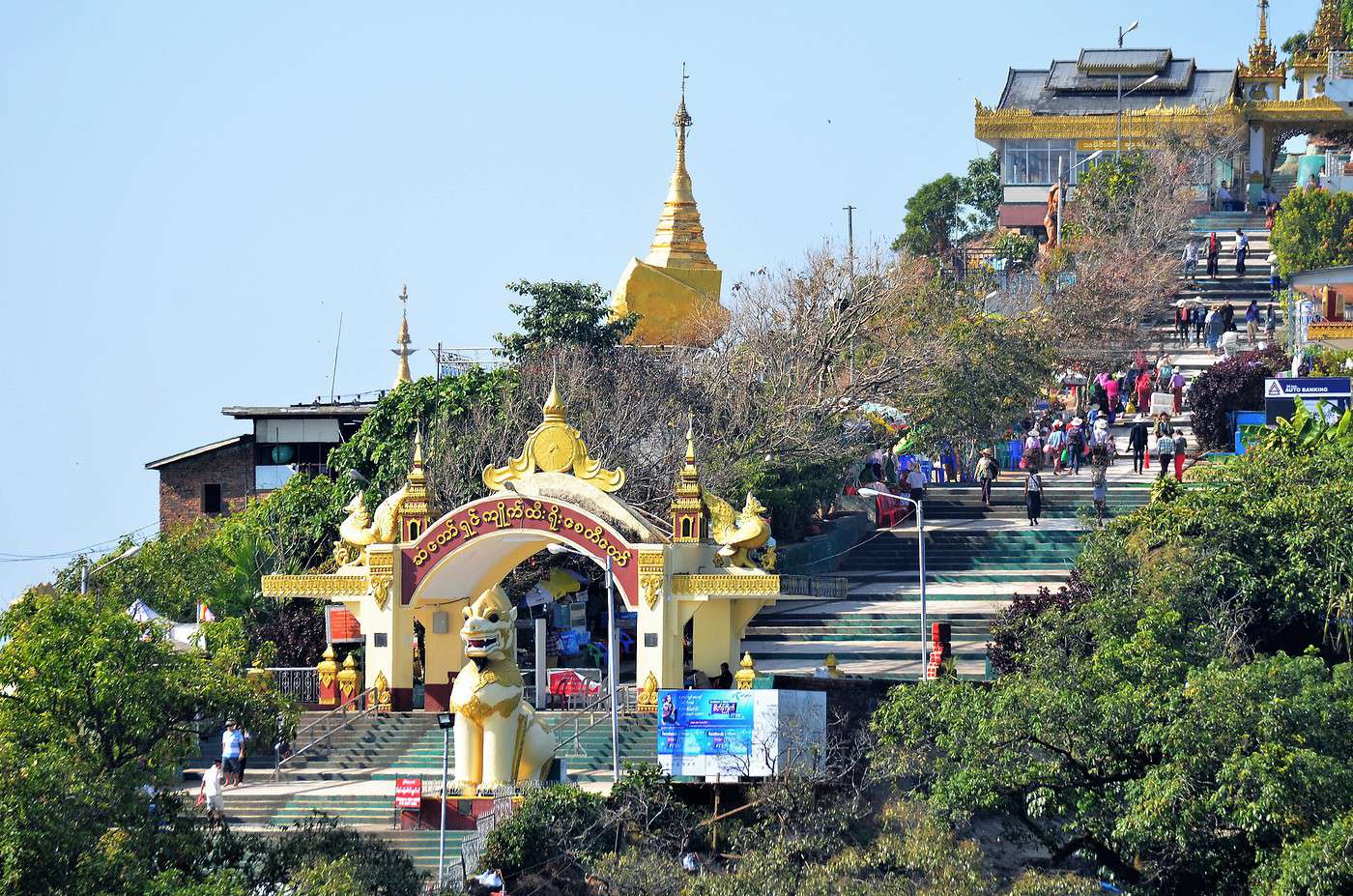
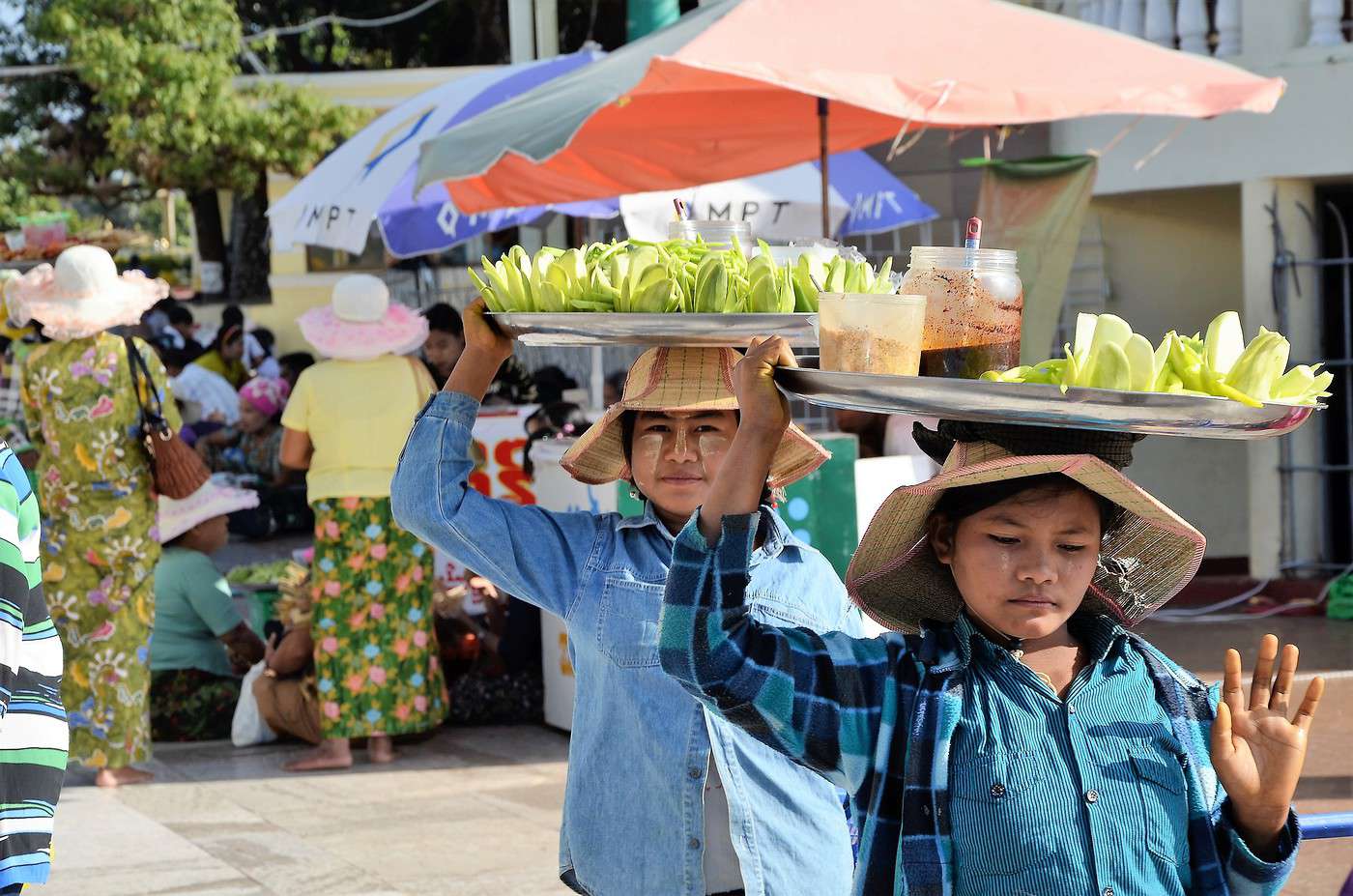
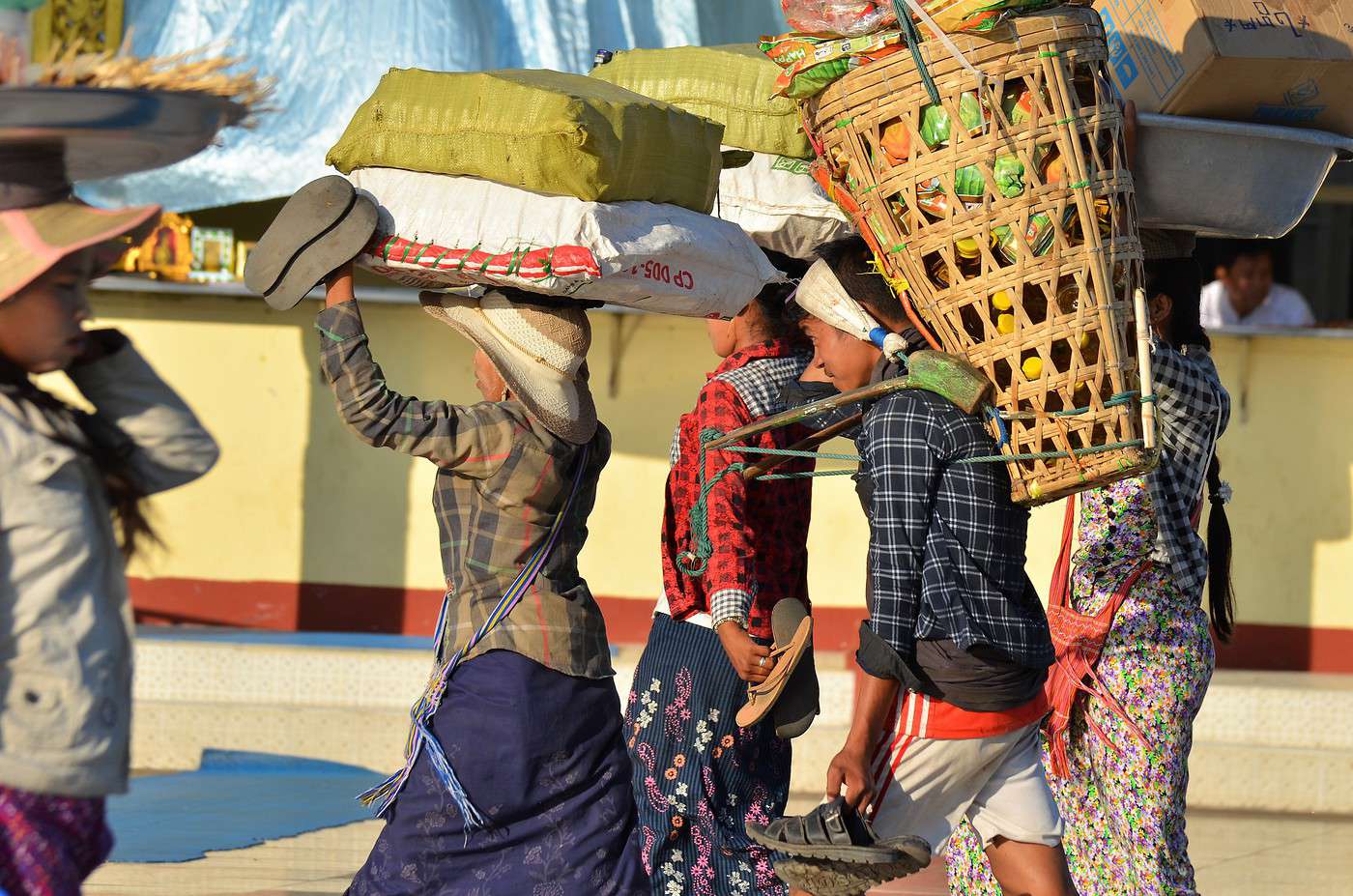
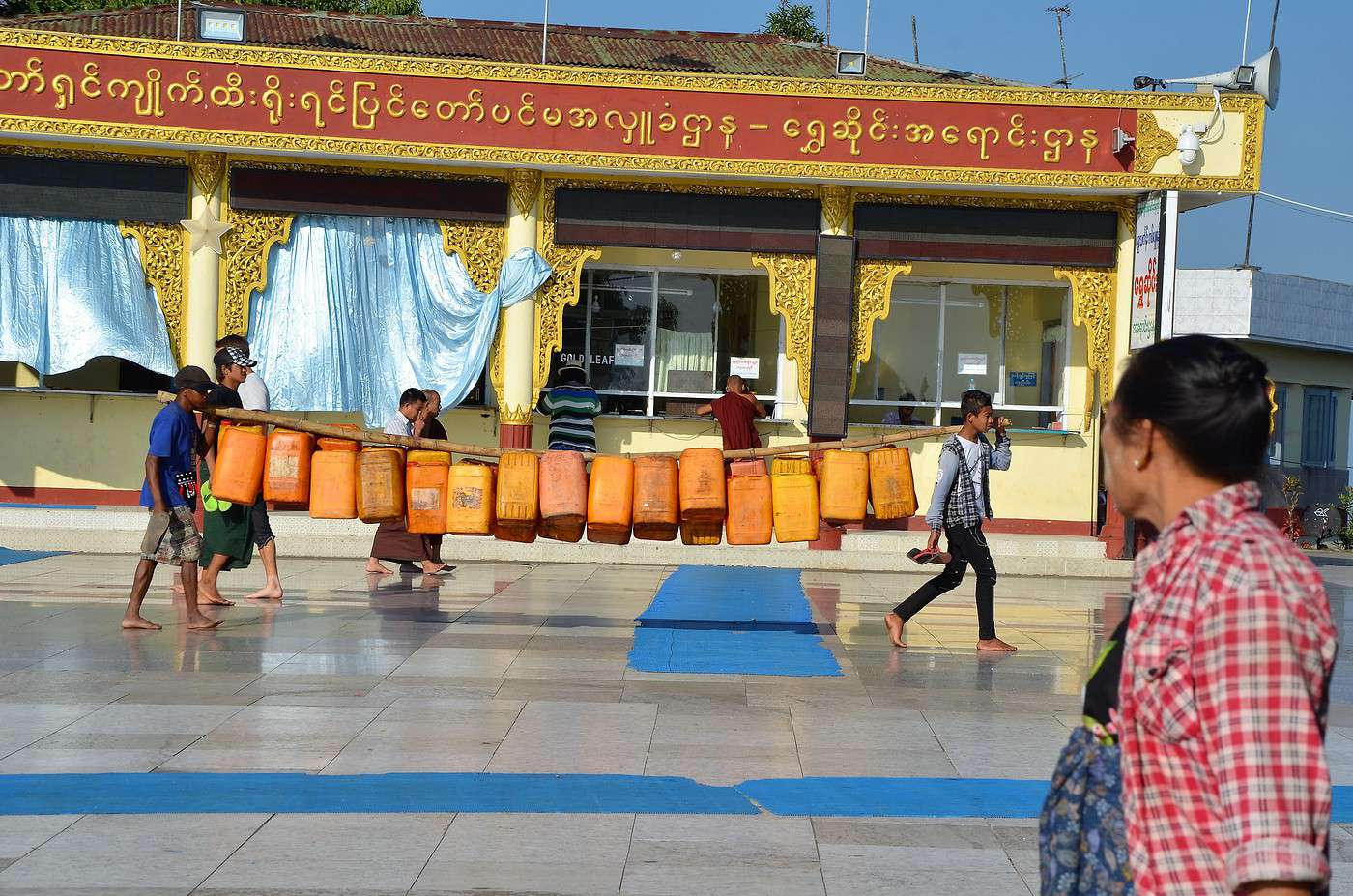
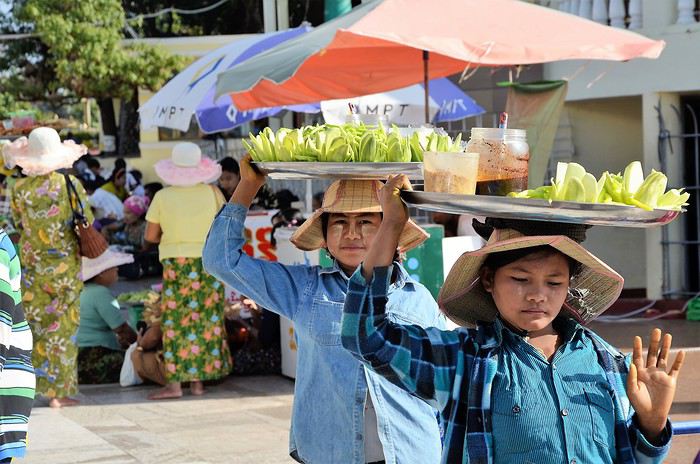
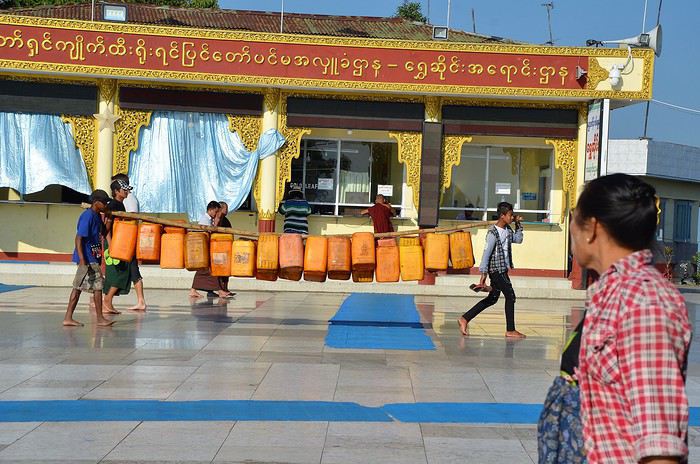
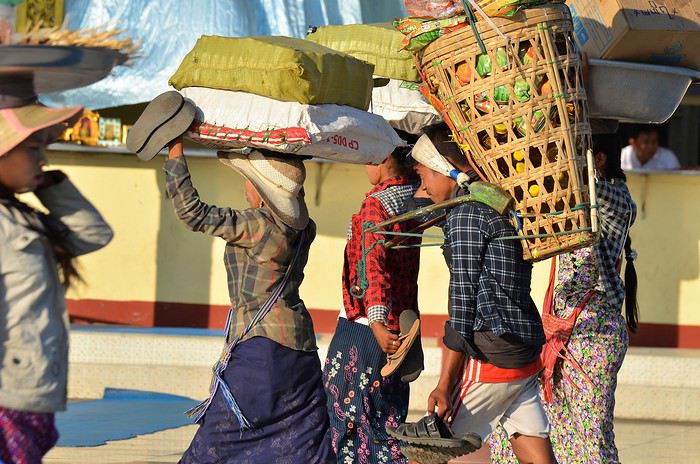
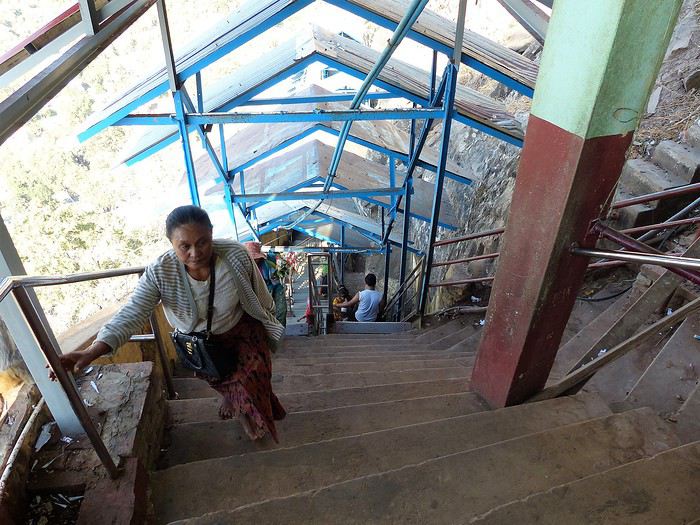
Once at the top, a pedestrian walkway led us to the entrance of the Golden Rock—vehicles are banned here, which explains the flurry of porters. Goods are unloaded from the trucks and carried up to hotels and shops. We saw tiny women hauling enormous baskets, packages, even heavy suitcases on their heads while the travelers strolled beside them, hands in pockets (it’s jarring, even if it’s their livelihood).
Just before the entrance, we dropped our bags at the hotel (spending the night here let us stay for sunset, since the last bus leaves at 6 PM), then set off to explore.
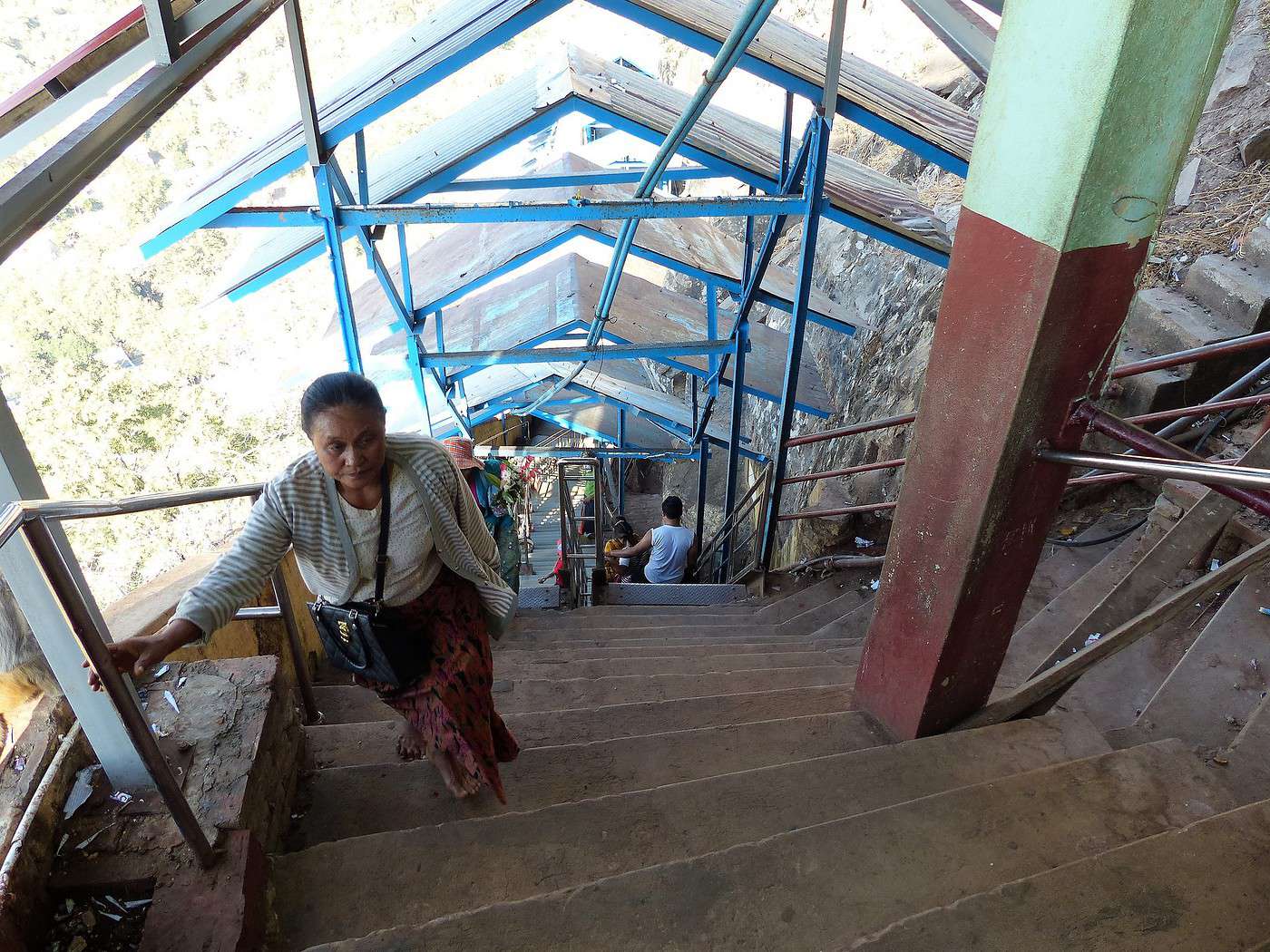
A gentle climb with steps and gradual slopes took us to the Golden Rock esplanade.
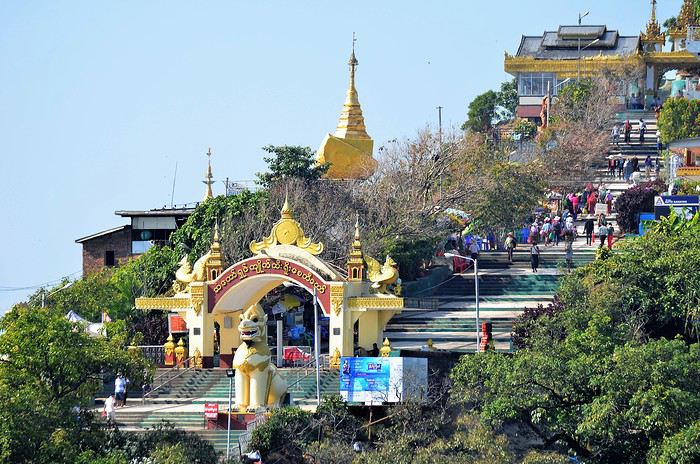
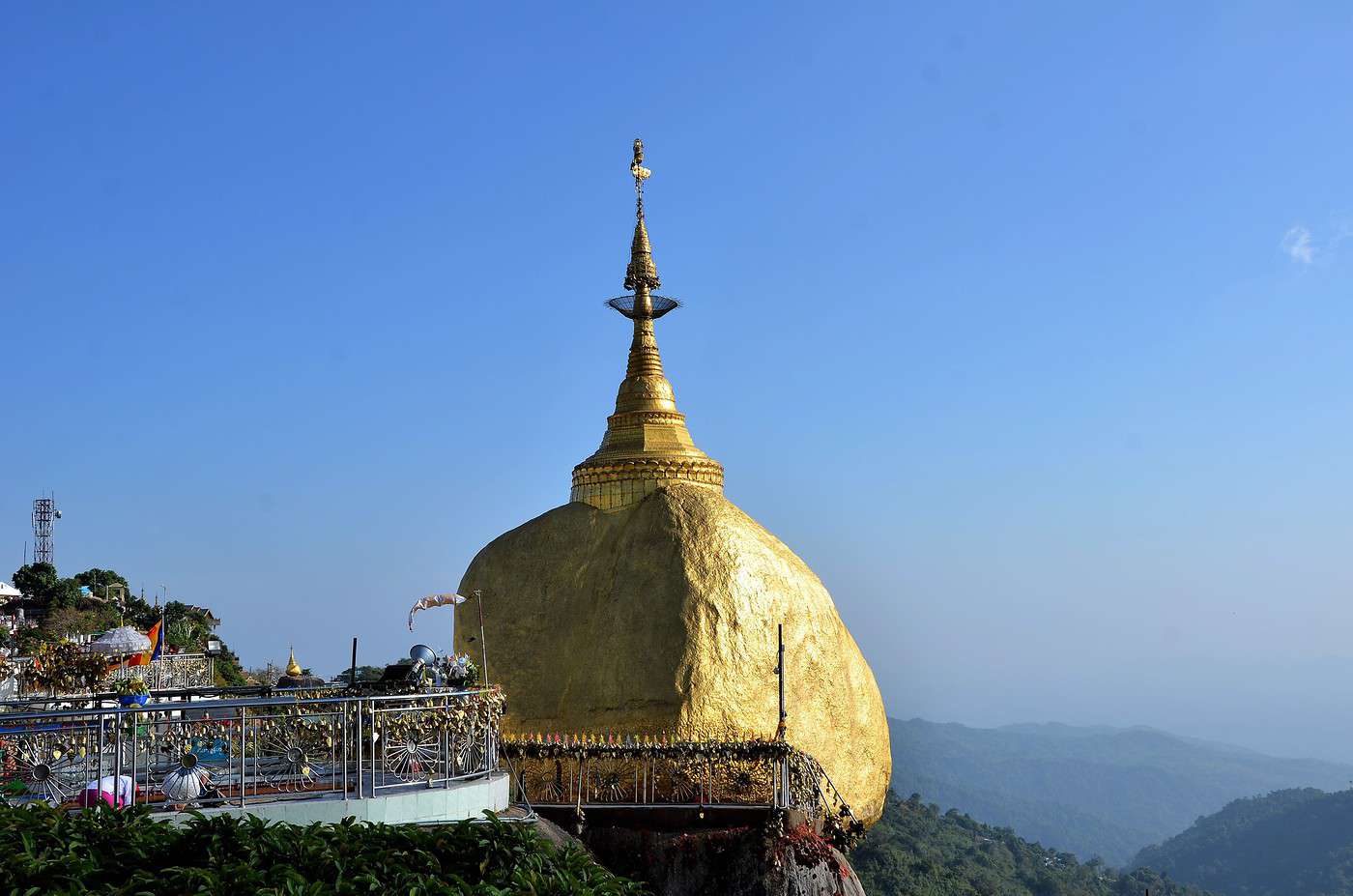
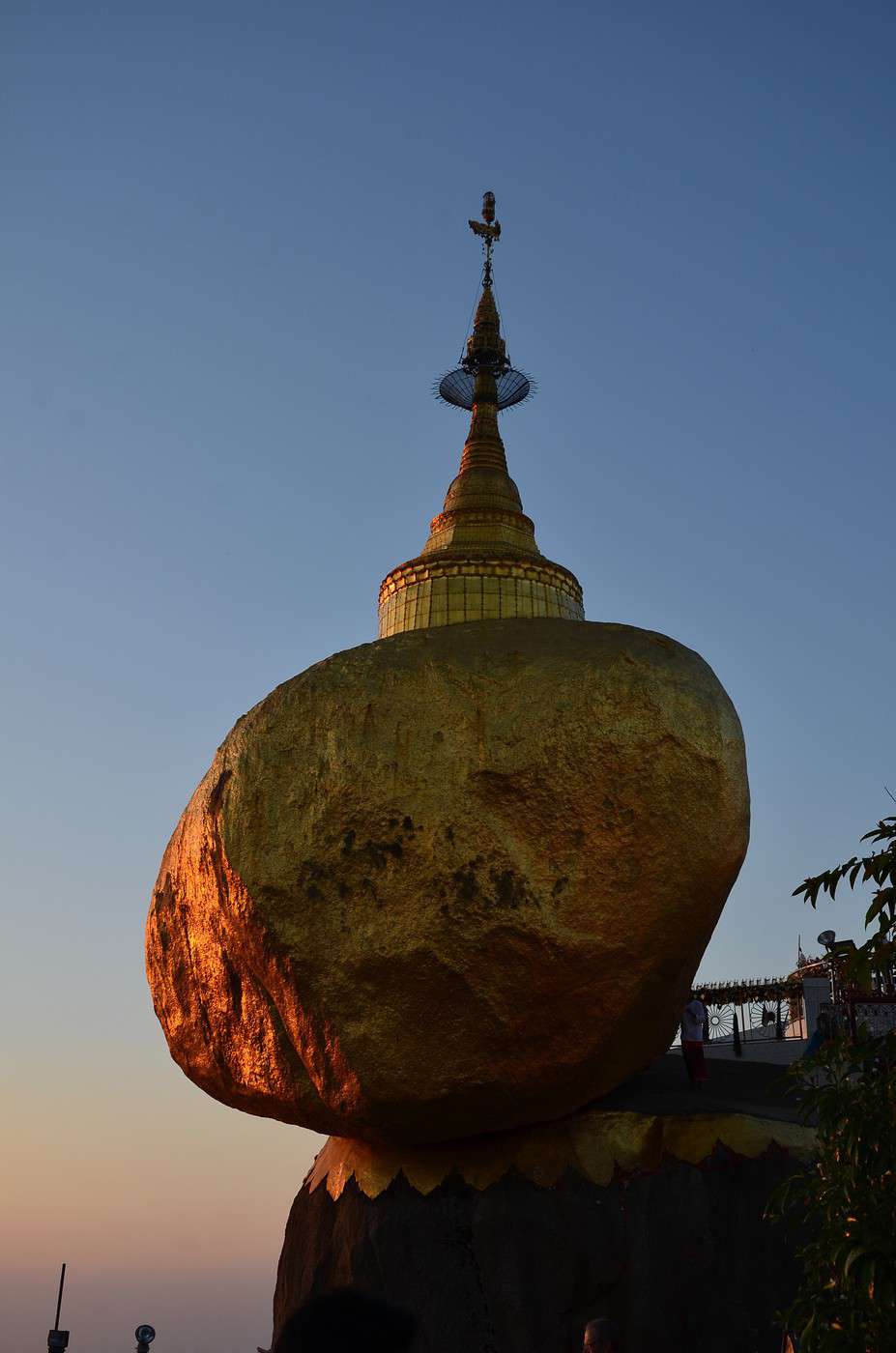
This is Myanmar’s third-most important Buddhist site, after Yangon’s Shwedagon Pagoda and Mandalay’s Mahamuni Temple. The rock—perched precariously over a cliff—stands 15 meters tall.
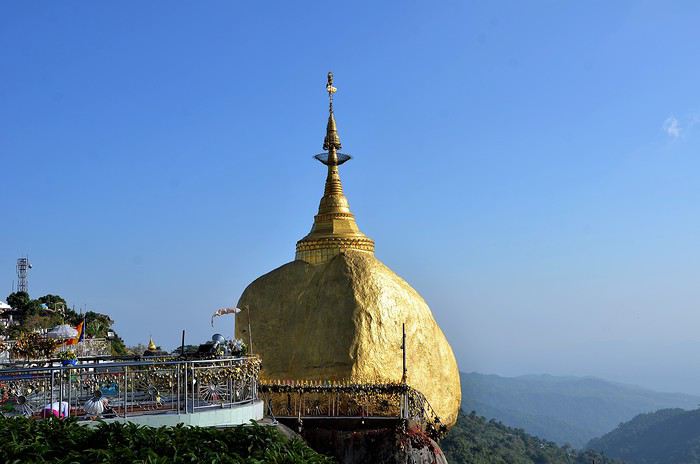
According to Buddhist tradition, it’s held in place by a strand of the Buddha’s hair inside the 7-meter pagoda atop the rock. You might say, “Buddha left hair everywhere during his lifetime.” True, but note: we have more hair than teeth... and it’s less painful to pull out.
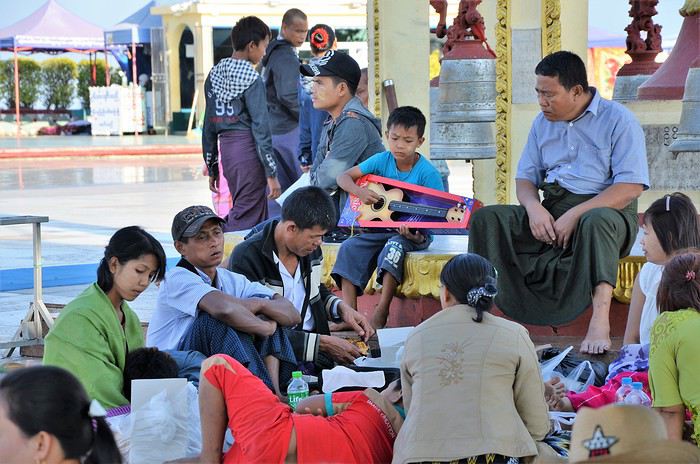
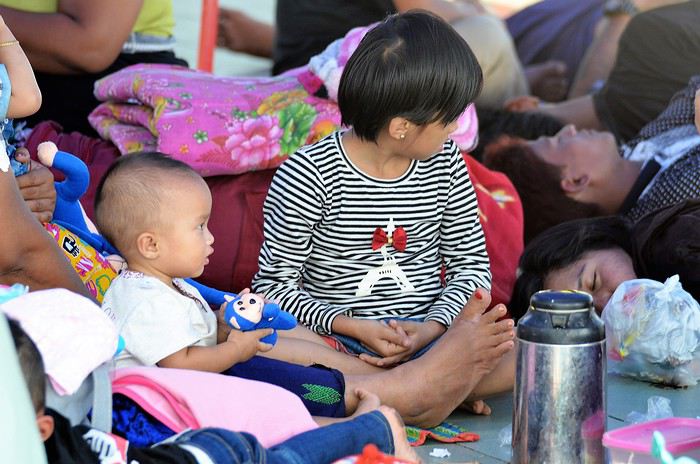
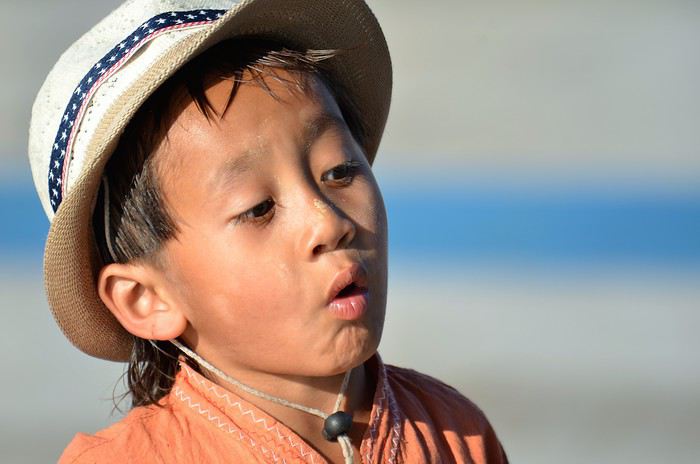
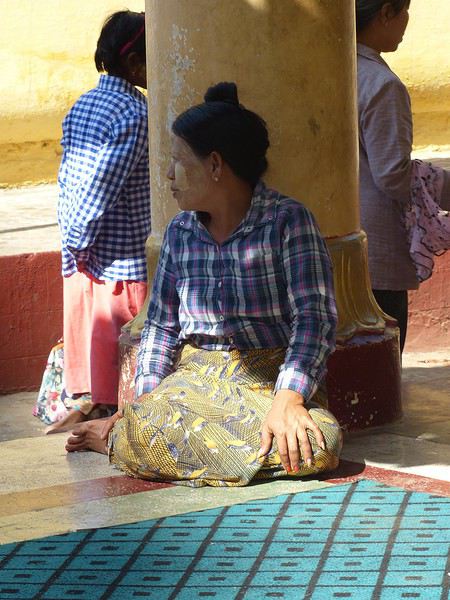
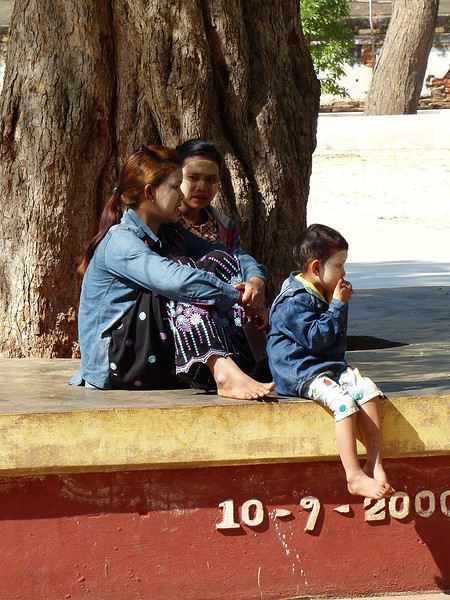
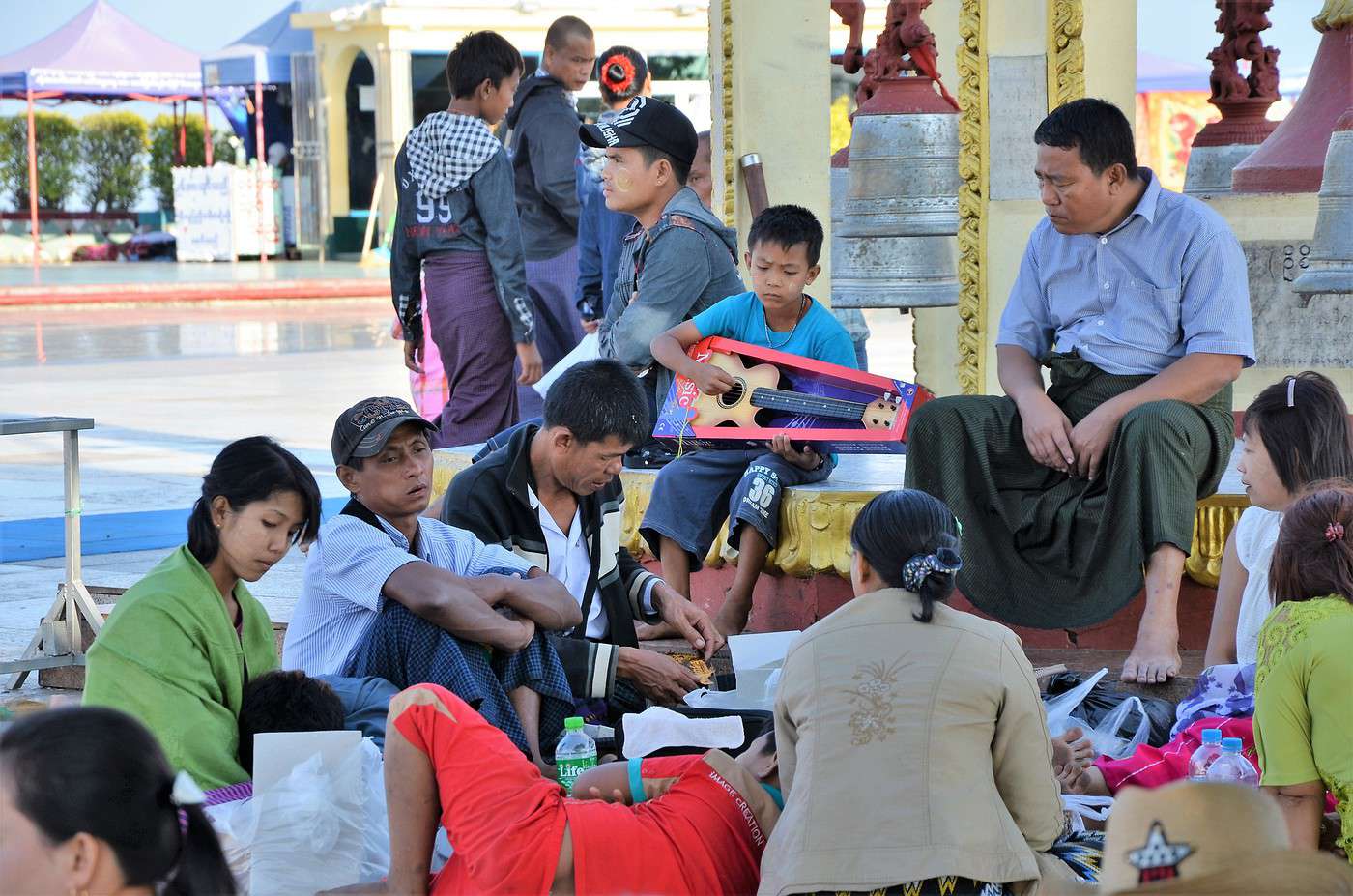
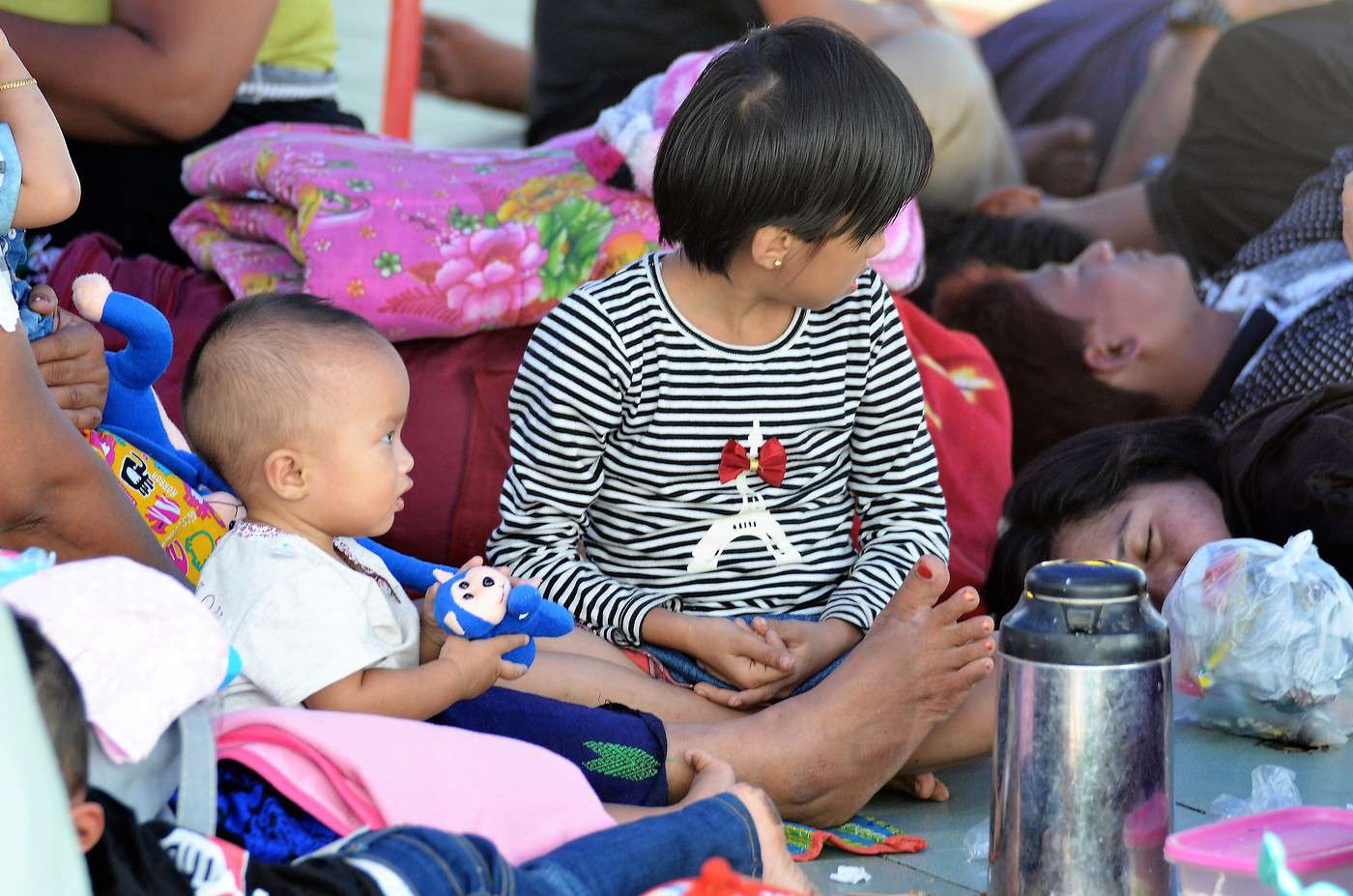
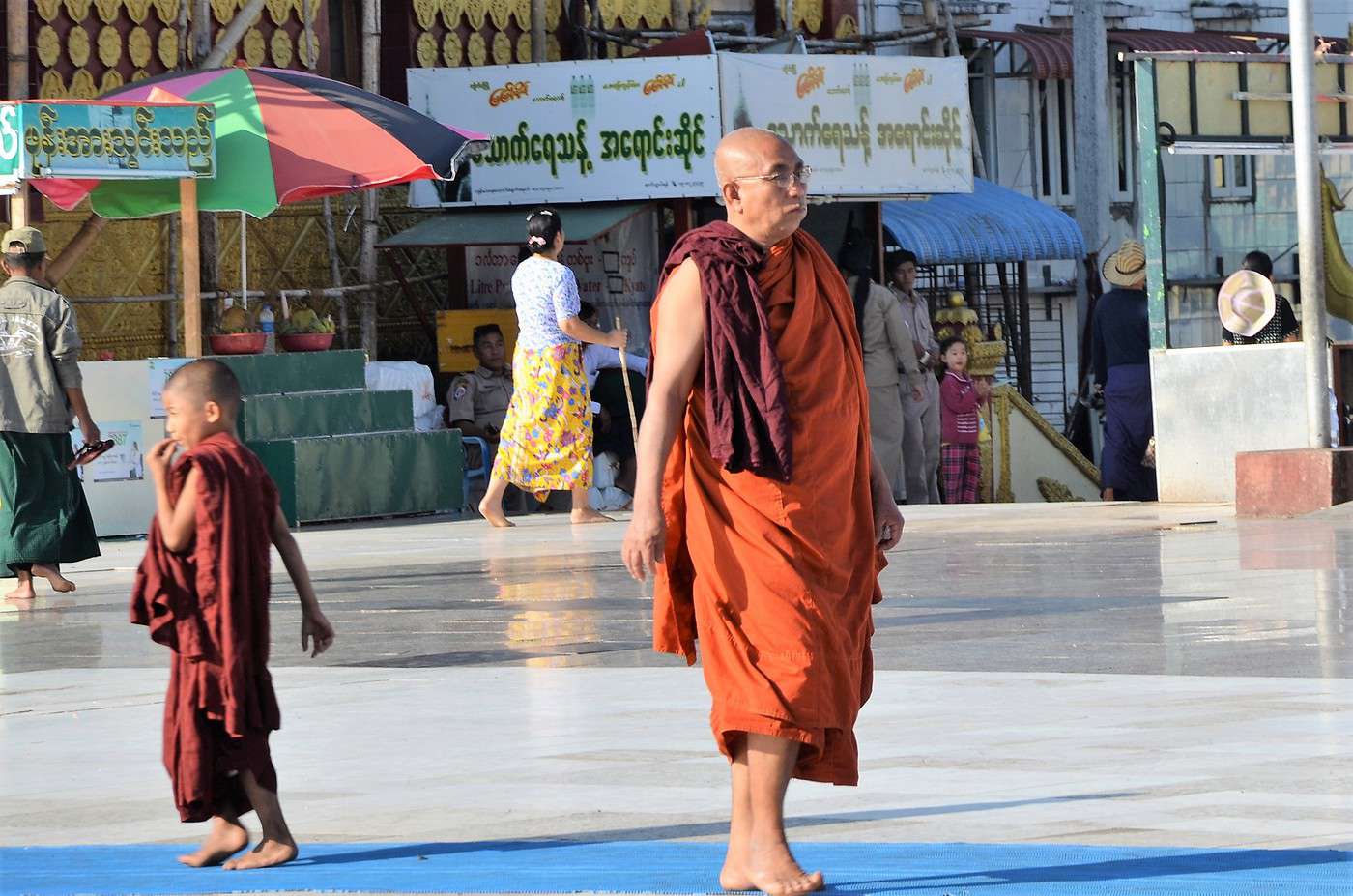
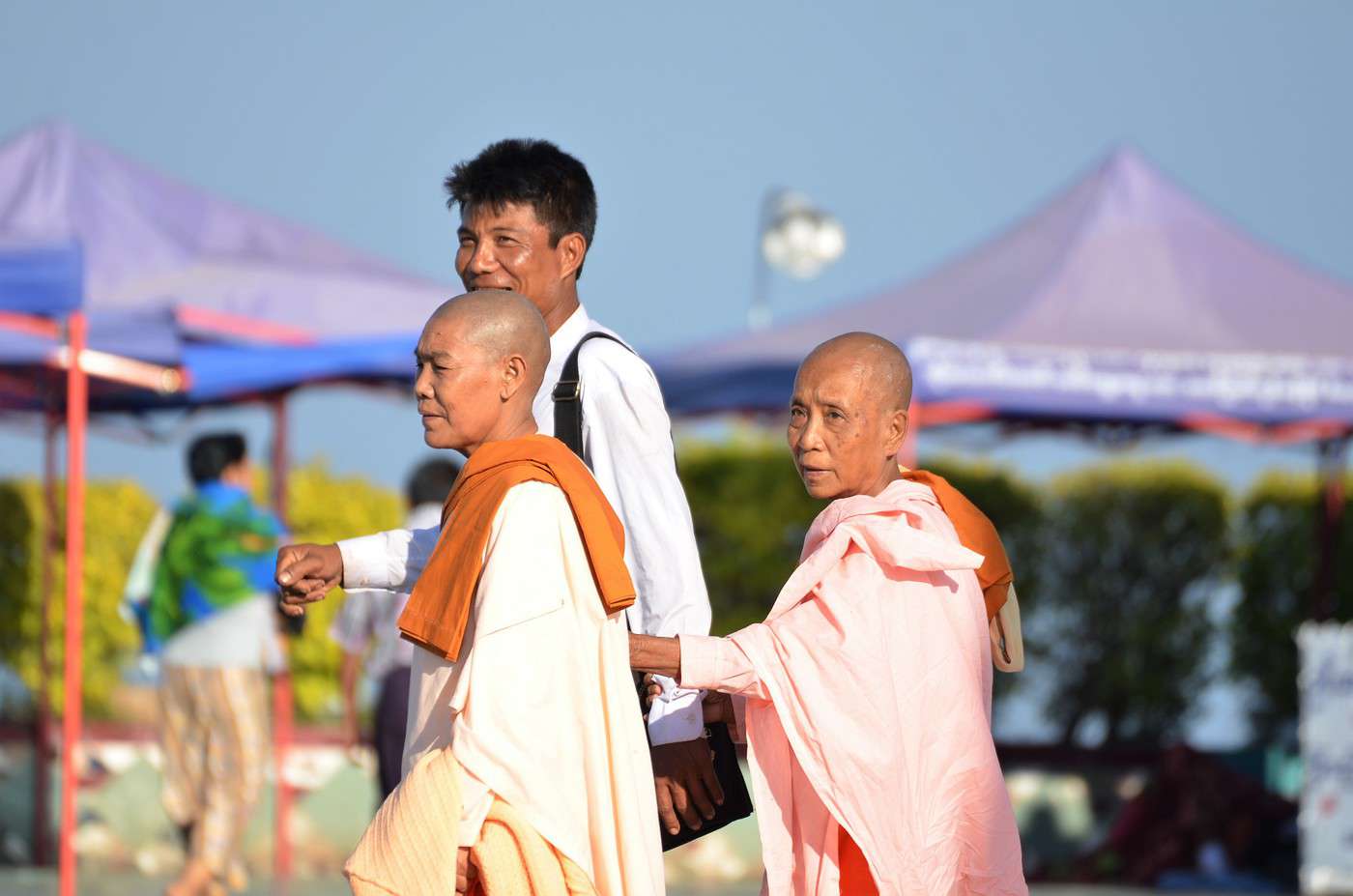
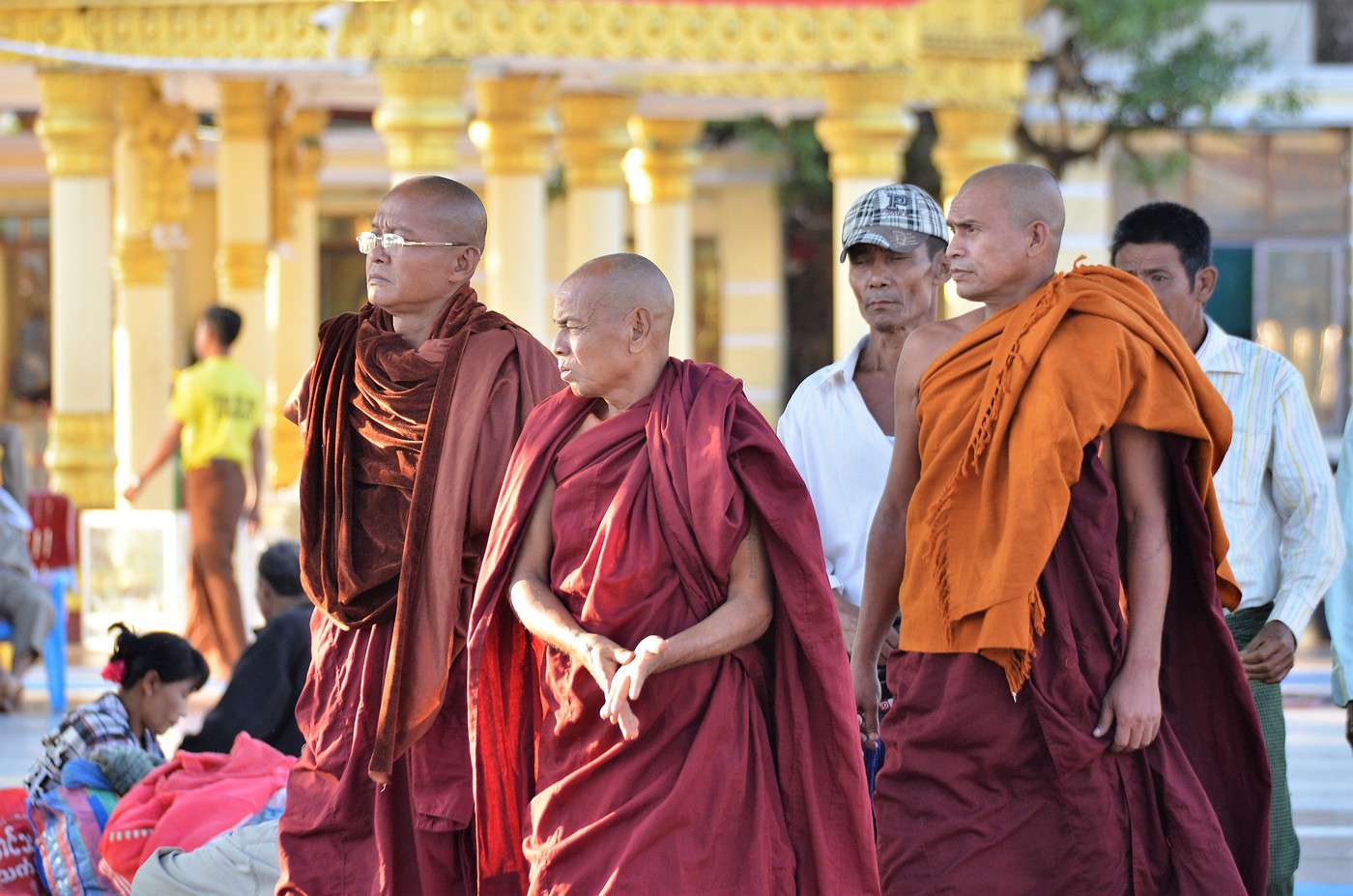
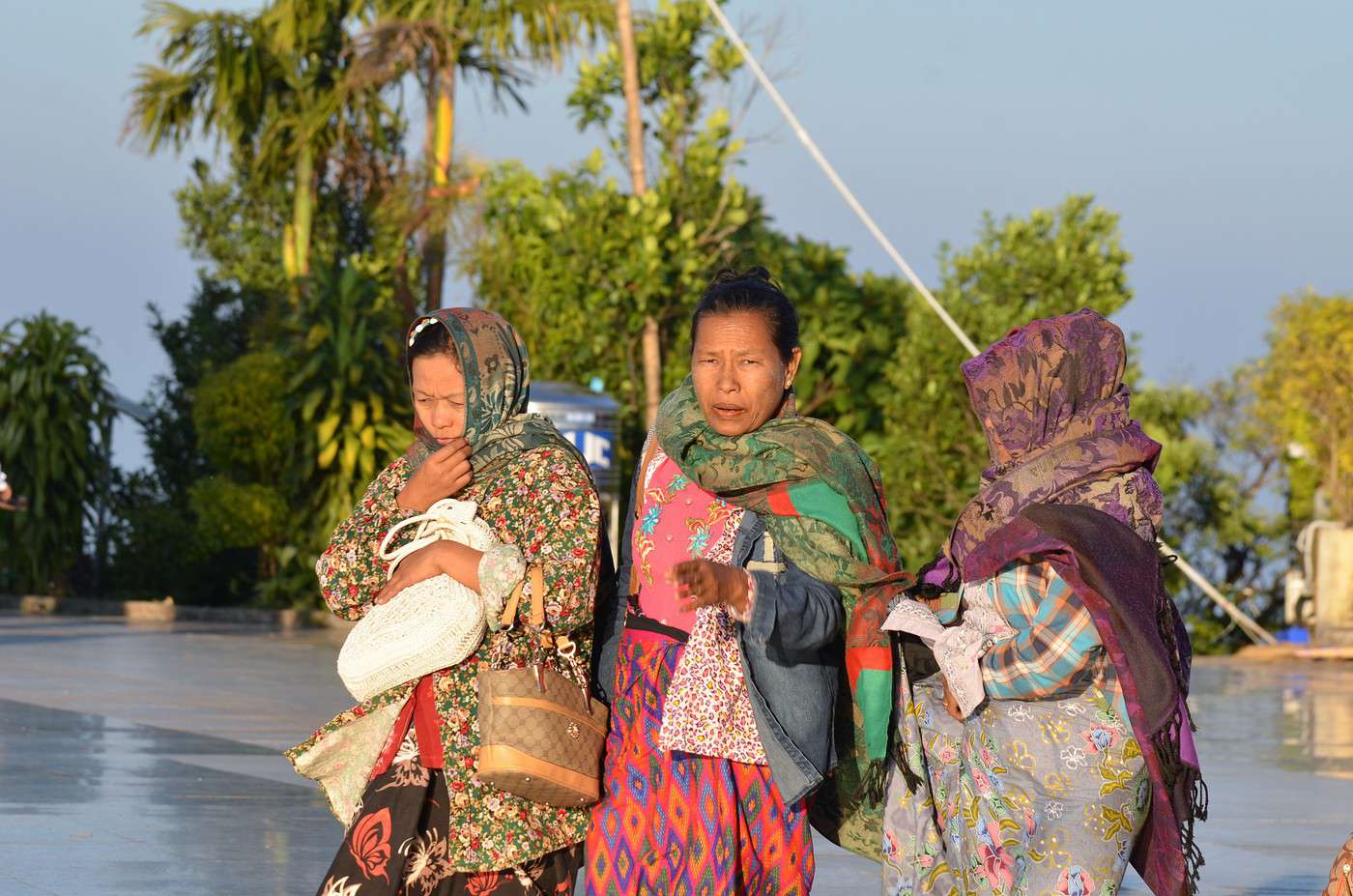
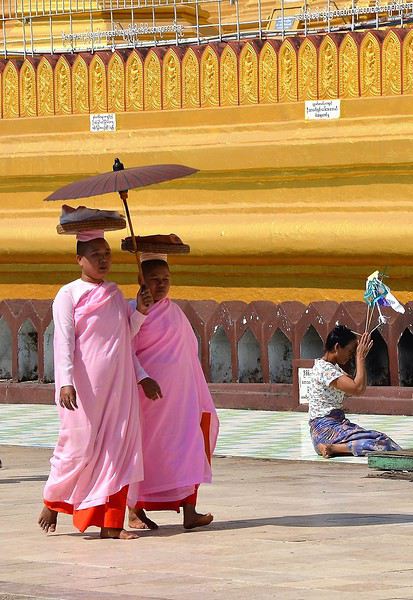
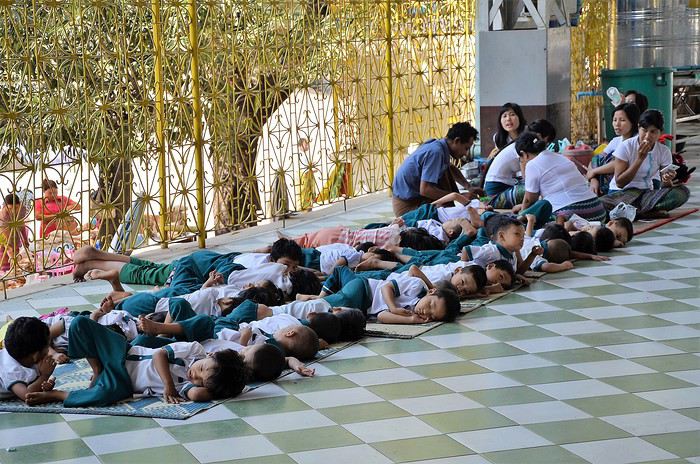
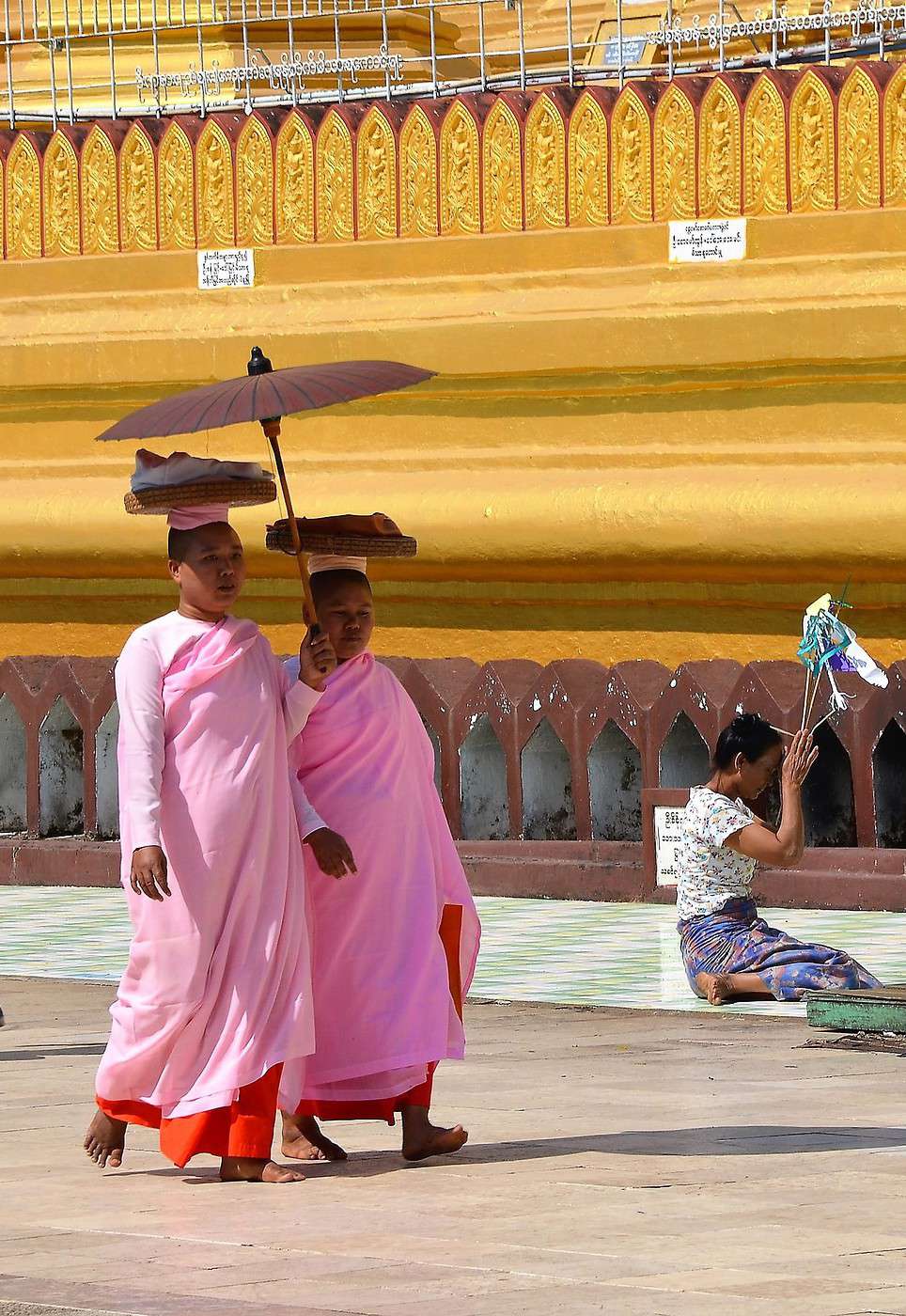
Families lounged on the esplanade, which buzzed with porters, street vendors, nuns, and monks. Many pilgrims would spend the night here, sprawled on mats under fabric awnings (though foreigners aren’t allowed to sleep under the stars).
We settled in too, quietly watching the comings and goings:
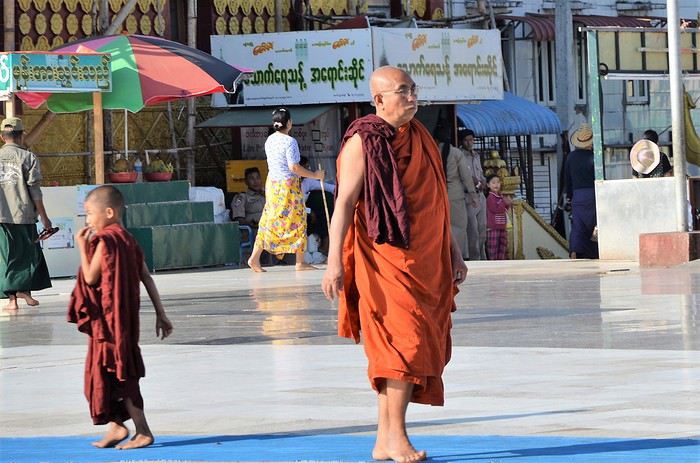
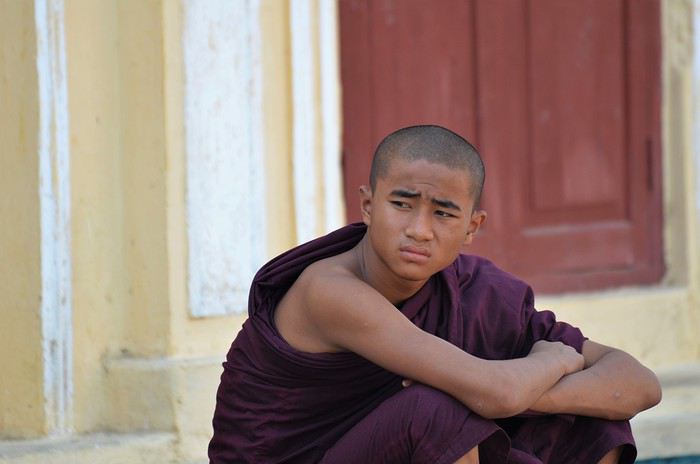
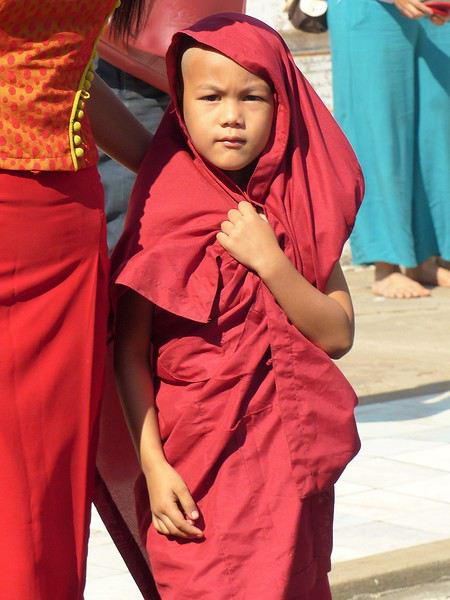
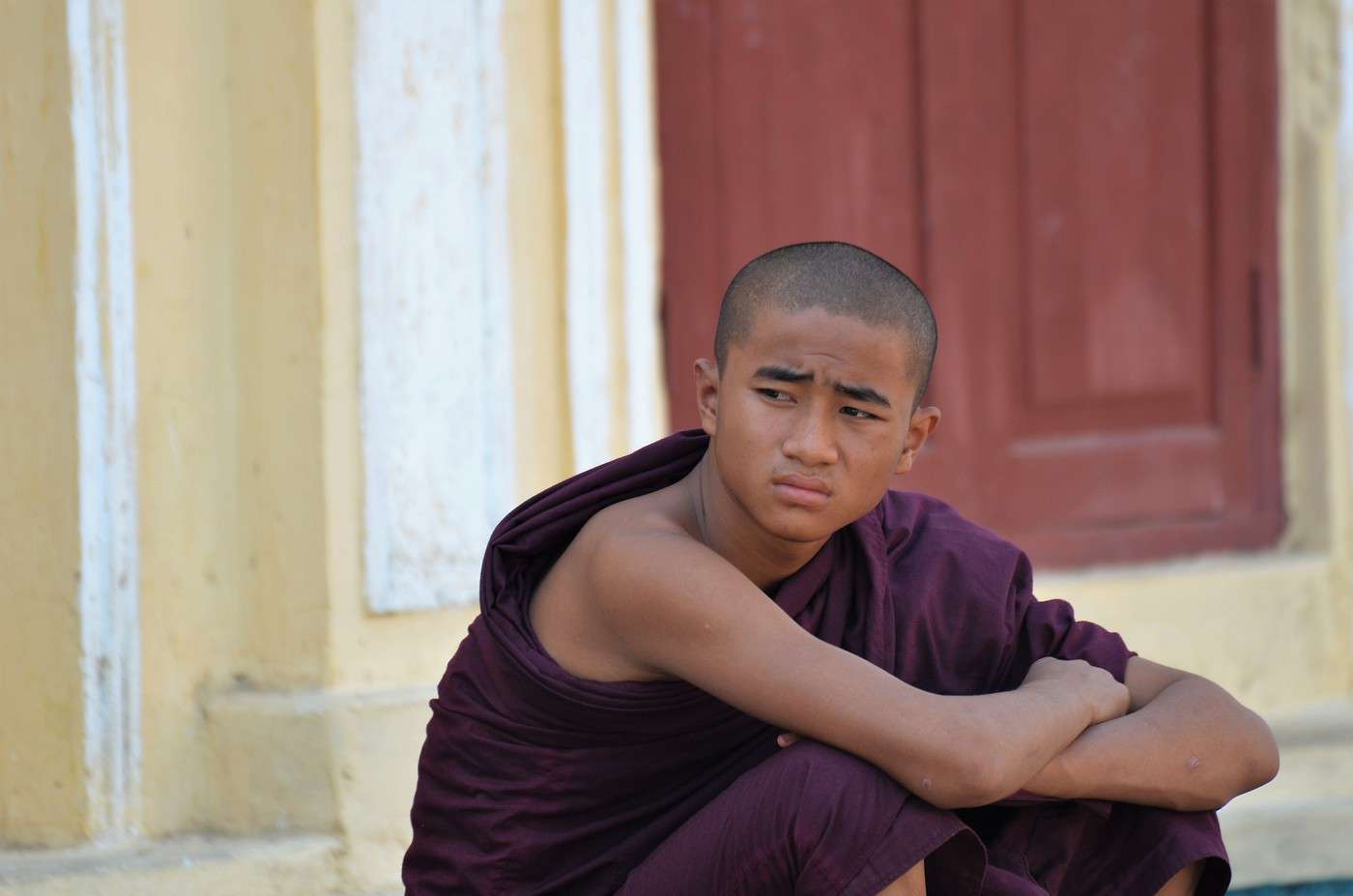
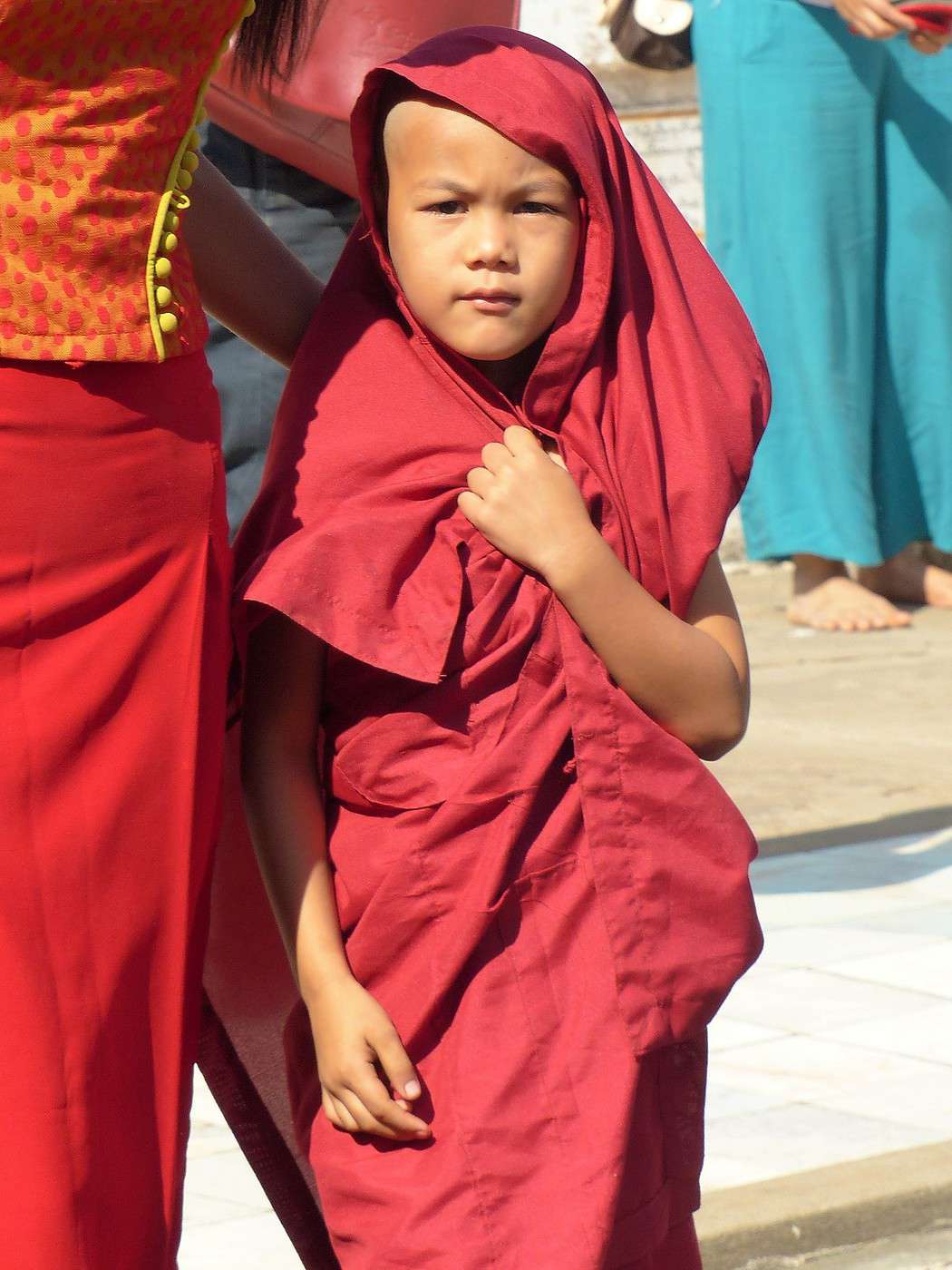
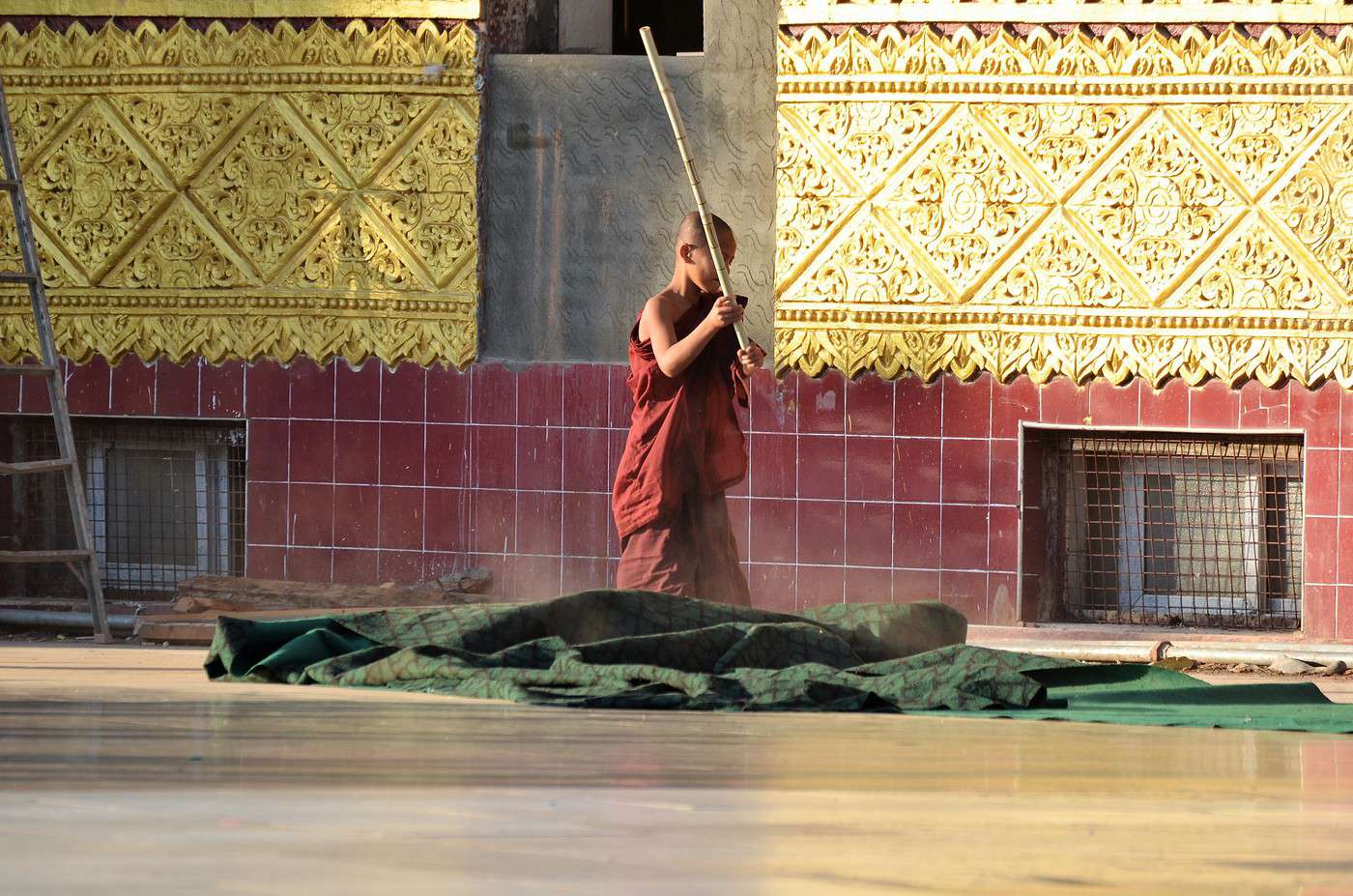
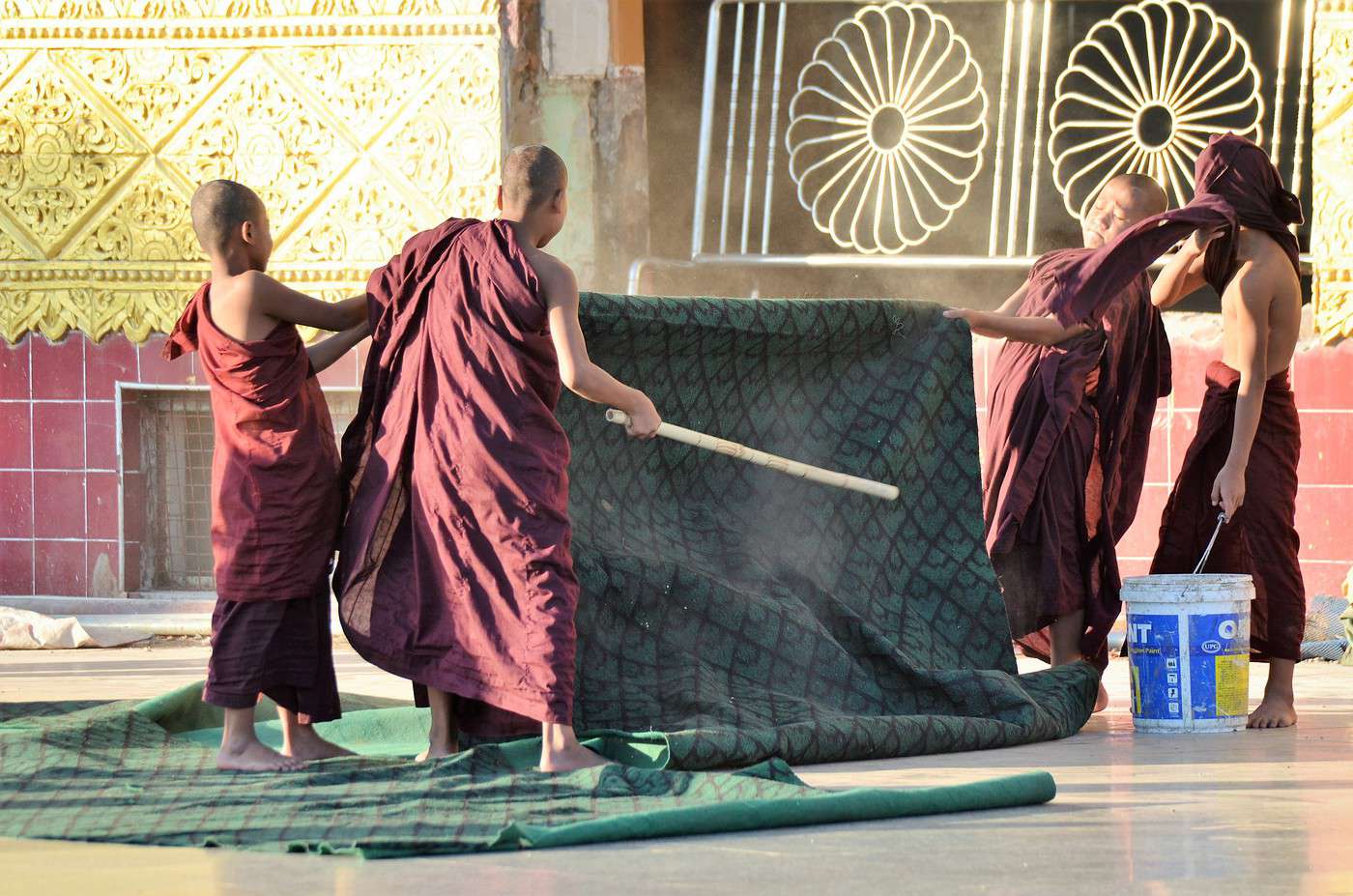
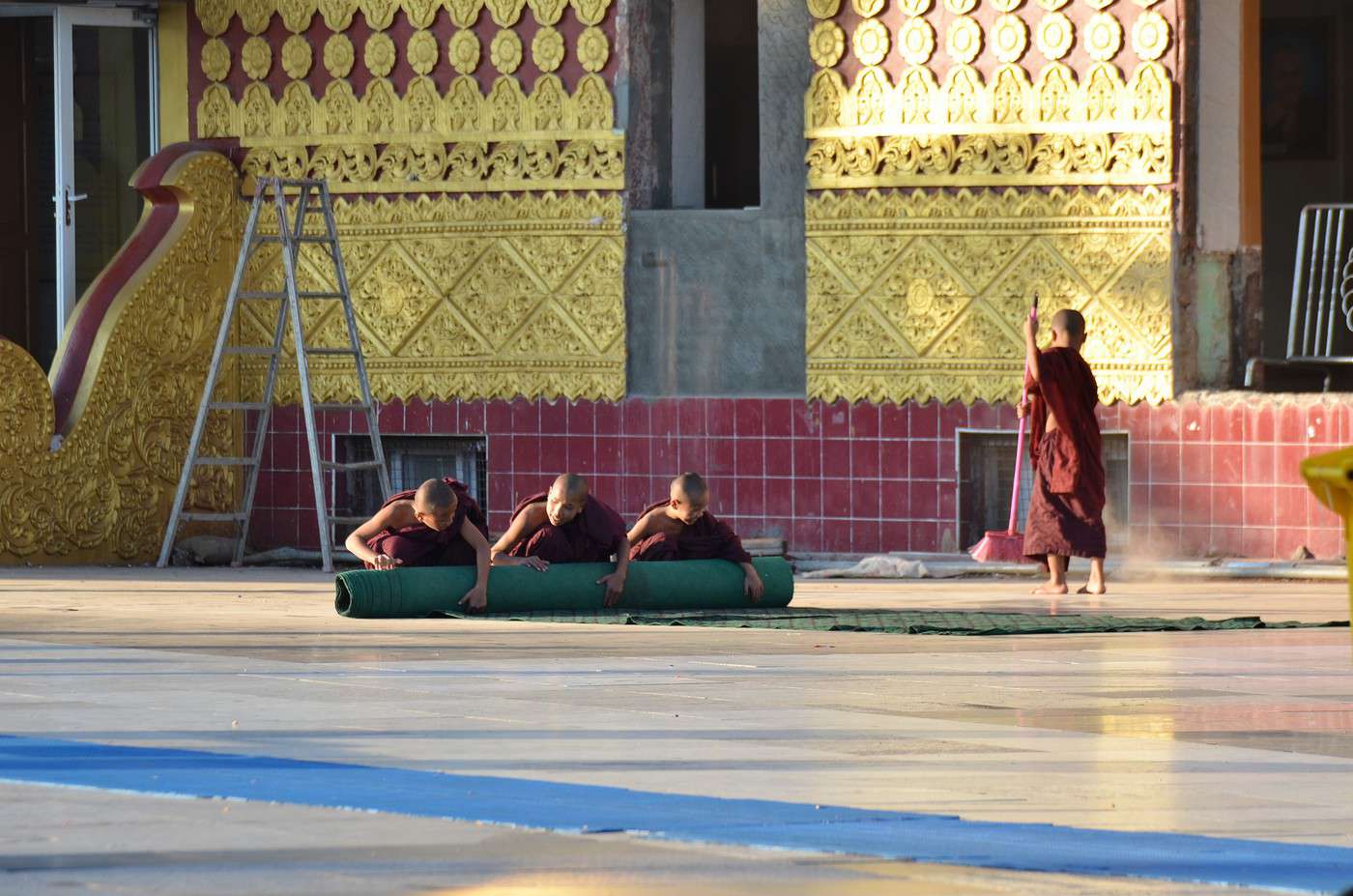
... kids returning from school (villagers live on both sides of the site), young monks tasked with laying out mats,
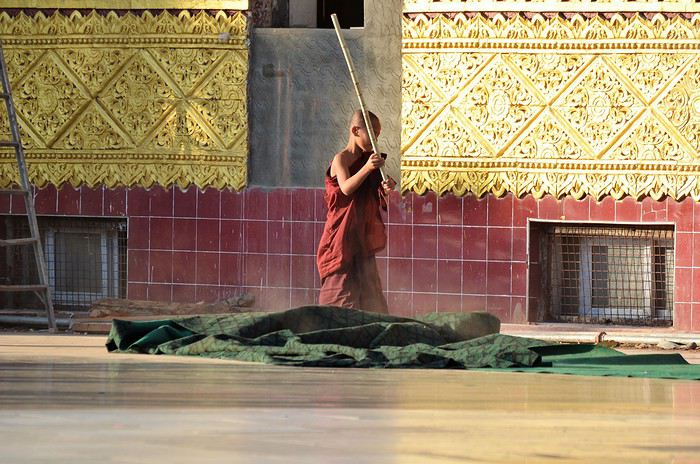
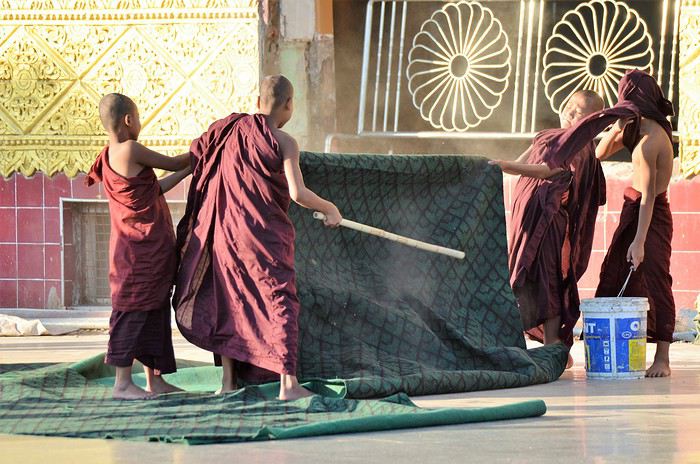
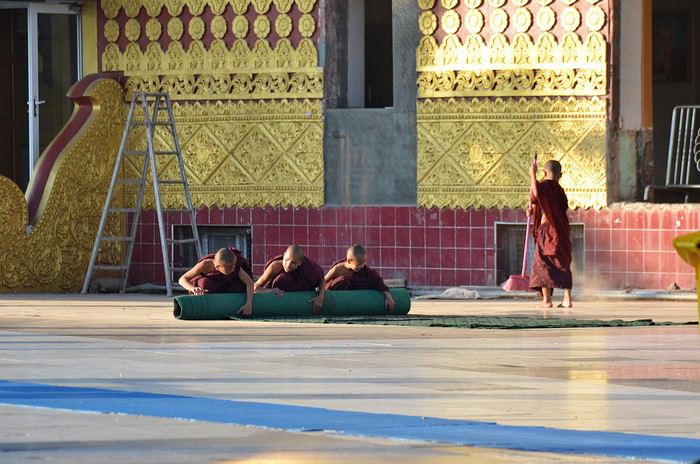
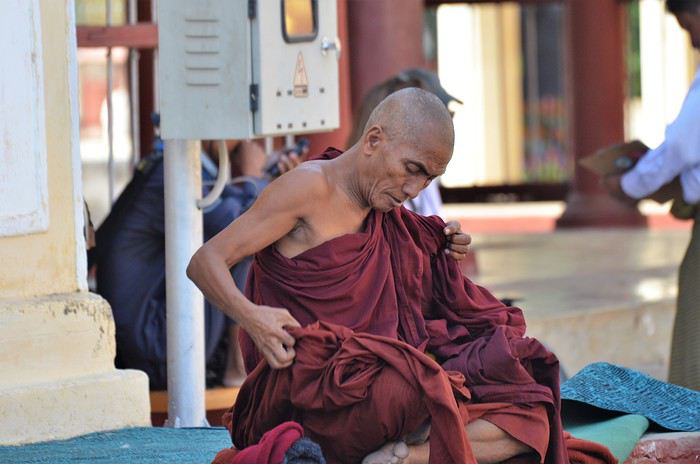
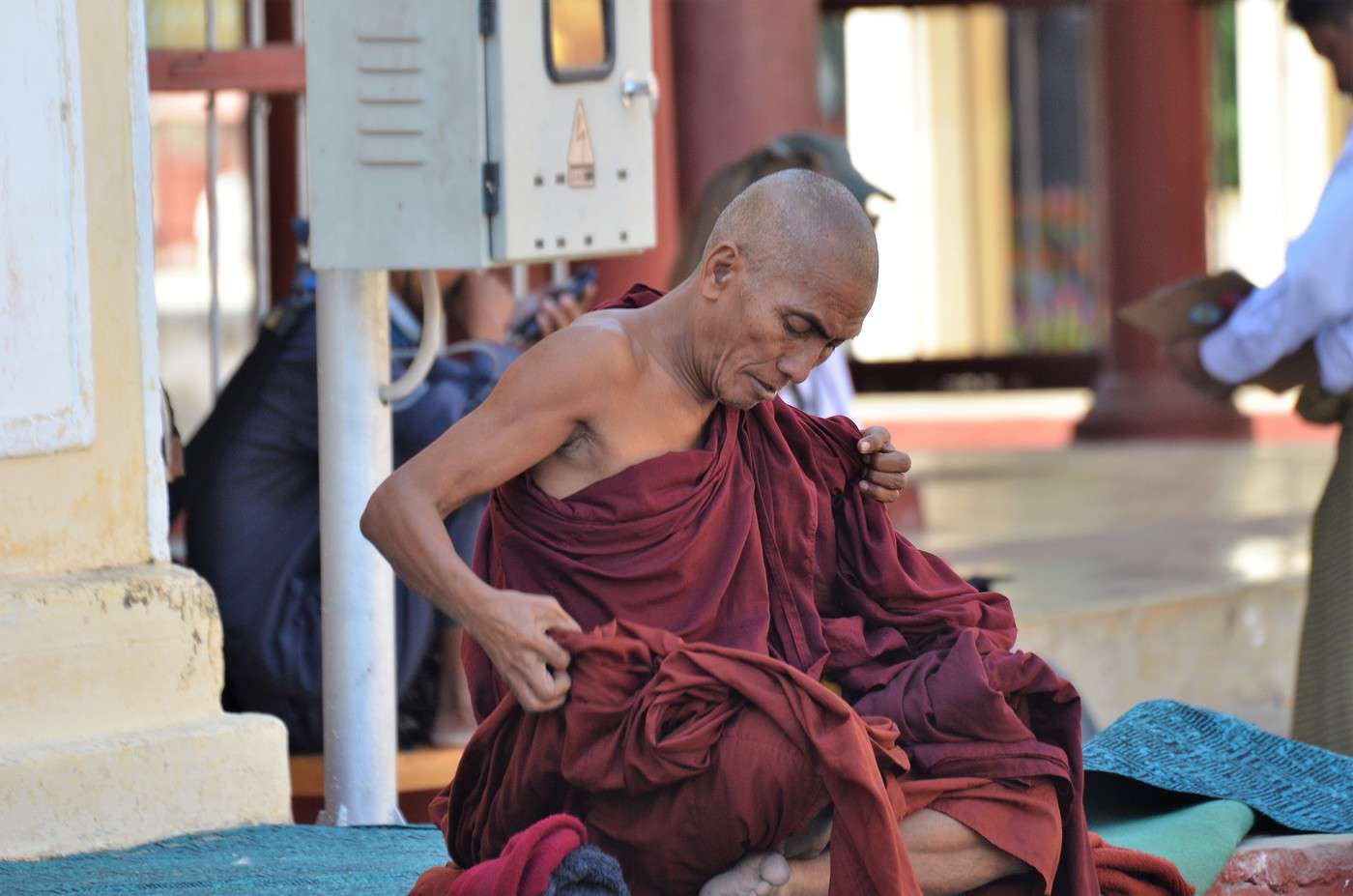
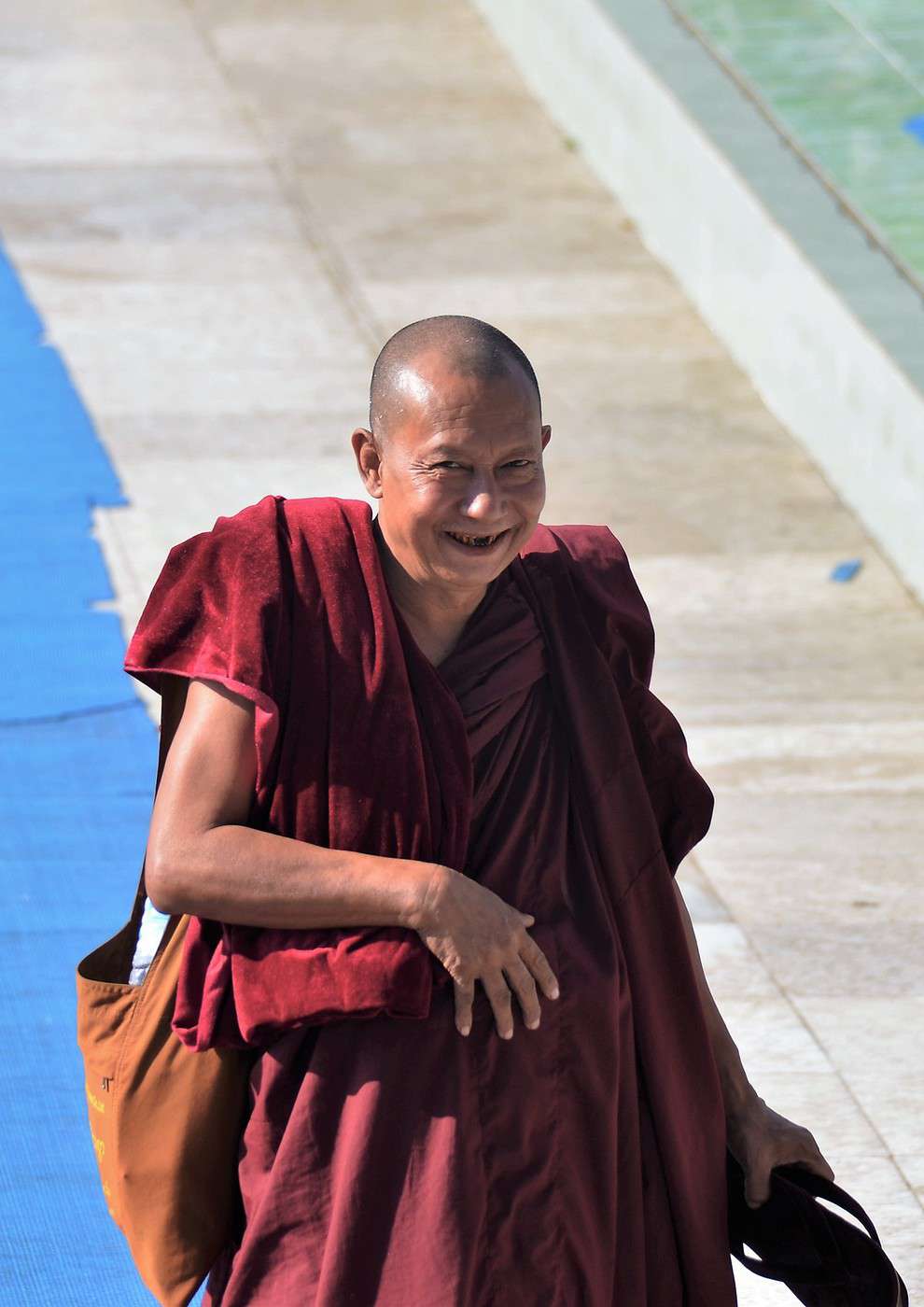
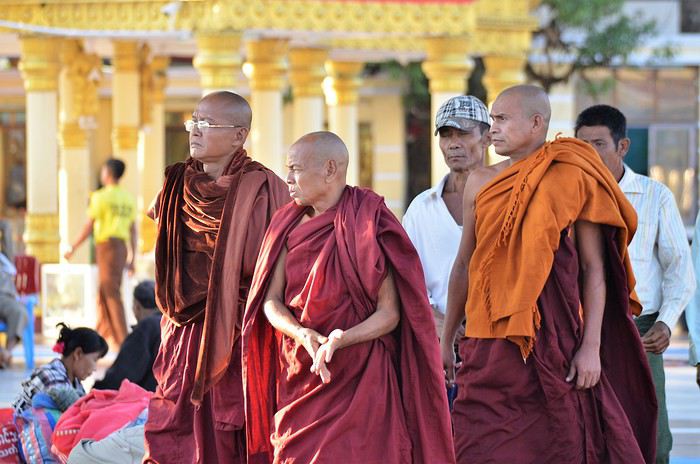
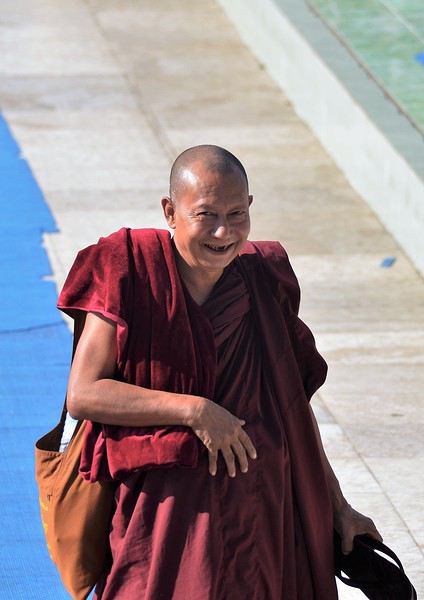
... elderly monks deep in conversation, others laughing,
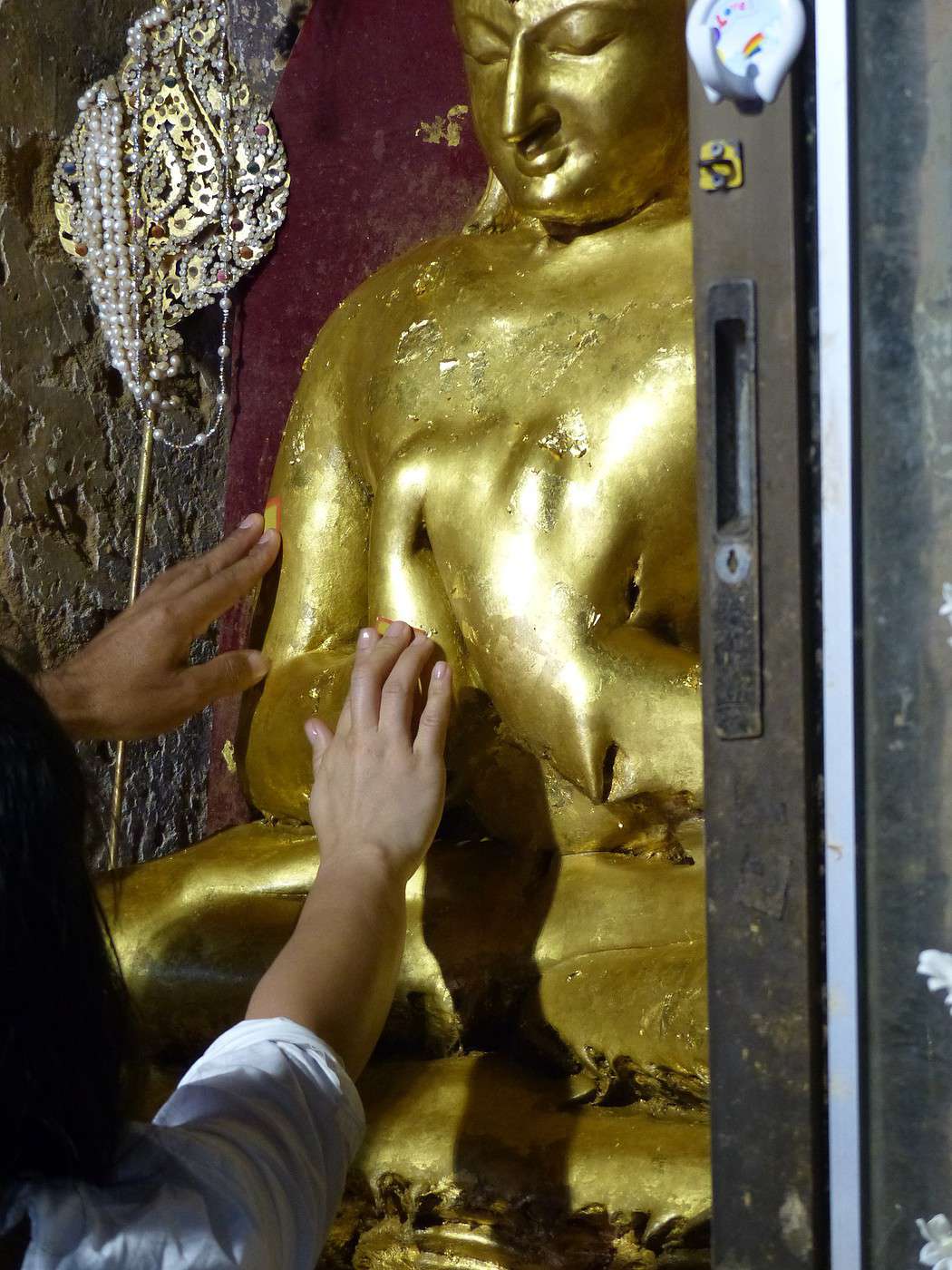
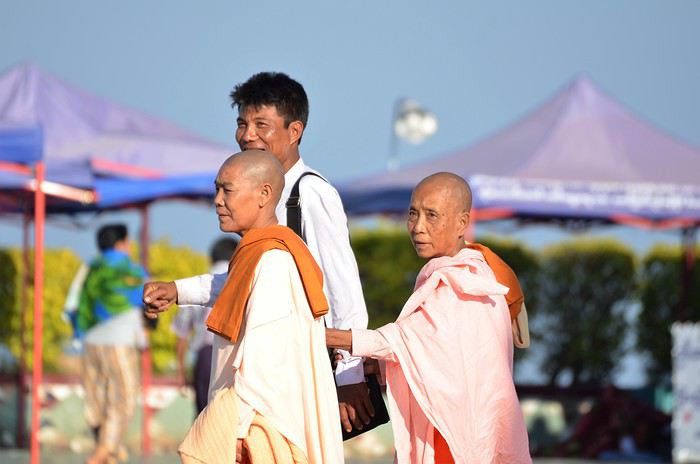
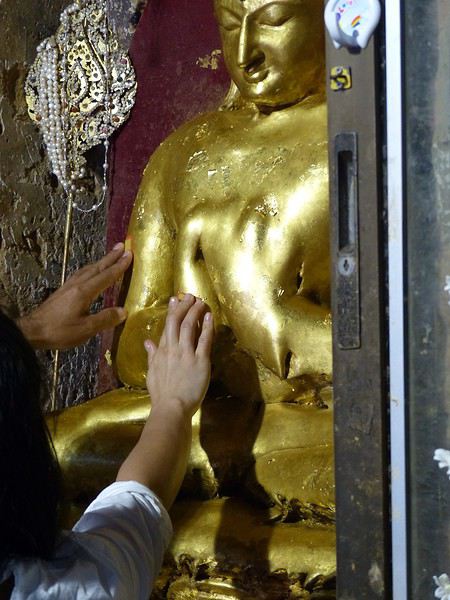
... nuns accompanied by a man who’d apply gold leaf to the rock for them,
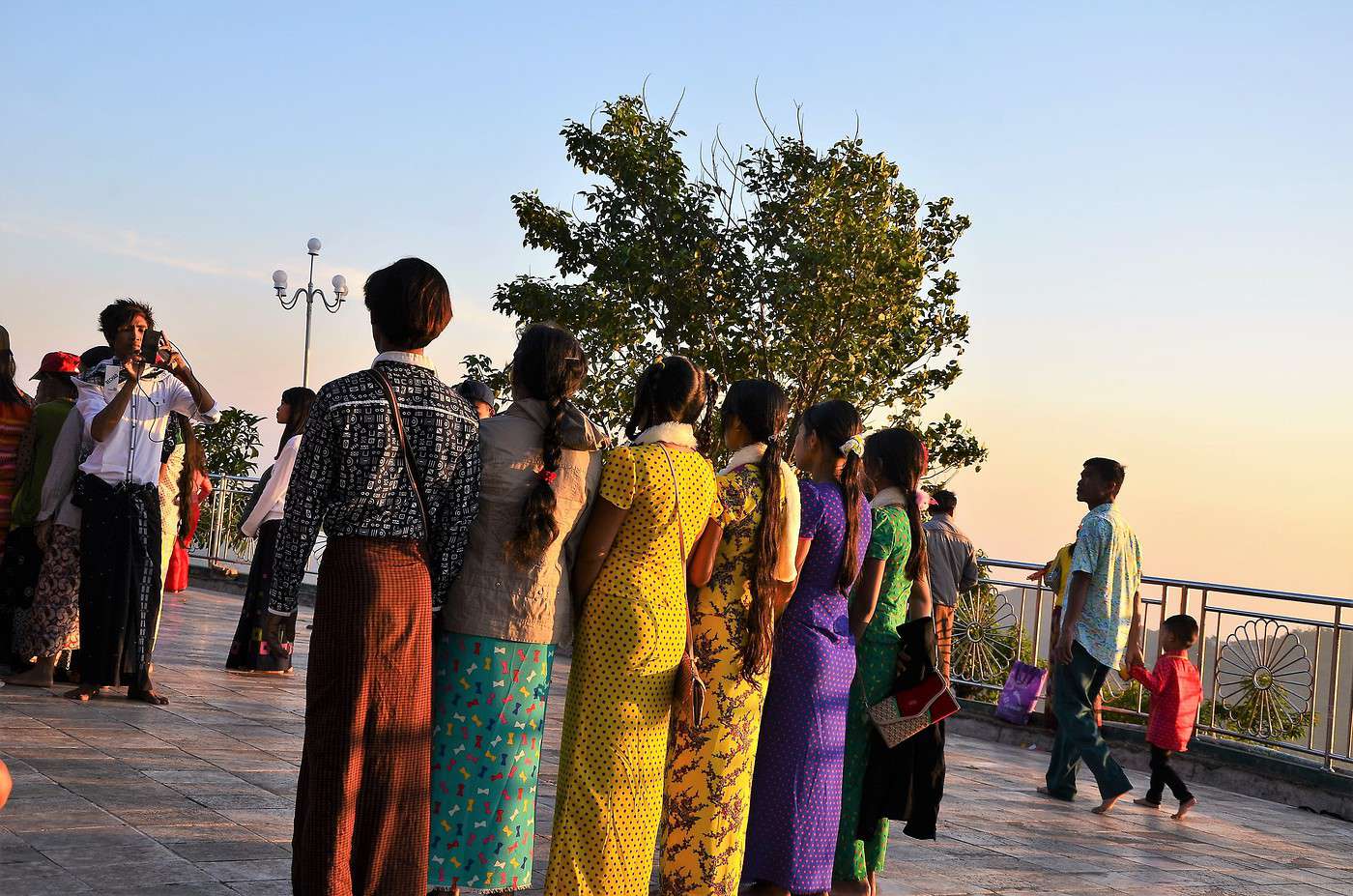
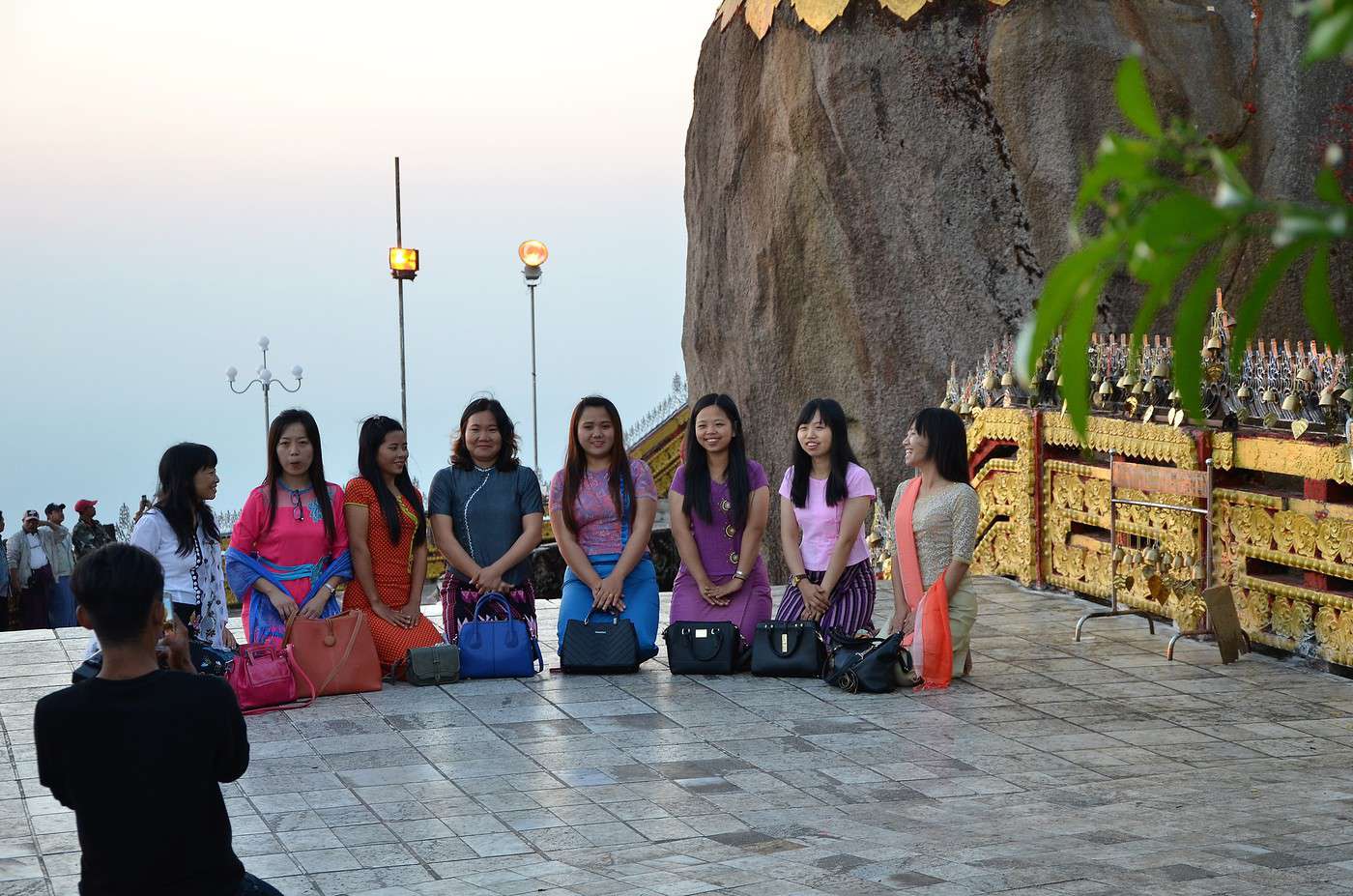
... and a cheerful crowd snapping photos around the Golden Rock.
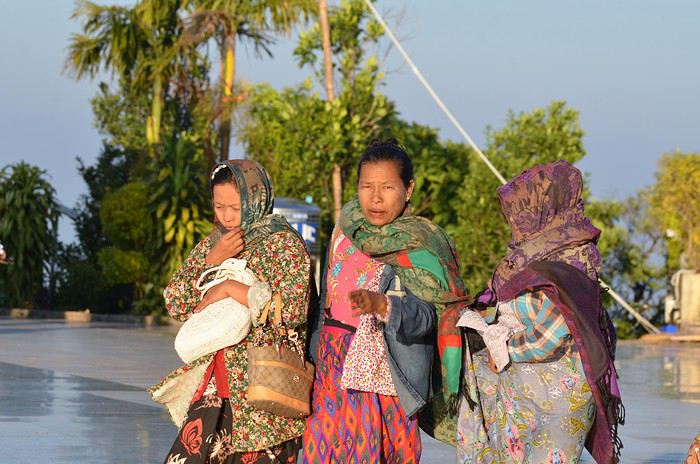
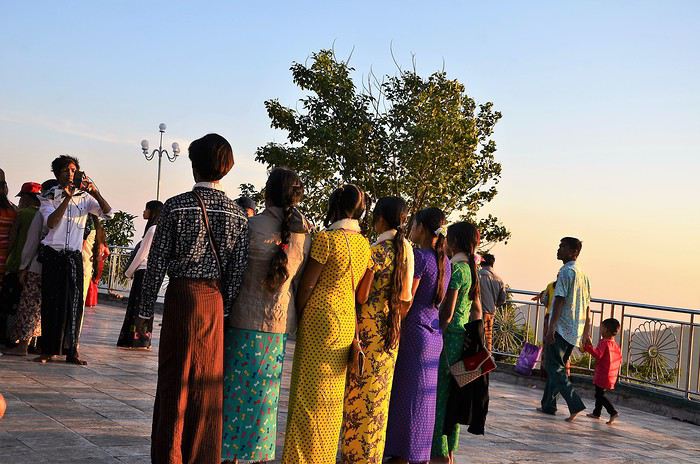
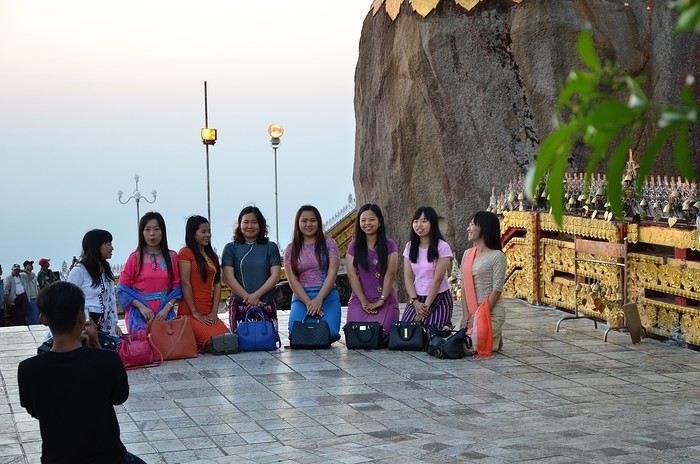
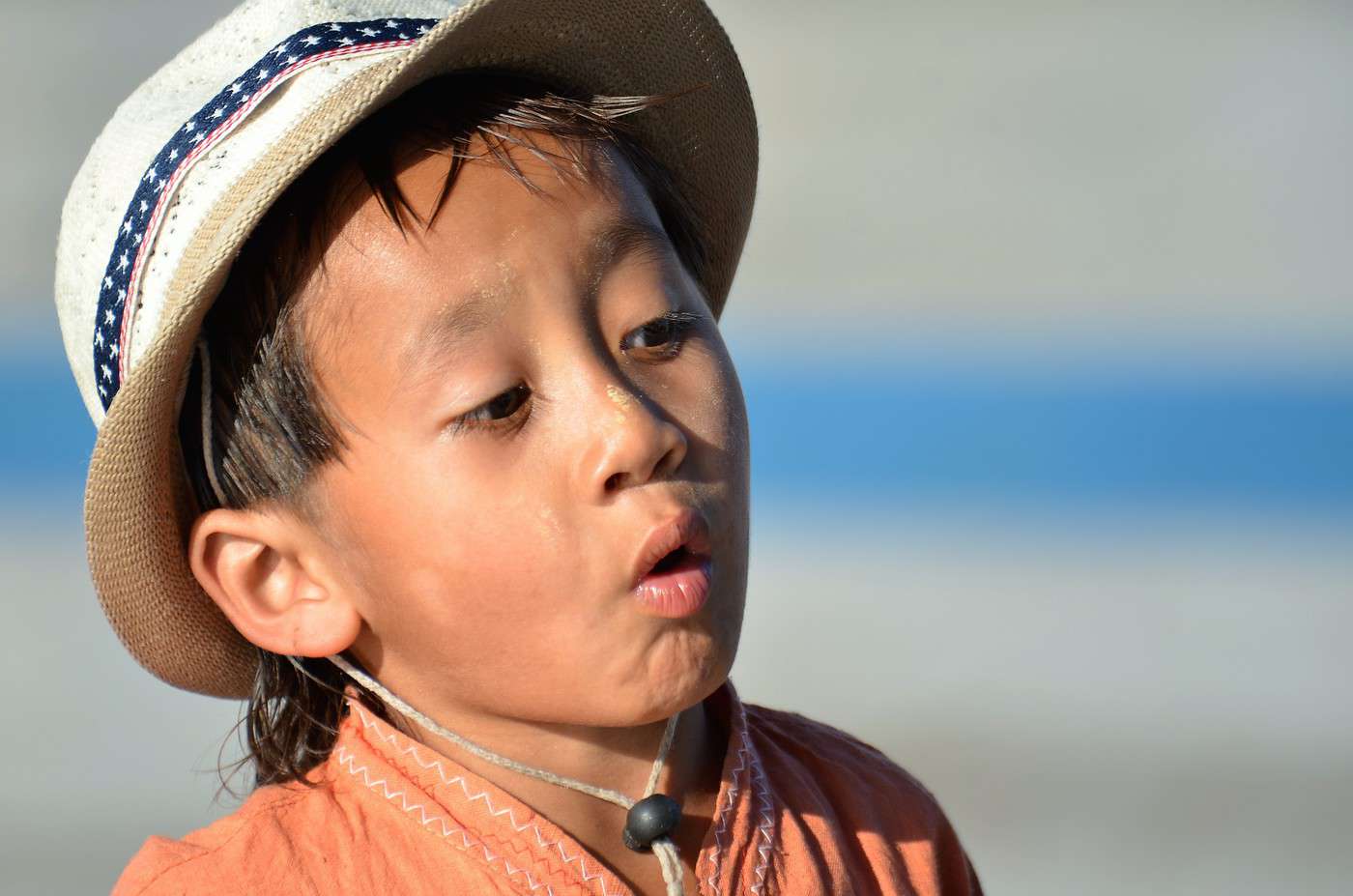
We were constantly approached by locals wanting selfies with us. We posed with families, teens, elders, monks, and nuns—many of these pilgrims were from rural areas, and *we* seemed exotic to them. They loved my hat (a cream panama with a wide brim for sun protection) and Yves’ beard. Once we played along, the requests didn’t stop! Later, we realized we hadn’t taken any selfies with them... but those moments will stay in our memories as a joyful bubble for a long time.
The sun dipped low, about to disappear behind the neighboring mountain. Facing west, the rock caught the last rays and turned crimson.
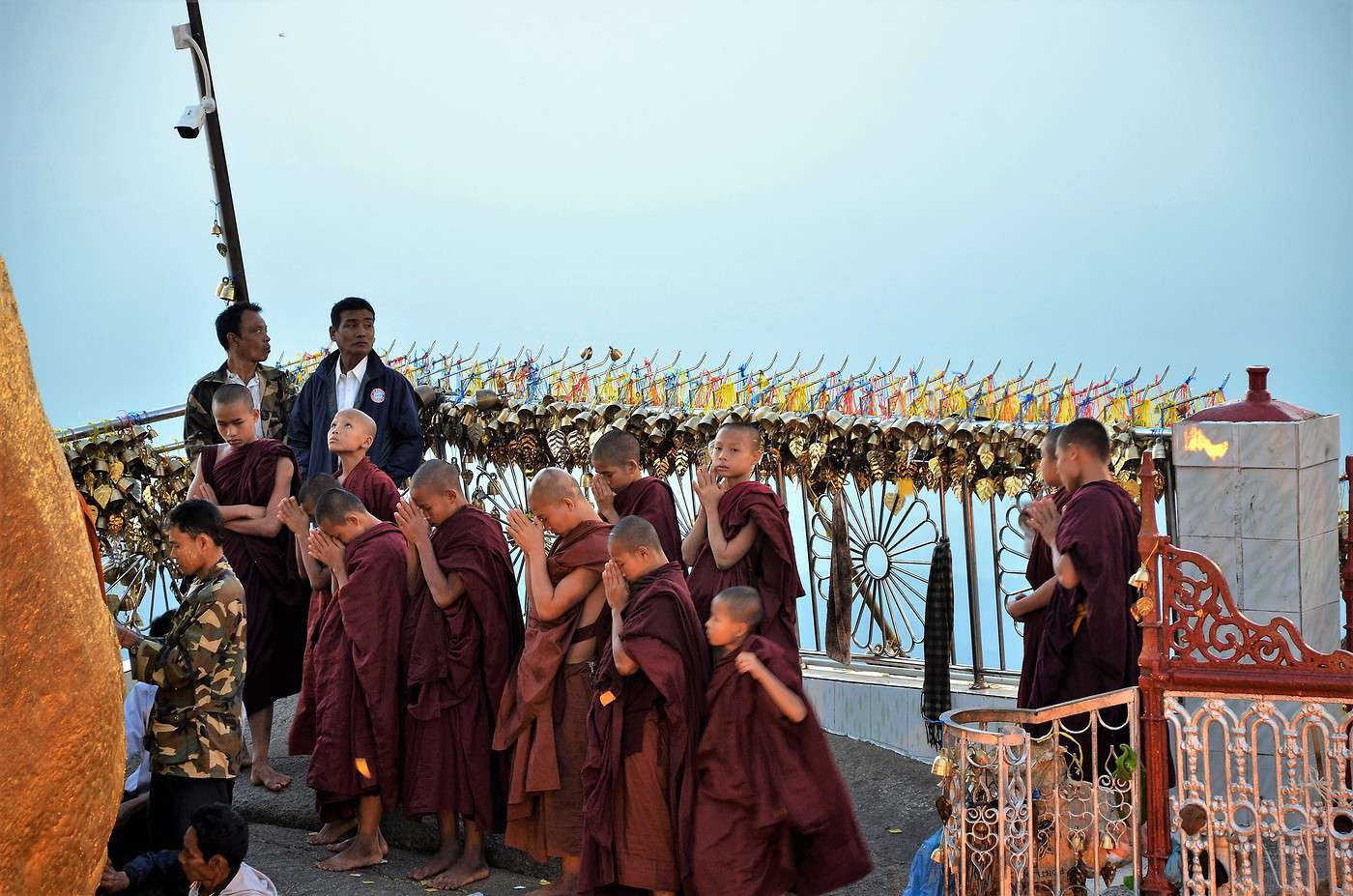
A bell rang, a cool breeze rose, and under the fading light, a group of young monks gathered for a final prayer at the base of the Golden Rock.
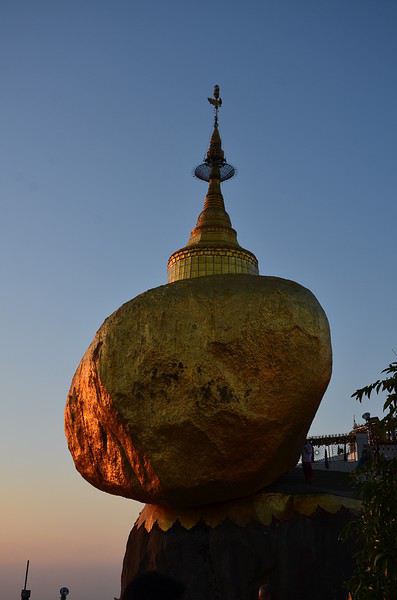
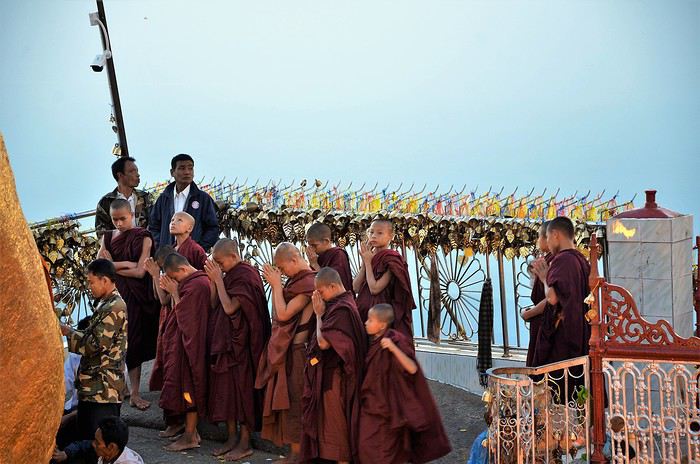
Time seemed to stand still.

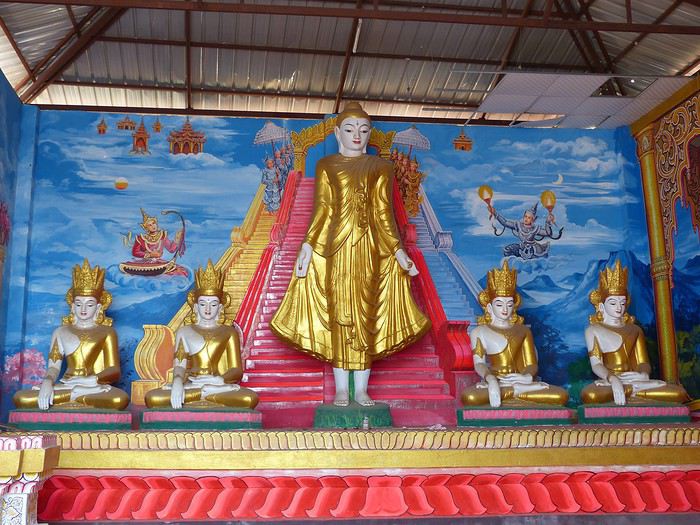
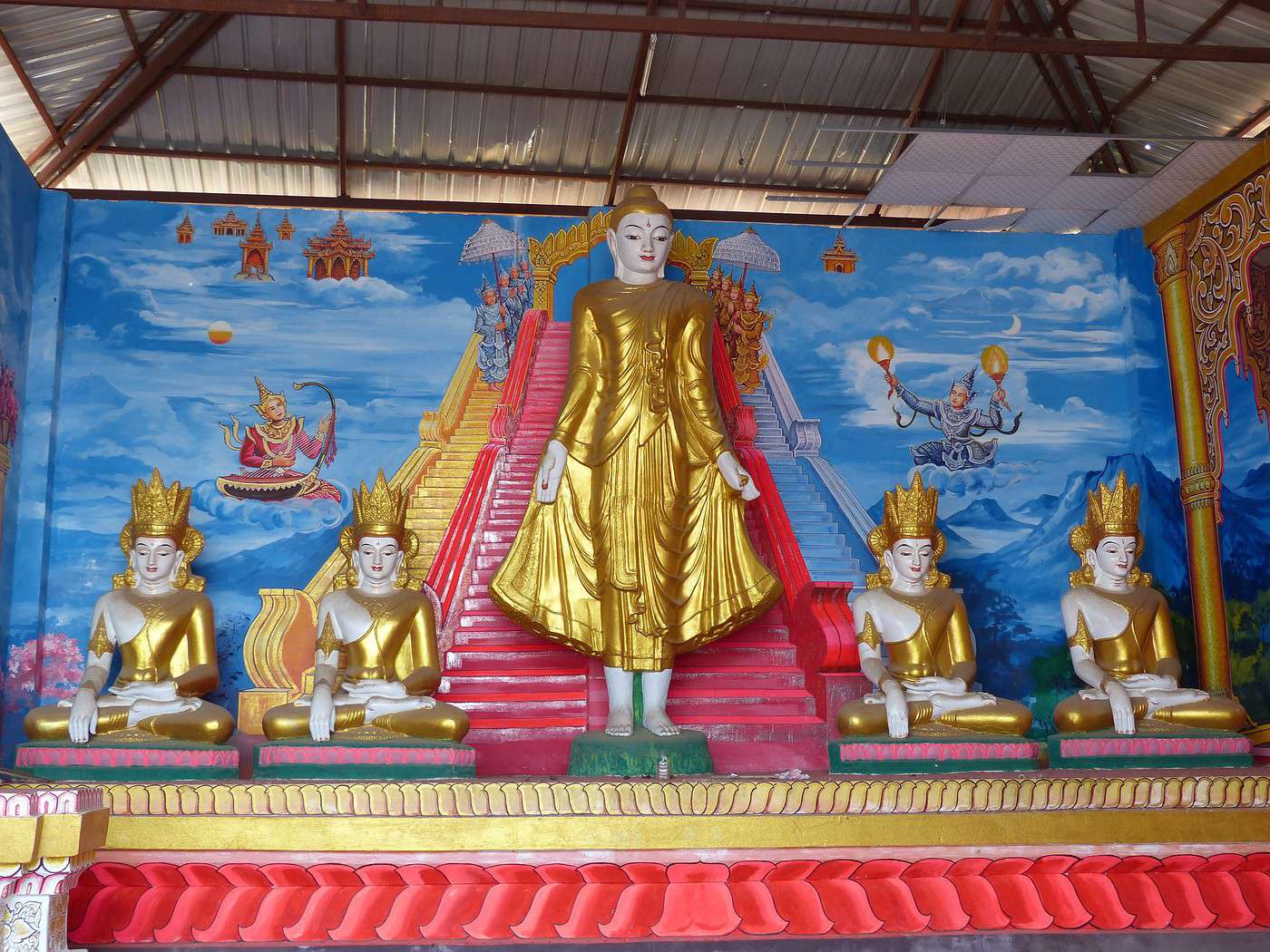
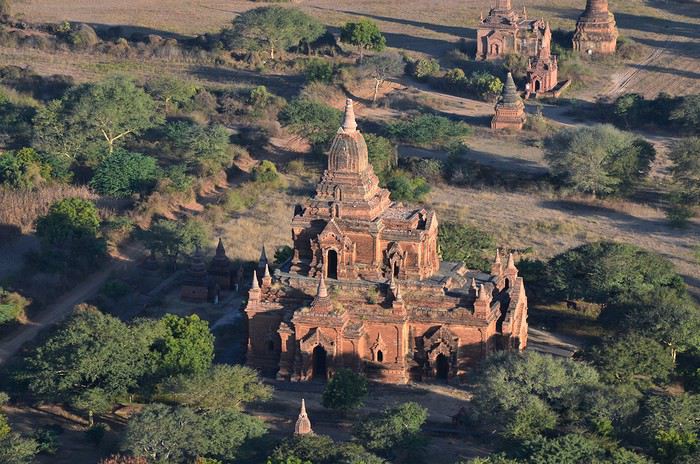
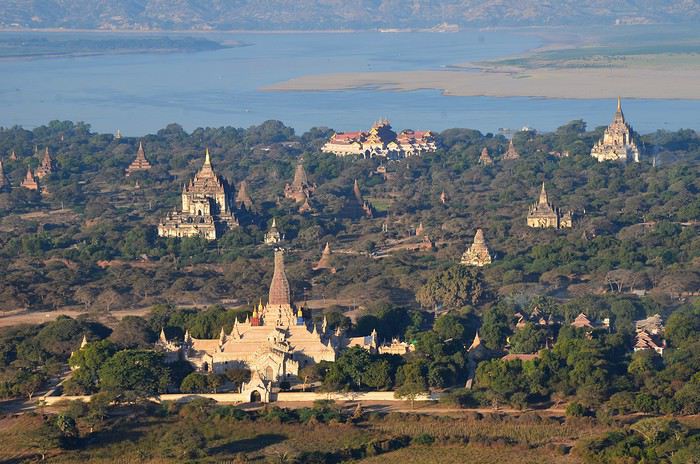
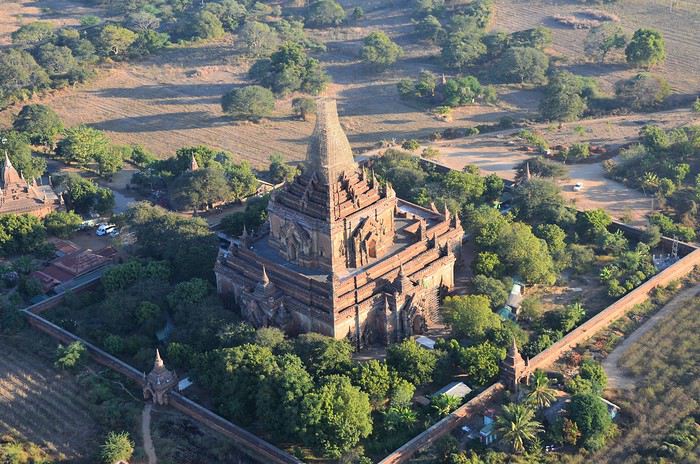
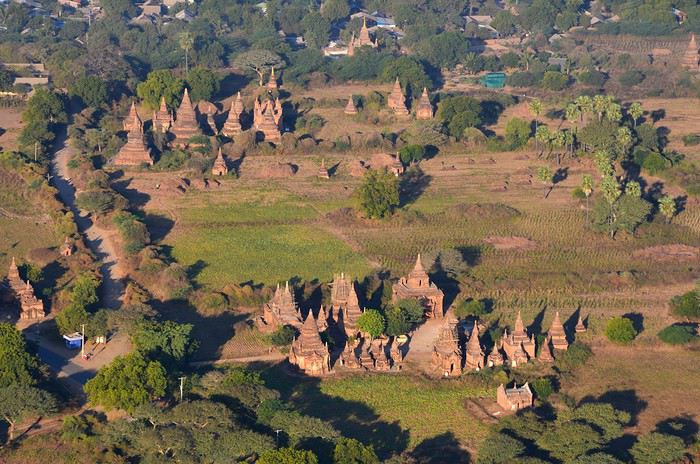
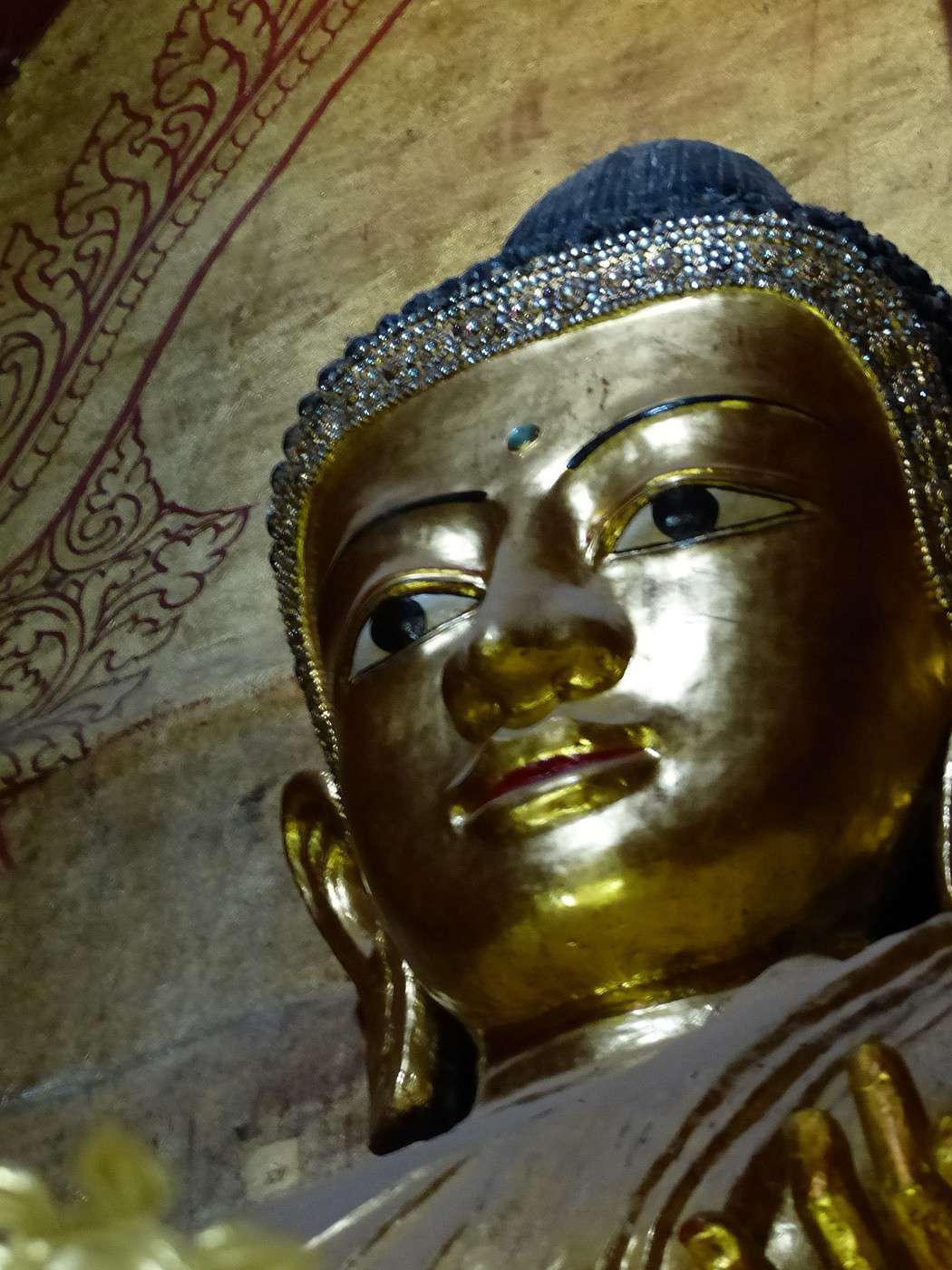
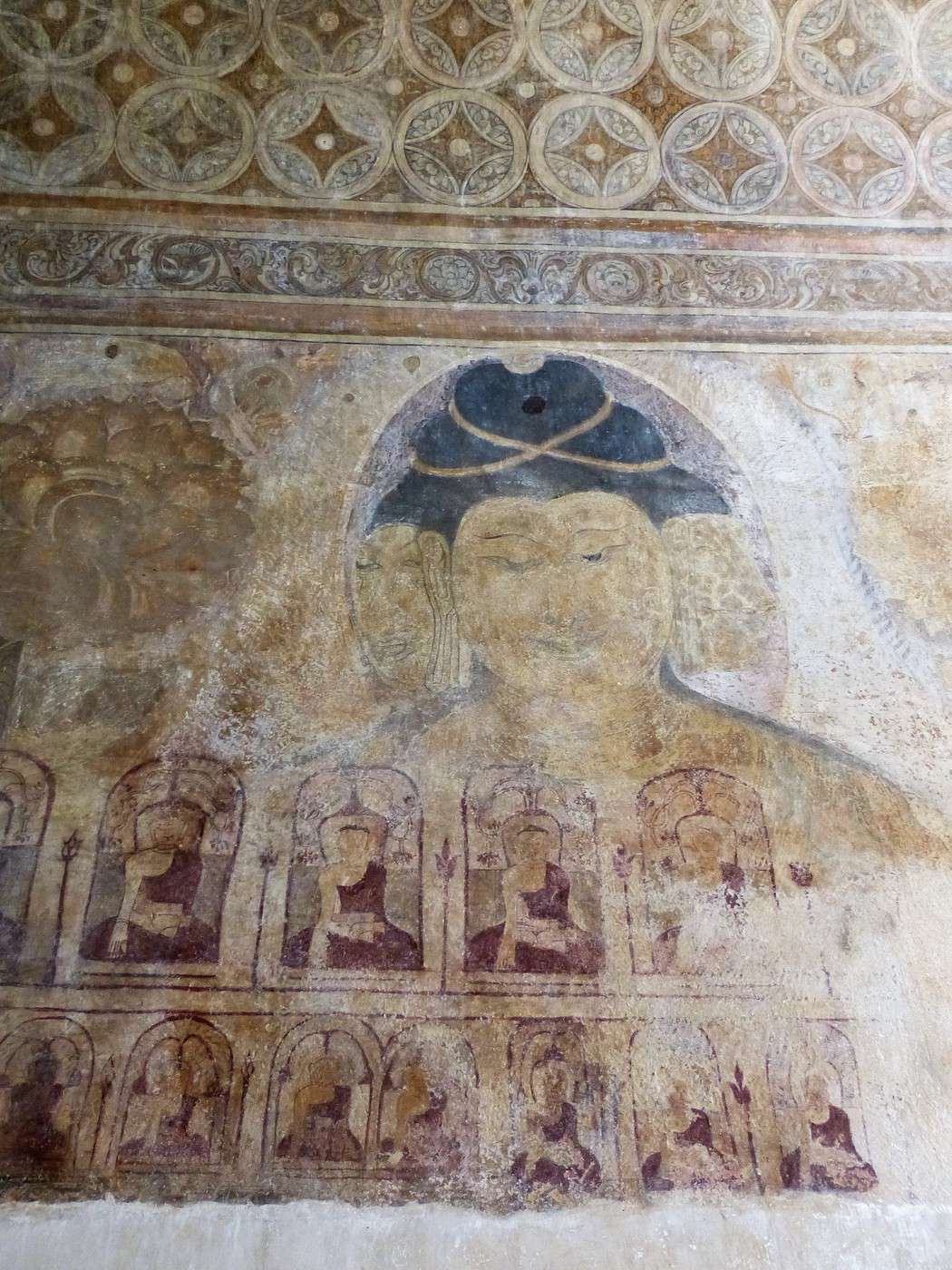
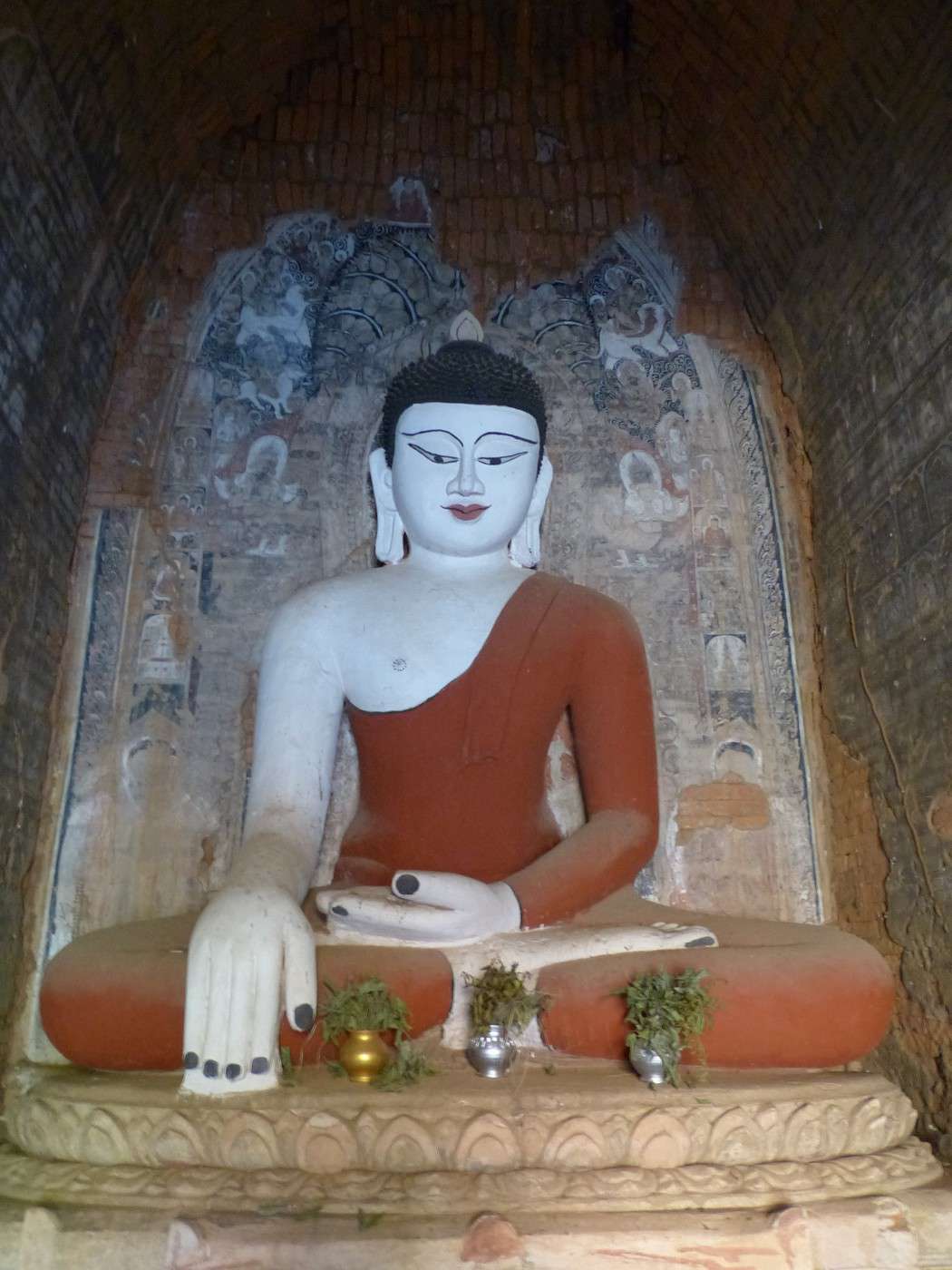
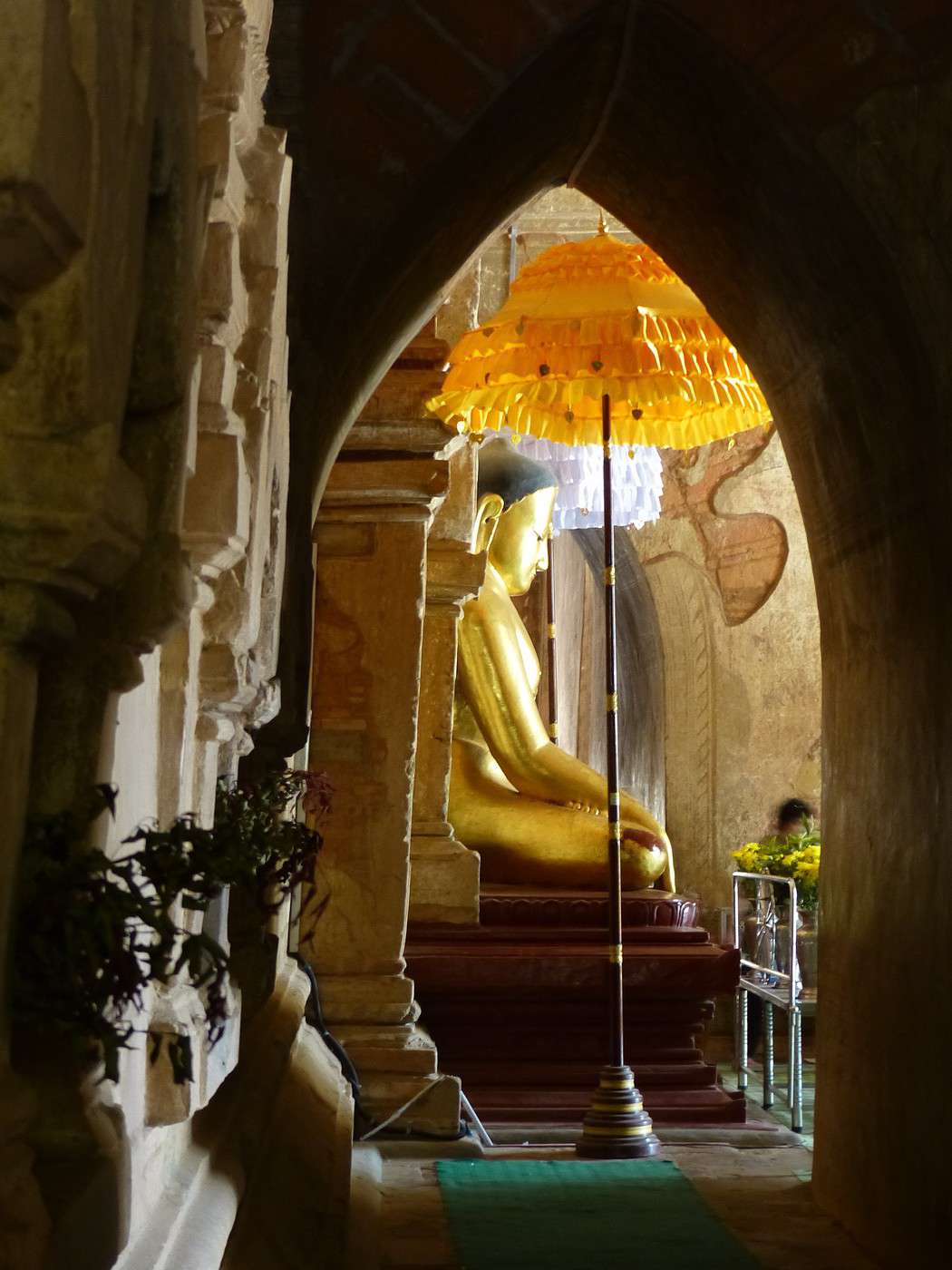
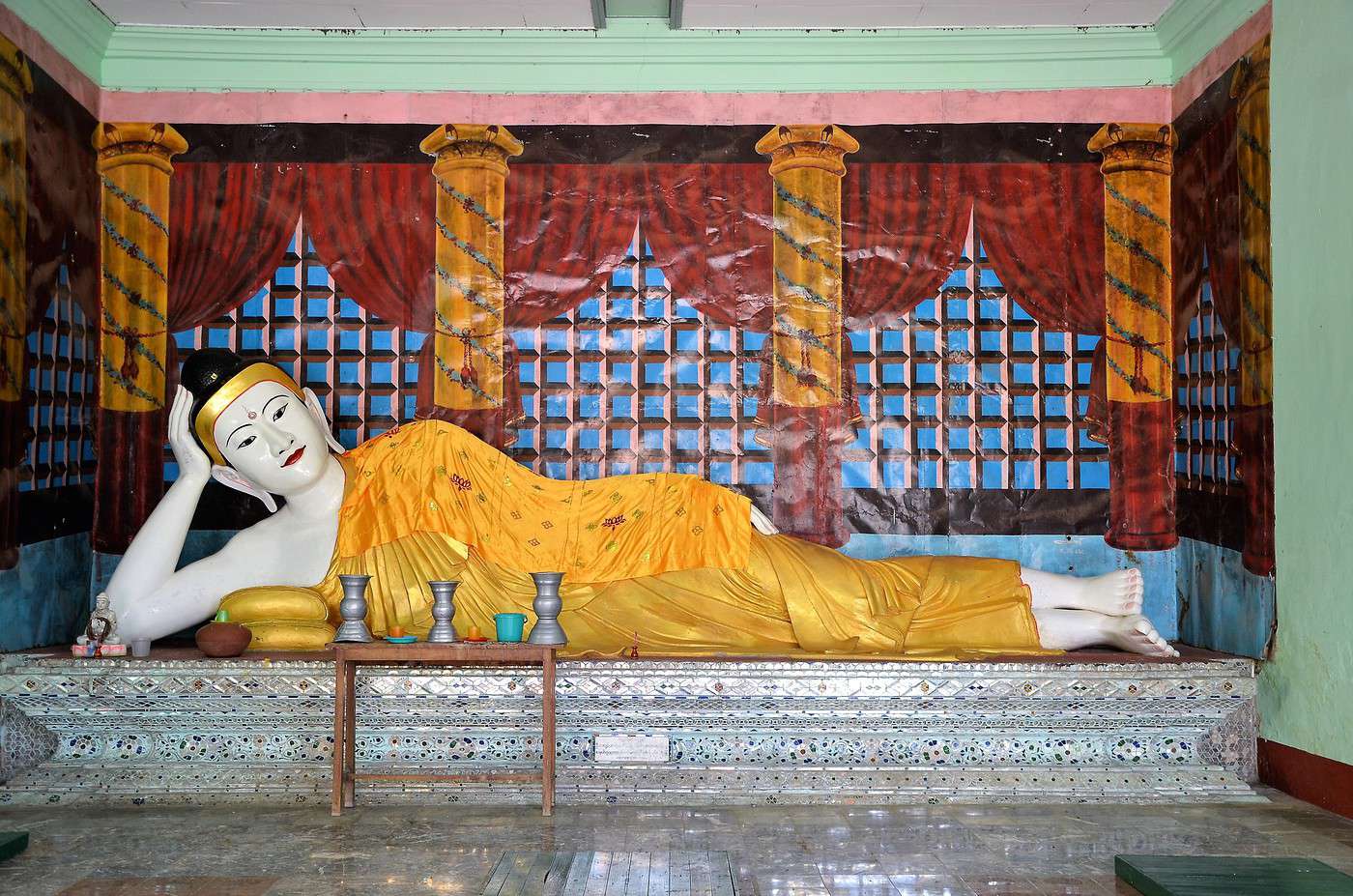
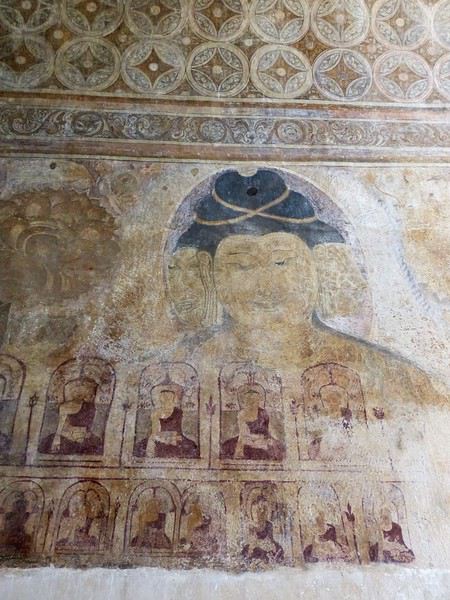 For fresco lovers, many temples and pagodas contain them—some just traces, but others have entire walls and ceilings.