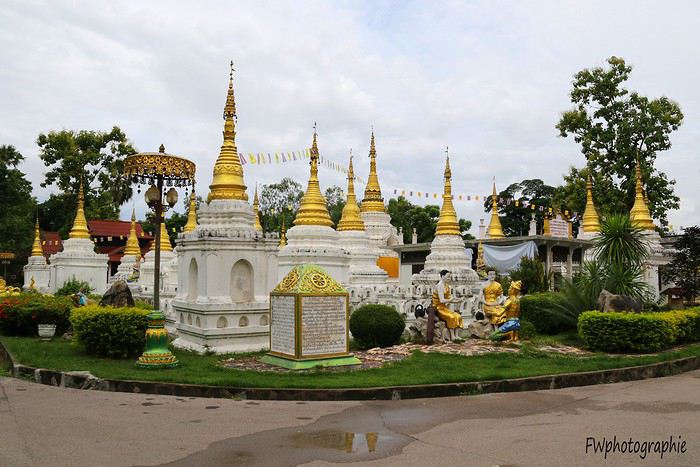
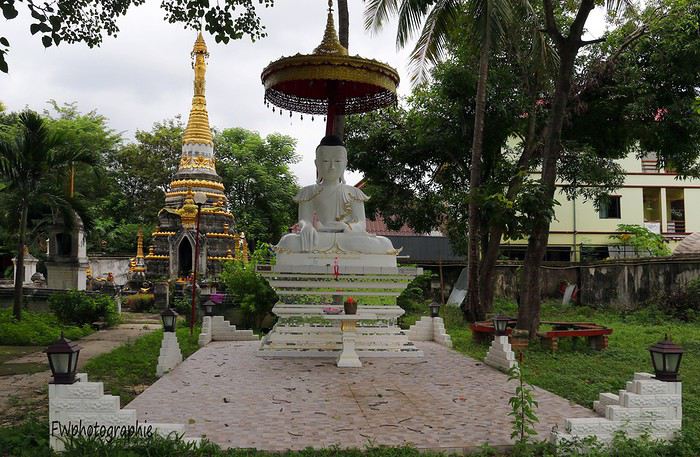
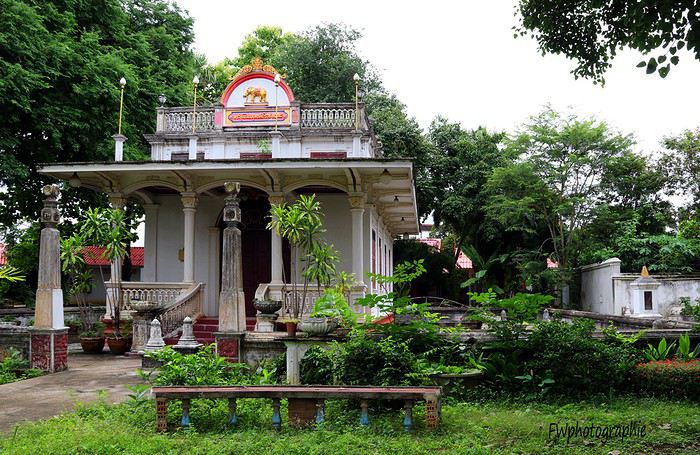
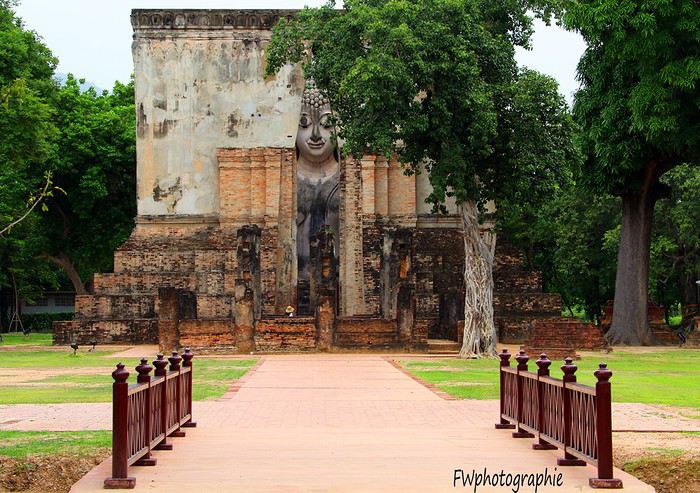
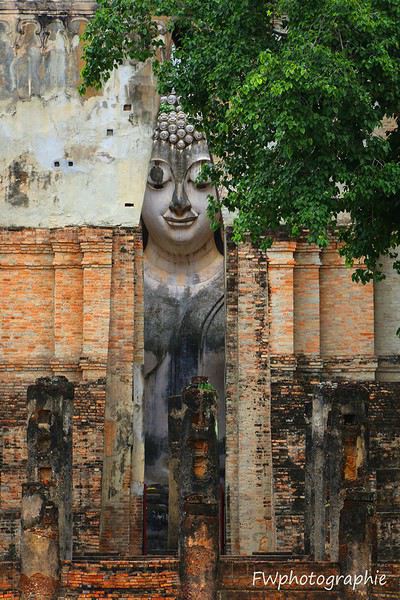
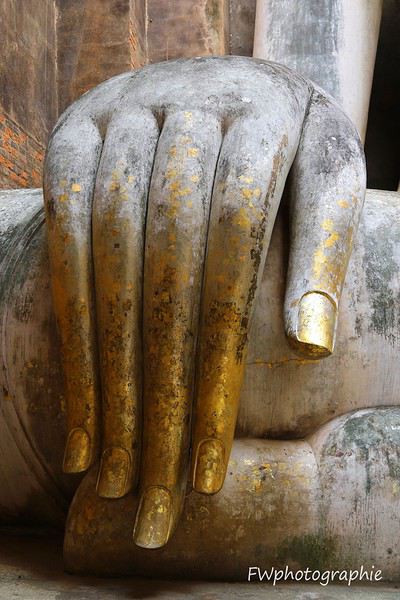
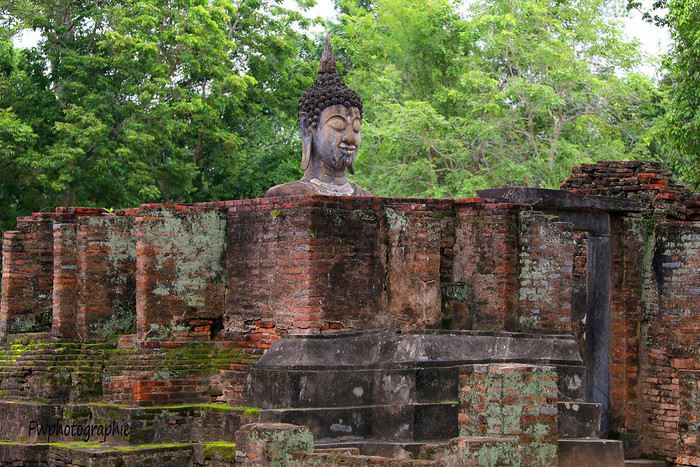
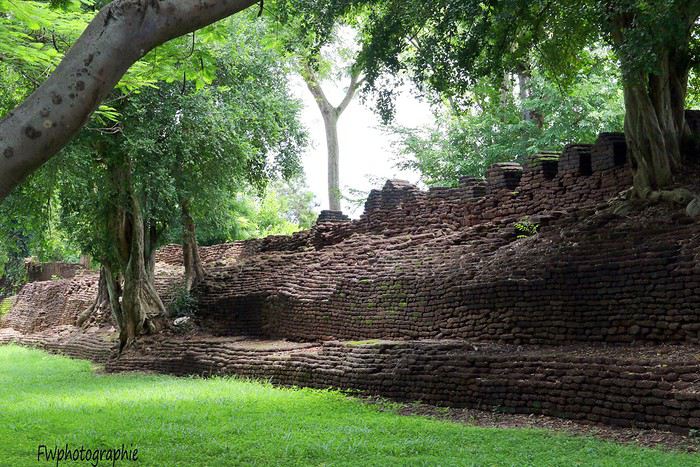
Kamphaeng Phet means "Diamond Wall." The ancient city had numerous fortification walls since it was the main western defense point of the Sukhothai Kingdom.
Our hotel’s staff quickly arranged for the hotel minivan to take us to the historical site. It turned out the ride was complimentary.
The Kamphaeng Phet site is divided into two parts: one is in the forest, and the other, a few hundred meters away, has been absorbed by the town. The closest end to the city center is about 3 km away. Each ticket costs 100 baht, but a combined ticket is only 150 baht.
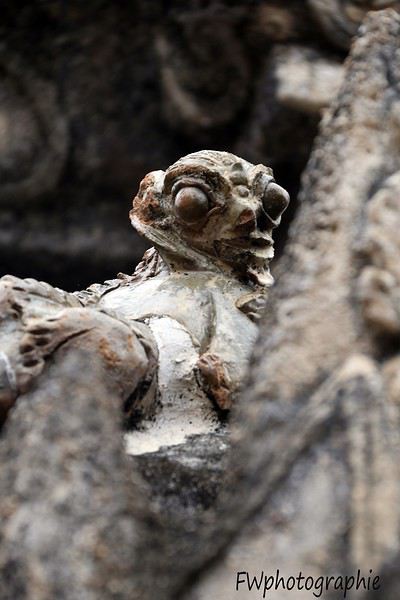
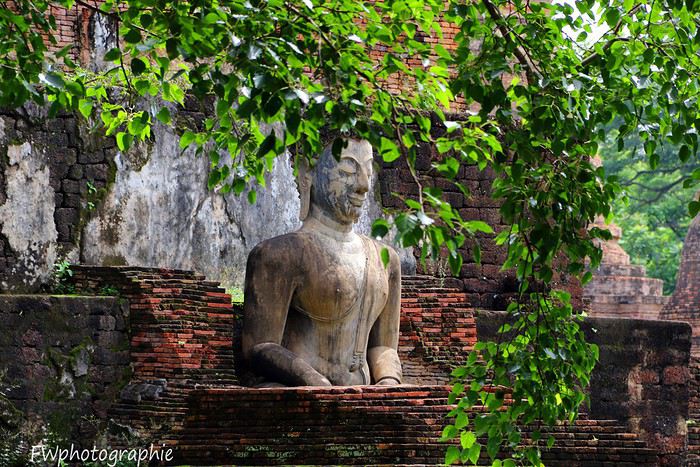
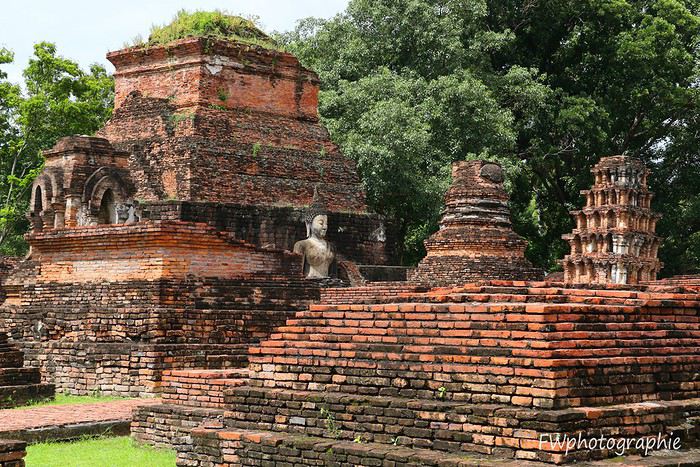
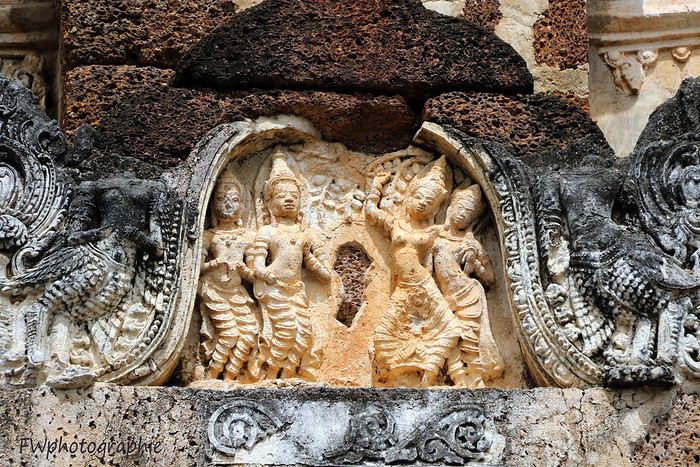
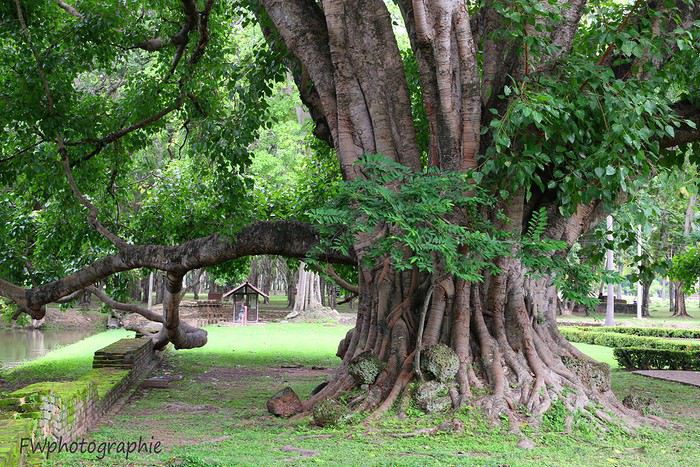
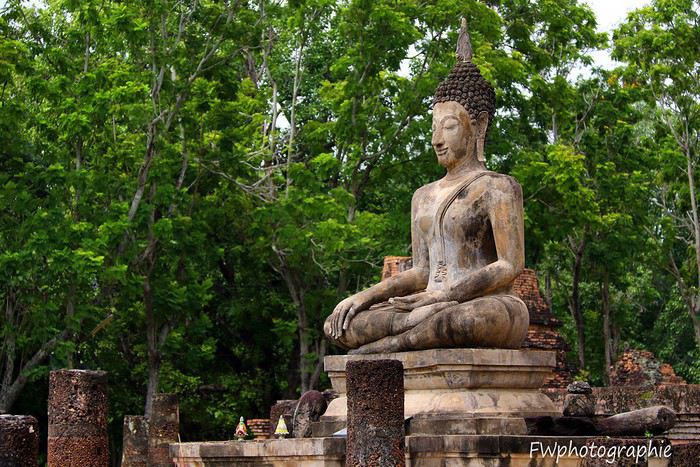
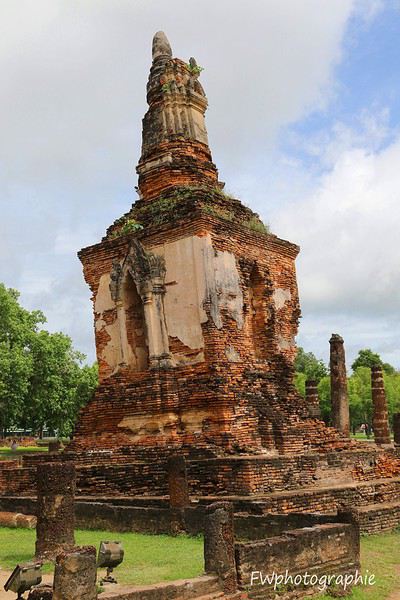
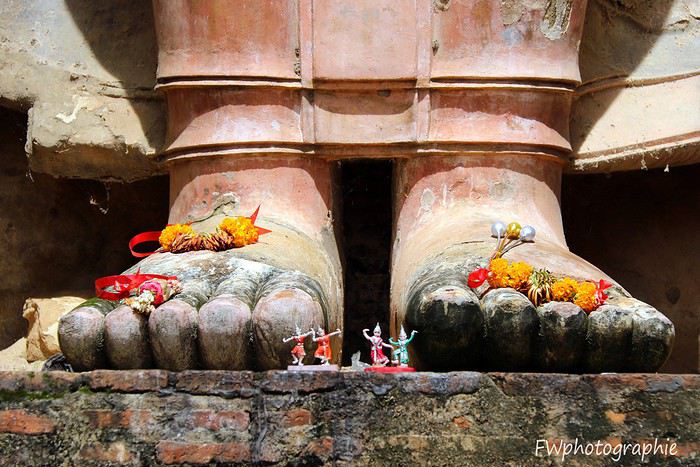
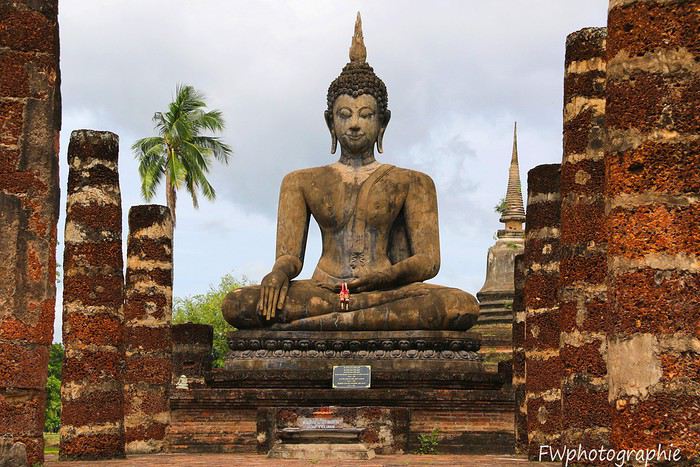
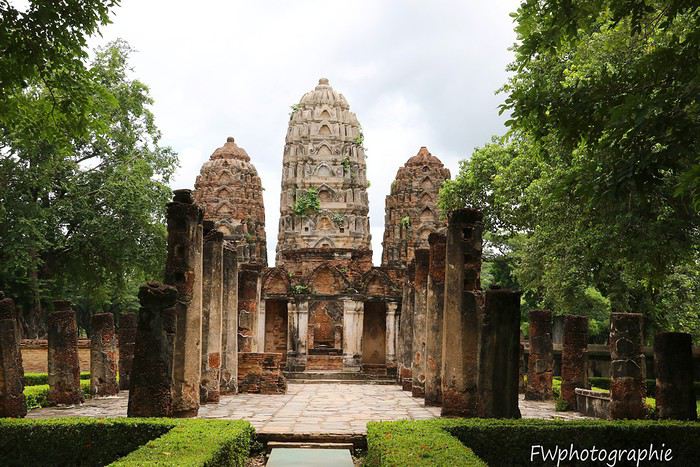
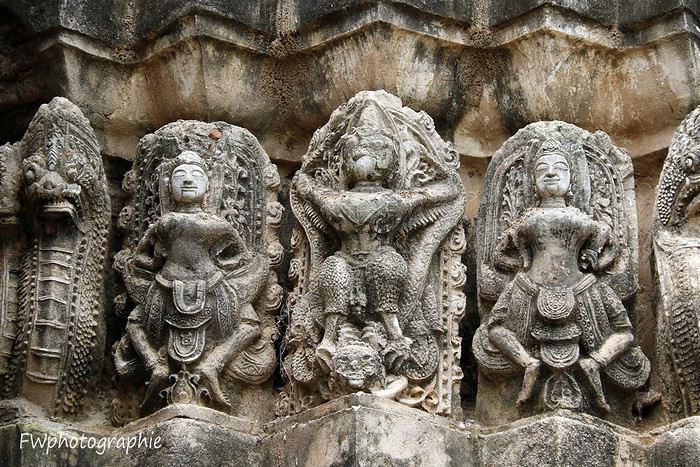
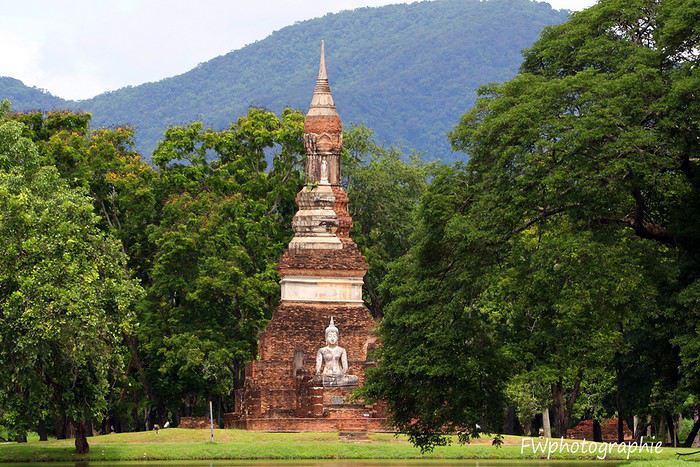
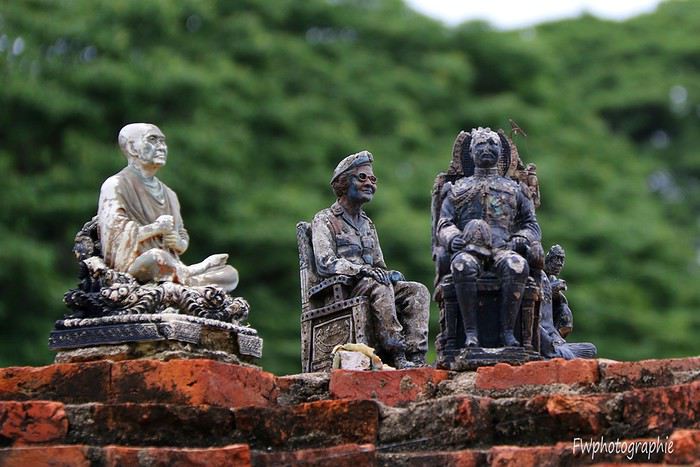
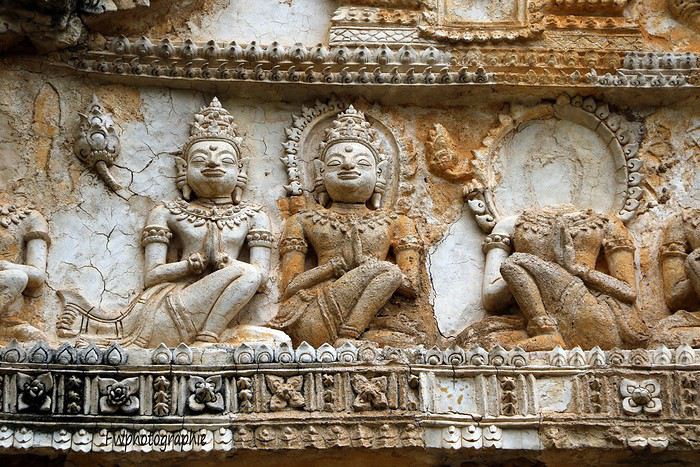
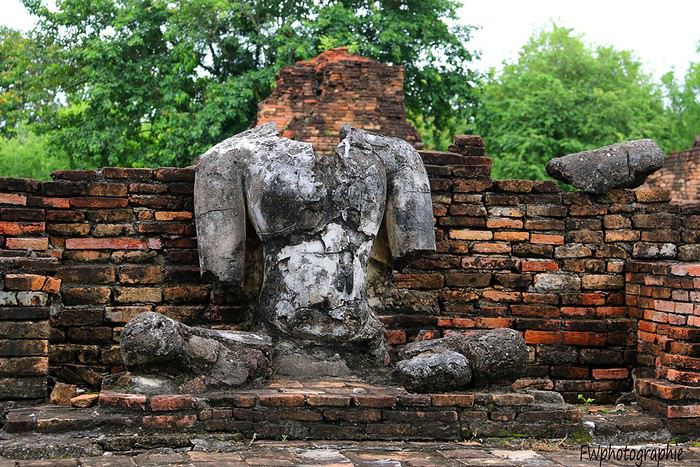
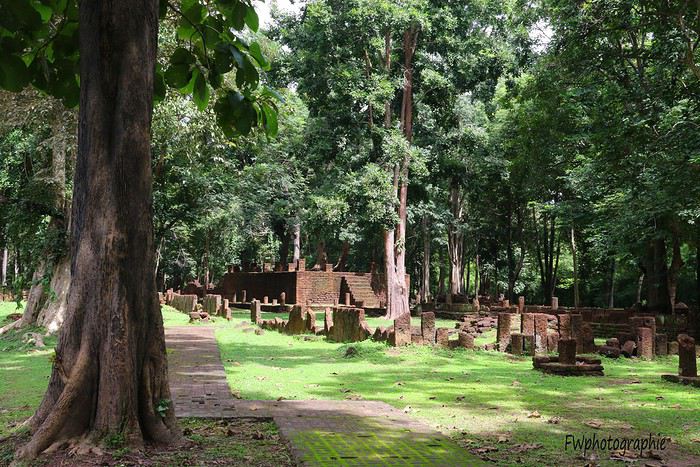
As mentioned by other travelers before us, the walk through the landscaped forest is as worthwhile as the temple visits themselves. Even more so than in Sukhothai, time has taken its toll here. Many statues are reduced to vague shapes. Overall, it’s mostly ruins with a few remnants. That said, this is just our opinion—after five trips to see wonders, we’ve unintentionally become a bit picky. As we stroll along, we still get a sense of the ancient city’s scale.
We rent bikes at the same hut where we buy the tickets. Some bicycles are barely worth their 30 baht rental fee.
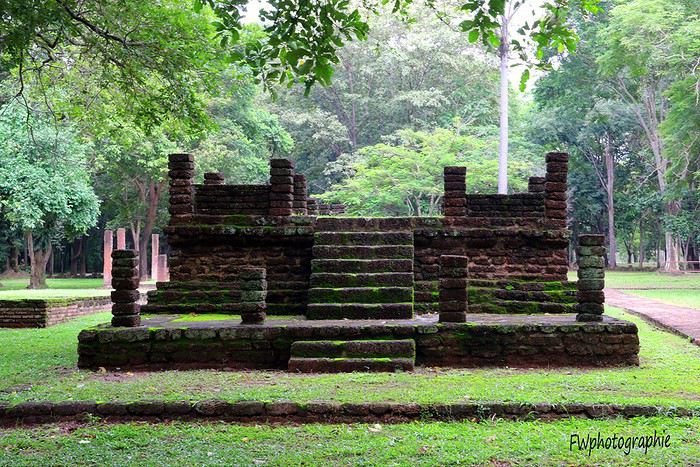
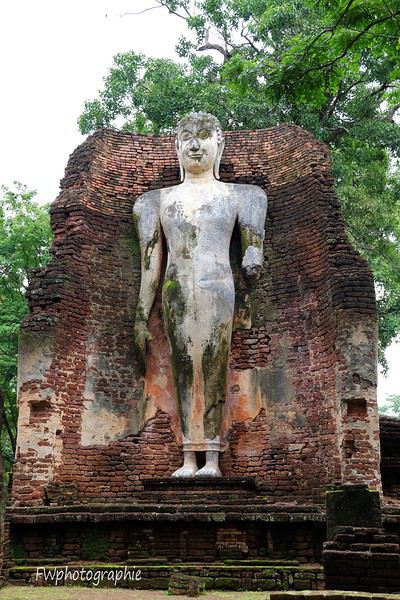
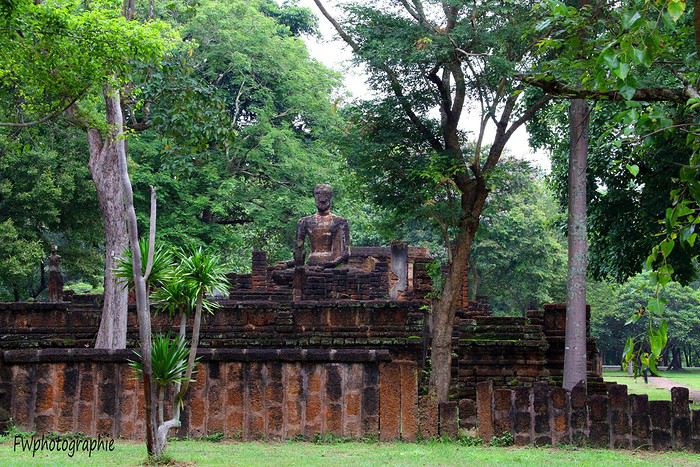
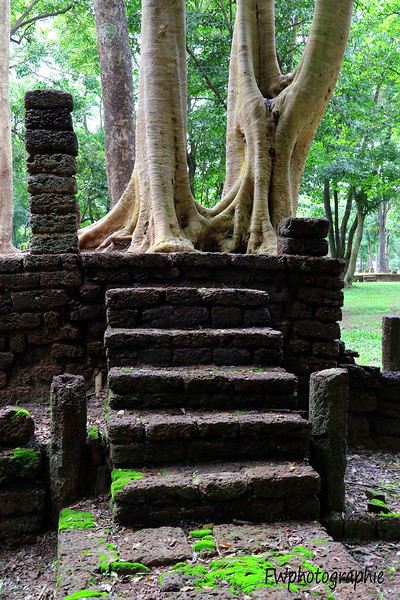
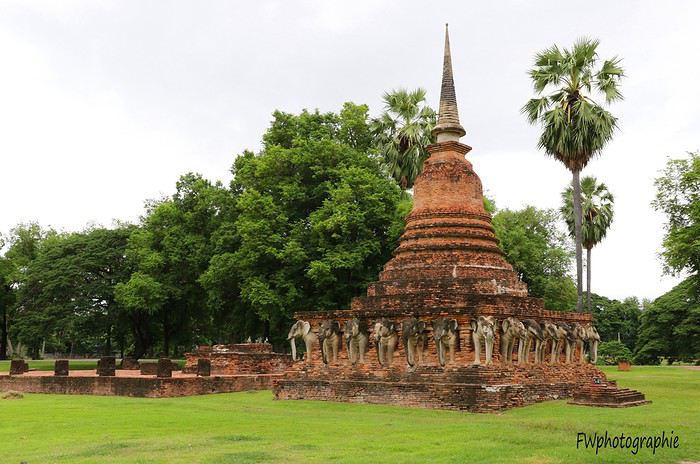
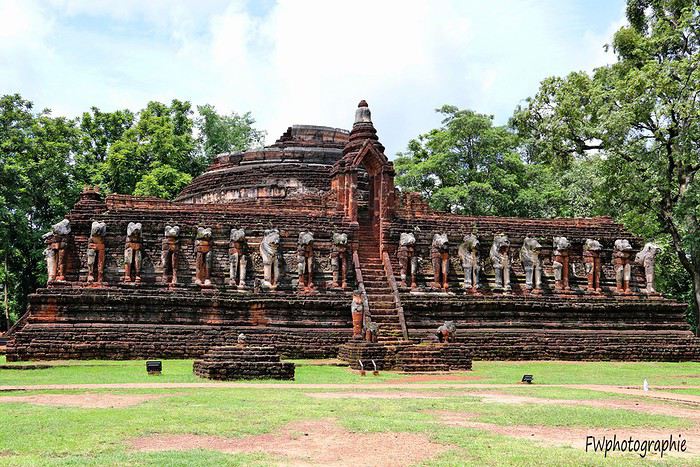
The sun finally graces us with its presence as we finish the circuit at the large elephant stupa, Wat Chang Rob, where Buddha kindly places two 100 baht notes in our path—fallen from who knows which pocket.
Just 100 meters to the right after leaving the forest site, a family has set up their home and a restaurant. Their daughter serves us a delicious open-air meal next to a pond where large fish are swimming.
Unfortunately, the entrance to the second part of the site is on the exact opposite side. Under this stormy heat, we end up making two round trips and one one-way trip to visit the site and return. There’s a real symphony of honking in the curve ahead of us, which is unusual in Thailand. We guess that’s where the City Pillar Shrine is, and the map confirms it. The city pillar sanctuary is indeed saluted by most Thai drivers—a way to honor their ancestors.
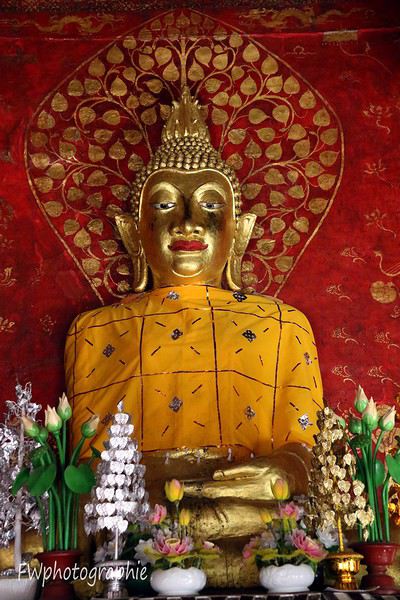
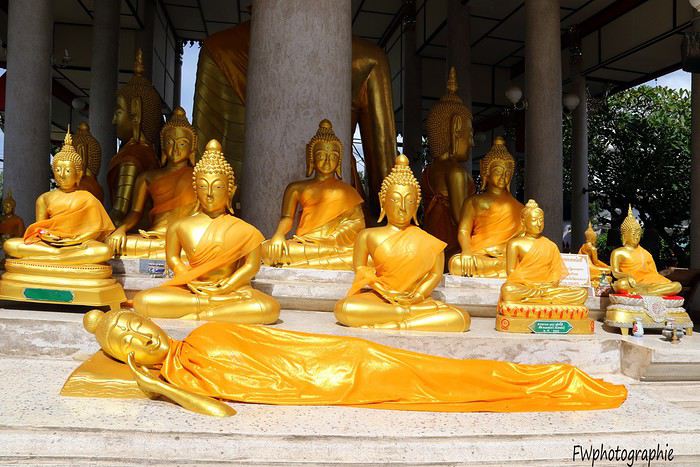
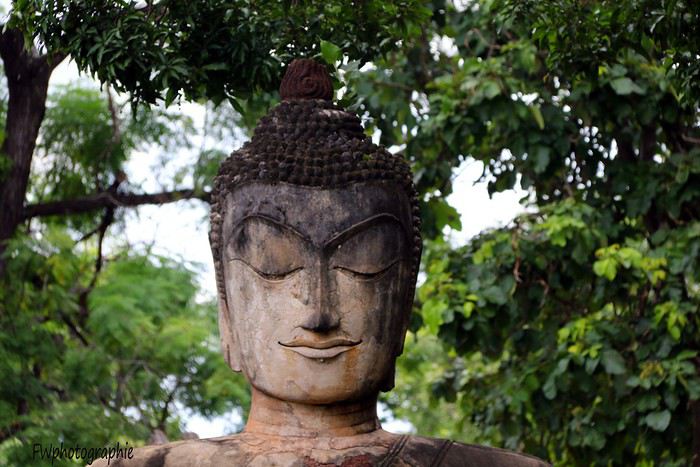
In this "city" section, which stretches out, there are just two monumental temples, the most memorable image being the group of three Buddhas: two seated and one reclining, surprisingly well-preserved.
On our way back, we can’t miss the two workers trying to clear a dead tree that’s fallen onto the temple wall. It’s a true Thai-style effort: instead of positioning themselves on the right side to lift and remove it, they stand on the wrong side and pull. This, of course, dislodges large century-old stones that had survived the Burmese and the passage of time. Out of kindness, we didn’t film it—just in case they ended up on the internet, poor guys...
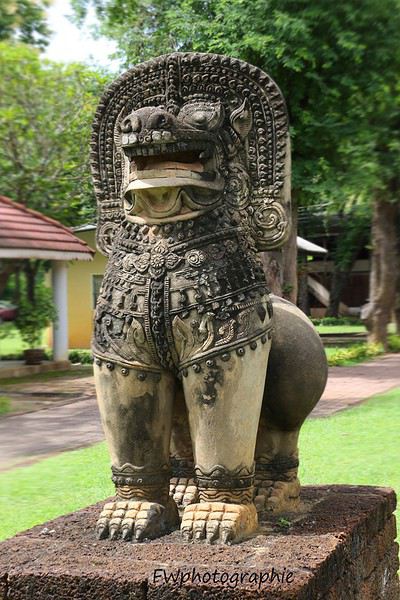
A stone’s throw away, we visit the national museum, where entry is set at 100 baht. In the courtyard, a lion and two elephant heads are displayed, having been moved from their original sites due to their well-preserved state. There were a few survivors.
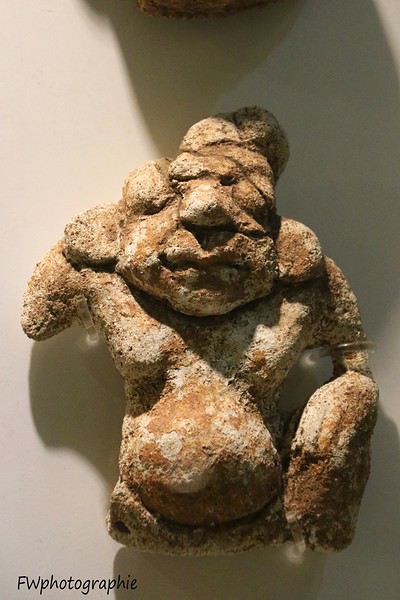
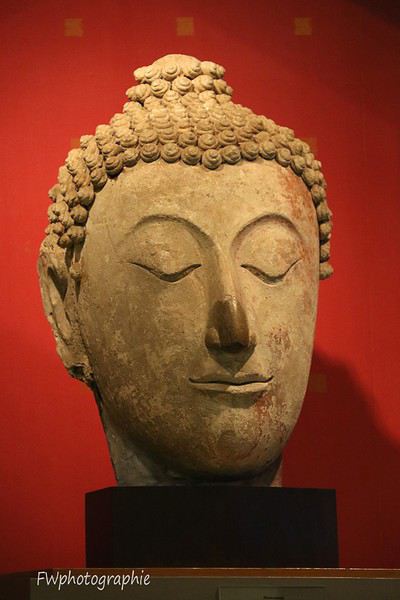
Let’s admit it, this museum is tastefully and skillfully arranged. The lighting is good, and most pieces are well-displayed. There are inevitably many works from the Sukhothai period (13th and 14th centuries), as well as objects from earlier periods and even Thai prehistory. Some are beautiful, others downright funny.
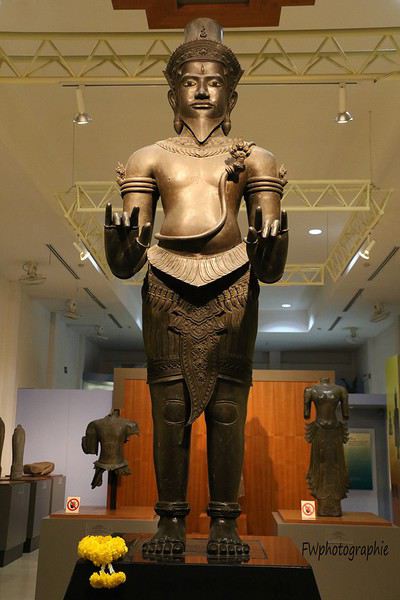
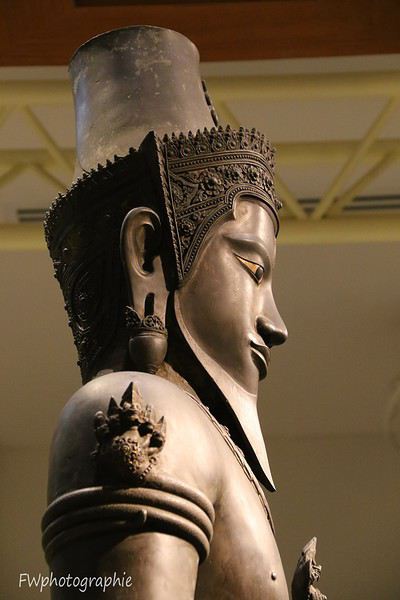
But we’re truly stunned by the 1510 Shiva statue, which towers over the entire great hall from its pedestal, exuding majesty. Not only is it the largest Hindu bronze in Thailand, but this statue also has a striking resemblance to a Phoenician or Etruscan colossus. Its impassive mask, the serpent coiled around its arms and torso, its elegant loincloth, and its sheer size make it an impressive work.
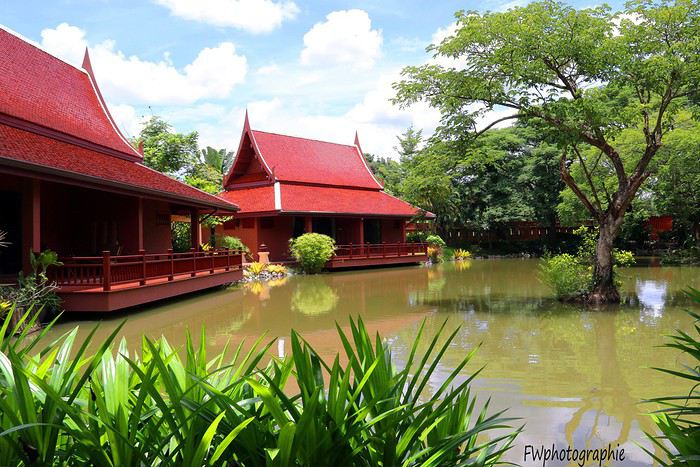
We hesitated a bit, but in the end, it was worth the trip. For info, right next door is the Thai Houses Museum, which is lovely to admire from the outside.
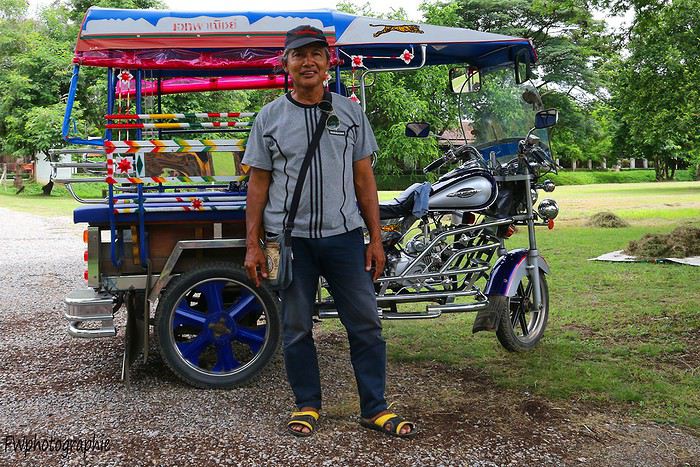
Not knowing when we’d return, we hadn’t arranged anything with the hotel. Earlier in the afternoon, we’d seen vans arriving from the city and thought they were shuttles. Of course, now that the storm is looming on the horizon in fast-forward mode, the place is deserted. We approach the woman selling tickets for the historical park, and she gives us that famous Thai "no," waving her hand with fingers spread. But our predicament seems to bother her. Without hesitation, she steps out of her booth and we hear her talking to someone. We thought she’d just gone to ask for info, but she returns with a couple, each on their own small motorbike. We’ll never know if they were friends, vendors, or other employees. What was clear was that they were going to take us. We ask what we should pay for the moto-taxi, and she says no. We insist, and she says no, no.
It’s surreal—these people seem happy to give us a ride. Just enough time to warmly thank the woman, and off we go. And just as we leave, a heavy rain starts pouring. The trip was short, but with the backpacks we were carrying, it was a close call for the camera and the photo gear. Riding on the back of a motorbike without a helmet—with or without sunglasses—it only takes five seconds to lose all sense of where you are and where you’re going.
In our shorts and soaking-wet T-shirts, we try in vain to convince the couple to accept a small bill, at least for the trouble or the gas. They’re clearly happy to have brought us safely, wave goodbye, and zoom off down the road.
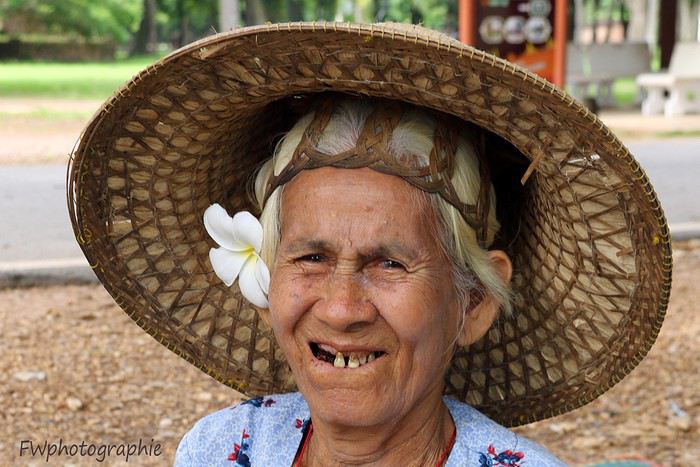
As our hair drips with sweat, we think: "Good grief, there are so many kind people in this country."
We’ll still be thinking about it after our second visit to the evening market, holding another bunch of small bananas bought for... 10 baht.