Back to the discussion

in Entre deux voyages › Carnets de voyage

Three weeks in Japan with the family (page 3 of 9)

Discussion started by Bluequark on 2018-04-02

173 replies

This thread has been translated into English.


Three weeks in Japan with the family

Sophiemu · 2018-04-15 · Message 41 of 174

A huge thank you for this amazing travel journal that’s really inspiring me for our trip this summer.

I really appreciate that you’re adding new posts as I keep reading 😉

Three Weeks in Japan with Family

Bluequark · 2018-04-16 · Message 42 of 174

Hi,

Thanks! If you have any questions, don’t hesitate at all.

I really appreciate you adding new text as I progress through my reading

I’ll try to take advantage of this vacation period to make some progress.

Friday, August 5: More Naoshima – Train to Hiroshima

We still have almost a full day left to finish exploring Naoshima. This time, we’re renting electric bikes—it’s so much fun, and it’ll let us explore the steeper parts of the island. We take the other route to Benesse Art Site, the one marked “steep slopes” on the map. Super easy with our pro bikes! We stop at the Chichu Art Museum parking lot—way more crowded than the other day. We really lucked out. A quick shuttle ride, and we’re at the Benesse House Museum. Around forty modern works in total, with quite a few Japanese artists but not exclusively. The museum is spacious and pleasant to visit. It’s less unique than the previous two but still worth the detour. Either way, our oldest seems to really enjoy it, spending a long time in front of each painting.

To get to our next stop, Honmura, we cut across the island. Glad we went for the electric option! Here, we find a bit of the same vibe as Teshima and make some great discoveries.

One of the two dams.


« Another Rebirth » by Kimiyo Mishima.


« Labyrinth of Cherry Blossom » by Tadao Ando, on the other hand, didn’t win us over. The trees are so scrawny, and it’s not the right season. Maybe in a few years during spring…

Alright! Off we go to Honmura. This is where the Art House Project began. Also run by Benesse Art Site, this program aims to restore old houses and turn them into mini-museums/art spaces. These houses are accessible year-round, independent of the Triennale.

Three weeks in Japan with the family

Bluequark · 2018-04-16 · Message 43 of 174

We start with Minamidera, which houses « Backside of the Moon by James Turrell. Another interesting sensory experience. We enter in small groups. (A ticket system with a set time to arrive is in place. When we went, there were only a few people. The wait allowed us to visit the Ando Museum right next door.) We move forward in complete darkness through a corridor that effectively isolates the house from outside light. We sit down and wait. Little by little, our eyes begin to perceive what was invisible. Undoubtedly the best of the Houses of Honmura we visited.

As for the Ando Museum, it was a bit disappointing: sure, it has some interesting photos of the construction of the Chichu Art Museum, but overall, we were left wanting more.

After managing—with some difficulty—to grab a bite, we continue exploring the other houses. They’re clearly a step, or even two, below Minamidera. That said, we didn’t visit Kinza, which is reputed to be the most extraordinary house, but access is highly restricted (one person at a time, with a 15-minute visit—only 18 people per day). We also skipped Go’O Shrine, partly out of laziness. Probably a mistake.

No photos except for the exterior shots of Haisha (« Dreaming Tongue, Bokkon-Nozoki » by Shinro Ohtake). We really liked this house, which can be explored both inside and out.


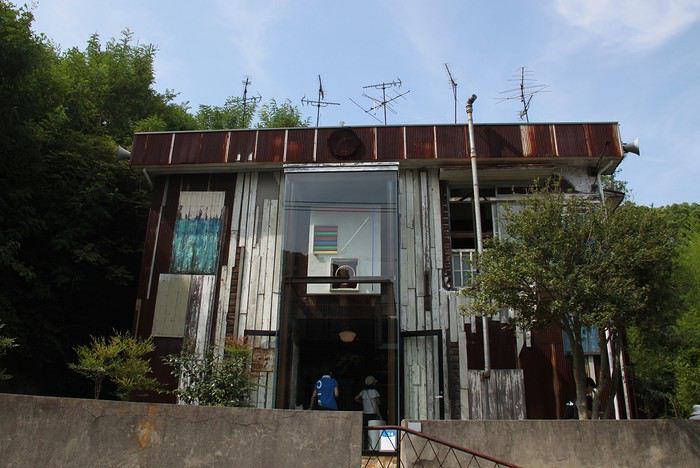
Back to Miyanoura. A stop in front of the Naoshima Bath "I❤️島" and its fascinating façade. These are actually public baths, so it’s possible to see the interior.


We take a quick trip to Miyanoura Gallery 6, which I remember vaguely—except for how kind the staff were when our youngest started bleeding from the nose, bending over backwards to help. There was also a nice little film about the lives of the locals and the history of Naoshima, though I might’ve dozed off a bit in the coolness of the room.

A quick ferry ride and we’re in Uno. A quick look at two artworks housed in the city, a stop at the hotel to grab our bags, and we jump on the train to Hiroshima.

Three weeks in Japan with the family

Grandgognand · 2018-04-16 · Message 44 of 174

Thanks for making us dream—this travel journal is amazing and your visits are fascinating!

Three weeks in Japan with family

Bluequark · 2018-04-16 · Message 45 of 174

Thanks so much for the compliment and for taking the time to leave a little note.

Saturday, August 6: Hiroshima

Everyone knows: on August 6, 1945, the U.S. military dropped the first nuclear bomb in history over Hiroshima, and the city was wiped off the map. 75,000 people were killed instantly, and tens of thousands more in the days that followed. In total, 140,000 of the 350,000 inhabitants lost their lives within six months of the blast, not to mention the long-term effects on many other victims.

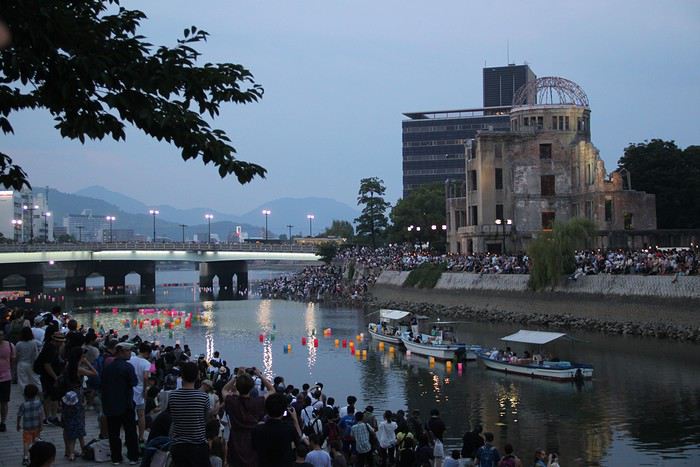
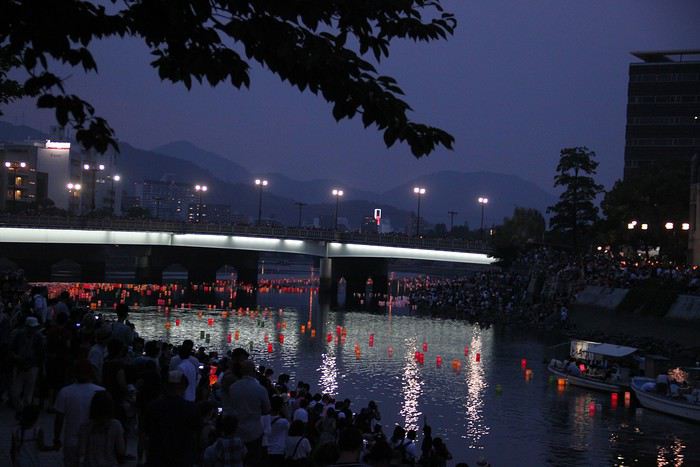
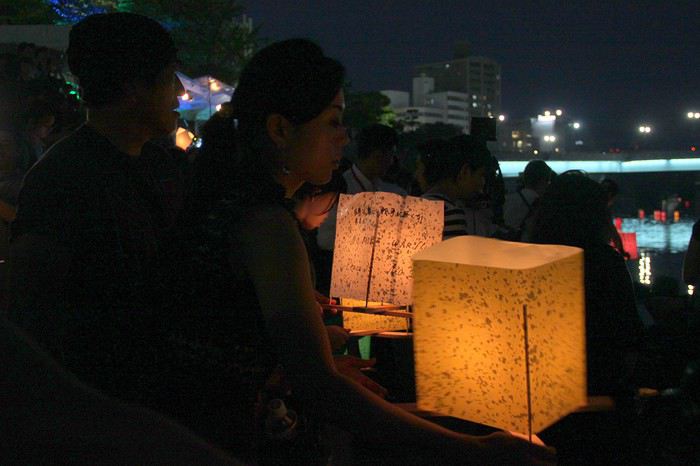
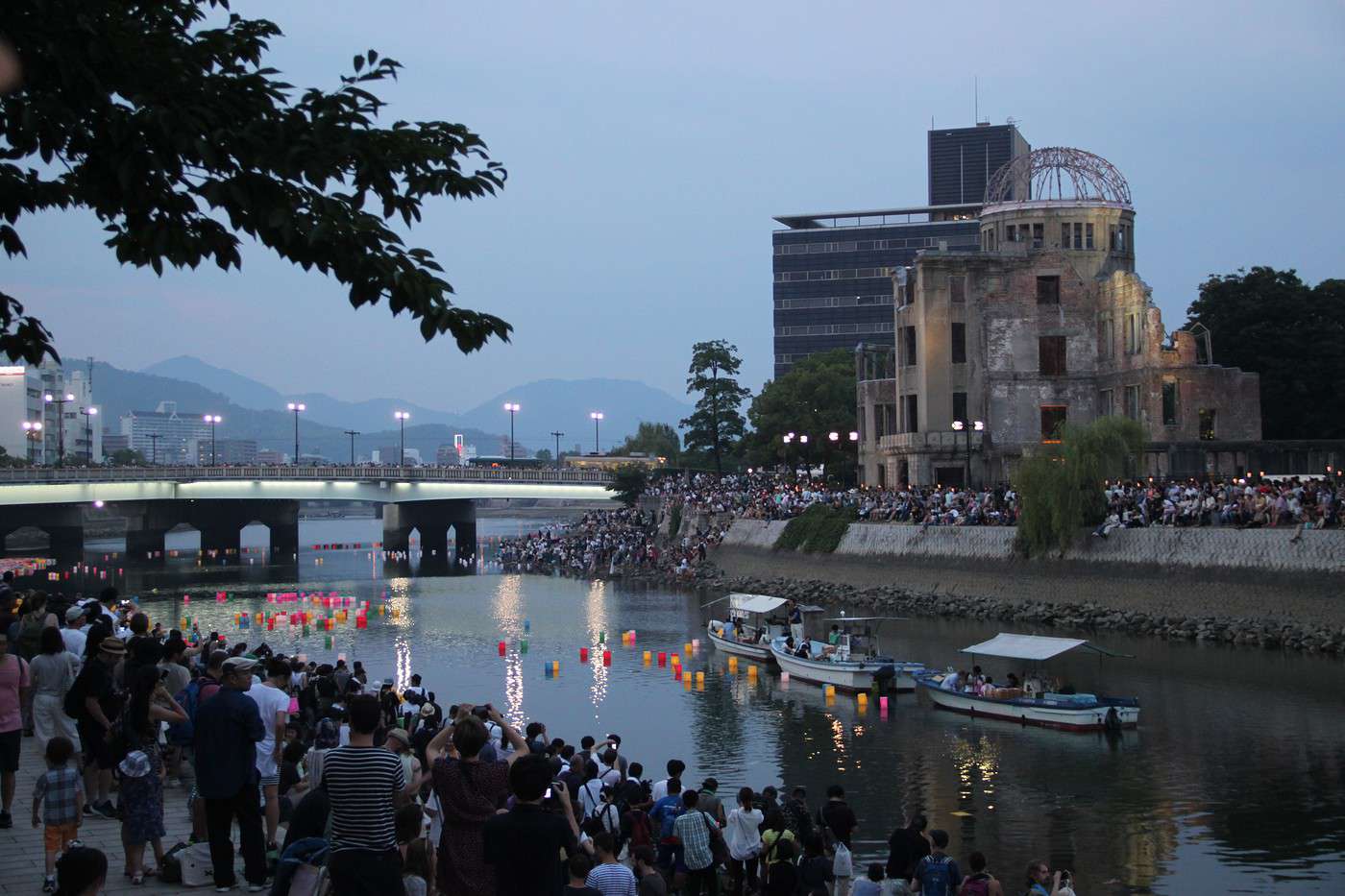
We made sure to be in Hiroshima on August 6 to attend the Peace Memorial ceremonies, especially the floating lanterns on the Motoyasu River at nightfall. We could’ve—we should’ve—made an effort to get up a little earlier that morning to attend the other ceremonies and the dove release at 8:15, the exact time the bomb hit, but laziness got the better of us… Anyway, the day was already underway by the time we set off.

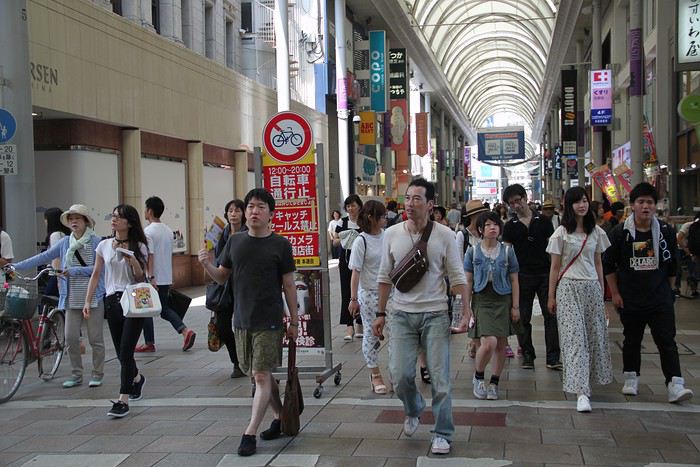
To get to the Peace Memorial Park, we decided to take a little stroll through the city, passing by Shitenchi, the nightlife district,


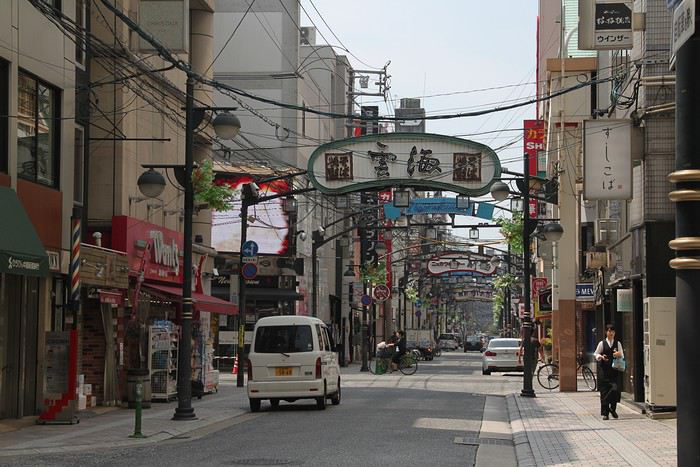
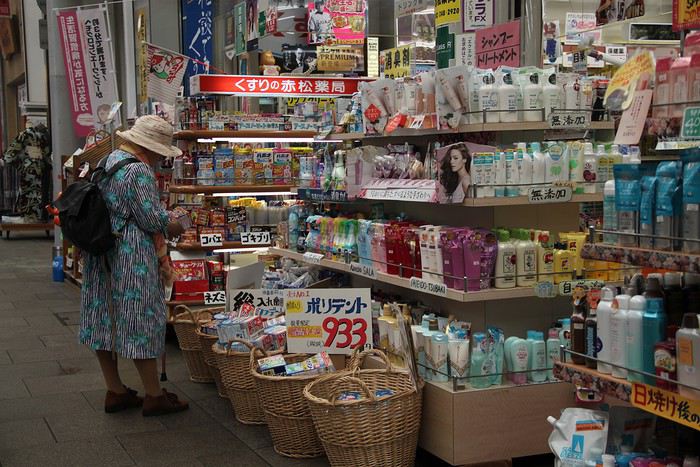
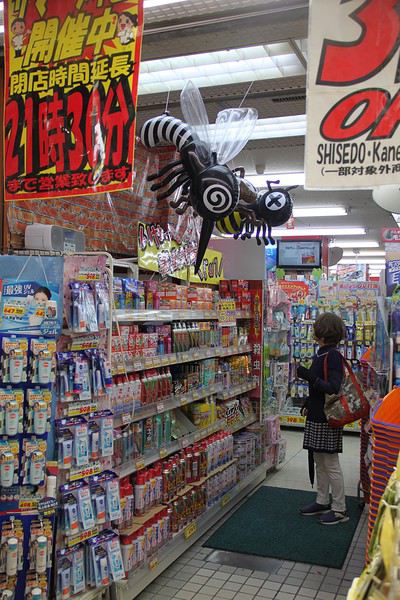
and Hondori, a large shopping area spanning several pedestrian, covered, and air-conditioned streets—as I’ve already mentioned before. We got acquainted with Japanese store signs,


and with Pepper, the humanoid robot from Aldebaran, a French robotics company that was acquired by Japanese telecom operator Softbank. A real conversation between deaf people: Pepper only speaks Japanese, but it’s cute and funny with all its expressions.


Three weeks in Japan with the family

Bluequark · 2018-04-16 · Message 46 of 174

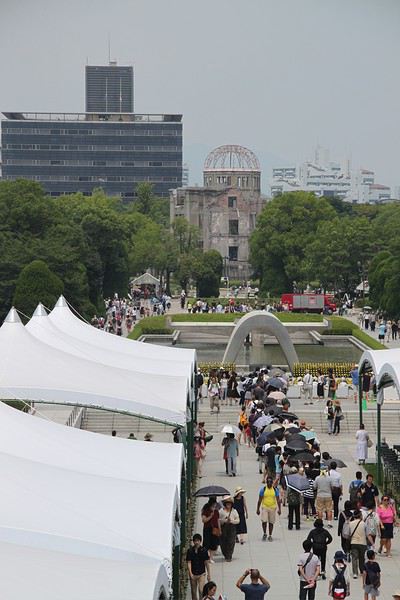
A little effort and here we are at the Peace Memorial Park. Lots of people here on this day of commemorations. It’s clearly a classic visit for Japanese families.


The morning ceremony installations are still in place. Many Japanese are paying their respects in front of the cenotaph for the bomb victims. Didn’t have the energy to queue in the blazing sun for the photo in line with the axis. Nor the desire to play the obnoxious tourist in this atmosphere of reflection. Oh well, no photo then!

We head to the Peace Museum, partly closed but still interesting and, of course, deeply moving.

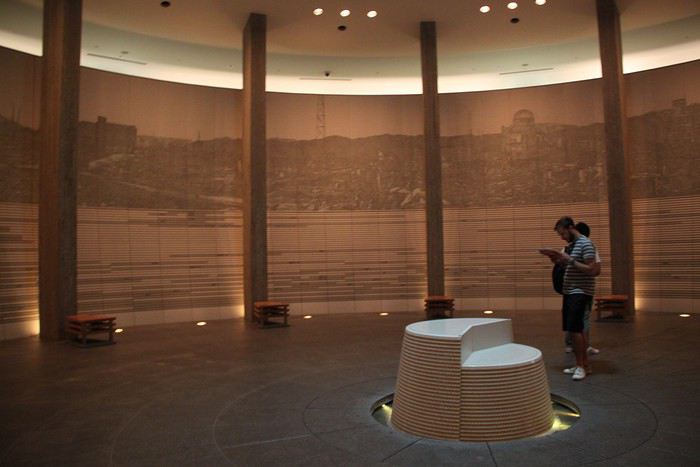
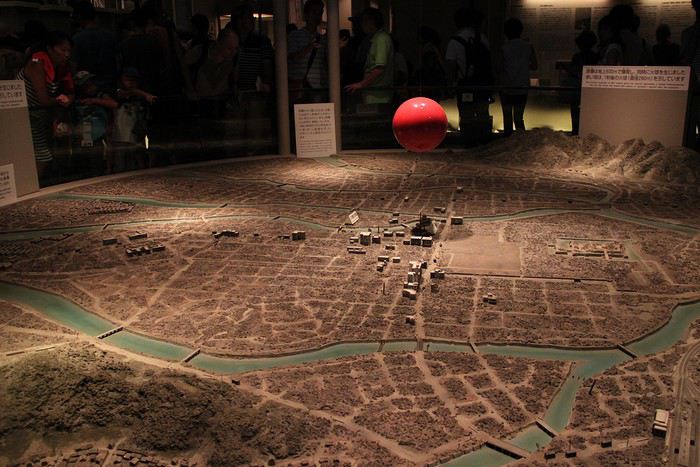
Right from the start, a model helps you grasp the scale of the blast. There are also period photos, burnt clothes, objects found in the ruins, twisted doors, melted statues, traces of the black rain that followed the explosion... All these elements show the extent, the intensity of the damage, and the horror of it all. But, despite what I’d read, there aren’t—or at least very few and easily avoidable—images that would justify not bringing young children. In fact, Japanese families come here as part of a kind of duty of remembrance. That’s actually what’s striking in this museum: the duty of memory. The facts are presented—at least in the English version—with an emphasis on objectivity, without hatred or condemnation. Volunteer survivors of the disaster are also there to share their testimonies. When I’d talked with one of the hotel staff in Uno about Hiroshima and the atomic bomb, this calmness without resentment, simply marked by deep sadness, had already struck me.
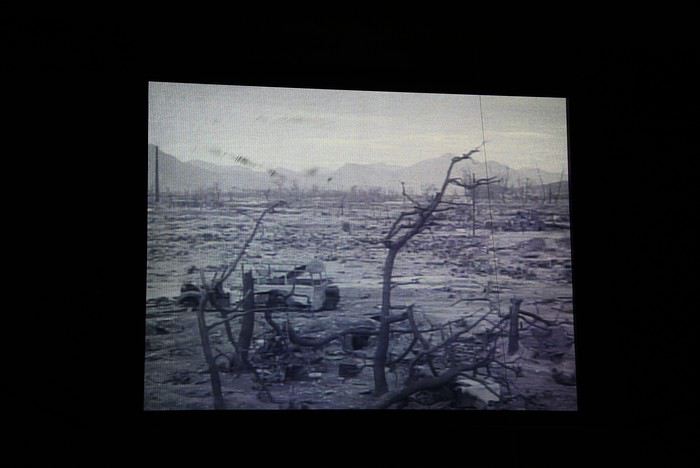
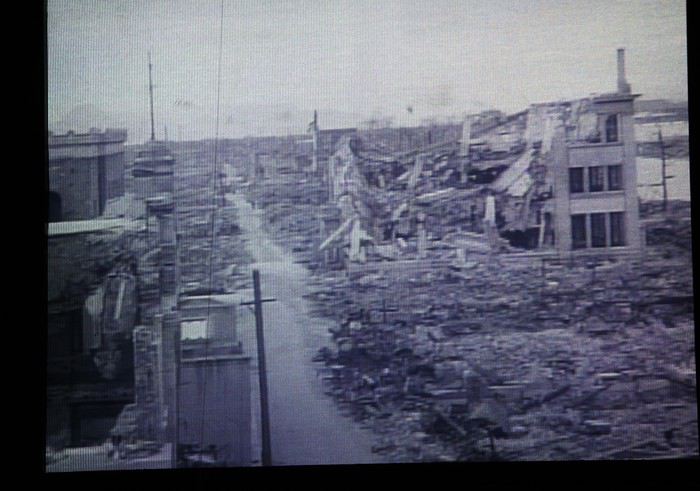
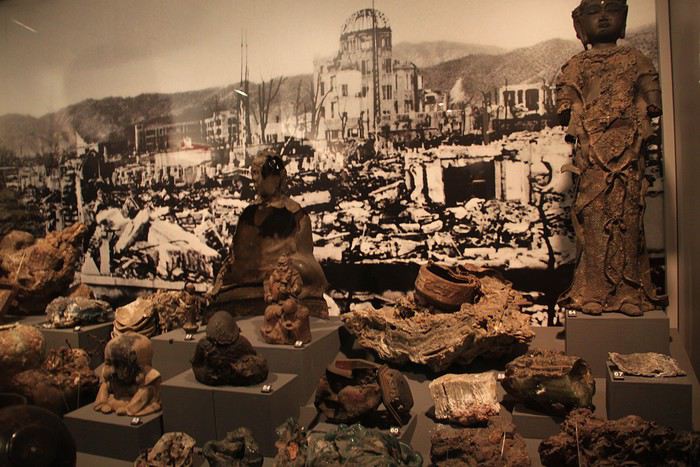


The long-term effects of the bomb are also presented, and the visit ends with the story of Sadako, who developed leukemia and believed that if she managed to fold 1,000 paper cranes, she would be saved. Since then, these paper cranes have become a symbol of hope, and people continue to send them from all over the world.

As moving as it is, this museum is, in my opinion, a must-see during a visit to Hiroshima. It also teaches you a lot about Japanese society.
Three weeks in Japan with the family

Bluequark · 2018-04-16 · Message 47 of 174

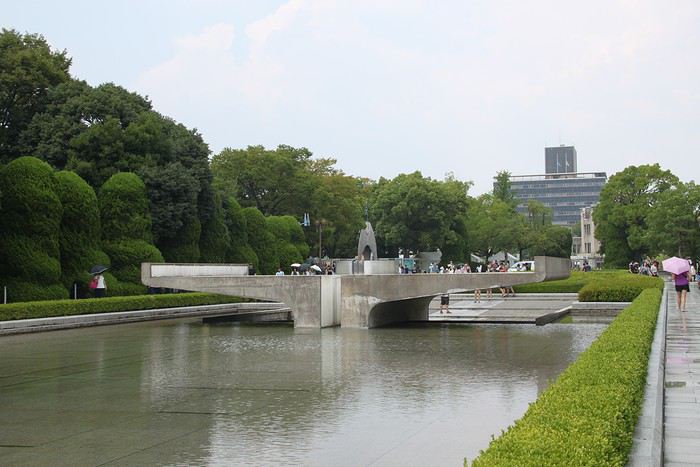
We continued our visit by systematically exploring the park:

— the Peace Memorial Hall,


— the Flame of Peace, which has been burning since 1964 and will remain lit as long as nuclear weapons exist,


— the Peace Bell,

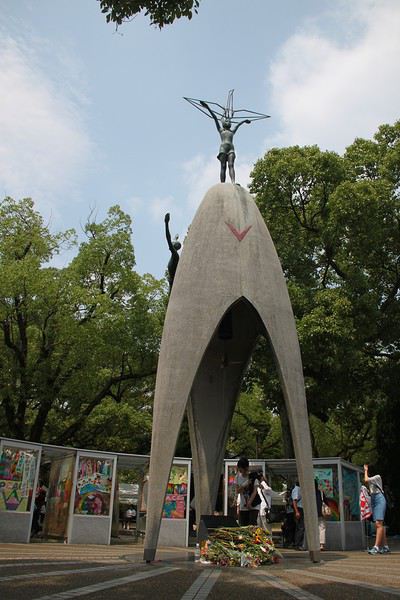
— the Children’s Peace Monument and its garlands of paper cranes,


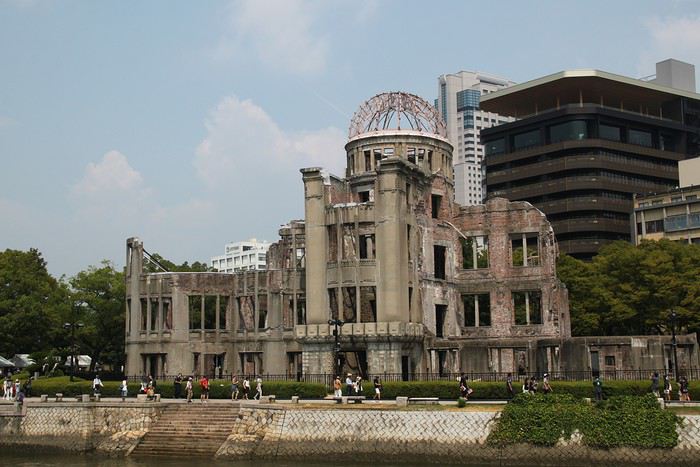
— and, on the other side of the river, the Atomic Bomb Dome. Located just 100 meters from the hypocenter, it’s one of the few buildings that remained more or less standing within a 2-kilometer radius.


Three weeks in Japan with the family

Bluequark · 2018-04-16 · Message 48 of 174

Undeniably moving. But all that shouldn’t stop us from eating. Today at lunch, we tried—without having sought it out—we simply picked a restaurant where lots of people were going in without knowing what to expect—a ramen chain called Ichiran. The concept is simple: you order meal tickets from a vending machine (basically ramen plus any extras); with your ticket in hand, you fill out a form to specify your preferences: strong/mild, spicy/sweet, with or without scallions… you wait, then you’re seated either in the main dining area or in private booths, and your meal arrives. You can ask for a refill of broth. A fun concept. We had a bit of trouble understanding at first, especially realizing it’s a restaurant that only serves ramen, and it was only when the line behind us started growing that we decided to order four ramens and a pork extra.

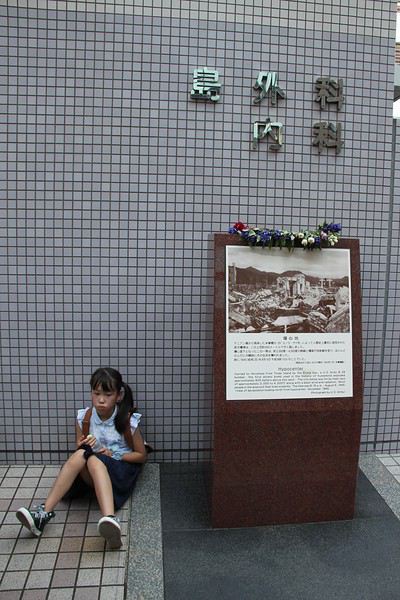
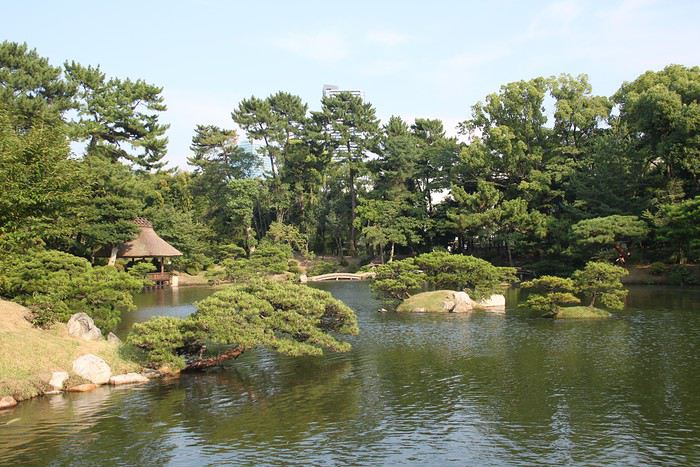
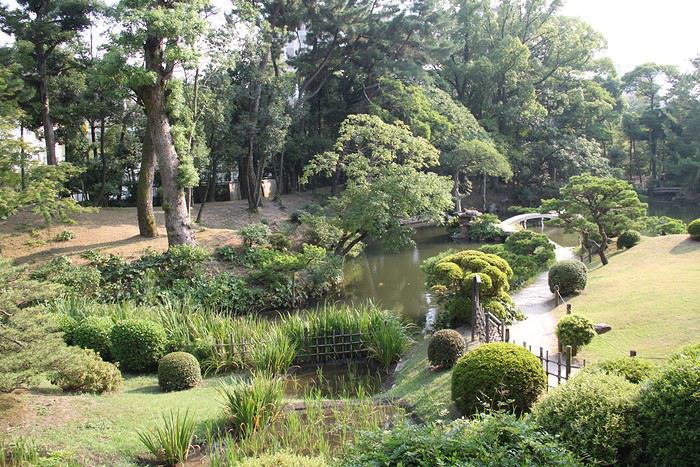
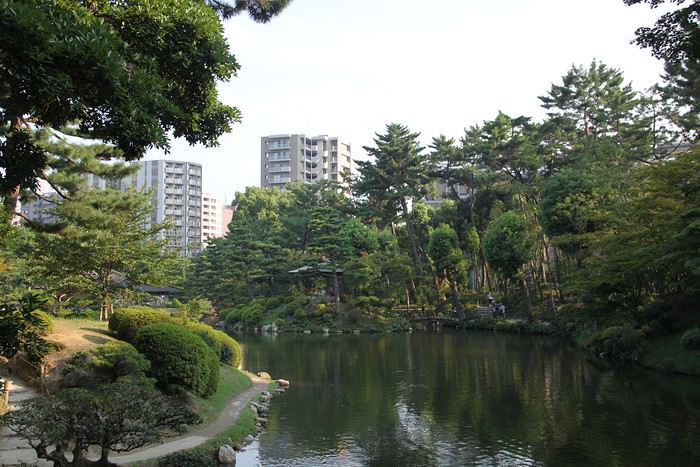
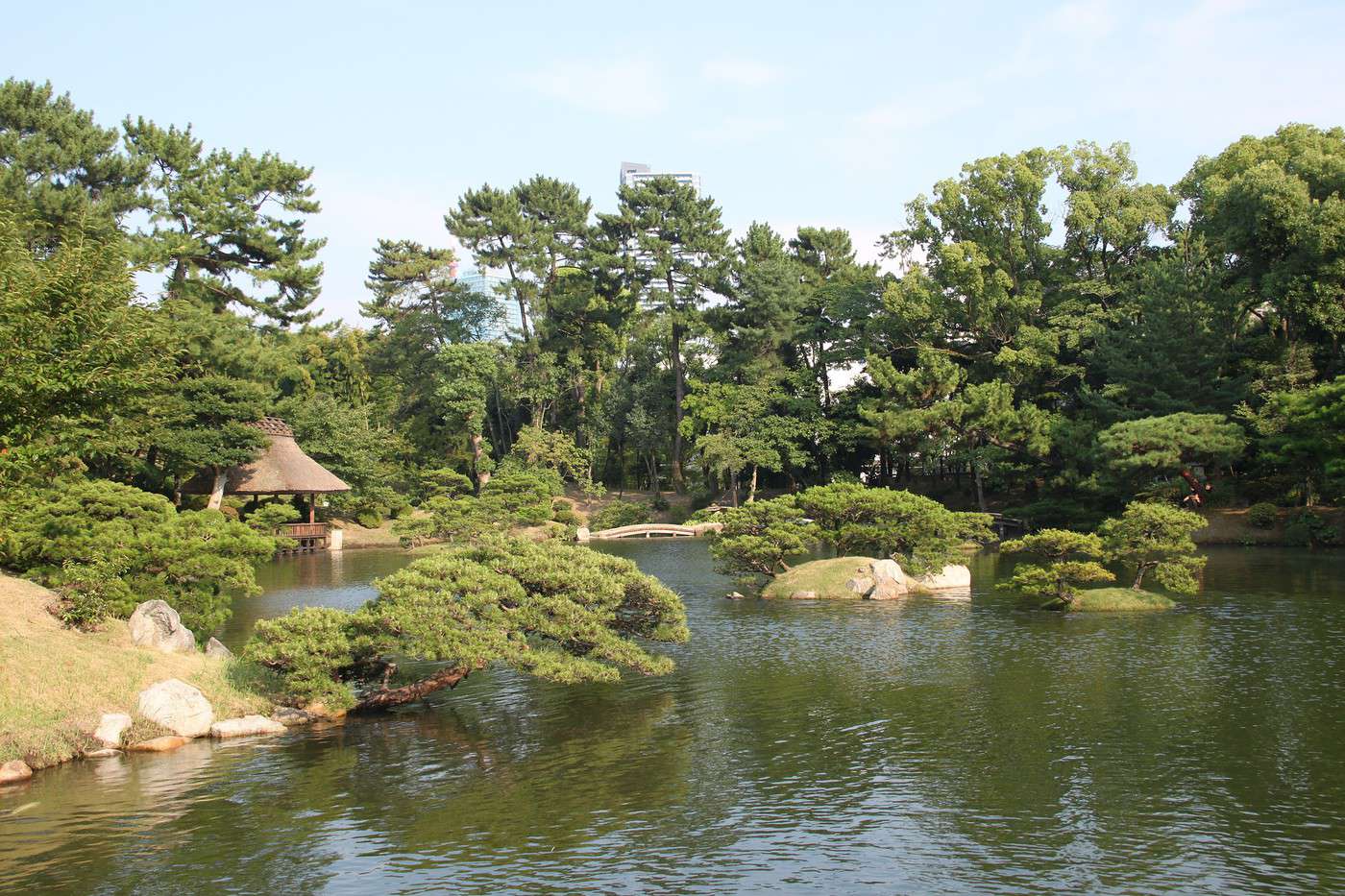
With our stomachs full, we head to Shukkei-en, Hiroshima’s famous garden. Since I didn’t map out the route well, I took us on a detour through Hiroshima’s green area. These wanderings let us stumble upon the hypocenter memorial plaque, surprisingly discreet,


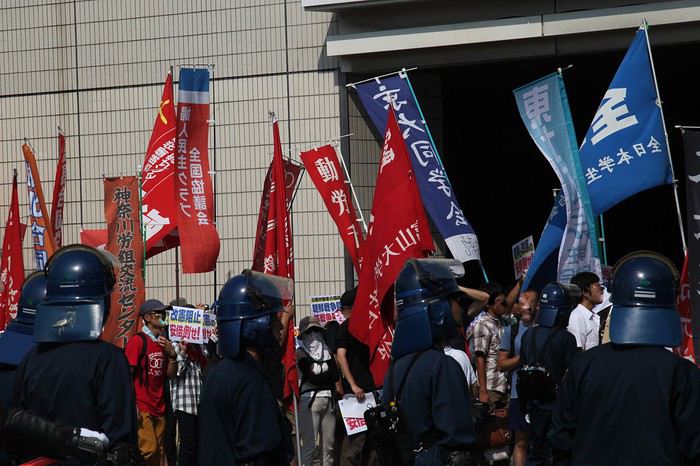
… a protest—given the date, likely against nuclear weapons,


… and Hiroshima Castle.

Three weeks in Japan with the family

Benef63 · 2018-04-16 · Message 49 of 174

Thanks for this beautiful and rich travel journal! I’m following it closely because we’ll be in Japan for 2 weeks this summer, and also in Hiroshima on August 6th. How much time did you spend at the memorial museum? Thanks! Looking forward to the next episode! 🙂

Three weeks in Japan with family

Year · 2018-04-16 · Message 50 of 174

Thanks for this travel journal—I’m reading it bit by bit! We’re also planning to be in Hiroshima on August 6th. We’re thinking of spending 2 days / 3 nights there. On August 6th, is it possible to visit all the sites and museums as on other days? Are there more people at these places? Do the commemorations mainly take place in the morning around 8 AM and in the evening after dark? That would mean we’d have to take the train on the morning of August 7th. Thanks, and looking forward to reading more! !

Three weeks in Japan with family

Bluequark · 2018-04-17 · Message 51 of 174

Hello,

How much time did you spend at the memorial museum?

Based on the timestamps on my photos, I’d say about an hour, but part of the museum was closed (about half of the surface area, if I remember correctly)—I think it was the section on atomic energy.

Three weeks in Japan with family

Bluequark · 2018-04-17 · Message 52 of 174

Hello,

Thanks for the message.

Is it possible to visit all the sites/museums on August 6th like on other days? Are there more people at these places? Do the commemorations mainly take place in the morning around 8 a.m. and in the evening at dusk?

Yes, there are quite a few people, but it’s still manageable. From what I remember, there was a bit of a queue to get into the museum, but nothing too bad. However, more audio guides were available—though I think I remember reading good things about them.

Two key moments for the ceremonies: in the morning at 8 a.m. with speeches, a dove release, and singing, then at dusk for the "lantern floating." More info here and here.

Three weeks in Japan with the family

Bluequark · 2018-04-17 · Message 53 of 174

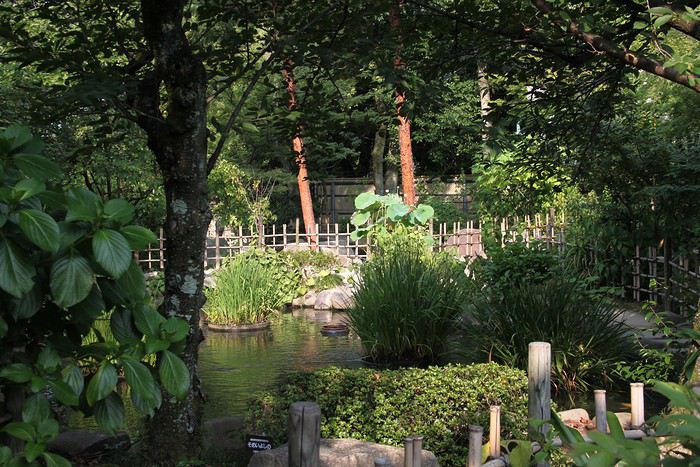
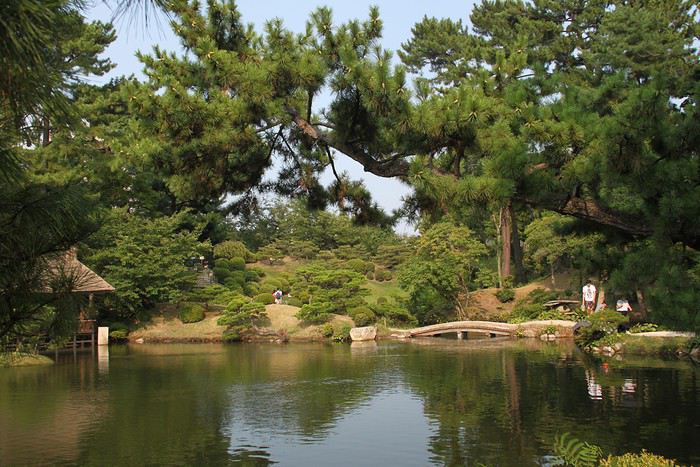
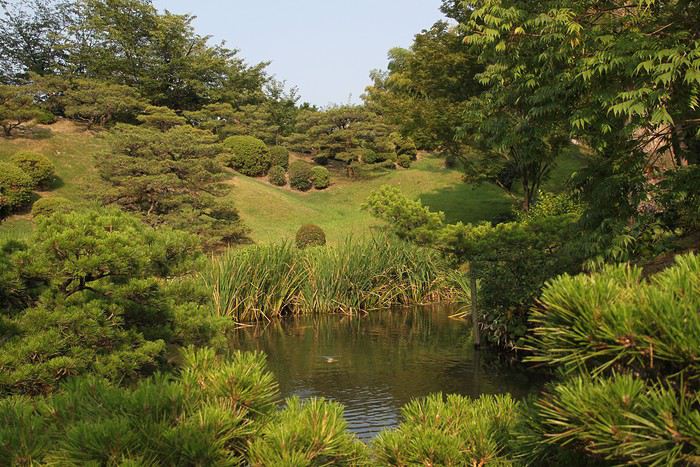
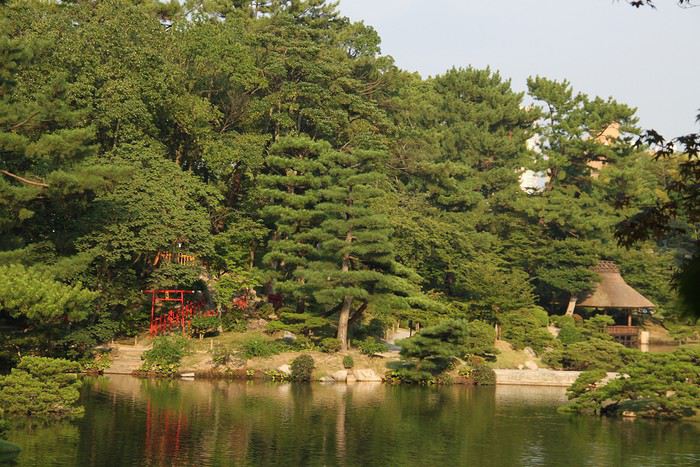
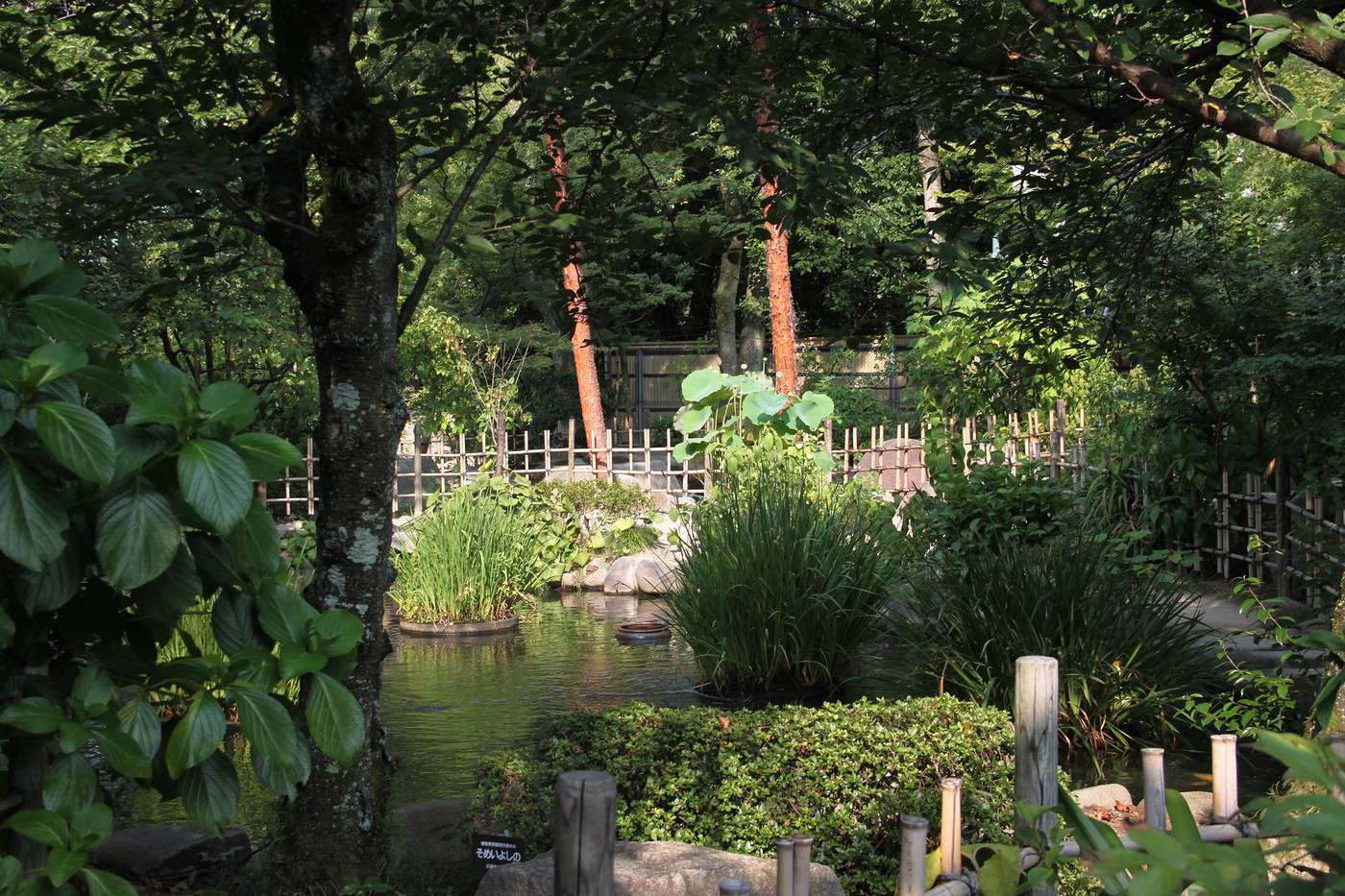
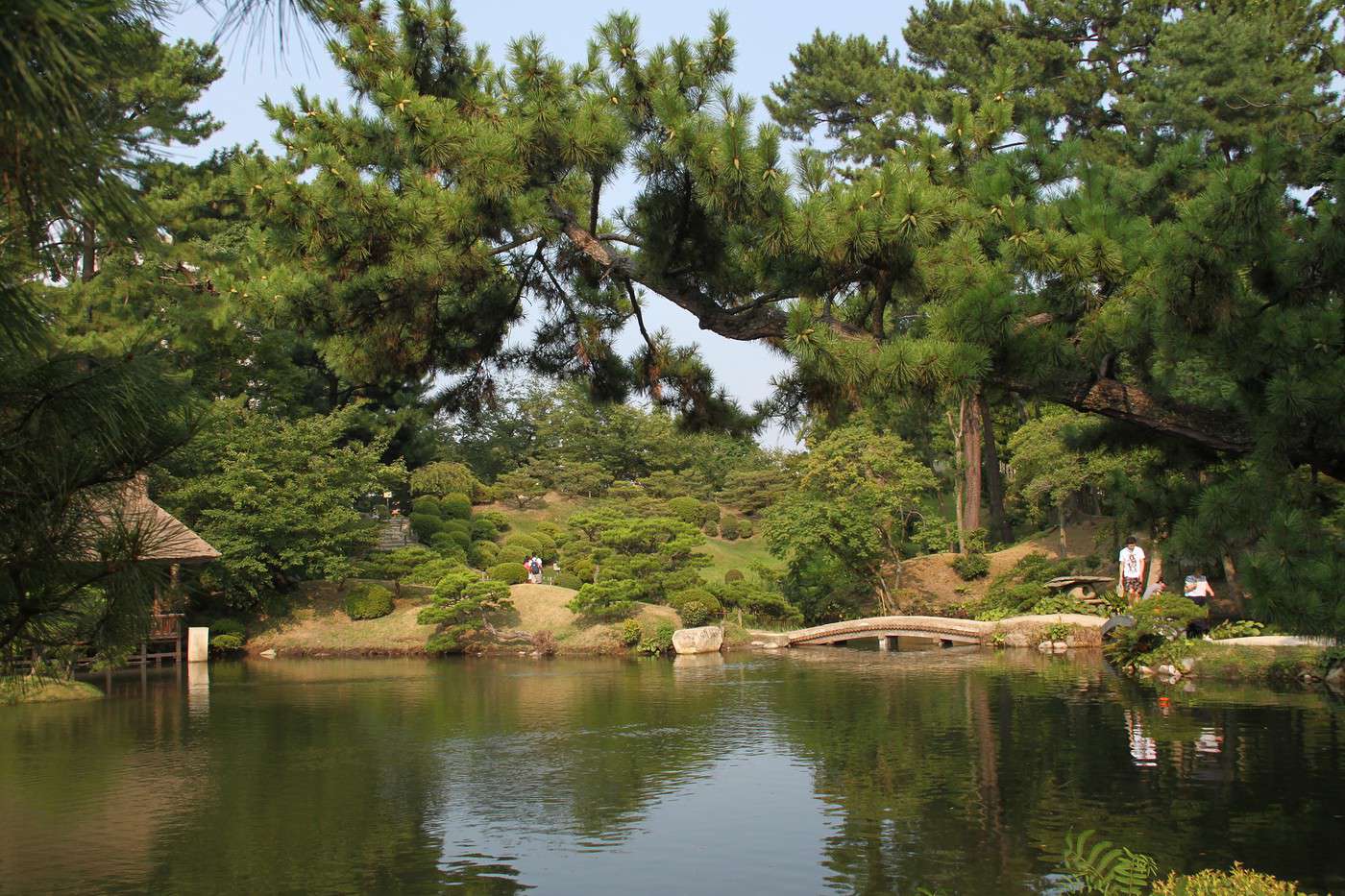
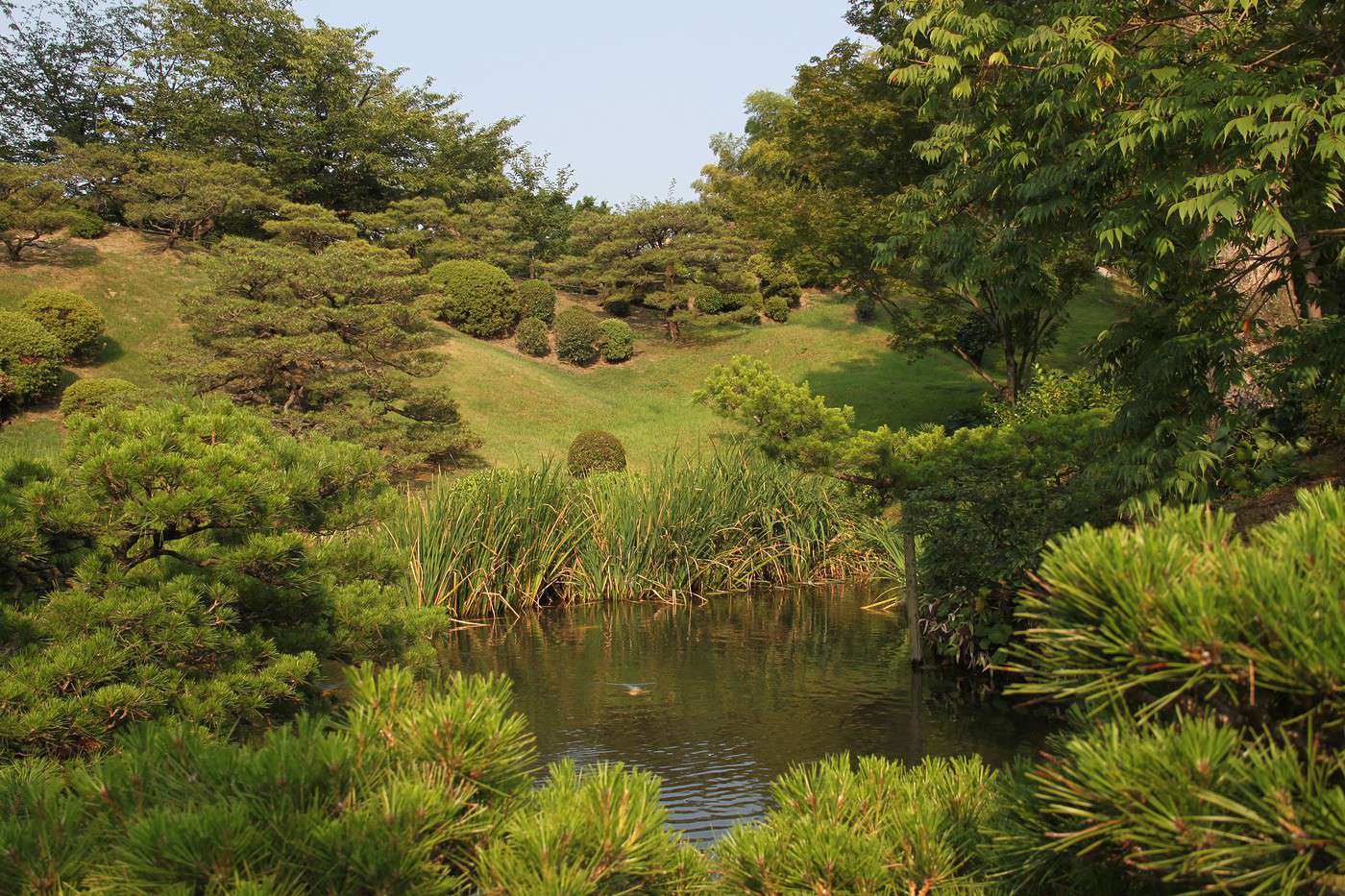
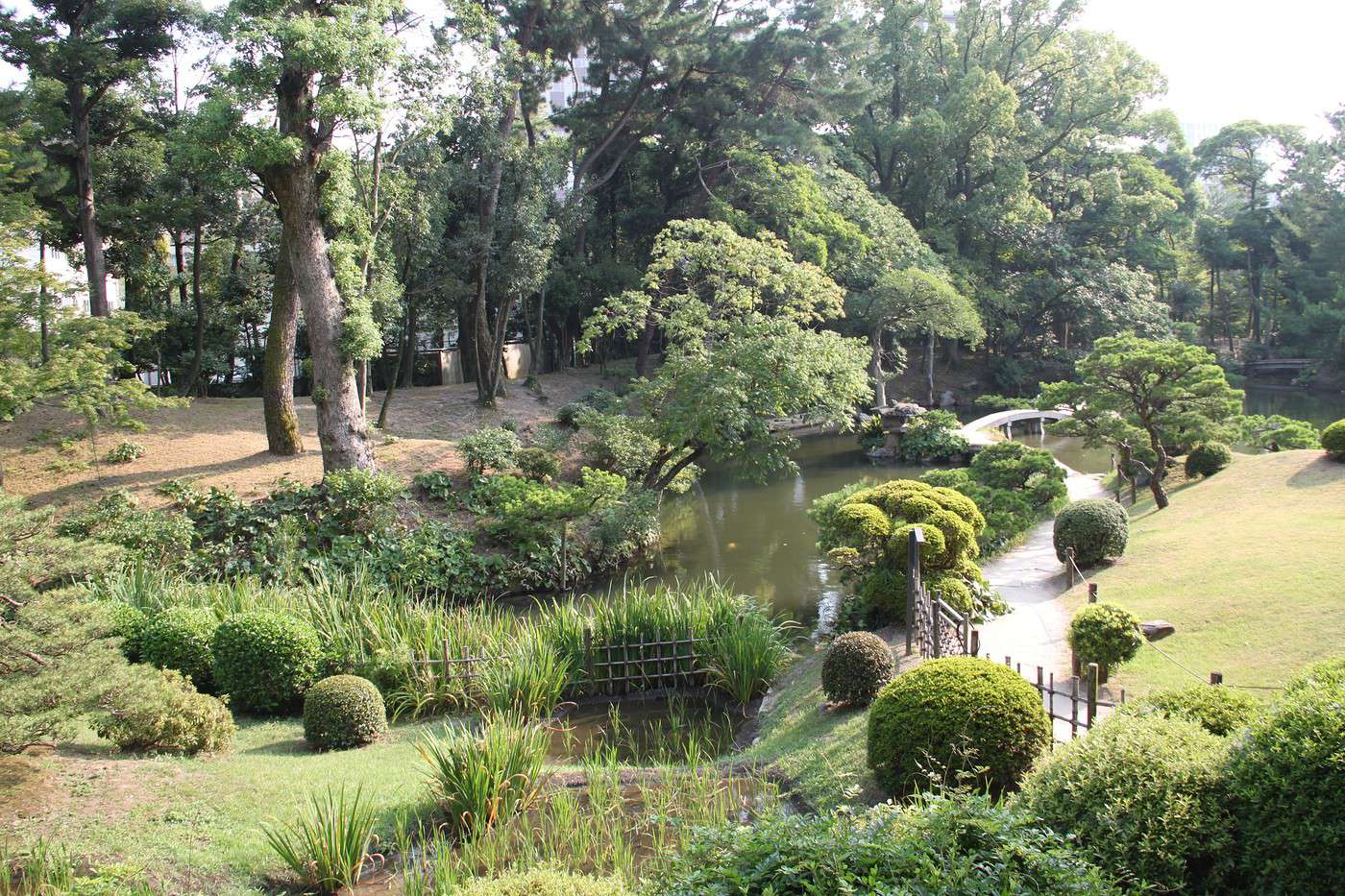
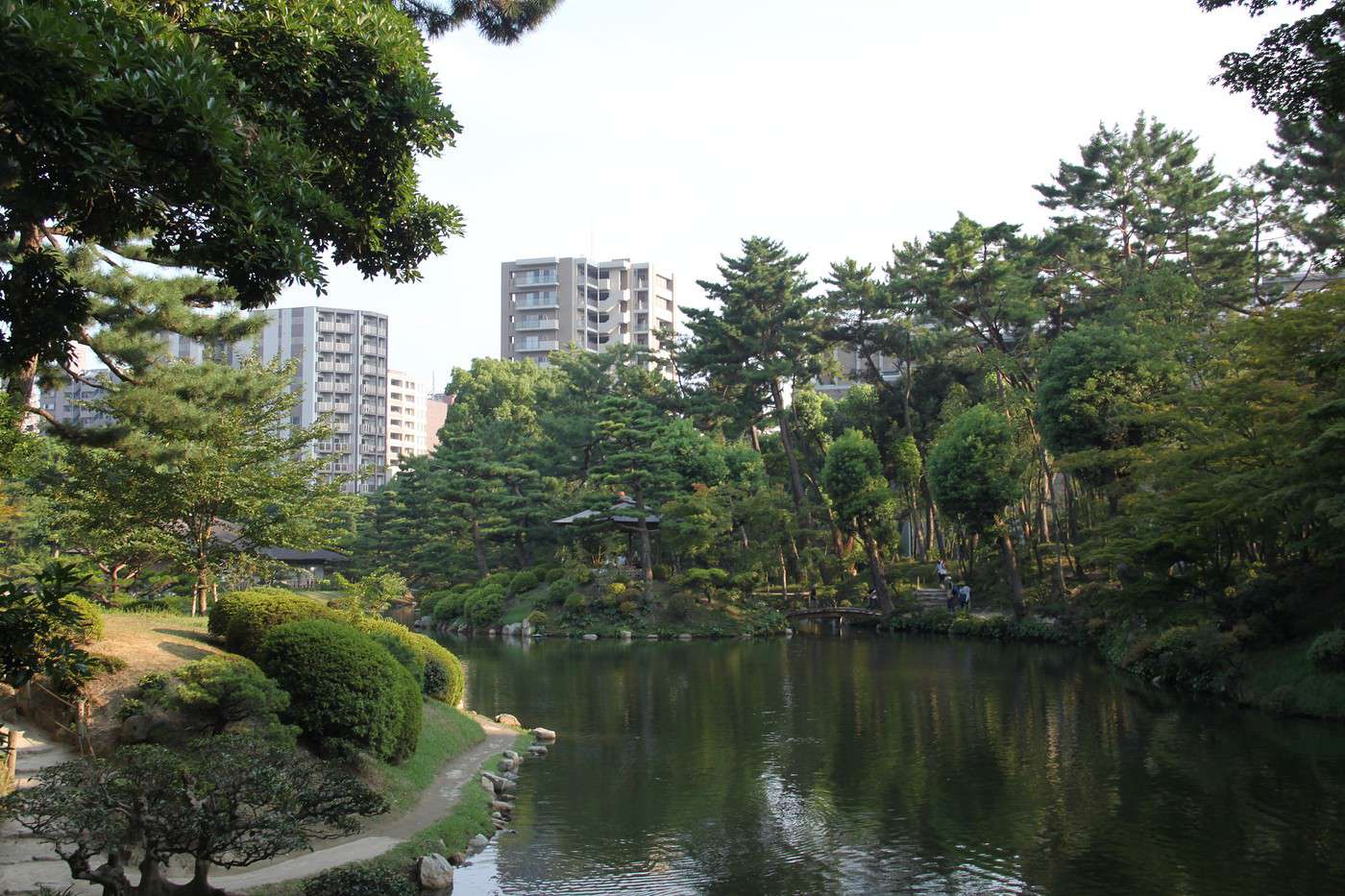
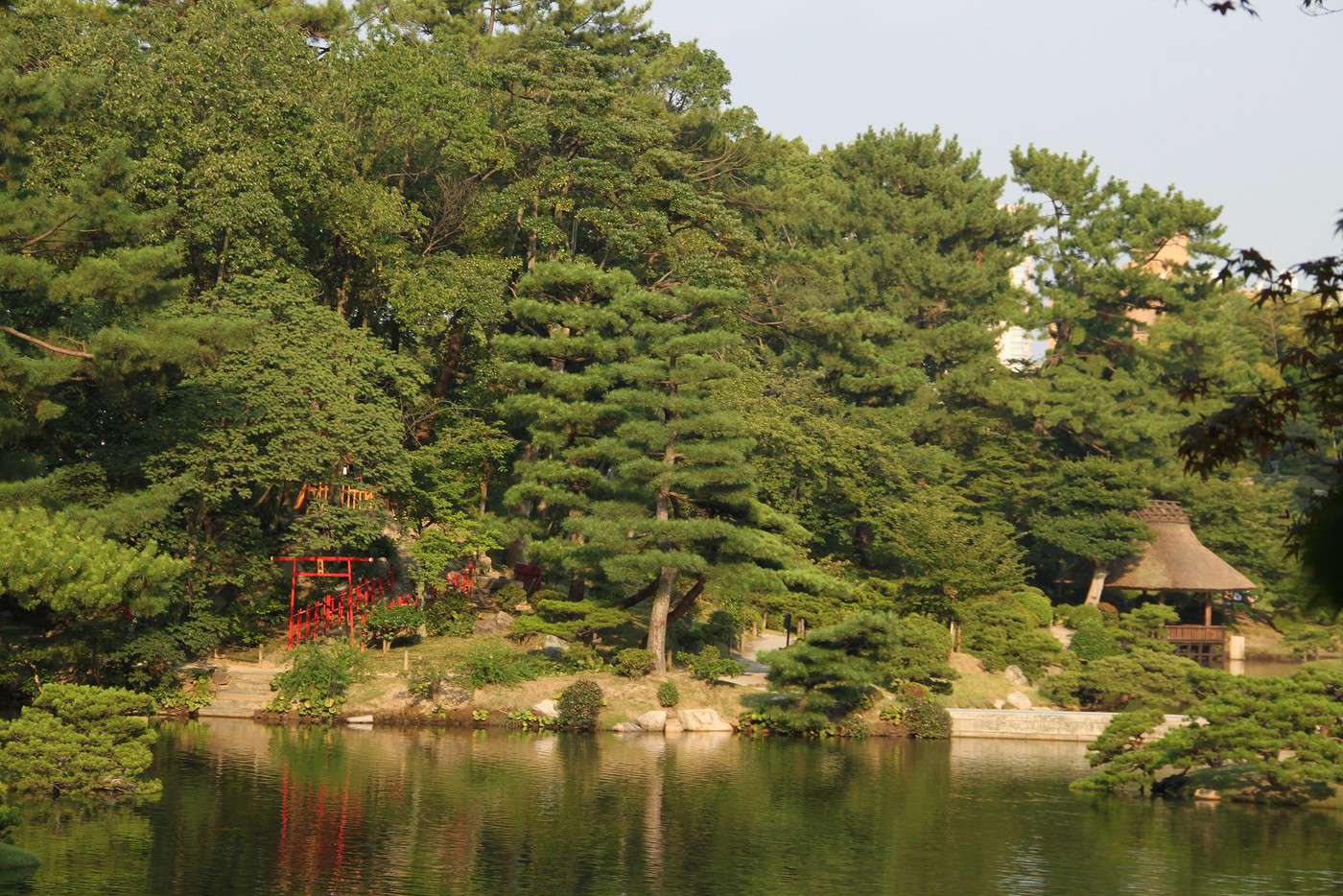
We arrive at the garden a little tired but with a certain sense of relief. Dating back to 1620, it has undergone several transformations. Of course, the 1945 bomb completely destroyed it. But Hiroshima Prefecture decided to restore it, and 180,000 visitors come here every year. It’s a real heart-stealer, and we take our time exploring just about every nook and cranny.


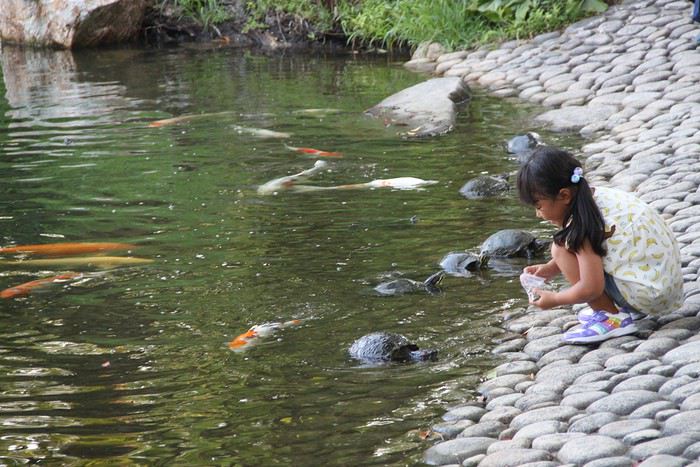
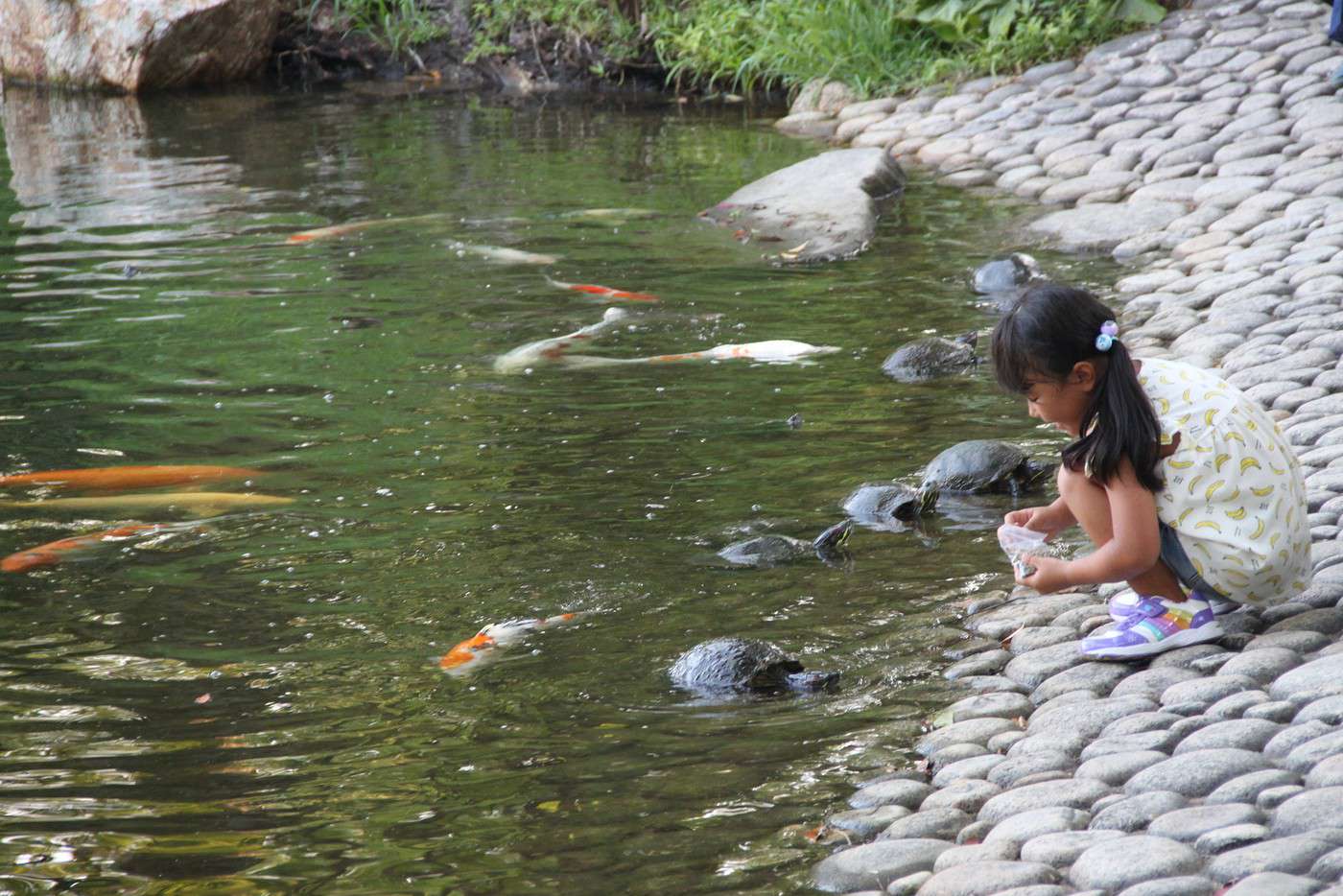
Feeding the fish and turtles fills me with joy.

It’s now time to head to the Peace Memorial Park for the Toro Nagashi and its countless floating lanterns. We’ll pass through Hondori again—we’re starting to know it by heart.

Three weeks in Japan with family

Bluequark · 2018-04-17 · Message 54 of 174

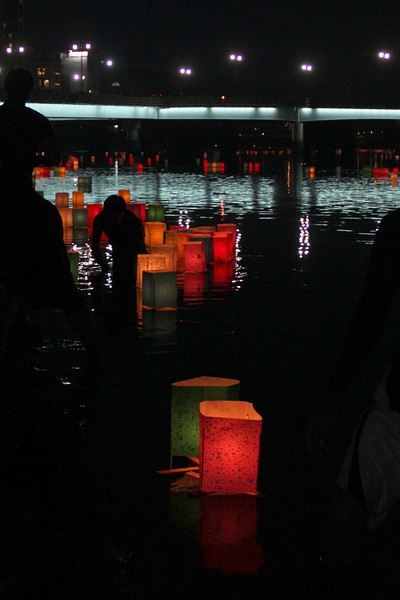
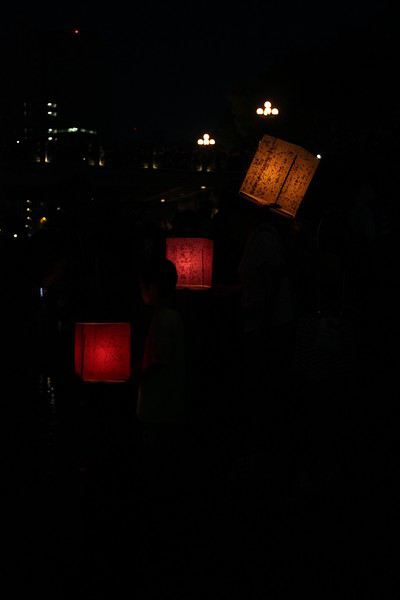
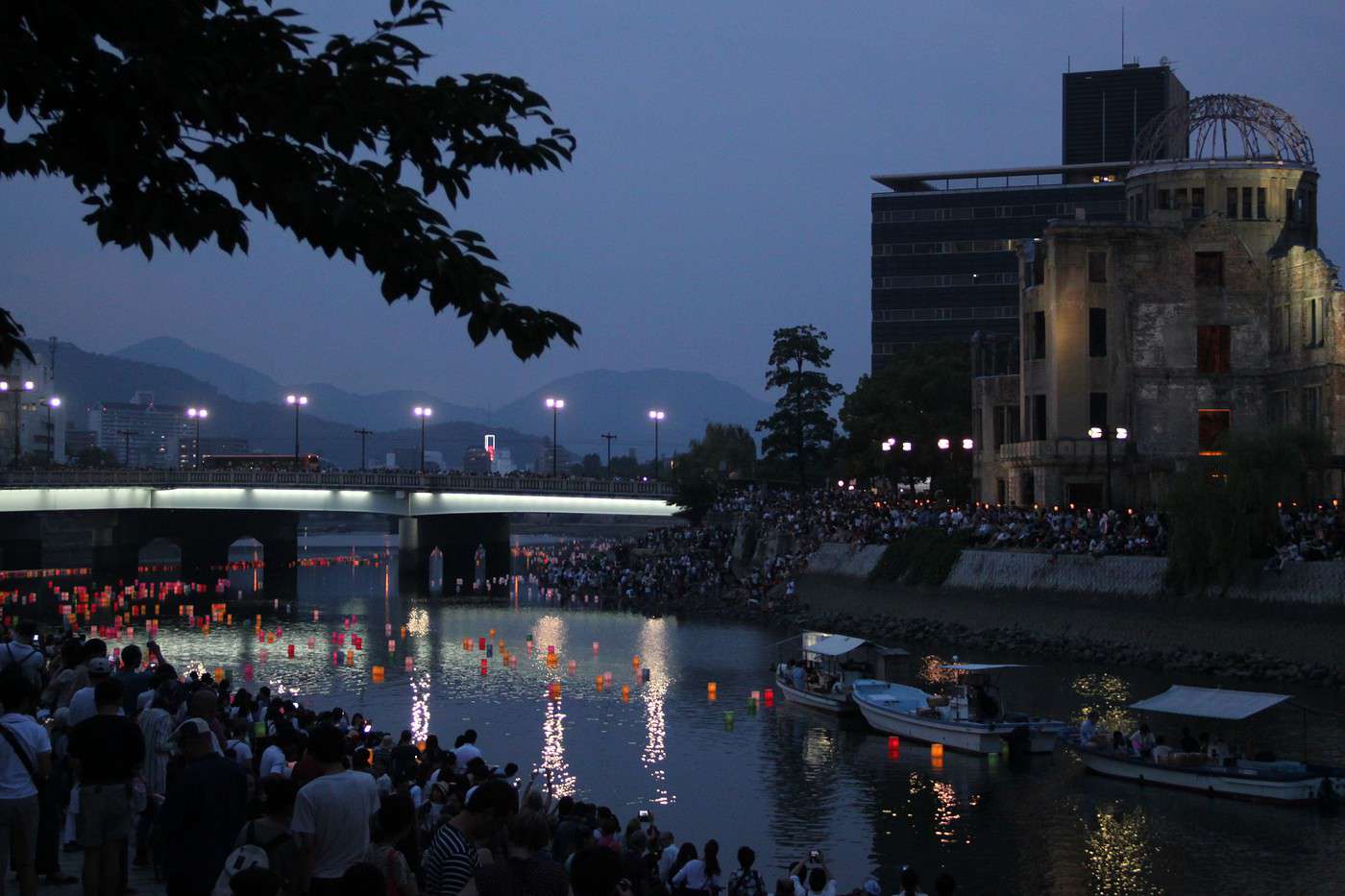
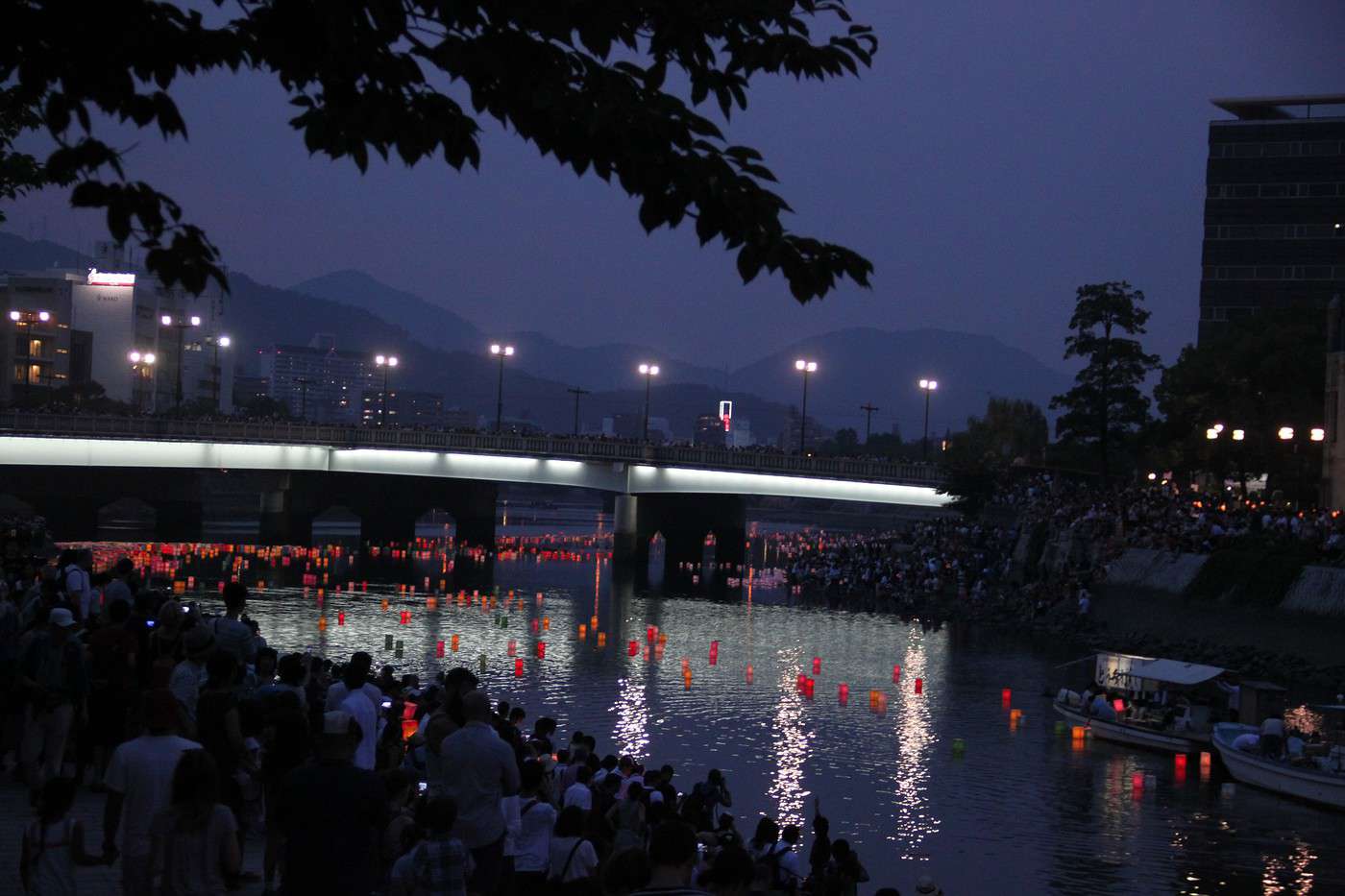
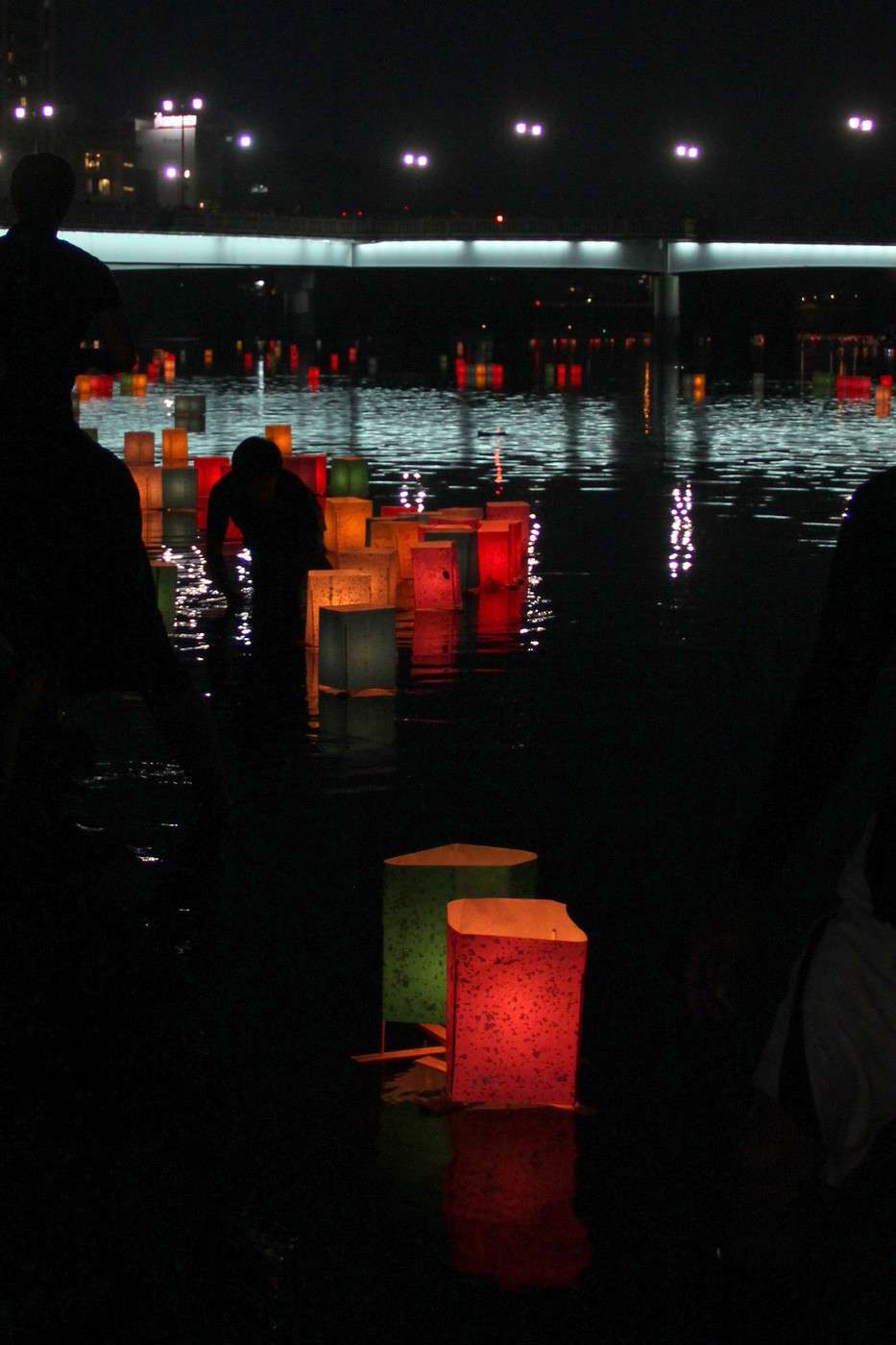
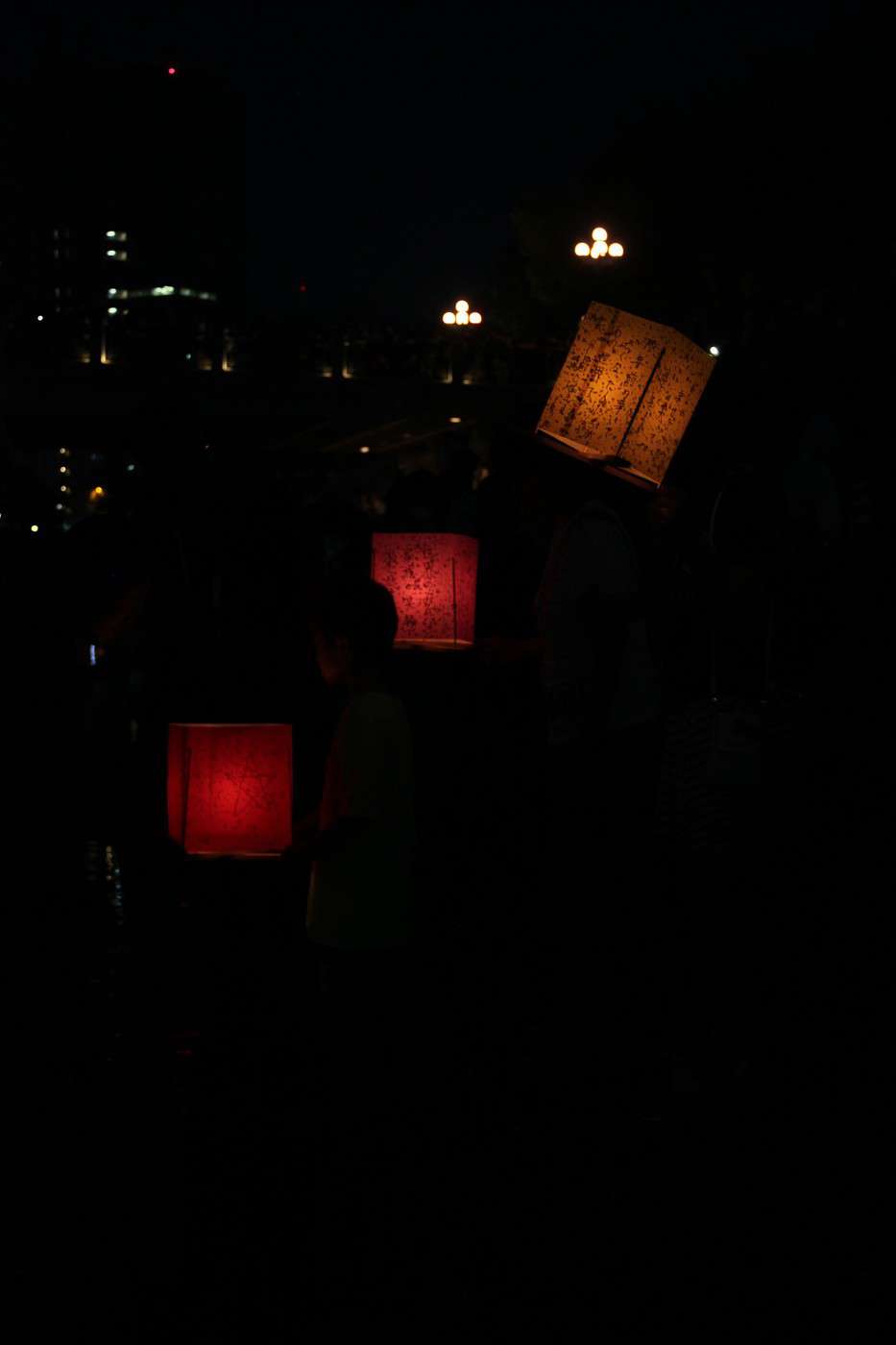
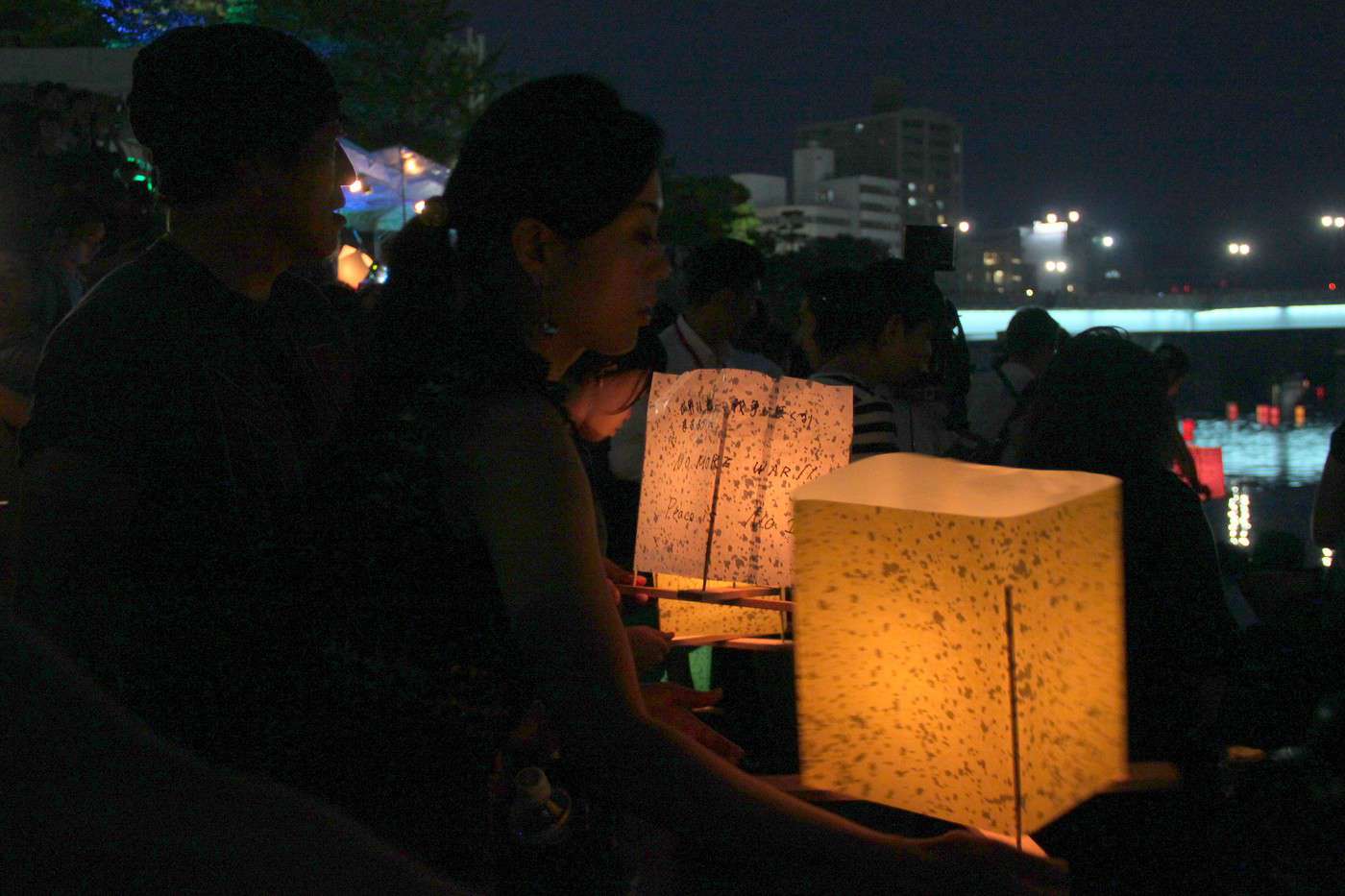
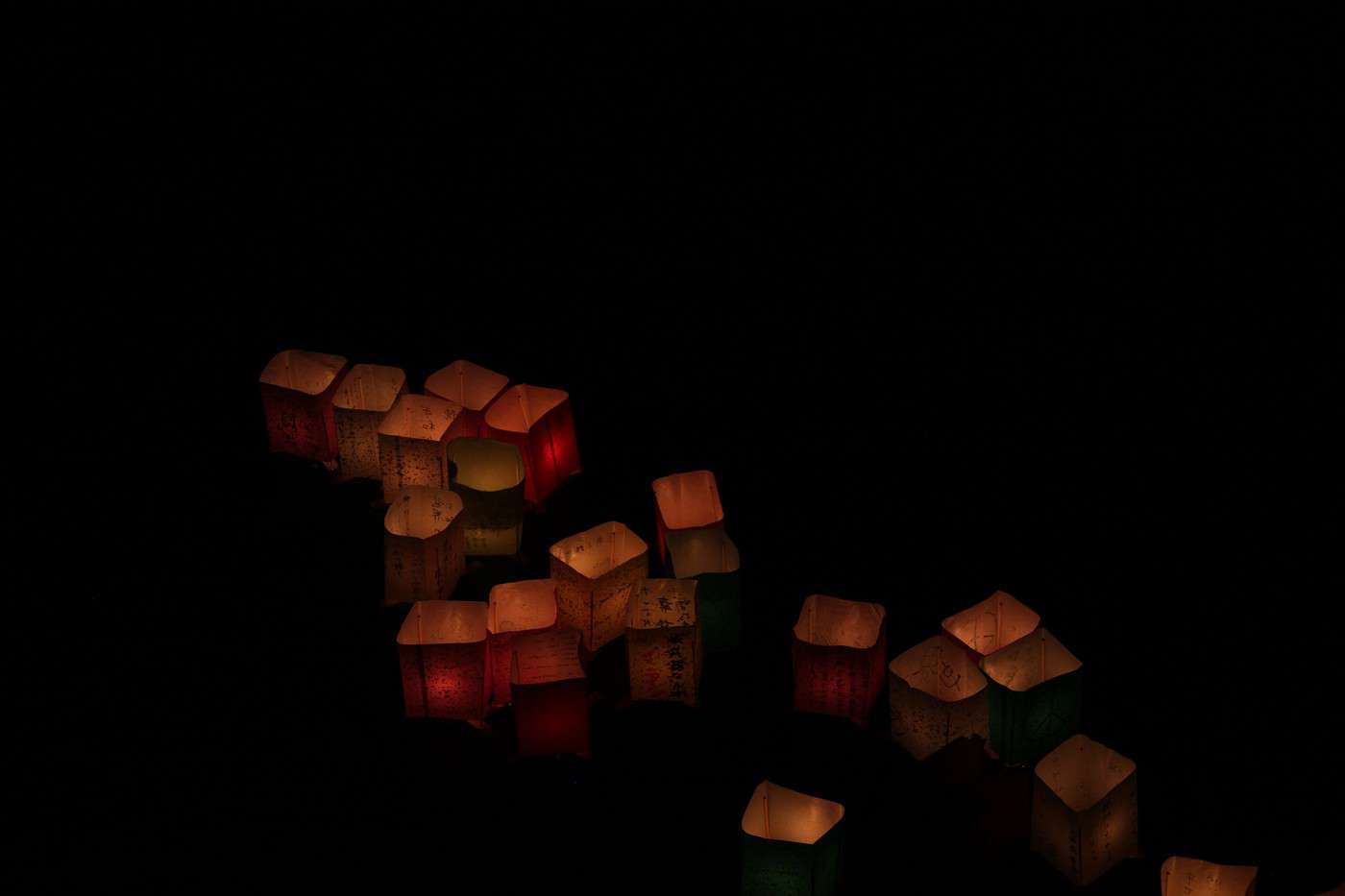
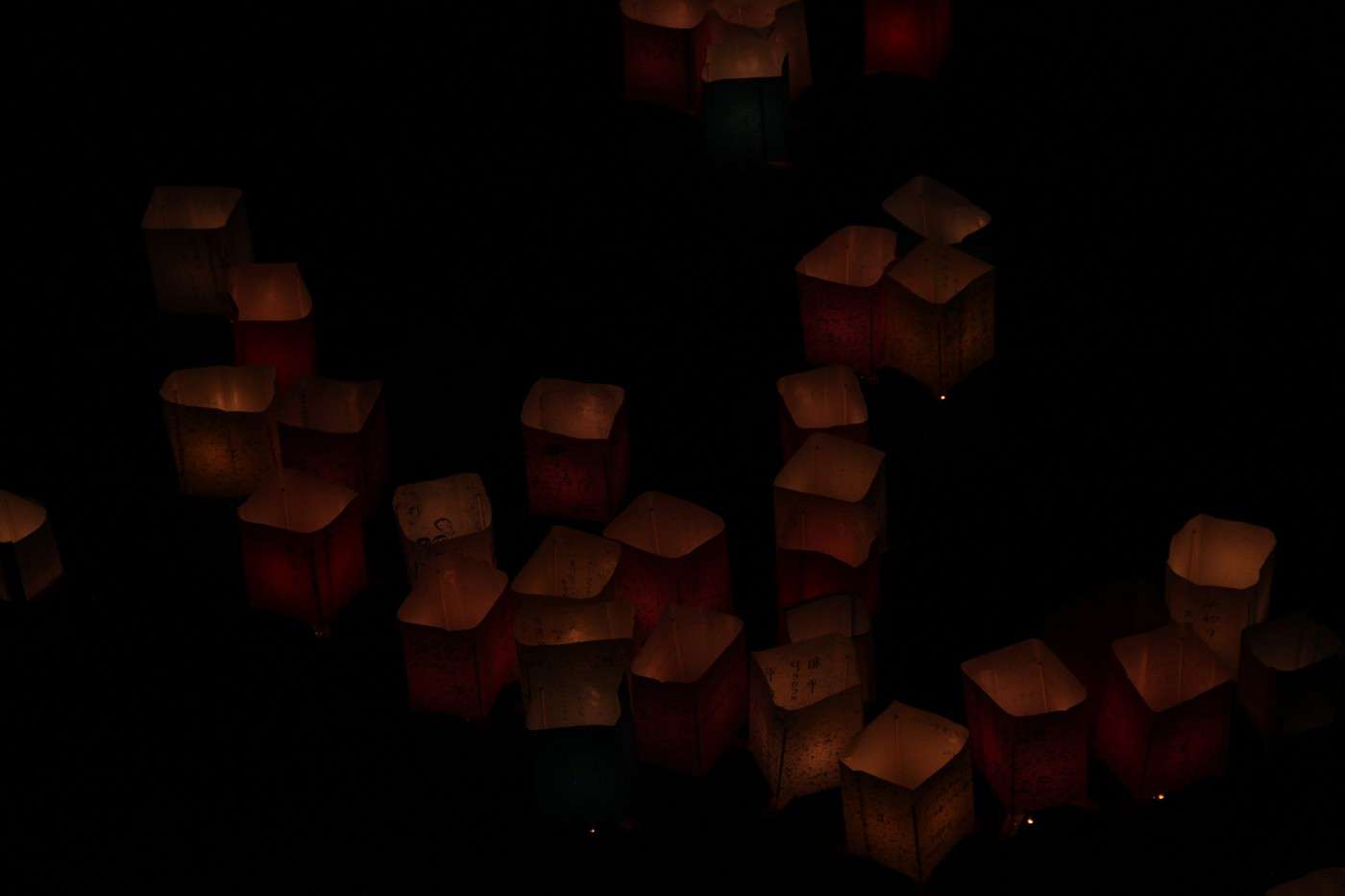
The Remembrance Commemoration takes place every year in memory of the victims of the bombing. It’s also a message of peace and hope. As mentioned earlier, it begins in the morning with a speech, a moment of reflection, and a dove release, and ends in the evening with a Toro Nagashi, the floating of lanterns on the water. Toro Nagashi is a traditional ceremony where the lanterns are believed to guide the souls of the departed into the afterlife. For this, messages of hope and peace are written on the lanterns.

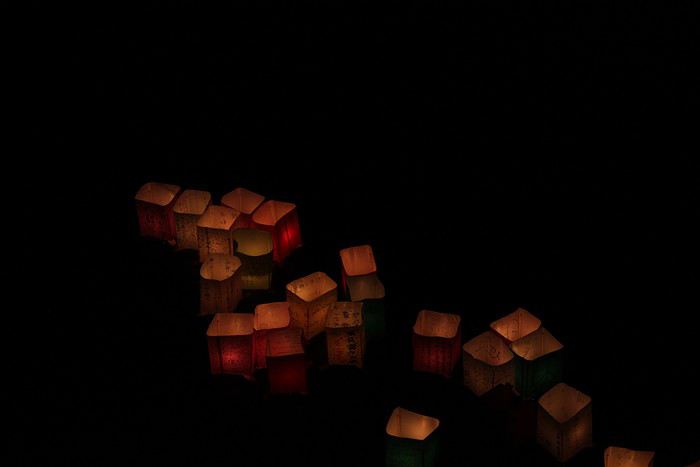
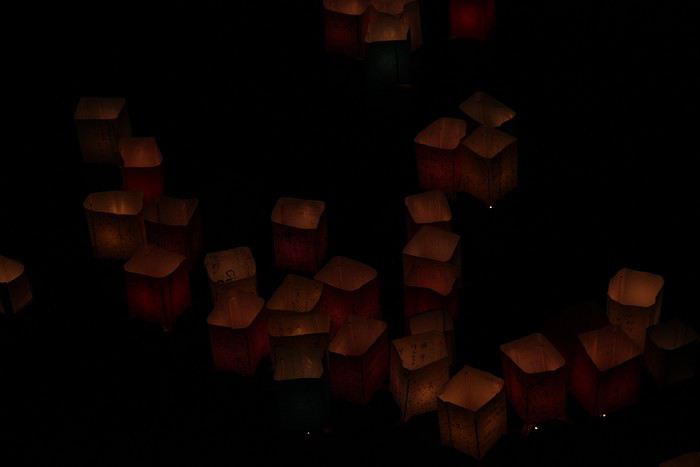
It’s a very aesthetic ceremony with thousands of floating lanterns (I read there were 10,000 in total), but also deeply moving. There’s a certain solemnity in the air. And seeing people of all ages patiently waiting in line, completely calm, to place their lantern has something truly touching about it. We stay there for a long time, changing viewpoints several times.

At the beginning…


Then night falls. Hard to stay still without a tripod.


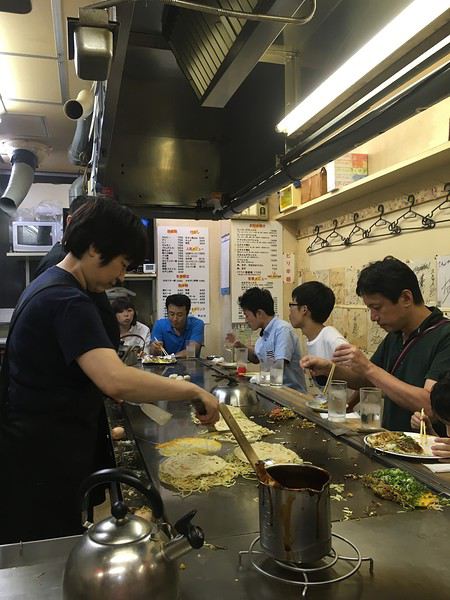
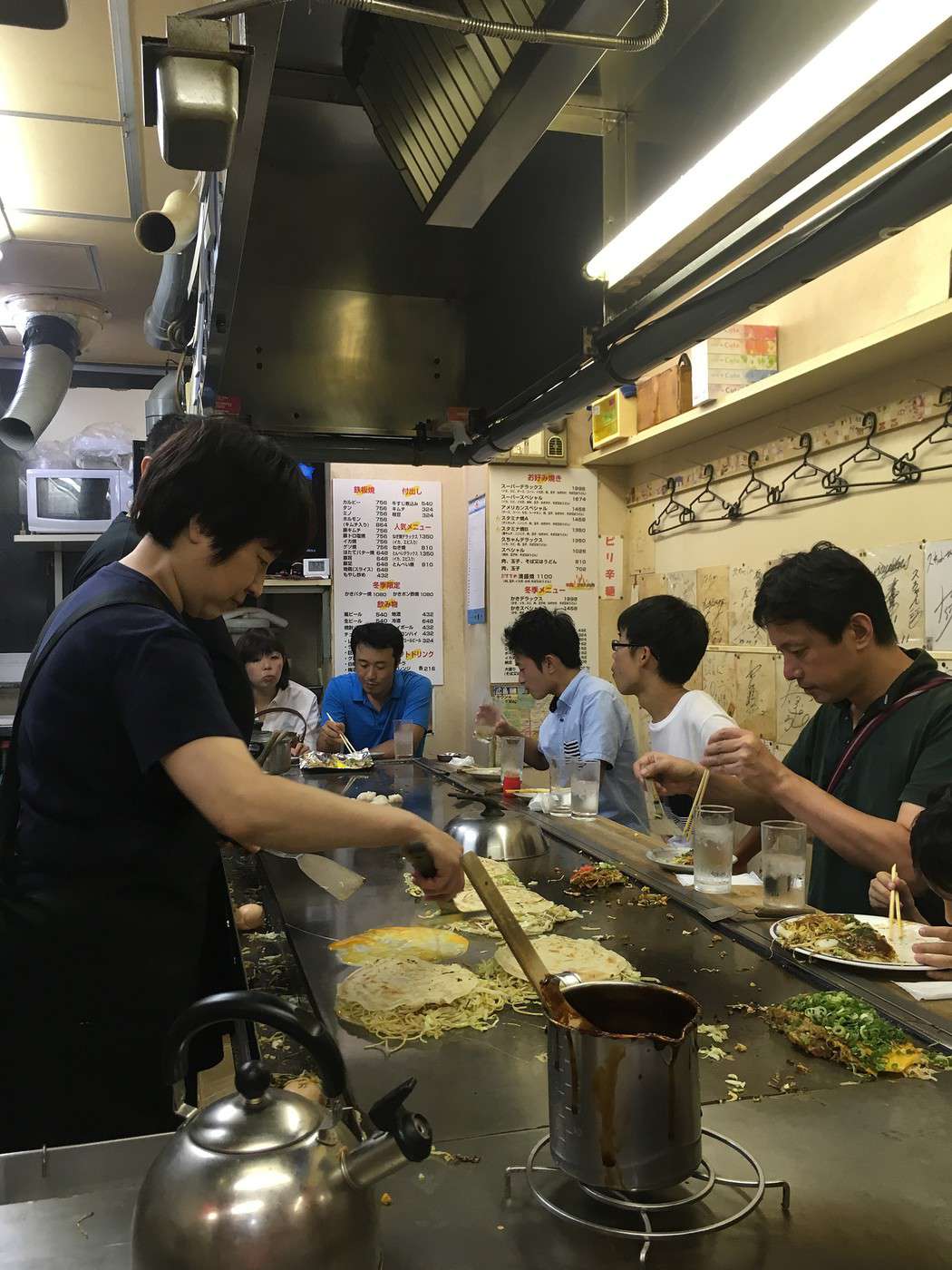
We reluctantly decide to leave—well, mostly the girls; the boys would’ve left earlier, but they kindly waited until the girls had their fill of lanterns and photos. Then we head to Okonomi-mura, the temple of okonomiyaki, Hiroshima’s culinary specialty. Over three floors, okonomiyaki restaurants are packed together—plenty to choose from! Okonomiyaki is often described as a stuffed crepe, but that’s a bit reductive. Well, as they say, a good picture is worth a thousand words.


We have a fantastic time. The okonomiyakis are delicious, and we’re met with curious yet friendly attention from our table neighbors.

Three weeks in Japan with the family

Bluequark · 2018-04-18 · Message 55 of 174

Sunday, August 7: Miyajima

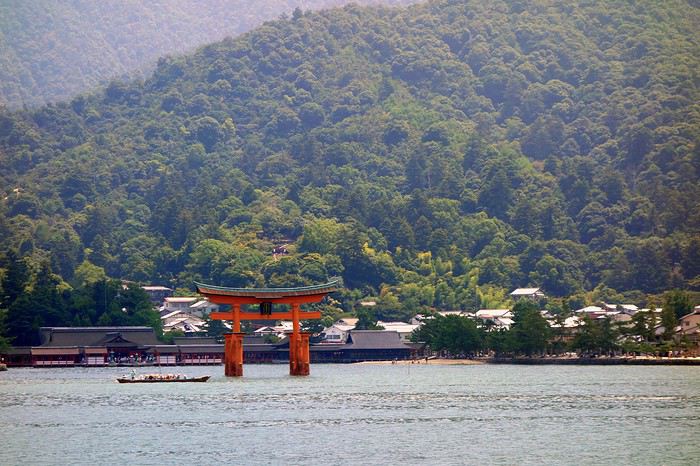
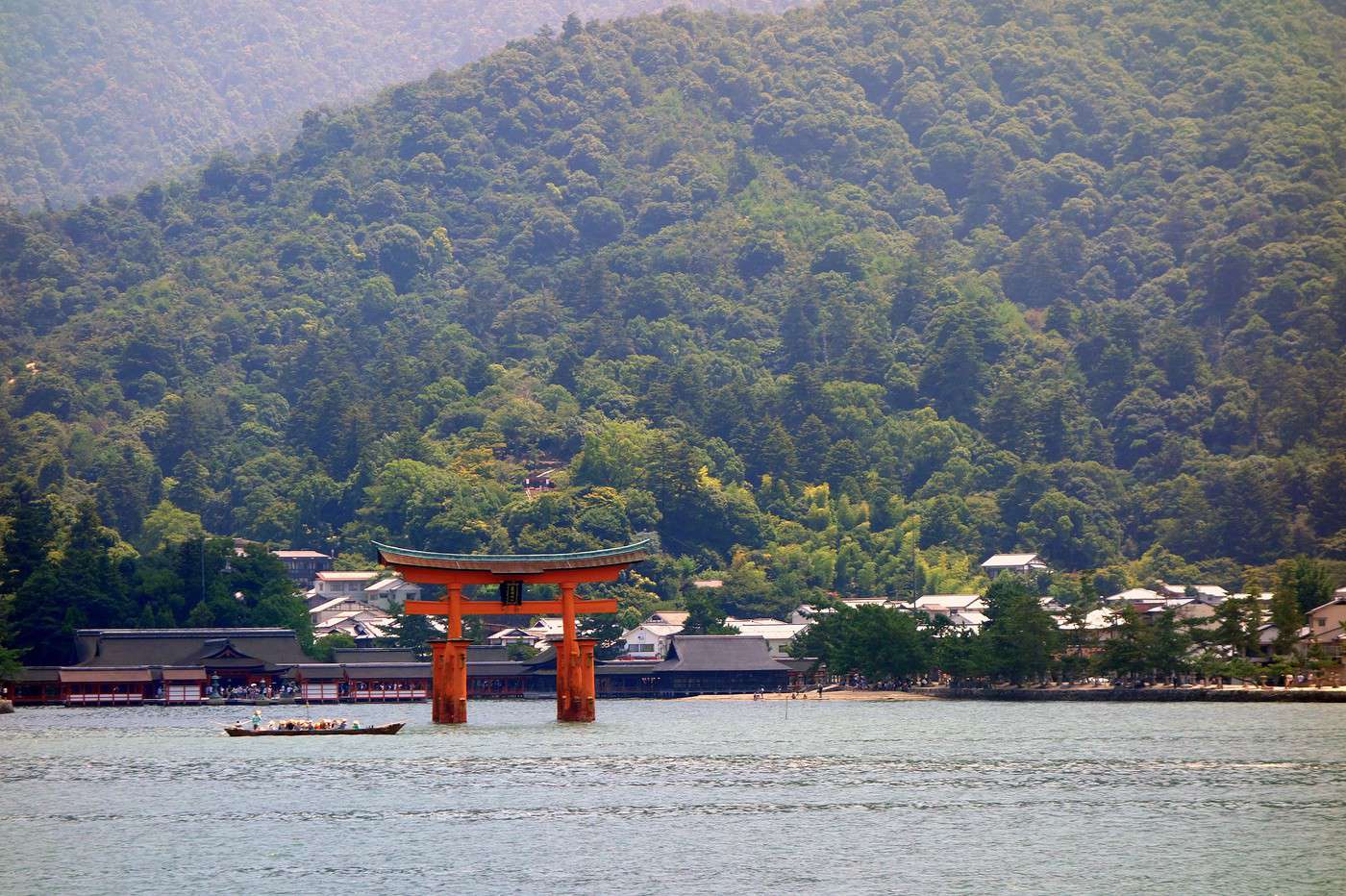
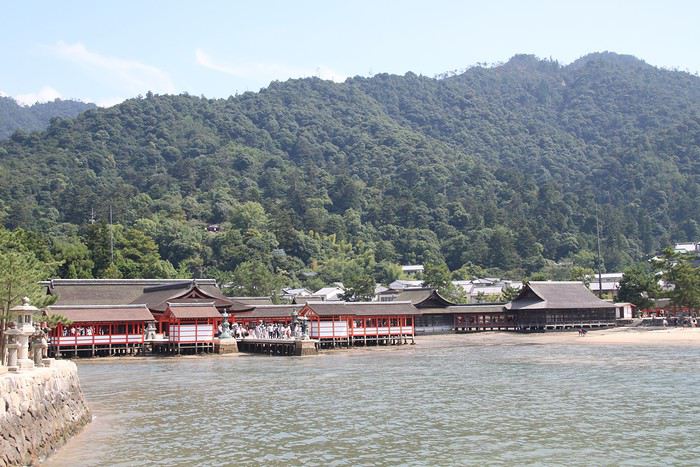
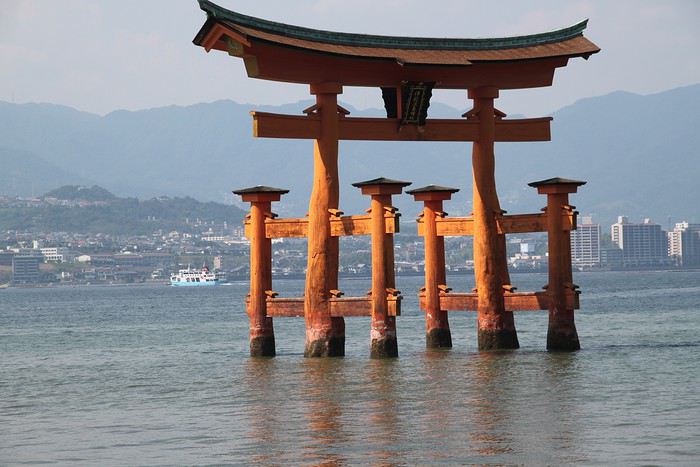
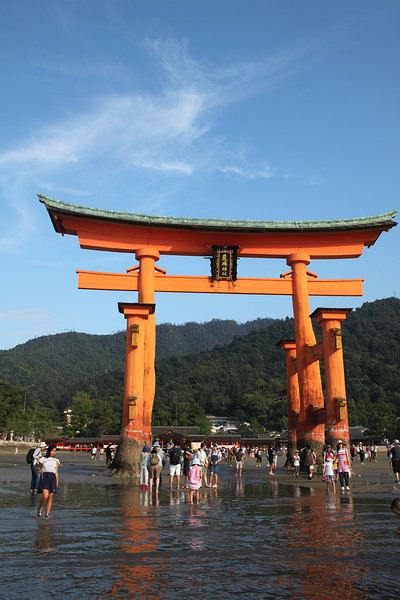
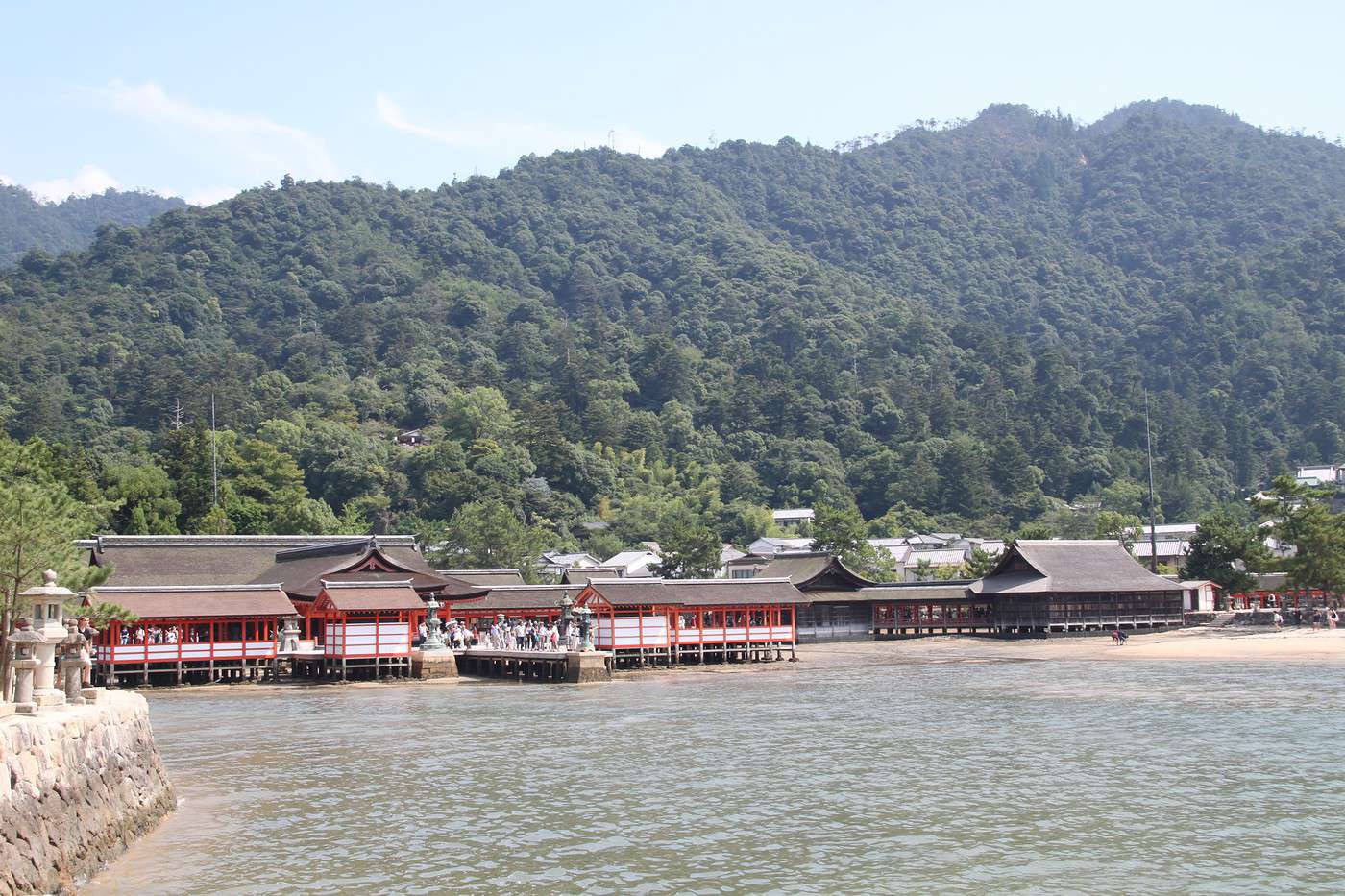
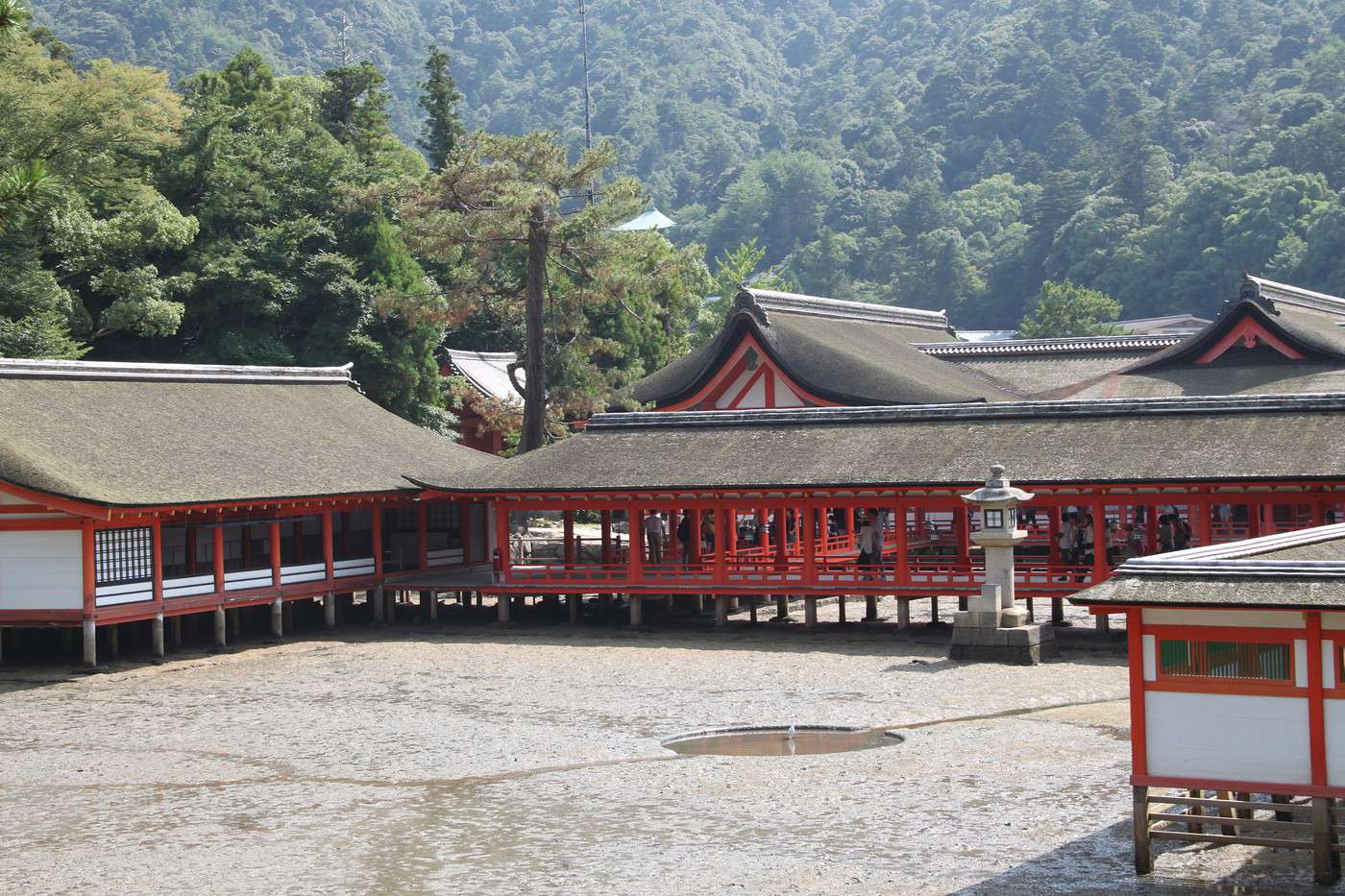
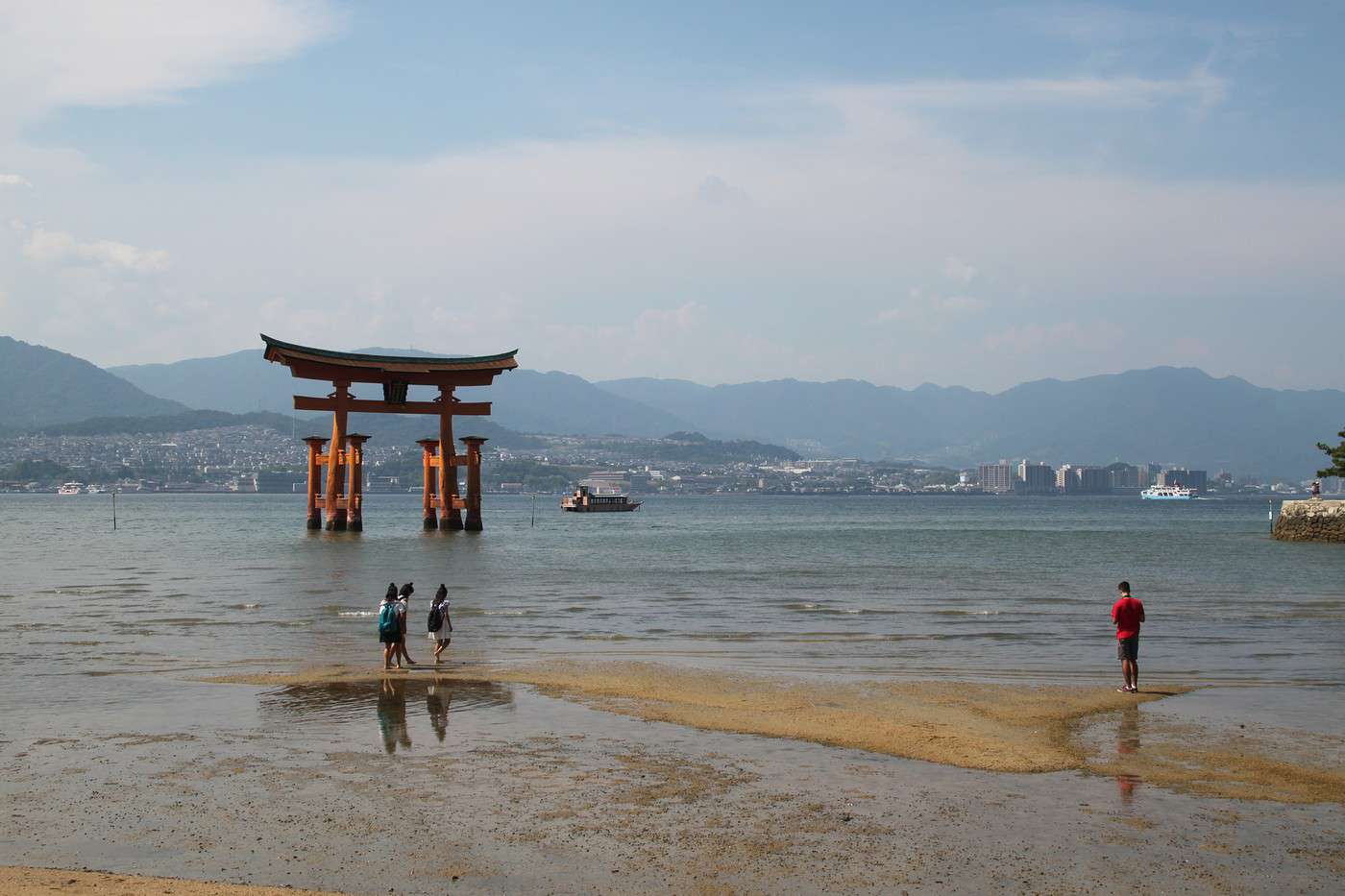
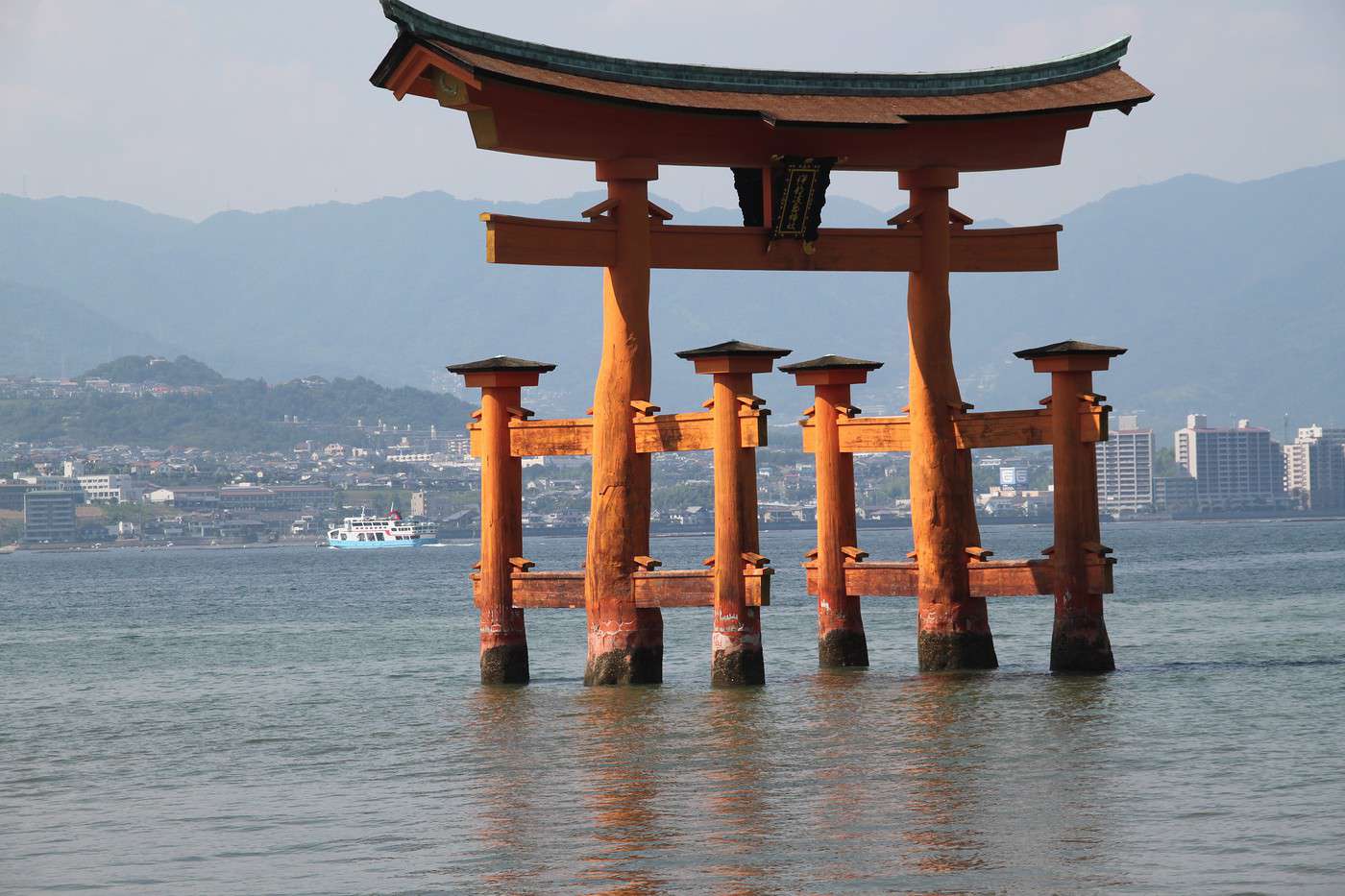
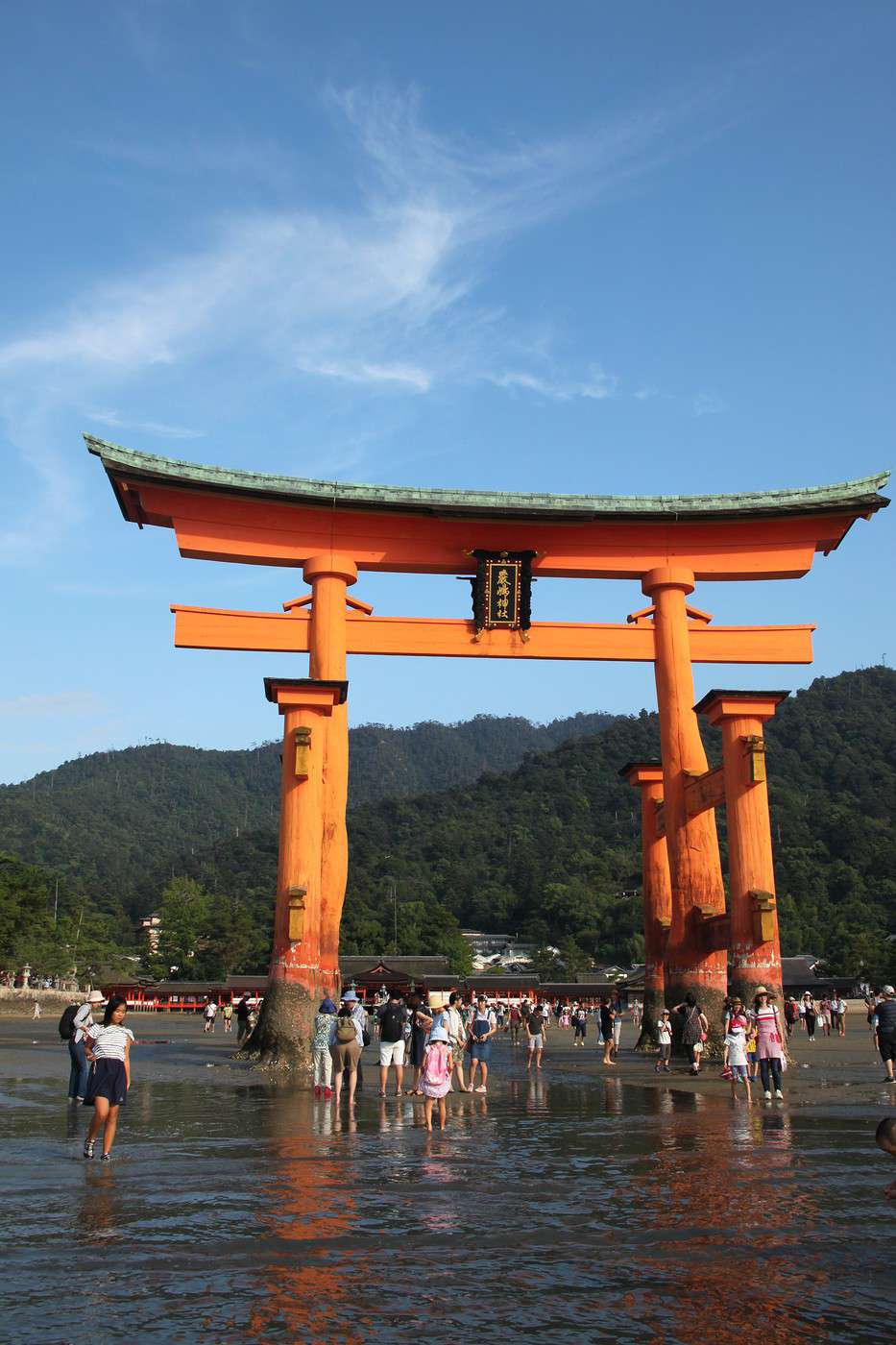
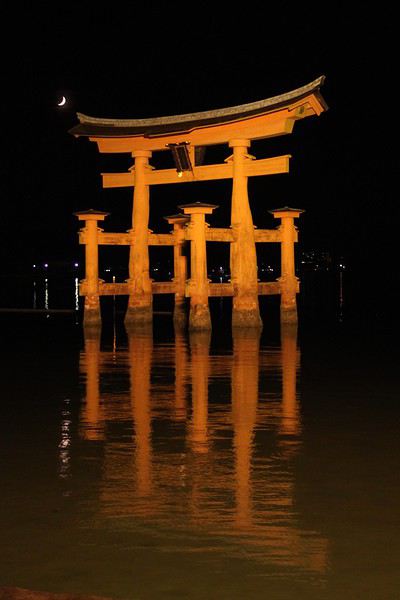
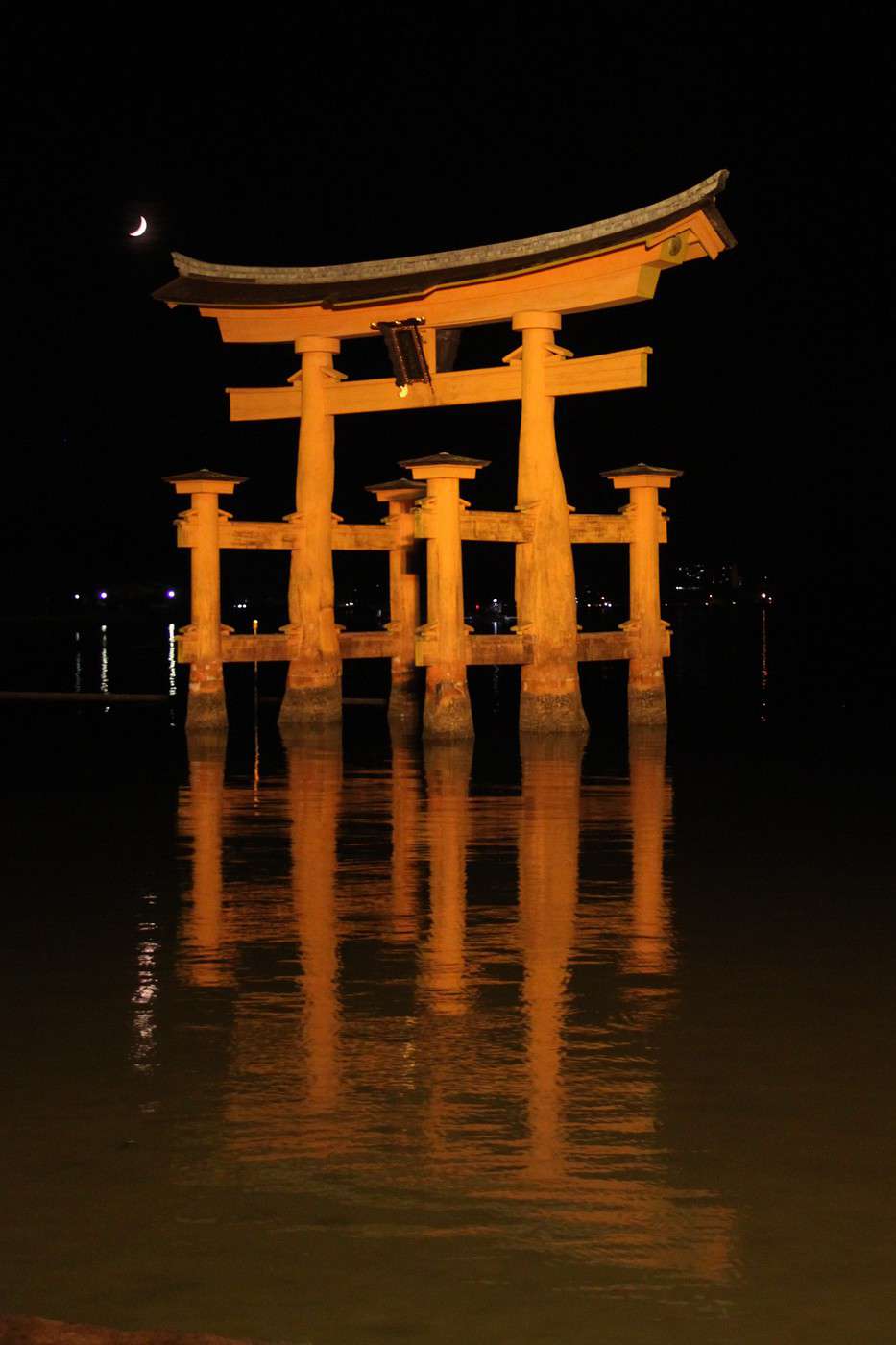
The next two days will be dedicated to Miyajima, the sacred island with the famous floating torii. Located less than an hour from Hiroshima, it can be visited in a day. But thanks to an incredible stroke of luck, I managed to find a room in one of the few guesthouses that isn’t totally overpriced. The advantage? Being able to take our time and, most importantly, enjoy the island when the tourists have left (or haven’t arrived yet). A short train ride, a quick boat trip, and there it is—THE Torii.


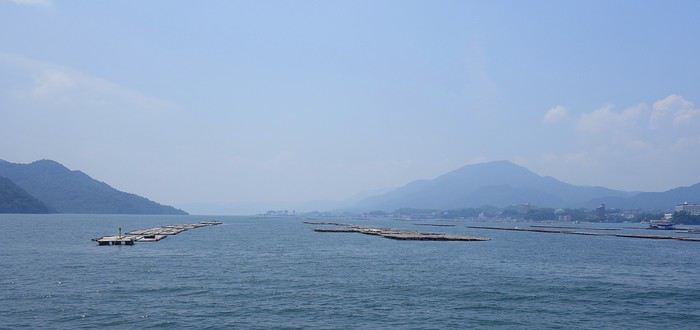
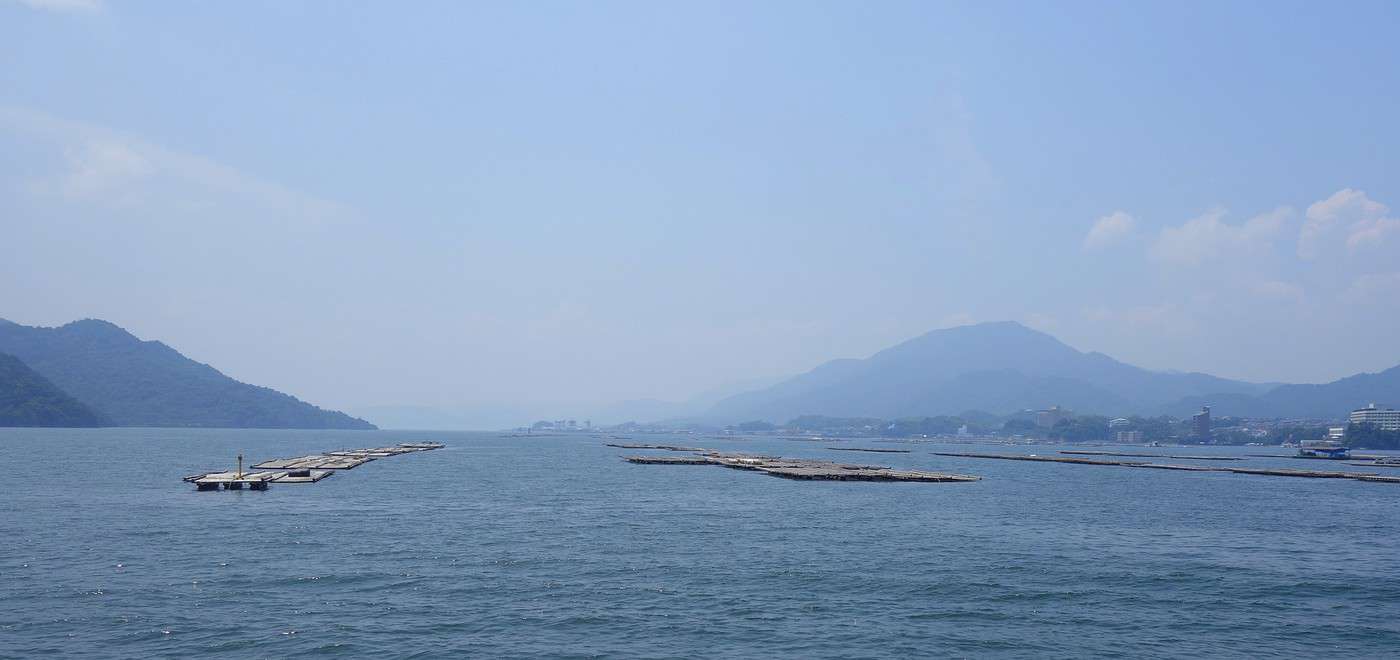
Oyster parks?


Our guesthouse, Kikugawa (www.kikugawa.ne.jp), is run by a charming grandmother who welcomes us with a big smile. She doesn’t speak English, we don’t speak Japanese, but the exchange is friendly with lots of gestures and drawings. She’s really great, this grandma.

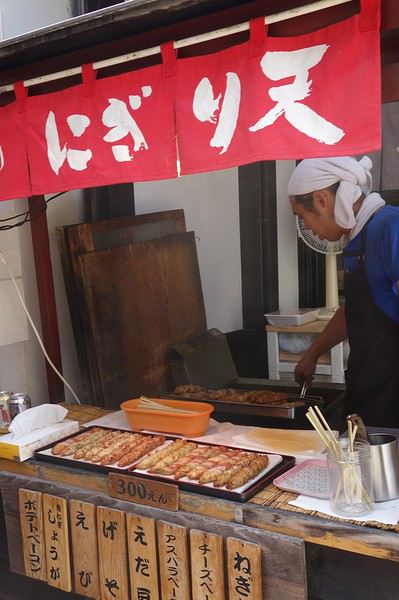
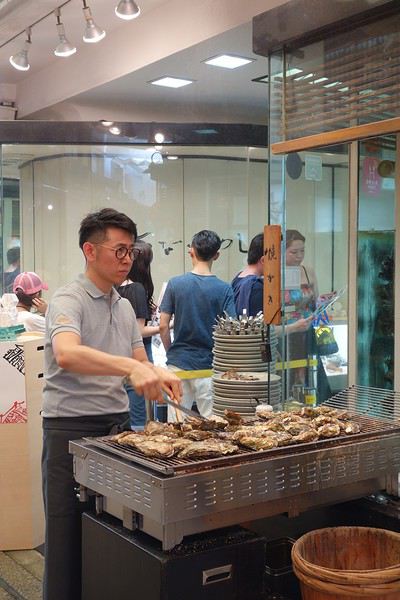
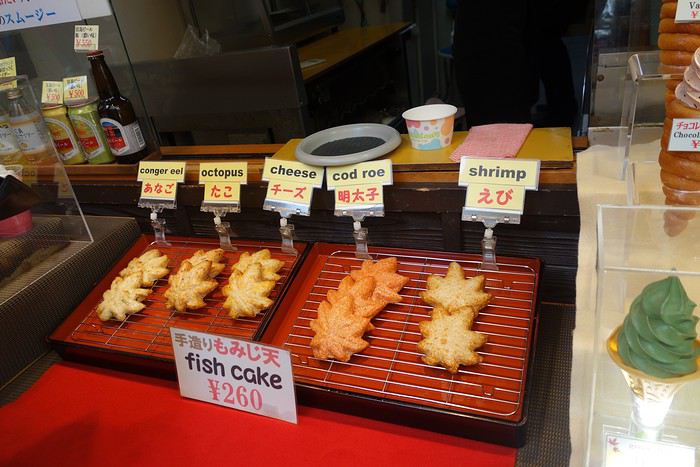
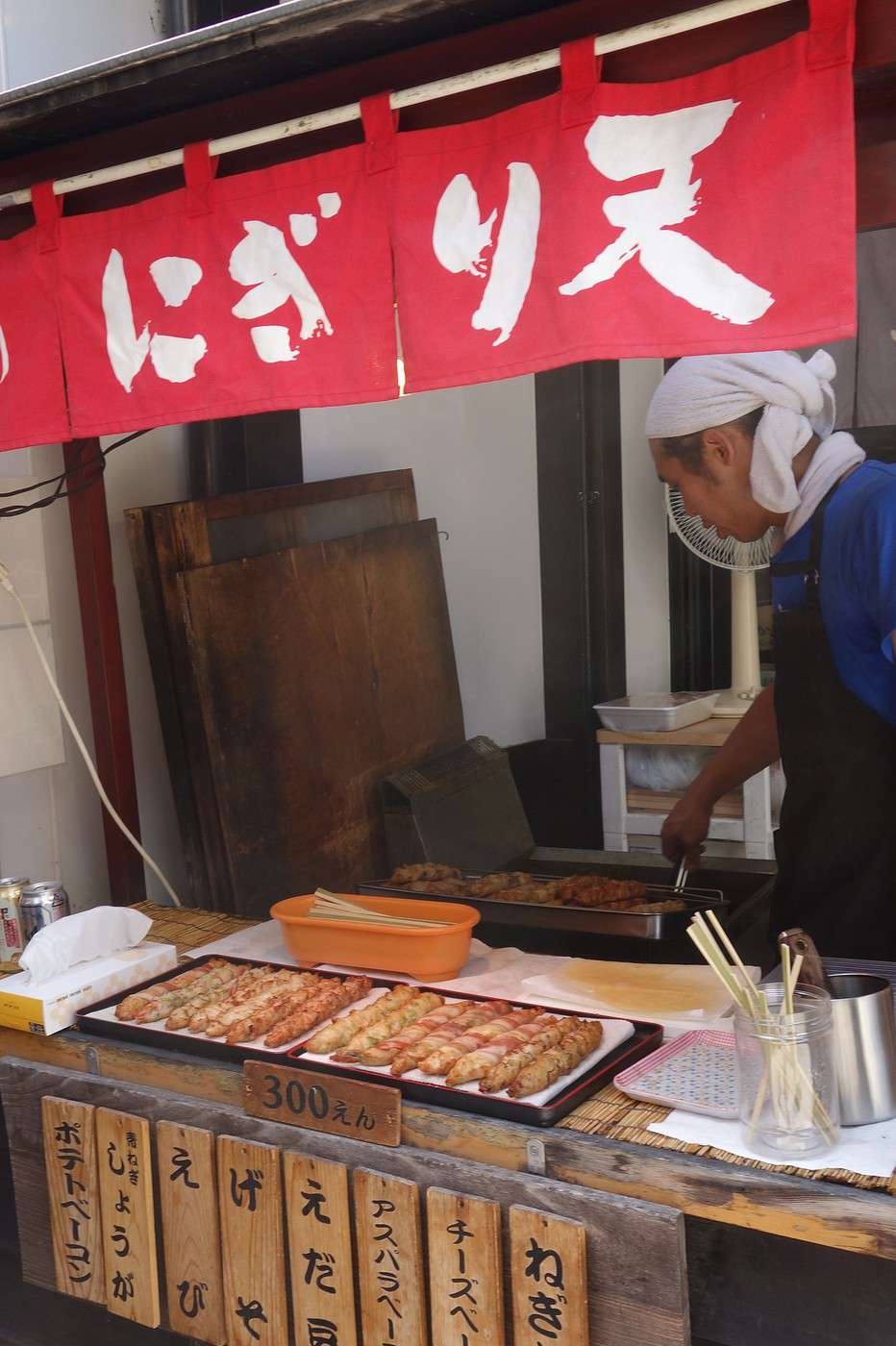
After dropping off our luggage, we head to the main street, where food stalls are packed together. Like everywhere in Japan, the island has its own specialties, and the plan for lunch is to try as many as possible by hopping from one stall to another. The street itself is a real spectacle.


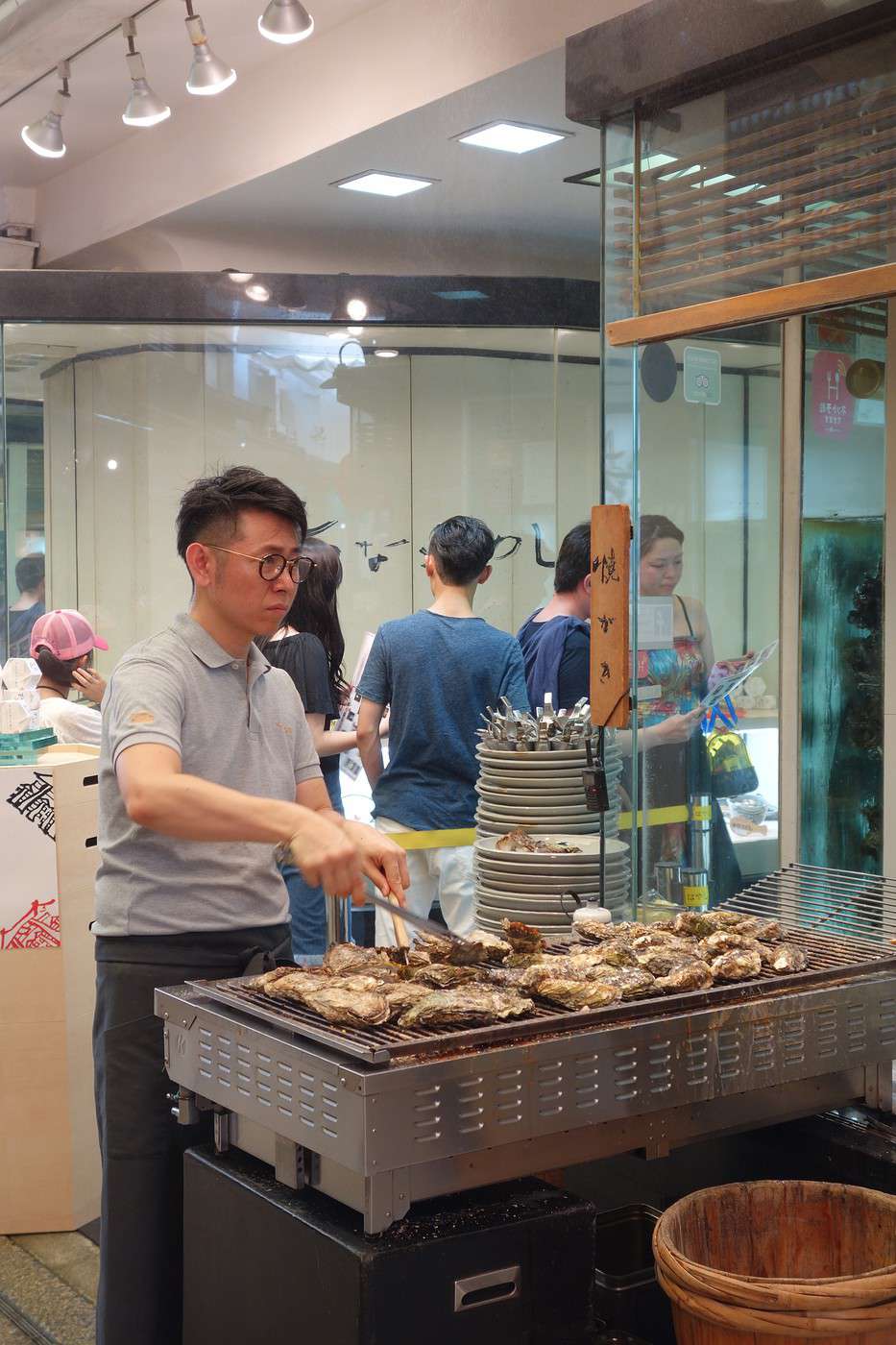
Grilled oysters,


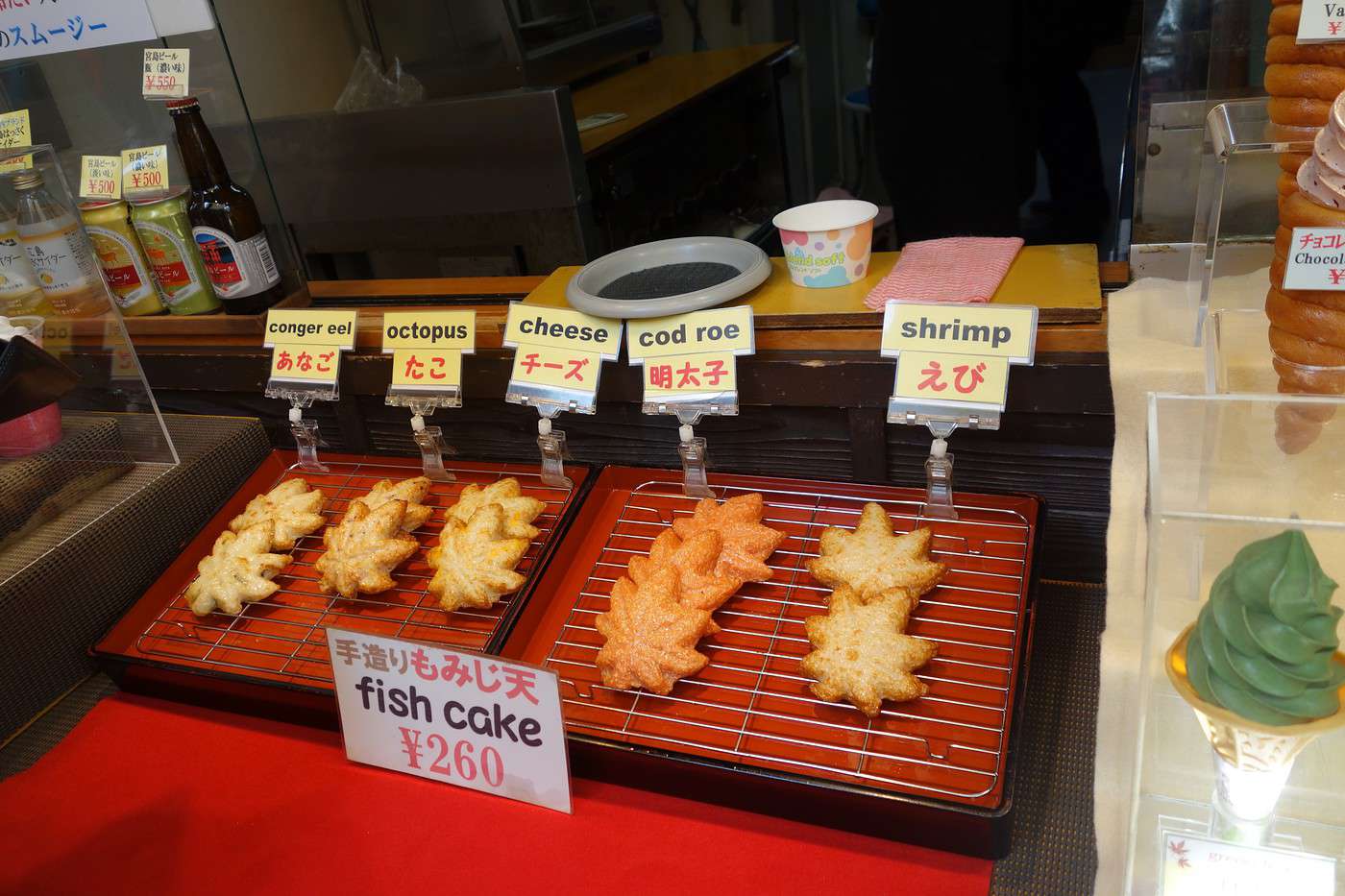
fish cakes,

Momiji-manju, maple-leaf-shaped stuffed cakes,


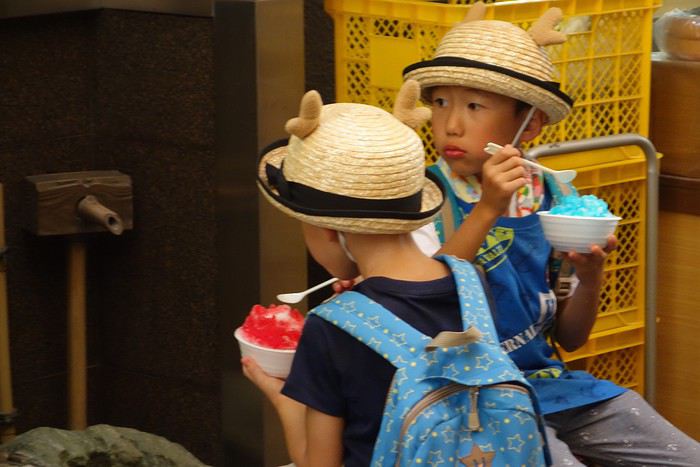
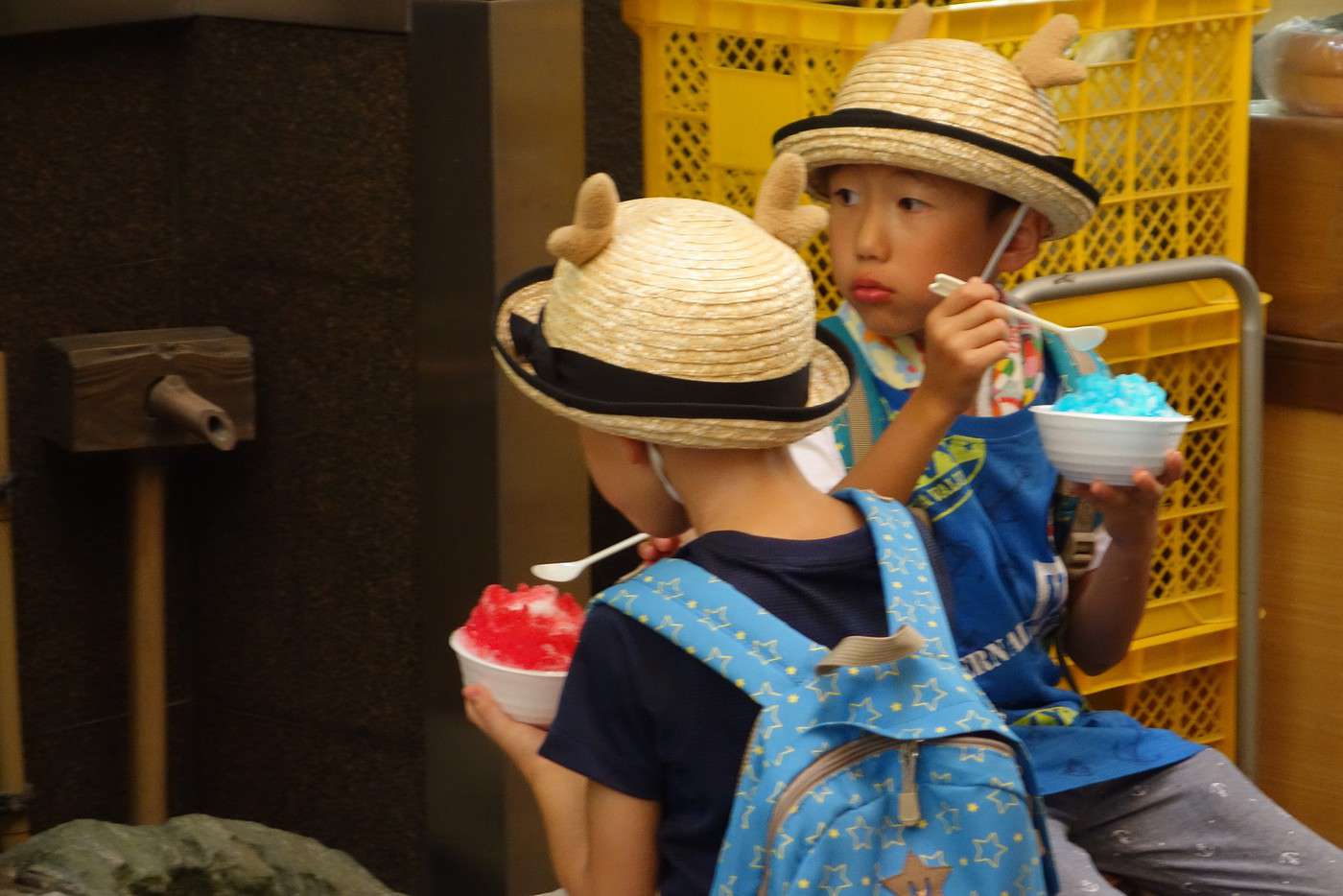
and ice cream in all its forms.


And that’s not all!

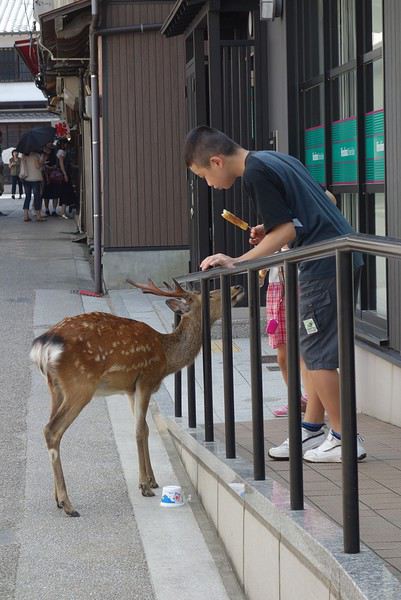
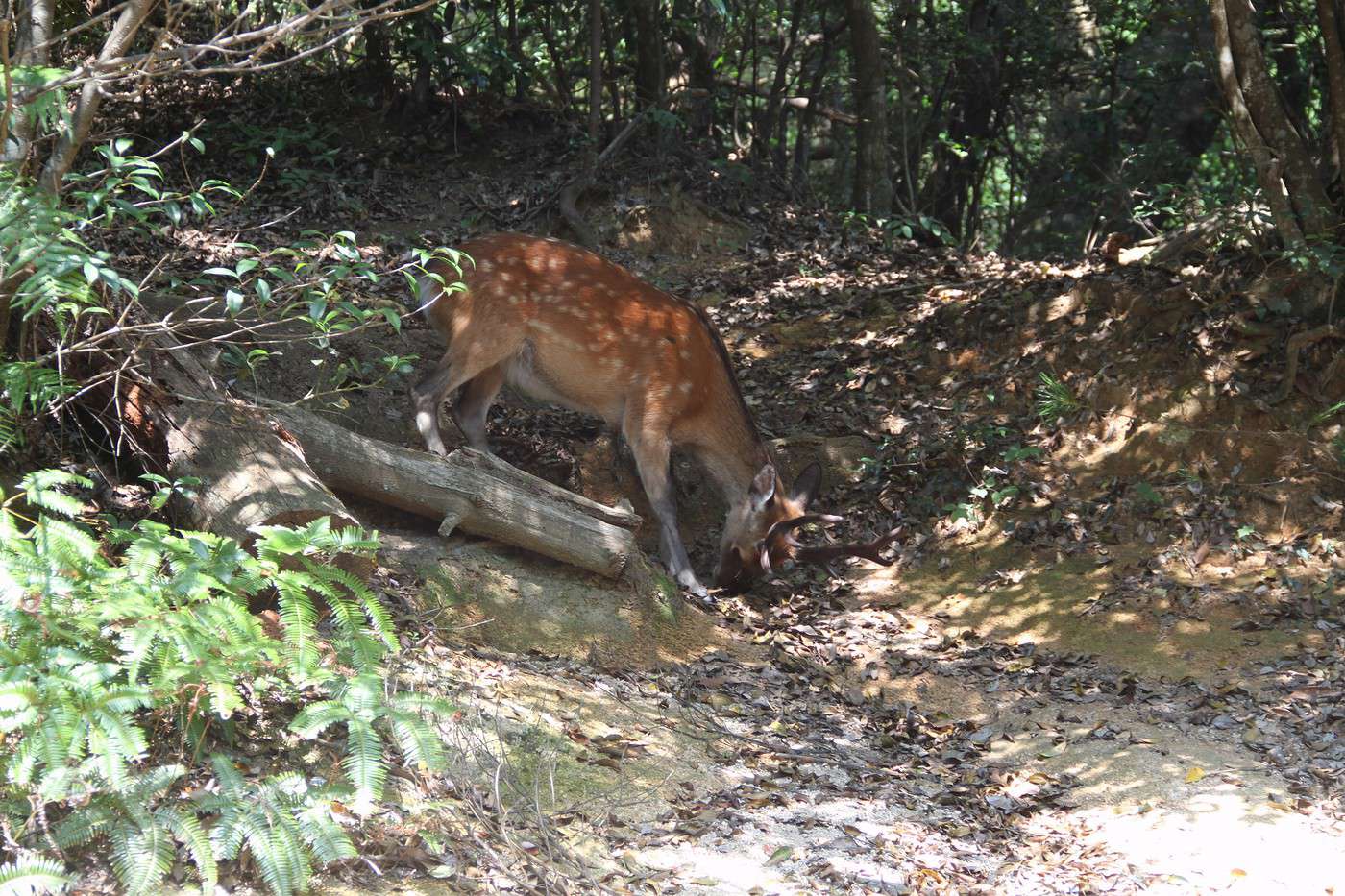
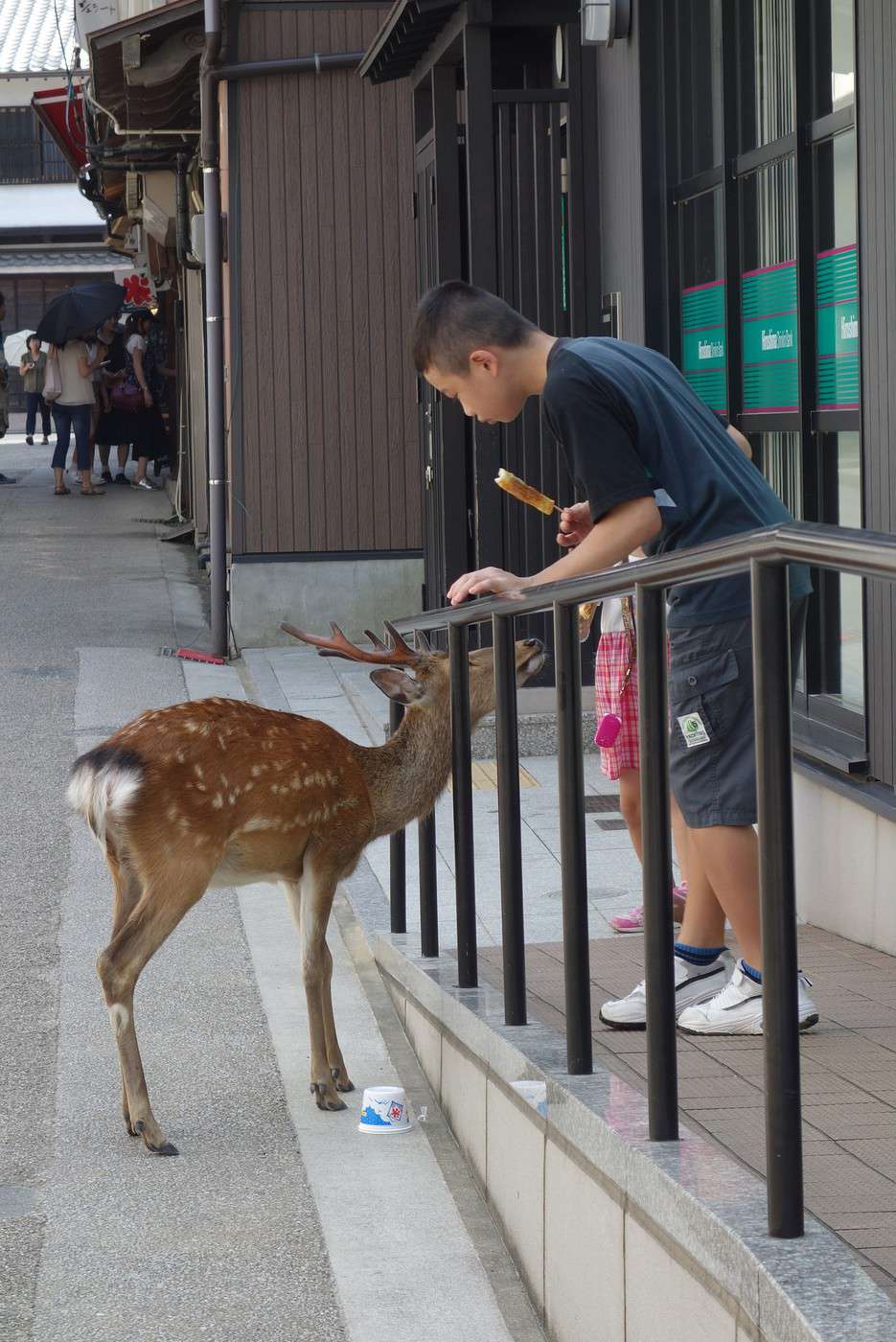
We also meet the deer that populate Miyajima—they’re not shy but completely clueless. And honestly, pretty pushy. They try to eat anything within reach, even (or especially?) if it’s not edible. Our oldest, who clearly has had run-ins with these kinds of critters before, greets them with undisguised hostility. No "Aww, they’re so cute!" here—just firm "Get away, you stupid animal!"s.


Three weeks in Japan with the family

Bluequark · 2018-04-18 · Message 56 of 174


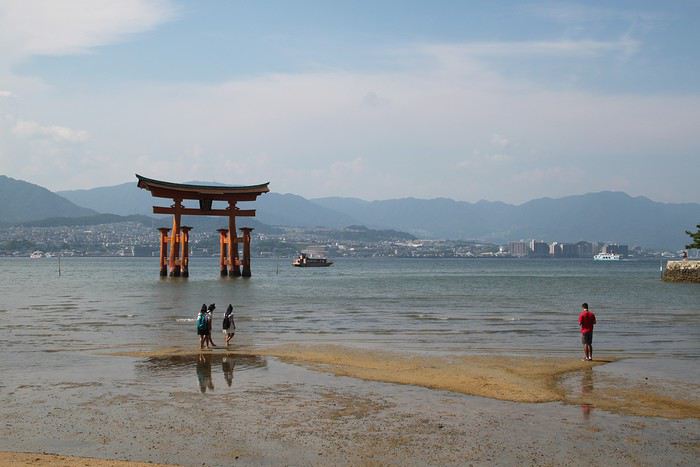
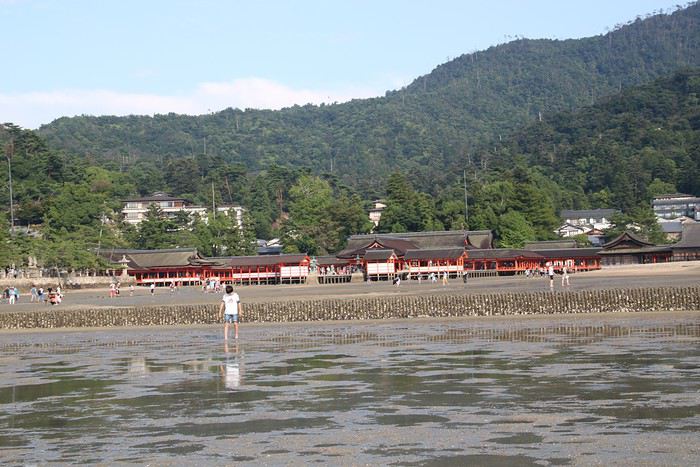
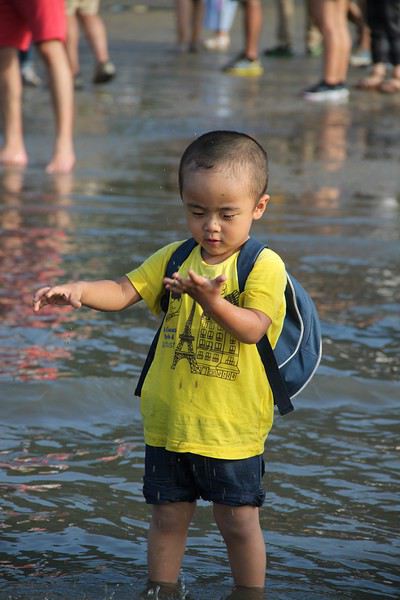
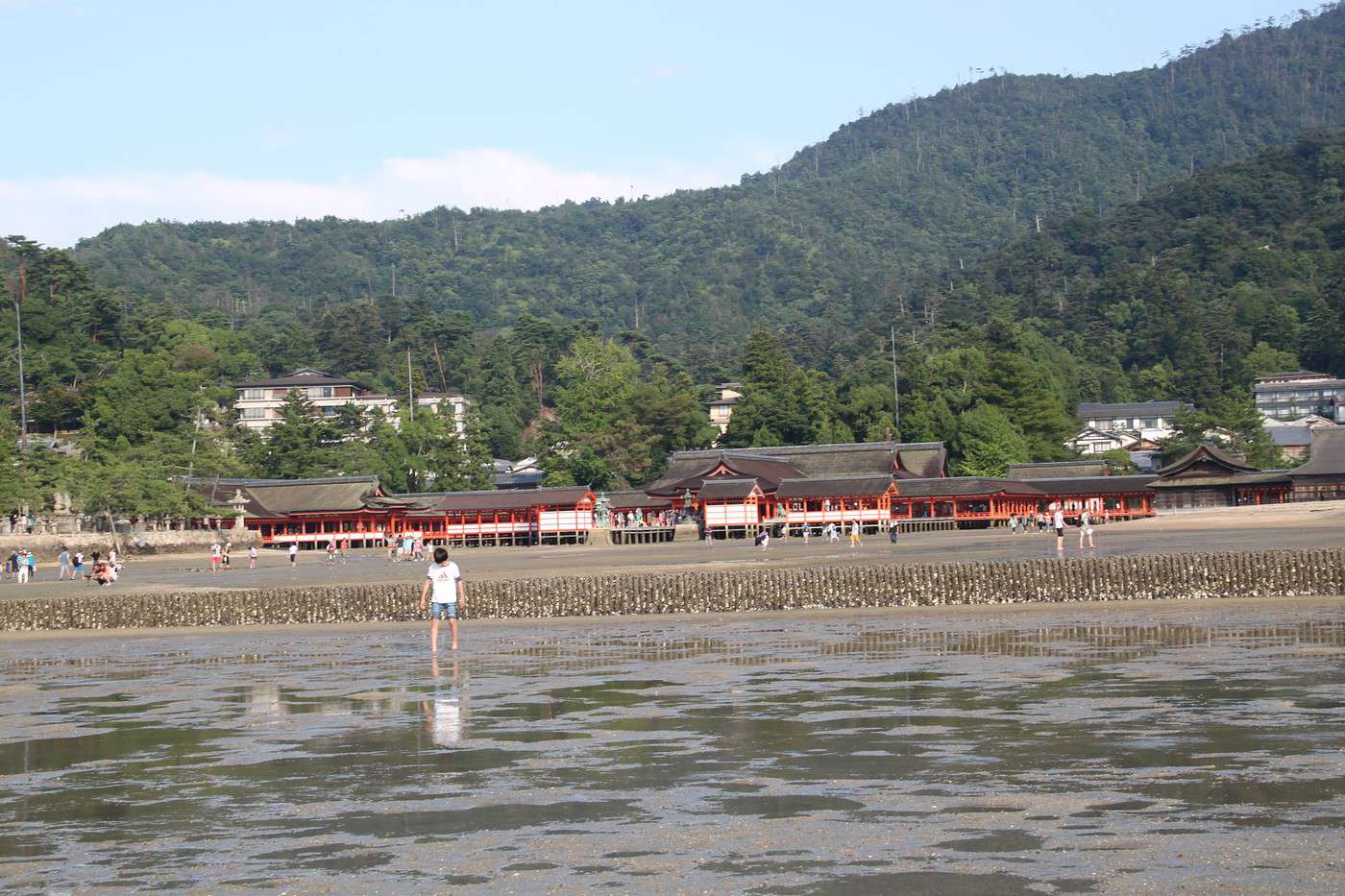
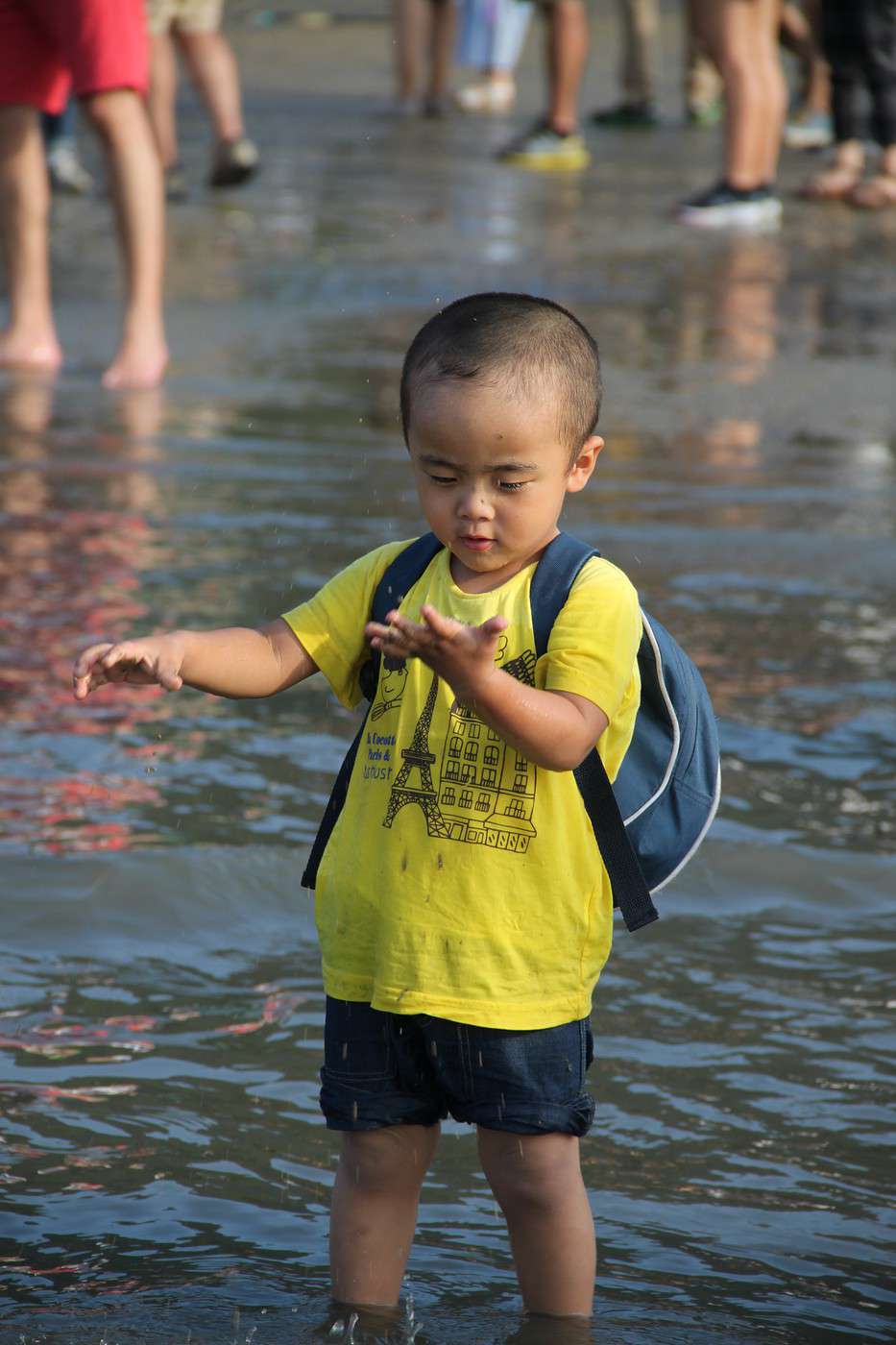
For today, a bit of relaxation. The kids had been disappointed they couldn’t take a dip at Naoshima. Today’s the perfect chance to make up for it and enjoy the Seto Inland Sea. Skipping Itsukushima Shrine, we head to the small beach on the east side to splash around under the protection of the torii. With us, just a few other tourists—and almost all of them French!!! The Japanese must know all the junk floating in the water. )

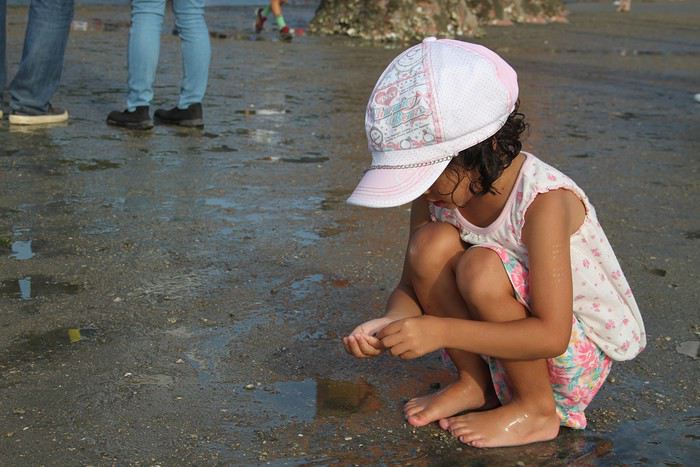
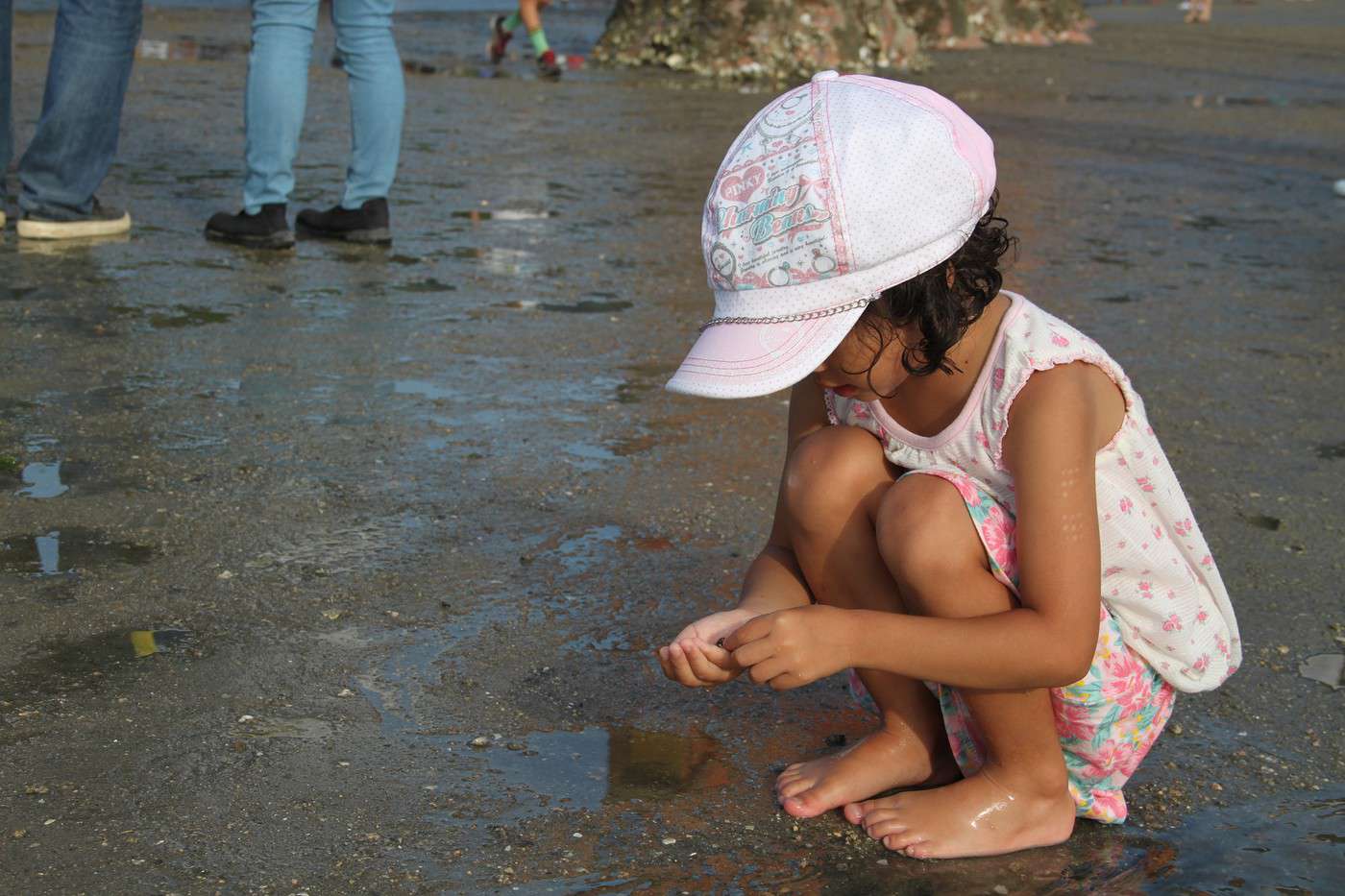
Little by little, the tide goes out, and the tourists take over the place along with a few birds.


Hermit crab hunting is on!


Three weeks in Japan with family

Bluequark · 2018-04-18 · Message 57 of 174

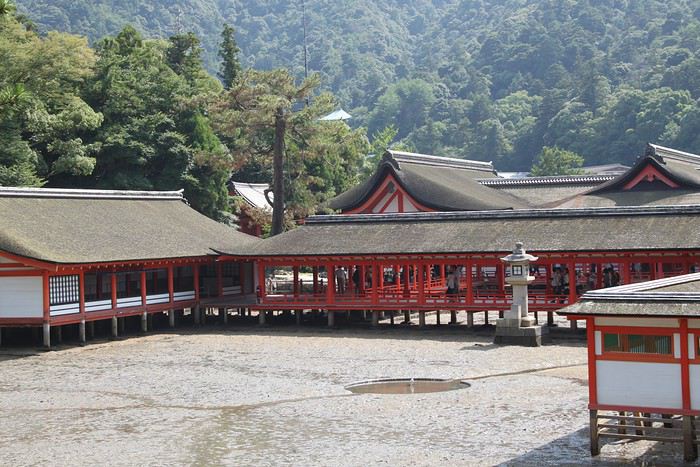
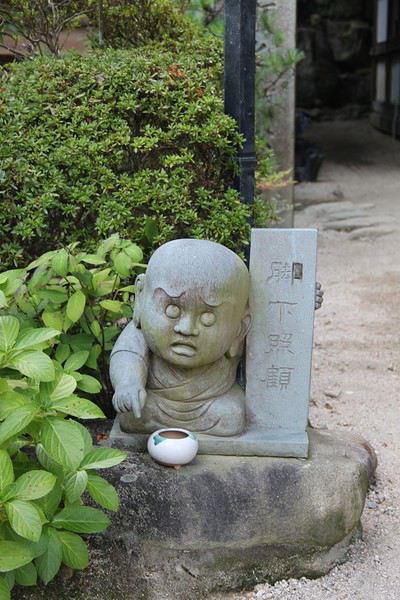
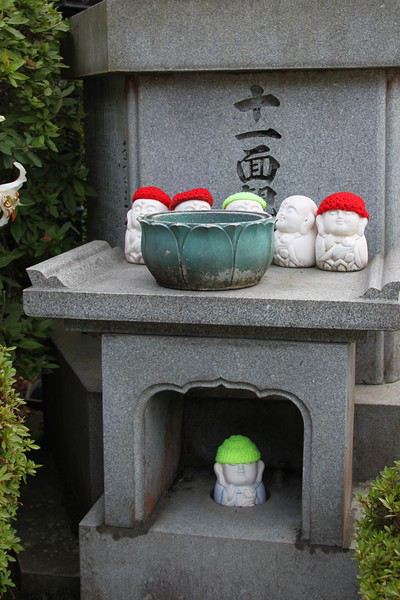
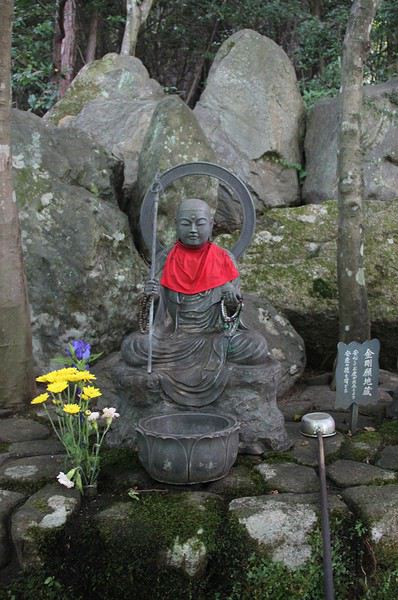
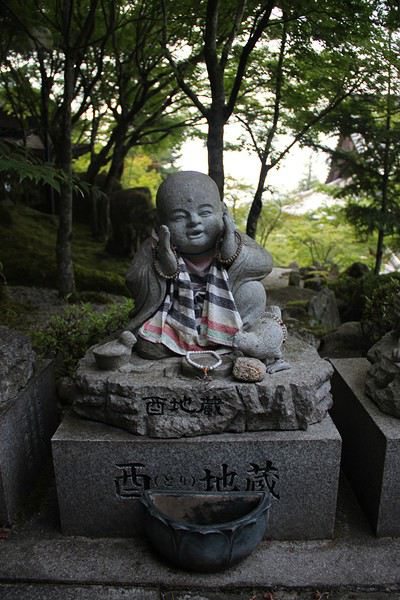
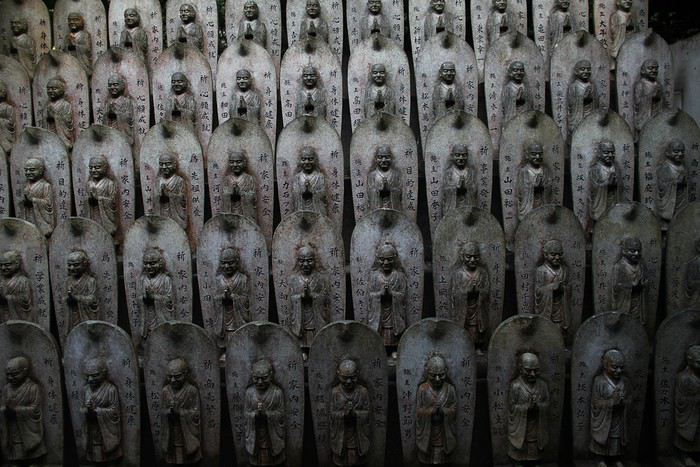
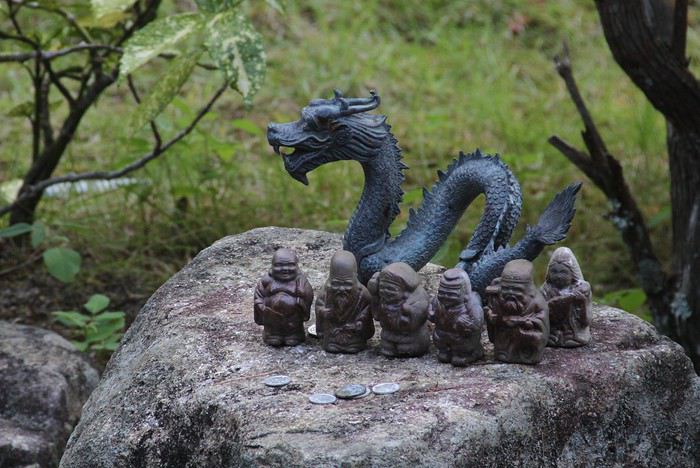
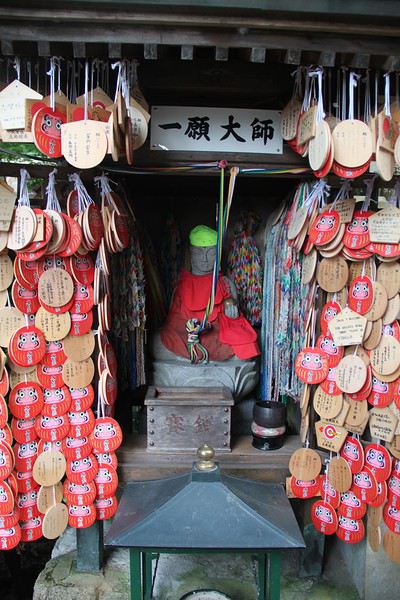
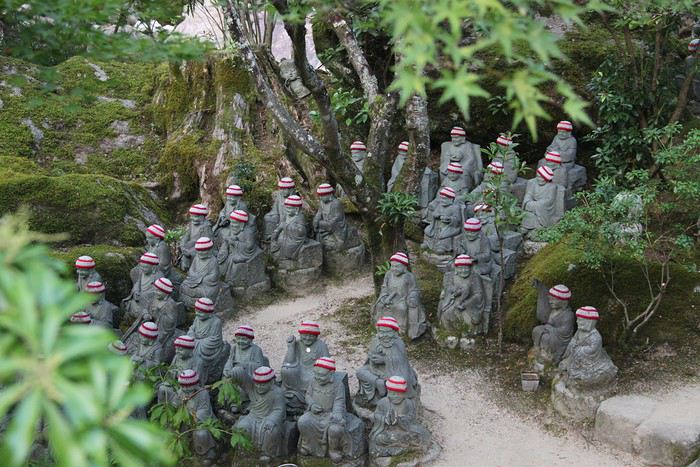
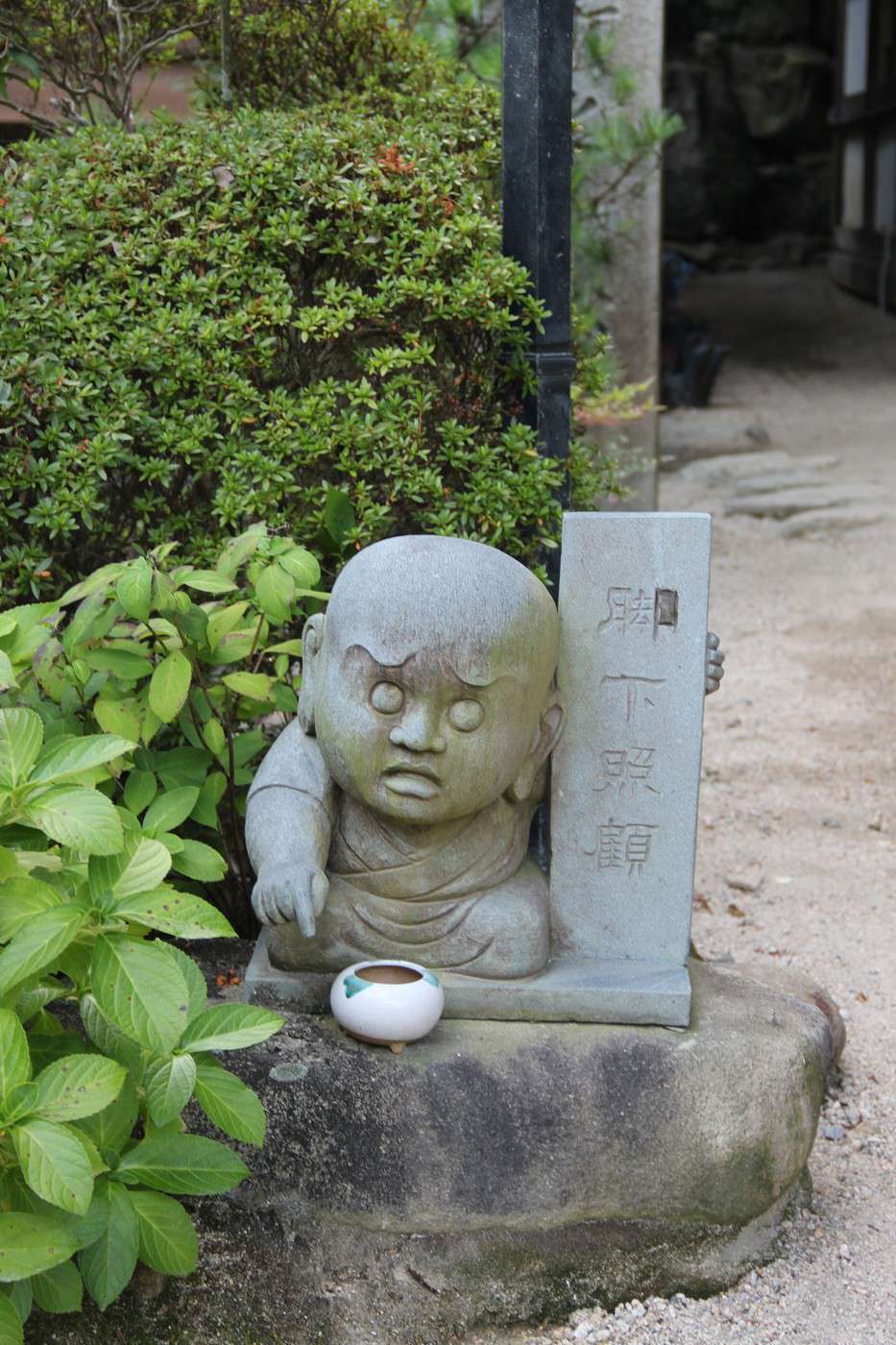
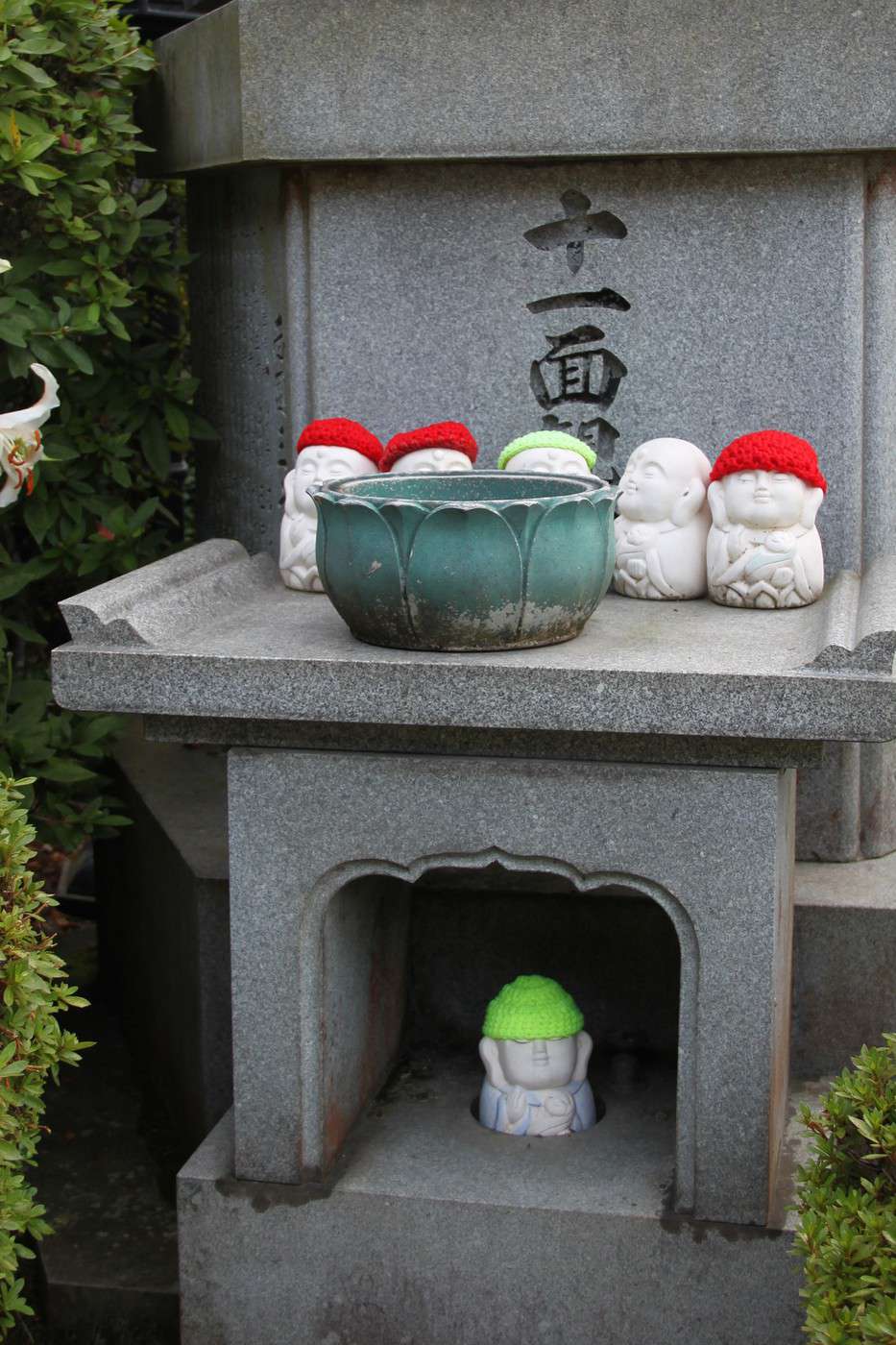
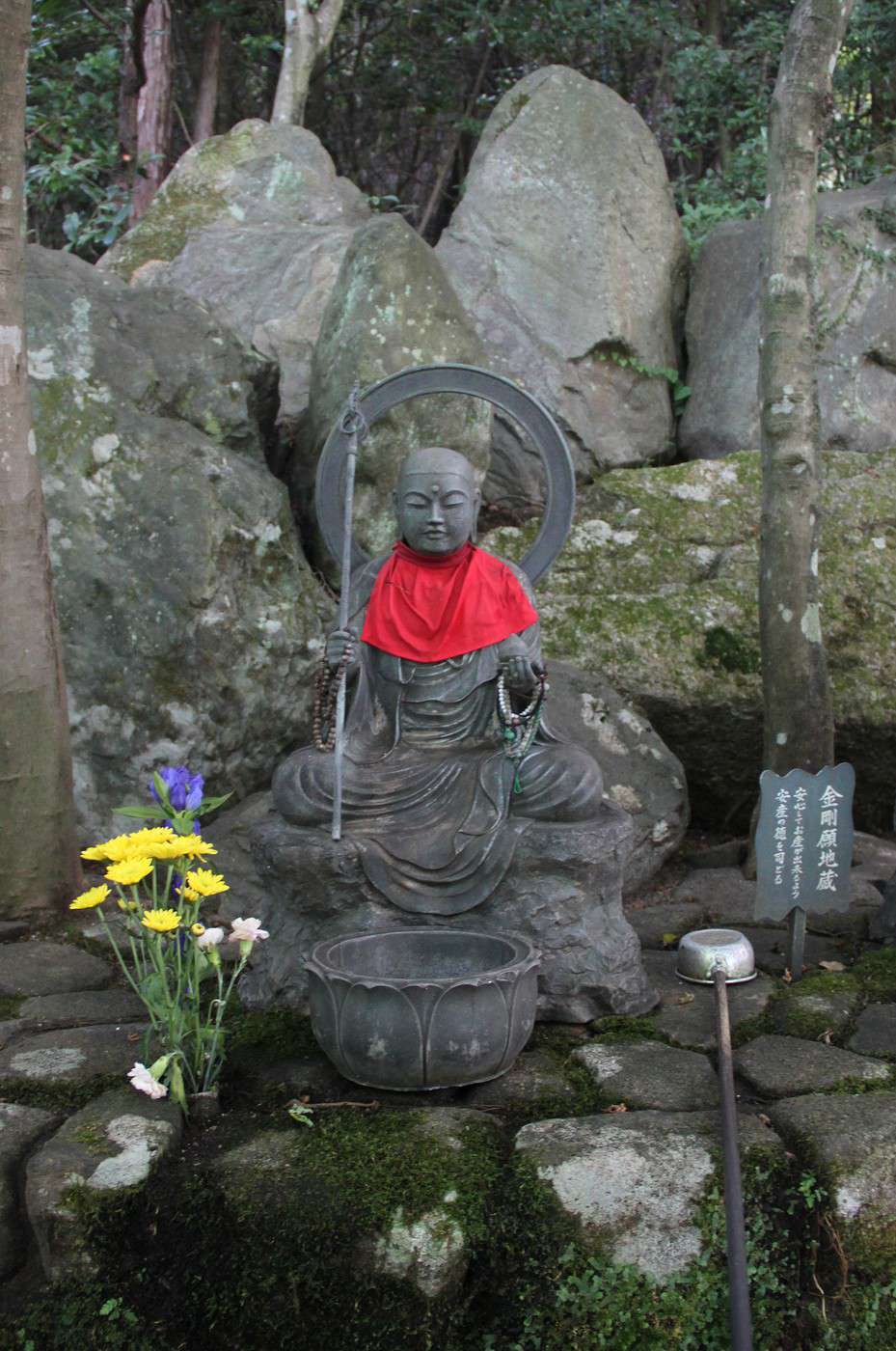
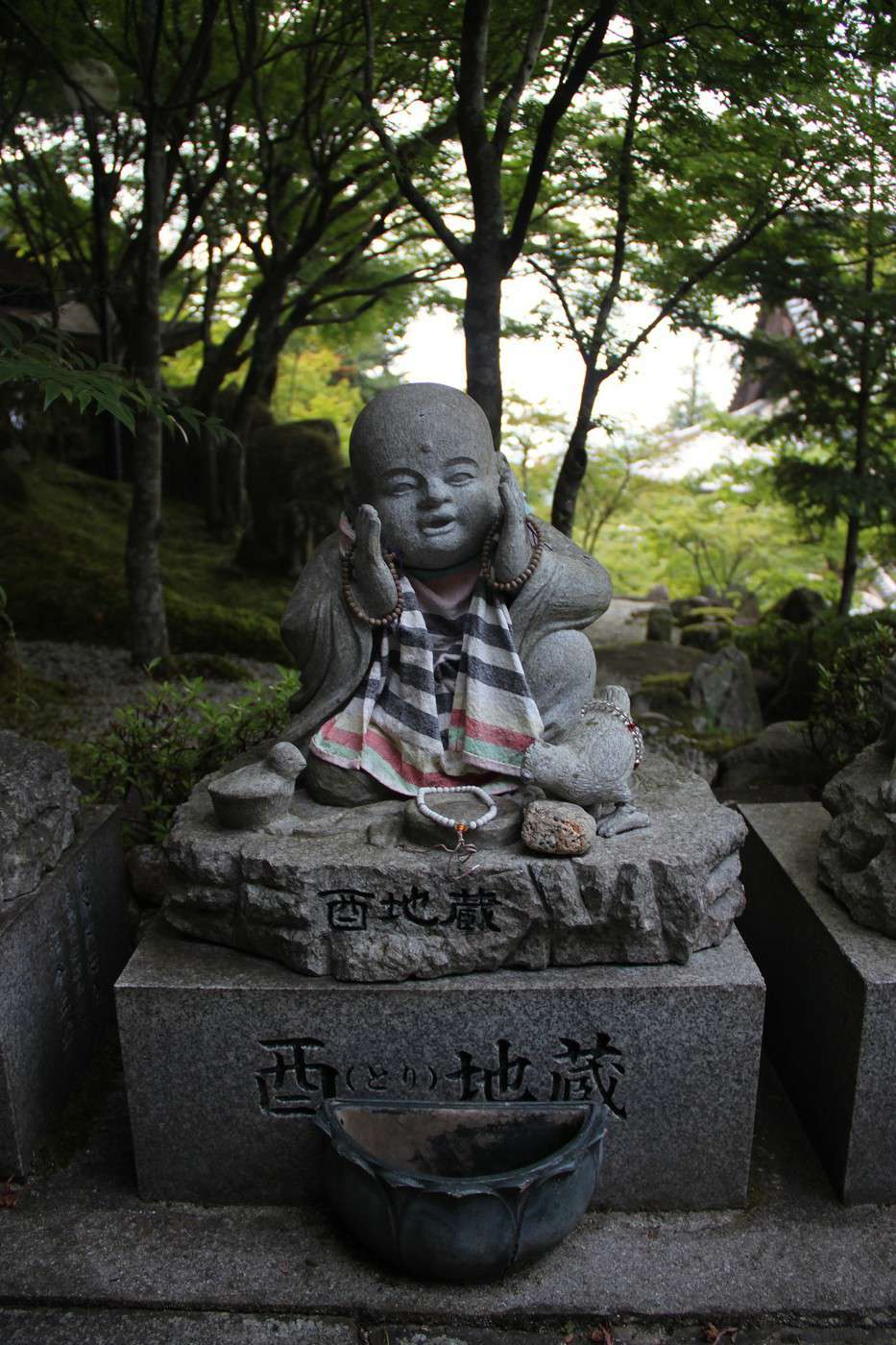
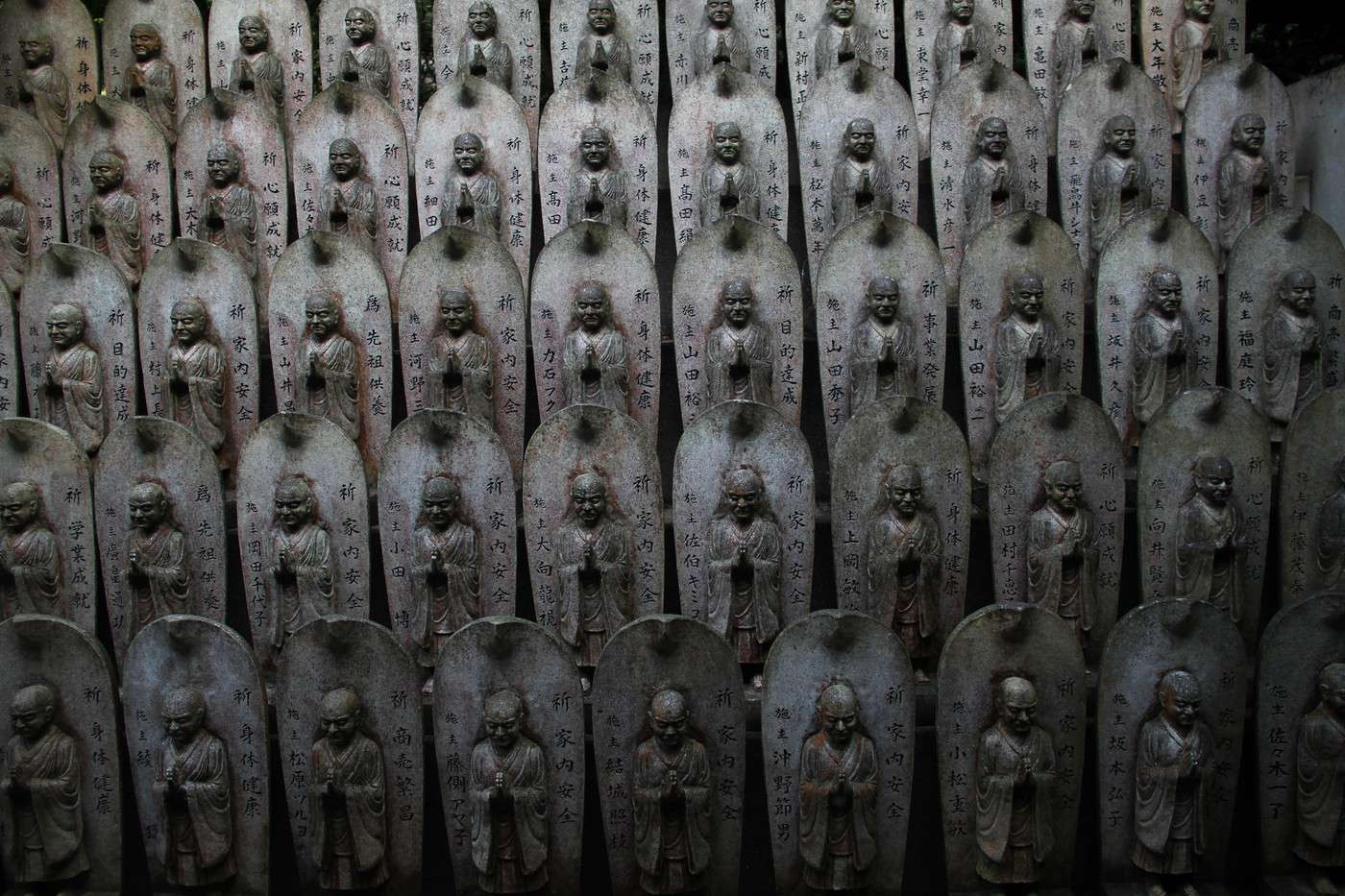
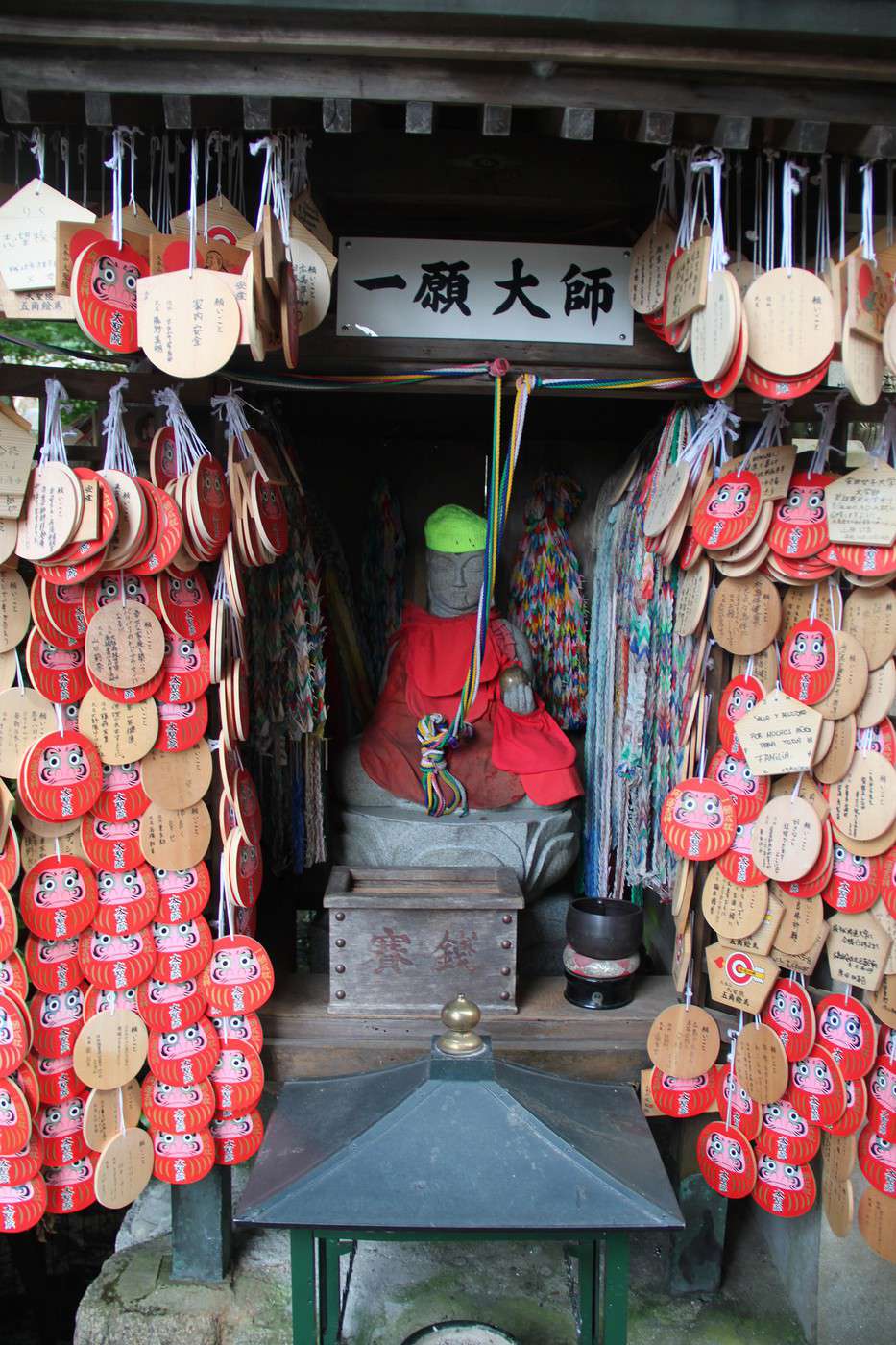
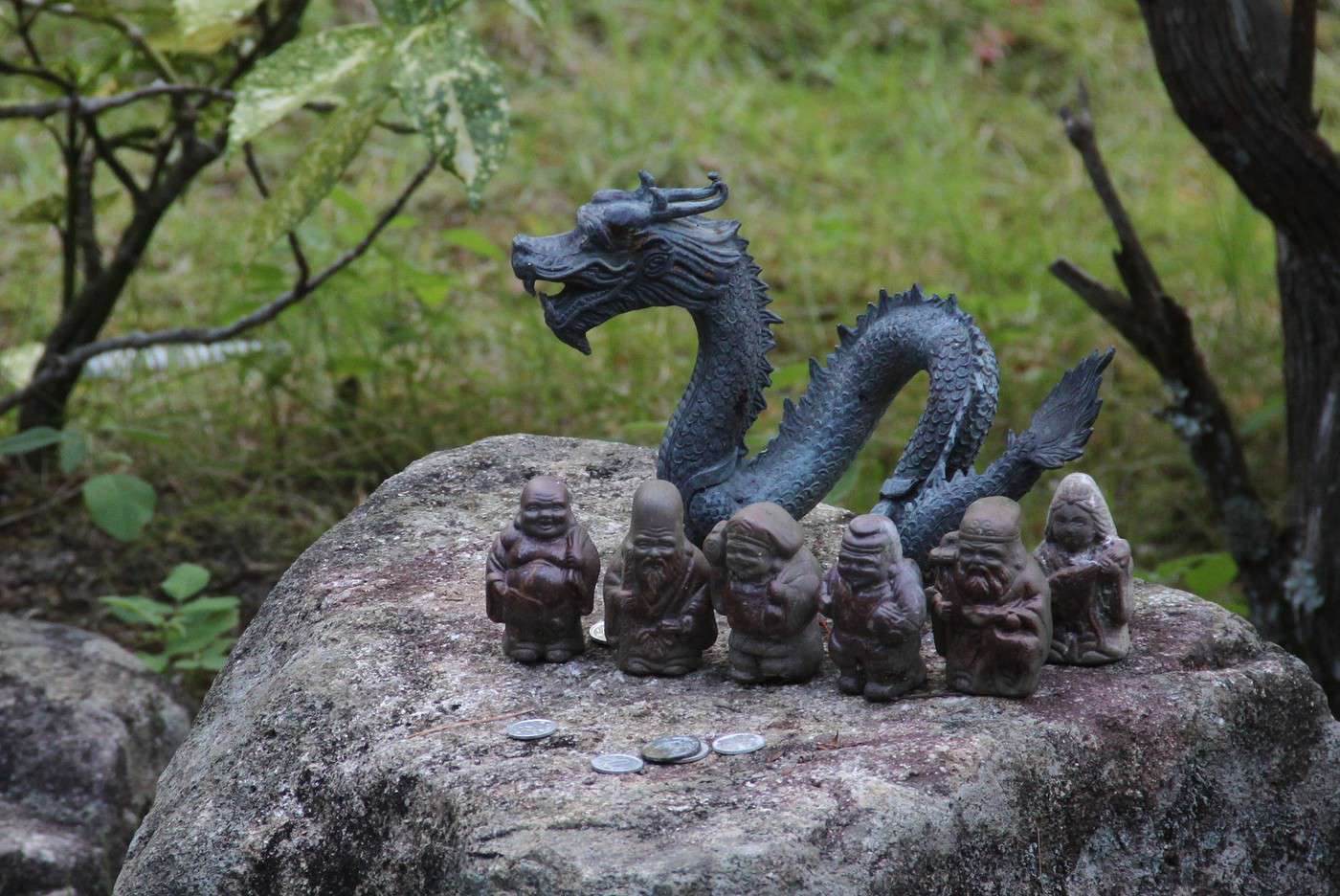
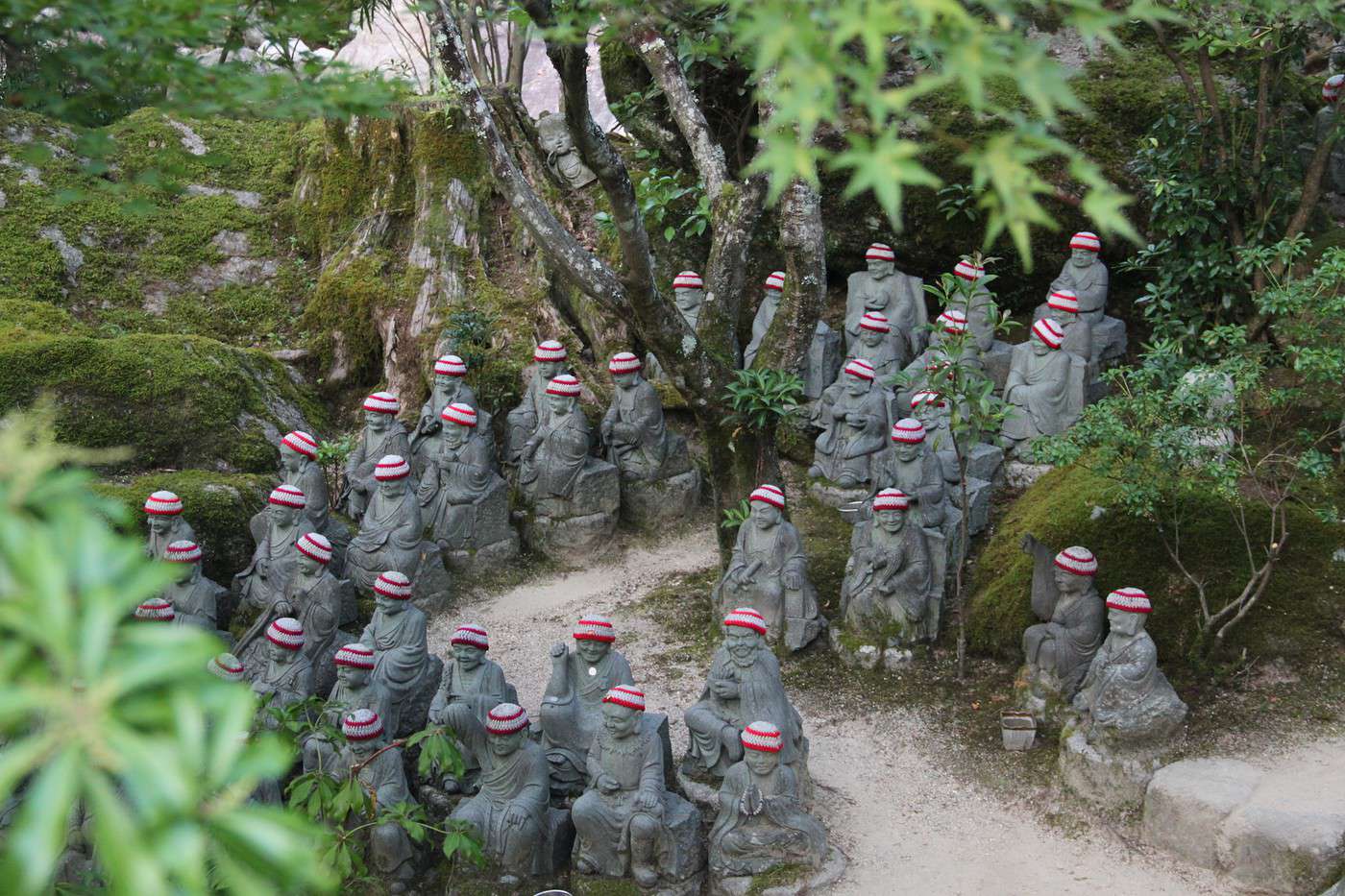
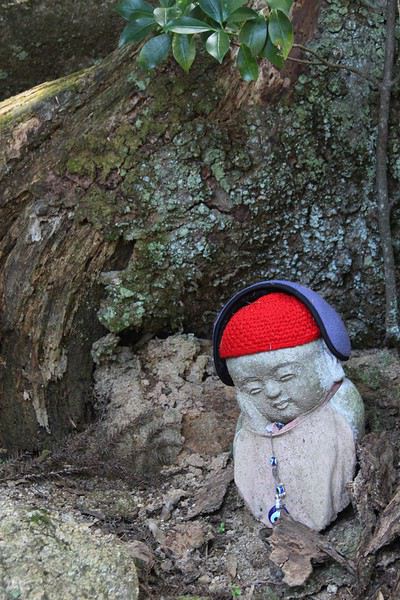
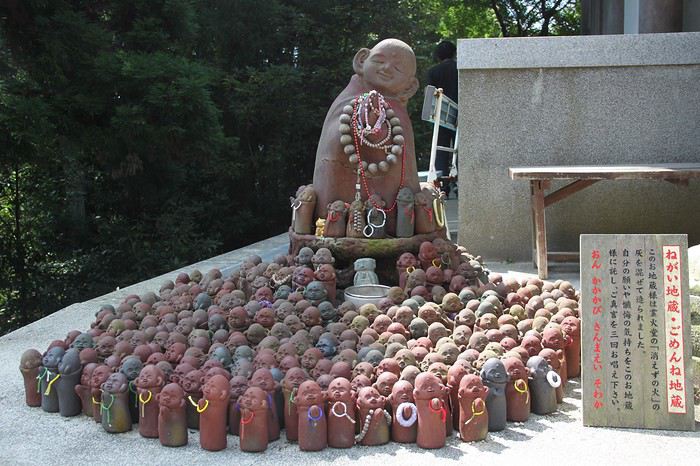
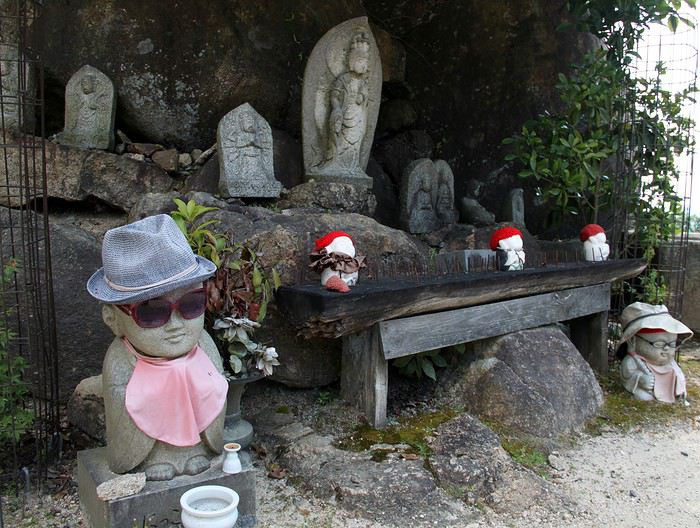
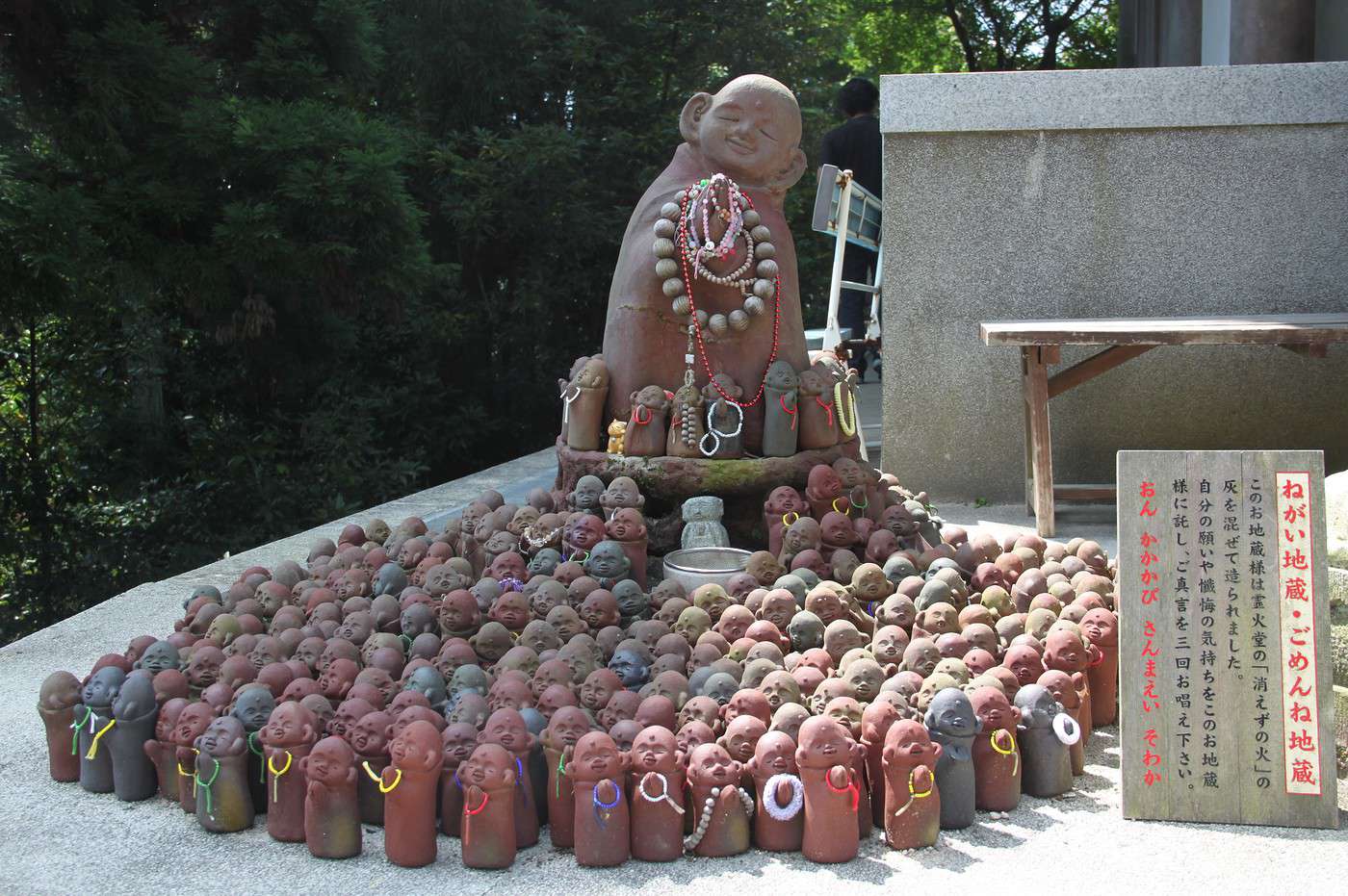
After this long break, it’s too late to visit the shrine, which is about to close. (Museums and monuments close very early in Japan—it’s quite a trap.) We head to Daisho-in Temple, which also looks more or less closed. But following the advice of a Japanese woman encouraging us to go in, and with no signs saying otherwise, we discreetly push open the gate and enjoy the gardens. A pleasant and fun visit. We come across a myriad of multiform statues.

No visit to the cave, though—it’s plunged in total darkness.


Three weeks in Japan with the family

Bluequark · 2018-04-18 · Message 58 of 174

Bit by bit, we barely have time to freshen up before the meal served by the guesthouse. I had indeed read great reviews online about these meals and thought it was the perfect opportunity to try some more elaborate Japanese cuisine. We enjoyed an excellent, finely crafted dinner. The menu was even adapted for the kids by replacing fish with meat. An extra we don’t regret at all.

Once night fell, the girls set off to explore the island again. First along the water...


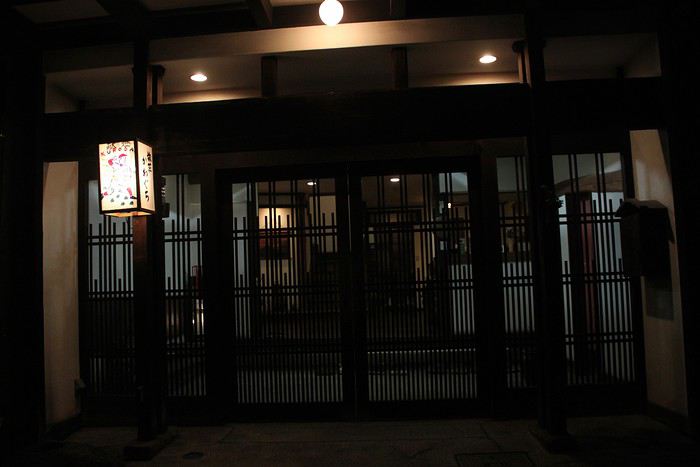
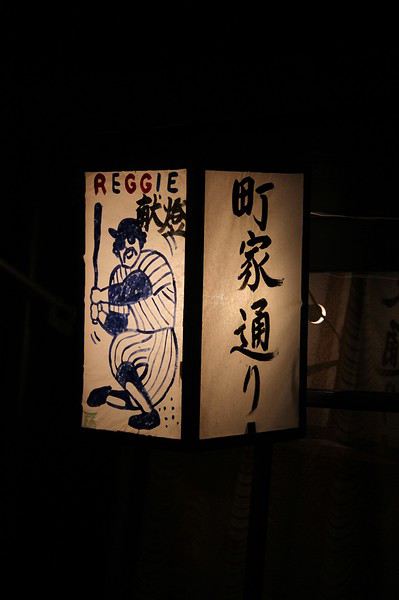
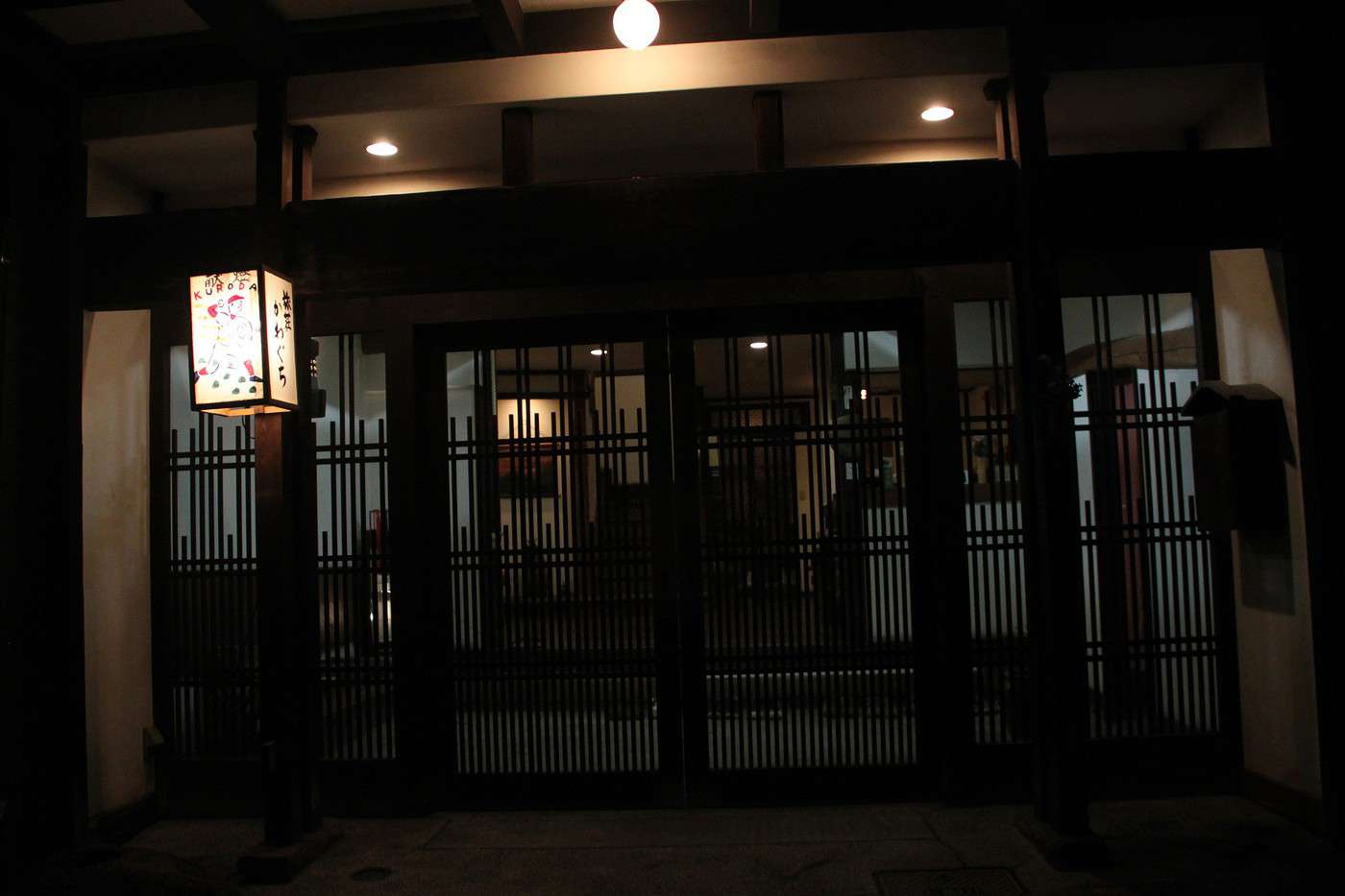
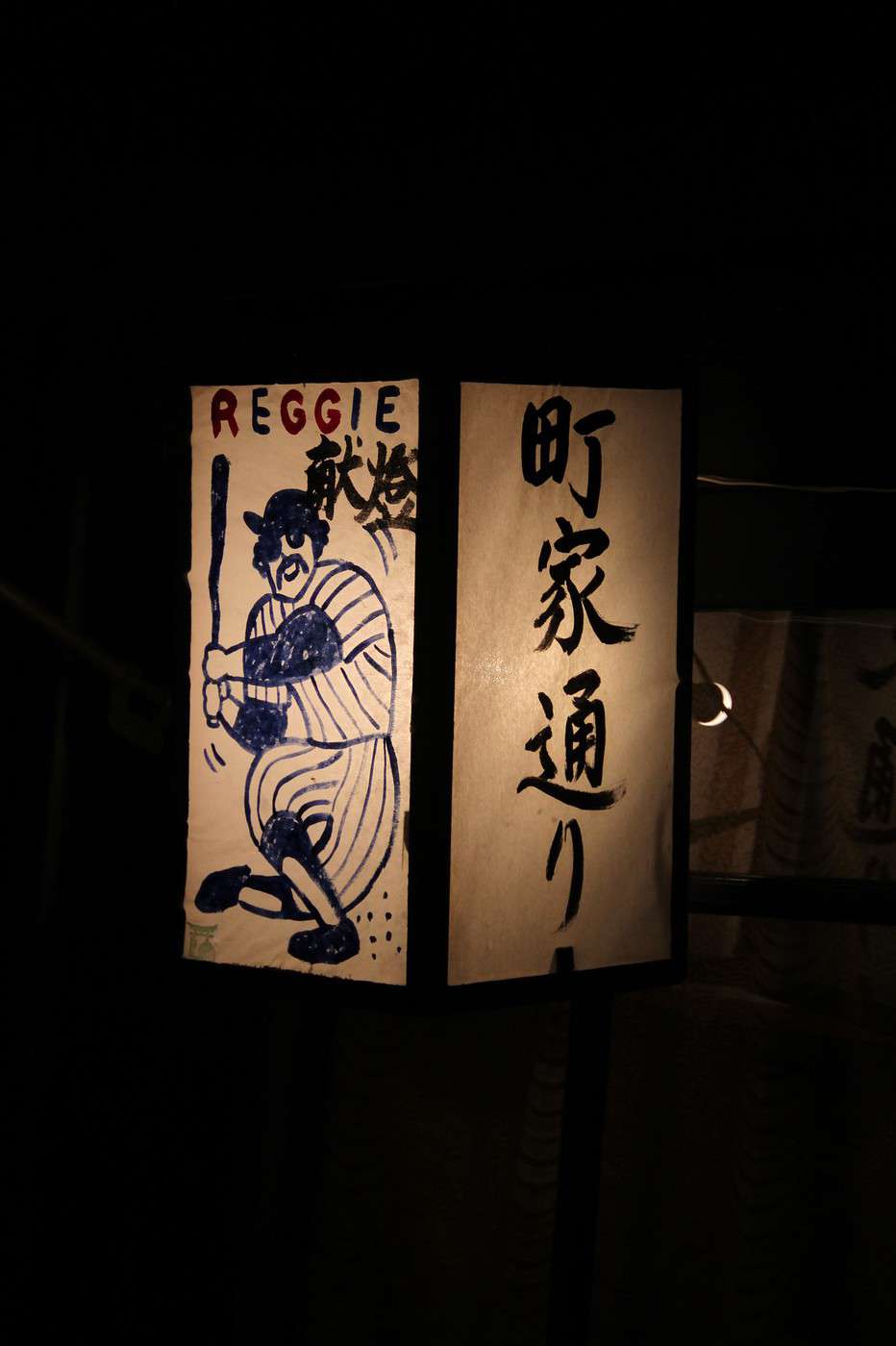
...then through the alleyways. The Japanese are huge baseball fans, and every house has a lantern decorated with a reference to the sport.


Thanks, sweetheart, for not (too) cracking under your mom’s multiple attempts at nighttime photography.

Three weeks in Japan with family

Sambarudy · 2018-04-18 · Message 59 of 174

Thank you so much for this amazing travel journal—it really makes me want to visit Japan! Such a well-documented story, gorgeous photos... Hope to go soon. Cheers

Three weeks in Japan with the family

Bluequark · 2018-04-20 · Message 60 of 174

Hi,

Thanks for your message. I’m really happy to share this!

Monday, August 8: Miyajima – Himeji Castle

Today’s plan includes continuing our exploration of Miyajima and visiting Himeji Castle on the way to Osaka. It’s going to be a pretty packed day. In the morning, we aim to climb Mount Misen and visit the shrine we missed yesterday. Since time is tight and it’s hot and humid, we skip the hike and take the cable car instead. Our goal is to leave early enough to arrive at opening time and avoid both the crowds and the heat.
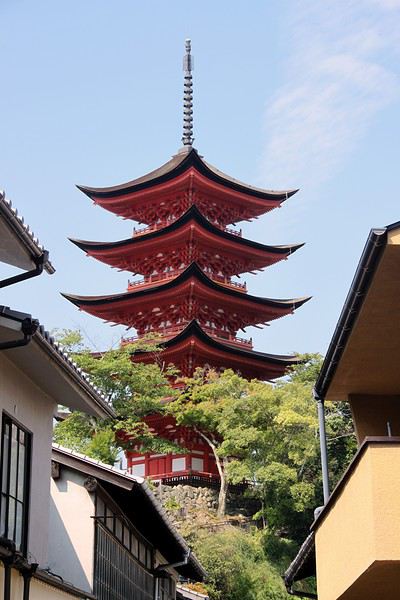
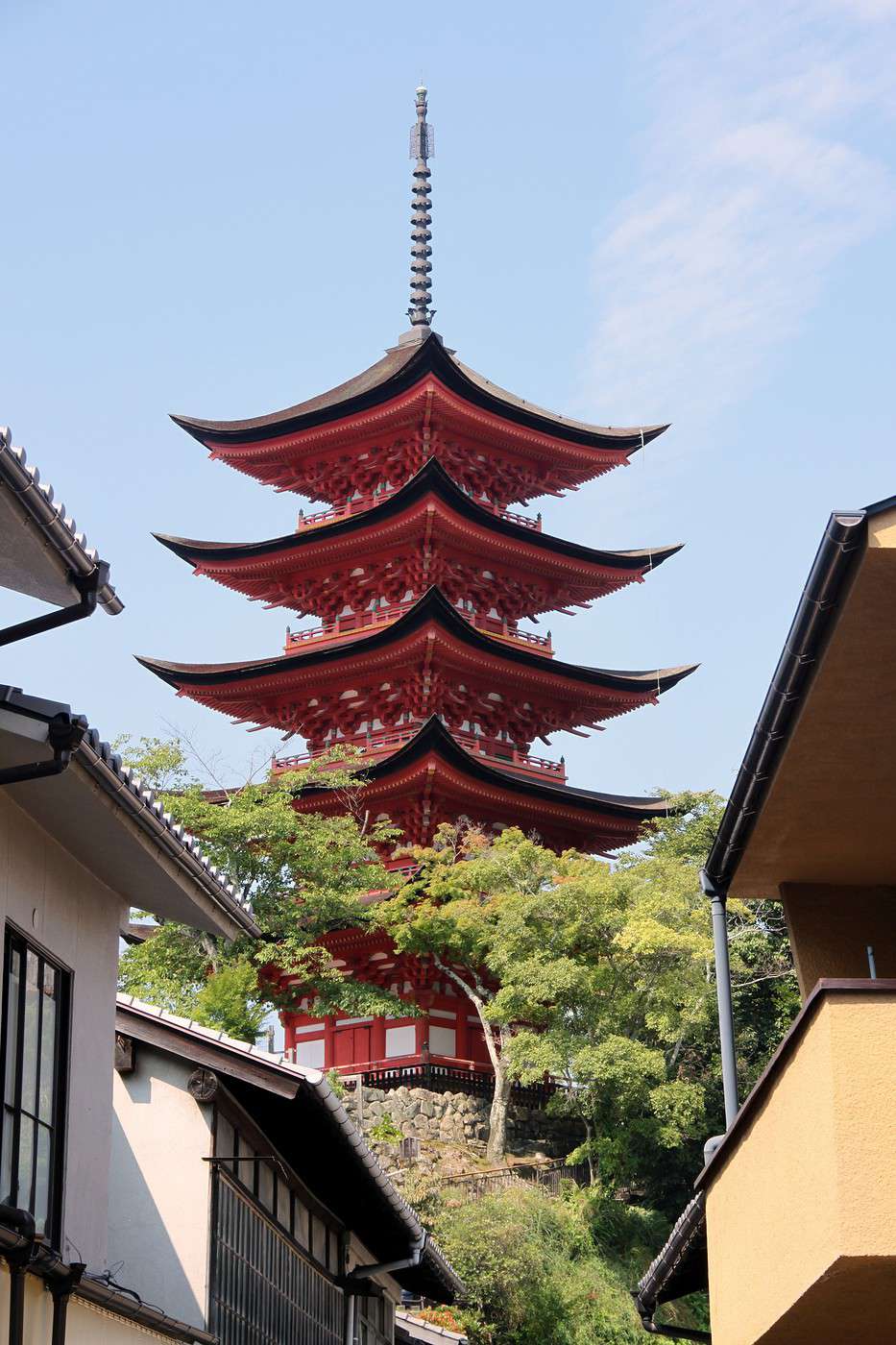
Along the way, we take a quick look at the five-story pagoda and stop by the local supermarket to restock on water. We notice an extreme pricing strategy: small water bottles for tourists are more expensive than the large ones meant for locals. No problem for us—we buy water in two-liter bottles. 😉


A quick stop at Momiji-Dani Park, and we’re ready to go. Mission accomplished: no line for the cable car. That said, it’s pretty warm inside the cabins, and we end up sweating a bit.

At the top of the cable car, the three of us set off for the final climb, leaving our second kid behind—they’ve got sore feet and don’t feel up to continuing.

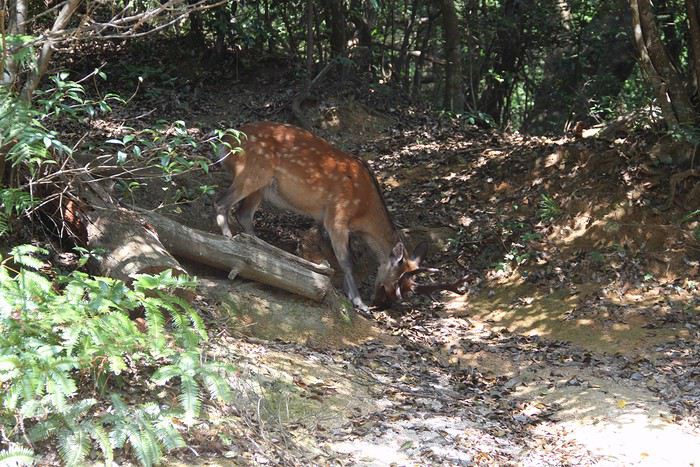
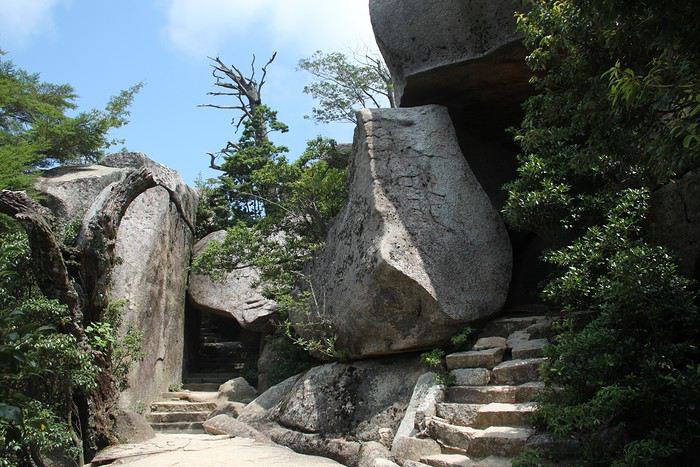
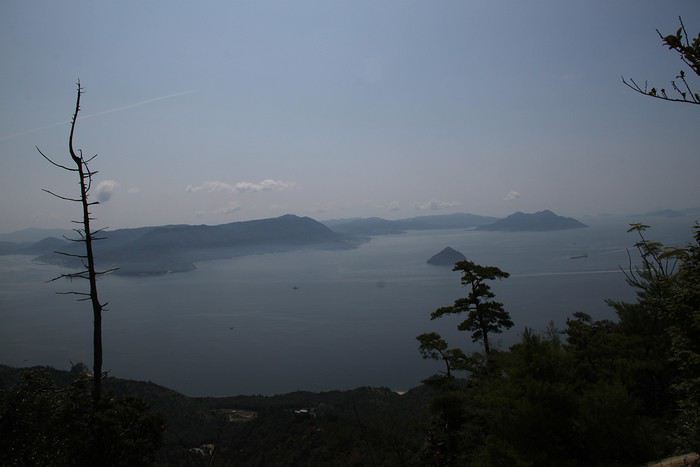
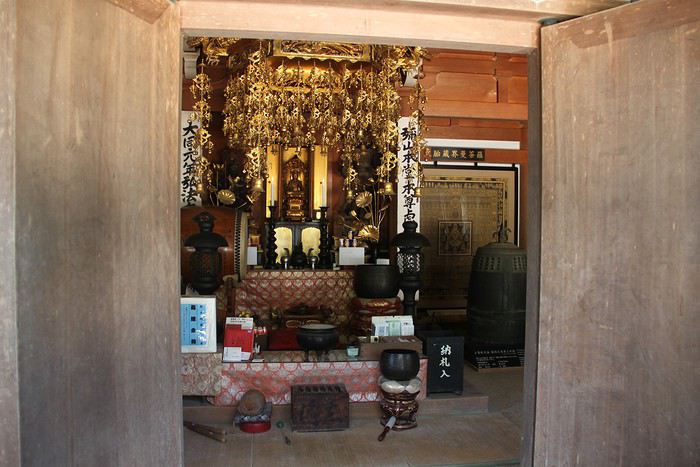
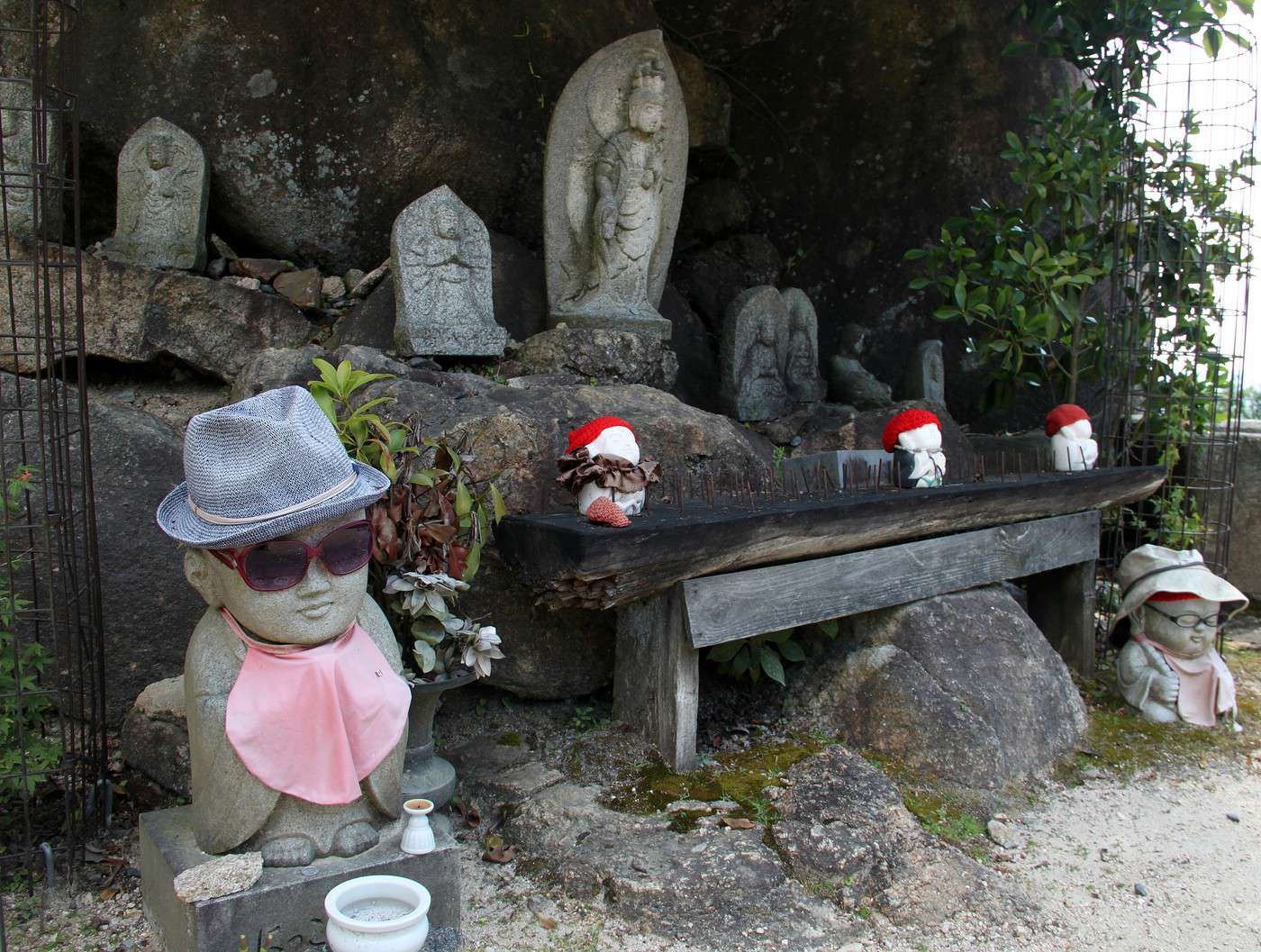
The trail lets us cross paths with...

...deer,


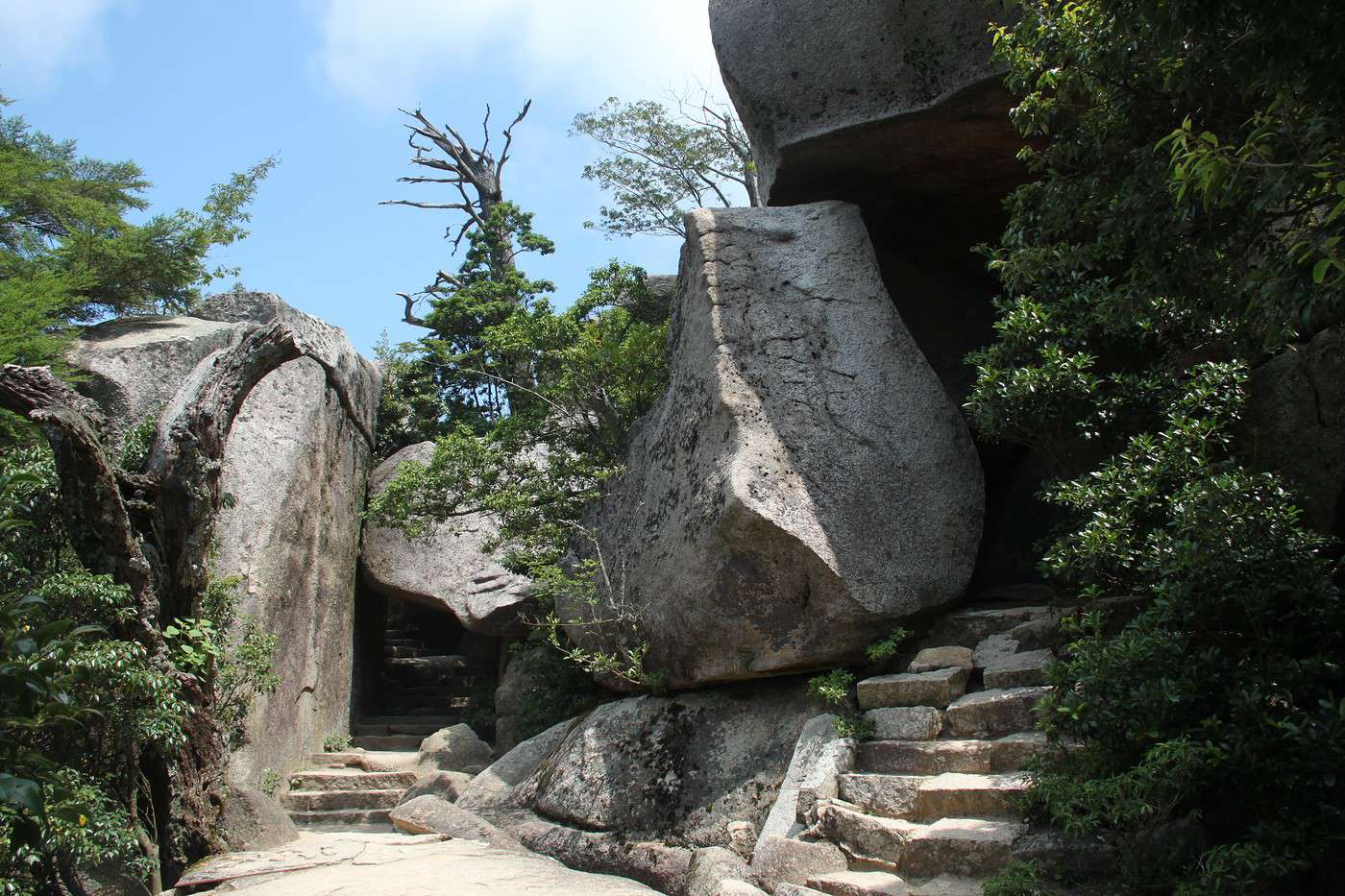
...big rocks,


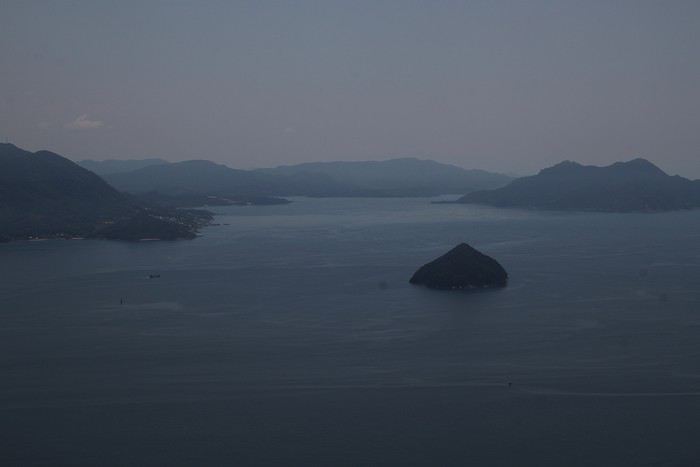
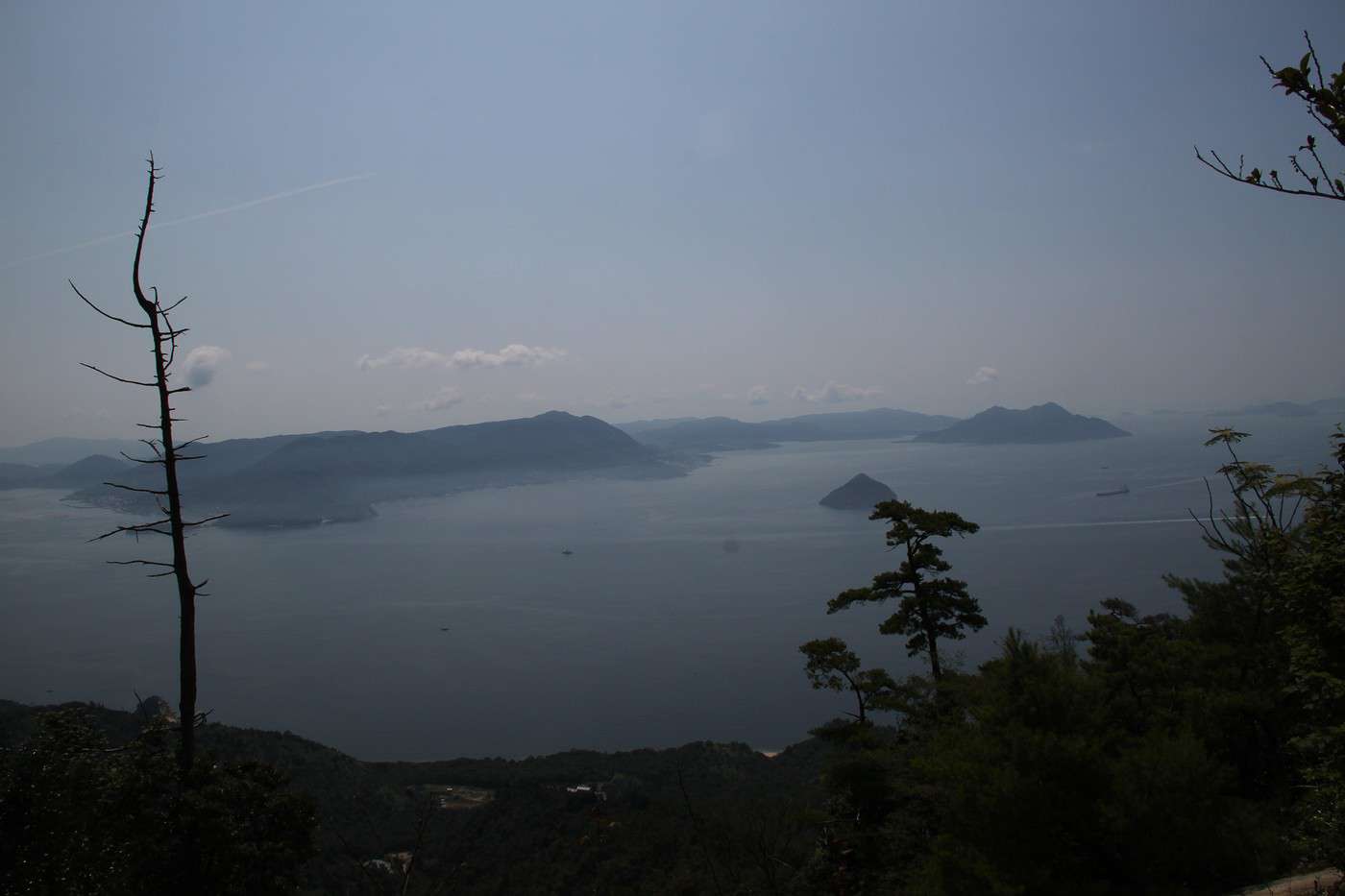
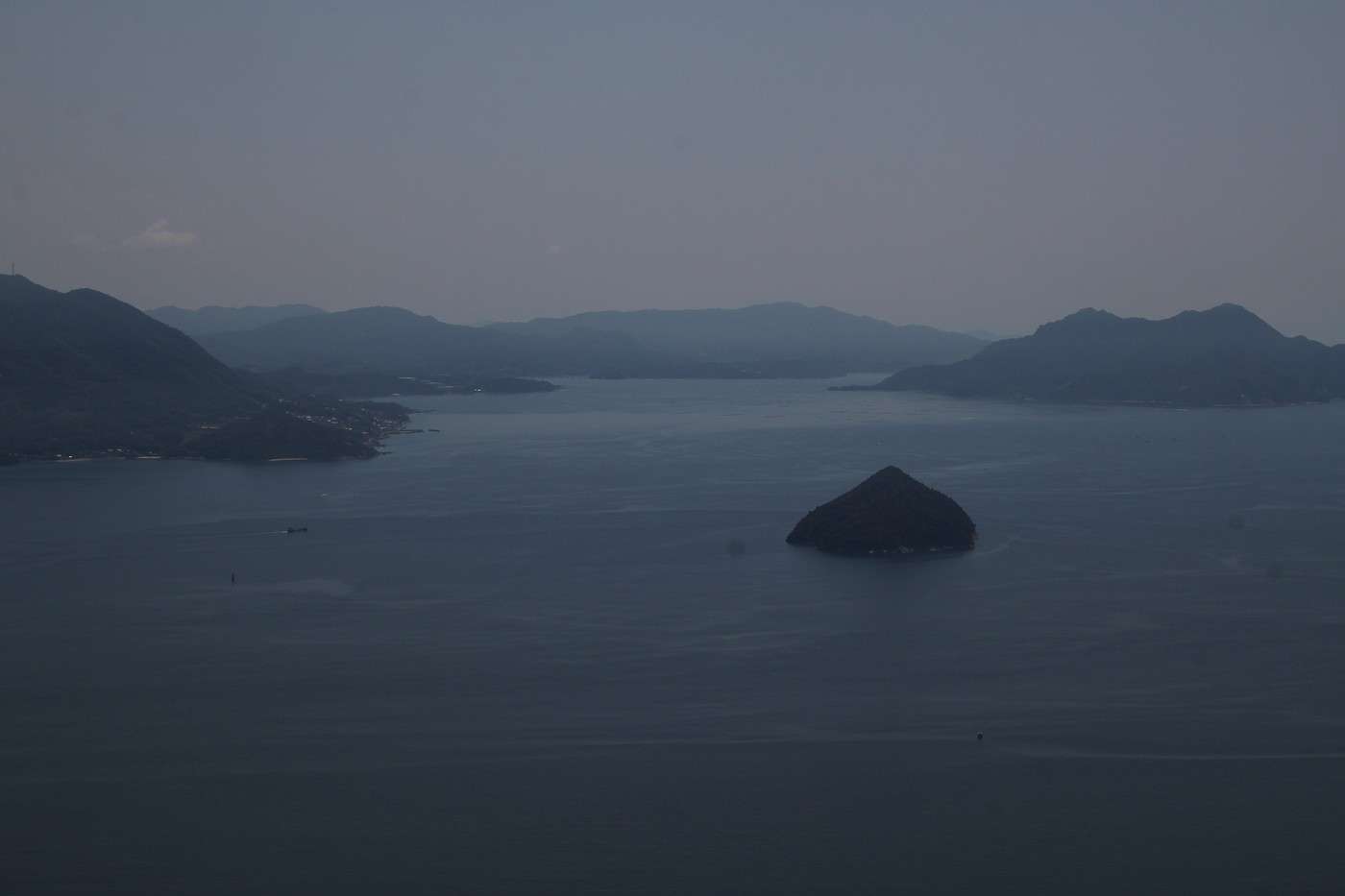
...lovely views,


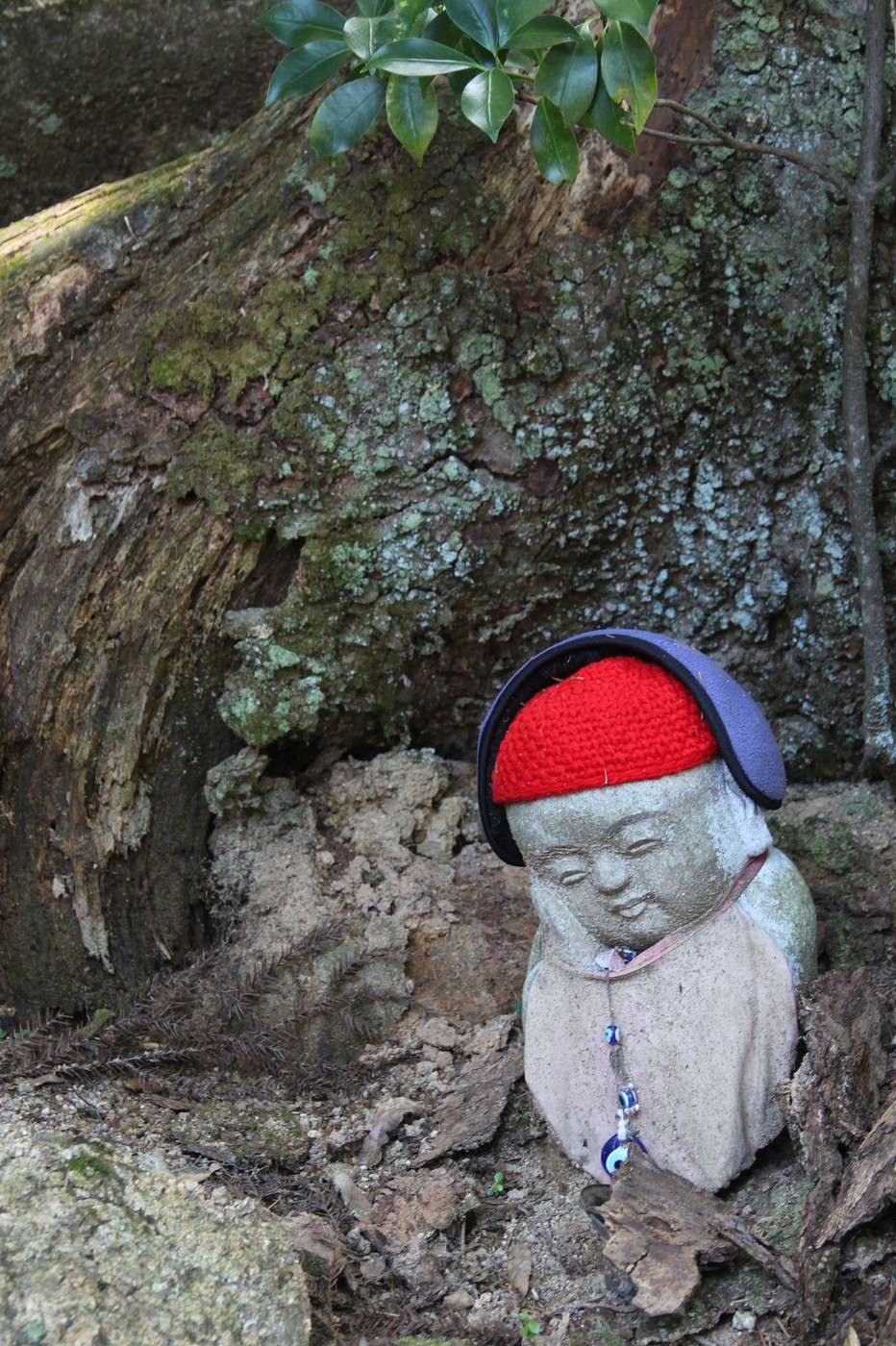
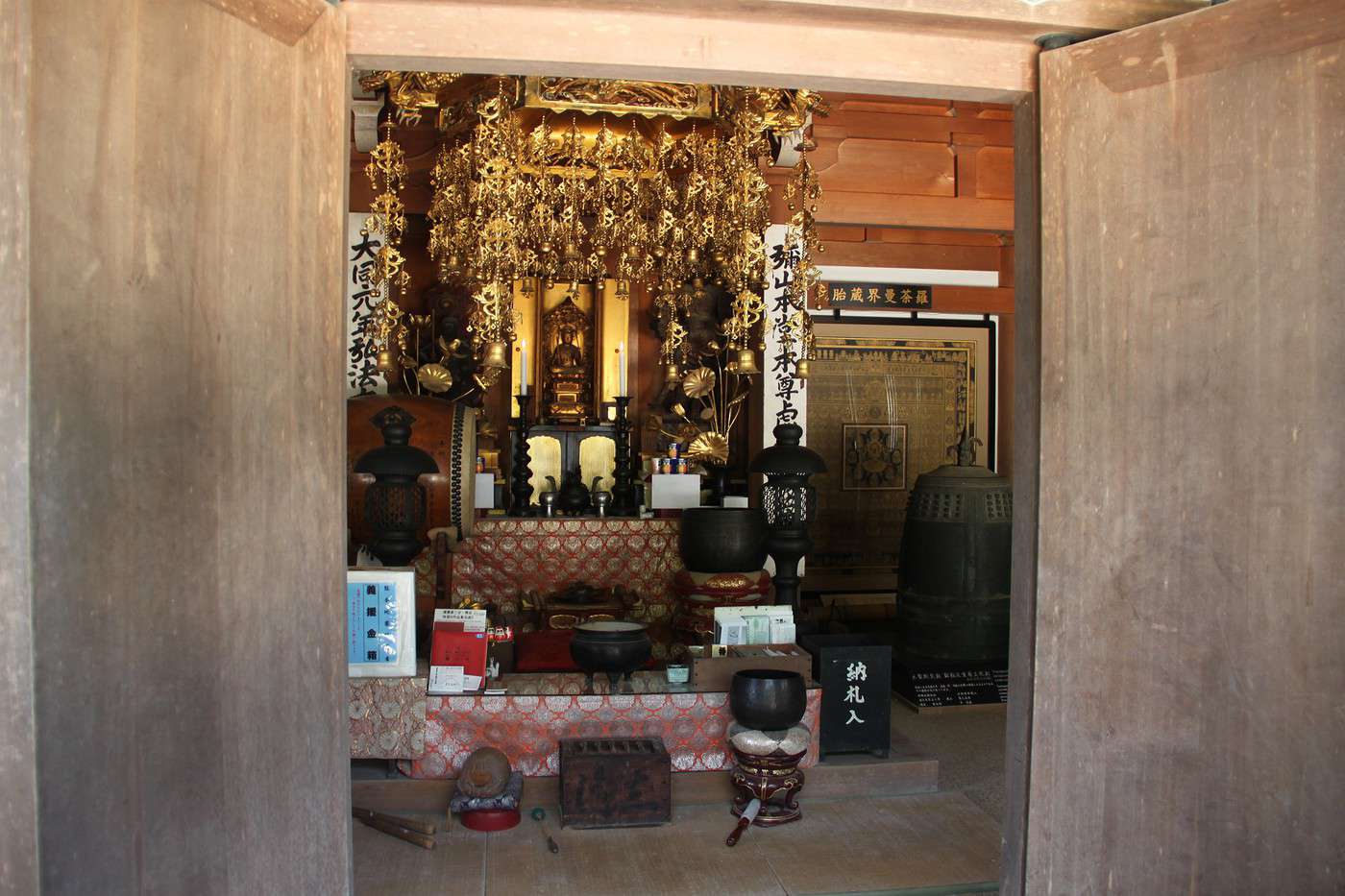
...various halls,


...and a wild, overexcited Japanese tourist who’s proud to tell us he hiked the entire way up on foot. He’s bouncing around like he’s straight out of a manga.

And here we are at the summit. The view is nice, but it’s definitely more impressive than the one from the esplanade near the cable car arrival.

VoyageForum — the largest community of French-speaking travellers.