in Entre deux voyages › Carnets de voyage
Six-week trip to Mexico (page 3 of 12)
Discussion started by GeorgesOZ on 2019-12-05
226 replies
This thread has been translated into English.
Six-week trip to Mexico
Memphre · 2019-12-28 · Message 41 of 227
I hope I won’t get flogged for spending time on these questions. But visiting Latin America while knowing nothing about Catholicism means missing out on so much. Let me repeat, I have no intention of proselytizing.
Totally agree with you... It’s a nice change from all those “travel journals” about the Yucatán and that so-called Maya Riviera—all as bland and repetitive as each other.
Great reference to Bernal, the only biographer of Cortés, whose arrival in VERACRUZ was an exploit in itself—overlooked and never mentioned. 🤪
A few words about this ''encomienda'' system practiced everywhere by all the Spanish “conquistadores” for the greater good of the Most Holy Catholic Church, dear to Isabella.
No matter what you think or say, it was still a grand era: the time when Spain owned two-thirds of all known lands. 😛
Six-week trip to Mexico
GeorgesOZ · 2019-12-28 · Message 42 of 227
….
A few words about this ''encomienda'' practiced everywhere by all the Spanish ''conquistadores'' for and by the greatest good of the Most Holy Catholic Church dear to Isabella….
About those "few words," I don’t quite follow you—was your message complete, or did you forget to add something?
As for the "greatest good," things didn’t improve after Isabella. It seems Charles V pushed very hard to extract maximum revenue from these new territories. He had huge debts from his perpetual wars and European ambitions. He really "squeezed the burnous" out of everyone, starting with Spain, where he wasn’t very popular. Not to mention the colonies, where he simply encouraged crime.
As for the 2/3 of known lands, the Spanish quickly faced unexpected competition from Portugal. In fact, they already had it—you could say that at the very moment of the conquest of Mexico, Portugal had become masters of the Indian Ocean.
Thanks for your appreciation of my story. 🙂
Six-week trip to Mexico
Memphre · 2019-12-28 · Message 43 of 227
About these “few words,” I don’t follow you—was your message actually complete or did you forget to add something?
Not at all. I simply don’t want to get involved in your account. It’s well done, well written, but mentioning that it was on the principle of l’encomienda that the most beautiful religious buildings were constructed by the indigenous peoples under Spanish rule, of course, for the greater glory of the Catholic Church and the religious communities—right up until the expulsion of the Jesuits by a certain Benito Juárez😎 (La Reforma).
Six-week trip to Mexico
Aquilegia · 2019-12-28 · Message 44 of 227
Actually, after 6 weeks in the country, I get the feeling that everything is based on tortillas, whether it's tacos, quesadillas, or "chilaquiles" etc. Mexico is a country where there are thousands or millions of everything you could want, including millions of tortillas. Everywhere you go, tortillas are being made, by hand or by machine to go faster and make them in bulk… millions every day! They’re corn flatbreads, the Mexican equivalent of Indian "chapatis".
Hello,
It’s not really accurate to say that "everything is based on tortillas", but you could maybe say that everything in Mexico is based on masa. Masa is corn dough, mixed with a tiny bit of limestone powder. For example, the shape and preparation of tamales and gorditas are completely different from that of a tortilla, but their base is still masa.
I find the itinerary you took way more interesting than the 100% Yucatán routes we often see on this forum.
Six-week trip to Mexico
GeorgesOZ · 2019-12-28 · Message 45 of 227
It’s not entirely accurate that "everything is made with tortillas," but you could say that maybe everything is made with masa in Mexico.
Thanks for the clarification! From a distance, everything looks a bit the same. So to be more accurate, I’d say there are millions of things made with masa every day in Mexico!
"Masa" is "dough," right?
Six-week trip to Mexico
Michant · 2019-12-28 · Message 46 of 227
Good evening,
But visiting Latin America without knowing anything about Catholicism means missing out on so much.
Of course! Are there any travel journals about Burma that don’t mention Buddhism, or about Iran that ignore Shia Islam?
It really is a change from all those "travel journals" about the Yucatán and that so-called Maya Riviera—all as bland and repetitive as each other.
Totally agree, and that’s what makes this travel journal so interesting! 🙂
Six-week trip to Mexico
GeorgesOZ · 2019-12-29 · Message 47 of 227
Mexico CDMX 3
Since there are fans of Bernal Díaz del Castillo here, I’ll share another quote that really resonates, taken once again from his True History of the Conquest of New Spain, which captures the astonishment and wonder of the Spaniards when they arrived in Tenochtitlan. The Spanish prose is beautiful—almost poetic—so I’ll start by quoting the original text:
« Y de que vimos cosas tan admirables no sabíamos que decir, o si era verdad lo que adelante parecía, que por una parte en tierra había grandes ciudades, y en la laguna otras muchas, y veíamoslo todo lleno de canoas, y en la calzada muchas puentes de trecho a trecho, y por delante estaba la gran ciudad de Mexico »
« And when we saw such marvelous things, we didn’t know what to say, or if what lay before us was real. On the mainland, there were great cities, and in the lagoon many others. And we saw it all filled with canoes, and on the causeway many bridges at intervals, and ahead of us was the great city of Mexico »
When I showed my mom a small selection of my 2,000 photos after returning from this trip to Mexico, she had this thought: « And it was the Spaniards who deprived us of this culture? ». Because, indeed, you can’t forget what was here before... In 2019, 500 years after Cortés’ arrival, Mexico asked Spain twice to apologize for the conquest—something Spain never did.
After visiting the ruins of the Templo Mayor, under a light but unobtrusive drizzle, we enter the adjacent museum. You could spend hours there, not just looking at the exhibits but also reading the extensive annotations. To give you an idea, here are a few highlights from the photos:
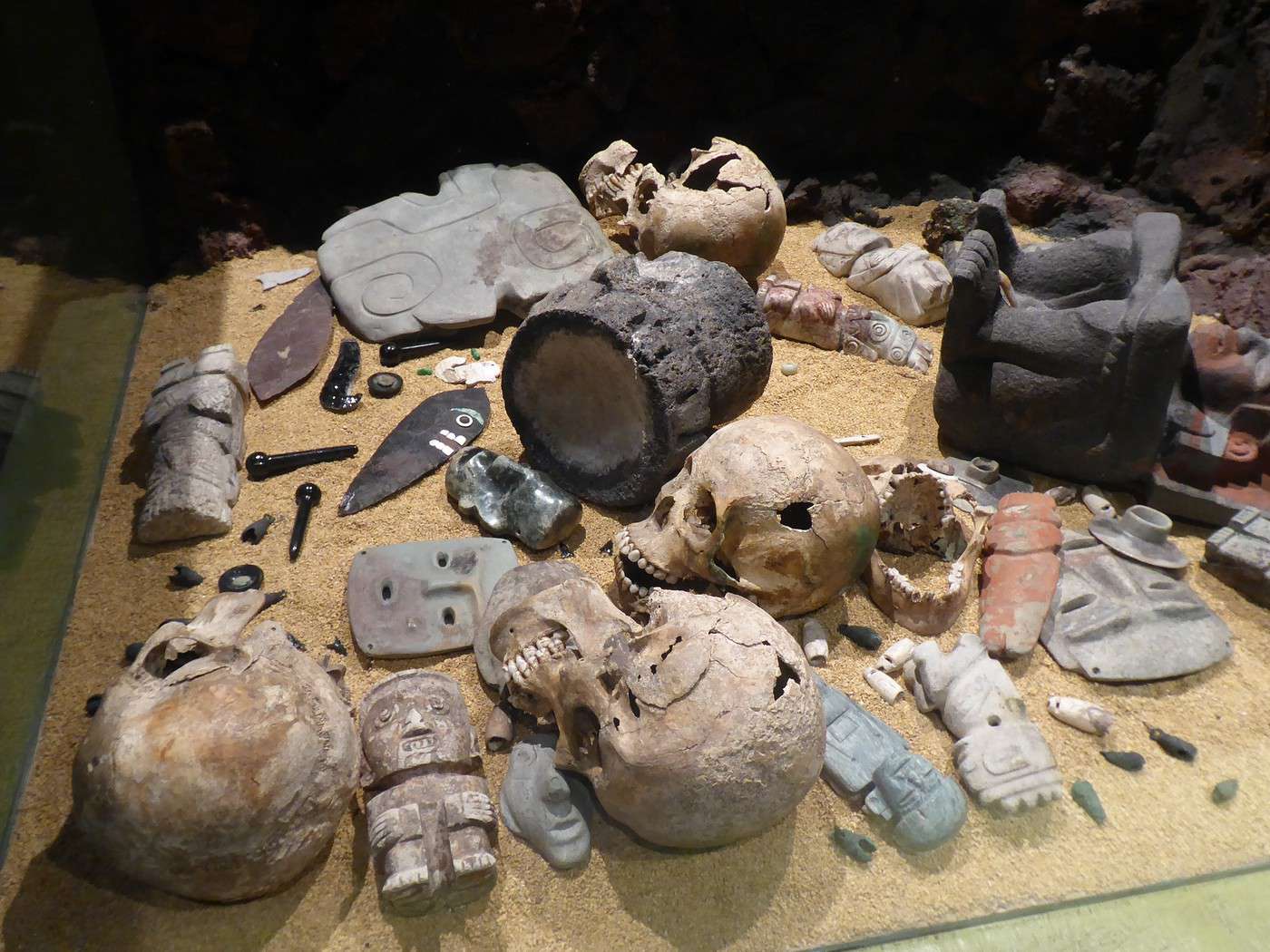
- What’s found in the excavations: skulls, among other things—perhaps some of the 10,000 to 80,000 people sacrificed for the site’s inauguration in 1487?
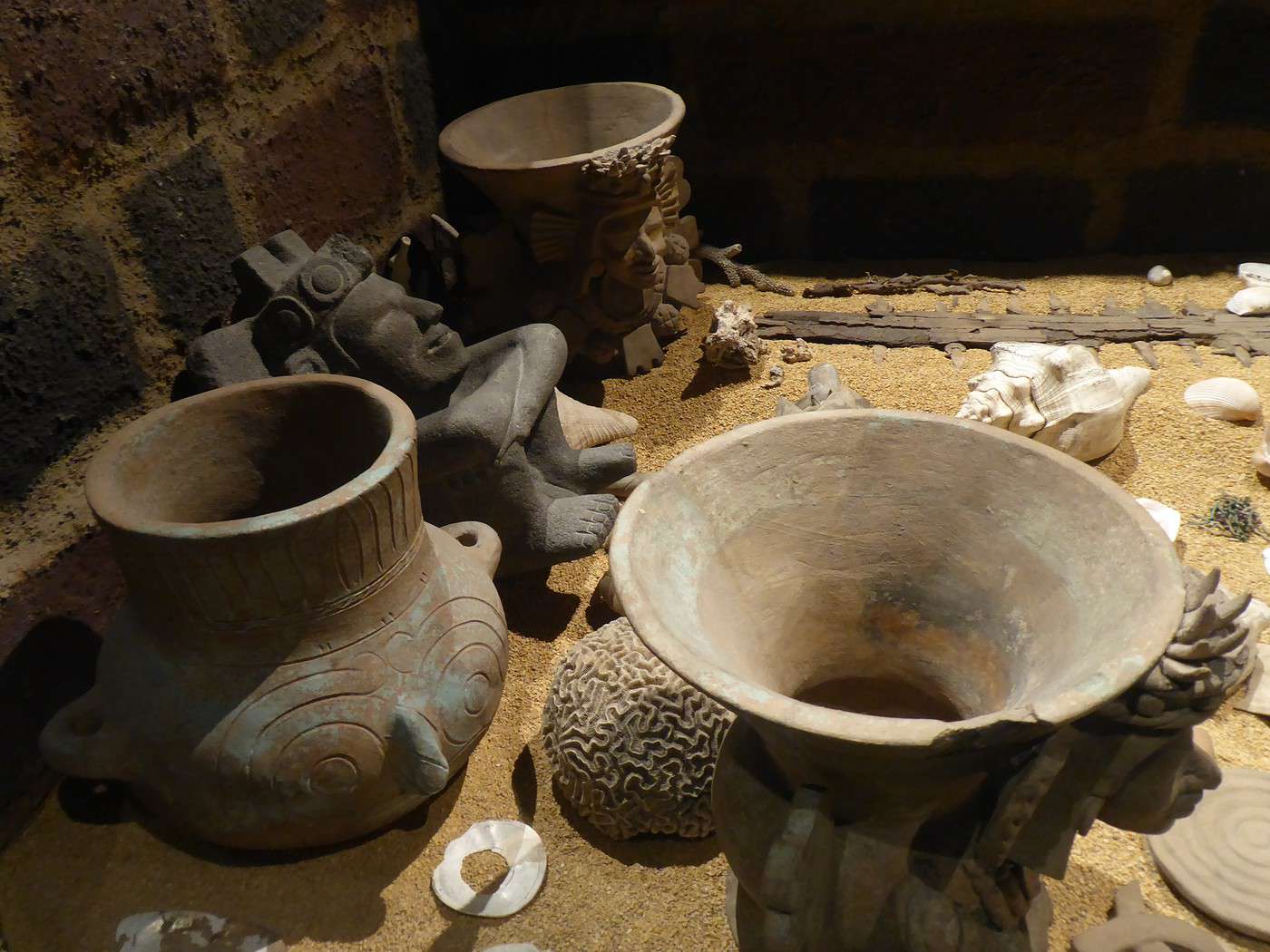
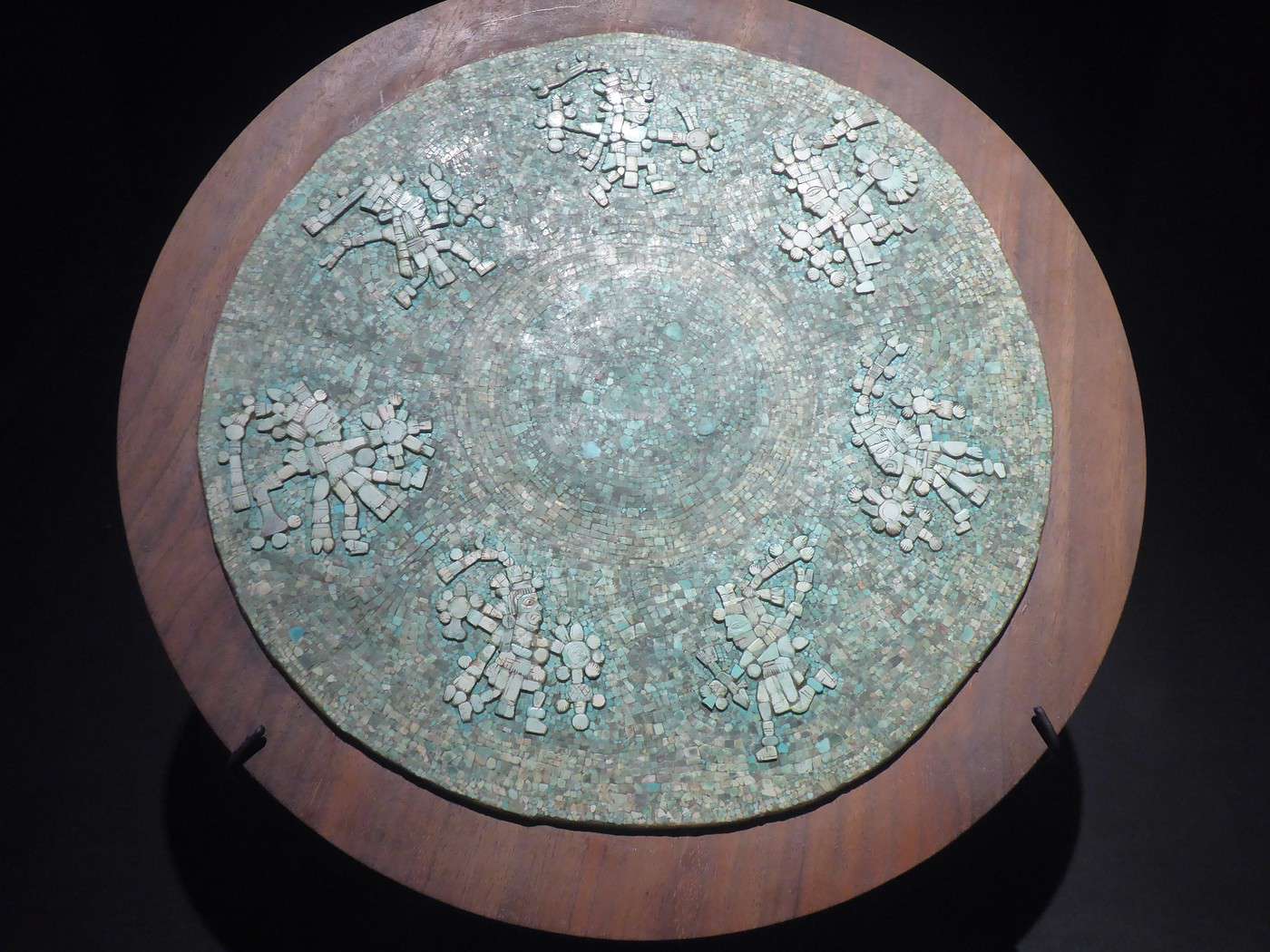
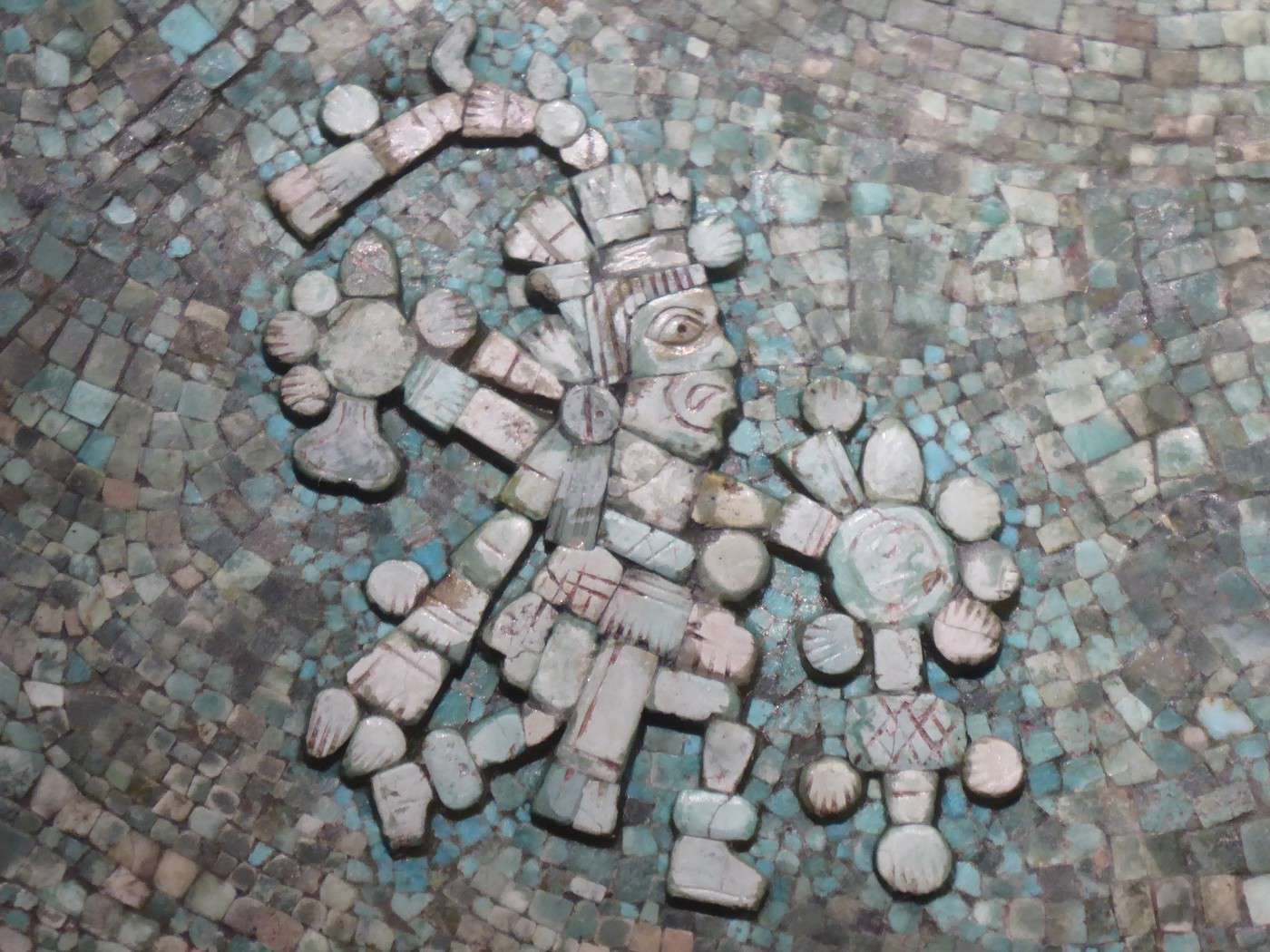
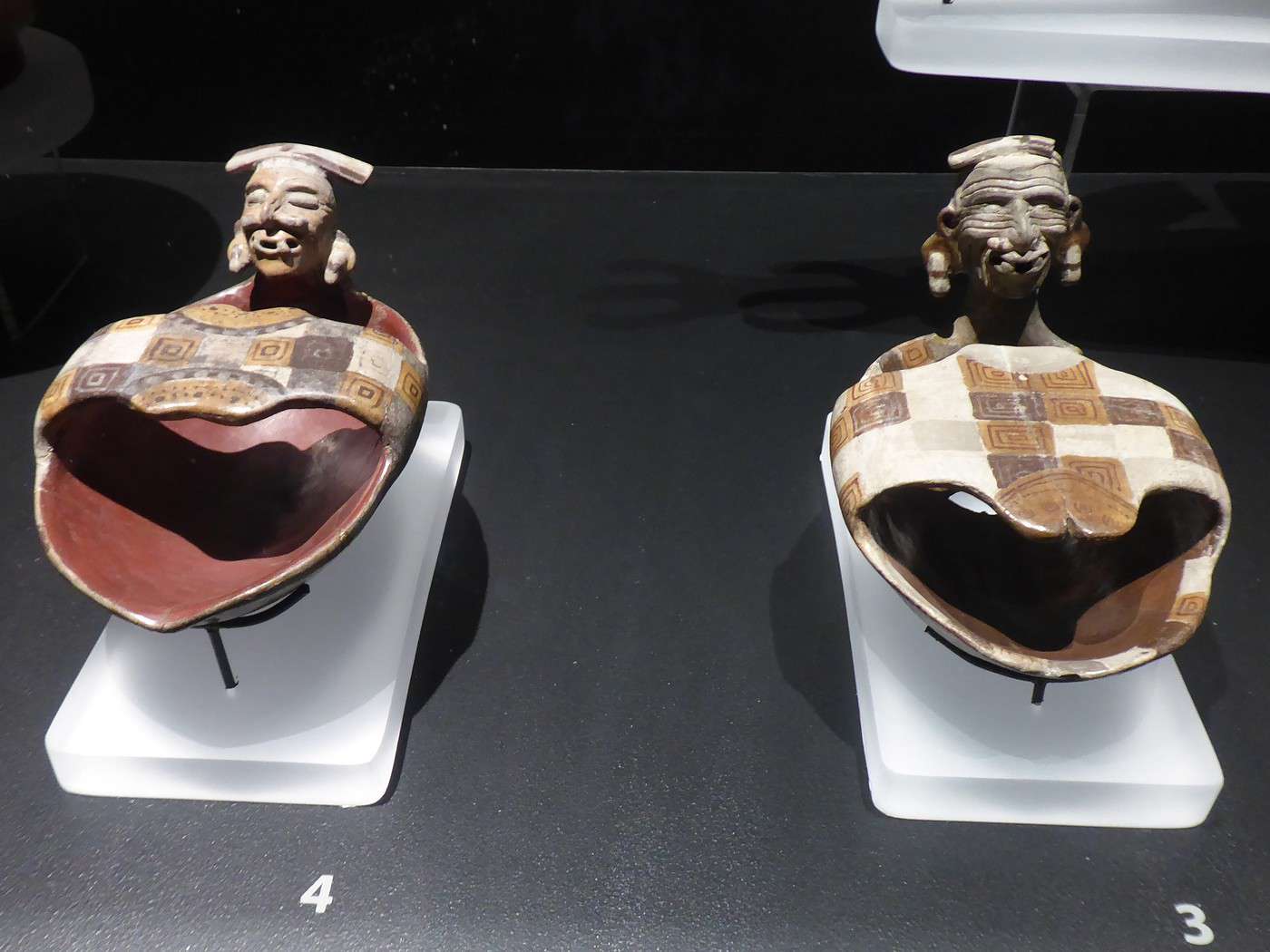
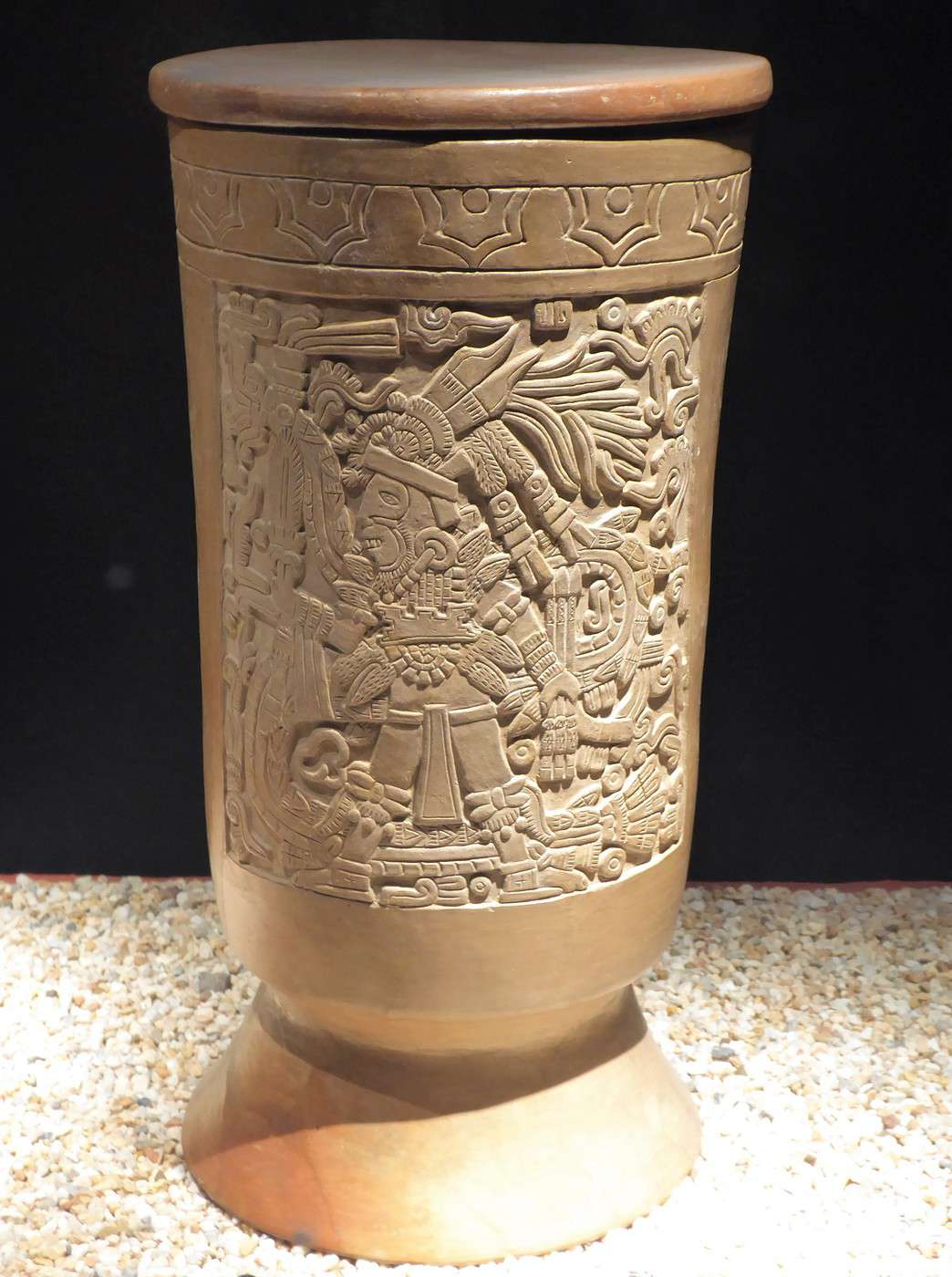
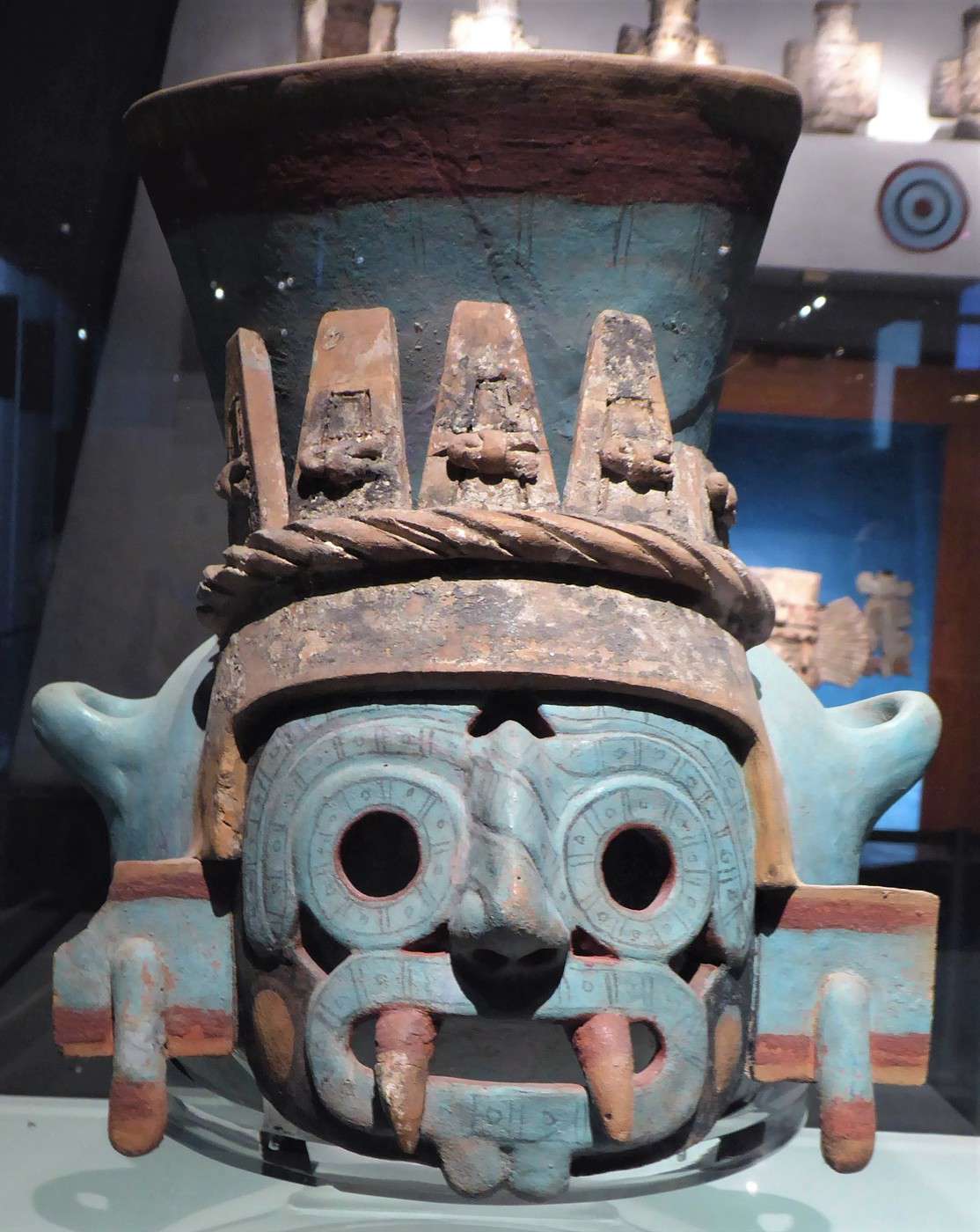
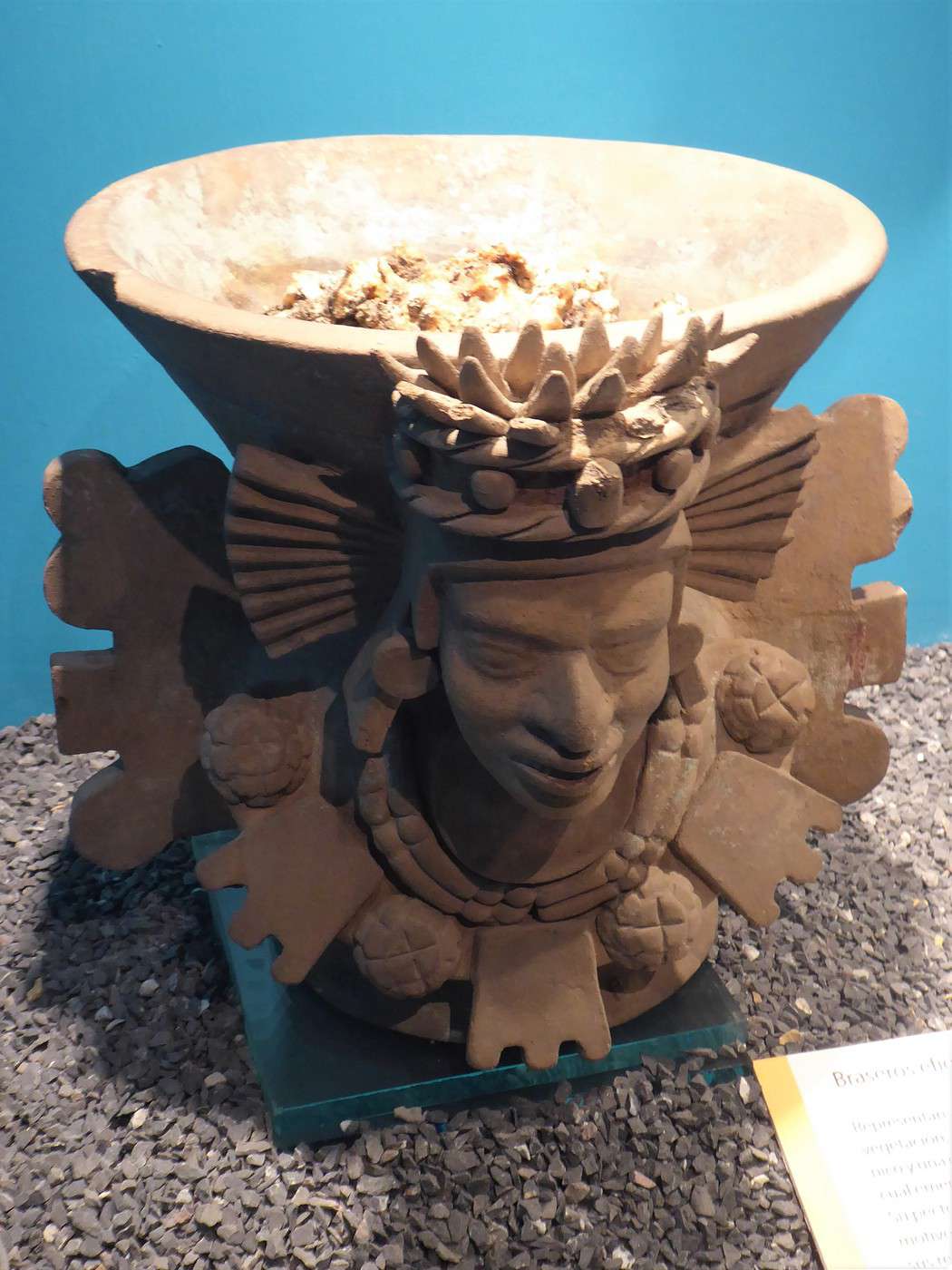
- Examples of Aztec art, some truly intriguing. Turtle-spoon-men? Brazier-heads for burning copal, the aromatic resin, Mexico’s incense...
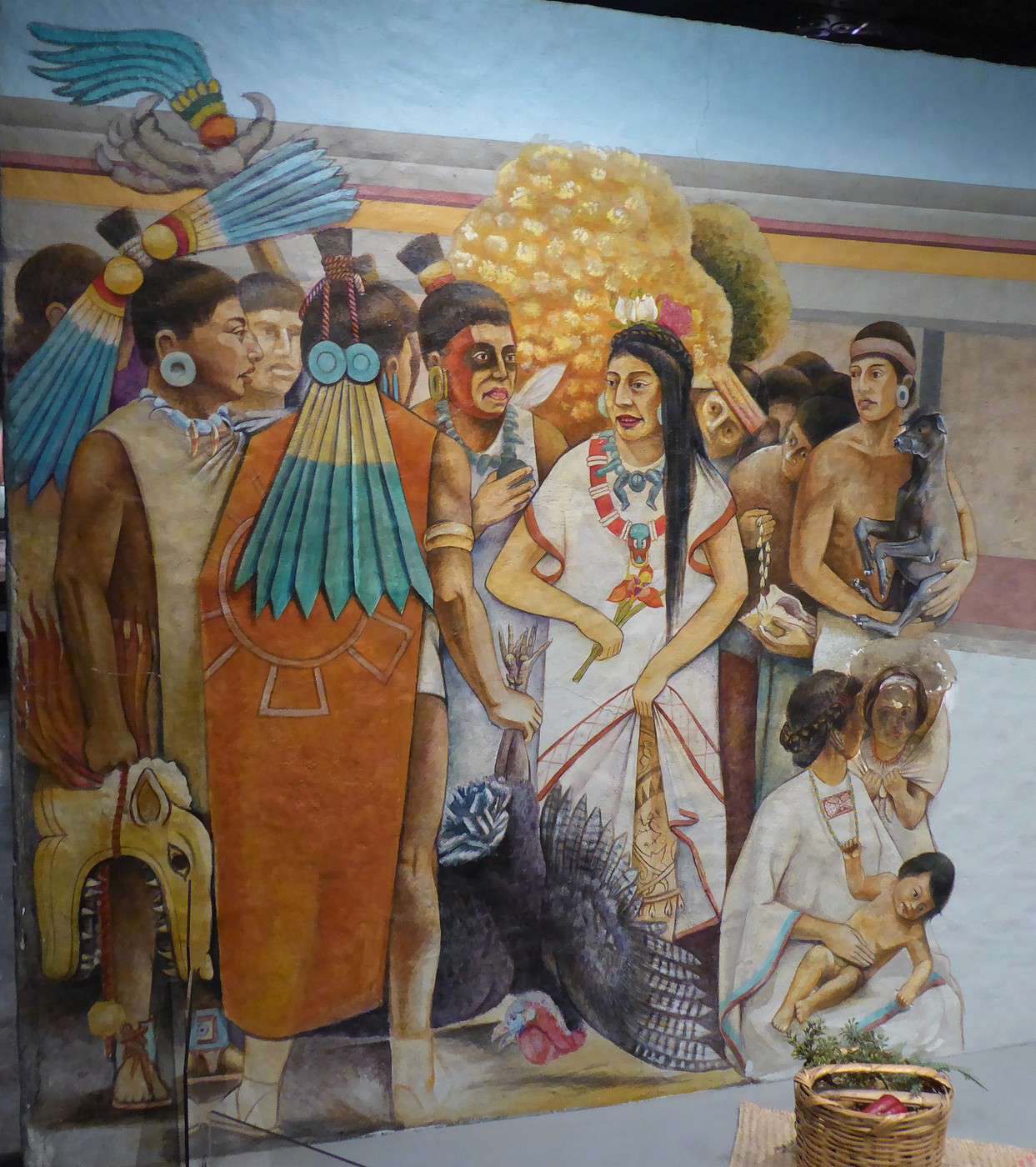
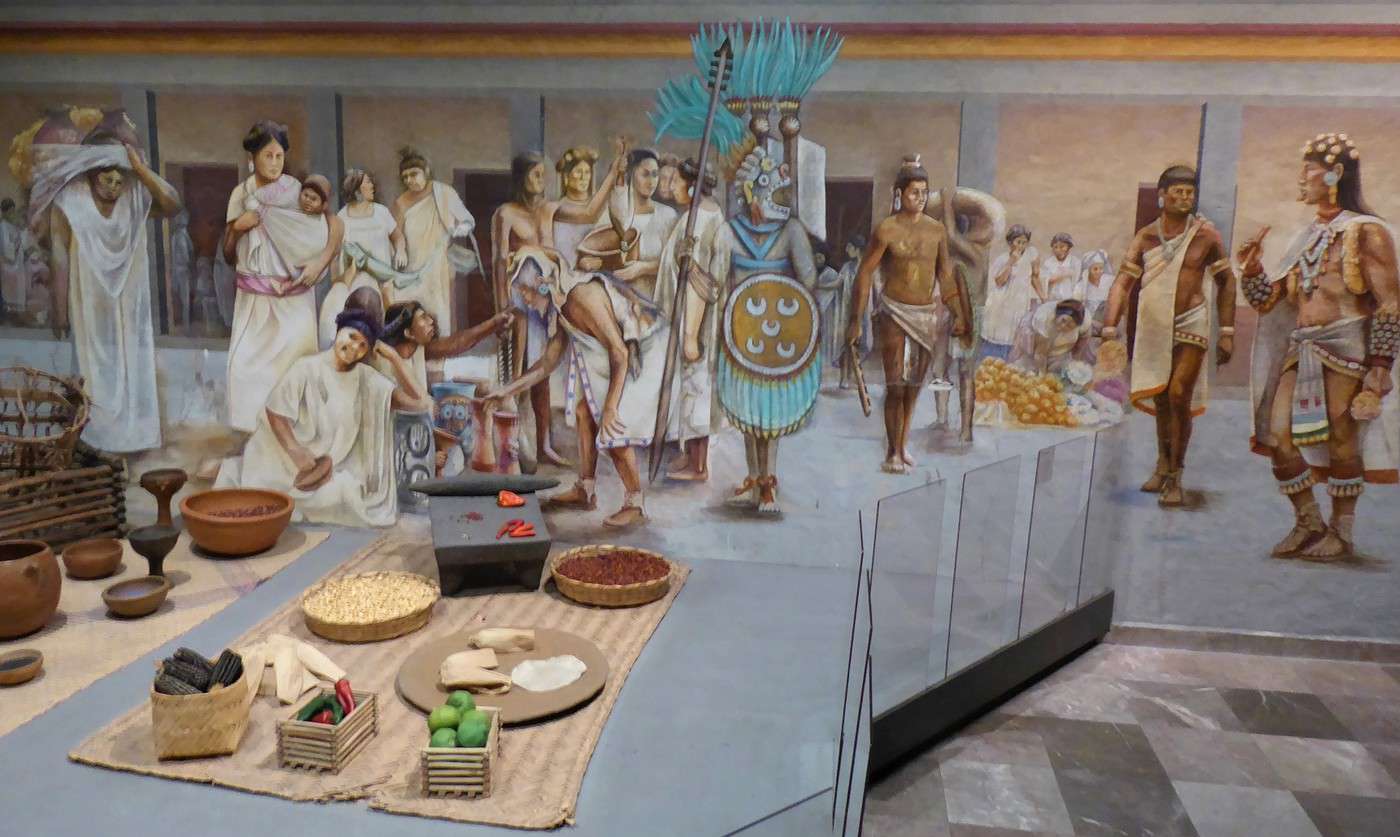
- Depictions of what the inhabitants of Tenochtitlan might have looked like. Nobles wearing improbable feathered headdresses.
There are several reproductions of animals typical of the country, and explanations of how they were divinized by the Aztecs. The jaguar holds a place of honor—wasn’t it the most respected, perhaps even revered, animal across all Mesoamerican cultures? For the Aztecs, under the name Tepeyollohtli, the “heart of the mountain,” it gave courage to the jaguar-warriors, the “océlotl”—the Nahuatl word that, of course, gave us “ocelot.”
Snakes, crocodiles, turtles, and others—animals were offered to the gods. There was even an organized commercial network to procure crocodiles from other regions of Mexico.
These practices around animals—and the pyramids—aren’t unlike those of ancient Egyptian civilization. Curious, right?
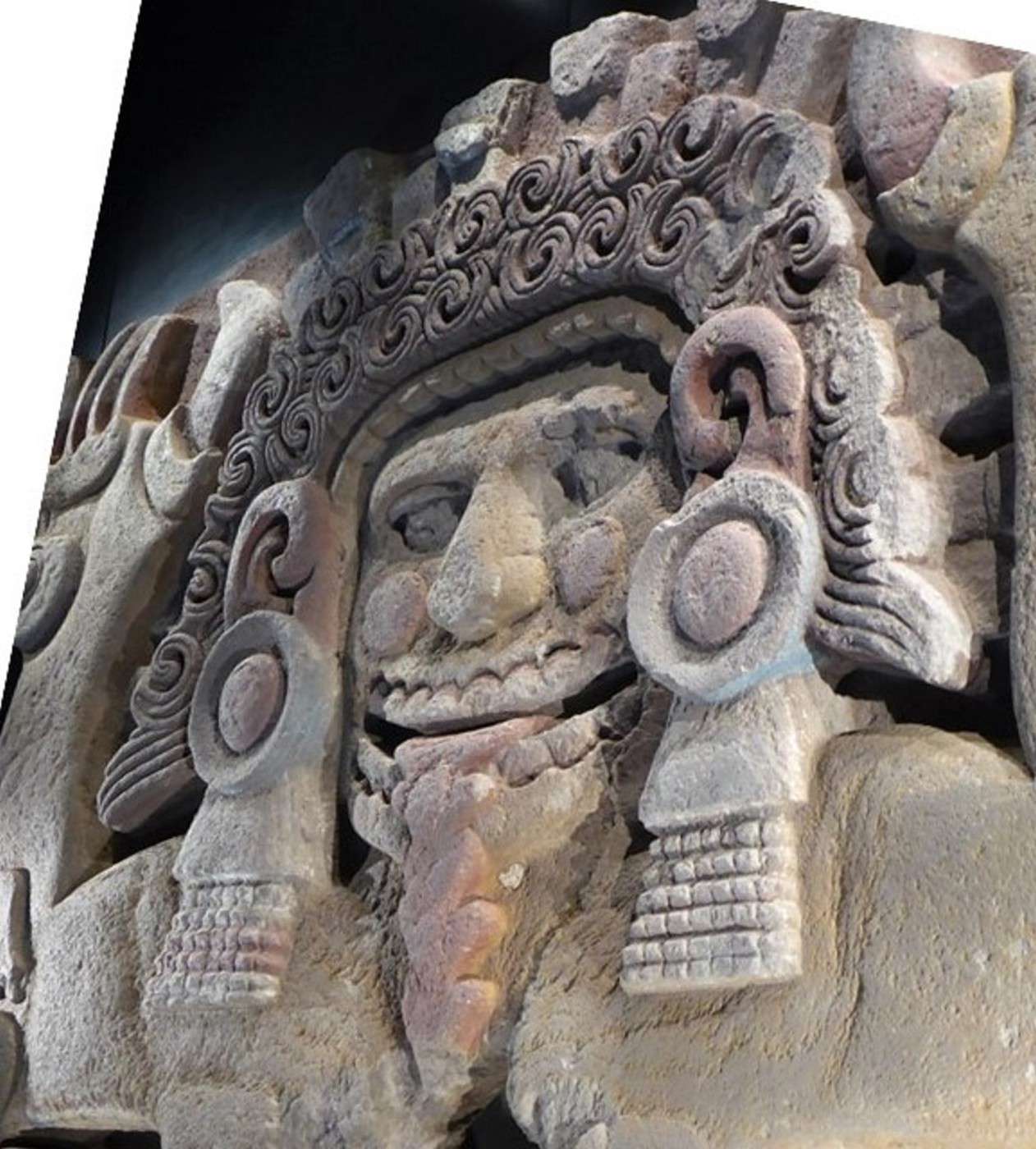
The museum’s centerpiece is a recent discovery. In 2006, during repair work after an earthquake, a massive stela (12 tons!) depicting Tlaltecuhtli, an earth deity, was found. It’s displayed flat in a kind of inaccessible pit, and I had to edit my photo to see the head roughly as if it were facing forward.
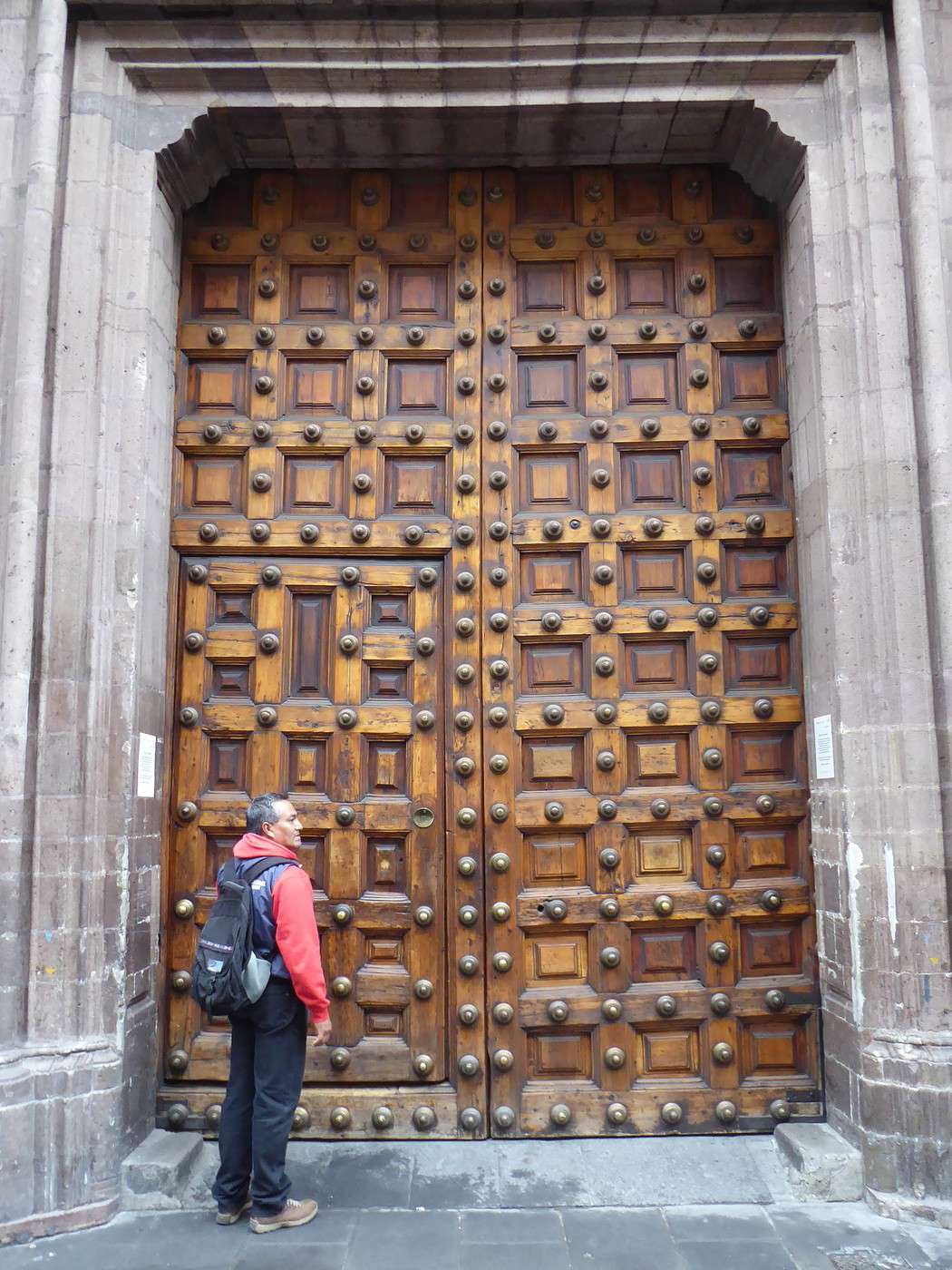
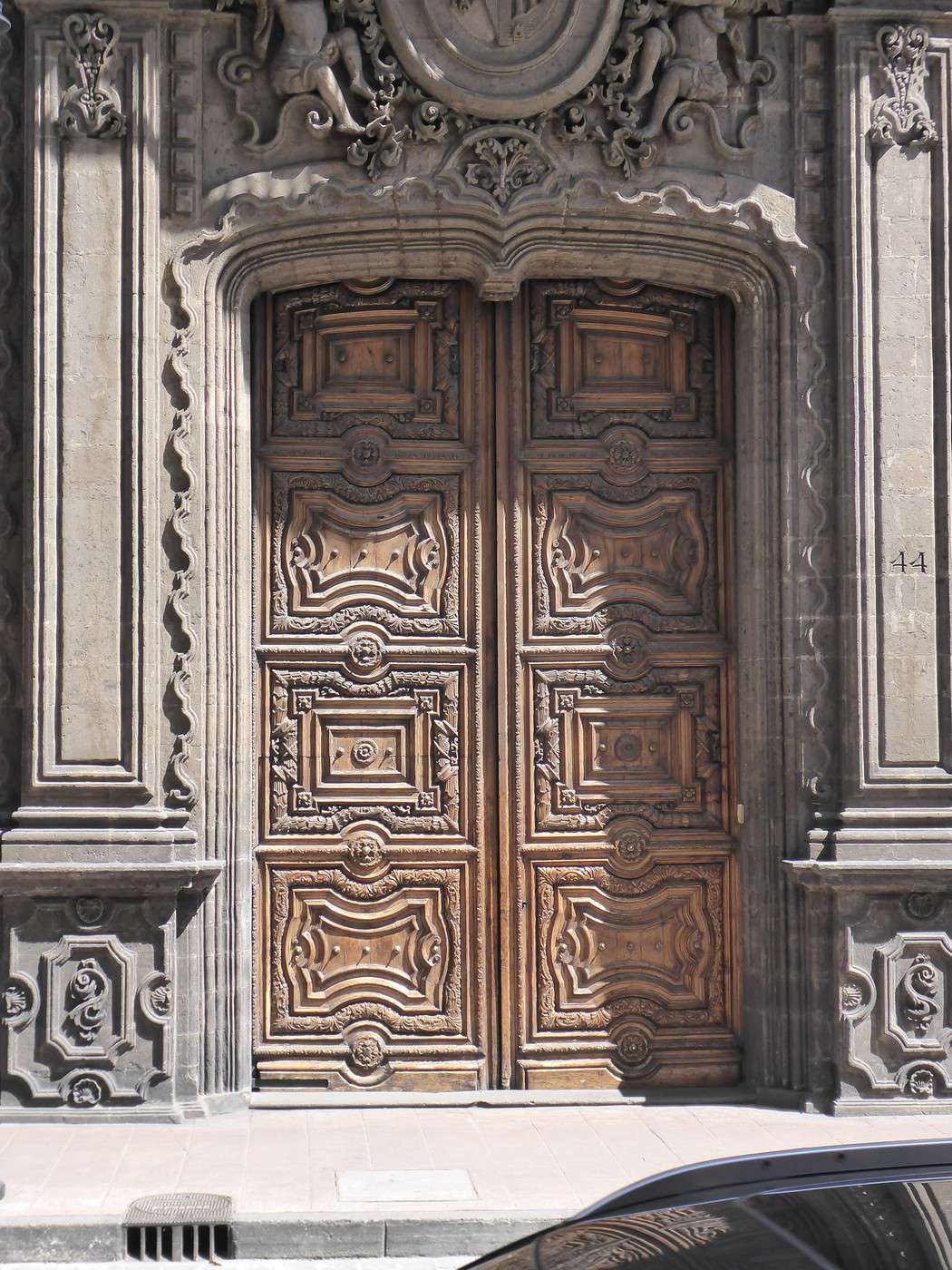
We’re back outside now. It was a fantastic visit, and honestly, for 75 pesos—just under 4 €—it’s absolutely worth the detour. One last photo of a beautiful door near the Templo Mayor (remember, in Mexico there are thousands of stunning doors!), and I’ll leave you for today.
Six-week trip to Mexico
GeorgesOZ · 2019-12-30 · Message 48 of 227
Mexico CDMX 4 - Teotihuacán
We took the bus to Teotihuacán early in the morning. The round trip costs 104 pesos per person, and it takes about an hour to get there. It’s around 50 km northeast of Mexico City. Entry to the site costs 75 pesos, which is a real steal considering it’s undoubtedly one of the most famous archaeological sites in the world. Mexico isn’t expensive at all.
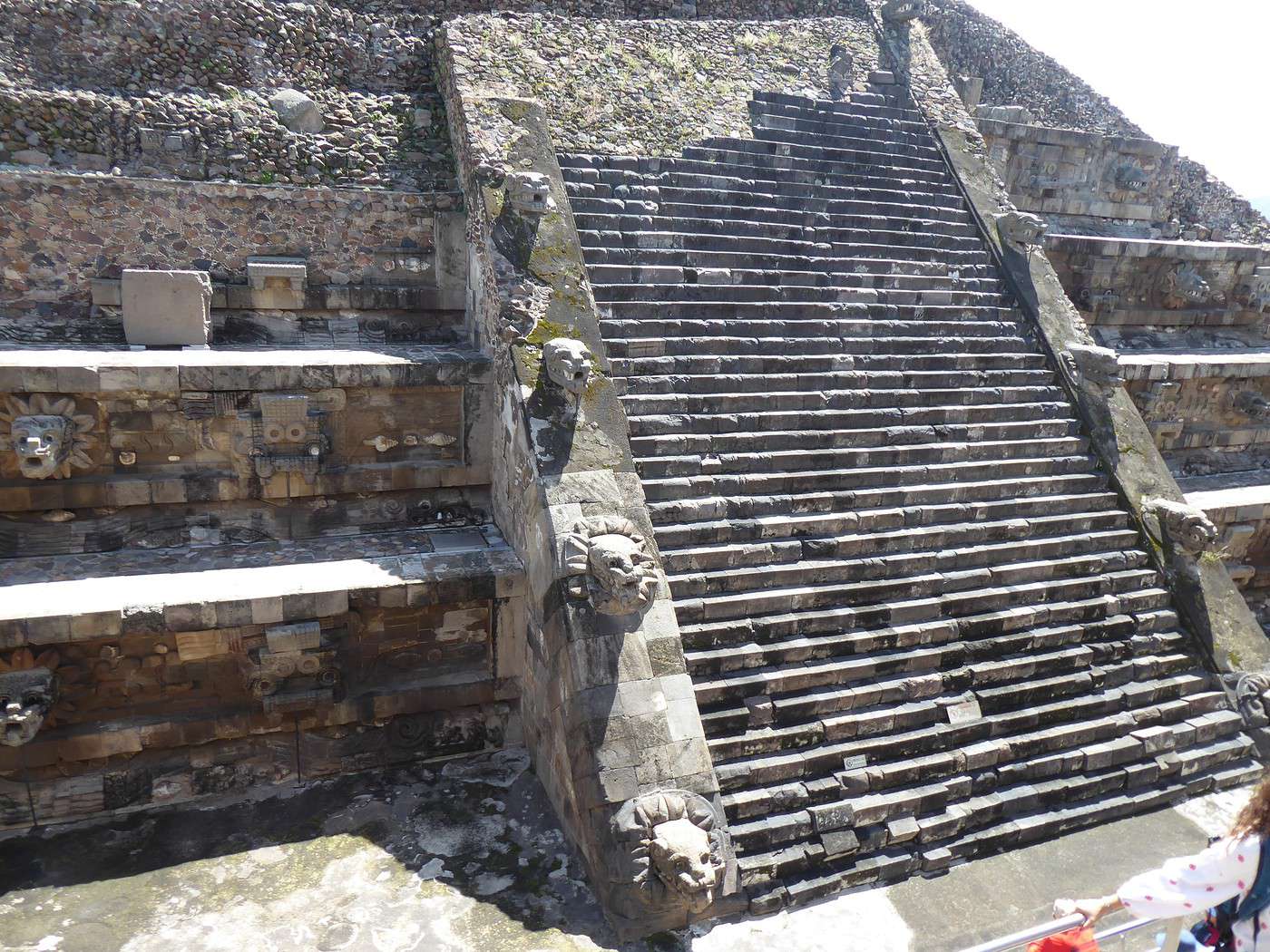
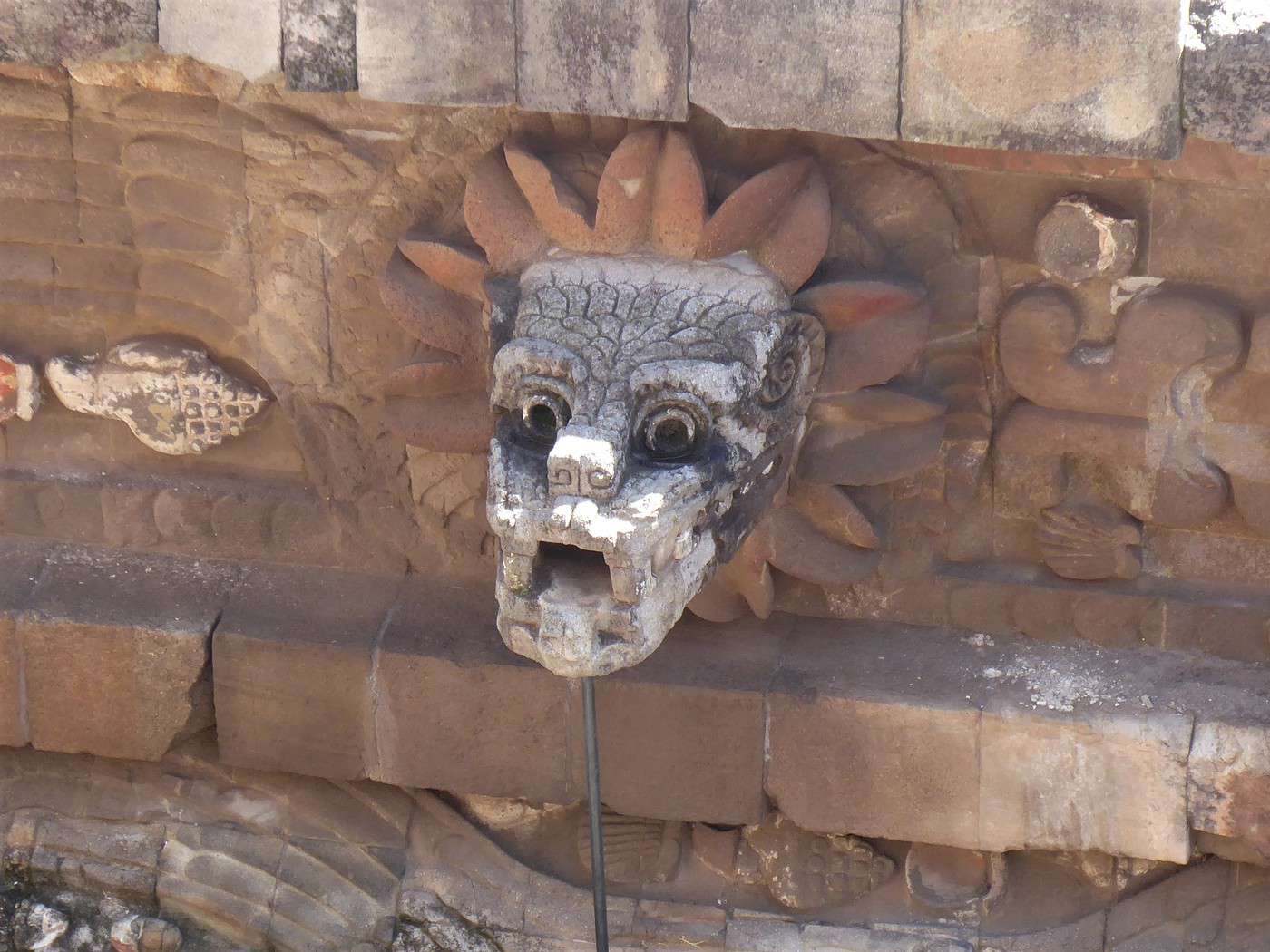
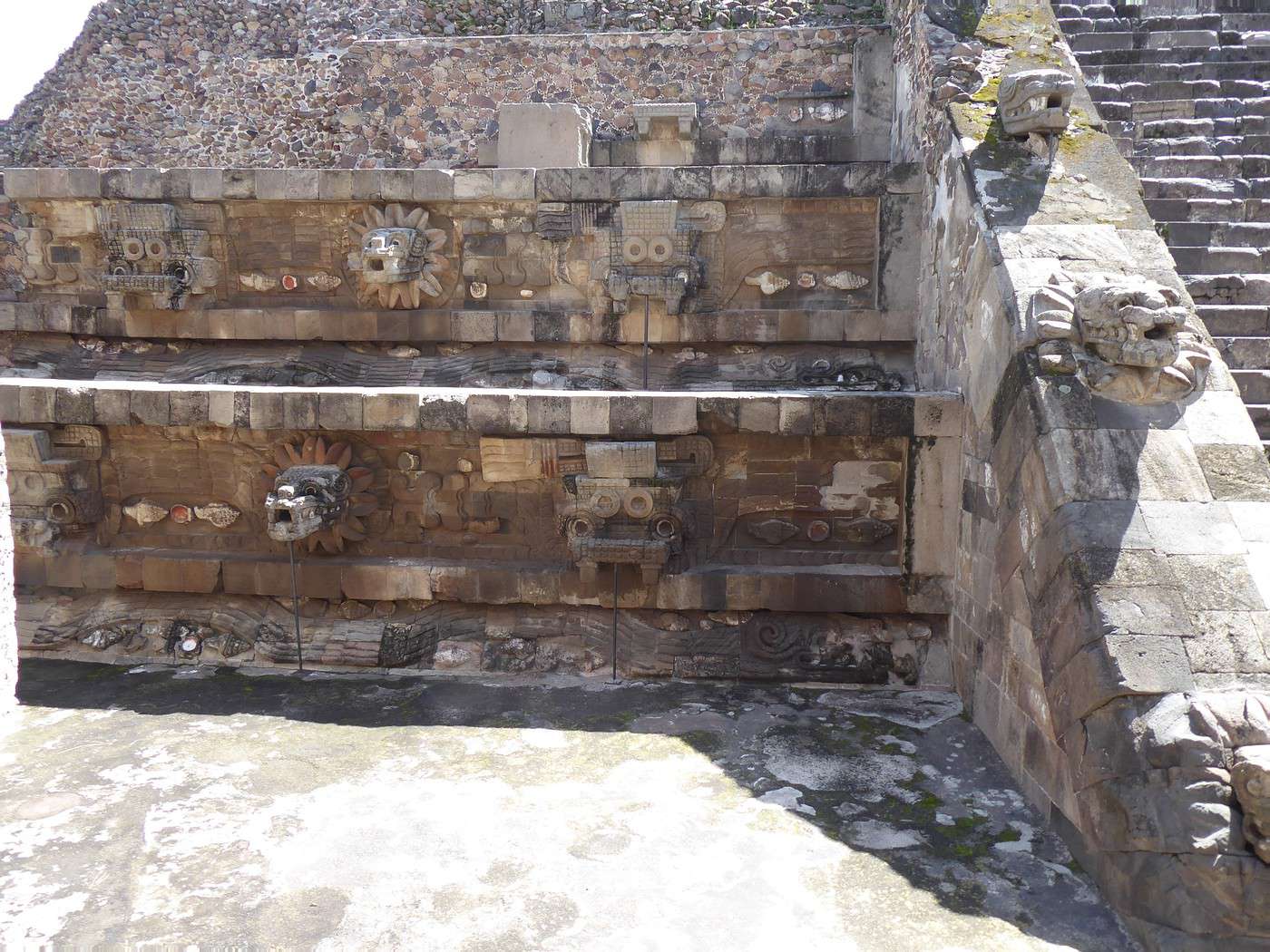
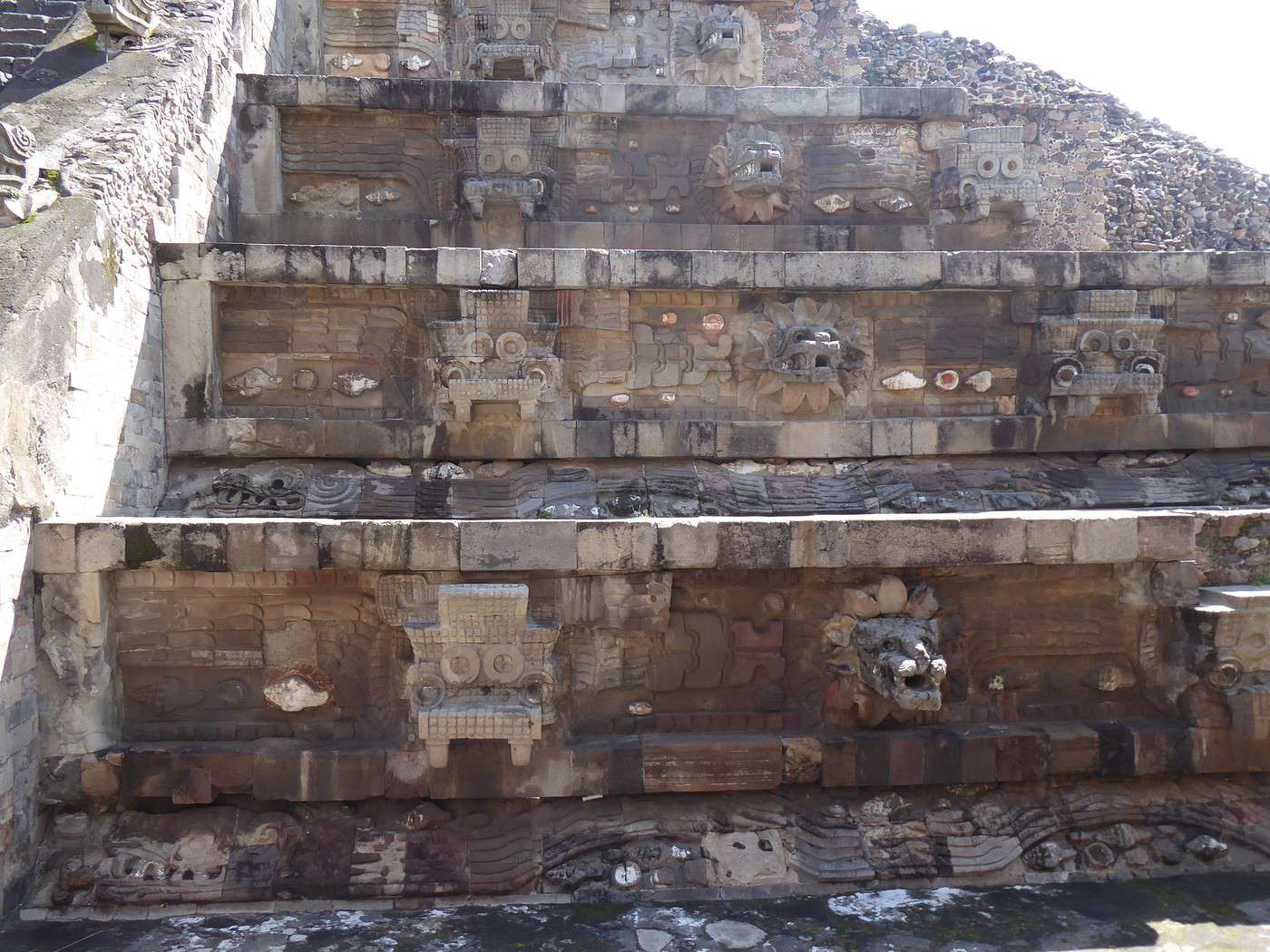
The site is huge. At the entrance on the right, there’s a museum we save for later since it’s better to visit the ruins before it gets too hot. We start with the Pirámide de la Serpiente Emplumada on the right. In terms of size, it’s the third-largest structure on the site and dates back nearly 2,000 years. It’s also called the Temple of Quetzalcoatl, but you should know that Quetzalcoatl is a Nahua word (the language of the Aztecs) and over a thousand years later—the Aztecs were a relatively recent people on the pre-Columbian scene. In fact, we know almost nothing about the people who built the city of Teotihuacán (another Aztec name). Some suggest they were the ancestors of the Otomís, or the Totonacs, or the Nahuas… But roughly speaking, the site is thought to be later than the Olmecs and earlier than the Toltecs.
In a gallery beneath the temple, the remains of 200 sacrificed people were discovered, likely for its inauguration. These Mesoamerican peoples definitely had some customs that wouldn’t fly today. 🏴☠️ Can you imagine if the day Notre-Dame is finally repaired, there’s a big ceremony and a few hundred of our fellow citizens are sacrificed? Well, the idea *might* have some appeal—after all, there are so many people we’d love to get rid of! 😉😠
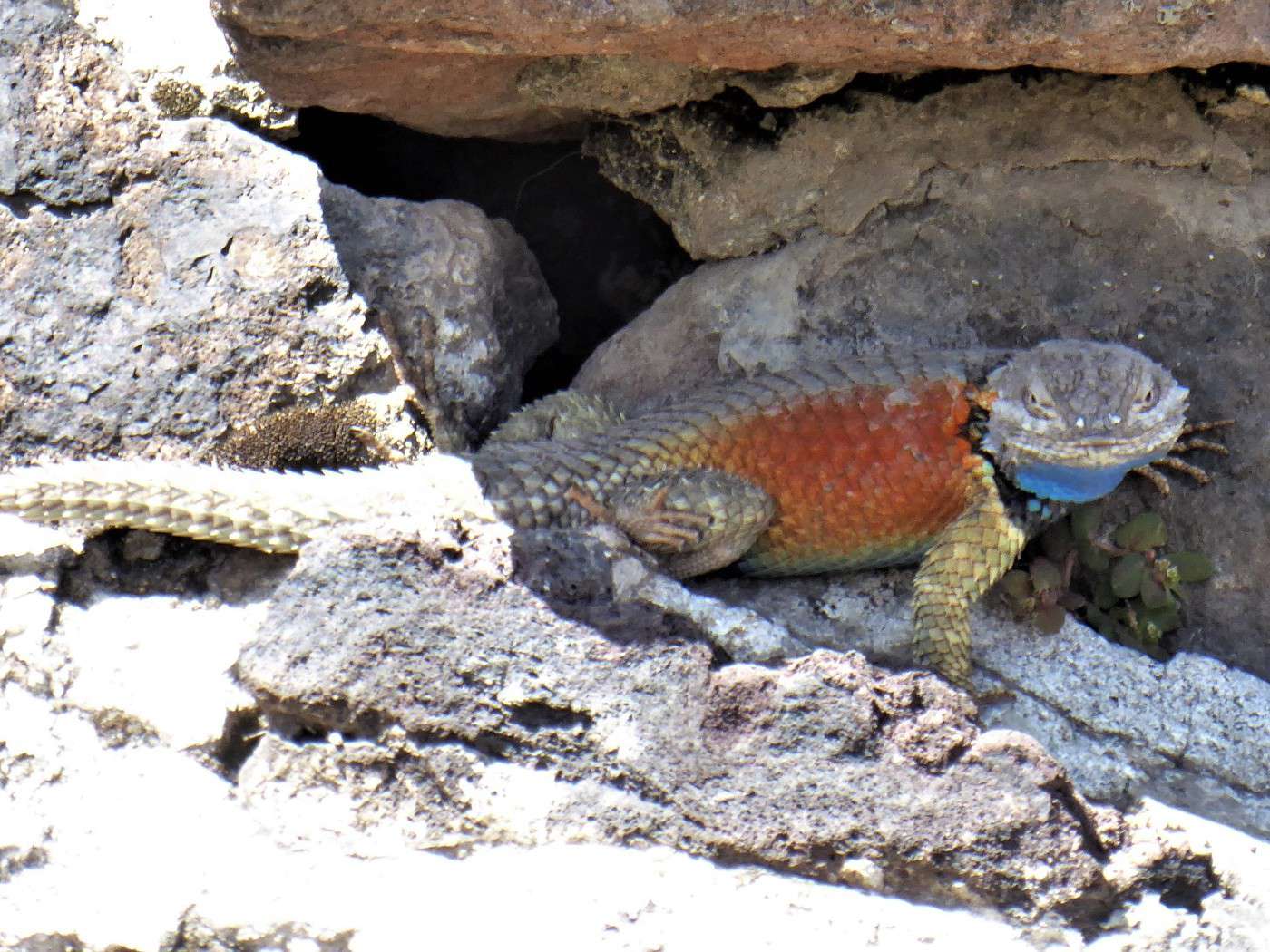
The first four photos show the Temple of Quetzalcoatl. You can tell it must have been richly painted originally. Speaking of colors, here’s a friendly local in my fifth photo, basking in the morning sun. No, it’s neither an Otomí nor a Totonac, and certainly not an Aztec. But this little reptile definitely has a rightful place in the Temple of the Feathered Serpent! 🙂
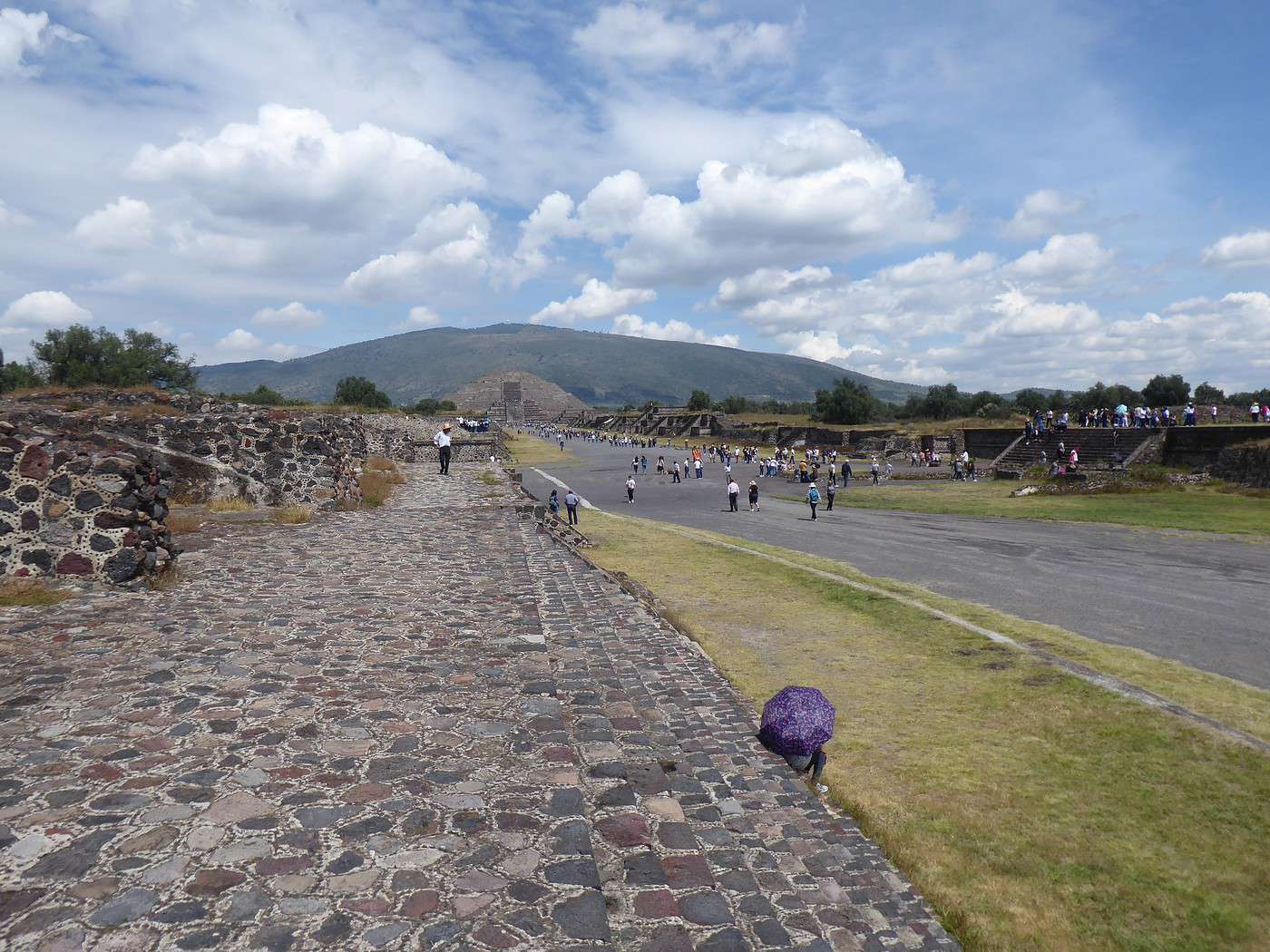
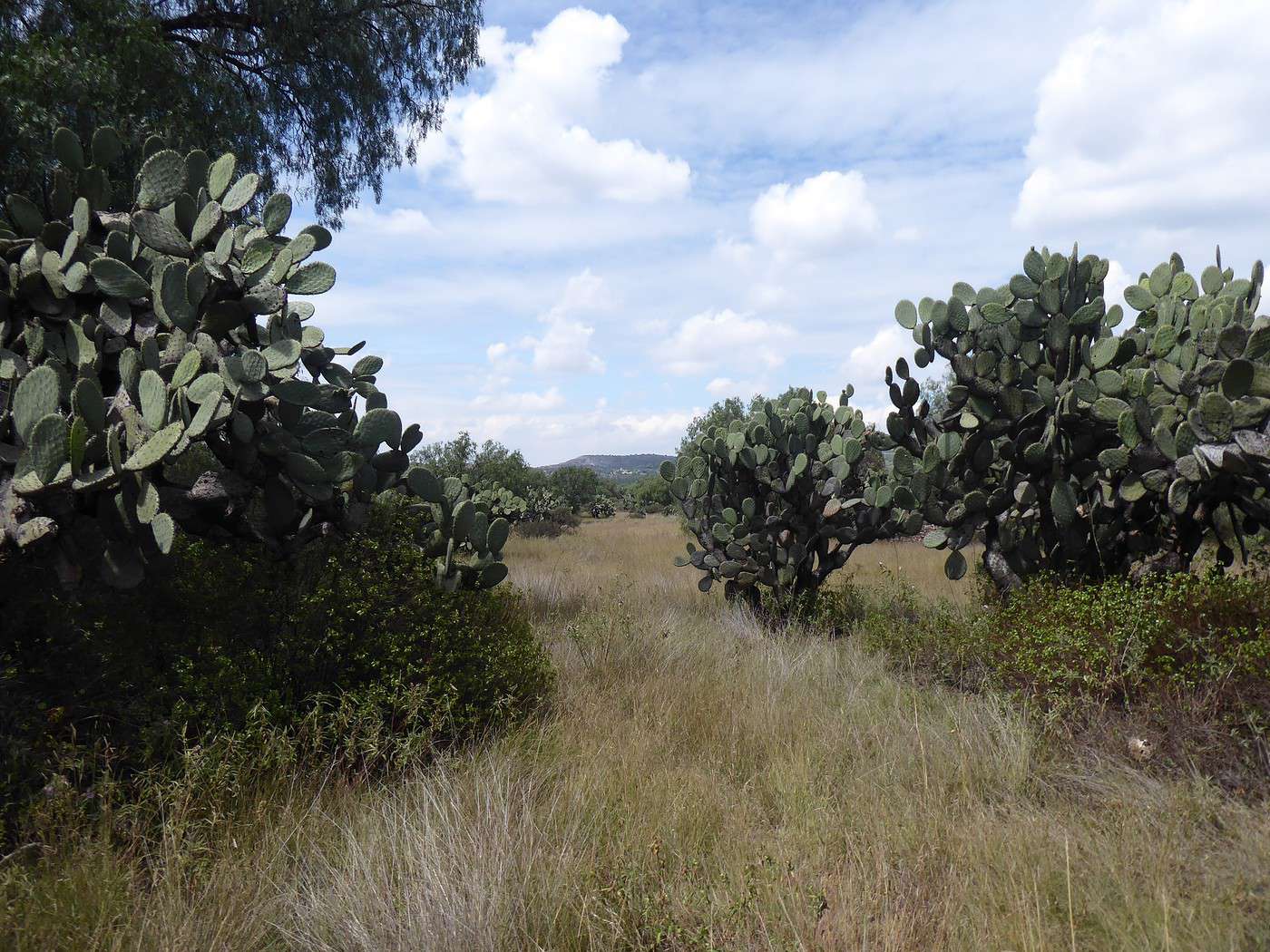
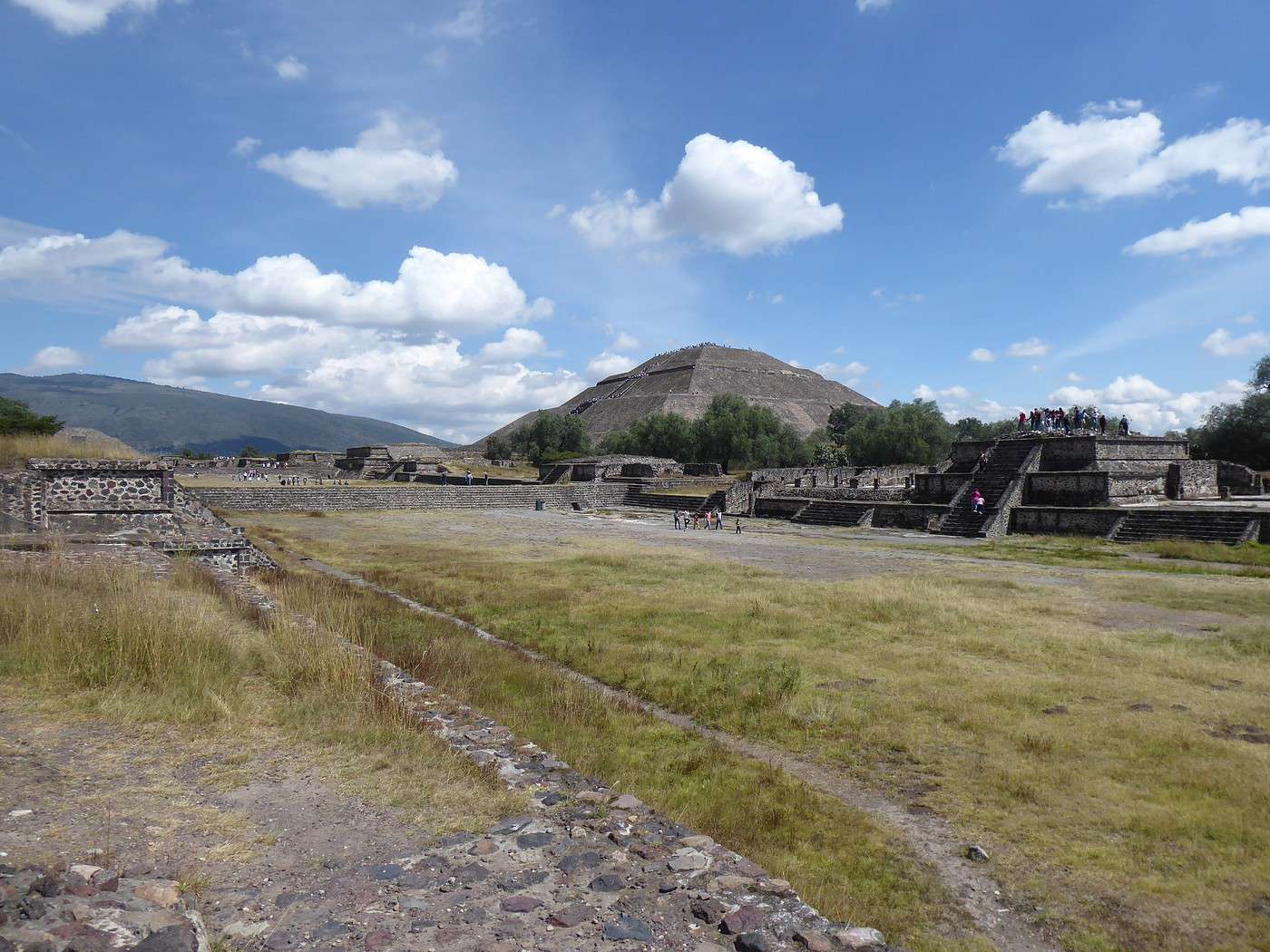
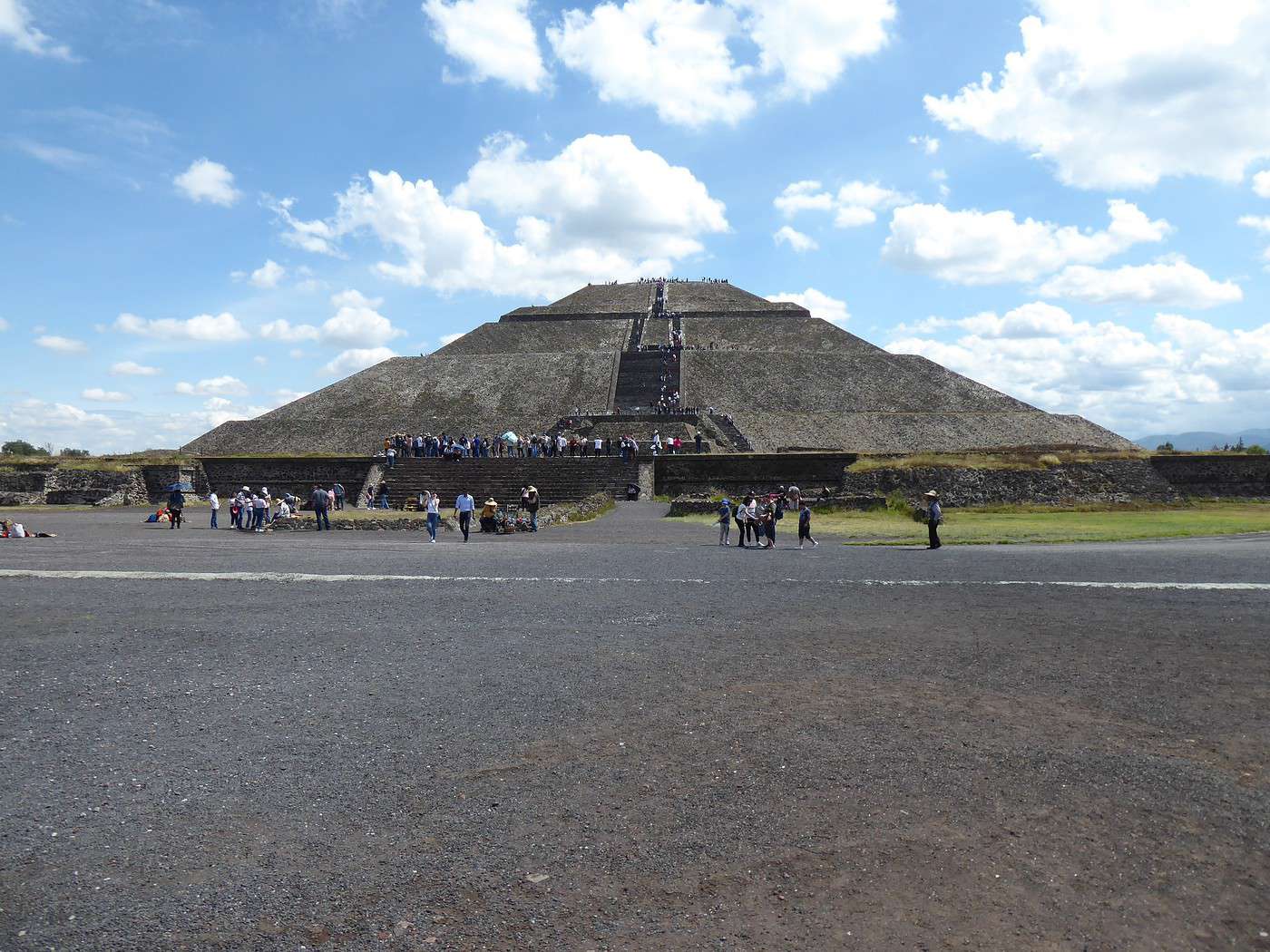
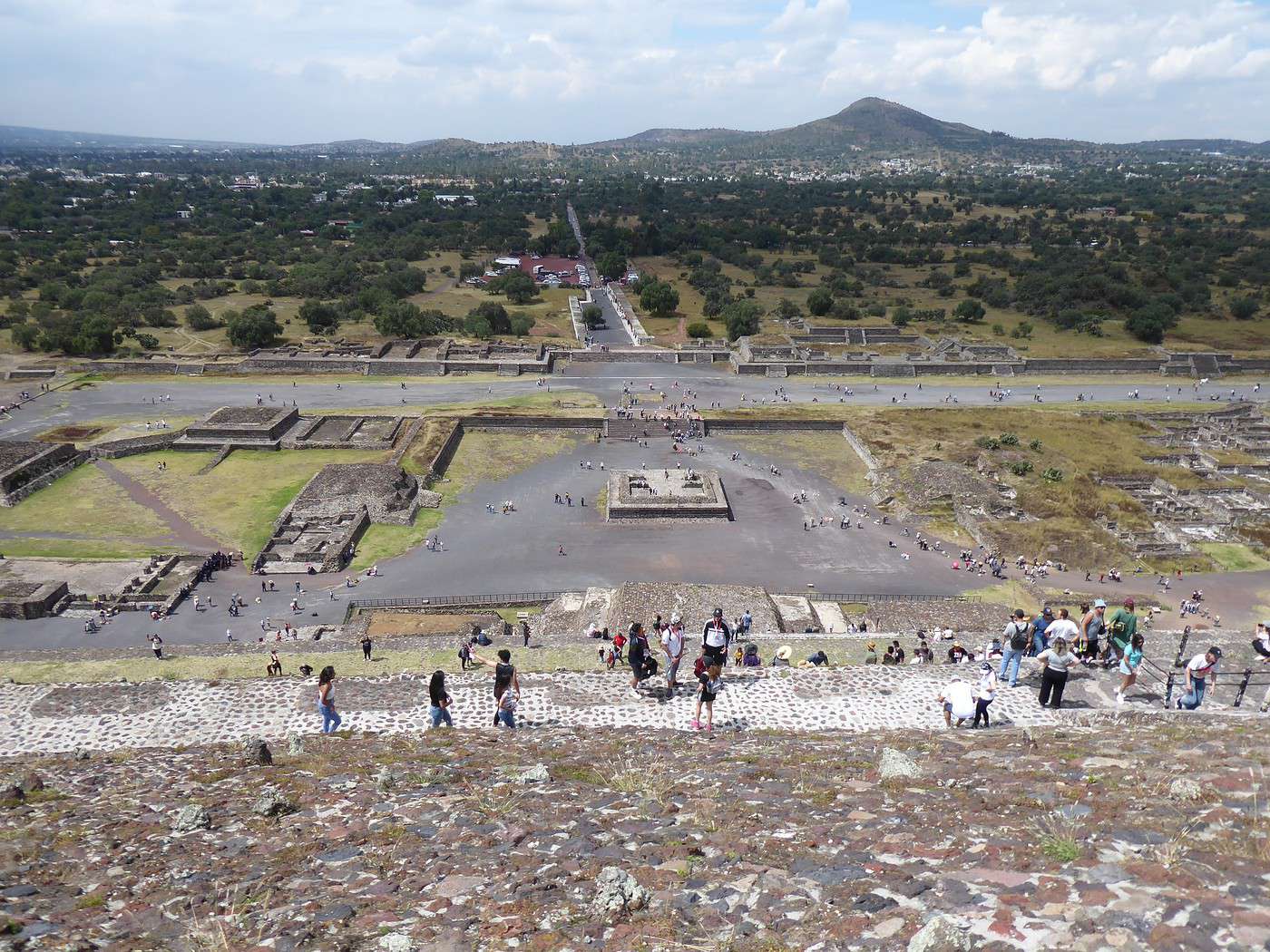
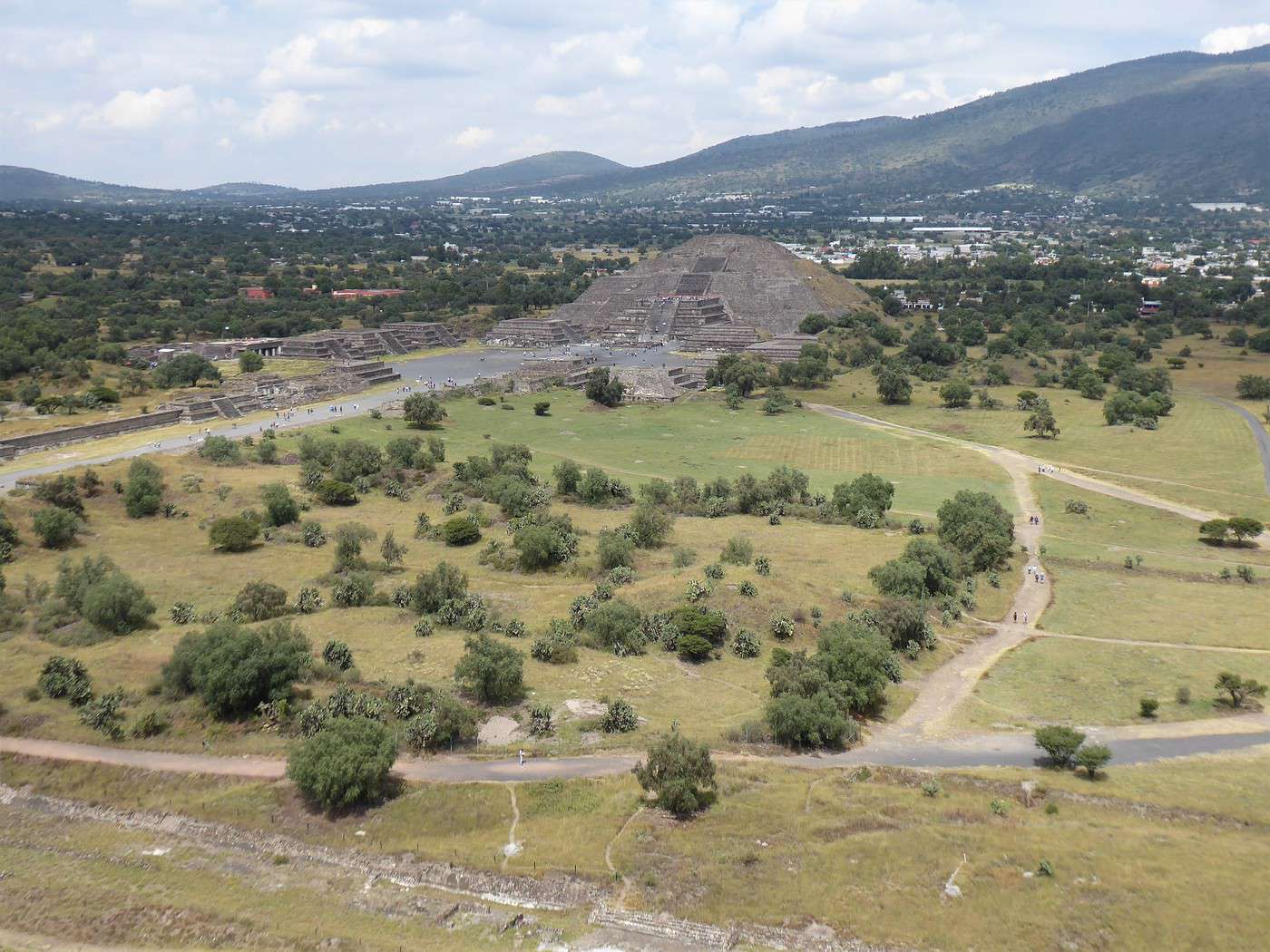
Further on—much further (it’s a gigantic site)—after walking under a sun that’s really starting to heat up (the tall cacti don’t provide much shade), we reach the Pyramid of the Sun. It’s the largest pyramid in the Americas after the one in Cholula (southeast of Mexico City). Climbing it is quite the workout… “Come on, Y, one more push!” (Thais aren’t big fans of physical exertion…). At the top of the pyramid, we’re rewarded for our effort with stunning views of the surroundings. The Pyramid of the Moon marks the end of the Avenue of the Dead in the distance.
It’s not even noon, but there are more and more people, and it’s getting really hot. We’ve been exploring for a good three hours. Back to the entrance. Crowds of visitors are pouring between the shops (Y buys a nice hat for 250 pesos). Y points at someone in the crowd coming toward us and says, “Look, that guy looks like E., our American friend from San Miguel!”. Yeah, yeah, okay, there’s a resemblance… I keep walking, then stop: where’s Y? Another shop, maybe? No, she’s stopped to chat with the guy—and it *is* E., unbelievable but true. He’s here to show some friends around a site he’s already visited several times, no doubt. What are the odds of running into friends like that in such a crowd? 😎😮
We want to visit the museum but can’t find it right away, so we decide to take the return bus. You can have too much of a good thing, and it’ll be something new to see if we ever come back to Teotihuacán. On the way back to Mexico City, there are museums there too… but mostly ice-cold beers! 😉😛
Six-week trip to Mexico
GeorgesOZ · 2019-12-31 · Message 49 of 227
Mexico CDMX 5
This is our 4th day in Mexico City. We’ve already checked off the major tourist must-sees with the cathedral, Templo Mayor, and the ruins of Teotihuacán, so now it’s time to see what everyday life in the city is like. There’s nothing better for that than visiting a market. La Merced market is well located, in the historic center and just a half-hour walk from our hotel.
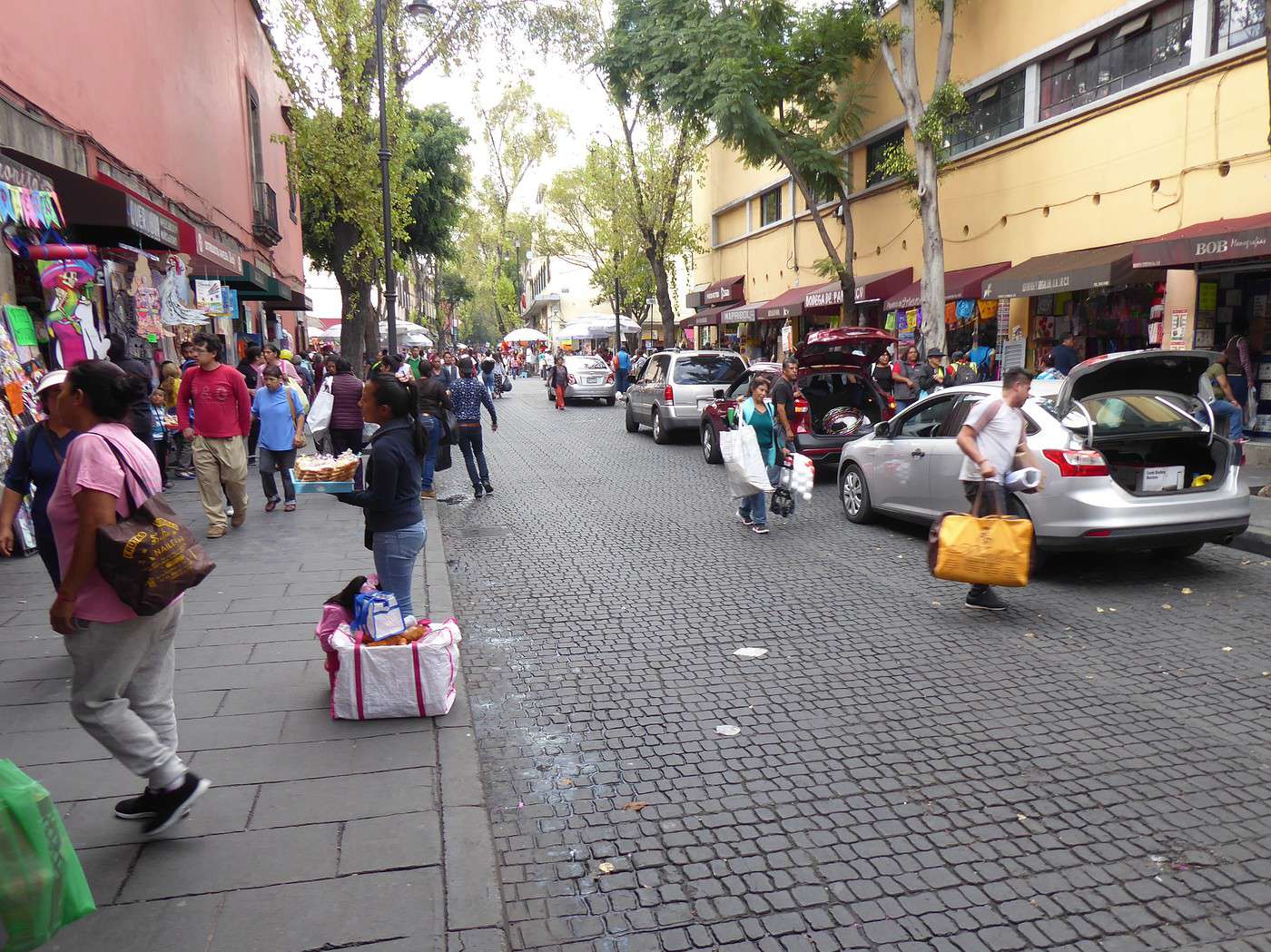
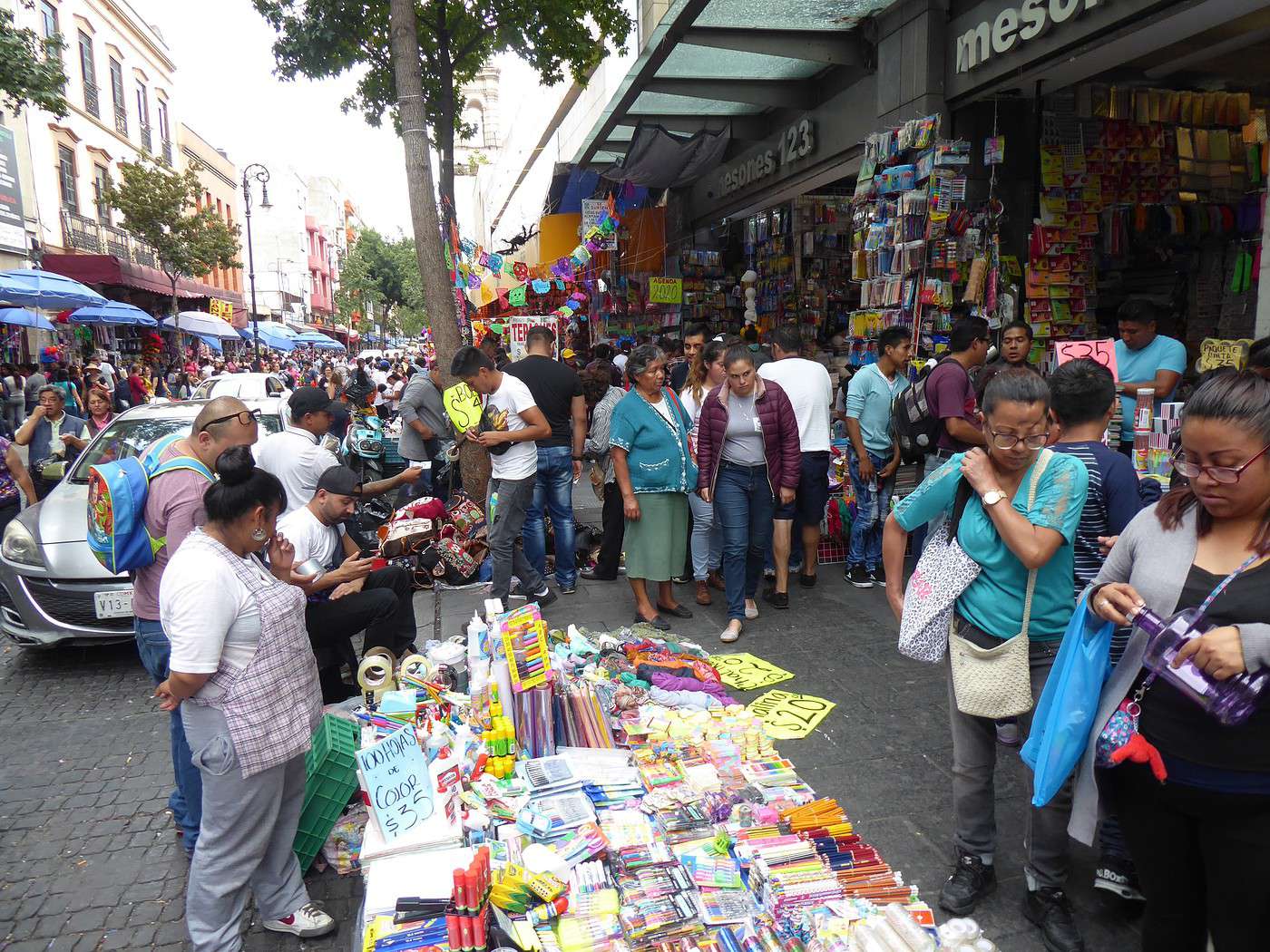
The whole neighborhood between the main square and the market is very lively and bustling. You can find everything in thousands of shops (no, I won’t start that little refrain again!) not to mention what’s sold on the sidewalks. With all the people loading and unloading their cars and pedestrians walking in the middle of the street, it’s not an easy area to get around in.
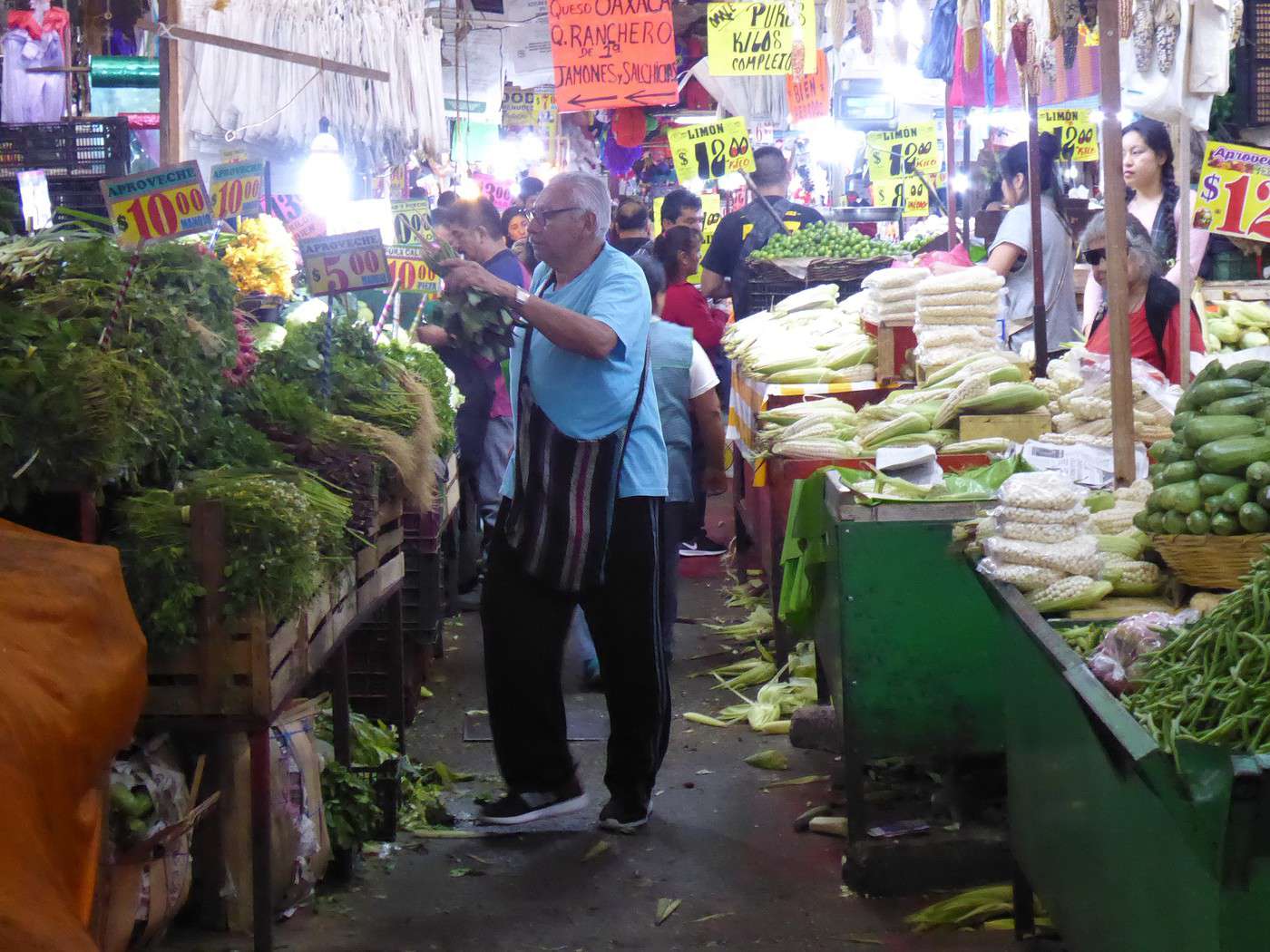
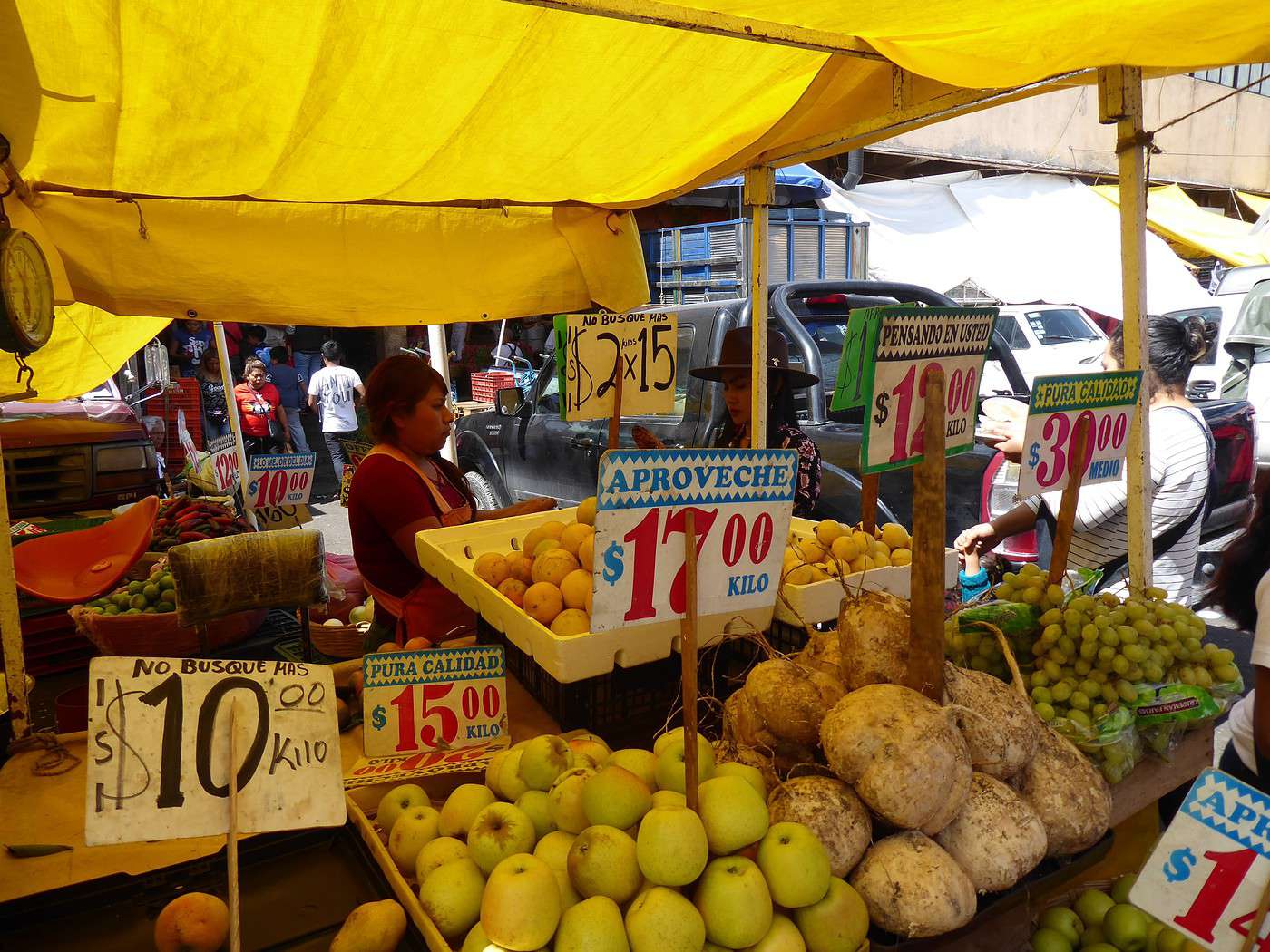
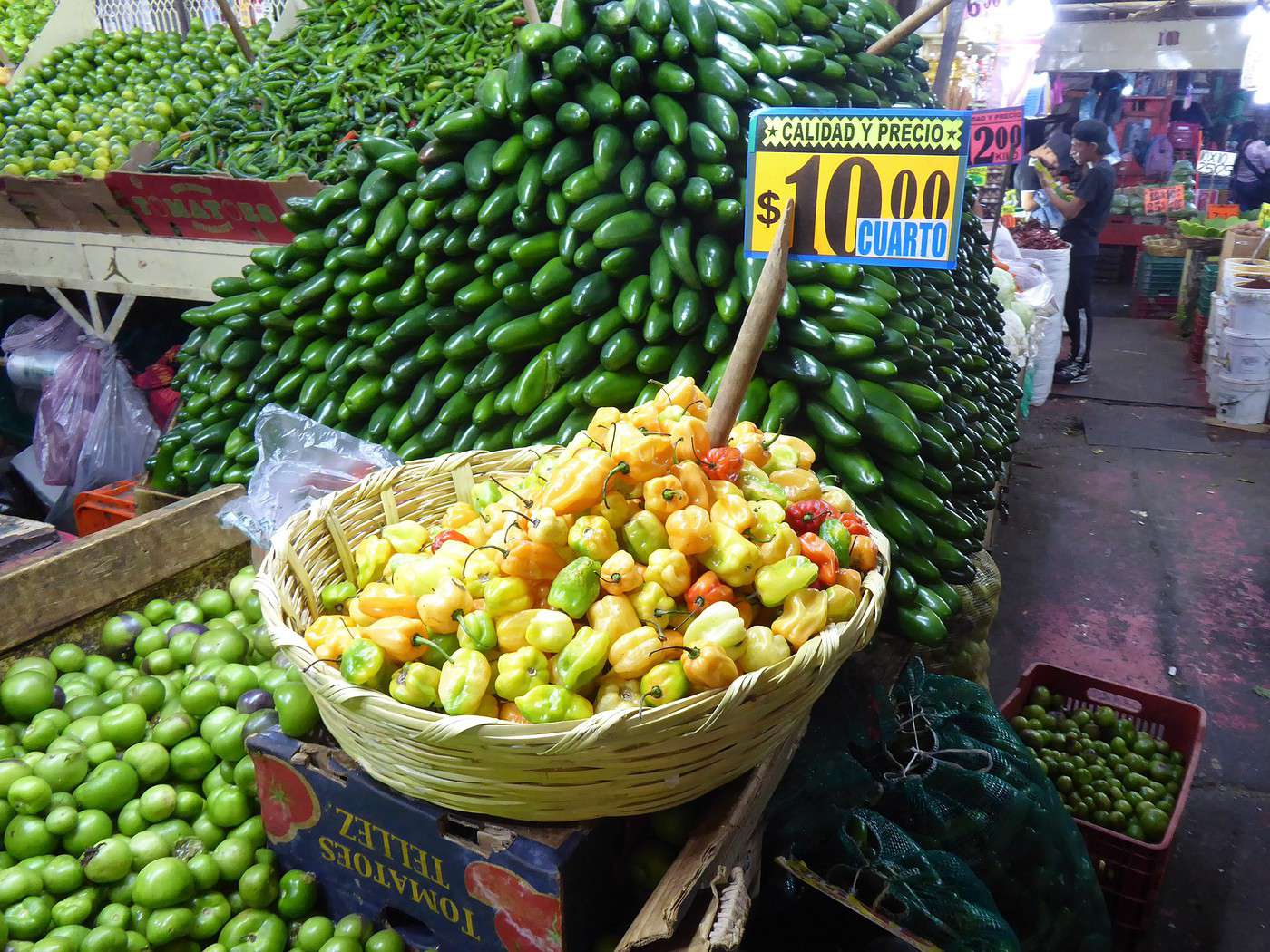
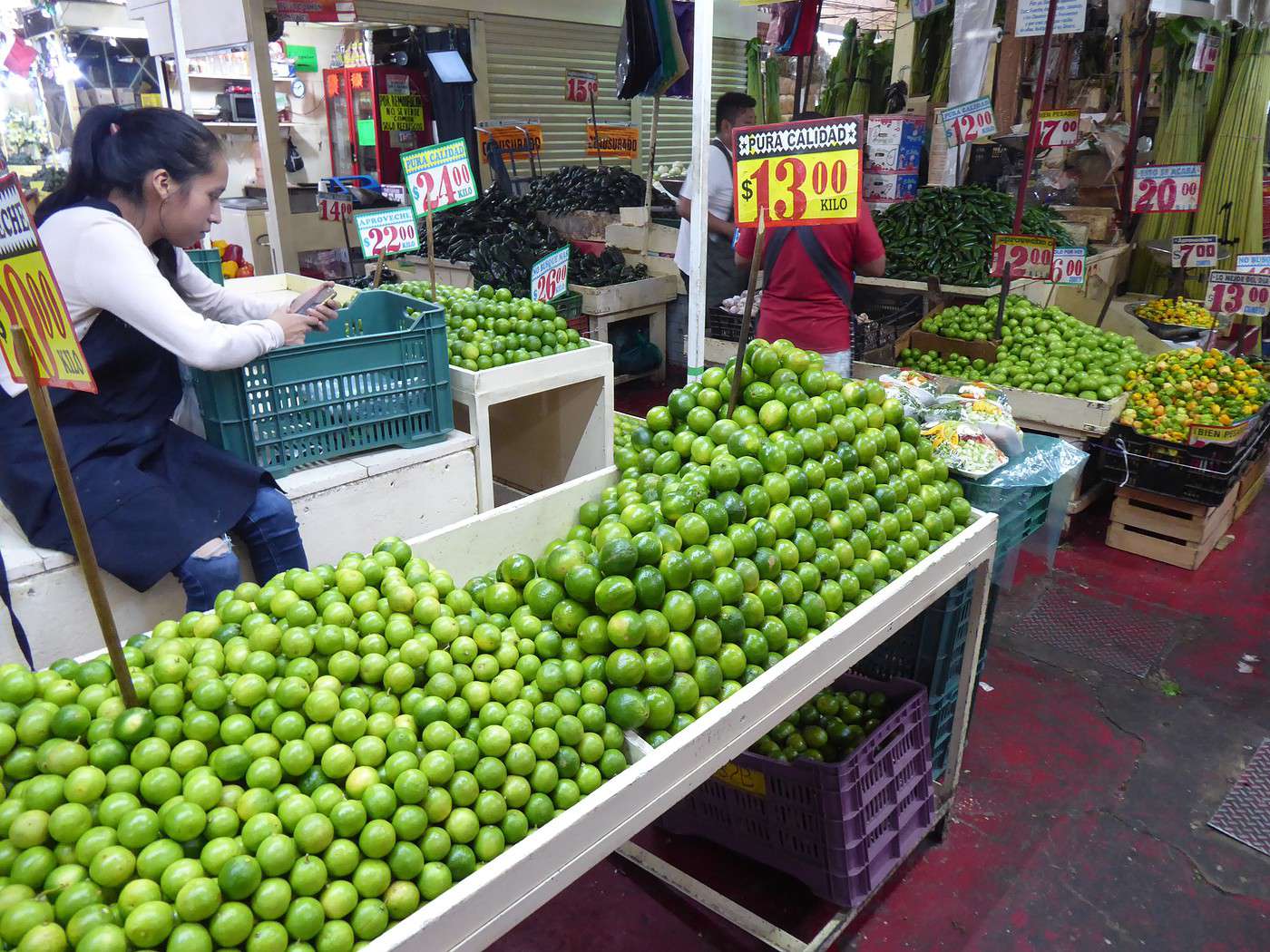
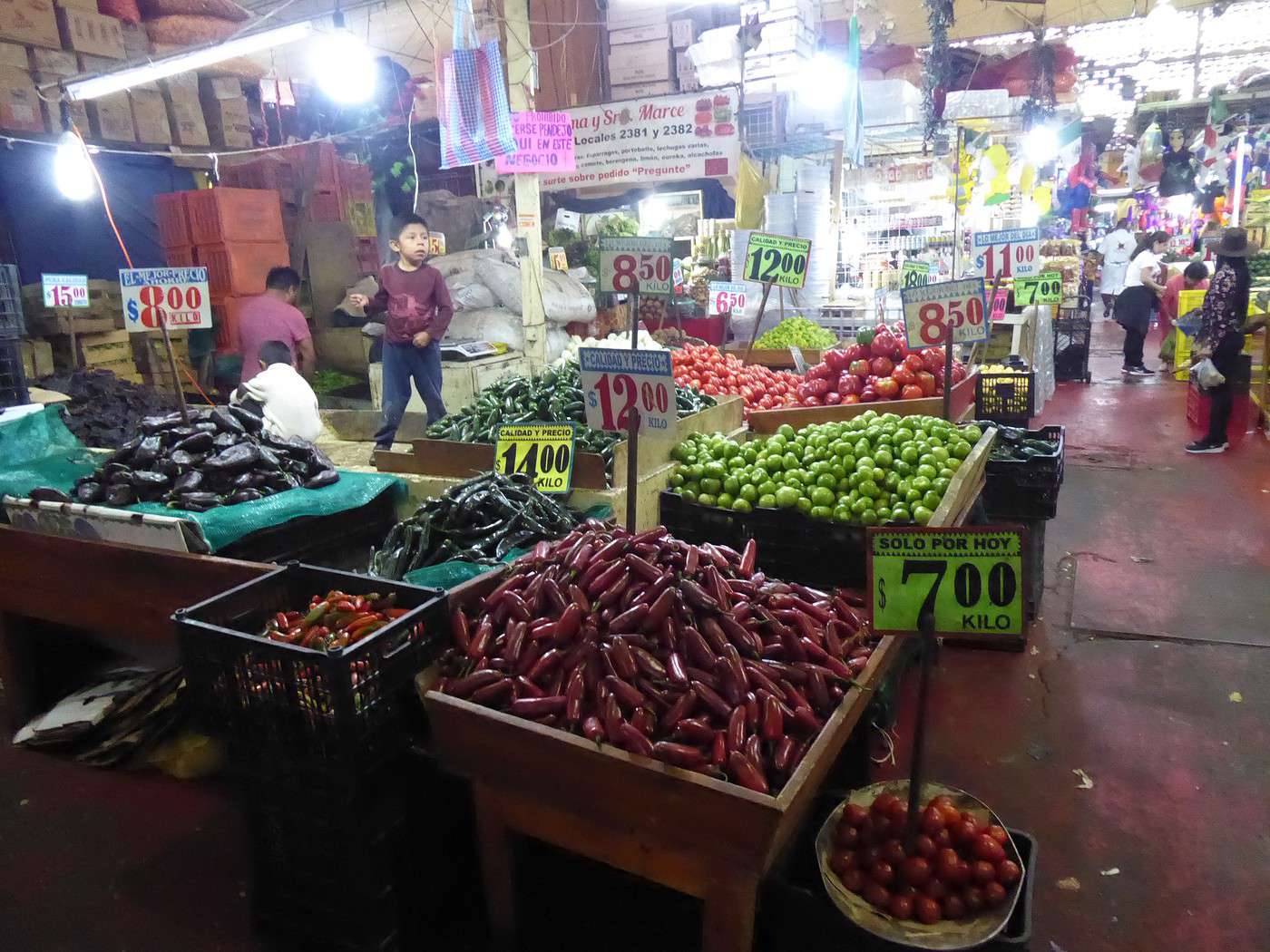
We arrive at La Merced market, meaning the covered one. It’s huge and really something to see. Piles of all these typical Mexican products: several kinds of peppers, different sizes and qualities of avocados, tons of limes (great for margaritas!), bags of dark brown or even black "mole" sauces—I think you buy this "dry" and dilute it with other ingredients when you cook—at very reasonable prices. You can tell this is a country that produces everything. So many things we eat came from Mexico; we wonder how people in Europe ate before its discovery. 😮
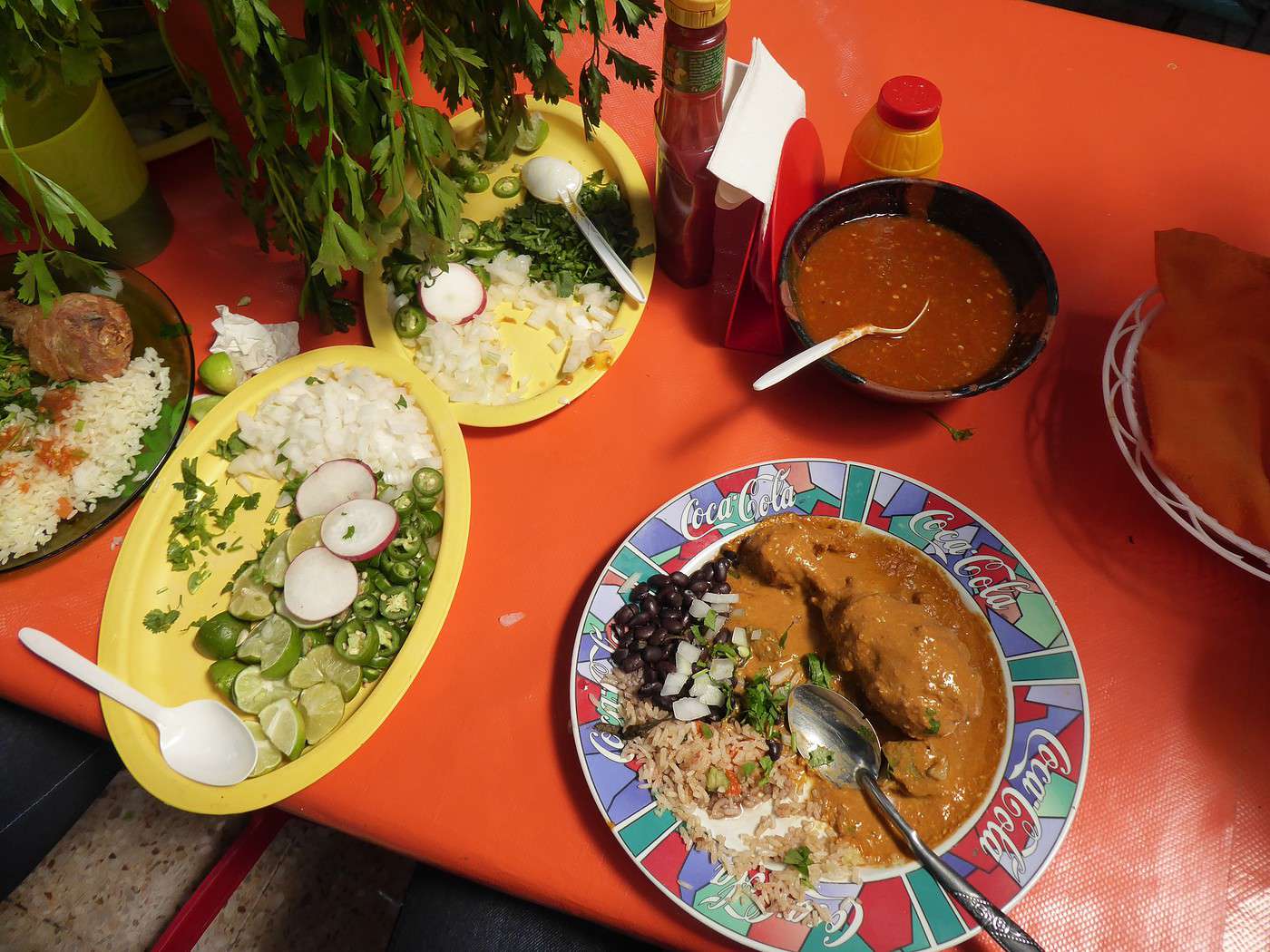
Of course, there are little restaurants inside the market. In the photo where my plate has chicken in a brown sauce, there are these green leaves that look like celery branches. The people next to us tell us it’s "pápalo". I forgot what it "tasted" like. The two of us ate for 80 pesos: 4 euros for two—wow, they might suspect we’re saving money to afford those margaritas! 😉 But Y didn’t find it fantastic; she’s getting picky! Luckily, we can always fall back on the hotel bar. We’re making friends there over a few beers or margaritas, and oh yeah, I almost forgot, the food’s good too. And I have to mention, I’ve found the perfect breakfast: "chilaquiles". I order them "rojos con huevos estrellados"; they’re spicy and super flavorful. 😛
Six-week trip to Mexico
GeorgesOZ · 2020-01-05 · Message 50 of 227
Mexico CDMX 6 – Museo de Arte Popular
We spent 5 days in Mexico City and, apart from our trip to Teotihuacán, we didn’t venture out of the historic center. Some might say there’s so much to see in other parts of the city, and I don’t doubt it for a second. But the historic center is already big enough to spend a few days there without getting bored. We’re not the type to try to see everything, rushing around from morning to night just to tick off boxes. Anyway, you can never see it all!
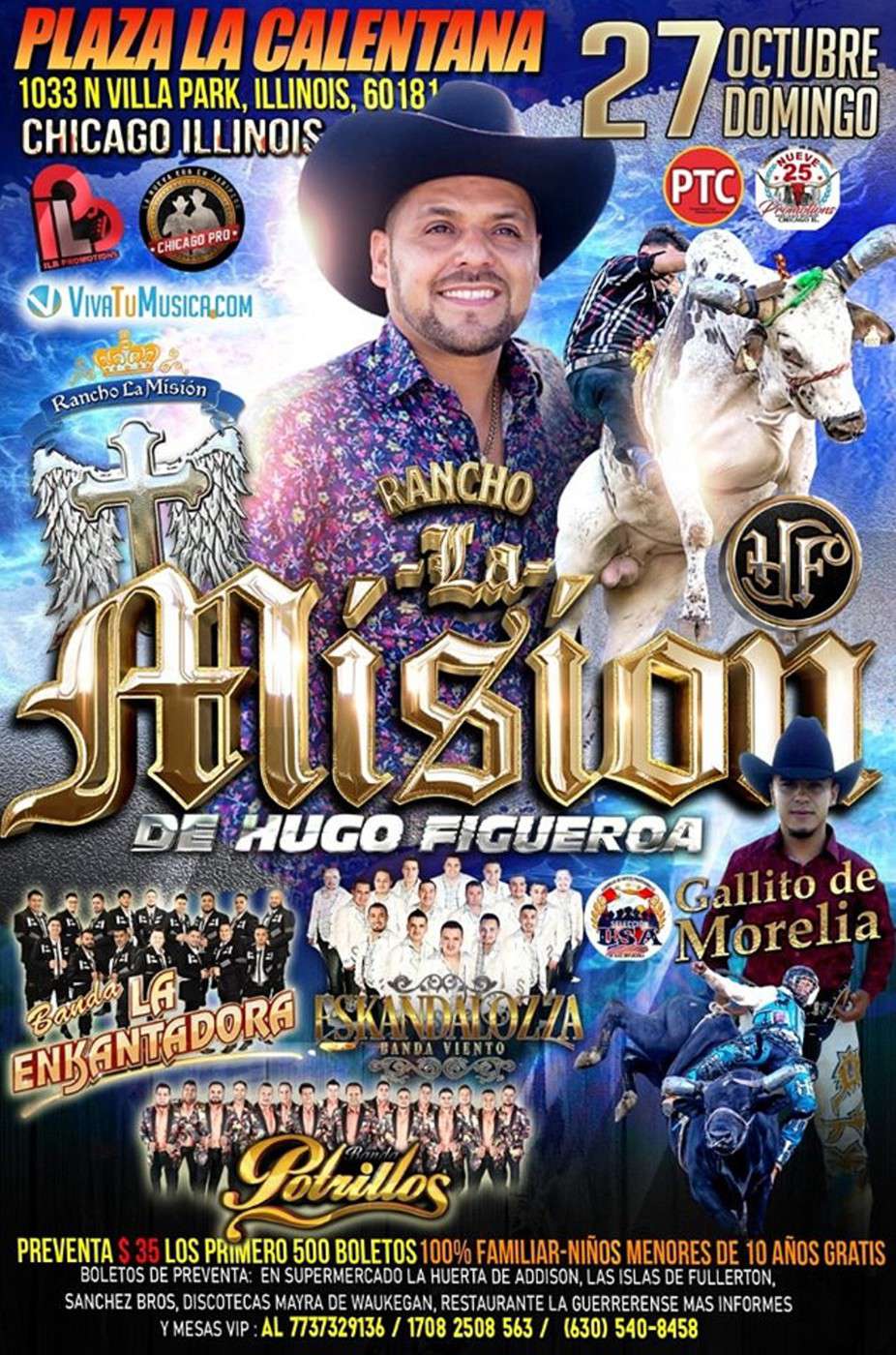
I left you last time at the Mercado de la Merced. Another market we visited was the Mercado de San Juan. It’s just a few hundred meters from the Balderas and Salto del Agua metro stations. We ate at a counter in the back—a ceviche and a caldo de camarón with two lemonades—for 250 pesos. There was a rodeo show on a TV screen in front of us, from a place called Rancho La Misión in the state of Guerrero (see the copy of a promotional poster). It was in a really convincing cowboy style, quite spectacular. Makes you wonder if you should go to Mexico to see that instead of the U.S.! Apart from that entertainment, we weren’t as impressed as we were at the Mercado de la Merced. It’s much smaller and can be crossed in just a few minutes.
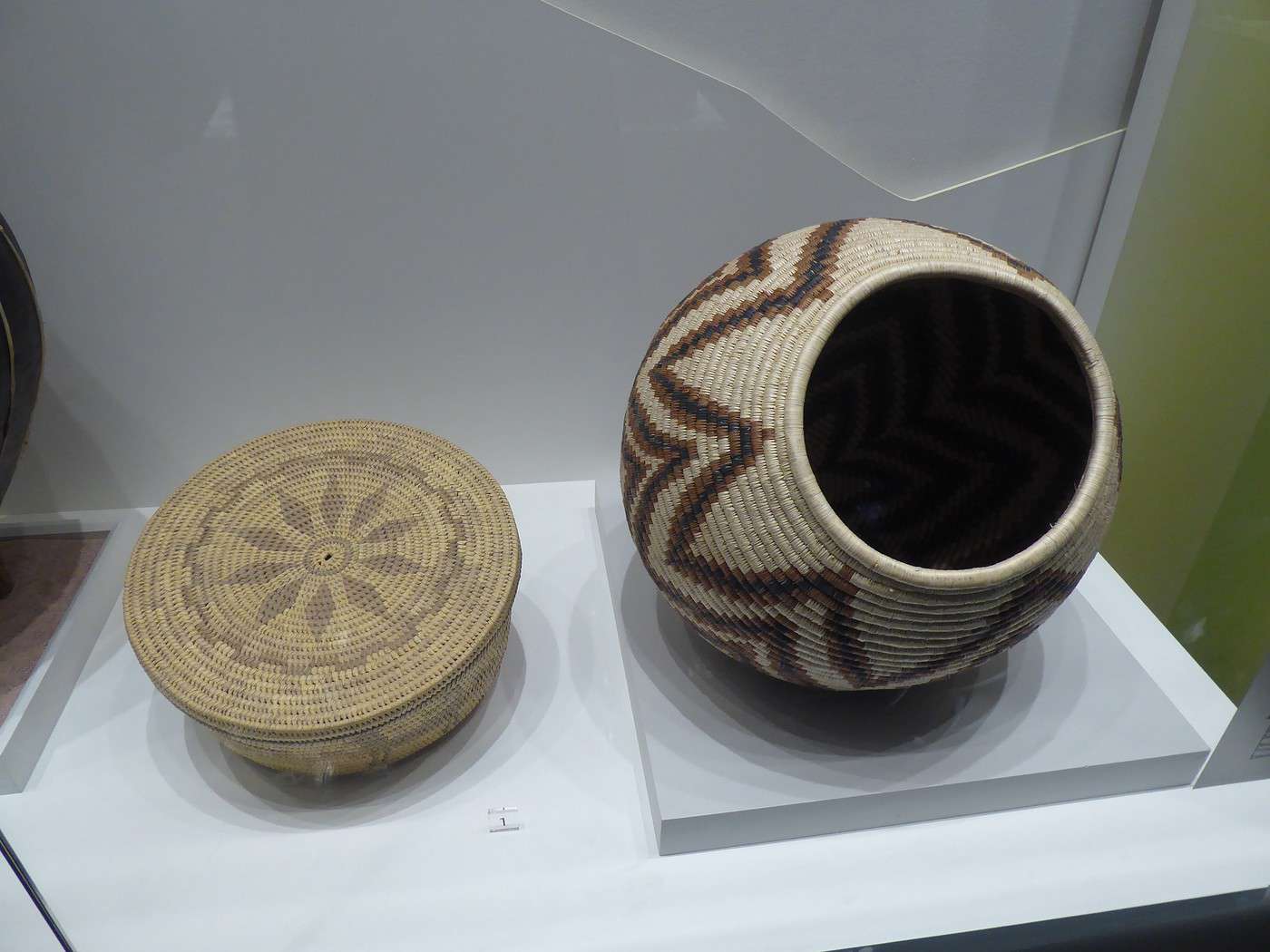
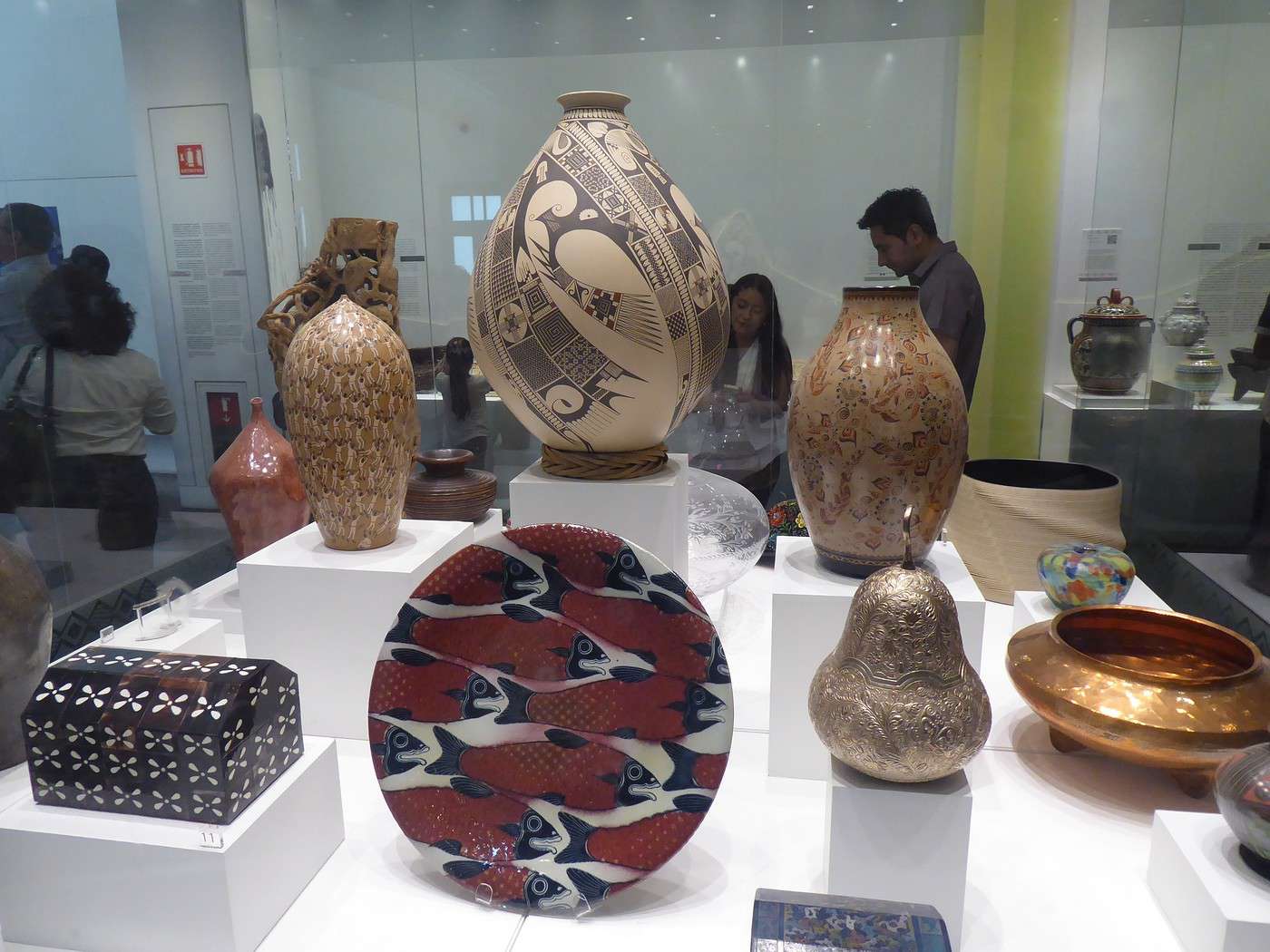
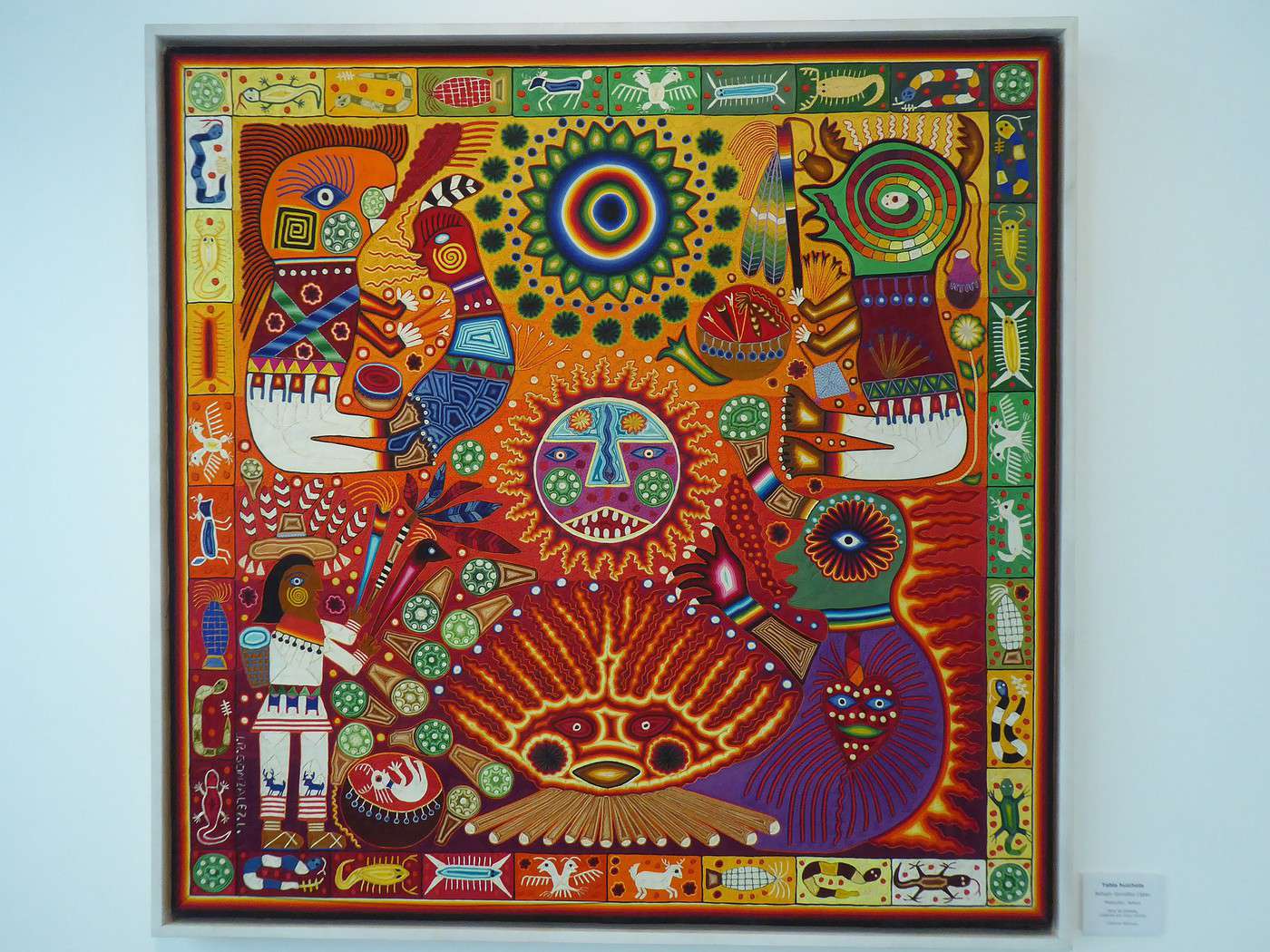
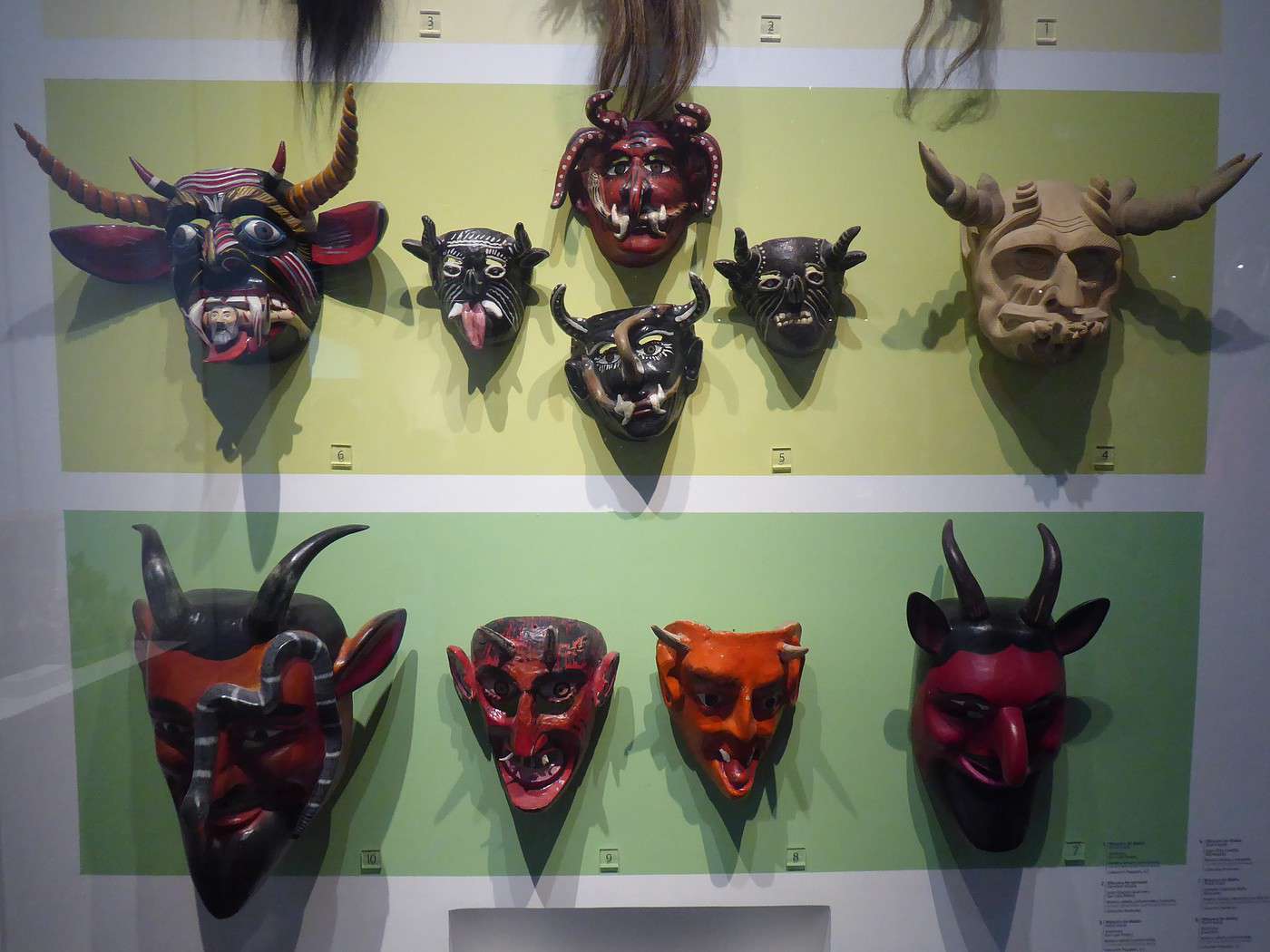
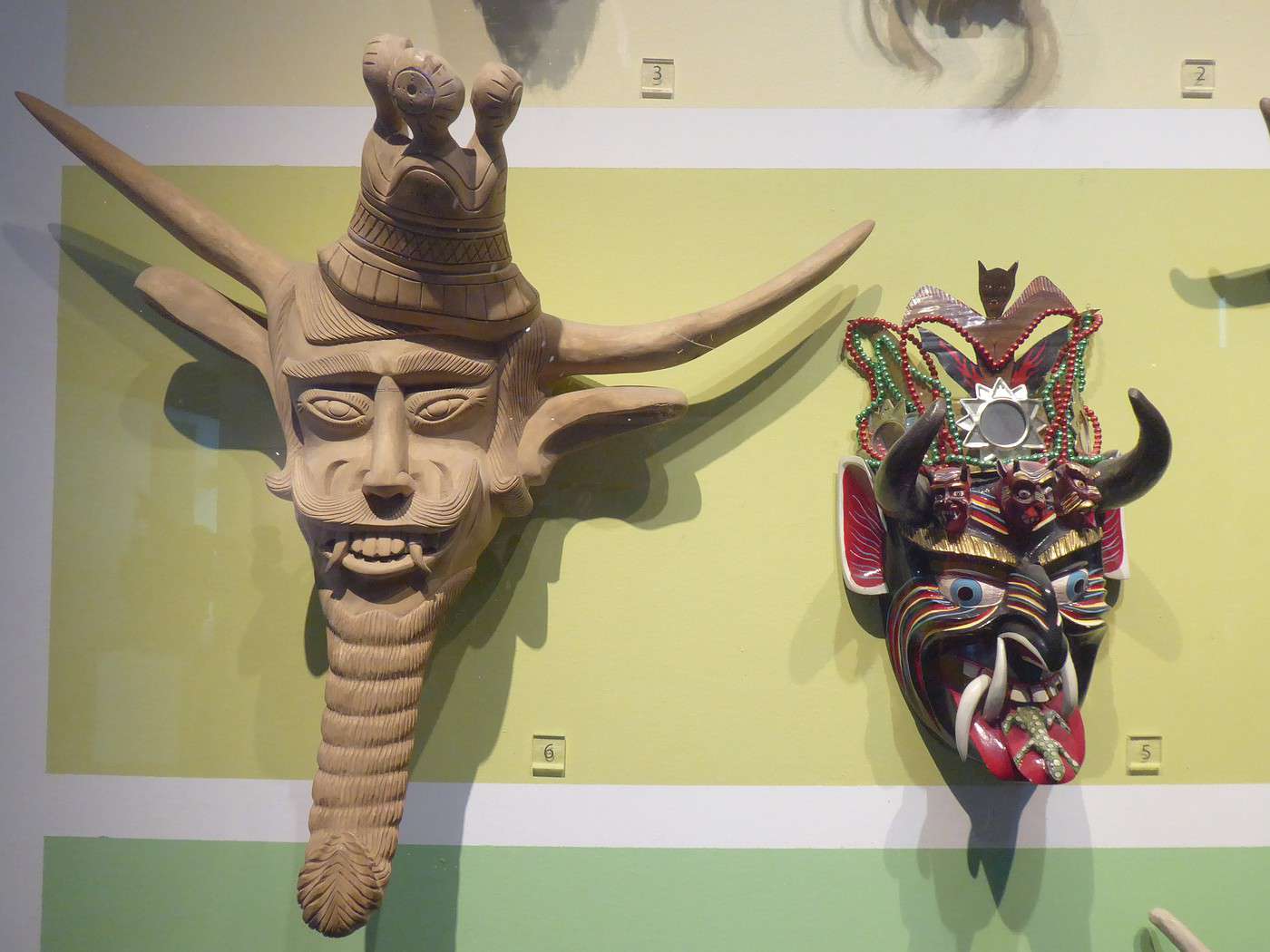
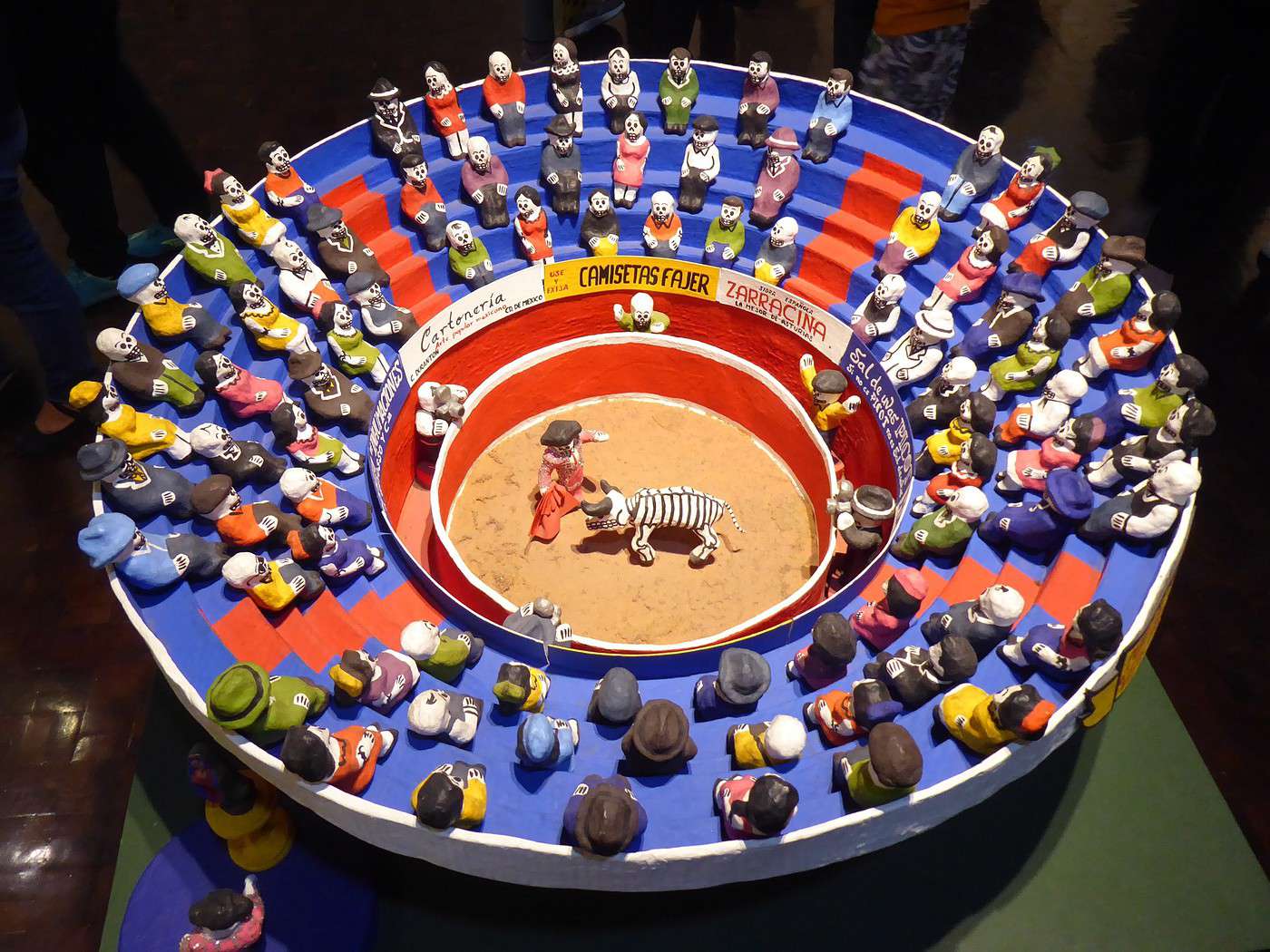
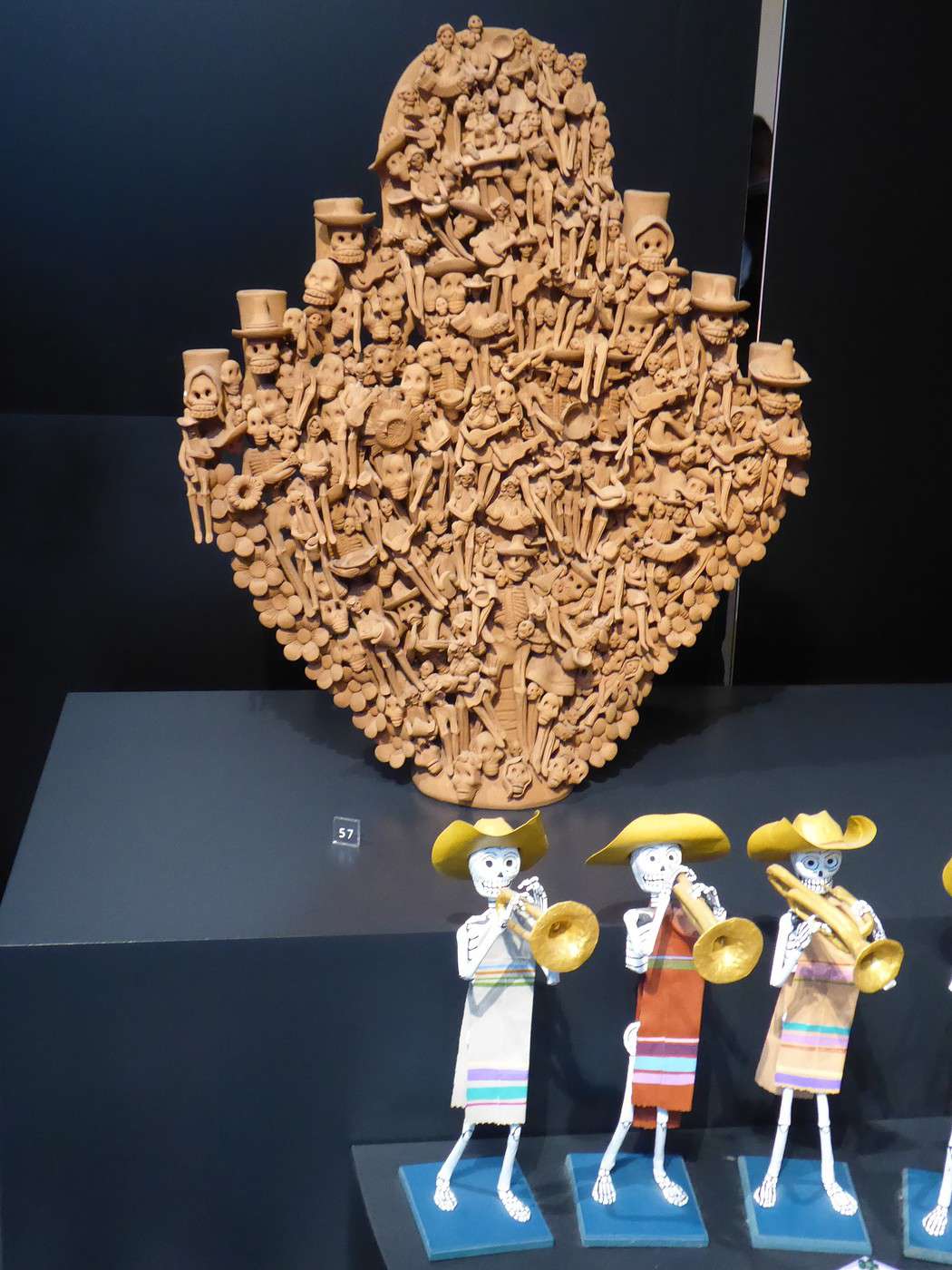
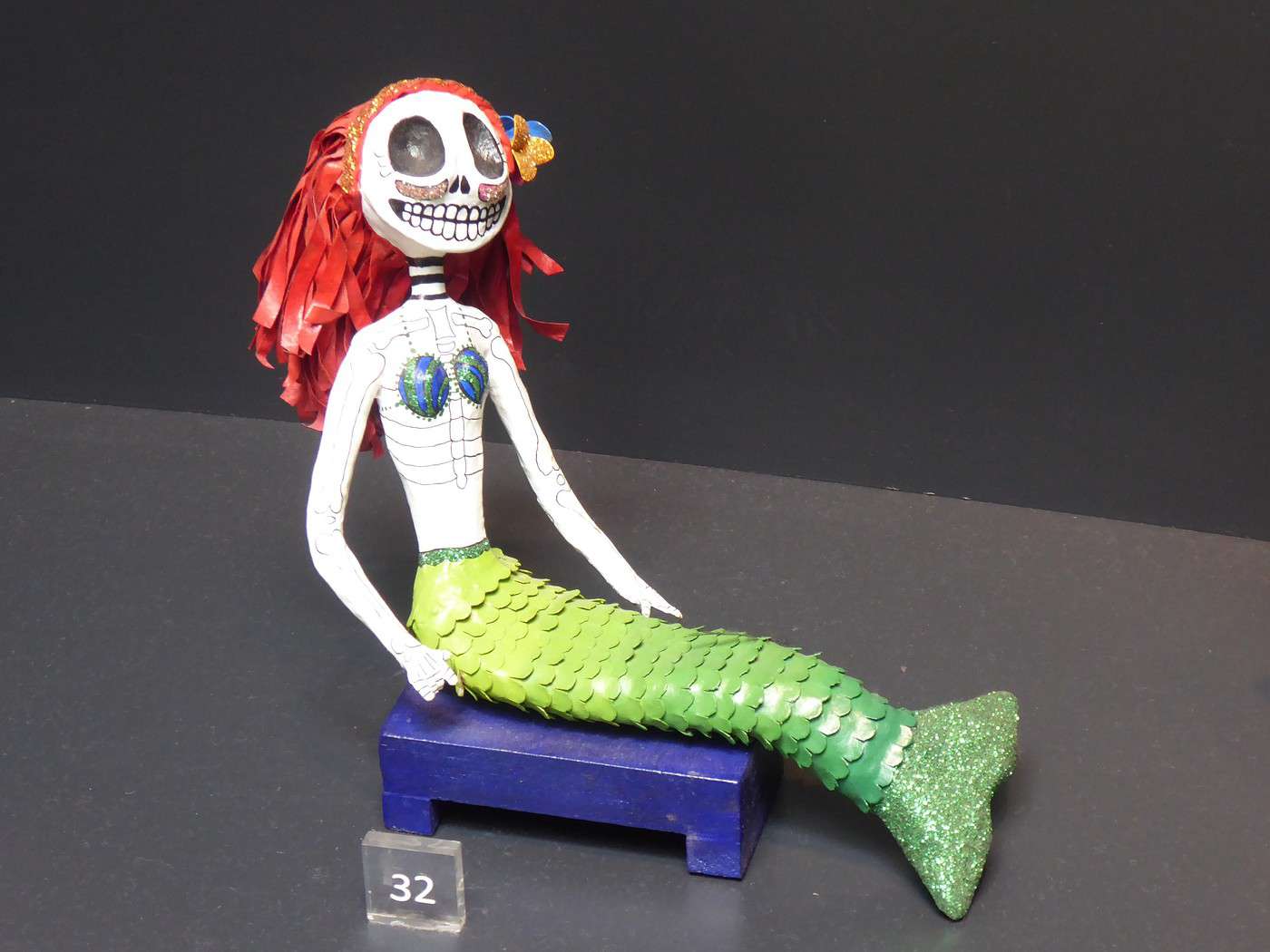
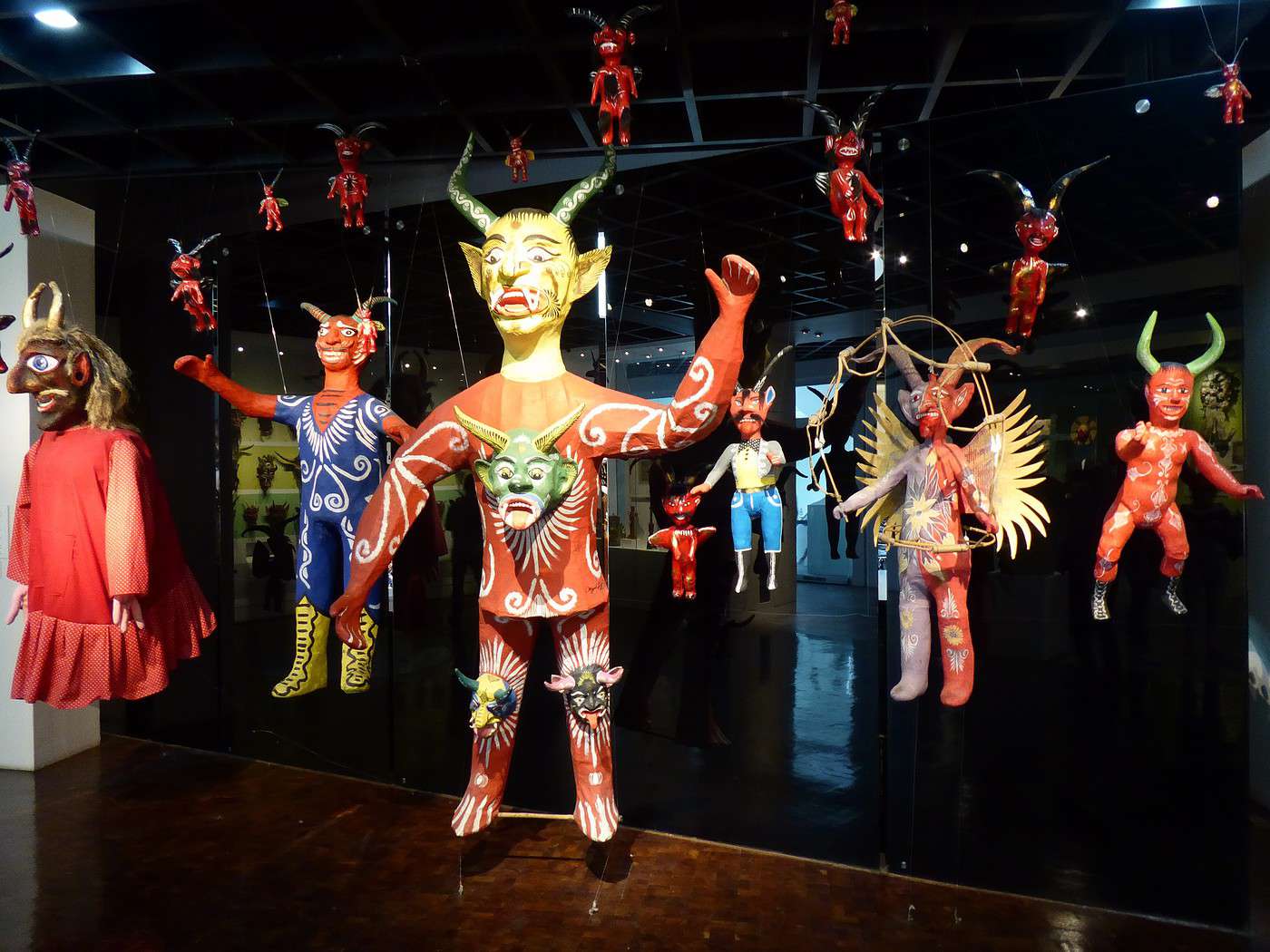
From the Mercado San Juan, we walked up to the Museo de Arte Popular. Free, if I remember correctly. I recommend going—it’s really well done. We spent a good two enjoyable hours there. You’ll see traditional women’s costumes from different regions of the country, beautiful pottery (recent), textiles like this vibrant Huichol tapestry, and above all, devils and demons of all kinds and skeletons used in every possible way. Wow, Mexicans have an interesting psyche! 😇 Here’s a little selection for you. I’m sure you’ll appreciate some of these:
- The arena: the spectators, the bullfighter, and even the bull itself are skeletons!
- The little skeleton mermaid
- The skeleton musicians
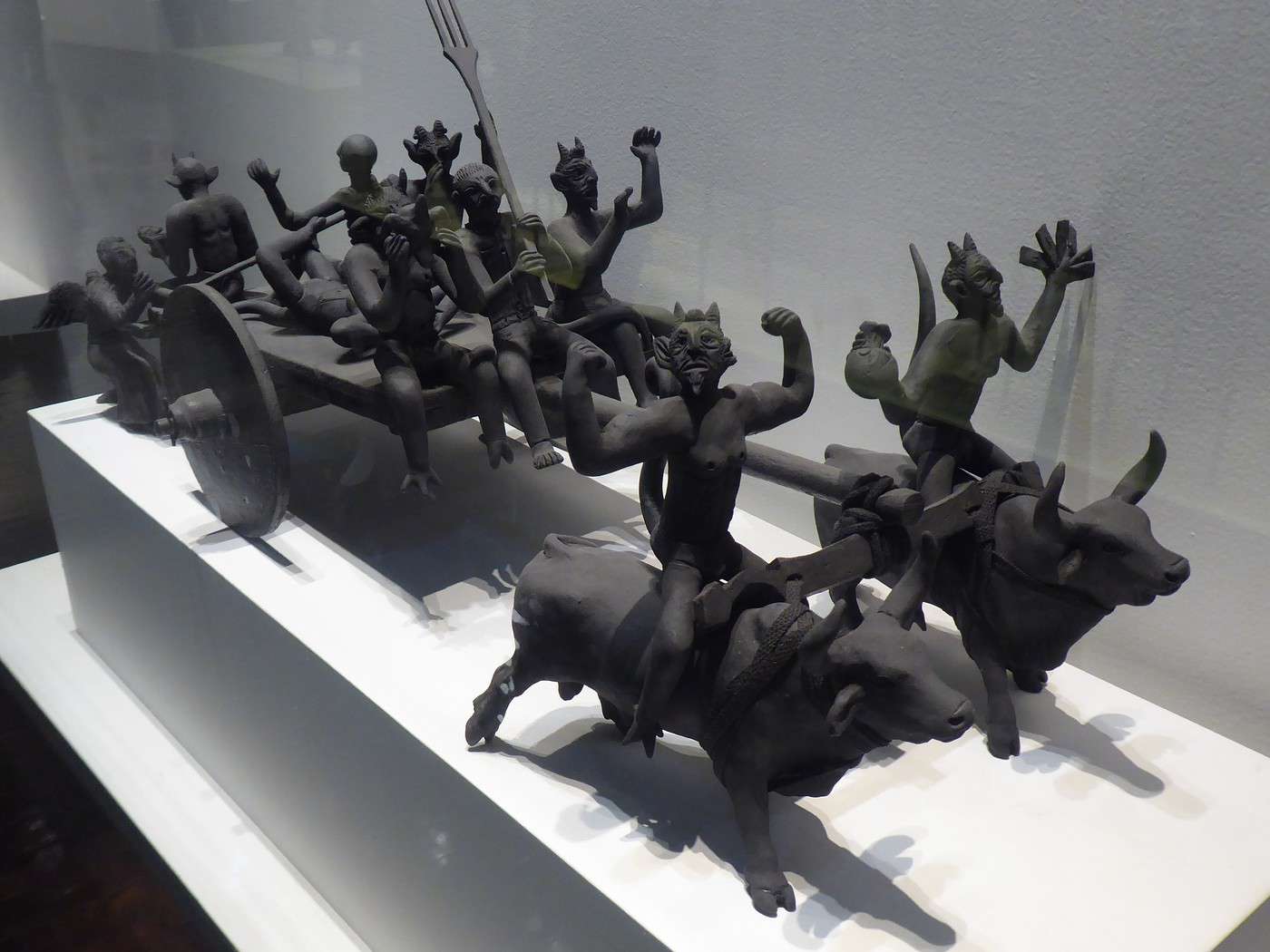
- The oxcart called “The 7 Deadly Sins.” The demons riding the oxen are rejoicing!
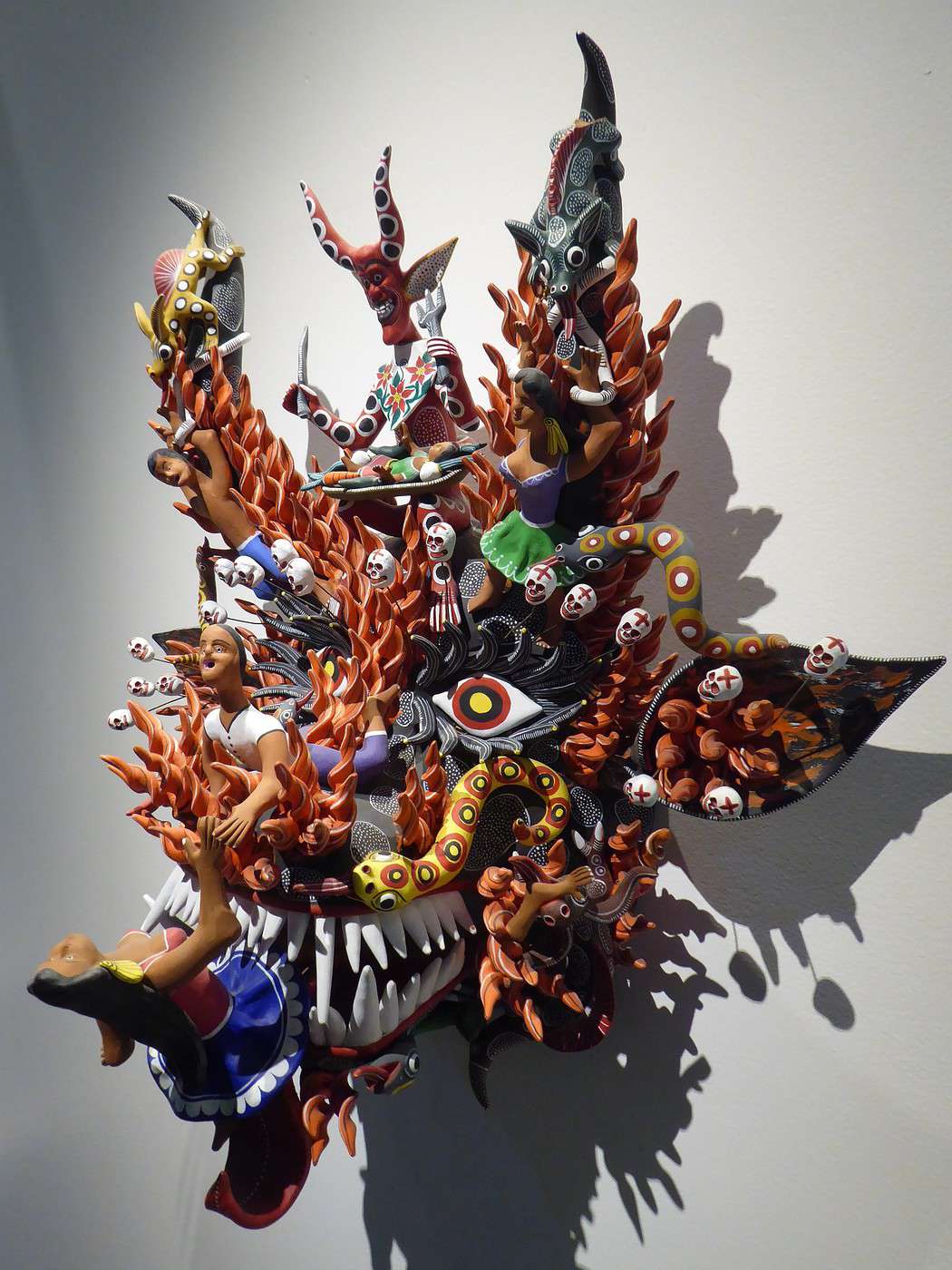
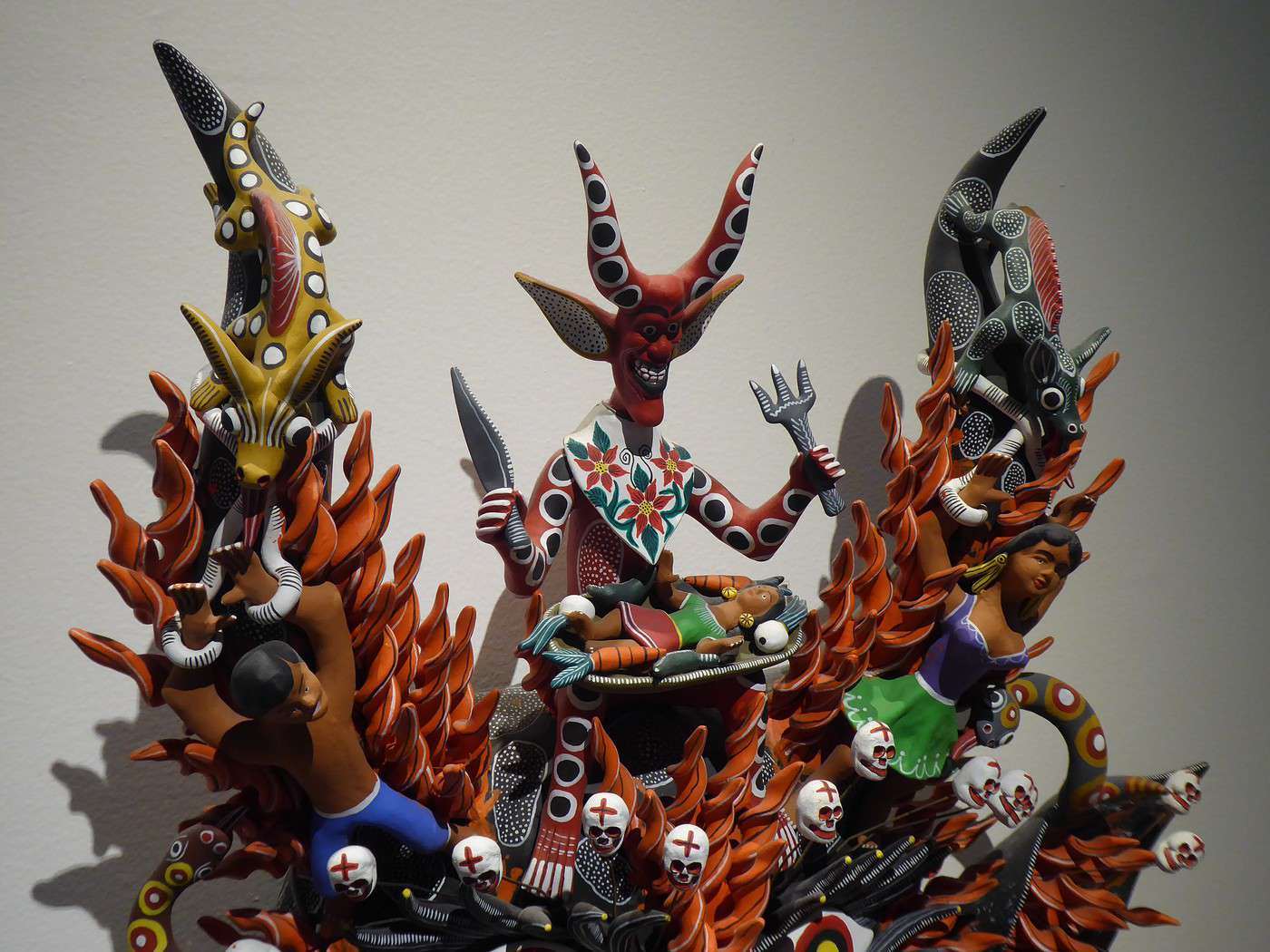
- The “Mask of Purgatory”—I’ll give you a close-up showing a female soul being devoured by flames while another is snatched by the demon’s fangs. And at the top (another close-up), sitting among the flames with a napkin around its neck, a demon is about to feast on a soul lying on a plate surrounded by carrots and other vegetables. It’s called the “Mask of Purgatory”… Scary to think what hell might look like! 🏴☠️
There’s also a lot of information about Spanish and Moorish influences (via the Spanish), with plenty of maps showing the evolution of Iberian populations over time. It’s really worth stopping to read, but I just took photos and saved the “study” for later.
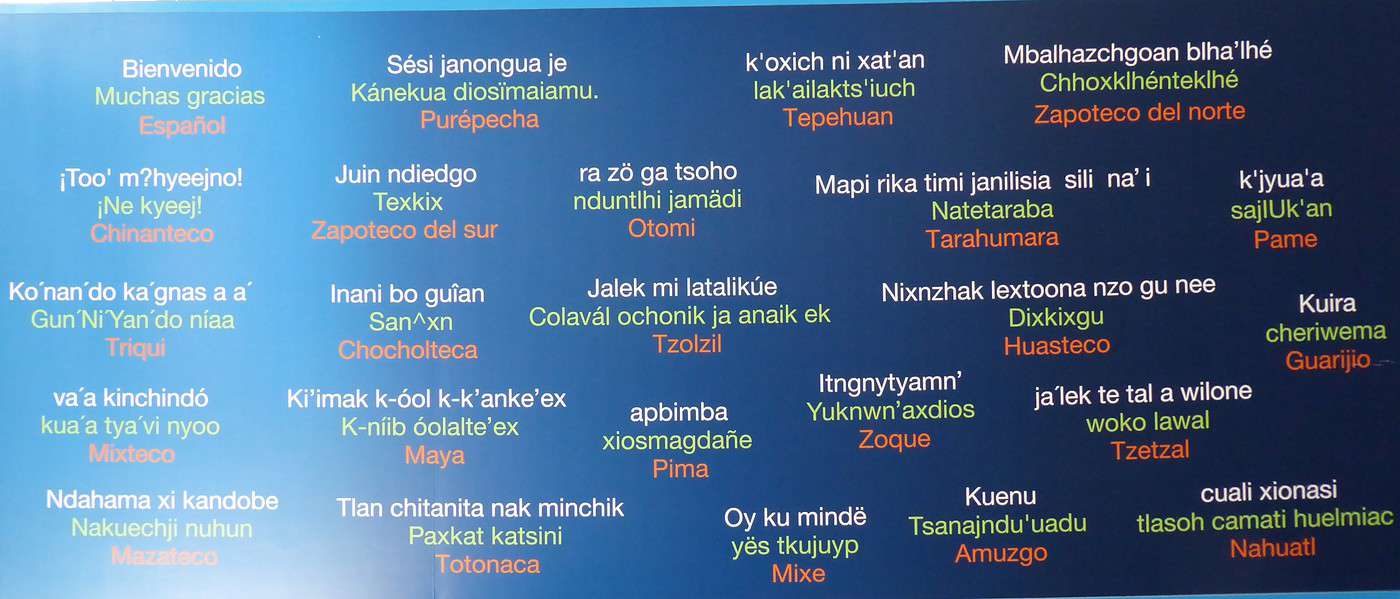
Finally, at the exit (or entrance, your choice), you can explore the diversity of indigenous languages, most of which are still spoken in Mexico, through two simple phrases: “thank you” and “welcome.”
Six-week trip to Mexico
GeorgesOZ · 2020-01-06 · Message 51 of 227
Mexico City CDMX 7 – Final stroll through the Historic Center
After our very pleasant visit to the Museum of Popular Arts, we only have about a hundred meters left to reach the Alameda Central, which is basically the city’s central park. It’s still within what’s called the historic center, but it has a pretty modern feel. One thing to mention right away: it’s absolutely spotless 😎, and there are often municipal workers picking up something or cleaning, etc.
A little side note about the term « alameda », which you’ll often see used for public gardens. The word comes from «álamo», meaning poplar. The Spanish seem to have had a soft spot for this tree—you can trace it from the « Alameda de Hércules » in Seville, Spain, all the way to the Fort Alamo—obviously El Álamo in Spanish—which saw a famous battle between Mexican forces and Texan insurgents in 1836.
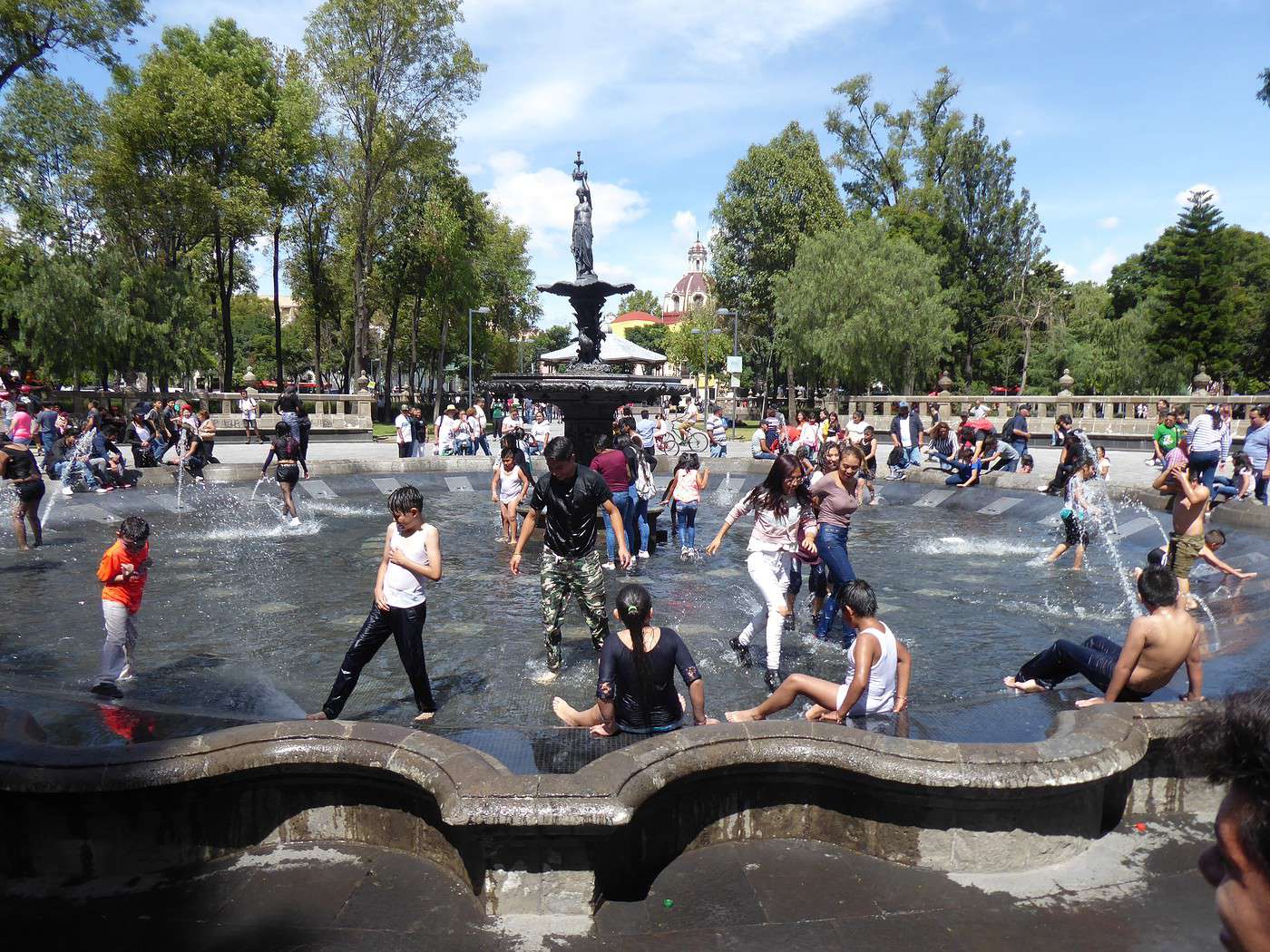
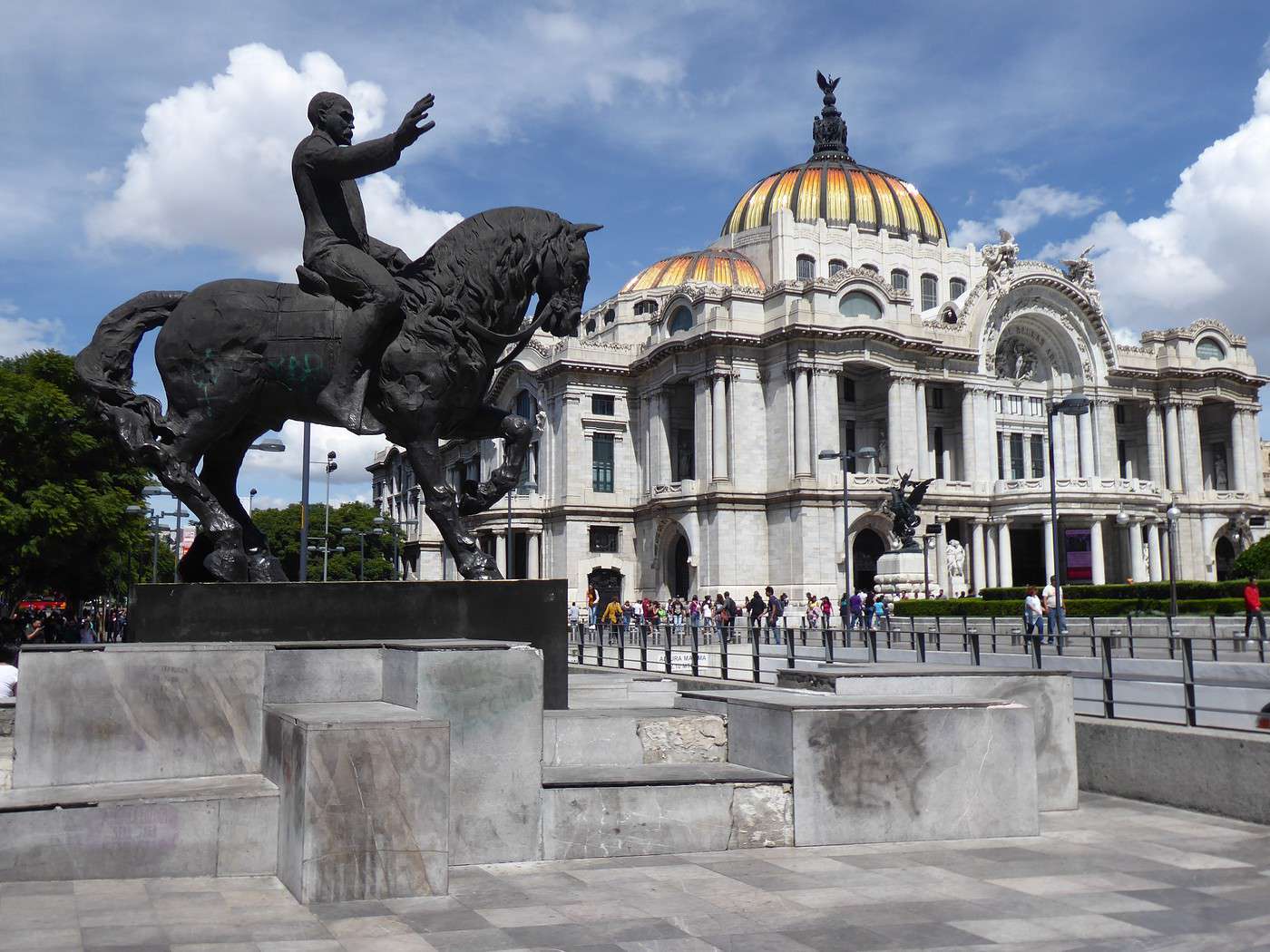
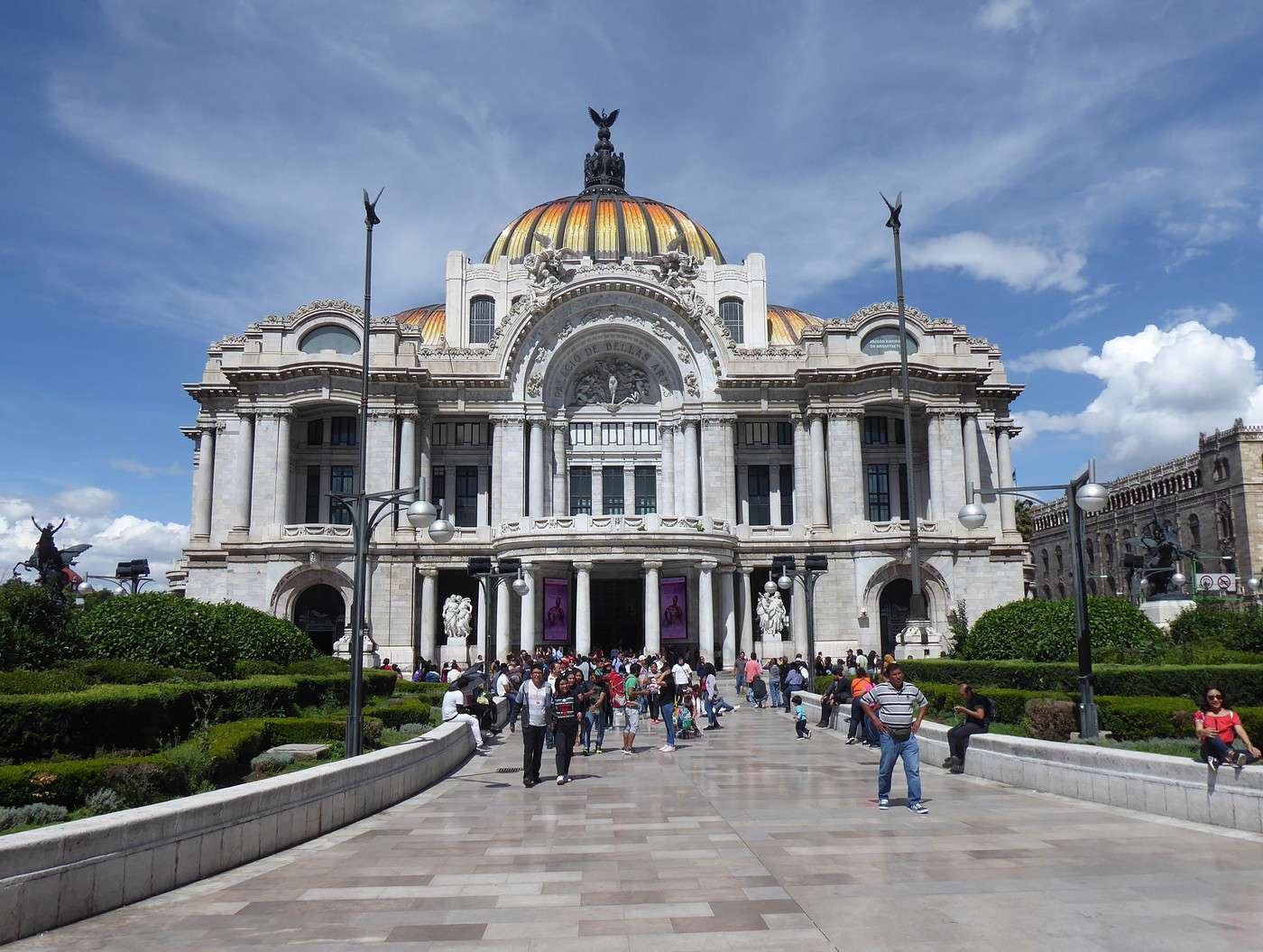
Back to downtown Mexico City. The Alameda: it’s green, with several fountains all in perfect working order, much to the delight of passersby. Especially the kids, but not just them! At the west end of the park, there’s a market for handmade crafts—not huge, but you might find some interesting things to pick up. At the opposite end, heading toward the Zócalo and the cathedral, you’ll inevitably come across the Palacio de Bellas Artes, an imposing and far-from-ugly monument.
From there, it’s an easy walk to the Zócalo, the cathedral, and the Templo Mayor. On foot, it only takes about twenty minutes, and it’s a nice stroll. The streets are lively, with several buildings dating back to the colonial era. And hey, just before leaving this impressive city (even though we’ve only seen the Historic Center), here’s another photo of a beautiful wooden door. Don’t forget: in Mexico, there are tons of gorgeous wooden doors!
Six-week trip to Mexico
Michant · 2020-01-06 · Message 52 of 227
Good evening,
But the historic center is already large enough to spend a few days there without getting bored.
Noted!
We’re not the type to want to see everything, rushing around on transport from morning to night just to tick off boxes. Anyway, you can never see it all!
I totally agree with you!
However, I really want to check out the UNESCO-listed University City to the south of the city, as well as the San Francisco Javier church and the Museo Nacional del Virreinato in Tepotzotlán.
Six-week trip to Mexico
GeorgesOZ · 2020-01-07 · Message 53 of 227
We’re not the type to try to see everything, rushing around from morning to night just to tick off boxes. Anyway, you can never see it all!
I totally agree with you!
Still, I really want to check out the UNESCO-listed University City in the south of the city, as well as the San Francisco Javier church and the Museo Nacional del Virreinato in Tepotzotlán.
Hi there,
Absolutely! I’m actually determined to go back to Mexico this year and spend a few extra days in Mexico City to explore a bit further. There’s no doubt there’s so much more to see. Honestly, I think this city deserves several weeks.
I was a bit nervous before going, but I found it really welcoming. And the few foreigners I met who live there all agree—it’s a city where life is just great!
Six-week trip to Mexico
Greggig · 2020-01-07 · Message 54 of 227
I’m planning a long stay in Mexico City with little getaways here and there during my trip. Your travel journal is perfect timing. Huge thanks!
Six-week trip to Mexico
GeorgesOZ · 2020-01-07 · Message 55 of 227
I’m planning an extended stay in Mexico City with side trips here and there during my visit. Your travel journal couldn’t have come at a better time. Huge thanks.
Hi Daniel,
Great idea! There’s tons to see within a few hours of the capital. For example, a day trip to Puebla and Cholula, both gorgeous, about 150 km southeast. Those were our last stops before heading back to Mexico City for our return flight. So, I’ll get to them much later in my journal—patience!
Six-week trip to Mexico
Jogib · 2020-01-08 · Message 56 of 227
Hi there,
We're leaving in 15 days for a 5-week trip to Mexico and have decided to visit Mexico City, Oaxaca, and Chiapas. Your travel details really interest us—it sounds fascinating.
Would you happen to have any great accommodation tips to share?
Best regards,
Josiane
Six-week trip to Mexico
GeorgesOZ · 2020-01-09 · Message 57 of 227
Hello,
We're leaving in 15 days for a 5-week trip to Mexico and we’ve decided to visit Mexico City, Oaxaca, and Chiapas. We’re really interested in the details of your trip—it sounds fascinating.
Would you happen to have any great lodging recommendations to share?
Best regards,
Josiane
Hi Josiane,
I’ll send you a PM with some lodging details.
Six-week trip to Mexico
Jogib · 2020-01-09 · Message 58 of 227
Hello,
We're leaving in 15 days for a 5-week trip to Mexico and we’ve decided to visit Mexico City, Oaxaca, and Chiapas. We’re really interested in the details of your trip—it sounds fascinating.
Could you share any great places to stay?
Best regards,
Josiane
Hi Josiane,
I’ll send you a PM with some details about accommodations.
Awesome, thanks so much! 😐
Six-week trip to Mexico
GeorgesOZ · 2020-01-10 · Message 59 of 227
Mexico City CDMX 8 – Miscellaneous
A few final words about this amazing city of Mexico before we fly south.
A great spot with plenty of restaurants and bars frequented by Mexican youth: the stretch of parallel streets near the "Eje 1a Sur" (or José Maria Izazaga Avenue?), between the Pino Suárez and Salto del Agua metro stations. It might even spill over to the sides, since it’s already a good kilometer long, and you eventually get tired even while staying in the Historic Center. These are the streets Vizcaínas, San Jerónimo, and further from the "Eje Sur", Calle Regina.
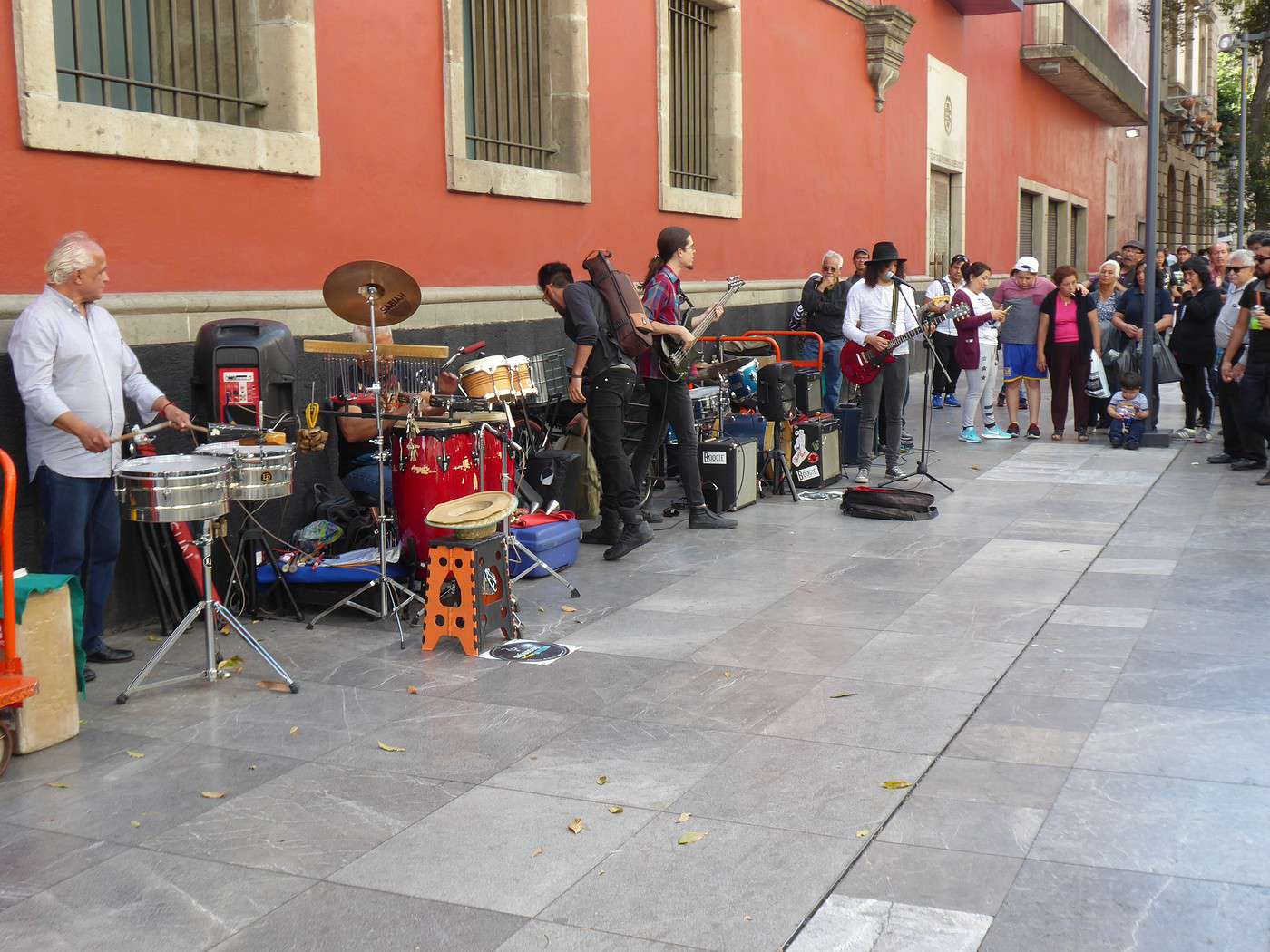
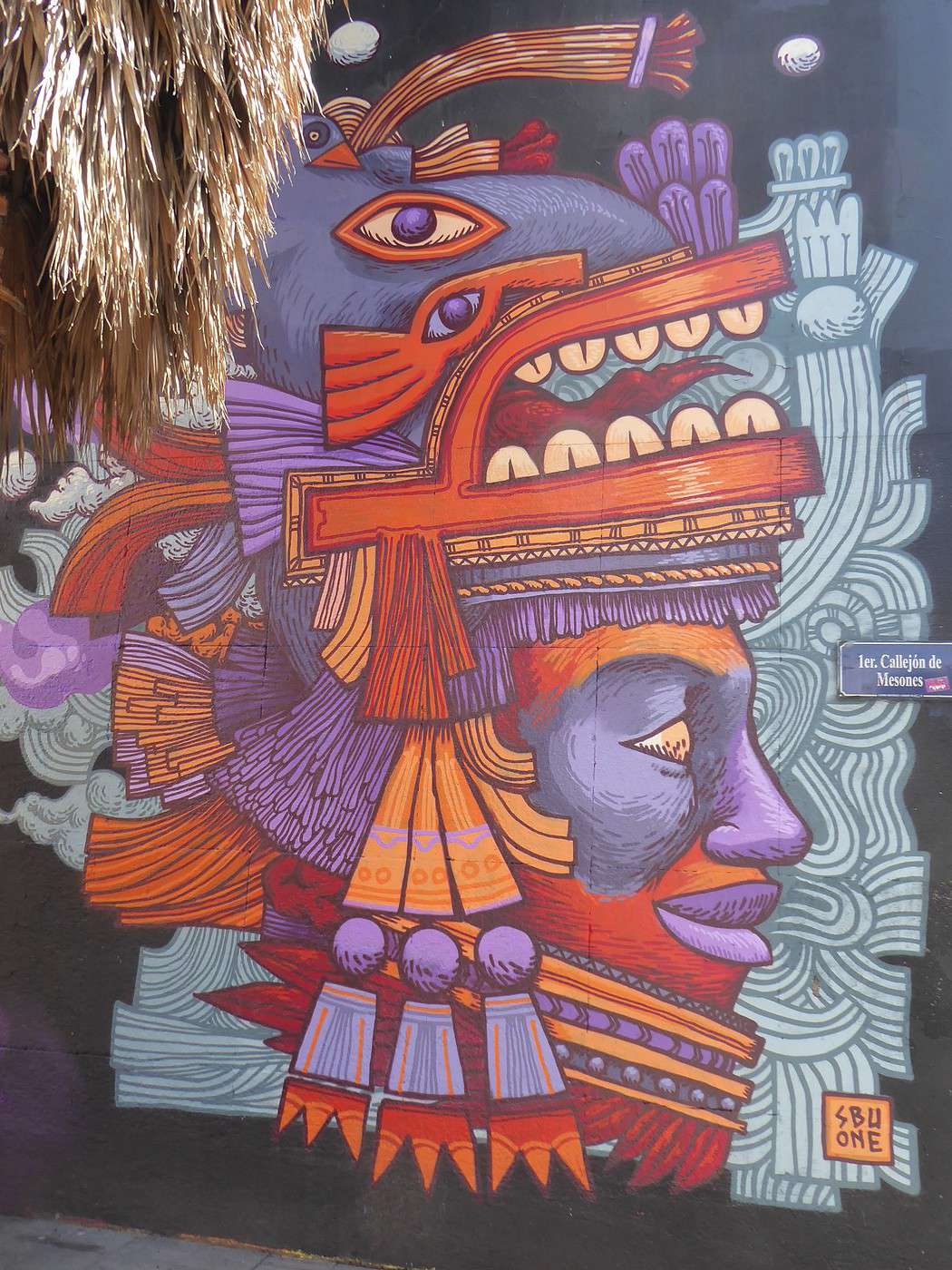
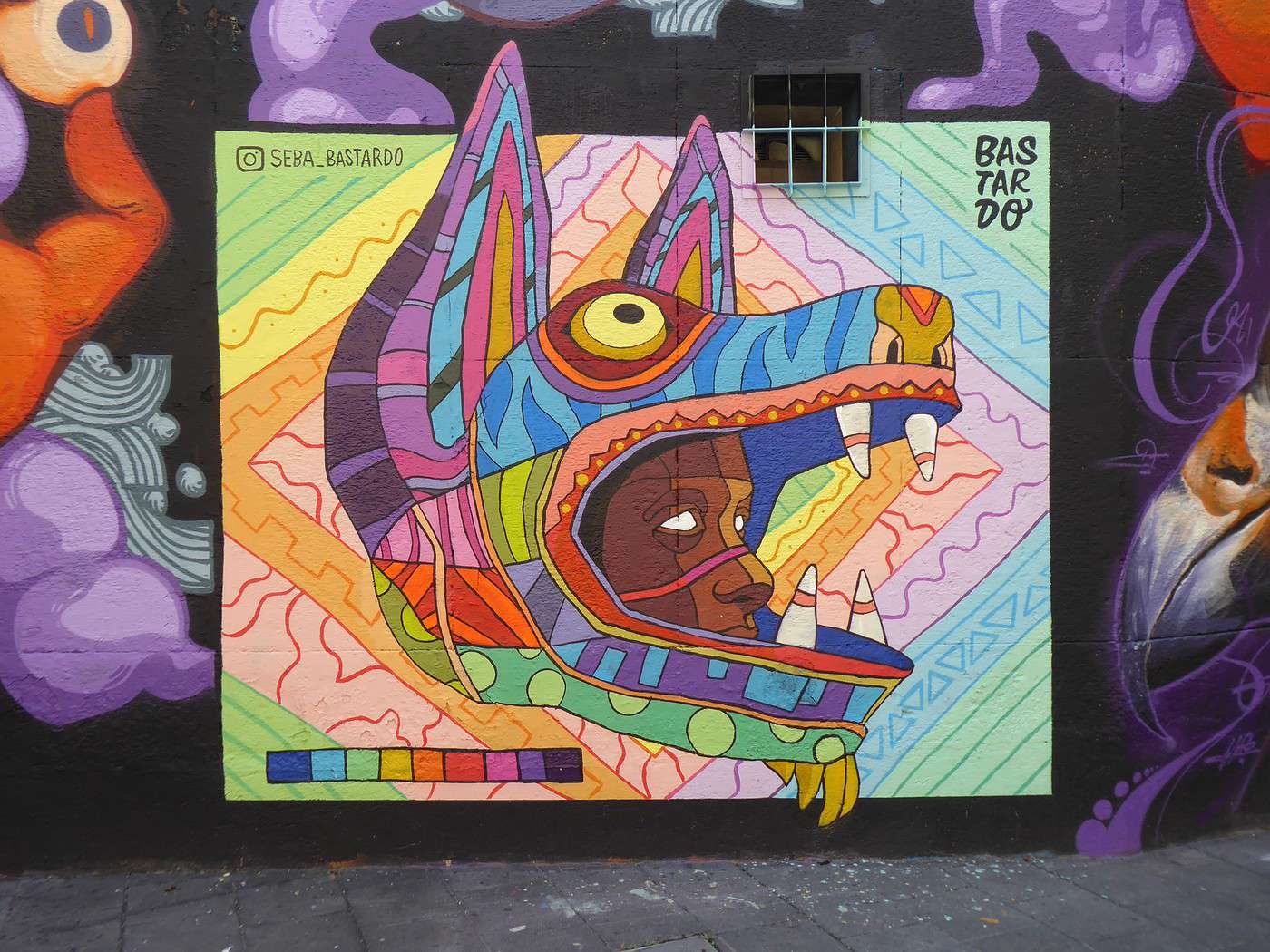
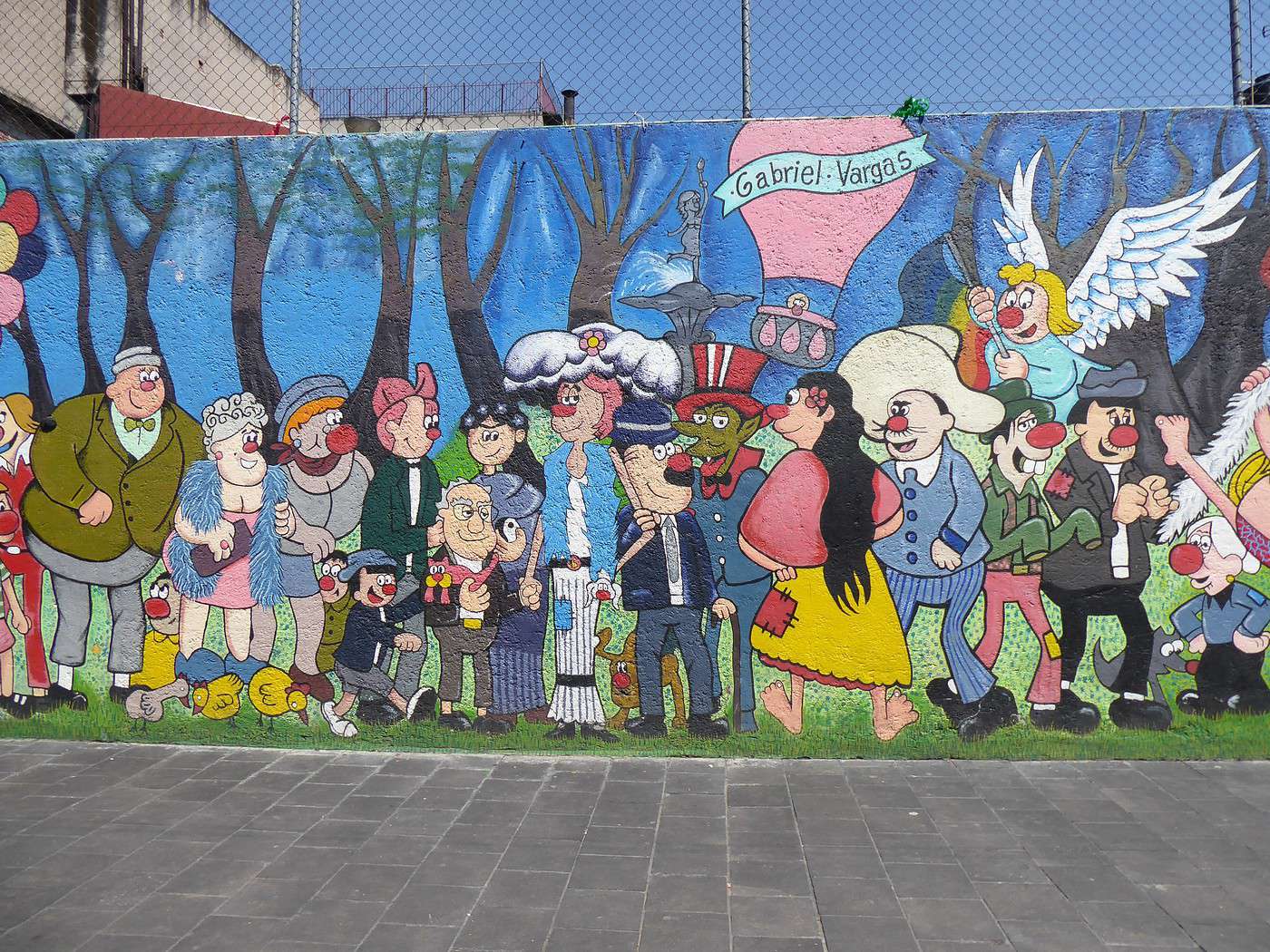
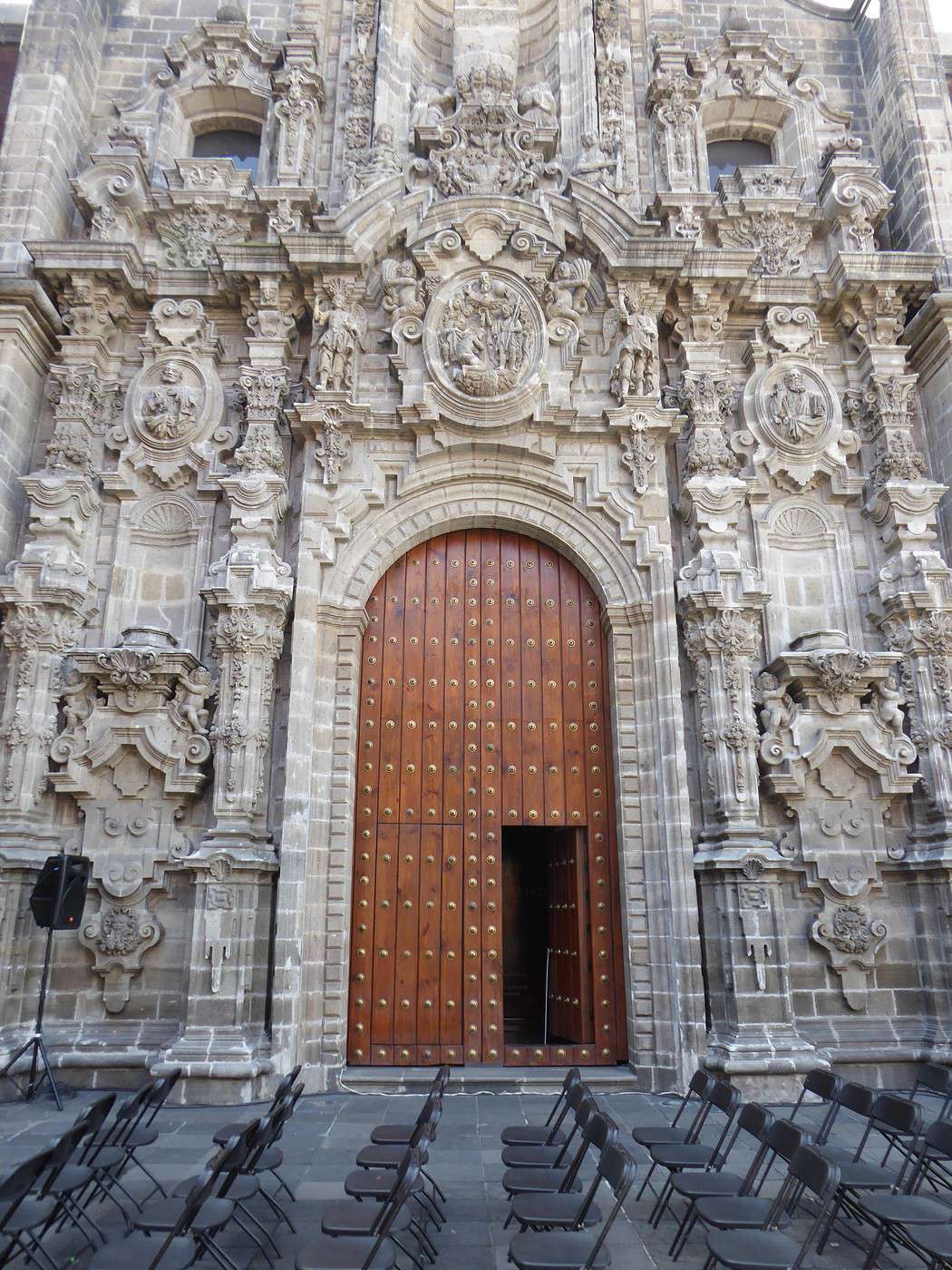
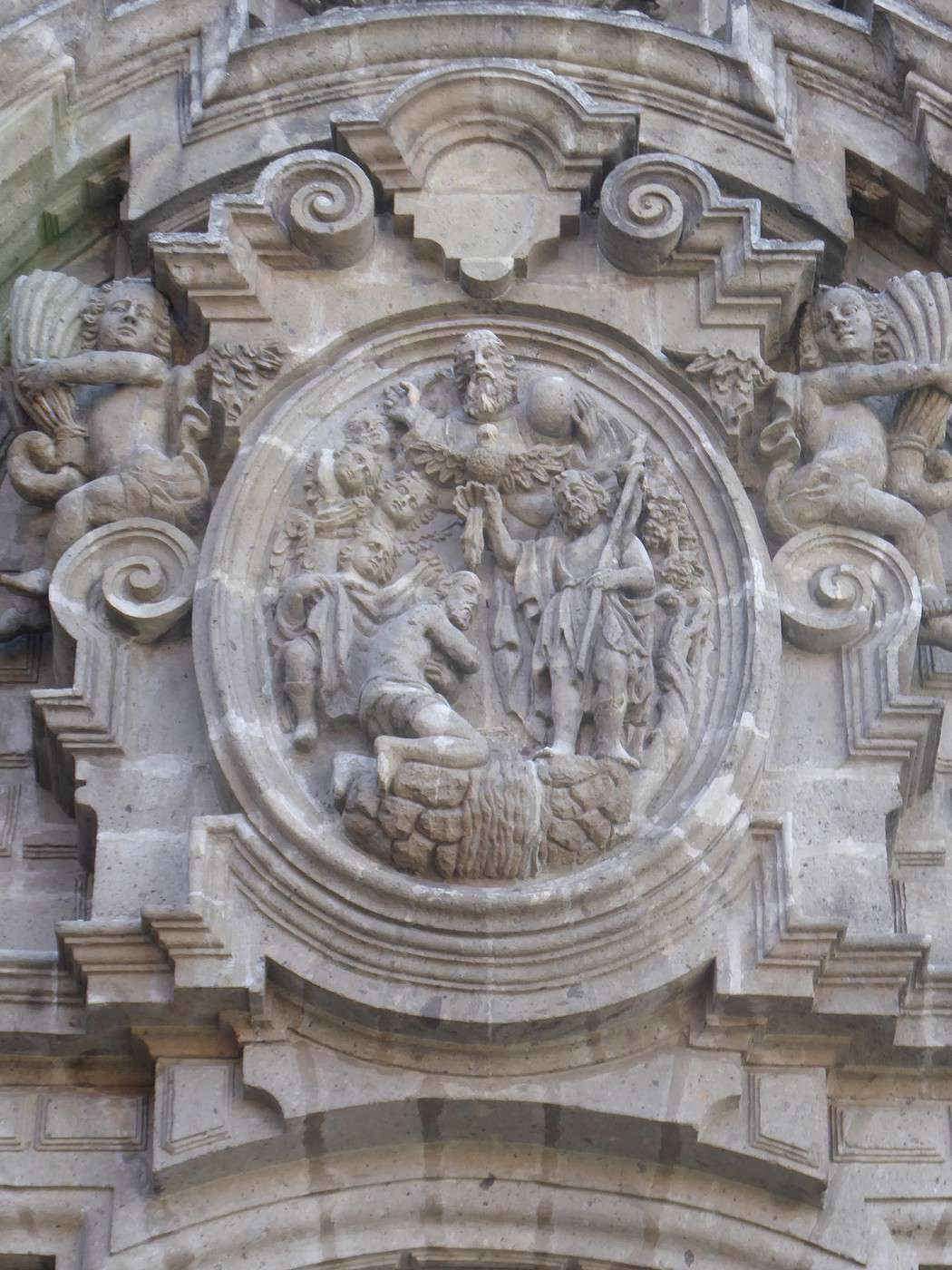
It’s a nice place to stroll, as is almost everywhere in the center. Some interesting murals, often reminding us of pre-Columbian origins. The elaborately decorated façade of a church with (you guessed it) a stunning wooden door, topped by a cartouche depicting a baptism. It’s probably Jesus being baptized by John the Baptist—see, I know my stuff! 😉
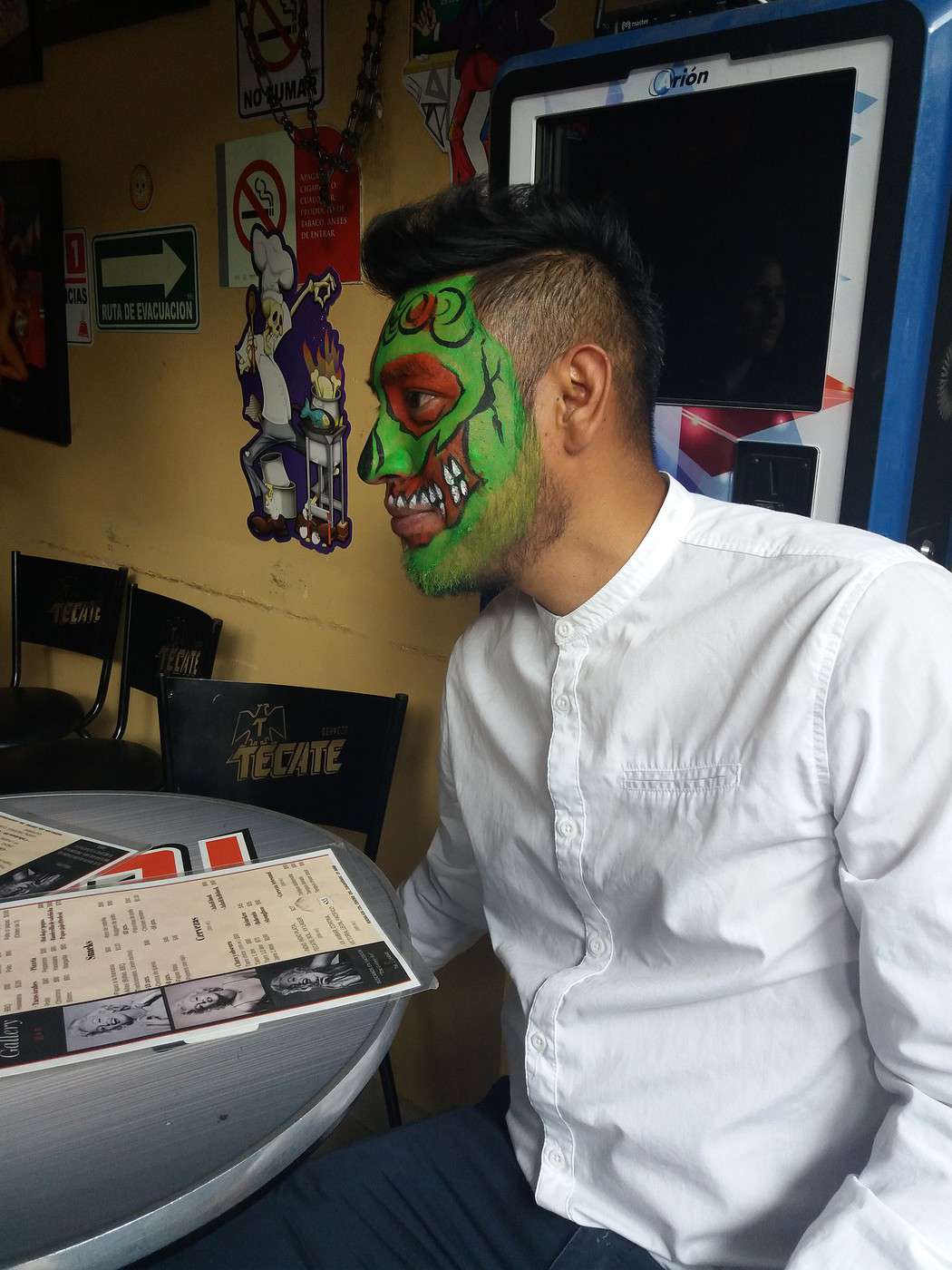
Sitting in one of the bars on Calle Regina, we order a "cerveza de barril"—that’s draft beer. Cheap and good, though so far, we haven’t been too impressed by Mexican beers. Actually, our favorites are Sol and Corona, which are really refreshing. I ask the table next to us for permission to take a photo of the young man. It’s the first time we’ve seen someone made up "as a skeleton." A novelty for now… but it won’t be long before we realize the whole country is getting into the festive spirit of Día de Muertos!
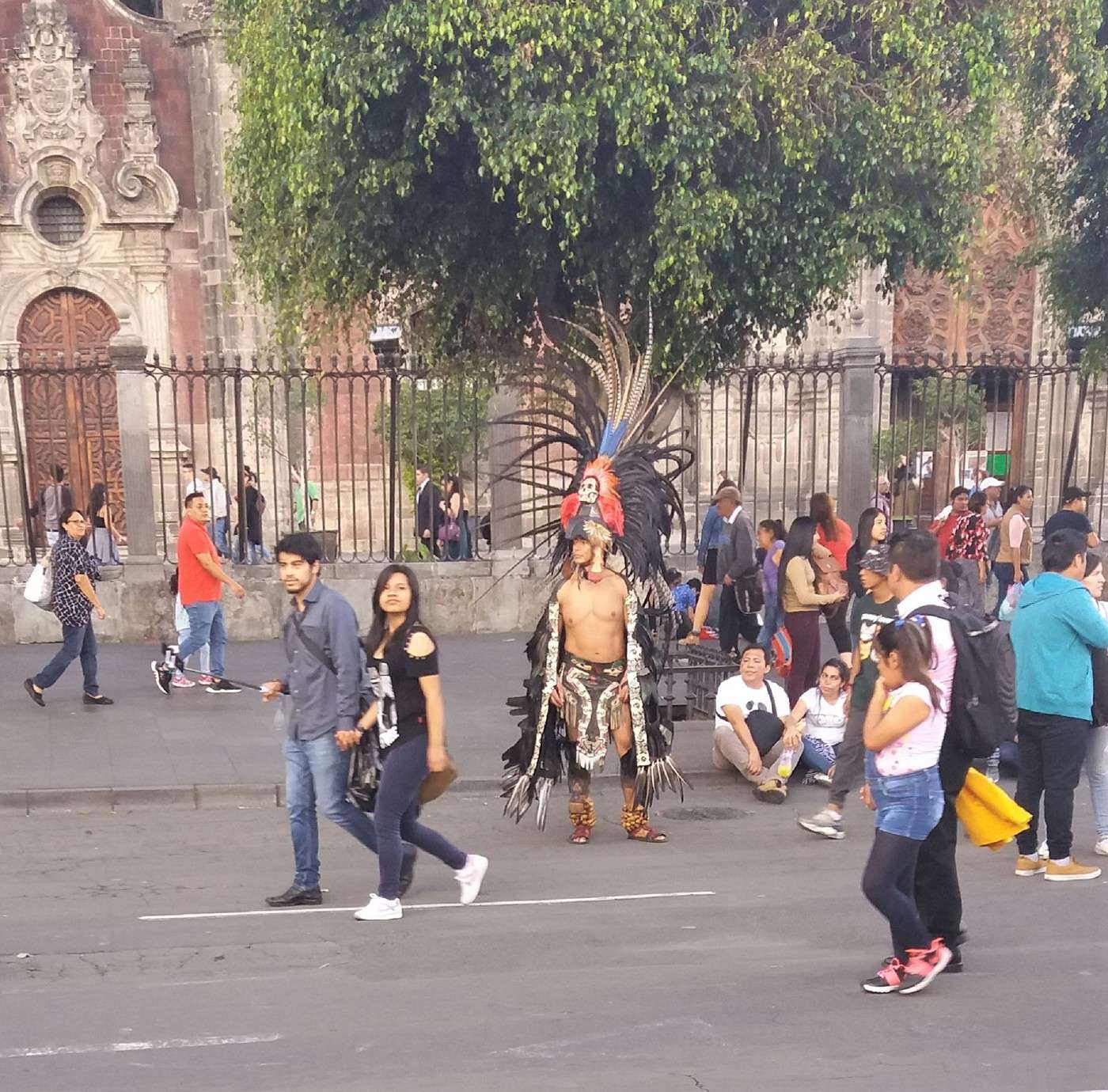
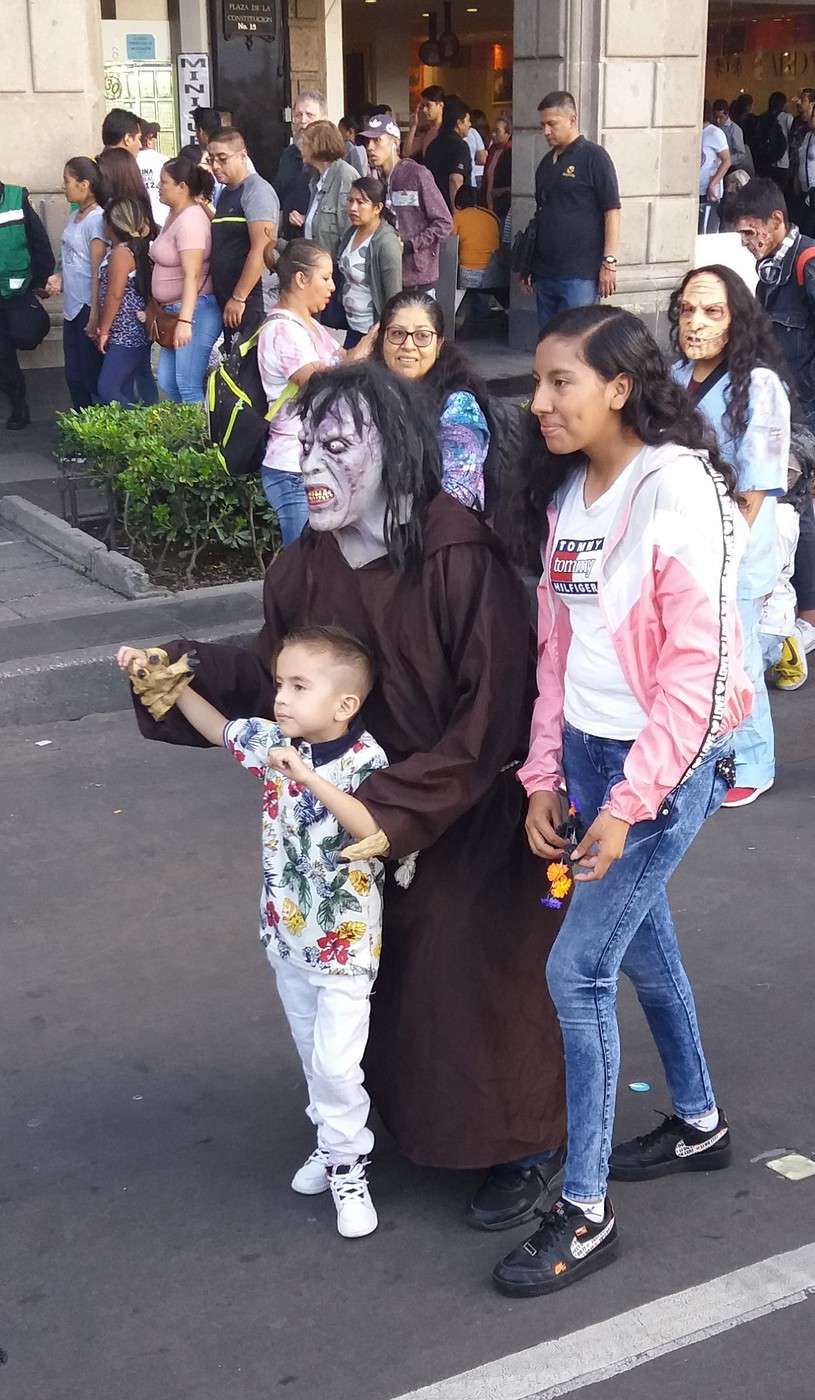
We end up back at the Zócalo, and wow, it’s packed and buzzing! The "Aztec feathered dancers" are still around the cathedral, but what’s new is all the people dressed as skeletons or monsters. Everyone’s taking photos with the characters that impress them the most. Sometimes, little kids cry from fear—it’s hilarious. "Look over there, Miguelito, the little girl with the witch isn’t crying!" 😄
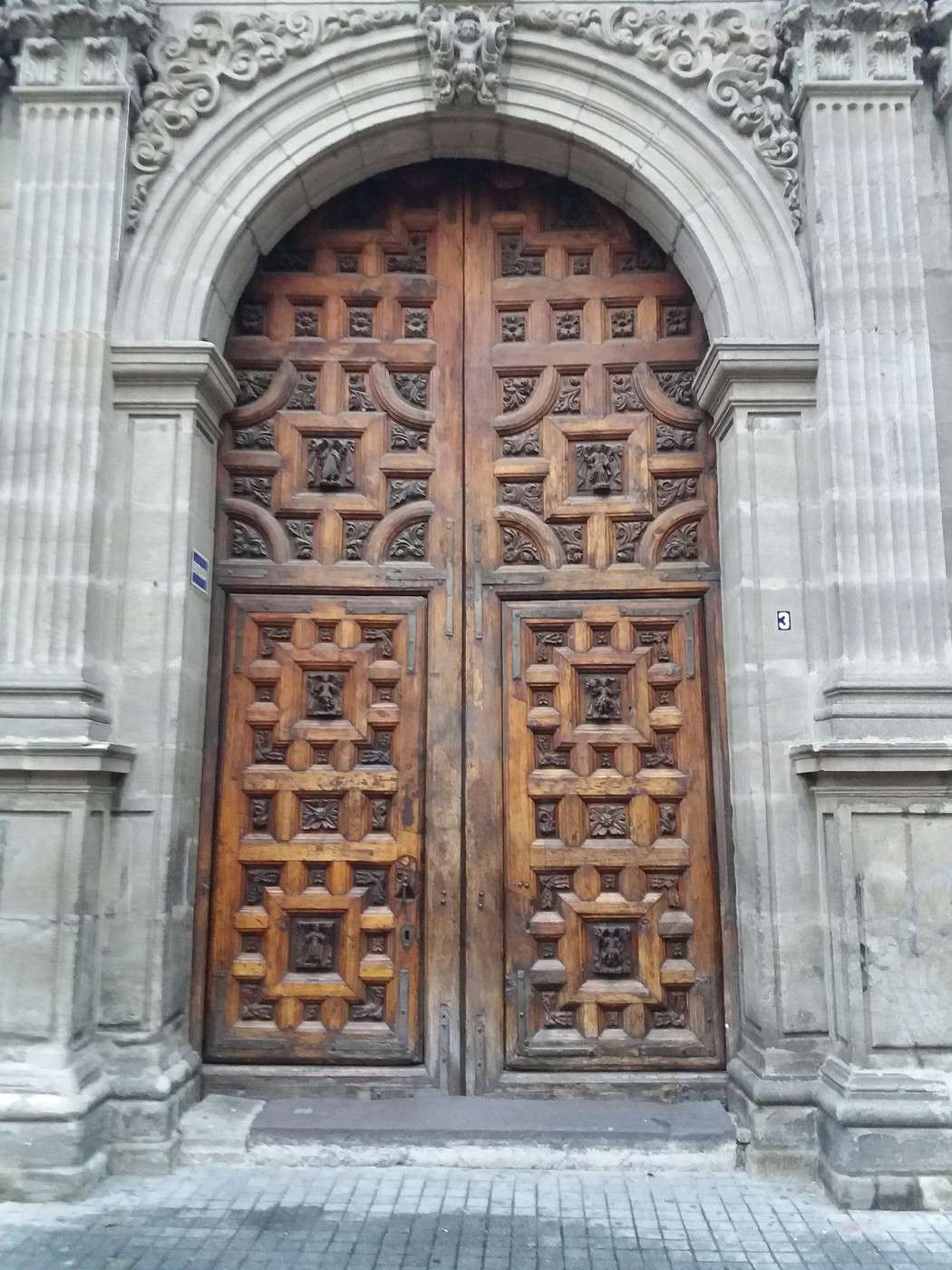
Alright, I think I’ve really exhausted my thoughts on this city. Oh, wait! One last door—here it is. Beautiful, isn’t it?
Six-week trip to Mexico
GeorgesOZ · 2020-01-13 · Message 60 of 227
To Palenque
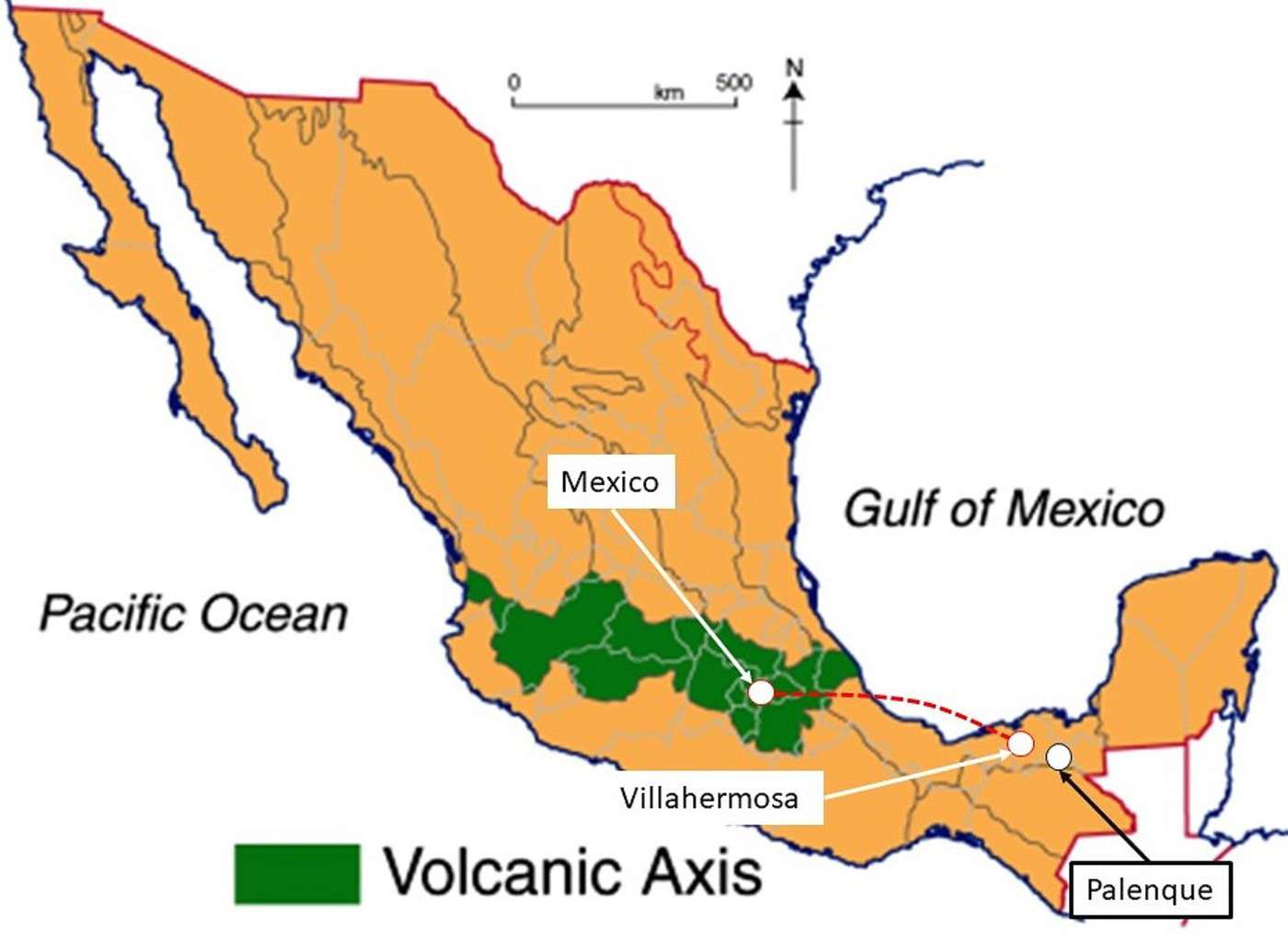
The taxi from the historic center to the airport costs us 200 pesos. At the airport, we eat for 220 pesos. Everything goes smoothly (I mention this for those who might be anxious about traveling in Mexico). Everything is clean and well-organized. The Interjet flight takes off right on time, and we're on our way to Villahermosa, where we'll catch a bus to Palenque.
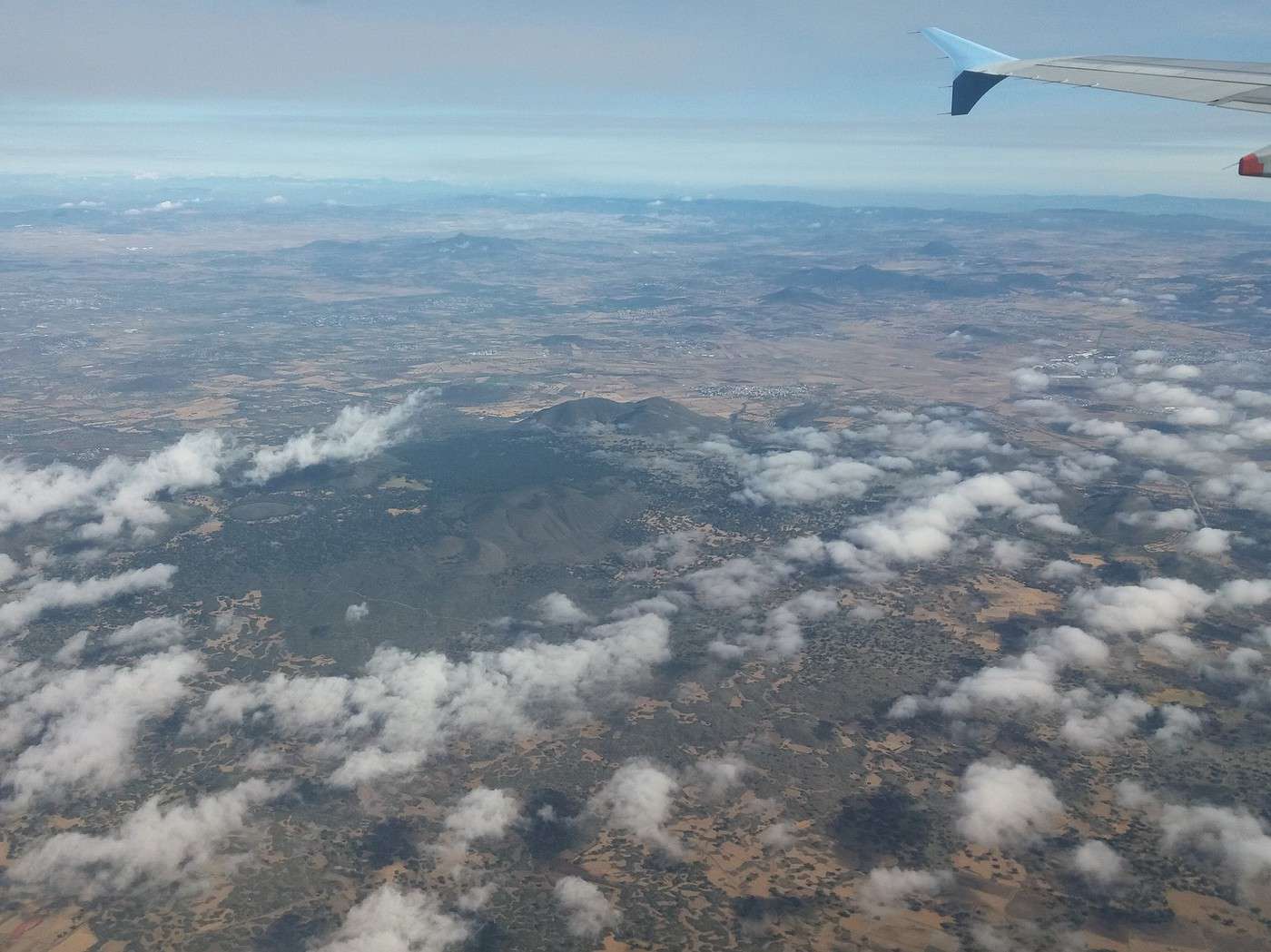
I'm sitting by a left-side window and get to see the landscapes on the north-northeast side of the route. I take a few photos, though I know they won't turn out great. First, the plateau of the Mexico region—or maybe it's already the one from Puebla/Tlaxcala? Hard to say, as both are dotted with dozens of small volcanoes. Our route takes us over the "Mexican Volcanic Axis" early on, an important west-east geological feature.
This volcanic axis is caused by the subduction of the Cocos tectonic plate beneath the North American plate. The subduction starts along the Pacific coast of southern Mexico, several hundred kilometers to the south, but the slope of the Cocos plate as it "dives" northward is quite gentle, so volcanic activity appears much farther inland. It’s relatively recent (starting only 25 million years ago) and, aside from its topographic expression, it has produced some of the most fertile soils in North America.
Sometimes we wonder why certain parts of the world saw such flourishing civilizations as the Toltecs and Aztecs. The answer is actually simple: good land, good climates, and boom—a thriving agriculture develops, nomads and hunter-gatherers settle down, social structures become more sophisticated, and so on.
So, thanks to the volcanoes! The Chichimec nomads roamed the desert regions of northern Mexico while the populations in central and southern Mexico gave rise to magnificent civilizations. To be precise, the Aztecs were originally Chichimecs themselves and only settled in the Mexico region about 200 years before the Spanish arrived. It’s clear they inherited and benefited from the civilizations that came before them. The name "Aztecs" comes from their mythical place of origin, Aztlan, whose exact location (if it ever existed) has never been determined.
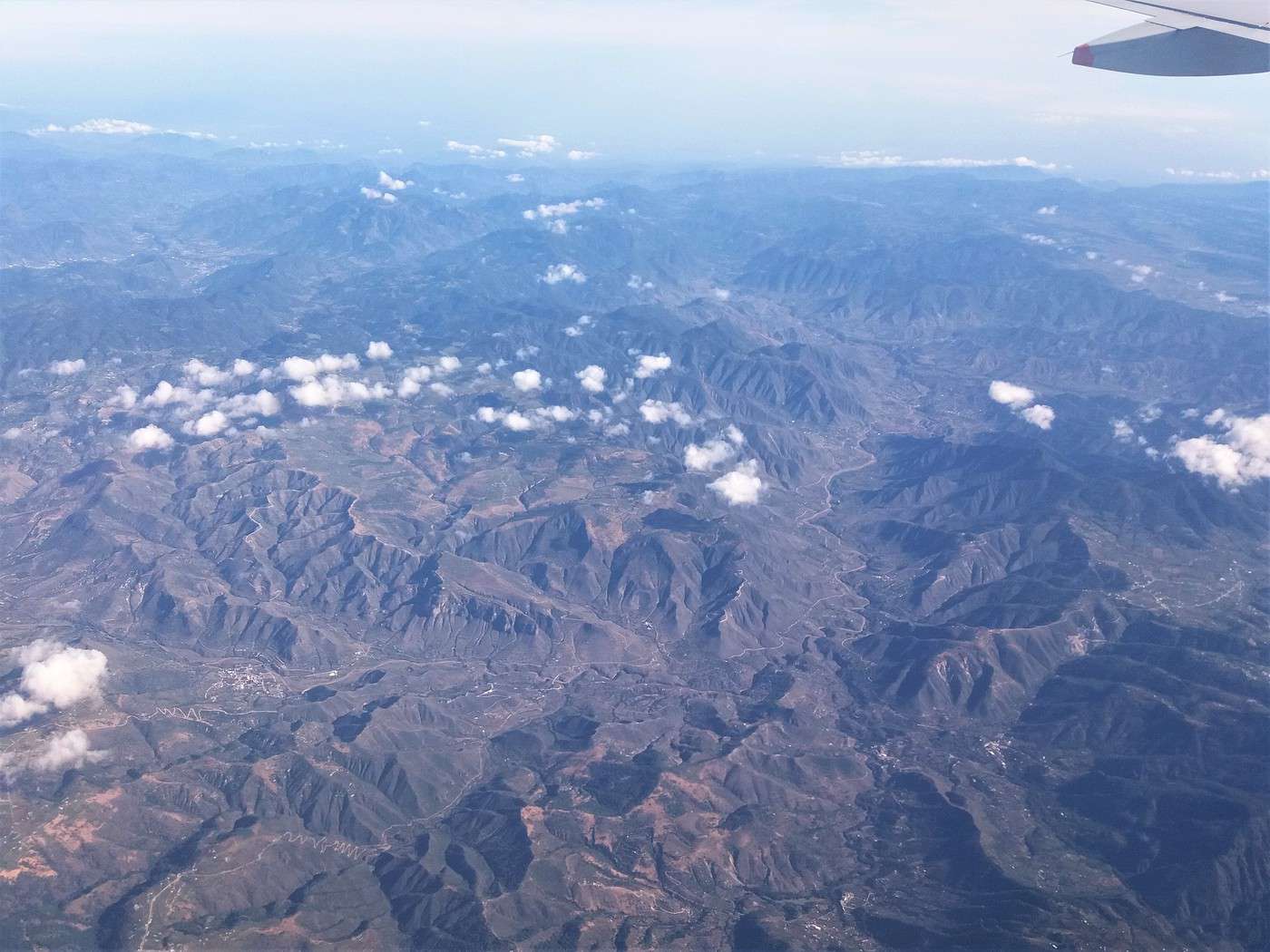
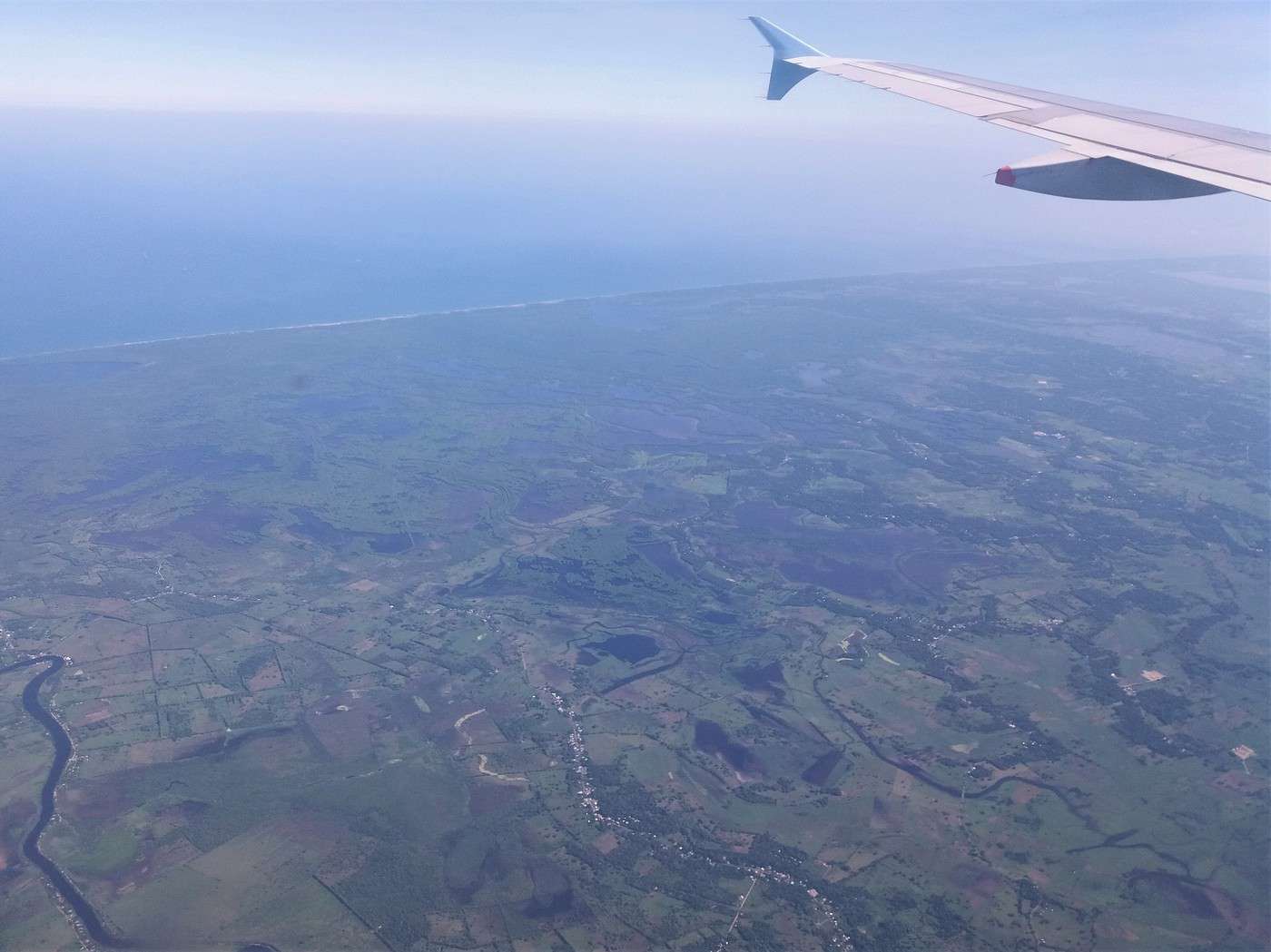
Farther along, somewhere before Veracruz, we see nothing but mountains. Finally, as we approach Villahermosa, a whole new landscape unfolds: a very flat coastal plain crisscrossed by lazily meandering rivers. In the distance to the left (northeast) lies the Gulf of Mexico. We don’t see much of Villahermosa except during our approach, but it gives the impression of a city "with its feet in the water."
Upon landing, we’re surprised by the climate change. Here, it’s the tropical lowlands—hot and humid. We have no trouble finding an ADO minibus to Palenque at the airport. Cost: 720 pesos for both of us. The roughly 150 km trip takes about 2 hours, maybe a little longer. Maybe now’s the time to mention that, so far, we haven’t had any complaints about Mexican driving styles. And that observation will hold true for the rest of our journey.
Palenque is a small town that exists only because the famous ruins were "discovered" in the late 18th century. Though the Spanish had already established a "community" nearby, no one had paid much attention to the ruins for a long time. This relatively modern little town has no real appeal on its own. But we’ve decided to take our time, so we’ll stay for 3 nights.