in Entre deux voyages › Carnets de voyage
From Ol Pejeta to Tsavo West (Kenya) (page 3 of 15)
Discussion started by Pygmalion19 on 2019-12-17
286 replies
This thread has been translated into English.
From Ol Pejeta to Tsavo West (Kenya)
Safrou · 2020-01-02 · Message 41 of 287
it’s way too confusing… maybe next time do the whole thing in Latin 😜
From Ol Pejeta to Tsavo West (Kenya)
Pygmalion19 · 2020-01-02 · Message 42 of 287
No way, that’s the punishment! But I’d be up for Austro-Hungarian 🙂
From Ol Pejeta to Tsavo West (Kenya)
Blesl · 2020-01-02 · Message 43 of 287
Hey Éric,
You're absolutely right—it's a real mess when it comes to these names. The only truly solid part of the whole system is the scientific binomial name in Latin (often "Greek-ified") and in italics, established by Linnaeus (yep, taxonomy owes everything to our Swedish guy!).
But even so, French vernacular names are also standardized (there was a time when Canadian scientists handled this—no offense to our cousins from La Belle Province, but they’re way more hardcore than us mainlanders when it comes to defending our beautiful shared language. Are they wrong? I’ll let that one slide…). These names are also binomial: the genus name (capitalized) and a qualifier (either an adjective, lowercase unless it comes before the genus—examples: Grey Heron, Little Ringed Plover—or a location, like African Elephant, or a habitat, like Forest Wren). So, in a way, they’re "vernacular-scientific" 😎.
That’s why a birder will call it a Pied Kingfisher, not the old-school Alcyon pie (because nothing’s simple—everything gets complicated, names change, the Snow Bunting *should* be called the Snow Plectrophenax, and don’t even get me started on "splits," where species get divided in two, or species that change genus, or subspecies promoted to full species—thanks to DNA, it’s a never-ending whirlwind).
All of this is governed by the International Code of Zoological Nomenclature published by the ICZN.
If you’re into this stuff (🤪😛😉 ???), there’s a page on Wilipi about it.
Bottom line: a French birder will *always* use *Grue royale* for Balearica regulorum, the East African crane, and never the English vernacular name, even when—like here—the English version is way more precise and descriptive.
Anyway, what a gorgeous bird—definitely deserves a good beer!
Back to the grind—don’t get sidetracked by the little stuff, even if it’s binomial!
BL
From Ol Pejeta to Tsavo West (Kenya)
Pygmalion19 · 2020-01-02 · Message 44 of 287
Good evening Eric 🙂,
Every morning we're up at five o'clock, grab a quick breakfast, and head out while it's still cool. That's the best time—along with late afternoon—to see the animals when they're most active. It's also the perfect time for photos. We usually get back from our outing around 10:00–10:30 AM to sort through the pictures, relax, or take a walk around the property before lunch.
Buffalo Springs isn’t just about new animals—we’ve seen some familiar faces too:
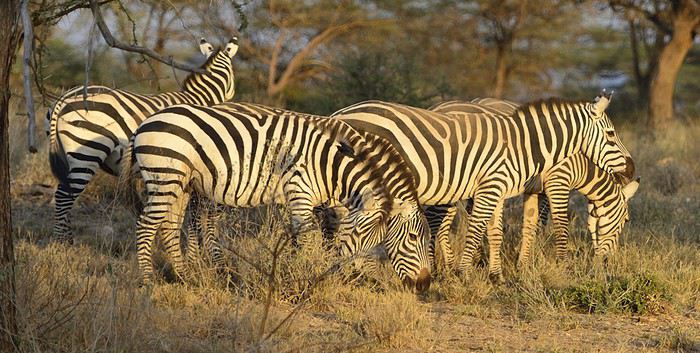
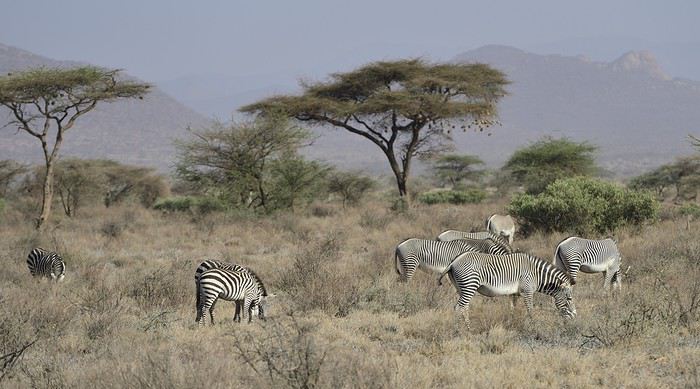
Burchell’s zebras, which sometimes mix with Grevy’s zebras.
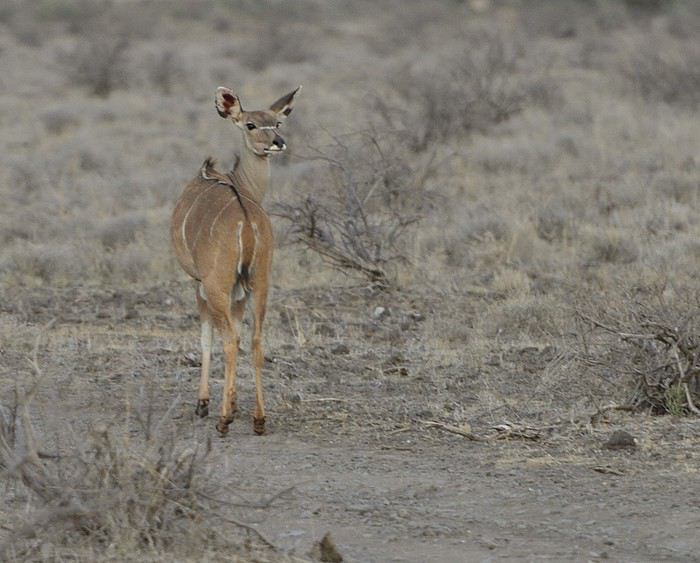
Female greater kudu, or *Tragelaphus strepticeros*. This was the only one of its species we spotted at Buffalo Springs and Samburu.
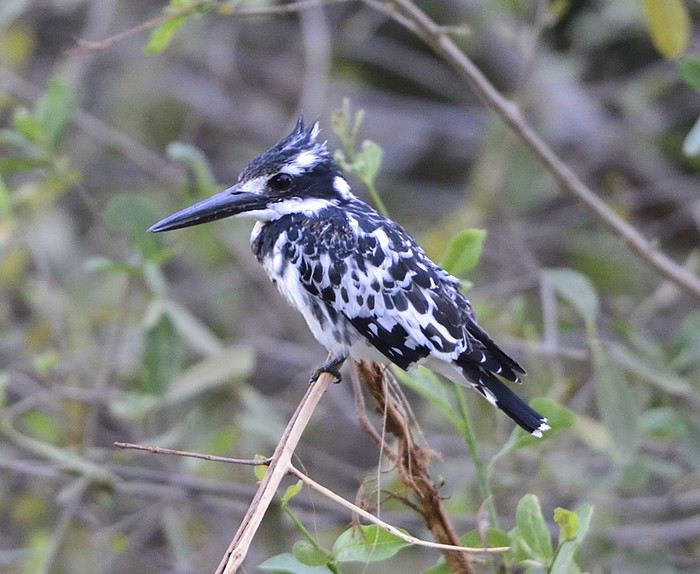
Pied kingfisher, *Ceryle rudis*.
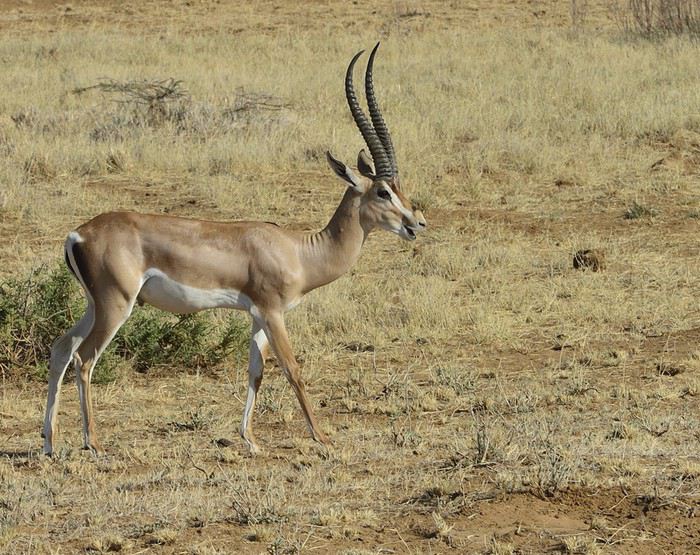
The stunning Grant’s gazelle, *Gazella granti*.
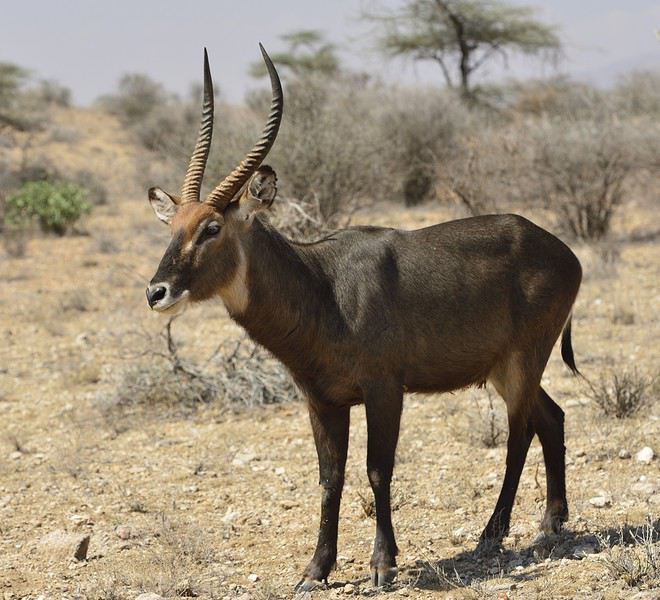
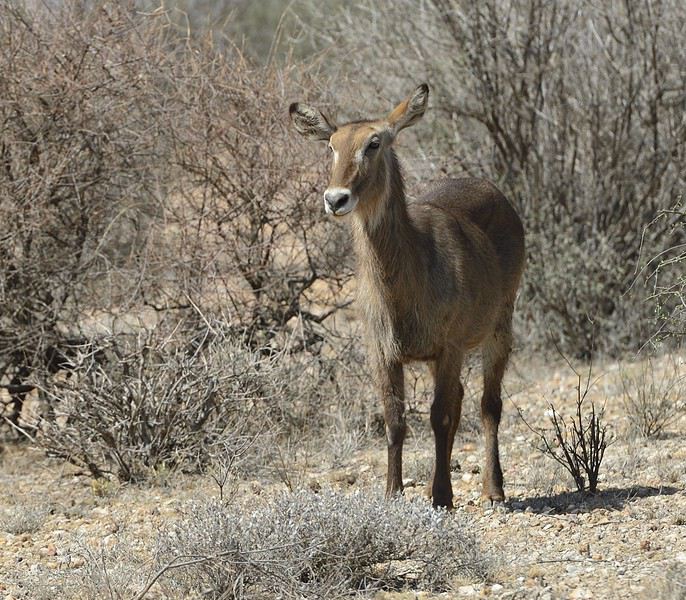
These waterbucks (or kobs, *Kobus ellipsiprymnus*) have a beautiful coat color—darker brown than the ones we saw at Ol Pejeta. I’d say they’re defassa waterbucks, not the crescent variety, but to be sure, I’d need to see their backsides. Easier said than done!
From Ol Pejeta to Tsavo West (Kenya)
Pygmalion19 · 2020-01-03 · Message 45 of 287
Hi Bernard,
Thanks for this explanation—I appreciate it, but it won’t change my mind: mistaking one for the other, like the Grey Crowned Crane and the Royal Crane, without any confusion (that’s saying something!). Actually, I’m less of a French birdwatcher than a global one😉. It’s true that we often want to translate all these vernacular names into French, probably a colonial hangover, and in those cases, some spelling rules should apply. That’s my resolution for the coming year🙂. But adopting them in the language that originally named them—just as tricky—feels like a more cosmopolitan approach... Latin remains the safe bet, Safrou will approve, and it’ll keep everyone on the same page.
From Ol Pejeta to Tsavo West (Kenya)
Blesl · 2020-01-03 · Message 46 of 287
Hi Éric,
You're absolutely right when you say "Latin remains [...] the one thing that will satisfy everyone."
But you're slightly less right to dismiss the name "grue royale" (royal crane), because that’s what allows us to distinguish it from its western cousin—at least when we’re not speaking Latin among birders and/or safari enthusiasts. I agree with you that the English name is more intuitive, but you can’t be right alone against everyone. The unchanging principle of taxonomy is that, regardless of the language, within that language, the same bird (mammal, plant, fungus, bacteria, etc.) should have one single, consistent name.
And as Camus said, "To misname an object is to add to the world’s misery."
And we both know our poor world has enough misery as it is...
Fortunately, there are safaris (and friends’ travel journals) to help us, if not forget it, at least escape it for a moment.
Anyway, I’ll stop there—I wouldn’t want to clutter your lovely travel journal with a minor detail.
Have a great day.
BL
From Ol Pejeta to Tsavo West (Kenya)
Pygmalion19 · 2020-01-03 · Message 47 of 287
Hi there,
Every morning’s "game" was uncharted territory for us—a recurring chance to question the purpose and the path to take. What for and where to?
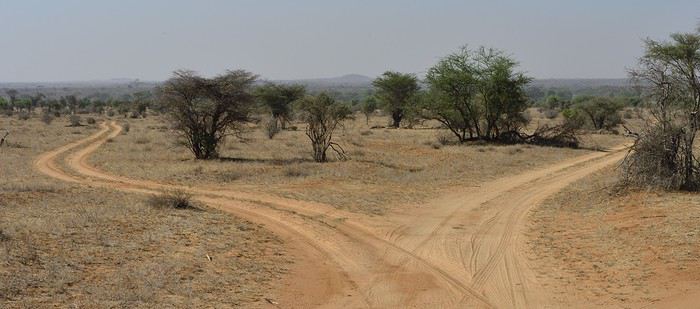
John rarely planned our outings. He’d improvise day by day, chatting on the fly with the lodge staff and barely with us. After every drive, he’d retreat to his quarters. He spoke in French that was often hard to make out. In the end, he only ever had a vague idea of what we wanted, and getting him to understand wasn’t easy.
On the other hand, he had a very fixed idea of the wind’s direction—or rather, of his own obsessions he wanted to bring to life. A successful safari, to him, meant lions and blood, a leopard nibbling on the remains of an impala in a tree. A successful safari was about capturing unforgettable hunting scenes to illustrate Africa’s wild side.
Meanwhile… We, with our noses in the African breeze, were just soaking in the scenery,
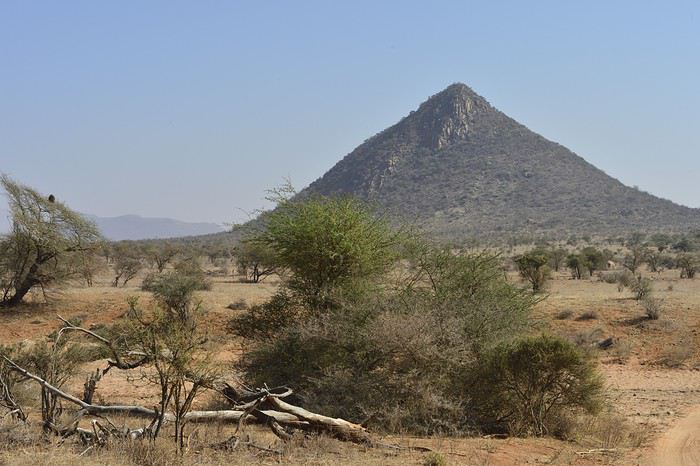
every little—or even the most insignificant—animal encounter, even if we’d seen it before:
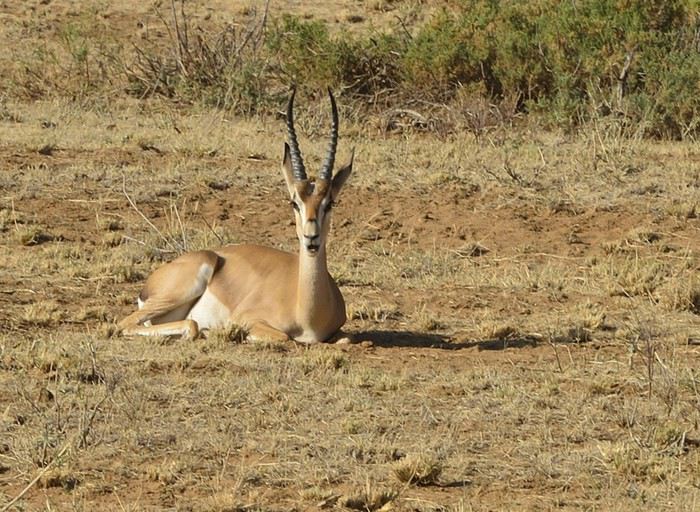
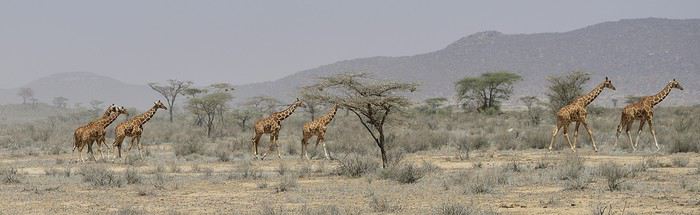
So, different motivations and two complementary perspectives: ours, as you can see in some of these photos, and his, which John was always trying to capture in that late morning sun. Then, just around the bend…
From Ol Pejeta to Tsavo West (Kenya)
Blesl · 2020-01-03 · Message 48 of 287
Suspense! Suspense! You're really keeping us on edge...
So true what you wrote about the different expectations of driver-guides—so focused on the big cats, like many casual safari-goers, while ours were more varied and eclectic. But hey, we’re not turning down a lion or...
That pyramid-shaped hill in your landscape photo is pretty intriguing—almost like a slag heap. Any idea why it looks like that?
Have a great day, and thanks for sharing!
BL
From Ol Pejeta to Tsavo West (Kenya)
Pygmalion19 · 2020-01-03 · Message 49 of 287
Spot on, Bernard,
We sometimes forget that fact, but it’s not just him—the success of a safari also depends on the guide and the clients. For our part, we wouldn’t improve the situation with him until much later.
So, after that endless detour on the track:
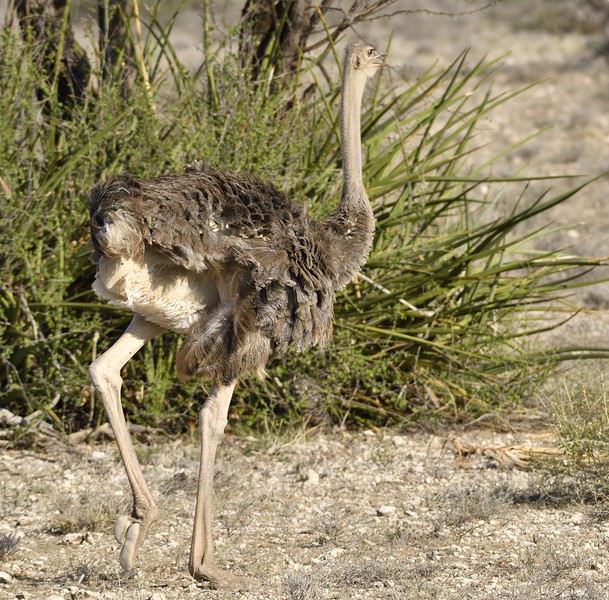
A Somali ostrich (female). Well, I say that, but I’m not really sure—it could just as well be an African ostrich since they look so alike... Hmm! We’d need a DNA test... That said, dear reader, you were expecting something else, weren’t you? You were hoping for a less idyllic scene! Well, I won’t disappoint you. Just a stone’s throw from that endless detour:
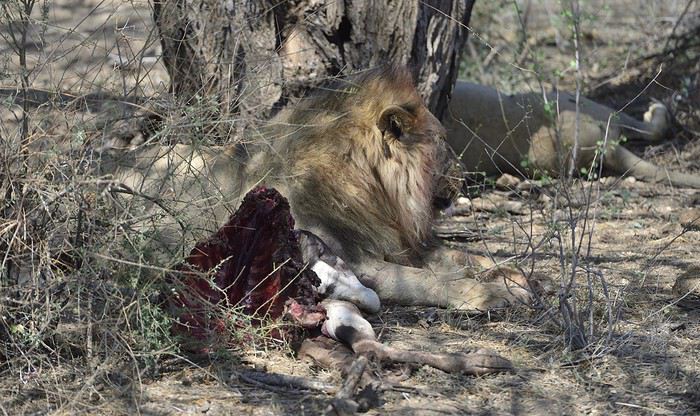
Lions who’d feasted (yuck!), now in a placid mood, resting in the shade of an acacia. One of the two males in the group was keeping watch over the remains of an oryx killed during the night. The others were digesting, probably waiting their turn to get to the meat or gnawing on scraps. My dear, would you care for another piece of bloody bone?
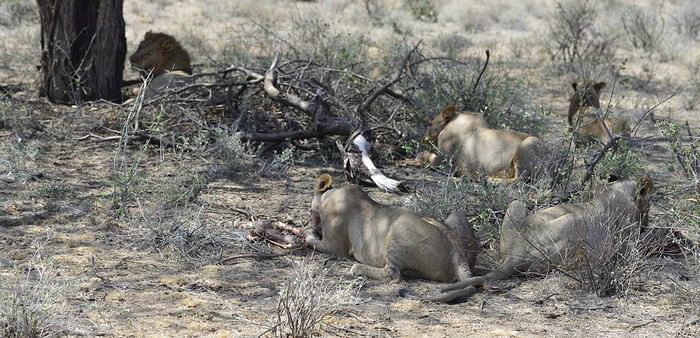
Our big cats hadn’t touched the head of the animal, which seemed to be sleeping...
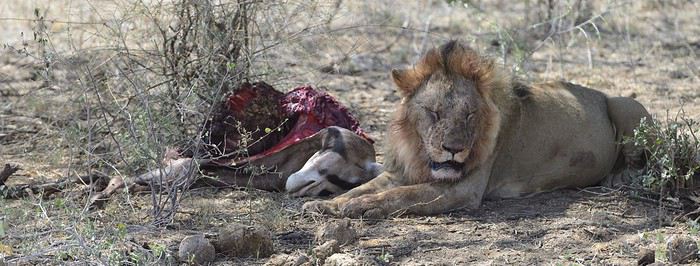
And just like the slain animal, the king of the savanna then drifted into a deep, digestive slumber:
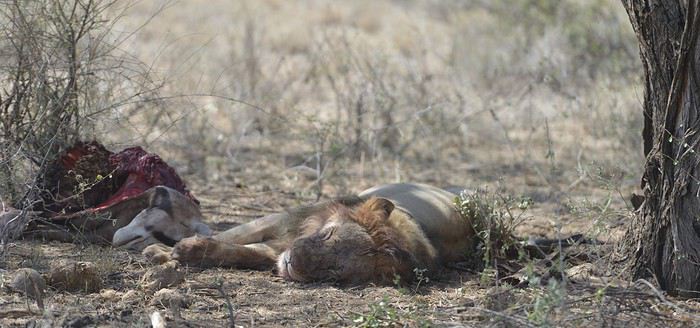
What mysterious bond could unite, in such near-mimicry, this corpse and its killer?
From Ol Pejeta to Tsavo West (Kenya)
Pygmalion19 · 2020-01-03 · Message 50 of 287
Good evening Bernard,
"To misname an object is to add to the misfortune of this world," Camus said... And we agree that our poor world has enough misfortune as it is...
I’d hate to add to the world’s troubles—it’s already doing a fine job of getting worse without my help! Whether it’s a grey crowned crane or a royal crane won’t change much, but maybe a little more understanding and a little less dogmatism could 😉. From now on, whenever I meet a birdwatcher from our good old France and we talk about the grey crowned crane, I’ll make sure to specify its French name🙂.
From Ol Pejeta to Tsavo West (Kenya)
Pygmalion19 · 2020-01-04 · Message 51 of 287
Hi everyone,
Actually, this lion group gives me the chance to check off my list of firsts. With these short-maned lions, we’ve got another trophy: Panthera Leo, lion. Makes you wonder if it’s not a subspecies—we’d need a DNA test! It’s not particularly handsome, and in this category, the Kalahari lion is way more impressive, majestic, and regal, really!
From Ol Pejeta to Tsavo West (Kenya)
Sylvie56 · 2020-01-04 · Message 52 of 287
Thanks, Eric, for letting us relive the atmosphere of the Ewaso Ngiro riverbanks that I love so much through this post!
Which side of the river was your lodge on: Buffalo or Samburu?
Your experience once again shows how essential it is to have a guide who’s on the "same wavelength" when you're on safari. When you're lucky enough to find that, it’s truly precious and can completely transform a trip....
I think there are indeed several subspecies of lions.
It’s true that, as a general rule, male lions in Samburu don’t have impressive manes.
But last summer, we came across two new arrivals: Ldarlei (golden) and Lolotu (who comes from another place), whose manes were fuller. They were recently named by the Ewaso Lions association, which had gathered members of the local community and guides from the area for the occasion.
I don’t know if those were the ones you saw—you’d have to see them standing up....
Have a great weekend!
From Ol Pejeta to Tsavo West (Kenya)
Pygmalion19 · 2020-01-04 · Message 53 of 287
Hi Sylvie,
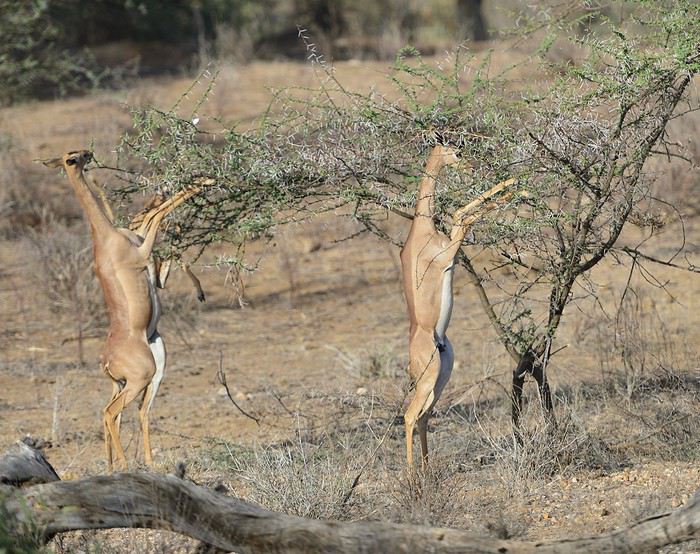
We were on the Buffalo Springs side by the Ewaso Ngiro River. Nice spot despite the electric fence. Our lodge belongs to the Ashnil hotel group, which has a good reputation. Comfortable room, but the bed was a bit hard. ..Hard to find shoes that fit! The hotel equipment could use a serious upgrade. Oh well, it's Africa! We spent a short afternoon in the Samburu Reserve "tracking" a cheetah chased by about ten vehicles. We then demanded that the guide leave the area. The behavior of the antelopes intrigued us before we understood why:

And for fun:

From Ol Pejeta to Tsavo West (Kenya)
Max68 · 2020-01-04 · Message 54 of 287
That two-legged antelope is too funny 😛 😎
I really love your travel journal, plus it’s not exactly the same species as in Southern Africa 🙂
From Ol Pejeta to Tsavo West (Kenya)
Max68 · 2020-01-04 · Message 55 of 287
Hi Sylvie,
When you have that kind of luck, it’s truly precious and can totally transform a trip....
But what about when you’re unlucky? 😕
Personally, the more I travel, the less I want to take the risk—I’d rather only blame myself if it’s not great. Over my trips, I’ve used a driver or guide about 6 times: 2 were amazing, 1 was okay-ish, 2 were just okay, and 1 was a total bust... 🤪
From Ol Pejeta to Tsavo West (Kenya)
Pygmalion19 · 2020-01-04 · Message 56 of 287
In short, we were wandering the tracks looking for interesting photo opportunities, relying only on our own judgment to politely ask the guide to stop for a shot. But he rarely stopped in the right spot. We had to deal with backlighting. Looking back, I think we didn’t do too badly in the end—but definitely not thanks to him.

Mama Impala and her baby

Yield, please!

That evening, we turned back (sorry! 😅) in magical light.

From Ol Pejeta to Tsavo West (Kenya)
Pygmalion19 · 2020-01-04 · Message 57 of 287
Hi Jean François,
While this all-inclusive package has its advantages, it also has its downsides. I’m pretty close to wanting to go back to self-drive unless I find the perfect deal or the right setup. I thought I’d briefed our agency well enough!
From Ol Pejeta to Tsavo West (Kenya)
Rjulie95 · 2020-01-04 · Message 58 of 287
This is especially frustrating when a guide doesn’t listen to you and always stands on the wrong side every time 😡
From Ol Pejeta to Tsavo West (Kenya)
Pygmalion19 · 2020-01-04 · Message 59 of 287
Hey Régis,
Oh yeah!
From Ol Pejeta to Tsavo West (Kenya)
Pygmalion19 · 2020-01-04 · Message 60 of 287
The next day we start again with the same crew but not the same critters. Along the way:

Canis mesomela, Black-Backed Jackal

Oryx gazella, Beisa oryx, a subspecies unique to the northern region. What sets it apart is the distribution of black stripes on its body.
The sun climbs in the blue sky of Samburu. It’s starting to get hot under the cockpit. Suddenly, the CB radio crackles, and our Kenyan John Wayne picks up the pace a bit before stopping at the edge of the track. Something’s happening over there near those big acacias. Could you give me a hand?

I’m waiting in anticipation! :)


