in Entre deux voyages › Réflexions de voyageurs
Concrete changes in how you travel during the crisis (page 4 of 9)
Discussion started by Caro96 on 2020-09-11
172 replies
This thread has been translated into English.
Real changes in how you're traveling during the crisis
Rotsaka · 2020-09-23 · Message 61 of 173
Tatra is Martine. A fairy tale and a sense of wonder at life. A certain kind of life that smells like mothballs and takes plenty of liberties with history and reality—but who cares? What matters is that it’s disruptive and it’s buzzing.
Tatra in the 1920s, Tatra under Erdogan, Tatra in the gulag...
Adorably cute.
Concrete changes in how you travel during the crisis
Tatra · 2020-09-23 · Message 62 of 173
Tatra in the 20s, Tatra under Erdogan, Tatra in the gulag...
So cute.
Well... As mathematician B. Russell wrote:
"In fact, it is in its uncertainty that the value of philosophy largely resides. One who has not grappled with it goes through life like a prisoner: imprisoned by the prejudices of common sense, the beliefs of their country or time, convictions that have grown within them without the cooperation or consent of reason. Everything in the world seems self-evident to them, so much so that things are this way and not another, their horizon is limited, ordinary objects do not question them, and unfamiliar possibilities are dismissed with contempt."
Michel
Real changes in how you're traveling during the crisis
Xyz999 · 2020-09-23 · Message 63 of 173
I don’t know if Tatra is a high school philosophy teacher, but if so, he must really contribute to the idea that philosophy is useless (from his cloud, no less).
Concrete changes in how you traveled during the crisis
Pondy · 2020-09-23 · Message 64 of 173
I can only speak about what happened in France in the 1920s, and that through my grandmother’s story.
The post-war period was a breath of freedom for her.
She was a seamstress at Coco Chanel and went dancing in *guinguettes*.
In old yellowed photos, you can see her in a short Charleston dress striking a pose with a cigarette in an elegant gold cigarette holder.
She told me she felt like a suffragette. She shocked her mother by removing her braids coiled over her ears and cutting her hair very short with *accroche-cœurs* on her forehead.
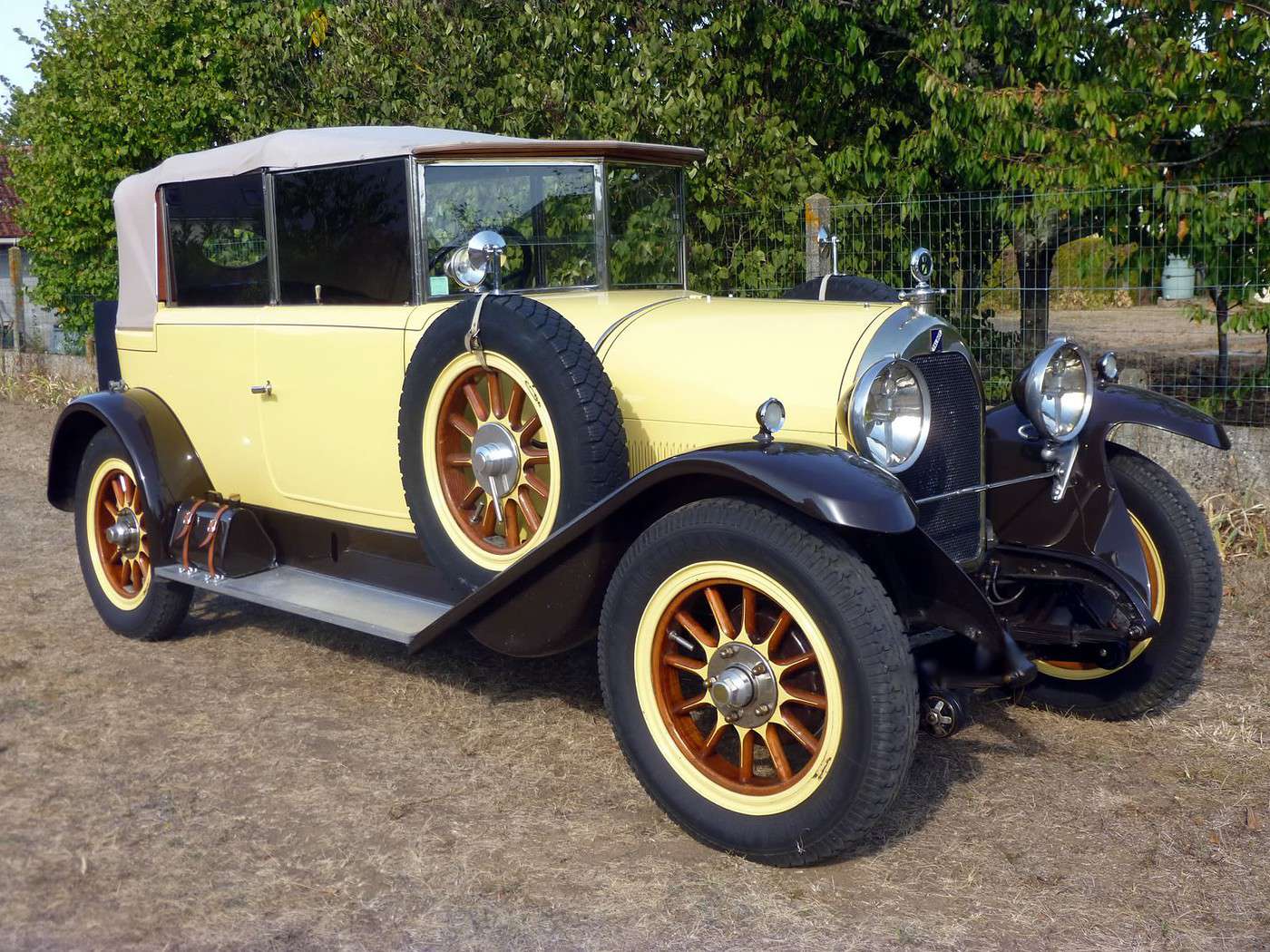
When she took the train to Burgundy, she’d drive the family car—a pale yellow and brown Talbot DC—upon arrival because she’d earned her *certificat de capacité*, the precursor to our driver’s license.
She adored Josephine Baker, balls, music, painting, had a crowd of friends to party with, loved jazz and *la musique nègre* as it was called back then, Maurice Chevalier, and also danced the tango much to her mother’s dismay.
As a little girl, I loved listening to her, and I thought her life was full of new experiences.
A time of carefreeness and regained peace, whose small events from her life as a working-class woman in Paris she shared with me enthusiastically.
She wasn’t privileged—working 10 hours a day in a sewing workshop, living in a maid’s room without heating in a building above a metro entrance—but she felt free and was eager to discover everything.
Anyway, that’s not the point—I’ve completely gone off-topic!
Concrete changes in how you travel during the crisis
Willemspie · 2020-09-23 · Message 65 of 173
For happiness, an important factor is confidence in the future. From 1945 until the 1970s, the general belief was that life was going to get better. Today, it's the opposite.
When it comes to freedom, there are opposing ideologies. We see this clearly in the debates here about coronavirus measures. Some prefer individual freedom, while others prioritize collective freedoms.
For freedom of expression, I still notice that many films, TV shows, and press articles from the 1970s and 1980s wouldn’t be possible today.
Changements concrets dans votre façon de voyager pendant la crise
Hannahannah · 2020-09-23 · Message 66 of 173
Hi Dom,
It was a breath of freedom for everyone, men and women alike.
Of course, there were suffragettes who didn’t have the right to vote 😕, so thanks to them for advancing our freedom.
For the rest... we still had a long way to go.
When I got divorced in 1975, I was asked for my husband’s permission to rent an apartment because I was only separated, and I could open a bank account—it seems the law had just passed. Some freedom, huh? 🏴☠️.
Sure, I could go dancing, but that didn’t exactly help with daily life. 😉
I’ll leave this off-topic thread now.
Concrete changes in how you travel during the crisis
Rotsaka · 2020-09-23 · Message 67 of 173
Tatra to Pondy, Tatra to Pondy, squadron of Zeros in sight at 10 o'clock, roger... Pondy: I see you, I'm coming and I'll take them down...
Well, that's great for your grandmother. My grandmothers, though, were farmers, and it was a much less charming time. They had so little choice that they died in the same village where they were born, in the same social class, and after living the life you could’ve bet they’d have at their birth. Four children, two of whom died from illness in early childhood—enough to drive both of them nearly mad with grief. She steered her own ship in a man’s world as best she could, gnarled like an old oak, worn down by the years, yet she still held on and outlived her husband, who was struck down by a nasty disease that a kind country doctor failed to diagnose and the local healer couldn’t cure. Sure, things were better back then.
Since personal stories are now meant to prove a point—like the cheerful cashier or the doctor who speaks up once the door’s closed—we end up with the Grandmother of the 1920s. Who can deny that the '20s weren’t kind to some people? That they were generally great? Allow me to doubt that *very* strongly.
I’ll add that to live through the '20s and enjoy them, you had to have lived through the Great War, World War II (which we might one day call the Second), or both. Because it’s pretty hard to experience one era while ignoring the ones around it.
What a cheerful little program.
Oh right, I almost forgot—Tatra, JP Sartre in the clear light, chest puffed out, will tell us there’s no freer time than during wars. Damn, we’re doomed again... Caramba, missed the mark once more.
Concrete changes in how you travel during the crisis
321 · 2020-09-23 · Message 68 of 173
My grandmothers were farmers
Were there any Talbot DC 1925s in families back then?
Changements concrets dans votre façon de voyager pendant la crise
Pondy · 2020-09-23 · Message 69 of 173
Hi Din,
Why say "it was better before"?
What you’re sharing is really interesting, and I’d love to hear even more about your grandmothers’ rural lives. Life in the countryside—harsh and conservative—was so different from city life, and that’s what makes it fascinating.
It’s through countless personal stories that we can get just a tiny glimpse of an era I barely know, beyond books, films, or research...
Concrete changes in your travel habits during the crisis
Rotsaka · 2020-09-23 · Message 70 of 173
Yeah, maybe among the boys' toys or in a photo, possibly.
Otherwise, just a dream for a few more decades (the car).
Concrete changes in how you travel during the crisis
Xyz999 · 2020-09-23 · Message 71 of 173
Pondy, do you think your grandma was freer than you? (By the way, working at Coco Chanel in the 1920s isn’t something everyone got to do.)
It’s Tatra who keeps saying things were better before.
Changements concrets dans votre façon de voyager pendant la crise
Louisane · 2020-09-23 · Message 72 of 173
Good evening,
In the 1920s, at least in Europe, people were freer, had more possibilities, more reasons to give meaning to their lives, more opportunities to start over if things went wrong, and more anonymity and adventure. It’s not impossible that they were ultimately happier, even though they were deeply influenced by both religion and nationalism.
Michel
You’re definitely talking about a very privileged minority of city-dwellers. And in that case, the range of possibilities and adventure was indeed much broader for them than it is today. Just read Ella Maillart to see that in terms of freedom of movement and morals, things were better than today for some women—a very small minority. But for the vast majority of peasants in France, their world was often limited to their village, their work, and their family. They made do with what they had, and that might actually be a recipe for happiness... The peasants who left or immigrated did theoretically have far more opportunities, but in practice, they often did so to survive or feed their families, like migrants—far from the freedom to choose or the search for meaning.
Concrete changes in your way of traveling during the crisis
Masterpo · 2020-09-23 · Message 73 of 173
Sure, it was better before.
I’m like you—I can’t even understand how some people can say something so outrageous. And what’s this ‘it’ they’re talking about?
We’re still living better today than at any time before: overall, more comfort, better quality of life, more safety, more freedoms (I said *overall*). But maybe we’re at a turning point, some kind of peak.
Sartre in the clear
Oh, nice.
Concrete changes in how you travel during the crisis
Pondy · 2020-09-23 · Message 74 of 173
Pondy, do you think your grandmother was freer than you? (By the way, working at Coco Chanel in the 1920s wasn’t something everyone did.)
It’s Tatra who keeps saying things were better before.
Going off-topic for the sake of it!
As a very young woman, my grandmother moved to Paris to try her luck.
With her father’s approval but not her mother’s.
She found a job as a maid in a wealthy household that very evening.
One night out, she was dancing at a *guinguette* and hit it off with the head of a workshop at Chanel, which had several ateliers in Paris. That’s how my grandmother became a *petite-main*. She sewed perfectly.
And for the anecdote, I framed the finely pleated and embroidered romper my father wore—it’s really lovely.
To answer your question: “Was my grandmother freer than me?”
I have no idea; she considered herself free and lived freely.
I think society hadn’t yet confused need and desire.
And while comfort exists at every level today, I’m overwhelmed by the pressure to think, buy, and consume a certain way. I have to weigh my words and bend to a host of new obligations.
I’m swamped with messages of all kinds—from “eat 5 fruits and vegetables a day” to “protect yourself, protect others,” etc. I’m fed up with prevention campaigns, fed up with moralizing speeches, fed up with this culture of command as if my life, if I didn’t listen, were surrounded by dangers.
So yes, I’m free—but mostly to think as I please.
Concrete changes in how you travel during the crisis
Rotsaka · 2020-09-23 · Message 75 of 173
Even though comfort exists at every level today, I’m overwhelmed by the demands to think, buy, and consume—I have to weigh my words and bend to a host of new obligations.
I’m swamped by messages of all kinds, from "eat 5 fruits and vegetables a day" to "protect yourself, protect others," and so on. I’m fed up with prevention campaigns, fed up with moralizing speeches, fed up with these instructional commands as if my life, if I didn’t listen, were surrounded by dangers.
So it wasn’t better before, but it *was* better before. A fan of "at the same time."
Being a good mother, a loving and respectful wife, knowing how to do laundry, sew, not vote, obey and respect all authority, be the guardian of the home, and stay out of everything else... That was life for most women.
You’re feeling overwhelmed right now, but it seems to me you’ve got the critical and intellectual tools to free yourself from these so-called demands, right? So what’s the problem?
Before, most people didn’t have a choice at all.
The "it was better before" mindset is a gateway to bitterness and nostalgia. Two words/ills that are very much present today too.
Concrete changes in your way of traveling during the crisis
Xyz999 · 2020-09-23 · Message 76 of 173
Even though comfort exists at every level today, I’m overwhelmed by the constant demands to think, buy, and consume. I have to weigh my words and submit to a host of new obligations.
I’m swamped by messages of all kinds—from "eat 5 fruits and vegetables a day" to "protect yourself, protect others." I’m fed up with prevention campaigns, fed up with moralizing speeches, fed up with this culture of commandments as if my life, if I didn’t listen, were surrounded by dangers.
You mean we’re being infantilized.
Comfort infantilizes, and I think a lot of people have dreamed—or still dream—of being treated like children their whole lives.
The demands you’re talking about never get to me personally.
In my opinion, you need a certain zone of carefreeness and tranquility—which some might call a luxury (boom, more morality)—to make space for them.
How awful to hear the same old "eat 5 fruits and vegetables a day" drilled into us... the terrible slavery of modern times...🤪 (I bet generations of actual slaves are rolling in their graves if they hear this kind of complaint)
Concrete changes in your way of traveling during the crisis
Pondy · 2020-09-23 · Message 77 of 173
Even though comfort exists at every level today, I’m overwhelmed by the injunctions to think, to buy, to consume—I have to weigh my words and bend to a host of new obligations.
I’m swamped by messages of all kinds, from "eat 5 fruits and vegetables a day" to "protect yourself, protect others," etc. I’m fed up with prevention campaigns, fed up with moralizing speeches, fed up with these instructional commands as if my life, if I didn’t listen, was surrounded by dangers.
So it wasn’t better before, but it was better before. A fan of "at the same time."
Being a good mother, a loving and respectful woman, knowing how to do laundry, sew, not vote, obey and respect all authority, be the guardian of the home and abstain from the rest... That was the life of most women.
You’re overwhelmed now, but it seems to me you’ve received the critical and intellectual tools to free yourself from these so-called injunctions, right? So what’s the problem?
Before, the majority didn’t have the shadow of a choice.
The "it was better before" is the door to bitterness and nostalgia. Two words/ills that are very current too.
Yes, life was hard and rough.
Mortality was rampant.
Fleming hadn’t yet discovered antibiotics.
Women aborted with knitting needles and parsley stems and often died.
The war had left thousands of widows struggling to survive.
There’s no such thing as that famous "at the same time" and "it was better before" you’re talking about.
It was different, that’s all.
What has fundamentally changed isn’t the notion of happiness—a feeling unique to each individual—but the notion we no longer talk about: joy, which is an emotion.
The joy that’s never mentioned: the joy of living, of flourishing, of rejoicing, of feeling the fullness of the moment.
And when everyone lives in their own corner, the joy that comes from feeling connected no longer exists.
Living in your own corner means limiting contact, parties, gatherings, setting up remote work, etc.
The simple joy of passing days that no one talks about anymore, as if everything were serious, grave, guilt-inducing, worrying.
Concrete changes in your way of traveling during the crisis
Rotsaka · 2020-09-23 · Message 78 of 173
I totally agree about the diversity of lives and that it makes more sense to think things were different rather than better or worse.
As for joy, I don’t know. How do you even measure that over the years?
I think a lot of older people—and really, people from every era—are just killjoys.
So it’s hard to be joyful, no matter the time period.
Let’s just enjoy the moment we’re living in and let our grandmothers have lived the way they did. And let’s not listen to the killjoys...
Concrete changes in your way of traveling during the crisis
Poste42 · 2020-09-23 · Message 79 of 173
Pondy, you give us an almost idyllic account of your grandmother’s youth and life in the 1920s. From what I understand, she achieved emancipation thanks to her move to Paris and her work.
But despite everything, she wasn’t equal to men. I can imagine the frustration.
That carefree and superficial world of the 1920s, which may have existed, certainly shattered against the crisis and the Second World War.
Now, it’s my turn to tell you about a rewarding relationship I have with a lady born in 1920. She talks to me about her youth and her mother. And two expressions often come up in her stories: "poor Maman" and "you had to toe the line," which were tied to those years. For her, women were trapped in a rigid framework due to class differences, social norms, unspoken rules, their lack of place in society, and difficult family relationships. I could ask her which era she preferred—1920s, 1960s, or 2200s—but she’d only talk about her happy early childhood, and that’s it.
Concrete changes in your way of traveling during the crisis
Poste42 · 2020-09-23 · Message 80 of 173
I completely agree with you. It was indeed a minority, because few women had the right to speak up—the laws were made by men and for men.
No possibility to vote, and therefore no possibility to run in elections, and there were no exceptions: all women were affected, whether emancipated or not.