Day 14 / Day 15. Munroe Island and the backwaters (2)
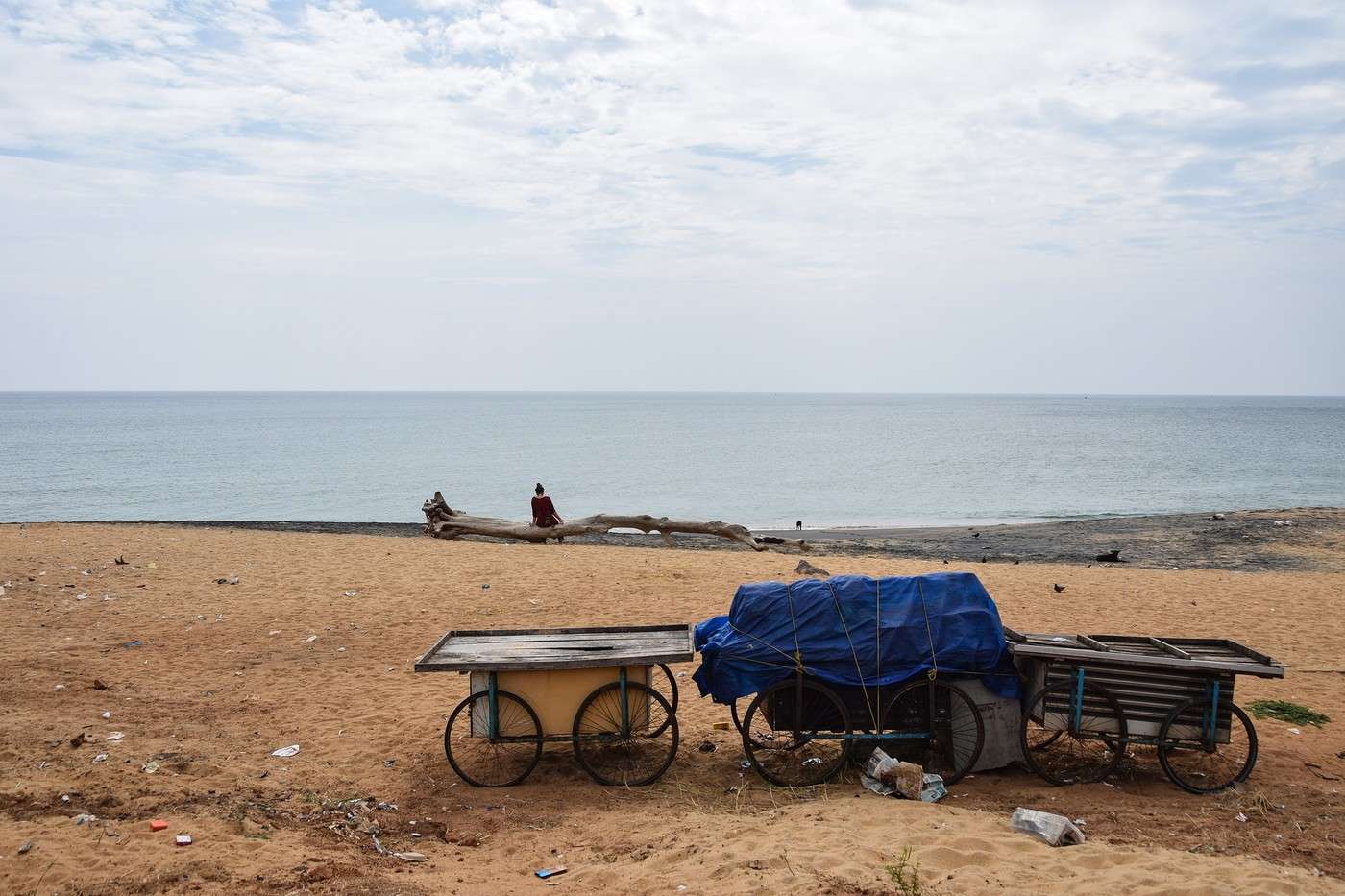
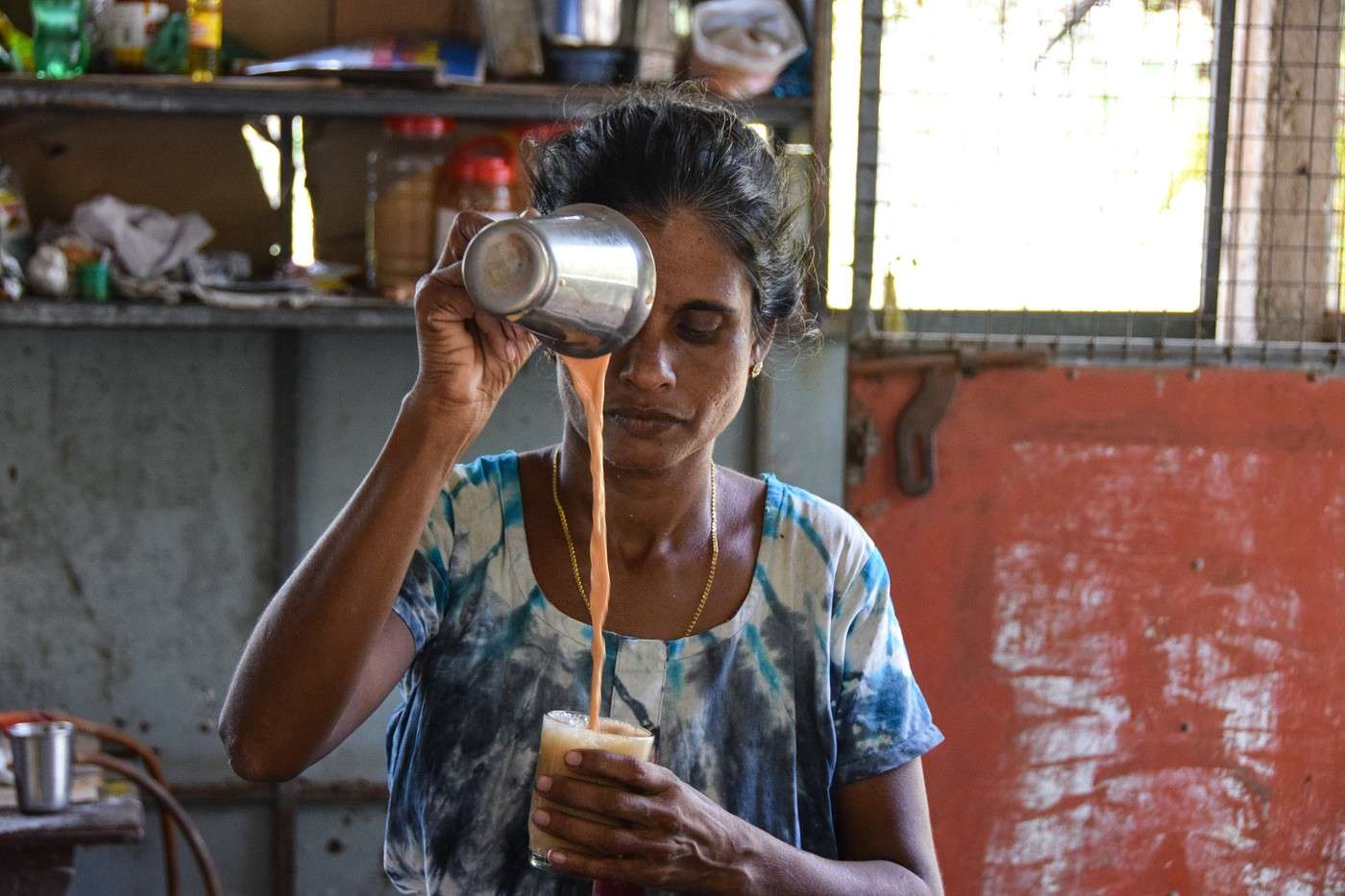
We didn’t do much yesterday, just a trip to Kollam, an old Portuguese trading post at the southern end of Ashtamudi Lake. We did some shopping in the city, especially in the Muslim quarter, then headed to the pretty deserted seafront in a strange off-season vibe. And it was in a little shack, slightly set back from the beach, that we enjoyed what were probably the best milkshakes of our trip to India.


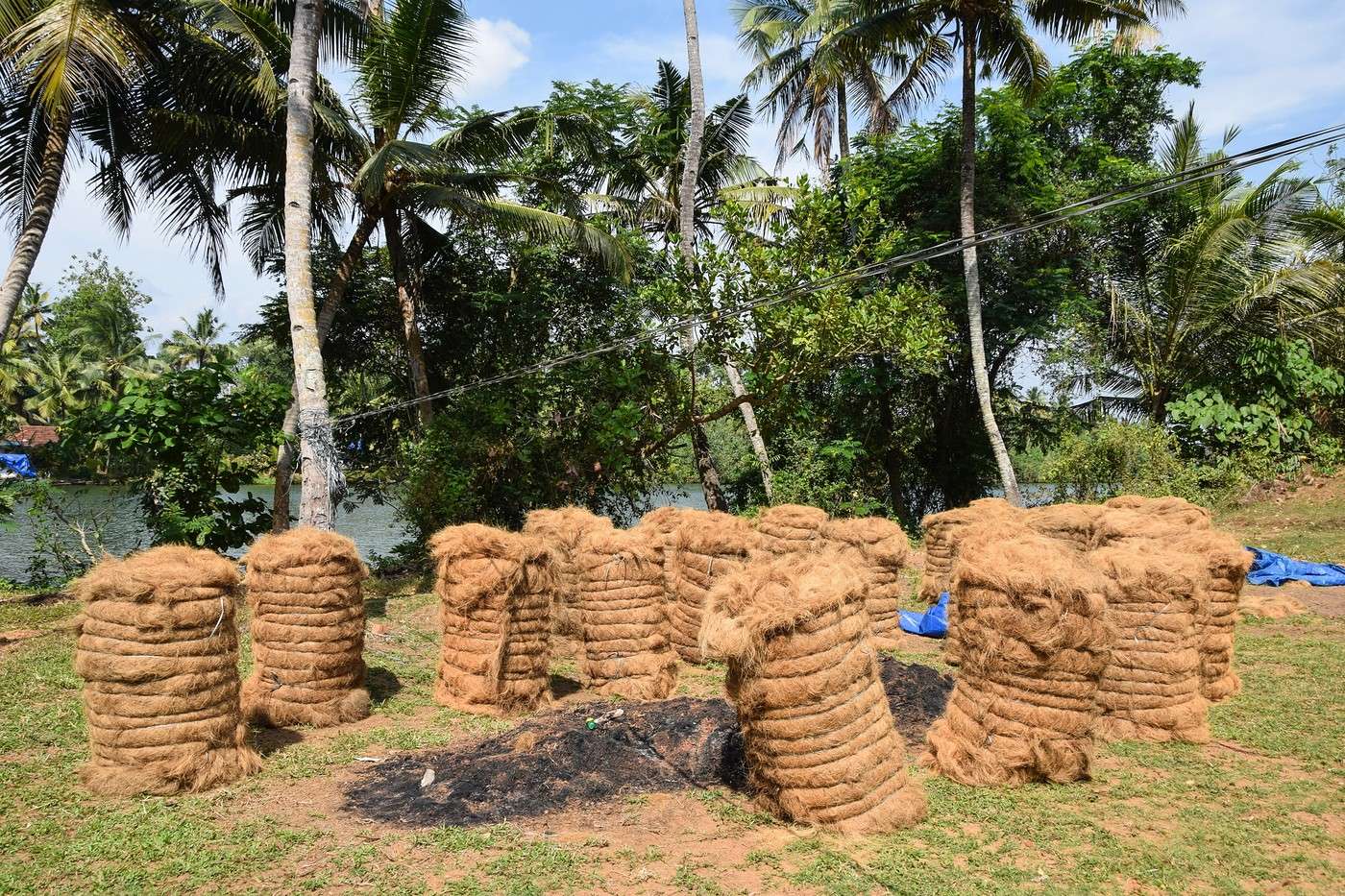
Today, we decided to experience the backwaters differently by walking along the many paths. We also wanted to visit the coir factory Rahul told us about.
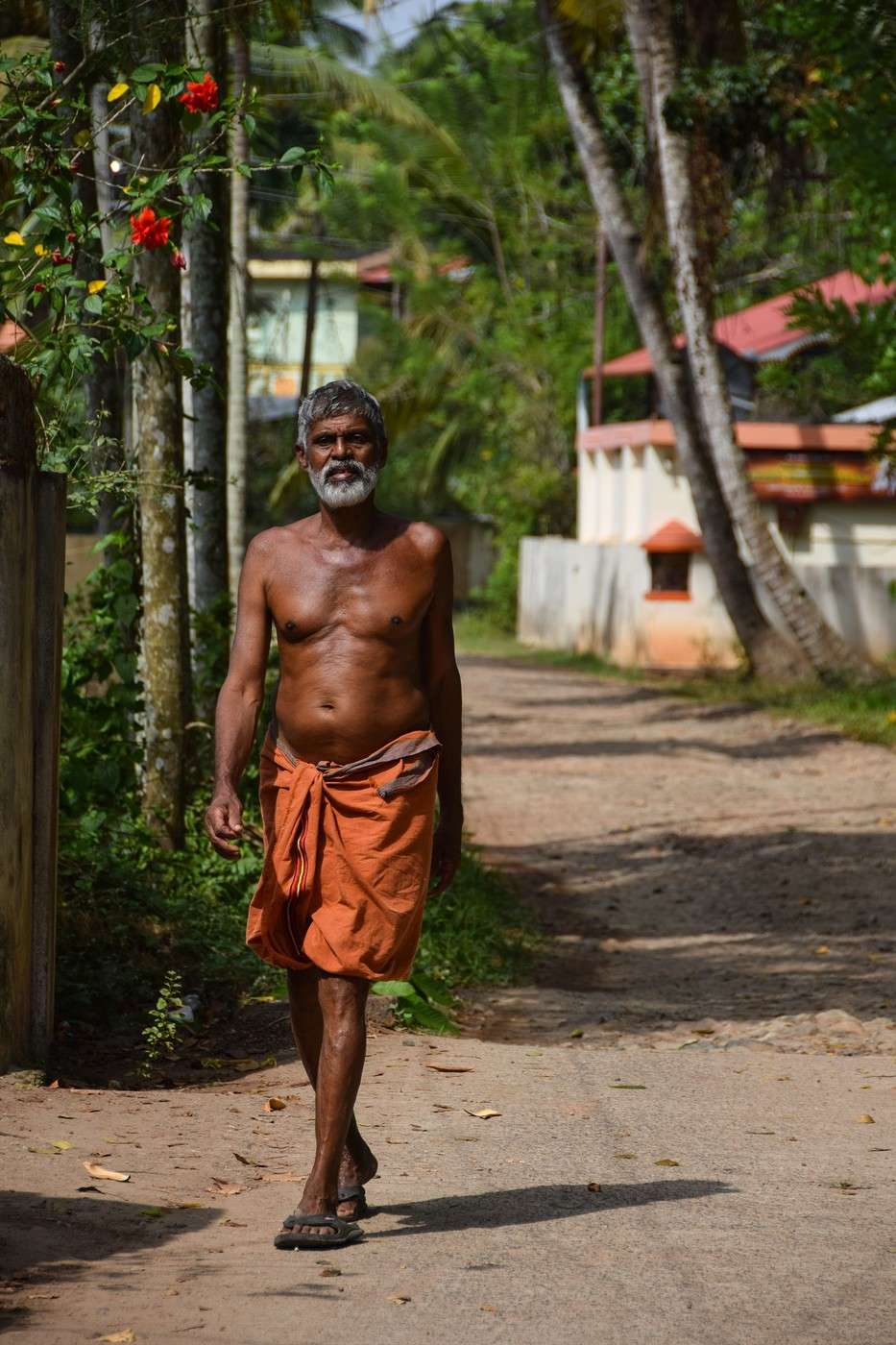
A beautiful and long day of walking around the peninsula under a tropical sun. While trying to find the factory, we quickly got lost in the maze of paths through the coconut grove—and we loved it. We embraced wandering around.
A metallic-sounding creak caught our attention. Let’s check it out!
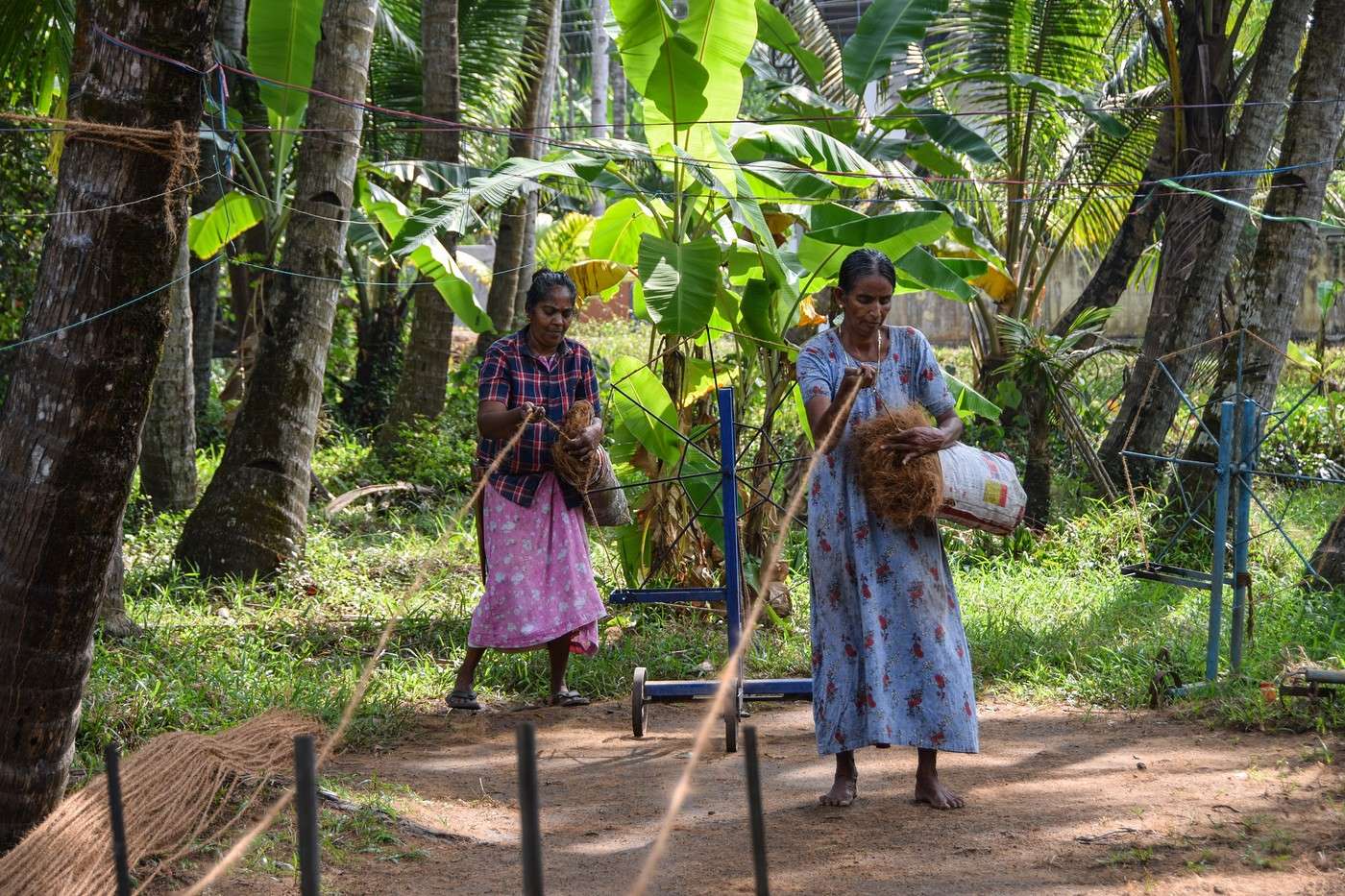
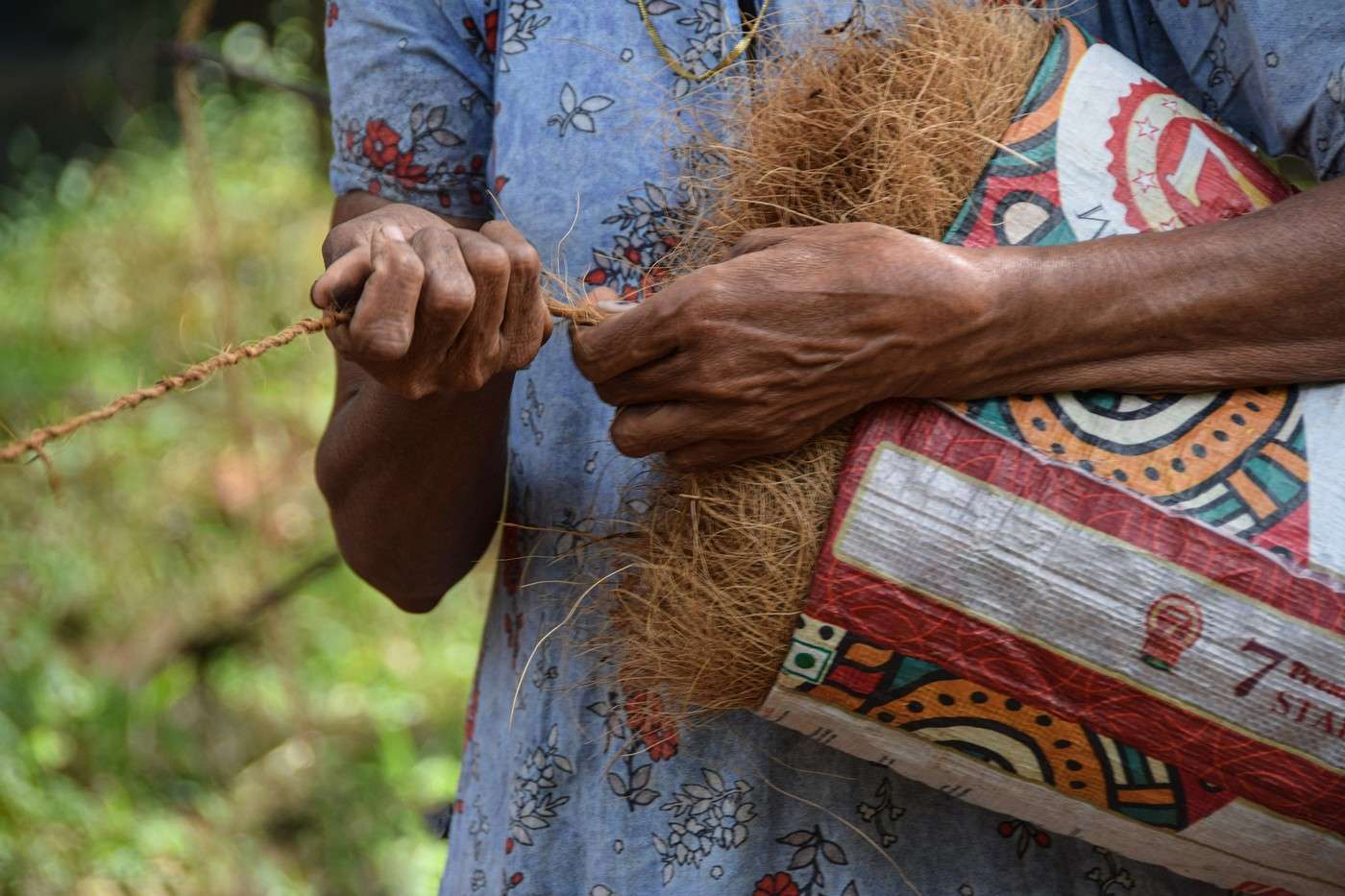
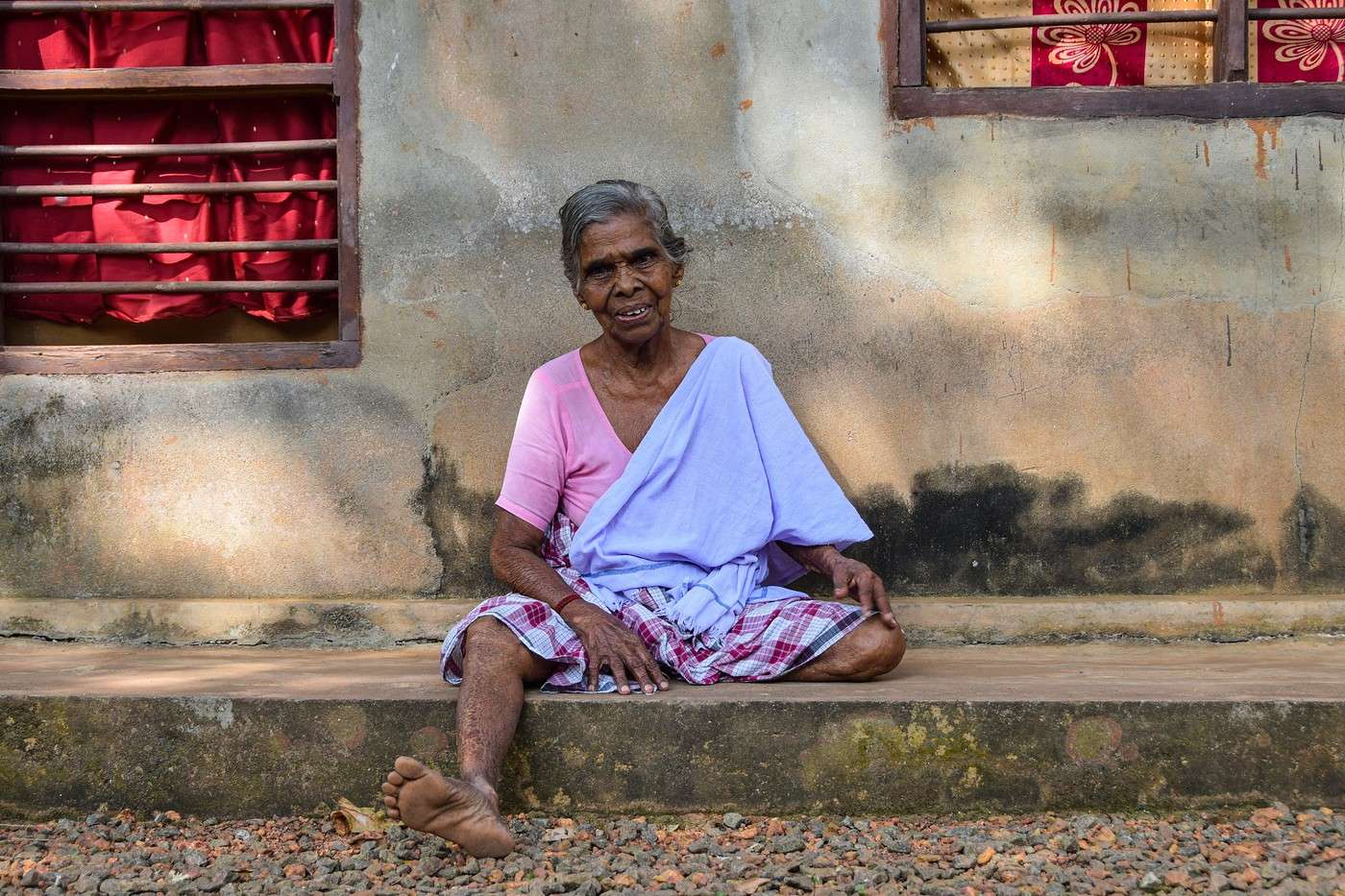
In a small courtyard between the coconut trees, two women were busy. They were spinning coir fibers using a pretty basic winding tool. We watched this strange dance of back-and-forth movements as the raw material was fed into the spinner. Their movements were precise, quick, and even elegant. The two women were completely absorbed in their work, but they gave us a little smile and let us take their picture.
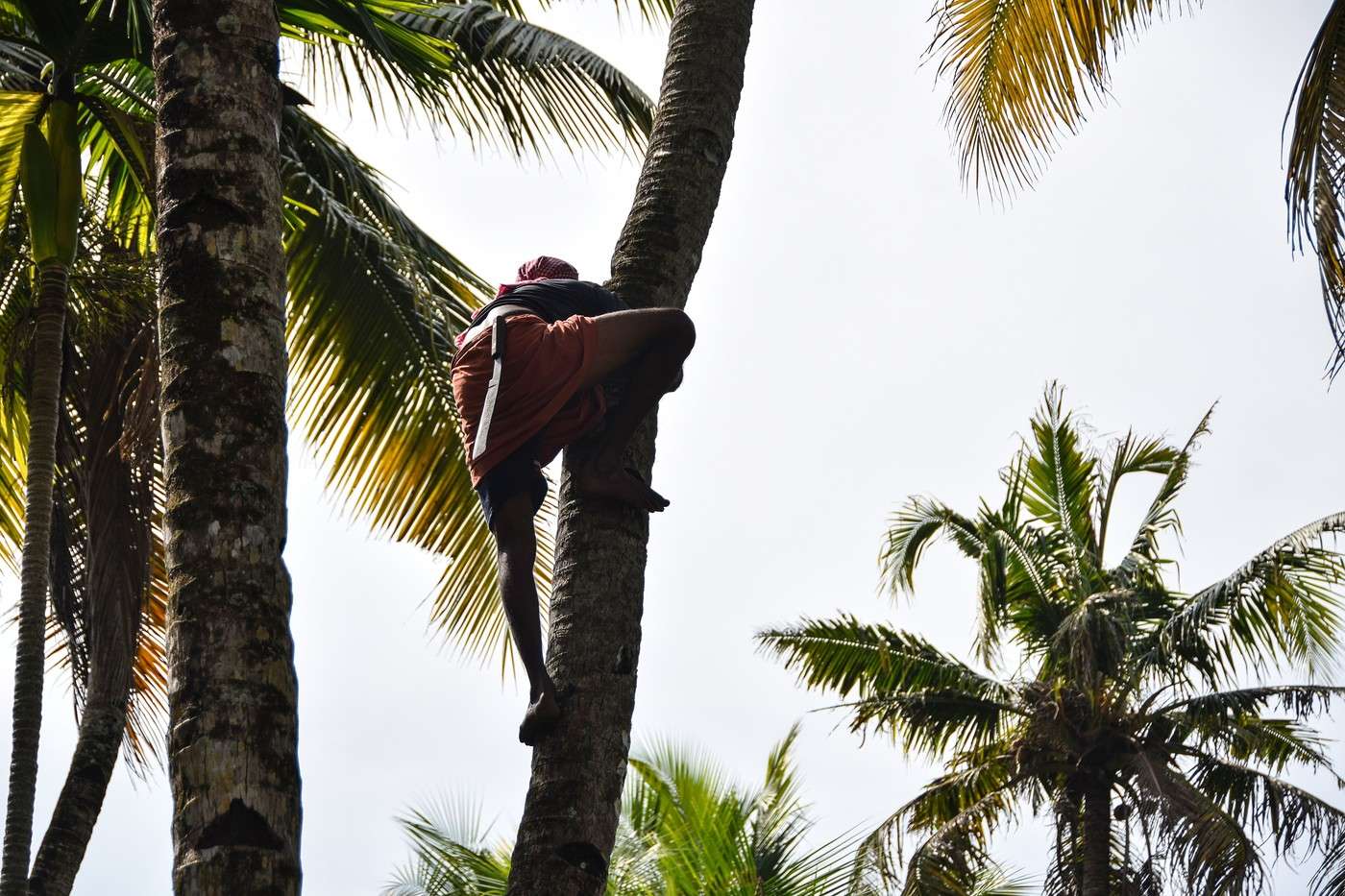
A little further on, some men were collecting coconuts. One of them climbed to the top of a tree without any safety harness. He seemed to find his footing using notches cut into the trunk. Impressive!
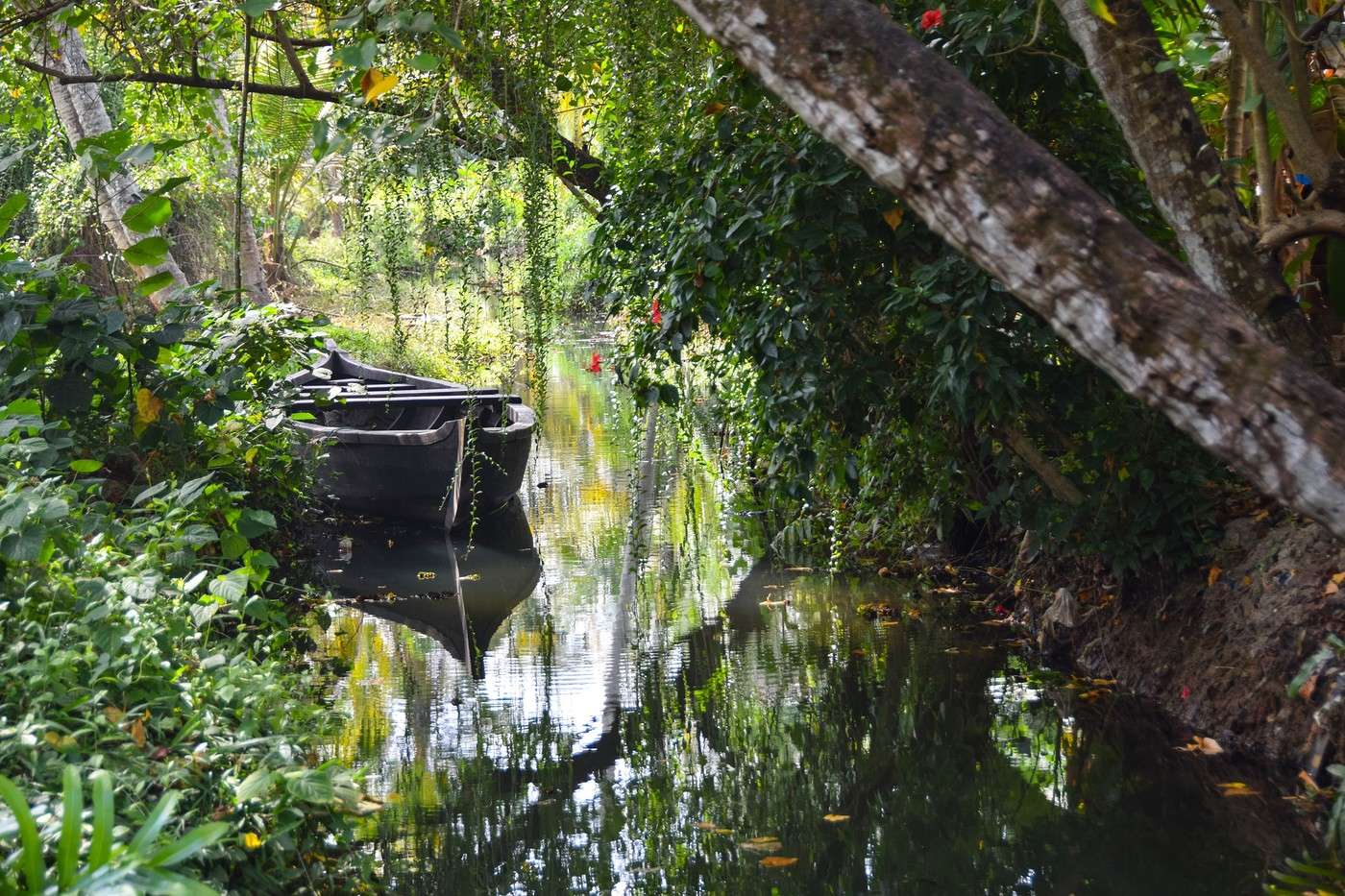
I realized just how much this area we were strolling through as tourists—coconut groves, canals, lagoon—forms a coherent ecosystem, blending nature and human activities, likely for centuries. But I also know this human-shaped space is now threatened by soil erosion and rising sea levels. We often saw abandoned homes being swallowed by water. Venice isn’t the only place that needs saving…


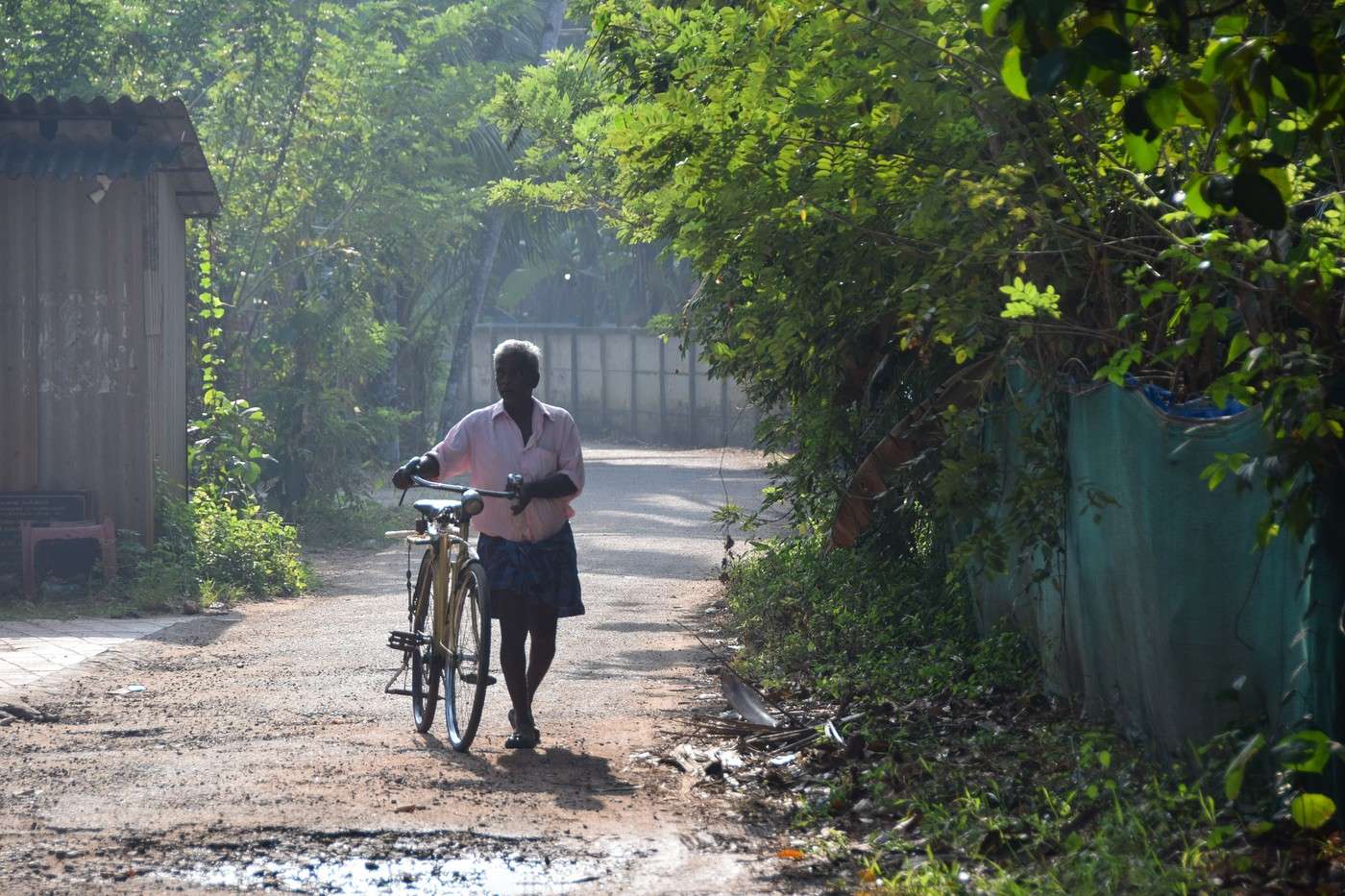
The sun was getting higher in the sky, and despite a few checks on Google Maps, we still couldn’t find the factory. At the end of a path, we asked a passerby. “Coconut factory?” He seemed unsure how to answer. “Ah yes, two hundred meters!”
After walking the two hundred meters, we came across a little shack by a canal that seemed to serve drinks. We ordered four very hot, frothy, and sweet chai. The man and woman seemed delighted to welcome us into their tiny establishment. We exchanged a few words, then asked again for directions to the factory. Apparently, it was still a bit further. We walked along a road under the scorching sun—still no factory. Then, a tuk-tuk conveniently passed by. “Coconut factory? OK.” And the driver dropped us off… in front of a temple. The Bible says God, worried about human ambition, mixed up all languages so people wouldn’t understand each other anymore. Well, here’s the result!!!
Disappointed, hungry, and thirsty, we finally found a nice restaurant by the river. At the end of the meal, the waiter, who spoke much better English, understood what we were looking for and called a tuk-tuk for us.

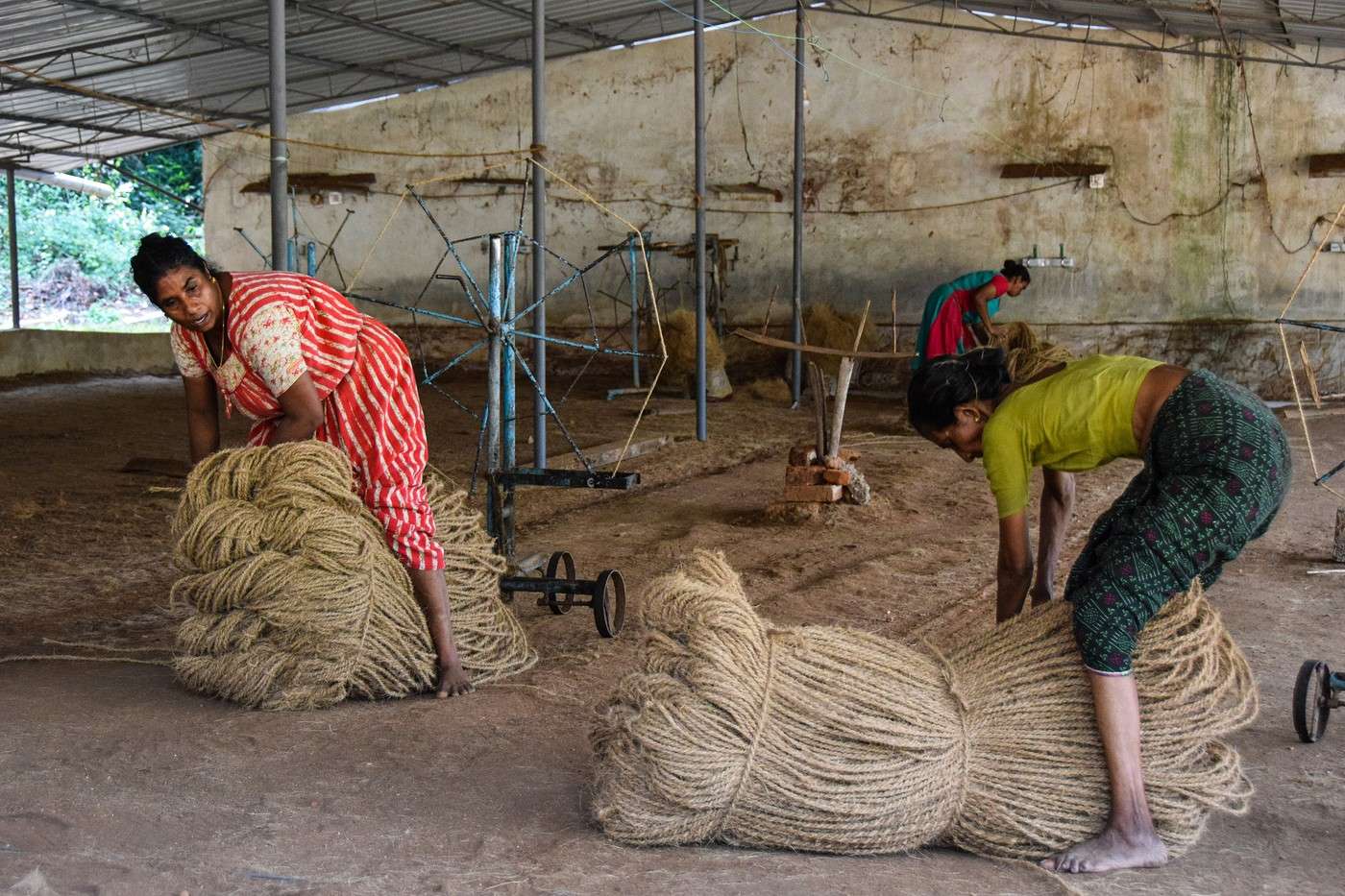
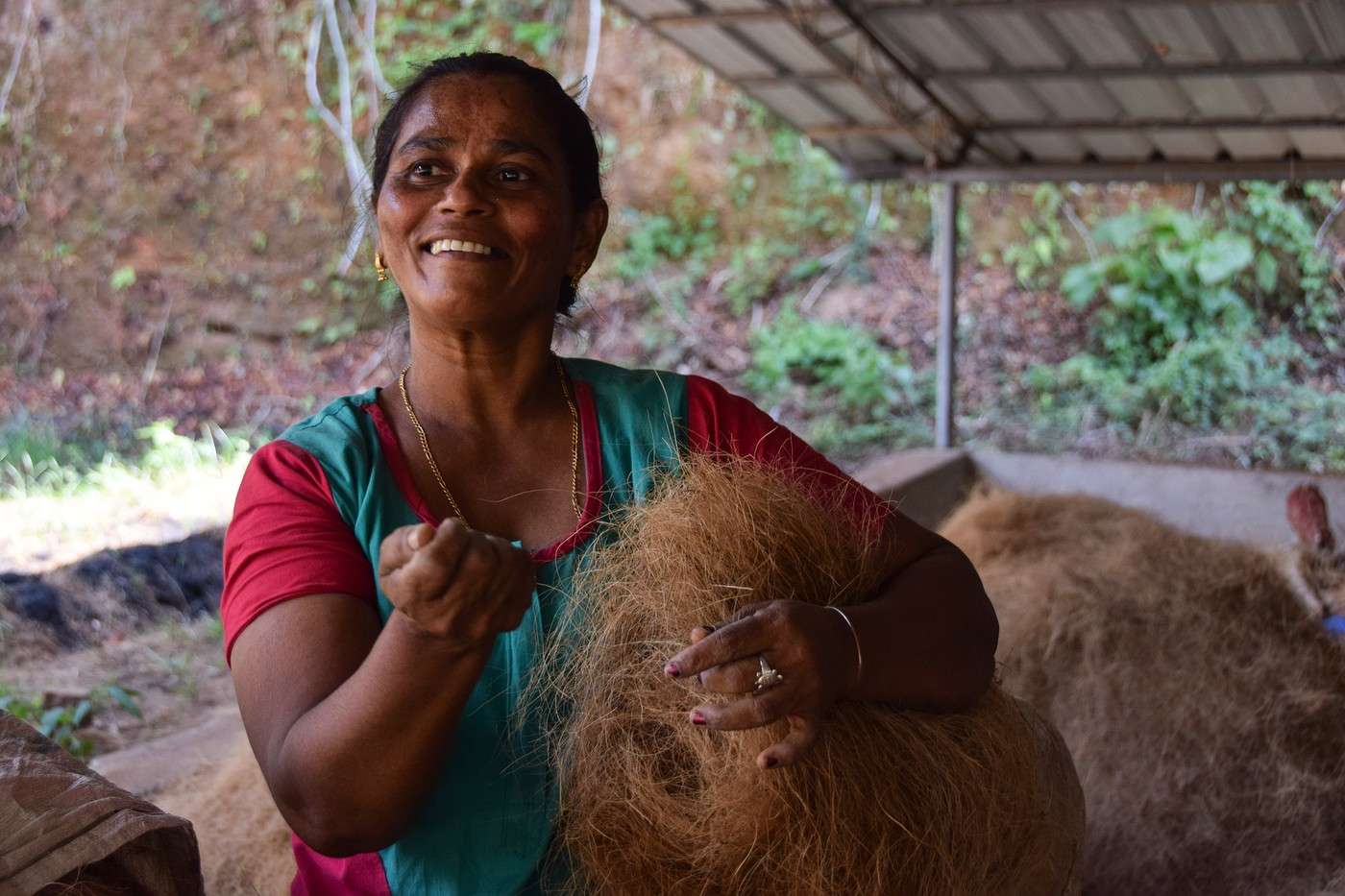
We finally arrived at the factory. Maybe “factory” wasn’t the right word—it was actually a small workshop set up under a shed. A group of women were busy, doing work similar to what we’d seen in the coconut grove. They seemed used to the few tourists who manage to find the place and welcomed us with smiles. I could tell it was still pretty exhausting work, and I got the feeling our visit was a little break for them. After letting us take some photos, they mischievously invited us to try replicating their expert movements under their guidance. Winding, spinning, guiding the fiber with our fingers—we were extremely clumsy, almost ridiculous. The women laughed, but kindly.
I watched them. There were all ages—some quite frail, others more robust—but all full of an energy that impressed me.
It was time to leave. We discreetly gave each of them a small tip, out of sight of a man who had just appeared—probably the foreman or the boss.
Tomorrow, we’re heading up the Malabar Coast toward Cochin.


 , is nestled in the heart of a palm grove—actually a coconut plantation—far from the urban hustle and bustle, in an environment where human activities and natural spaces seem to live in harmony.