Discoveries in Assam and Nagaland 2025
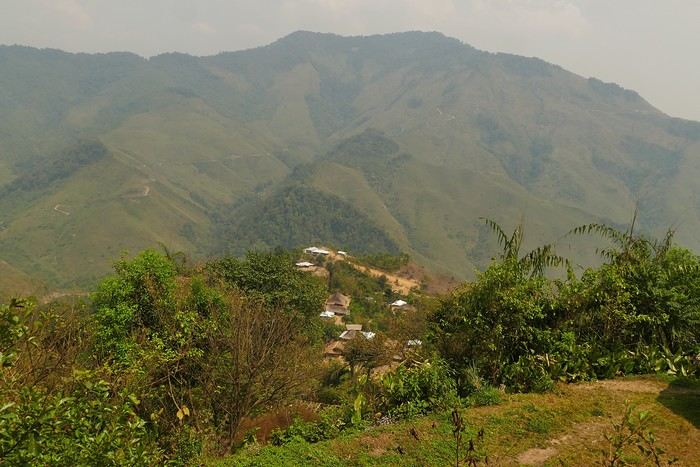
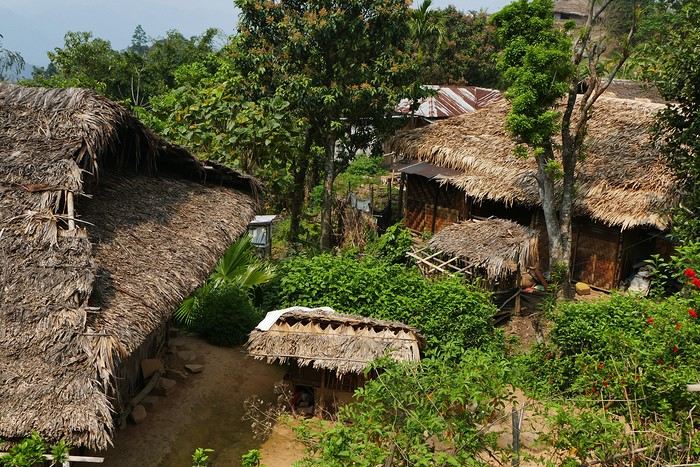
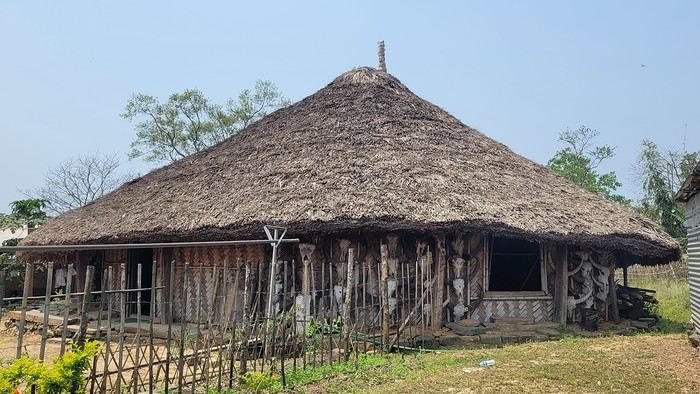
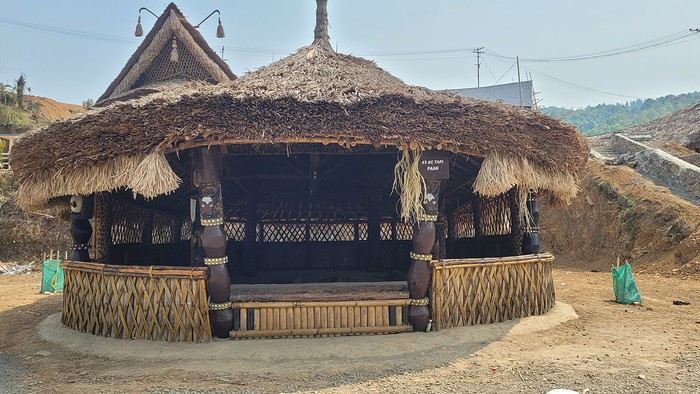
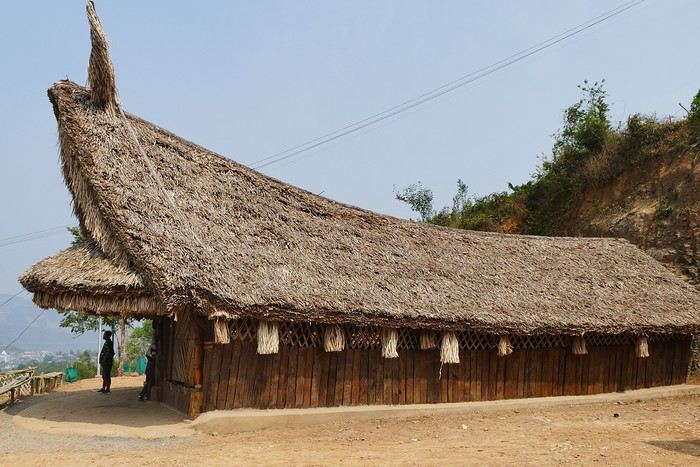
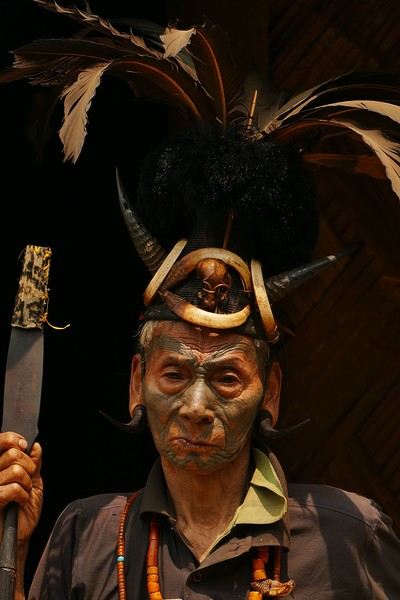
we arrive at a very traditional house. At the entrance, a man with his entire face tattooed is cleaning one of his rifles.
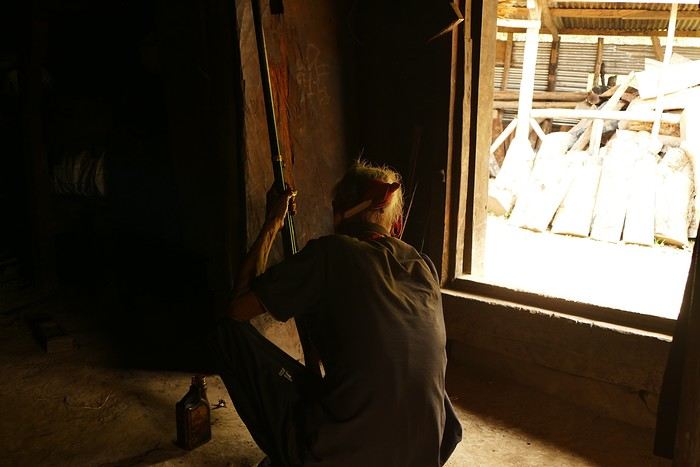
He belongs to the Konyak tribe—warriors and headhunters. Several rifles hang on the wall along with his "traditional hat," a cone-shaped headdress made of bones and feathers. He wears his traditional necklace, and in his earlobes, he has goat horns as earrings. For the photo, he also takes a hunting spear. The guide warns me that I have to pay him 100 rs to take his picture. I don’t think I’ll come back here, so I agree to pay. A few souvenir photos, and we head back up to the village.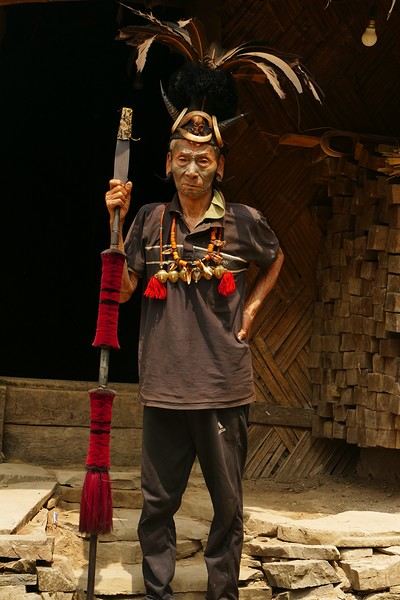
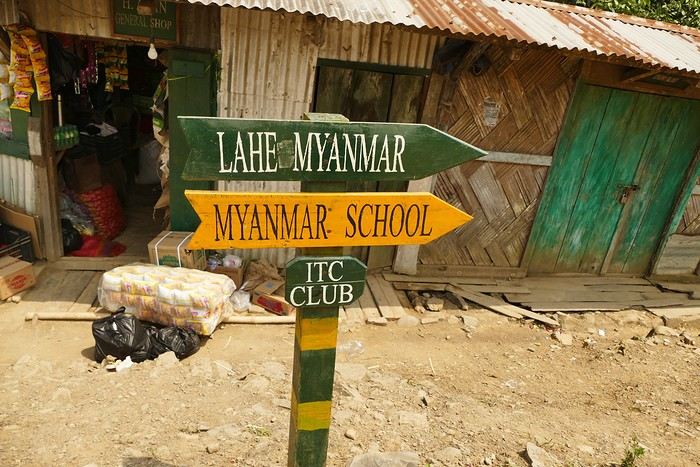
The army is present throughout the village. We look for the chief, to whom I show my passport—he photographs it along with the permit to visit Nagaland. A sign points toward Myanmar, and the border is just a few steps away.
The chief lets me take about ten steps but keeps an eye on me with a submachine gun in hand. I snap a few shots and thank him, and in return, we take some selfies.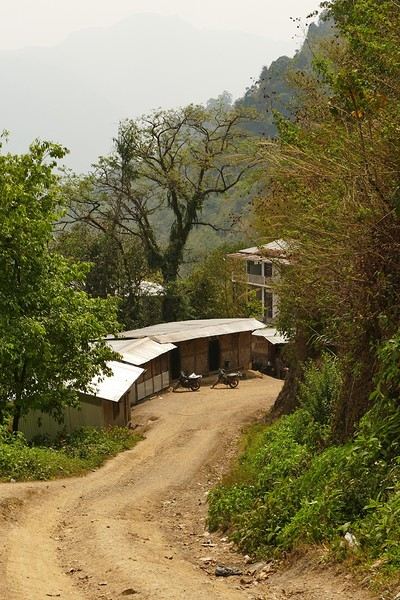
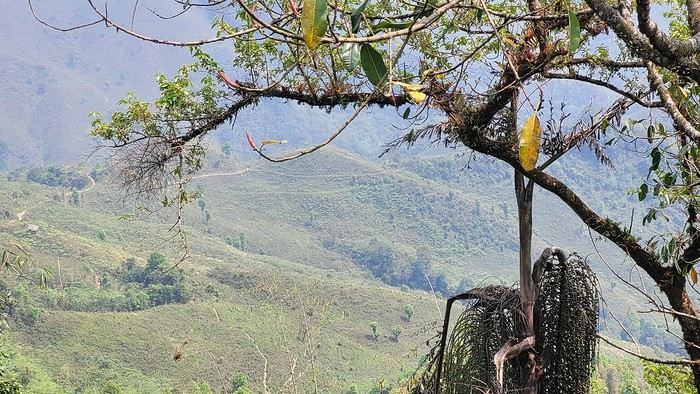
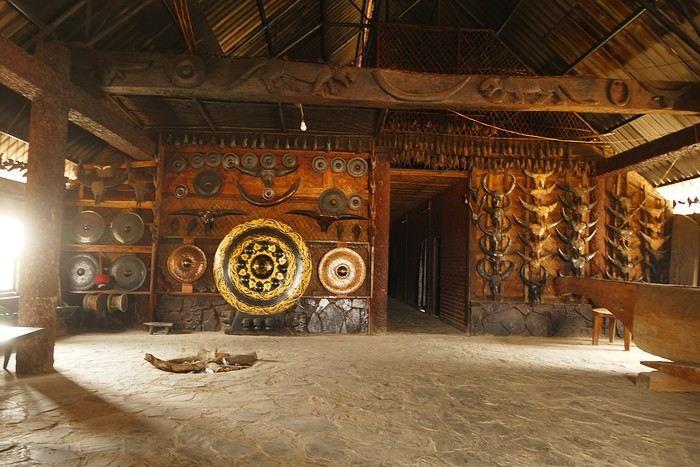
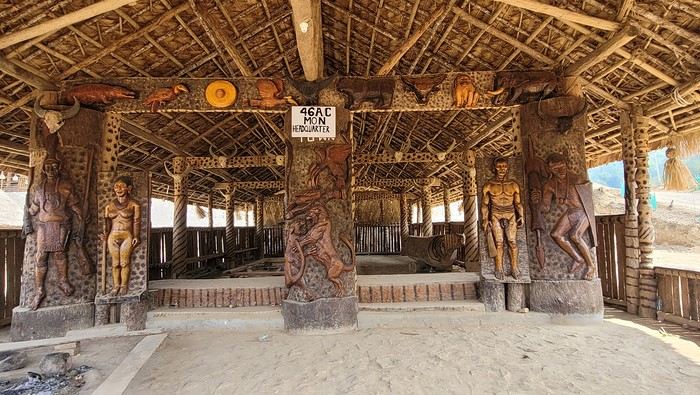
We drive a little farther to the home of the king of Longwa, called the Angh—one of the last kings in India, who still rules his kingdom.
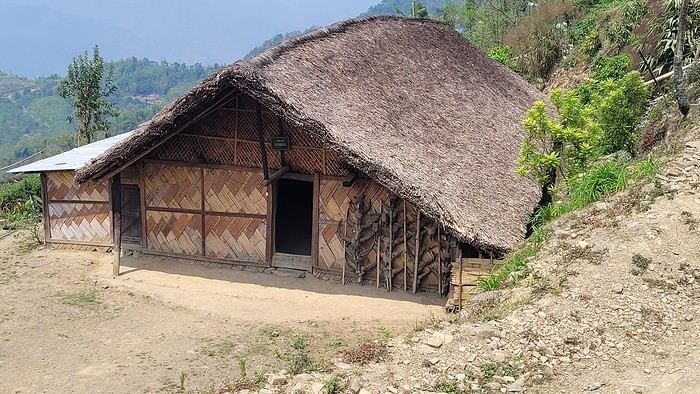
This house is unique—half is in India, and the other half is in Myanmar.
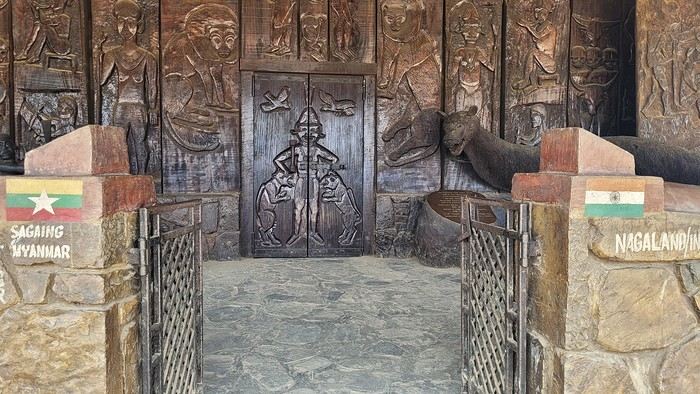
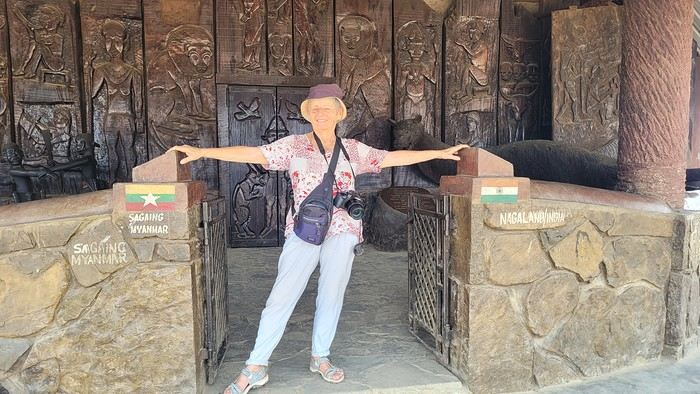
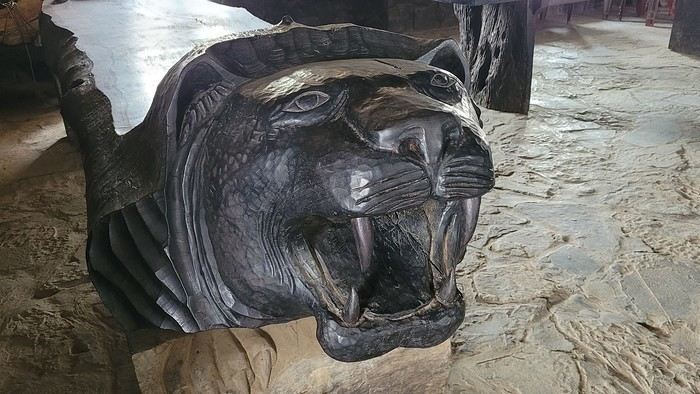
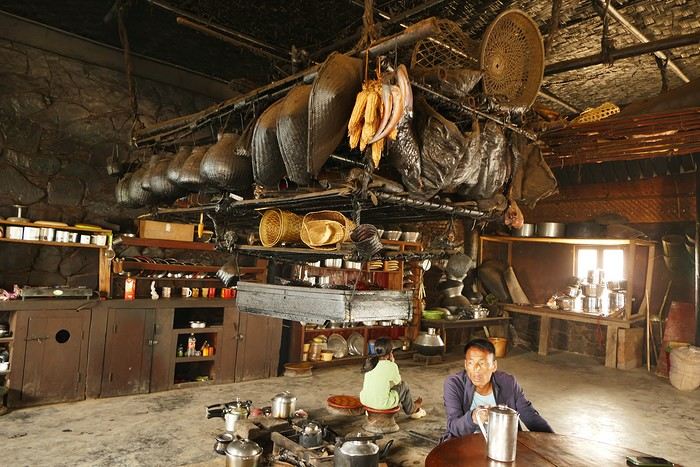
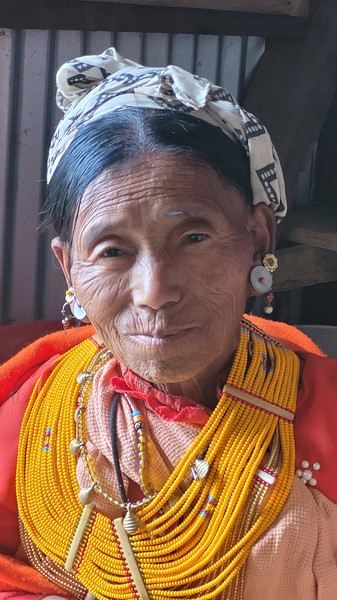
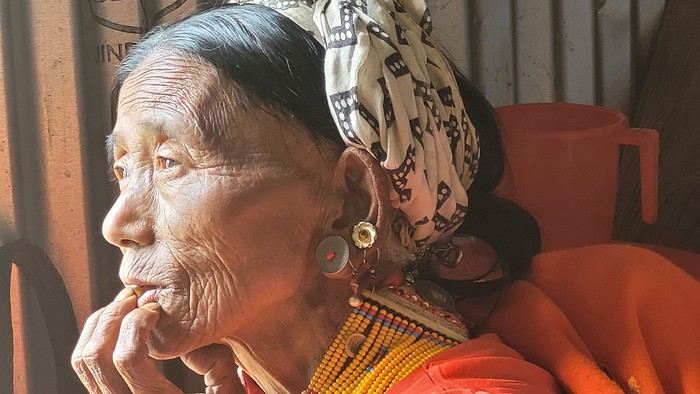
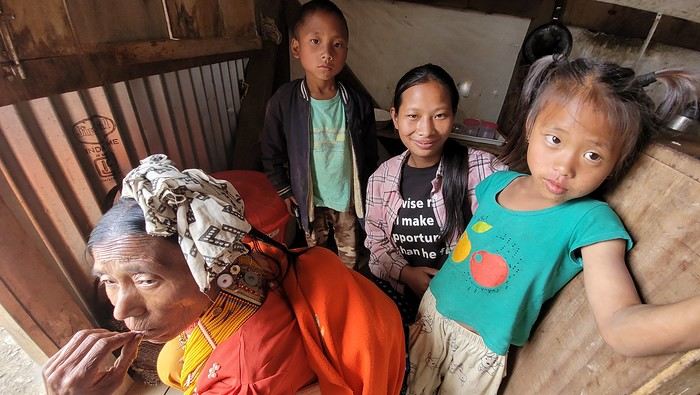
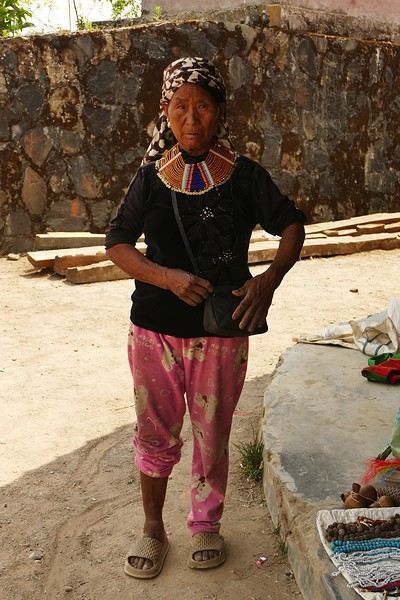
The bedrooms are in India, while the kitchen and other rooms are in Myanmar, so the residents have dual citizenship. Two women are at the entrance—one Indian, the other Burmese—and they sell beaded bracelets and wooden statues that you can only find here. I pick one to keep as a souvenir of this exceptional day.
He belongs to the Konyak tribe—warriors and headhunters. Several rifles hang on the wall along with his "traditional hat," a cone-shaped headdress made of bones and feathers. He wears his traditional necklace, and in his earlobes, he has goat horns as earrings. For the photo, he also takes a hunting spear. The guide warns me that I have to pay him 100 rs to take his picture. I don’t think I’ll come back here, so I agree to pay. A few souvenir photos, and we head back up to the village.
The army is present throughout the village. We look for the chief, to whom I show my passport—he photographs it along with the permit to visit Nagaland. A sign points toward Myanmar, and the border is just a few steps away.
The chief lets me take about ten steps but keeps an eye on me with a submachine gun in hand. I snap a few shots and thank him, and in return, we take some selfies.
We drive a little farther to the home of the king of Longwa, called the Angh—one of the last kings in India, who still rules his kingdom.
This house is unique—half is in India, and the other half is in Myanmar.
The bedrooms are in India, while the kitchen and other rooms are in Myanmar, so the residents have dual citizenship. Two women are at the entrance—one Indian, the other Burmese—and they sell beaded bracelets and wooden statues that you can only find here. I pick one to keep as a souvenir of this exceptional day.