in Destinations › Asie du Sud-Est
Thai Countryside Scenes (page 4 of 6)
Discussion started by Songsam on 2025-07-20
100 replies
This thread has been translated into English.
Thai coconut-picking monkeys.
Philippebrg · 2026-03-17 · Message 61 of 101
Hello,
This is a common practice, at least in my province, despite all the international organizations that have protested against these methods, which are considered too harsh on the animals—especially during their training, which lasts about six months in specialized schools to teach them the technique. Some are calling for a boycott of coconut milk products from Thailand.
Apparently, there are machines that could replace this method, but I’ve never seen one.
I’m not sure what to think about it. Either way, there’s a real bond between these macaques and their "masters," though the monkeys would certainly be better off in their natural habitat... Food for thought.
Thai countryside spots
Philippebrg · 2026-03-17 · Message 62 of 101
Hello,
I think on Koh Samui there are still a lot of coconut plantations, but I’m not sure if monkeys are still "used" to harvest the fruit.
Thai Countryside Escapades
Songsam · 2026-03-17 · Message 63 of 101
Thanks Philippe for this other series that’s practically a documentary. Indeed:
- In the second photo, you can observe the endemic cow variety of the region called "heavy helmet" because a natural reinforcement of their cranial bones lets them graze and rest under coconut trees without risk of being knocked out by a falling nut landing on their occiput.
- Near the end of the report, you can also spot that monkey species whose professional conscience drives them to mimicry—even shaping their heads to resemble a coconut.
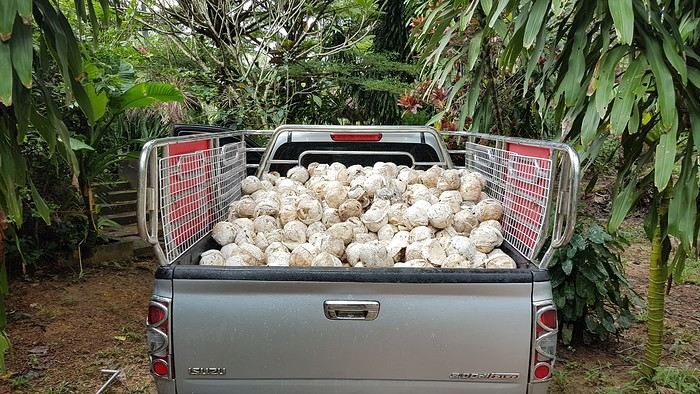
- Finally, the third image isn’t just a simple pile of coconuts. It’s actually a grave where the remains of careless tourists are buried after momentarily leaving their beach to engage in activities in the coconut grove that their modesty prompted them to hide. If you look closely at the image, you’ll notice on one of the coconuts an epitaph quoting a southern proverb that the farmer and authorities had engraved: ถ้าไม่อยากโดนลูกนัททับ ก็อย่าทำตัวเหมือนลูกนัท. Let’s pay our respects.
Thai countryside trips.
Philippebrg · 2026-03-18 · Message 64 of 101
Of course... What was I thinking? I take photos mindlessly, without really looking for what they hide...
From now on, I’ll look at my subject with a different eye. 😅😅😅
Thai countryside trips.
Songsam · 2026-03-22 · Message 65 of 101
The 3rd photo posted in reply #3 of this thread by Crapia suggests that monkeys like these are also present on Koh Yao Yai.
Thai countryside trips.
Philippebrg · 2026-03-23 · Message 66 of 101
Indeed, on this small island, there are a few coconut plantations, so it's normal to find these monkeys there—just like pretty much everywhere else in the southern provinces of the country.
Thai countryside scenes
Songsam · 2026-03-27 · Message 67 of 101
Trees and crops featured so far in this photo thread:
Rice
Coffee
Coconut
Sugarcane
Corn
Chili
Eucalyptus
Grape
Banana (though the plant itself isn’t shown precisely, you see them everywhere there)
Poppy
I’ll also add latex harvesting (rubber tree), photographed near Thung Chang—unfortunately, I only have this one shot, none of the plantation.
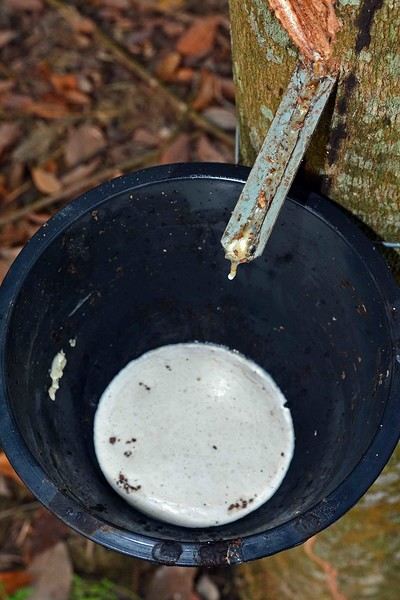
Thai countryside scenes.
Gaura · 2026-03-27 · Message 68 of 101
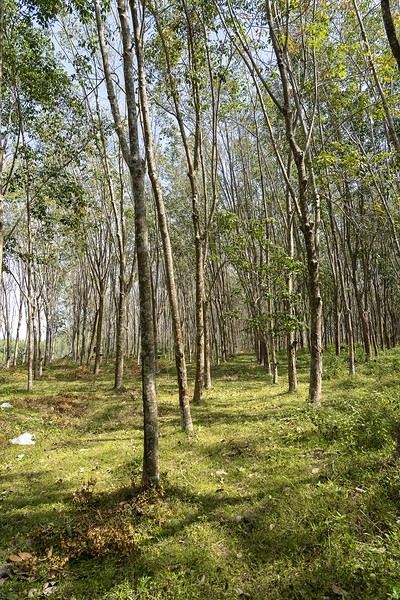
I’ve been to Koh Sukorn several times—it’s a mostly agricultural island, known for its watermelons, I think. There are rubber plantations, but I didn’t see any sap; there must be a season for that too. I have a photo that looks like yours
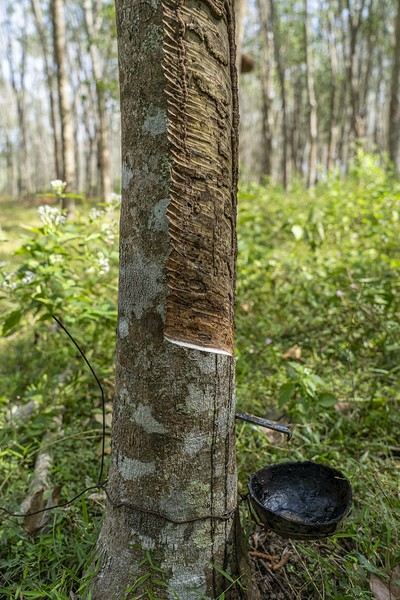
I thought rubber plantations were made up of big trees... but no, they’re thin, and the vegetation isn’t dense.
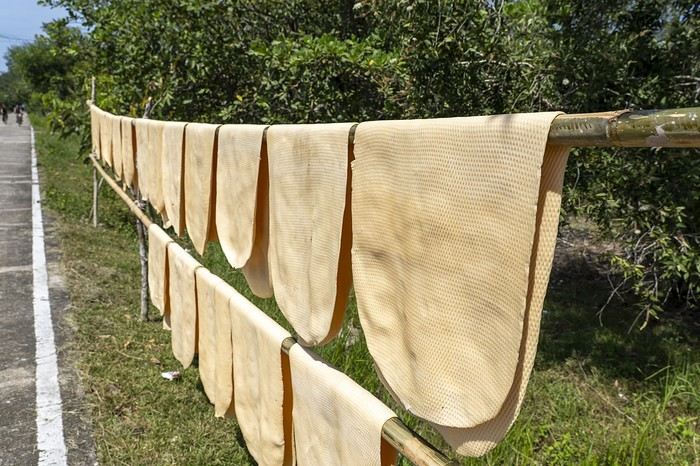
The latex sheets dry by the side of the road
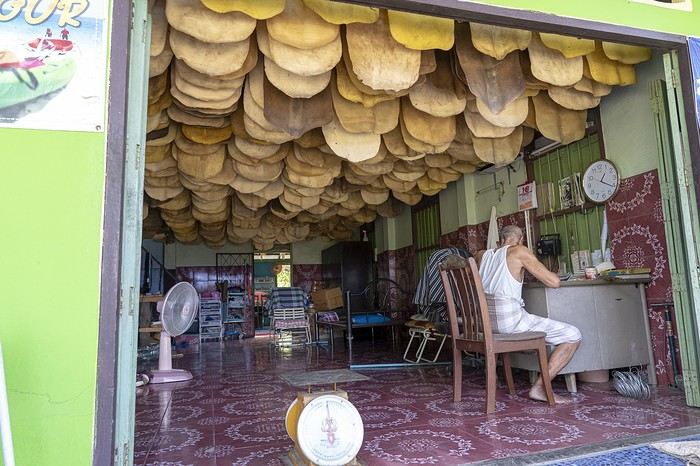
I really like the photo of the wholesaler doing his accounts under his stack of sheets, with his scale by the shop.
Six years already—nostalgia hits hard...
Thai countryside scenes.
Philippebrg · 2026-03-28 · Message 69 of 101
Hello,
@Gaura: Lovely photos.
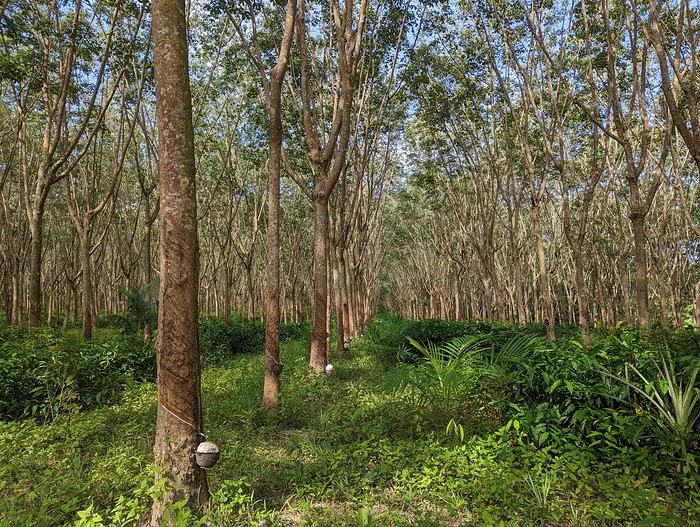
Actually, it’s not sap flowing—it’s latex produced by the bark to protect the tree from "attacks"... Tapping is one such attack, so the bark releases latex.
While latex was a financial boon at the start of the century, that’s no longer the case 20 years later... When we planted our rubber trees around 2005, the cost of raw rubber was about 120 baht per kilo. Today, it fluctuates between 25 and 30 baht per kilo, due to overproduction and especially because of synthetic rubber produced in China from petroleum. It’s not uncommon to see rubber tree plantations being replaced by oil palms or durian.
Production is quite demanding. It mustn’t rain within 12 hours after the flow, or the latex becomes too liquid and won’t solidify. So during the rainy season—about 3 months of the year—there’s little to no production. During the very hot season, hardly any latex flows, so the trees are left to "rest."
In our villages, some people specialize in tapping, and they work for plantation owners. The income is split between the "tapper" (40%) and the owner (60%).
Most small producers leave it in balls, which are then sent to local factories to be processed and turned into large flat sheets. From there, it’s shipped to factories to make finished products.
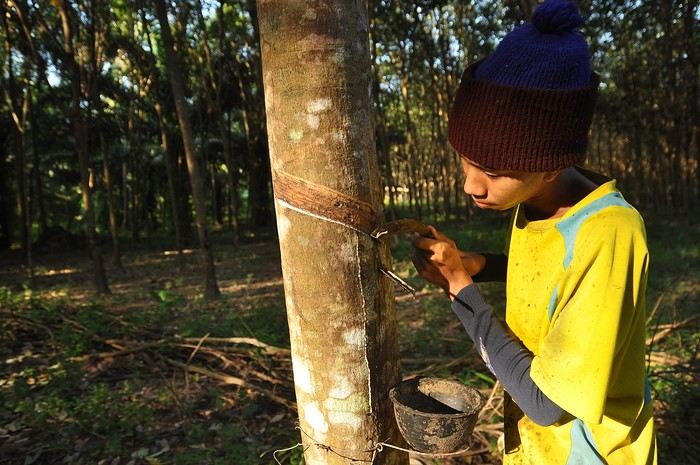
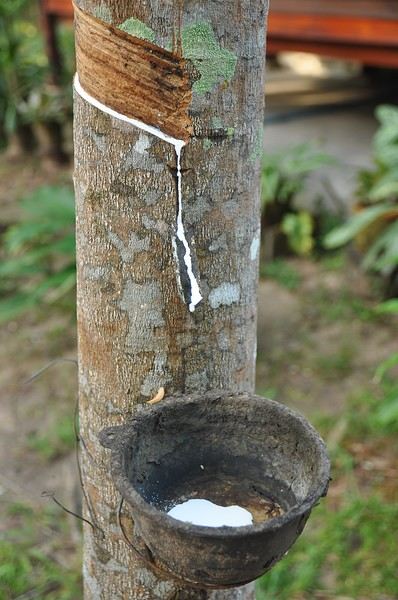
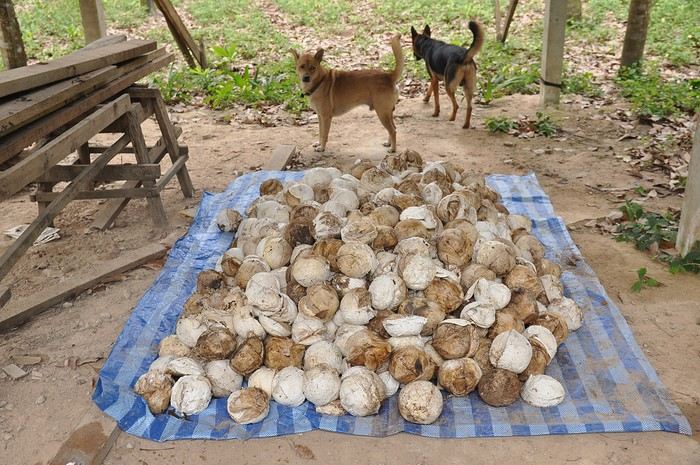
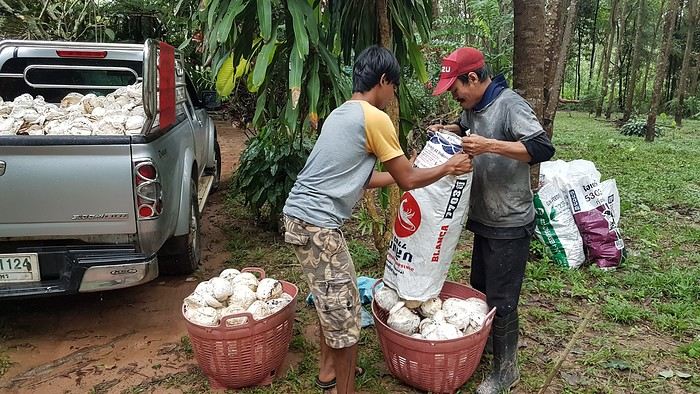
Thai countryside parties.
Gaura · 2026-03-28 · Message 70 of 101
Thanks for the clarification. Shame on me for the term "sap"—I’m the daughter of a biology teacher who taught me that sap flows in the sapwood, the outer part of the wood... Nothing to do with bark!
I didn’t notice those latex balls in Koh Sukorn, or maybe I just didn’t recognize them, but I had no doubt about the origin of the rubber-smelling pancakes by the side of the road.
Thai countryside trips.
Songsam · 2026-03-28 · Message 71 of 101
Thanks for filling in my photographic gaps.
Your hanging pancakes are interesting because they’re so graphic.
Thai countryside parties.
Songsam · 2026-03-28 · Message 72 of 101
Thanks for this addition—it’s really well-documented and explained.
How many tappings are done per tree per year, roughly?
Thai countryside trips.
Philippebrg · 2026-03-29 · Message 73 of 101
I think over the year, you can expect about 6 full months of daily downpours.
Thai countryside in bloom.
Philippebrg · 2026-03-31 · Message 74 of 101
Thai countryside festivals.
Songsam · 2026-03-31 · Message 75 of 101
Hello,
I think that over the year, we can count about 6 full months of daily tapping.
Daily... I had no idea it was at such a pace. Since I’d never seen a farmer working on it, I assumed one or two tappings were done each year and that the sap flowed for several months. Thanks for the clarification.
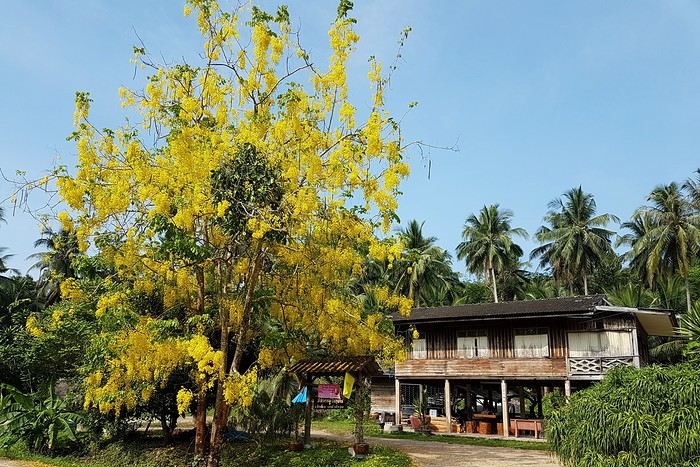
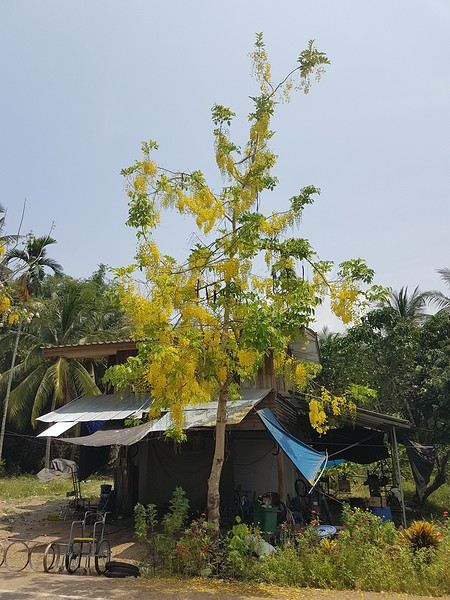
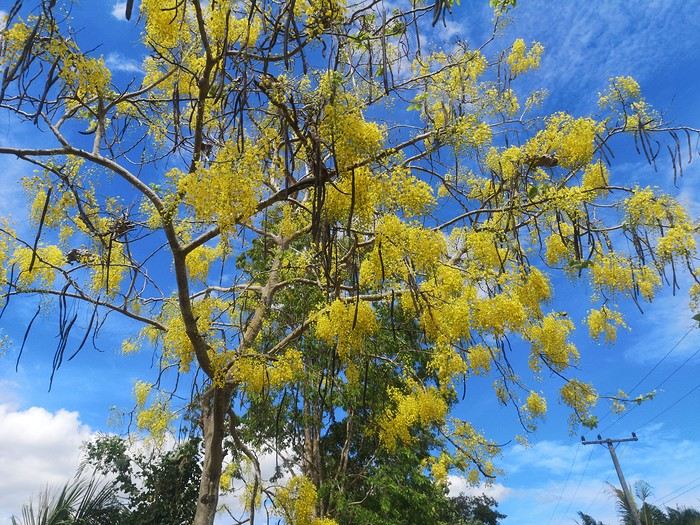
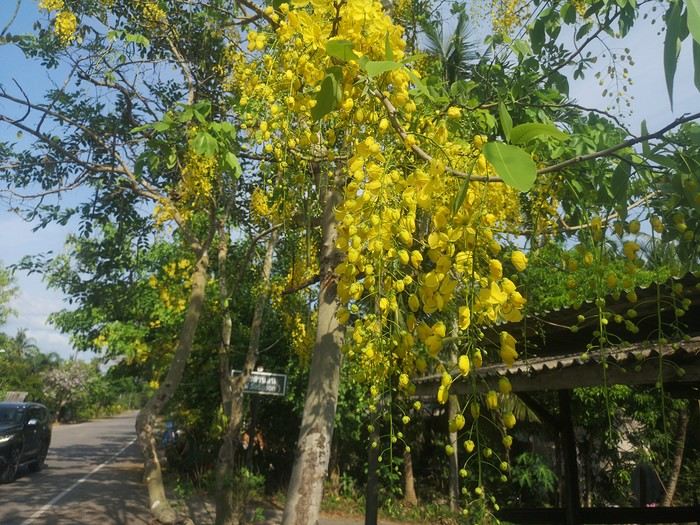
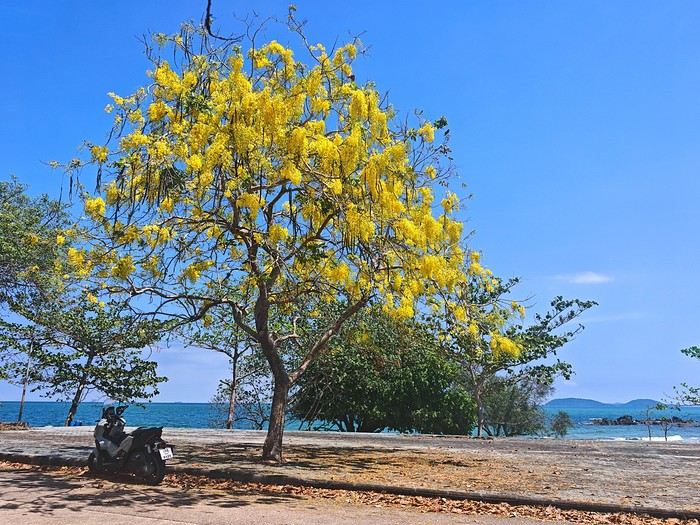
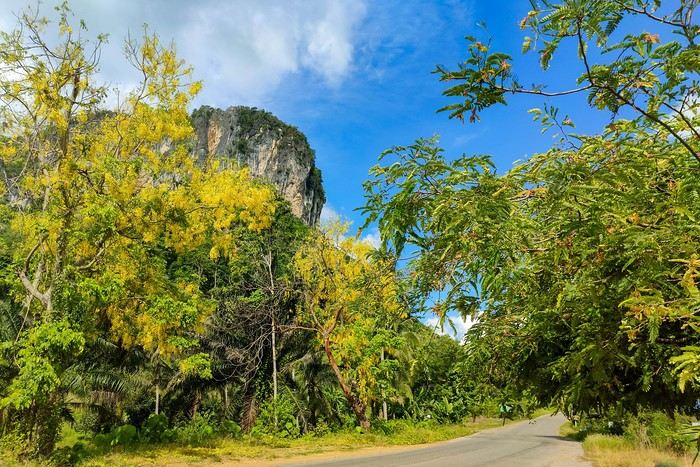
I don’t know if this is on topic, but I’m posting a few photos of this majestic tree, the ratchaphruek.
You’re totally on topic as long as it’s happening in the countryside—thanks for this new contribution.
Were you dressed in yellow yesterday, Monday, then?
Thai countryside parties.
Gaura · 2026-03-31 · Message 76 of 101
I recognize those acacia trees—I have them embroidered on a Vietnamese tablecloth! I bet they smell as good as ours, the ones we use to make acacia flower fritters.
Thai countryside rubber tapping.
Philippebrg · 2026-04-01 · Message 77 of 101
Actually, we do one tapping per day (at night, because it needs relative coolness...). The latex drips for a few hours, filling between 10 and 20% of the pot. And the liquid will solidify during the day.
Parts of the Thai countryside.
Philippebrg · 2026-04-01 · Message 78 of 101
Yes, they give off a nice scent without being overpowering.
You can actually cook them either as fritters or blanched as a side dish.
Thai countryside activities.
Djalma · 2026-04-01 · Message 79 of 101
From what I’ve observed time and again about the coconut-picking monkeys, I don’t see any mistreatment... The monkey twists the coconut until the stem gives way. Often, it takes a break between two operations, its owner talks to it, it resumes work, stops again... observes...
It’s certainly less strenuous than the work of a plow horse.
Thai countryside parties.
Philippebrg · 2026-04-01 · Message 80 of 101
Hello,
It's not so much the work that's tough—like you said, they're very close to their owner, who rewards them. It's the fact that they're constantly tied up and don't live in their natural environment. They're wild animals.