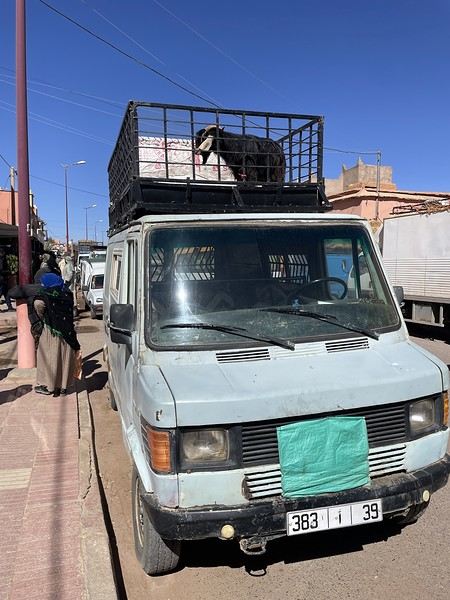
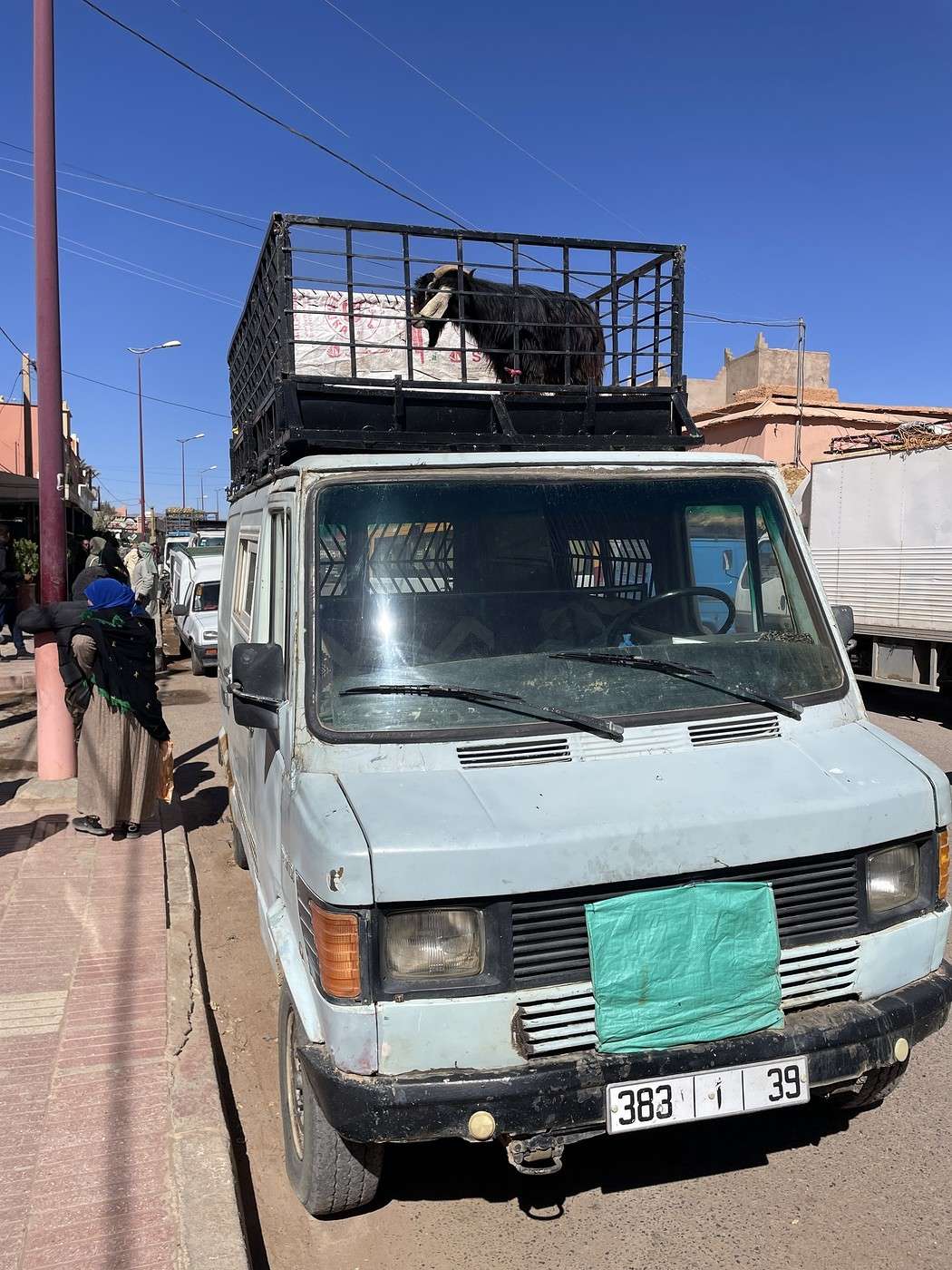
The hotel owner reassures us about the road to take—the track marked on the map is indeed paved and saves us several kilometers. We head to Nkob; it’s market day, which is always a great excuse for some unexpected photos. We love souks, and this one is particularly lively.
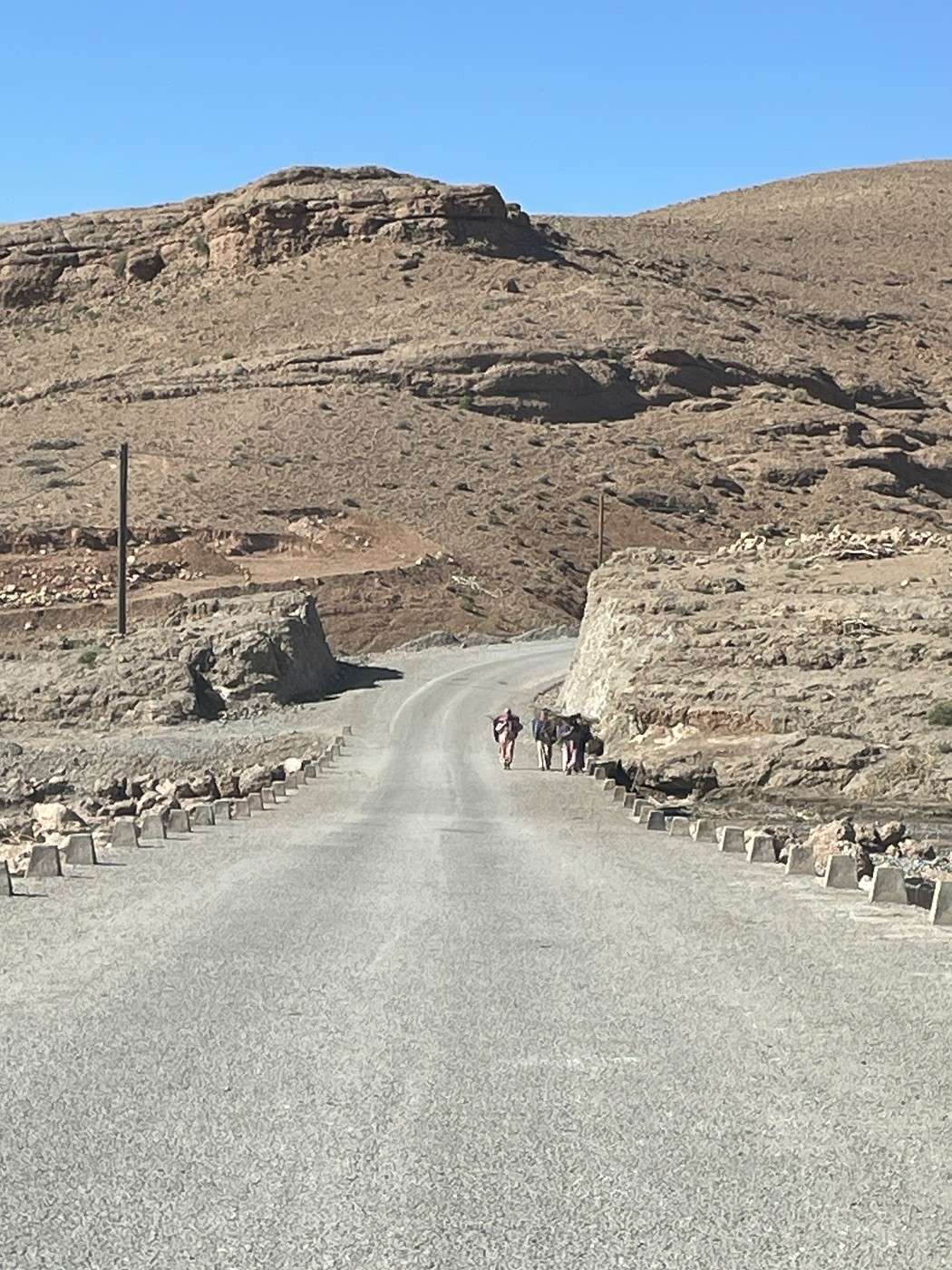
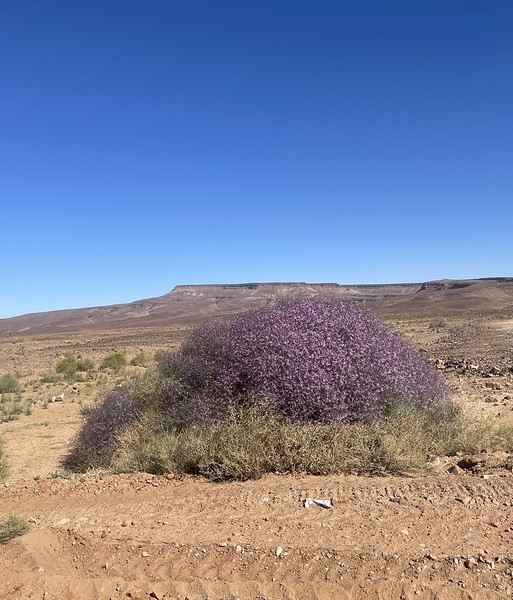
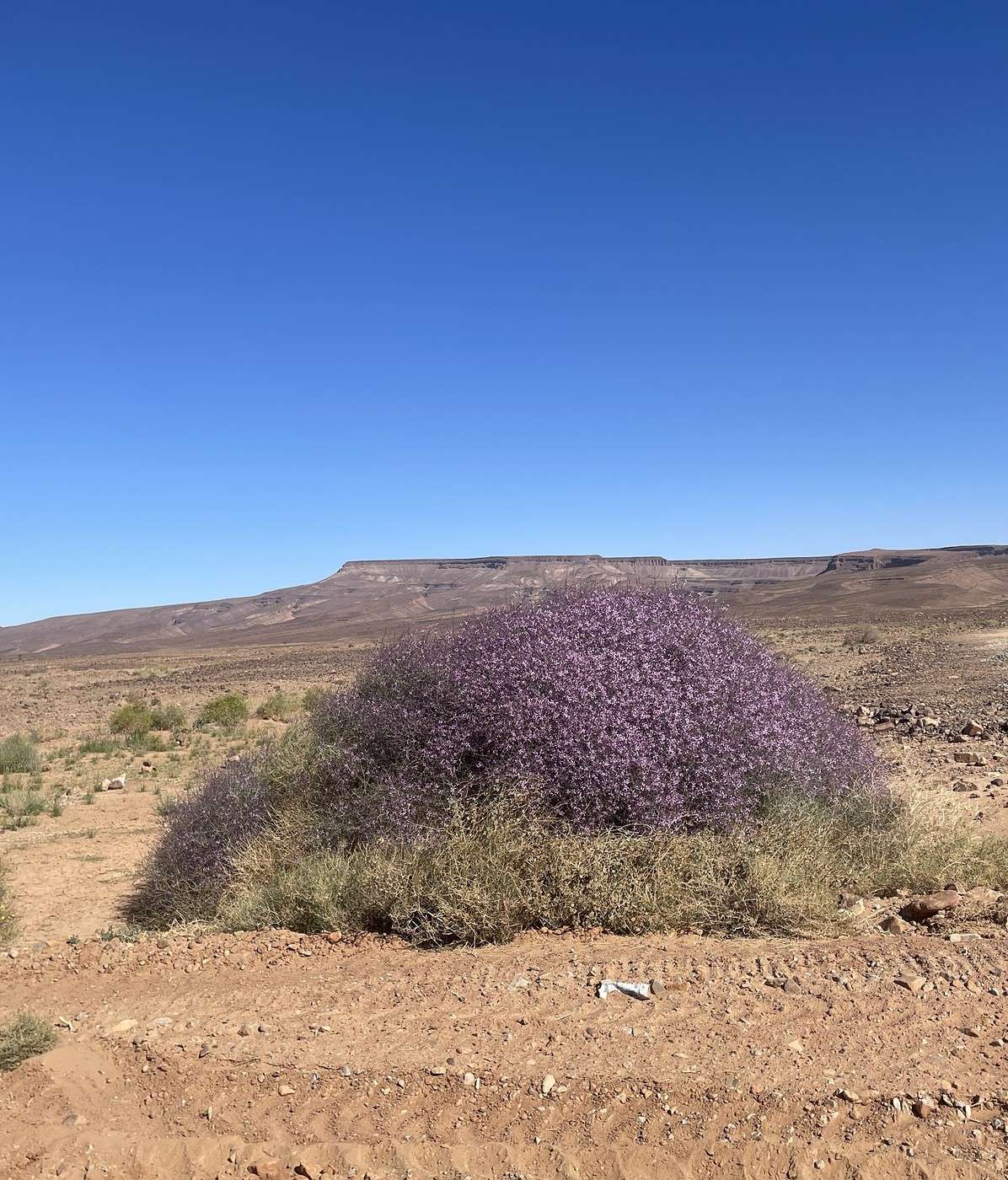
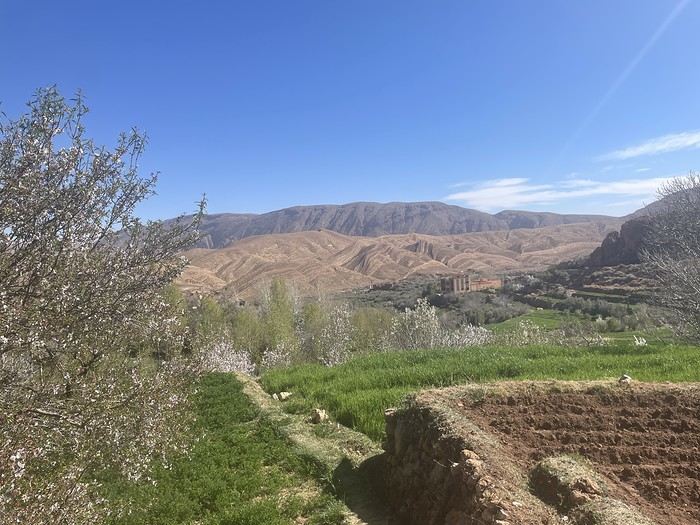
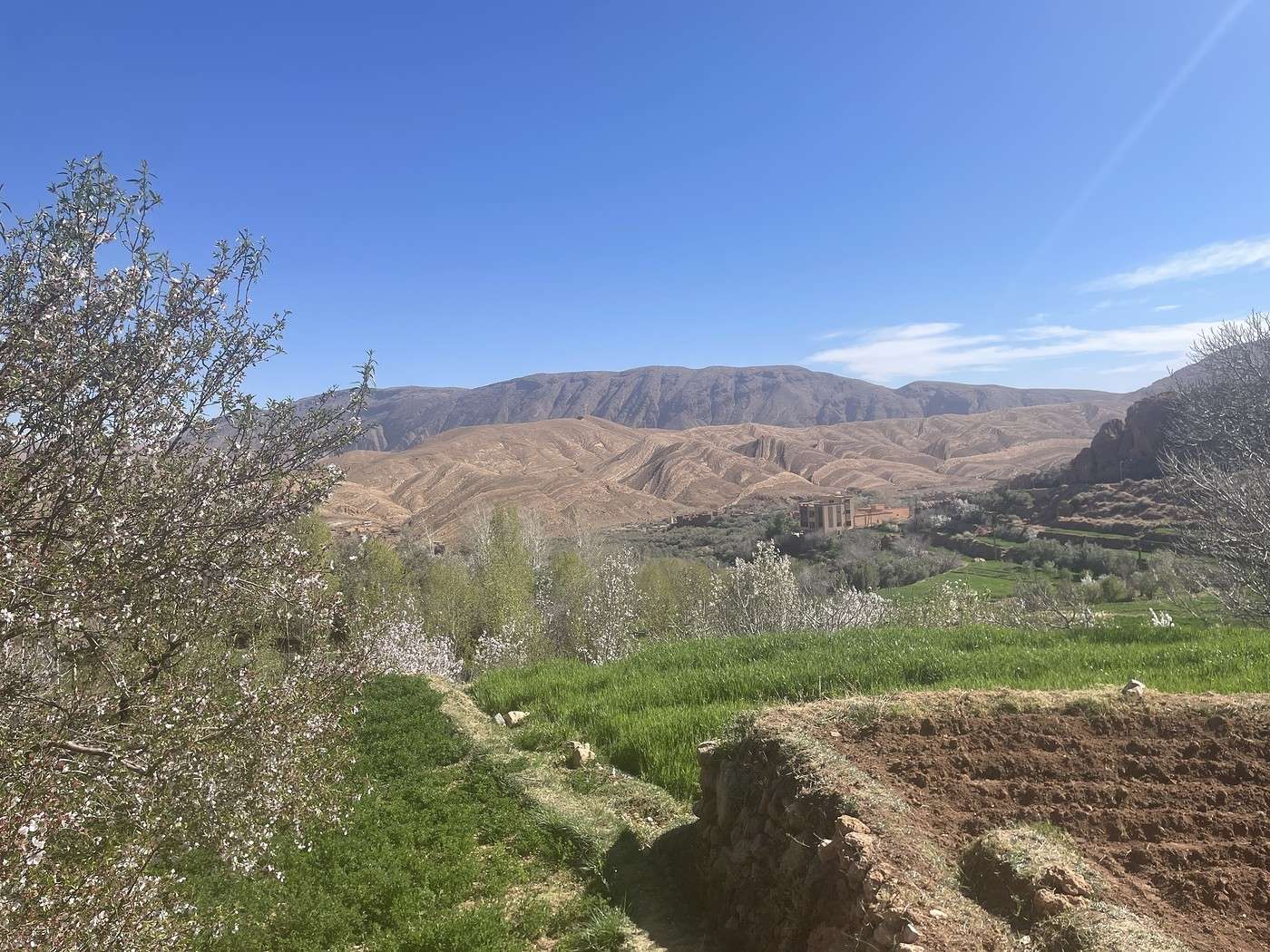
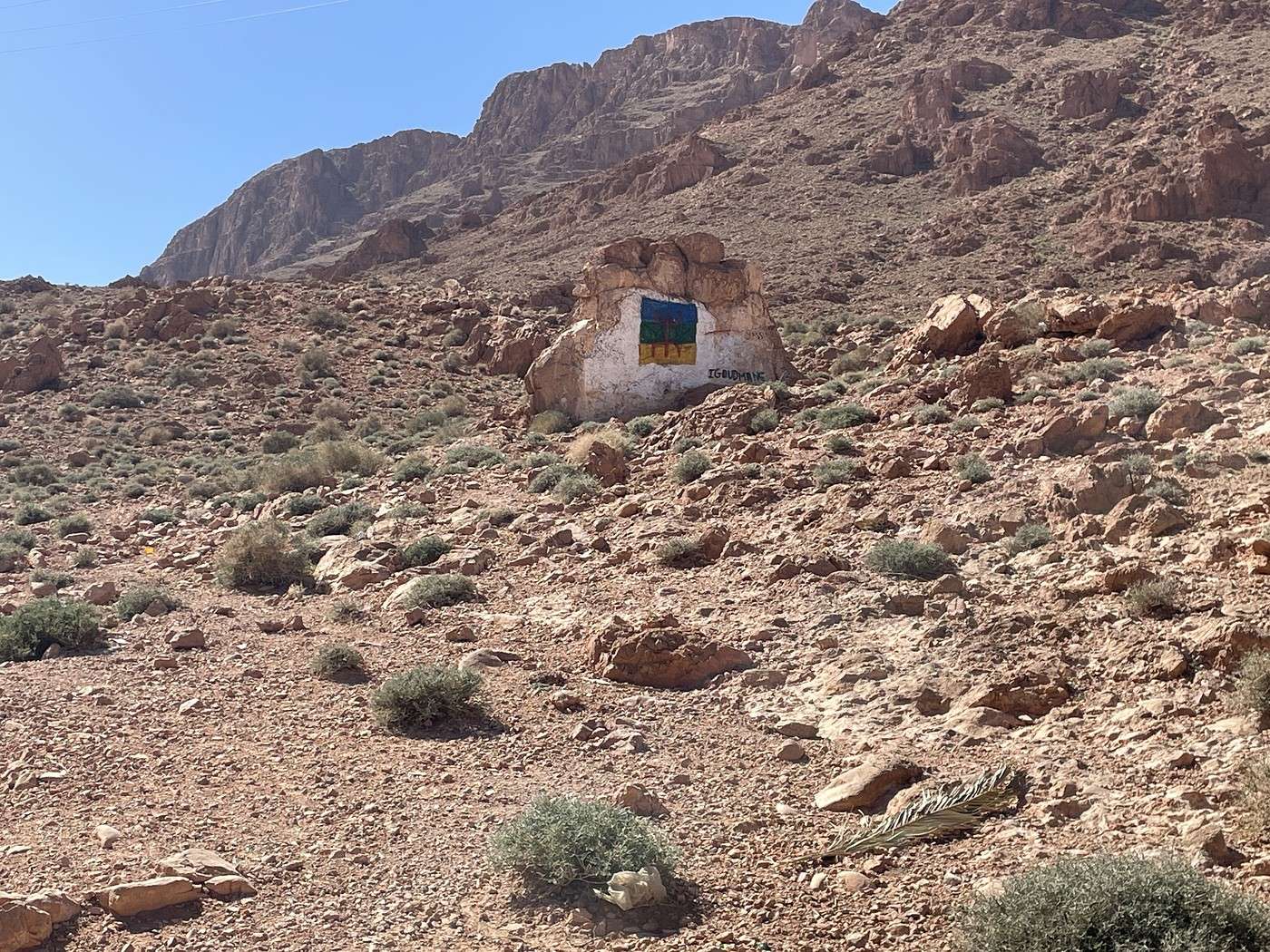
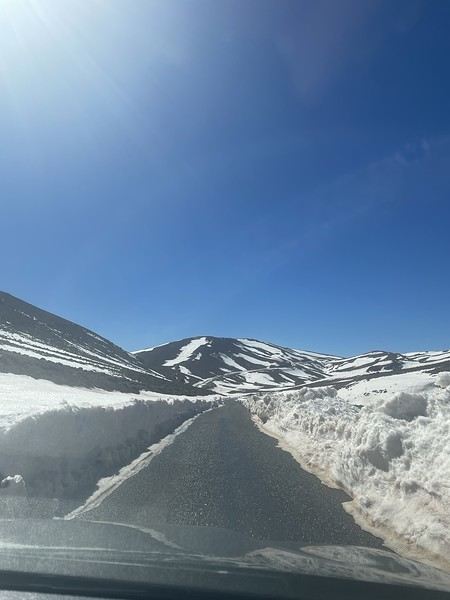
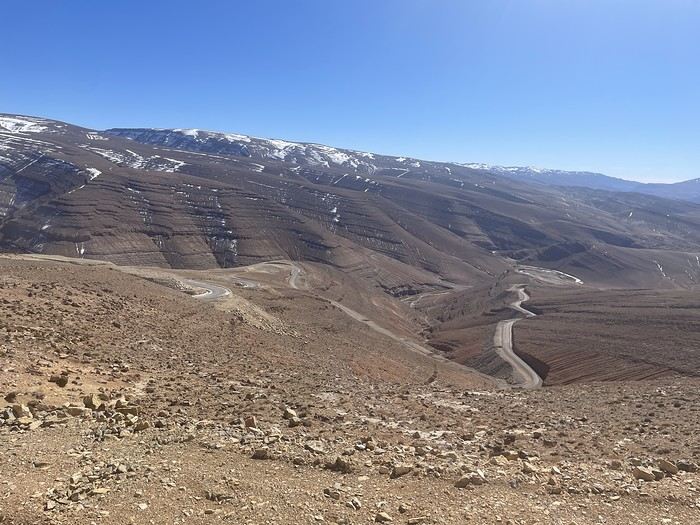
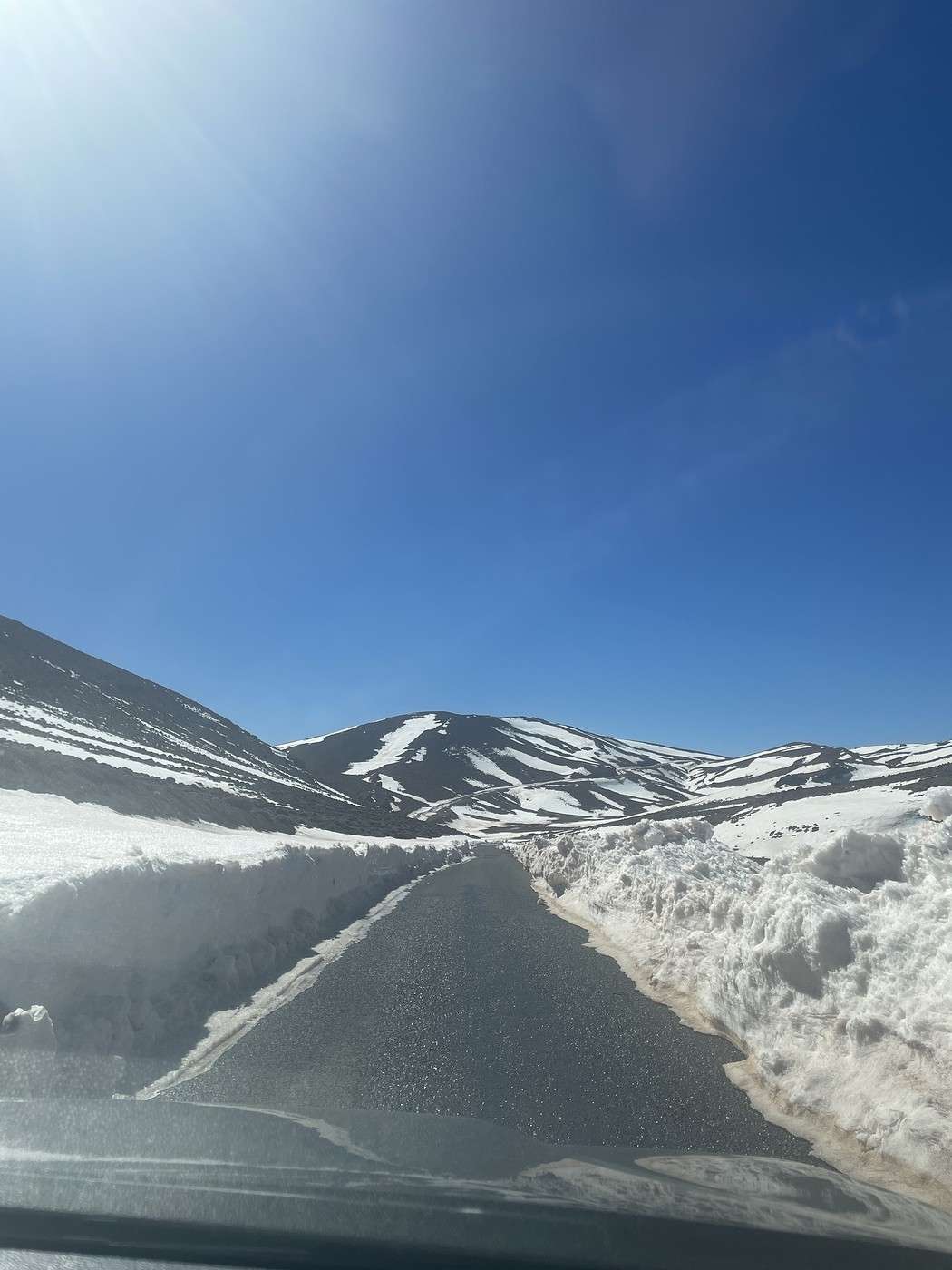
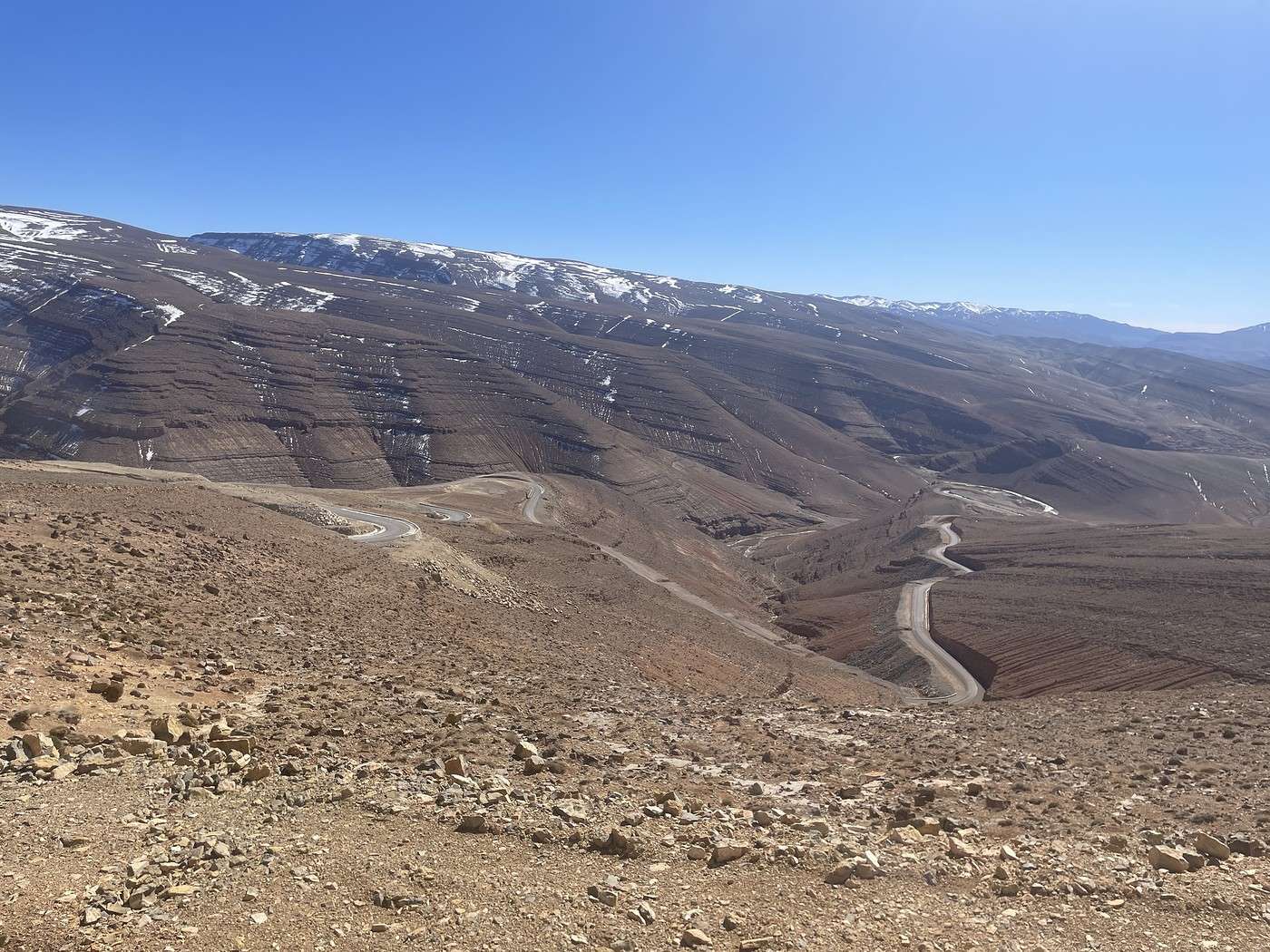
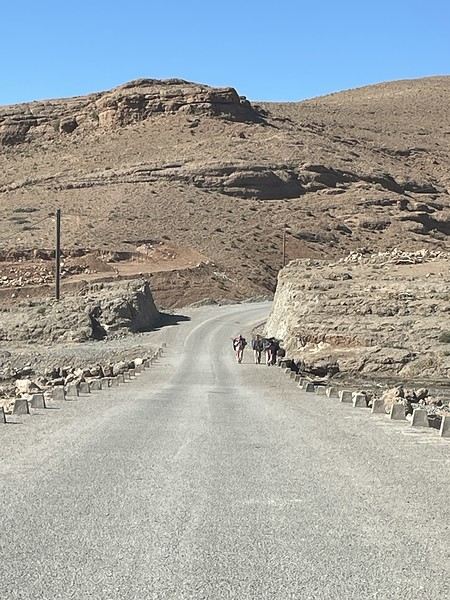
We continue from Nkob to Tinghir via the Tazazert Pass. The wind there is strong enough to blow the horns off bulls—we could barely stand upright, but what stunning landscapes once again! It’s a magnificent road we highly recommend, especially since it’s recent and nice and wide. Perfect for some amazing treks around here. There’s just about ten kilometers at the end where you have to take a track that runs alongside it, but the road will be finished soon, and the track is in good condition. The spring rains have made the scenery even more breathtaking.
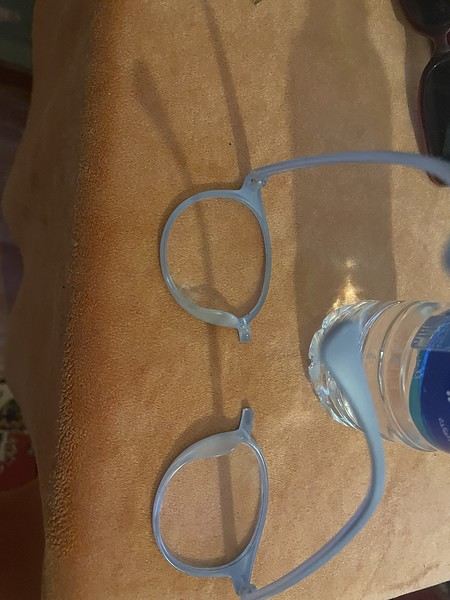
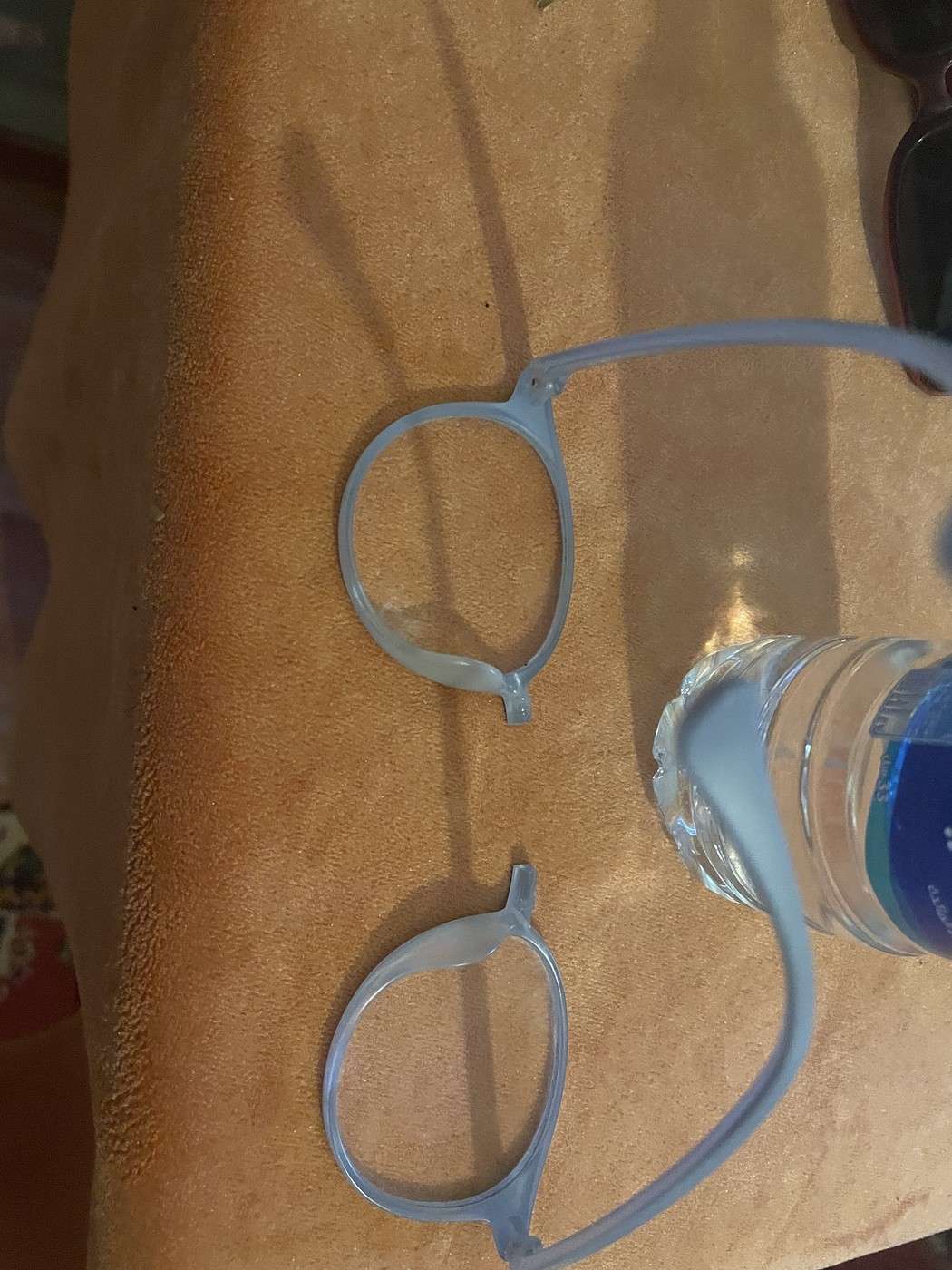
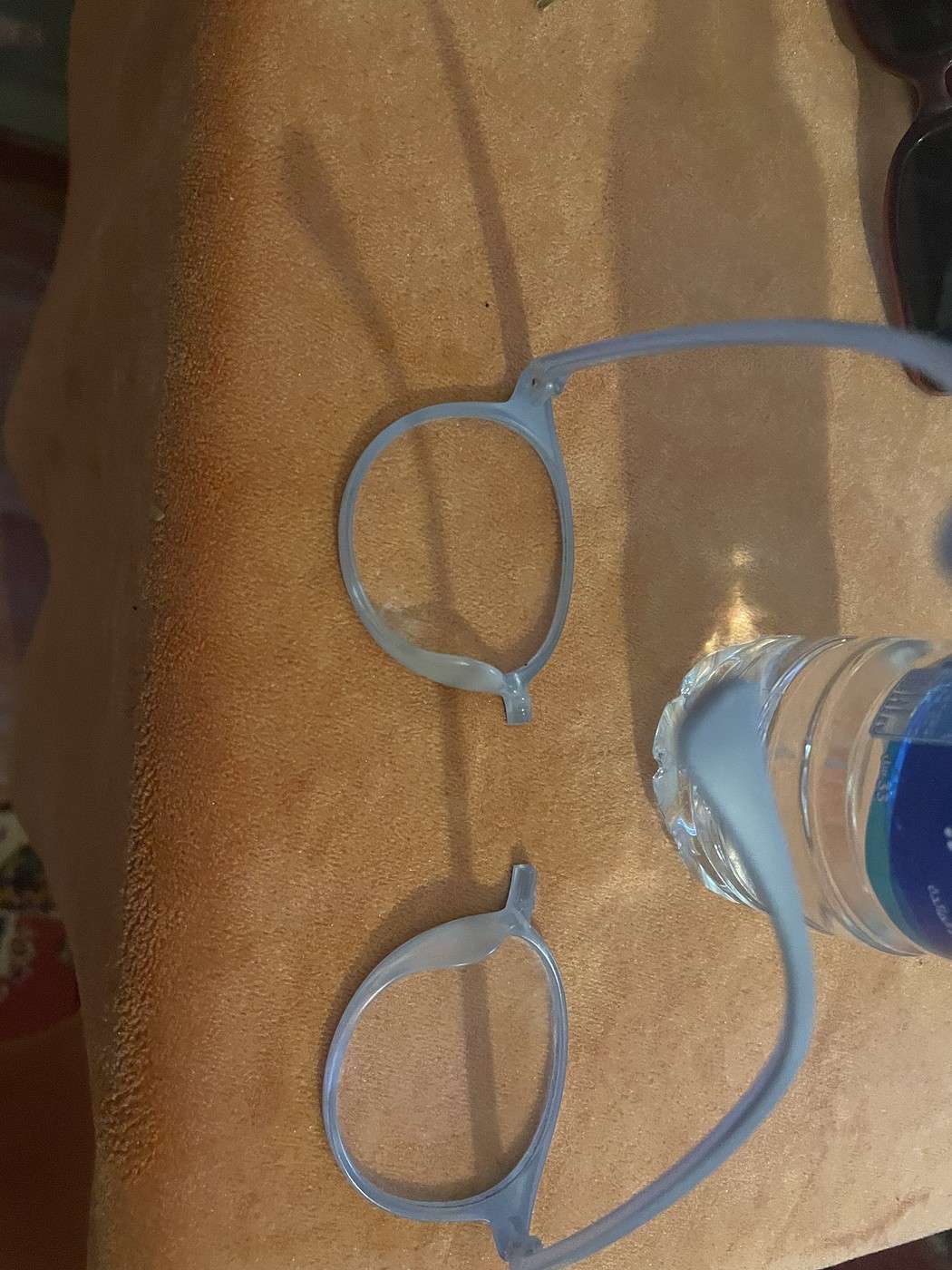
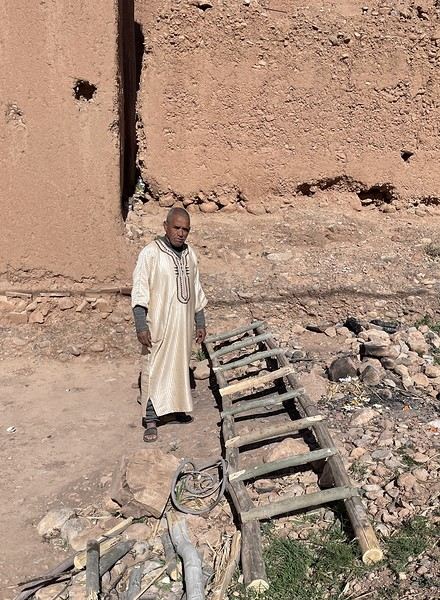
In Tinghir, we head to Palmebella, recommended by a friend who volunteered in the area for years. Mohamed is a former guide, and his riad is unfortunately in bad shape—you can tell he’s struggling to maintain it. The place is aging, and the upkeep has been neglected, so it’s not looking great. He hasn’t managed to recover from the Covid crisis; he sold his animals and his car, which has left him worse off. But he’s got a heart of gold, and since we’re coming on his friend’s recommendation, he insists on guiding us for free. First, he takes care of my glasses issue—he takes me to his optician, who says they can’t be repaired but can put my lenses into another frame. The cost? Just 15 €! I also take the opportunity to change the frame of my reading glasses, which were about to break, and this time, she says it’s free! I really struggle to get her to accept 200 dirhams for both frames and the work. I’ll bring her a little piece of jewelry I have with me later. Saved—I can see properly again!
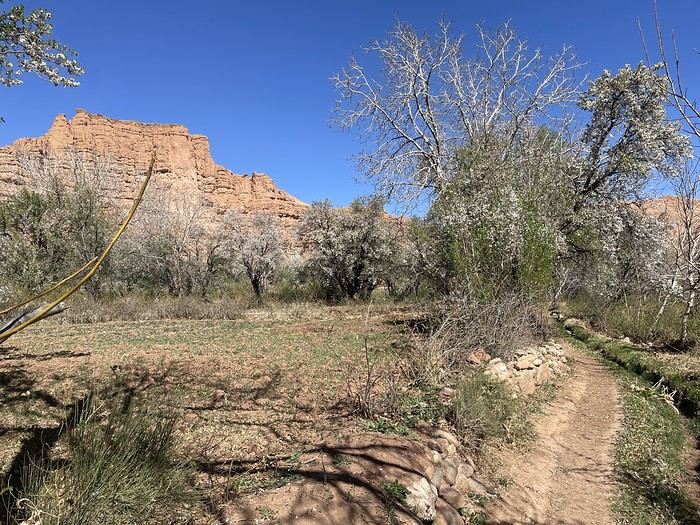
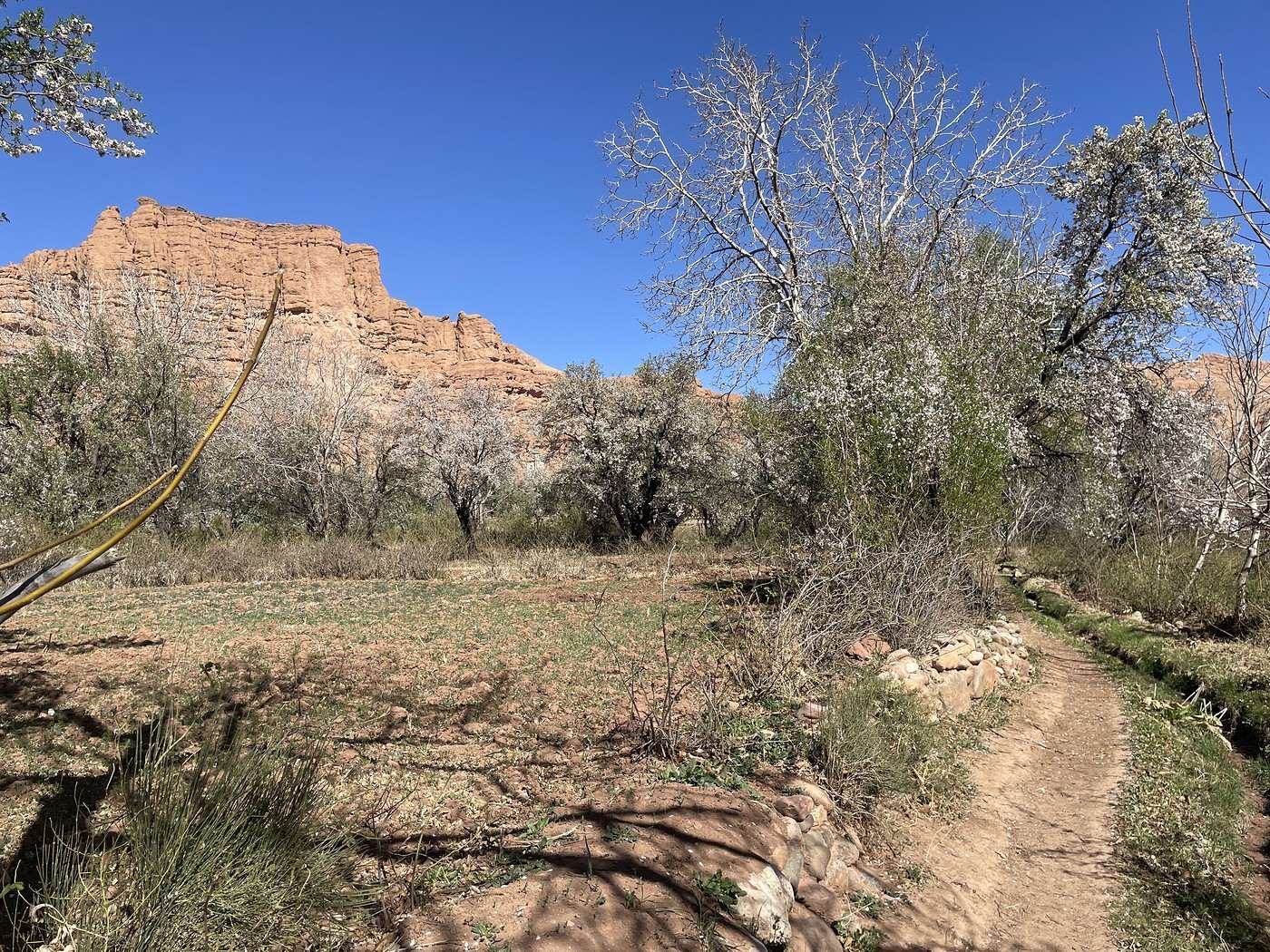
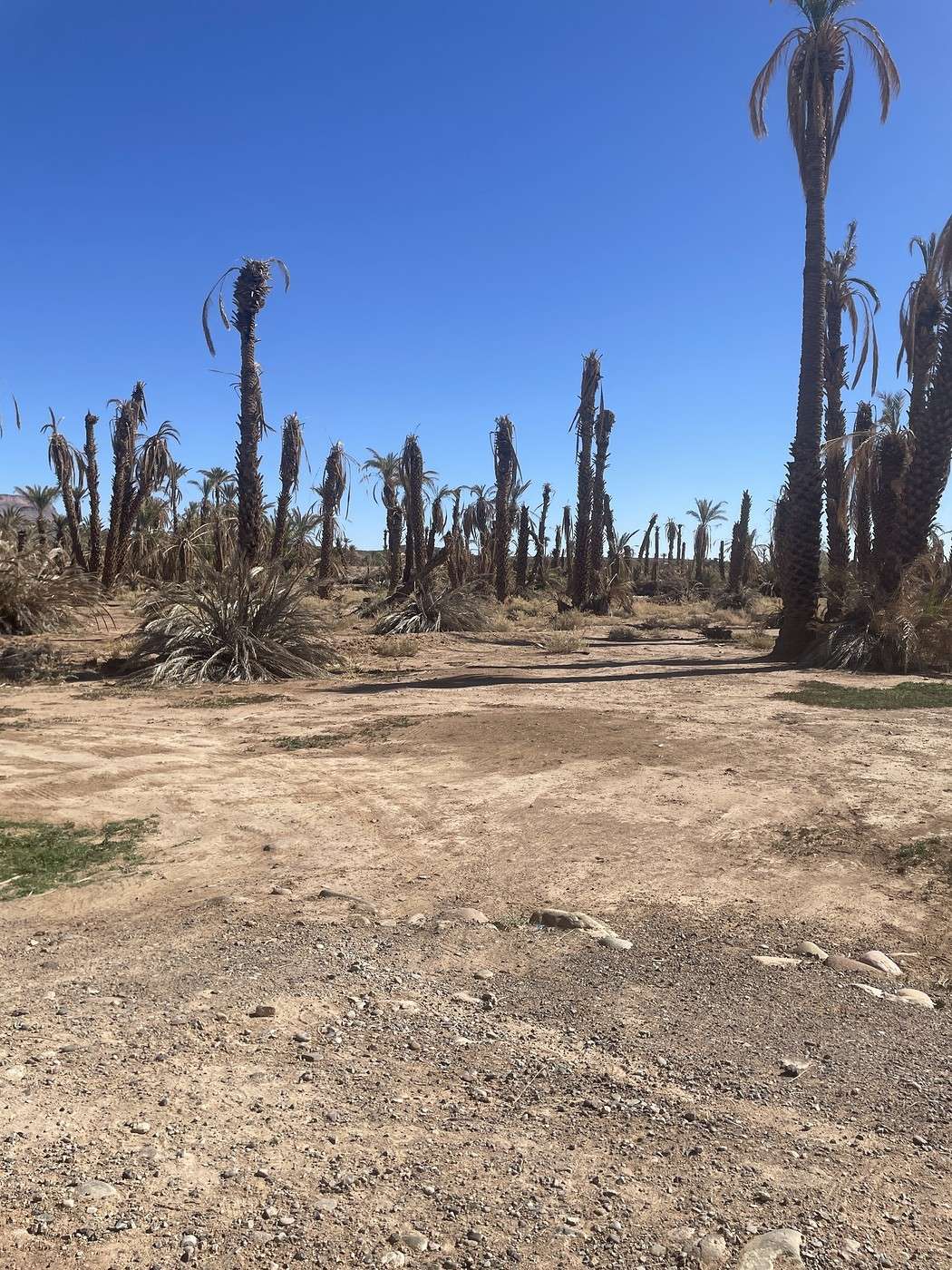
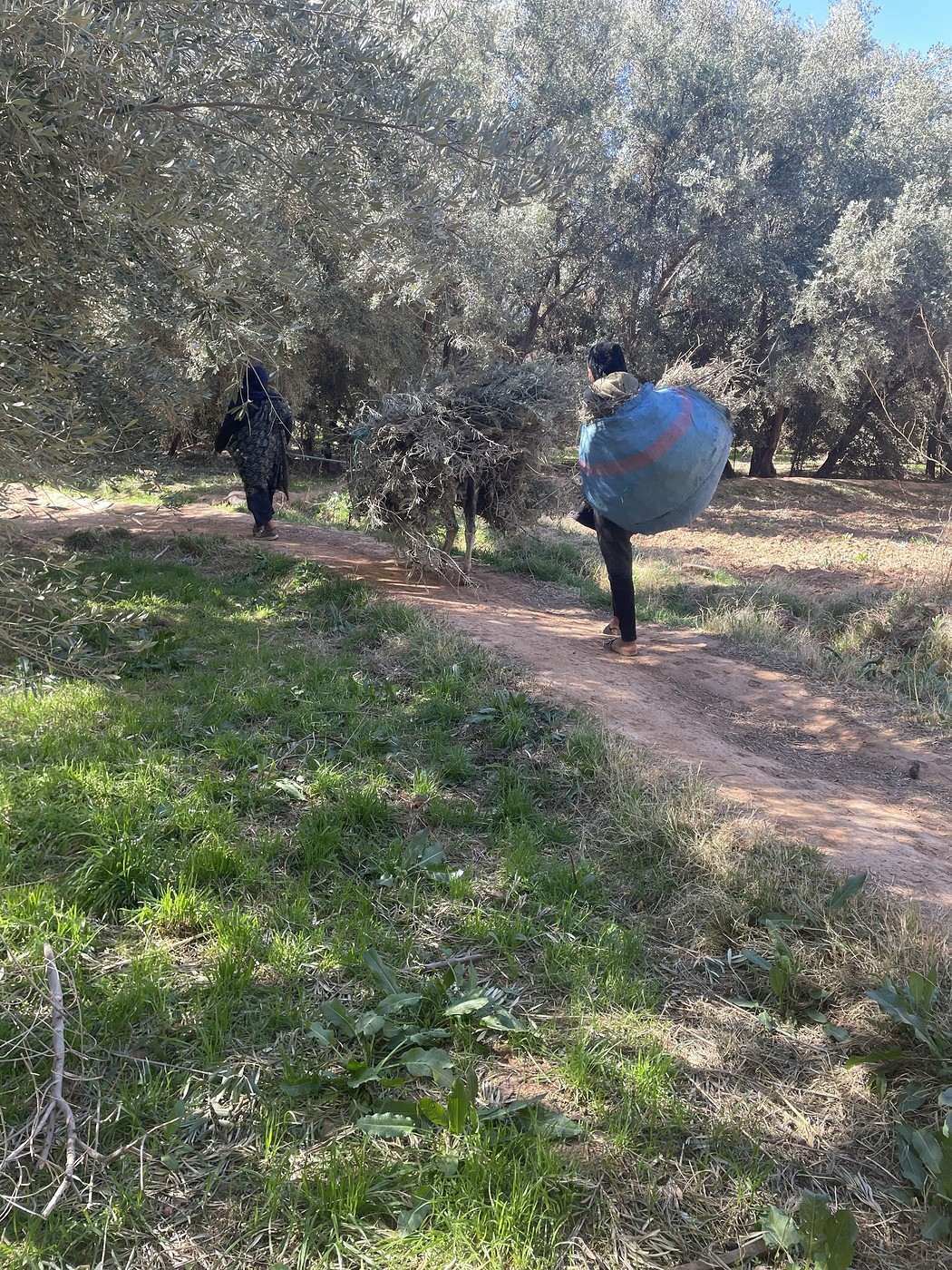
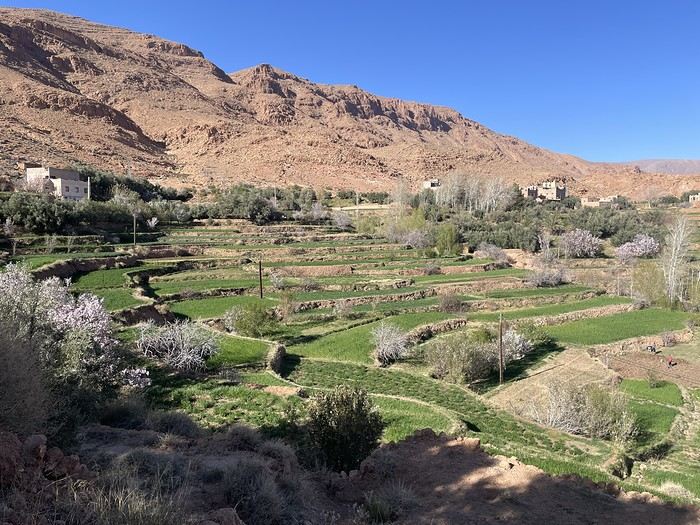
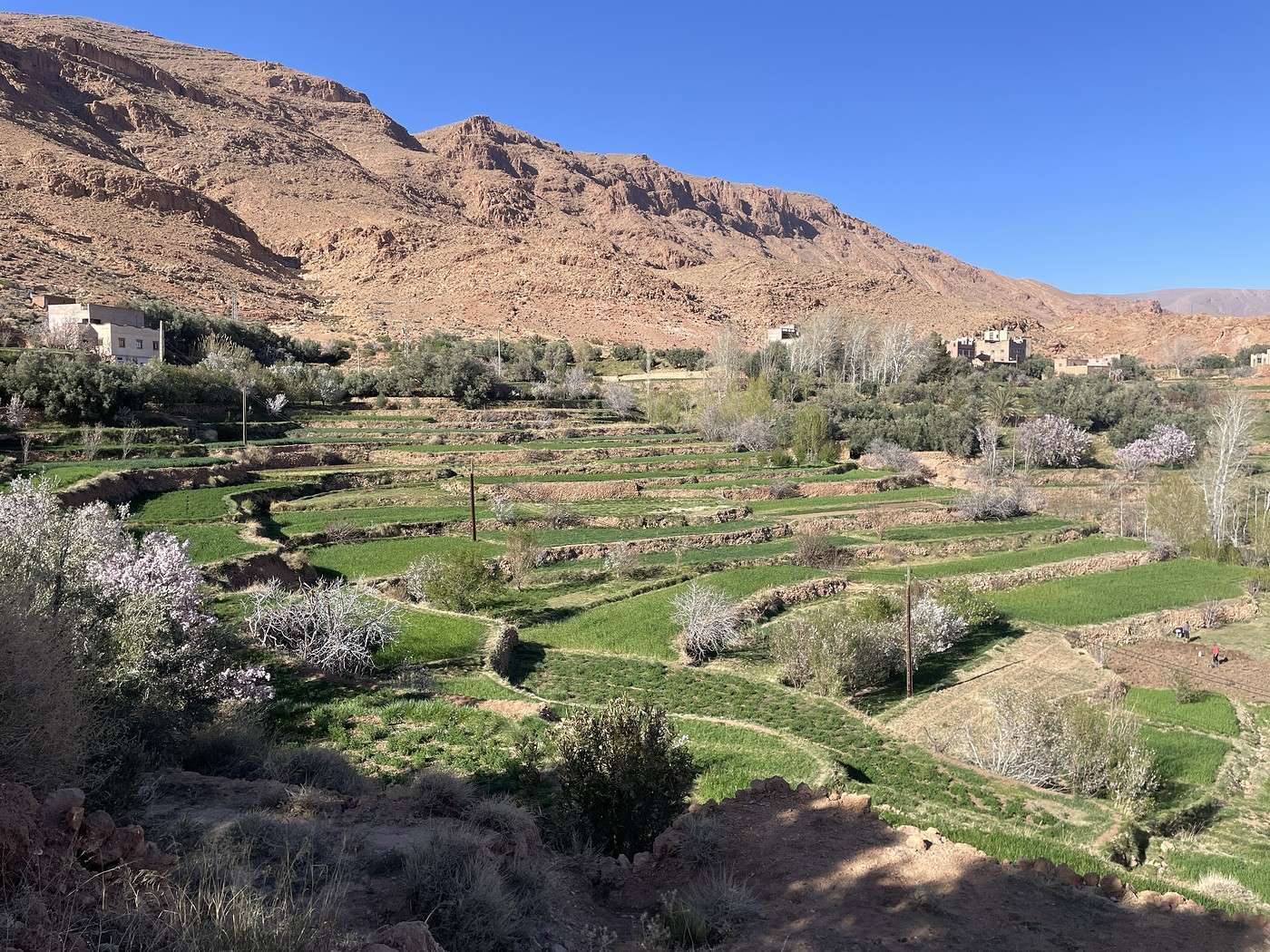
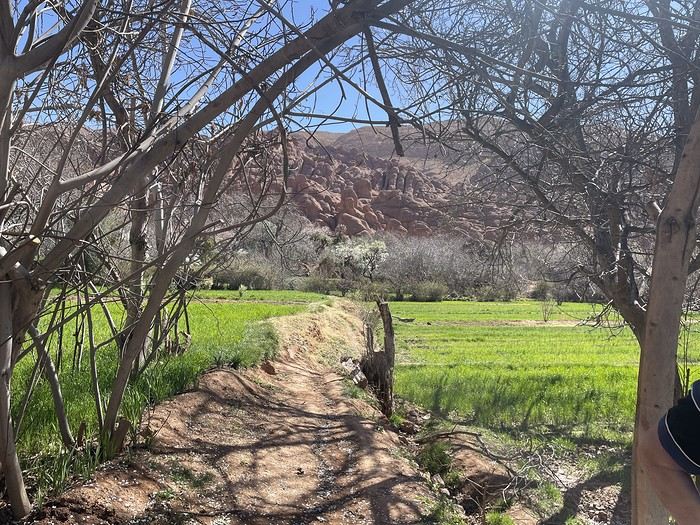
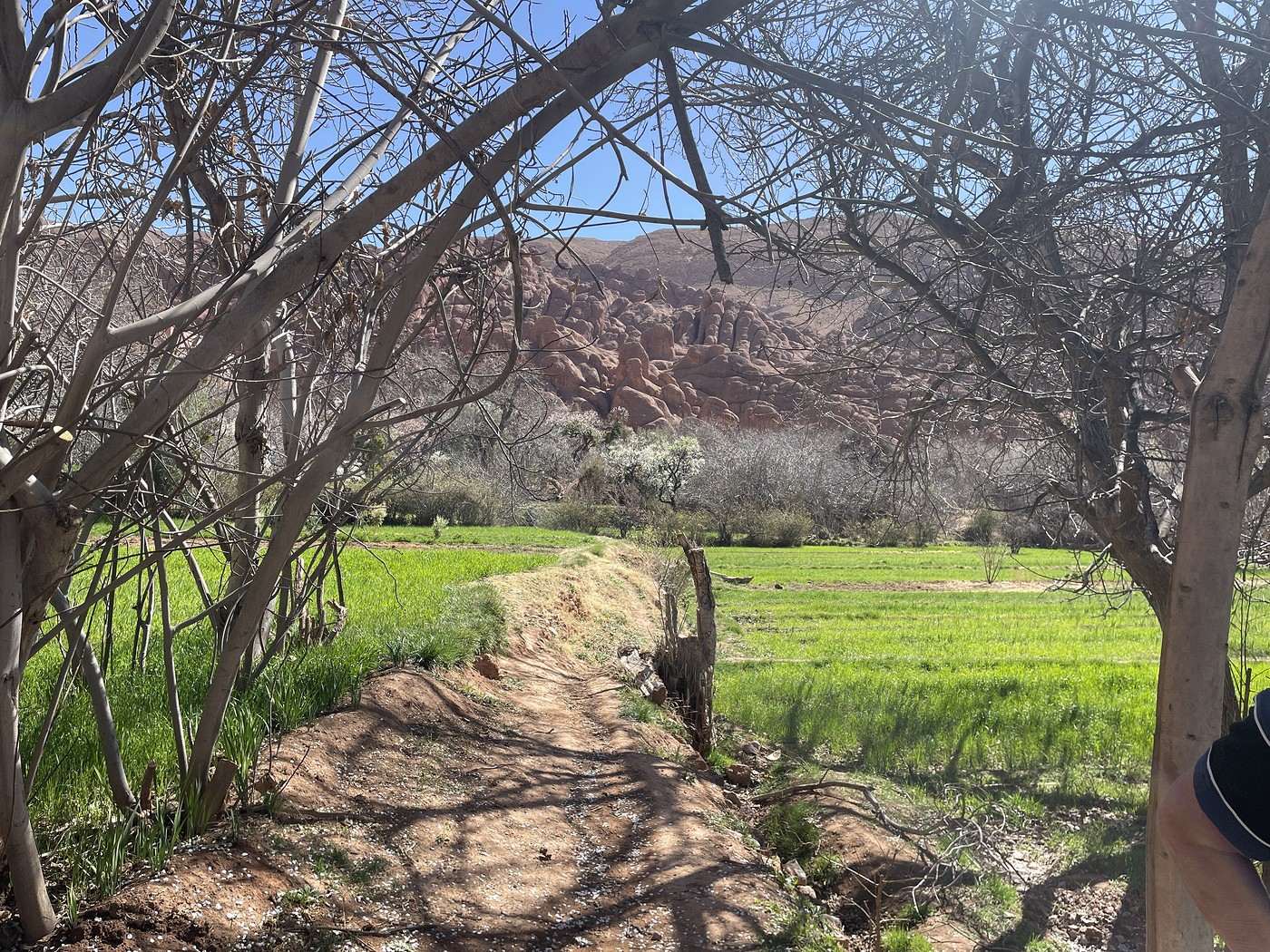
From Palmebella, we walk through the beautiful palm grove to the town—it’s an instructive and fun little stroll. The palm trees have suffered from a parasite attack (see the comment above), so there are far fewer than before, and irrigated crops have taken their place. The plots are small because they’re subdivided with each inheritance. There are lots of olive trees growing very tall—you can’t prune them because they’d spread into the neighbors’ land.
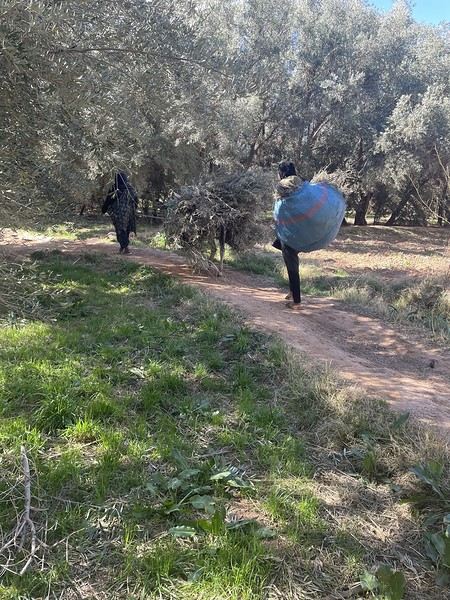
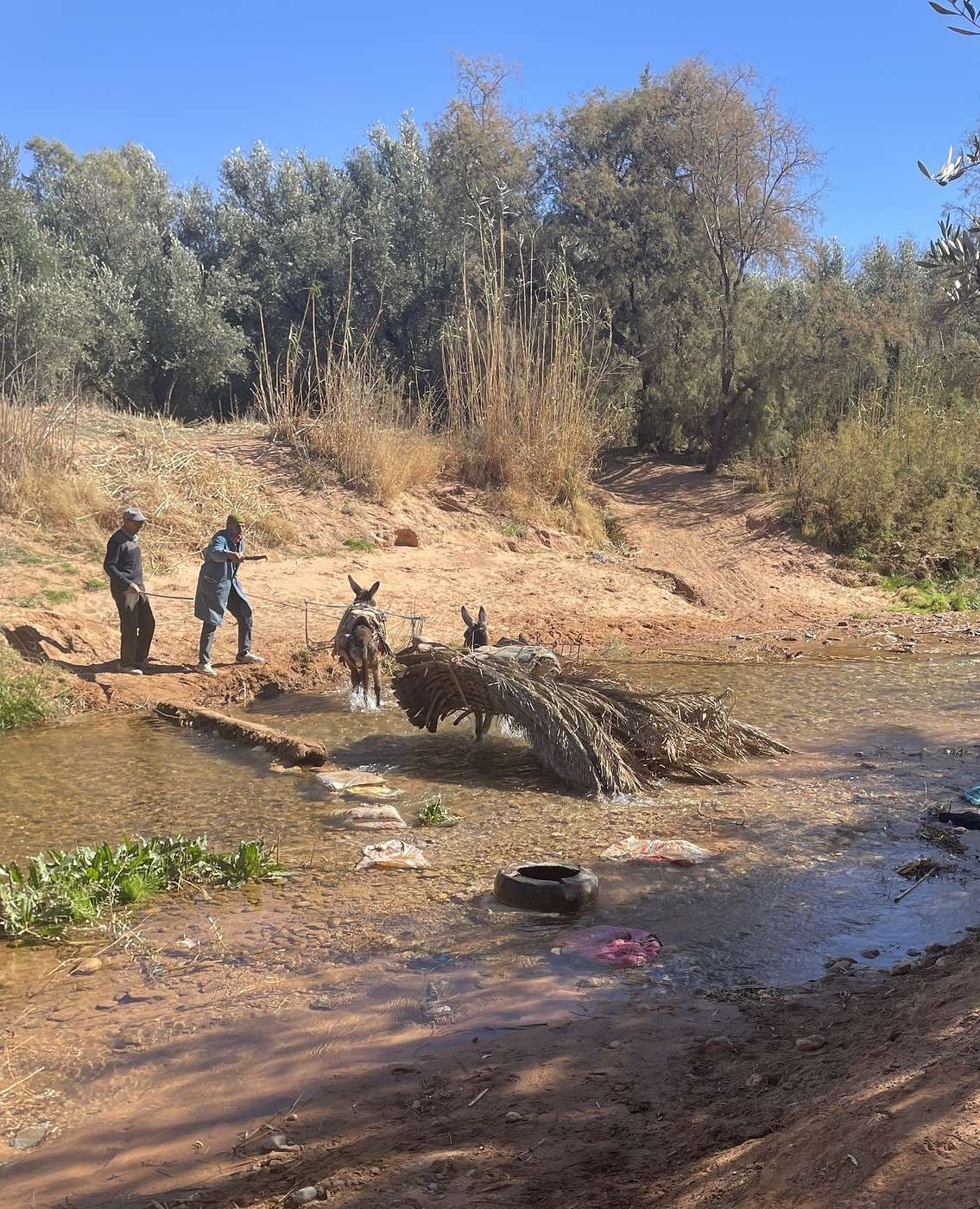
Respect for each other’s property is very important here. Mohamed lets us taste his oil—it’s really good, pressed the old-fashioned way in a cooperative. Life in the palm grove is very active: harvesting olives that are sent to the cooperative, which maintains the canals and takes a small cut from the sales. The women don’t want to be photographed and are very attentive, but luckily, the donkeys are always up for it.
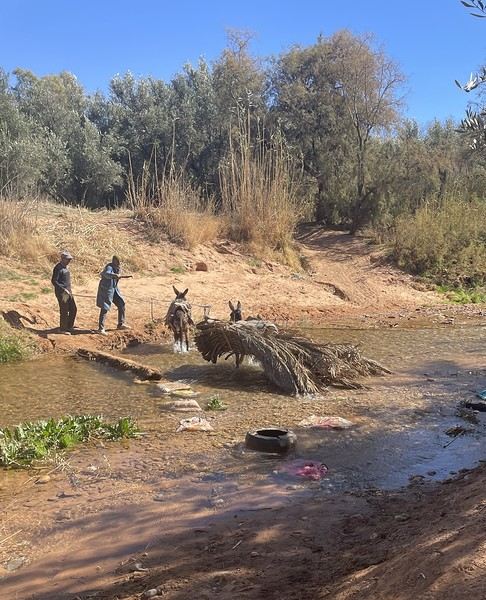
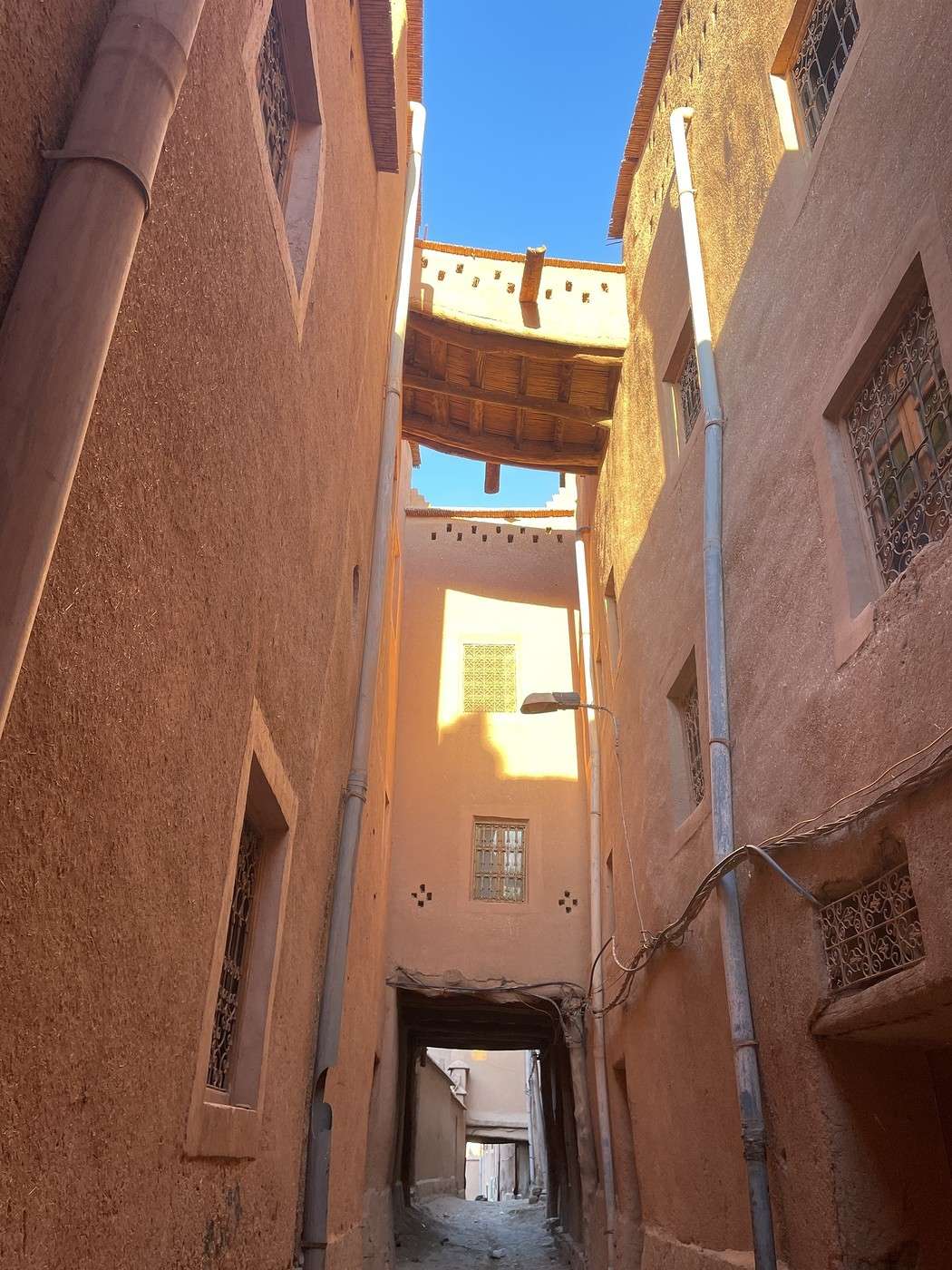
We visit the old town of Tinghir and get tons of explanations from our new friend. He emphasizes the strong sense of solidarity here and highlights how well everyone got along with the Jewish community before they left. He recommends we watch the film *Tinghir to Jerusalem*. The neighborhoods are often inhabited by the same family, and to move from one house to another, it’s as simple as crossing little bridges. The "telephone arabe" (word of mouth) works at full speed here—no one dares to step out of line.
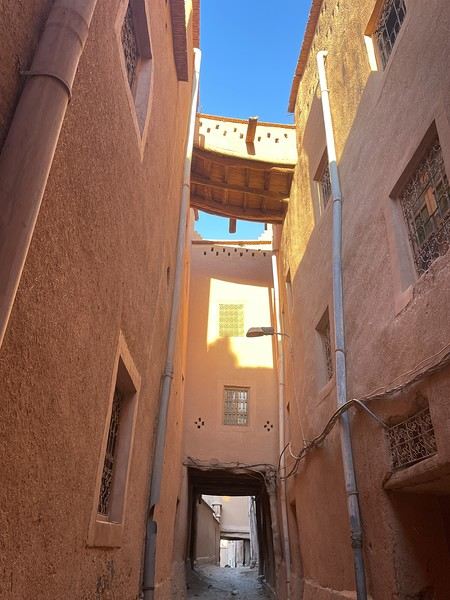
A final little tea in the square, where a large space is dedicated to children for their enjoyment. Ramadan is starting, so this will be our last tea on a terrace.
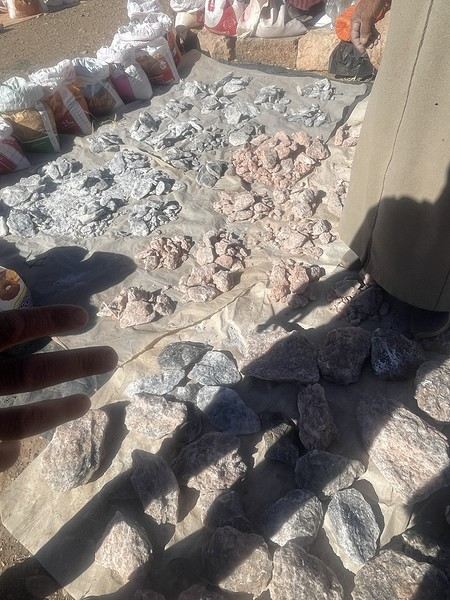
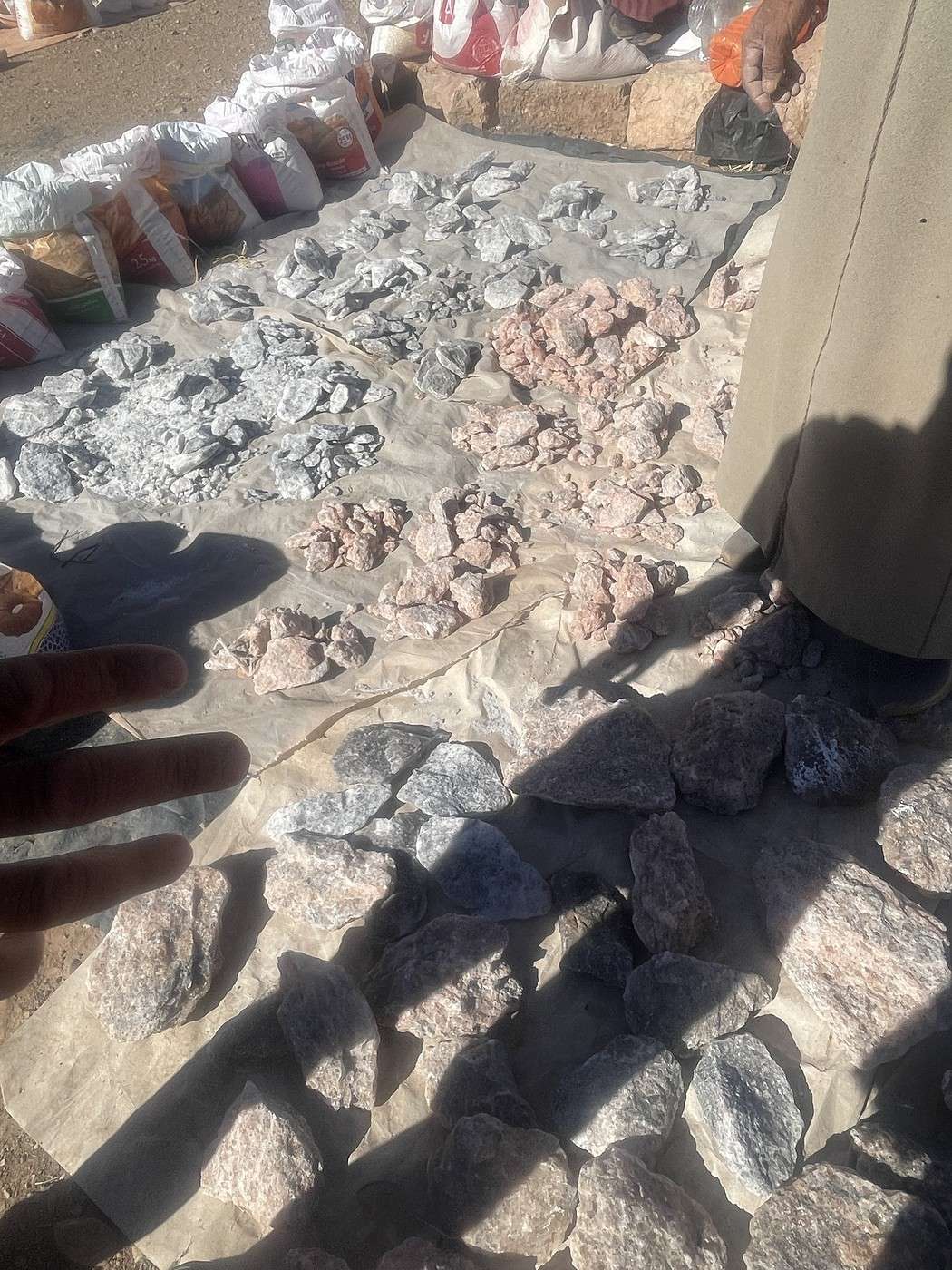
The next day, we wander through the very large souk. We discover salt being sold—depending on the color, it’s for human consumption or for animals. The pink salt is for the livestock.
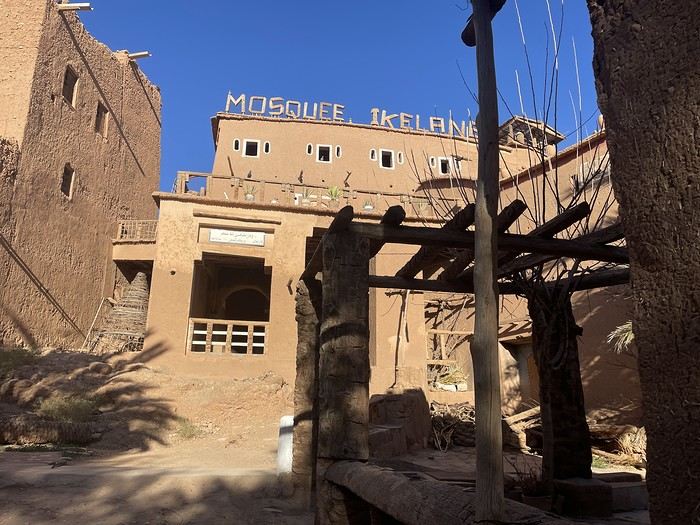
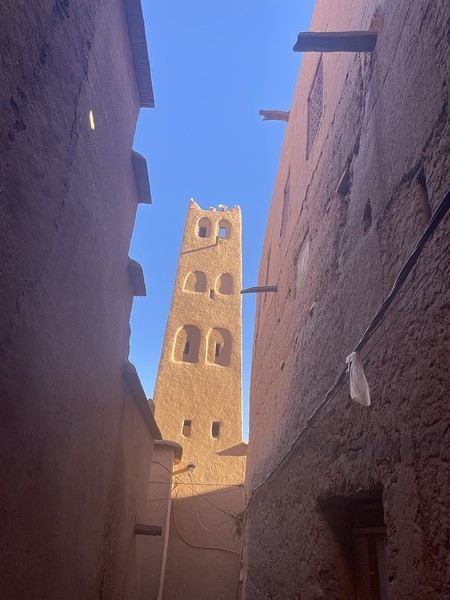
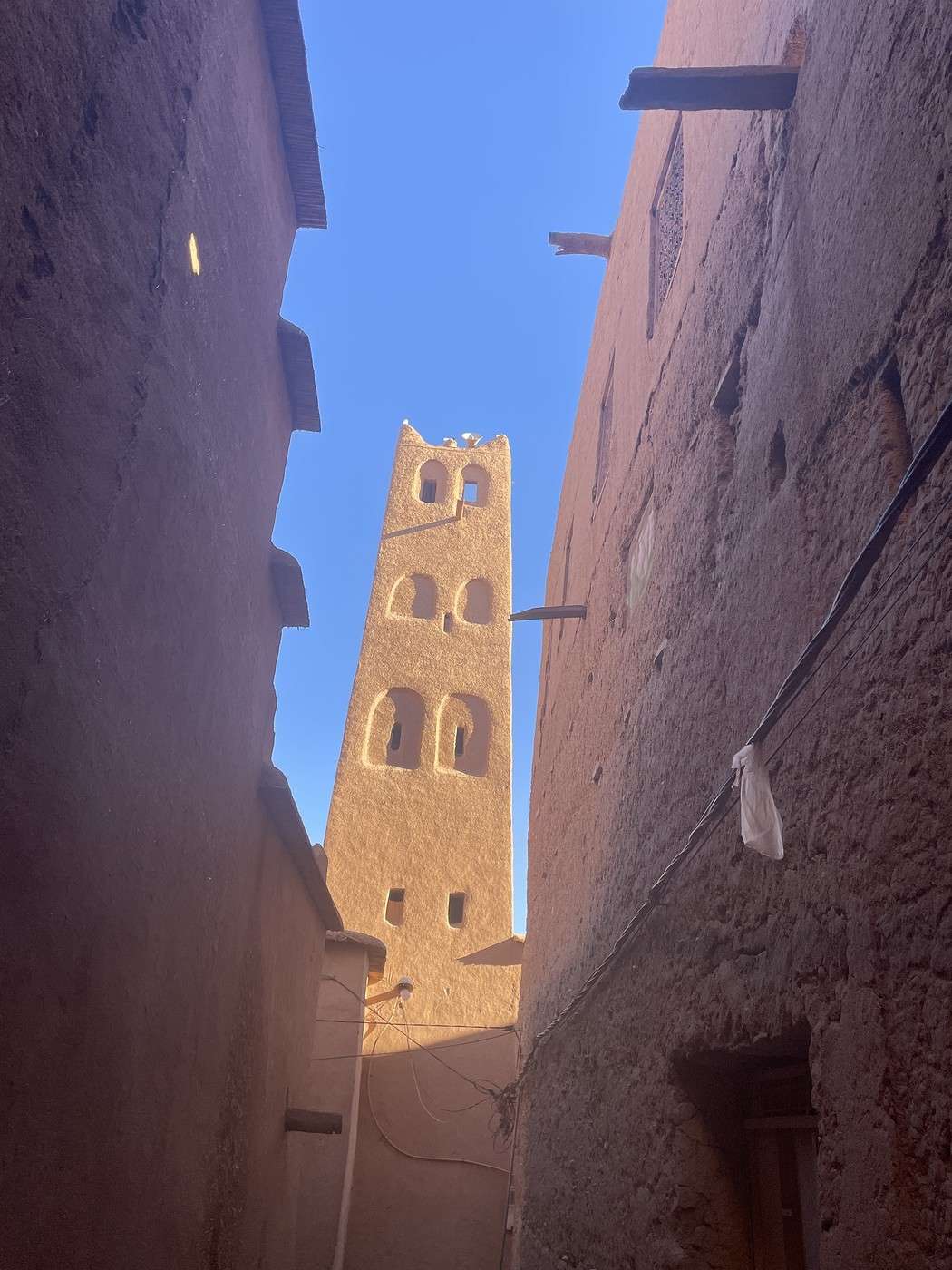
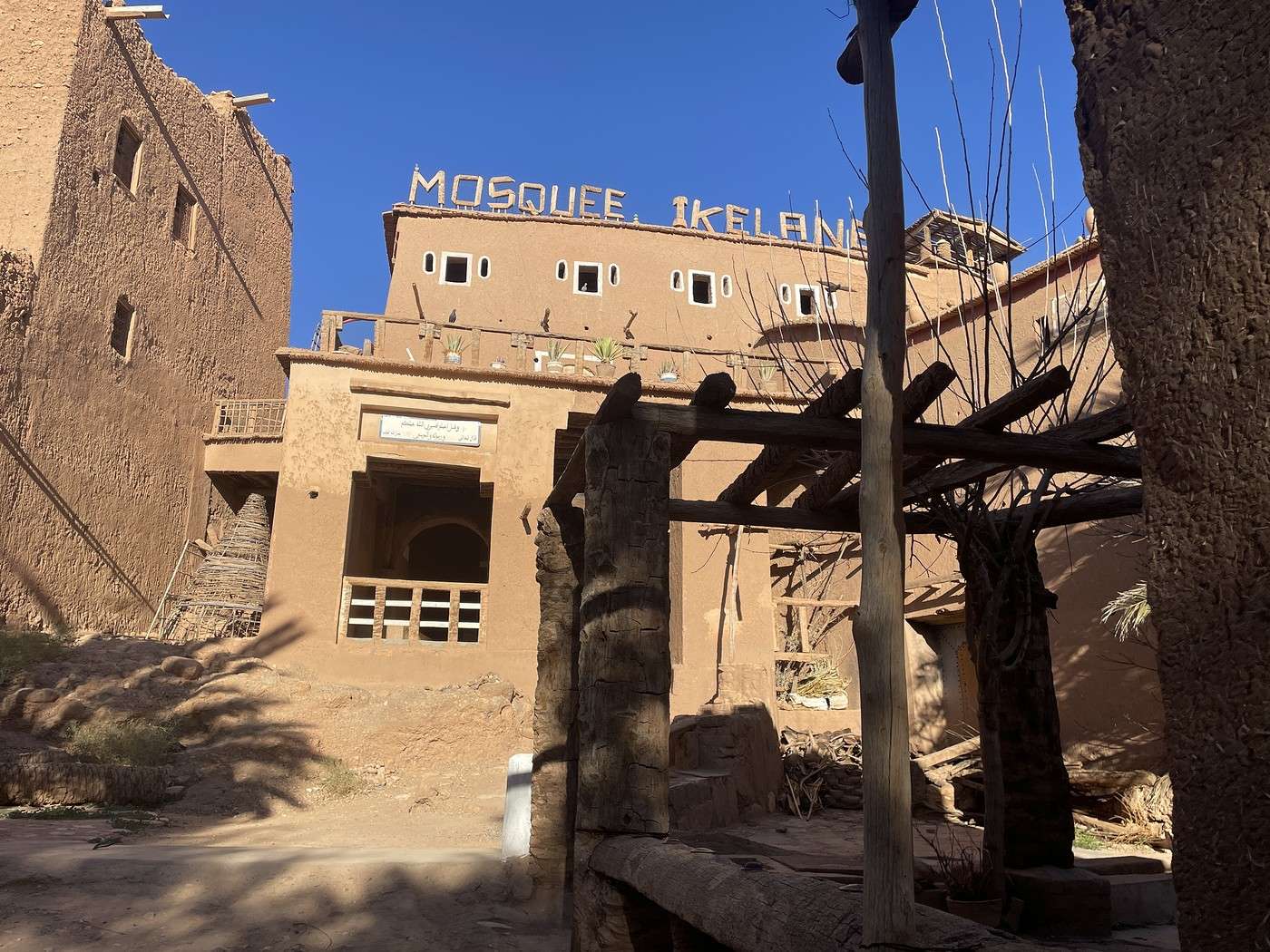
In Tinghir, there’s an old mosque you can visit. The guardian goes to incredible lengths to preserve it.
To thank Mohamed for his time, I buy enough meat for several days. Here, the meat is cut as it comes—no piece is better than another, and everything is the same price.
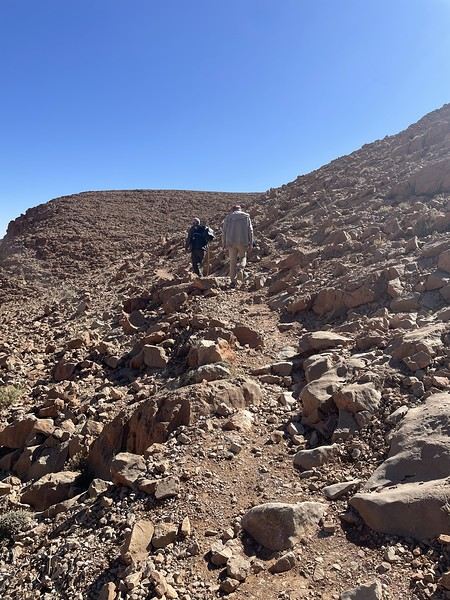
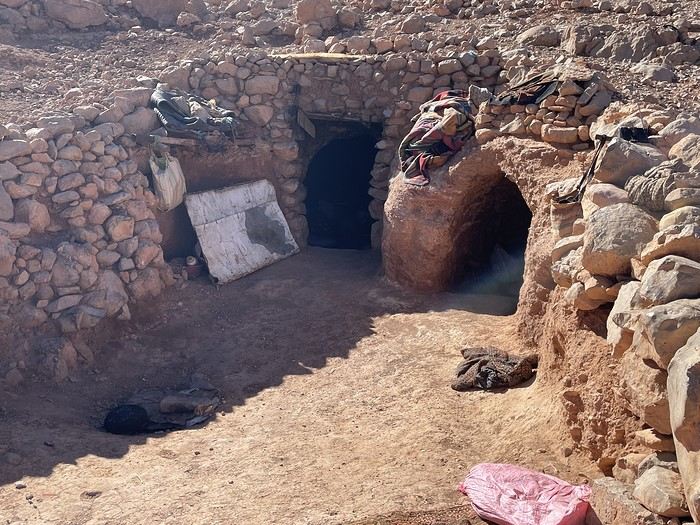
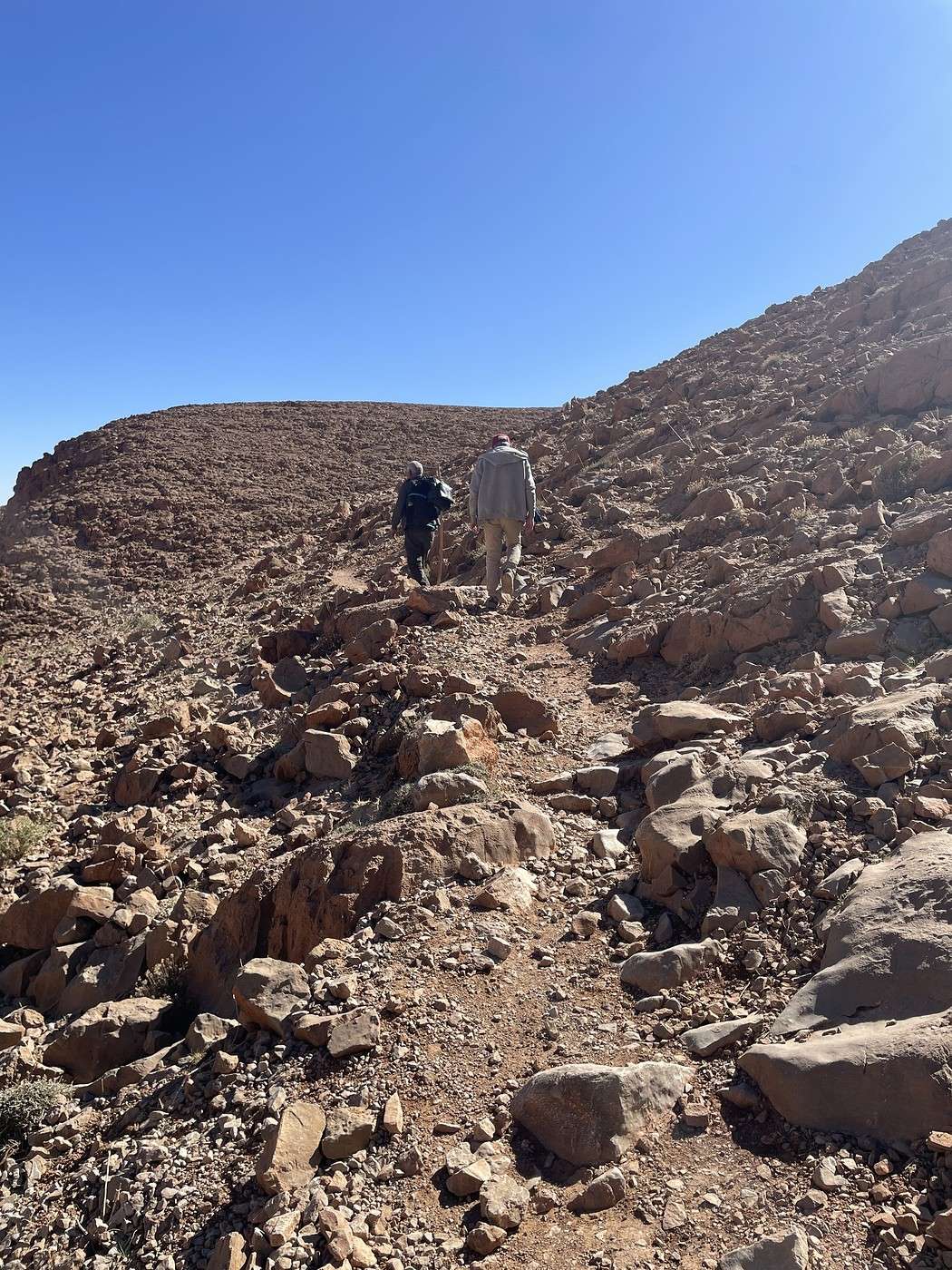
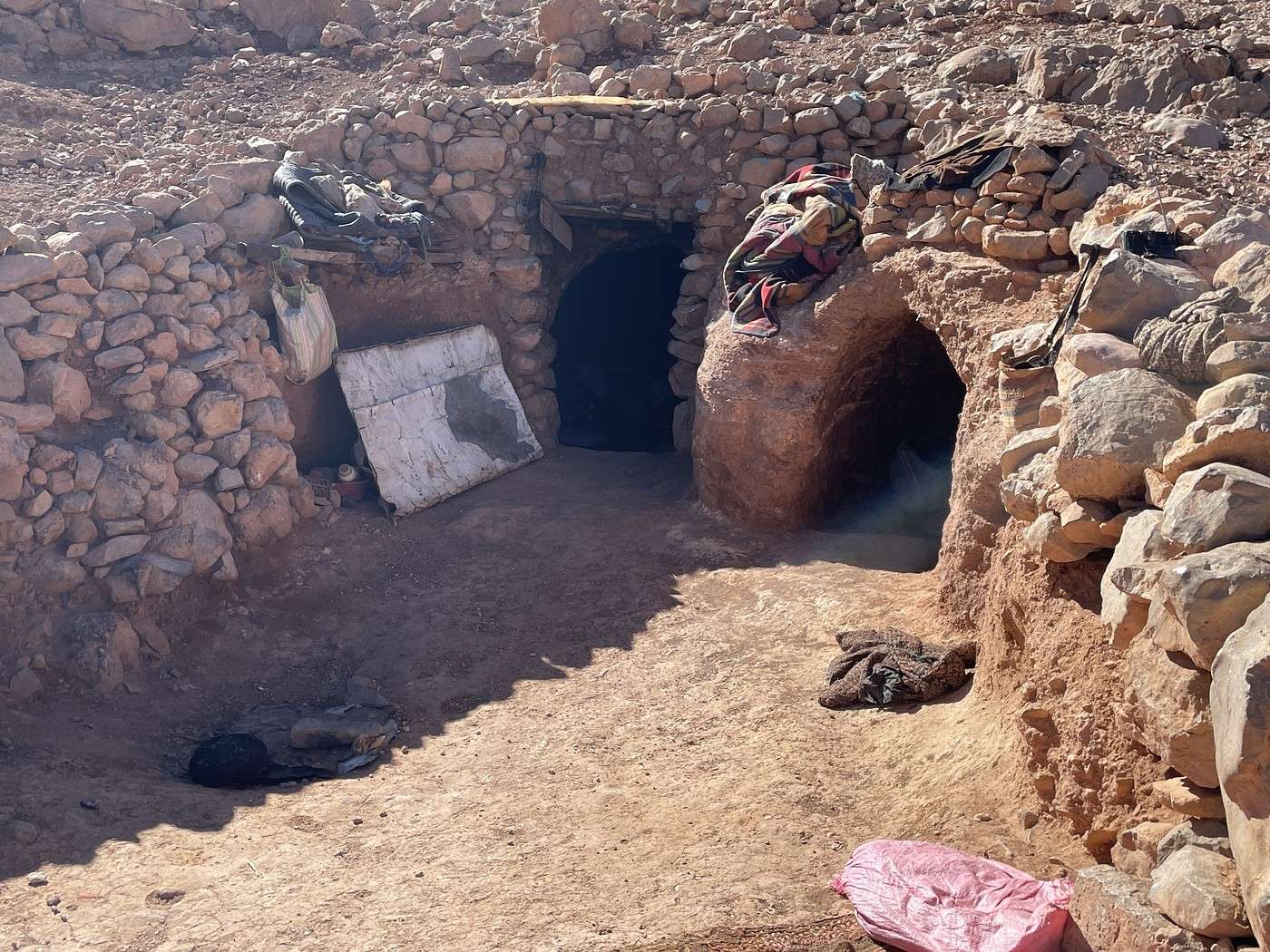
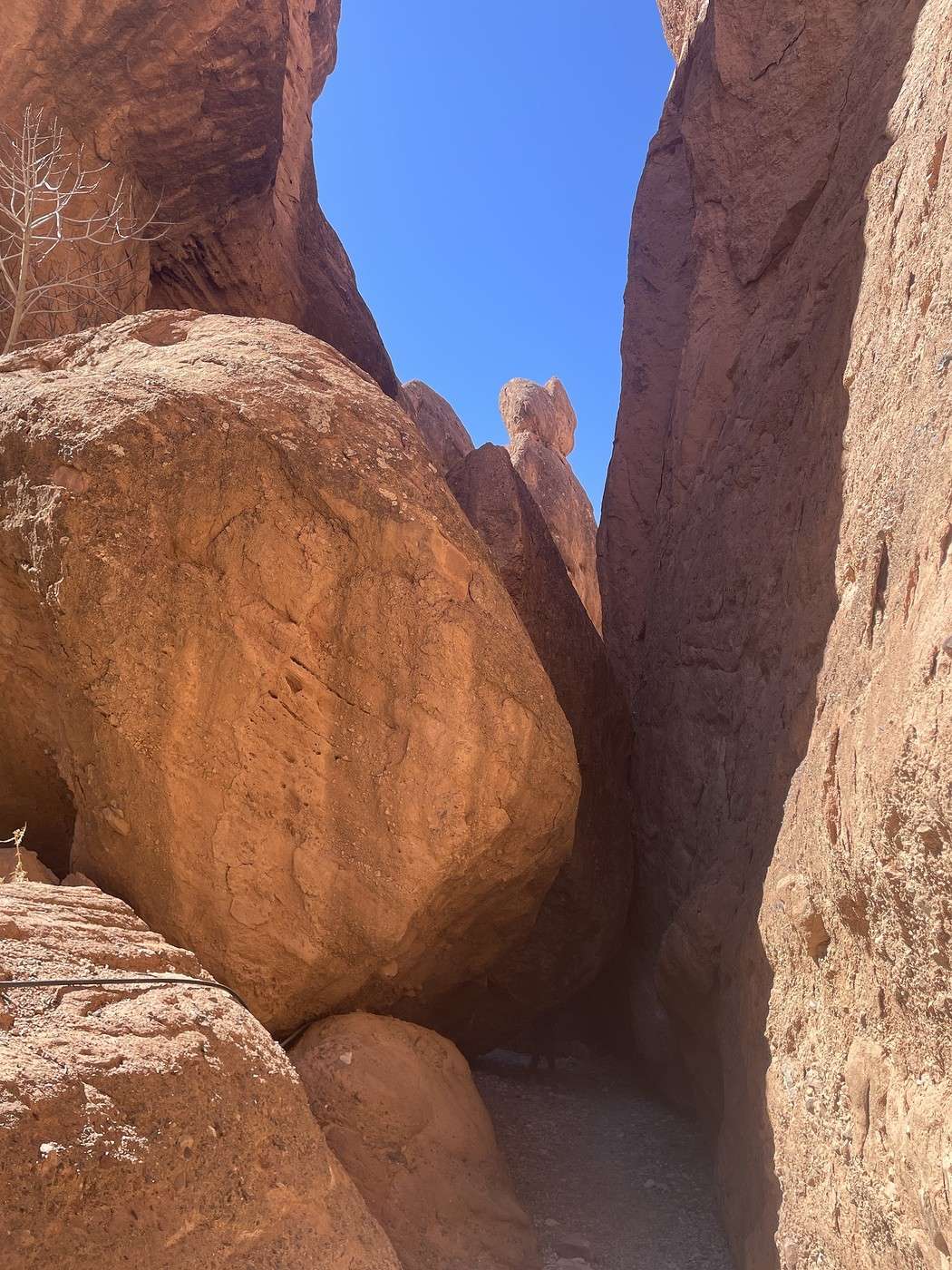
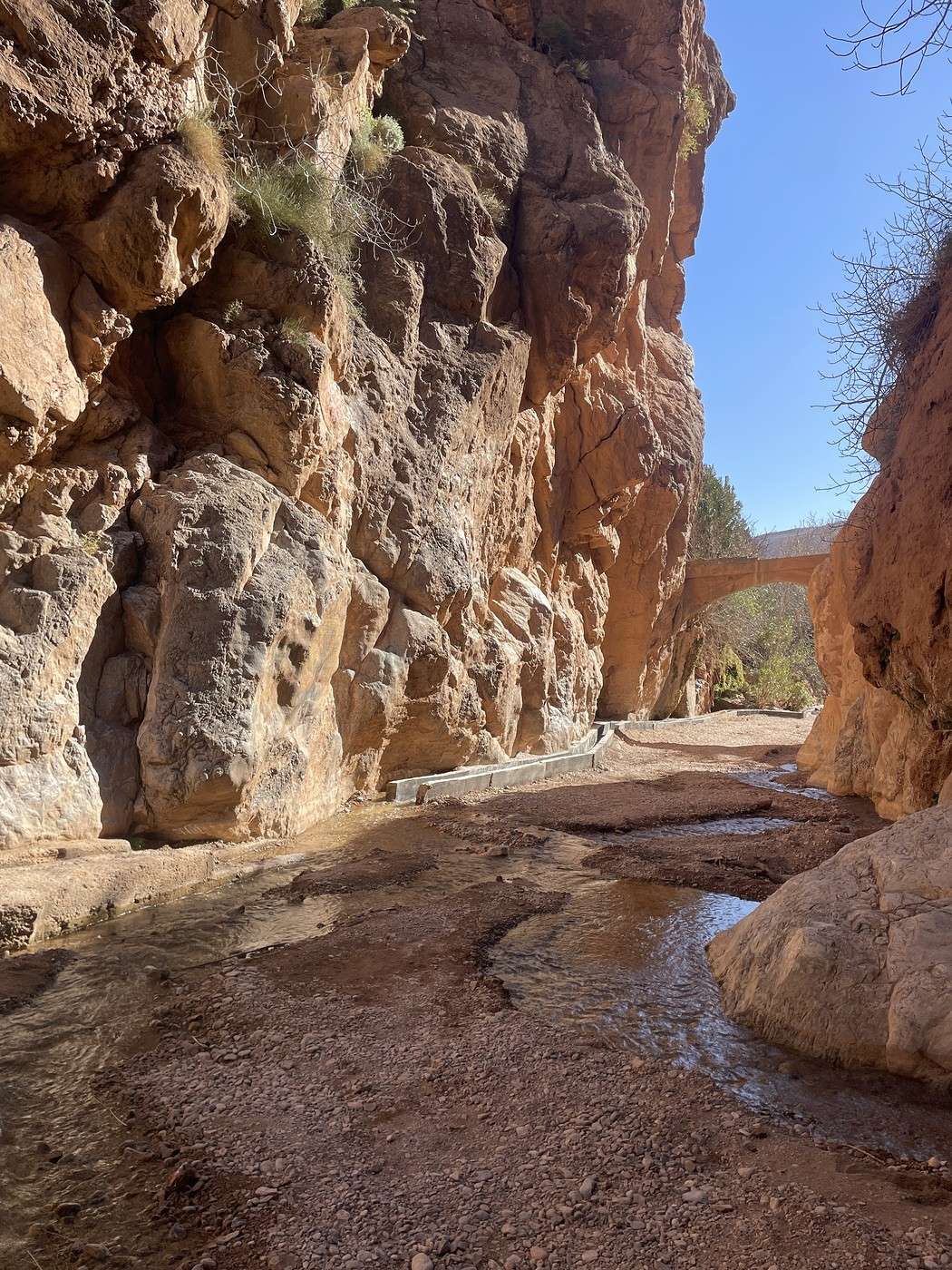
We’re at the start of the Todra Valley, and we’ll do a trek that turns out to be quite challenging for our combined 151 years. We make it to the end, not without some suffering… but what a beautiful day! It allowed us to cross paths with a nomad camp.
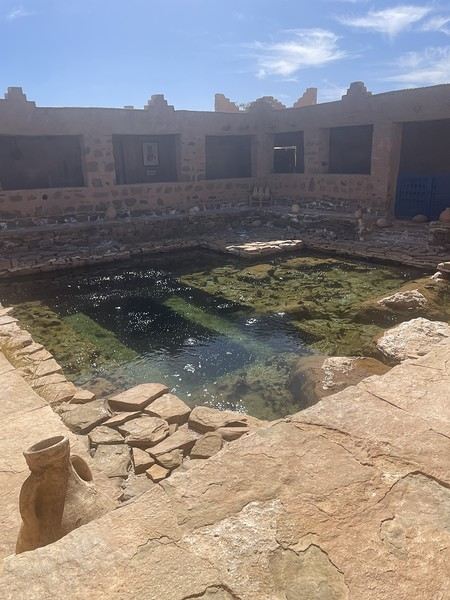
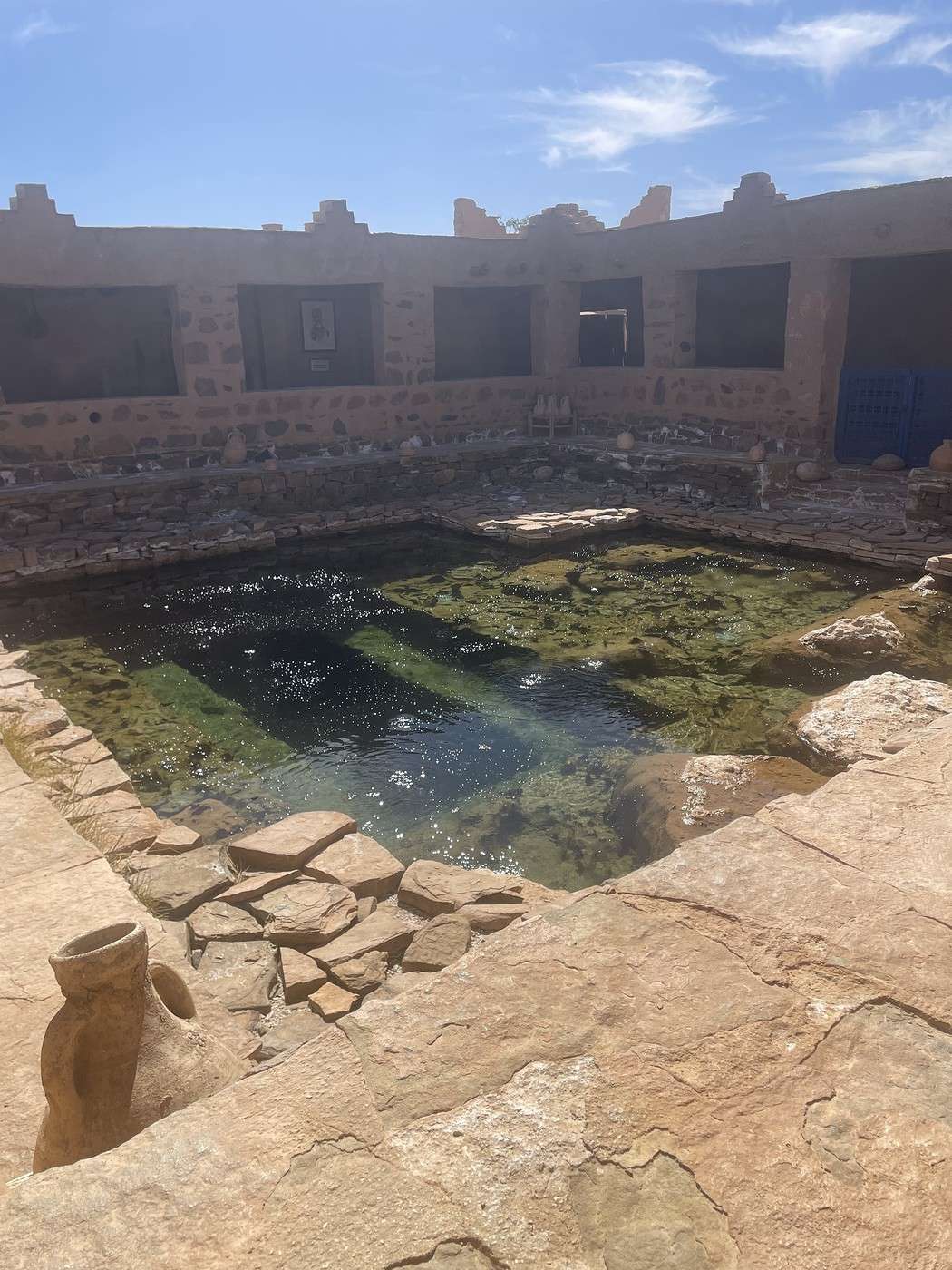
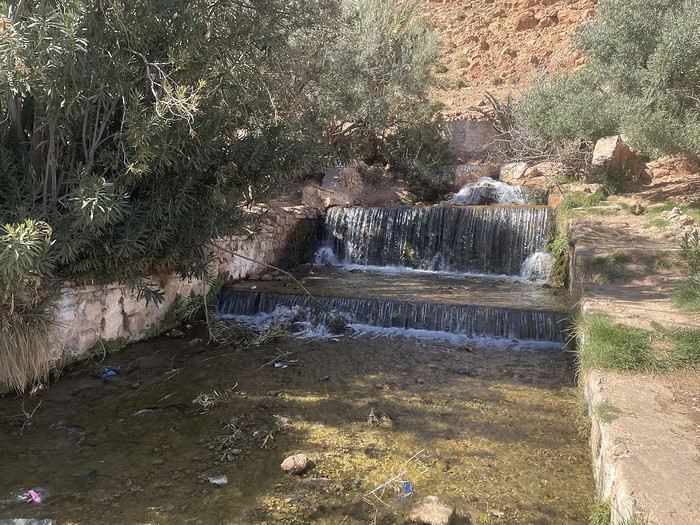
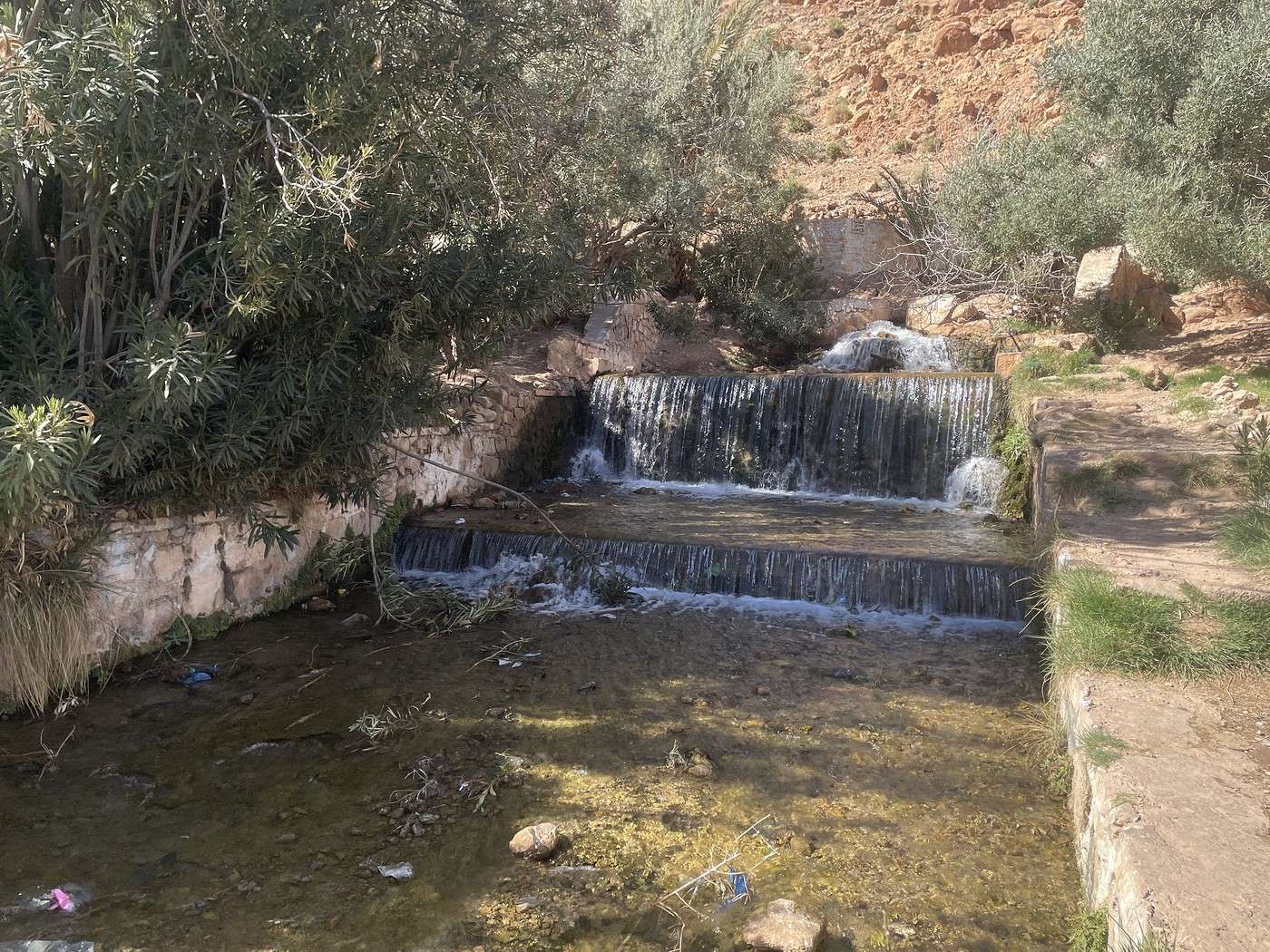
The next day, we drive to Tinjad to visit the Lala Mimouna springs. It’s well organized, with explanatory signs and lots of quotes honoring the gardens.
On the road, we get stopped by the gendarmes. We were driving slowly, as usual, but we should’ve stopped. Long story short, we get a ticket, but in the end, we don’t have to pay the 150 dirhams. Still, we’re a bit annoyed. Mohamed defended us well, but I wonder if it wasn’t because he was in the car that we had this issue. Until now, we’d always gotten through without a problem. This is a good reminder to talk about picking up hitchhikers again. He tells us that if the person doesn’t have their papers, isn’t wearing a seatbelt, or doesn’t have any dirhams, we’ll likely have to pay the fine.
I’ve reached my photo limit—the rest will have to wait for the next installment.
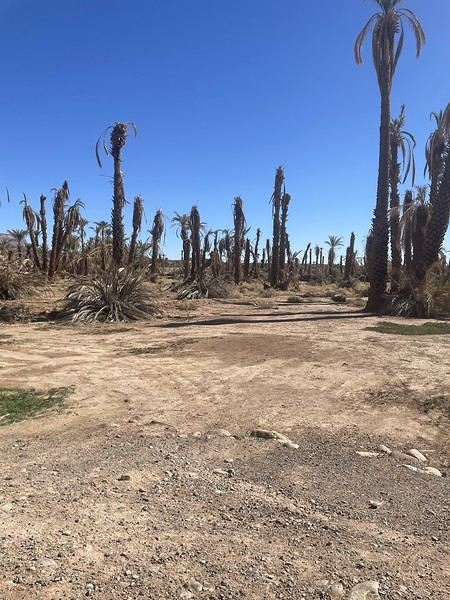
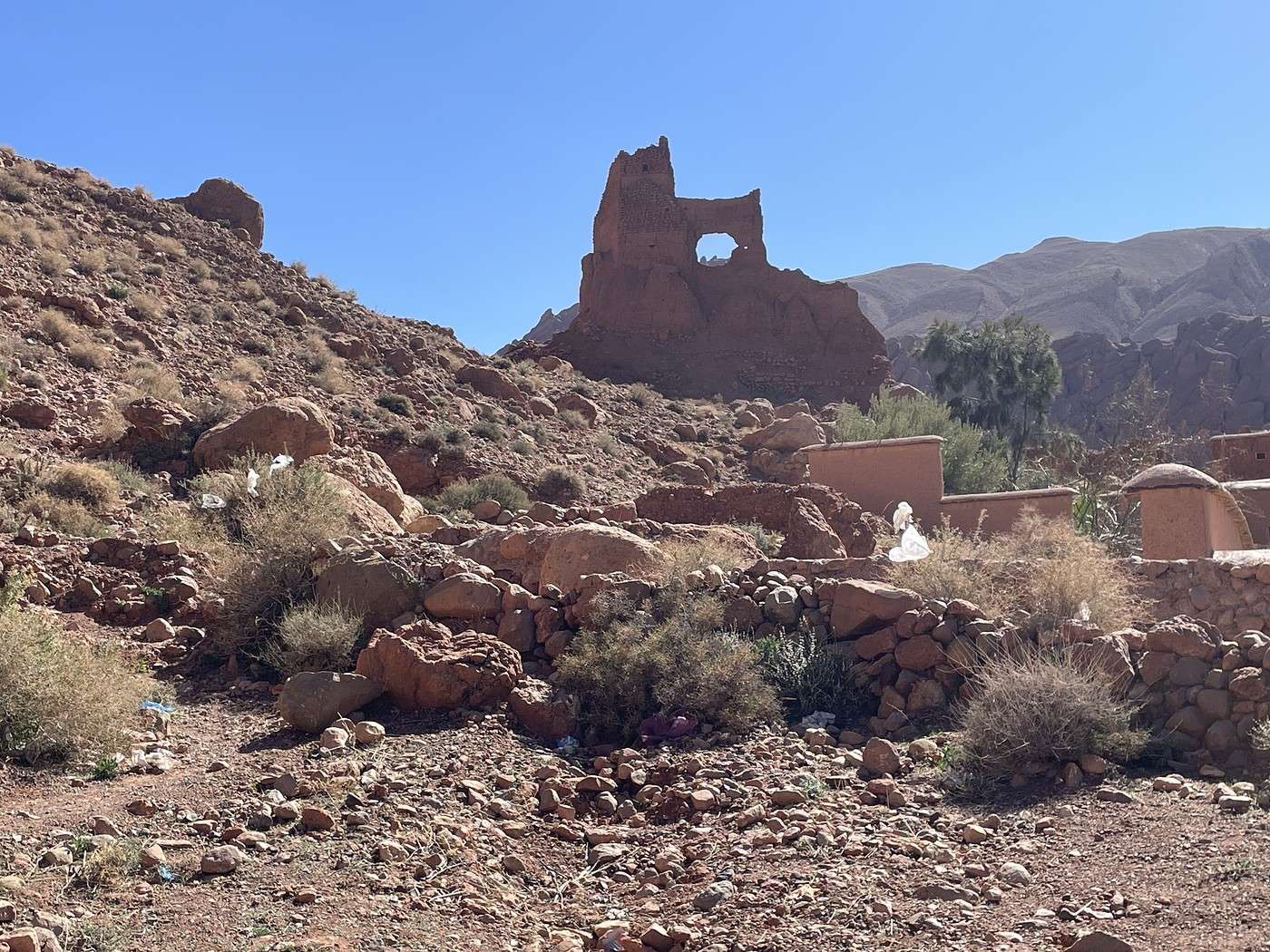
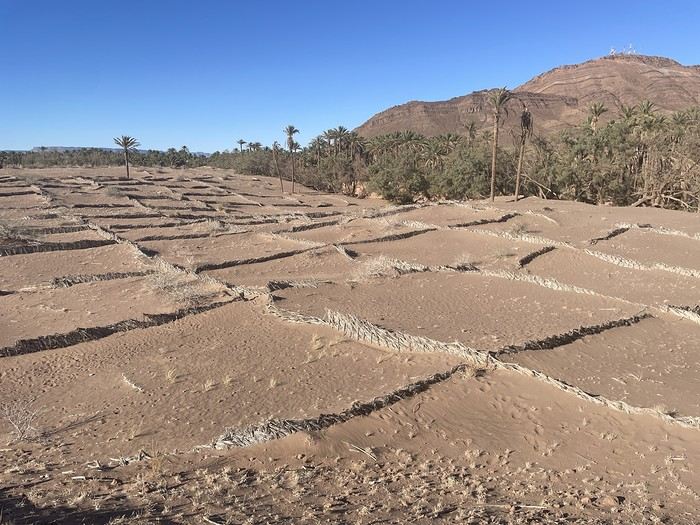 He tells us there used to be gardens here.
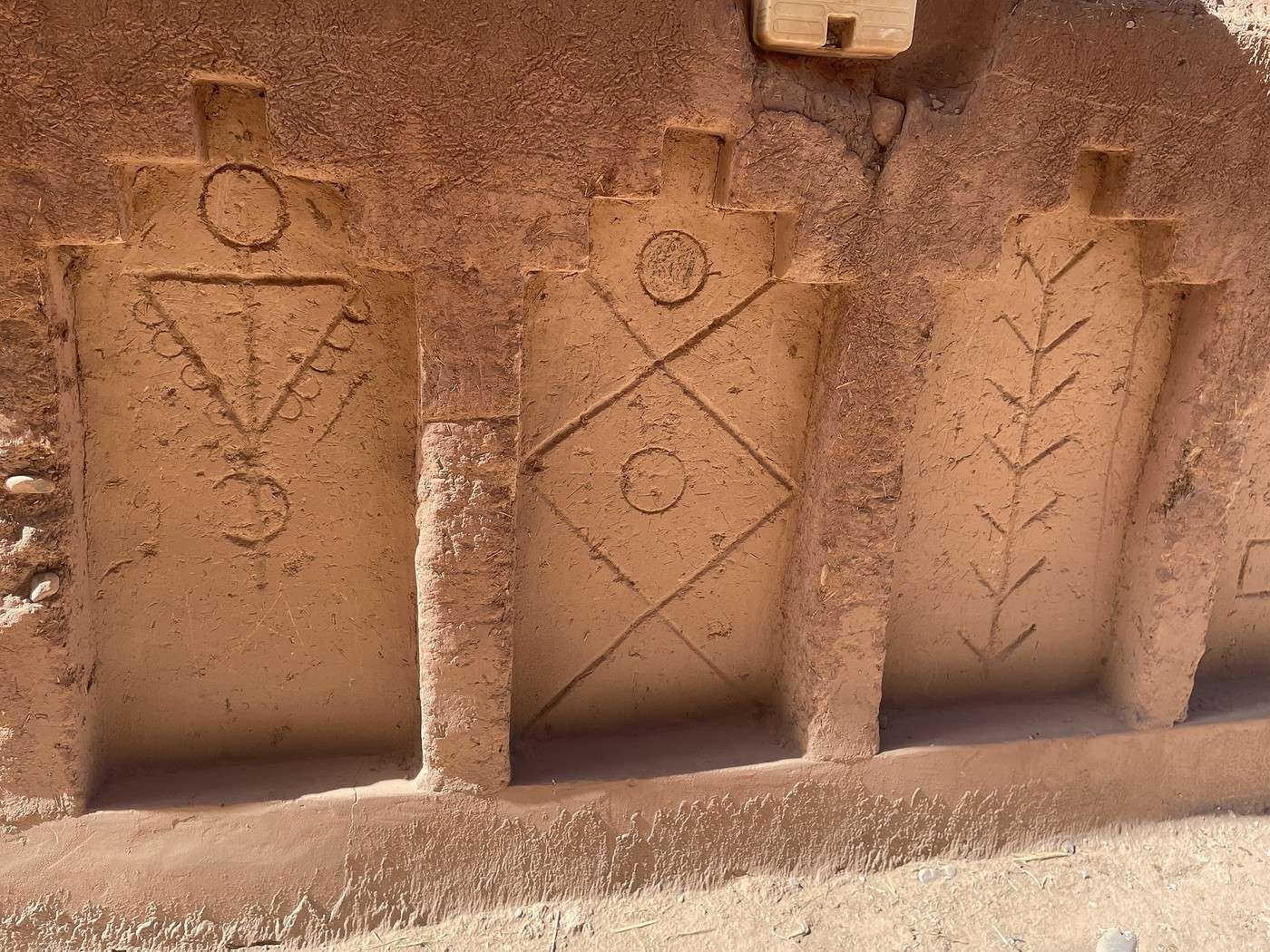
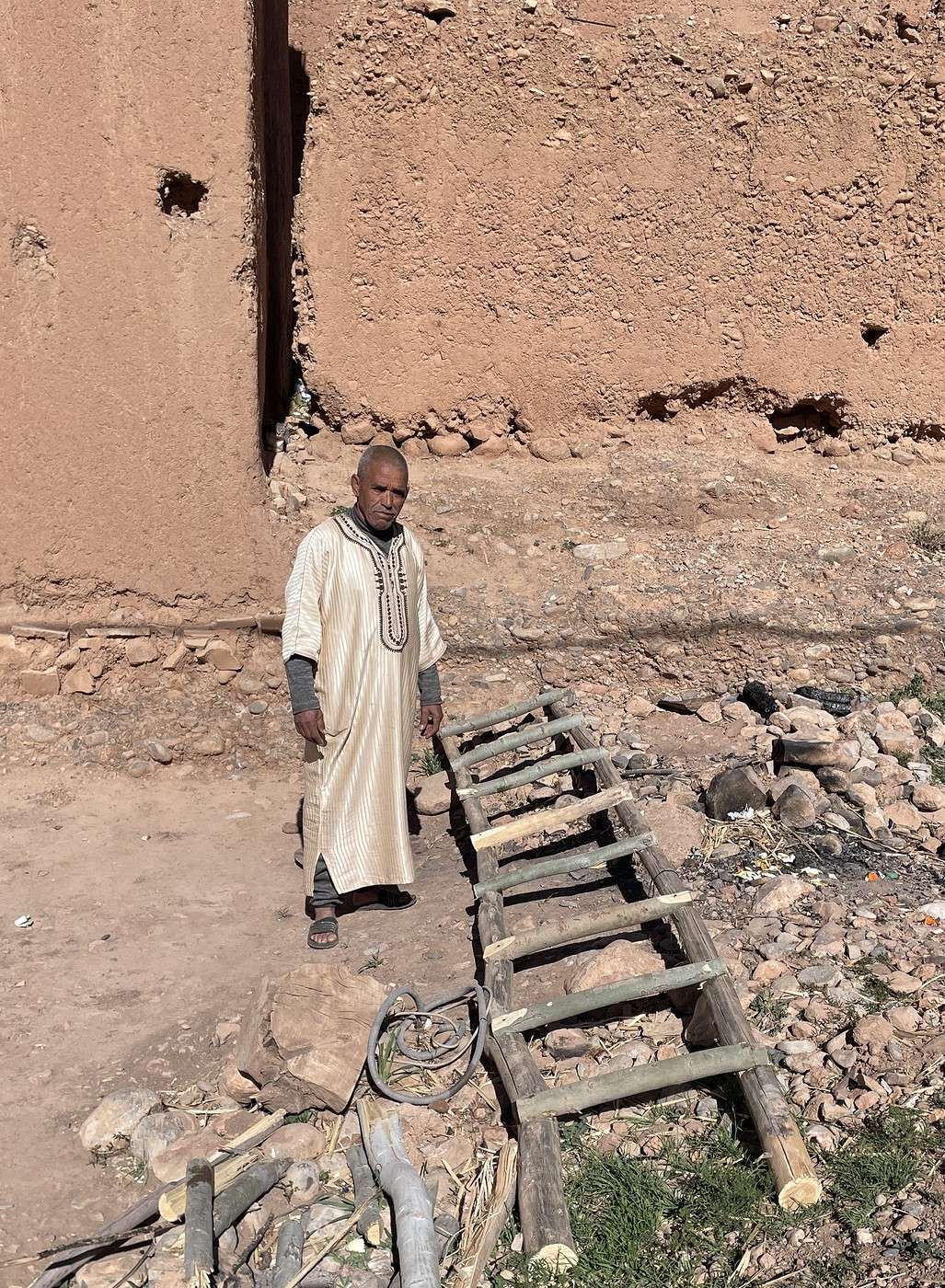
And especially thick rammed-earth walls. Walking between them—often very high—isn’t unpleasant, though.
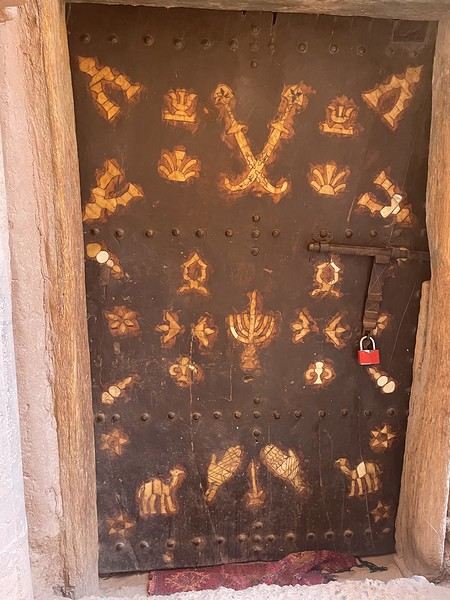
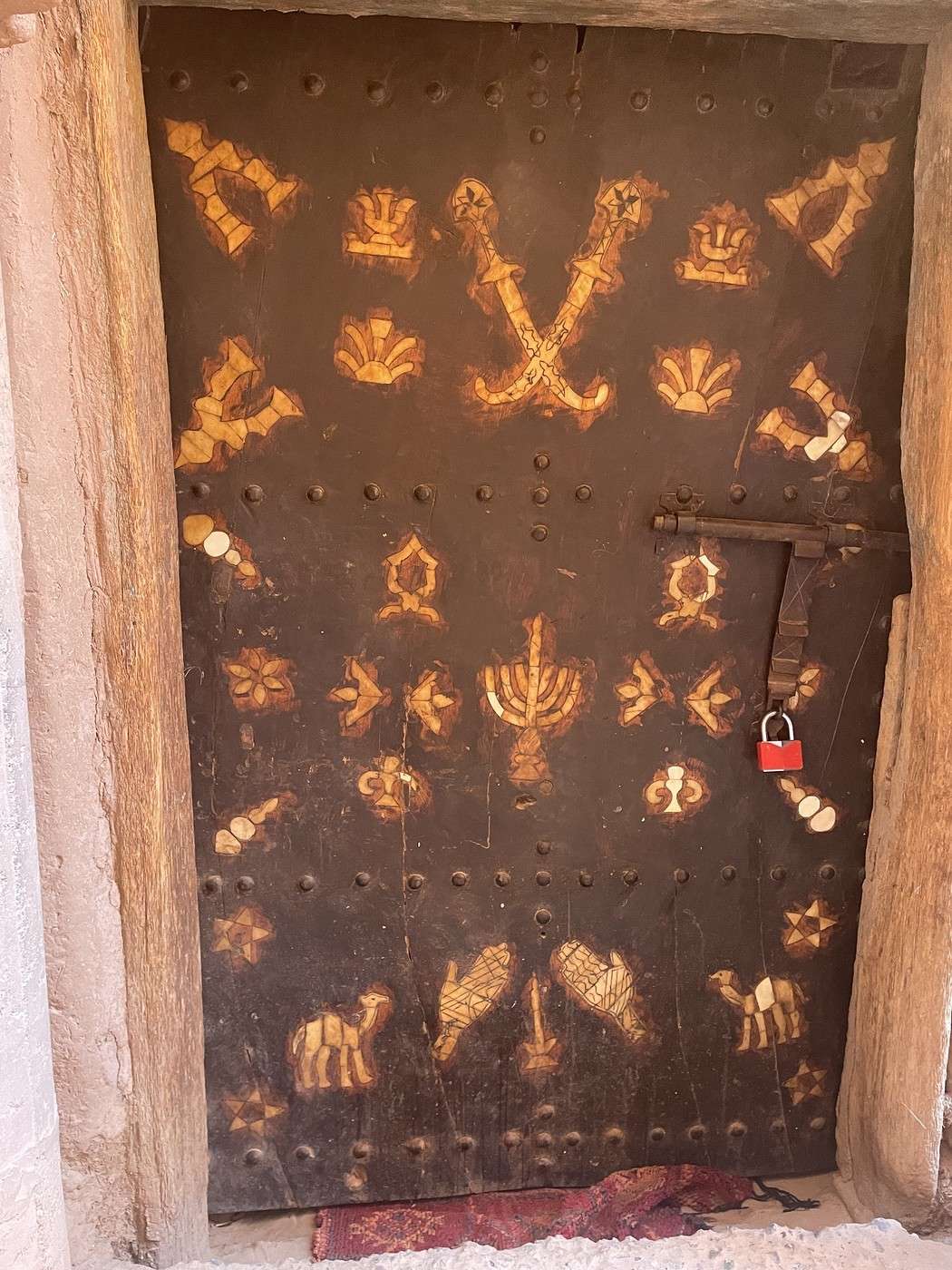
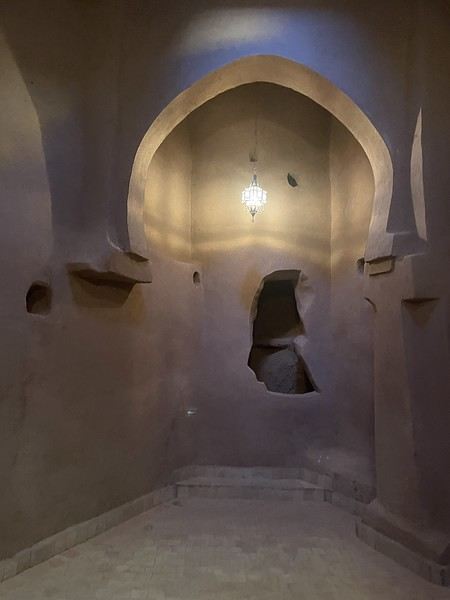 No tourists here—you’d think we’re the only ones enjoying the village. But quietly, so as not to show off the restoration work on old doors, he leads us into an old caravanserai where a carpenter and his son are hard at work. It’s like Ali Baba’s cave, and I cave in, buying a pair of earrings after some tough haggling. He calls me a Berber!
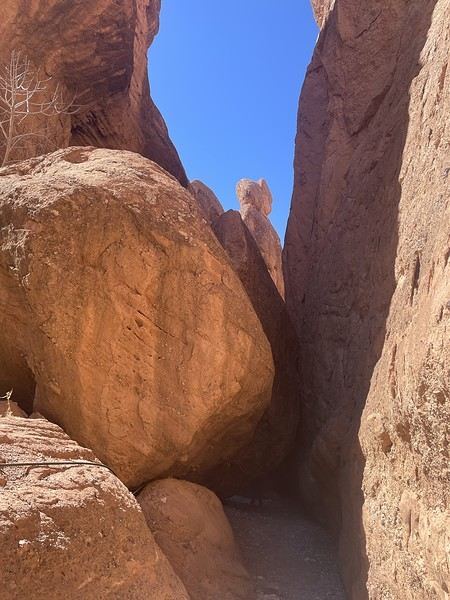
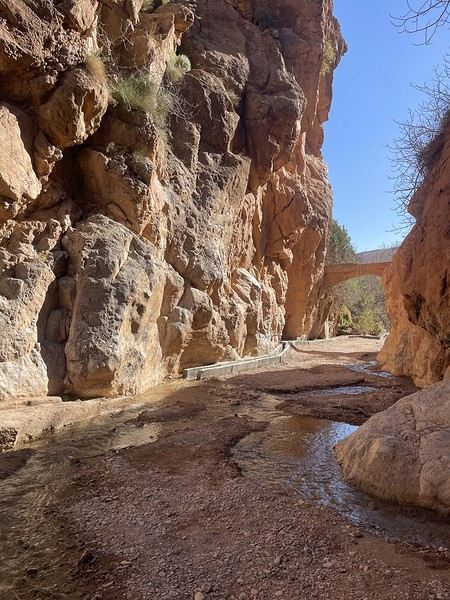
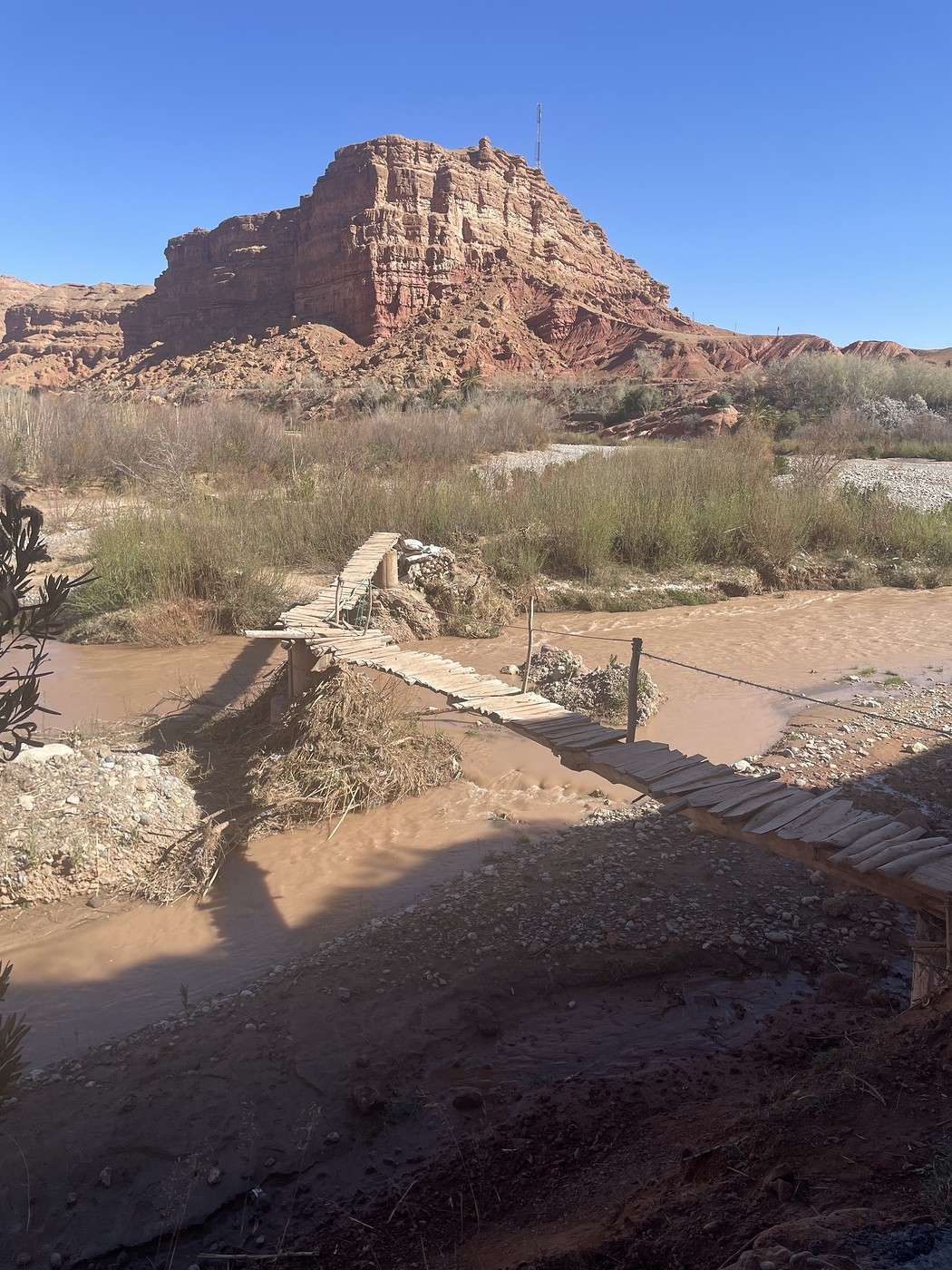
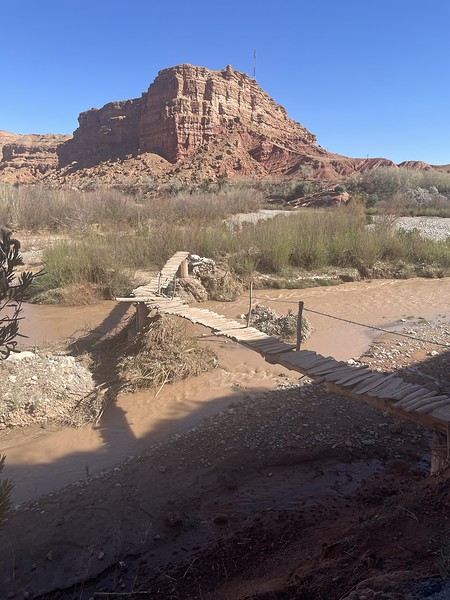 This one lost its safety railing.
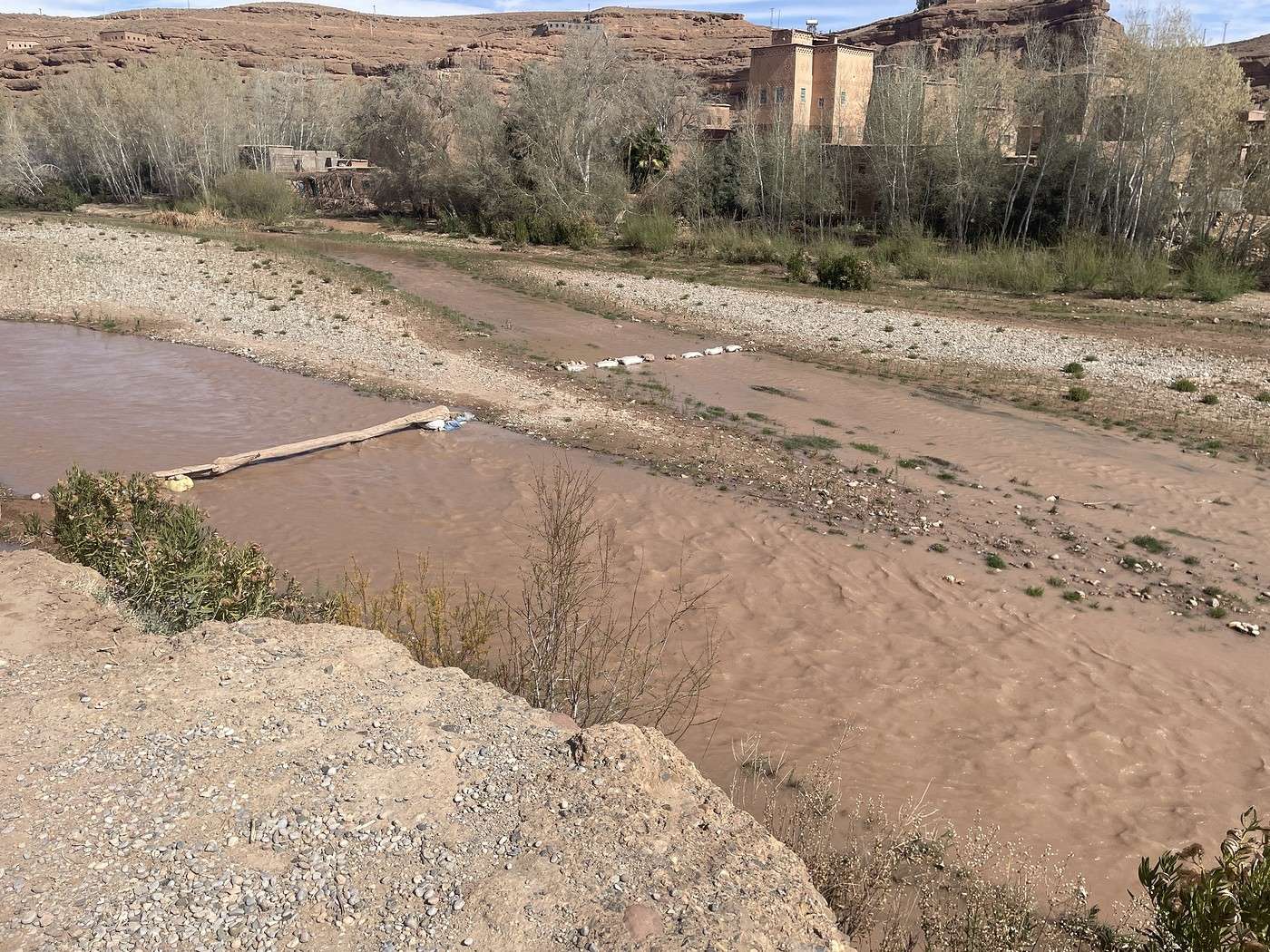
For this one, luckily a providential guide wasn’t far away! The technique is to step to the side and move forward step by step—like a dance in the end. With the guide holding my hand as my partner.
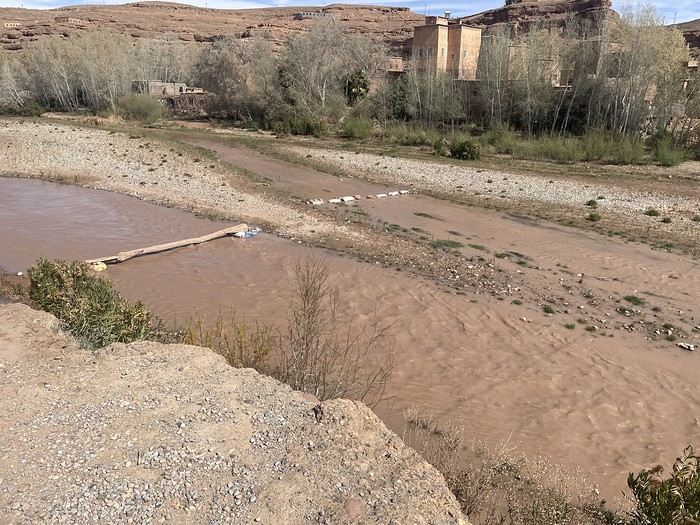 Not exactly a restful experience.