07/28/2013
This time, we decided to take the train. The free train from the south arrived in the morning at a time that suited us. To be precise, the train is only free for Thai people. The 16 baht per person we paid for this short trip of a few dozen kilometers won’t break the bank. Of course, it arrived a good hour late.
We loved the train. It moves slowly, all the windows are wide open like TV screens onto a tropical landscape. With the heat, it’s perfect.
Most of the passengers are locals, and they’re very curious about us. This is a good moment to mention how pleasant it is to travel in a country where the majority of people greet you with a beautiful smile and try to help when you ask.
In the carriages, older than we are, the constant comings and goings of street vendors make for quite the show—both visually and audibly.
Really, it’s something to try at least once.
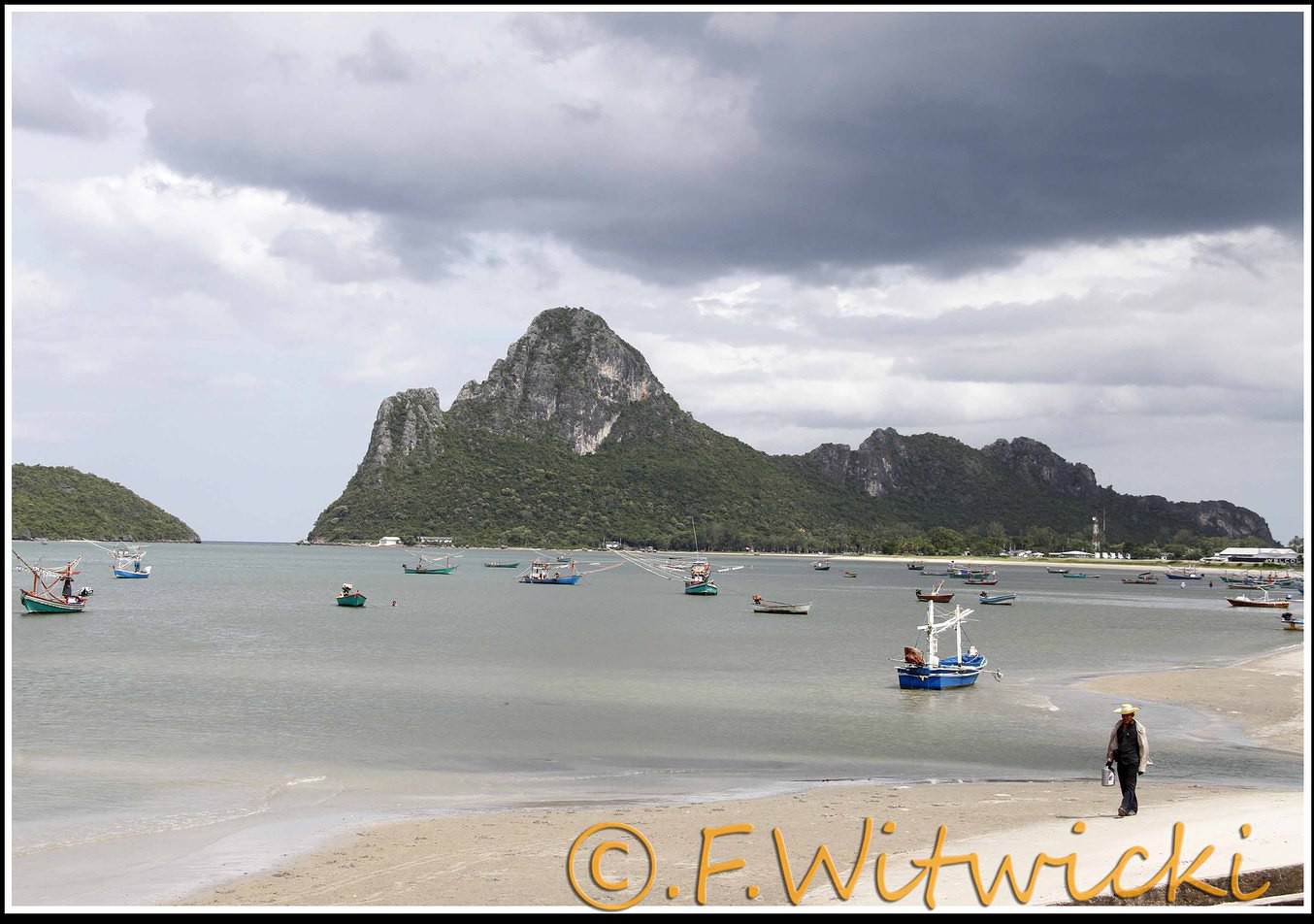
In Prachuab Khiri Khan, we’re in the heart of this quiet southern Thailand. The town center isn’t very large, and for a provincial capital, it hasn’t been swallowed by modernity. We love these places that still have an old-world feel, not yet smoothed out and polished. You can see many shops that truly belong to another era.
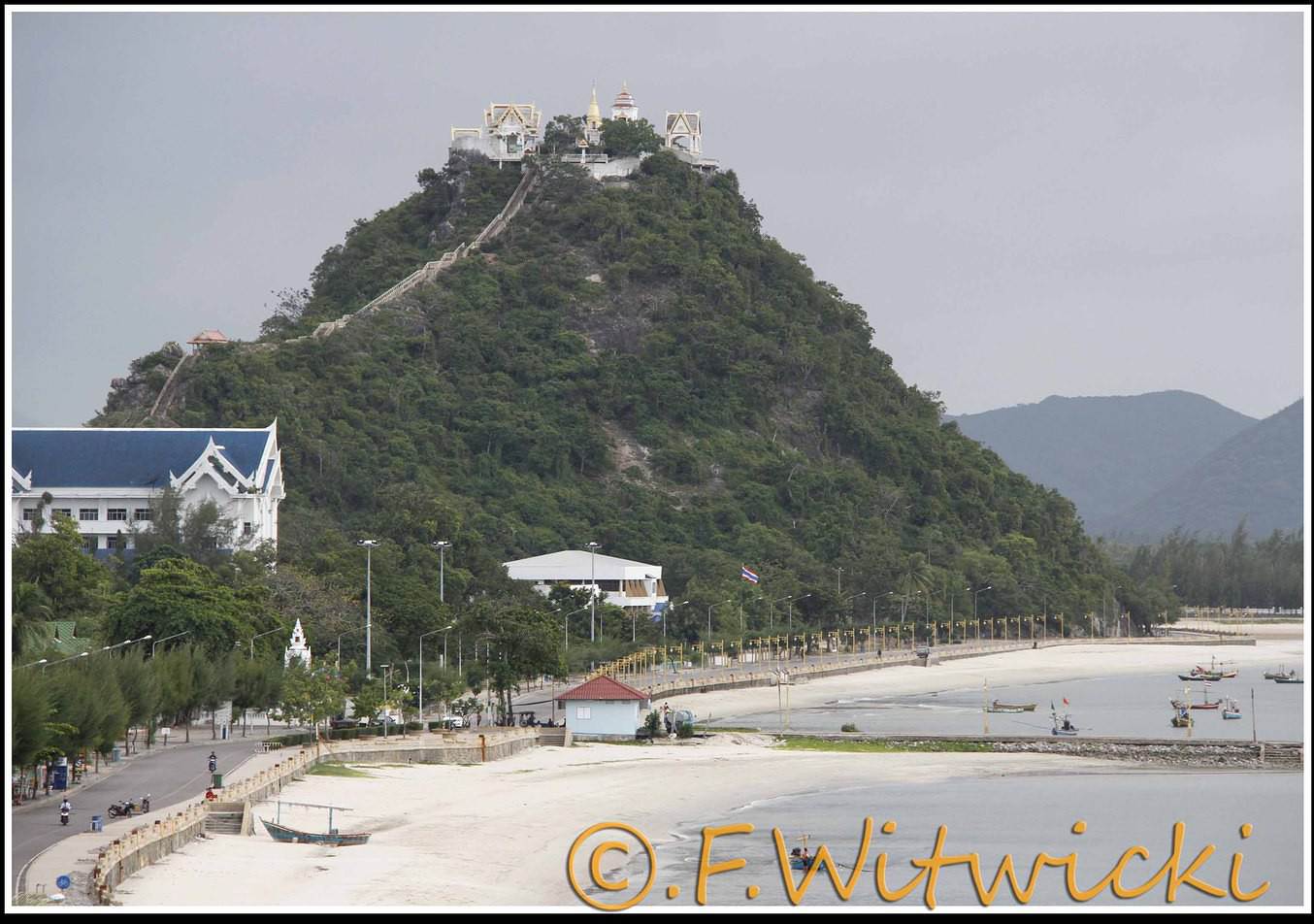
It’s located by the sea, on the edge of a triple bay.
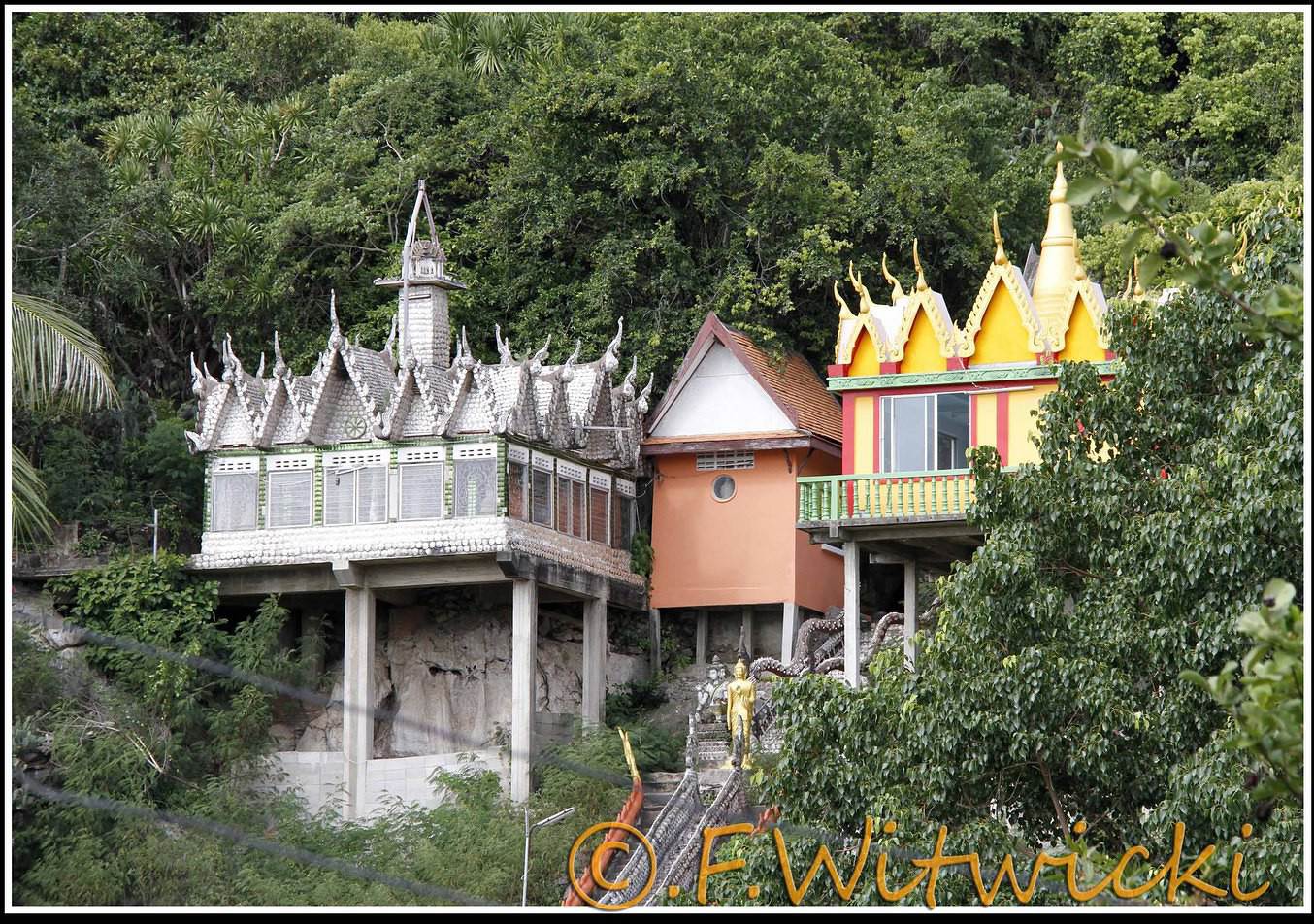
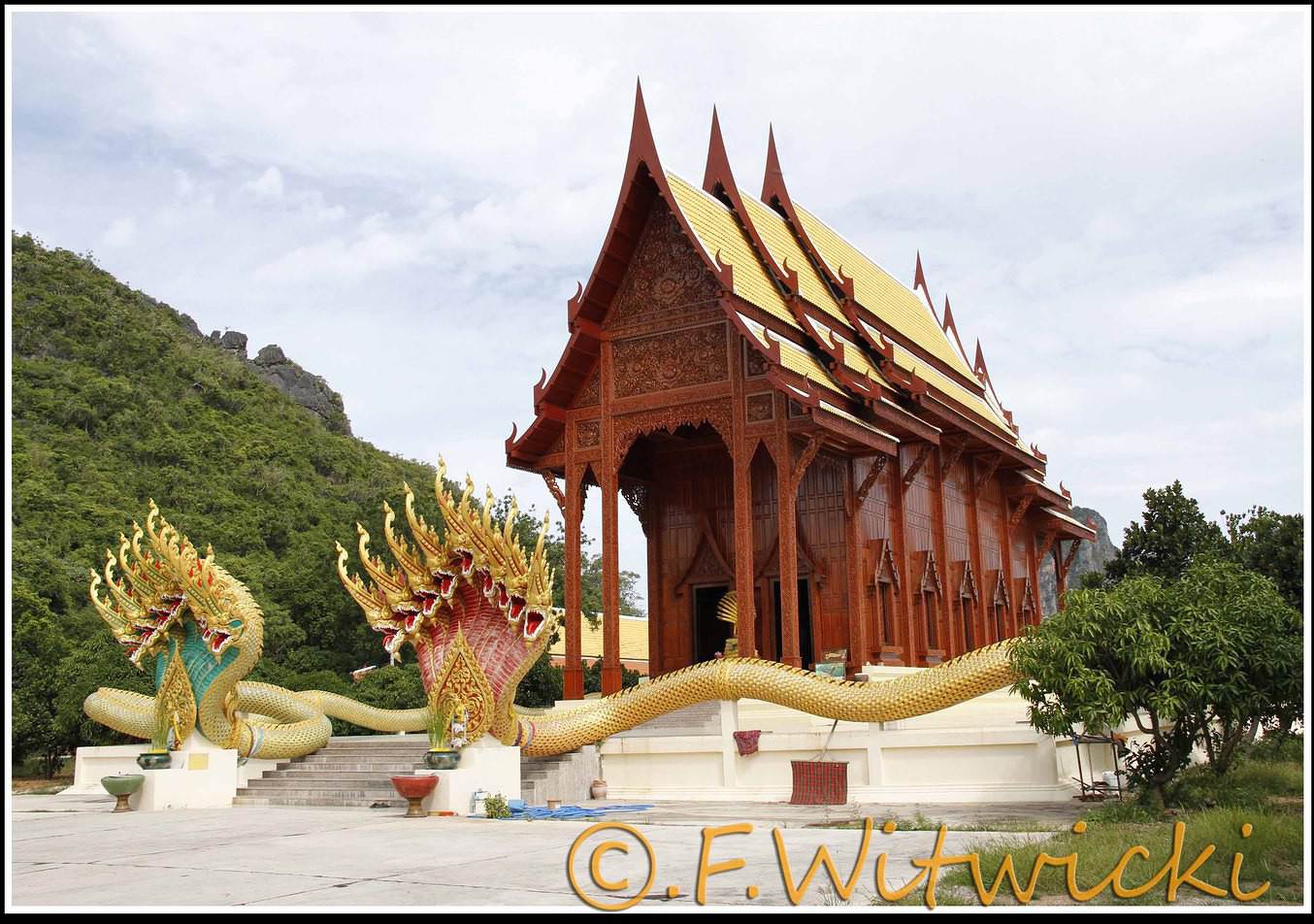
On the nearest hill stands a temple with, supposedly, a magnificent view. There are also a lot of macaques there that have caused some misadventures for tourists. We won’t go this time. Truth be told, we’ll have spent half our trip climbing hills anyway.

No taxis in Prachuab. Tuk-tuk motorbikes will take you into town for 30 baht and a bit farther for 40 baht. For 50 baht if you’re carrying big luggage.
We chose the Prachuab Beach Hotel, which has the advantage of having a super-smiley and incredibly helpful little manager. The kind who gives you vitamin C if something’s wrong, who’ll go out of her way to explain to the tuk-tuk driver what you want, and who’ll provide any information you can think of.
No pool, but less than 20 € a night on the top floor, by the sea with a beautiful view, centrally located, and with hot coffee available at all hours. Of course, all over the country, you can find good guesthouses at even better prices.
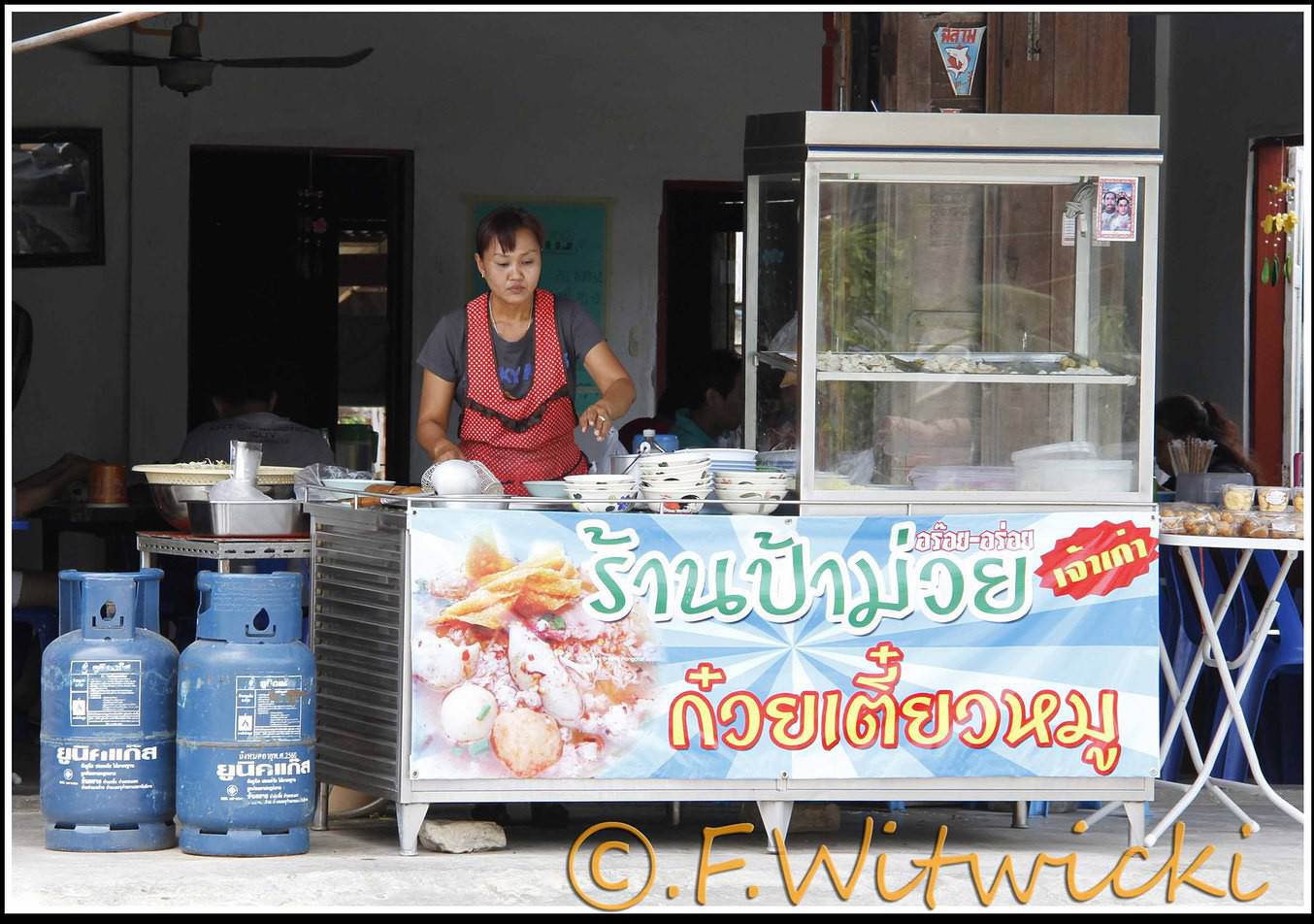
We quickly picked our lunch spot, right next to the hotel—a little open-air restaurant under corrugated iron sheets. The owner is one of those absolutely jovial and funny people. We enjoyed two delicious pad thai dishes, a meal that left a mark on us with its unique taste. One dish and one drink each, 100 baht. Two euros fifty for two people—no need to say more.

And right after this meal, our visits began. The ones we came to Prachuab for, the ones we spent three days here to make sure we didn’t miss our new friends.
At this moment, one of our most enjoyable experiences in Thailand—and one of the best vacation memories of our lives—began.
To get there, you take a tuk-tuk or hop on a bike. Head south, just a few kilometers, to the military base on Ao Manao beach. It’s free, but you stop 15 meters after the entrance to fill out a register: name, first name, nationality, passport number, reason for visit, time of arrival (and departure when you leave).
The beach is known for being clean since the army cleans it every morning. We won’t go there either.
The base is very large; we explored a good part of it and noticed it’s actually quite pretty around here.
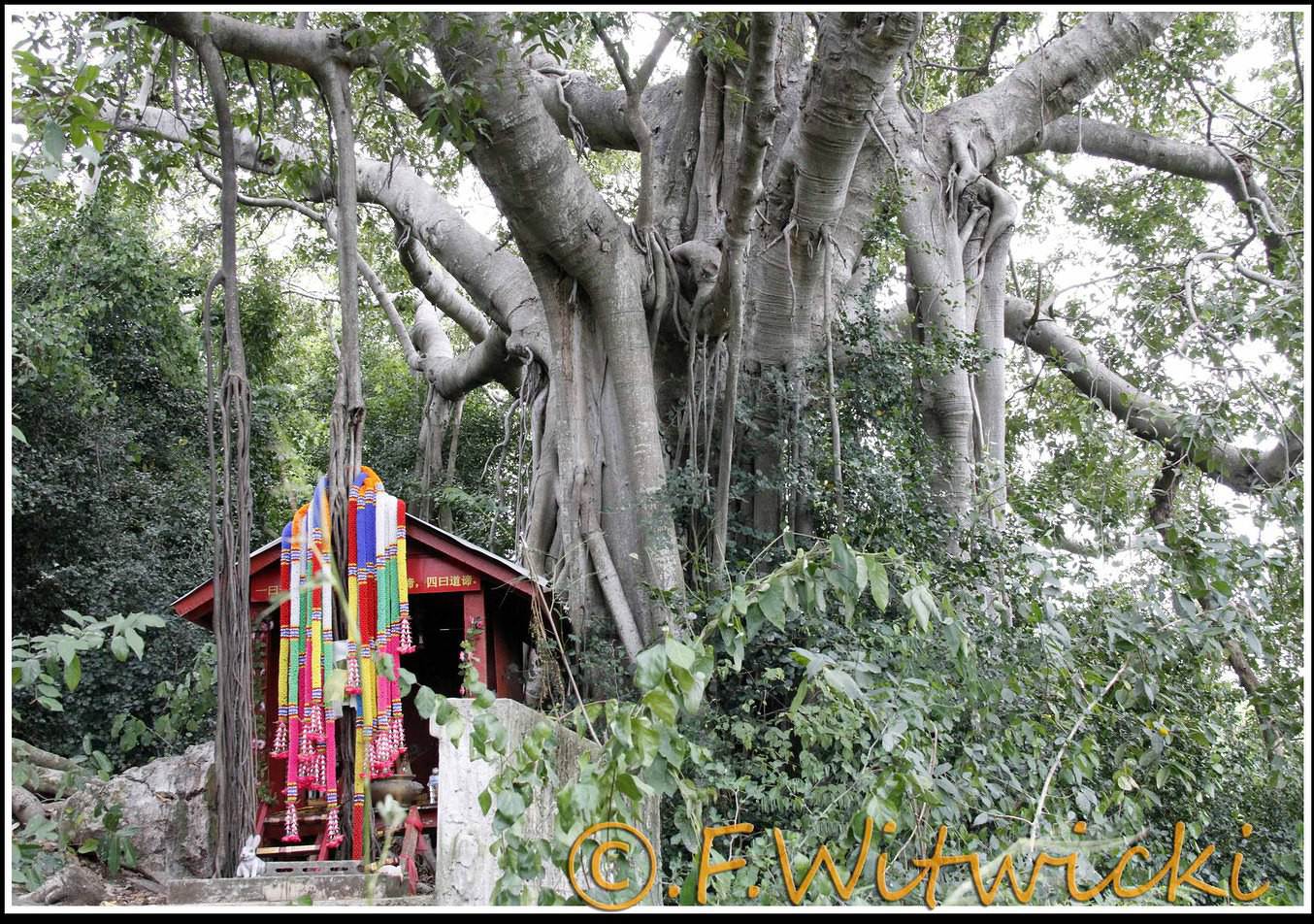
The driver finally stopped between a vast expanse of neatly mowed grass and a rocky outcrop halfway between a hill and a mountain, covered in vegetation.

He pointed at some large trees, we nodded okay, and asked him to come back in two hours.
It was Sunday, so there were only a few local visitors and two or three tourists.
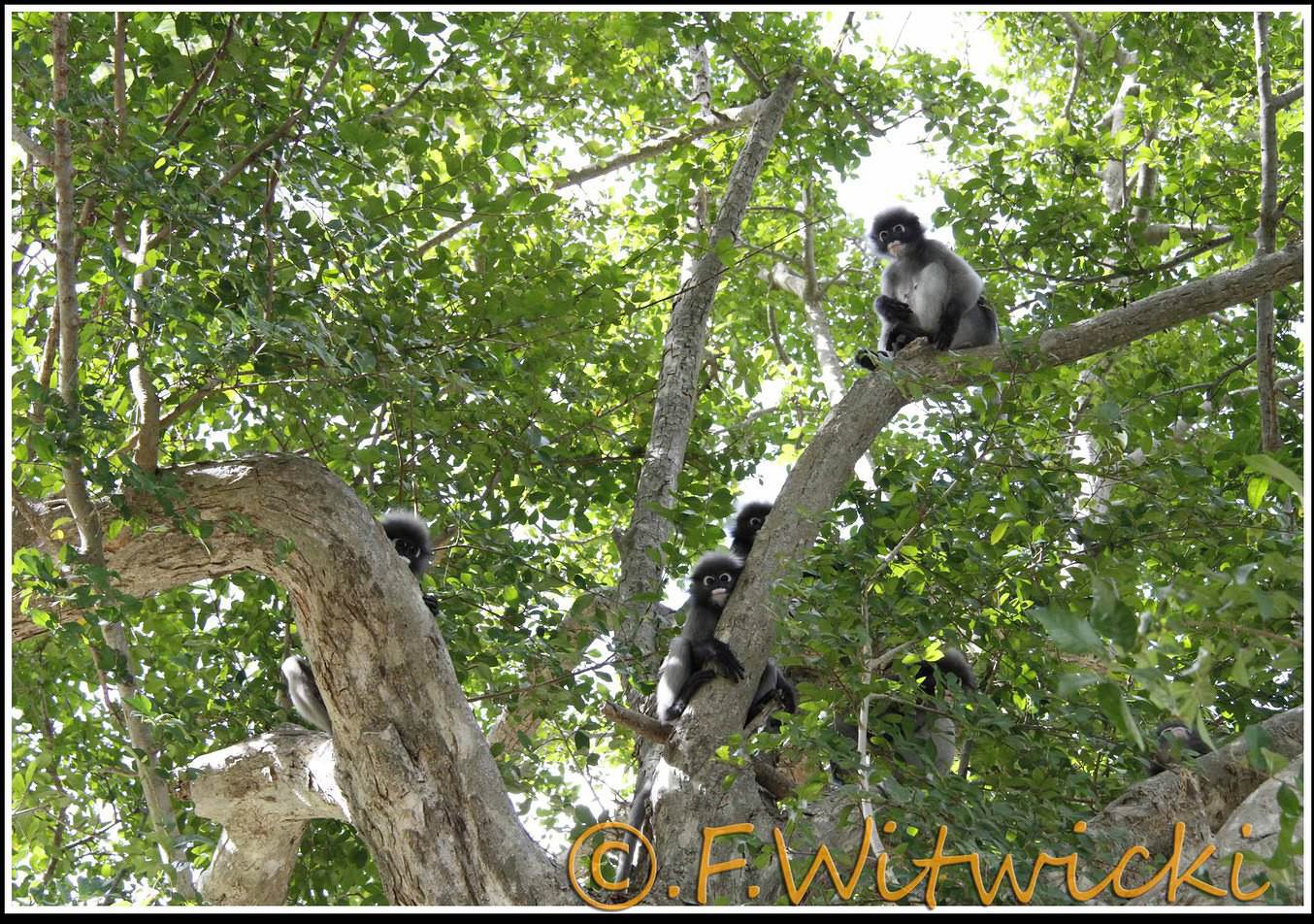
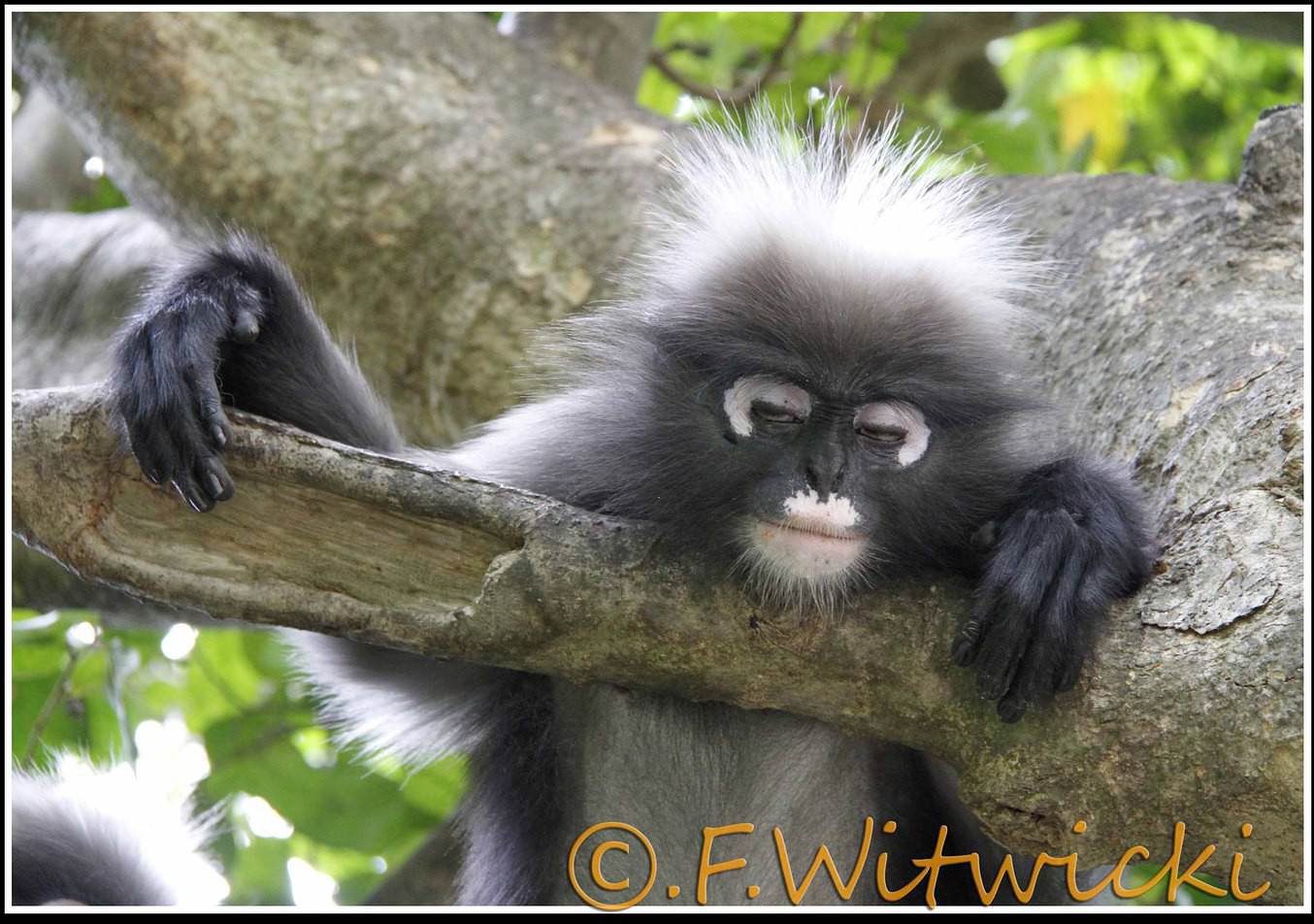
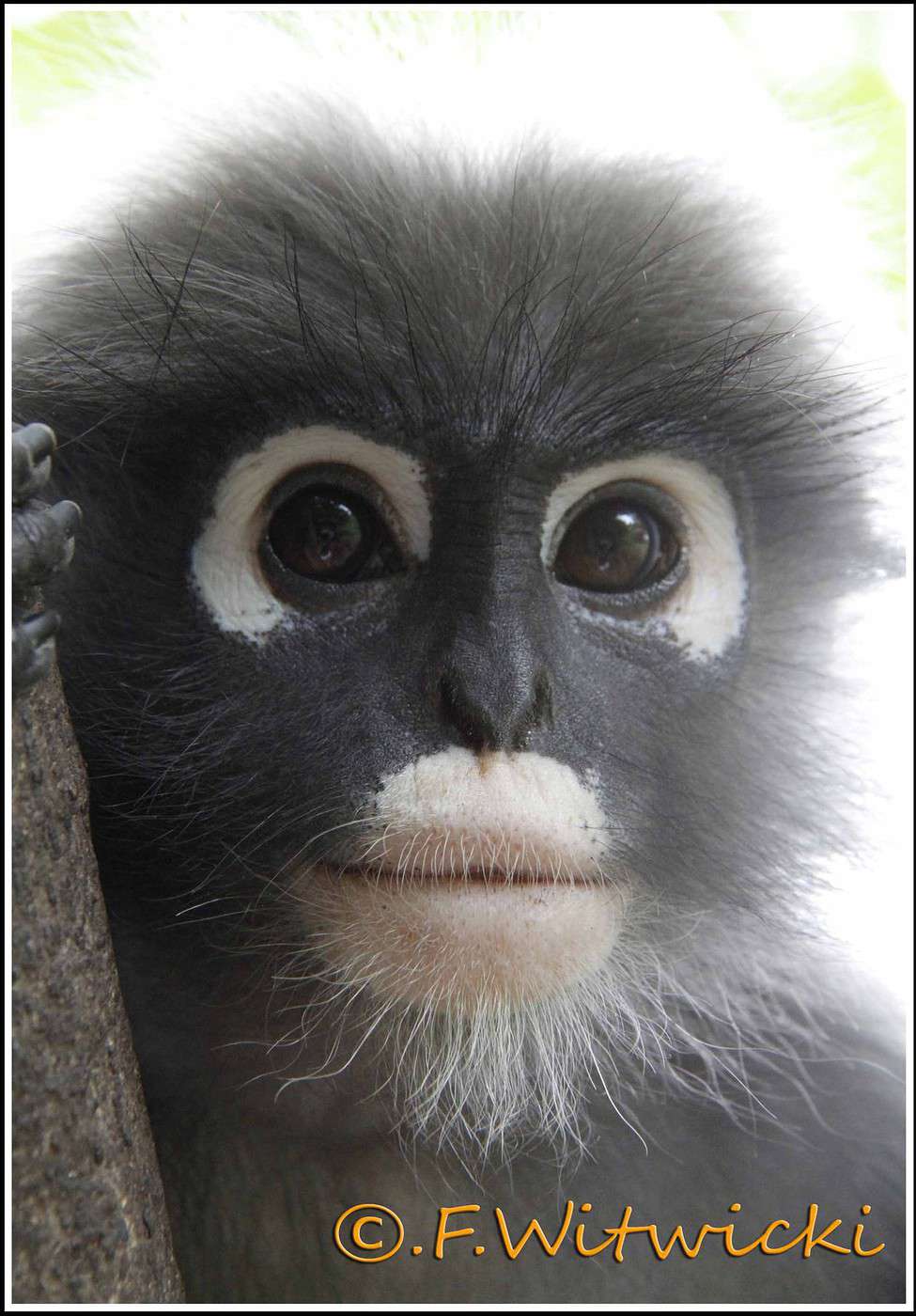
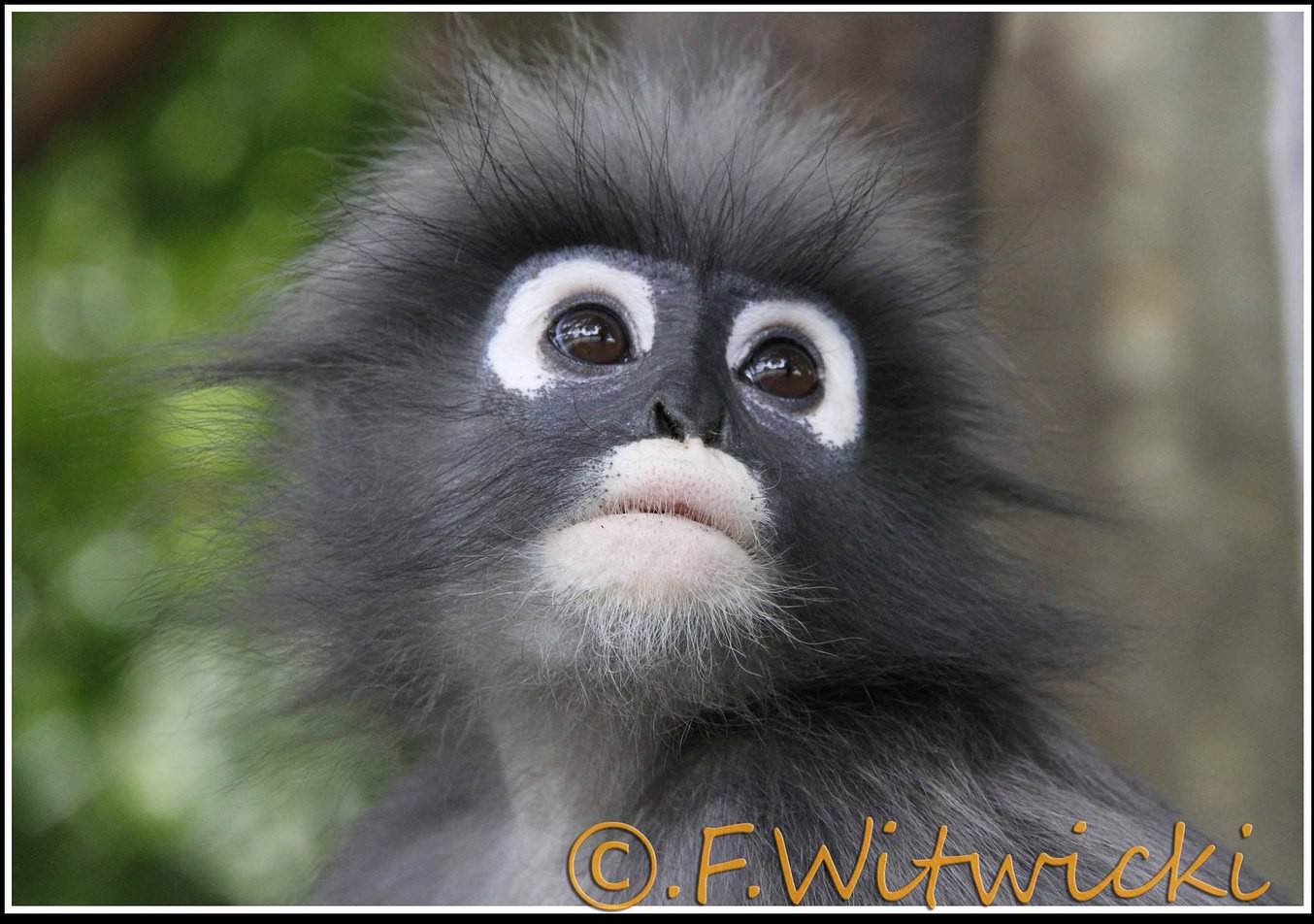
We approached the trees and saw this:

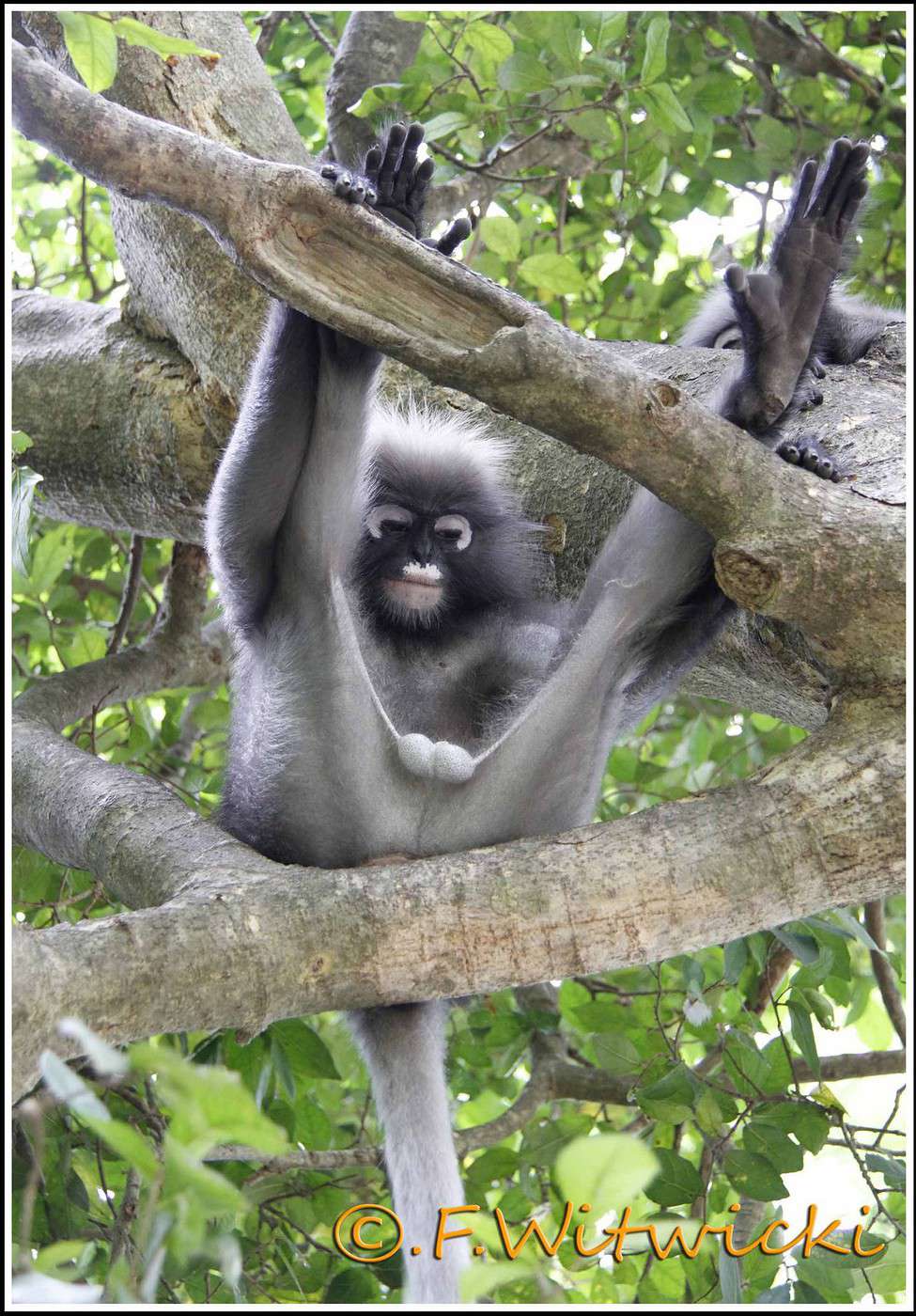
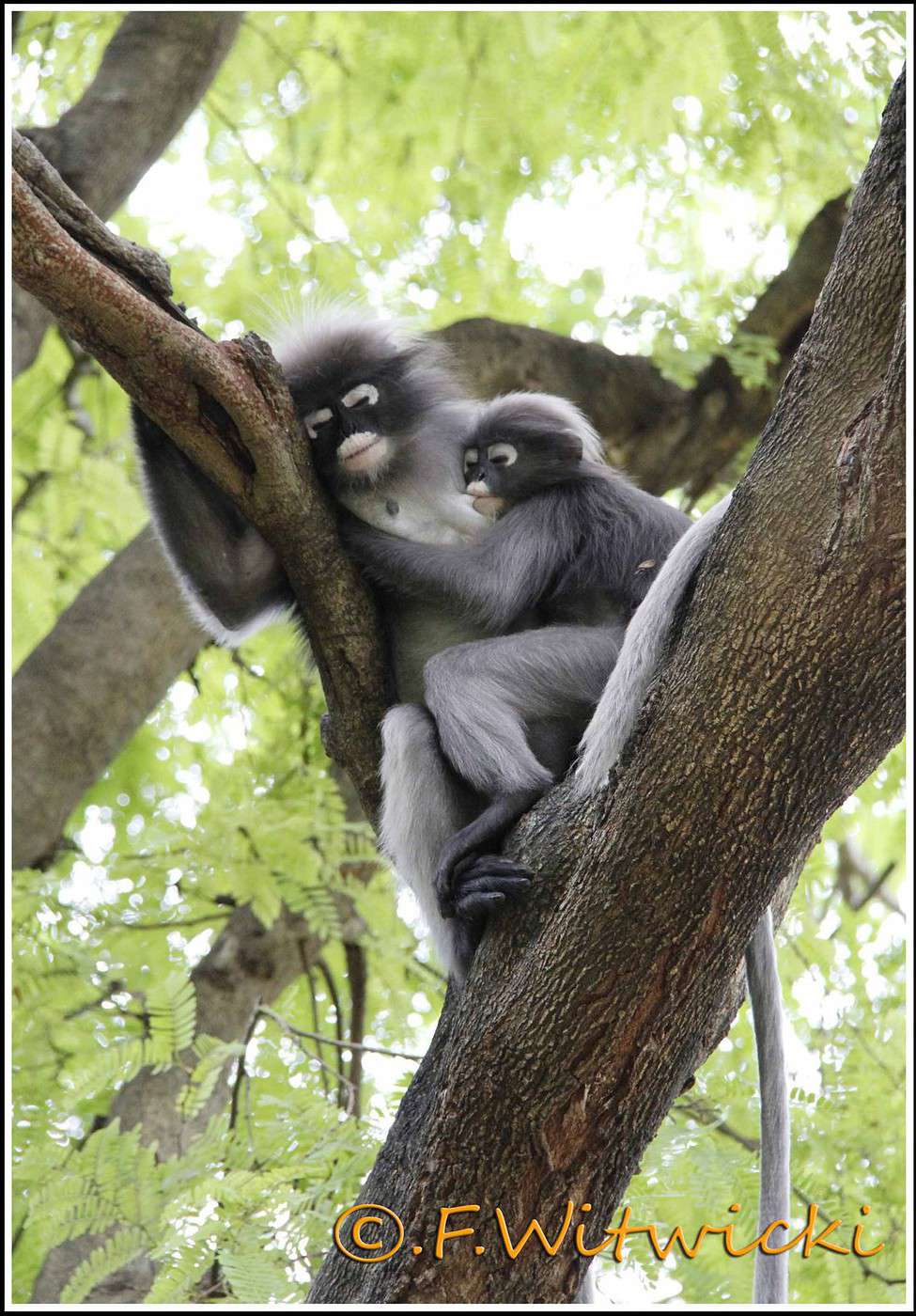
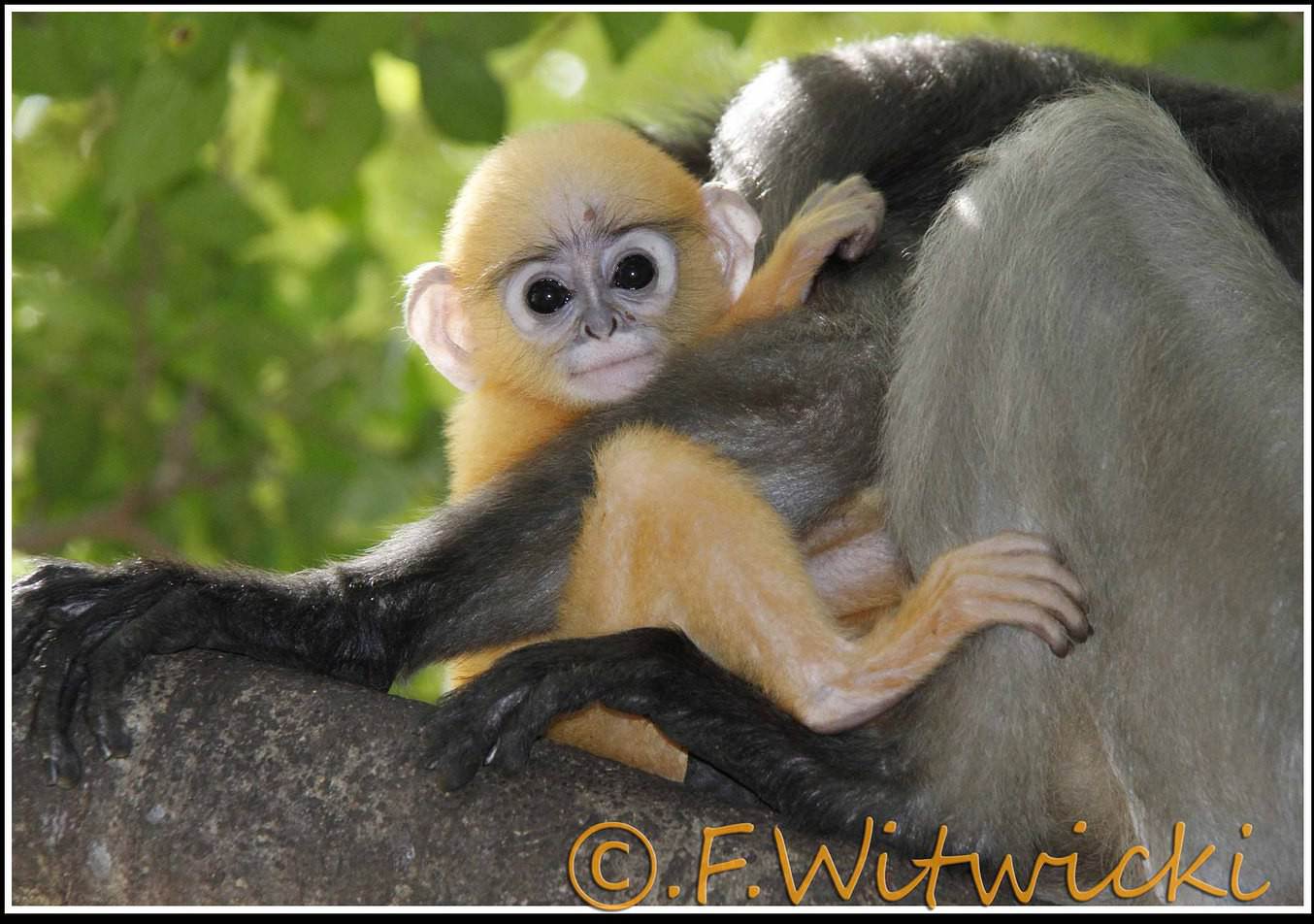
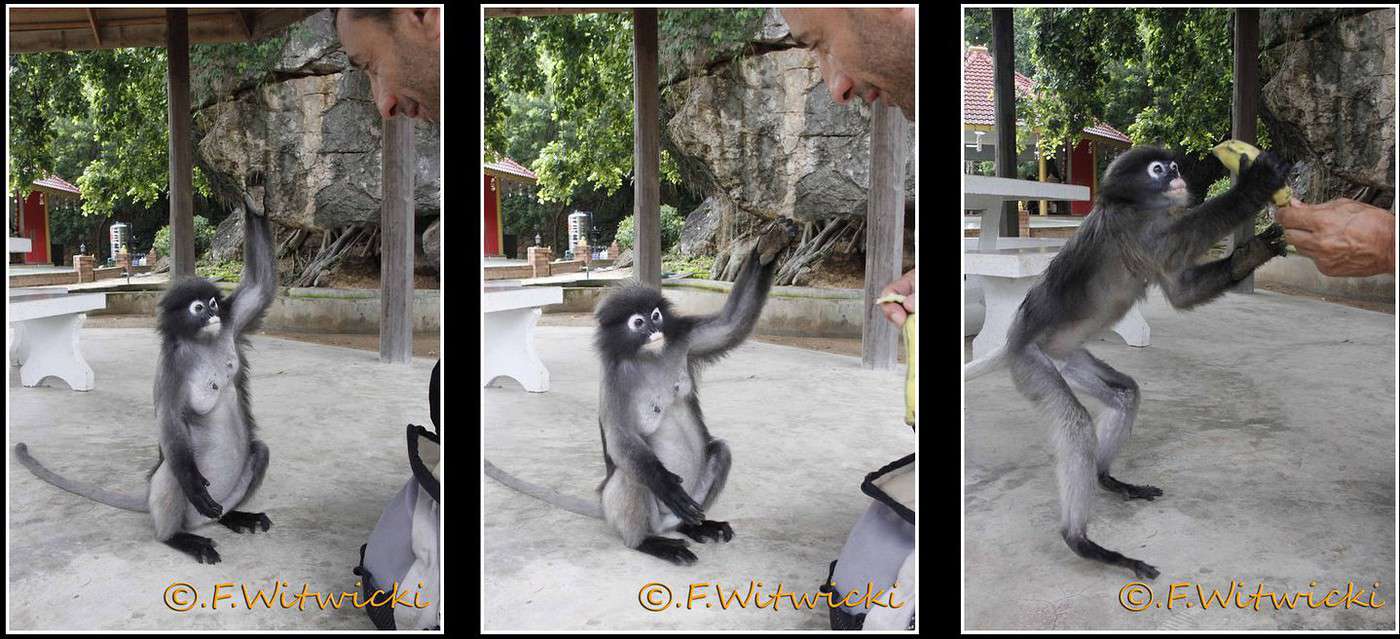
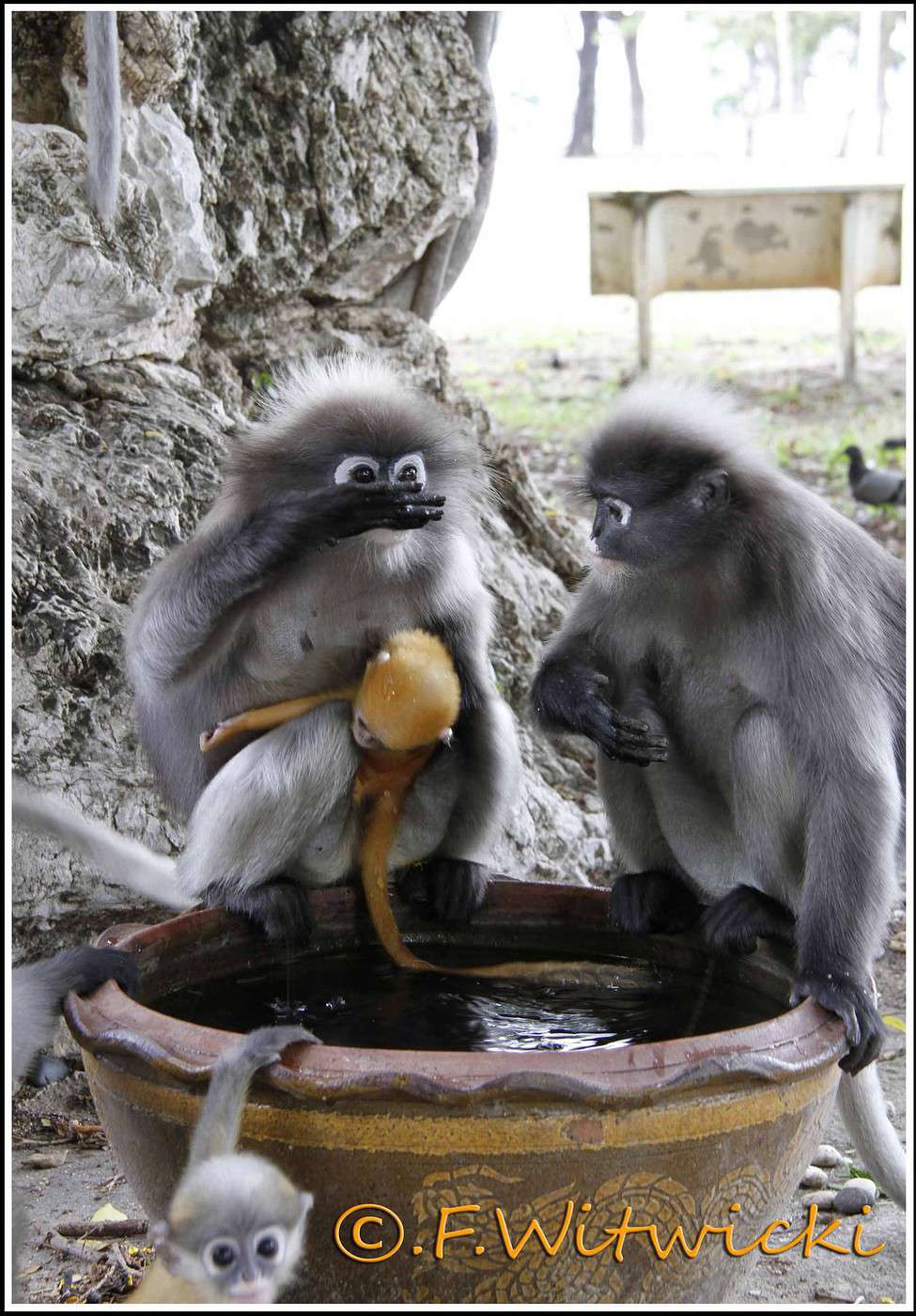
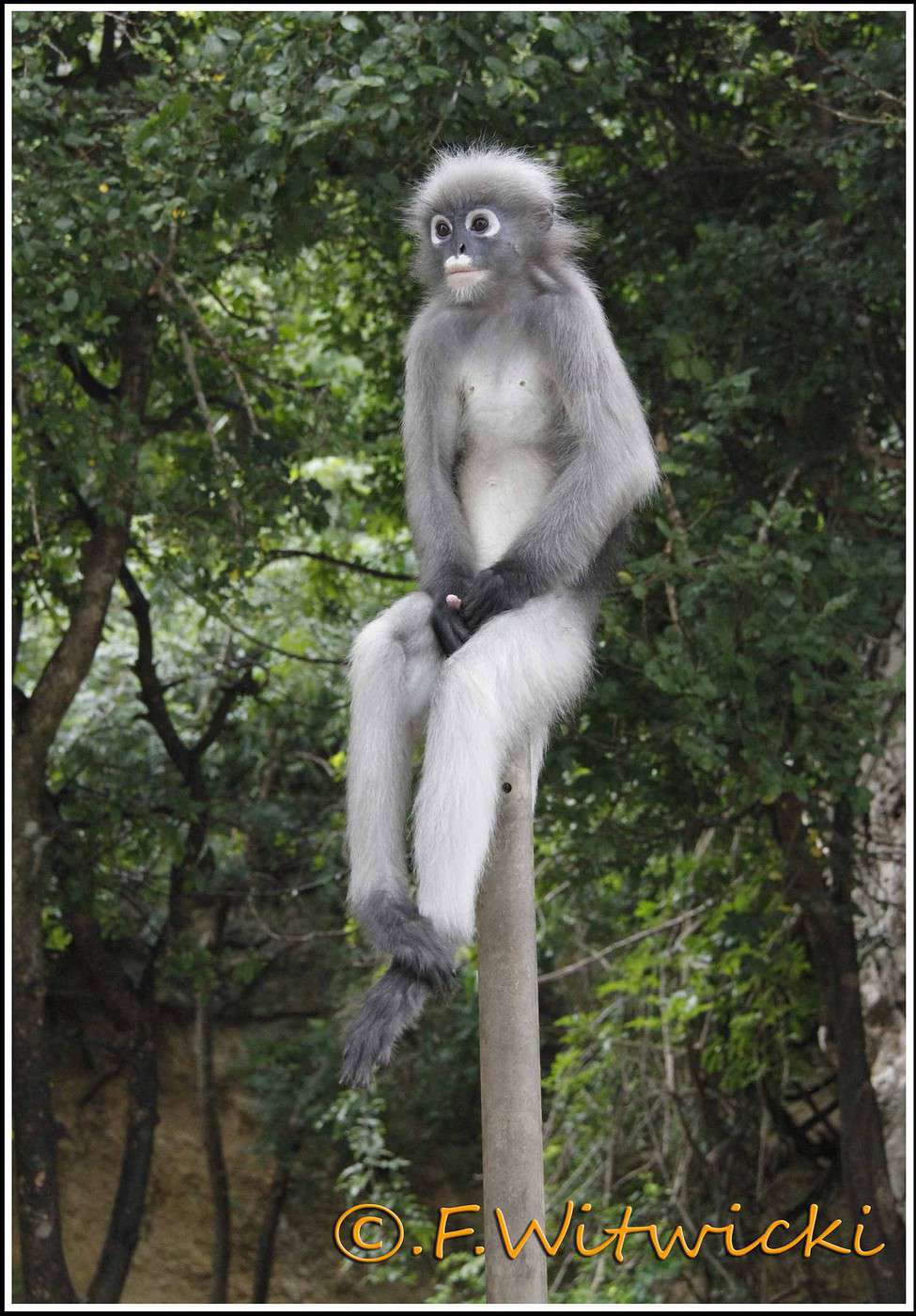
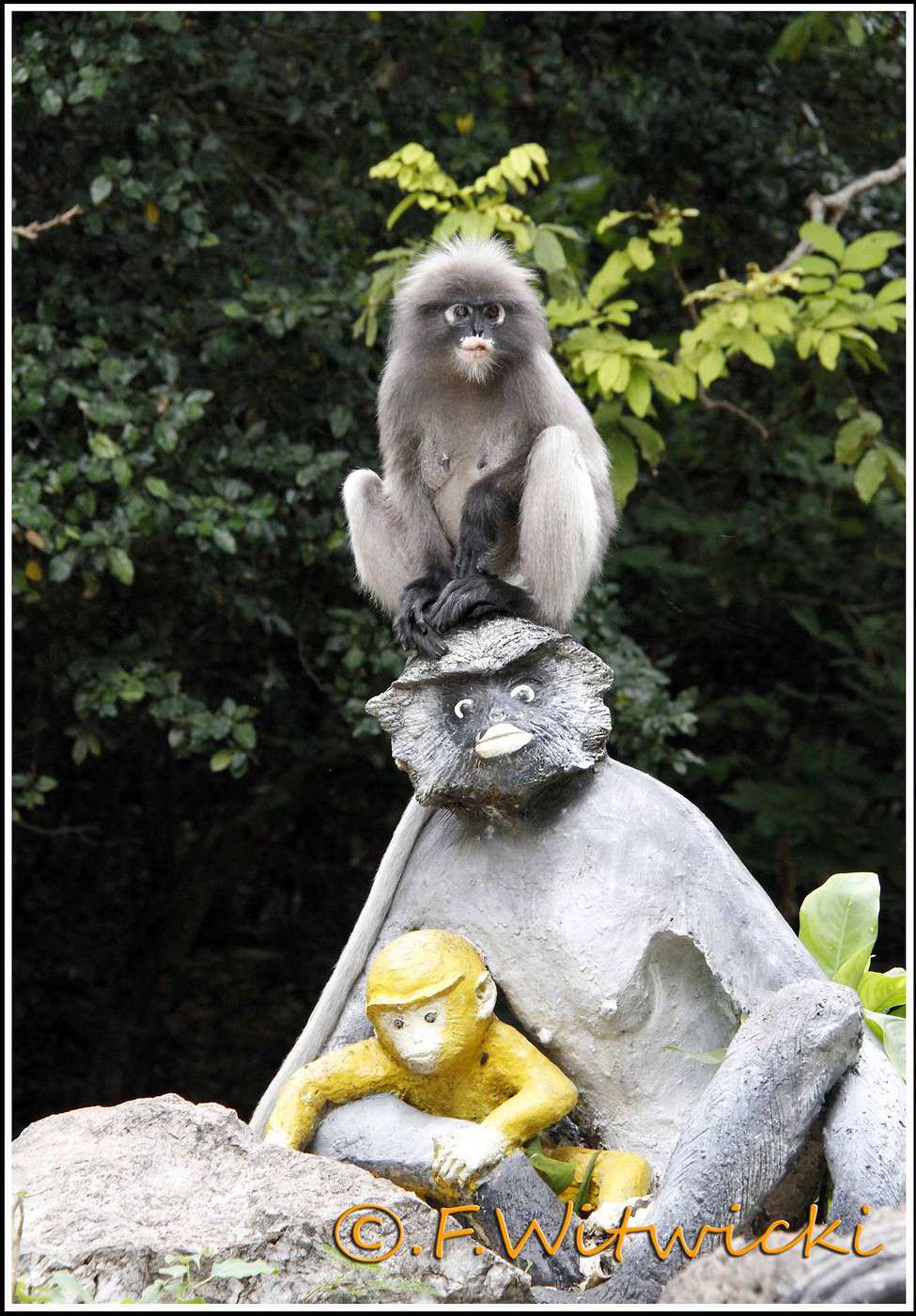
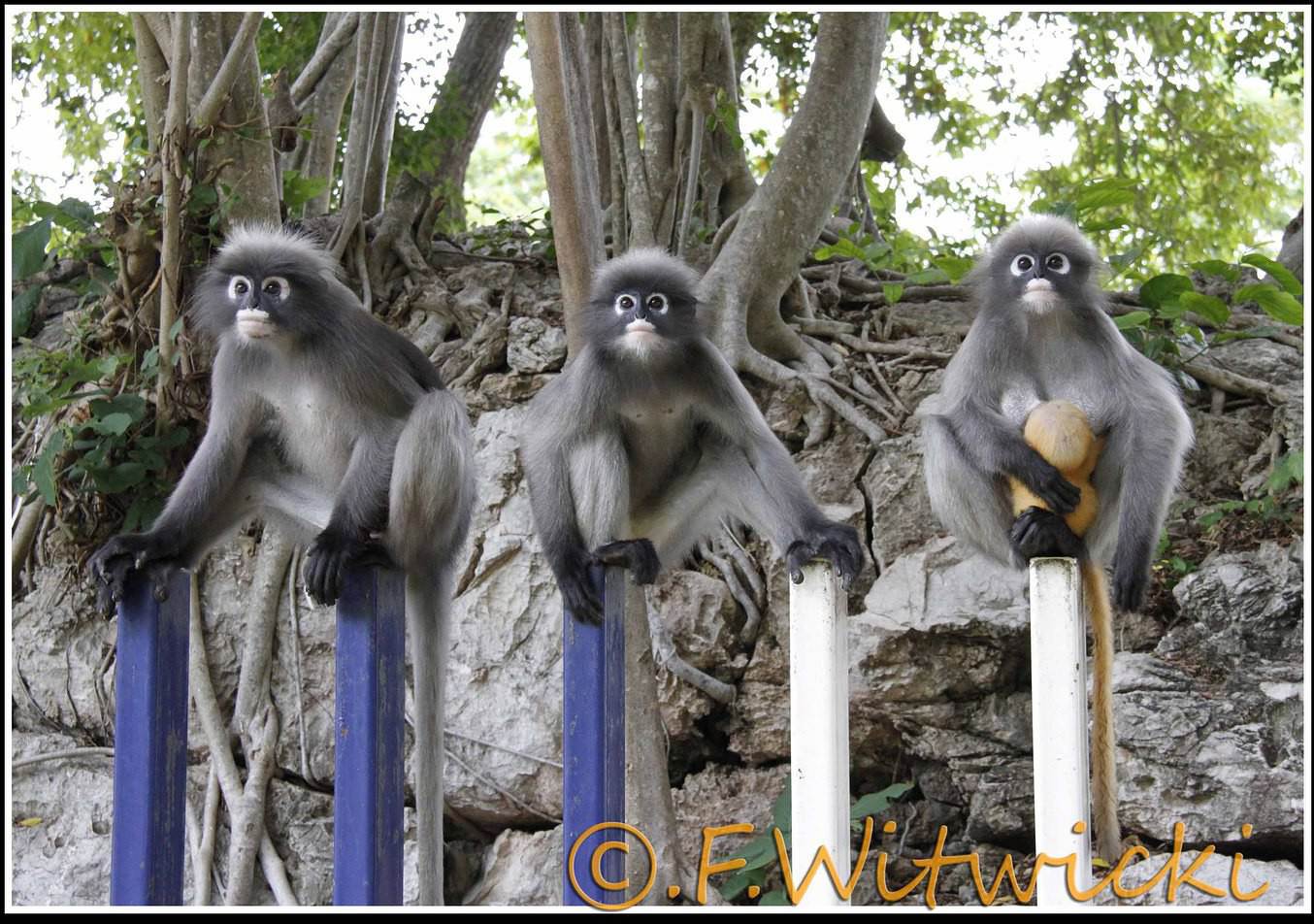
But yes, indeed, there were real live stuffed animals in those trees! Little creatures with long tails and all with big, round, glasses-like eyes!

We’d never seen photos or reports about these animals before. It’s actually a mystery—looking at these pictures, how can you not melt? How can you not think about animal welfare, which too few people still care about, in our opinion?


From what we know, it’s the dusky leaf monkey, or langur. It seems to be mainly found in a few Southeast Asian countries and India. It’s still an animal on the brink of extinction.
We were literally fascinated by their beauty and calm. There’s something undeniably human in their gaze, and it’s touching.


Later, our necks hurt a bit from looking up at the trees so much. Those two hours flew by—we’ll come back tomorrow.
In the evening, we treated ourselves to a seafood feast. We’ll remember that prices are high for a country that produces so much. After trying it twice in two different cities, we found that Thais aren’t particularly skilled at cooking and preparing large prawns or lobsters.
Anyway, during our digestive walk by the sea, we were already looking forward to the next day to see the little creatures again.