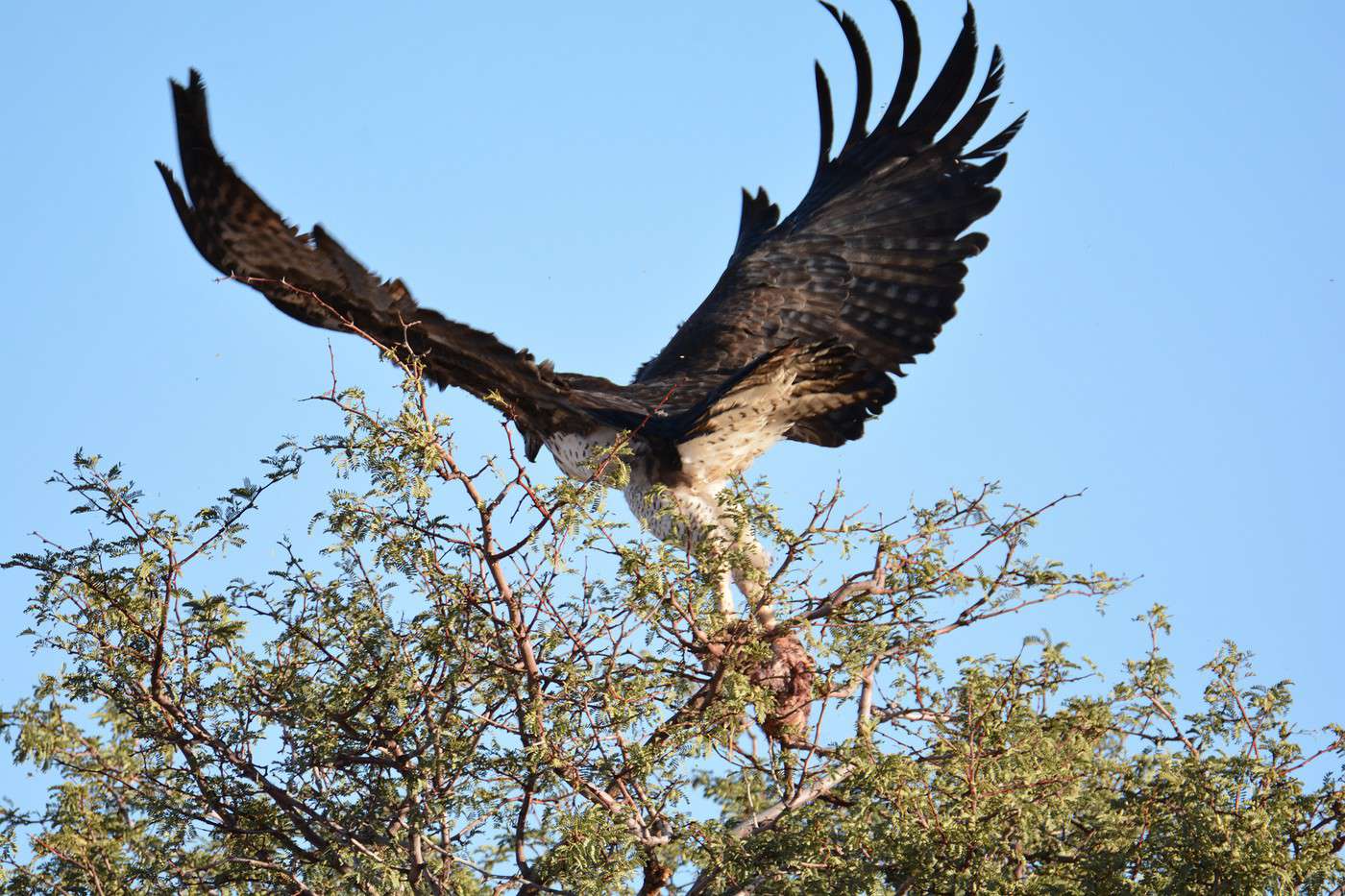
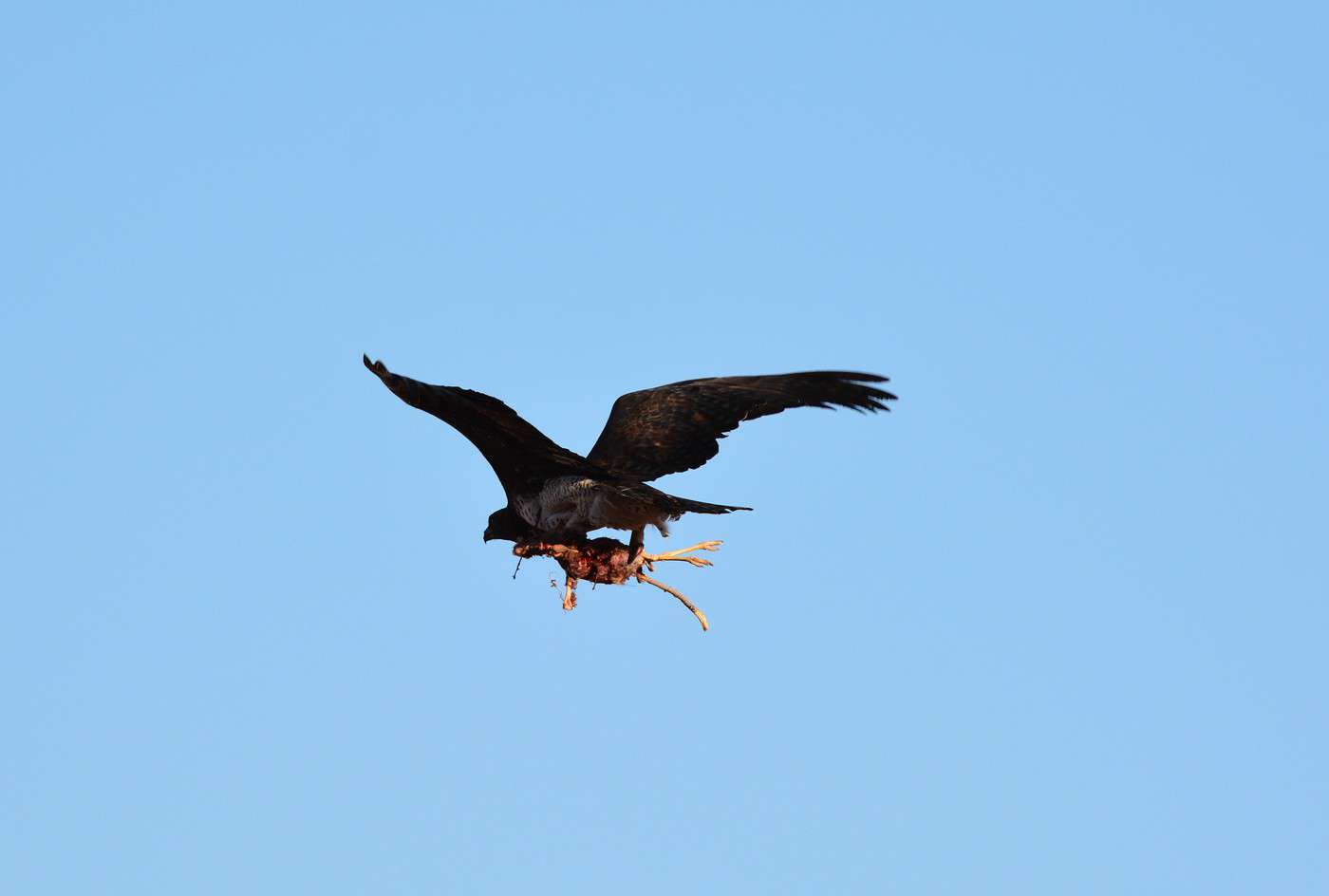
Tuesday, July 30: Kalahari Anib Campsite / Namibrand Family Hideout
Our first night under the tent went really well—we weren’t cold at all, everything was perfect. I’m so happy with my purchases: sleeping bags and a sleeping bag liner. I also played it safe by wearing the technical underwear I use when I go skiing 😎.
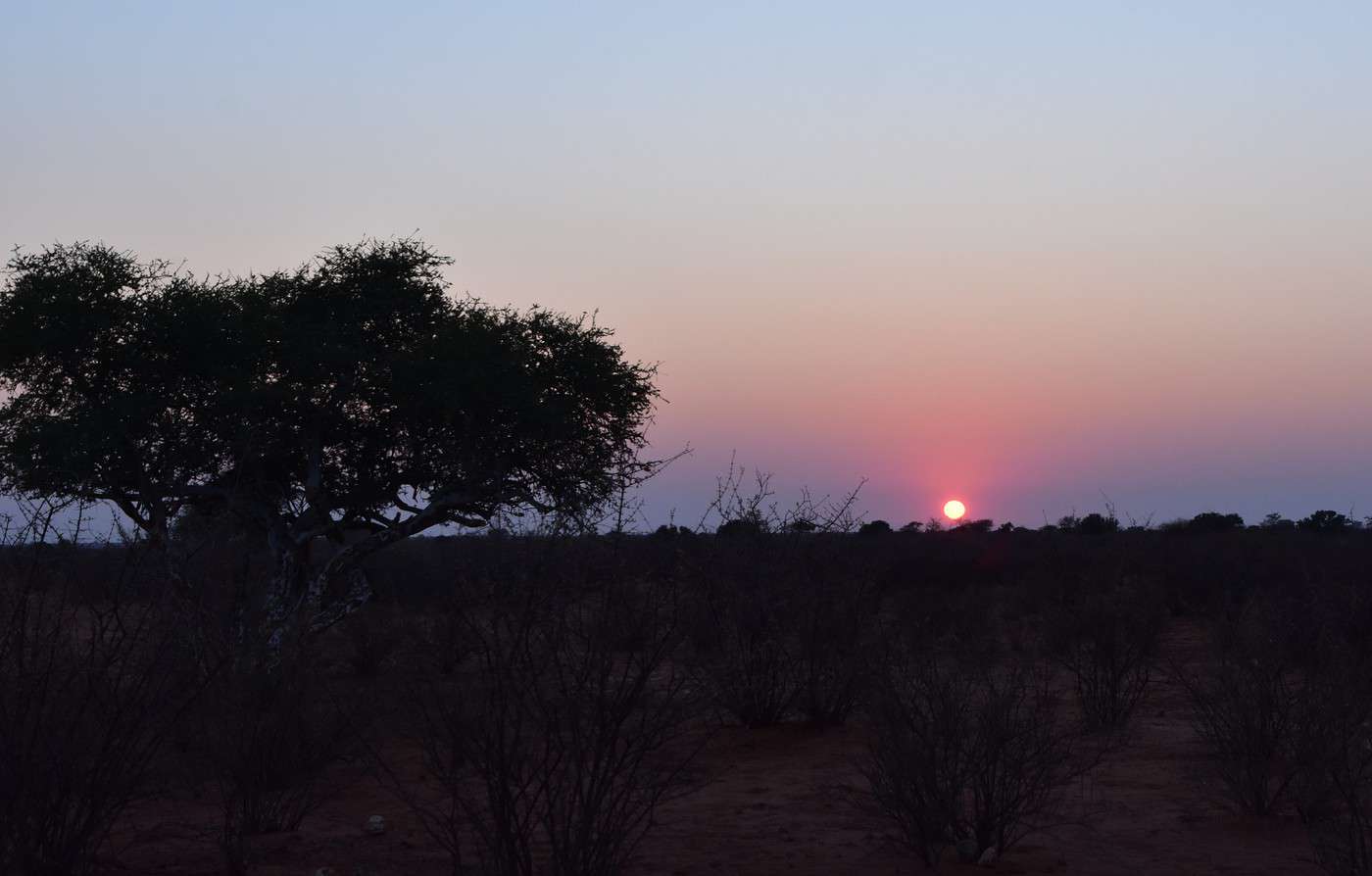
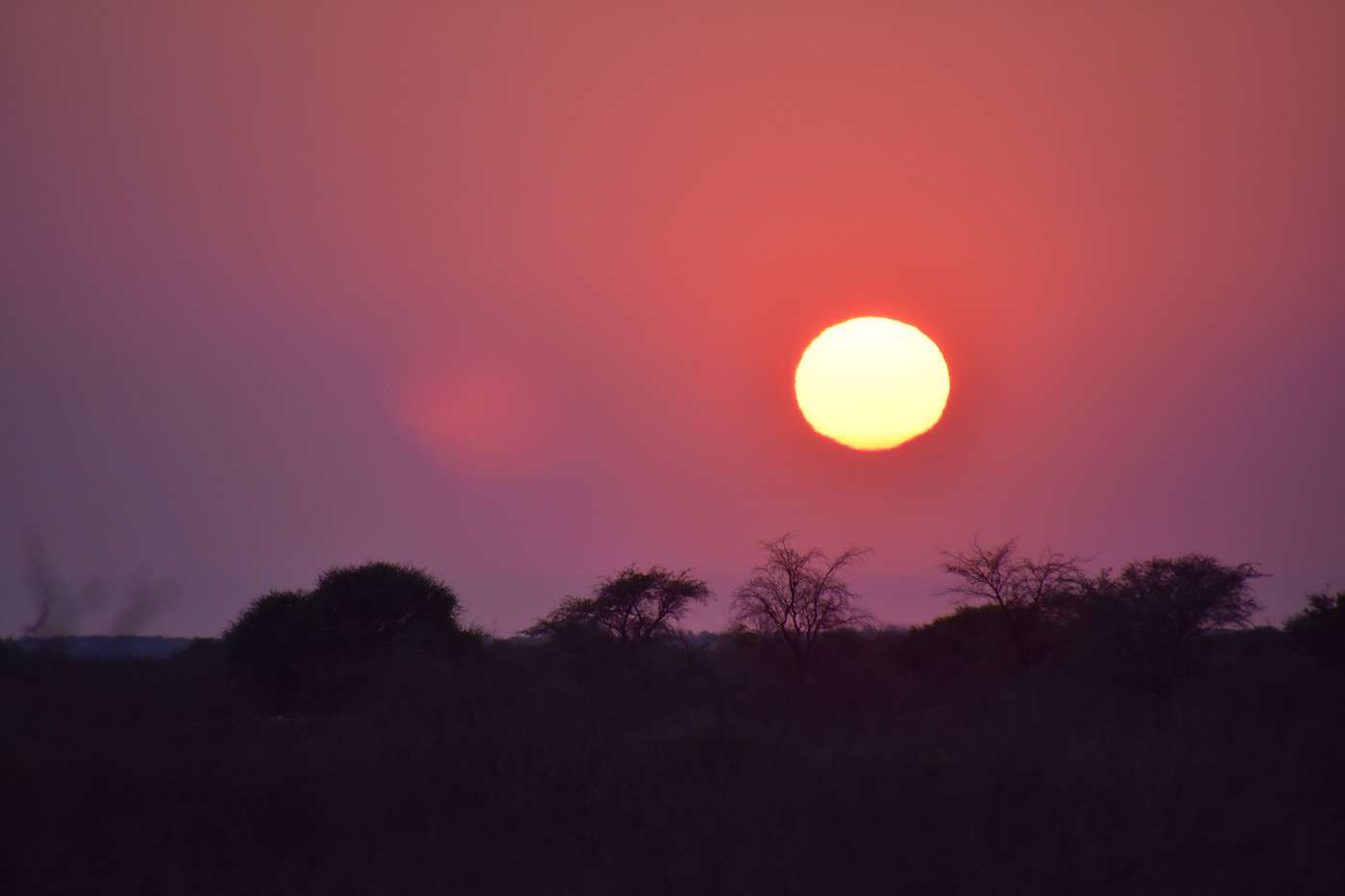
The hardest part, though, is actually getting out from under there when you’re all warm and cozy and getting dressed. When we woke up at 7 a.m., it was still pretty cold outside—just a few degrees—so it stung a little. We poked our heads out just as the sun was rising—wow! It was absolutely stunning, the sun was so red.
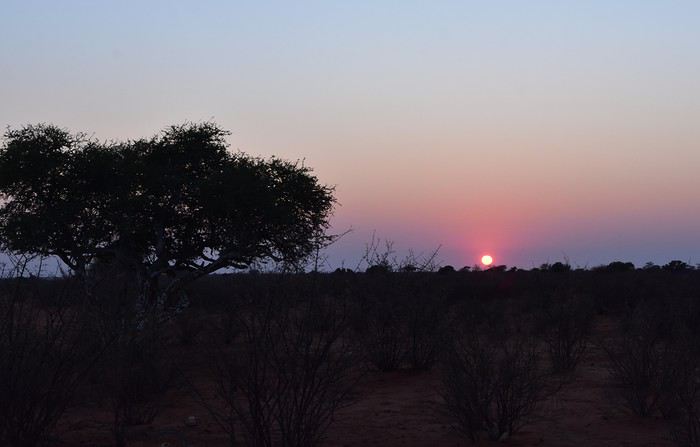
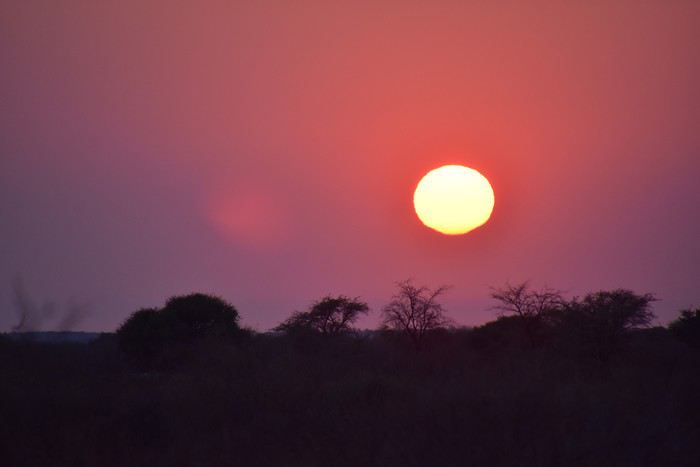
Last night, in preparation, I’d put boiling water in a Thermos, and this morning, it was still really hot. We took our time with breakfast, the sun started warming us up, and we peeled off some of the layers we’d piled on before leaving the tent.
By the time we’d packed everything up and folded the tent—let’s just say it took us a few tries to get it right—it was already 9:30 a.m. when we left Anib Lodge.
We weren’t exactly efficient this first morning; we’ll have to step it up if we want to make the most of our time 🙁.
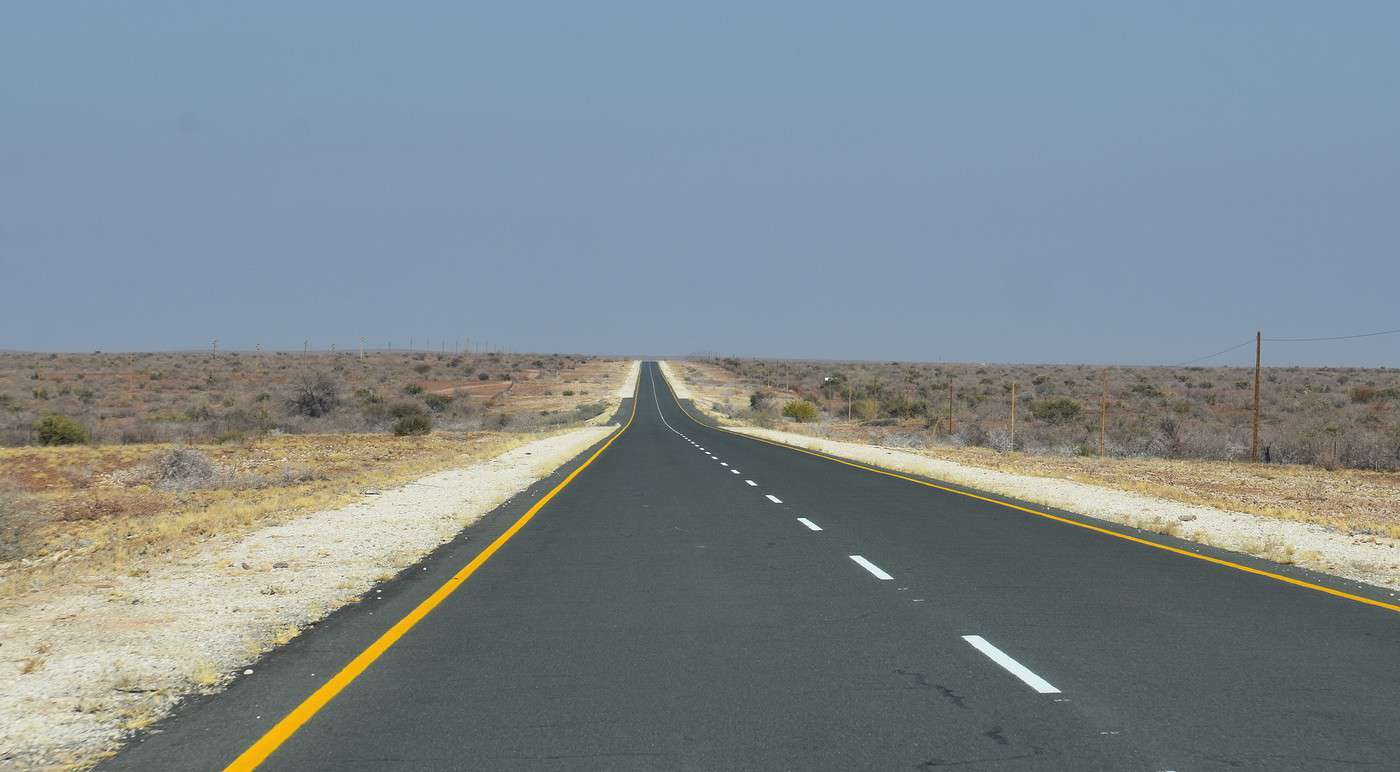
Today, we’re heading to Namibrand, with 280 km to cover. We passed through Mariental without stopping. The C19 to Maltahöhe is really good because it’s paved, but the landscapes are pretty monotonous.
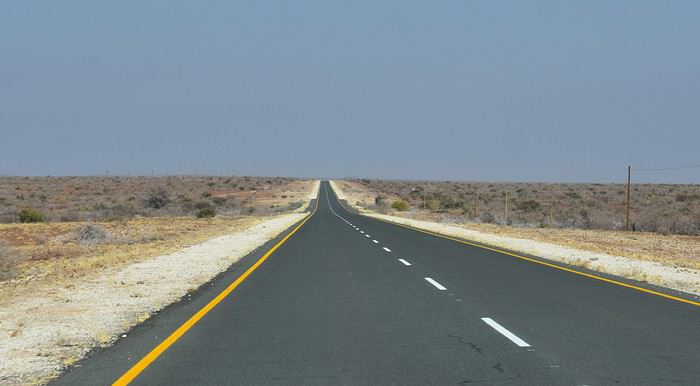
We made a quick stop to fill up on gas since we have no idea how much our little ride consumes. Plus, apparently, there’s no gas station before Sesriem.
Most rented 4x4s have two tanks, and the fuel gauge is on the second tank, so it only starts dropping after you’ve used half the diesel. With both tanks, Mickael told us we had a range of about 1200 km, but we shouldn’t wait for the gauge to drop before refueling. Sometimes, stations can run out of fuel, and you have to make it to the next one.
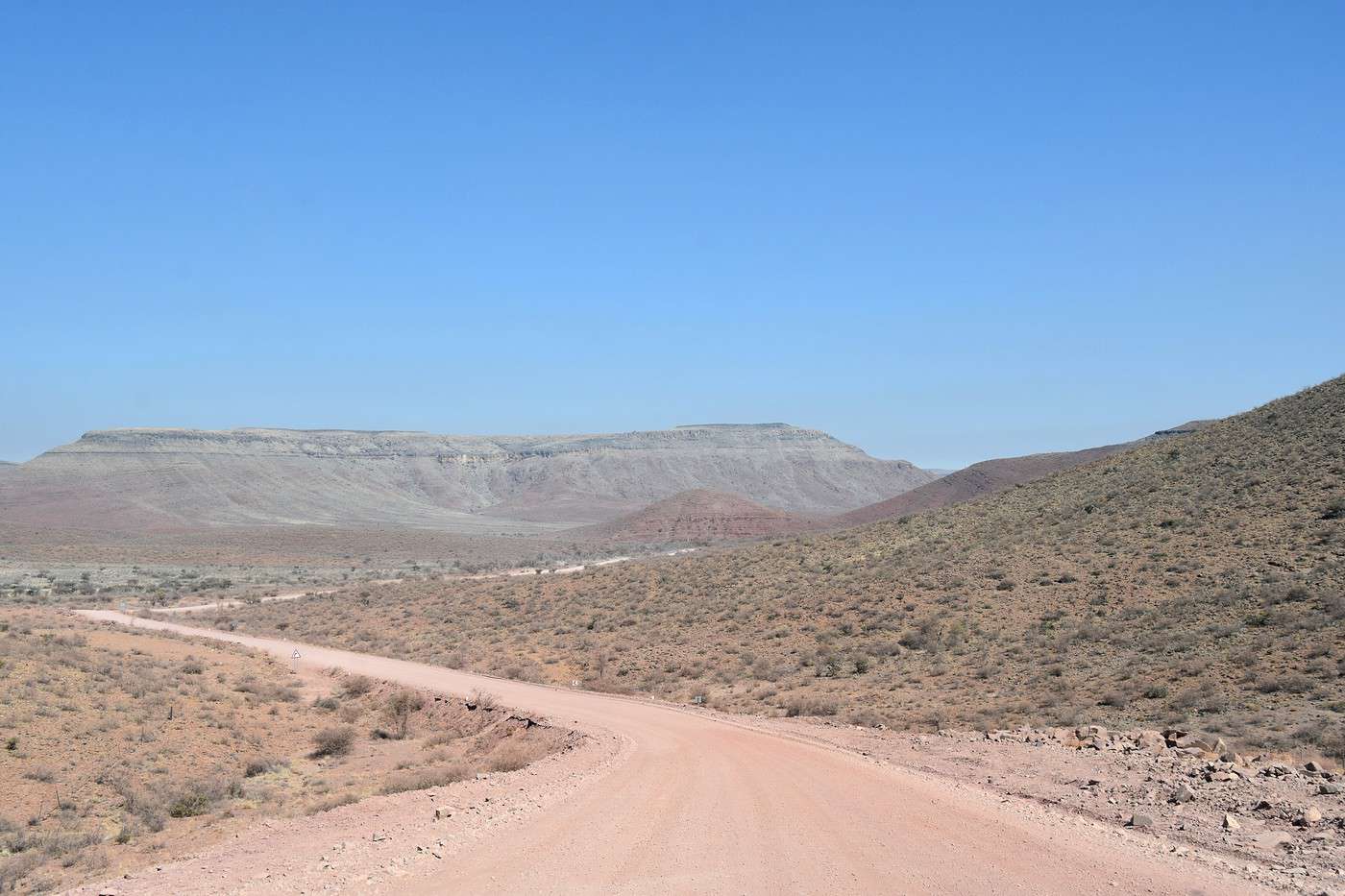
We continued on the C19 toward Sesriem. The road is gravel as you leave the village.
The landscape is pretty monotonous and gray with dust.
Then we descended from the plateau—the scenery was nicer, but the road was much rougher.
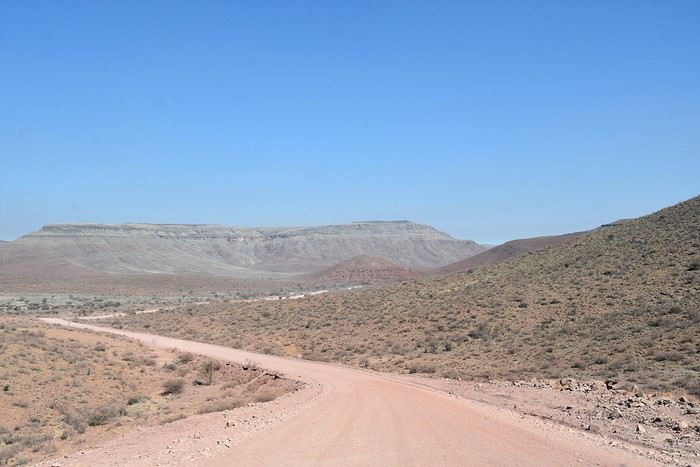
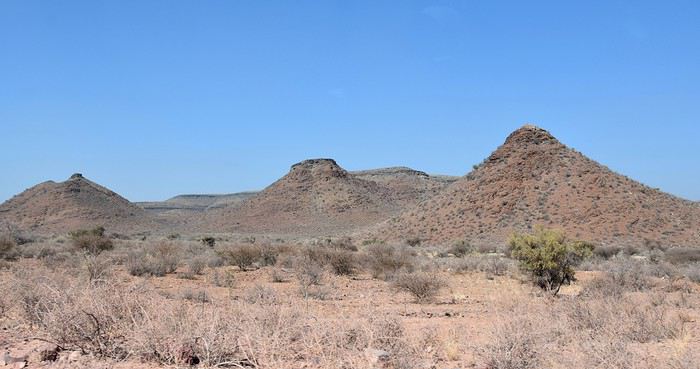
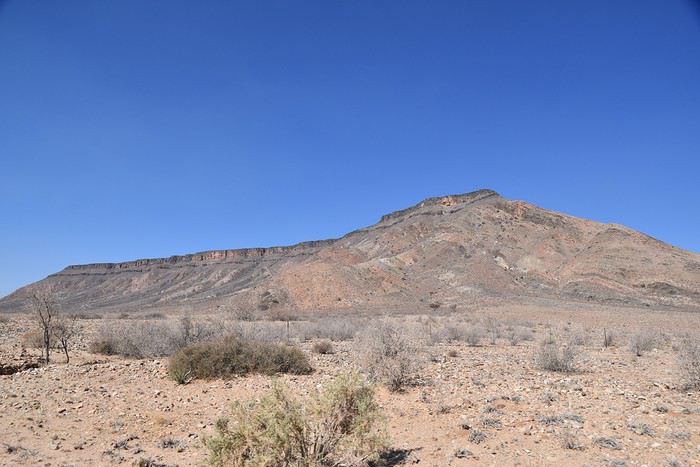
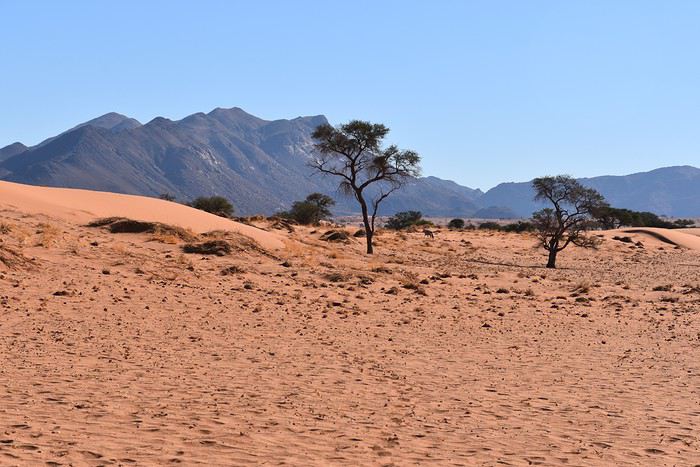
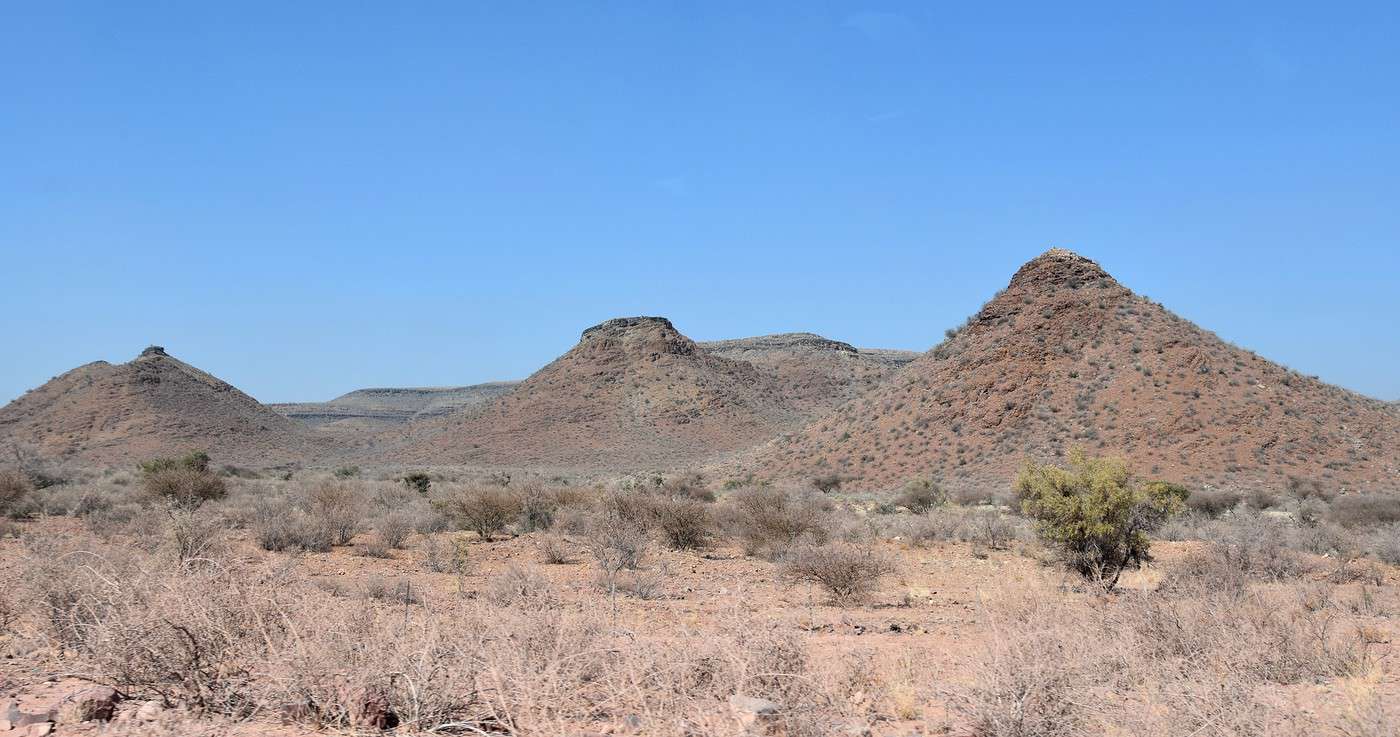
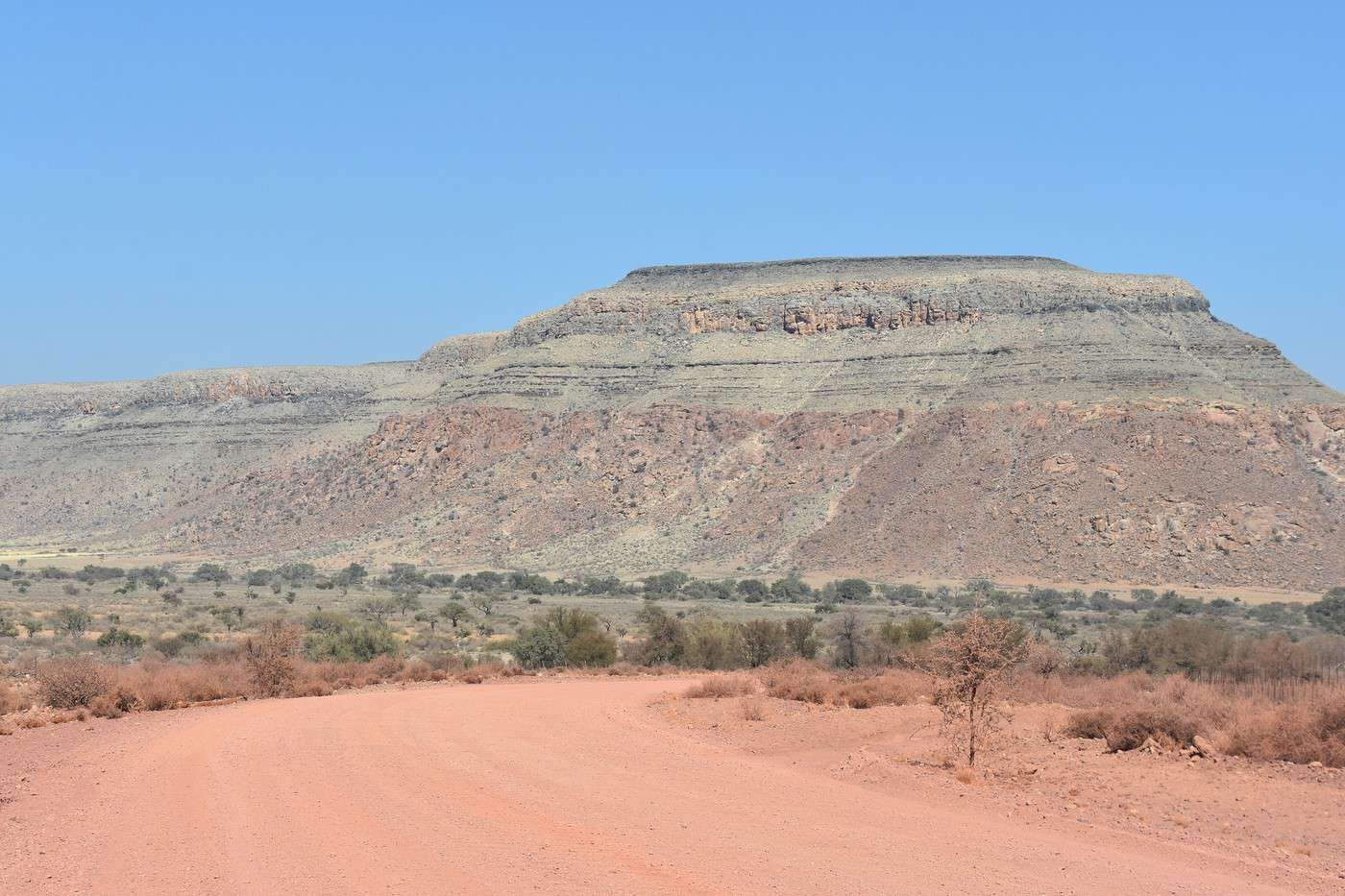
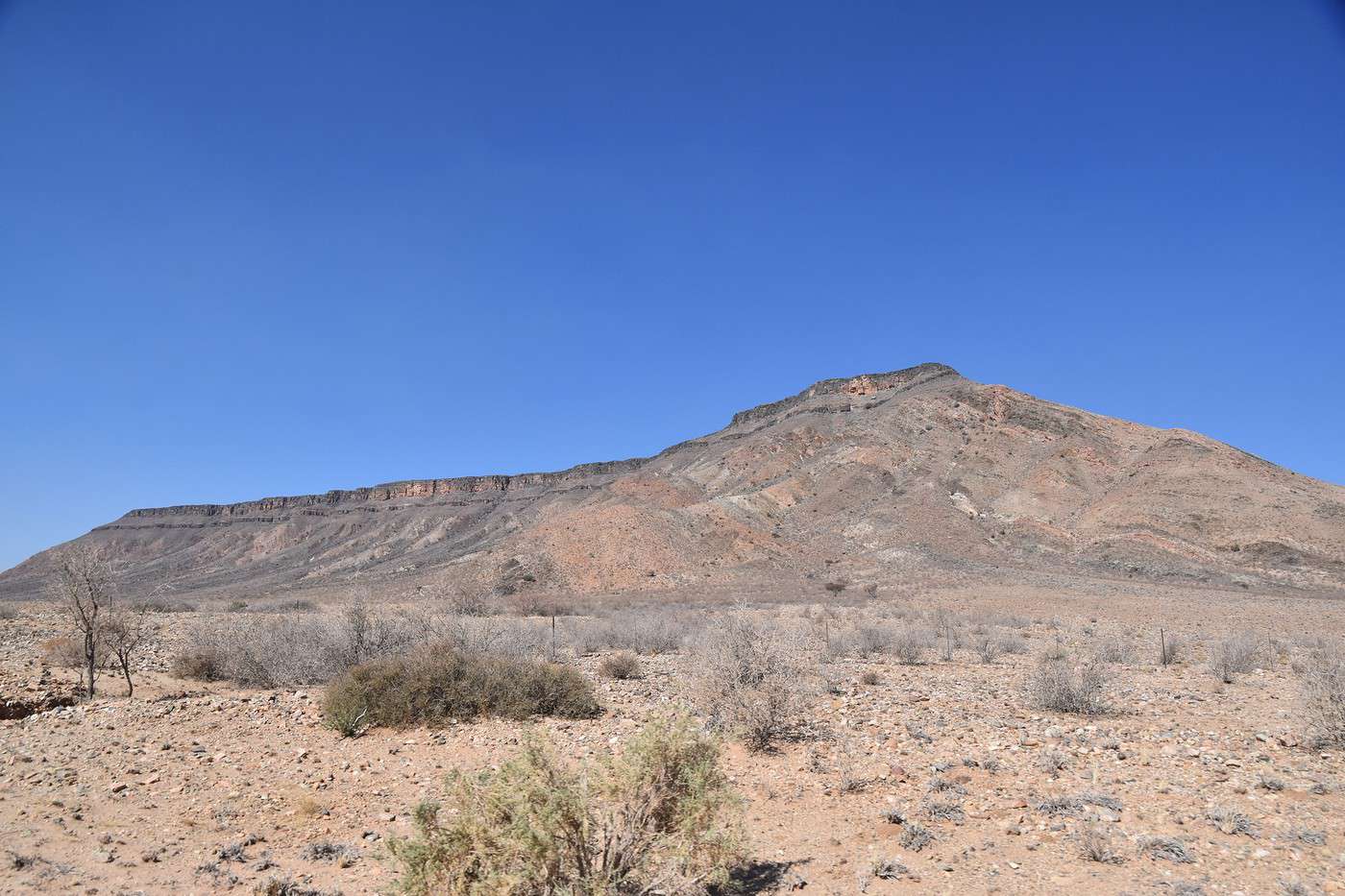
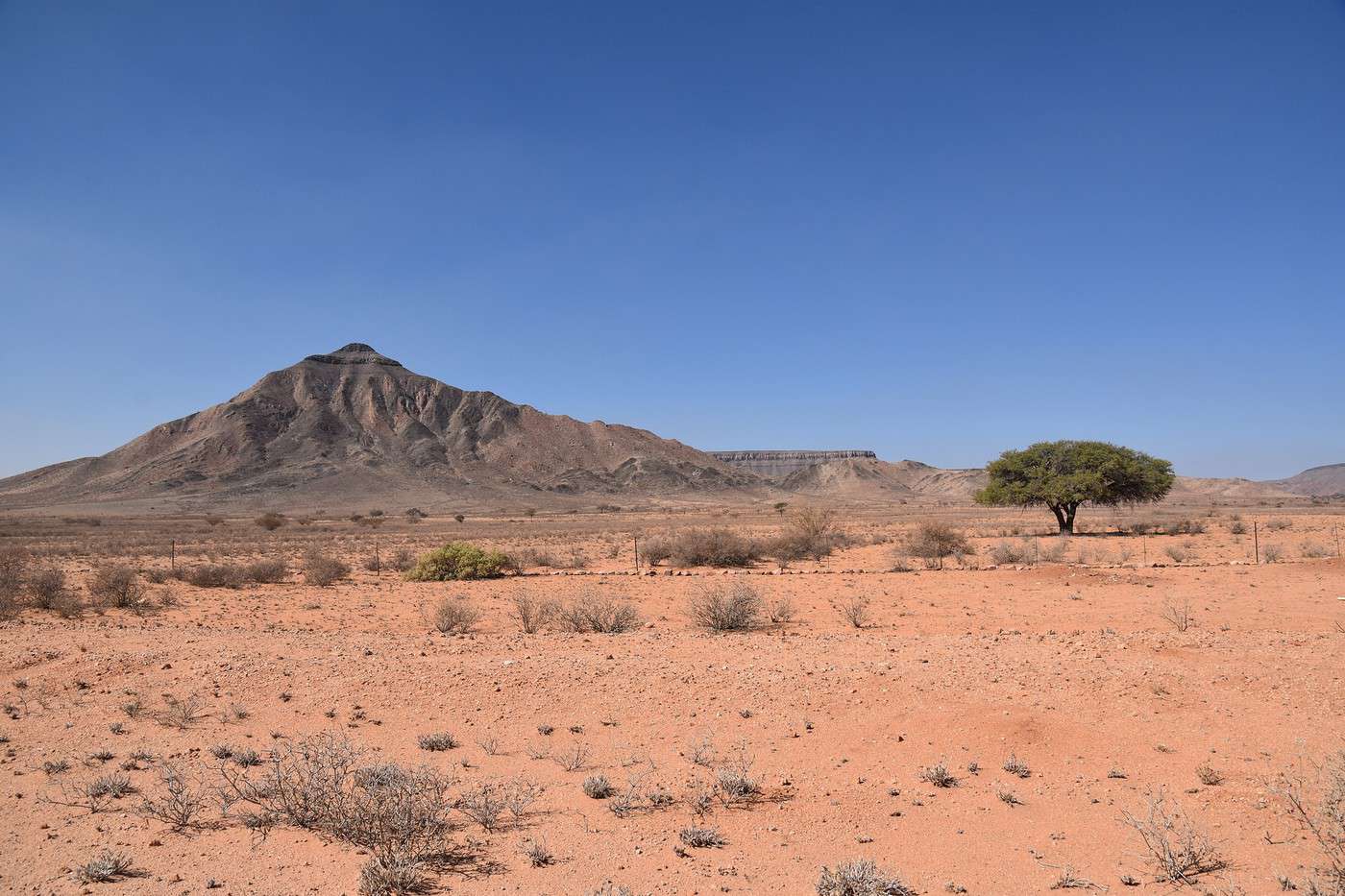
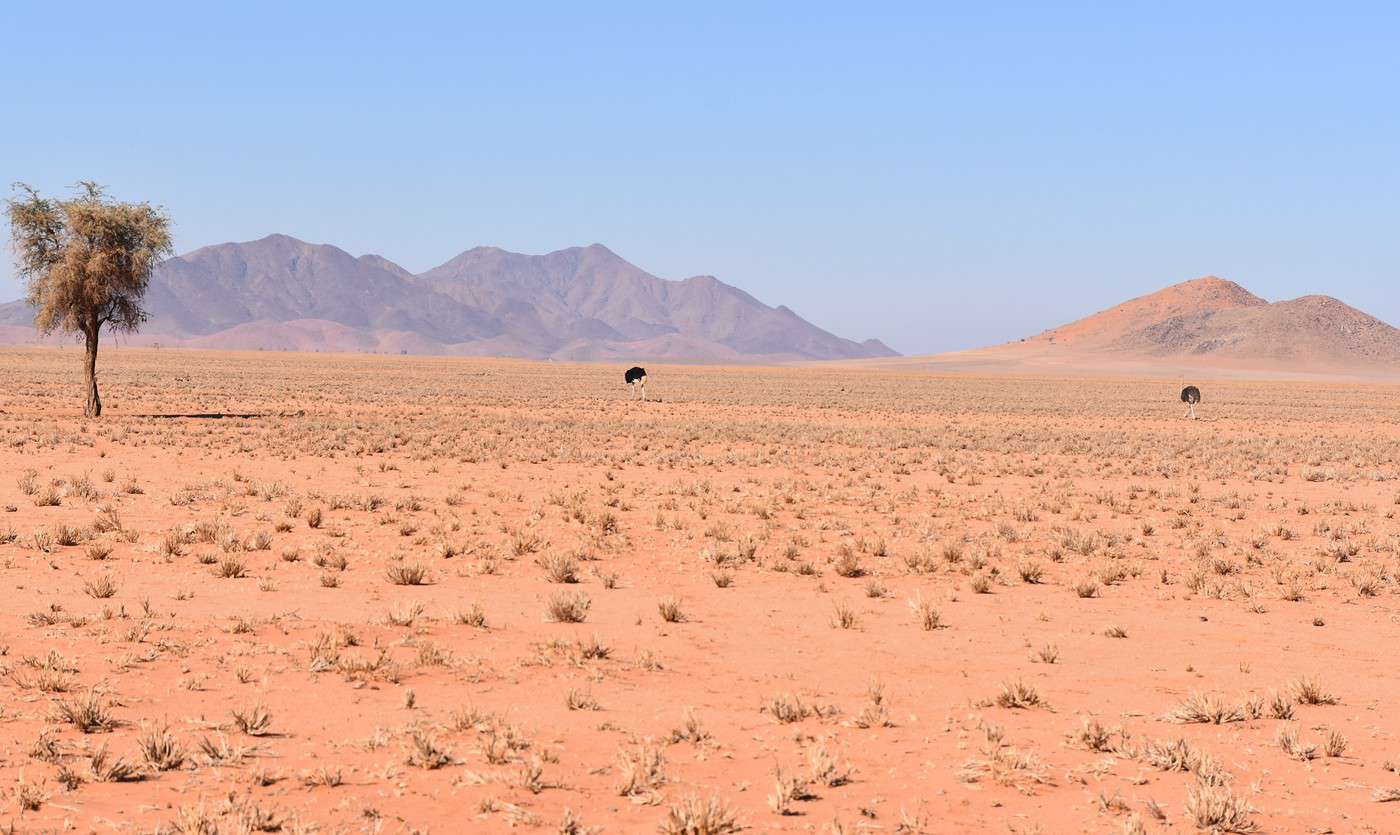
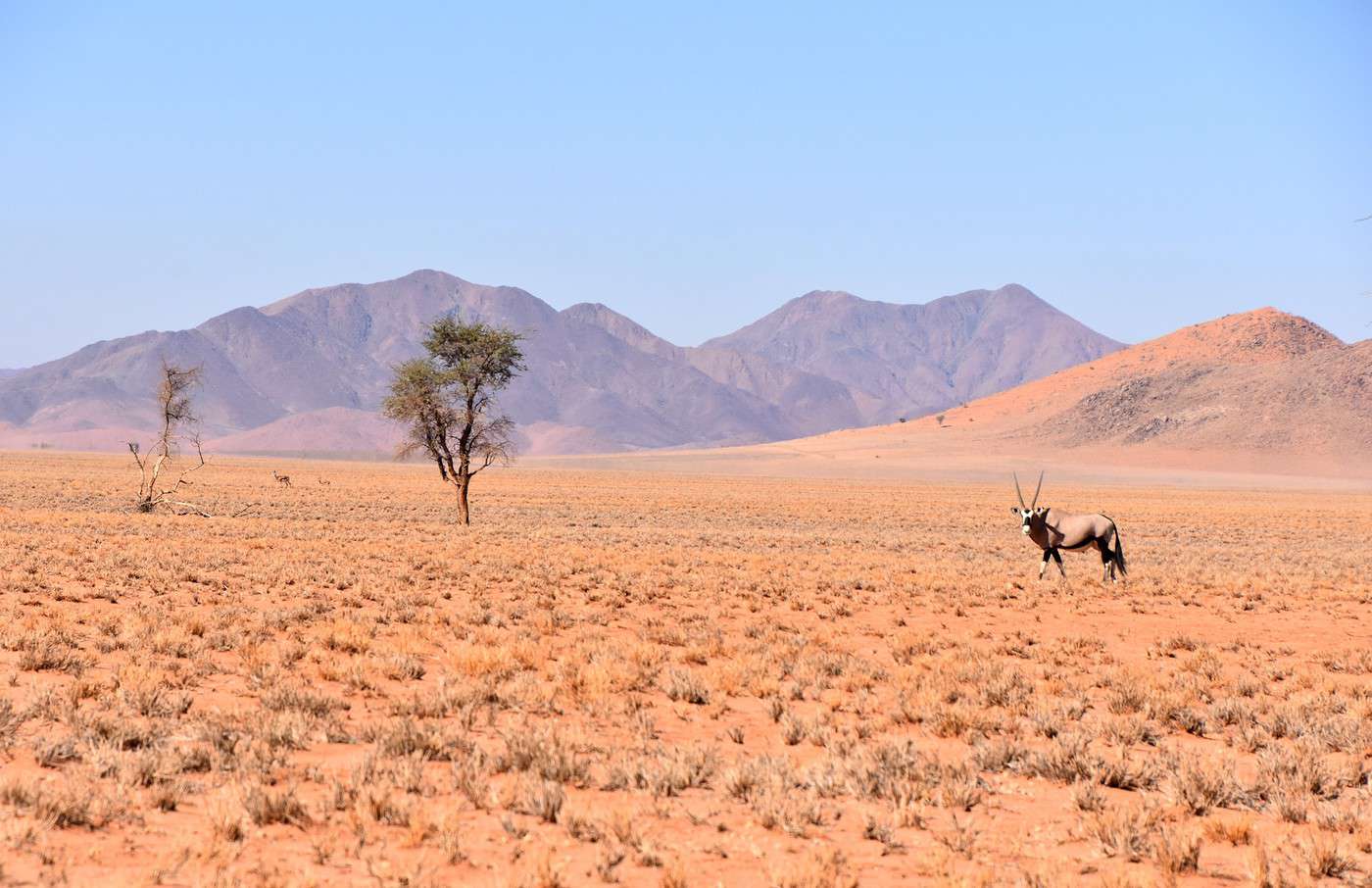
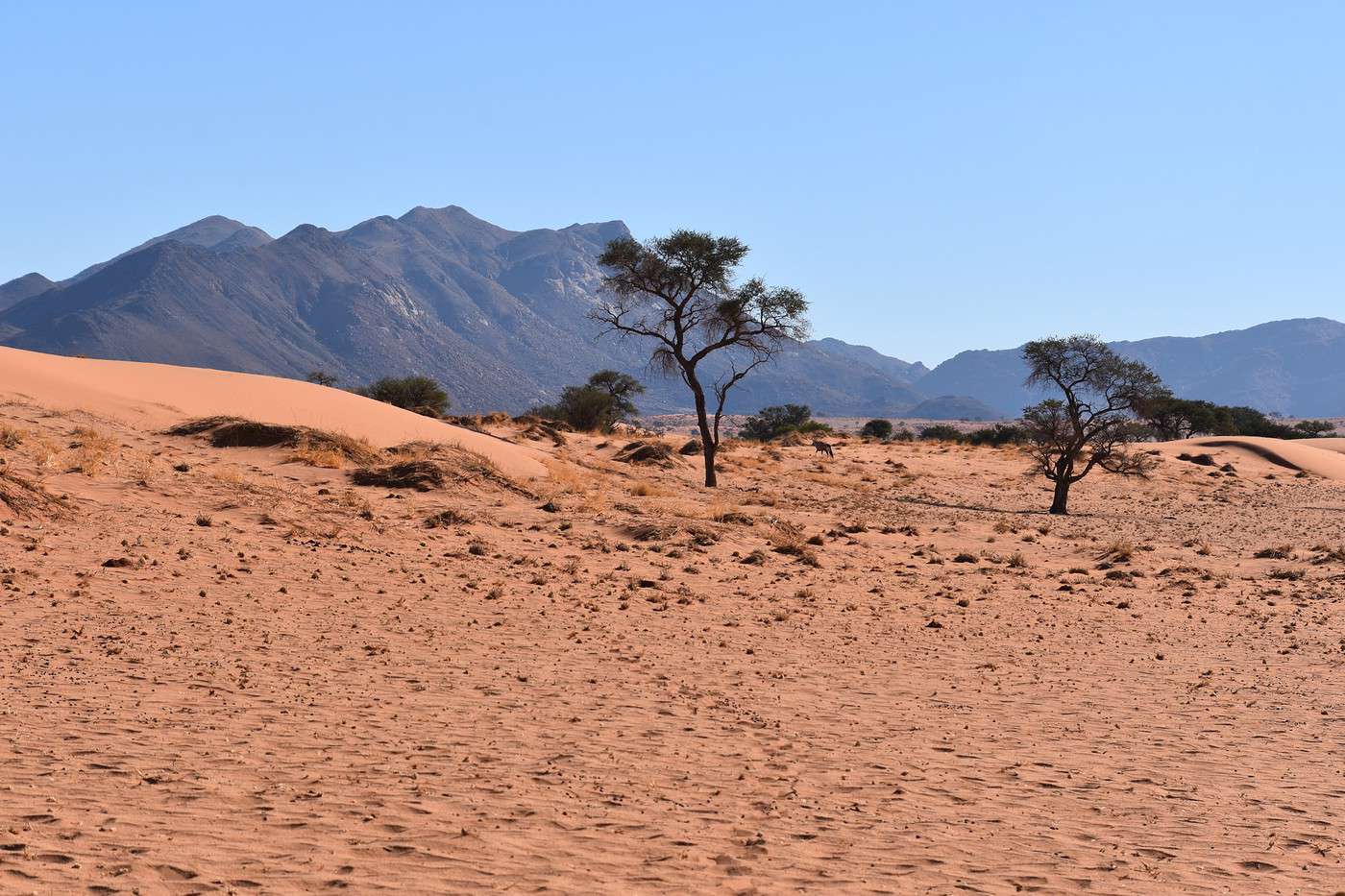
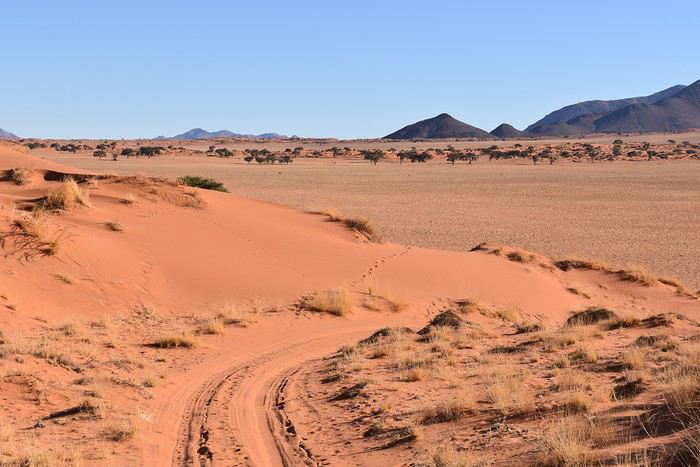
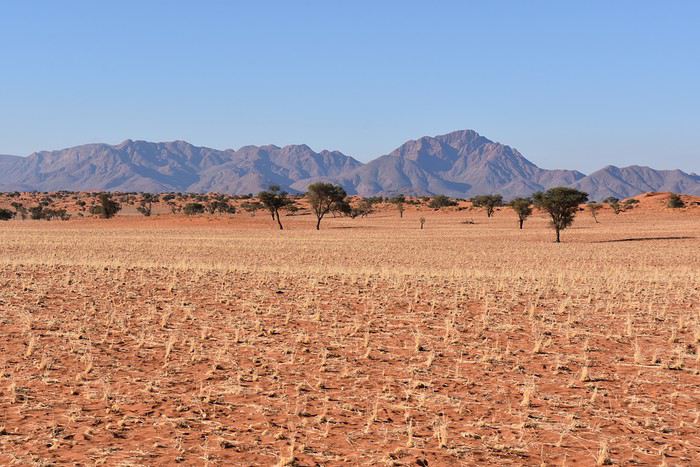
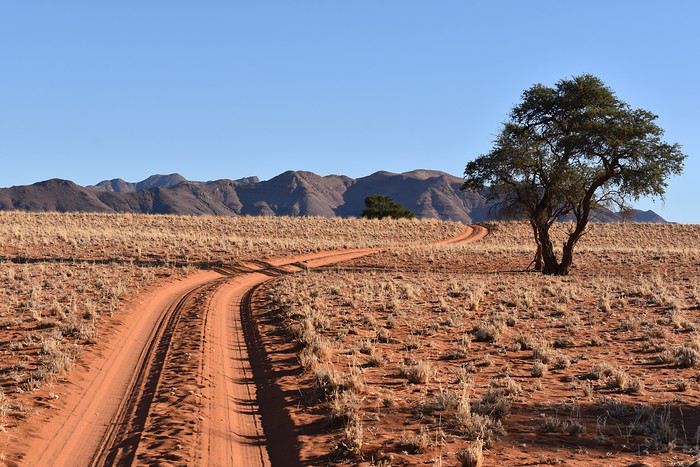
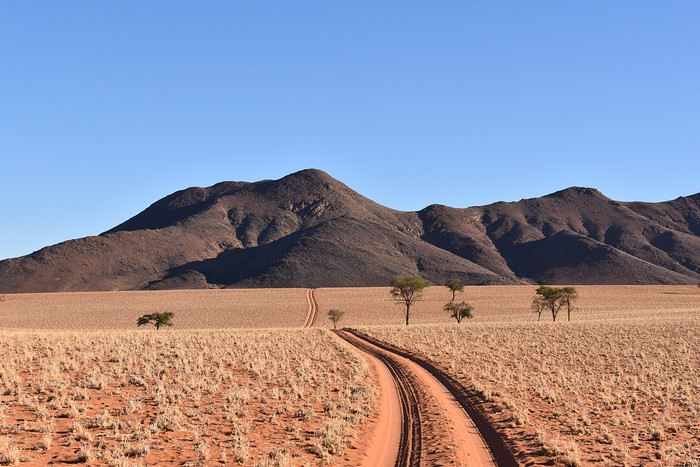
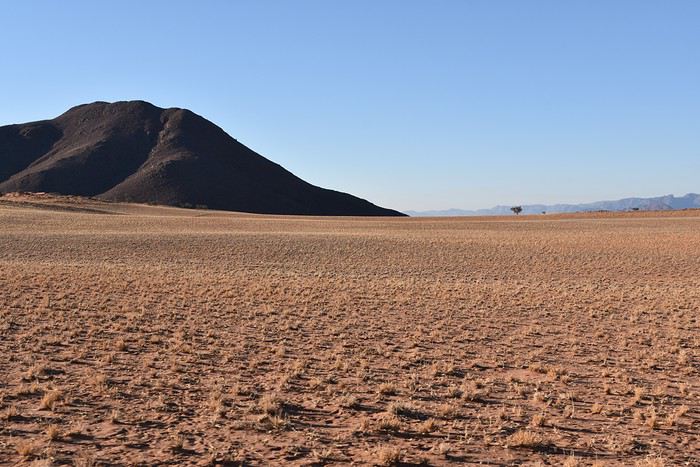
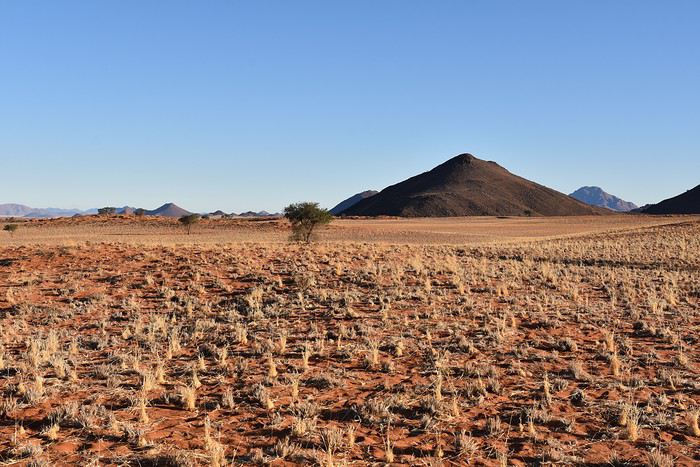
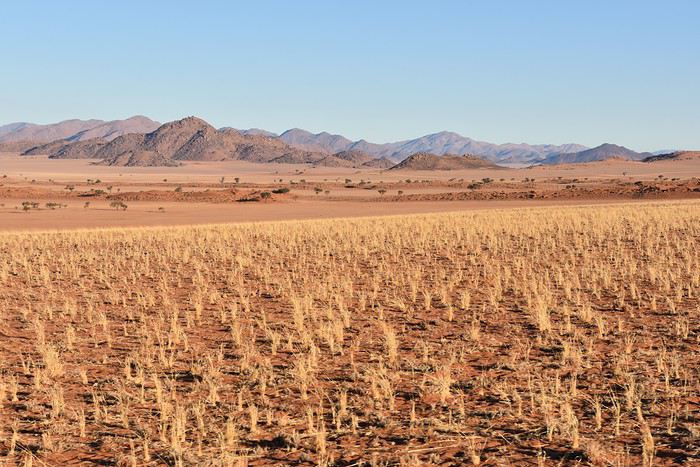
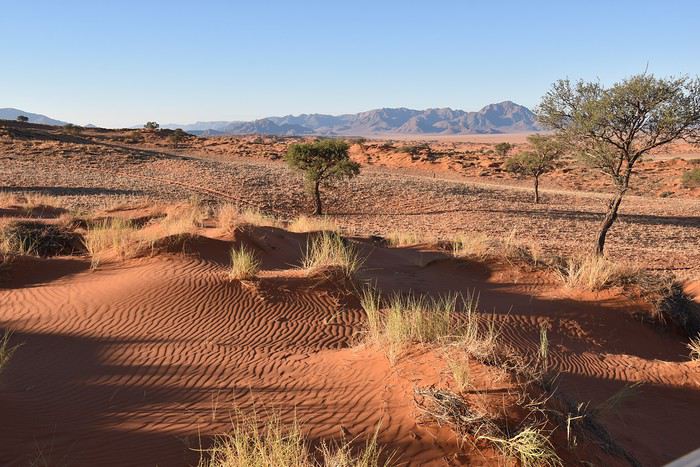
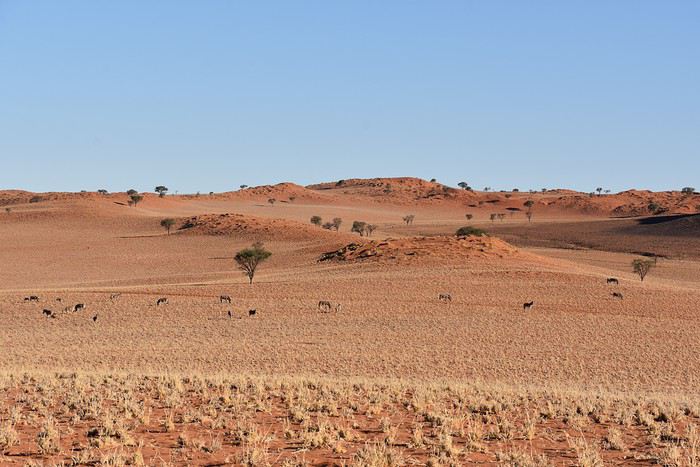
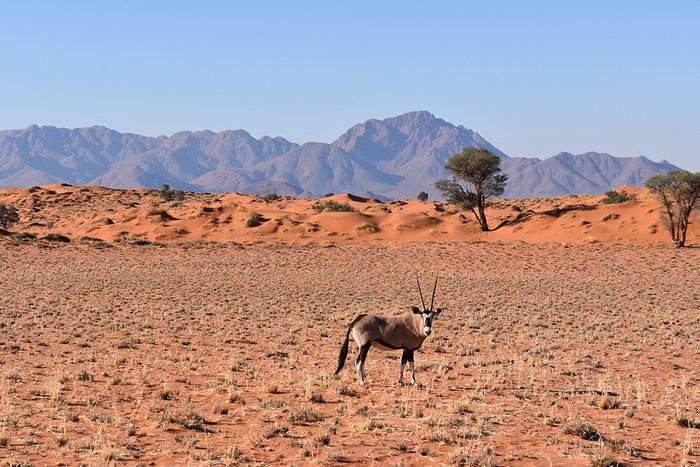
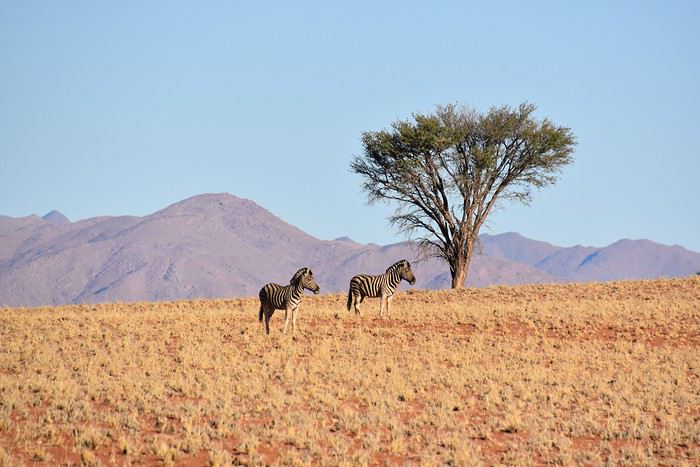
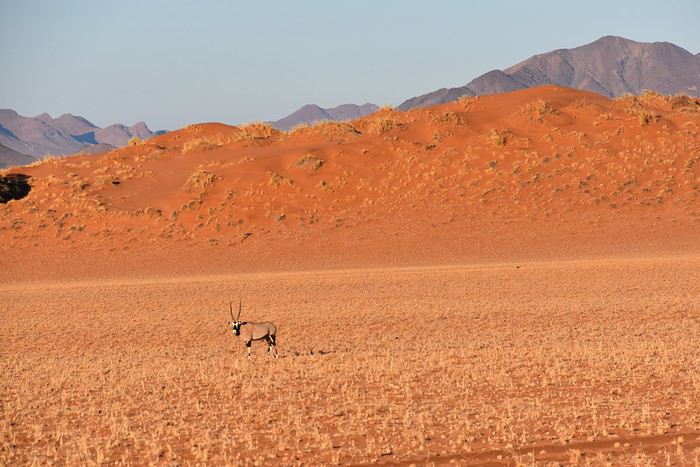
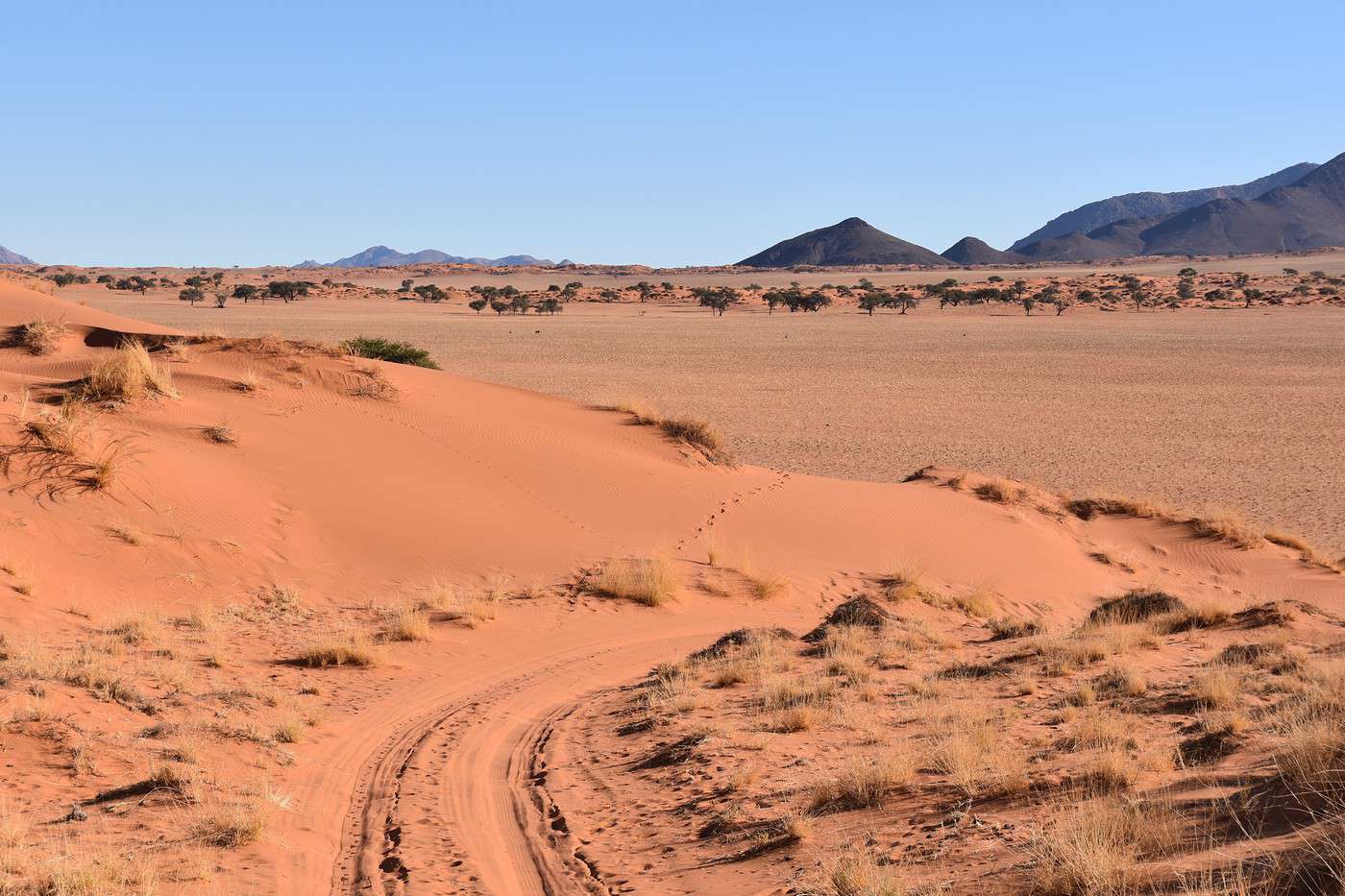
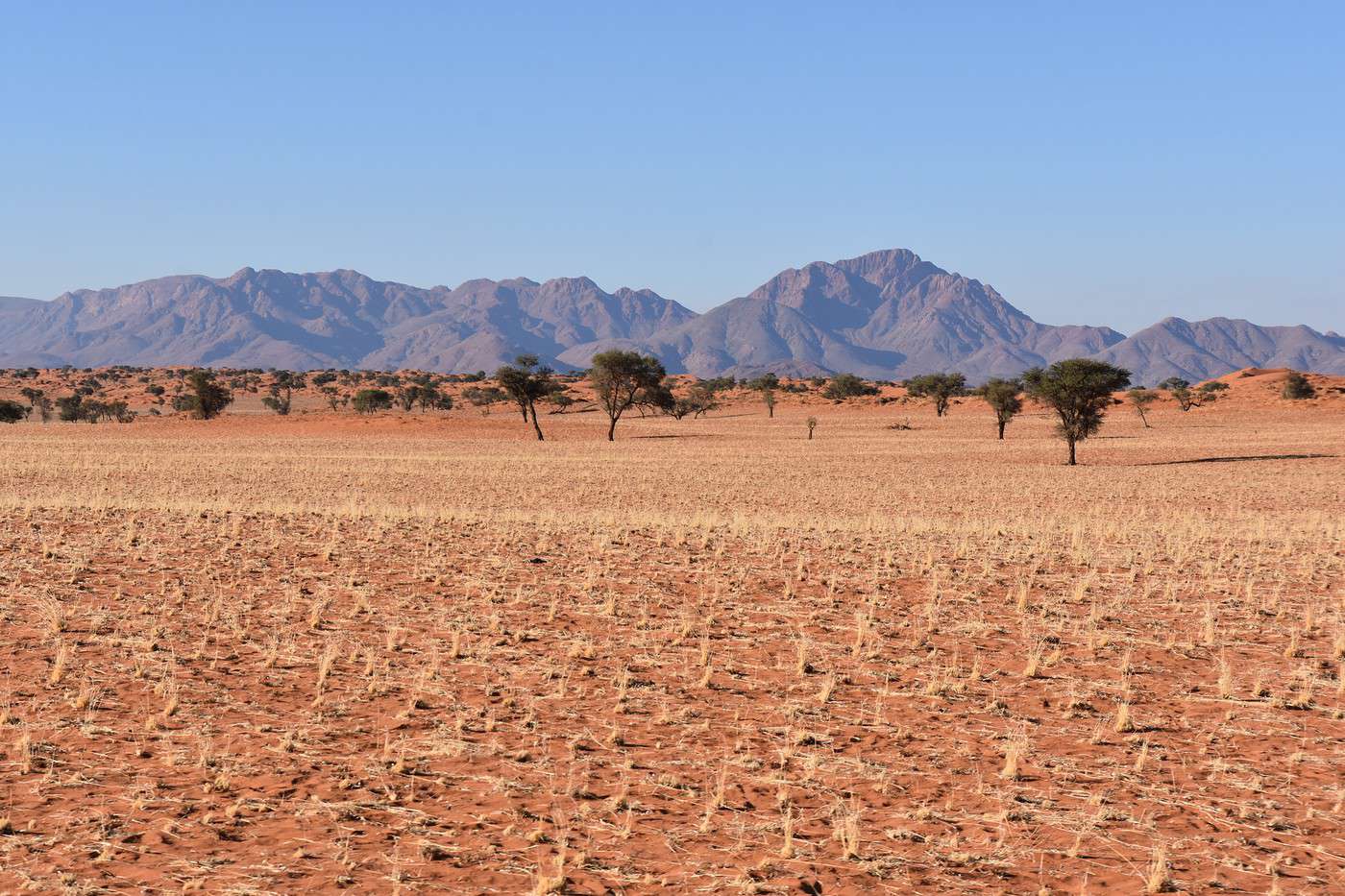
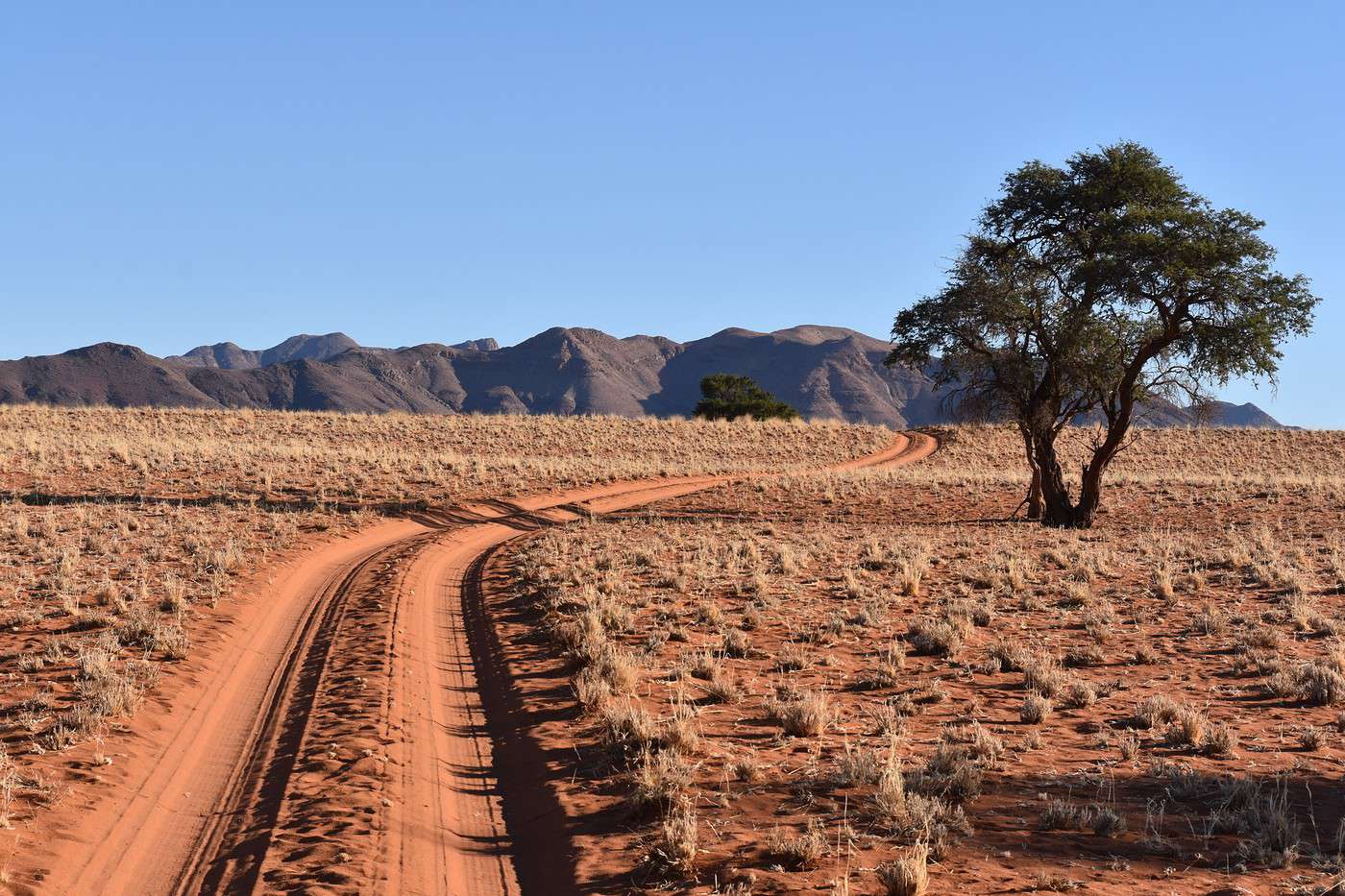
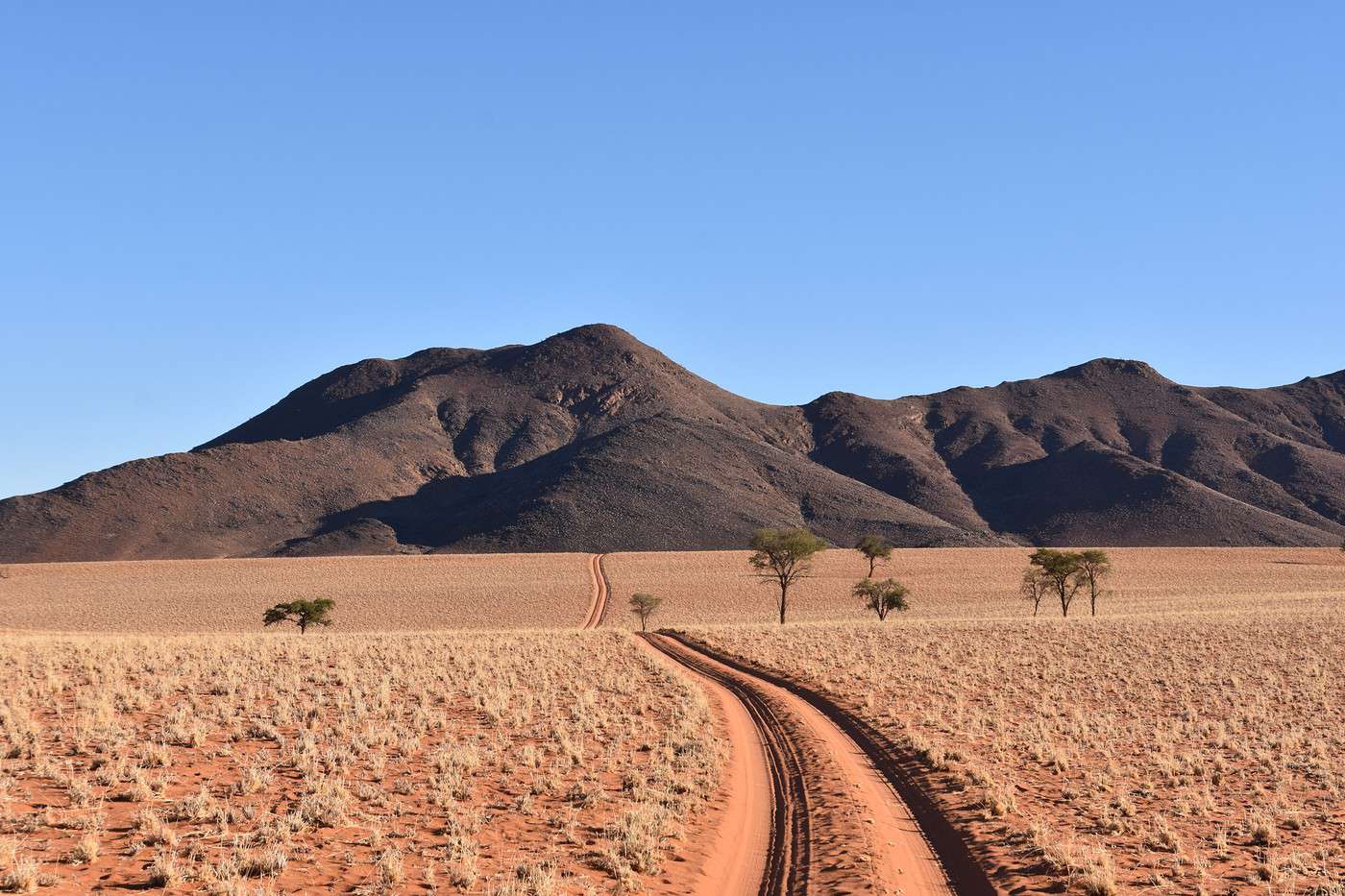
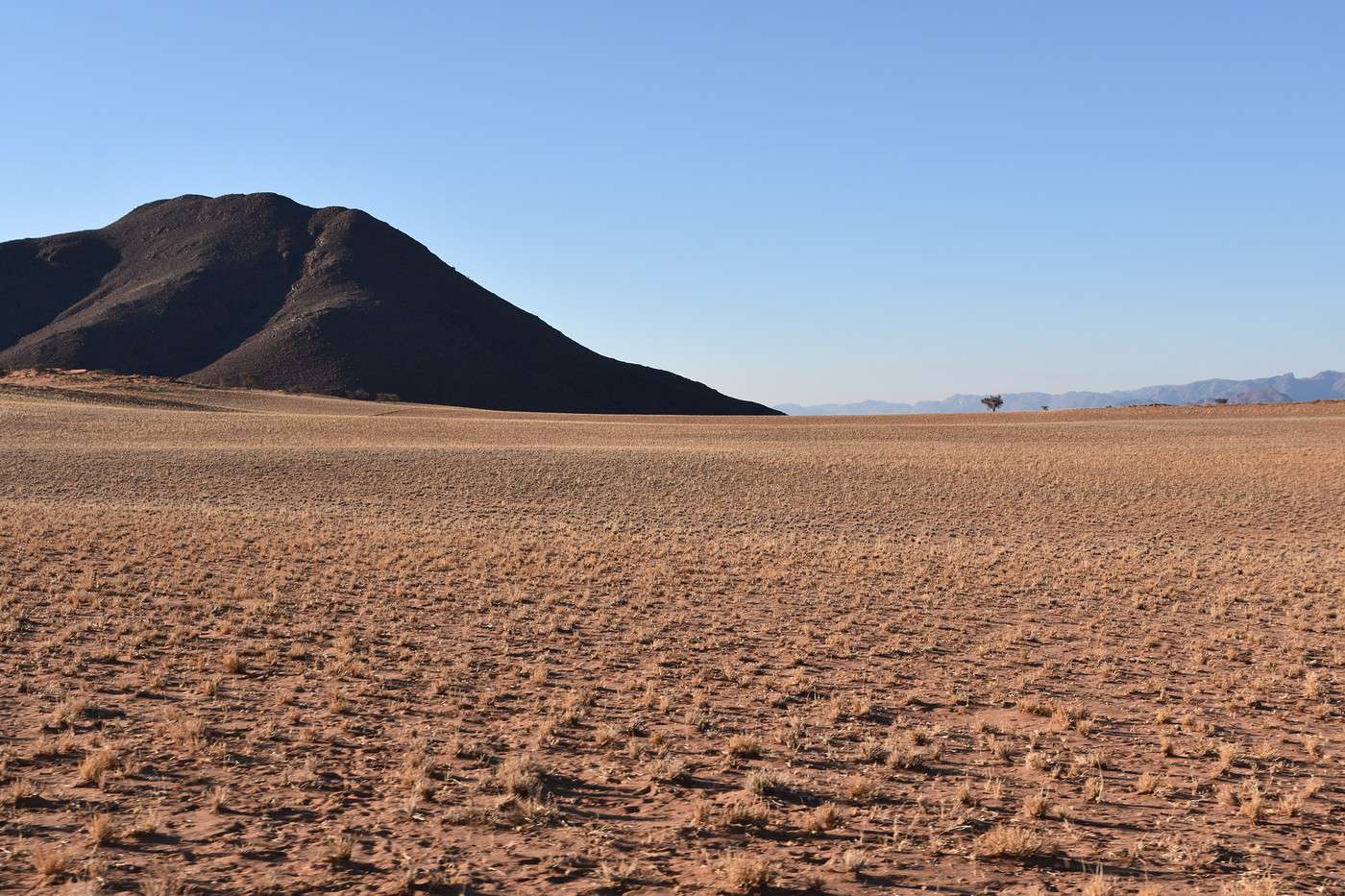
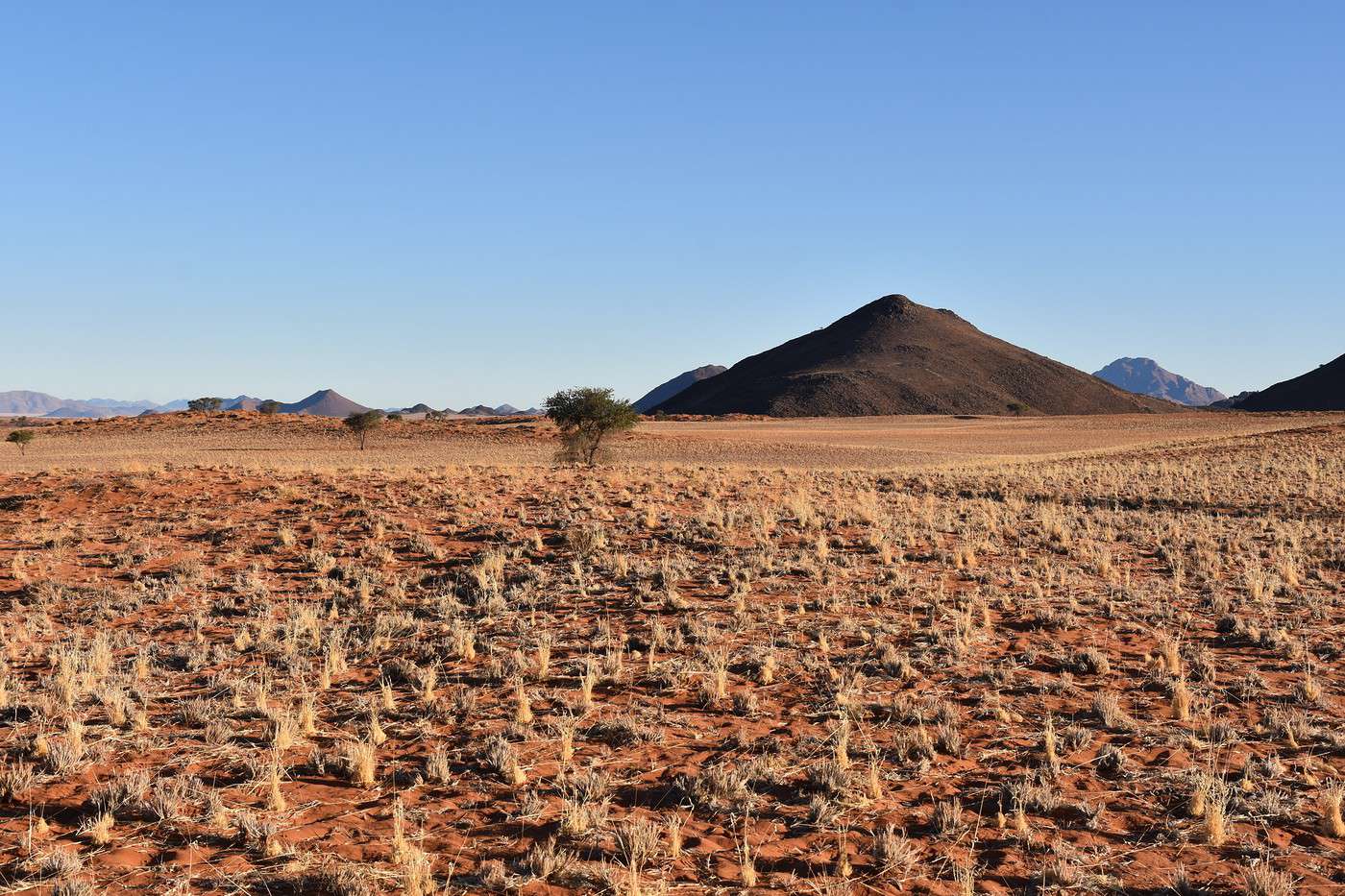
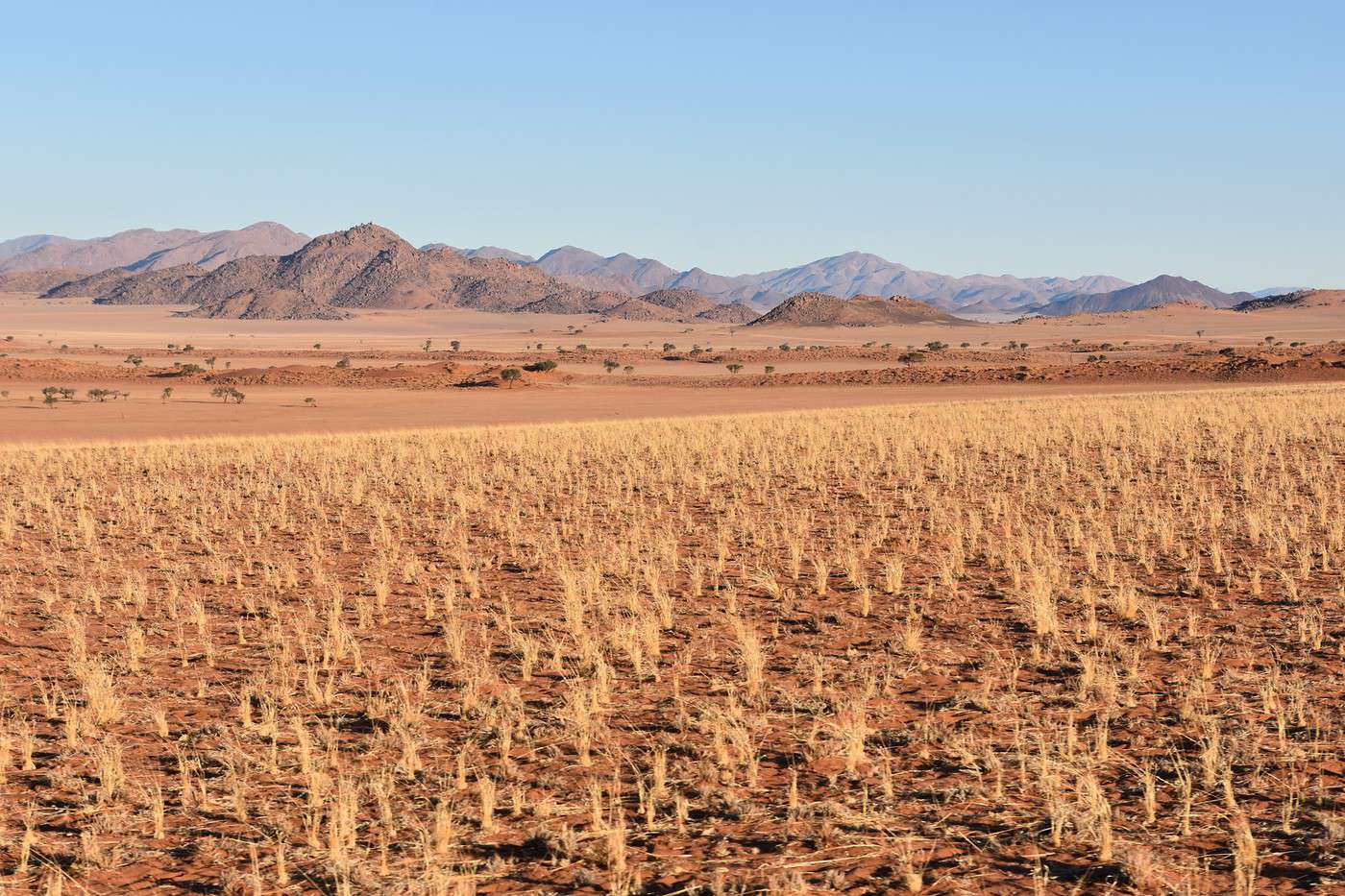
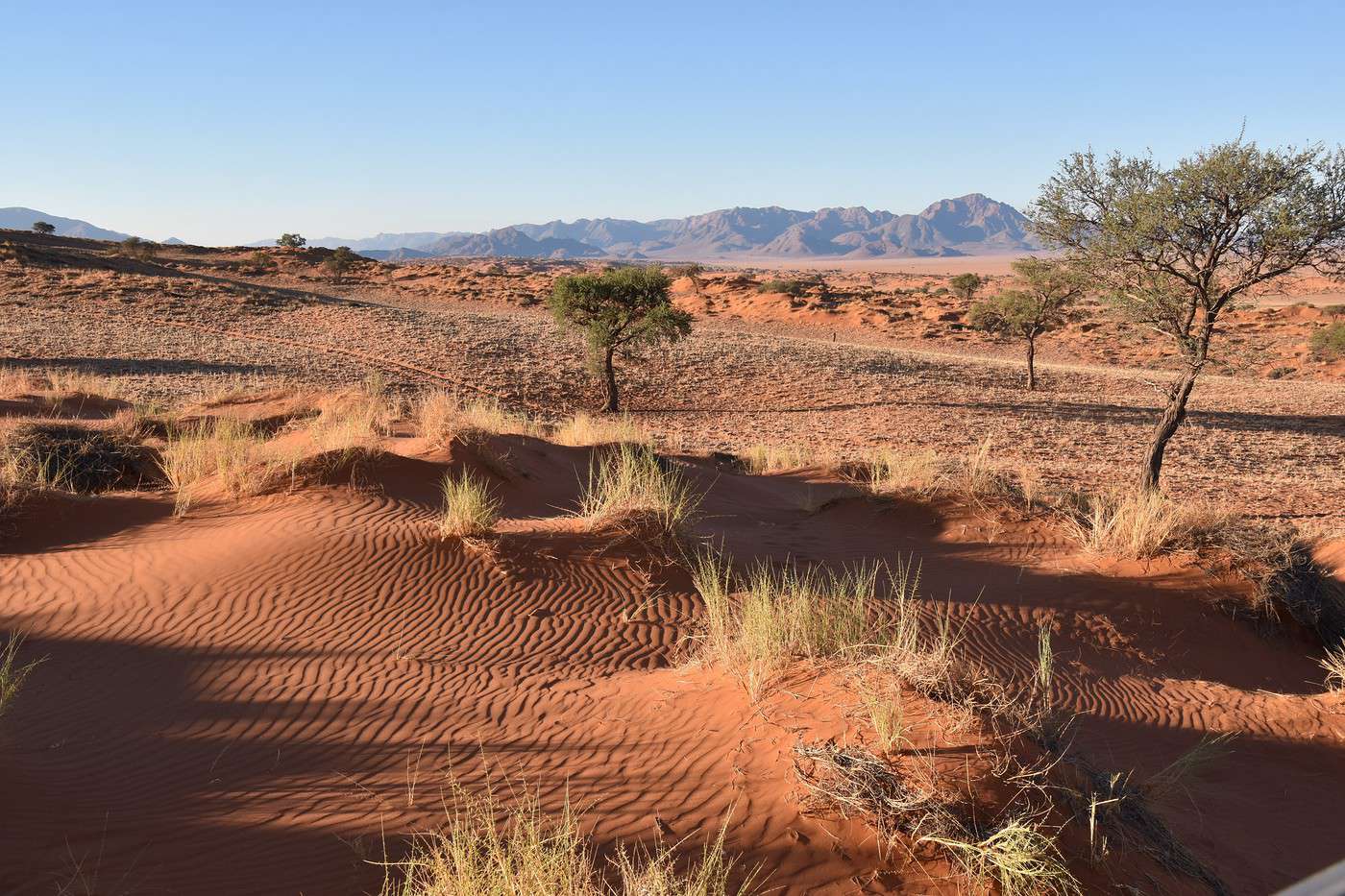
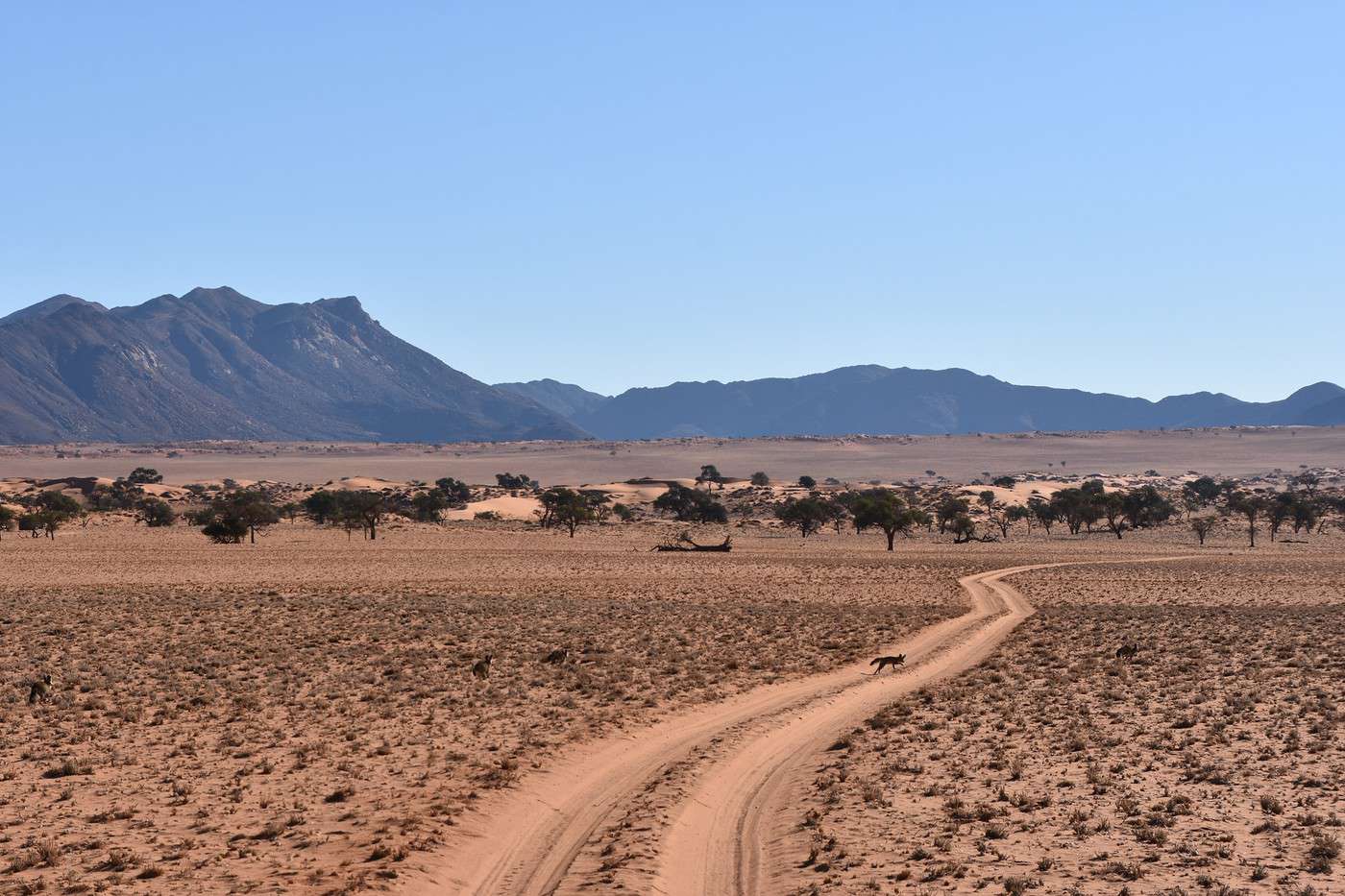
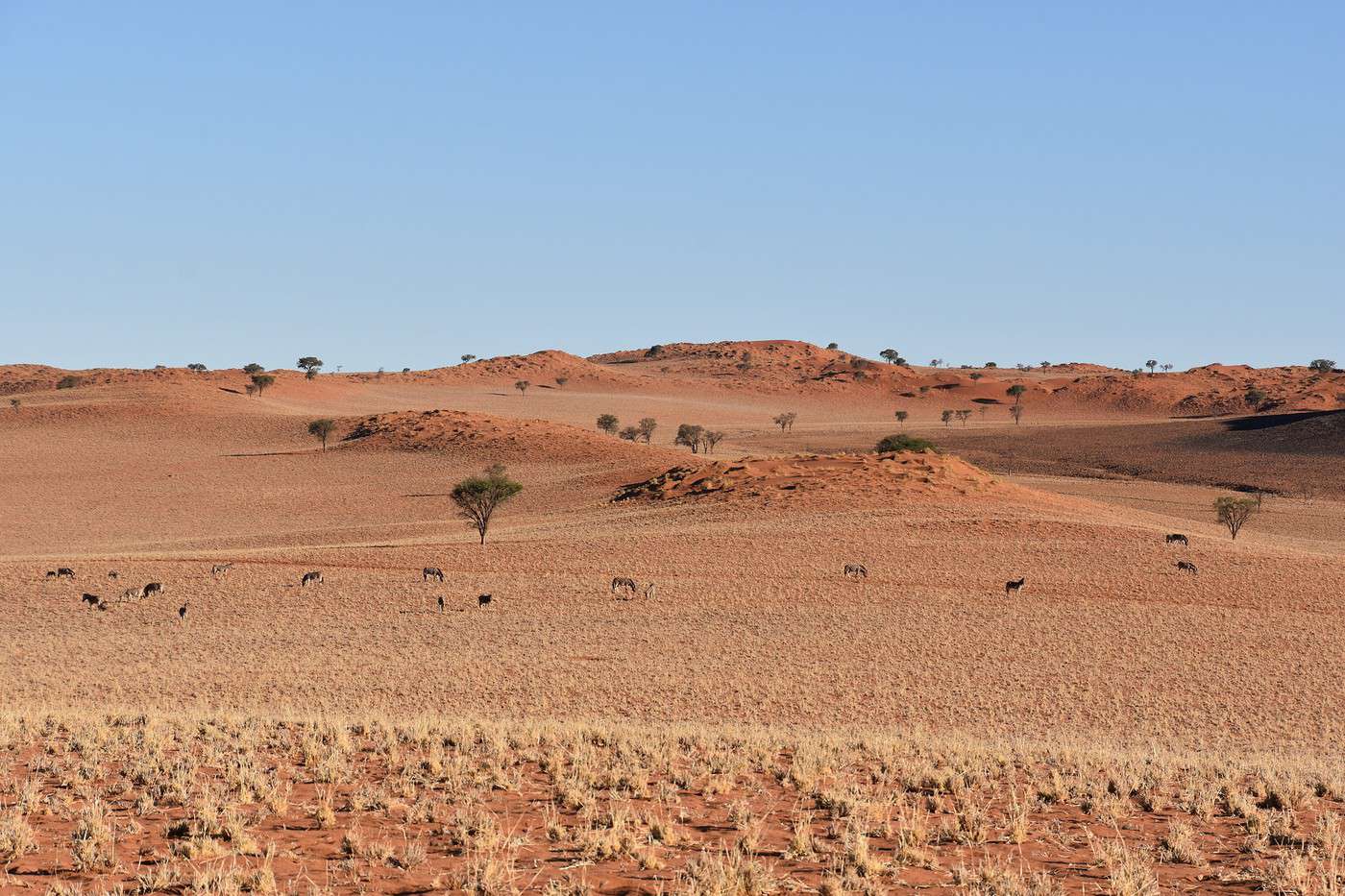
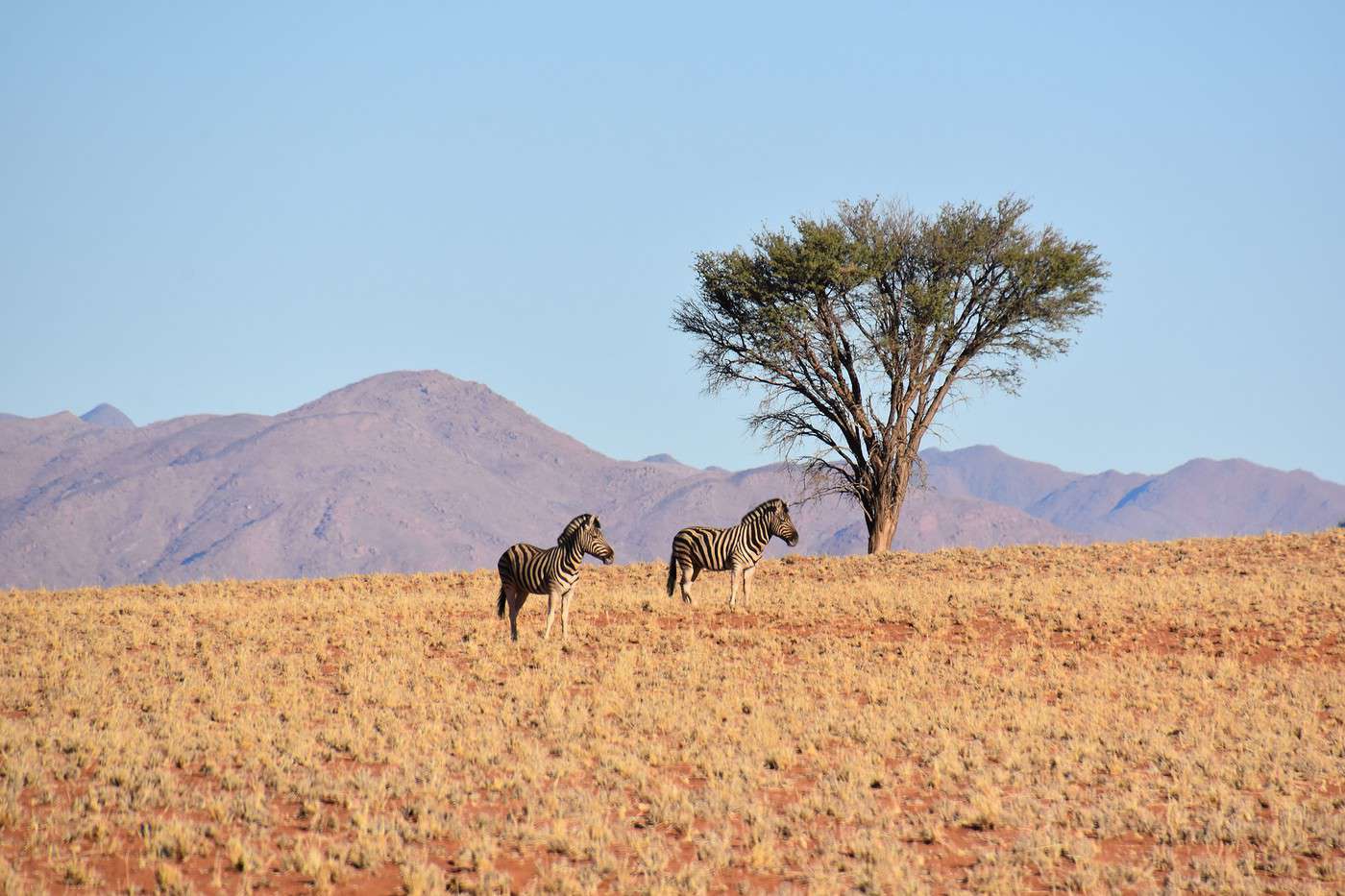
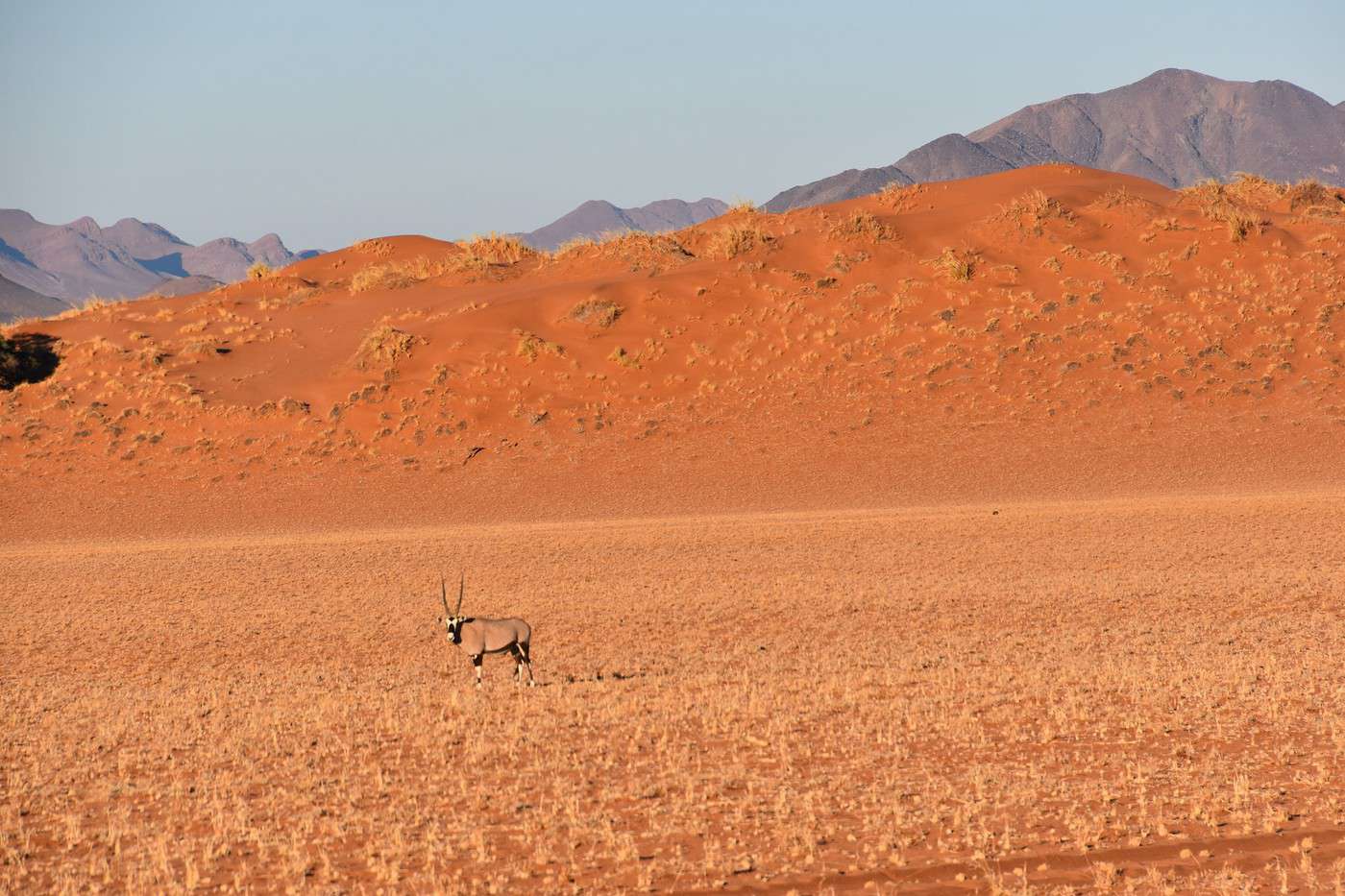
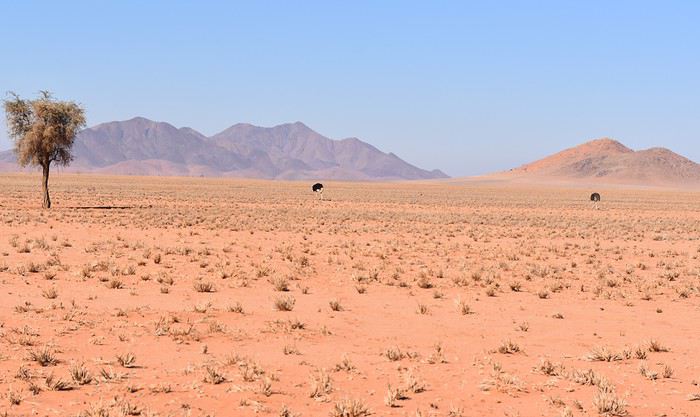
We took the D827 south. The landscapes are gorgeous—the sand had already taken on the characteristic red hue of the Namib Desert.
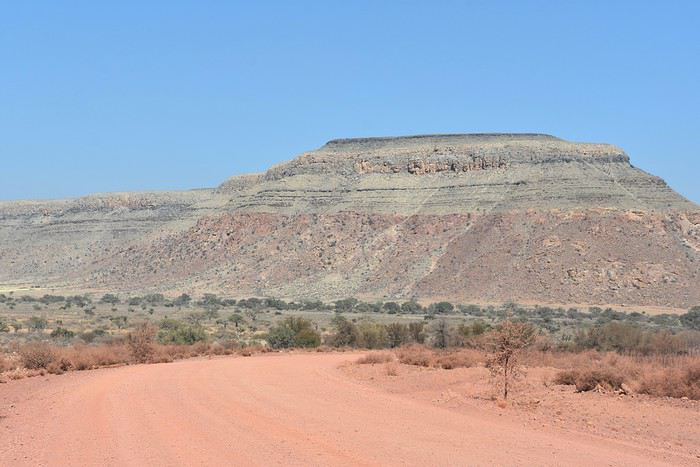
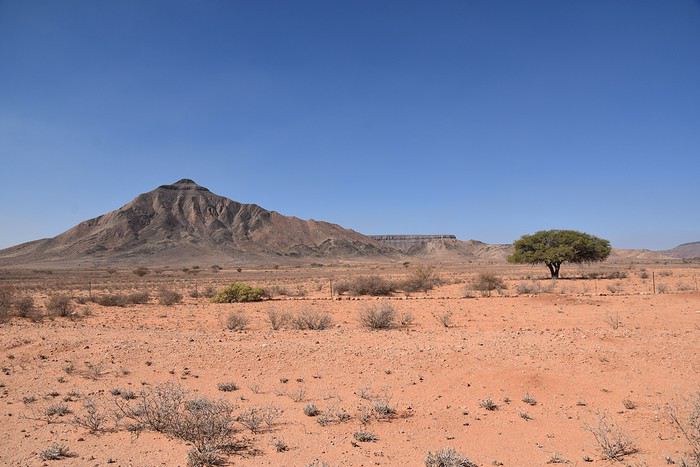
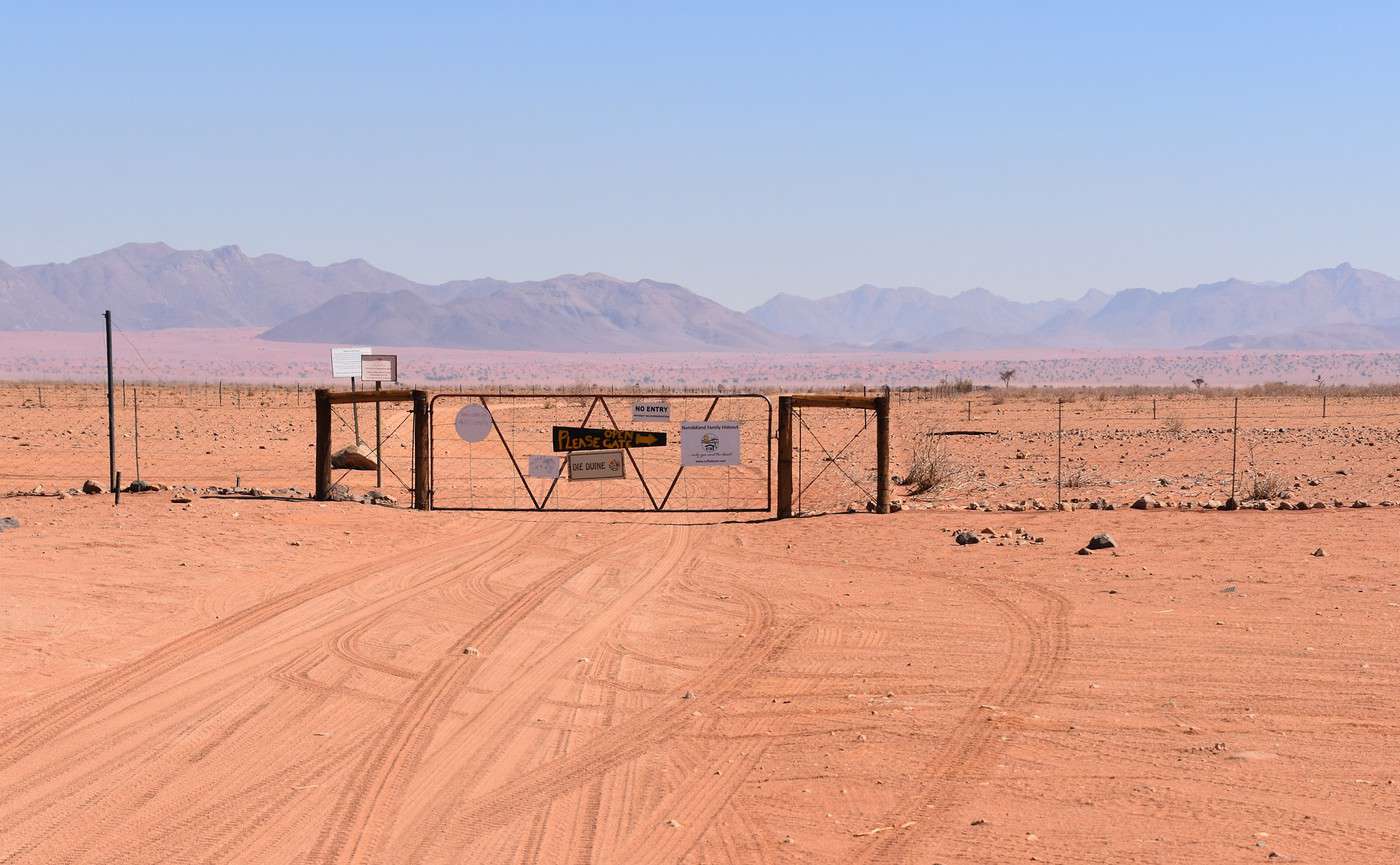
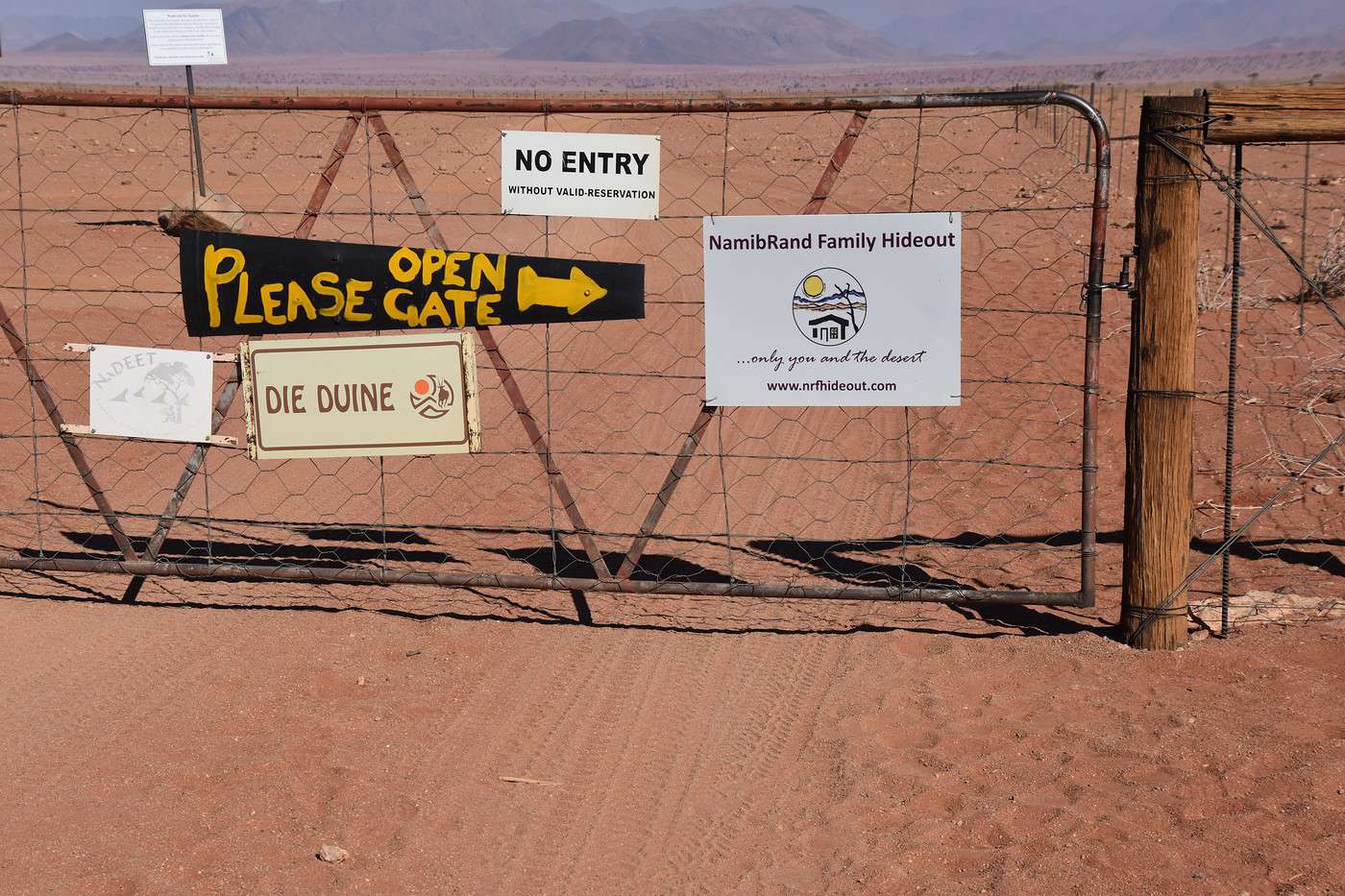
We arrived at the entrance to the track leading to Namibrand Family Hideout—it was already past 2 p.m.
“Are you sure this is it?”
“Well, yeah, there’s the Namibrand Family Hideout sign—we have to open the gate.”
In the end, we got used to it because at different spots, we had to open and close gates to access the reserves. At first, it surprised us a little, though 😮.
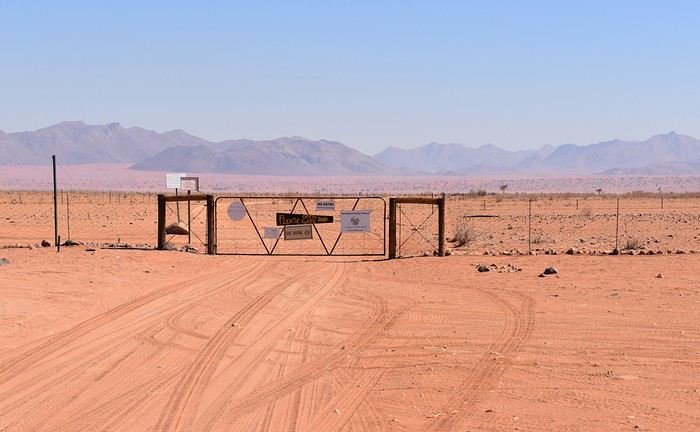
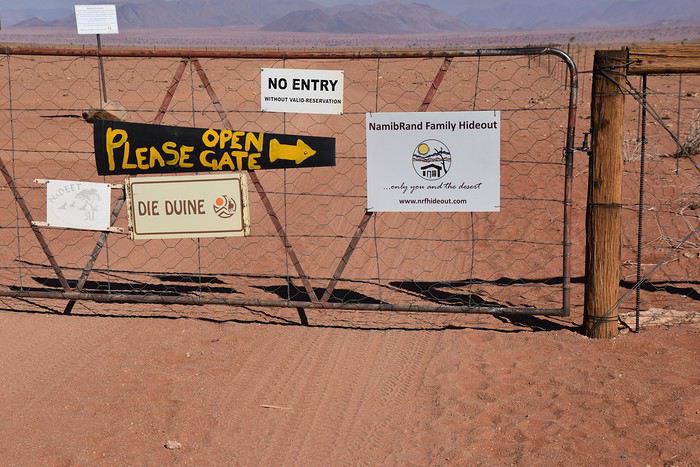
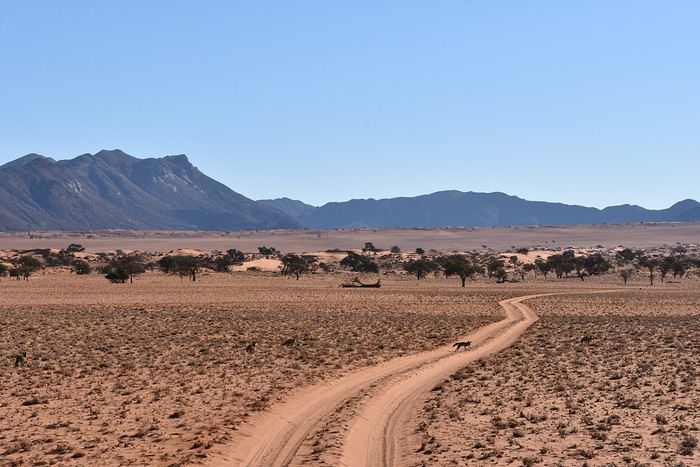
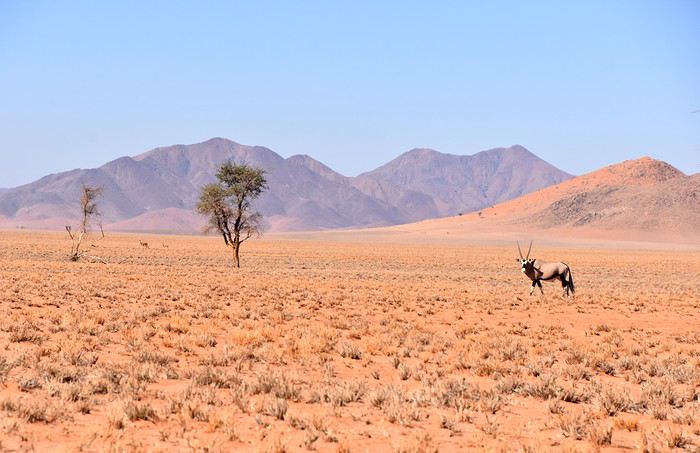
We were already enchanted as we drove the fifteen kilometers to the camp.
Check-in was done at the base camp of the Tok Tokkie Trail.
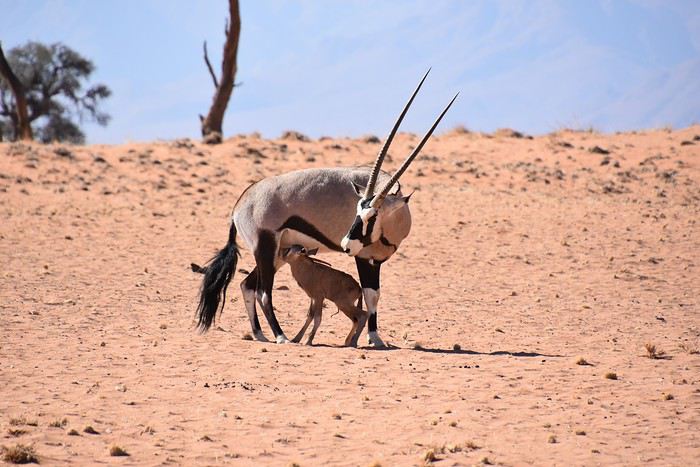
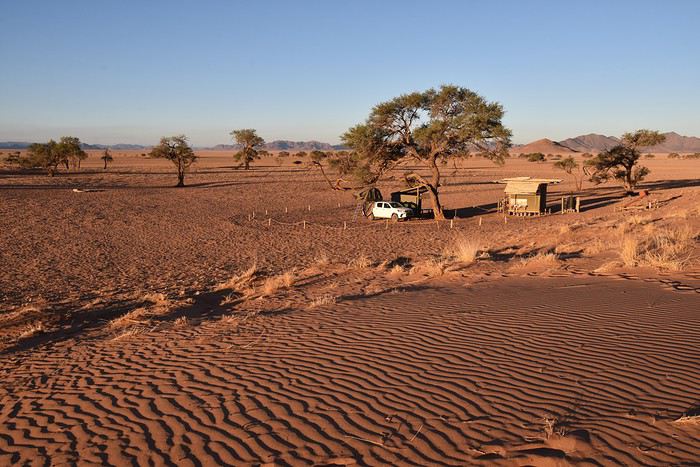
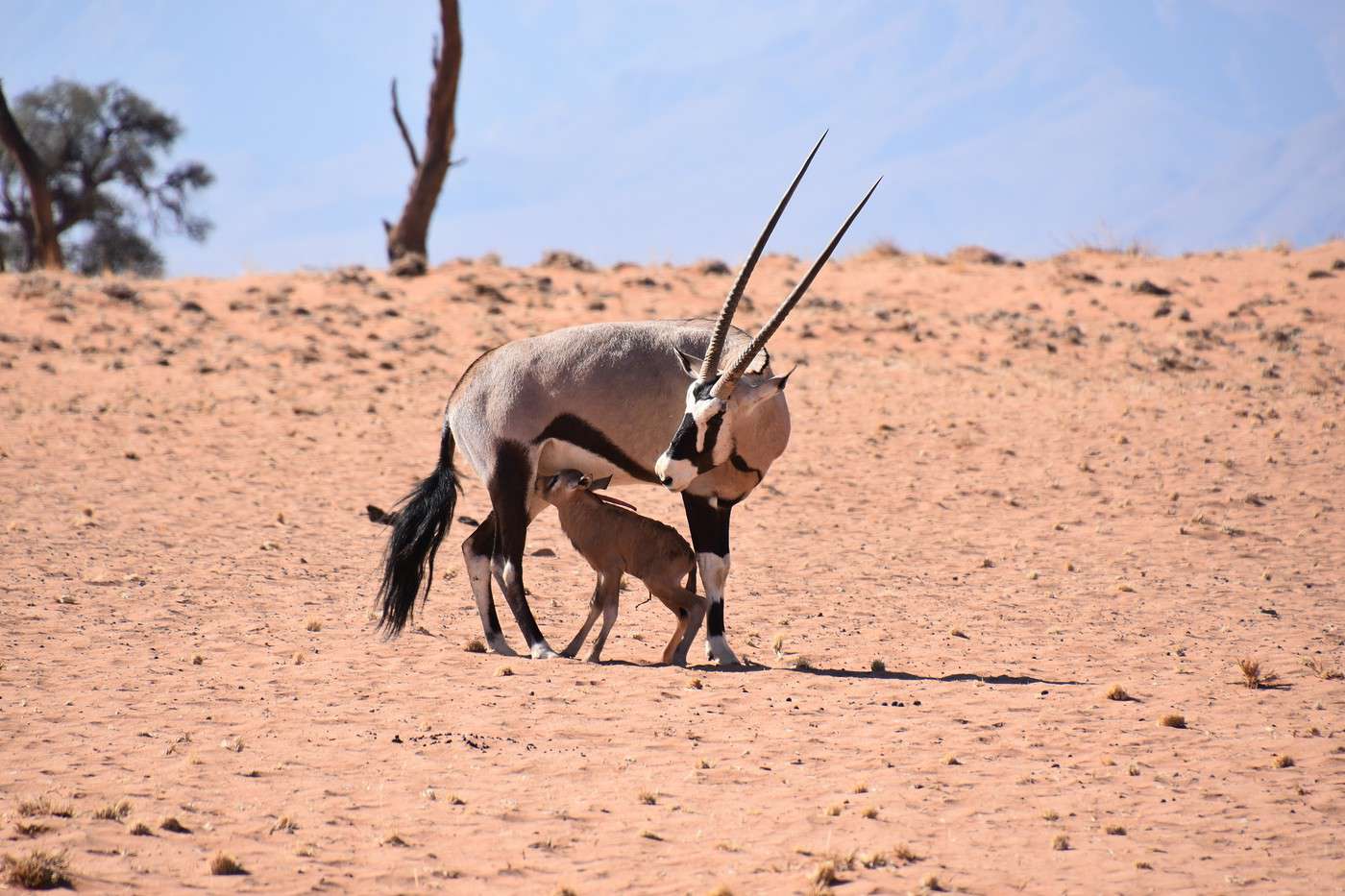
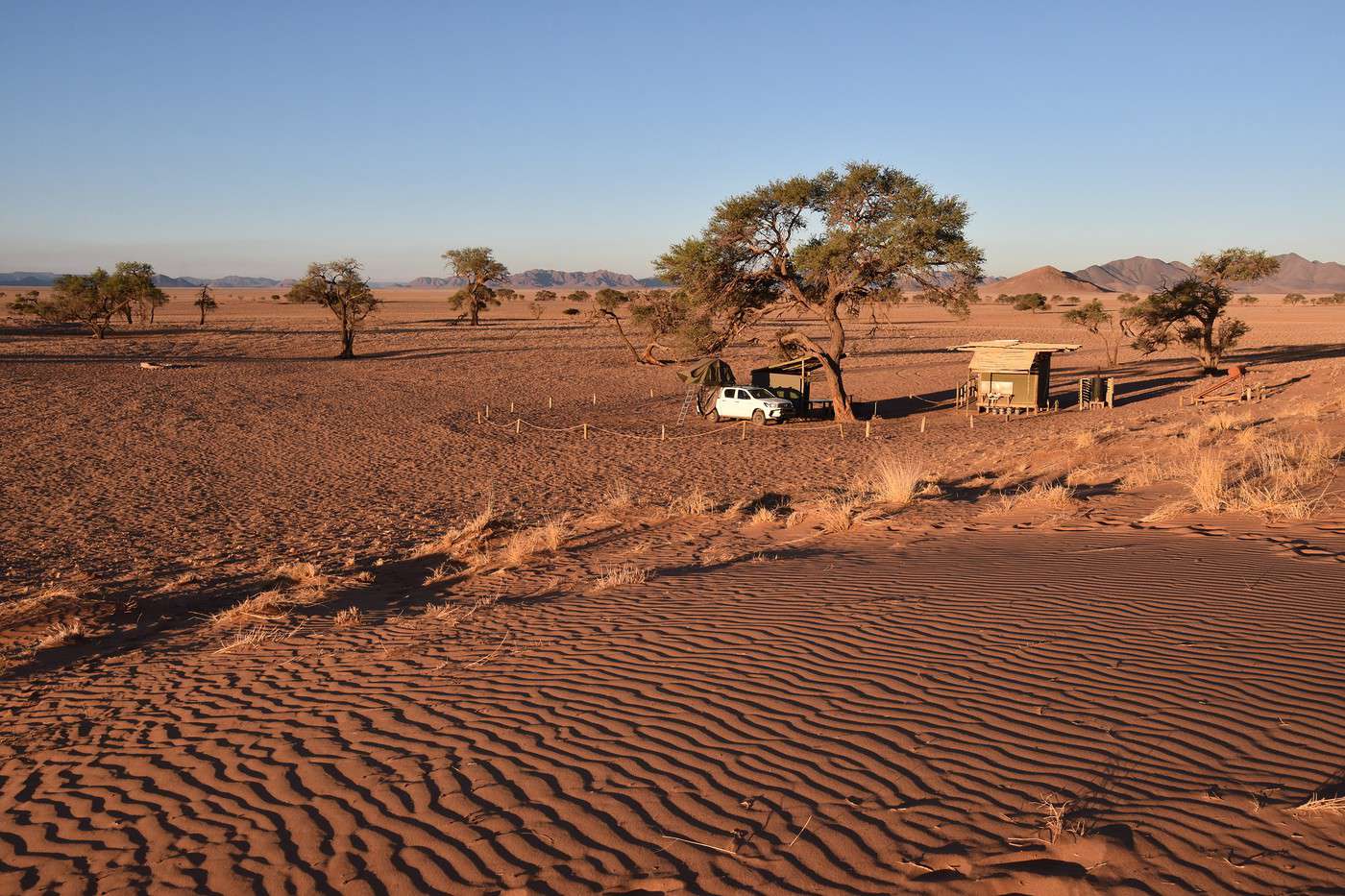
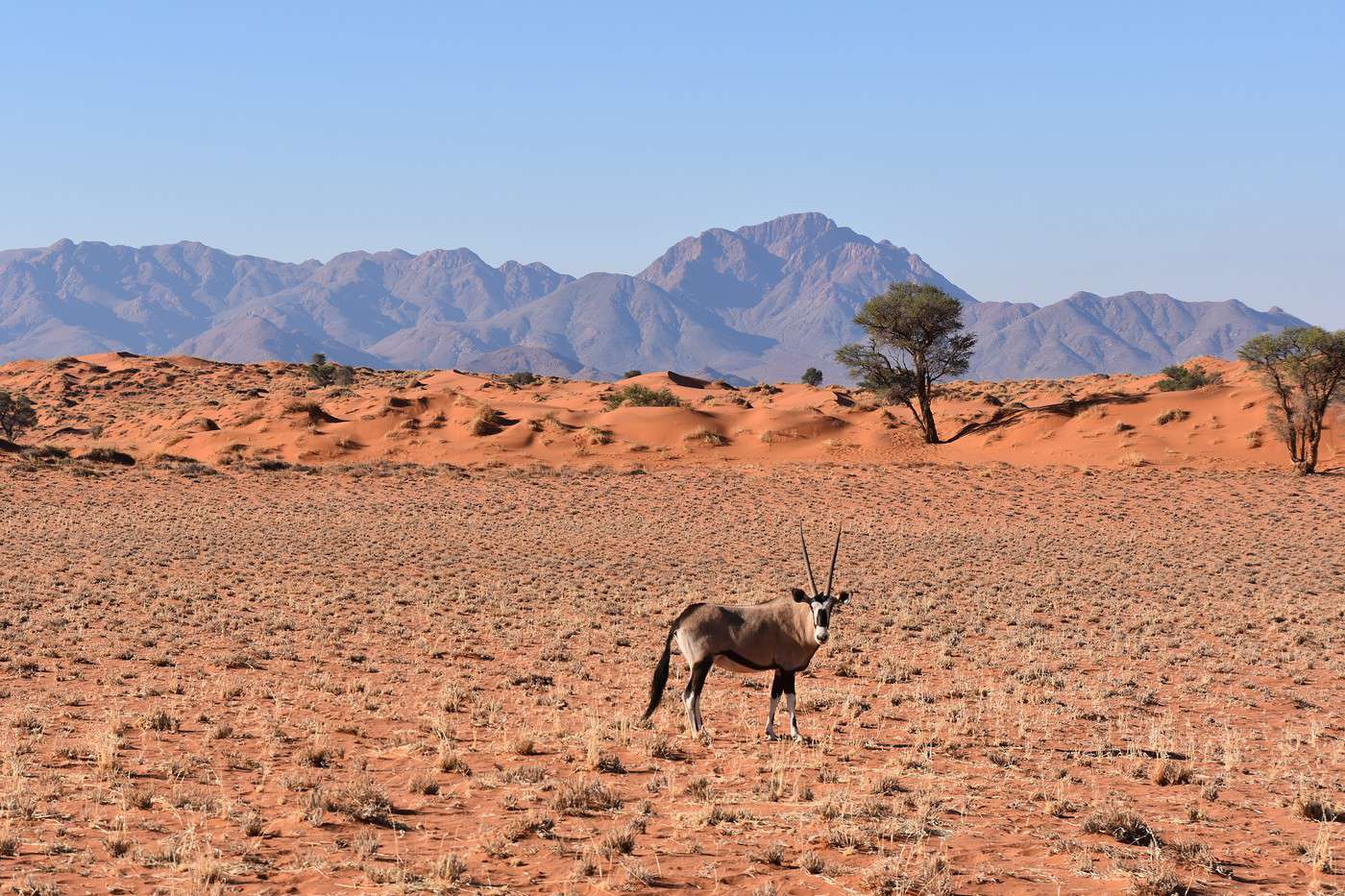
When we arrived at Orion camp, we saw oryx in front—it was amazing. We were completely alone, and the site was well set up. A solar panel provides electricity and hot water (well, warm, anyway).