Back to the discussion

in Destinations › Asie Centrale

Practical aspects spring 2026: border to Murmansk, to Pskov, SIM cards, internet. (page 5 of 5)

Discussion started by Esantirulo on 2026-03-28

84 replies

This thread has been translated into English.


Practical aspects spring 2026: border to Murmansk, to Pskov, SIM cards, internet.

Attila · 2026-04-12 · Message 81 of 85

the breakup of the American states confederation

That doesn’t strike me as completely far-fetched.

No more than Spanish becoming the primary language of this near-continent.

For Russia, Vladimir is in mourning—he just lost one of his allies. Democratically, no less. Double the grief...

Practical aspects spring 2026: border to Murmansk, to Pskov, SIM cards, internet.

Chalembert · 2026-04-13 · Message 82 of 85

Hey Patrick, Okay, I get why I didn’t have the links now 🙂 I’m not gonna download Telegram—I don’t need it. But I did see a few articles about it on Meduza, plus quite a few testimonials criticizing the decision to block Telegram. They’re also apparently blocking VPN use now. I don’t know if that’s even possible, but things are getting complicated.

Practical aspects spring 2026: border to Murmansk, to Pskov, SIM cards, internet

Chalembert · 2026-04-13 · Message 83 of 85

I refer to the most probable scenario by Hal Brands, the American historian from Johns Hopkins: hypothesis number one for the future, the most likely, a return to a two-bloc world akin to the Cold War. I think it’s among other things in "Le Grand Continent" in French, or here in English.

Hi, Hal Brands does indeed support the idea of a return to two blocs, but centered around the USA and China, and more about economic and technological order. He considers Russia a second-tier power, with disruptive capabilities, but nothing more. And we must remember that in the East/West era, there was a whole part of the world that was "non-aligned."

Practical aspects spring 2026: border to Murmansk, to Pskov, SIM cards, internet.

Lapagaille · 2026-04-26 · Message 84 of 85

Hi there, Yes, VPNs are gradually being blocked, but there are still solutions, and Russians are resourceful. For example, you can use a proxy to access Telegram and replace the VPN with a VPS—often faster than using a VPN. However, for this site, a VPS currently allows you to open it, unlike a VPN. But to follow the conversation on the site, I no longer receive messages from "VoyageForum," and I’m not sure if incoming messages are being blocked. Best regards, I just open the messages I’ve saved in my email and check to reply if needed. Patrick

Practical aspects spring 2026: border to Murmansk, to Pskov, SIM cards, internet.

Esantirulo · 2026-05-08 · Message 85 of 85

I ran into Lapagaille the other day in Kaliningrad. But no Chimay.

##################################

I took advantage of May 1st for a very long weekend. These dates on the two stamps at the bottom of the passport: 30.04.2026 - 04.05.2026:
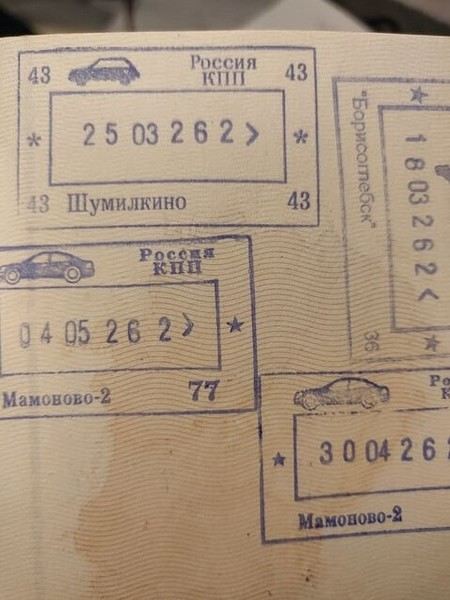


Mamonovo-2 is the border crossing on the Kaliningrad-Gdańsk bus route.

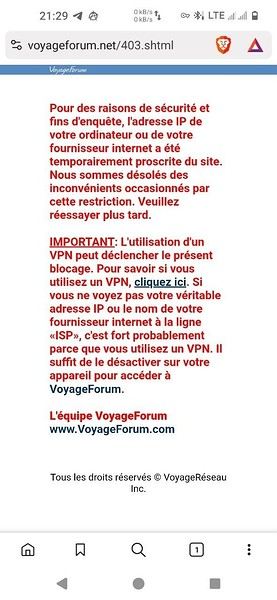
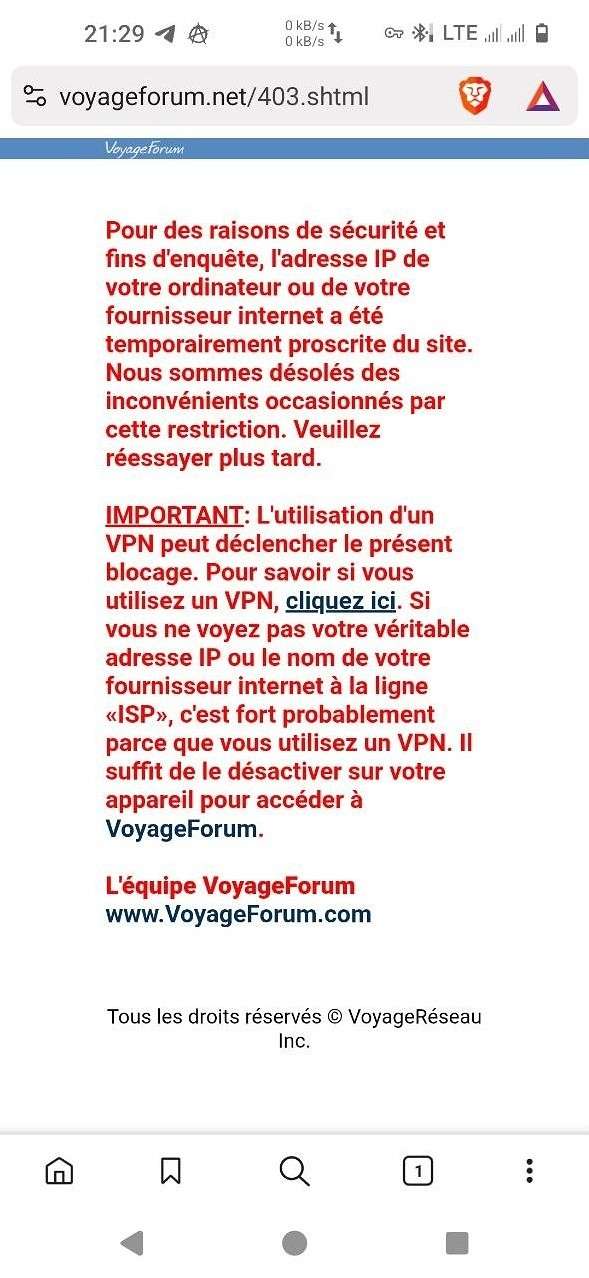
Side note: this site isn’t accessible with a VPN, voyageforum.com blocks VPNs. I visited the site while I was in Kaliningrad, but:


########################

A quick word on the current state of VPNs on the Russian side, as of spring 2026.

There are several types of network protocols, i.e., data transmission algorithms. For VPNs, the two most commonly used are OpenVPN and WireGuard. But they’re easily detected and blocked if needed. Right now, on the Russian side, the protocols that work are variants of VLESS and Xray (more precisely, proxy protocols). The most advanced one is a WireGuard derivative developed by Russians, called AmneziaWG. This just means that the VPN products working in Russia right now use VLESS/Xray/AmneziaWG. I tested two providers: IVPN and AmneziaVPN (the product from the AmneziaWG team). And another product that offers VLESS and works differently in terms of anonymizing mesh topology: NymVPN. I tested them on both phone and laptop.

AmneziaVPN has the option to install remotely on a dedicated server, virtual or not—i.e., a VPS/VDS. You need to rent a server with a Debian-based Linux. The advantage is having resources all to yourself and an IP not flagged like those of commercial products.

That said: if the connection goes through a router managing multiple connections—a hub—you’ll need advanced configurations. Typically, in a hotel (a hub for several rooms), these VPNs won’t work. In that case, on your phone, you’ll need to disable the hotel’s Wi-Fi and use the 4G from your SIM card instead.

#################################

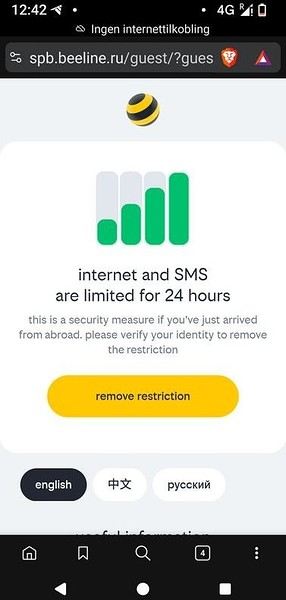
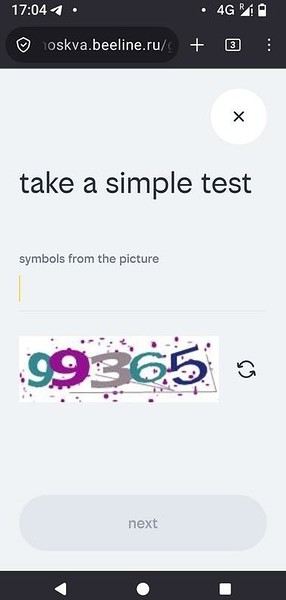
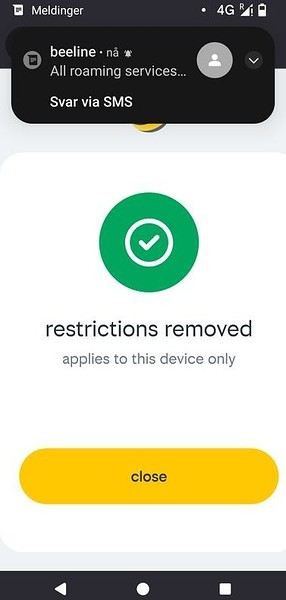
Activating foreign SIM cards without waiting for the 24-hour delay:

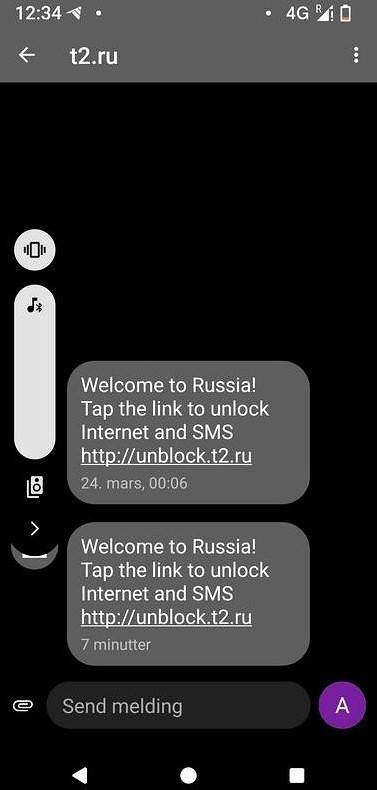
Right after crossing the border, I received this SMS in English:
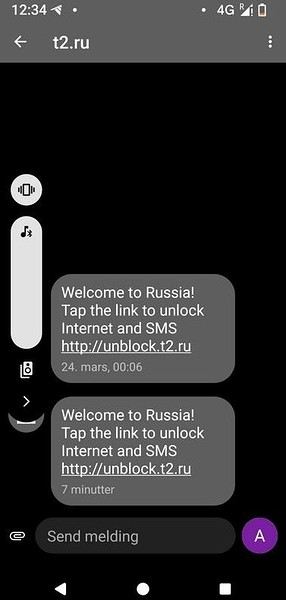


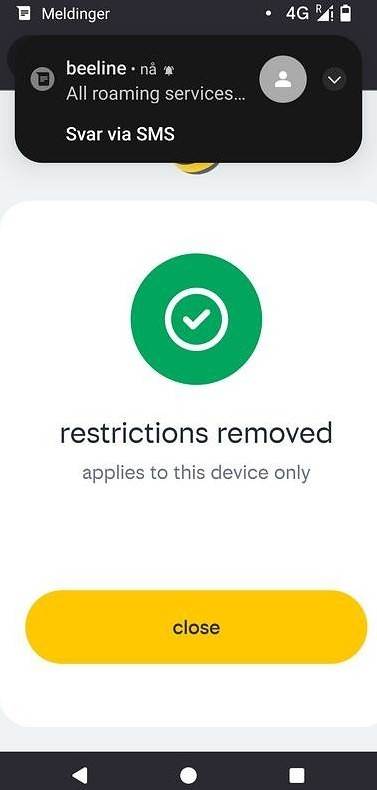
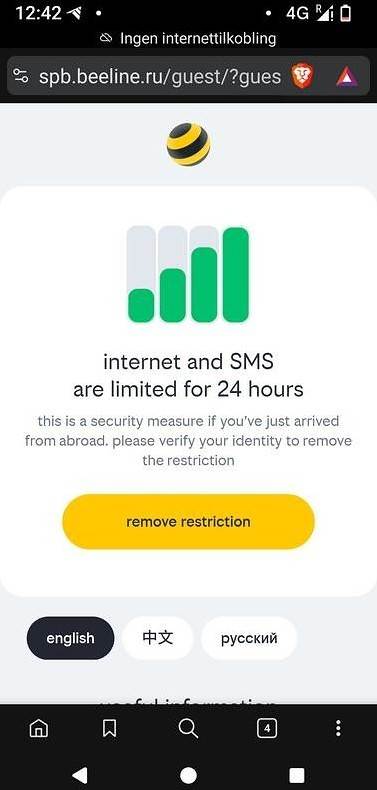
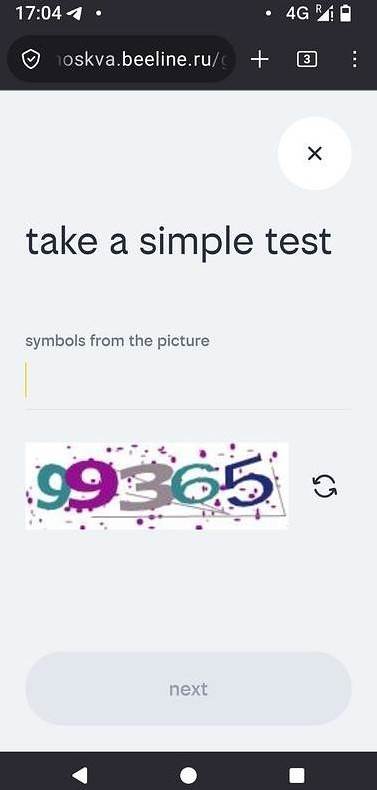
The bottom one. The top one is the same but from late March when I was in Murmansk—I only noticed it later. So, you tap the link in the SMS, and it opens a page on the mobile operator’s site. No Wi-Fi needed, and the SIM’s 4G is blocked except for accessing this page. There’s a numeric code to enter for verification, and the SMS/internet block is lifted right away:
VoyageForum — the largest community of French-speaking travellers.