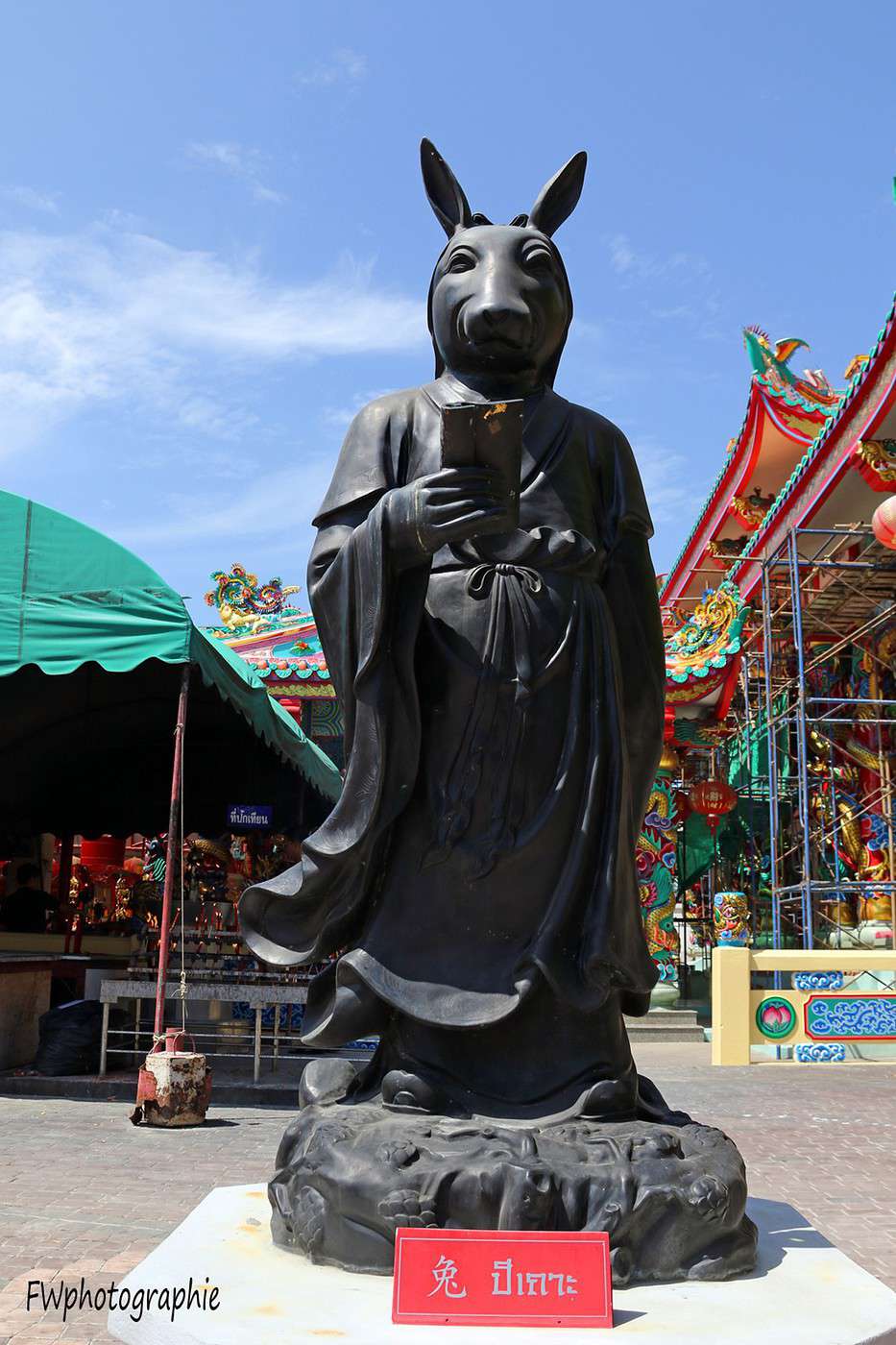
You have to admit, breakfast at the Songphanburi Hotel really stands out from the usual routine. We’re pleasantly surprised to find guava juice, real jam, two kinds of cakes, excellent pineapple, decent coffee, and real milk available. That said, this kind of spread isn’t an everyday thing in Thailand.
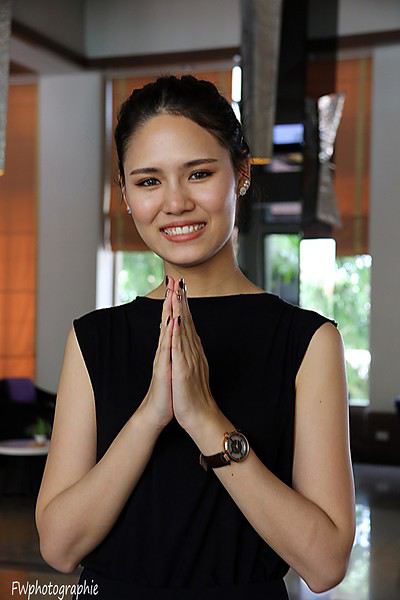
The turnaround in the reception staff is striking: the girls are totally relaxed and greet us with big smiles. The farangs have been taken care of, they’re happy, and the staff won’t lose face. Amazing Thailand!
At eight in the morning, our guide Ha shows up as planned with the little Mitsubishi driven by her boyfriend Beuh (pronounced the Thai way, with a slight gagging intonation). Real names are often more complicated, so nicknames are the way to go.
While Beuh has a bit of a roguish, deadpan side, Ha is an extremely considerate and cheerful little woman. We hit it off right away—there are just some people you can’t help but like.
They’ve brought the full list of the day’s activities. It’s a packed schedule because Suphanburi is a must-visit stop on the Buddha trail.
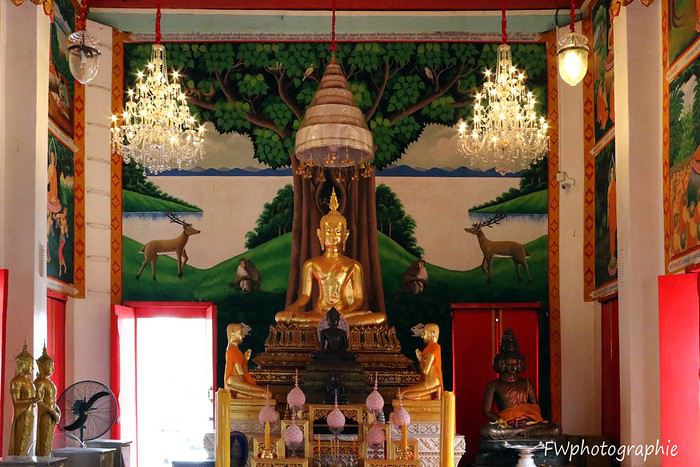
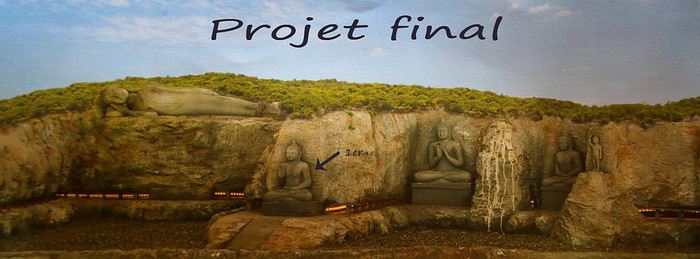
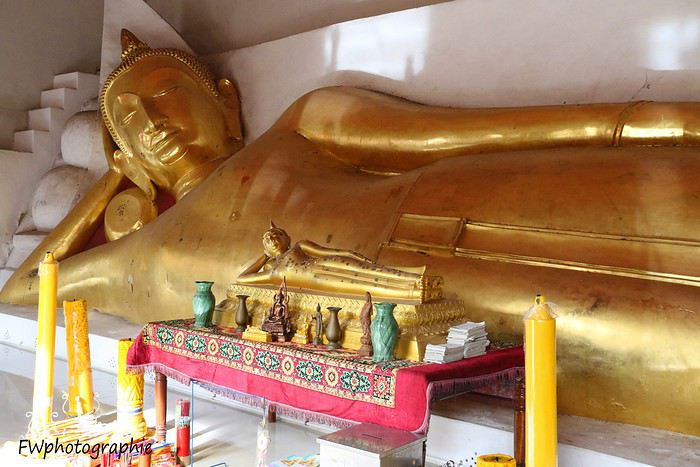
Our first stop is Wat Phra Rup, a six-century-old temple where, at this early hour, only the guard dog seems vaguely awake. The word in the country is that the long reclining Buddha (13 meters) here has the most beautiful face in Thailand. That’s absolutely not true, though his expression leaves no doubt he’s just reached nirvana.
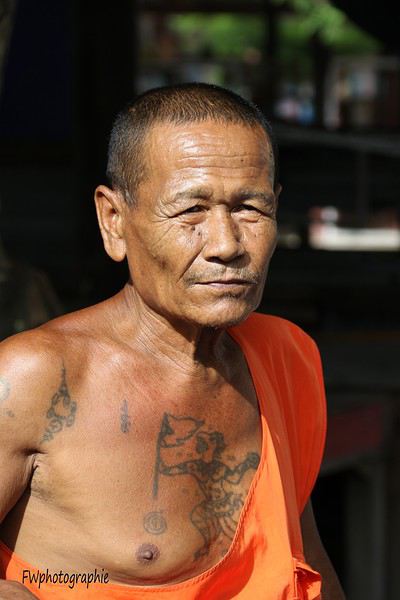
Near this statue, a monk in wax sits cross-legged on a wooden table. Oh wait—no, he moved! Turns out he’s real. Not far from nirvana himself, actually.
But that’s not the only reason we’re here. We’re lucky our new friends exchange a few words with the first monk we meet. He gives them some explanations and hurries to find the keys to unlock a door on the upper floor of a side building.
The most precious items are displayed in a long hall, including a large piece of padauk wood, or Burmese rosewood, unique in Thailand. It’s about two meters long and 90 centimeters wide, carved on both sides.
On one side, the famous footprint of Buddha, and on the other, a battle scene with elephants.
Unfortunately, it was the least photogenic thing we saw. The thick glass protecting it was dirty, and bright light streamed in through the row of windows at the bottom of the hall. We had to press our noses right up to it to get a good look. It’s a delicate and original piece.
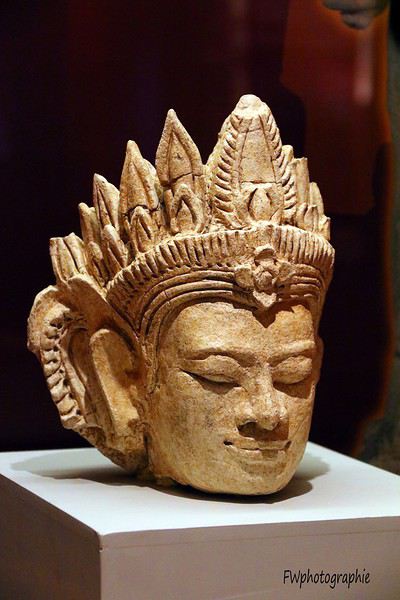
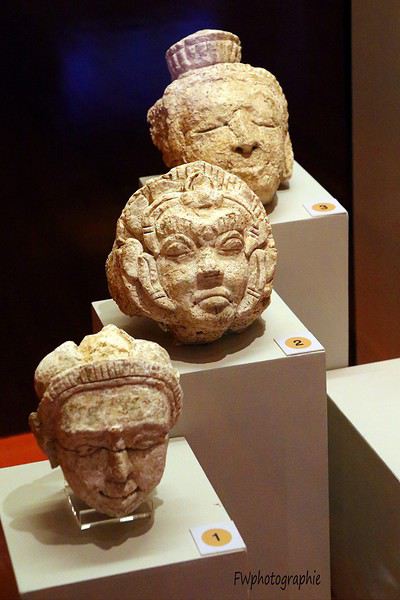
All around, there are finely crafted furniture, statues, and statuettes. Notably, two statues bear a strong resemblance to the one we saw the day before at the national museum.
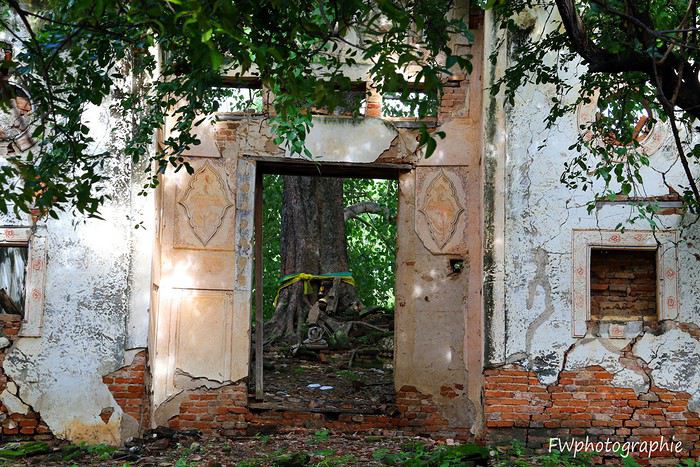
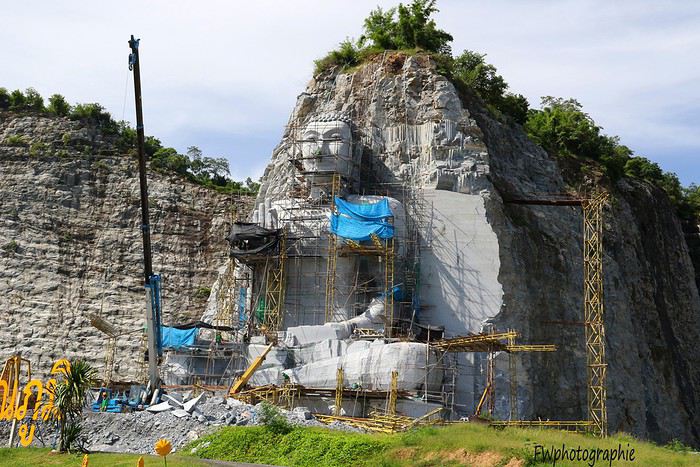
Time to tackle the highlight of the day: Wat Pa Lelai. This temple’s origins date back to the 13th century. It’s now a large complex, with even a new and spacious viharn under construction.
Right at the entrance, there’s already a good crowd, even though it’s a weekday, and you can feel the devotion. Everyone comes to ring the bells.
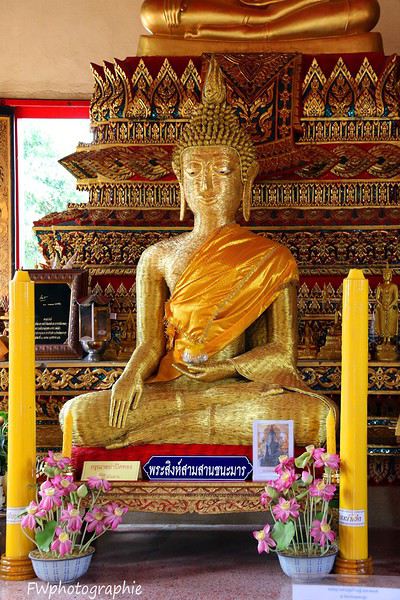
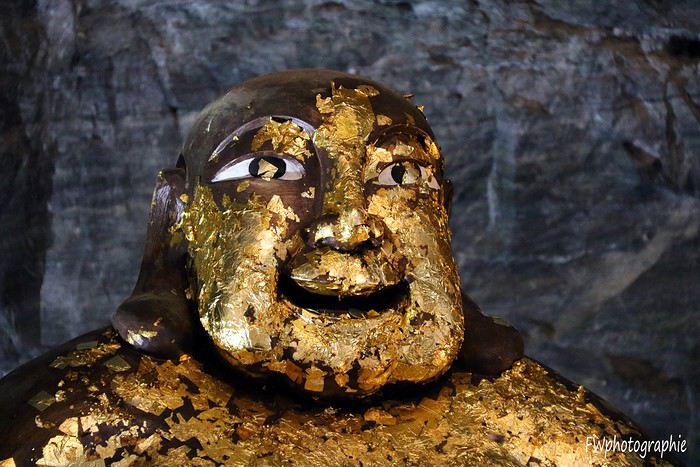
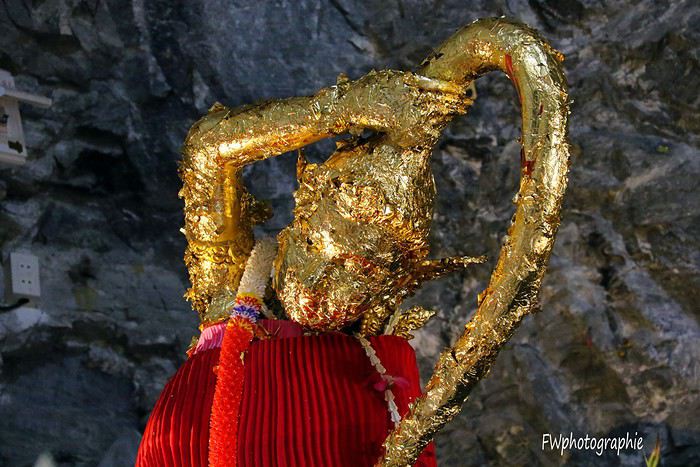
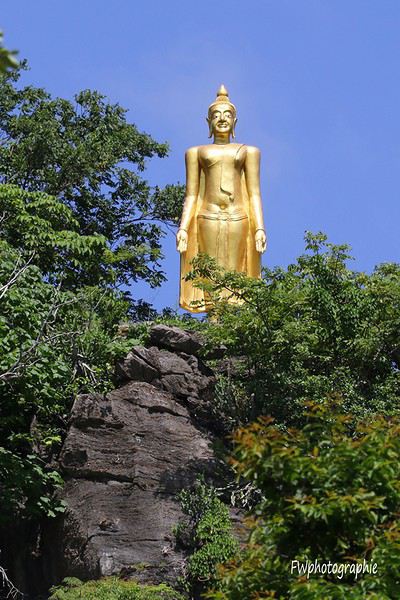
And there are already so many statues to admire. Several Buddhas are heavily gilded with gold leaf, the newest layers fluttering in the light breeze while incense fills the air.
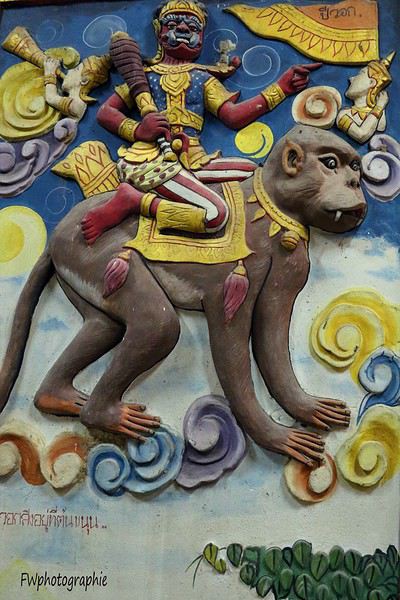
The first building is guarded by an elephant and a monkey, both made of granite. It’s tall and narrow, with a constant flow of people entering and exiting. Inside, all you can do is look up—it’s another case of sheer scale.
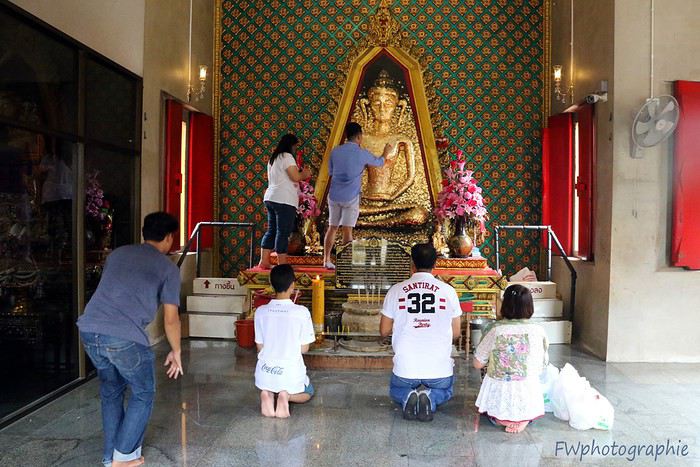
The seated Buddha, once outdoors, stands 23 meters tall and commands attention under its colorful ceiling.
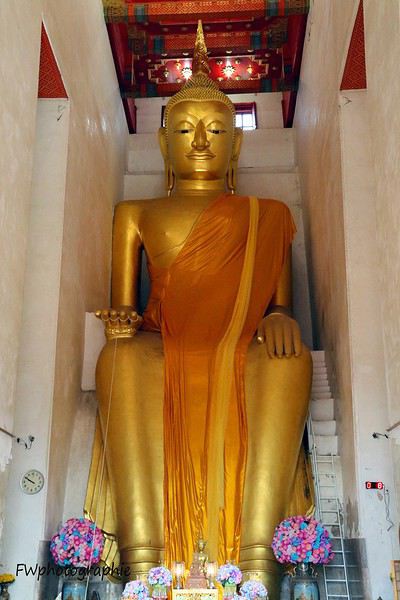
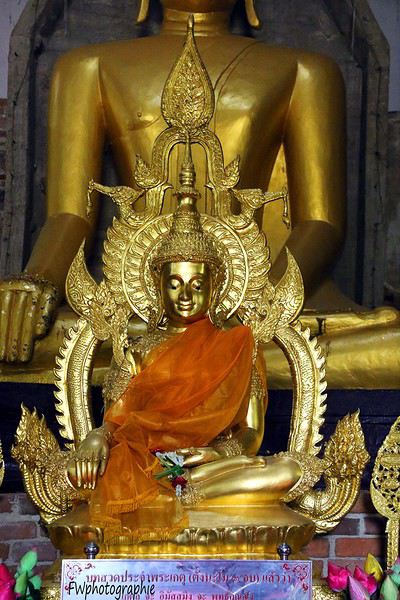
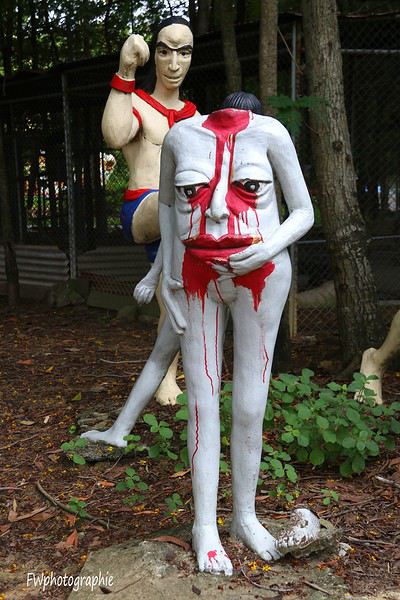
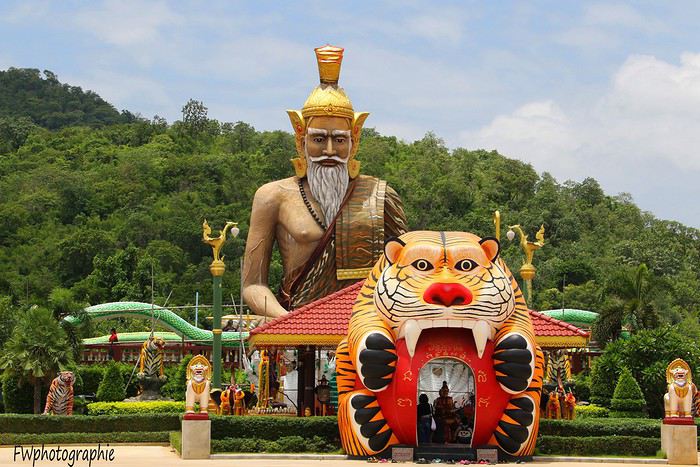
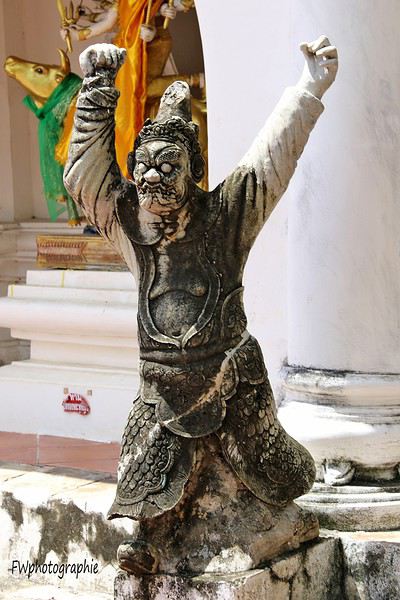
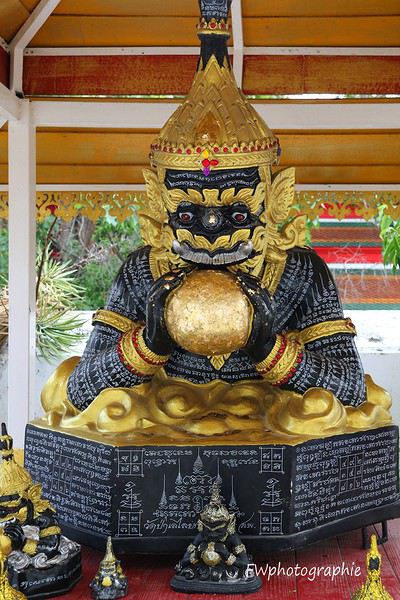
Around this building, there’s a succession of figures and animals—not your average garden pottery. A small shrine at the back houses a very old Buddha representation.
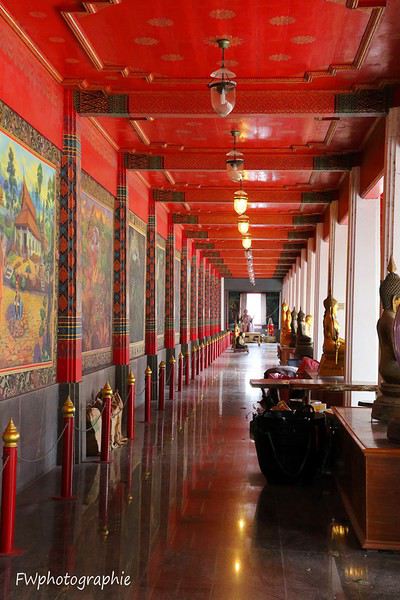
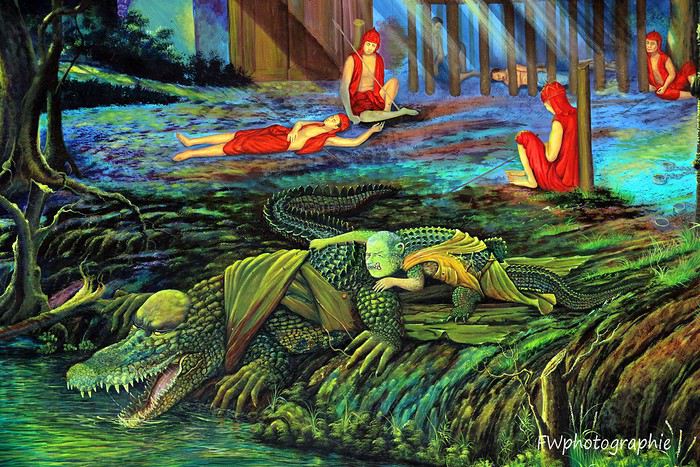
Leaving the small enclosure, after an inner courtyard, we’re treated to a walk along the four galleries on the sides of the large inner courtyard. It’s an unbroken sequence of vibrant, colorful murals, each at least three meters by two. They’re unlike anything we usually see and incredibly expressive. You can spot scenes from daily life centuries ago, few of which are ordinary. One depicts a decapitation, another a cremation, and several show acts of sorcery and ghosts.
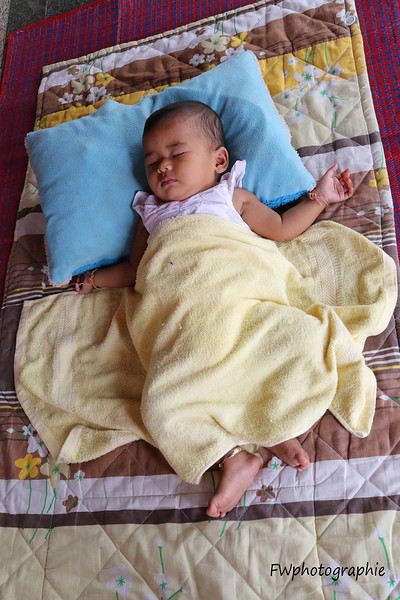
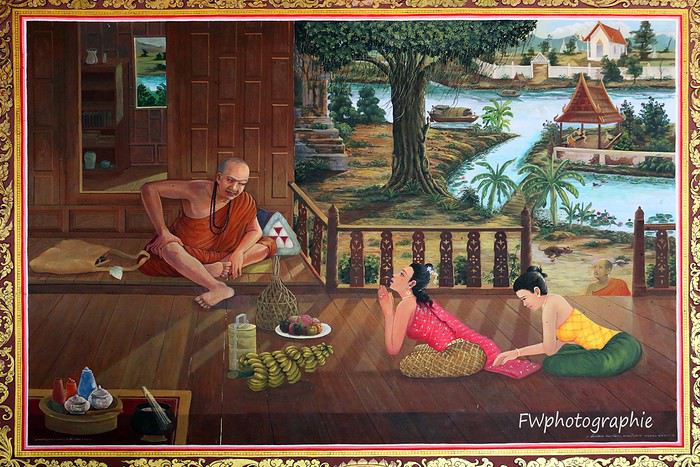
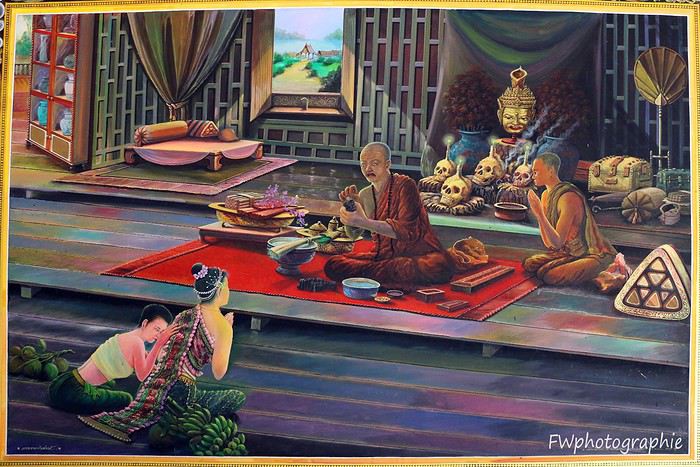
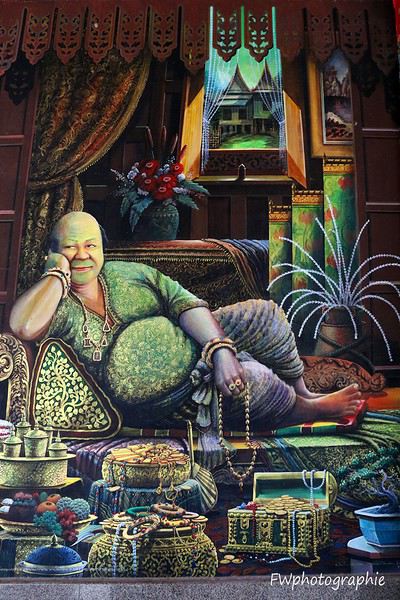
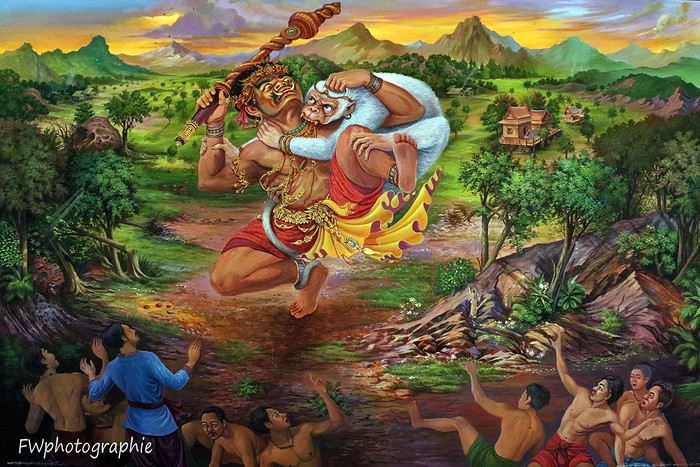
We’re snapped out of our awe by a dog lying on a mat, just after we catch a whiff of death. He’s barely breathing, clearly in his final moments. Up until now, we hadn’t seen anything like this—now it’s two in just a few days. There’s no way we’ll ever get used to it.
At the end of the path, a pot-bellied, laughing Chinese Buddha towers over a stele, a turtle, and a statue that seem even older than the temple itself.
We emerge at the exit into a whole row of shops where you can grab a bite and buy all sorts of items.
We’ve seen so much, even though we haven’t even covered the whole temple. But our schedule is packed, and the next stop awaits.
Our guides still take the time to feed the fish. In this region, many temples are by the river or a pond, and the sacred fish aren’t caught—they’re fattened up.
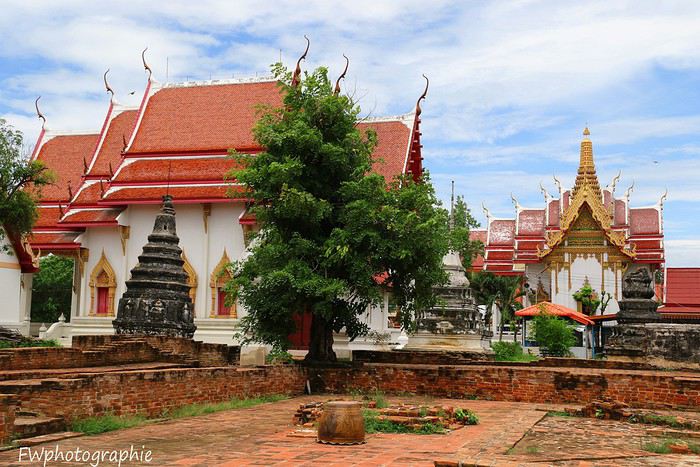
On the west bank, where the ancient city of Suwannaphum once stood, another 600-year-old temple is worth a visit. Wat Phra Si Rattana Mahathat houses a rather flat, two-meter Buddha in the shape of a votive tablet in one of its chapels.
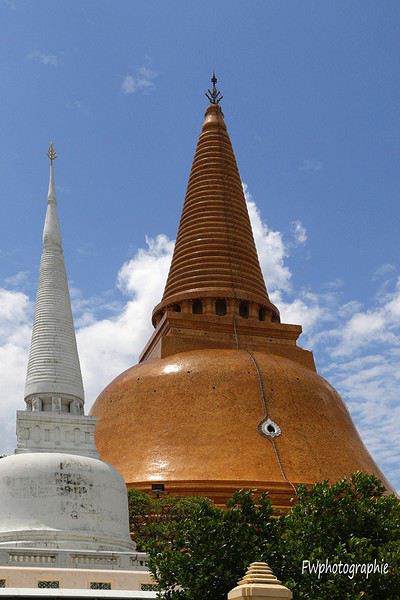
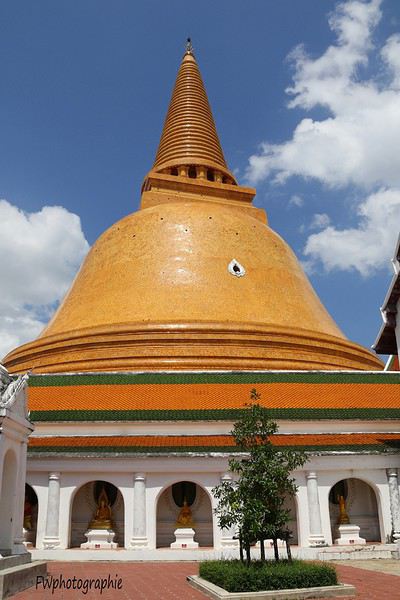
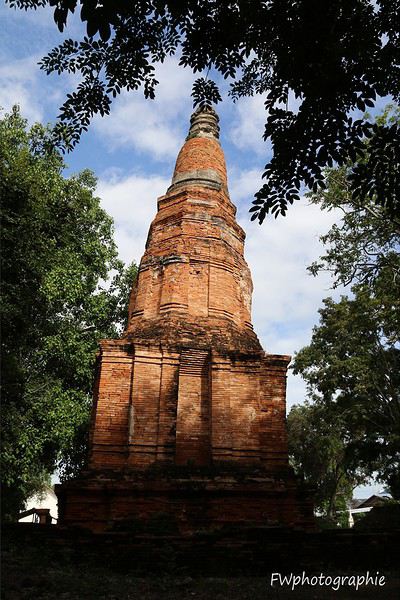
The interior has a bit of an Ayutthaya vibe, with stupas in varying states of preservation, but with a large chedi that archaeologists date to the U Thong period, predating Ayutthaya.
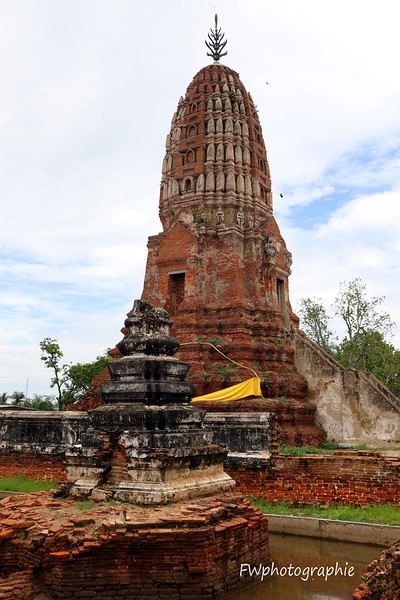
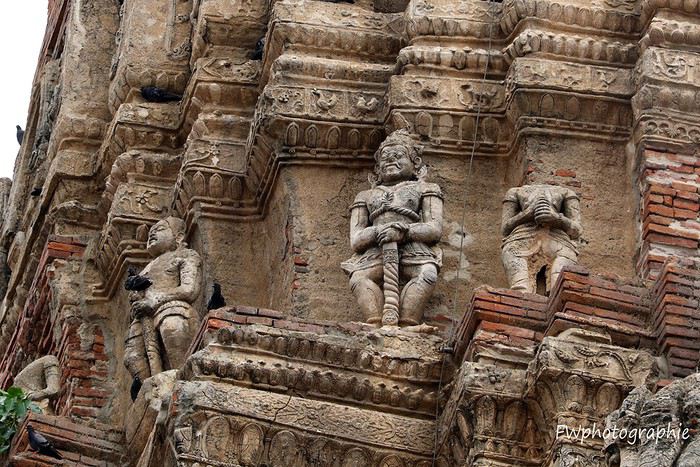
Only Joel, driven by his modern-day adventurer spirit, gives in to the temptation to climb the steps to see what’s behind the gaping entrance a few meters off the ground, under the imposing dome.
Inside, there are indeed a few statuettes and a slender golden Buddha with arms outstretched in a peaceful pose, draped in colorful flower garlands. You have to lean in to make out a mysterious statue completely wrapped in colored bandages—only the gilded base is visible. The mummy?
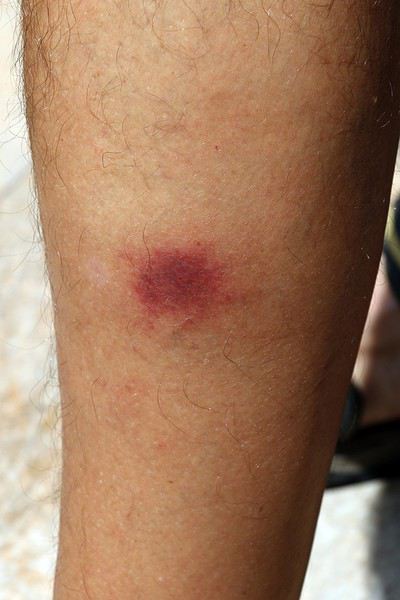
A few meters after descending the steps, Joel feels an unpleasant sensation on the outer part of his left leg, just below the calf. Maybe a mosquito or one of those random aches that come and go. Let’s forget about it. A few more steps, and he feels that stinging sensation again—though there’s nothing on his leg. But it’s definitely red, and it’s itching a bit too much to be normal. Later, Beuh pulls a homemade cream from the glove compartment that soothes the itching. Temporarily. The mummy’s curse?
Across from the chedi stands a house-shaped structure with a temple-style roof. You can’t go inside—the windows are closed, and a gate blocks the door. Only a cat got through... and the GoPro, much to the Canon’s jealousy at that exact moment. It’s a storage shed for Buddhas of all sizes, some also shaped like votive tablets.