Converting a heavy-duty camper from a bus/coach/truck
Hey everyone😉
So what’s this mess all about (to keep it polite)—I’m away from the forum for five days and it goes live?!
Let me start from the beginning. Thanks to Patrick26 for the little note at the end of the photo report from the weekend of Sept. 16/17. Yes, I really appreciate it—it’s nice🙂 to finally have someone think my idea was worth a try (even if it was just a joke😏), and a great one at that . And especially that someone actually made it happen for me. Even though I couldn’t be there, I still feel like I was part of it somehow.
Next:
Congrats to AMAsxmx on the adoption, 😎 don’t worry if you get discouraged at some point—it’s normal. You’ll run into some challenges, but just look at it afterward and tell yourself it’s kind of like your baby. When you finally pull it off, you’ll be so happy and proud😎.
Next:
I absolutely have to share my opinion too (which Patrick26 already knows), but I want to bring it up here:
🤪It’s true that it’s long to read, and it’s also true that I get annoyed searching for something earlier, but...
That’s because there are so many contributors and because it’s FRIENDLY—kind of like a big, long chat between friends. Personally, the post was created in 2004, and I’d already had my eye on my bus for three years. I signed up on the 8th page (the champagne bottle for the driver’s door) because the topic interested me, and I had my bus. I didn’t chime in until the 11th page, once I was out of the DRIRE because before that, I had nothing to share and nothing specific to ask. With the AFNOR guide, the DRIRE file, a bit of knowledge, and some online research, it all works out. 😎
Just to say, I’ve been following this post for two years just because it’s engaging and different from the others🙂—the ones I barely visit anymore, at least not to contribute (too many tangents, too many posts to follow). So if you want to change this one, be careful not to strip it of its origin, its warmth, and turn it into a soulless DRIRE branch with legal text links, photo links, and pre-defined templates ready to copy-paste. Because then you’ll only get visitors who come to "GRAB" a standard layout, a pre-formatted setup, etc., without even leaving a little thank-you, and that’ll gently "kill" this post, which is currently turning into a FRIENDLY GROUP.
 WARNING: I’m AGAINST posting the AFNOR Guide online since it’s copyrighted, which would mean closing the post . Plus, it’s not like I had it with me when I went to Véritas—my setup was approved for 85 €, which is RIDICULOUS compared to the cost of the conversion. 😉
That said, I’m not against gathering all the useful texts, standards, and shareable info. If it keeps the post free for exchanging ideas or even goofing around without worrying about space, why not.
Patrick had a great idea introducing SJunior, who I think will help keep this post alive—though hello, the solicitation...😄
Okay, I’ve gone on long enough😕. Sorry, but it’s been five days since I last wrote anything...
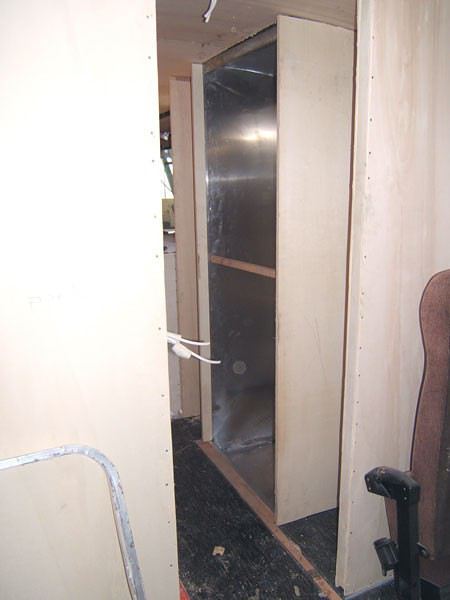
I’ll add one more thing since while I was writing, new posts popped up: For metal sheets in the joints, it’s common. I even added 3mm plywood over a window with Trisodur in between😛... elastic seal, right?😏 For the metal sheet in the joint, I think you need to add a welded border all around or better yet, 5 or 8mm plywood glued to the metal (regulates humidity and provides a base for attaching insulation and the rest while insulating it from the metal). Not a bad idea, huh?
And for plywood and tiling in a bus—total nonsense. A bus deforms and twists while driving, so drywall won’t hold, and you definitely don’t want moisture setting in. It’s like insulating with fiberglass or rock wool—it compresses with vibrations, everything shifts gently, clumps at the bottom, and creates thermal bridges at the top. Plus, it absorbs moisture.
GX47
So what’s this mess all about (to keep it polite)—I’m away from the forum for five days and it goes live?!
Let me start from the beginning. Thanks to Patrick26 for the little note at the end of the photo report from the weekend of Sept. 16/17. Yes, I really appreciate it—it’s nice🙂 to finally have someone think my idea was worth a try (even if it was just a joke😏), and a great one at that
. And especially that someone actually made it happen for me. Even though I couldn’t be there, I still feel like I was part of it somehow.Next:
Congrats to AMAsxmx on the adoption, 😎 don’t worry if you get discouraged at some point—it’s normal. You’ll run into some challenges, but just look at it afterward and tell yourself it’s kind of like your baby. When you finally pull it off, you’ll be so happy and proud😎.
Next:
I absolutely have to share my opinion too (which Patrick26 already knows), but I want to bring it up here:
🤪It’s true that it’s long to read, and it’s also true that I get annoyed searching for something earlier, but...
That’s because there are so many contributors and because it’s FRIENDLY—kind of like a big, long chat between friends. Personally, the post was created in 2004, and I’d already had my eye on my bus for three years. I signed up on the 8th page (the champagne bottle for the driver’s door) because the topic interested me, and I had my bus. I didn’t chime in until the 11th page, once I was out of the DRIRE because before that, I had nothing to share and nothing specific to ask. With the AFNOR guide, the DRIRE file, a bit of knowledge, and some online research, it all works out. 😎
Just to say, I’ve been following this post for two years just because it’s engaging and different from the others🙂—the ones I barely visit anymore, at least not to contribute (too many tangents, too many posts to follow). So if you want to change this one, be careful not to strip it of its origin, its warmth, and turn it into a soulless DRIRE branch with legal text links, photo links, and pre-defined templates ready to copy-paste. Because then you’ll only get visitors who come to "GRAB" a standard layout, a pre-formatted setup, etc., without even leaving a little thank-you, and that’ll gently "kill" this post, which is currently turning into a FRIENDLY GROUP.
WARNING: I’m AGAINST posting the AFNOR Guide online since it’s copyrighted, which would mean closing the post . Plus, it’s not like I had it with me when I went to Véritas—my setup was approved for 85 €, which is RIDICULOUS compared to the cost of the conversion. 😉
That said, I’m not against gathering all the useful texts, standards, and shareable info. If it keeps the post free for exchanging ideas or even goofing around without worrying about space, why not.Patrick had a great idea introducing SJunior, who I think will help keep this post alive—though hello, the solicitation...😄
Okay, I’ve gone on long enough😕. Sorry, but it’s been five days since I last wrote anything...
I’ll add one more thing since while I was writing, new posts popped up: For metal sheets in the joints, it’s common. I even added 3mm plywood over a window with Trisodur in between😛... elastic seal, right?😏 For the metal sheet in the joint, I think you need to add a welded border all around or better yet, 5 or 8mm plywood glued to the metal (regulates humidity and provides a base for attaching insulation and the rest while insulating it from the metal). Not a bad idea, huh?
And for plywood and tiling in a bus—total nonsense. A bus deforms and twists while driving, so drywall won’t hold, and you definitely don’t want moisture setting in. It’s like insulating with fiberglass or rock wool—it compresses with vibrations, everything shifts gently, clumps at the bottom, and creates thermal bridges at the top. Plus, it absorbs moisture.
GX47
 Uh... there's an error at the end of my previous post—it should say: