When the building goes
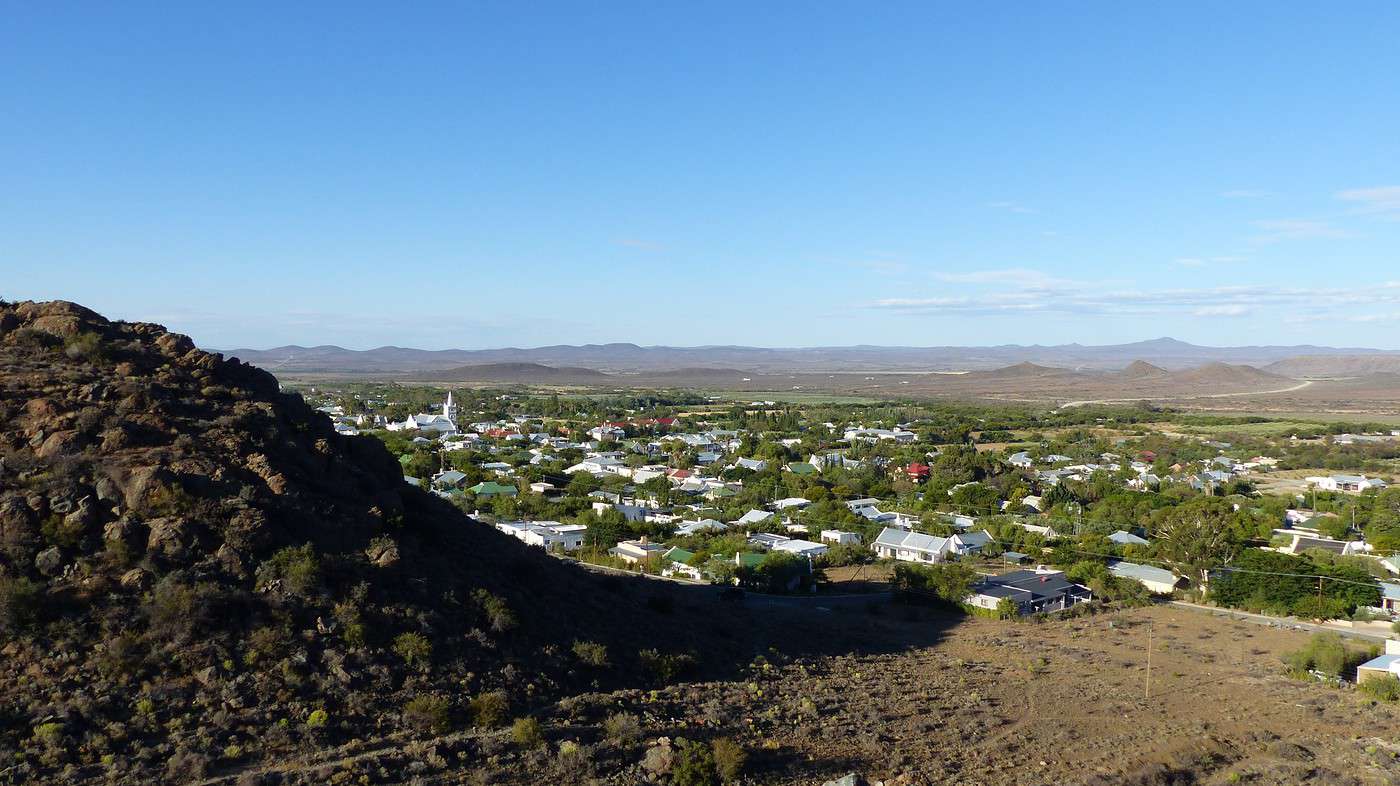
Construction of two hundred and fifty new homes is underway in the township. Some residents of the historic city are worried: "They can fit two thousand people in there. And we already don’t have enough water for the gardens!"
The municipality issued a reassuring statement: the goal is to decently house those who live in makeshift shelters at the back of courtyards and gardens.
I went to see the construction site: twenty-five square meters total, the parents' bedroom for seven, the kids' room for four, a two-square-meter bathroom, and the rest for the living-dining-kitchen area. The small houses are spaced ten meters apart in all directions on less than ten hectares of rocky land. At least they won’t waste water on gardens.
Meanwhile, on the other side of the city, a couple of doctors practicing in Cape Town are building a 450-square-meter retirement home on three hectares of fertile land.
*
A matter of the heart
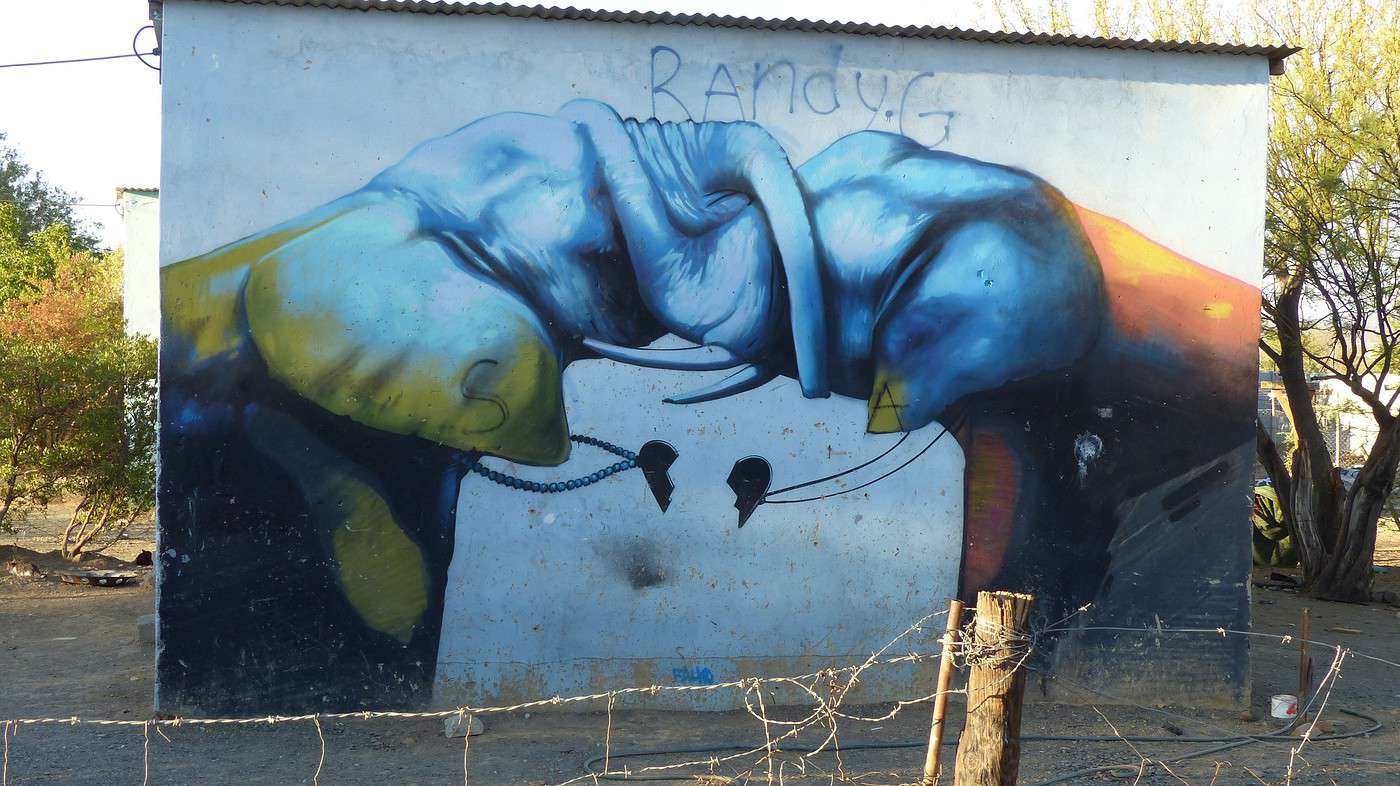
Fifty years ago, Chris Barnard achieved a world first in South Africa: a human heart transplant. He had practiced extensively on dogs with fierce determination.
Opposed to apartheid and leveraging his newfound fame, he demanded to be allowed to hire Black assistants. When the minister himself refused outright, Barnard threatened to accept one of the offers he had received in America and won the day.
Later, he transplanted the heart of a white donor into a Black recipient. All hearts are red, just as bones are white.
Two years after his feat, Chris, forty-seven, left his wife for another heart. Barbara’s, nineteen. No need for a transplant anymore.
*
Risking it to be sure
Johannesburg was suffocating him. In this sprawling city—the world’s largest man-made forest—beautiful, wild, and cruel, he felt like he was in the grip of a boa constrictor.
So, Athol sought a place more suited to his condition and, defying his parents, settled in the desert.
He’s long been fascinated by snakes. Here, he’s available at any hour to remove a reptile from your floor. For free, just out of love for people and these creatures that terrify them. He takes them away in a box, finds them the best spot in the desert, and releases them.
He’s particularly wary of the Cape cobra, for the lightning speed of its venom, and the Puff adder for its strike. He works with his face uncovered and bare-handed. Only once in fifteen years has he been bitten. Helicopter, coma, luck: the venom (gratefully) spared him.
A rare thing here, he never drinks wine. Only whisky, and only after ten p.m., when the likelihood of a call fades. His antidote.
Why take such risks? To feel alive.
*
What a couple!
Siemon is a painter obsessed with hyenas. Hyenas he distorts across his canvases. His partner, Gabriel, is also his Pygmalion. Together, they rule the local art scene.
*
Endangered species
When he’s here, you’ll see him running in the mountains in the cool early hours. Wearing heavy boots, a backpack, sharp-eyed, his face carved by a machete. A dog on a short leash, a mass of muscle, a scruffy face oddly black and white.
It’s his training. Along with others like him, he’s hired by reserves and parks to protect wildlife from the greed of poaching kingpins. A Kenyan might stand a chance, but certainly not a Mozambican or Zimbabwean.
A white South African, he counts himself among the endangered species. On his bakkie, the sticker reads "Save a rhino, kill a poacher," but with his mom, who’s retired here to write, he’s a sweetheart.
*
A little delicacy!
Lying on the deck, the stars are watching me. Some already dead, they say (when science borders on mythology). True to my Havana, I smoke without shame, and between them and me, a cloud forms (the myth remains intact). Will it rain at Christmas?
(If I may offer a tip to the traveler who fancies themselves a nomad in the desert and wants to enjoy a Havana. You have nothing but your knife, and the cigar is a bit dry—you’ve already used up your humidification packs to keep it at the ideal humidity. Don’t risk uncapping it dry and damaging the wrapper. Lightly lick it while giving it a slight twist, then carefully cut the few leaves at the head that were glued by the torcedoras’ saliva.)
*
I brought you some veggies
When invited for a drink or a braai, you at least bring a bottle of wine. Then maybe some jam, chutney, a jar of olives, or cookies. The best is if it’s homemade.
Tonight, Derryn arrived with a bunch of onions and a bundle of celery from her garden.
*
Mel-Anchole
Cows are often poorly regarded. Here, some civilized folks suspect them of spending their lives watching trains and polluting the atmosphere. Elsewhere, they’re considered sacred.
Here, they’re valued fairly: it takes ten to equal one woman.
They’re beautiful, with velvet eyes, sleek and supple coats, and those horns... which you’ll wear.
Here, Zulu kings only kept white ones. Here, they remain a symbol of wealth, spirituality, and political power. So you see the likely future president of South Africa posing among his herd of Anchole cattle, the largest in the country, wearing a red shirt and calfskin loafers. Yet, despite their two-meter-wide horns, they spare him. Is it because they connect him to his father, a cattle farmer in Venda before he was forced to move to Soweto?
*
Worry
After finishing his studies, this young man with a hipster vibe decided to raise chickens. Free-range, because it’s the only way to look them in the eyes. He sells his produce at the market but is worried: egg production is flat, feed prices are rising with the drought, and he and his wife haven’t taken a vacation in four avian generations.
I finish him off by pointing out that the yolks are pale.
Of course, he can’t count on the carotene from desert plants, nor any worms for them to peck at. But there’s a natural solution to reassure customers: marigold flower meal. He gives me that stupid look people attribute to chickens, imagining I’ll turn his own worries into meal. I reassure him and worry him: marigold meal is as expensive as saffron.
I offer to fill in for him for a few days in the fall.
He looks at me with egg-shaped eyes.
I agree to a trial period.
I see wings sprouting.
*
December 17, 2007
That day, landing in Cape Town, the start of a strange life split between two hemispheres.
10 years (damn, already!)
9 different countries
8 mechanical breakdowns
700 books—not a desert island
60, 600, 6,000, 60,000, 600,000, 6,000,000 Africans
The Big Five (and the Small Five too)
4 aces (on top of the four-leaf clover)
300,000 kilometers
2 cars (and a few borrowed ones)
One question: again?
Zero! I’m leaving the desert for Brittany via a layover in China (Addis Ababa).