We’ve been stuck in gray skies lately, but my restless spirit has turned toward the one nicknamed "the City of Five Bell Towers", also known as one of Belgium’s oldest cities alongside Tongres and Arlon: the charming little town of Tournai. Located in Hainaut, just a stone’s throw from the French border and about a hundred kilometers from Brussels.
You can get there from Brussels. But if you're near Mons or Lille, it’s also worth stopping by for a few hours.
The five bell towers are these:
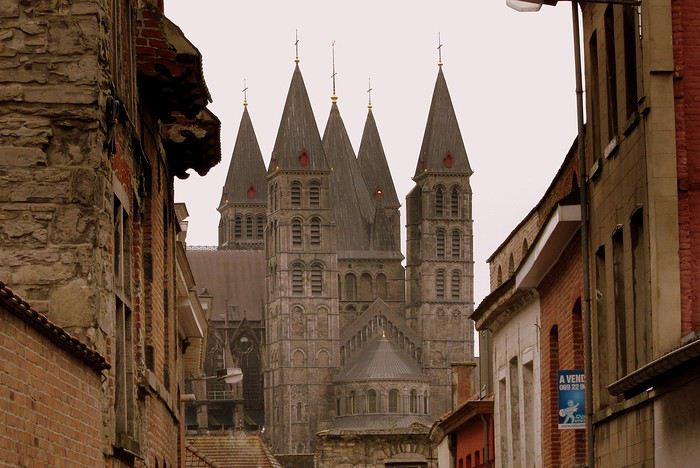
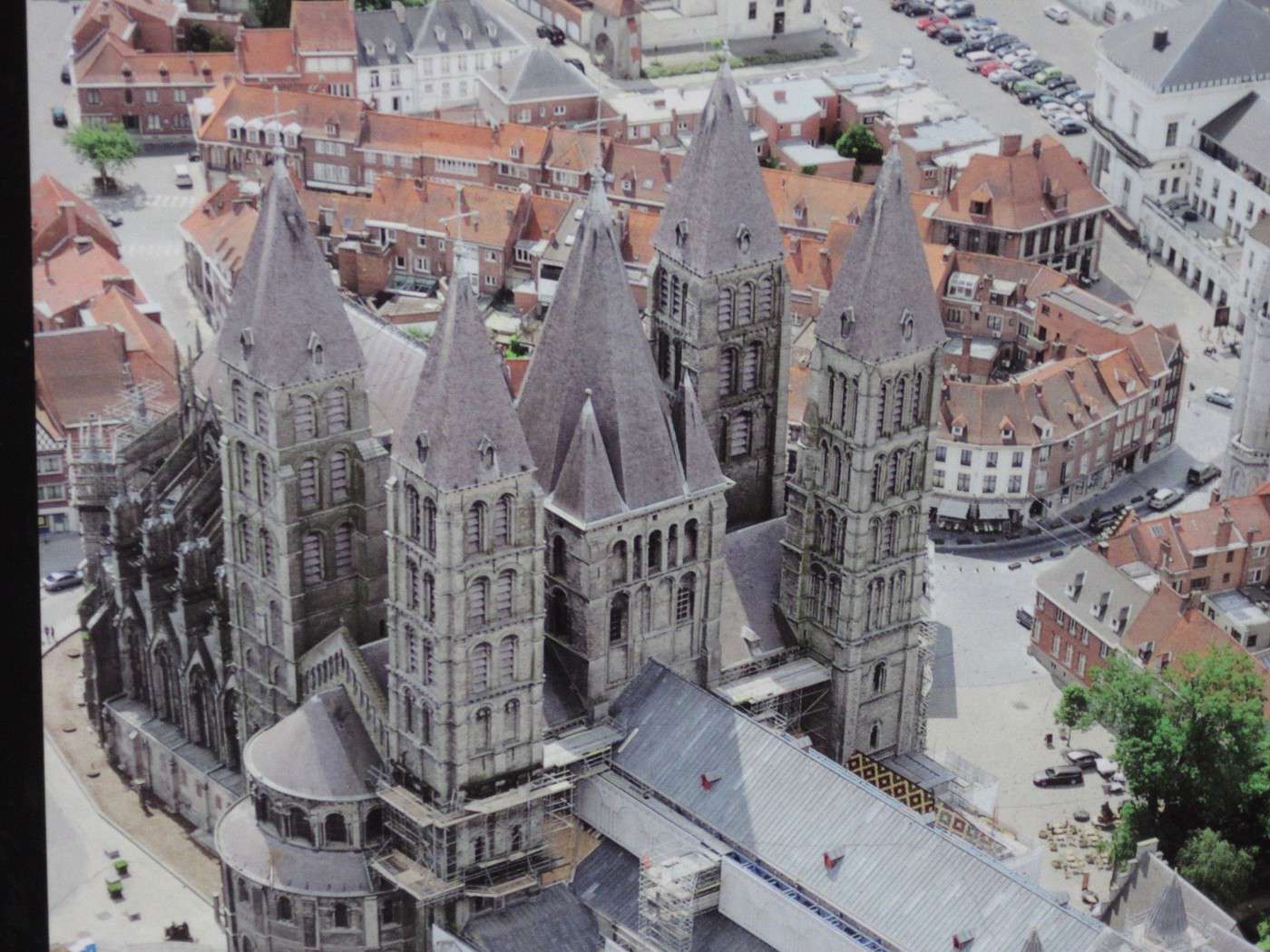
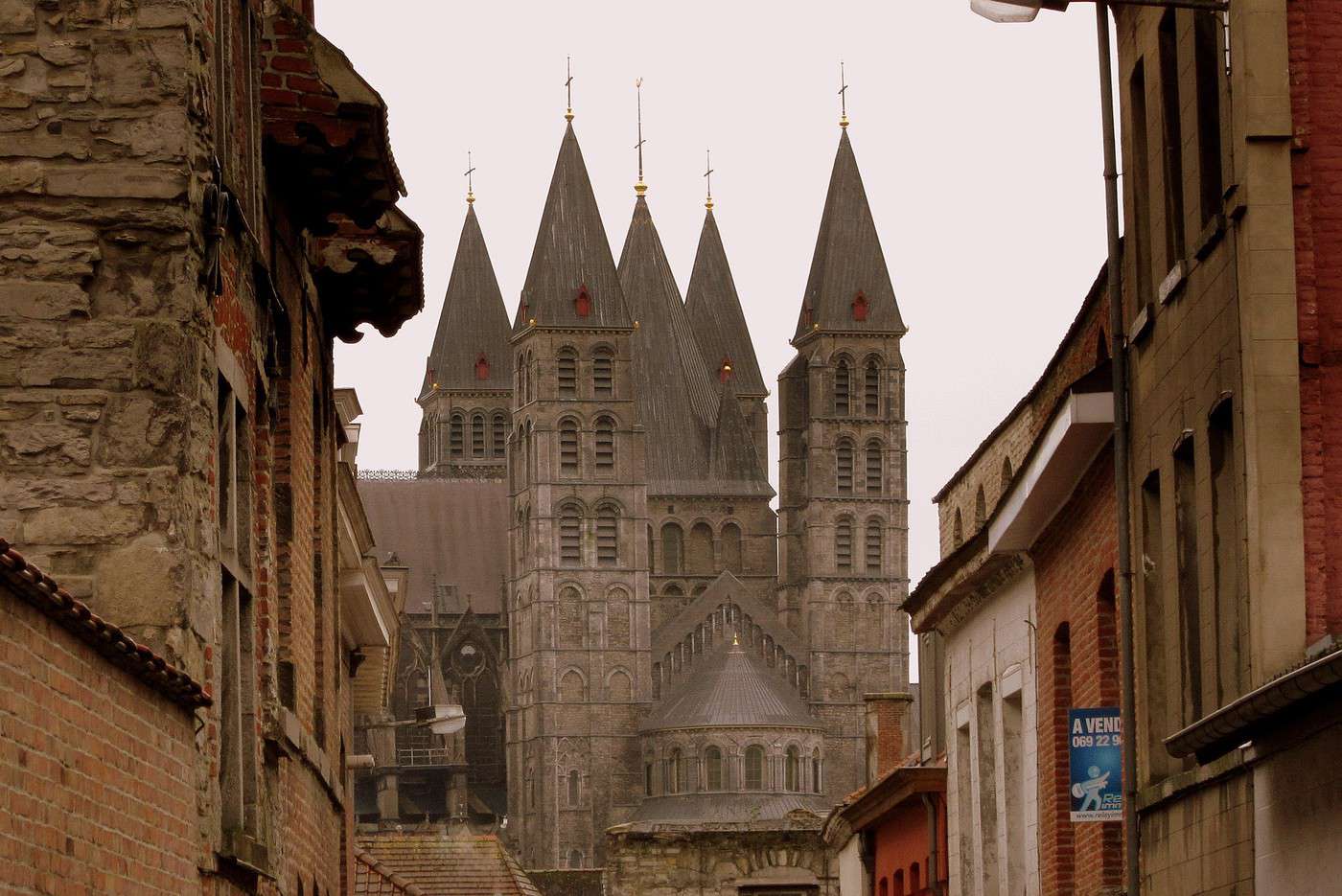
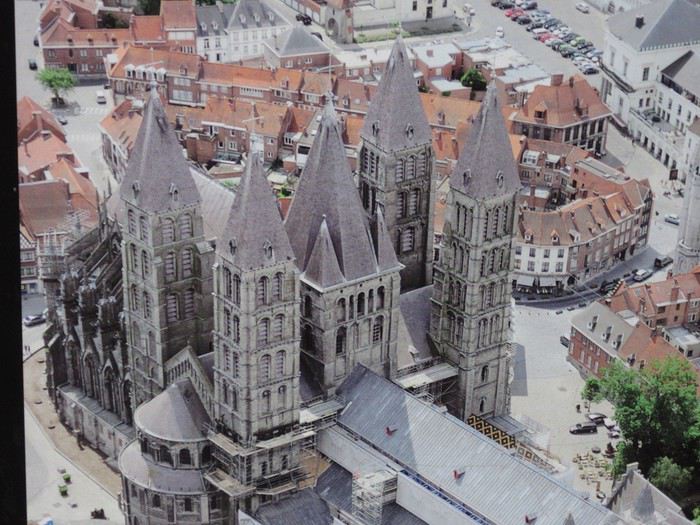
Those of its cathedral, which blends Romanesque and Gothic styles. Since the 5th century, it’s the third to be built on the current site.
On August 14, 1999, a tornado caused significant damage and, more critically, revealed a dangerous structural imbalance threatening its survival. It’s now under restoration, likely for decades. As work progresses, only parts of it are open to visitors at a time. Right now, for example, though the stained glass remains in place, it’s impossible to appreciate it—an opaque material behind the windows blocks the light.
All around, posters explain what it looked like and what it will become:
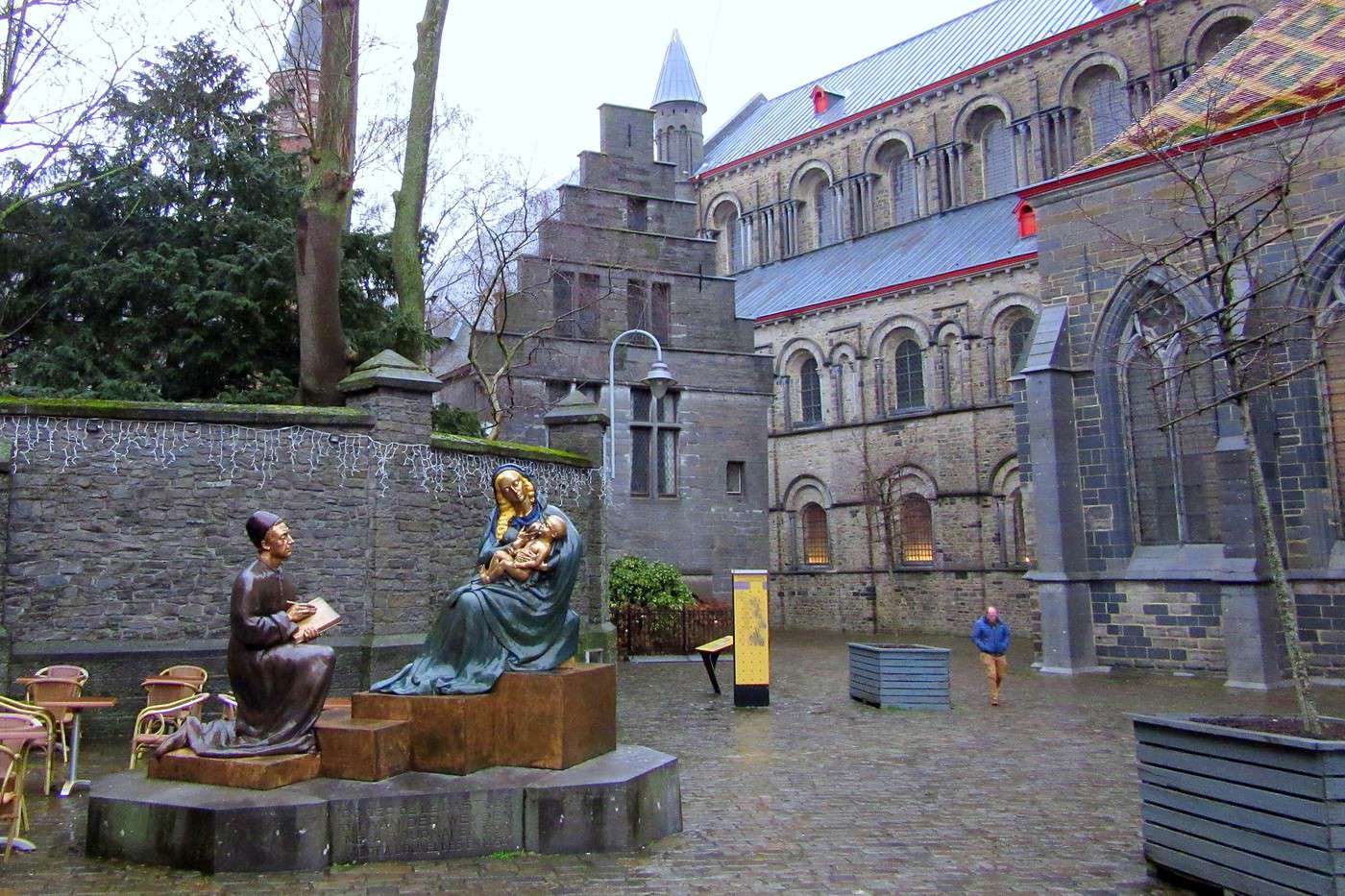
Walking around it, you’ll find yourself in Place du Vieux Marché aux Poteries, in front of a blue-toned ensemble created by Marcel Wolfers in 1936 at the initiative of Jules Destrée, who wanted to promote the arts in Wallonia.
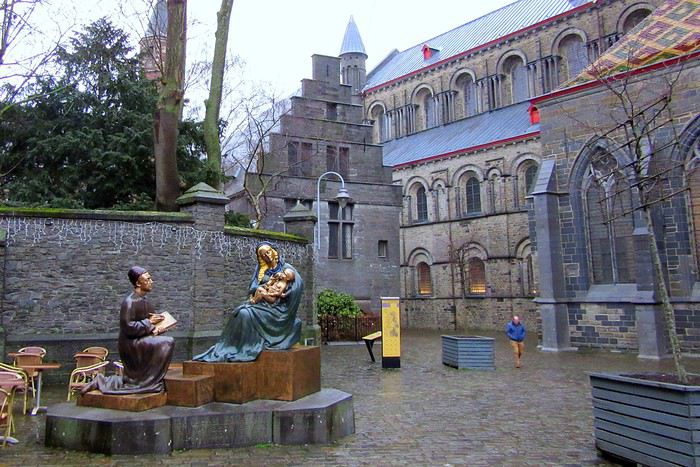
This piece is inspired by a painting by Roger de le Pasture (1399–1464, born in Tournai), also known as Rogier van der Weyden (his name in Flemish).
It depicts Saint Luke painting the Virgin and Child.
The historic center isn’t very large, so you’ll easily find the Grand-Place, a triangular square that extends into Rue des Maux (this is where justice was administered during the Carolingian era—hence the name 🏴☠️).
Almost entirely destroyed on May 16 and 17, 1940, by German airstrikes, it was rebuilt in traditional styles.
Banners on the facades recall the various trades once practiced there. You’ll find the House of Boatmen, Weavers, Apothecaries, Blacksmiths, Tanners, Upholsterers, Tailors, Potters, Locksmiths, Drapers, Leatherworkers and Glovers, Sculptors, Goldsmiths, Carpenters, and Farmers...
The reconstructed houses now host different businesses, mostly in the dining sector. In summer, restaurant terraces take up much of the space, and water jets spout from the ground.
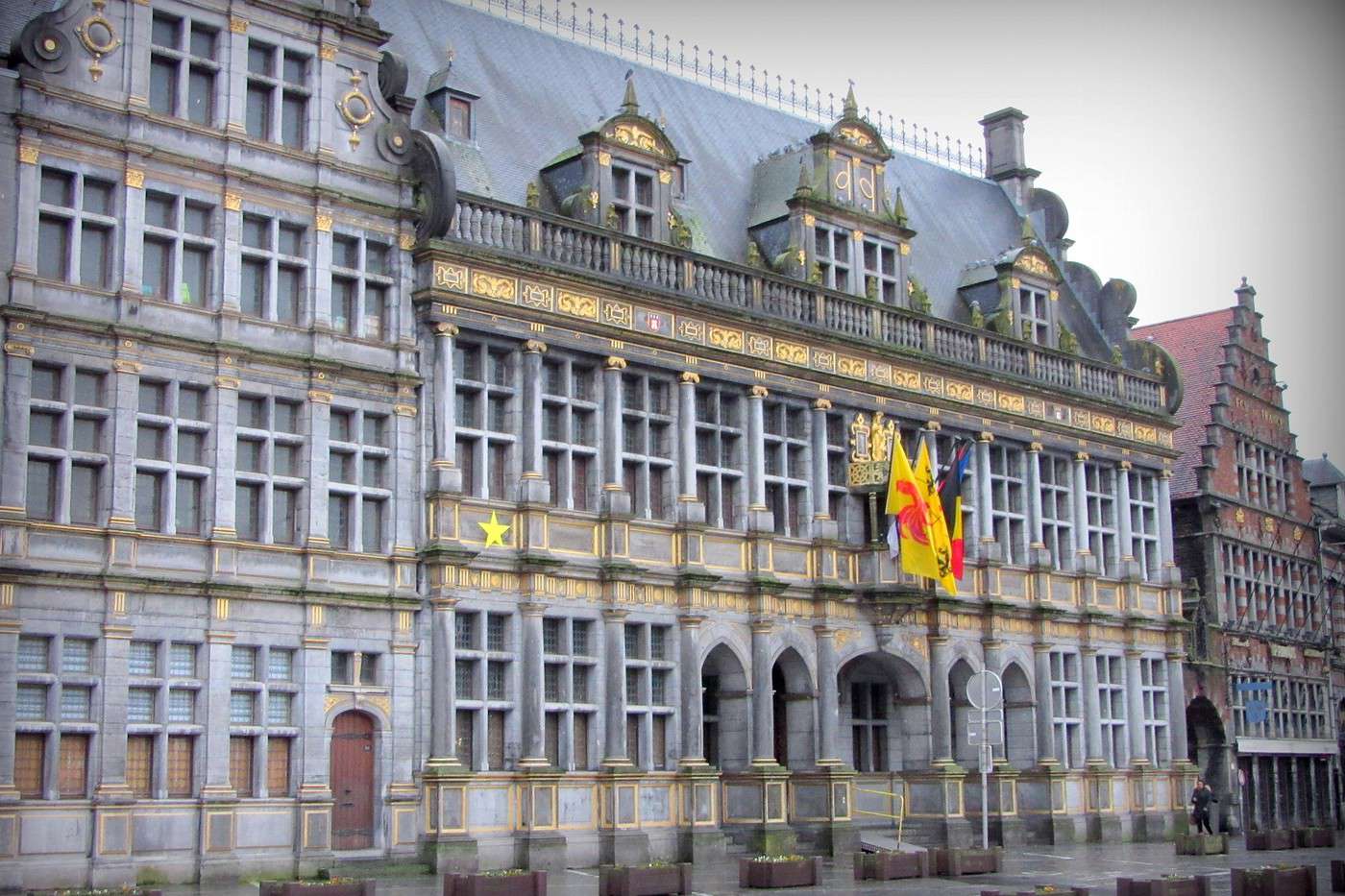
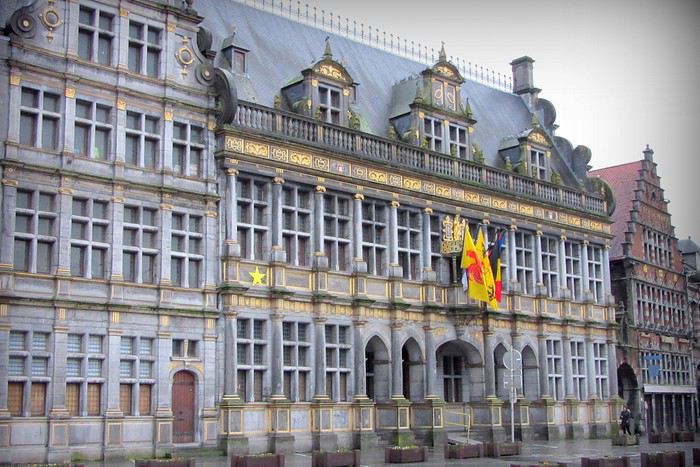
Among the large reconstructed buildings is La Halle aux Draps, where since the 12th century, merchants came to sell fabrics—a thriving industry in the region. Destroyed multiple times by storms, wars, and bombs, it’s now a venue for cultural exhibitions and events:
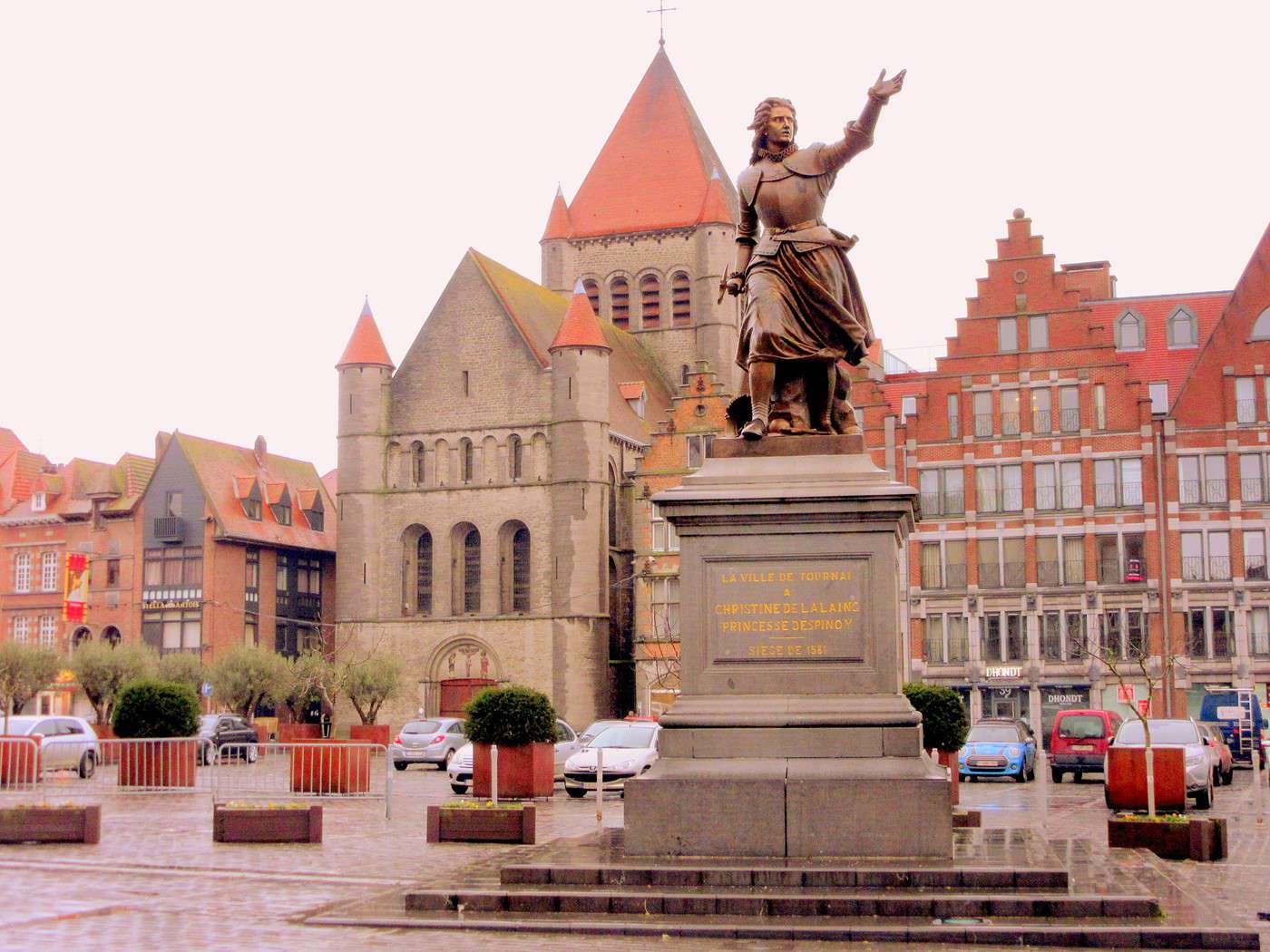
Dominating the Grand-Place is a tall statue of Christine de Lalaing, Princess of Espinoy, who led the 1581 siege. At the time, many Tournai residents had become Calvinists, much to the dismay of King Philip II of Spain. In the governor of Tournai’s absence, Pierre de Melin, the king sent General Farnese to attack the city. The governor’s wife, Christine de Lalaing, put up fierce resistance.

The church behind the statue is Saint-Quentin Church. Its origins are thought to be linked to a Gallo-Roman cemetery.
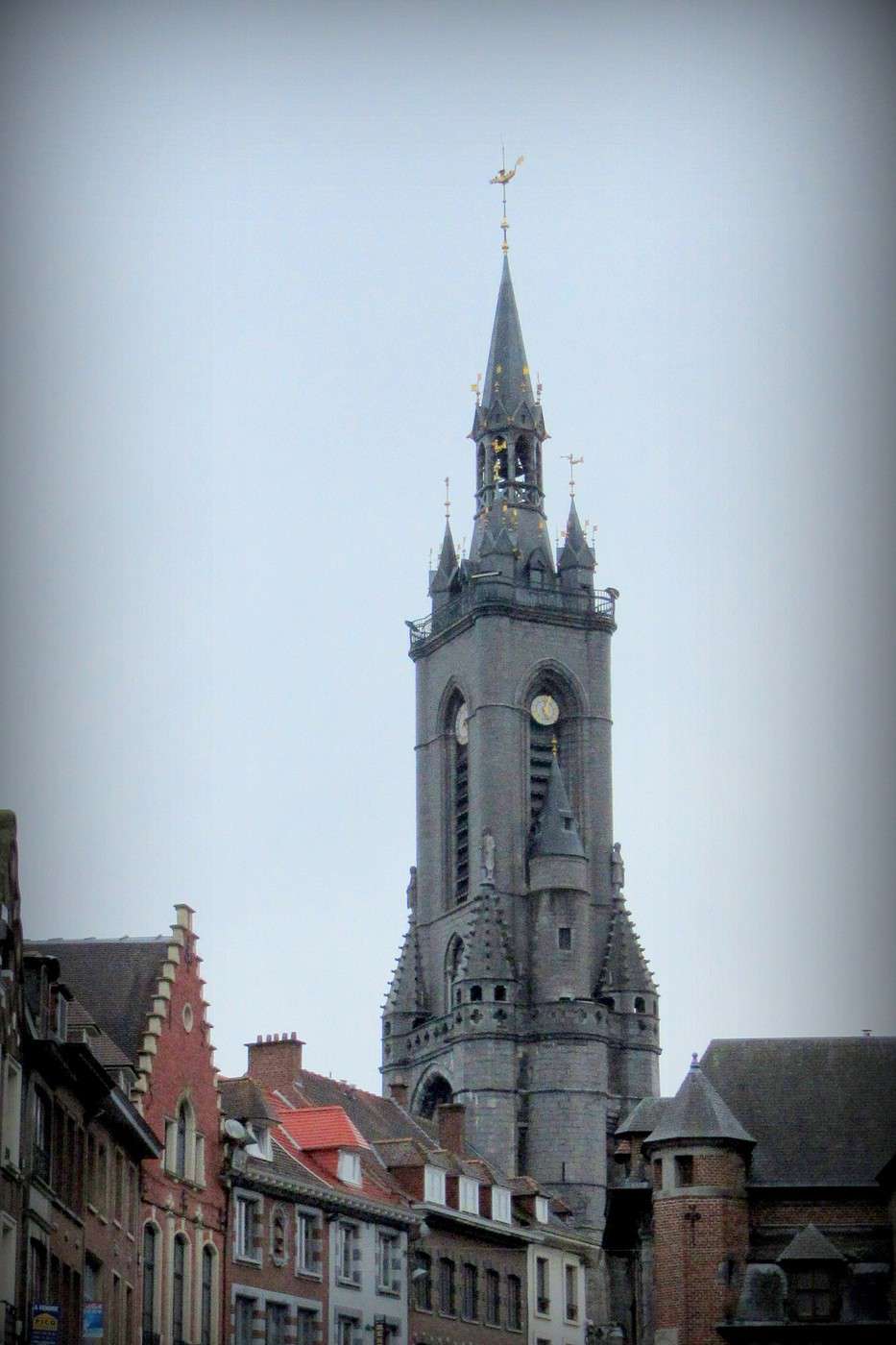
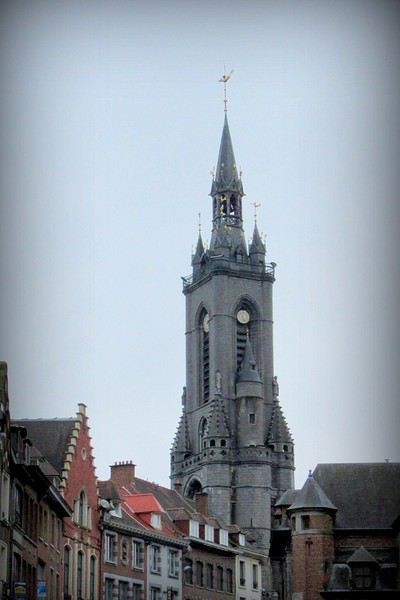
On the edge of the Grand-Place stands Belgium’s oldest belfry, built in the 12th century from blue stone.
You can visit it and climb the 257 steps connecting five floors that once served as a prison, watchtower, and town hall.
Its carillon (replacing the original) still chimes every hour.
On a clear day, you get a great view of the square, the cathedral, and the surrounding area. It’s worth the climb.
(The current town hall occupies part of the former 11th-century Saint-Martin Abbey.)
A river runs through Tournai: the Scheldt. It’s not very wide yet, and it’s hard to imagine the mighty river it becomes by the time it reaches Antwerp.
In Tournai, you can stroll or bike along its right and left banks, and numerous metal bridges let you cross from one side to the other.
Since the 18th century, its course has been straightened, with steep quays.
The new bridges are made of metal, unlike the Pont des Trous, a stone bridge dating back to the 13th century. Modified over the centuries, it was destroyed again in August 2019. The new Pont des Trous is expected in 2021. It should look like this:
https://www.rtbf.be/culture/arts/patrimoine/detail_le-nouveau-pont-des-trous-a-tournai-est-attendu-pour-2021?id=10314691