Day 12 / Day 13 / Day 14: Heading south, Don Det and the 4000 Islands
The road from Paksé to the 4000 Islands region is wide, well-maintained, and in just over three hours, we arrive at the Nakasang pier. A pirogue is waiting for us along the dock and takes us across a small branch of the Mekong to reach Don Det.
First steps...
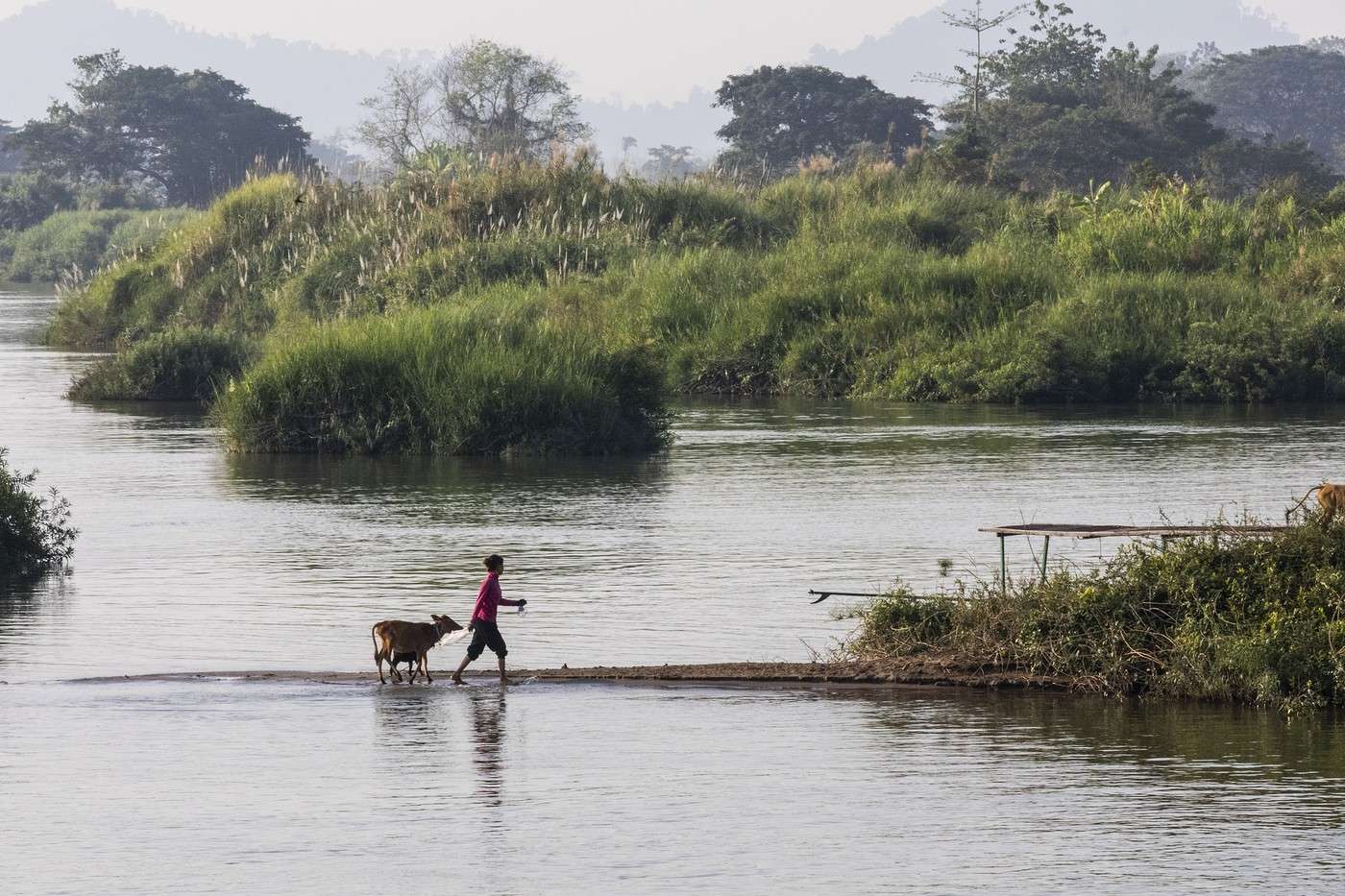
Here we are in southern Laos, where the Mekong lazily winds its way through a myriad of islands and islets that fragment its course. We chose the island of Don Det, the most well-known, and therefore the most touristy. Here, at least for a few more years, the tourist pressure remains moderate. Many travelers, often young, remind me of what we were like thirty or forty years ago. As is often the case in Laos, it’s still a backpacker’s kind of tourism—slow travel, at the country’s pace, not demanding much comfort, and ready to get around with whatever’s available.
Laos is still off the beaten path of mass tourism, and the Chinese, though increasingly numerous, seem to be concentrating in the north of the country around Vang Vieng and Luang Prabang for now.
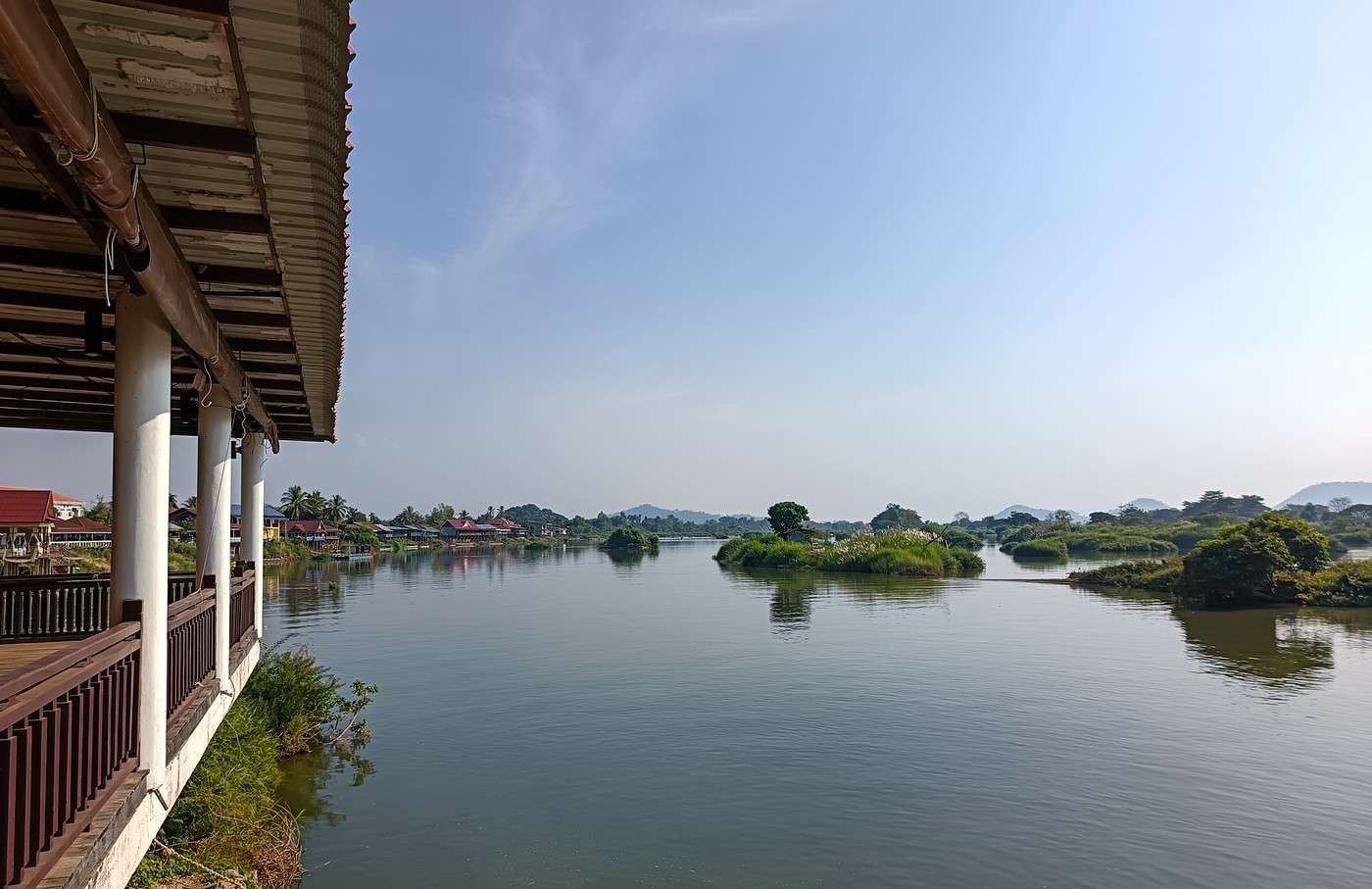
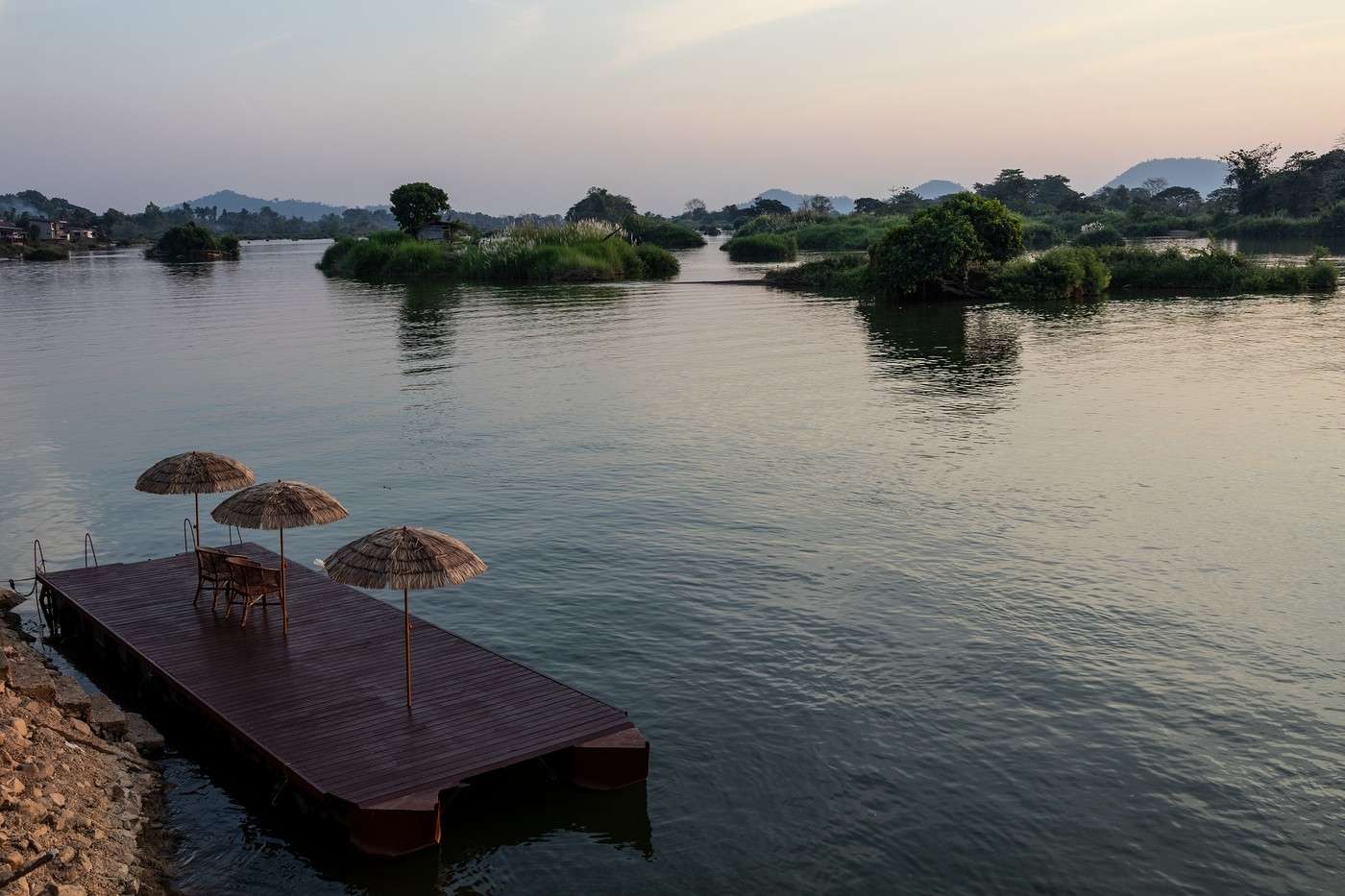
As soon as we disembark, we head to our nearby accommodation, tucked away behind the dock—the Don Det Hotel. The two-story building, quite large but not ostentatious, blends harmoniously into the landscape. At the foot of the building, a tree-filled garden with a soft green lawn leads to a large wooden terrace overlooking the Mekong. The view is stunning. The wide, peaceful river, dotted with islets, seems almost glass-like at this time of day. In the distance, against the pure blue sky, the powerful, rounded mountains of nearby Cambodia stand out.
This isn’t exactly a budget hostel—it’s more for comfortable boomers like us. The nightly rate, however, remains reasonable: 50 € for the room, breakfast included.
The owner, a Swiss man, welcomes us warmly and gives us plenty of tips to make the most of the island.
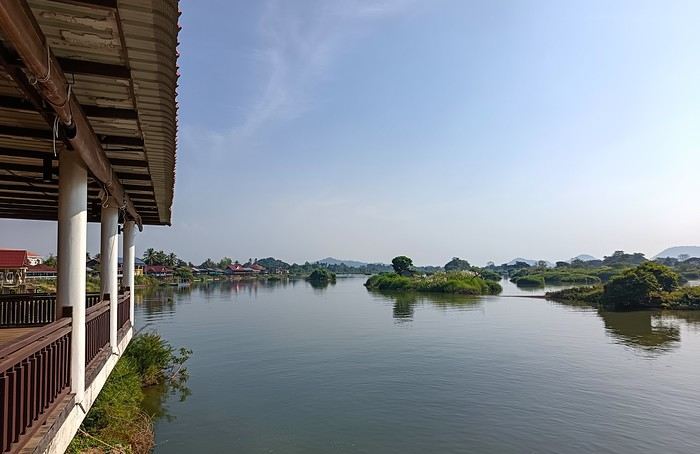
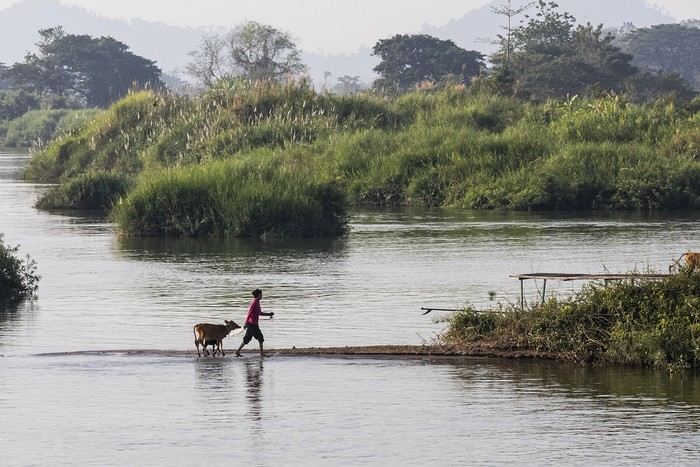
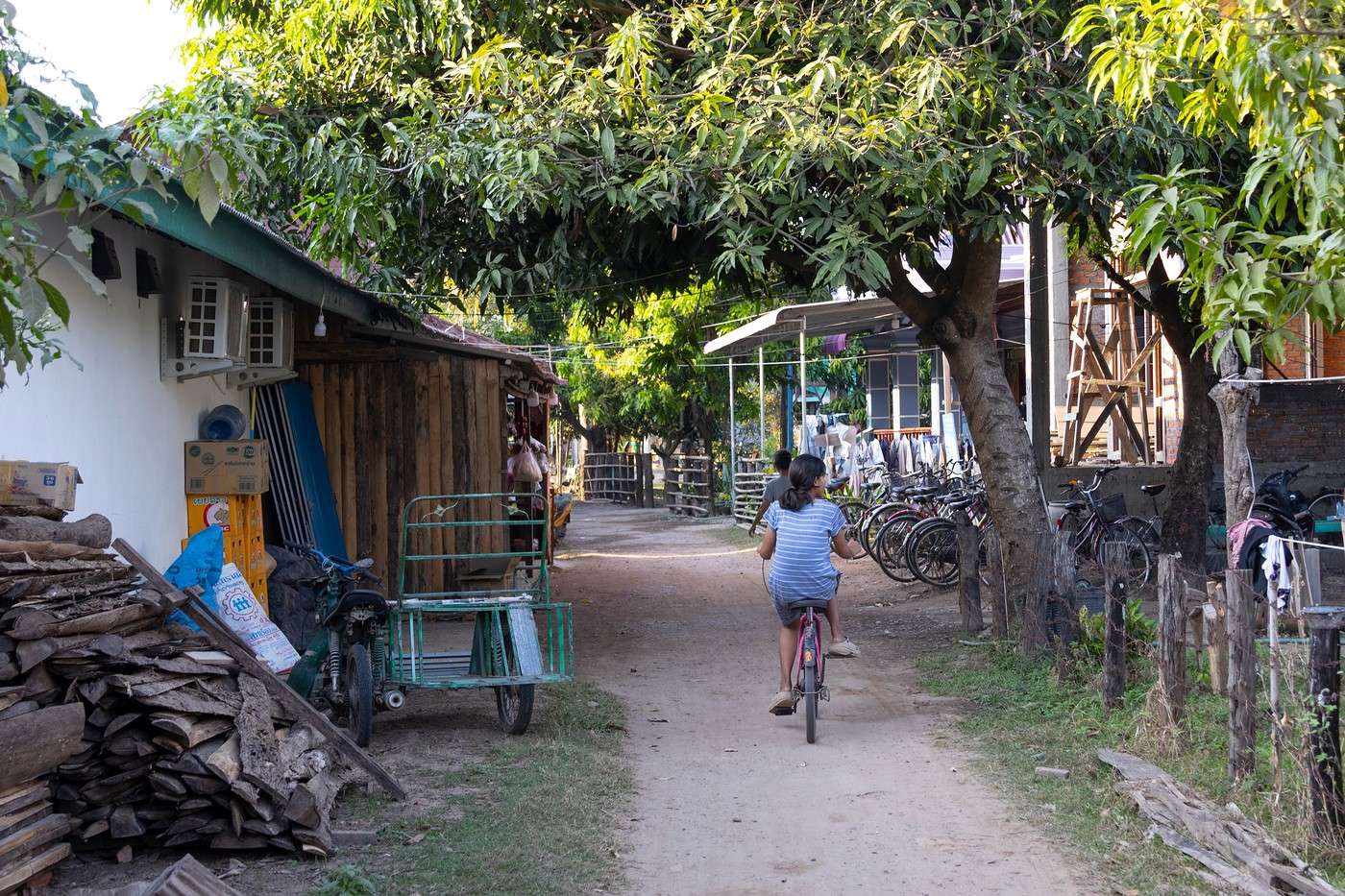
The island of Don Det is small. Quite narrow—1.5 km from one shore to the other—it stretches 3.5 km in length. It’s easy to explore on foot, by bike, or in a tuk-tuk. Most of the shops and tourist spots are concentrated within a few hundred meters of the main pier, but as you move further inland, the landscape becomes more rural, and the houses more scattered.
This late afternoon, we’ll just take a short walk along the eastern bank, which seemed more rooted in local life than the apparently livelier western shore.
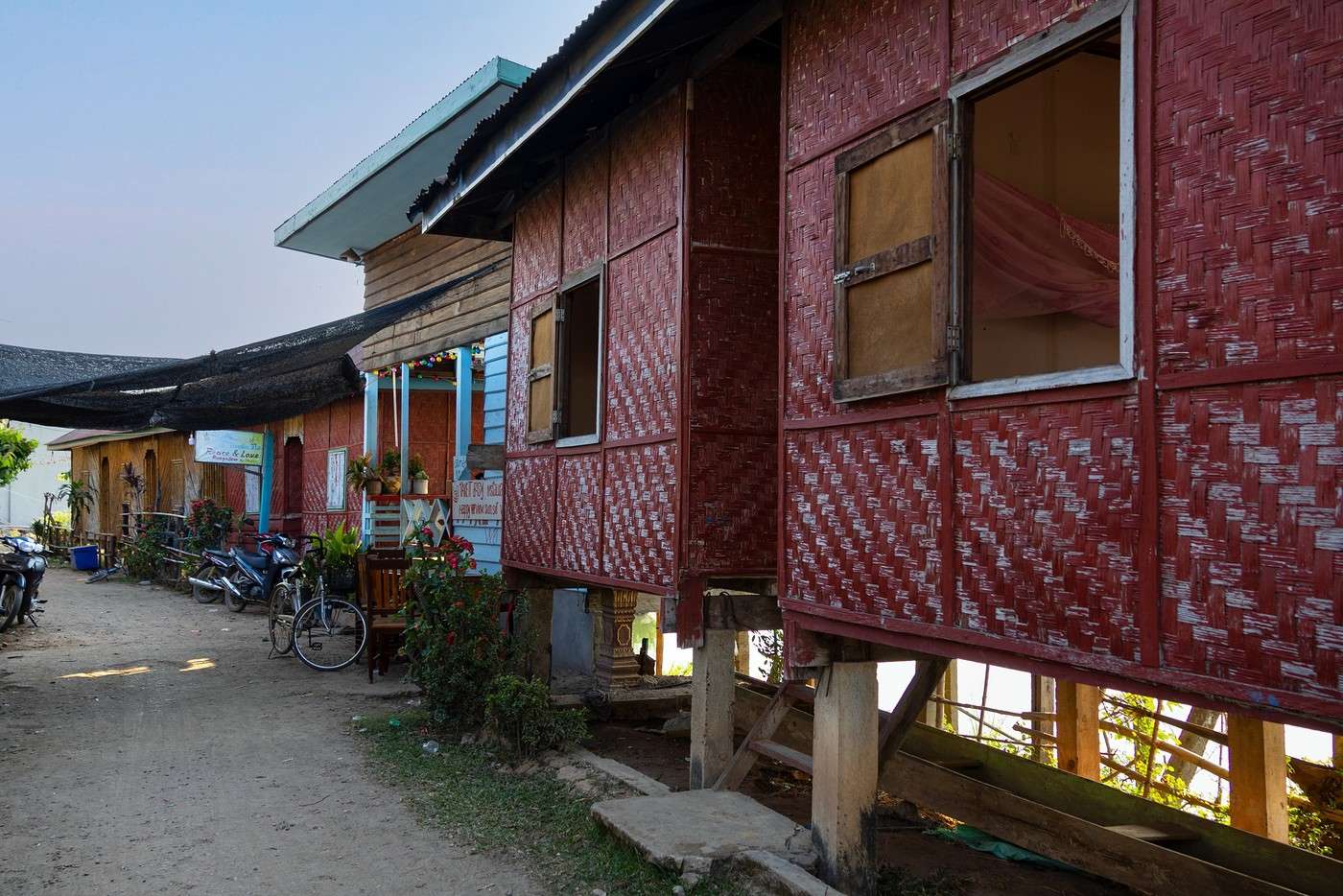
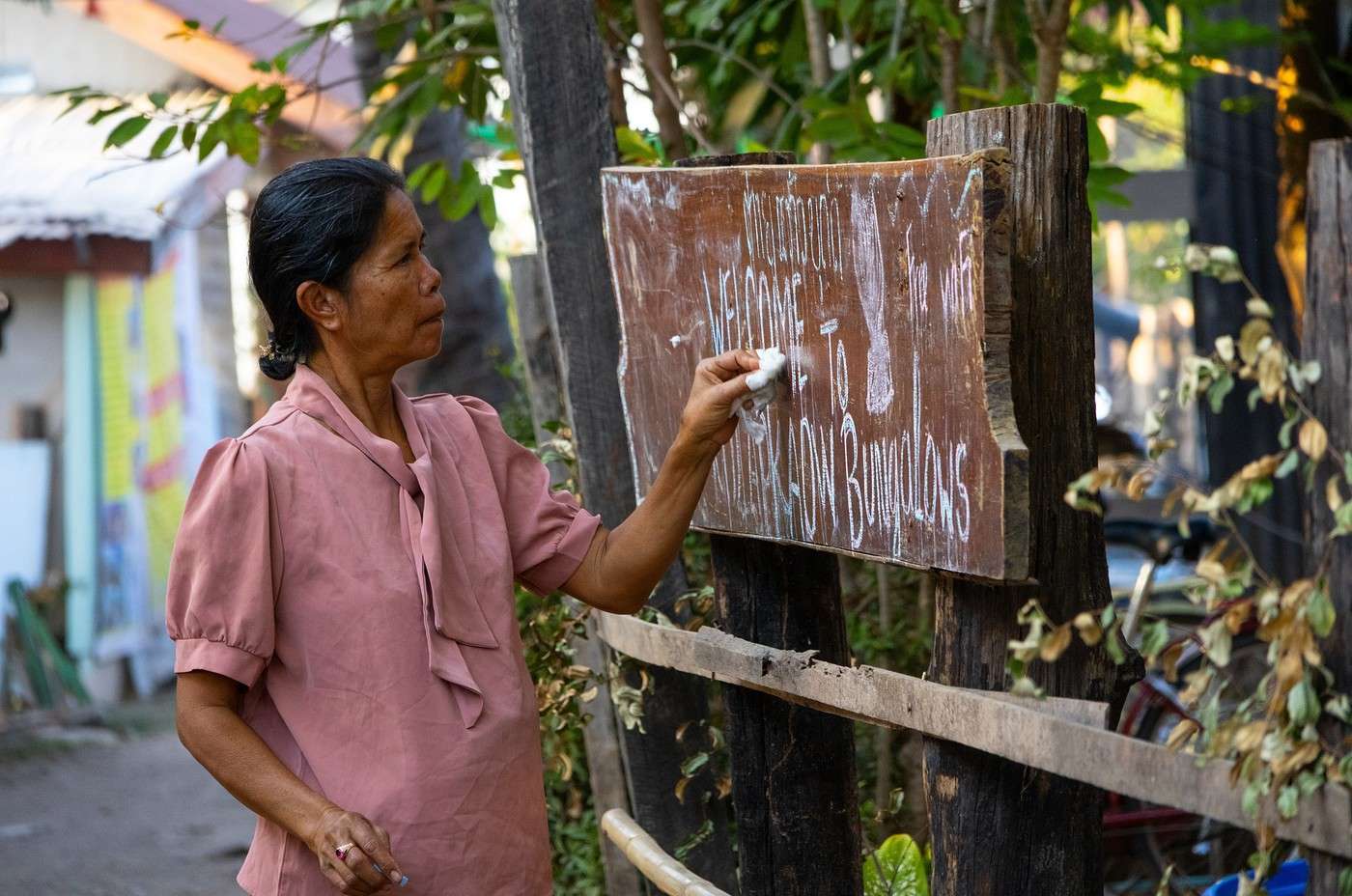
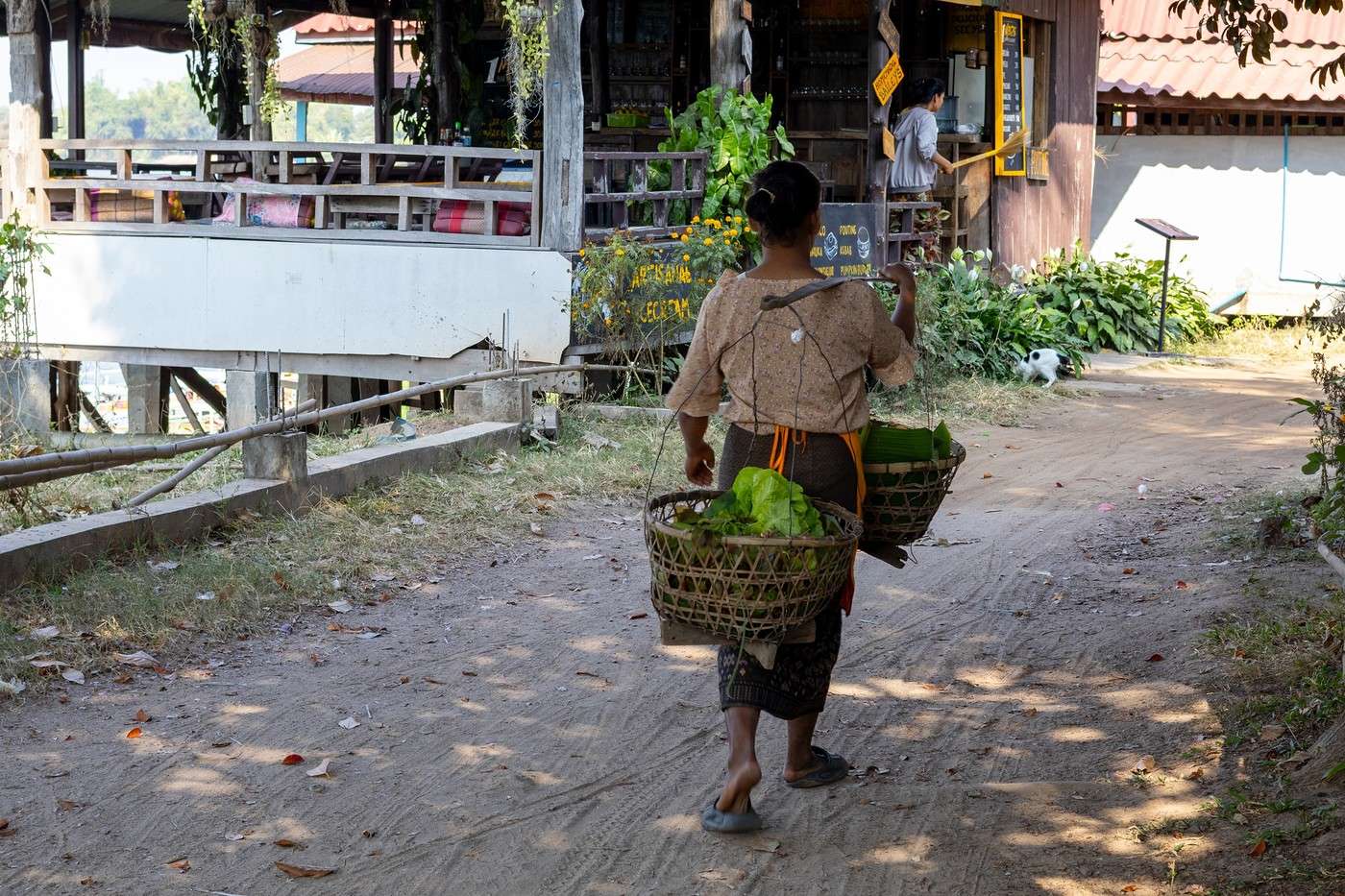
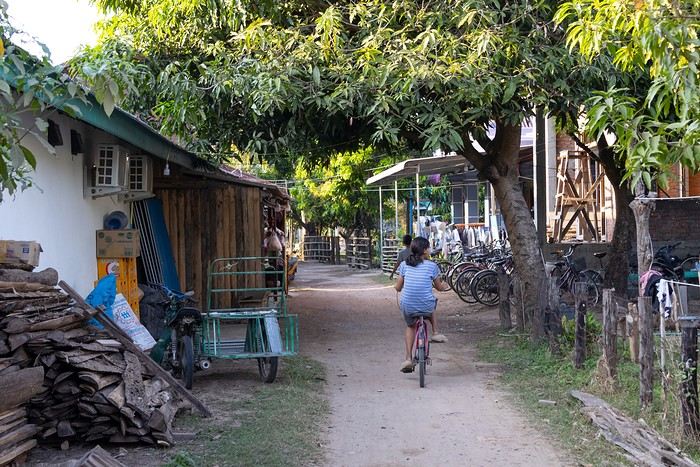
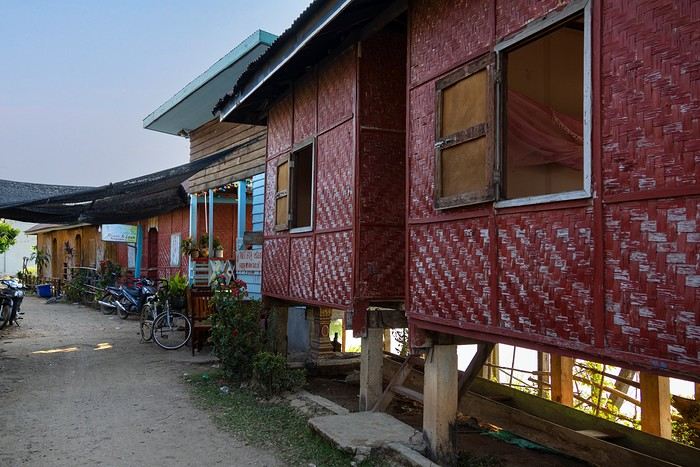
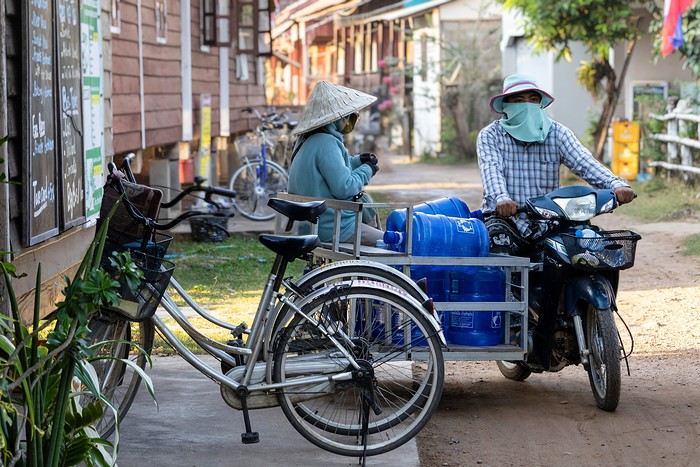
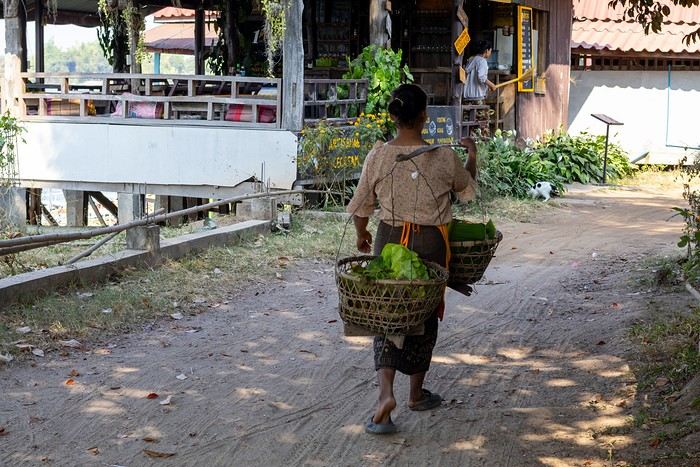
We stroll peacefully along the sandy, tree-lined path that runs alongside the Mekong. Along the sides, small traditional-style houses line up with their woven bamboo facades. They’re all on stilts and wide open to the outside, with terraces facing both the path and the river.
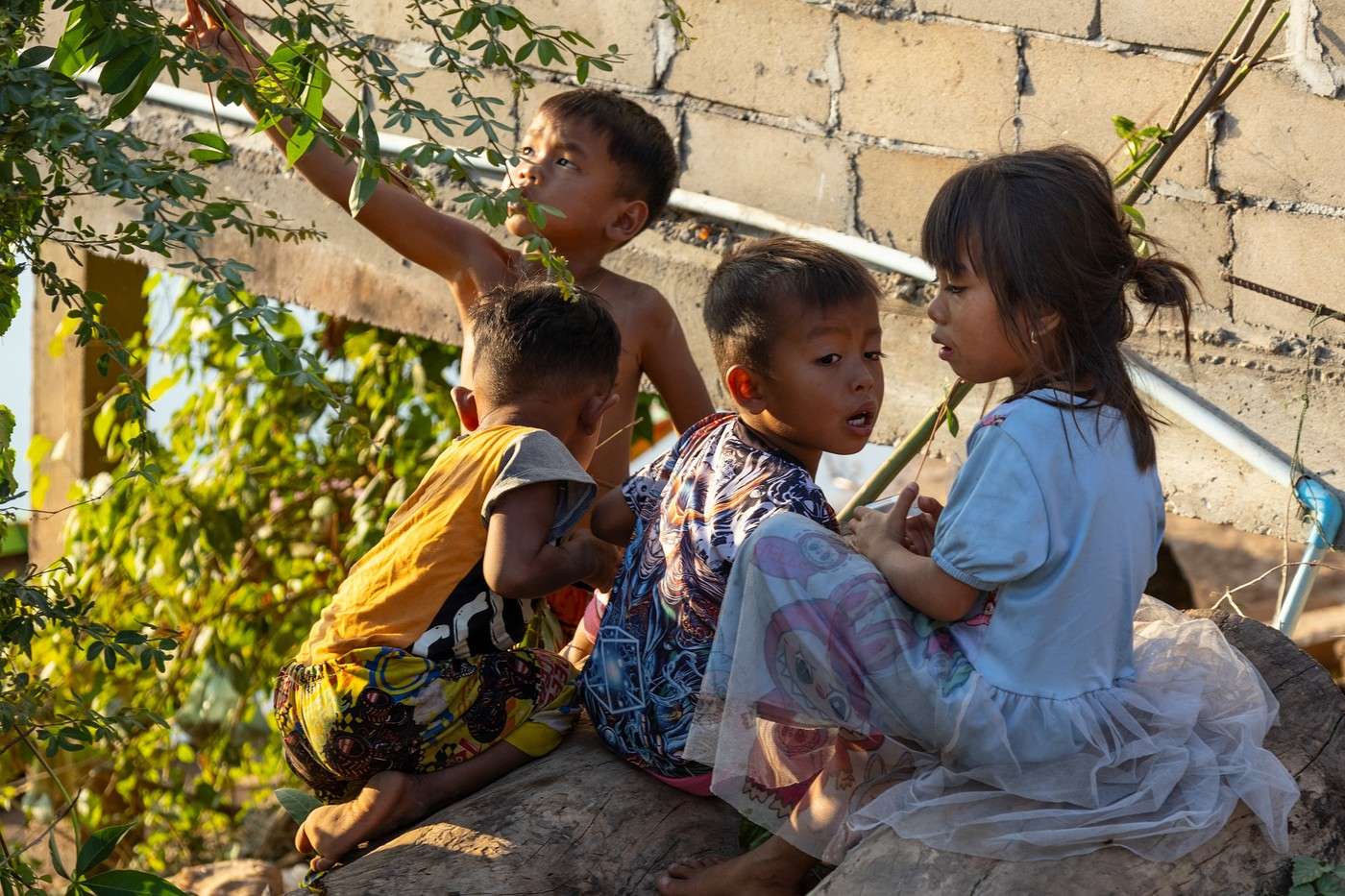
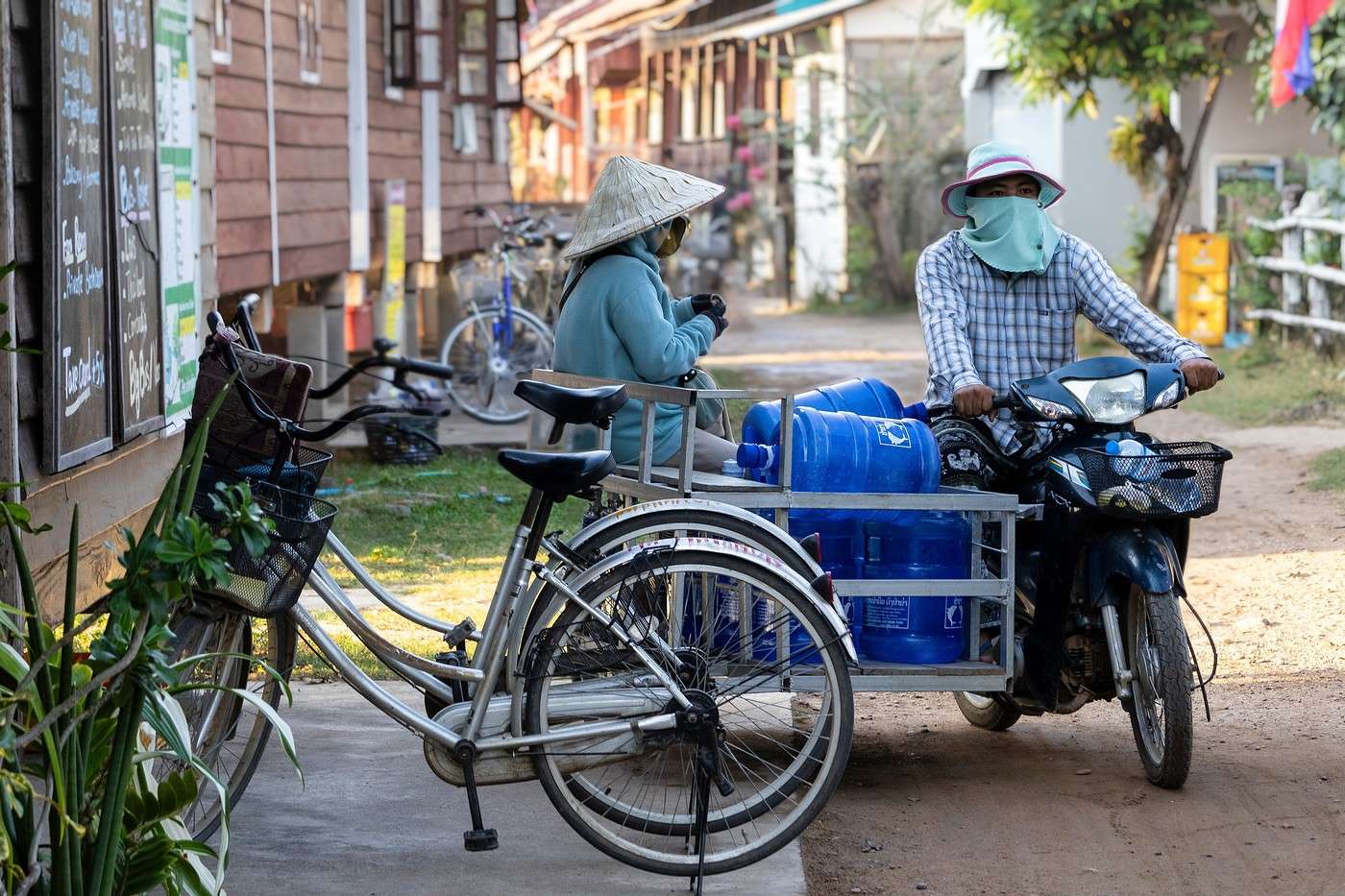
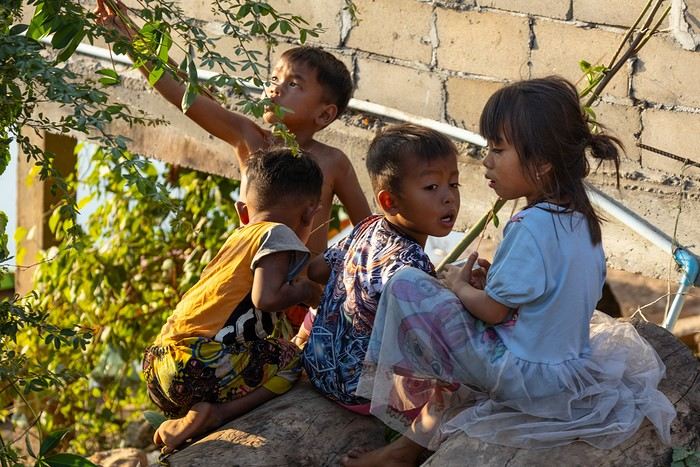
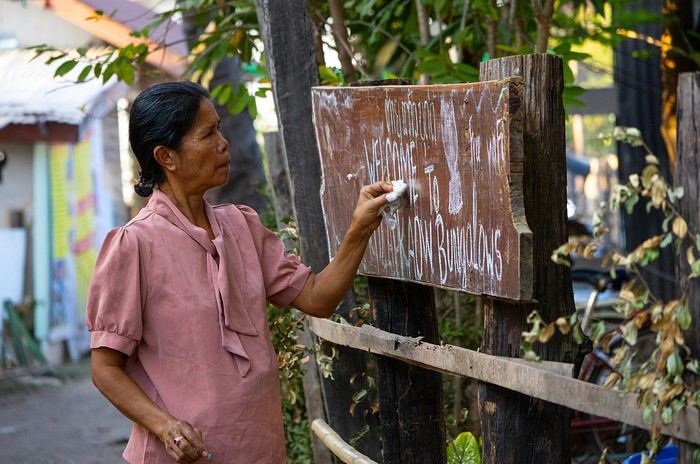
Though we’re just observers, we’re gently drawn into the seemingly serene daily life of the men and women going about their tasks. And as always in these so-called Southern countries, dozens of children come out from everywhere to play—some on the riverbanks, others in boats, and the little ones hiding under the stilts of the houses.
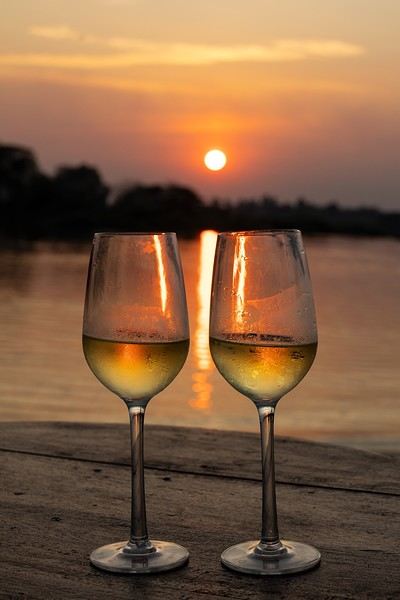
The sun has finished its day too, and it’s time for us to watch the sunset from the hotel terrace. Ah, those famous “Sunsets”! There’s often something annoying about travel when they always present a sunset as the highlight of the day. I’ve seen some beautiful ones back home in Sète, by my Étang de Thau.
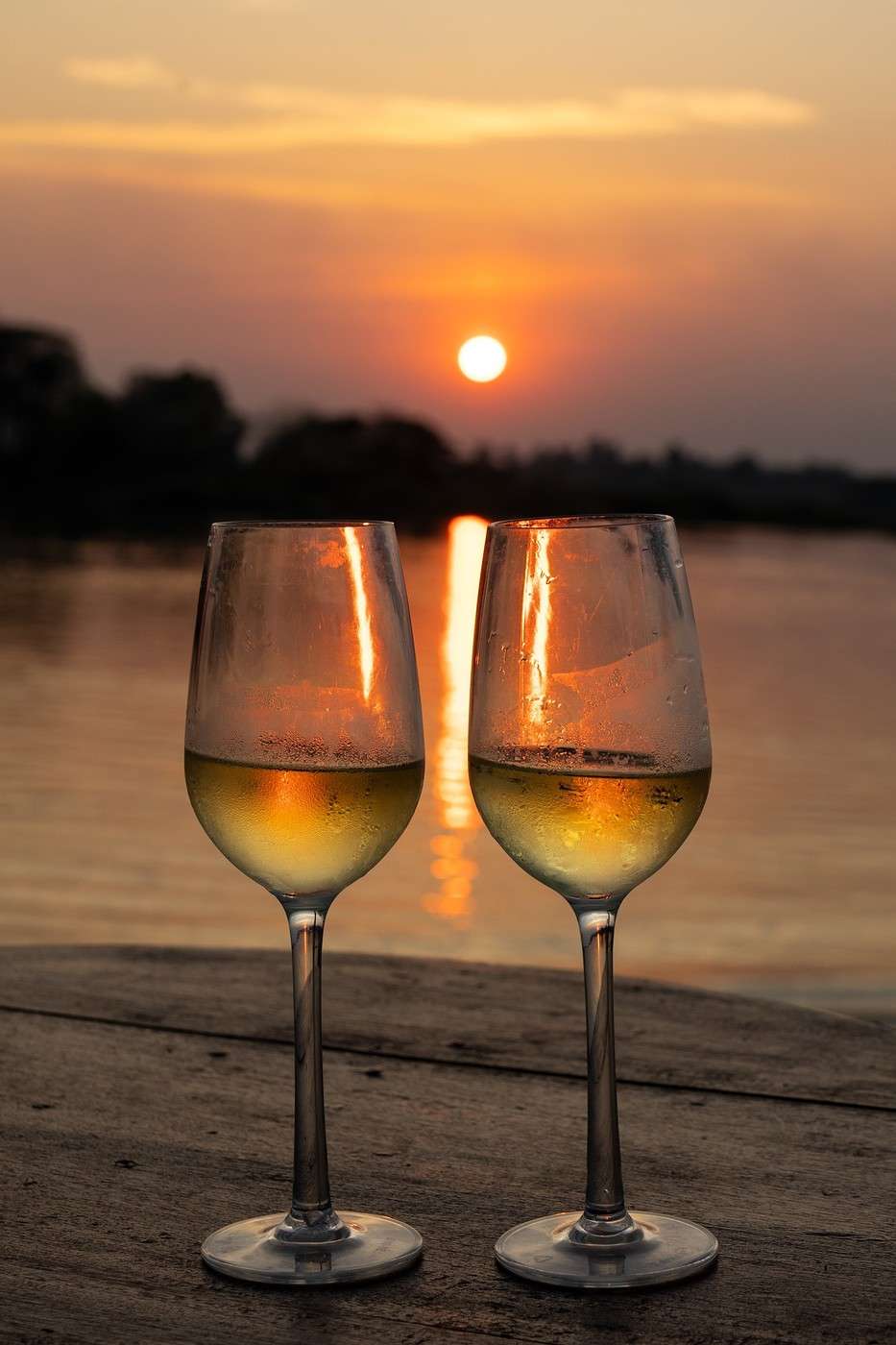
But here, facing the Mekong turning pink, with the Cambodian mountains darkening their green, and a glass of Italian white wine in hand, I have to admit this moment was pure magic—for me and my companions alike...
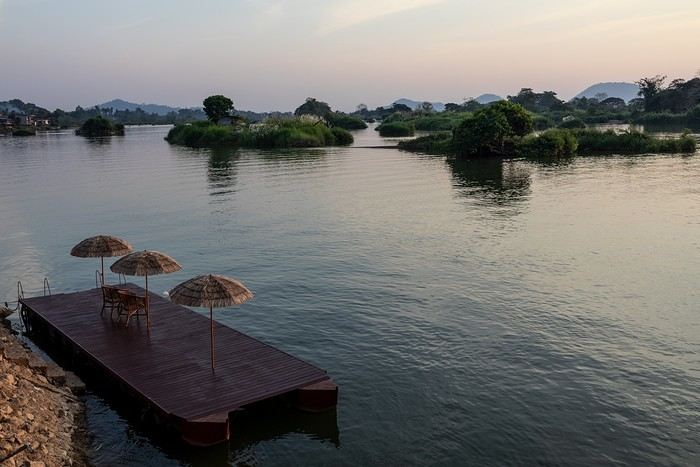
 The photo’s just to make Catherine regret it (yeah, it’s terrible )