Yes Muriel, we loved it a lot.
The rest in words and pictures...
Don Det and Don Khon by Tuk-Tuk
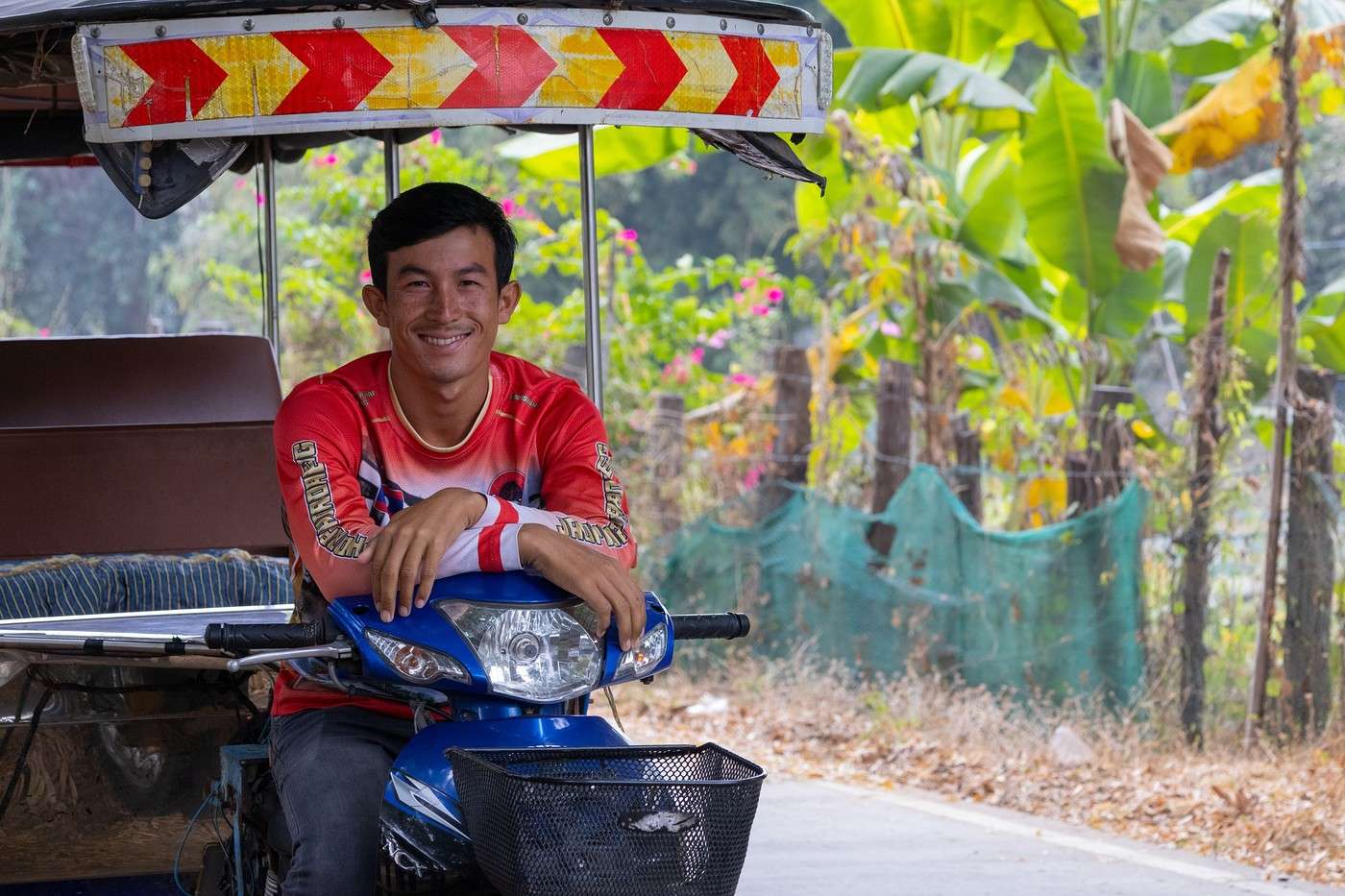
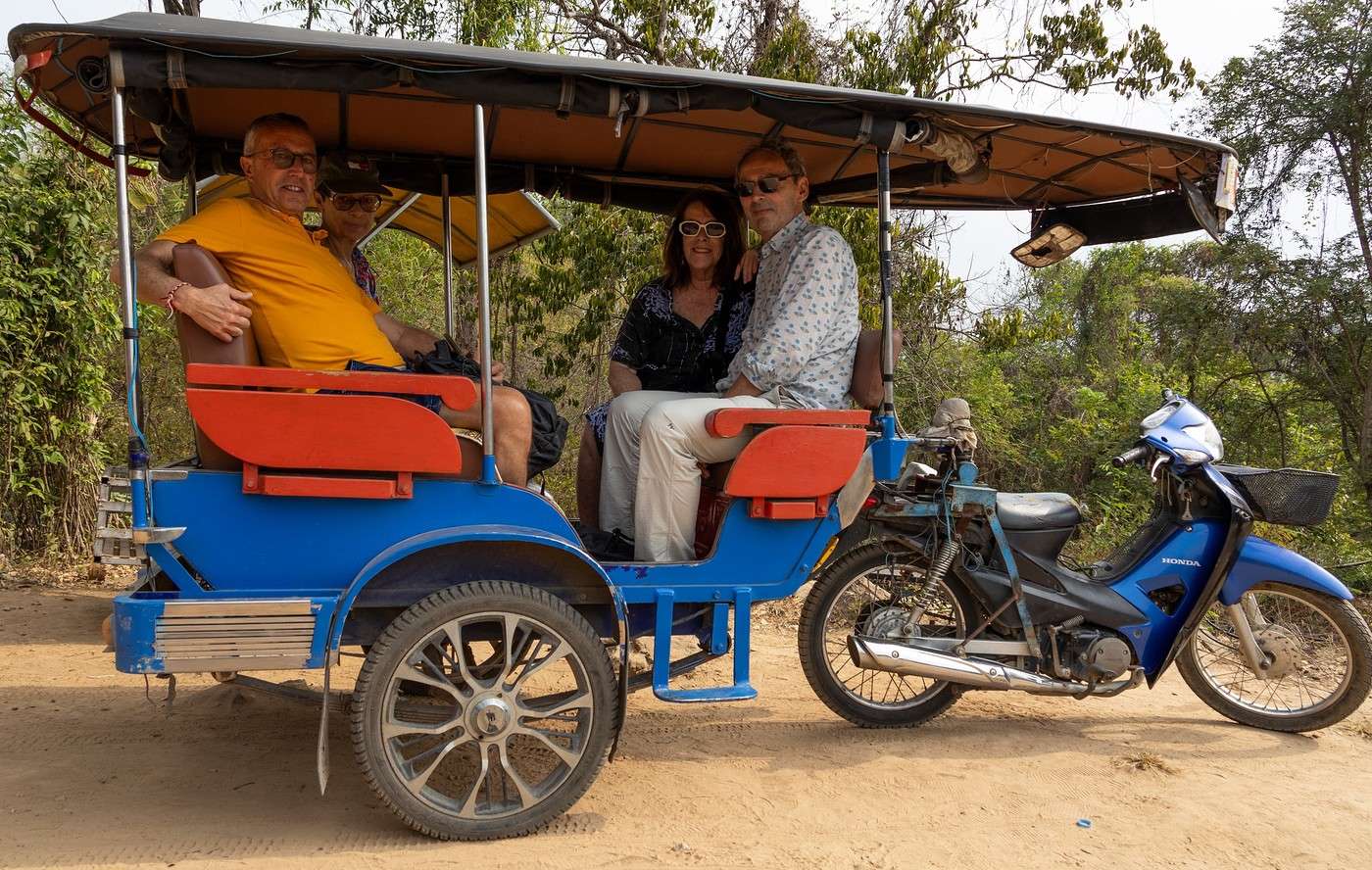
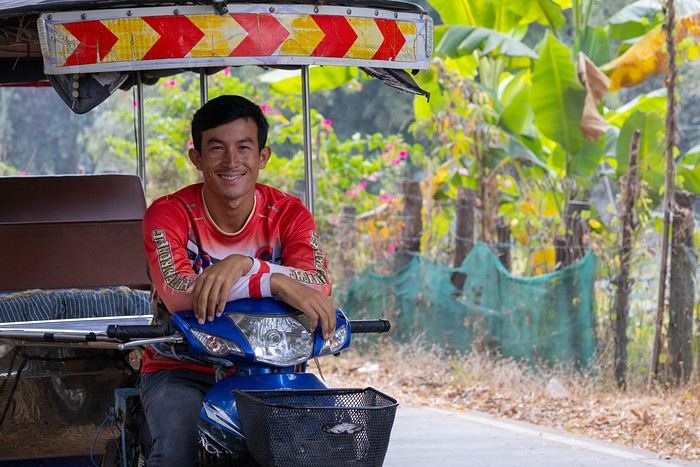
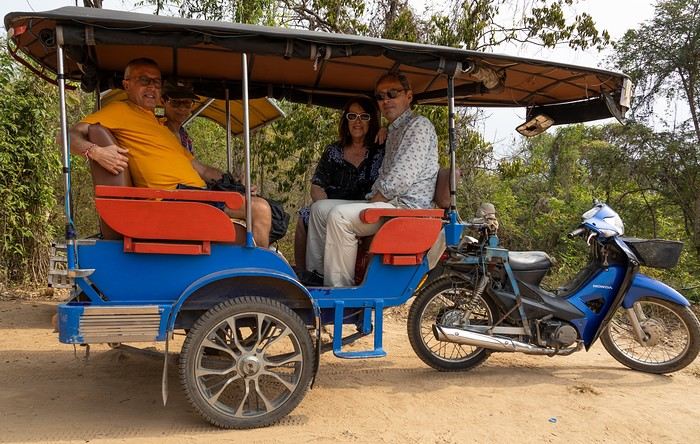
Our host booked a four-hour tuk-tuk tour for us to explore Don Det and its neighbor Don Khon further. A tall, calm, and smiling young man waits for us at the main pier. His tuk-tuk is spacious, comfortable, and beautifully decorated—almost like a carriage! And off we go for four hours of exploration.
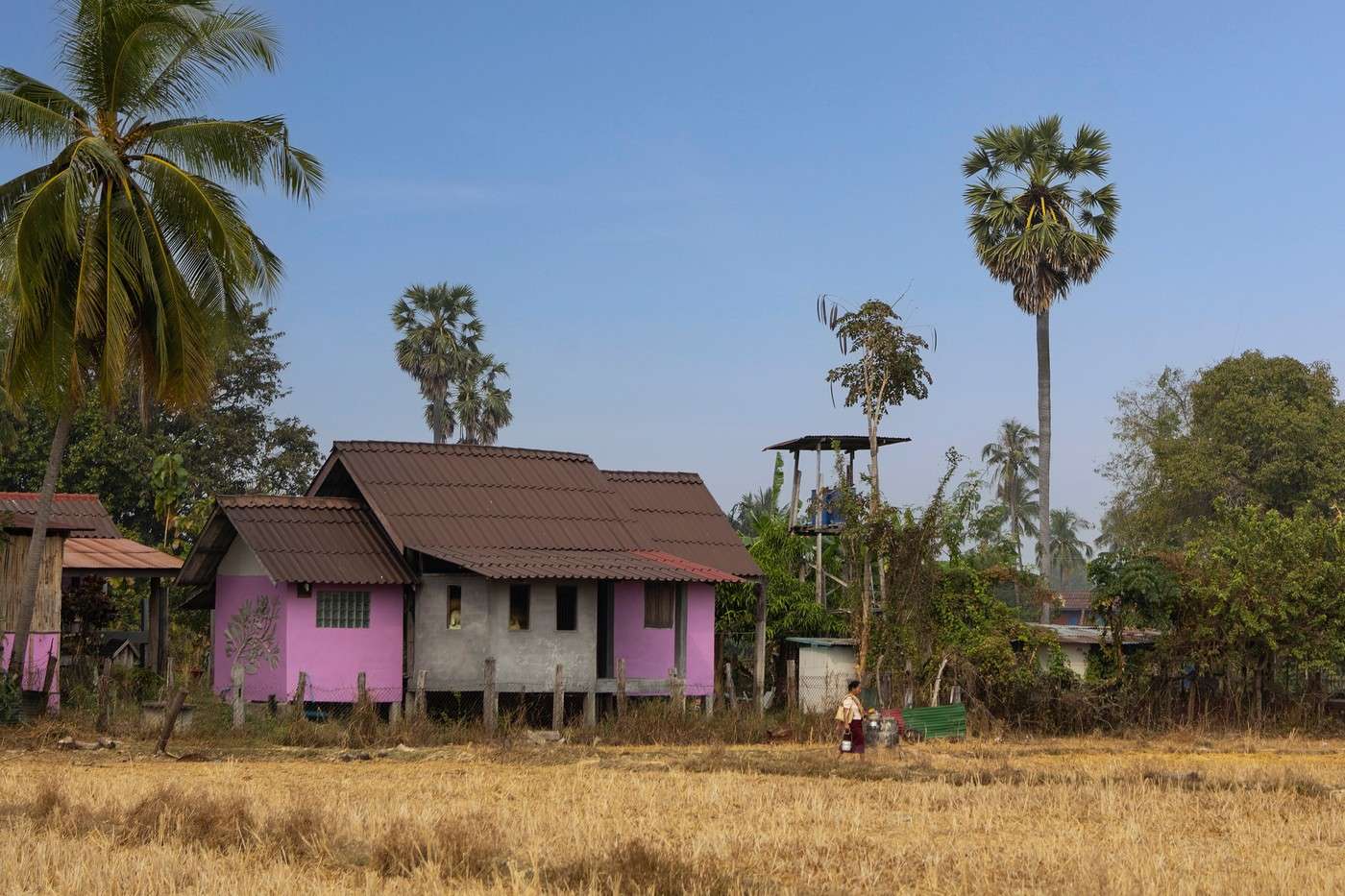
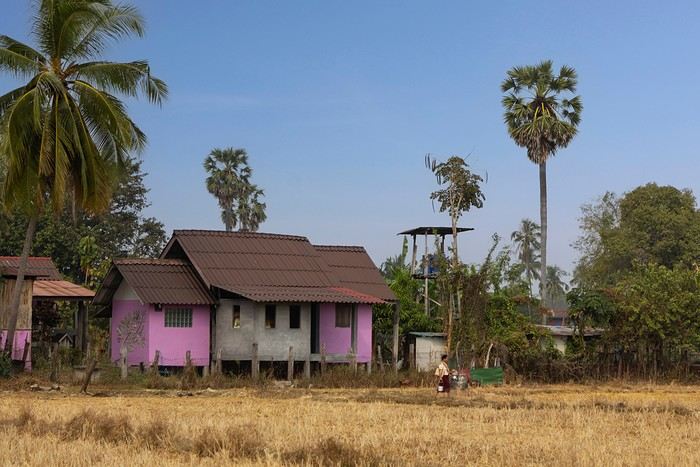
Quickly, after passing the last houses in the north of the island, we enter a rural and agricultural area with scattered homes. The horizon is wide open in this low-lying landscape with rather dry vegetation. The straw-yellow rice fields have been harvested. No tropical jungle like in Nong Khiaw. The only splashes of green come from the sparse forest and the banana plantations spreading along the edges of the island. We drive on a cemented, slightly elevated path—probably to keep it passable during the rainy season.
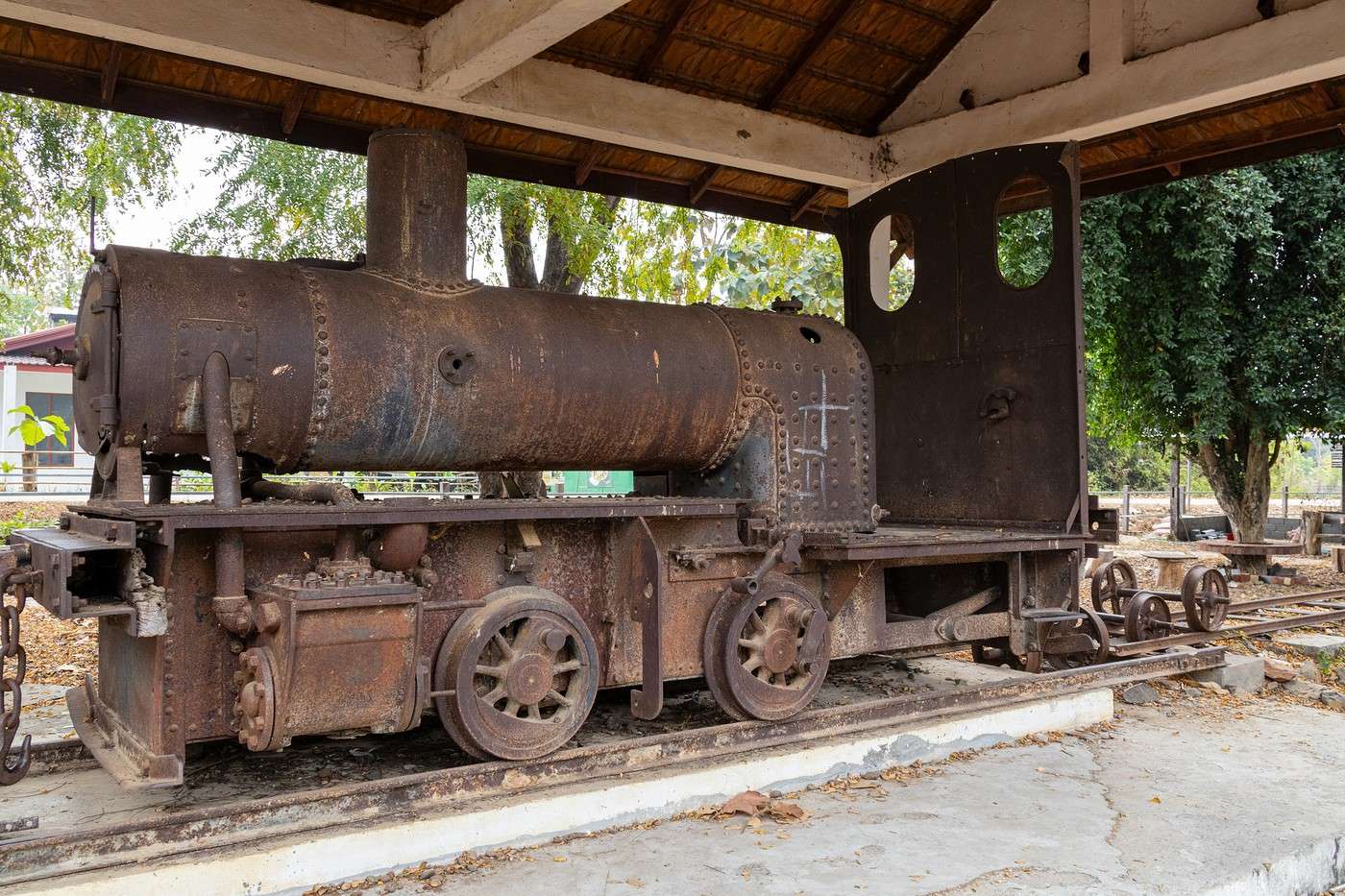
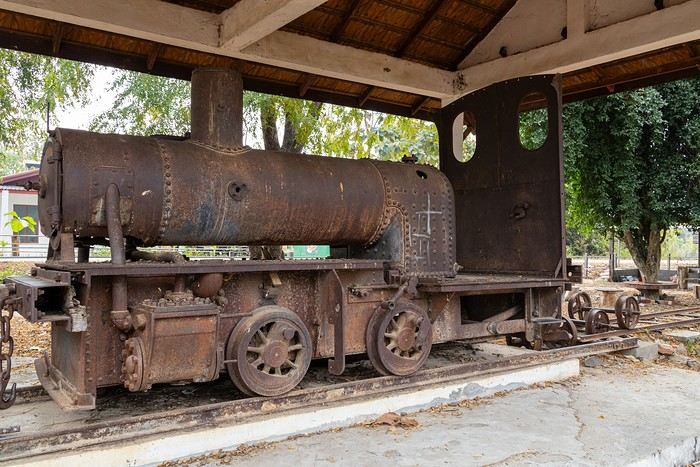
A small stone bridge crosses a narrow arm of the Mekong, and we arrive on Don Khon island. First stop at a rather surprising site: an old locomotive on a stretch of railway track, its rods and rusted frame exposed. Right next to it, an abandoned colonial-style building. While Bruno, ever the practical one, examines the mechanics of the venerable machine, I try to learn more about this railway relic.
It was part of a colossal project during the French colonial era. This short 7 km railway was meant to bypass the impassable waterfalls further downstream on the Mekong to maintain transport continuity and avoid transshipment. A massive effort for the local workforce: blood, sweat, and tears for a project that ultimately didn’t deliver the expected results. Still, a fascinating piece of colonial history despite its commercial failure.
We set off again. Like in a quadrille, we switch seats so everyone can face forward. I watch Nathalie. She seems in good spirits, but she admitted this morning that she’s been sleeping poorly since the accident. Bruises from the fall? She’s worried it might be more serious—a cracked or broken rib. Since she doesn’t let things drag, she’s made an appointment in two days at the private hospital in Paksé to have her stitches removed and check her overall condition.
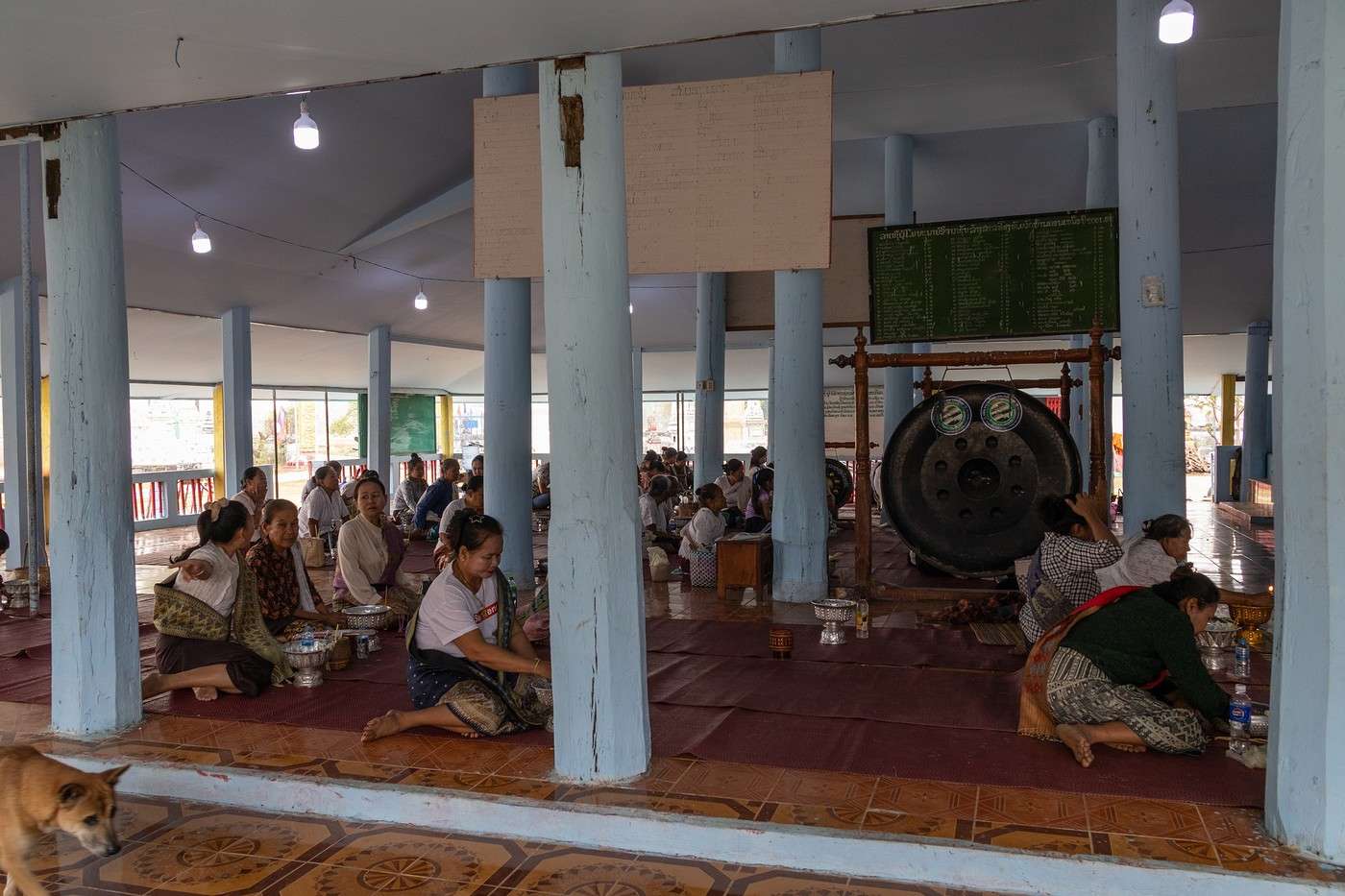
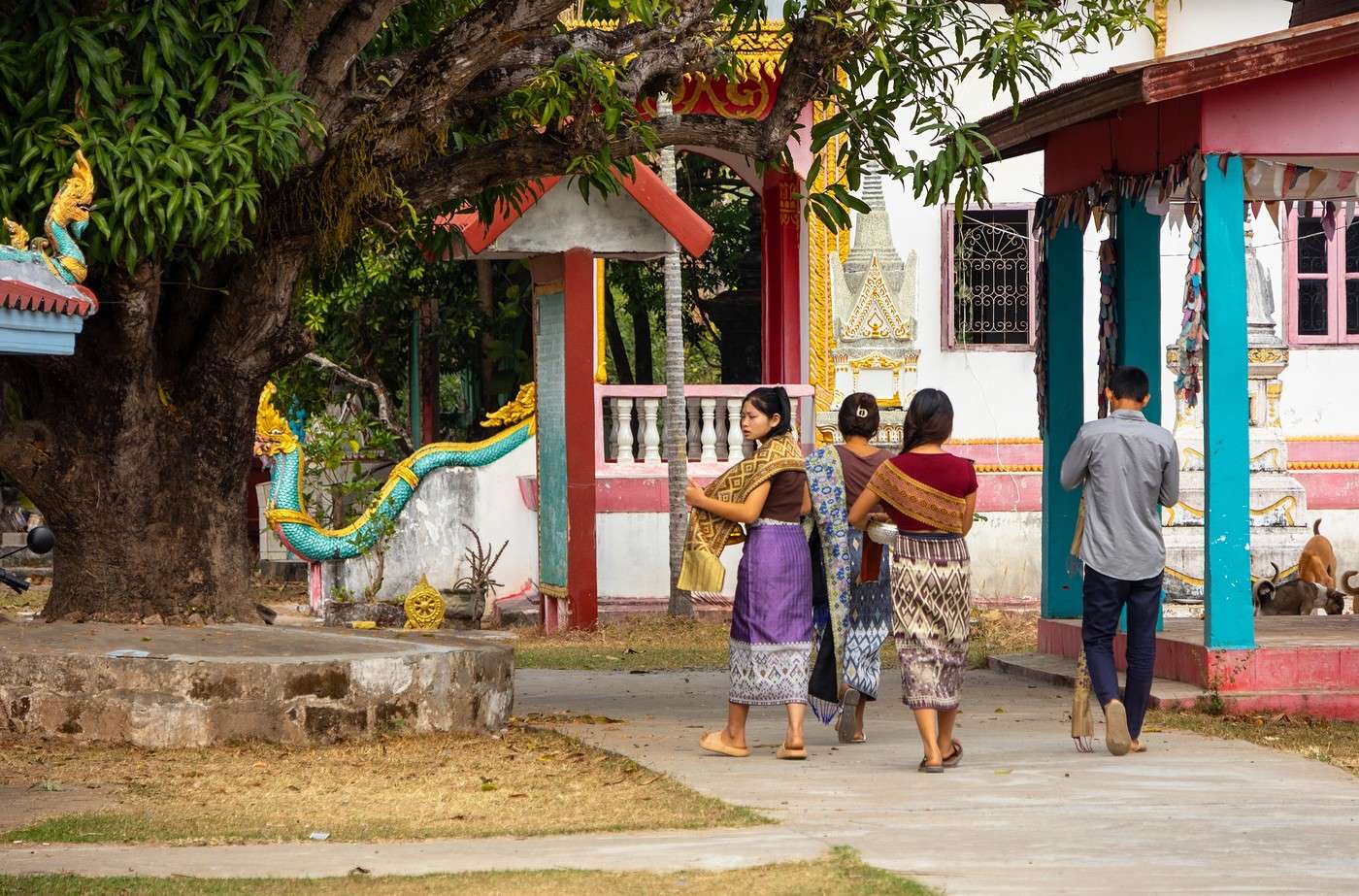
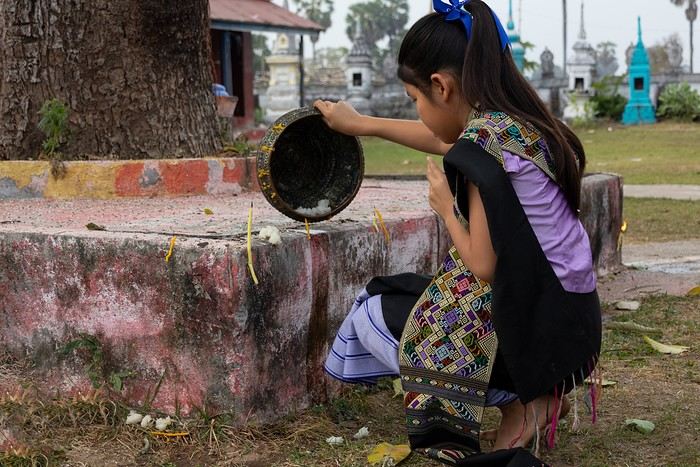
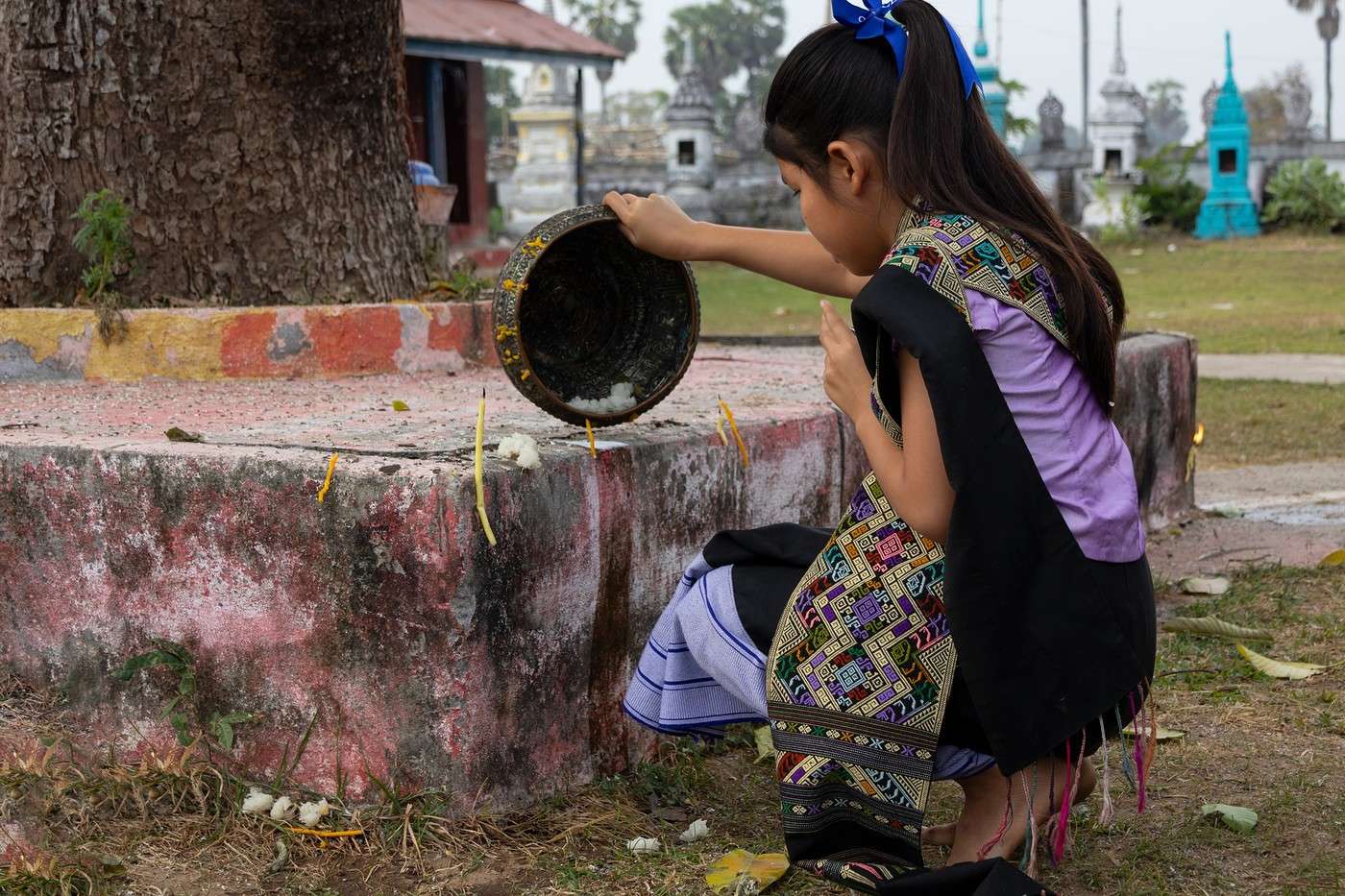
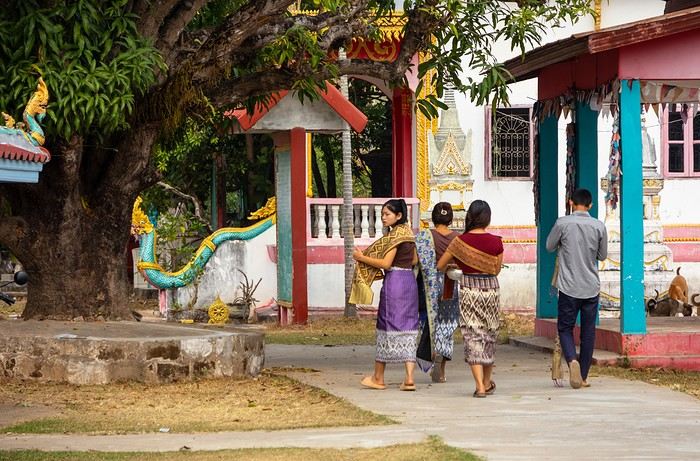
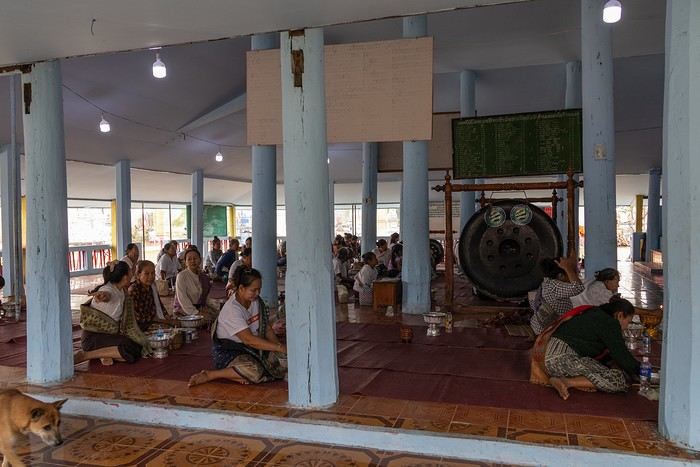
Before reaching the Li Phi waterfalls, the tuk-tuk enters a vast temple complex. We stumble upon a religious ceremony in the main sanctuary. A large crowd, mostly women and children, listens respectfully to the monk’s and his assistants’ chants. People sit on the floor, offerings laid out on mats. We discreetly observe the ritual without fully understanding its meaning.
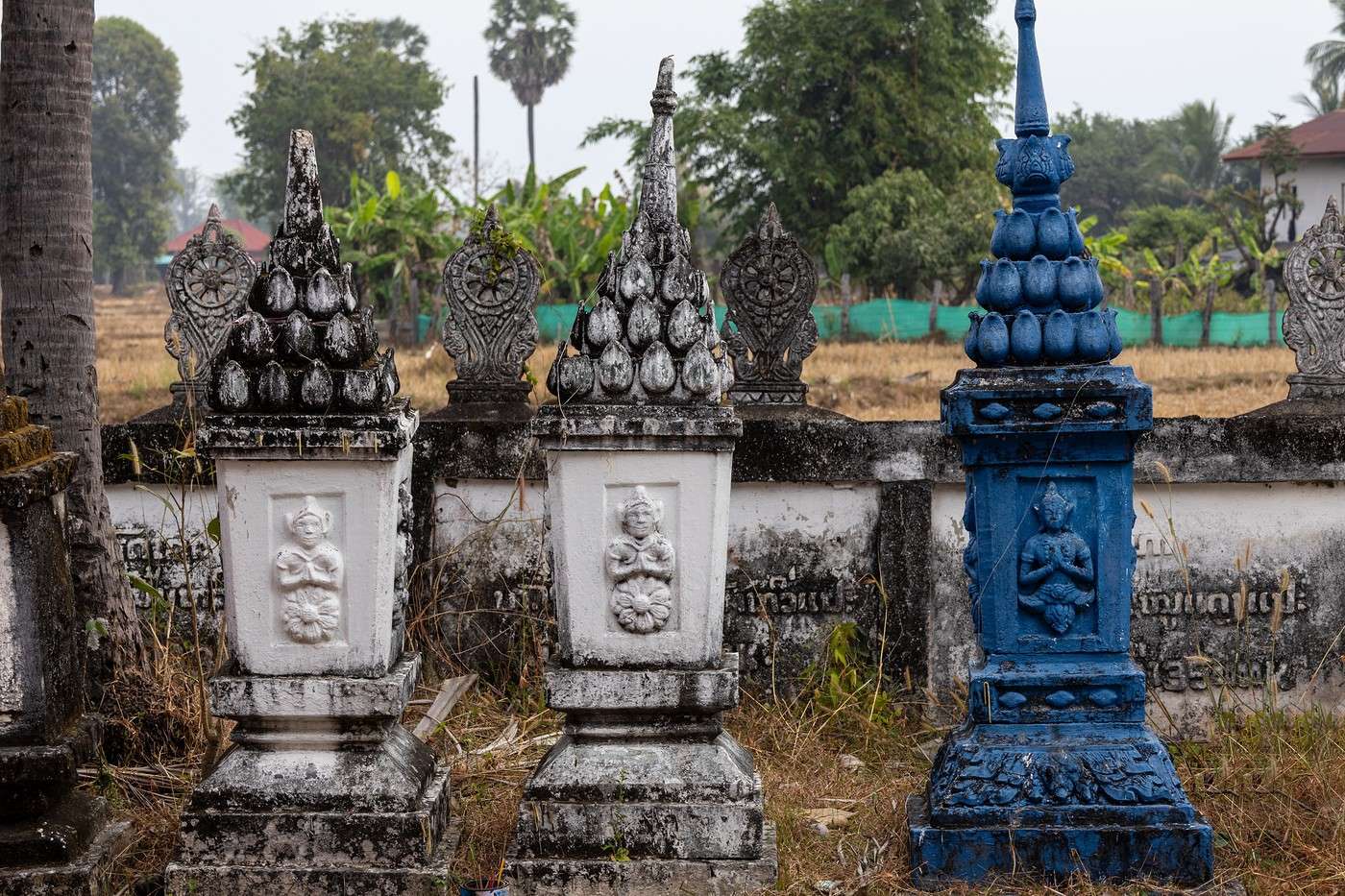
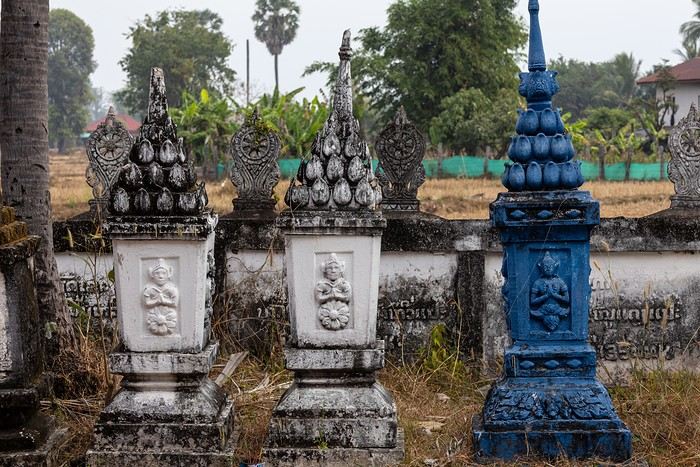
On the periphery of the central building, my attention is drawn to a row of funerary stupas, small stone towers rising delicately toward the sky. Families are paying their respects at their bases. I glance quickly out of respect for these intimate moments, these subtle bonds connecting the living and those who have passed. Buddhists believe in the reincarnation of both body and spirit. How do they react to the death of loved ones? I have no idea. But between their cyclical view of the world and our more linear one, I wonder if our relationship with death is really all that different.
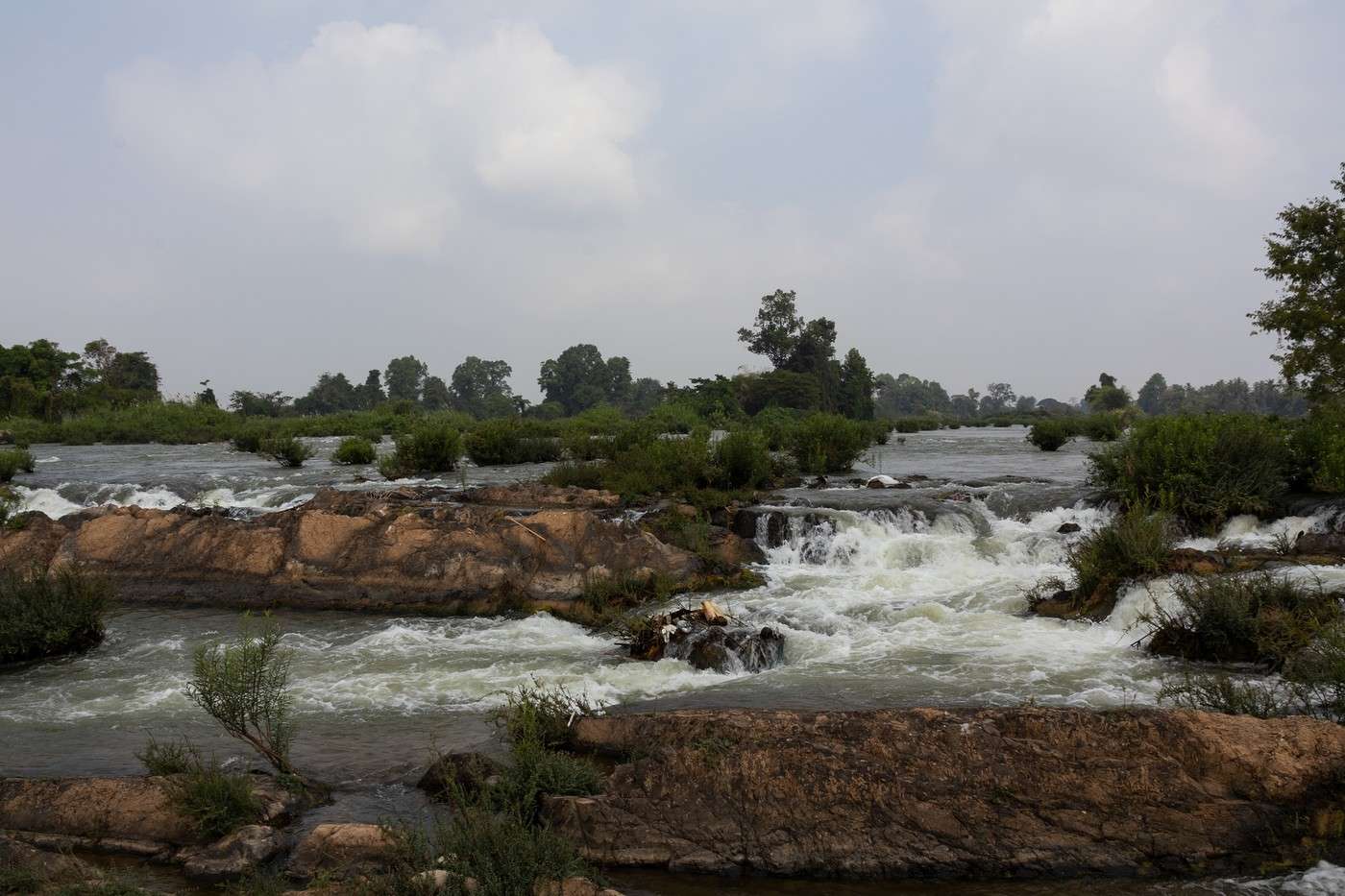
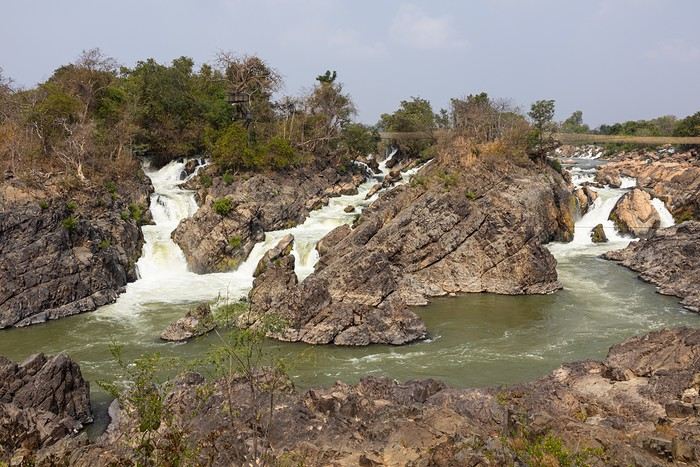
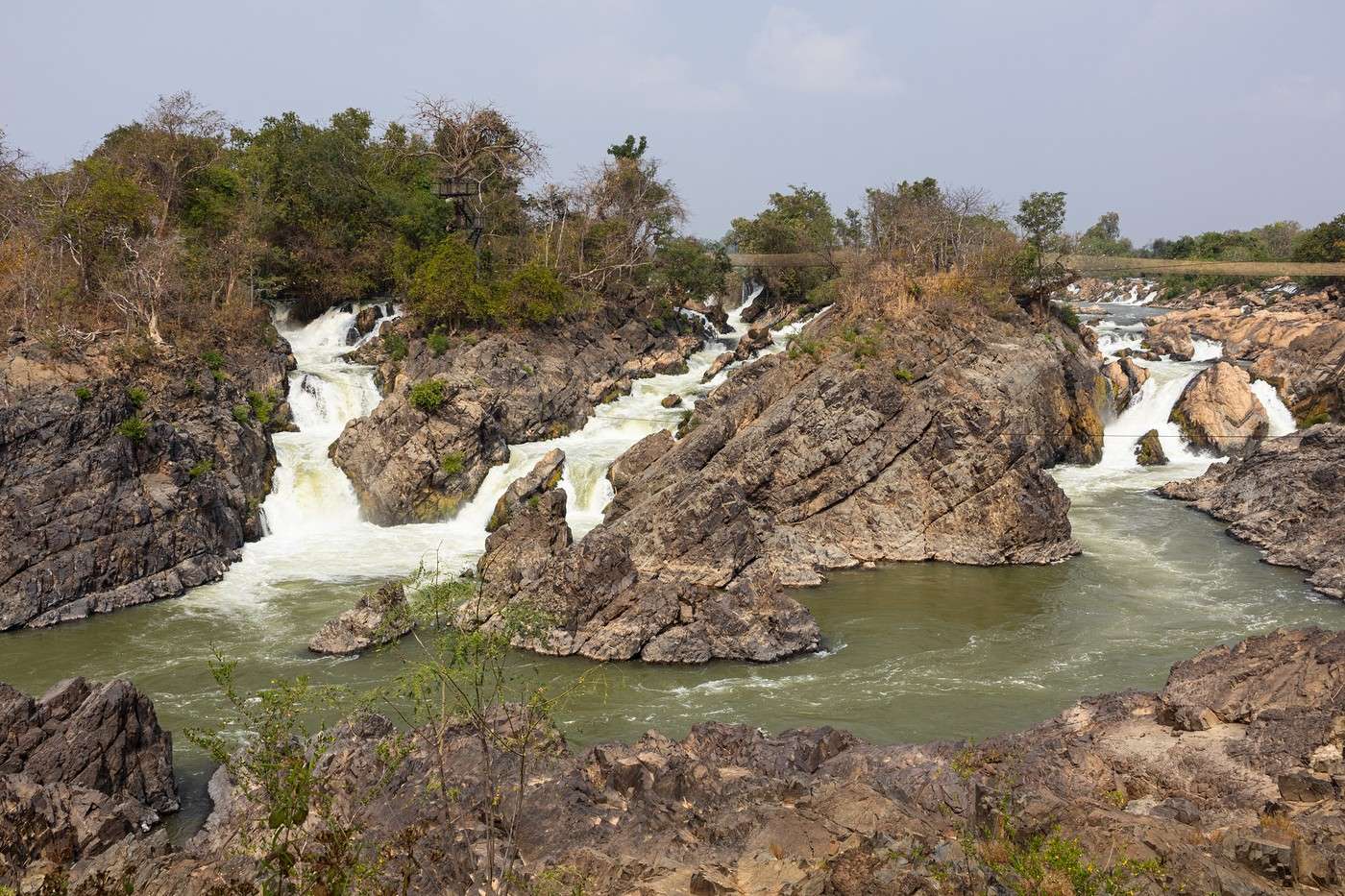
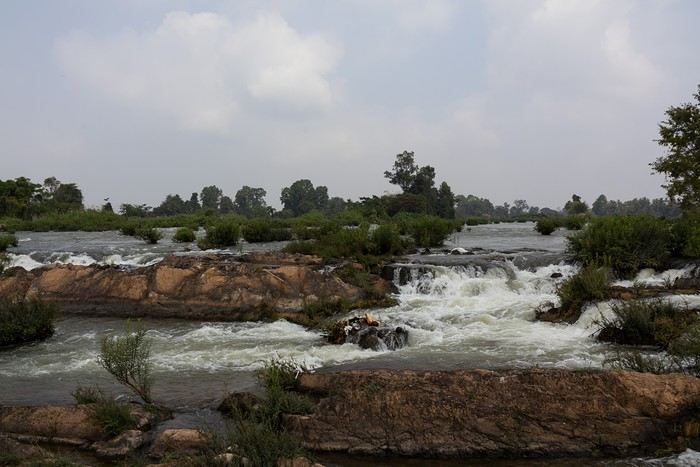
The rest of the program turns out to be more exhilarating: the Li Phi waterfalls, then the mighty Khon Phapheng cascade, the most powerful on the Mekong.
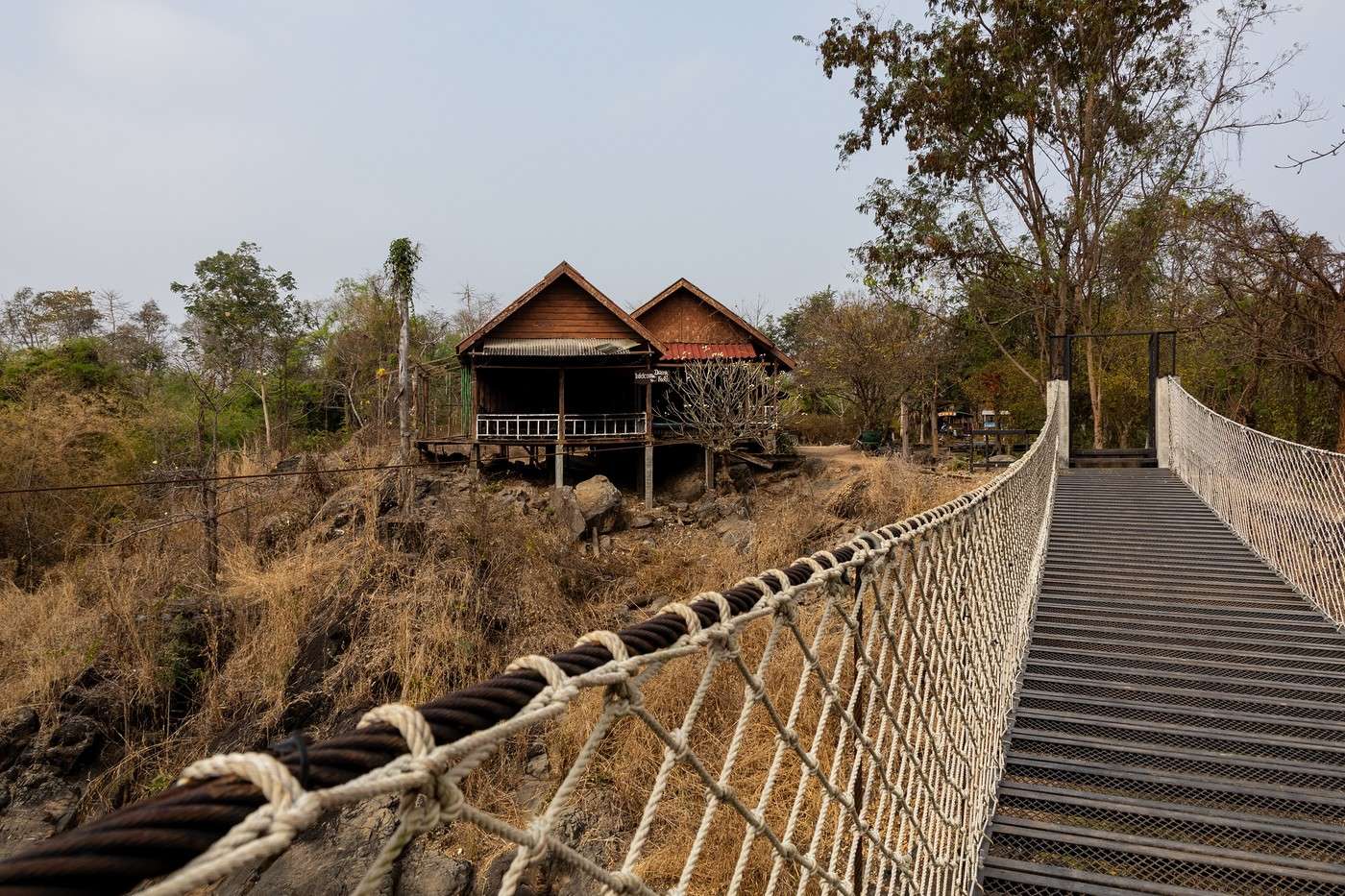
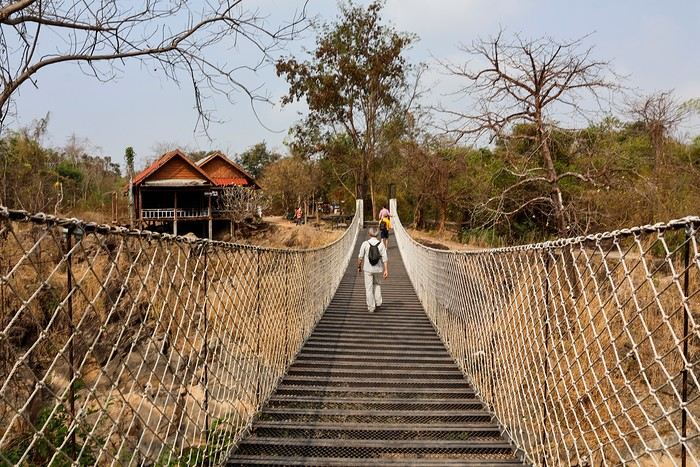
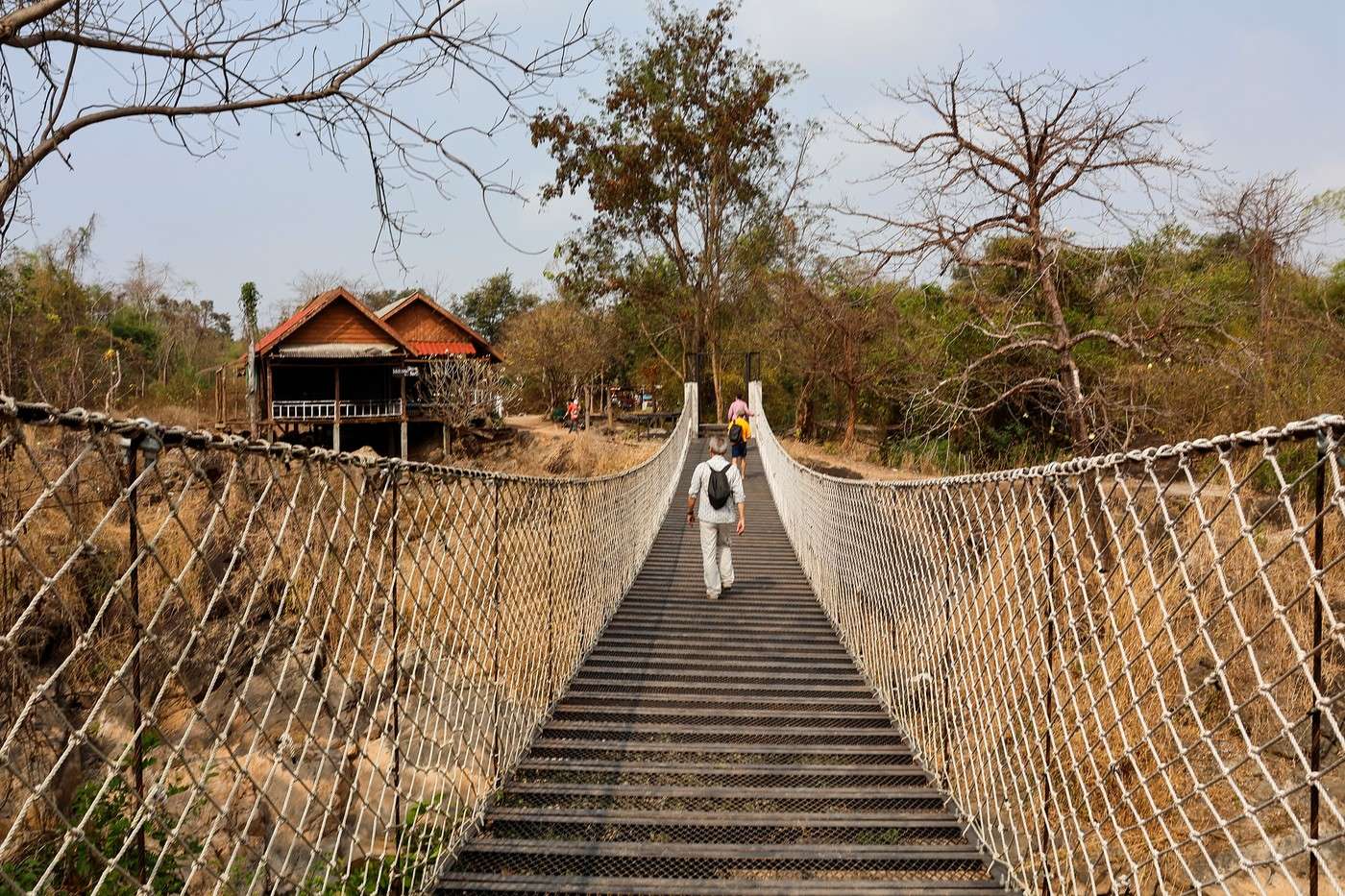
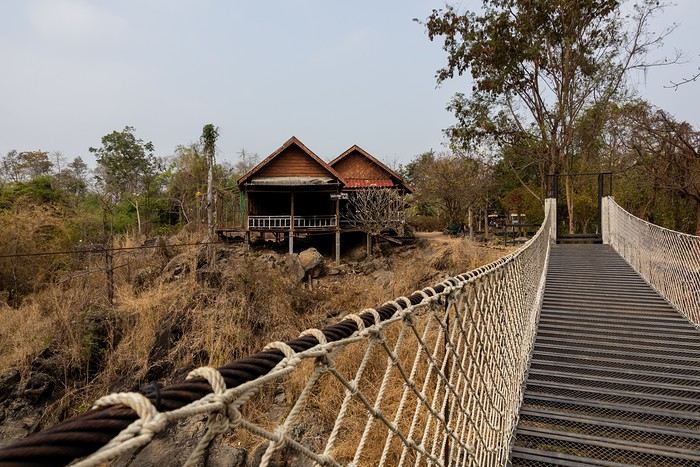
For Li Phi, it’s more like rapids than a proper waterfall. We first cross a "Indiana Jones"-style monkey bridge before descending a rocky path that leads us to the edge of the torrent. Amid the roar and spray, we carefully make our way over the rocks to get a better view of the most spectacular part of the falls from below. Impressive! And you can easily imagine what the river must be like during the rainy season.
Before going back to deafen ourselves a second time, our thoughtful driver takes us to a large tree-lined esplanade slightly overlooking the Mekong.
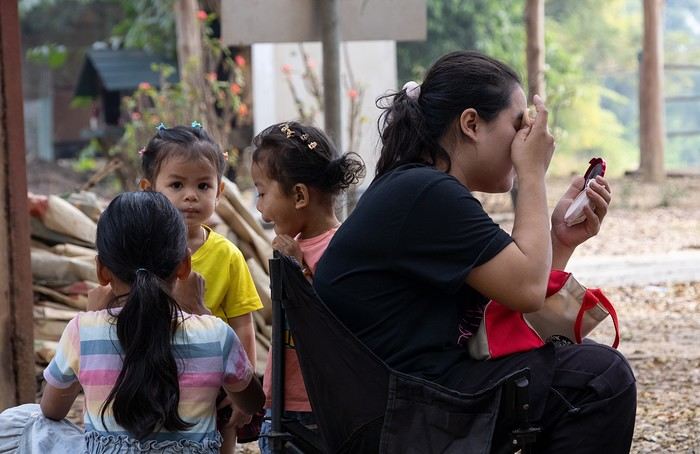
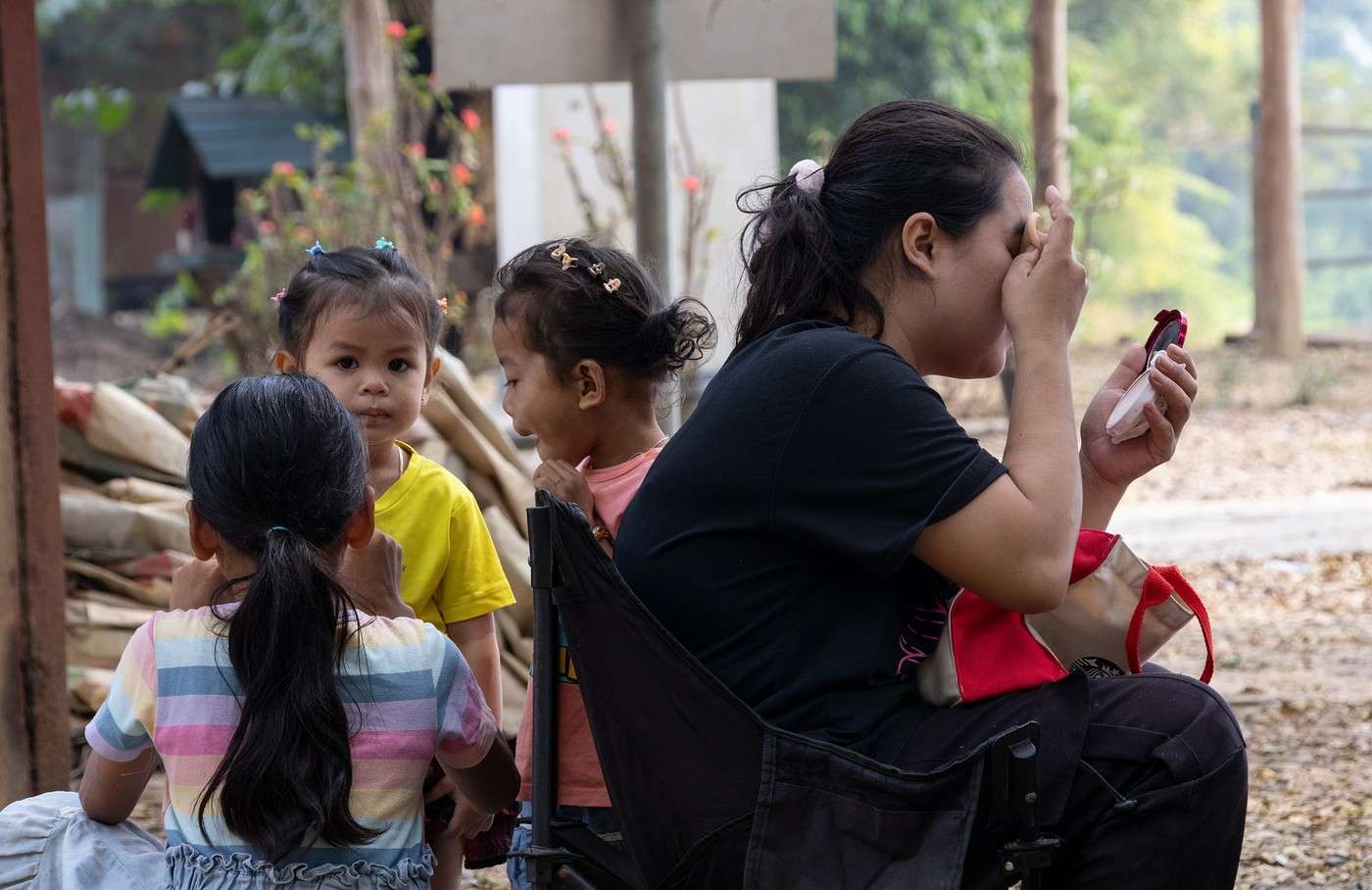
A welcome coffee break under the trees. I enjoy watching this simple daily life unfolding so peacefully. Men sit at tables chatting on the terrace, while in the back of the room, a man mends his fishing nets. Children play with rackets in the square, and a woman prepares a meal for her family...
Waterfall act II: the Khon Phapheng falls. Impassable. No wonder the French wanted to bypass them. The entrance is paid, but the site is well-maintained and clearly marked. More impressive than Li Phi, they stretch over several kilometers as a series of cascades. The effect is less striking, though, since we’re higher up and farther from the water.
The sun is getting stronger, and we’re starting to feel a bit tired. On our way back, we pass a group of buffaloes, looking peaceful but enormous. Kate joins me, leans against me, and takes my arm. I love these moments of tenderness!
We have lunch at the exit of the site, in a small family-run restaurant. I don’t know the names of the dishes or the ingredients, but I really love this Southeast Asian food—Thai or Lao. Never heavy, never greasy, always subtly (or vigorously?) spiced.
The day is drawing to a close, and it’s time to head back. We really loved this peaceful Don Khon island, still protected from mass tourism. This rural life, simple on the surface. Of course, these are just fleeting images, surface impressions, but they did us good. That’s why we travel, isn’t it?
Tonight, our second sunset over the Mekong, glass of white wine in hand. Habits form quickly...