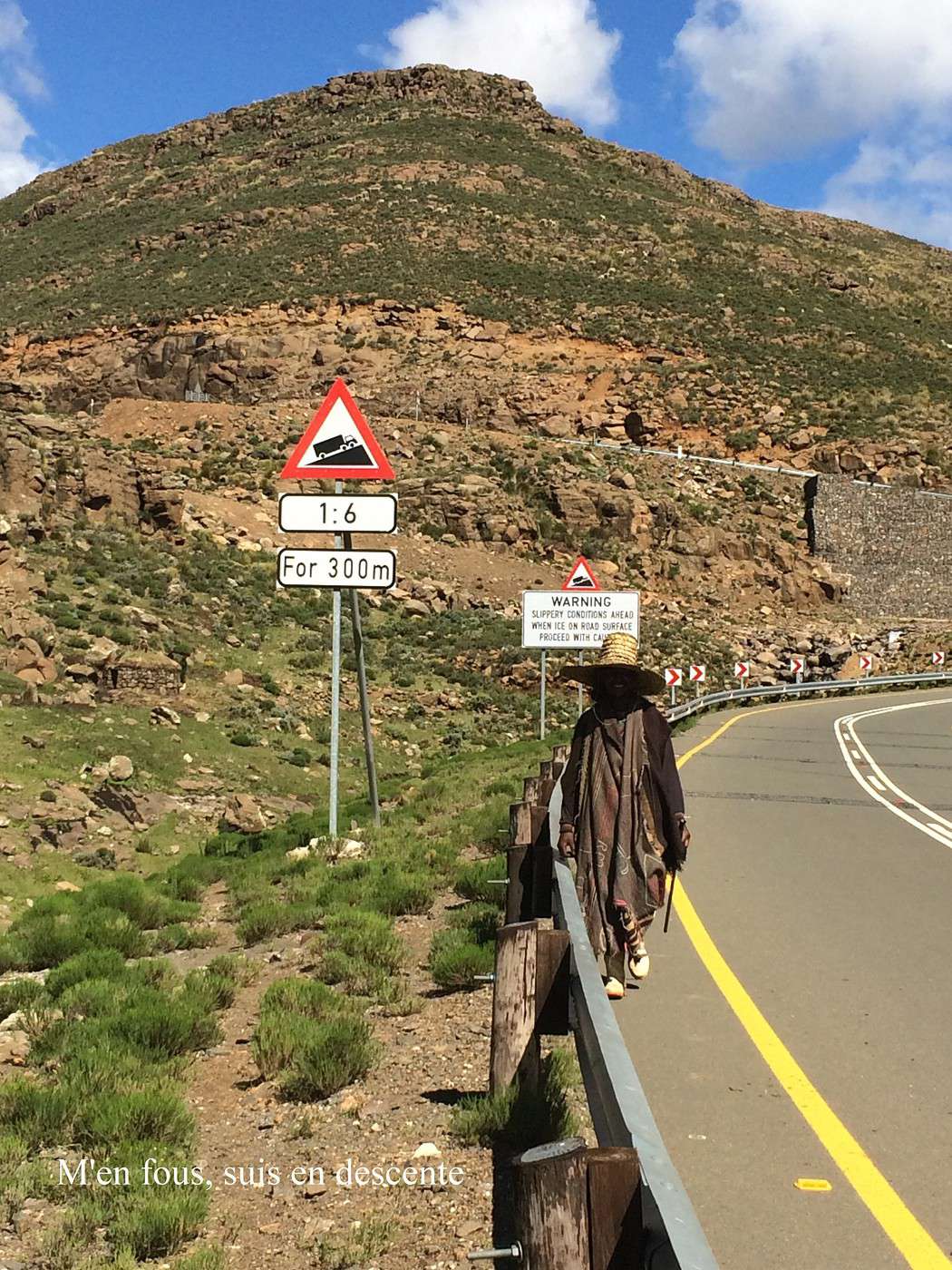
Post-Treatment Lesotho
Don’t expect me to present some miserable AI-generated cliché under this title—it hasn’t reached that level yet. Proof in the voice notes below.
What we’re dealing with here are intelligent, adventurous bacteria that, as autumn arrived, sensed and beat the rush to come down from the high pastures. And why not by car? Anything to break the monotony of leapfrog.
What they didn’t bargain for was ending up a thousand kilometers away, in the desert.
Can these critters even conceive of revenge? With no future, dying, they gift me a half-disabling pneumonia as a birthday present.
The laid-back retired doctor here sends me off laughing at his joke. He’s just explained—almost demonstrating—how a woman should check a man’s temperature.
Between the consultation and the antibiotics, I’m out a good week’s gardener’s wages. I won’t run into him here. Especially since none of this is reimbursed, even though the meds are counterfeit.
*
The Male Malady
They share a massive, muscular body, but just like their austere, pious masters, recreational sex isn’t on the agenda for these rams.
Yet they’re the very lifeblood of these places so dry that tears leave nothing but salt.
So you see them listless, looking depressed, pacing in cramped pens. Not even a fight to lock horns over—what would be the point?
In a few months, they’ll have to double down, one for fifty, virgins or not, racing across thousands of hectares, covering the same ground over and over to get the job done. And fighting like there’s not enough to go around, even though we’re not exactly in China.
Enough with the infernal pace!
Stop exploiting the male animal!
www.youtube.com/watch?v=W_sLDQaAcsk
*
Always Fleeing
Mary’s father was raising dairy cows in Zimbabwe when President Mugabe, independence hero, decided—faute de mieux—to hand farmland over to his army veterans.
For his family, like many others, the choice was simple: leave on their feet or feet first.
They settled in neighboring Zambia, starting from scratch.
There, malaria soon took her father. What was left of the family moved to Johannesburg, where Mary spent her teens.
Meanwhile, the veterans occupying the farms had eaten the dairy cows.
A La Fontaine fable in reverse.
(The new Zimbabwean president, as pragmatic as his predecessor was dogmatic, is now offering White farmers the chance to return—not with full ownership of land they’d taken by force and later relinquished under the same pressure, but on long-term leases. Where will the world be in a century?)
Well-married, Mary traveled with her husband’s postings, including a few years in Atlanta where one of her children was born. Then she changed her mind, changed horses, and here she is, freshly in love and settling in the Karoo.
It’s been a year since this well-worn couple decided to leave Johannesburg. With their house sold in a depressed market, they arrived here last March.
In February, stepping out of a restaurant they frequented—like it was the last time—between the doorman and the car, they each had a gun to their temple. No choice but to let themselves be robbed. Josi wasn’t about to let them go without one last tribute.
They used to live in a meticulously kept 800-square-meter home; their cottage here is 80 run-down square meters. They’re as happy as refugees who think they’ve finally reached safe harbor.
*
Breton Touch
I’d never witnessed such a phenomenon in the continental Great Karoo. Sure, we know those sudden storms that wash away our topsoil, leaving us even more exposed.
This time, it’s been raining nonstop for over twenty hours—47 millimeters so far, which is a whole quarter’s worth of rainfall back when they still measured it.
*
Beautiful Sea
It’s my birthday. We’re heading to the sea to ride the waves.
She hasn’t changed—still as loudmouthed as ever. Hissing, steaming, fuming. Roaring nonstop. I’m glad I didn’t fall for a siren, because with a mother-in-law like that...
In the desert, we have a pretty hardy plant, a bit invasive and not very pretty. Sometimes we move it, and out of respect—or is it pity?—we replant it with feigned care. Its common name is ‘mother-in-law’s tongue.’
We also have a silent cactus the size of a jump seat, shaped just like one. Covered in spines, it’s called the ‘mother-in-law’s chair.’
*
Boxes
Saturday mornings are a colorful race in the kopjie. The township kids come in droves for the fun of it, maybe, but also to get a ride into town and earn a little reward.
This week, Barbara—a wealthy, idle, but generous part-time resident—is in on the action. When she parks her Jaguar in front of the Saturday Market and opens the doors, one, two, three... seven, eight, nine kids spring out like jack-in-the-boxes. She’s just warmly greeted the cops, who didn’t bother counting seatbelts.
At the market, the little geniuses swarm Pandora’s stall. Of Greek origin, she makes all kinds of delicious vegetarian treats. She opens her boxes, and like magic, they’re empty in five seconds flat. The rest of the week, she dedicates herself to various community projects.
*
Big Coca

This young man, dressed in rags, was born after apartheid. He digs through McDonald’s trash, salvages what’s edible, and burns the packaging to keep warm.
The new President of South Africa was a bigwig in the African National Congress, Mandela’s party. Sidelined about twenty years ago, he reinvented himself in business with the backing you’d expect. He built a fortune as colossal as it was quick by snapping up, among other things, the McDonald’s and Coca-Cola franchises for the country.
Now he’s expected to act.
Little has truly changed here—unless you consider changing the color of money progress in itself. Inequality, violence, racism, corruption, spatial segregation, incompetence, unemployment, obesity—these problems and others are more acute today than yesterday, and by these measures, South Africa often tops—or is it bottoms?—the rankings.
This country tears me apart just as it’s torn apart.
*
(If the Air France pilots—whose only power is to disrupt—would kindly suspend not their flights but their outrageous demands, I’ll soon be up there.)