in Entre deux voyages › Carnets de voyage
Six-week trip to Mexico (page 8 of 12)
Discussion started by GeorgesOZ on 2019-12-05
226 replies
This thread has been translated into English.
Six-week trip to Mexico
GeorgesOZ · 2020-03-28 · Message 141 of 227
Oaxaca – Monte Albán: Introduction
I’m sorry for the confusion I caused about the price of a margarita ordered on the Zócalo! Prices on the Zócalo aren’t that high, actually—I remember eating at the restaurant El Jardín one of the first days, which was a pretty decent spot. Sure, we didn’t order the most expensive thing on the menu—we just had some tamales, probably washed down with a beer—and it was only 270 pesos for two people, or about 10 or 12 €.
We also grabbed coffee at Café Brújula (“The Compass”), which guidebooks recommended, but it wasn’t the best place because it was too crowded. It was just 70 pesos for two (and I wasn’t blown away by the coffee).
Try finding prices like that in a big European city—or even on the Riviera Maya, which everyone keeps raving about!
If you wander just a little off the main drag (it only takes a few minutes on foot), you’ll find the local spots. One evening, we ventured into a bar near the intersection of C. Colón and C. Melchor Ocampo. There were about a dozen customers, all Mexicans, and they looked like regular folks. We ordered rum at the counter and quickly struck up a conversation with a couple of our neighbors—people were as friendly as always, in our experience. I think it was all men in there, but as usual, everyone was respectful toward Y. Then we ordered mezcal, which earned us approving nods because “mezcal deserves respect.” The owner served us from a slightly grimy, unlabeled bottle—it was either cheap hooch or the good stuff, the kind country folks make outside the commercial circuit. A guy invited us to his table, a musician who made us promise to come see him play the next day at a restaurant. Our drinks cost us 80 pesos!
We’ve been here for several days now and feel right at home. Wandering around this city is a real pleasure. But we’ve still got plenty to do—hay mucho pan que rebanar!—and at least one exceptional site left to visit: Monte Albán. We easily found the bus to get there, just around the corner from the Mercado Benito Juárez. The fare is 60 pesos round-trip per person. Monte Albán is just a few kilometers outside the city, perched on a hill you can see when heading to Zaachila or the airport. Entry is 75 pesos per person.
I don’t know if I’ve mentioned this before, but it’s worth saying: foreigners pay the exact same prices as Mexicans, which I think is worth noting. It’s a refreshing change from the inflated prices foreigners have to pay for visits in India or Thailand, and it’s made me appreciate Mexico even more!
For the introduction, I won’t bother reinventing the wheel—I’ll just paraphrase Wikipedia:
https://fr.wikipedia.org/wiki/Monte_Albán
"Monte Albán is a major archaeological site that reached its peak during the Zapotec period between 200 and 600 AD, though it was likely founded by the Olmec people. It’s located about 10 km from the city of Oaxaca de Juárez. This city was built on an artificially leveled surface atop a mountain, towering 400 meters above the valley floor (at an actual altitude of 1,941 meters)."
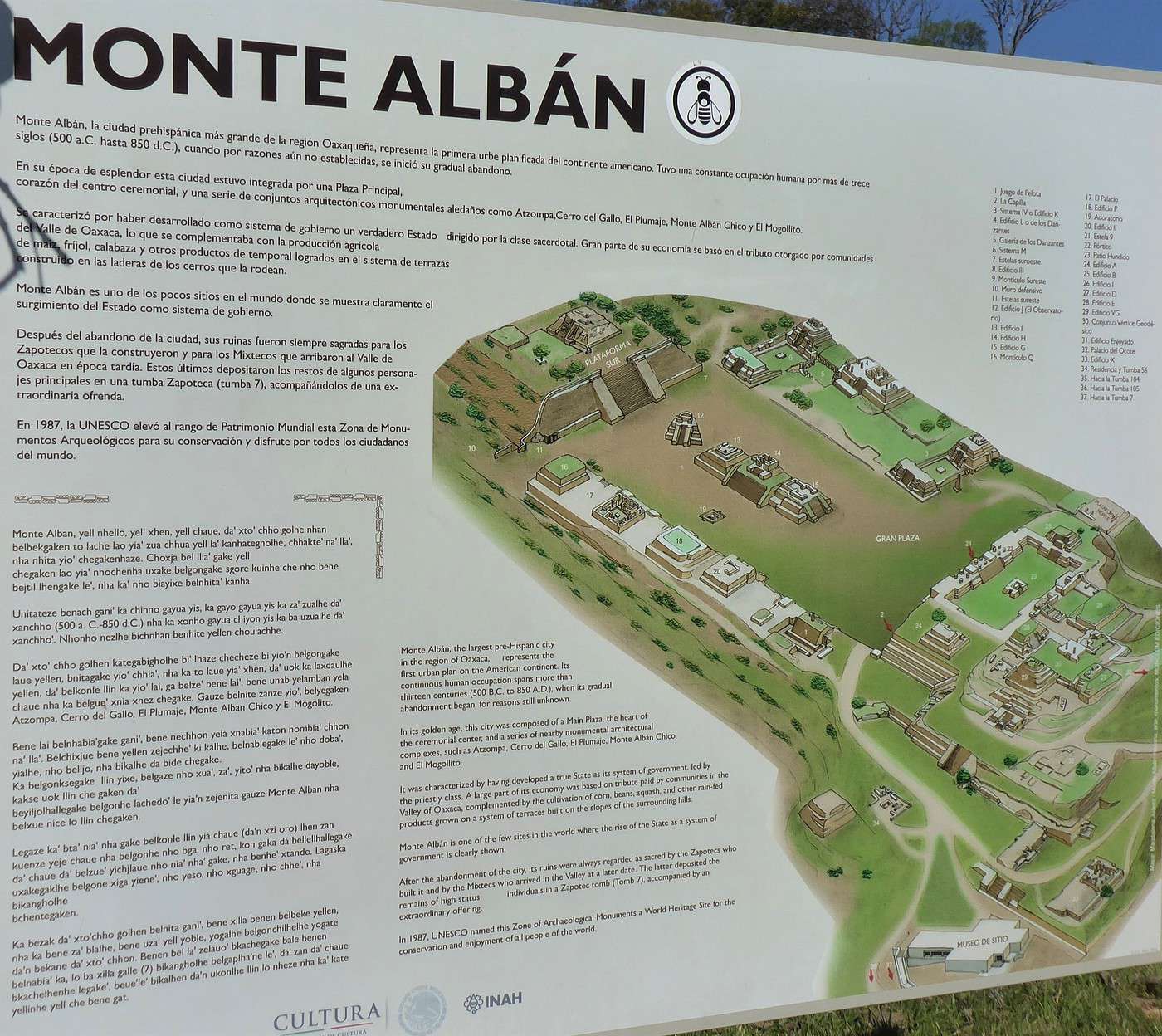
I could go on and on praising Mexico: there’s always high-quality information available at archaeological sites and museums. Check out the photo of the first sign at the site—it’s in three languages, please: Spanish, English, and what I think is Zapotec. With an overview of the site. You can’t do better than that. Among other things, we’re told this is the first major urban center known on the American continent—nothing less! Monte Albán is one of the few sites in the world that clearly demonstrates the development of a state and a system of government (you might think of Angkor Wat in Cambodia, but Angkor is much more recent). Perched on this hill, the system was based on tributes paid by the various agricultural communities in the Oaxaca valleys.
I think I’ve whetted your appetite. I’ll take a short break before continuing. Hasta luego, amigos!
Six-week trip to Mexico
GeorgesOZ · 2020-03-29 · Message 142 of 227
Oaxaca – Monte Albán: The Site
The site strikes you with its almost geometric purity and the sense of space you feel there. It’s monumental yet remains light. We had the same impression at Teotihuacan, though we know it’s a different culture… But can we doubt there were influences in both directions? The two sites are roughly contemporary, spanning from the middle of the millennium before Christ to the end of the first millennium of the Christian era. We found Palenque more compact, though, constrained by dense jungle.
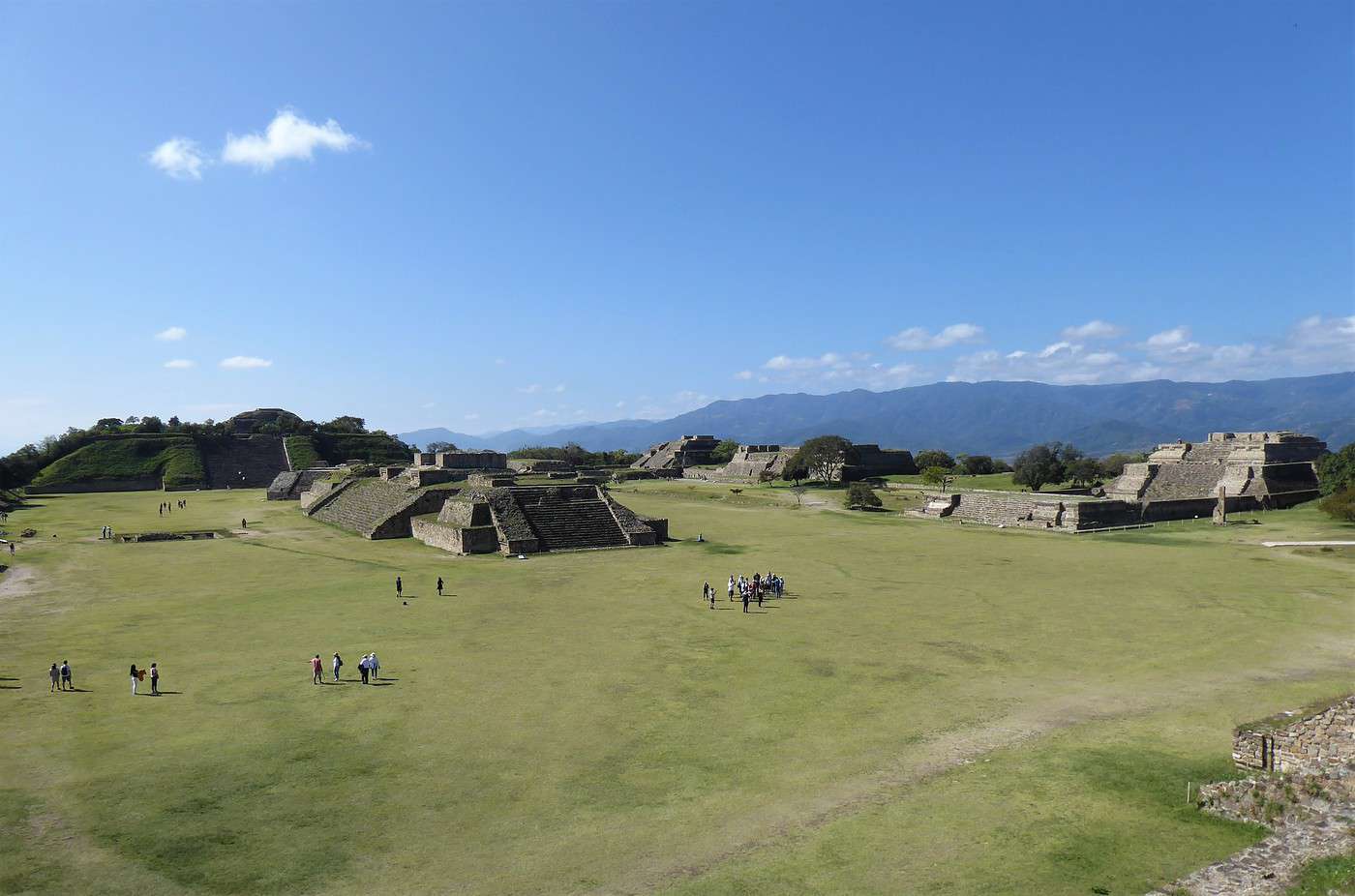
The central plaza of Monte Albán is perfectly flat. The Zapotecs clearly put in significant earthmoving efforts. The buildings are arranged all around as well as along a central axis in the middle of the plaza. The first photo shows pretty well what you see when coming from the north (that’s the official entrance). In the background on the left is the South Platform (PS). I took this photo as we were leaving, and visitors were starting to arrive, but even so, you can see the site is far from crowded. This isn’t Teotihuacan!
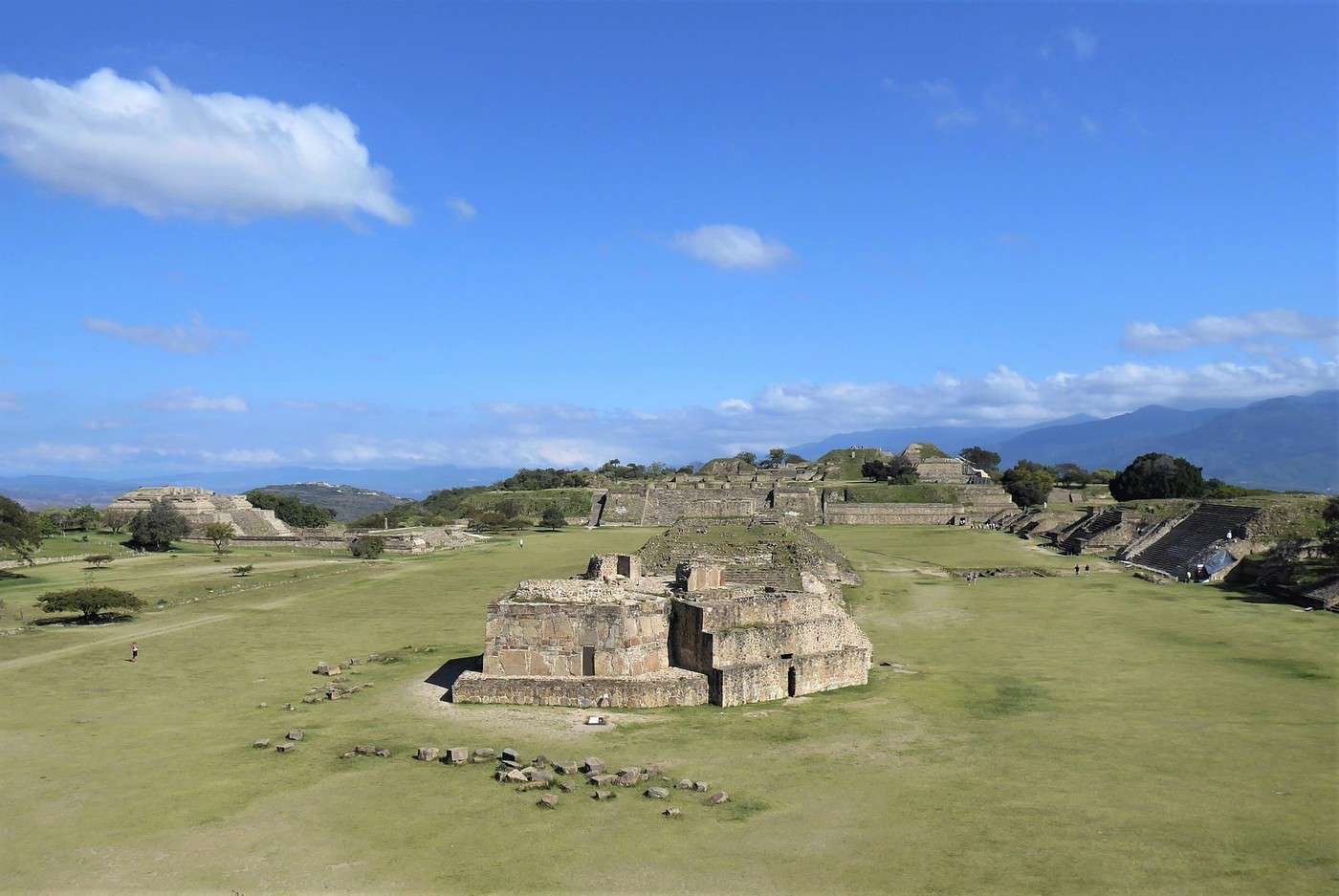
The second photo I took earlier from the top of the PS, so it’s a view to the north—no one around! On the east side of the PS, there’s still a beautiful stele featuring what I interpret as a warrior wearing an outlandish headdress. And smiling? That would be a first… The sculpture is somewhat heavy but far from unpleasant.
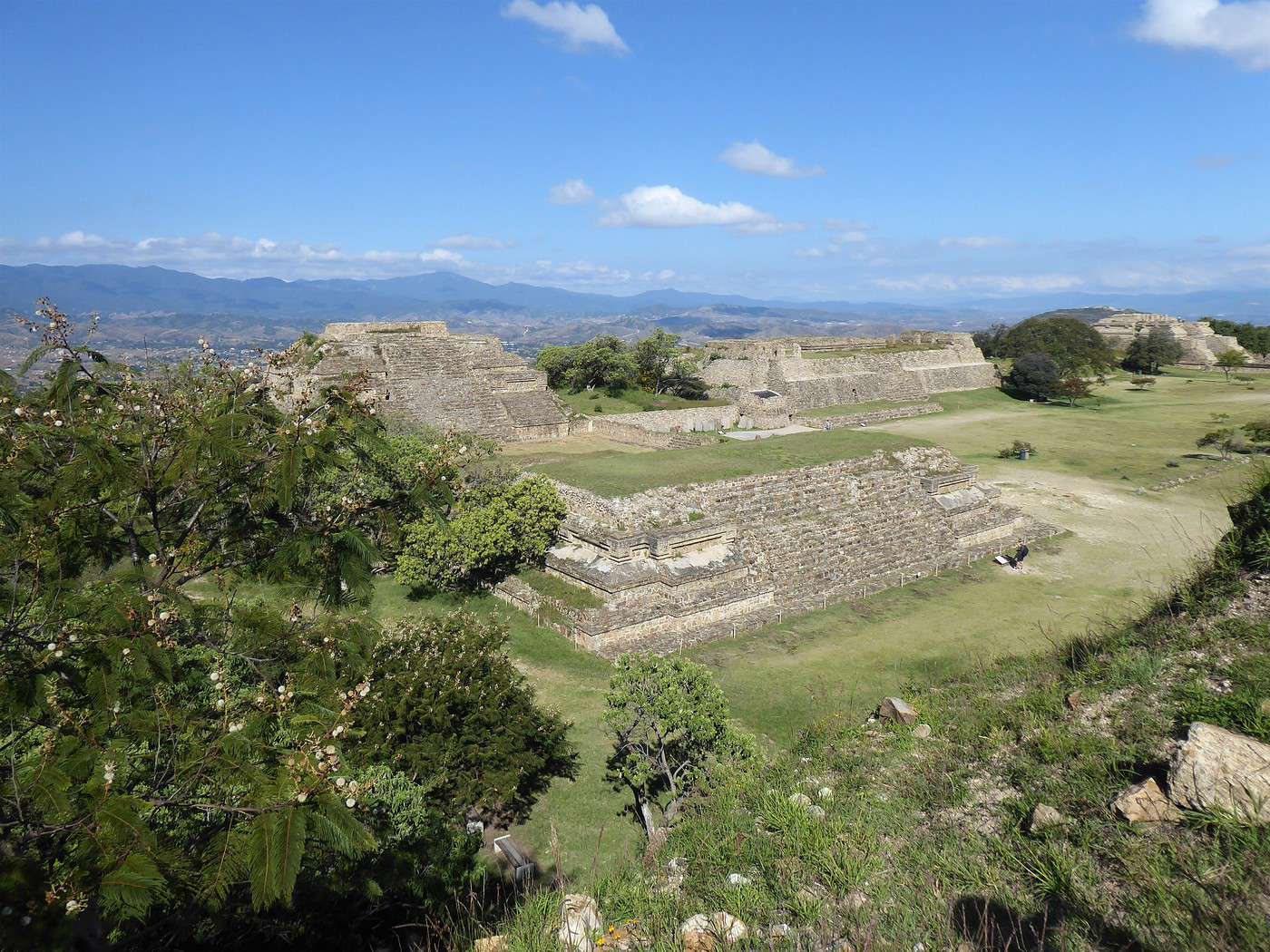
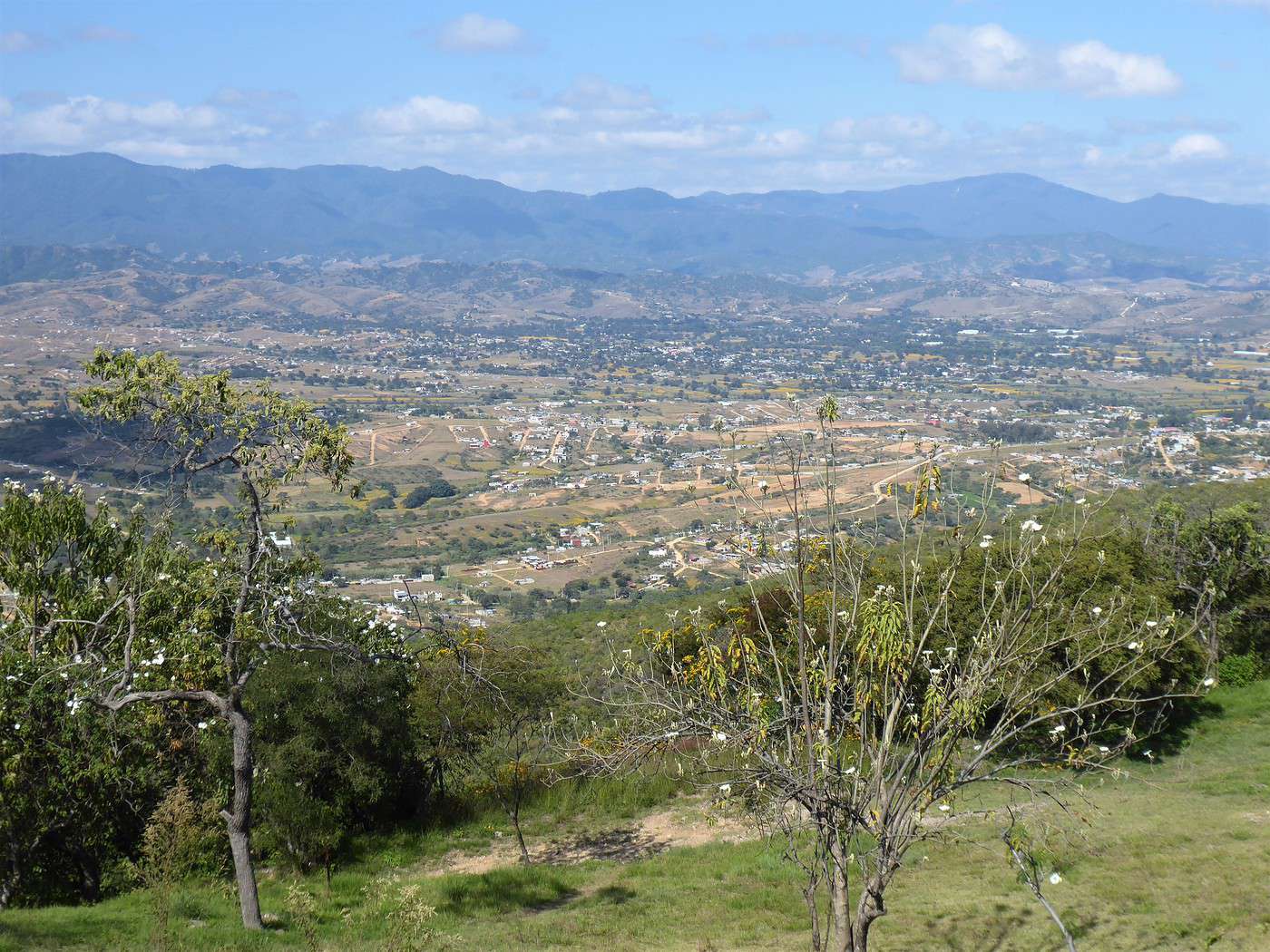
My third photo, taken from the top of the PS: it’s the building on the northwest side of the platform, where you’ll find the famous « Danzantes ». In the background, the Oaxaca Valley and the mountains. The next photo shows how Monte Albán stands magnificently in the middle of the valley and also how much greener it is than Teotihuacan. But less so than Palenque—further south, you’re in rainier zones. Obvious, my dear Watson!
It’s for this (relative) greenery and this atmospheric layout overlooking a stunning valley that I’d say, if pressed, it’s the site I preferred in Mexico (I’d also visited Uxmal in Yucatán ages ago). It’s certainly a remarkable site, one of the most beautiful I’ve seen.
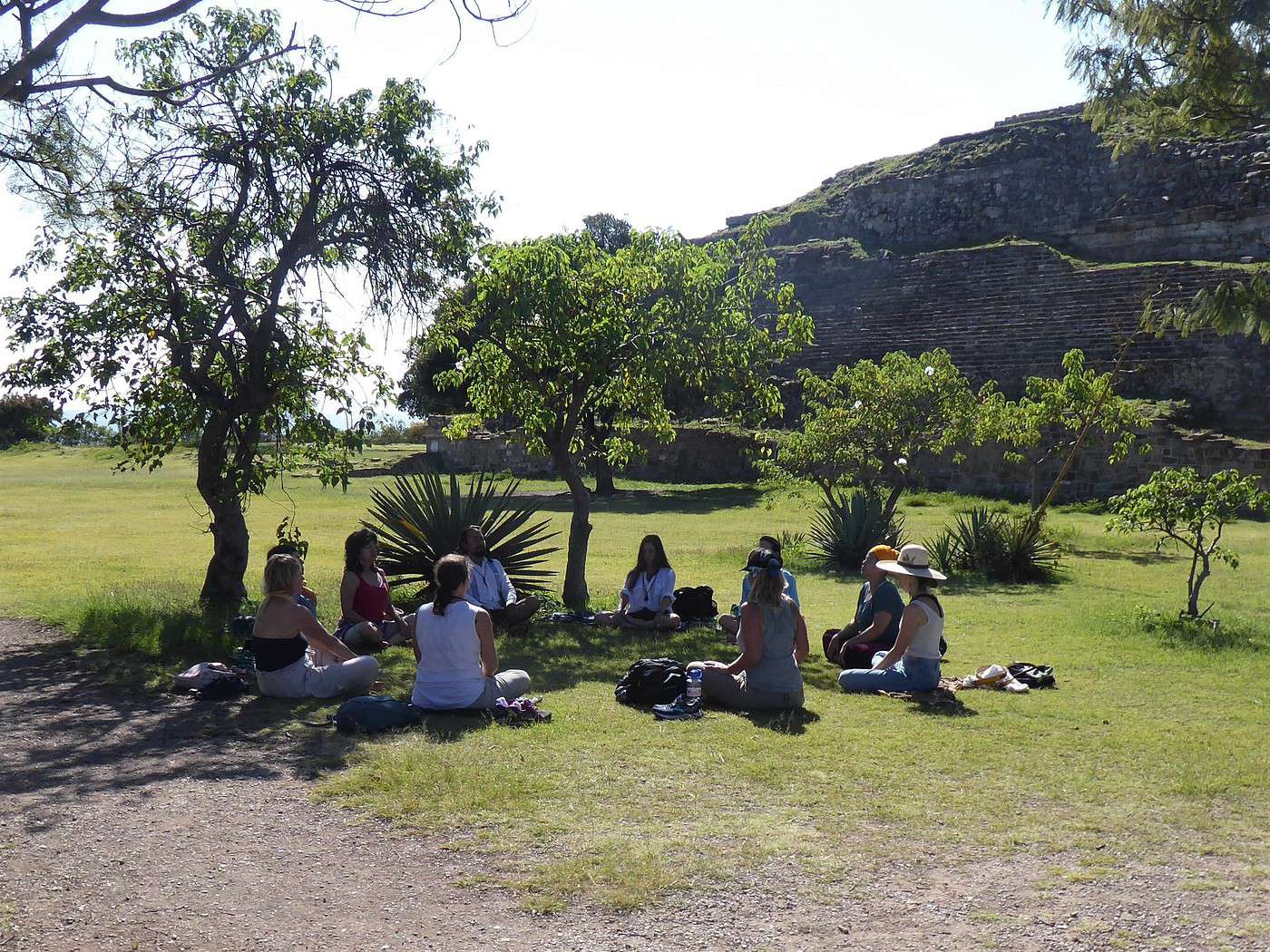
The site’s importance is obvious, and not just for tourists or archaeologists! Coming down from the PS, we stumble upon a circle of people sitting cross-legged, chanting I don’t know what while swaying back and forth. They’re neither Indigenous nor mestizo—they’re either « güeros » or foreigners, which wouldn’t surprise me. Probably people seeking a spiritual experience in a « sacred place ».
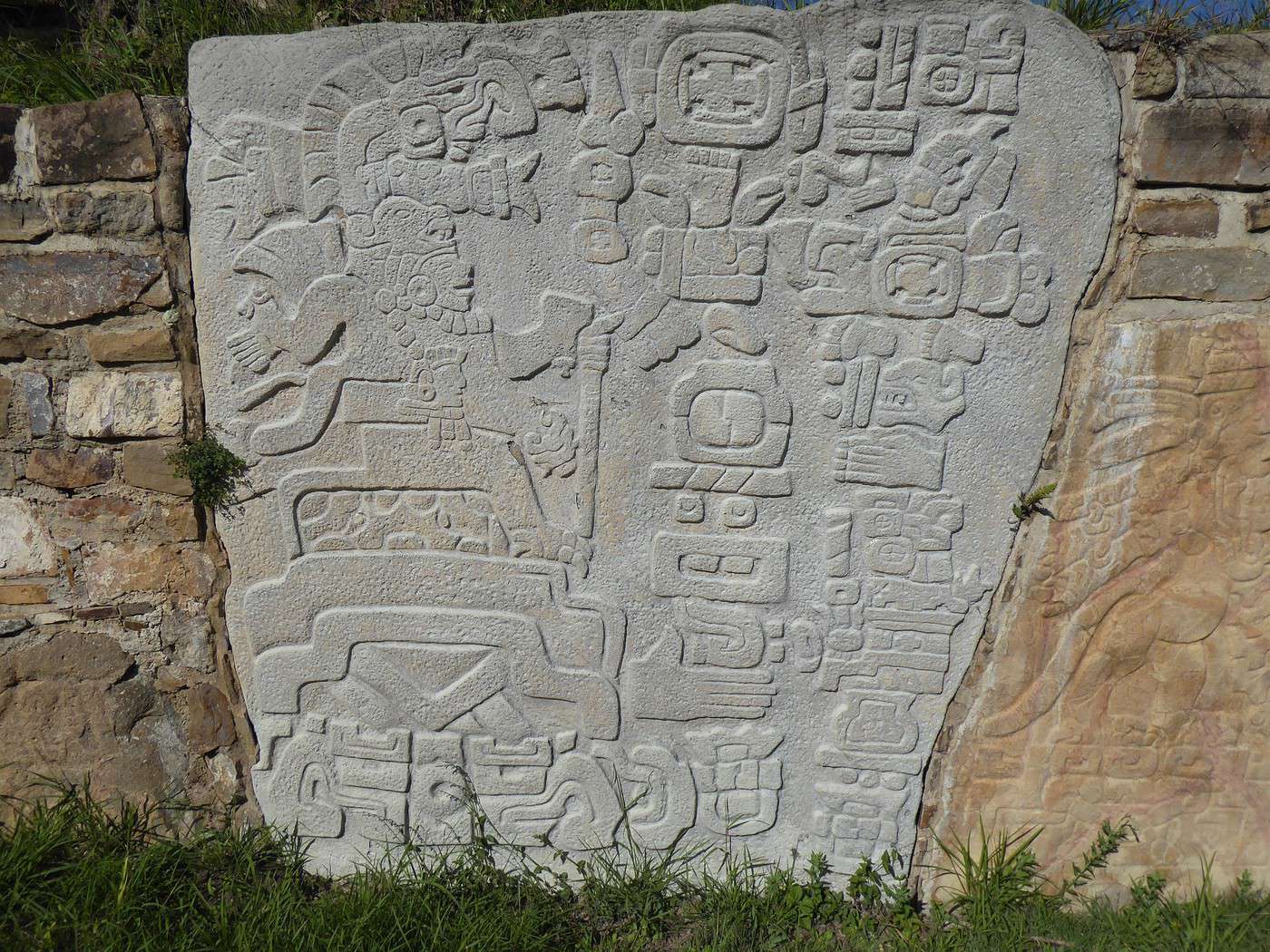
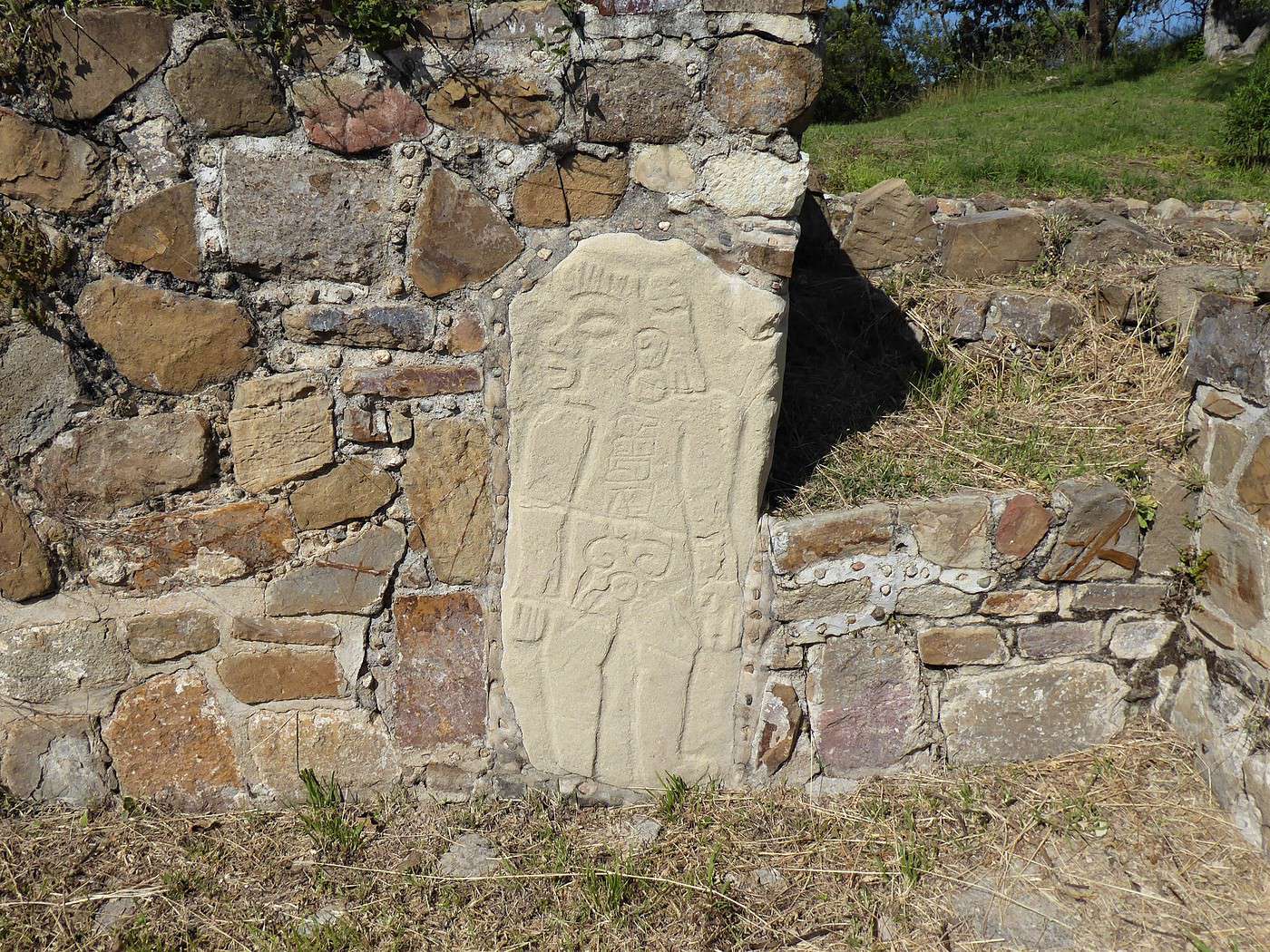
The last photo is of one of the « danzantes ». These are a few bas-reliefs of « dancers », or at least that’s what we think they are, found at the base of the PS on its northwest side. Same remarks as for my « smiling warrior »—it’s not particularly fine sculpture.
I’ll leave you here for today. We spotted a café next to the museum at the site entrance, and we haven’t eaten anything this morning!
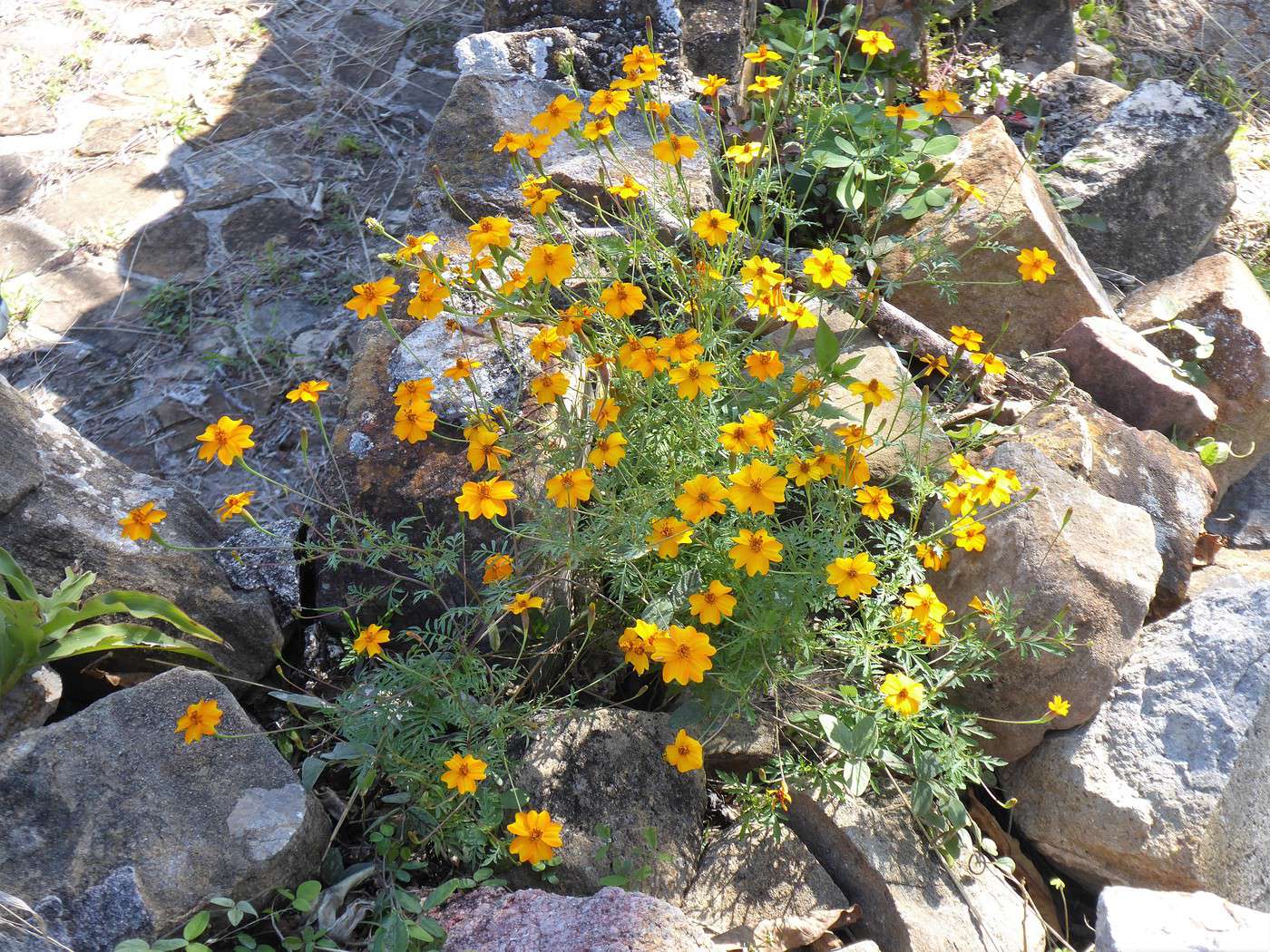
As I said, I really enjoyed this visit. Y too (she doesn’t talk much in my story—I should give her more space! 😉). She also loved the greenery and… the flowers!
Six-week trip to Mexico
GeorgesOZ · 2020-03-30 · Message 143 of 227
Oaxaca – Monte Albán: The Museum
The café at the back of the museum has a pleasant terrace with a view of part of the valley below. We order coffee, which costs 150 pesos if I remember correctly. A bit pricey, but it’s the real deal—good coffee—and this isn’t the cheapest spot in town either. We really needed to stretch our legs after trekking through the ruins.
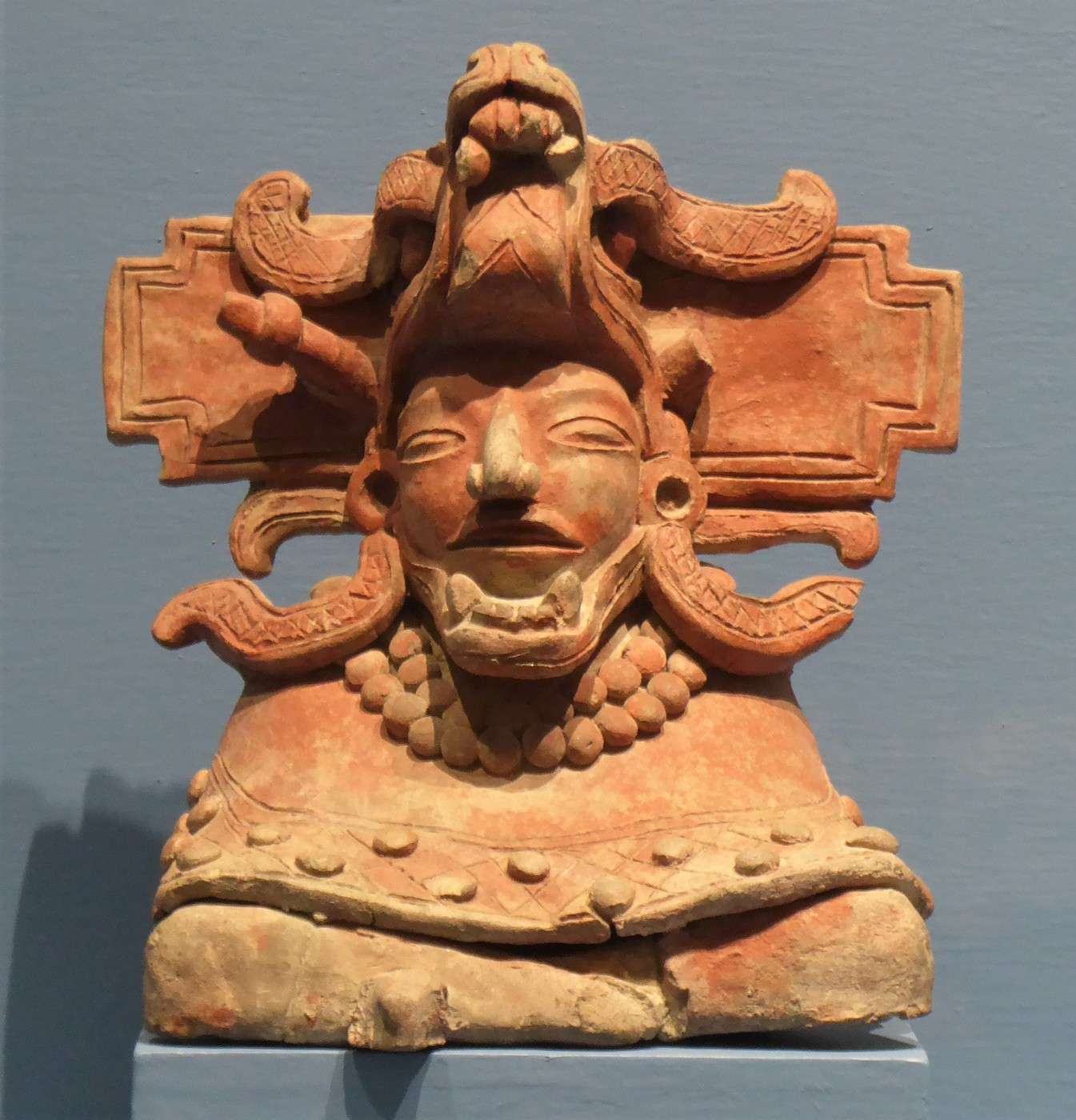
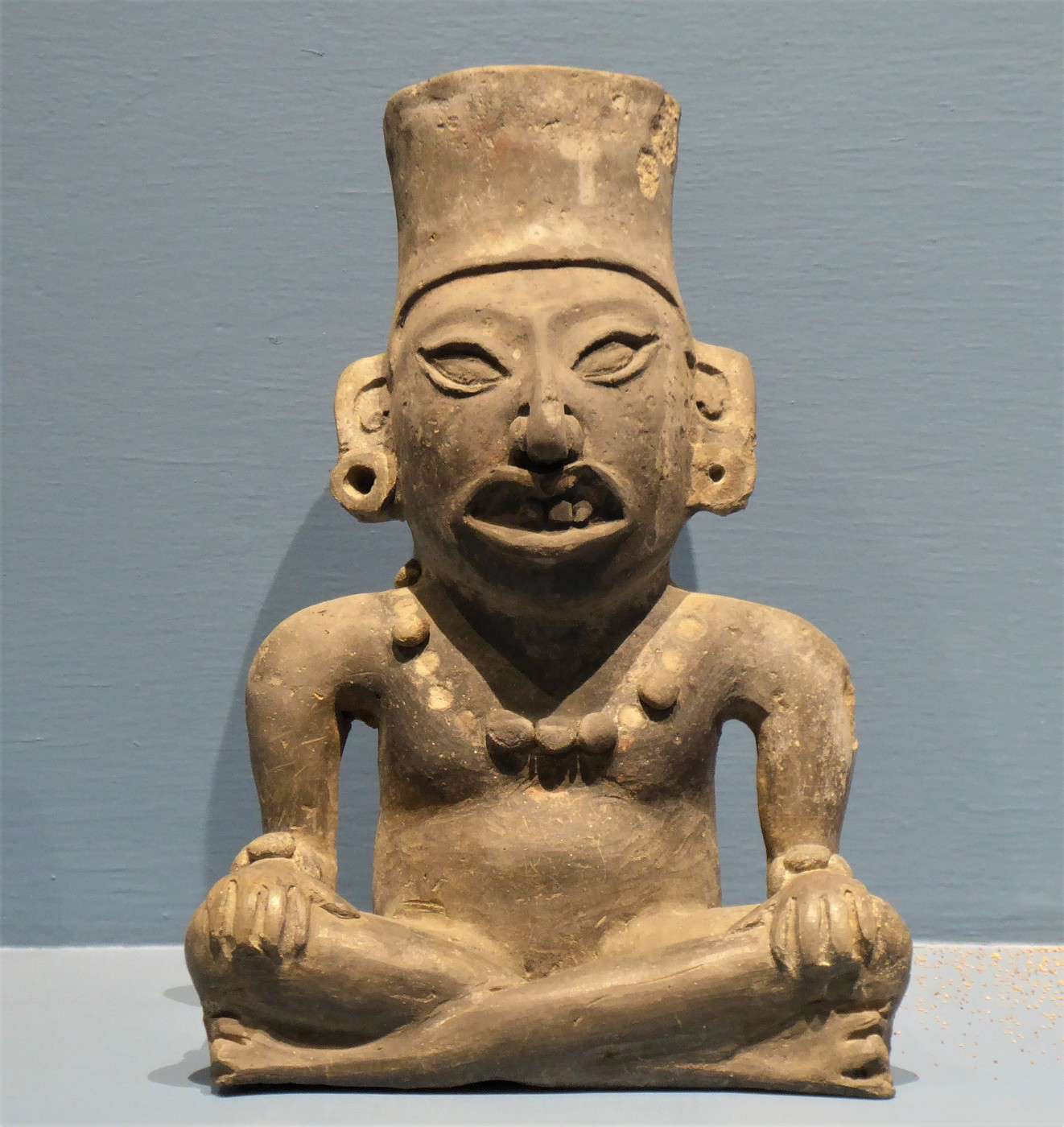
The museum isn’t huge and can easily be visited in half an hour if you’re in a hurry (though an hour is better). There are still quite a few interesting things to see. As always, the pottery catches my eye, just like everywhere else in the world. Pottery and textiles—have you noticed? It’s not just booze and churches!
The figure in the first photo is sporting one of those extravagant headdresses. Once again, it seems these indigenous cultures placed particular importance on hair and what they wore on top of it. And if I’m not mistaken, this was true for other cultures in the Americas too—at least, the Native Americans of North America were well known for it.
I can’t resist sharing the second photo—a rather grotesque figure that reminds me of Butt-Head, one of the stars of a popular American animated TV series from the ’90s. A character who added his own brand of slyness to the duo’s sheer stupidity with Beavis. 🙁😉 Just in case you don’t know what I’m talking about, I’ll throw in a picture of Butt-Head too—it’ll expand your cultural horizons, hahaha!
Among other things, the museum gives a description of Zapotec writing. We’re told it may have been the first writing system in Mesoamerica—a vast region stretching from northern Mexico to Costa Rica, encompassing Aztec, Mixtec, Olmec, Zapotec, Maya, and other cultures. Since there was certainly no writing further north and the Incas to the south didn’t have any either, this would make it the first writing system in the Americas. That’s no small feat! It hasn’t been fully deciphered, but it seems to have been a mix of pictograms, phonetic signs, and abstract symbols. There are parallels to be drawn—in terms of the development of writing—with Egypt or China.
Another interesting explanation concerns the importance the Zapotecs placed on astronomical observations and the development of calendars. This brings the Maya to mind. And weren’t these the same concerns found in all ancient civilizations—Sumer, Babylon, China, etc.? In the end, we’re all the same across the world.
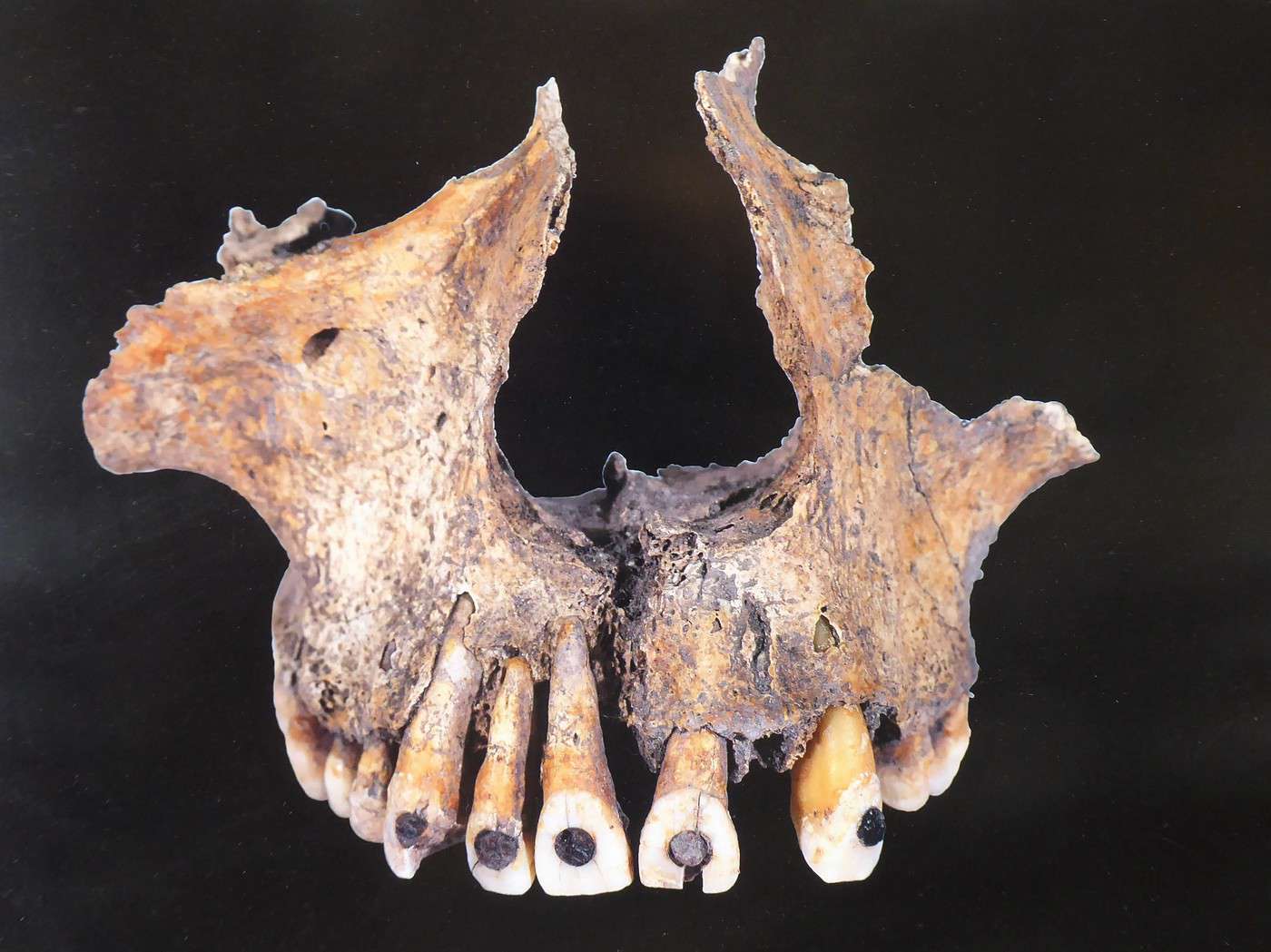
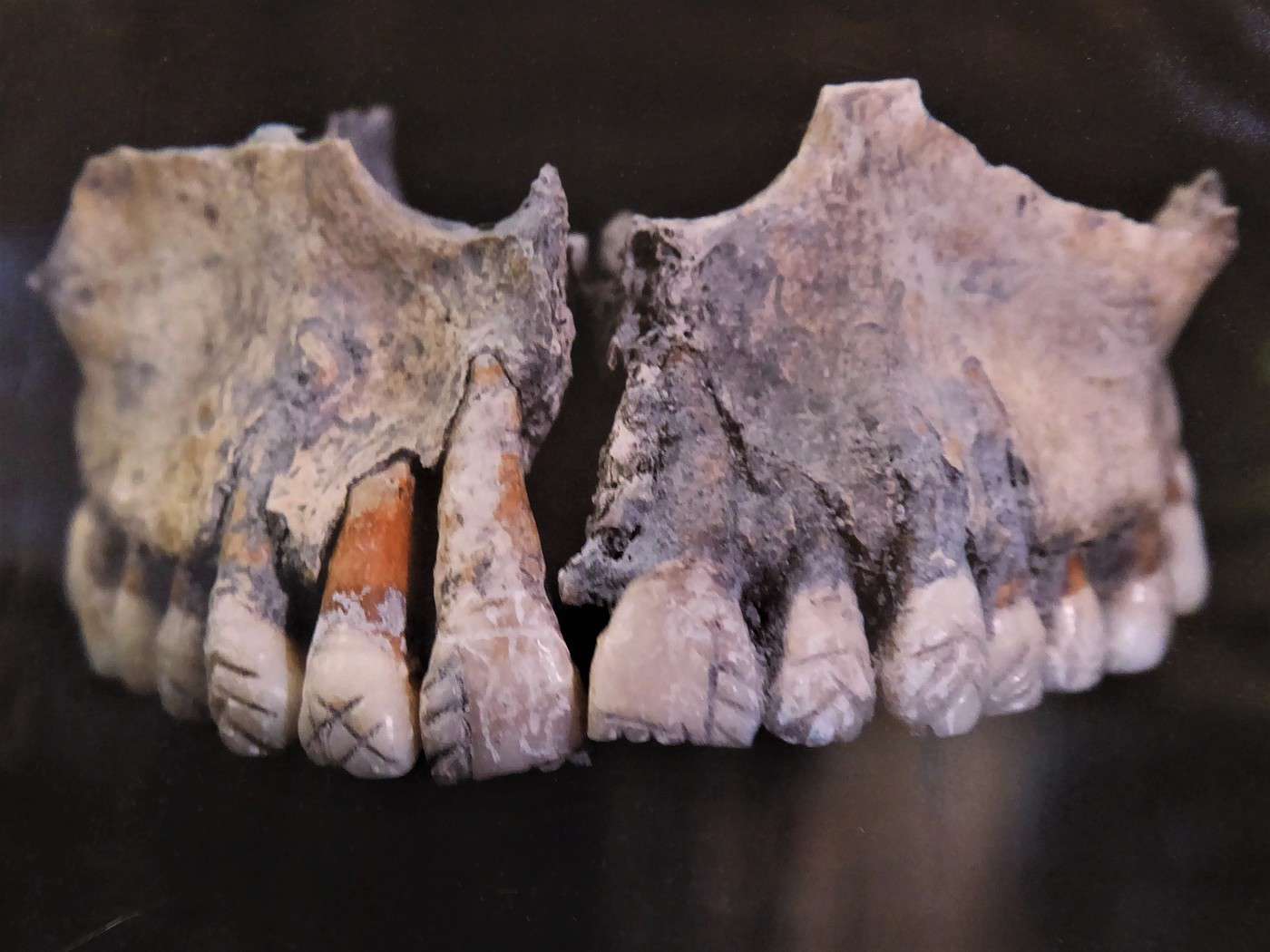
At the museum entrance, you can also see examples of dental modifications from the Oaxaca valleys (it wasn’t just skulls they deformed). First photo: inlays on Mixtec teeth. Second photo: filed and grooved teeth from an unspecified culture. Ouch—just thinking about it makes me cringe, and I hate going to the dentist!
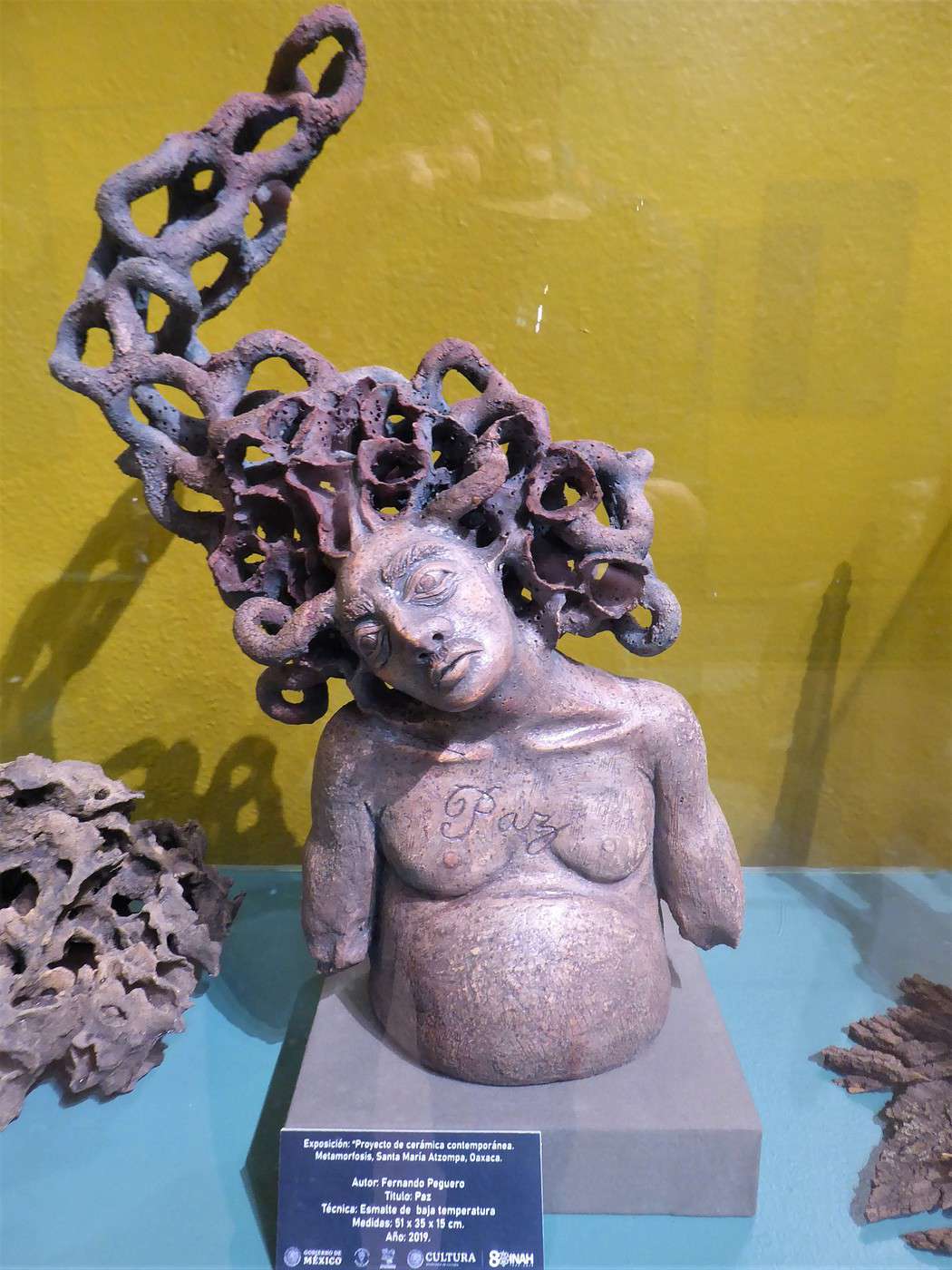
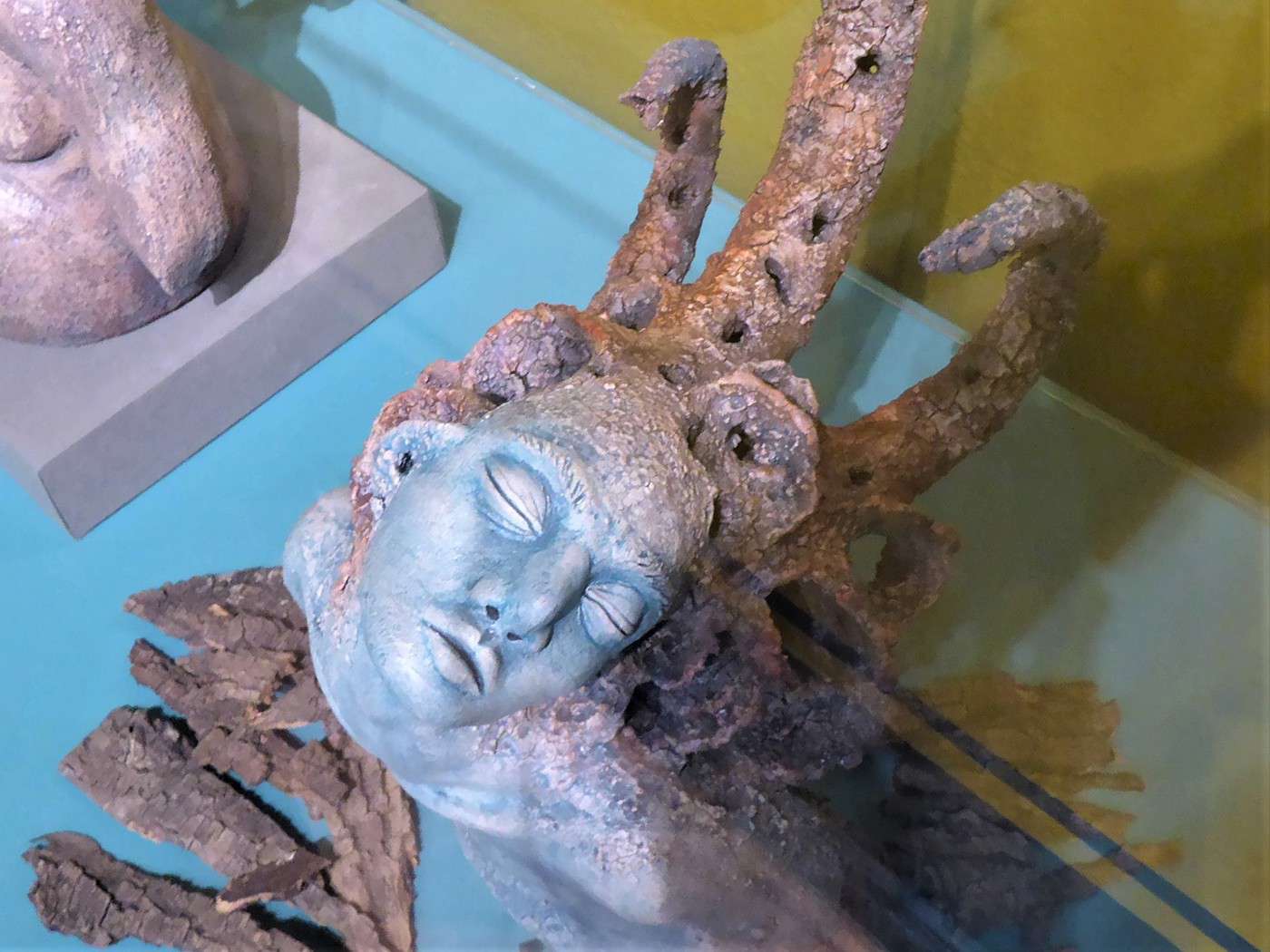
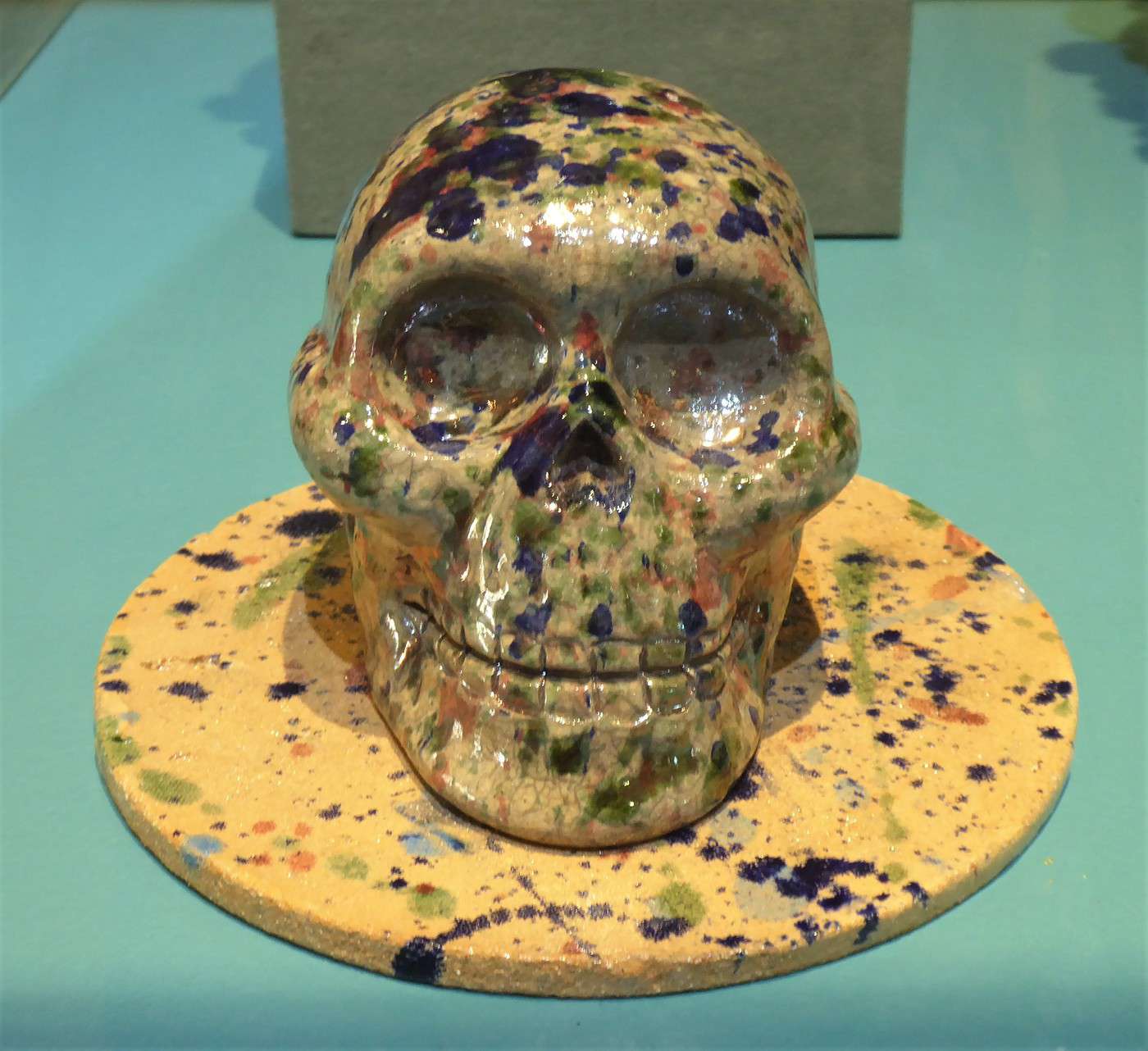
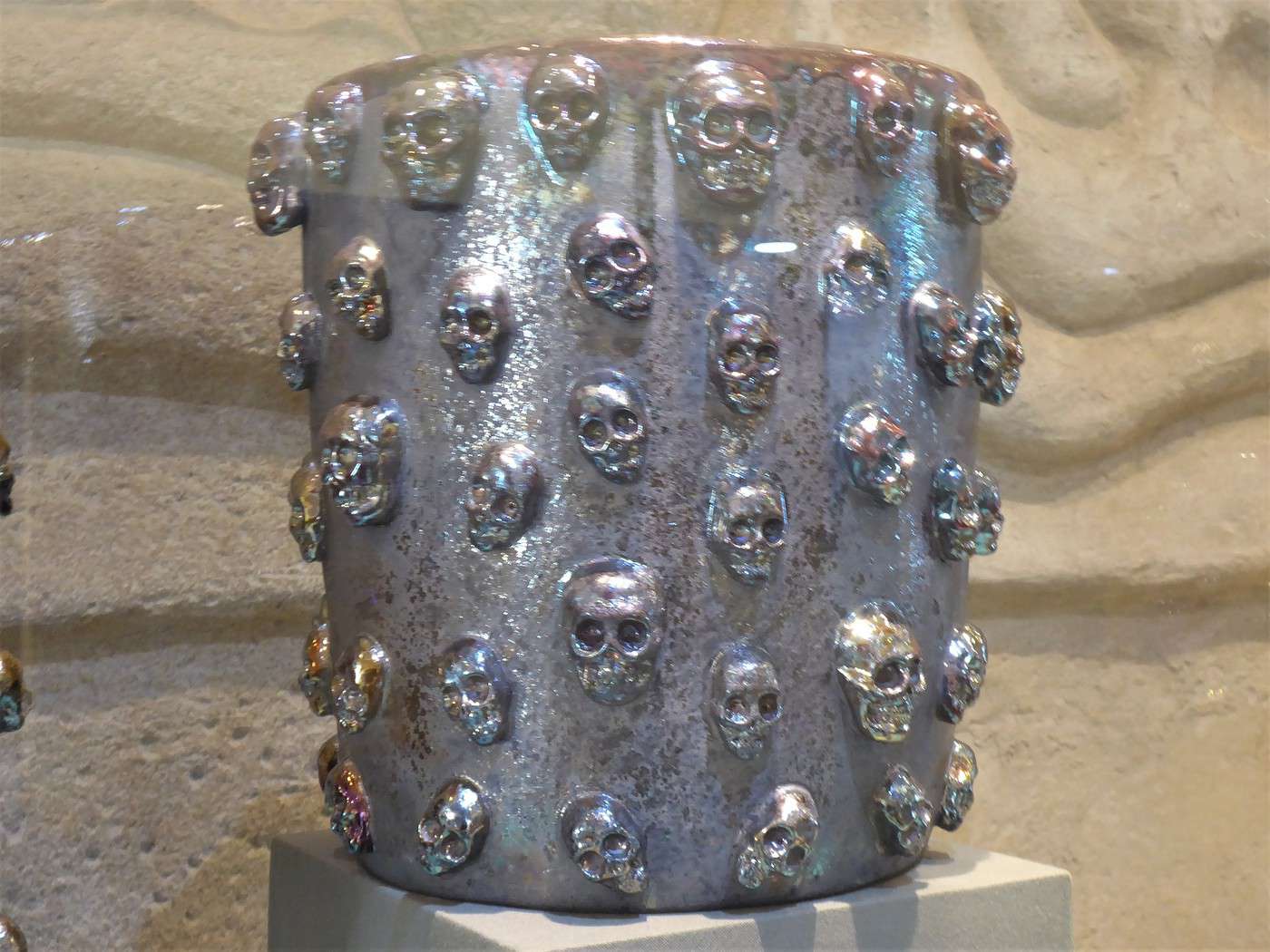
Let’s also mention this modern art exhibit—a ceramics project called *Metamorfosis* by Fernando Peguero from Santa Maria Atzompa. The pieces are striking, almost like jellyfish. And what about these two works by Lalo Martínez? A colorful skull smiles at passersby, and here’s an original flowerpot adorned with a string of skulls. Perfect gifts to bring back for Aunt Marie-Julie, right? 😉
Mexican artists never lack inspiration or imagination—their cultural heritage is extraordinarily rich… and quite psychologically complex, I’d say!
Like in all museums, there’s a gift shop next door selling all sorts of souvenirs and books. I never buy souvenirs there—if there’s anything nice, it’s always expensive. But books… I can’t help but browse, and I need something to read. I pick up *Una Realidad Aparte* by Carlos Castaneda. It’s the second book in his sensational series from the ’60s and ’70s about his initiatory experiences with the Indian sorcerers Don Juan and Don Genaro. Many people consider these experiences fictional, and I’m one of them. Still, it’s an entertaining read, and diving back into it—in Spanish this time—is also a kind of journey into the Mesoamerican imagination.
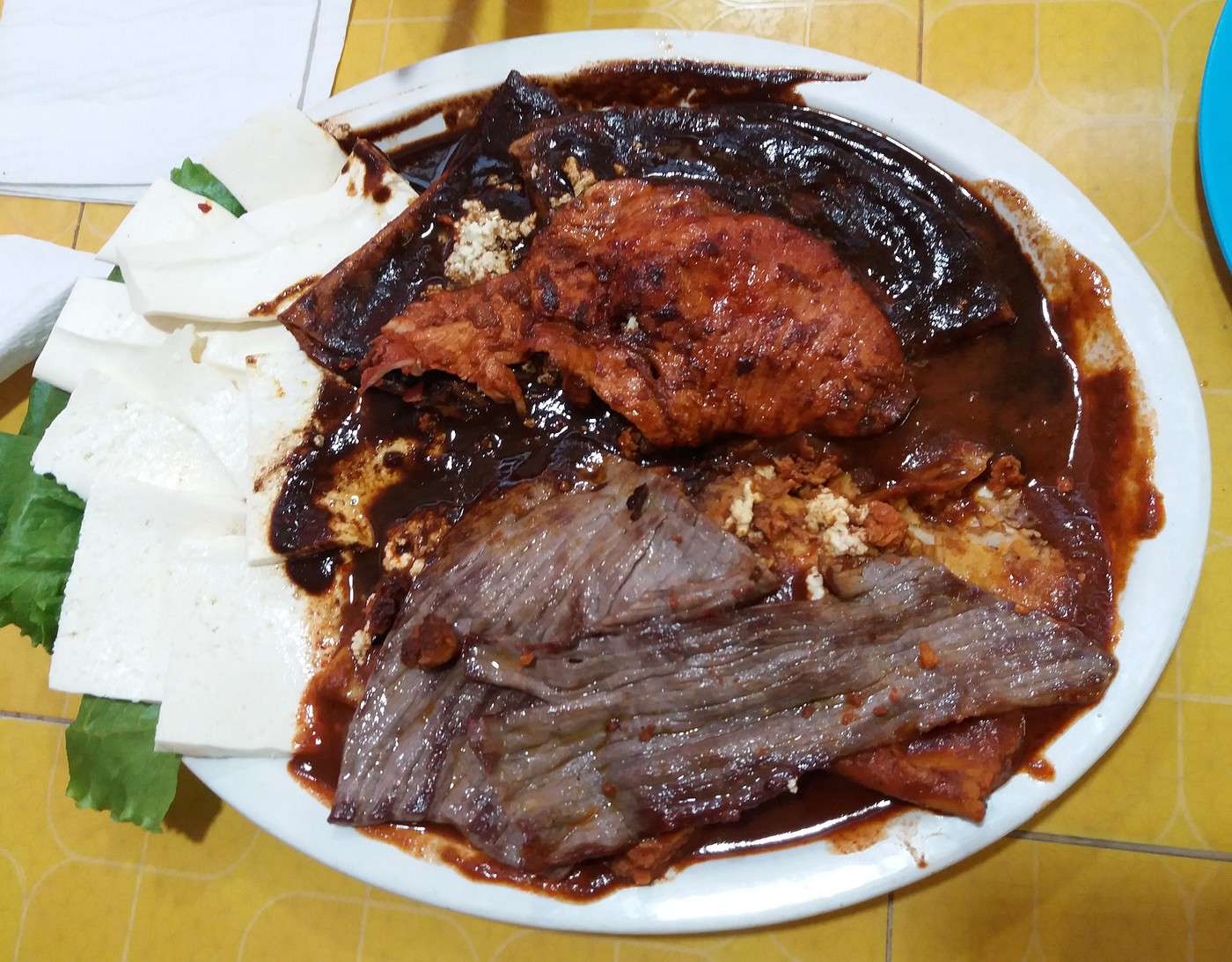
We return to Oaxaca in the early afternoon. We’re a little hungry, so we head to the Mercado nearby. I don’t know what the dish was called—probably a chocolate-based sauce—but it was delicious and exactly what I needed! 😛 The meal (for two) cost 150 pesos, and we washed it down with a good orange juice for 30 pesos. We still have hours to wander around Oaxaca, which isn’t unpleasant. Later in the afternoon, two margaritas set us back… 150 pesos, yep! 😉
Six-week trip to Mexico
Aquilegia · 2020-03-30 · Message 144 of 227
We got back to Oaxaca in the early afternoon. We were a bit peckish, so we headed to the Mercado right nearby. I don’t know what the dish was called—some kind of sauce based on chocolate, probably—but it was delicious and just what I needed!
Hi there,
As I mentioned in another thread, the sauce in your photo is mole negro, made with chili peppers, and there’s a bit of chocolate among the ingredients. A good mole negro isn’t sweet—it’s actually a bit bitter, spicy, with a complex flavor thanks to a bunch of ingredients (including chili peppers, herbs, spices, nuts, chocolate, and seeds). The black color comes mostly from burning the chili seeds, not the chocolate.
Six-week trip to Mexico
GeorgesOZ · 2020-03-30 · Message 145 of 227
As I explained in another discussion, the sauce (in your photo), mole negro, is made from chili peppers—even though there’s a bit of chocolate among the ingredients. A good mole negro isn’t sweet but rather a bit bitter, spicy, with a complex flavor thanks to a bunch of ingredients (including chili peppers, herbs, spices, nuts, chocolate, and seeds). The black color comes mostly from the chili seeds that are burned, rather than the chocolate.
Ah, okay, thanks for the explanation. Indeed, the taste is never sweet but rather a bit bitter or tangy. Burning the chili seeds—that’s interesting.
Six-week trip to Mexico
Memphre · 2020-03-31 · Message 146 of 227
Hi,
I’m really not a fan of mole negro… it seems to me that peppers, chocolate, and chicken just don’t go well together.
You shouldn’t confuse 'exotic cuisine' with gastronomy…
I must be really picky…! The only Mexican dish that wins me over is *rellenos*—whether it’s chicken, shrimp, or beef.
Six-week trip to Mexico
Aquilegia · 2020-03-31 · Message 147 of 227
Here’s a recipe (in Spanish) for Mole Negro de Oaxaca. Even if you don’t read Spanish, you can see that the preparation is pretty complicated with lots of ingredients. A key ingredient is the chilcahuatle pepper, which is almost impossible to find outside the state of Oaxaca. Mole Negro is the jewel of Oaxaca’s gastronomy.
https://lossaboresdemexico.com/receta-mole-negro-de-oaxaca/
Six-week trip to Mexico
GeorgesOZ · 2020-04-01 · Message 148 of 227
Hi there,
I’m really not a fan of mole negro… it seems to me that chili peppers, chocolate, and chicken don’t go well together.
We shouldn’t confuse ‘exotic cuisine’ with gastronomy…
I must be pretty picky…! The only Mexican dish that wins over my taste buds is *rellenos*—whether with chicken, shrimp, or beef.
Hi Francis,
I’m not surprised by what you’re saying. Not confusing "exotic cuisine" with gastronomy—that’s spot on.
I’ve often shared how much I enjoyed the food we found in the regions we traveled through in Mexico, but we didn’t always find the food excellent either. Plus, it’s pretty repetitive. Sure, tortillas are way better than the arepas you constantly find on your plate in Colombia, but in my humble opinion, they’re not as satisfying as good bread or (to avoid being too Franco-French) the variety of chapatis, parathas, puris, etc., you find in India.
And the grated cheese they serve way too often on top of Mexican dishes? Not exactly a brilliant move either. As far as cheese goes, I’ll pass (I hated it).
Tastes and preferences vary, obviously, and everyone has their own experiences. Overall, I’d say you eat well in Mexico (and it’s cheap), but I didn’t find it lived up to the "haute gastronomy" hype you often read about in guidebooks.
Six-week trip to Mexico
GeorgesOZ · 2020-04-01 · Message 149 of 227
Here’s a recipe (in Spanish) for Mole Negro de Oaxaca. Even if you don’t read Spanish, you can see that the preparation is quite complicated with lots of ingredients. A key ingredient is the chilcahuatle pepper, which is almost impossible to find outside the state of Oaxaca. Mole Negro is the jewel of Oaxaca’s gastronomy.
https://lossaboresdemexico.com/receta-mole-negro-de-oaxaca/What a mix! Among other things: raisins (sultanas), oregano, cloves, cinnamon, avocado leaves, walnuts, almonds, peanuts, etc... plus, of course, chocolate and chili. There must be hundreds of personal recipes!
Six-week trip to Mexico
GeorgesOZ · 2020-04-01 · Message 150 of 227
Food
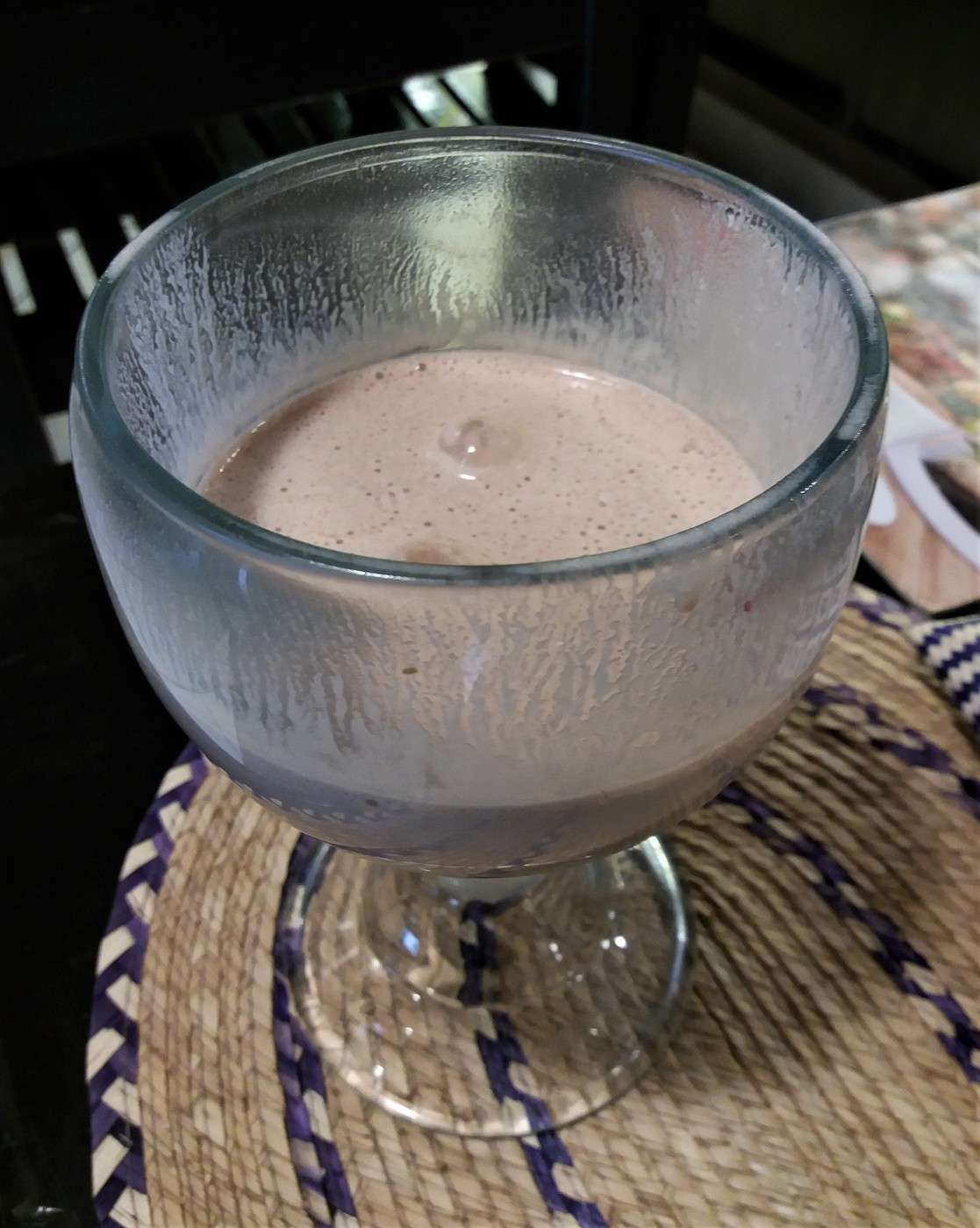
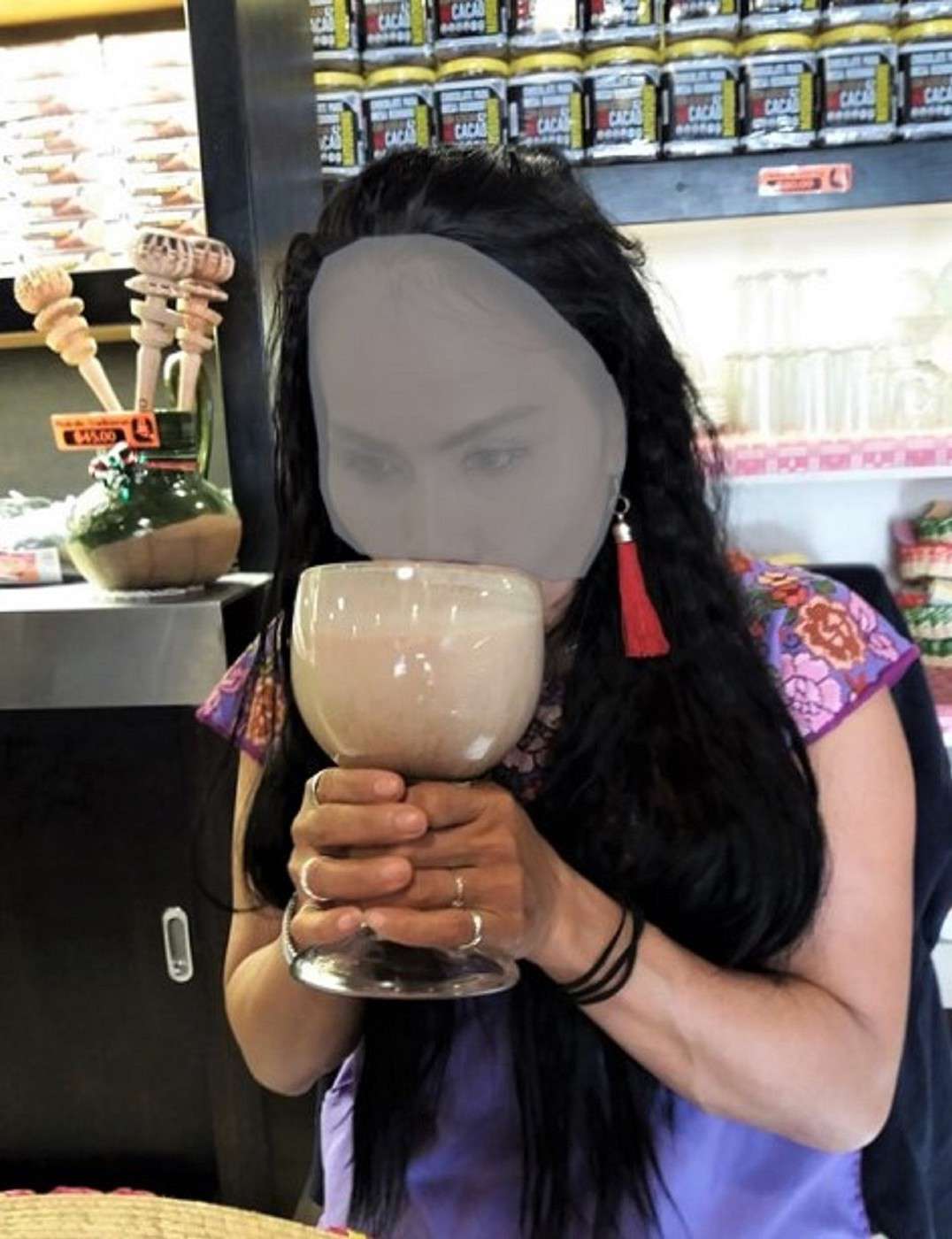
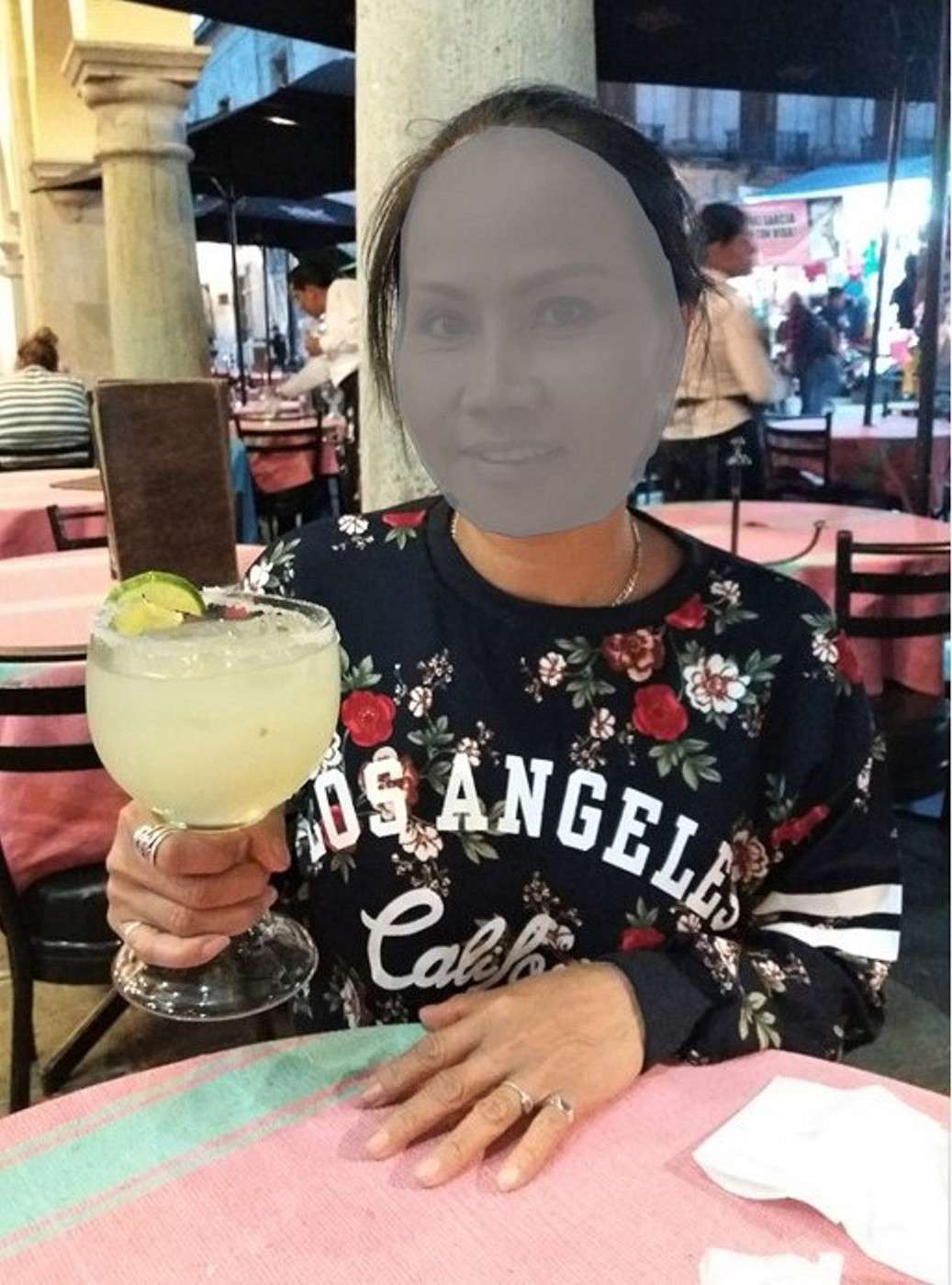
Since we're on the topic of food, and chocolate in particular, we're definitely in the land of chocolate (a Nahuatl word "xoxolatl")! Cocoa beans are roasted in several small shops in Oaxaca, and the aroma fills the streets! I noticed they add spices, cinnamon, and maybe cloves? Many chocolate shops serve chocolate-based drinks. We treated ourselves to a large "chocomio" (if I remember the name correctly)—it’s this big cup filled with a creamy, refreshing chocolate drink. You just have to see the concentration on Y’s face while enjoying it—a true delight! 😛 (Apologies again for "hiding" their face). We had to make an effort not to have one every day, for fear of becoming "gorditos" like many Mexicans!
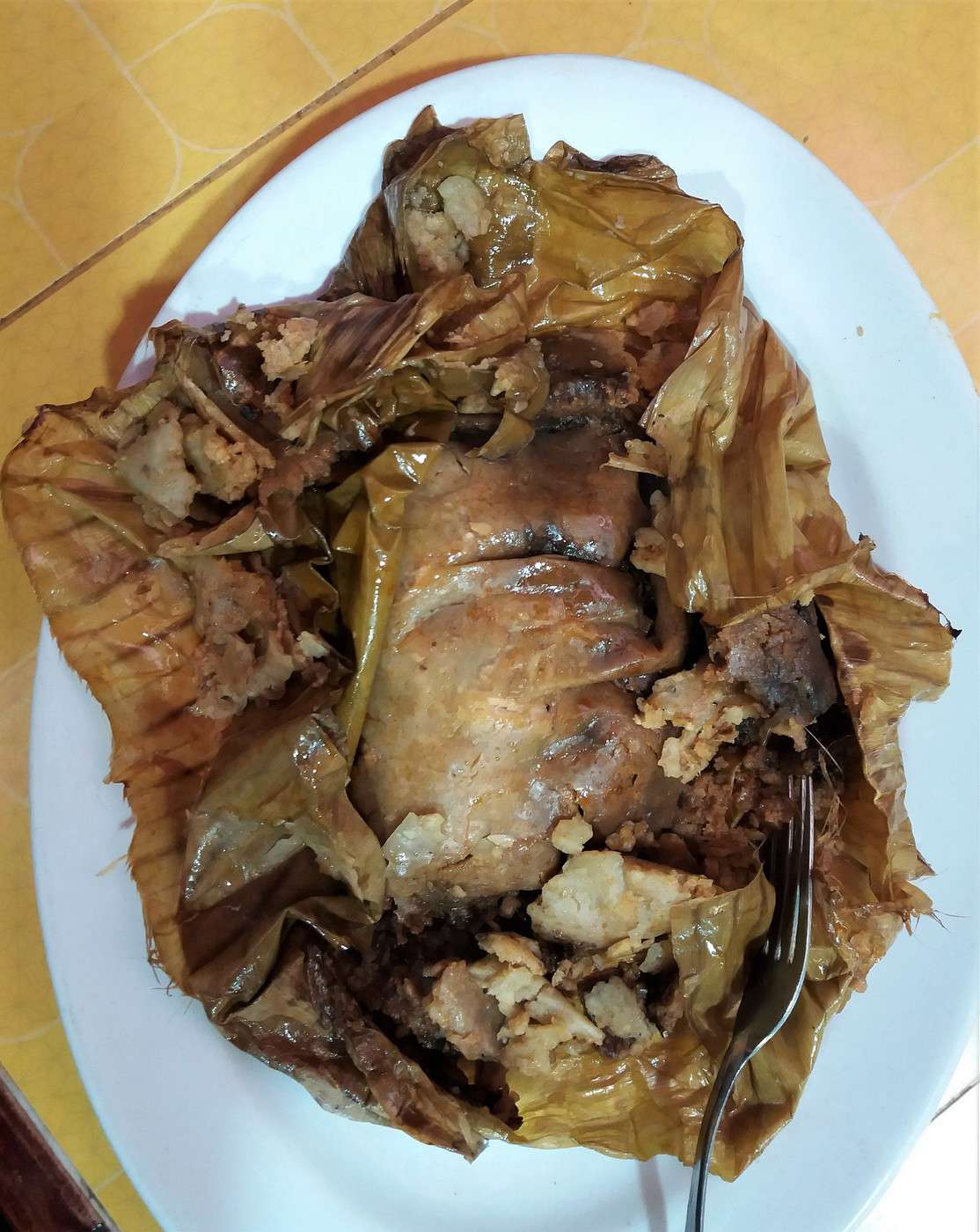
One thing I’ve always loved is "tamales": here’s one I got at Oaxaca’s central market. Amazing and filling (50 pesos). 😛 …. I also mentioned Colombia: the meat was excellent, but it was meat and nothing but meat every day? And the "arepas" were coming out of my ears. 🙁 Luckily, there was often a good "sopita" as a starter, and then (that’s why I’m mentioning it) some great "tamales" too.
Oh, and those famous margaritas on the Zócalo! I know someone who really knew how to enjoy them. Salud! Hips! 😎😛[;]
Six-week trip to Mexico
GeorgesOZ · 2020-04-01 · Message 151 of 227
Oaxaca – End of stay, miscellaneous
This city of Oaxaca and its region—we’re not the first to adore it. And given the current circumstances with that awful virus, I sure hope we won’t be the last either!
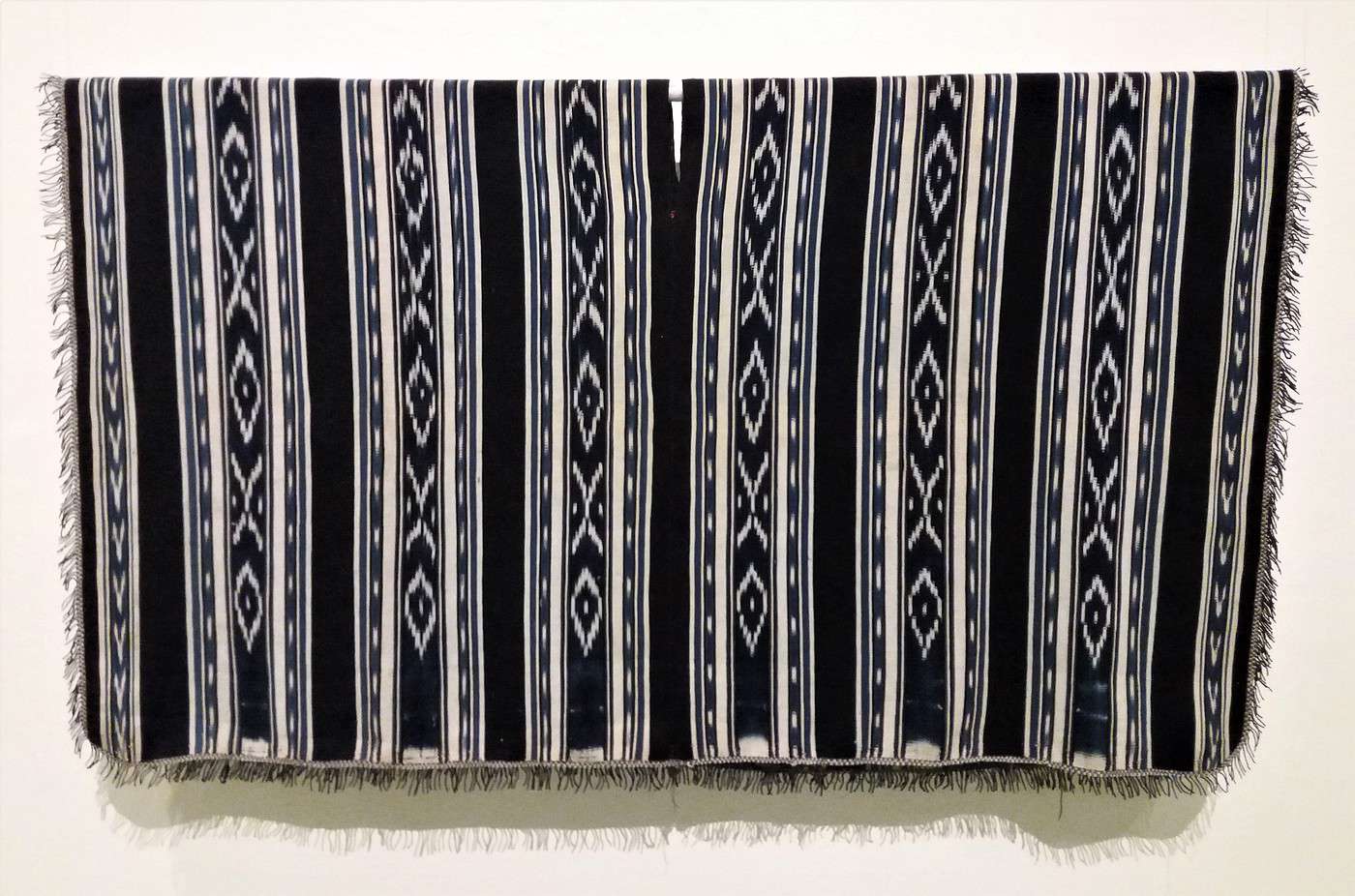
There’s so much to do and see here. We visited the Textile Museum on Miguel Hidalgo, just a few steps from the Zócalo. It’s free, nice, and not too big, but informative—essential for amateurs like us. Here’s a first photo showing what looks like a blanket to me. I really love the simplicity and elegance of the geometric patterns and colors, which I think are natural. 🙂 As a fun wall decoration, it reminds me of Turkmen tent hangings (the « ensi » and « kapunnuk »)—at least the ones over half a century old. Because what’s come more recently from Central Asia (and Iran), I’m sorry if I offend anyone, is often just mediocre compared to what was made in the past. Beyond the designs, colors (often garish), knot density (if it’s a rug), and the price, the main criterion for distinguishing beauty from the rest, I think, is the naturalness of the work and materials used—ugh, mass-produced factories and synthetic dyes! But of course, that comes at a cost.
For textile enthusiasts, the museum explains, among other things, the use of « maguey » fibers to weave « ixtle ». The photo shows an example of raw, undyed « ixtle ». « Maguey » is agave. It’s not just tequila or mezcal that’s made from this plant!
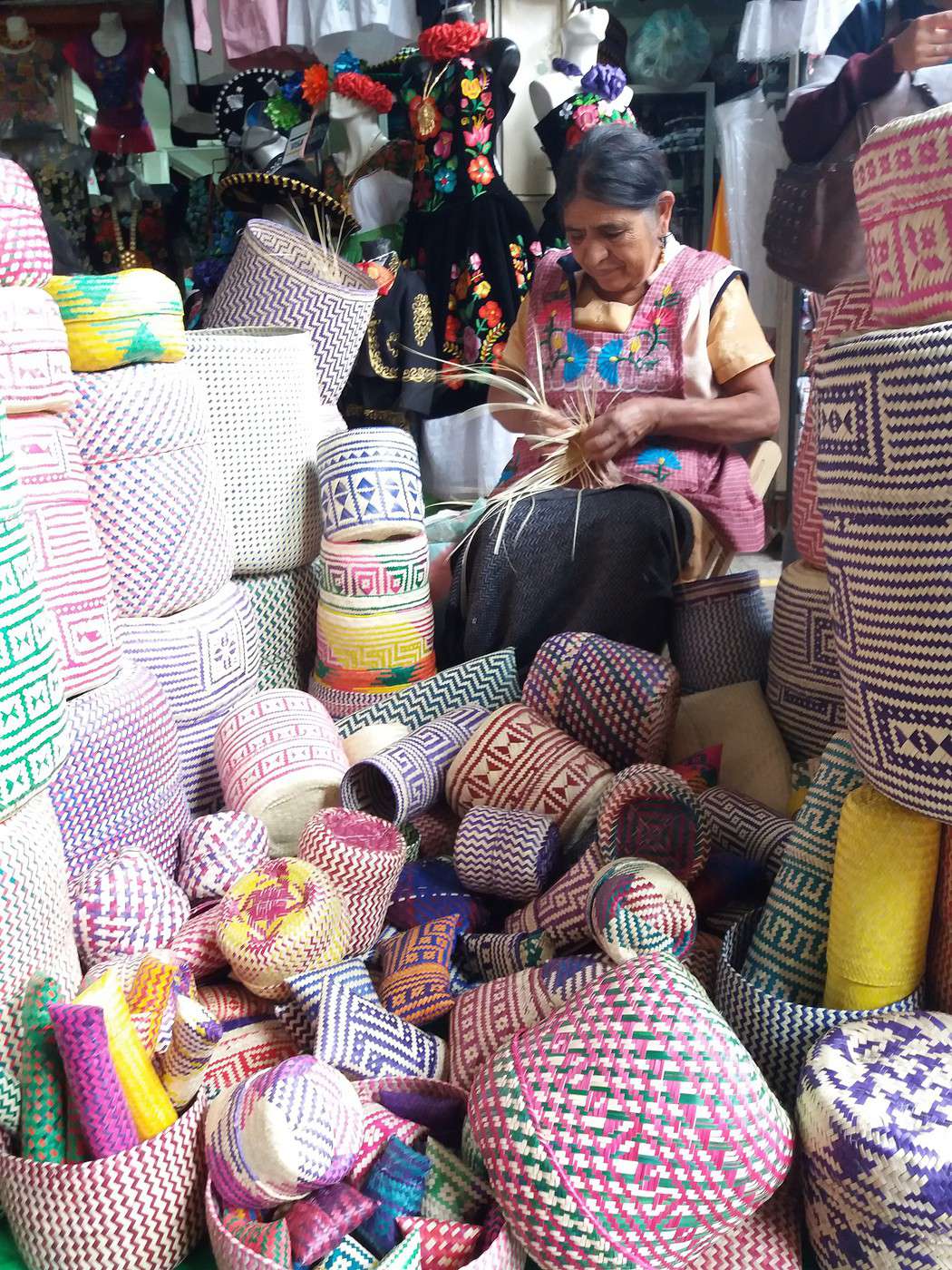
Not too far from the textiles, this elderly Zapotec woman at the entrance of the Mercado Benito Juárez impressed us with how quickly she crafted her baskets. Baskets of all sizes and varied patterns seemed to flow from her skilled hands. We bought two or three from her at very reasonable prices. Despite that, she seemed reluctant when I took a few photos. Indigenous people generally don’t like being photographed.
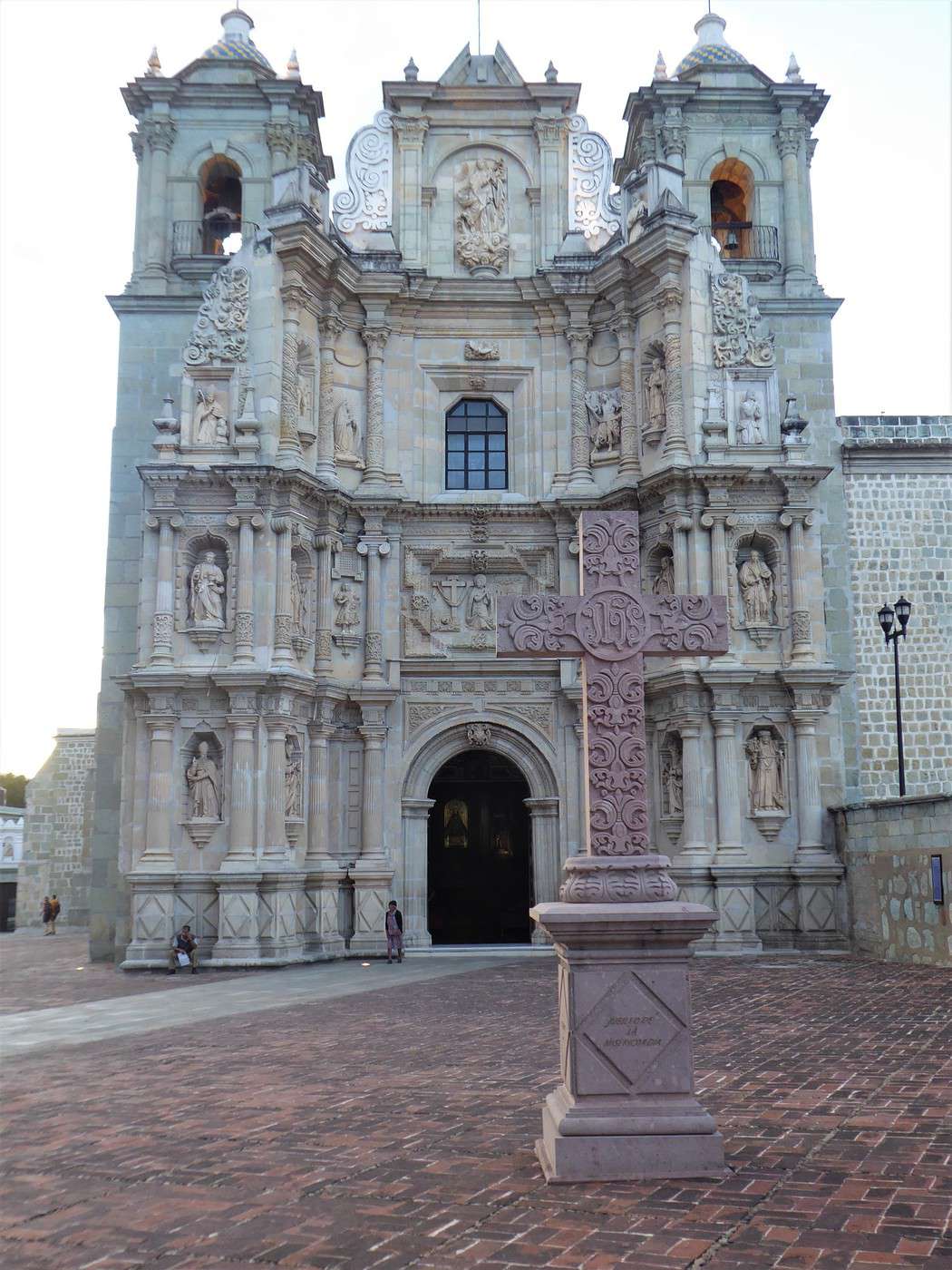
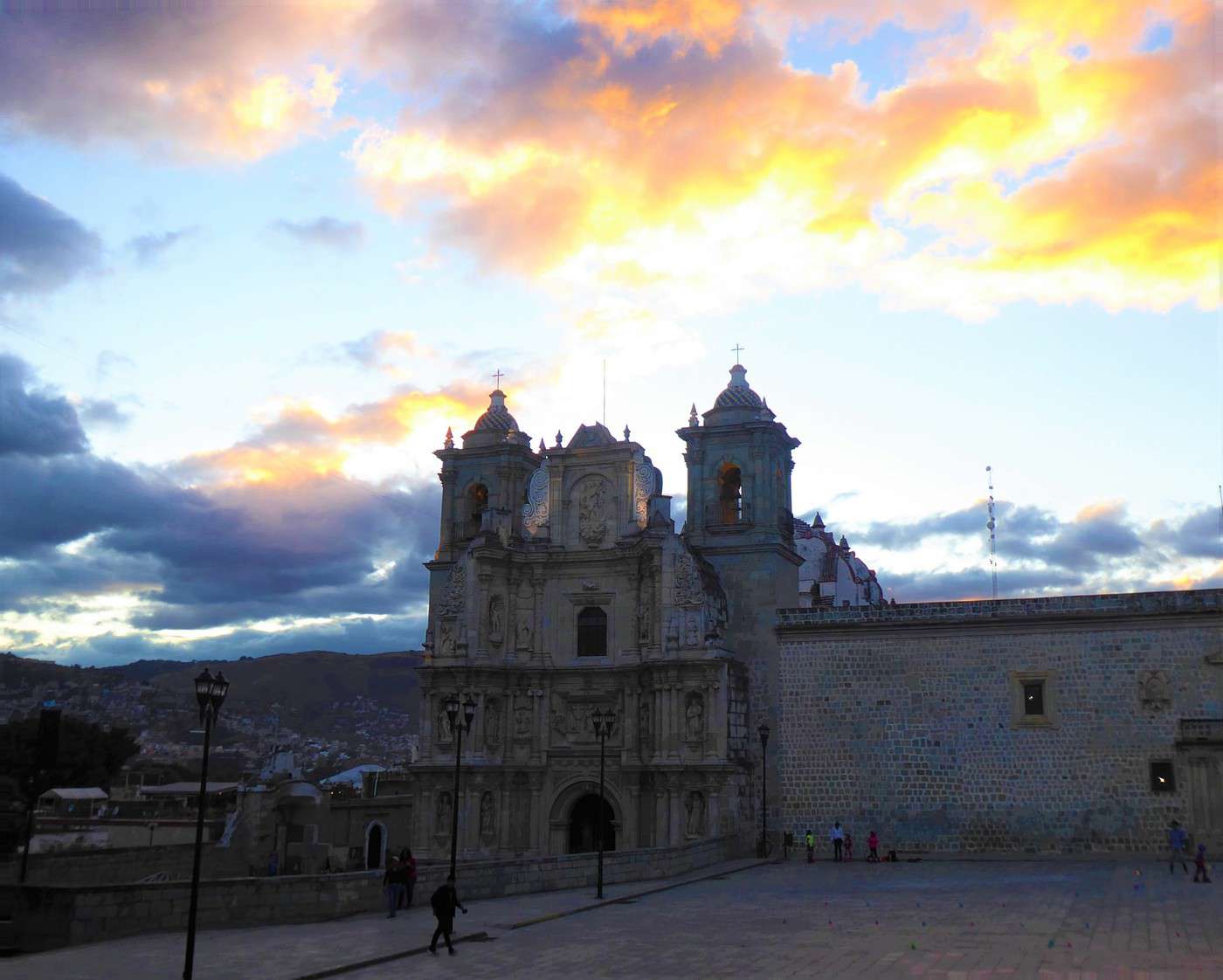
Oaxaca is a perfectly balanced city. Let me explain: it’s a big city with plenty to see, but you can easily explore it on foot. I’m not talking about the outskirts, of course. After spending over a week there, we still had so much left to discover. The basilica of Nuestra Señora de la Soledad was one of our last visits.
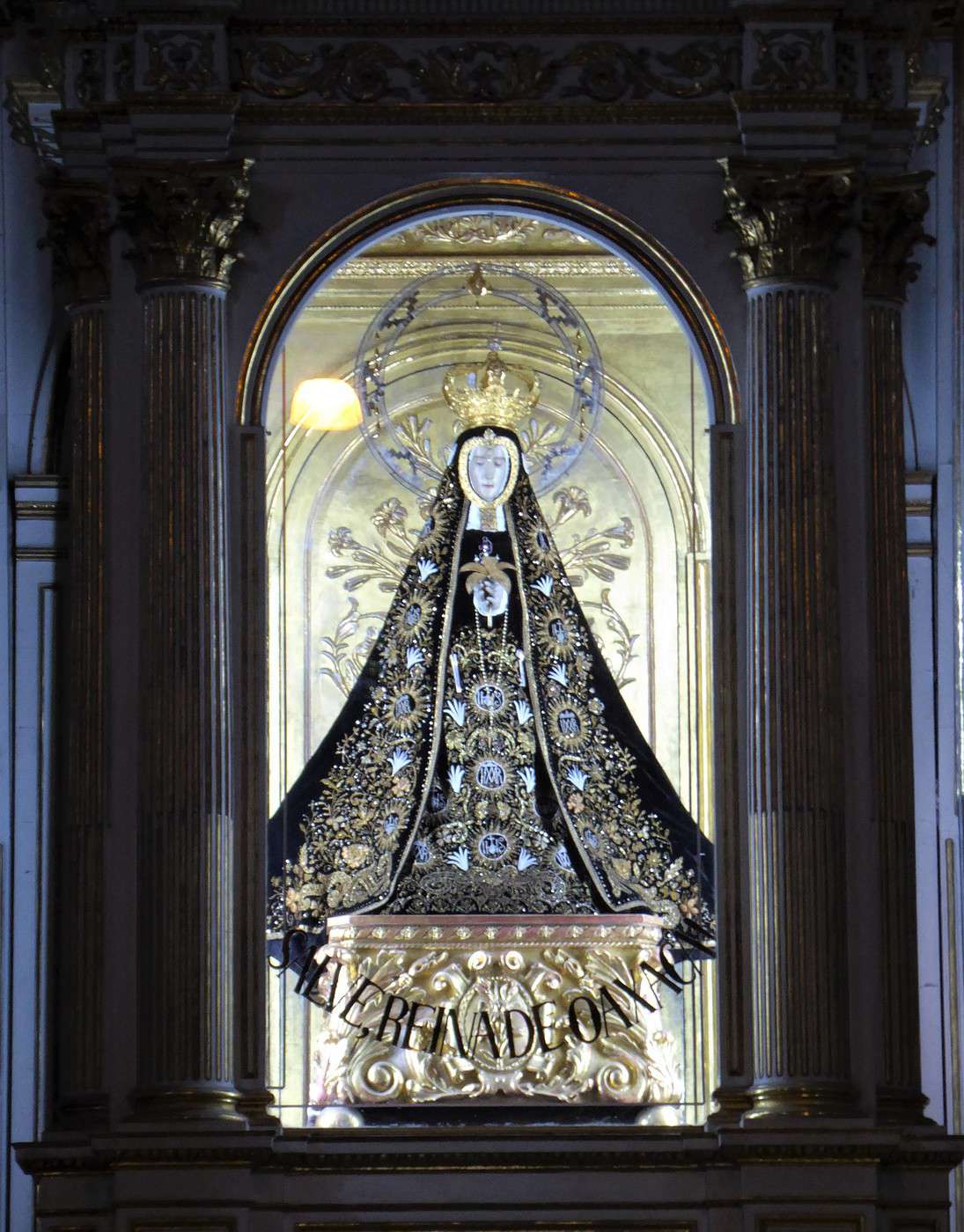
The basilica dates back to the late 17th century. It’s Baroque. The exterior is quite massive, as is common for buildings in the region due to frequent earthquakes, yet it remains graceful. I particularly like the Latin cross planted in the forecourt. The centerpiece is the statue of the Virgin at the back: « Salve Reina de Oaxaca », « Hail, Queen of Oaxaca ». It’s a sacred place for devout Mexicans: the image of the Virgin Mary is said to have appeared in 1543… in a crate! What credulity! 😇 But hey, that was the era! The kicker is that at the entrance of the church, there’s a stone where they supposedly opened the famous crate containing the Virgin’s image.
Now that I think about it, I wonder if this isn’t where María Amparo Escandón got the inspiration for her book Santitos, the one I mentioned earlier, where I found that list of saints to pray to in certain situations. In this amusing little novel, the heroine sees the image of San Judas Tadeo appear in the greasy grime on her oven door! 😇
As we leave the basilica, night is about to fall. The basilica stands out against a backdrop of mountains and clouds in stunning colors. The cloud formations and mountains—we’re right in the middle of Carlos Castaneda’s fabrications. 😎😮
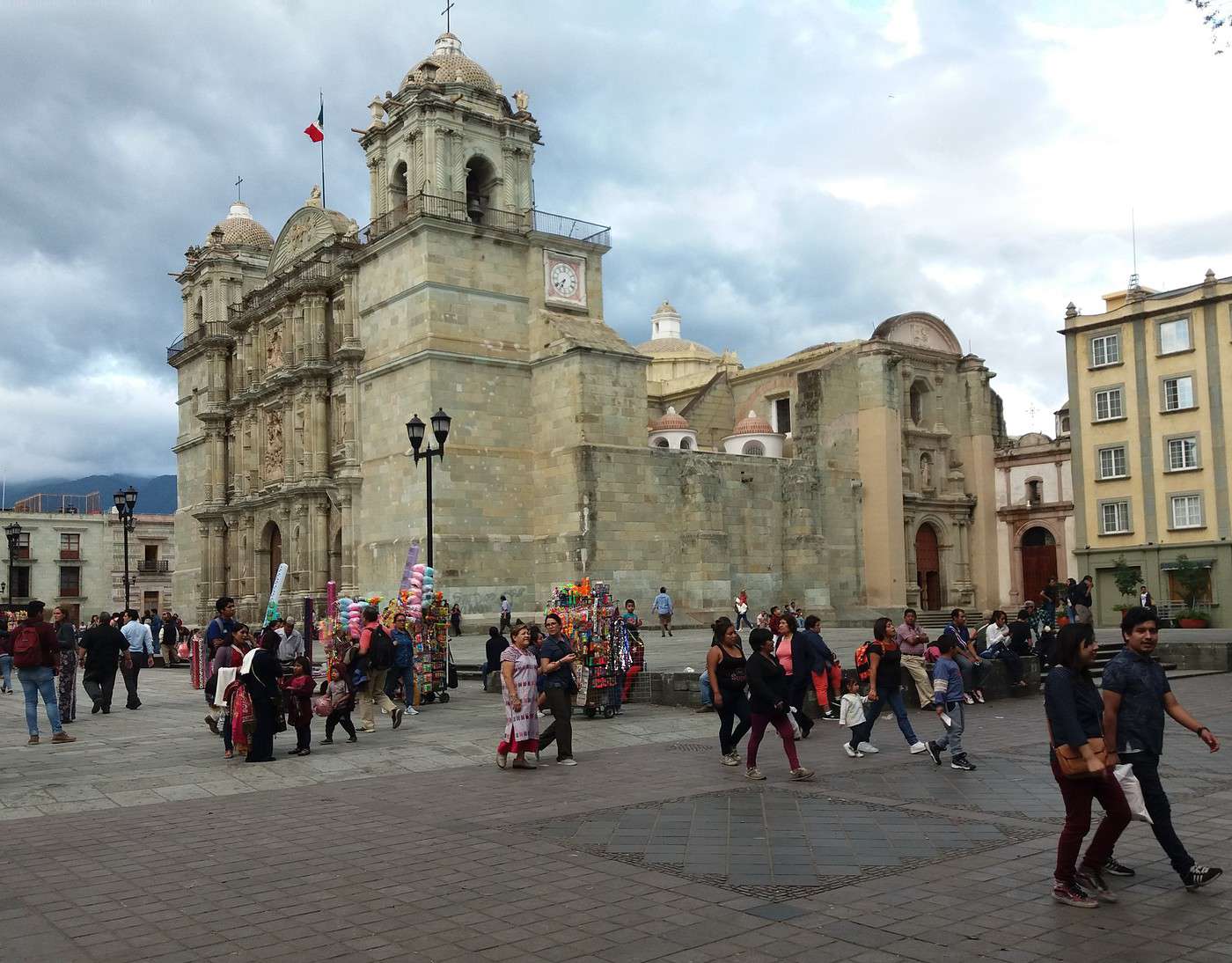
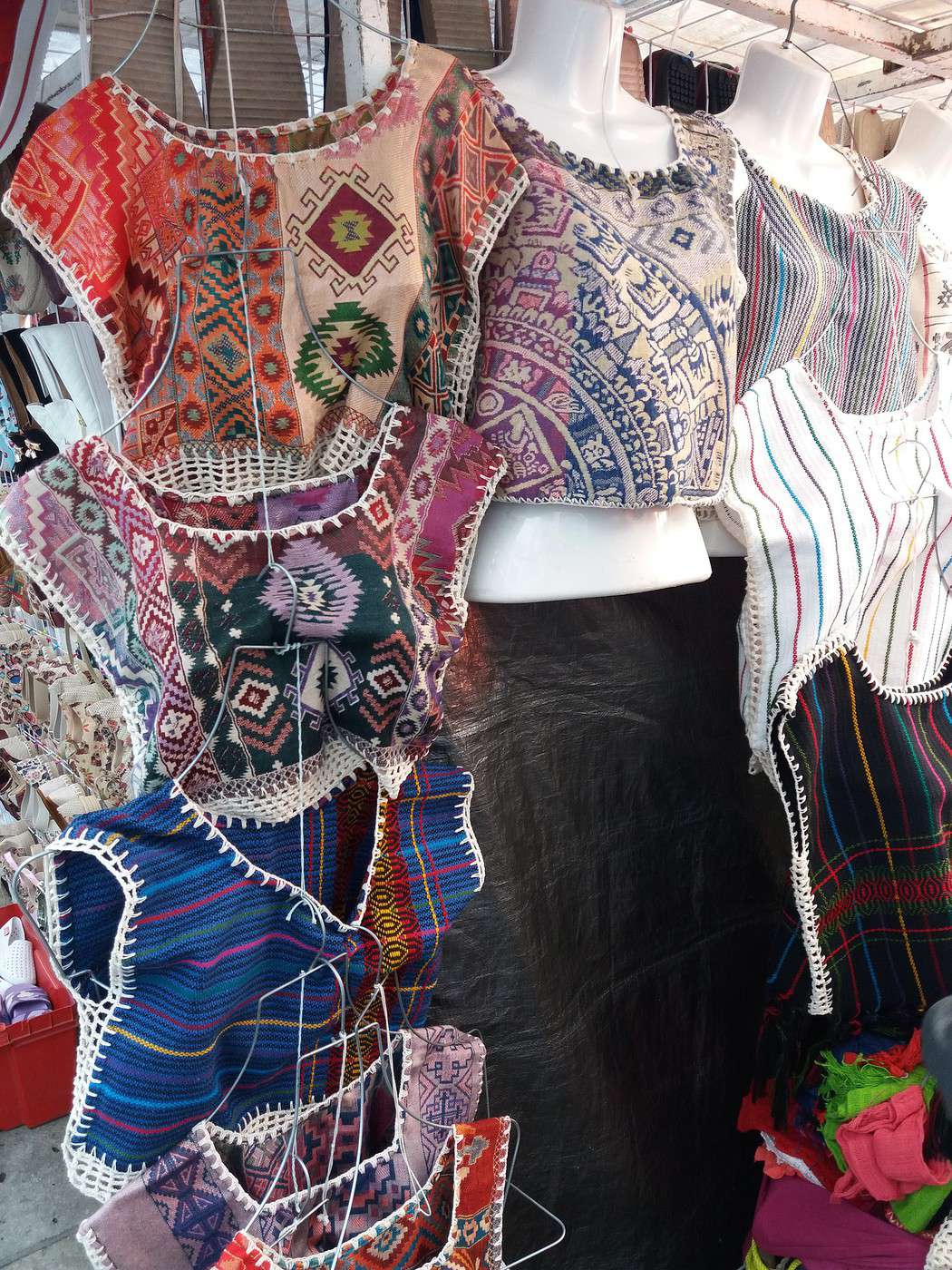
We’re slowly reaching the end of our stay in this wonderful city of Oaxaca. Alright, one last stroll around the cathedral, one last stop at one of the many stalls to find a little gift for a sister or girlfriend (cute blouses for 200 pesos), and finally, a view of our last hotel, right across from the Mercado Benito Juárez. It was basic but cheap and pretty nice—just a little disruptive at times with the joyful exuberance of the Mexican guests.
Six-Week Trip to Mexico
GeorgesOZ · 2020-04-03 · Message 152 of 227
Puebla – Chalupas and Pozol - Flags
We’re taking the ADO bus to Puebla (350 km, 732 pesos for 2 people). Taxis cost us 60 pesos in Oaxaca and 81 pesos in Puebla—yes, I said 81 because we took one from the prepaid taxi stand inside Puebla’s bus station. They’re almost always available, and it’s really convenient. At least you don’t have to worry about safety since the taxis are registered and monitored.
The road from Oaxaca to Puebla? No problem at all, smooth as silk. Some nice scenery in the mountains between the states of Oaxaca and Puebla (Castaneda! Don Juan! Don Genaro! 😉).
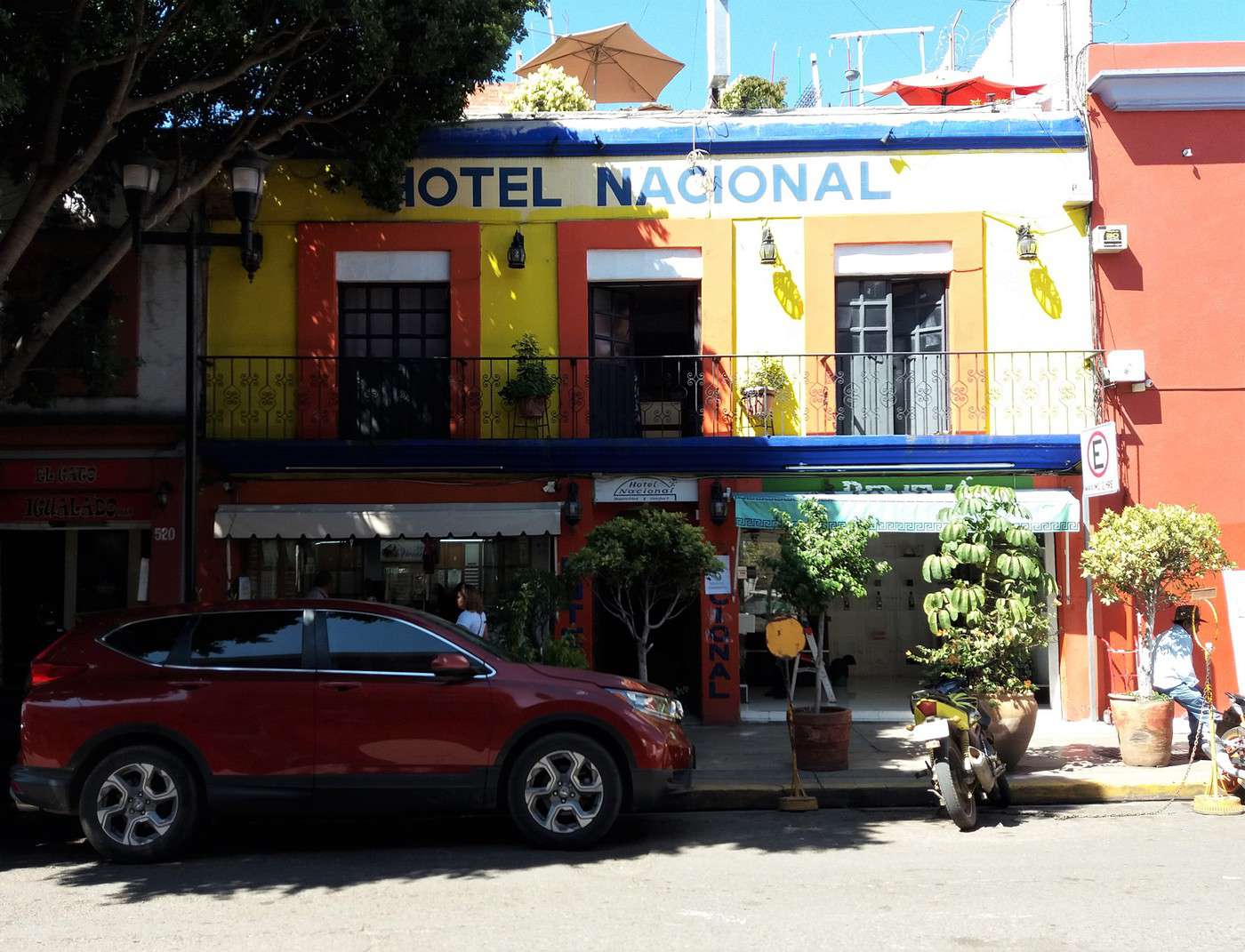
We booked a pretty decent hotel for its reasonable price. It’s an old rustic-style house. The room is large and fairly comfortable, and it opens onto a patio, which is great for breakfast. And for a change, it’s quiet—no noisy guests here, and we’re shielded from the street by the massive stone walls of the house. We’re in a strategic location, in a lively part of the city between the market on Calle 3 Ote. and the Mercado Sapo. Plus, we’re only a 10-minute walk from the Zócalo and the cathedral.
Our first stop, guided by our stomachs, is the Zócalo, of course. The sides of the square are lined with beautiful arcades, and there are several restaurants. We have beers (1 liter each!) and eat some « chalupas ». The beer is okay (I’ve already commented on Mexican beers), but the « chalupas » are really good—it’s a discovery, 😛—and we get away with spending 200 pesos for two. You see, even in a fairly decent place, prices stay reasonable! 🙂
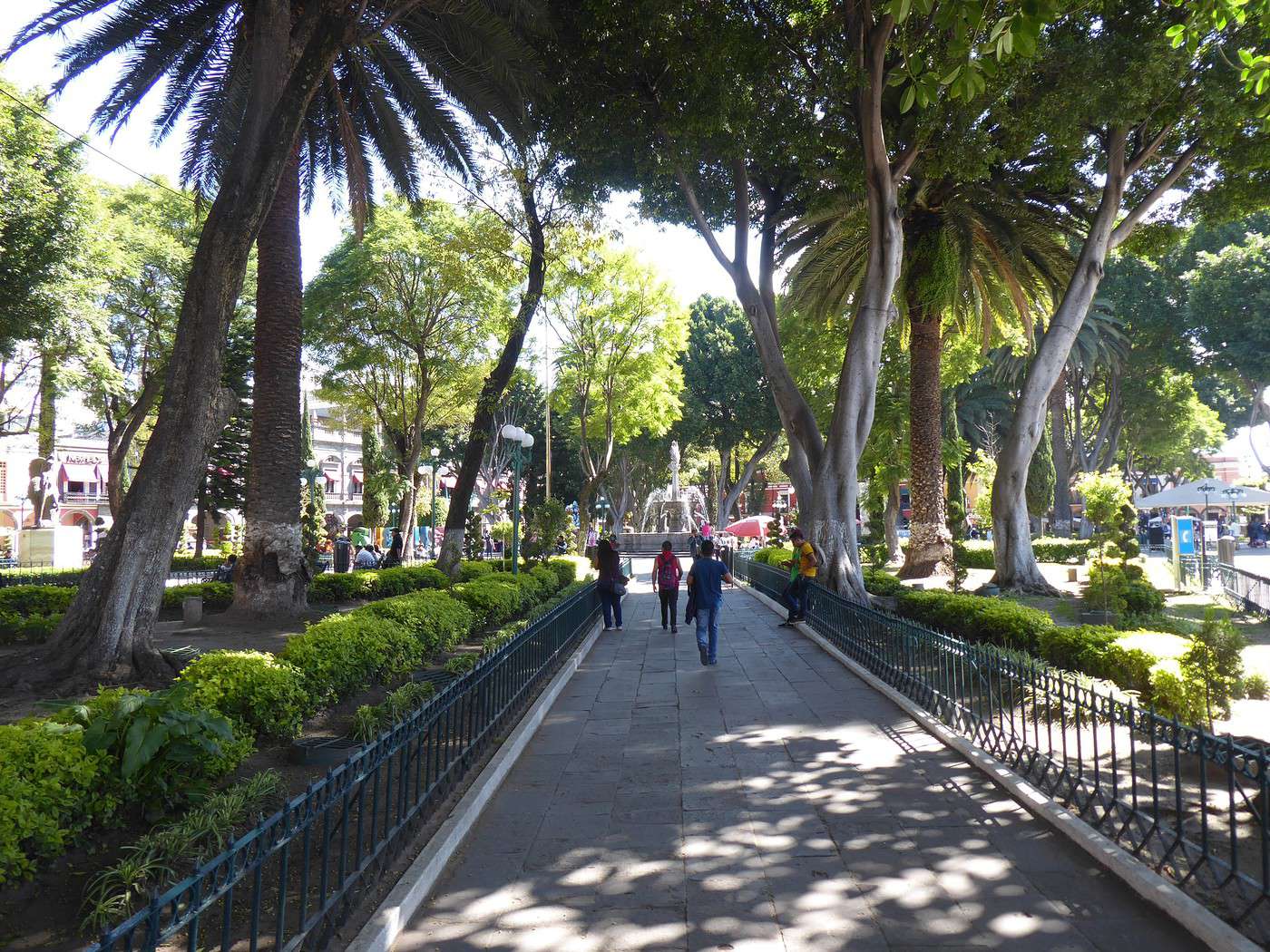
After eating, we cross the Zócalo. It’s a large square with great shade from exotic trees (who would’ve thought!). The beautiful fountain in the middle is working 😎: « In Mexico, there are always squares with lots of trees, lots of public benches, and especially lots of fountains that work well ». It’s been a while since I’ve hit you with one of those “in Mexico…” lines, huh! 😉
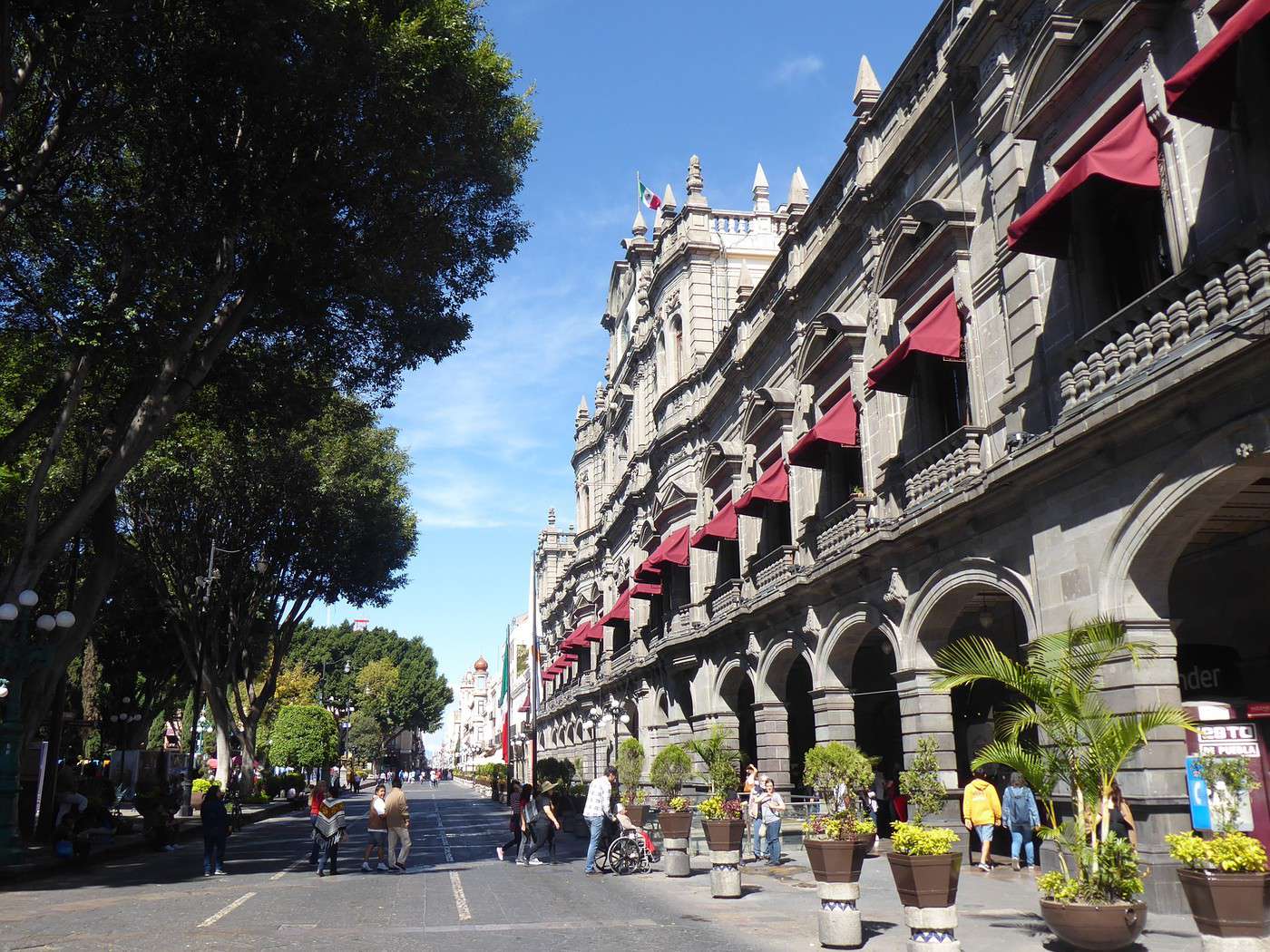
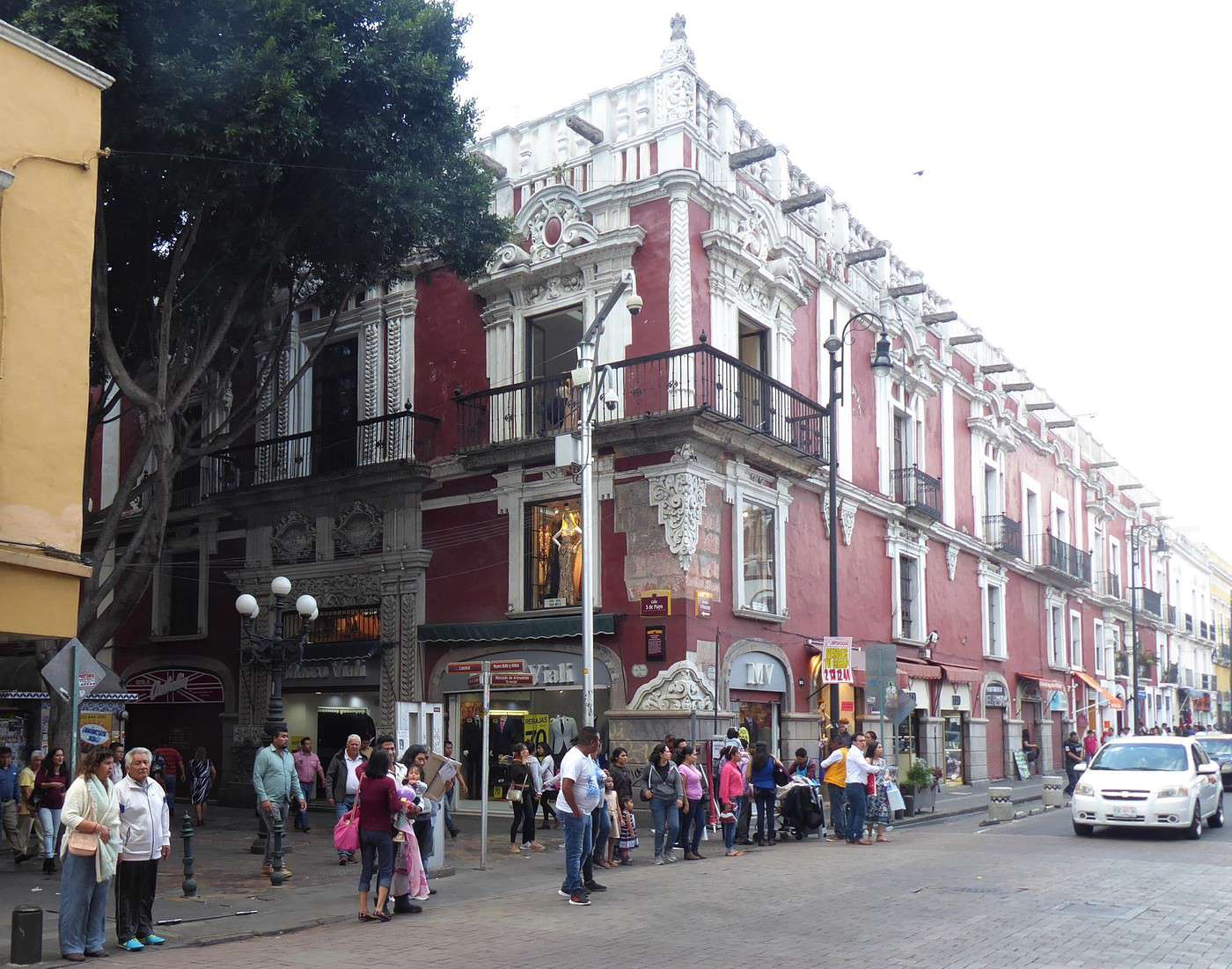
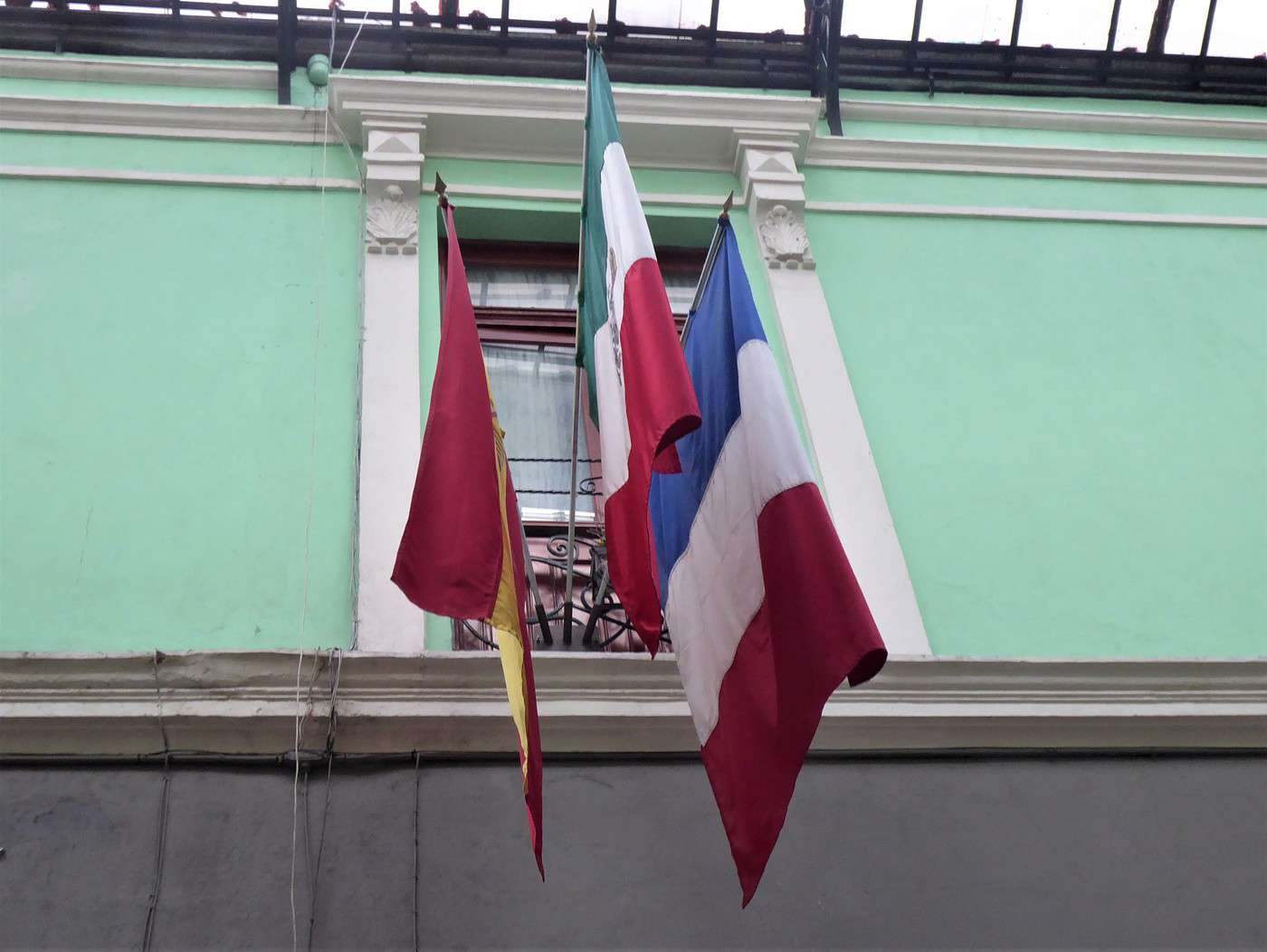
I’ll give you a photo of the end of Calle Cinco de Mayo on the Zócalo, with a beautiful building decorated with white moldings that stand out against the dark red facades. This street is very commercial and lively—worth exploring. We return from Avenida 2 Oeste to the Zócalo via the arcade of Ayuntamiento, which I think is the equivalent of city hall. There, I’m surprised by the flags hanging from a window. In the middle, of course, is the Mexican flag. On the left, I’m not entirely sure—maybe the Spanish flag? But the big surprise is the French flag proudly displayed on the right! It caught me off guard because—let’s open a history book—Puebla is one of the biggest symbols of Mexican resistance against the French aggression during the Second Empire under Napoleon III. The first battle, in 1862, ended in a defeat for the French troops led by a certain Charles Ferdinand Latrille, Count of Lorencez (described as an arrogant idiot in a movie I saw about this French “adventure”). However, Puebla was taken in 1863, and the French occupation of the city lasted a few years.
This “Intervention” certainly won’t be one of the proudest pages in our national history 🏴☠️😕 (we French). Despite these regrettable and painful events, it’s nice to see that Mexico maintains a positive attitude toward France. 🙂 At least, that’s the impression the symbolic act of flying the French flag here in Puebla gives me. But I’ll leave it to others more knowledgeable on the subject to elaborate.
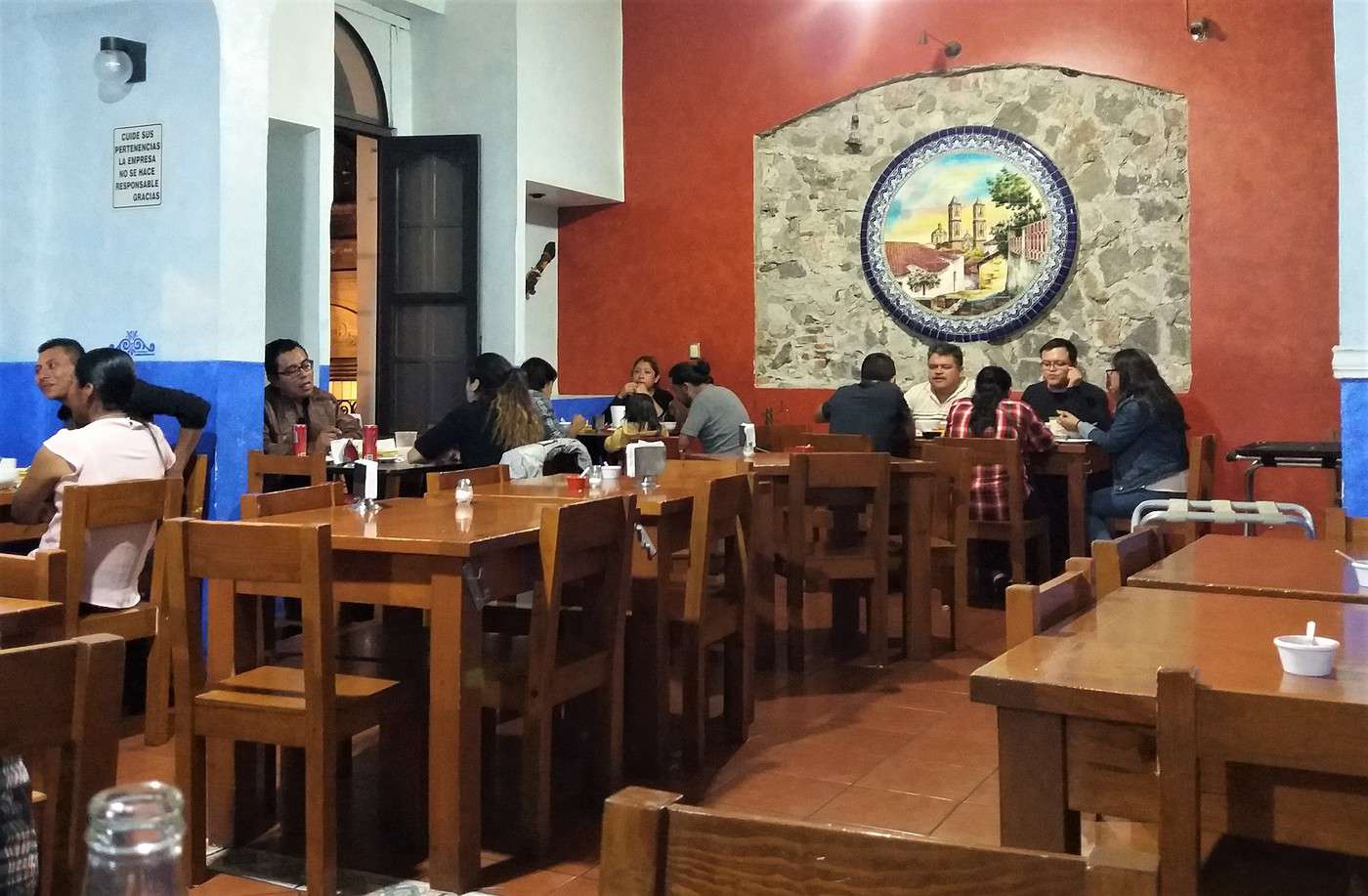
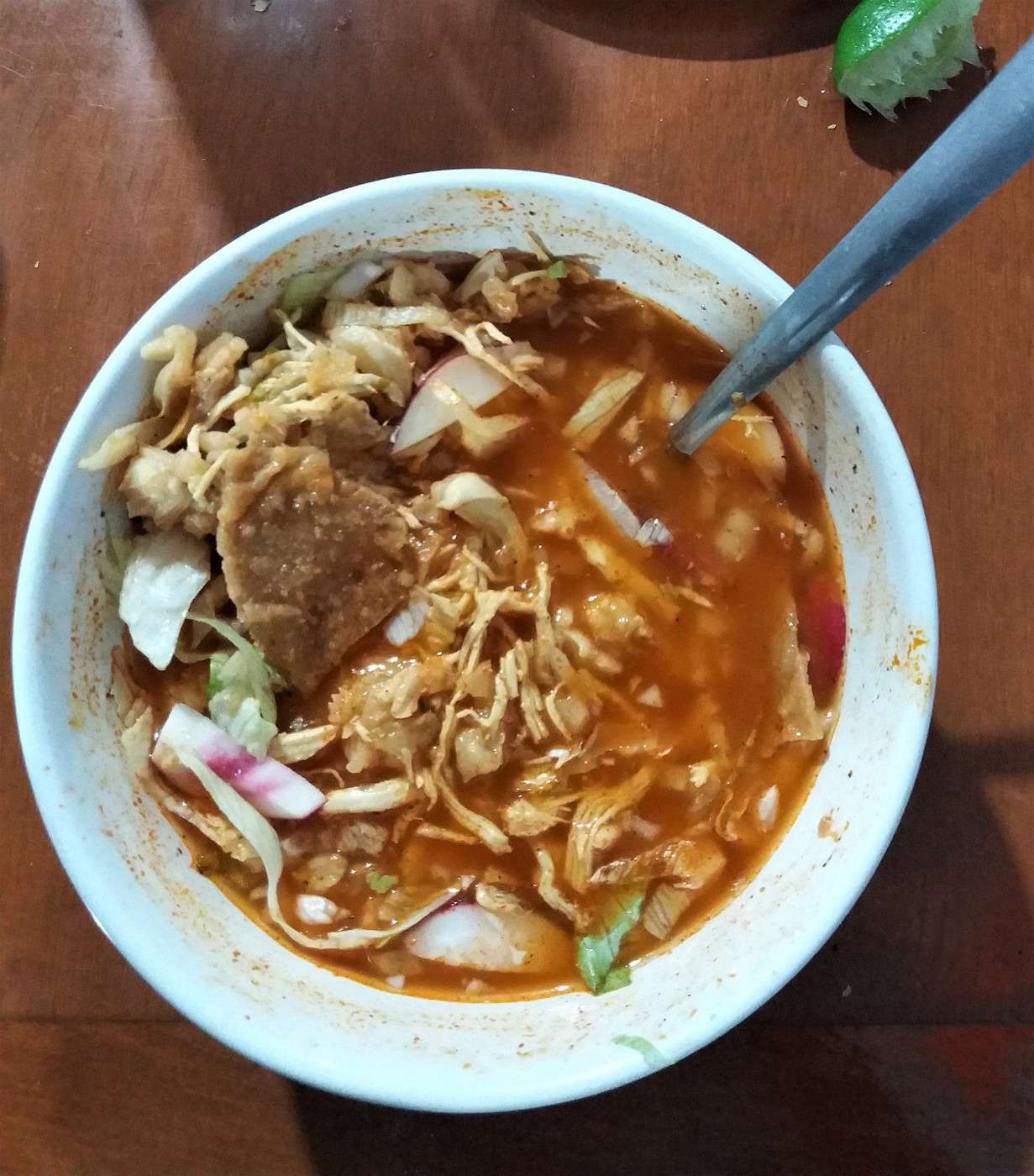
Back to our stomachs: those « chalupas » were really just appetizers. So later, we venture into another restaurant that seems more local: the Pozolería Matamoros, located at the corner of Avenida Don Juan de Palafox y Mendoza and Calle 6 Norte. We head upstairs to a room that feels very “local” but is also clean. We each order a big bowl of pozol with a Sol. It’s an Indian soup made from boiled corn with thick slices of « rábanos », radishes. It’s not bad at all, and it’s filling. 😛 We pay our bill of 215 pesos and head back to the hotel because it’s been a long, entertaining day, and we’re beat now!
Six-week trip to Mexico
Memphre · 2020-04-03 · Message 153 of 227
The French aggression during the Second Empire under Napoleon III. An initial battle in 1862 ended in defeat for the French troops, led by a certain Charles Ferdinand Latrille, Count of Lorencez (described as an arrogant idiot in a film I saw about this French "adventure"). However, Puebla was taken in 1863, and the French occupation of the city lasted a few years.
Hello Georges,
Actually, it wasn’t really an "aggression"... At the time, Mexico had an enormous debt with the USA, England, and France. The first two countries figured the Mexicans would never be able to repay it and wiped out the debt. But not France. Napoleon III sent the Legion and appointed Maximilian of Habsburg (cousin of Sissi) as governor of Mexico. This lasted 3 years.
Near Puebla is the village of CAMERONE, where the Legion suffered defeat against Mexicans ten times their number.
On your next trip to Mexico, don’t miss visiting QUERÉTARO, where Maximilian was arrested and executed by Benito Juárez. Mexico belonged to France for 3 years. 😛
And it’s to France we owe the famous mariachis. 😎
Six-week trip to Mexico
Michant · 2020-04-03 · Message 154 of 227
Hi Francis,
I read in one of your many posts about some high-quality hotels you recommended in Querétaro and/or San Miguel de Allende. But I can’t seem to find it again. Could you please share those addresses with me once more?
Thanks! 🙂
Six-week trip to Mexico
GeorgesOZ · 2020-04-03 · Message 155 of 227
Actually, it wasn't really an 'aggression'... At the time, Mexico had an enormous debt with the USA, England, and France. The first two countries figured the Mexicans would never be able to repay and wiped out the debt...
But not France. Napoleon III then sent the Legion and appointed Maximilian of Habsburg (Cousin of Sissi) as governor of Mexico...
During your next trip to Mexico, you shouldn't miss visiting QUERÉTARO, where Maximilian was arrested and executed by Benito Juárez...
...
And it's thanks to France that we have the famous mariachis.😎
Hmm, the word 'aggression' might be a bit strong, but I'd be curious to know how Mexicans see it. From what I've gathered after some reading, there was quite a scheme on Napoleon III's part behind all this. And he had found a good pretext to get involved. What follows, I pieced together from a few Wikipedia pages, and sure, Wikipedia isn't always objective. But overall, it doesn't sound very 'correct' regarding France's role.
Since gaining independence from Spain, Mexico had been plagued by instability that financially drained the country. Mexican President Juárez acknowledged that Mexico owed 70 million pesos to England, 9 million to Spain, and 3 million to France. With Mexico's coffers empty, Juárez decided in July 1861 to suspend foreign debt payments for two years.
This was a golden opportunity for a powerful country like France to install a regime under its control and reap the benefits. According to Napoleon III, the solution was to put an end to the political disorder and establish an Empire.
By choosing an Austrian prince, Maximilian of Austria (from the Habsburg family, Viceroy of Lombardy-Venetia), Napoleon III diplomatically compensated for his recent involvement in Italy. He had indeed supported Italian national movements against the Austrian Empire, which allowed him to annex the County of Nice and Savoy. After several military clashes (Magenta, Solferino), he forced Austria to cede Lombardy. But these Italian outcomes weren't very satisfying: on one hand, Italy, which owed him a lot, remained a weak and emerging state; on the other, he had alienated the Austrian and Prussian powers. You can see how the plan 'Maximilian of Austria installed by France as Emperor of Mexico' could fix everything for Napoleon III:
1) He would get back in Austria's good graces.
2) Once order was restored in Mexico, progress would follow, and Mexico would become the first industrialized country in Latin America and a prime destination for future European emigrants.
3) This plan could counterbalance the power of the United States in America by creating a Catholic Empire allied with France.
The geopolitical conditions were excellent in 1861: Mexico's debts and the attitude of Juárez's liberal government provided perfect pretexts for a 'legitimate' French intervention. Moreover, there was no need to worry about American intervention, as the U.S. was busy with the Civil War raging at the time.
A Belgian legion of 4,000 men accompanied the French. The future Empress Charlotte, Maximilian's wife, was the daughter of King Leopold I of Belgium. He thus wanted to participate in the expedition, both for family reasons and because he harbored colonial expansion hopes, as proven by a Belgian settlement attempt in Colombia. Charlotte was also a princess of Saxe-Coburg and Gotha and Duchess of Saxe, granddaughter of King Louis-Philippe I of France on her mother's side, and cousin of Queen Victoria. Quite the pedigree!
The English and Spanish expeditionary forces, which had initially joined the French, abandoned the venture and left Mexico in April 1862, leaving the French (and Belgians) alone in their Mexican adventure. You might wonder why the Spanish and English, to whom Mexico owed much more than to France, dropped out while France persisted. This clearly indicates that, for France, there were other reasons besides the financial debt.
I've been to Querétaro. Lovely city. I didn't know mariachis resulted from French influence. At least France left something nice in Mexico!
Six-week trip to Mexico
Memphre · 2020-04-03 · Message 156 of 227
Hi,
For years I traveled around Mexico in a camper van, so I never had to worry about accommodation.
Since 2011, I’ve been exploring Mexico by car, but I’ve never stayed overnight in Querétaro...
However, there are at least two great hotels in San Miguel: Hotel Las Minas (expensive but fabulous) and Imperio de Angeles—cheaper but just as nice.
Generally, hotels in San Miguel are pricier than elsewhere (lots of tourists and Canadian/American residents).
Six-week trip to Mexico
Memphre · 2020-04-03 · Message 157 of 227
I didn’t know that mariachis were the result of French influence. At least France left something nice in Mexico!
From what I’ve been told (I don’t check Wikipedia):
The French used to throw big parties at weddings and had a habit of inviting musicians.
Mariachi might be a distortion of the word mariage…?
Six-week trip to Mexico
Michant · 2020-04-03 · Message 158 of 227
Thanks for the reply! 🙂
I knew you’d traveled around Mexico in a camper van, just like we did in Europe over 25 years ago. I found another address you’d recommended: Hacienda Taboada (Aguas Tzermales) near San Miguel.
Starting from Querétaro, I’m planning a trip through the Sierra de Gorda and the Huasteca Potosina, all the way to San Luis Potosí in at least a week. I’ll probably have to bite the bullet and rent a car! 😐
Best,
Michel
Six-week trip to Mexico
GeorgesOZ · 2020-04-03 · Message 159 of 227
The French used to organize big parties at weddings and would invite musicians.
Mariachi might be a distortion of the word mariage...?
That theory’s been debunked since it’s been proven the term was in use long before the French arrived. That’s what I read—I could be wrong!
Six-week trip to Mexico
Memphre · 2020-04-03 · Message 160 of 227
Hi,
I got back from my winter stay in Mexico on March 25th after spending 3 days in the HUESTECA POTOSINA. I’ll save that for another post so I don’t clutter up Georges’ amazing travel journal. 😛