Morning walk...
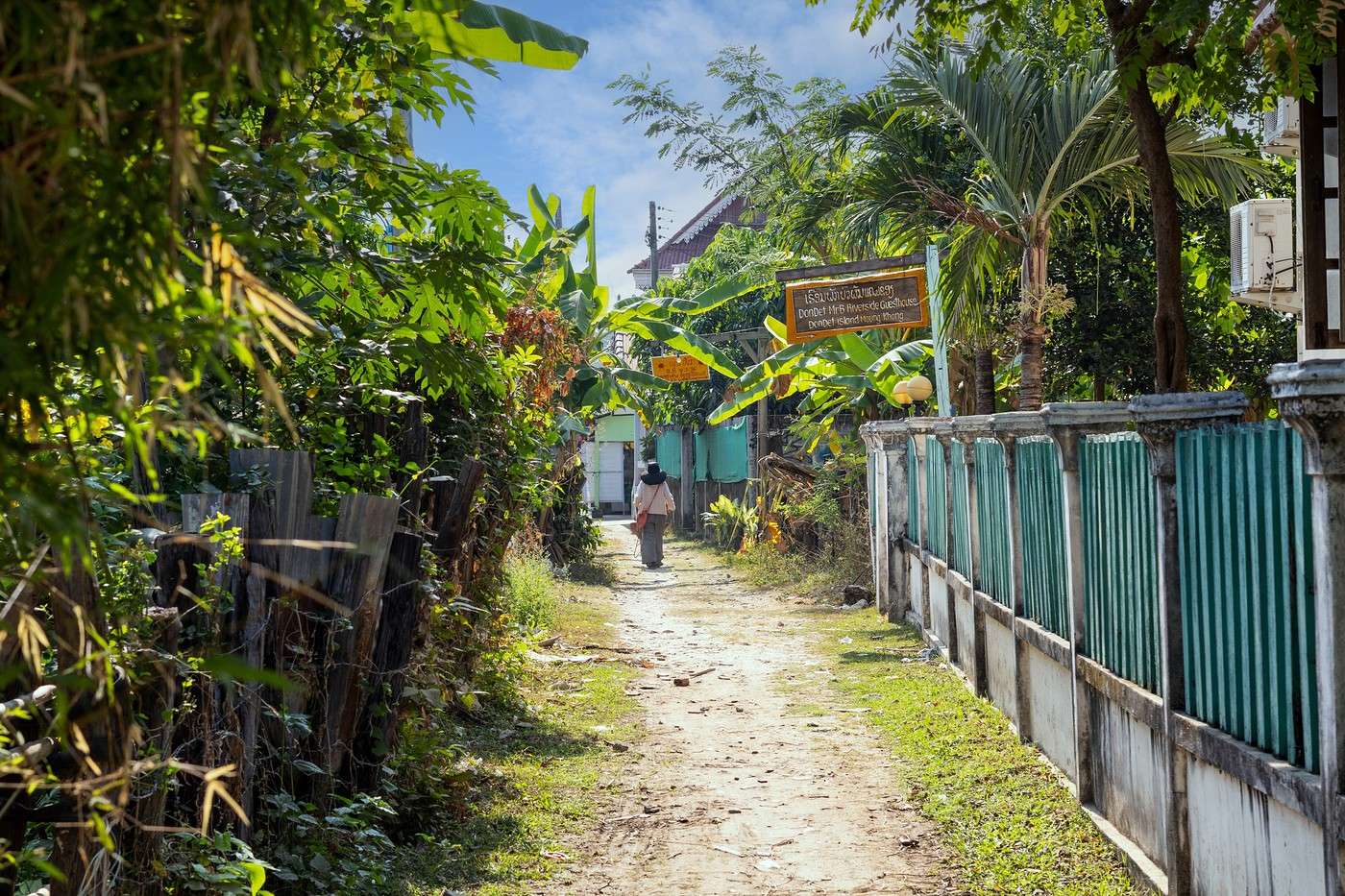
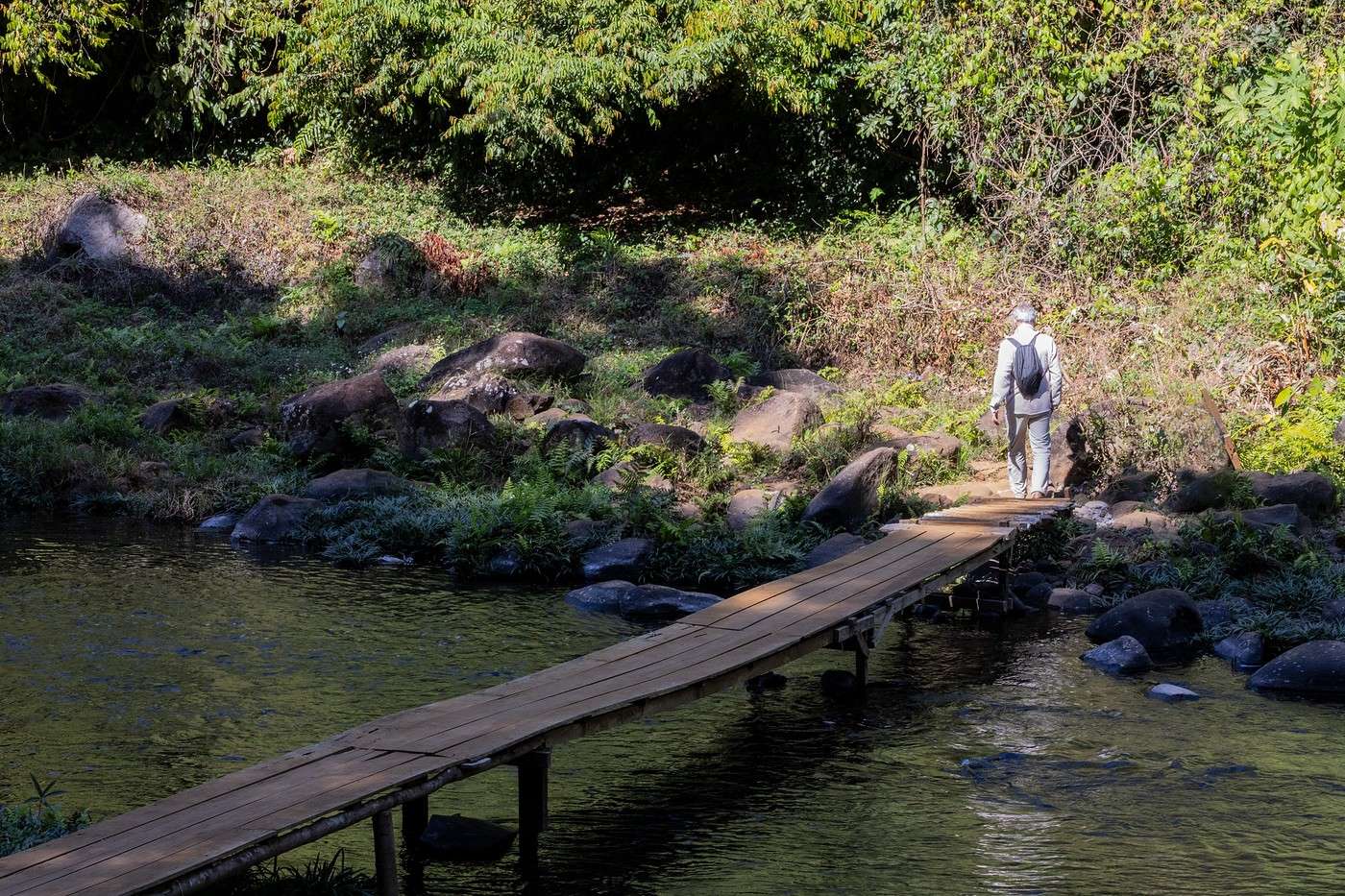
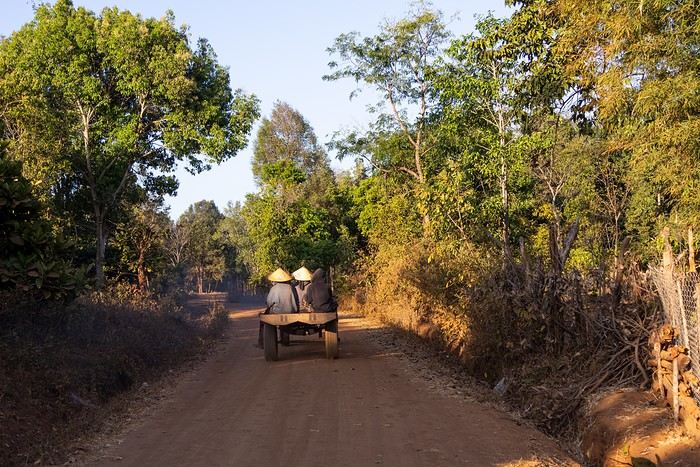
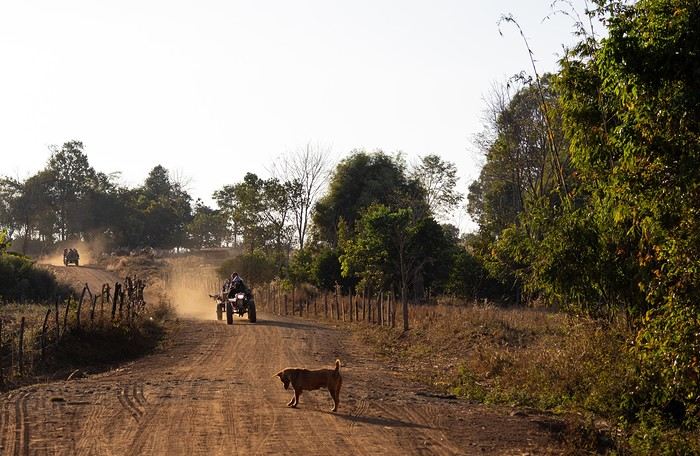
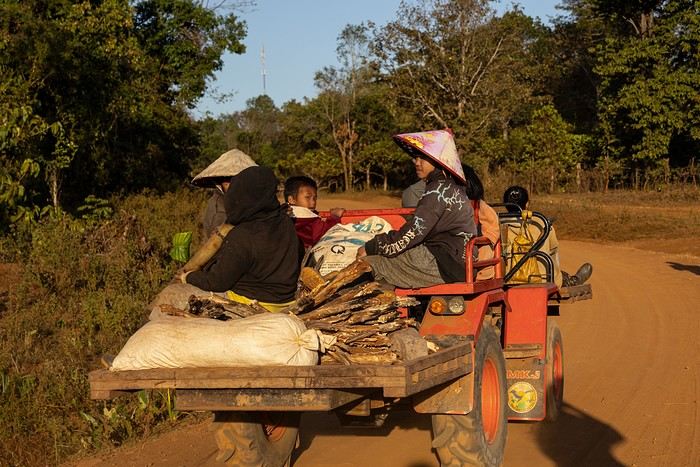
This morning, Bruno, Nathalie, and I decided to walk the length of Don Det island from north to south—a round trip of about two and a half hours. Kate, meanwhile, stayed behind to enjoy a morning of photography, just the way she likes it.
Hats on, sunscreen applied, map in hand, off we went. The route wasn’t complicated—just straight ahead from the main pier to the small bridge leading to Don Khon.
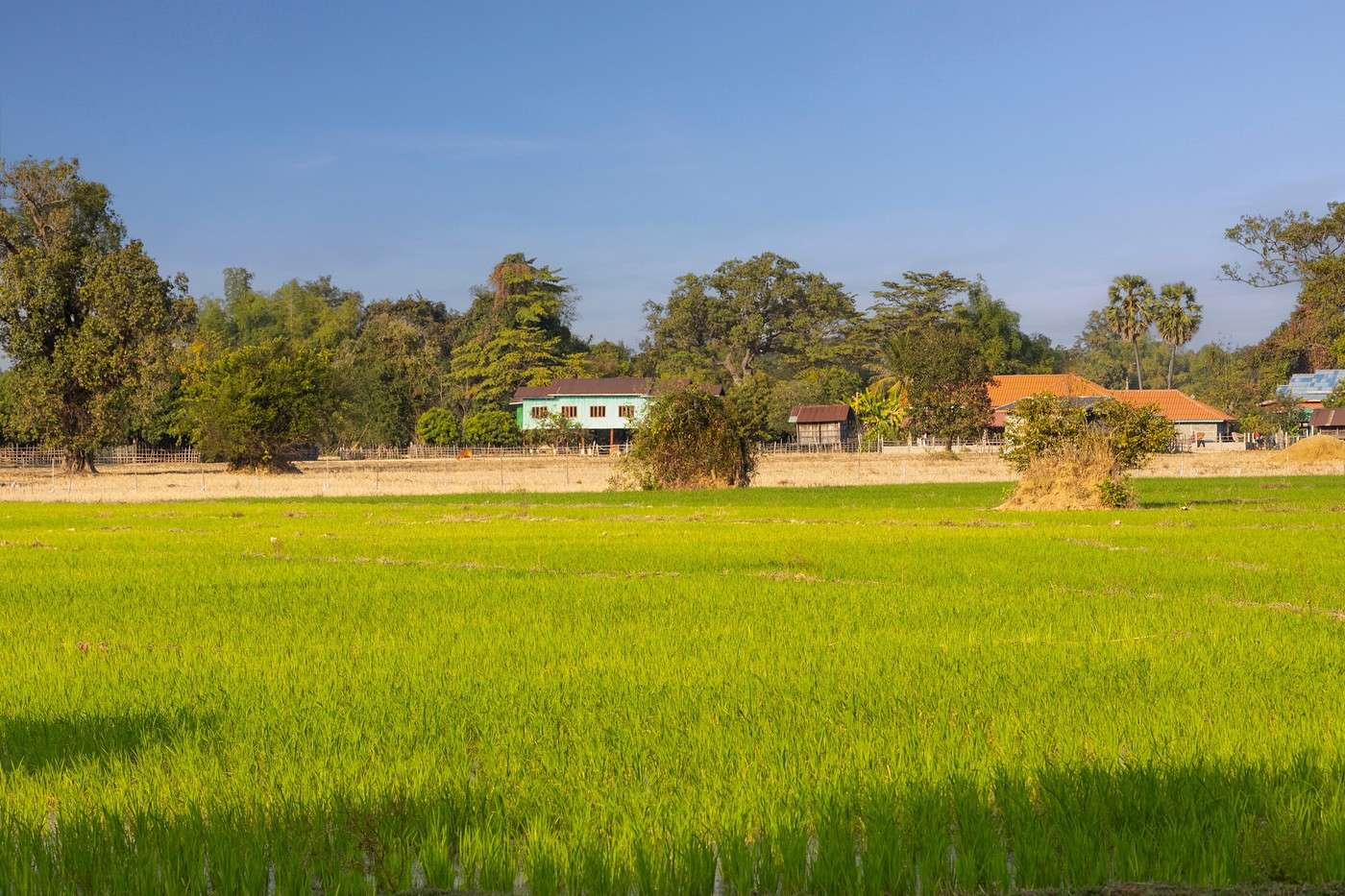
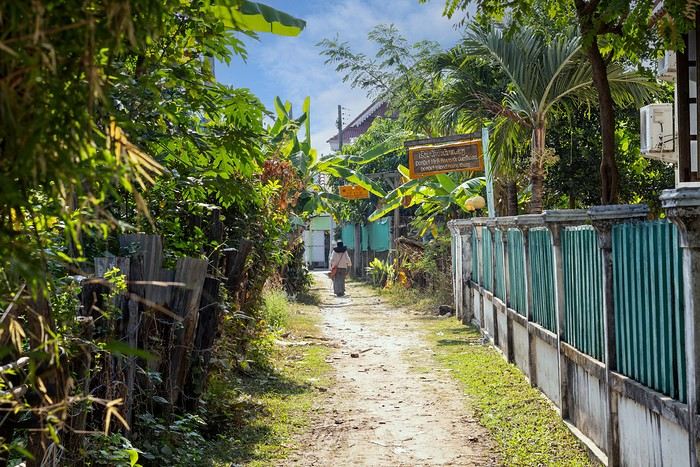
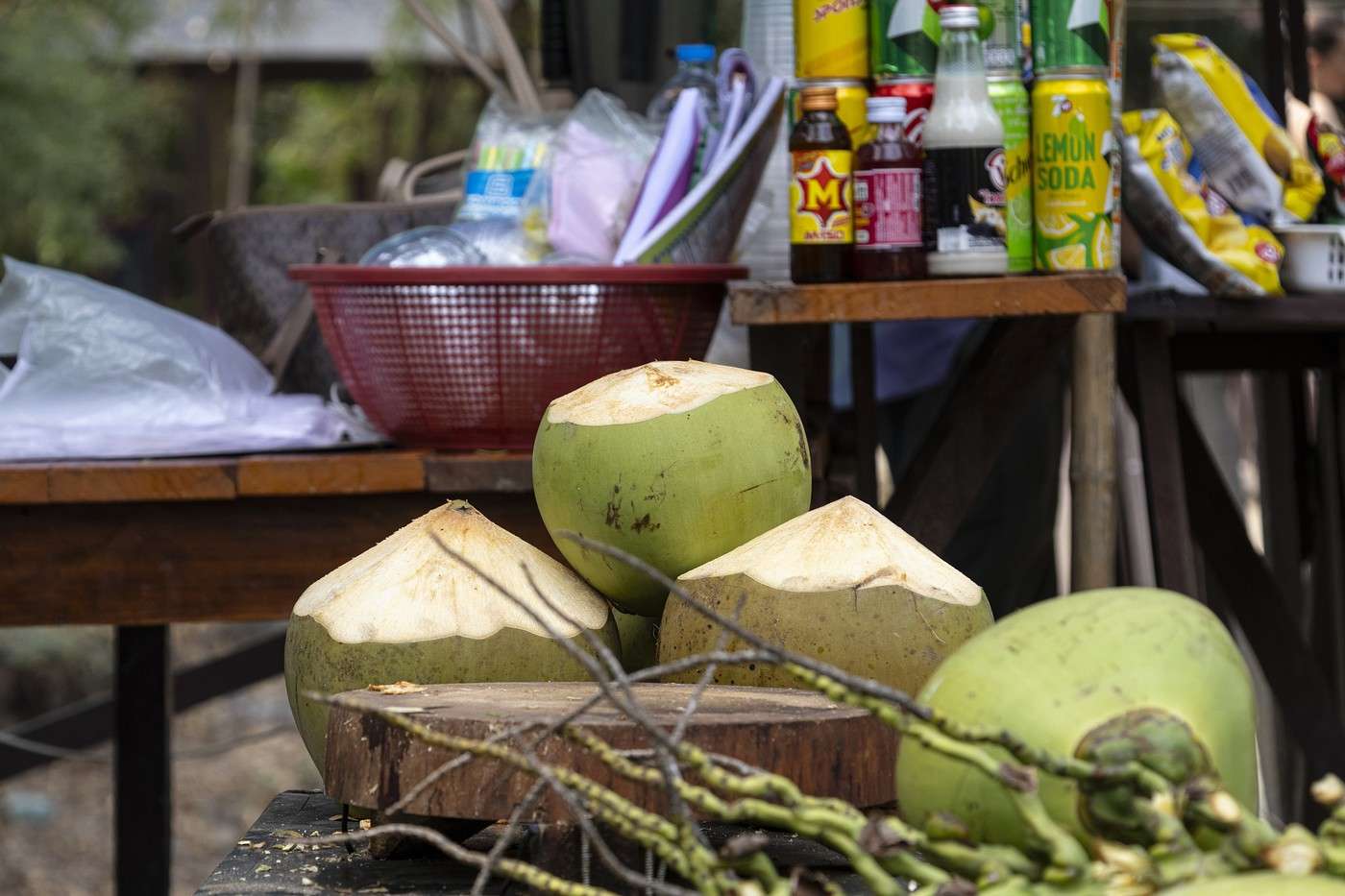
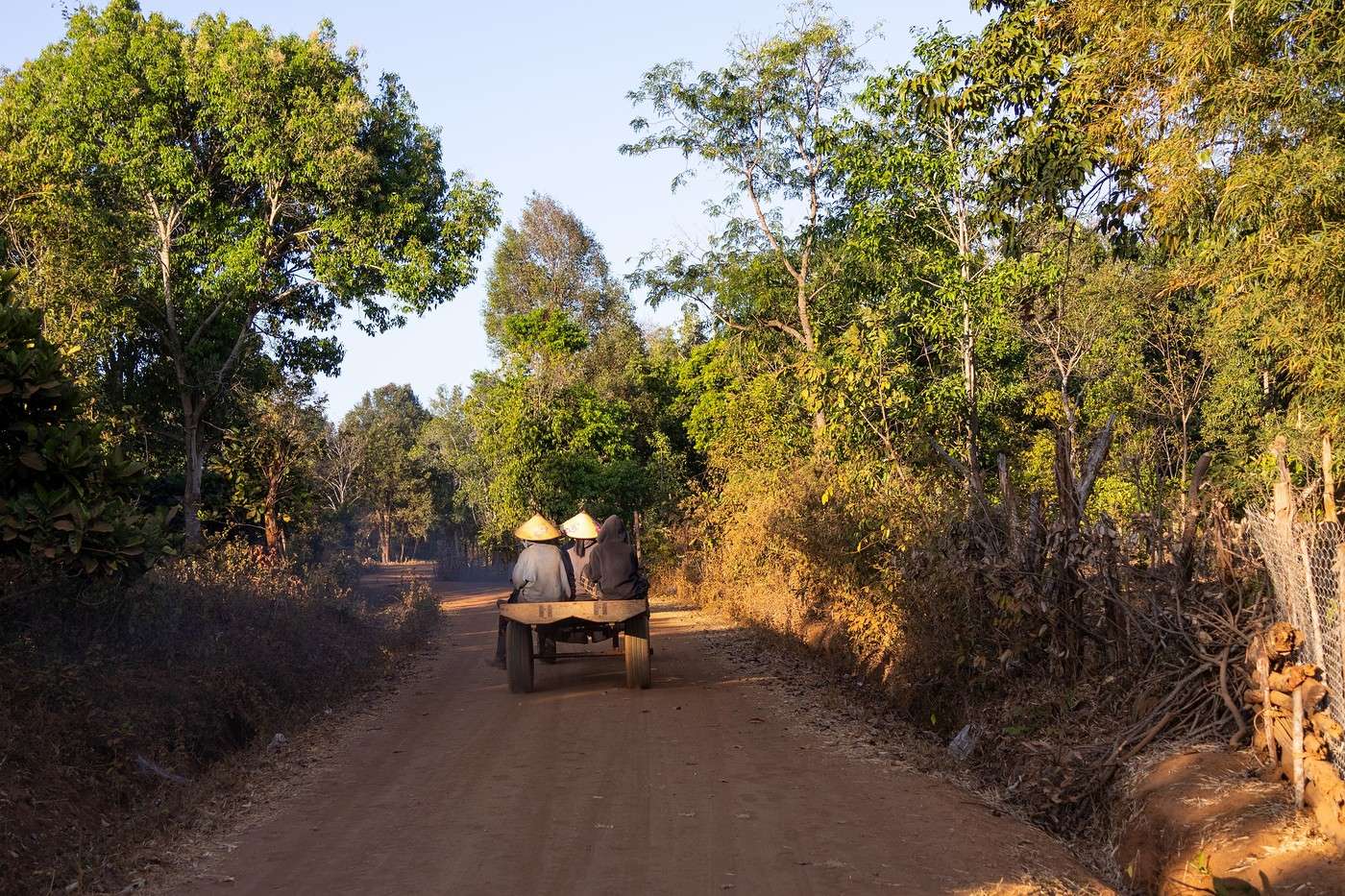
We strolled leisurely through this low, open landscape, framed by the two arms of the nearby Mekong. As we looked at the sun-scorched rice fields, I tried to imagine how much greener it must be during the rainy season. When we reached the bridge to Don Khon—the same one we’d crossed yesterday—we turned back, walking along the eastern bank of the Mekong, lined with banana groves and coconut plantations.
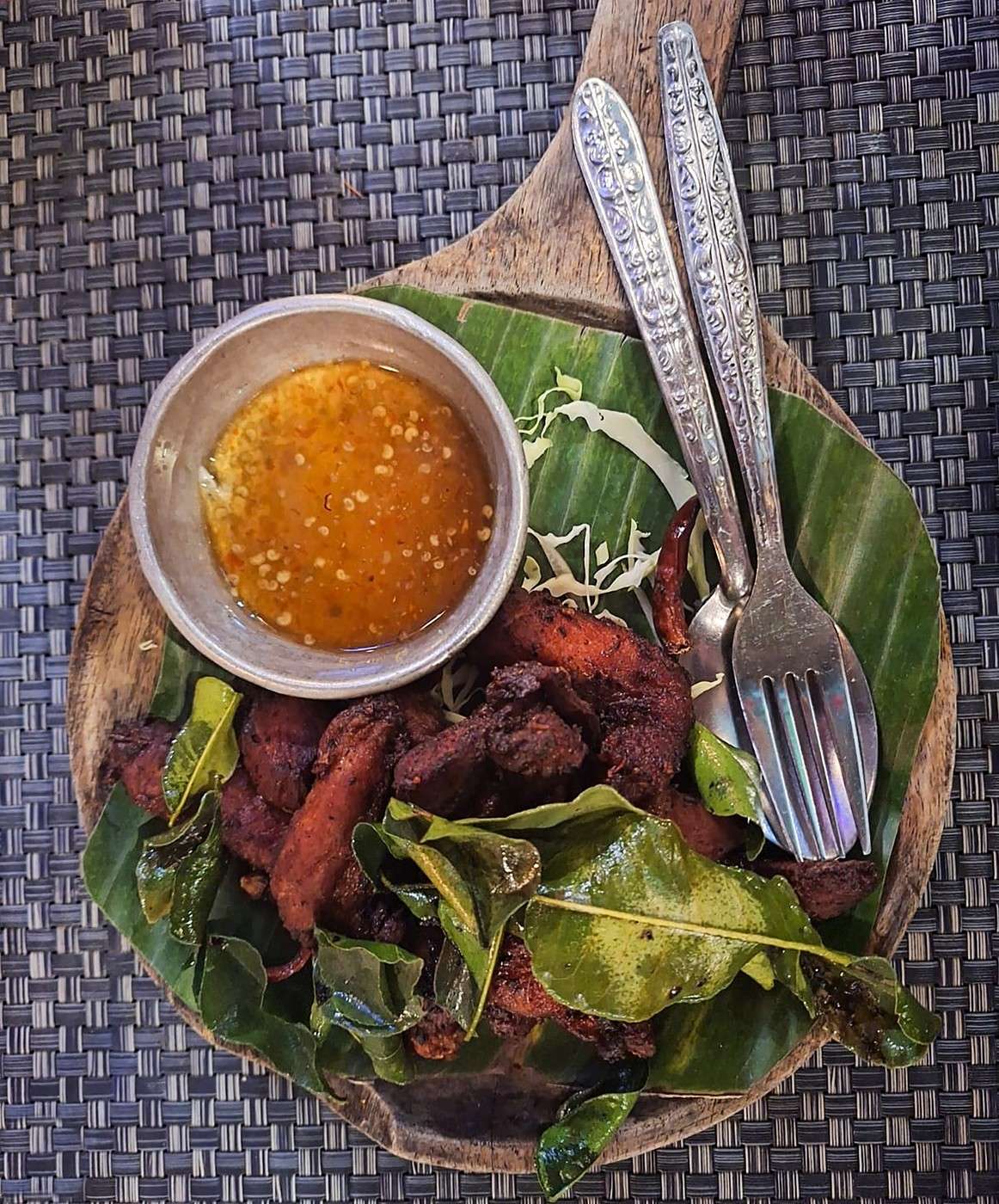
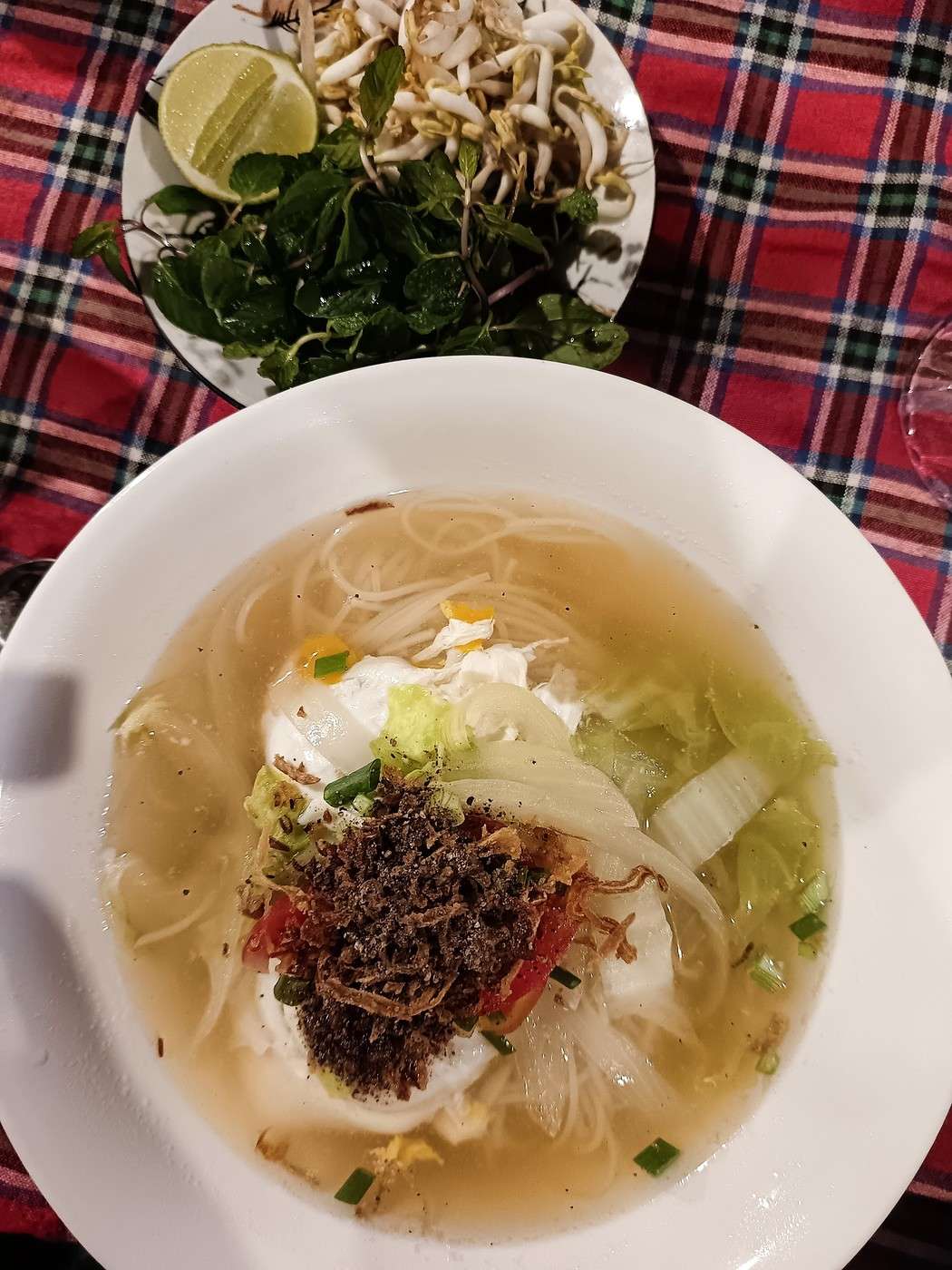
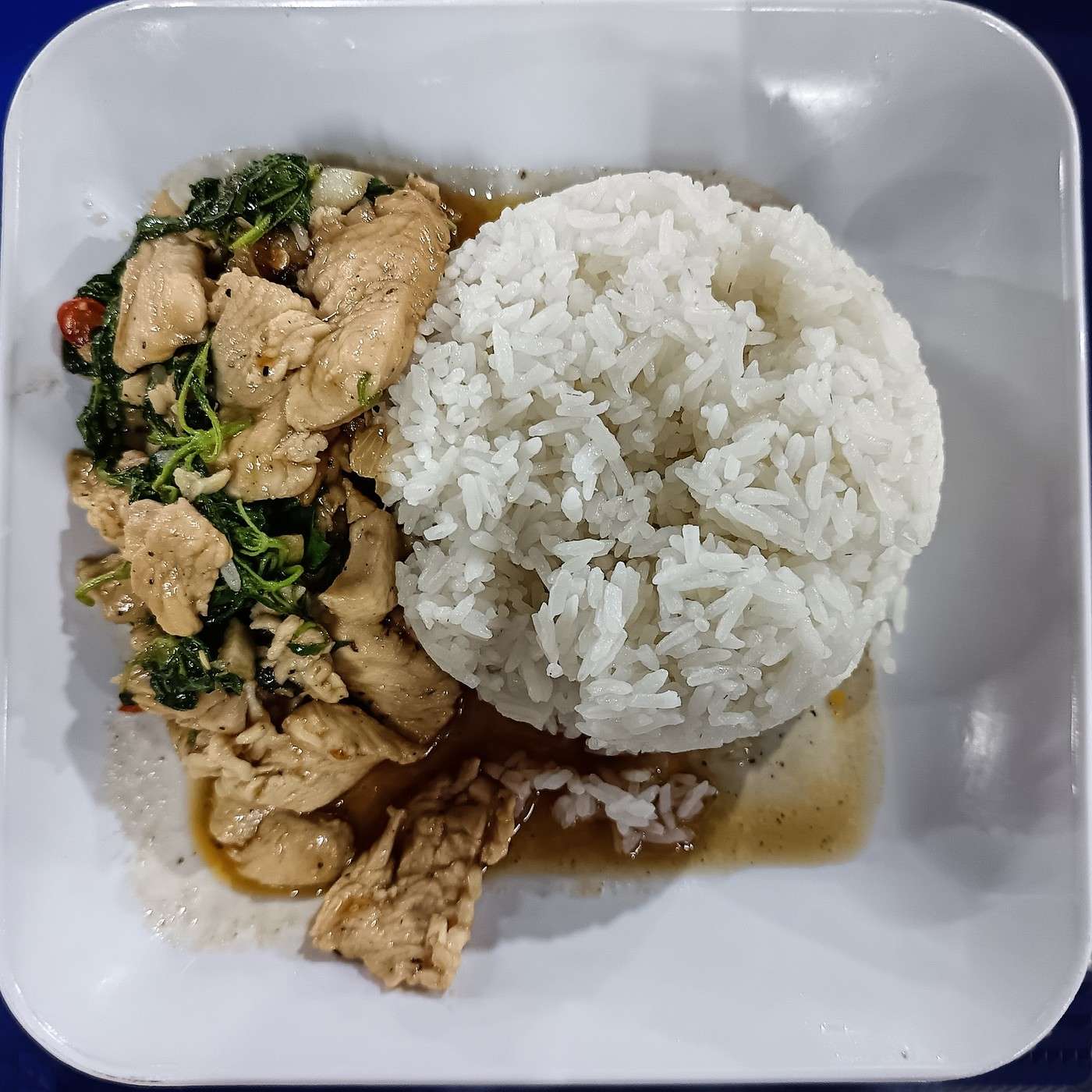
Later, the four of us had lunch at a small Indian restaurant chosen by Nathalie, who seemed eager to awaken her taste buds’ memories.
Evening stroll on the Mekong...
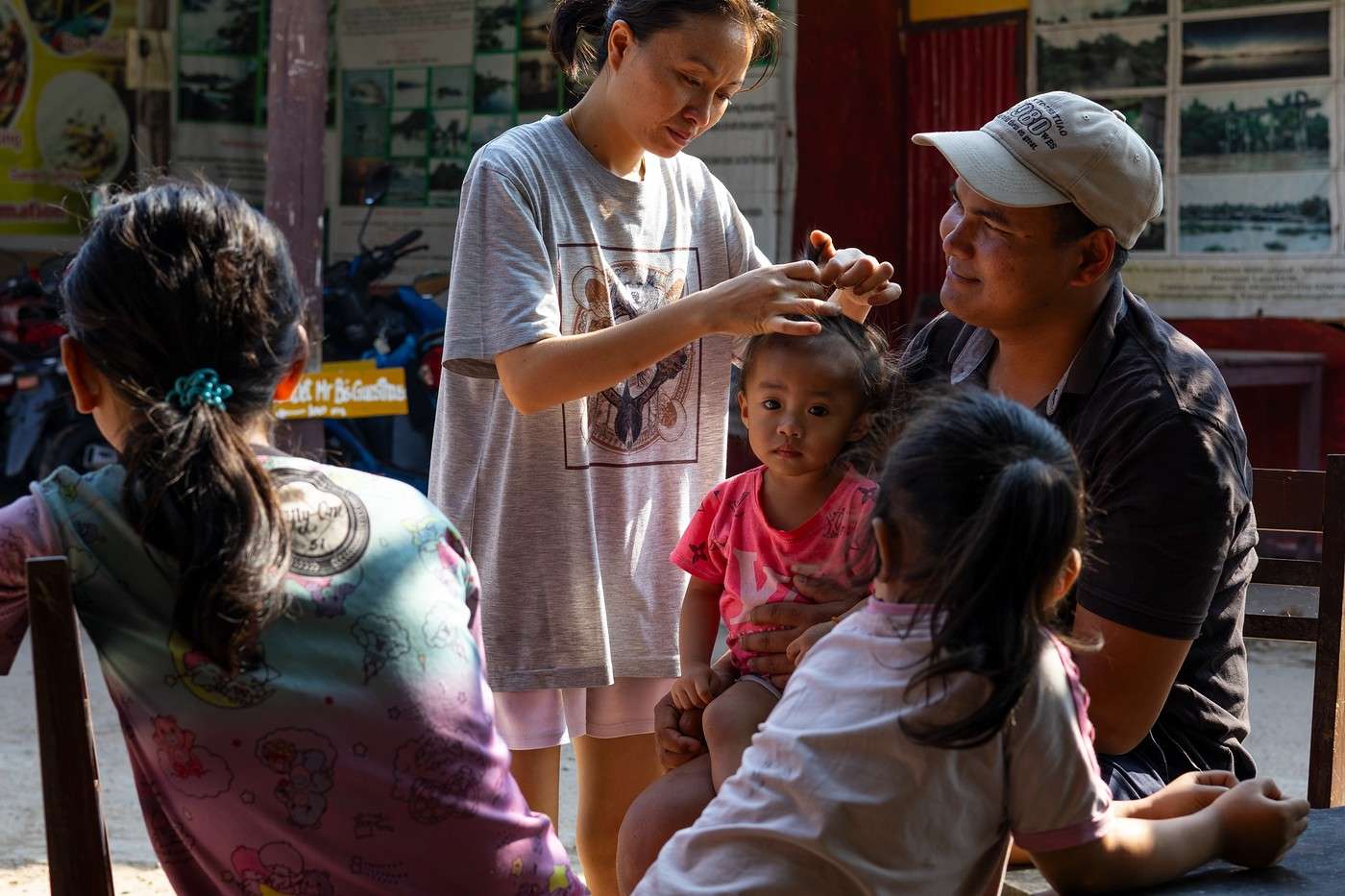
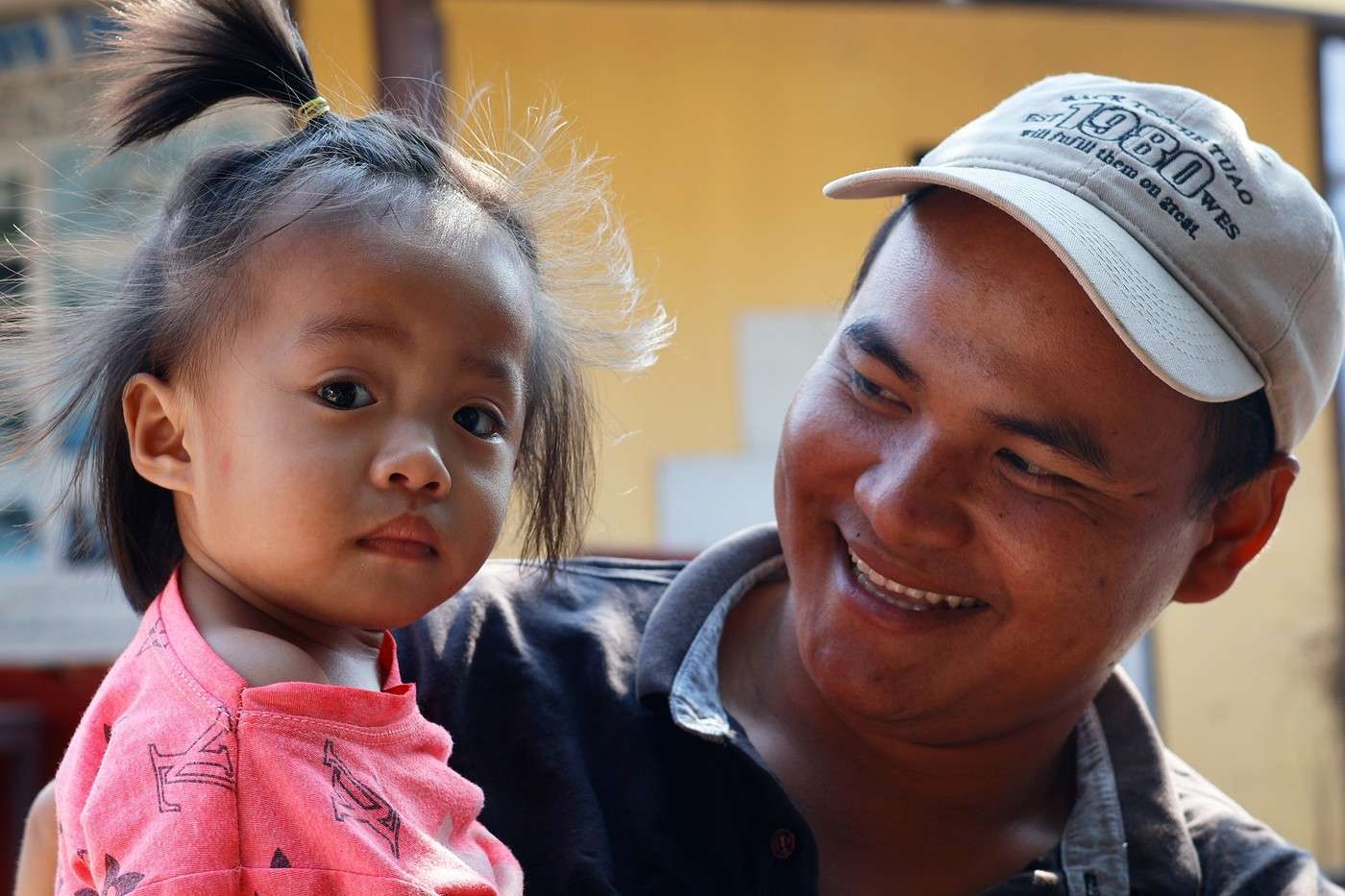
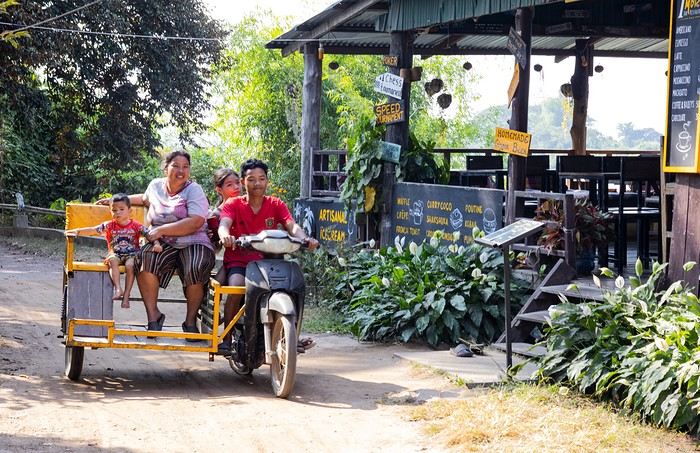
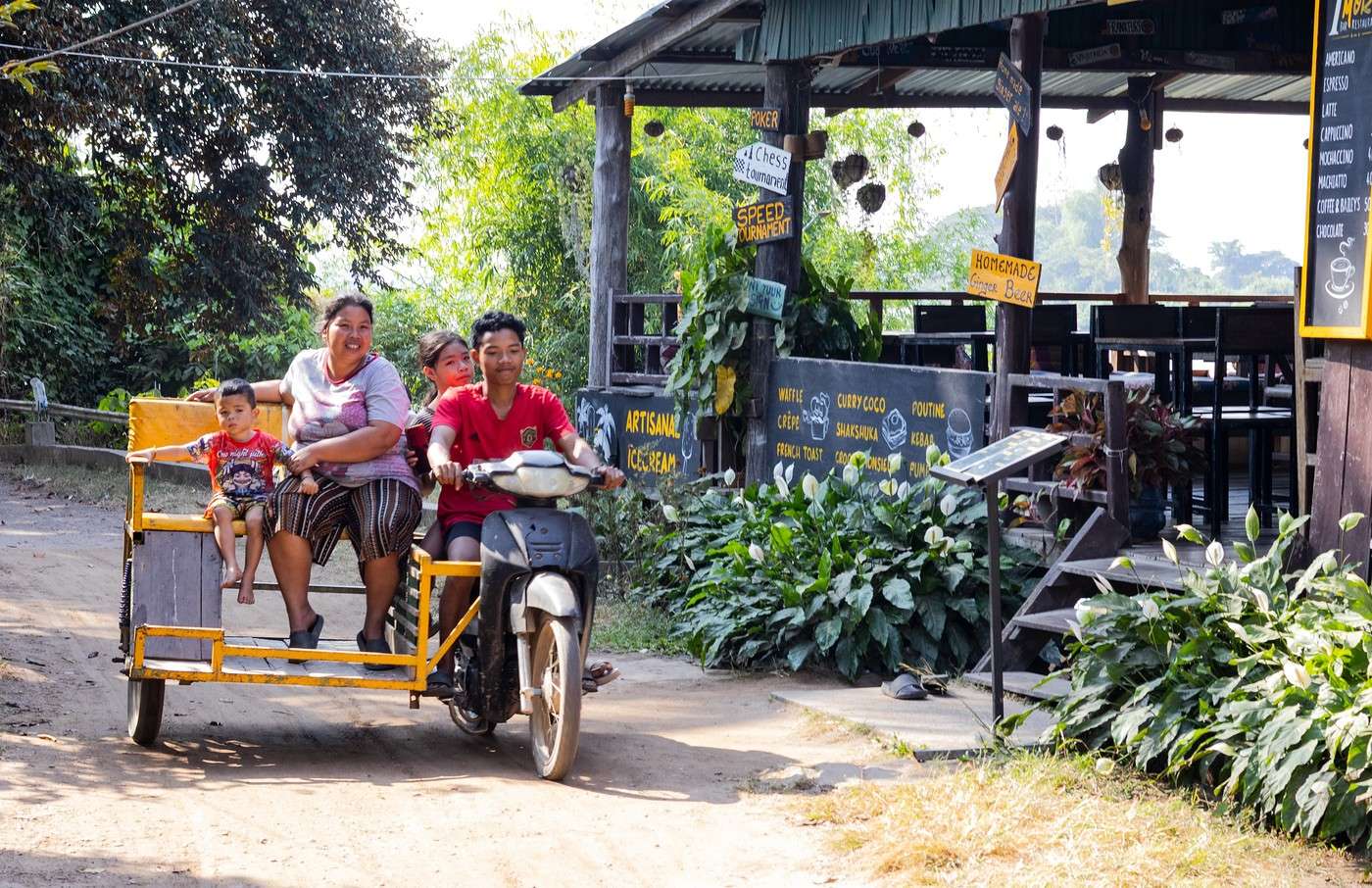
4 PM... The young tuk-tuk driver picked us up for a boat ride on the Mekong.
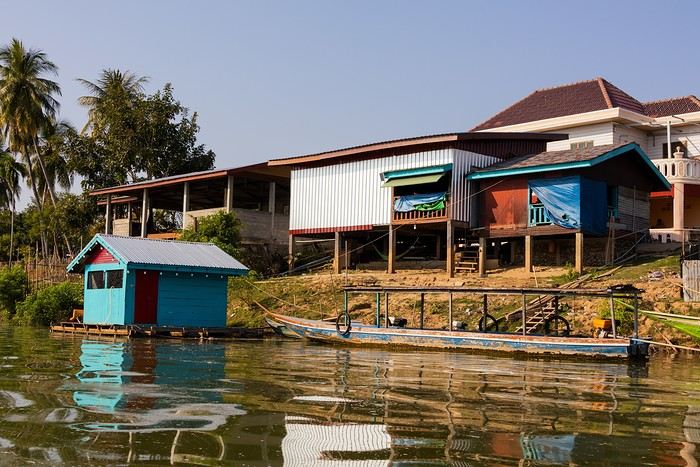
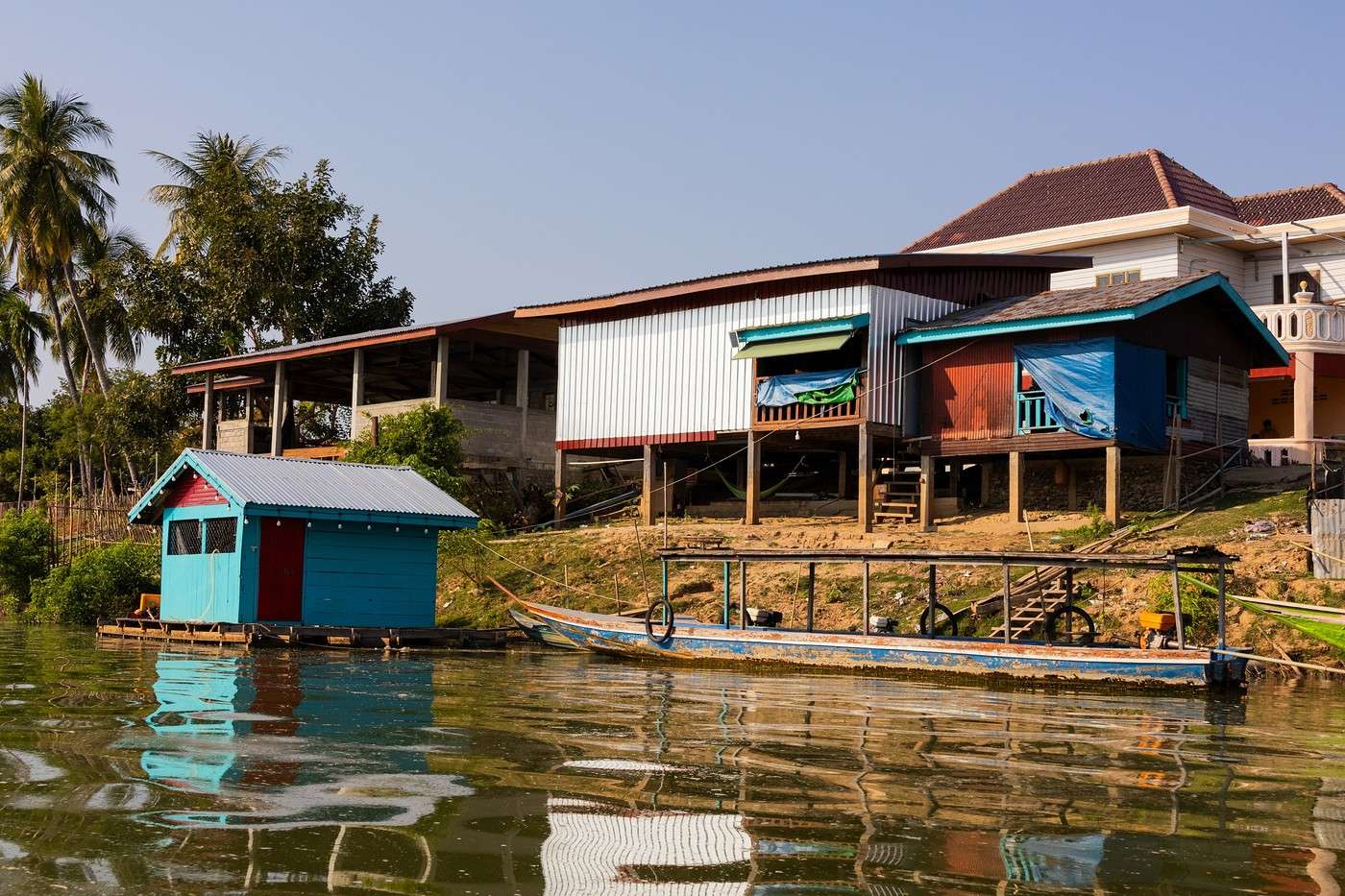
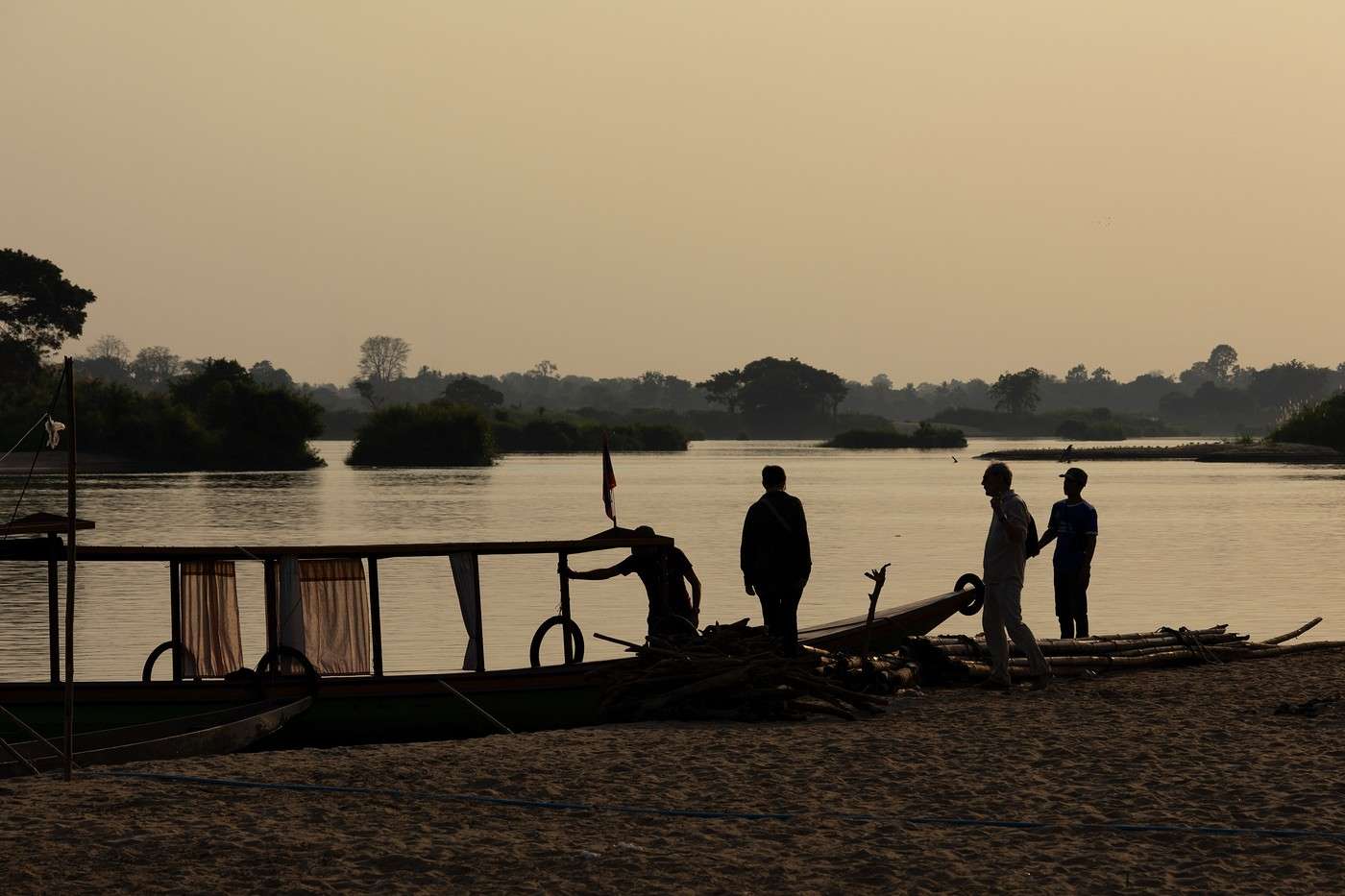
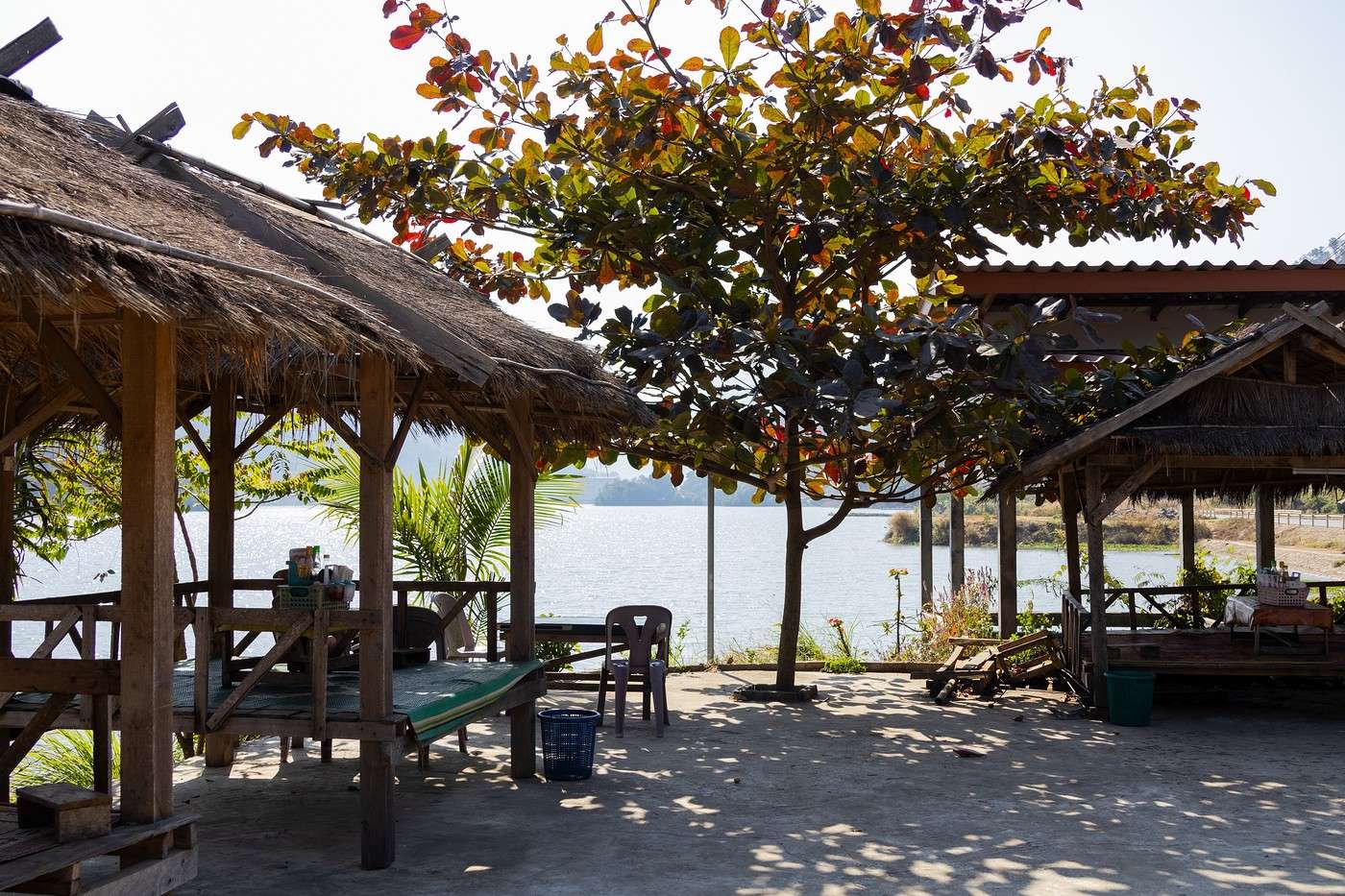
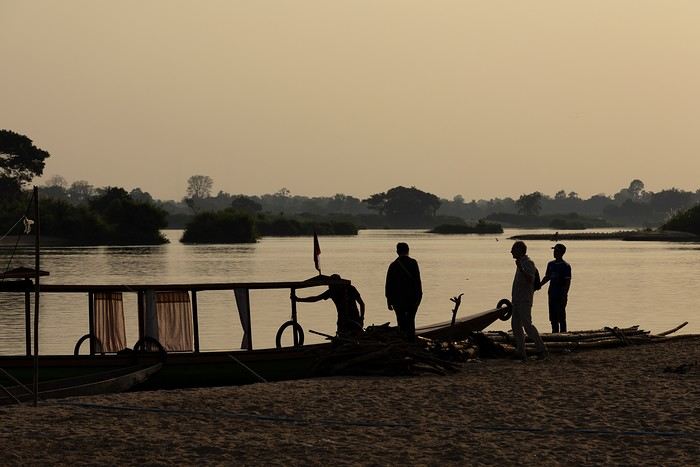
We’d seen the great river often during this trip, but this was our first time actually sailing on it. In this part of its course, it’s wide and calm, like a lake. We cruised along Don Det and then Don Khon before stopping at a broad beach.
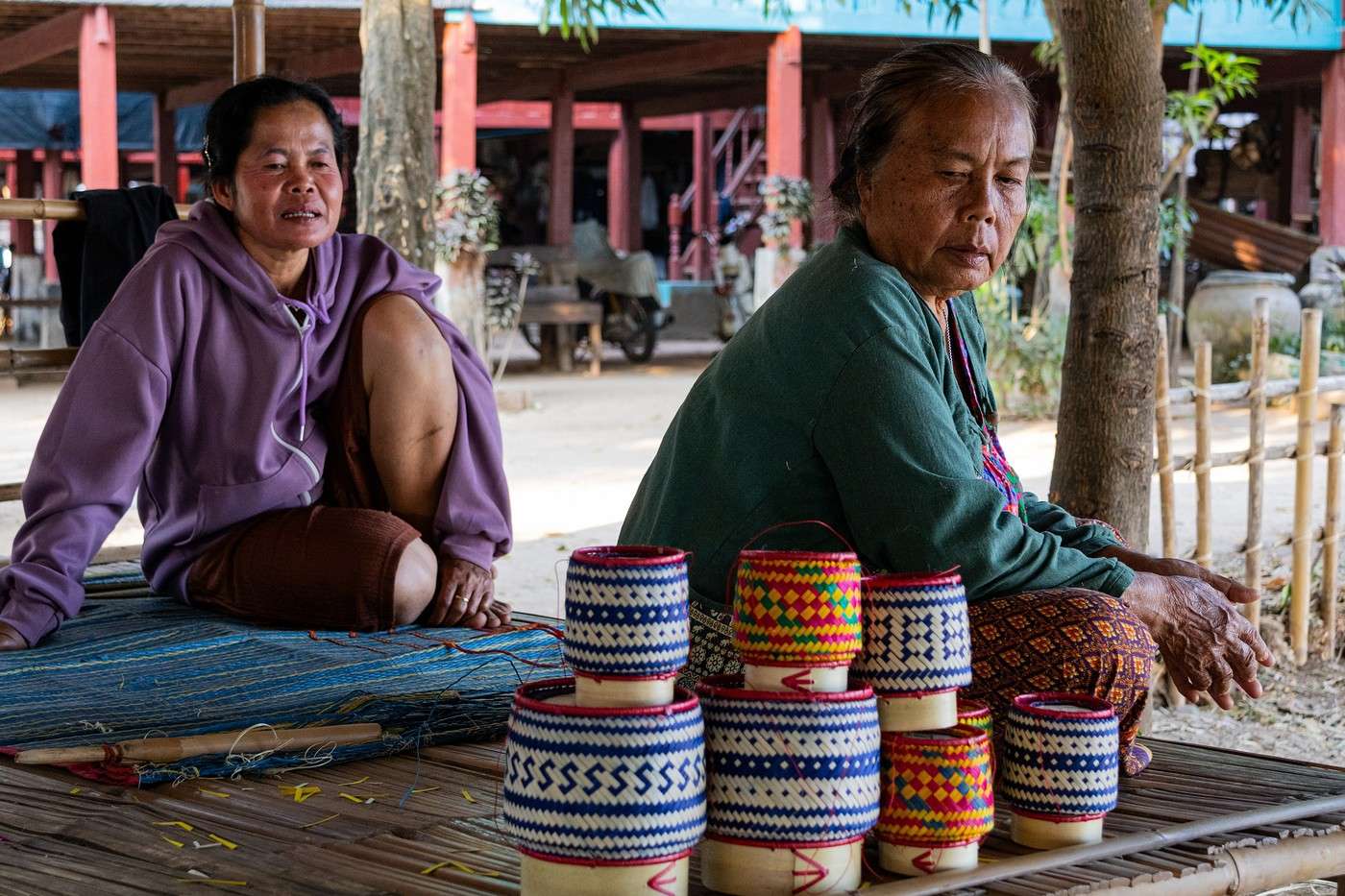
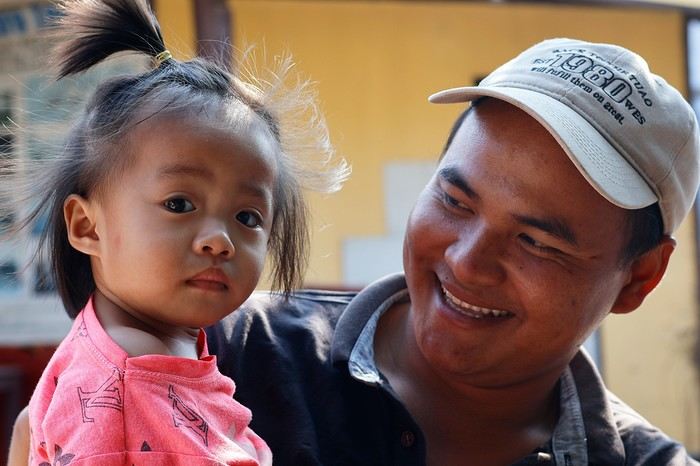
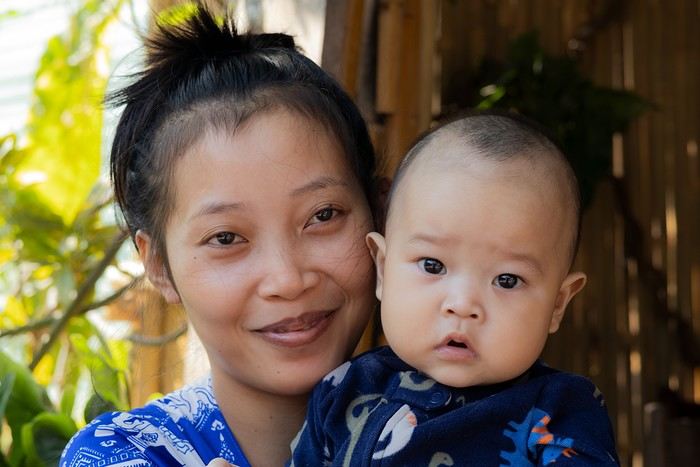
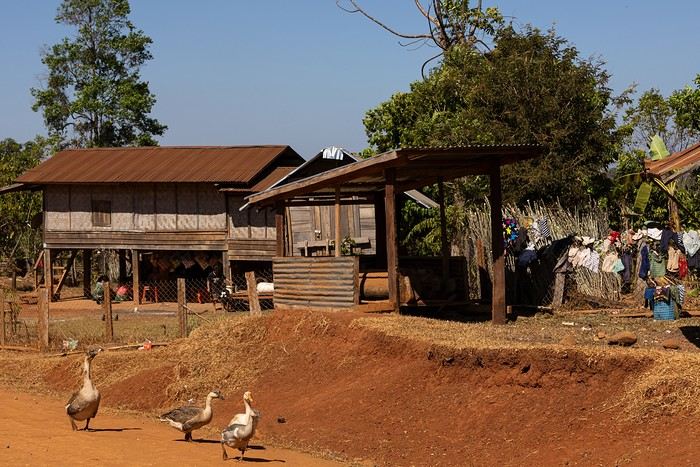
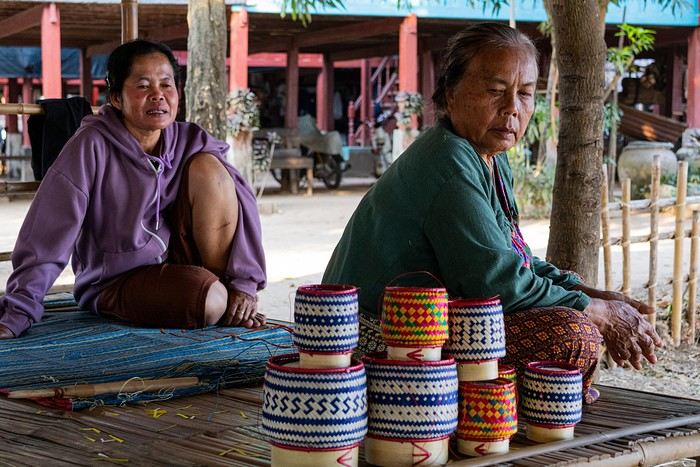
We climbed a steep hill to reach a small village with stilt houses. Under a palm-thatched shelter, a group of women were making small, colorful bamboo containers. They waited for us—without seeming to. We weren’t fooled, but it didn’t matter; we knew selling a few handmade items would bring a little extra income to these families living modestly.
They were making « thip kao », cute little bamboo baskets used to hold rice, which is always very sticky in the Lao style. We tried to chat a bit, but they remained fairly distant.
We continued exploring the village and came across a group of kids playing soccer.
I couldn’t resist—I rushed over to join them. With my left foot, I pulled off a slick dribble that left the overconfident kid who’d challenged me in the dust. A promising start, but the rest wasn’t as glorious—I’ll say no more!
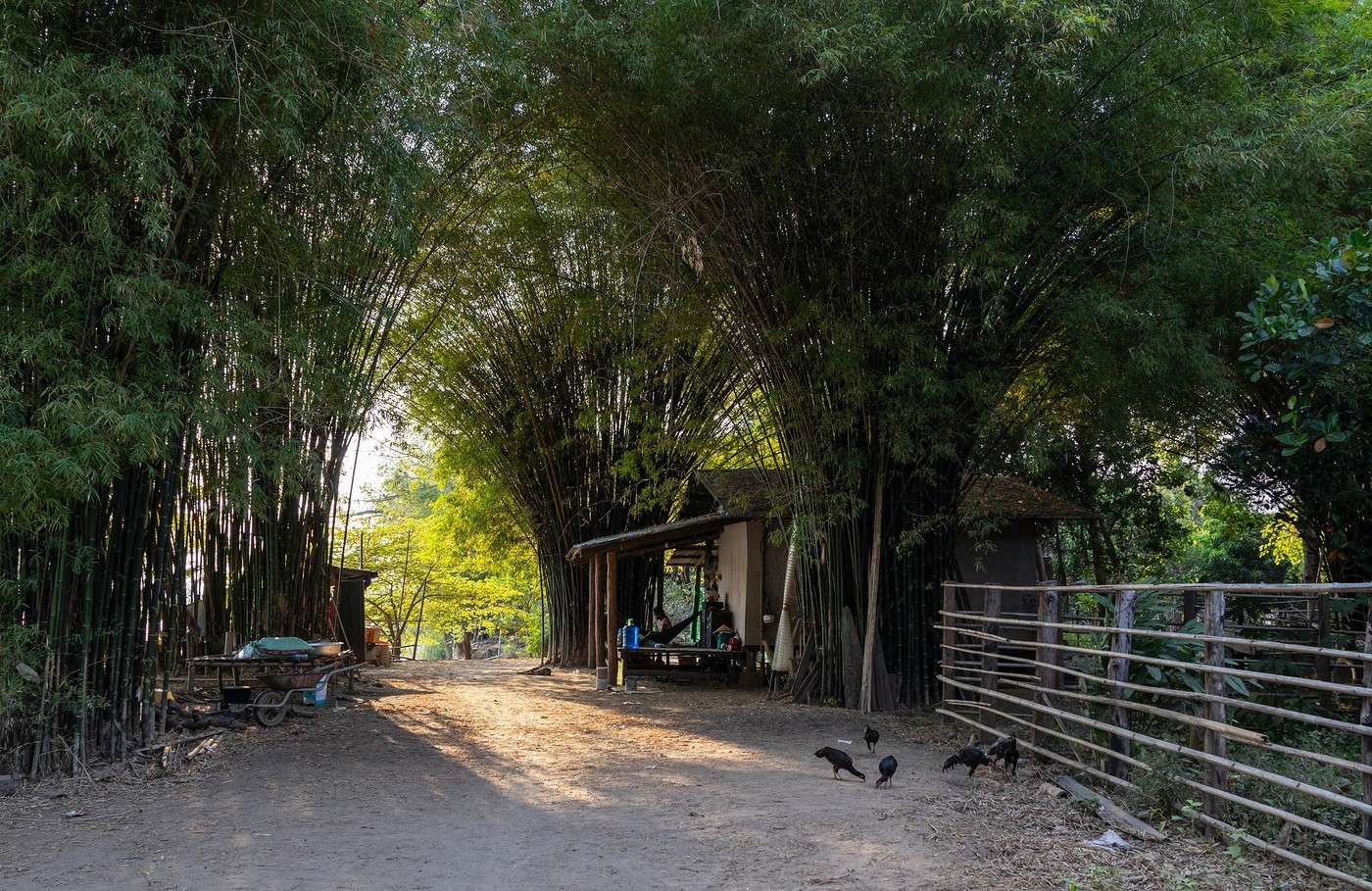
After that burst of physical intensity, we kept walking deeper into the village. We followed a sandy path bordered by a light forest on the right and vast rice fields on the left. A few patches of green here and there made me think some fields were still growing, which surprised me in the dry season. Some plots are irrigated, but it’s rare due to the cost of water.
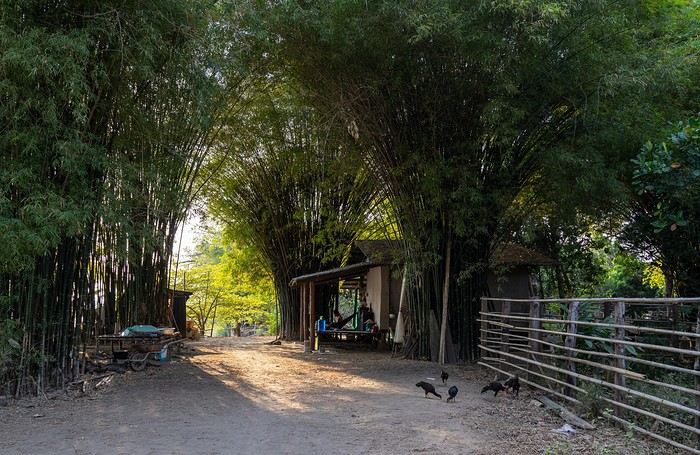
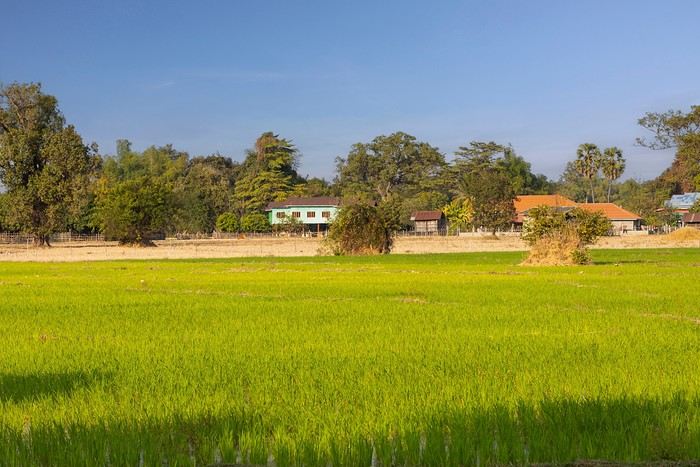
As we walked through the forest, we noticed offerings—food, all sorts of objects—placed at the base of trees or hung from branches.
This is part of the animist traditions deeply rooted in Lao villages, where traditional beliefs and Buddhism coexist quite naturally.
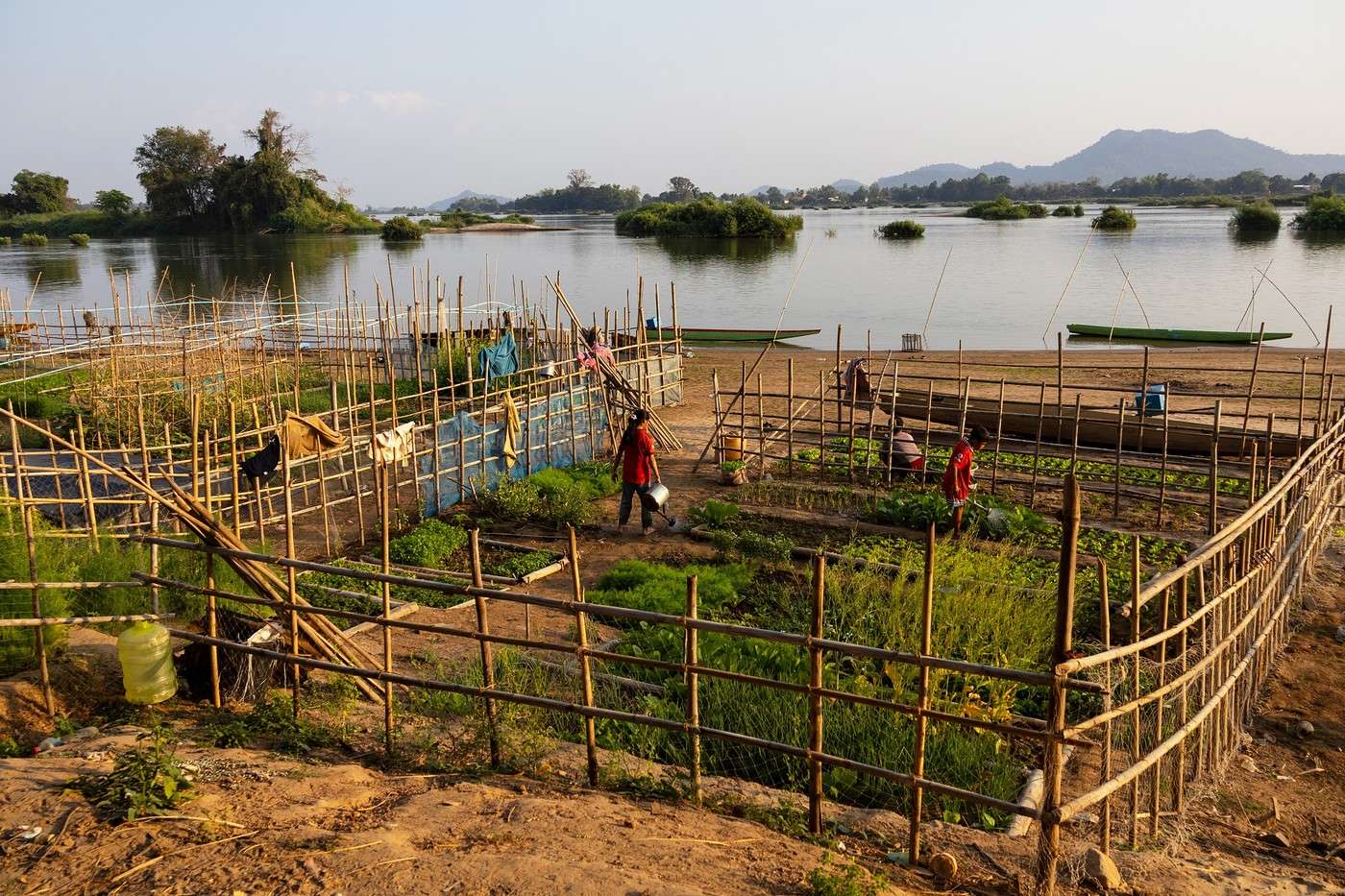
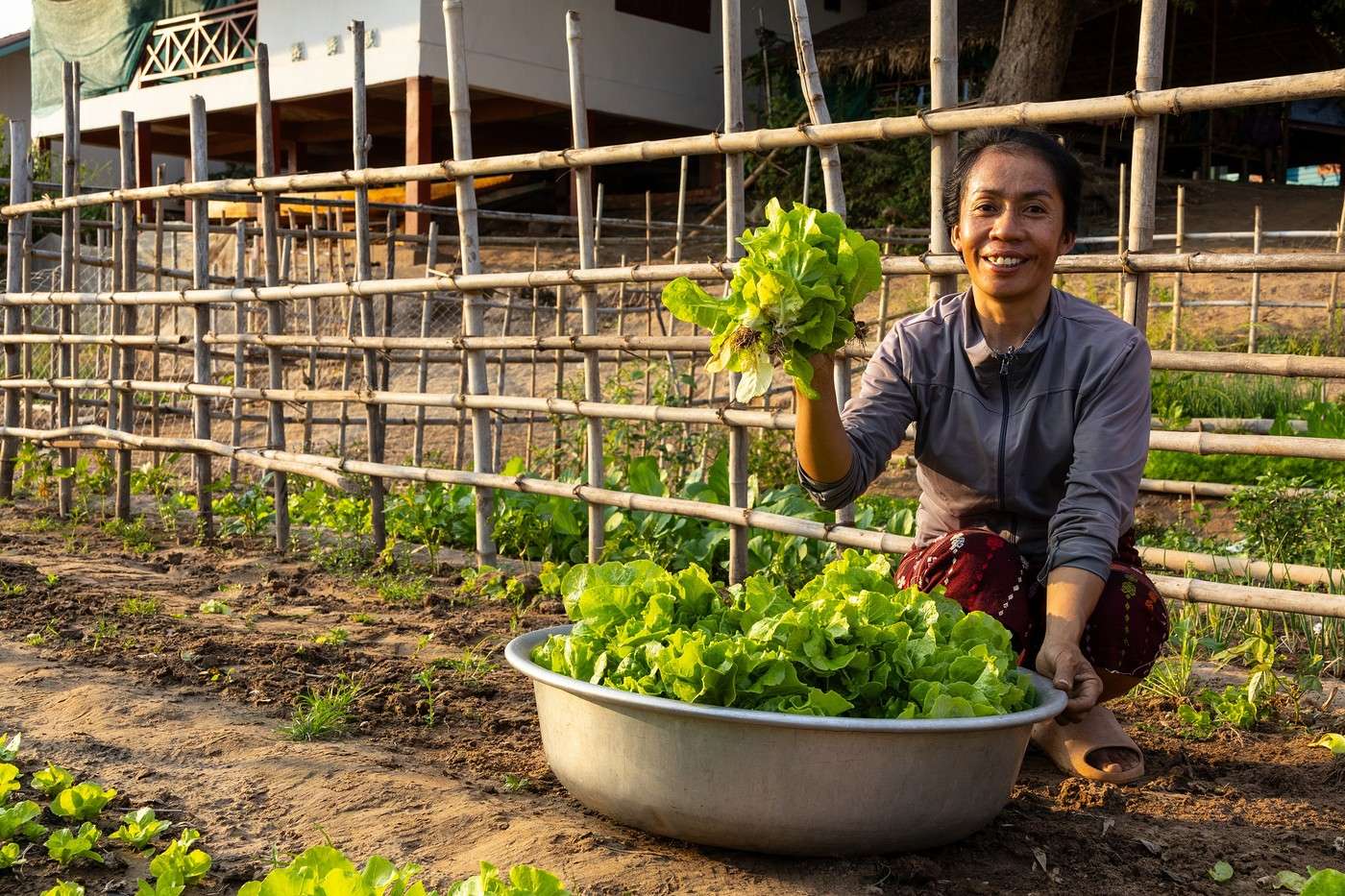
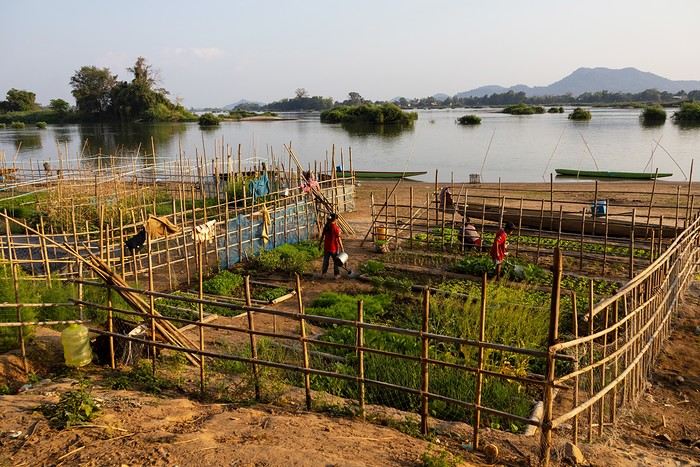
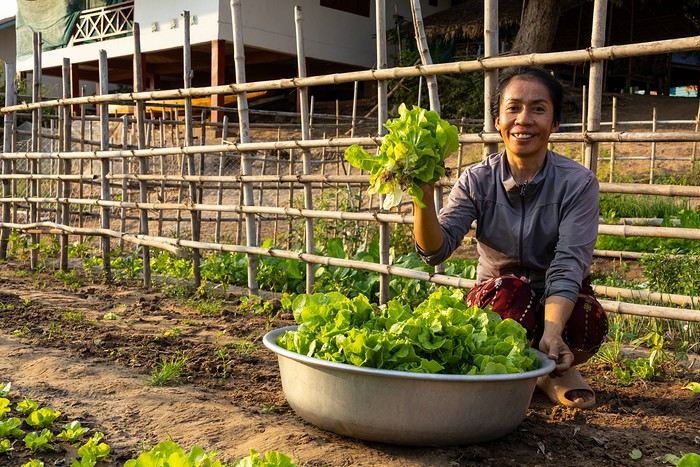
I hadn’t noticed it before, but on the way back to the river, I spotted a series of vegetable gardens stretching along the bank. Small plots fenced with bamboo, where families grow their own produce. Women and children were working the land, and as we passed, a young Lao woman smiled proudly, showing off the fresh lettuce she’d just picked.
We got back in the boat for another stop a short distance away. I wondered if our young guide was taking us to another village.
But once we climbed the steep path from the beach, a completely different sight awaited us.
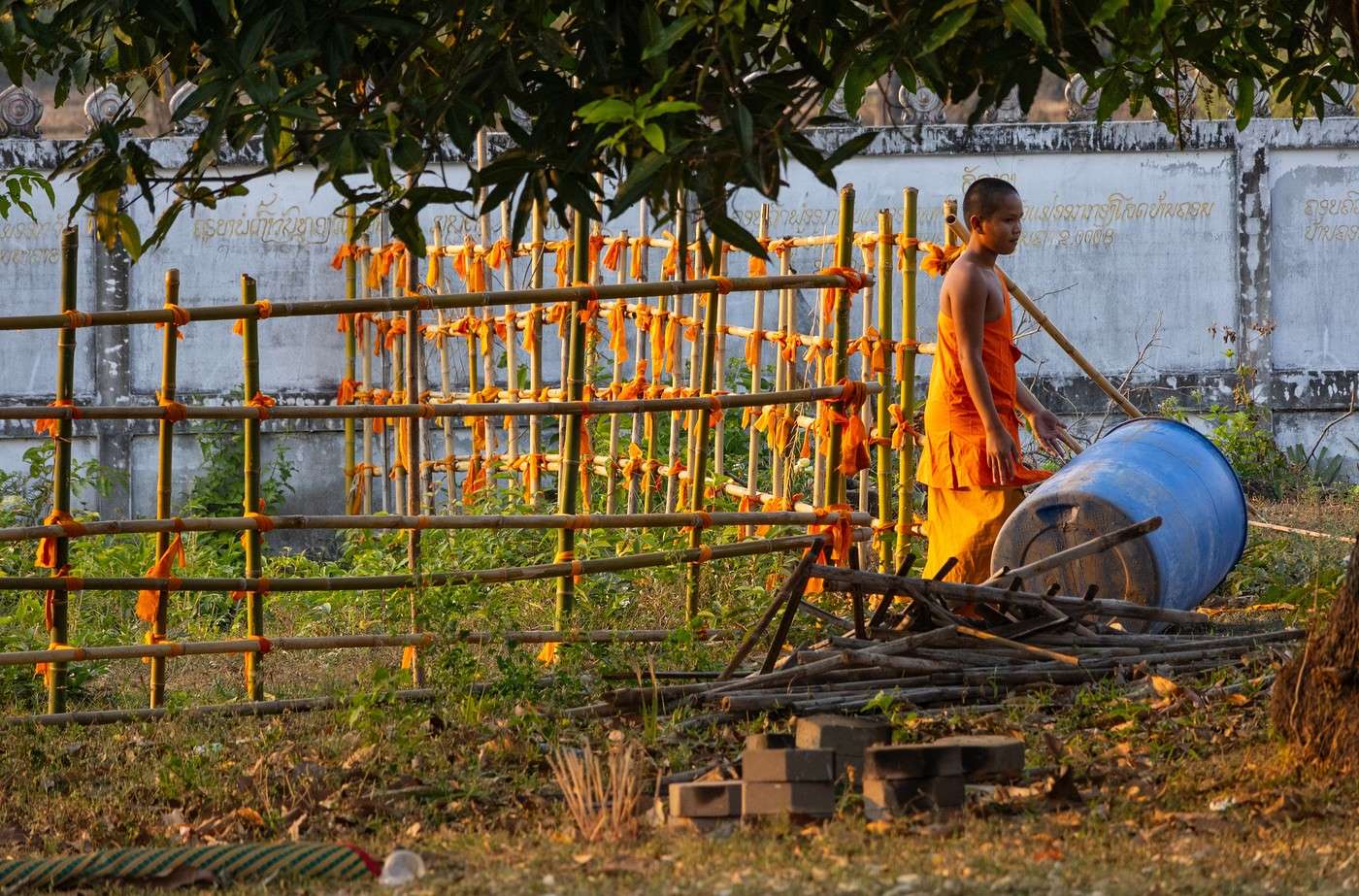
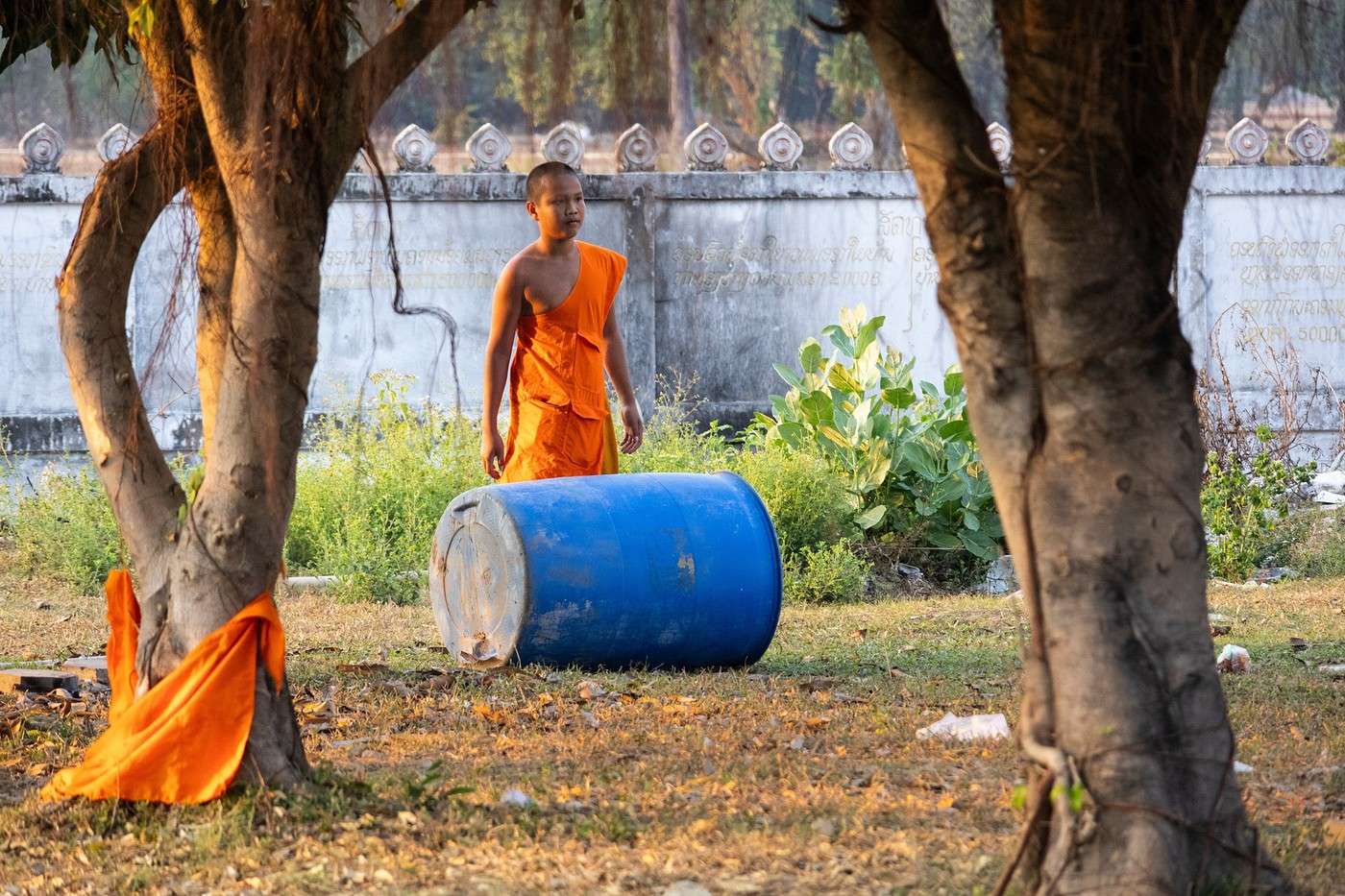
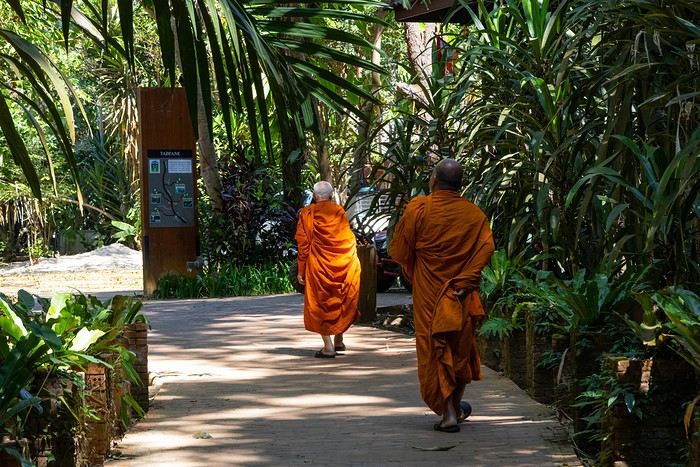
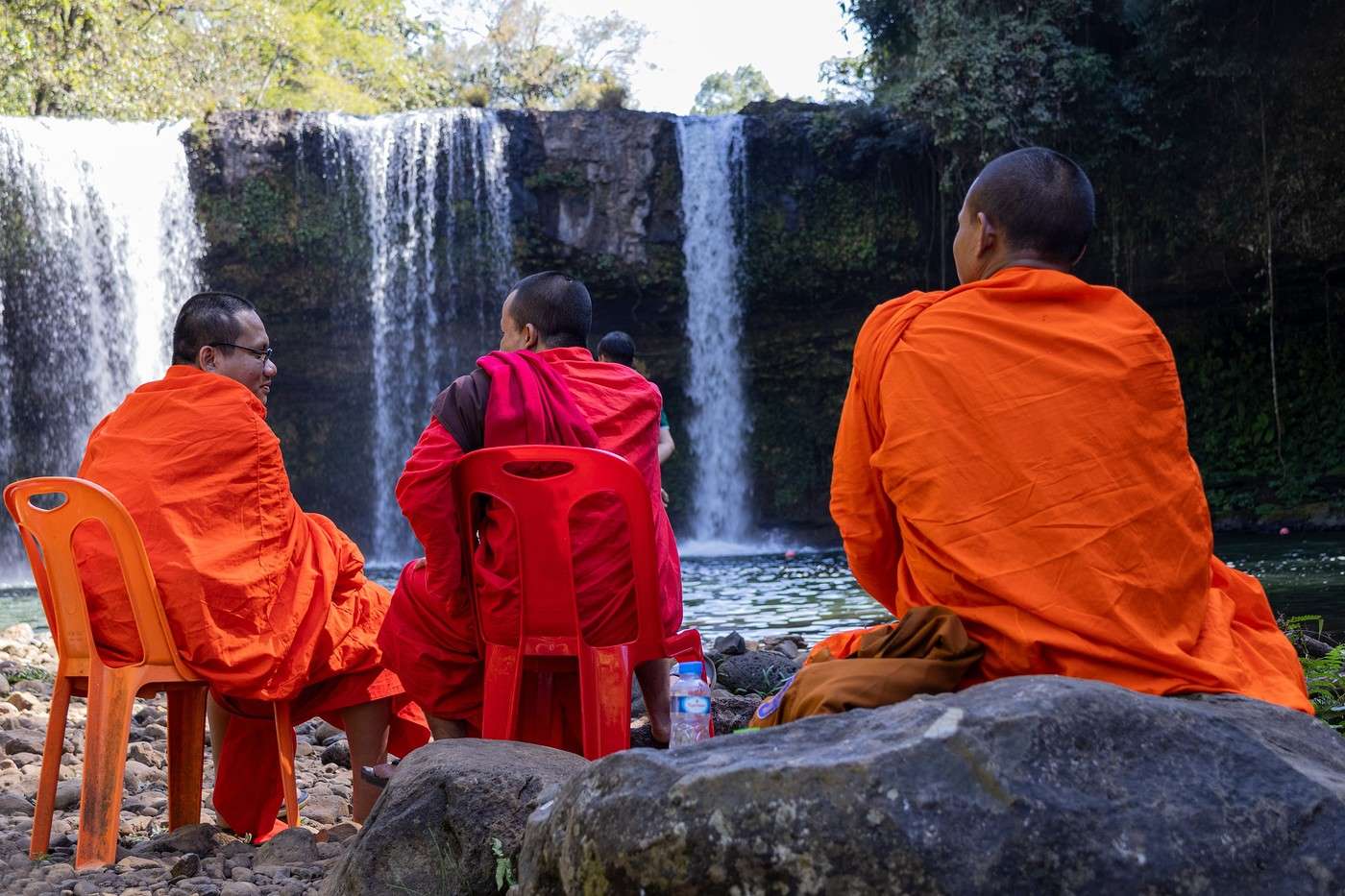
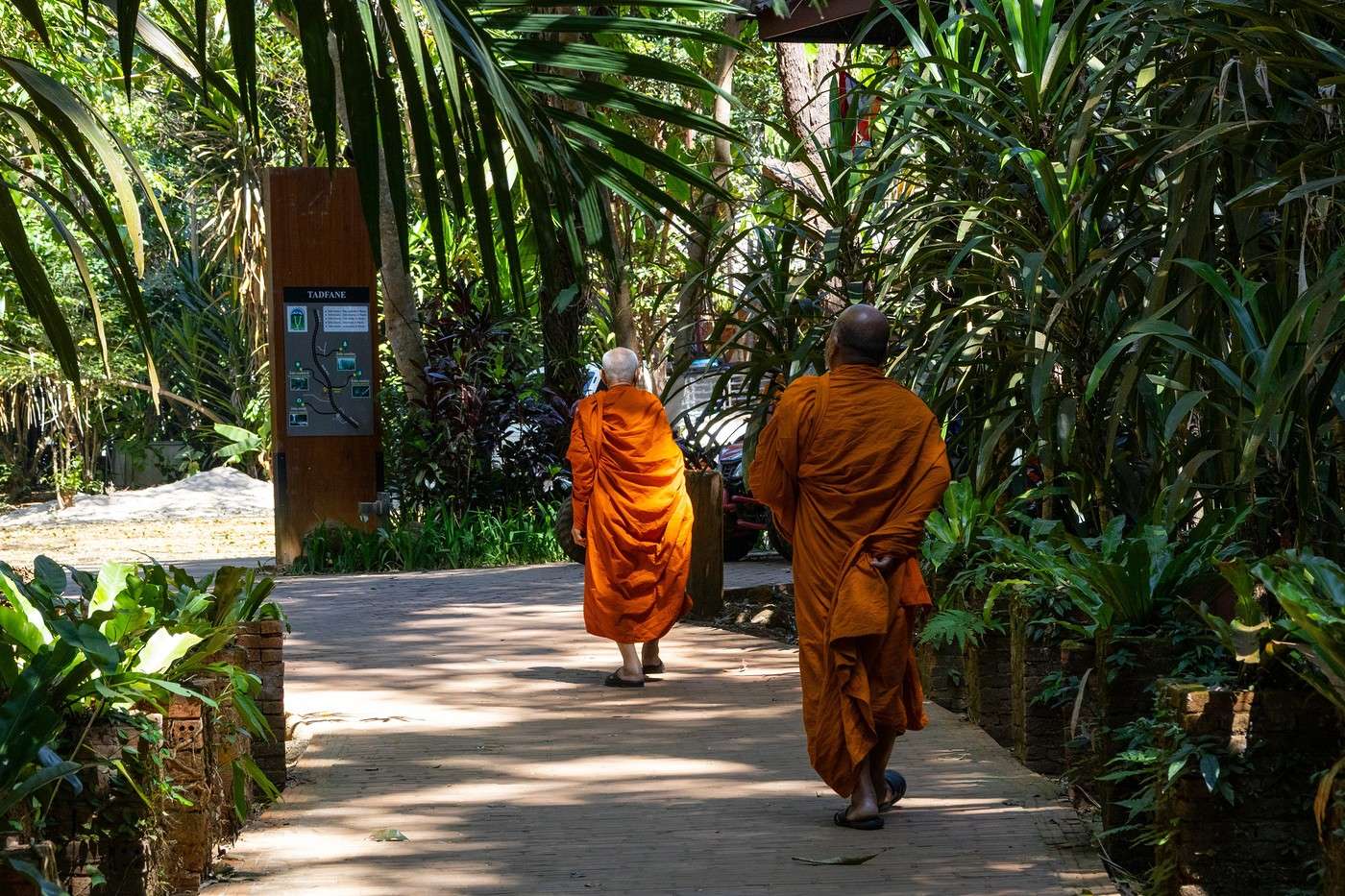
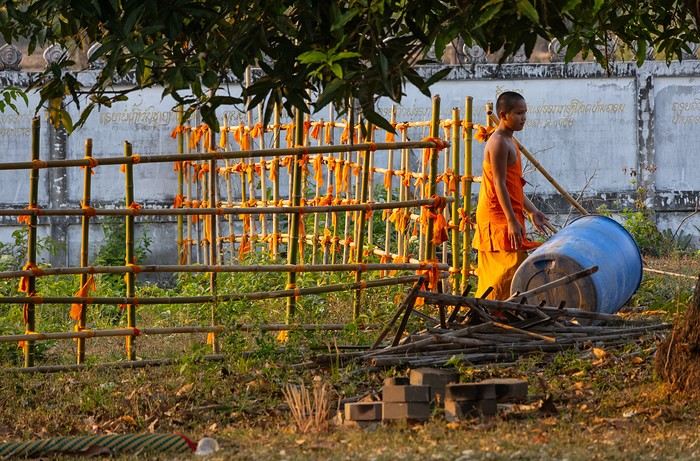
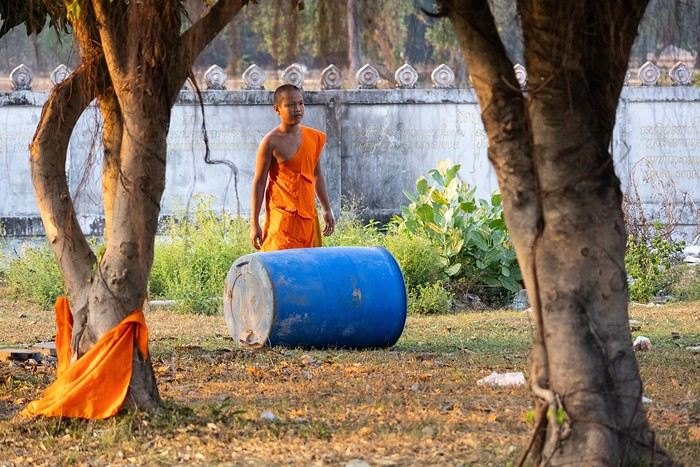
At the end of a straight path lined with rice fields, we entered a large enclosure dominated by a giant statue seated on a throne surrounded by serpents: the Buddha Naga. Of course, it was a temple—but what surprised us was seeing such an impressive religious site on such a quiet island like Don Khon. In the courtyard, as we’d seen elsewhere, very young monks were busy: some sweeping, others tending the gardens, while another worked near the neat row of funerary stupas lining the path.
Apart from the monks and us, there was no one around. And in the fading light, the atmosphere was serene. No hint of the « between dog and wolf » anxiety that can sometimes creep in at dusk back home in winter, when night falls too early. Not here, not on this trip.
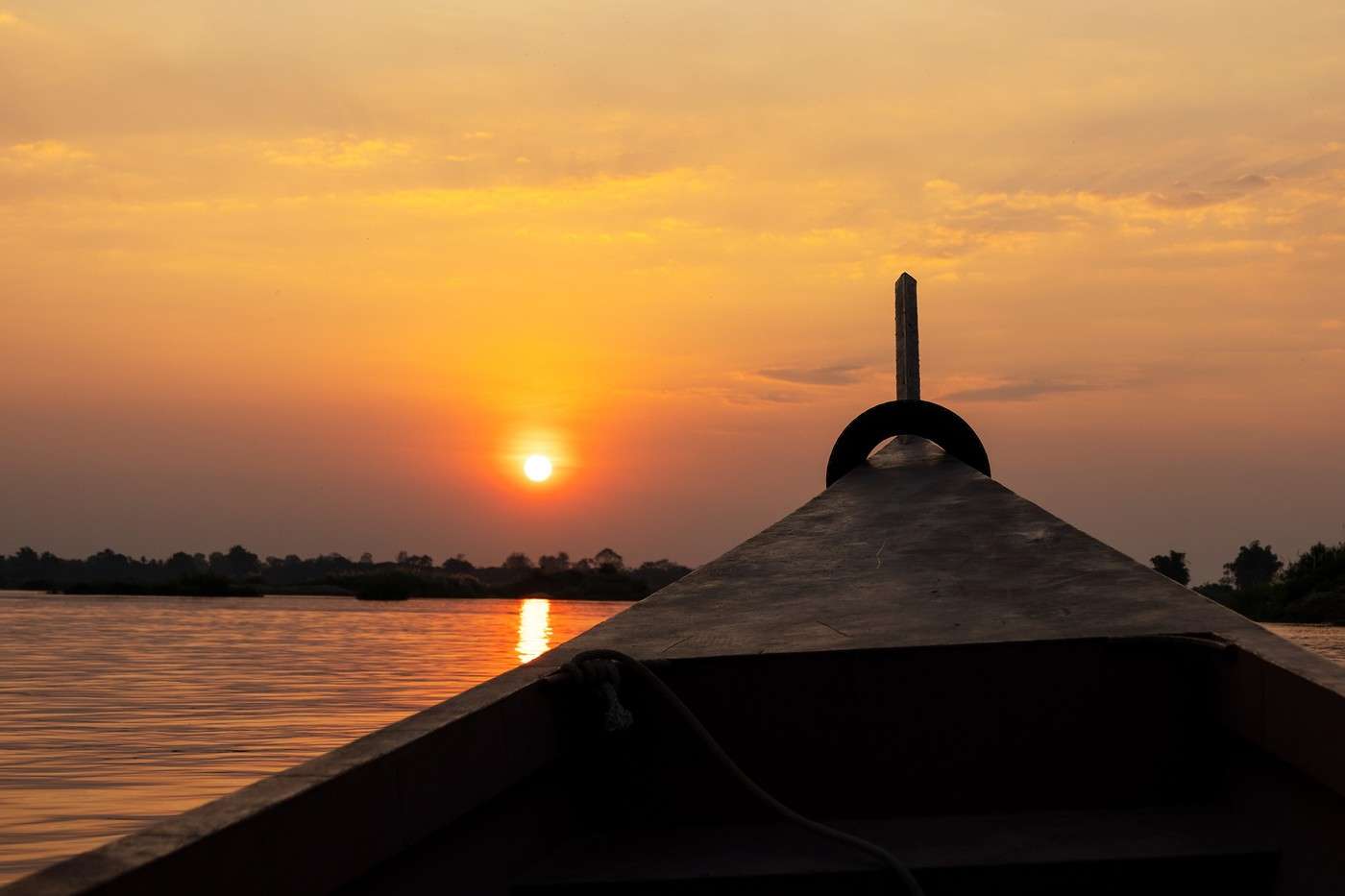
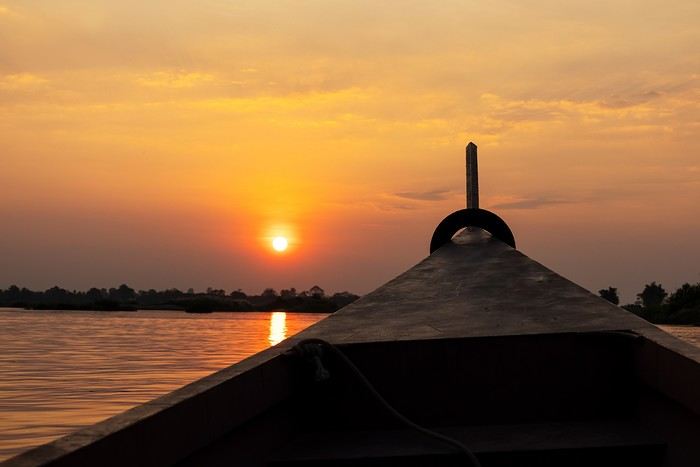
And best of all, from the boat, we got to witness the ultimate highlight of the evening: the sunset over the Mekong.
Picture-perfect, for sure—but even travelers can be tourists sometimes. So we let our minds relax and just enjoyed the show.
Our young guide understood perfectly; he cut the engine so we could fully savor the moment.
And as every evening, the sun turned the Mekong’s waters a deep red before night darkened the hills of nearby Cambodia. In front of us, a fisherman standing in his boat cast his net one last time, spinning it above his head.
Tomorrow, we leave for Pakse. We’re sad to go, leaving behind this gentle region of the 4,000 Islands—in Lao, Si Phan Don...