in Entre deux voyages › Carnets de voyage
Six-week trip to Mexico (page 9 of 12)
Discussion started by GeorgesOZ on 2019-12-05
226 replies
This thread has been translated into English.
Six-week trip to Mexico
Memphre · 2020-04-03 · Message 161 of 227
The French used to organize big celebrations at weddings and would often invite musicians.
Mariachi might be a distortion of the word mariage...?
This theory has been debunked since it was proven that the term was in use long before the French arrived. That’s what I read—I could be wrong!
It’s totally plausible—I’ve never really looked into it.😎
Six-week trip to Mexico
Michant · 2020-04-03 · Message 162 of 227
The French used to organize big parties at weddings and would invite musicians.
Mariachi might be a distortion of the word "mariage" (wedding)..?
The theory has been debunked since it was proven that the term was in use long before the French arrived. That’s what I read—I could be wrong!
That’s exactly what you can read here: "Le mariage, a mythical etymology"
https://www.proceso.com.mx/290349/290349-el-mariage-un-mito-etimologicoMyths persist, repeated by travel guides and the French Wikipedia, which contradicts the Spanish version.
https://es.wikipedia.org/wiki/Mariachi
Six-week trip to Mexico
GeorgesOZ · 2020-04-04 · Message 163 of 227
Myths persist, perpetuated by travel guides…
We should make a list of all these myths spread for tourists, giving them the illusion of “understanding the country better” and adding extra depth to their trips. Because that illusion—that “extra depth”—makes people want to travel more, which fuels tourism. And where does that lead? Revenue, of course, but for whom?
I think I’ll start a discussion about this. I don’t think it’s been done before.
@Memphre: Would you mind if I quoted you if I start this thread, without using your name or username?
Six-week trip to Mexico
Memphre · 2020-04-04 · Message 164 of 227
No problem at all—make yourself at home! 😛
Six-week trip to Mexico
GeorgesOZ · 2020-04-04 · Message 165 of 227
No problem at all… make yourself at home…😛
Awesome 🙂. I’ll get started in the next few days. Lockdown (thanks, virus) is pushing us to get creative and use our imagination!
Six-week trip to Mexico
Michant · 2020-04-04 · Message 166 of 227
I think I’m going to start a discussion about this. I don’t think it’s been done yet.
In "Travelers’ Thoughts and Reflections"? Oh boy, you’re stepping into a minefield! 🏴☠️
Good luck! [;]
Six-week trip to Mexico
GeorgesOZ · 2020-04-04 · Message 167 of 227
I think I’m going to start a discussion about this. I don’t think it’s been done before.
In "Travelers’ Thoughts and Reflections"? Oh boy! You’re stepping into a minefield! 🏴☠️
Good luck! 😉
I know, but it won’t be the first time I’ve faced the meanness, hostility, and stupidity of some forum users!
Six-week trip to Mexico
GeorgesOZ · 2020-04-04 · Message 168 of 227
Puebla – Markets and Hats
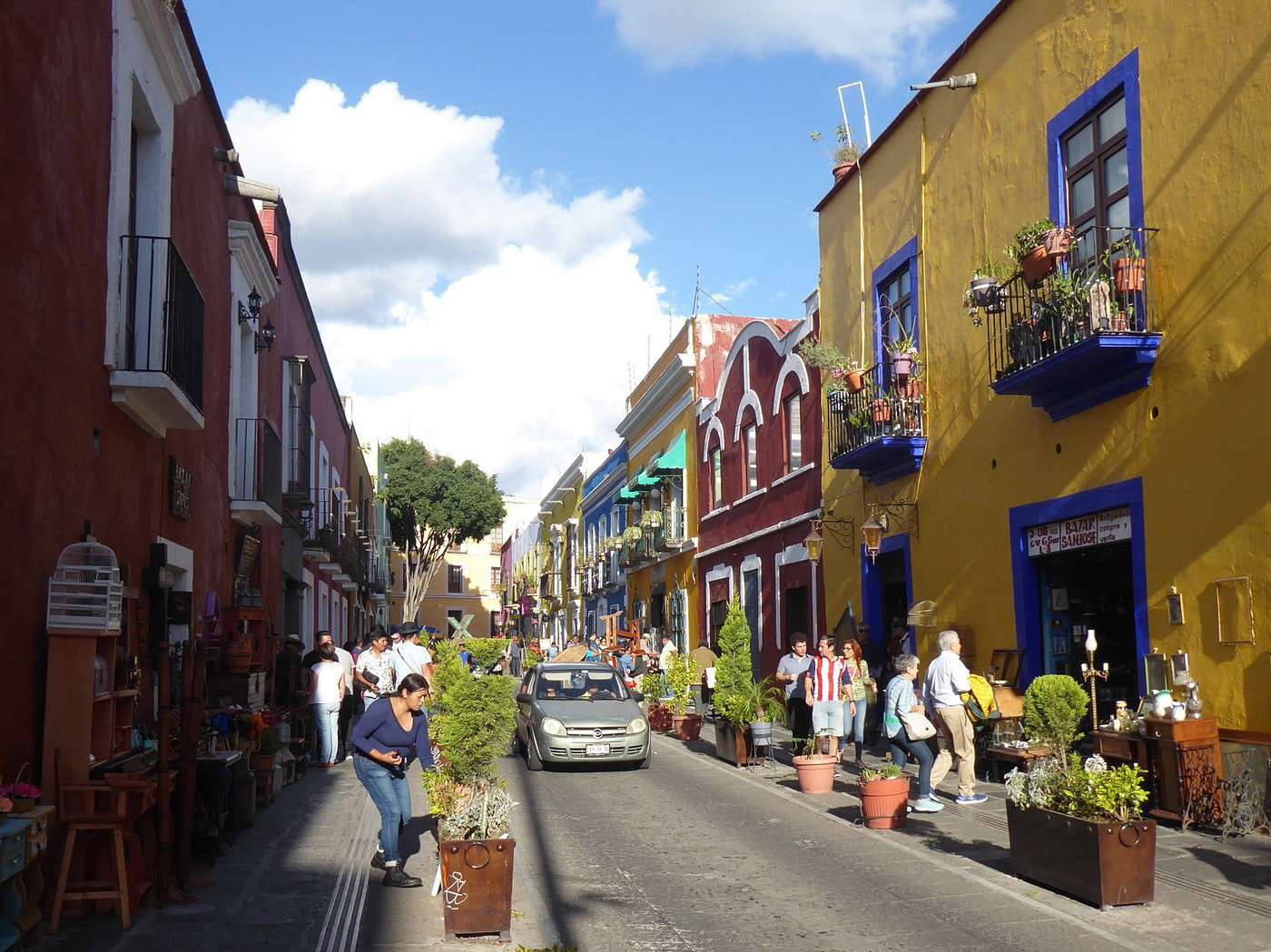
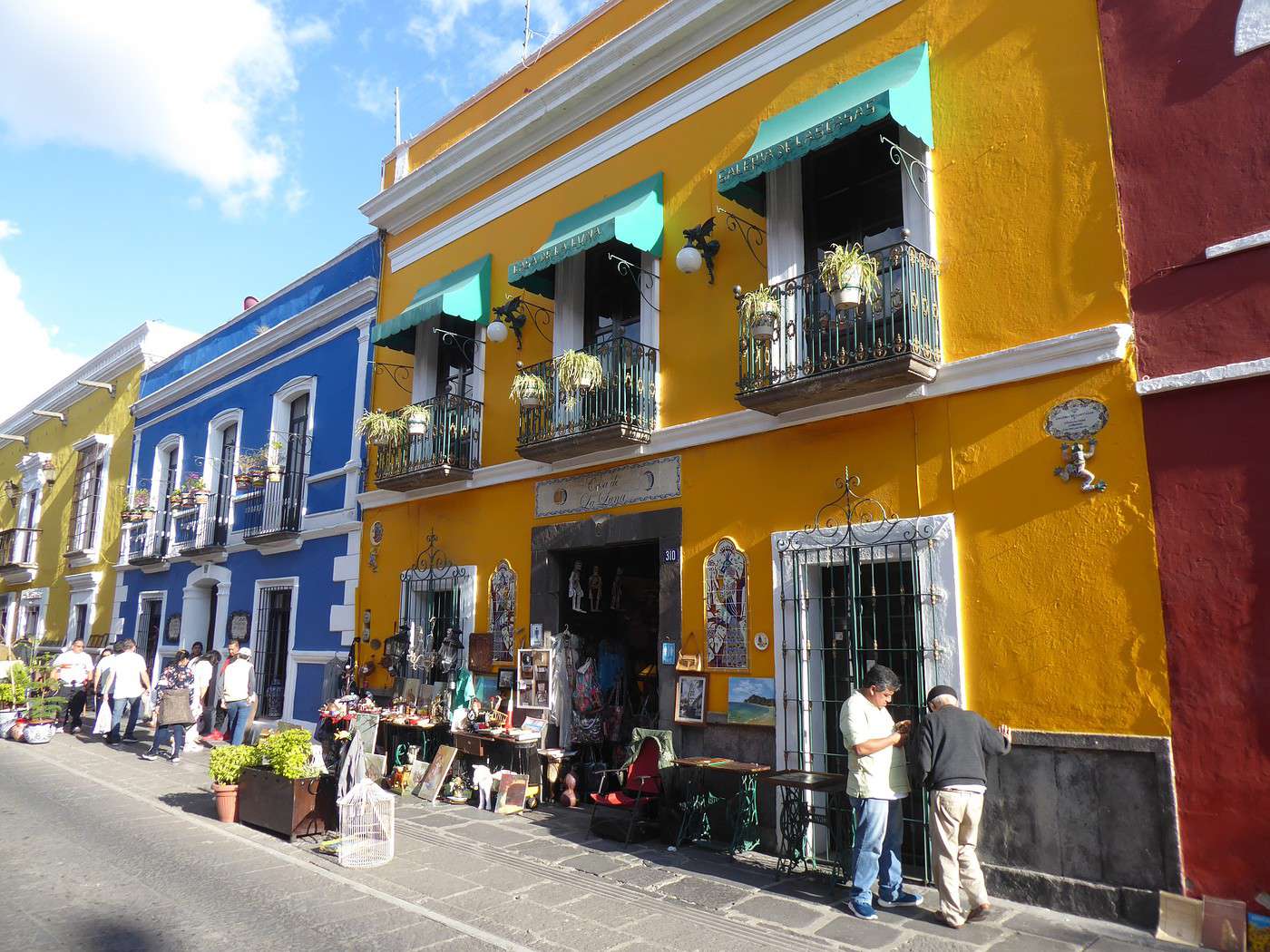
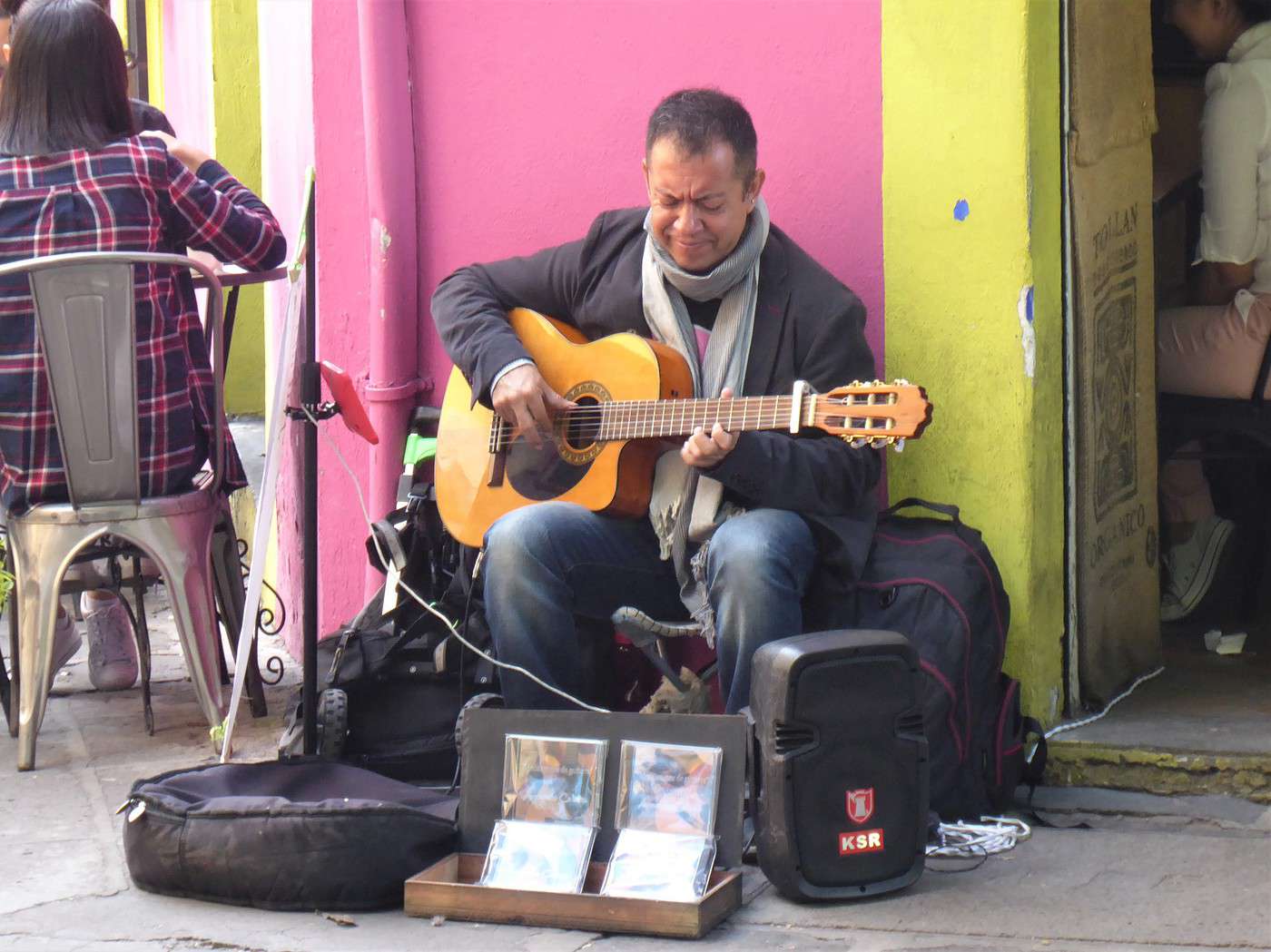
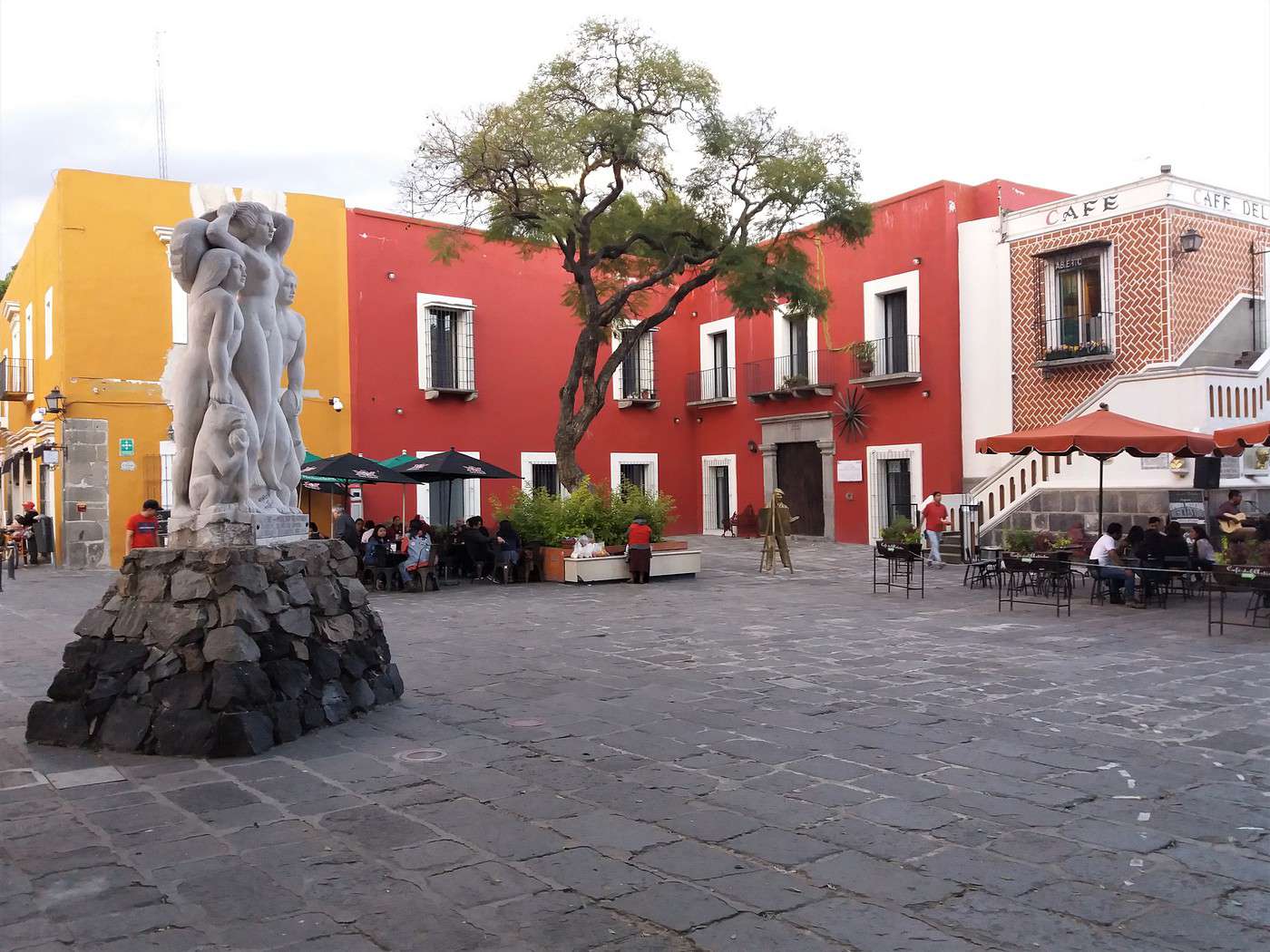
The streets in our neighborhood are charming, full of color and life. Bars, restaurants, shops—there’s everything. And then there’s the buzz, like that flamenco guitarist on the corner. Just a quick note: it *is* nice to listen to—and we’ve seen a few like him in Mexico—but it’s nothing like what you’d find in Andalusia! The same goes for the guitars: “in Mexico, you find guitar makers everywhere,” but I’m still waiting to see an instrument that matches the quality of Spanish guitars.
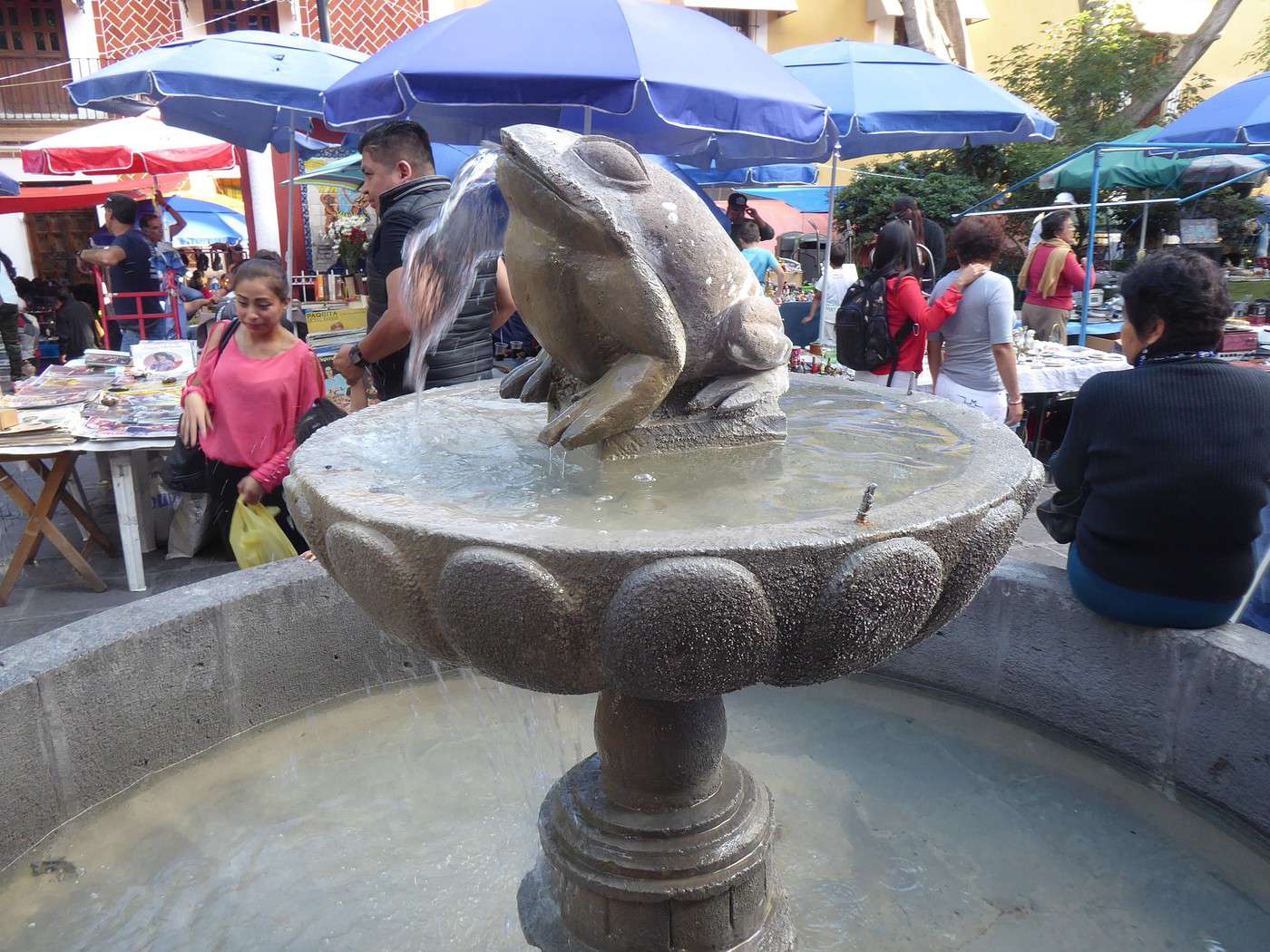
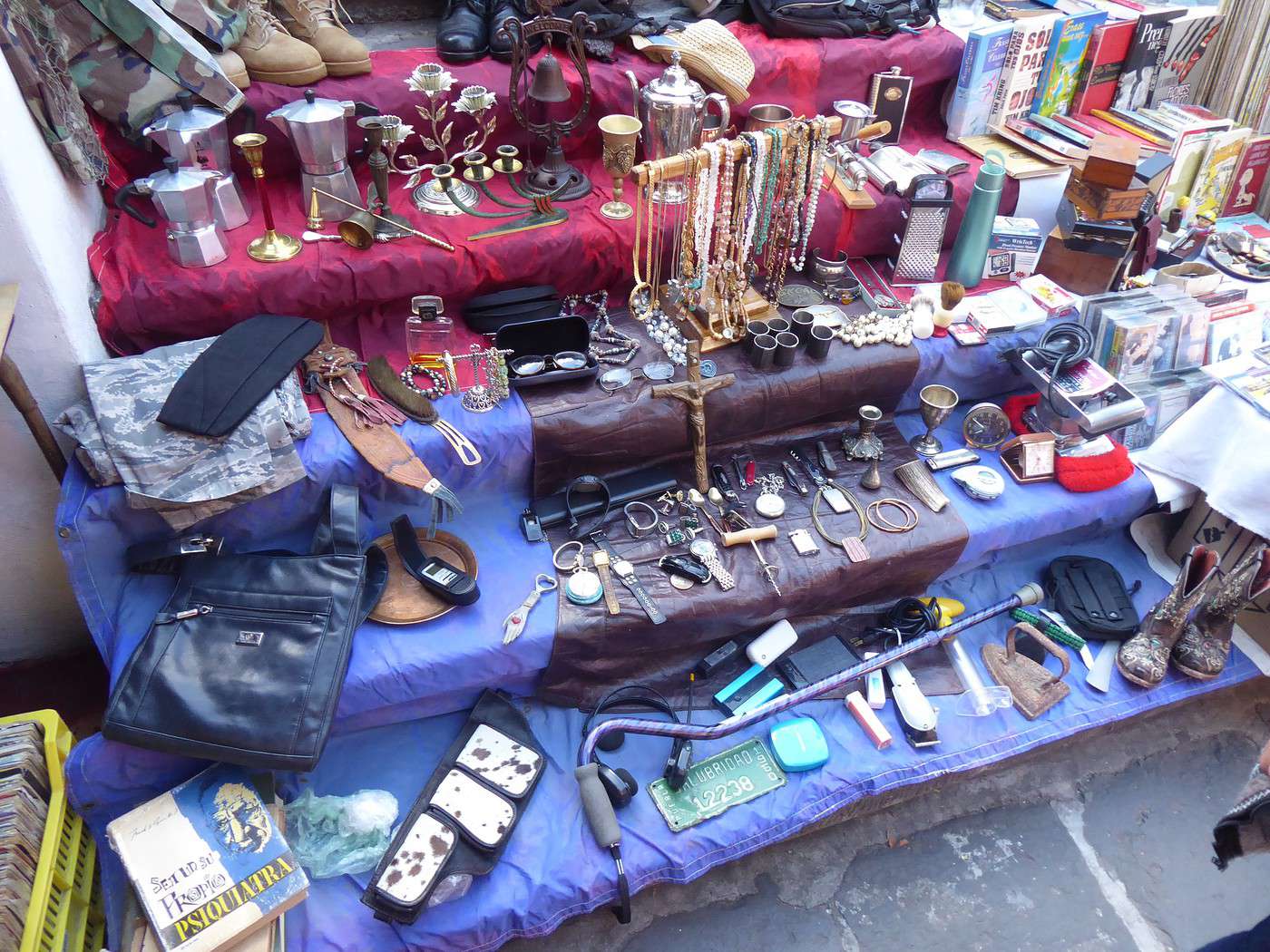
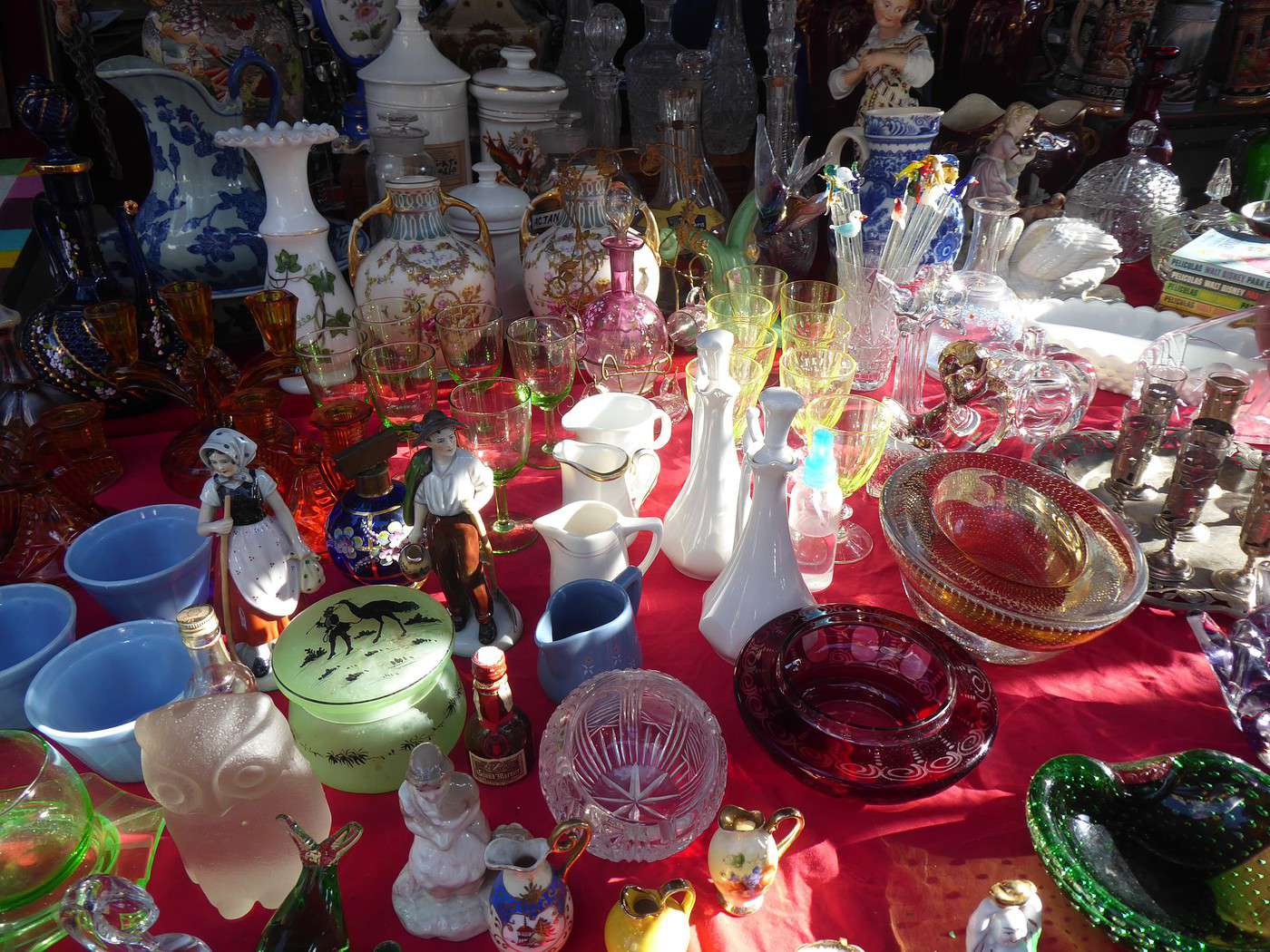
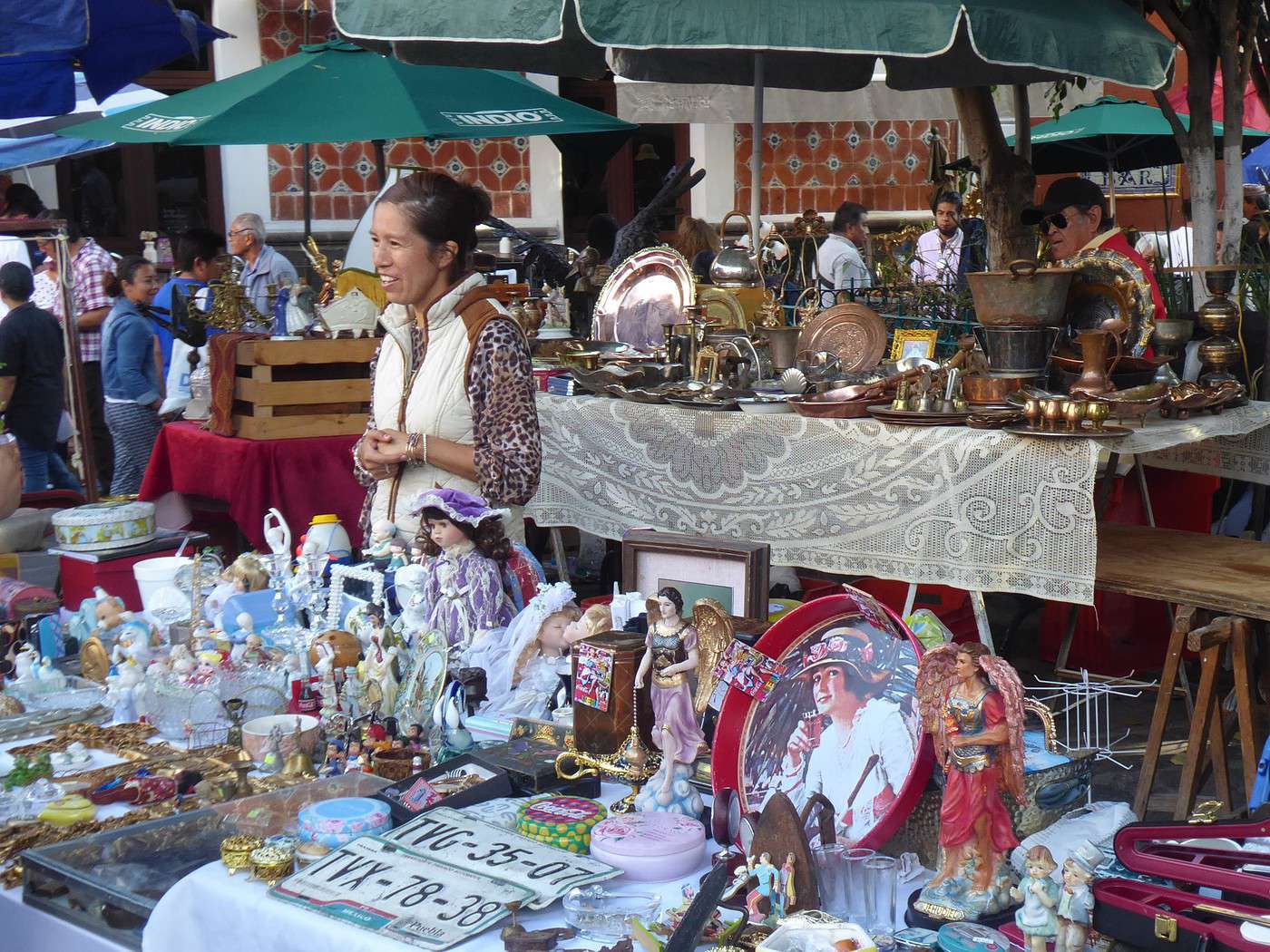
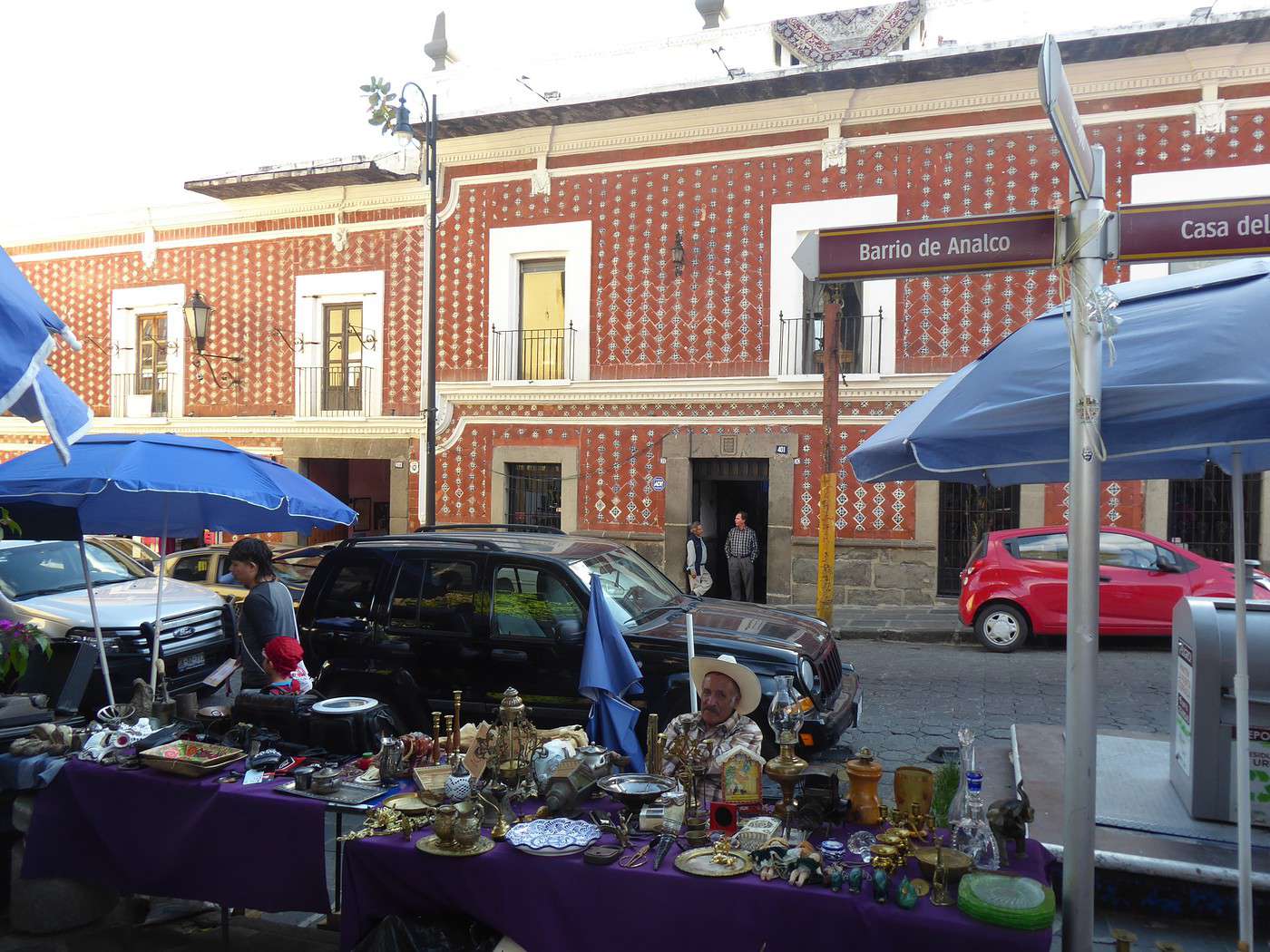
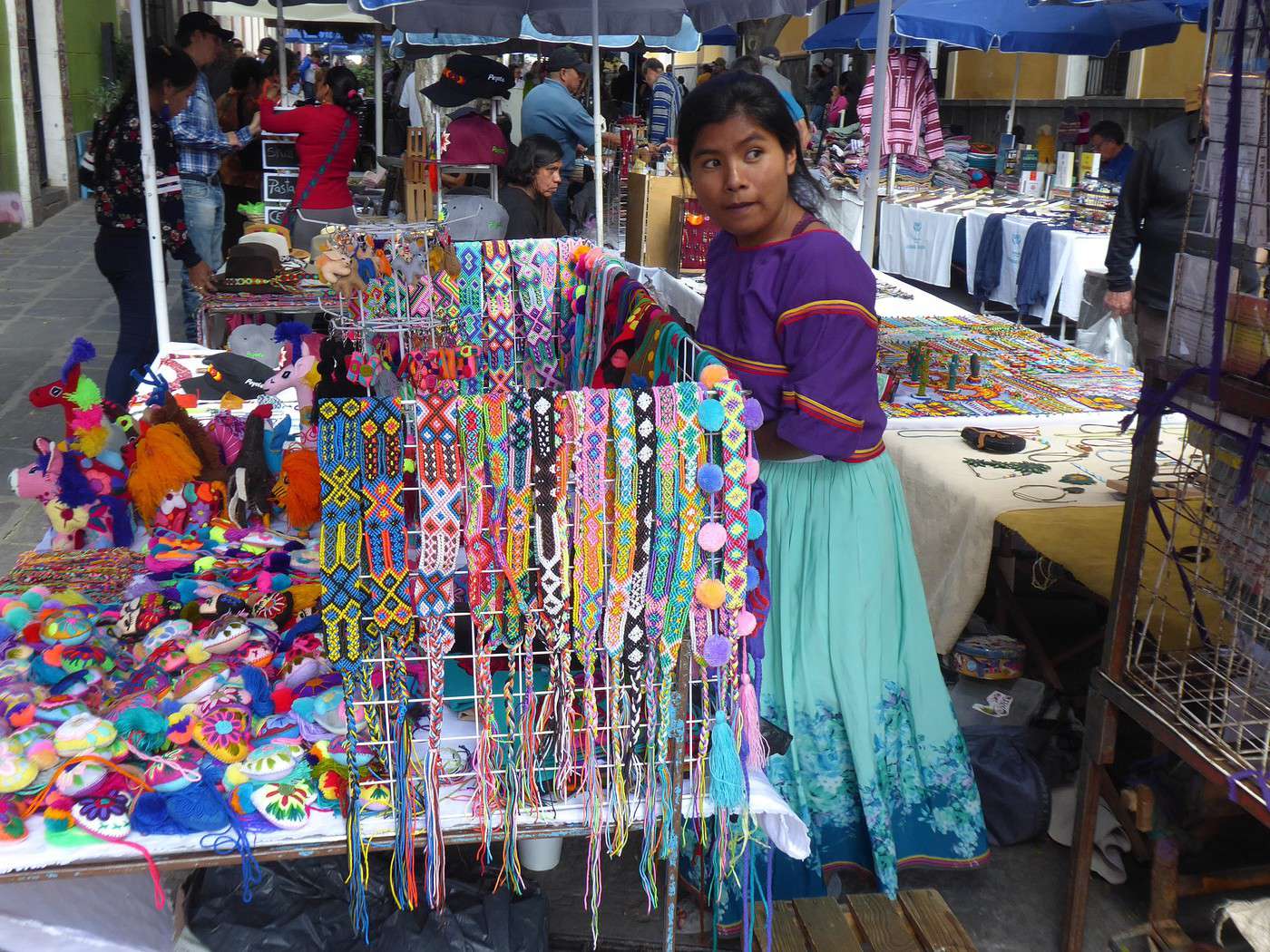
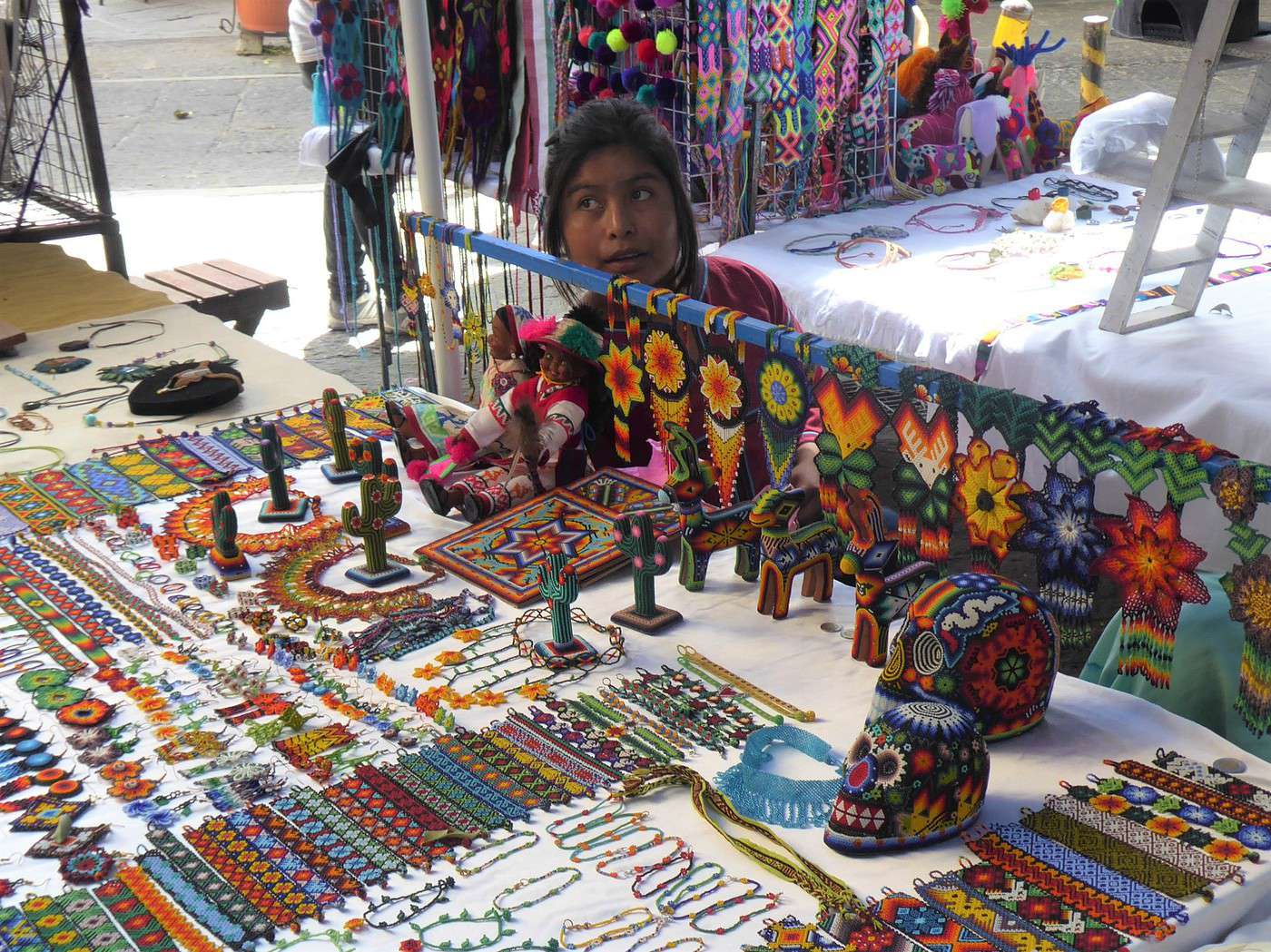
We arrive at the Plazuela de los Sapos, the “Square of the Toads.” There’s at least one toad here, decorating this fountain (“in Mexico, tra-la-la…”). There’s a flea market here, and it’s as friendly as can be—full of all kinds of bric-a-brac. The stalls are beautifully displayed, and we’re smitten with almost everything. 😎 Click, click, click—I take tons of photos. I’ll just share a small selection with you.
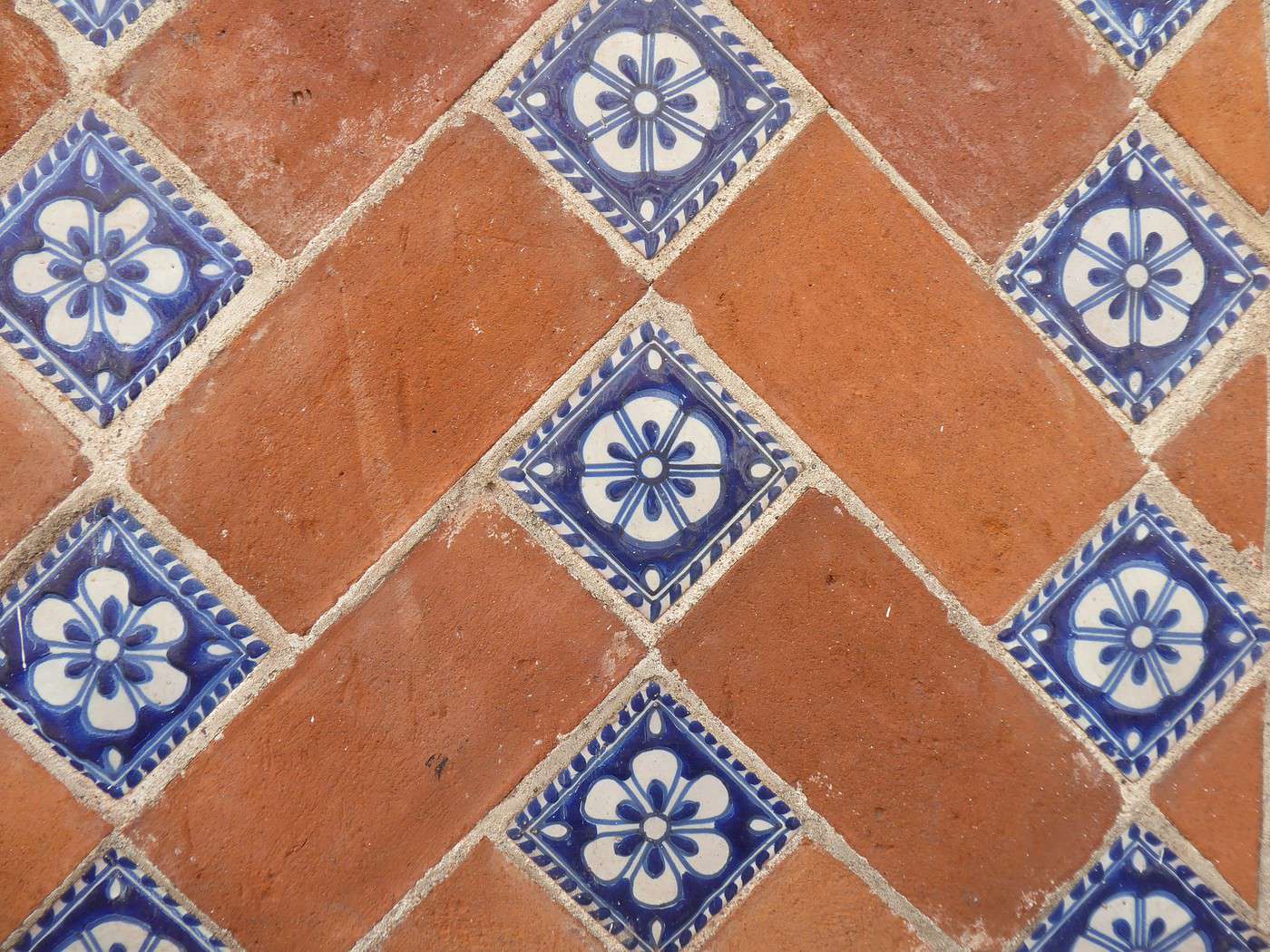
We cross the market, heading down Calle 6 Sur. On our left, a French restaurant called “Le Crapaud”—frog legs Provençal are probably on the menu? At the end of the street, across from us on Avenida 7 Oeste, there’s a stunning house with a façade reminiscent of Portugal’s azulejos. 😎 But I find this more interesting—the mix of red bricks and blue-and-white tiles, arranged diagonally instead of just horizontally and vertically. A unique twist on a style with Moorish origins, which might even trace back further (Iran, Central Asia)—we’ll never know who influenced whom.
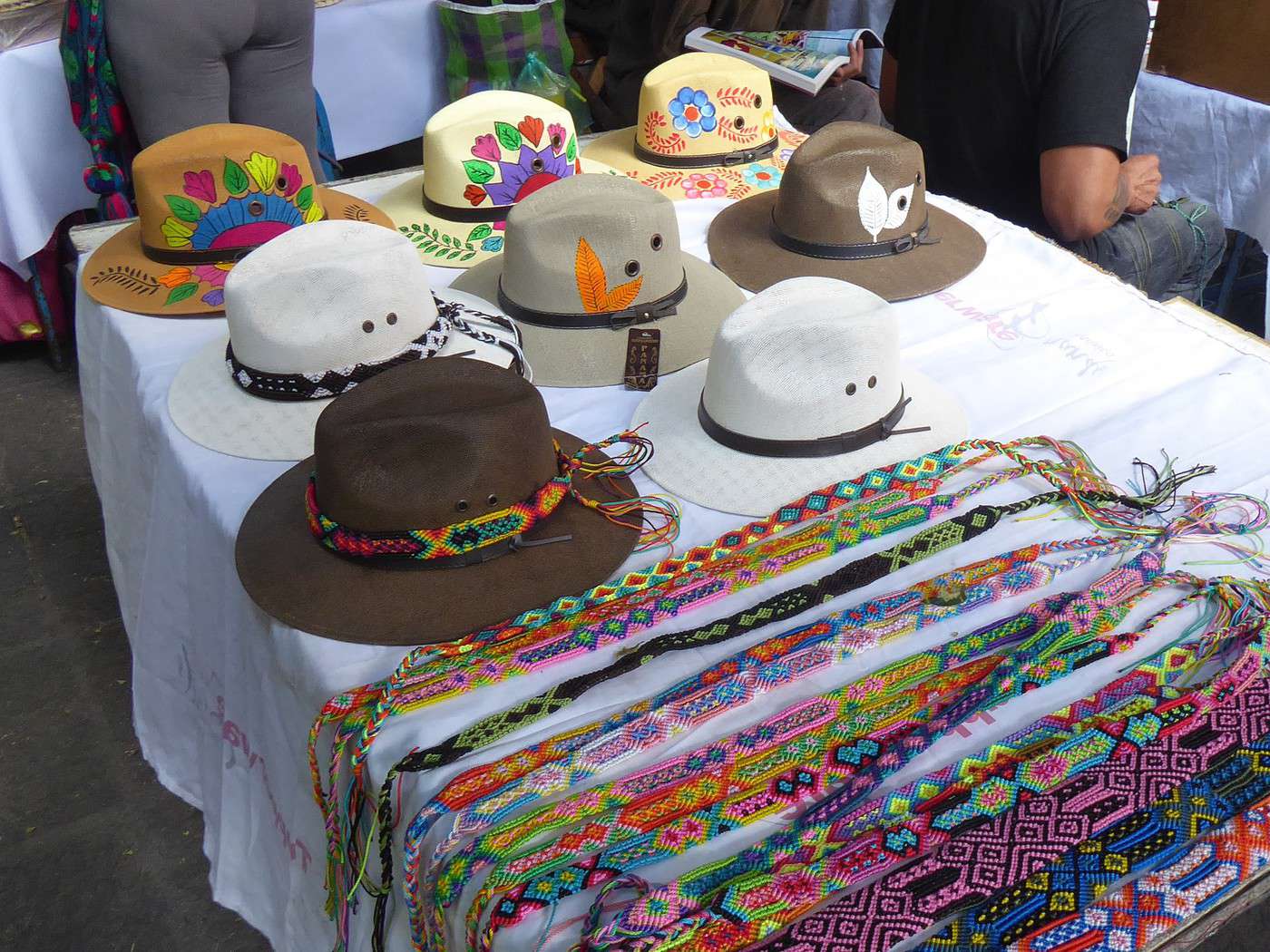
We head back to Calle 3 Oeste, which leads straight to the Zócalo. There’s another market here, offering all sorts of interesting things. Two adorable Indigenous girls (I love their eyes and hair, so Asian-looking 🙂) sell colorful trinkets, including these “lazos” for hats—a kind of macramé. There’s a hat just begging for that kind of decoration. It’s the brown hat she bought in Teotihuacán, the one I placed on the Indigenous girls’ stall, adorned with the “lazo” she just picked out. See? It’s easy to find great hats in Mexico! These are the kinds of hats most Mexican women wear when they’re traveling in their own country. No need to wear “ridiculous” hats!
Six-week trip to Mexico
GeorgesOZ · 2020-04-05 · Message 169 of 227
Puebla – Cathedral
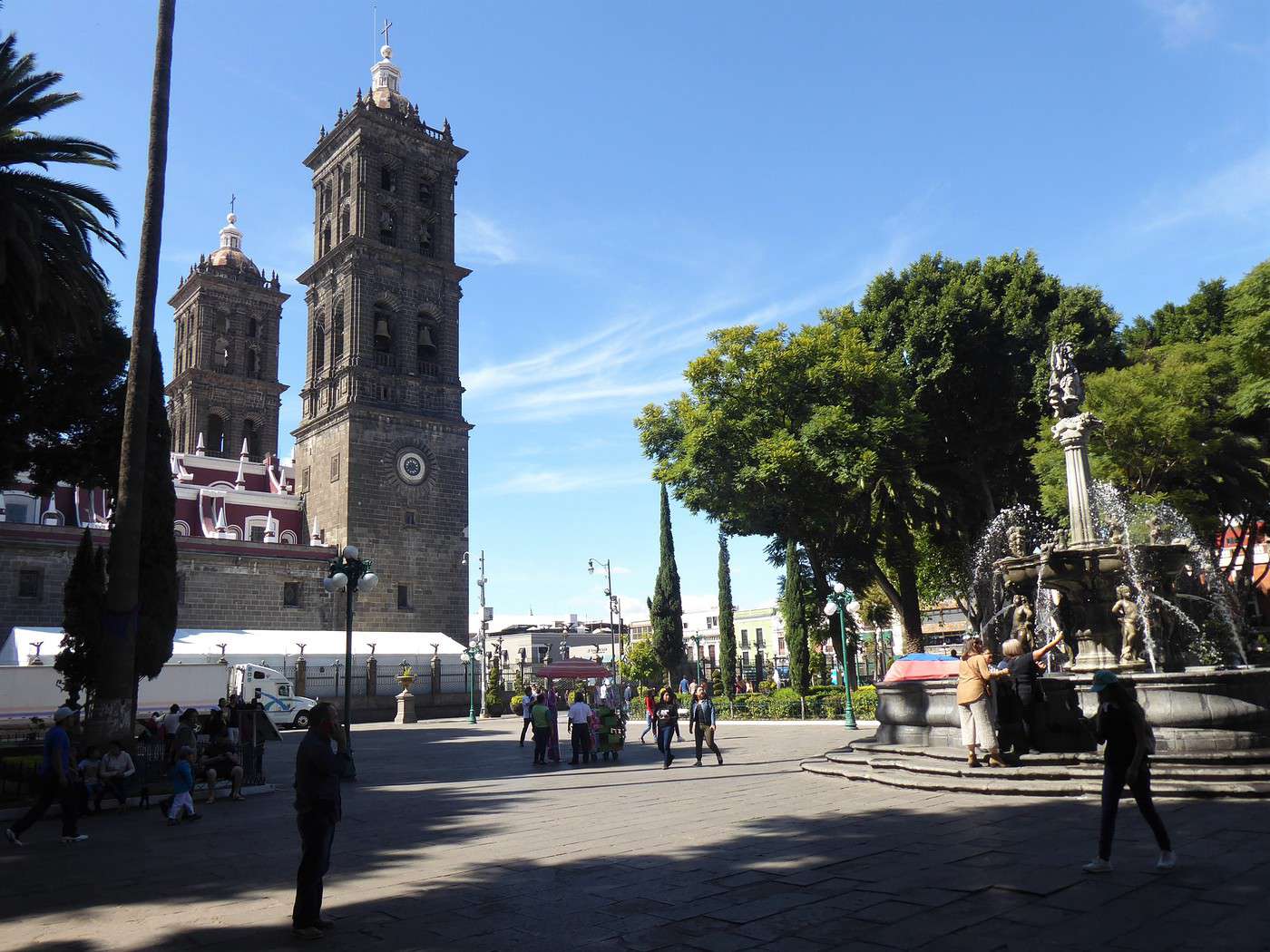
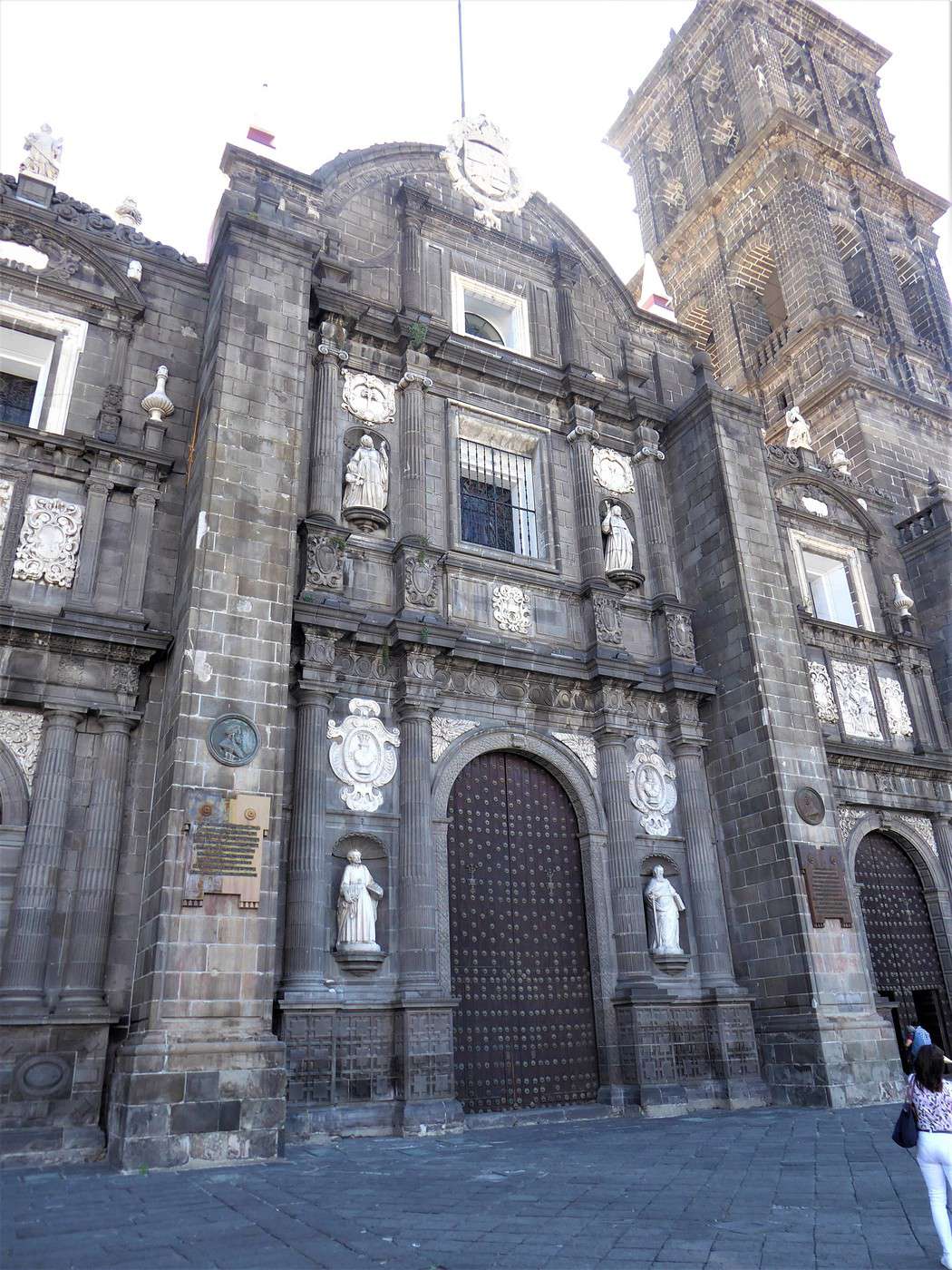
Today, we’re heading to the cathedral. Its two towers, the tallest in Mexico, stand right next to the Zócalo. The cathedral was founded in the late 16th century but completely renovated in the 17th century. Its facades, built from dark limestone, are impressive. I don’t have enough distance to capture the whole thing with my little camera, but I think my photos will give you a small idea.
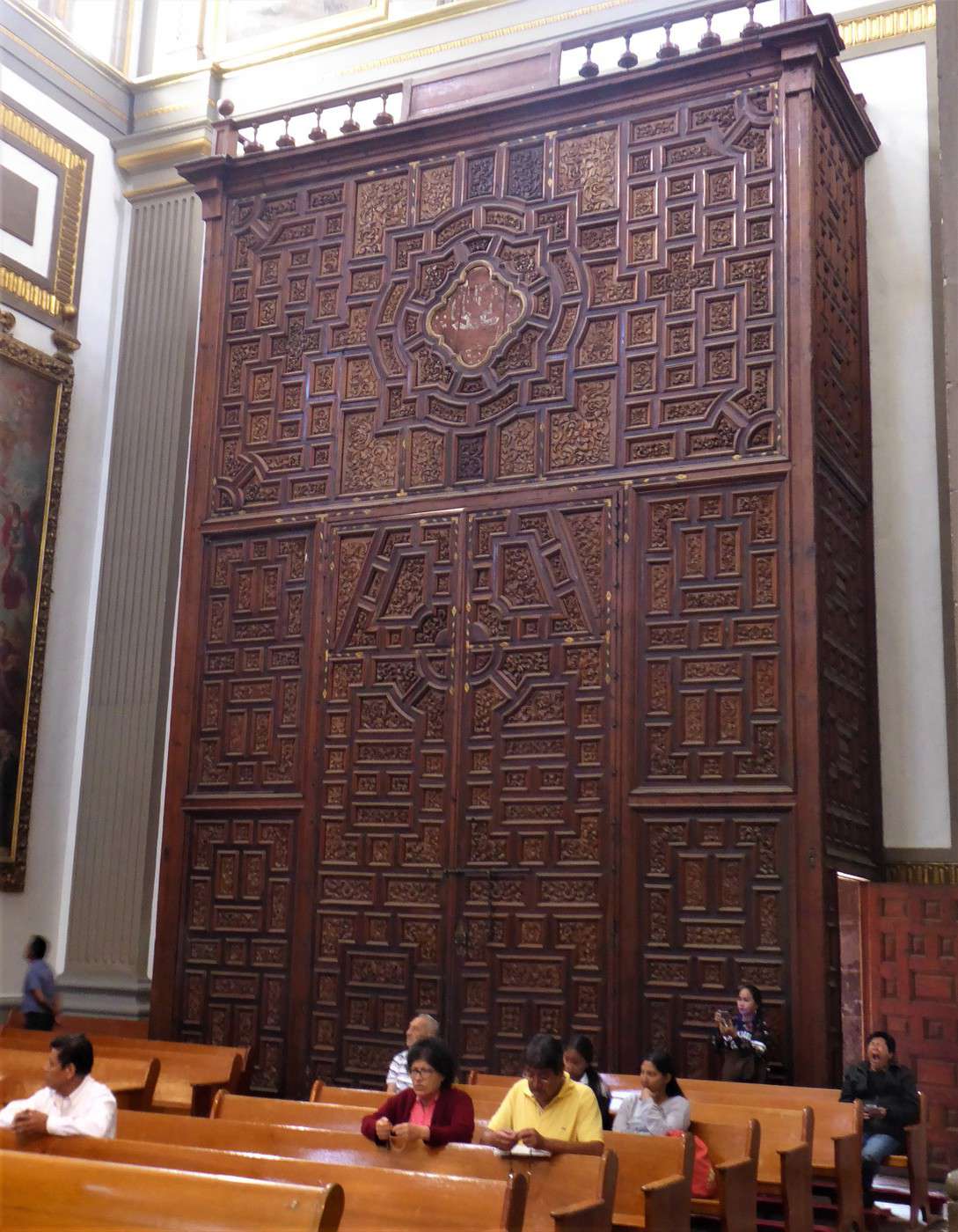
The interior—there’d be pages to write about the interior! It’s stunning. From the entrance, we’re blown away by the massive wooden doors, cypress I think. They’re richly crafted with geometric panels that immediately remind us of what Spain inherited from the Moors and, of course, brought to Mexico. Magnificent. Imposing. 😎
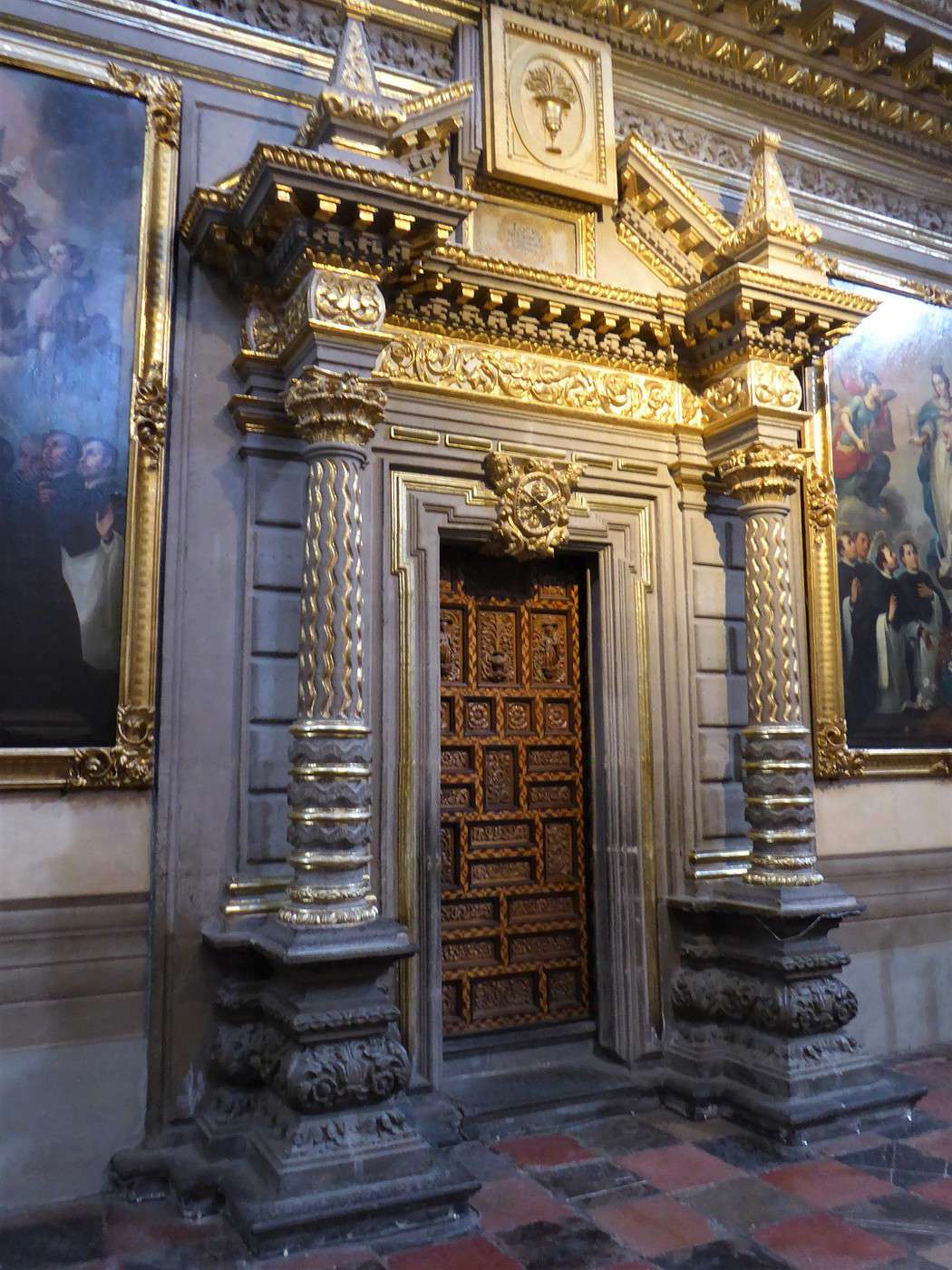
It’s Baroque, so it’s quite ornate in terms of decoration, like this side door (closed) that leads to the choir and the organ: intricate colonnades and lintels, a wooden door with complicated panels, gilding, etc. Some might find it over the top. We think it’s magnificent.
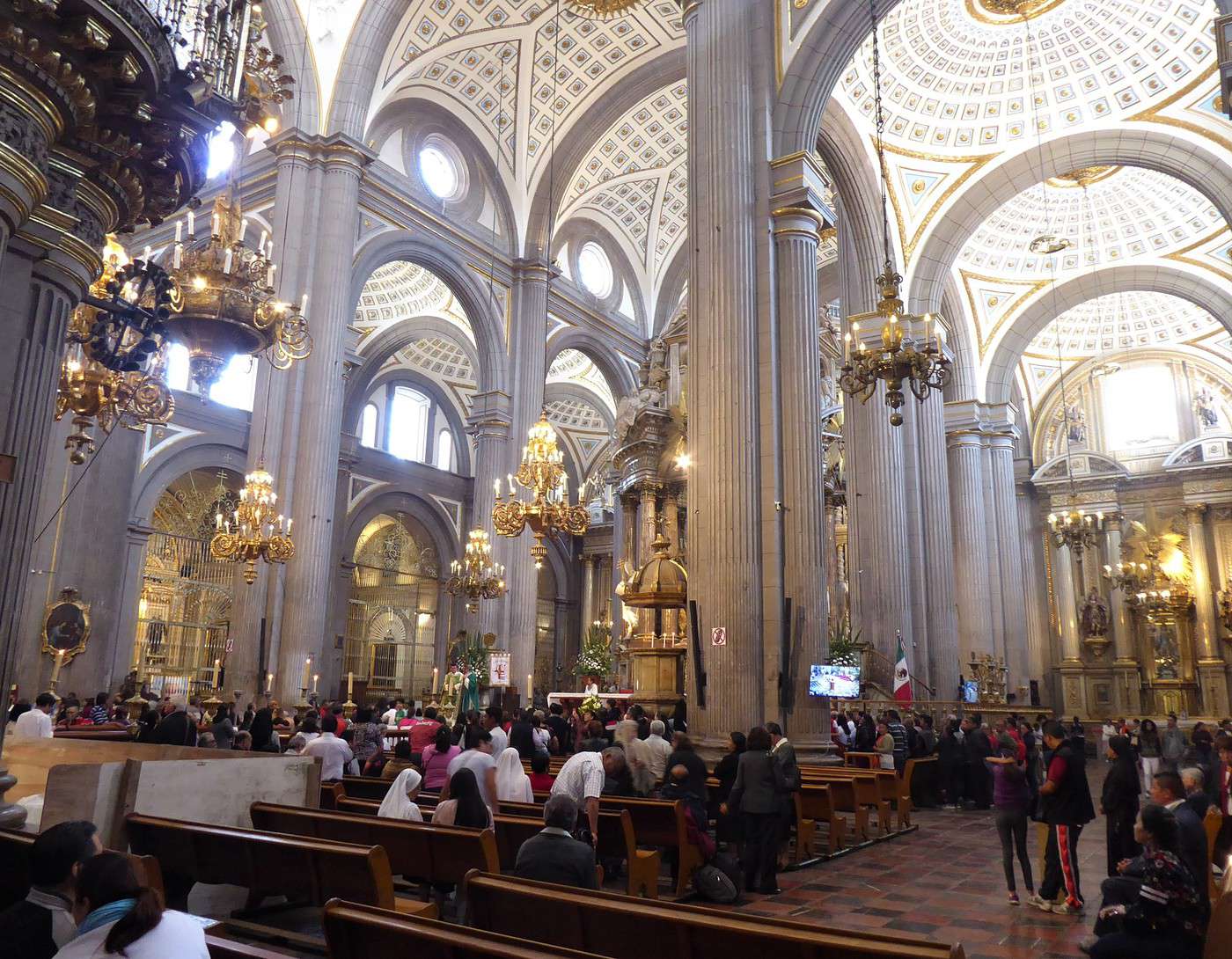
We enter the nave and are blown away once again. The tall gray stone columns rise toward a multitude of domes. Several oculi generously let in daylight. The space is punctuated by massive, gilded candelabras. Despite all the decorative complexity, the whole thing is balanced and manages to convey a certain sobriety. I know some will disagree with that, but balance isn’t the same for everyone. It’s a bit like soup, right? Some like it lightly salted, others prefer it well-seasoned—never mind the pepper, chili, etc. you can add!
It’s Sunday, and a mass is being held, nearing its end. The Archbishop of Puebla heads toward an exit in a proper procession and generously sprinkles the congregation with holy water as he passes—Y and I even get a little shower ourselves. 🙂😉 The archbishop is a very smiling man; you can feel his kindness. He speaks to several people along the way. My Catholic upbringing helps me understand the emotion of the people, even if I’ve moved past the stage of blind faith (that’s an understatement). As for Y, being Buddhist, she’s open to anything that even remotely resembles religiosity. She’s in seventh heaven 😉 and doesn’t forget to join her hands (a Thai “wâi”) and cross herself when the drops fall from his aspergillum.
After these intense moments in the cathedral, we have the rest of the day to stroll through this magnificent city. Y tells me it’s her favorite so far. That says it all!
Six-week trip to Mexico
Michant · 2020-04-05 · Message 170 of 227
The metaphor of soup to describe the Baroque—you’ve got to be bold! 😎😎😎
The archbishop of Puebla heads toward an exit in a grand procession and generously sprinkles the congregation with holy water along the way—Y and I even got a little shower ourselves
I don’t think he’d pull that stunt today! 🏴☠️
Six-week trip to Mexico
GeorgesOZ · 2020-04-06 · Message 171 of 227
Puebla – Houses and Churches
A few more photos to show Puebla:
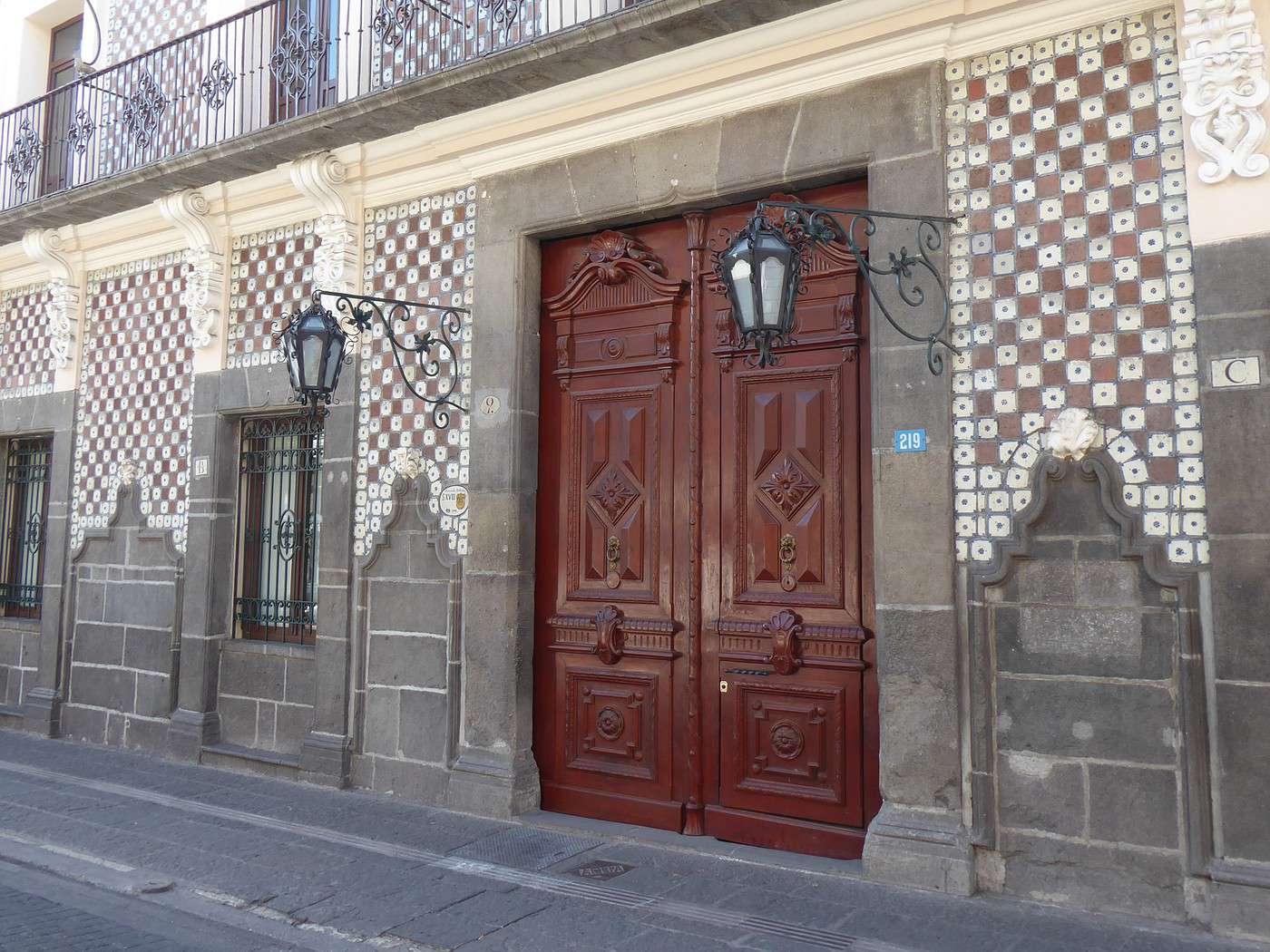
- 1) Avenida Don Juan de Palafox y Mendoza: a beautiful door and a lovely façade made of tiles. This is the "talavera" style typical of Puebla.
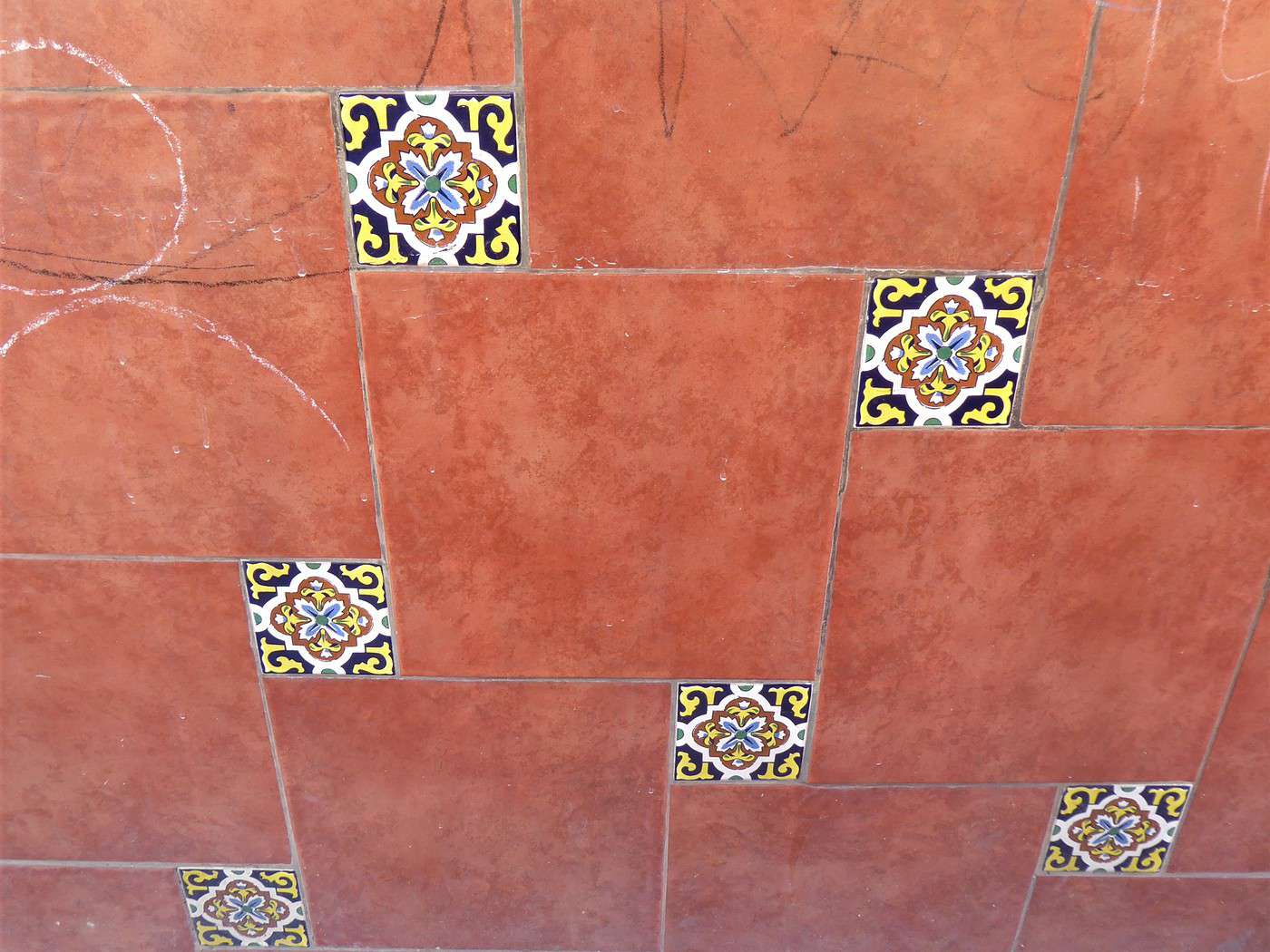
- 2) Close-up of these red terracotta tiles that nicely frame smaller tiles with floral patterns—a reminder of what you find in Spain (or Portugal).
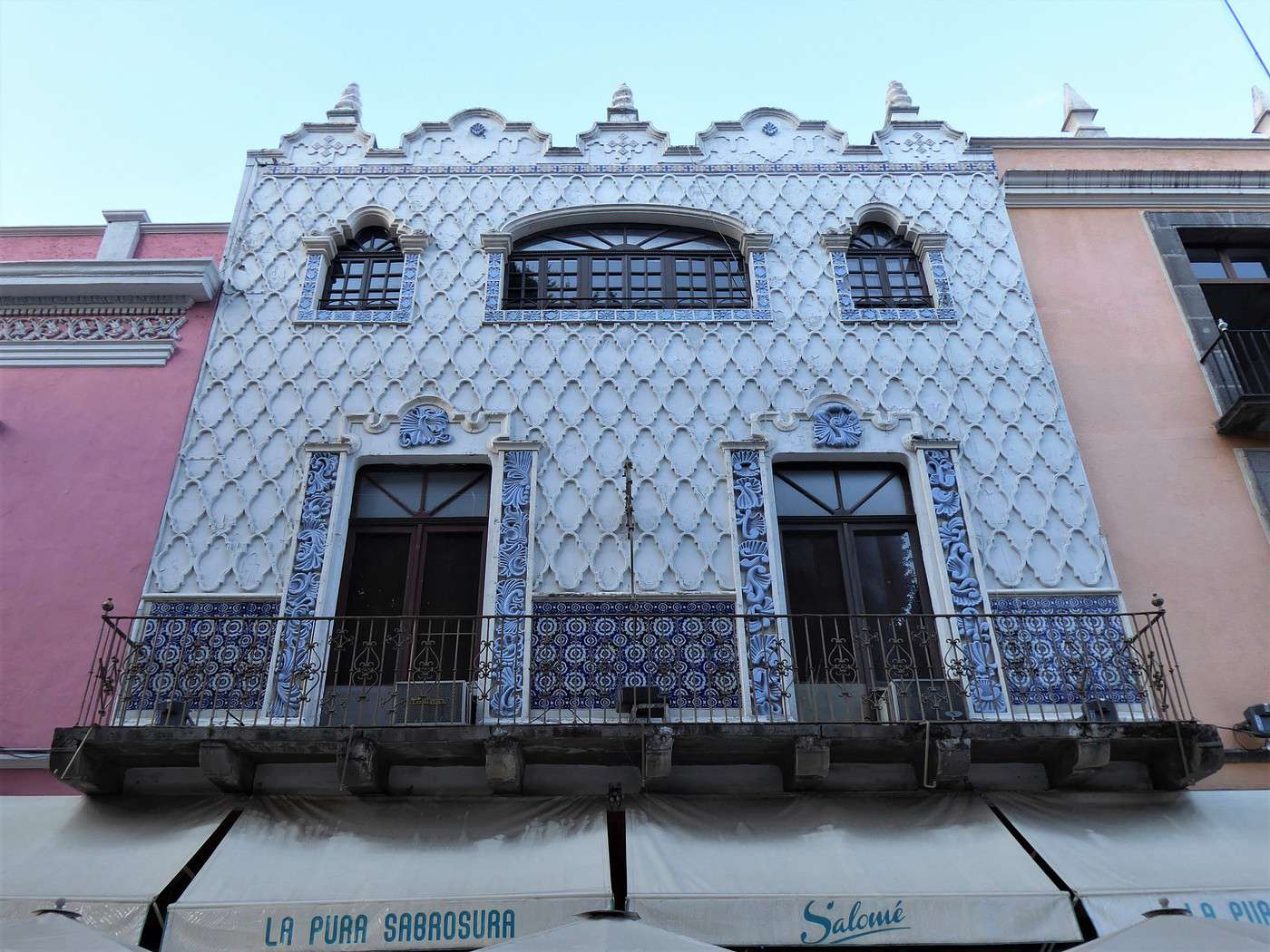
- 3) A balcony topped with a striking pediment in exquisite pastel colors. I can’t remember where I took this photo, but it’s in the historic center.
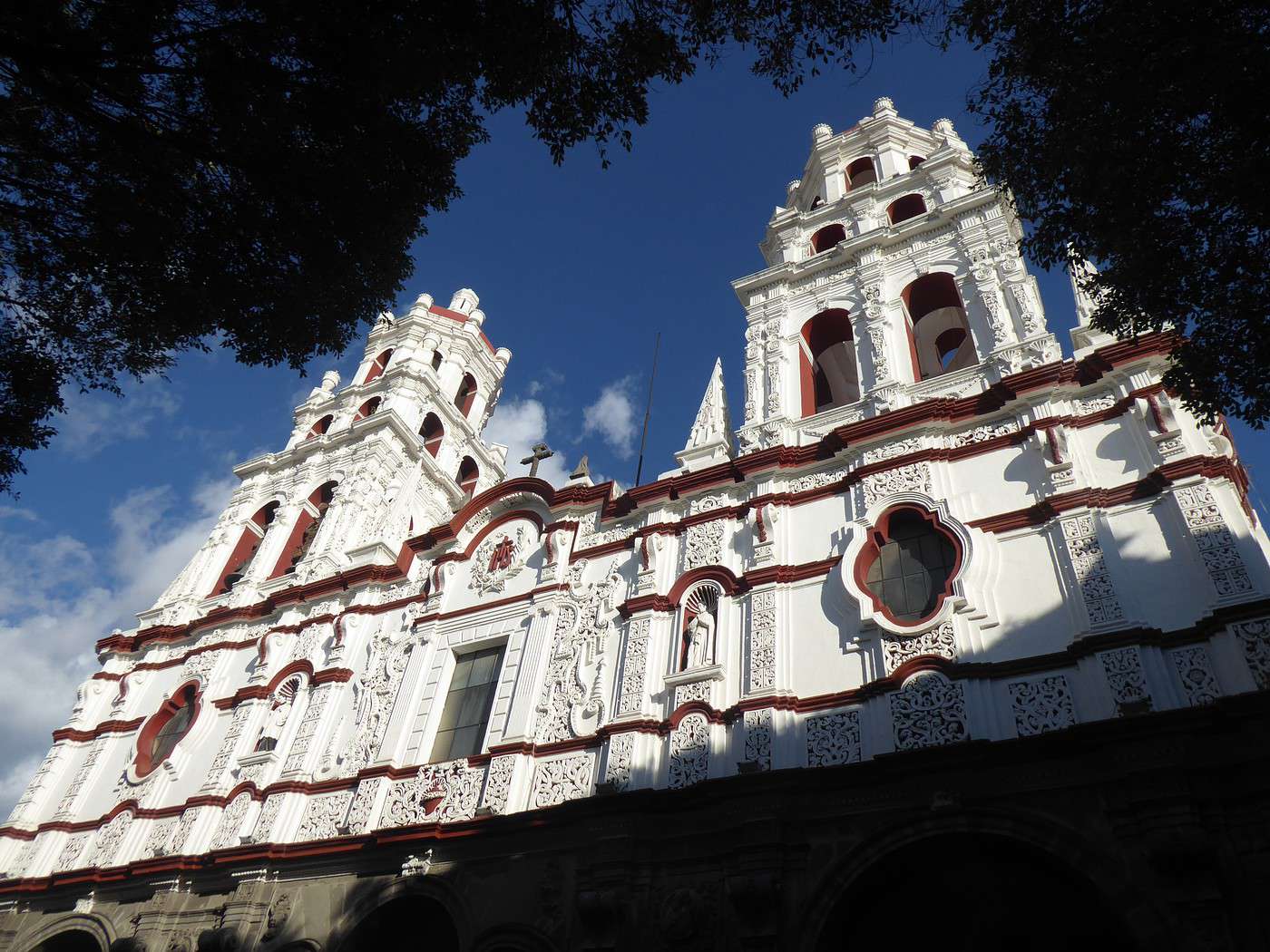
- 4) The towers of "La Compañia Templo del Espíritu Santo," at the corner of Calle 4 Sur and Avenida Don Juan de Palafox y Mendoza. Impressive, right?
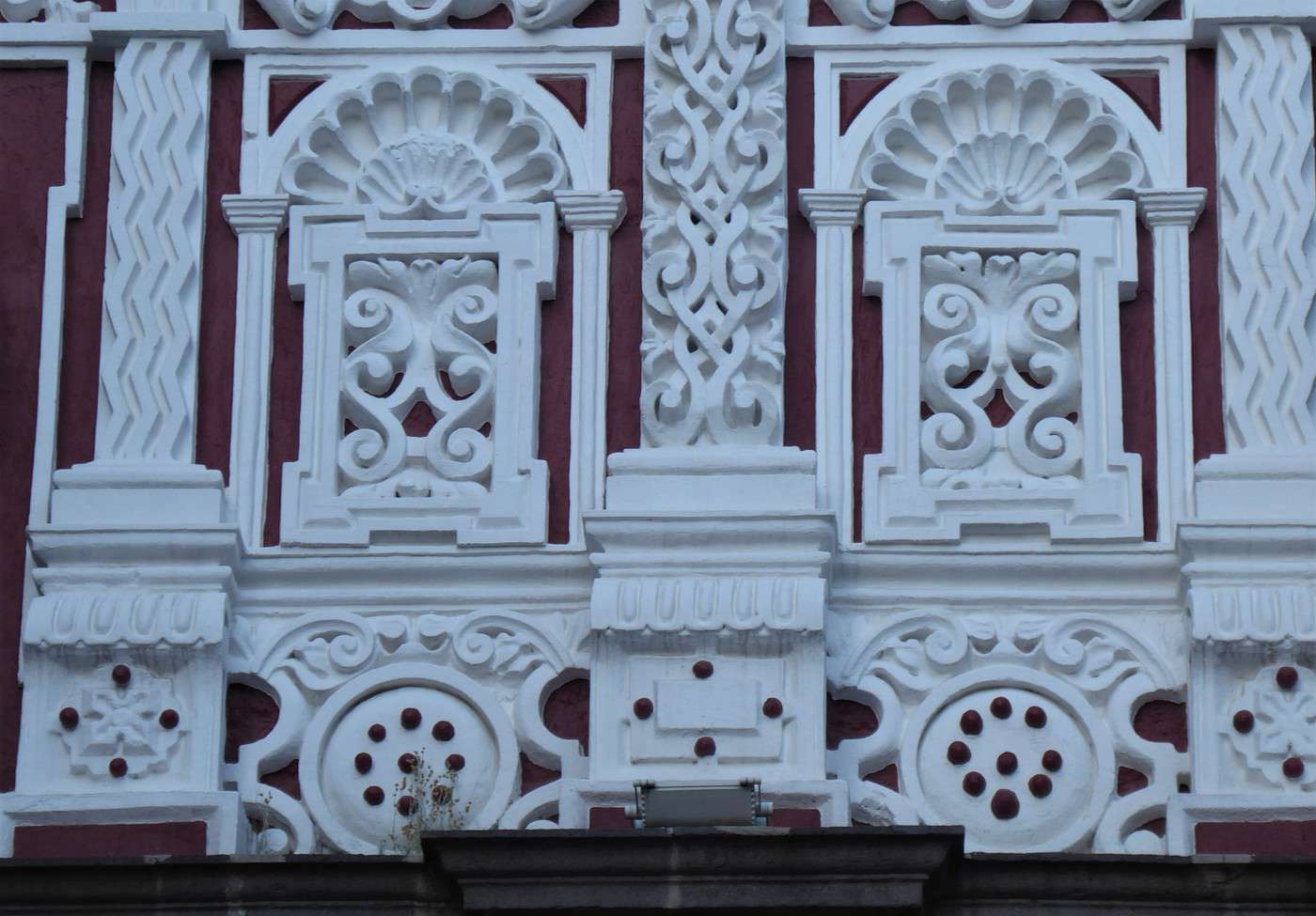
- 5) Details of the white stucco moldings on a dark red background.
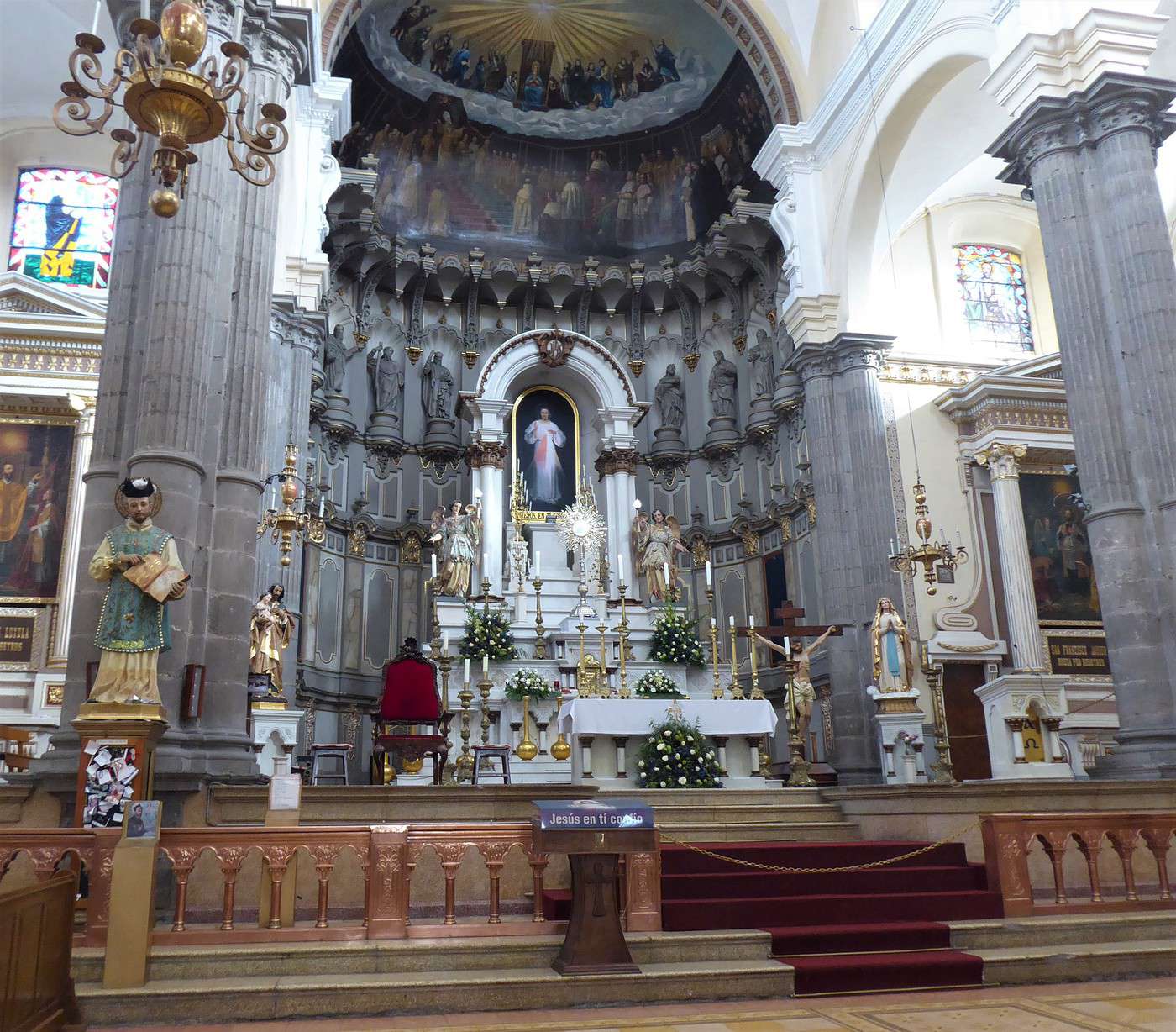
- 6) The interior of this church. Baroque style similar to what I described for the cathedral. There must be differences, but I’m no expert, and the impression remains the same: it’s beautiful.
- 7) A "talavera" porch somewhere on Calle Cinco de Mayo, if I remember correctly.
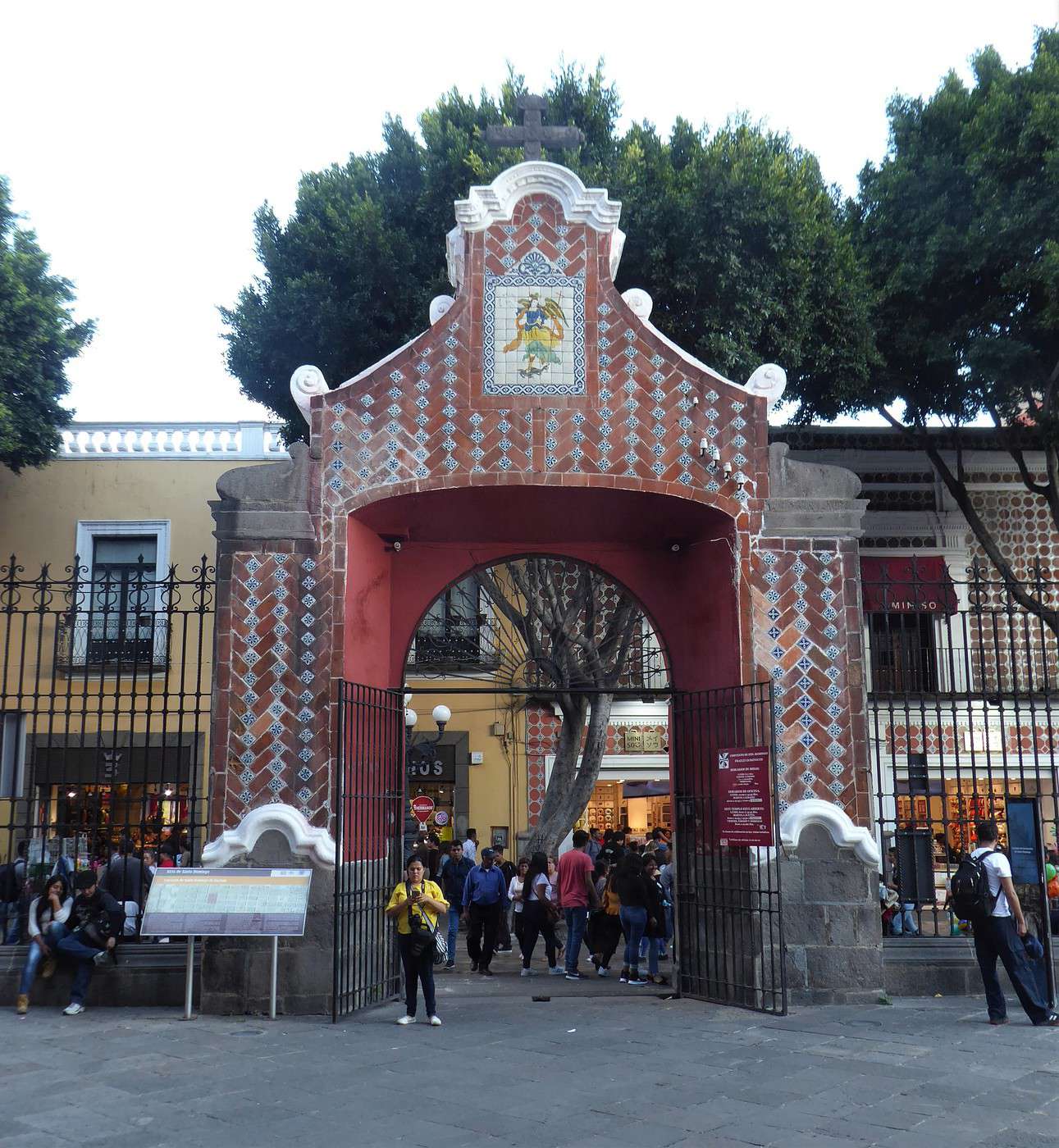
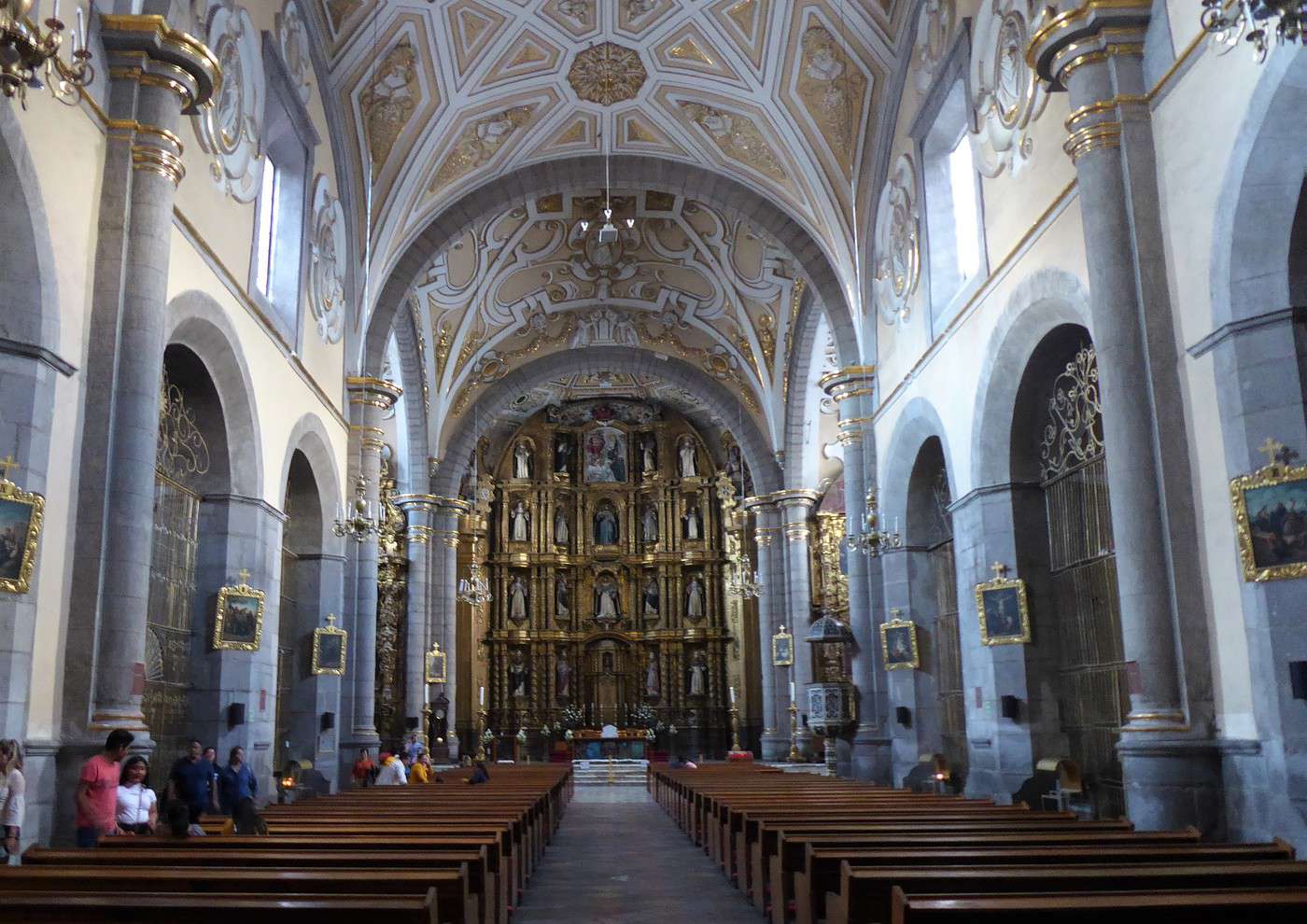
- 8) Finally, there are tons of churches in Puebla, and almost all of them are worth a quick visit. But if there’s one you absolutely must see, it’s the church of Santo Domingo on Calle Cinco de Mayo. Built by the Dominican order in the late 16th century, I won’t go into another detailed description. It’s baroque, it’s beautiful. First photo taken from the entrance.
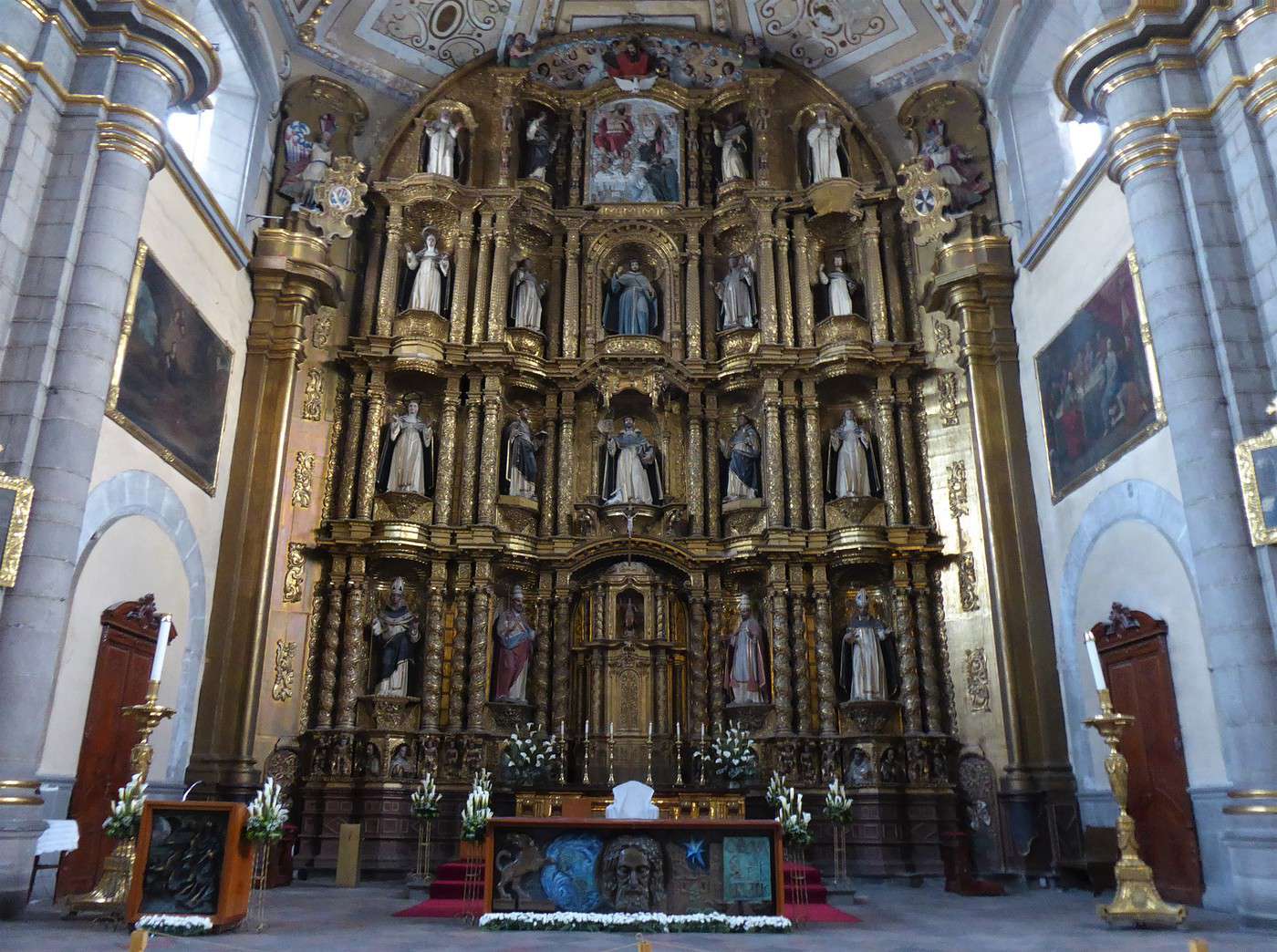
- 9) Second photo: the altar topped with a mind-boggling scaffolding of saint statues. Maybe not all the saints in creation are there, but it’s quite the gathering already!
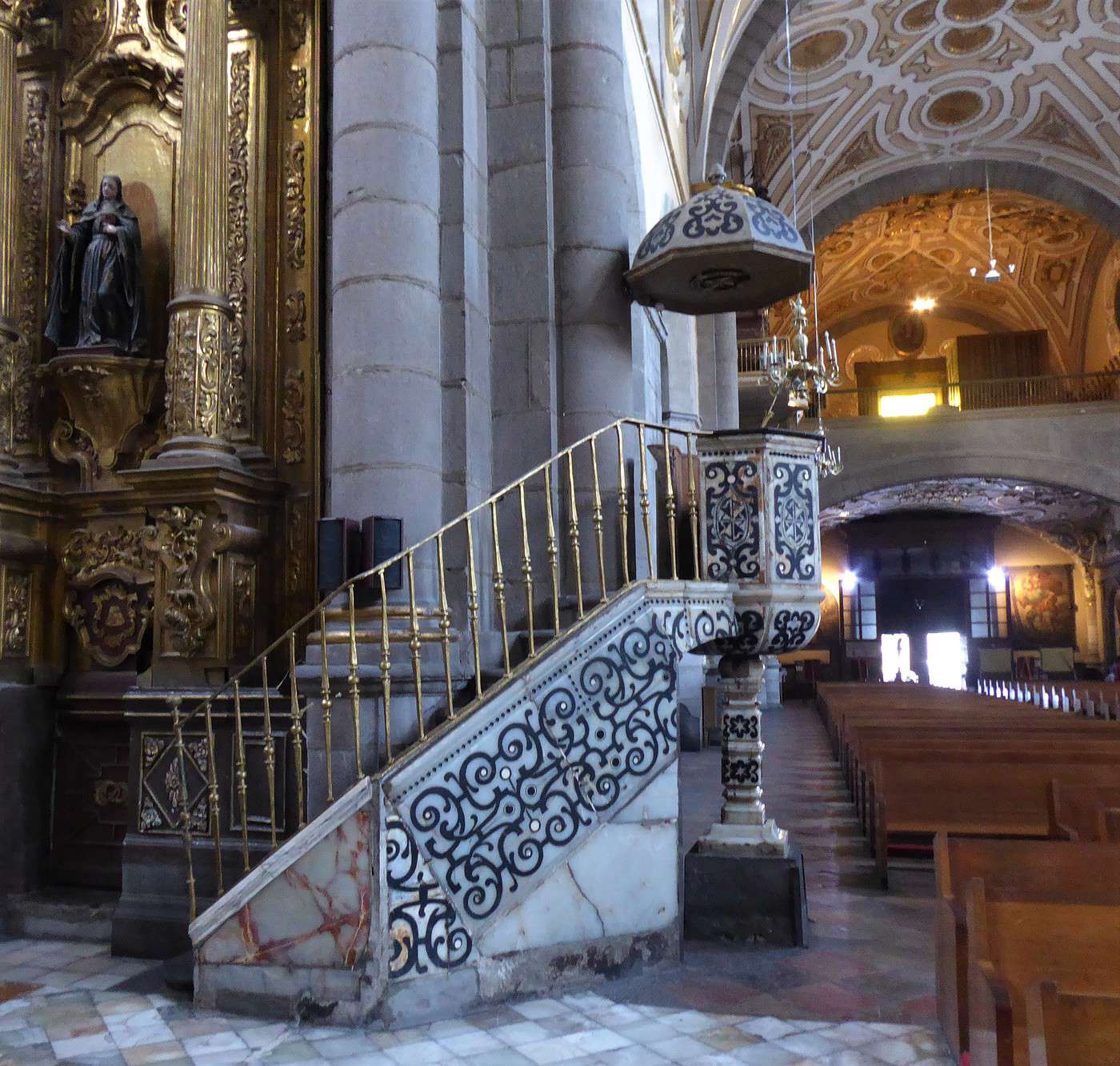
- 10) Third photo: a magnificent pulpit. In white marble, I think, enhanced with deep blue geometric patterns that are vaguely floral. So classy! The Moorish influence is obvious—it’s quite reminiscent of Turkish baths and hammams from the Muslim world.
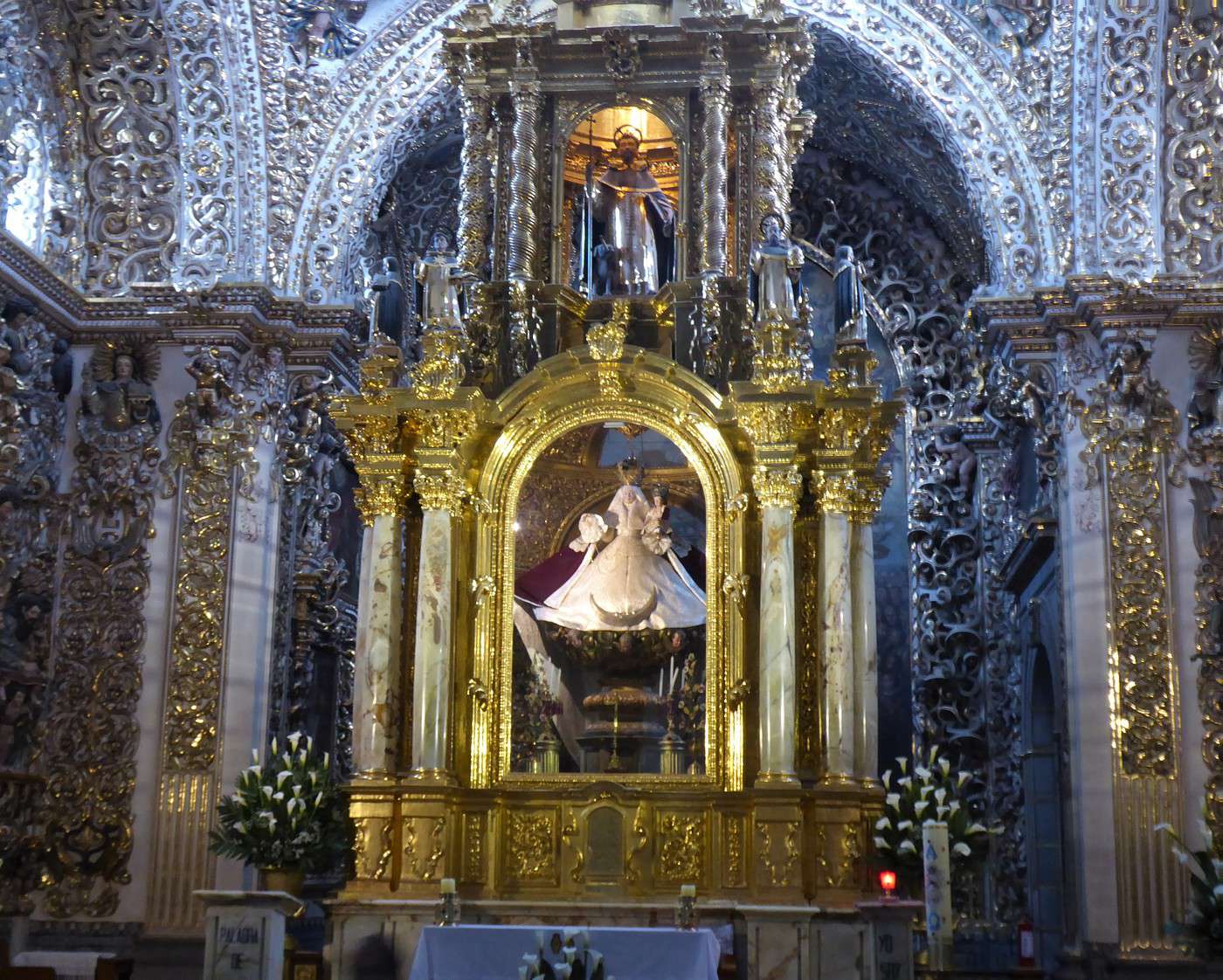
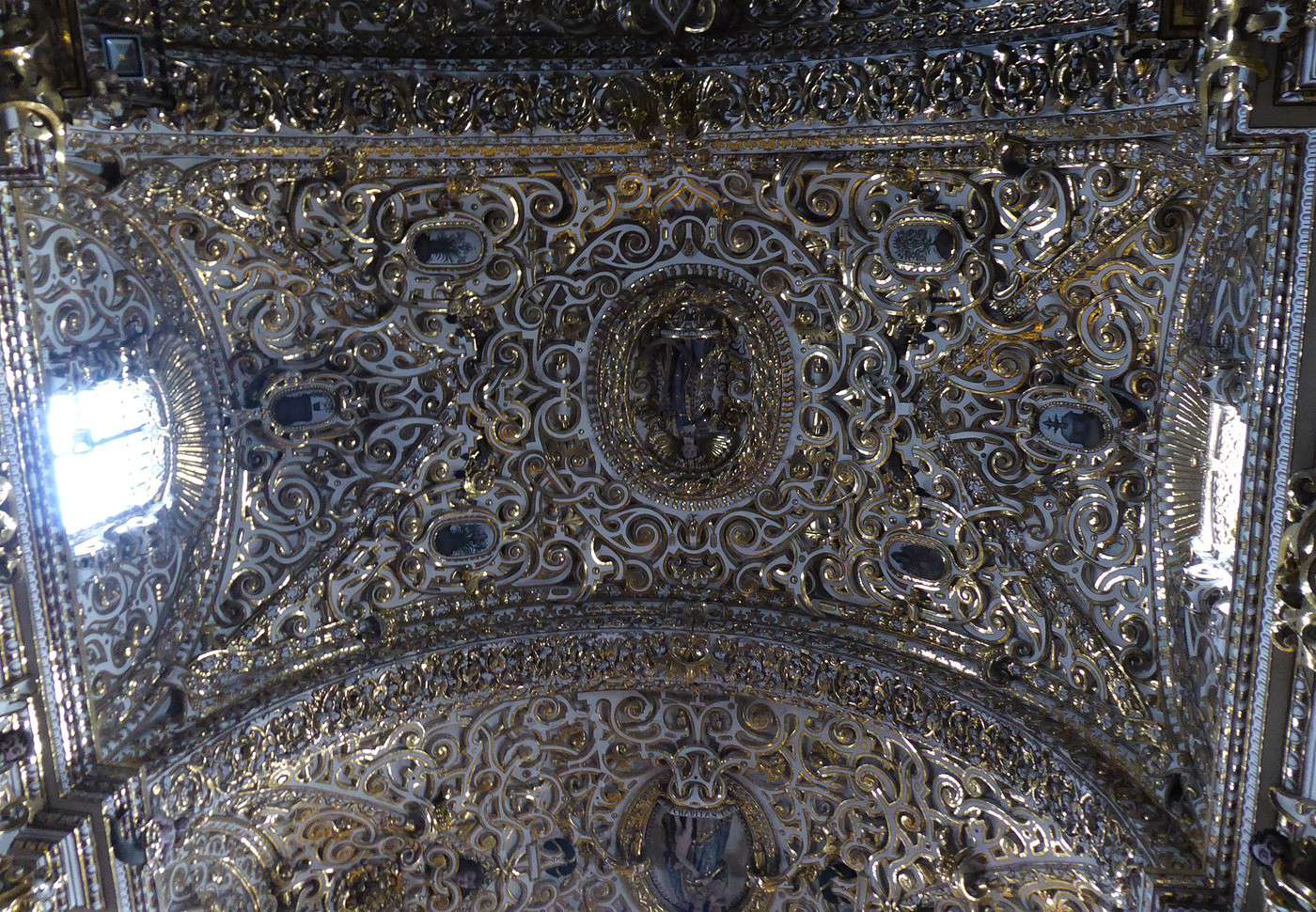
- 11) Finally, still in this church, we come to what has sometimes been considered the 8th wonder of the world, nothing less: the Chapel of the Virgin of the Rosary. A 17th-century masterpiece—the culmination of New Hispanic Baroque. It’s spectacular, with gilded stucco everywhere. Depending on your religious orientation, you’ll either be deeply moved or completely overwhelmed! 😎😇😮
- 12) The last photo: the chapel’s dome. No need for additional comments.
Y and I left this last church feeling pretty shaken by everything we’d seen. Maybe not completely overwhelmed, but hey, time for the nearest watering hole—it’s margarita o’clock! 😉😛
Six-week trip to Mexico
GeorgesOZ · 2020-04-07 · Message 172 of 227
Puebla – A few random steps
We only spent 2 days in Puebla, but what memories!
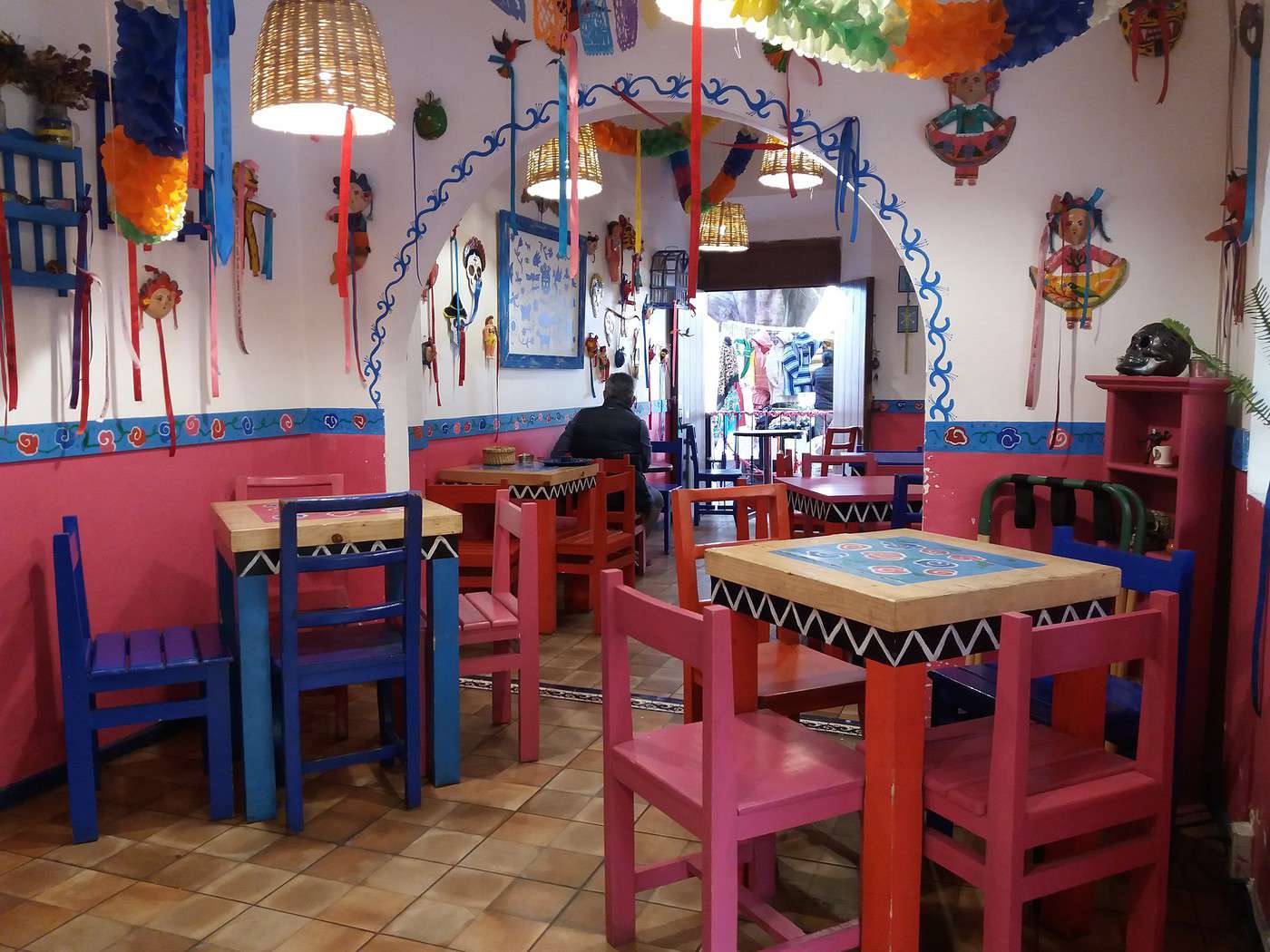
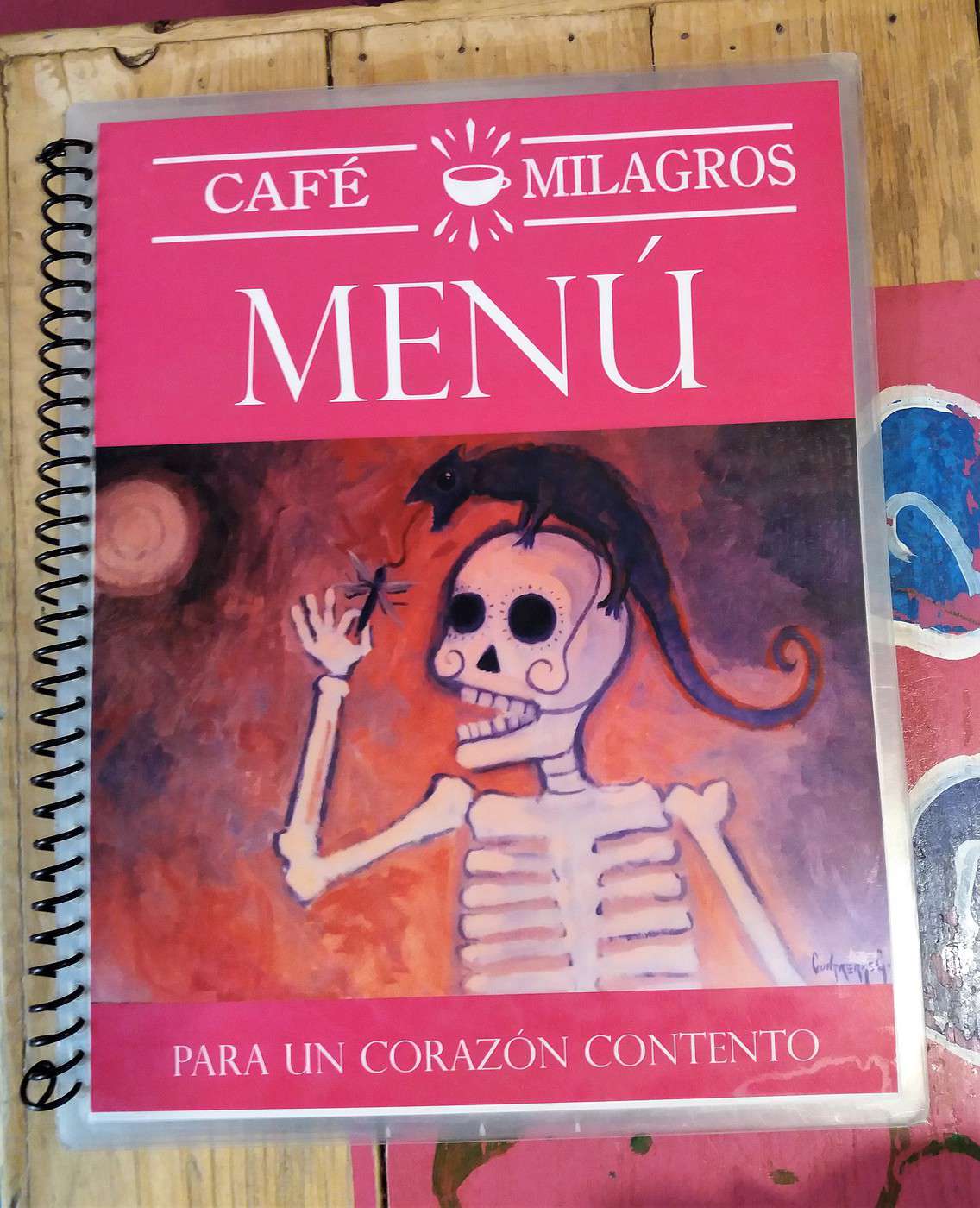
Our little breakfast served at the hotel, on our small patio, by the owner himself—a very friendly guy—wasn’t very filling, which is often the case in Mexico. So, we headed out for breakfast on the first day at Café Milagros on Calle 6 Sur. The interior is richly decorated in a very Mexican style, bursting with color—just take a look at this photo I took with my phone. On the menu, a skull invites us to “satisfy our heart” (“para un corazón contento”). 😉
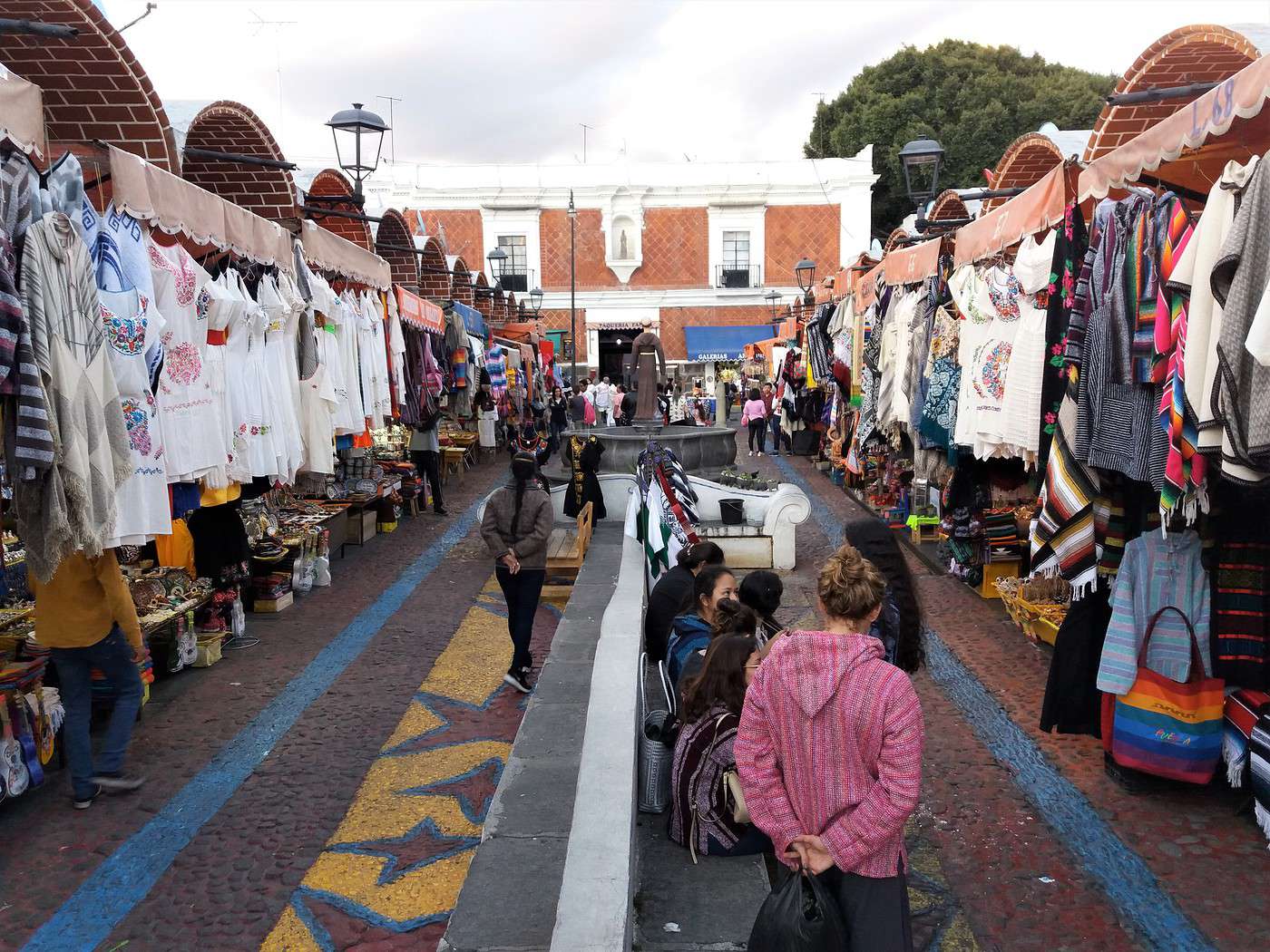
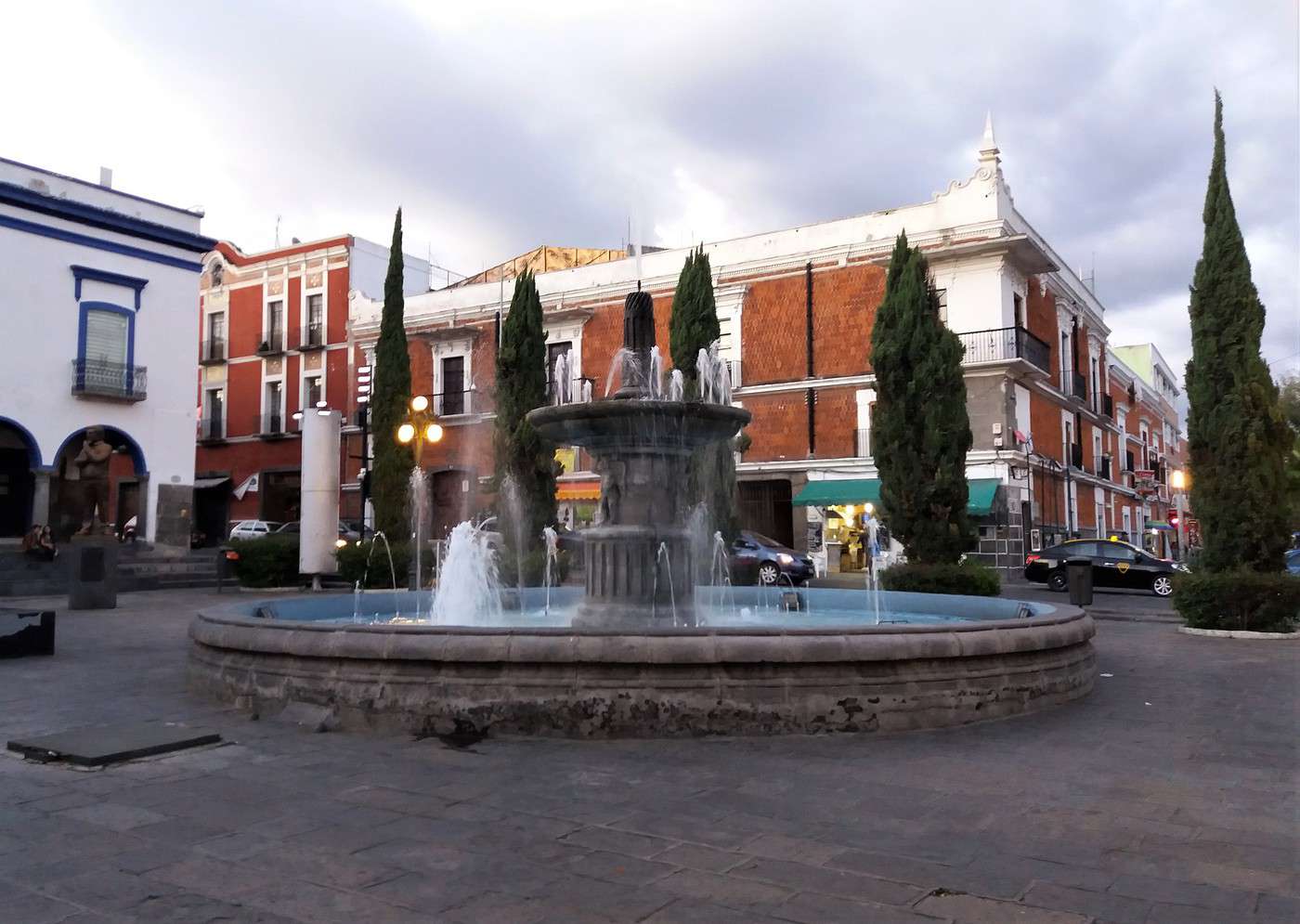
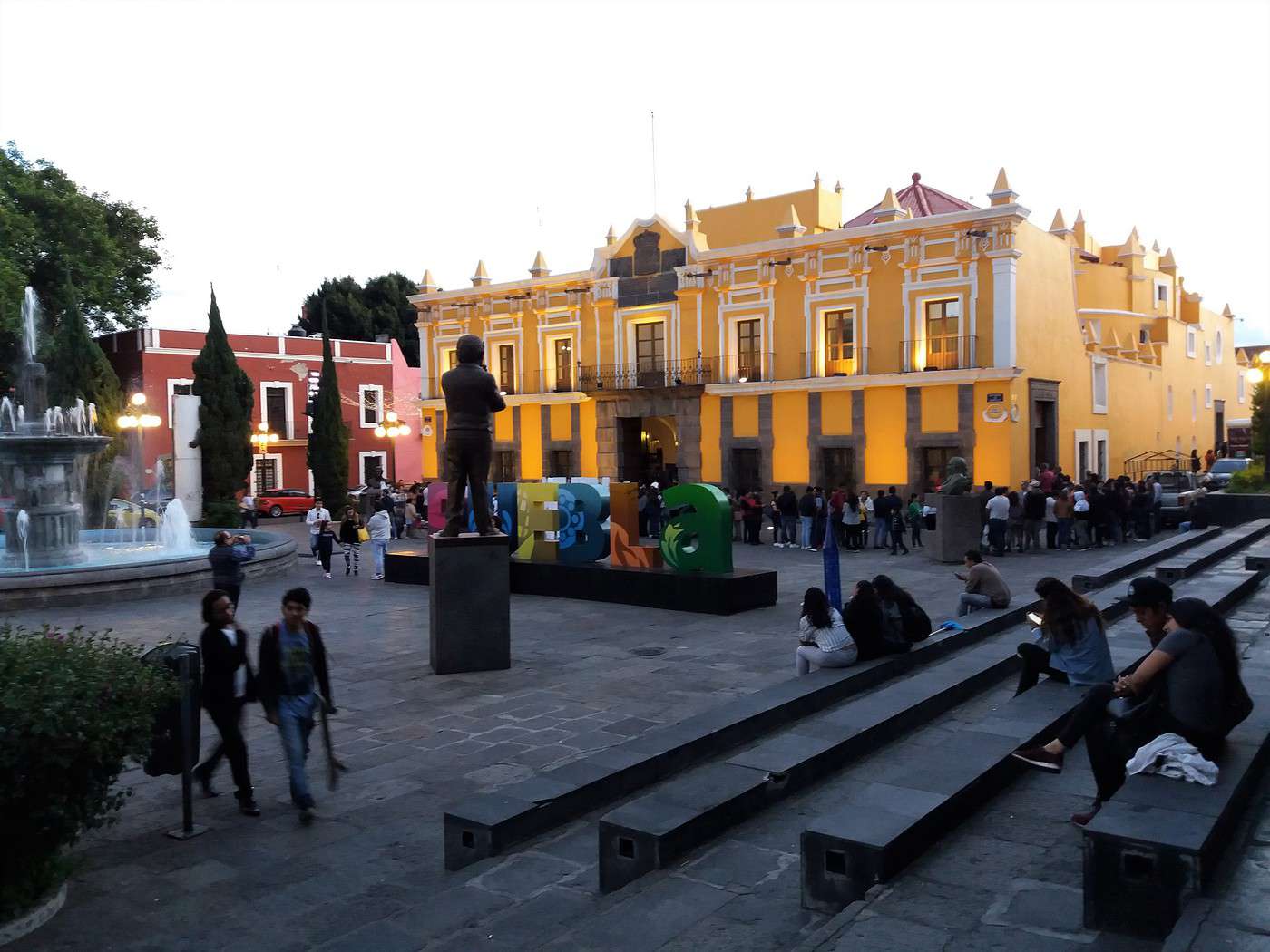
By chance, we stumbled upon the Mercado de artesanías El Parián, in an alley parallel to Calle 6 Norte. Nice little market, maybe a bit touristy, but you can find all sorts of things that might catch your eye—clothes, bags, belts, etc. (photo). A few steps further, we came across a lively square full of cafés, another tempting spot, then the plaza of the Teatro Principal, where I took a photo of this beautiful fountain (another one!).
It started to get dark, and I hit the photo limit on my phone. The theater is that beautiful ochre-yellow building. This whole area seems to be mostly frequented by young people. Puebla is known for its student population.
It’s a great place to live. 🙂
Six-week trip to Mexico
GeorgesOZ · 2020-04-09 · Message 173 of 227
Puebla – A cultural breakfast
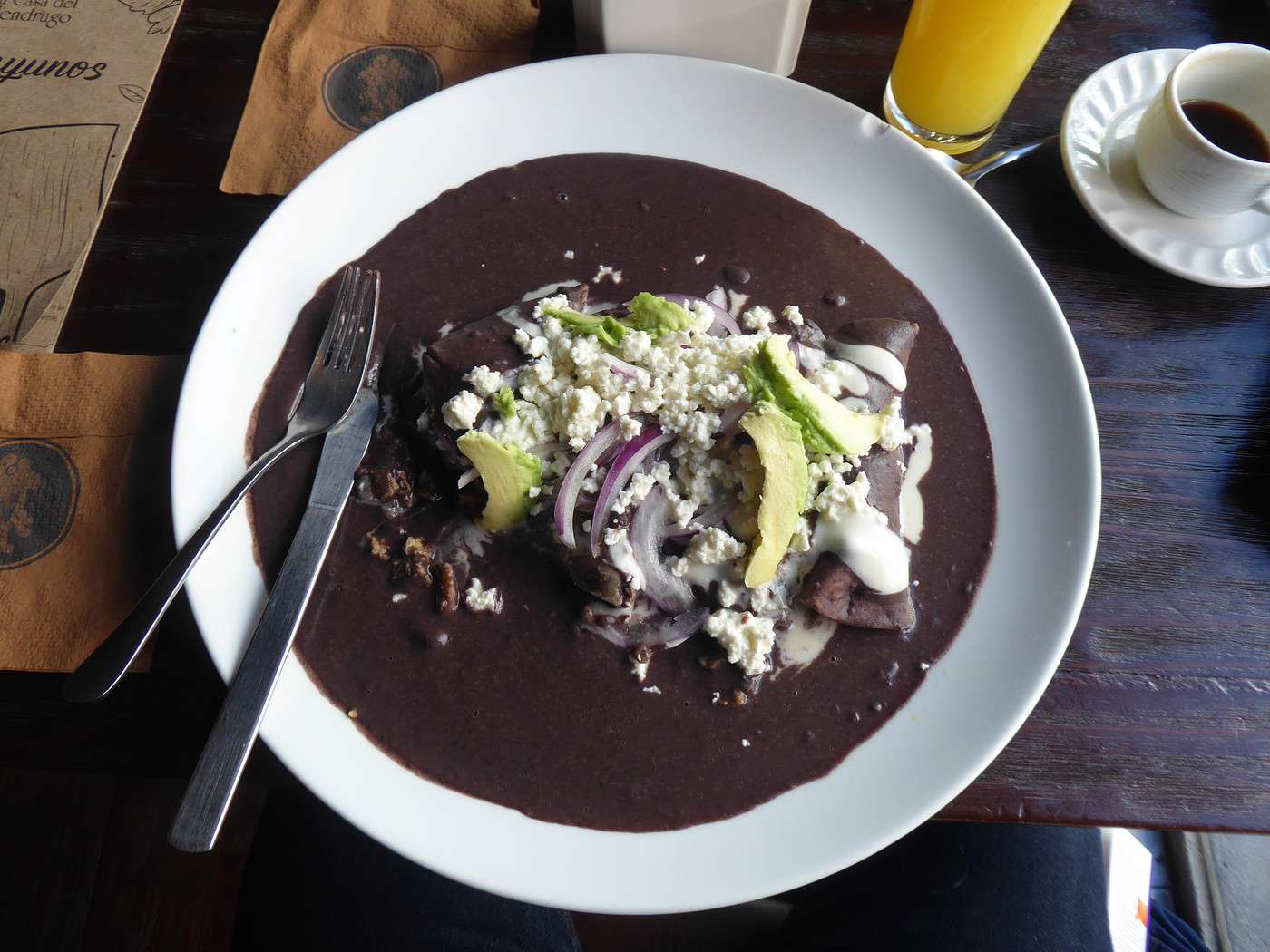
The morning of our departure for our next stop, Cholula, we have a second breakfast at Casa del Mendrugo. It’s a café on Calle 4 Sur that we stumbled upon by chance. It’s a house built in the 16th century by the Jesuits and funded by alms, hence its name ("mendrugos" = "limosnas" or "alms").
It’s much more than just a café—it’s "the space where History, Art, Music, and Gastronomy vibrate in harmony." Quite the program! And then: "the cultural expression of the testimonies of past generations that blend with the current era and culture." I translate "testimonio" as "testimony," but I think it leans more toward "relics" or "vestiges."
Food comes first for us since we’re hungry! There’s plenty to choose from—just look at my plate: some beautifully presented chilaquiles (I think). And a cup of good coffee to go with it. 😛 Someone must’ve eaten something else too because the bill came to 290 pesos—way too expensive for just one person.
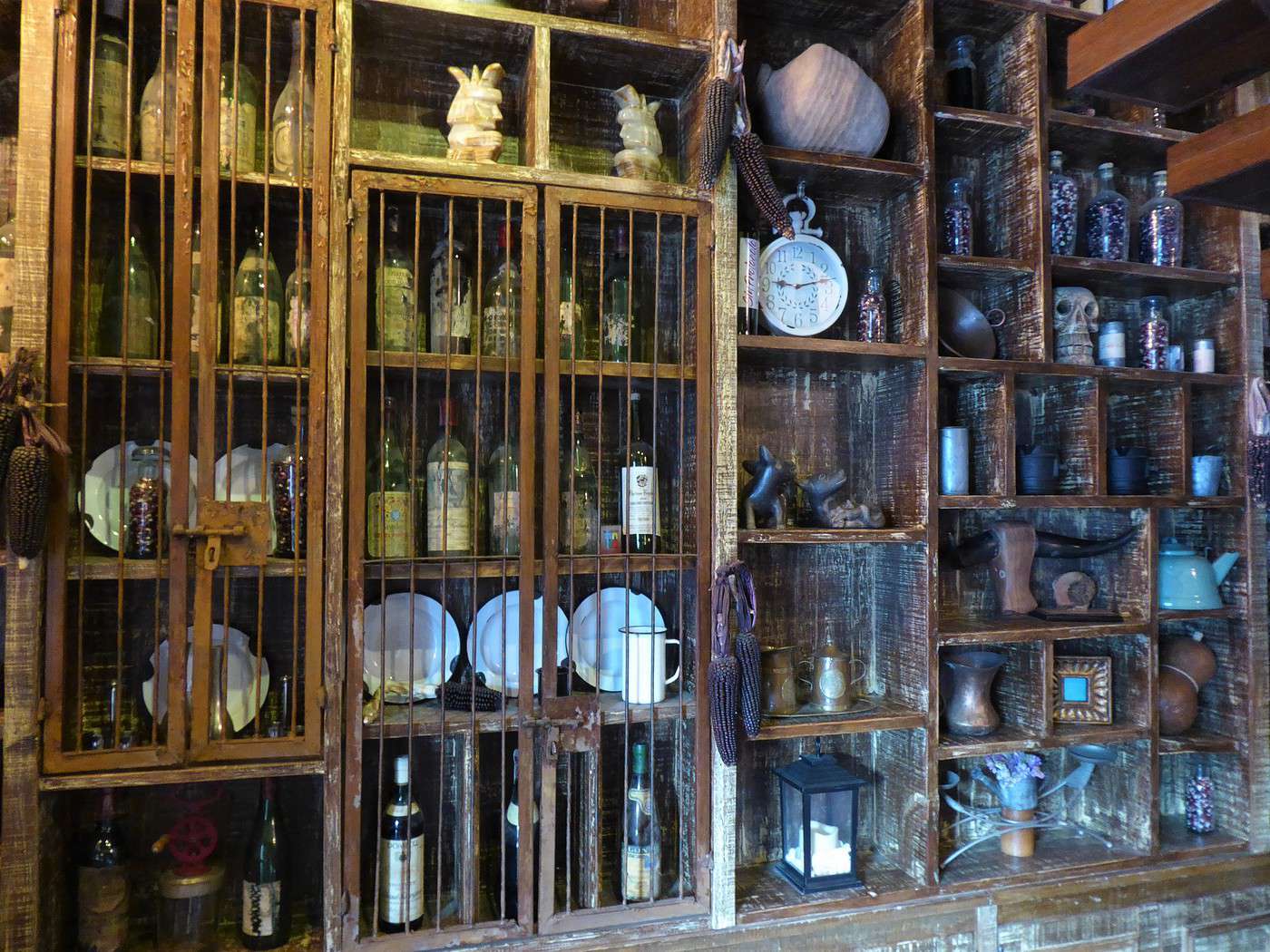
The room isn’t ordinary; it feels like what someone with great taste might set up at home. The walls are lined with shelves full of all sorts of knick-knacks. It’s nice—easy on the eyes. 🙂
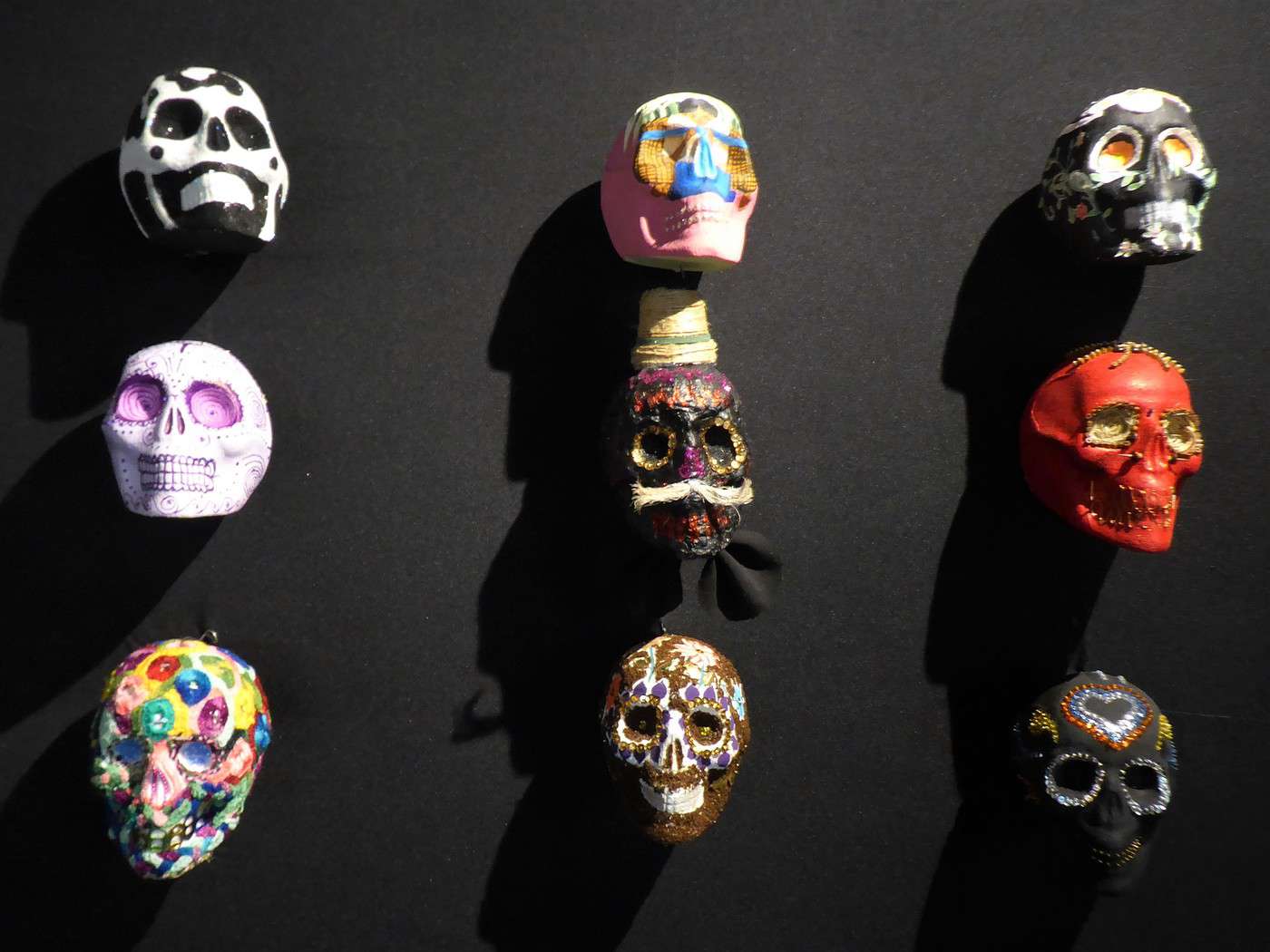
When it’s time to pay, the young woman at the counter tells us we should check out "the museum" deeper inside the building. Free for us since we’re customers. Another pleasant surprise: it’s a real museum (with rooms for art workshops and lectures too). Since death holds a central place in Mexican culture, the first room is dedicated to it—so here we go again with another collection of skulls. We were starting to miss them! 😉
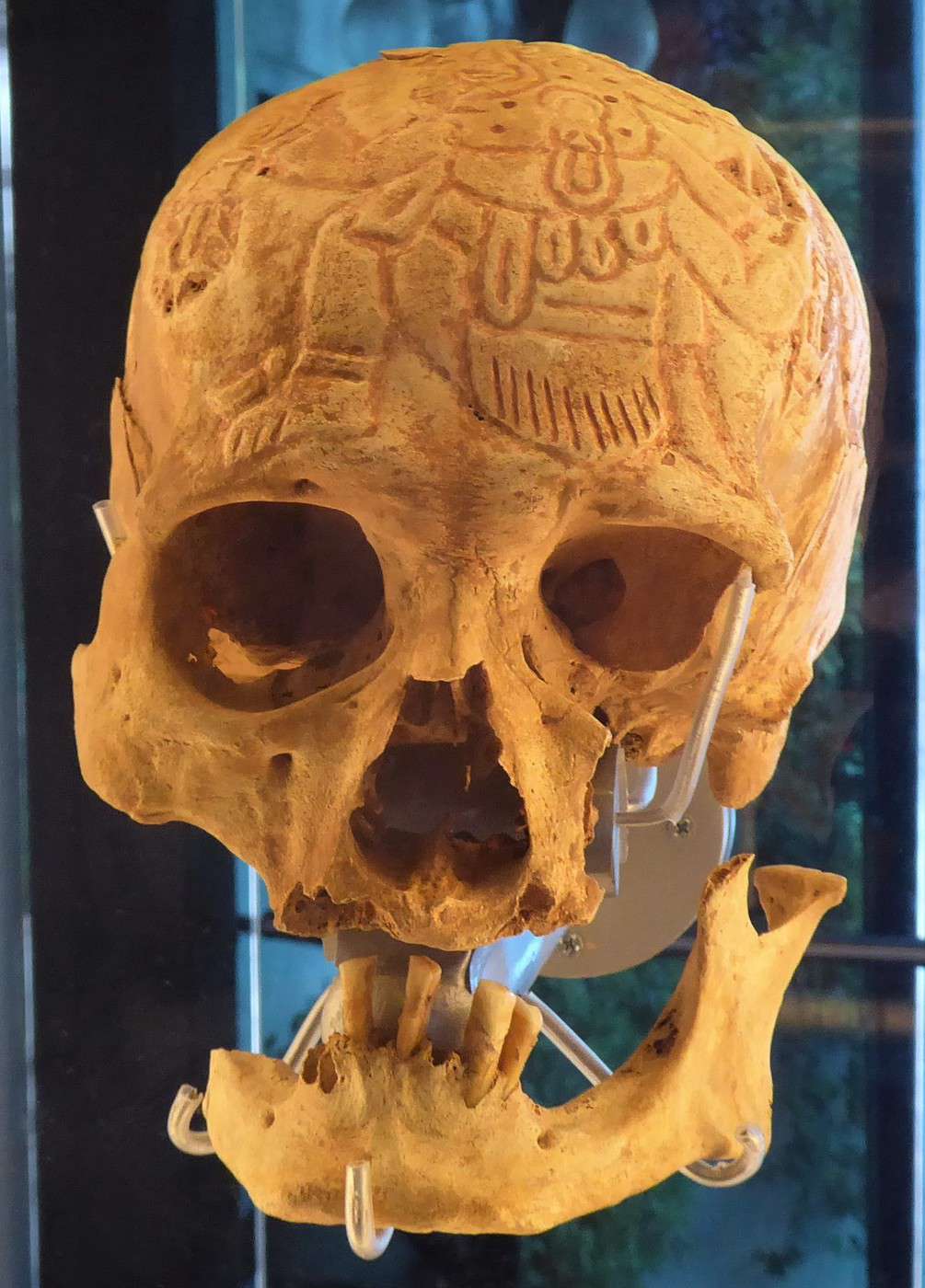
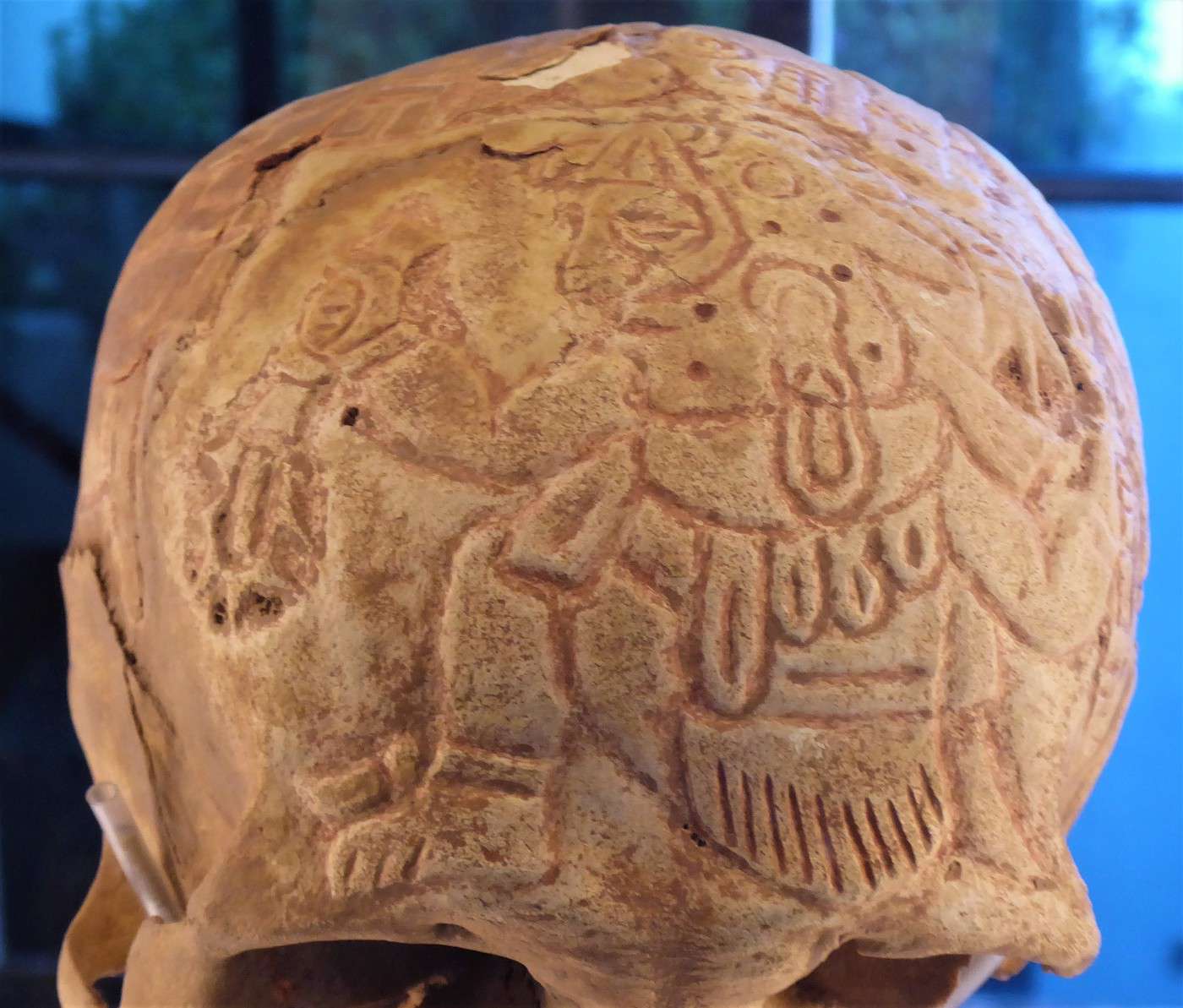
After a few weeks in Mexico, you’d think we’d have seen them all. But no, there’s always more to discover! We come across what I consider the museum’s masterpieces: engraved skulls. Yes!
Take the skull of the Lord "Word of Death." This skull comes from the Oaxaca region and dates back to the Postclassic period (900–1521 CE). Three photos: the whole skull; a close-up of the engraving; and once "unfolded," the engraving reveals a warrior (the colors are, of course, an interpretation). There are several objects like this, but one example should be enough. This Mexican fascination with death… Intriguing, isn’t it? And fascinating, right? 😇 😮
We’re full—both physically and culturally—after our visit to Casa del Mendrugo. Time to "grab our things" and head to our next stop, Cholula.
I know I’m repeating myself, but we really loved Puebla. 😎🙂 And we only scratched the surface. We probably only "tried" a third or a quarter of the historic center, which itself is just a tiny part of this city of 1.5 million people (double that for the metro area).
That’s all for today. Hasta luego, amigos!
PS: The phrase "Hasta la vista!" is a gringo invention. It’s a myth! 😉
Six-week trip to Mexico
Memphre · 2020-04-09 · Message 174 of 227
NB: The phrase "Hasta la vista!" is a gringo invention. It's a myth! 😉
y "Hasta la próxima" too. 😛
PS: Reading your story, I realize I didn’t see much of Puebla…
Guess I’ll have to go back otra vez.
Six-week trip to Mexico
Aquilegia · 2020-04-10 · Message 175 of 227
I mentioned the "Sol". Along with the well-known "Corona" (not the virus!), these are my favorite beers in Mexico. They’re refreshing. 😛 I tried a few others but never found a truly excellent beer (I had the same experience in Colombia). However, I’ll give an exceptional mention to the "Indio" beer, first for its name, and for this special edition "Bienvenidos – Edición Muertos" which I find quite amusing
Actually, you can find more and more craft beers in Mexico, especially in Oaxaca. I’d already had an excellent beer from Tierra Blanca at a great restaurant (Zandunga) in Oaxaca. But before my last trip to Oaxaca in January this year, I Googled a bit and found several good sites about craft beers in Oaxaca. Thanks to those, I discovered a small bar near my accommodation that was the Oaxaca Brewing Company. Every day there were 5 different beers on tap. The bar is tiny, but the vibe and welcome are excellent.
Among the industrial beers, I like Sol, Montejo, Tecate, and Indio.
http://cervezatierrablanca.com/ (Spanish)
https://slightnorth.com/craft-beer-in-oaxaca/ (English)
Six-week trip to Mexico
GeorgesOZ · 2020-04-11 · Message 176 of 227
I mentioned the "Sol". Along with the well-known "Corona" (not the virus!), these are my favorite beers in Mexico. They’re refreshing. 😛 I tried a few others but never found a truly excellent beer (I had the same experience in Colombia). I’ll give an exceptional mention to the "Indio" beer, though—first for its name, and then for that special edition "Bienvenidos – Edición Muertos" which I found pretty quirky.
Actually, craft beers are becoming more and more common in Mexico, especially in Oaxaca. I’d already tried an excellent beer from Tierra Blanca at a great restaurant (Zandunga) in Oaxaca. But before my last trip to Oaxaca in January this year, I did a little Googling and found several good sites about craft beers in Oaxaca. Thanks to those, I discovered a small bar near my place called Oaxaca Brewing Company. Every day there were 5 different beers on tap. The bar’s tiny, but the vibe and hospitality are excellent.
Among the industrial beers, I like Sol, Montejo, Tecate, and Indio.
http://cervezatierrablanca.com/ (Spanish)
https://slightnorth.com/craft-beer-in-oaxaca/ (English)
Craft beers have spread like wildfire over the last, what, 20 years? In Bangkok, you can find excellent microbrewery beers, and they’ve been around for quite a while (though the industrial beers in Thailand are pretty mediocre, to be honest).
Yeah, we really enjoyed the Sol (a bit like Corona) and also the Indio (see photo above). I’m not familiar with the others you mentioned.
Six-week trip to Mexico
GeorgesOZ · 2020-04-11 · Message 177 of 227
Cholula – Sword and Crosier
We took a taxi to Cholula. It’s not far, just a dozen kilometers from Puebla, and it only cost us 120 pesos, a steal. We arrived in late morning and, despite the hearty second breakfast we had at the Casa del Mendrugo, we were already hungry. We dropped our things at the hotel and set off right away to explore Cholula.
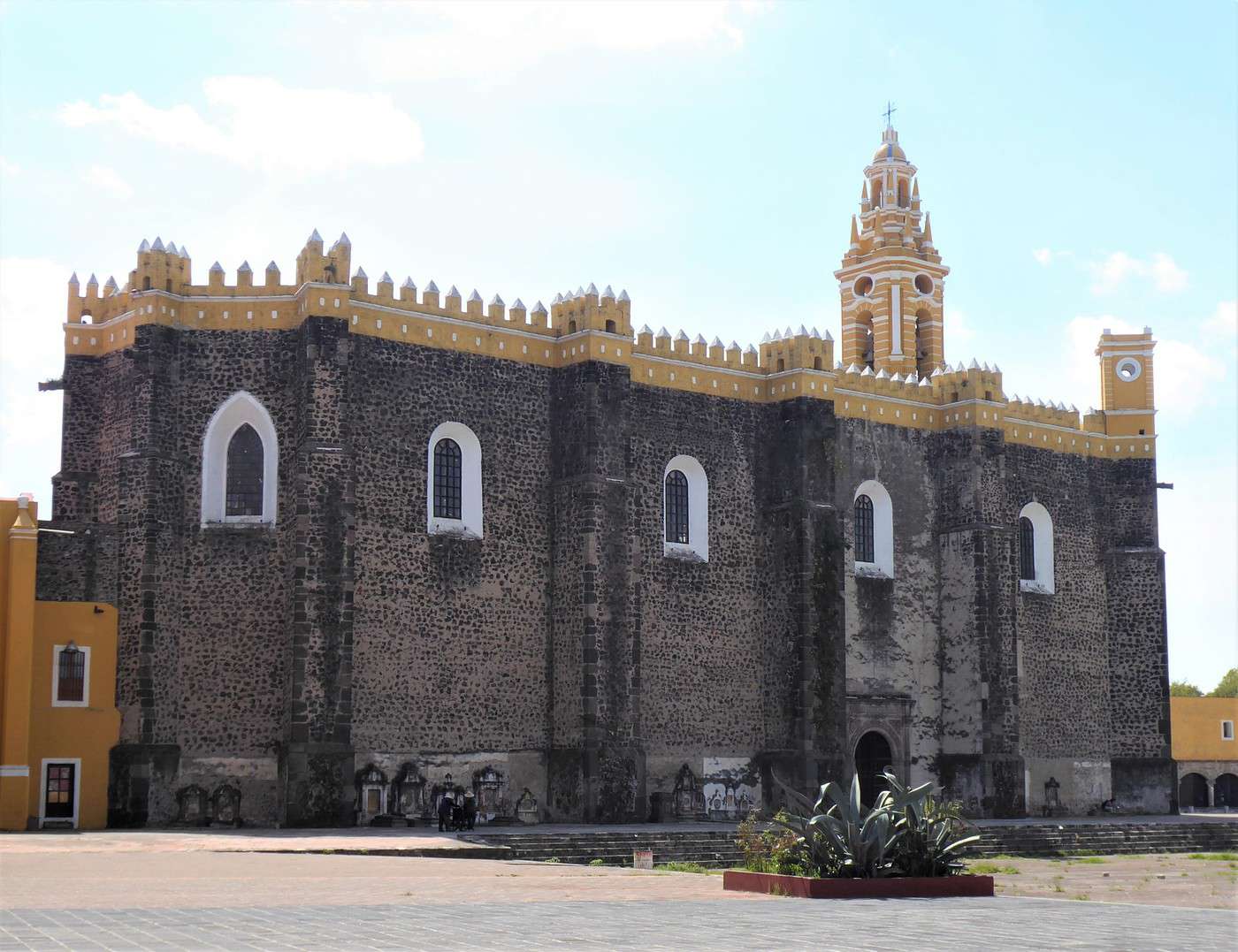
It’s a small town that’s very easy to get around on foot. Everything is just a few hundred meters away. We naturally headed toward the Zócalo. On the east side, we came across a large religious complex, the Franciscan convent of Saint Gabriel. Construction began as early as 1540, even before the Spanish arrived in Tenochtitlan (Mexico City). The Spanish didn’t mess around—they razed indigenous monuments to build their churches. Here, it was a temple dedicated to Quetzalcoatl, the famous Feathered Serpent, that fell victim to their excessive religious zeal—one-sided religious zeal, of course, that of the conquerors.
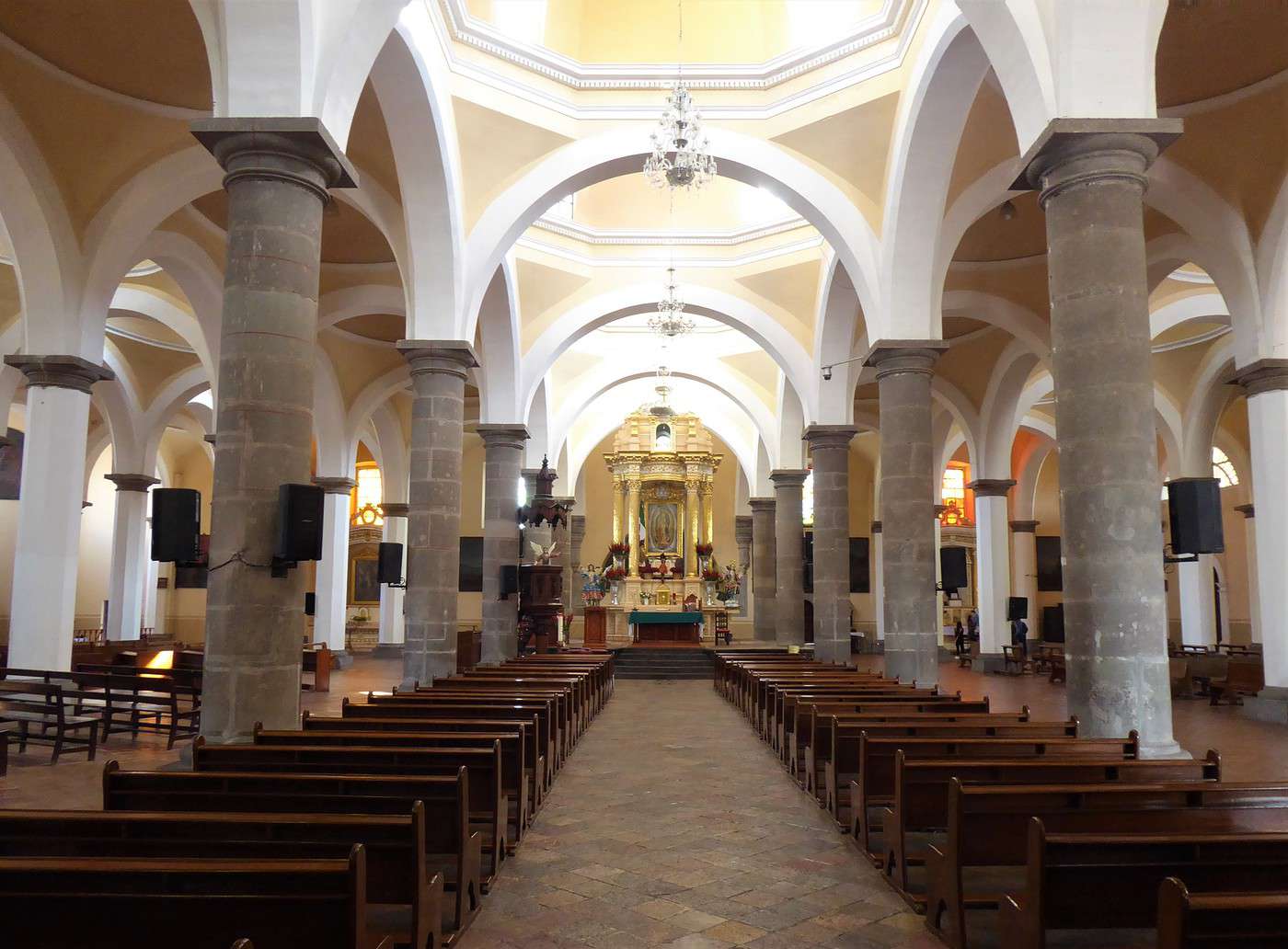
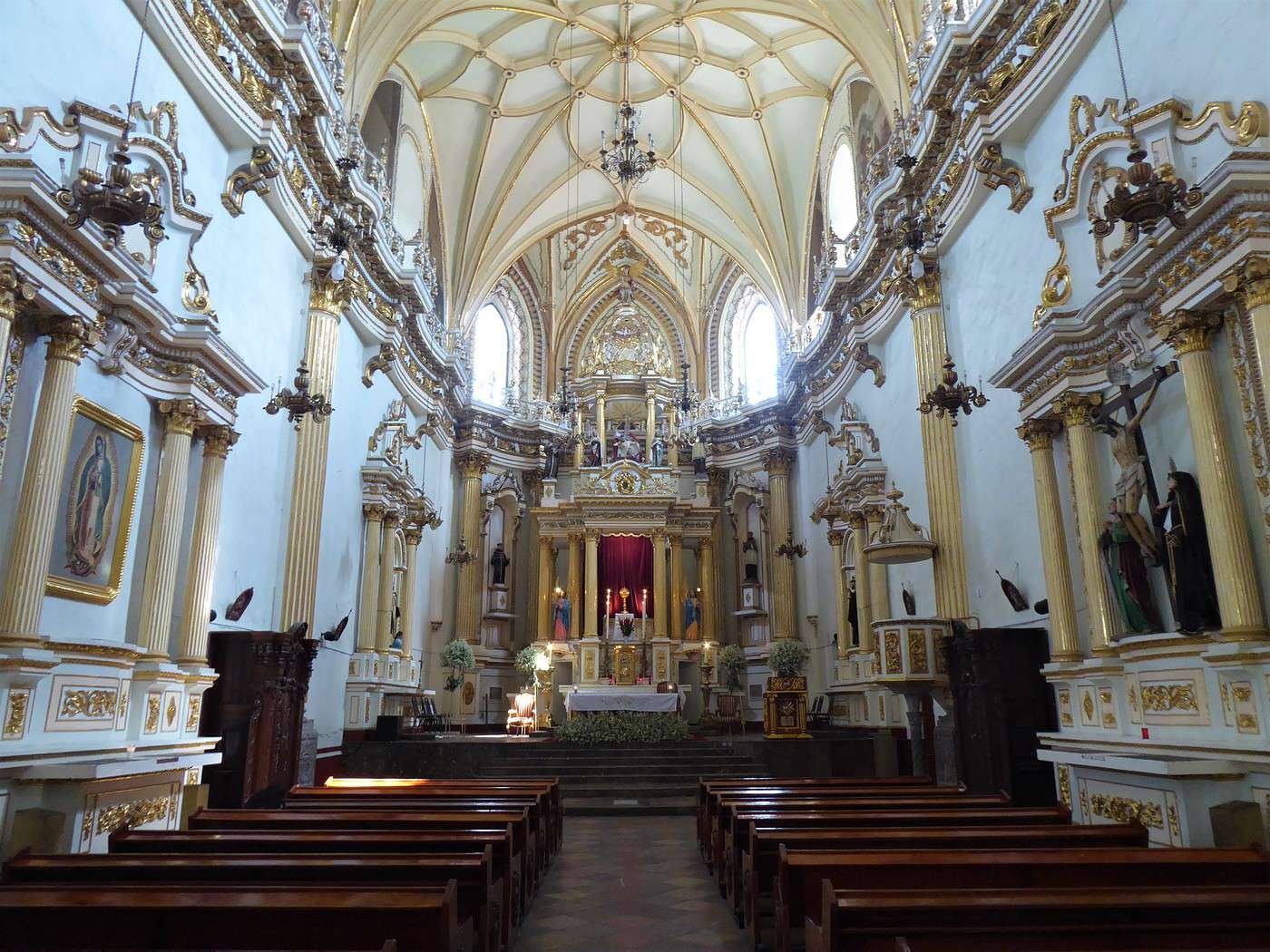
First, there’s a chapel, the Capilla Real de Naturales. If you’re thinking “small” when you hear “chapel,” think again—this one is huge. Its massive, severe walls of black-gray volcanic stone are barely softened by cream-colored battlements. In fact, the building was almost completely rebuilt in the late 18th century. The interior is quite sober. The arrangement of columns and domes curiously resembles the style of a mosque. You might think of the Mezquita in Córdoba, for example.
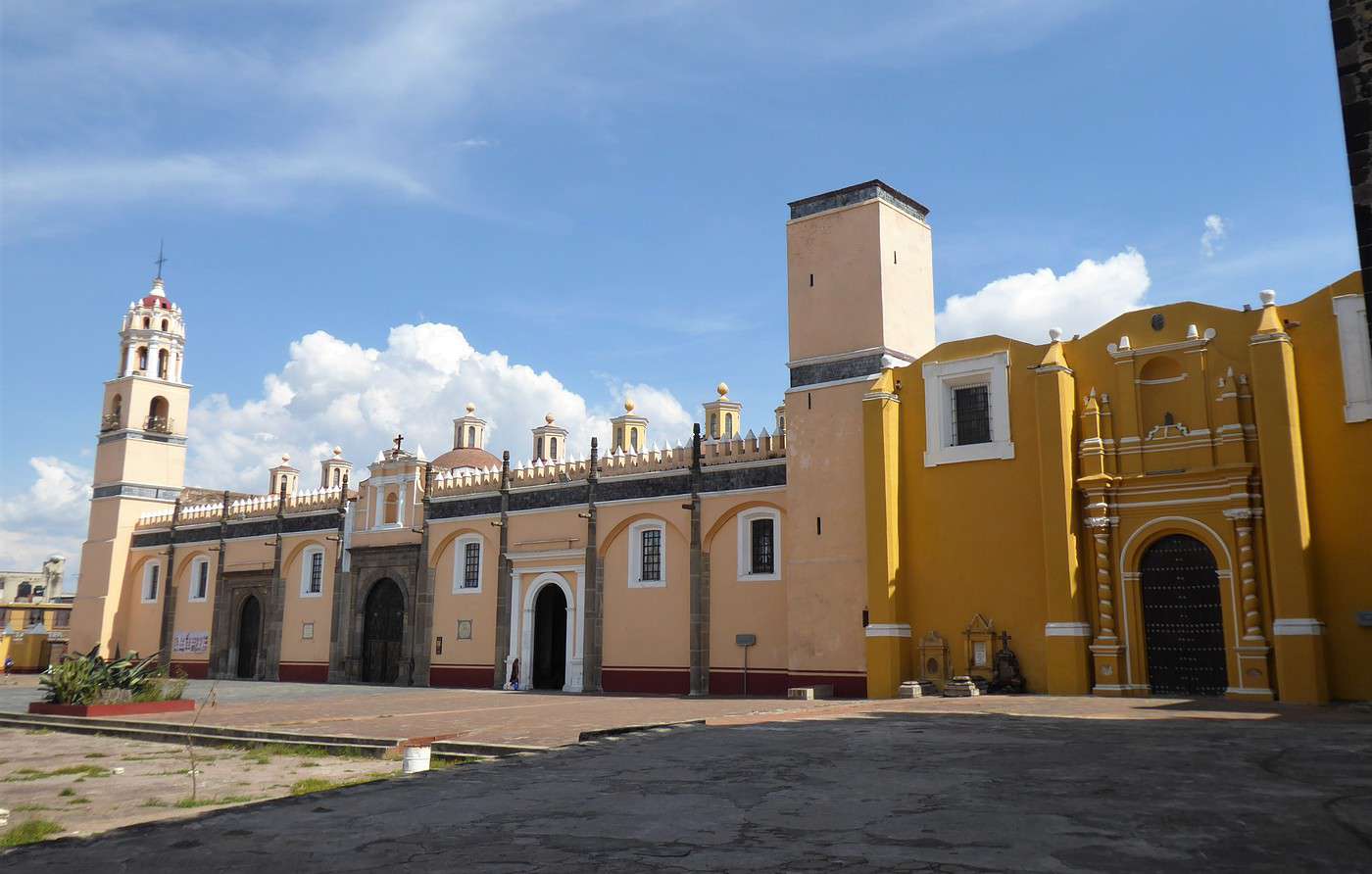
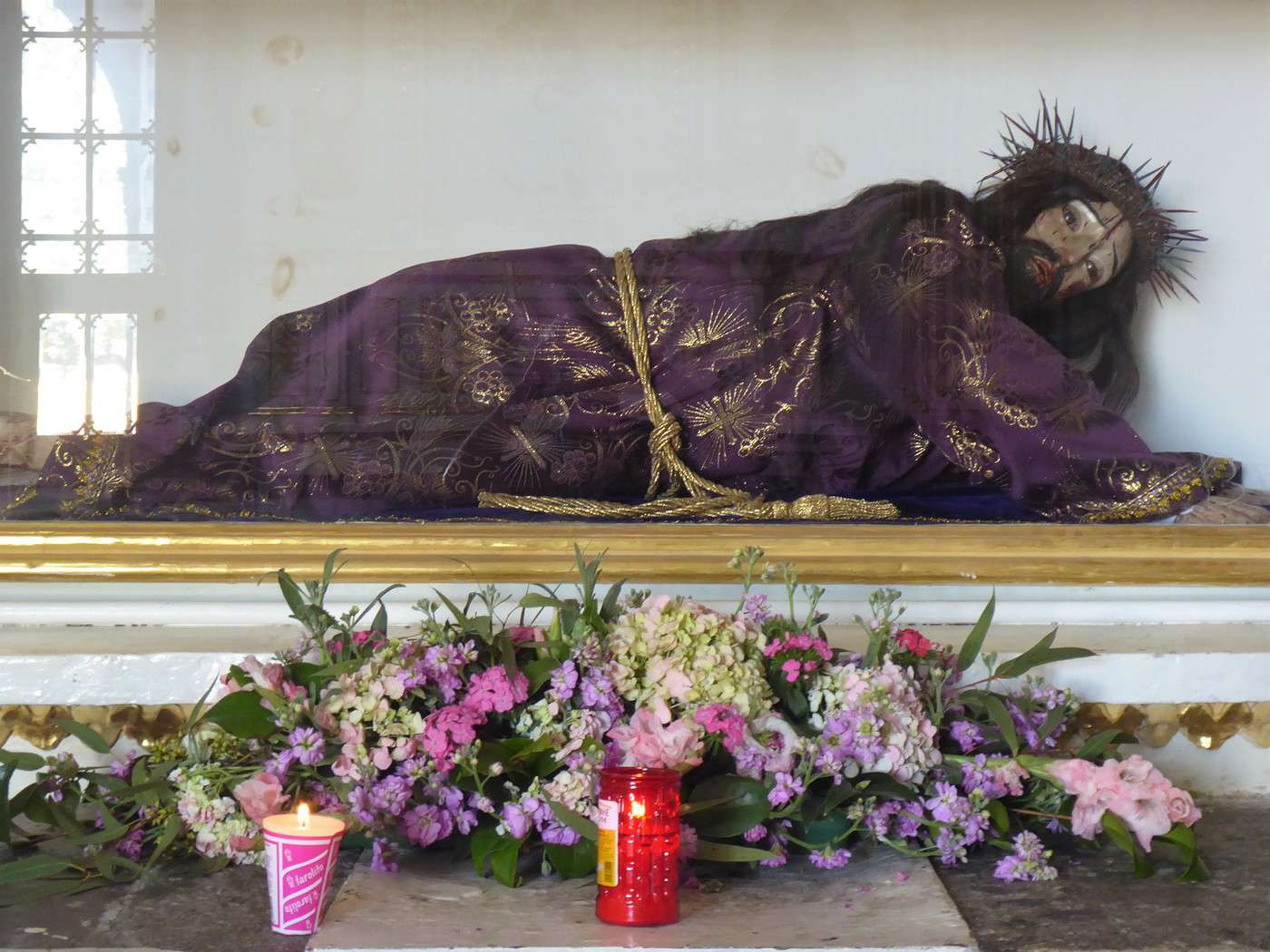
Next, we arrive at the Chapel of the Third Order. Wow, the Spanish were really creative with names like that! A long cream-colored façade—already less austere. In a more distinctly Baroque style, check out the photo of the interior. The morbid obsession of Spanish Catholicism offers us a Jesus crowned with thorns, lying down but covered in a purple and gold cape.
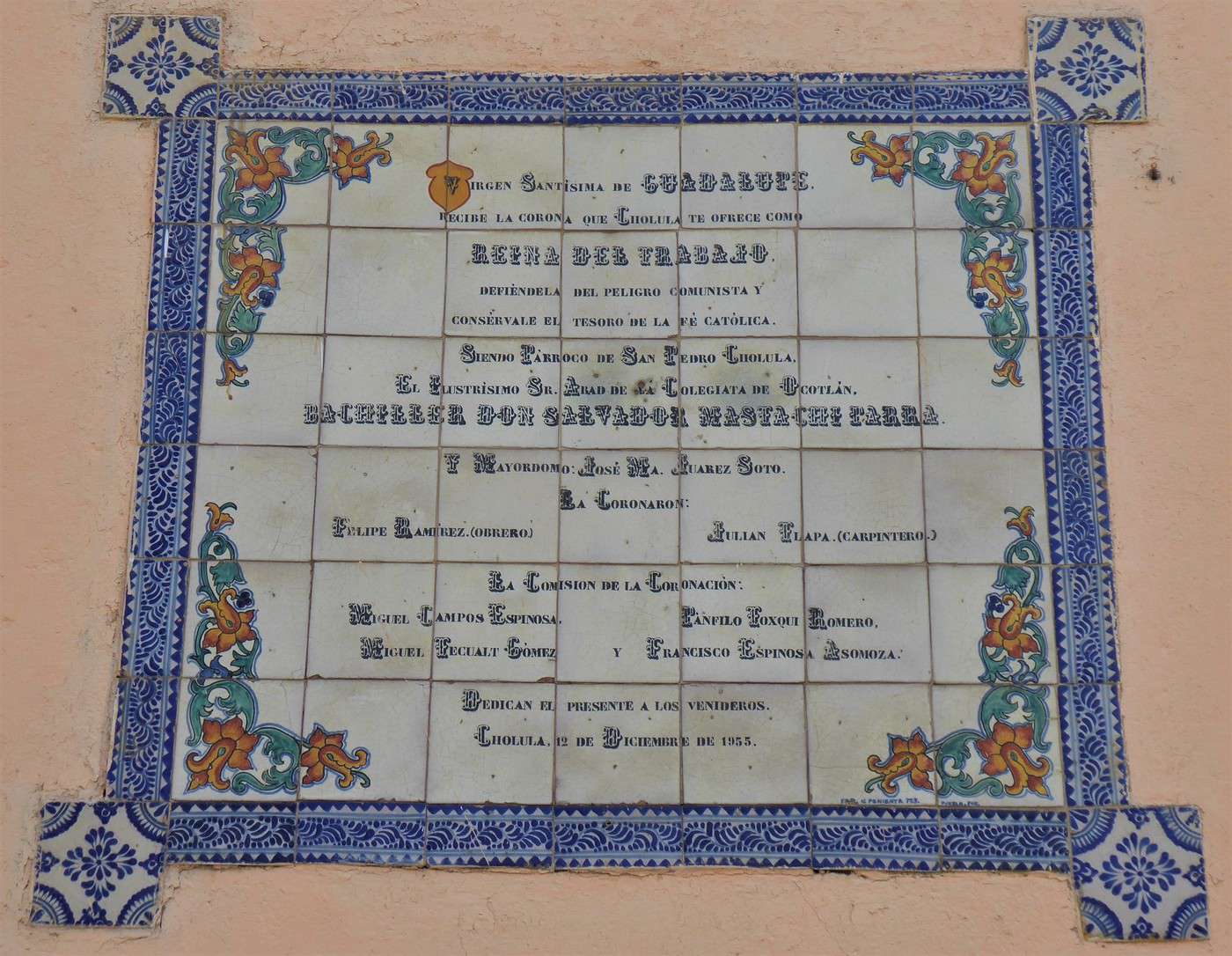
Under the arches of the façade, now heading toward the main building, we find a dedication to the Virgin made of azulejo-style tiles. The message is quite striking:
"Most Holy Virgin of Guadalupe, receive the crown that Cholula offers you, you the Queen of Labor. Defend it (Cholula) from the communist peril and preserve its Catholic faith."
All signed by a dozen or so personalities, etc.
You might think this kind of proclamation reflects a bygone era—it dates from 1955—but something tells me maybe not. If I’m not mistaken, Latin America still has traces of the "Holy Alliance of the sword and the crosier." ¾ 🤪😇
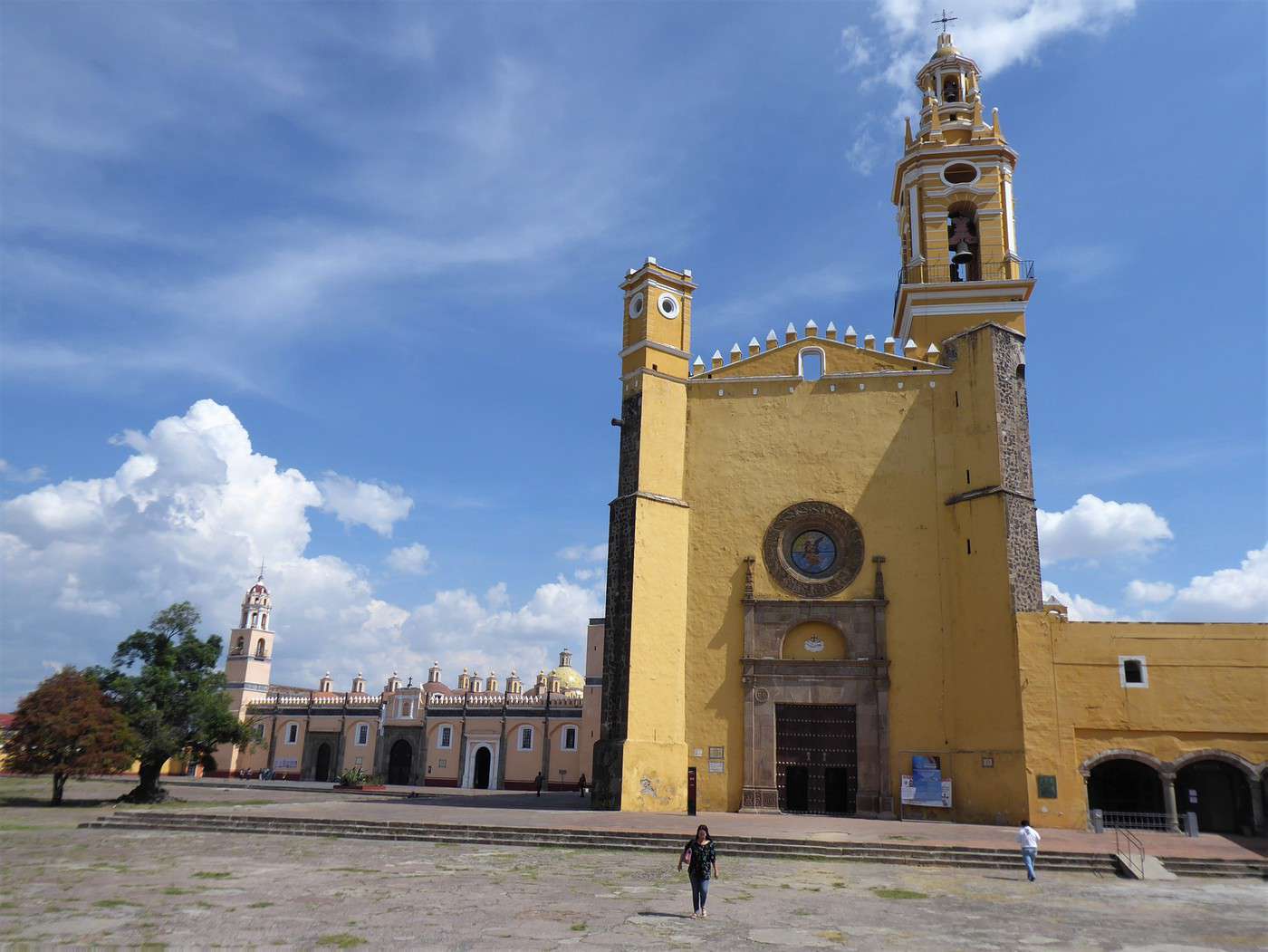
Finally, here we are at the Church of Saint Gabriel, adjacent to the convent proper. I’ll just show you the entrance, topped by a single tower. In the background on the left is the Chapel of the Third Order we just visited. And no, that’s enough, I’m not going to tell you about this church! It’s all very nice, but let’s not forget our primary mission: finding something to eat. We finally reach the Zócalo. We walk around it without lingering and head to the other side. With any luck, it’ll be less religious and more down-to-earth!
Six-week trip to Mexico
GeorgesOZ · 2020-04-15 · Message 178 of 227
Cholula – Colors – Page of History
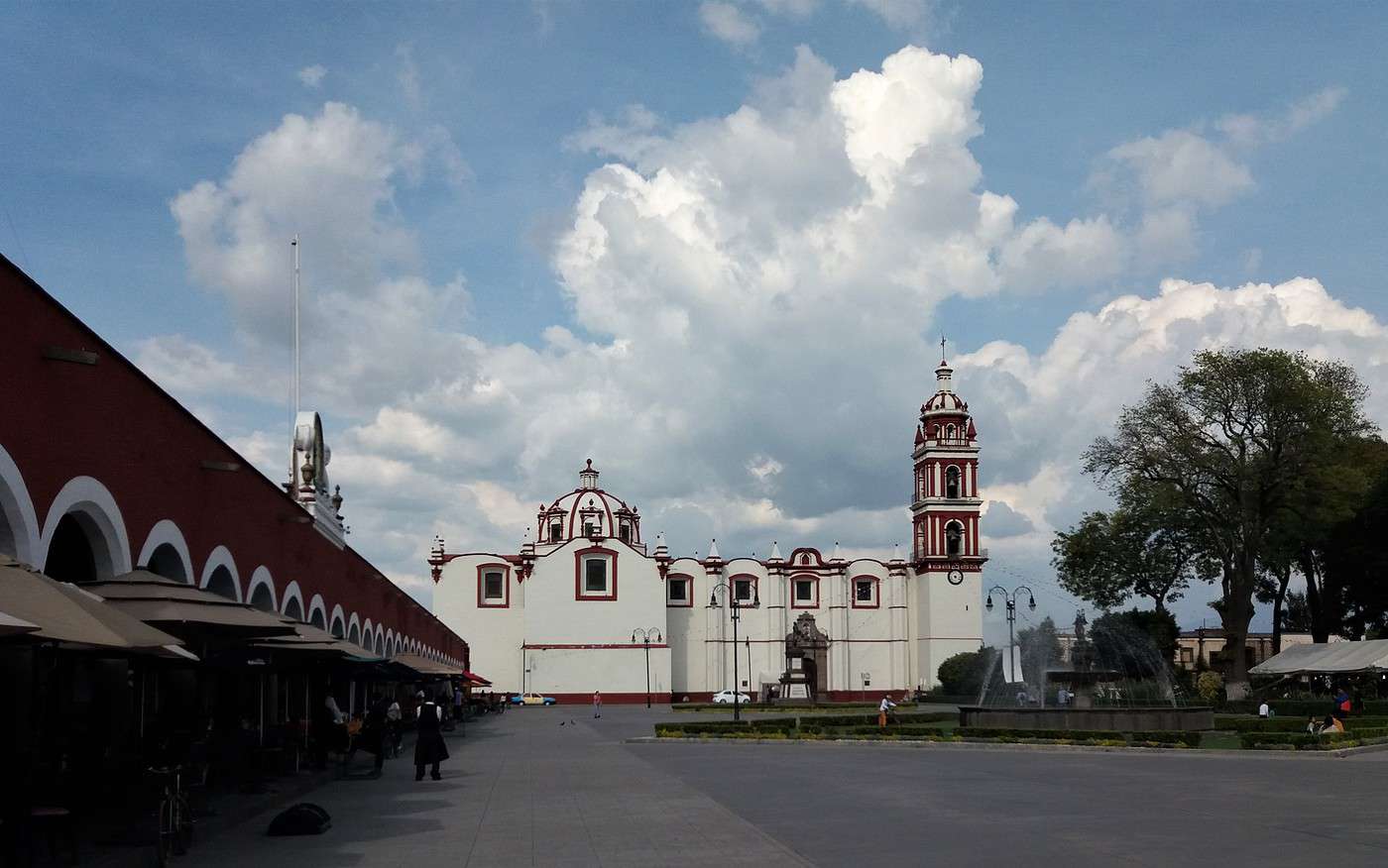
On the other side of the Zócalo, there are several cafés and restaurants under arches freshly repainted in a brownish-red color (they were seafoam blue a few years earlier). My photo shows the parish of San Pedro in the background, a 17th- and 18th-century church. We don’t go inside—we’ve had our fill of churches for the day! We just enjoy the graphic design of its white walls punctuated by windows with brownish-red frames and topped by a tower in the same colors. The colors are fresh, too, because the church was a bright carrot yellow not so long ago.
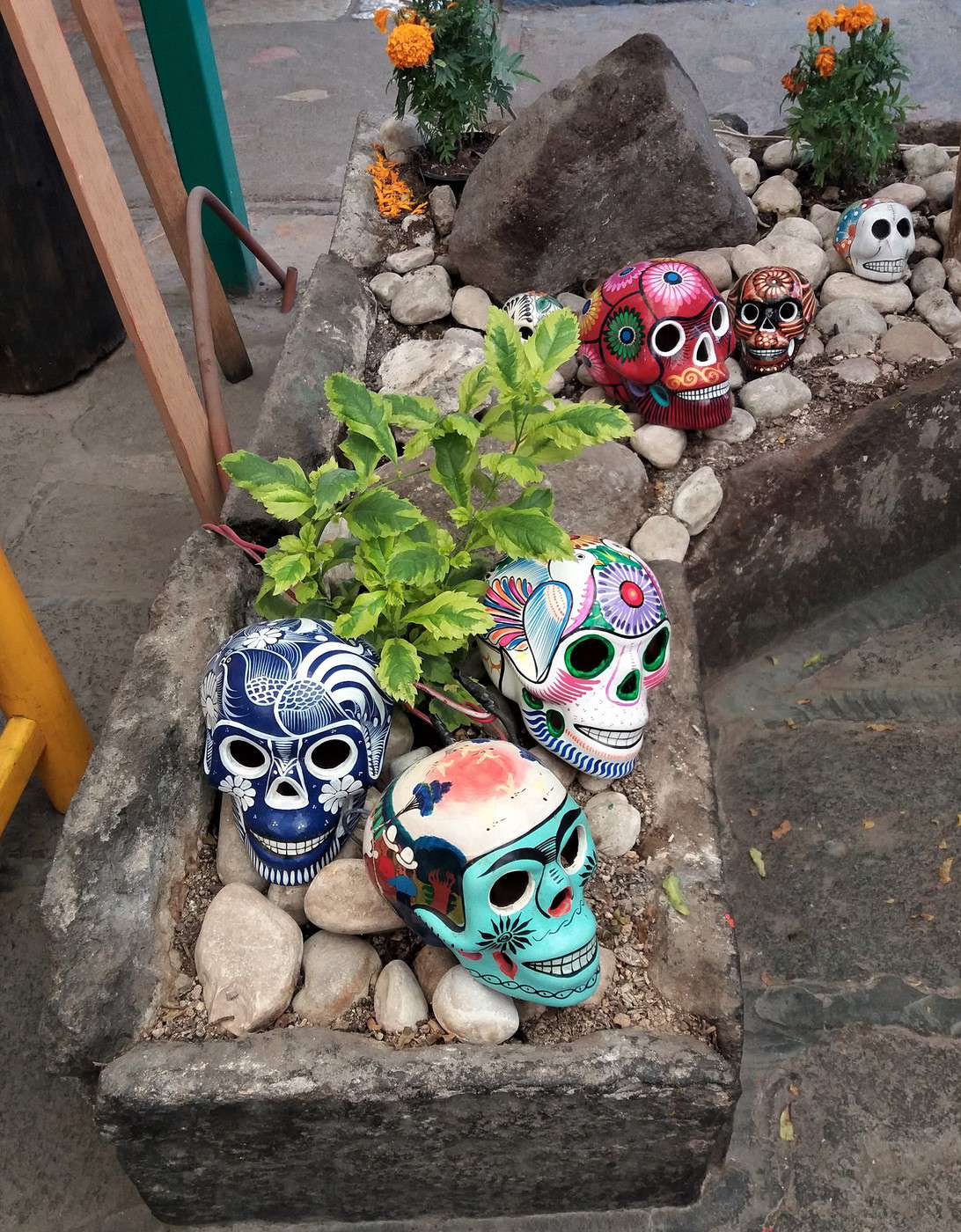
A few steps further down Avenida Miguel Hidalgo, we stumble upon a restaurant that seems pretty nice, Casa de Frida Kahlo. The interior is a beautifully decorated courtyard. Flower pots surround a fountain from which not a single drop flows—a rare phenomenon in this country. A sort of flower bed makes for an amusing Japan-Mexico fusion: Japan is represented by a small pebble garden, while Mexico is a collection of brightly colored skulls (surprise, surprise). The staff, young and very smiley, and quite curious too, don’t miss the chance to strike up a good conversation with us. We eat some delicious arracheras. The meal plus drinks comes to the astronomical sum of 600 pesos—over 25 € for two, we’re splurging!
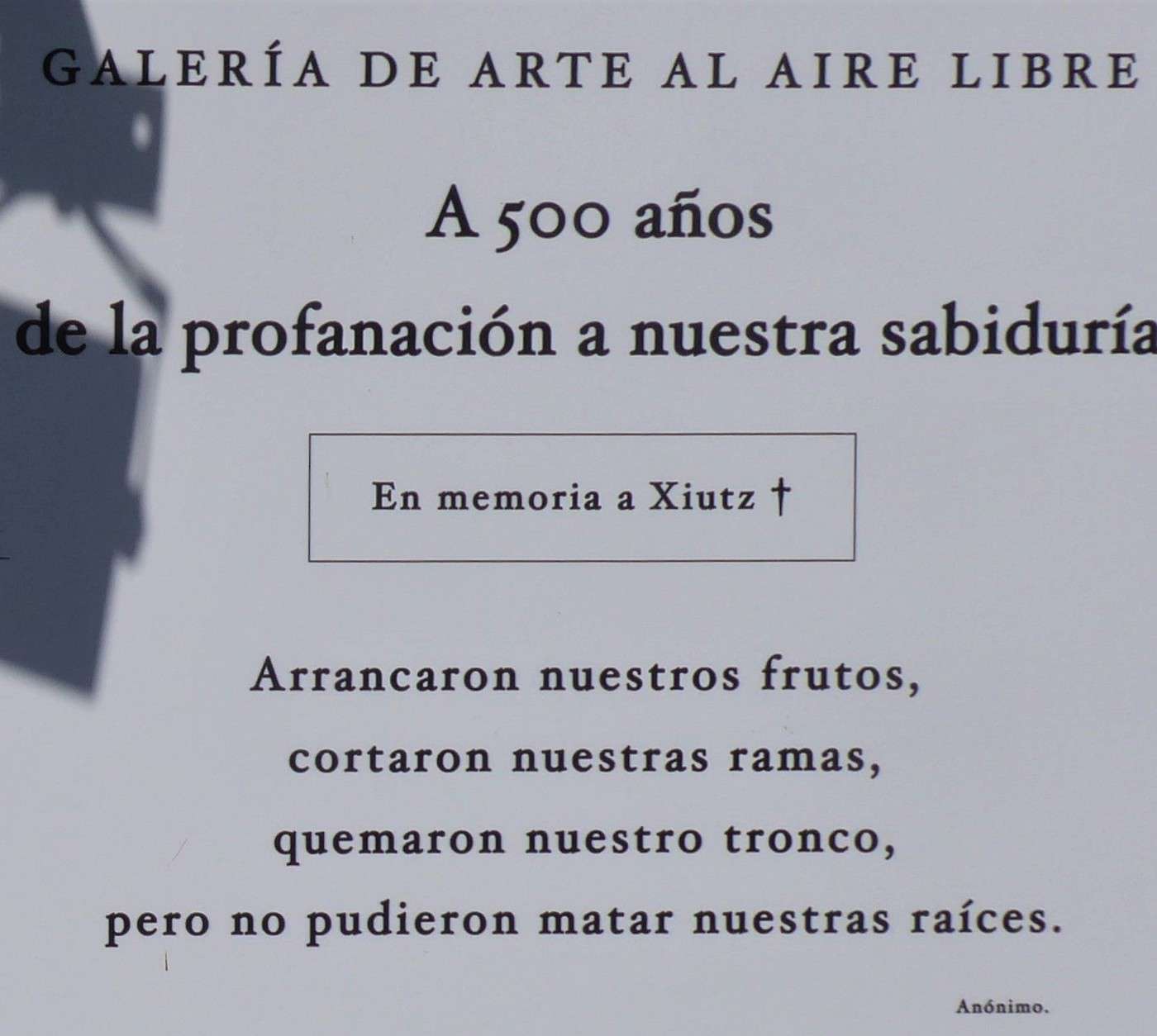
We pass by the Zócalo again, but this time we really cross it. This leads us to discover an outdoor photographic exhibition on a burning historical theme in Mexico: colonial aggression. A panel immediately gives us the gist (photo):
“To the 500 years since the desecration until our wisdom”
With these stirring words:
“They tore off our fruits
They cut our branches
They burned our trunk
But they could not kill our roots”
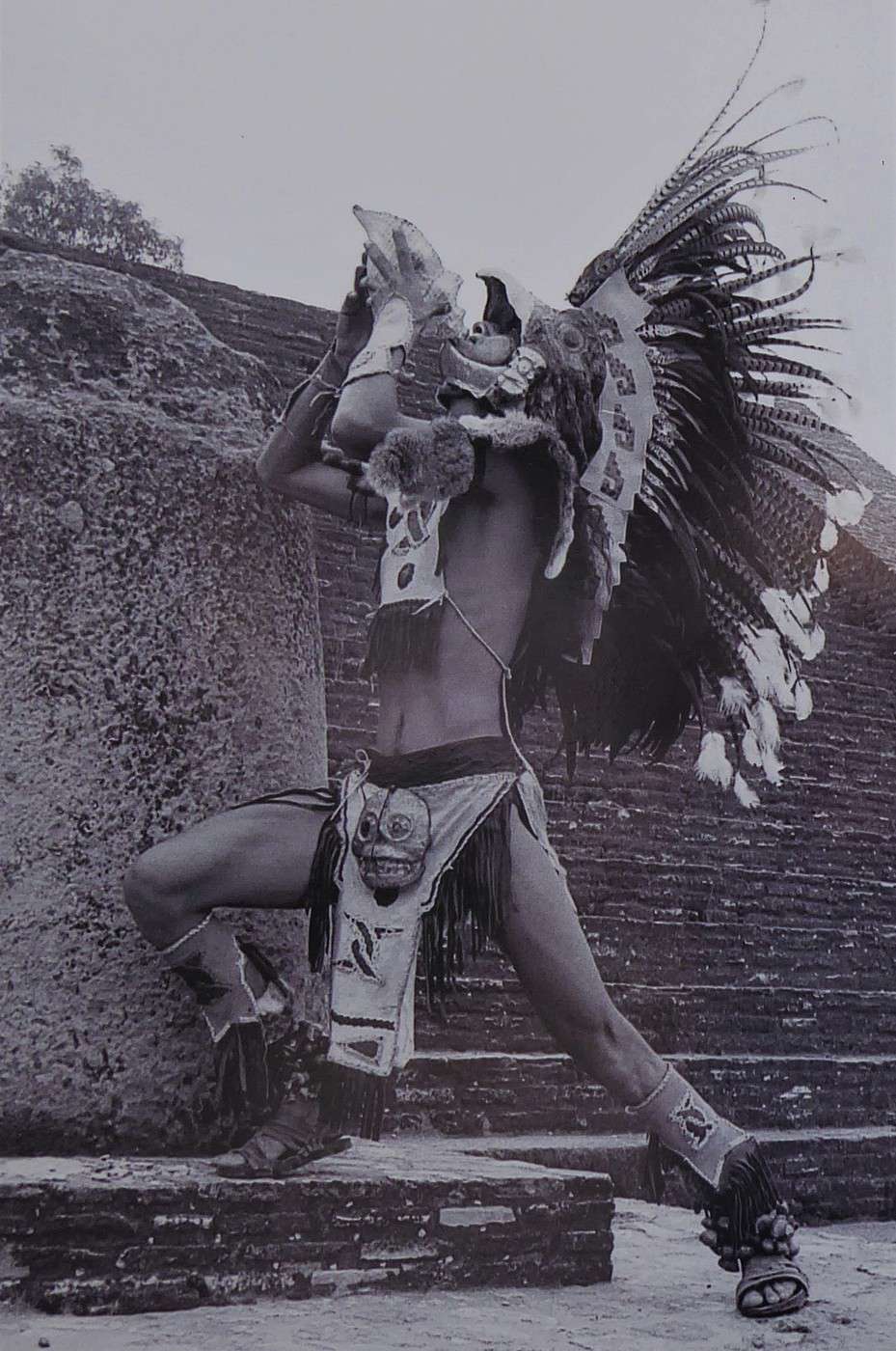
This is clearly about the deep wound still felt today by Mexico’s Indigenous peoples. Photos of a man in a warrior costume express the pride of these people.
Cholula was a sacred place for Mexicans. This city was their equivalent of Rome or Mecca. It was here that Cortés distinguished himself with a dark event: the Massacre of Cholula. On his march from the coast to Tenochtitlan, he stopped in Cholula. It was October 1519. Everything started peacefully: the city welcomed Cortés and provided food and lodging for his troops. However, the people of Cholula plotted against the Spaniards, incited by emissaries from Motecuhzoma, the Aztec emperor. They evacuated the women and children before taking action to get rid of the invaders. Motecuhzoma had sent 3,000 warriors disguised as porters. The Spaniards realized what was being plotted against them and struck first, resulting in the massacre of several thousand people.
This barbarity can never be erased, but it’s also important to understand the context. The Aztecs had certainly heard about the appalling way the Spaniards had behaved for a quarter of a century in Cuba and Santo Domingo, and they absolutely did not want to allow them access to their territories. Cortés, for his part, had only one goal in mind: to reach Tenochtitlan, the Aztec capital (present-day Mexico City). These opposing intentions led to diplomatic misunderstandings and mutual distrust.
Moreover, the Aztec Empire was not perfectly cemented. It seems the Aztecs of Tenochtitlan exercised rather oppressive control over the peoples who were part of their empire. These peoples, therefore, did not hold the Aztecs in their hearts and were quite inclined to rebellion. From his arrival, Cortés had found allies among the Totonacs, the coastal people. He arrived in Tlaxcala, then Cholula, accompanied by 100,000 Totonac warriors (according to Christian Duverger, in his book *Cortés*). 100,000 warriors! From all sides, violent actions could easily be feared. And the Aztecs had a reputation for being fierce warriors. It didn’t take much for the Spaniards to become paranoid. A little spark was all it took to ignite the powder keg.
Some will see the Spaniards’ actions as an act of self-defense. Others will say the Spaniards were intruders and certainly didn’t come to do charity: they had no business being there. Personally, I lean more toward this side.
At least be aware of this historical context when visiting this part of the world. Ignoring it would be missing the point entirely.
Six-week trip to Mexico
Frmi31 · 2020-04-15 · Message 179 of 227
Moorish art is called Mudejar art.
Six-week trip to Mexico
GeorgesOZ · 2020-04-16 · Message 180 of 227
Cholula – Drinks and Around the Pyramid
In the early evening, on our way back to the hotel, a friendly bar catches our eye: the Mezcalería located on 6 Norte, at the corner of 6 Oriente. It must get lively later in the evening, but for now, we’re practically the only customers. Y quenches his thirst with a craft ale. As for me, still intrigued by local specialties, I go for a pulque. I’d already tried it once or twice, and I really liked it. It’s a drink that reminds me of "siasser wii", the Alsatian new wine enjoyed with walnuts and "büra brot" ("peasant bread"), or "sàátho", made with sticky rice and left to ferment cozily in rice straw in northeastern Thailand, or even "tuak", that palm wine from the Indonesian islands. 😛😉 Refreshing, lightly alcoholic drinks that go down easily—but watch out for the results… This one’s a tad sweet for my taste. All for 120 pesos.
The next morning, we head to the Pyramid of Cholula. It’s the largest pyramid ever built in Central America and, reportedly, the largest in the world. It’s far less famous than the Great Pyramid of Giza, which is taller but less voluminous.
The pyramid was built in several phases spanning over a millennium. It was dedicated to the god Quetzalcoatl, the famous Feathered Serpent. You can see it from very far away. It’s one of Mexico’s most iconic postcard images: a beautiful orange church built at the top of the pyramid, standing out against the famous Popocatépetl volcano in the background. 😎 Without a doubt, the Spanish built this church to replace an indigenous temple they didn’t hesitate to destroy.
This first photo clearly shows why the Indigenous people gave the volcano its name: "Popocatépetl" means "the smoking mountain" in Nahuatl. The photo isn’t mine—I borrowed it from the museum we’ll visit later (I’m jumping ahead). You can’t see the entire pyramid here, just the top, but you’re struck by how it echoes the natural, majestic shape of the volcano. It’s not hard to see why Cholula, at the foot of the volcano, was a sacred place for the Indigenous people and why they built this pyramid there.
Cholula was also a place of paramount importance before the arrival of the Spanish. Two major trade routes crossed here, coming from Tenochtitlan: one toward the Caribbean coast and the other toward the Oaxaca region and from there to Central America. Cholula was already well-developed 2,000 years ago and must have had trade relations with Teotihuacán.
We approach the pyramid. Many people before us have had trouble seeing it as an artificial structure because it’s entirely covered in vegetation. We buy tickets to visit the ruins uncovered at its base—75 pesos per person. Let’s say it right away: you don’t need a ticket to go to the top and visit the church. The ruins might not be exceptional if you’ve already seen sites like Teotihuacán, Monte Albán, or Palenque. It must be acknowledged that archaeological excavations have probably only "scratched the surface" of the site so far. But now that we’re here, it’s a pleasant walk around the pyramid, and we have clear views of the church. There’s really only on the west side that you find something that looks like much of anything, probably the result of a recent reconstruction: the first two levels of a pyramid with a flight of steps, which isn’t unlike the pyramids of Teotihuacán.
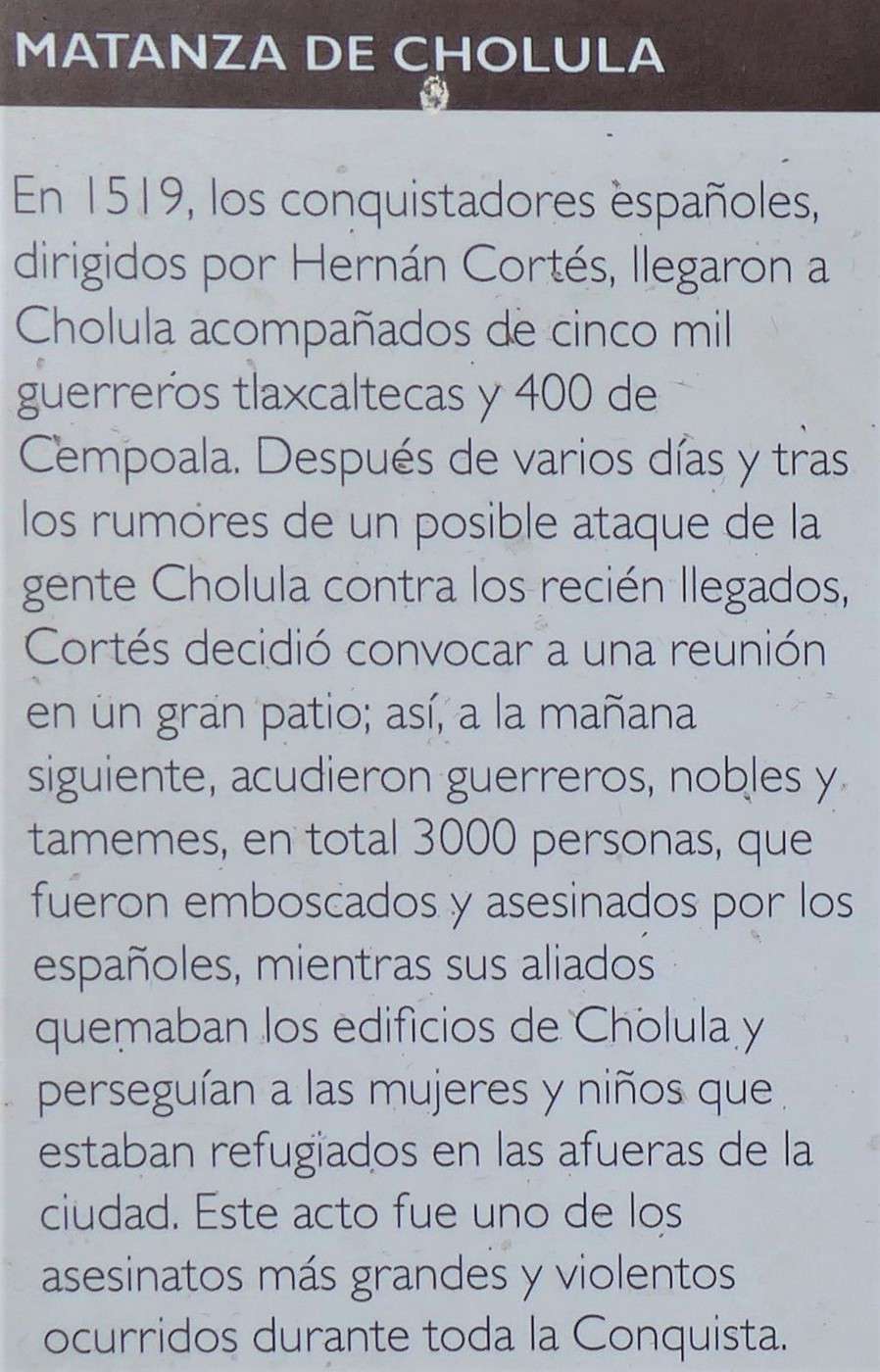
As usual, there are several signs in this archaeological park explaining all sorts of things, in Spanish and English. They don’t fail to remind visitors of the tragic event known as the "Matanza de Cholula" ("Massacre of Cholula"). What’s said here about the Indigenous warriors who accompanied Cortés is completely different from what Christian Duverger says. According to the signs, he had an escort of 5,000 Tlaxcalan warriors and 500 Cempoalan warriors—Cempoala (or Zempoala) being the main city of the Totonacs. That’s far from Duverger’s "100,000 Totonac warriors." And given that later accounts only mention a few thousand Aztec warriors and a few thousand deaths (Aztecs and Cholulans combined), it’s safe to say that "thousands" is more realistic than "hundreds of thousands." I’ll paste the relevant passage from a sign here, in Spanish, but some of you might be able to read it easily.