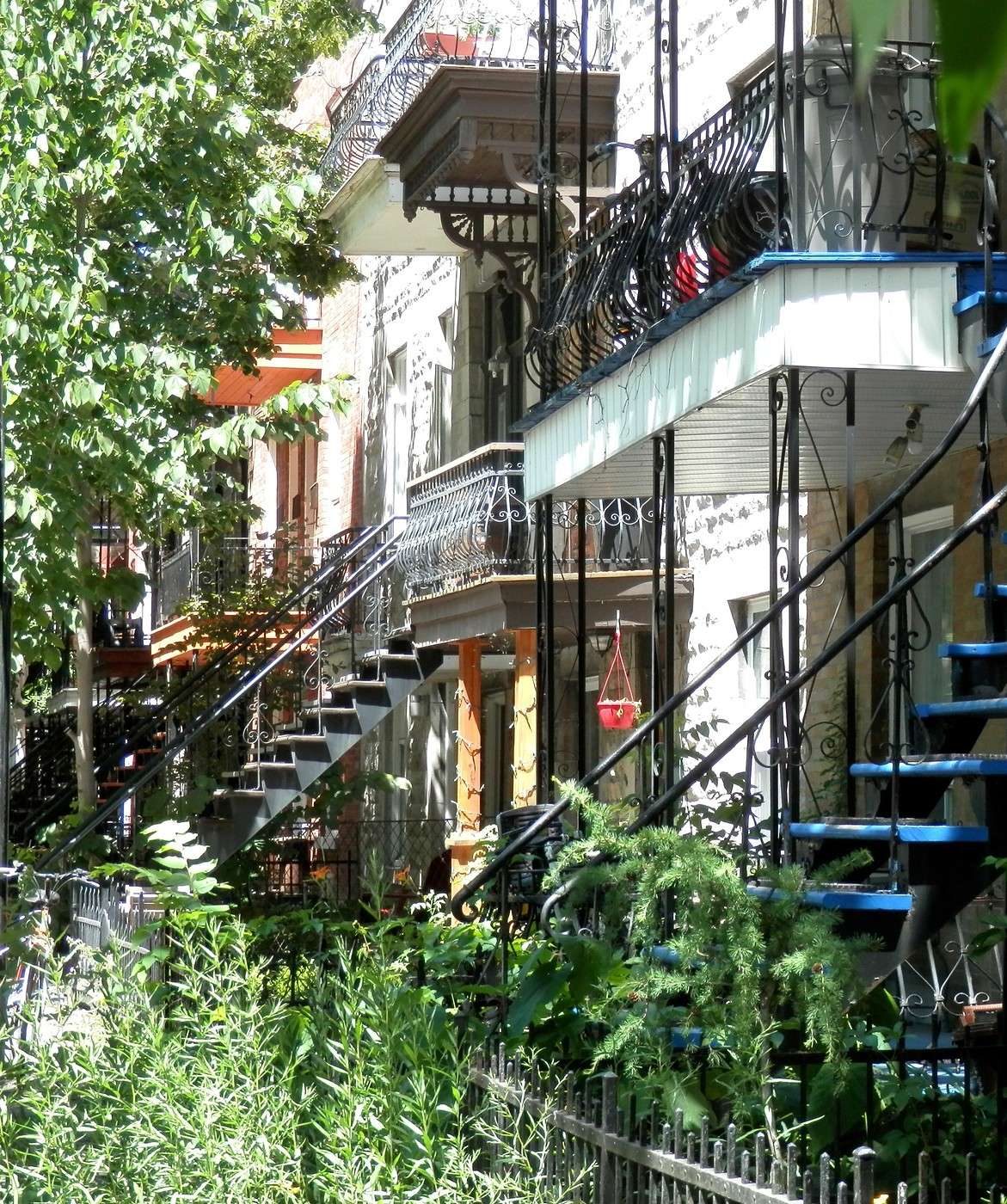
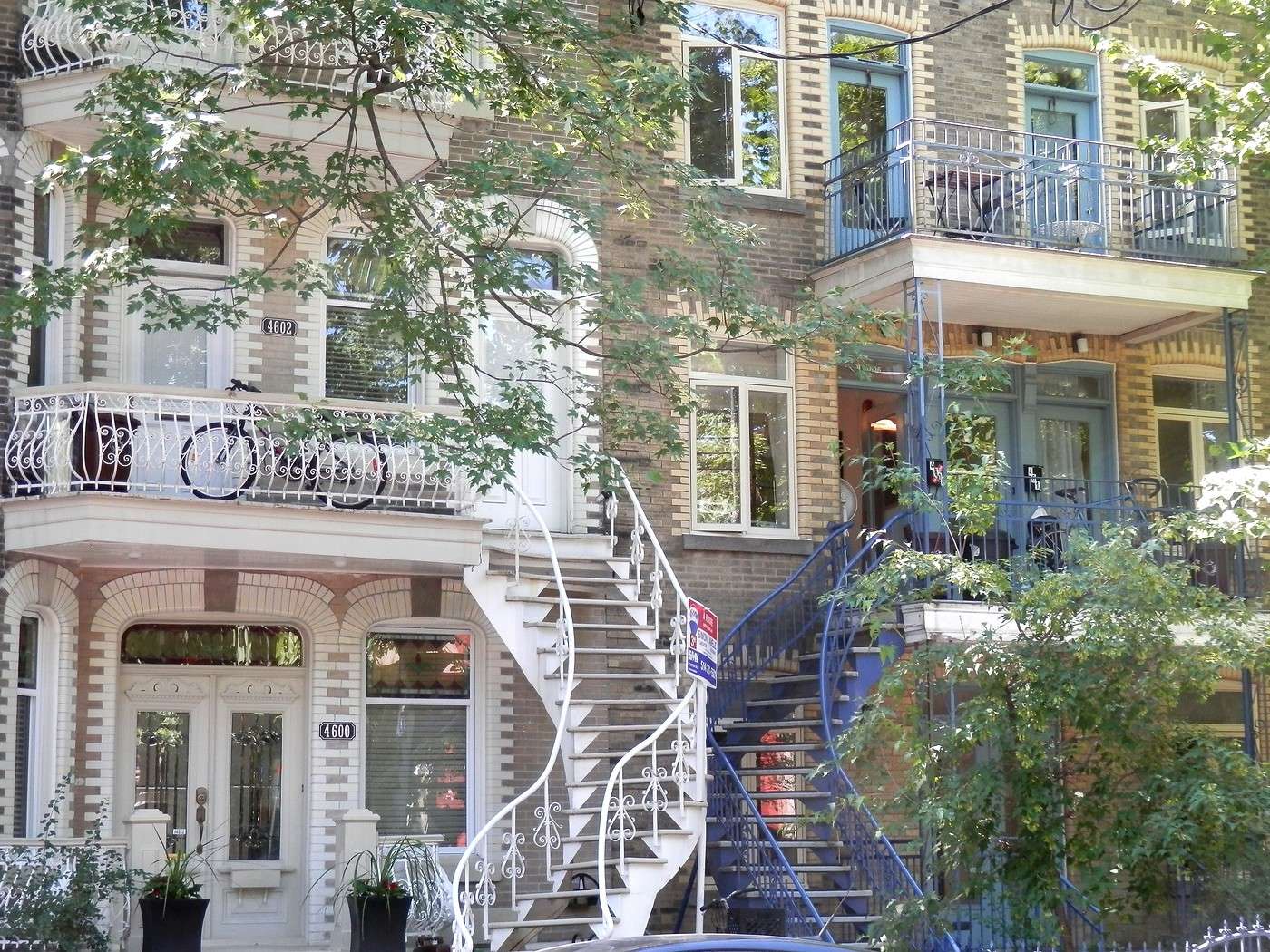
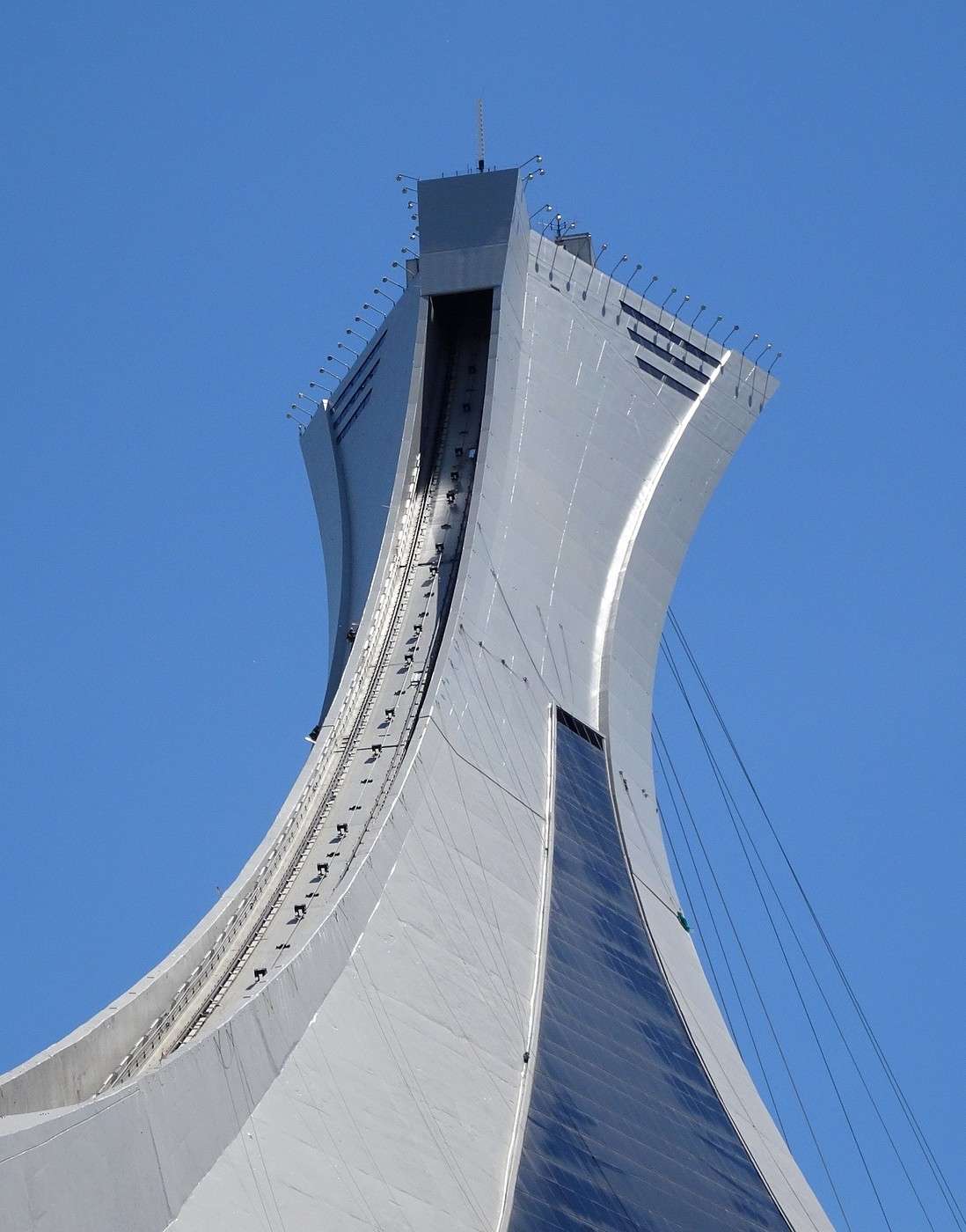
Three weeks in Quebec at the start of summer 2018, on a "semi-organized" trip
I’ve been putting off posting my Quebec travel experience for a long time. Two years later, I’ve finally decided to share it. The memories are still vivid. I hope this gives you the urge to visit this beautiful region, which I literally fell in love with.
We’re traveling as four adults: my brother Guy, my sister-in-law Martine, my friend Pascal, and myself (Christian).
We entrusted the flight, hotel, and car reservations to the travel agency Amplitudes in Toulouse. Planning the day-to-day activities was up to us. We scheduled a few must-see visits, but for the rest, we’d figure it out on the spot.
Our itinerary: Quebec City / Rimouski / Carleton-sur-Mer / Percé / Sainte-Anne-des-Monts / Matane / Tadoussac / Sainte-Rose-du-Nord / Chambord / Saint-Alexis-des-Monts / Montreal
06/25 Here we are at Roissy Charles de Gaulle for the usual pre-flight formalities. Everything goes smoothly and quickly. The hardest part is waiting for takeoff. After an uneventful flight on an Air Canada Boeing 777-300ER, we land at Montréal-Pierre Elliott Trudeau Airport (YUL) in the early afternoon.
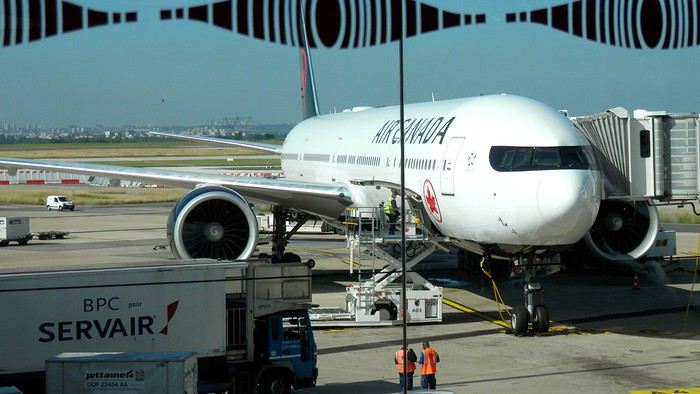
At customs, a surprise—no grumpy officer, but a smiling customs agent who jokingly asks me to name three tourist spots in Quebec, or else he won’t let me in. I pass the test easily and enter Quebec!
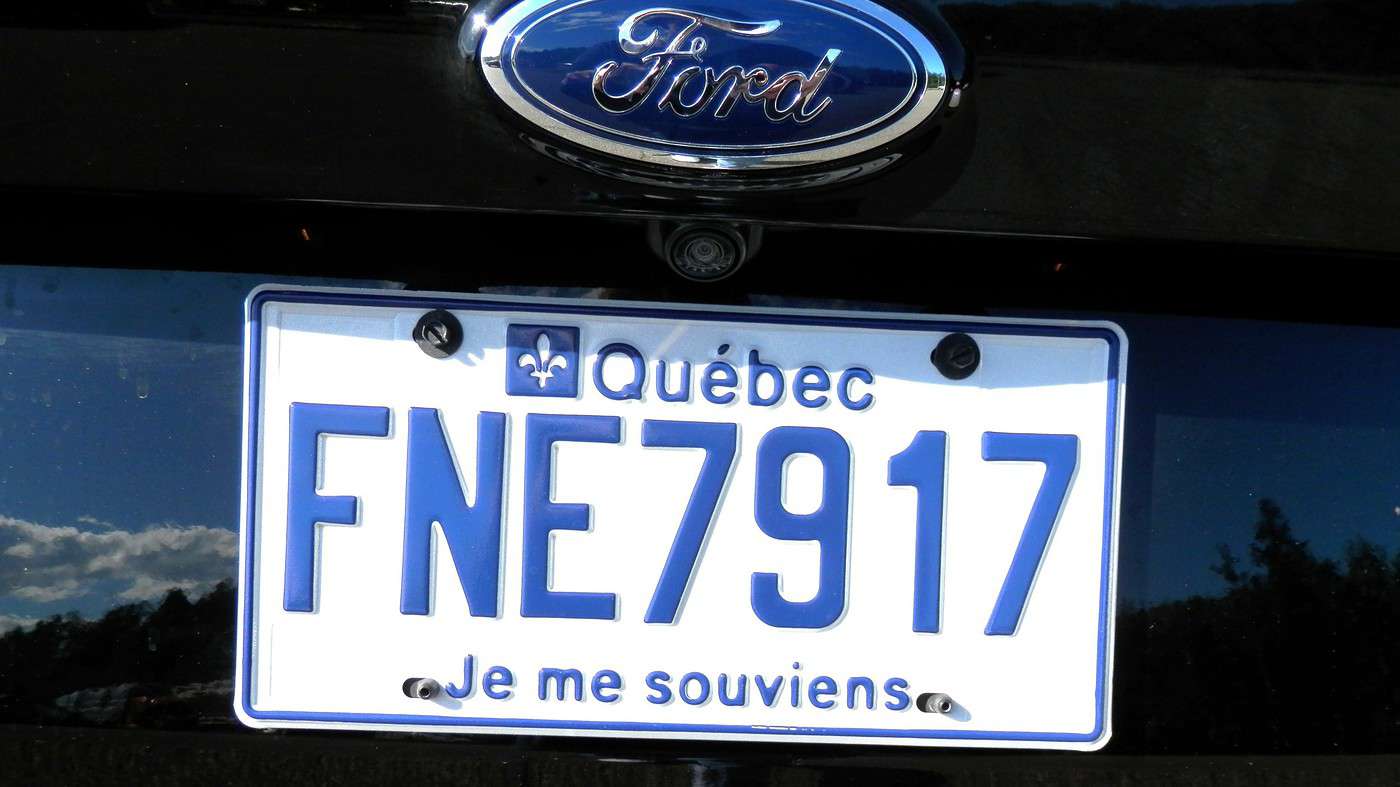
We head to the Alamo counter at Trudeau Airport to pick up our car: a Ford Escape with only 300 kilometers on the odometer.
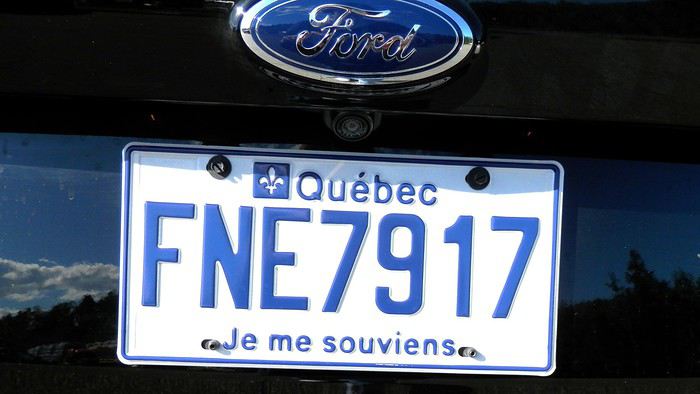
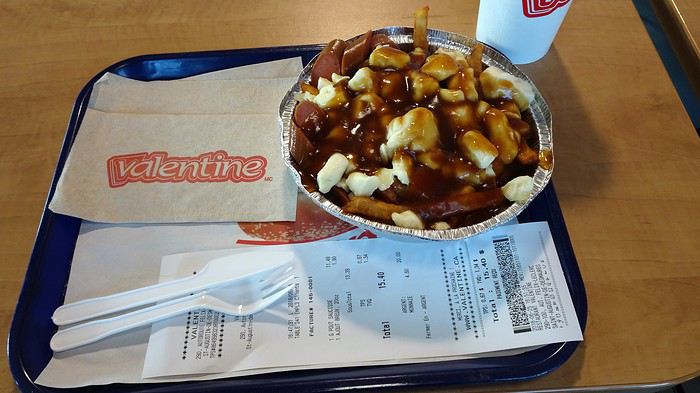
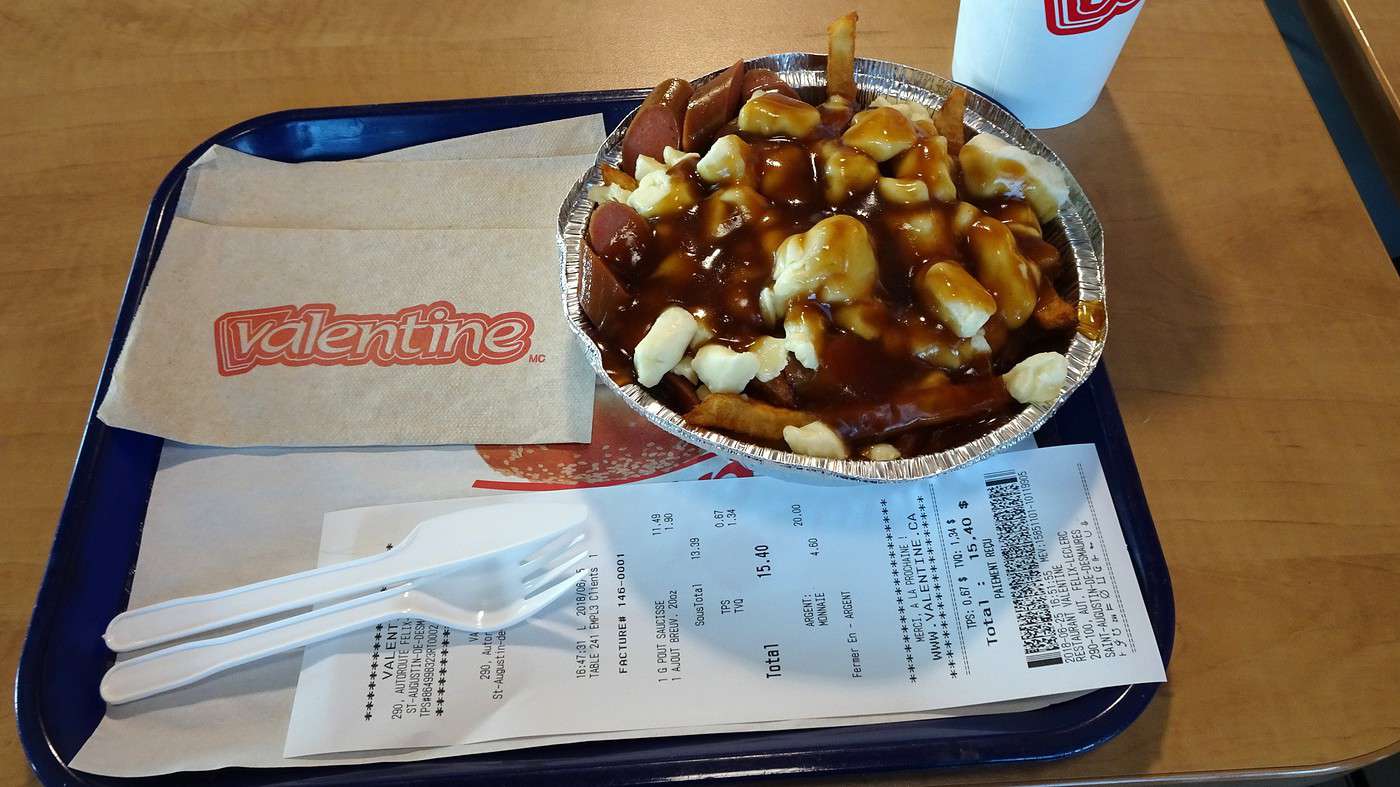
We decided to head straight to Quebec City, saving Montreal for the end of the trip. Pascal takes the wheel and gets on the Trans-Canada Highway E20 for a 255 km drive, taking about 2 hours and 45 minutes. With the time difference, we’re already feeling hungry, so we stop for our first poutine at a highway restaurant.
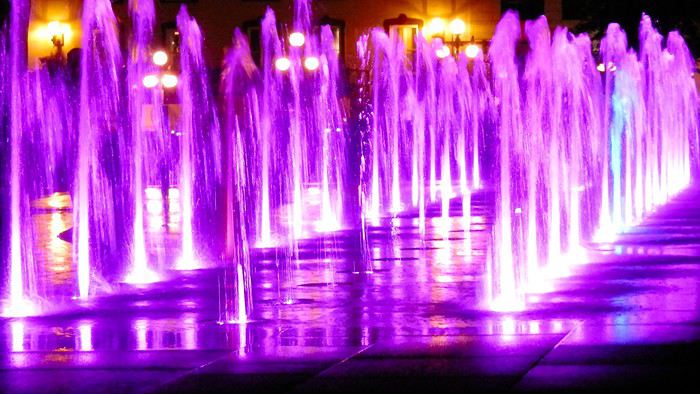
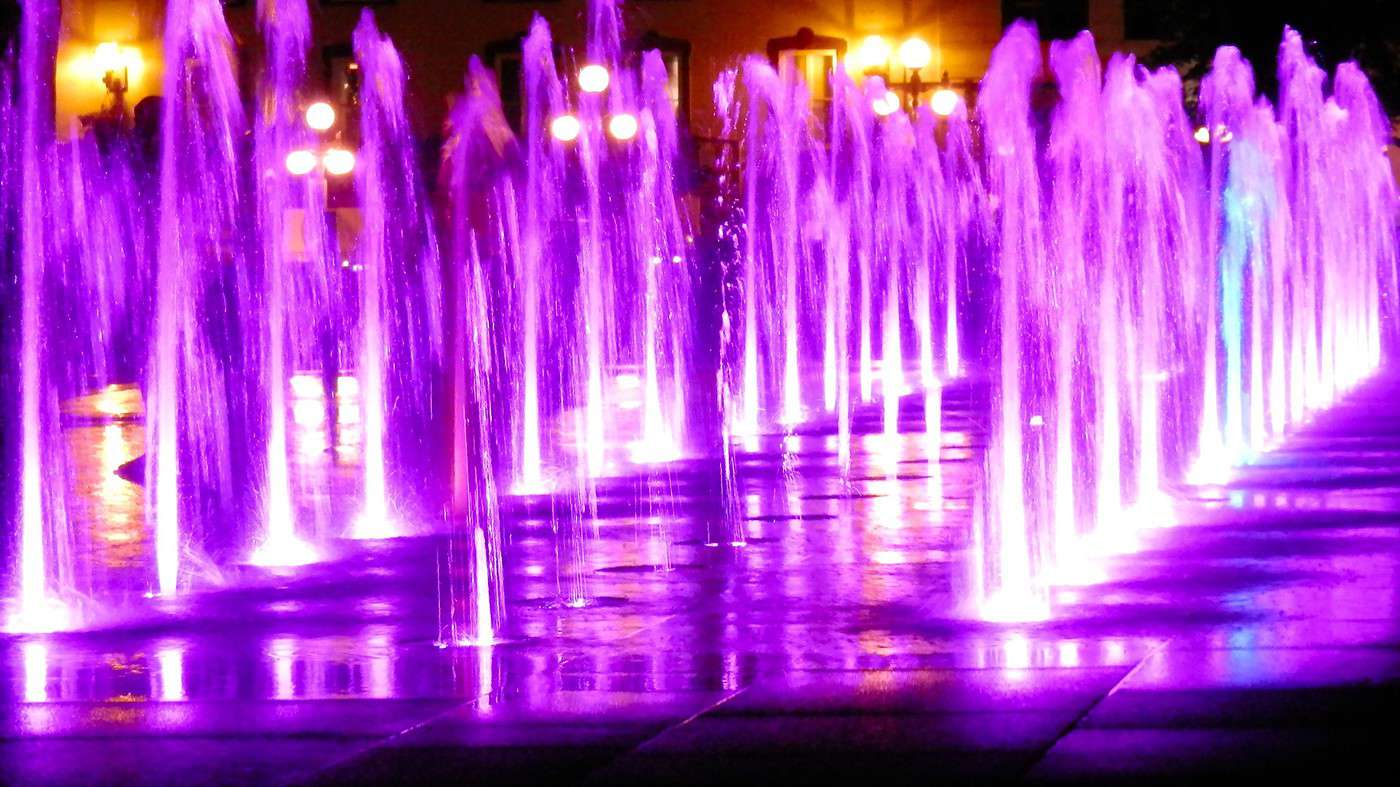
When we arrive in Quebec City, we go straight to the Clarendon Hotel, located right in the heart of Old Quebec. We’ll be staying there for three nights. Tonight, no restaurant—just a short walk around the hotel before bed. We discover a square with pretty colored water fountains near the city hall.
 It’s only 9 PM, but our body clocks say it’s 3 AM.
We’re traveling as four adults: my brother Guy, my sister-in-law Martine, my friend Pascal, and myself (Christian).
We entrusted the flight, hotel, and car reservations to the travel agency Amplitudes in Toulouse. Planning the day-to-day activities was up to us. We scheduled a few must-see visits, but for the rest, we’d figure it out on the spot.
Our itinerary: Quebec City / Rimouski / Carleton-sur-Mer / Percé / Sainte-Anne-des-Monts / Matane / Tadoussac / Sainte-Rose-du-Nord / Chambord / Saint-Alexis-des-Monts / Montreal
06/25 Here we are at Roissy Charles de Gaulle for the usual pre-flight formalities. Everything goes smoothly and quickly. The hardest part is waiting for takeoff. After an uneventful flight on an Air Canada Boeing 777-300ER, we land at Montréal-Pierre Elliott Trudeau Airport (YUL) in the early afternoon.
At customs, a surprise—no grumpy officer, but a smiling customs agent who jokingly asks me to name three tourist spots in Quebec, or else he won’t let me in. I pass the test easily and enter Quebec!
We head to the Alamo counter at Trudeau Airport to pick up our car: a Ford Escape with only 300 kilometers on the odometer.
We decided to head straight to Quebec City, saving Montreal for the end of the trip. Pascal takes the wheel and gets on the Trans-Canada Highway E20 for a 255 km drive, taking about 2 hours and 45 minutes. With the time difference, we’re already feeling hungry, so we stop for our first poutine at a highway restaurant.
When we arrive in Quebec City, we go straight to the Clarendon Hotel, located right in the heart of Old Quebec. We’ll be staying there for three nights. Tonight, no restaurant—just a short walk around the hotel before bed. We discover a square with pretty colored water fountains near the city hall.
It’s only 9 PM, but our body clocks say it’s 3 AM.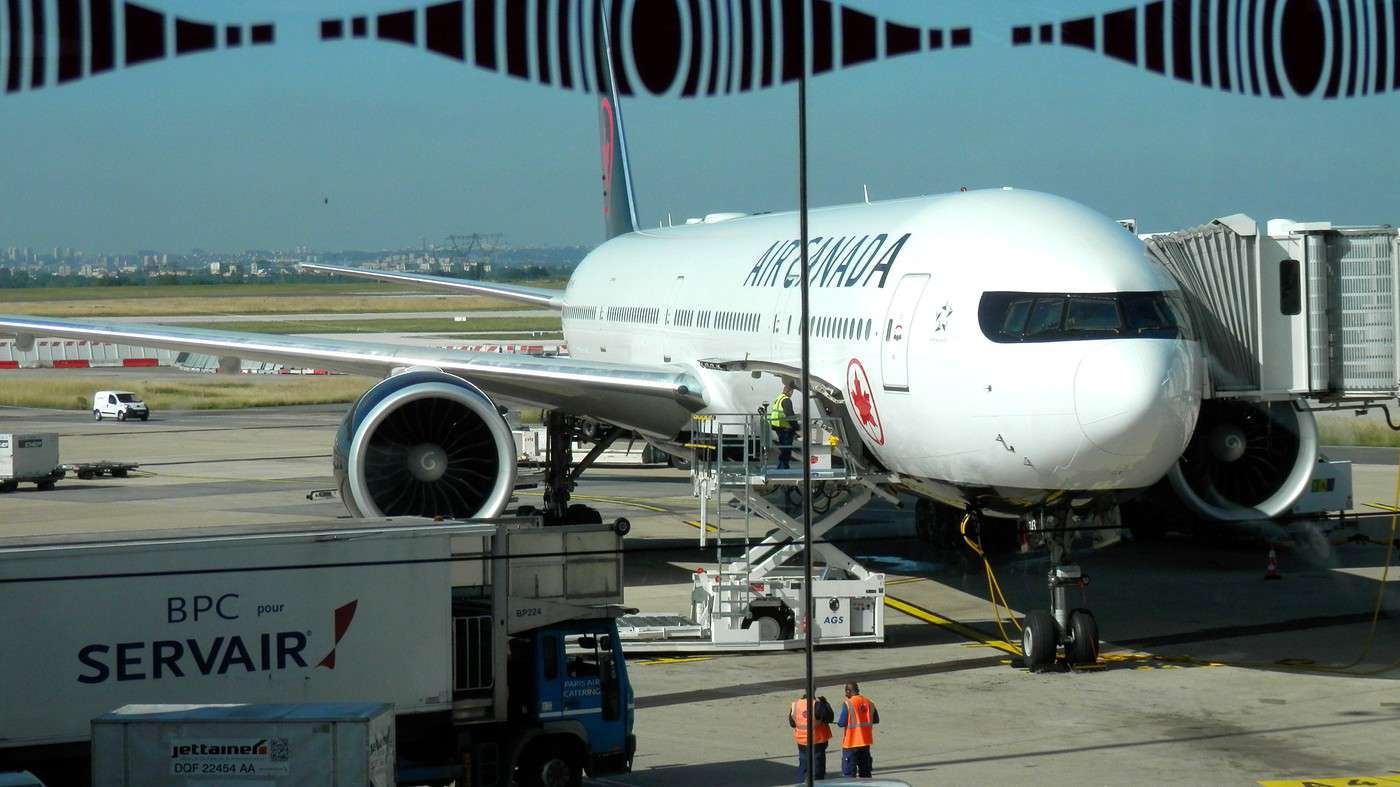
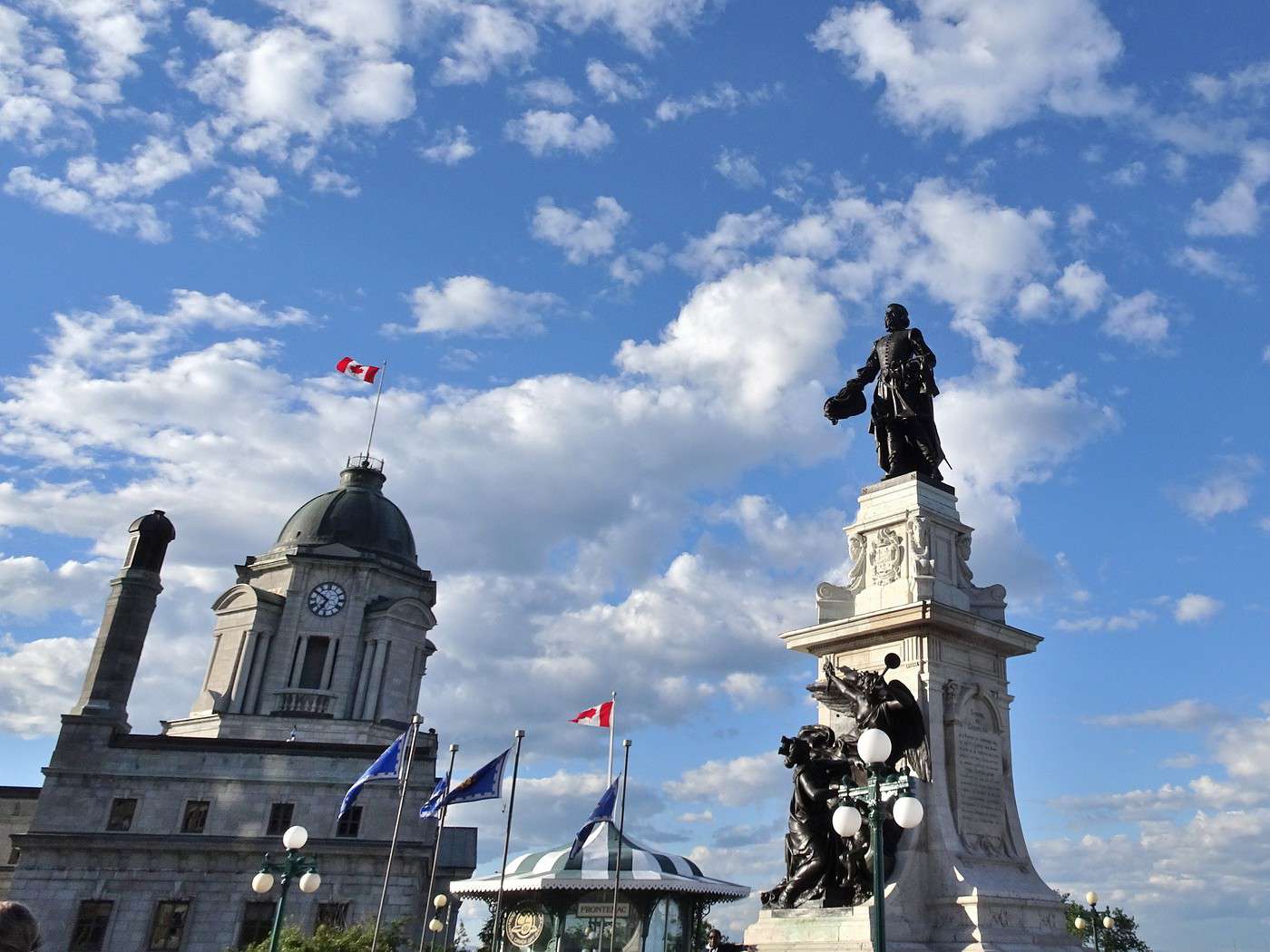
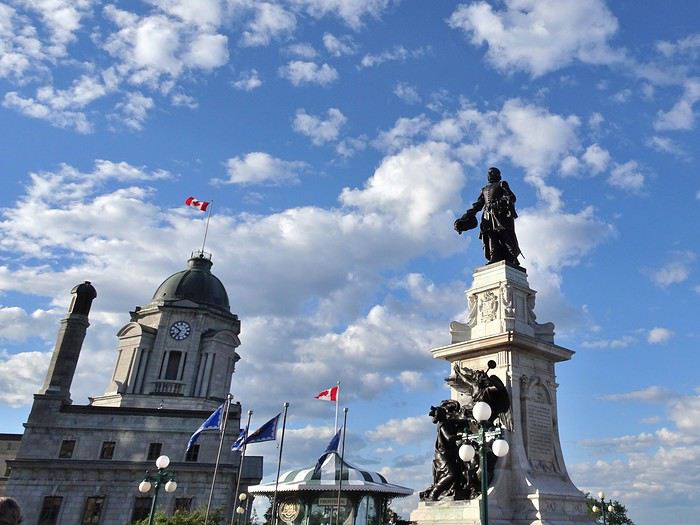 We take a quick stop at the foot of the statue of Samuel de Champlain, the founder of Quebec.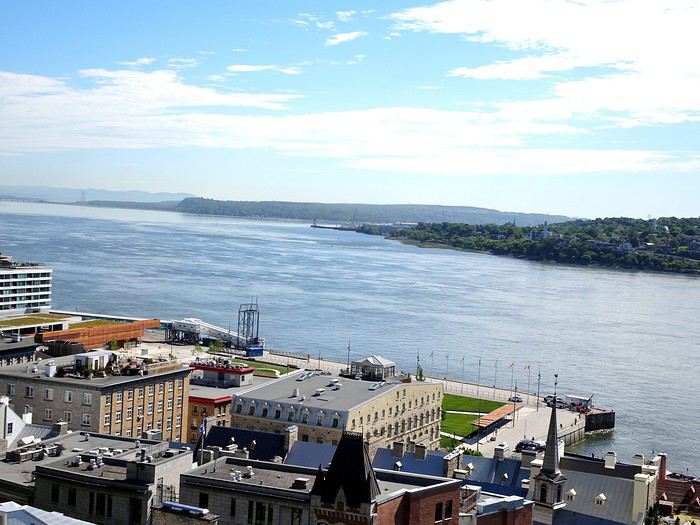
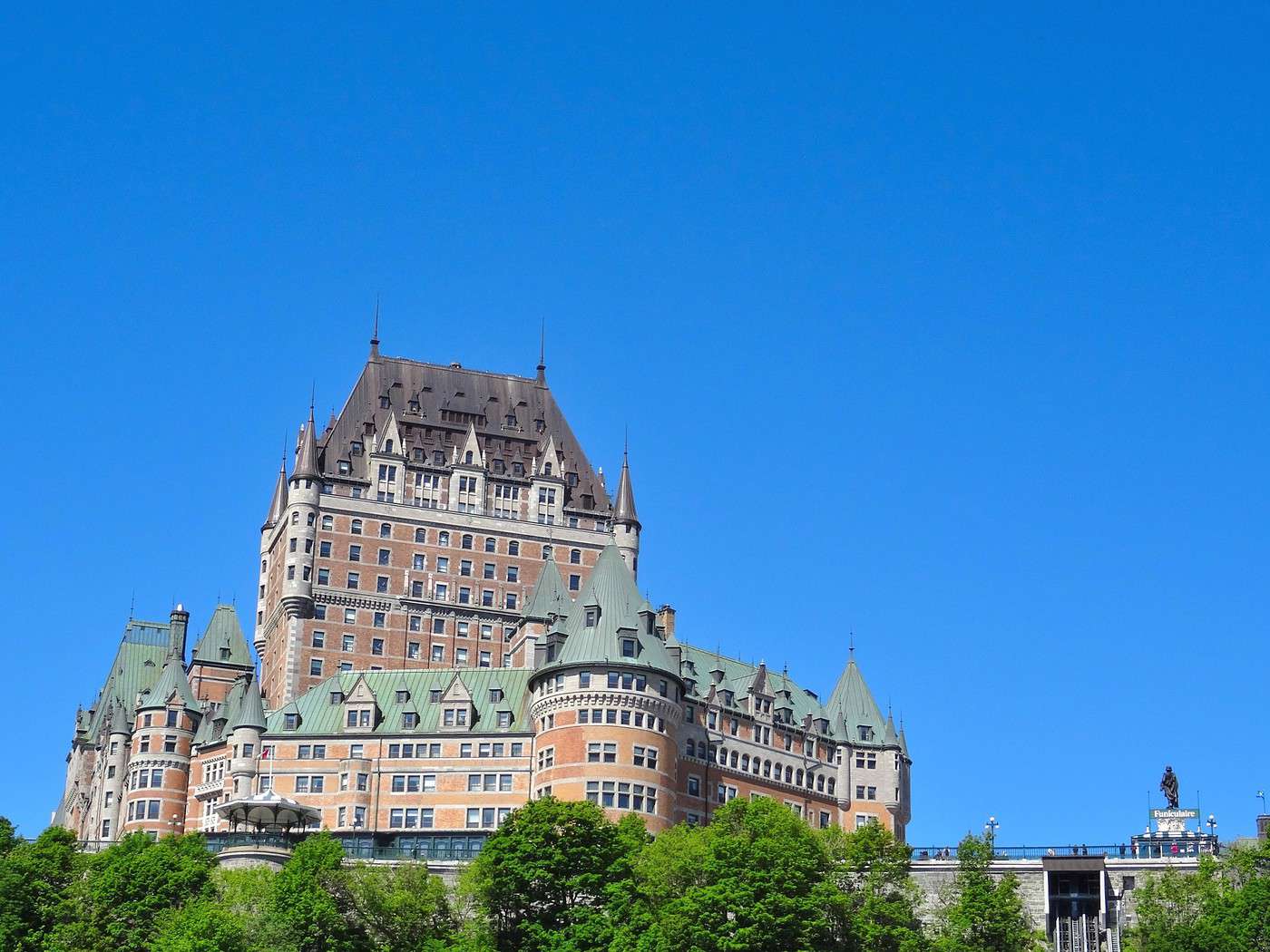
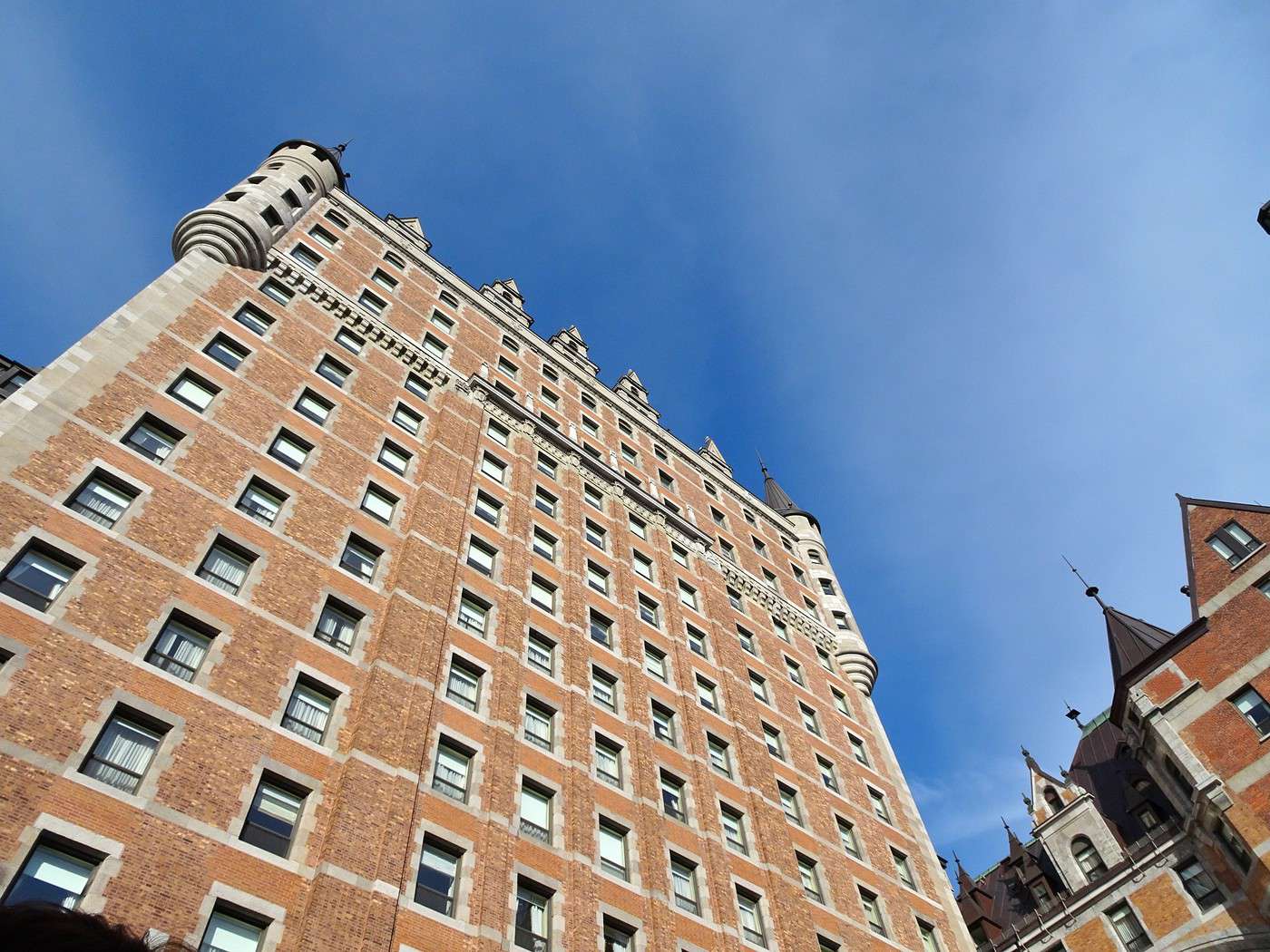
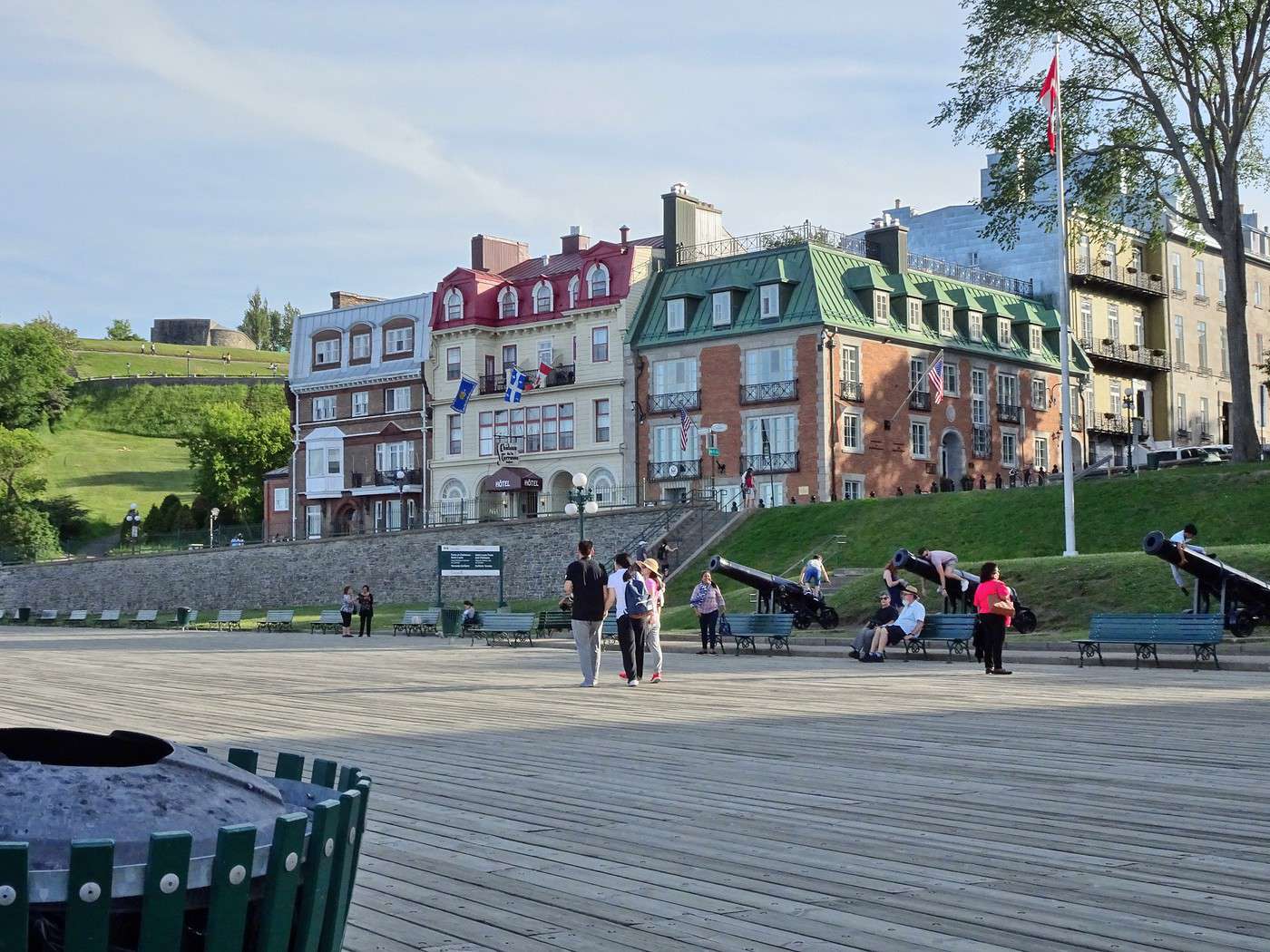
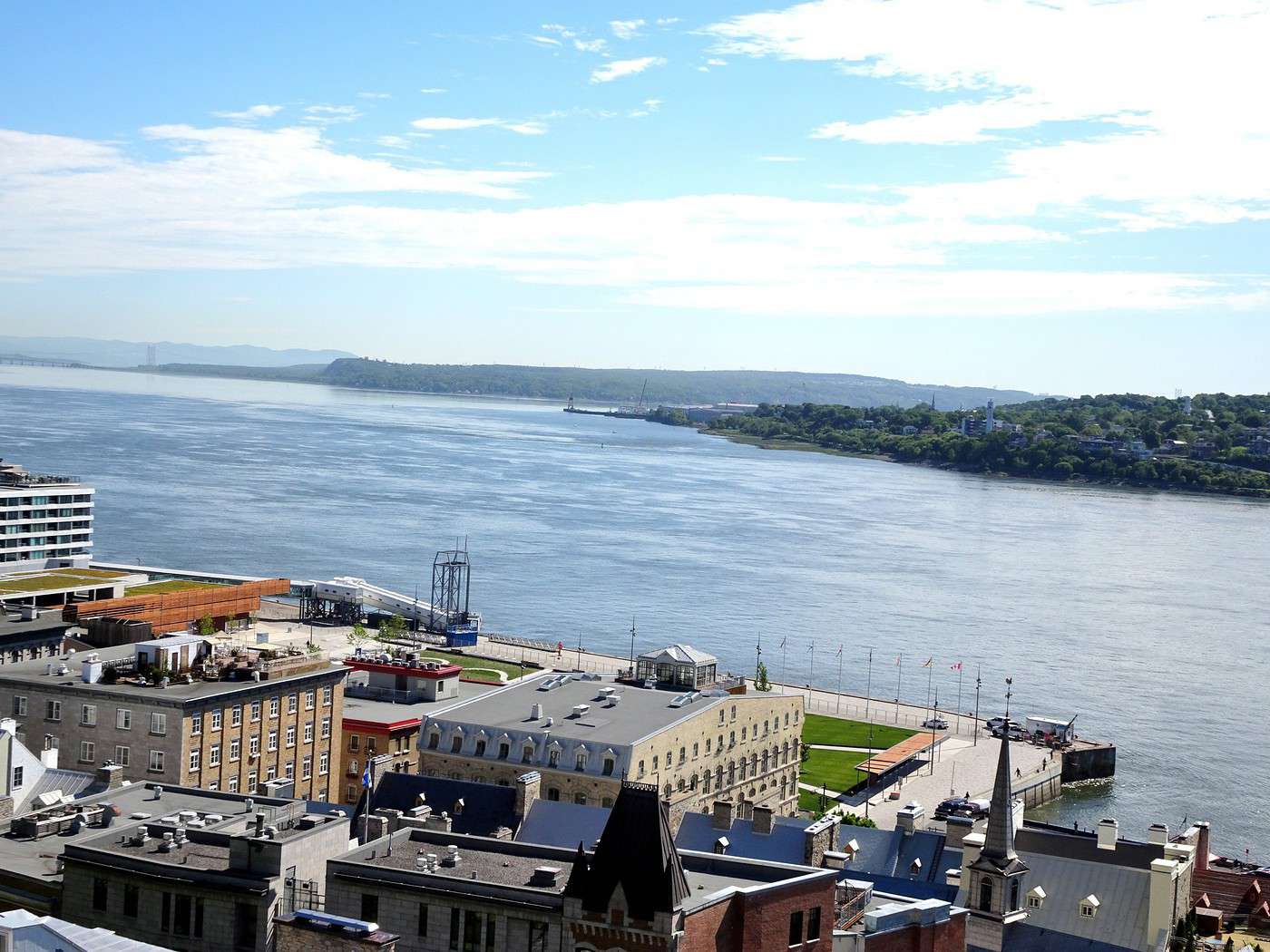
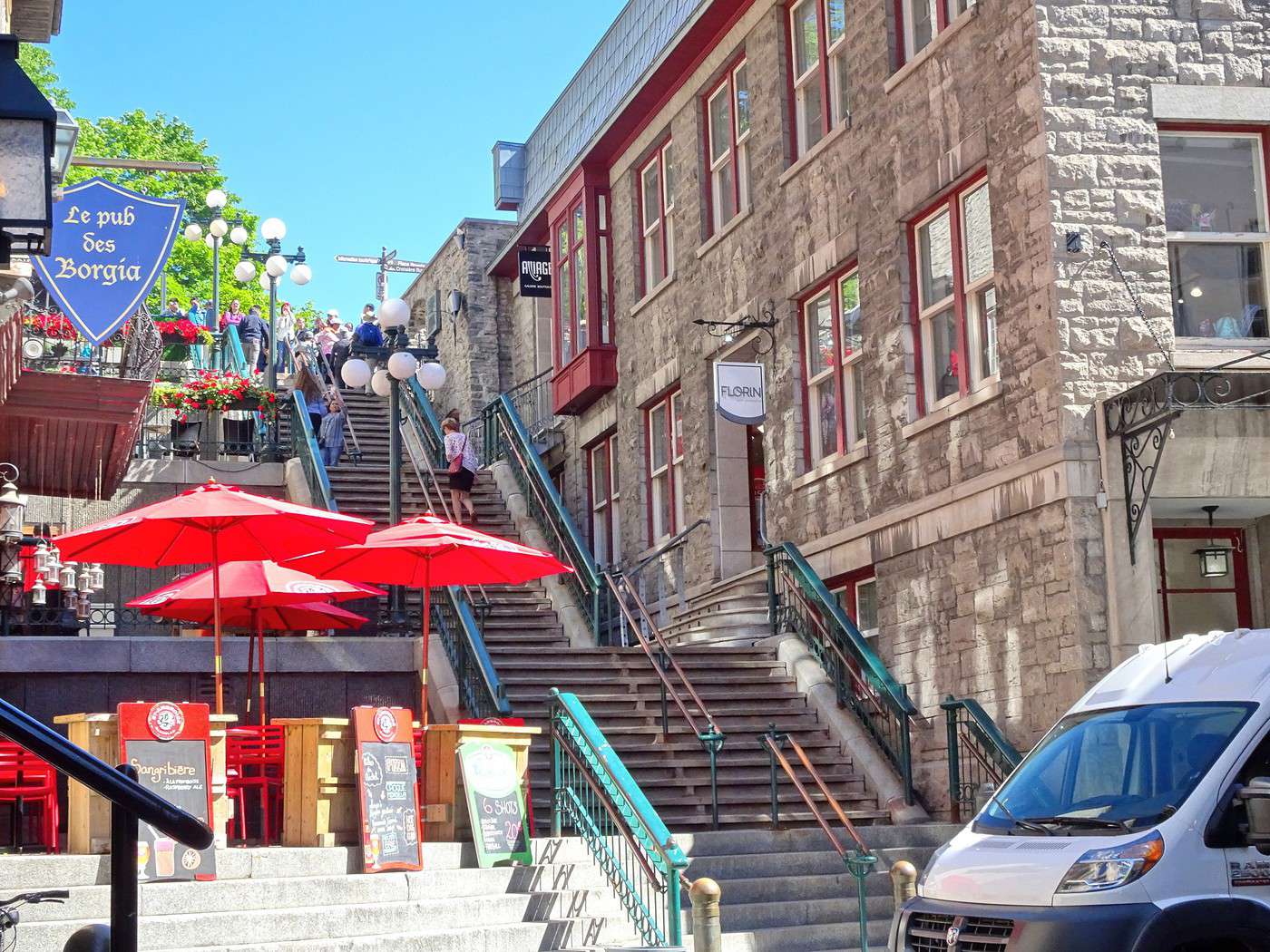
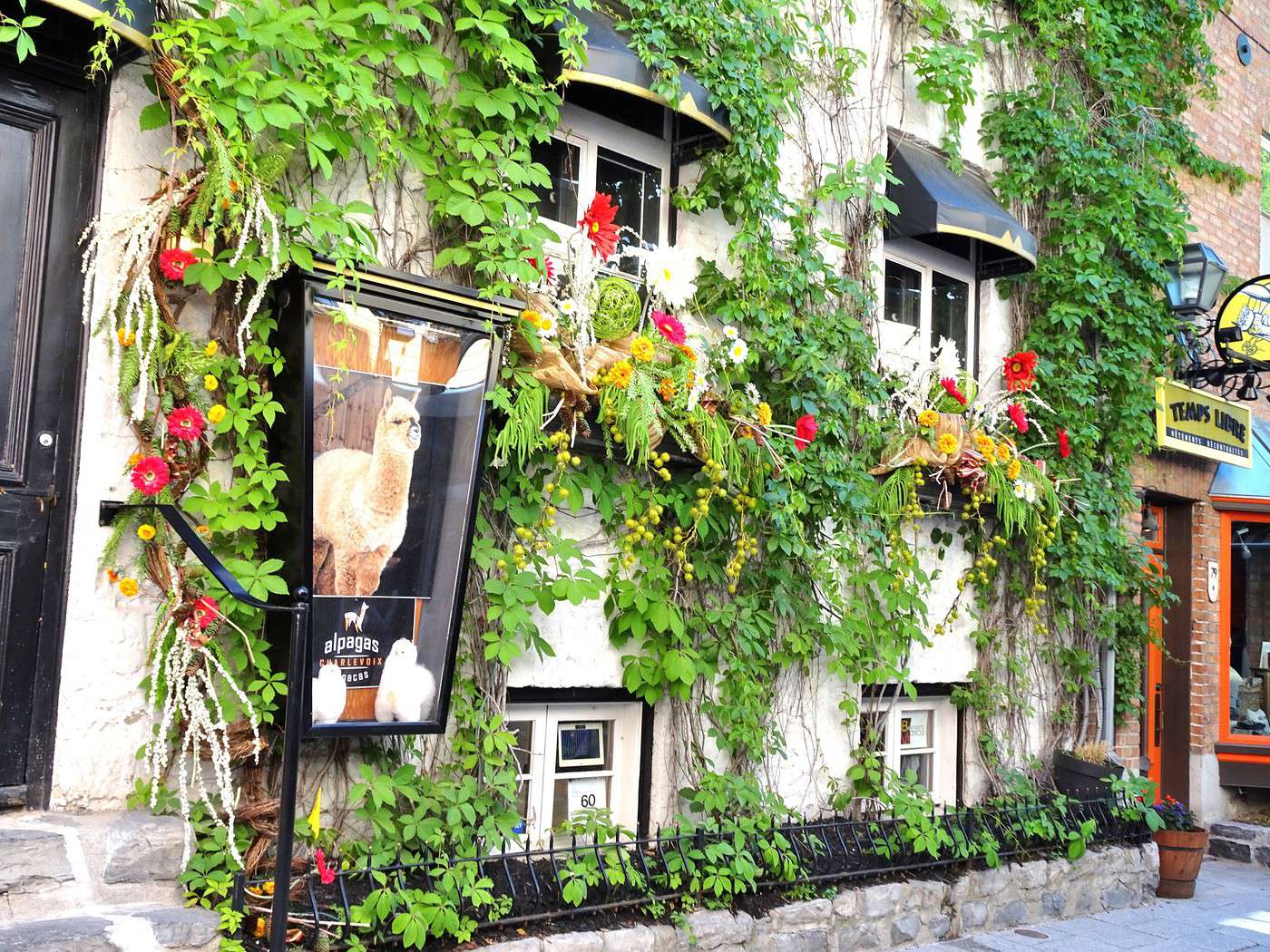
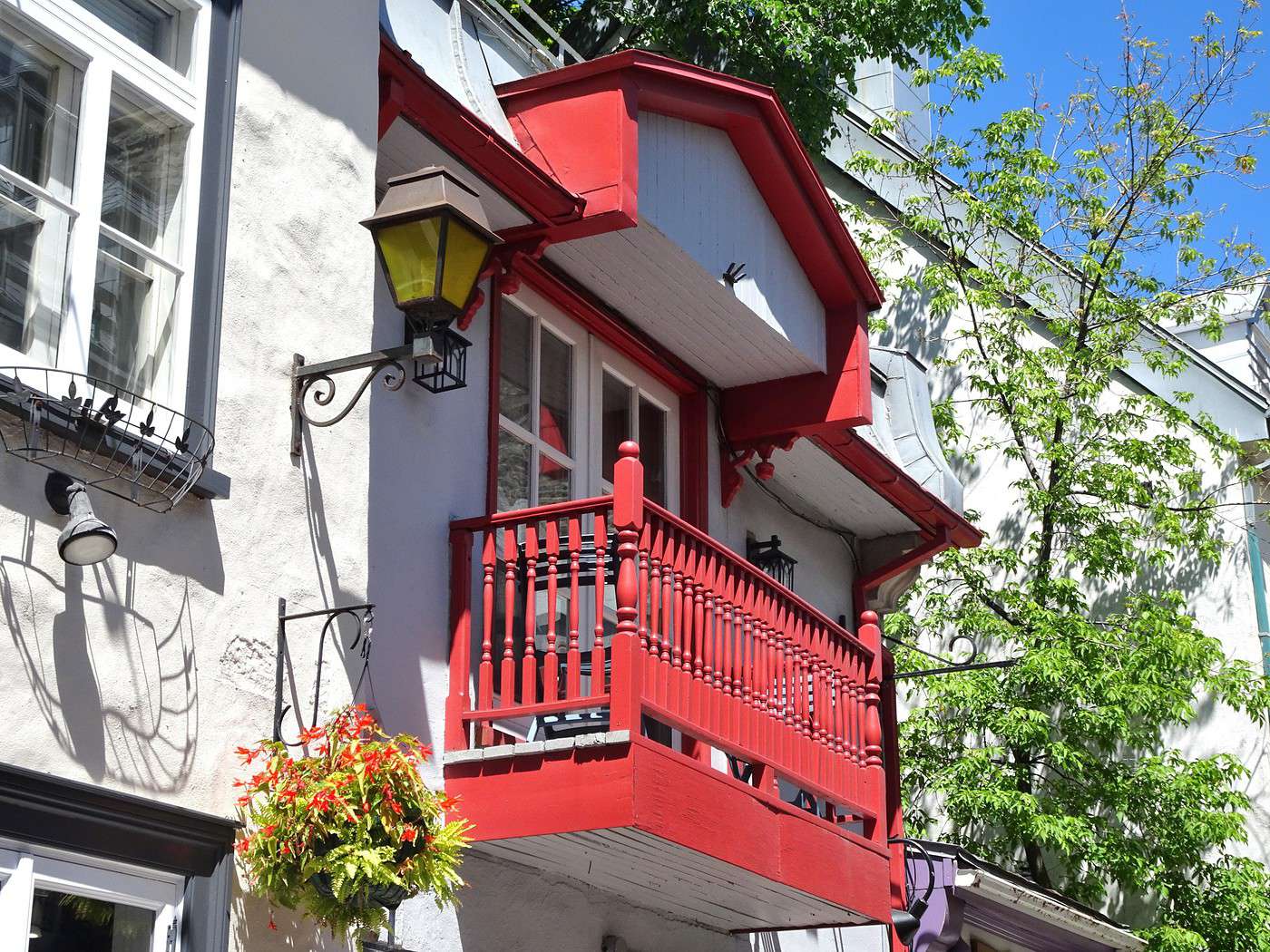
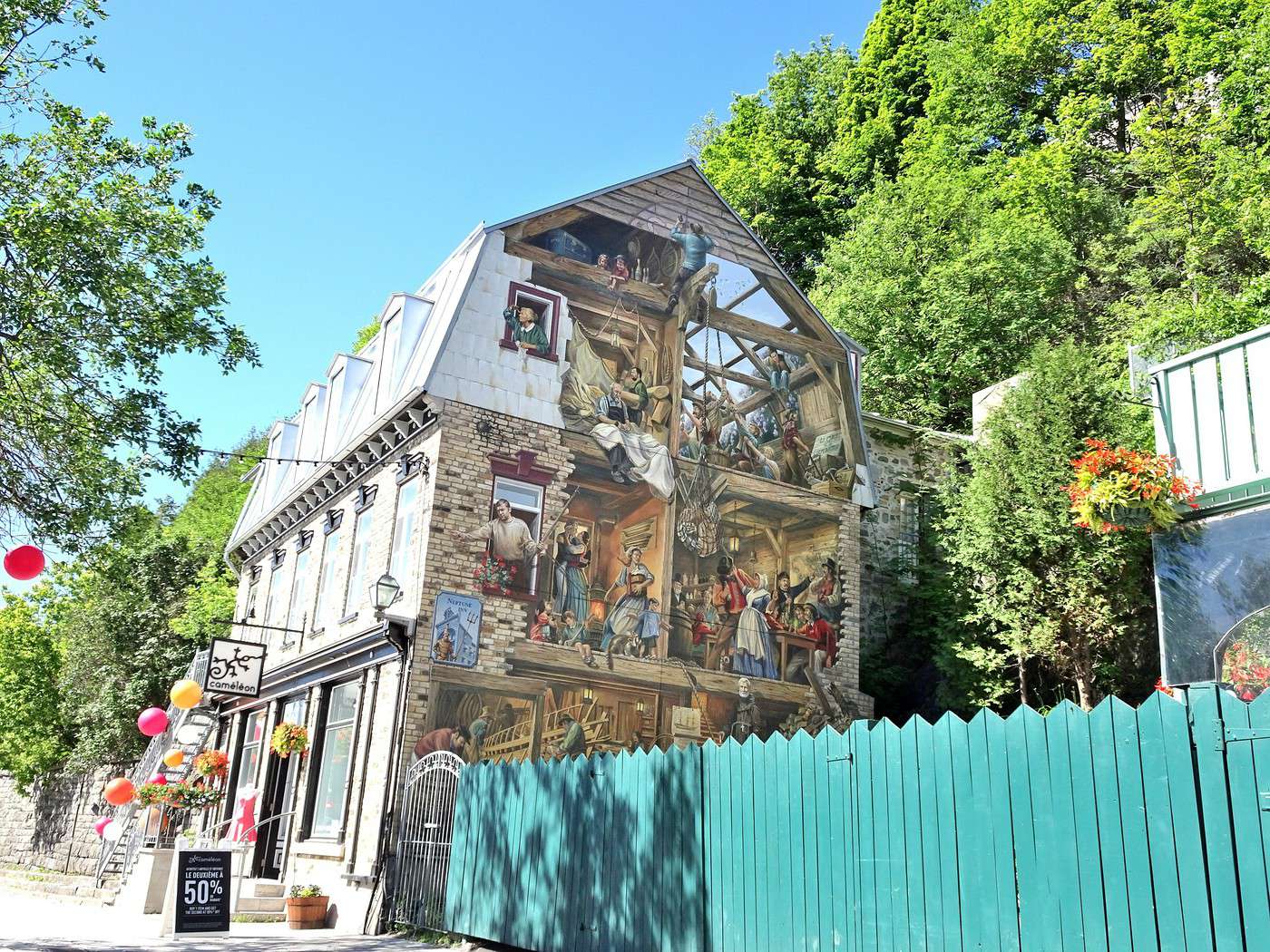
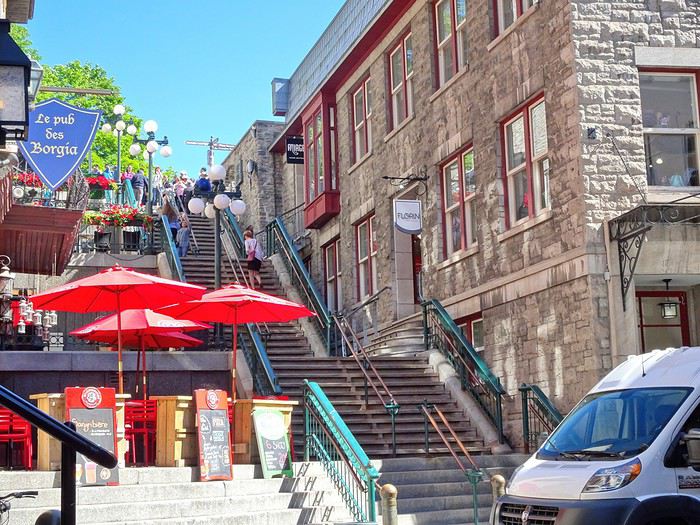 The steps of the Breakneck Stairs await us to dive into the alleys of Lower Town in the Petit-Champlain district. No crowds, no jostling—it’s still early in the day, and the tourist season is just beginning. This morning, we don’t feel like following the pages of a guidebook. We’d rather soak up the city’s vibe and let chance guide us.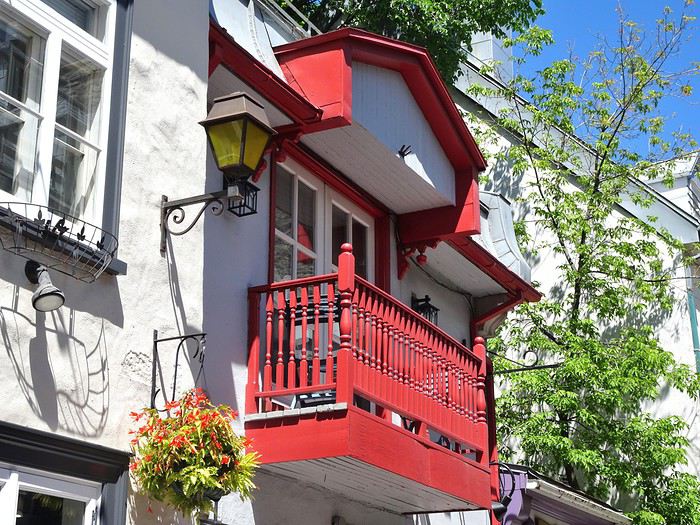
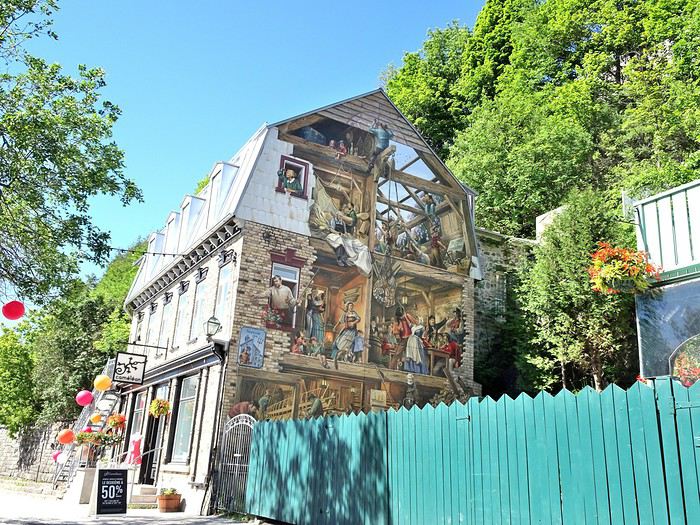
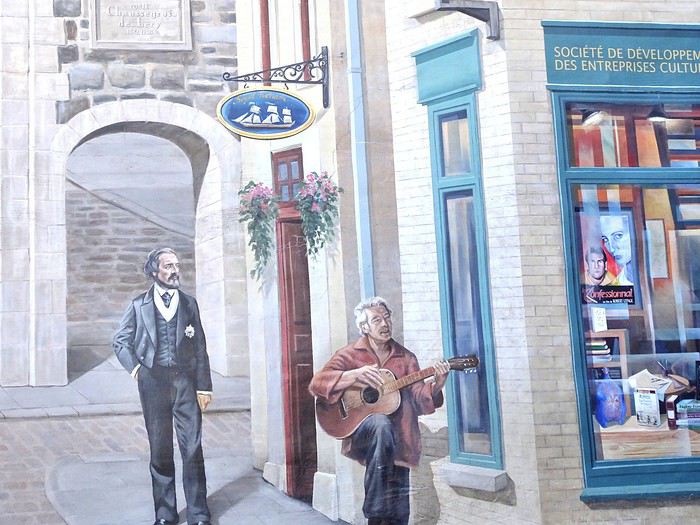
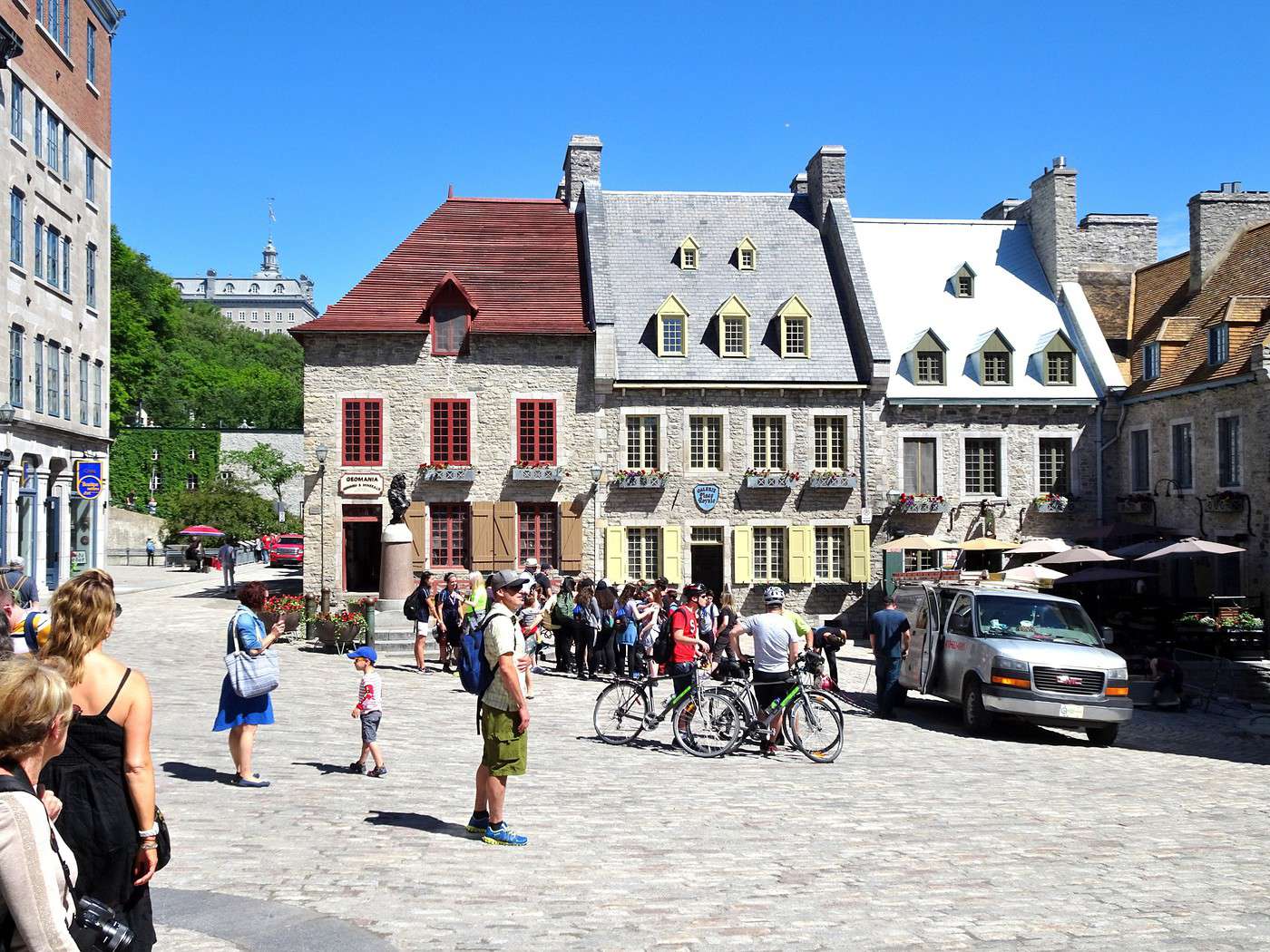
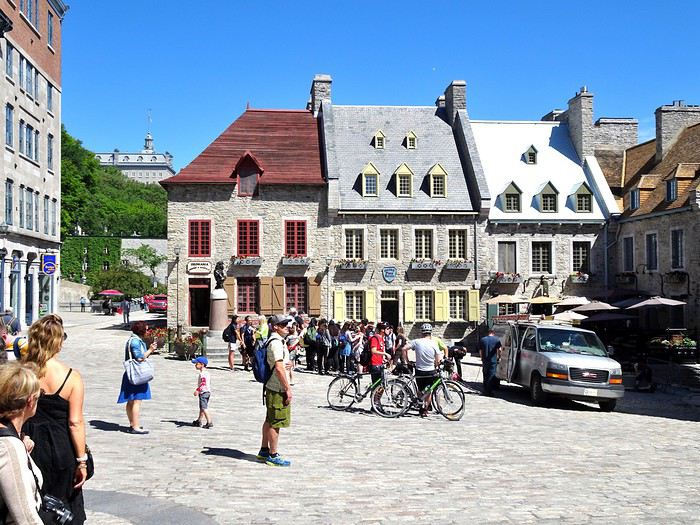 We cross Place Royale, where a bust of Louis XIV stands.
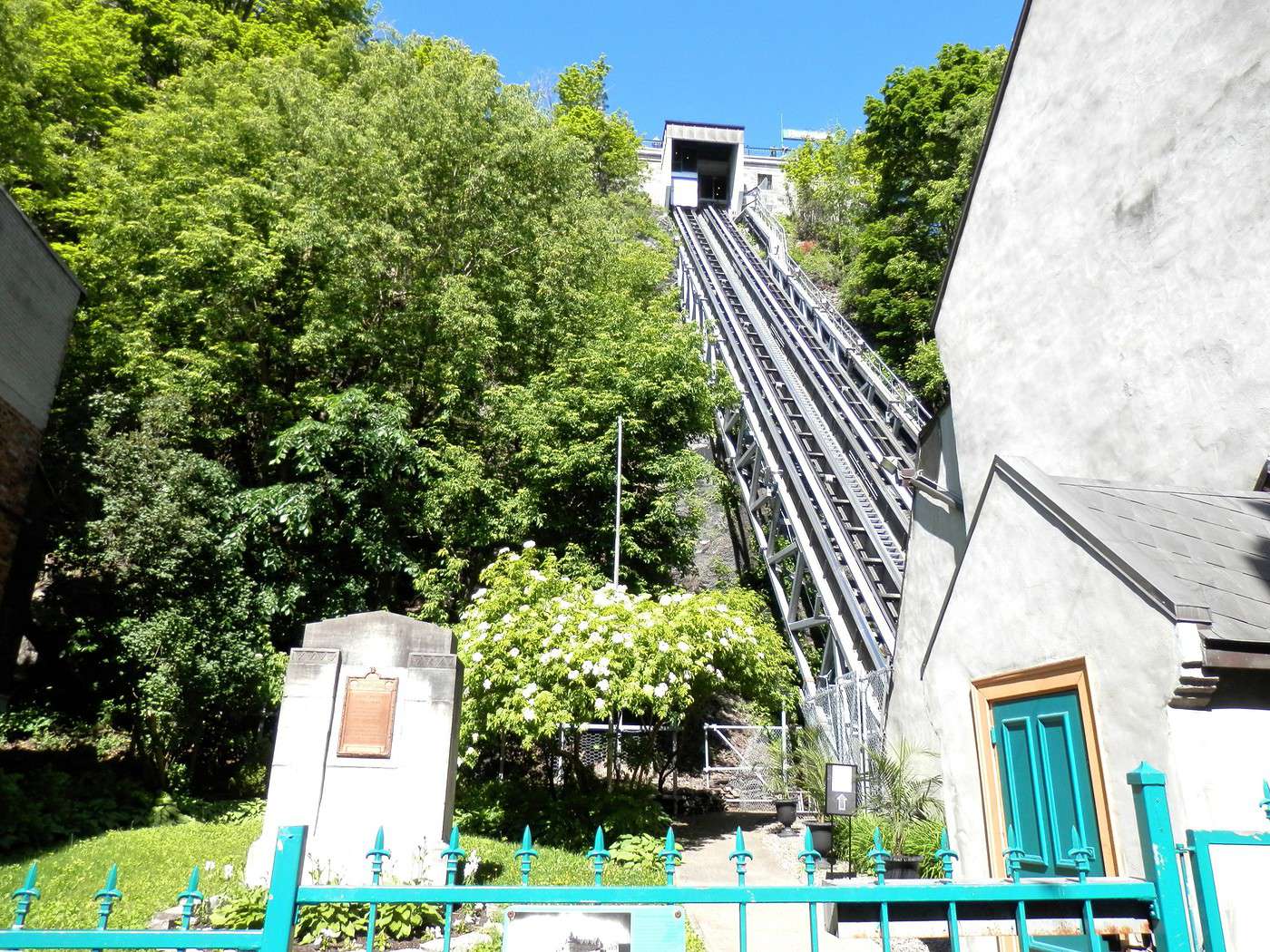
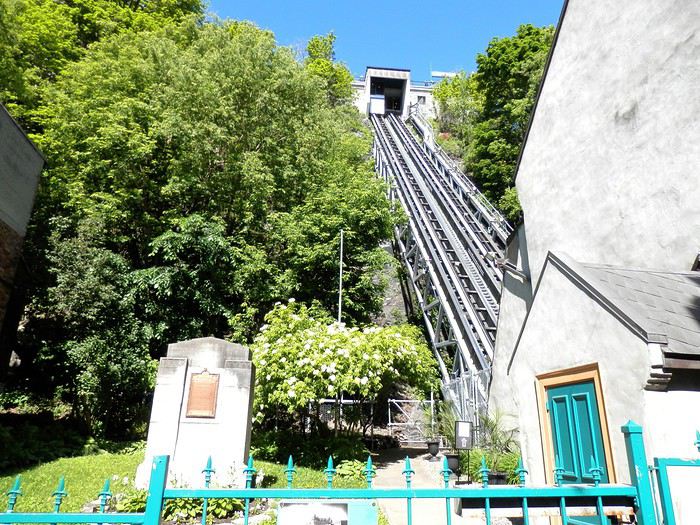 Still wandering a bit aimlessly, we find ourselves at the base of the funicular, which we take to climb back up to Upper Town.
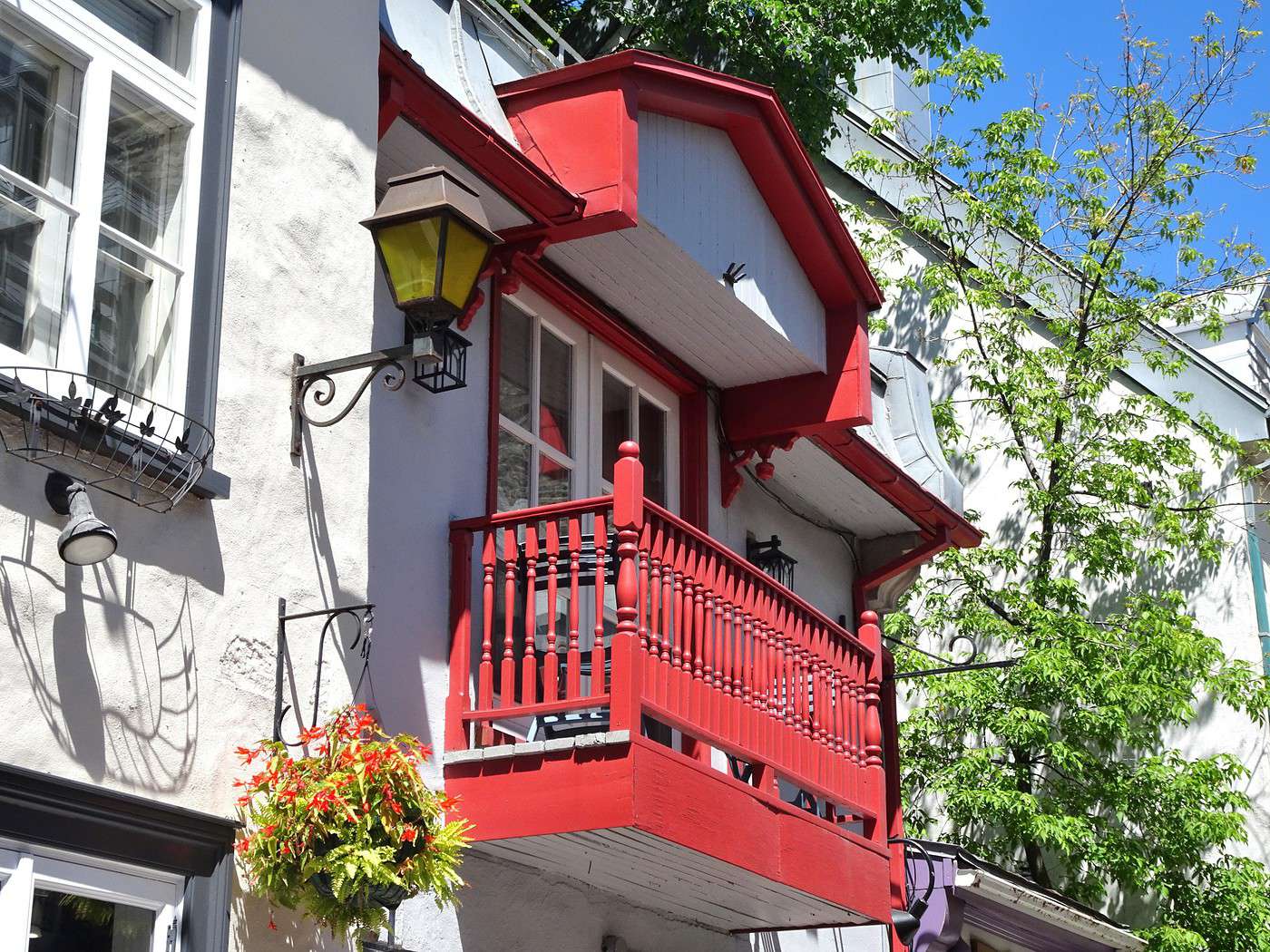
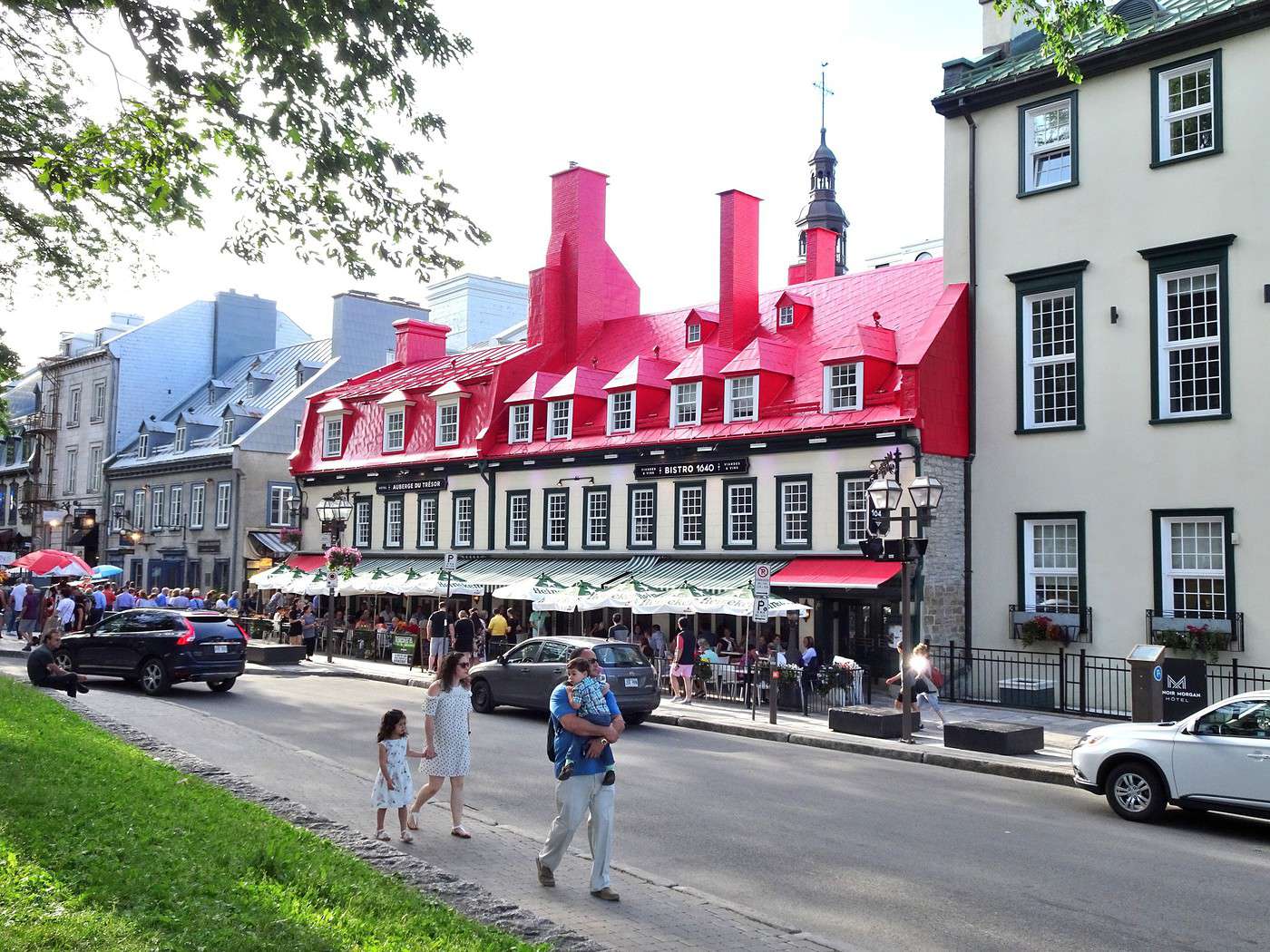
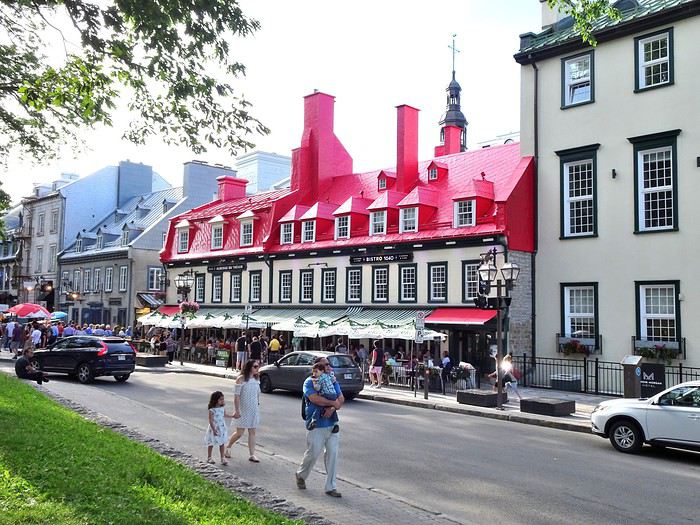 For lunch, we’ll be at Chez Jules, a French brasserie near the *Auberge du Trésor*, easily recognizable with its red roof. Great meal, with warm service and reasonable prices.
This is our chance to dive into the world of taxes, which we’re not used to in France. (I’m only talking about the taxes added to restaurant bills—we’re all too familiar with the others!) So, add roughly 15% in taxes and 15% for the tip. You get used to it quickly, and it becomes second nature.
We notice that, given the current exchange rate, if a menu is listed at 30 CAD, adding taxes brings it to nearly 30 €.
For lunch, we’ll be at Chez Jules, a French brasserie near the *Auberge du Trésor*, easily recognizable with its red roof. Great meal, with warm service and reasonable prices.
This is our chance to dive into the world of taxes, which we’re not used to in France. (I’m only talking about the taxes added to restaurant bills—we’re all too familiar with the others!) So, add roughly 15% in taxes and 15% for the tip. You get used to it quickly, and it becomes second nature.
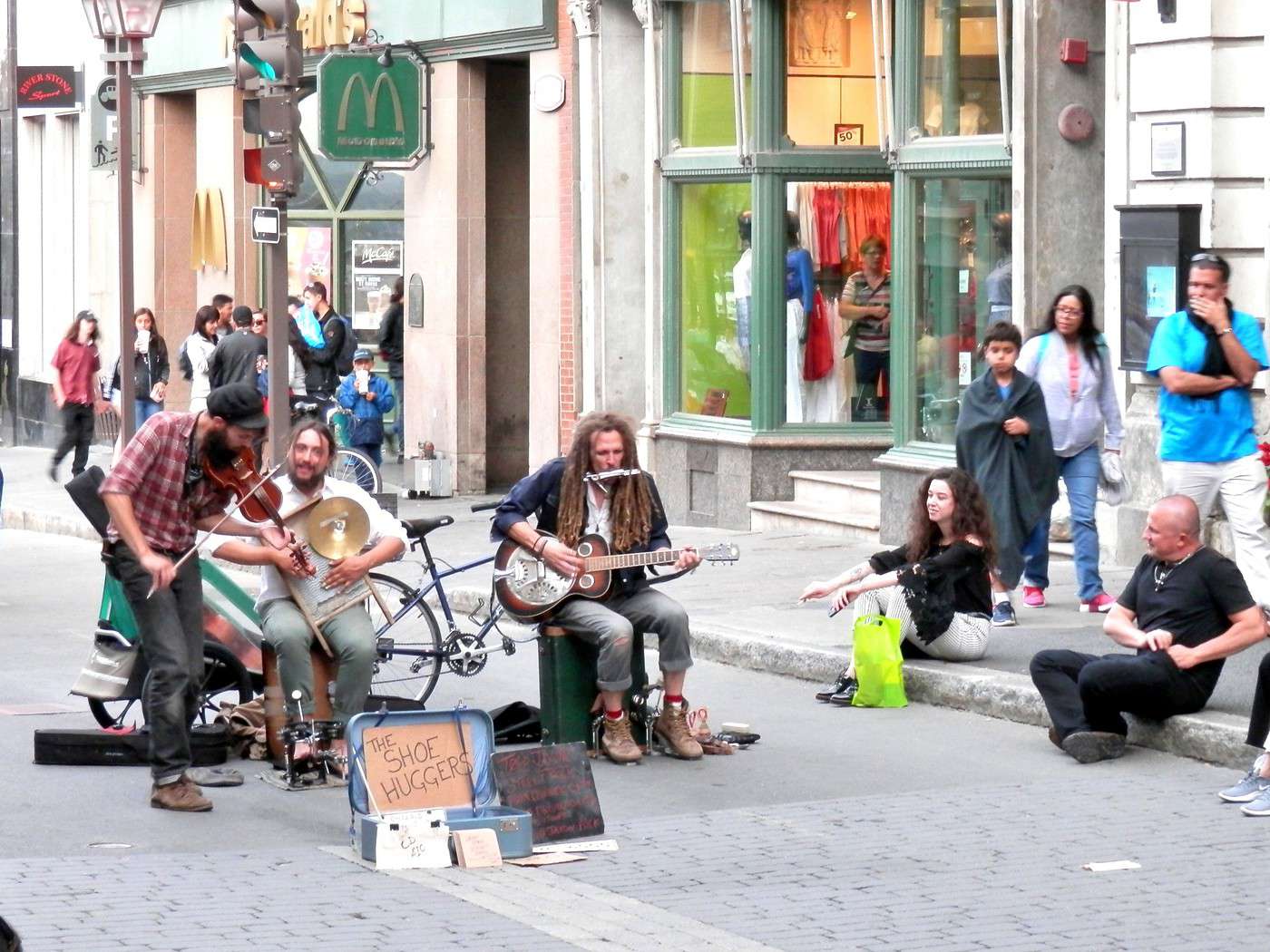
We notice that, given the current exchange rate, if a menu is listed at 30 CAD, adding taxes brings it to nearly 30 €.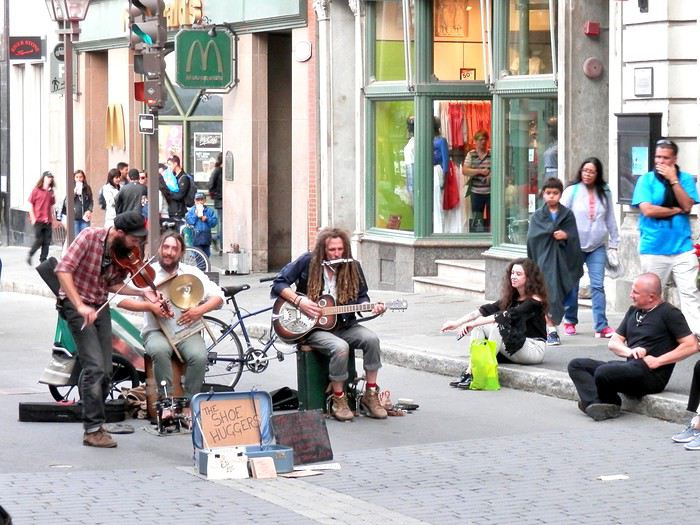 In the early evening, after a quick stop at the hotel, we head down Côte de la Fabrique, lively with street musicians. Quick meal at McDonald’s, then some well-deserved rest.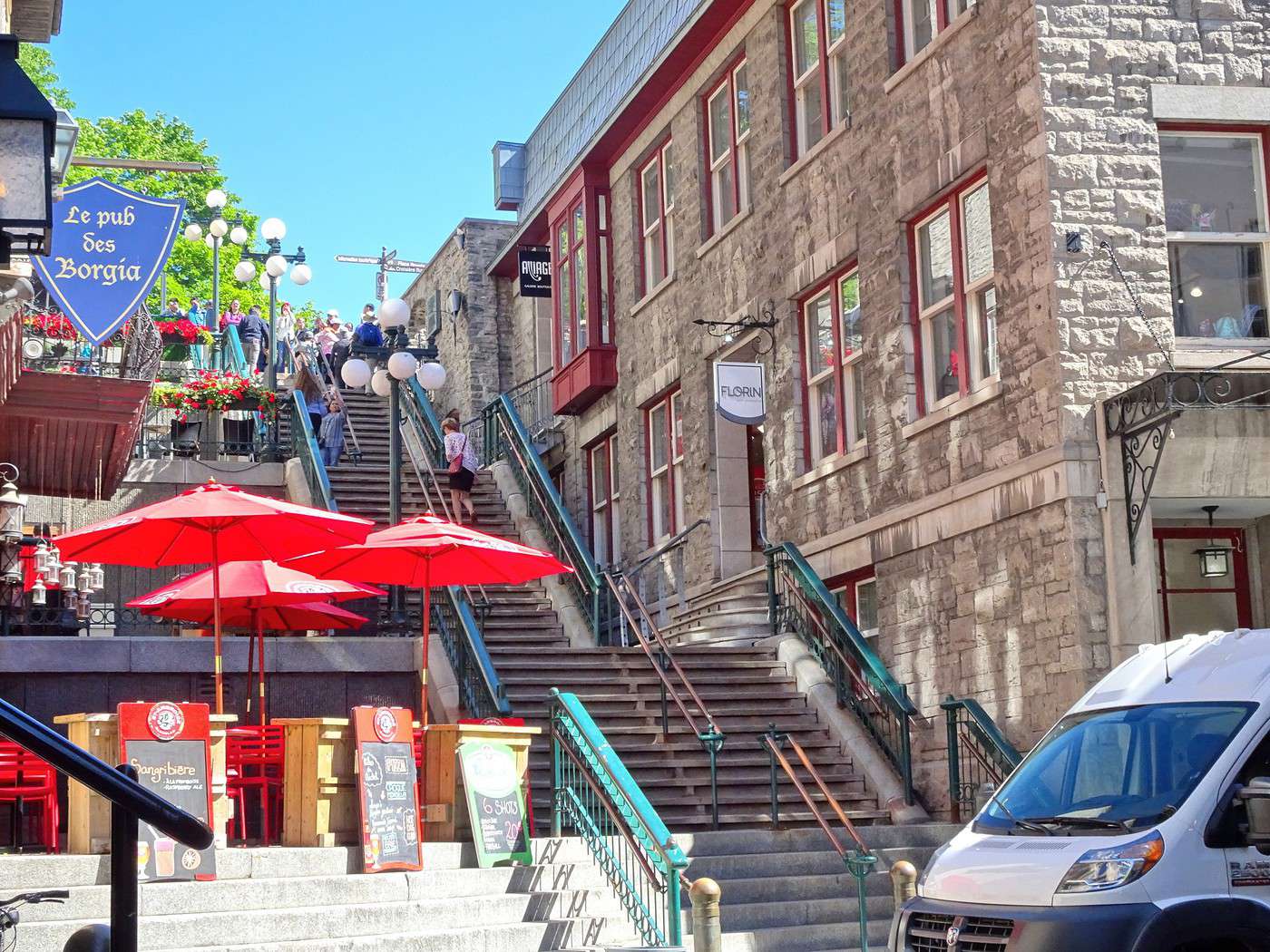
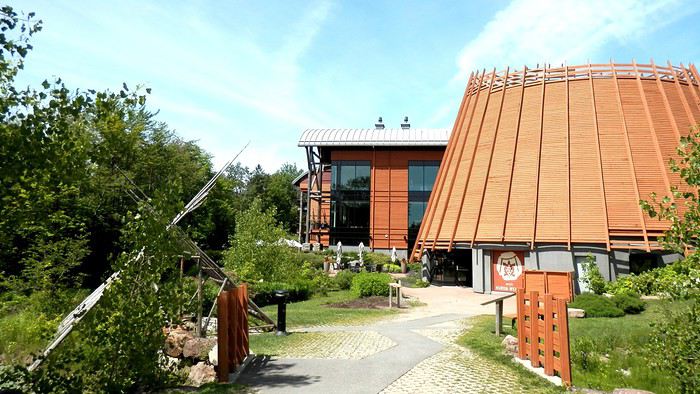
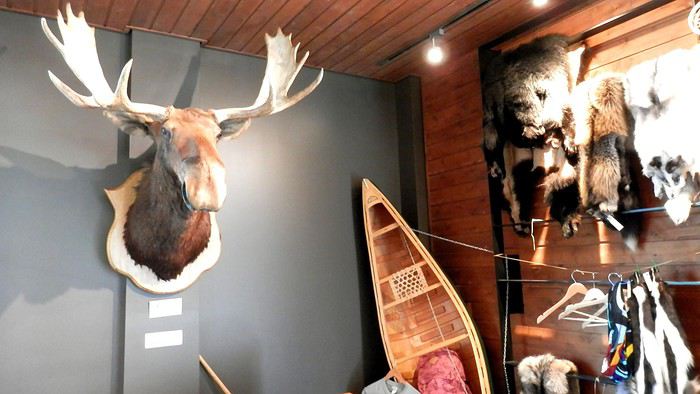
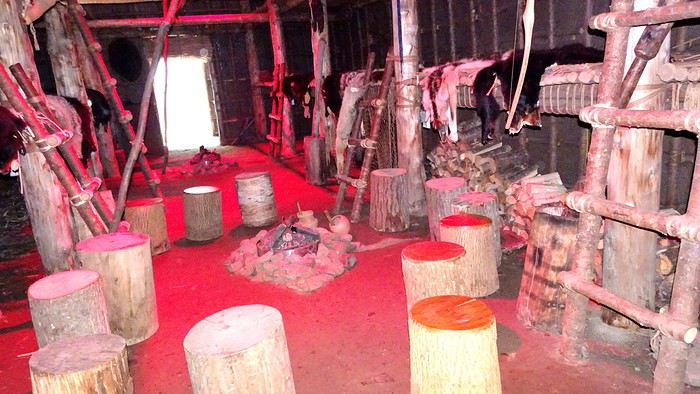
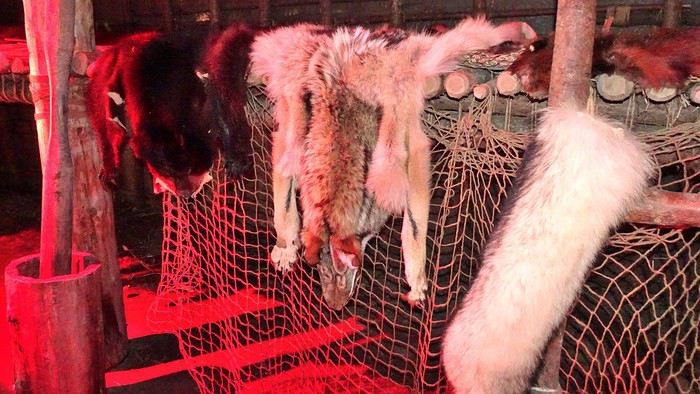
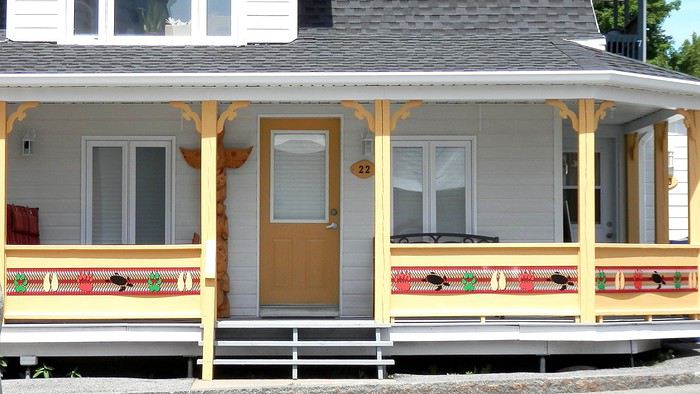
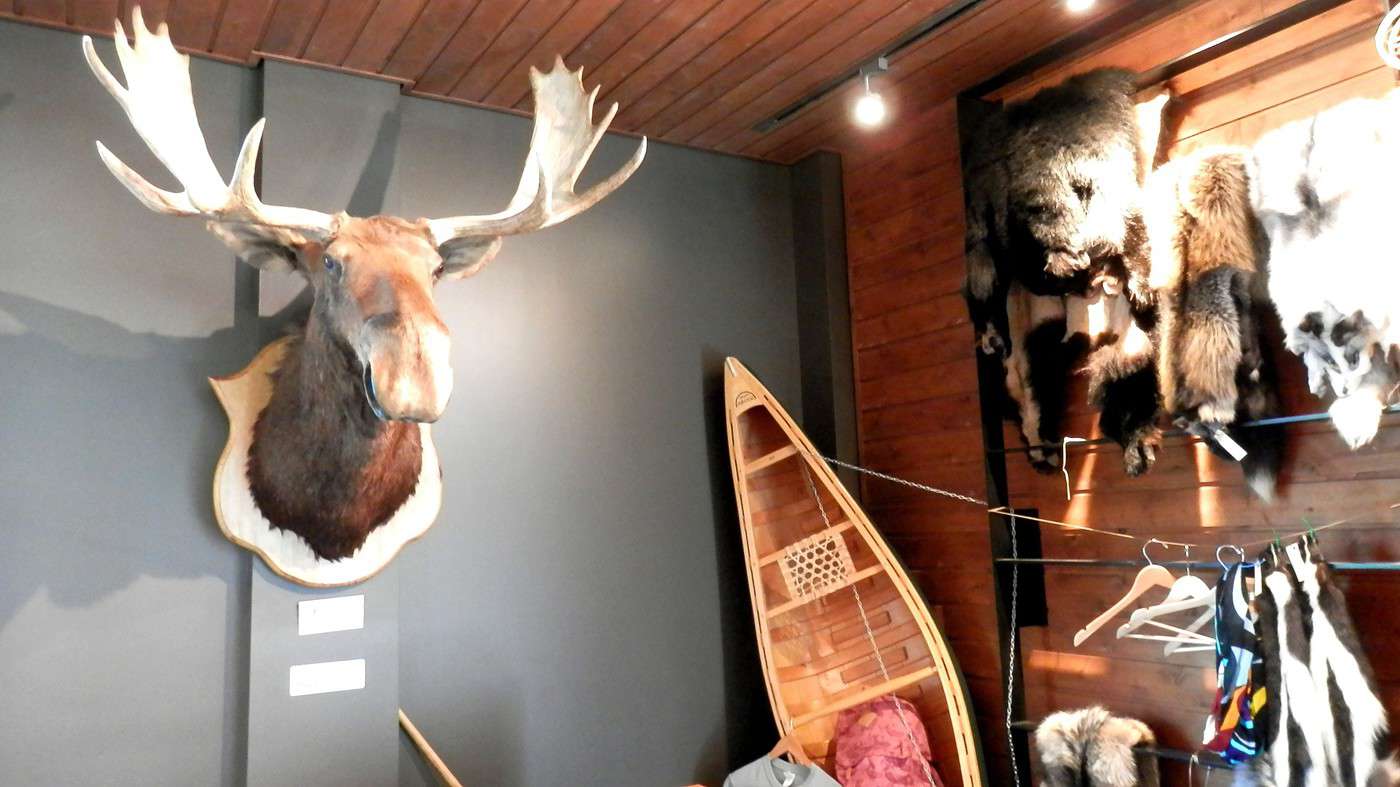
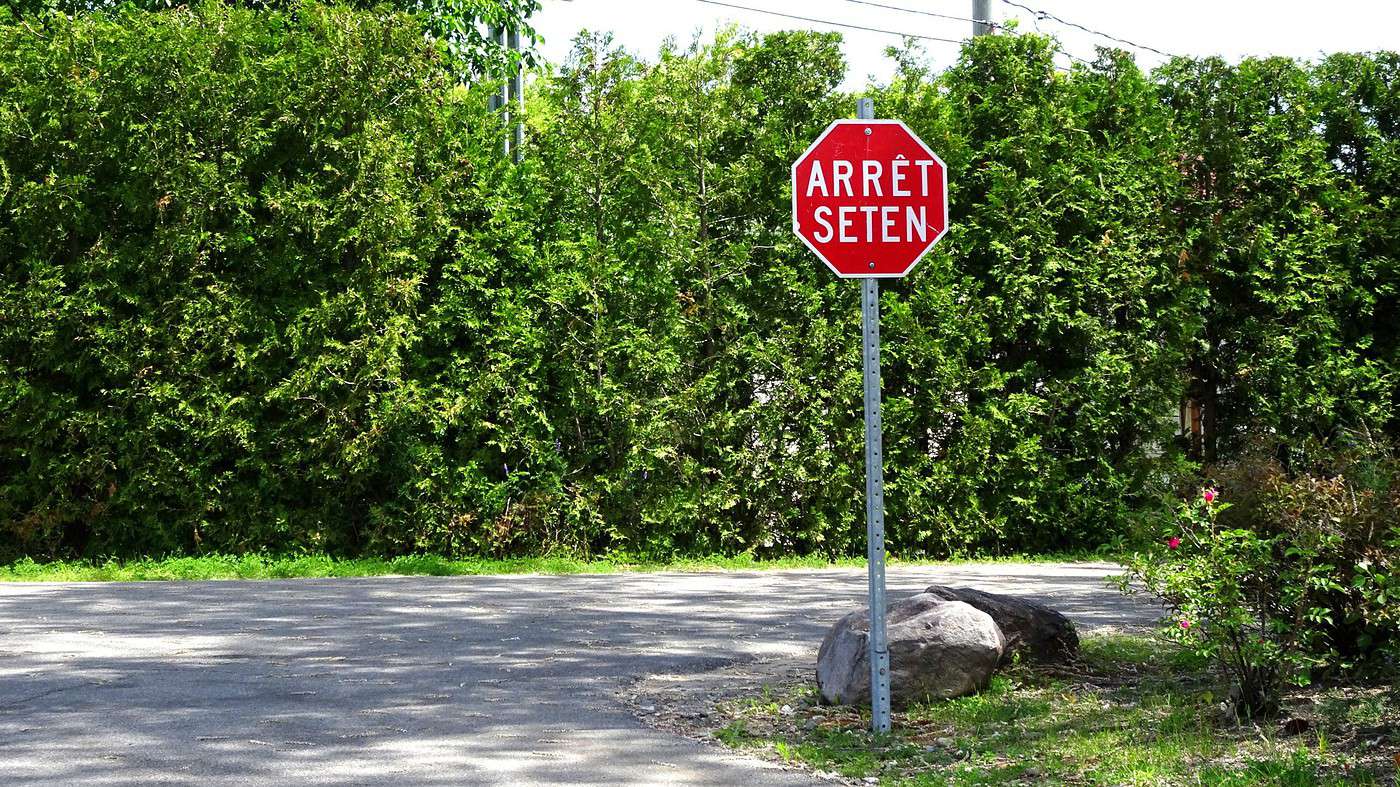
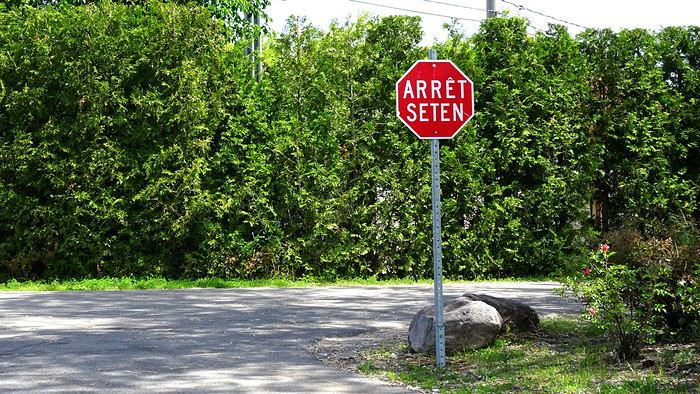 A Stop sign translated into both French and Huron!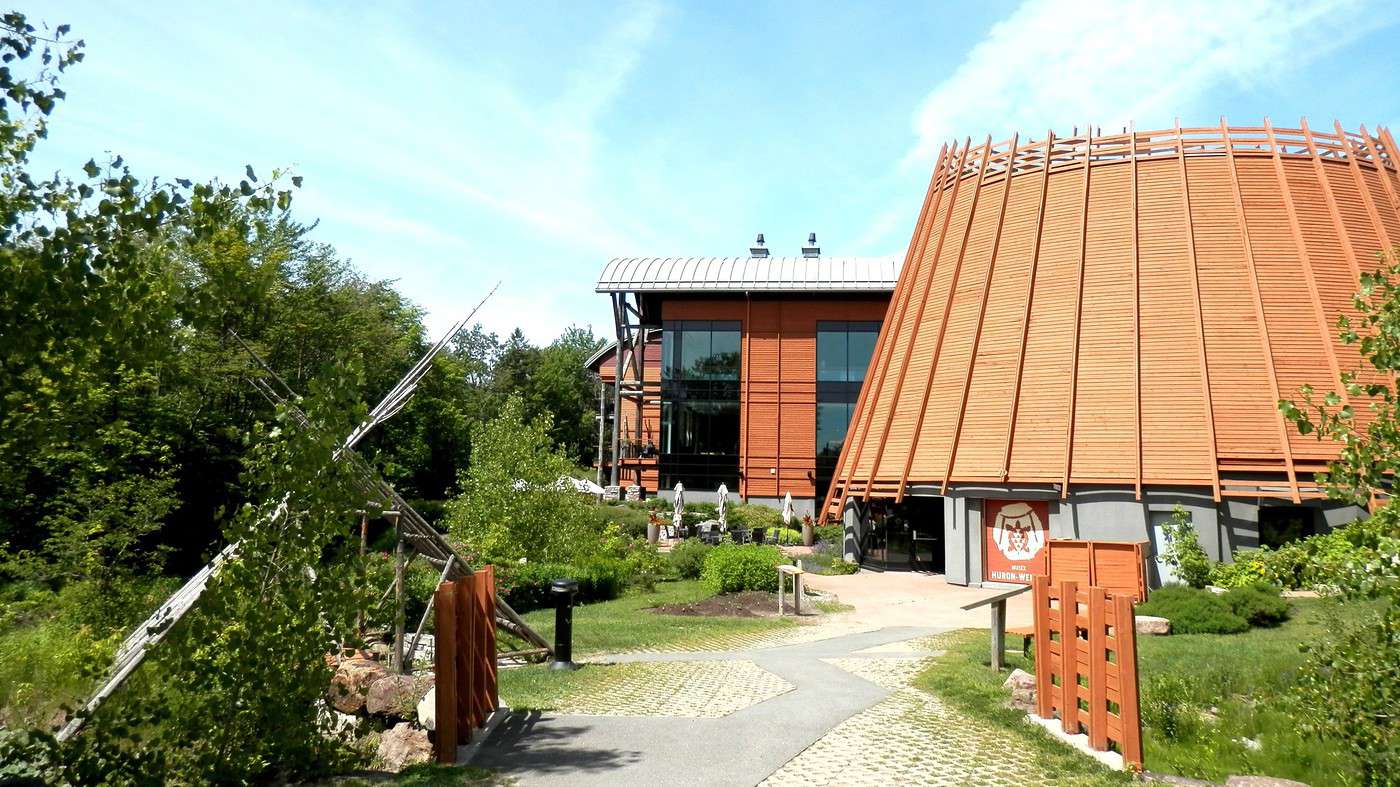
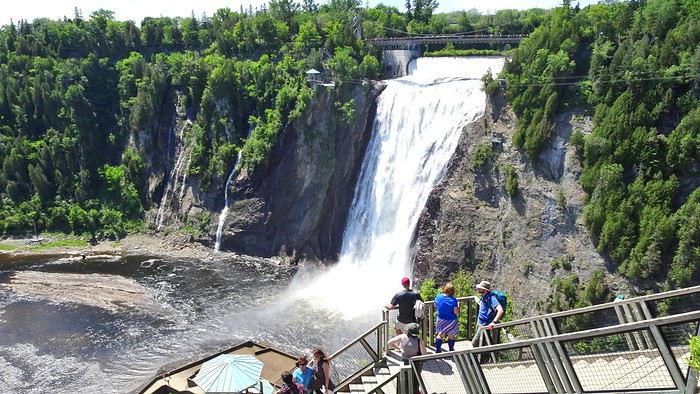
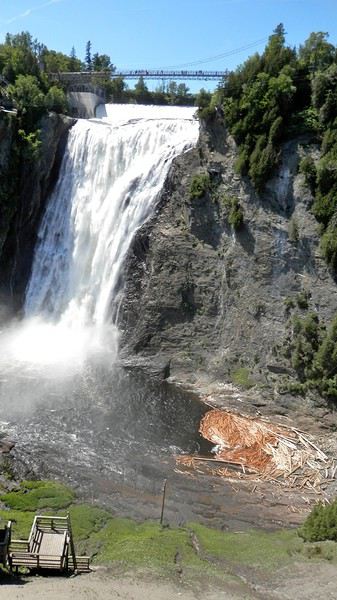
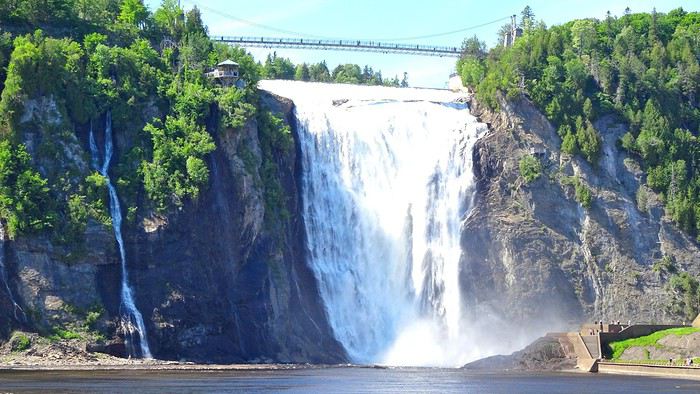
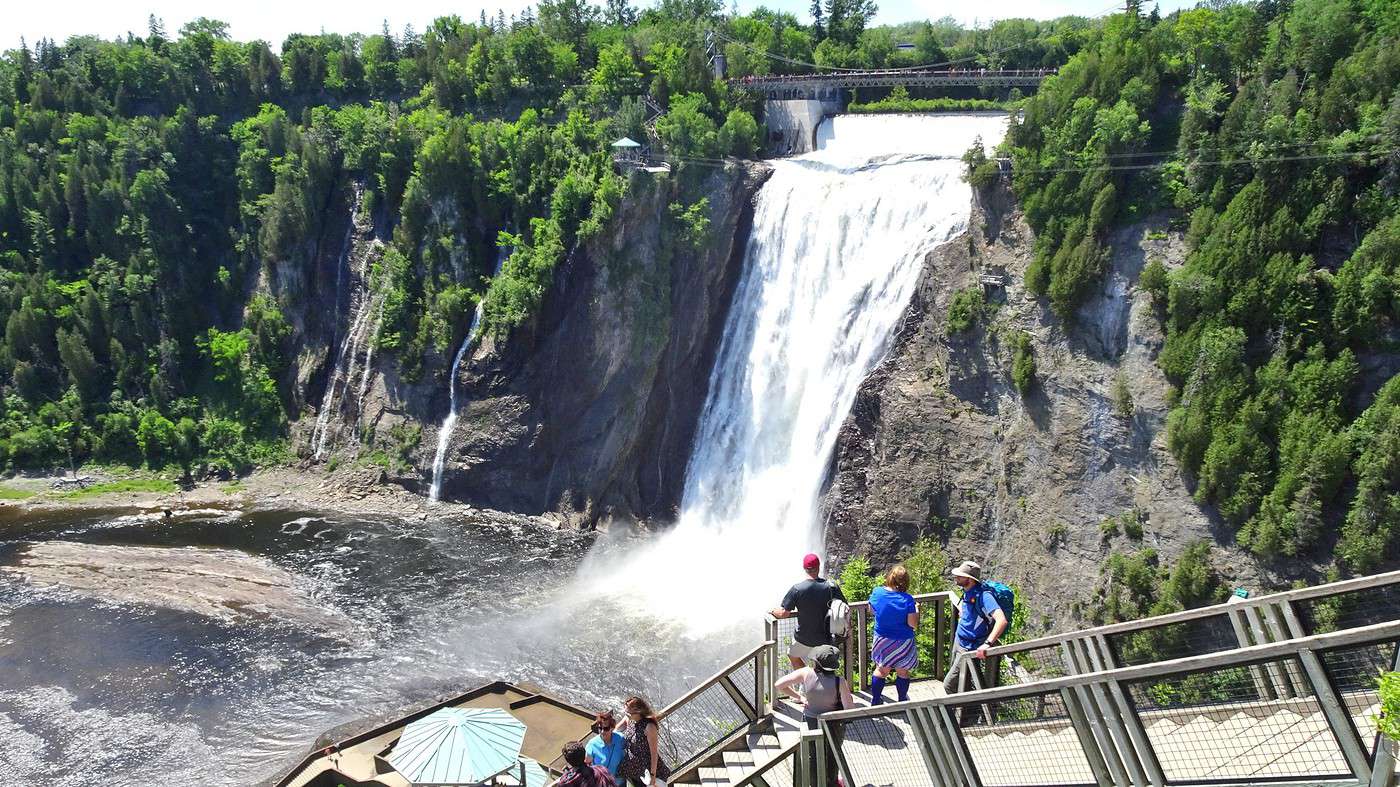
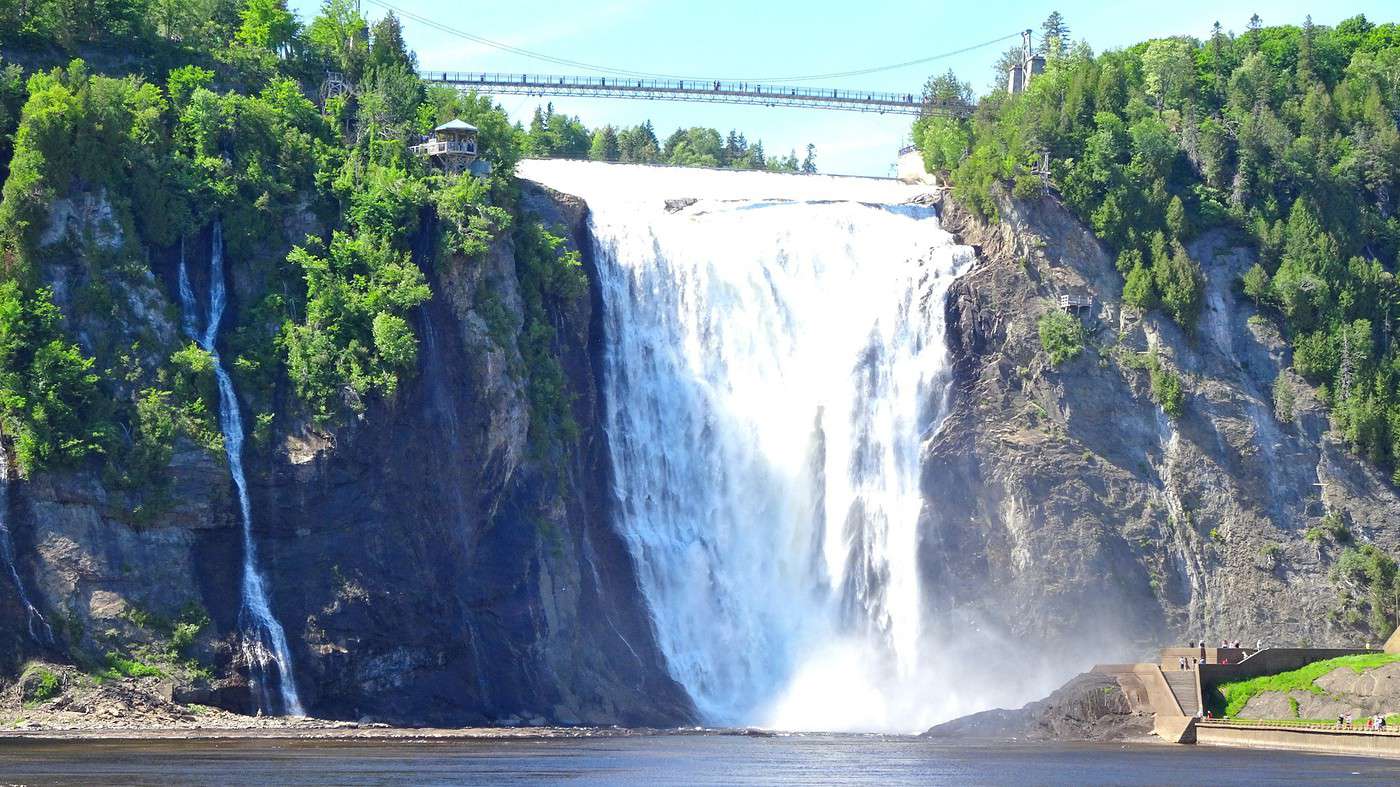
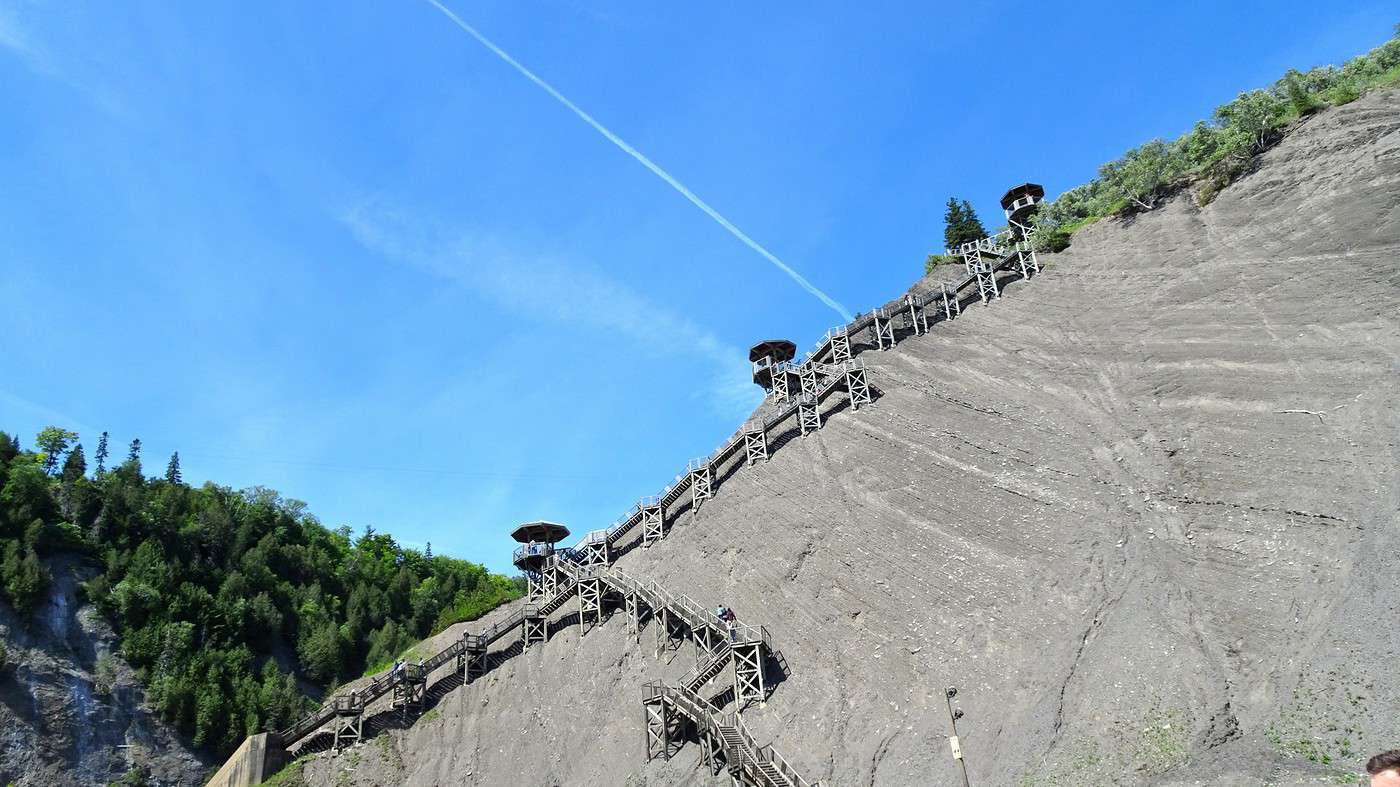
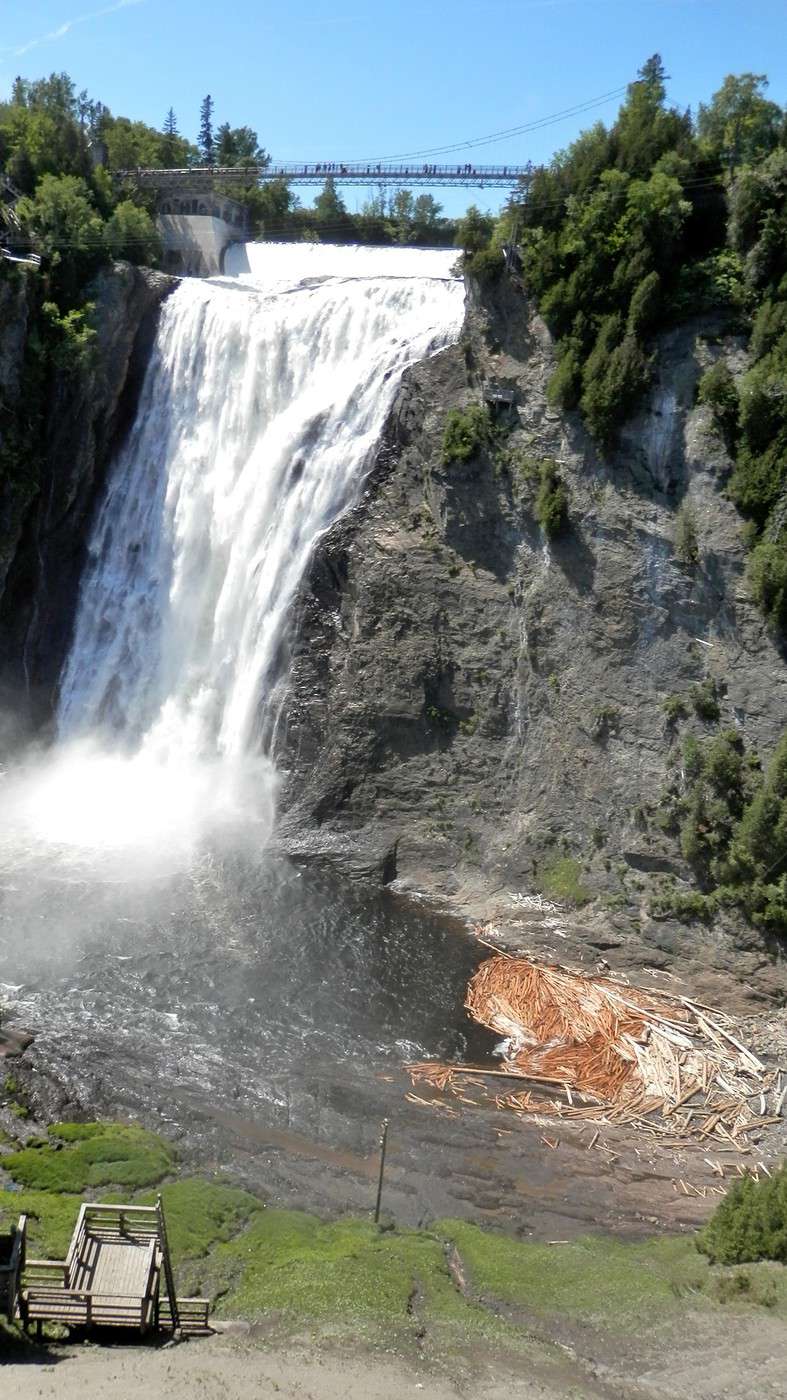
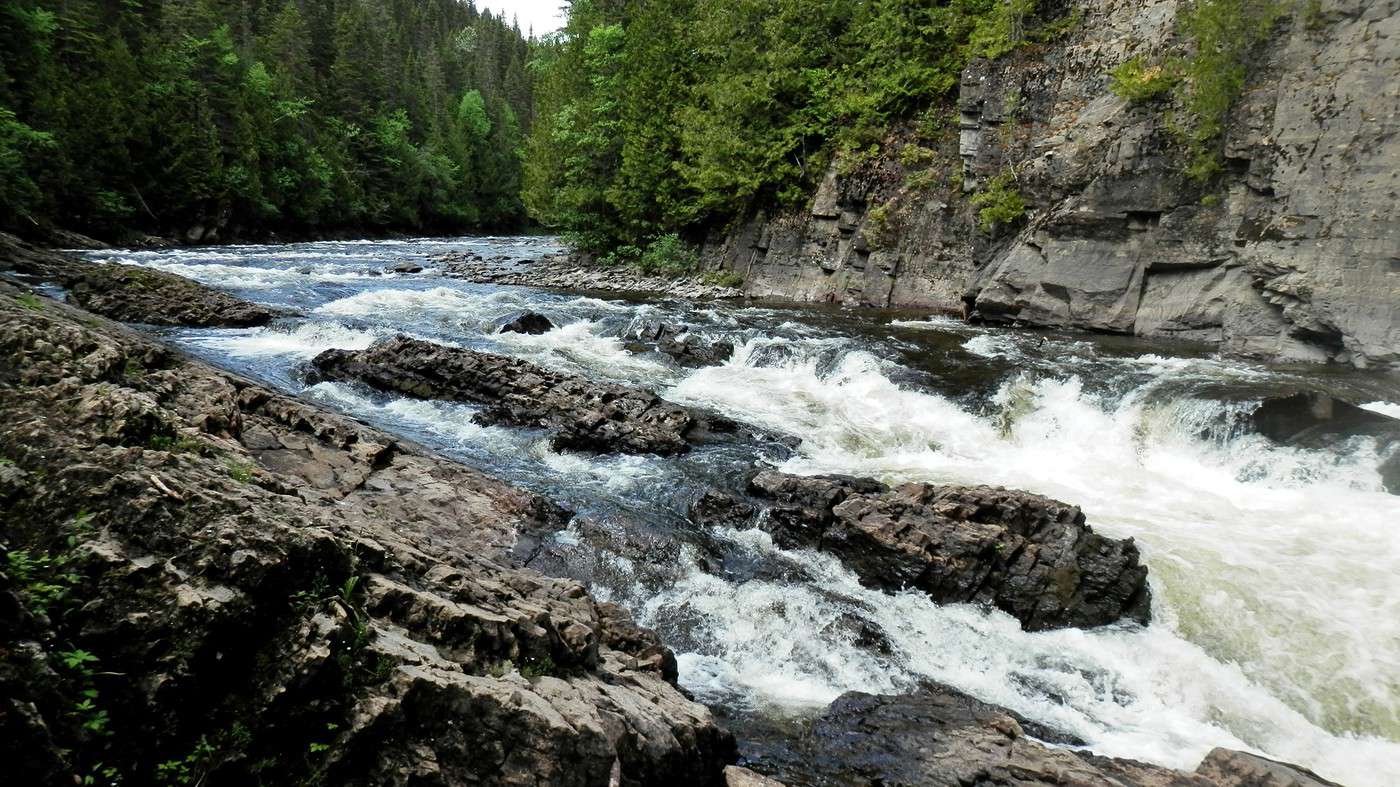
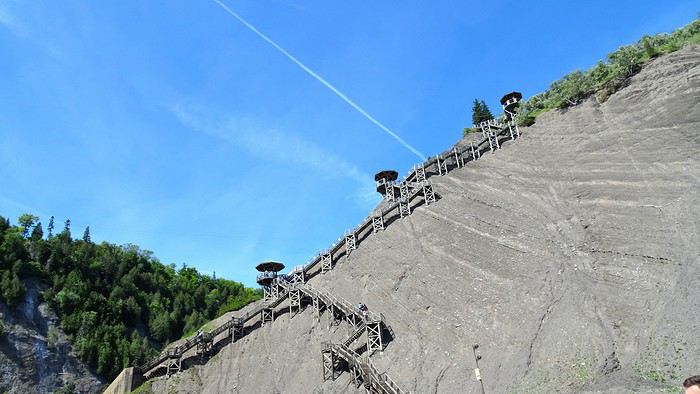 A wooden staircase clinging to the hillside leads us to the base of the falls.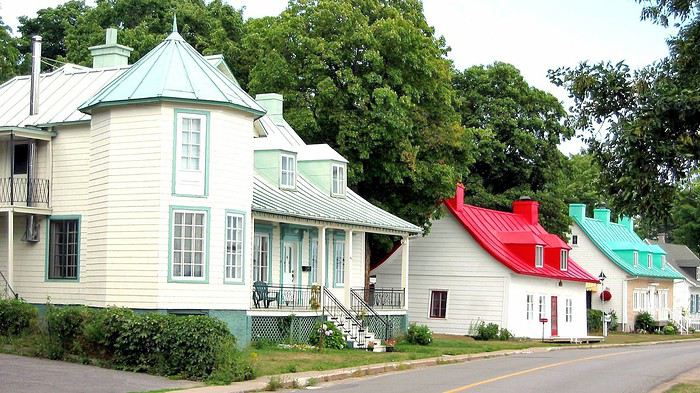
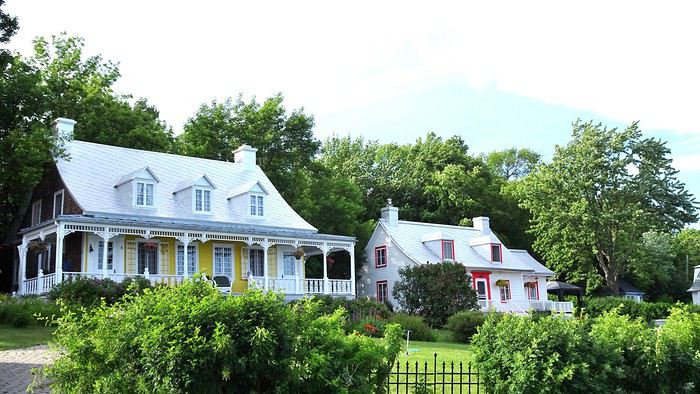
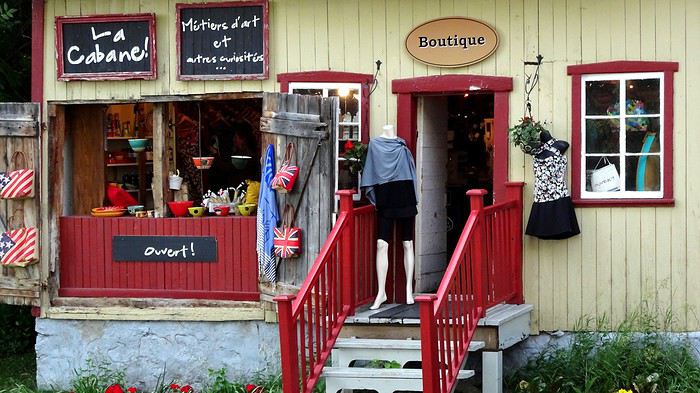
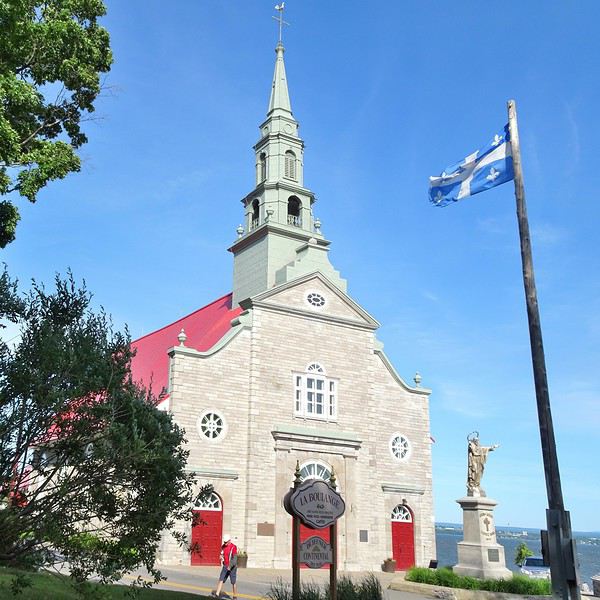
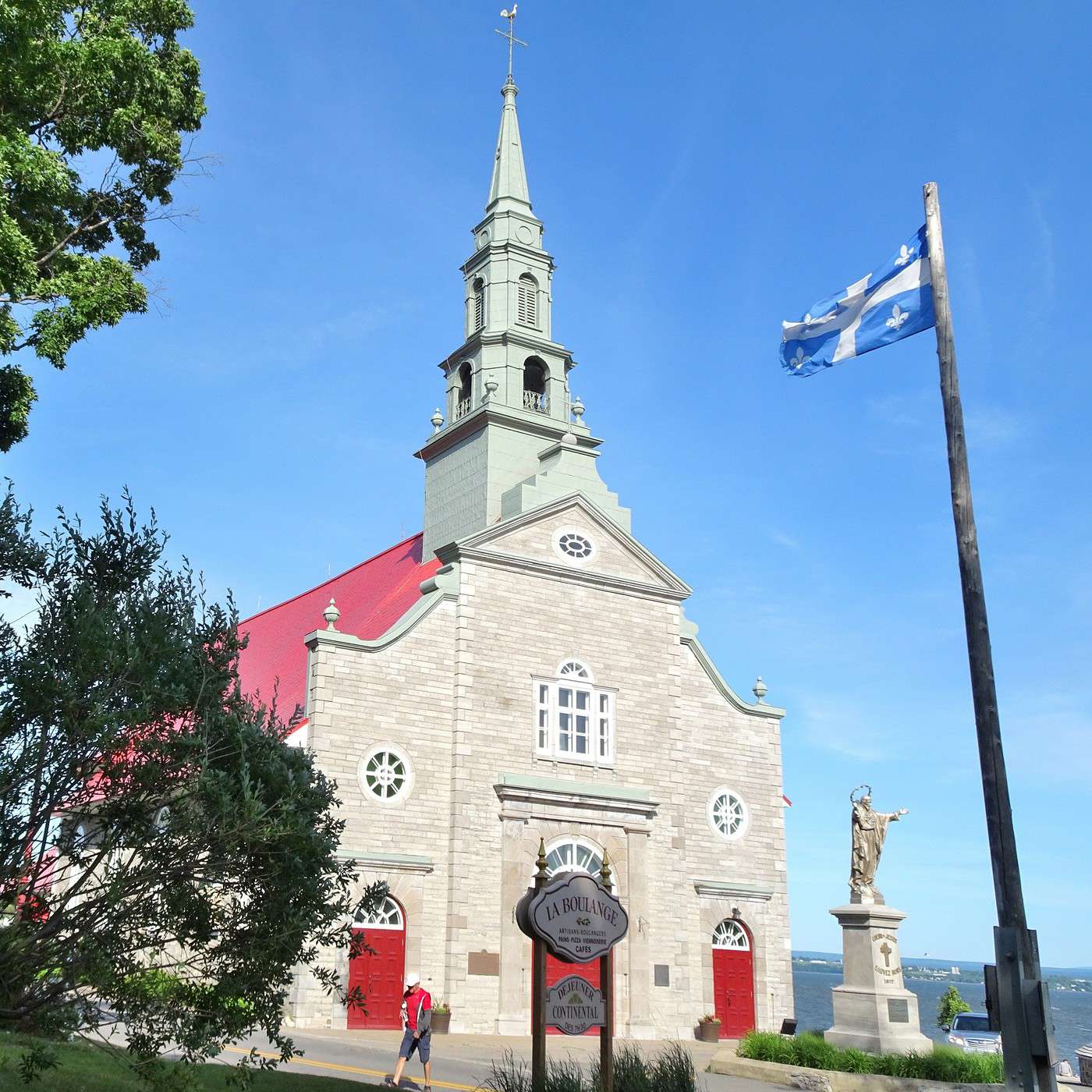
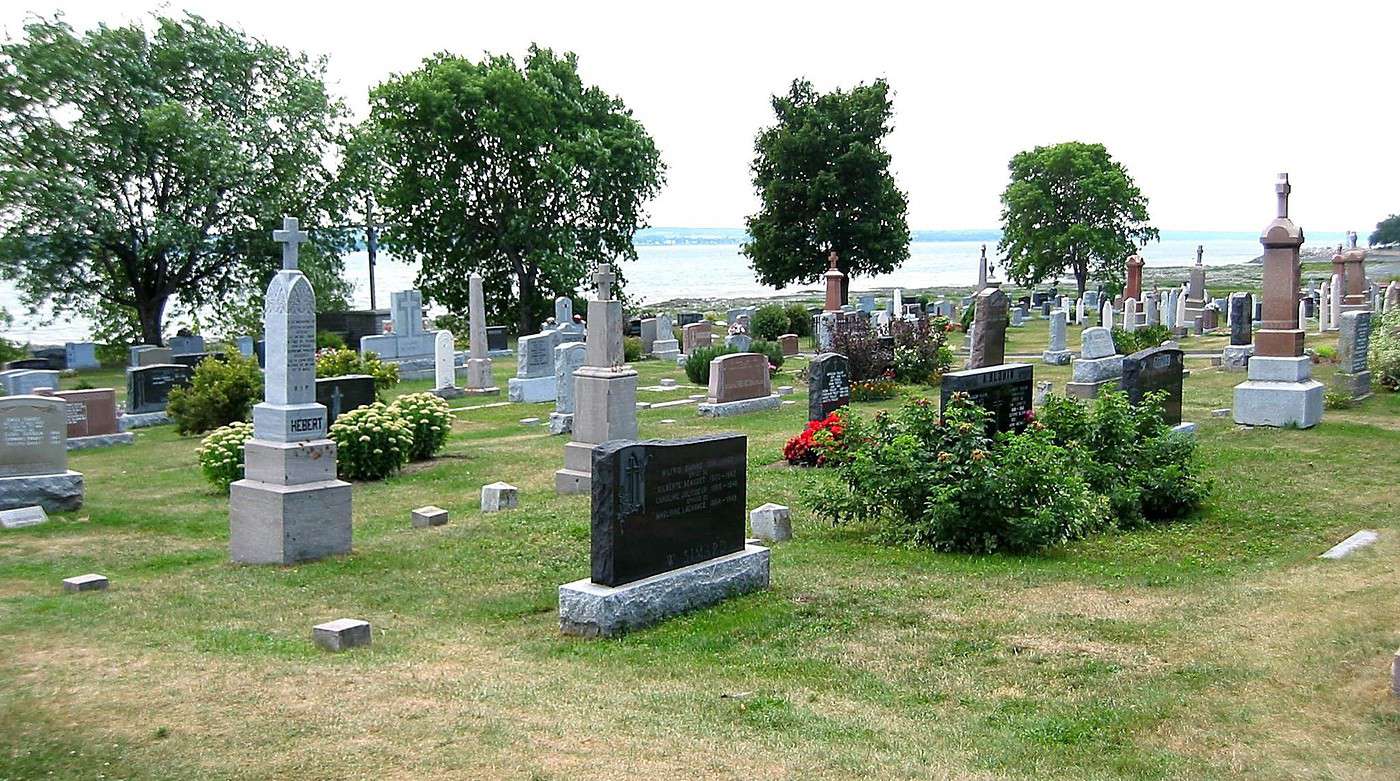
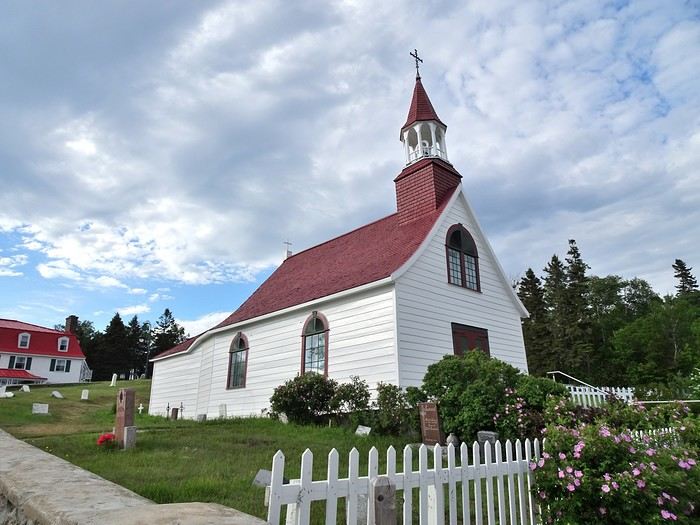
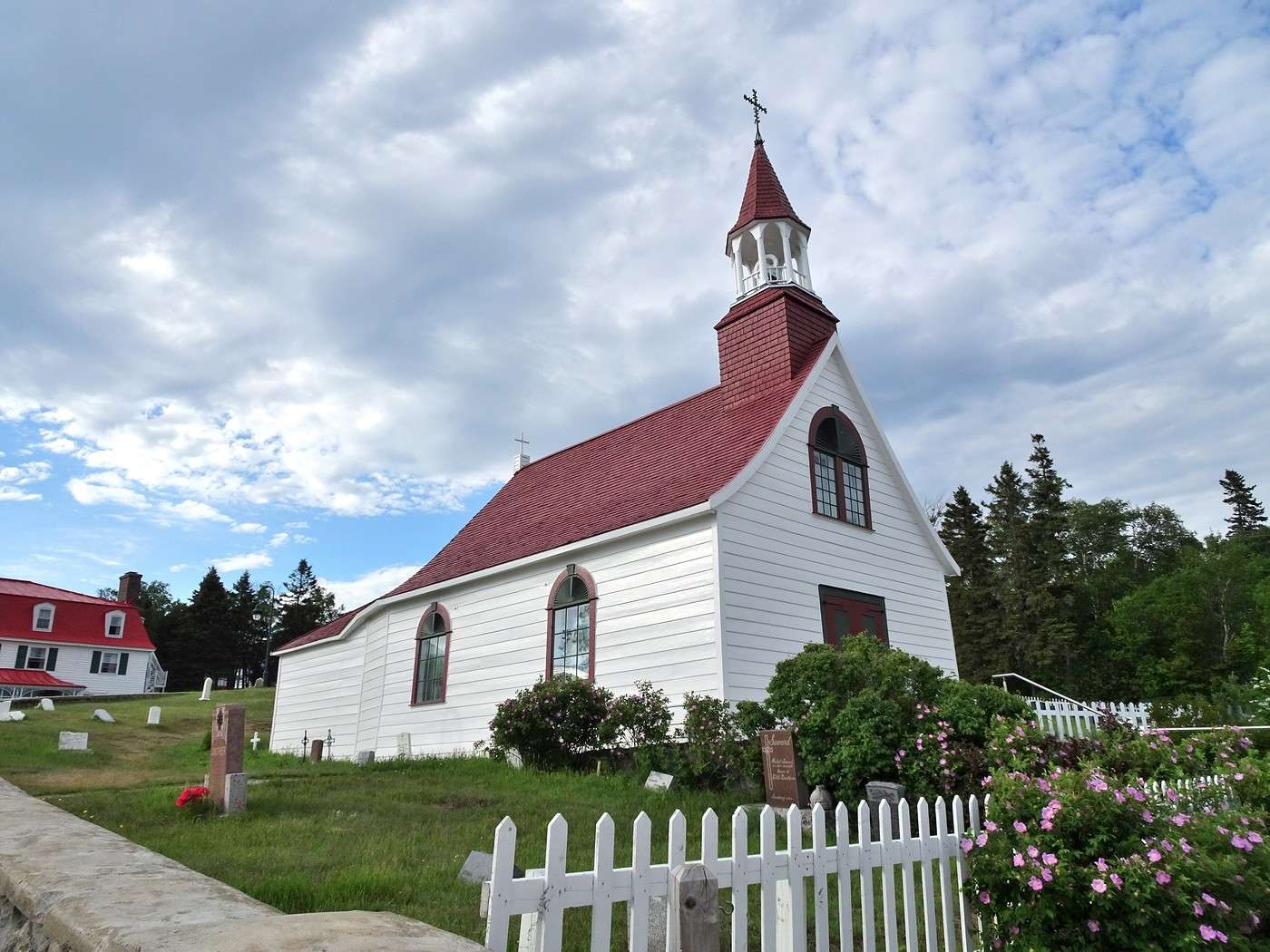
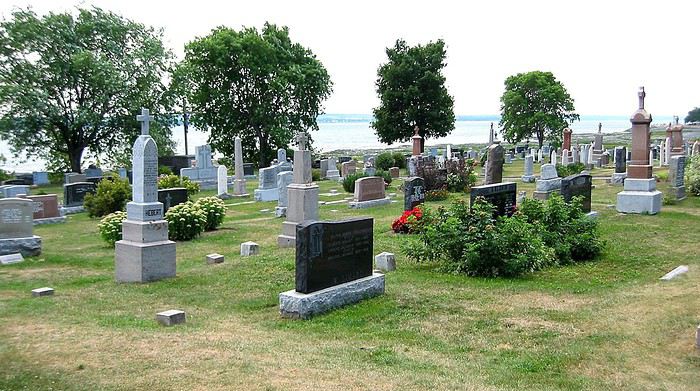 We stop near a church with a red roof next to a seaside cemetery. Should it be called a "seaside cemetery" when you’re by a river?
This stop is the perfect opportunity for a tasty break at a nearby bakery.
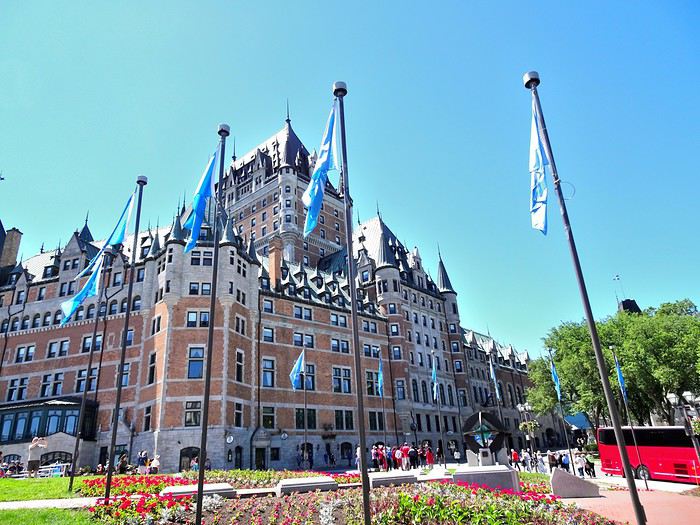
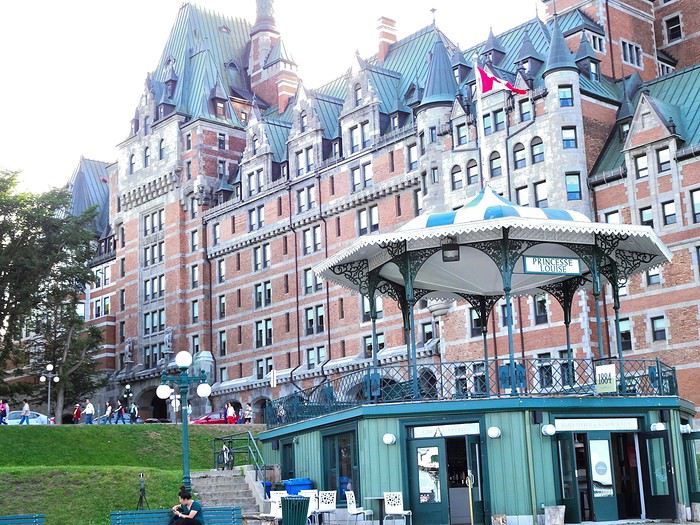
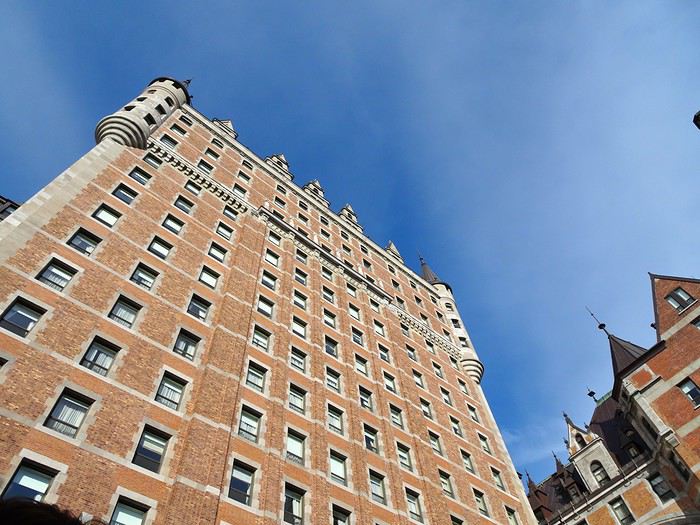
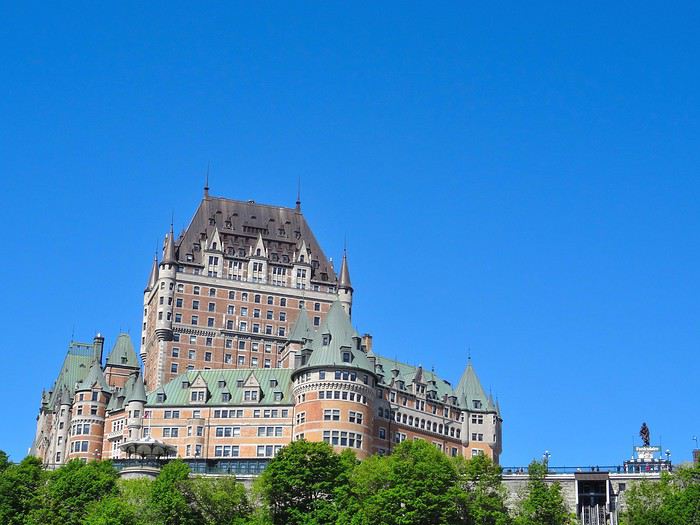
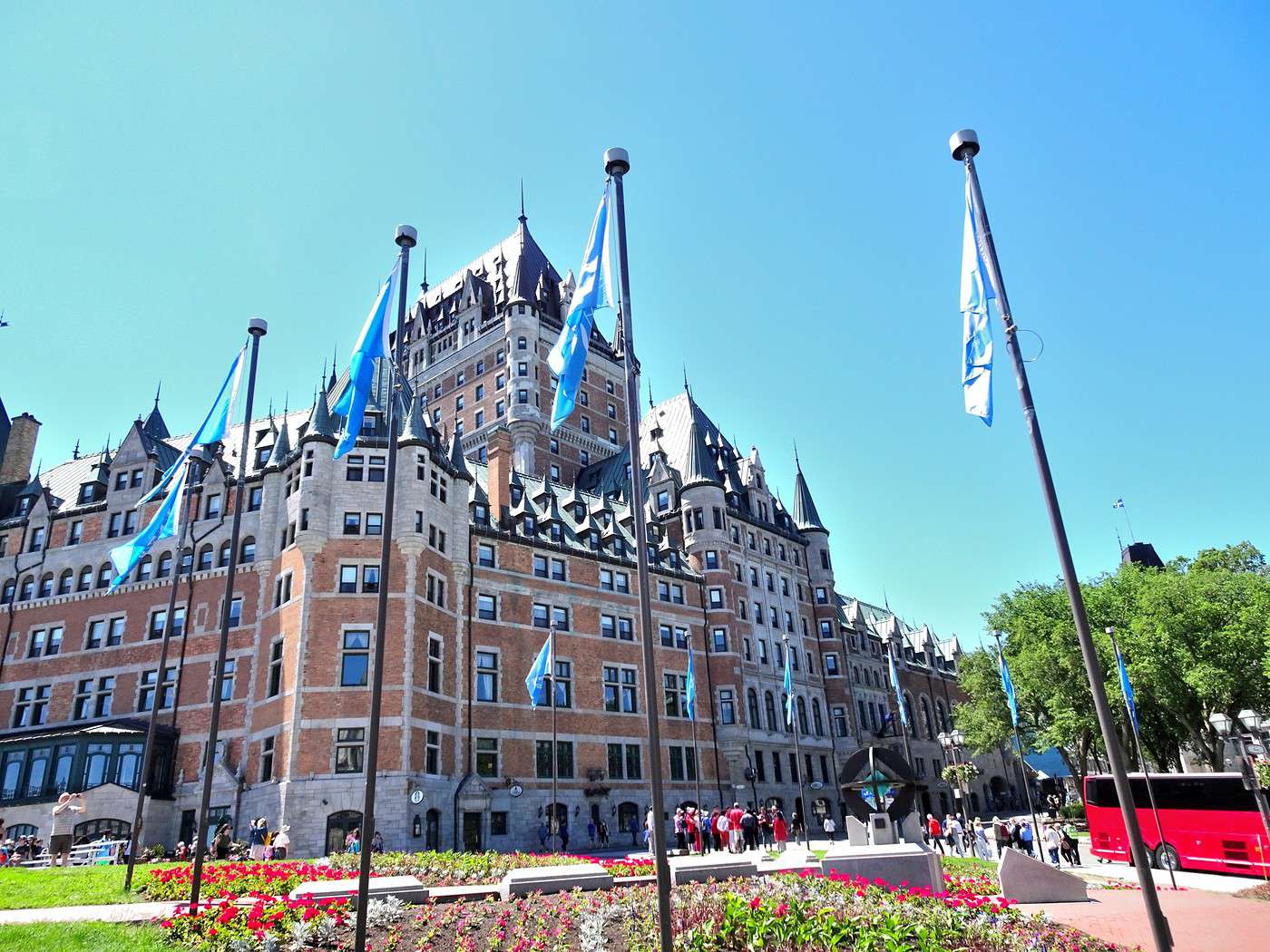
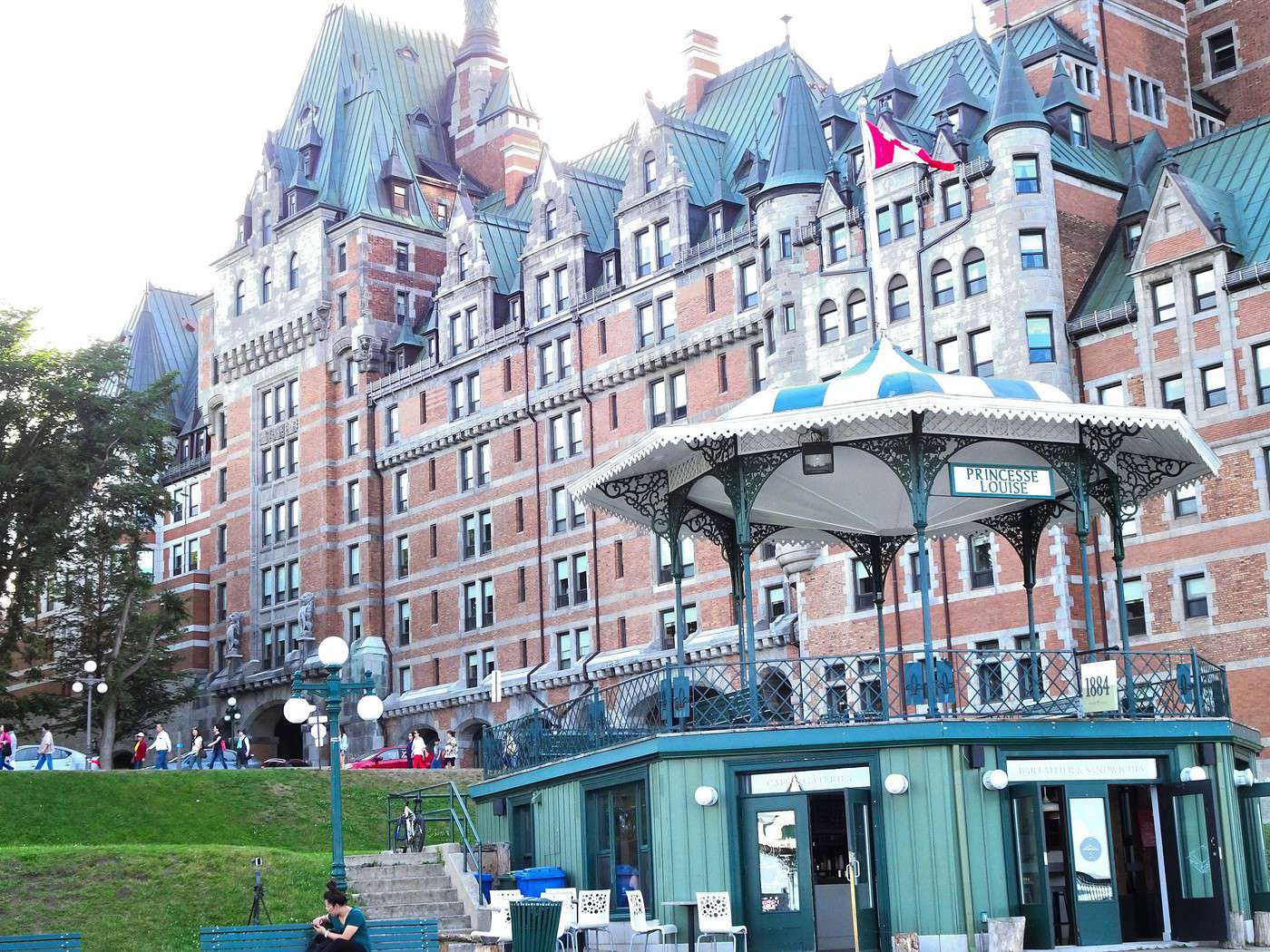
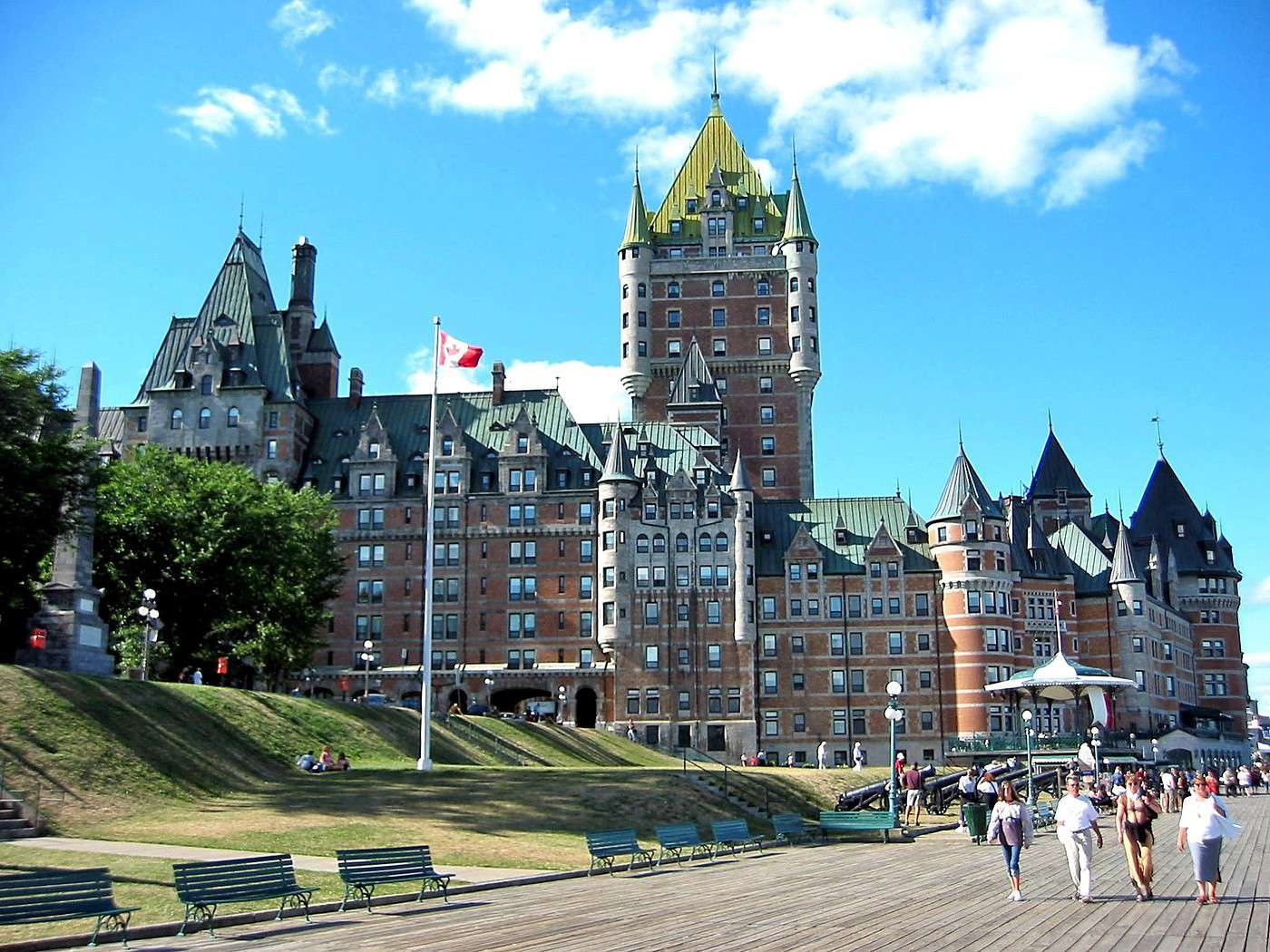
It’s already time to head back to Quebec City for our last evening here—the time for one last stroll to the Dufferin Terrace and a farewell (hopefully not forever) to the Château Frontenac.
We stop near a church with a red roof next to a seaside cemetery. Should it be called a "seaside cemetery" when you’re by a river?
This stop is the perfect opportunity for a tasty break at a nearby bakery.
It’s already time to head back to Quebec City for our last evening here—the time for one last stroll to the Dufferin Terrace and a farewell (hopefully not forever) to the Château Frontenac.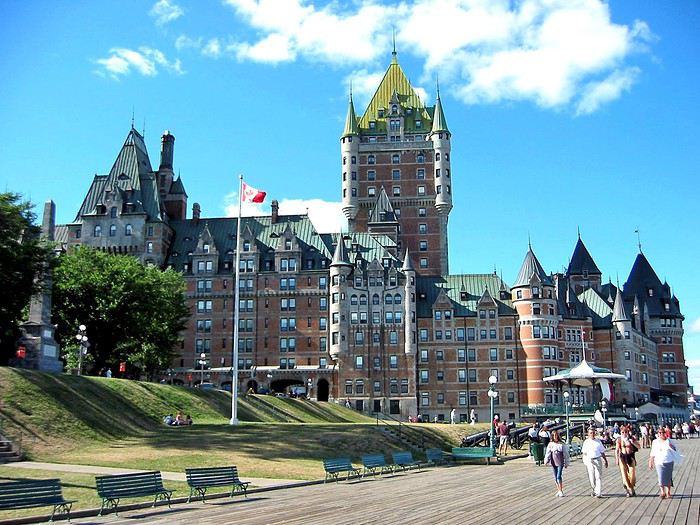
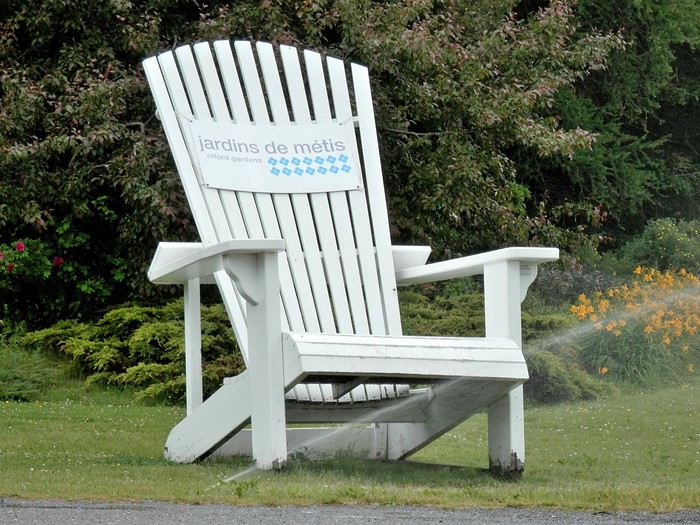
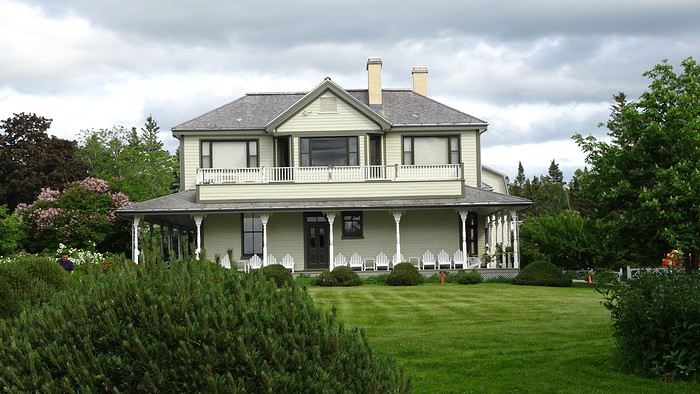
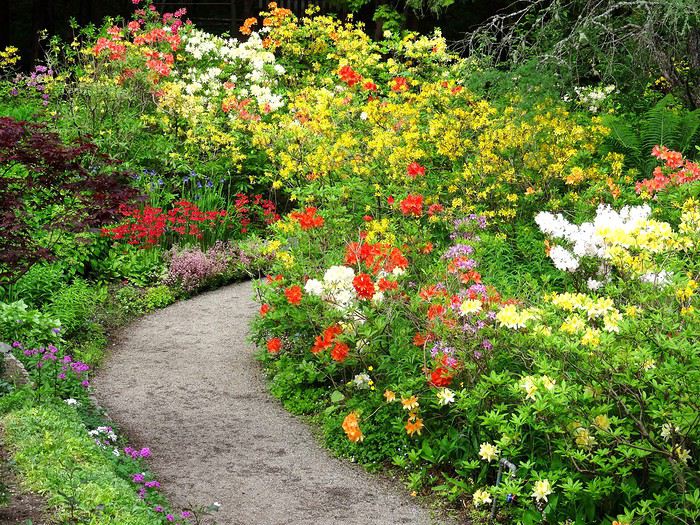
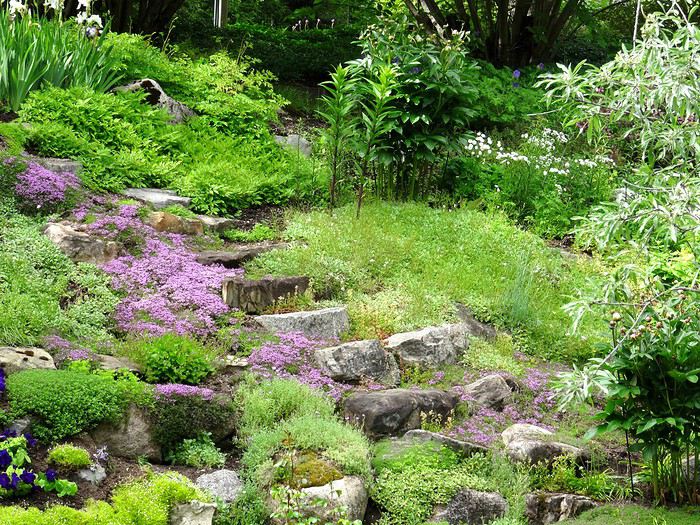
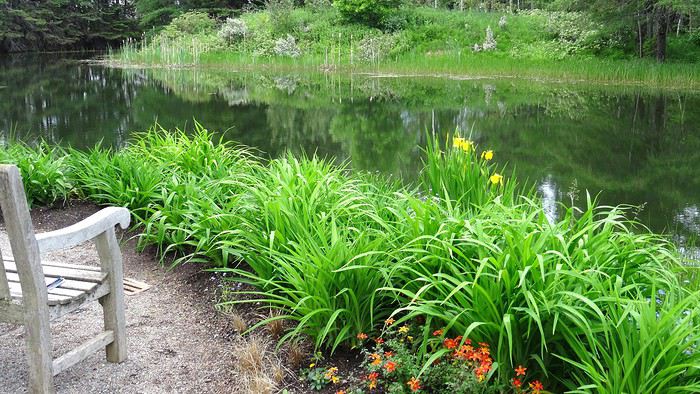
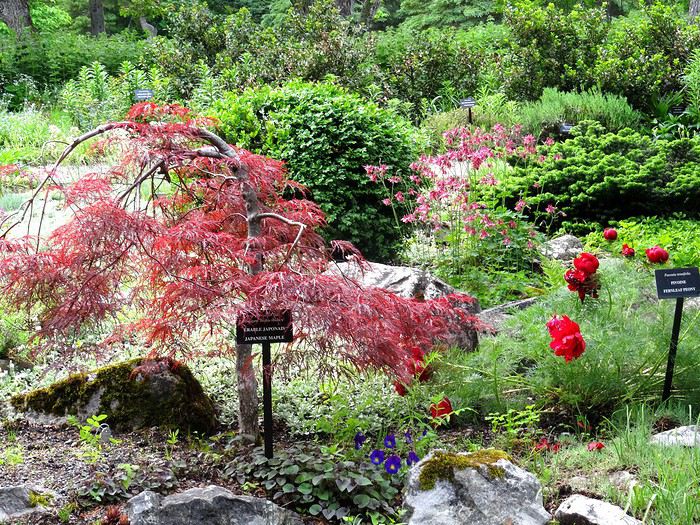
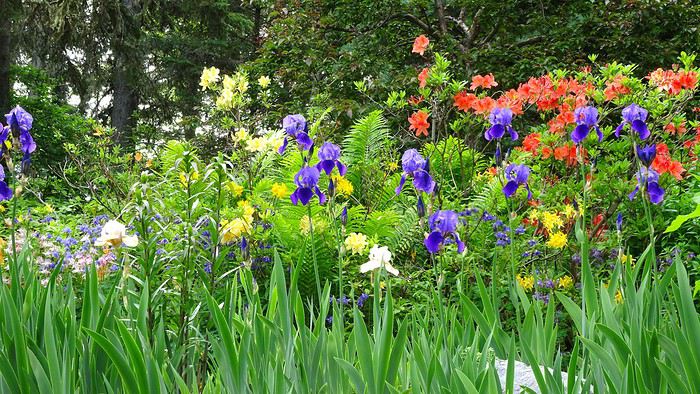
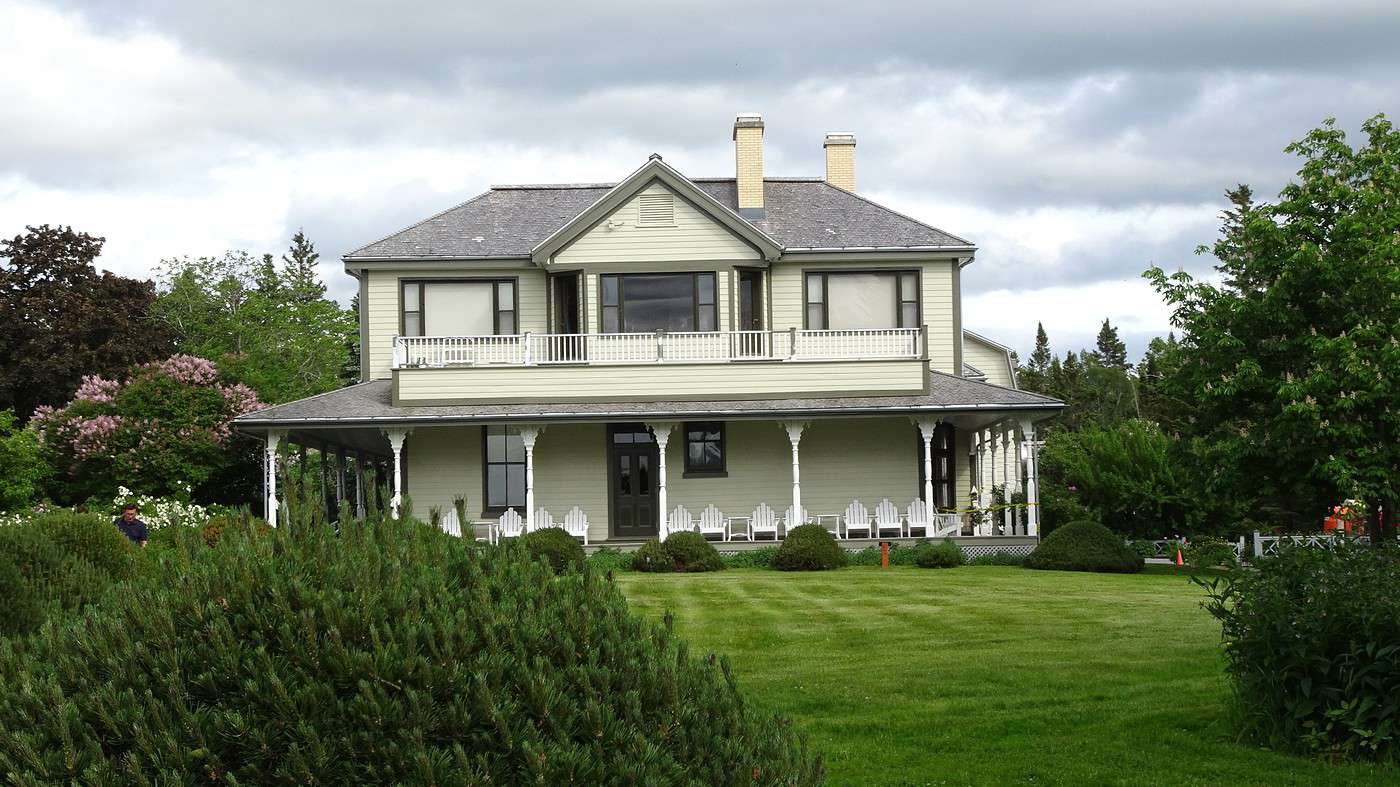
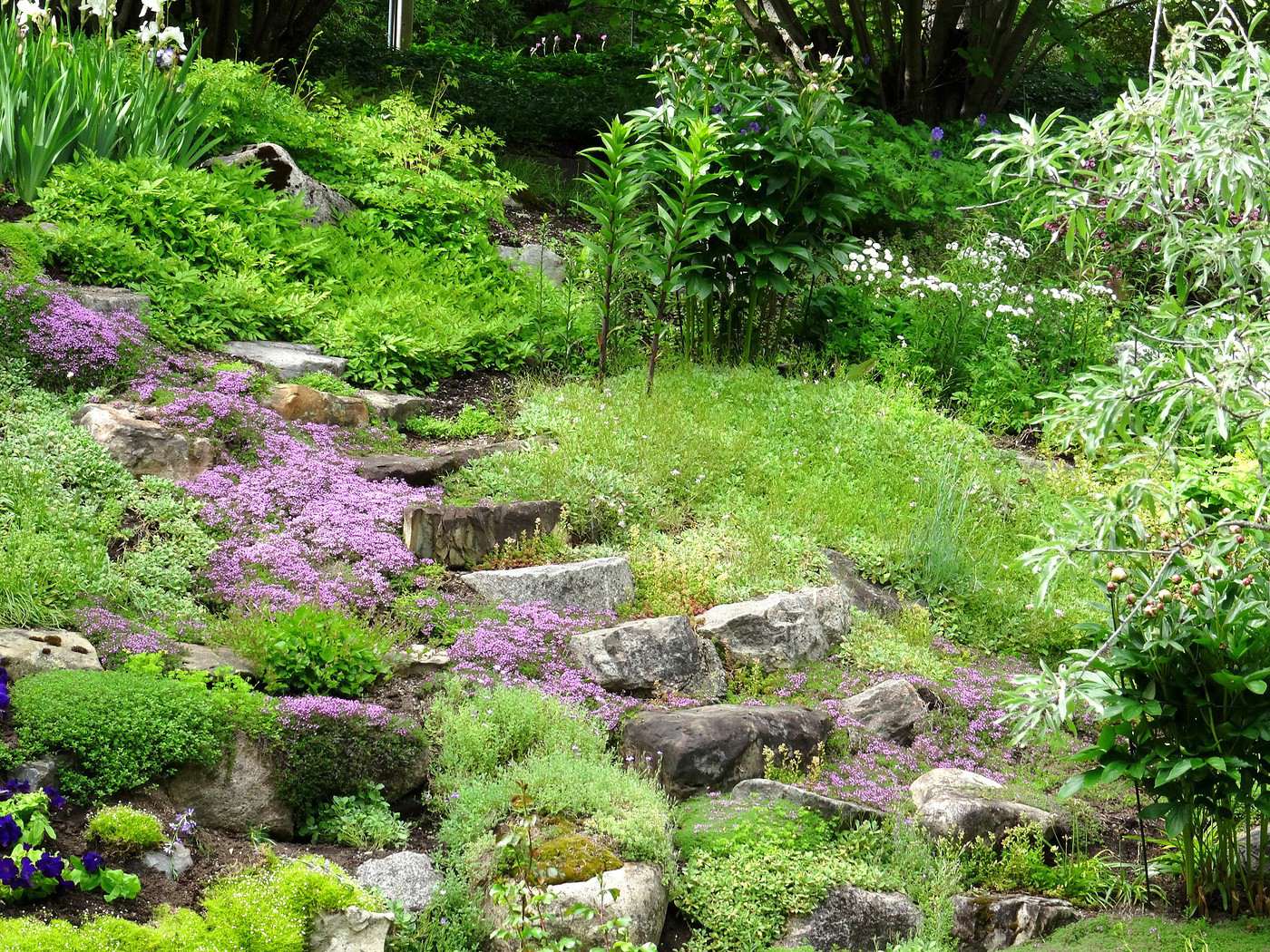
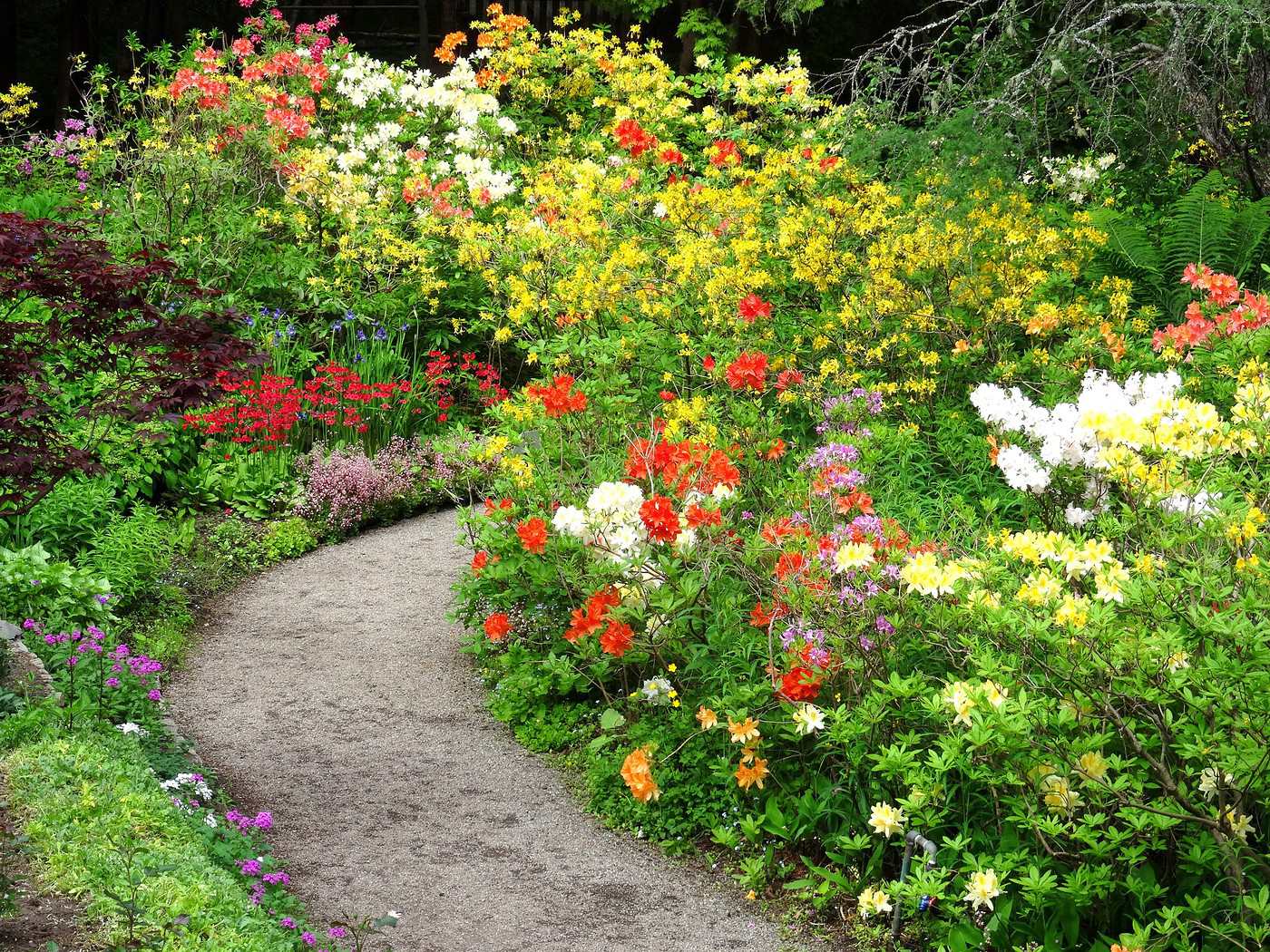
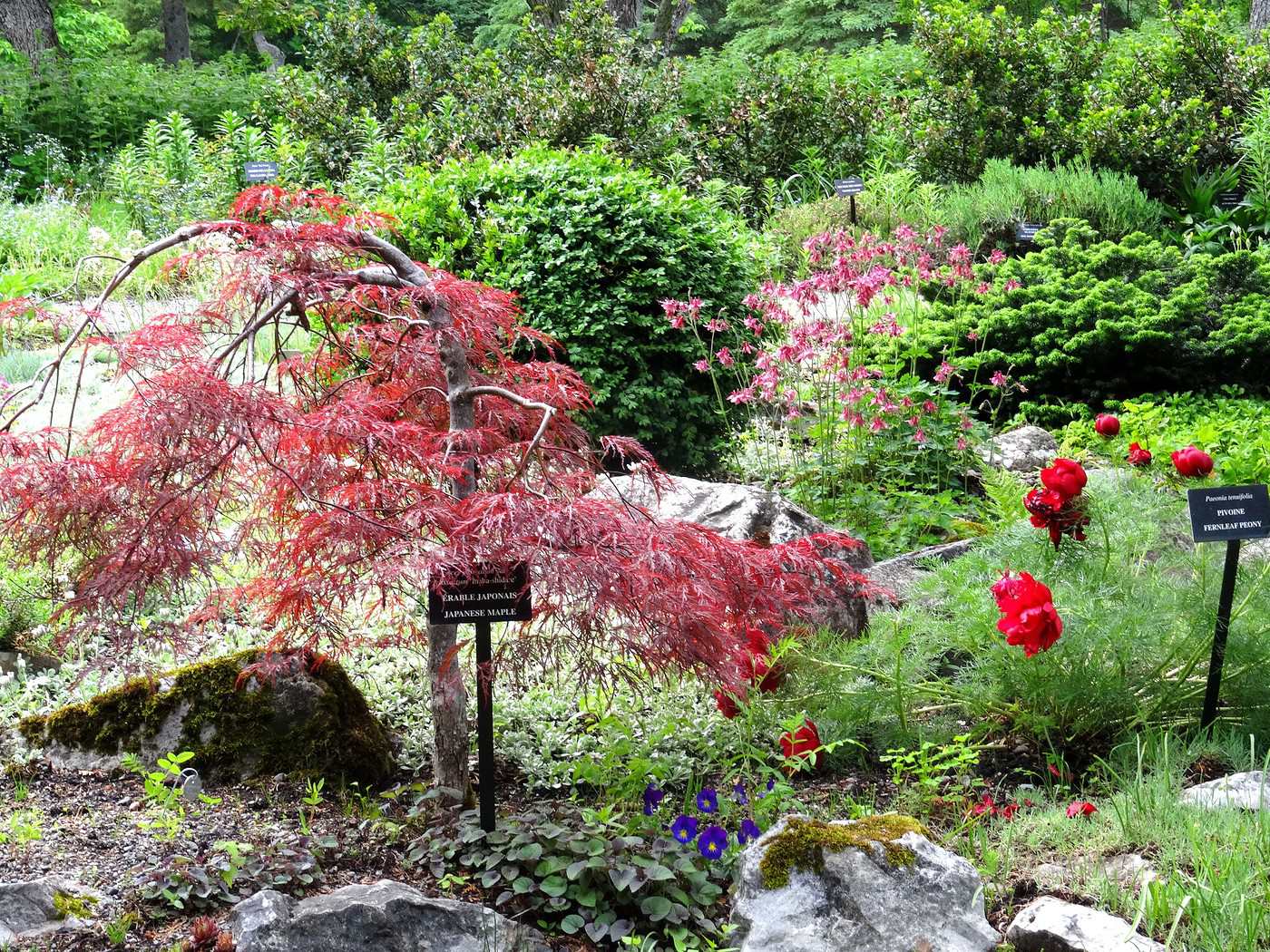
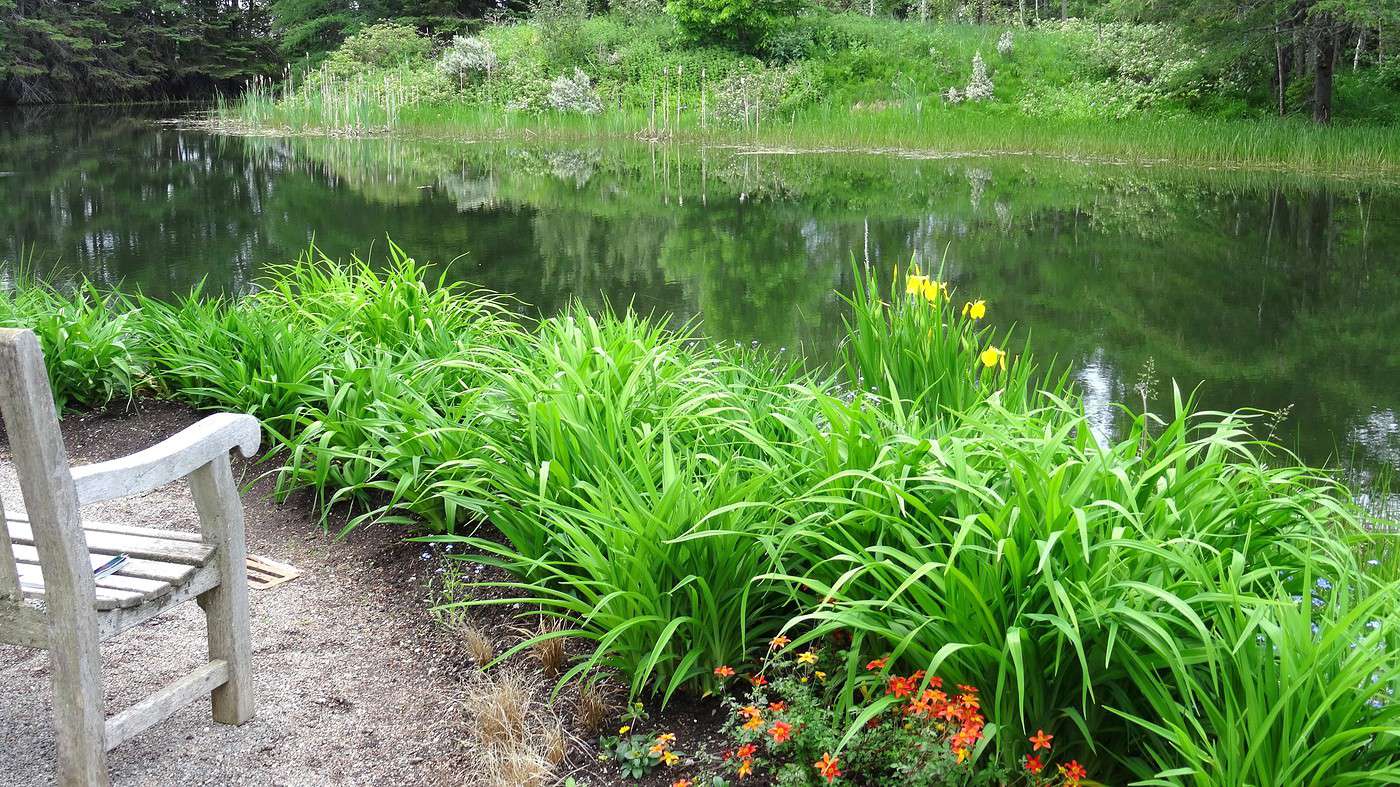
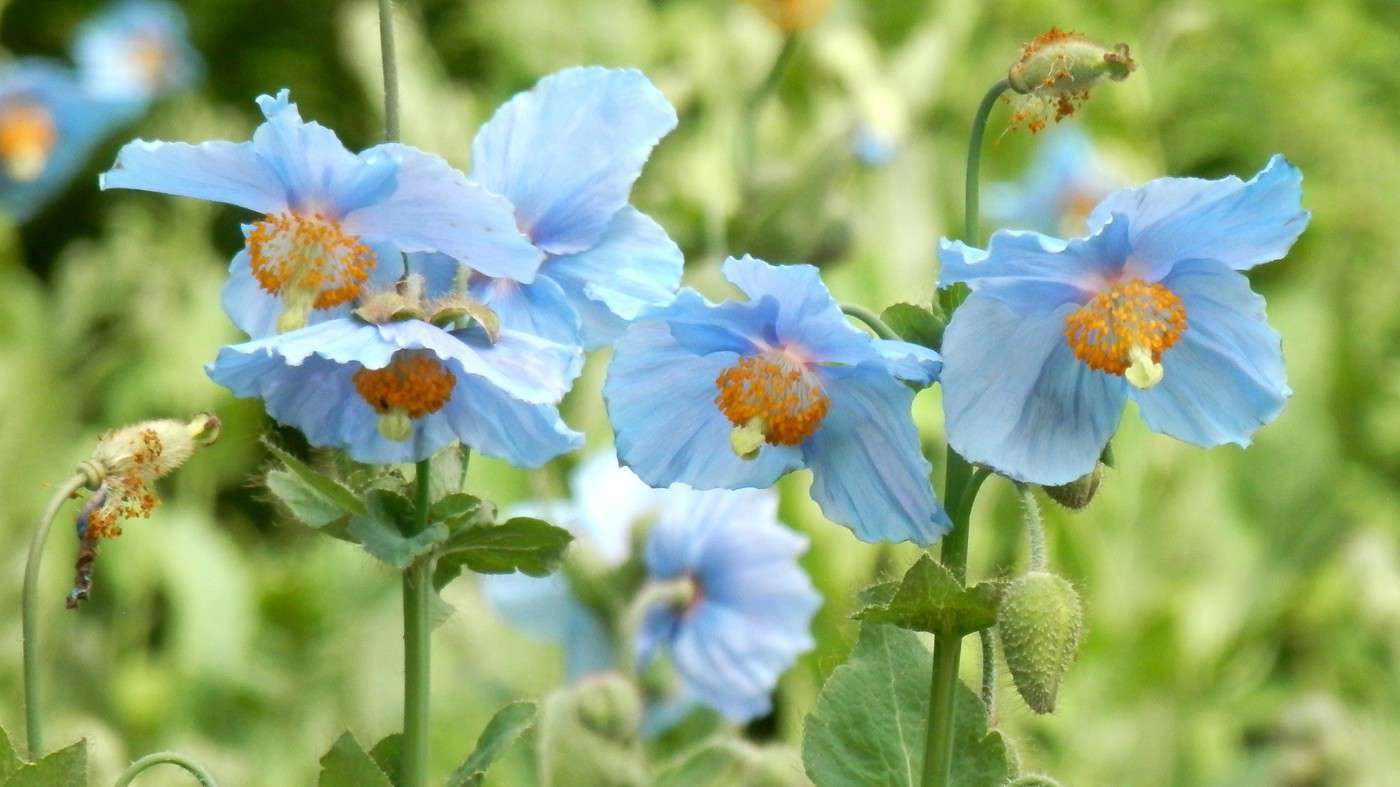
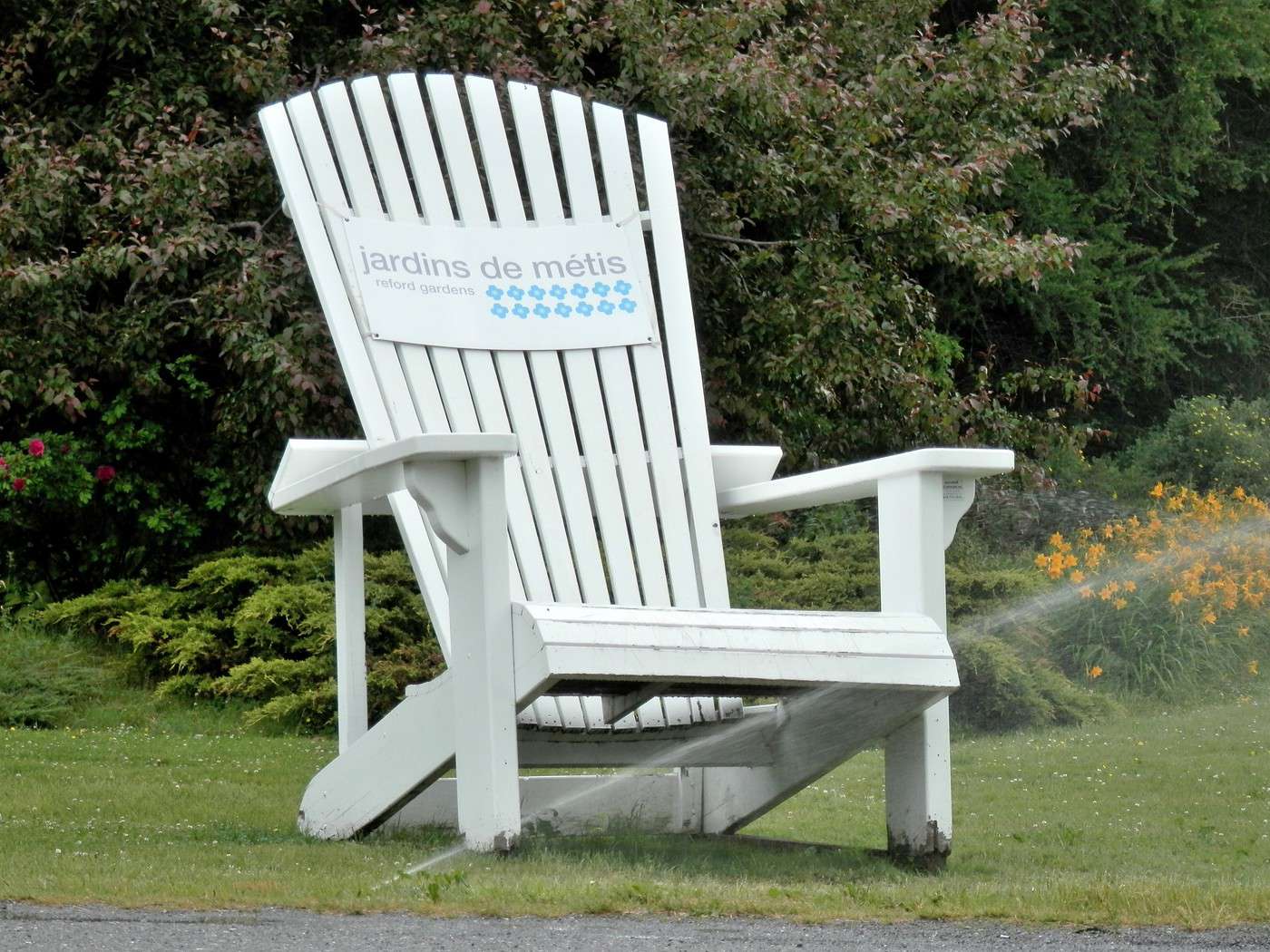
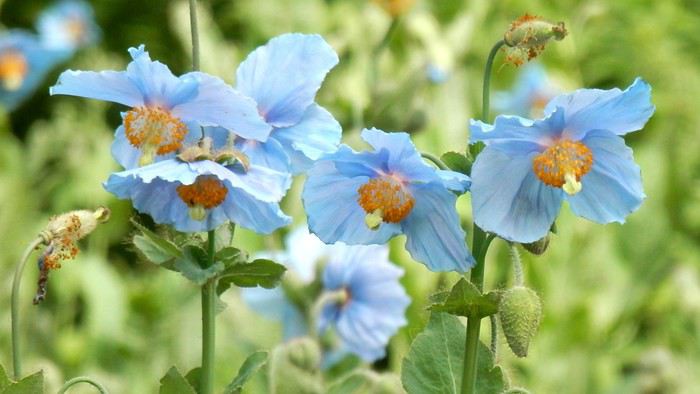 The jewel of these gardens is the Himalayan blue poppy. We picked the perfect time to visit—it’s in full bloom. Martine decides to buy some seeds to plant when we get back, though she’ll soon realize the blue poppy doesn’t seem to like the French Ardennes much.
The storm’s rolling in, so we reluctantly leave this magical place and head back to the Empress Hotel in Rimouski. We’ll only stay one night there.
The jewel of these gardens is the Himalayan blue poppy. We picked the perfect time to visit—it’s in full bloom. Martine decides to buy some seeds to plant when we get back, though she’ll soon realize the blue poppy doesn’t seem to like the French Ardennes much.
The storm’s rolling in, so we reluctantly leave this magical place and head back to the Empress Hotel in Rimouski. We’ll only stay one night there.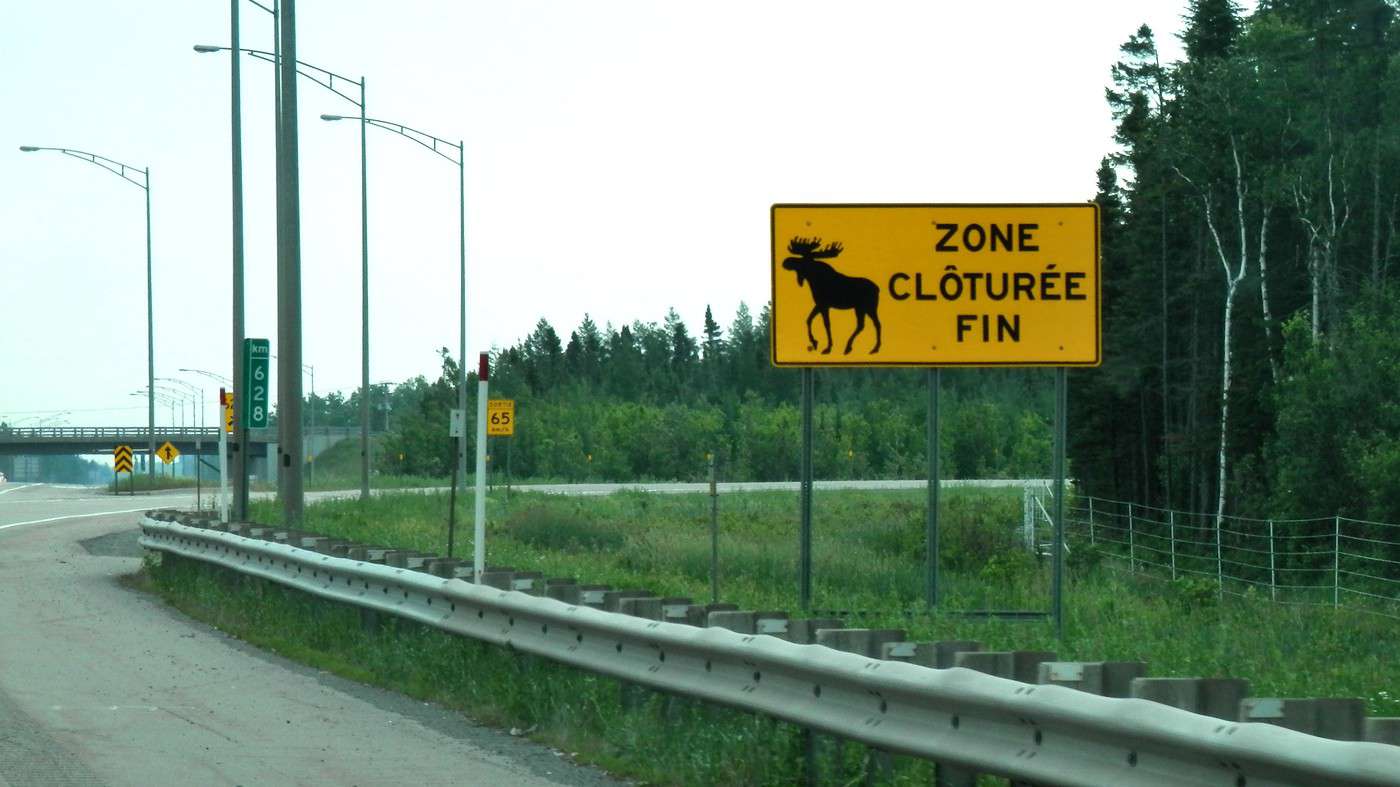
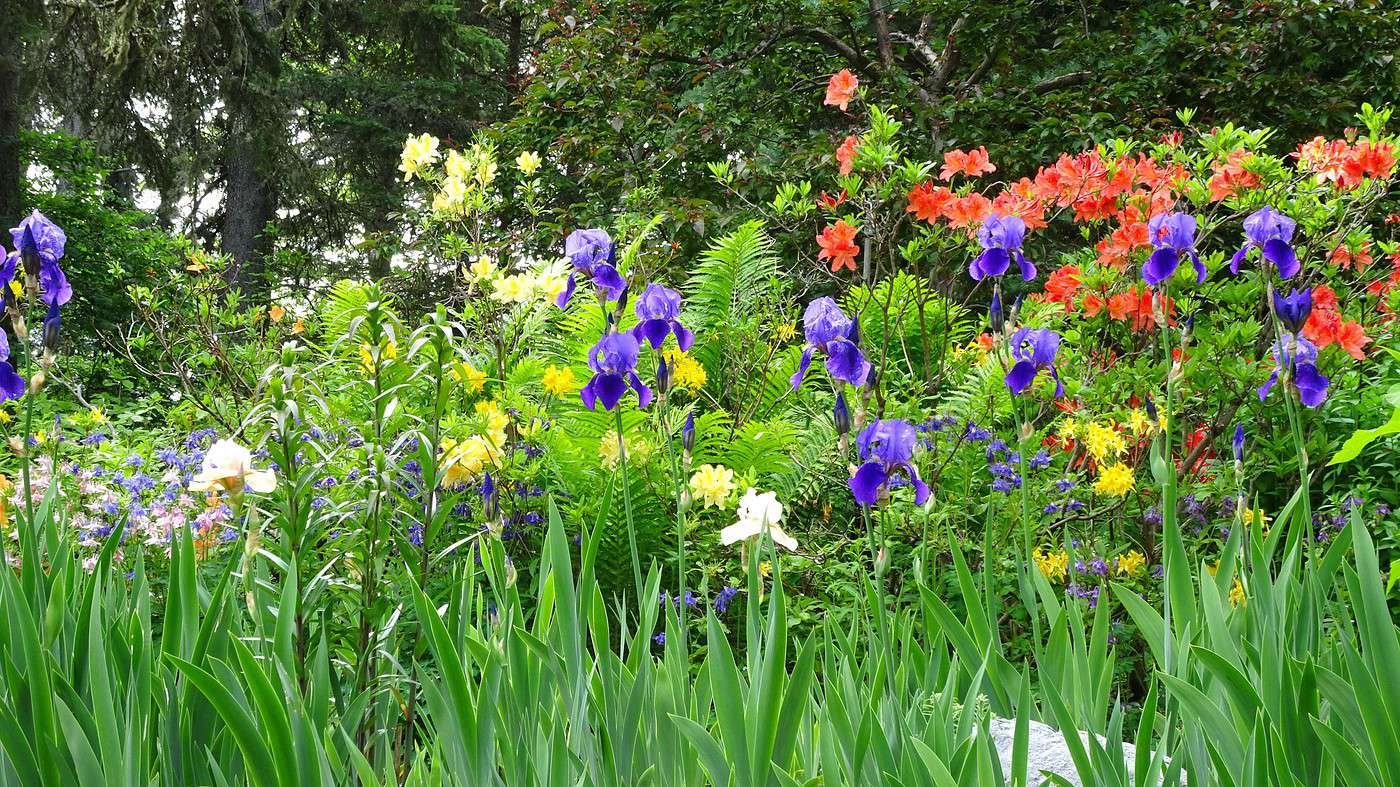
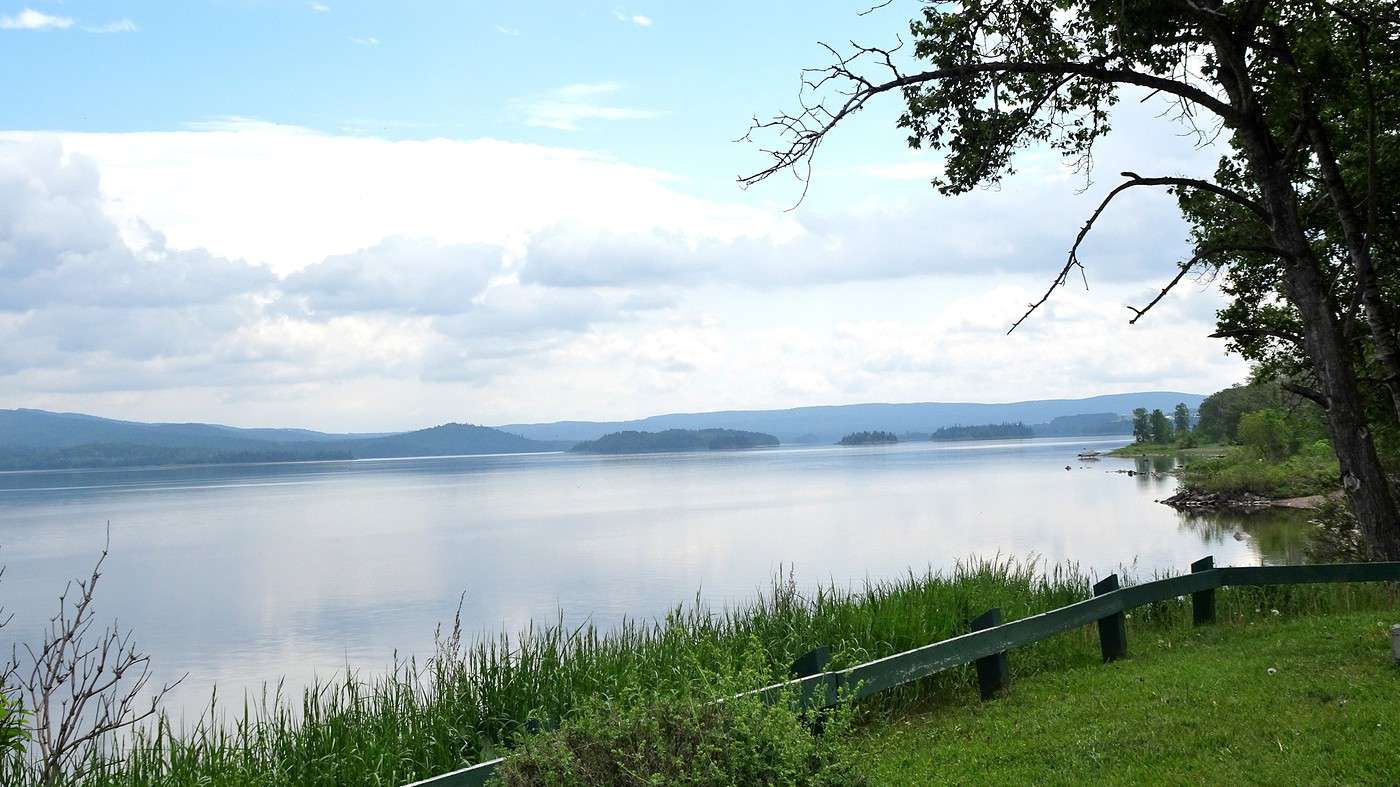
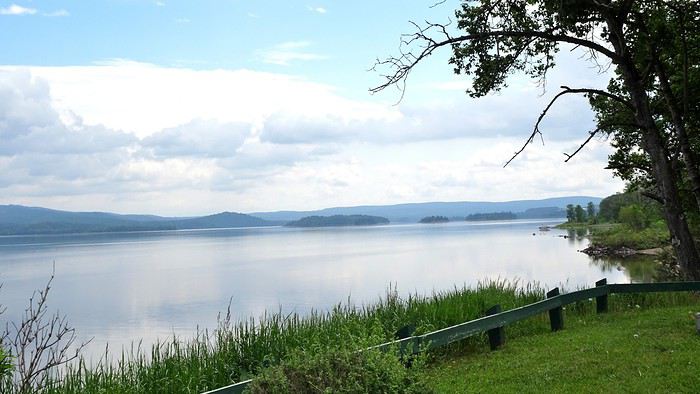 Break by a lake.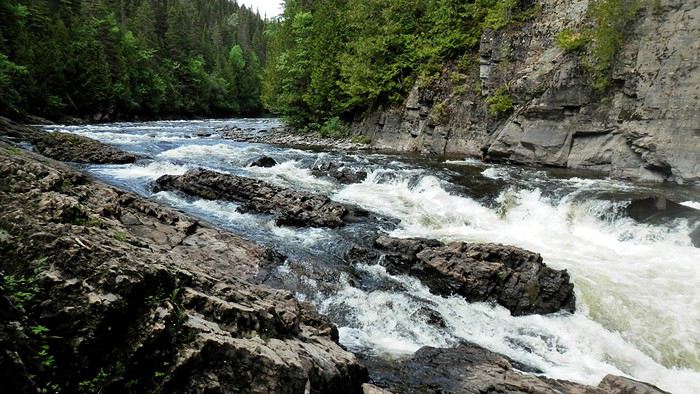
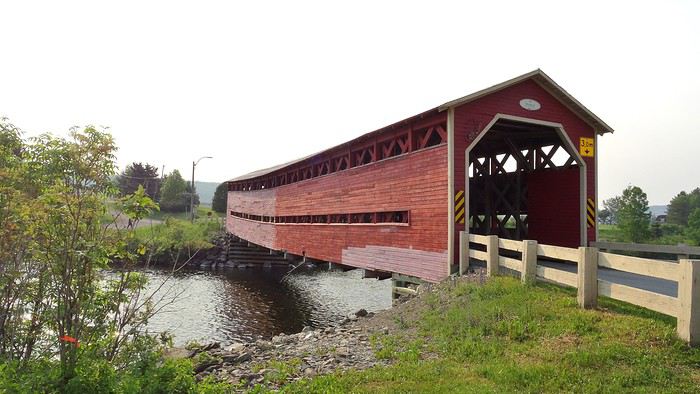
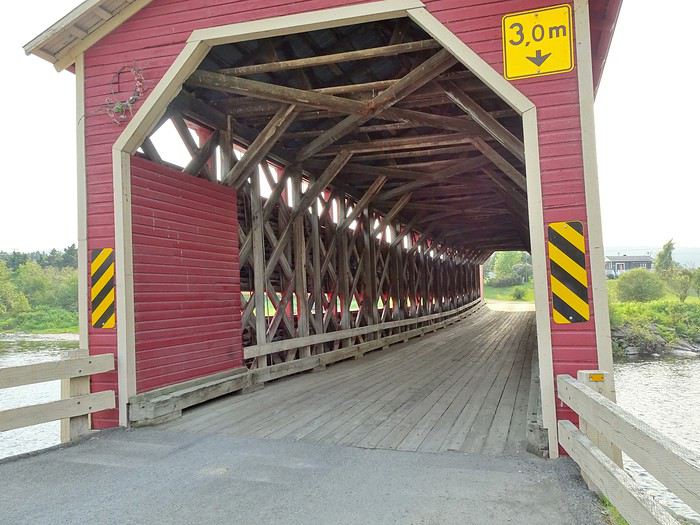
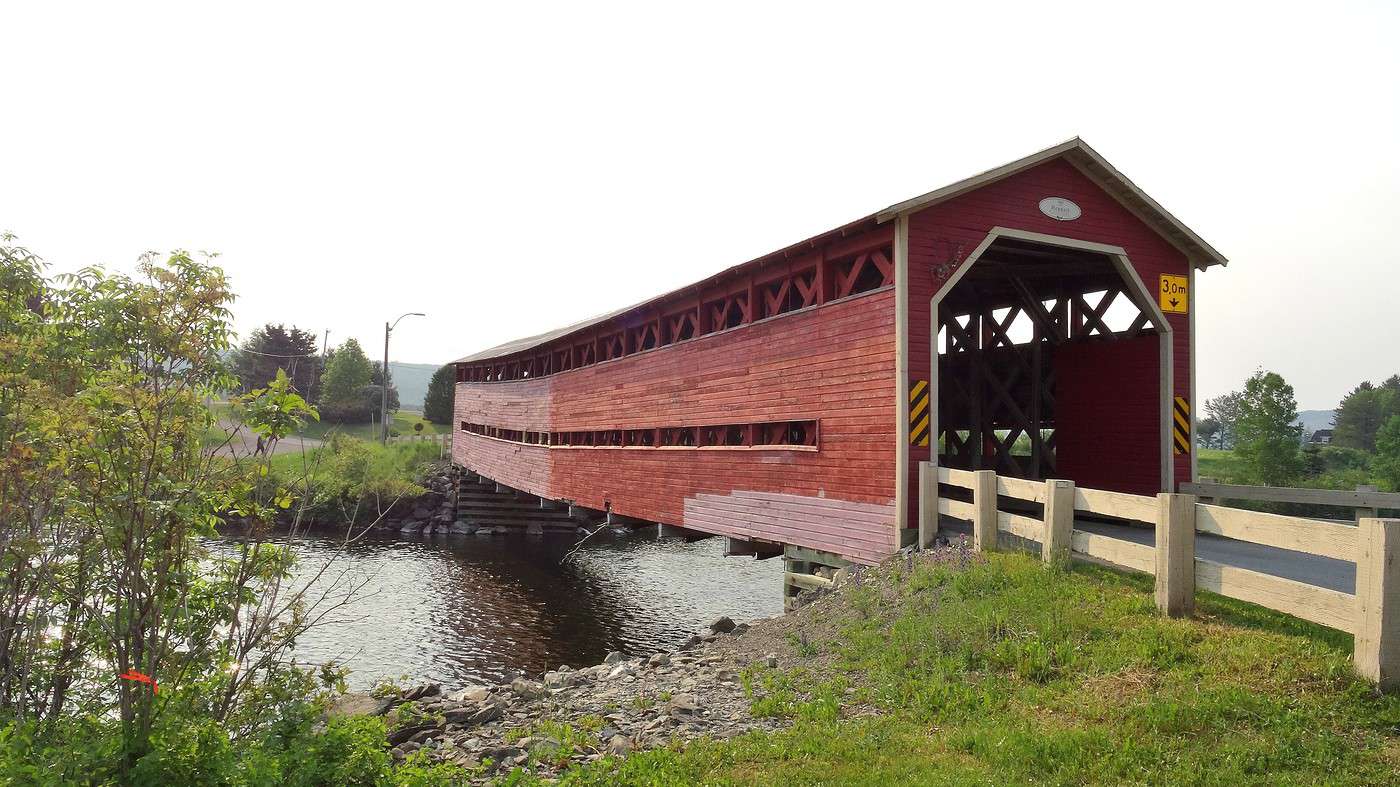
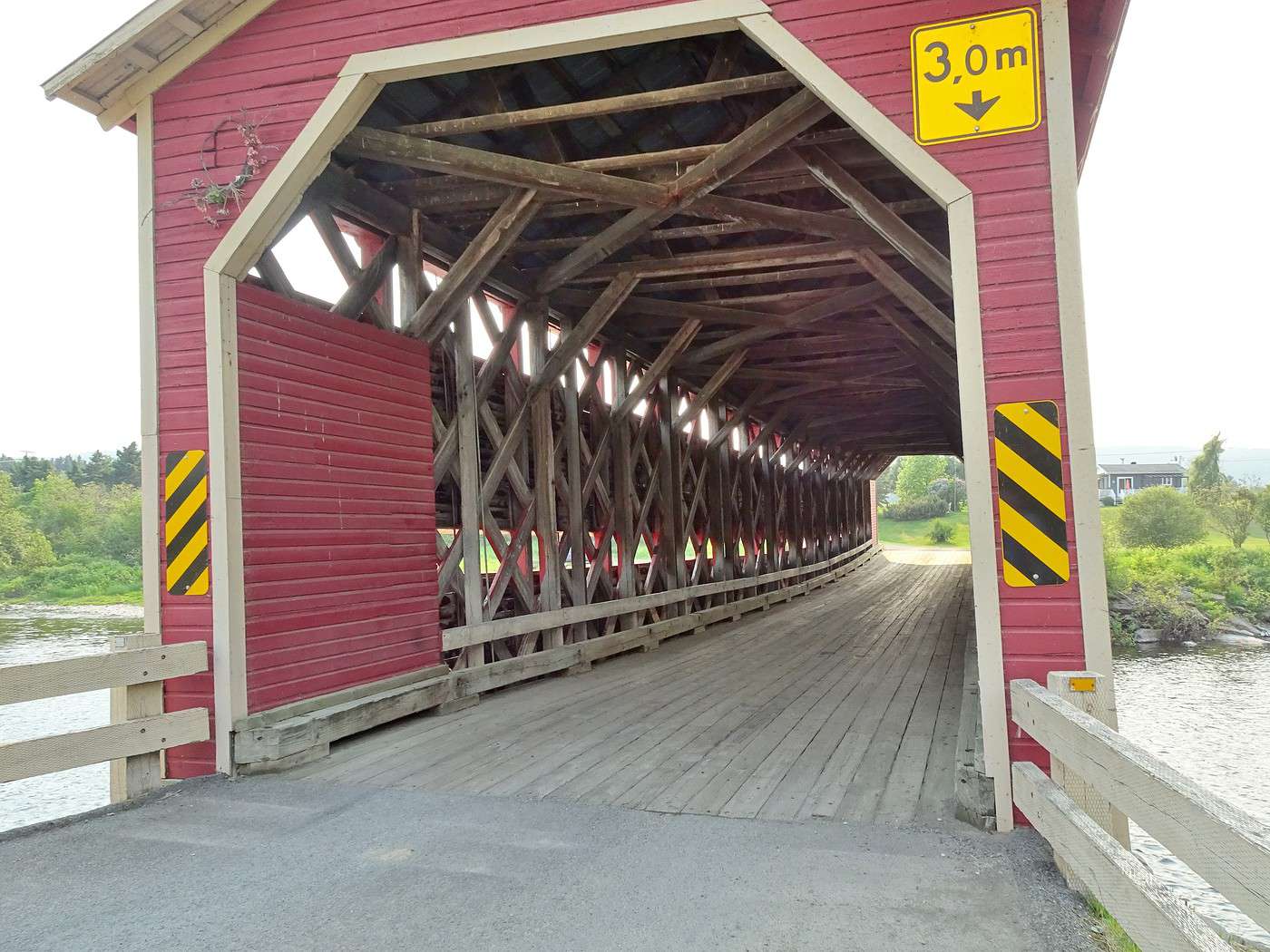
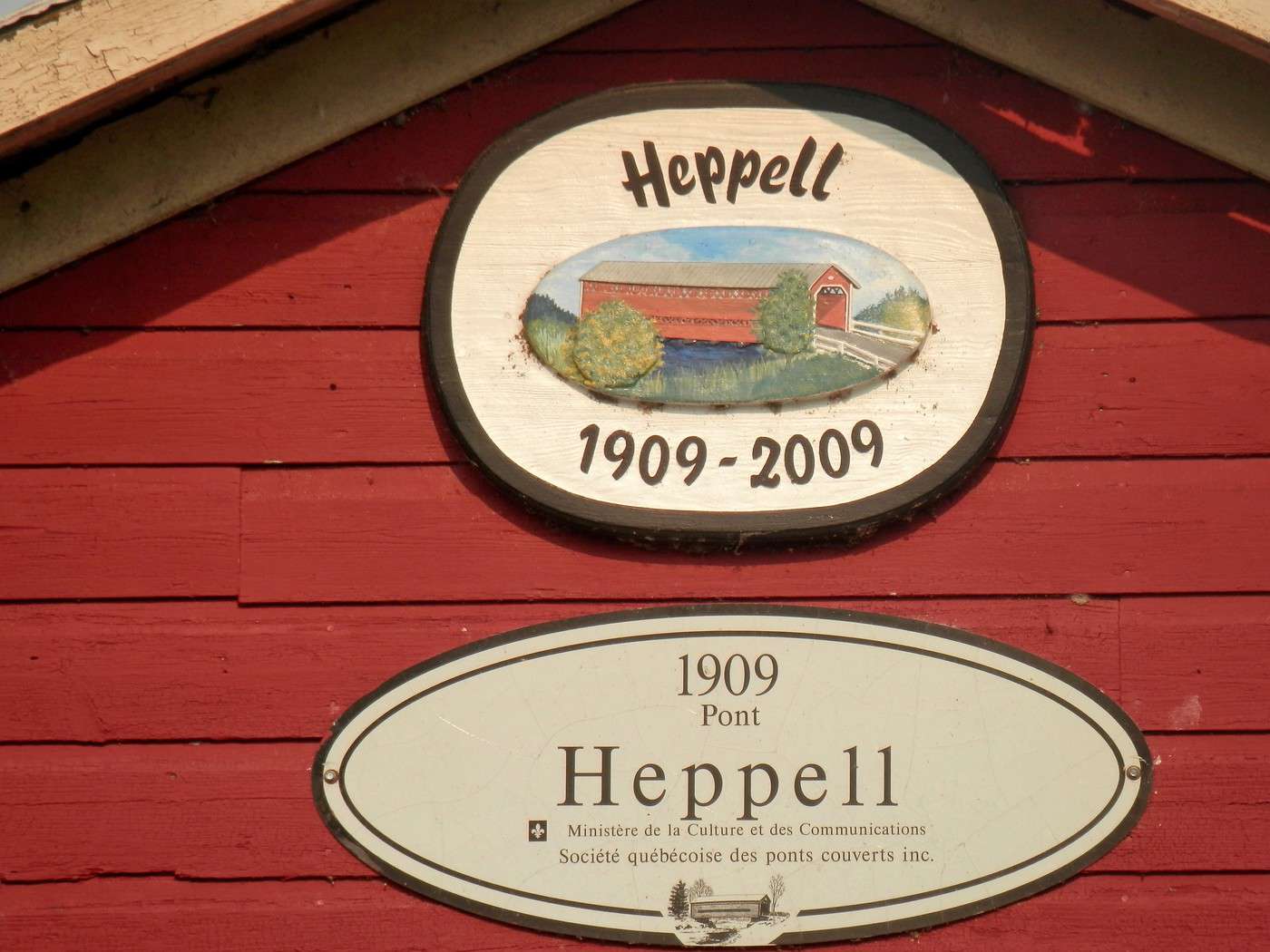
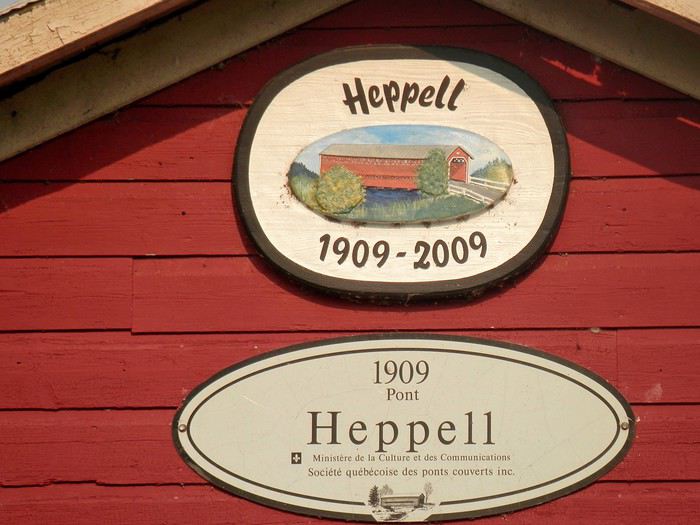 A few kilometers later, we discover an old covered bridge. There are fewer than a hundred left in Quebec. This one is the Heppell Bridge, recently partially restored.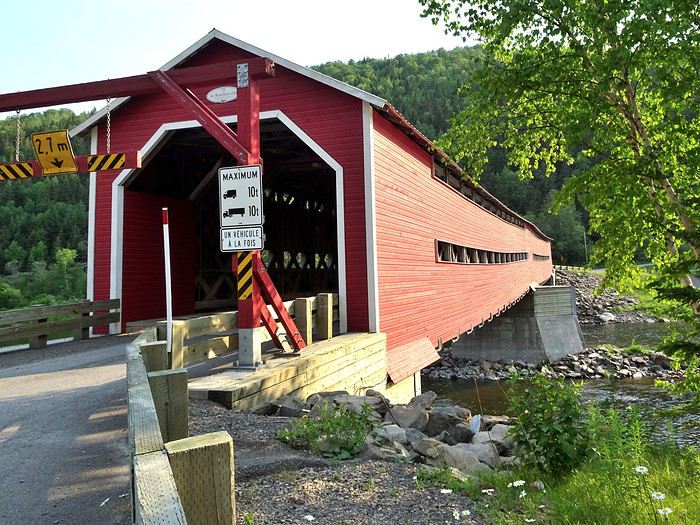
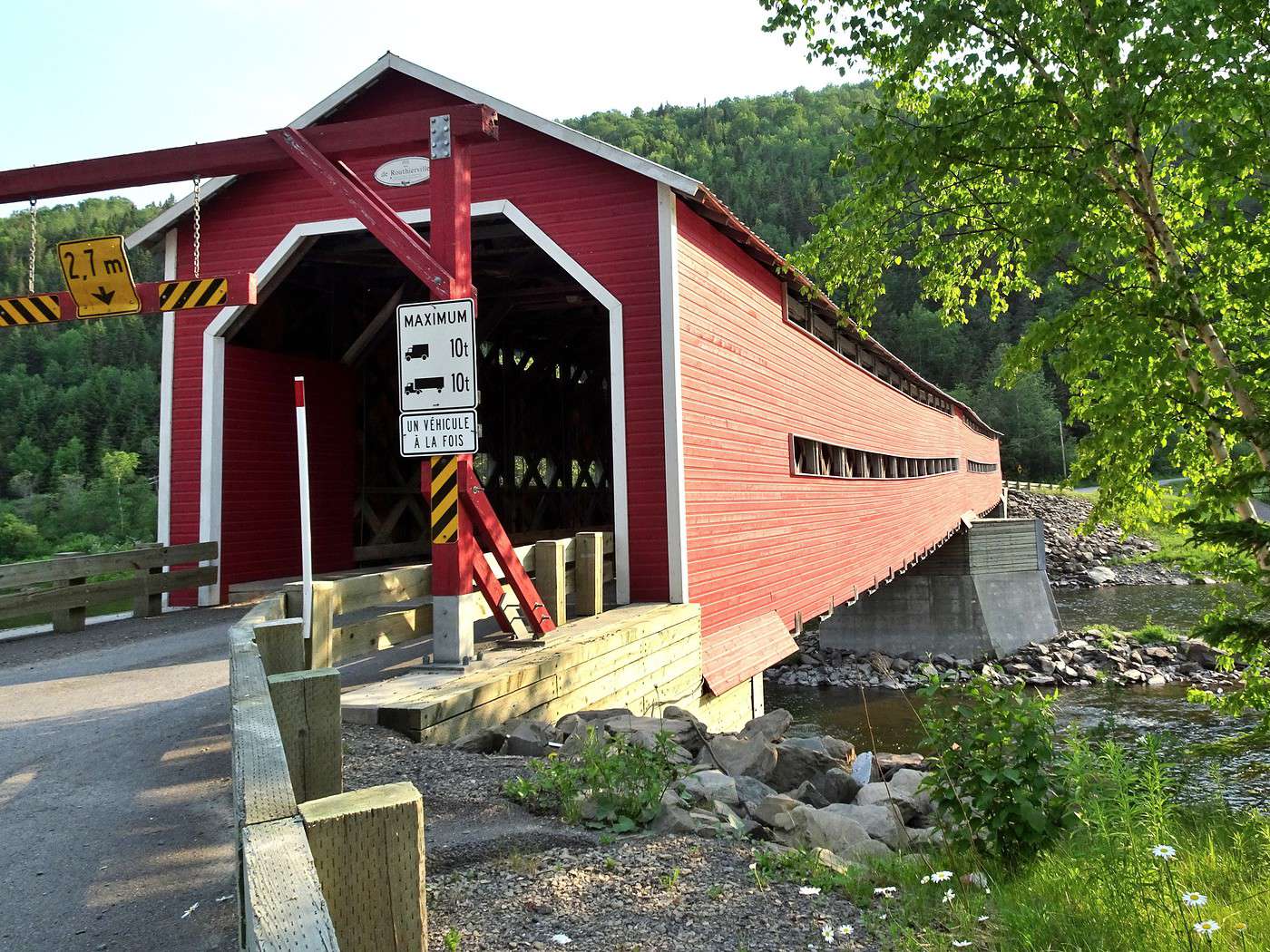
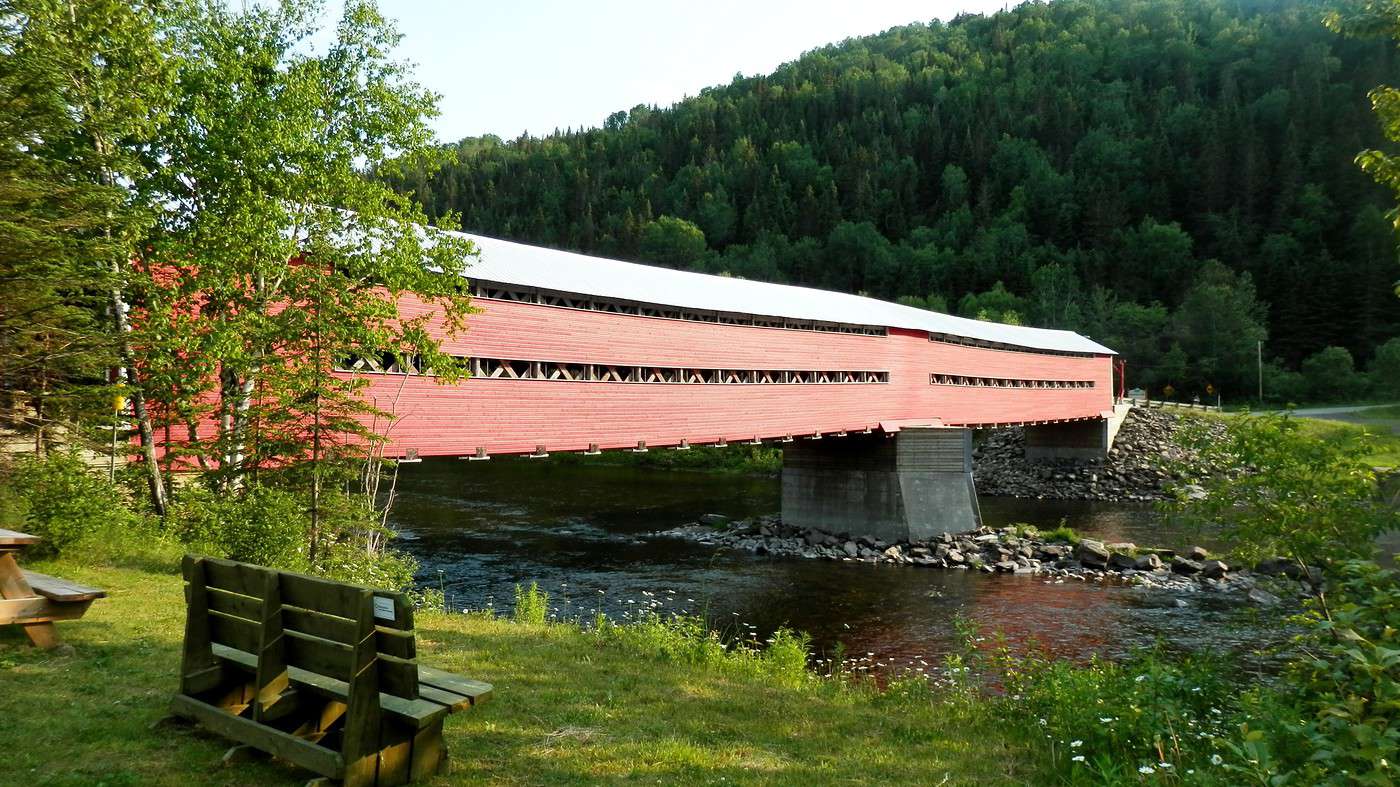
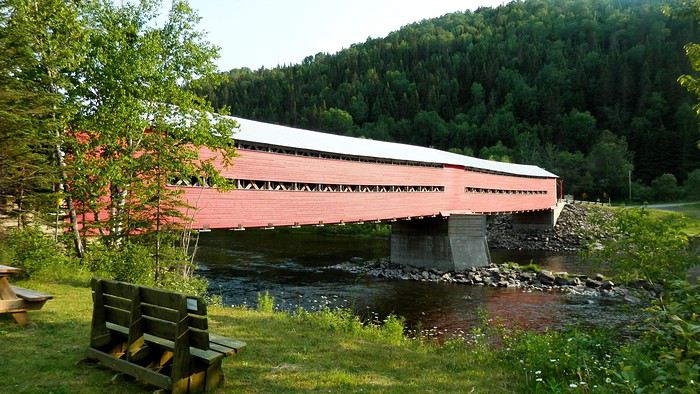 A few more kilometers and here’s another covered bridge, the Routhierville Bridge, longer than the Heppell Bridge and apparently in better condition.
Definitely, the Causapscal region is packed with interesting things to discover. Maybe we should’ve planned a stop here tonight.
A few more kilometers and here’s another covered bridge, the Routhierville Bridge, longer than the Heppell Bridge and apparently in better condition.
Definitely, the Causapscal region is packed with interesting things to discover. Maybe we should’ve planned a stop here tonight.
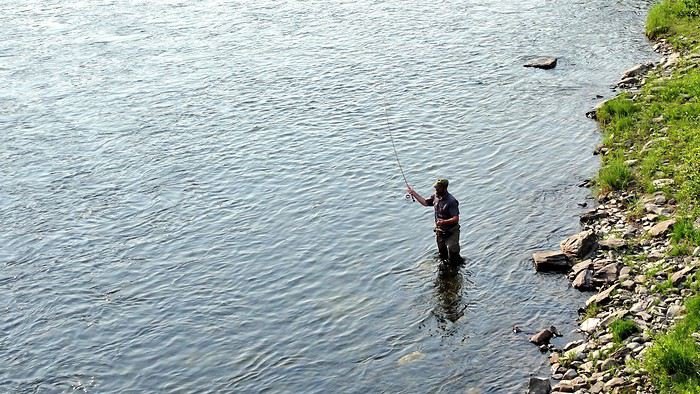
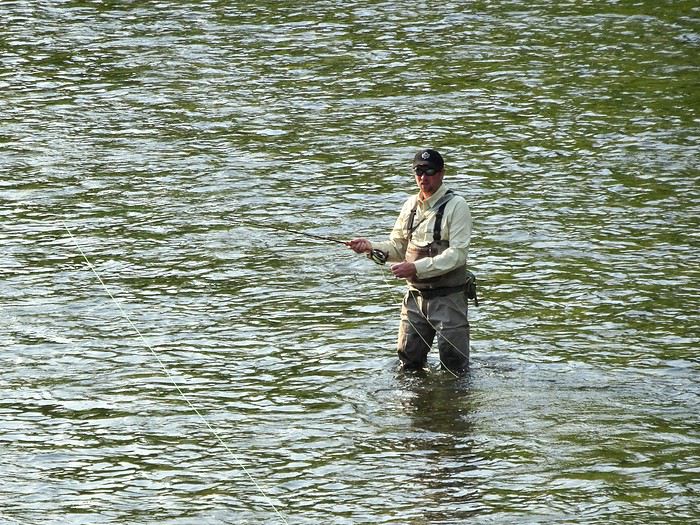
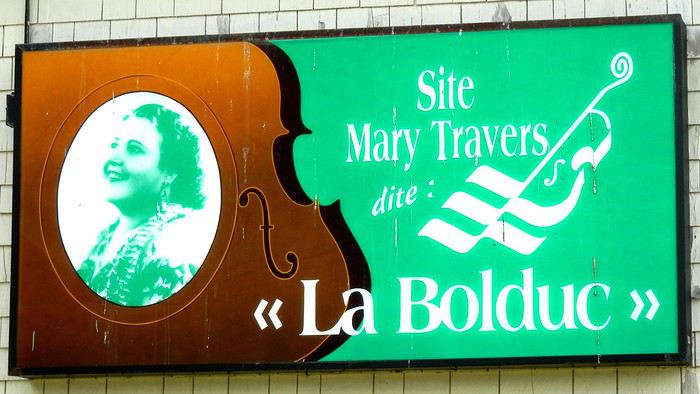 And yet, La Bolduc is a Quebec icon—the Céline Dion of the 1930s and 1940s.
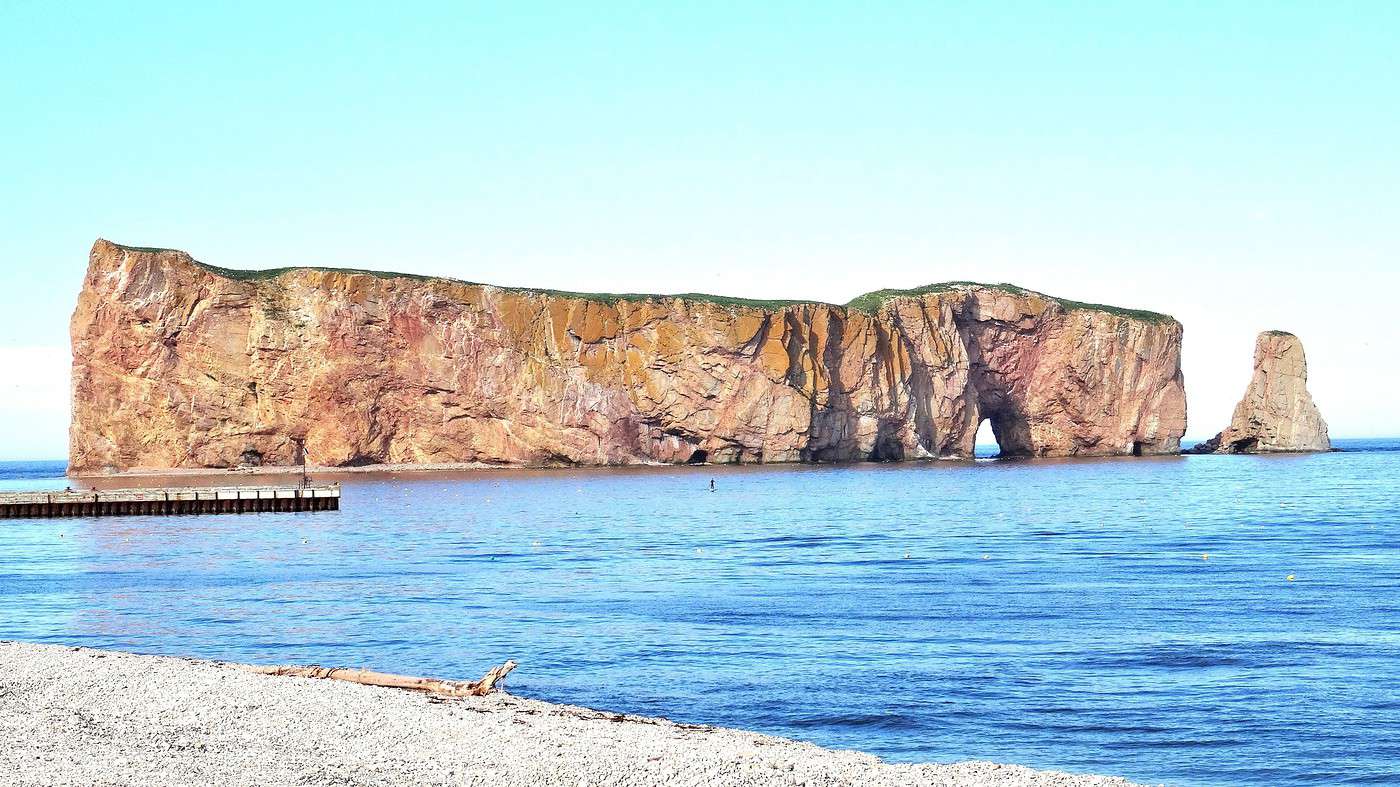
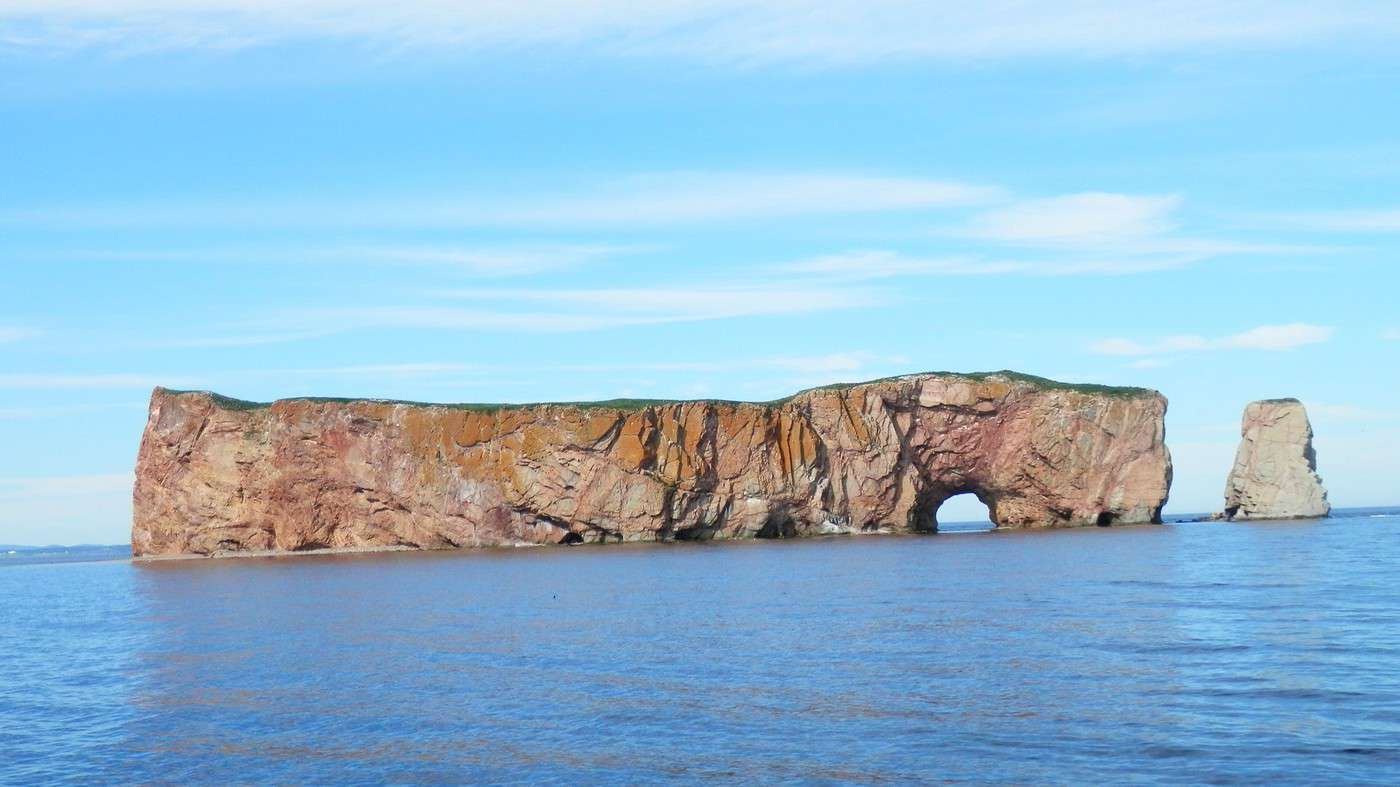
A little later in Percé, we saw a poster advertising a show titled: "From Céline Dion to La Bolduc!" Among La Bolduc’s dozens of songs, I’ll just mention two (not necessarily the most objective picks) that you can listen to on any music platform: "C'est dans l'temps du jour de l'an" and "Ça va venir, découragez-vous pas." Today, they’re playing on loop on our car radio since we brought a USB stick of Quebec songs.
And yet, La Bolduc is a Quebec icon—the Céline Dion of the 1930s and 1940s.
A little later in Percé, we saw a poster advertising a show titled: "From Céline Dion to La Bolduc!" Among La Bolduc’s dozens of songs, I’ll just mention two (not necessarily the most objective picks) that you can listen to on any music platform: "C'est dans l'temps du jour de l'an" and "Ça va venir, découragez-vous pas." Today, they’re playing on loop on our car radio since we brought a USB stick of Quebec songs.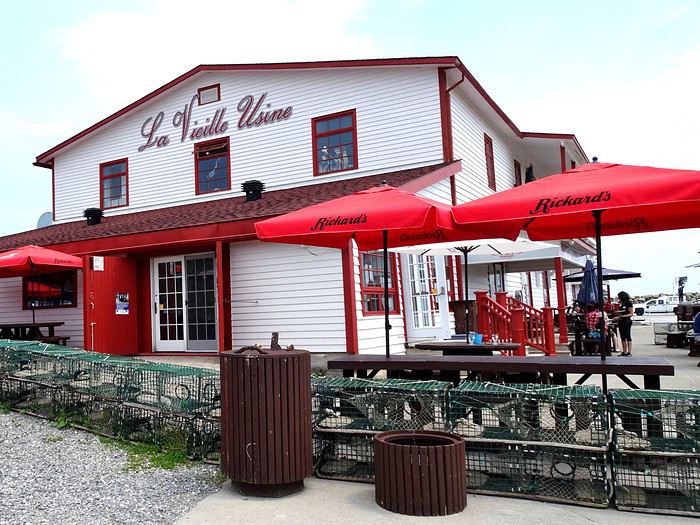
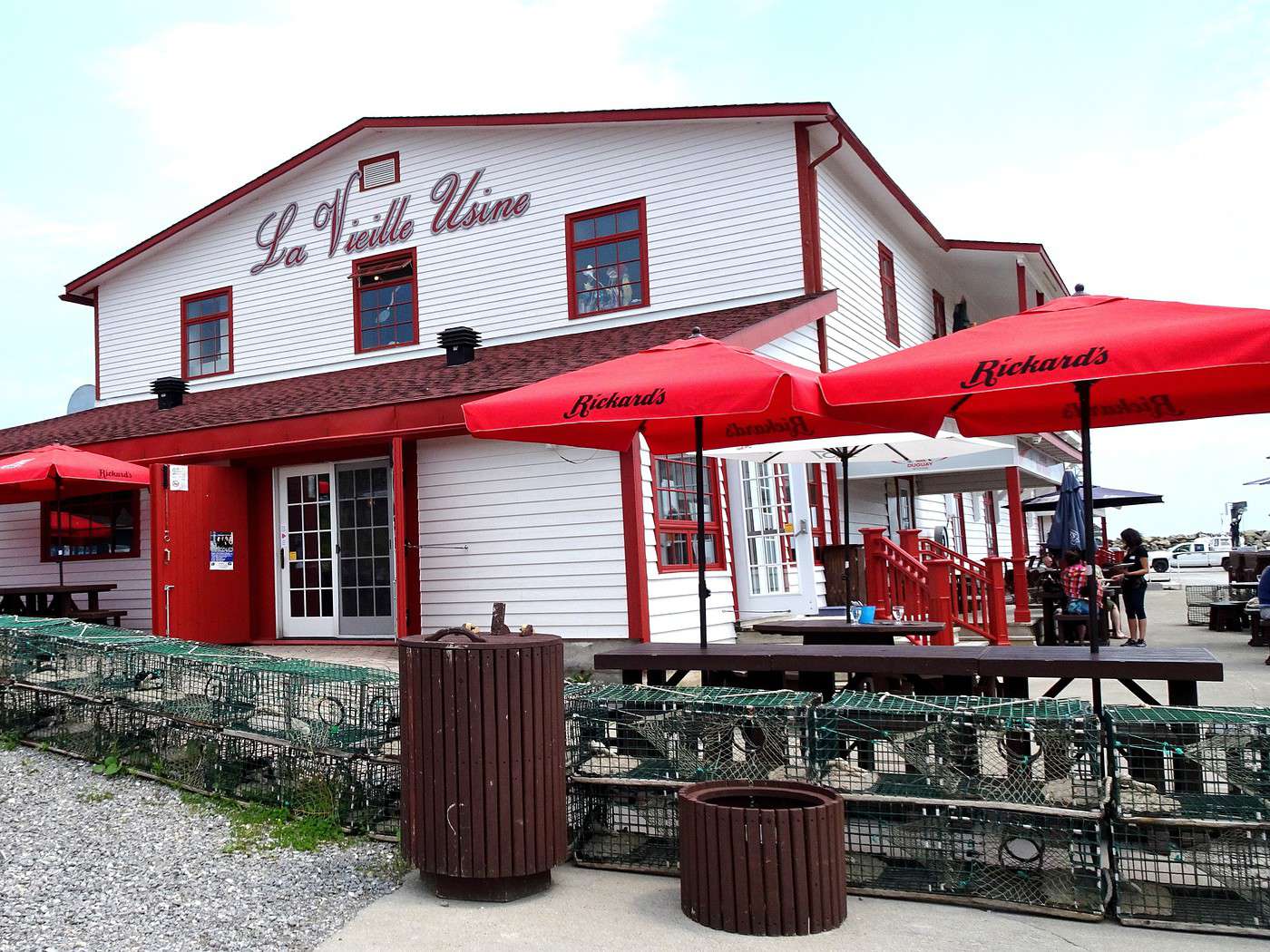
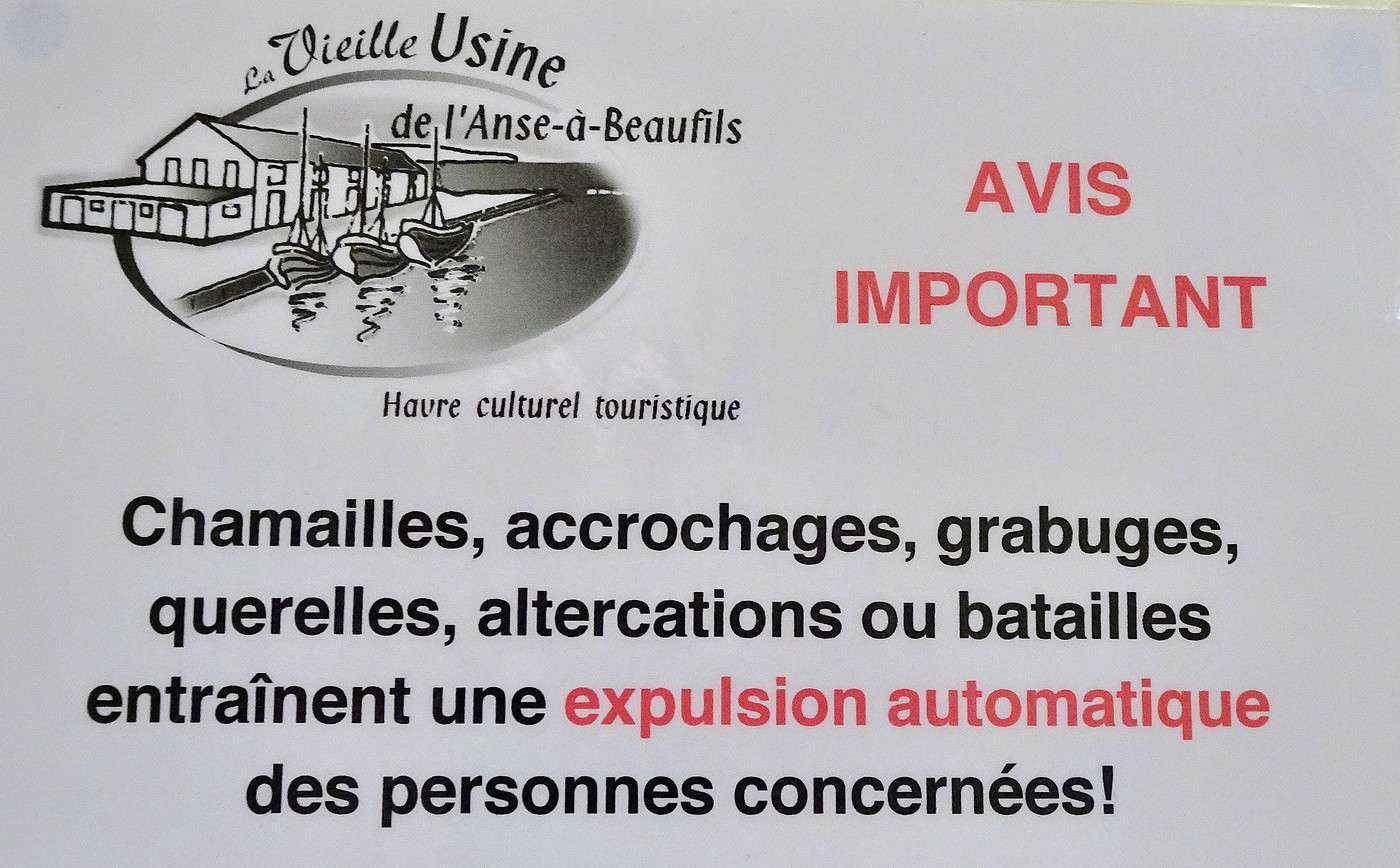
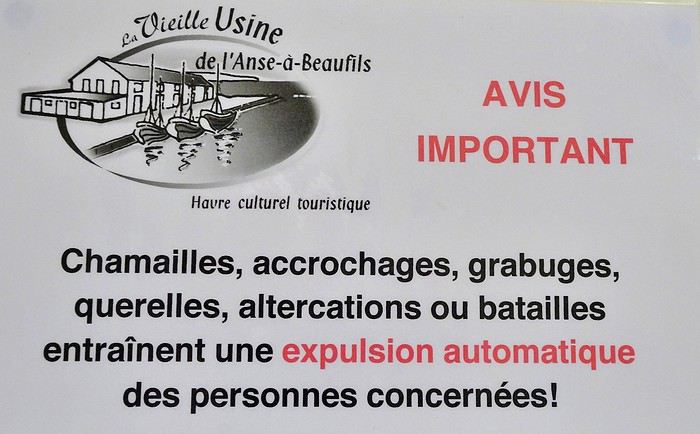 I couldn’t resist sharing this sign warning against incivility—what the French pompously call "incivilités."
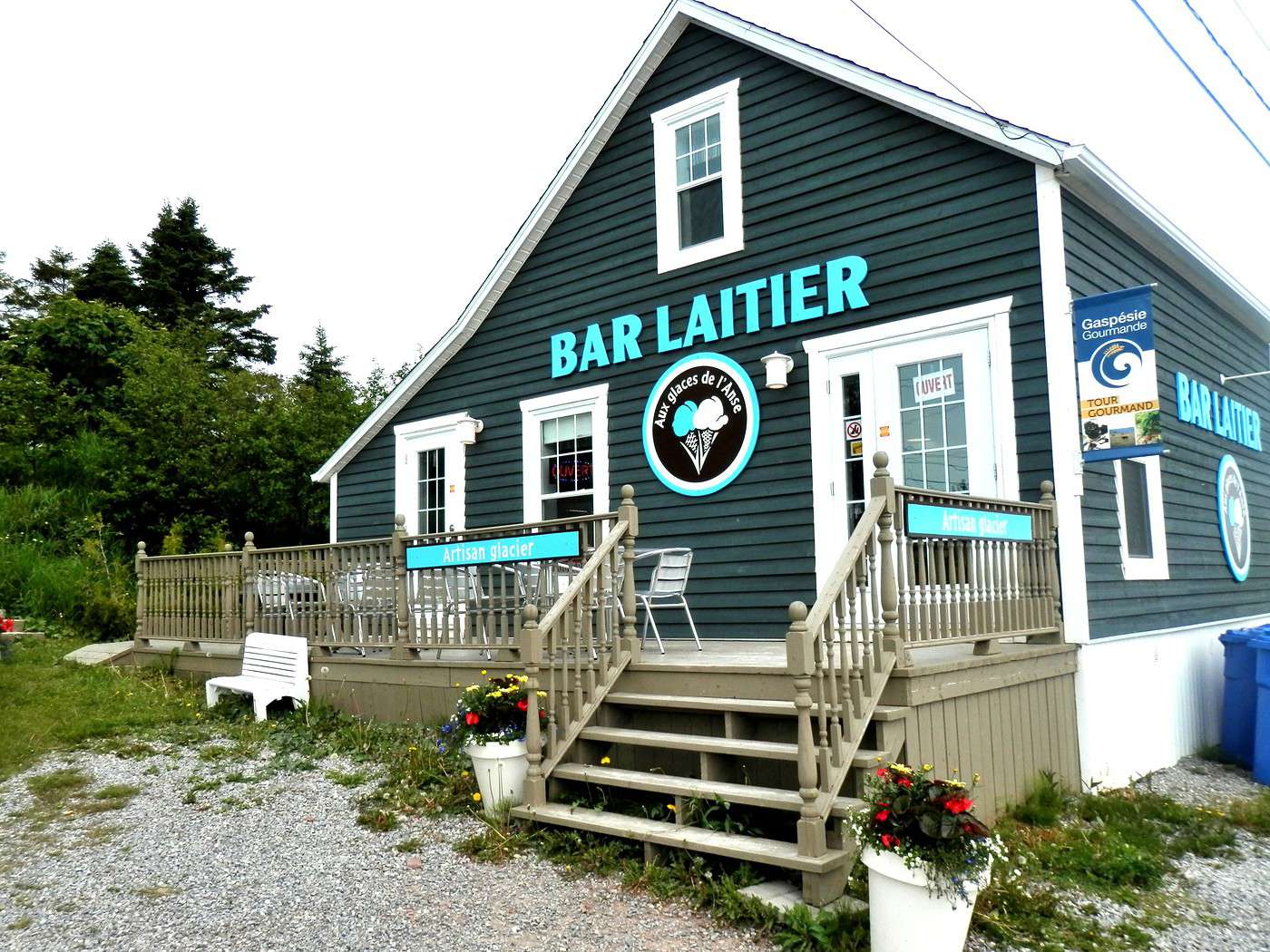
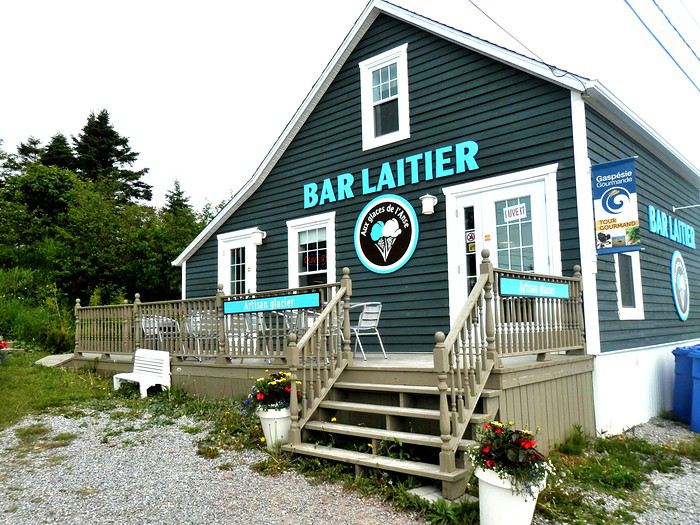 Right next to La Vieille Usine, we spotted a "bar laitier" and none of us knew exactly what it was. So, we went to check it out! Great idea: they had delicious ice cream. Perfect for our lunch dessert.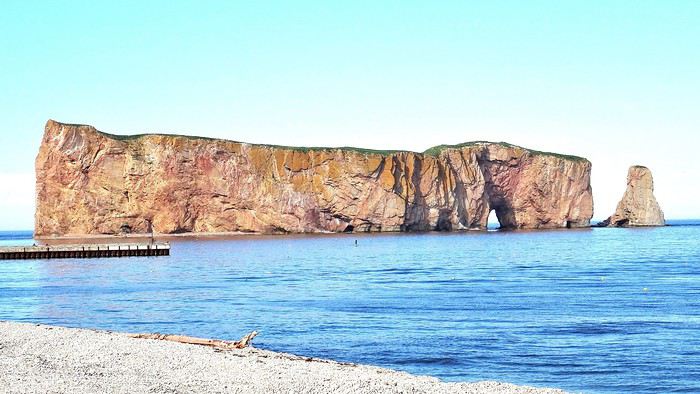
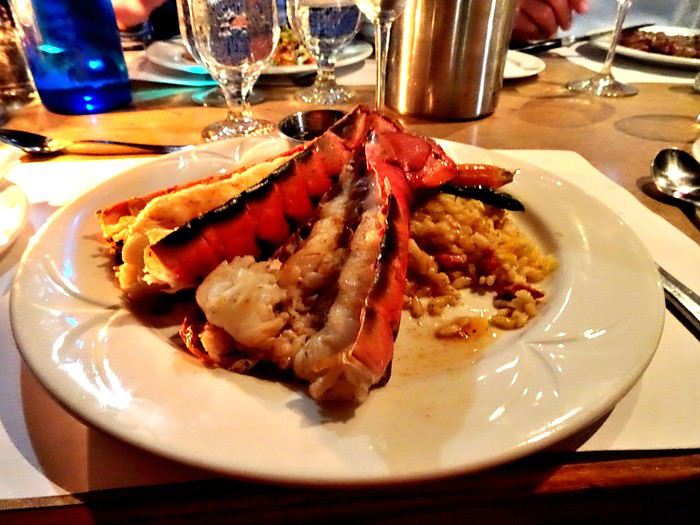 It was expensive, but what a treat.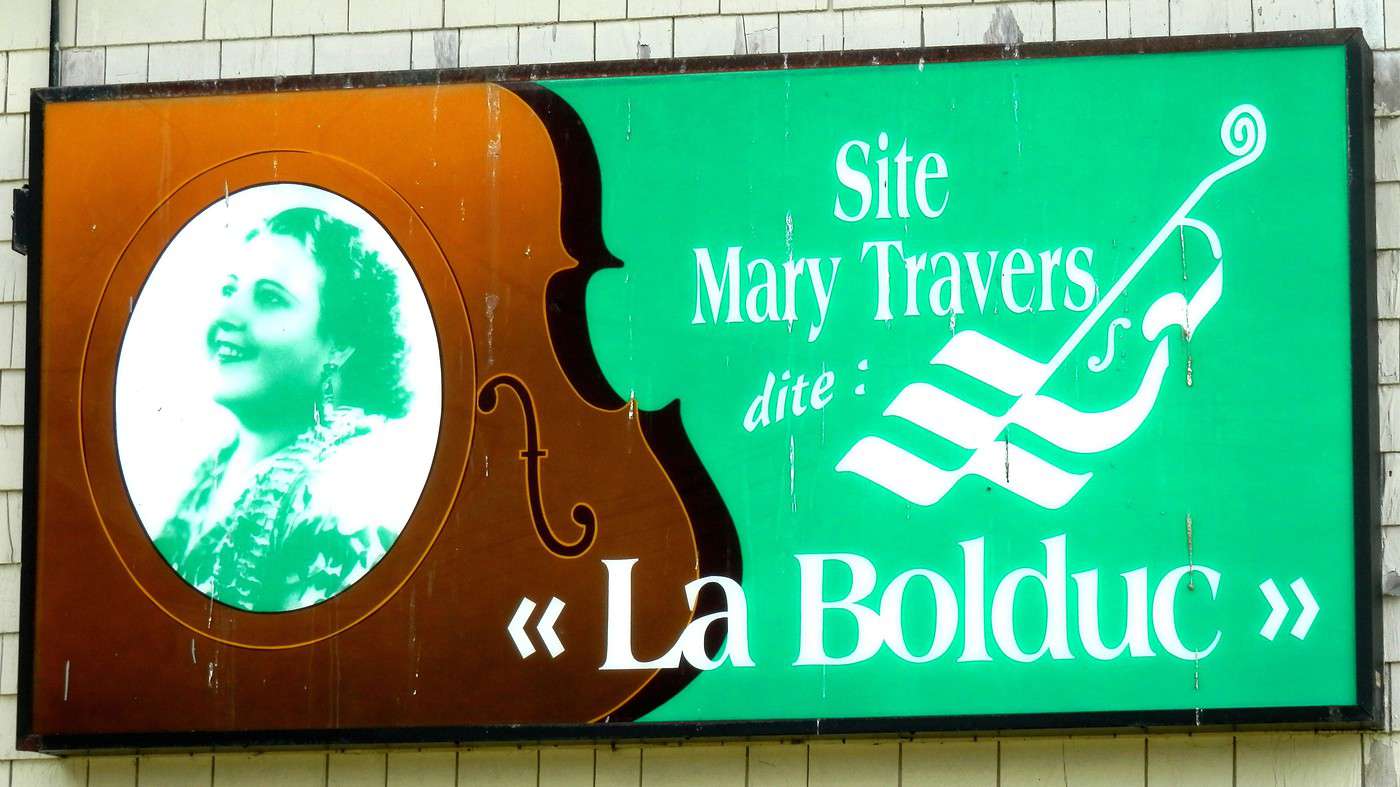
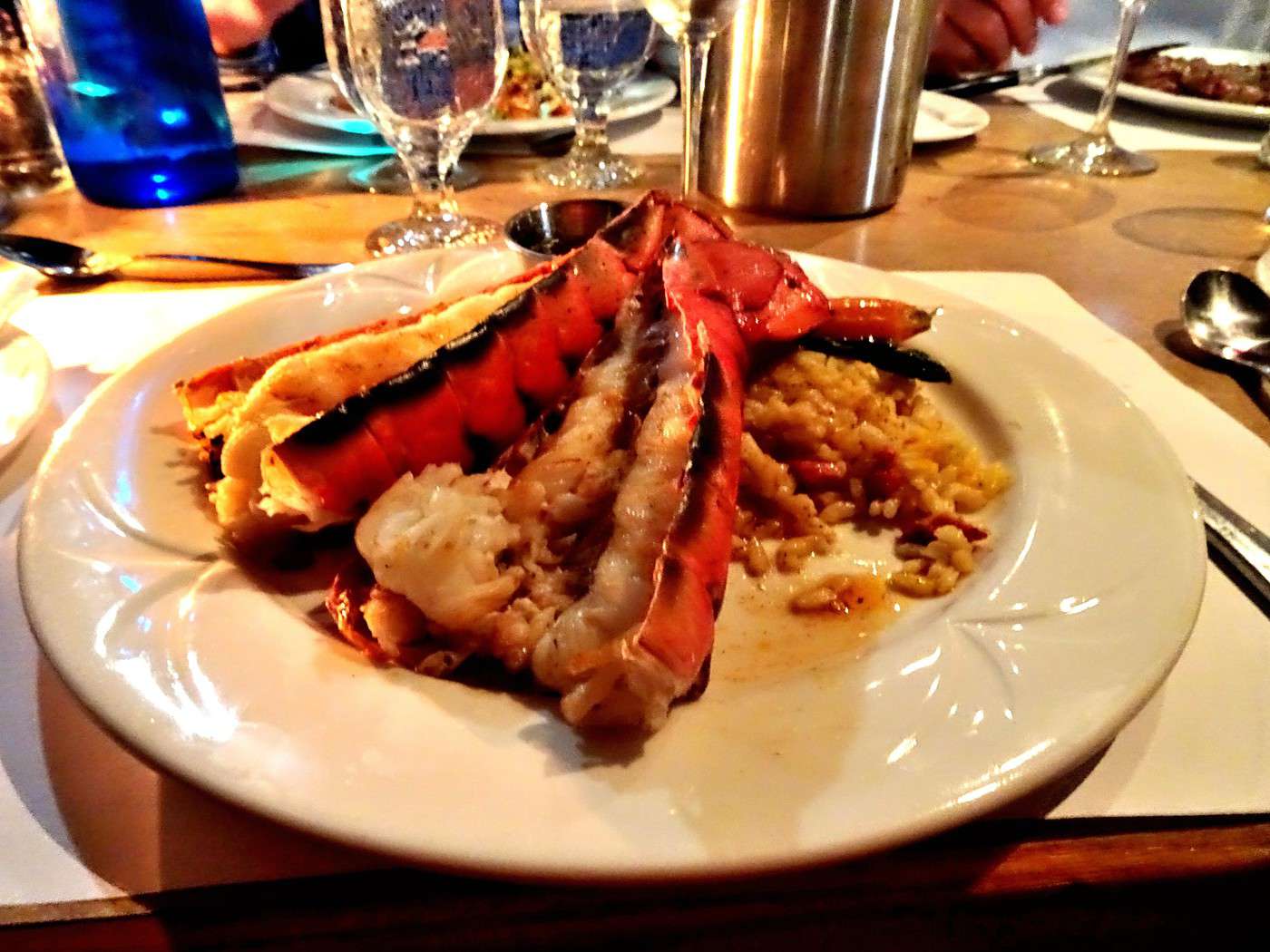
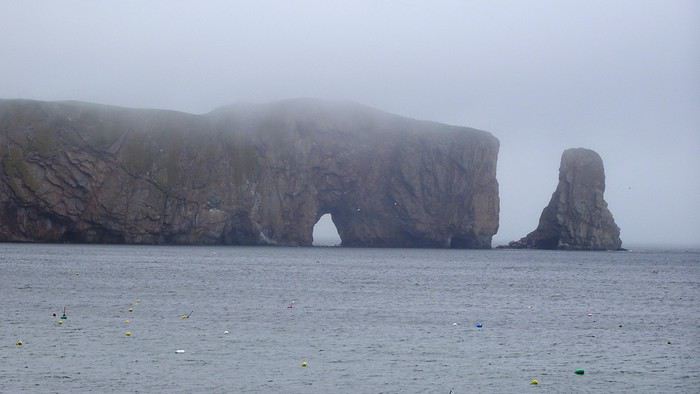
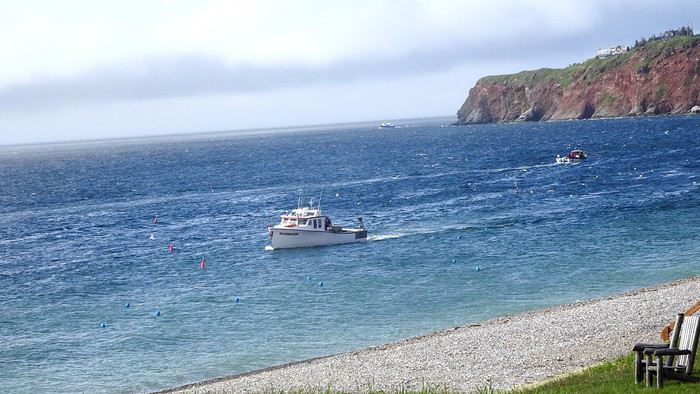
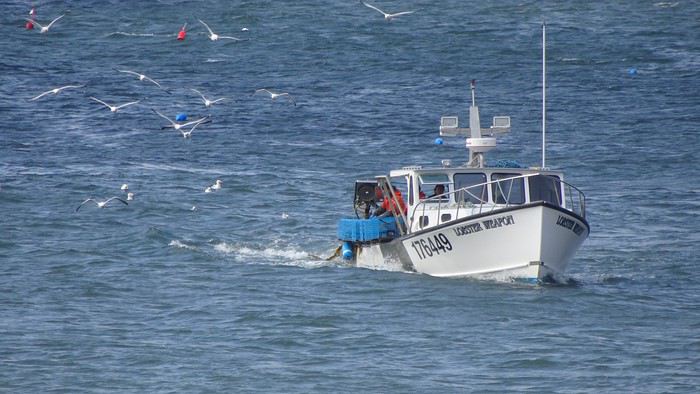
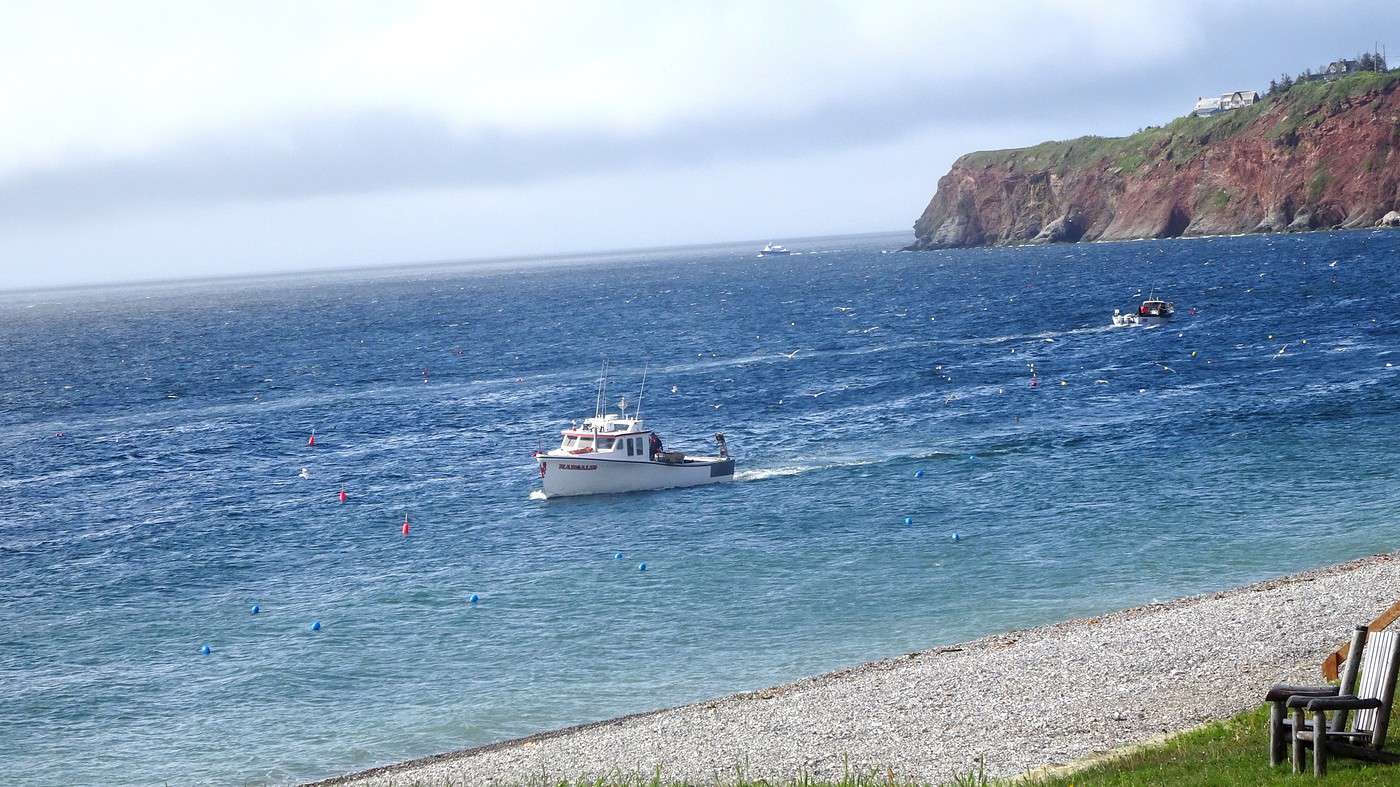
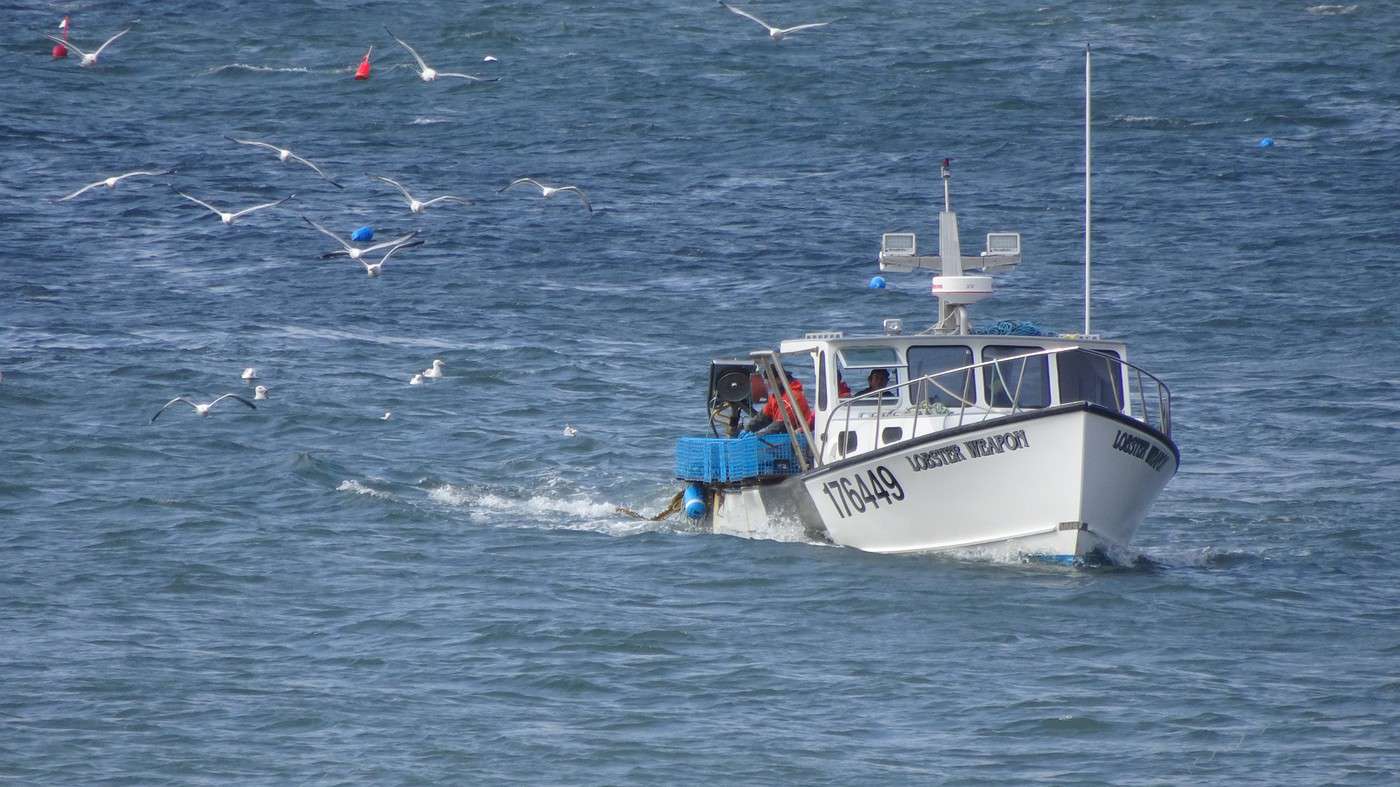
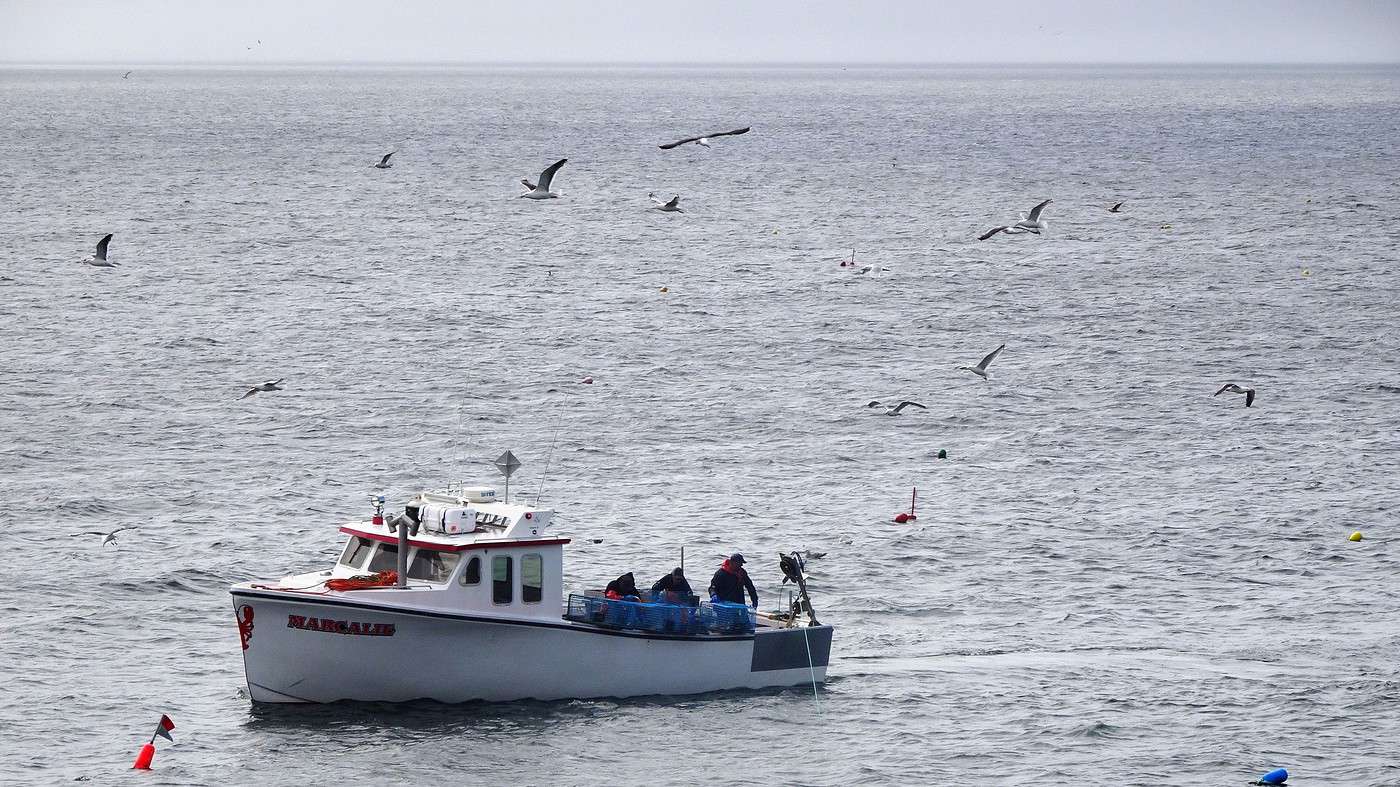
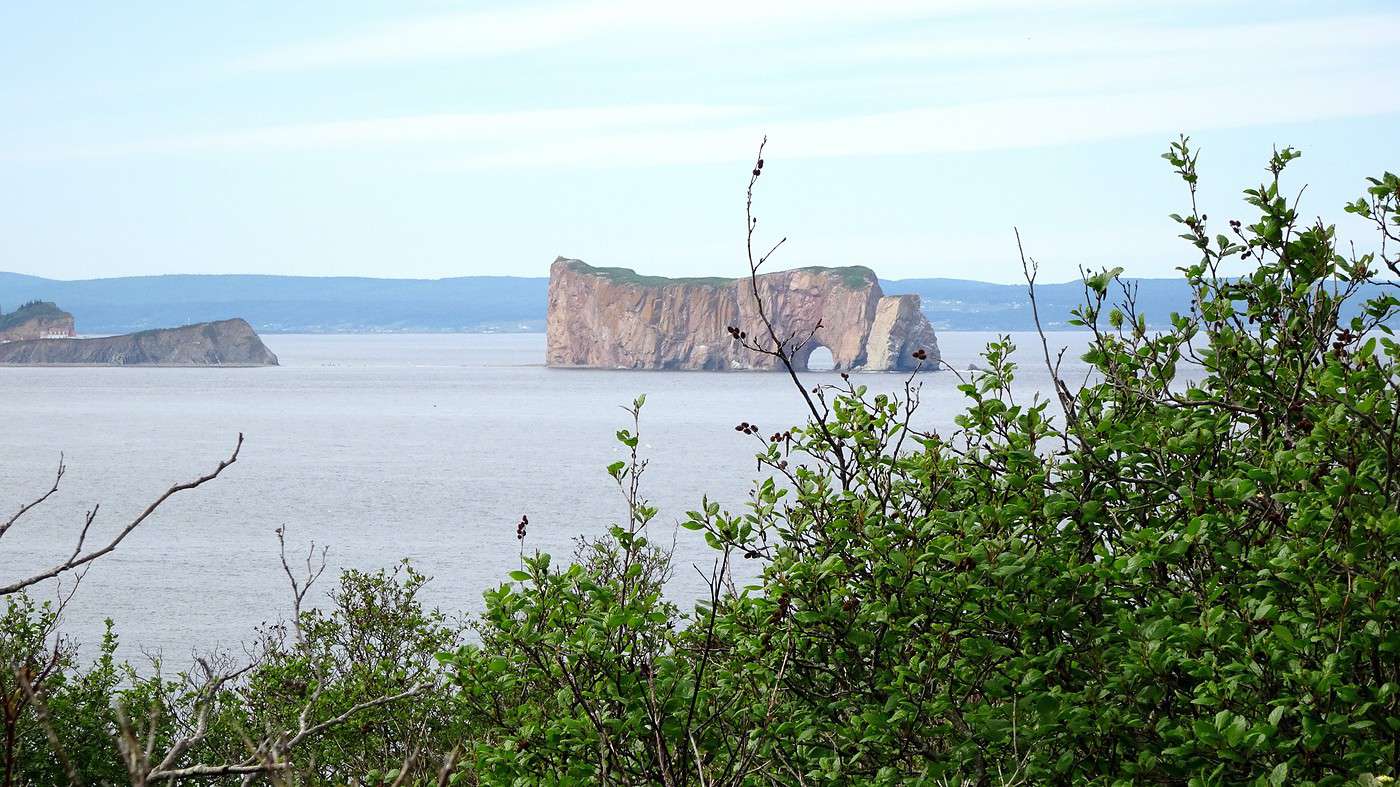
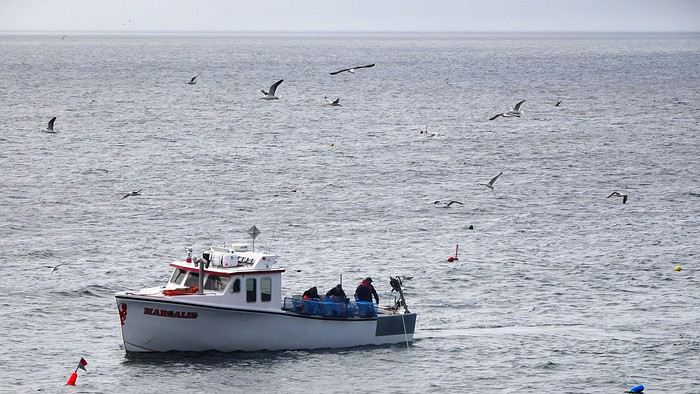 They’re lobster boats. You can clearly see the fishermen pulling up the traps. I never imagined lobster fishing could happen so close to shore.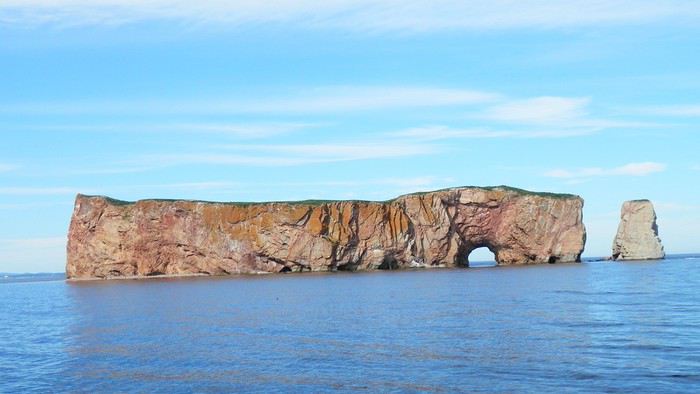
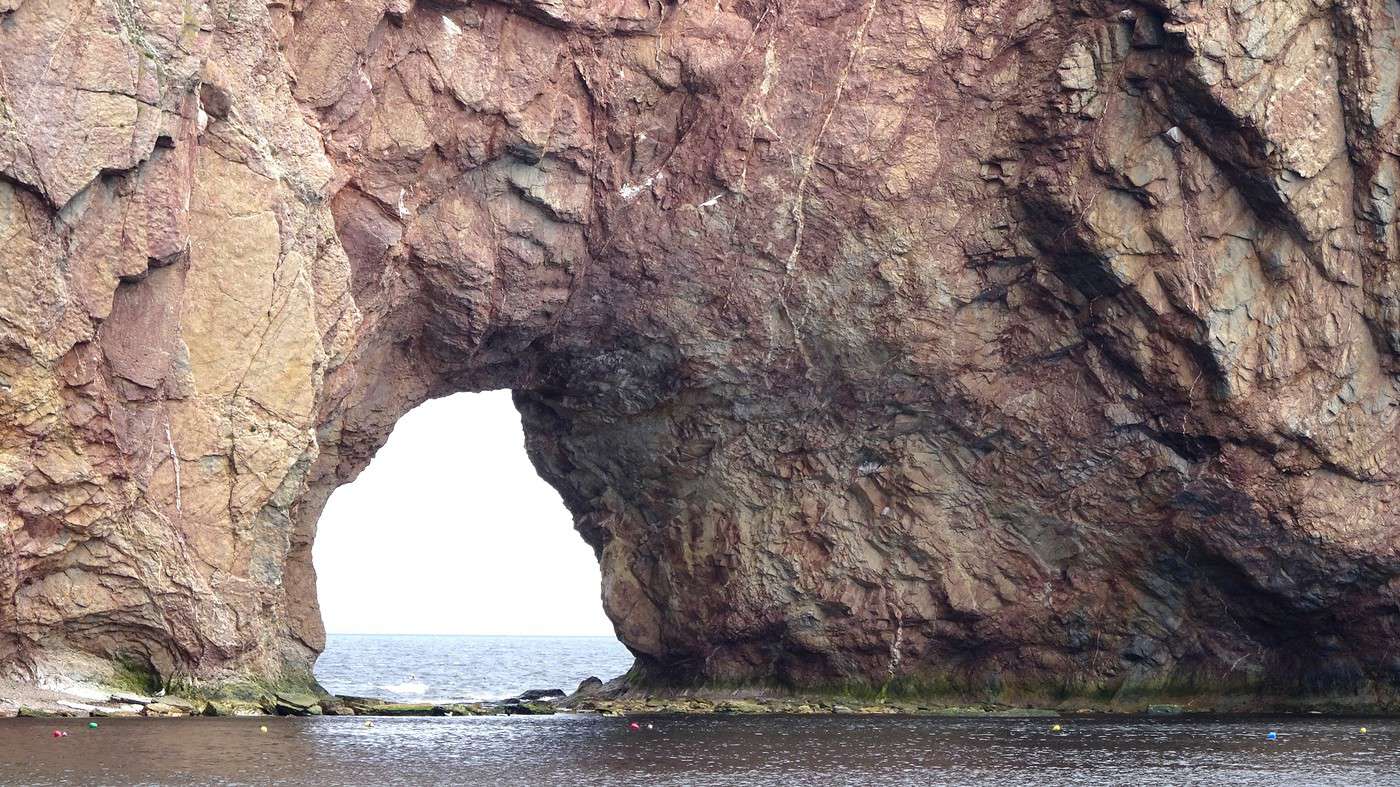
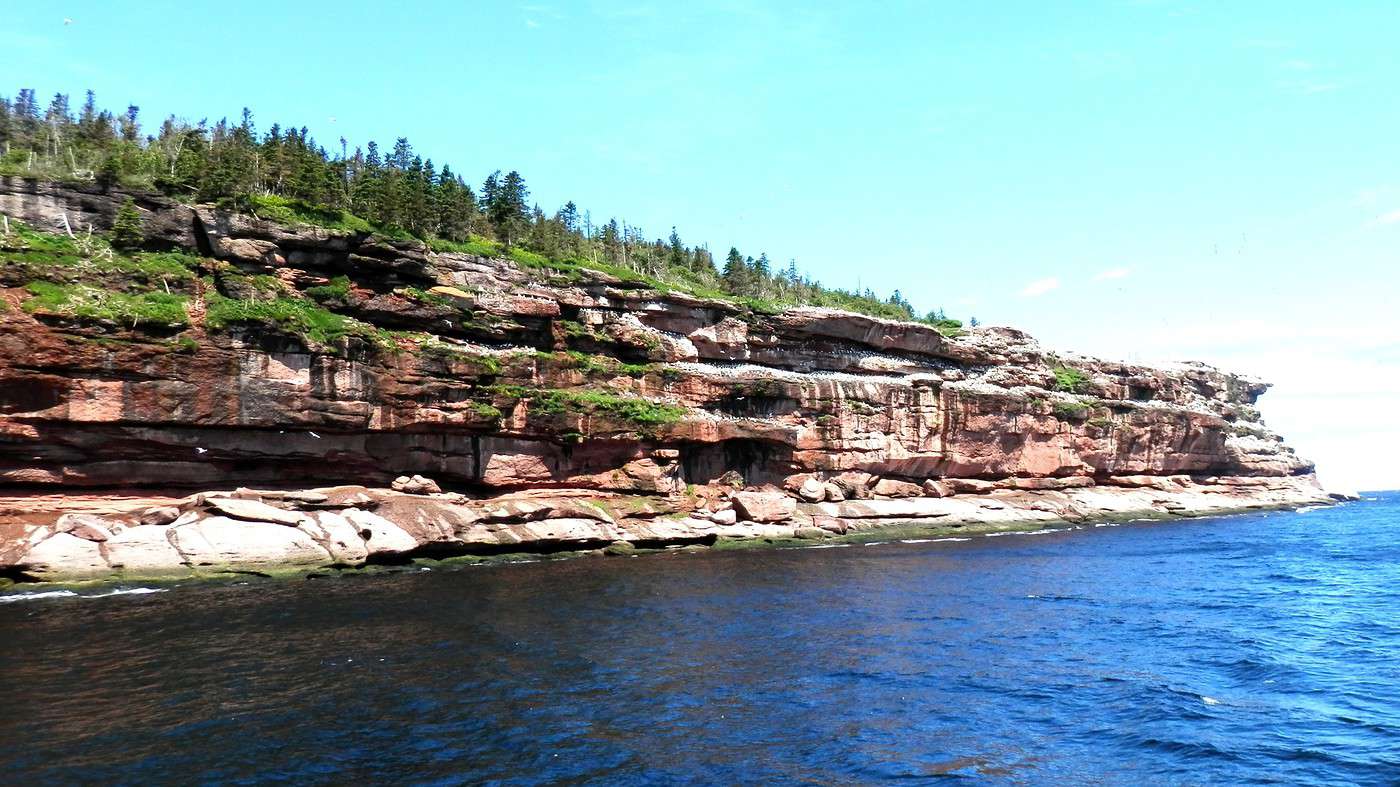
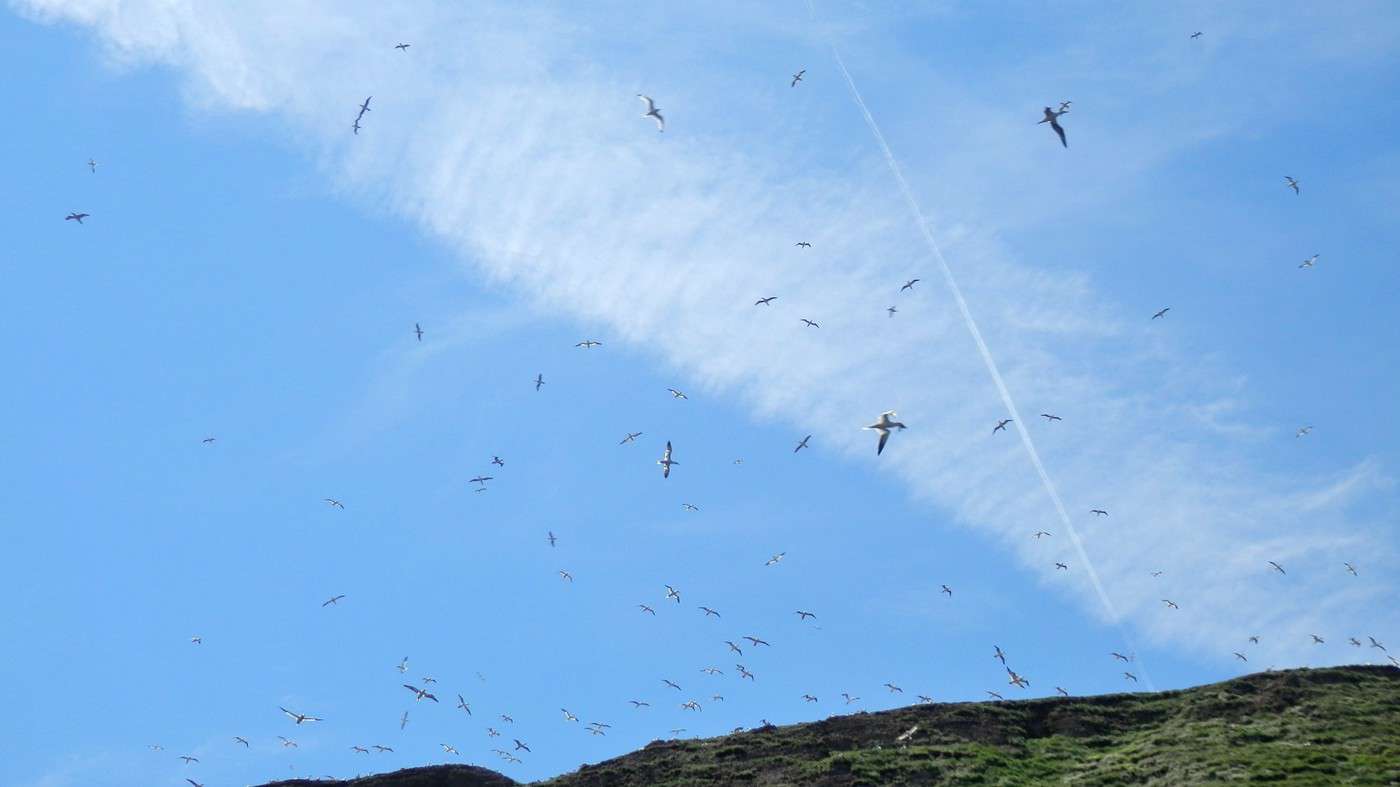
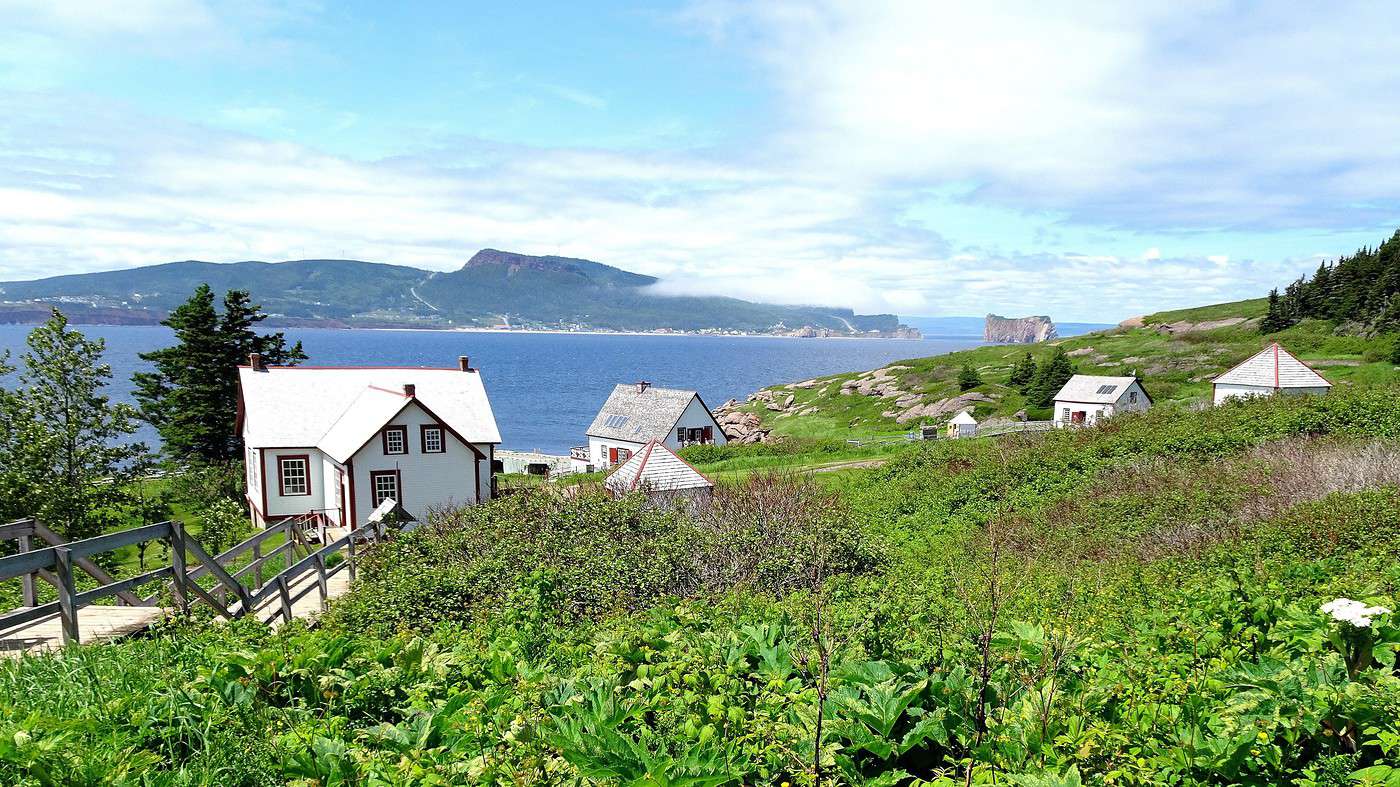
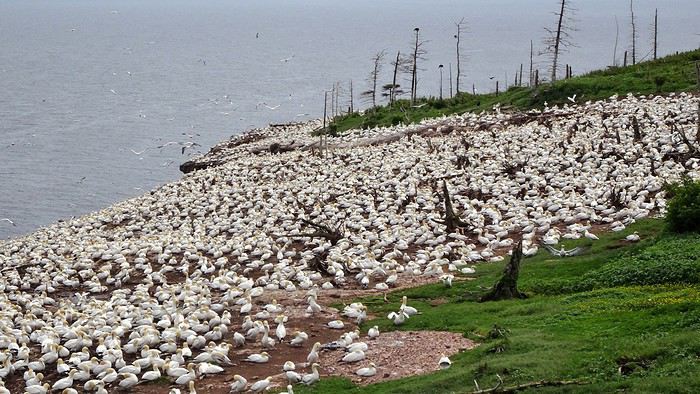
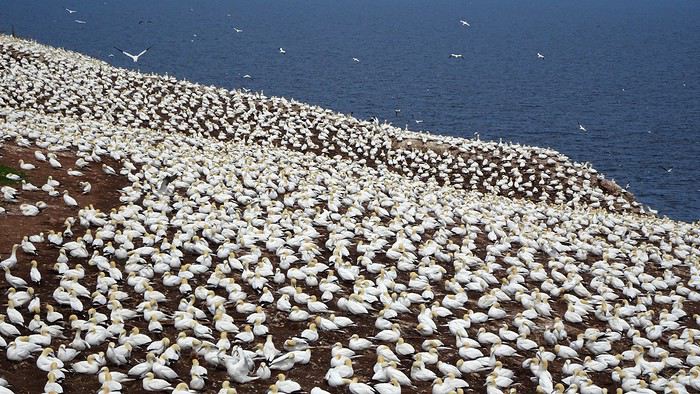
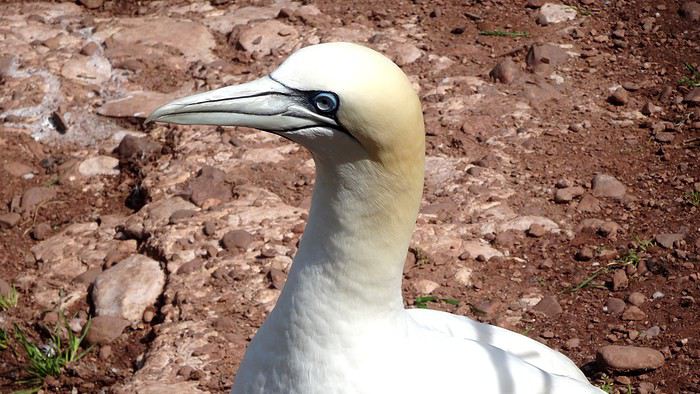
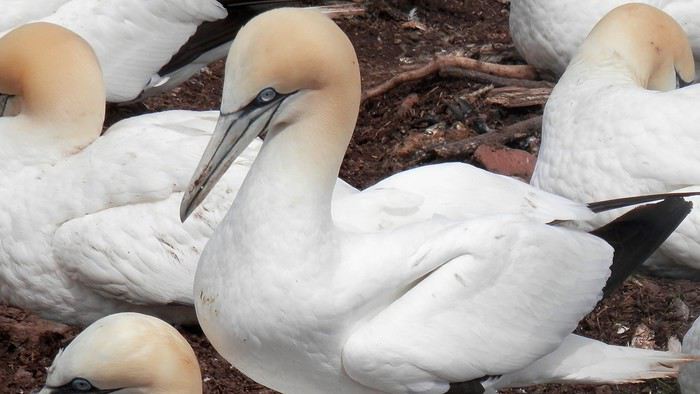
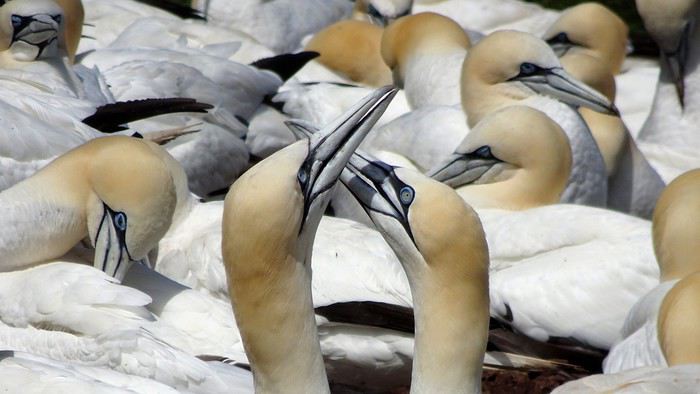
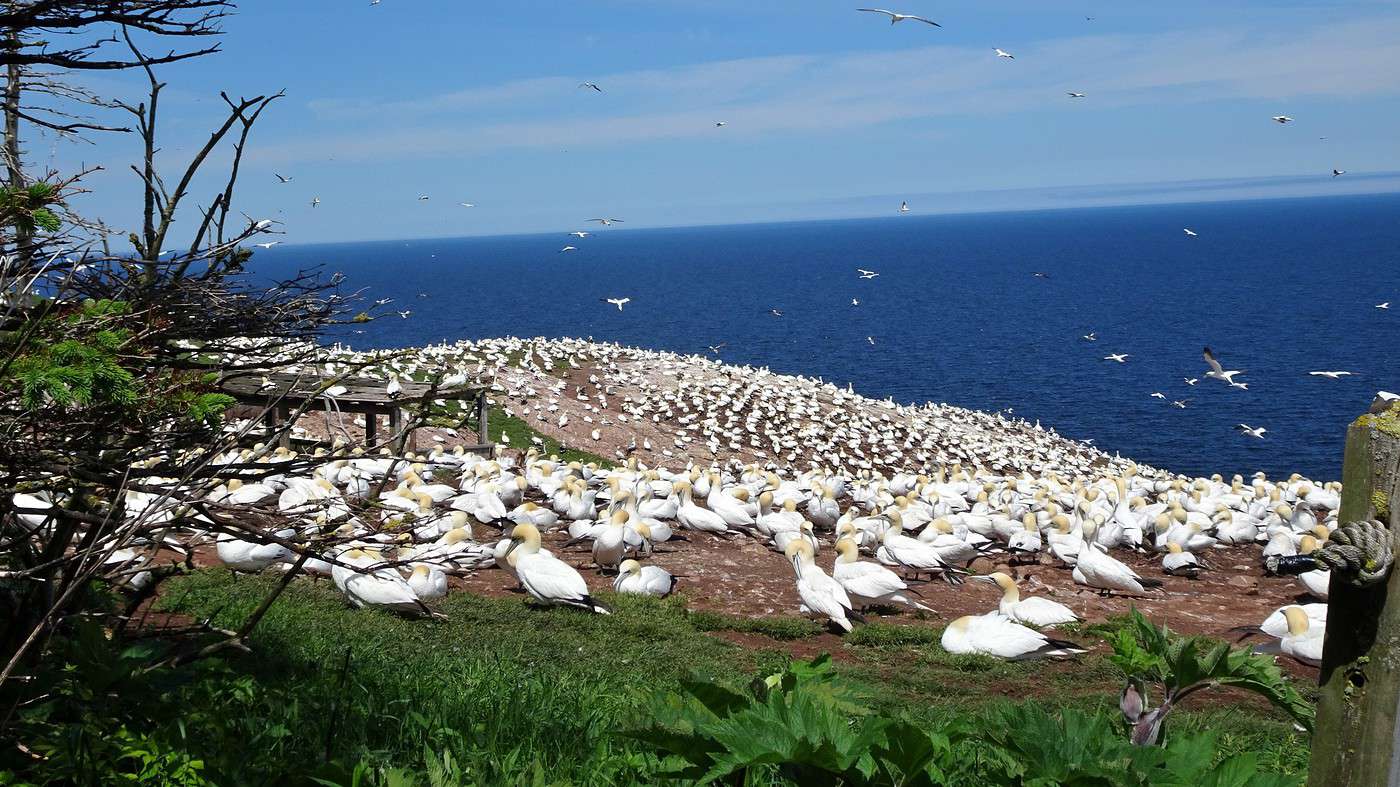
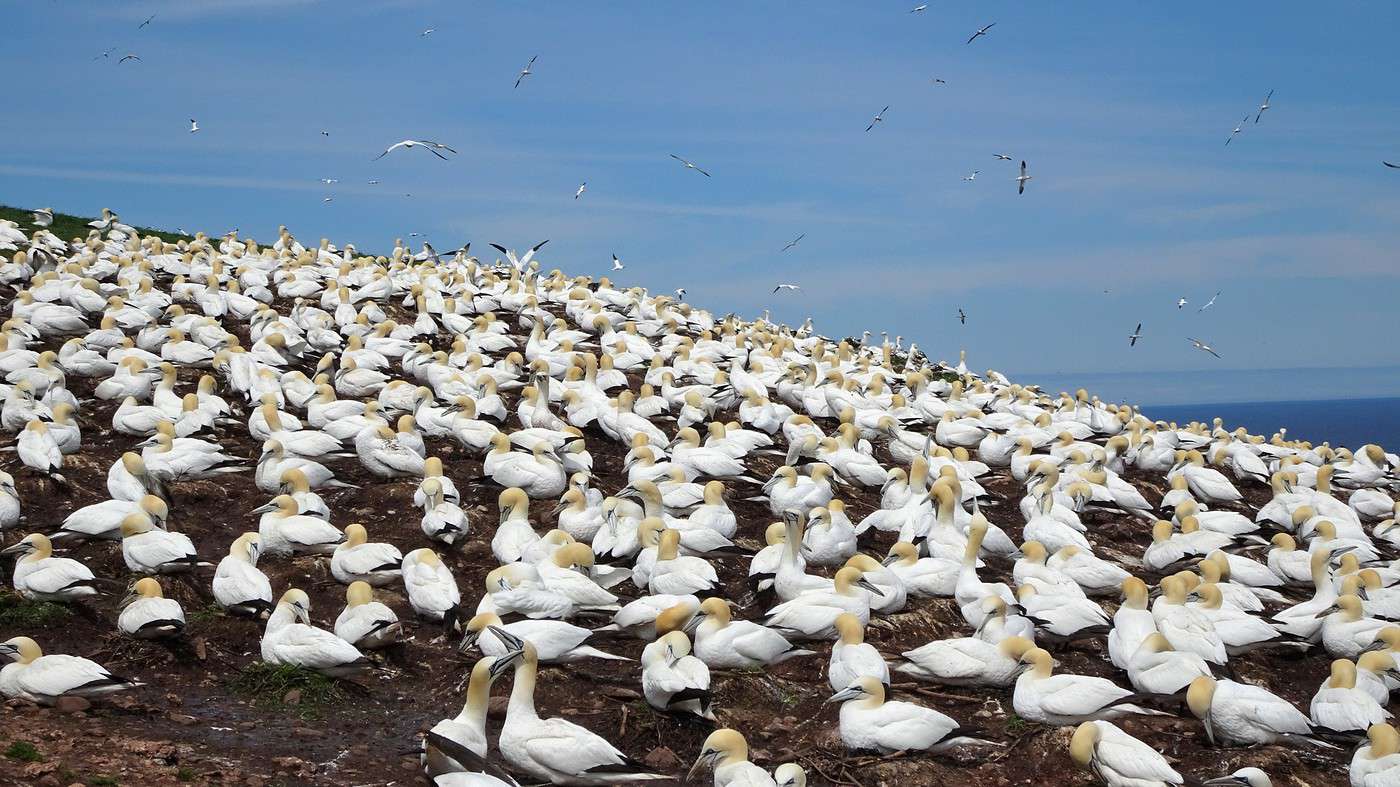
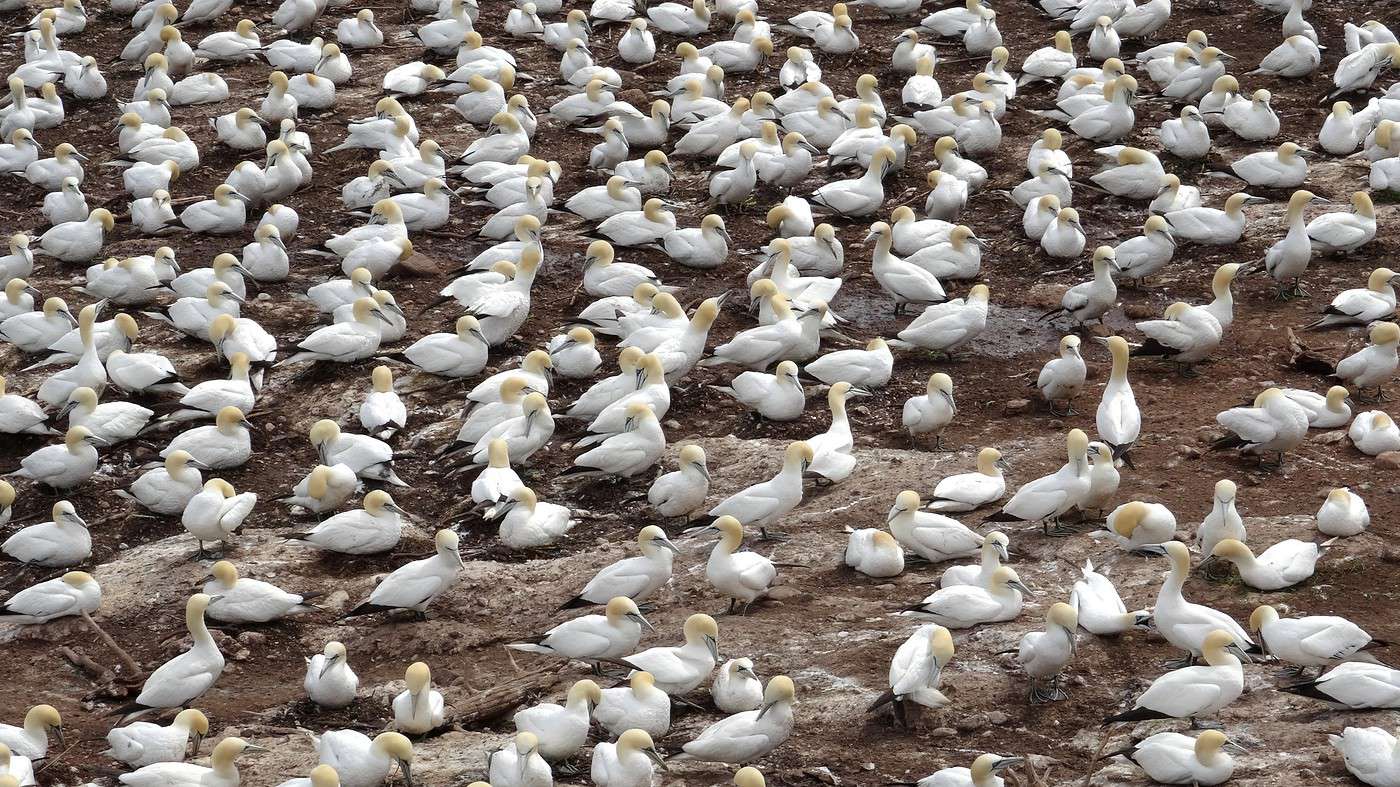
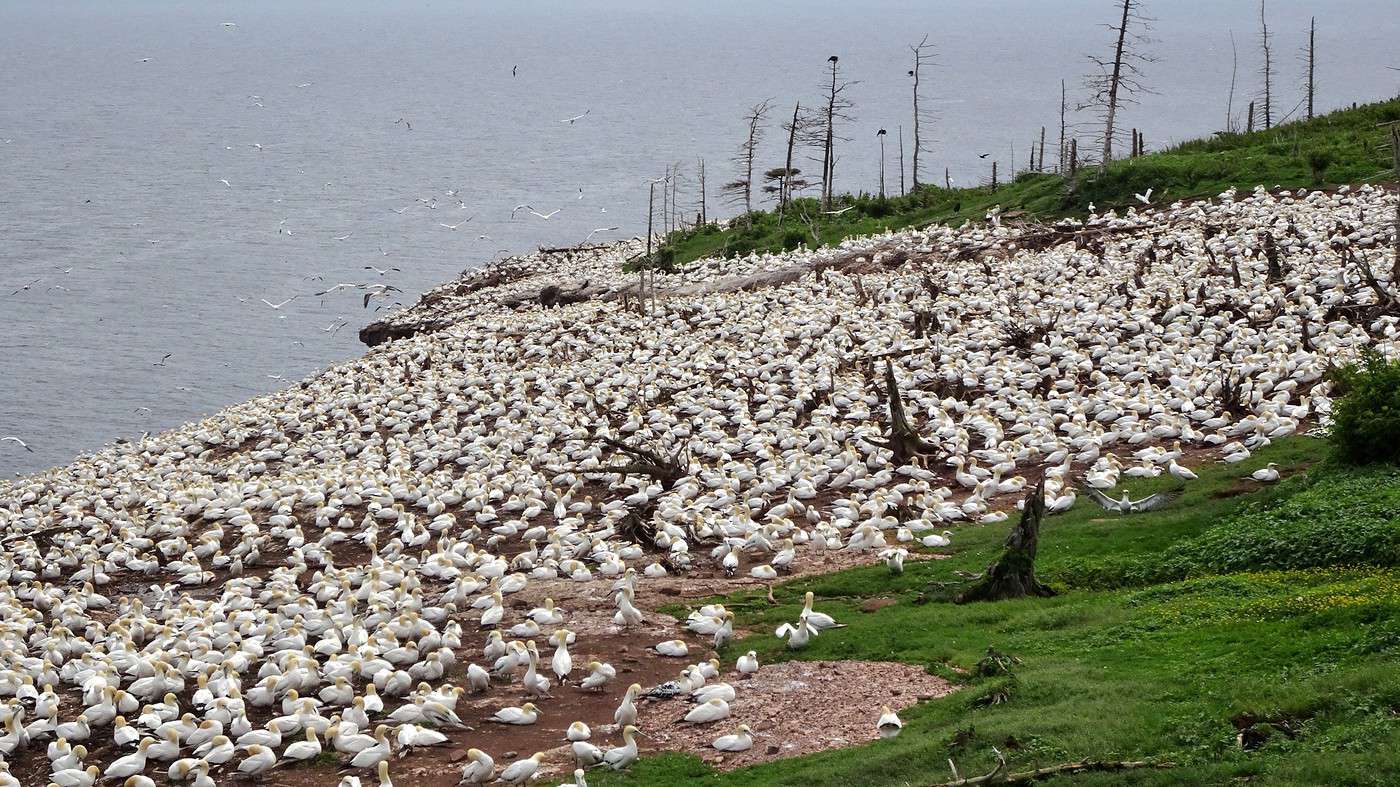
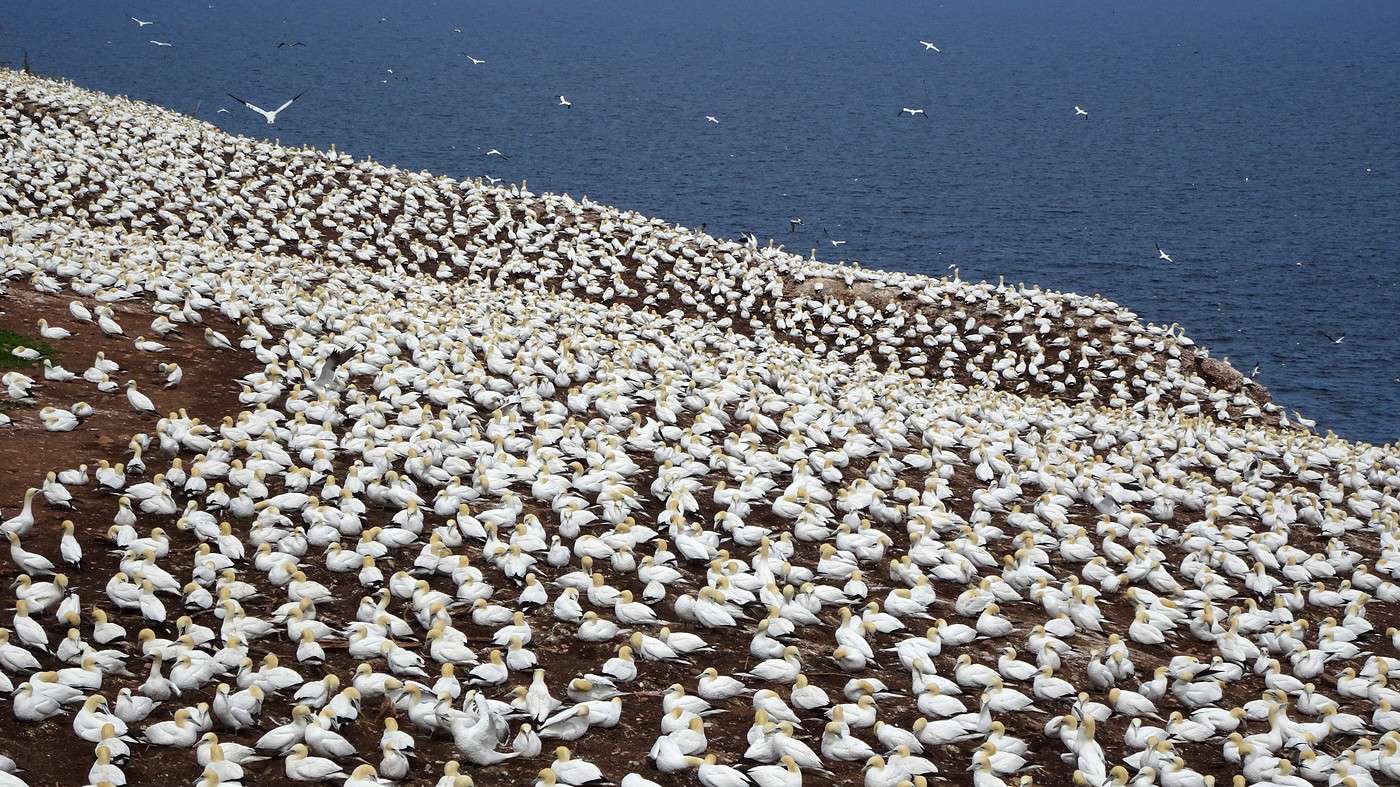
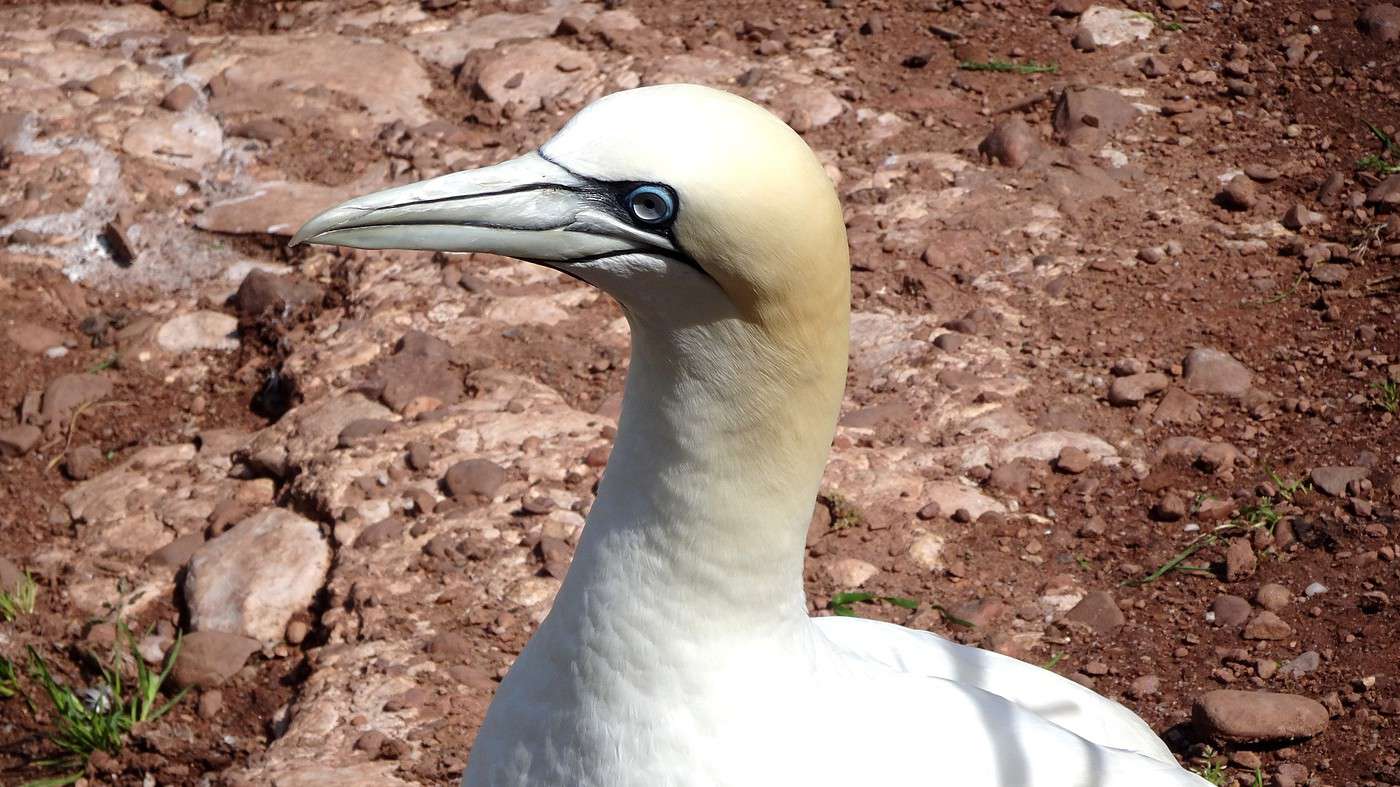
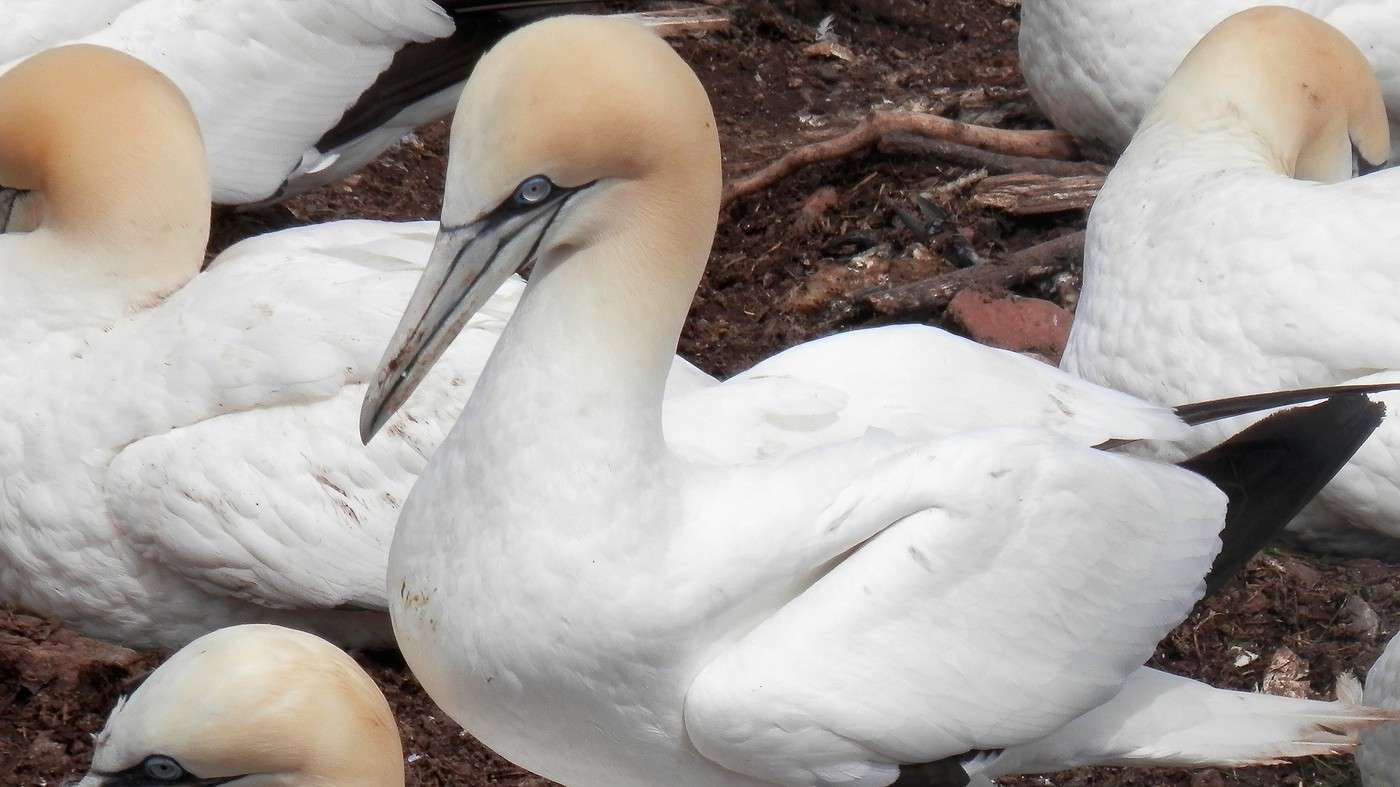
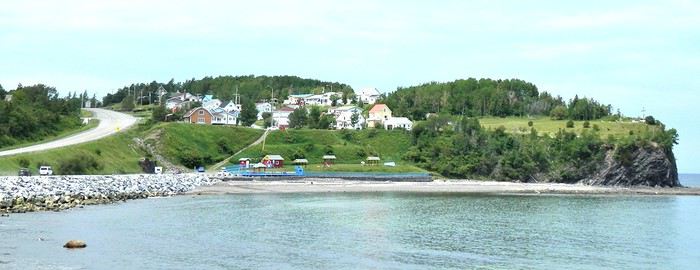
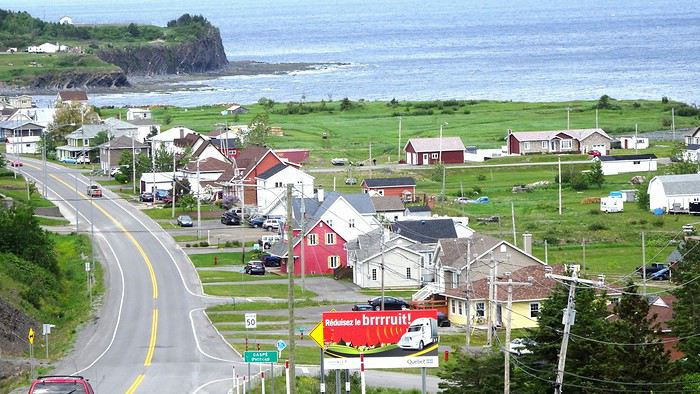
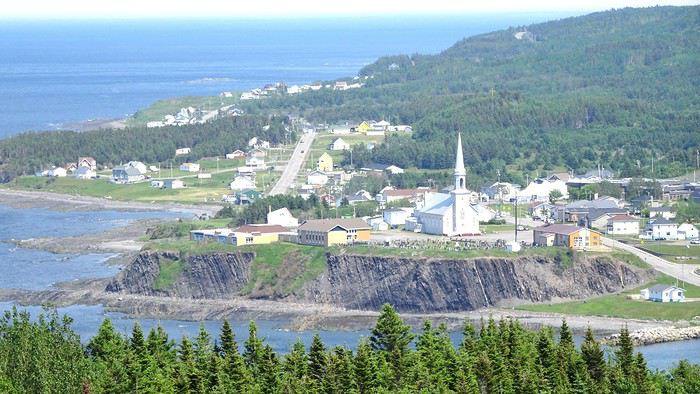
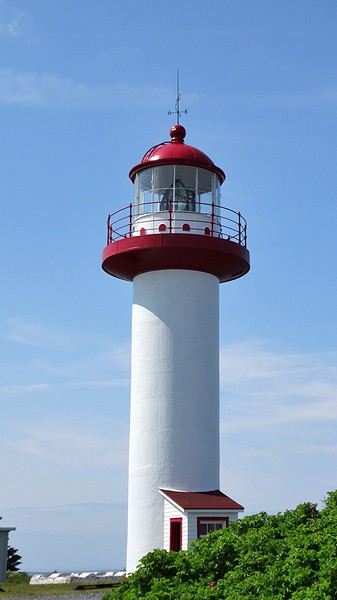
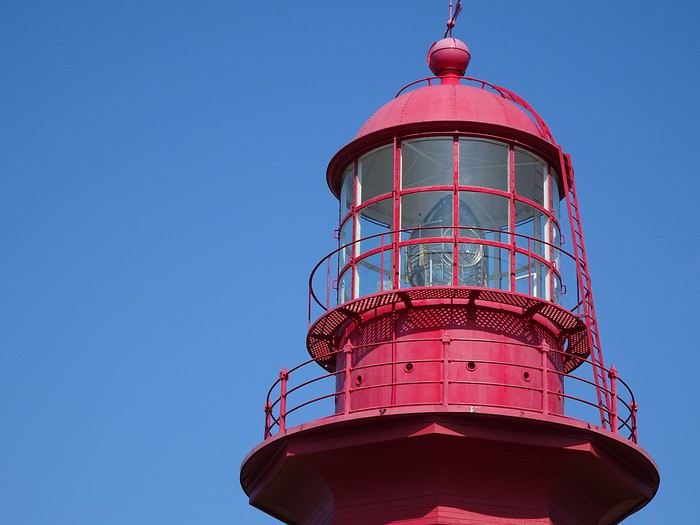
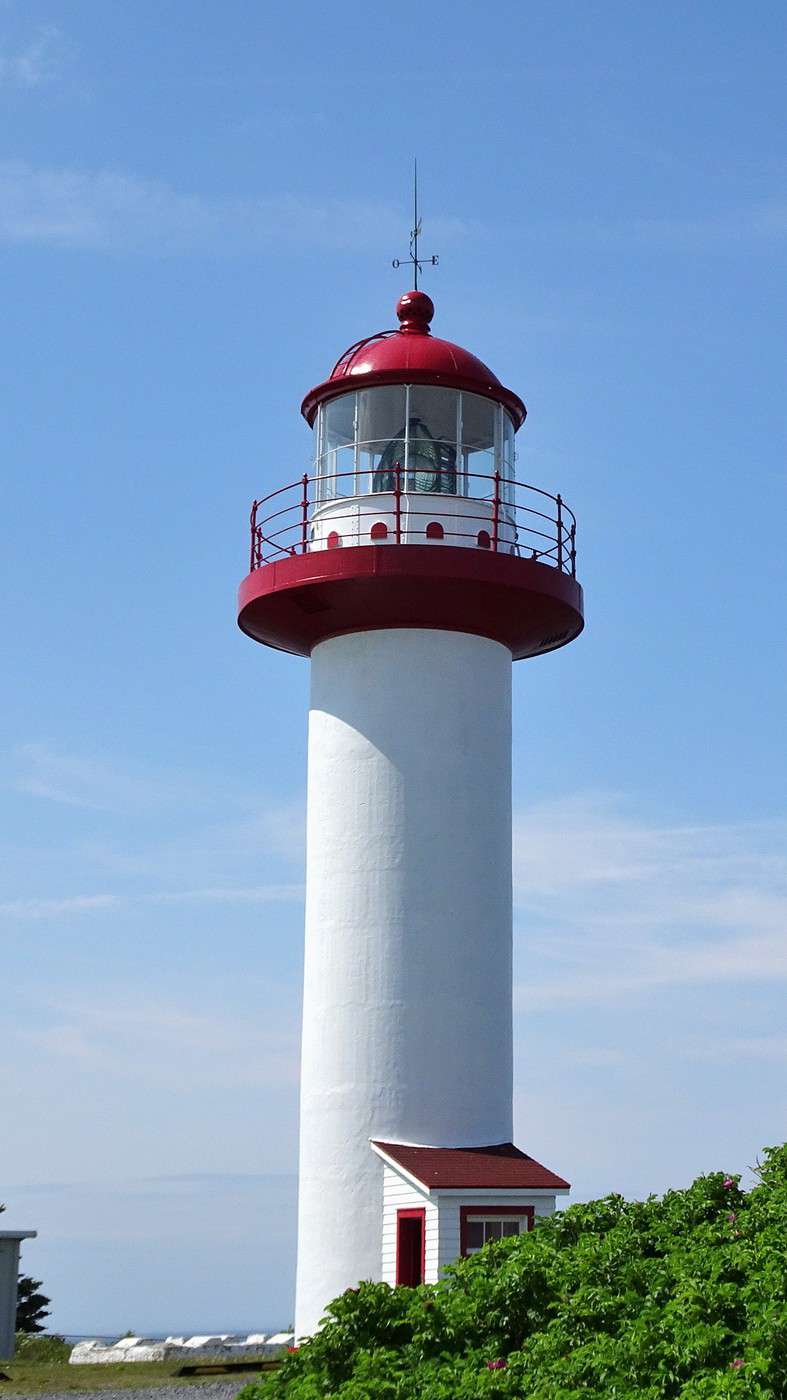
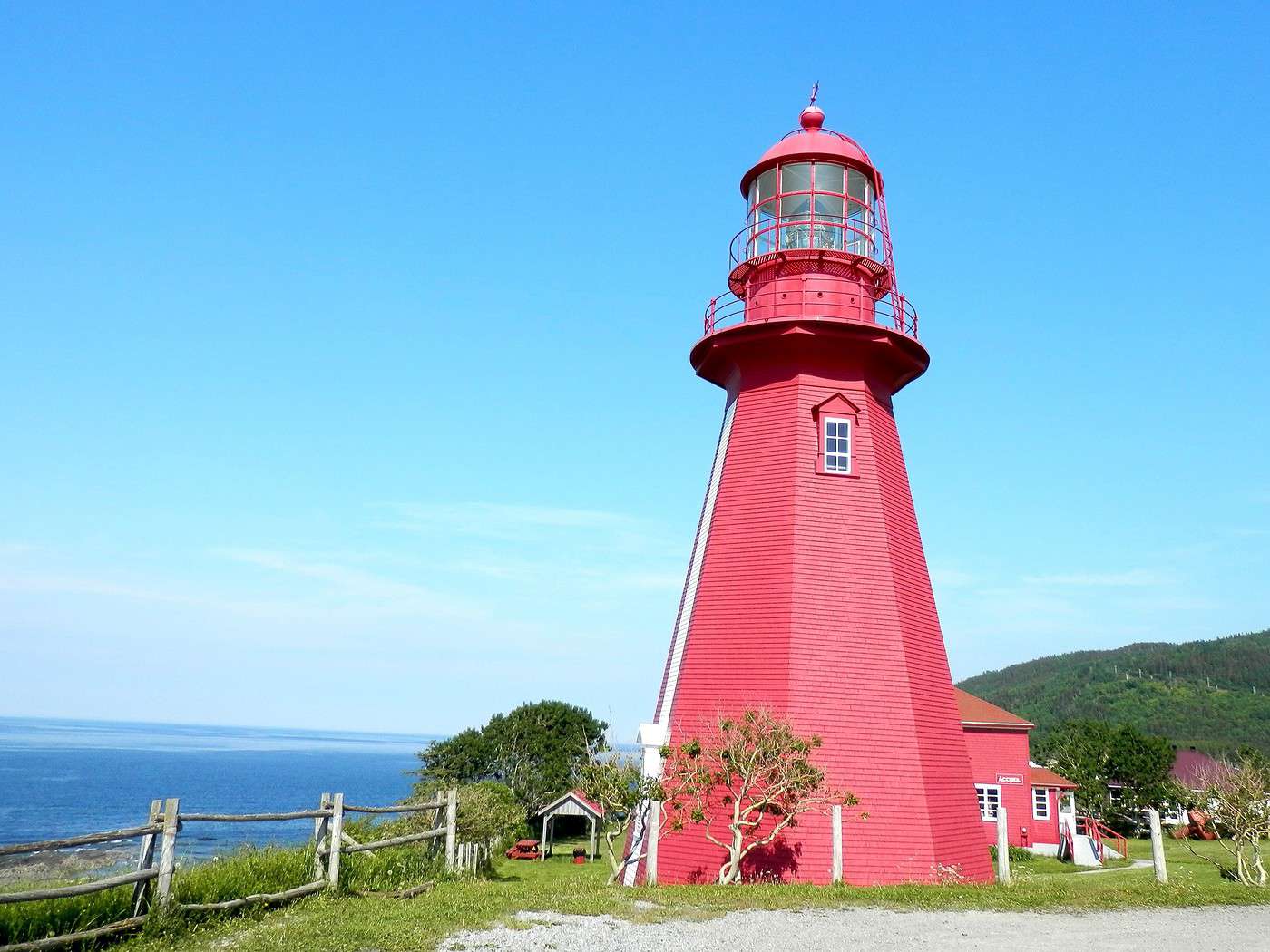
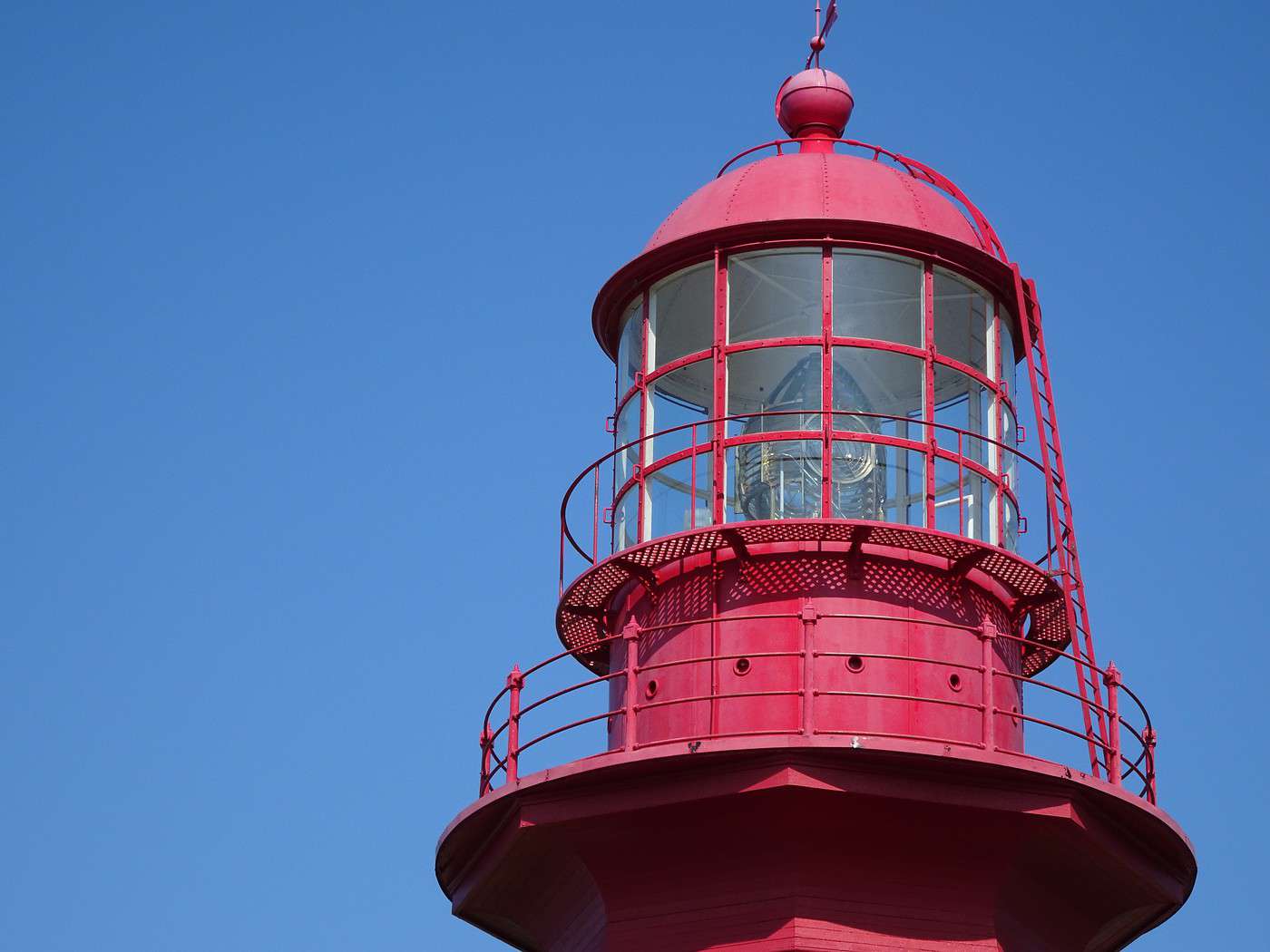
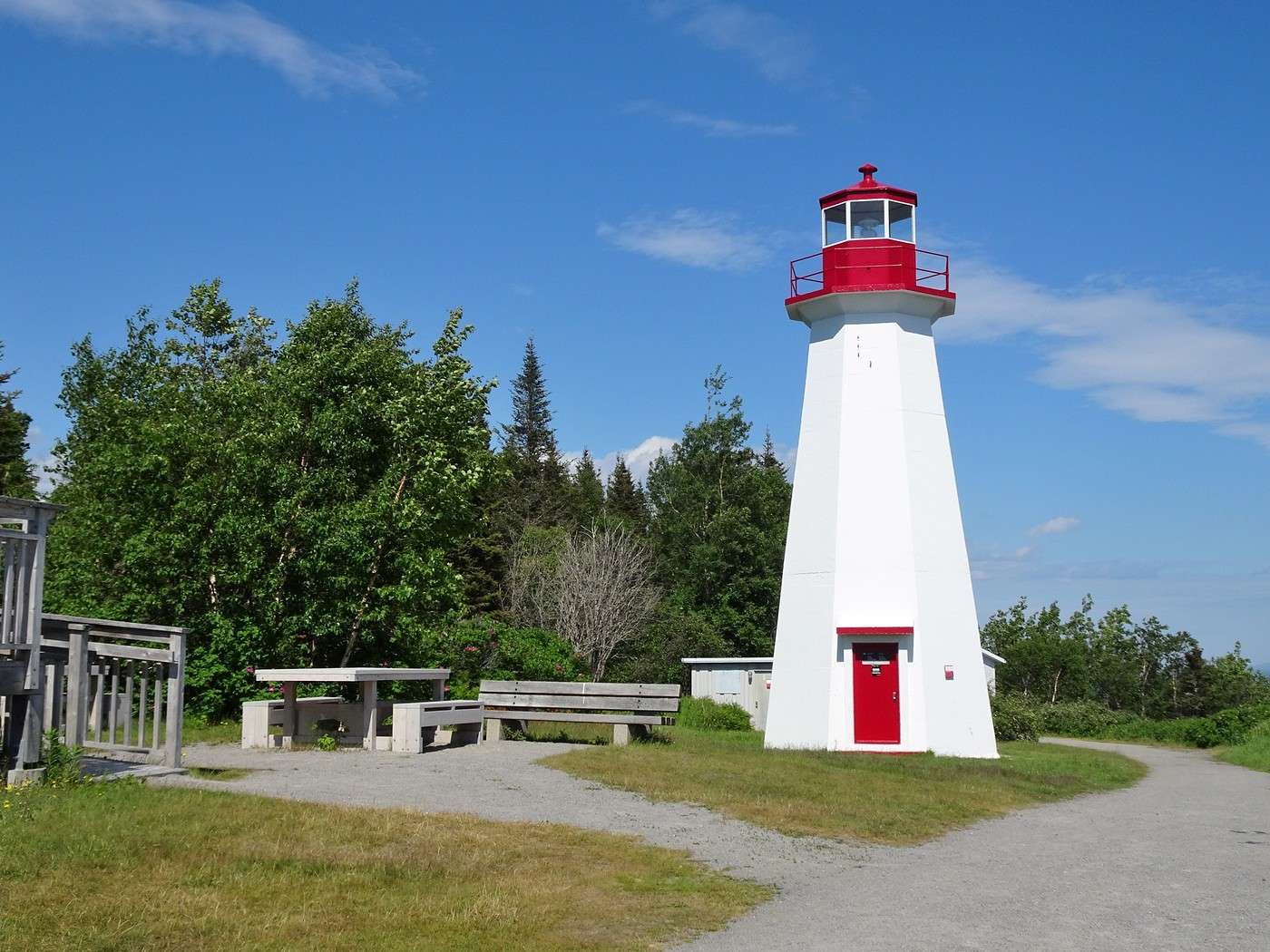
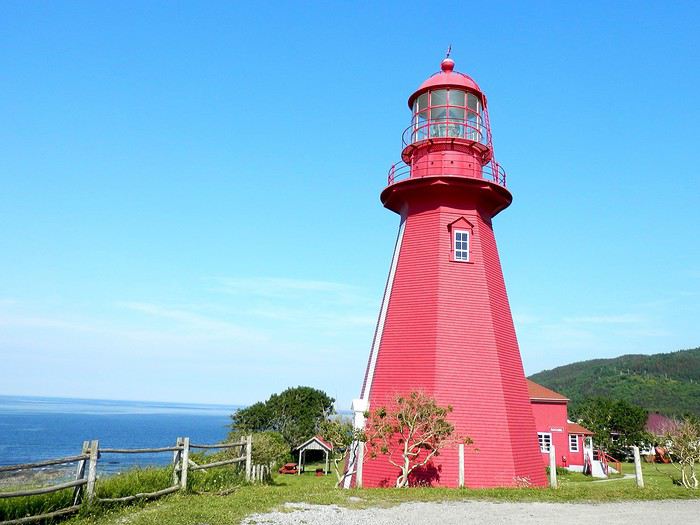 The La Martre lighthouse
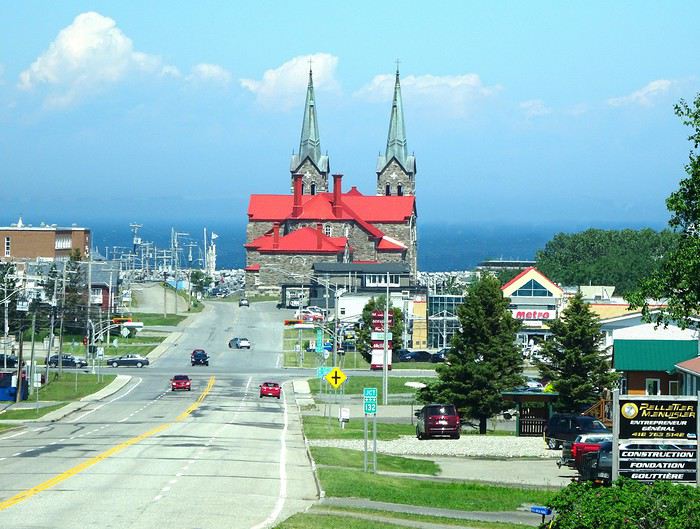 Sainte-Anne-des-Monts
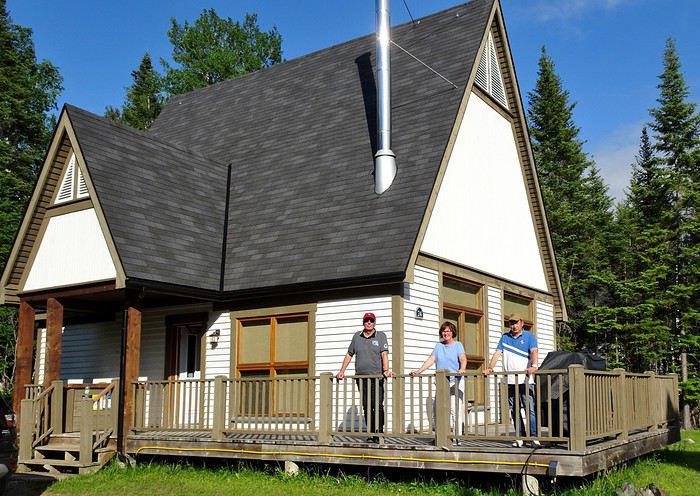
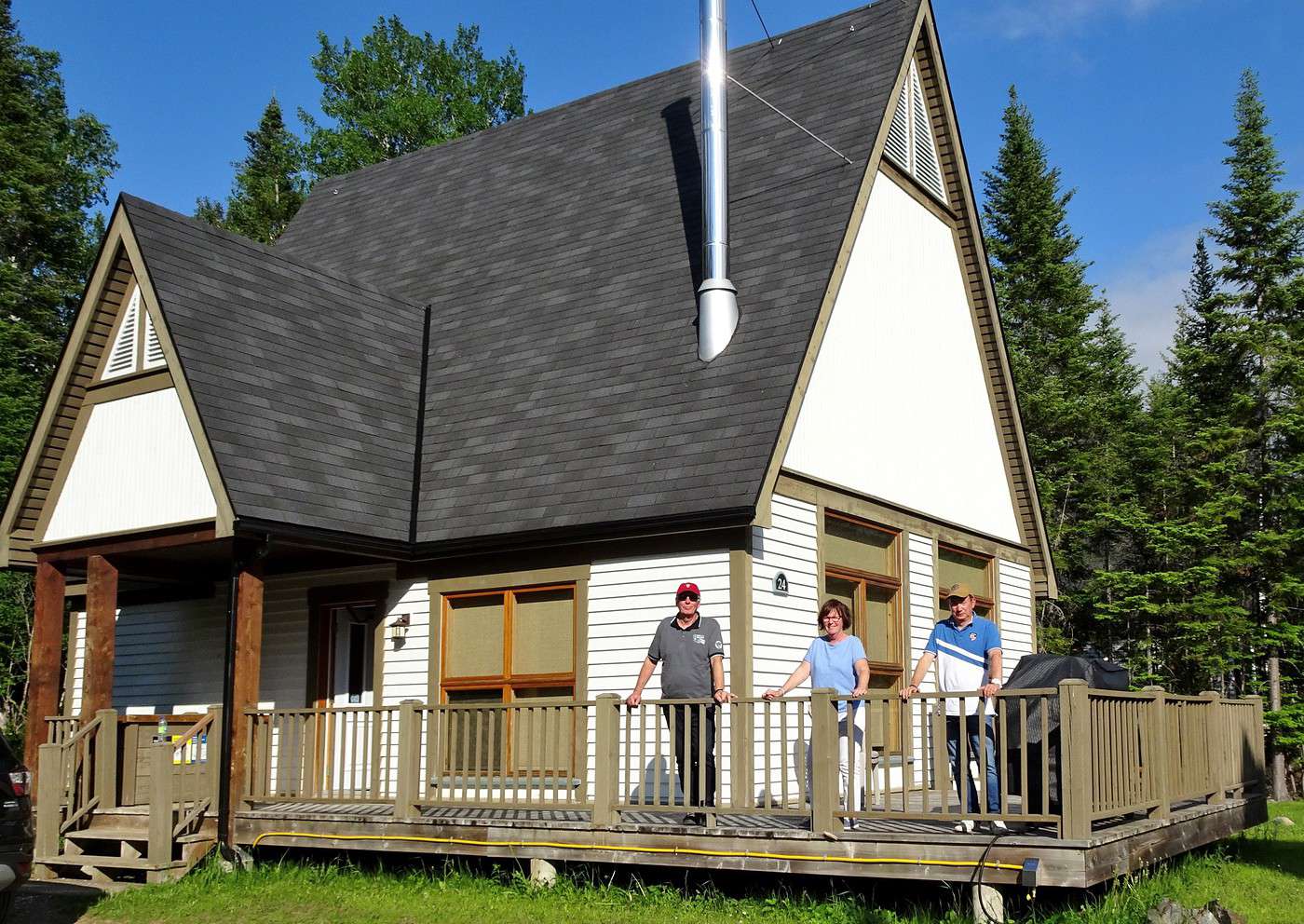
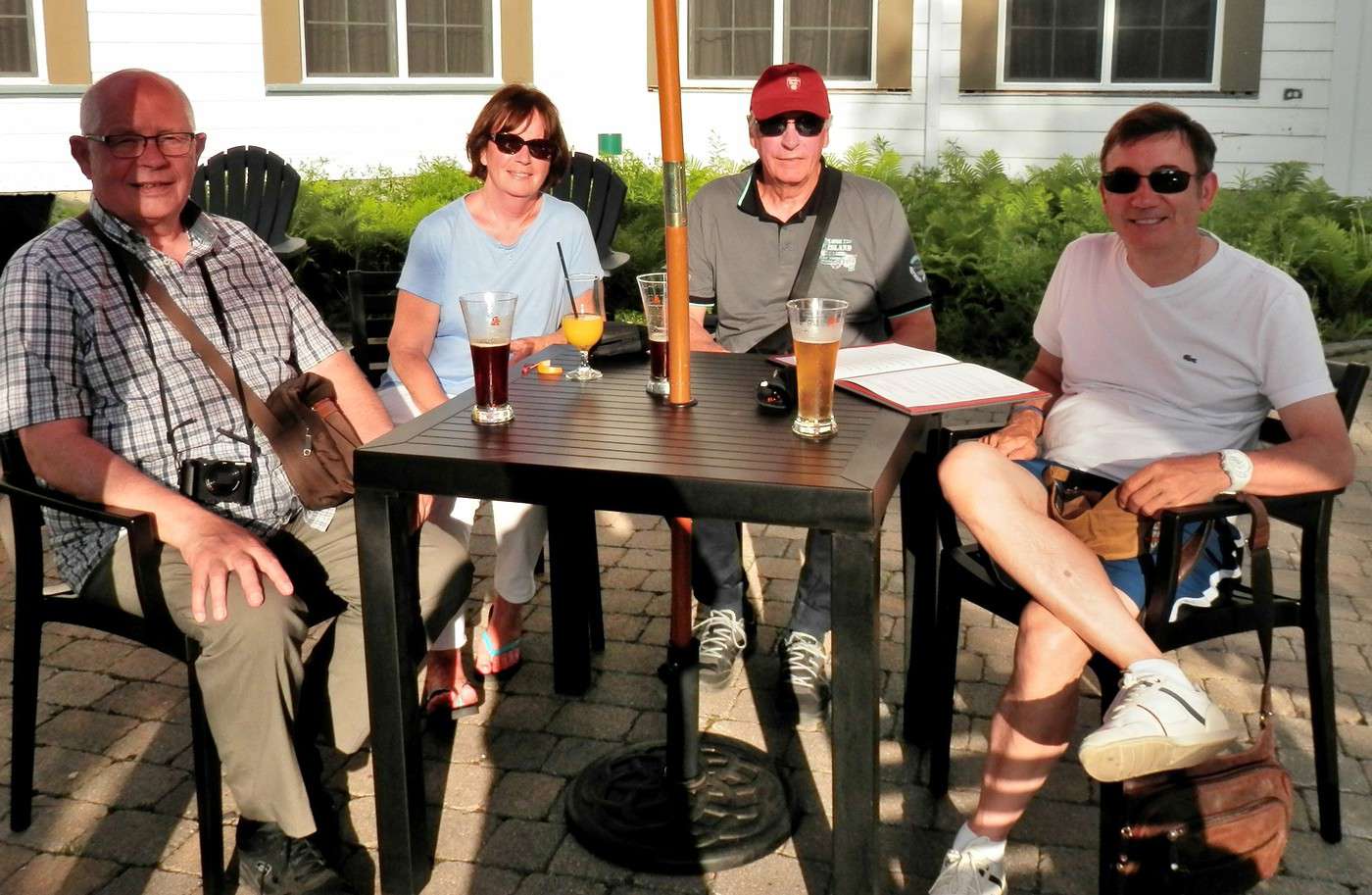
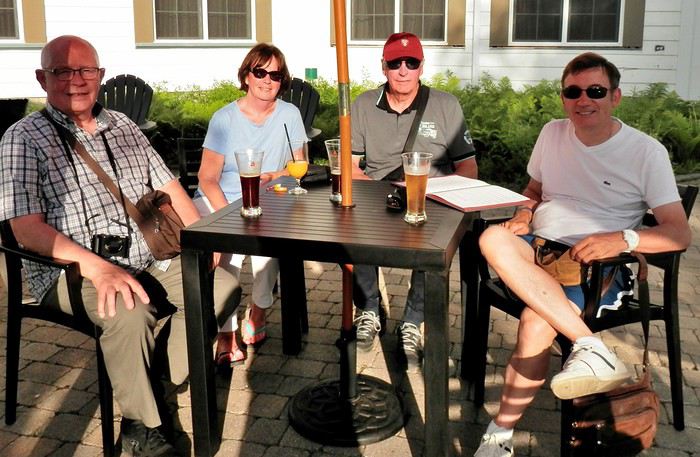 The four travelers in full effort!
From left to right: Christian (me, the narrator), Martine, Guy, Pascal.
The four travelers in full effort!
From left to right: Christian (me, the narrator), Martine, Guy, Pascal.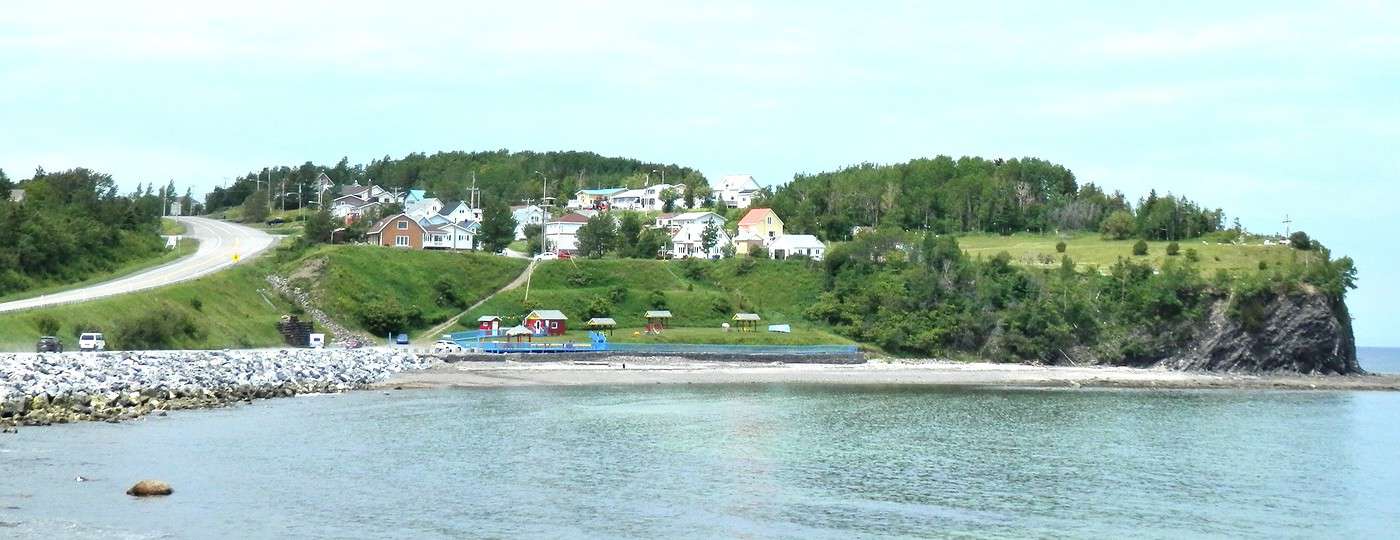
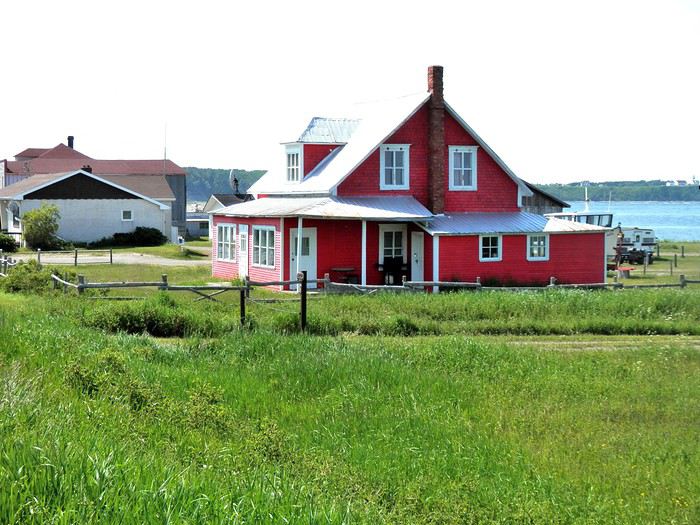
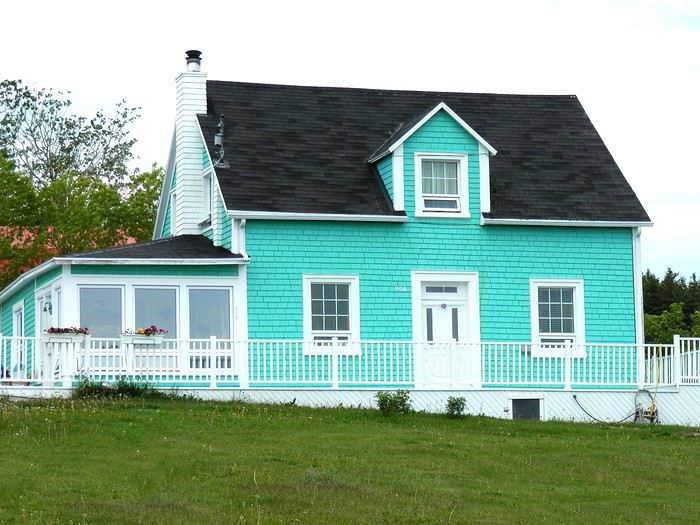
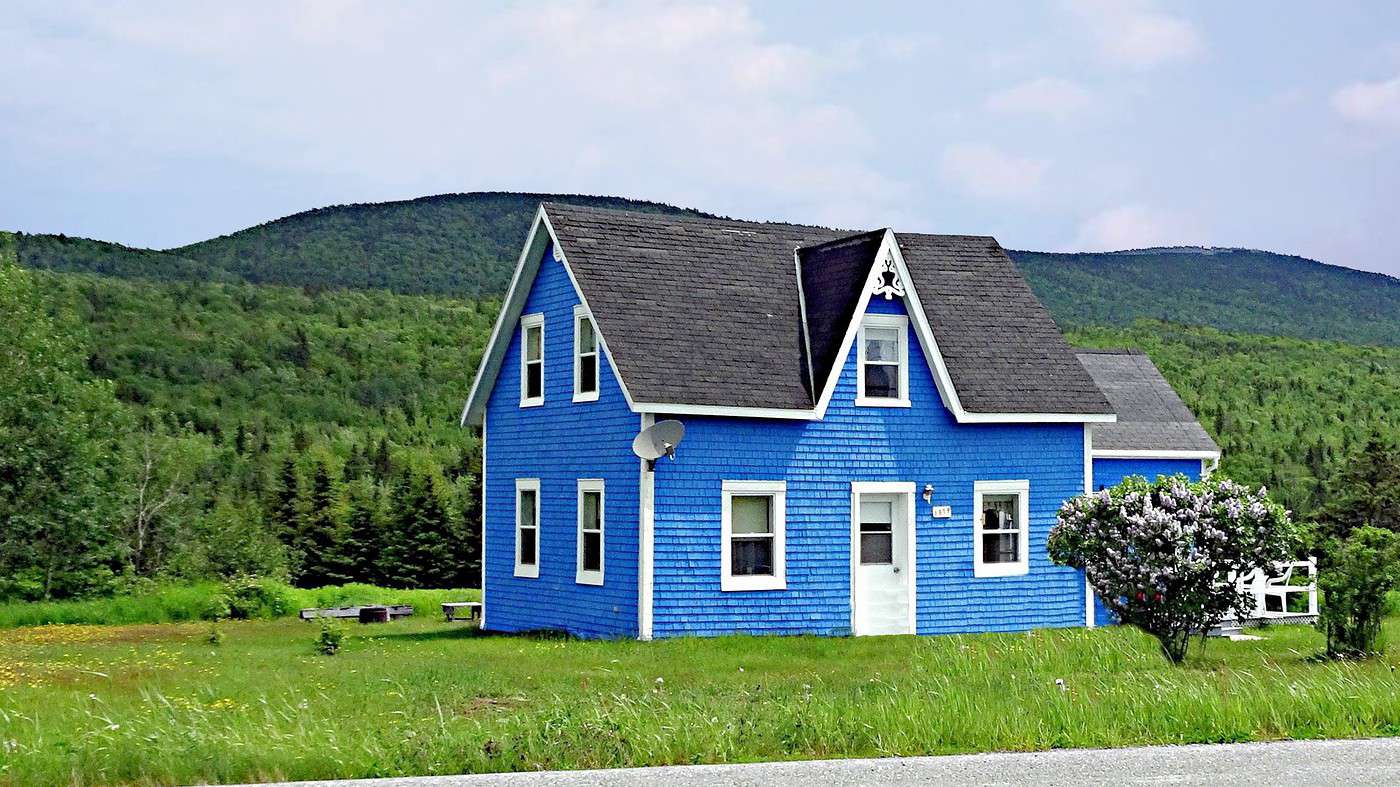
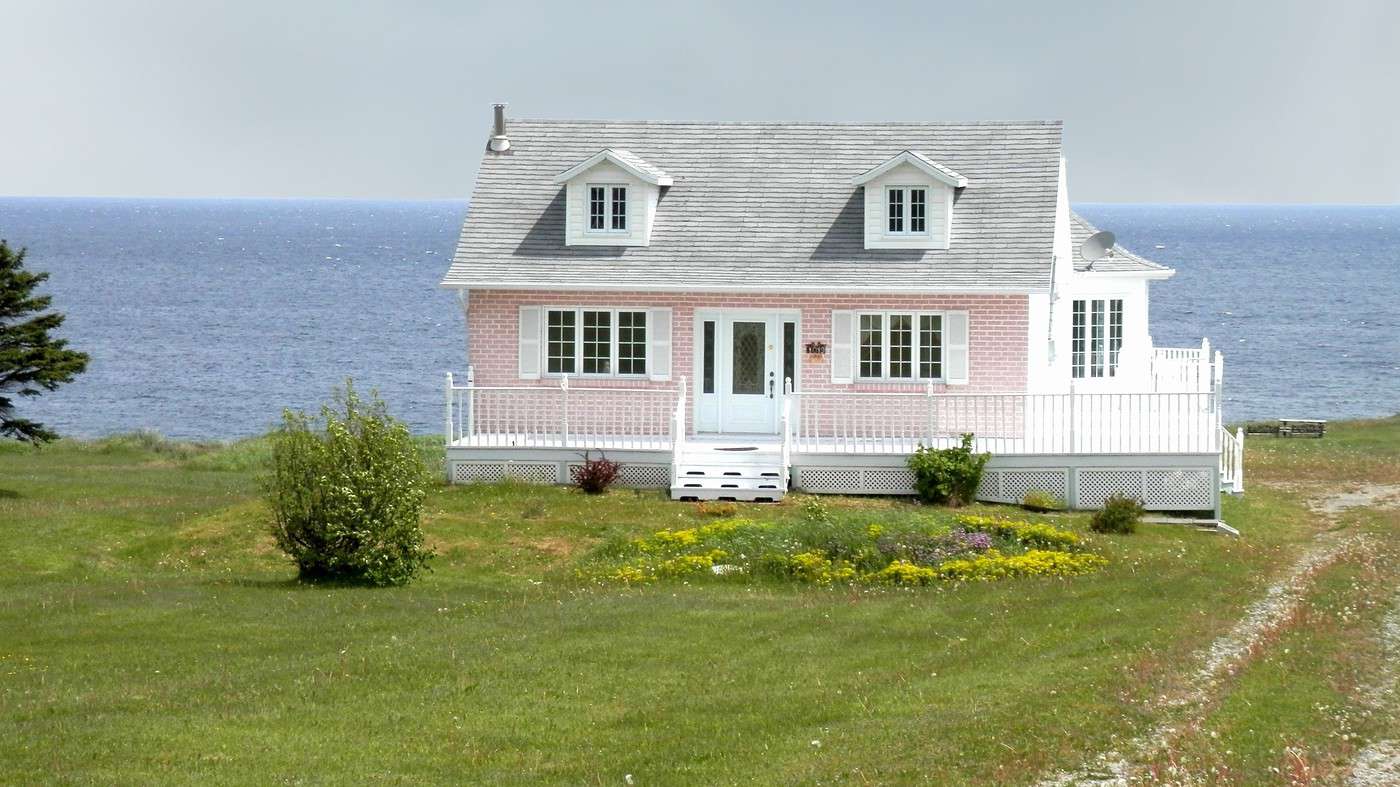
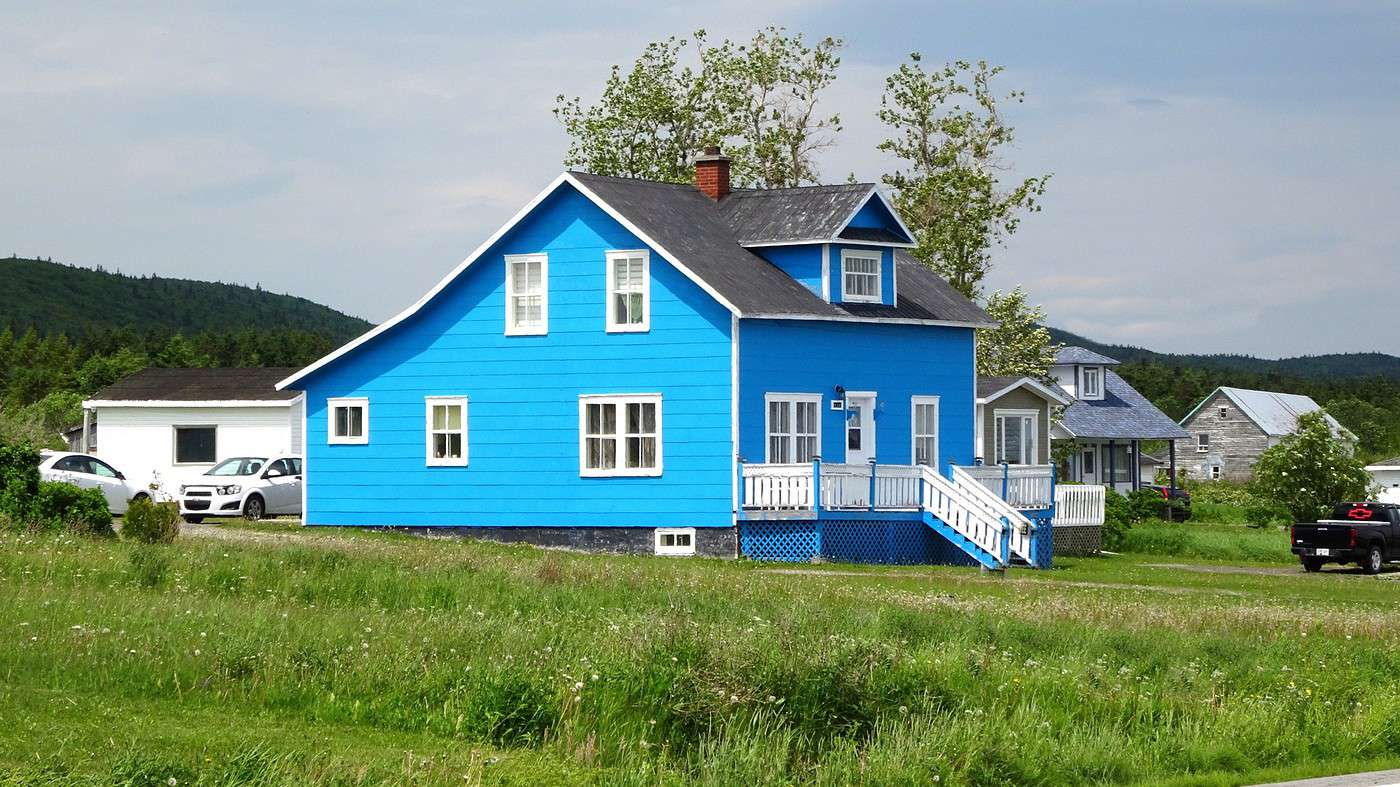
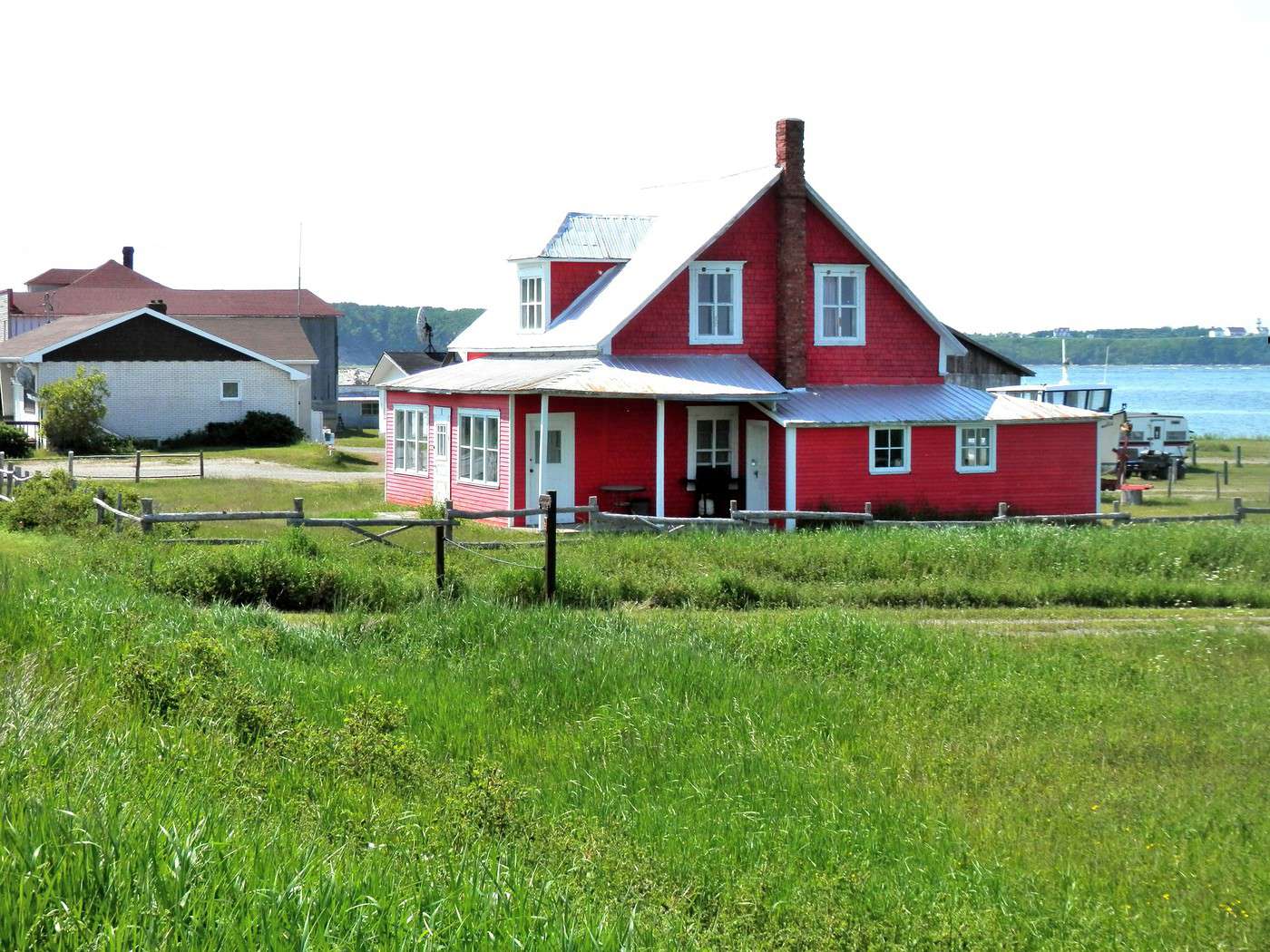
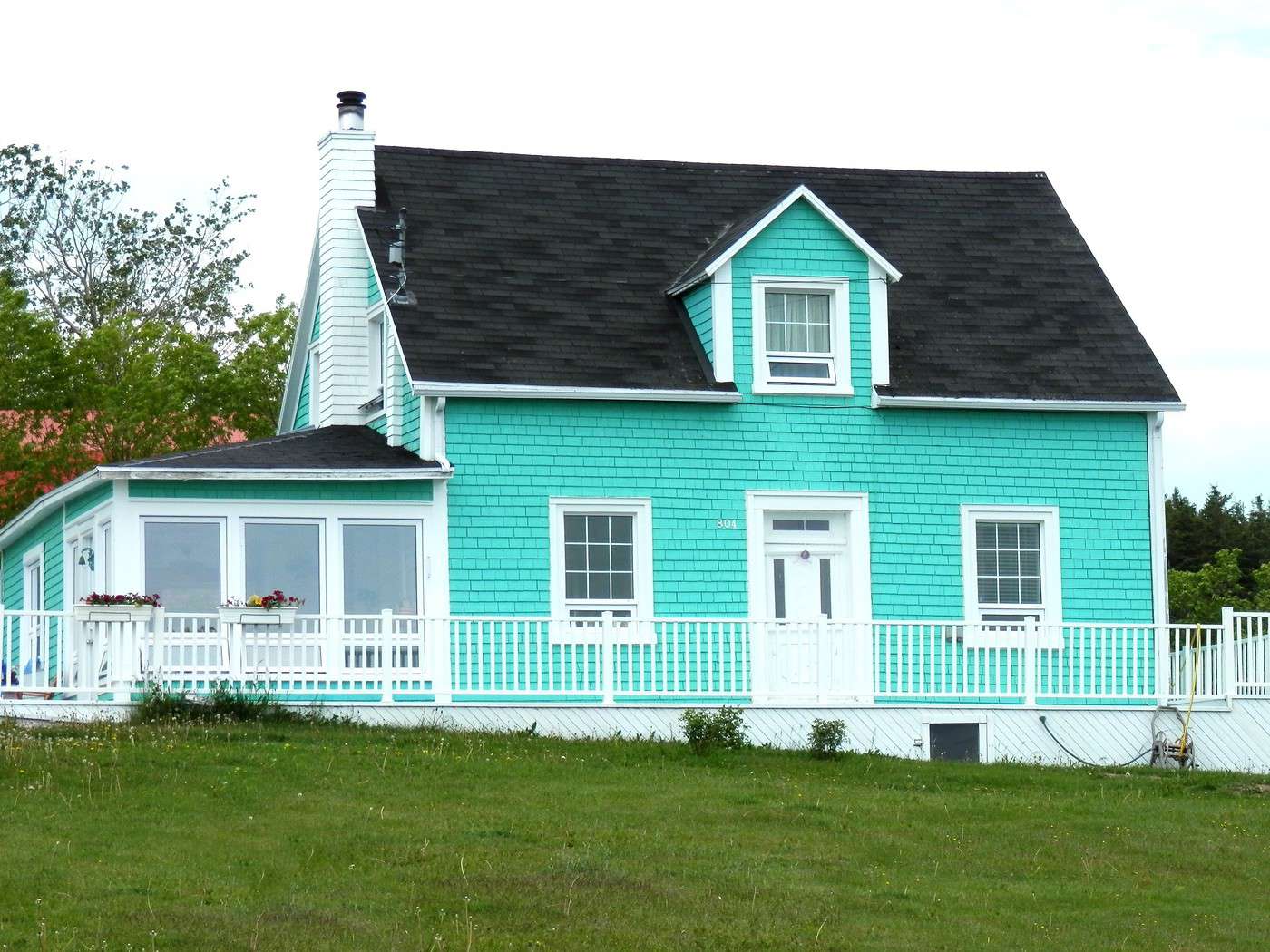
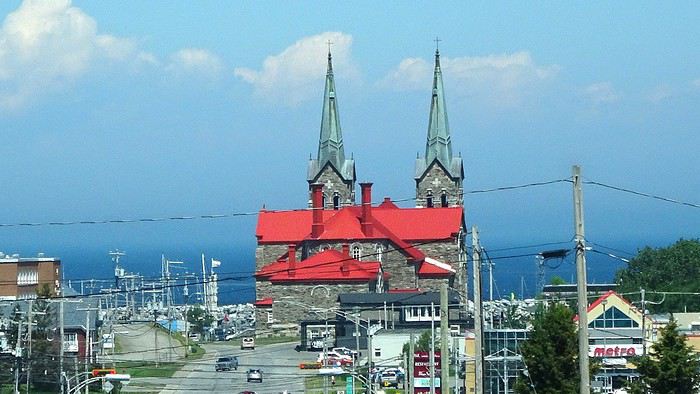
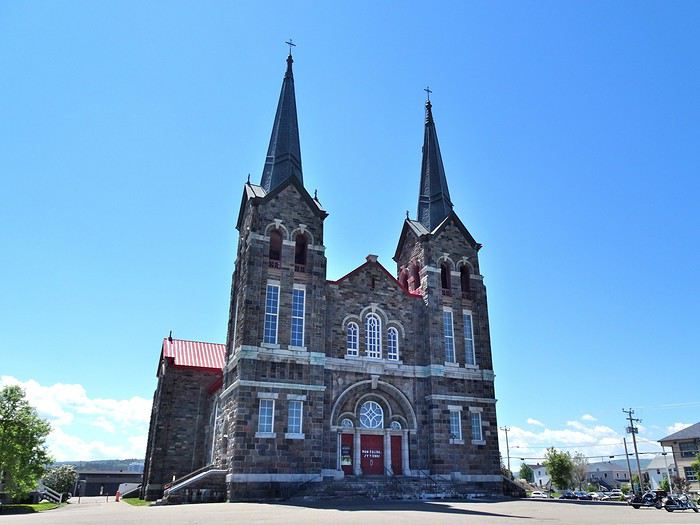 First stop at the church in Sainte-Anne-des-Monts for a quick visit.
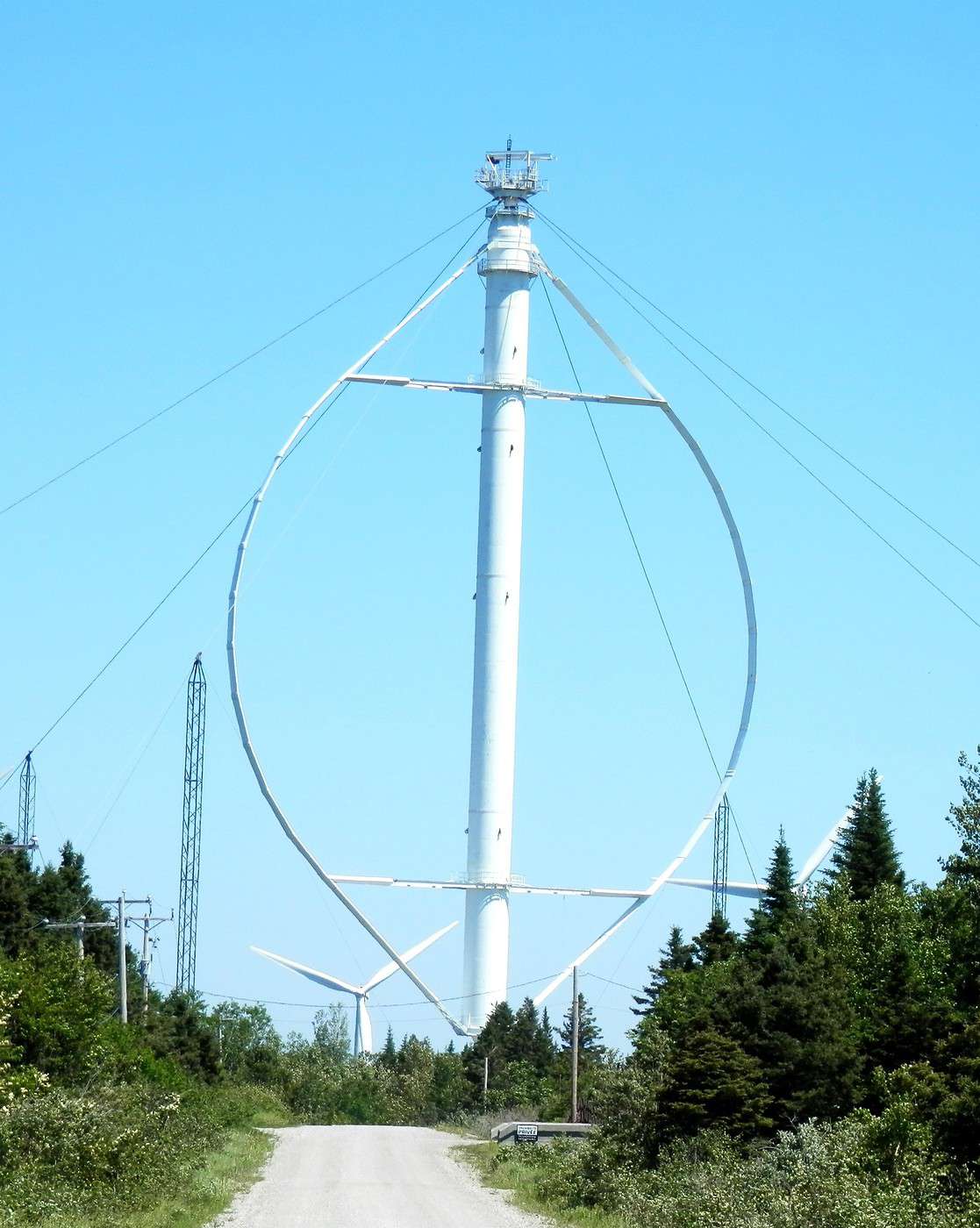
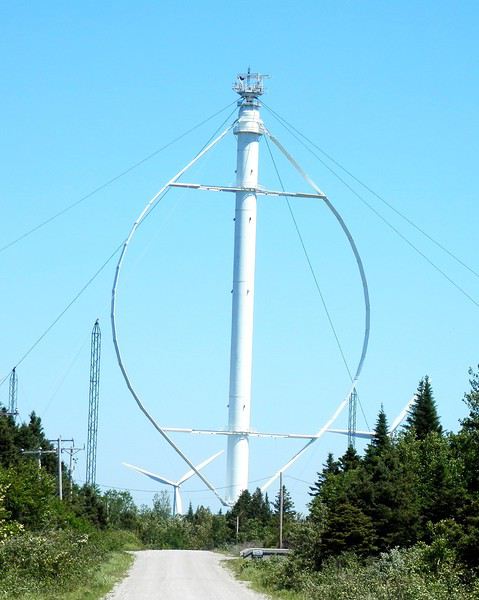 In Cap-Chat, we approached the Éole wind farm. There are guided tour options, but we weren’t interested. Still, we saw the tallest vertical-axis wind turbine in the world. From what I understood, the farm never moved beyond the experimental phase.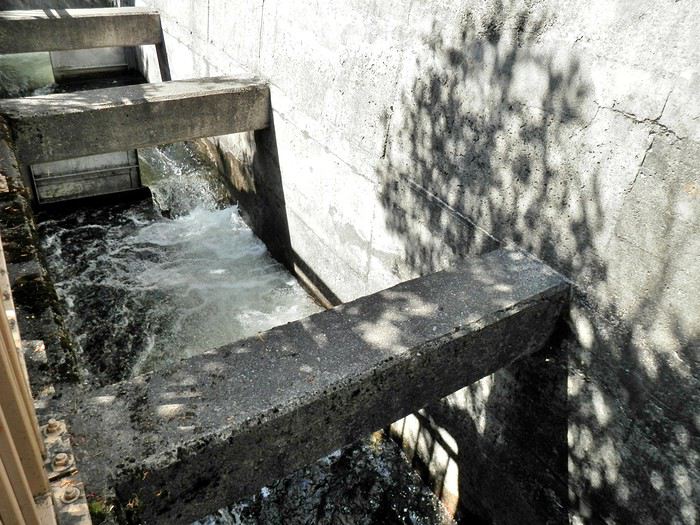
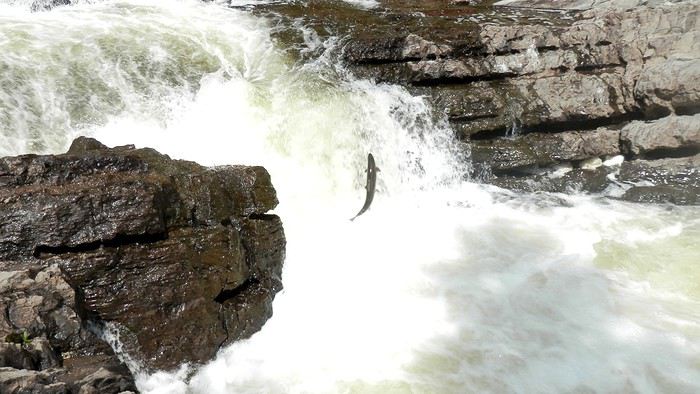
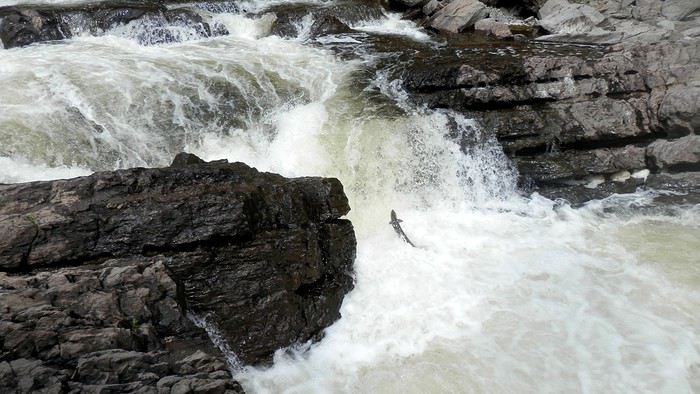
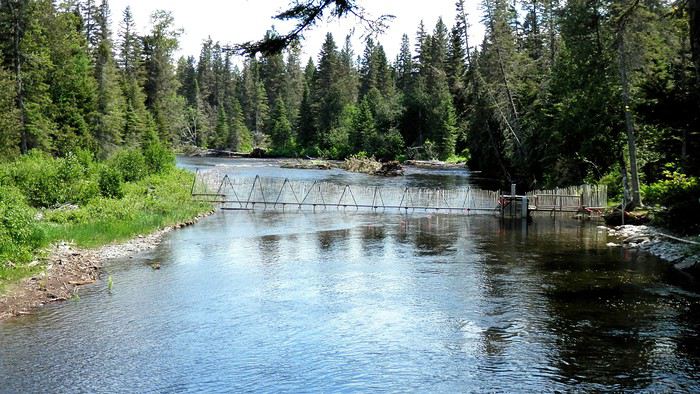
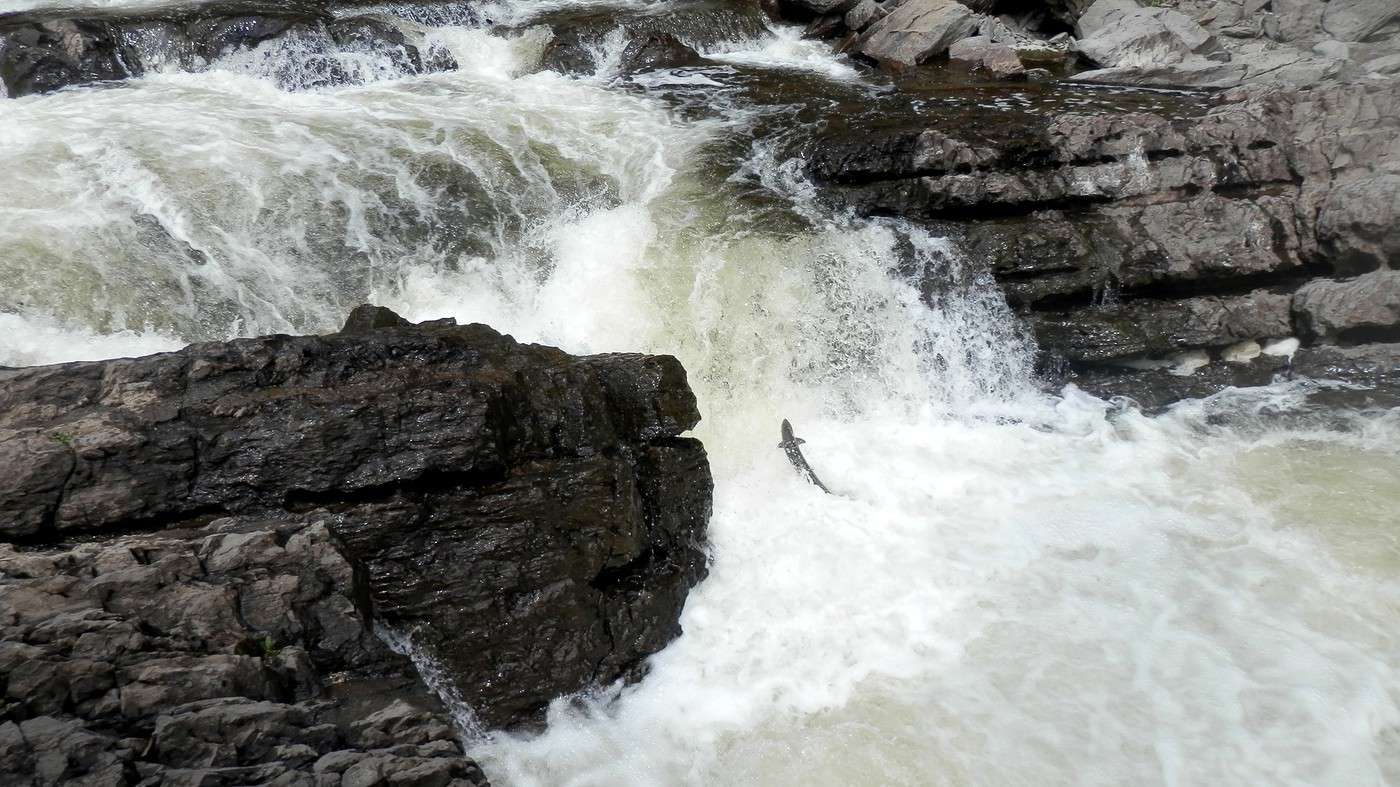
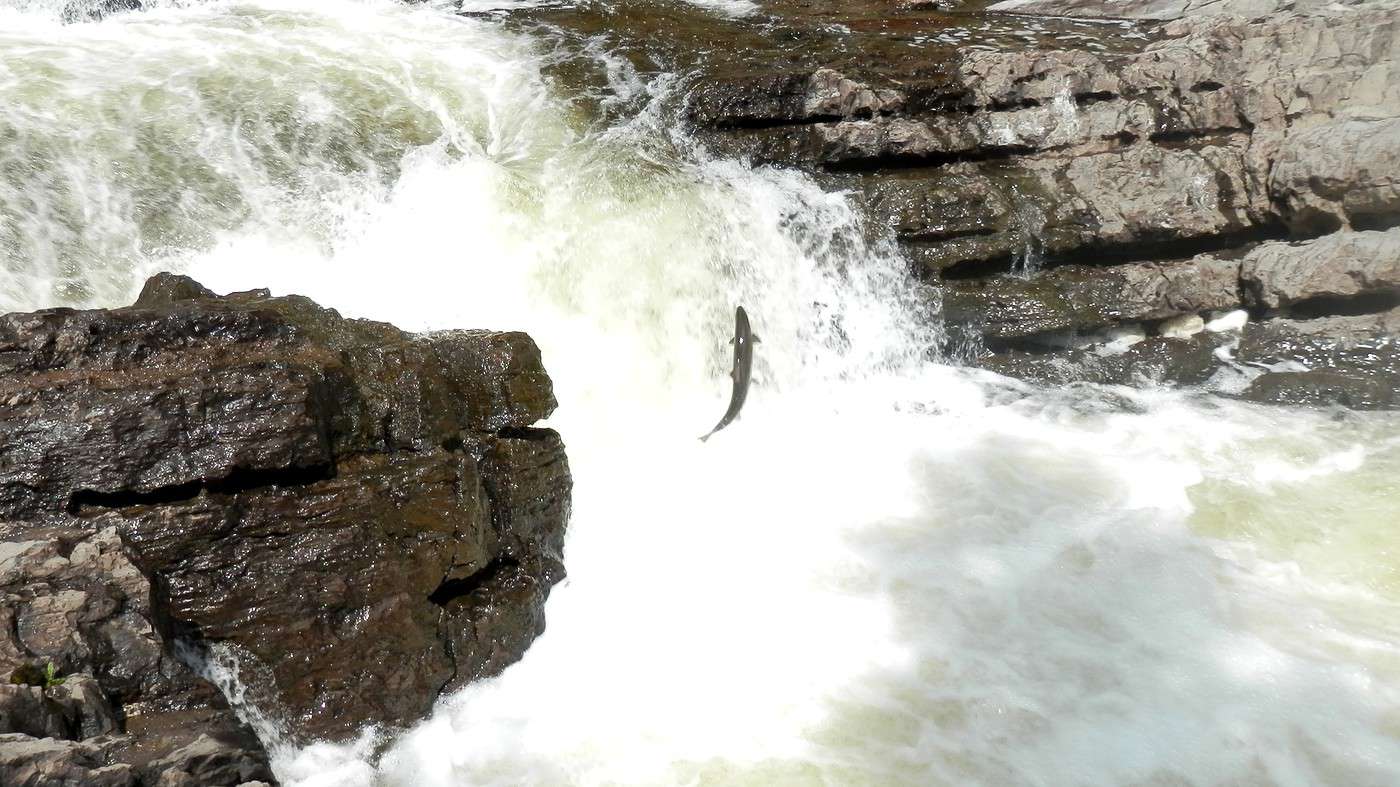
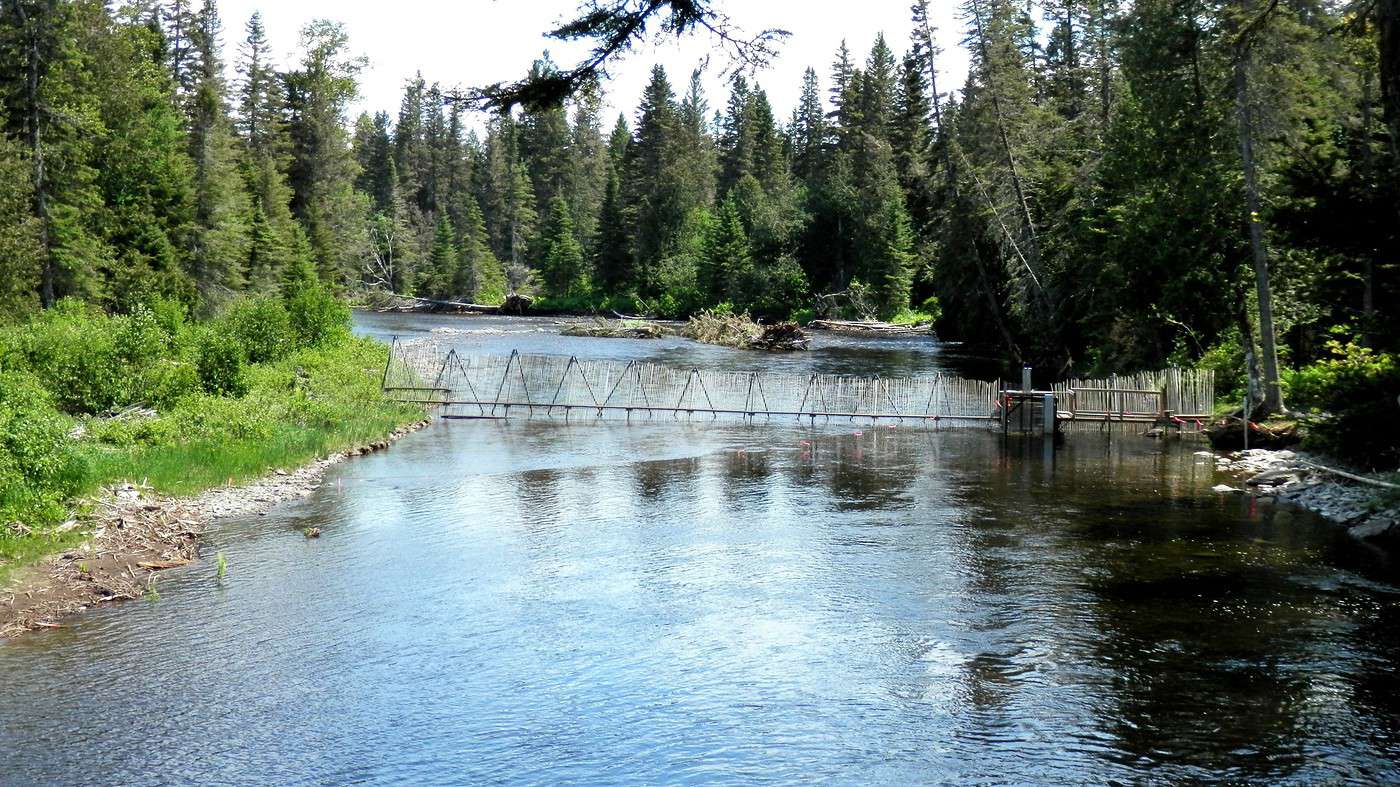
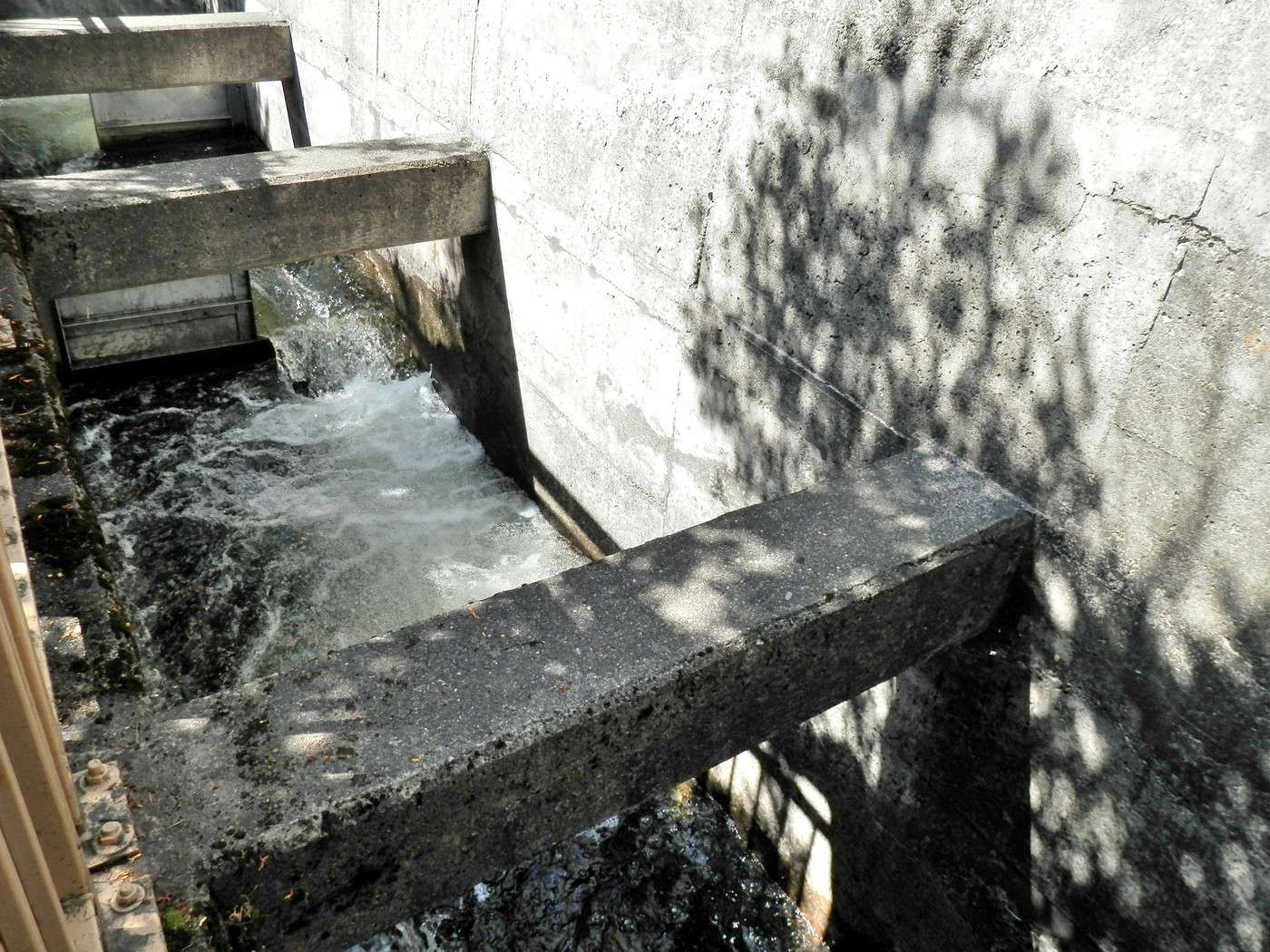
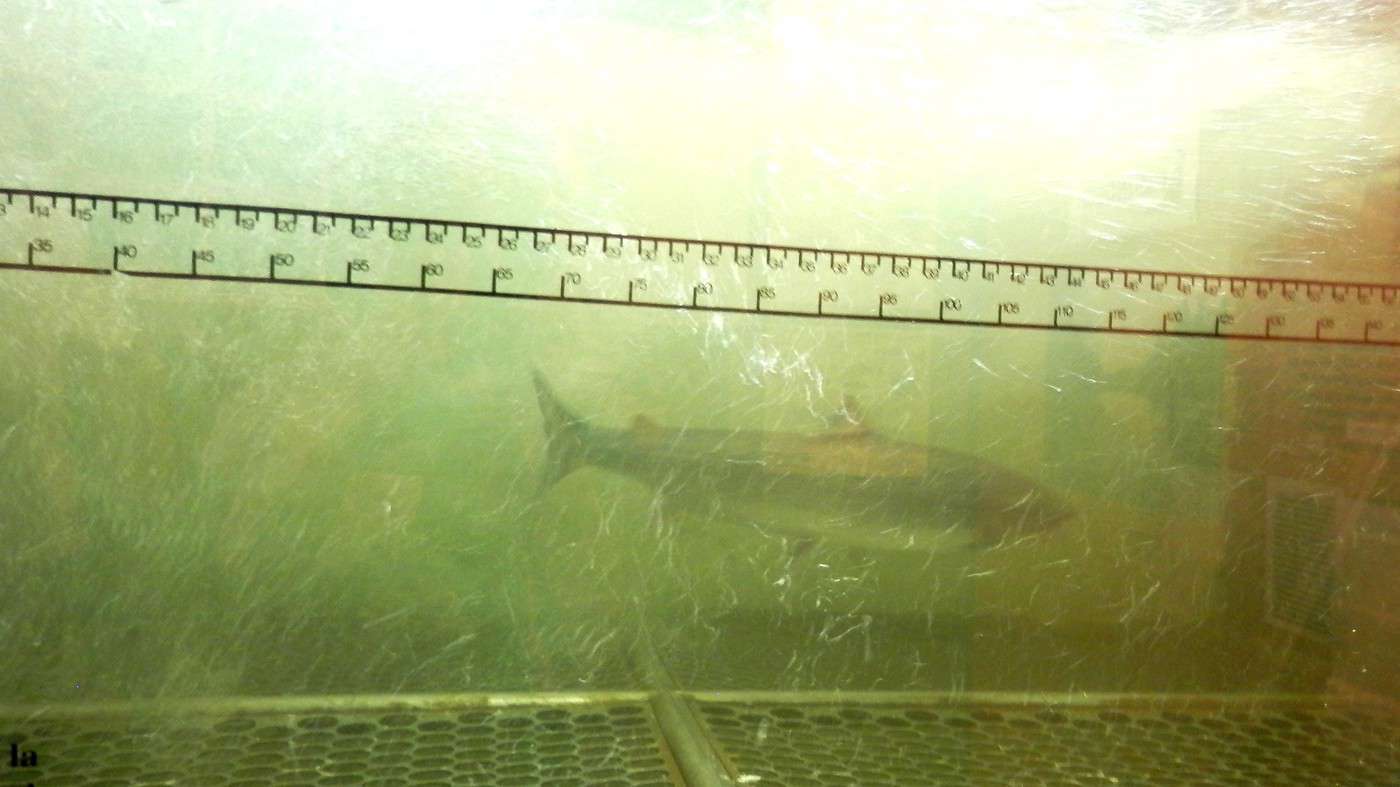
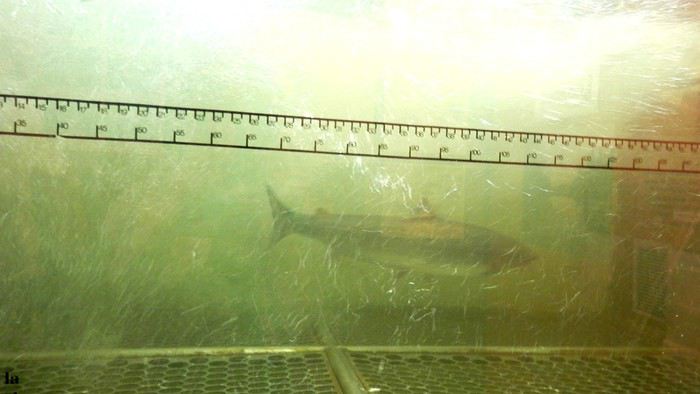 On average, 3,000 salmon use this migratory stairway each year. You can watch them through large windows.
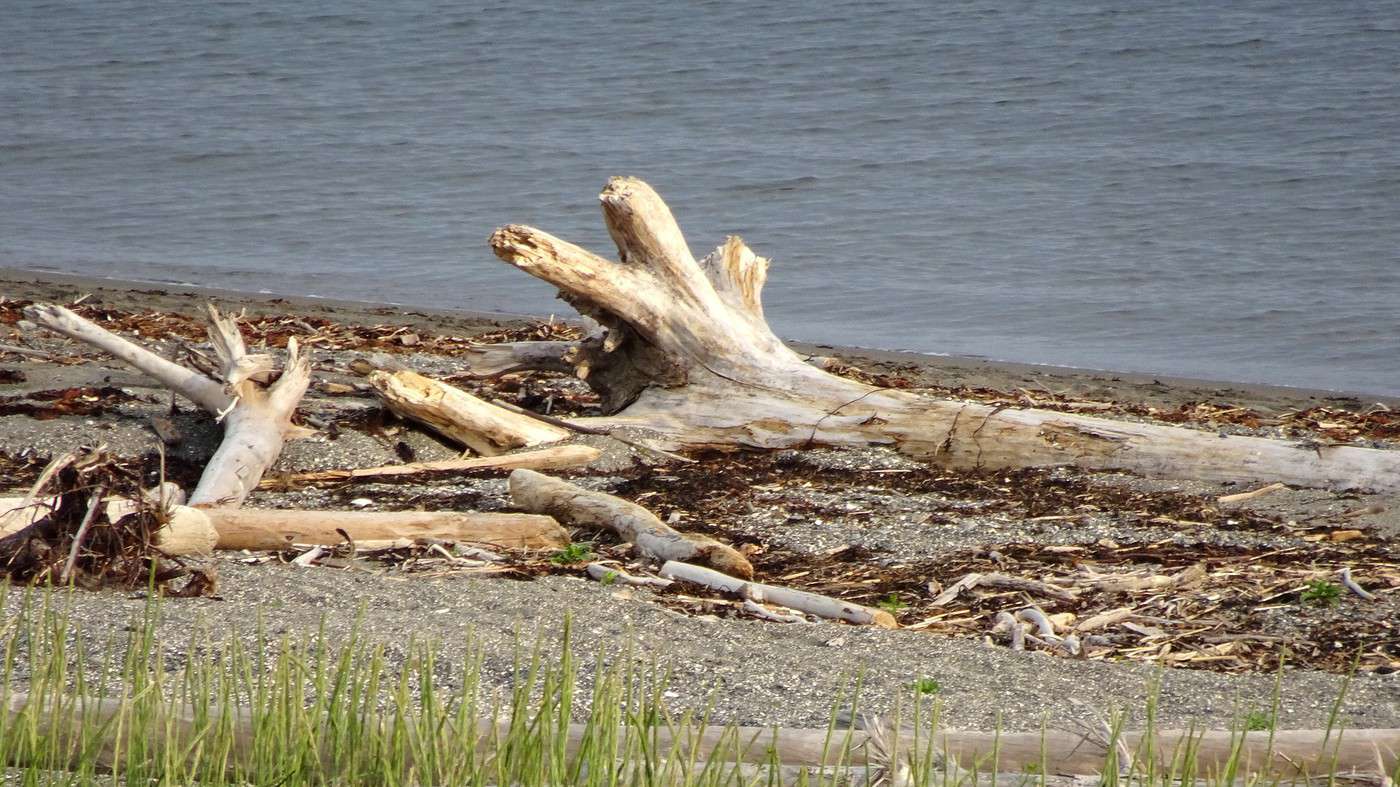
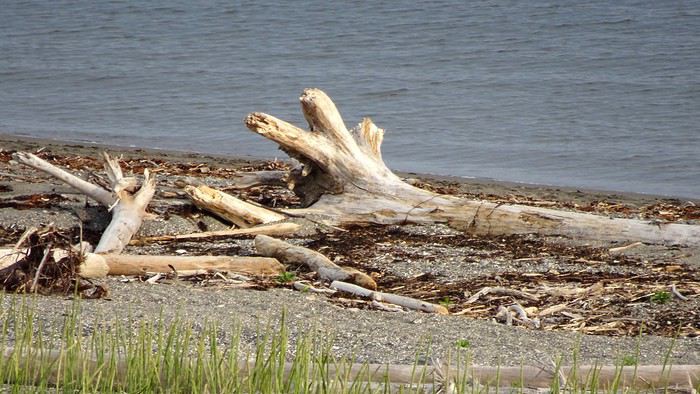 We still had plenty of time for a long walk on the beach. The amount of driftwood washed up there is impressive.
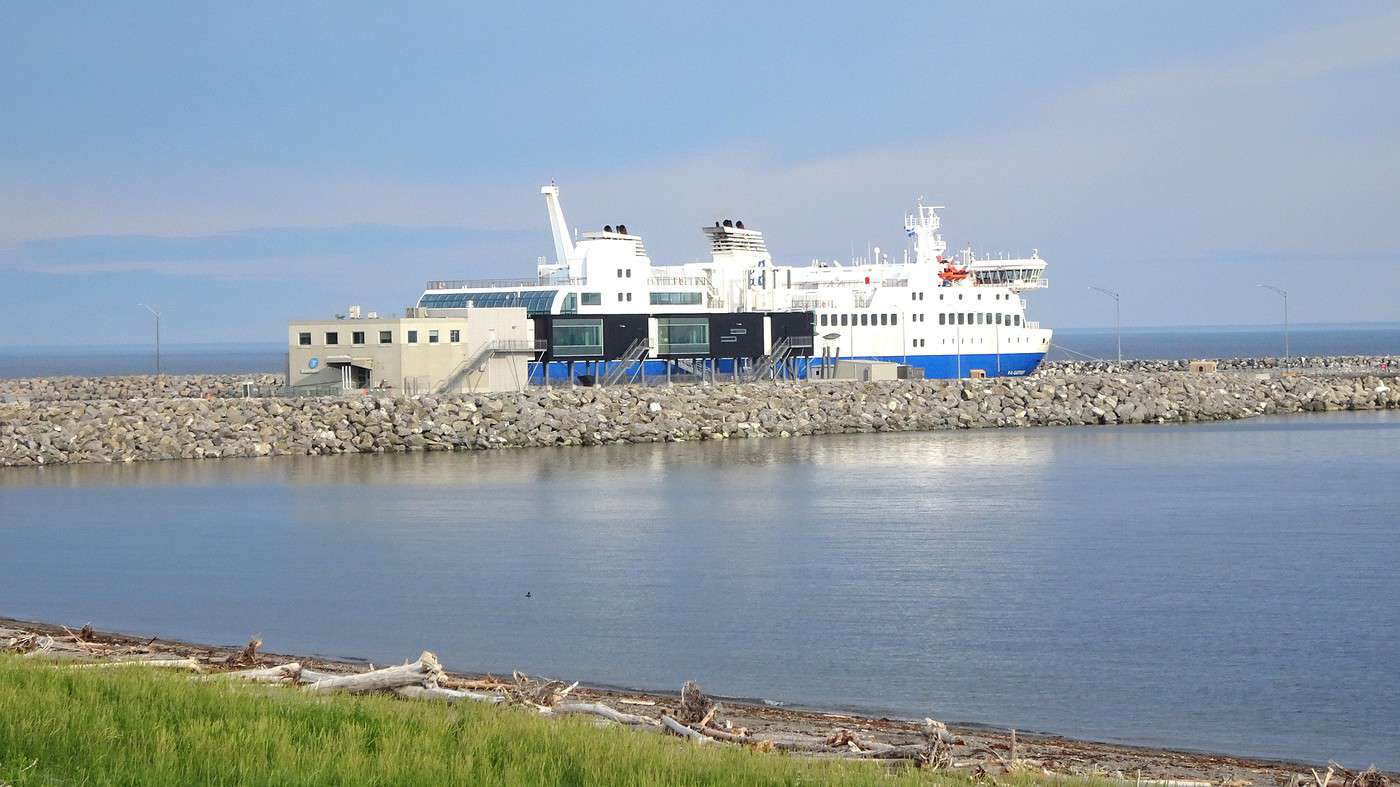
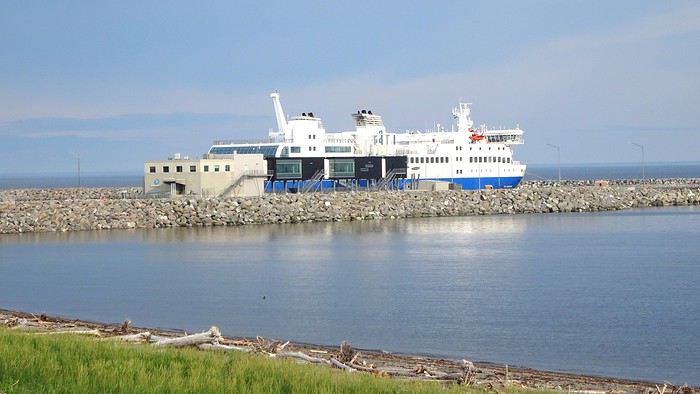 We spotted the river station where the F.A. Gauthier ferry is docked—the one that will take us to the other side of the St. Lawrence tomorrow morning.
Motel Belle Plage is waiting for our last night in Gaspésie, but first, a meal made entirely of Nordic shrimp, the local specialty.
We spotted the river station where the F.A. Gauthier ferry is docked—the one that will take us to the other side of the St. Lawrence tomorrow morning.
Motel Belle Plage is waiting for our last night in Gaspésie, but first, a meal made entirely of Nordic shrimp, the local specialty.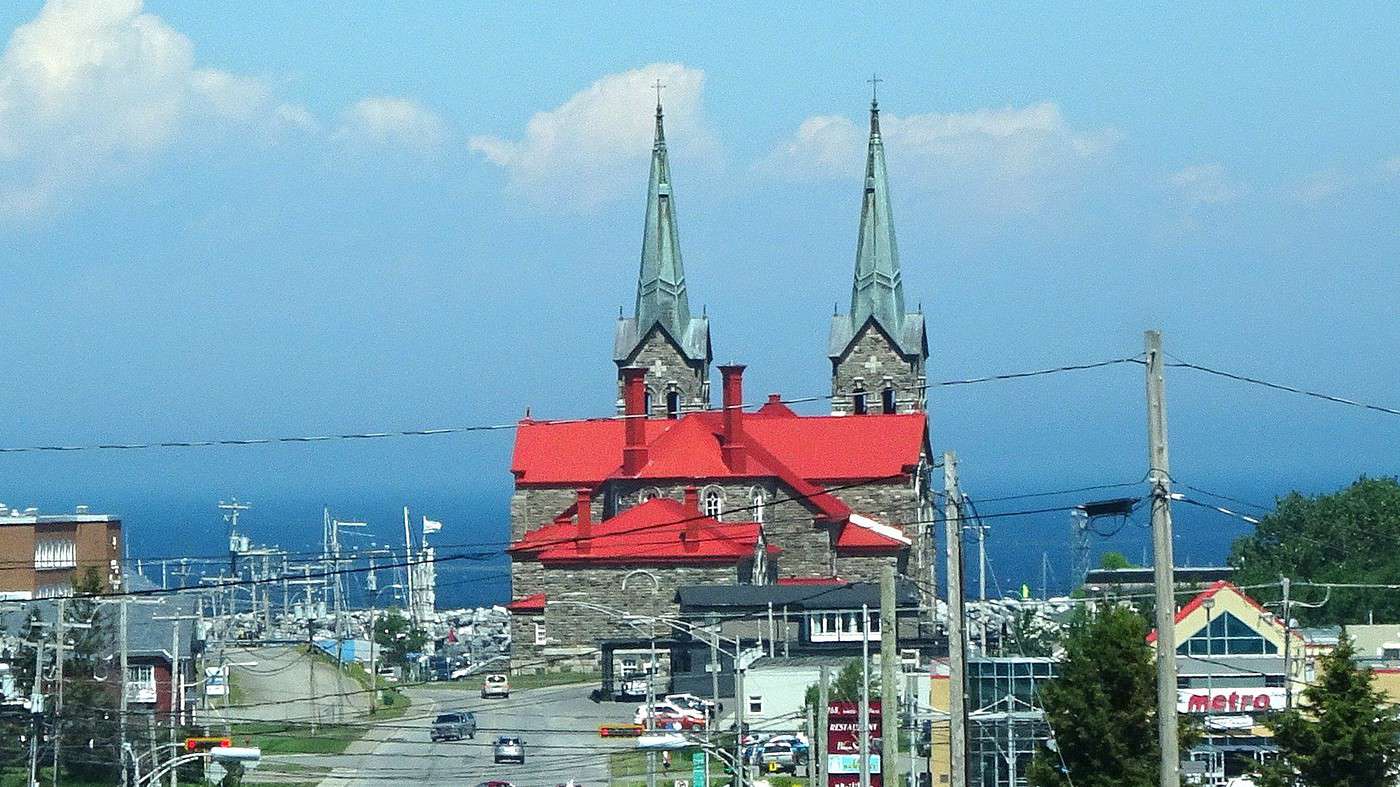
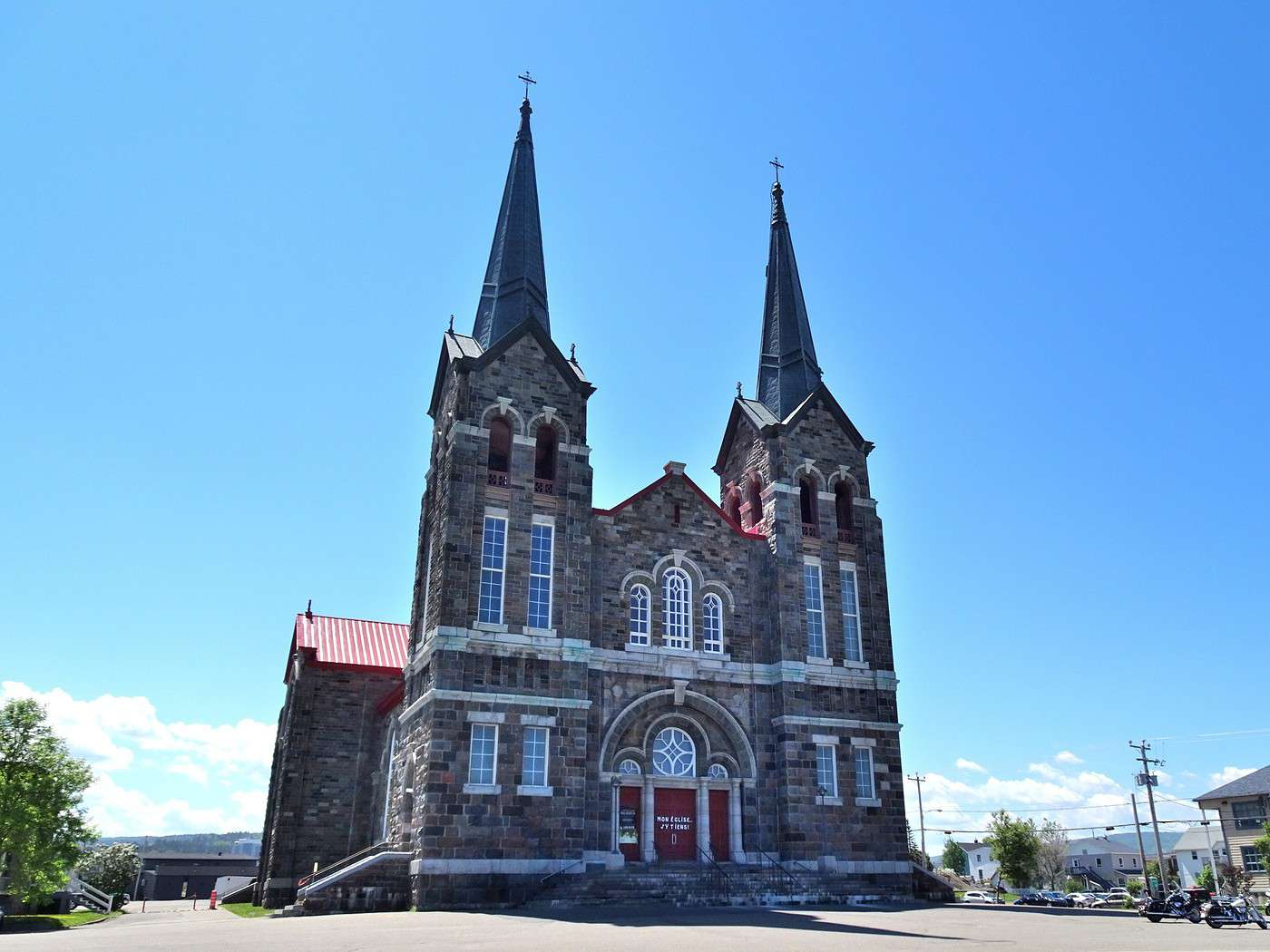


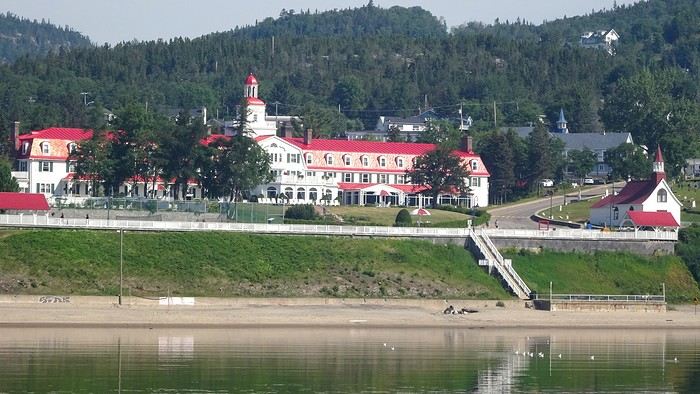
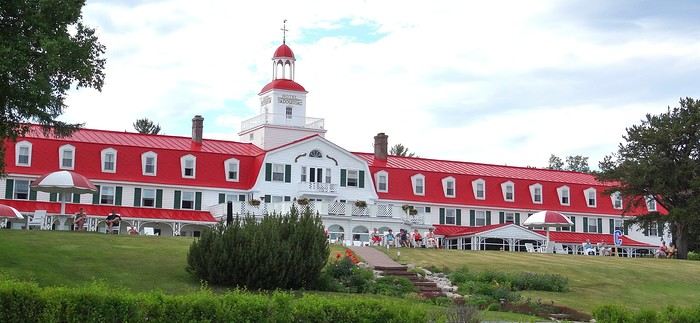
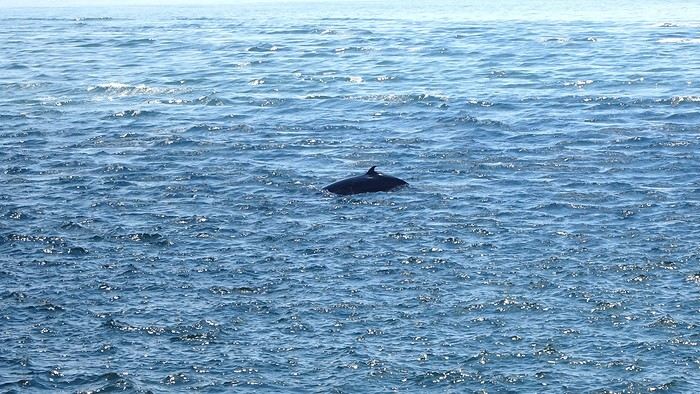
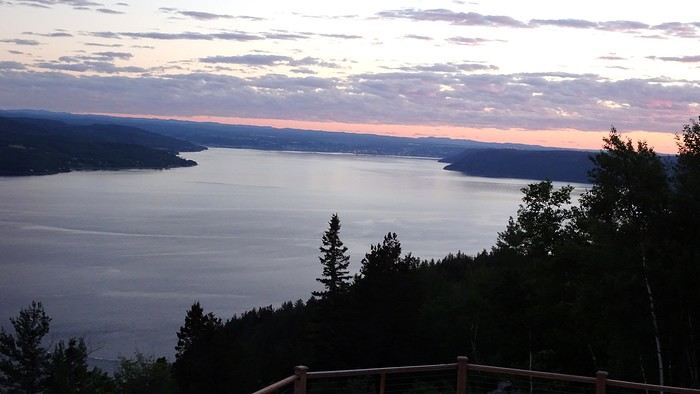
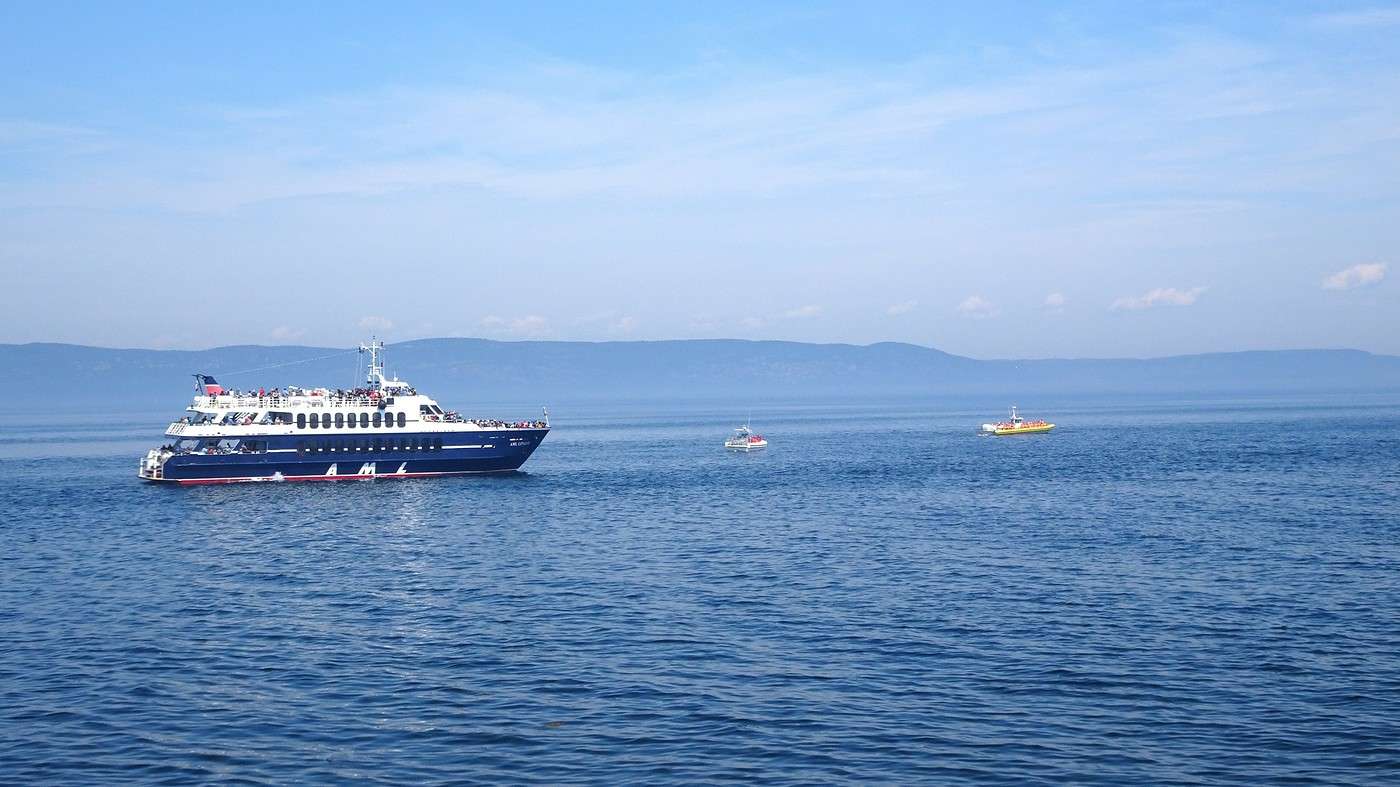
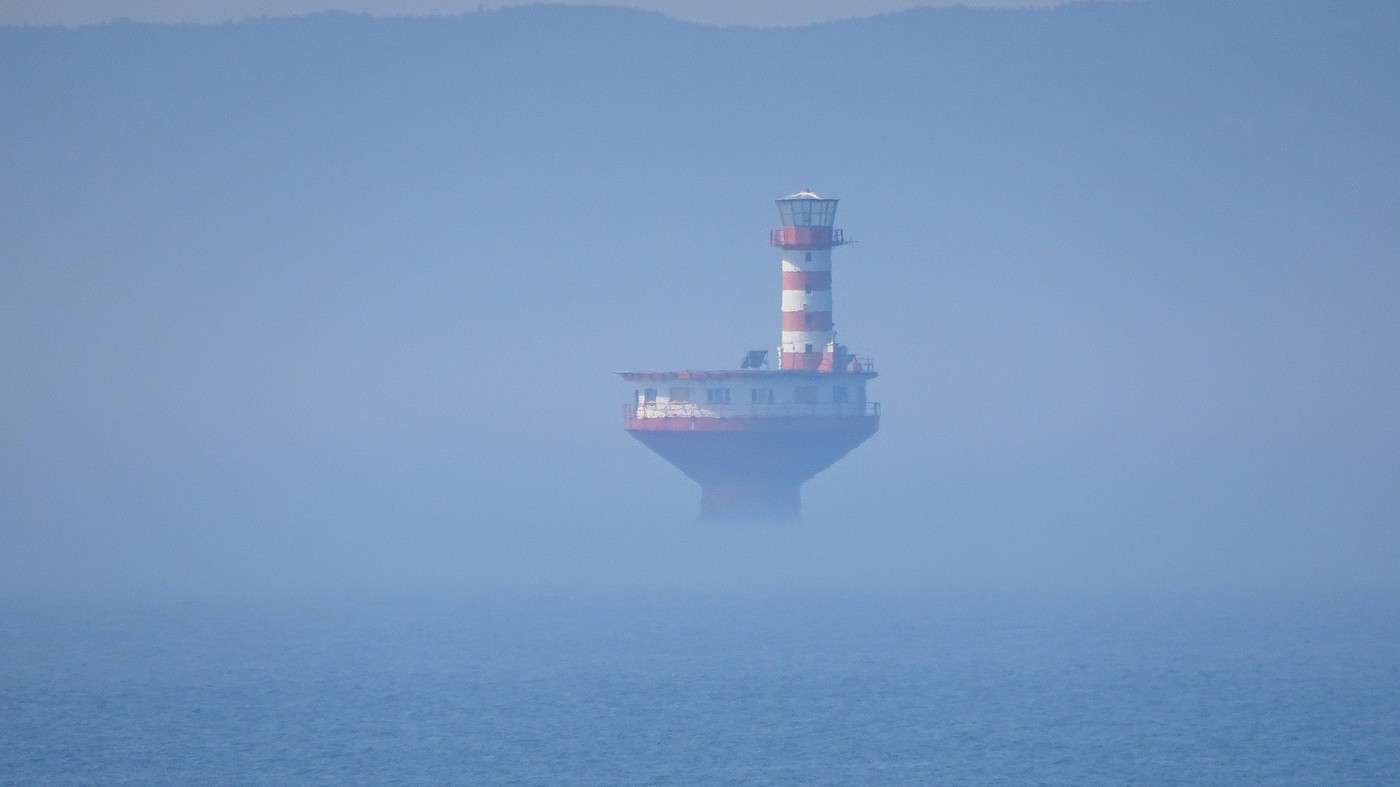
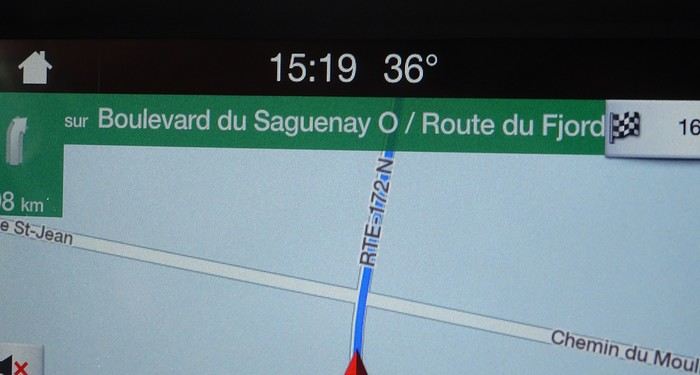
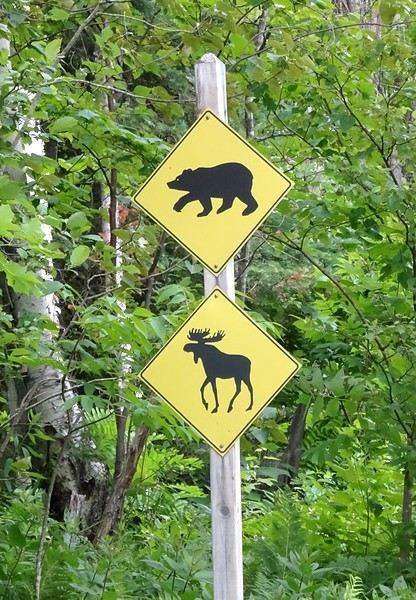
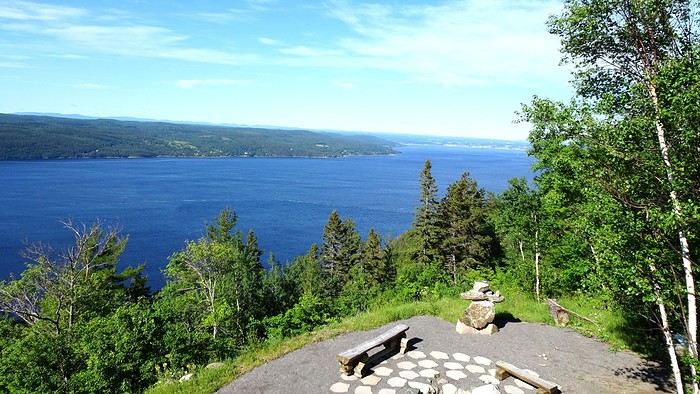
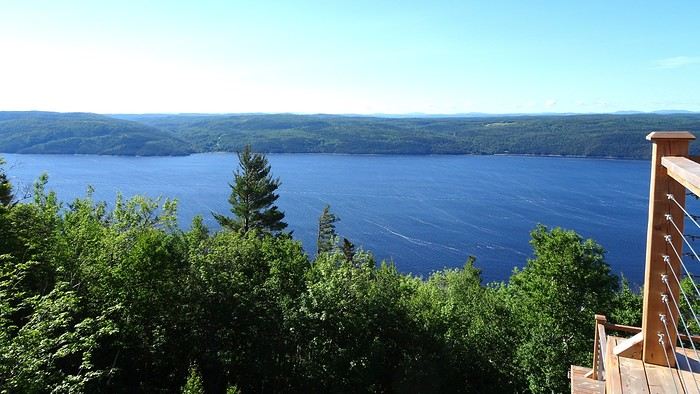
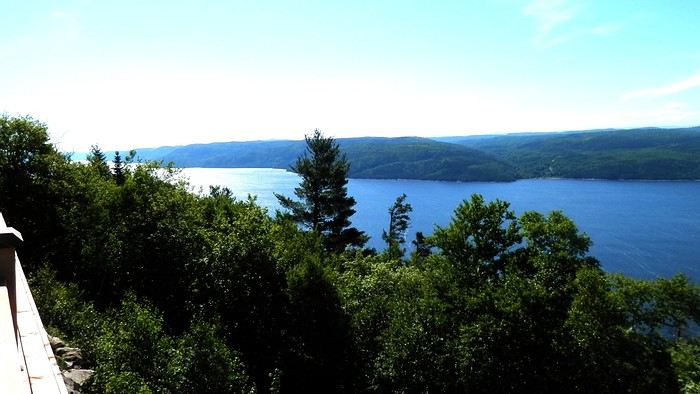
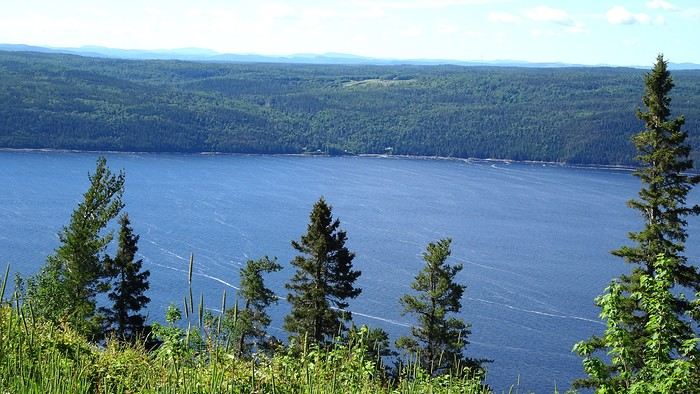
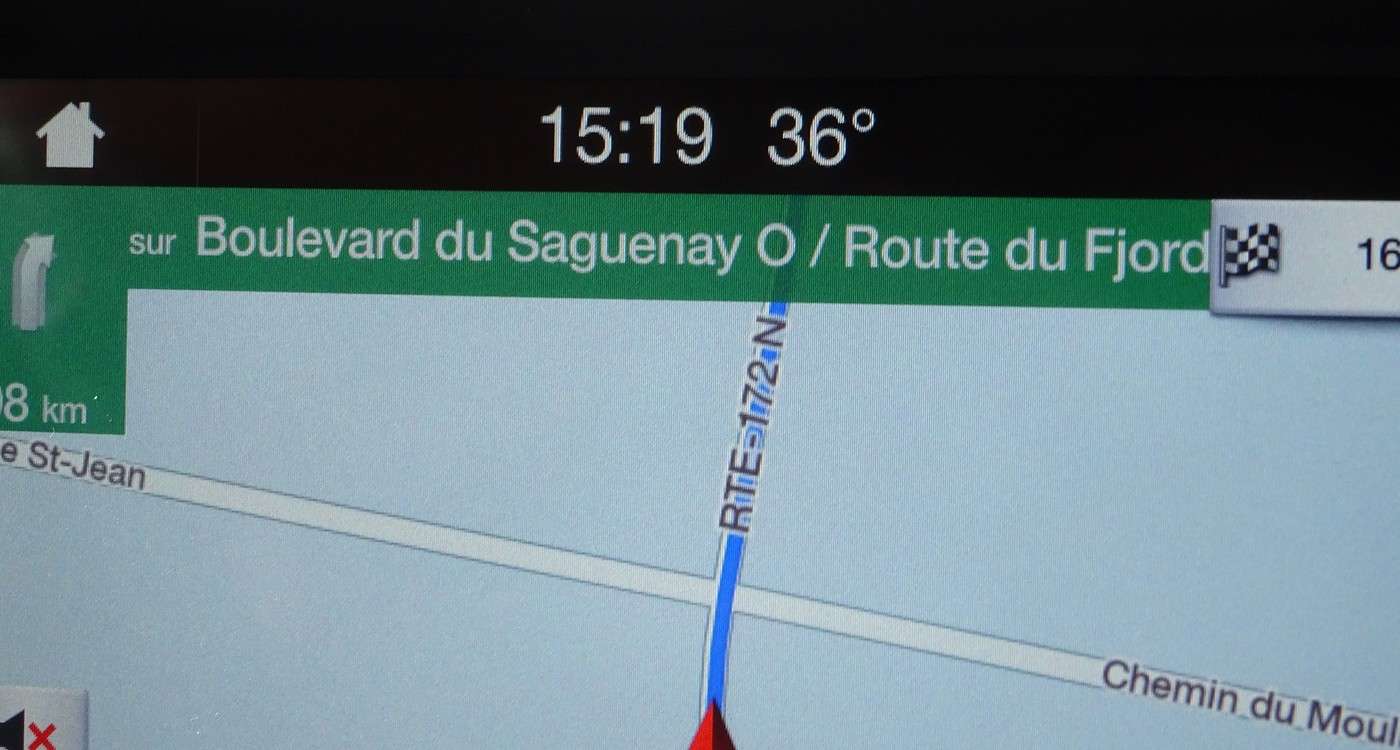
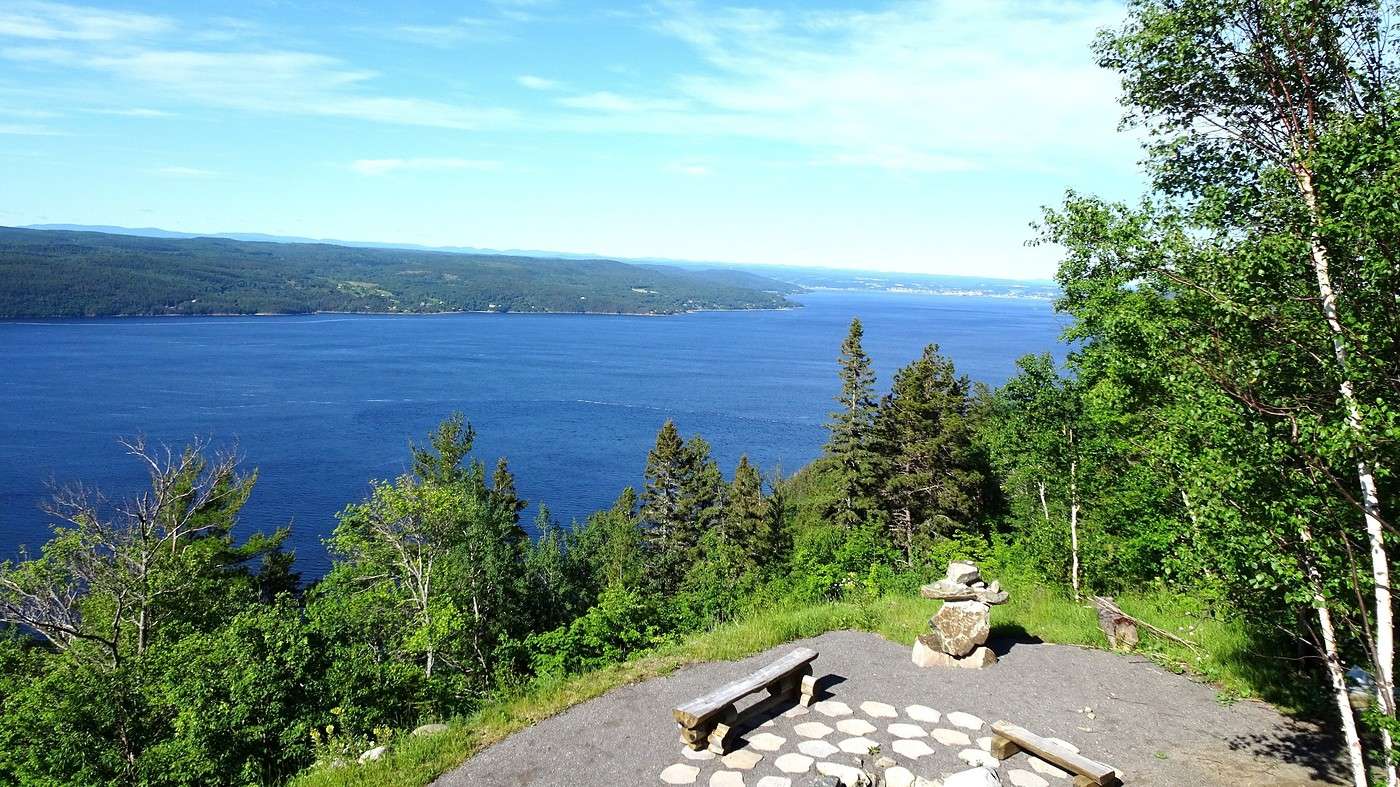
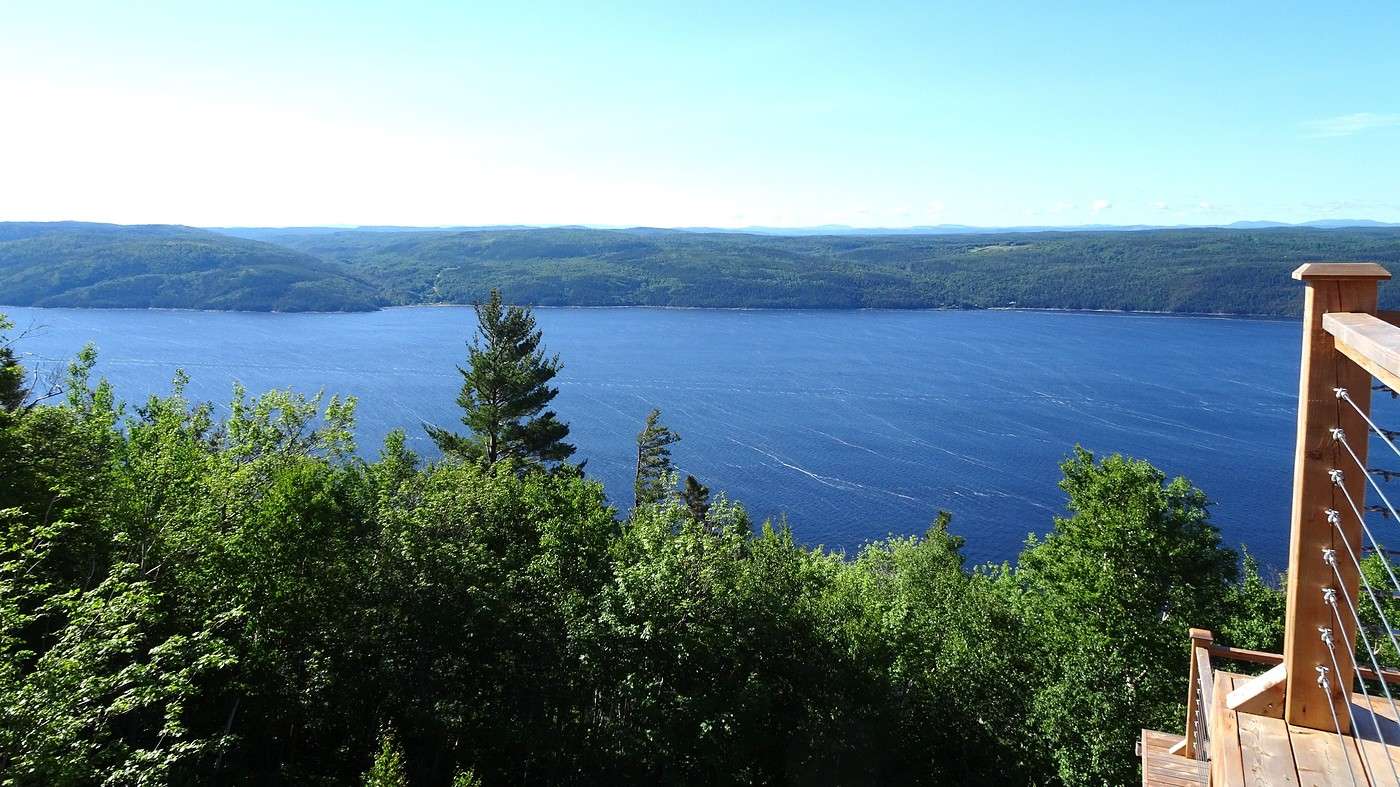
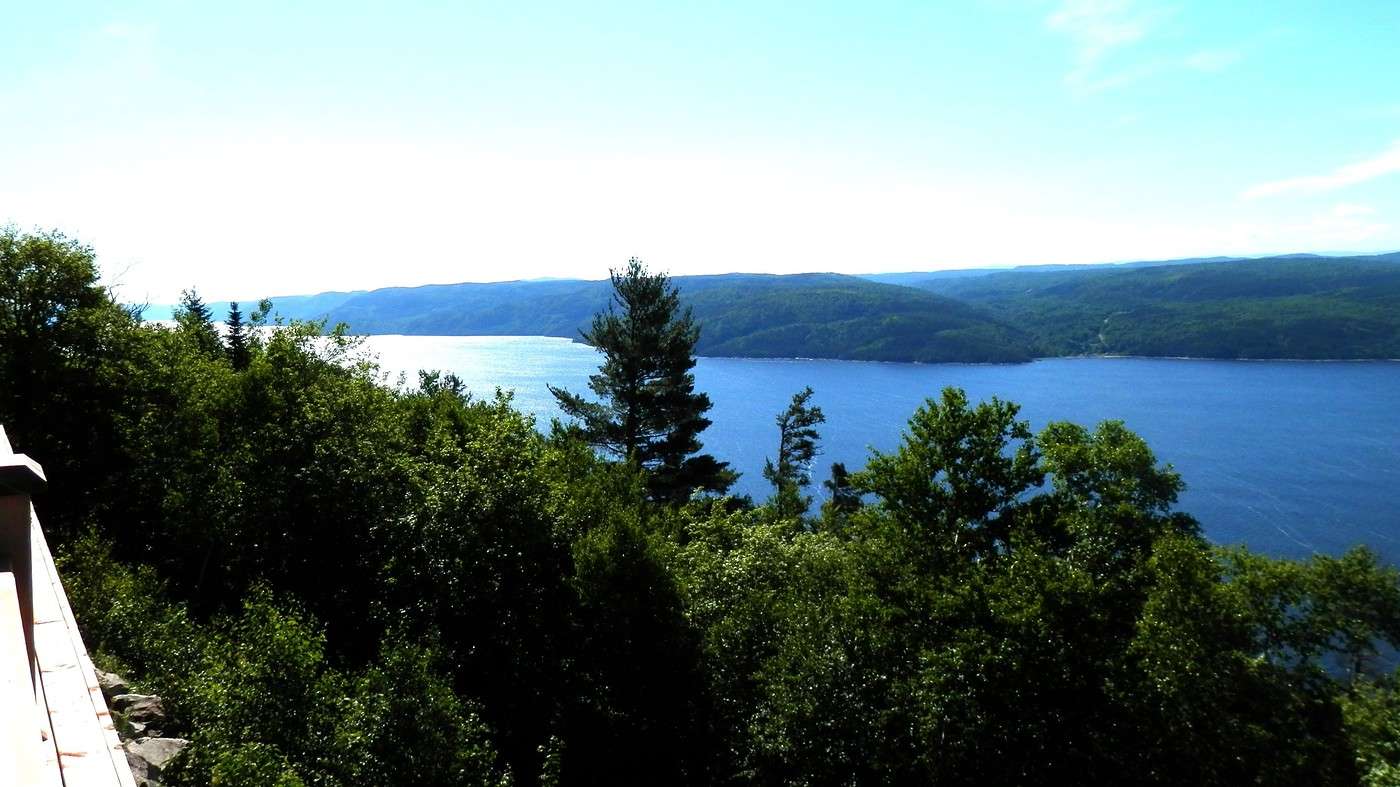
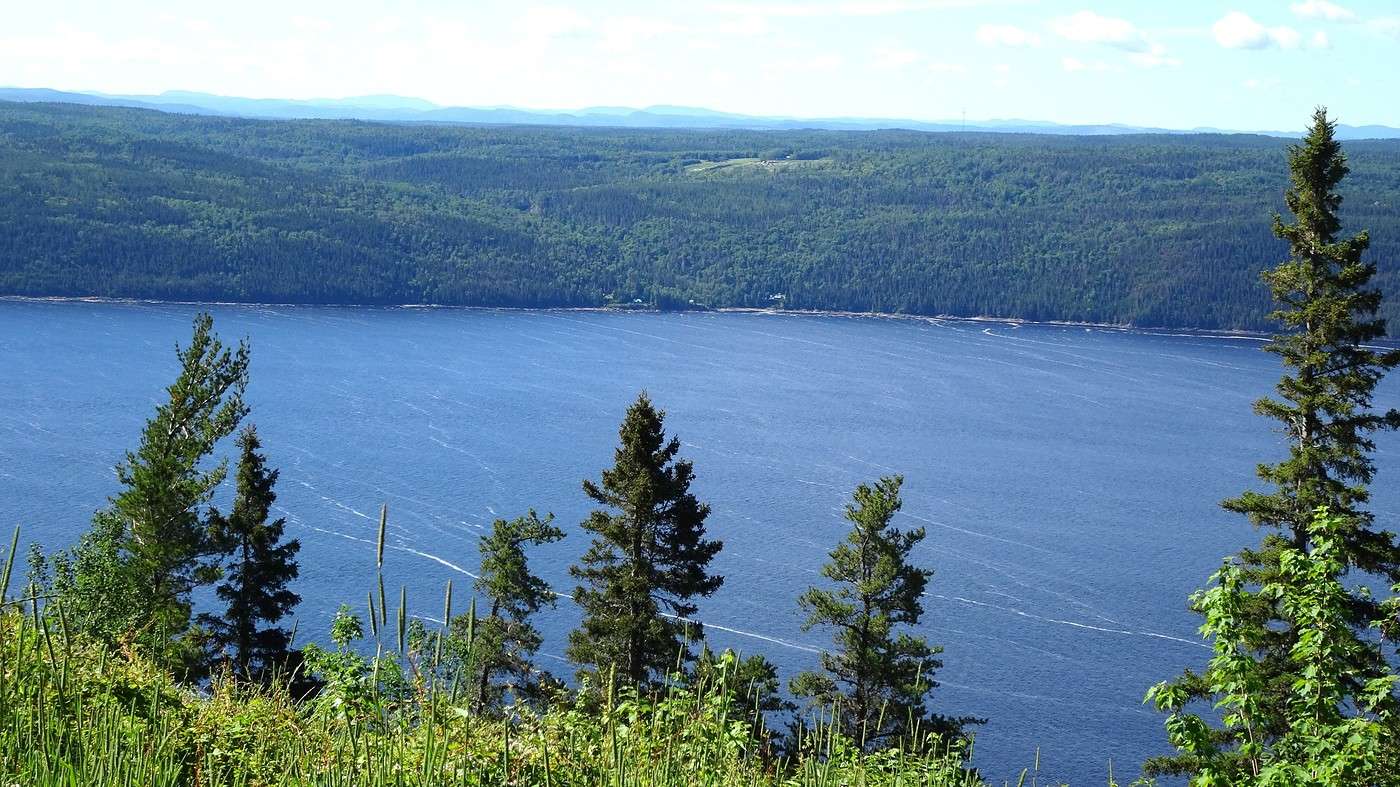
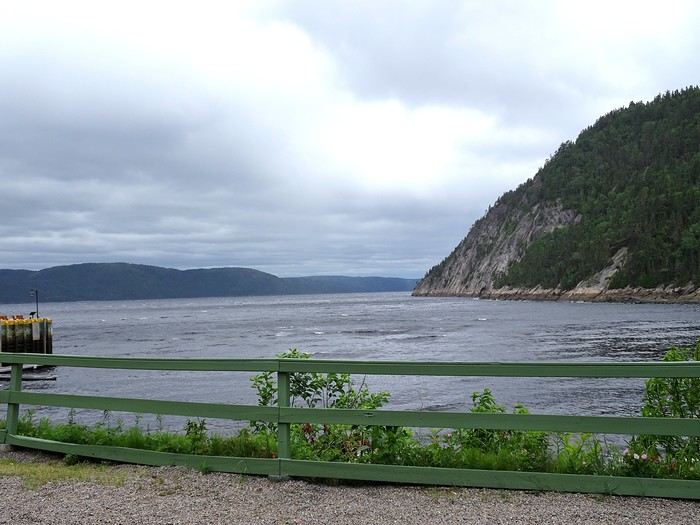
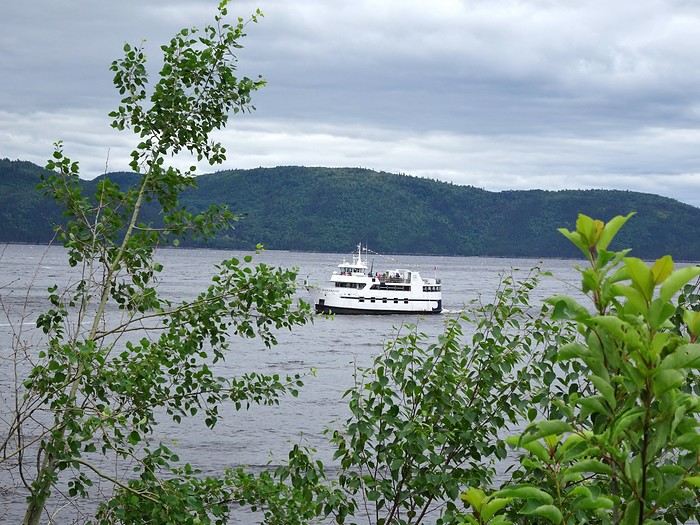
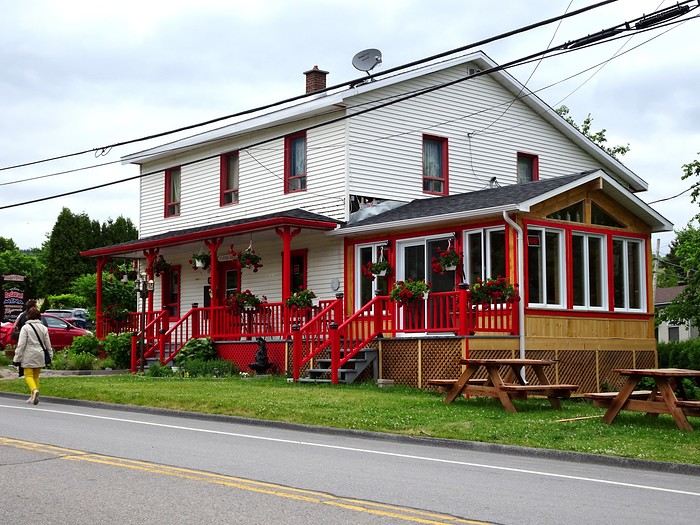
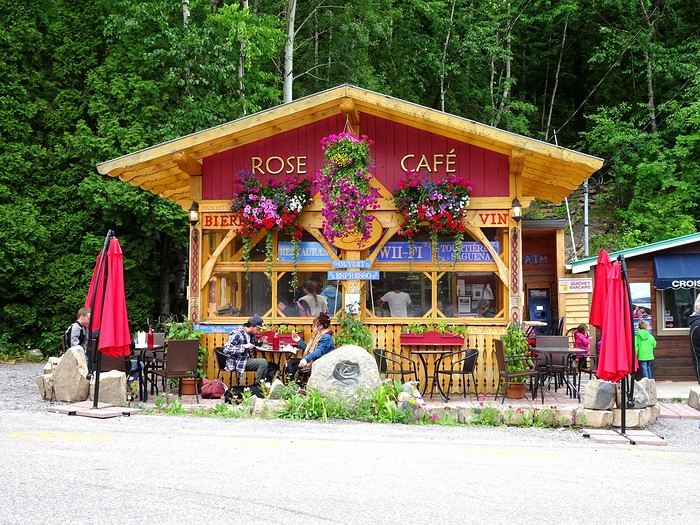
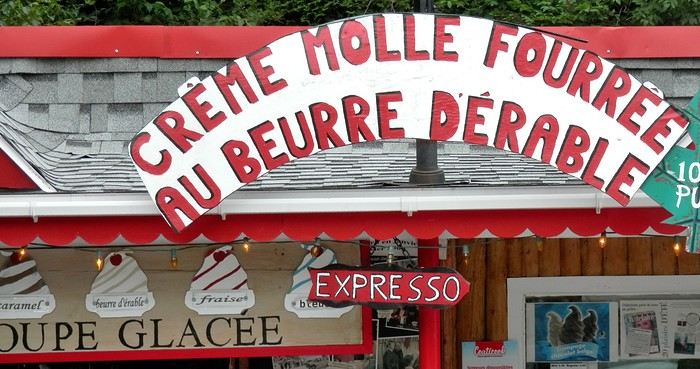
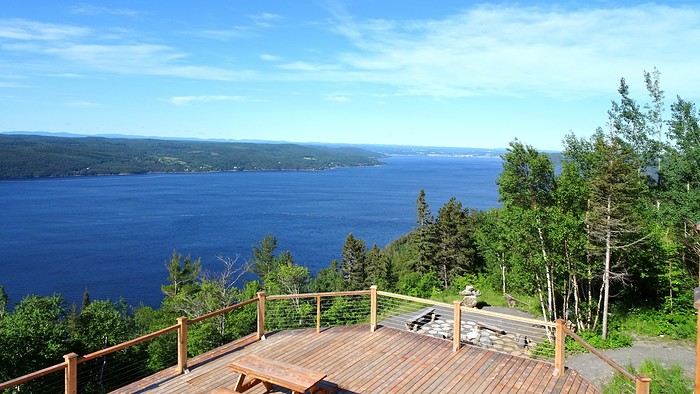
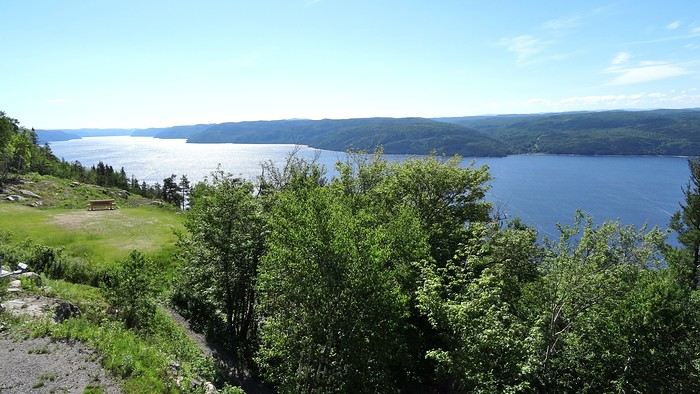
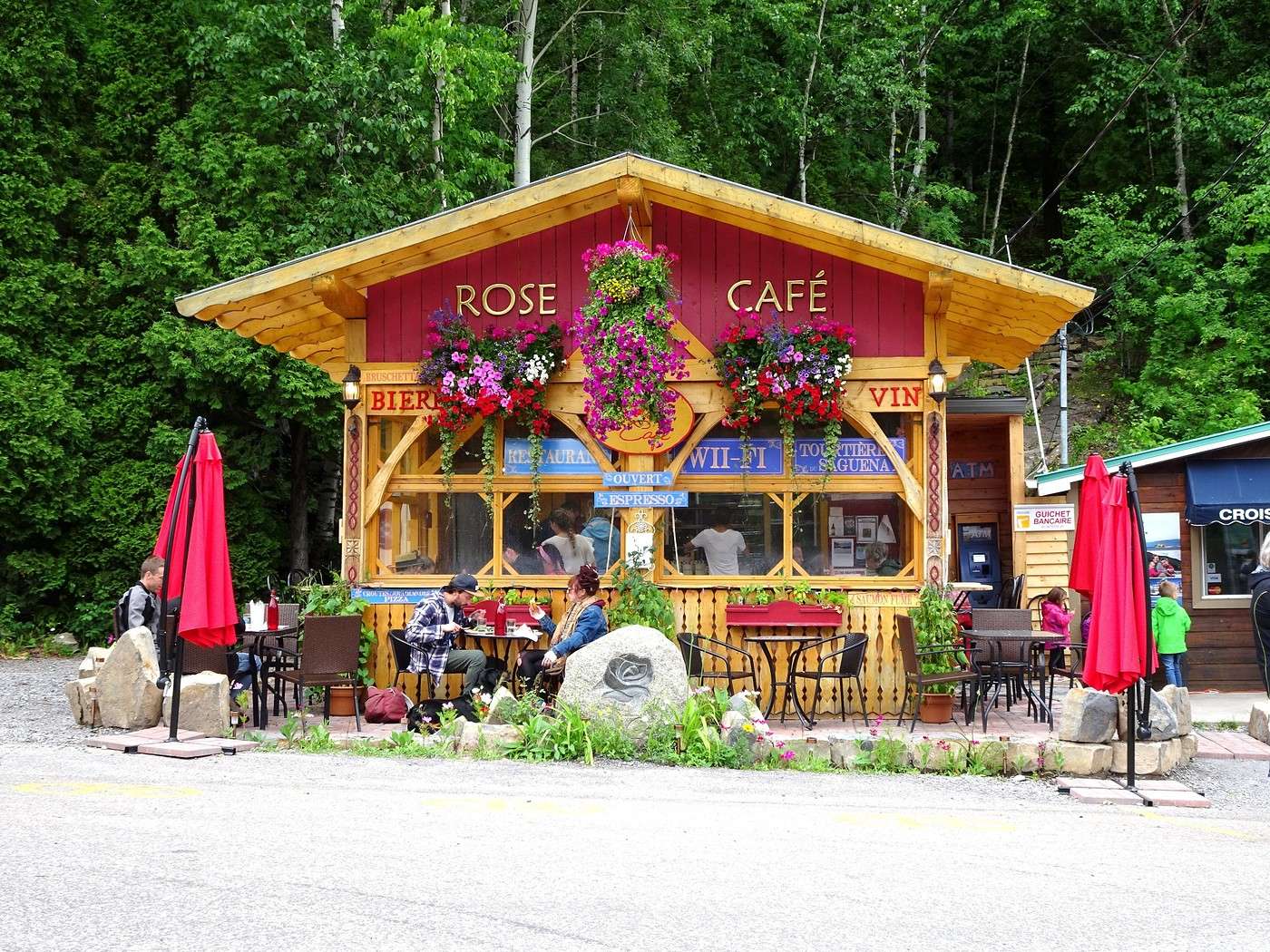
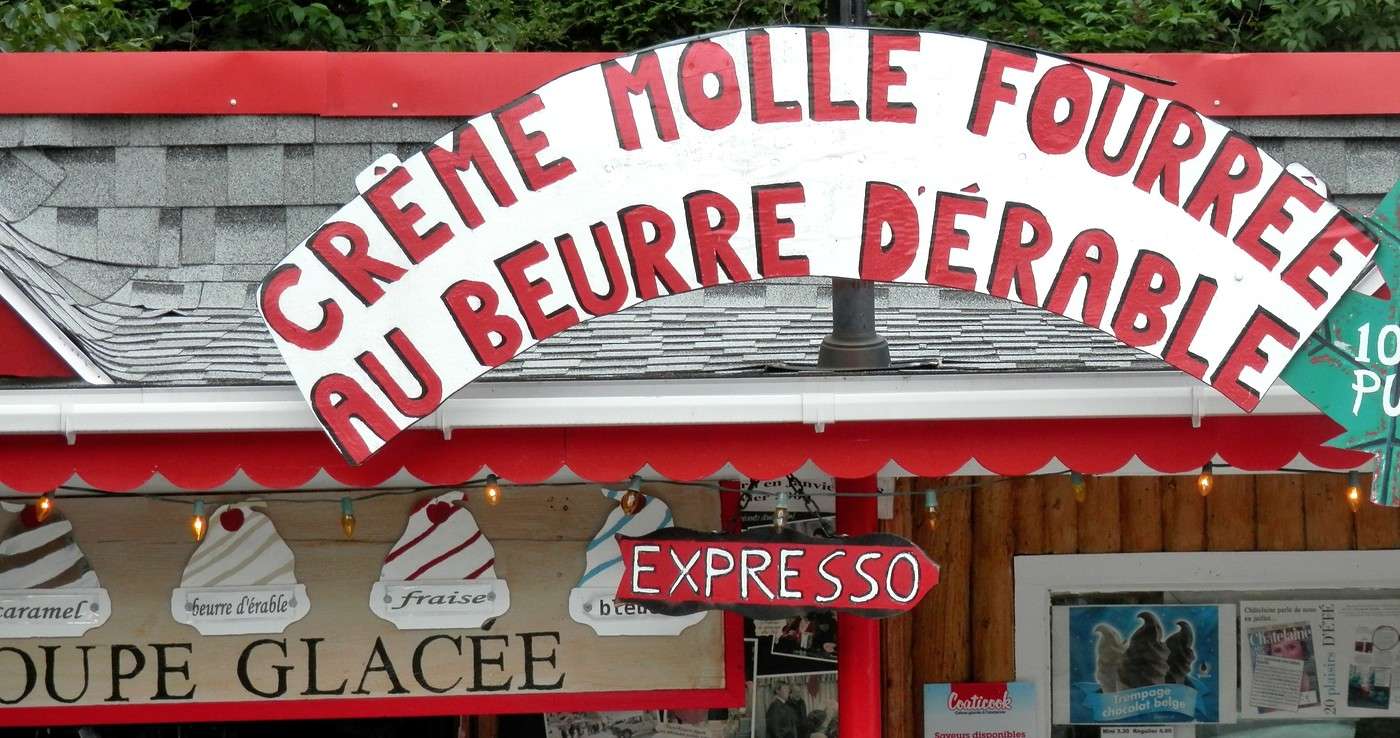
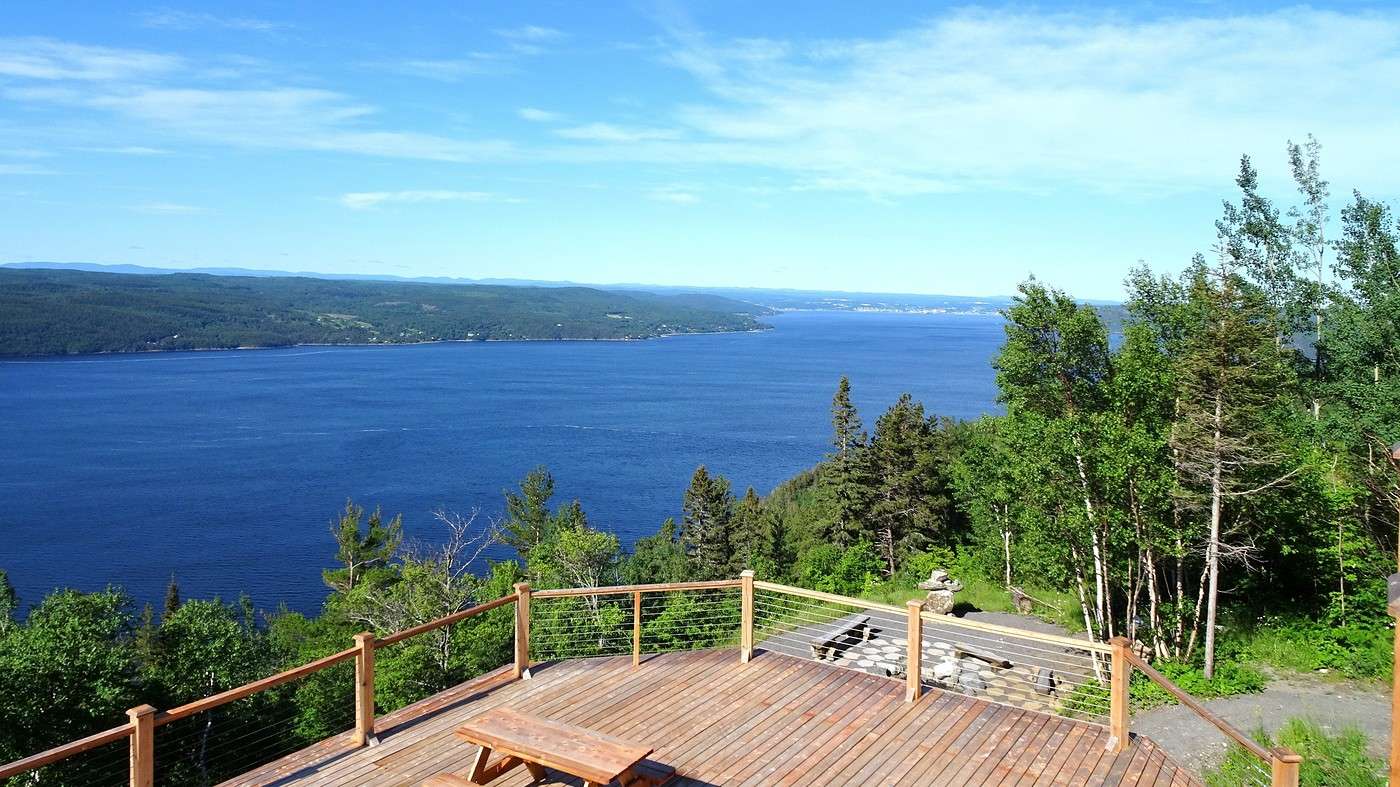
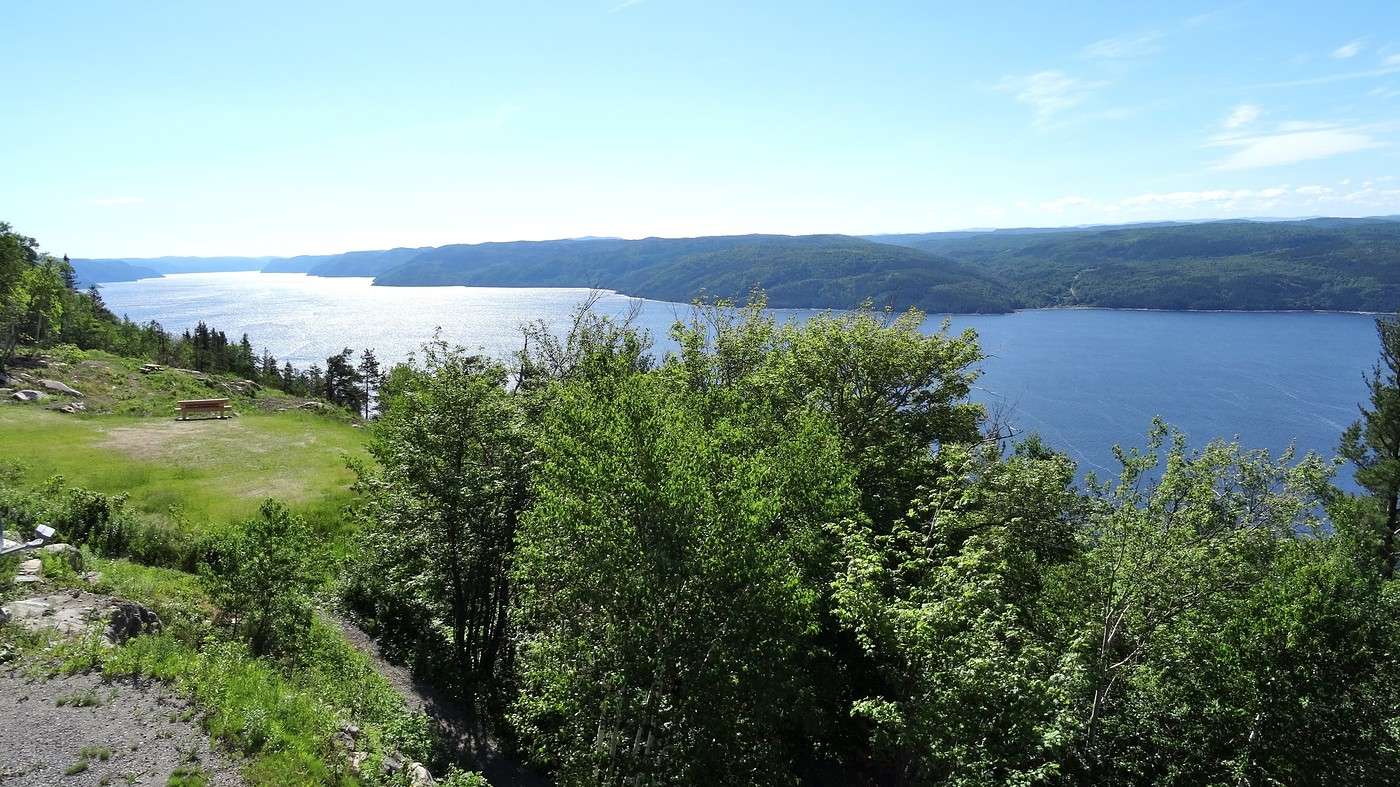
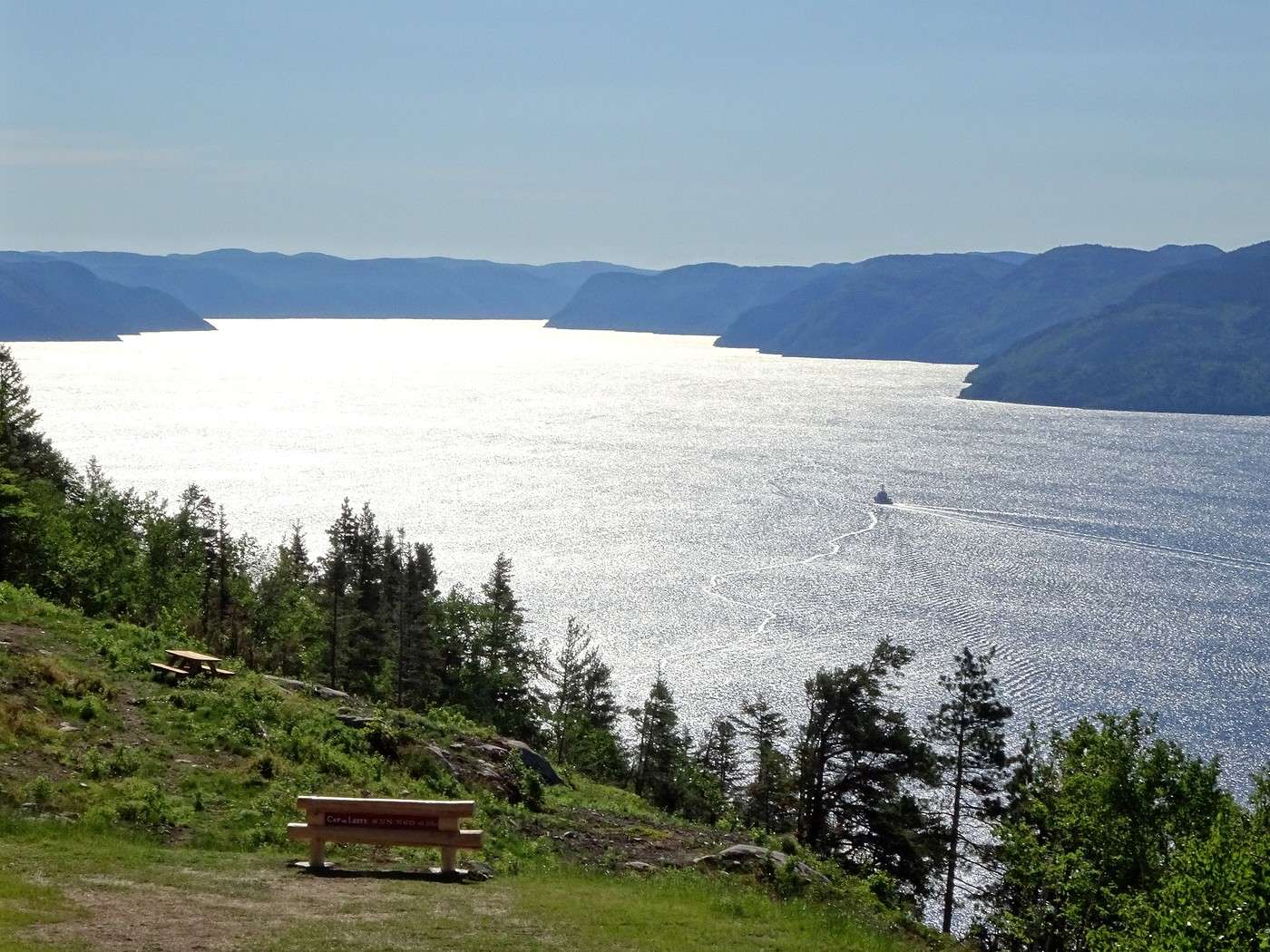
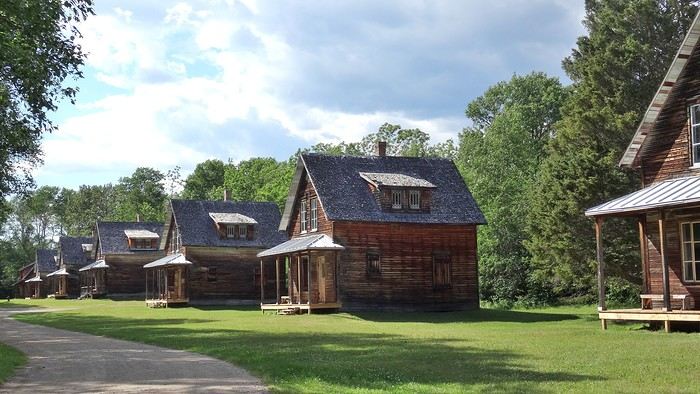
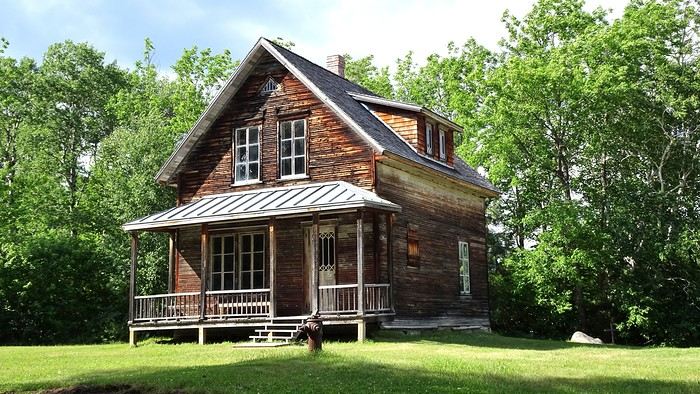
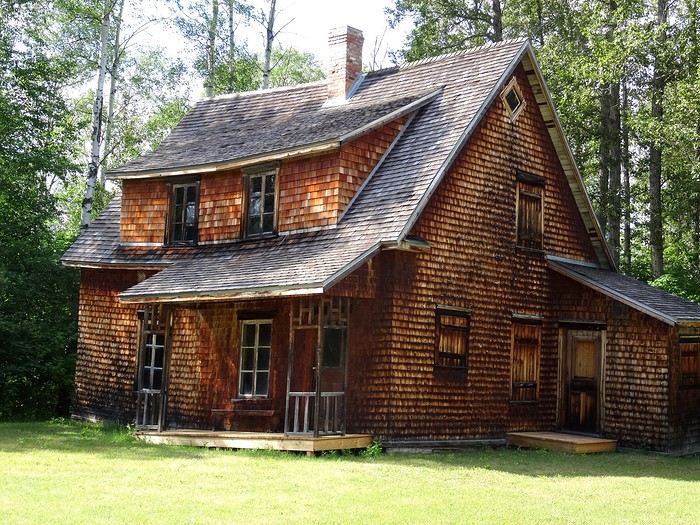
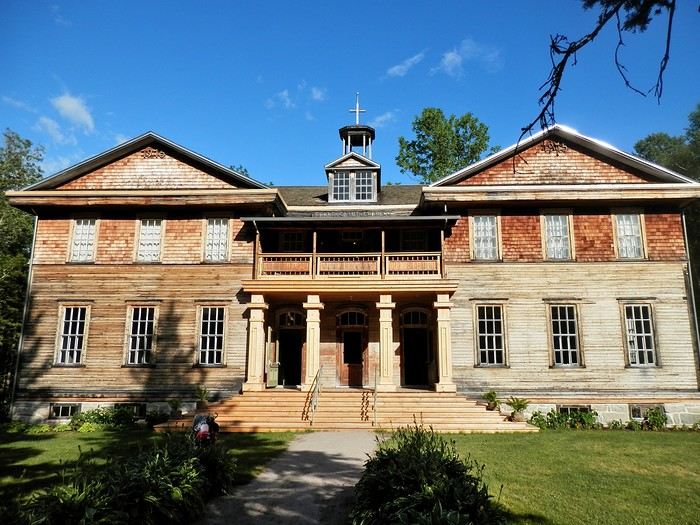
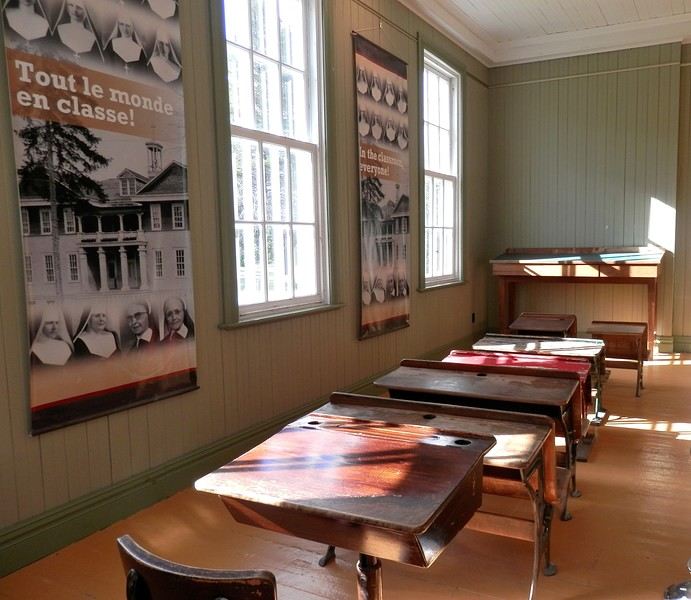
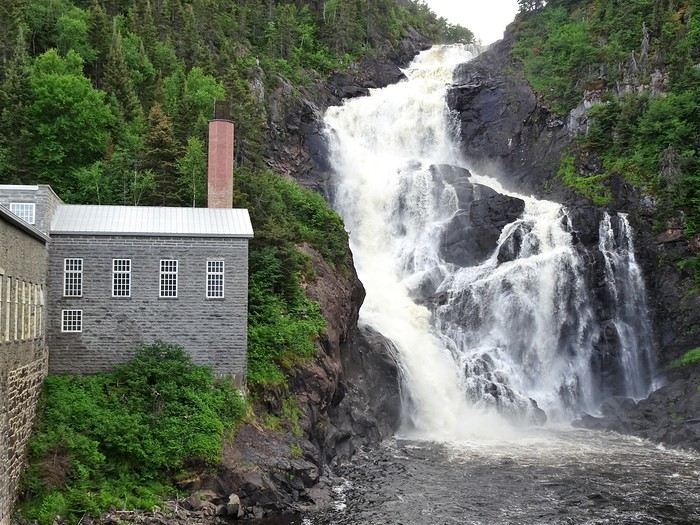
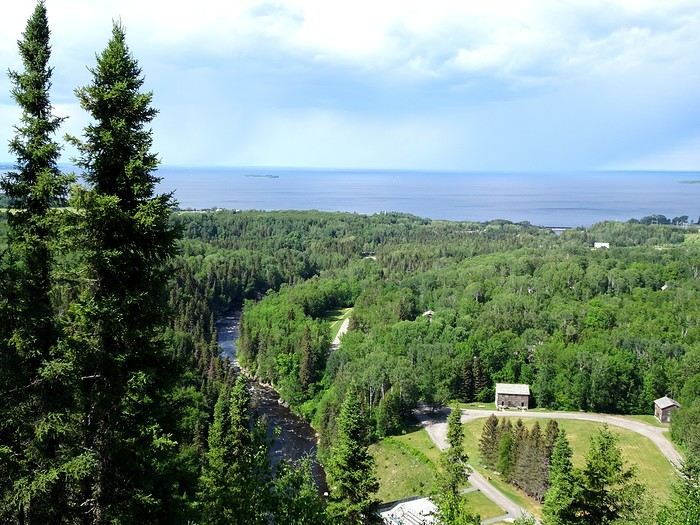
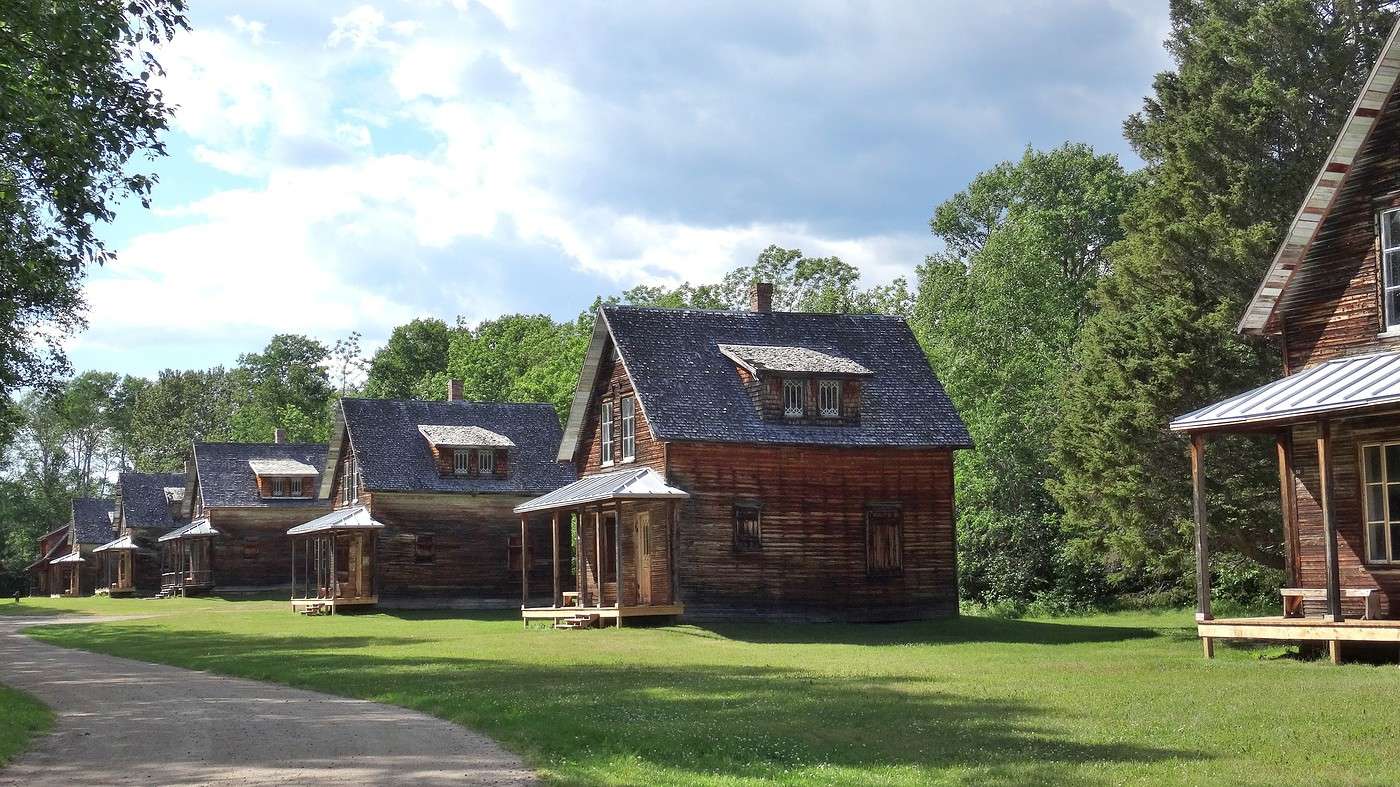
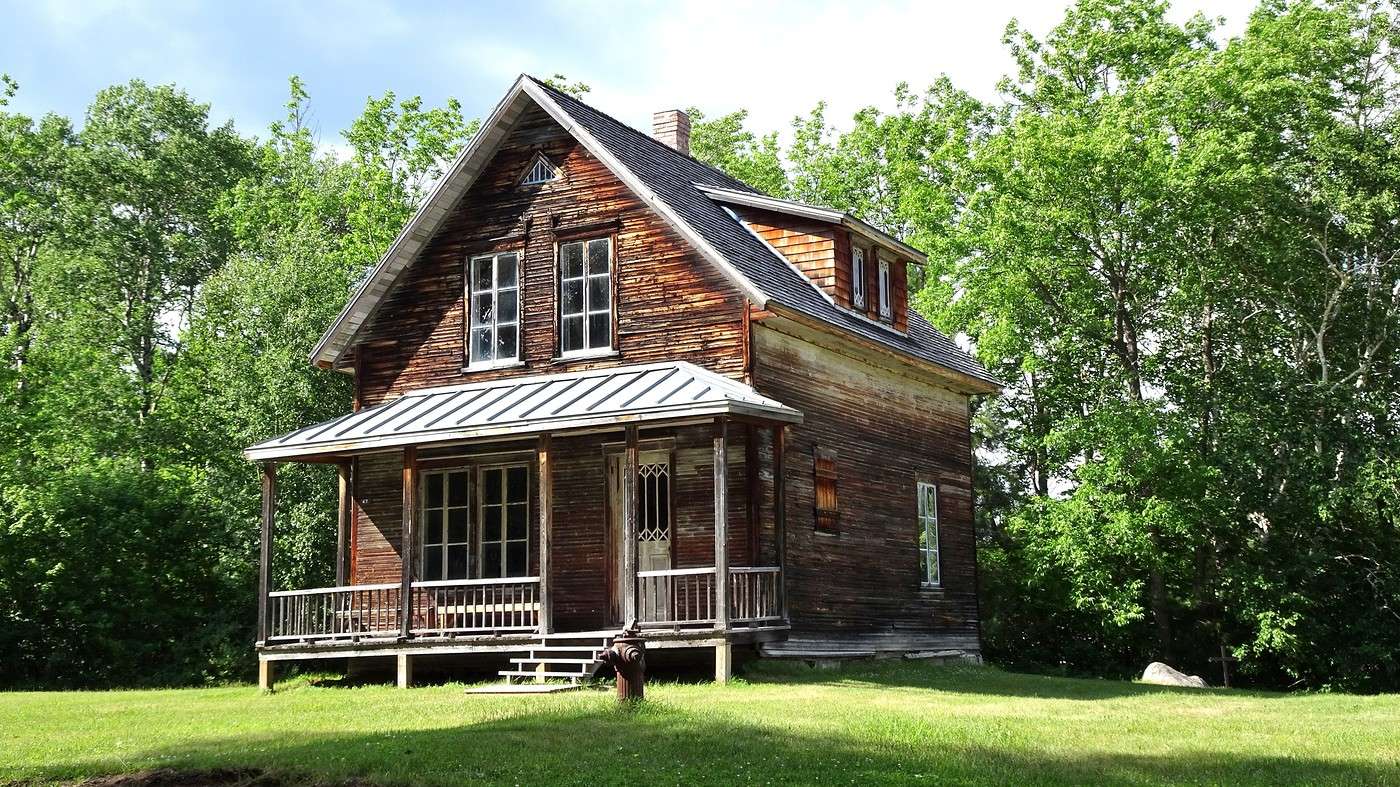
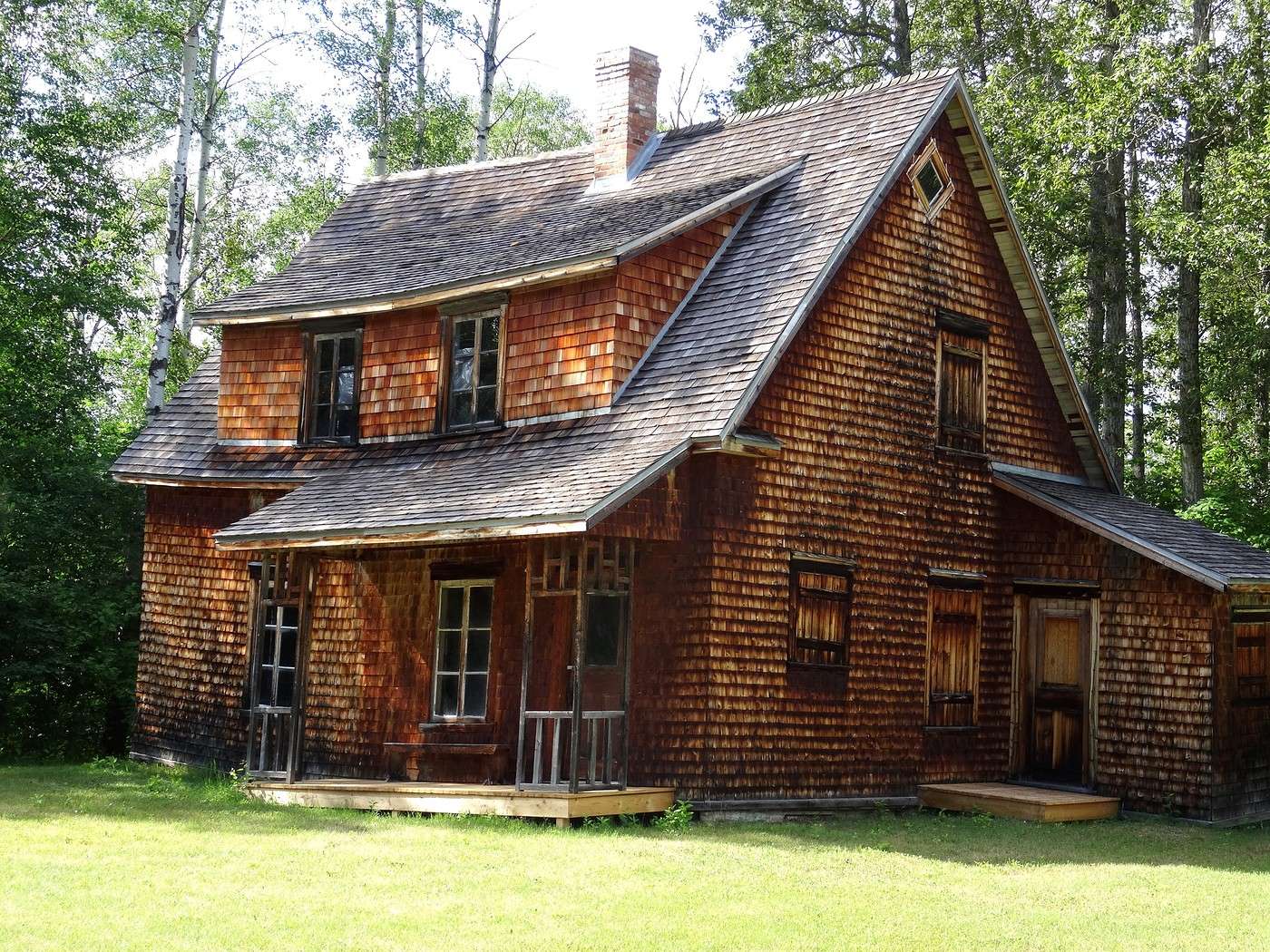
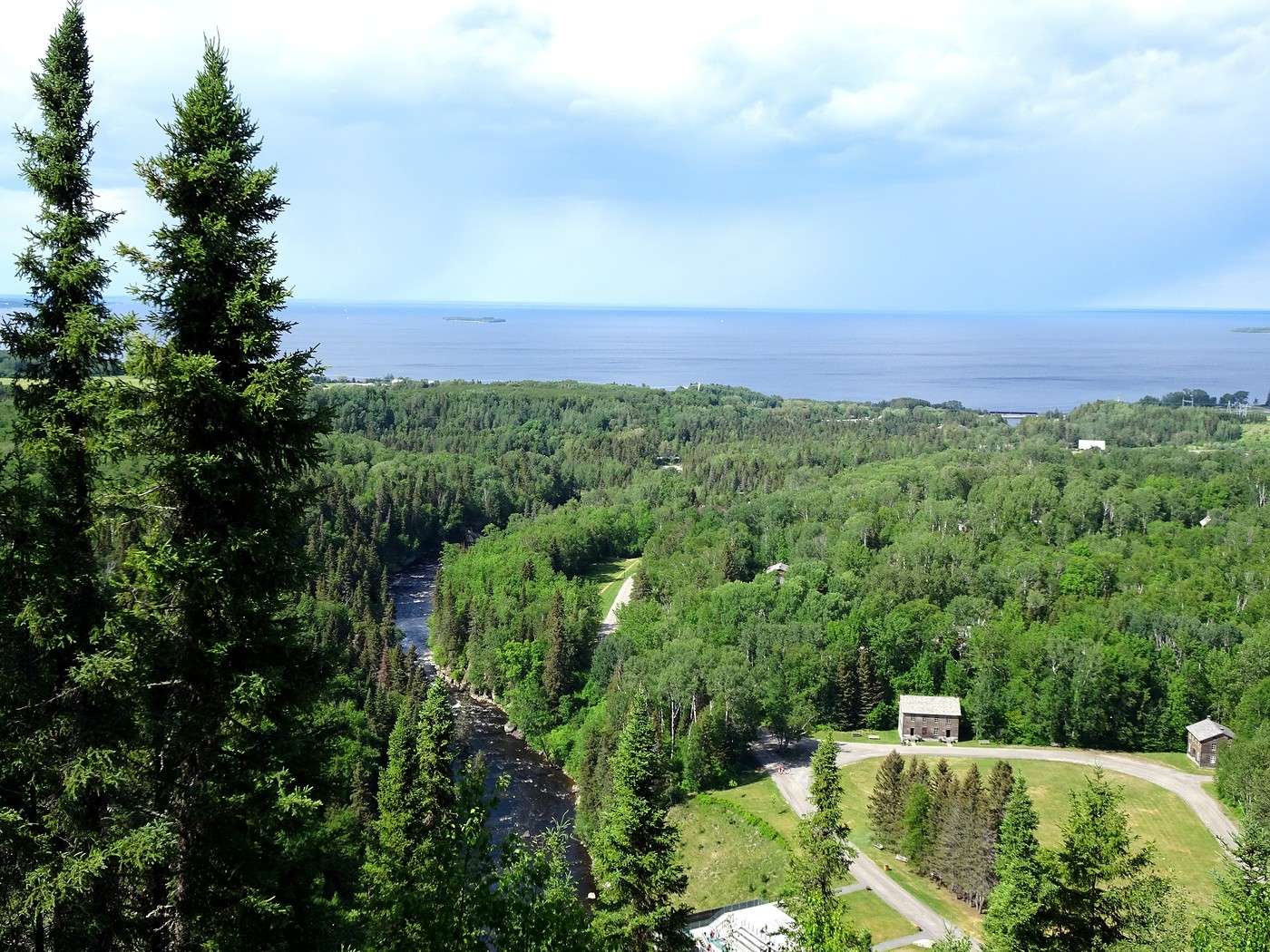
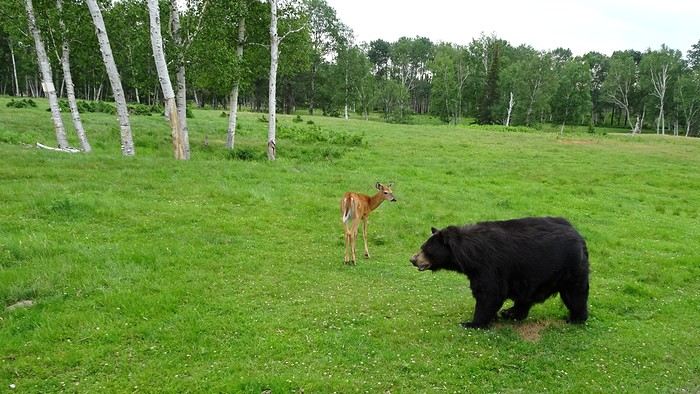
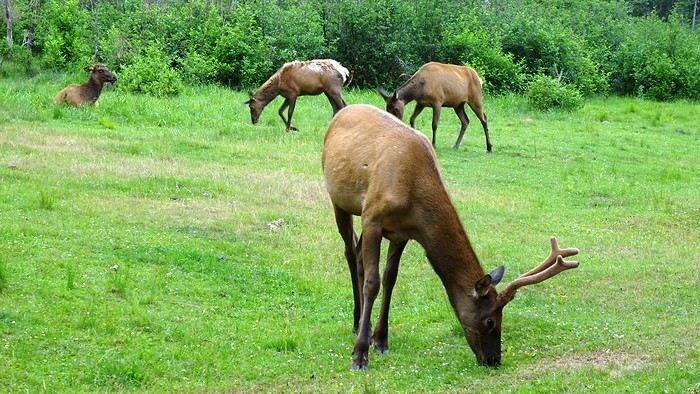
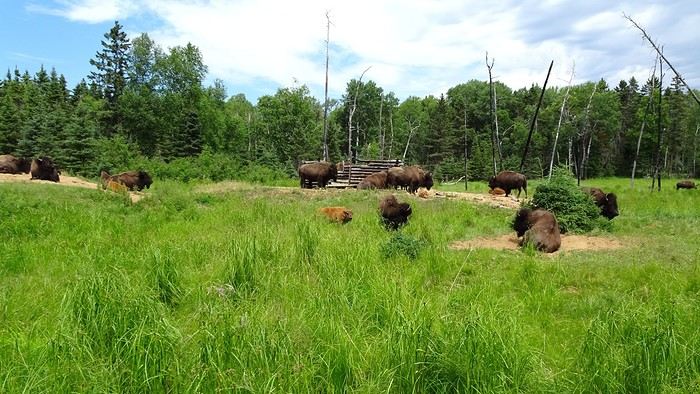
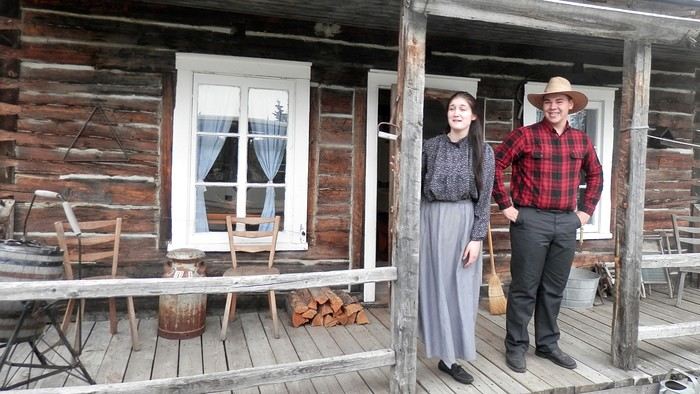
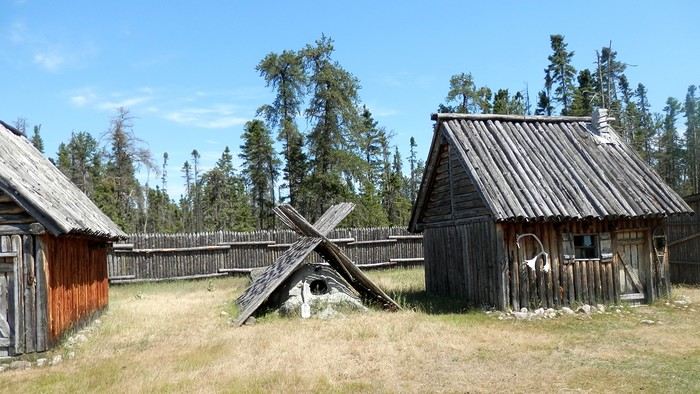
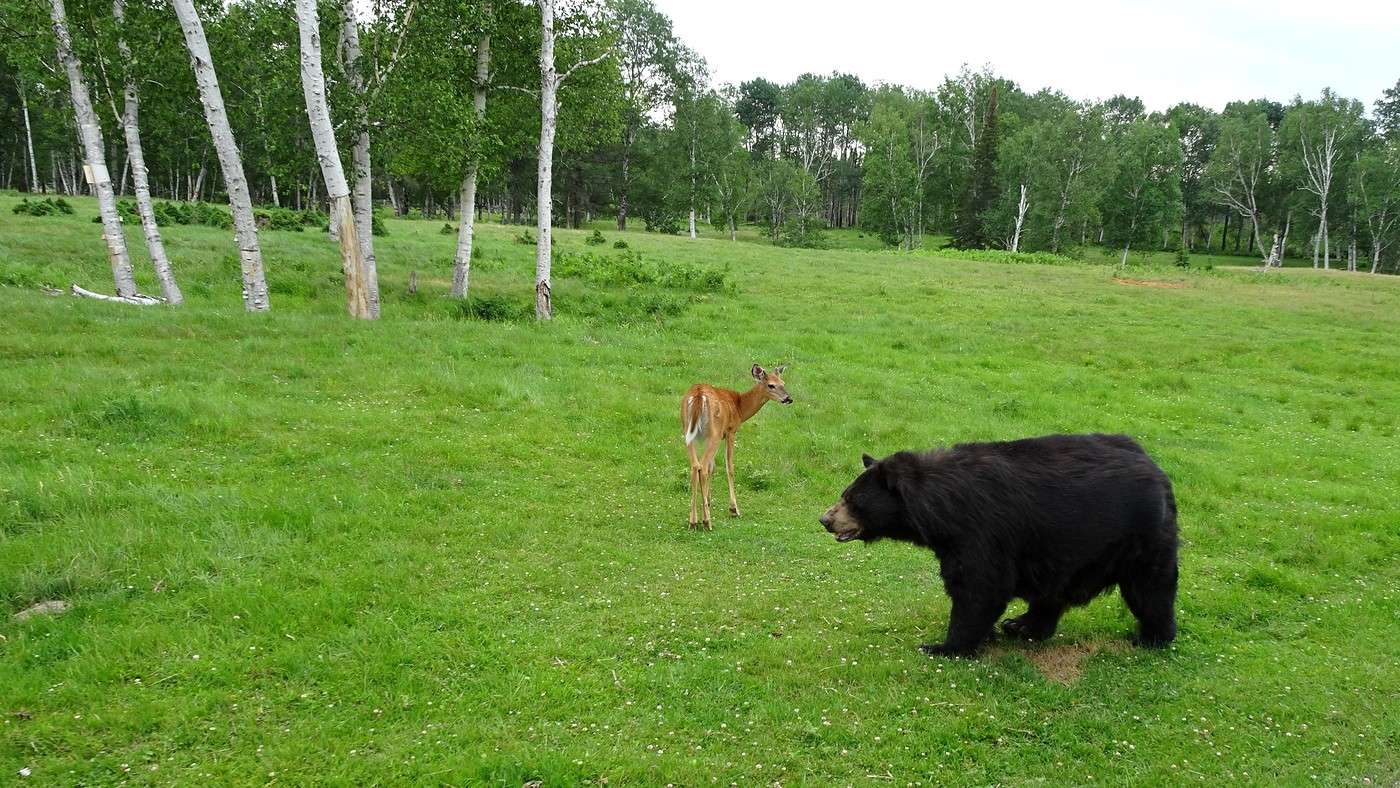
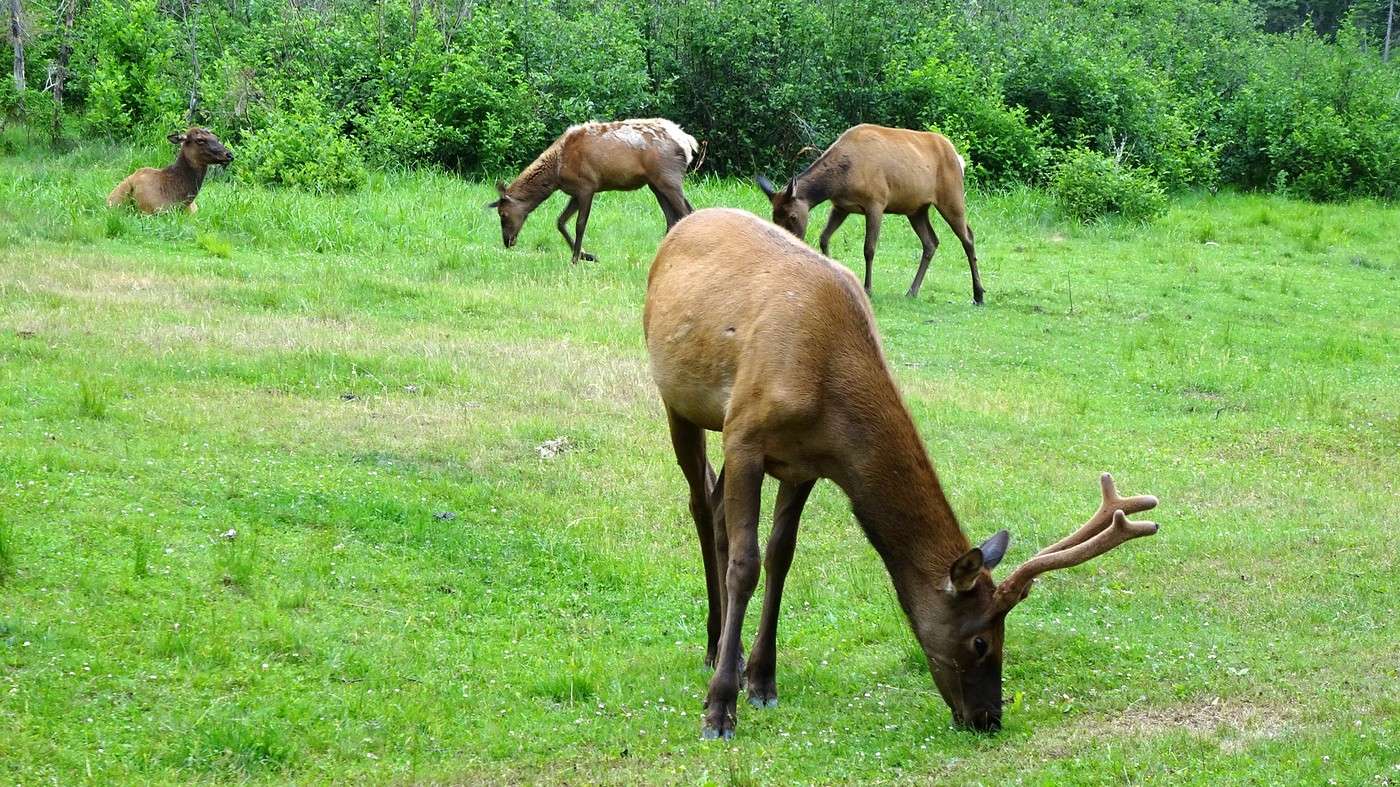
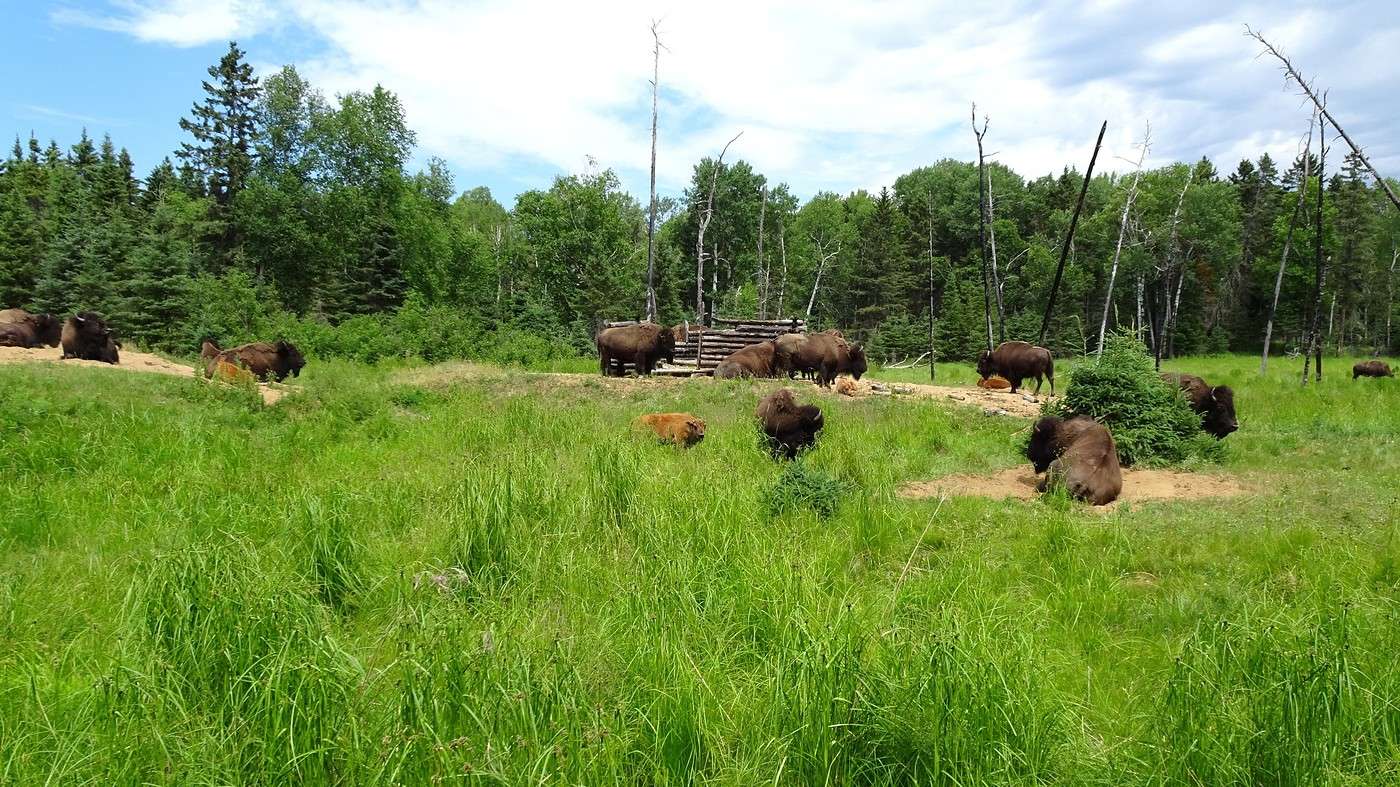
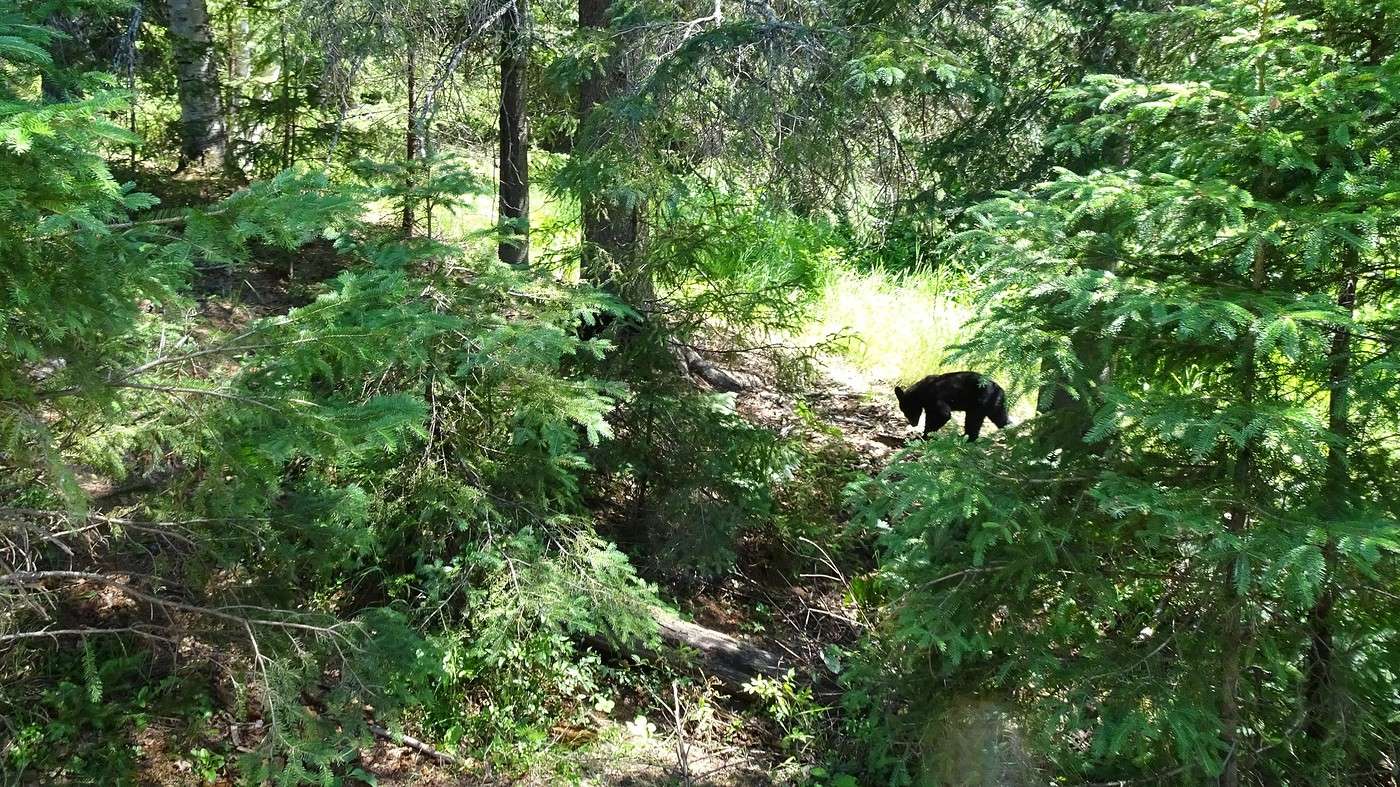
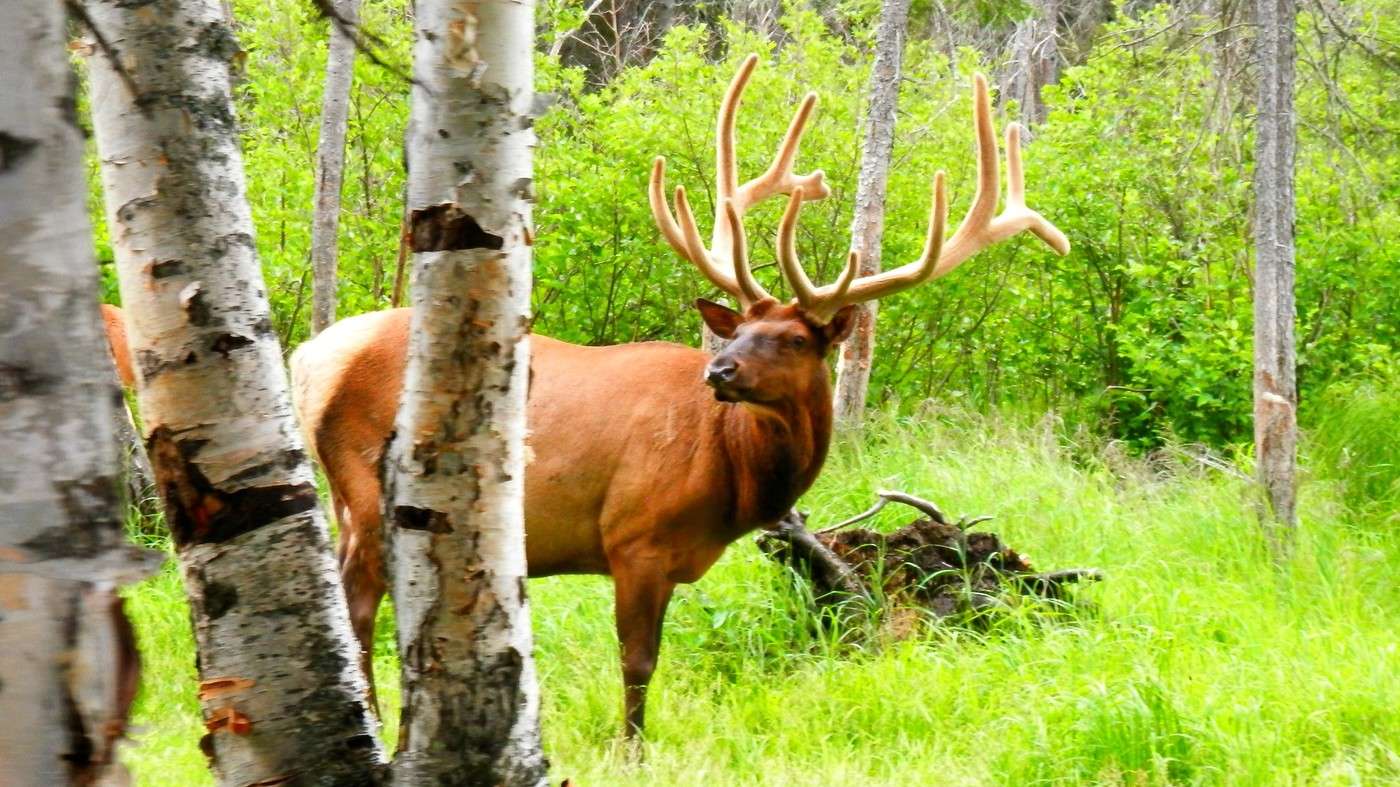
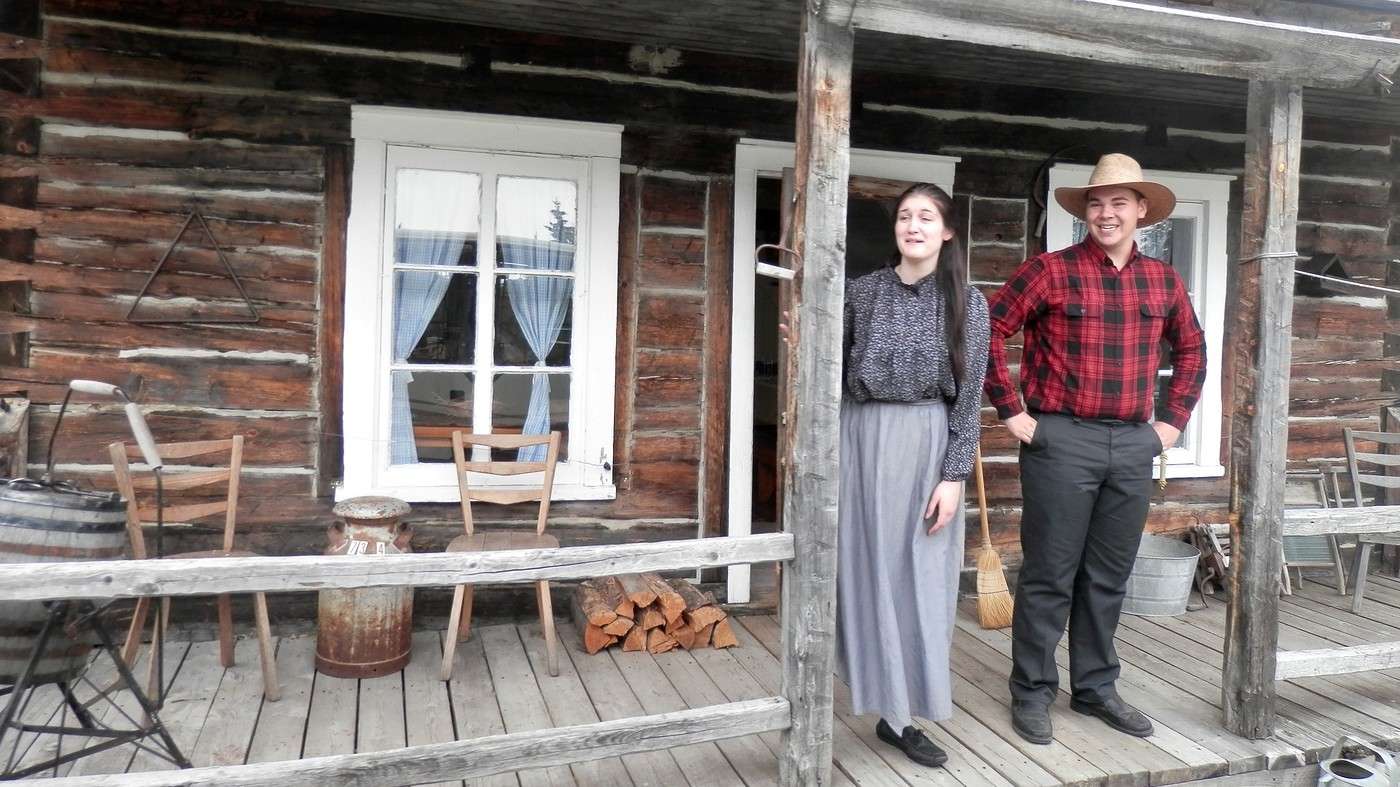
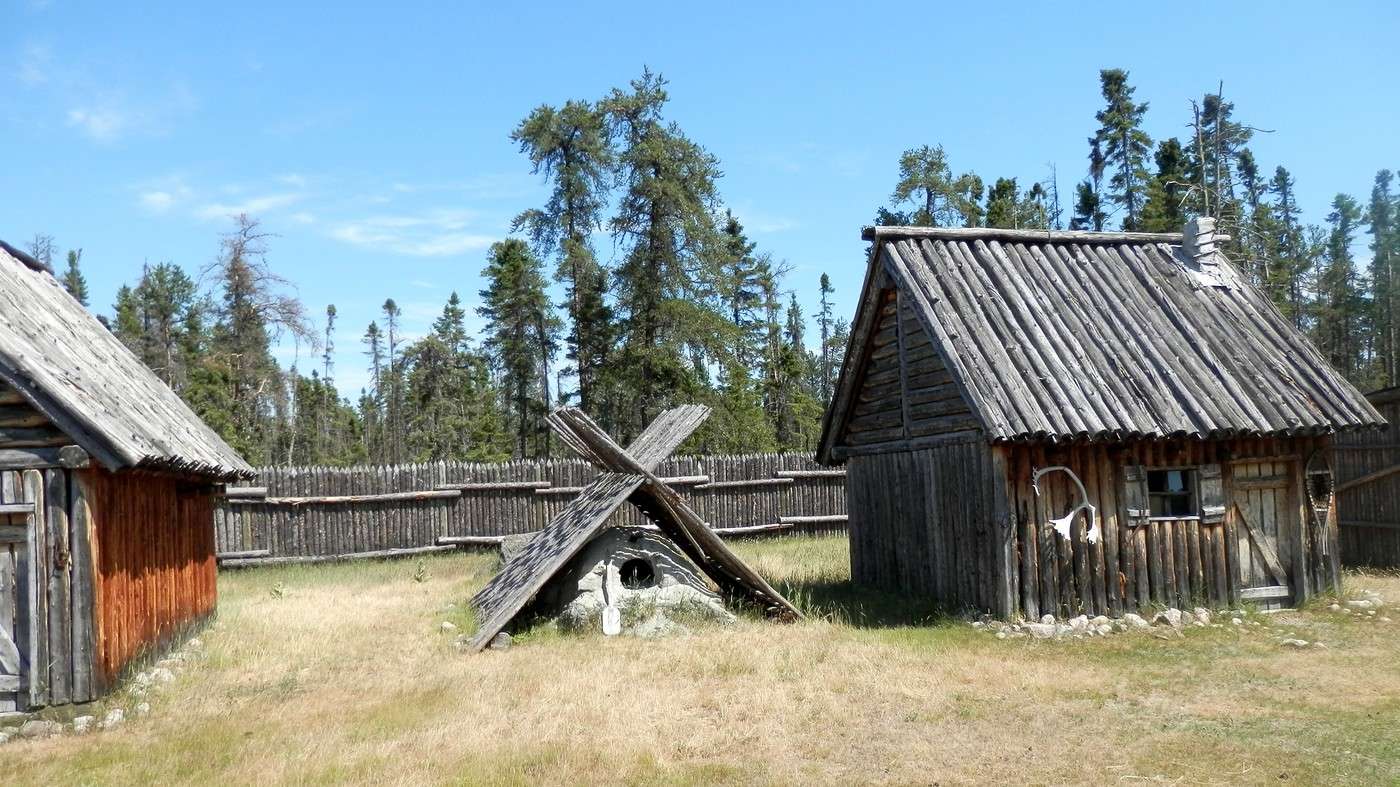
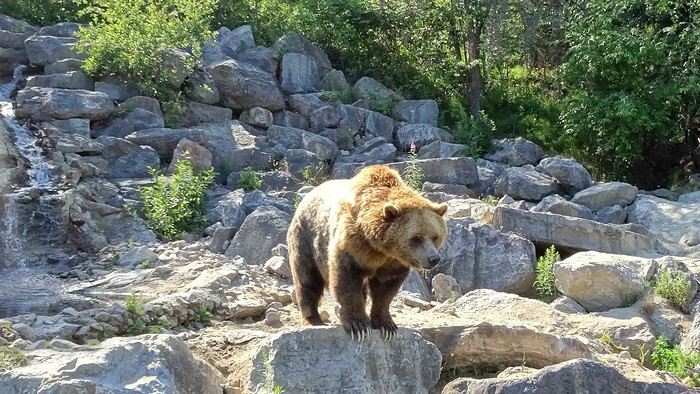
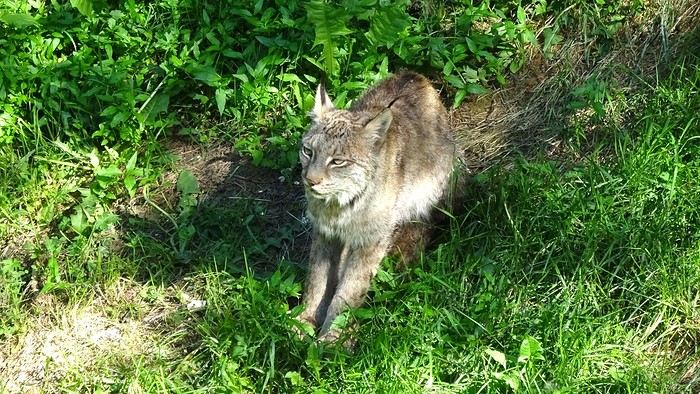
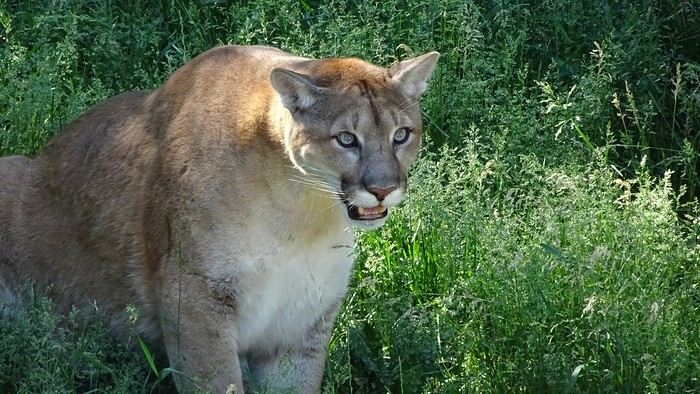 On the way, we pass through the Mashteuiatsh Indigenous reserve. It’s too late to visit the museum dedicated to the culture and traditions of the Pekuakamiulnuatsh (also called Montagnais). These Indigenous people are given a lot of space in the book I told you about regarding Val Jalbert.
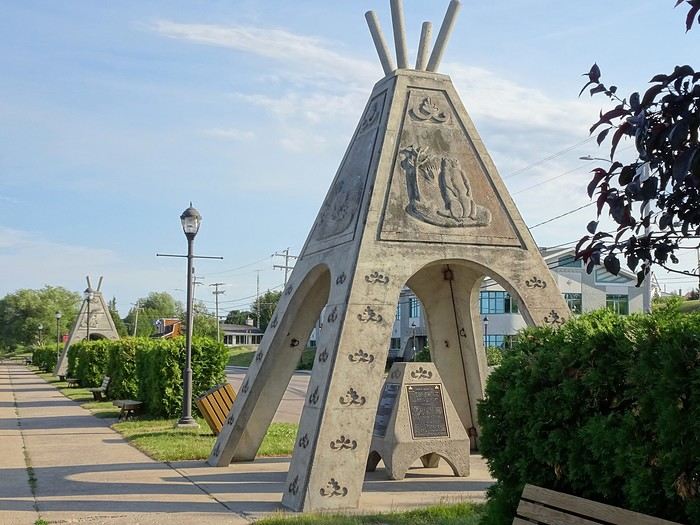 So, once again, it’ll have to wait for our next trip...
Tonight at the restaurant, we try tourtière and blueberry pie again. A waitress tells us that people who live around Lac Saint-Jean are nicknamed les Bleuets (the Blueberries).
So, once again, it’ll have to wait for our next trip...
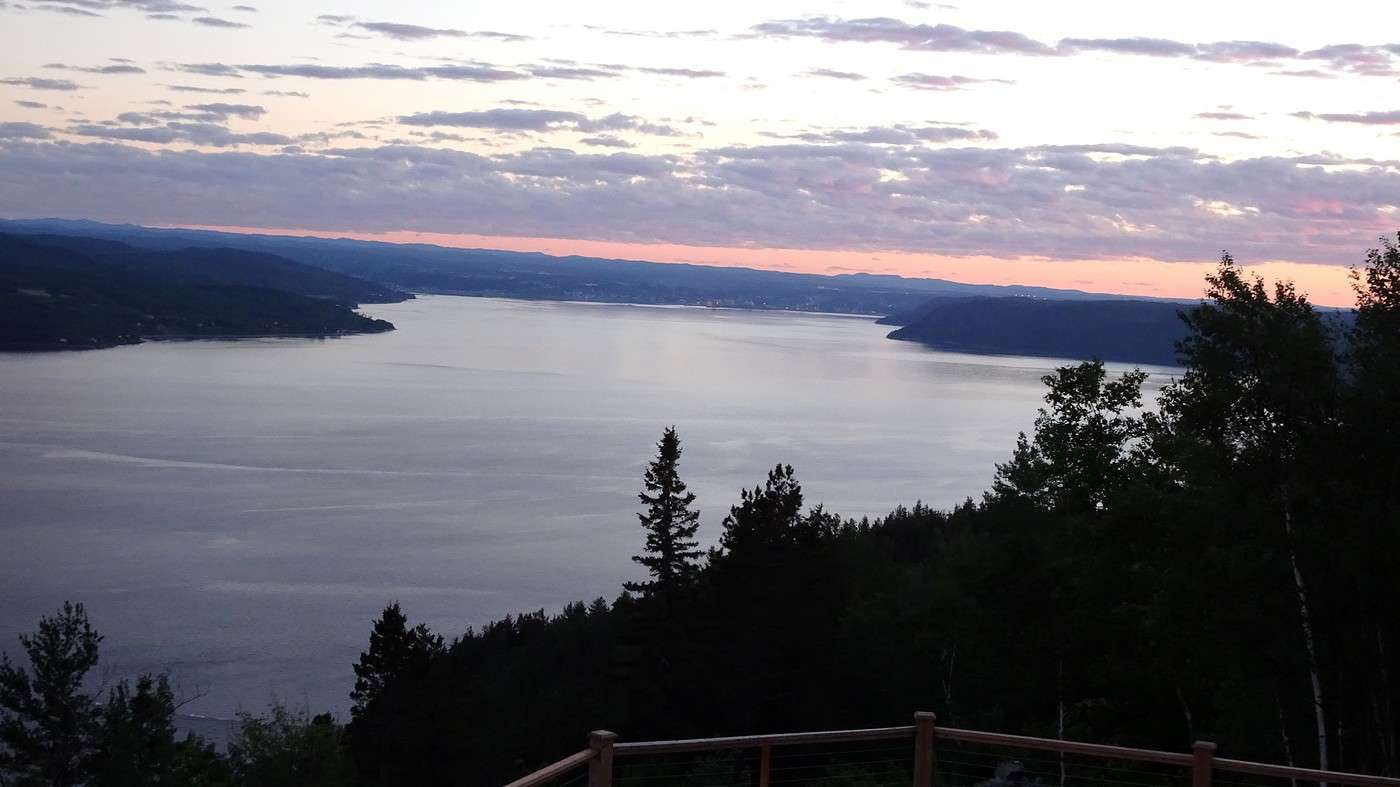
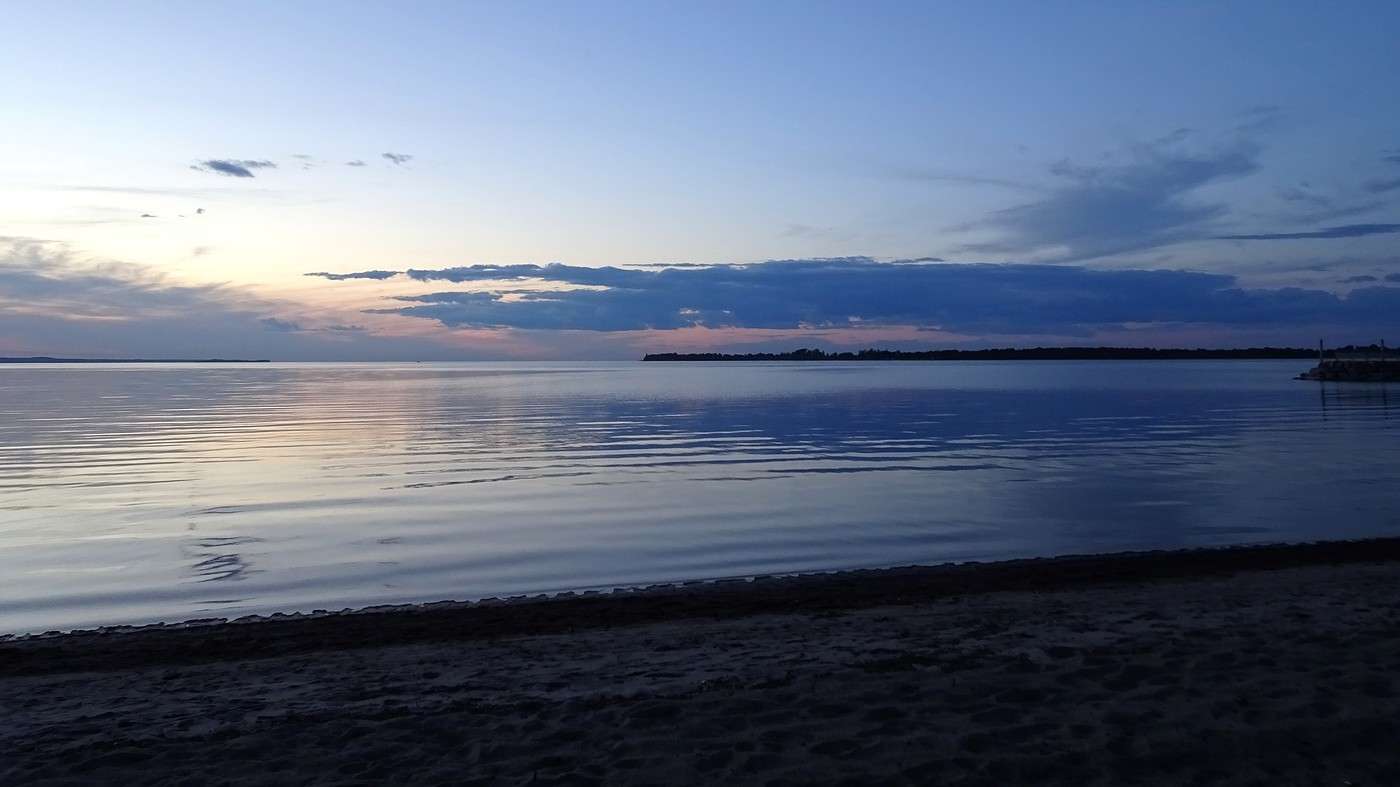
Tonight at the restaurant, we try tourtière and blueberry pie again. A waitress tells us that people who live around Lac Saint-Jean are nicknamed les Bleuets (the Blueberries).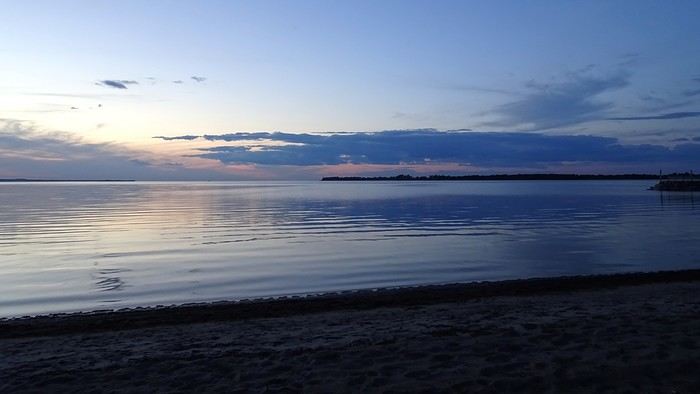 As a bonus, we’re treated to a beautiful sunset over Pekuakami (Lac Saint-Jean in the Montagnais language).
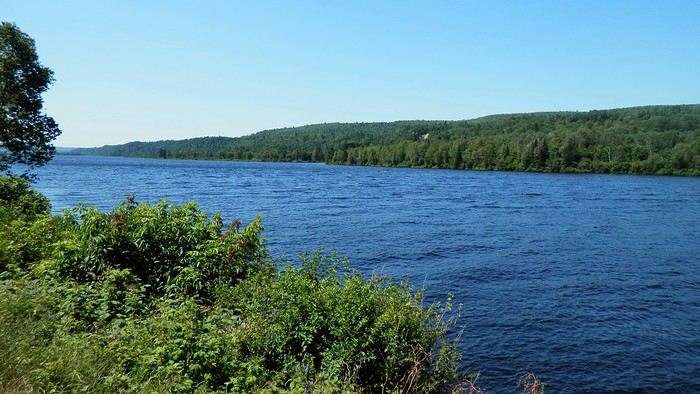 After returning to France, I realized we could’ve taken the scenic route through Parc national de la Mauricie, starting from Grandes-Piles. It would’ve meant a detour, of course, but apparently, it’s stunning... Should I say it again? Oh, go on: next time!
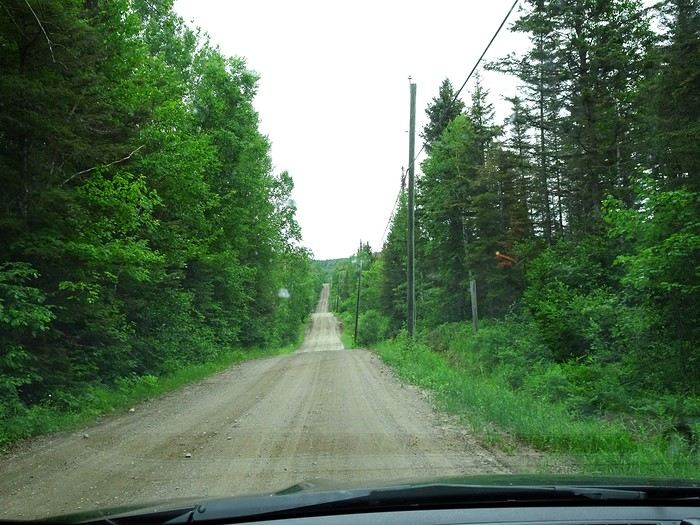
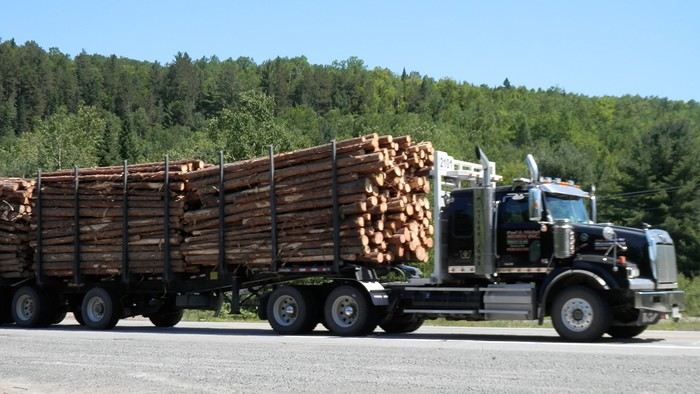
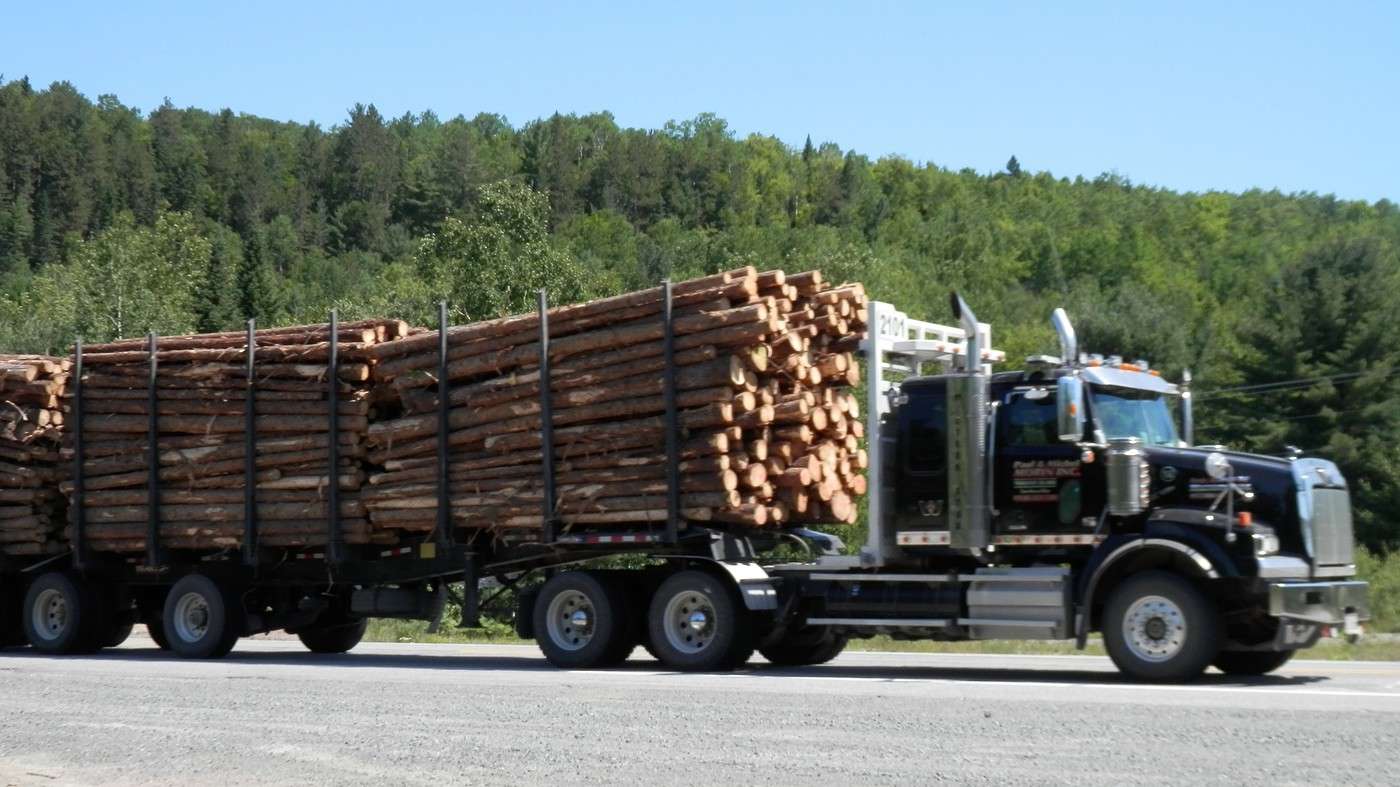
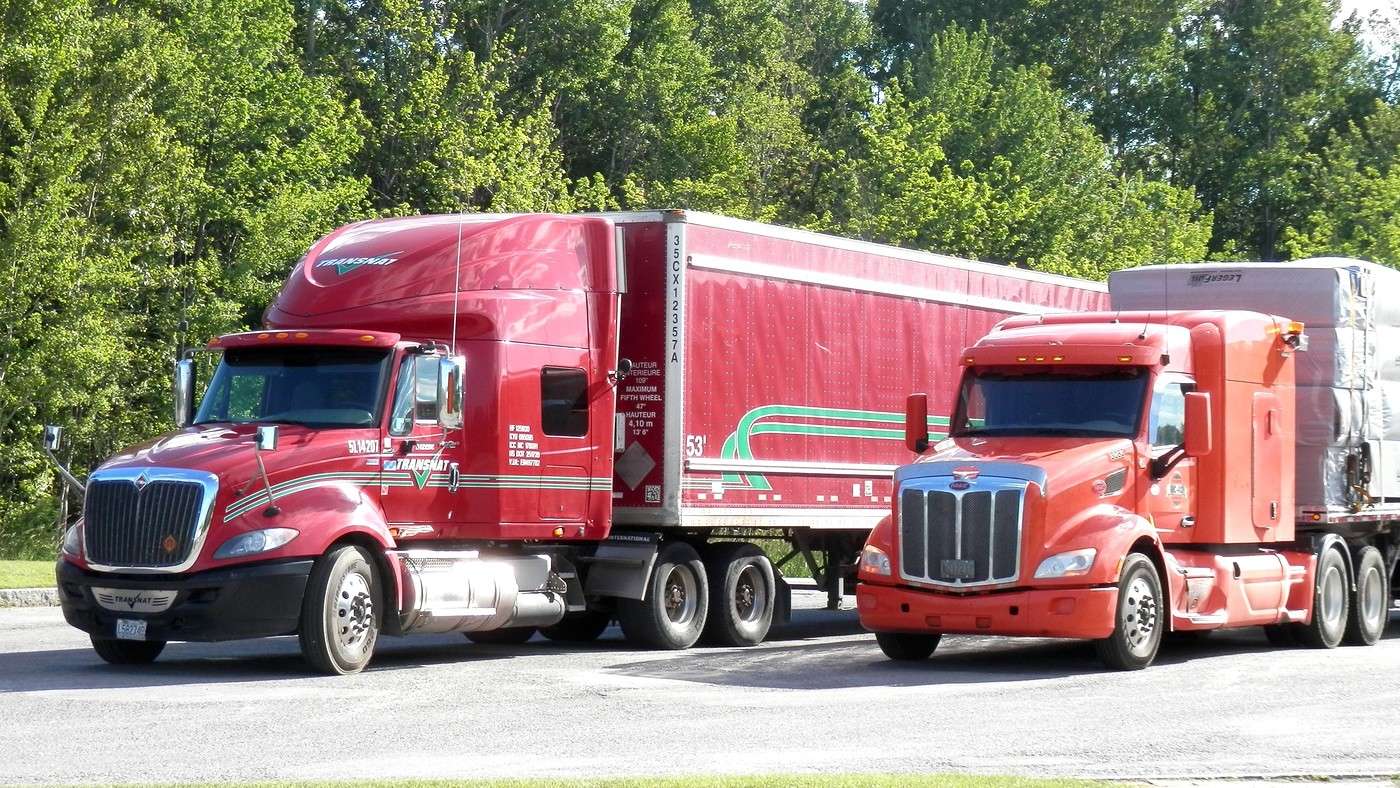
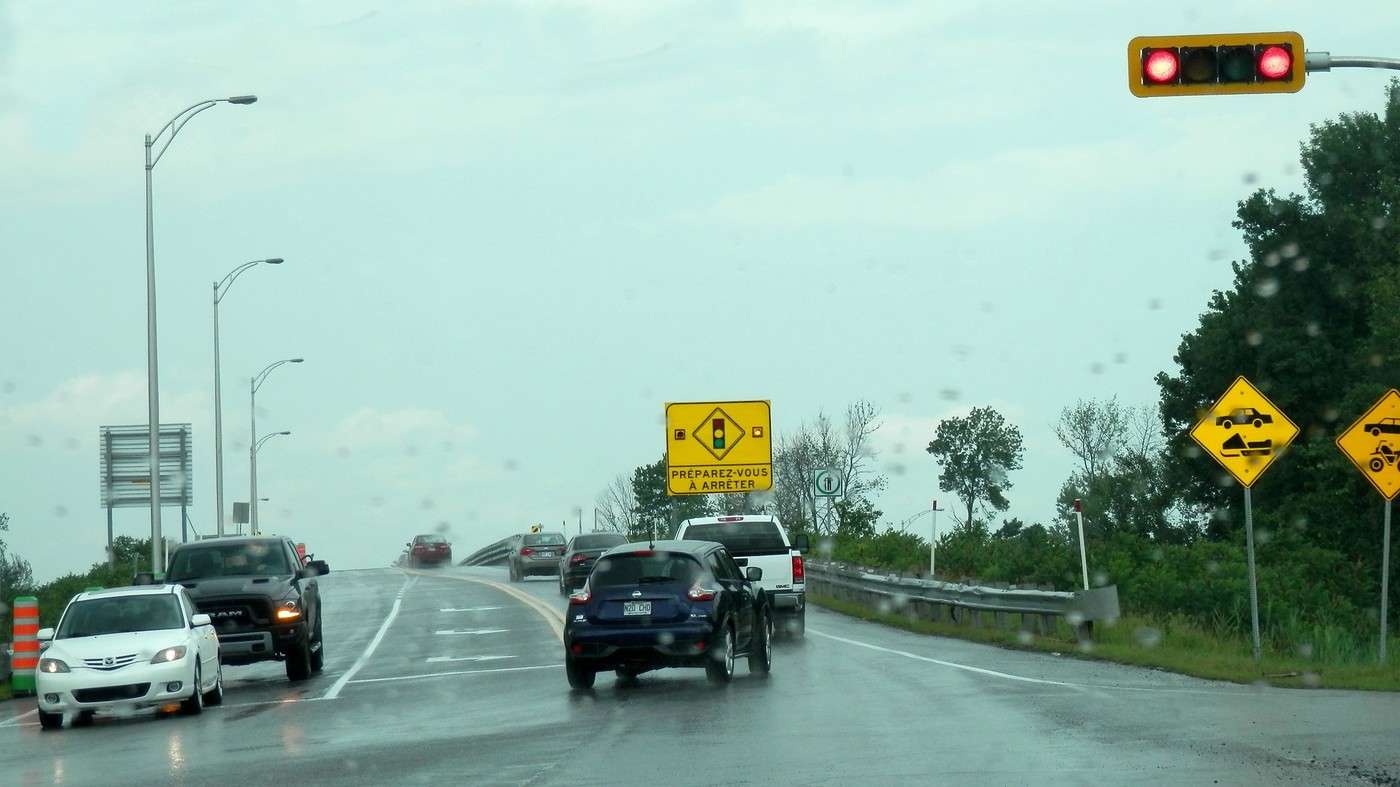
Along the way, we pass or get overtaken by huge trucks that seem to be speeding. I wasn’t exactly at ease—it was the first time since the start of the trip.
After returning to France, I realized we could’ve taken the scenic route through Parc national de la Mauricie, starting from Grandes-Piles. It would’ve meant a detour, of course, but apparently, it’s stunning... Should I say it again? Oh, go on: next time!
Along the way, we pass or get overtaken by huge trucks that seem to be speeding. I wasn’t exactly at ease—it was the first time since the start of the trip.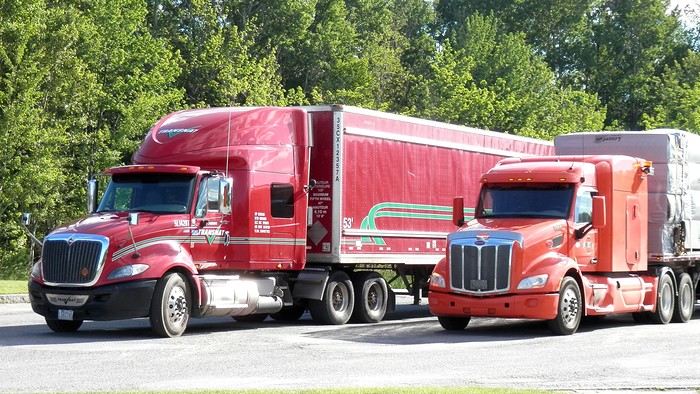
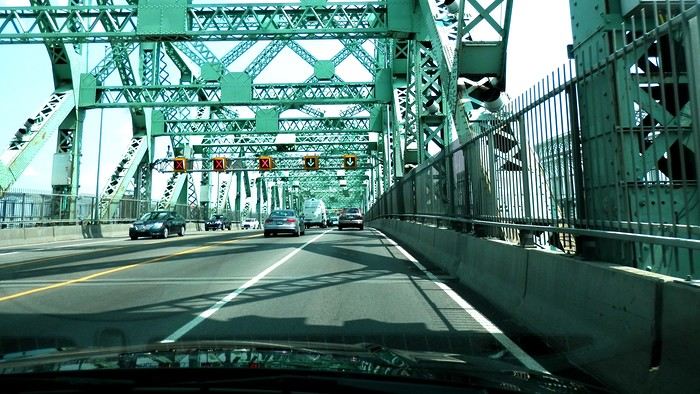
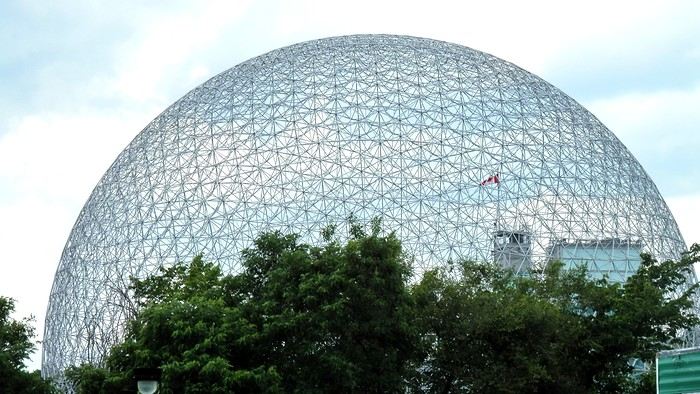
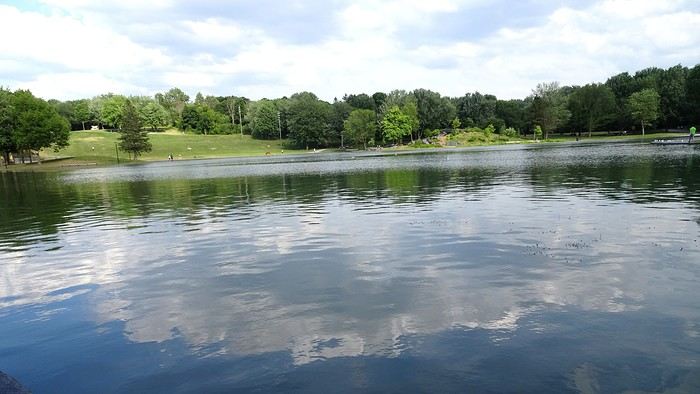
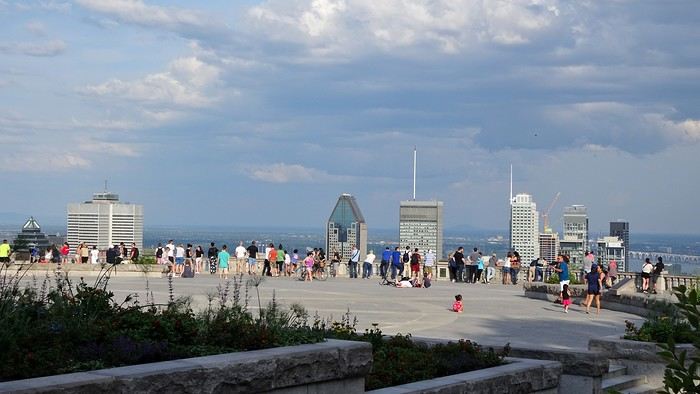
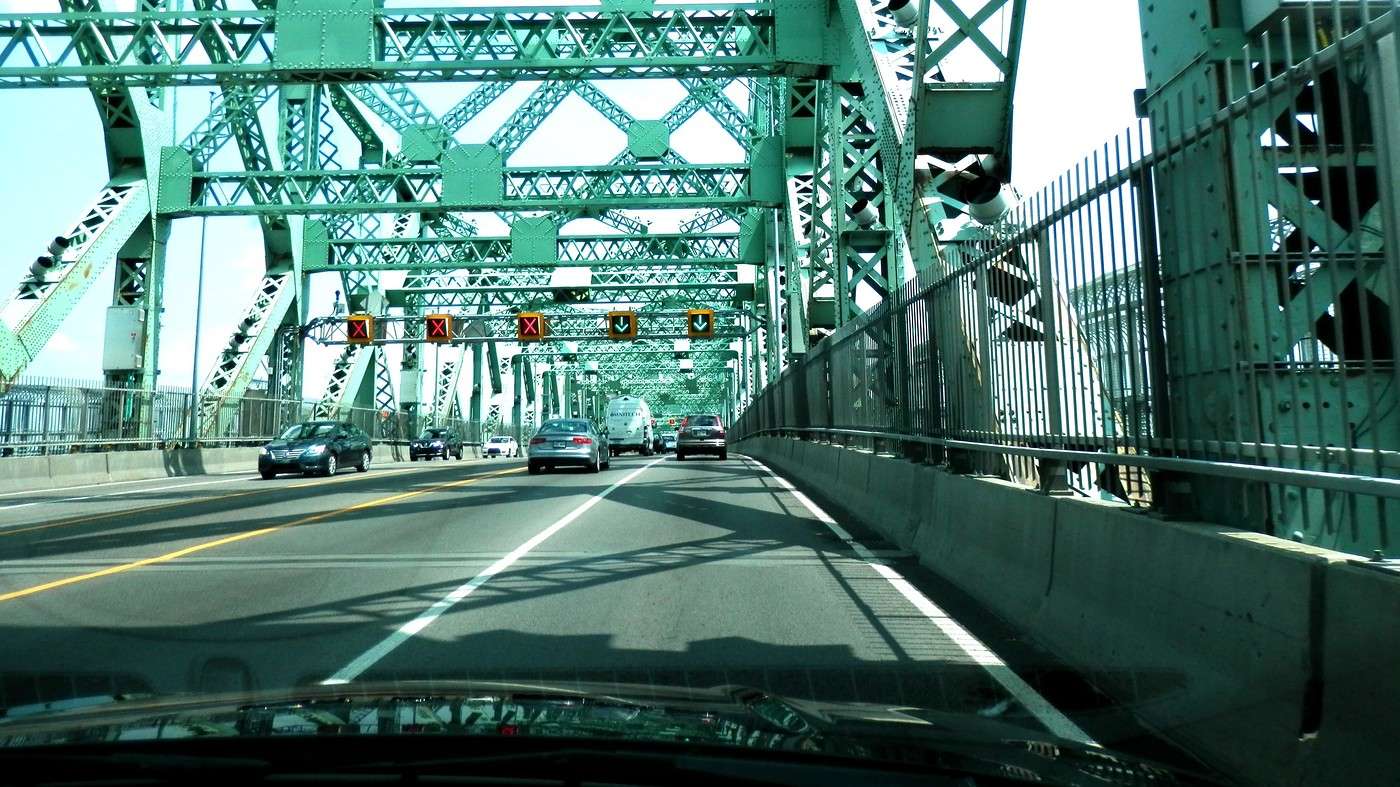
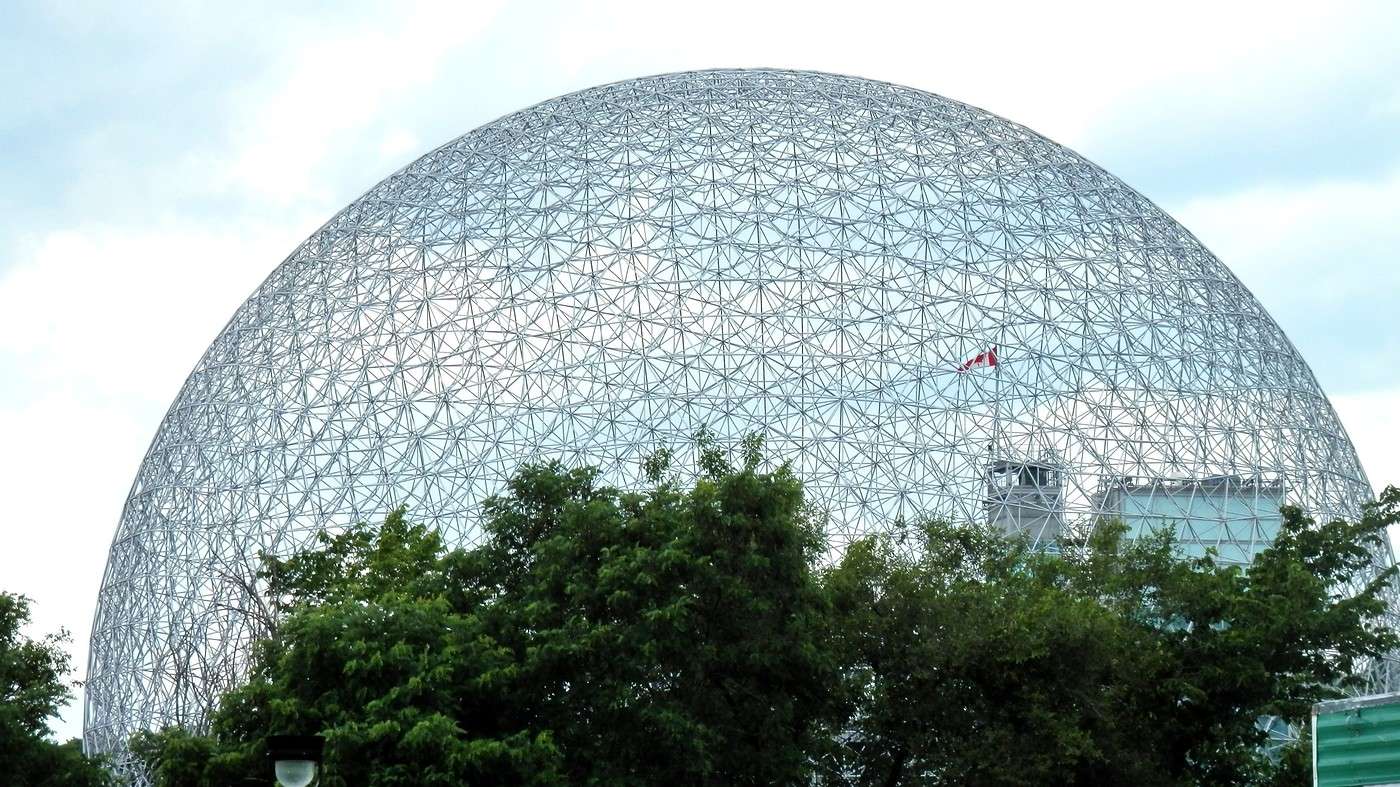
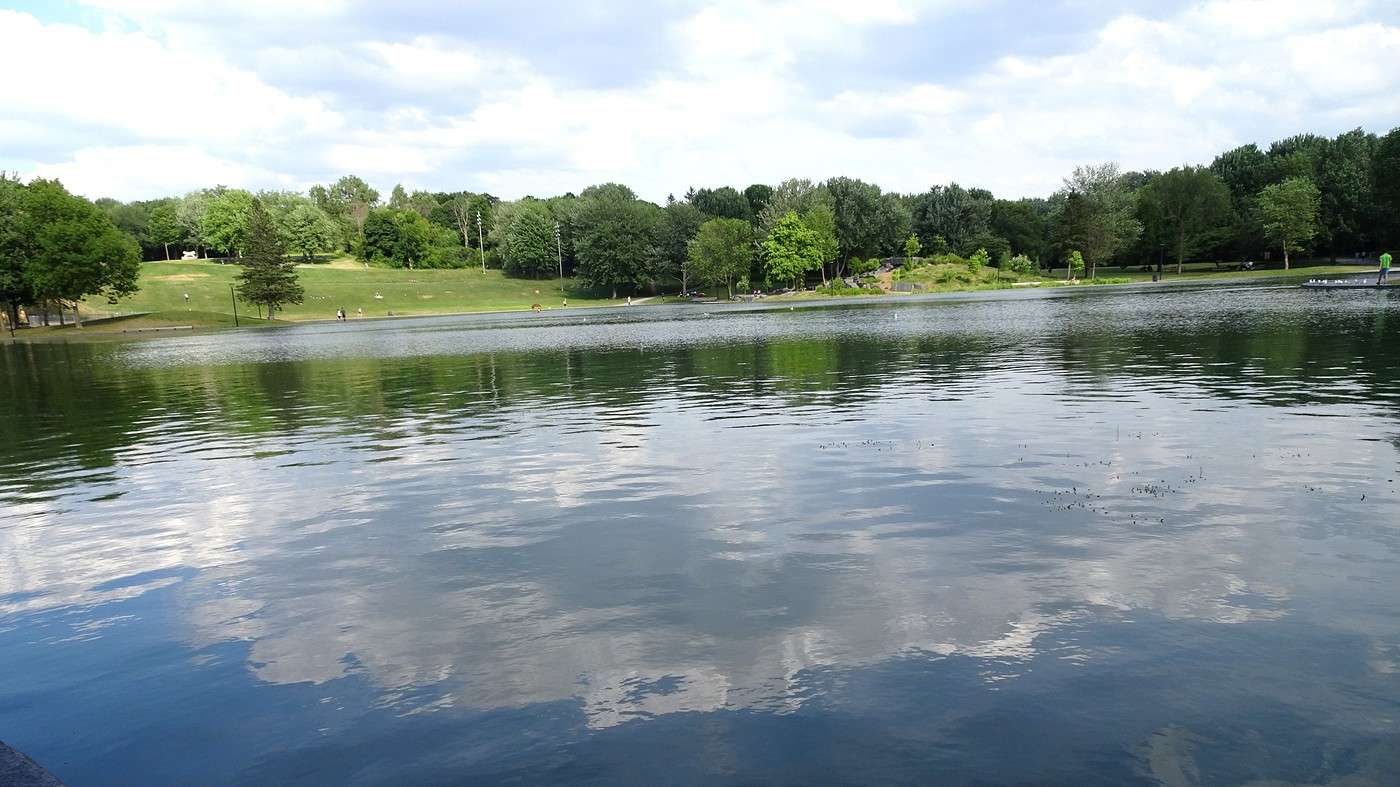
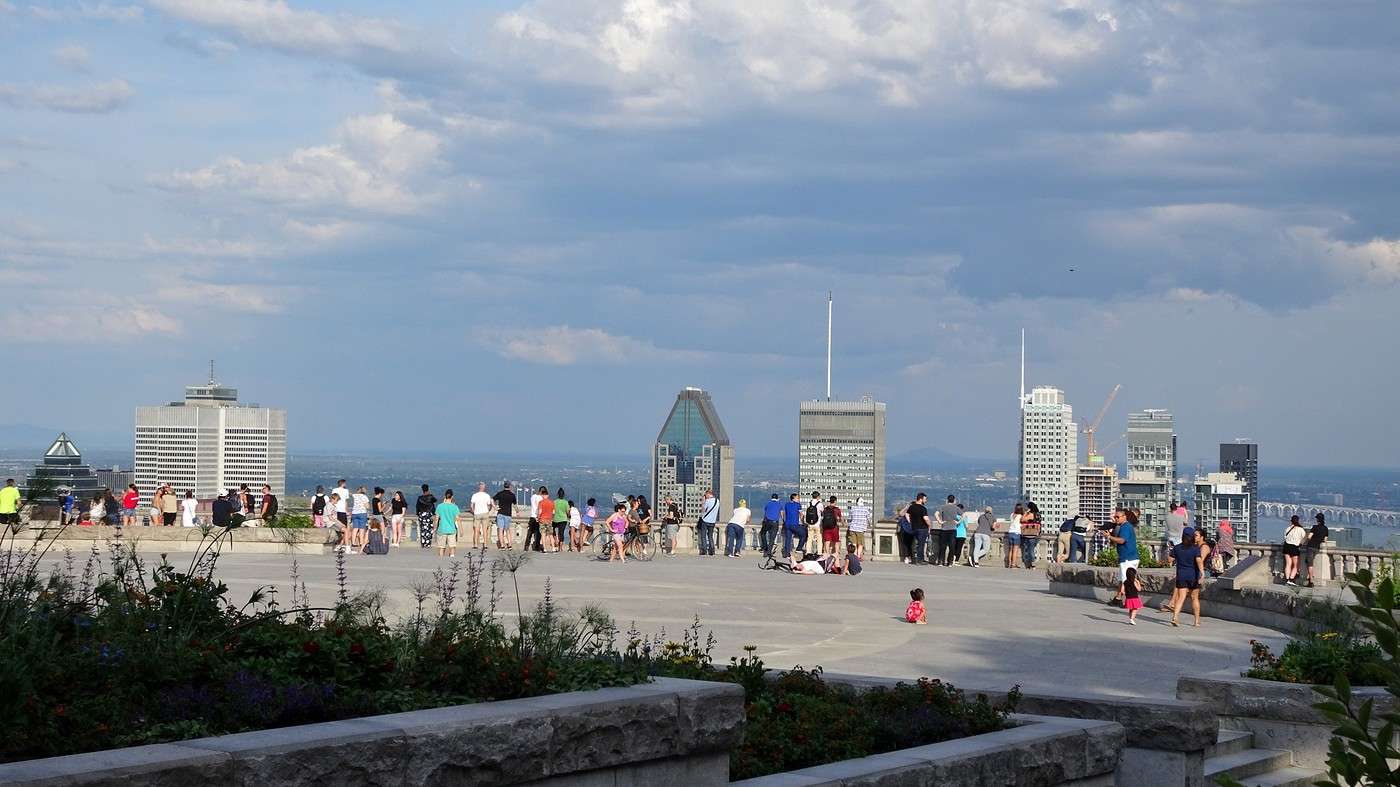
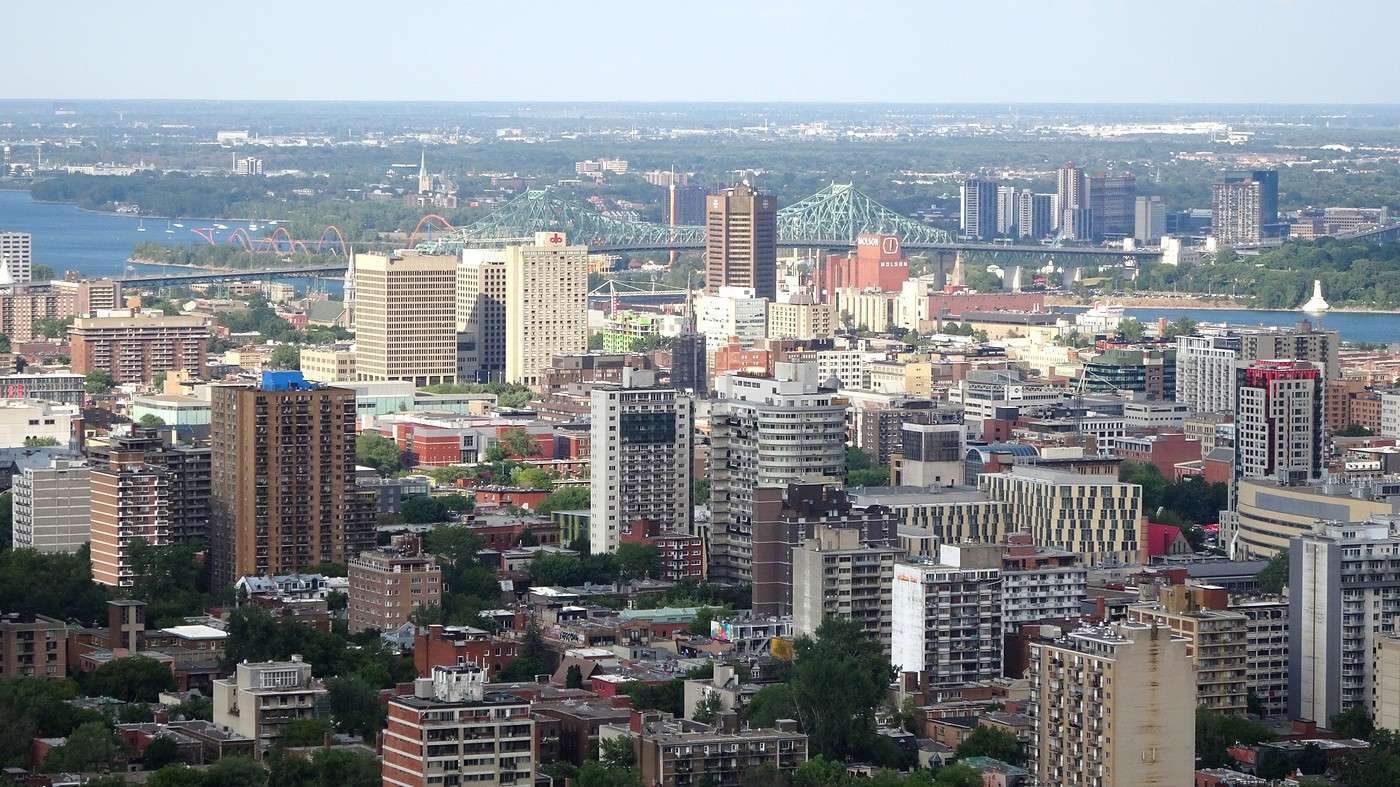
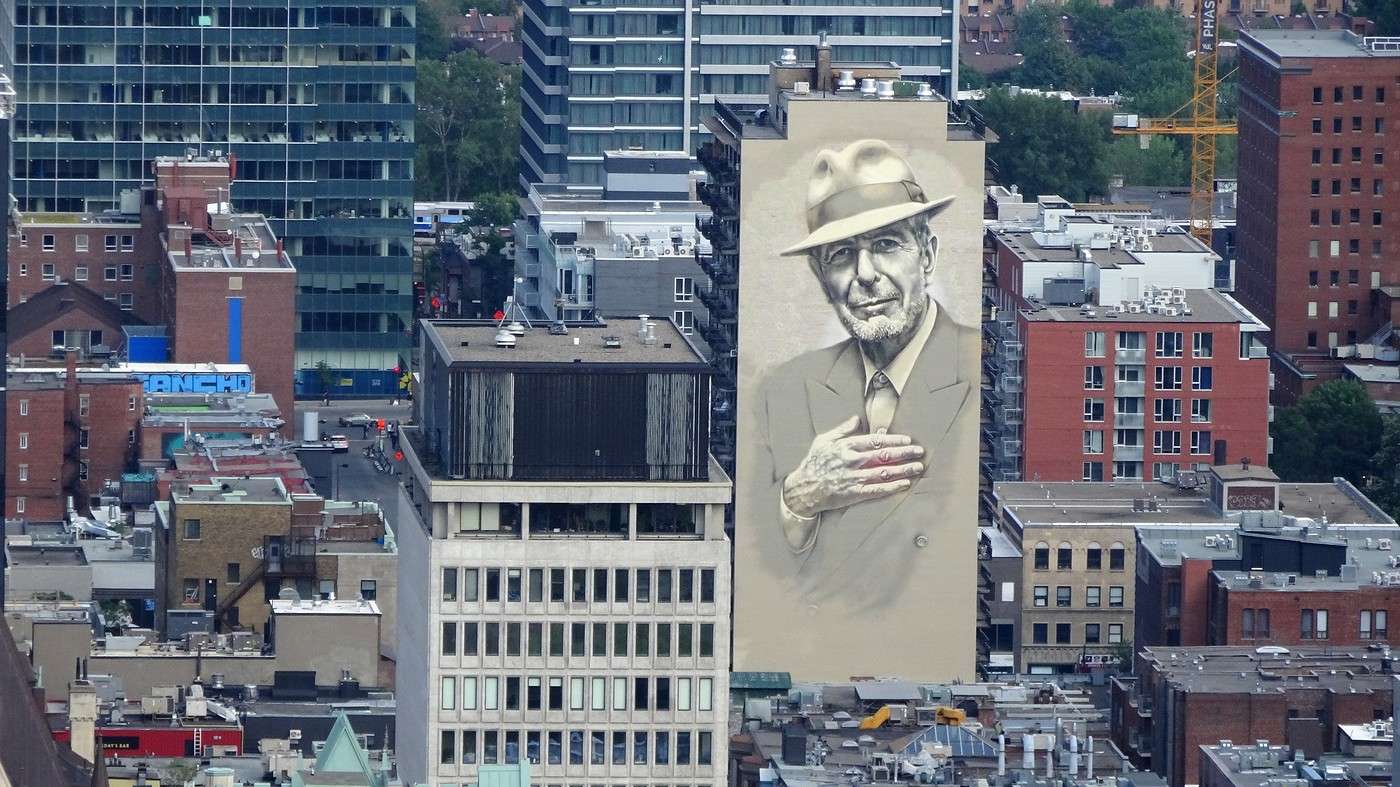
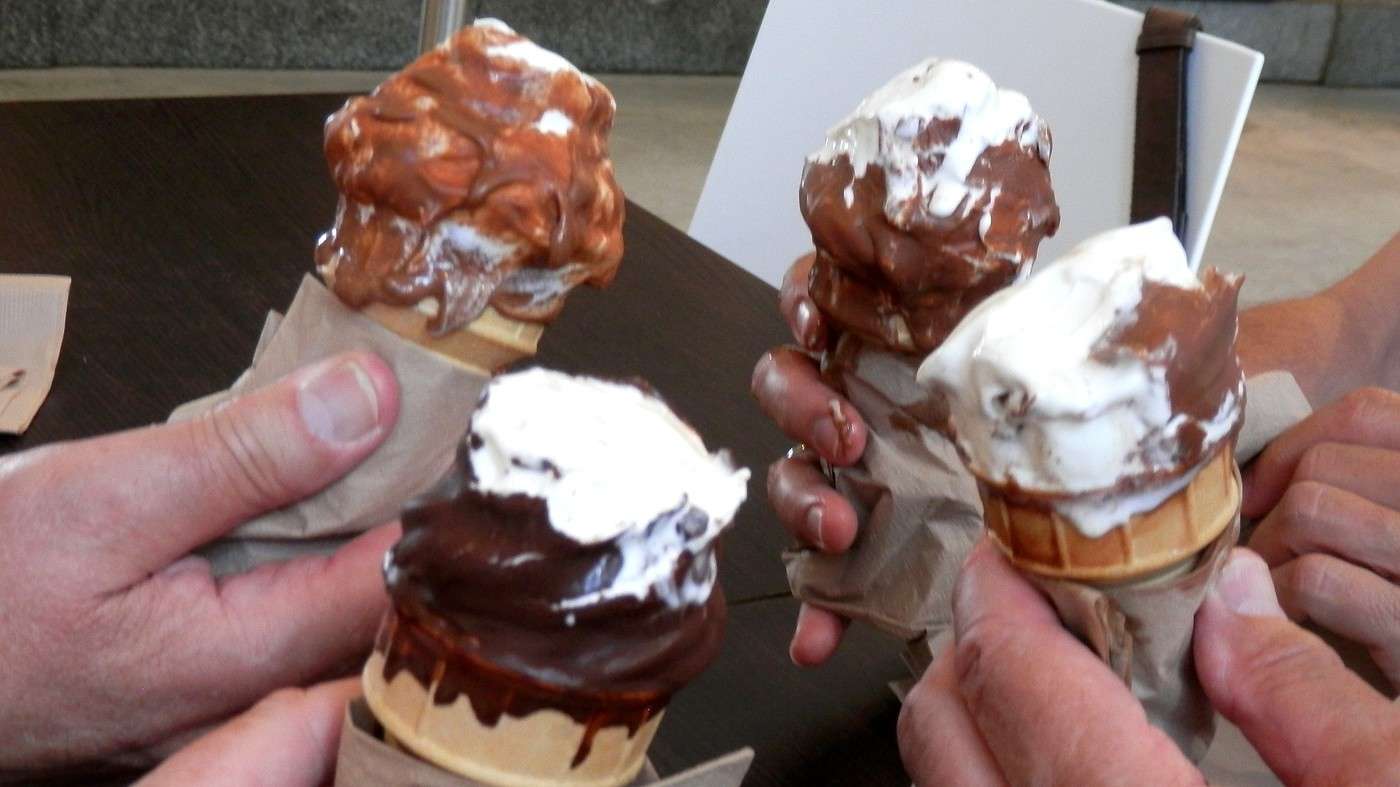
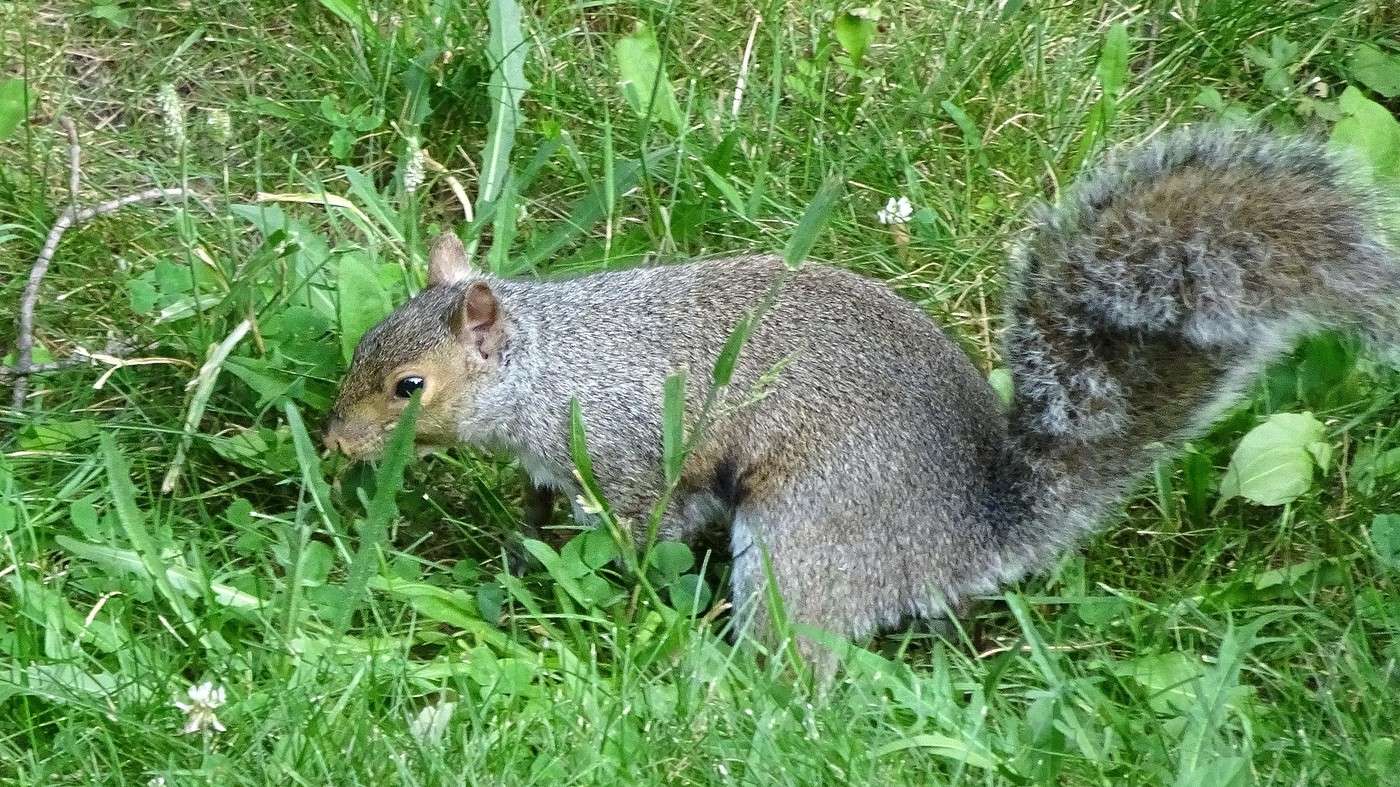
 We can still use the car until mid-afternoon.
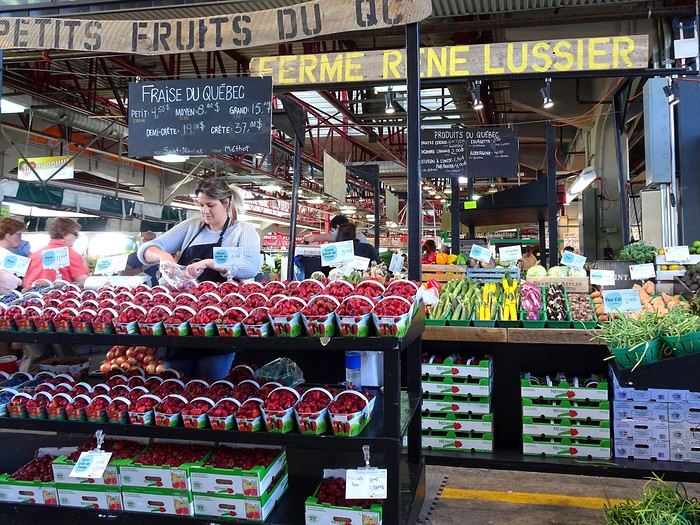
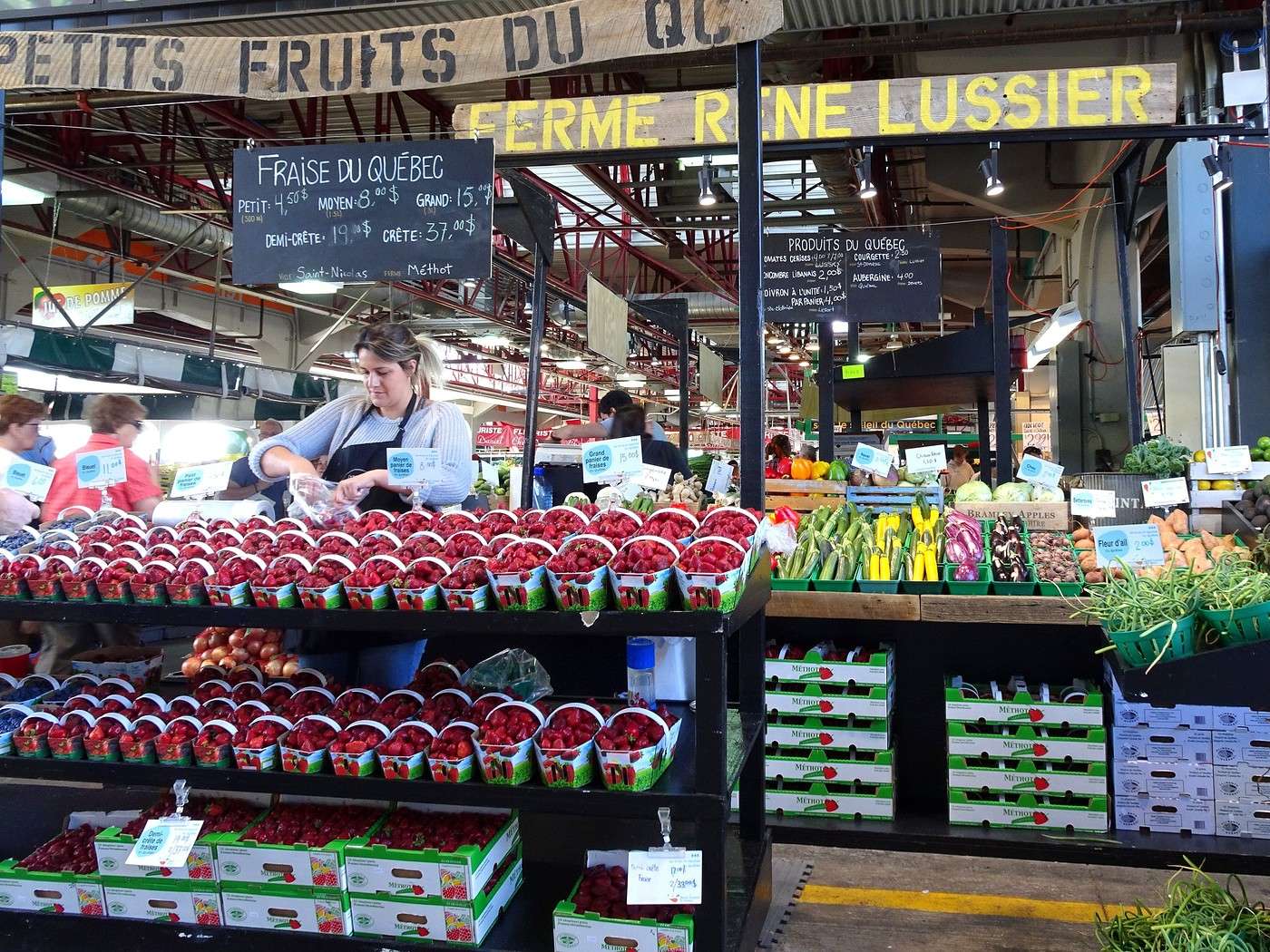
Off we go to Little Italy, and more specifically to Marché Jean Talon, a place where you can find all kinds of products from Quebec’s different regions. It’s one of Montreal’s oldest public markets and one of the largest in North America.
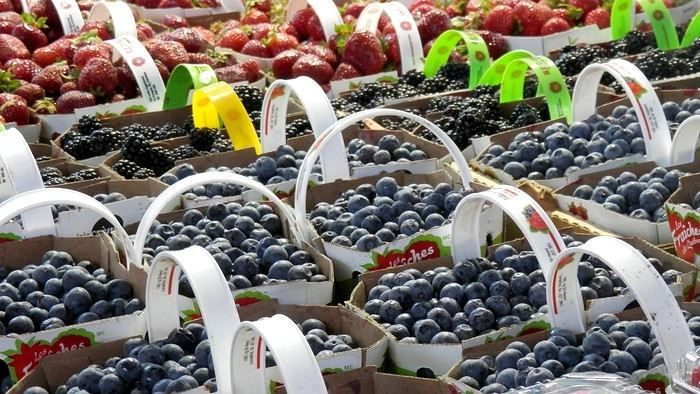
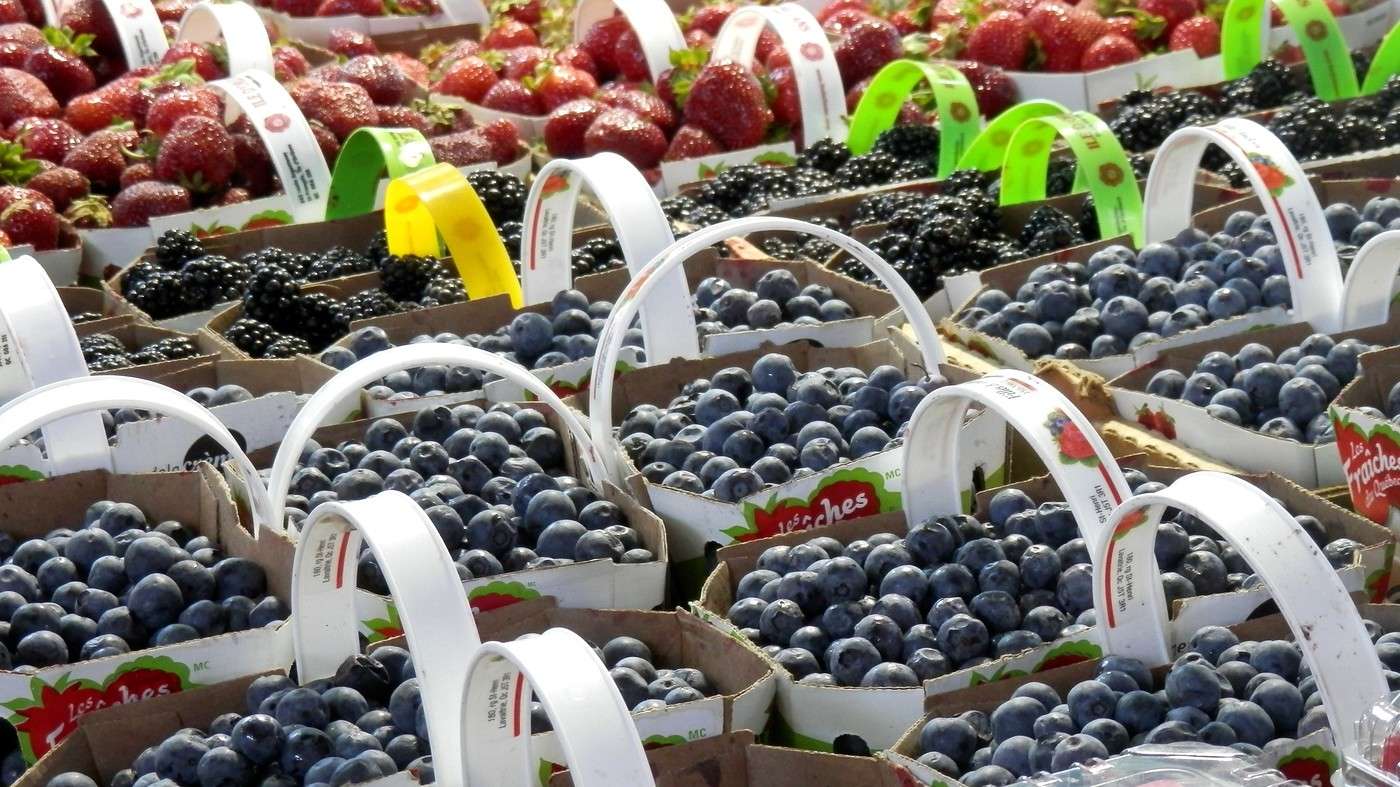
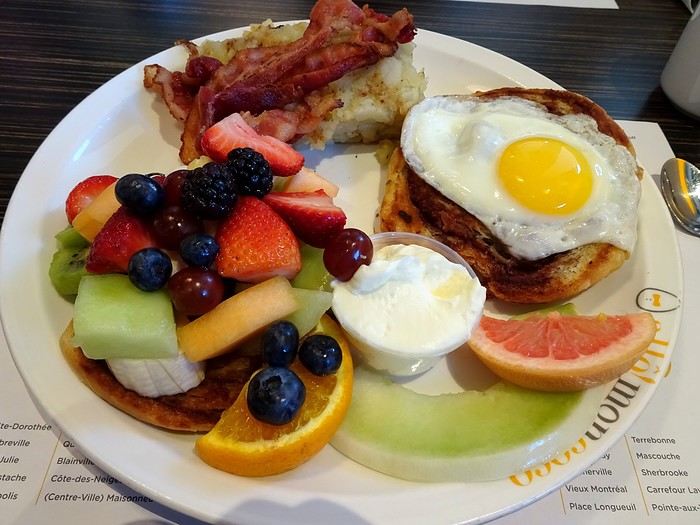
We see some gorgeous fruits there, including the famous blueberries. Though it seems like it’s not quite blueberry-picking season yet. Those must be greenhouse-grown. We also stock up on maple syrup for family and friends.
We can still use the car until mid-afternoon.
Off we go to Little Italy, and more specifically to Marché Jean Talon, a place where you can find all kinds of products from Quebec’s different regions. It’s one of Montreal’s oldest public markets and one of the largest in North America.
We see some gorgeous fruits there, including the famous blueberries. Though it seems like it’s not quite blueberry-picking season yet. Those must be greenhouse-grown. We also stock up on maple syrup for family and friends.