Back to the discussion

in Entre deux voyages › Carnets de voyage

From Caño Cristales to Tayrona Park

Discussion started by Phil31600 on 2024-12-31

20 replies

This thread has been translated into English.


From Caño Cristales to Tayrona Park

Phil31600 · 2024-12-31

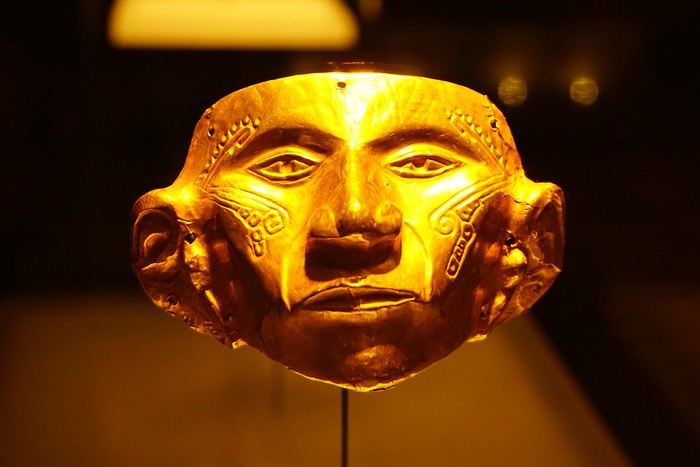
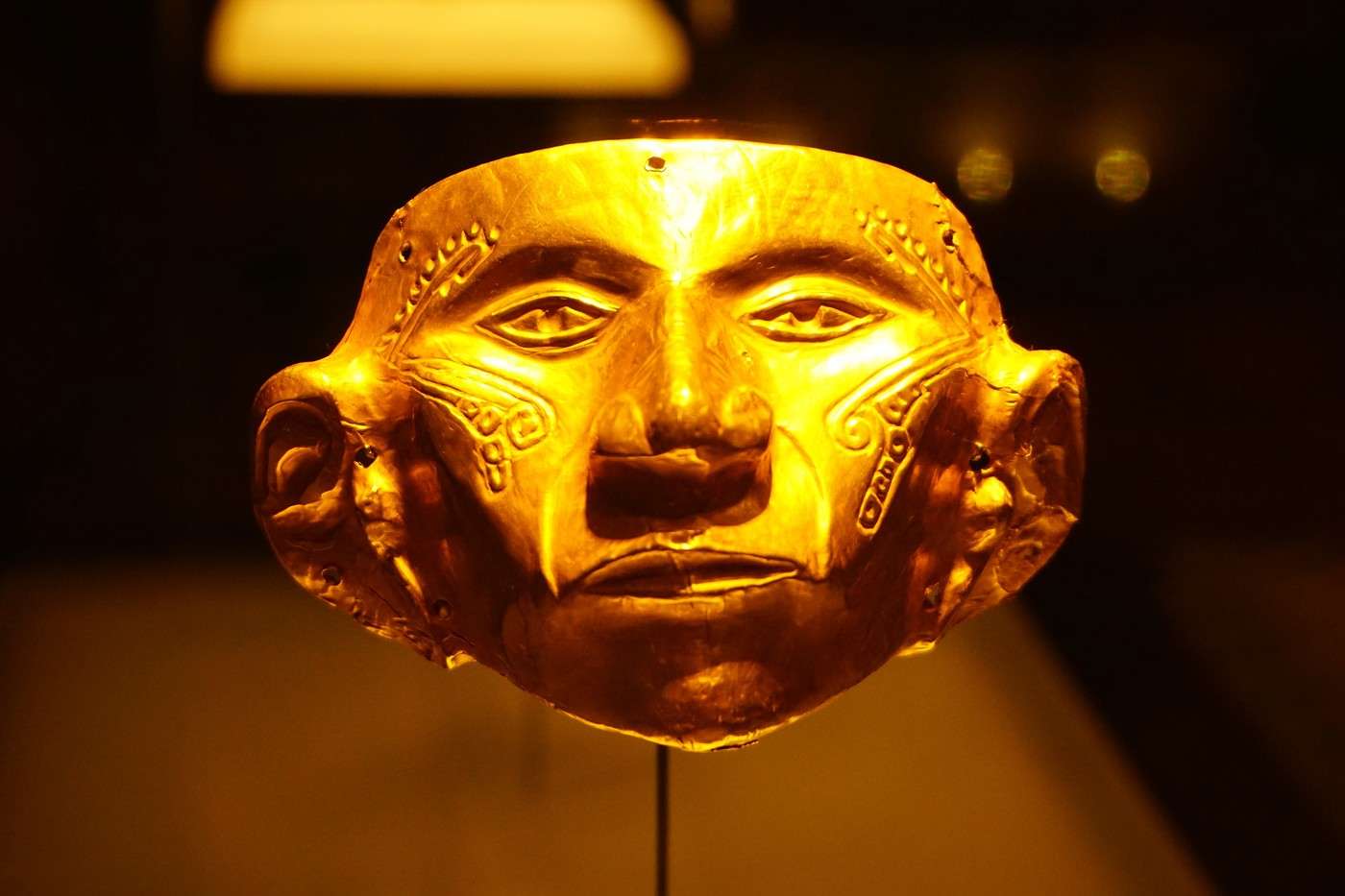
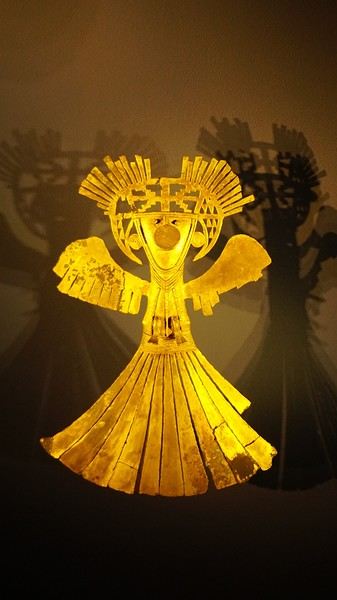
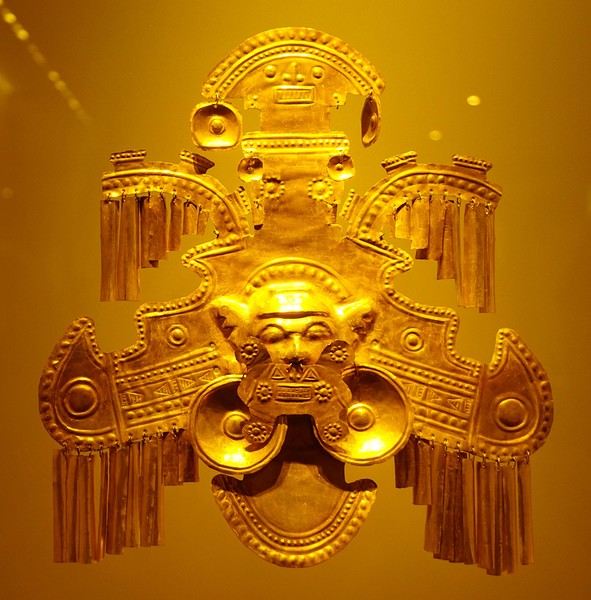
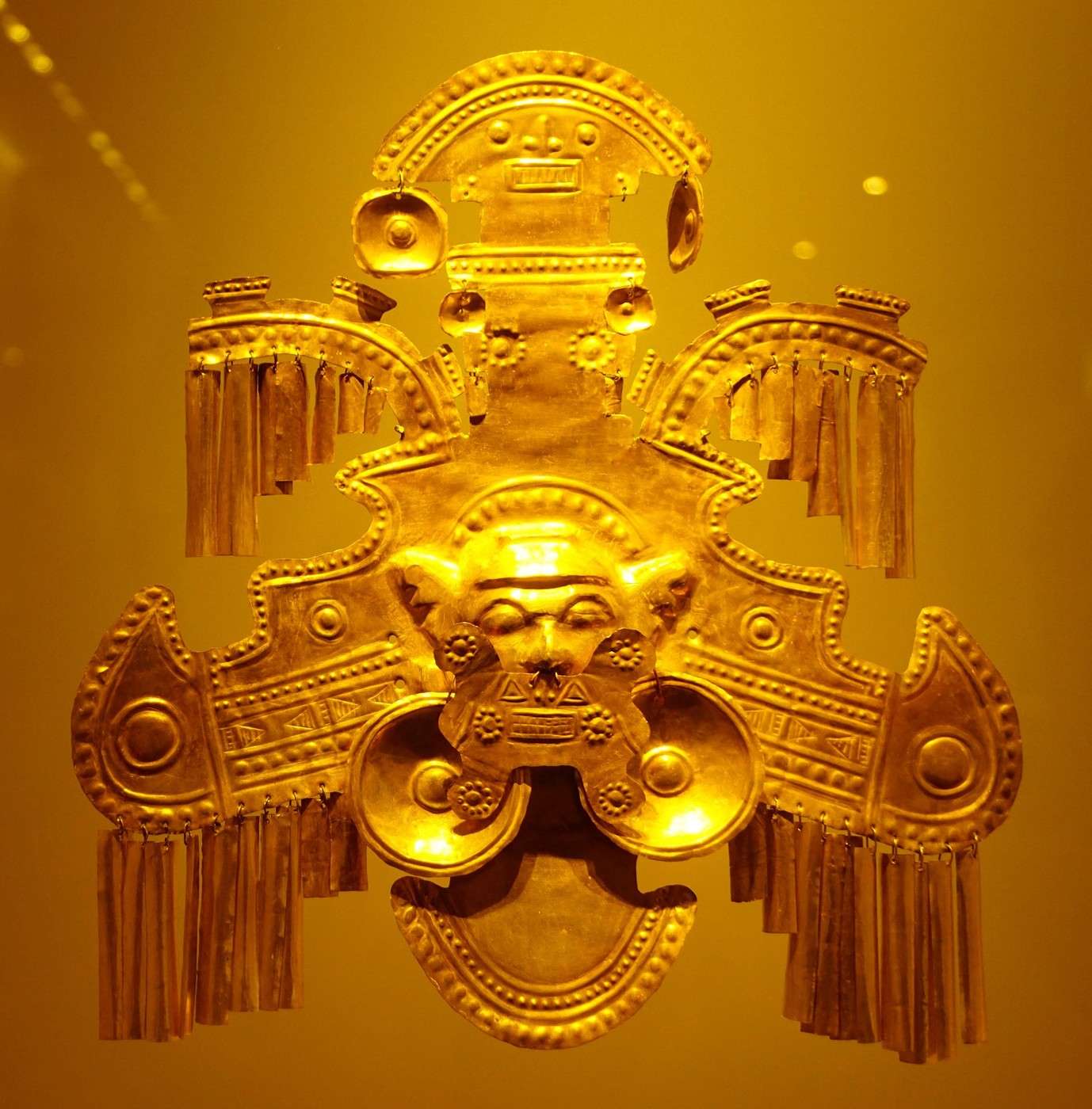
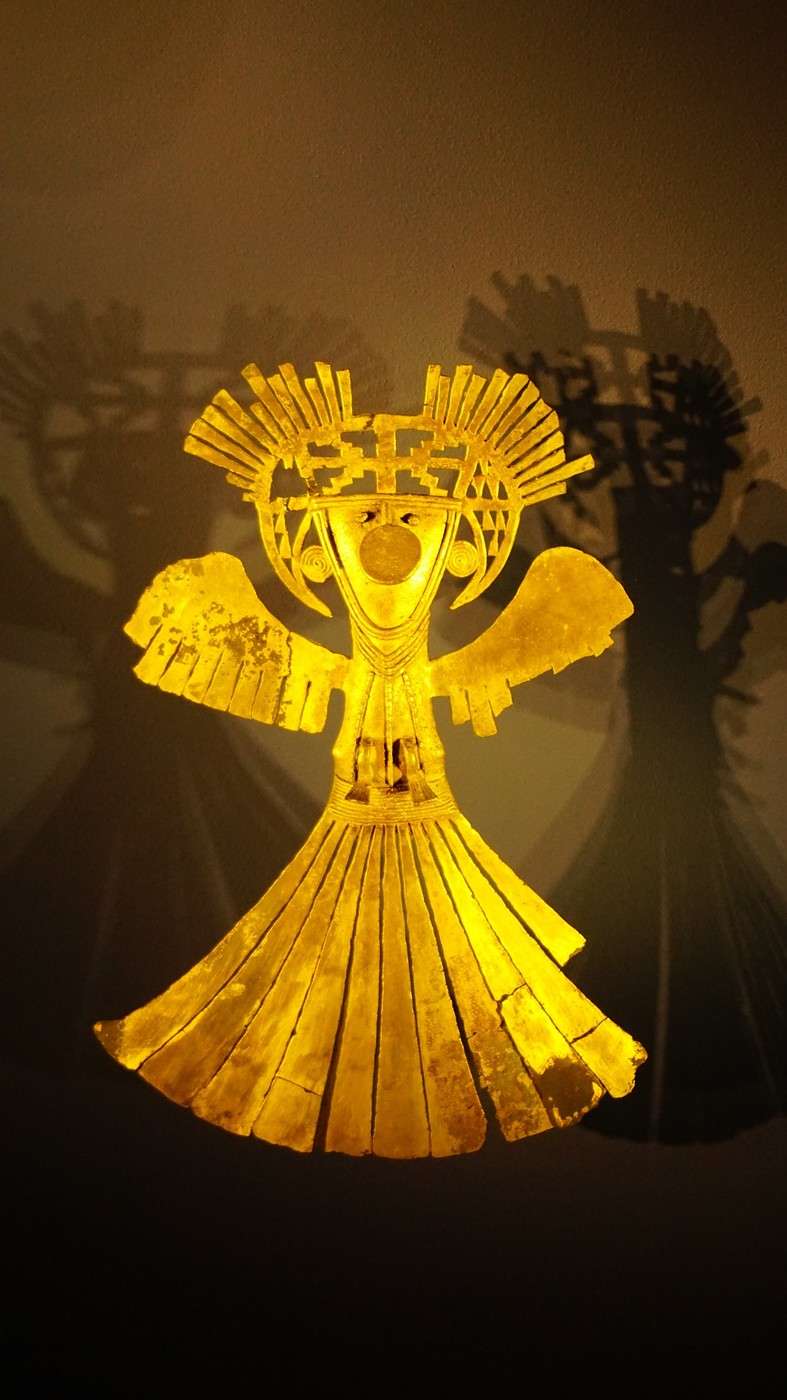
After about 12 hours of flying from Toulouse (via Paris), we landed in Bogotá six years after our first trip to Colombia. This time, our journey will be very different, with only this stop in the Colombian capital in common. Our travel itinerary Bogotá / La Macarena (Caño Cristales) / Villa de Leyva / Barichara / San Gil / Girón / Mompox / Ciénaga and the Santa Marta lagoon / Minca / Los Naranjos (Tayrona Park) / Bogotá. Step 1: Bogotá (and Nemecon) Bogotá (1/3) This morning, we had a meet-up with Flora from Aventure Colombia, who helped me organize one of our stops, a few transfers, and tomorrow’s day trip, the program of which I changed at the last minute after deciding to skip the visit to the Salt Cathedral of Zipaquirá. Flora is a kind and lovely person, always available, and she did everything to answer my questions and give me advice. She’s a local contact I highly recommend. Flora can help you plan your trip, whether you want a fully organized tour or, like us, just need assistance with a specific stop or one or more transfers between cities. We left Flora after setting a meet-up for our return to Bogotá in a month. As we walked out of her agency, we headed to the wonderful Gold Museum, located just a hundred meters away. I was excited to revisit this amazing museum. Note: Free entry for those over 60, regardless of nationality. Just show your passport. Like six years ago, I was amazed by its museography, the beauty of the pieces on display, and that breathtaking shamanic room.


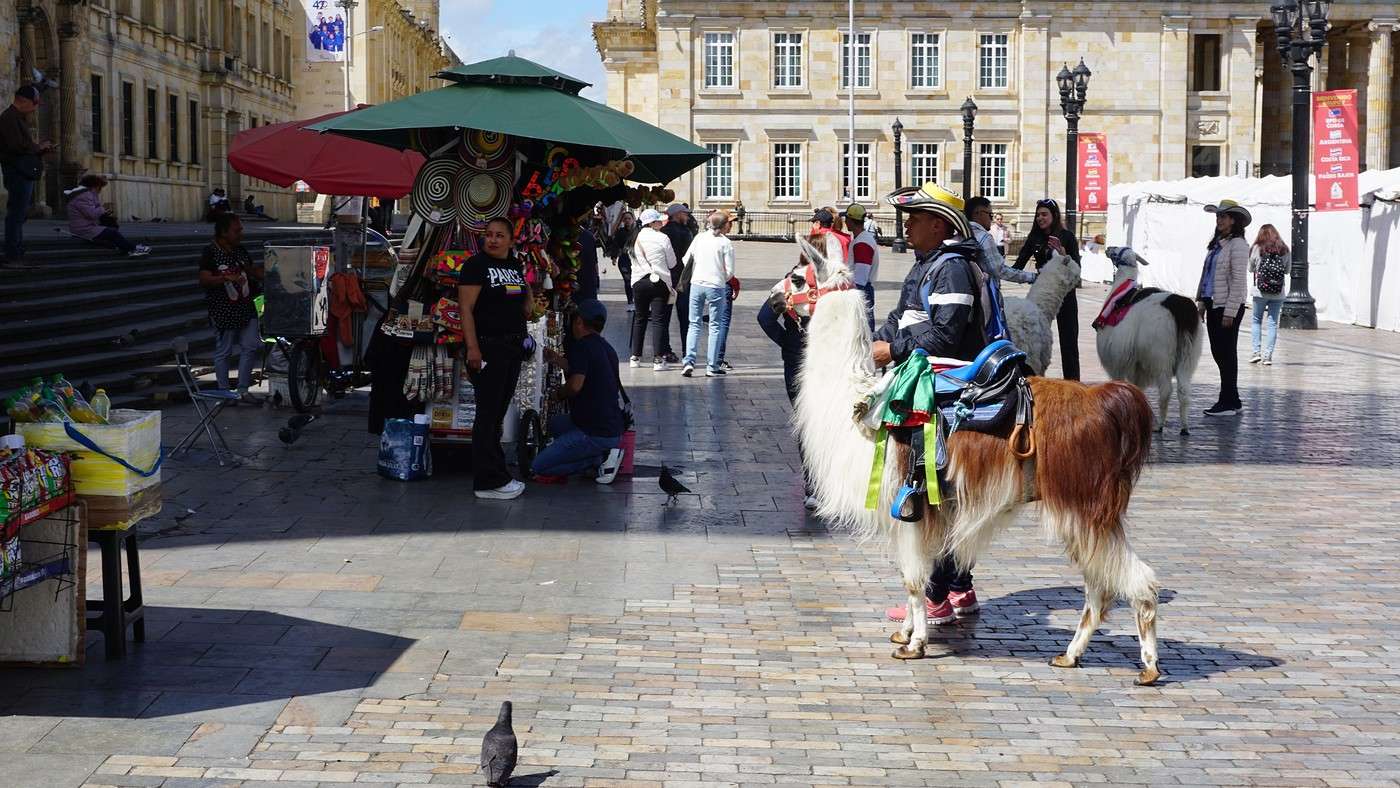
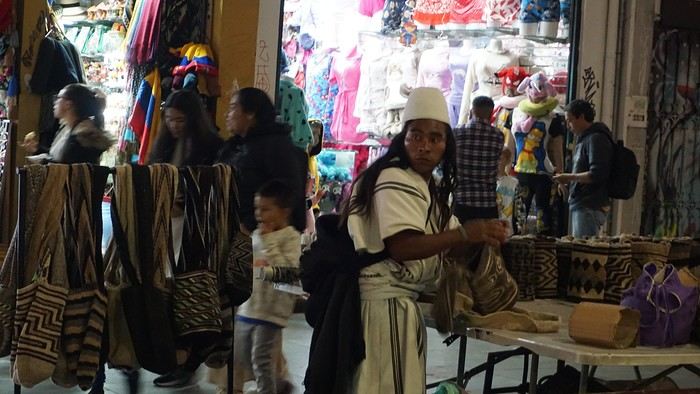
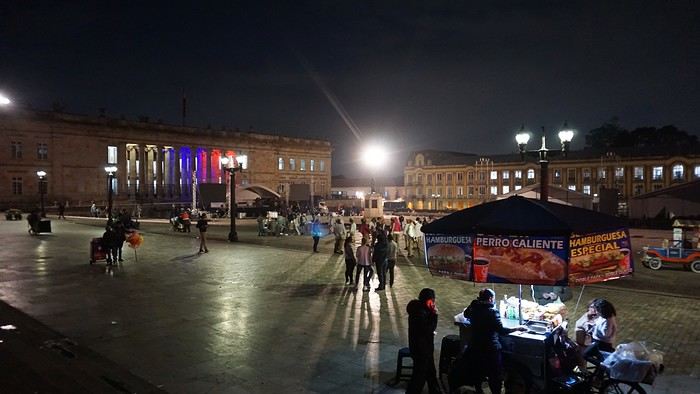
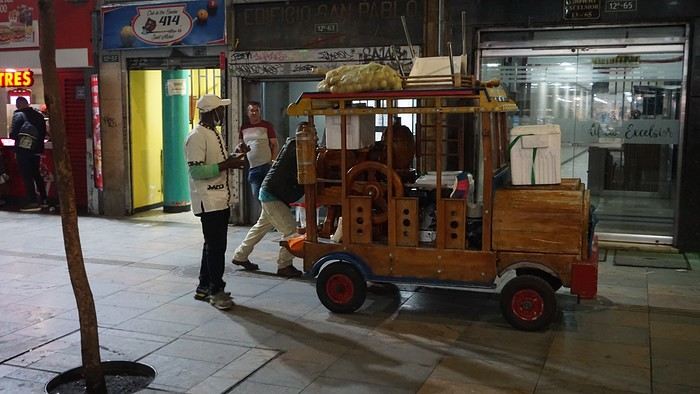
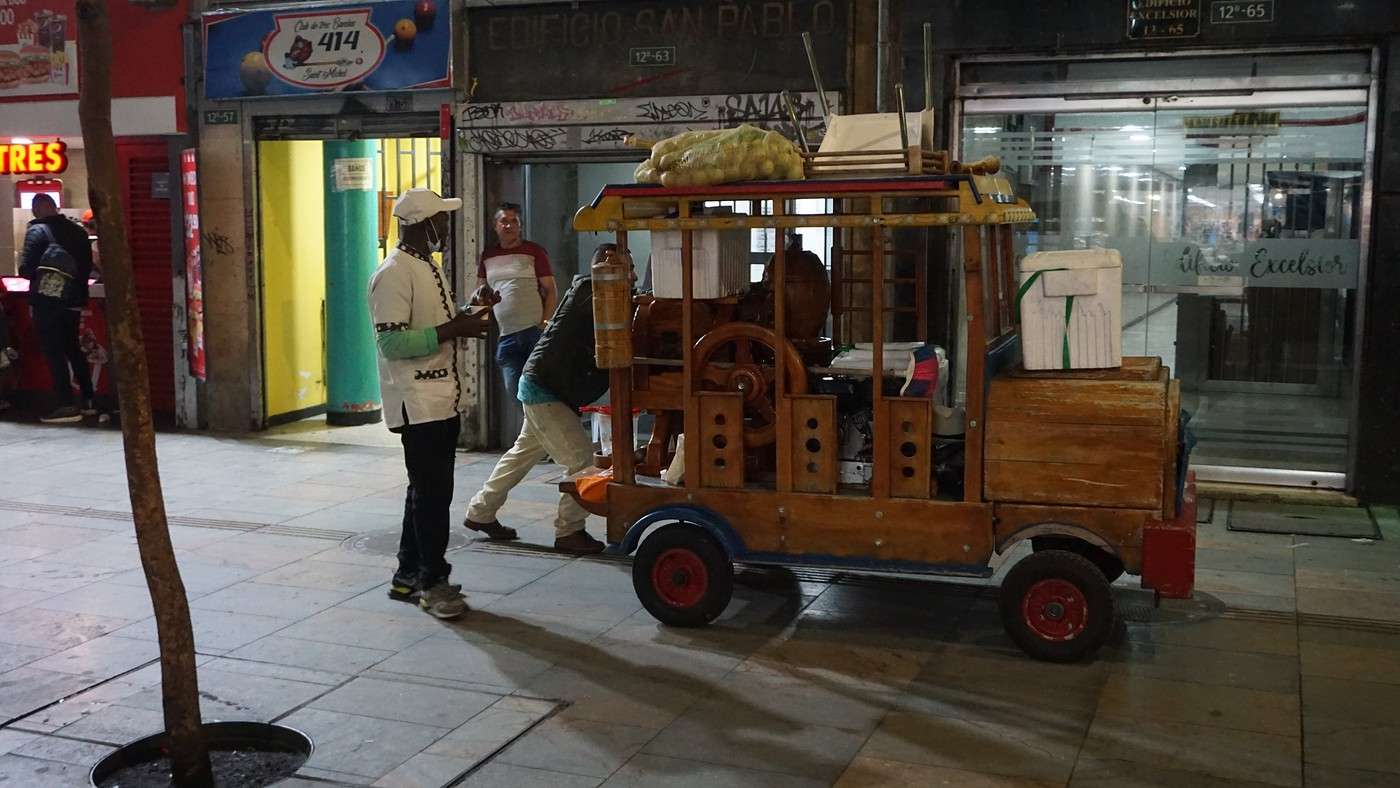
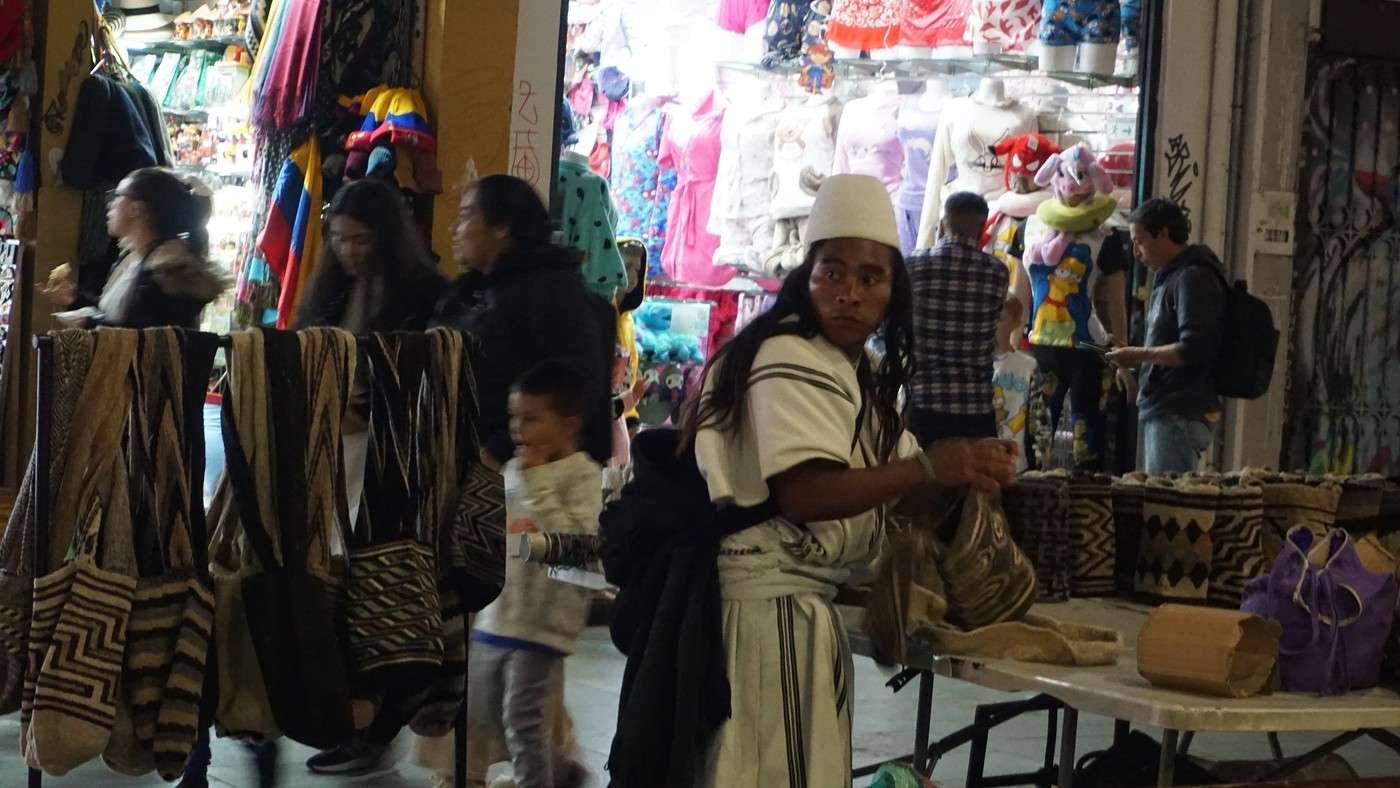
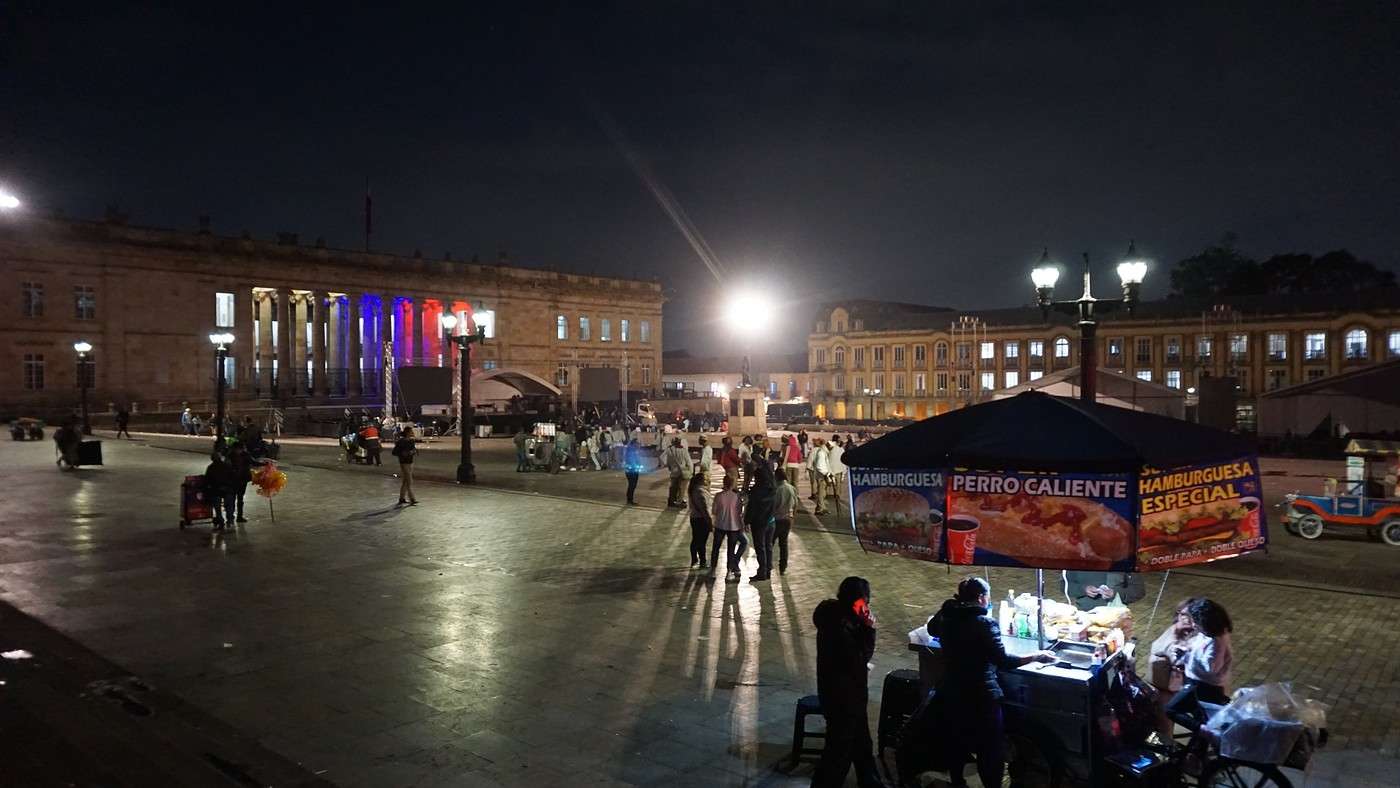
About two hours later, we decided to walk (careful, it’s a climb!) to the Monserrate cable car (3152m). Long wait to buy tickets and board the cable car! Once we arrived, a few raindrops, an impressive panoramic view of Bogotá’s vastness, a quick visit to the basilica (a pilgrimage site for Colombians), a walk through the tourist market, and at the top, plenty of small restaurants where we had our first Colombian meal. After our hearty lunch, we were lucky to see the sun return! No line for the descent. We then headed back to the hotel because Justine wanted to rest and recover from the trip. As for me, I continued my walk. I discovered a really nice craft market recommended by Flora, Pasaje Rivas, returned to Bolívar Square, and wandered through different streets, including the main pedestrian avenue (Calle 7), where there’s always something to see.
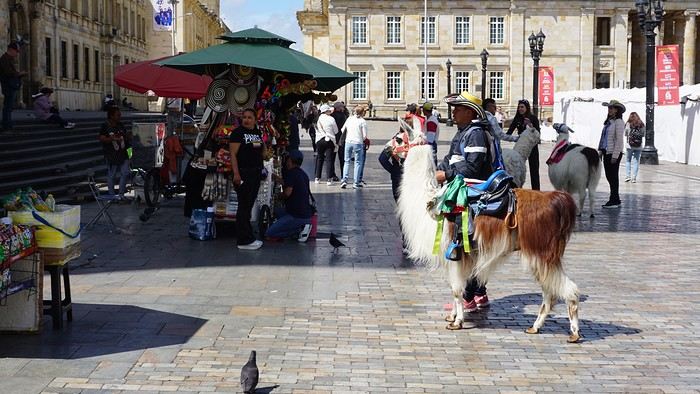


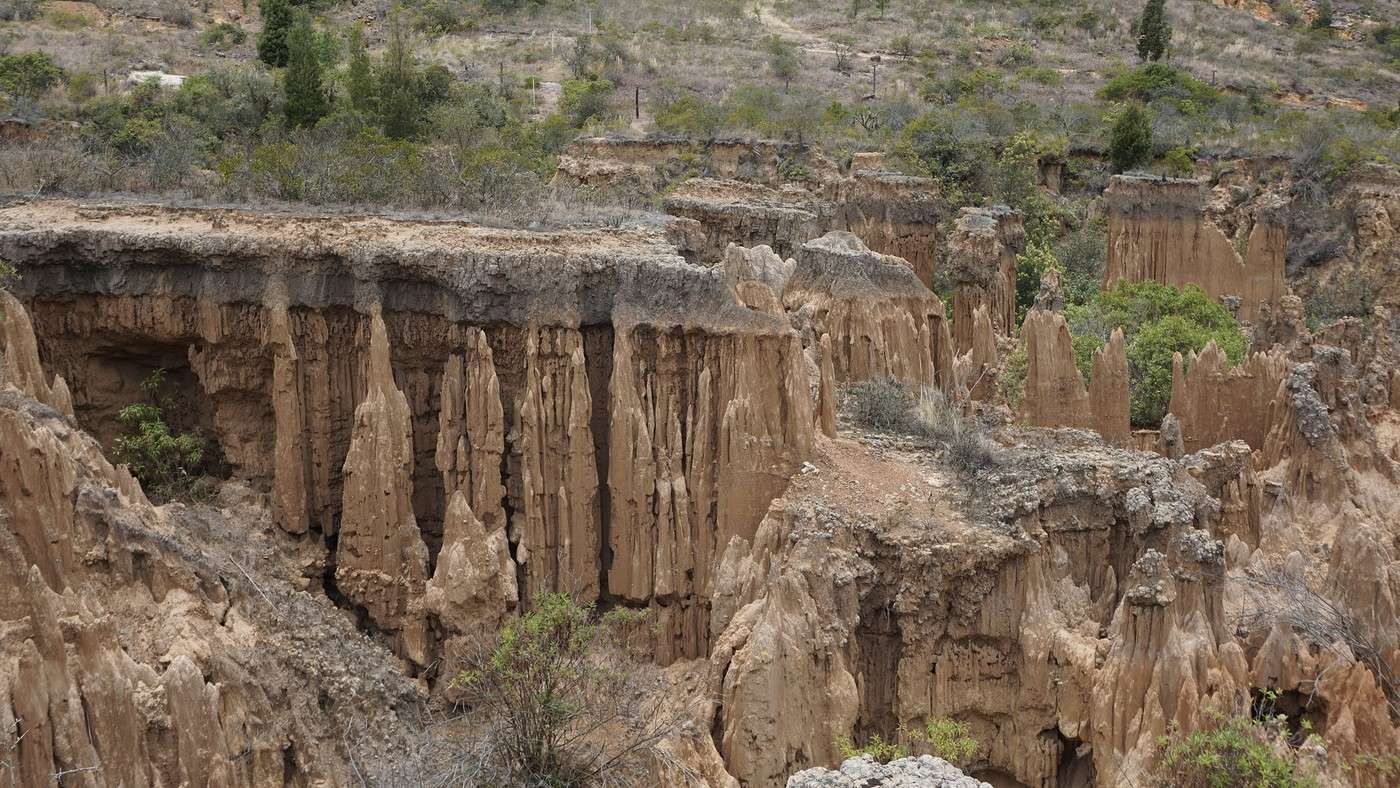
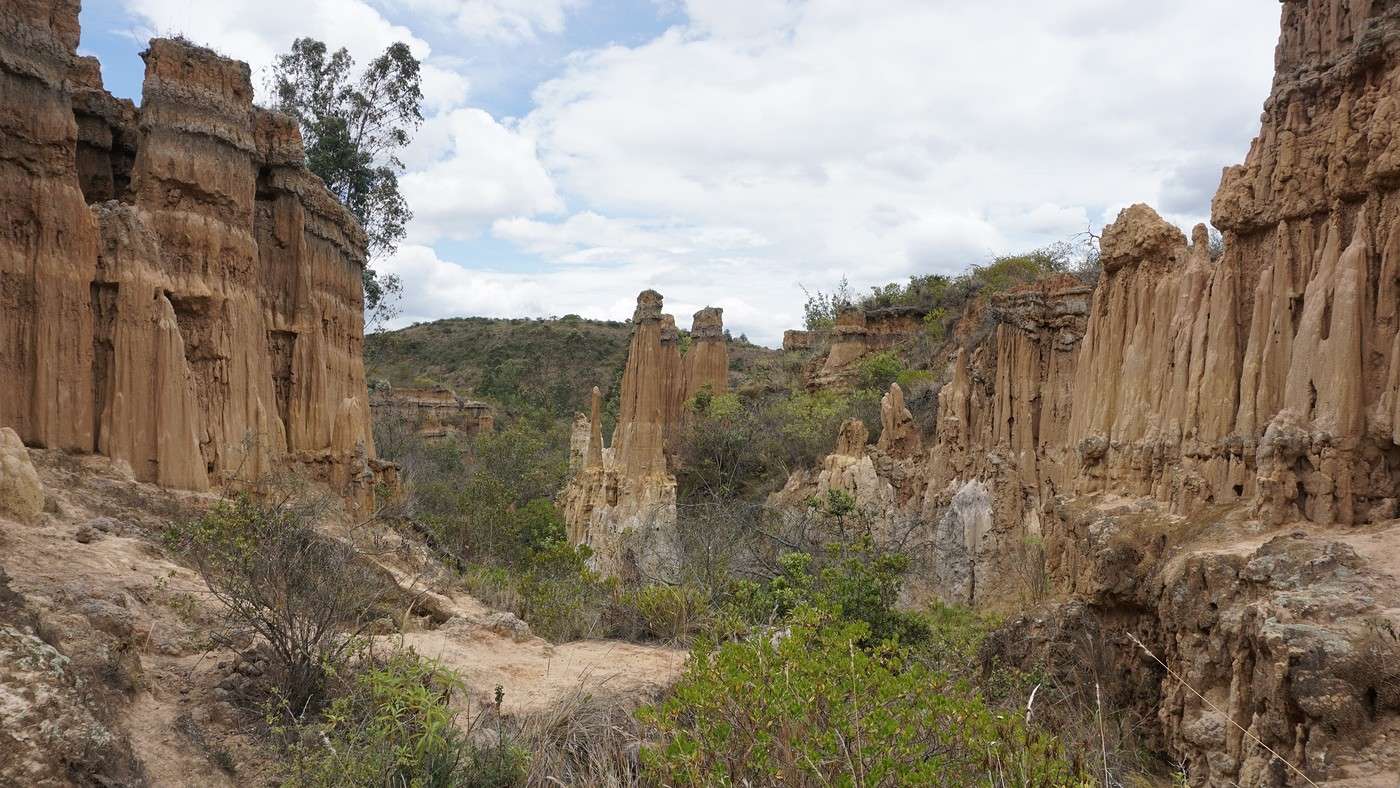
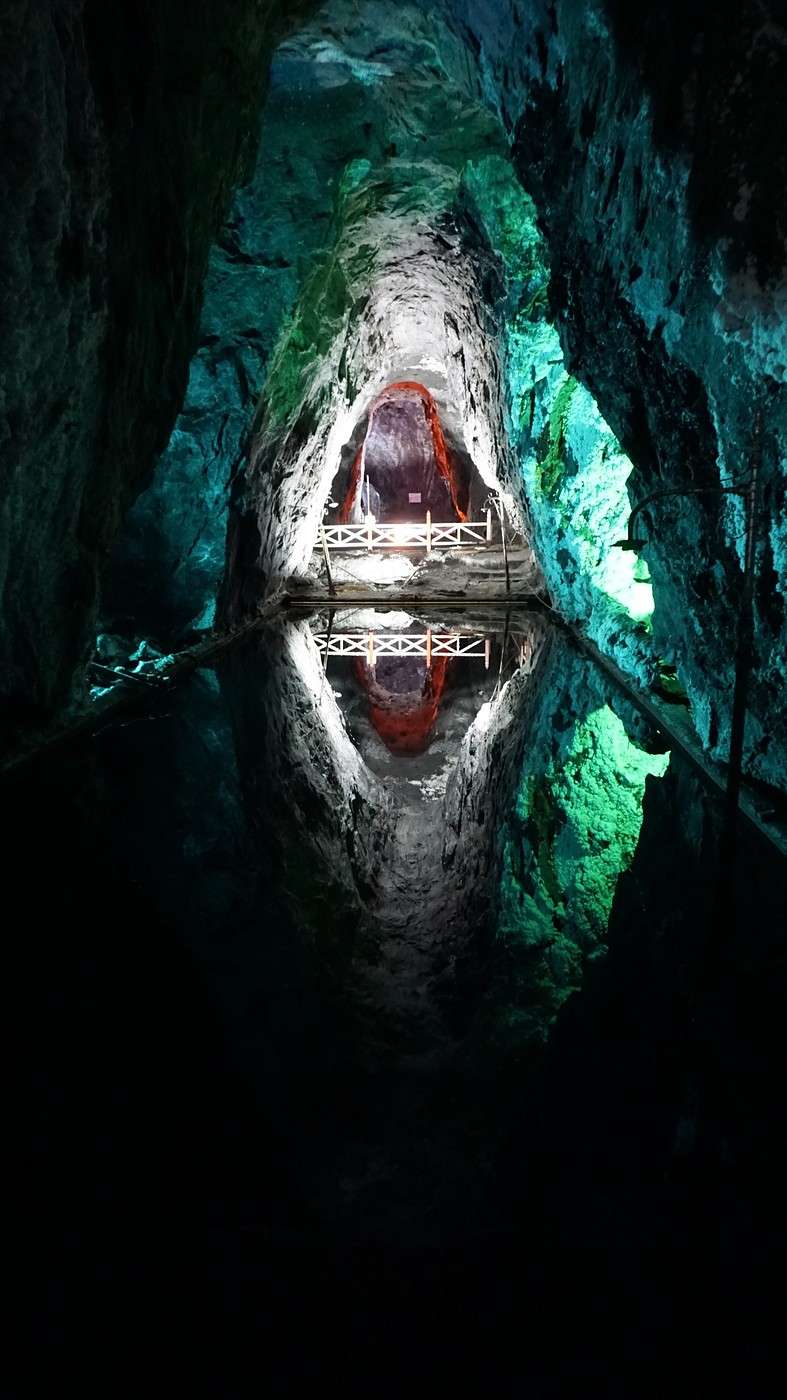
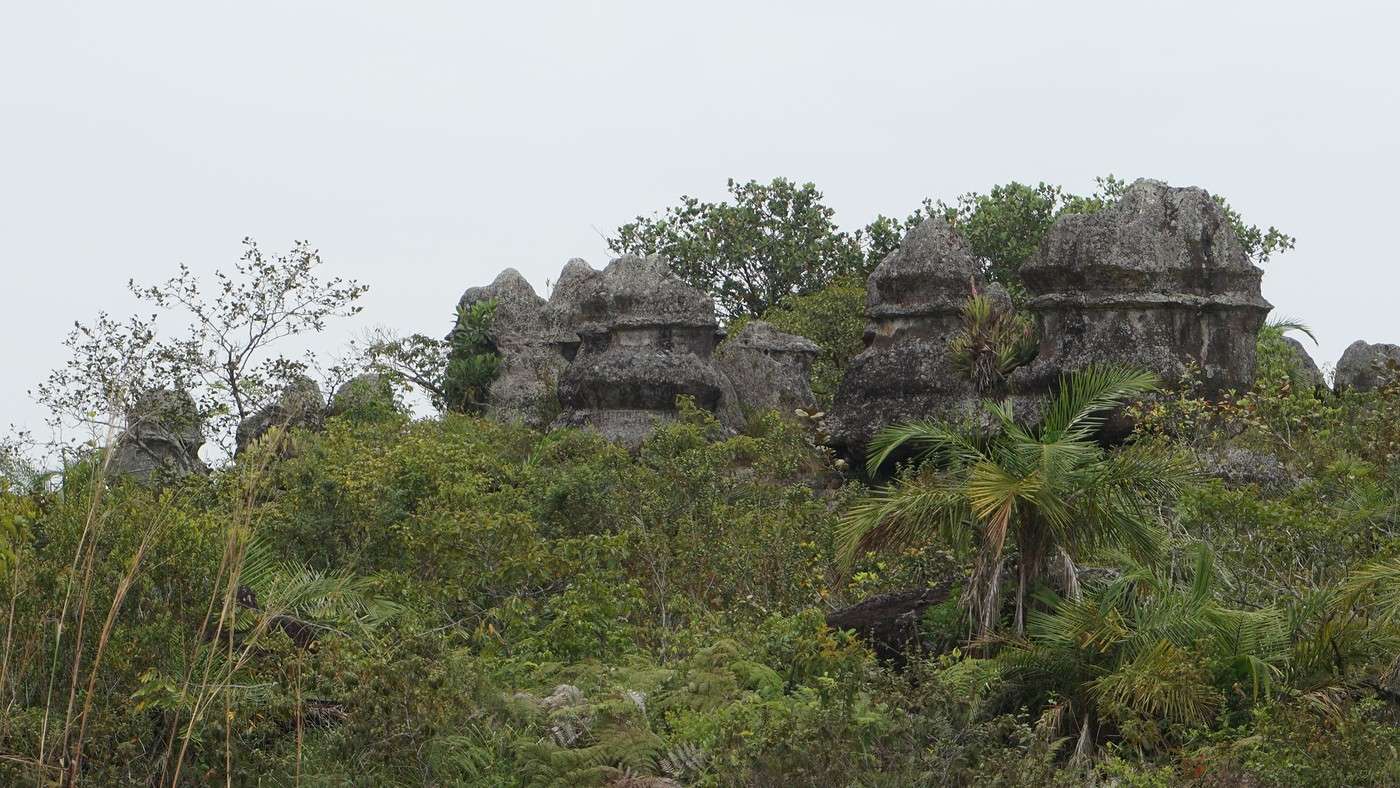
Tomorrow, a change of scenery as we head out for a hike in a small desert (Desierto de Chueca), located about 2 hours from Bogotá in the village of Nemecon. For this outing from Bogotá, with Flora’s help, we booked a car with a driver for the day. Flora also took care of booking the guide (since the site can only be visited with one). Nemecon (2/3) Today, we went to Nemecon to hike about 7.5 km in the ‘Desert of Checua.’ It’s nothing like sandy deserts! Instead, it’s geological formations sculpted by time, wind, and water. After two hours on the road—almost one of them spent navigating traffic jams with cars, trucks, buses, and a continuous flow of motorcycles on either side of our taxi—we reached Nemecon! The village center is really (too?) quiet. We met up with Deisy and headed toward the ‘desert,’ about twenty minutes away on a bumpy dirt road. Once there, a quick briefing, and off we went! Deisy didn’t stop talking (in Spanish) for over 3 hours!!! She told us so much about her region (flower farming, water management, traditions, songs, etc.), the origin of the site, and even mentioned Antonio Banderas, who filmed *The 33* in the village’s salt mine (the story of the survival of 33 Chilean miners after a collapse in their copper and gold mine). One hour of walking to reach the site, one hour to explore it, and one hour to return.
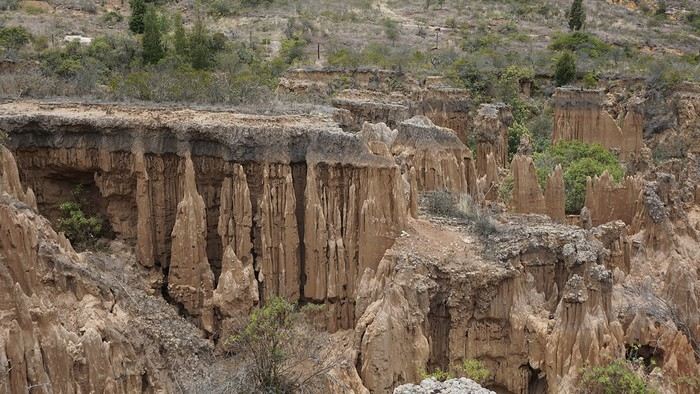
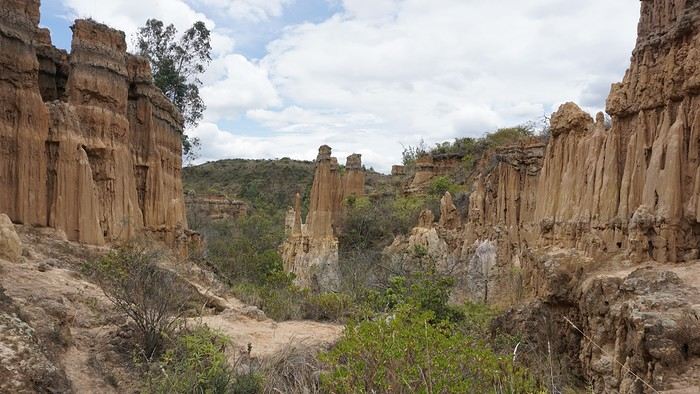


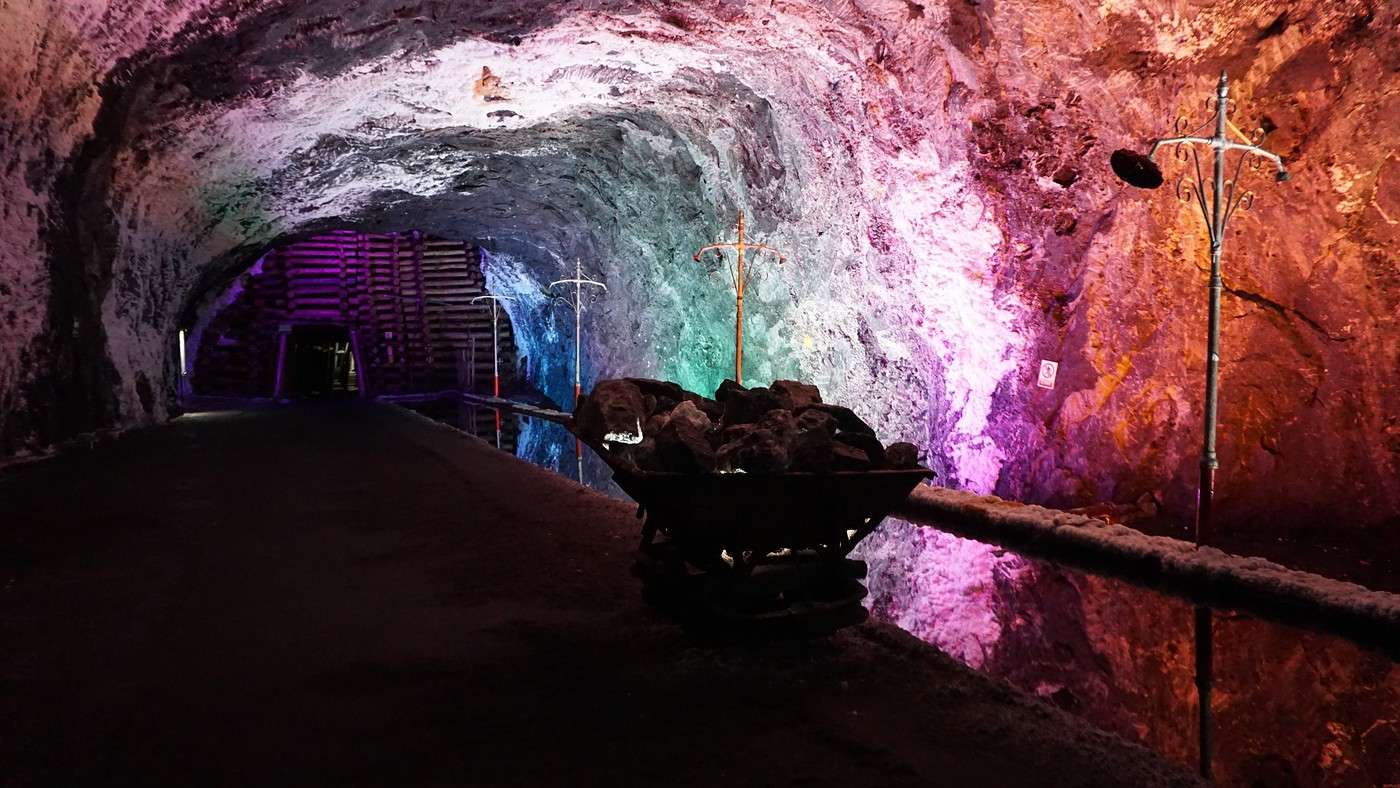
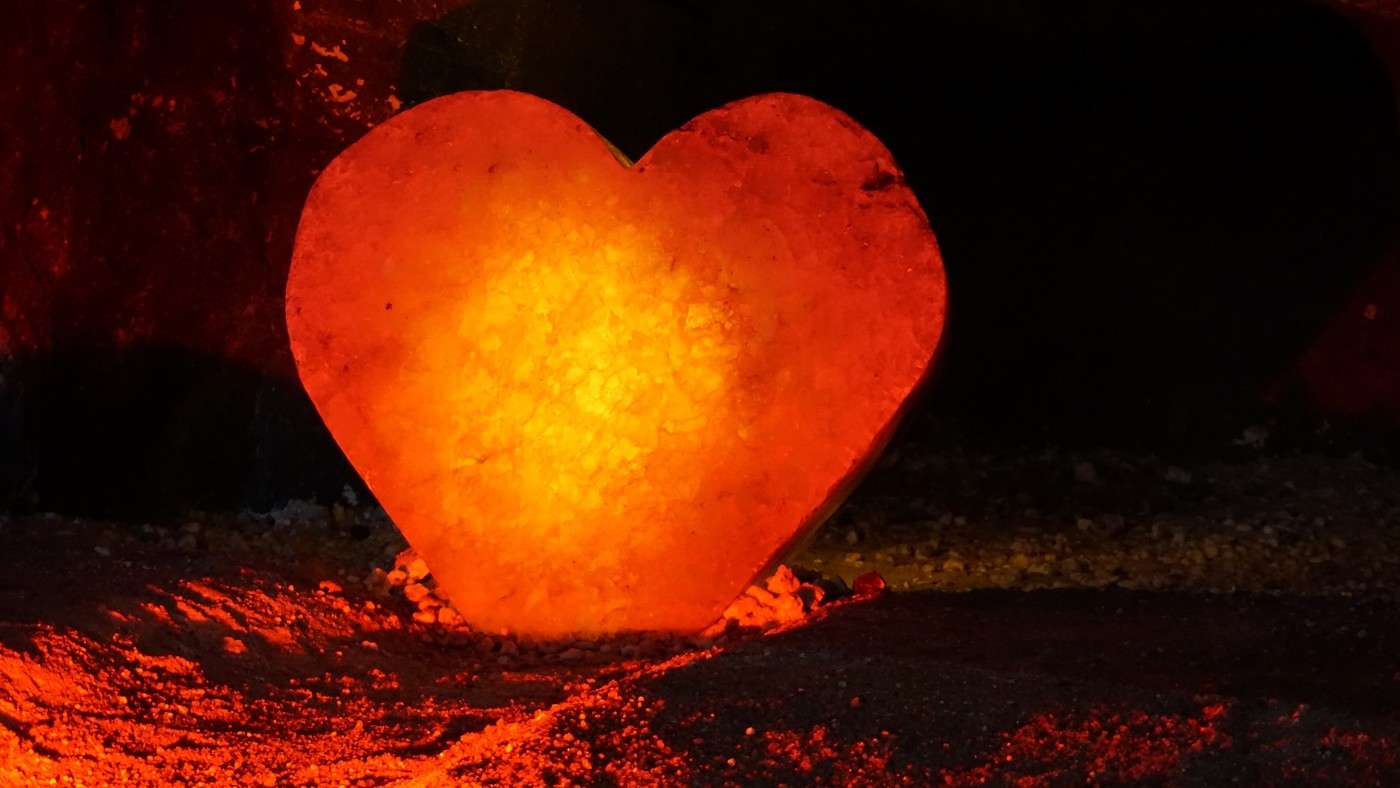
The advantage of this non-stop chatter was that it forced us to brush up on our Spanish at lightning speed. I even wondered if the effort to concentrate wasn’t more exhausting than the physical effort! Especially since on the way back, I got an oral quiz. Deisy wanted to make sure I remembered some of the information she’d given me during the visit: why is this rock white, that one red, and that one black? Back in the village, we had lunch at a restaurant recommended by Deisy before visiting the Nemecon salt mine. Before entering, a guide spent a good half-hour explaining the origin of the salt and the presence of many fossils in the area. Again, concentrating was tough because all the comments were exclusively in Spanish! An hour and a half wandering through the tunnels with a ‘lovely miner’s helmet’ on our heads!
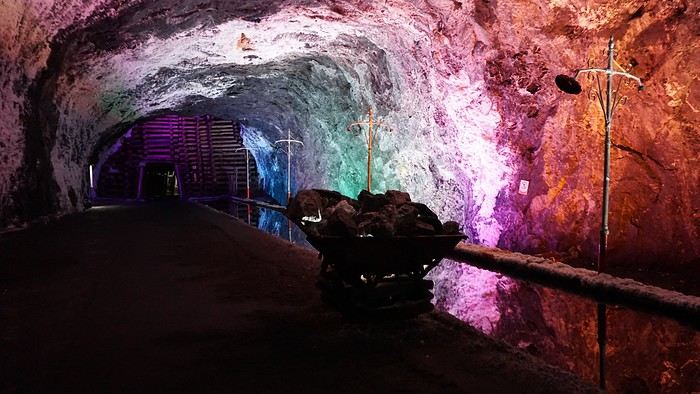
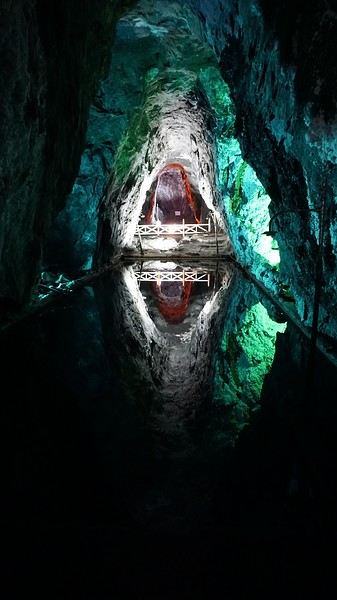
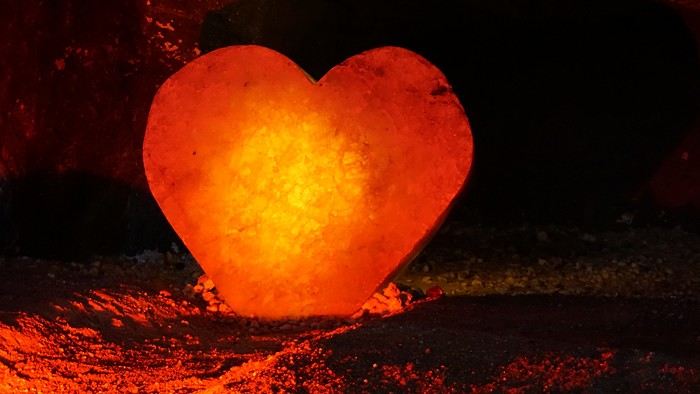


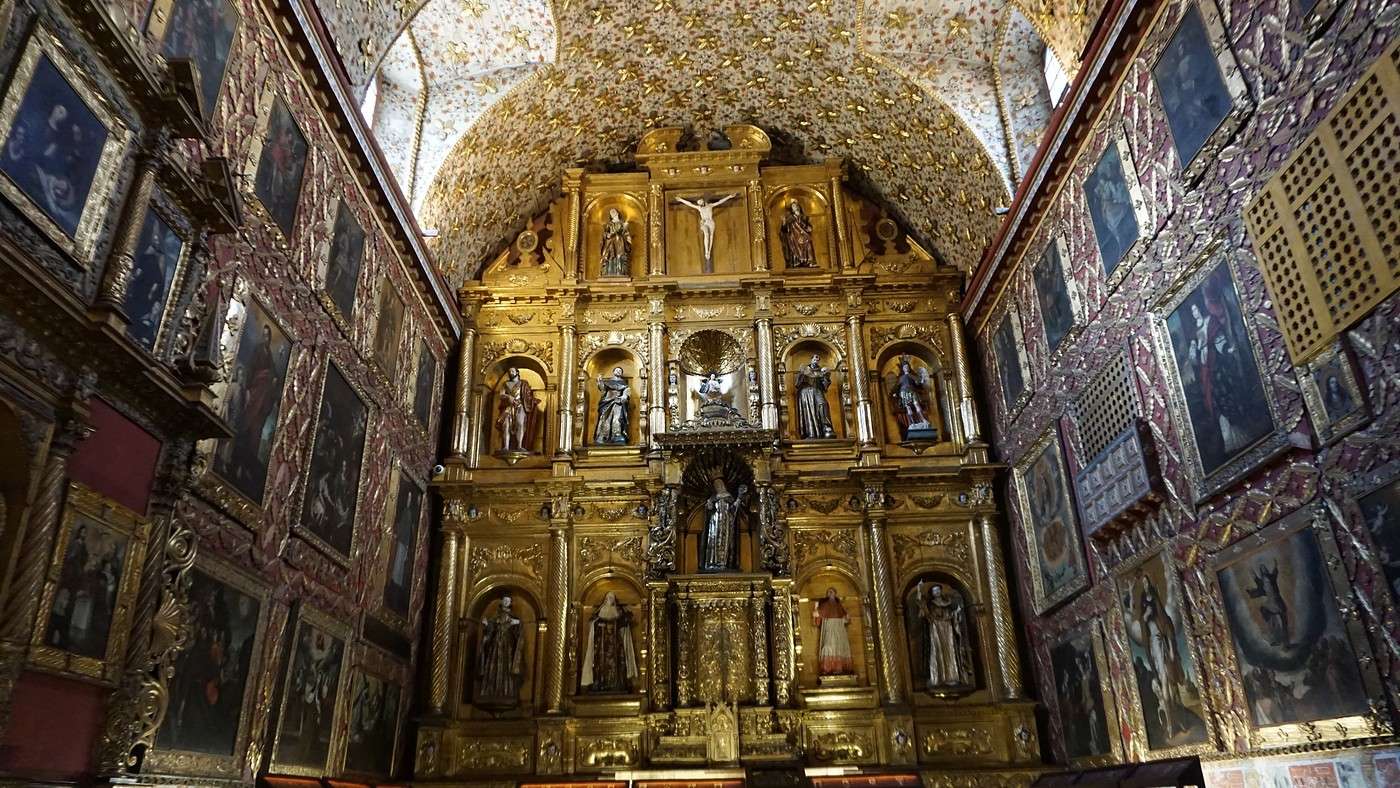
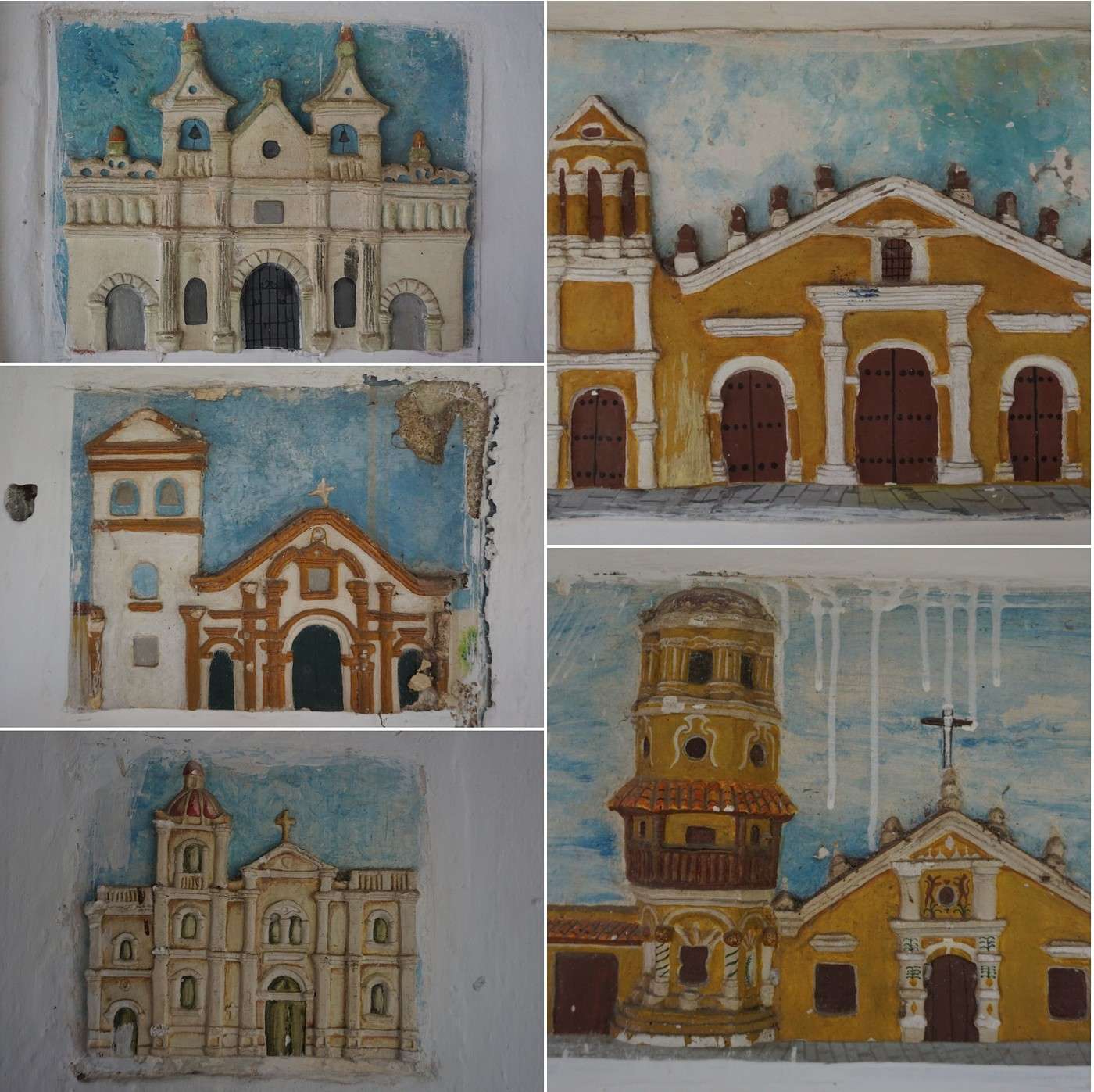
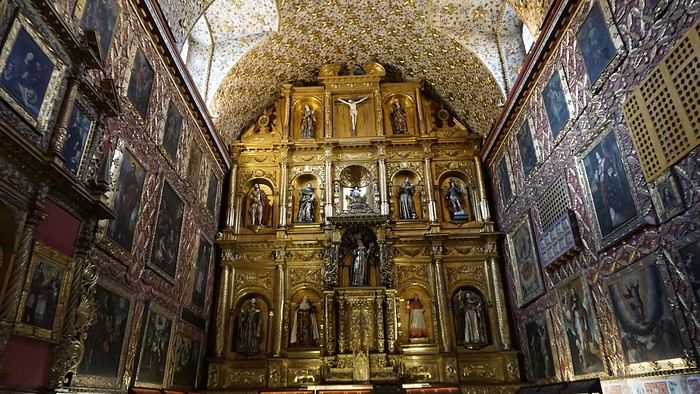
We met our driver at the mine entrance. The return to Bogotá was a bit faster, but traffic in the city center was still heavy! We arrived in front of our hotel between 8:00 and 8:30 PM. It’s been a pretty intense start to the trip! Tonight, our legs are tired. Hopefully, tomorrow will be a bit more relaxed! Bogotá (3/3) We started the day by visiting the Santa Clara Church Museum, located next to the presidential palace. Alejandra (from the local agency ‘Gaia Tours Colombia,’ which organized our stay in Caño Cristales (La Macarena)) had recommended this visit for its rich mural paintings.


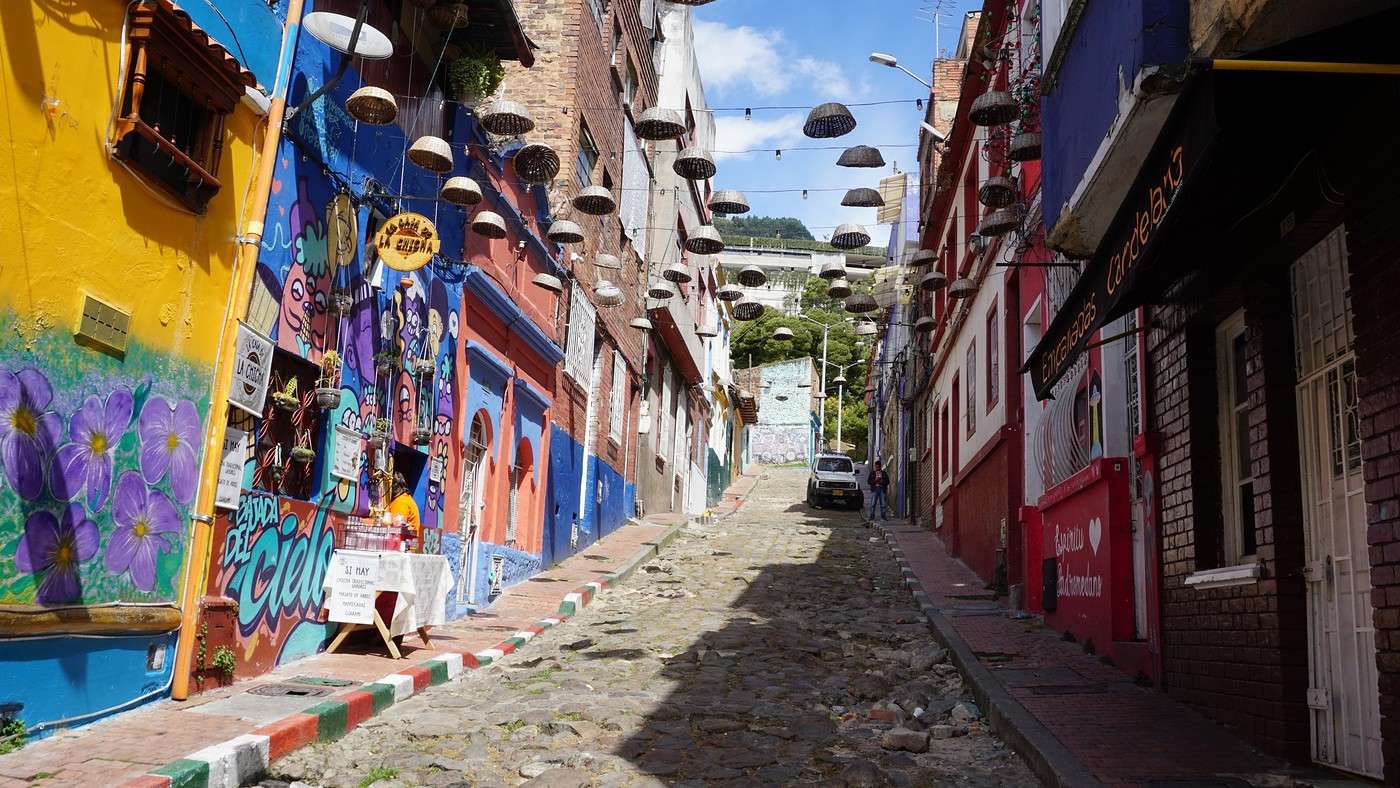
A few hundred meters further, after crossing the Plaza Mayor again, we visited the cultural complex housing the Botero Museum, the Mint Museum, and the Bank of the Republic Art Museum. Note that entry is free for all three museums. Botero Museum: There are fewer works by Botero here than in the Medellín museum, but more paintings and sculptures by other artists, all from Botero’s private collection (donated to Colombia). Mint Museum: We limited ourselves to visiting one room (on Flora’s advice) where three gold and gemstone monstrances and a Christ with a crown of emerald thorns are displayed. Photos are not allowed. Art Museum: We visited two temporary exhibitions. Lunchtime came quickly. We had a good meal at a reasonably priced small restaurant in the La Candelaria micro-district, near the Chorro de Quevedo square. We decided to spend the afternoon wandering the streets and alleys of the historic center to discover local street art.
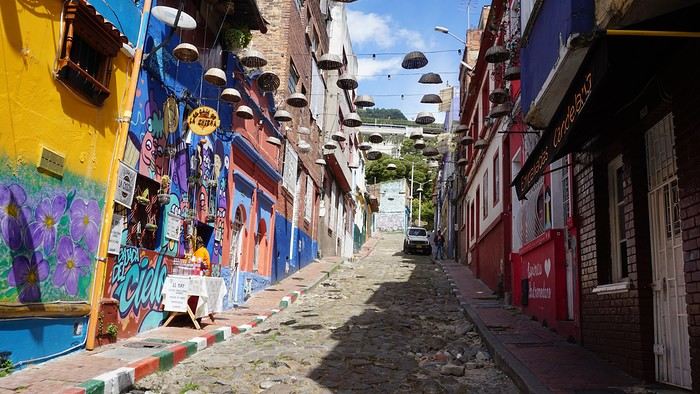


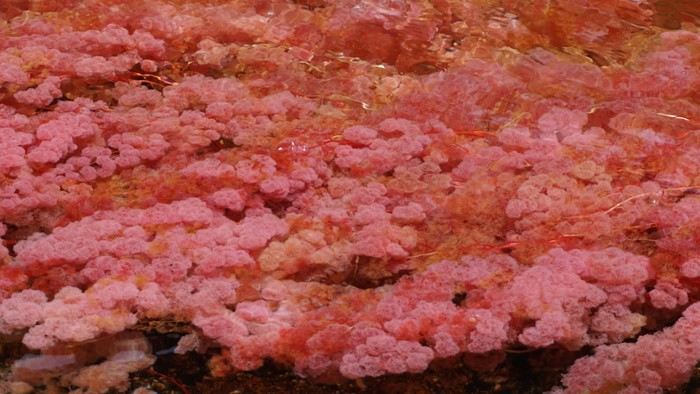
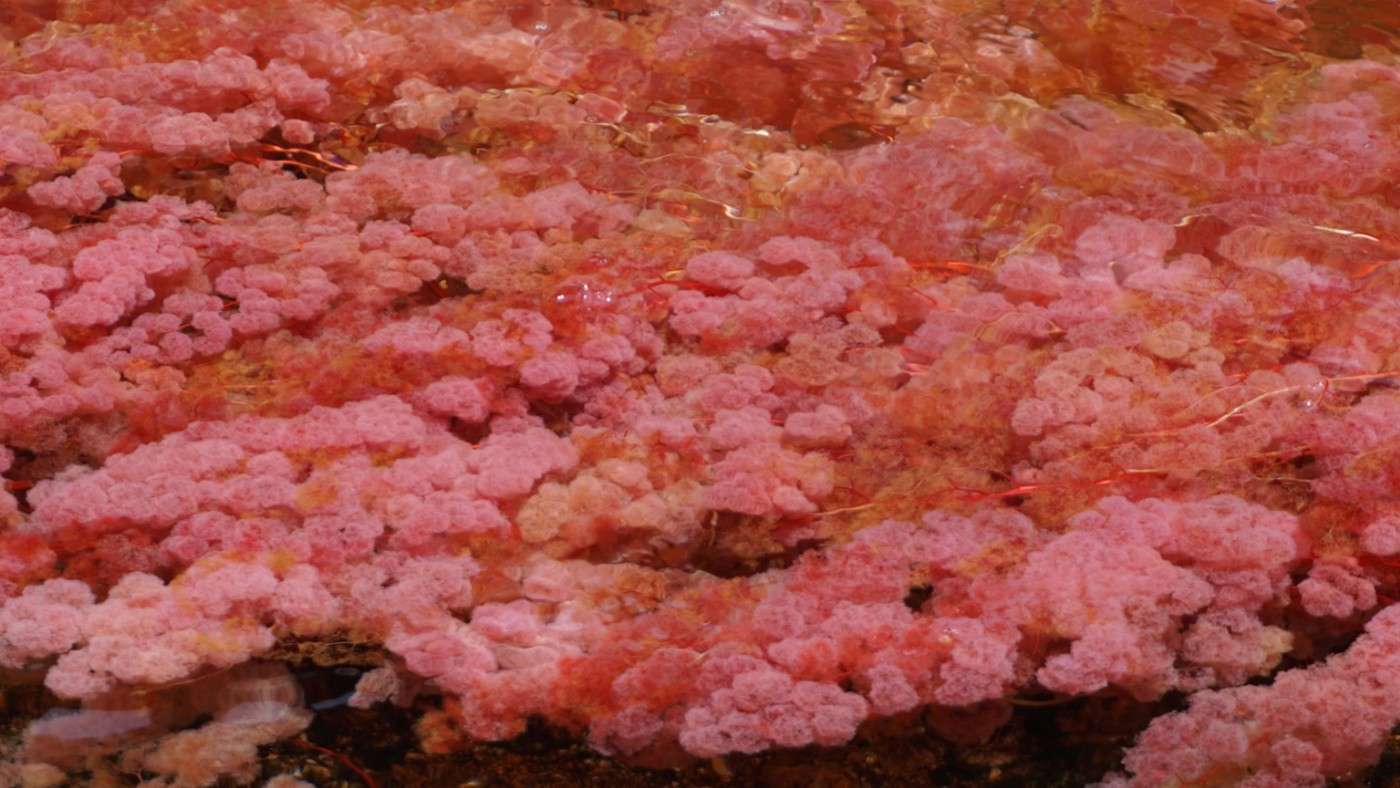
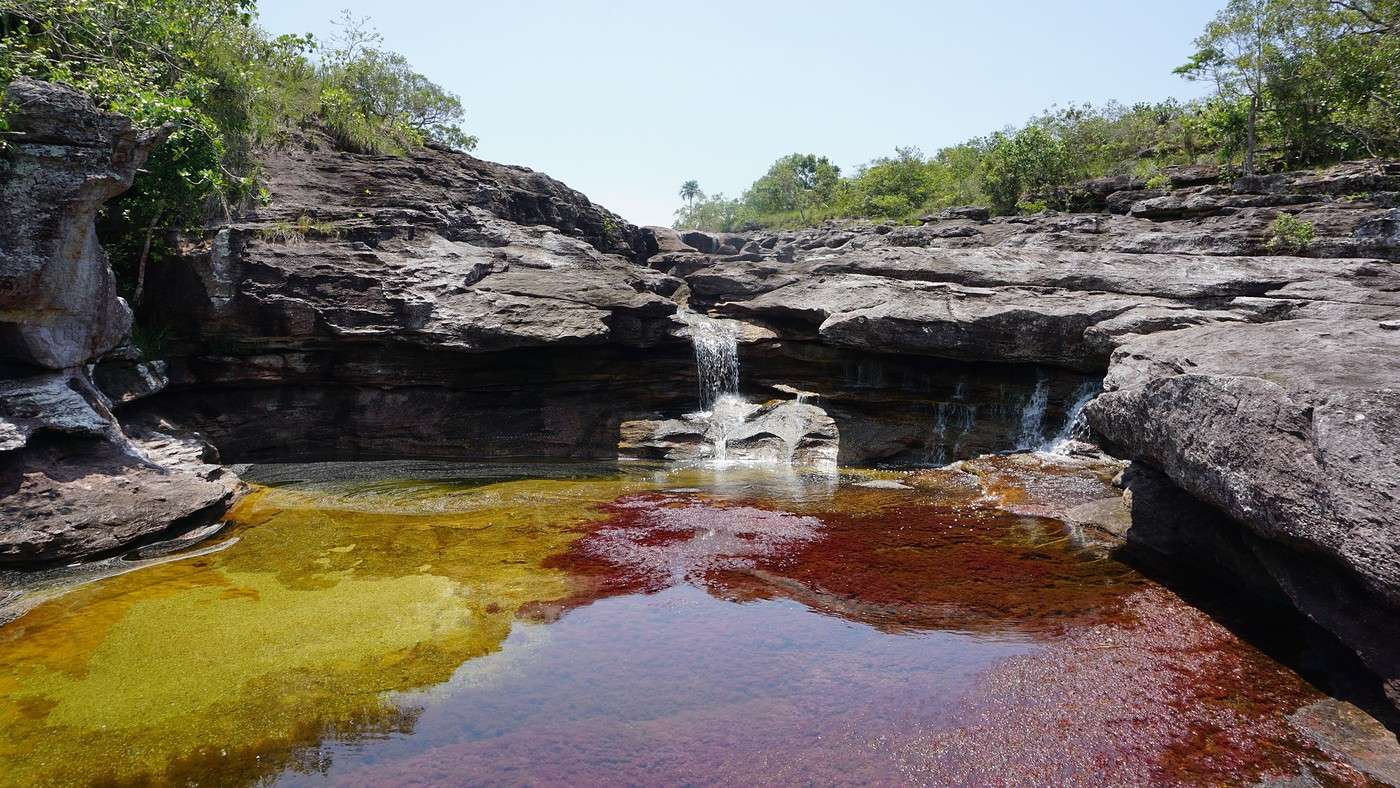
We also passed through very lively pedestrian streets. I also decided to revisit Pasaje Rivas to show Justine all the shops selling more or less artisanal products. Tomorrow morning, we fly to La Macarena at 10:30 AM. Not to dance (you’d be surprised if I told you we were going to take a South American dance class, right?!), but to visit the fabulous Caño Cristales, a river naturally colored by aquatic plants. The planned program includes hiking, horseback riding, canoeing, and swimming among these plants. This site was long inaccessible because the area was controlled by the FARC. Access and tourism development became possible after agreements and amnesty measures between the Colombian government and paramilitary groups. As in other regions, former FARC members have been able to transition into various tourism-related activities.
From Caño Cristales to Tayrona Park

Phil31600 · 2024-12-31

Step 2: La Macarena (1/4) This morning, thankfully we’d allowed plenty of time to get to the airport. The taxi dropped us off by mistake at the international terminal when we were supposed to take a domestic flight with Satena Airlines. After asking around in the terminal, we took a shuttle and made it to the other terminal. No big deal—even with this little hiccup, we were still early, and there wasn’t a crowd either at check-in or security.

Our flight was on time, and we landed at this small, rural airport. As we got off the plane, we were hit by the heat—about a 15-degree difference from Bogotá after just an hour and a half in the air...

As planned during our last WhatsApp exchanges, Alejandra was waiting for us at the entrance of the small building serving as the terminal. While she took care of our luggage, we headed with our local guide to the park rangers’ house to register. Here, you can’t roam freely in the regional park: daily visitor numbers are limited per trail, registration is mandatory, and the park is closed for six months a year to let the plants regenerate and reproduce. Sustainable tourism!

A ranger then introduced us to the Caño Cristales site and reminded us what’s forbidden: sunscreen, mosquito repellent, swimming outside the designated natural pools, and plastic bottles. Wristbands were handed out—they’d be used to check we had permission to be on the trails.

After the briefing, Alejandra was waiting and got us into a tuk-tuk. Off we went to our rural hostel (*Le Refuge*) by the Guayabero River, where we settled into our little cabin in a big park. The owner offered to refill our water bottles—essential, since we’d need to stay hydrated! We appreciated the service (a self-service mineral water fountain), even if the water was warm since the fountain wasn’t refrigerated.

Less than 30 minutes later, our guide came to pick us up. We boarded a *lancha* (a long, narrow motorboat) with a young Ecuadorian couple—they’d be our hiking companions for the first two days of this leg.

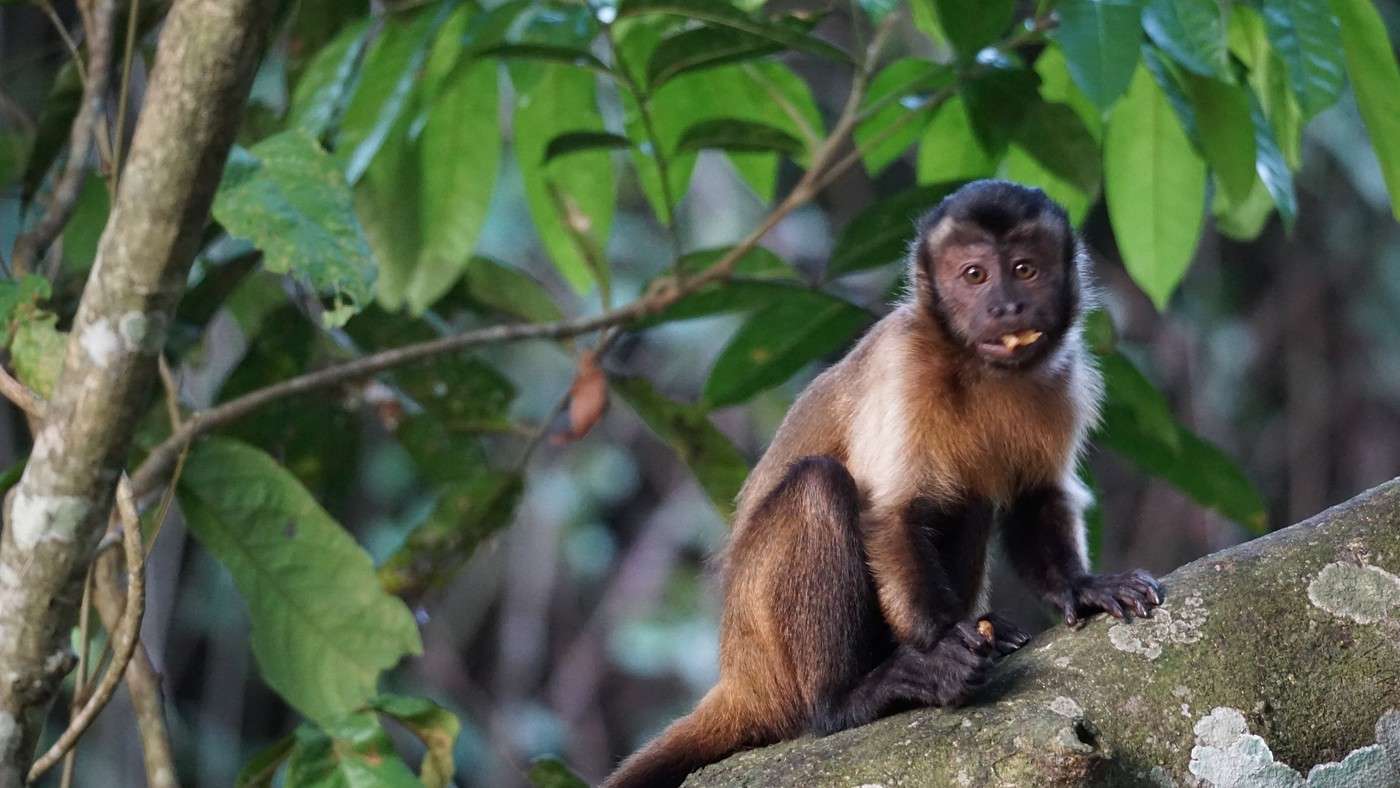
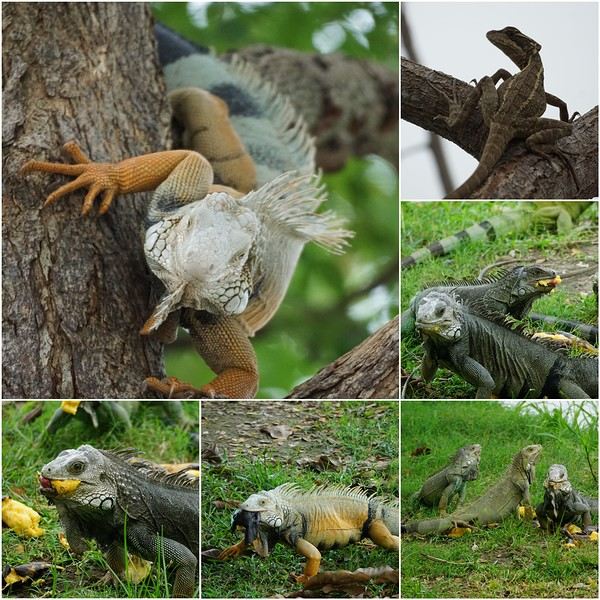
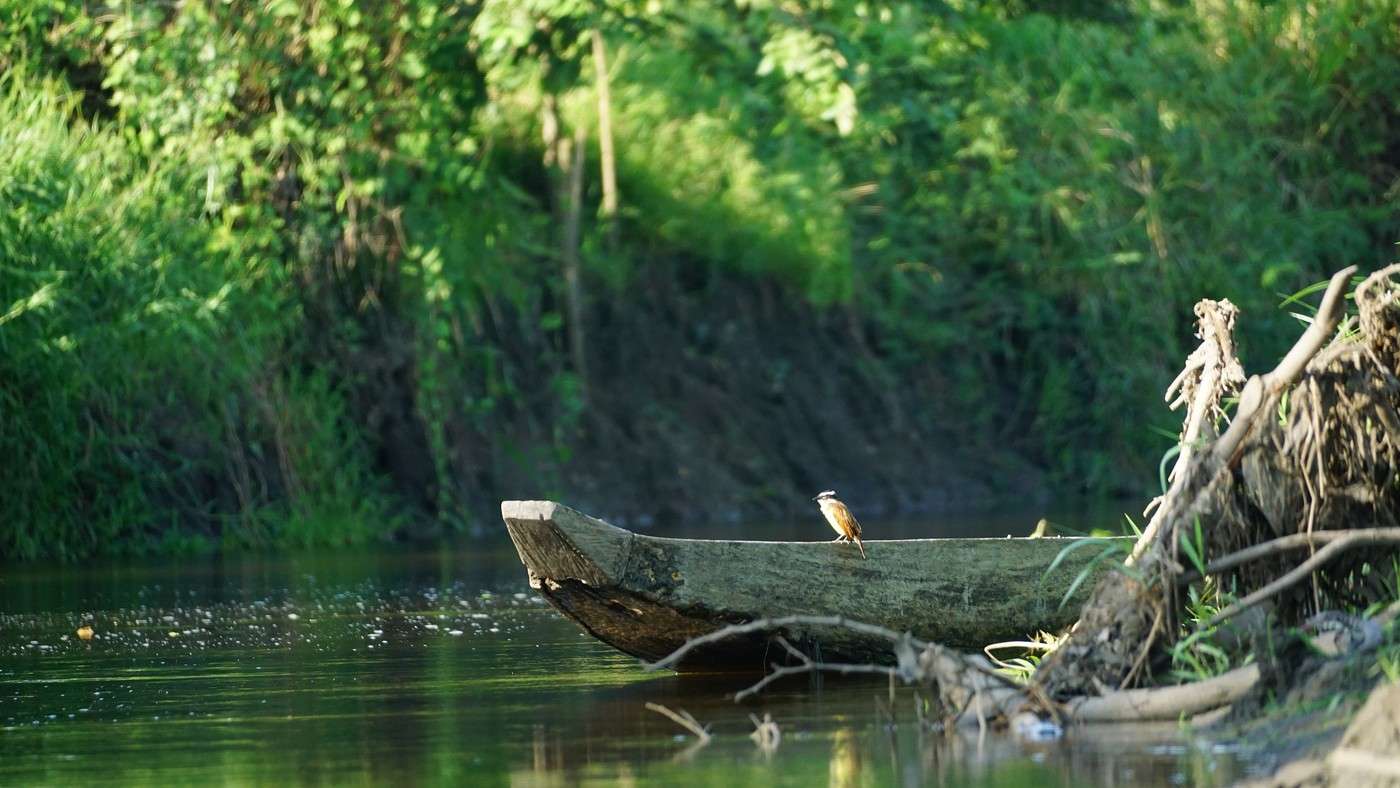
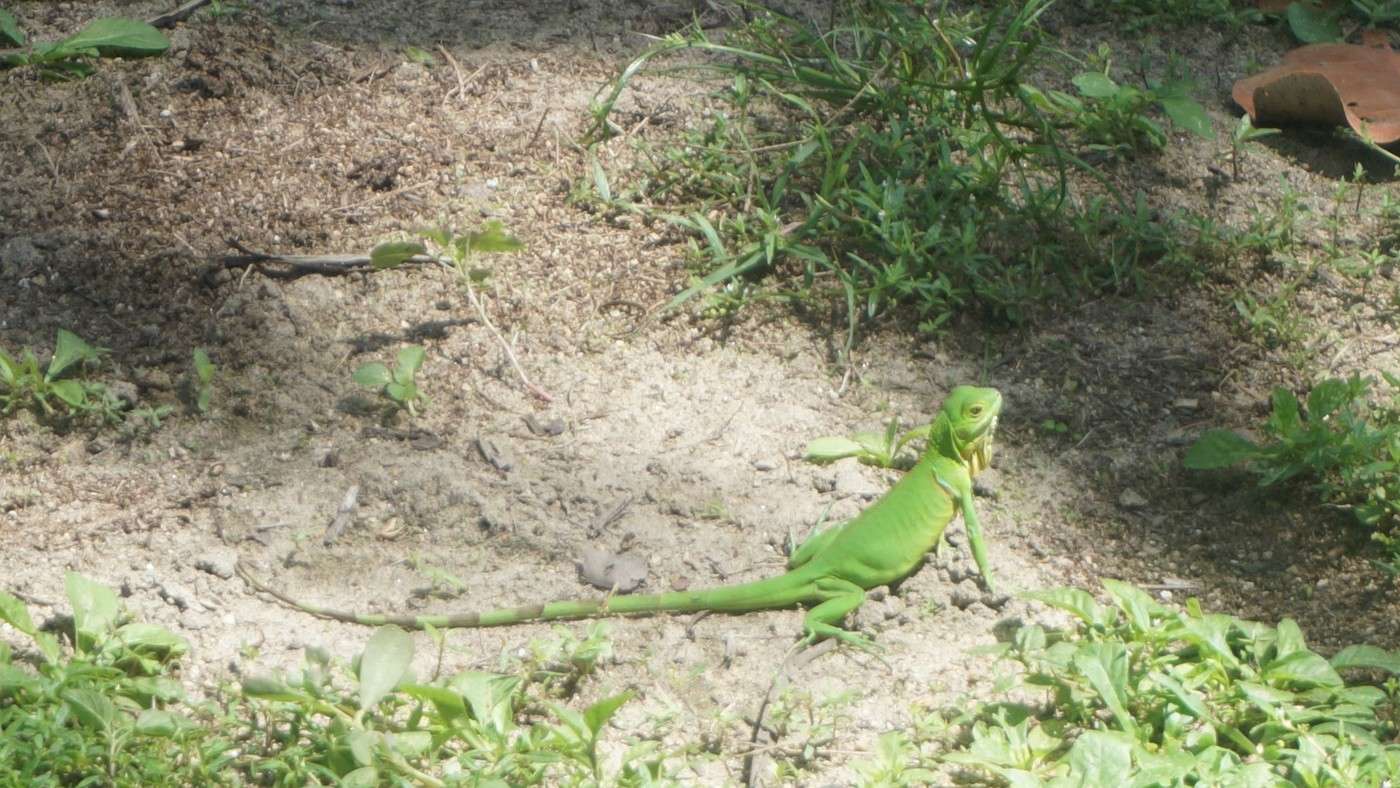
We cruised along the river for about ten minutes, spotting turtles, iguanas, monkeys, and a few birds. We stopped at a *finca* for lunch. The guide showed us pools where endemic turtles were being raised to be released into the river later.

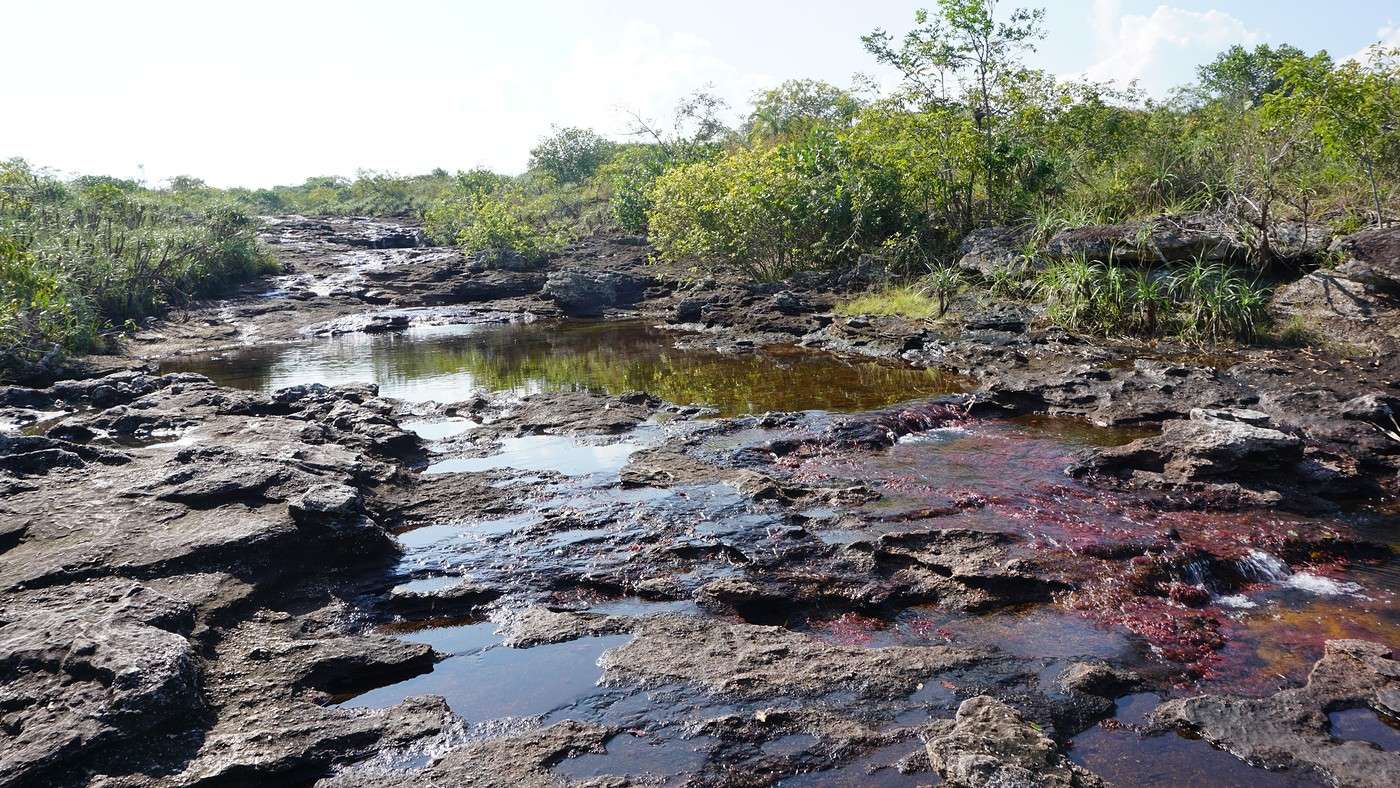
After eating, we set off under the scorching sun for our first hike to discover a colorful site and swim in natural pools.

Heat. Climbs. Sun. Humidity. Justine was really struggling—she wasn’t feeling well at all, on the verge of fainting. Discouraged, she announced she wouldn’t be joining us the next day. Our guide reassured her—tomorrow would be easier since it’d be flat. We took our time, and after about an hour and a half to two hours of walking, we reached the first site.
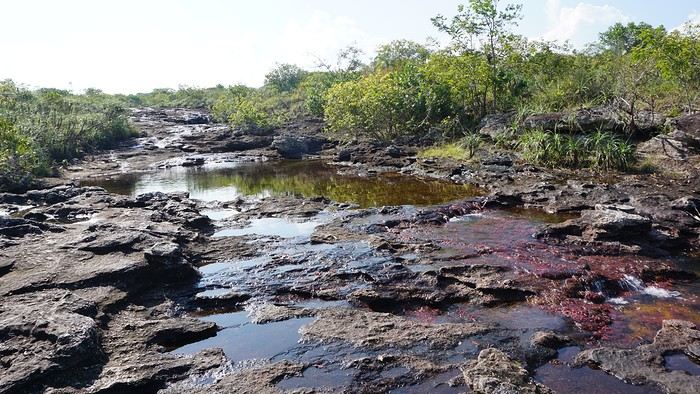
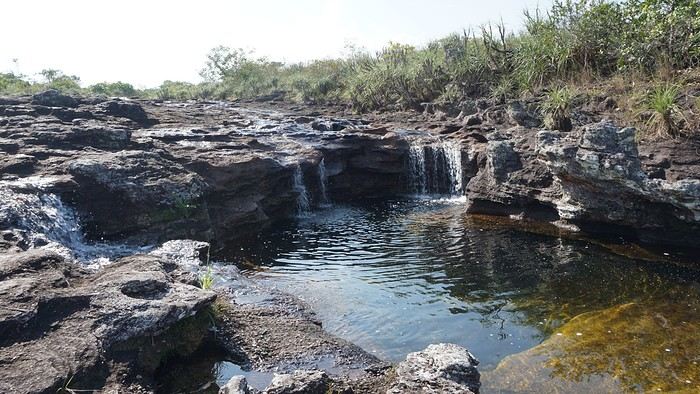
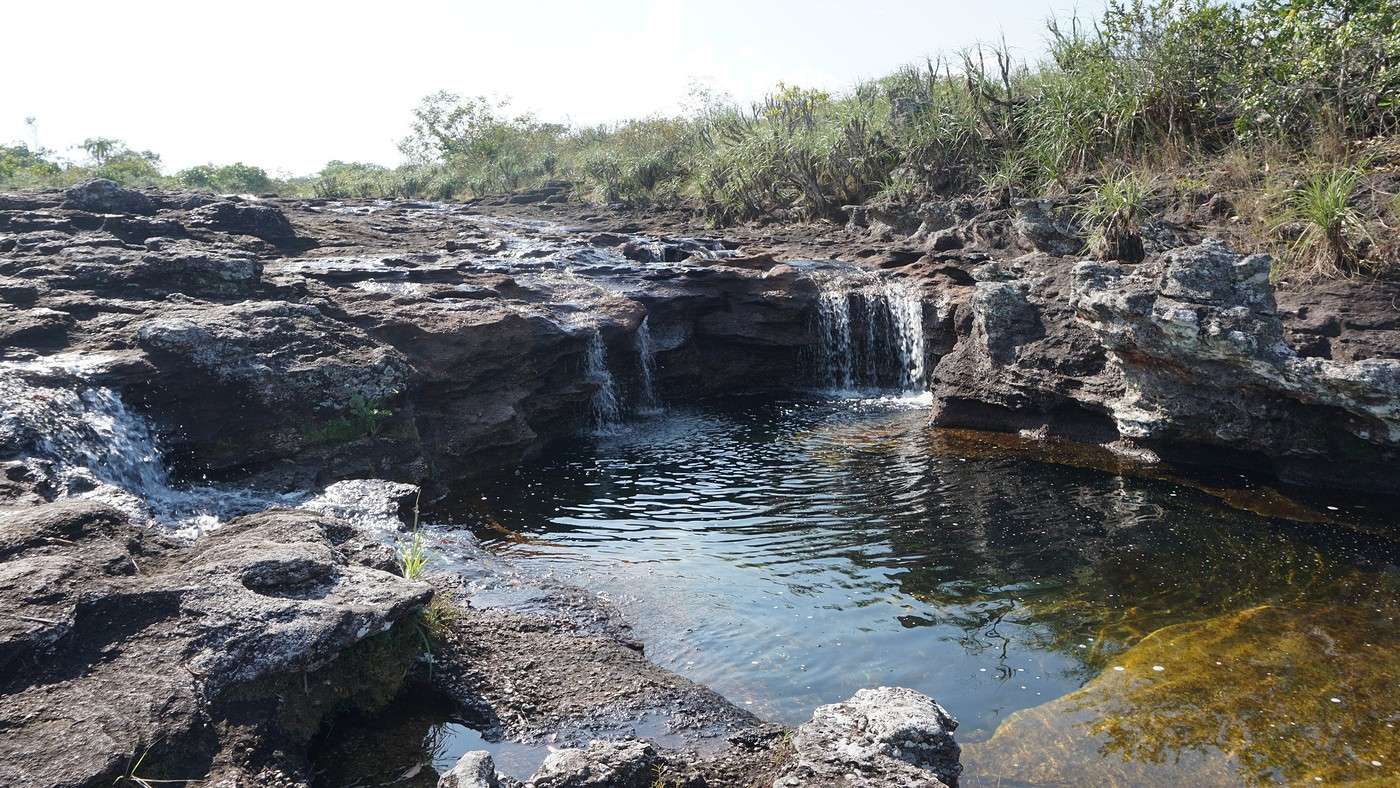
The guide then told me about another natural pool a little farther away. I went ahead alone to take some photos. Thinking I’d found it, it was so beautiful I couldn’t resist—no hesitation, just *splash*! But it wasn’t the right spot, and the guide came to get me, explaining we weren’t supposed to swim there! And he hadn’t even seen me... I went back down and swam in the first pool, a little embarrassed for my mistake and getting a talking-to. The water here was *very* warm. Plus, another noisy group joined us—way less pleasant!


I then saw the guide walking off with the young Ecuadorians. I left my backpack with Justine and went to join them, thinking I’d grab it after taking photos. But the guide’s goal was to take us to that second natural pool. I ran into him on his way back down—he explained where to go and went to get Justine (and my backpack). This second spot was much nicer. We swam all four of us, in peace and in much cooler water.


It was time to head back to the *finca* for a break. That’s when I discovered a drink (*Poney*) that seemed really popular with the young Ecuadorians. It’s malt-based, like non-alcoholic beer. Not bad! Refreshing and energizing!

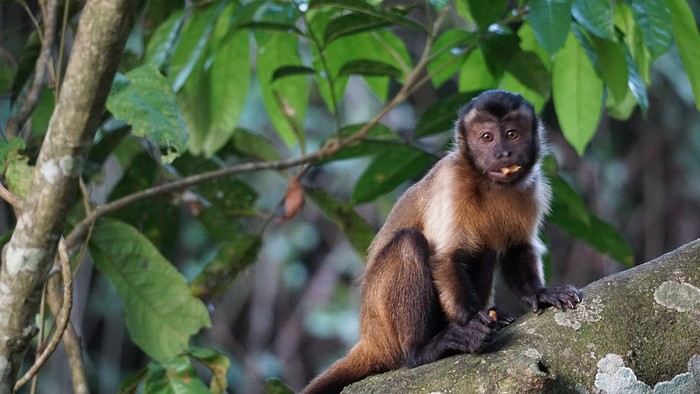
Late afternoon was approaching when we suddenly heard some shouts. The *finca* owners were calling the monkeys—it seemed almost like a ritual. Sure enough, a whole group of them soon arrived, not shy at all, coming to grab and eat bananas.


After the break, we got back in our *lancha* and returned to our hostel. We said goodbye to our guide and the young Ecuadorians (who’d chosen to stay in the village). Tomorrow: breakfast at 7:20 AM, departure at 7:50 AM. The plan? Hiking, swimming, hiking, swimming, hiking... you get it—even if the walks are supposed to be flat, it won’t exactly be a sunbathing/cocktail day!

Dinner was delivered to our cabin. Another packed day done! I hope Justine changes her mind and joins us!

La Macarena (2/4) Sometimes I build up an event, a meeting, a party, or a site so much that when the moment comes, I’m disappointed. But not here! It’s going to be *so* hard to choose among all my photos from today. I don’t have the words to describe what I felt there—too beautiful, too exceptional (in the rare sense of the word), unique!

Justine changed her mind while we were having our hearty breakfast (coffee + hot chocolate, banana, bread, cheese, omelet, potato pancakes, and sausage!). It would’ve been a shame for her to miss today!

To reach the site for our new hike, we took a few minutes by boat, then 20 minutes by pickup on a more or less bumpy road to the access control building for the park’s different trails. We were greeted by six armed soldiers. The guide reassured us—their presence was “institutional,” and there were no longer any security issues here. Before leaving, our backpacks were searched to make sure we weren’t carrying any prohibited items.

During our short 2 km hike, we made several stops where the guide told us about the region—its oil wealth (in some places, he just had to press the ground with his foot to make crude oil gush out), the wildlife (plenty of wild boars), and the flora (including an endemic palm species, *marucha*?).

We quickly reached the big natural pool where swimming was allowed. Justine decided to come a little farther with us but gave up pretty quickly on completing the 6-7 km loop planned for today. She’d wait by the pool with some civil security staff keeping an eye on the swimmers.

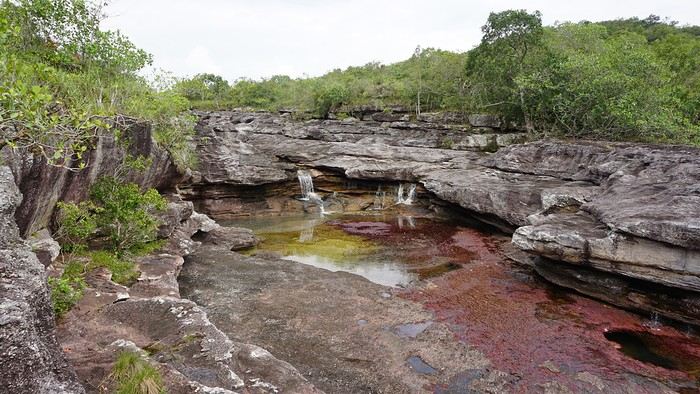
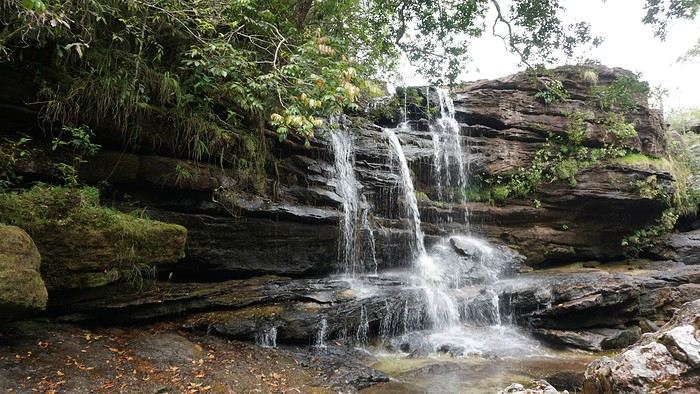
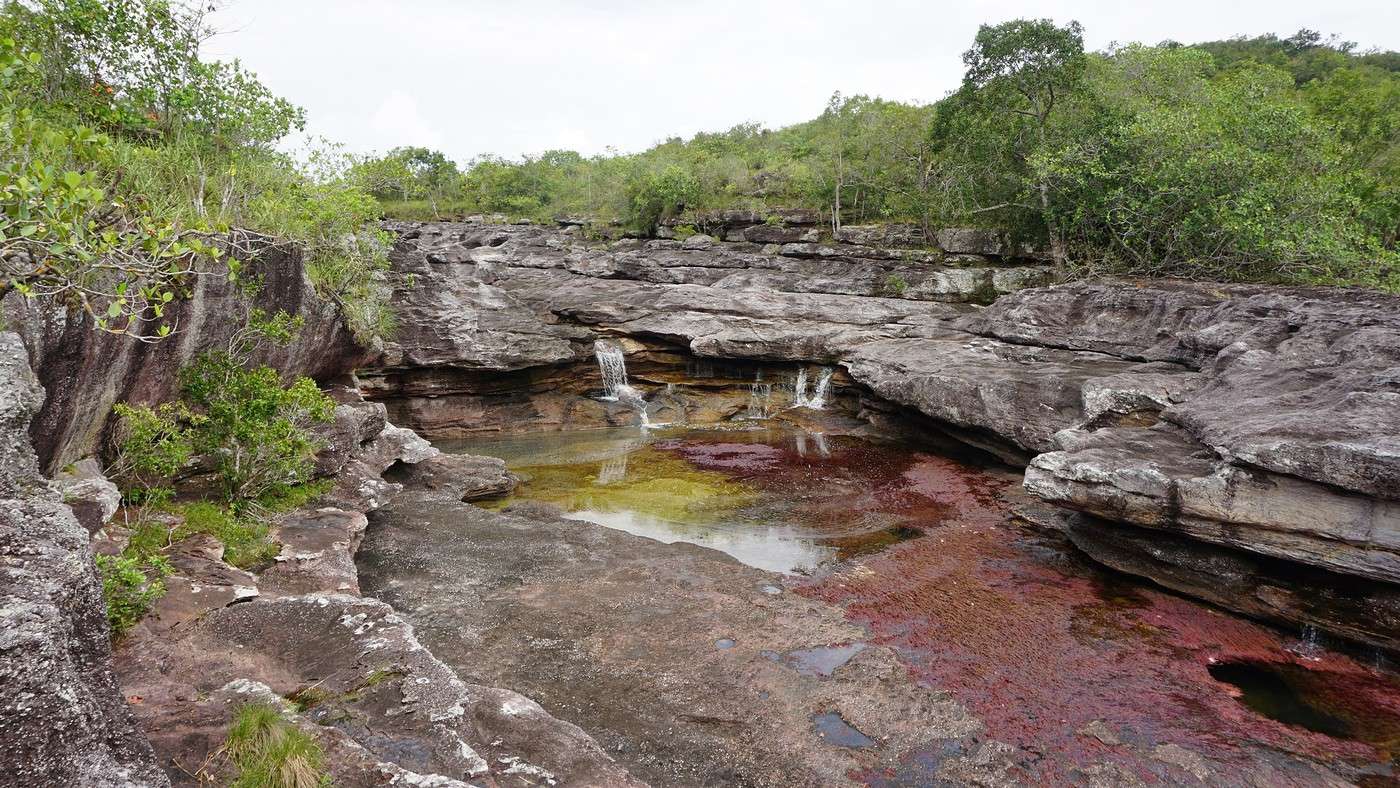
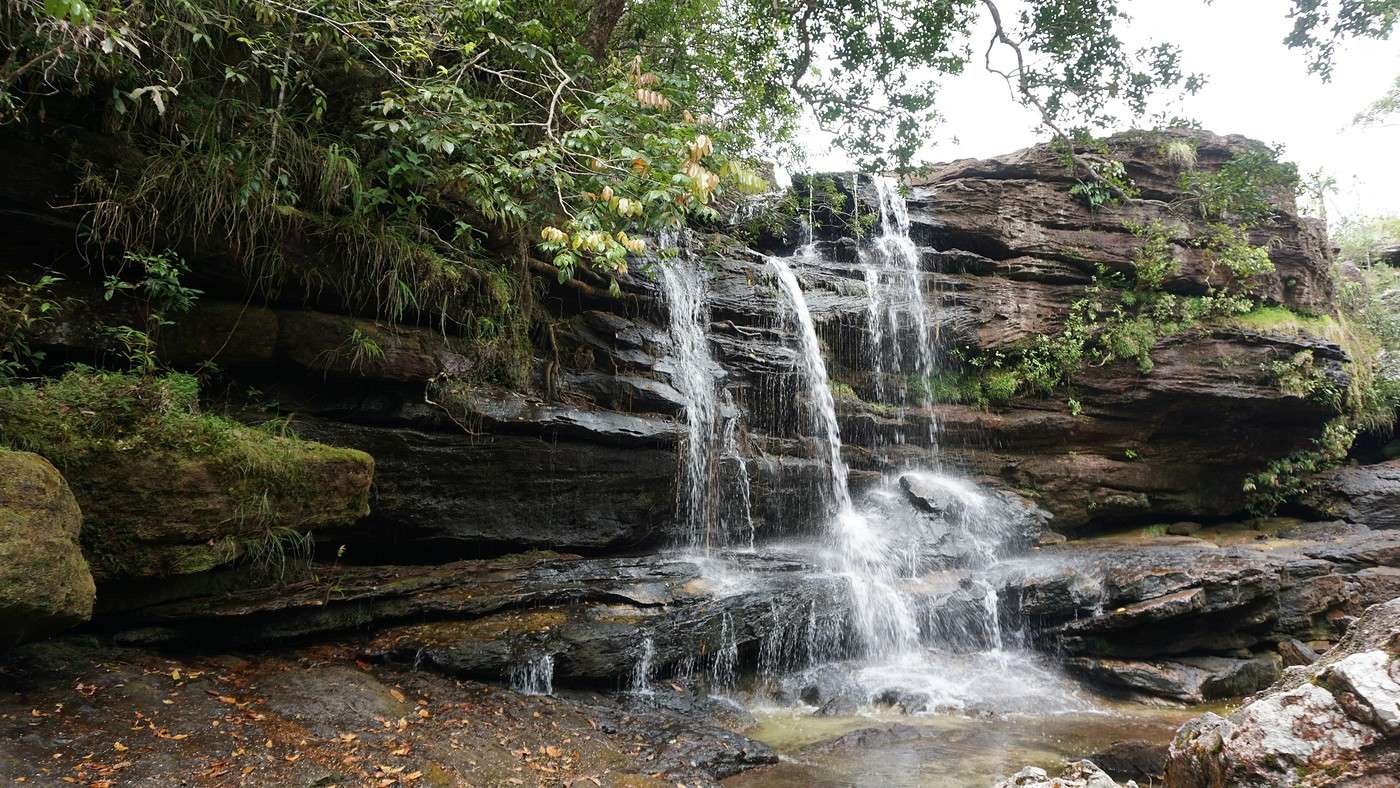
We started by following a trail through the forest, then moved along rocks by the water. Every new spot was more beautiful than the last. We got a little rain, but not enough to cool us down.


The goal of this hike was to reach a waterfall, maybe swim there, and have lunch. We did neither. After a short break where I watched little fish quickly come to nibble the dead skin off my feet, we decided to head back to the first pool to spend the rest of the afternoon.


A few kilometers later (are we still far? “Oh no, just half a cigar!”), we made it back to our starting point. We found Justine there and enjoyed a delicious, *very* hearty picnic (impossible to finish it all!). Then we swam in water that was just the right temperature, in a stunning setting. It was just the four of us, the guide, and some rangers—perfect!

Photos, videos, swimming (during which those little hungry fish came to nibble our backs, legs, and feet...)—time to recover after our morning efforts.

Before leaving, the guide asked what we’d decided for tomorrow: the *Laguna del Silencio* with him or the walk to the *Raudal de Agosturas* site. For the first option, it involved hiking in the mountains, horseback riding, and canoeing. Justine wasn’t up for it (especially the hiking part). For the second option, it was 1.5 to 2 hours on the river, seeing petroglyphs, and a short, supposedly easy hike to a geological formations site (*La Ciudad de Piedras*). Justine was more tempted by this one!
Back at *Le Refuge*, Alejandra joined us, confirmed we’d made the right choice, and introduced us to a couple from Bilbao who’d be joining us tomorrow (the young Ecuadorians had chosen the first option).

Evening: a traditional regional meal at the hostel, shared with the Basque retirees. Four hours of prep, especially for the fried bananas in Colombia’s three colors. Delicious! The owner and chef had contributed to a beautiful cookbook and shared this recipe. She was thrilled to see us enjoying it—*muy rico*!

La Macarena (3/4) Today, we slept in a little—our *lancha* wasn’t arriving until 8 AM. We spent the day with the Basque couple and a young Colombian woman.

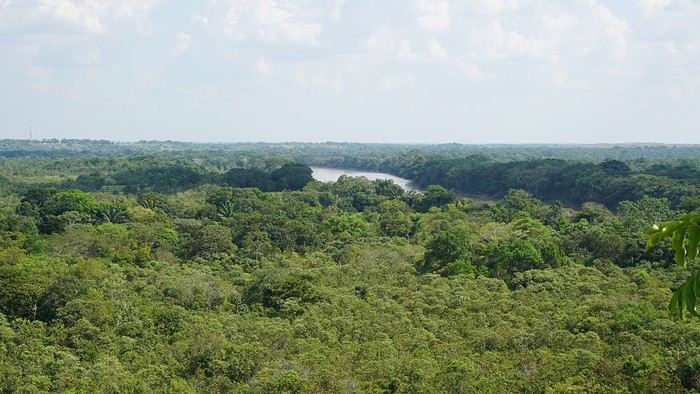
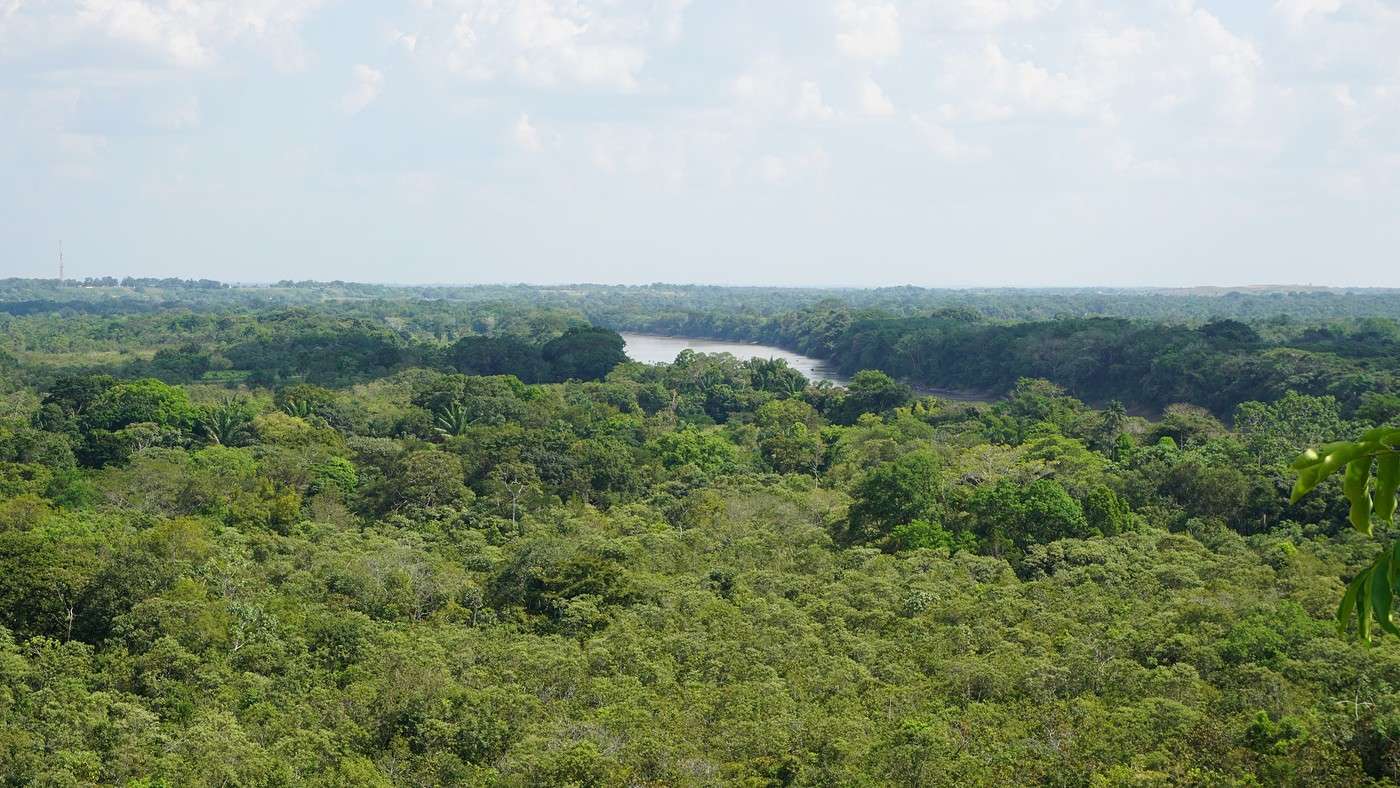
An hour and a half on the Guayabero River (named after the native people) let us spot some bird species, iguanas, turtles, and spider monkeys. Impossible to photograph the latter—by nature, a disturbed monkey is always moving, just like a boat on the water... under those conditions, the photographer’s excuses for missed or blurry shots are all too easy!

After about an hour, the river narrowed until it looked like a canyon in a rocky chaos. If the water level had been normal for this time of year, we wouldn’t have been able to take it—the currents were too strong.

We docked for a hike of at least 6 km through the forest, then up high with beautiful views of the mountains, the forest, and the river. Up and down, heat, humidity... it was pretty tough for everyone. Justine was suffering like on the first day. She complained because they’d promised an easy hike. When we asked the young guide if we were far, he’d always say, “No, just 10 more minutes...” But like the first day, Justine wasn’t feeling well at all—shivering, goosebumps, retching. After a few minutes’ rest, she bravely pushed on.

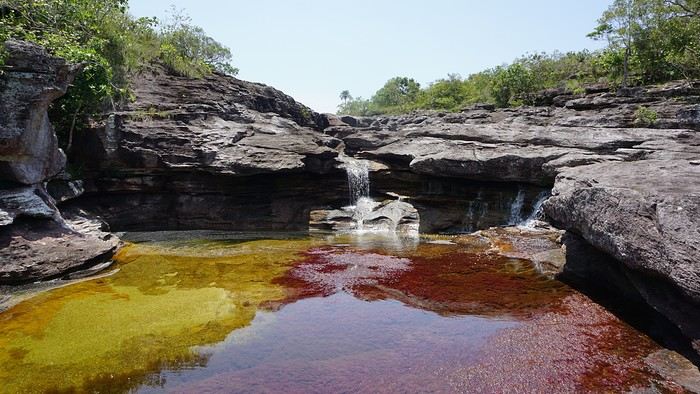
Finally, we stopped by the water. We could see red and green aquatic plants—even swim there, which the Basque guy and I didn’t pass up.

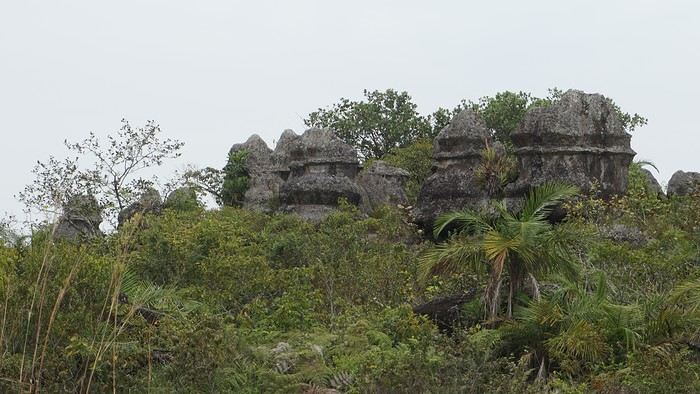
We resumed hiking through amazing geological formations (*La Ciudad de Piedras*), and in the middle of the site, the woman from Bilbao felt faint. Her husband laid her down, raised her legs, and Justine fanned her with a makeshift fan (female solidarity!).


We took a break while she recovered. We also spotted a beautiful snake, a striking red-and-black spider, and under a rock, a nest full of eggs.

Then it was back to the *lancha*. On the way, I got stung by an insect. I looked around and saw what looked like big bees flying. The sting hurt at first, but it faded little by little.

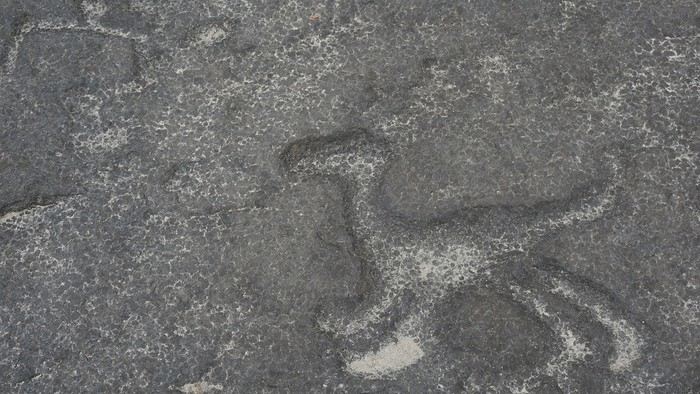
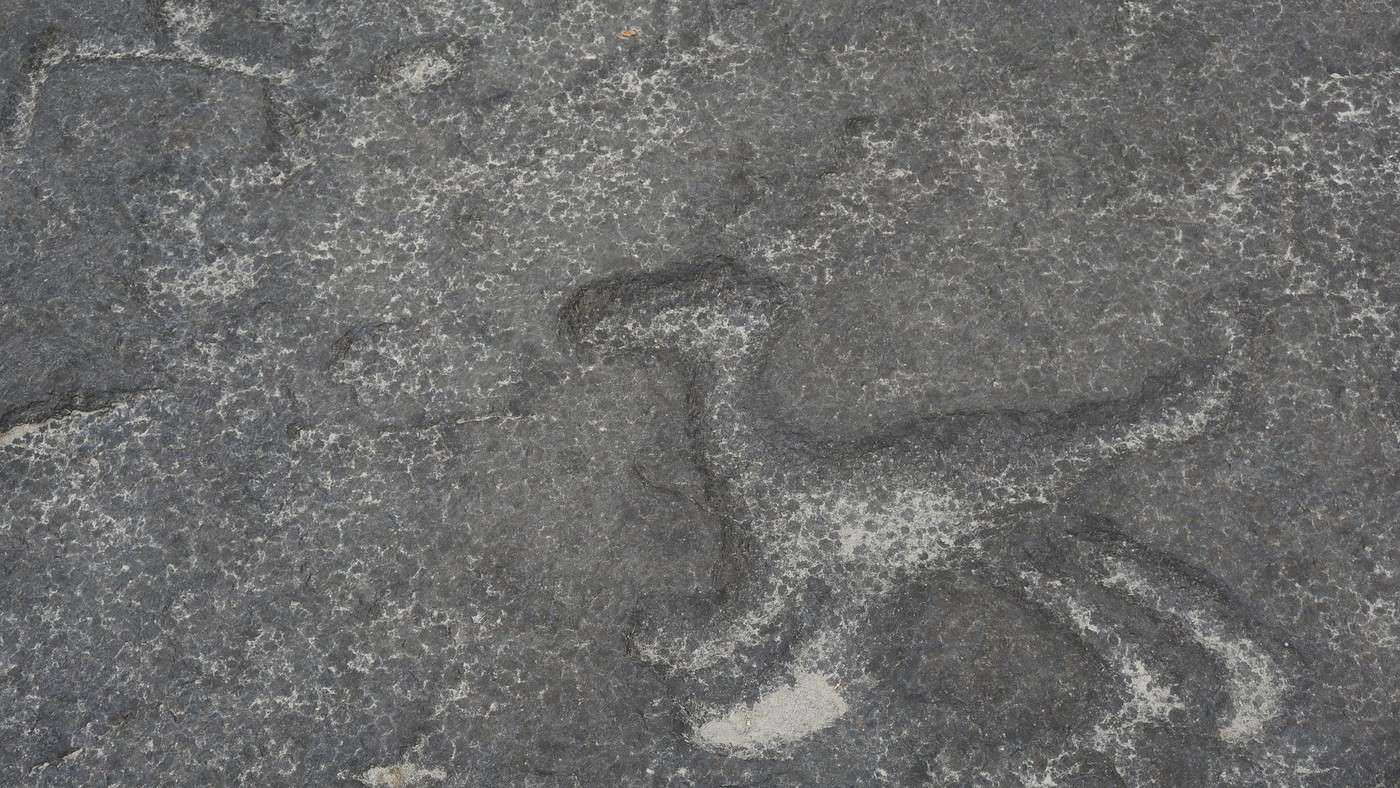
We boarded, and almost as soon as we left the “canyon,” we docked again to see petroglyphs carved by the first indigenous tribes.


It was nearly 2 PM—time for lunch. A little riverside eatery served red bean soup, fried fish, rice, fried banana (*plantain*, of course), tomato/avocado/egg salad, and a traditional “lemonade” (water, *panela*, and lemon). Apparently, drinking plain water isn’t the norm here!

We had a long chat with the guide and our companions about all sorts of topics. I’ll admit I didn’t catch everything. We reboarded around 3:30 PM and got back to our cabin by 5:15 PM. I even spotted a few monkeys in the trees around *Le Refuge*.

The main building’s awning was being repaired—the carpenter was replacing some rotten beams and corrugated iron sheets. While refilling our water bottles, I chatted with the owner and mentioned my dad was a carpenter and had taught me to love the trade.

Tomorrow morning, for our last morning in La Macarena, we’re meeting at 5:30 AM to watch the sunrise over the “steppe.”

Before that, tonight we’re invited to a folkloric evening with a traditional meal. We’re leaving at 6:20 PM with our Basque neighbors. The meal was *very* hearty, the room *very* loud, but the show was nice—we got to enjoy musicians (including a surprising “harpist”) and dancers, from the youngest to the most experienced, who invited all the tourists to join them throughout the evening.

The evening started with long speeches—several speakers (including the dance school director) thanked all the tourists present: Colombians, Austrians, Ecuadorians, Americans, Spaniards... and French (us two!).

During the evening, we ended up next to the young Ecuadorians, who offered to translate the main points of each speech, admitting they hadn’t understood everything either (fast talking + terrible sound).

We got back to the hostel around 9:30 PM. We’d all had enough of the fun but noisy evening.

La Macarena (4/4) End of the La Macarena leg—hello, Villa de Leyva!

This morning, we got up at 4:30 AM because we had a date with the moon... since the sun wasn’t up yet! The moon waited for it, and it arrived! From our viewpoint about 15 minutes (by car) from *Le Refuge*, we watched the beautiful spectacle of the sunrise over the misty surrounding steppe. On the way back, we stopped at a toll—a rope across the road. Every driver of a motorized vehicle (2 or 4 wheels) had to pay a fee to use the track. The money goes toward its upkeep.

We had our last breakfast at the hostel, said warm (and almost emotional) goodbyes to the owners, and headed back to that single-runway airport surrounded by fields.

Manual check-in, luggage inspection. Then we went with Alejandra to her agency to pay for our stay. While paying, I thought the amount was higher than expected but didn’t react right away. It was during the flight that I checked and realized there’d been a mistake. Once at the airport, while waiting for our luggage, I contacted Alejandra. She quickly confirmed her error and apologized. We agreed to touch base later in the day to sort out the refund.

We took a taxi and got dropped off at *Terminal Norte*. The ride was pretty long, and traffic was still heavy leaving Bogotá. The upside of this terminal is that we were right on the way to Villa de Leyva. The downside: the taxi ride was more expensive than if we’d been dropped at the central *Salitre* terminal.

Our bus left at 2:15 PM. Picnic in the bus station.

From Caño Cristales to Tayrona Park

Phil31600 · 2024-12-31

Step 3 - Villa de Leyva (1/3) We arrive in Villa de Leyva in the late afternoon. Then a taxi to reach our hotel, which turns out to be not far from the small bus station. We’ll walk this route when we leave. We settle into our lovely room with an inner patio and, for the first time on this trip, drop off our laundry. New contact with Alejandra: a relatively simple solution was found. She’ll transfer money to the hotel at our next stop in Mompox. Later, Alejandra will give me all the details of her actions (contacting the owner, getting their bank details, and a copy of the transfer). Villa de Leyva (2/3) Right after our excellent breakfast (pancakes, papaya, coffee or hot chocolate, omelette), the young man at reception returns our laundry—already washed and dry. What efficiency! For the modest sum of about 3 €!


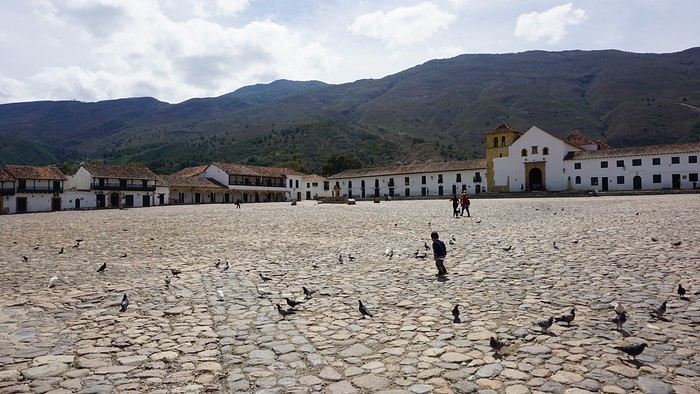
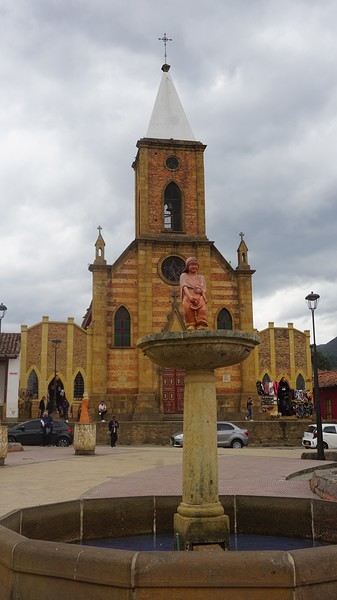
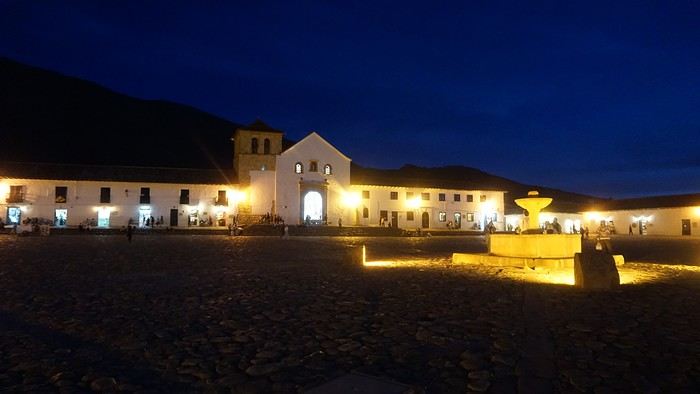
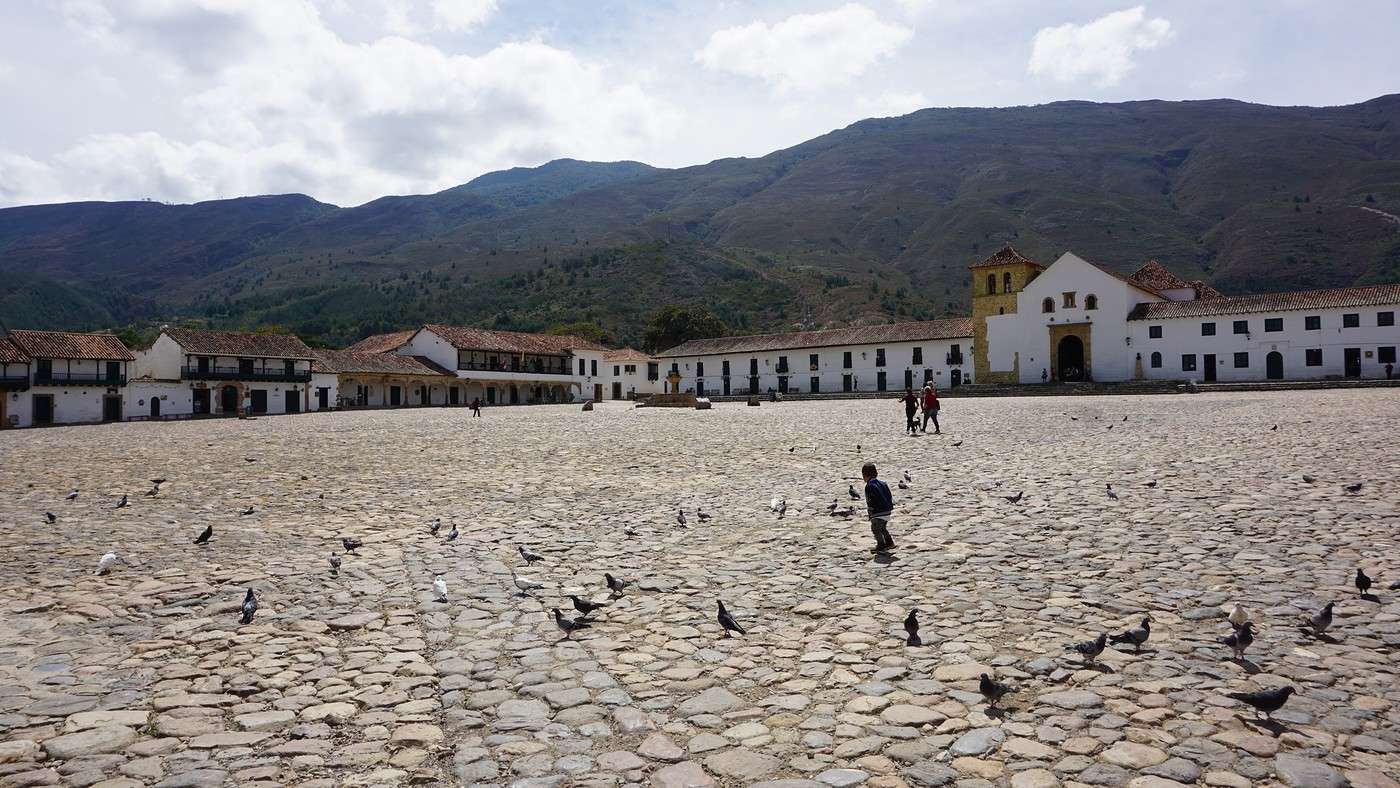
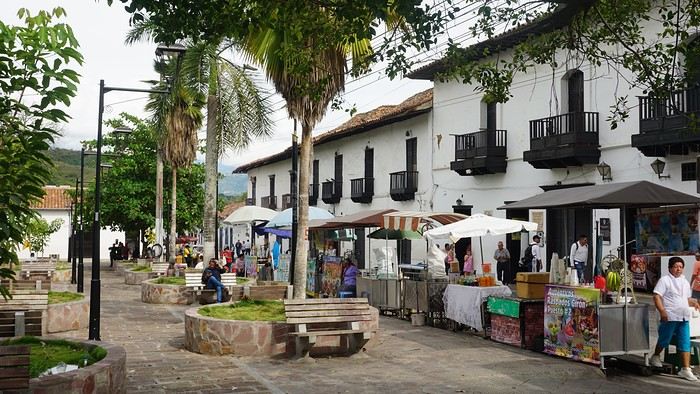
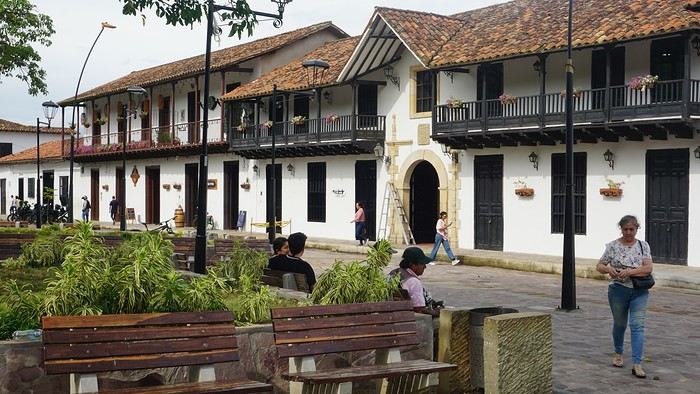
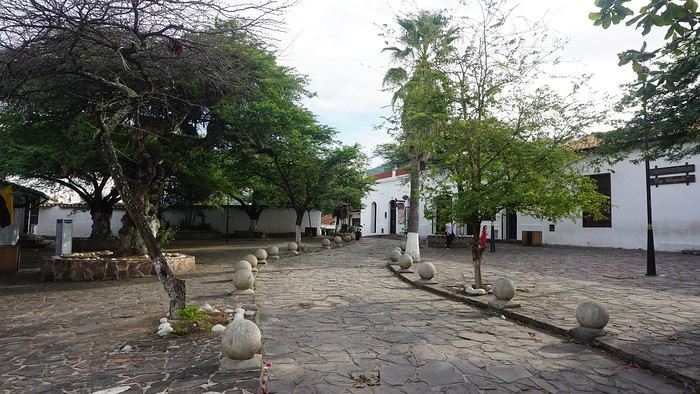
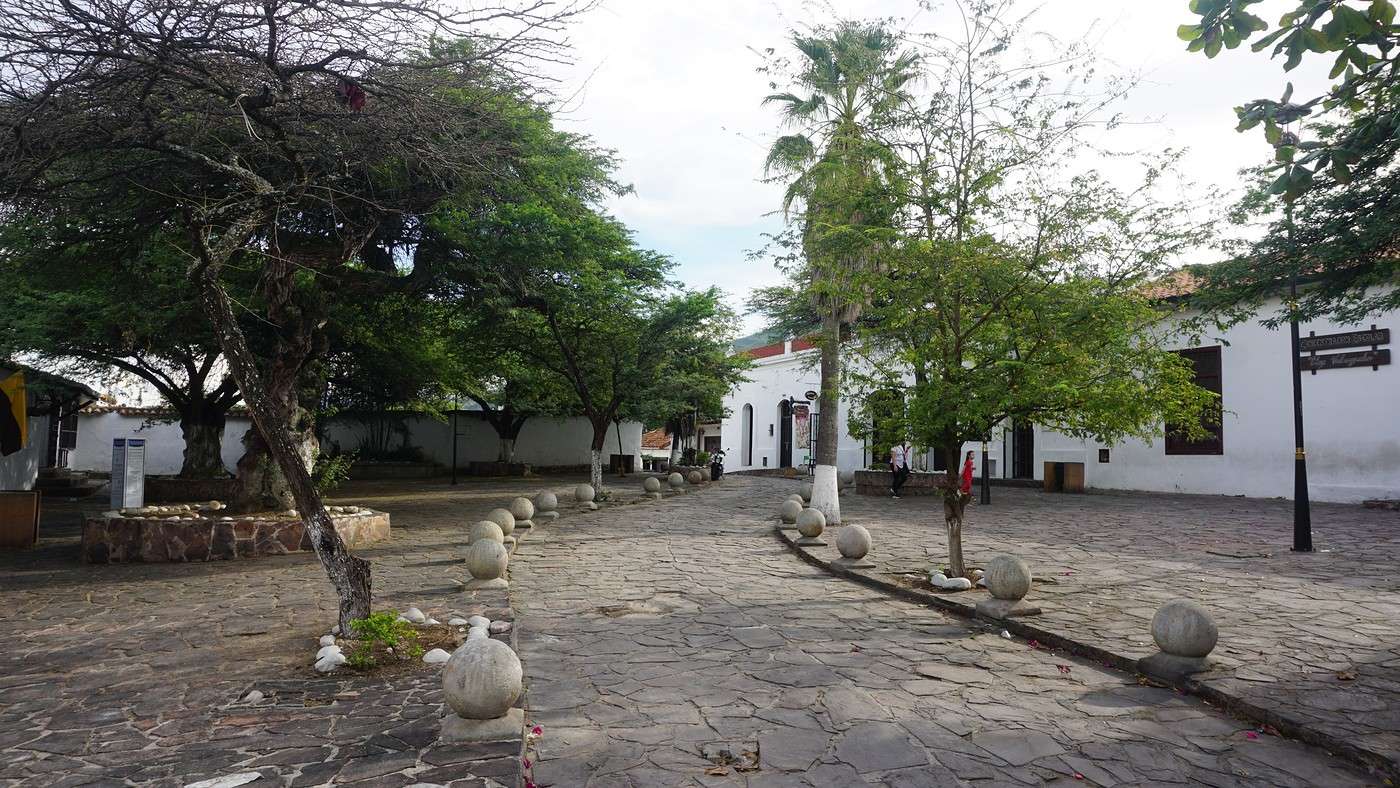
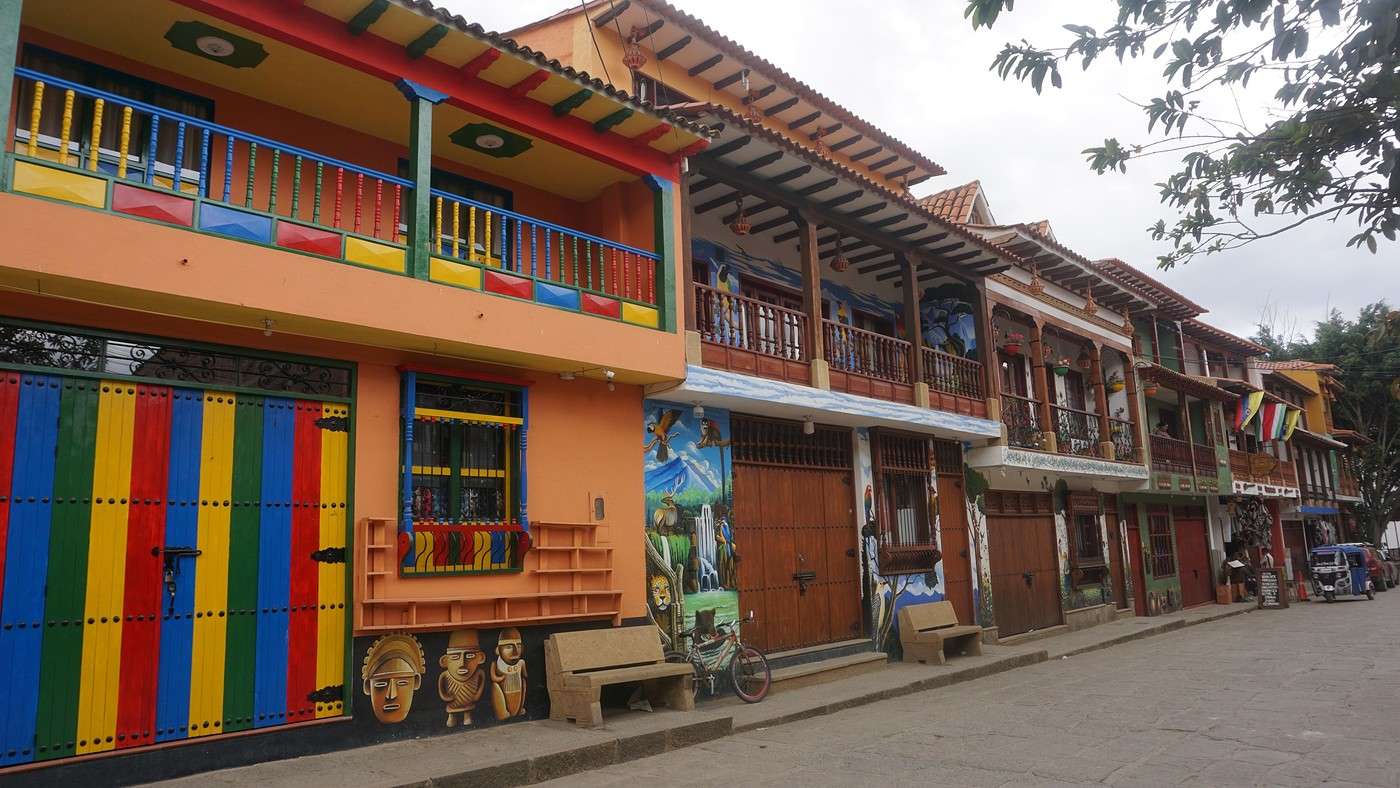
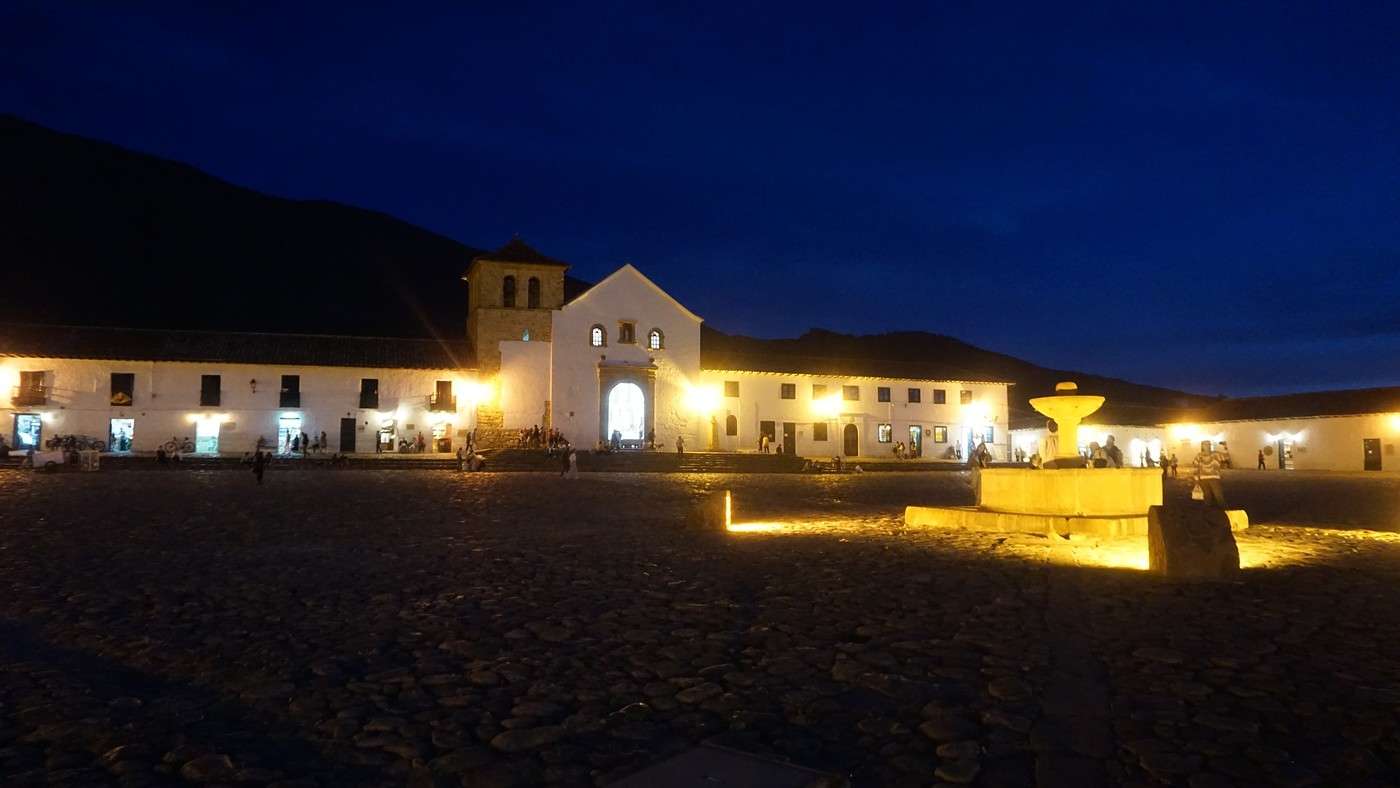
Villa de Leyva, located at 2,149m altitude, is one of Colombia’s most beautiful villages. Its central square (or Plaza Mayor), spanning 14,000m², is the largest in Latin America. The Spanish used to hold military parades here to impress the Indigenous people.


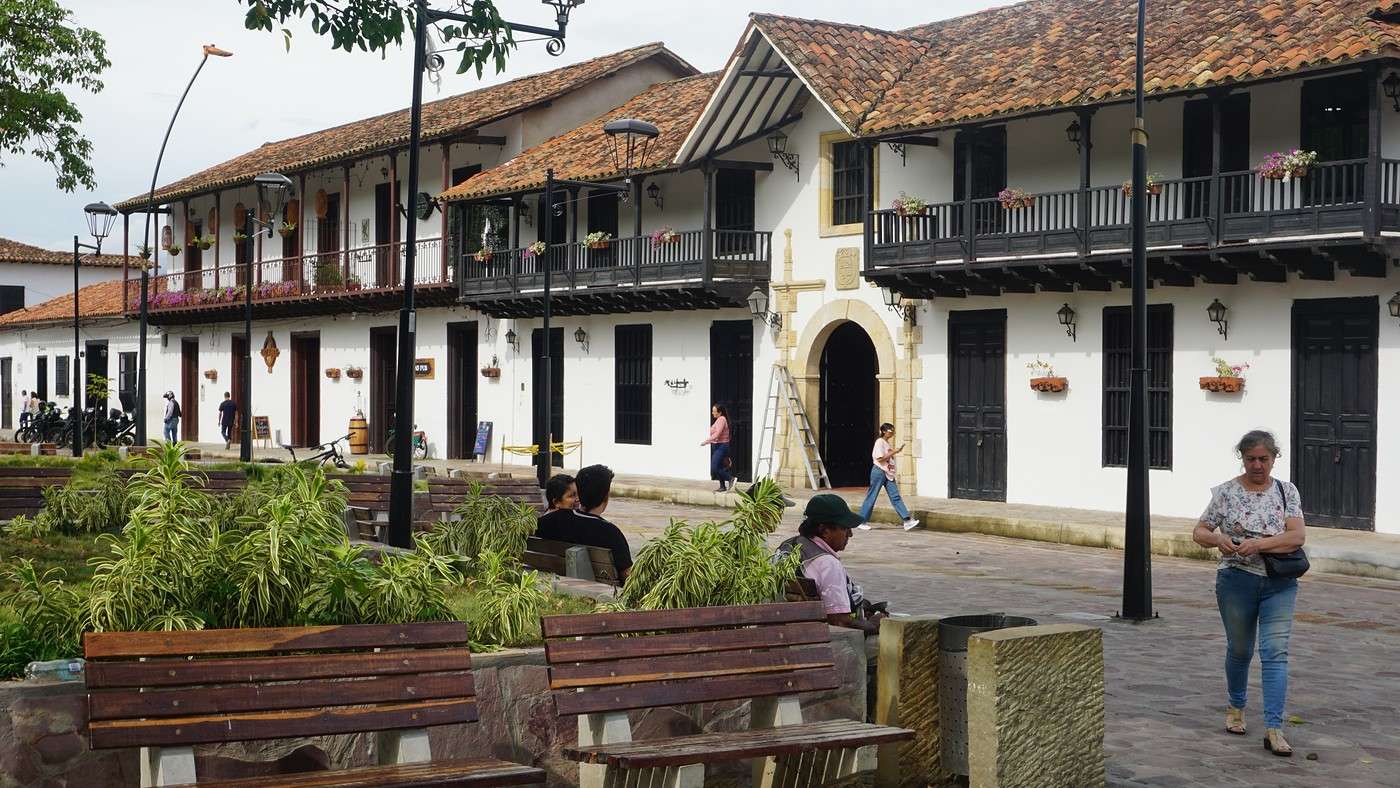
Founded in 1572 by Spanish colonists, it has barely changed since then: the fountain in the middle, the large cobblestones (actually rounded, disjointed pebbles) are still there. Sitting on one of the benches against the white walls of the surrounding houses and closing your eyes, you can almost imagine the parades and marches of the 16th-century Spanish army... This morning, we strolled around the square and visited its church. Then the very original Luis Umberto Acuña Museum, dedicated to an artist inspired by pre-Columbian art and... Pablo Picasso. The result is quite surprising! Finally, we visited the Carmen Religious Art Museum, housed in a former Carmelite monastery. From there, a long walk of over 2 kilometers (not very interesting) led us to another curiosity: a clay house, or "Casa Terracota."


A work by an architect inspired by Gaudí, this model home took 16 years to build. The architect’s goal was to demonstrate that eco-friendly houses can be built using locally available materials. This 350m² house is waterproof, earthquake-resistant, and maintains a moderate indoor temperature. The project won an architecture competition in... Saint-Étienne in 2000. A surprising visit—some travelers don’t appreciate it at all, but I recommend it, even if the entrance fee is a bit steep.


After checking with reception to book a taxi (no way we’re walking those 2 km back to the center of Villa de Leyva!), we head straight to the Santo Ecce Homo convent, located in the countryside 13 km from the village.


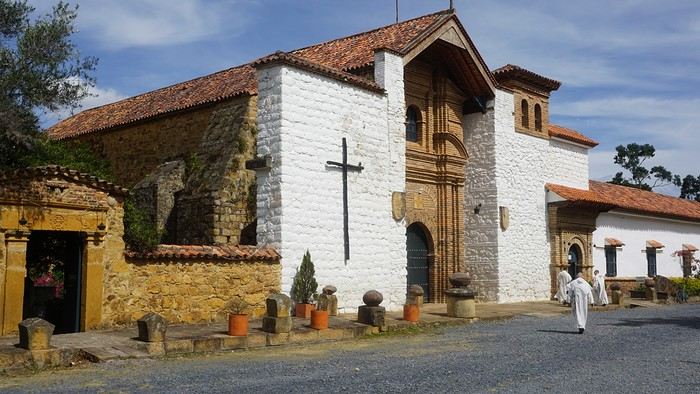
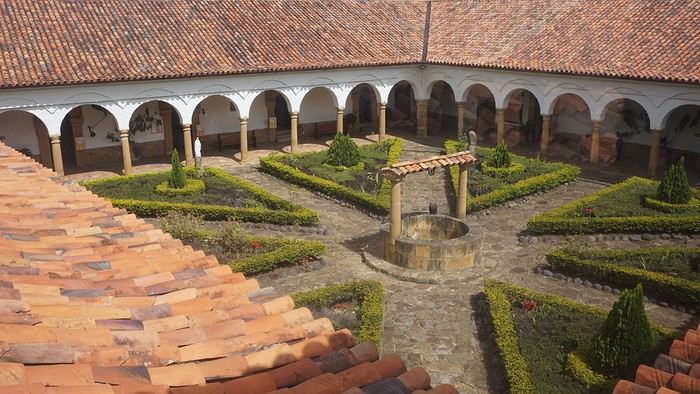
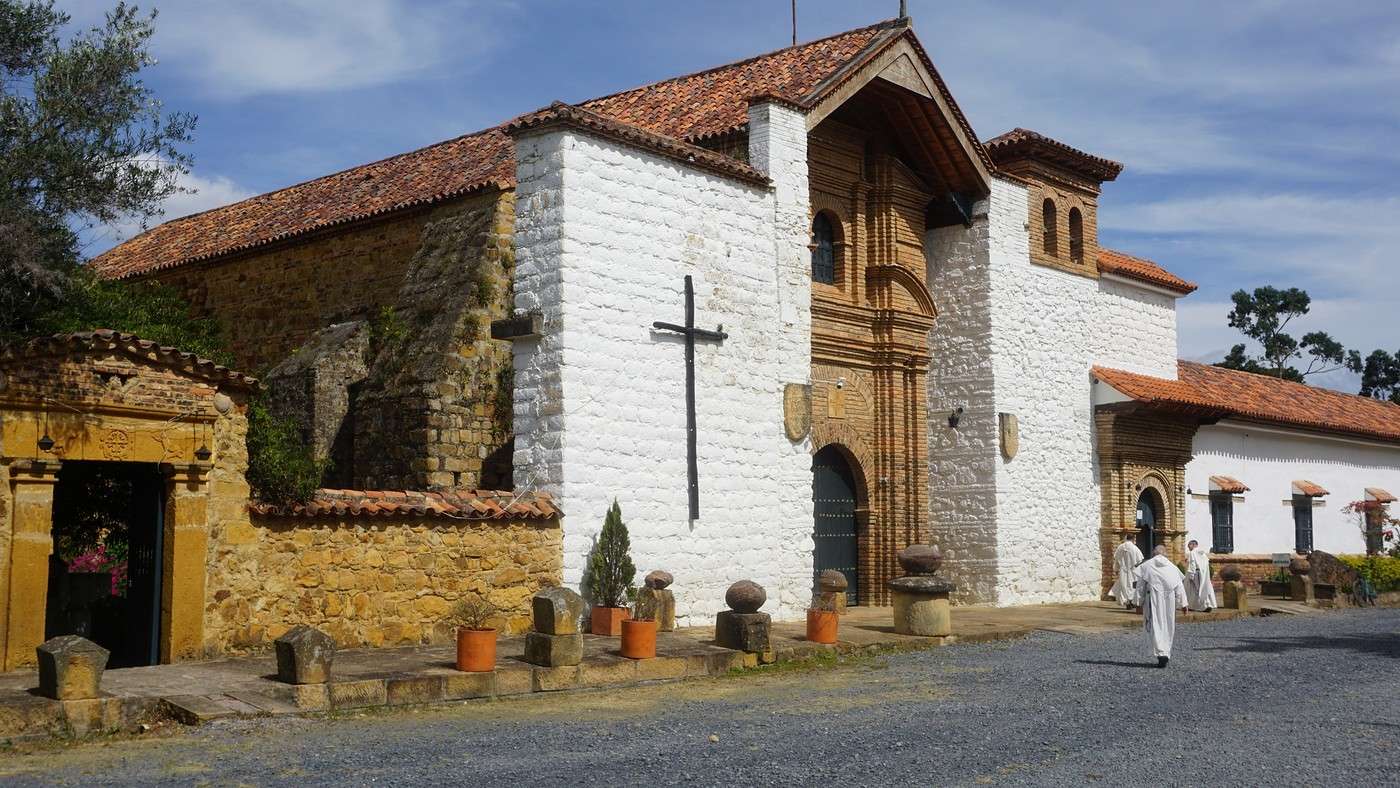
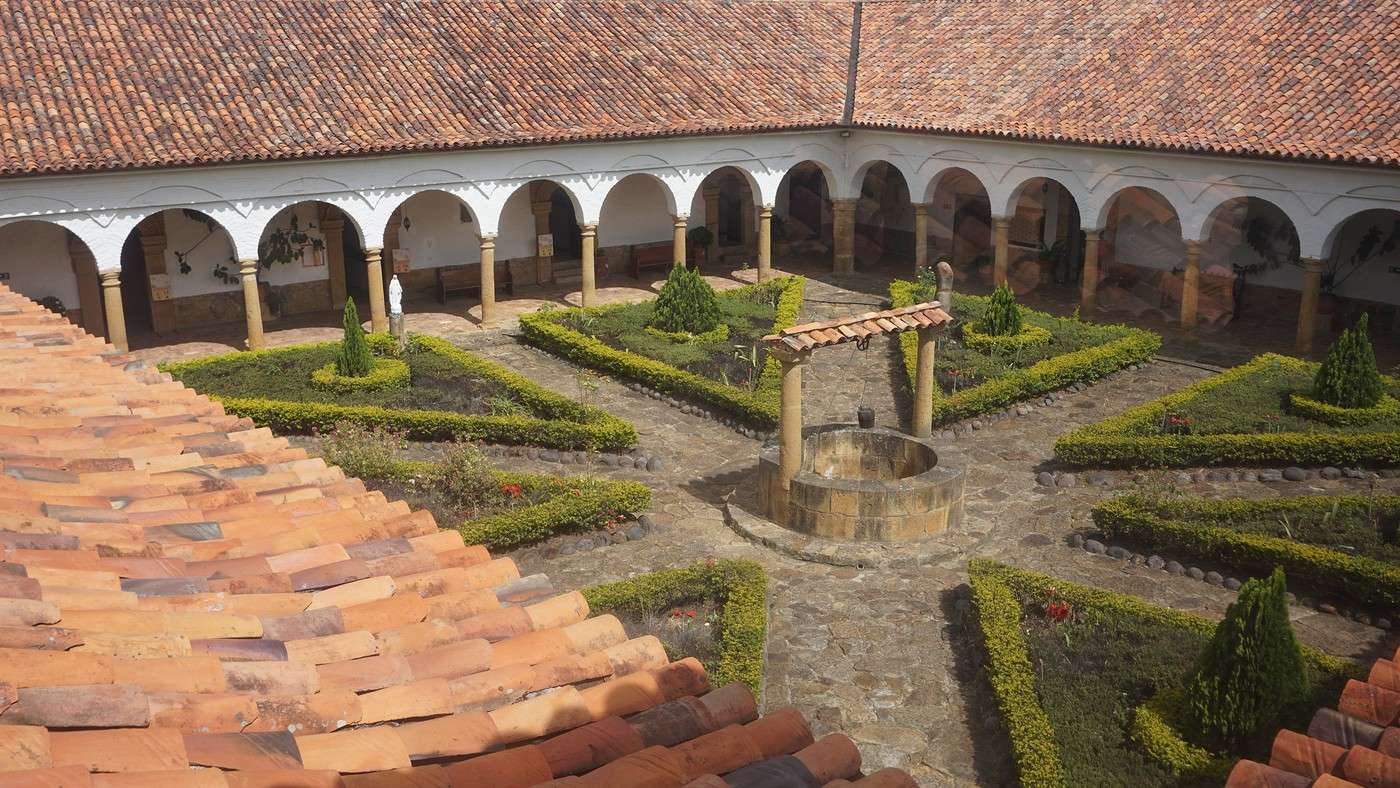
Built in 1620, this Dominican convent is a typical example of colonial architecture and is also called the ‘National Monument of Silence.’ A notable feature is the impressive number of fossils used in the pavement at the entrance and as foundations in the cloister galleries. A peaceful visit—we only crossed paths with three other tourists and a few monks.


We return in the mid-afternoon. We’re hungry! Justine fancies pasta, having spotted a couple of restaurants offering pasta or pizza. She enjoyed hers, but I was less impressed with my pesto pasta—I had to send it back because it was cold. After eating, we stroll through a few streets and return to the central square. We sit on a bench and watch time and people go by (one of our favorite activities when traveling!). Back at the hotel, settled in our patio, I start writing today’s account when I hear music outside. That decides me—I head out again. Following the sound, I return to the central square. At the top, a *banda* is playing. The atmosphere is super friendly: people, invited by the musicians, are singing and dancing. Before heading back to the hotel, I take another nighttime stroll through the illuminated streets of the village. Villa de Leyva (3/3) Today, we head to Ráquira, a pottery village about 40 minutes away (by bus + taxi) from Villa de Leyva. Don’t imagine we’re spending a fortune on transport! The bus cost about 1.20 € per person, and the 6 km taxi ride barely more! And I’ll tell you about lunch—around 4.5 € per person. A tip: if you ever get the chance to visit Colombia like we did, ask for the *menu del día* and skip the à la carte!


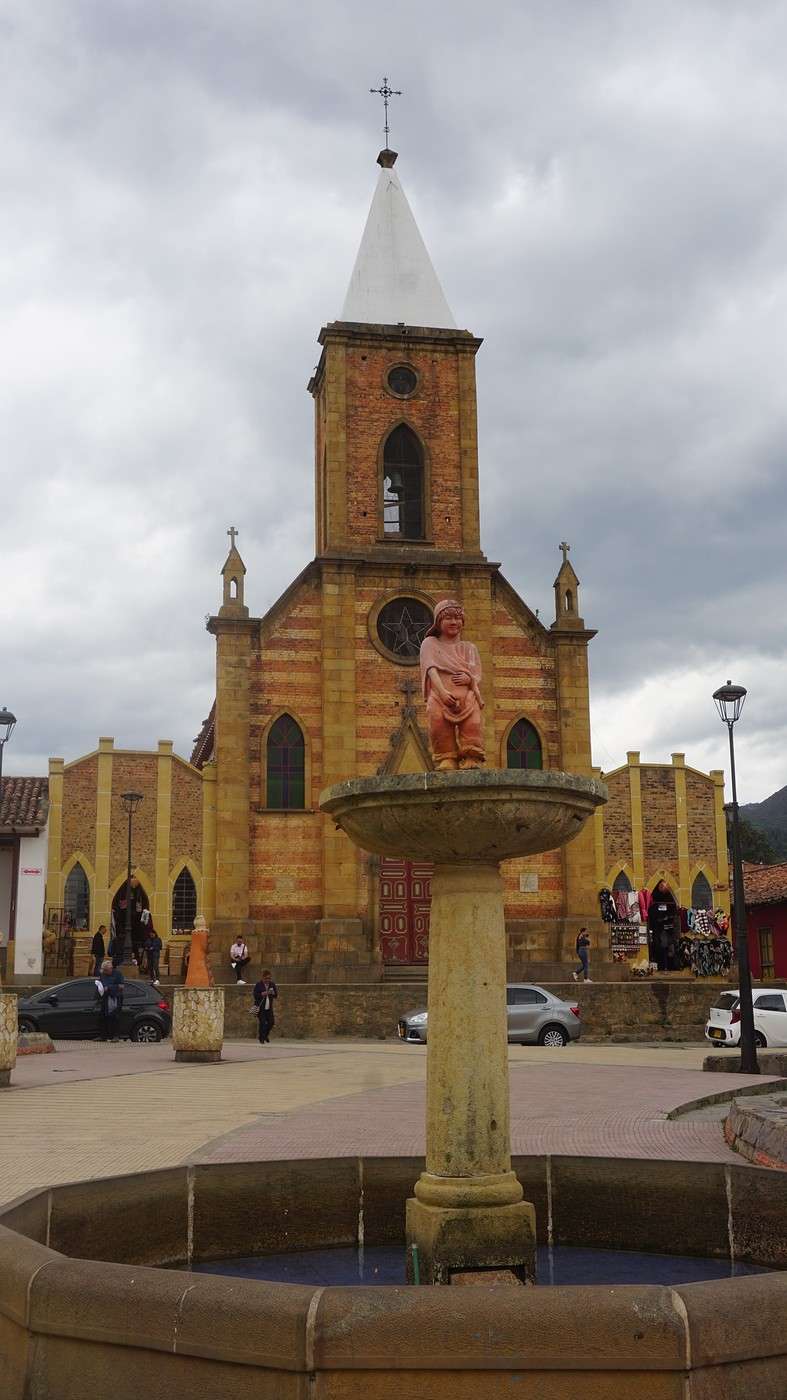
Back to our pottery village! Ráquira means ‘the city of pots.’ Founded in 1590, its economy has relied on this craft ever since. It’s even said that clay has been worked here since pre-Columbian times. The main street is a succession of colorful artisan shops. In the central square, huge terracotta statues stand, and in the middle, a fountain with its local *Manneken-Pis* called *Criollo*.


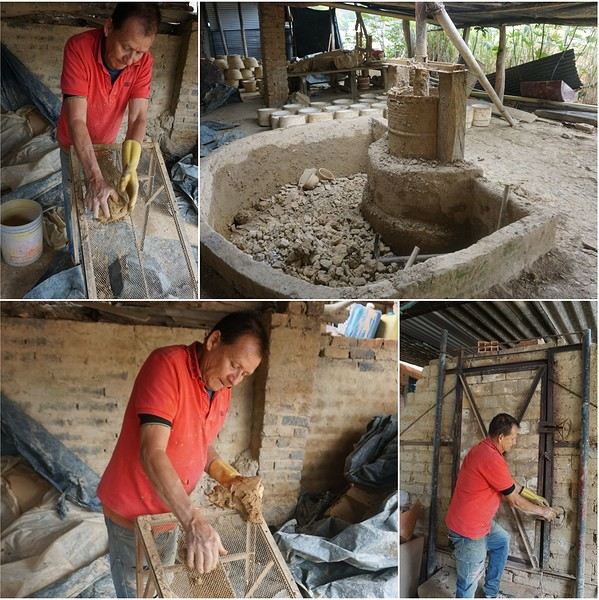
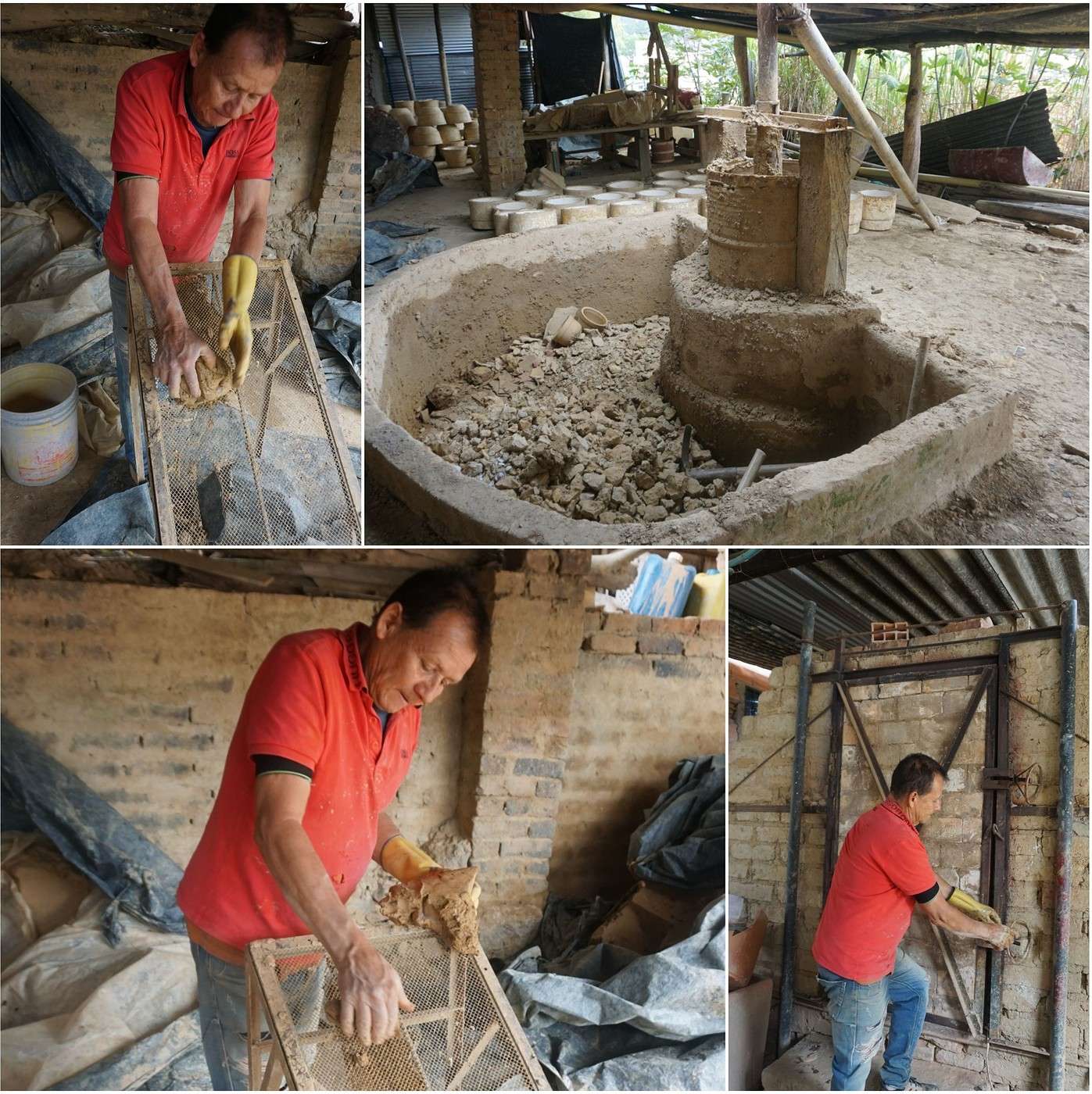
While preparing for this day, I contacted Alex, a potter who gives workshops. We got to meet him, and he warmly welcomed us, explaining the entire pottery-making process: extracting the clay, kneading it in a horse-powered mill, sifting it before shaping it on a wheel (though electric, it’s quite rudimentary—touching the two wires acts as a switch). Then refining, decorating, drying, firing (in a large coal oven for 25 hours), and finally cooling with the door open for 3 days. All his production is then shipped to Medellín, about 15 hours away by road.


Alex answered all our questions. He also explained that his family has been potters for at least four generations. Here, kids start learning the trade from a young age. After the theory, the practice! He offered to let me make two pieces. With his help and advice, it seemed so easy! It was only after removing each piece from the wheel that I realized what I’d actually made. Either way, the hour spent with Alex will be a great memory! When we leave, he gives us one of his pieces and tells us not to hesitate to recommend him and ‘send’ French tourists his way (even though he only speaks Spanish!). Lunchtime arrives. We pick a restaurant at random. As usual, I order the *menu del día*. Normally, you don’t know what it includes, but traditionally, there’s soup and a meat dish with vegetables, rice, and raw veggies. Here, they ask if we want soup or raw veggies as a starter, and for the meat, we’re given 3 or 4 choices. We’re not done being surprised! Before the soup, they serve us a shared *envuelto* (wrapped). It’s a sort of corn bread with cheese, baked in corn leaves and served with small sauces like béarnaise and ketchup. Delicious! Then comes the vegetable and meat soup with a quarter of a corn cob. At the same time, they serve our meat dish with rice, a banana pancake, potatoes, and raw veggies. And as if that weren’t enough, a plate of grilled pork rinds is placed on our table to share. Before catching the bus back to Villa de Leyva, a digestive walk was a must. I think we visited every shop on the main street! In the mid-afternoon, we settle on the terrace of a café to wait for our 4:00 PM bus. We enjoy an ice cream stick while watching the people and the hustle and bustle around the central square.

From Caño Cristales to Tayrona Park

Phil31600 · 2024-12-31

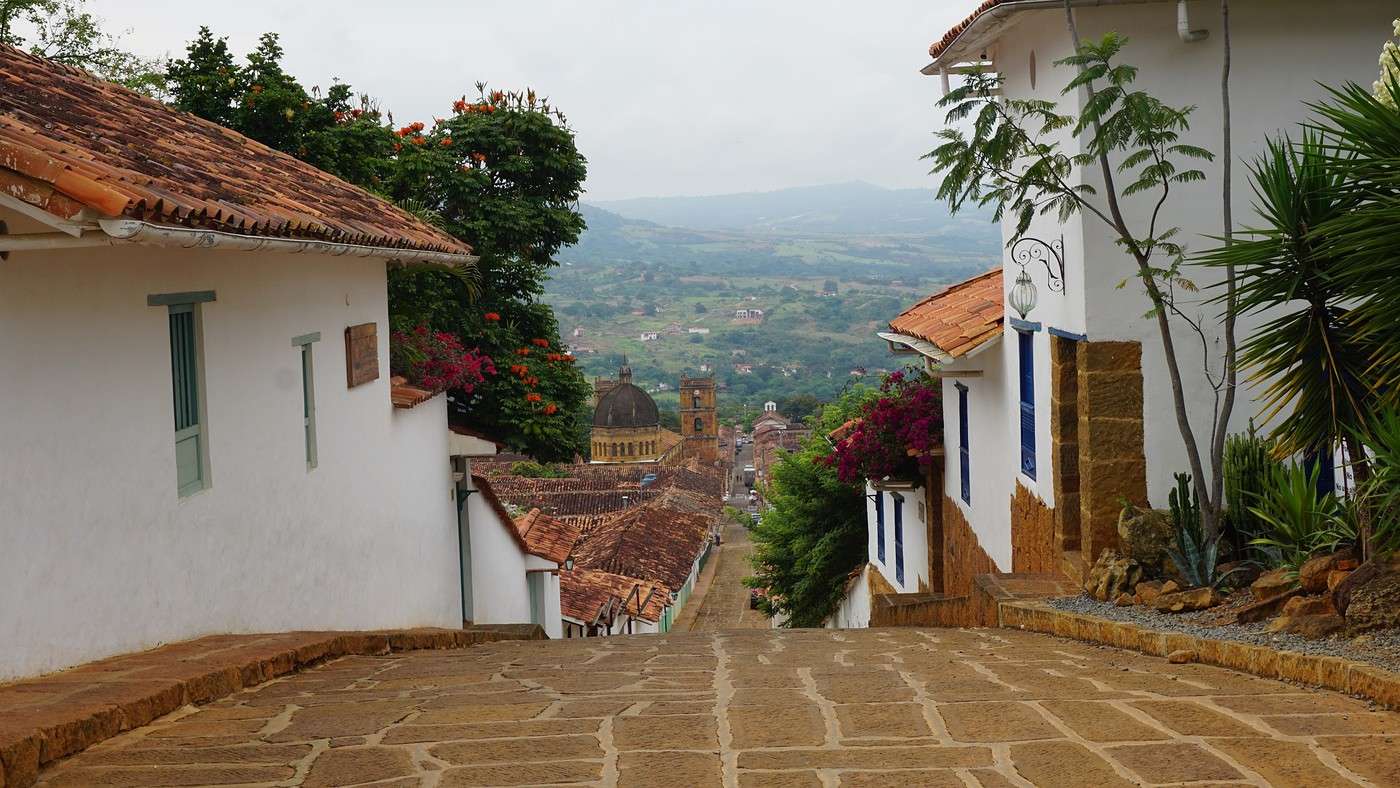
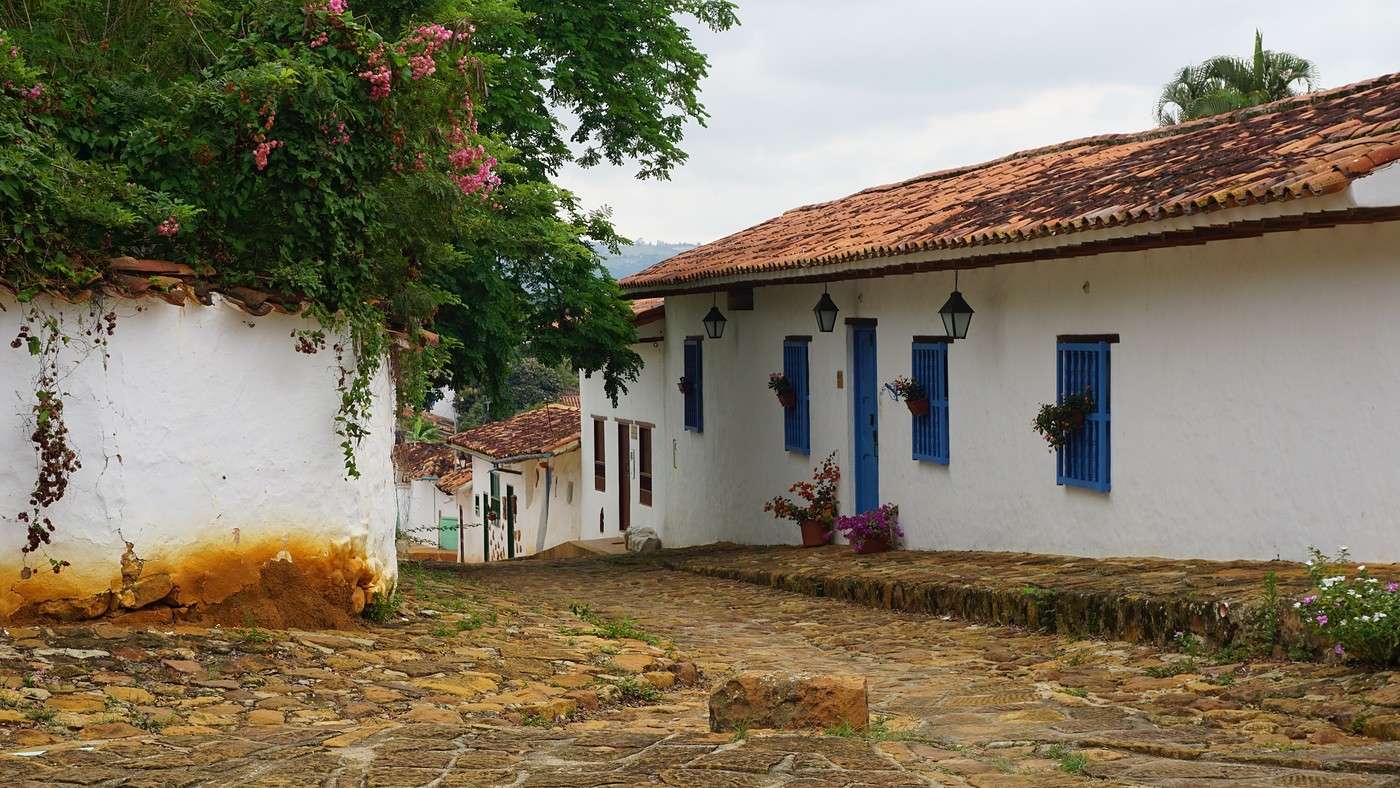
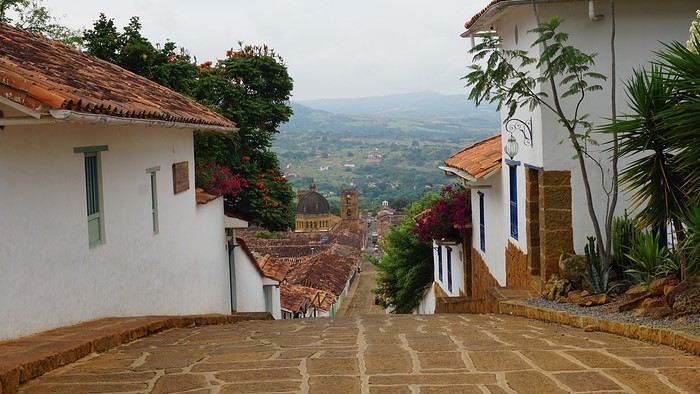
Step 4 – Barichara (1/3) Long day of travel: bus from Villa de Leyva to Tunja, then Tunja to San Gil, and finally a taxi from San Gil to Barichara. Barichara, located at 1,336m, is considered the best-preserved village in the region. Marketed as a jewel of Colombia, it’s a filming location for many Colombian TV series.

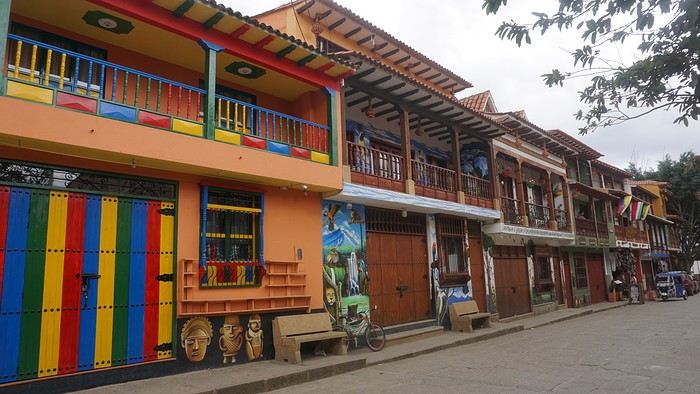
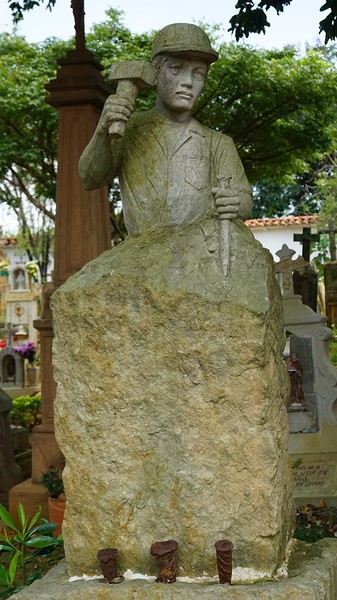
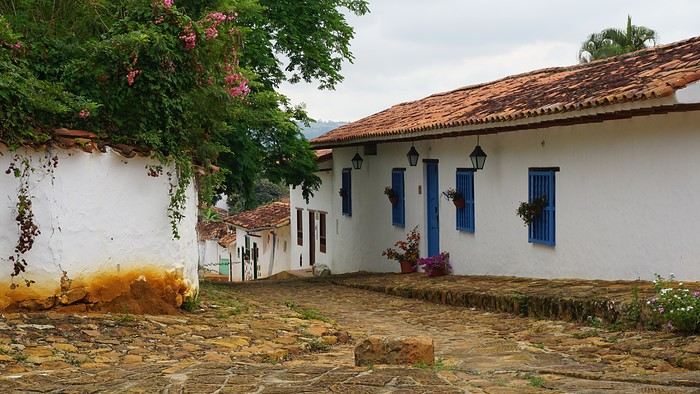
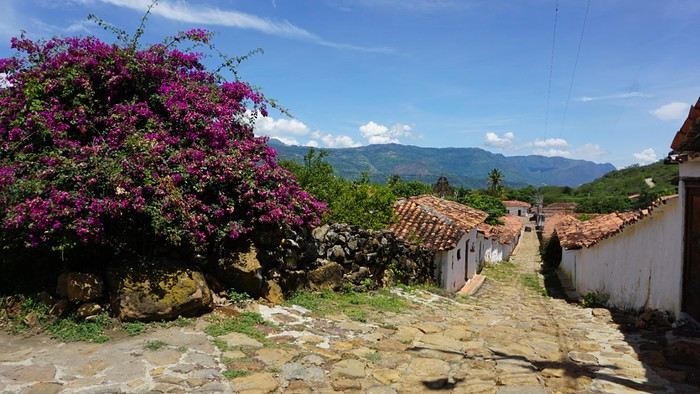
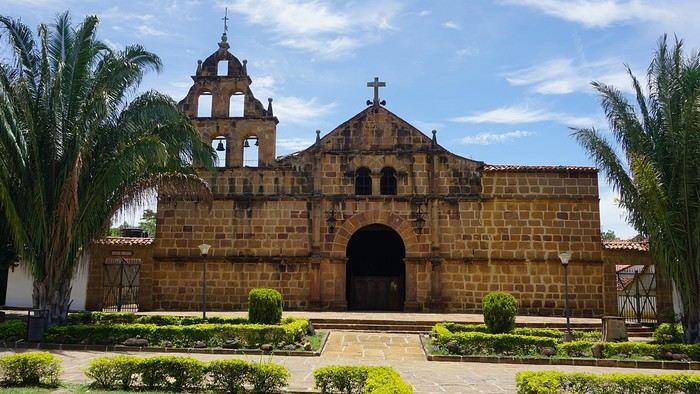
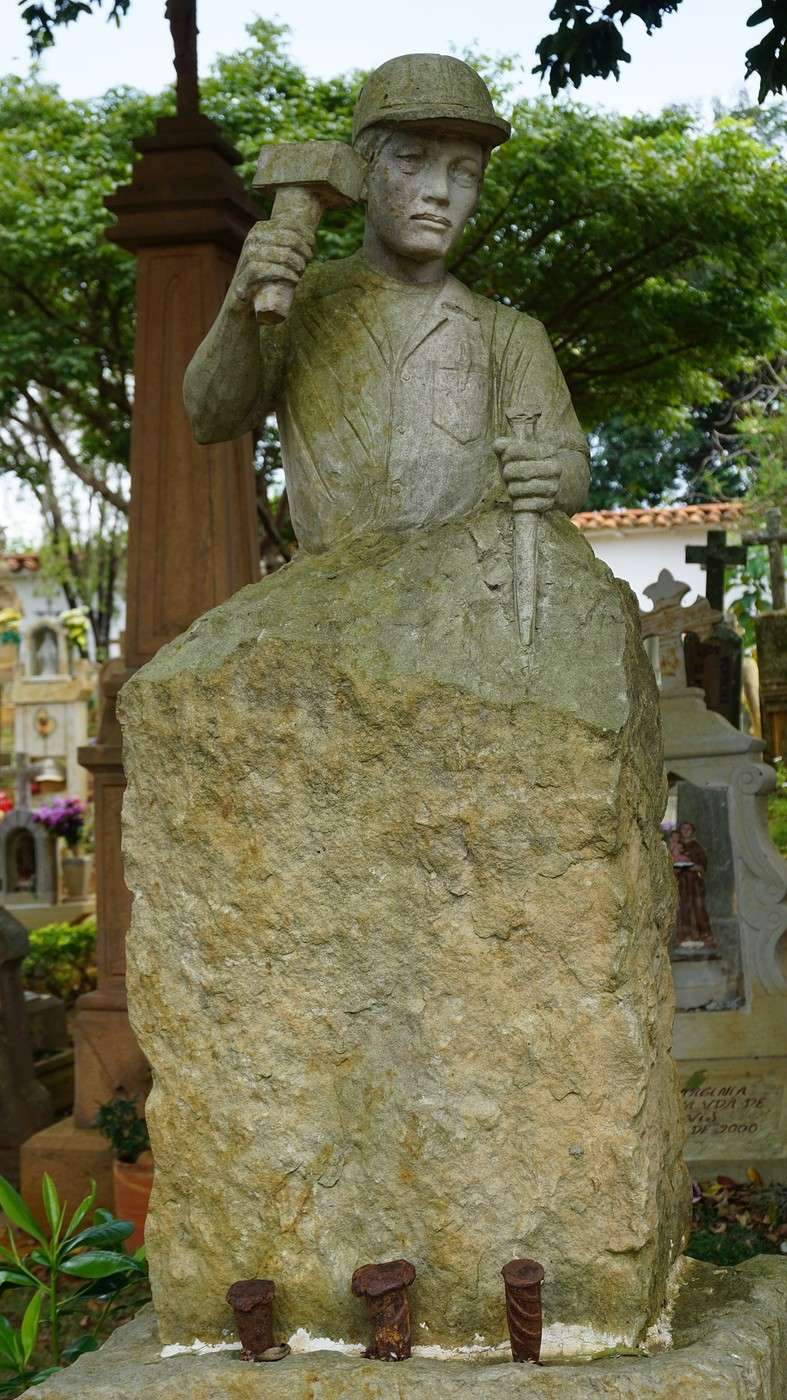
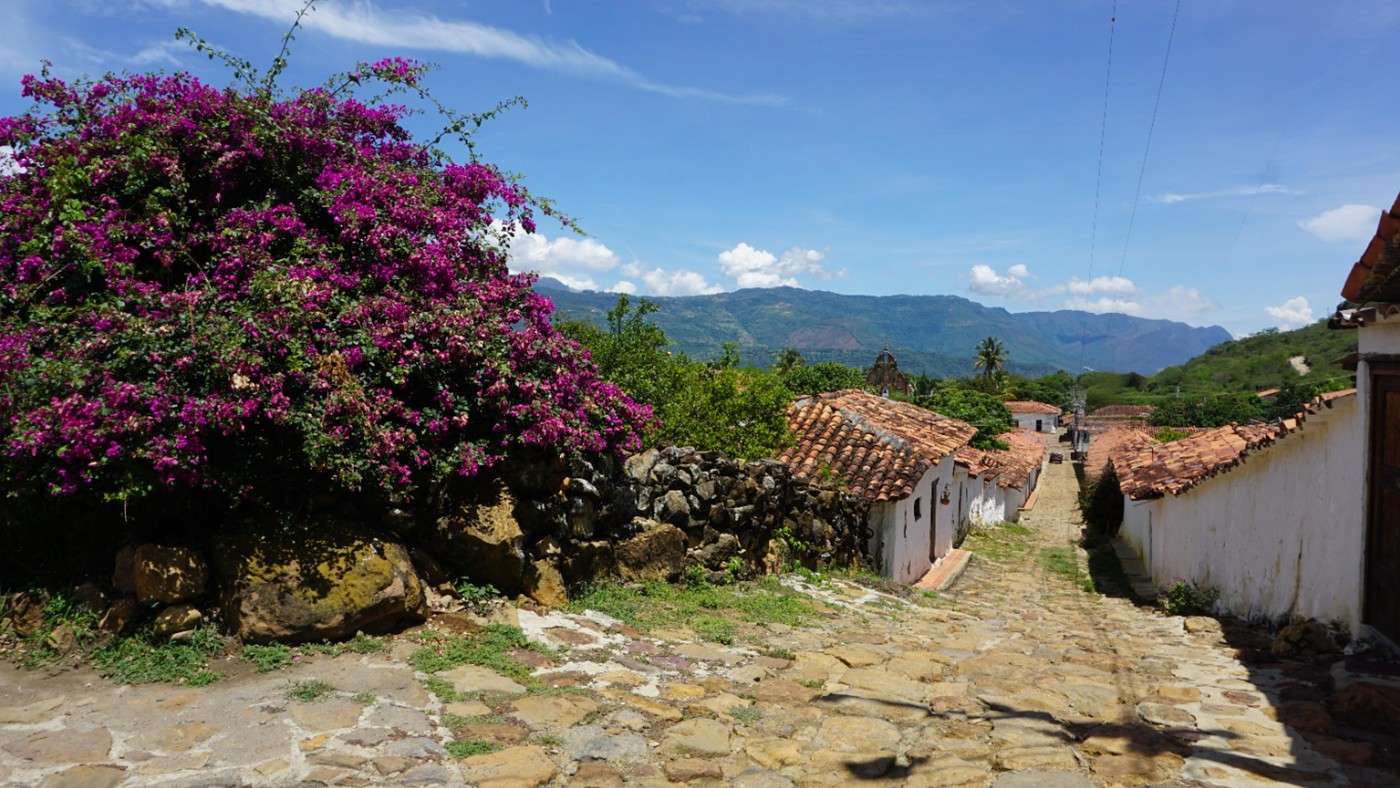
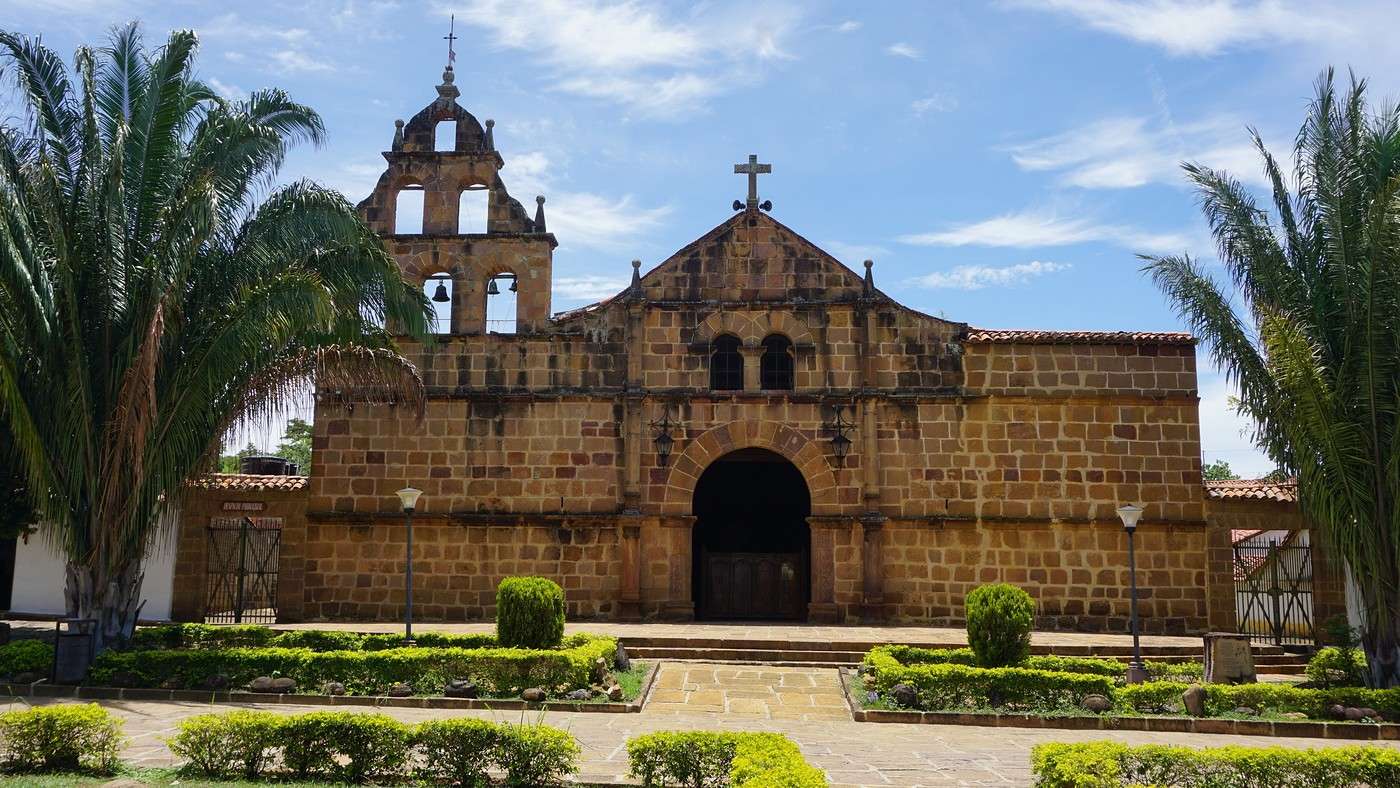
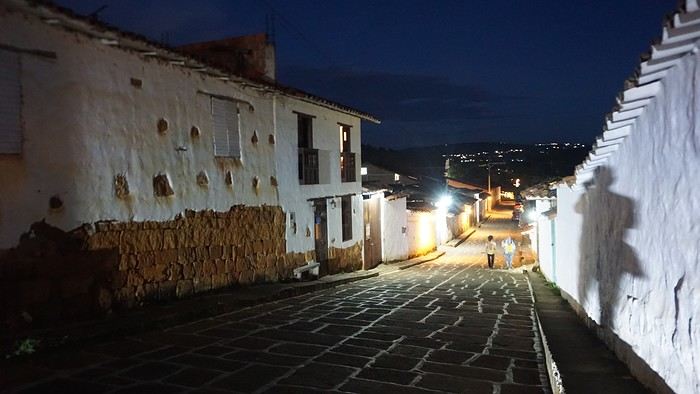
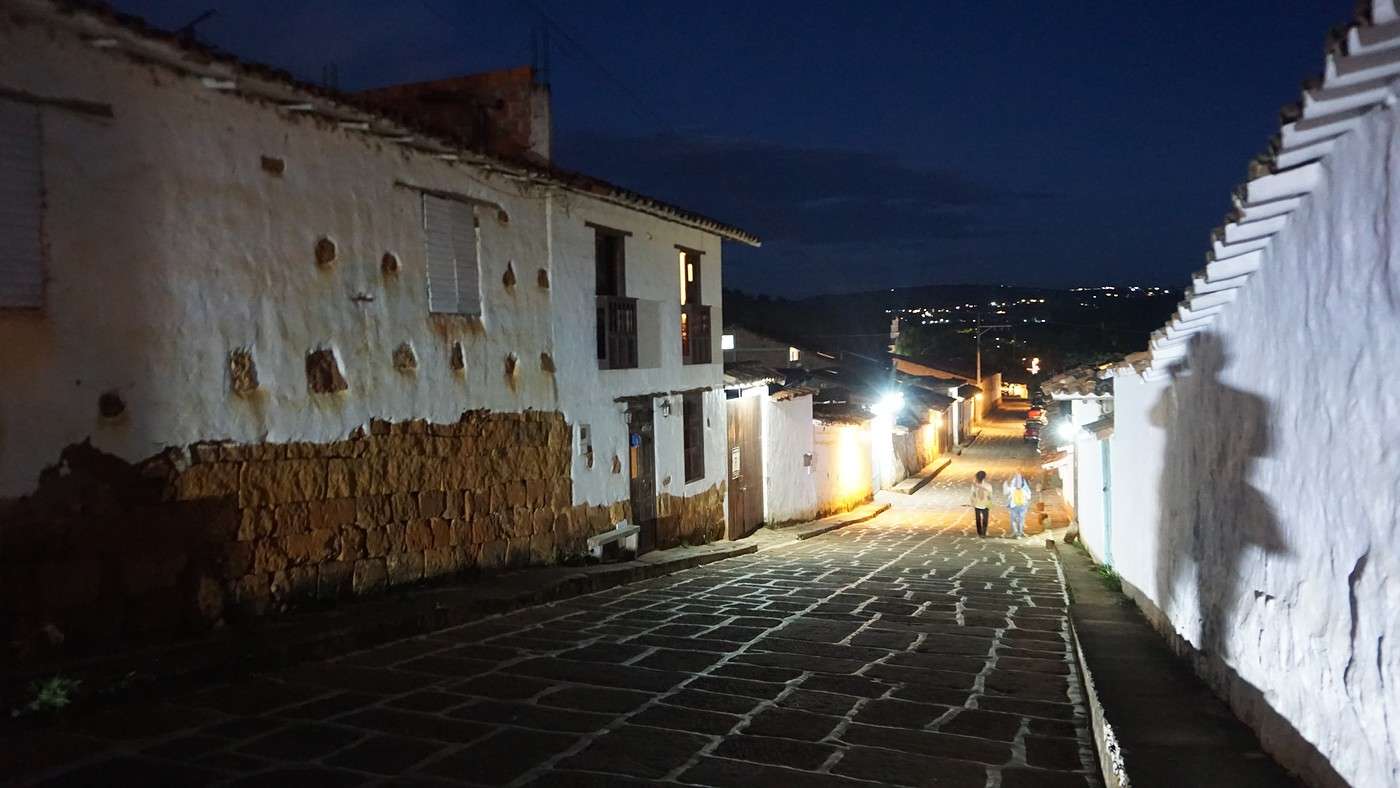
Founded in 1705 in the heart of the mountains, it feels frozen in time: streets paved with huge carved stones, houses with wooden doors and windows, and walls made of *bahareque* (a mix of reed and rammed earth) whitewashed with lime. The stone, the backbone of the streets, houses, and cathedral, has earned the town its reputation, along with its stonemasons, considered the best in Colombia.


The locals are called *patamarillos* (yellow feet) because of the color of the stone.


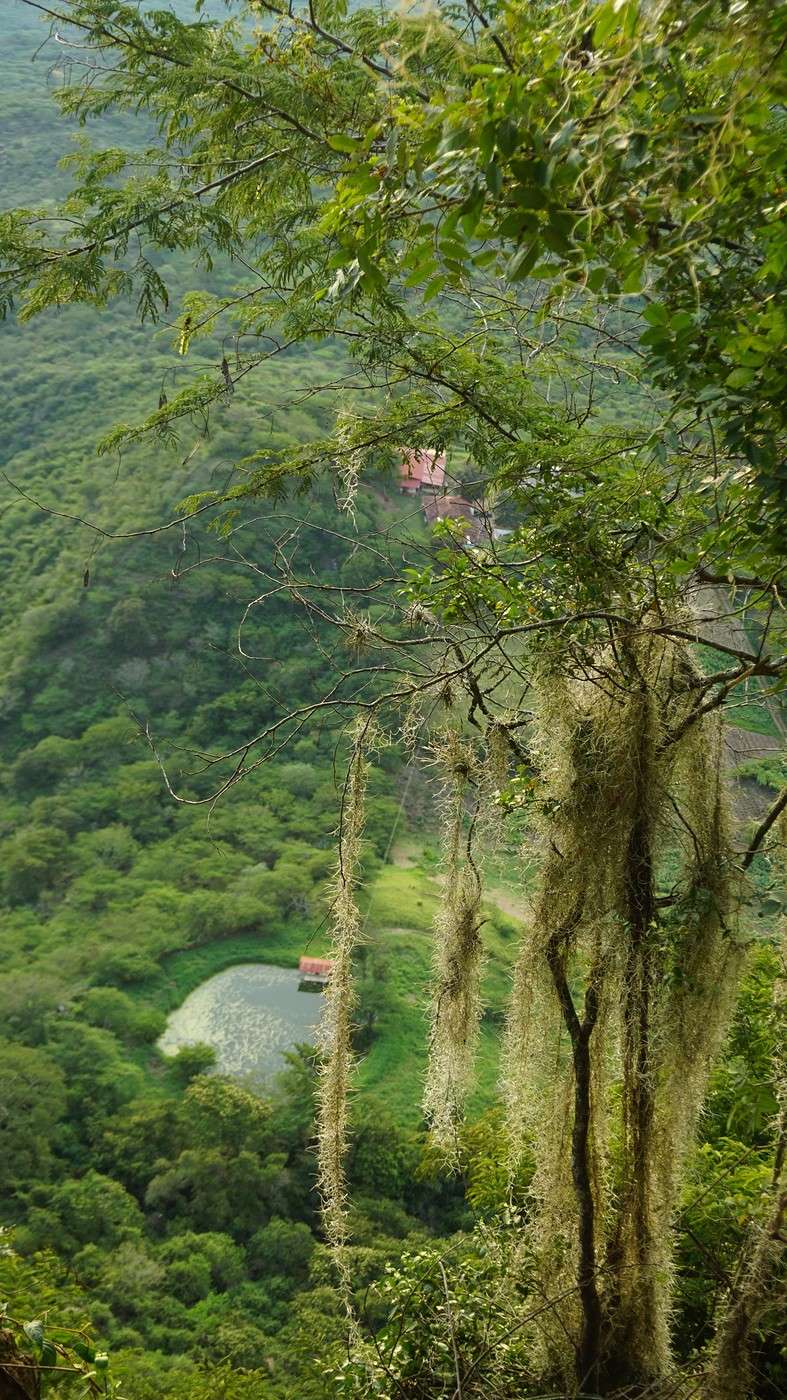
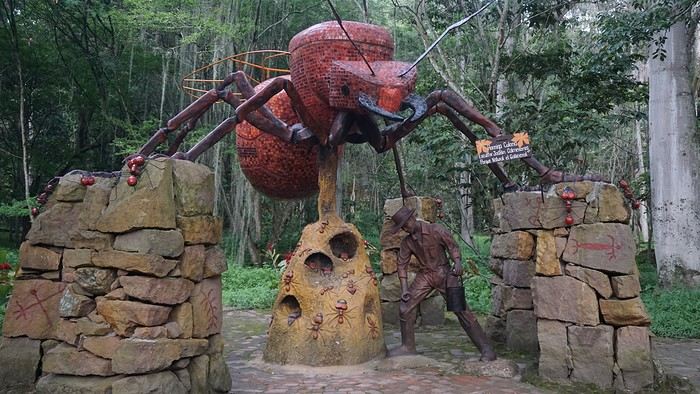
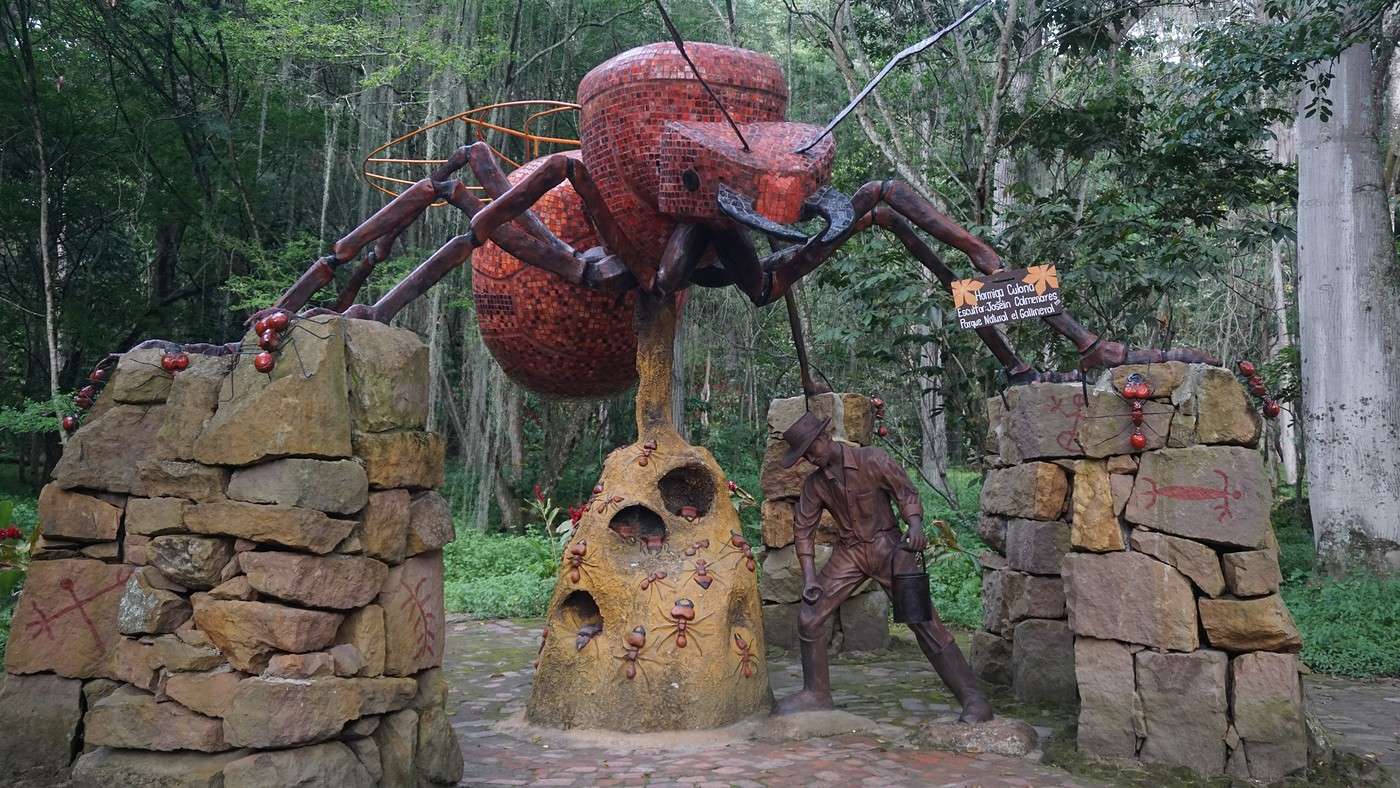
Local culinary specialty: *hormigas culonas*, or "big-bottomed ants" (large flying ants). This culinary tradition dates back to the indigenous Guane people. Once harvested, the ants are cooked for several hours with salt. Then their wings and legs are removed. They’re eaten toasted with butter. Figure I won’t die ignorant—before leaving, I’m definitely trying them! Barichara (2/3) This morning, around 7:30 AM, I set off for a walk as the village wakes up. I spot the paper workshop (closed on Sundays), the start of the trail connecting Barichara to Guane (*Camino del Rey*), and explore the sloping streets. An hour later, I return to the hotel for breakfast—delicious and hearty. This morning, we’re the only guests. We then head out to explore this beautiful village: the viewpoint, the Arts Park, a walk down to the cathedral, and finally some shopping in the town center for our upcoming picnics.


Around noon, we return to the hotel, where we can relax in the courtyard, in the shade, for lunch and to escape the midday heat. We resume our exploration of Barichara around 4 PM. Near the Arts Park, I try a *hormiga culona*. I even buy a small box. Nothing extraordinary—the one I tasted only really tasted like salt… But it’s a unique souvenir to bring back and maybe share during an apéro with friends. (The ones I bought have a smoky country ham aftertaste. Surprising!) Barichara (3/3) Today, I planned to hike the *Camino del Rey*, an old paved trail built by the Guane people connecting several villages, including Barichara and Guane. Justine didn’t want to join me, so we compromised: she’d meet me in Guane by taking a tuk-tuk. I leave the hotel around 8:30 AM, and we agree to meet in front of the church square at 11:00 AM. At the start, about a hundred meters in, the trail is quite steep in places. But these steep climbs aren’t too long. Soon enough, the walk, mostly downhill, is easy. The elevation drops from 1,340m to 1,100m over 6–7 km.


The Colombian countryside unfolds in all its splendor: green and blooming. Along the trail, birds of all colors and songs accompany the few hikers (only 2 or 3 passed me—I’m a slowpoke!). The heat arrives quickly, but luckily, most of the path is shaded!


As planned, I arrive at the church square around 11 AM. Justine is waiting for me on a bench. Guane, a very calm and charming village, preserved in its original state, is worth discovering.


First, we visit its church and the archaeological and paleontological museum on the square. At the entrance of each of its three rooms, an audio guide gives explanations in French. Spanish panels complement these comments. The first room is dedicated to fossils (reminder: the sea once covered this region long ago), the second to the Guane people (including a well-preserved fetal-position mummy), and the third to religious art.


We continue exploring the village, heading to the viewpoint overlooking the Chicamocha Canyon. We also look for a restaurant but come up empty. Back at the square, we’re surprised to run into a French couple (from Lyon) we’d met at our hotel in Bogotá. We return to Barichara by *mototaxi* (as they call it here). Walking back the same way, uphill, doesn’t seem particularly appealing to me. We settle into a restaurant near the cathedral, and lunch—despite the touristy location—turns out to be a great surprise: a hearty and delicious *menu del día* with an amazing spinach soup (without a doubt the best soup of all the *menus del día* we’ve had on this trip!) and a refreshing fruit juice! The day is far from over, as we move on to visit the paper workshop. I really wanted to go to support this foundation, run by and for women in difficulty.


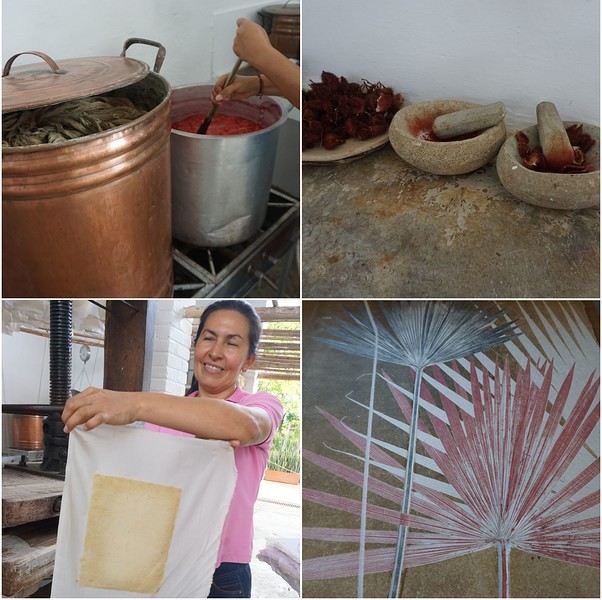
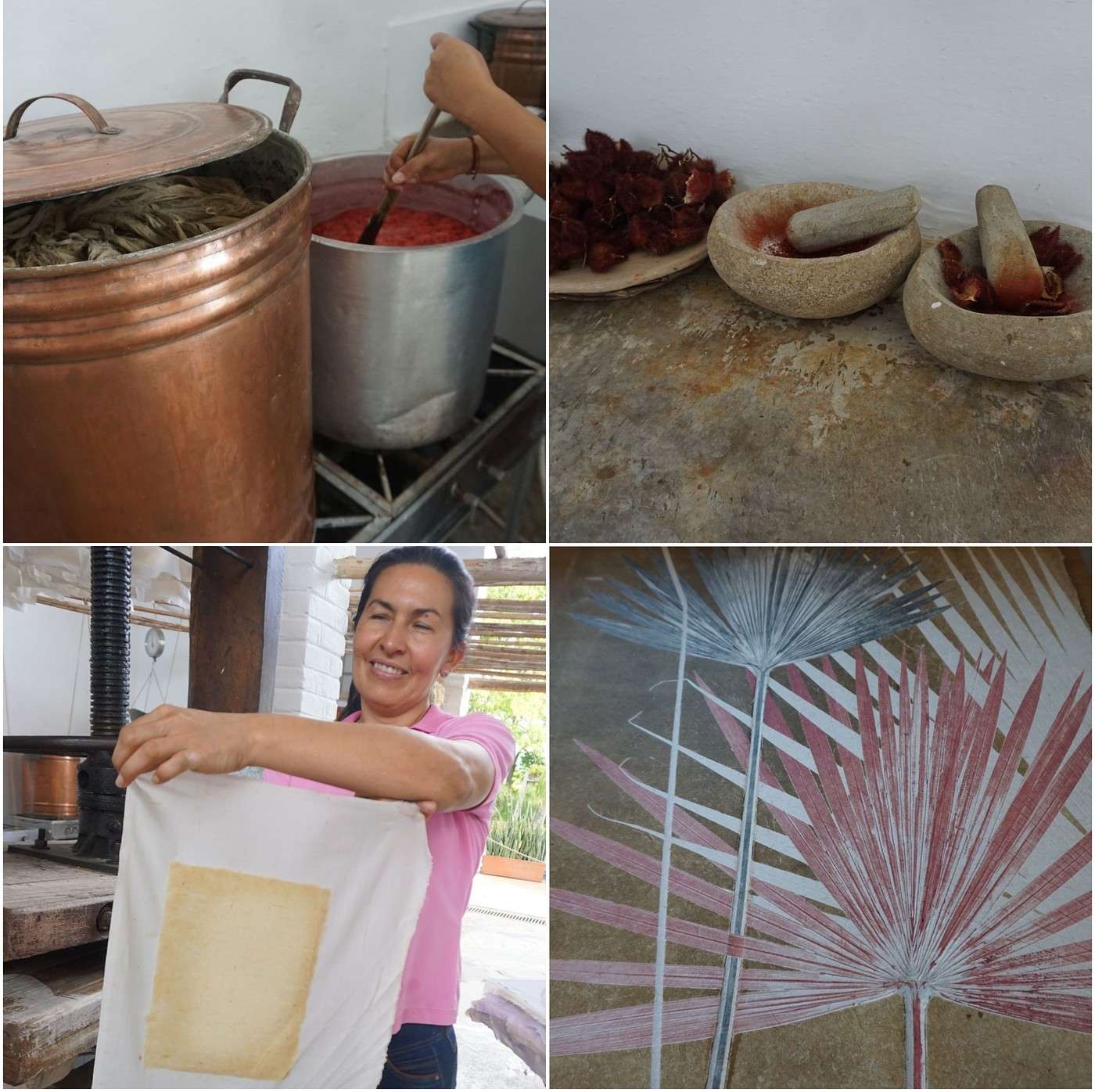
Here, everything is artisanal and manual: soaking local plant fibers, beating, sieving in a bath of vegetable fibers to form sheets of paper, pressing, and drying. We tried it ourselves and made our own sheets of paper. We’ll keep some as souvenirs (not the ones we made—they take too long to dry). Behind the workshop, a small garden is open to visitors to discover the many plants used in making vegetable paper. This visit reminded us of the silk paper factory we visited with Nasrullo in Samarkand two years ago (for the loyal readers with good memories). On the way out, Justine decides to head back to our hotel (a bit further down the same street), while I head toward viewpoints overlooking part of the Chicamocha Canyon.


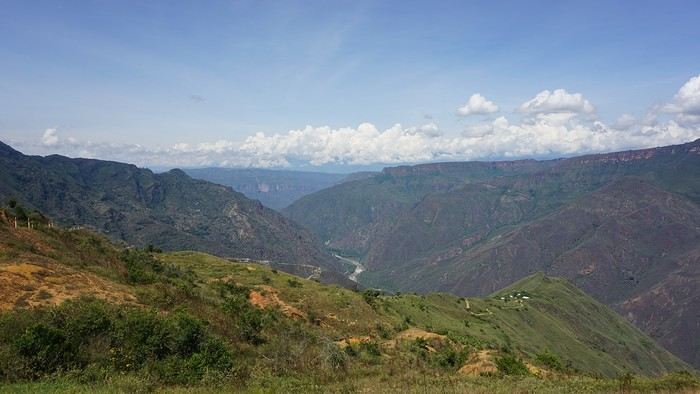
Great views. Not for those afraid of heights! The light on the canyon at the end of the day is lovely. I’m not the only one who thought to come here at this time, but it’s not crowded either—just about ten people spread out over a hundred meters. Totally manageable! Finally, to wrap up, one last stroll through the center of Barichara—because, believe it or not, I hadn’t taken any night photos here yet! End of this leg. Tomorrow, a short 20-kilometer hop to San Gil, where new adventures await for a quick two-night stay.

From Caño Cristales to Tayrona Park

Phil31600 · 2024-12-31

Step 5 - San Gil (1/2)

Barichara: one last little stroll before bedtime... Breakfast was just as hearty and delicious as the other mornings! We chatted with an Ecuadorian family trying to "sell" us on visiting their country. Then the owner called us a tuk-tuk to take us to the village square. Because today, no taxi to get to San Gil—we’re taking a minibus. When we arrived in San Gil, we took a taxi and reached our hotel by late morning. Check-in, payment for two nights and breakfasts, and booking our activity for the next day. Then we headed out for lunch before visiting San Gil Park (Parque Natural El Gallineral) by the Rio Fonce. Once we got to the entrance, bad luck—it was closed for the day. Before returning to our hotel, we did some grocery shopping for our picnic and sat on a bench in front of the cathedral to watch life on the square. Back at the hotel, we played Rummikub. The young owner really liked it and asked if he could take a photo of us because he found it very "romantic." I didn’t dare ask why playing that game was romantic!

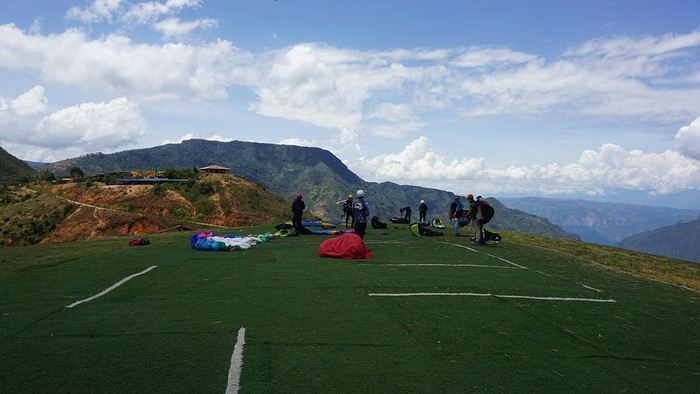
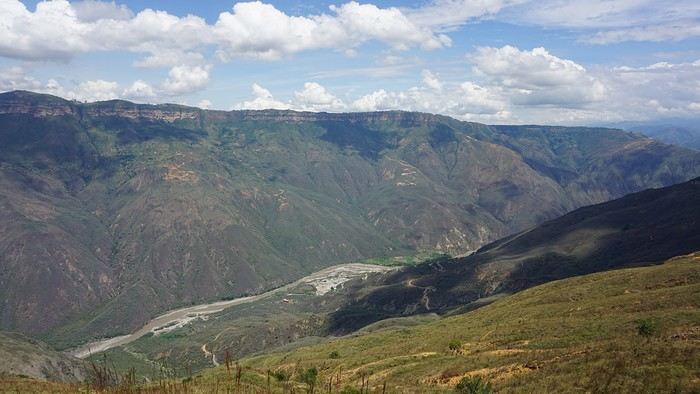
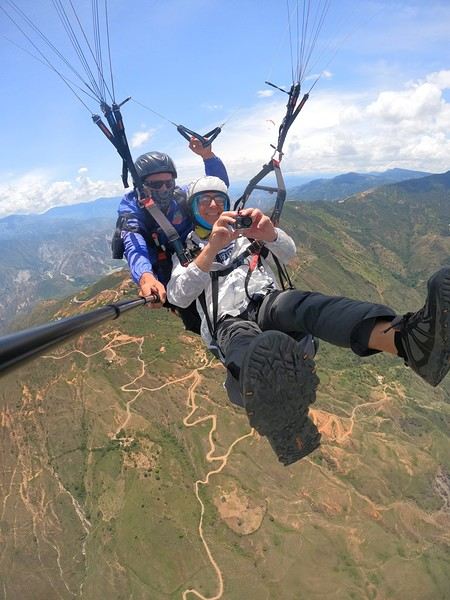
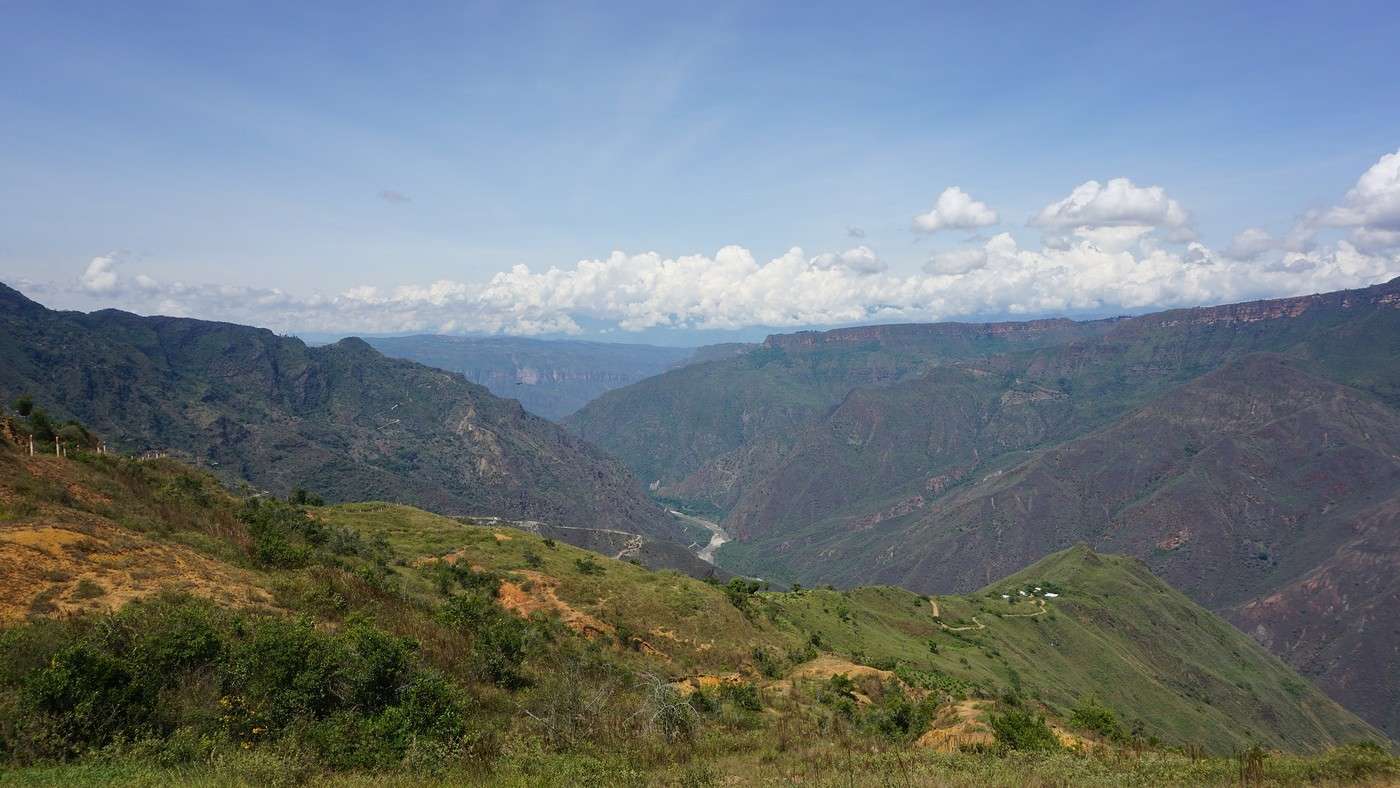
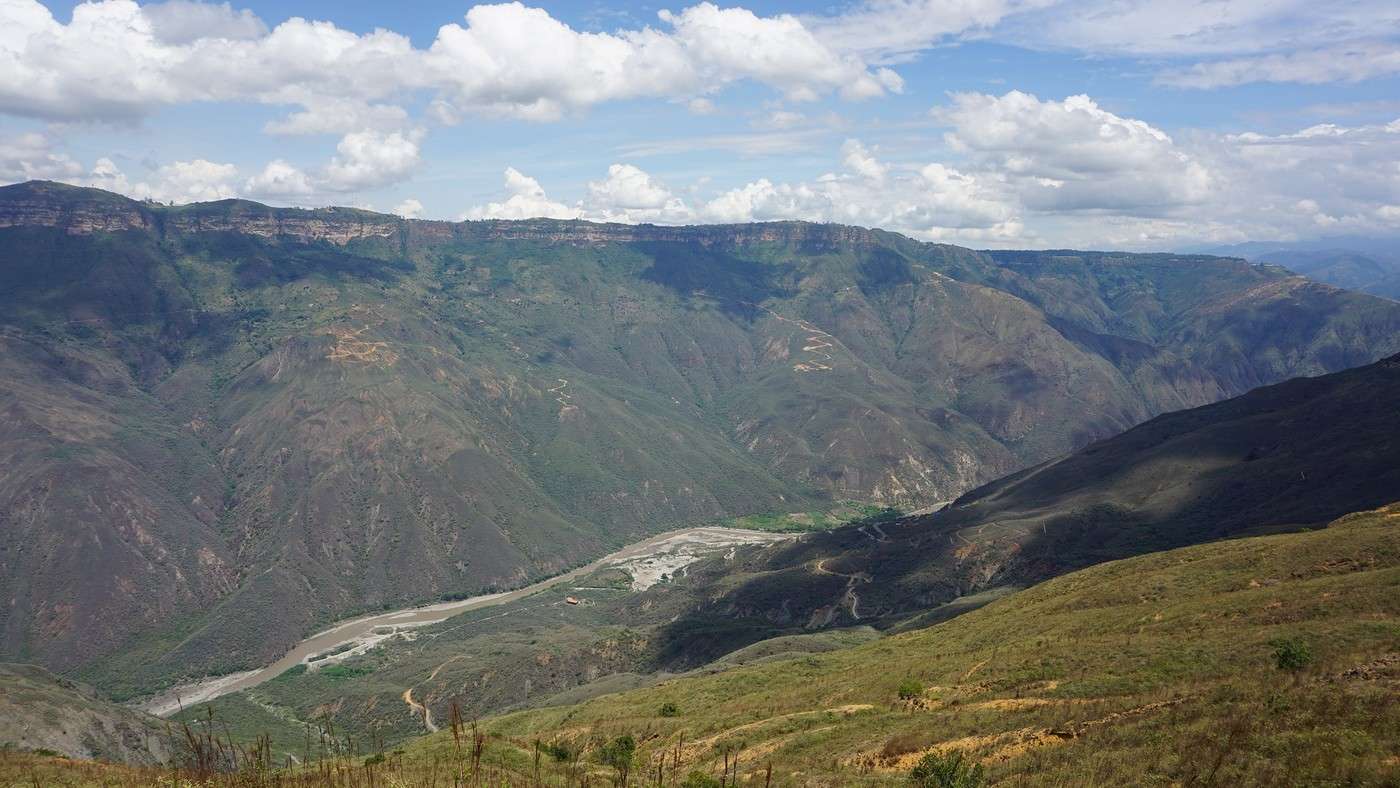
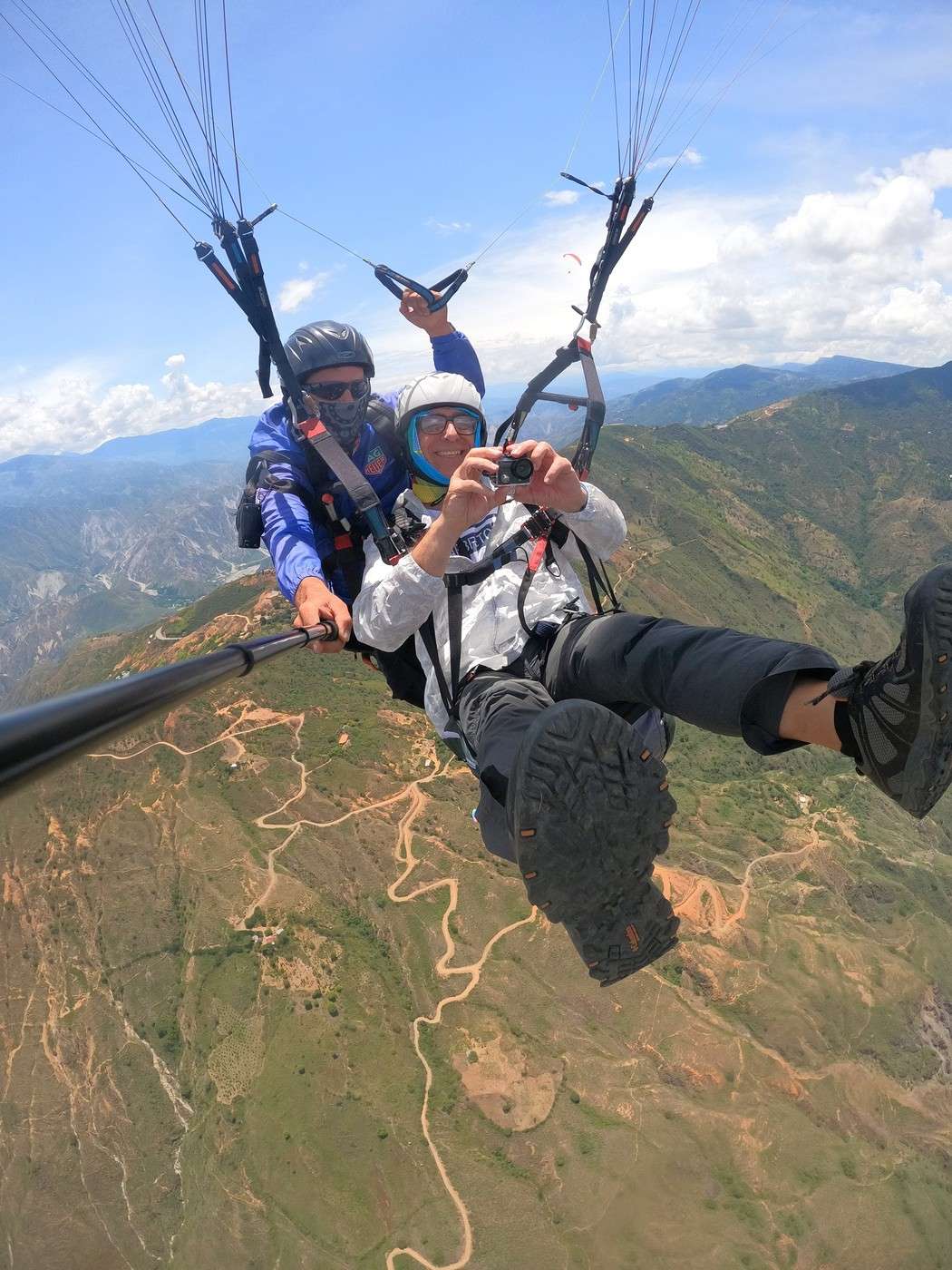
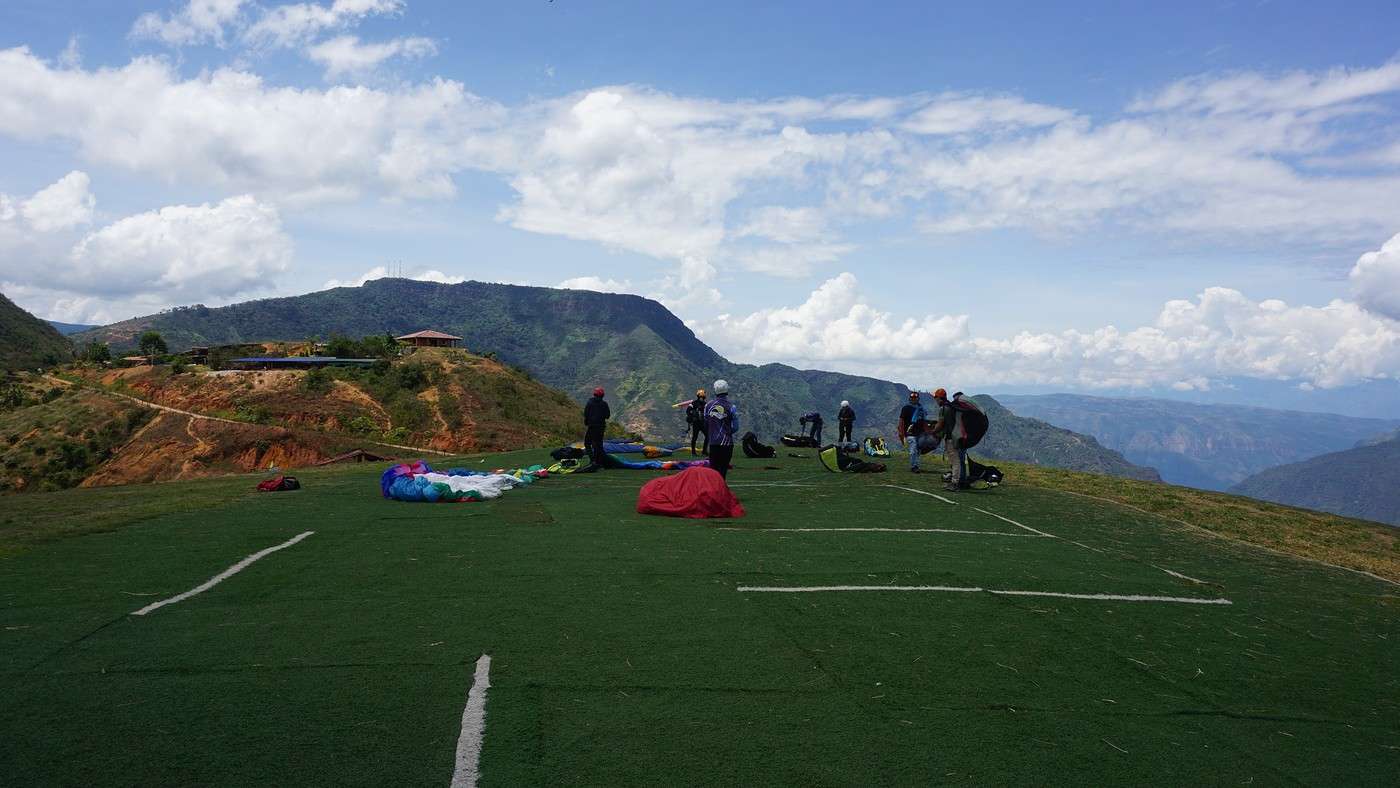
San Gil (2/2) We’re already halfway through our trip! To celebrate, what better than trying a new activity? A paragliding baptism over the 7th largest canyon in the world, Chicamocha Canyon. 1.5-hour drive with a young French couple who are traveling South America for 6 months.


Upon arrival, the activity team gave us info about flight conditions, what to do during takeoff and landing (same spot), and safety instructions.


On the "runway" for takeoff, as we got equipped, they reminded us of the instructions, and the pilot mentioned that if needed, he had bags we could ask for if we felt like throwing up. Reassuring! The young student went first, and I followed closely. My running start was ‘average.’ The takeoff went smoothly. I quickly pulled out my little camera to capture some of these great moments. I felt amazing sensations, even though by the end of the flight, I refused to do some of the more acrobatic maneuvers—they were too intense for me! What a joy to glide above a bird of prey that the pilot managed to follow for a brief moment!


For Justine, the "fun" was shorter—after about ten minutes of flight, she asked her pilot to land because her stomach was getting a bit too "sensitive." 😅 I’ll admit that once I was back on the ground, my stomach wasn’t exactly "stable" either, and luckily, we didn’t hit the road right away! Fun fact: the young student wanted to try some acrobatics, and as soon as she landed, she threw up. 😅 So the pilot’s warning before takeoff was definitely based on experience! On the way back to San Gil, our pilot and his colleague suggested stopping at a roadside vendor to buy some fruit and try a local specialty, *salpicón*. It’s a kind of multi-fruit juice (pineapple, banana, tangerine, papaya, etc.) with little pieces inside (and a bit of red food coloring!). Delicious! We got back to the hotel around 3 PM, and the owner was eager to hear how it went. He confessed that the first two or three times, he also had severe stomach issues but now really enjoys flying! This afternoon, we headed back to Gallineral Park. It was too late to see any birds, but the walk was still pleasant. The park, full of flowers, is a real breath of fresh air in this city where traffic is intense and noisy!


Tonight, I’m truly happy—I loved this day! !

From Caño Cristales to Tayrona Park

Phil31600 · 2024-12-31

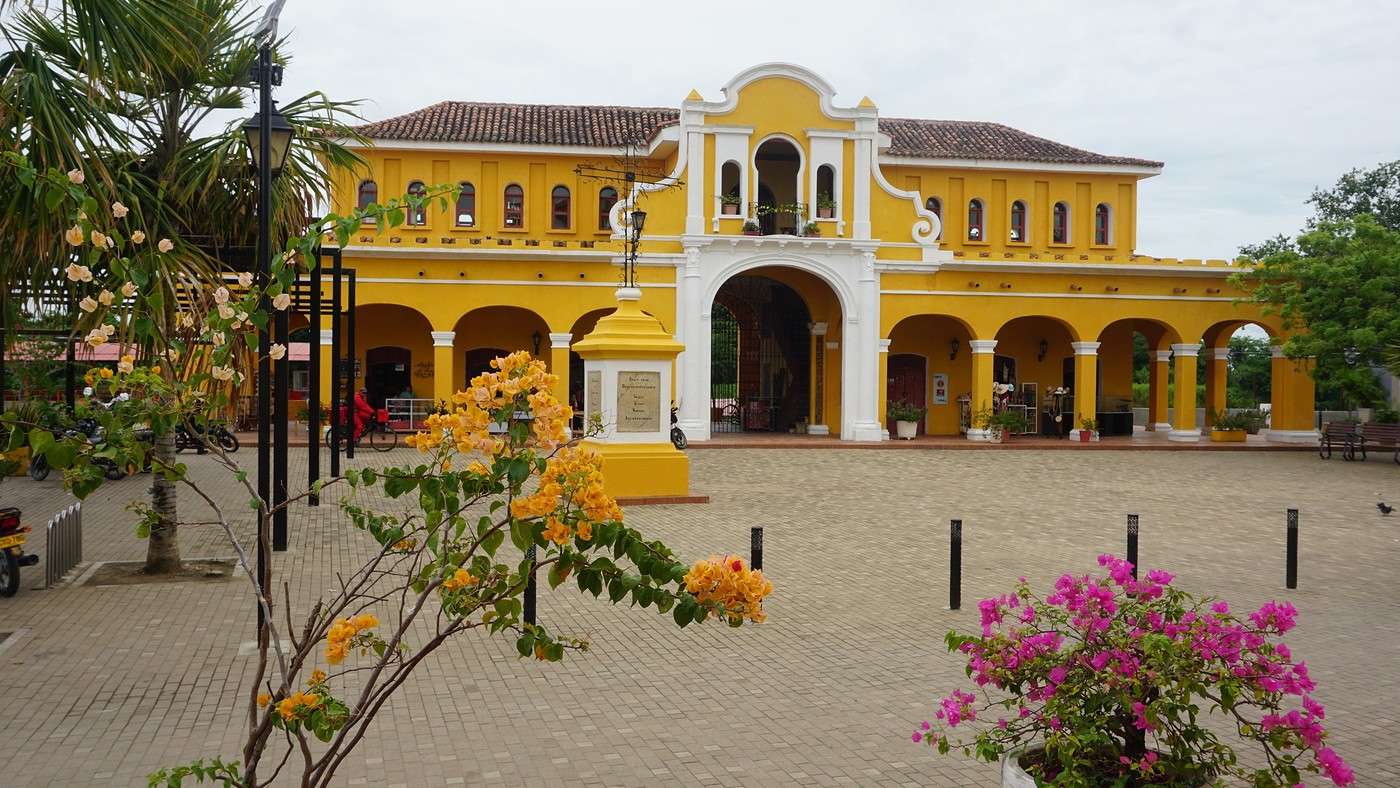
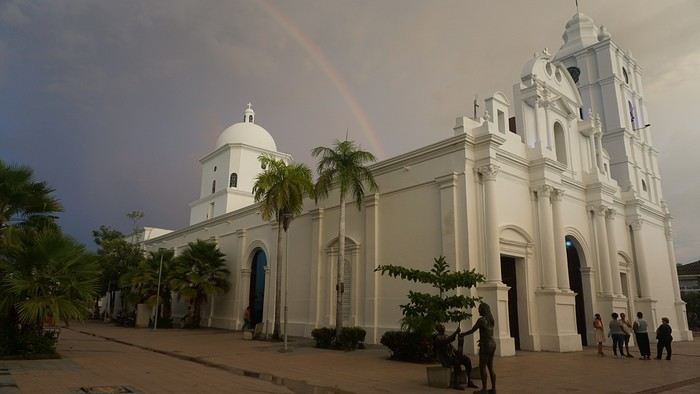
Step 6 – Giron (1/2) After another breakfast that was as delicious as it was beautiful (pancakes decorated with strawberries, banana slices, chunks of pineapple and papaya, and blackcurrants), the hotel owner arranged a taxi for us to get to the bus station. Fun fact: this morning, the streets of San Gil are very quiet. It’s one of the 4 or 5 annual car-free days in the city (except for taxis, ambulances, etc.). As we were about to get into the taxi, the young hotel owner came over to give me a long hug, thanking me for choosing his hotel (and hopefully leaving a good review on the booking site). This morning, we’re heading to Giron, a former Spanish colonial village on the outskirts of Bucaramanga. A 2.5-hour journey on a winding road with heavy traffic and lots of big trucks. We follow the Chicamocha Canyon, which we flew over yesterday, and enjoy some stunning viewpoints. When we arrive at the bus station, I buy our bus tickets for the next leg (Mompox). Then we take a taxi to our hostel. Fun fact: the driver got mixed up and took us to the same address but in Bucaramanga. No big deal, the trip just took about 20 minutes longer. Giron: founded in 1631, this is where the text declaring Colombia’s independence was signed in 1810 in the ‘mansion del Fraile’ on the central square.


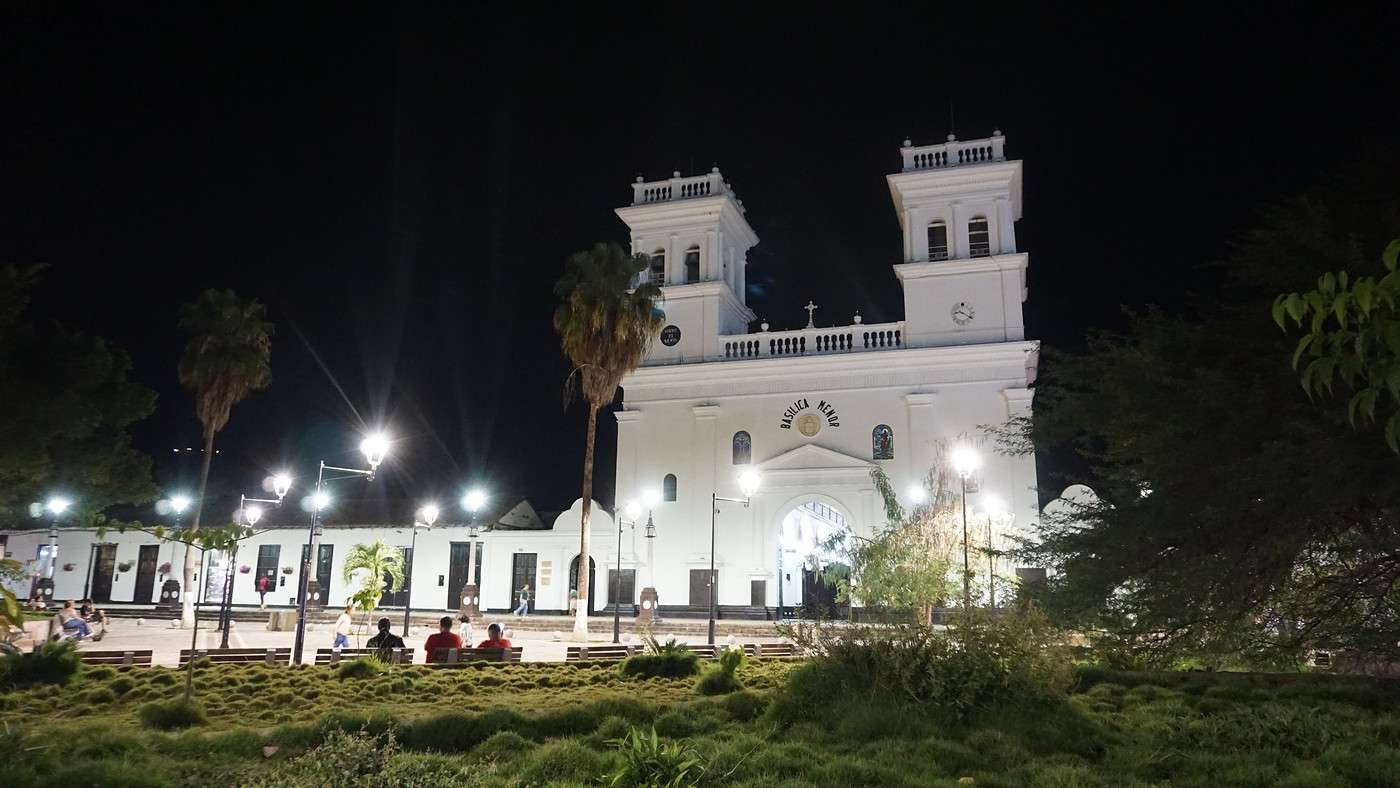
Giron is a very religious city with a Gypsy tradition, recognized as part of Colombia’s heritage, and we won’t see any other tourists here.


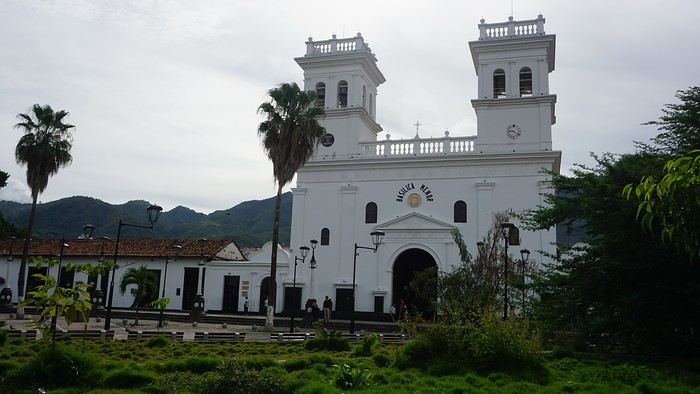
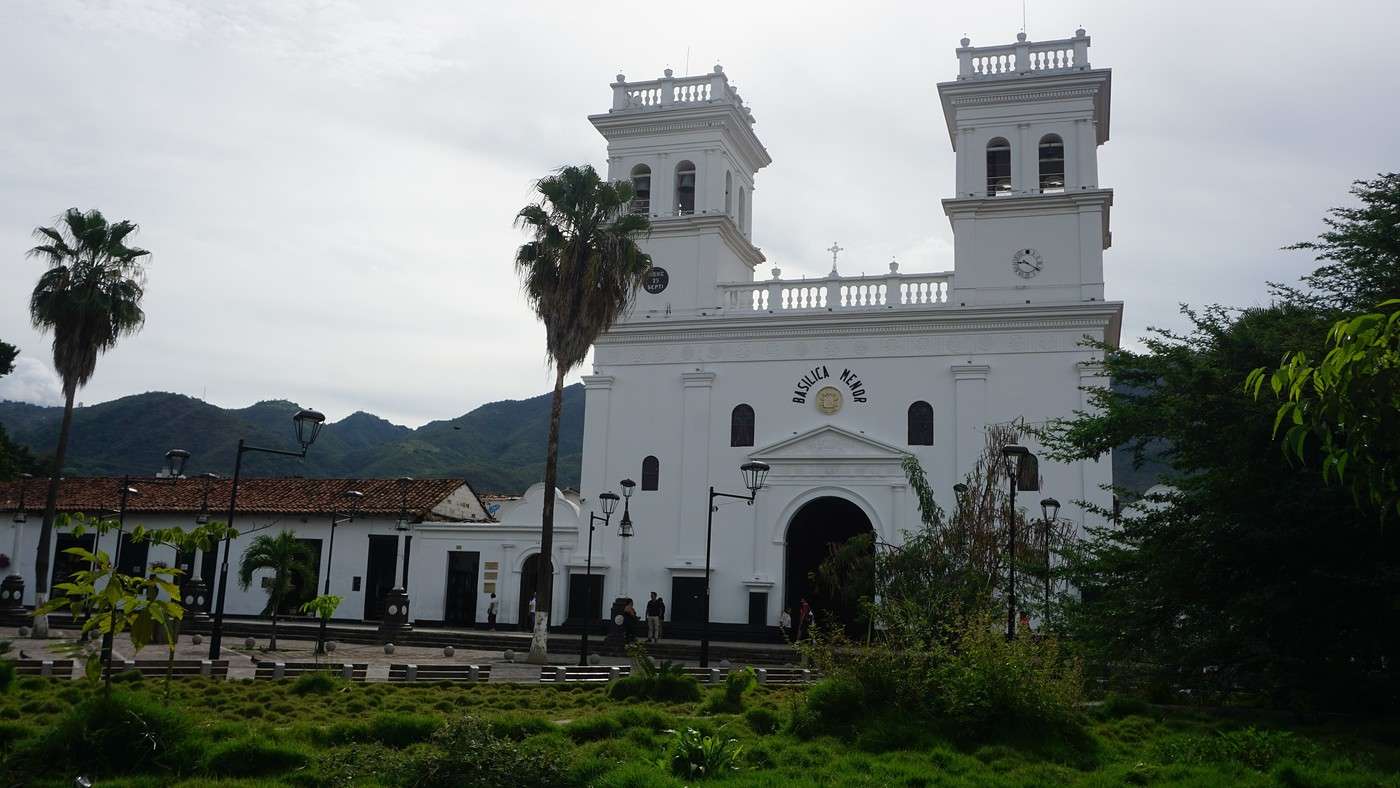
After dropping off our bags in our room, our walk takes us from the central square in front of the cathedral to the iguana park (where we only see birds!). On the way back, Justine stops at a hairdresser’s. I take the opportunity to explore the square and the Iglesia de la Nieve. Then we enter the city’s information center, which also serves as their cultural center. The young woman at the reception is so happy to welcome foreign tourists that she overwhelms us with information, speaking at a very (too) fast pace. I did manage to catch that the oldest bridges (from the 18th century) were built using bricks, lime, and egg whites. And no restoration has been needed since! She also offers us a full tour of the cultural center and we get a souvenir photo (for her)! Giron (2/2) Today marks the end of this short (but more than enough) stop.


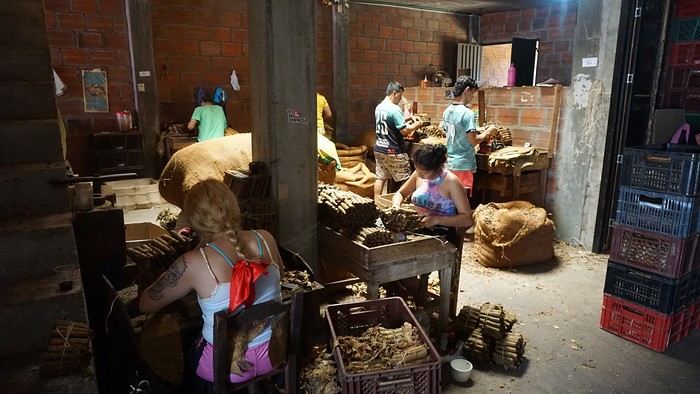
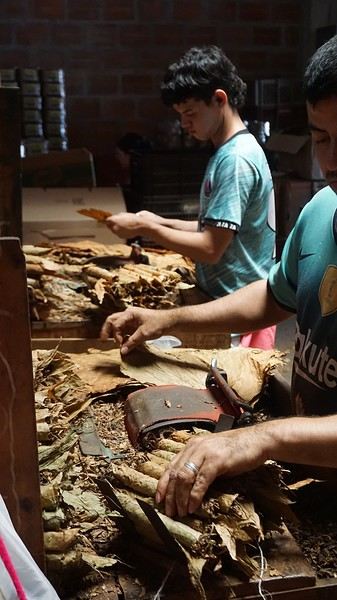
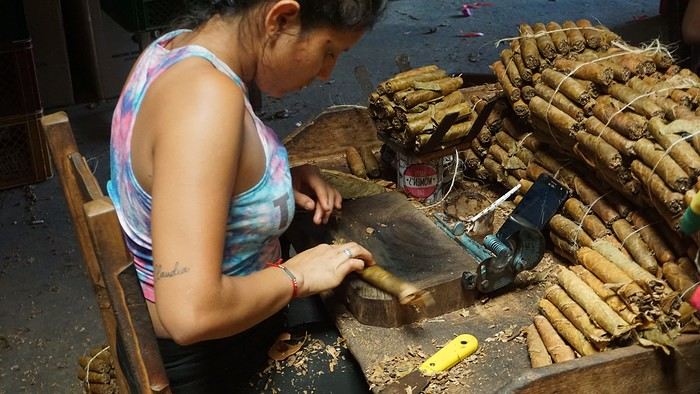
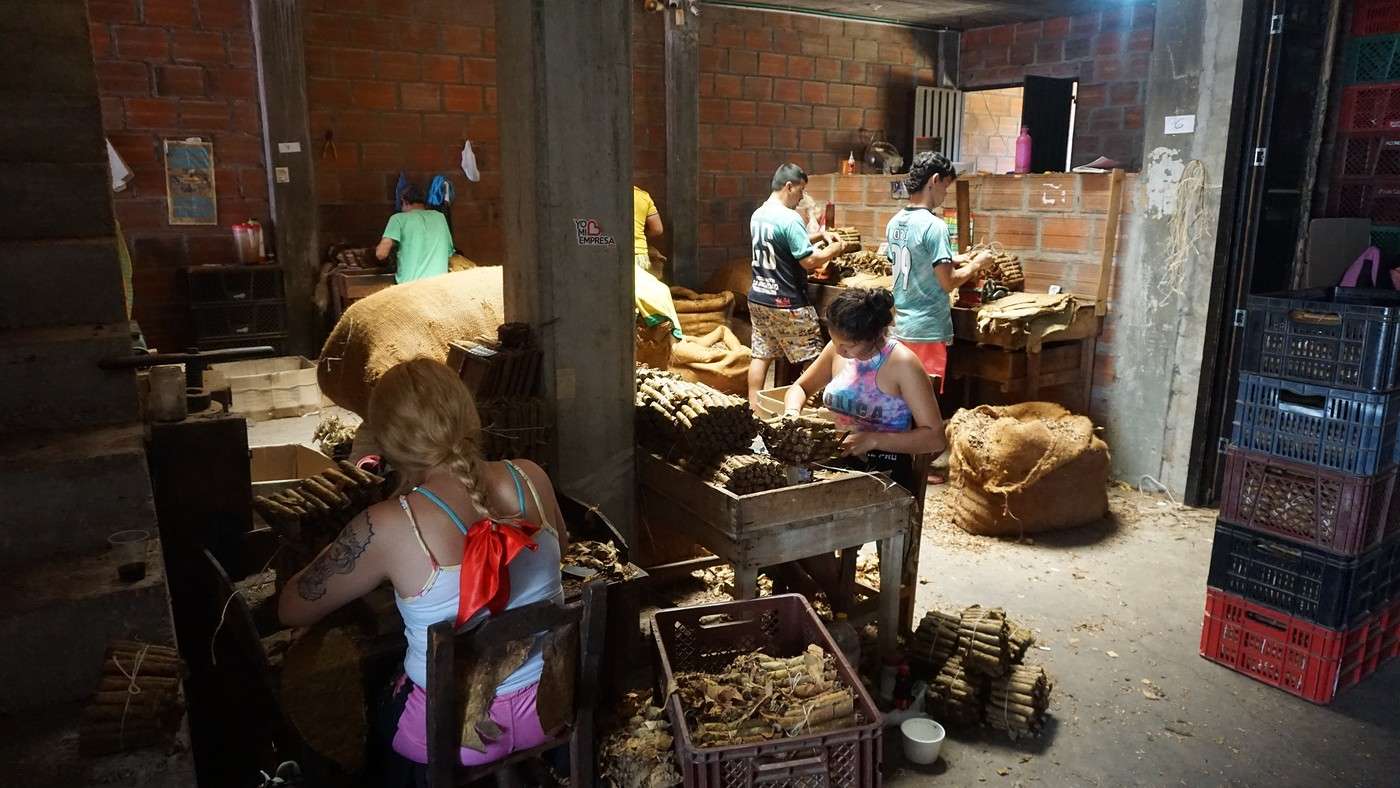
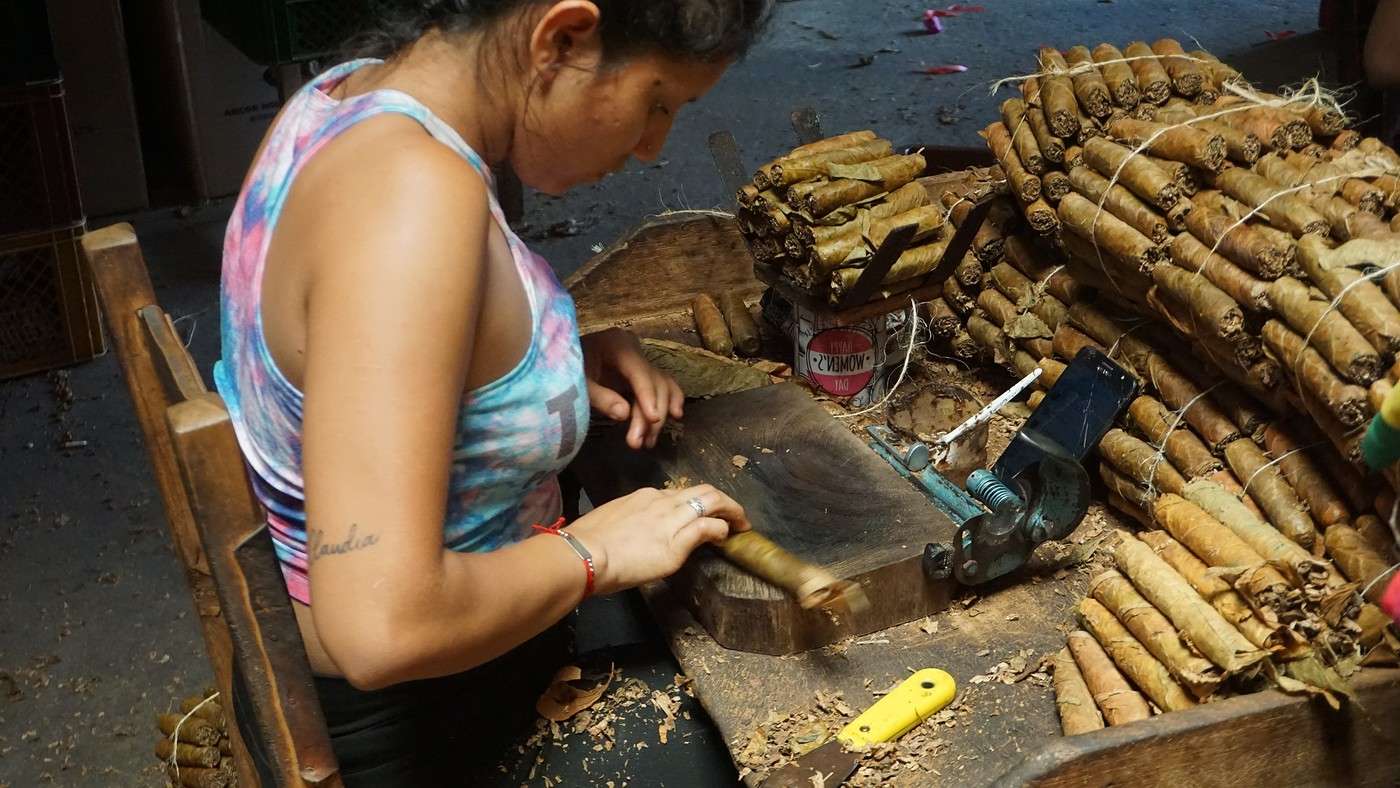
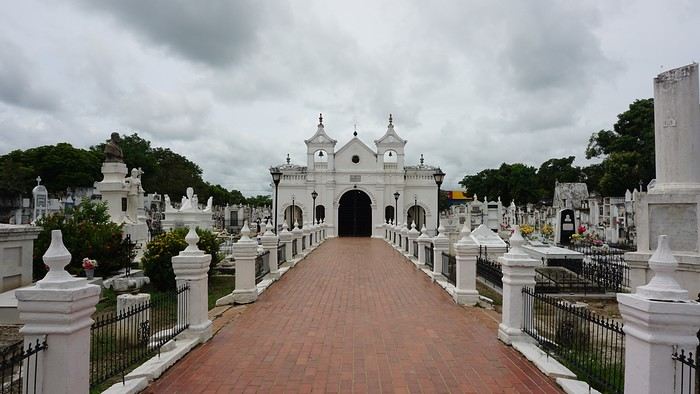
This morning, Justine isn’t feeling great, so I head out alone to explore the malecón along the Rio Oro, other streets, and especially to look for a cigar factory, an old tradition that seems to be fading. I walk around the old town several times without finding the factory. Passing by the town hall, I see there are vendors in the inner courtyard. The guard at the entrance confirms that entry is free. After taking a quick look, I ask her for directions to a cigar factory. Good intuition—she gives me the info: not far from the cemetery (where I’d been earlier that morning), take the uphill street on the left, and the workshop is about a hundred meters up. With these directions, I find it quickly. Inside, everyone is working at a fast pace. I ask if I can come in and take some photos. They smile and agree. Everyone’s too busy to show me around, so I can explore freely, just making sure not to get in anyone’s way.


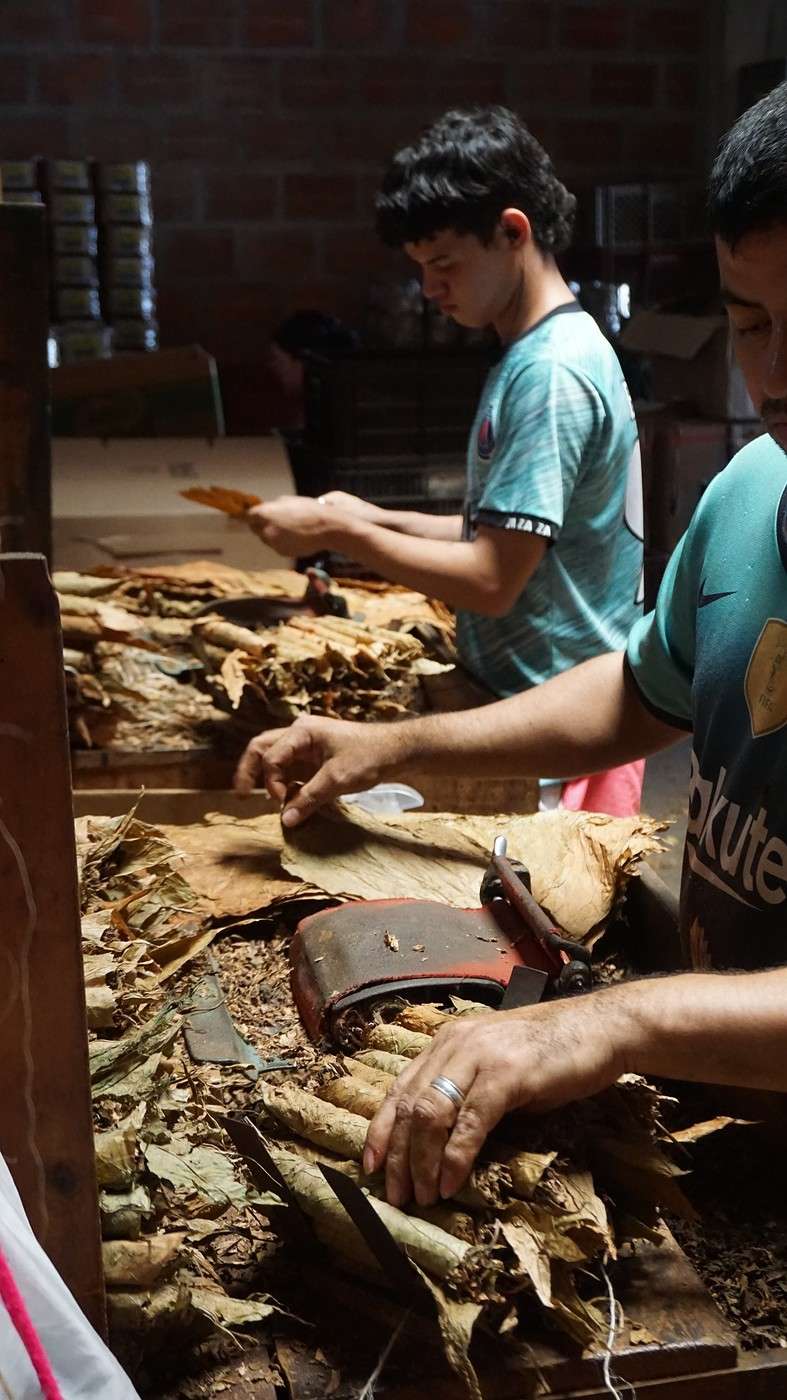
In the back, there’s a tobacco stock and a woman moistening the leaves. Several workstations with 6 men and 2 young women. The men are rolling the cigars. One of the young women adds a tobacco leaf and trims the ends, while the other packs the finished cigars. A really interesting visit, even without any explanations. They were so kind to let me observe their work so freely!


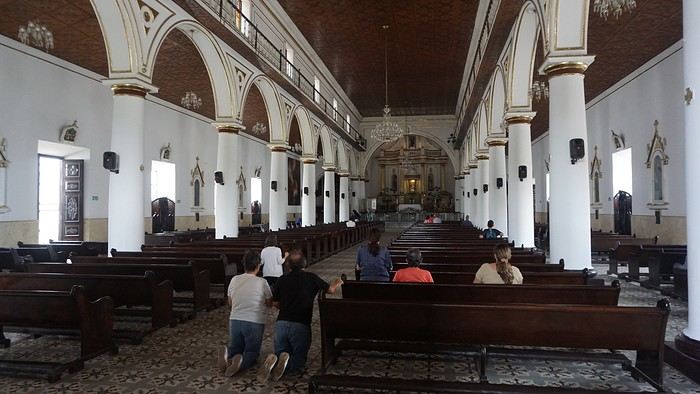
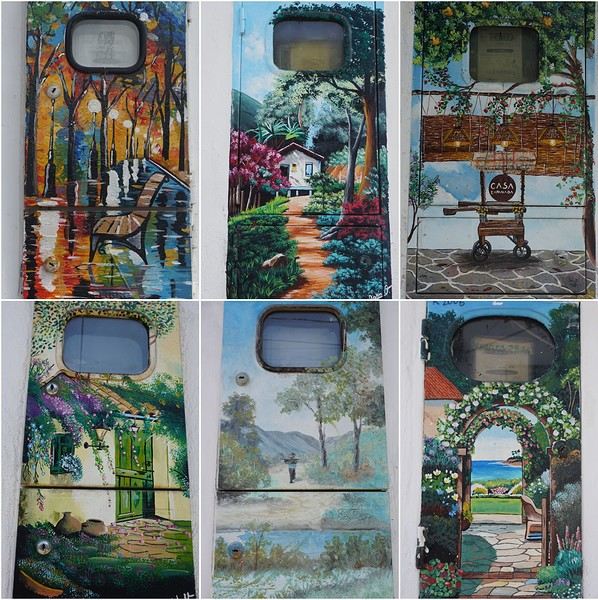
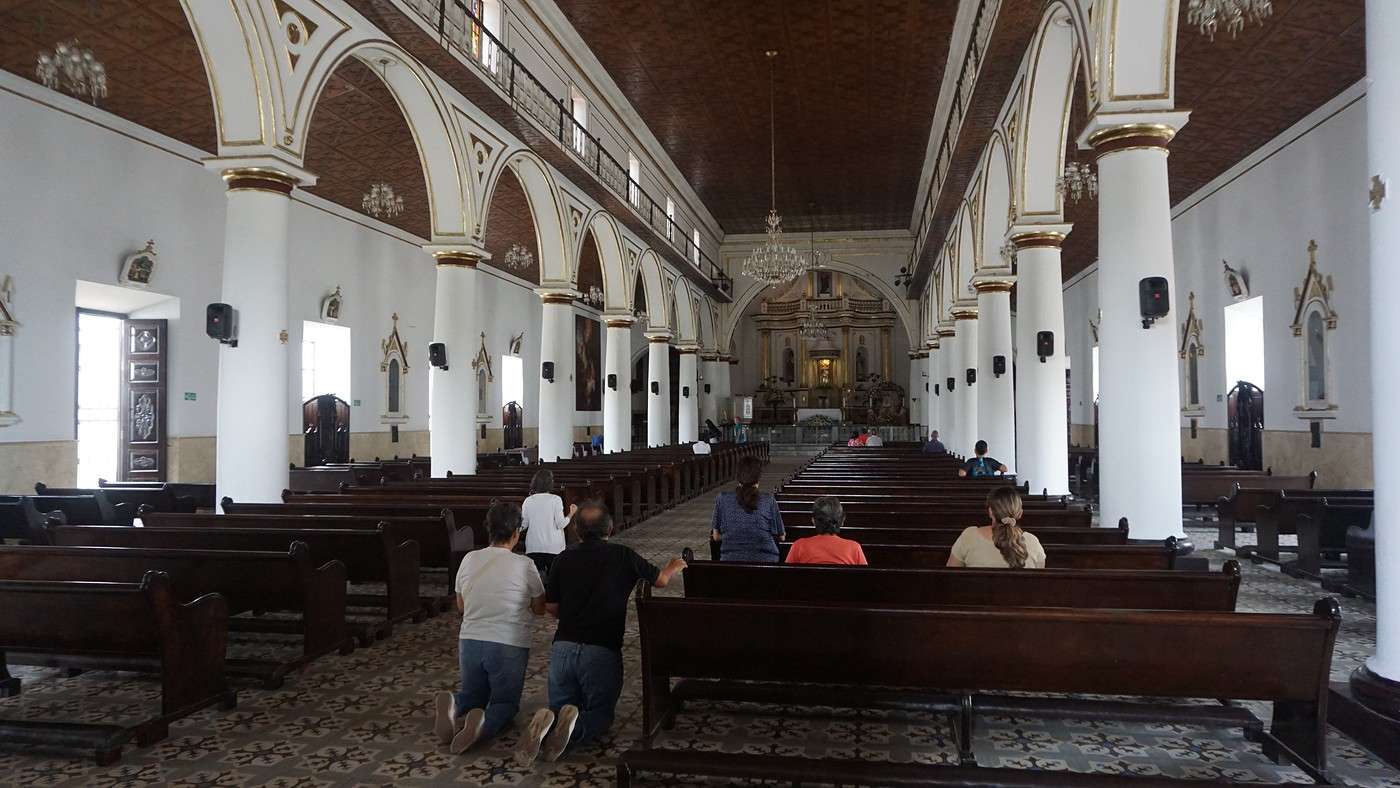
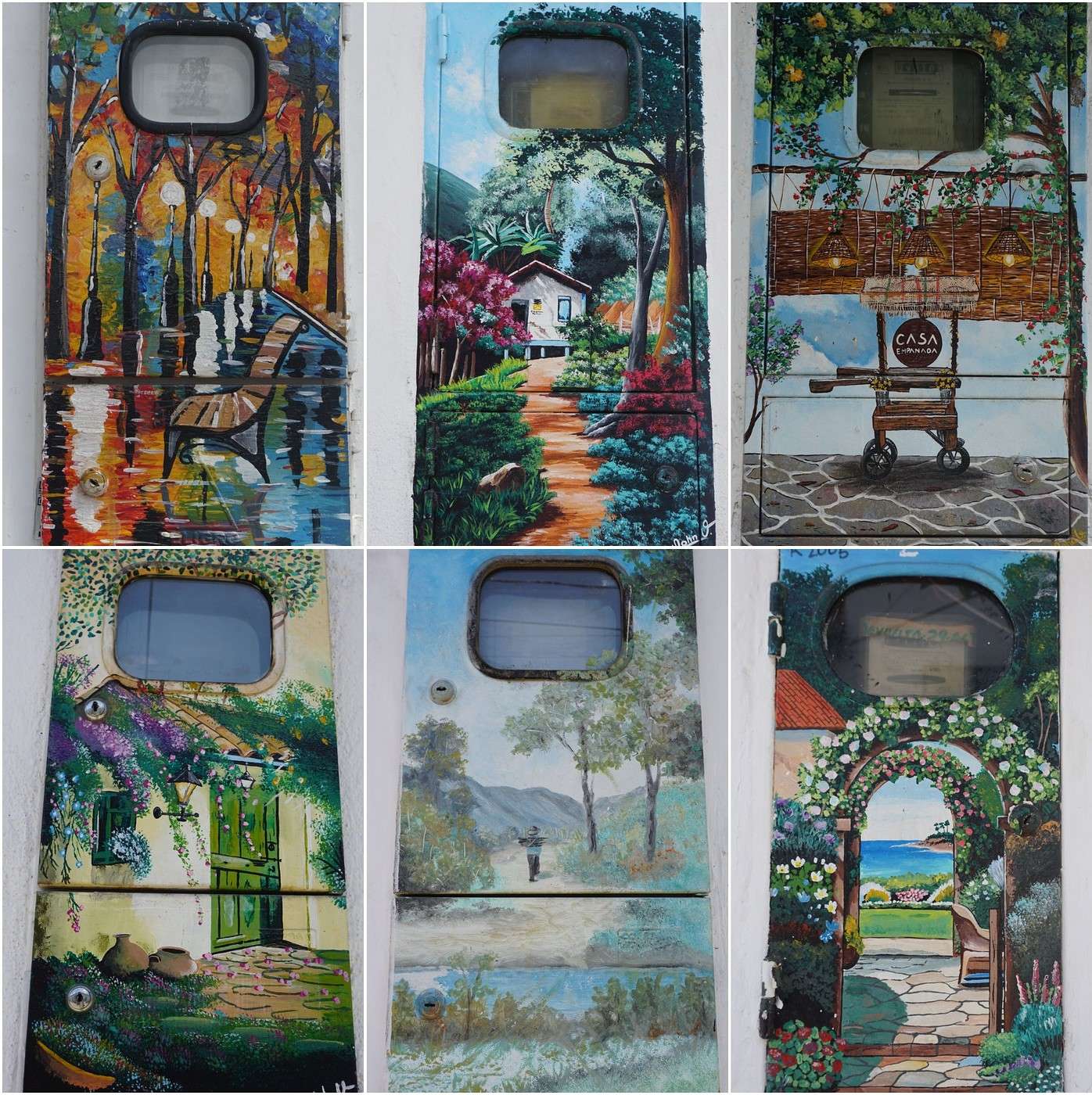
Justine and I meet up at the central square. We have lunch at the same restaurant as yesterday. It’s too hot to go back out right away, so we return to the hostel—unfortunately, the fans and air conditioning are broken. In the late afternoon, we head out again. In the cathedral, people are still walking up the central aisle on their knees, praying with a candle in hand. In the streets, I add to my collection of photos of electrical meter doors (painted with landscapes, house facades, gardens, religious scenes, etc.). We walk along the malecón and stop at a local chocolate maker’s shop. We sample some, chat, and make a few modest purchases.


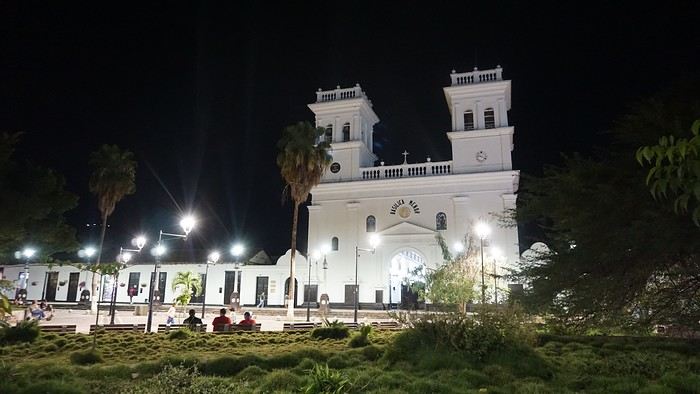
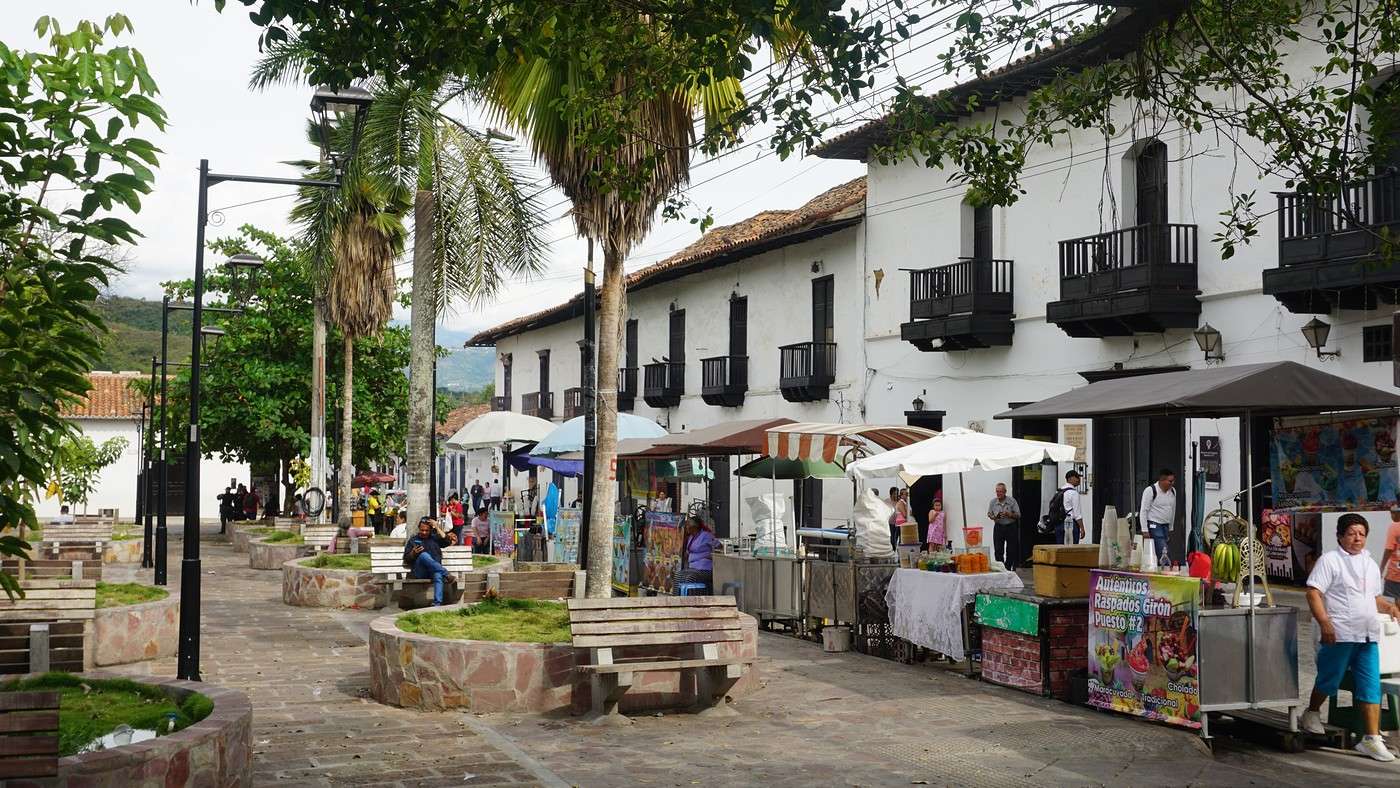
Then we head back to the central square, sit on a bench again, and watch time—and people—go by. Like everywhere in Colombia, in the late afternoon, the central square is a lively place where people love to gather and chat, and where street vendors try to make a living. Tonight, our last outing in Giron to take some photos by the light of the lanterns illuminating the white alleys.


Tomorrow, a long bus ride awaits us. We’ll have a little over 8 hours on the road from the Bucaramanga bus station to Mompox (+ 15 to 30 minutes by taxi between our hostel and the bus station). Our tickets are ready, the taxi is booked, and everything’s set to continue our journey north.

From Caño Cristales to Tayrona Park

Phil31600 · 2024-12-31

Step 7 – Mompox (1/3) A driver booked by the hostel manager came to pick us up. Less than half the price of an official taxi. I was hoping for a nice bus for this long trip, but we got a minibus that was a bit less comfortable. Eight hours later (10 AM to 6 PM), we arrive in Mompox. Urban transport is provided by tuk-tuks. We reach our hotel in a few minutes. Check-in, payment of the remaining reservation balance (following a transfer made by Alejandra), and settling into our beautiful, spacious room. Tonight, we’re treating ourselves to dinner at a restaurant! Even had our first aperitif! Cocktails. A great meal with a beer. It’s too much alcohol for me—I’m not used to it and struggled to finish it. Luckily, our hotel is right next door! Alejandra went above and beyond. She contacted me to check if our check-in went smoothly and if her transfer was properly received. No issues!

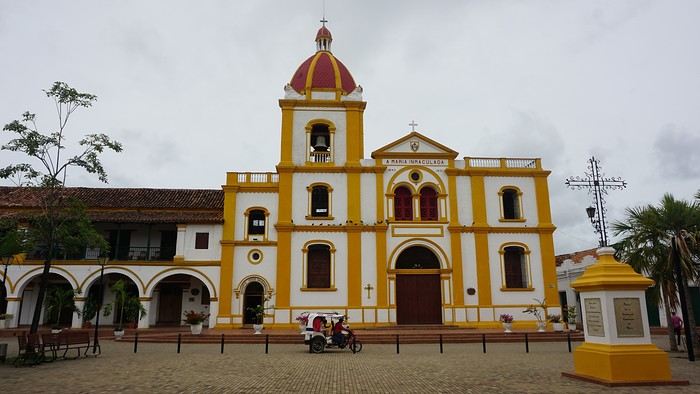
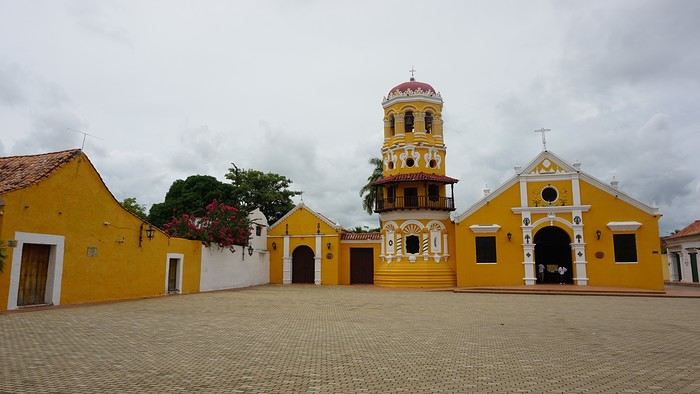
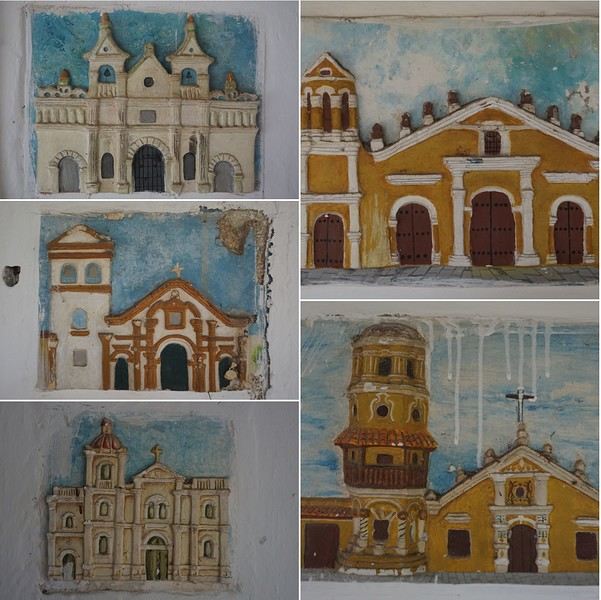
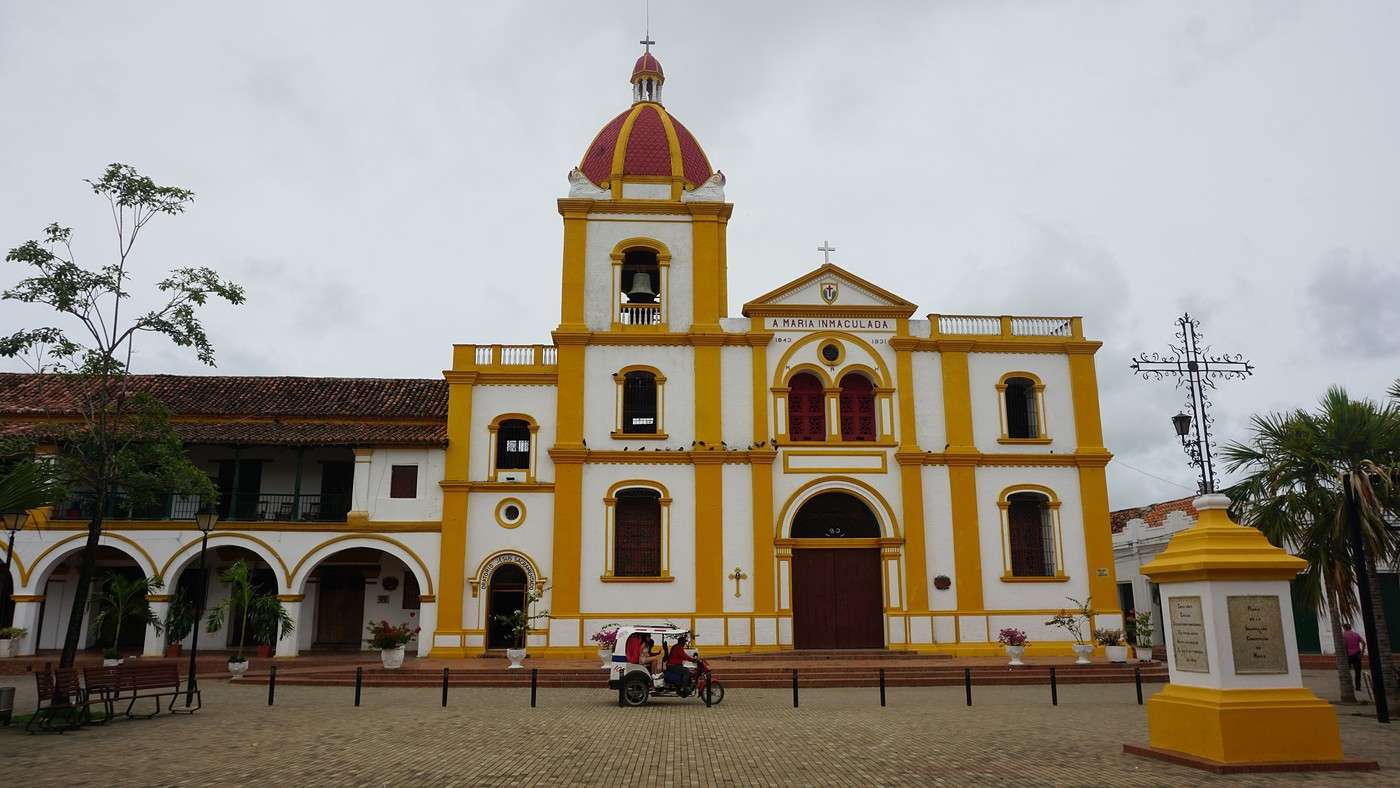
Mompox (2/3) A city located on the banks of the Magdalena River, inscribed on UNESCO’s World Cultural Heritage list in 1995. It’s renowned for its architectural heritage: numerous squares, six churches in its historic center, and many colonial houses built by wealthy merchant families. Founded in 1540 by the Spanish, it was the first Colombian city to declare independence from Spain. Switzerland was the first country to recognize it, which is why many Swiss flags adorn the city’s facades.


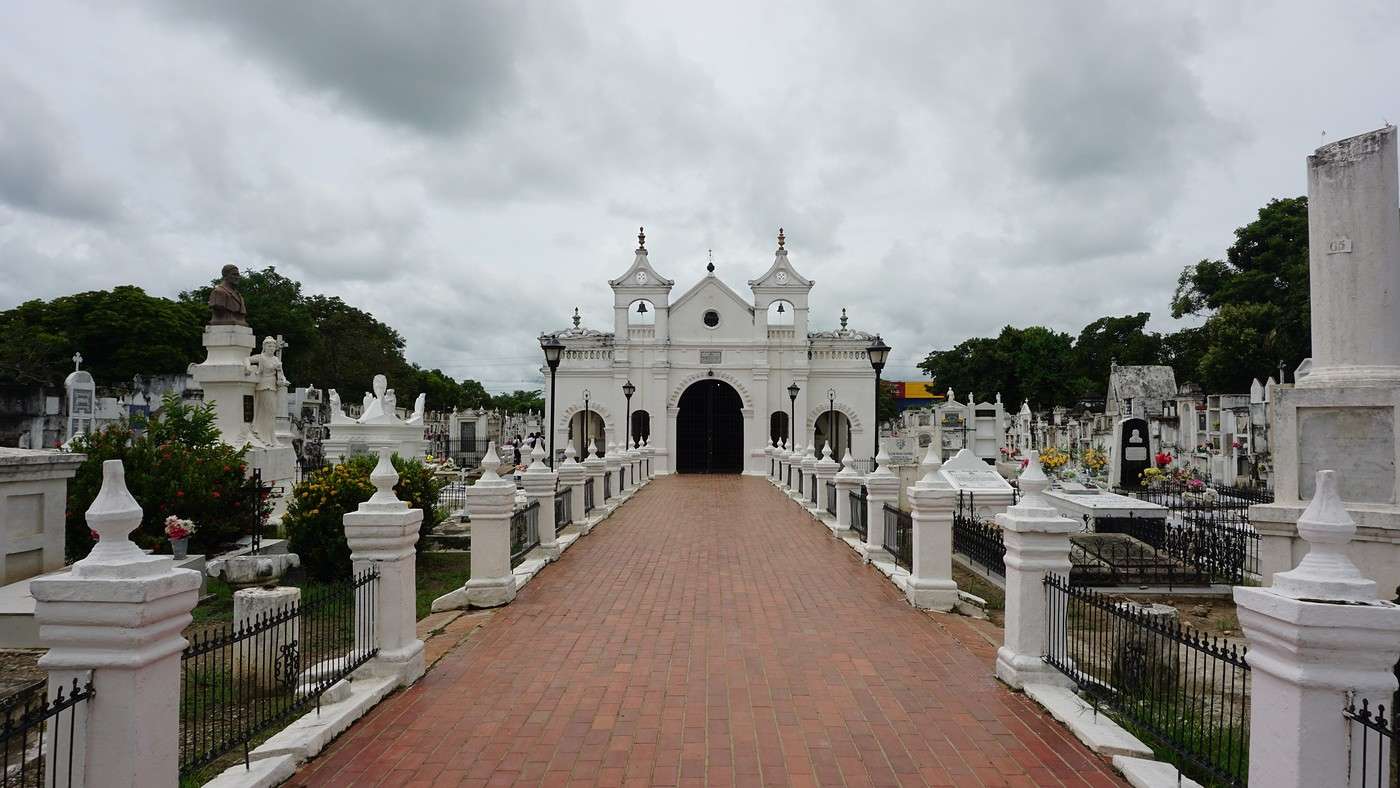
Here, you can discover the art of filigree jewelry, a legacy of the Spanish colonial period and the craftsmanship of Arab goldsmiths. Mompox is also known for its wicker rocking chairs and its jazz festival. Local curiosity: the Rosario Cemetery with its cats! A chapel is filled with them. According to the legend of the ‘pact with the Devil,’ the presence of these cats is linked to the death at age 33 of Alfredo Serrano, nicknamed "el gato" (the cat) because of his green eyes. His nickname took on even more meaning when visitors to the cemetery began seeing a black cat lounging on his tombstone.


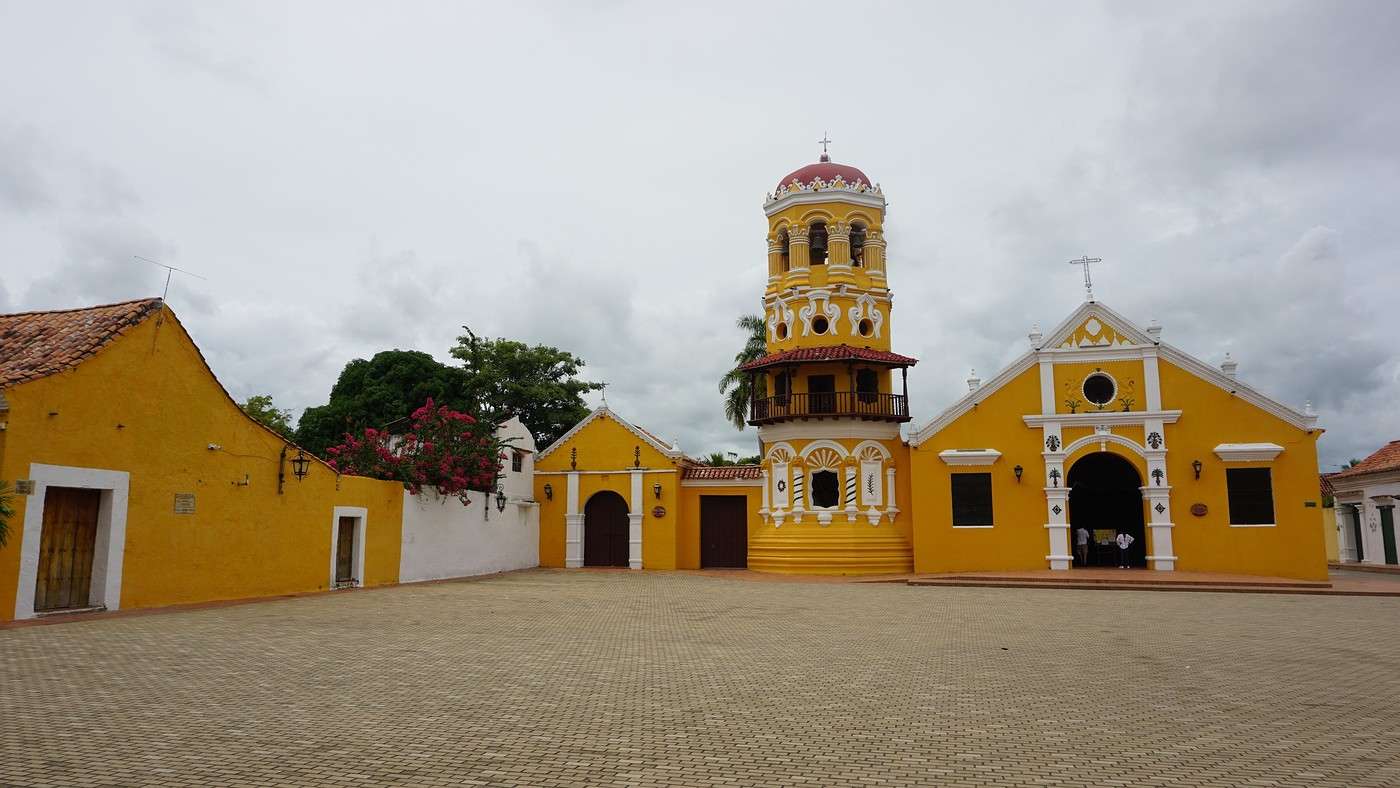
This city is also said to have inspired Gabriel García Márquez (Colombian Nobel Prize in Literature in 1982) in his description of the town of Macondo in the novel *One Hundred Years of Solitude*. Breakfast was average. Since we’re staying here for several days, we take the opportunity to have our laundry done. Then we start exploring the city. We enter a filigree jewelry shop along the riverside promenade. We ask the young woman showing us the jewelry if we could visit her workshop. It’s closed on Sundays (which makes sense!), so we make an appointment for the next day. She gives us the address (right across from the cultural center) and sets the meet-up at her shop since she offers to accompany us there. We continue our walk to the famous cemetery. Sure enough, we see lots of cats in the chapel and many bowls of kibble set out for them outside. Strong smell! As we explore the old town, we visit the six churches. I climb the round tower of Santa Barbara, wave hello from its balcony (unique!), and make my way up to the bell tower. Great view of the river and the rooftops of Mompox!


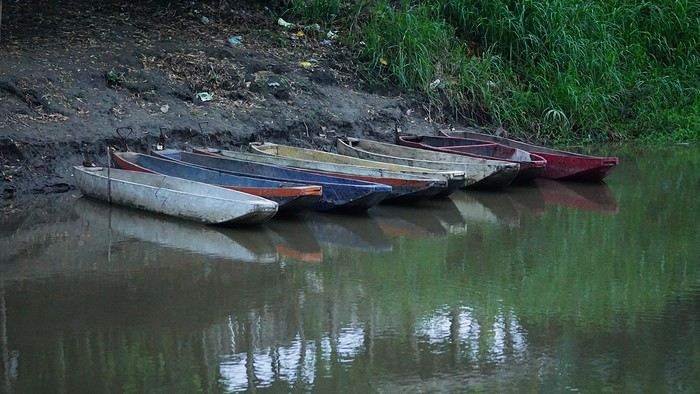
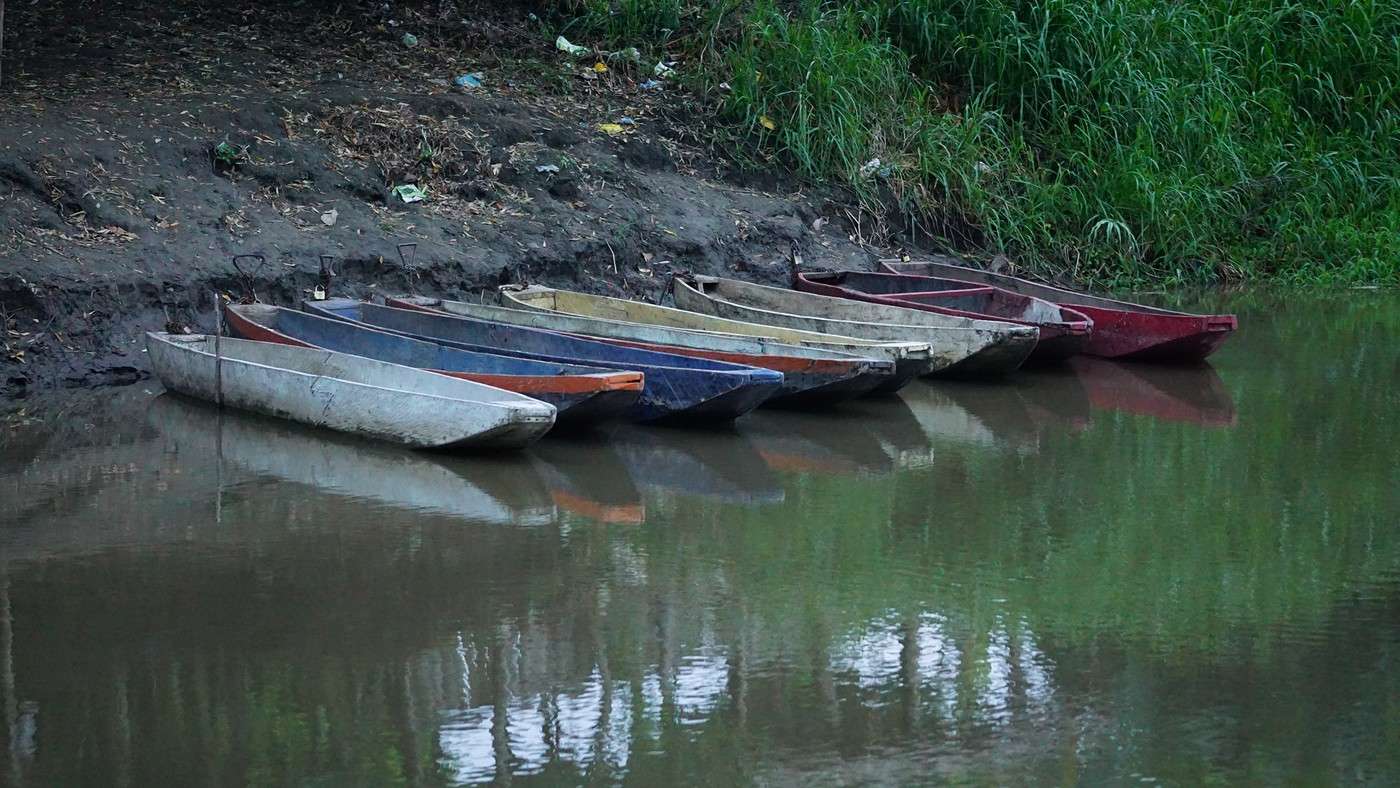
On our way back to the center, we book two boat tours: a lagoon tour for today and a sunset cruise on the Mompox River (a tributary of the Magdalena) for tomorrow. Meet-up at 2:45 PM. Lunch at a tiny local restaurant: the daily special, as usual. I order "pechaga" (chicken fillets), which look so good that Justine and I swap plates because she’s less thrilled with her "cerdo" (pork). At the scheduled time, we head to the dock. Apparently, the boat for the marshes isn’t full, so they suggest swapping our reservations. The river cruise is pushed to 4 PM. We’re a bit disappointed—watching the sunset on a gray day isn’t ideal. Big boat, few people. We leave around 4:30 PM, seated in the front row in rocking chairs, for a guided tour. There’s a lot of talk about Freemasonry, which seems to have left a strong mark on the city. It turns out to be a lovely 2-hour ride. I was worried about the music volume (I’d read negative reviews), but it was actually very reasonable and tolerable.


We return after dark. As usual, our evening ends with a picnic dinner.

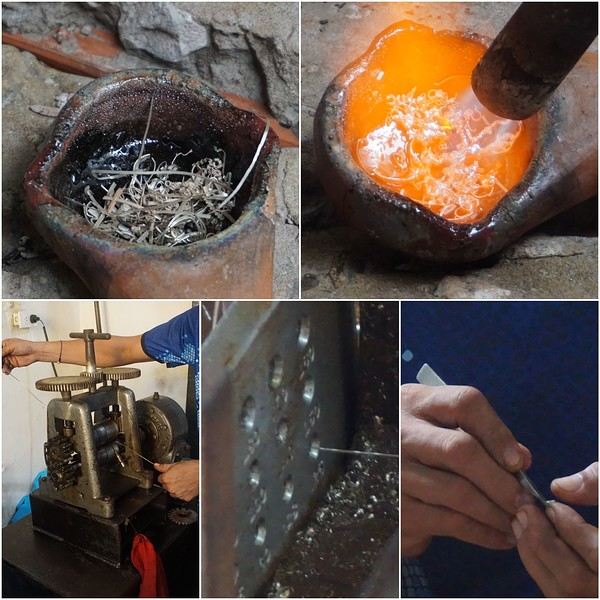
Mompox (3/3) This morning, we head straight to the jewelry shop where we had an appointment. The young woman apologizes—she’s alone and can’t accompany us. We take some photos of earrings (to send to our daughter so she can pick a design she likes). Then we head to the workshop. When we arrive, the shop attached to the workshop is packed with customers. We decide to come back later. Justine returns to the hotel to send the photos, while I wander the streets of this charming town. A little later, with the jewelry choice made, we go back to buy them. Finally, we return for the goldsmithing workshop tour. This time, the shop is empty, and we explain our request to the saleswoman. No problem! She opens the adjoining door, and we step inside. We watch several people work until a young man pauses his activity to show us the entire process and introduce us to the art of filigree.


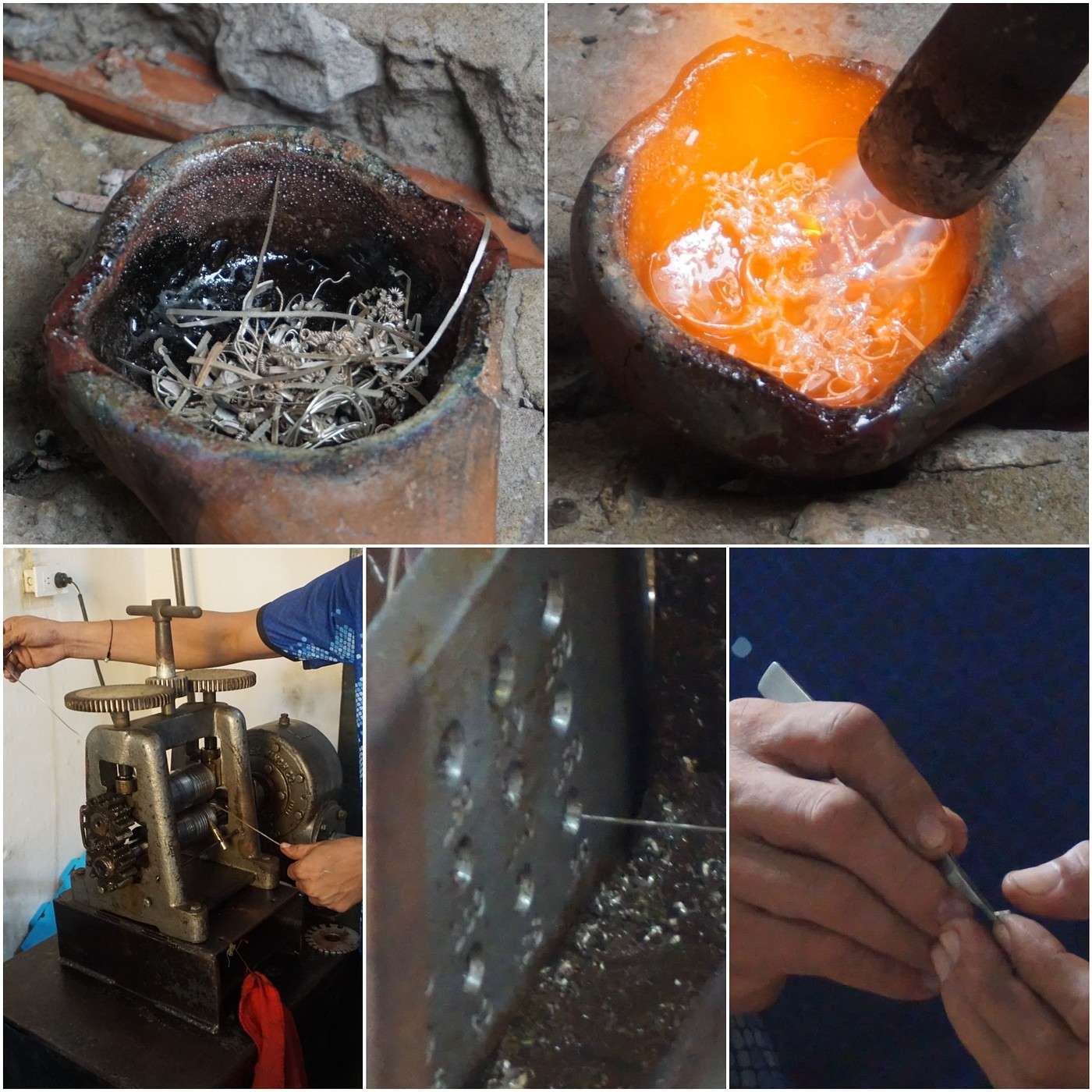
Starting with melted silver pieces, an ingot is formed. From this ingot, stretched into wires of different thicknesses, various parts of the jewelry are made. Then, the artisans’ generational know-how comes into play. The young man finishes his demonstration by crafting a small flower that will likely later become an earring. He explains that he’s been learning this work since he was a child and that the owner is his aunt. Leaving the workshop, we continue our walk through the city. We visit an old monastery and stroll along the malecón.


After lunch, it’s time for our lagoon excursion. The sun is out. We should see lots of birds, maybe some caimans, and other friendly animals.


As we’re about to board, we’re surprised to run into the French couple we met in Bogotá and later crossed paths with in Guane. They booked the same excursion, and we’ll be side by side. We’re all a bit disappointed—we thought our boat would be smaller and less "crowded." The provider had promised a tour with 6 people. In reality, there are about thirty of us! Surprisingly, almost the majority of passengers speak French! But the commentary is exclusively in Spanish. We start by sailing on the Magdalena River, then on one of its branches, and finally into the marshes and lagoon.


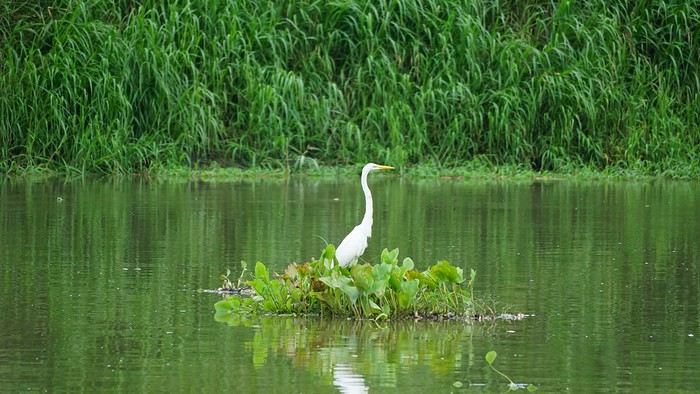
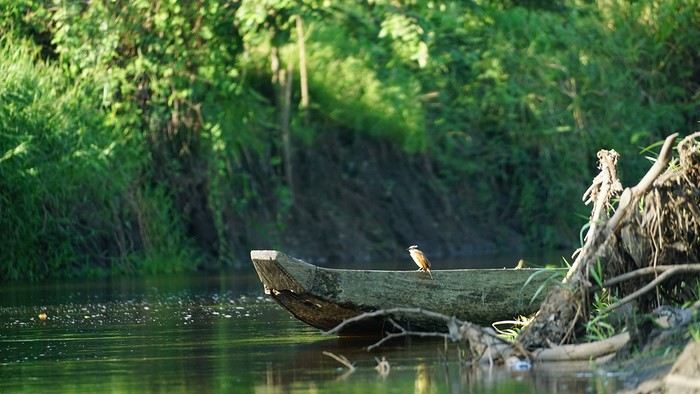
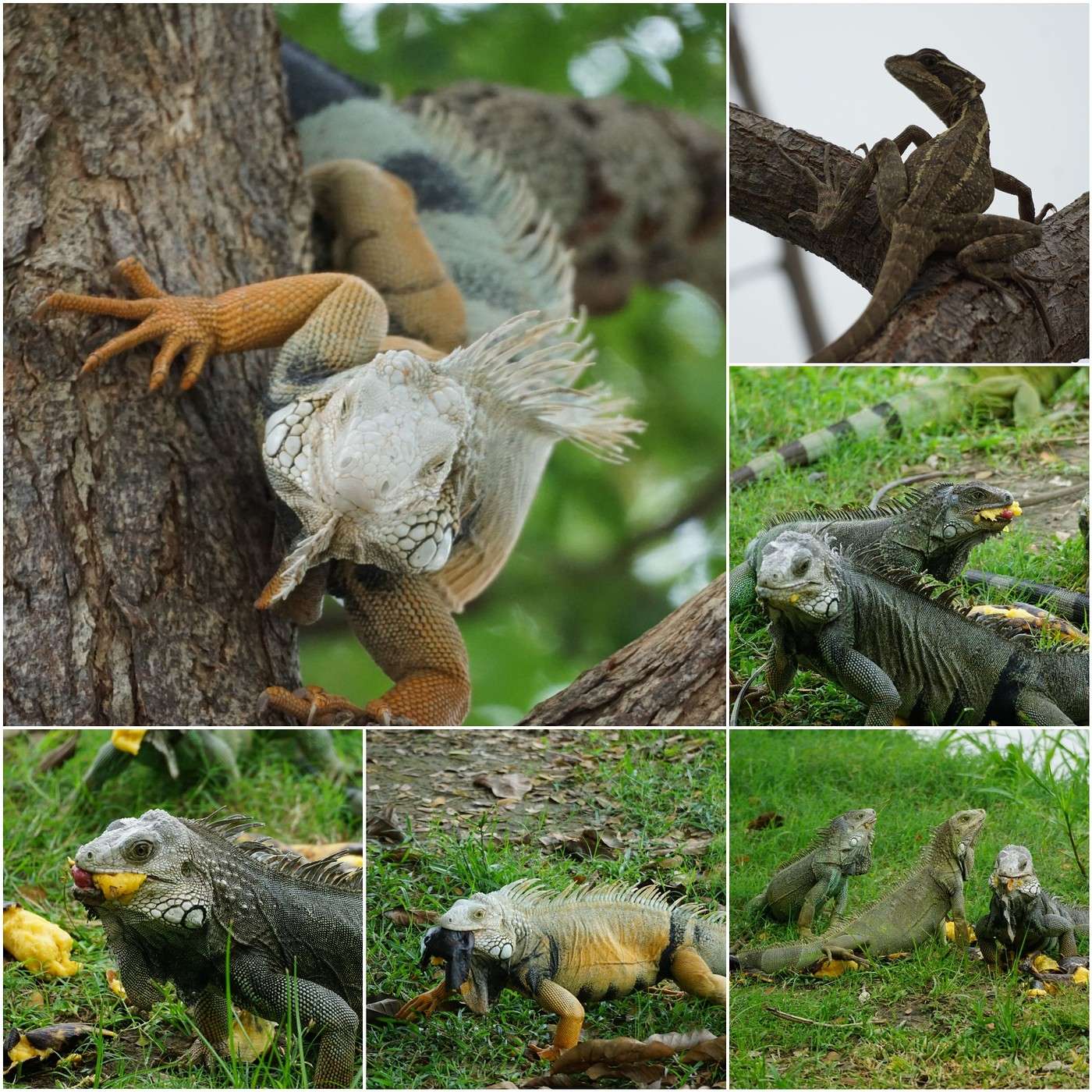
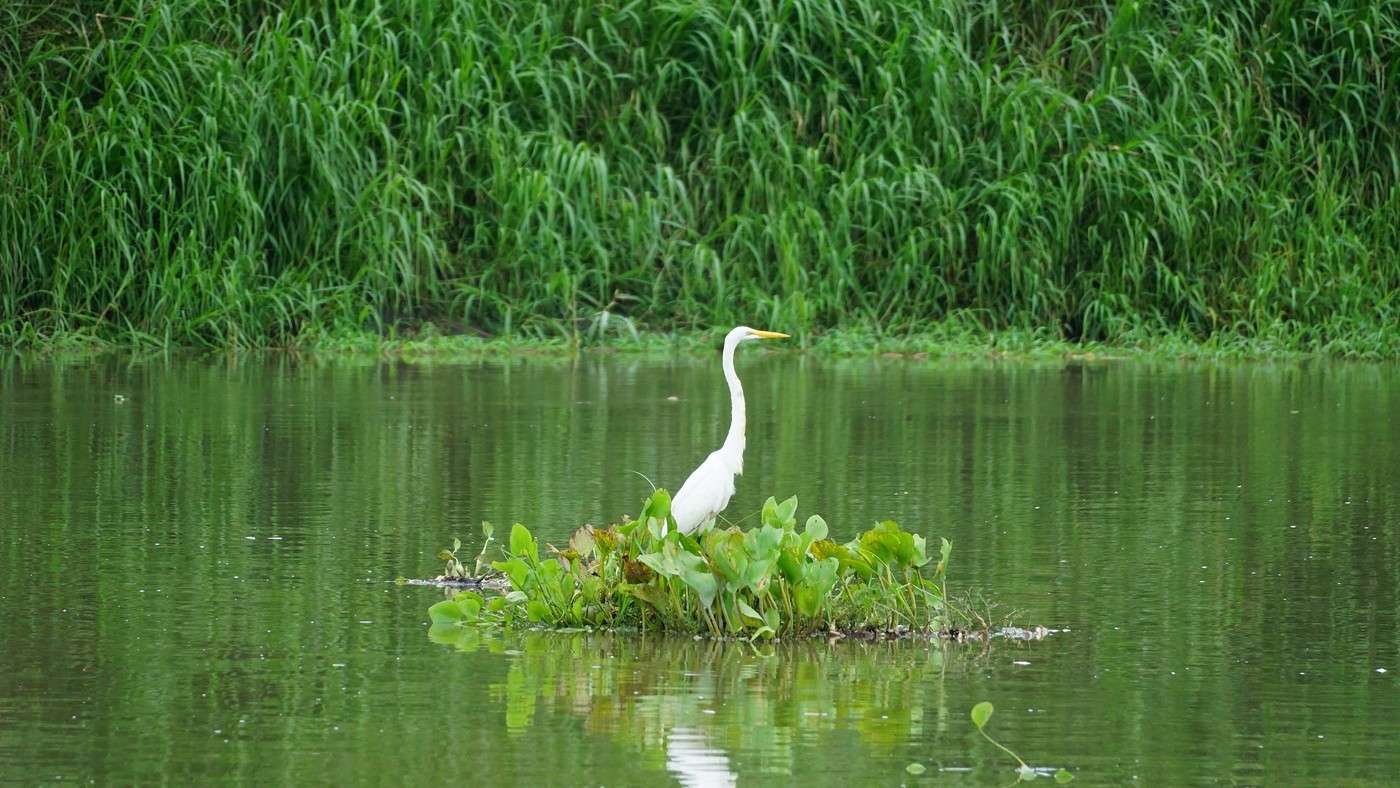
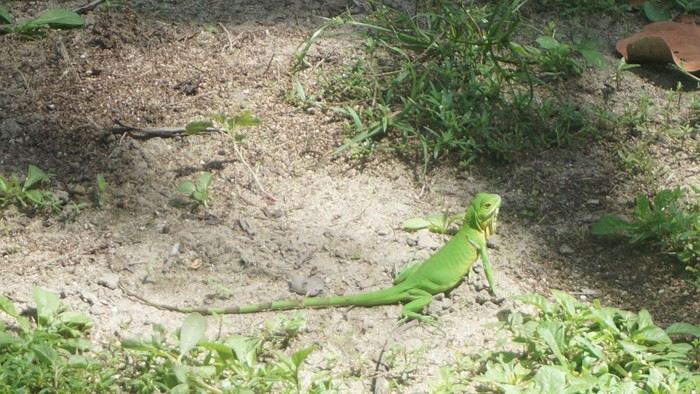
We saw many water birds (kingfishers, needle ducks, brown herons, moorhens, southern lapwings, etc.), countless iguanas, a few basilisks (also called "Jesus lizards" because they walk on water), and a caiman, as well as cows and horses.


In the lagoon, those who wanted could swim. Not us. On the way back, a beautiful sunset and another nighttime arrival in Mompox. This outing, which lasted over 3 hours, was really enjoyable. And so ends our stay in Mompox, where locals say, "You don’t pass through Mompox, you stop in Mompox." It’s time to pack our bags and prepare for our departure tomorrow morning. We have a meet-up at 9:30 AM in front of the Bolívar stone, about twenty meters from our hotel. We’ll then hit the road to reach the city of Ciénaga near the Santa Marta lagoon. One-night stop before heading to the palafito villages (I can’t help it—that’s what they’re called!) where we’ll also spend one night.

From Caño Cristales to Tayrona Park

Phil31600 · 2024-12-31

Step 8 – Ciénaga and the stilt villages (1/3) We’re already starting the last week of our Colombian journey. We traveled from Mompox to Santa Marta in a very comfortable minibus with four or five other passengers. We were supposed to be dropped off near Ciénaga, but since we arrived in torrential rain, the driver preferred to take us all the way to Santa Marta. There, he called a “totally trustworthy taxi.” The streets of Ciénaga are flooded, but luckily, by the time we arrive, it’s stopped raining.


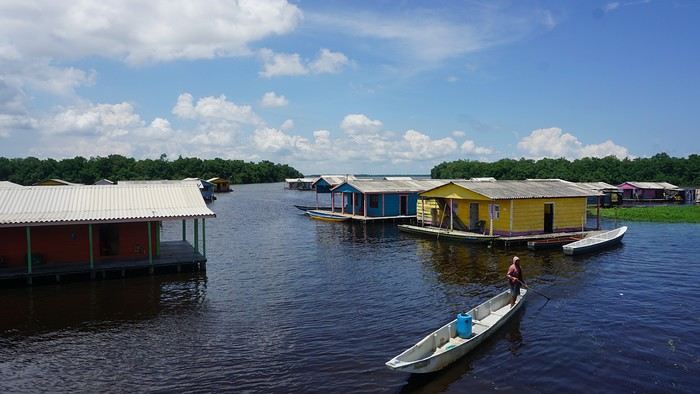
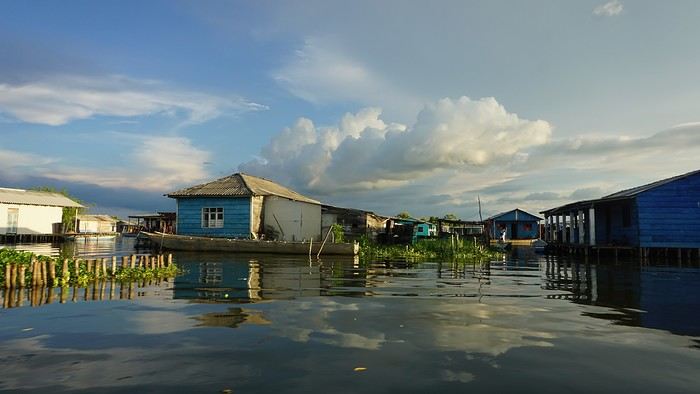
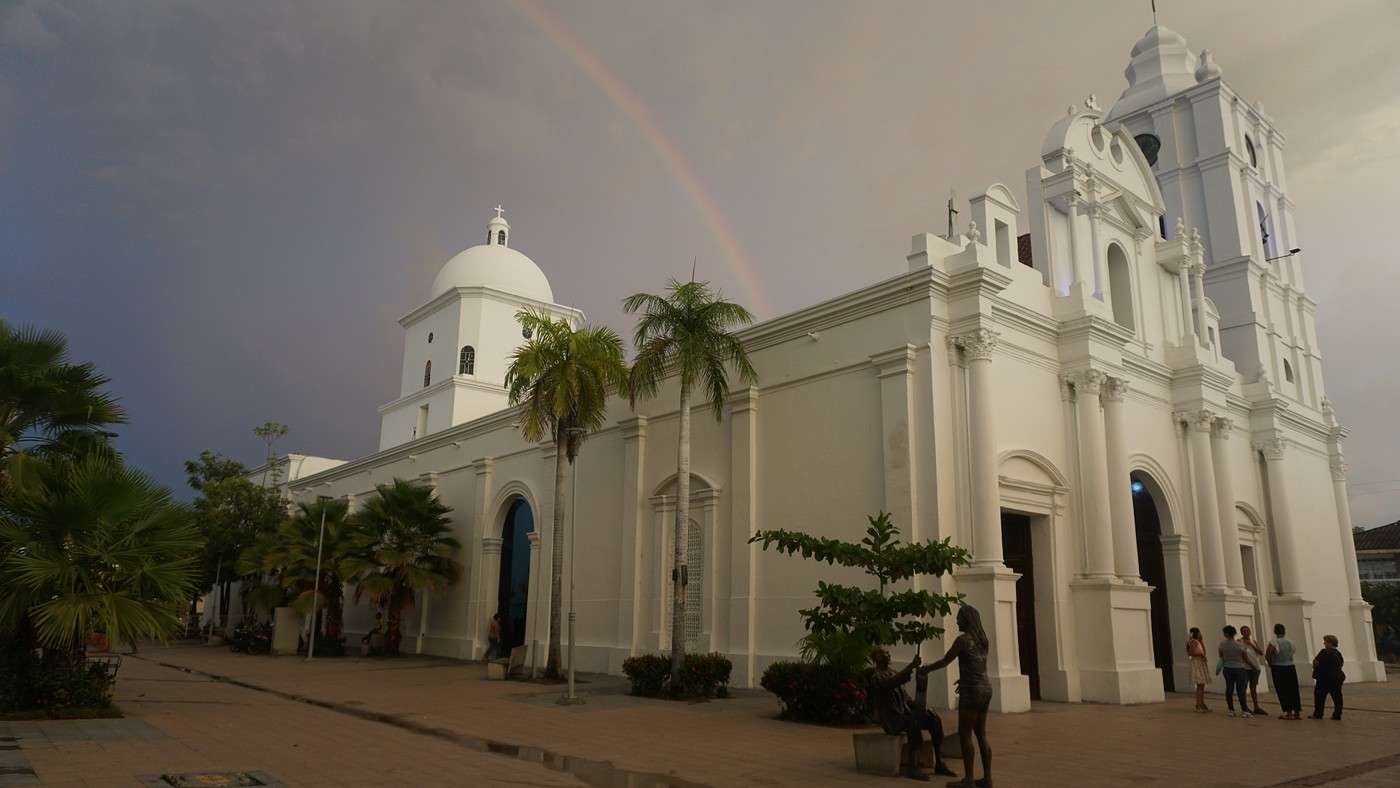
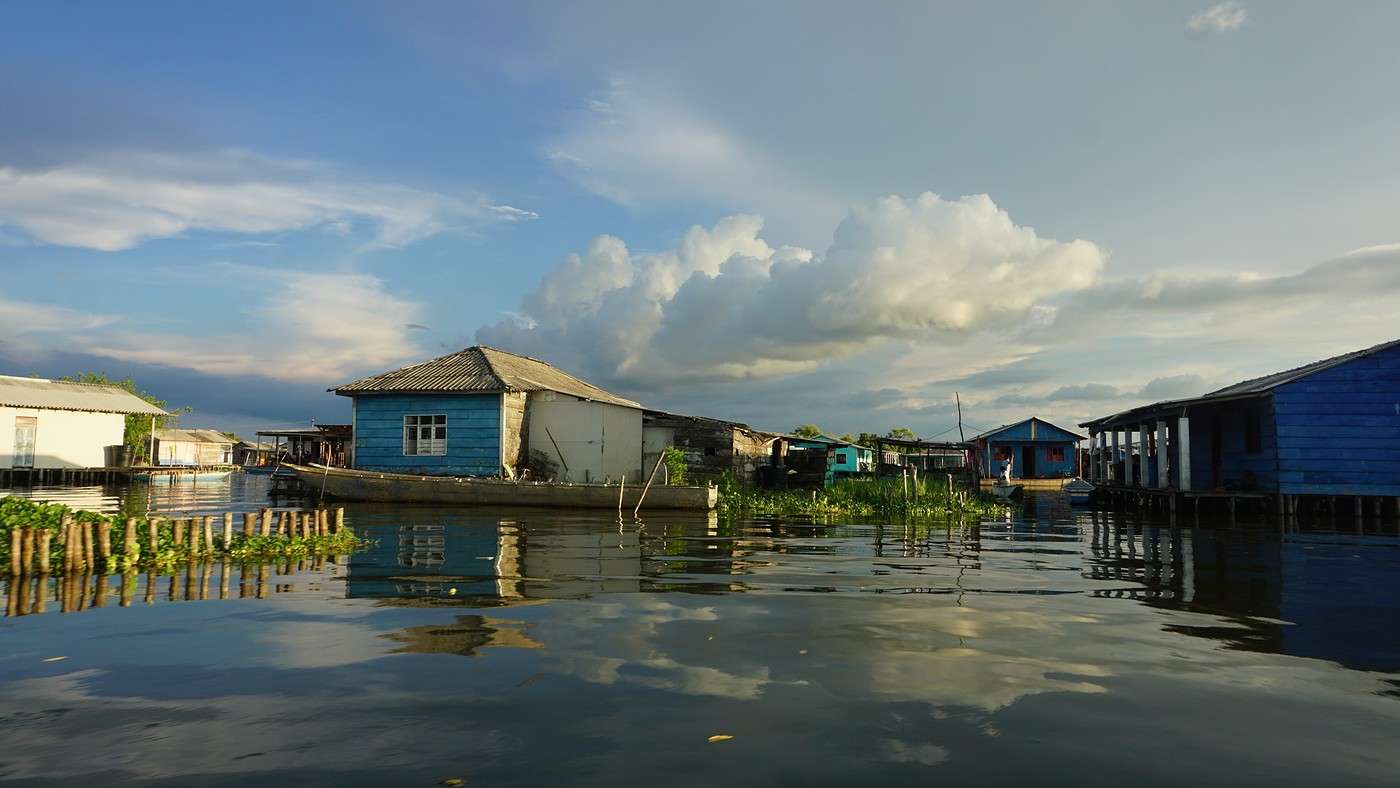
We check into our hotel, where each room is named after a character from Gabriel García Márquez’s novels. Then we head out to stretch our legs after that 5-hour trip. We walk around the central square and the cathedral. It’s still drizzling a bit. We have dinner at a restaurant recommended by the hotel owner. Apparently, the sun will be back tomorrow. Nueva Venecia (2/3) At breakfast, I go for a local specialty, trusting the owner’s promise of something delicious: mashed plantain with butter and cheese. It might sound weird, but I assure you it’s *delicioso* or *muy rico*. And the coffee here is, so far, the best of our entire trip. We take advantage of the time we have left before leaving to climb the hotel tower and enjoy a beautiful sunny view of the city and the lagoon. We meet at 10:30 AM at the nautical stop, “el corazón de Macondo,” to board a boat to the stilt villages of Bela Vista and Nueva Venecia. We’re welcomed by our guide for these two days and by our host, Gabriel.


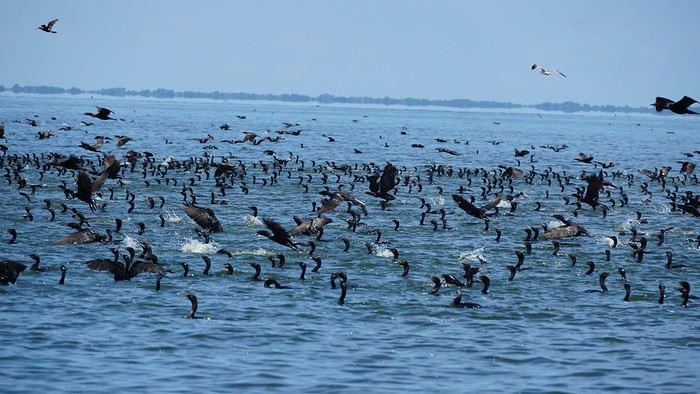
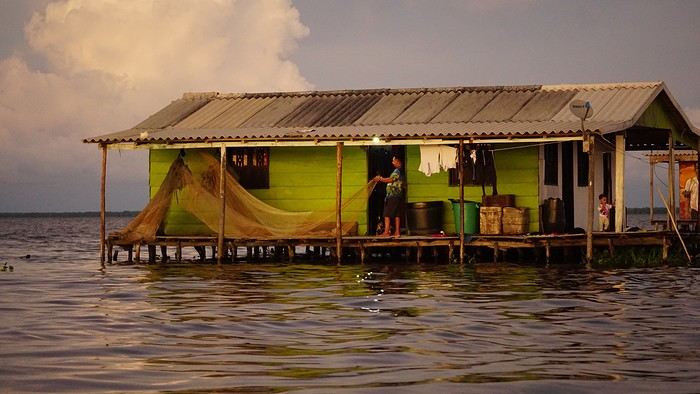
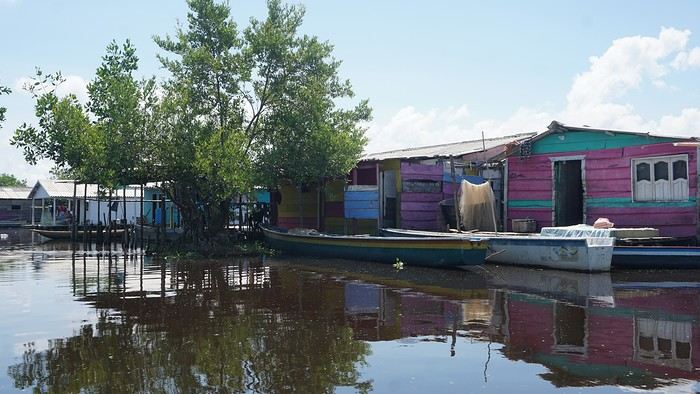
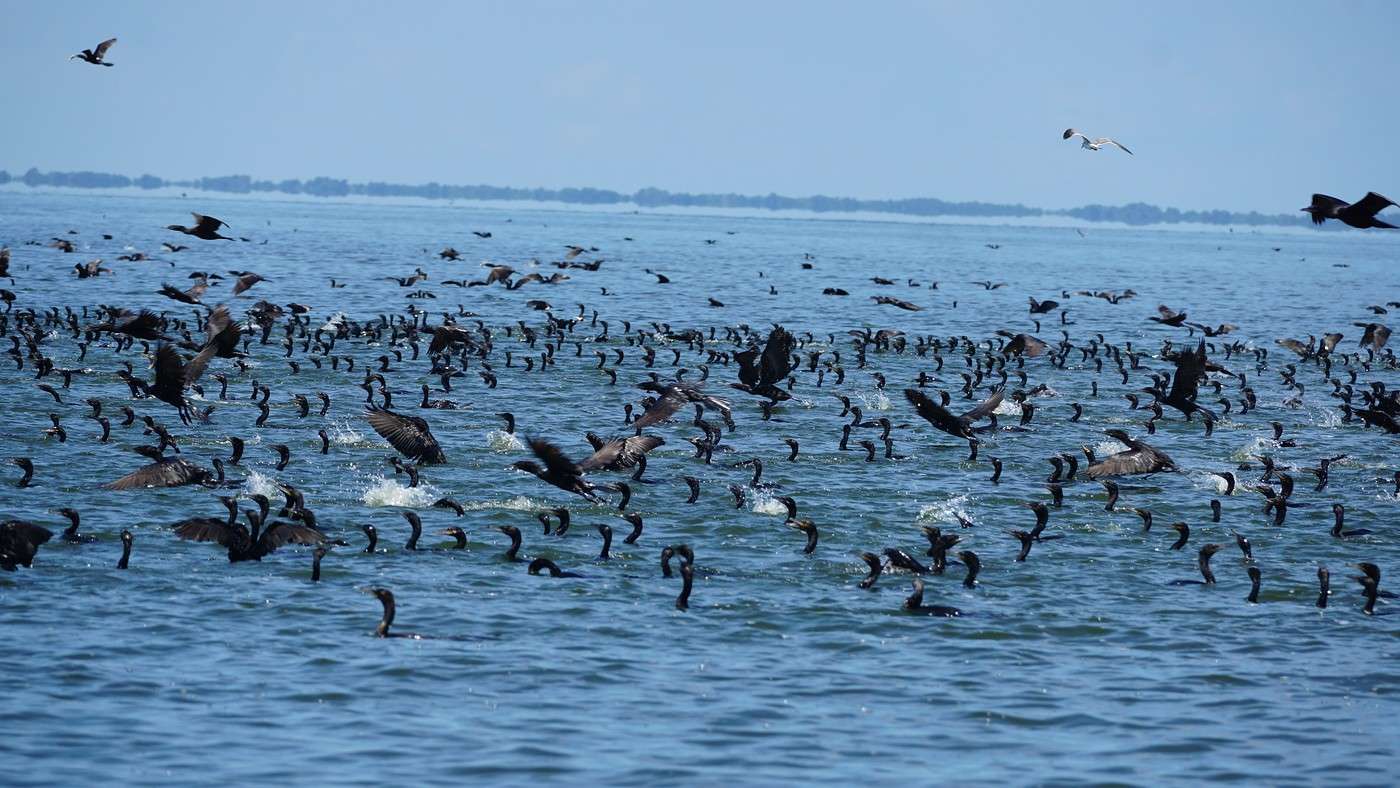
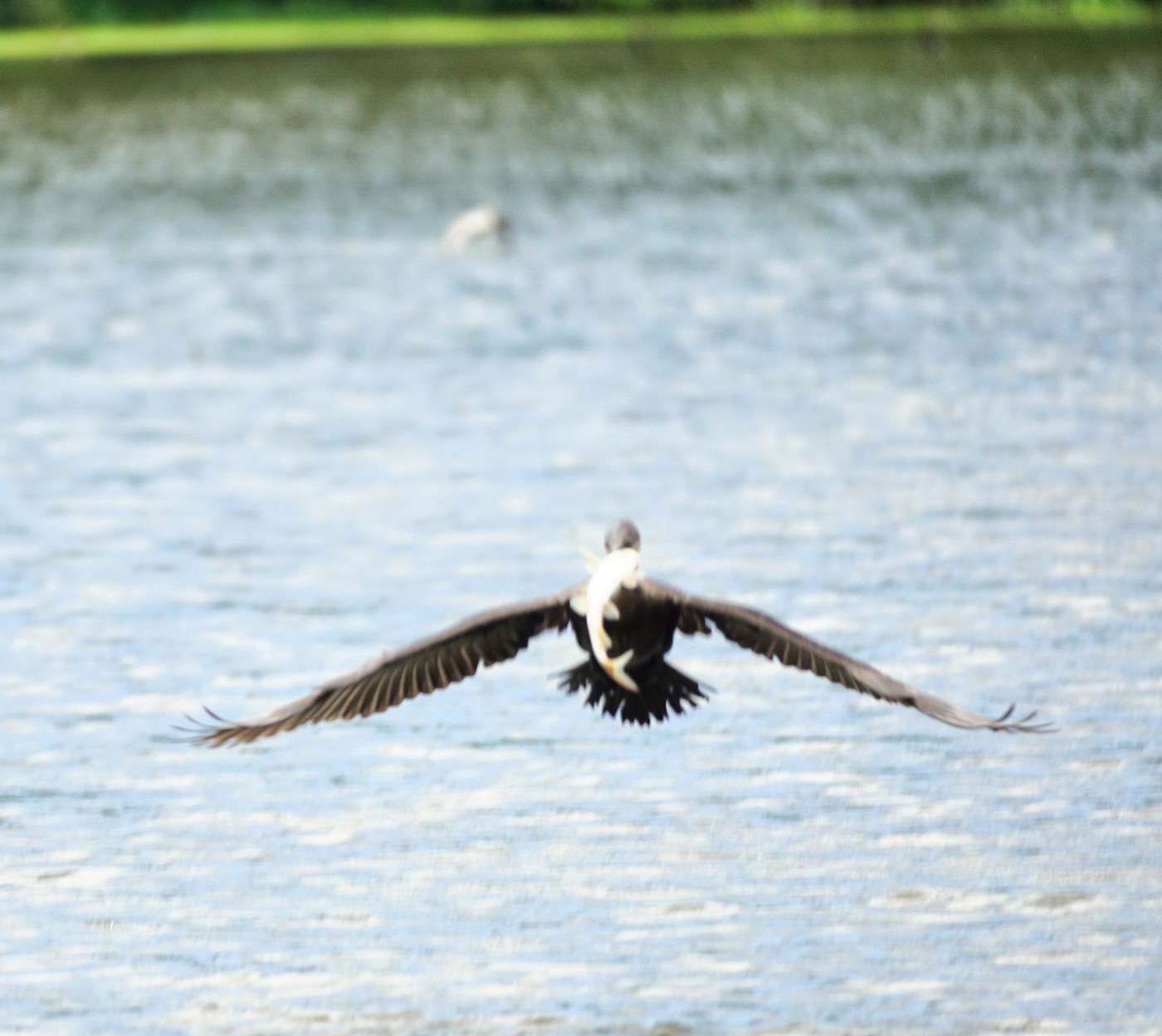
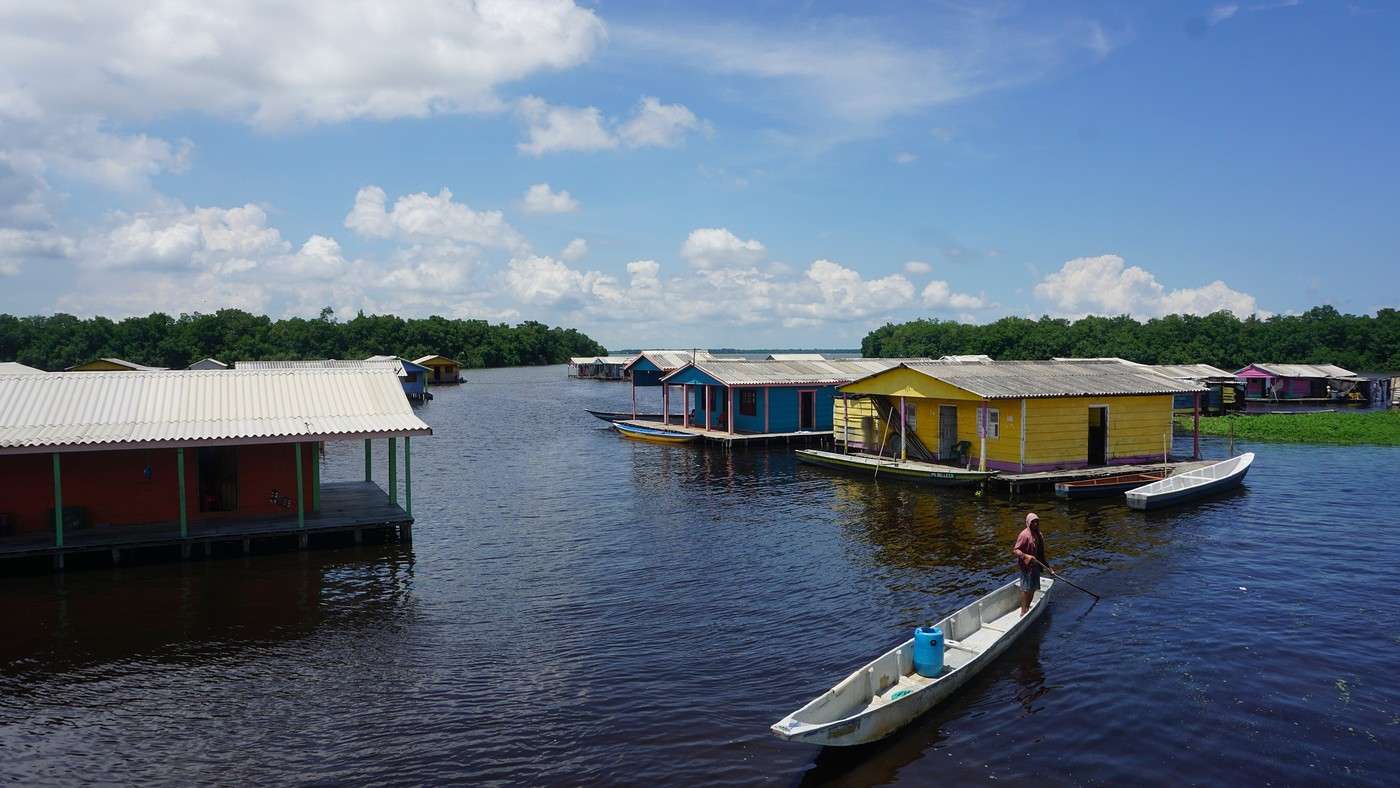
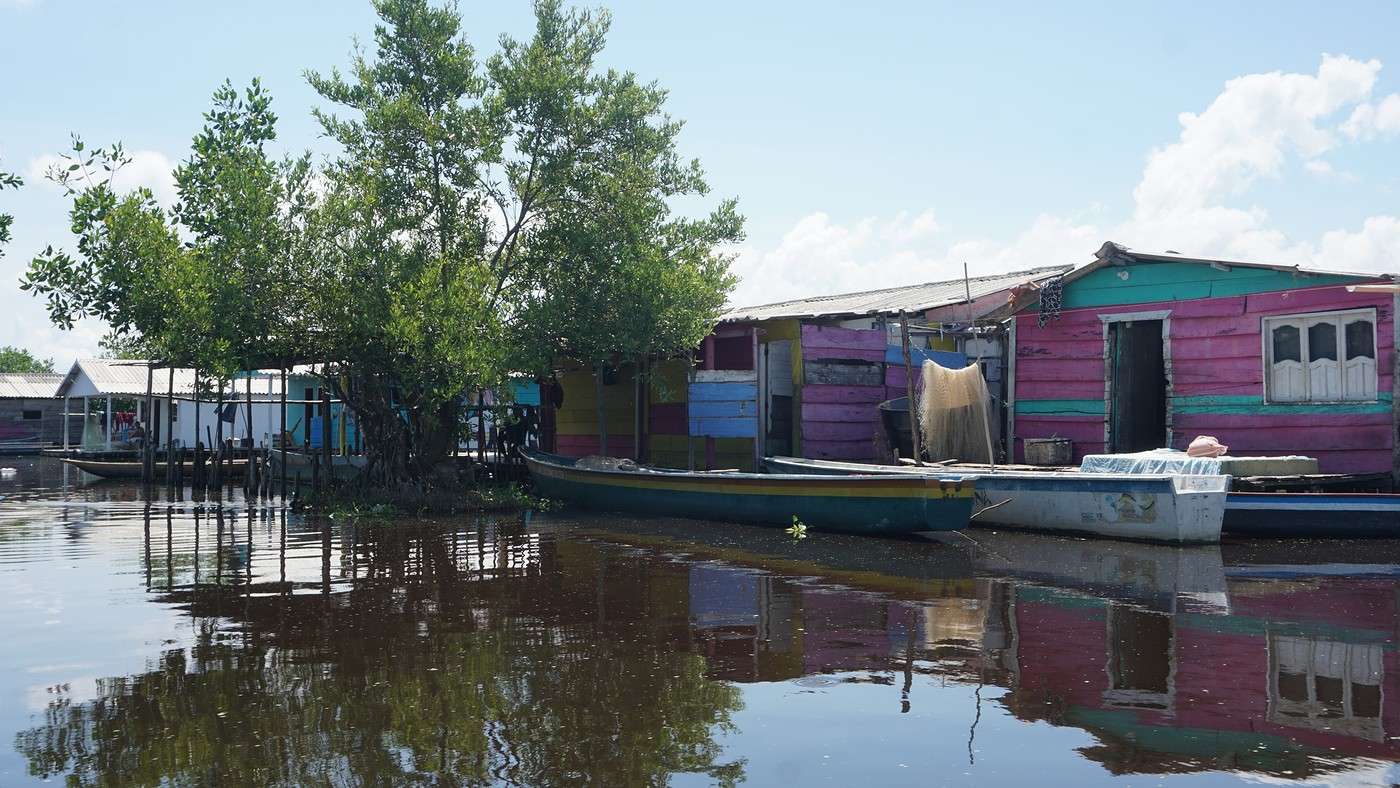
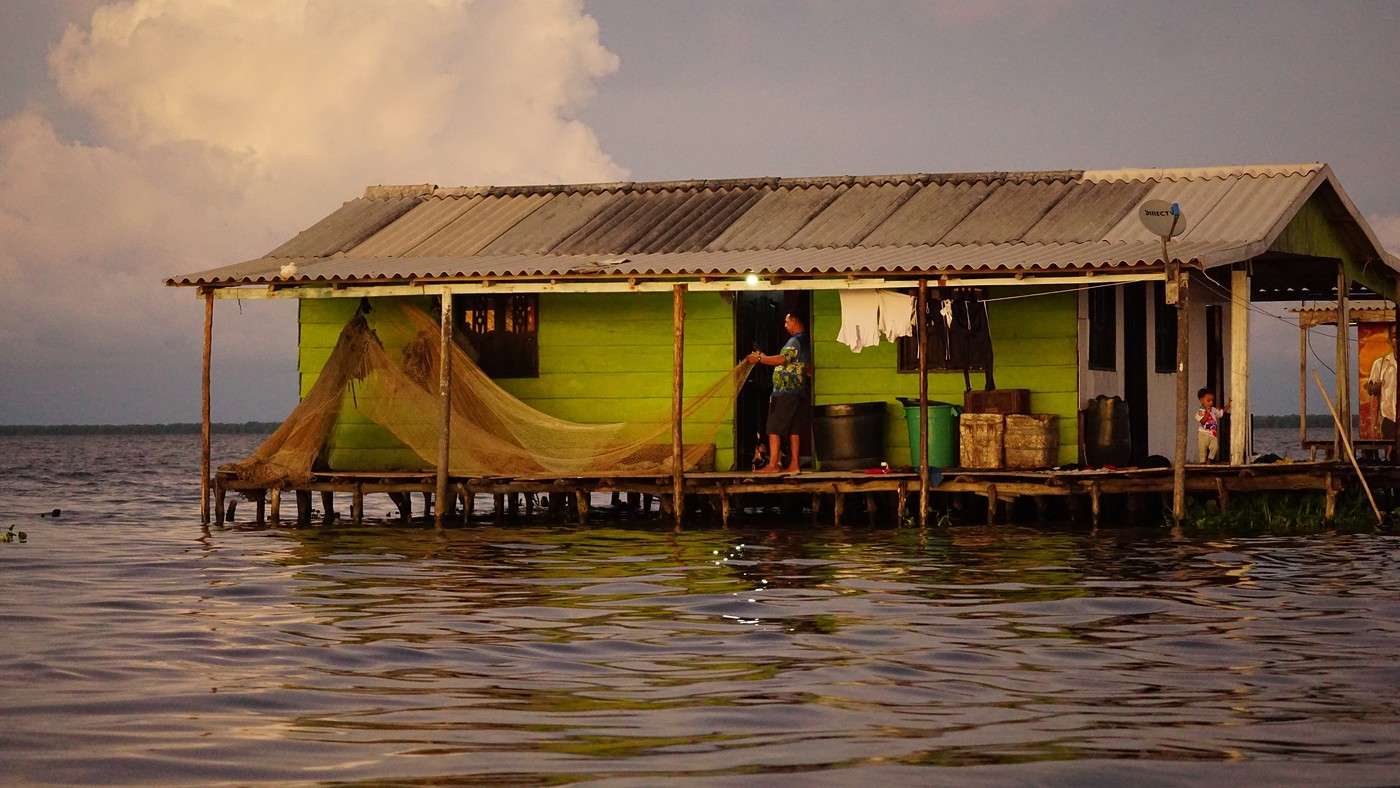
We sail for about an hour and a half through canals feeding the lagoon from the Magdalena River. We spot lots of birds (but no caimans) and pass through a truly impressive “flock” of cormorants (they were everywhere around us). Finally, we reach the village of Bela Vista. Here, it’s forbidden to take photos of the children. We make a brief stop to see some colorful houses and the primary school, which serves kids from both villages. Nueva Venecia is home to the middle and high school for this fishing community. We finally arrive at Gabriel’s place in Nueva Venecia, where we’ll spend the night. His wife is waiting for us and has prepared lunch.


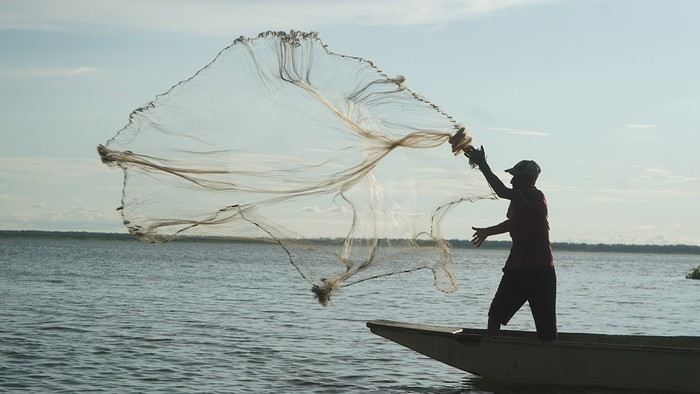
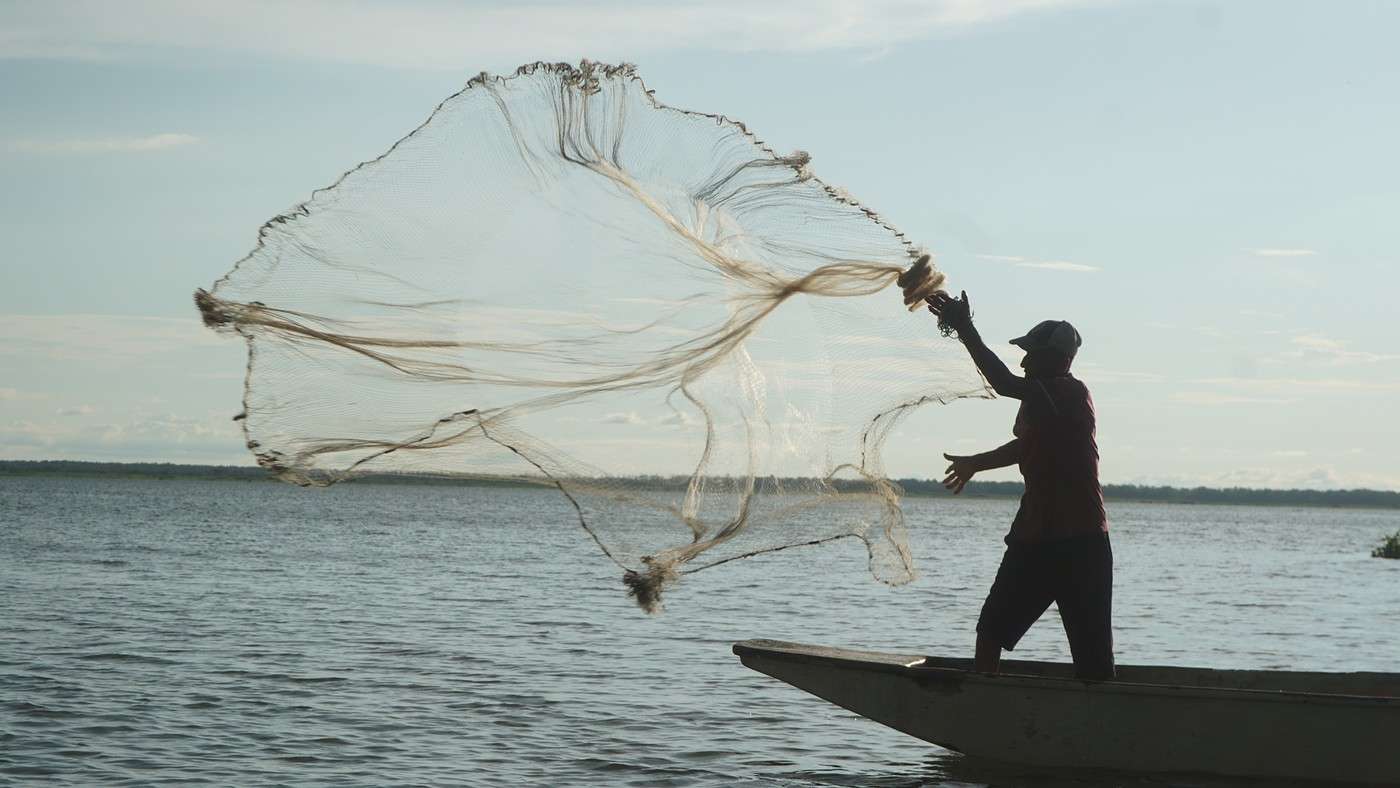
Early in the afternoon, we chat in Spanish and sometimes in English with our guide—a mom of two who also works at a café in Ciénaga. Meanwhile, Gabriel goes to pick up his daughter Gaby and her husband, who are studying tourism in Santa Marta. We’ll later learn that the local agency organizing our stay belongs to Gaby. When they return, Gabriel takes us to meet a carpenter/woodworker who also shows us his water filtration prototype. Access to water—especially drinking water—is a real challenge here. His setup consists of about fifteen wooden boxes topped with glass. The condensation droplets are collected in jugs. It takes a full day to fill them. In the village, there’s a chlorine-based water filtration and purification center, but its output is reserved for the schools. For the residents’ needs, water is drawn from a tributary of the Magdalena River, brought back by boat, and stored in a communal cistern (managed, if I understood correctly, by Gabriel’s brother). Each house also has a rainwater collector. After our visit with the craftsman—who gave us miniature traditional wooden boats—we head out onto the lagoon for a fishing net demonstration. Several casts, but only one fish. The fisherman asks Justine what she thinks of the fish. Her answer: small…


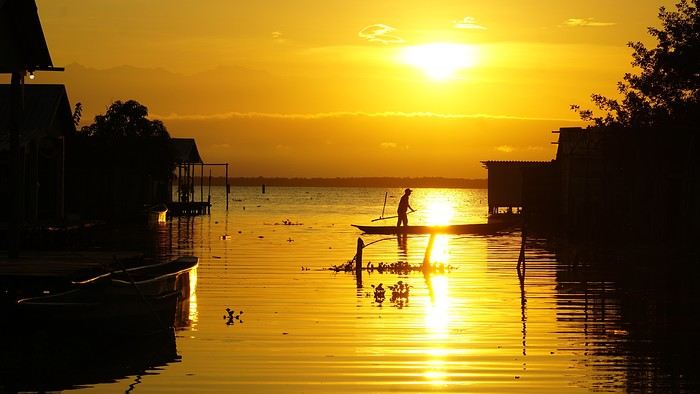
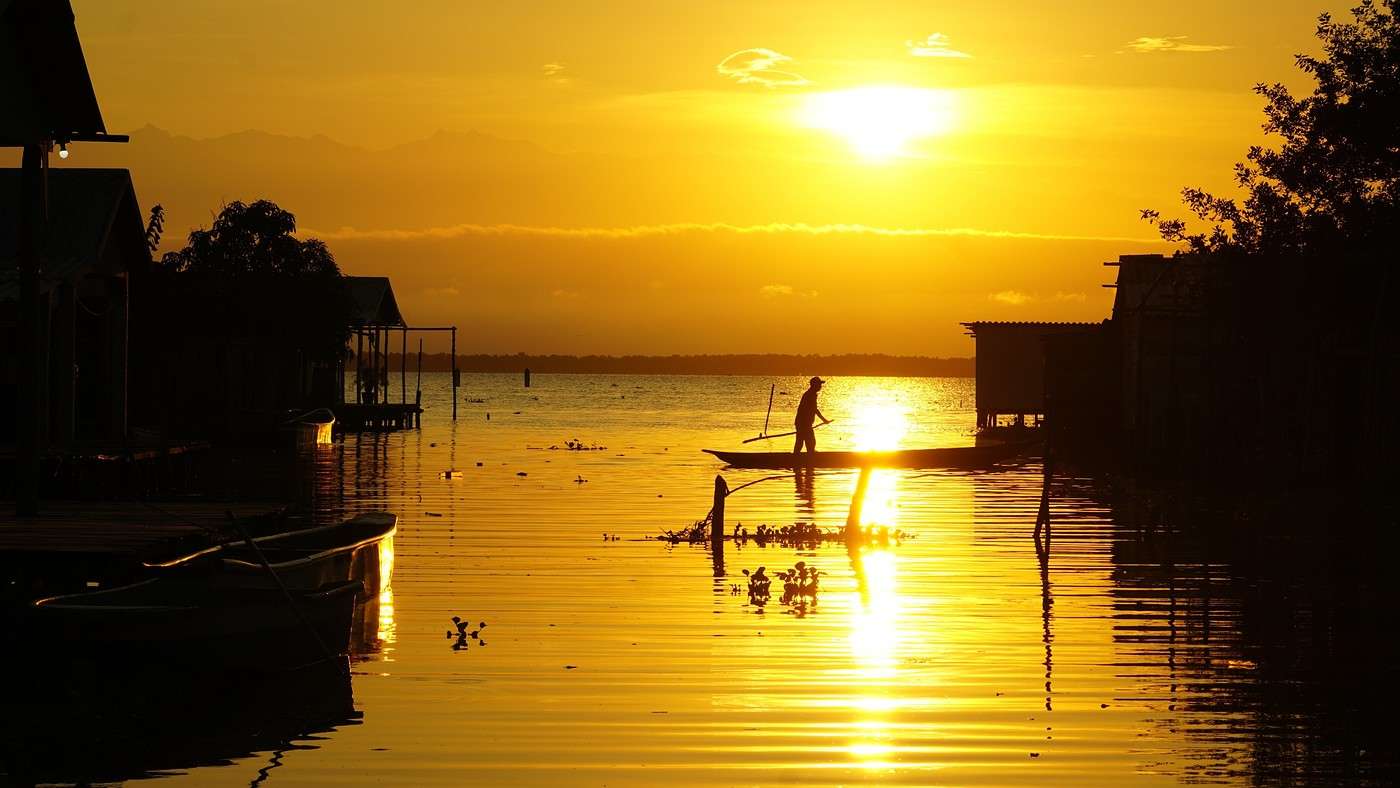
He offers to let me try casting the net. The technique seems pretty complex, and the net is quite heavy… Though embarrassment isn’t fatal, I decline with my “best” smile. It’s the end of the day, and we watch the sunset. A beautiful show with stunning light on the houses of Nueva Venecia.


When we return, dinner is served quickly, and night falls fast. Everyone goes to bed early because tomorrow morning, we’re heading out at sunrise (around 5:30 AM) to look for flamingos. Fun fact: Nueva Venecia has a floating (or stilted—I didn’t check!) soccer field. It’s a big hit and well-used (it’s the only place where the village’s kids and teens can run around!). It was a gift from soccer player Falcao (rumor has it he played for Monaco), who’s from Santa Marta. Another striking (and tragic) fact: the village was raided by a paramilitary group about twenty years ago. They went into homes, gathered residents in front of the church, and killed them. Thirty-five men and women were murdered. As many pebbles, each marked with a cross, were placed against the church’s façade. A commemorative plaque calls for remembrance of the victims and the community’s resilience. Our guide quietly tells us that one of Gabriel’s brothers was among the victims. Nueva Venecia (3/3) It’s 5:00 AM, and Nueva Venecia is waking up!


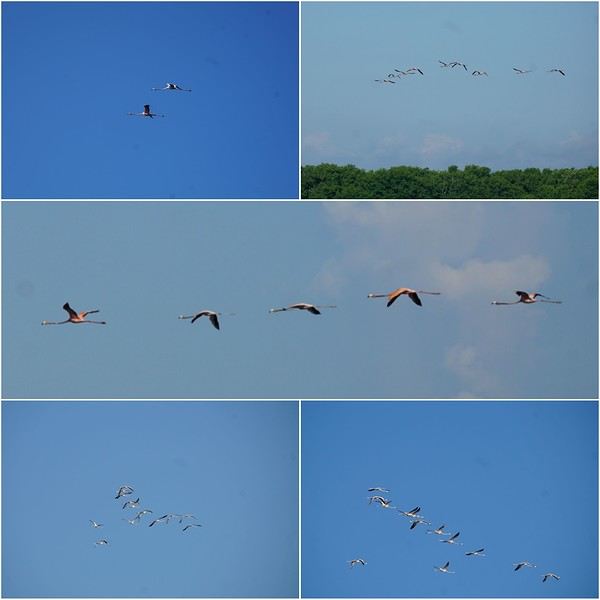
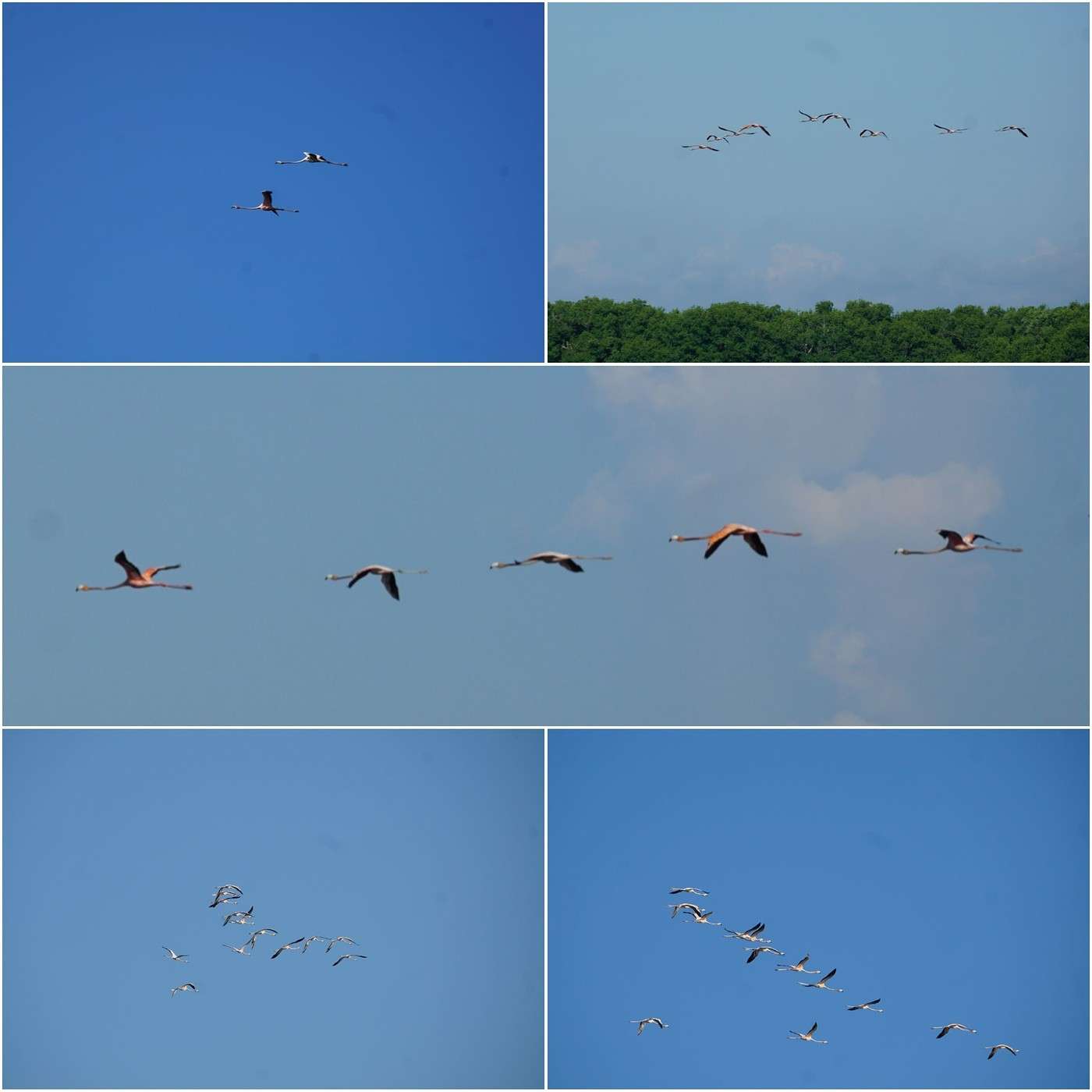
What a magical moment—watching the sunrise from the house’s terrace! We grab a coffee and set off in search of flamingos. Gabriel tracks them, his son-in-law pilots the boat, and Gaby scans the horizon with binoculars. Unfortunately, we only spot a few flying by. We can’t find where they’ve landed. After more than two hours of searching, Gabriel decides to head back. Still, it was a lovely moment that let us enjoy another boat ride on the lagoon, admire the birds in flight, see some pelicans, and watch a few fishermen at work. As for the flamingos, we’ll just have to head to the ponds of the Eastern Pyrenees or the Camargue!


We return to enjoy a delicious breakfast prepared by ‘Mrs. Gabriel’: amazing fruit juice, an omelet, and delicious yuca fritters! Around 10:00 AM, it’s time to say goodbye to the family and thank Gaby warmly for our visit and the support it brings to this village community.


Around 10:30 AM, we stop in the village of Bela Vista. Surprise! It’s the chosen time for the “midday” meal… We start by visiting a mangrove “nursery” next to the restaurant, then Gabriel leads us to our table. It’s really too early for us—no appetite! We skip the soup and the fish/rice dish prepared by the cook. We settle for “lemonade.” As a result, we leave with our doggy bags (fish, rice, etc.).


We set off again, navigating toward the dock after crossing the lagoon one last time. Upon arrival, as planned (one of the transfers booked with Flora!), our taxi is waiting. We say a final goodbye to Gabriel and his son-in-law, give our doggy bags to our guide (who’s thrilled), and head to Minca. And so ends this lovely, slightly timeless two-day stop in the stilt villages of the Santa Marta lagoon.

From Caño Cristales to Tayrona Park

Phil31600 · 2024-12-31

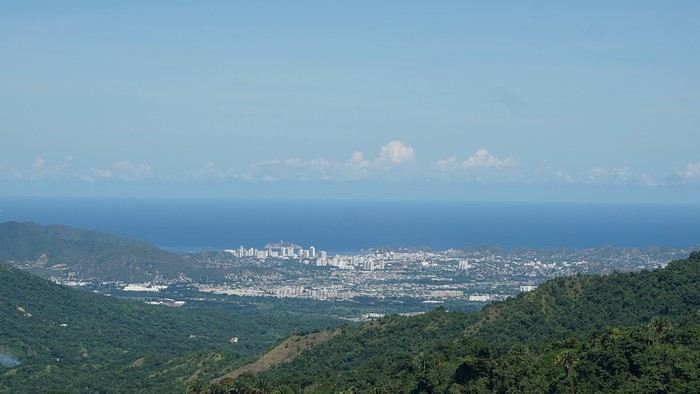
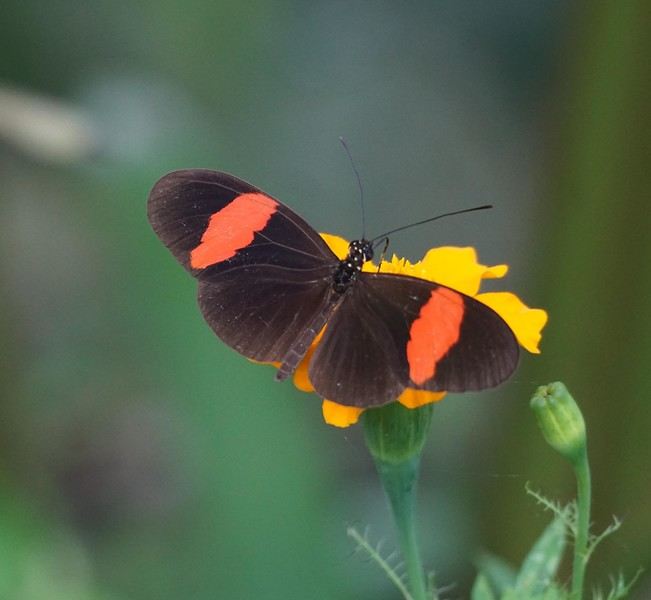
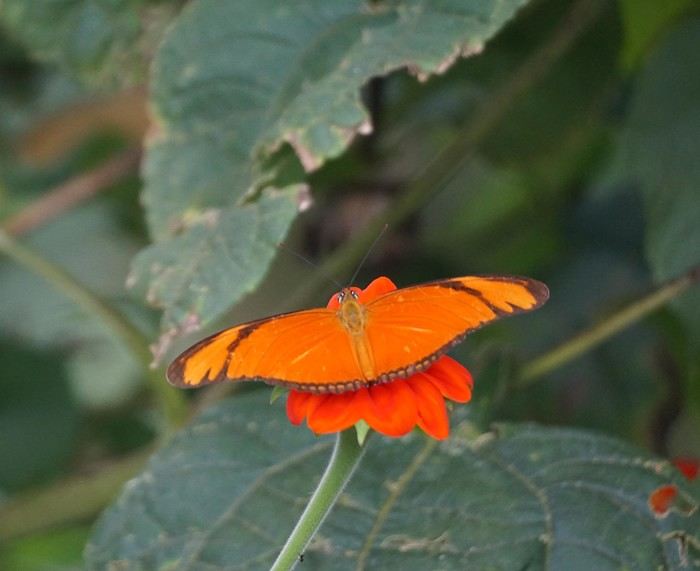
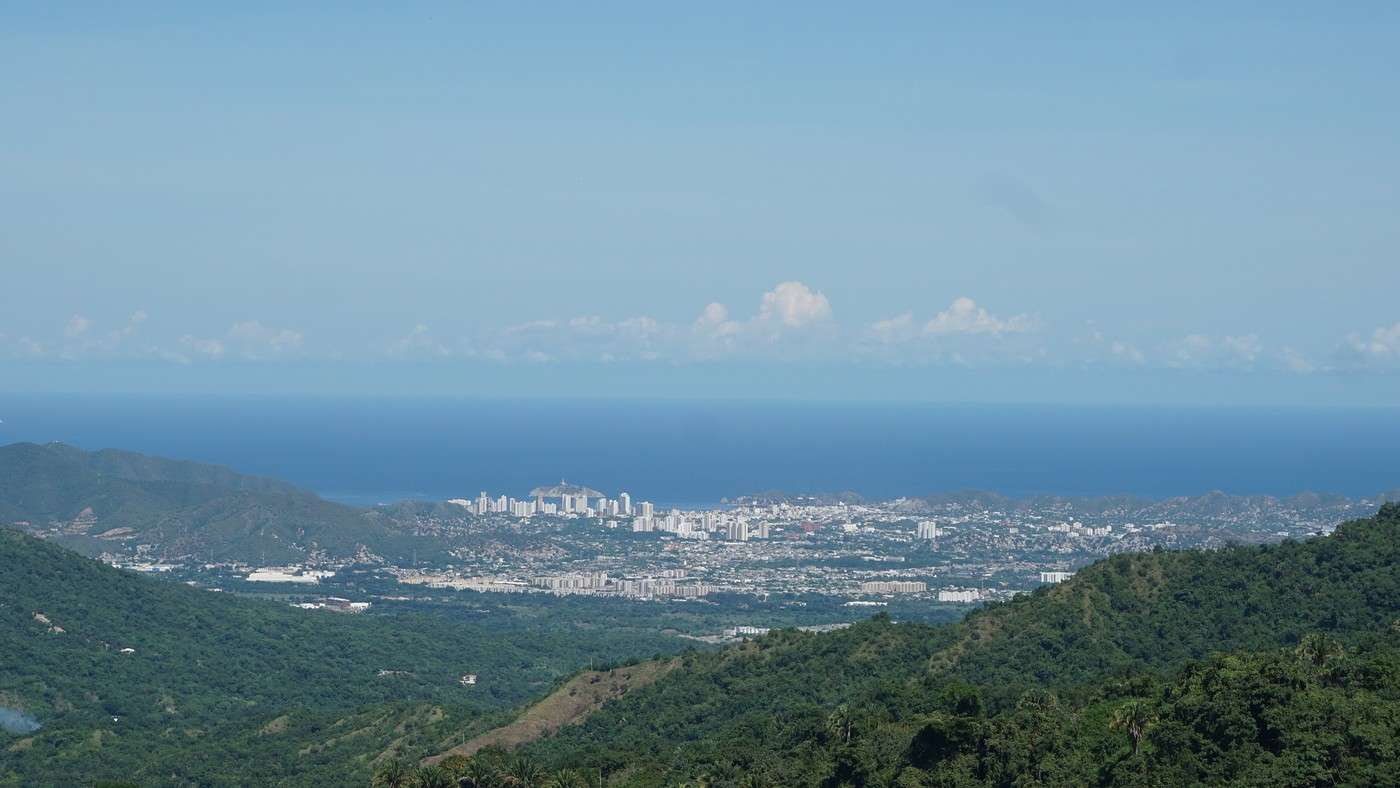
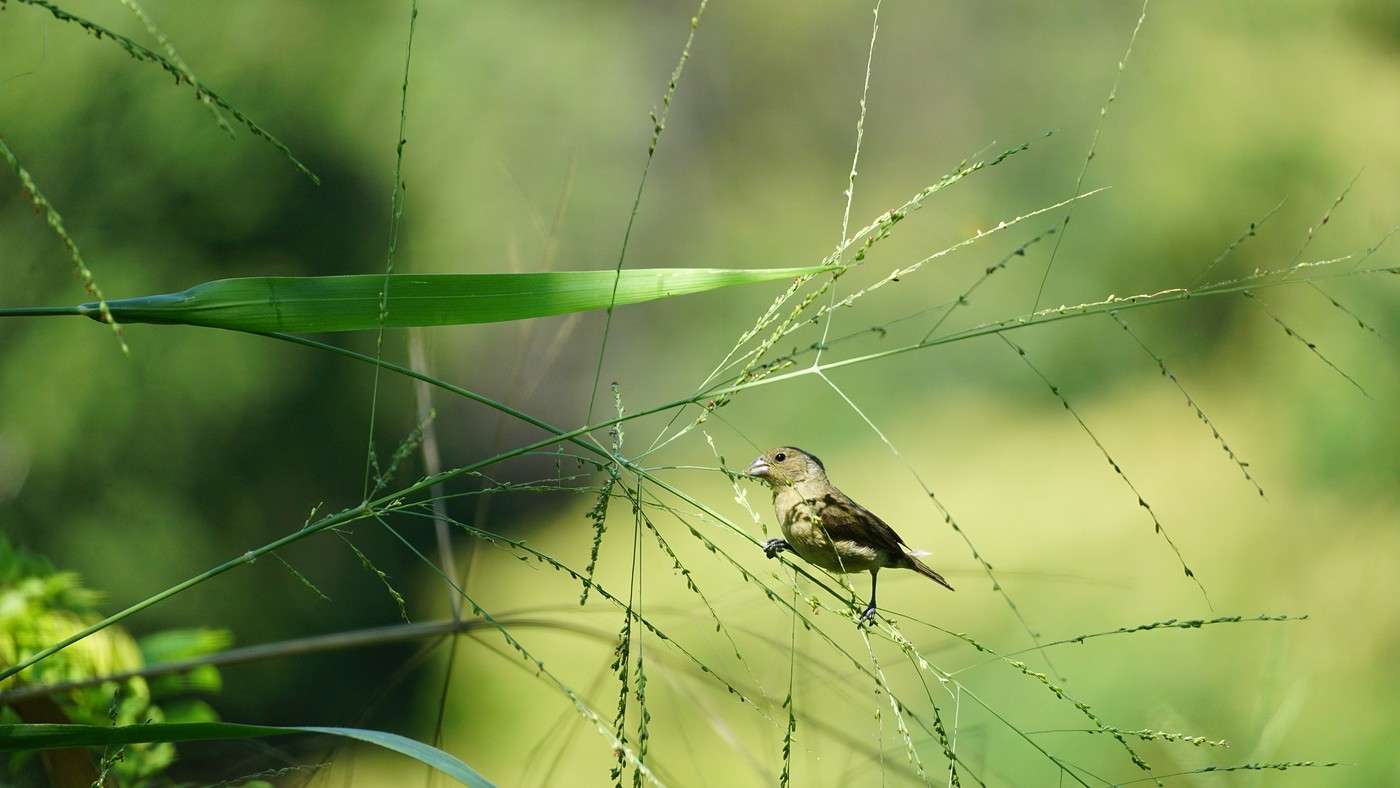
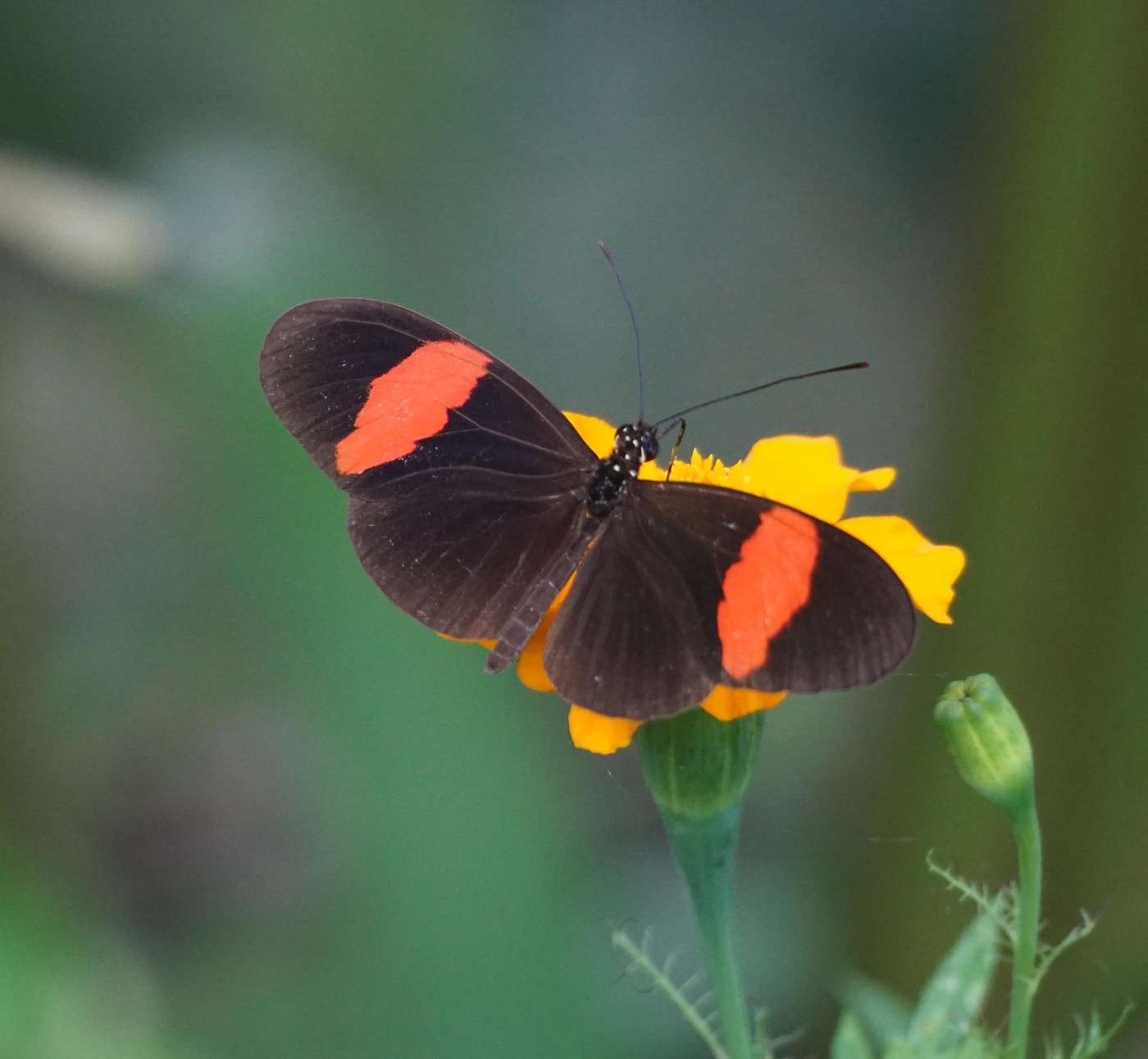
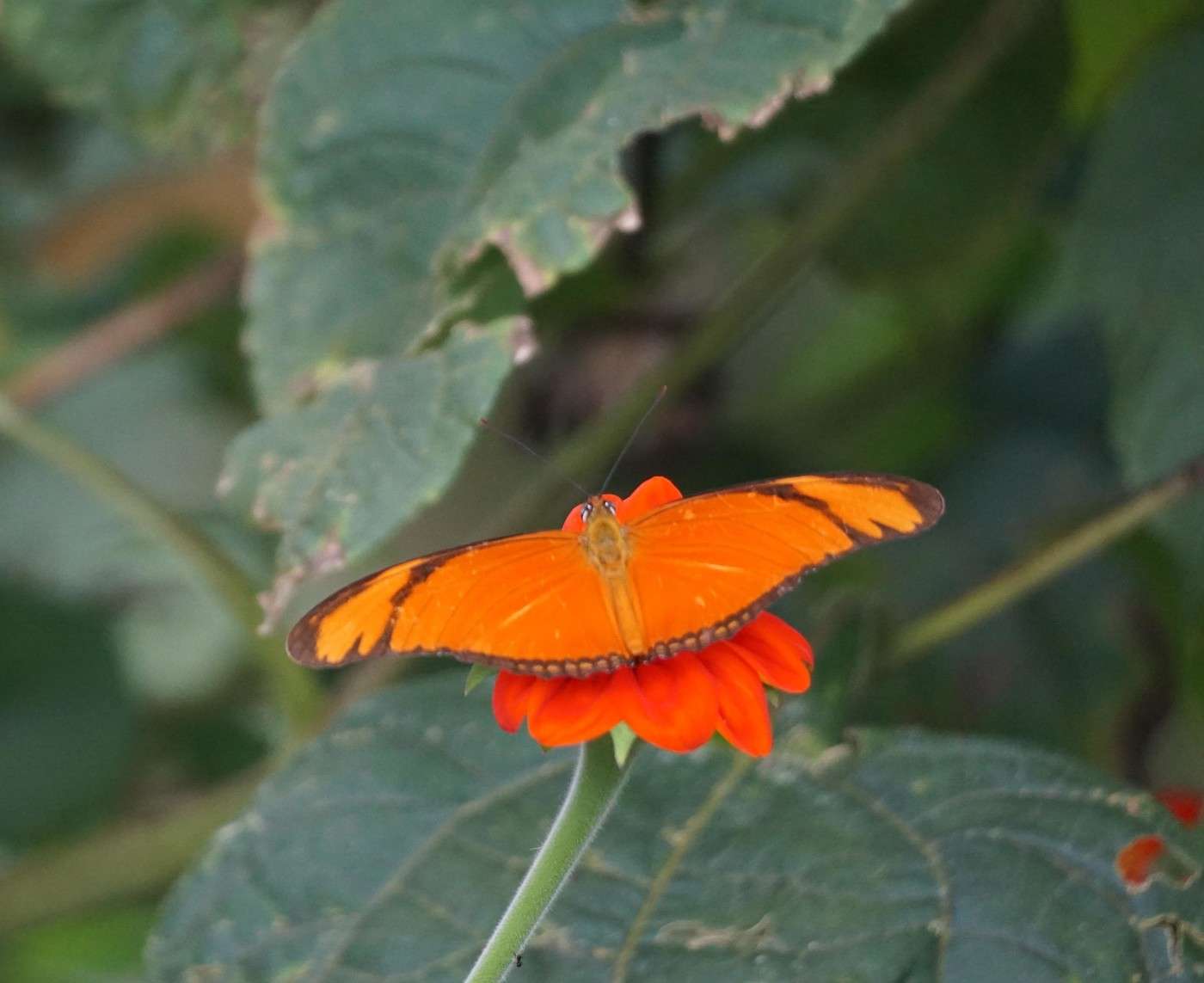
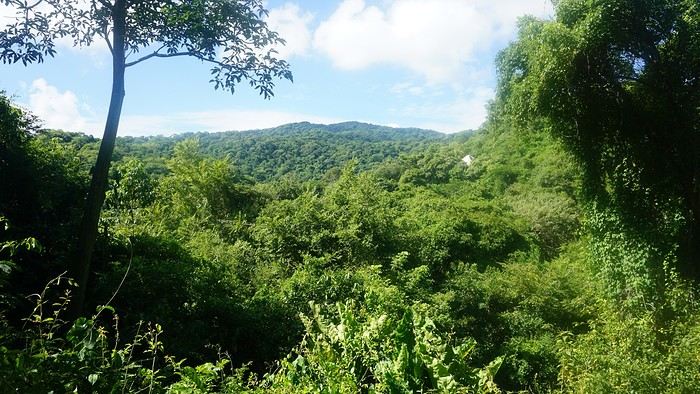
Step 9 - Minca (1/2) The village of Minca, in the Sierra Nevada, was the backpackers' meet-up spot a few years ago. Today, it still is a bit, but you also run into less "hardcore" travelers! Proof—we’re here and staying in a very comfortable hotel! To give you an idea, we even have hot water! But it’s worth noting that evenings and early mornings are cooler here! This morning, at 9:00 AM, I set off alone for a long day of hiking around the village: viewpoints over the Caribbean coast and the city of Santa Marta, butterflies, and birds of all colors.


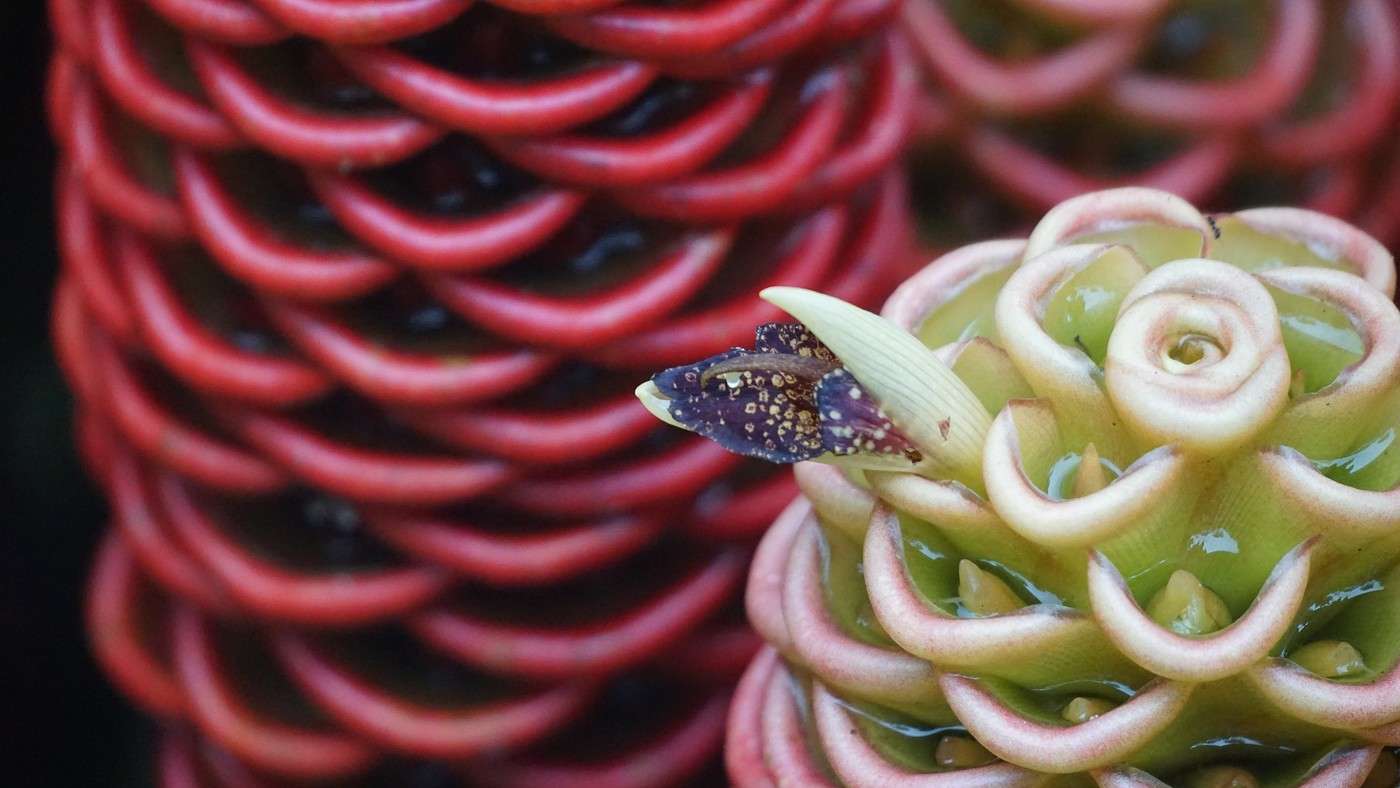
To start, after passing the viewpoint with a view of the coast and Santa Marta, I head toward Finca San Rafael. The path is pretty flat and easy. At one point, I’m passed by a small group of tourists on horseback, who I’ll meet again at the finca. I go in, ask the owner if I can enjoy the viewpoint from his terrace (I’m not interested in the chocolate and/or coffee tours). Then I leave quickly. I want to visit another finca higher up in the mountains. The path is excellent, but the elevation gain is significant, and the slopes are very steep. It’s really hot. I take advantage of many photo stops (flowers, magnificent butterflies) to catch my breath and drink a little (probably not enough!). Three or four tourists pass me, sitting on the back of motorcycle taxis.


I reach my destination around noon. When I arrive, the owner offers me a large glass of delicious ‘limonade’ (reminder: fresh water, panela, and squeezed lemon). She tells me I can rest on the terrace of the viewpoint (amazing view of the whole region!) and eat as many bananas (bunches hanging at the entrance of the finca) as I want. It’s free. I take the opportunity to eat the provisions I’d brought (bread, bananas, mandarins, fruit paste) and drink a bit more. Then I approach the covered terrace and order a coffee with a nice piece of still-warm chocolate cake. We chat, and she asks where I’m from. A young Colombian tourist joins our conversation. After asking where I’m from, both of them compliment me on my Spanish (it’s always nice to hear!). They even tell me they thought, given my accent, that I was from Bogotá!


I feel like I need to recover a bit more, so I settle comfortably into one of the armchairs under the terrace. I stay there, sheltered from a heavy downpour. I take advantage of this quiet moment to watch birds of all colors, savor the excellent coffee and really good chocolate cake (was it the cake that I’d have a little trouble digesting later?). Finally, I buy a few packs of coffee (note that the owner gave me the cup of coffee and the piece of cake as a gift!). I leave to finish the hike toward Pozo Azul, not without taking a few small bananas available for visitors. I set my route on "Maps.me" and hit the road! But as I leave the finca, I miss the shortcut and head back down toward the village. This detour of several kilometers will take its toll and have consequences by the end of the day! When I realize my mistake, I don’t have the energy to turn back. The slope is too steep! So I go back through the village, where I buy a bottle of water (too cold?!) and start climbing again toward Pozo Azul. This time, I take a road. The walk is completely uninteresting. I should’ve taken a motorcycle taxi! After leaving the road and getting back on the dirt path, I struggle a bit (heavy legs and stomach cramps) to reach the site. Once there, I don’t really enjoy it. I rest a little on one of the rocks by the waterfall. I see that it’s getting late, and night will fall quickly. I turn back. There are two of us on the trail, and I match my pace to the young woman about twenty meters ahead of me. But my stomach cramps get worse, and at one point, I have to stop. I take a path perpendicular to the main trail, and a few meters later, I throw up. After this tough moment, I continue my descent toward Minca. I try to hitchhike to cover the last 3 or 4 km, but no one stops. When I reach the village, it’s almost dark. I’m exhausted. Just a few hundred meters more, and I’ll be back at our hotel. I left at 9:00 AM this morning and return a little before 6:00 PM, completely exhausted. Justine was starting to worry about not seeing me come back. After resting a bit, I take a shower, then throw up again and have diarrhea. I only have the strength to go to bed. My dehydration (that must be it!) is severe. I can’t drink much water at once because my stomach can’t handle anything. The night is very rough—I’m hit with leg and foot cramps. And to think that tomorrow morning, we have a 6:00 AM meet-up with an ornithologist! I hope I recover enough not to miss this exceptional encounter! Minca (2/2) After a very difficult night, during which I tried little by little to rehydrate, this morning, I’m not in great shape. Our young ornithologist is punctual. The day before yesterday, I’d negotiated the possibility of approaching by motorcycle, because otherwise, Justine wasn’t really up for this outing on the trails around Minca. I shamelessly use this argument to ask if we could rent a motorcycle to get closer to the observation trails. Justine quietly mutters, "That works out well for you!" The ornithologist suggests calling a motorcycle taxi for Justine and taking me on his. We stop in front of his house. Before leaving, he offers to fill our water bottles. I’m relieved because I’d taken this path the day before (the one to Finca Rafael), and after that, it’s pretty flat. Even though the cramps were coming back on the motorcycle, I didn’t feel up for a hike, even a moderately difficult one! This encounter with this young man (24 years old, an expert in his field) is another great moment (despite my physical issues): lots of explanations about the flora, fauna, and the impact of climate change in the region. He talks a lot about the ecosystem, local vegetation, and the plants that have been imported (Asian bamboo to stabilize the soil, Australian eucalyptus, Canadian pines) and how the fauna has adapted to these new species. We observe many birds, butterflies, and even a tiny frog in a small waterfall.


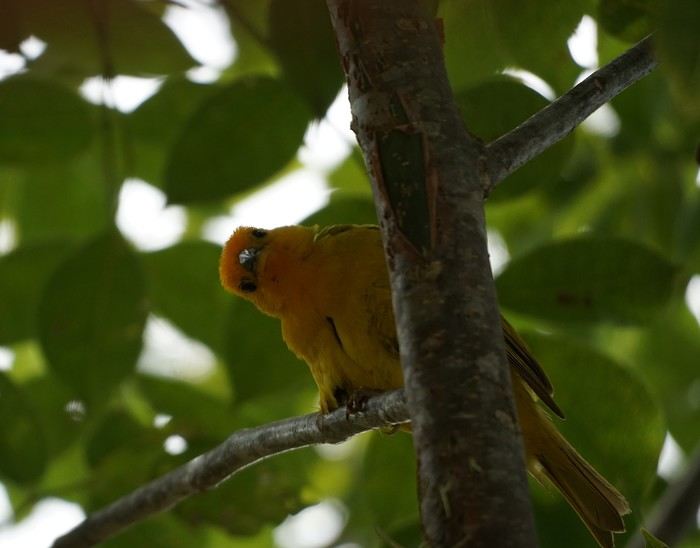
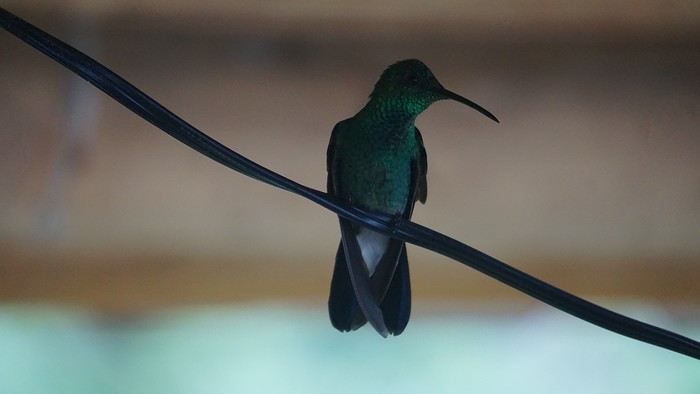
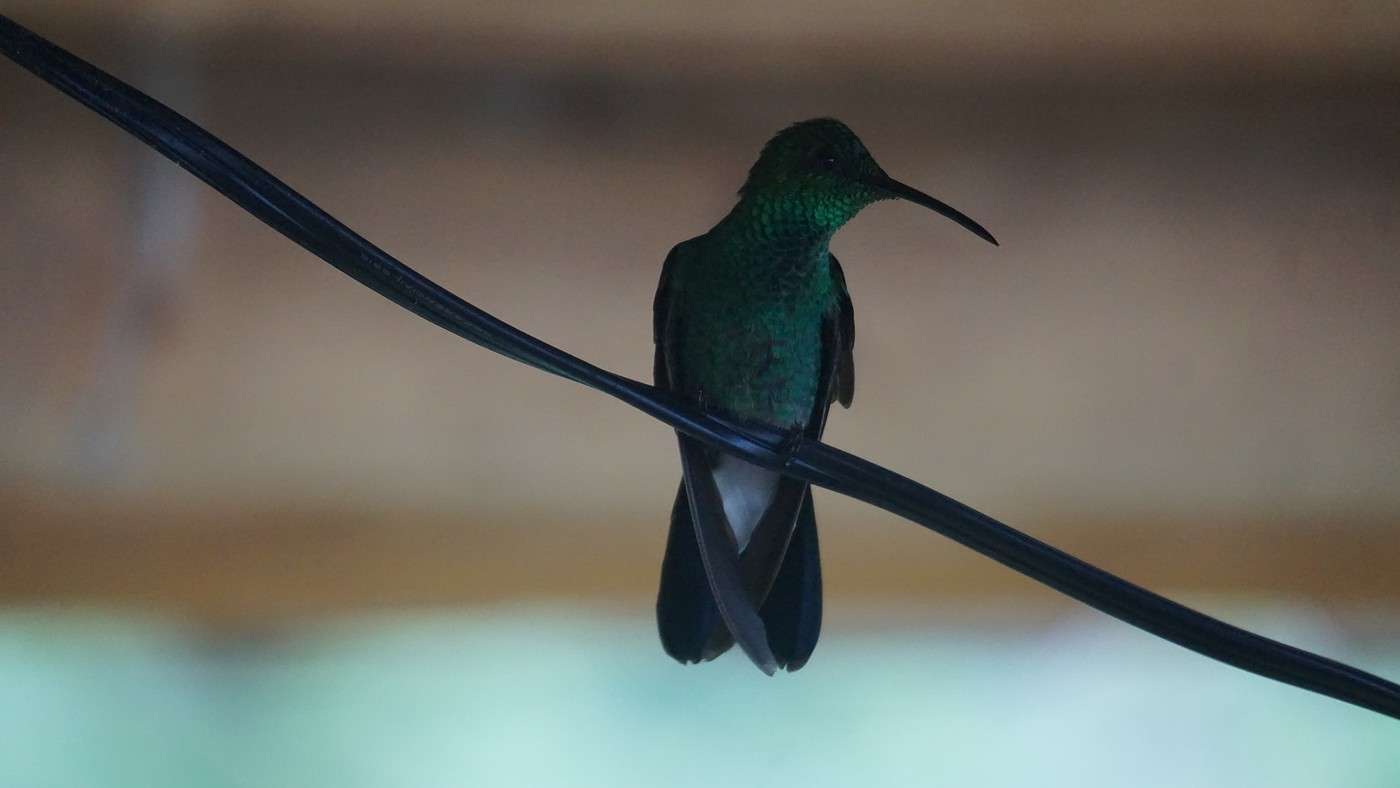
One of the goals of this walk is to see toucans. For this, we settle into a mirador where he offers us coffee (impossible for me to enjoy it—it’s really struggling to "go down"!). Unfortunately, even though we heard them, we didn’t get to see any. A hummingbird settles above us. Not wild at all! It seems like it’s posing for photos!


We return to the hotel around 9:00 AM. Breakfast is waiting for us. I can’t swallow anything except a few pieces of fruit, some fruit juice, and a yogurt. I skip the beautiful pancakes. Then rest and packing our suitcases. At 11:00 AM, we leave (private transport also booked with Flora’s help) for our last stop in Los Naranjos, by the Caribbean Sea and 6 km from Tayrona Park. This is normally a rest and relaxation stop, with a "short" hike in Tayrona Park. When we arrive, our bungalow isn’t ready. We take the opportunity to swim in the hotel pool. At lunch, I still can’t swallow anything. I settle into the hammock on our terrace and fall asleep almost immediately. Need to recover!

From Caño Cristales to Tayrona Park

Phil31600 · 2024-12-31

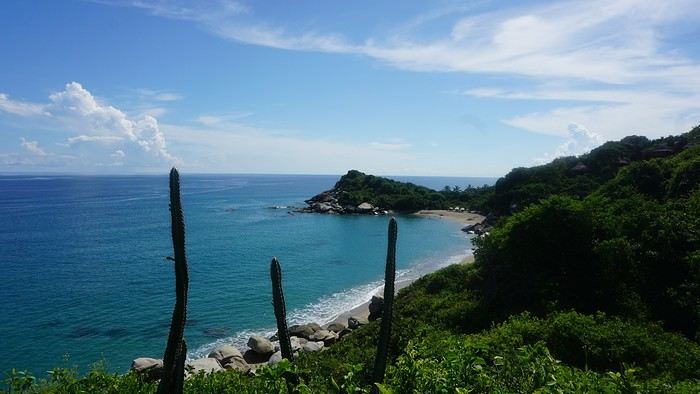
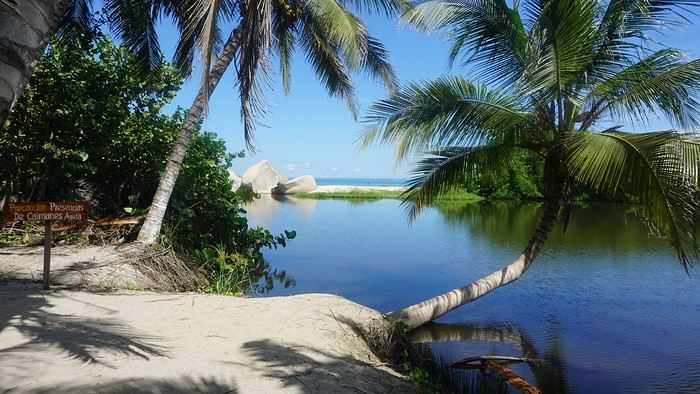
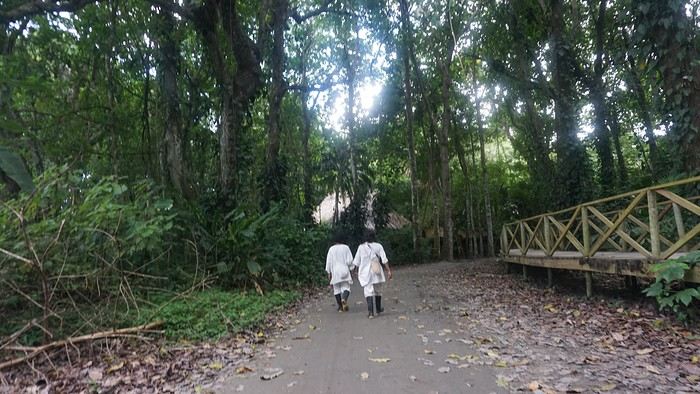
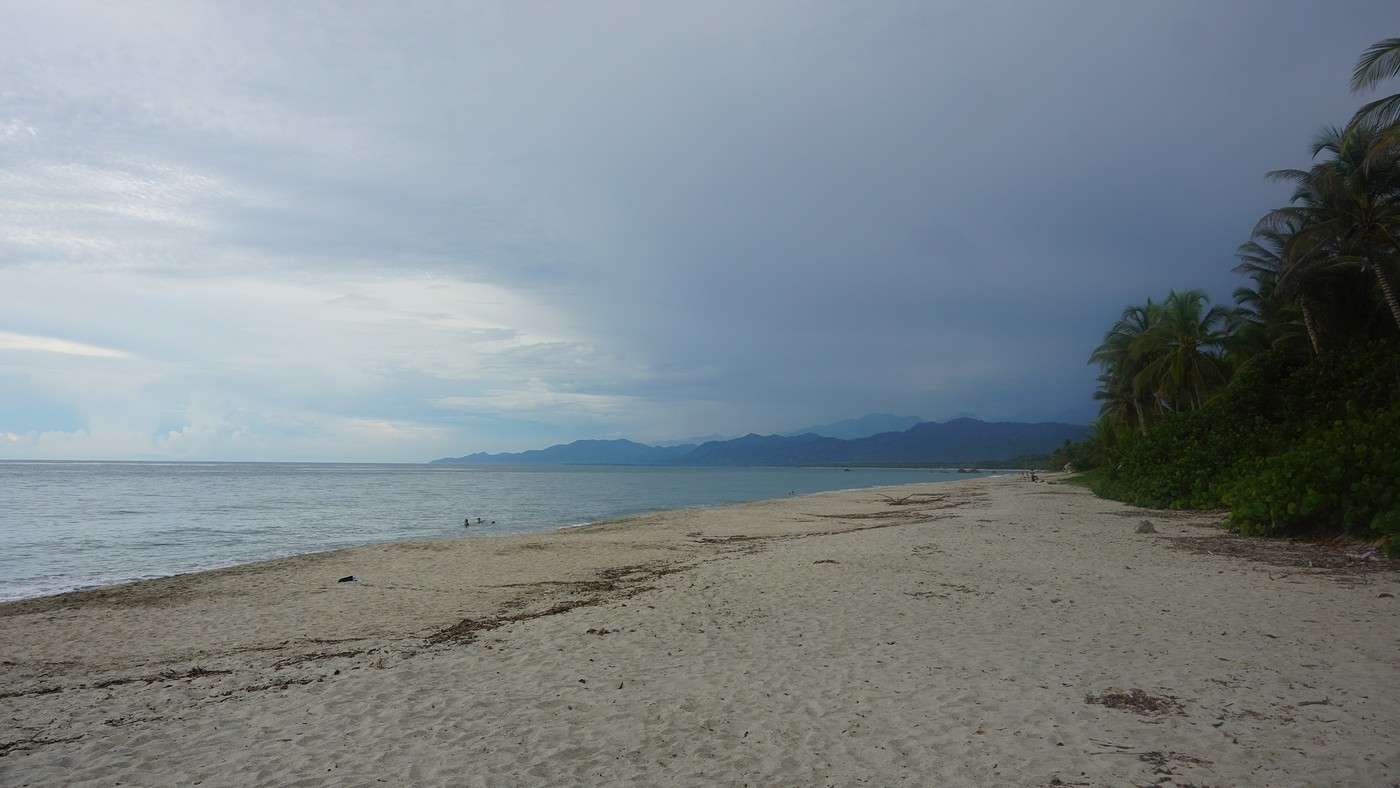
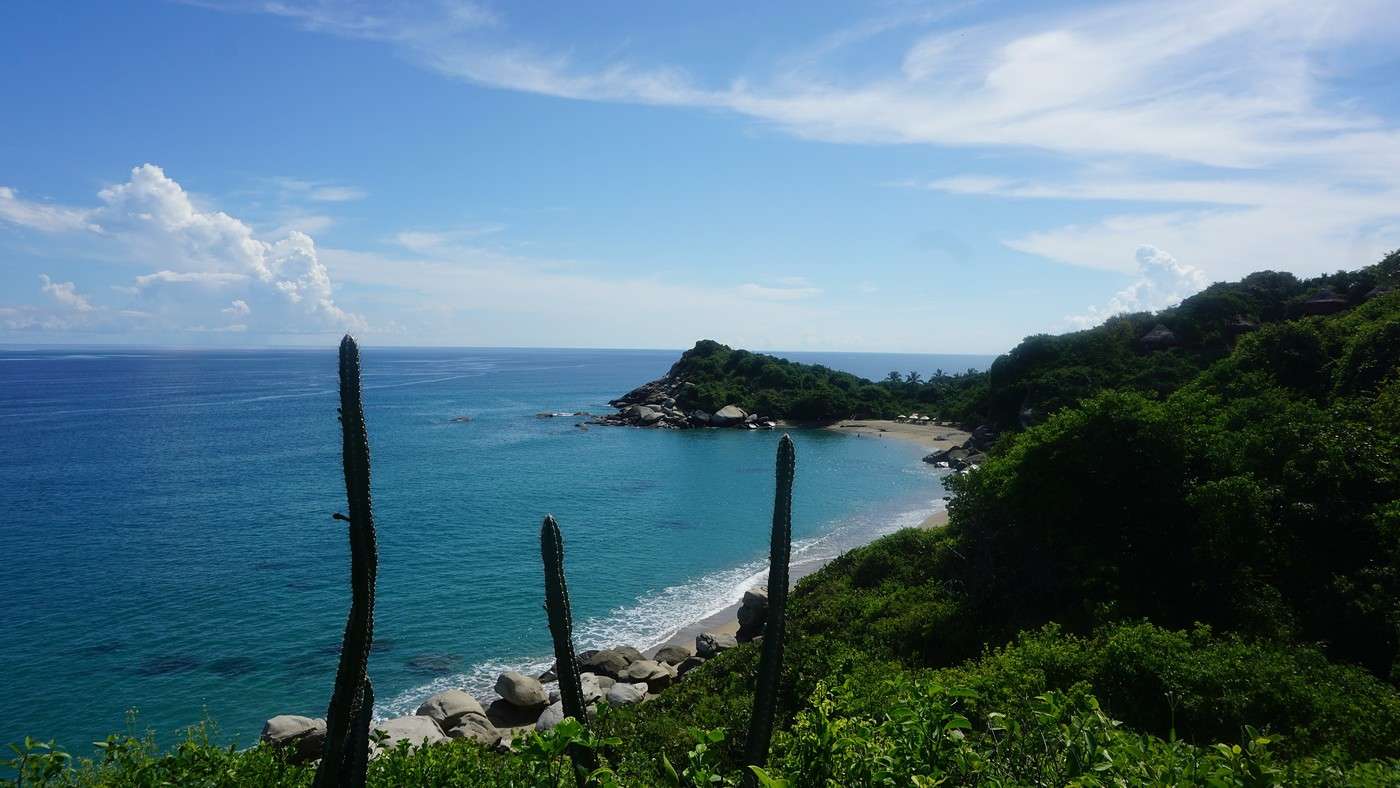
Step 10 - Los Naranjos and Tayrona Park (Part 1/2) Can you picture yourself napping in the hammock on our terrace between pool laps all day long? No? Well, you’re missing out, because today is all about rest! This morning, I managed to eat a little at breakfast. I continued my recovery routine: hammock, pool, hammock, pool, hammock… In the late afternoon, we set off for a walk to the private beach at Los Angeles, about a ten-minute walk from our hotel. To get there, once we left the roadside (not very pleasant since the traffic is pretty heavy), we crossed a beautiful park. This beach is paid access for non-guests of the attached hotel. Given the late hour (I assume), we could go to the water’s edge for free. A few people were still swimming, and we watched paramotorists (powered paragliders) take off.


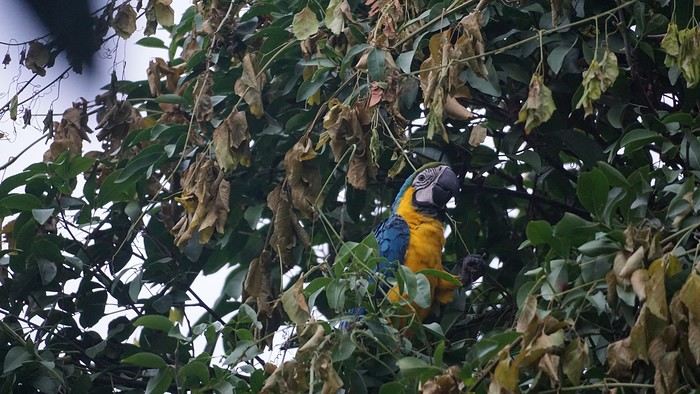
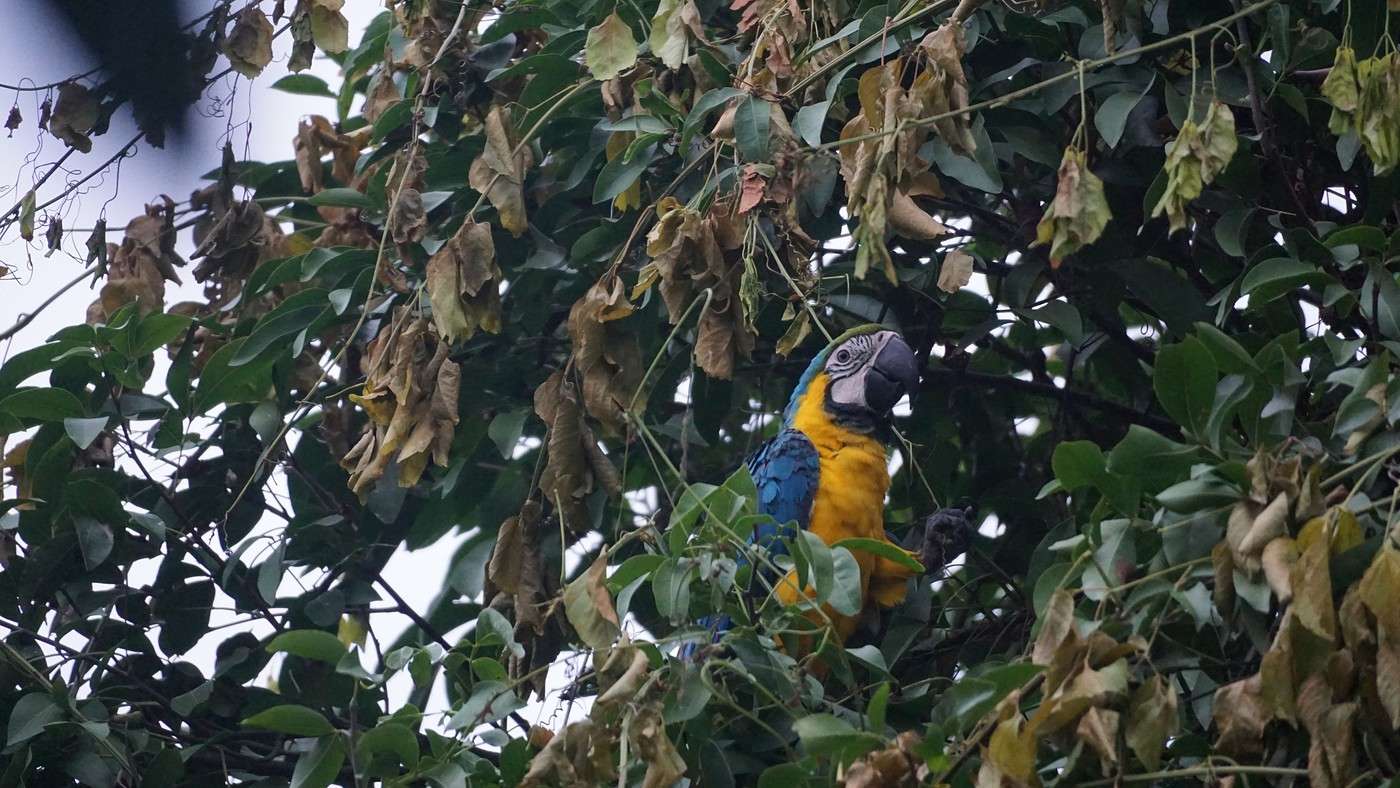
On the way back, we spotted a beautiful parrot.


Los Naranjos and Tayrona Park (Part 2/2) After an excellent night’s sleep, I’ve recovered and am ready for another great day! Breakfast wrapped up by 07:00, then we headed out to the famous Colombian natural park, Tayrona Park. Funny story: as we left the hotel, we crossed the road and waited for a small bus to pass so we could flag it down. Justine, trusting me, hopped on quickly. As for me, having doubts, I asked the driver’s assistant if the bus was indeed going to the park. When he answered, I quickly called Justine to get off! We were going the wrong way! After crossing the road again, we stopped another small bus (this time the right direction!) to reach the park entrance. After sorting out the entry formalities and fees, we covered the first 6.5 km in a shuttle (no point doing this part of the park on foot!). The hotel owner had suggested renting horses at the shuttle drop-off. I suggested it to Justine, who refused. Big mistake! We started a long hike in the heat. At first, it was flat and easy. But very quickly, things got tough! It went up, down, up again, and of course, it eventually came back down. Justine was really struggling! It was hot and humid! We were sweating buckets. We took lots of breaks. People offered her water and sugar. We saw guests from our hotel pass us and ask if she was okay. A young woman even fanned her with her hand fan. So kind!


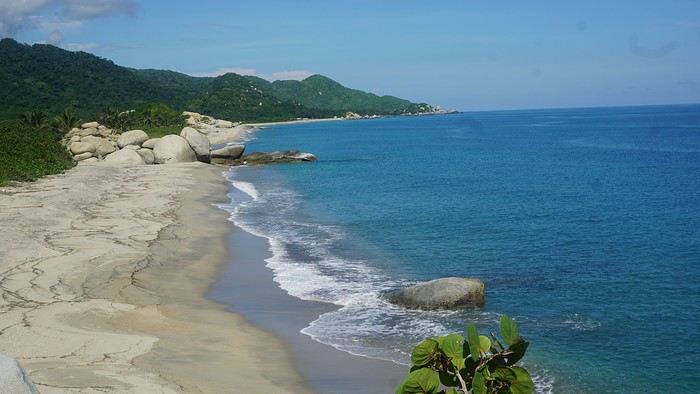
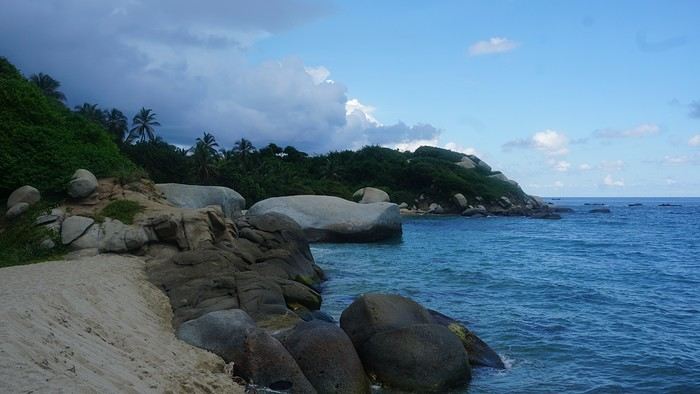
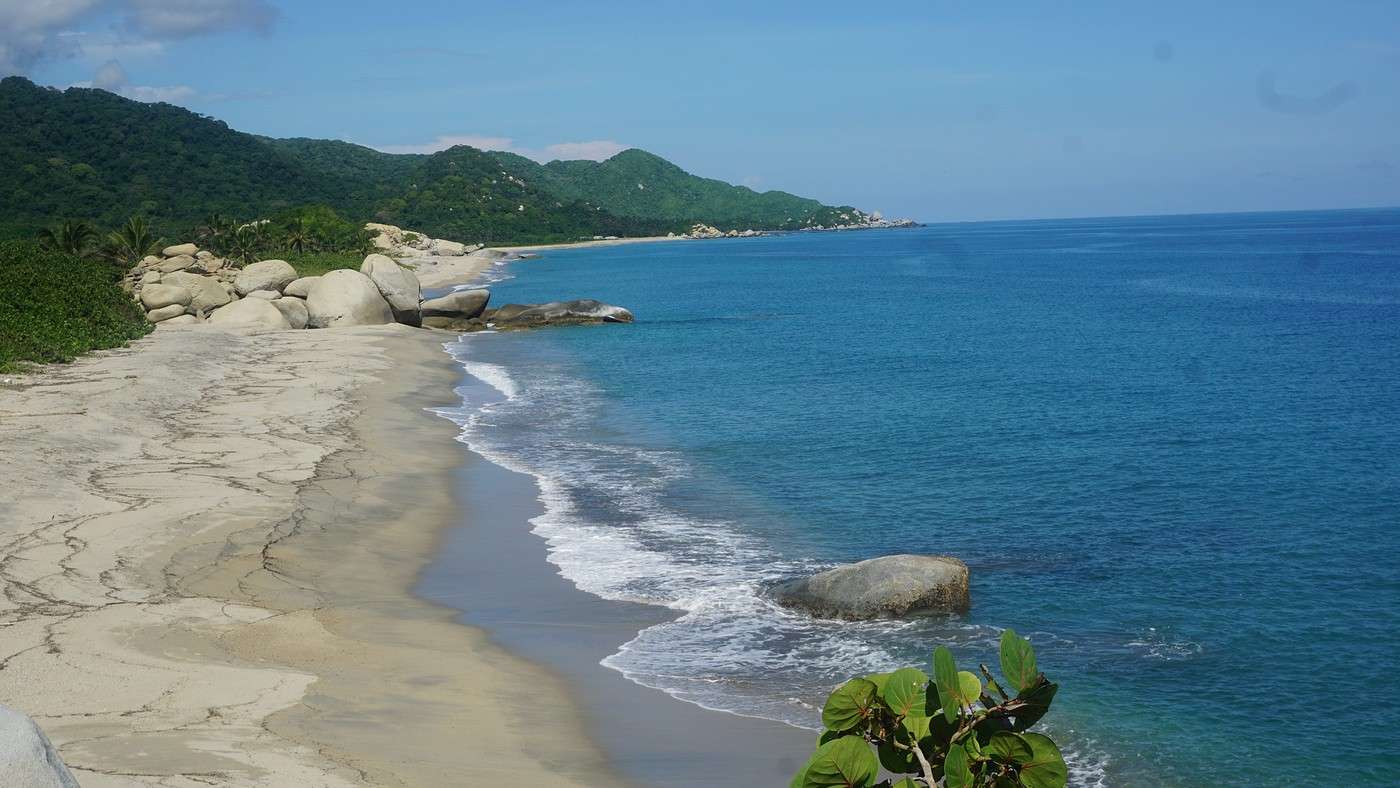
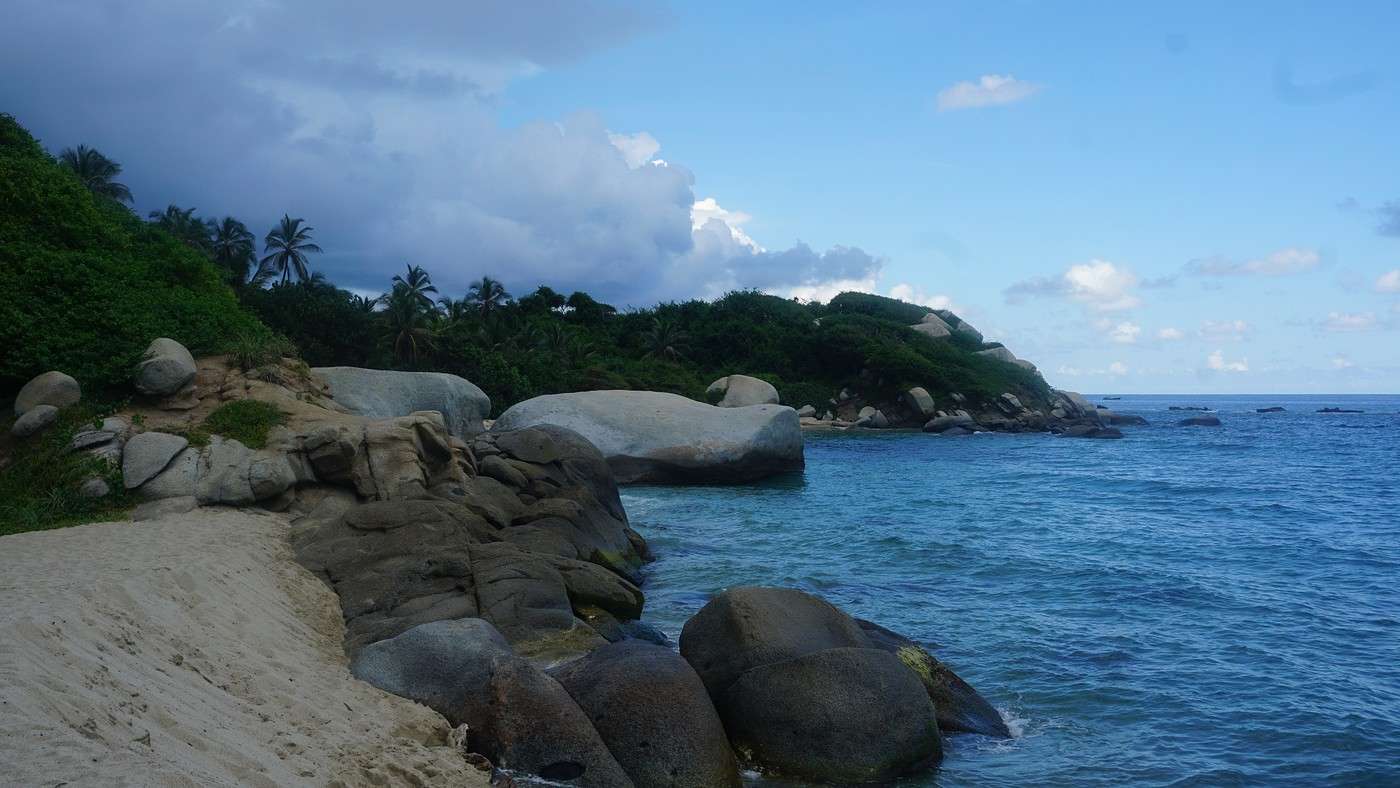
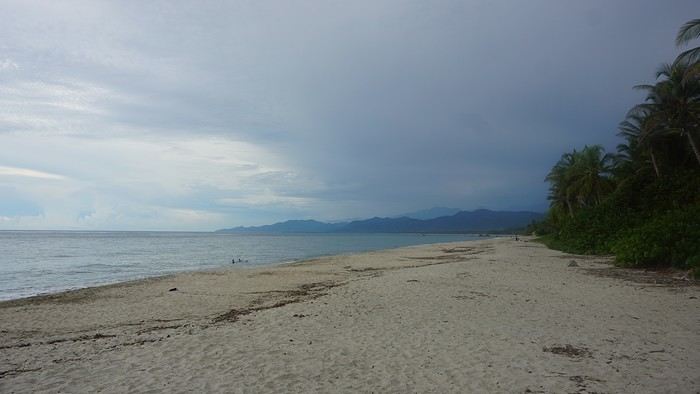
A little over 2.5 hours later, we finally reached the sea. But swimming was banned at the first beach due to dangerous currents. So we continued along a coastal trail, through dense vegetation, very humid ground, and muddy patches here and there.


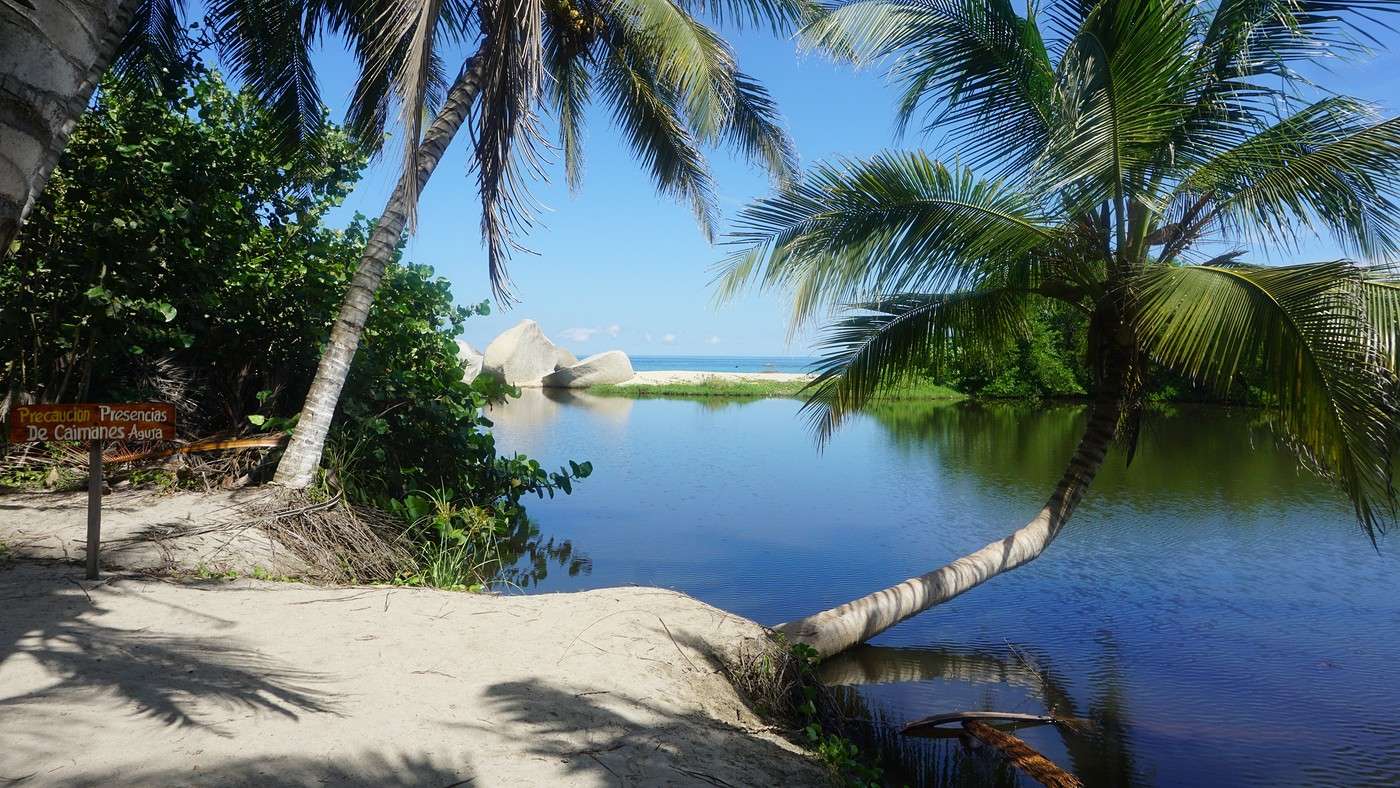
We finally arrived at La Piscina beach. Justine wanted to stop there, but I felt like going all the way to Cabo San Juan. There were still about 30 minutes of walking left. As we approached, we heard a lot of music. And we weren’t too keen on that. Justine also started expressing her worries about the return trip more insistently. So, we turned back. We took a short break at the beach bar at La Piscina, where we enjoyed an excellent pineapple juice. We took the opportunity to change into our swimsuits in their restrooms. Then we settled on the beach. Swimming in warm, very salty water. And right there, under our feet, beautiful yellow and black fish, yellow and gray ones, small and big, and a small school of large flat fish with bluish reflections swam around us. Dark storm clouds loomed on the horizon. Thunder rumbled. And Justine grew increasingly anxious about the return trip. I tried to reassure her, saying we could ride back on horseback. "But what if there aren’t any left? What if everyone wants to do the same? I heard so many people this morning saying they didn’t want to walk back!" she replied!


Faced with her near-panic, I finally gave in. We’d head back early. One last swim among the fish. Then we made our way to the horse rental stand.


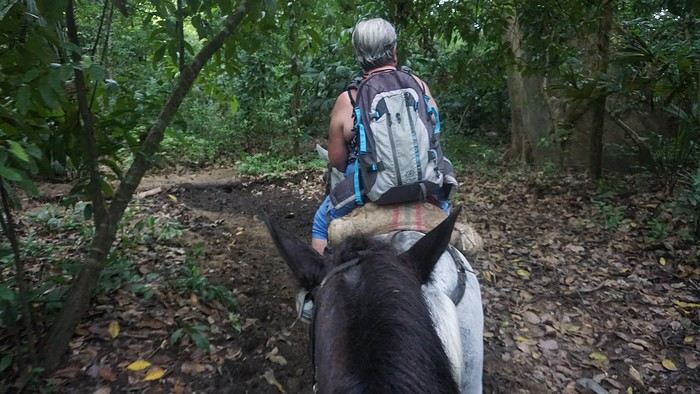
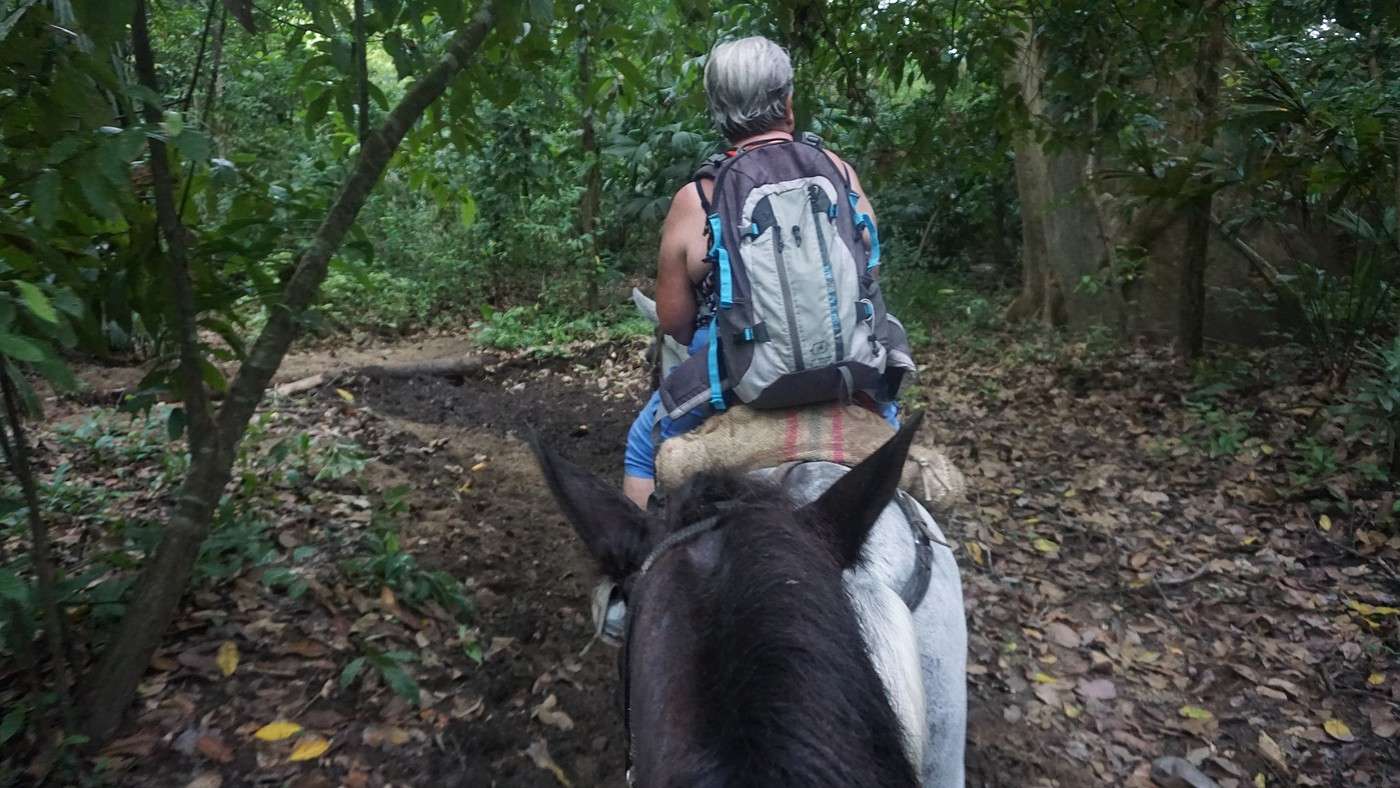
Justine was relieved. The return trip on horseback was much shorter (less than an hour). Along the way, we passed horses carrying supplies for the beach restaurants, campsites, and bars. In some places, the passages between the rocks were so narrow that it was impossible to pass side by side. Our stirrups even scraped against the rock. Under the dense forest, we got caught in a heavy but brief downpour. The storm had passed! Finally, we reached the shuttle starting point. At the park exit, we took one of the small buses that dropped us off in front of our hotel.


End of the day at the hotel, alternating between the pool and games on our bungalow terrace, interrupted by a few showers. Great final meal to end our trip. My appetite is back!

From Caño Cristales to Tayrona Park

Dolma · 2025-01-01

On this blustery Norman day with a dark gray horizon, I’ve just taken a long and beautiful walk in your company... When writing and photography blend together so well, it’s clear that reading is a real pleasure 🙂

Thanks!

From Caño Cristales to Tayrona Park

Phil31600 · 2025-01-01

Final Leg (11) – Bogotá (1/2) Meals here are way better than breakfasts! For example, this morning we ordered buttered bread “à la française.” We were served thick slices of buttered, caramelized—and apparently salty—bread. Thankfully, there was fruit and fruit juice! After breakfast, all we have left to do is wait for our taxi to take us to Santa Marta Airport. Our flight was on time, and we arrived in Bogotá in the rain early in the afternoon. We took a taxi and checked into the same hotel as when we first arrived a month ago.

Any plans with Flora? We agreed to stop by, tell her about our trip, and share our impressions of our stay in Nueva Venecia. We learned we were among the first clients of her agency to complete this leg with an overnight in the village. And of course, there are a few small adjustments and improvements to make to the package. Flora gave us some sightseeing and activity tips to wrap up our stay, and before leaving, she even gave us some goodies. So sweet! If you’d like to get in touch with her, no problem—I can pass along her agency’s contact info. She tried to convince us to come back to Colombia for a third time, pointing out the regions we haven’t visited yet. But hey, not right away—we still have so many countries to see! Though who knows!

We spent the rest of the afternoon in craft galleries and markets, then on Calle 7, which was still bustling. We extended our walk to soak it all in as much as possible. It’s our last night here, and I’ll admit I’m having a hard time heading back to the hotel.


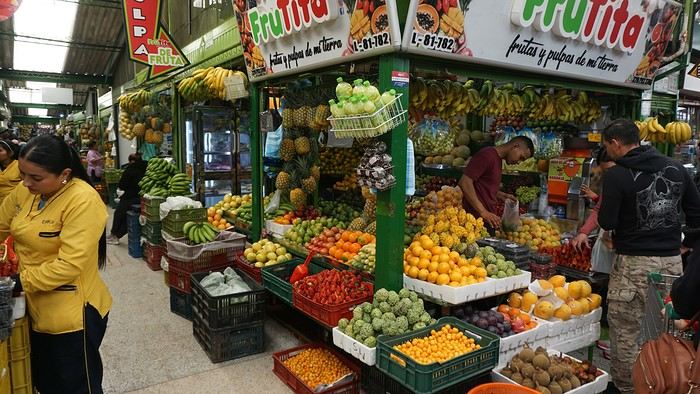
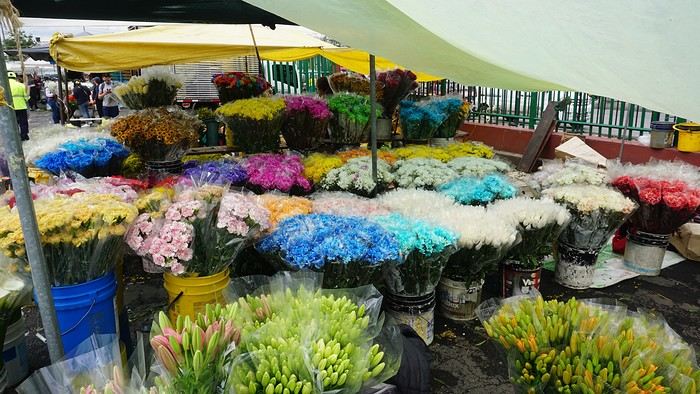
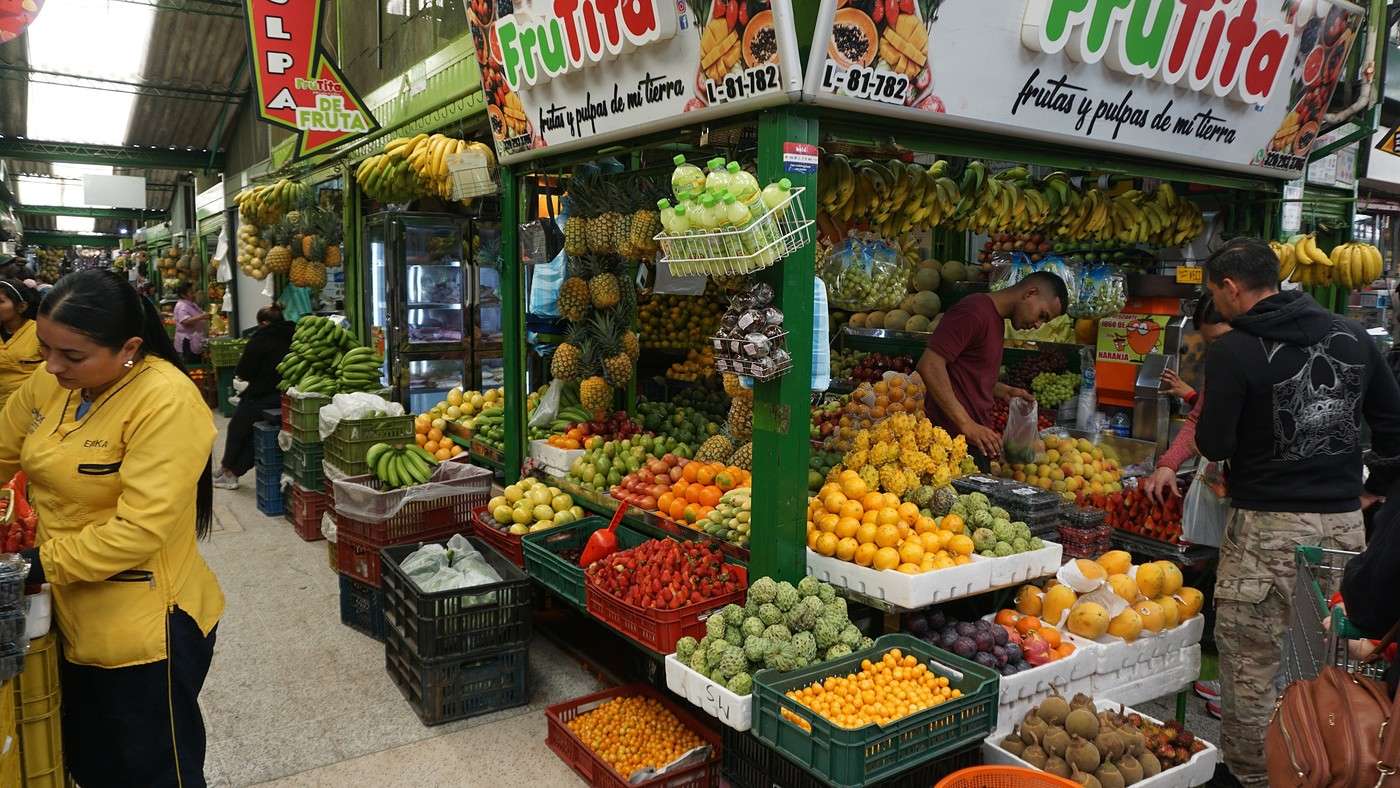
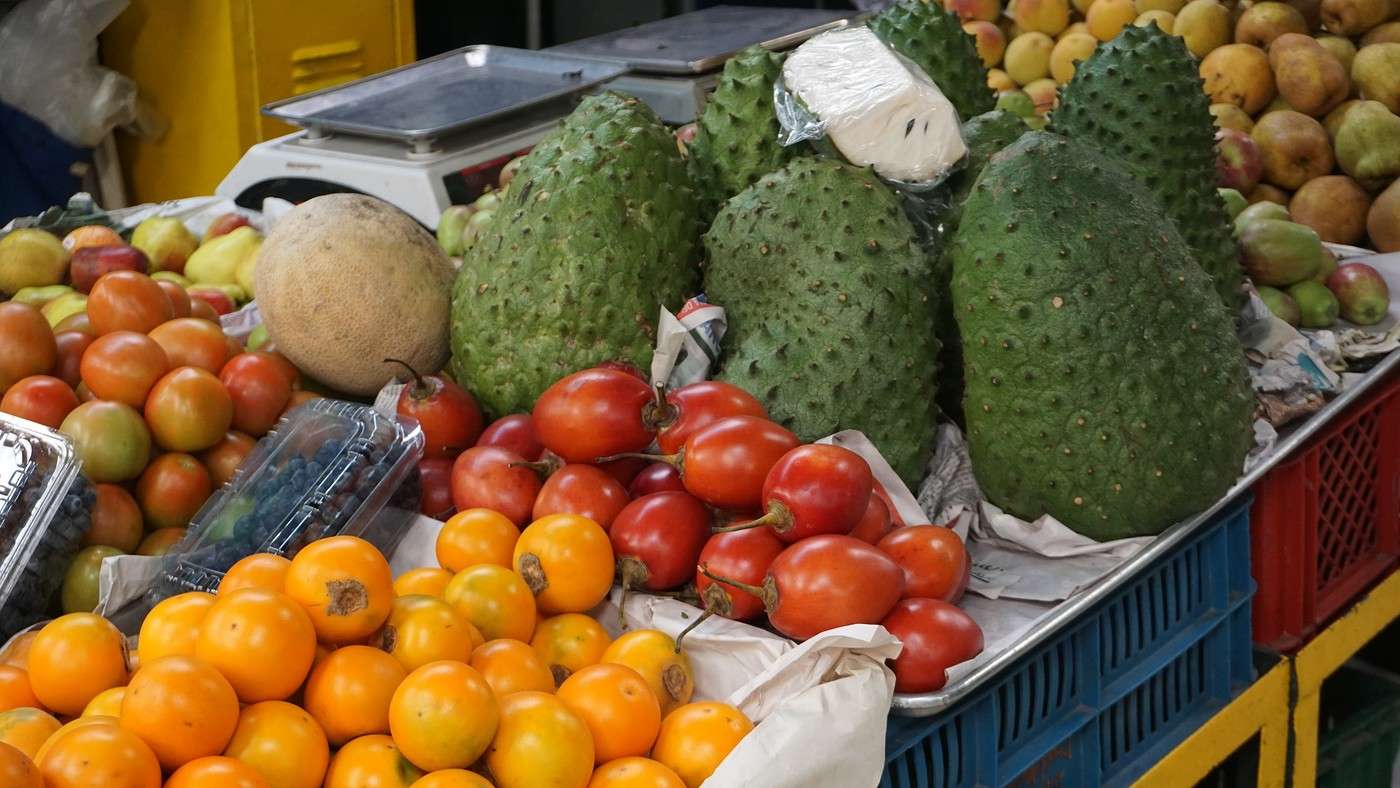
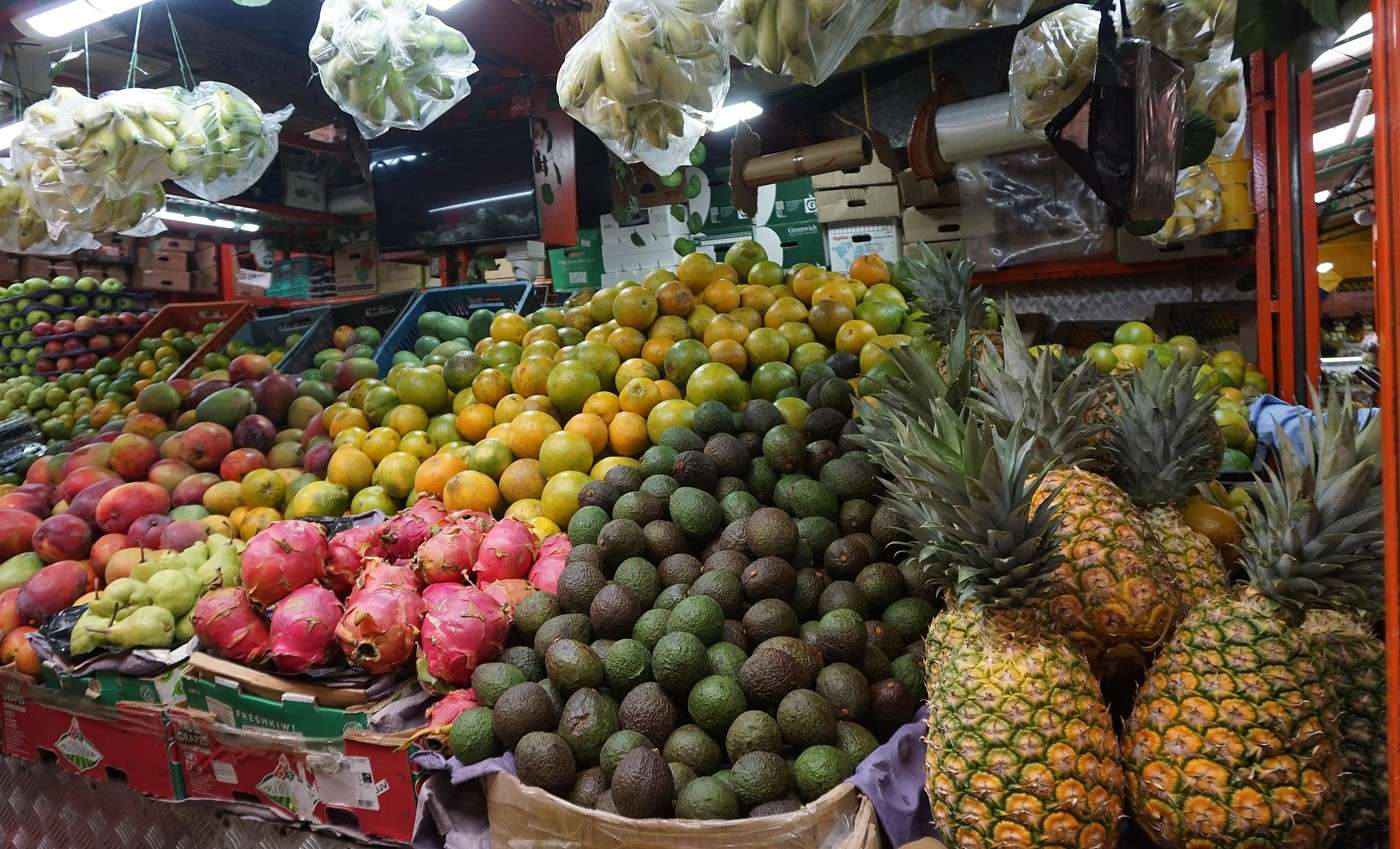
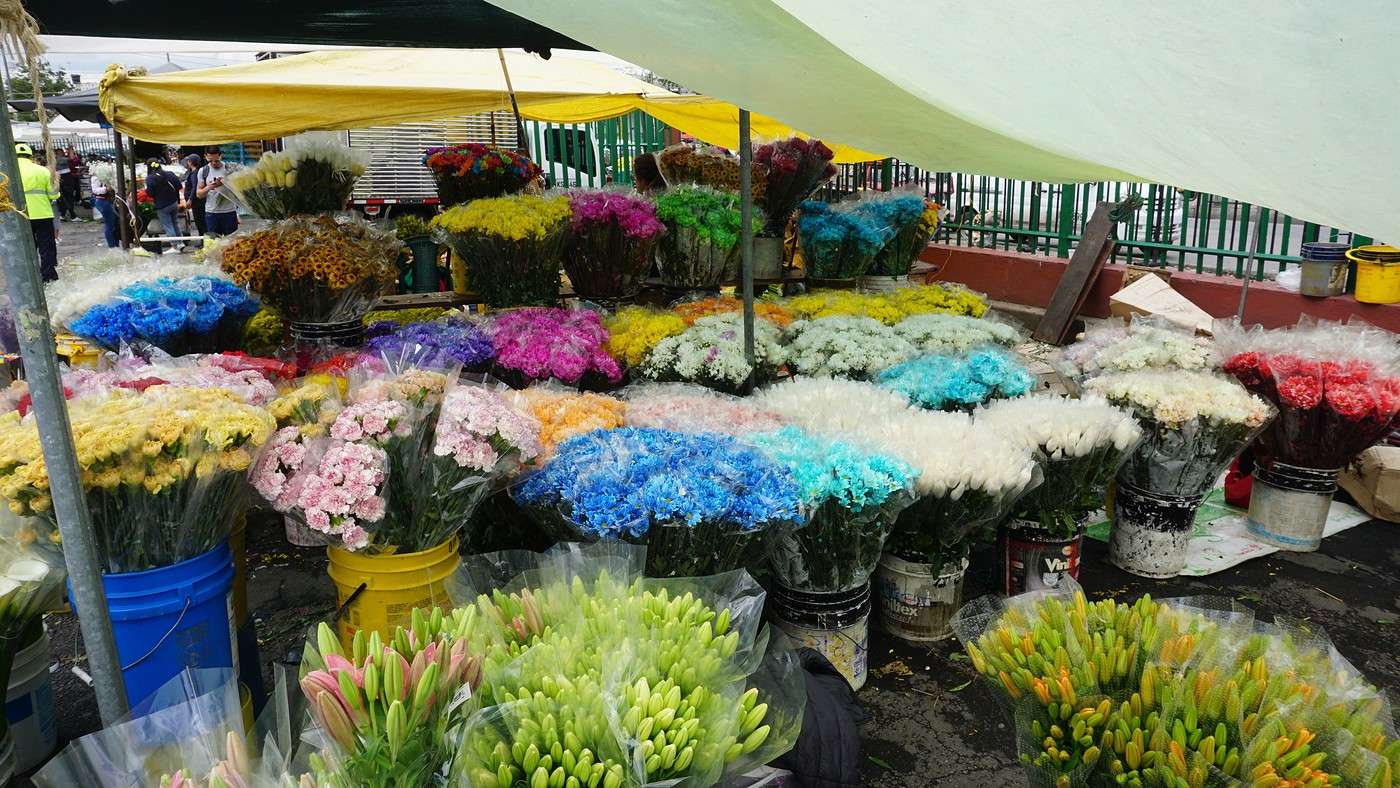
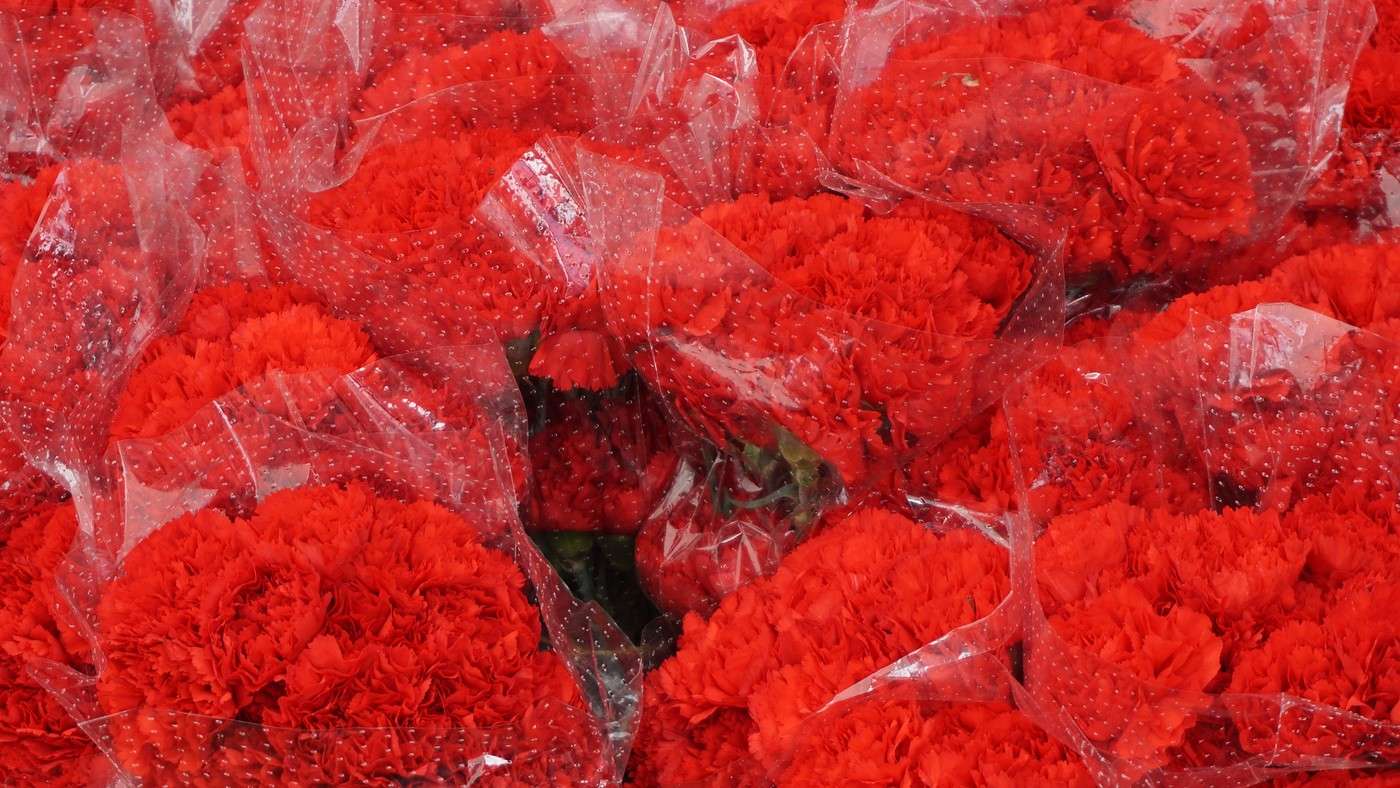
Bogotá (2/2) and the End of the Trip Our last day was packed with visits to the fruit and flower market (Paquolemao) and then the surprising National Museum of Bogotá, housed in an old prison. We didn’t understand much in the exhibits—everything seemed jumbled from pre-Columbian times to today.


Afterward, we had lunch at a restaurant near the museum. Sitting at the table next to ours, an Englishman struck up a conversation with us—in French. He’d lived in France for a few years, near Bergerac, and now works in Colombia. He seemed rushed, impatient, and left before even finishing his meal because he wasn’t being served fast enough.

In the early afternoon, with the weather gloomy and no real desire to visit more museums or wander Bogotá’s streets, we decided to follow another of Flora’s tips. We took a taxi to the film archive. Even though it’s currently the French Film Festival, we chose to see a Colombian film. We didn’t catch every line (the dialogue was too fast for us at times), but I think we got the gist. The film was sad, realistic, and ultimately hopeful by the end. If you get the chance to see it, it’s called *Malta*.

Finally, one last stroll through the streets and Bolívar Square.


Our flight is at 11:55 PM tonight. We decided to book a taxi for around 8:00 PM. We picked up our bags from the hotel, said our last goodbyes to the staff at the front desk, and hit the road.

We also wanted to have our last meal at the same spot in the airport as we did six years ago. And this time, luckily, Justine didn’t go home with three broken ribs! We even avoided the random baggage check at boarding.

I’m sad this trip is over—we saw so many beautiful places and met such wonderful people (our guides, Deisy, the owner and chef at the Refuge, Alex the potter, the women at the paper factory, that young woman so happy to show us the cultural center in Giron, the young man who demonstrated the entire jewelry-making process in Mompox, the passionate young ornithologist in Minca, that incredibly generous finca owner, etc.).

A huge thanks to Flora and Alejandra for their help and for sharing their passion and love for their region and country. And finally, thanks to all Colombians for their fantastic hospitality and patience with our often-hesitant Spanish!

My travel journal is now complete. The photos are sorted. All that’s left is to try my hand at editing my little videos (especially the paragliding one and the beautiful fish in the Caribbean Sea!).
If you enjoyed my journal and it helps you plan your next trip to Colombia, I’m thrilled. If you have any questions, I’m all ears.


From Caño Cristales to Tayrona Park

Phil31600 · 2025-01-01

Thanks so much! Really! And just so you know, I’ve just started publishing my travel journal from our 2022 trip to Uzbekistan... But VoyageForum hadn’t reopened yet at that time... Best wishes for 2025! Health, happiness, success, and amazing travels!

From Caño Cristales to Tayrona Park

Bluequark · 2025-01-01

Thanks for this awesome travel journal—it reminded me of our trip to Colombia and introduced me to some spots that aren’t covered much in other journals. Too bad the trip only lasted three weeks. I would’ve loved to stay longer!

From Caño Cristales to Tayrona Park

Phil31600 · 2025-01-01

Thanks! It was our second month-long trip to this beautiful country. And in a few years, I think we’ll be back because there are still so many other amazing places to discover! Best wishes for the new year and, of course, plenty of great travels!

From Caño Cristales to Tayrona Park

FamilleUS · 2025-01-02

Thanks for this travel journal. Some lovely photos, great encounters, fun walks, and spots we didn’t know about... Wishing you (and everyone) a happy New Year with plenty of escape plans on the horizon.

From Caño Cristales to Tayrona Park

Phil31600 · 2025-01-02

Thanks so much! Best wishes to you too! And maybe see you very soon in my other travel journal currently being published on Uzbekistan! !

From Caño Cristales to Tayrona Park

Gigilego · 2025-01-10

What a beautiful share. I’d love to get Flora’s contact info and the Colombia agency’s details, please. Thanks, Gigi
From Caño Cristales to Tayrona Park

Phil31600 · 2025-01-10

Hi there, I’ll send you all the info tomorrow (Saturday) or by Sunday at the latest. Talk soon!
From Caño Cristales to Tayrona Park

Titou14 · 2025-01-13

Hi Philippe,

I’ve been following your trip closely. I’ll be in Colombia next summer. I have a question—I noticed you visited La Candelaria in Bogotá... We’ll be there for two days when we arrive. On a Facebook group, I’ve read that there are safety concerns. Were you able to explore the city without worry? Did you walk to the funicular on foot? We’ll also be going to Villa de Leyva and Barichara. I’ve organized everything myself (got quotes from 3 agencies, but they were really expensive). The trickiest part will be transport logistics—some cities don’t have buses, and hotels need to know reliable taxis. Have a great day.

From Caño Cristales to Tayrona Park

Phil31600 · 2025-01-13

Hi there, we didn’t run into any security issues in Bogotá or anywhere else. Neither during the day nor at night. Our hotel was close to the pedestrian street and Bolívar Square right in the heart of La Candelaria, and it was a real pleasure to stroll around there. No problem walking to the funicular either. Even less to worry about in Villa de Leyva or Barichara. There are plenty of buses from Bogotá to Villa de Leyva. Between Villa de Leyva and Barichara, there’s no direct bus. But it’s easy to manage. Villa de Leyva / Tunja / San Gil. We took a taxi between San Gil and Barichara for convenience, but you can do it by minibus (we took one on the way back). In Barichara, you can grab a tuk-tuk to drop you off right in front of your accommodation if needed. The bus terminals are very well organized, and the buses leave on time. This was our second time in Colombia, and we still didn’t have any security issues (see our travel journal *Rencontres, paysages, culture en Colombie*). If you need anything, feel free to reach out. Happy to help if I can!
VoyageForum — the largest community of French-speaking travellers.