Back to the discussion

in Entre deux voyages › Carnets de voyage

Kattegat Tour and Norway’s Majestic Fjords – 32 Days (Denmark, Sweden, Norway)

Discussion started by Cendryon on 2025-07-09

57 replies

This thread has been translated into English.


Kattegat Tour and Norway’s Majestic Fjords – 32 Days (Denmark, Sweden, Norway)

Cendryon · 2025-07-09

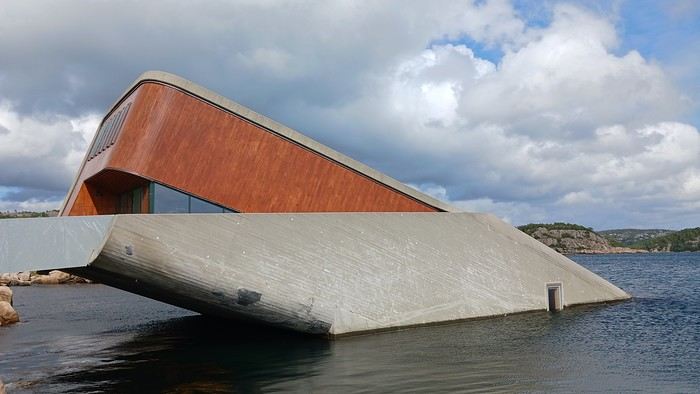
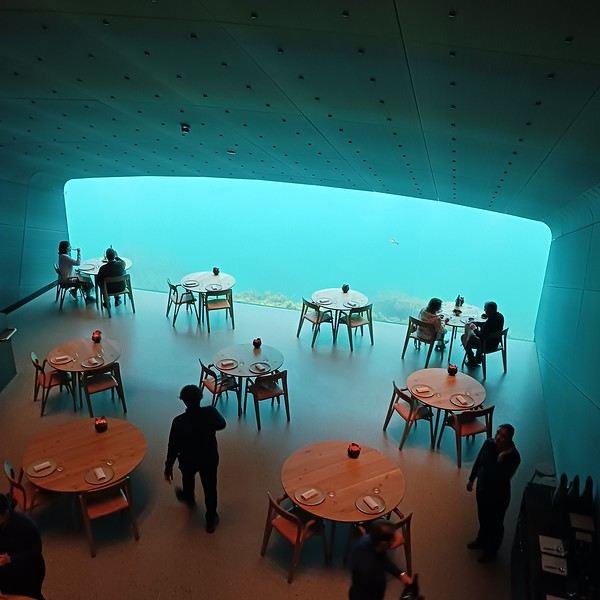
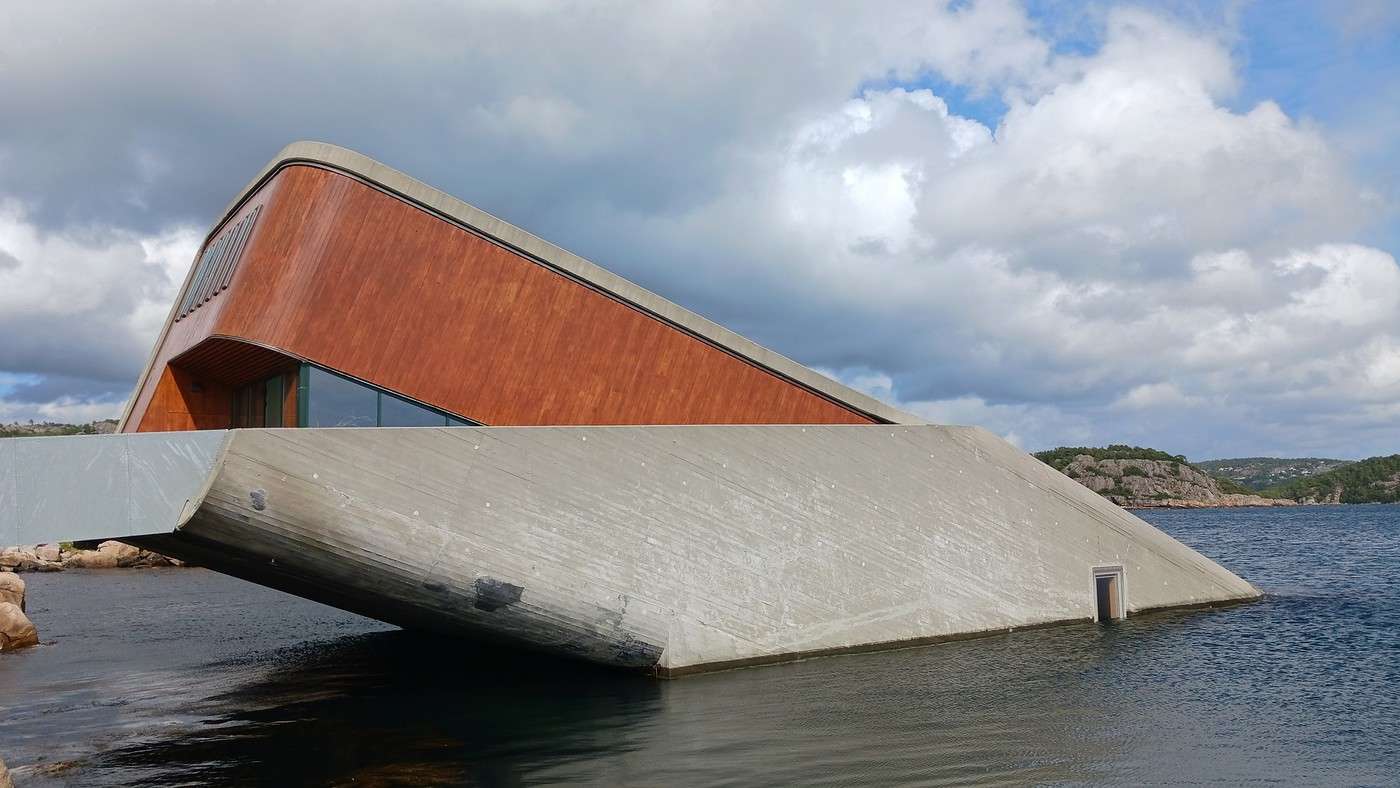
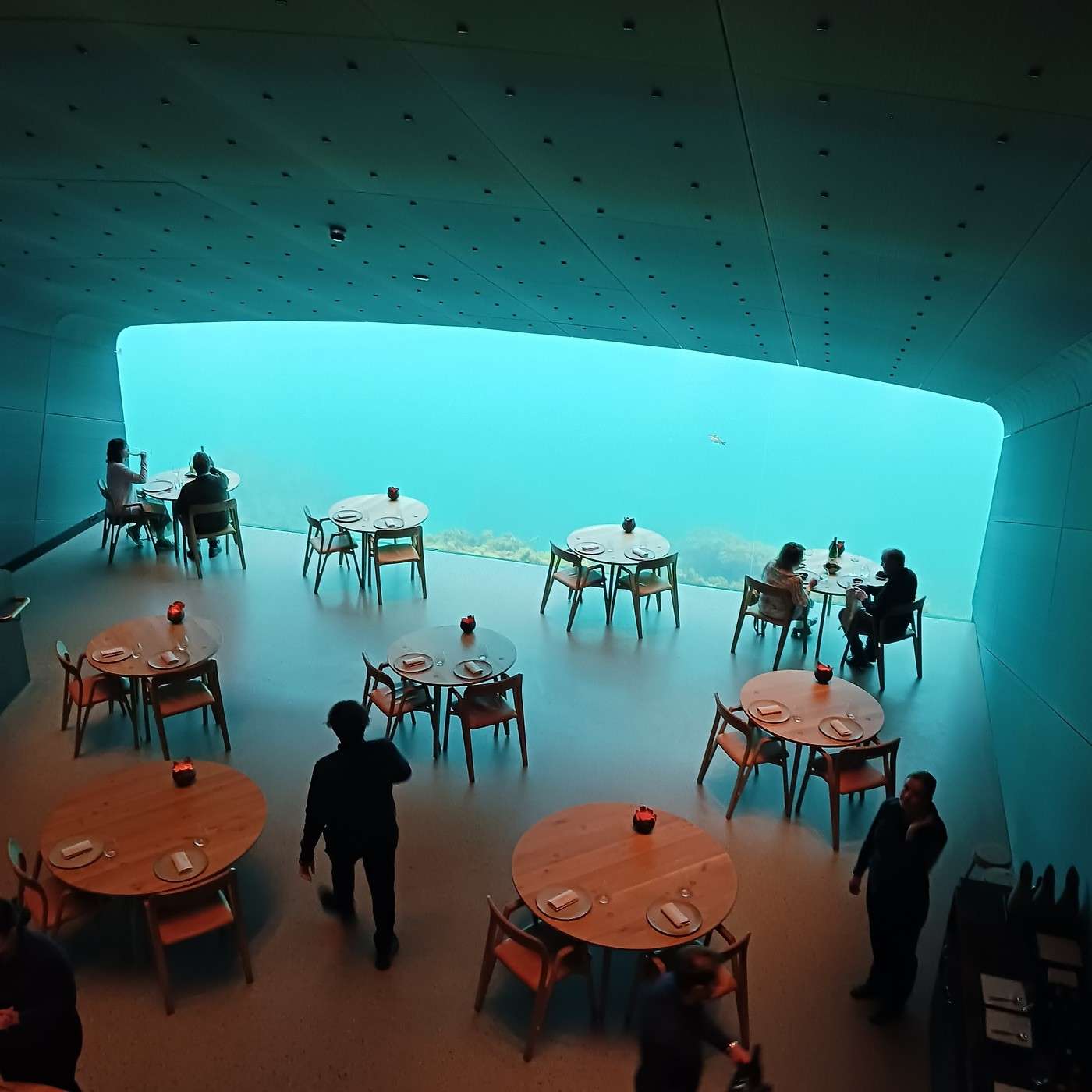
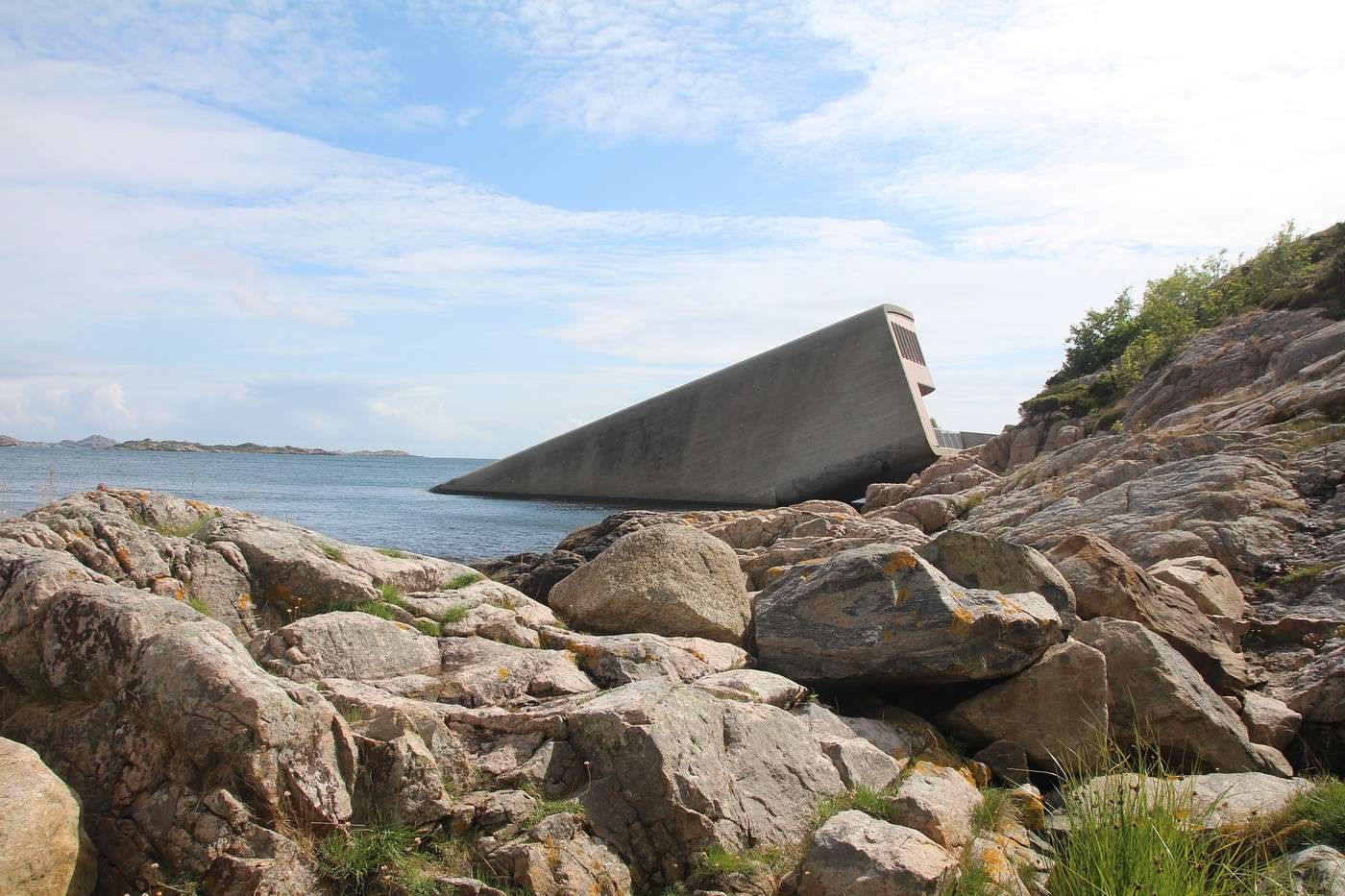
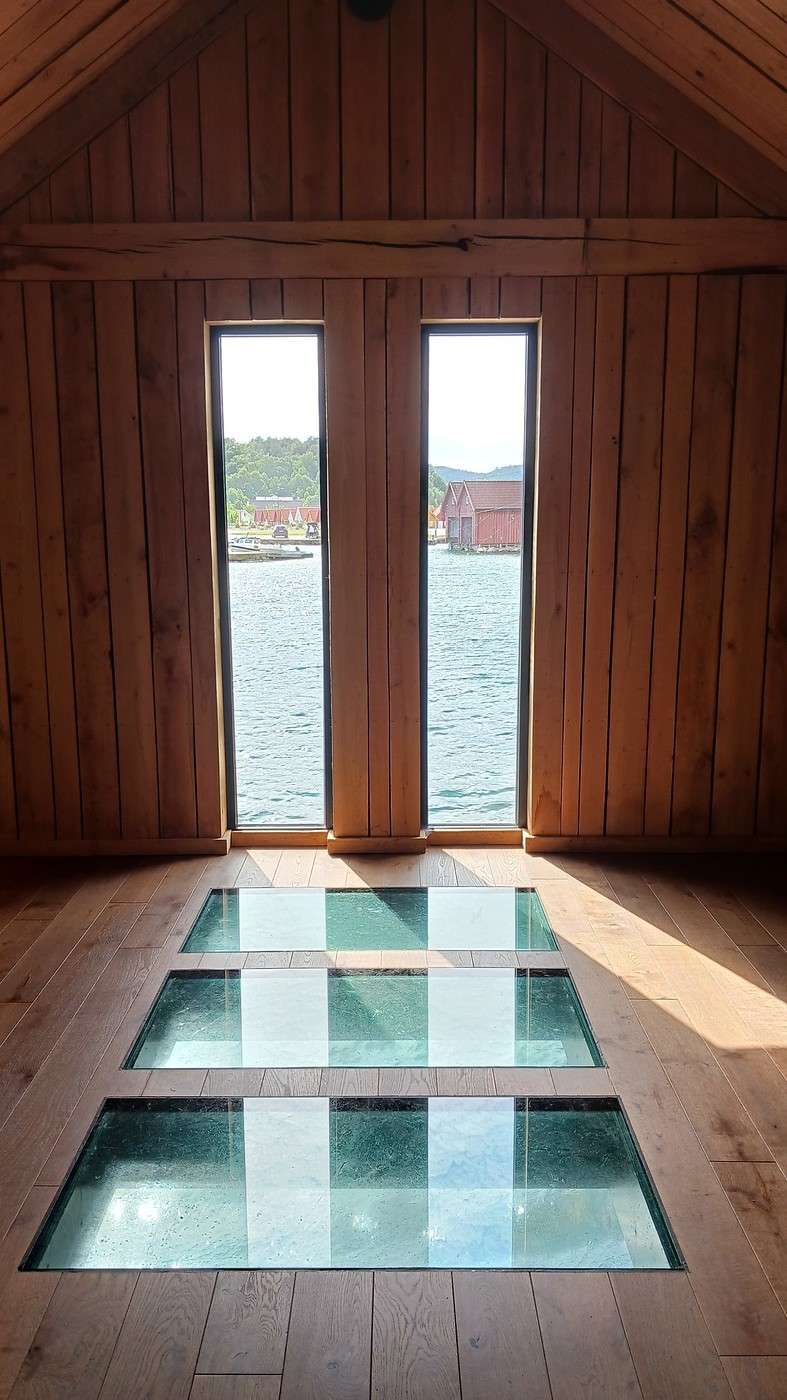
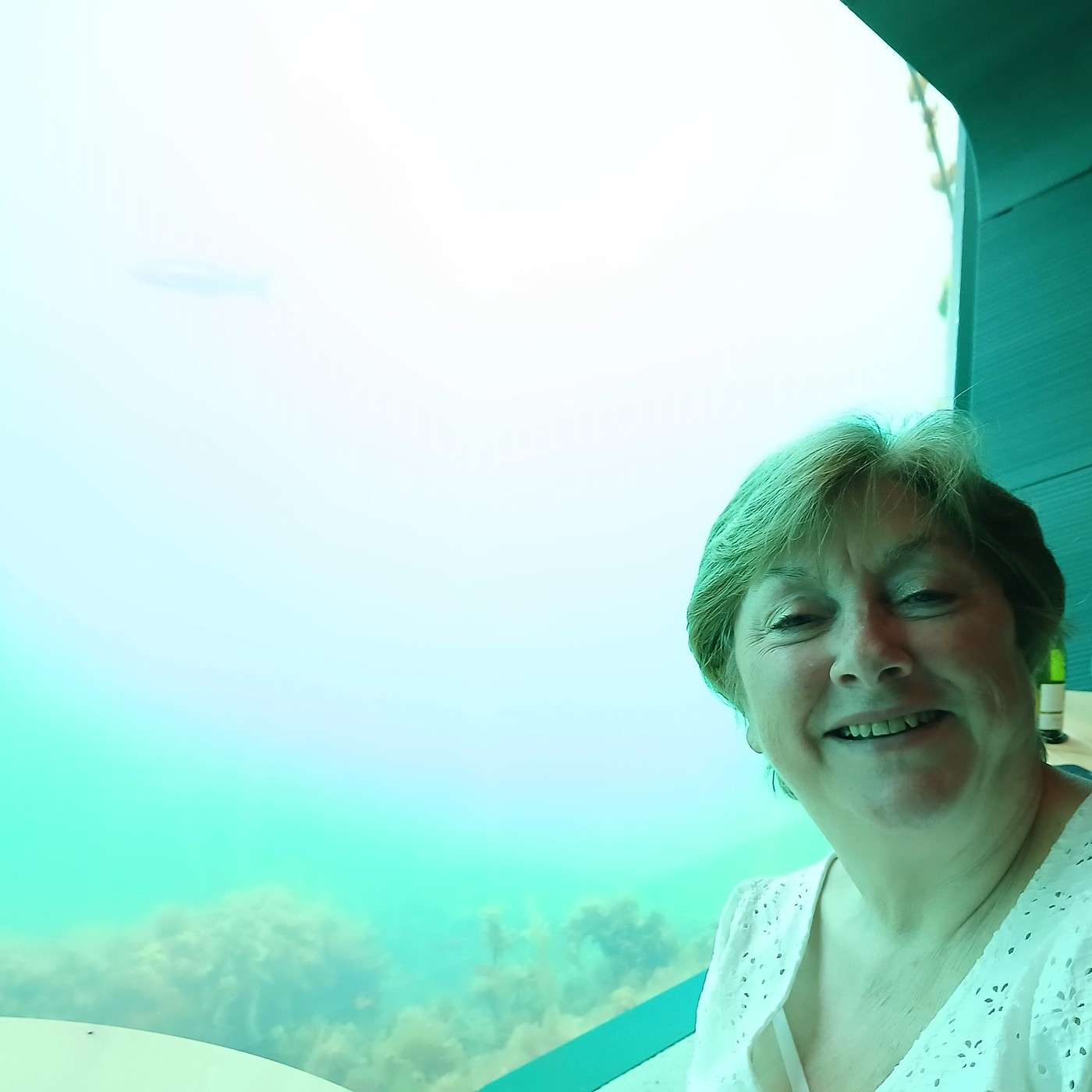
Kattegat isn’t just the name of the village in the TV series *Vikings*—it’s also the stretch of water separating Denmark from Sweden... the sea, basically! And further north, you’ve got Norway and its fjords! Originally, I’d planned to just do a loop around Kattegat, with the *Under* restaurant in Lindesnes as our anniversary treat... but along the way, we thought, why not "push" a little further north, keeping an eye on the budget since we’d chosen to travel by car in June 2025 through Scandinavia.
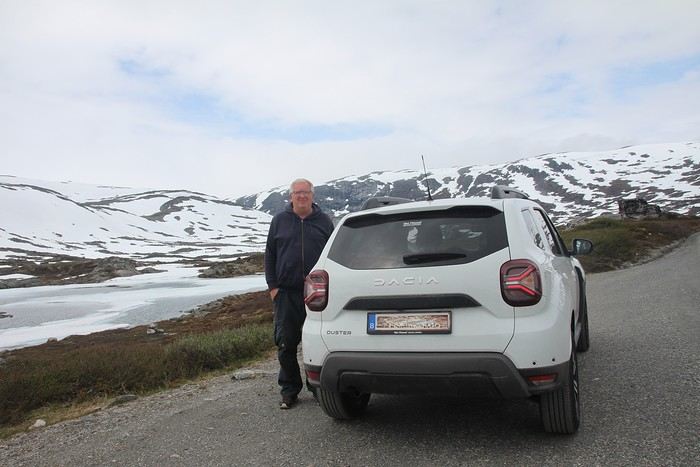
Why by car when most travelers opt for a camper van, while others prefer the comfort of cruises? Well, because we don’t own a camper van, renting one is pricey, and then you’ve got to add fuel costs (those things guzzle gas!), ferry fees, and other "tolls." All things considered, we went for mostly rentals—especially since there were four of us at the start of the trip. We spent the first week in Denmark with our daughter and son-in-law. Then they flew back to Belgium, and we continued our adventure as a couple. For accommodation, we mainly booked Airbnb apartments, which helped keep costs down and, most importantly, let us prepare our own meals (diet, diet!). In this travel journal, you’ll discover (or rediscover, for those who followed my older ones) our unbridled love for theme parks, museums, unique experiences, and—especially in Denmark—Legos! Unfortunately, we didn’t do any hikes this year because the unpredictable weather had made the trails slippery, and since I’d already taken three tumbles during the trip, I didn’t want to risk another! In the end, we traveled for 32 days, covered 6,200 km, and most importantly, discovered the charming country of Denmark, marveled at Norway’s breathtaking fjords—all without suffering the heatwave that hit France and Belgium that June! If you’ve got any questions, don’t hesitate to ask!
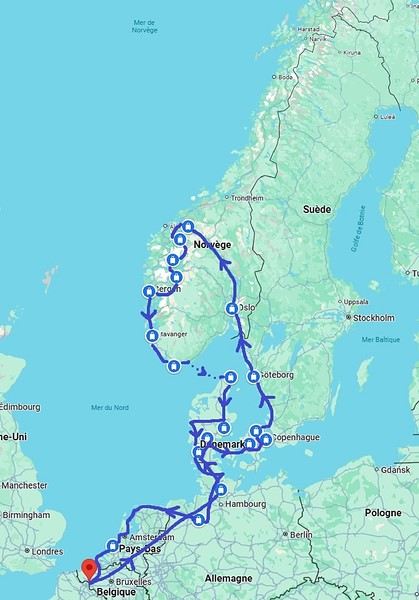
Kattegat Tour and Norway's Great Fjords - 32 Days (Denmark - Sweden - Norway)

Cendryon · 2025-07-09

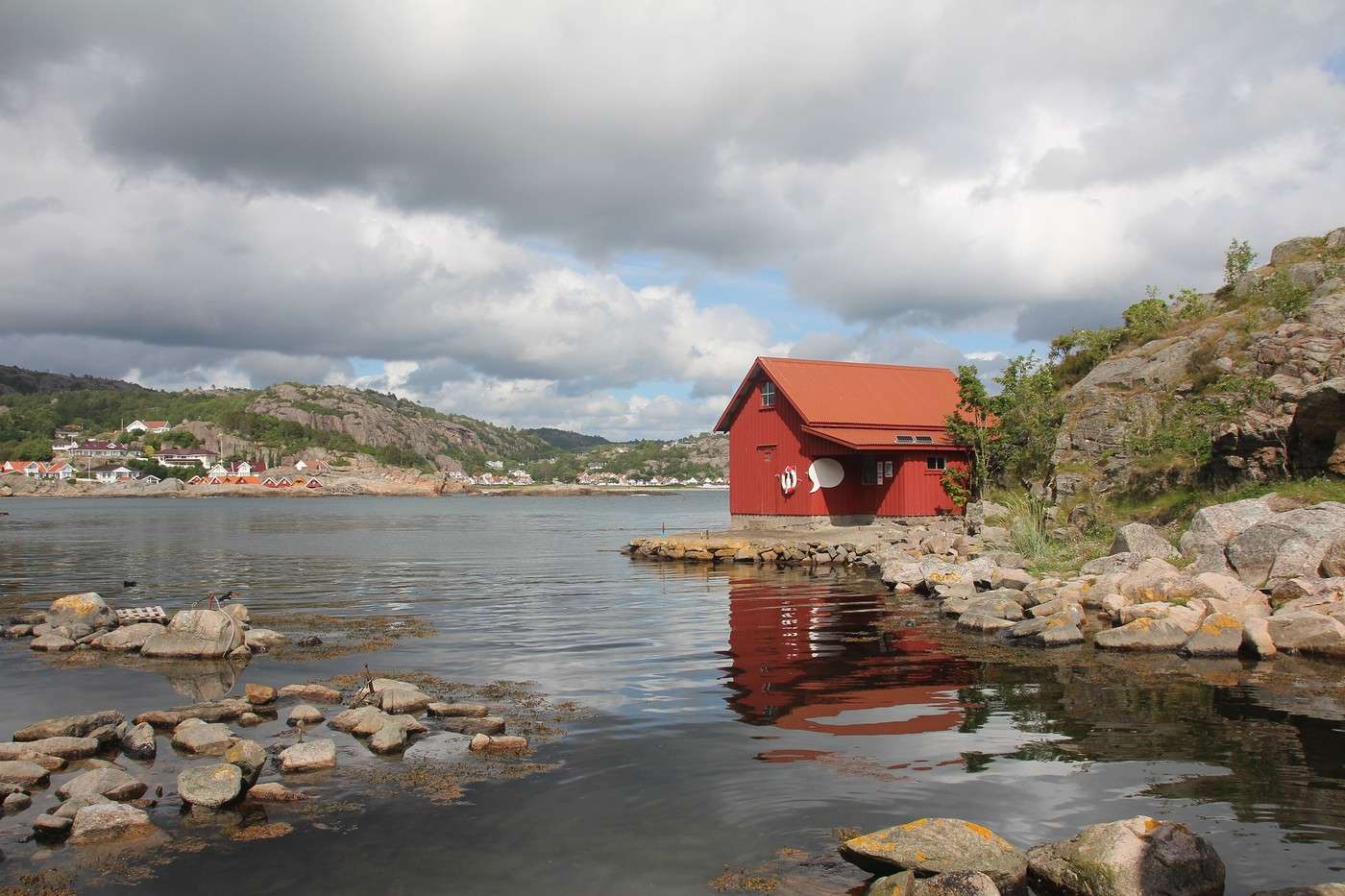
Day 1 - Sunday, June 1st - 742 km To get to Scandinavia, there are some must-pass spots, especially Germany. We decided to stop north of Hamburg, in Neumünster. The owners of the little red cabin were waiting for us. The place was peaceful and charming.

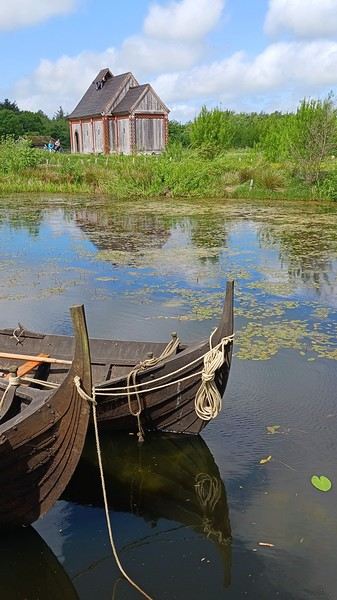
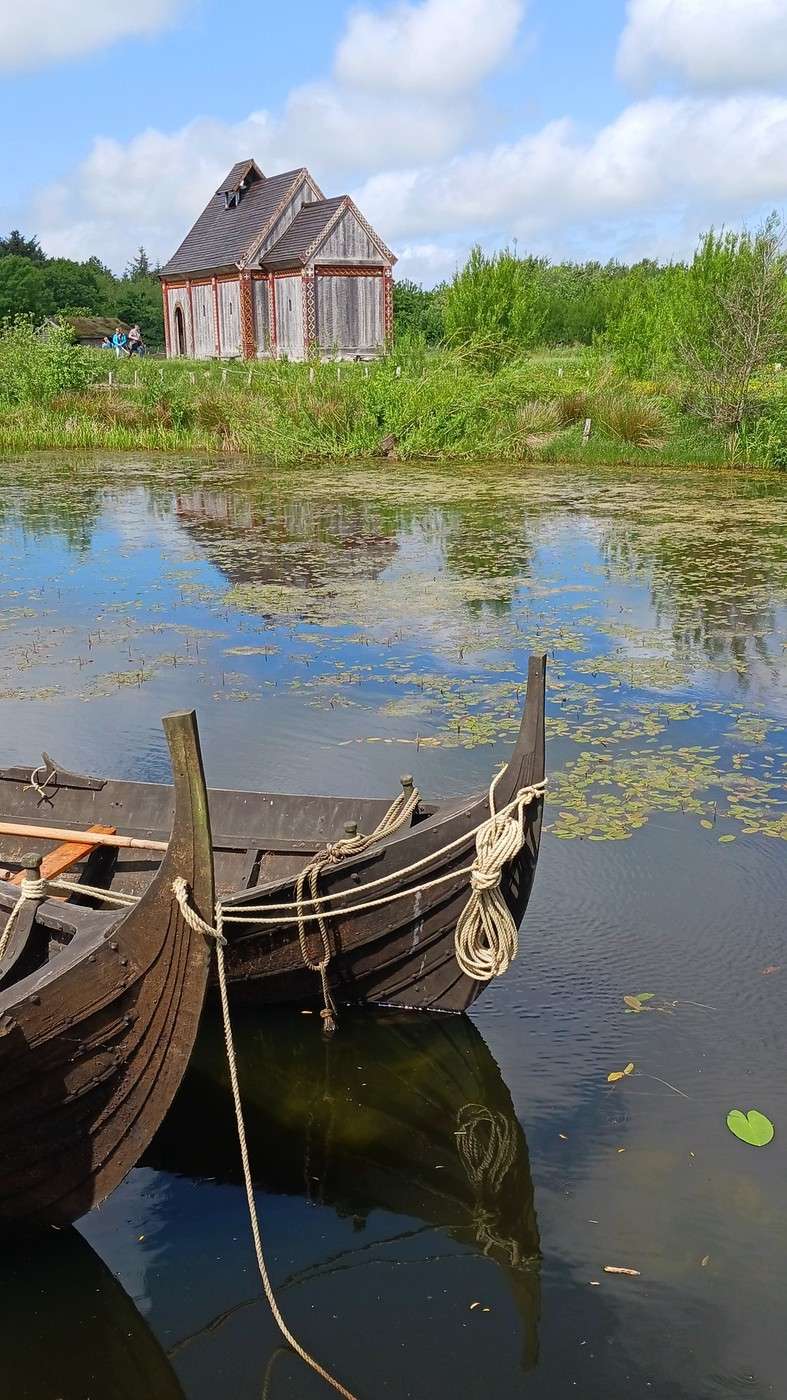
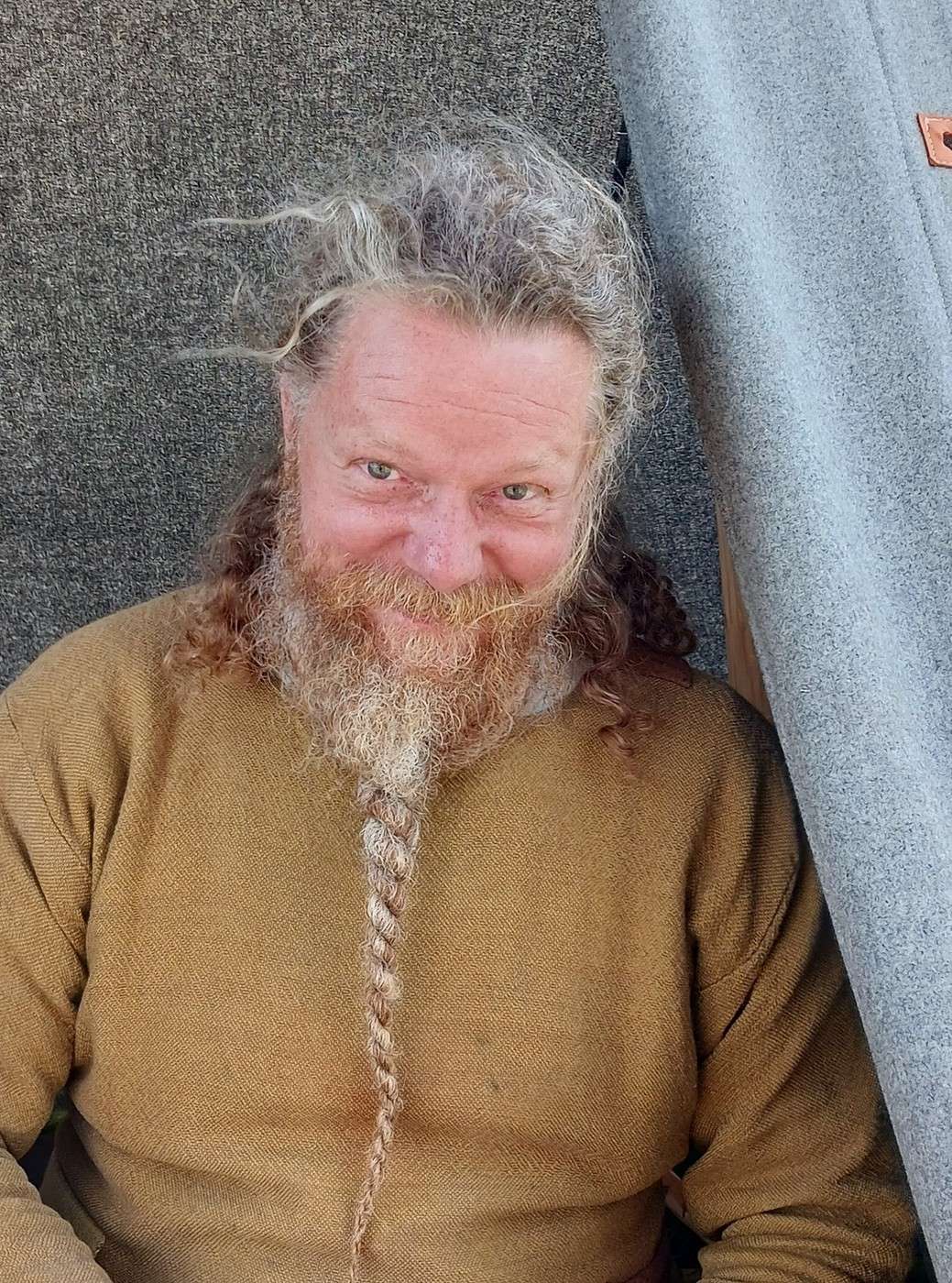
Day 2 - Monday, June 2nd - 267 km A 100% Viking day! Around 11:30 AM, we reached the Viking Center in Ribe, Denmark. The village is charming, and the sun was with us. We visited the old houses, including the longhouse, which was the nerve center of a Viking village. There’s also a small chapel by a pond. With this beautiful weather, exploring the site was very pleasant. Some "Vikings" happily posed for photos.


During the visit, we stopped at the village café to taste Danish cuisine for the first time—mostly fresh salads, which suited us perfectly. This Viking Center is a great introduction to Viking life and what we’ll get to discover later.


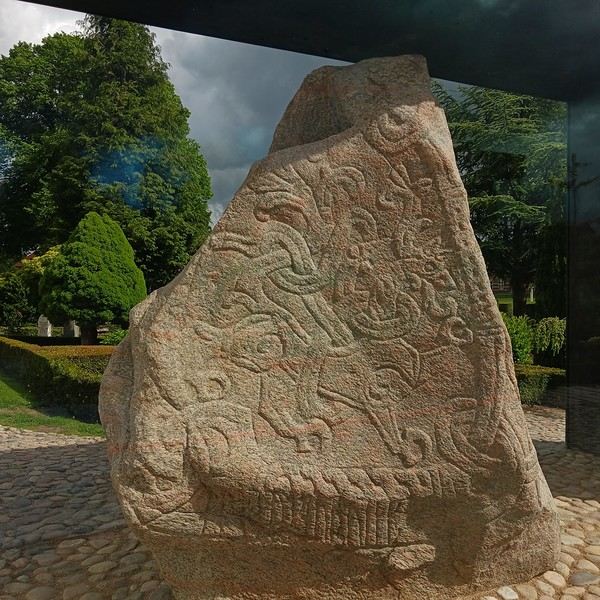
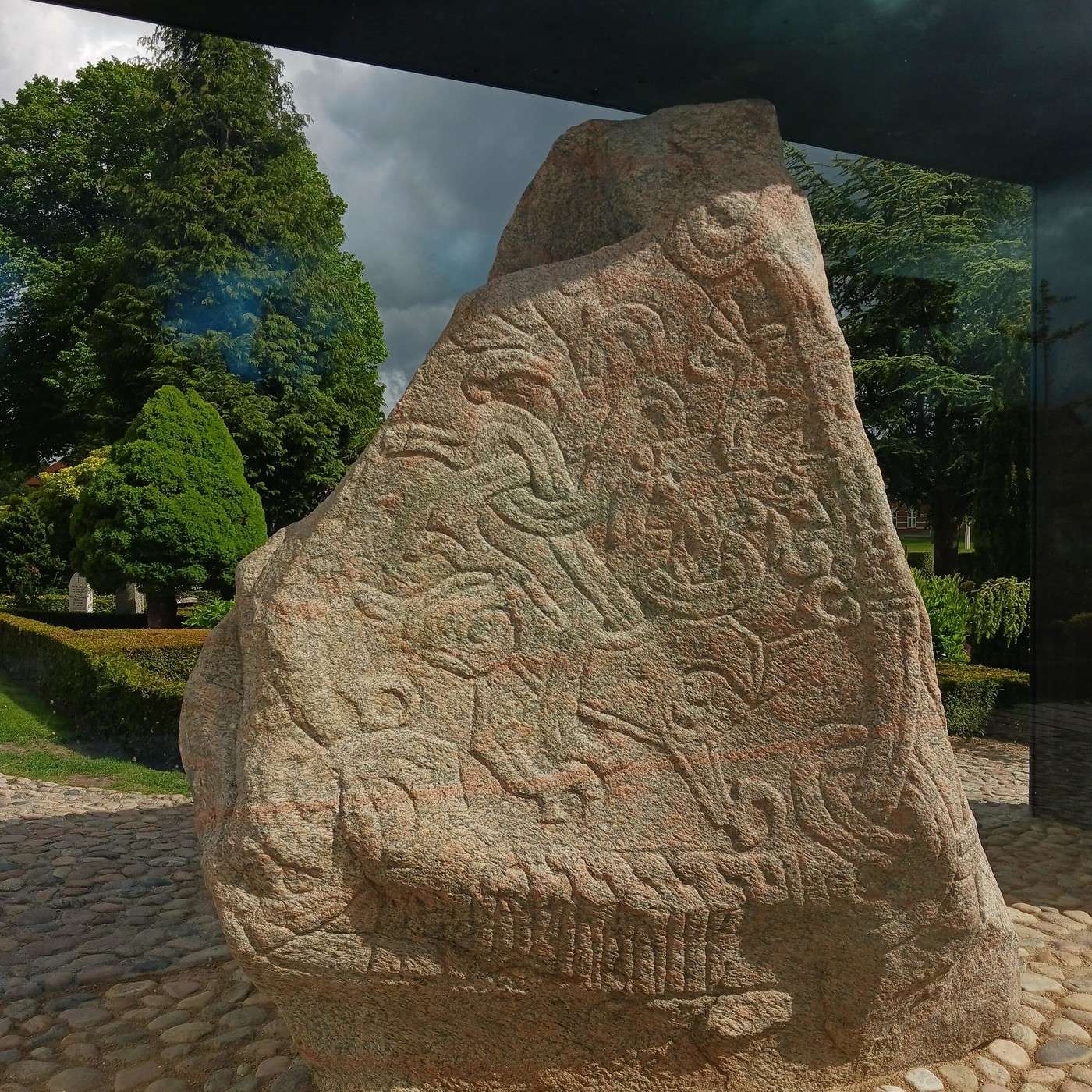
After the visit, we headed to Jelling, about an hour away. That’s where the famous runestones are. What’s impressive about Jelling is how the Danes managed to build such an important museum around two rocks—but not just any rocks!


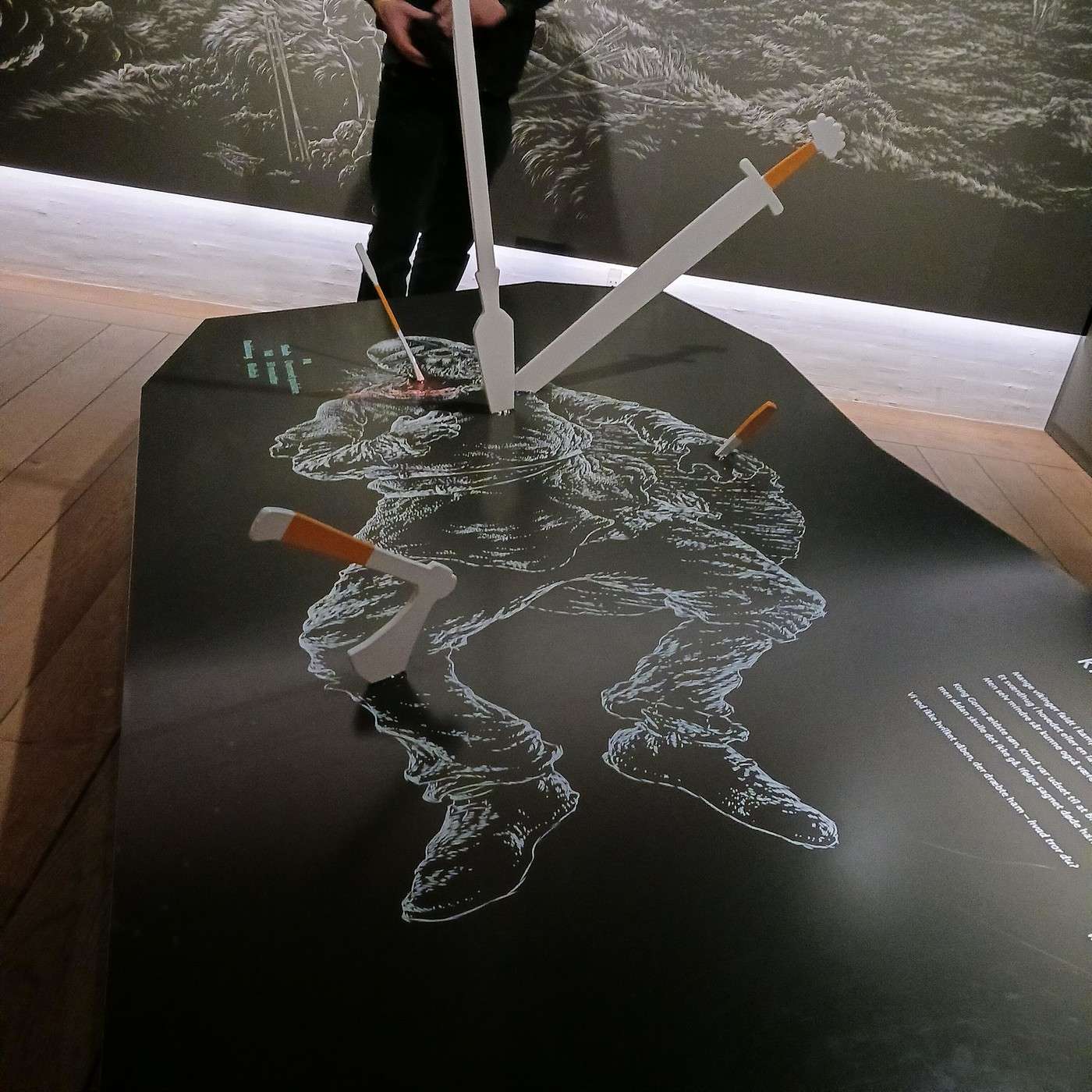
The Jelling stones are world-famous. In fact, these two runestones have been on the UNESCO World Heritage list since 1994. Both are linked to the Viking royal couple, Gorm the Old and Thyra. The smaller one was raised by the king in honor of his wife—a rare occurrence, as traditionally only men received such an honor! The inscription reads: "Gorm made this for Thyra, his wife, Denmark’s pride." This phrase is doubly important historically because the word *Denmark* is mentioned for the first time, and it’s from King Gorm that we know the continuous lineage of Danish kings. On the second stone, likely raised in 965, it’s written: "King Harald had these stones made in honor of his father, Gorm, and his mother, Thyra. King Harald, who won Denmark and Norway and made the Danes Christian." Thus, Gorm’s son expanded his father’s territory and introduced Christianity (this stone features the oldest representation of Christ in Scandinavia). The top of the stone is exactly equidistant from the tops of the two royal burial mounds. After this tribute, Harald moved his capital to the new center of his kingdom, Roskilde. As for this granite stone, it was likely polychrome originally. A brightly painted replica, based on a historian’s hypotheses, is displayed in the new Jelling museum.

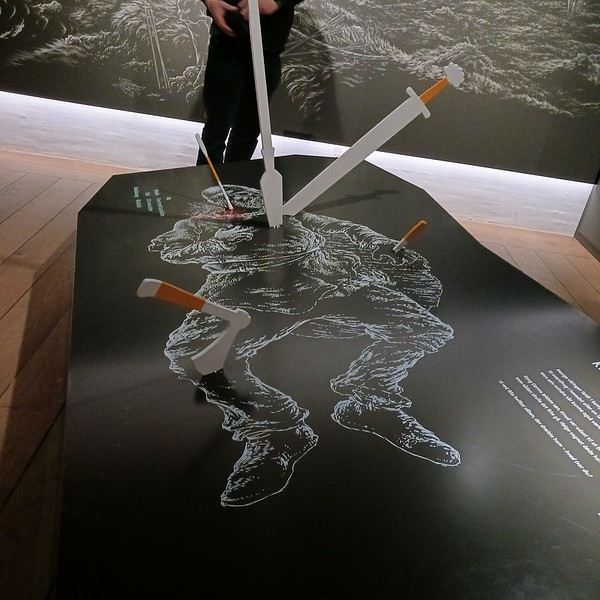
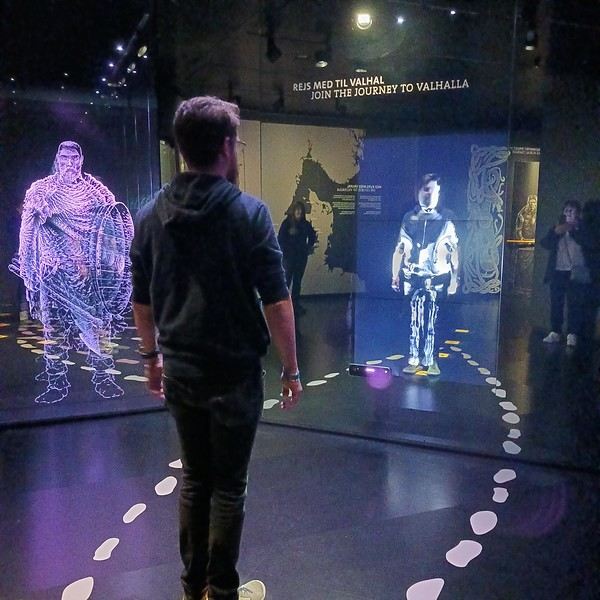
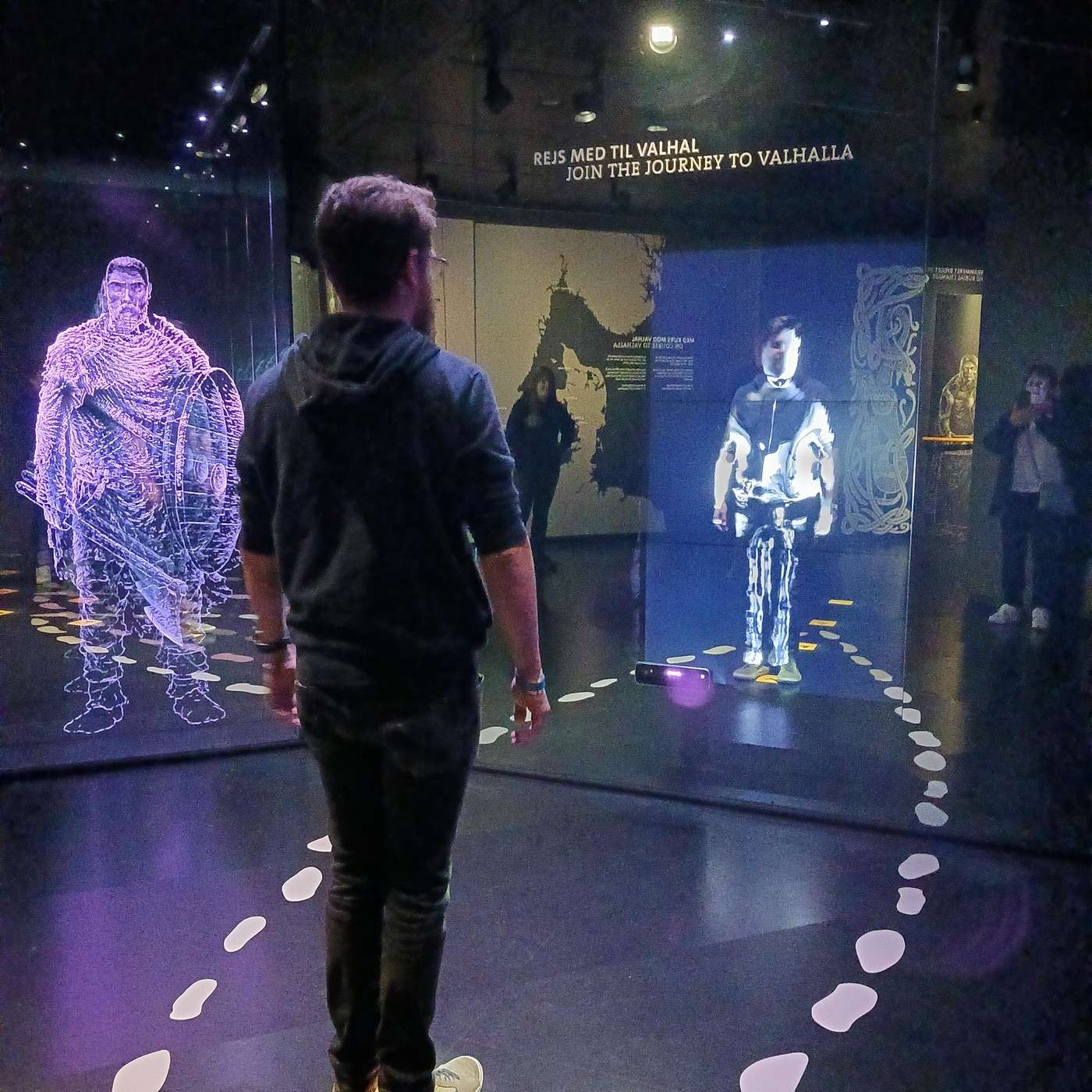
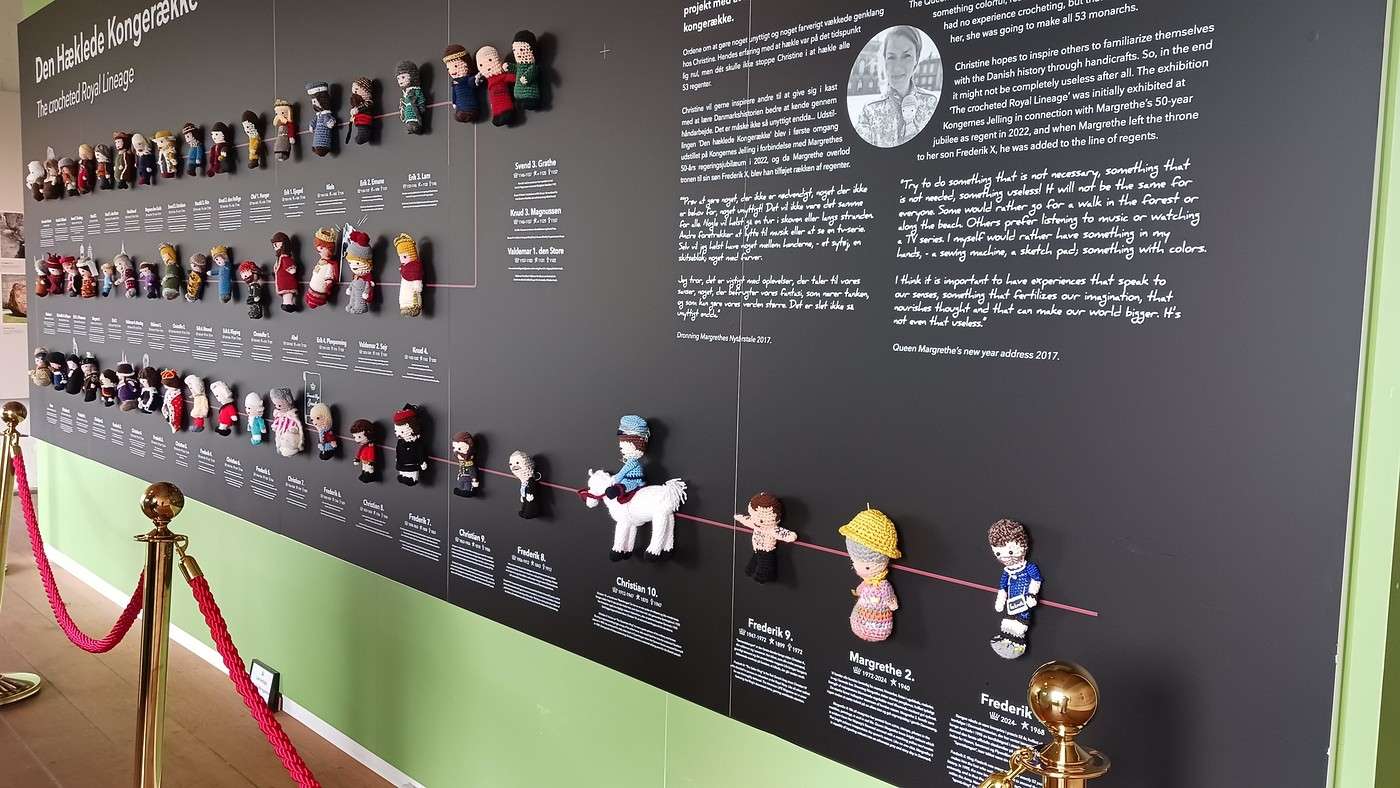
Now let’s see how clever the Danes are at making their museum truly engaging, educational, and fun...


We then checked into our rental space for two nights. It’s an apartment on the ground floor of a green house in the countryside, not far from Billund and close to the airport. So we had a great view of planes taking off—it didn’t bother us at all!

Kattegat Tour and Norway's Great Fjords - 32 Days (Denmark - Sweden - Norway)

Cendryon · 2025-07-10

(Continuation of the travel journal)

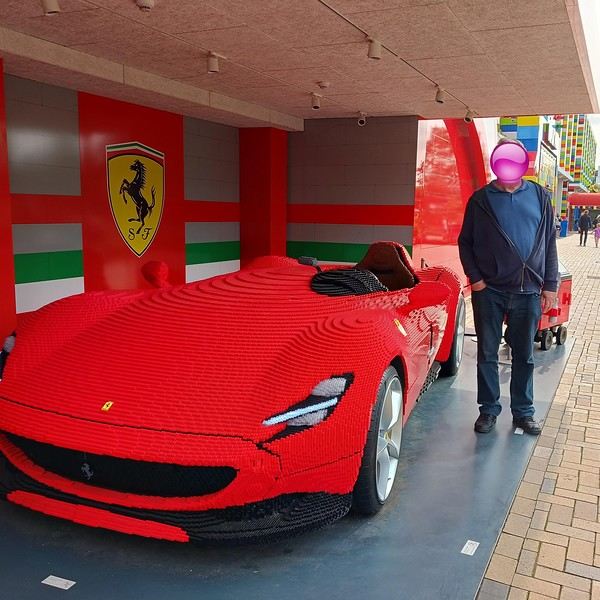
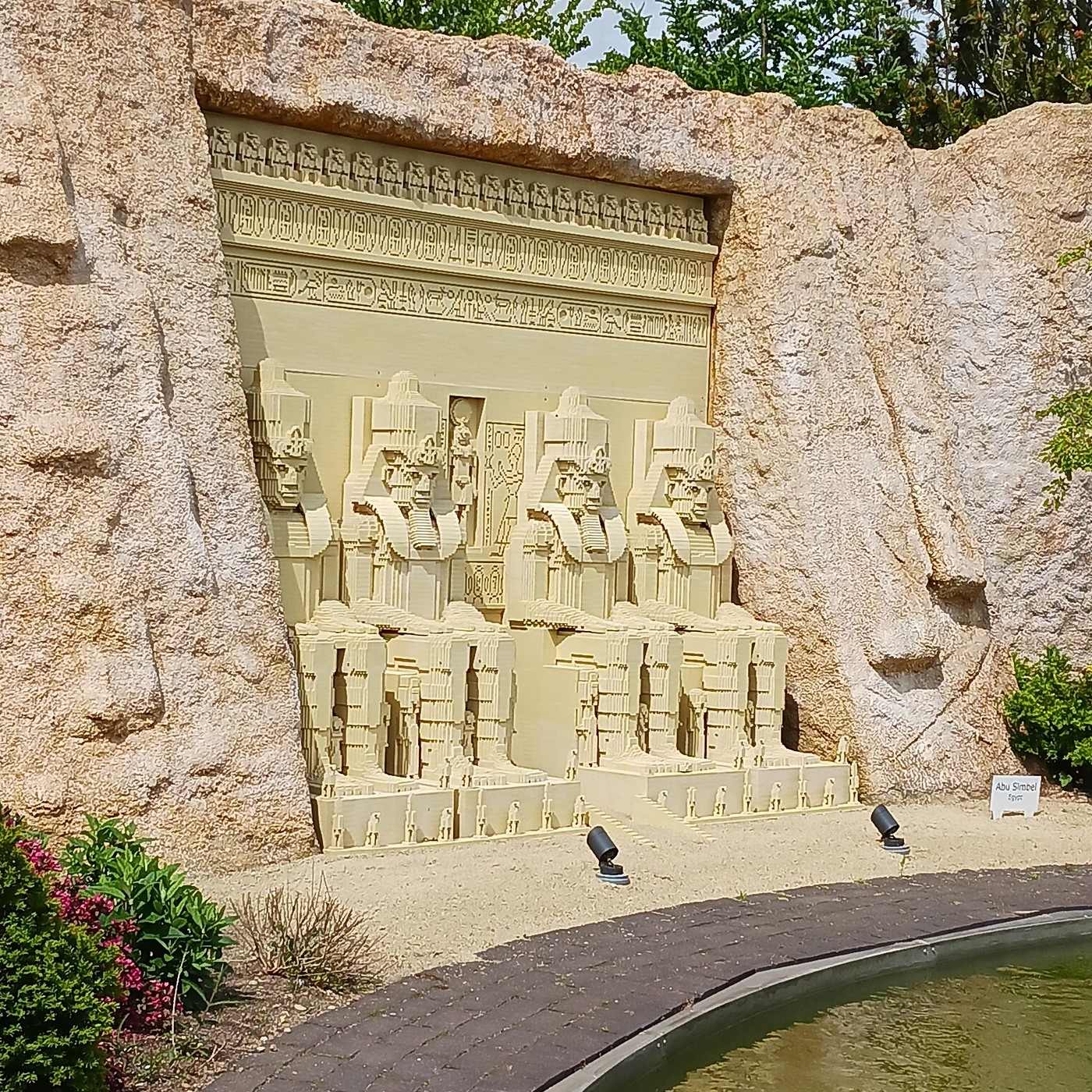
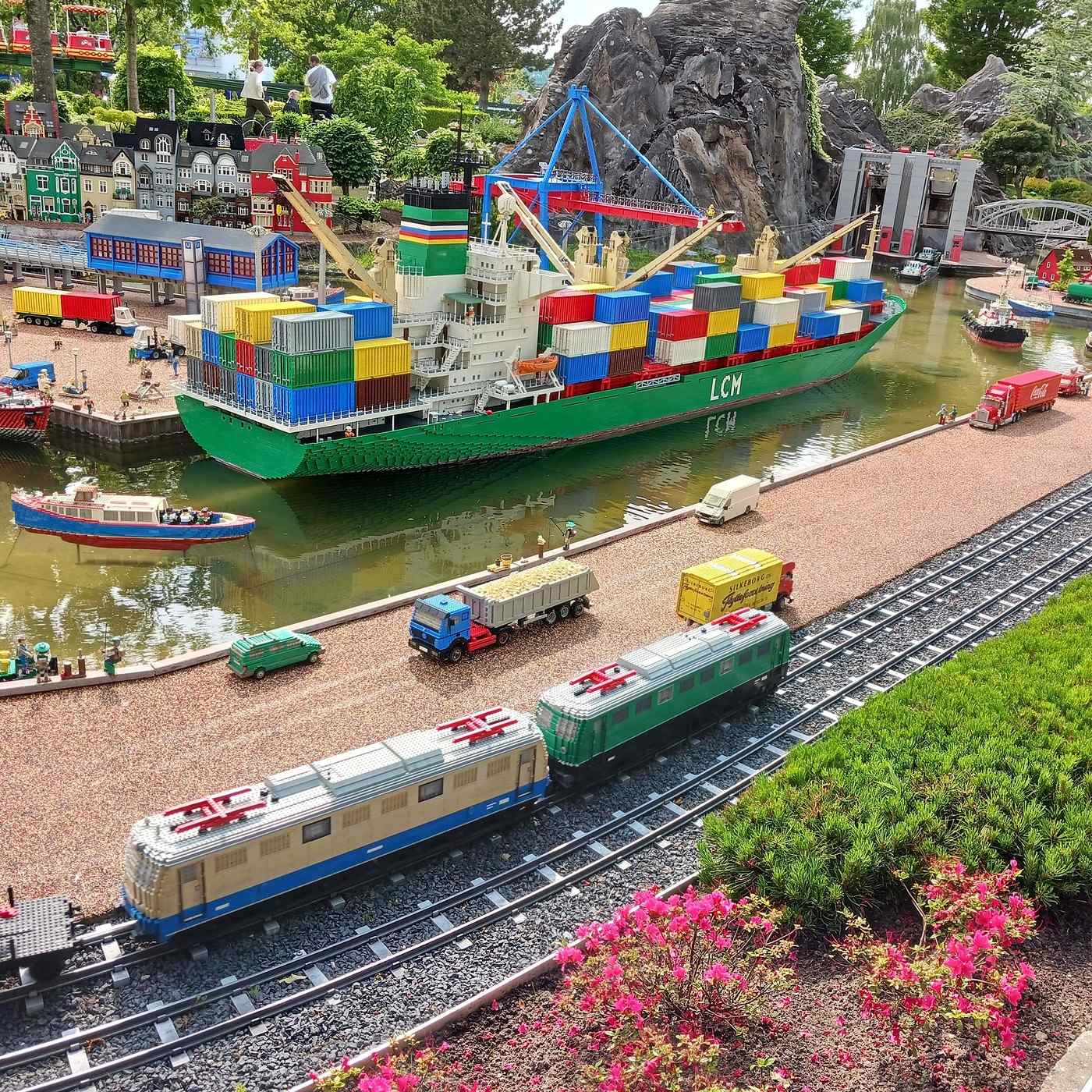
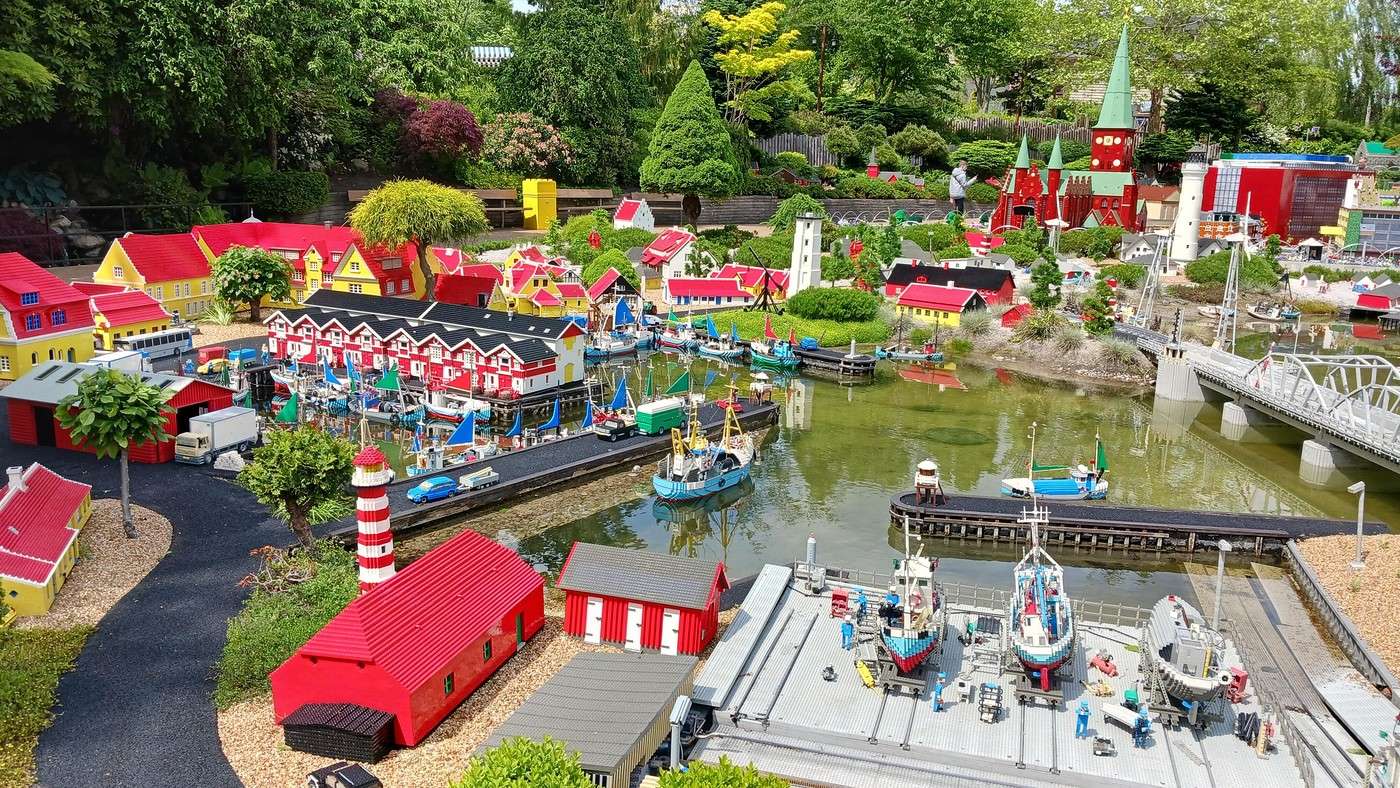
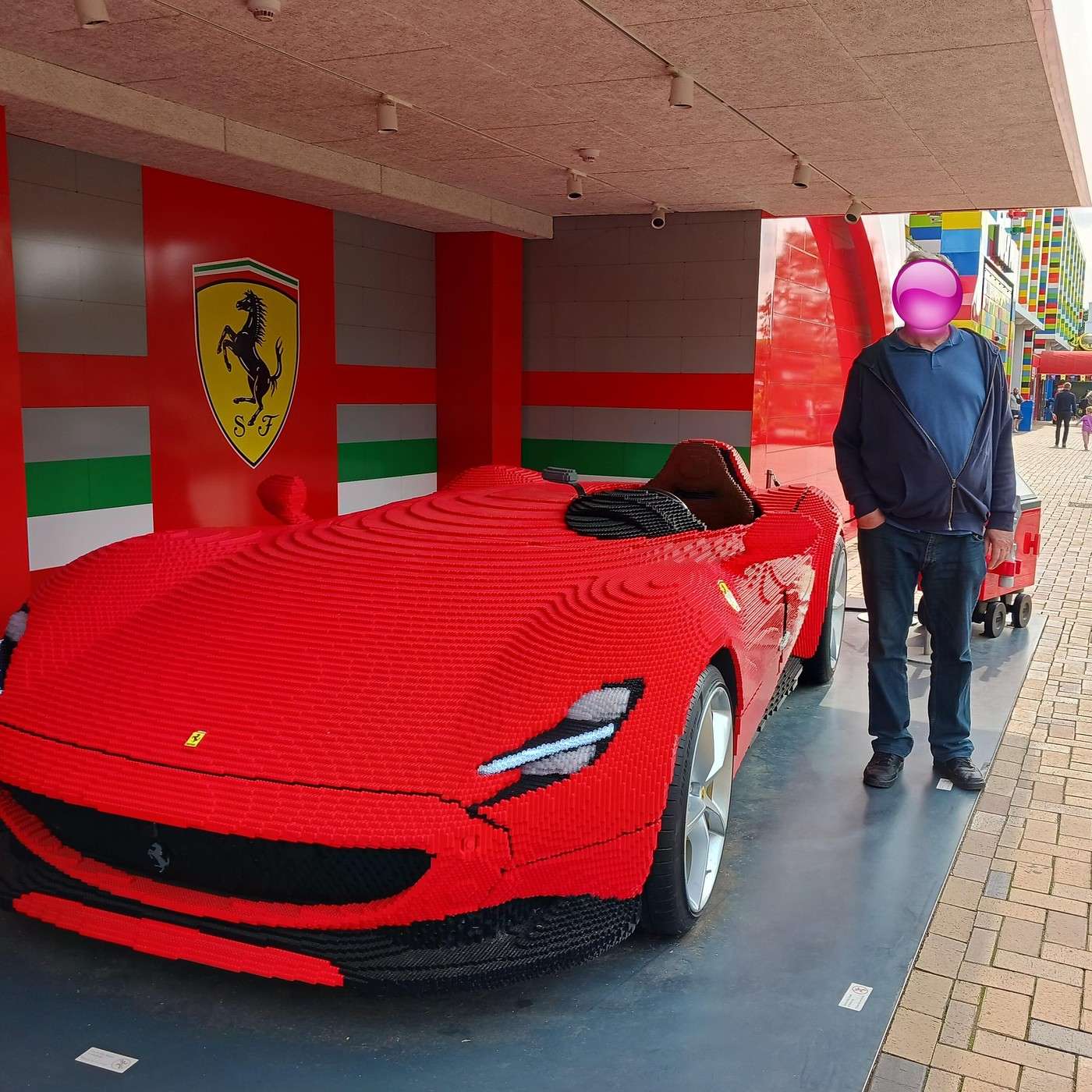
Day 3 - Tuesday, June 3 - 100% Lego Day! The sun is out—it’s going to be a beautiful day! It’s 10 AM, and we’re patiently waiting for Legoland to open. As soon as we step in, we notice how well-kept the park’s vegetation is. We’re already impressed by the giant Lego constructions.


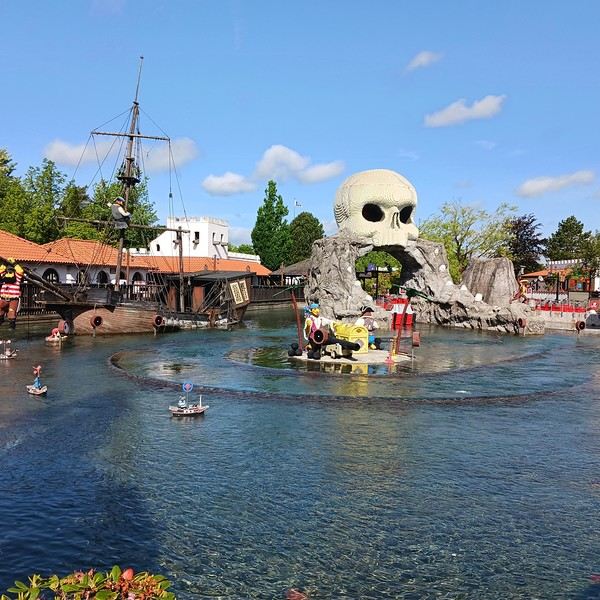
The attractions are pretty classic for a theme park—roller coasters, little boats, and a pirate ride that reminds us of a very famous park...

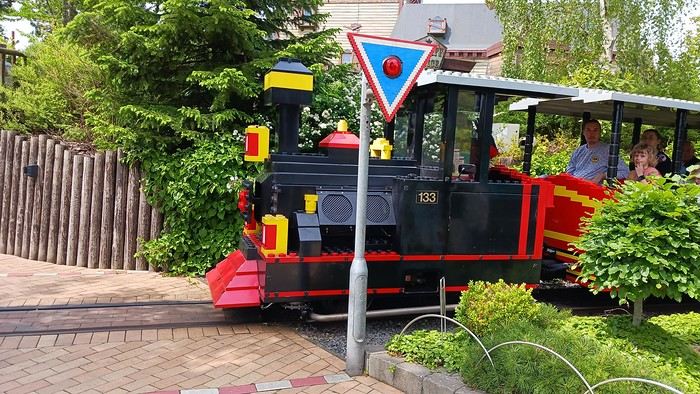
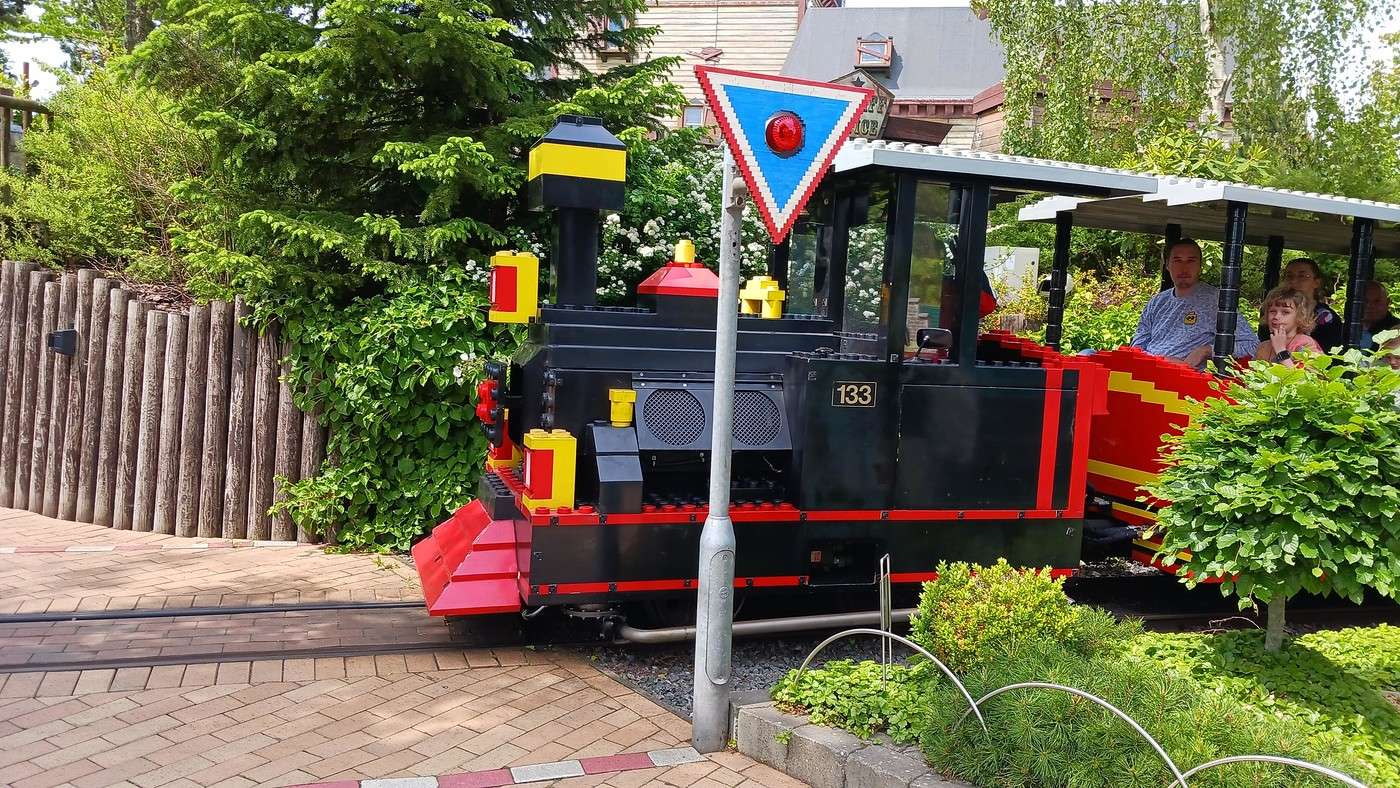
There’s also a haunted house that’s not really scary and a little train that runs through the park.

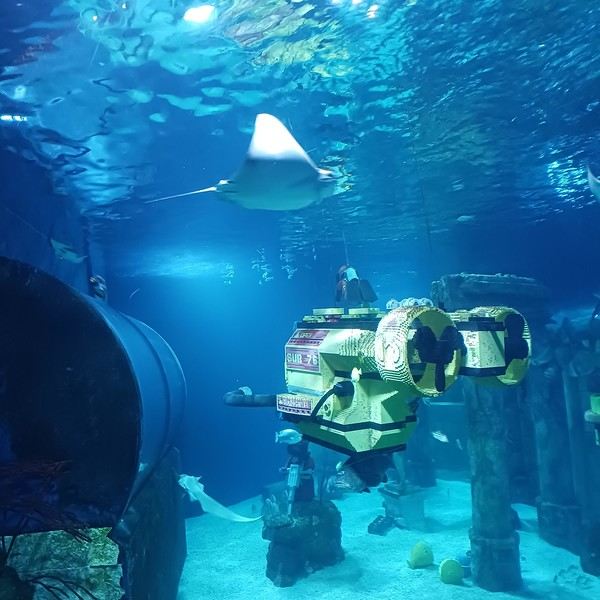
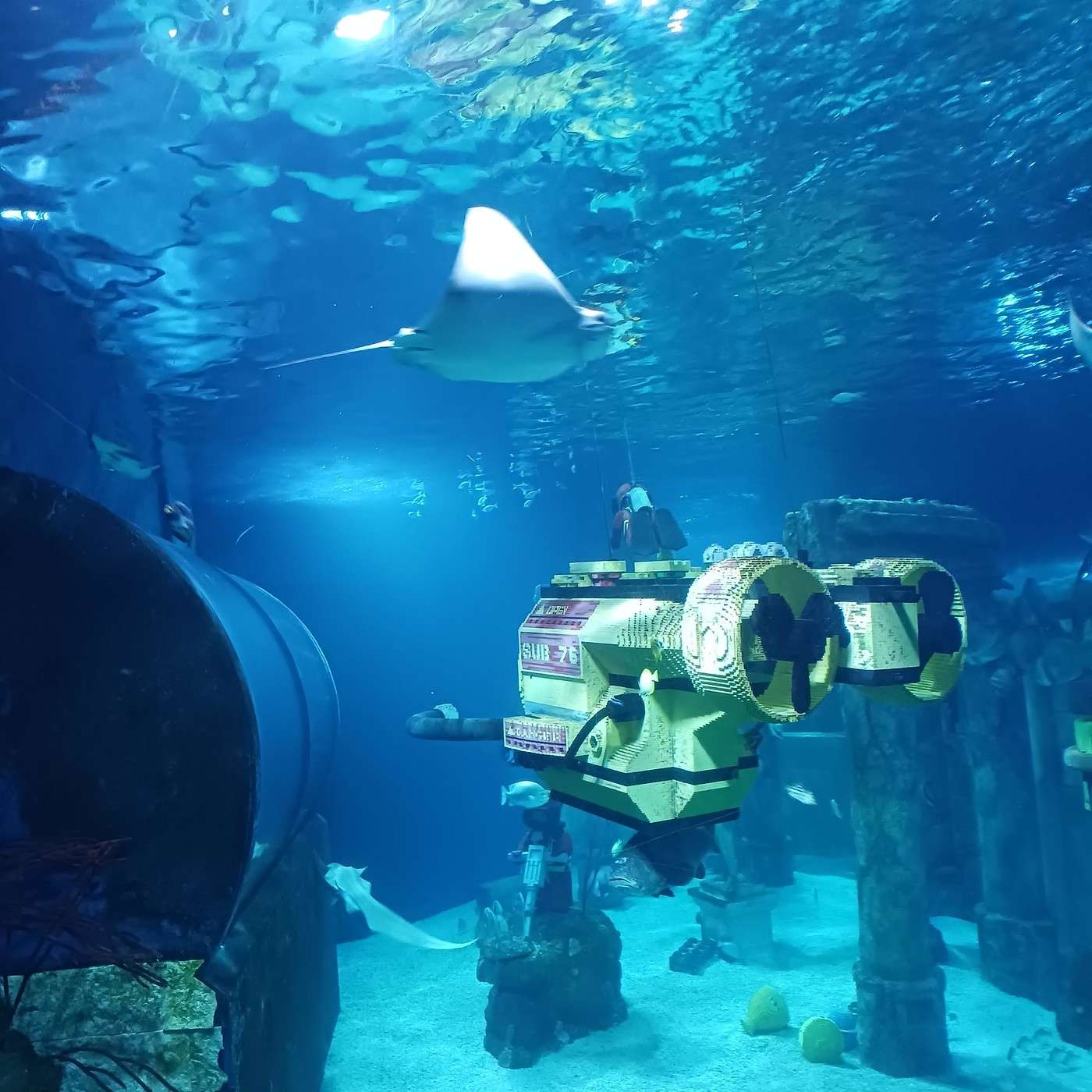
Of course, everything is made of Lego, and there’s even an aquarium with Lego underwater!

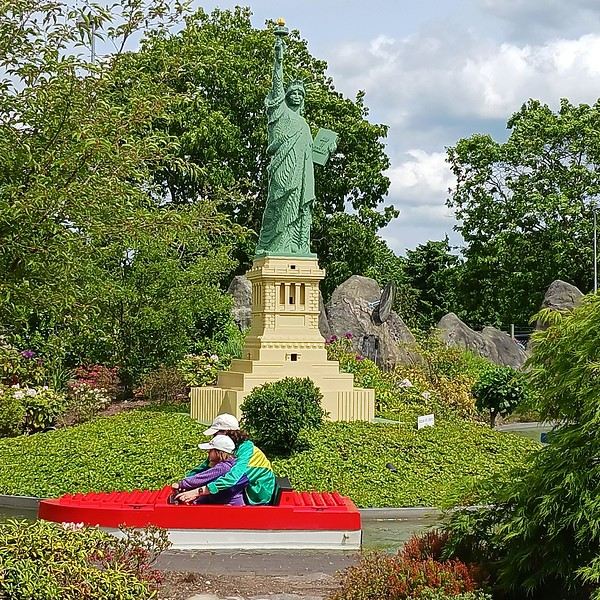
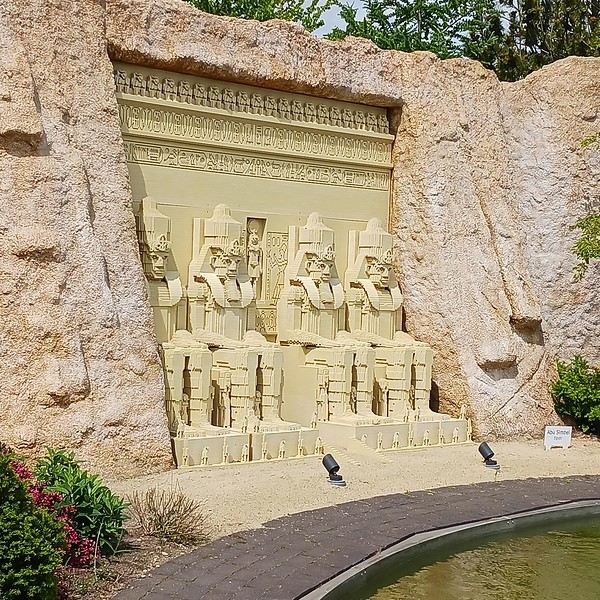
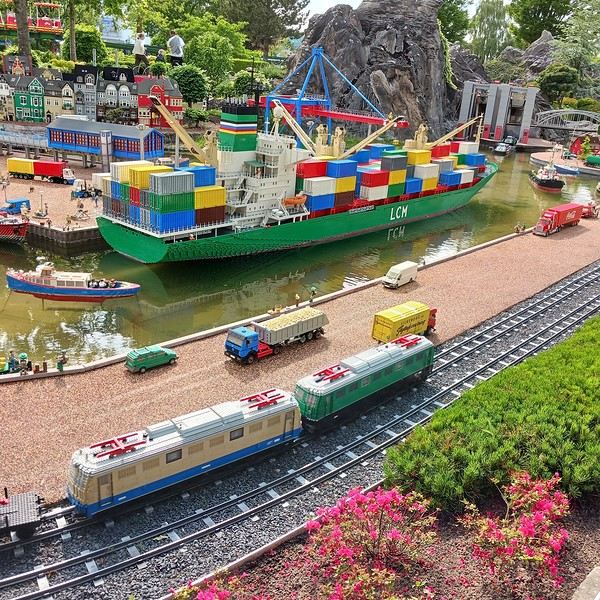
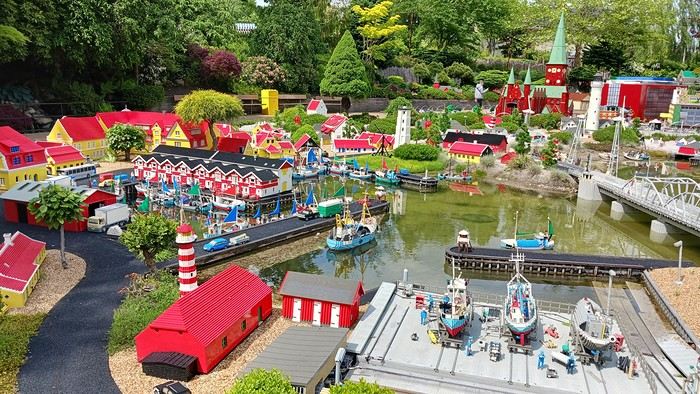
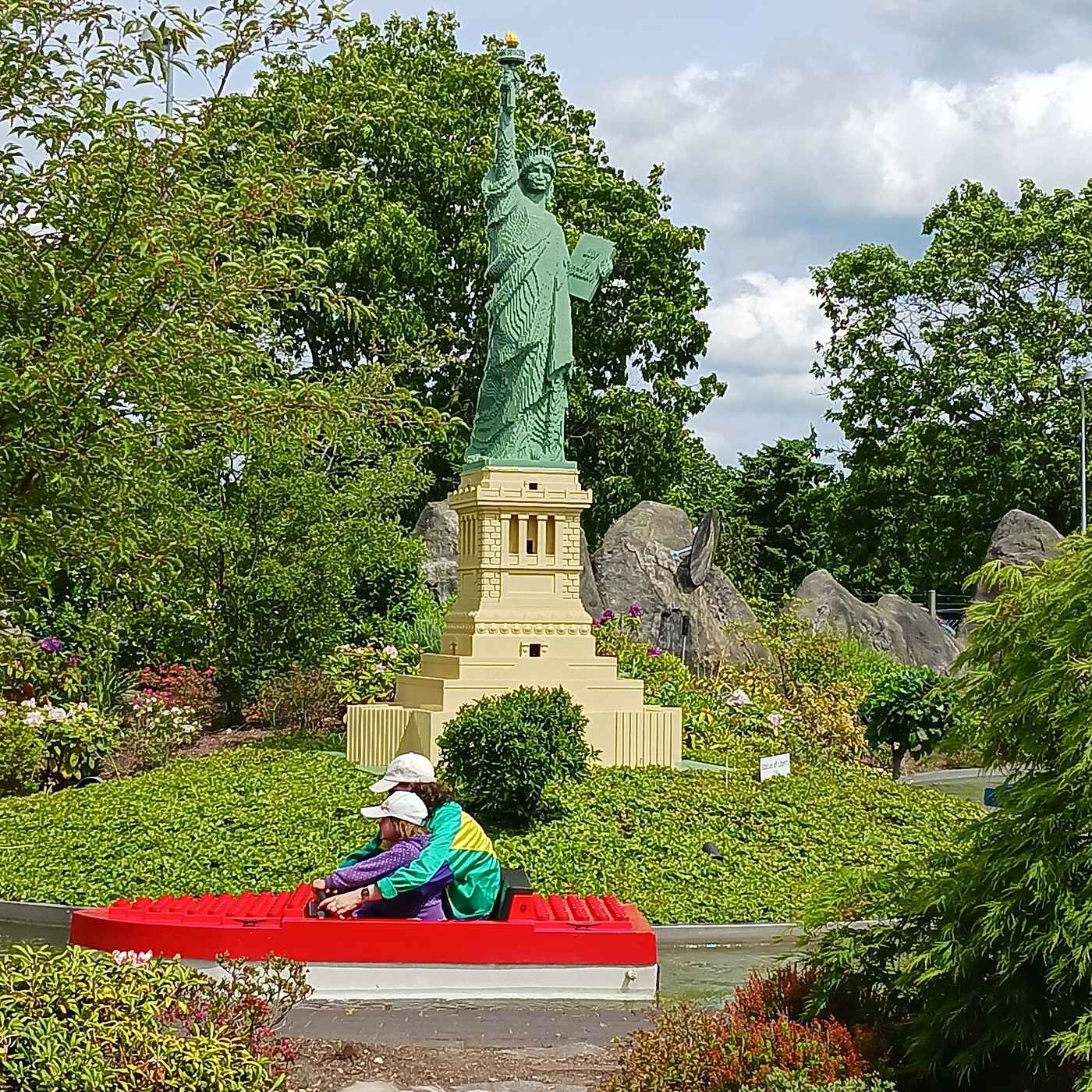
But the most impressive part is the miniature cityscapes with incredible details in every construction—complete with moving trains, boats, locks, and more...


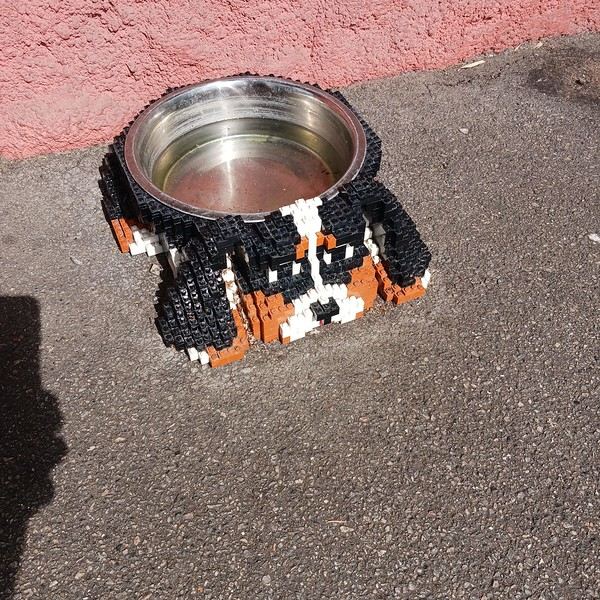
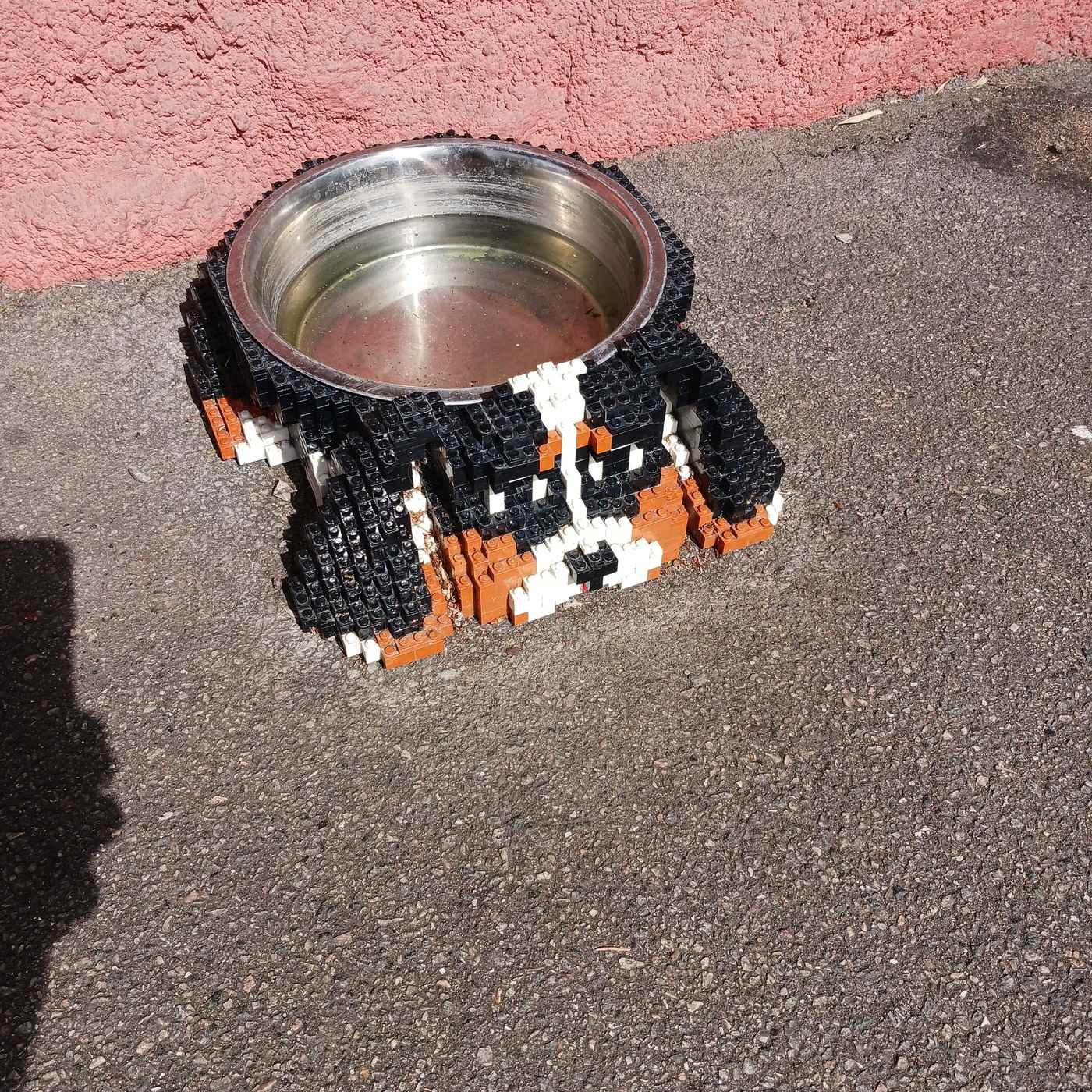
Here, everything is Lego—nothing but Lego—and the attention to detail is amazing. Check out this bowl for dogs to drink from near the restrooms. Yes, leashed dogs are allowed here!

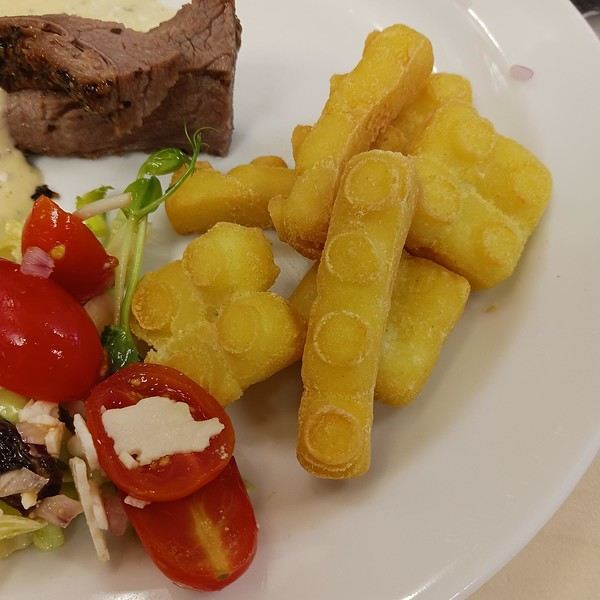
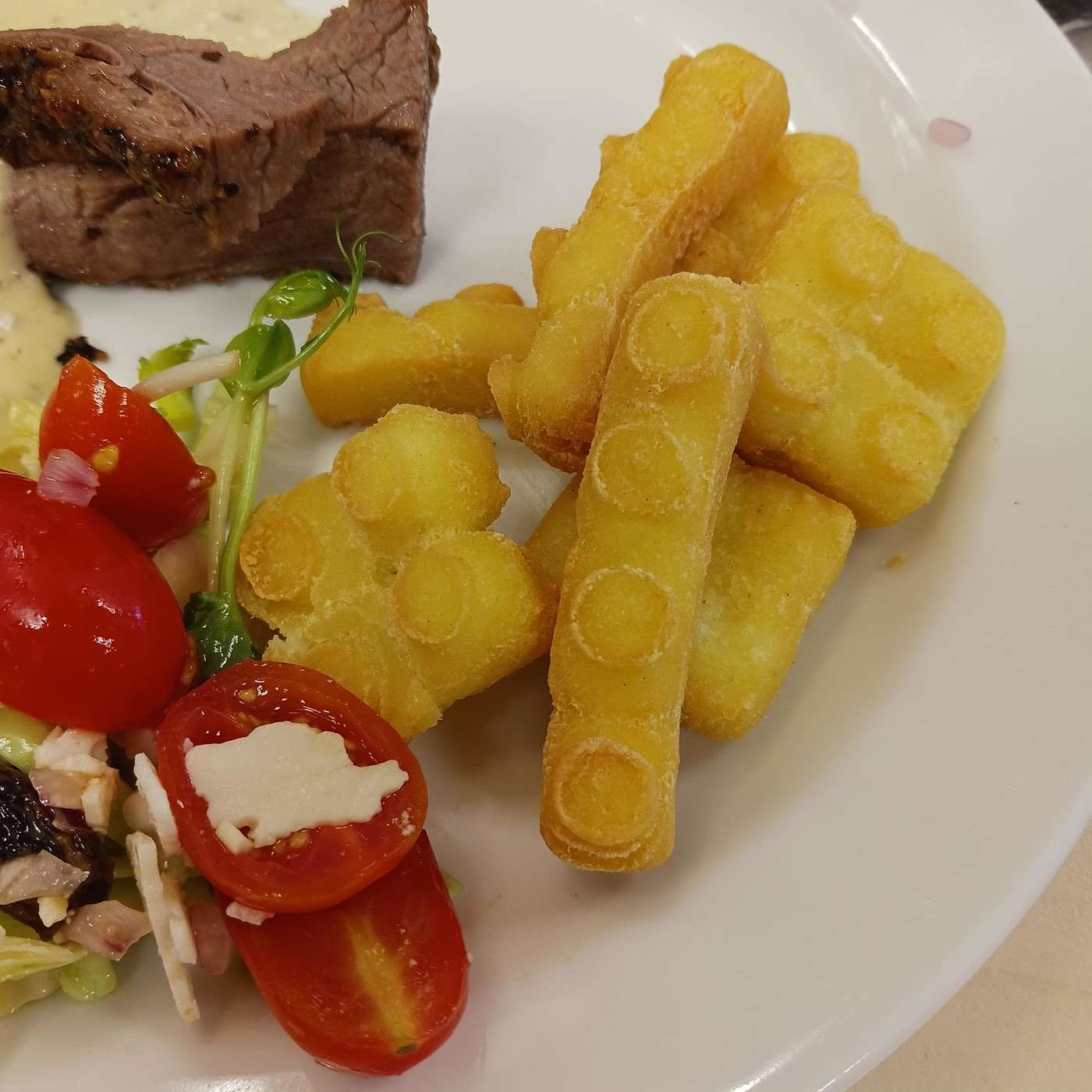
Even the fries at the family buffet are "Lego-style"! It’s such a fun park—time flies by!
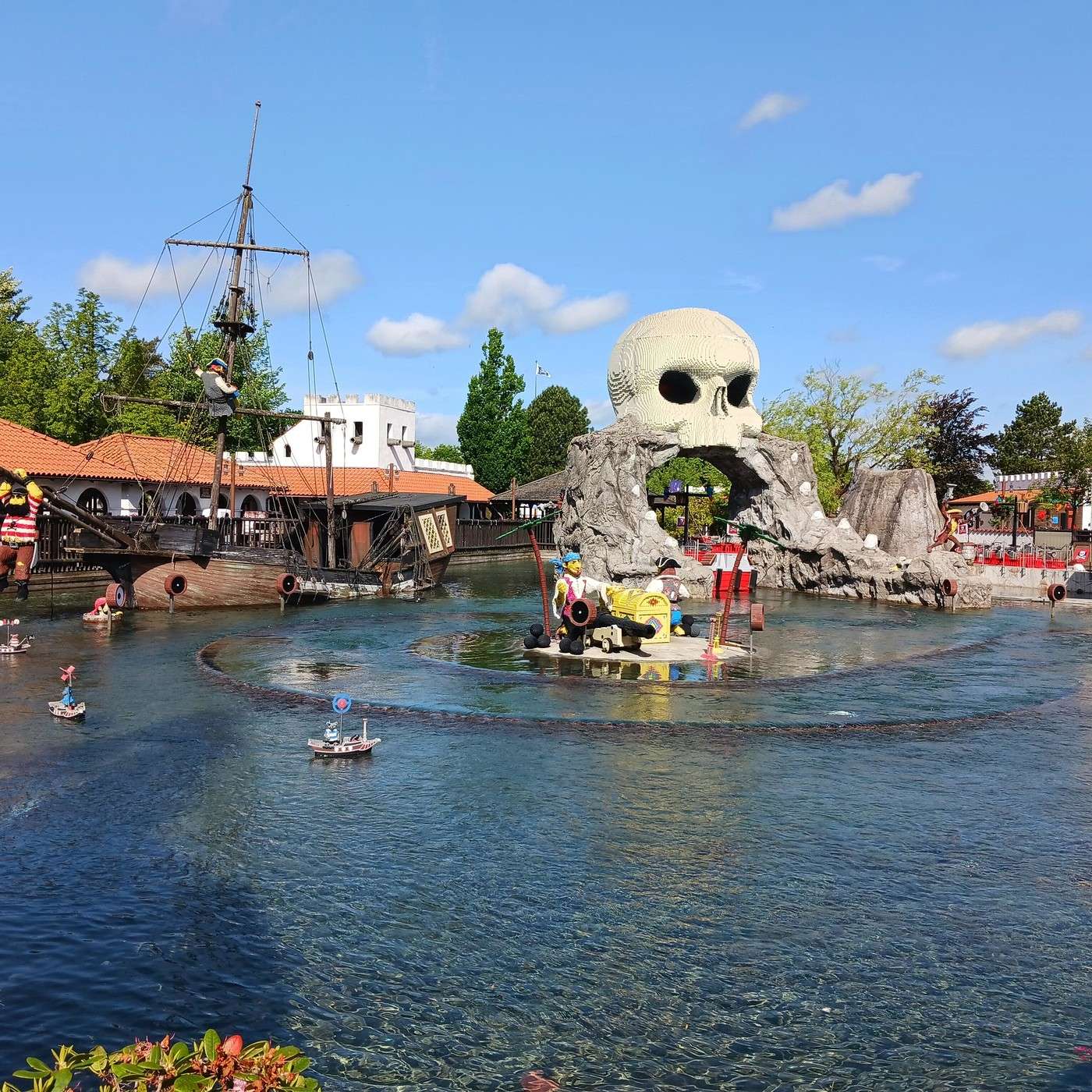
Kattegat Tour and Great Norwegian Fjords - 32 Days (Denmark - Sweden - Norway)

Cendryon · 2025-07-11

Day 4 - Wednesday, June 4 - 210 km The weather’s pretty gloomy this morning, but that doesn’t really matter because we’re spending most of the day in the Lego House, the LEGO House.

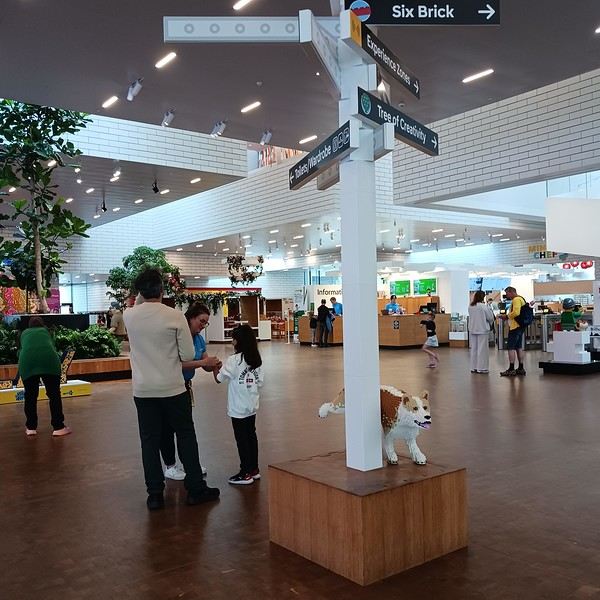
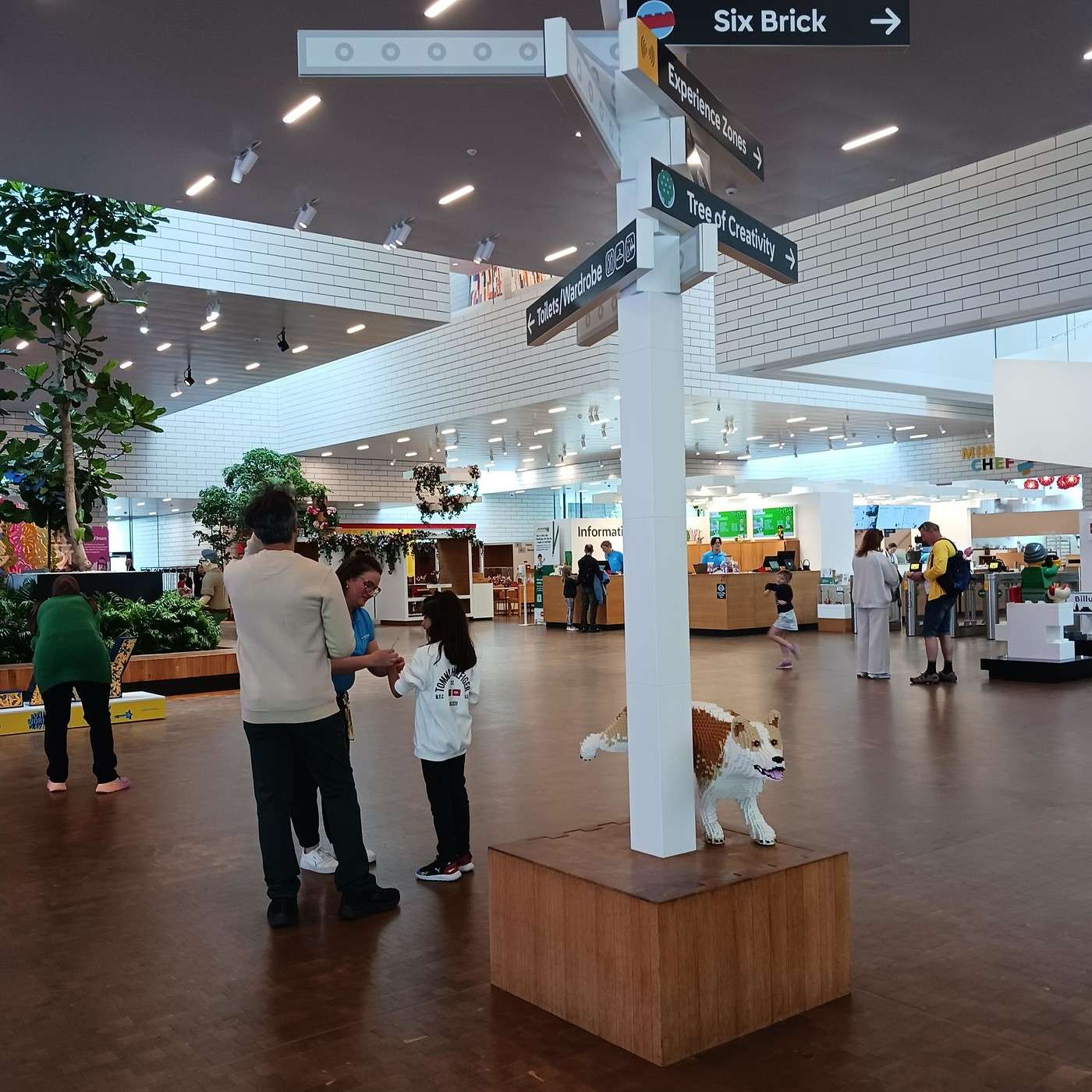
As soon as we step into the hall, we’re already in "immersion" mode. A lovely lady helps us scan our QR codes, which generate wristbands we’ll wear to access the experiences in this special place...


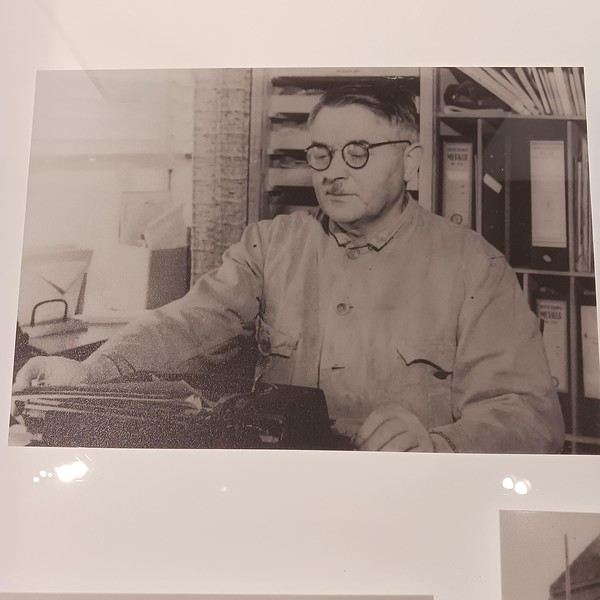
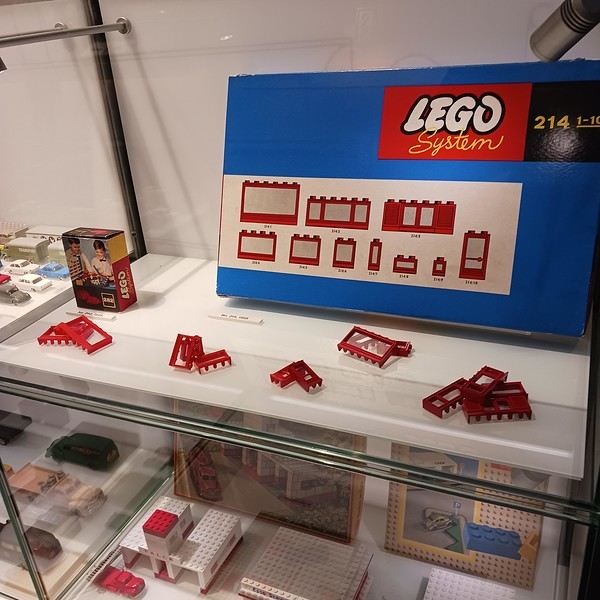
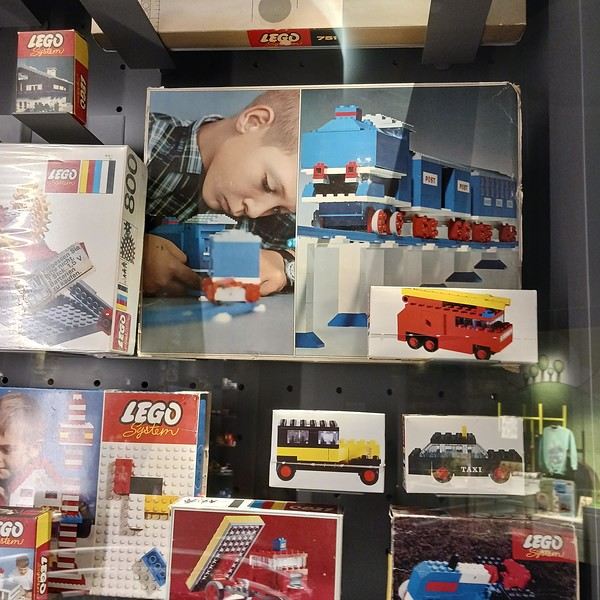
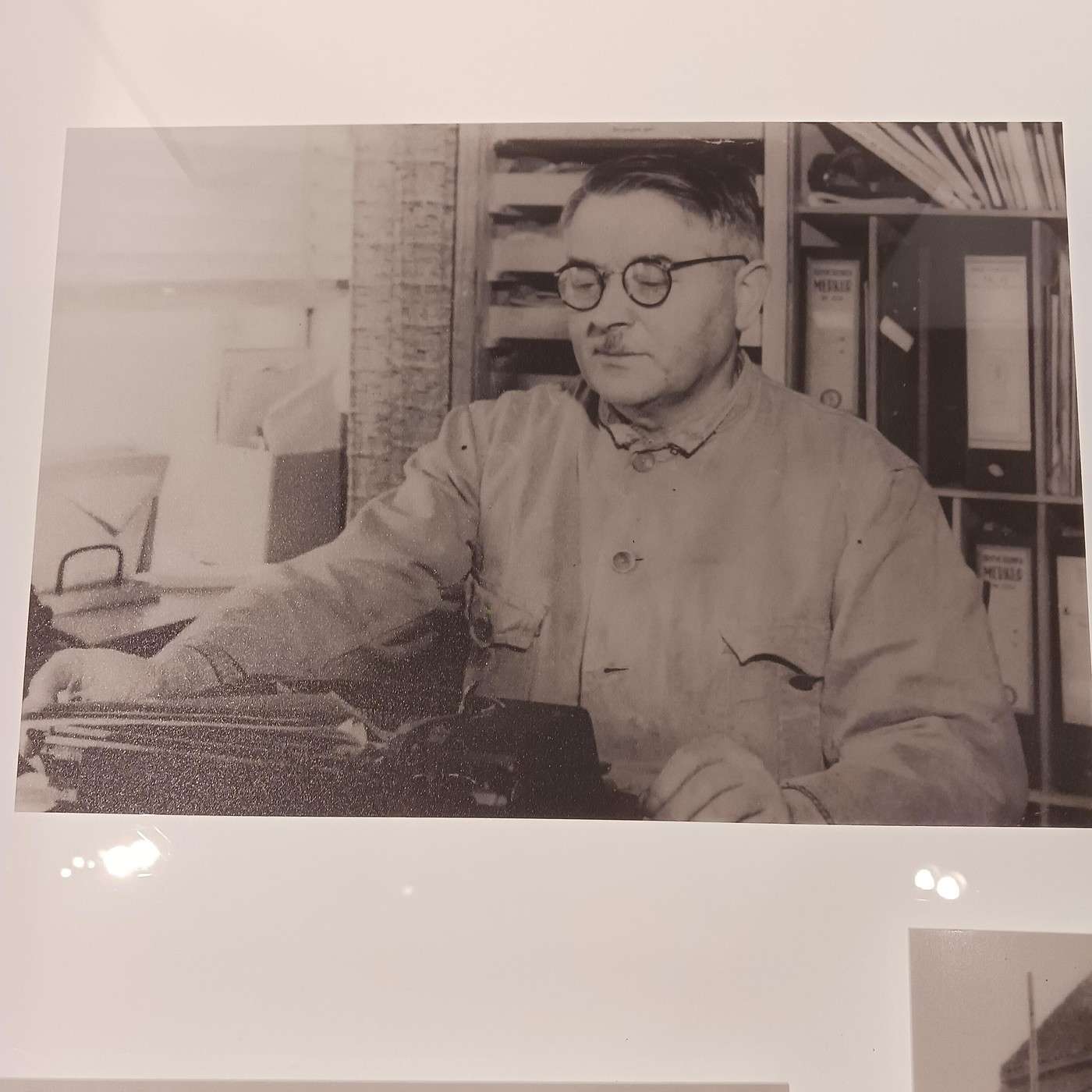
We head straight to the basement, where the LEGO museum is located, showcasing the history of this little brick and its creator, Ole Kirk Christiansen.


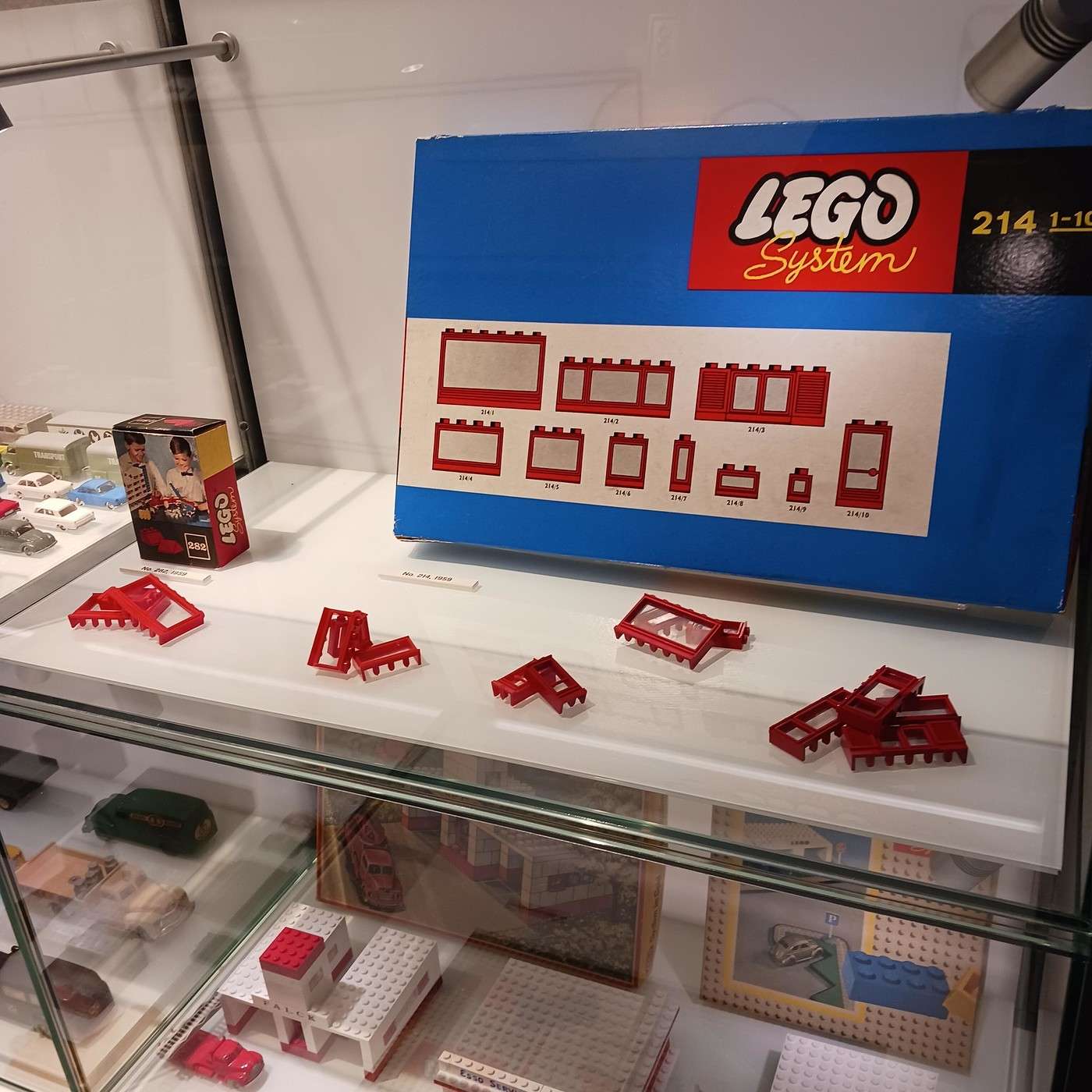
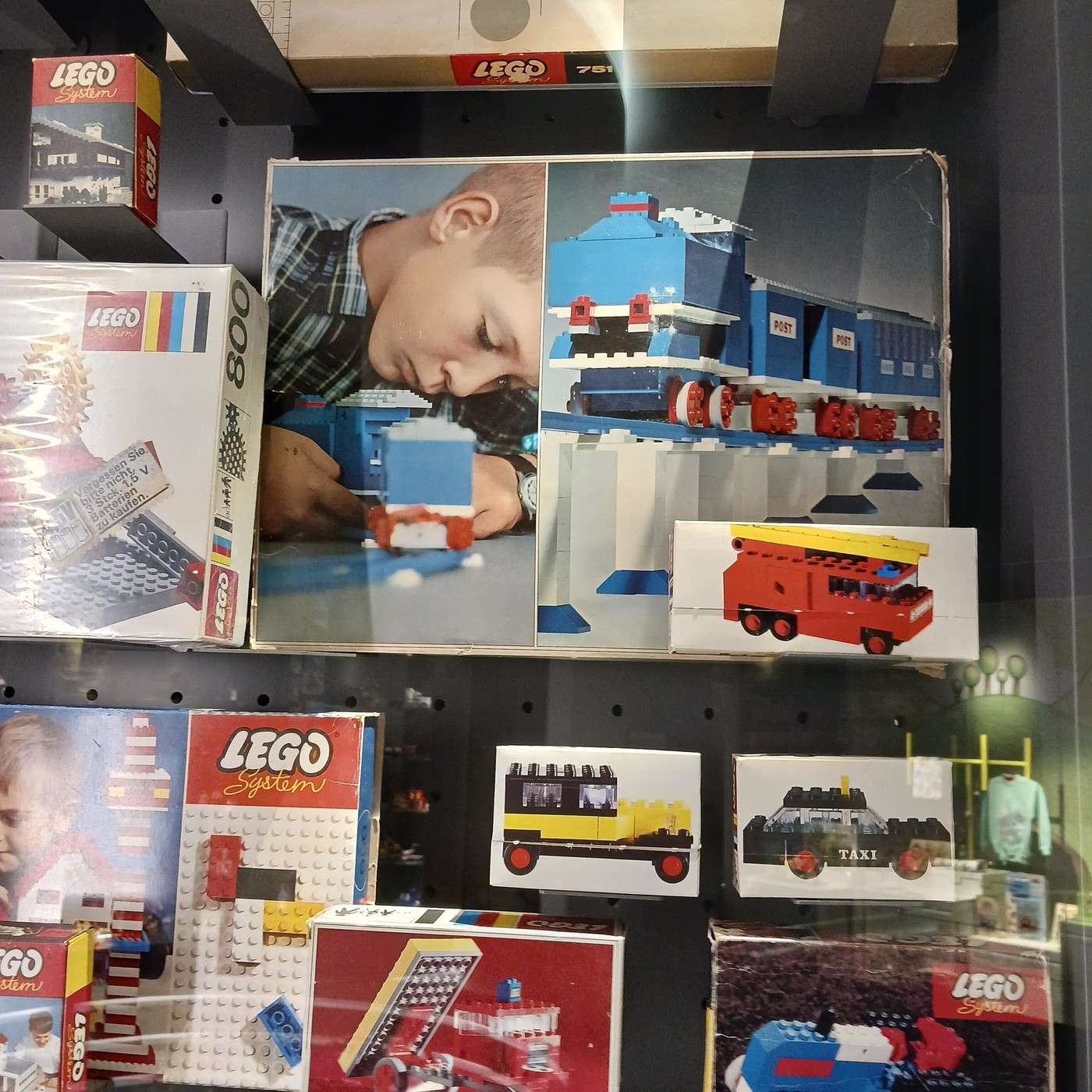
The history of LEGO dates back to 1932, when Ole Kirk Christiansen, a Danish carpenter, founded a small company in Billund, Denmark. Initially, the company focused on making wooden toys. The name LEGO is a contraction of the Danish words « leg godt », which mean "play well." And this philosophy of healthy play would become the cornerstone of the company. The first LEGO toys were mainly wooden cars, trucks, and animals, designed to entertain children of the time. The real turning point in LEGO’s history came in 1949 with the introduction of an interlocking plastic LEGO brick. This brick, known as the "automatic binding brick," opened the door to an infinite world of building possibilities. In 1958, the design of the modern LEGO brick was finalized with the addition of the inner tube, which allows for a stronger connection with other bricks. Since then, LEGO bricks have been compatible with each other, regardless of age or model. This innovation allowed children to create and customize their own constructions, paving the way for limitless creativity. The famous LEGO brick, with its studs and tubes, became the brand’s emblem and, above all, the foundation of all LEGO constructions. The 1950s and 1960s saw a rapid rise in LEGO’s popularity. The company continued to innovate by introducing new construction sets and themes. One of the first successful ranges was the LEGO SYSTEM series, which allowed for building cities and structures. However, it was in 1978 that LEGO launched the famous LEGO figurine, called the "minifig." This little articulated character opened up new possibilities for play and creative expression for children.

source here

I find it really moving to see the very first LEGO sets I was given in the 60s/70s. There are also computers available to look up the references of the LEGO sets we had and played with as kids, and we can save all that info using our QR code wristband... Except I threw the wristband away when we left, and since I no longer have the QR code, I couldn’t retrieve any of it once I got home :'(


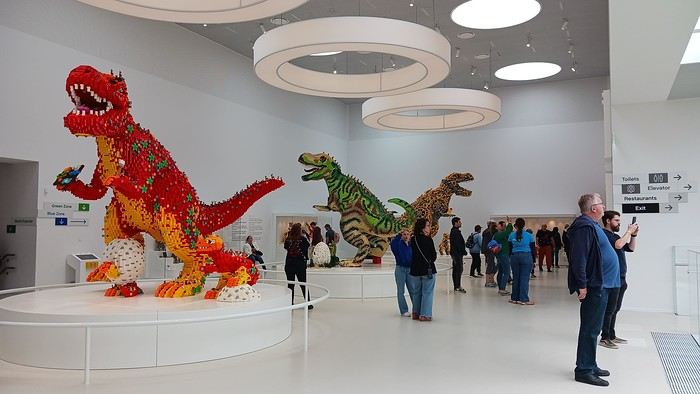
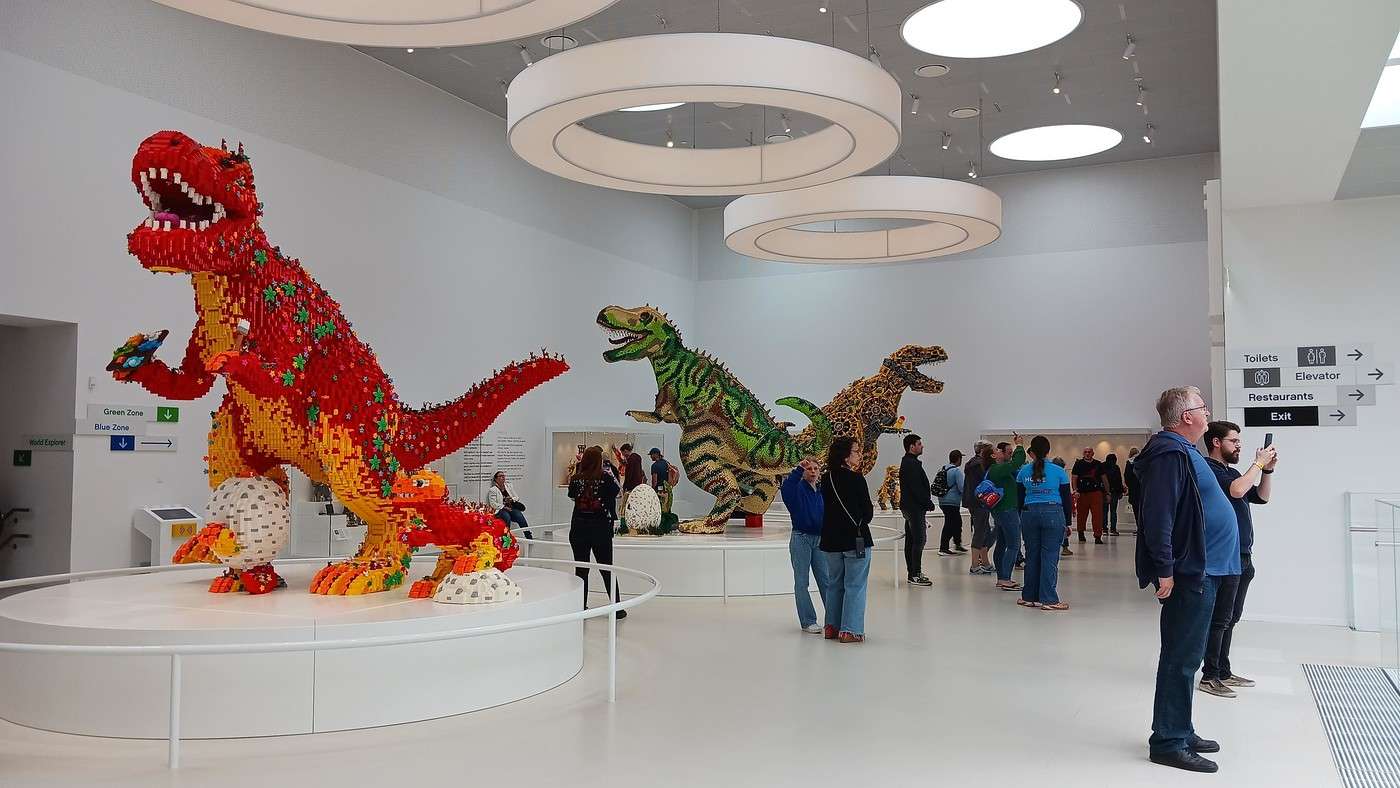
Next, we move up to the upper floors, where there are giant constructions like the dinosaur room, but the most impressive thing is the huge tree standing in the middle of the staircase.


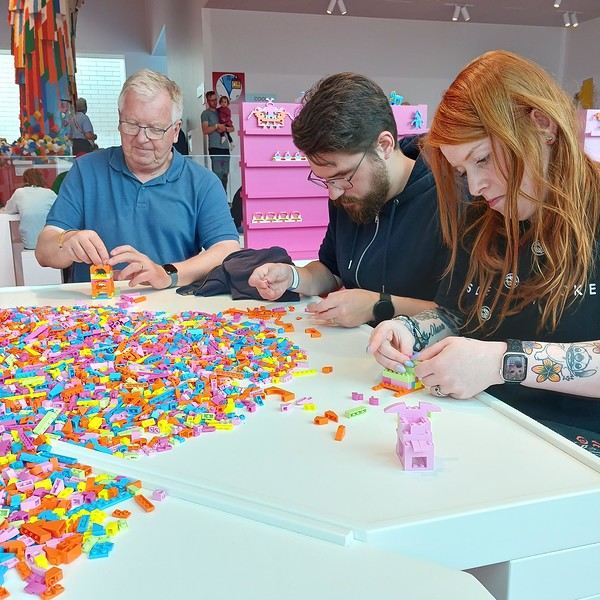
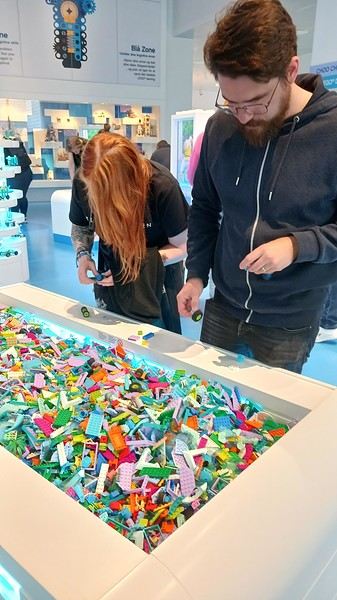
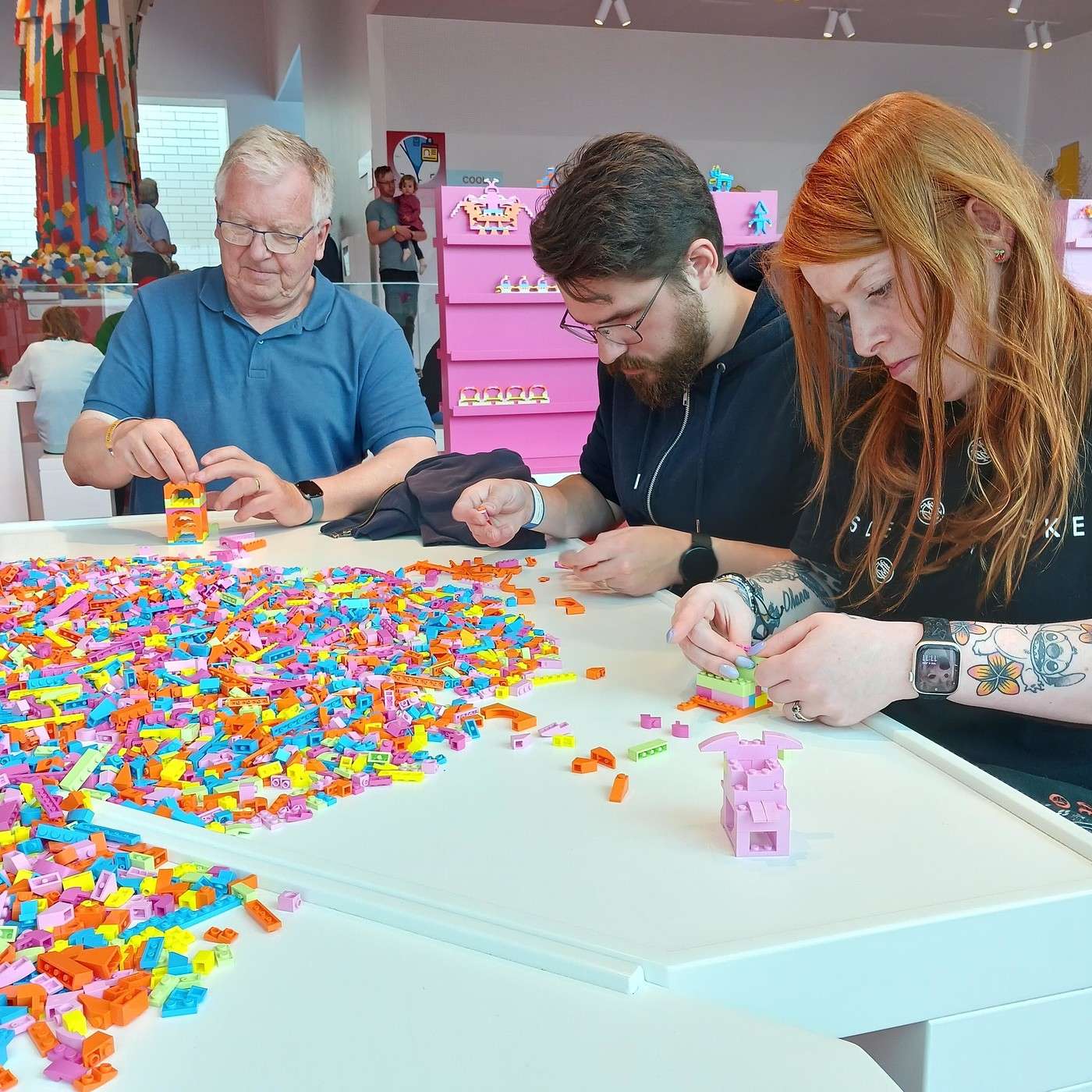
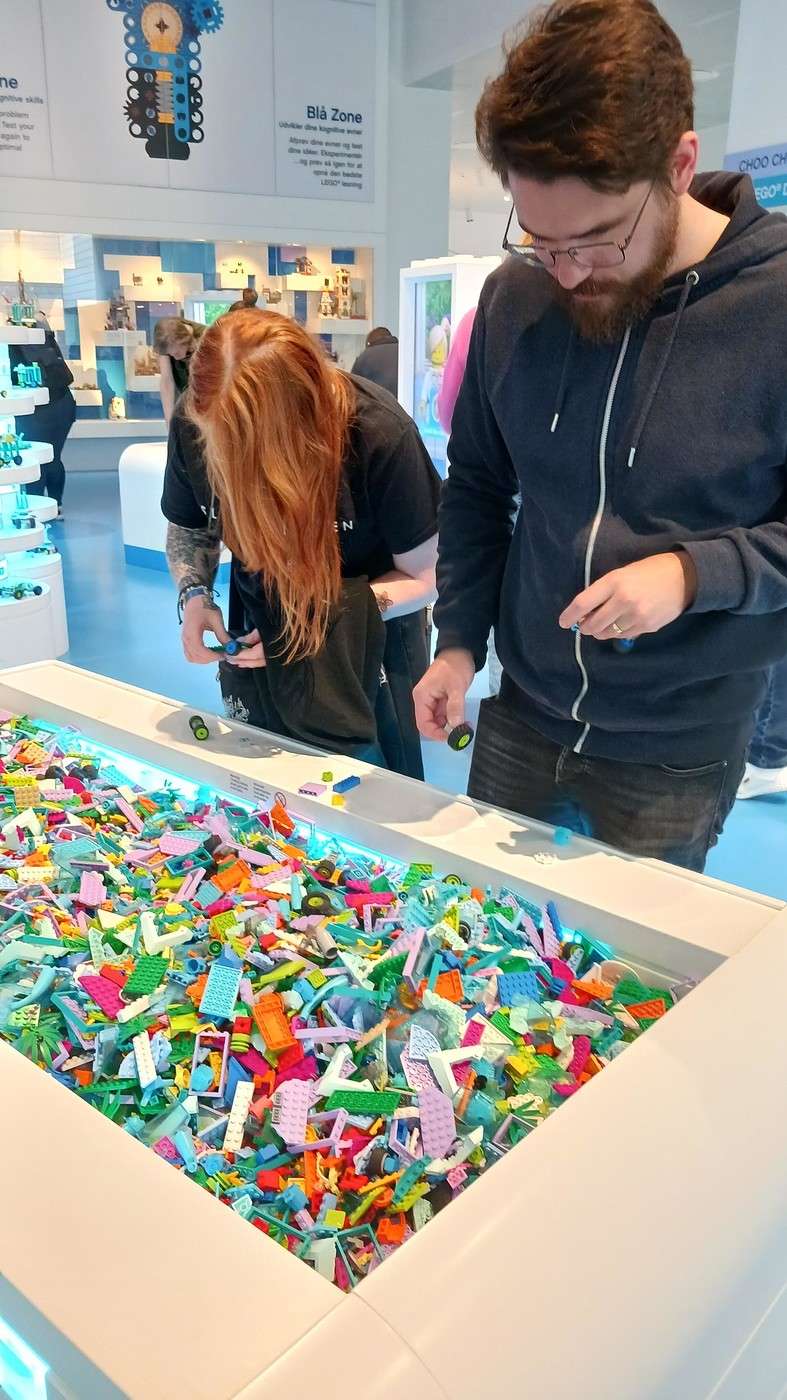
We then explore rooms where we get to experiment with different types of LEGO. Forget our age for a moment—let’s sit around a table and let the magic and imagination take over... What a blast!


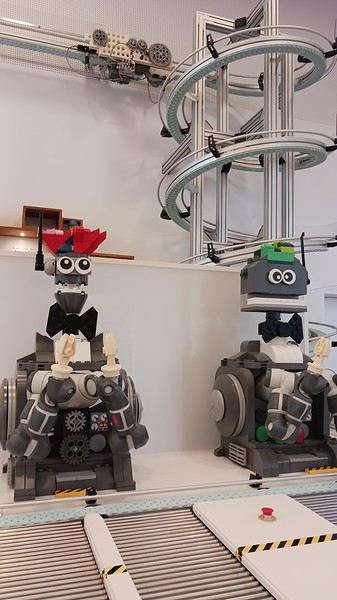
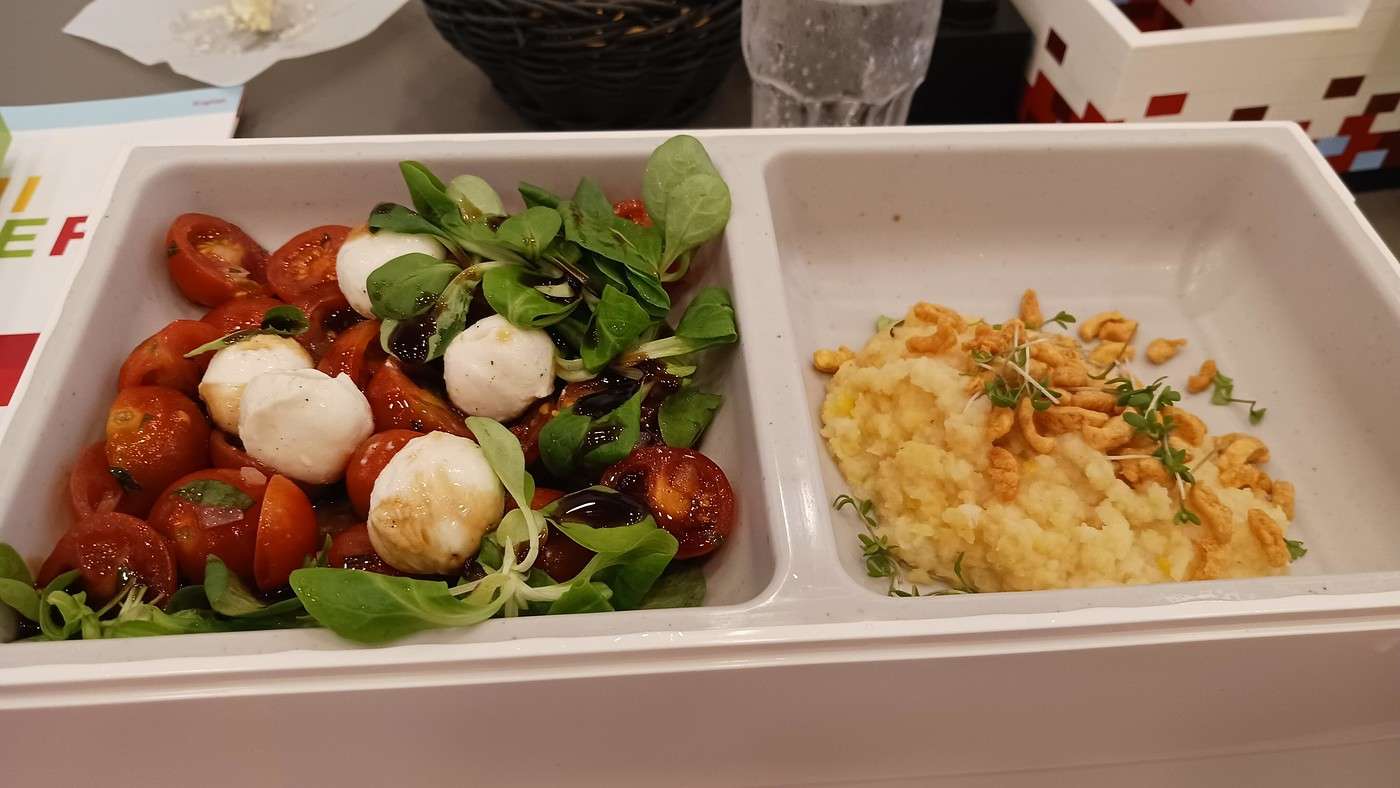
Next, we head to the LEGO Mini Chef restaurant. It’s a pretty special place where you order your meal using... LEGO bricks. A video shows little LEGO chef figurines preparing our food, and then two robots deliver our boxes.


We wander back through the twists and turns of the house to try out the experiences we haven’t tested yet, then finish up in the shop, where there are still more surprises. Here, you can build custom minifigures, which we don’t pass up the chance to do.


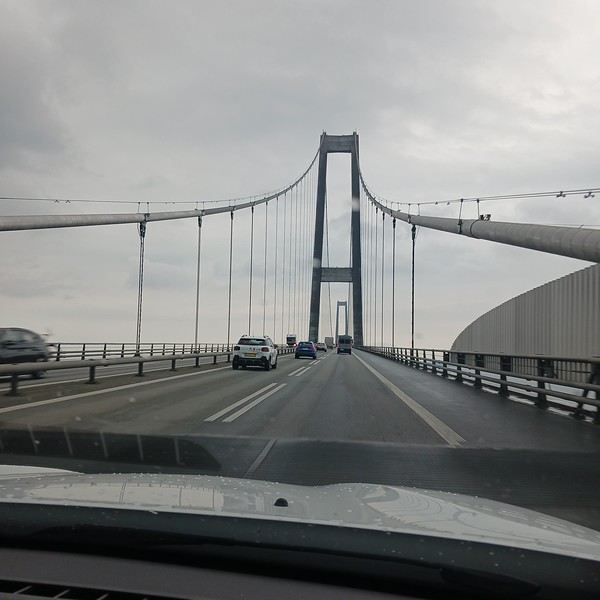
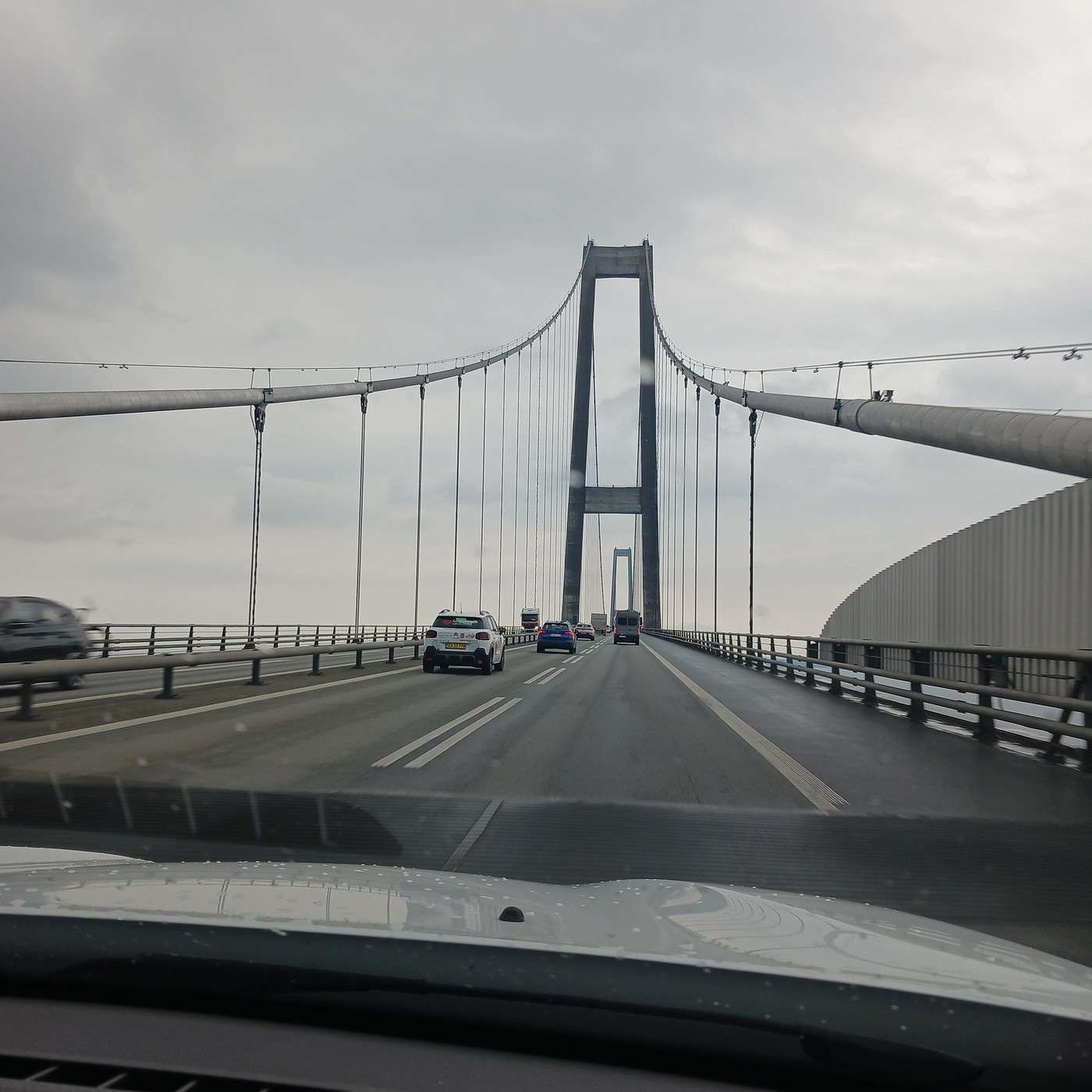
But it’s time to head to our accommodation for the night in Stenlille. To get there, we have to cross the island Funen (Fyn), located in the center of the country, and take the Great Belt Bridge, which connects us to Zealand, the island where the capital, Copenhagen, is located.


We arrive in a forested area where Suzanne is waiting to give us the keys to a house. The place is really peaceful, and in the evening, we spot some deer (or maybe roe deer) crossing the garden!

Tour of Kattegat and the Great Norwegian Fjords - 32 Days (Denmark - Sweden - Norway)

Cendryon · 2025-07-11

But where’s the forum spirit from the days when members actually read travel journals and even asked questions sometimes!... I’m wondering if it’s even worth continuing because I feel a bit alone in this interstellar void! 🙁😕🤪

Kattegat Tour and Great Norwegian Fjords - 32 Days (Denmark - Sweden - Norway)

Alanay · 2025-07-11

Hello Cendryon,

What a pleasure to rediscover your beautiful writing! I’d followed your posts before, and you really inspired me during your travels in the American West.

With retirement approaching, my husband and I are planning an extensive tour of Scandinavia. We already know Norway a little but not Denmark at all (except for a short week in Copenhagen at Christmas a few years ago). Your story really interests me!

However, after this long period of VoyageForum being inaccessible due to Covid, I’m not sure if members have returned... that might explain the lack of reactions.

Looking forward to the rest of your story! Armelle

Kattegat Tour and Norwegian Fjords - 32 Days (Denmark - Sweden - Norway)

FrançoiseVec · 2025-07-11

Good evening, No, no, you're not alone. Even silently, I'm reading you with interest. Best regards

Kattegat Tour and Norwegian Fjords - 32 Days (Denmark - Sweden - Norway)

Cendryon · 2025-07-11

Thanks for your message and FrançoiseVec’s too. So, I’ll continue...

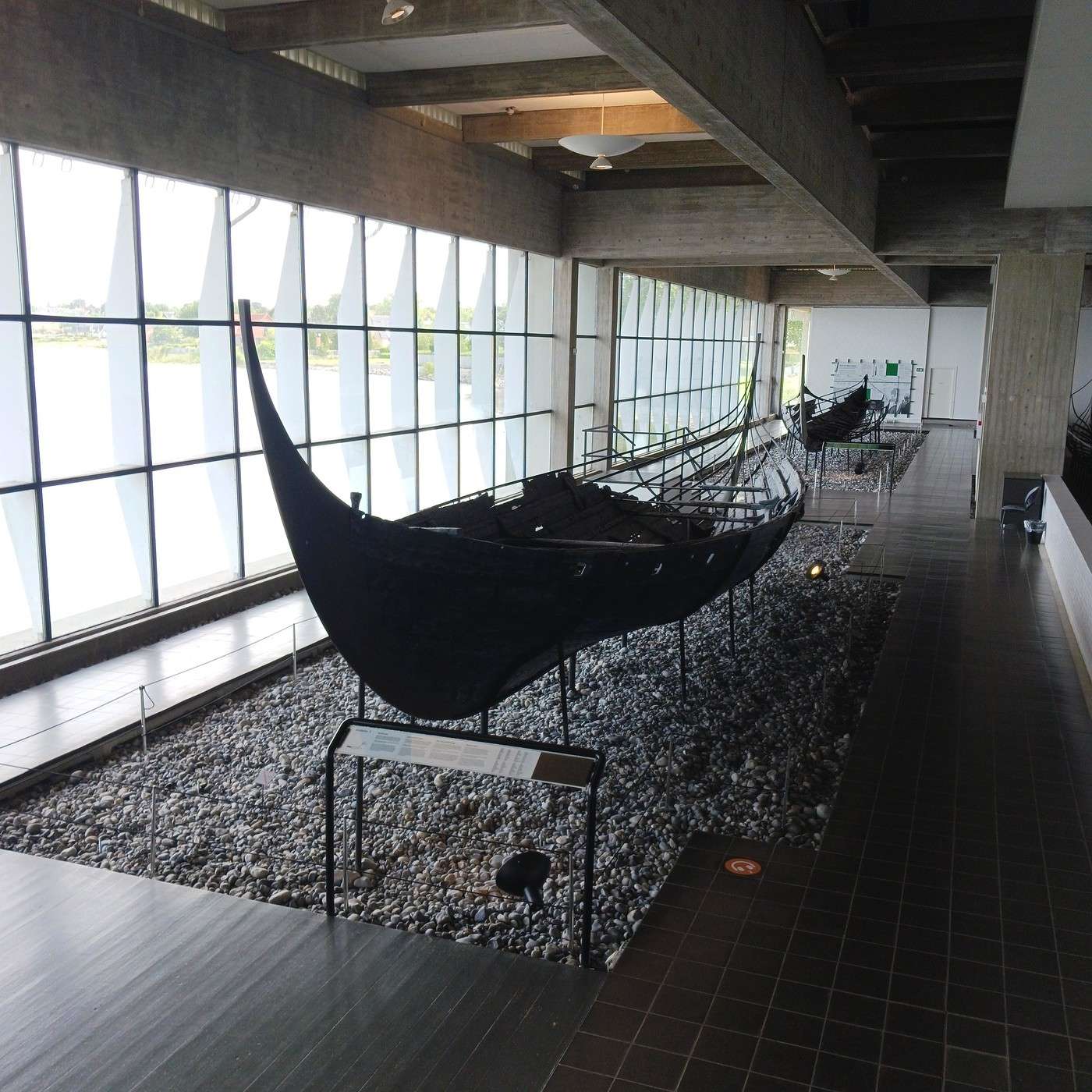
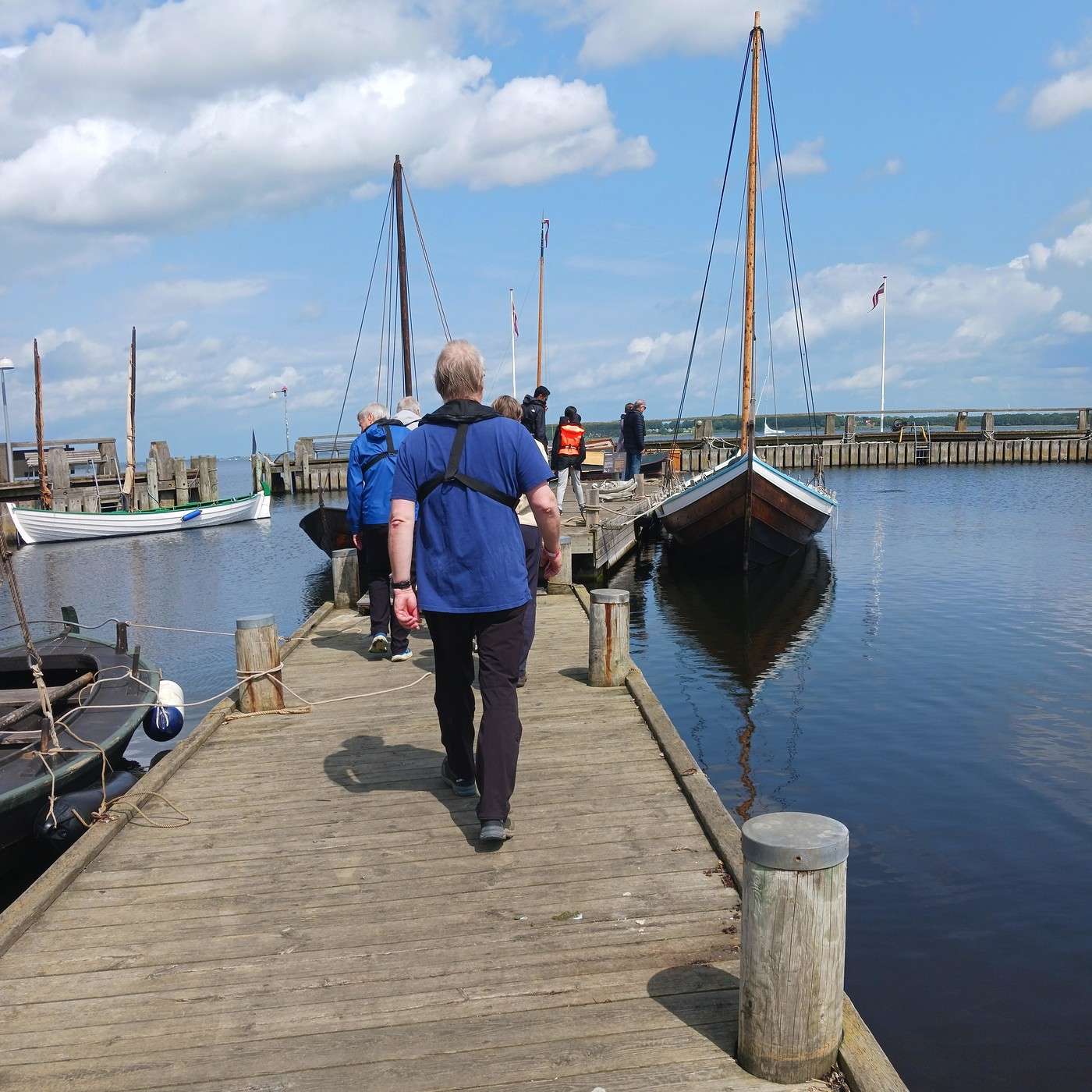
Day 5 - Thursday, June 5 - 82.7 km Today we’re heading to the Viking Ship Museum in Roskilde, about 40 minutes from our B&B. We arrive right at opening, but since we’ve booked a boat tour starting at 11:30, we have time to explore the museum first.

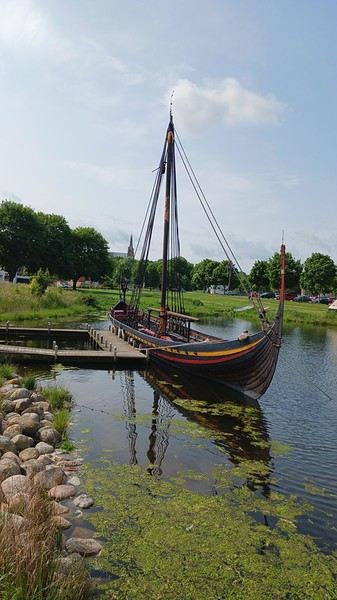
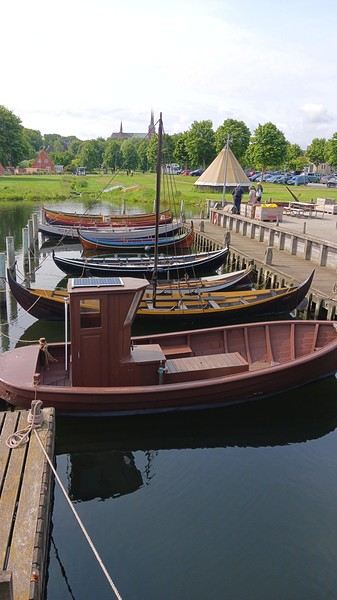
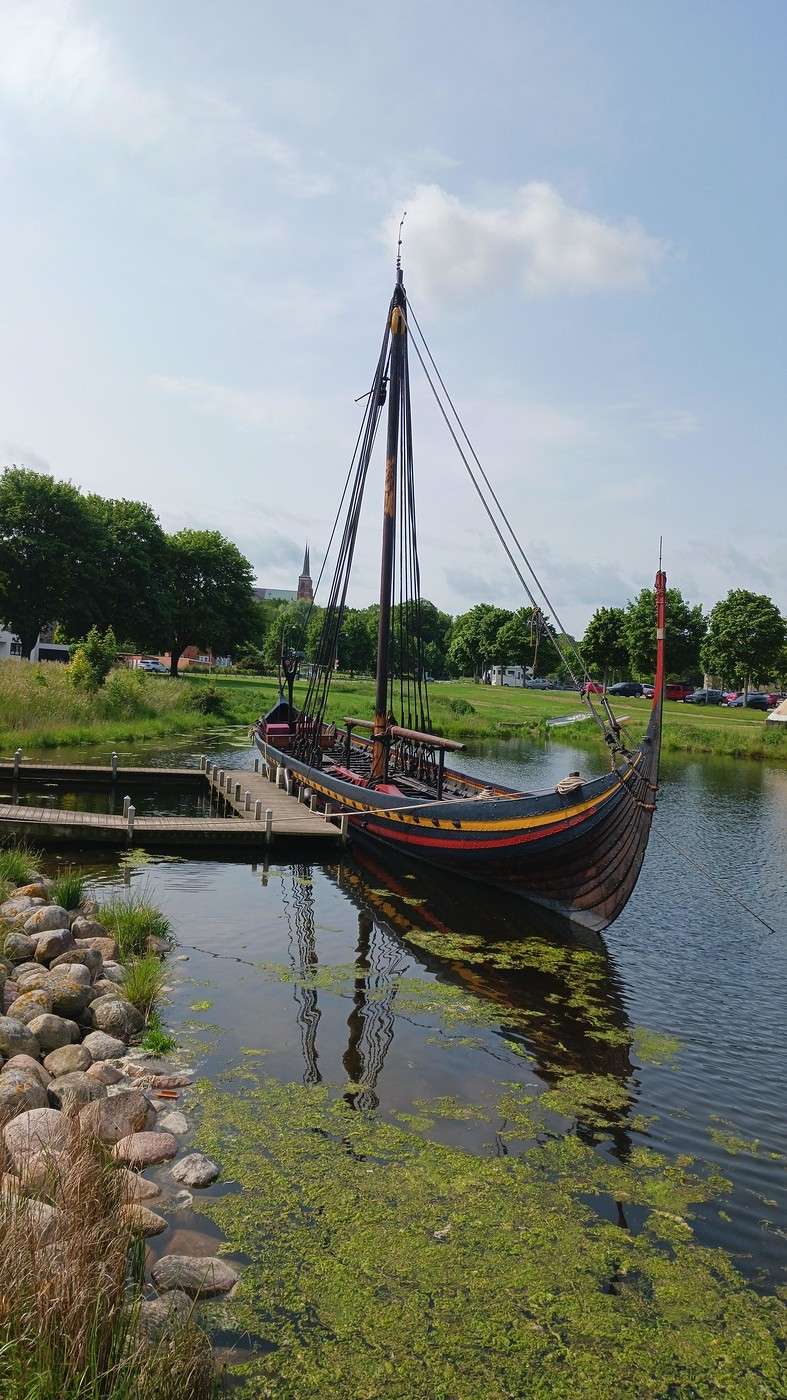
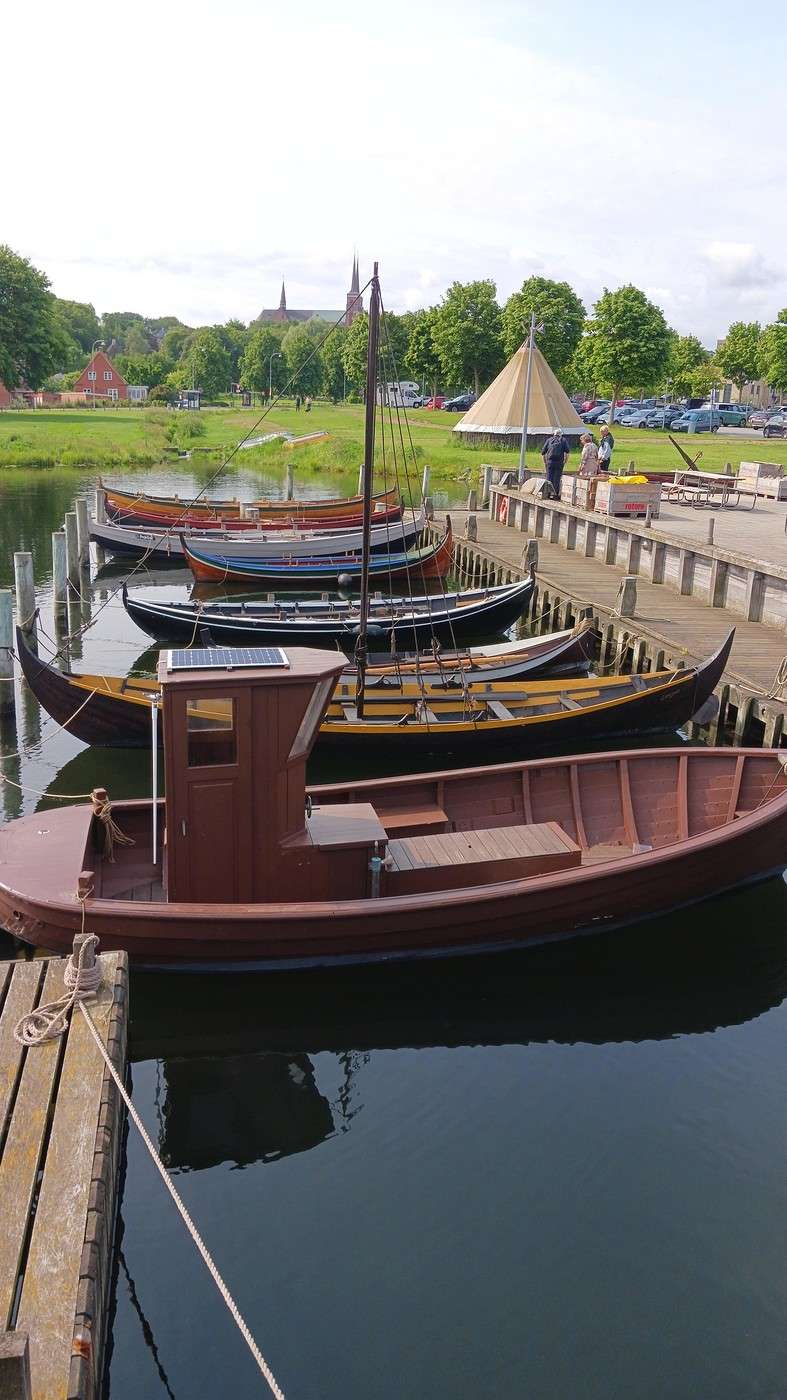
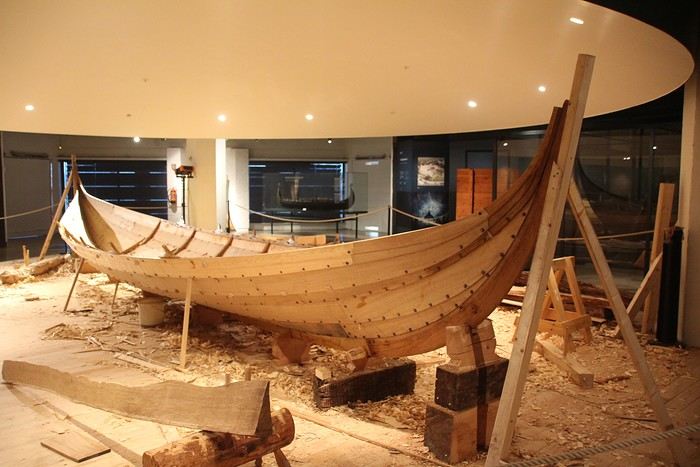
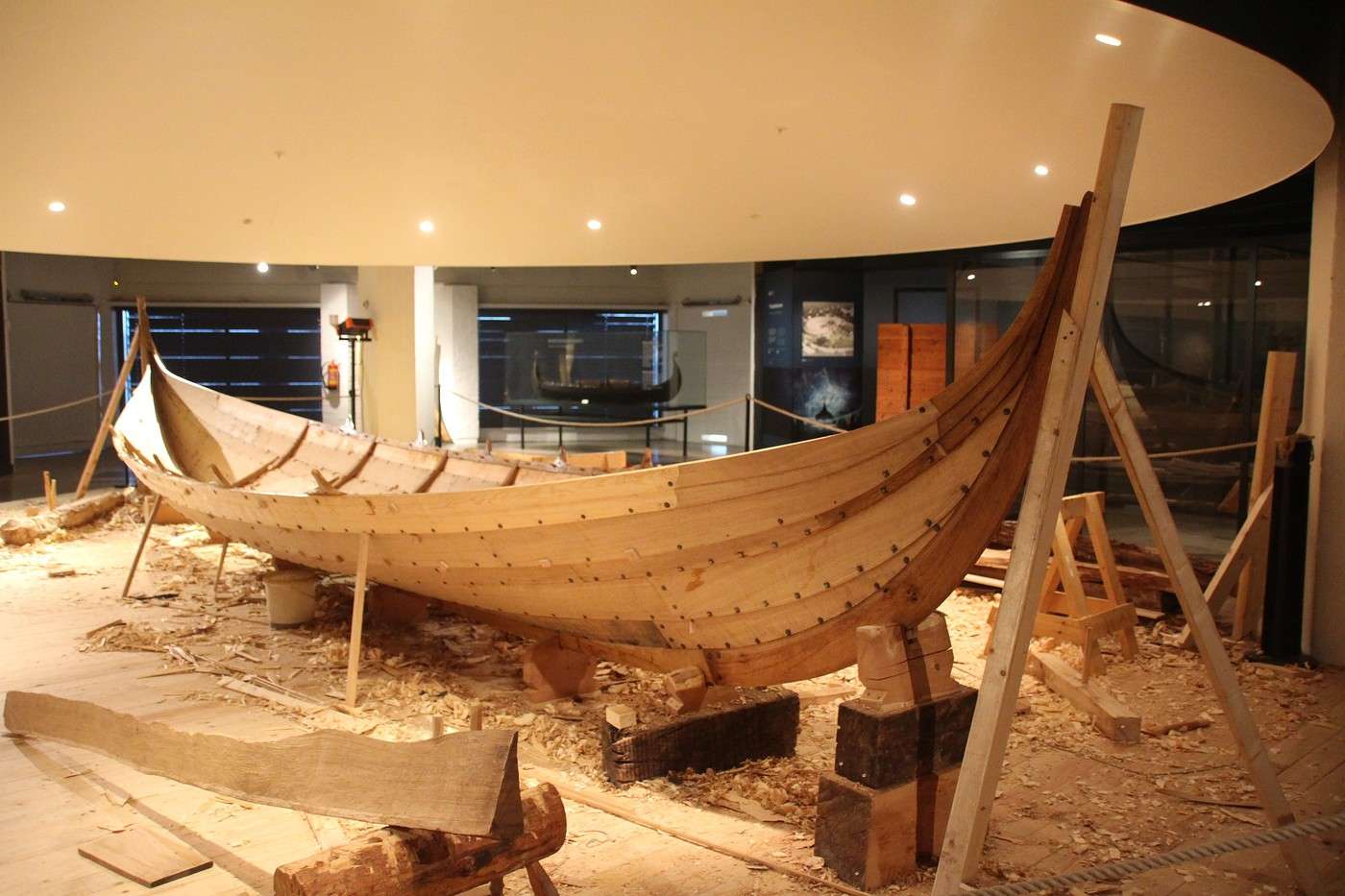
There are plenty of boats in the small harbor, but a modern museum has been built specifically to house authentic Viking shipwrecks recovered from the seabed. To protect Roskilde, Vikings used to sink old ships to block enemy vessels from advancing into the fjord. Not much remains of these ships, and it took years to piece together these giant puzzles.
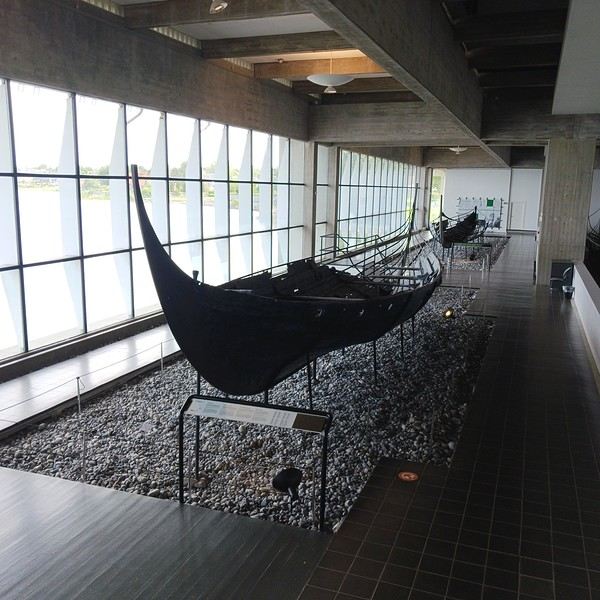
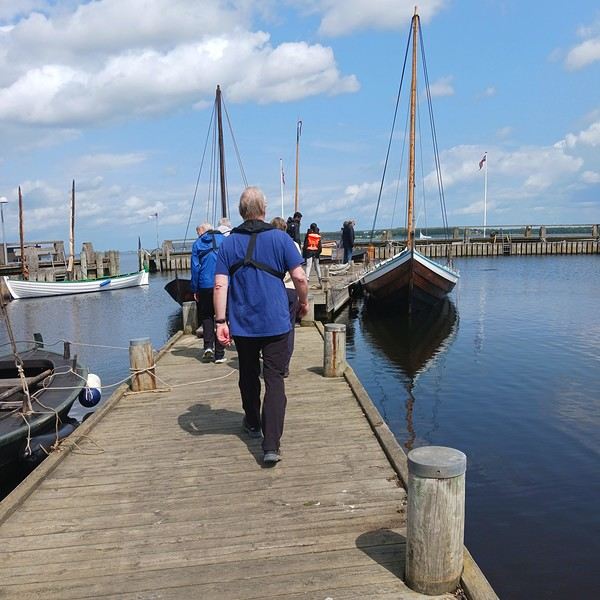
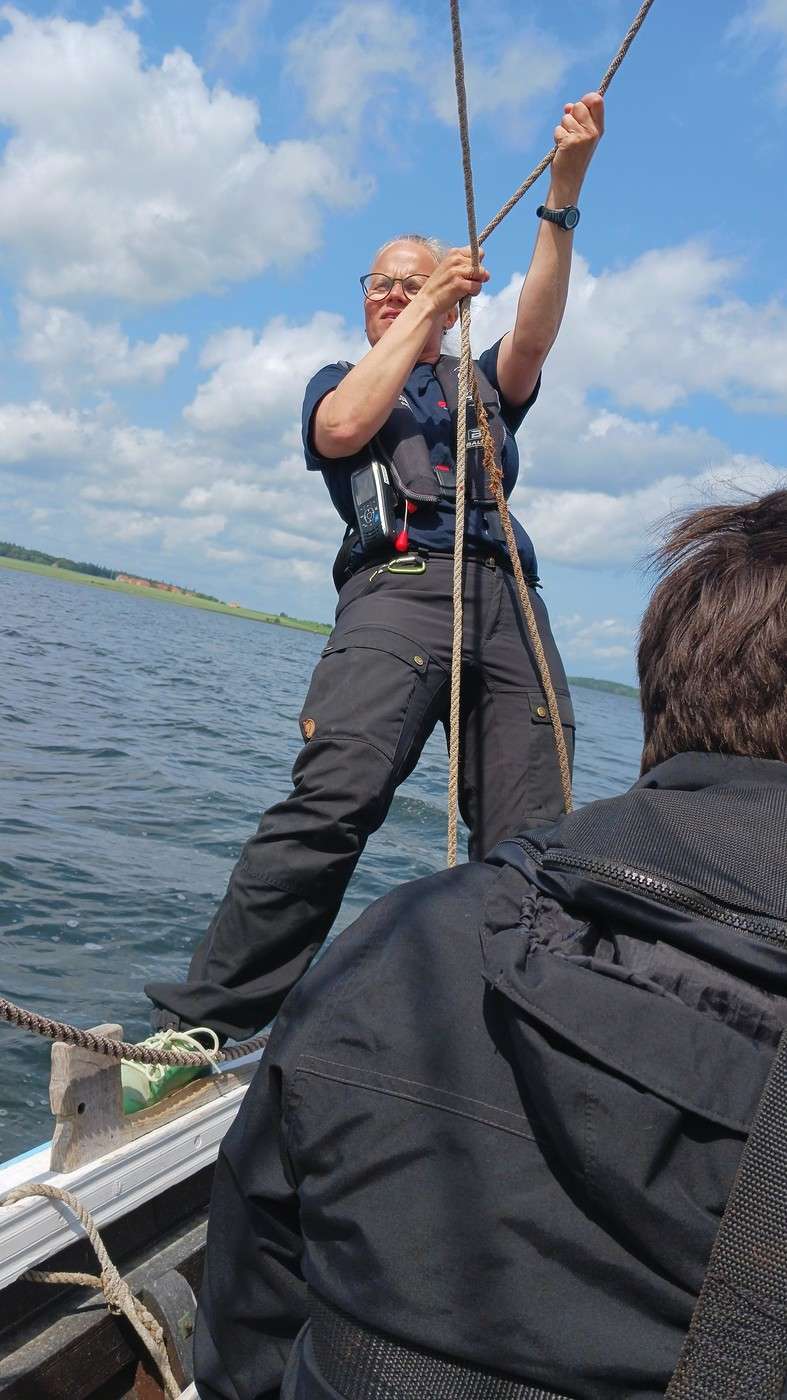
But now it’s time for us to board a Viking ship. All the boats in this harbor are replicas of ancient Viking vessels. Our guide is a very energetic woman who explains how to row. After a few maneuvers, we leave the harbor and sail into the fjord. Rowing with a dozen people on board doesn’t require superhuman effort! We stow the oars, and our captain raises the sail, giving us a chance to relax. The trip isn’t very long but is really enjoyable.
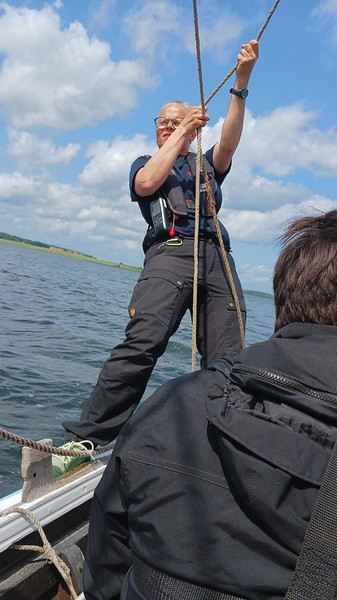
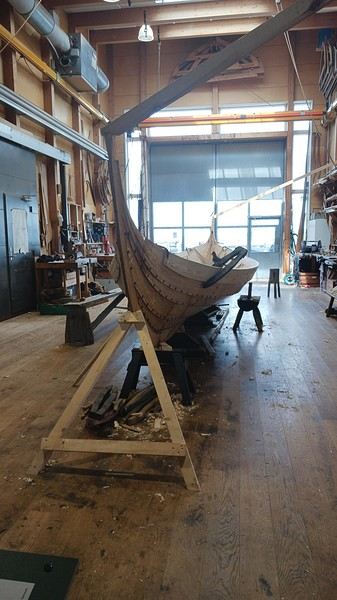
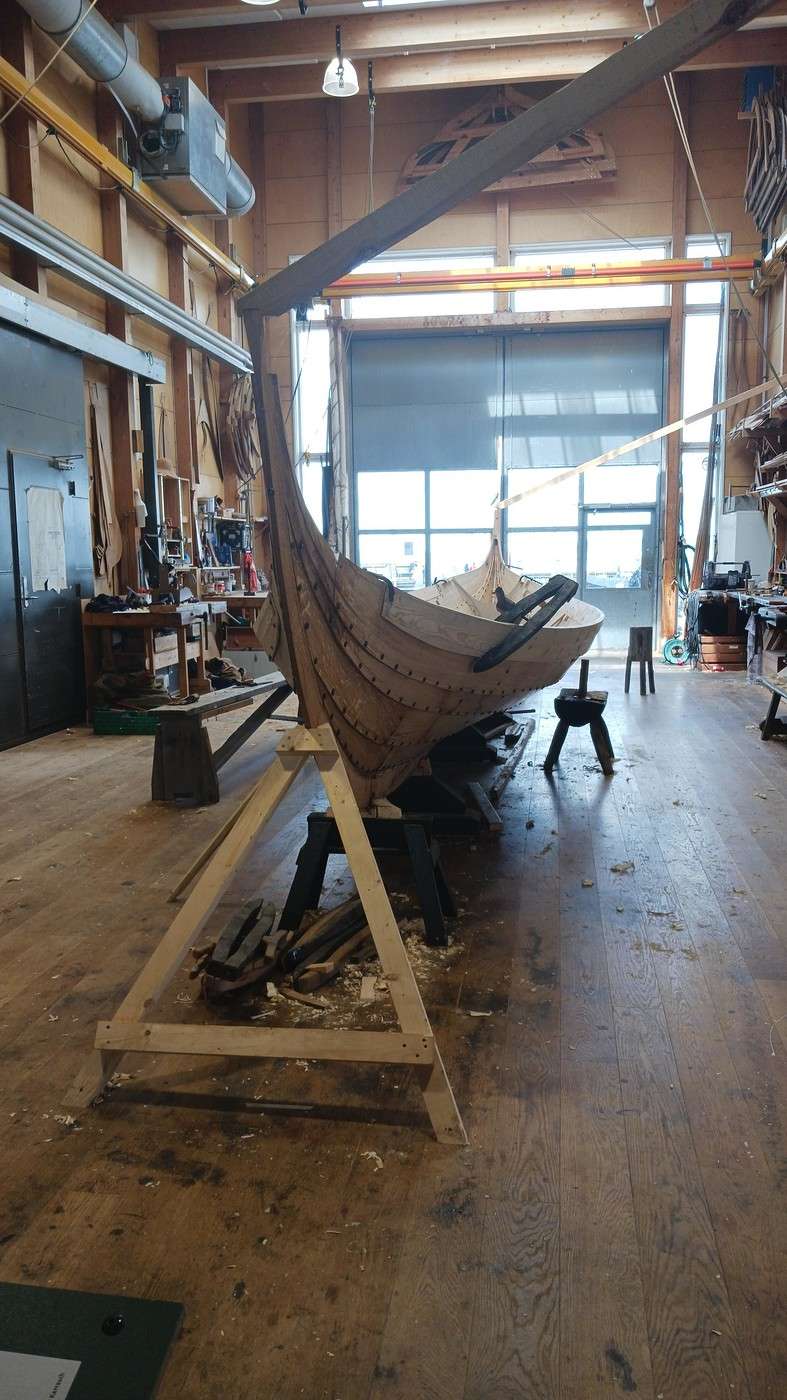
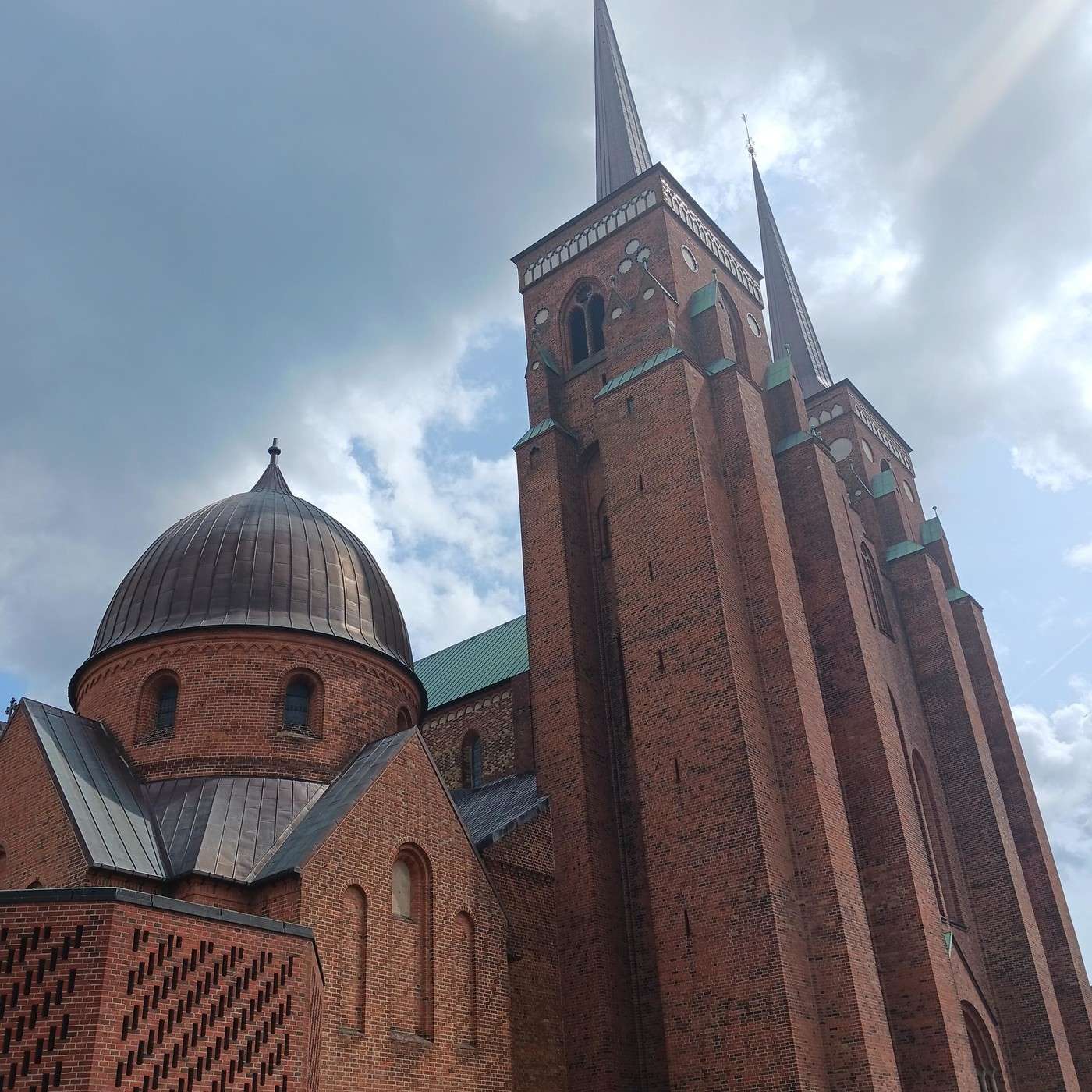
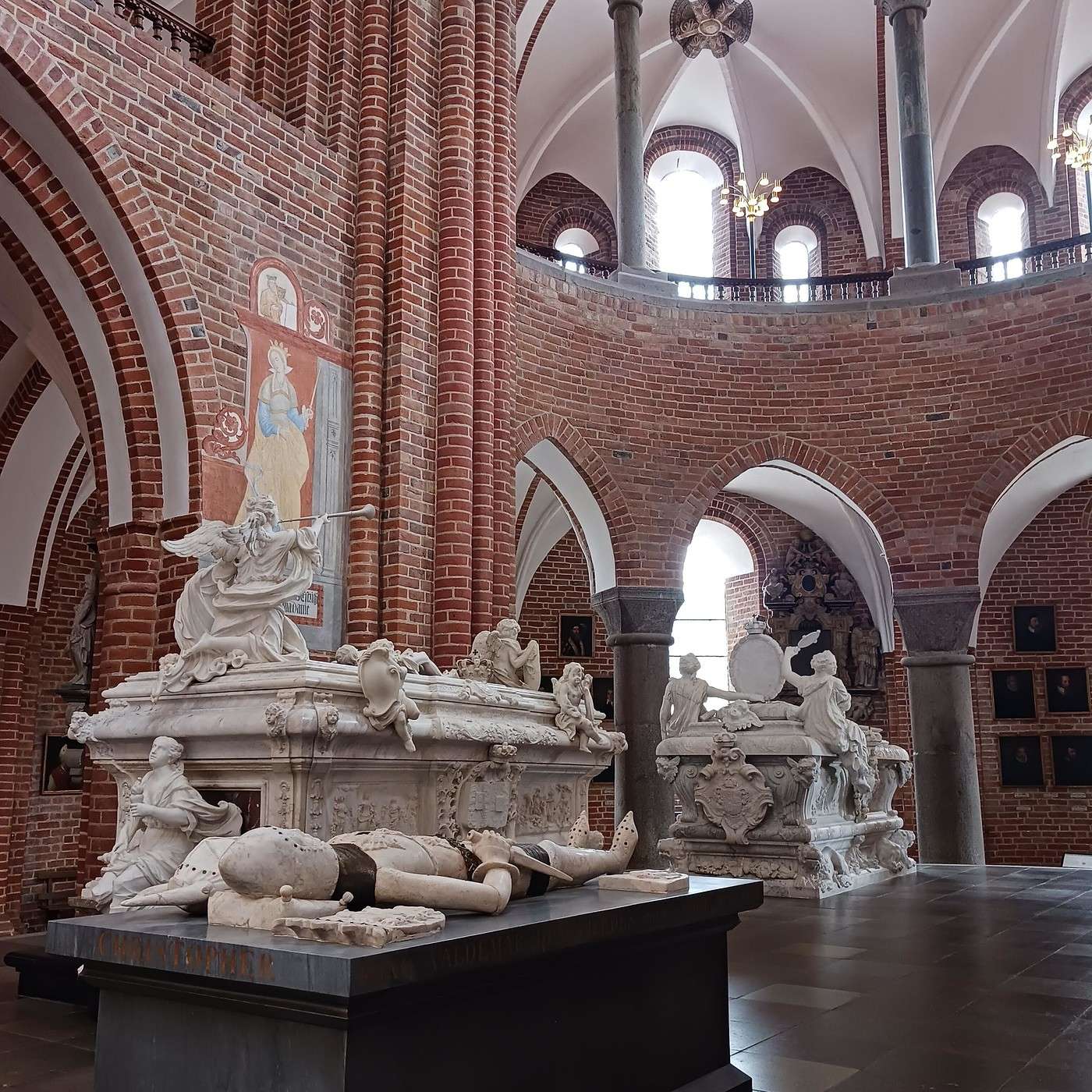
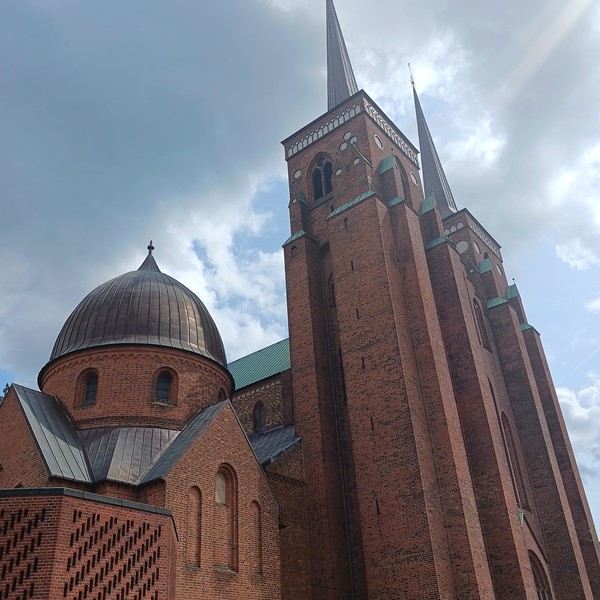
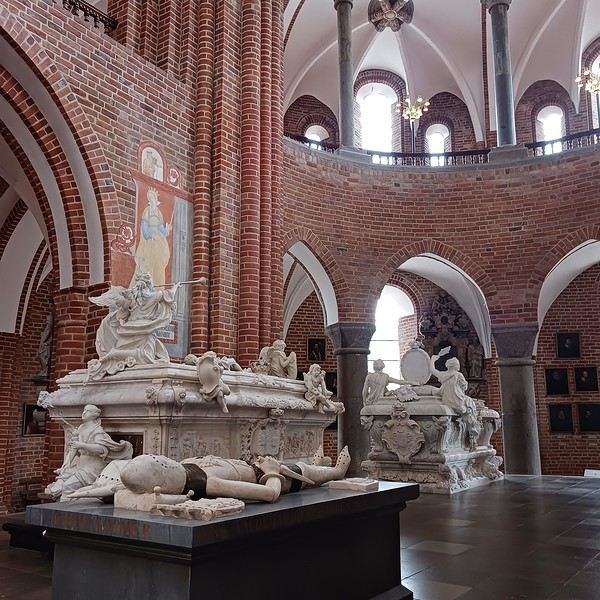
Back on land, we head to the Knarr café to enjoy some delicious salads on the terrace since the weather’s nice. Then we continue exploring the museum, including the shipbuilding workshop. Since we’re parked near the city center and the weather’s pleasant, we take the opportunity to walk to Roskilde Cathedral, where Denmark’s kings are buried. Some of the tombs are impressive...
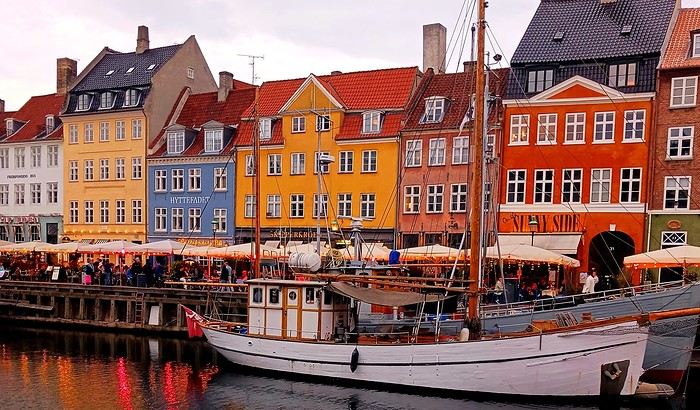
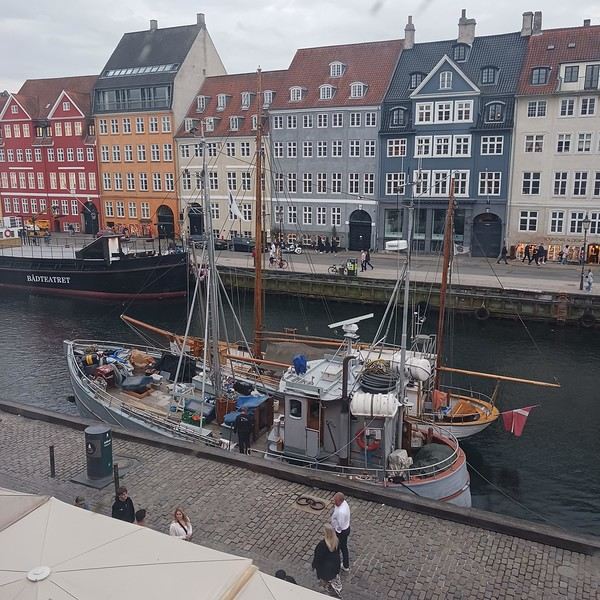
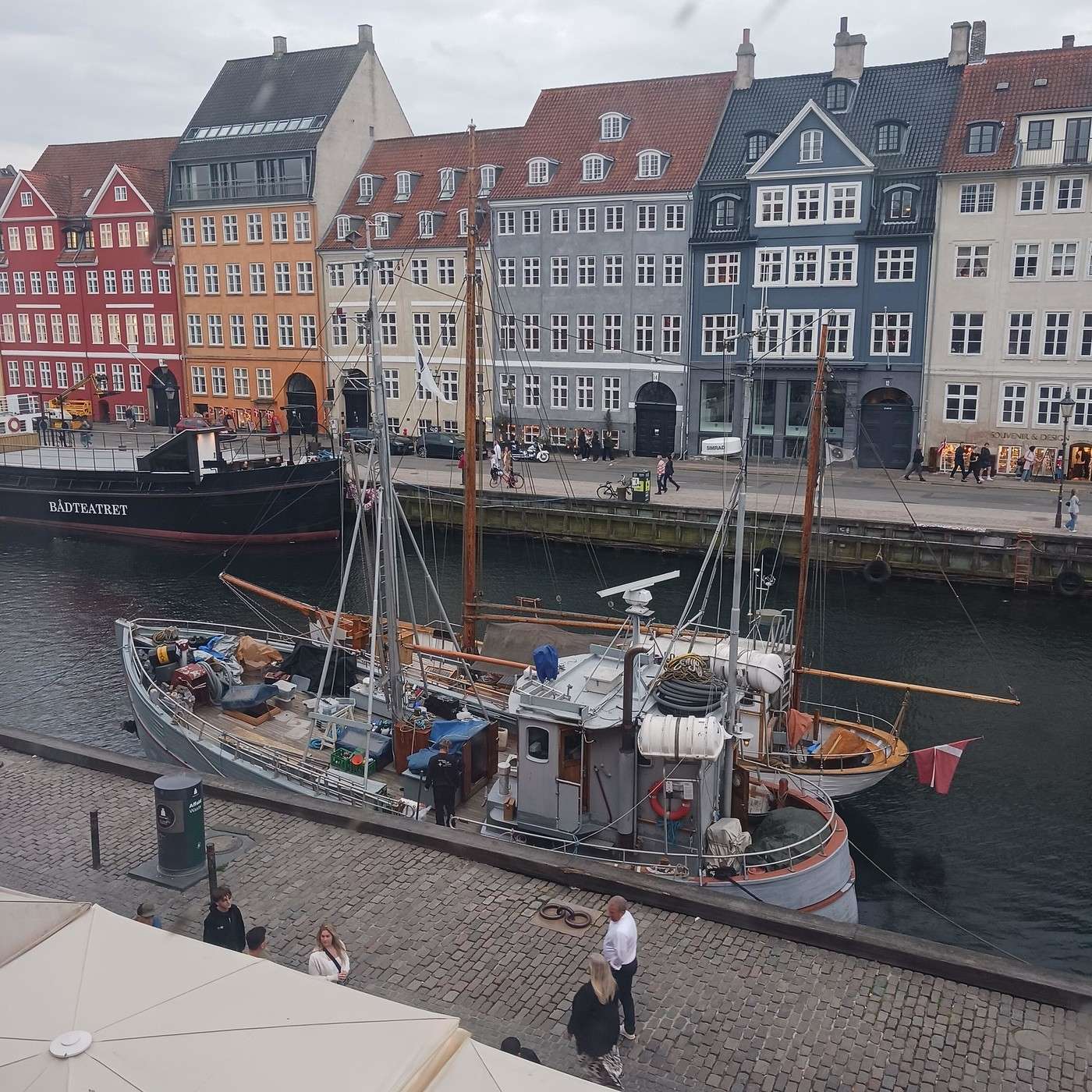
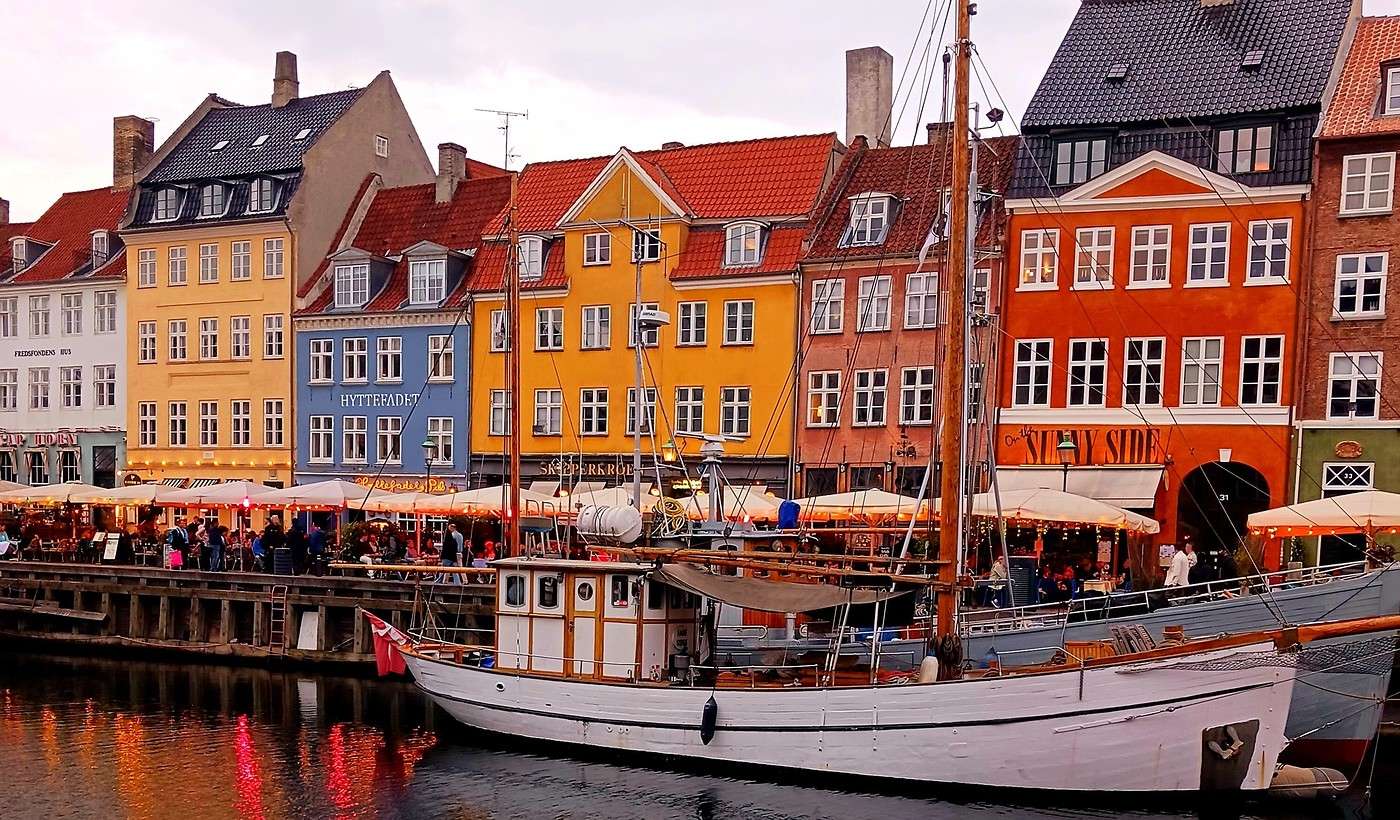
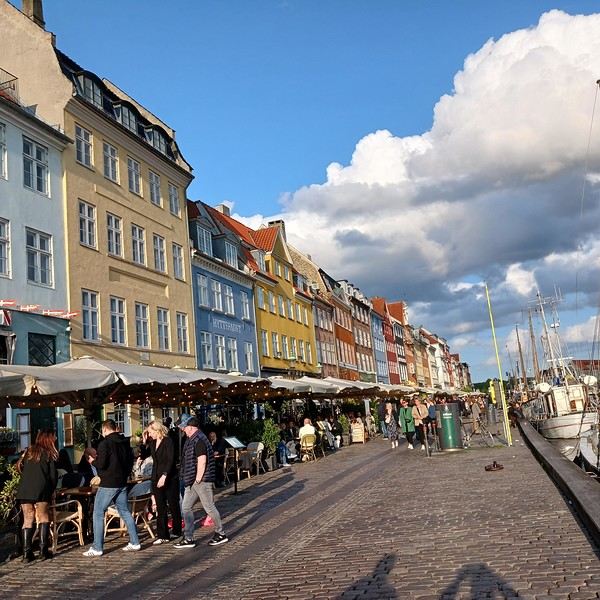
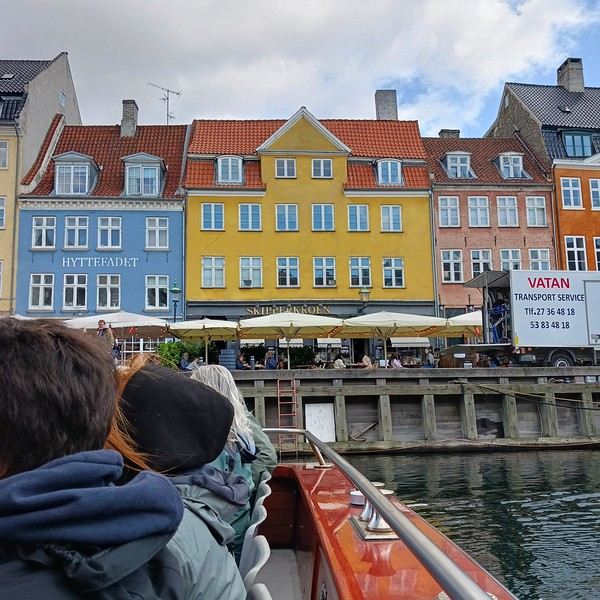
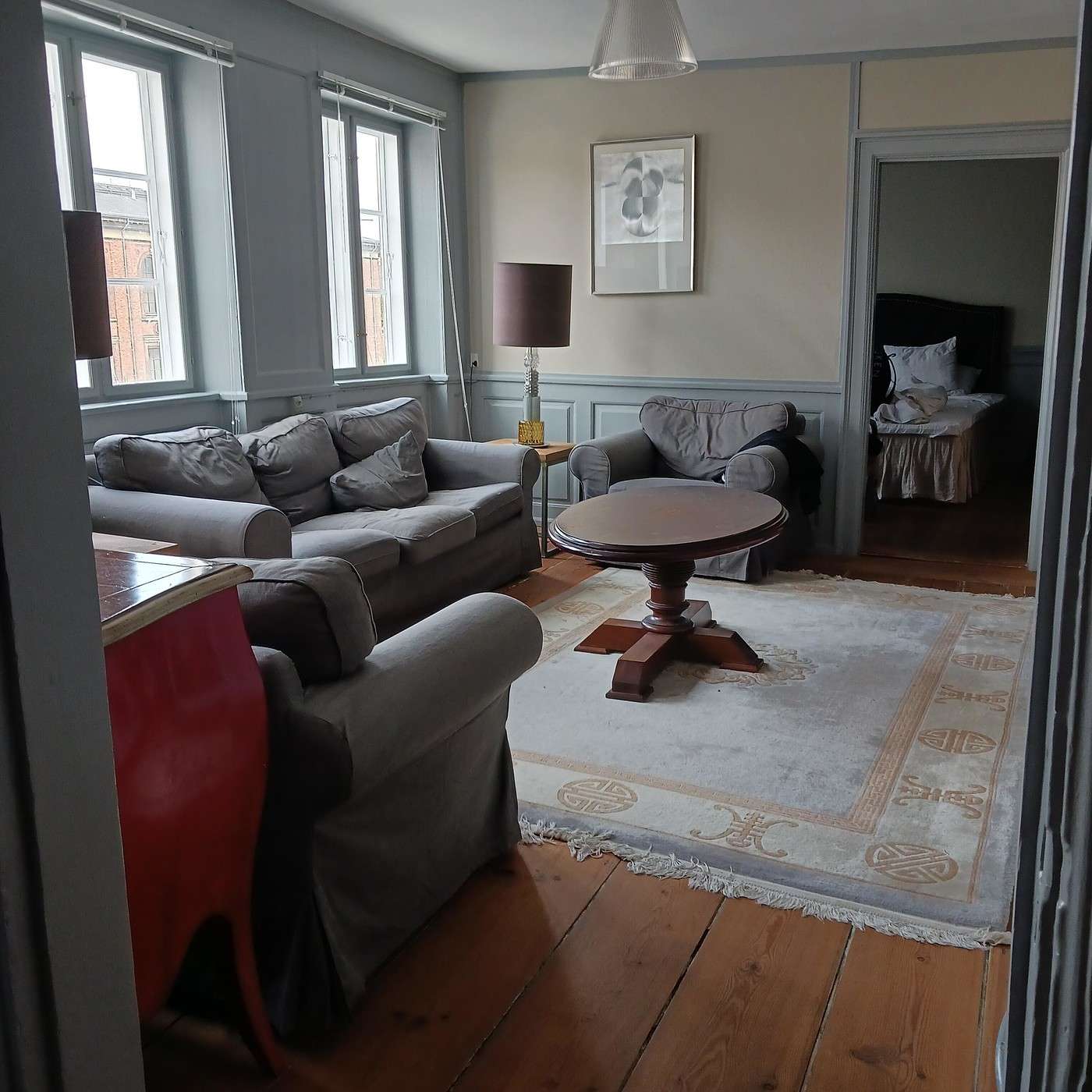
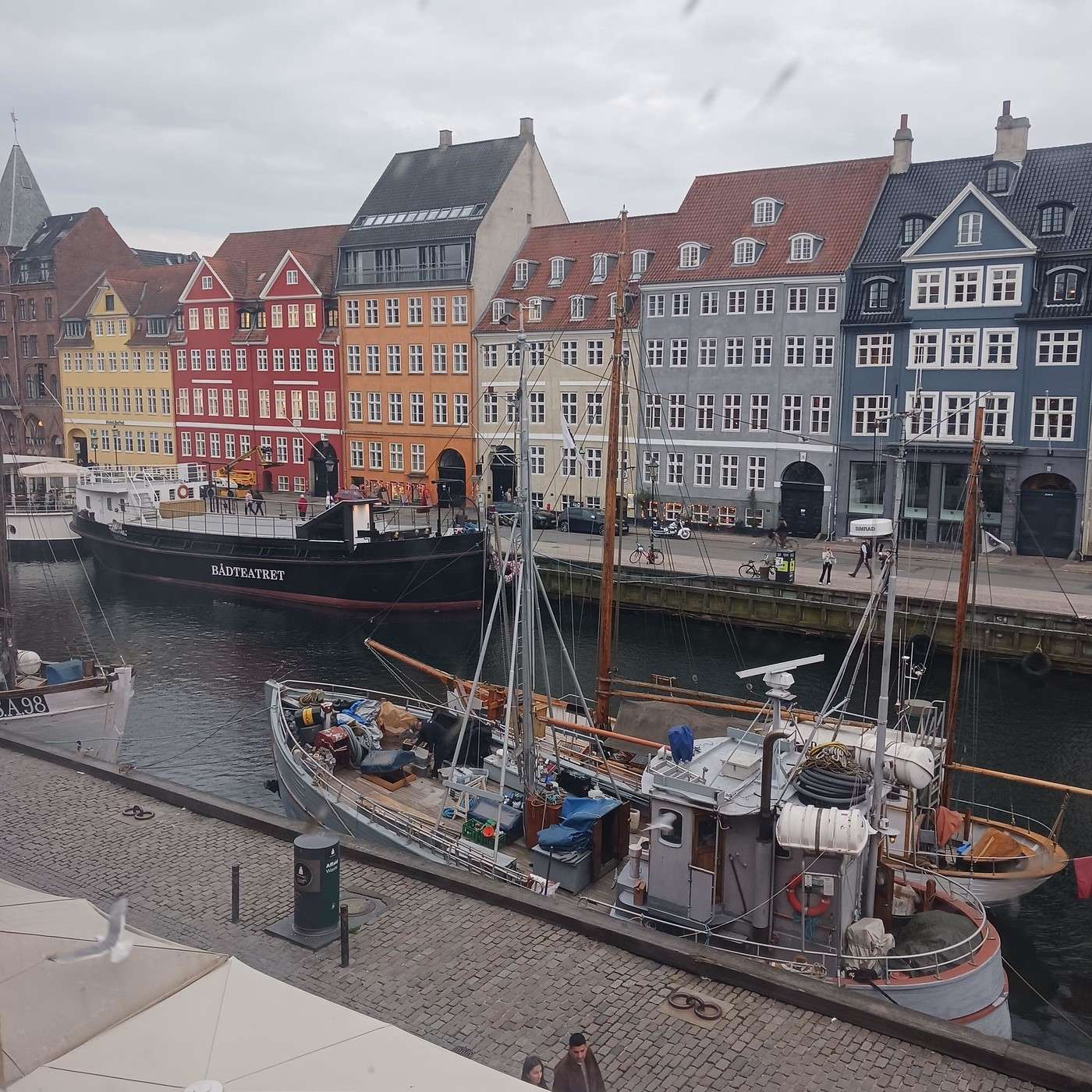
Now it’s time to head to the Danish capital. Copenhagen is only 40 minutes from Roskilde. We park our vehicle in a pre-booked parking lot for 4 days. It’s expensive, but we don’t have another option since our apartment is on a pedestrian street in the heart of the city’s liveliest district—Nyhavn. The apartment matches its Airbnb description. It’s on the 2nd floor of a very old yellow house, with creaky, uneven floors that add to the charm of this space right in the middle of the city’s most iconic quay. See the yellow house in the center of the photo? The apartment occupies the 6 windows on the 2nd floor...


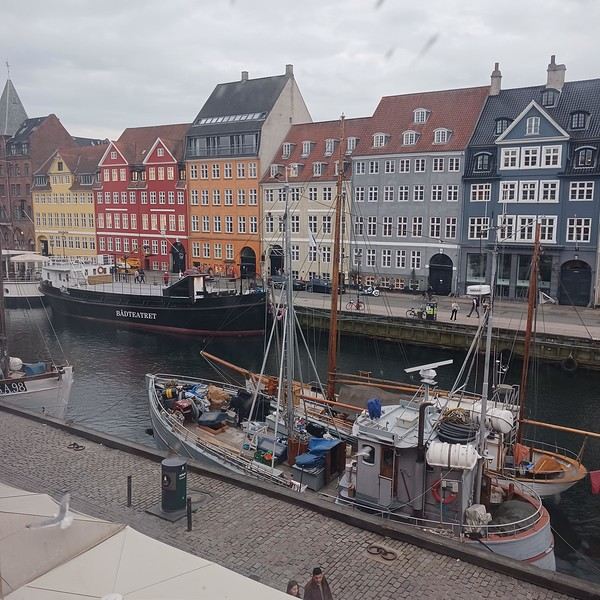
The view from our windows is stunning—we’re right in the heart of this charming capital!


To be continued...

Kattegat Tour and Great Norwegian Fjords - 32 Days (Denmark - Sweden - Norway)

Cendryon · 2025-07-13

(Continued)

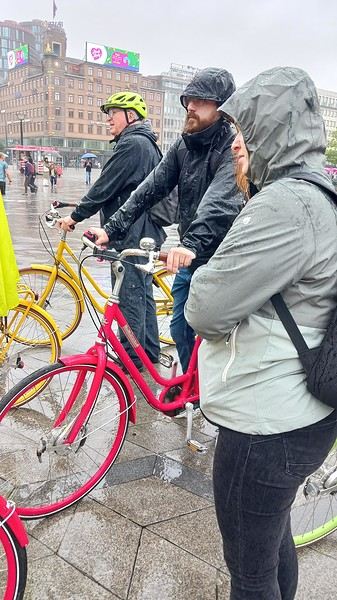
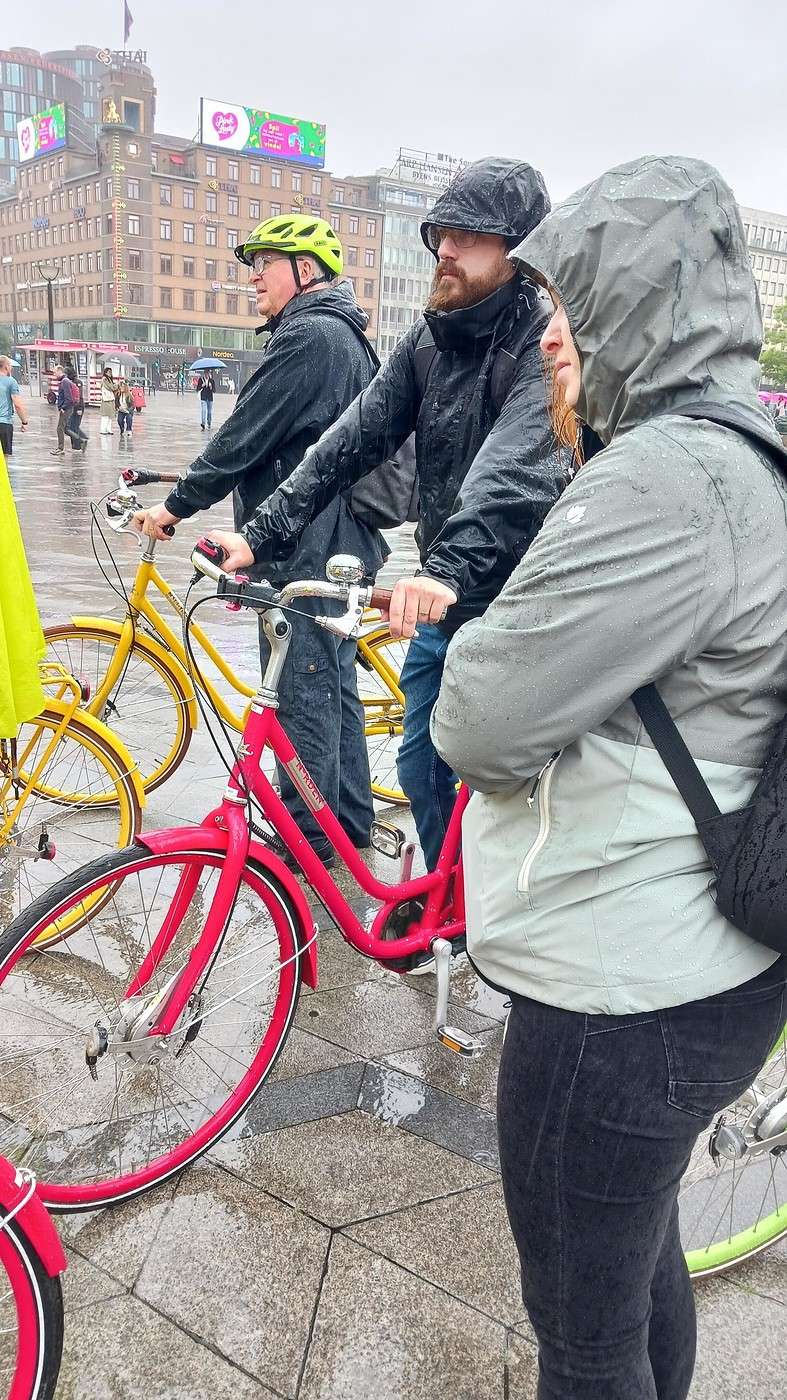
Day 6 - Friday, June 6 If there’s one thing you can’t control in these Northern countries, it’s the weather—and today, of course, it’s raining. And wouldn’t you know it, it’s the exact day I booked a guided bike tour in Dutch (for my husband and the kids) through the streets of Copenhagen. We drag ourselves to the bike rental shop without much enthusiasm. After a quick introduction with our guide—a Dutch woman who’s lived in Copenhagen for a year—we realize the bikes have coaster brakes, which isn’t exactly intuitive if you’re not used to them. At first, we try to keep up with the group, but Caroline struggles with the coaster brake—her bike keeps locking up, and she can’t move forward. By the time we reach City Hall, in the rain, of course, we can’t even hear what the guide is explaining.

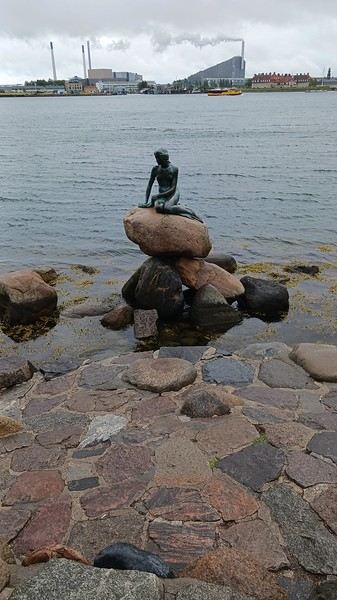
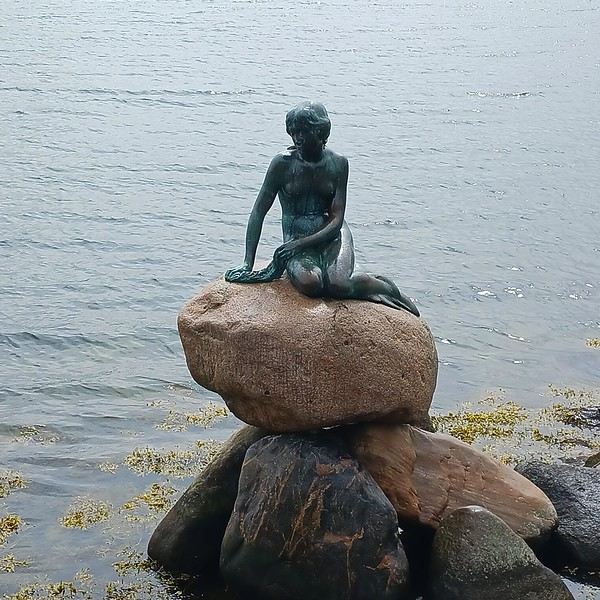
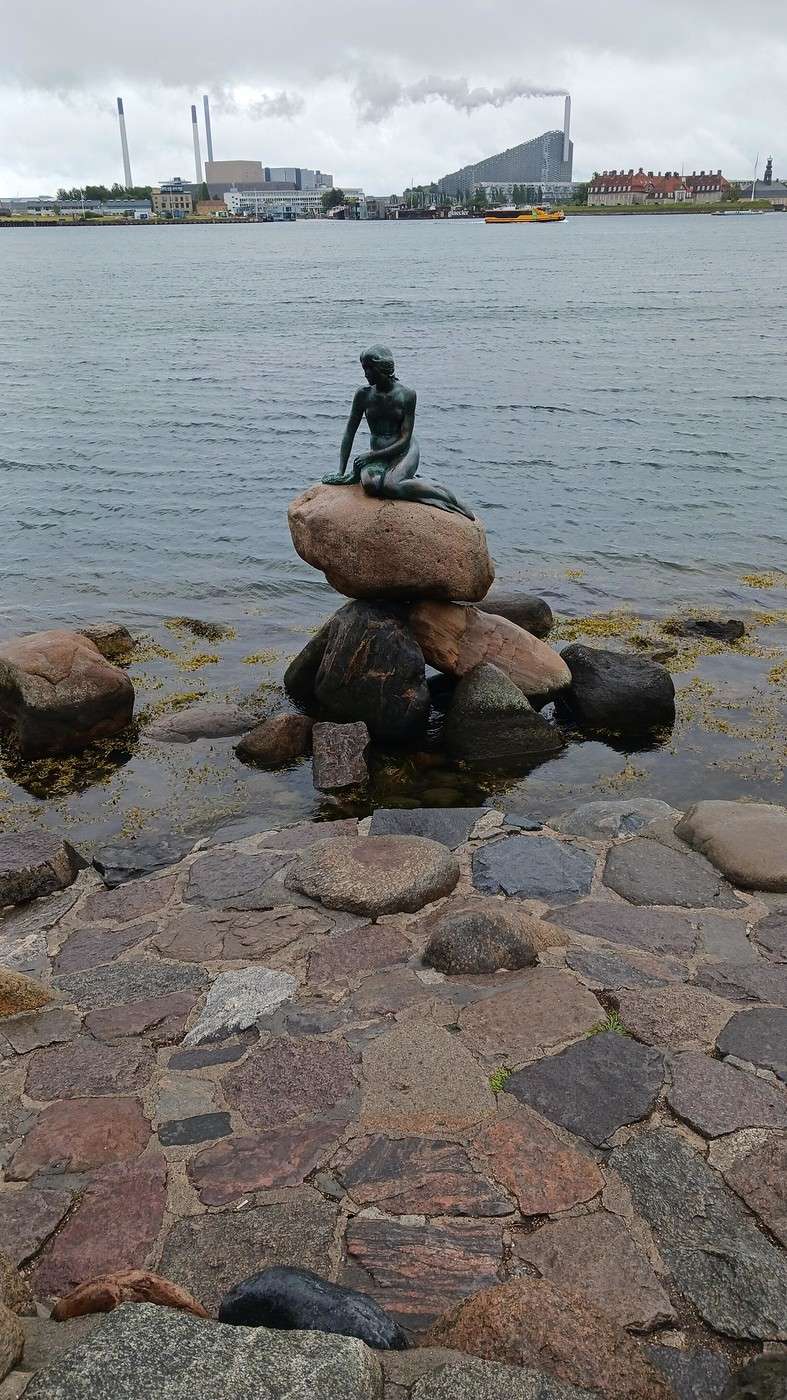
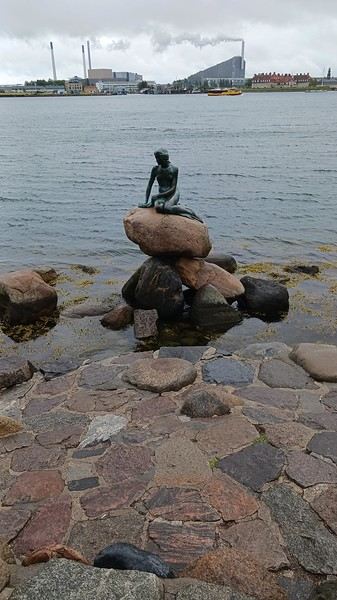
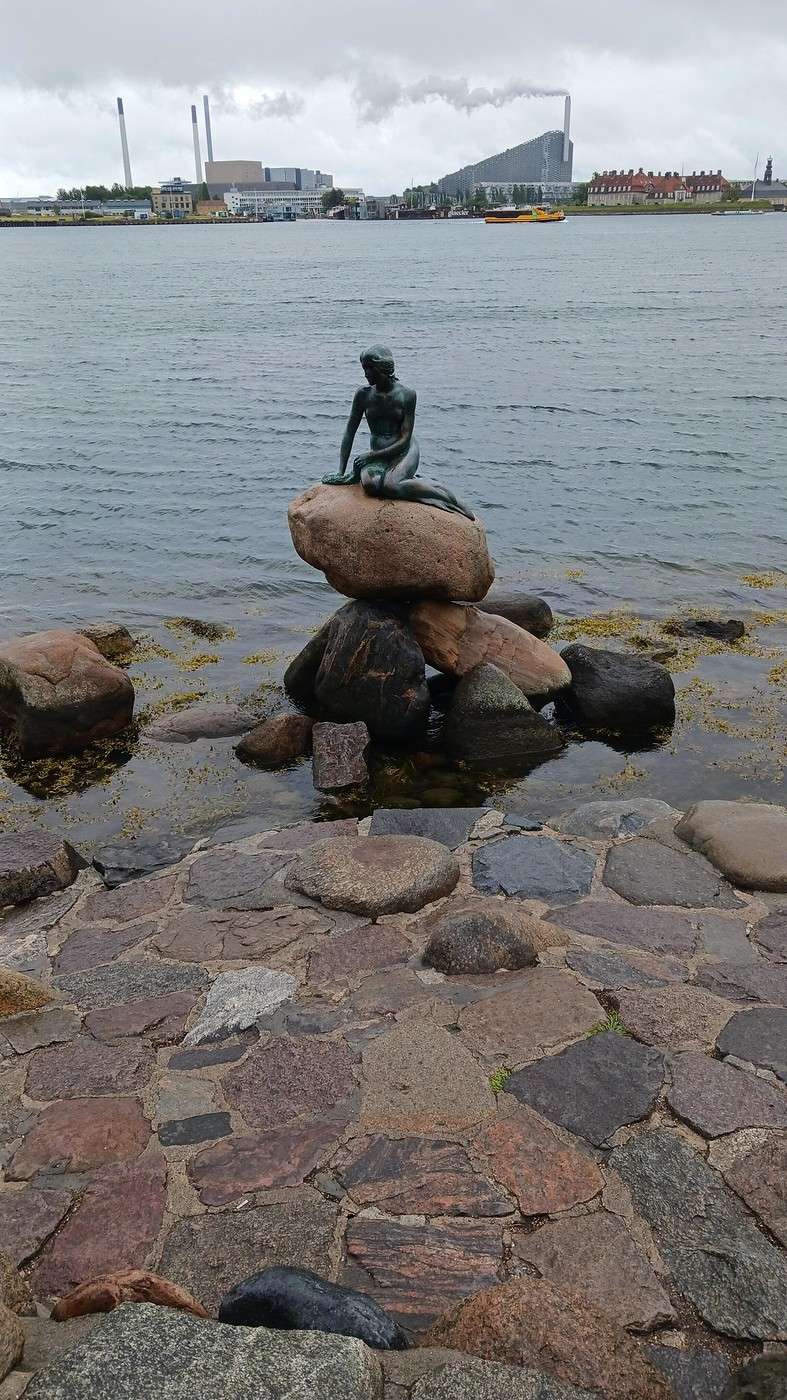
So we decide to ditch the group and go at our own pace. A little further on, near Nyhavn, I lose track of the bike lane and my bike skids on a nasty curb! I wipe out in the gravel and mud... 🏴‍☠️ We decide to head to a nearby apartment so I can change, but that’s the last straw for Caroline—she’s had enough and is in no mood to continue. I manage to convince her to at least make it to the Little Mermaid. When we arrive at what’s usually a super touristy spot, there’s hardly anyone around (we’d later realize this was pretty unusual). So we have the Little Mermaid all to ourselves... in the rain!


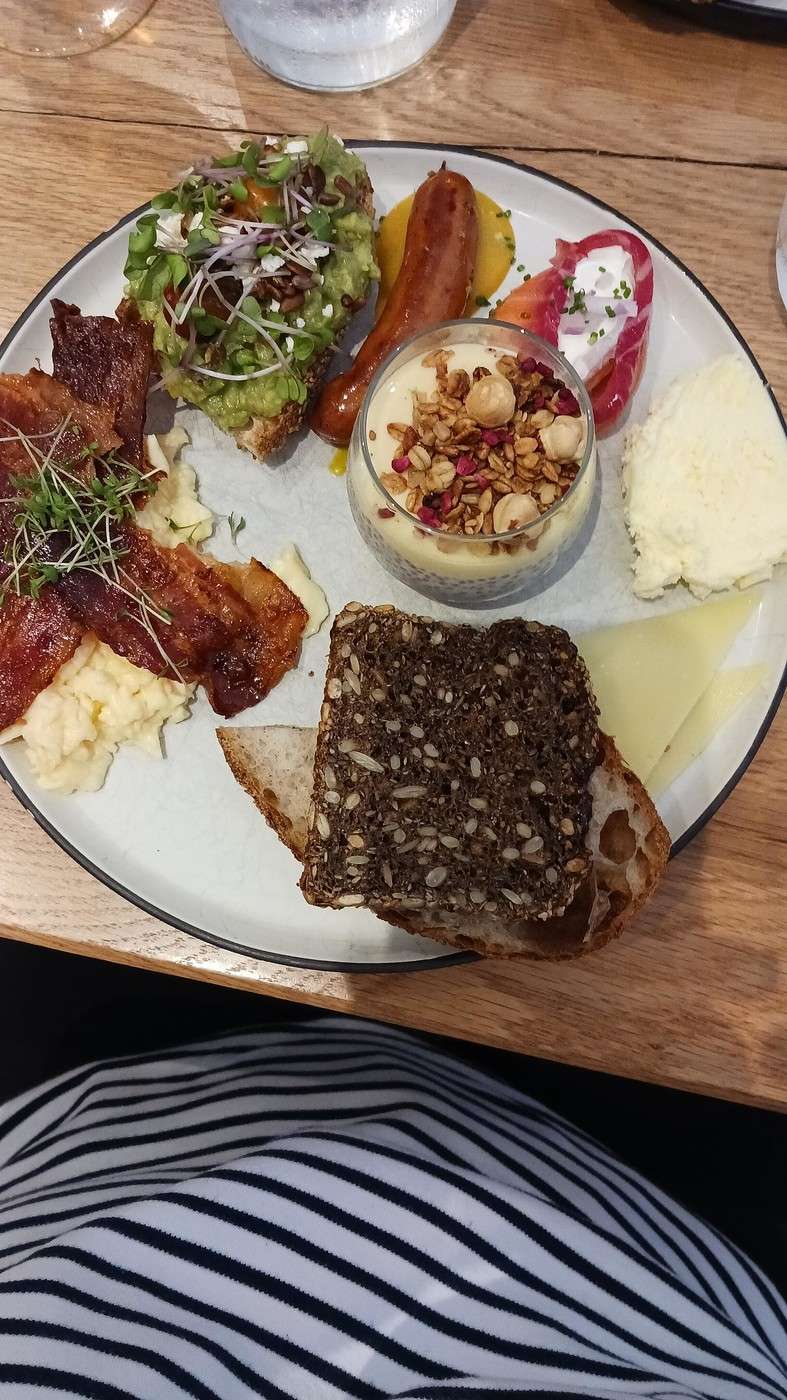
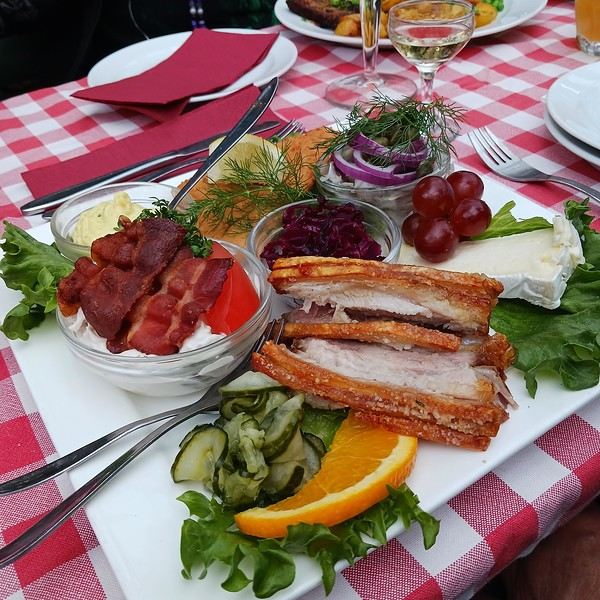
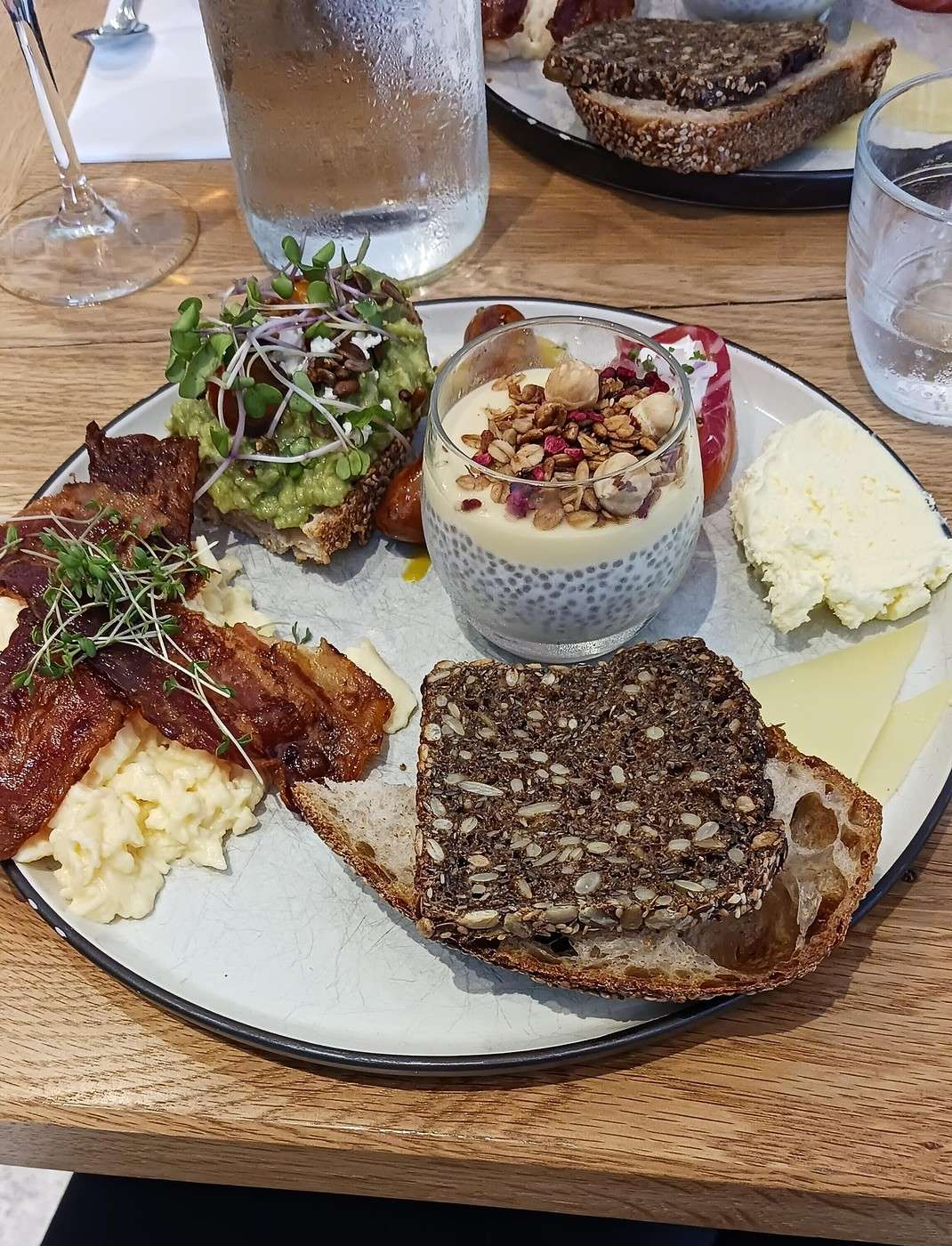
After that, we decide to return the bikes to the shop. We’d originally planned to keep them all day, but biking in Copenhagen isn’t as easy as it seems. I’ve read so much about it being the capital of cycling, how everything’s designed for bikes—okay, sure, there are plenty of bike lanes, but there are also hordes of cyclists speeding by, yelling at you when you, the poor tourist, aren’t going fast enough or are trying to figure out where to go. Spotting the bike lane crossings, especially at intersections, isn’t always straightforward. No, biking in Copenhagen isn’t always a pleasure—and I won’t even get started on when it’s raining! I’d spotted a well-rated bistro nearby. We grab a plate of assorted small, tasty bites, including a smørrebrød.

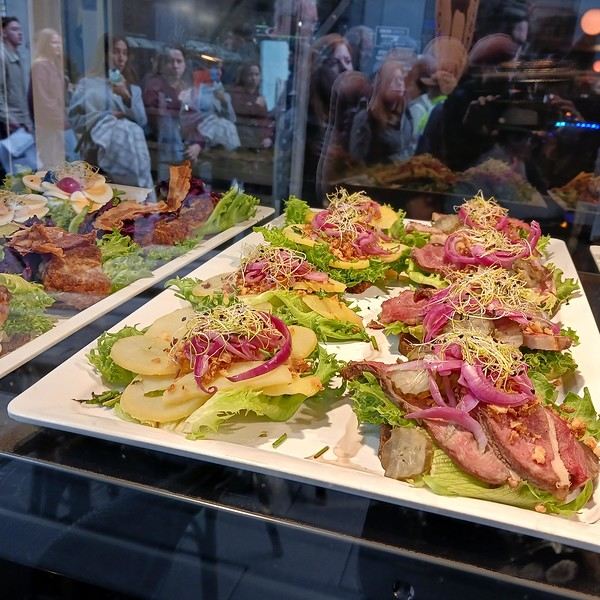
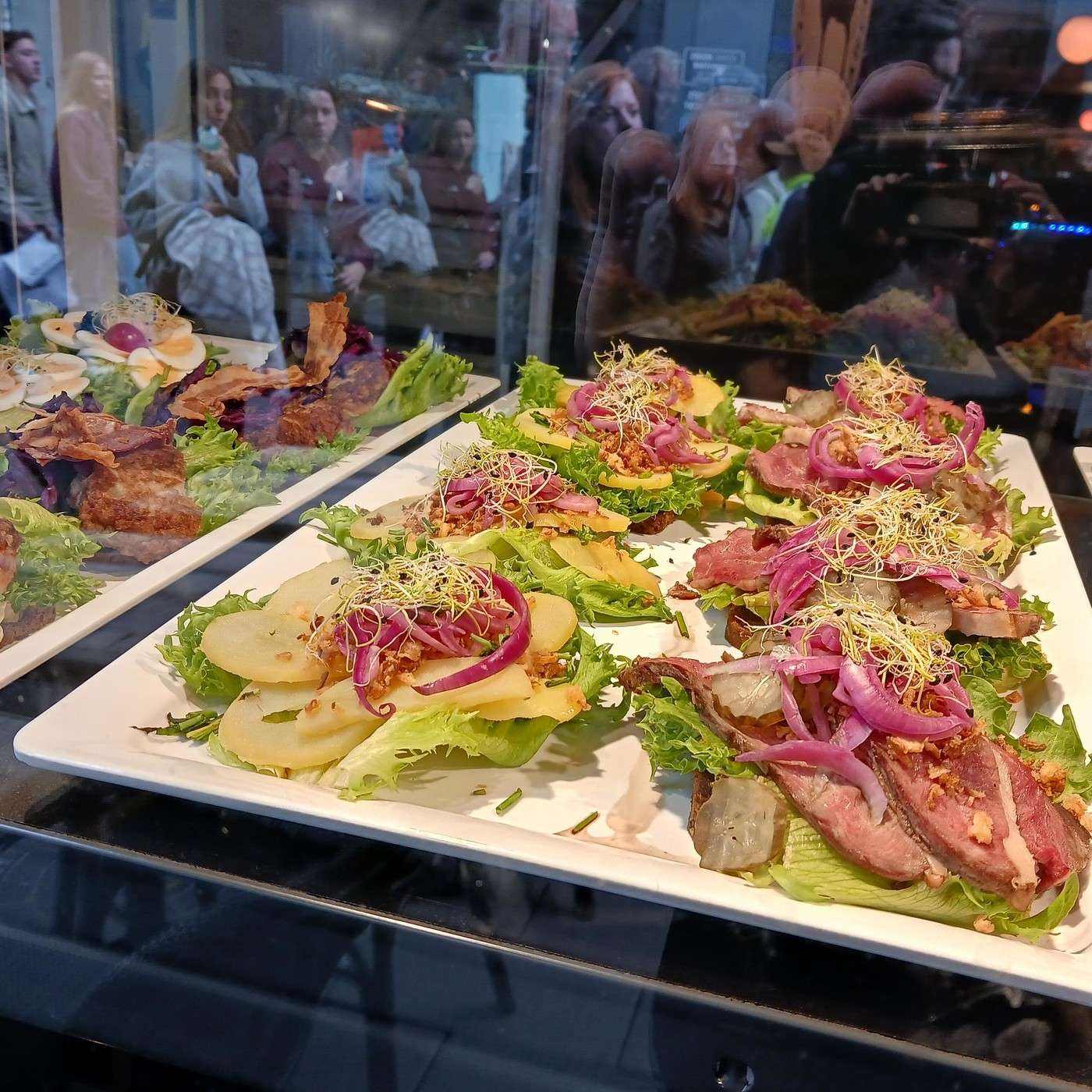
Smørrebrød is a traditional Danish dish—a buttered slice of rye bread topped with various ingredients. It’s versatile, working as a quick lunch or a more elaborate, colorful, and aesthetic meal. In short, it’s an open-faced sandwich with stuff on top! Here’s a photo of the window of a shop on Strøget that only sells smørrebrød... and it’s not cheap!

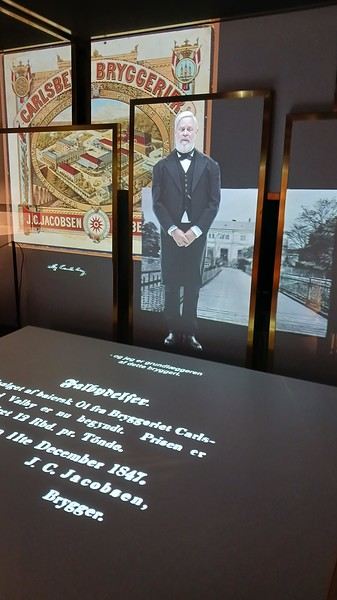
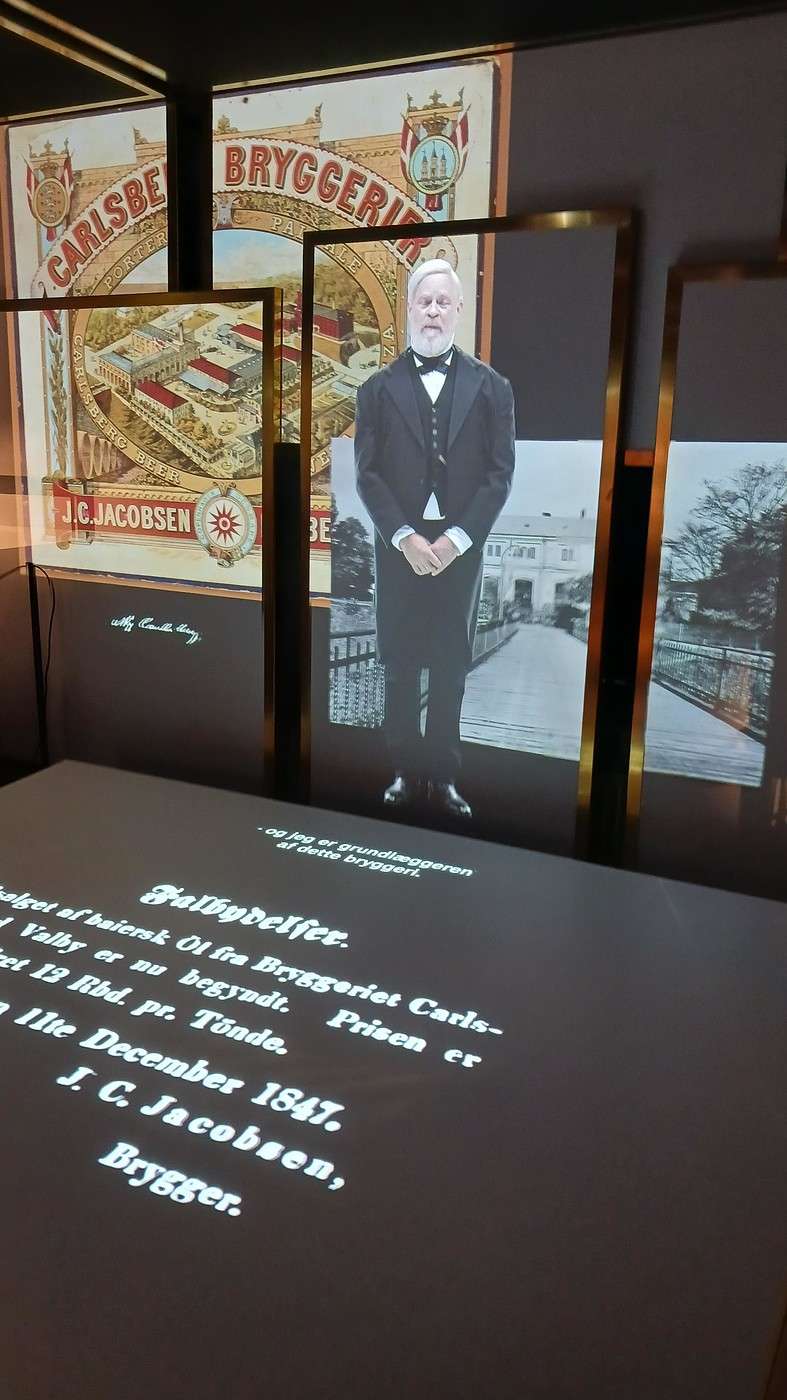
Next, we take public transport—the train—to the Carlsberg Brewery. The tour starts with a beer tasting, which is usually saved for the end of a visit... but hey, no complaints here! The museum is well done, with plenty of interactive exhibits.

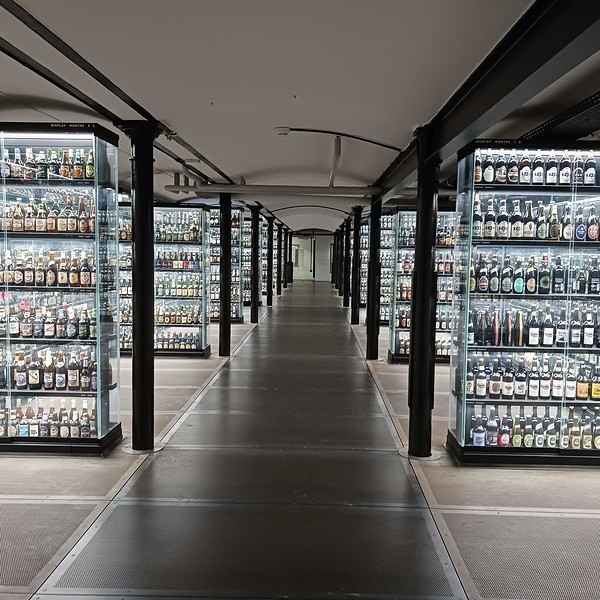
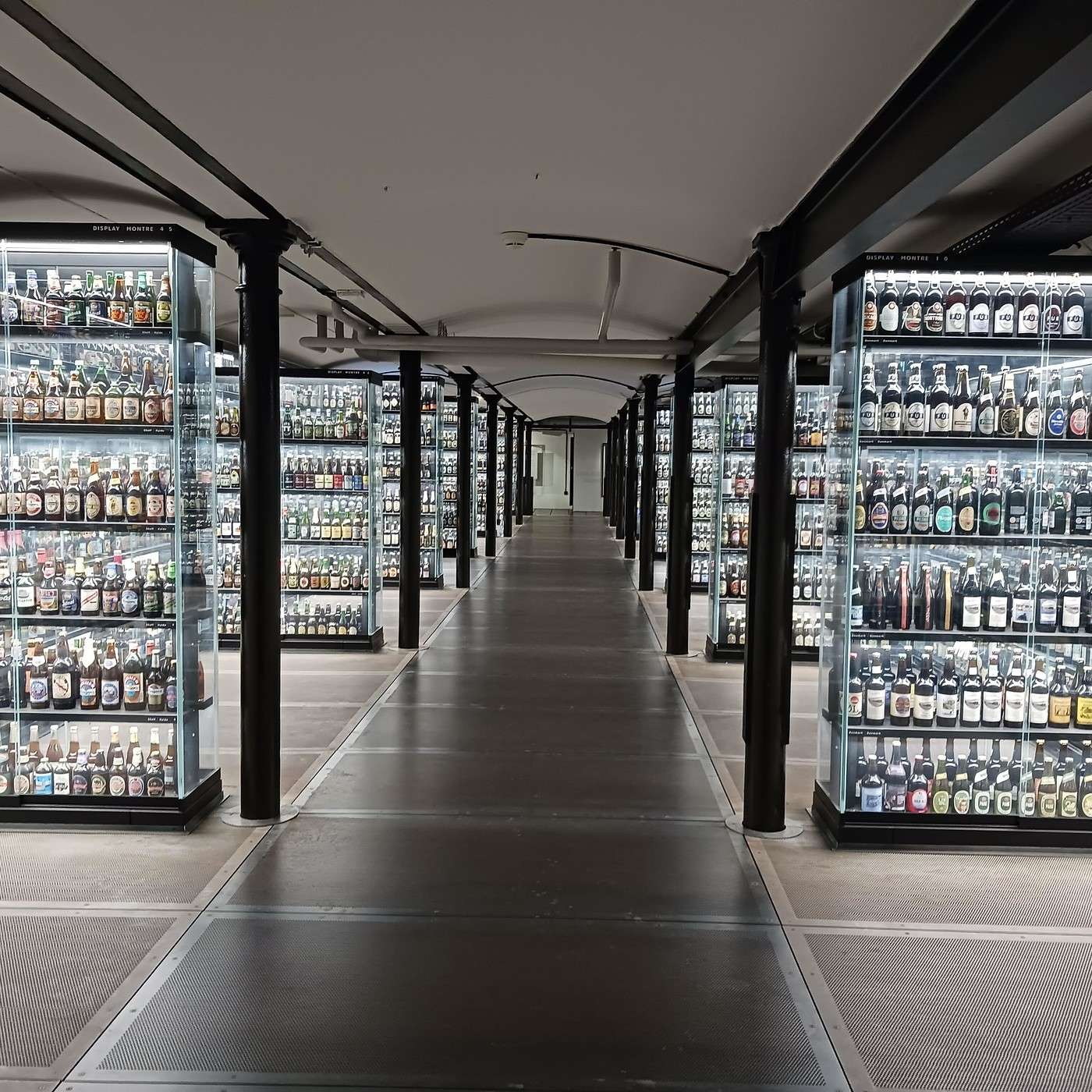
The basement houses a collection of thousands of beer bottles from all over the world—it’s impressive! Compared to this, the beer wall in Bruges and the Hop Museum in Poperinge can "take a hike"!

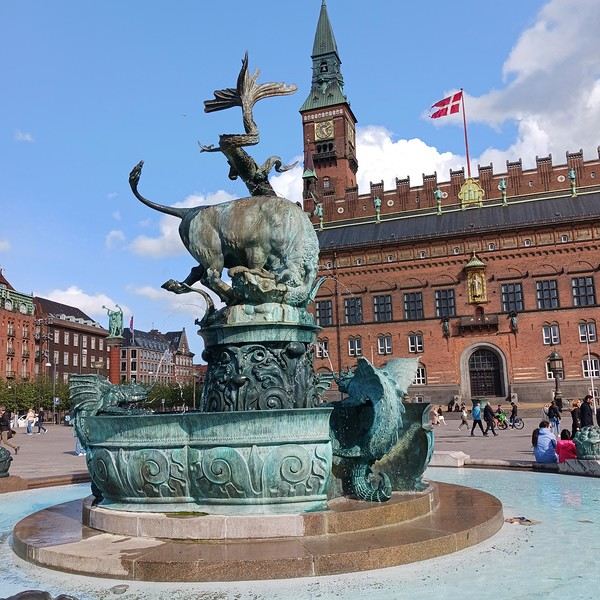
We wrap up the visit at the café, a cozy and welcoming spot. When we head back toward central Copenhagen, the sun’s out again. We wander around City Hall, finally getting a proper look at what we’d barely noticed in the morning rain!

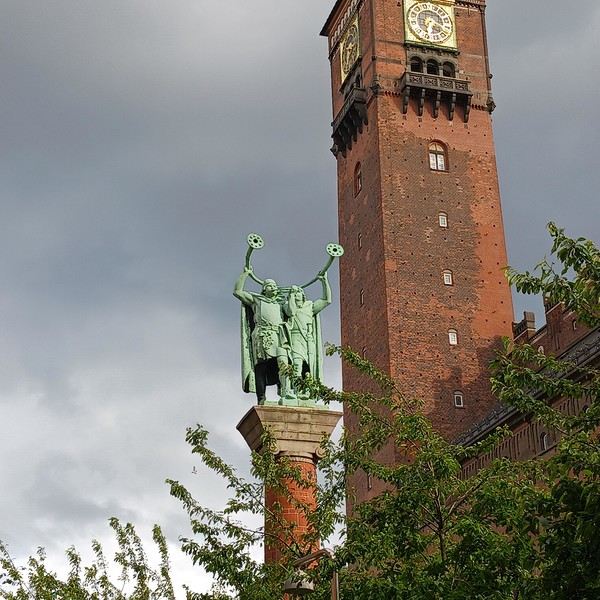
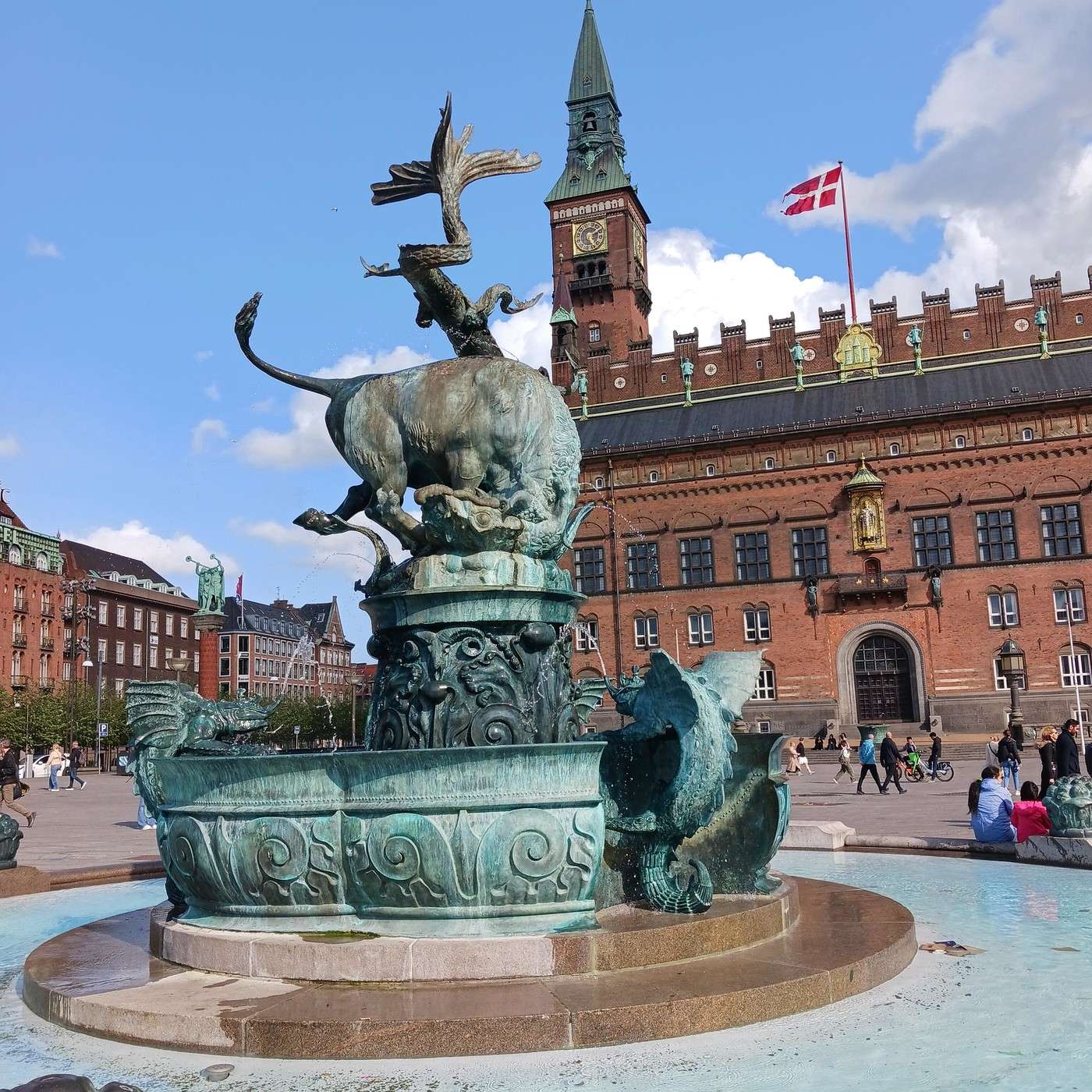
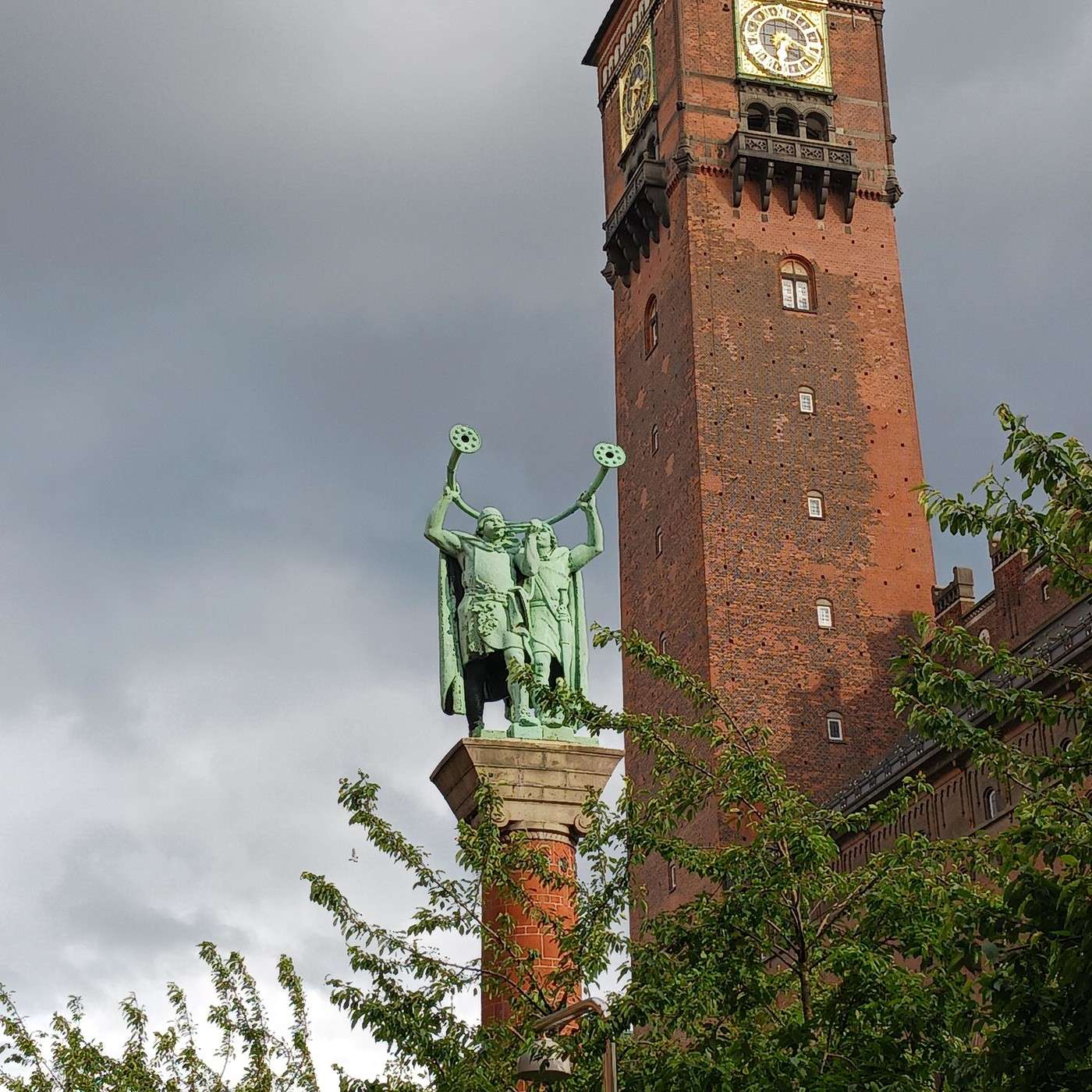
There’s the Dragon Fountain in the square, and off to the side, a strange column topped with two figures.

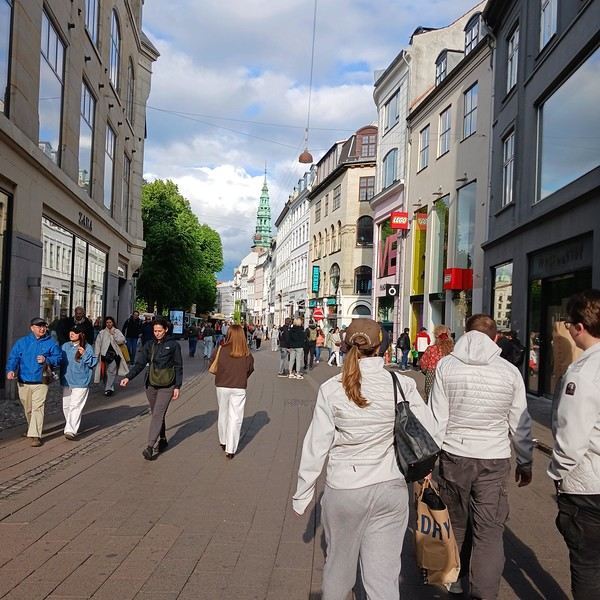
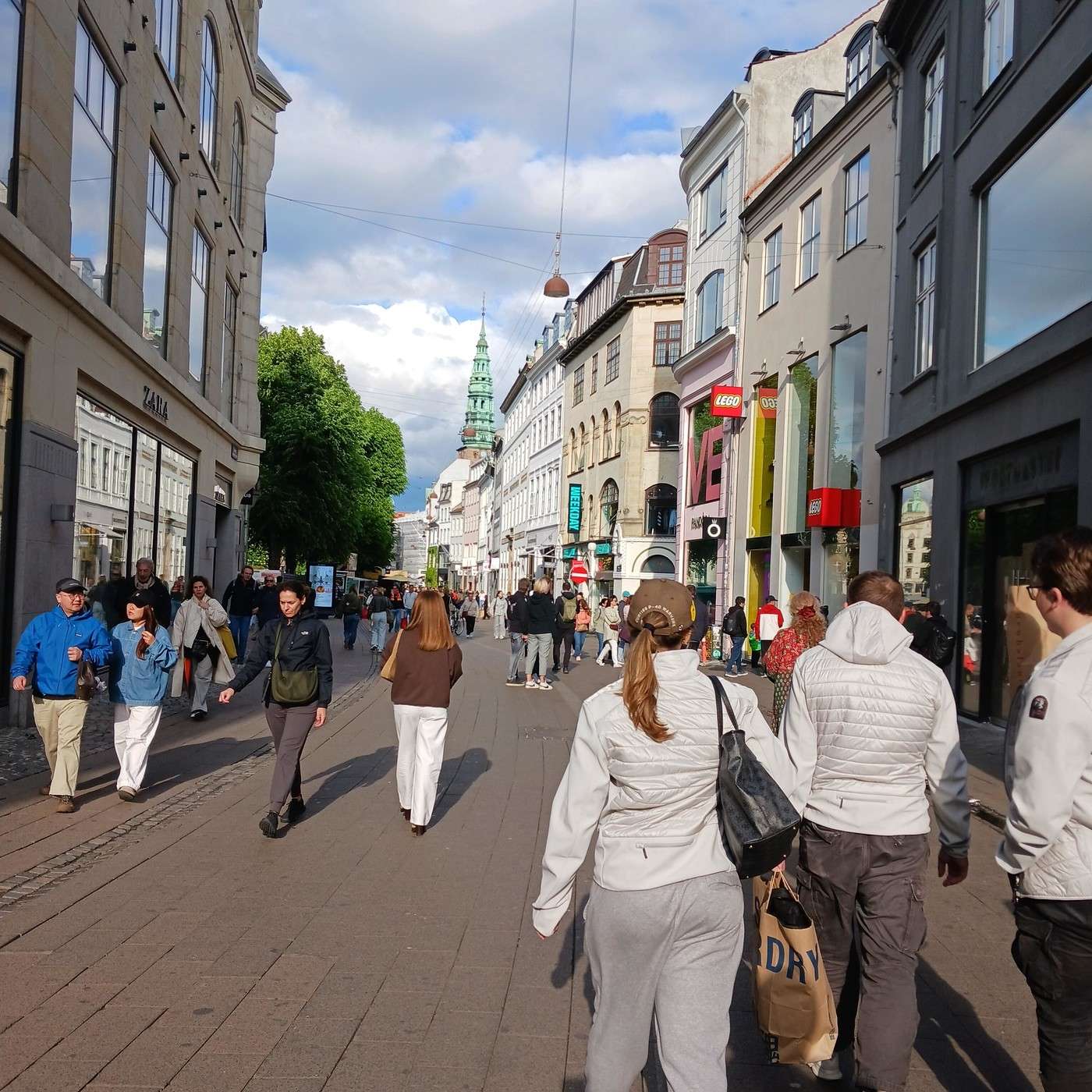
They look like Vikings! Actually, they’re lur players, and here’s what I found out about them: "Cast in bronze by Siegfried Wagner between 1911 and 1914, they depict two lur players (a Bronze Age instrument usually played in pairs) atop a 20-meter-high column (designed by Anton Rosen). The originals are on display at the National Museum. It’s said their sound can be heard when a virgin passes by." Then we take Strøget, the city’s busiest shopping street, back to our apartment in Nyhavn. With the sun out again, the terraces are packed! ...

(To be continued)

Kattegat Tour and Norway's Great Fjords - 32 Days (Denmark - Sweden - Norway)

Sandrine67 · 2025-07-13

Good evening Cendryon, What a pleasure to read you again. I’ll be following your travel journal closely since Denmark and Norway are really tempting me. Your previous journals inspired me a lot when planning my trips to the American West and Quebec. Have a great evening

Kattegat Tour and Norway's Great Fjords - 32 Days (Denmark - Sweden - Norway)

Cendryon · 2025-07-15

Thanks! We really enjoyed discovering Denmark, this small country that doesn’t always get the attention it deserves compared to other Scandinavian countries. In fact, after talking to some Norwegians, they don’t even consider Denmark a true Scandinavian country because it’s connected to Germany via Jutland. But we found more of a Dutch serenity than German vibes in the gentle Danish countryside. Must be because of the sea...

Kattegat Tour and Great Norwegian Fjords - 32 Days (Denmark - Sweden - Norway)

Alanay · 2025-07-19

Hi Cendryon,

I never imagined you could spend 2 days at the Lego park. Is there a lot to do there, or is it just really crowded?

What a trooper, exploring Copenhagen in the rain by bike! I remember their "parking" where bikes are stacked in metal cages. Did you see any?

Kattegat Tour and Norway's Great Fjords - 32 Days (Denmark - Sweden - Norway)

Cendryon · 2025-07-19

Hello Cendryon,

I couldn’t imagine spending 2 days at the Lego park. Is there a lot to do there, or is it just really crowded?

Well, we spent just one day at the LEGOLAND park, which is located on the outskirts of Billund. It wasn’t too crowded. One day is enough to see everything.

However, there’s a second site—it’s not a park, it’s the LEGO HOUSE right in the center of Billund. It’s amazing, and we spent almost a full day there.

How brave of you to explore Copenhagen in the rain by bike! I remember their "parking" where bikes are stacked in metal cages. Did you see any?

No, didn’t see any, and to repeat myself, I still think that even without the rain, biking in Copenhagen as a tourist isn’t great!

Kattegat Tour and Great Norwegian Fjords - 32 Days (Denmark - Sweden - Norway)

Cendryon · 2025-07-25

Day 7 – Saturday, June 7

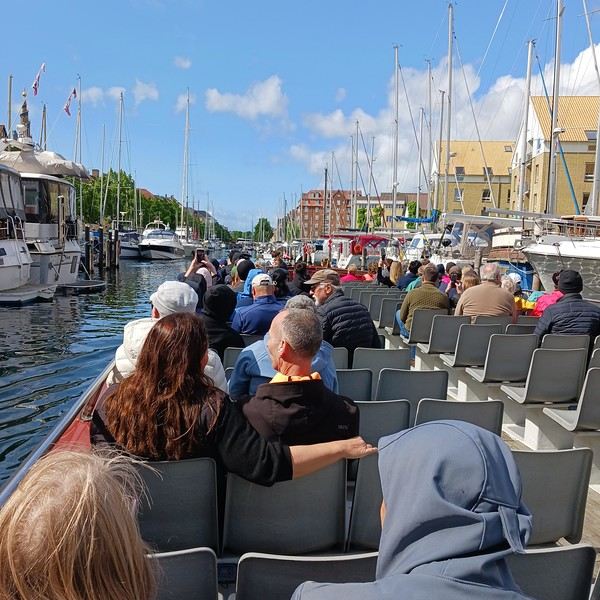
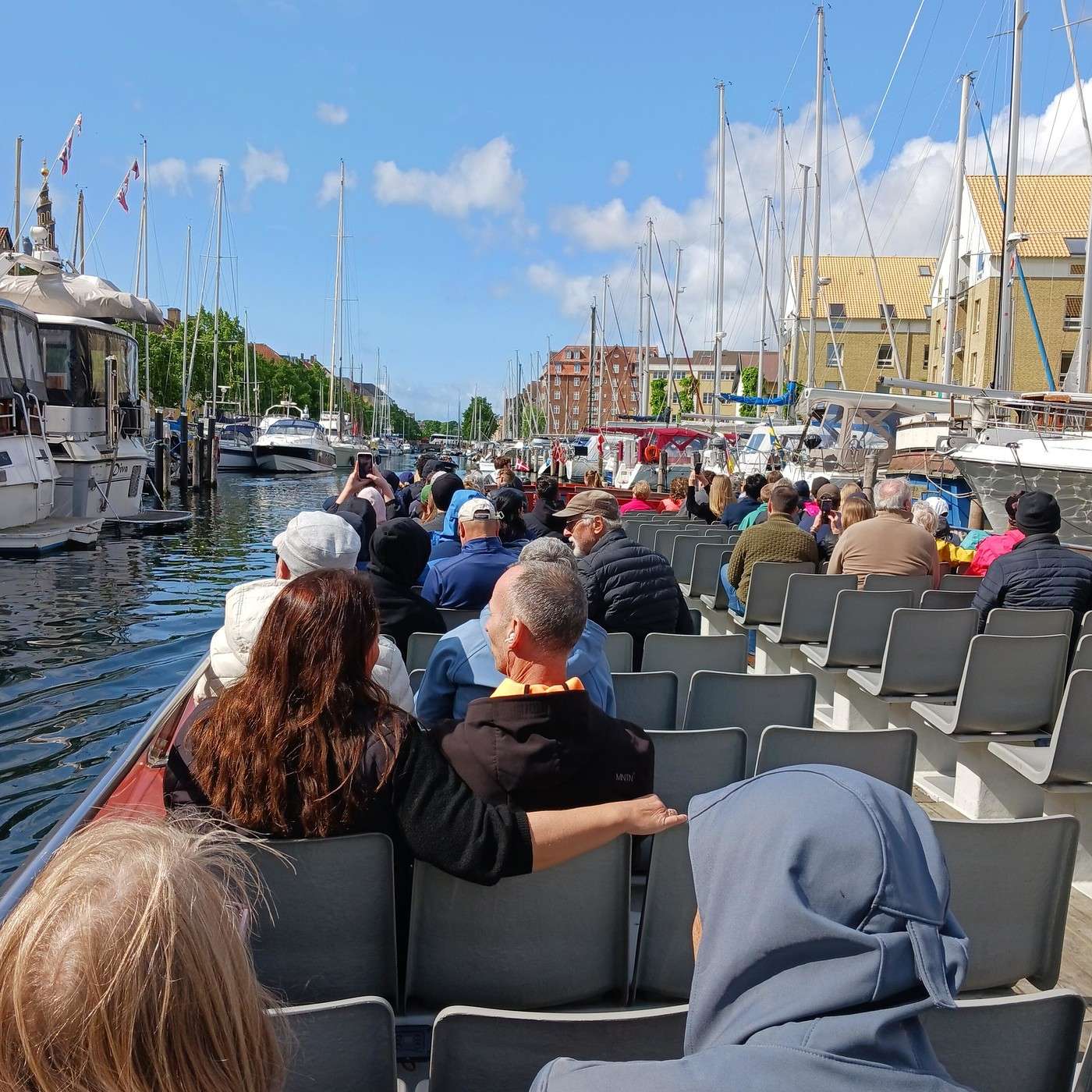
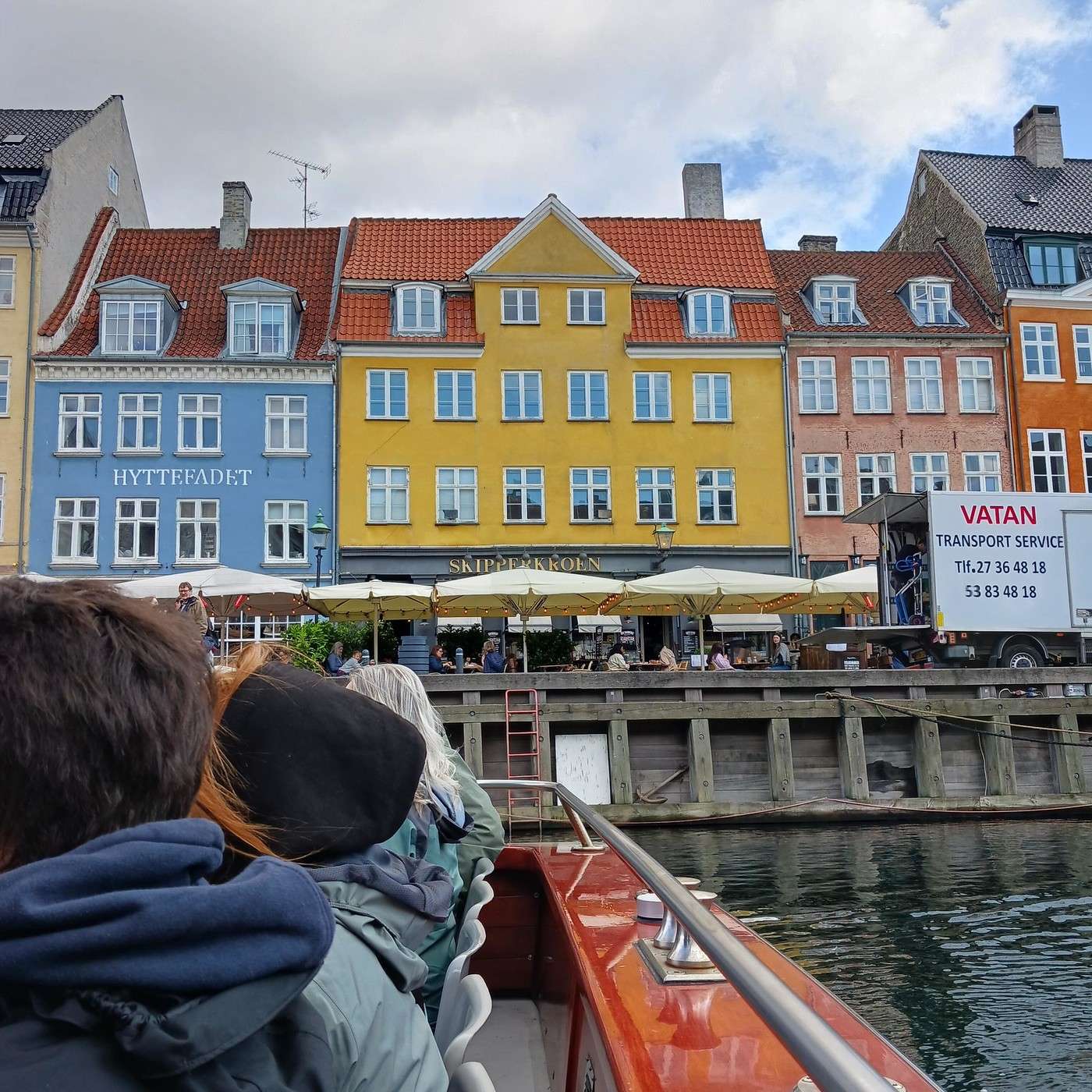
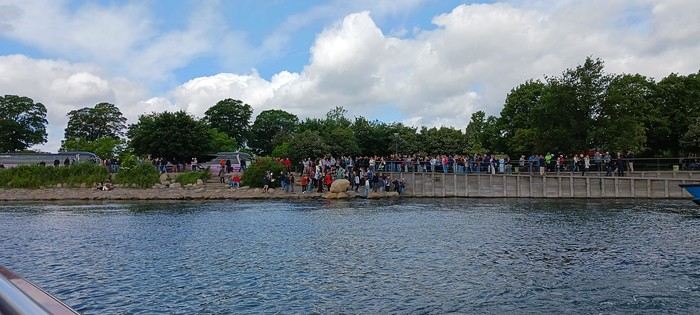
This morning, a somewhat shy sun returned to Copenhagen. Since we’re in Nyhavn, we take the opportunity to go on a boat tour. It’s a bit like in Bruges, except the boats are much wider, and we have headphones to hear the commentary in our language. The environment is also very different since Copenhagen is made up of both very modern buildings and older ones.


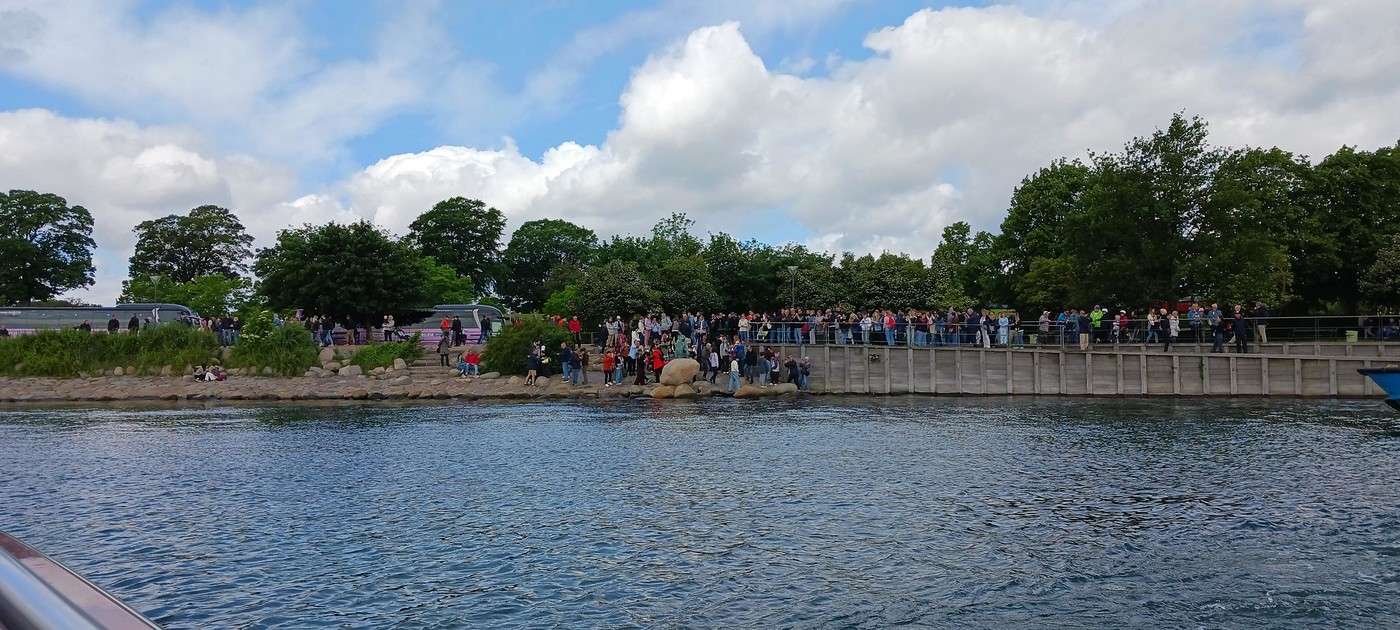
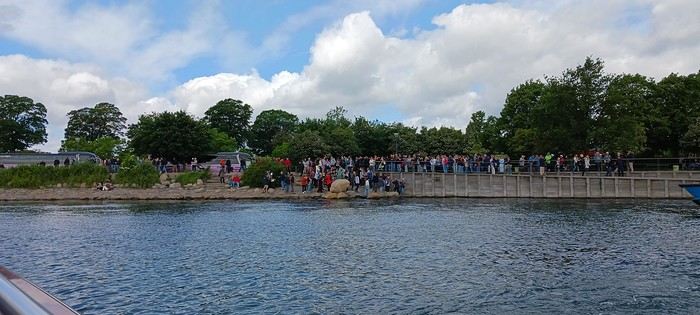
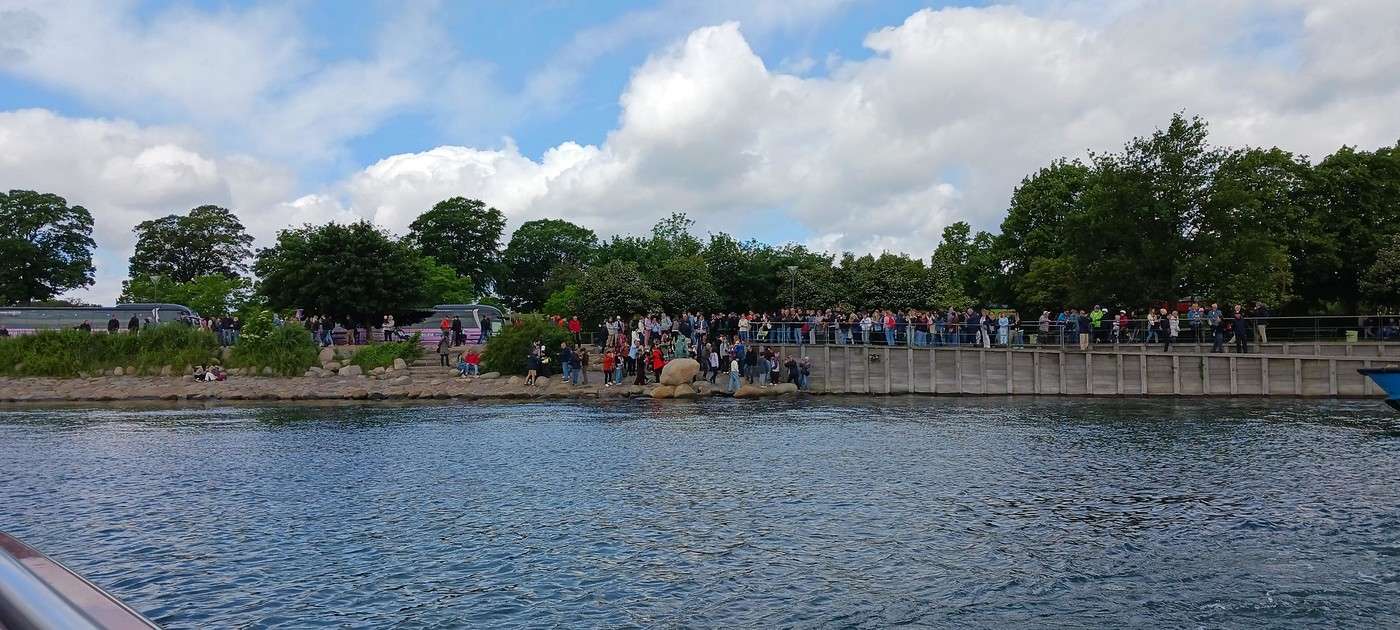
The boat first takes us to the entrance of the harbor, where the Little Mermaid is located. We see her from quite a distance, but it’s enough to notice the crowd and the long line for photos—yesterday, we had the place to ourselves!


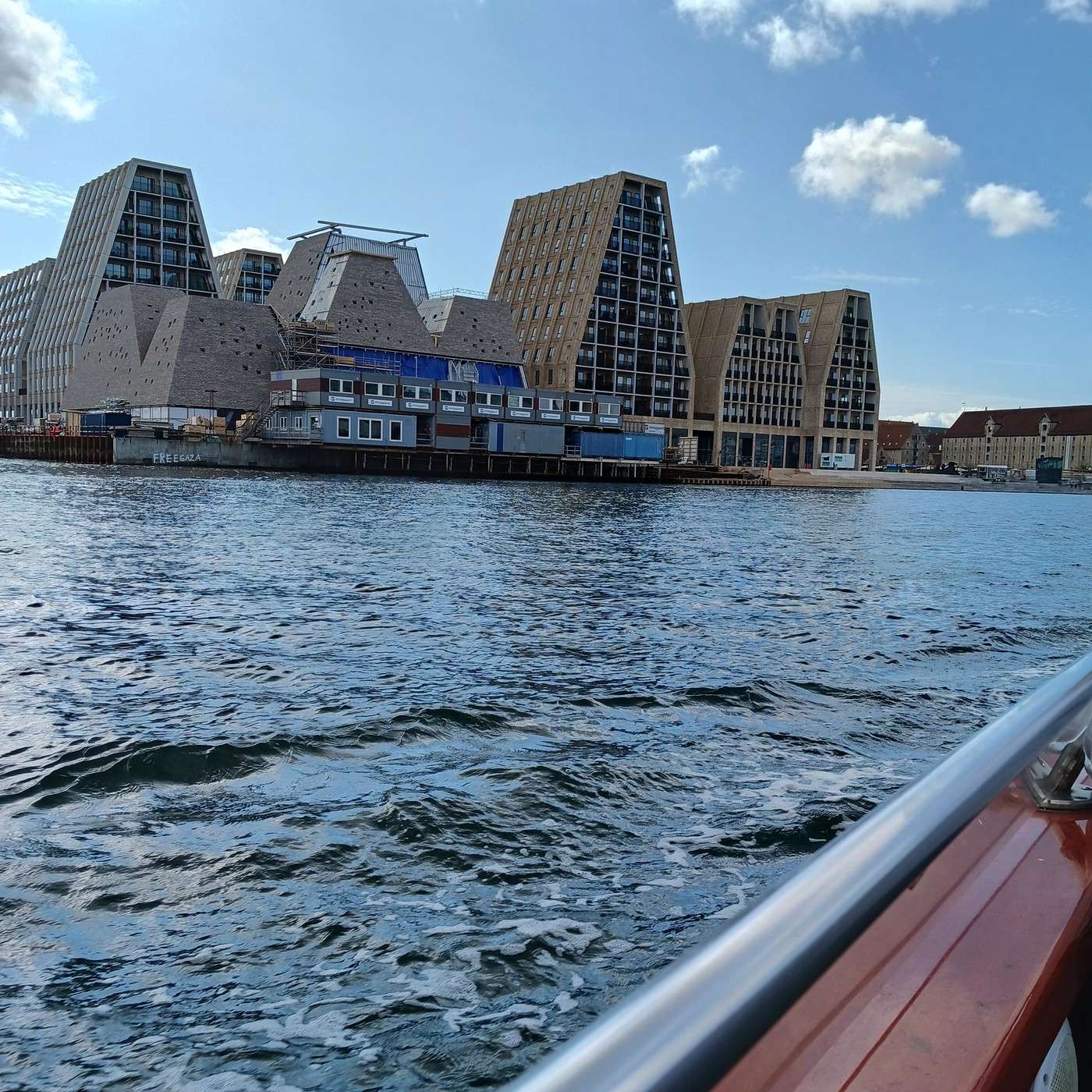
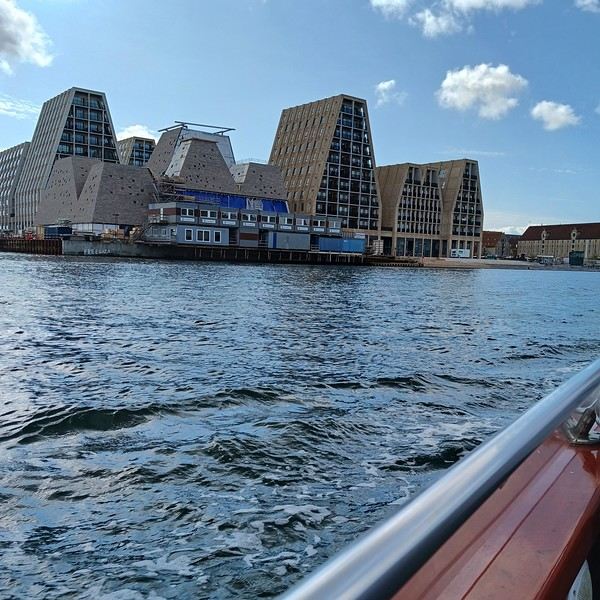
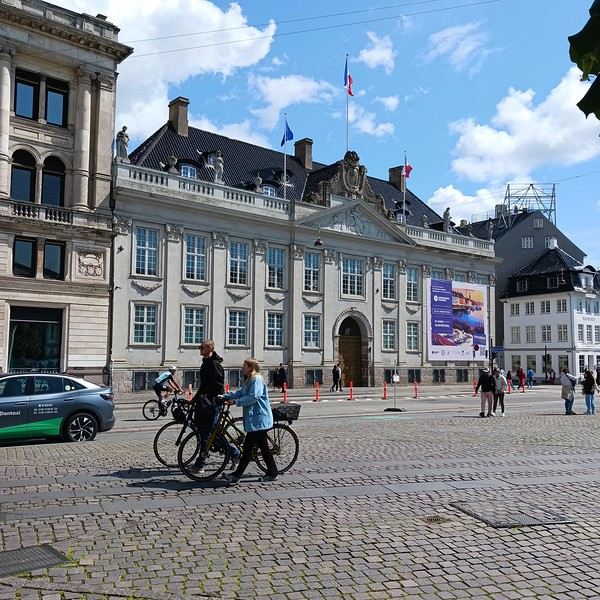
Next, we pass by the Royal Palace and the Marmorkirken (or Frederiks Kirke), an 18th-century Lutheran church with the largest dome in Scandinavia and buildings shaped like Toblerones!


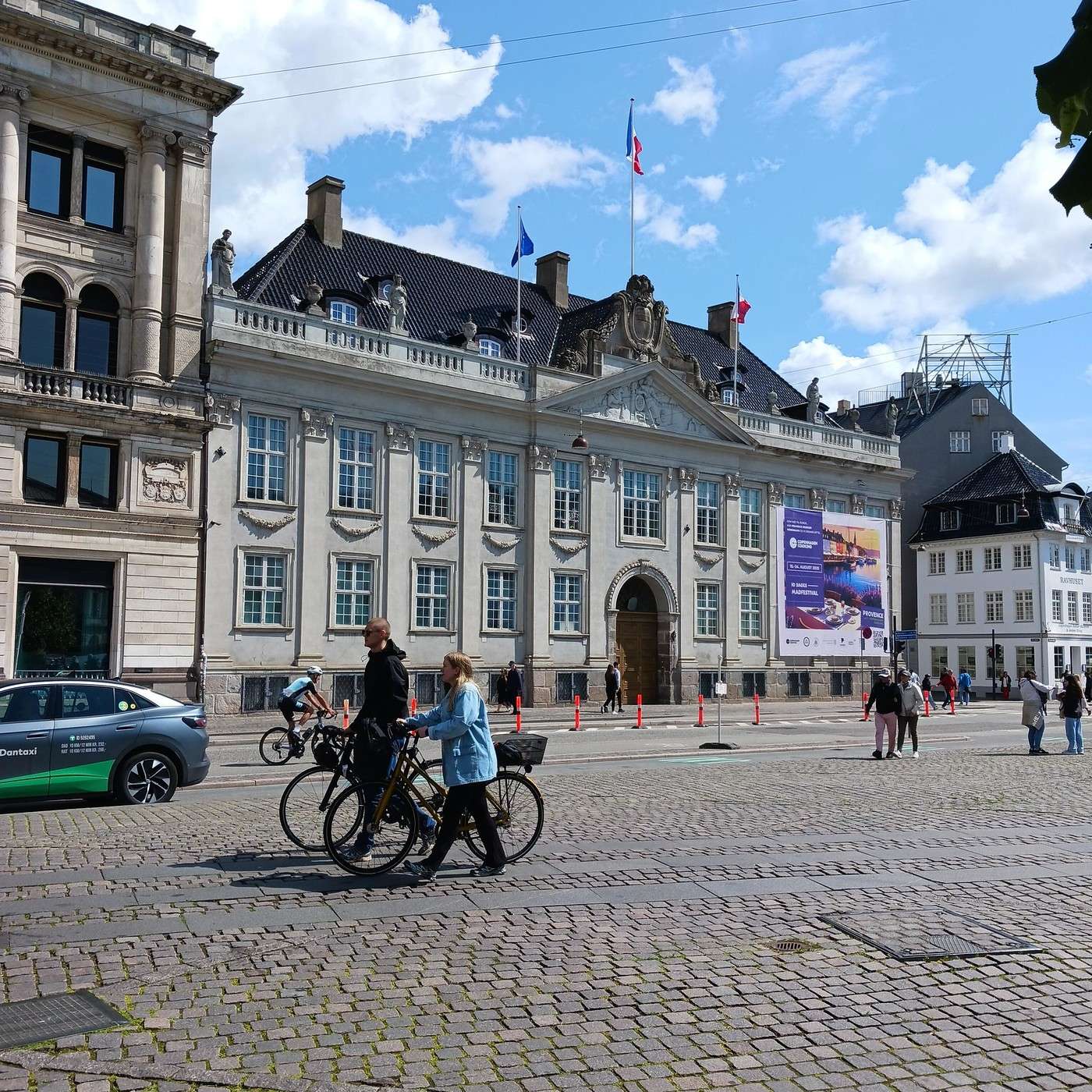
Along the canal banks, there are many boats, some of which serve as homes, just like in Amsterdam. We catch a quick glimpse of the spire of St. Saviour’s Church, which twists toward the sky like a drill bit! The boat circles the island where Christiansborg Castle is located, home to the Danish Parliament—great views from all angles, just like in the series *Borgen*. This building was the main residence of Danish kings until 1794. Watch your head—the bridges are very low! Back to Nyhavn. At the end of this very photogenic little harbor is Kongens Nytorv square, where you’ll find the Royal Theatre, the Hotel d’Angleterre, and... the French Embassy!


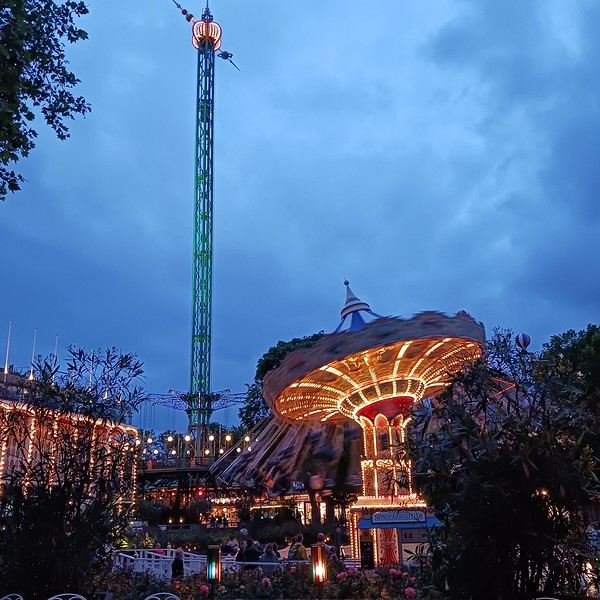
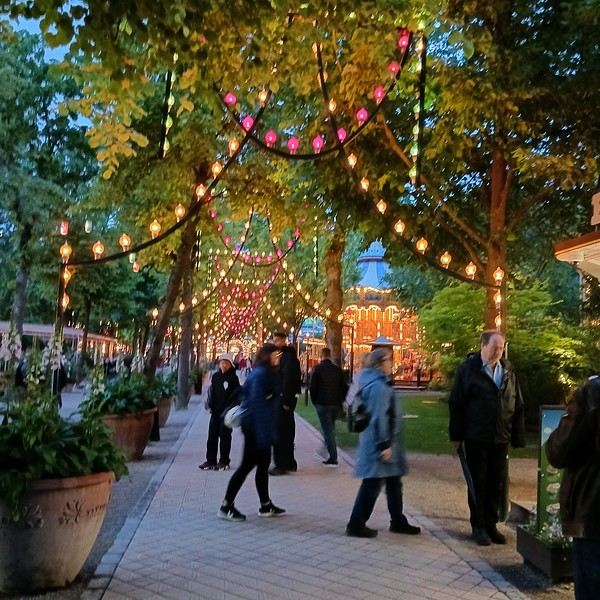
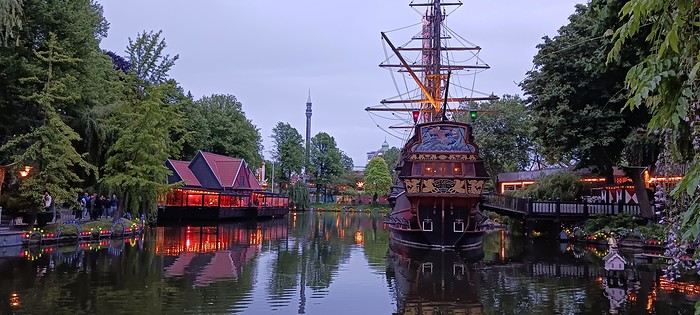
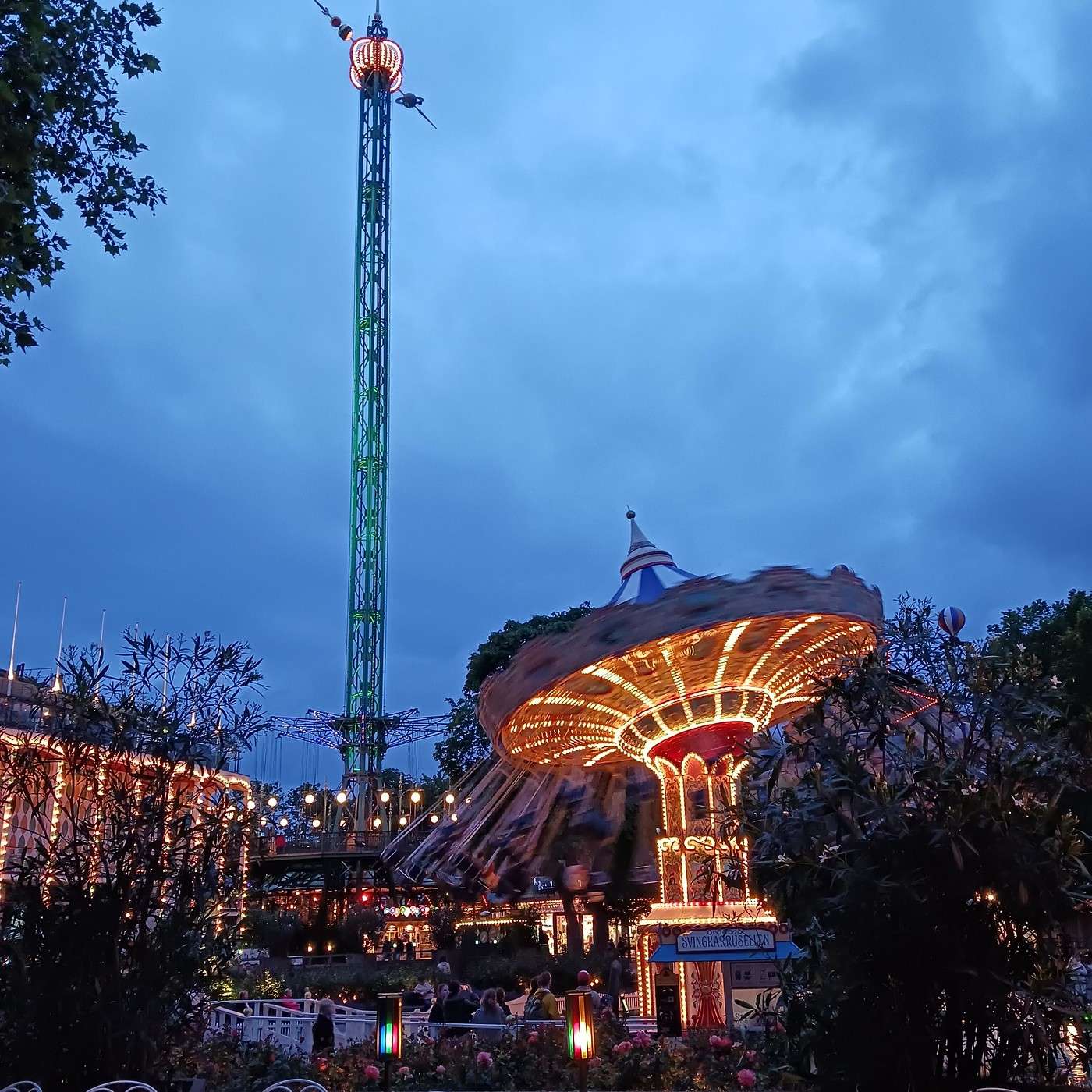
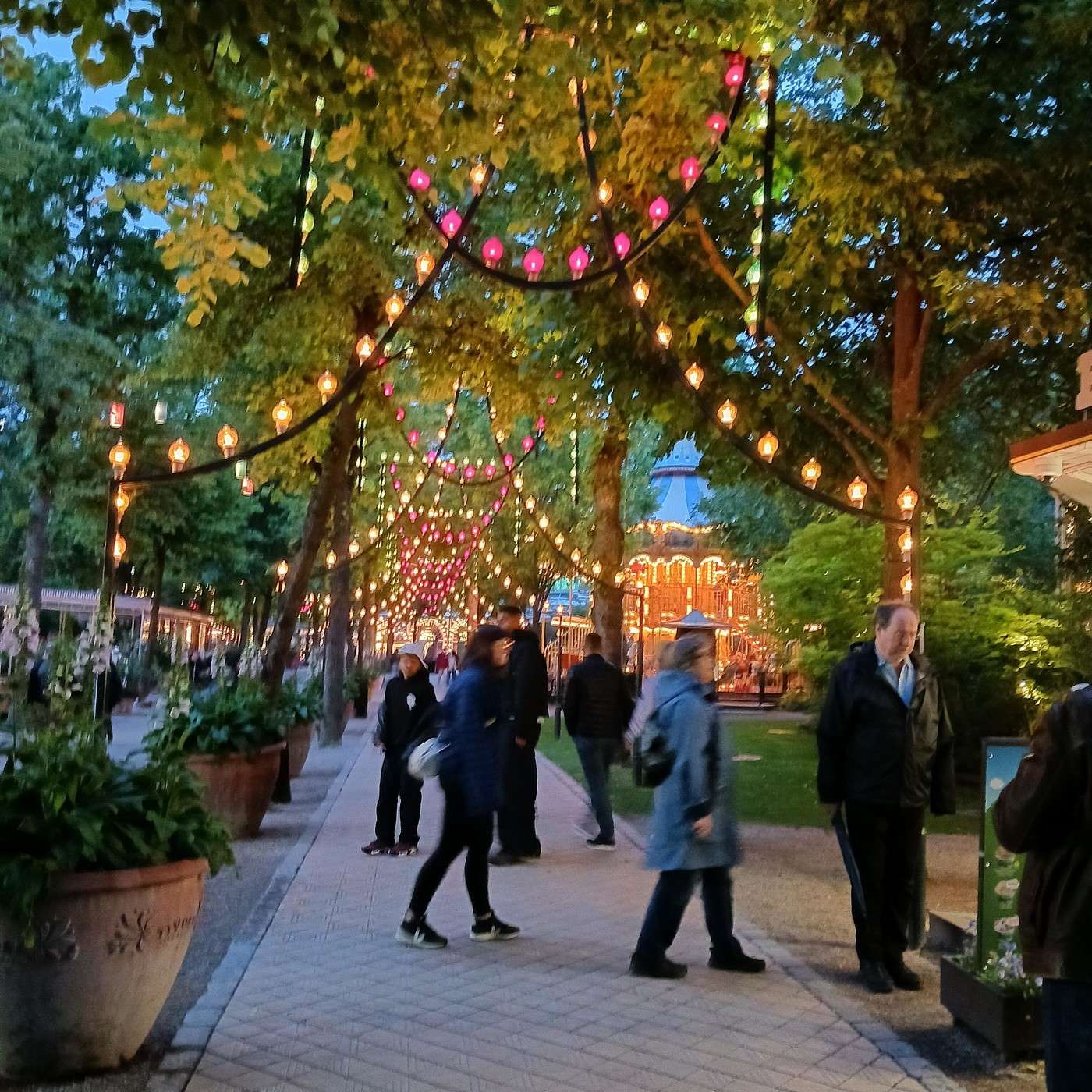
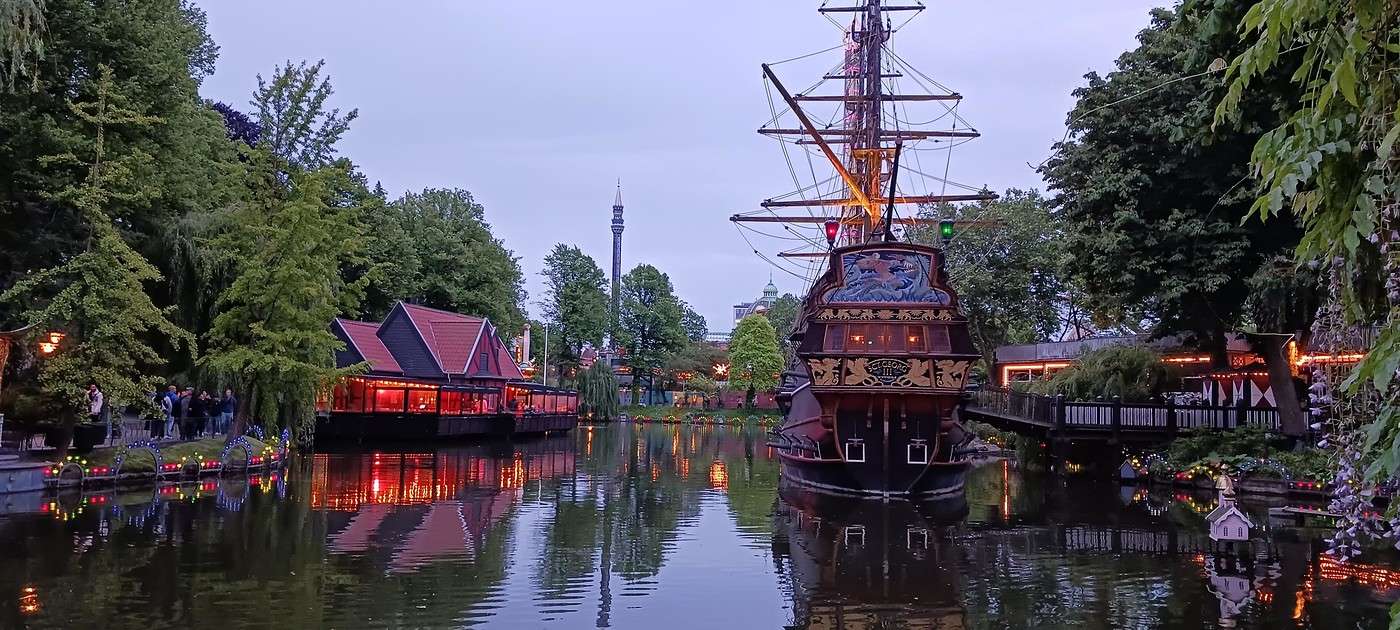
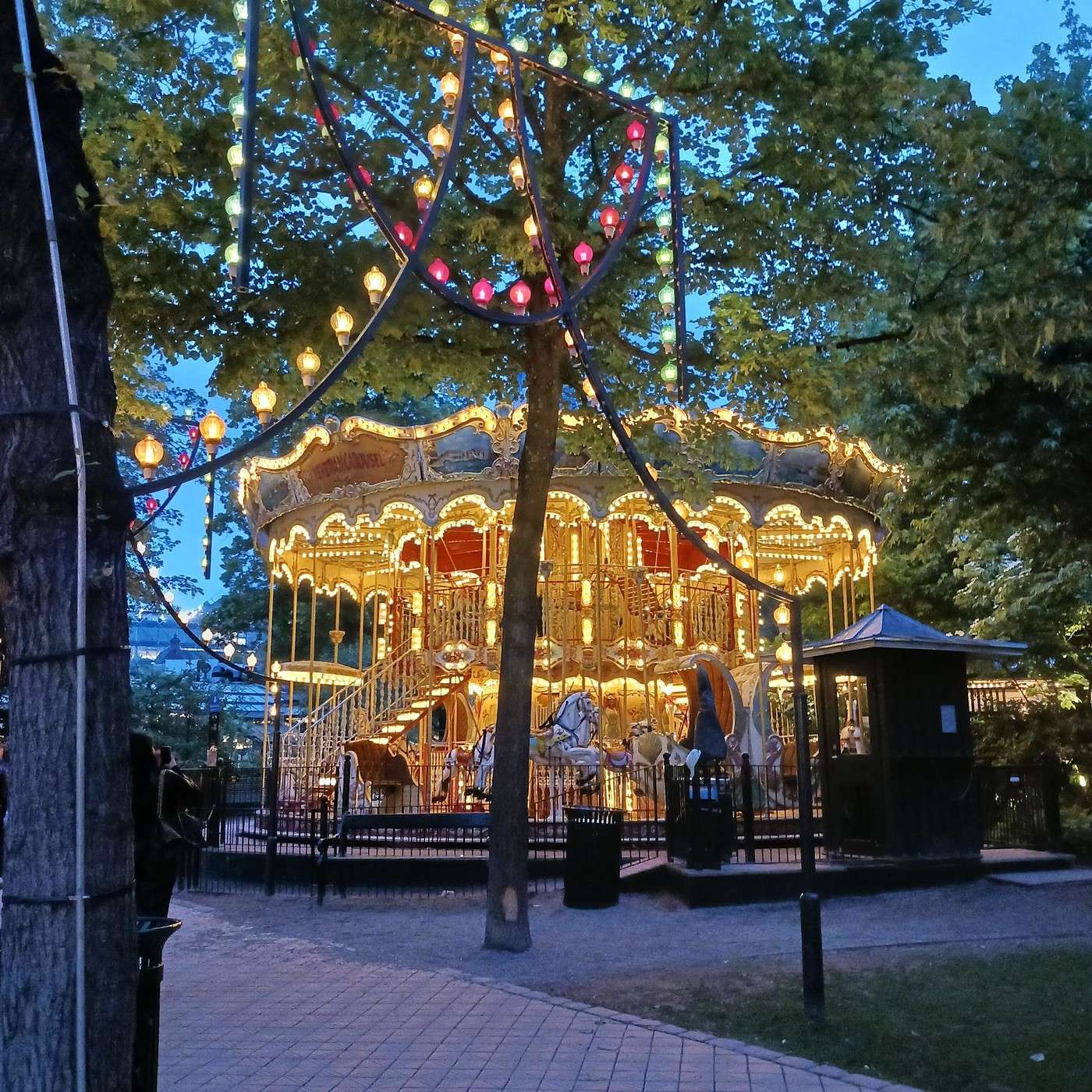
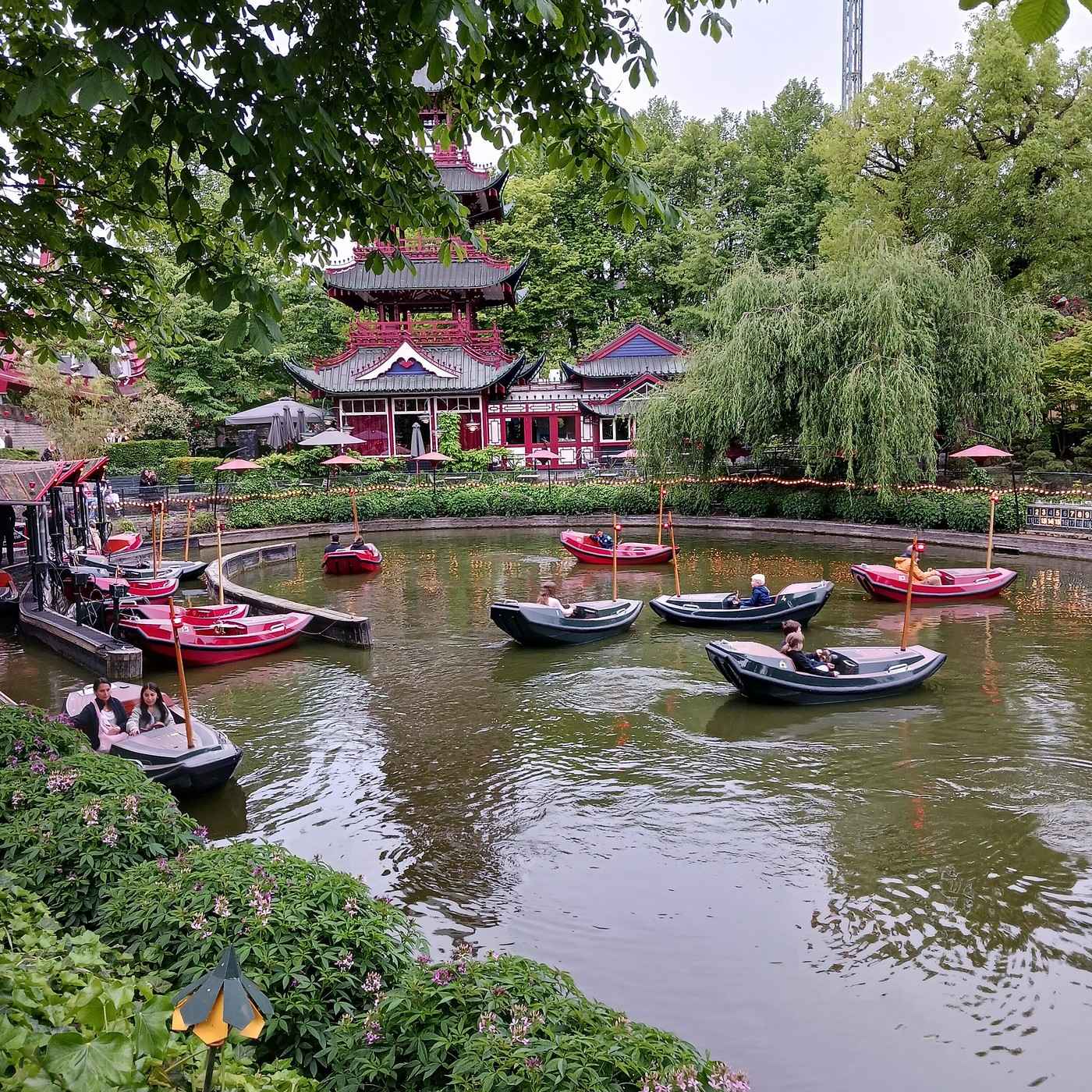
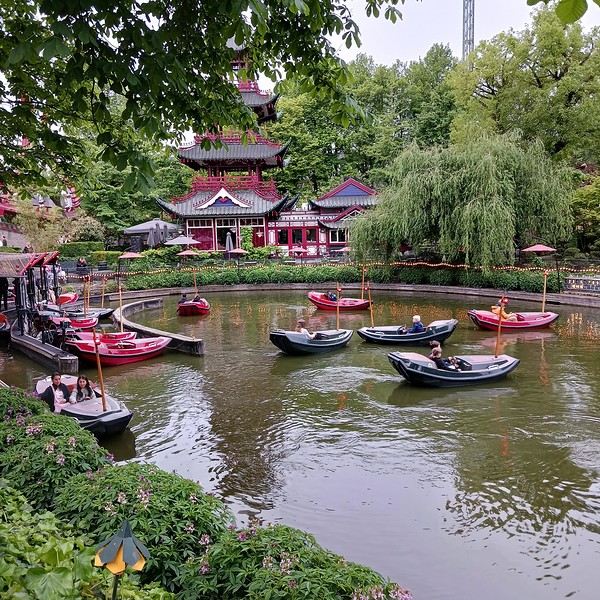
City Hall Square is much livelier than yesterday under the rain. A stage has been set up, and it’s Brazilian fiesta time! Now, let’s head into the famous Tivoli Gardens. Actually, it’s a very old amusement park, said to be the oldest in the world. Here’s what Wikipedia says about it: "Tivoli Gardens is one of the major attractions in central Copenhagen today. It’s a park featuring many rides (roller coasters, various trains), as well as restaurants, exhibitions, concerts, and pantomimes. It’s often considered the world’s first theme park." The park is beautifully flowered and well-maintained. Its hotel looks like an Indian palace in the style of the Taj Mahal.


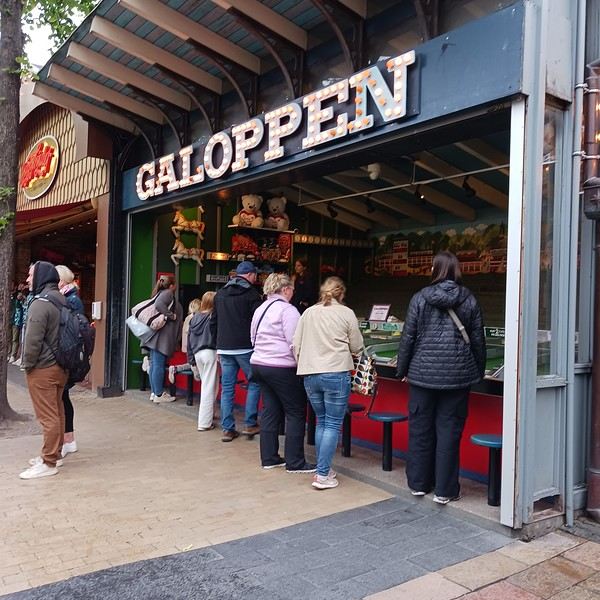
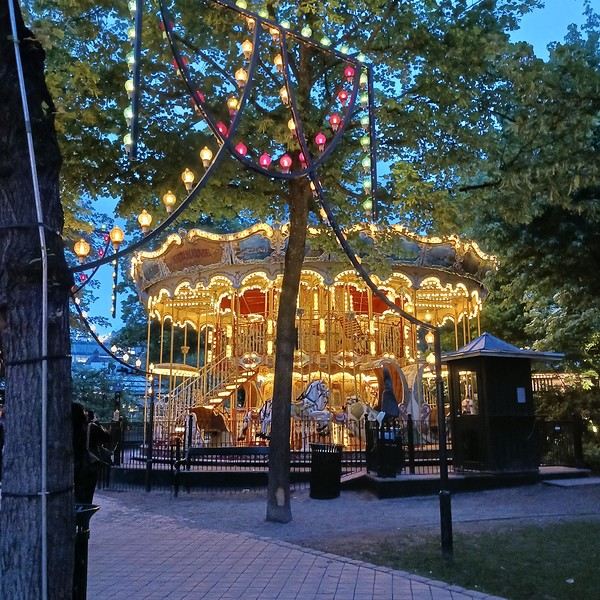
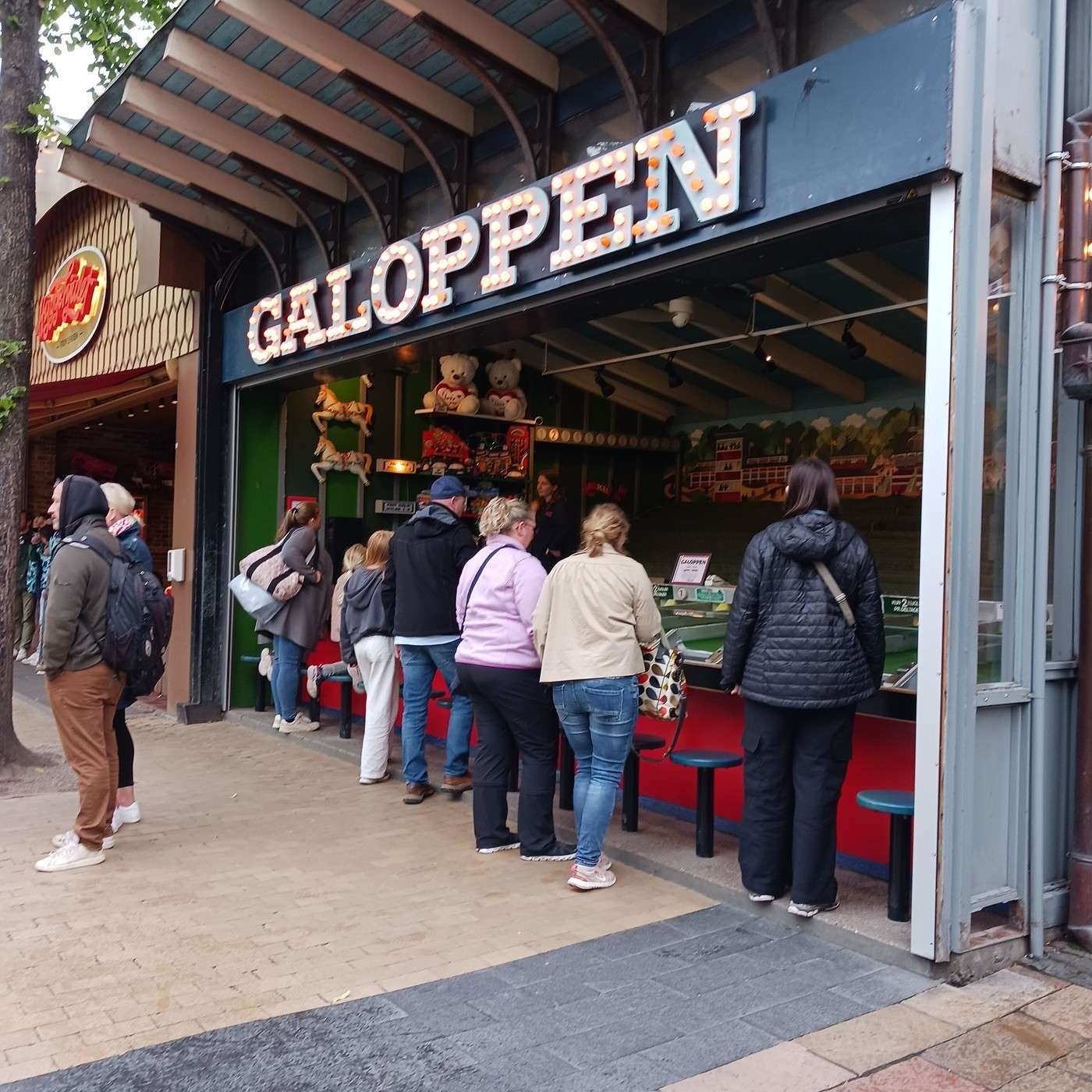
While the kids go on some "thrilling" rides, Patrick and I catch a concert (and take a little nap, let’s be honest). We then opt for some more "chill" attractions since there are also old-fashioned fairground rides like this "galoppen":


There are plenty of restaurants in the park, and we grab a light dinner at Søcafeen while waiting for nightfall and the illuminations. They say Tivoli is even more beautiful at night with all these lights—and they’re not wrong!


(To be continued)

Kattegat Tour and Great Norwegian Fjords - 32 Days (Denmark - Sweden - Norway)

Cendryon · 2025-07-26

(Continued) Day 8 – Saturday, June 8

We don’t have a set plan for this last day with Caroline and Cederic. However, this morning, the young ones decide to join us at the small Rosenborg Castle. Rosenborg Slot (Castle of the Rose):

From 1606 to 1624, Christian IV had this summer residence built on the outskirts of the city, where he felt cramped, based on his own sketches. Through expansions, this Dutch Renaissance-style castle, which he loved, became his favorite residence, named Rosenborg in honor of his second wife, Kirsten Munk, whose coat of arms featured three roses. He died here in 1648. Starting in 1710, Rosenborg was abandoned, as Frederik IV found it too small. As a result, the interiors, rarely inhabited, were well preserved and remained practically unchanged. Since 1658, the castle has housed the crown treasury (jewels and regalia) and became a museum in 1833.

You won’t see any photos of the castle because, since we’re limited in the number of images per post, I’d rather save them for later...

Unfortunately, I didn’t book a visit, and there are no available time slots before the afternoon. Still, let’s go say hello to Queen Caroline, who stands nearby:

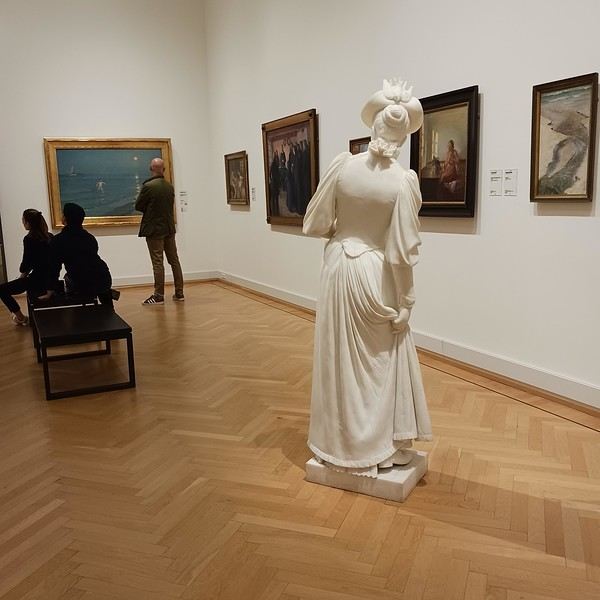
The statue of Queen Caroline-Amalie (1796–1881) stands amidst the roses of the Rose Garden, a garden at Rosenborg Slot. Caroline-Amalie was a Danish princess who, as the second wife of Christian VIII, became Queen consort of Denmark from 1839 to 1848. Her sculpture is a work by Vilhelm Bissen and Hans Jørgen Holm.

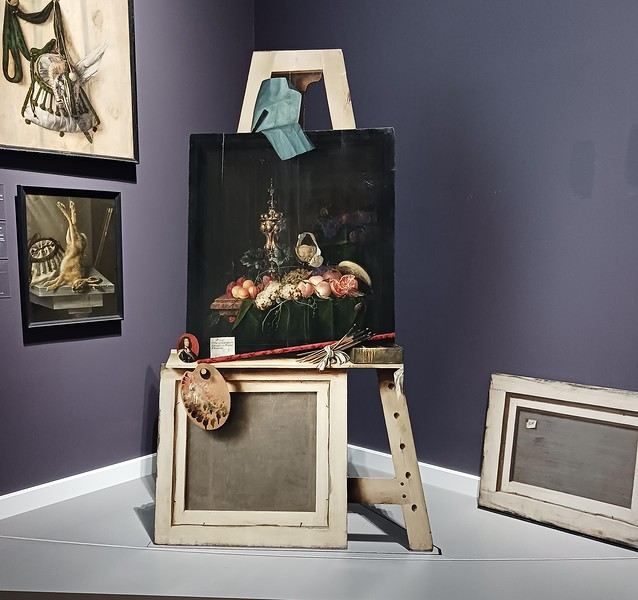
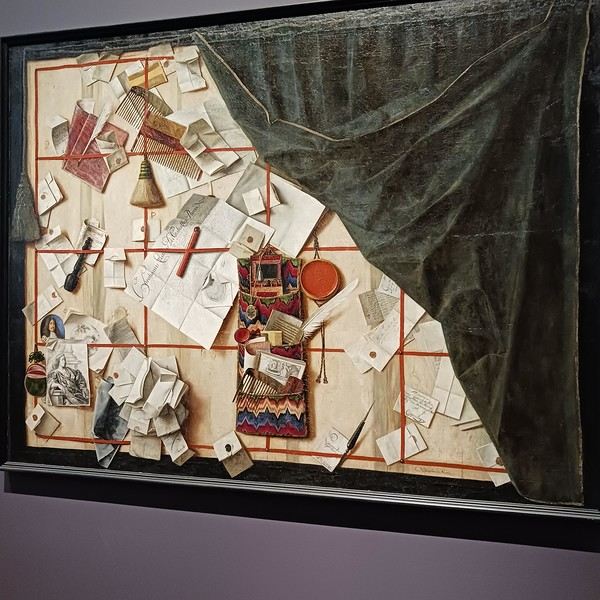
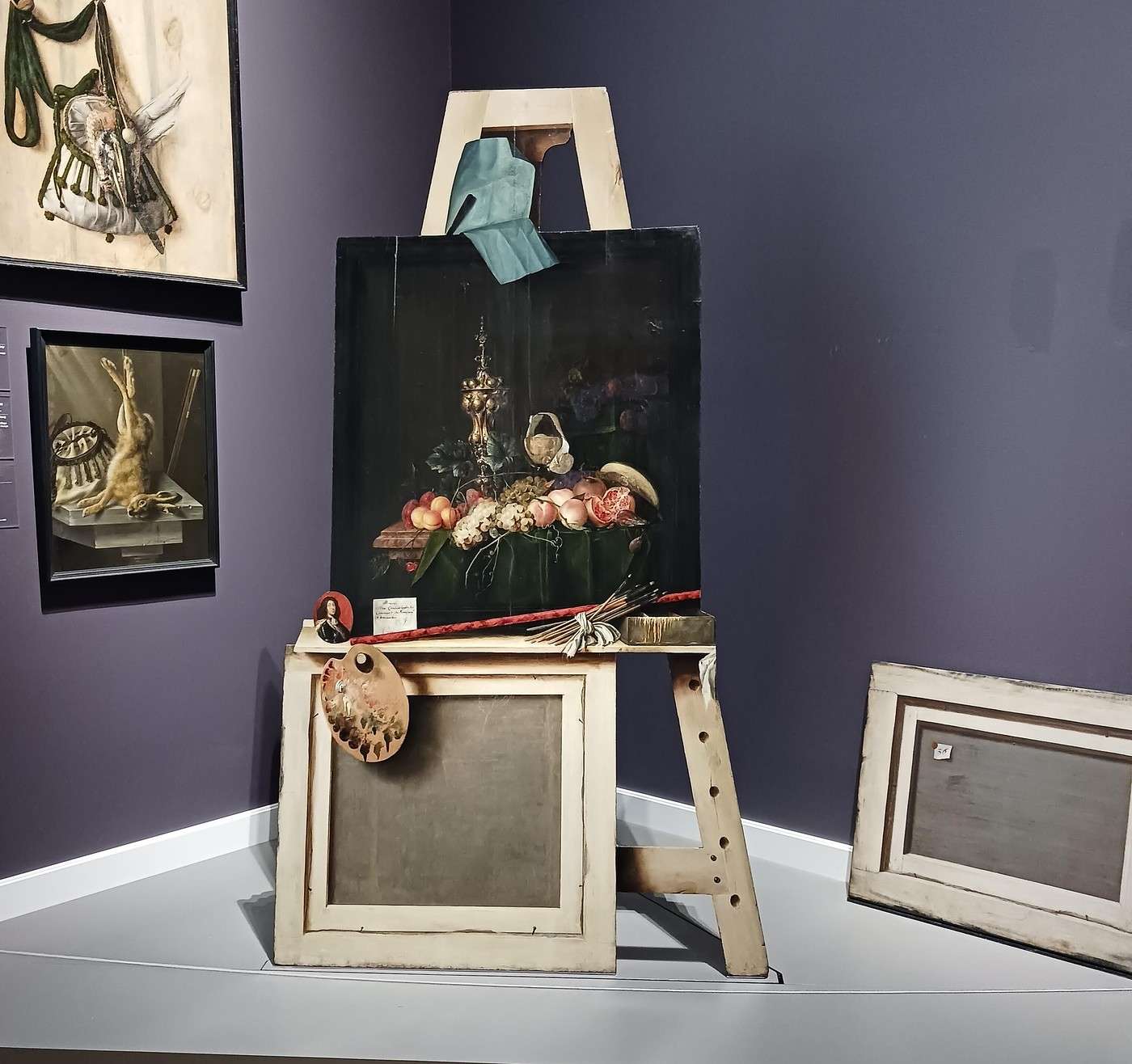
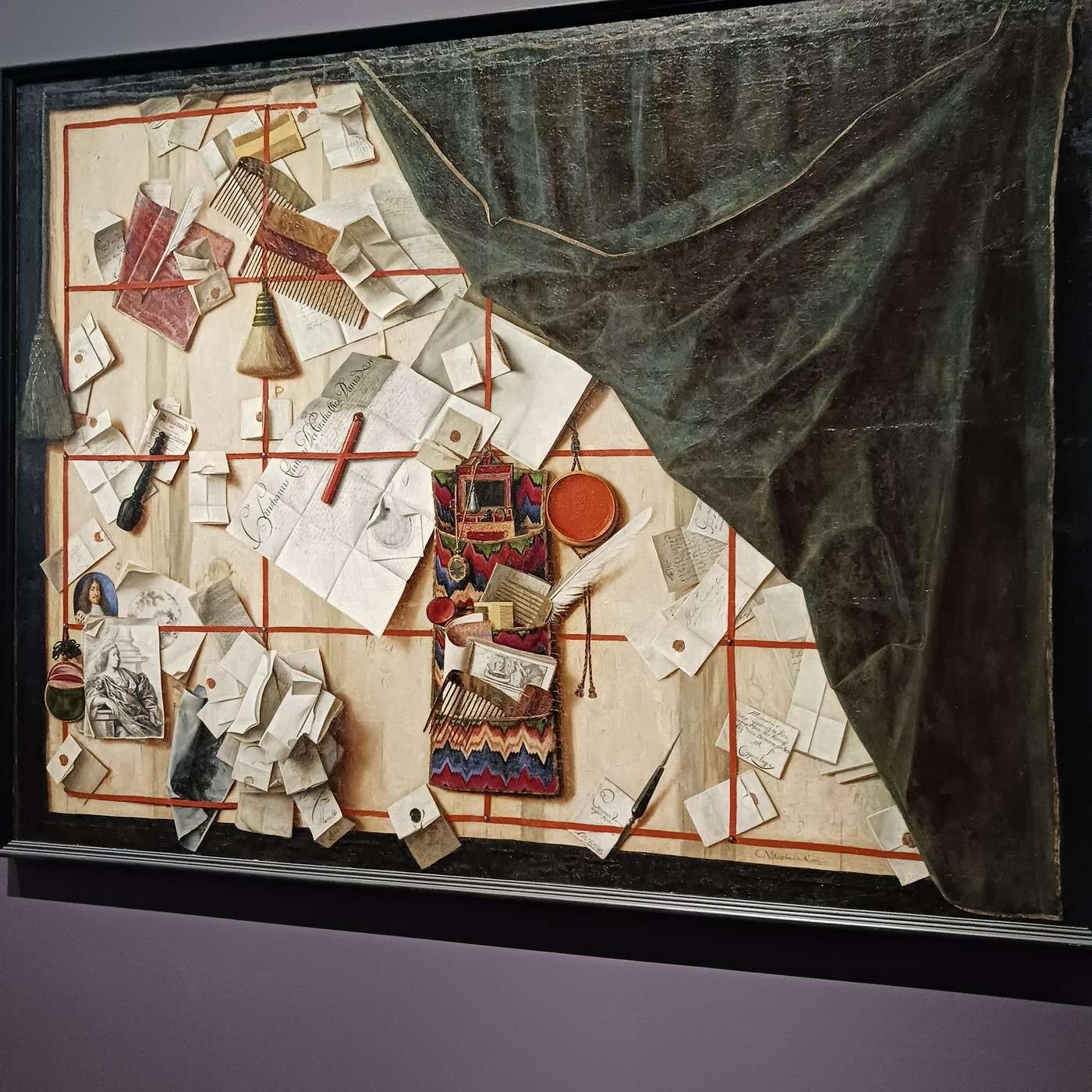
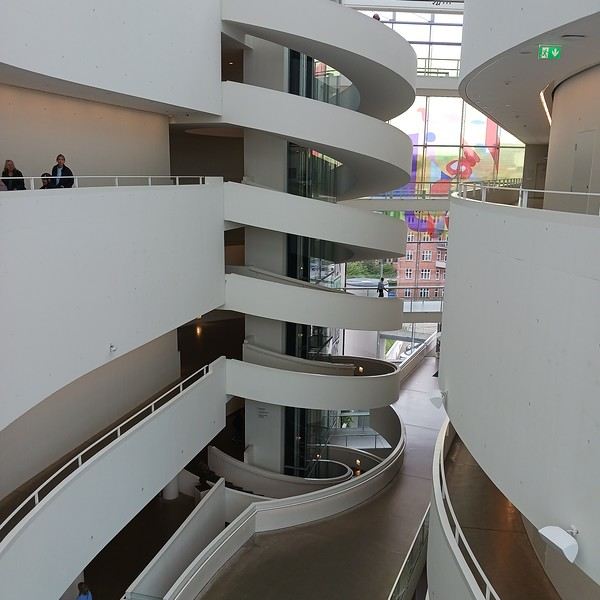
Too bad about the castle visit—we’ll watch the changing of the guard at the royal palace instead. There’s already a huge crowd. The soldiers are a bit like those at Buckingham Palace, but in blue and black. After the changing of the guard, which was hard to see due to the crowd, the rain, and all the umbrellas, we grab a quick bite back at the apartment before going our separate ways. The young ones will go shopping and hit the terraces, while Patrick and I head to the fine arts museum. I really wanted to see the room dedicated to Cornelis Norbertus Gysbrechts! And here we are. This room is entirely devoted to this Flemish painter, active in the second half of the 17th century, specializing in still lifes and trompe-l'œil.

A free master of the Guild of Saint Luke in Antwerp in 1659, Cornelis Norbertus Gysbrechts (1630–1675~) was a court painter to King Christian V of Denmark in Copenhagen between 1670 and 1672. It was in this city that he seems to have spent much of his career. As the director of an auction house, he sold many of his paintings, marked by his talent for trompe-l'œil. His works reflect the Baroque taste for illusion, theater, and reflections on vanity and the limits of pictorial representation. Some of his paintings also serve as memento mori, reminding us of the fleeting nature of things. Gysbrechts is relatively unknown to the general public but highly appreciated in art history circles, particularly for his visual reflections on painting itself. His work saw a resurgence of interest in the 20th century, especially in studies on illusion and representation.

As soon as you enter the room, you’re immediately drawn to this work: "Trompe-l'œil with Easel and Painting." This famous painting shows an easel with an unfinished canvas, along with brushes, a rag, etc., creating a mise en abyme and a playful take on the nature of art.


The other works on display feature "collages" and still lifes with a multitude of objects and notes. I could happily stay here longer, but it would take a lot of time to examine even one of these works in detail—there are so many messages to decipher...


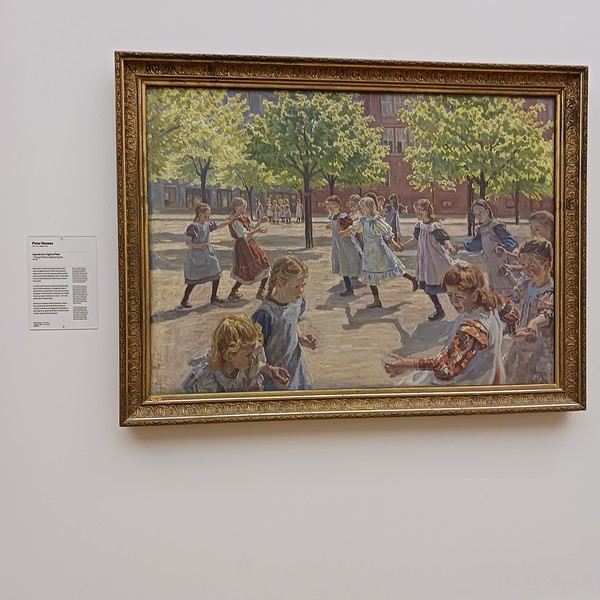
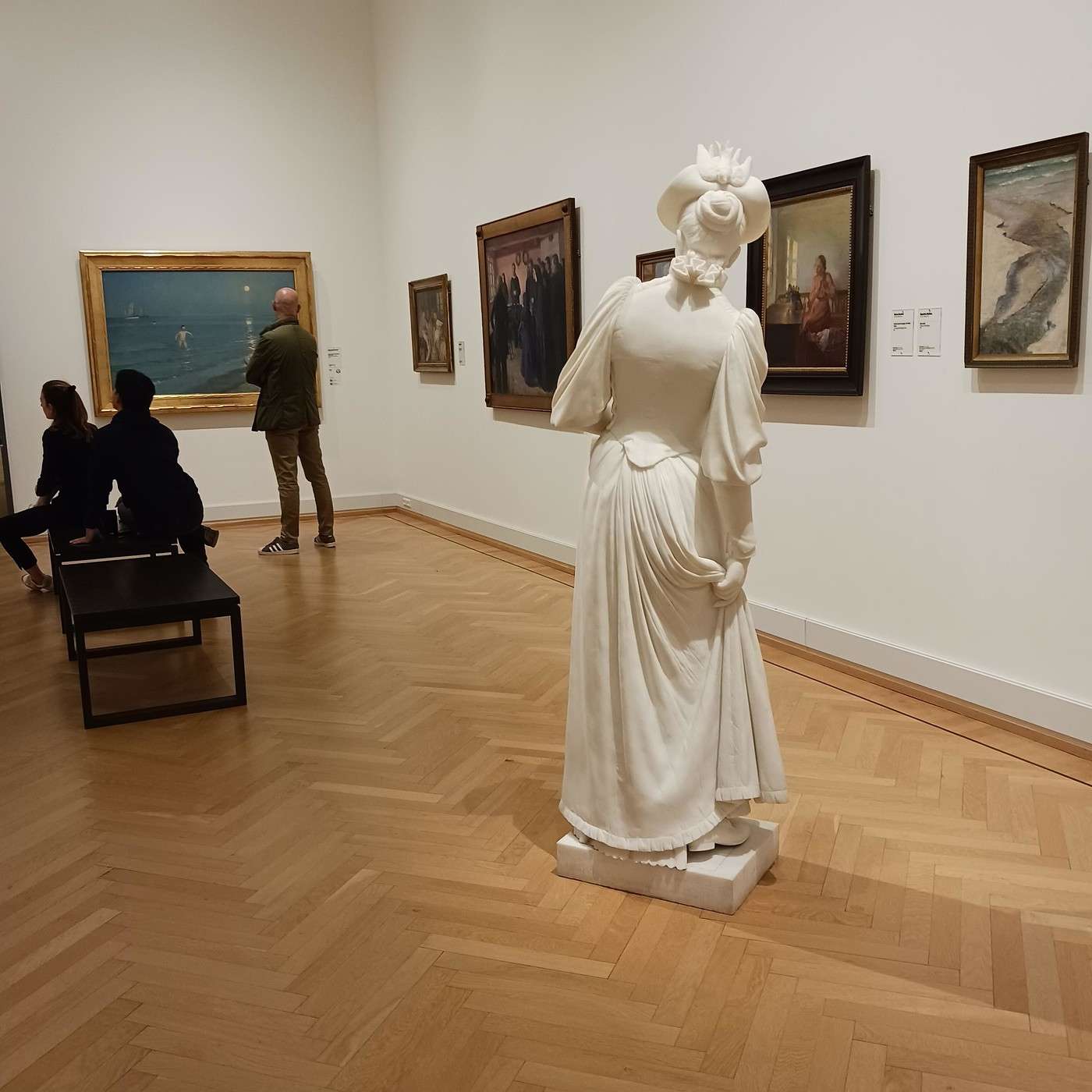
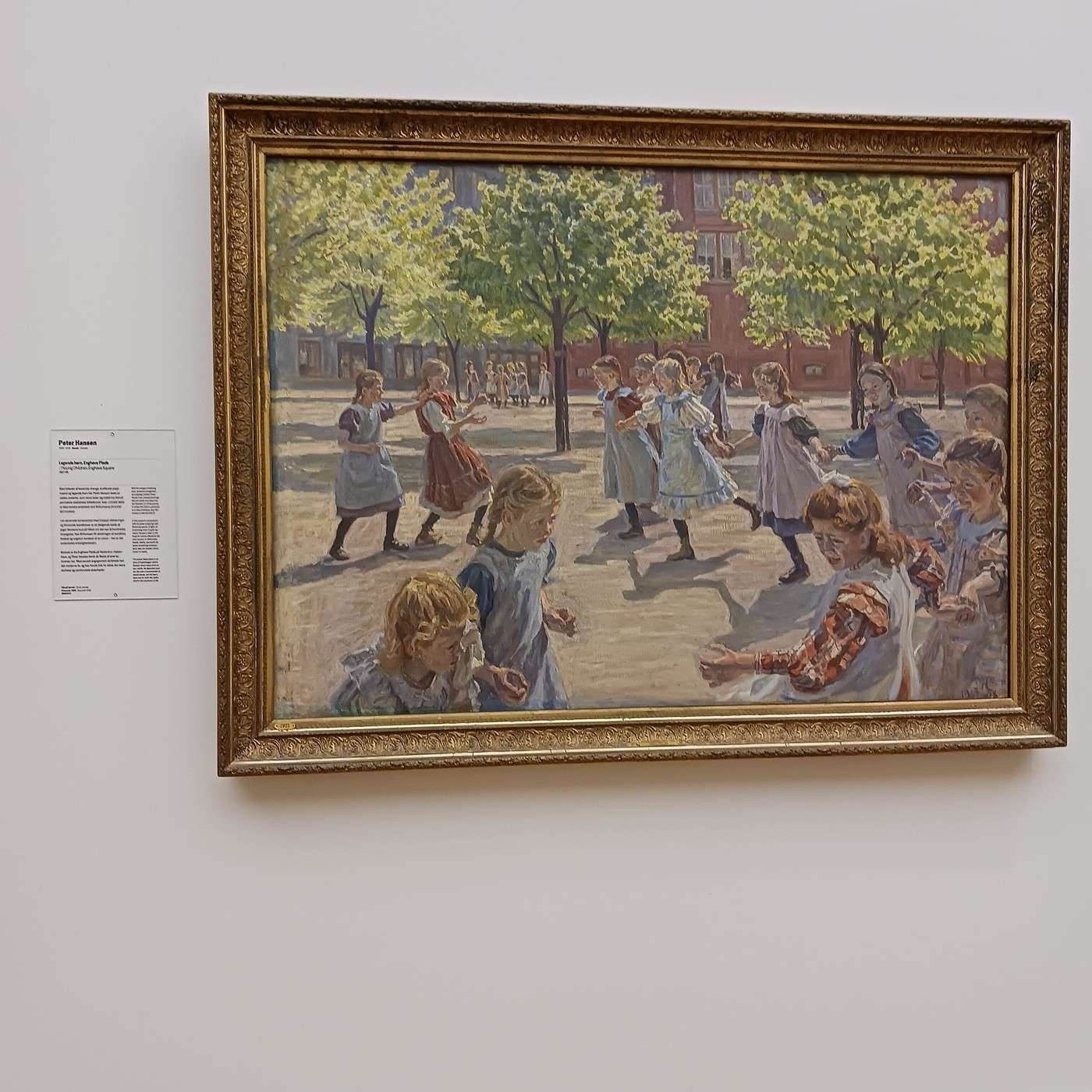
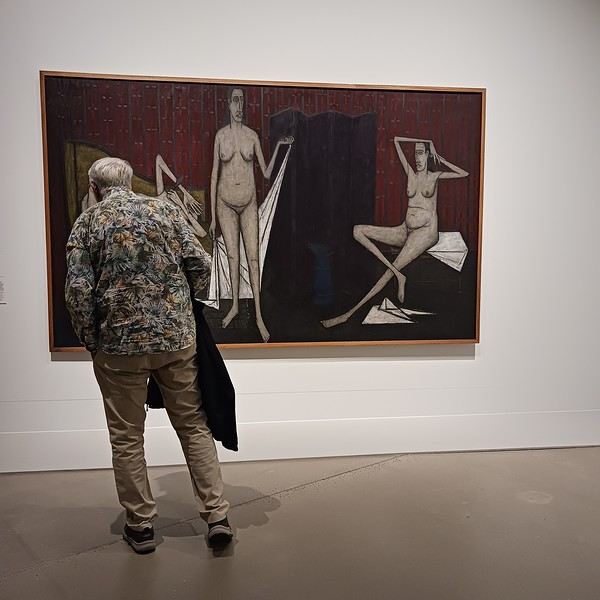
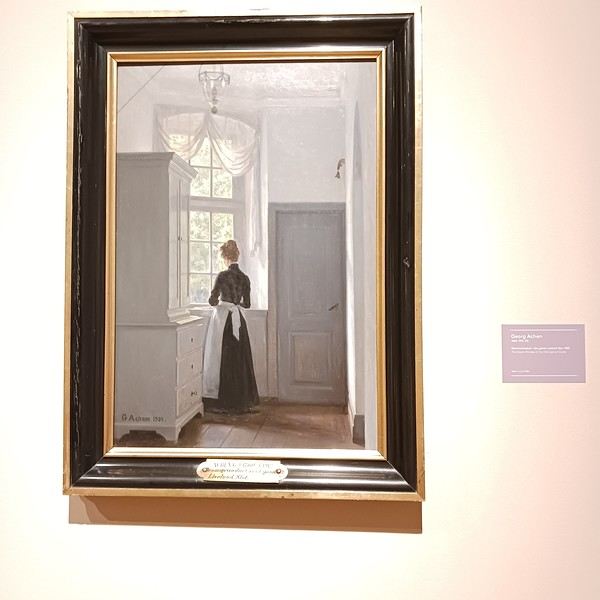
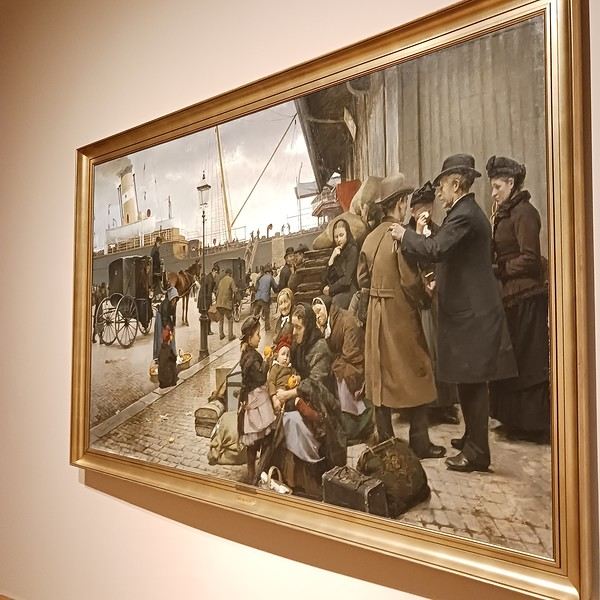
The museum is vast, giving pride of place to Danish painters, which makes sense. Those from the 19th century produced particularly beautiful works that deserve to be discovered or rediscovered. While French Impressionists from the 19th century gained recognition in Europe during the 20th century, it overshadowed the artistic vitality of other countries like the United States or Scandinavia. It’s precisely some of these light-filled, child-filled, and life-filled works that caught my attention, like this painting, "Children Playing, Enghave Square" by Peter Hansen, painted in 1908. This work belongs to the period when Hansen was interested in geometry and simultaneous perspective, moving away from the central perspective of the Renaissance.


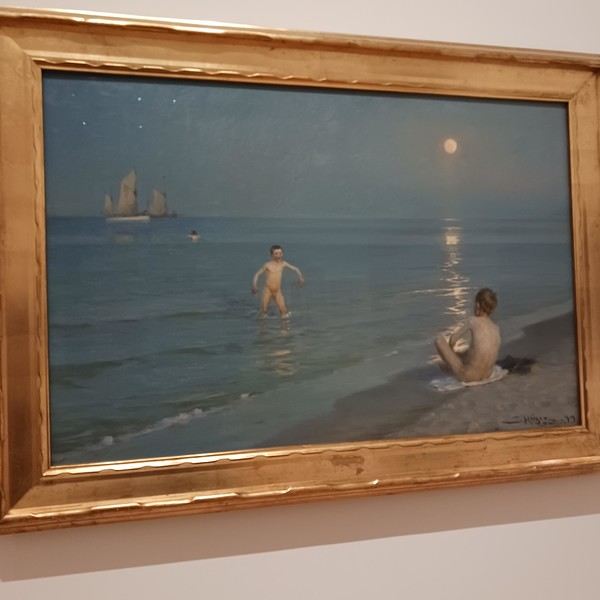
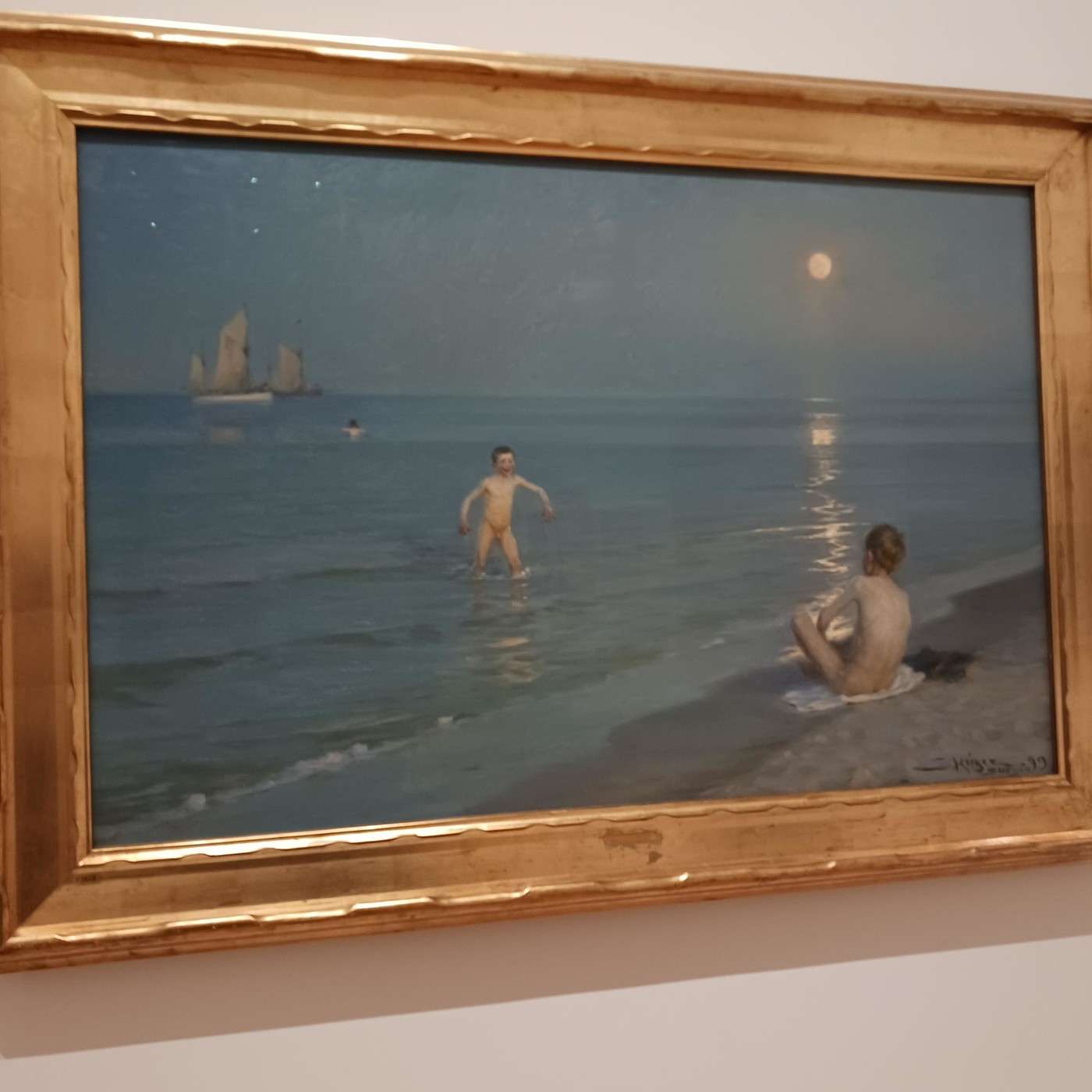
In Denmark, people often talk about the Skagen painters, a group of artists based in the northernmost town in the country, in Jutland. I also notice some paintings by these artists, like those by Peder Severin Krøyer. Here’s a summer scene with two children bathing at Skagen:


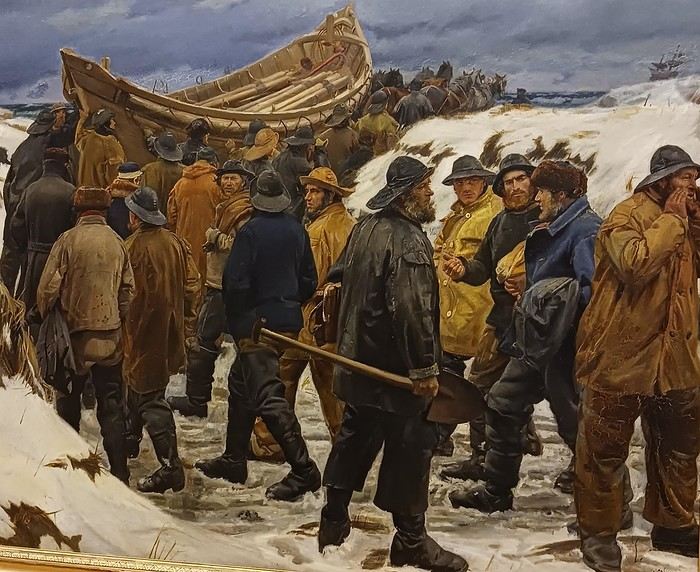
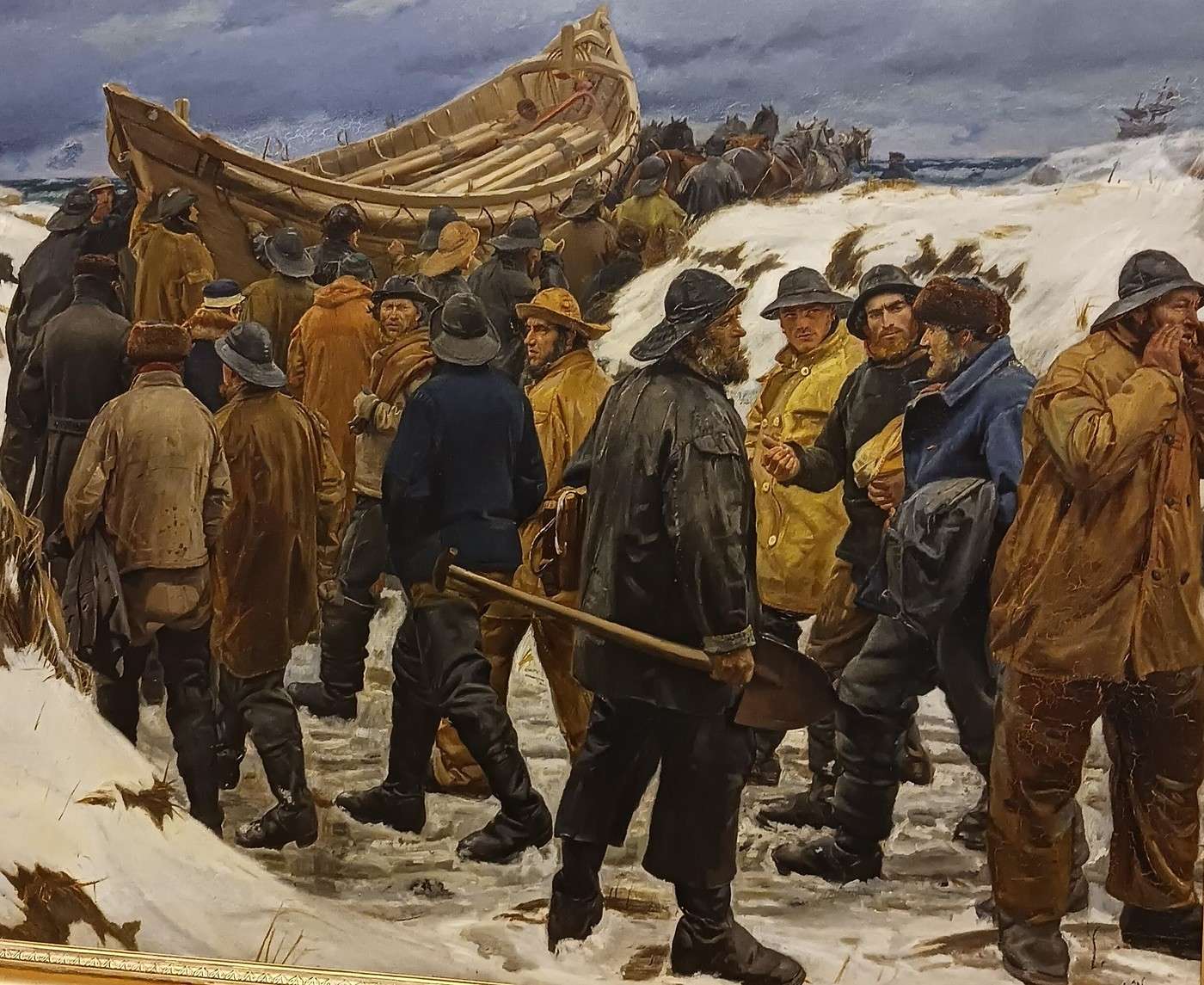
While the Skagen painters capture the joys of the beach, they don’t forget the harshness of fishing life, as shown in this painting by Michael Peter Ancher:


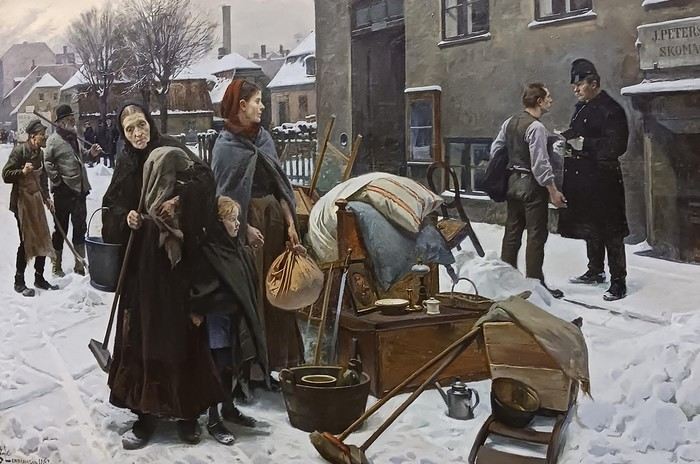
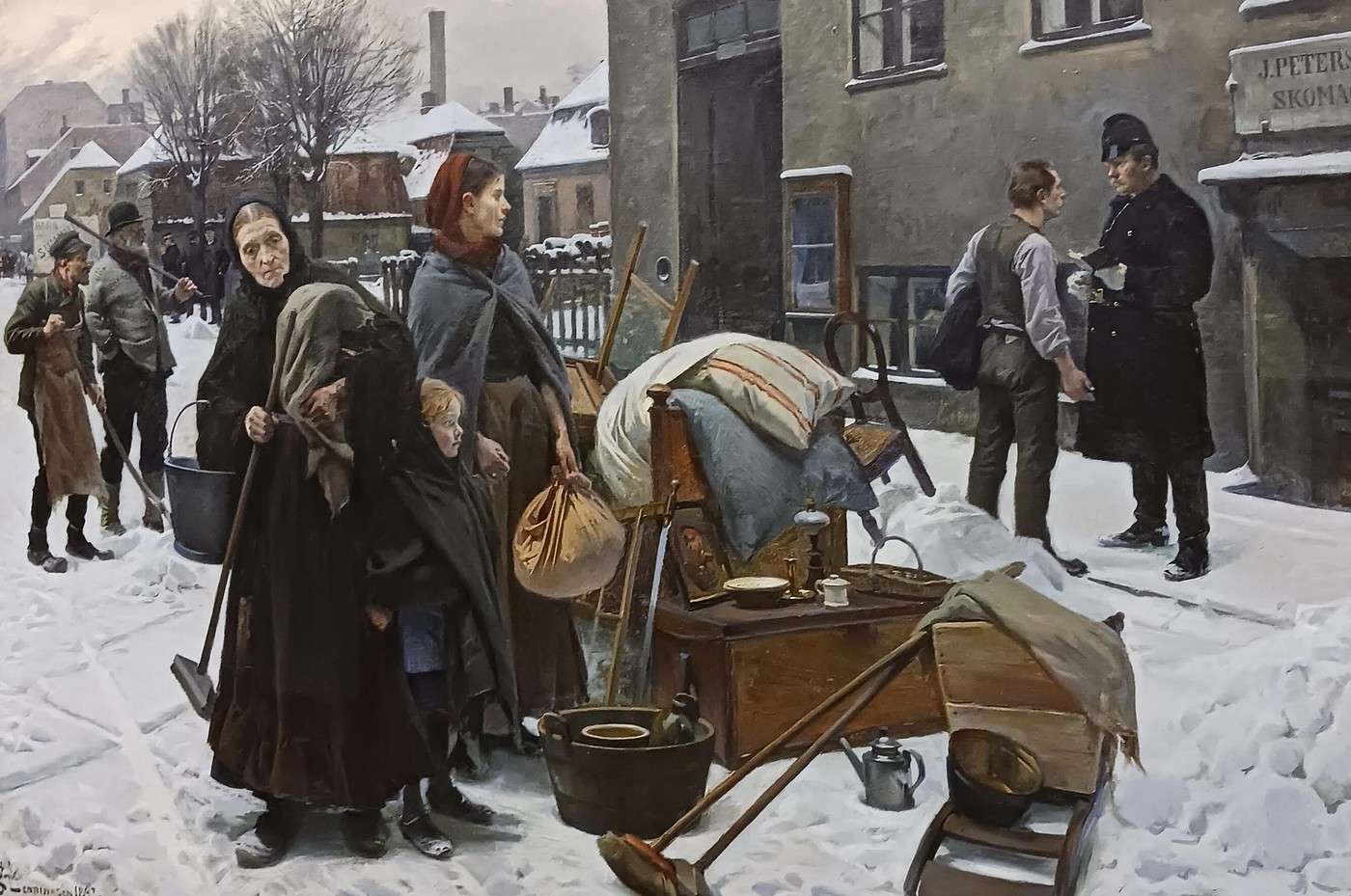
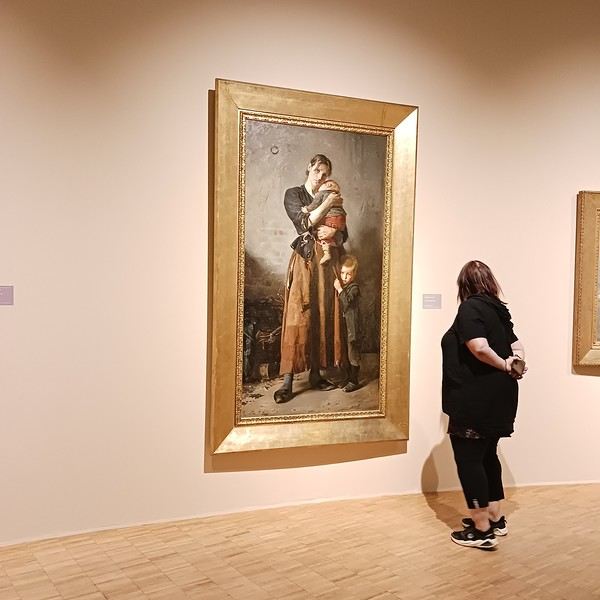
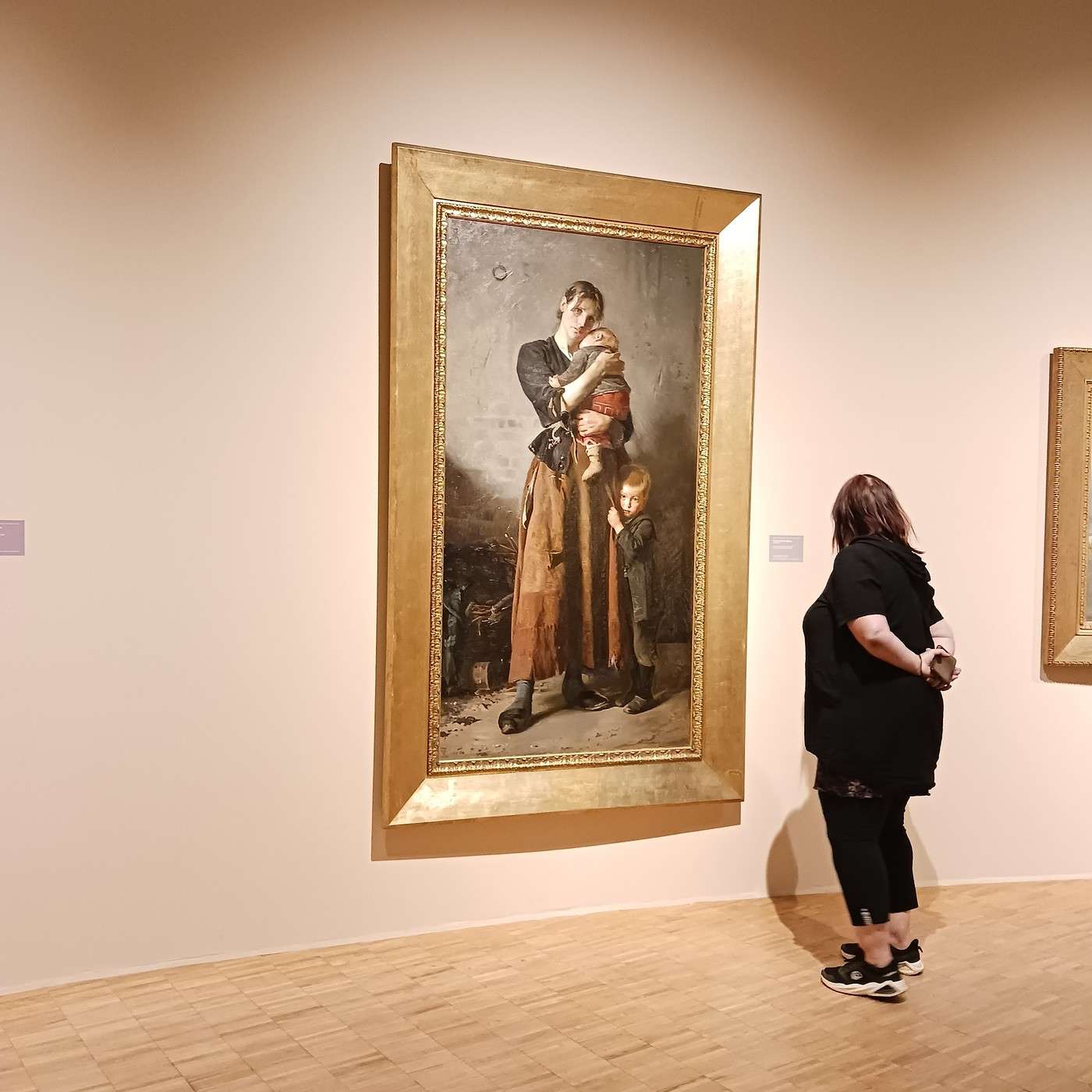
Further on, I notice this painting by Erik Ludvig Henningsen, titled "The Evicted," which reminds us that the 19th century was also the era of industrialization, with its accompanying poverty. I later learn that this painter is best known for his social realist paintings depicting poor and disadvantaged groups in the 1880s and 1890s.


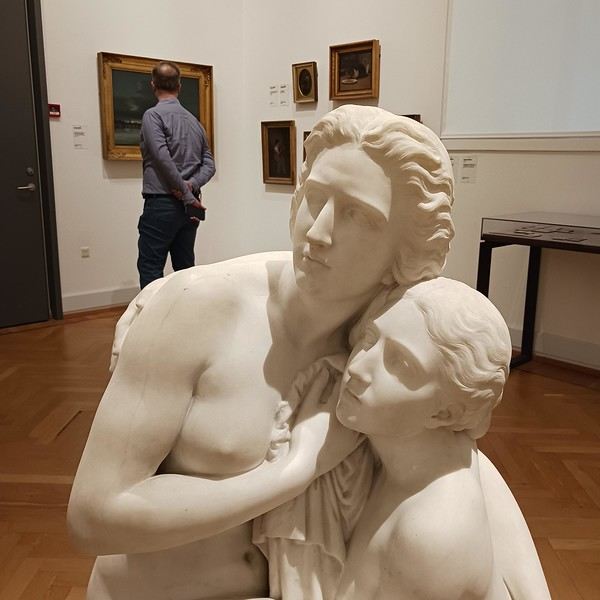
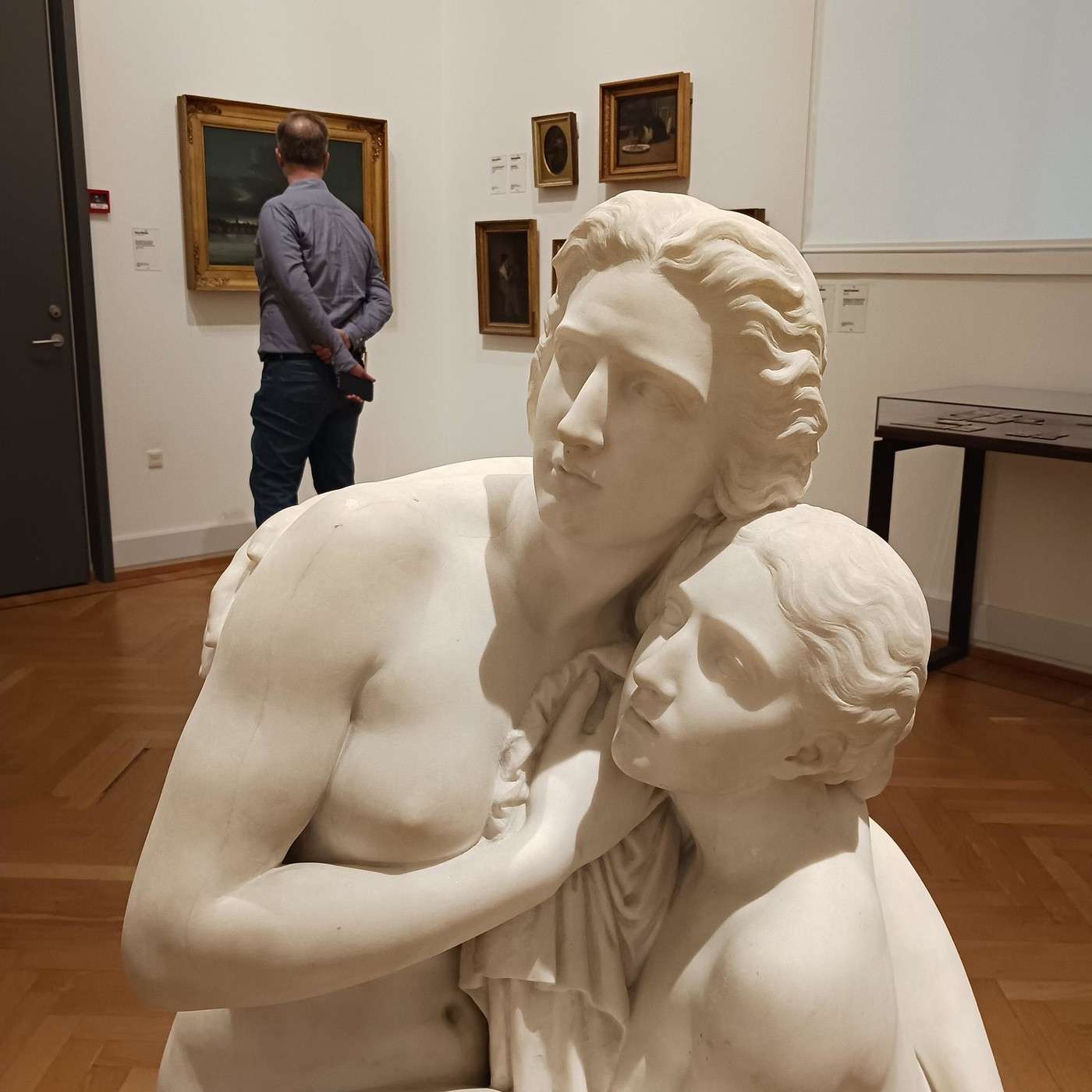
Note the beautiful harmony between sculptures and paintings...


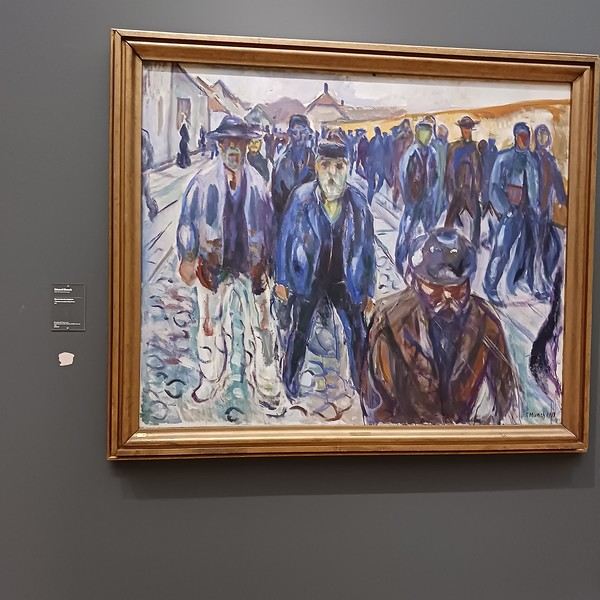
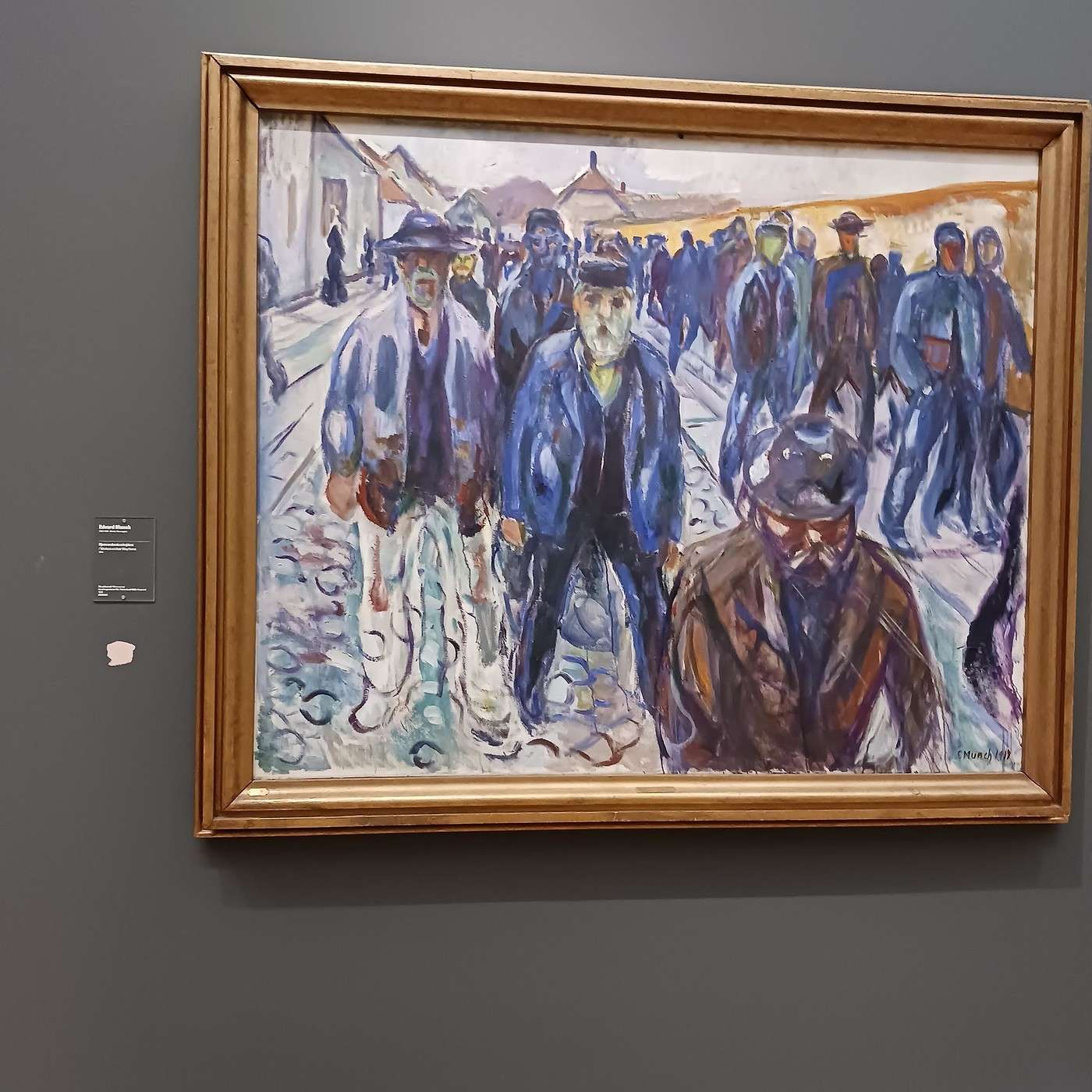
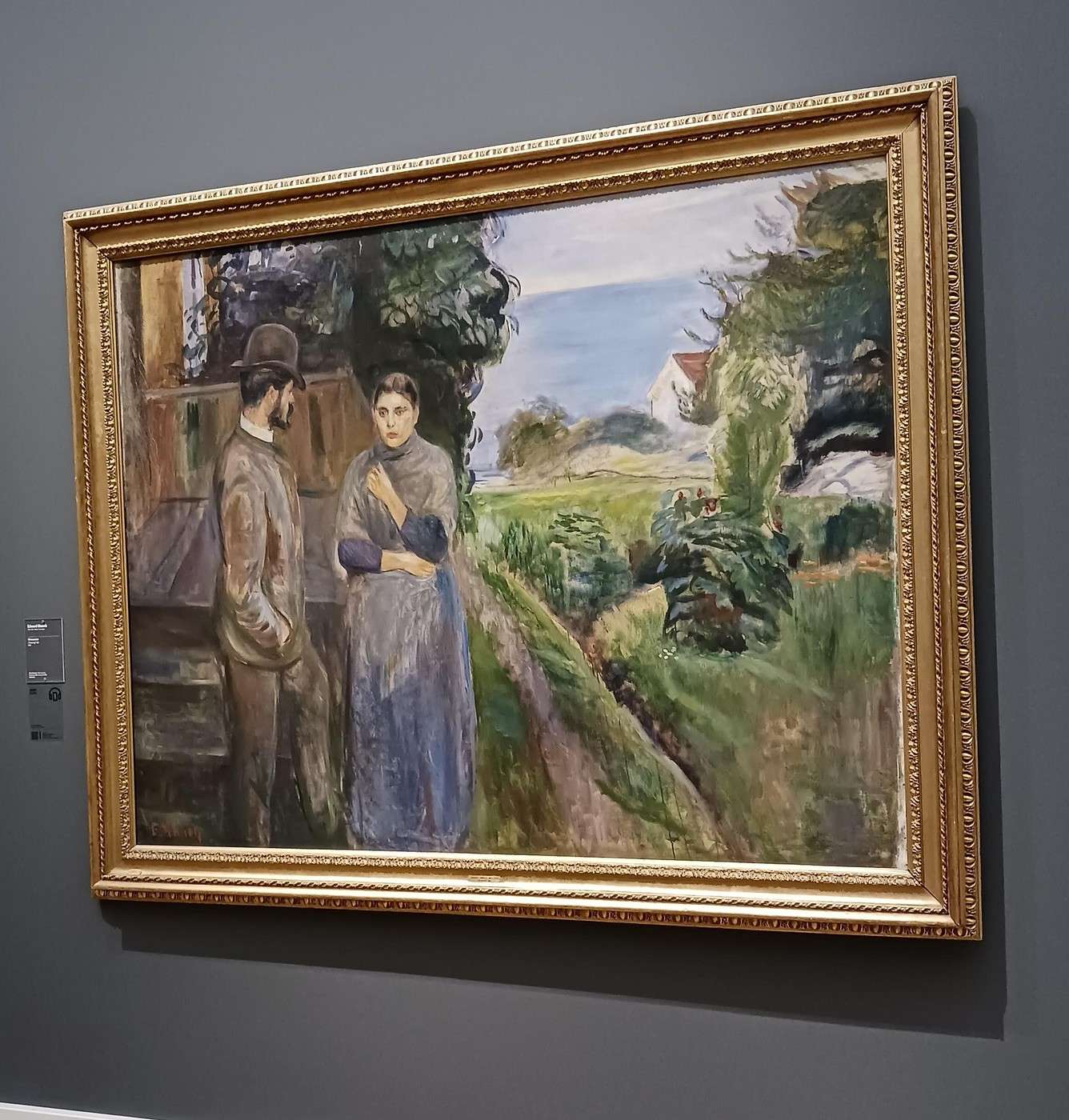
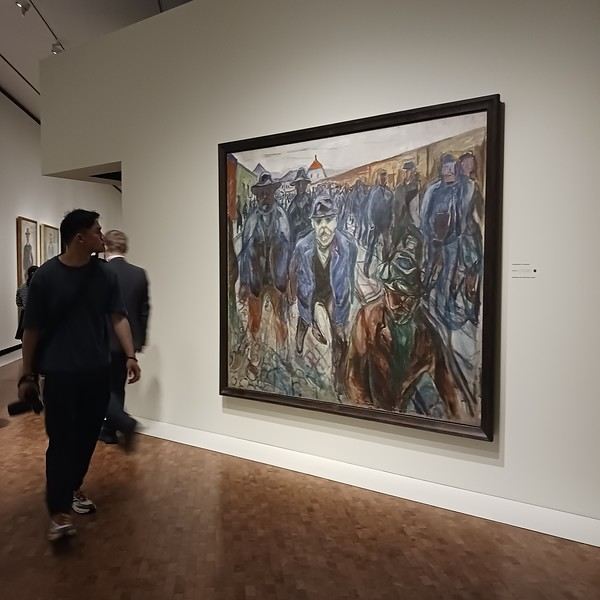
But to stay on the same era and subject, it’s this work that really "hits me hard." It’s called "Workers Returning Home" (1913).


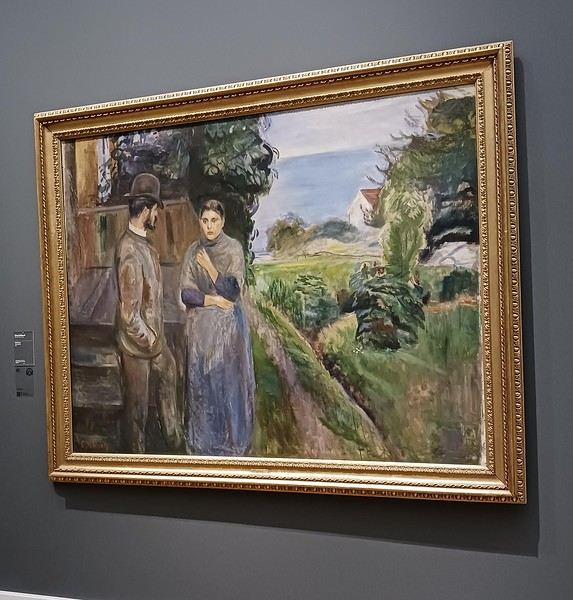
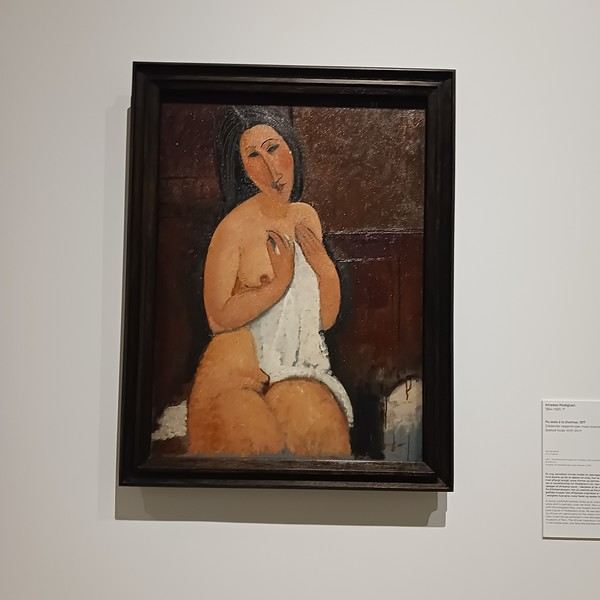
This is an iconic work by the Norwegian painter Edvard Munch. Munch was an Expressionist painter. Expressionist art sought to express emotions and symbols rather than reality. Paintings were often exaggerated or distorted, and colors were chosen to convey a feeling. This painting illustrates the daily life of workers, capturing their fatigue and loneliness after a long day’s work. Munch uses dark colors and stylized forms to express anguish and melancholy, hallmarks of his style. The almost ghostly silhouettes of the workers evoke an atmosphere of despair and alienation. Through this work, Munch depicts not only the human condition but also the social struggles of his time, resonating with universal themes of isolation and the search for meaning. The other Munch paintings in this museum definitely convince me to visit the museum dedicated to him in Oslo later. Below, the evening conversation.


Of course, there are others, like the works of another Danish Expressionist painter, Jens Ferdinand Willumsen, but I can’t show them all.

Enriched by all these discoveries, we head back to meet the kids. Tonight, we’re celebrating our wedding anniversary and the end of the vacation for our children, who are flying back to Belgium tomorrow. We have a very pleasant meal at the restaurant HOST in Copenhagen, with a great quality-to-price ratio for Denmark.

Kattegat Tour and Great Norwegian Fjords - 32 Days (Denmark - Sweden - Norway)

Alanay · 2025-07-26

Thanks for all the sharing! You’ve had some really packed and discovery-filled days. I’m jotting down that beautiful museum. In the end, it feels like there are just as many indoor activities as outdoor ones in Copenhagen. See you for the next part! 🙂

Kattegat Tour and Great Norwegian Fjords - 32 Days (Denmark - Sweden - Norway)

Cendryon · 2025-07-26

...In the end, I get the feeling there are just as many indoor activities as outdoor ones in Copenhagen.

But yeah, you're right—it *is* a northern country, so the weather isn't always great. Danes are *really* good at museums, and when I say *really* good, I mean they know how to make even the smallest "thing" engaging. Their museums are full of surprises! You’ll see what I mean if you keep up with my posts... 😉

Kattegat Tour and Norwegian Fjords - 32 Days (Denmark - Sweden - Norway)

Ateliermurie · 2025-07-26

Thanks so much for sharing this trip, Muriel! 😊

Kattegat Tour and Norway’s Great Fjords - 32 Days (Denmark - Sweden - Norway)

Cendryon · 2025-08-04

Before I continue, I’ll share a few thoughts and tips about Copenhagen. I found the city friendly and welcoming—perfect for a weekend getaway.

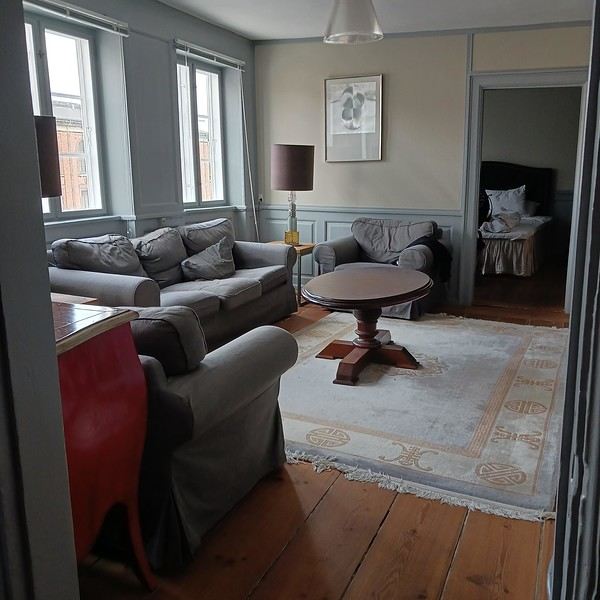
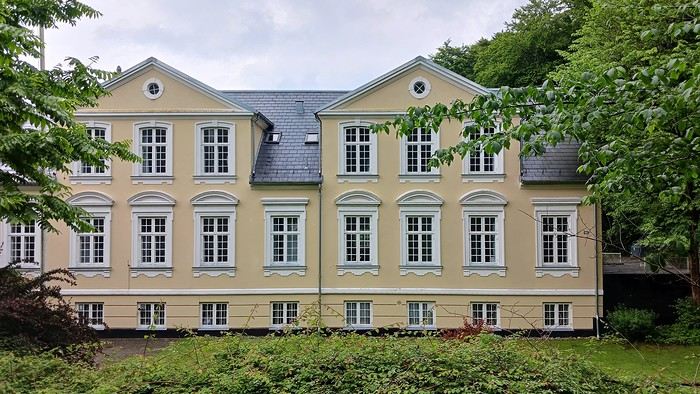
ACCOMMODATION: I chose a very central apartment right on Nyhavn, which was quite expensive at 263 € per night on Airbnb. Still, it was cheaper than booking two hotel rooms in the city center, and it gave us the option to cook some of our meals—a feature we took full advantage of. The place was perfect: though it was in an old building with creaky, uneven floors, it was tastefully furnished and very functional. Located on the 2nd floor of the yellow house below:


View from the living room:


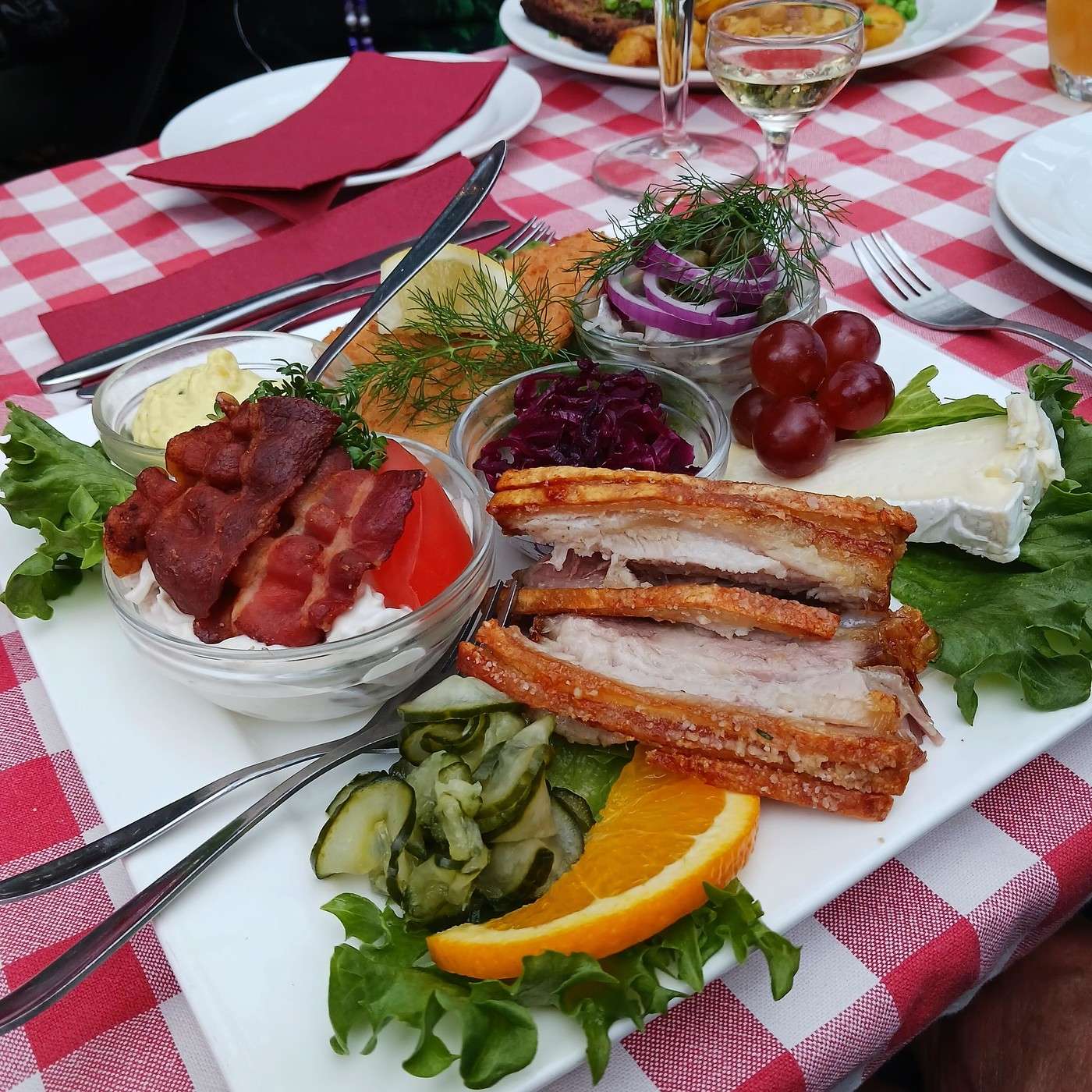
MEALS: We tried a few cafés and restaurants, but the prices seemed similar to Belgium’s—more expensive than in France! I’d pre-selected some cozy spots for indoor dining in case it rained. Personally, I found the reputation of the famous *smørrebrød* (the open-faced sandwiches all the guides rave about) a bit overrated—they’re pricey for what you get. We ended up opting for "plates" (like English-style sharing platters), which were slightly more expensive but much more filling. Some cafés offer them, while touristy restaurants often charge way too much. A tip: try to pick out a few affordable restaurants and cafés before you arrive. Here are the ones we tried:

Café KATZ, near the parliament, with a lovely terrace. 138 € for 4. Café O12 near City Hall—very trendy! 152 € for 4. If our bike tour had gone well, I’d planned to go to MADGLAD café, which would’ve definitely surprised my group! A "plate" SOCAFEE in Tivoli: 159 € for 4 (though one of the cheaper options in Tivoli). "A plate"

For a special occasion: Copenhagen is home to some of the world’s best restaurants, like NOMA (ranked #1 multiple times) and the famous ALCHEMIST by iconic chef Rasmus Munk. Unfortunately, our budget didn’t stretch to dining there as a group of four. So, to celebrate our 40th wedding anniversary with the kids, we chose one of Copenhagen’s top mid-range gastronomic restaurants—HOST—which offers incredible value. Their entrée-plat-dessert menu is 400 DKK, but with surprise courses in between, you actually get 8 different servings! We left absolutely delighted.


GETTING AROUND: Bike?: As I mentioned earlier, renting bicycles (with back-pedal brakes) was a total disaster for us (see my June 6 post). I’ve often read that Copenhagen is the biking capital, with plenty of bike lanes. That’s true, but those lanes are like highways—packed with cyclists who ride fast and yell at you if you, the poor tourist, aren’t going fast enough or are trying to figure out directions. It’s not always easy to spot where the bike paths go, especially at intersections. So no, biking in Copenhagen isn’t always pleasant—and I won’t even get started on when it rains! Metro?: There aren’t many lines, but it can be useful. Tickets are bought from very simple machines—so simple that... well, don’t do what we did! We thought it’d be smart to buy tickets in advance for our evening out as a family and for the kids’ trip to the airport the next day. Big mistake! We realized *too late* that the tickets were only valid for one hour after purchase. Result: a bunch of useless, non-refundable tickets.


Train?: Think RER (commuter rail). Perfect for getting from Central Station to the Carlsberg Brewery or elsewhere—fast and punctual! On foot?: The city center isn’t huge, and it’s nice to wander the streets, especially Strøget, the long pedestrian shopping street.


SIGHTSEEING: There’s so much to see in Copenhagen—ideal for a weekend, but we had to make choices. Here’s what we did over 3 days, including shopping:

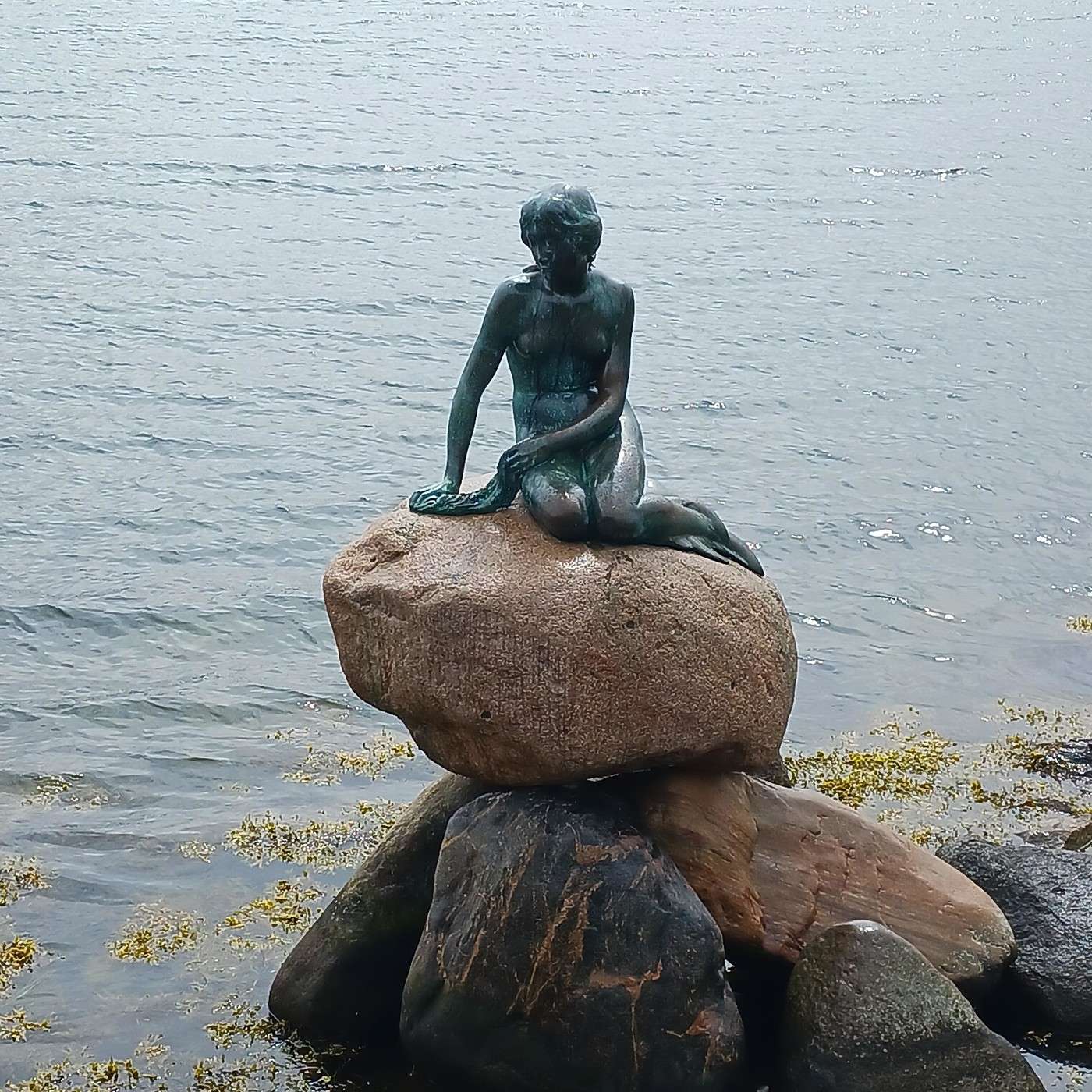
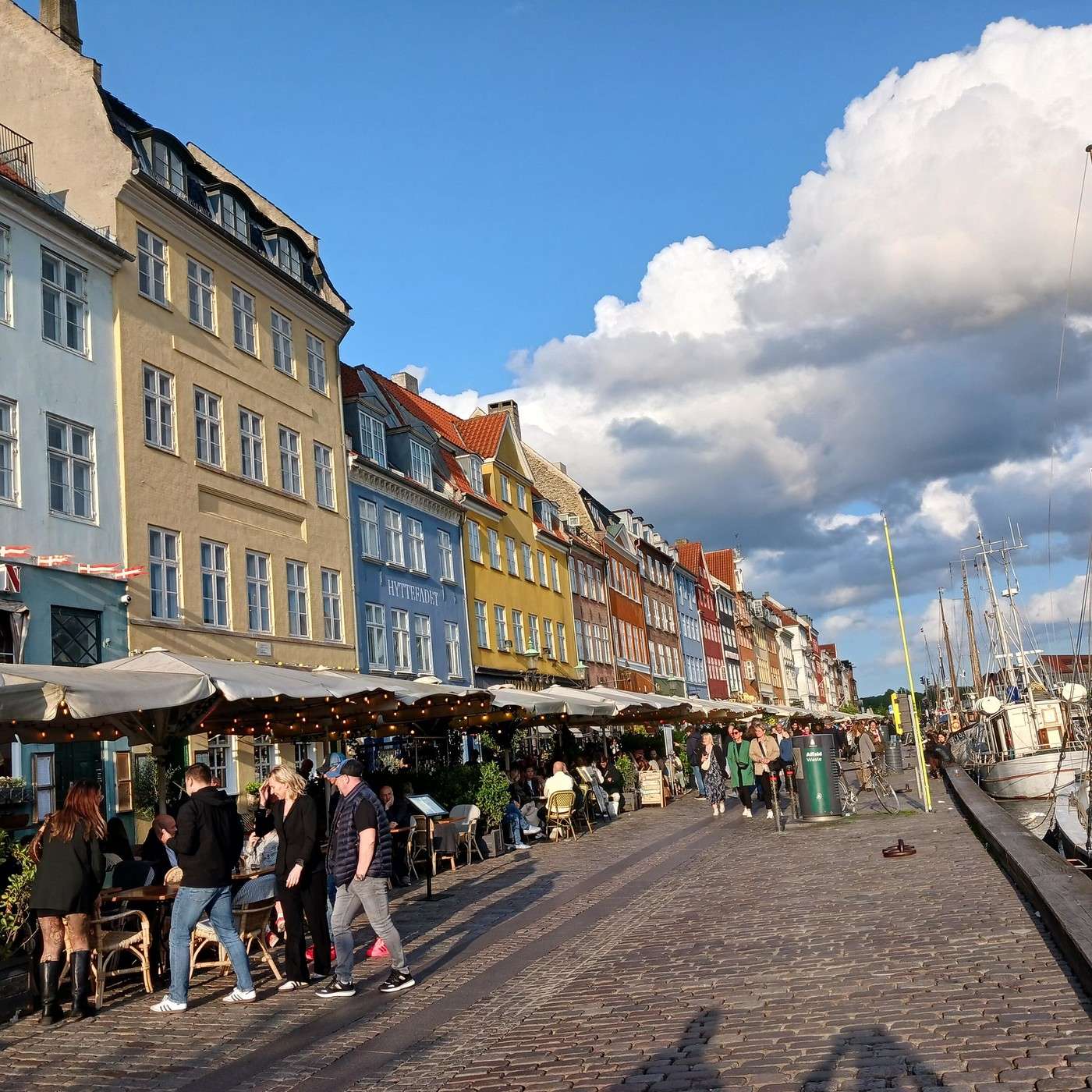
CARLSBERG: A fun visit that reminded me of the Guinness tour. You don’t see the production facilities, but it’s still a great time! TIVOLI: A must for those who love amusement parks (like us) or just beautiful flower gardens. STATENS MUSEUM FOR KUNST: The national art museum—great for art lovers who want to discover Scandinavian painters. BOAT TOUR: We took a 1-hour cruise from Nyhavn, which was lovely. Just note that the boats aren’t covered, so only do it if it’s not raining! BIKE TOUR: Forget it! (See my June 6 post.) THE LITTLE MERMAID: It’s a small statue—nothing like our Manneken Pis! Here she is in her beautiful setting (the chimney in the background is the city’s incinerator, whose roof you can ski on in winter) on a rainy day. No crowds—perfect for photos, right?!


The same spot photographed from the boat on a sunny day:


So if you’re not a fan of Asian tourist crowds, now you know what to do! I might return to Copenhagen one day to visit:

Rosenborg Castle, which we missed because we didn’t book ahead, the DESIGN MUSEUM (Danes are famous for it), the NATIONAL MUSEUM with its renowned VIKING collection, AMALIENBORG (the royal palace), CHRISTIANIA (not many good things are said about it, but I’d spotted a cute café there), TorvehallerneKBH market halls—always fun to explore local food, St. SAVIOR’S CHURCH and its spiral tower (if you’re not afraid of heights!), the WAR MUSEUM (for those who like that sort of thing—not me, but I’m thinking of others...), the GLYPTOTEK CARLSBERG, which looks amazing but we had to prioritize!

(To be continued—Sealand north of Copenhagen)

Kattegat Tour and Norway's Great Fjords - 32 Days (Denmark - Sweden - Norway)

Cendryon · 2025-08-04

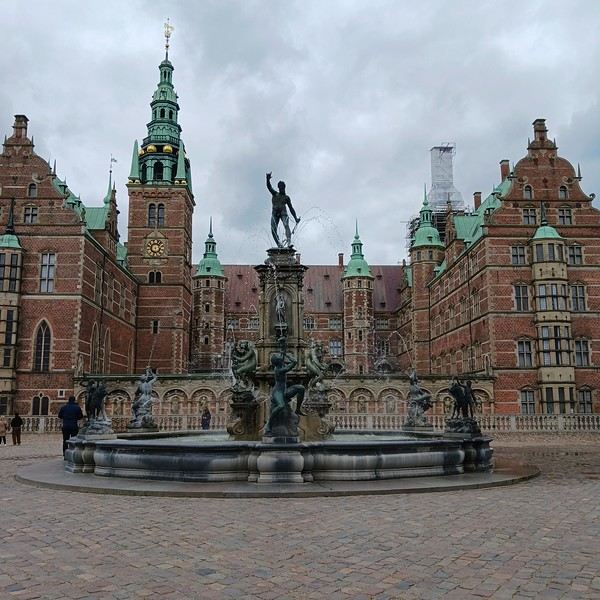
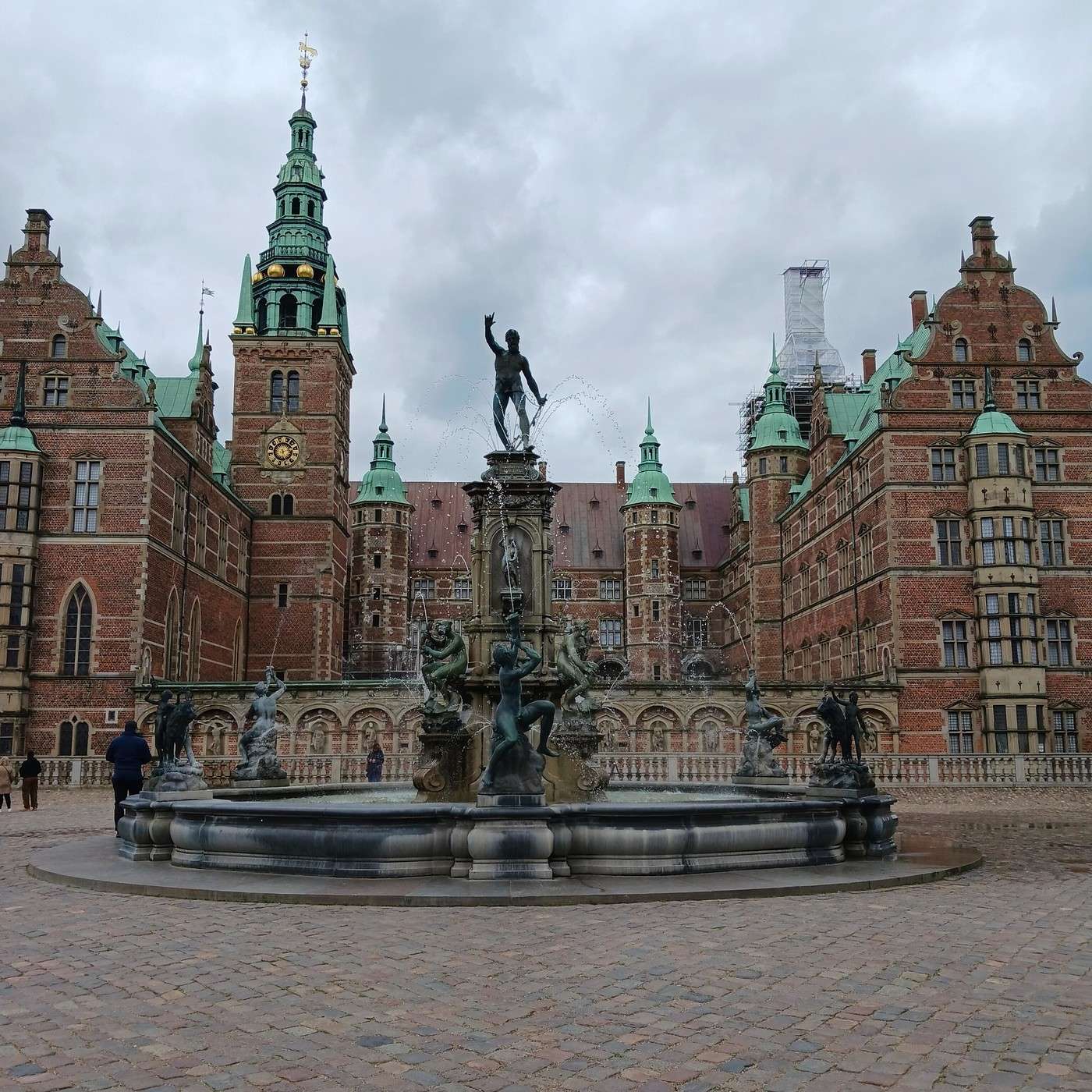
Day 8 – Saturday, June 8 – All by ourselves! At last, alone! I think everyone knows that feeling, right? :) The kids left yesterday to head back to Belgium, and now we’ve got the whole vehicle to ourselves! Off we go to northern Zealand (north of Copenhagen)—there’s so much to see in this part of the country that we had to make some choices. Before meeting up with Kim, our Danish friend, we decide to visit one of the country’s largest castles, Frederiksborg.


Frederiksborg Castle was built in the early 17th century by King Christian IV to expand his power, and it’s a unique example of the Danish Renaissance. It was rebuilt after a fire in the mid-19th century and has housed the Museum of National History since 1878. The museum showcases 500 years of Danish history, with a remarkable collection of portraits, historical paintings, furniture, tapestries, and decorative arts. It’s the largest and most important collection in Denmark and continues to grow with new works. (Visit Denmark)

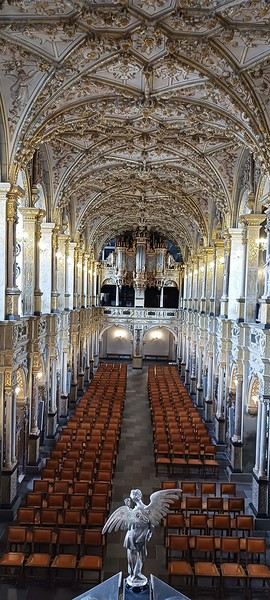
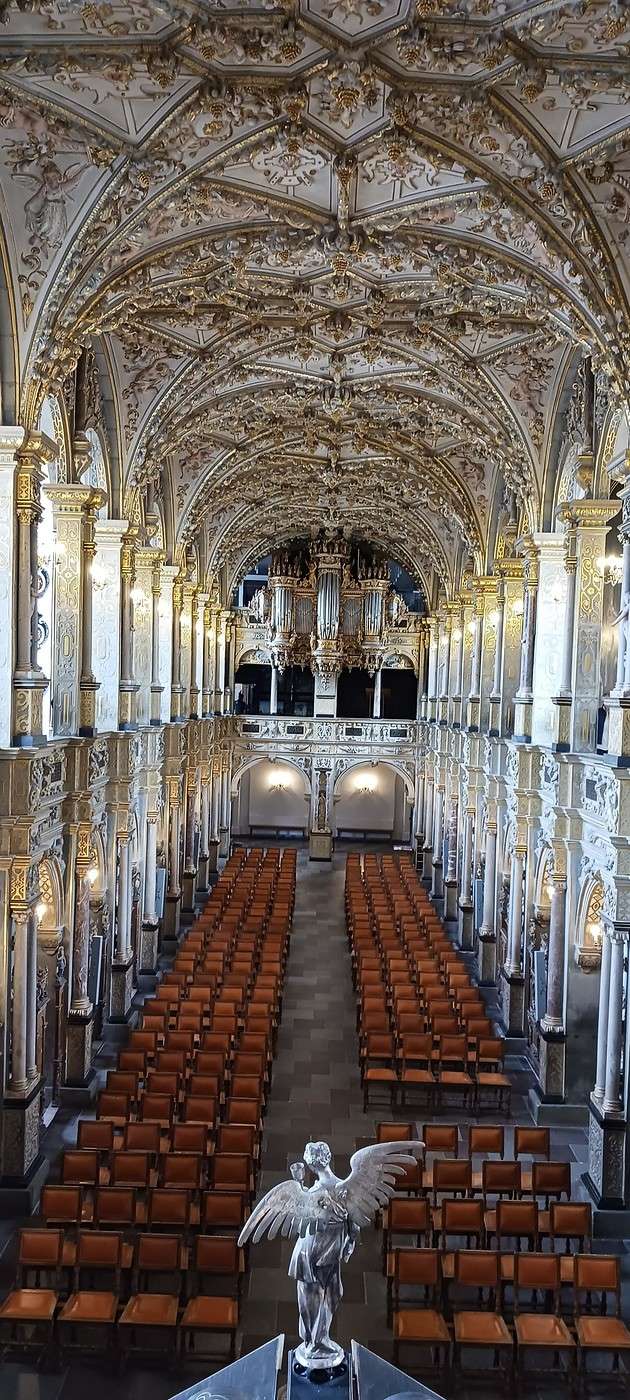
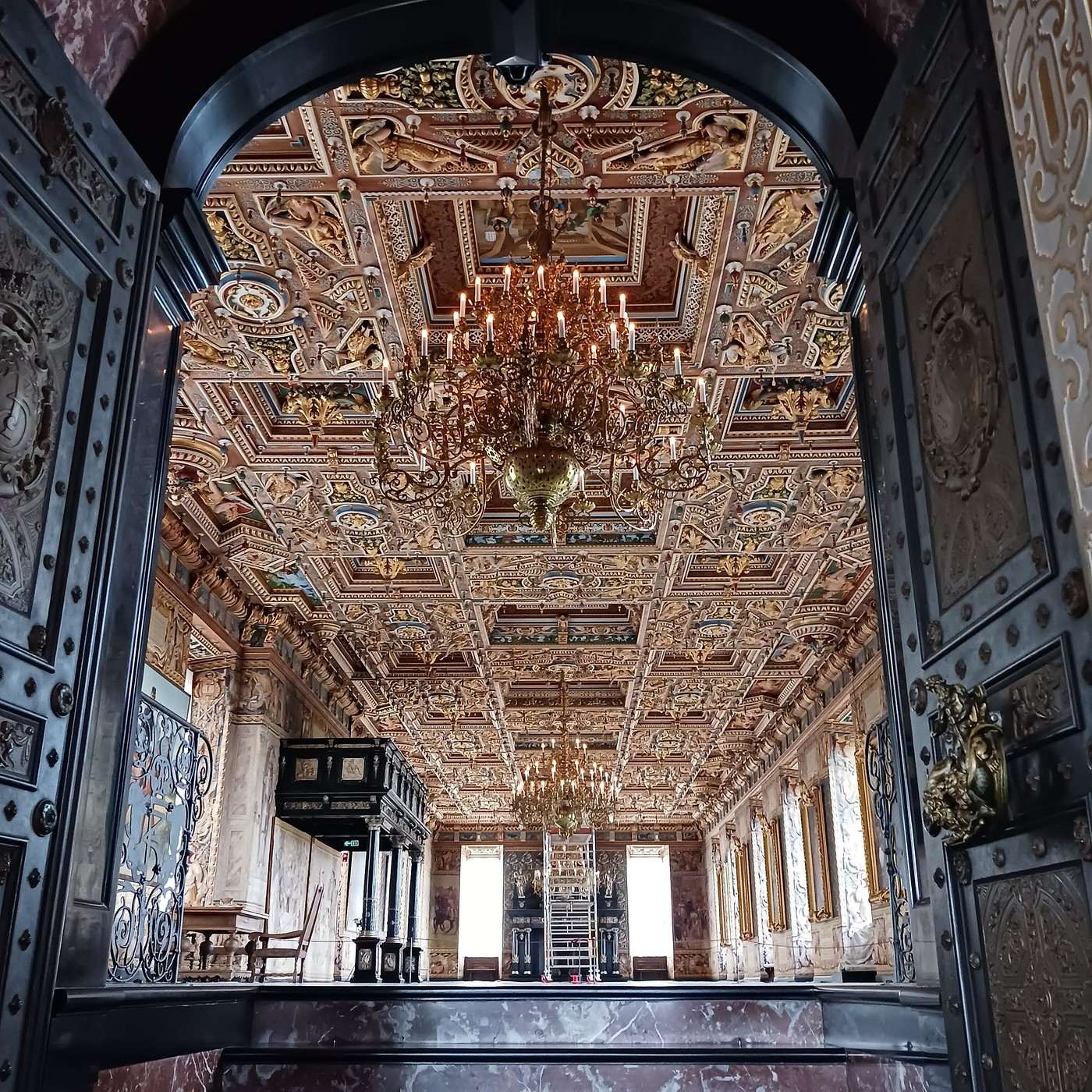
Right from the entrance, the chapel impresses with its size and rich decoration—for a Protestant country, no less.


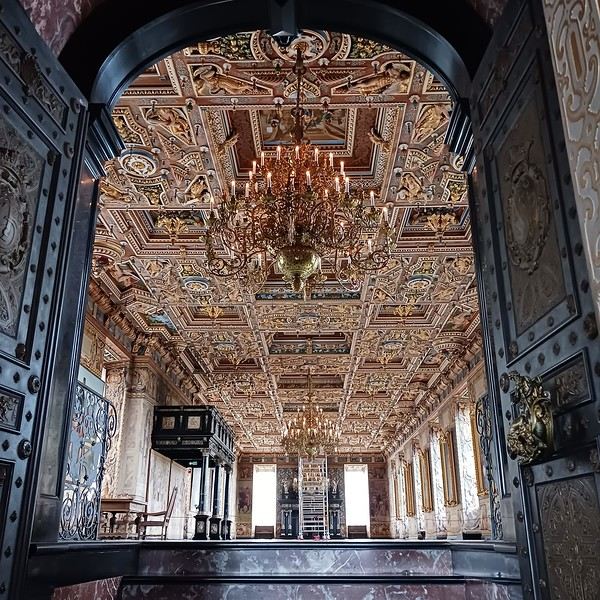
The ceilings in the other rooms are just as stunning.


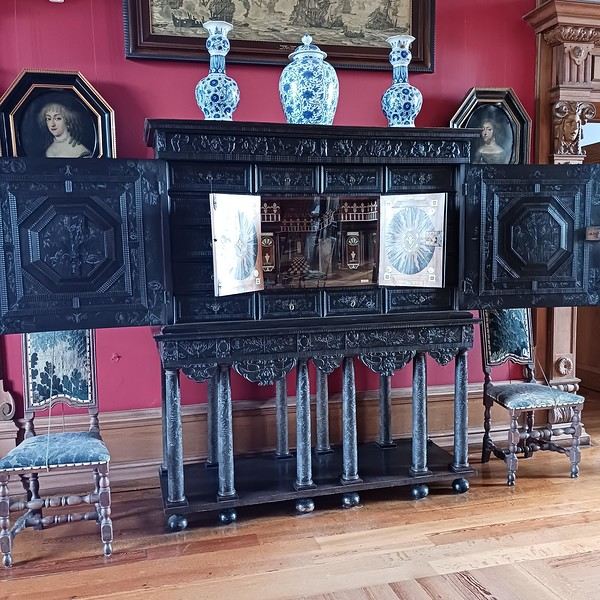
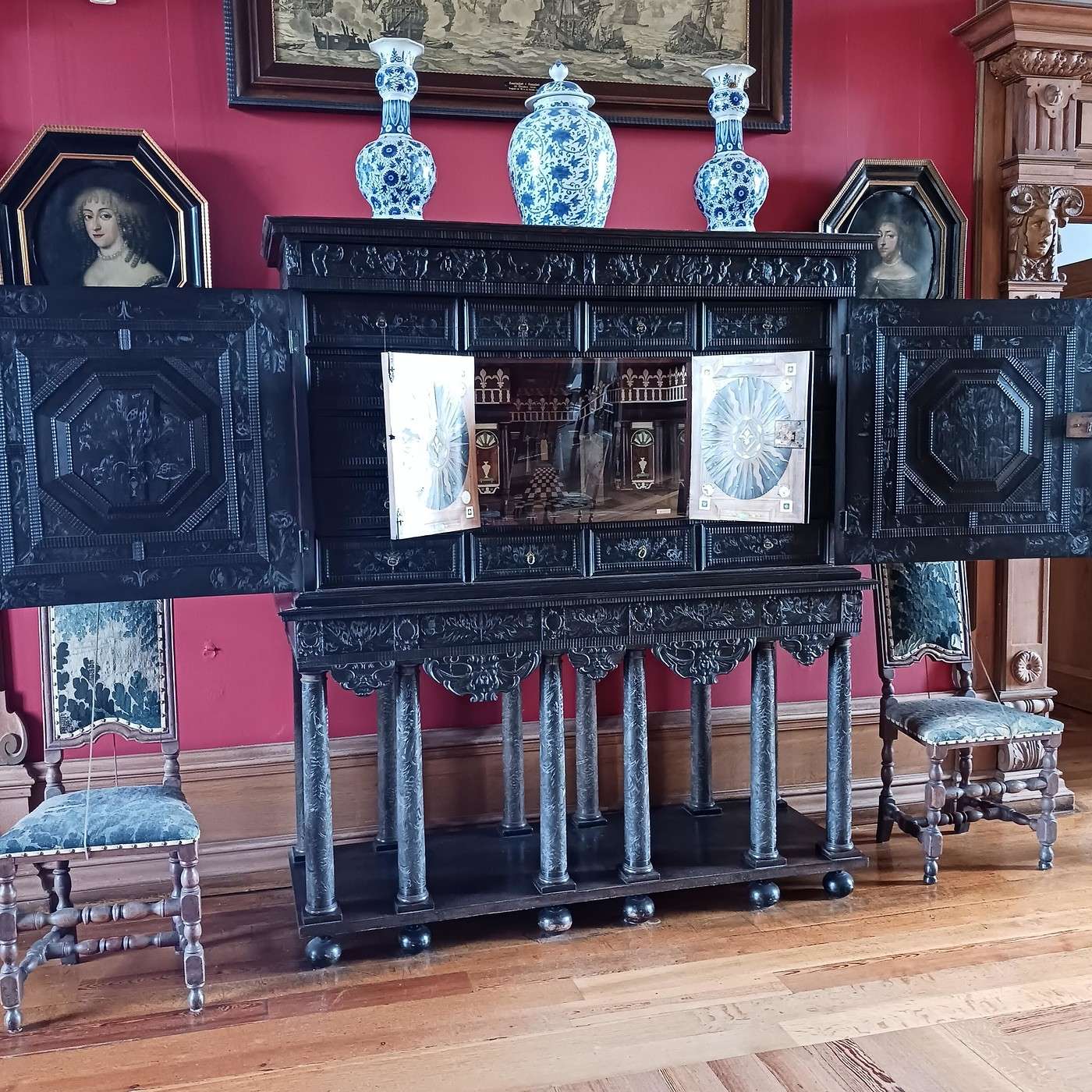
We explore this grand, sprawling castle, which houses an impressive collection of period furniture, including Baroque cabinets.


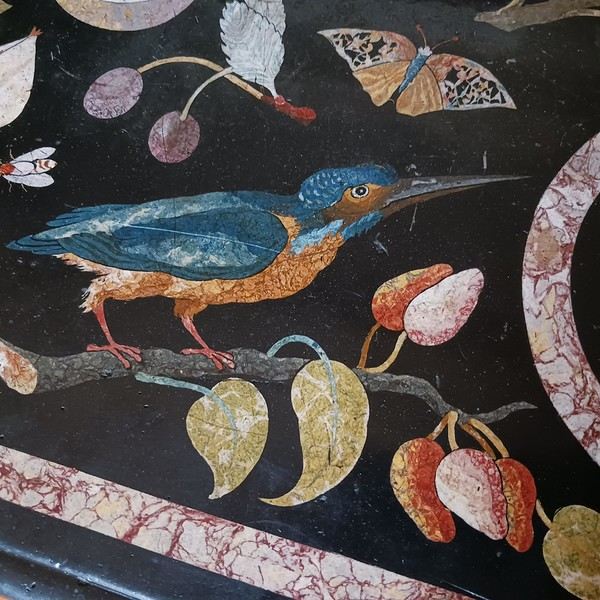
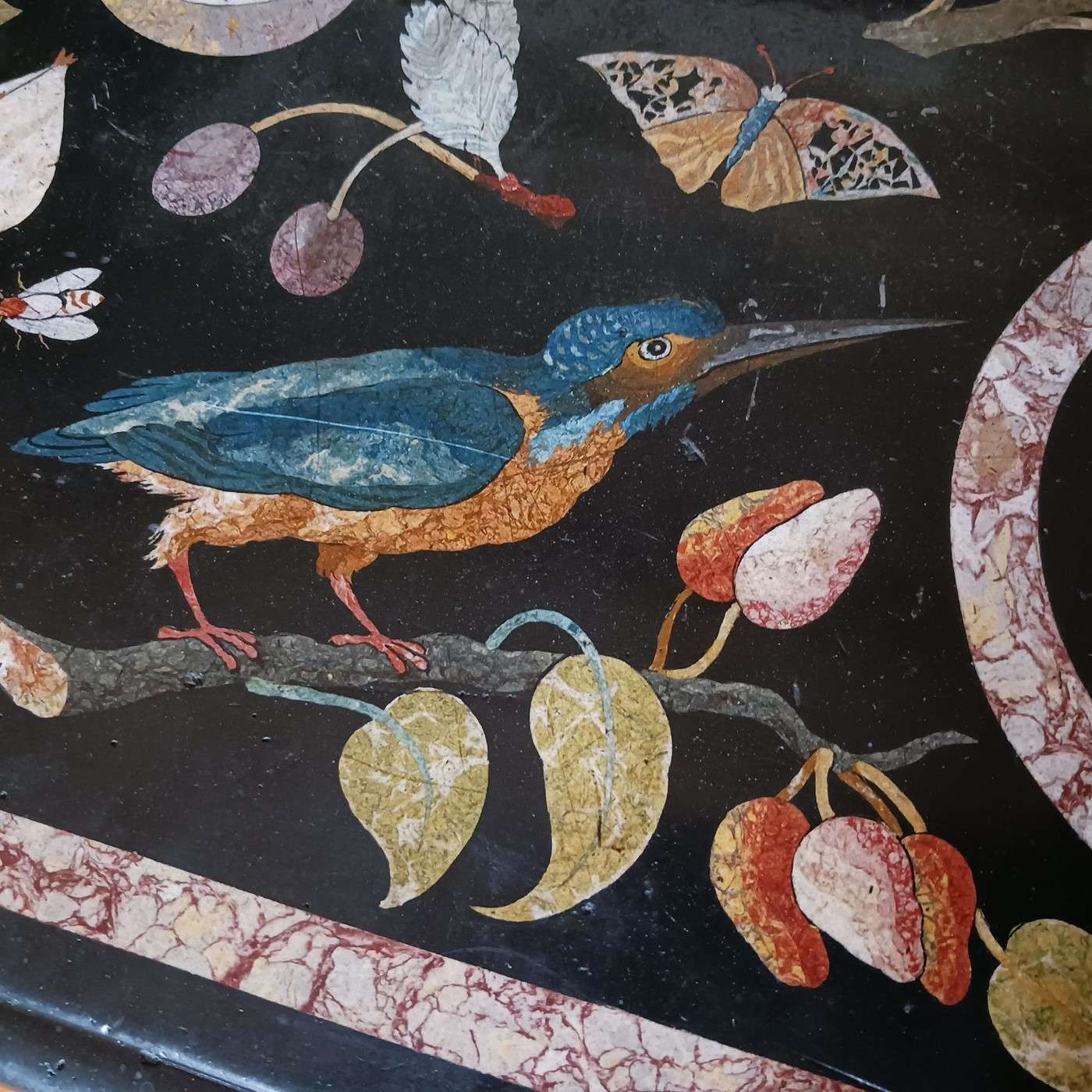
Equally remarkable are the marble-inlaid tables, one of which is shown in detail below.


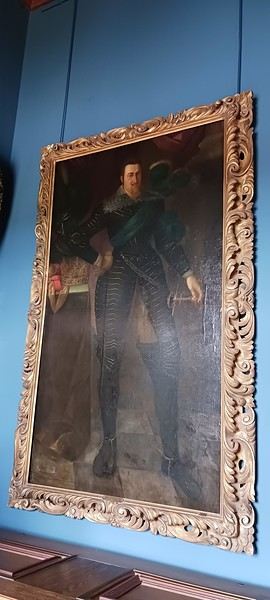
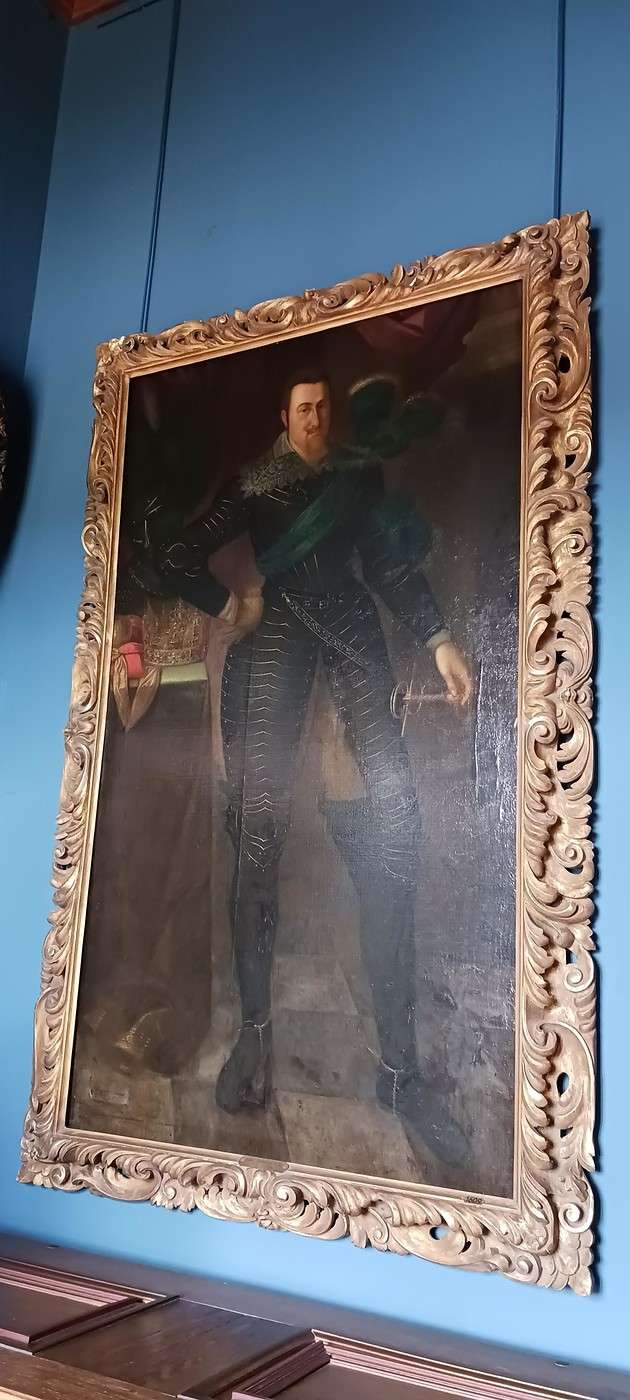
The walls are covered in portraits of aristocrats. This one caught my eye because the gentleman’s proportions are just too funny!


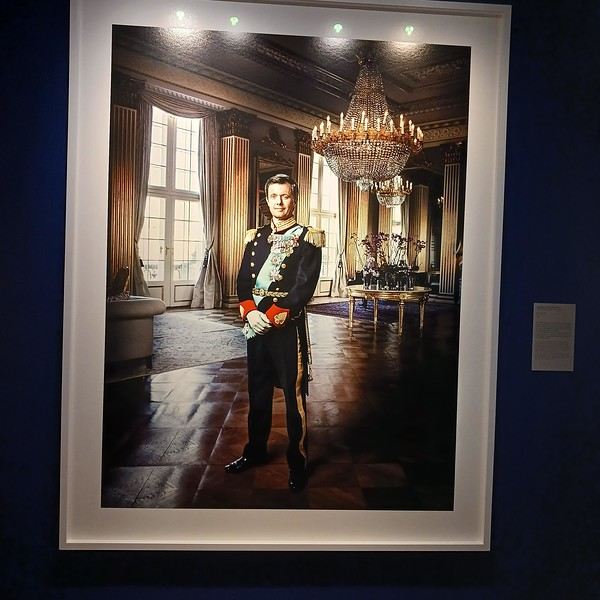
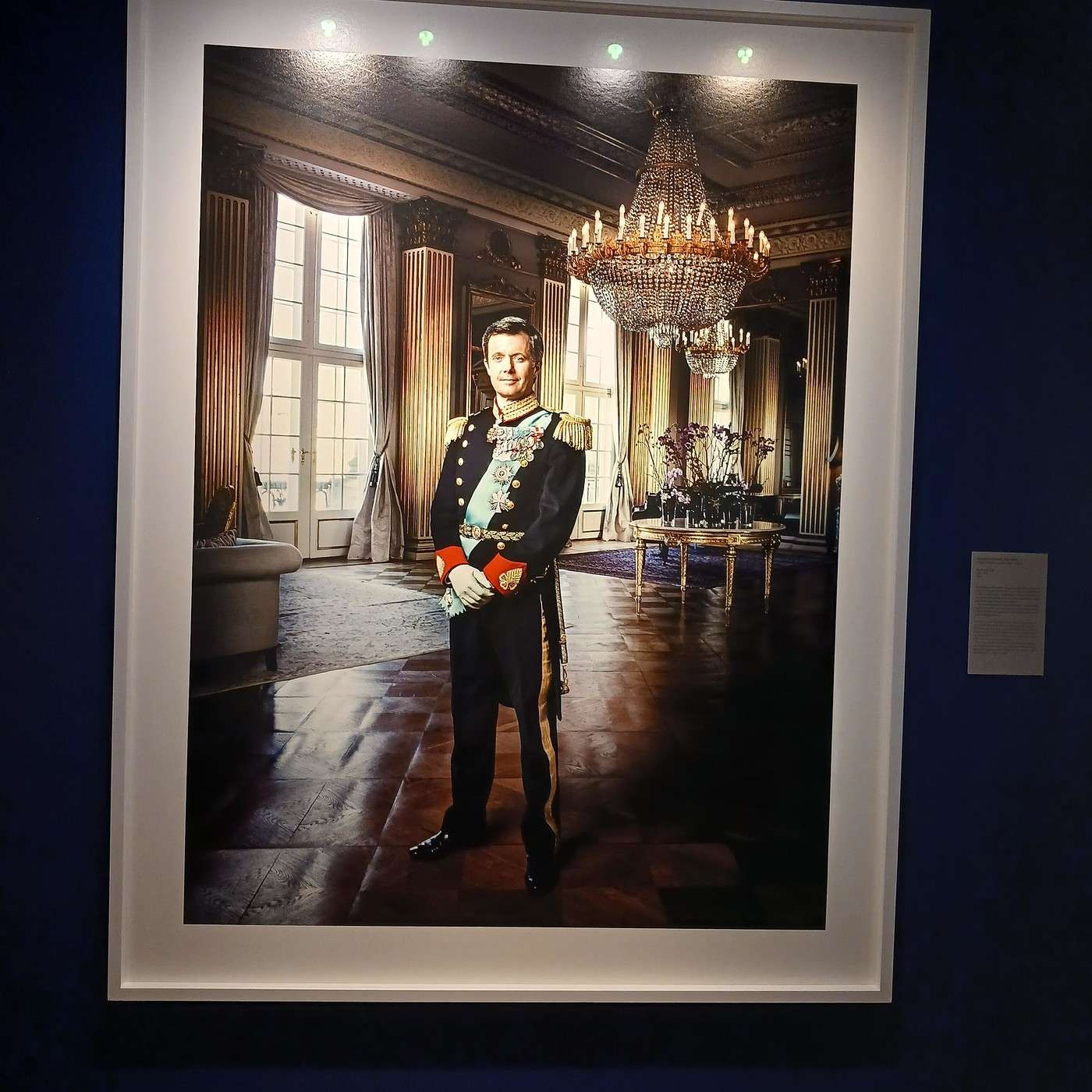
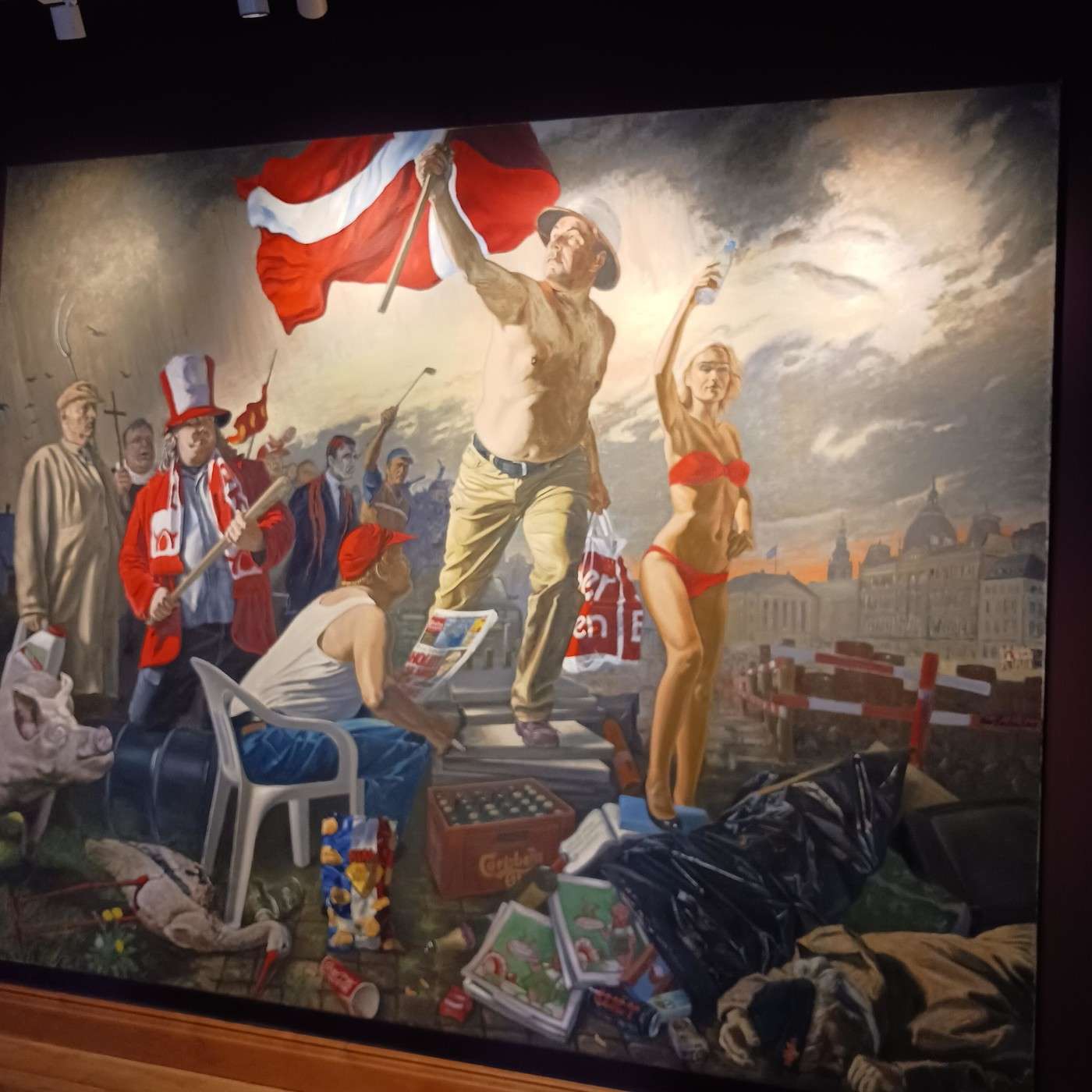
There are also photographs and more recent works.


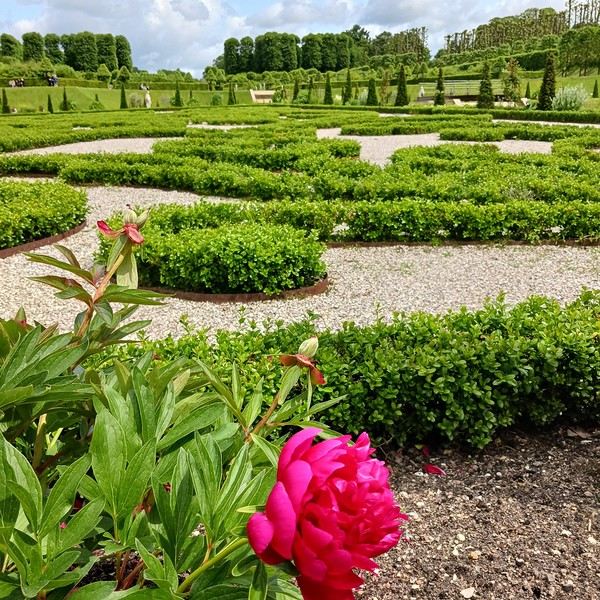
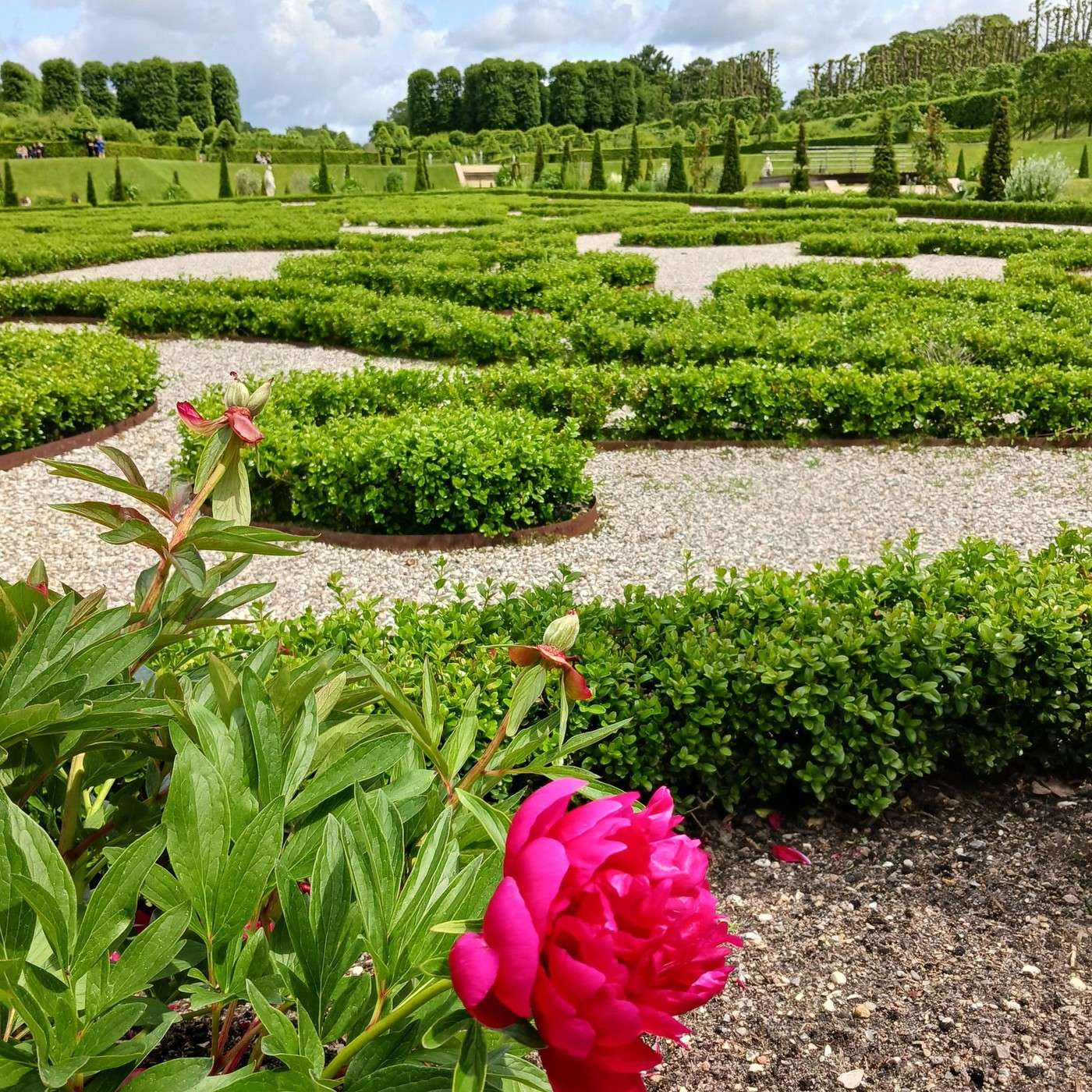
The French-style gardens are well worth a visit.


I’d spotted a little café at the far end of the garden, but unfortunately, it’s closed on this Whit Monday. Oh well—every cloud has a silver lining, as they say, because just a stone’s throw from the castle, we find a charming restaurant that doesn’t break the bank. We then cross the countryside to meet up with our friend Kim, who lives in... With him and his brand-new Tesla—like 50% of the cars we’ve seen here—we set off for a drive through the lovely Zealand countryside, where cute vacation homes are tucked away. We’re in Zealand, the land of the sea, which is everywhere here. We arrive in Hundested, at the mouth of Roskilde Fjord, and have dinner at a small restaurant on the quiet little harbor. Afterward, we hit the road again for a “sunset” stop at Tisvildeleje Beach. Now we’re heading to Kim’s IPA house, where he’s setting us up for the next three nights.

Surprise—we’ll be the only ones in this huge place! I have to admit, during those three nights, I couldn’t help but think of *The Shining*! 😮🤪😐

Kattegat Tour and Great Norwegian Fjords - 32 Days (Denmark - Sweden - Norway)

Ateliermurie · 2025-08-04

Hello, What a pleasure to read you!! I’m amazed by this report—it’s worthy of a professor! :) I loved your critical and admiring takes. If I ever stay in this lovely country, I’ll definitely follow your advice! Thanks. Muriel

Kattegat Tour and Norway's Great Fjords - 32 Days (Denmark - Sweden - Norway)

Cendryon · 2025-08-06

Thanks

Kattegat Tour and Norway's Great Fjords - 32 Days (Denmark - Sweden - Norway)

Cendryon · 2025-08-06

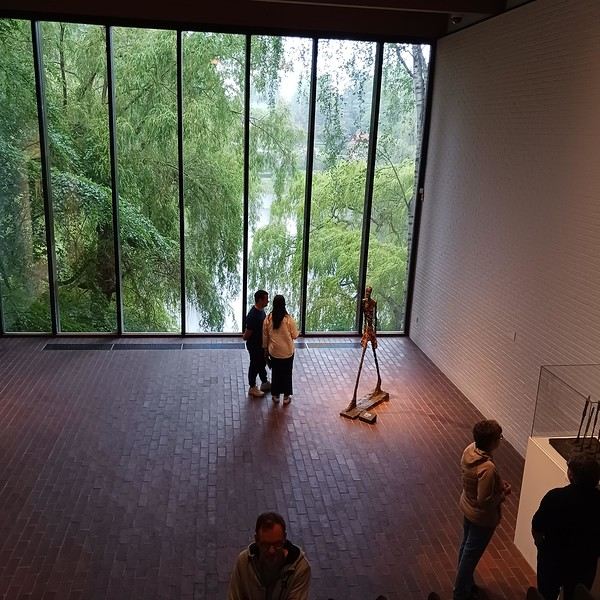
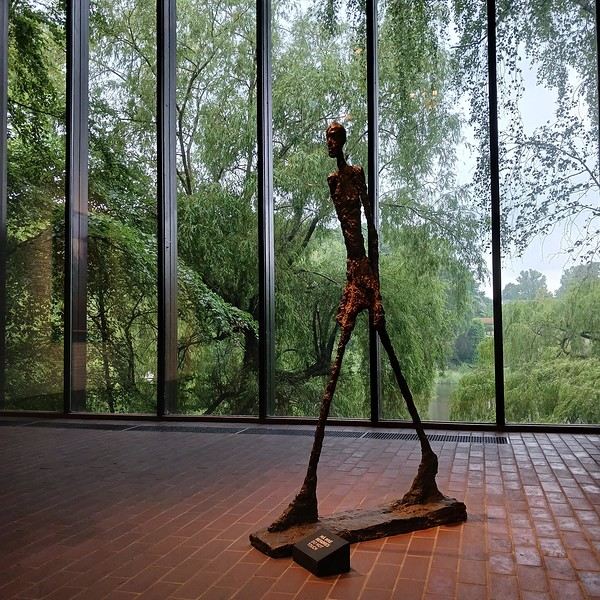
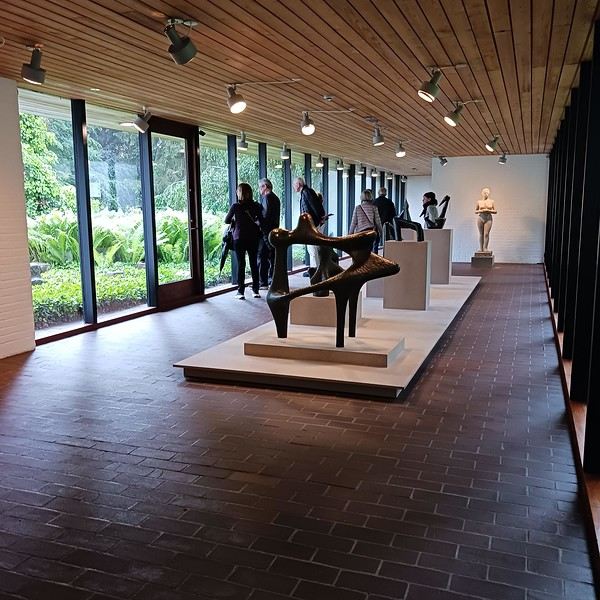
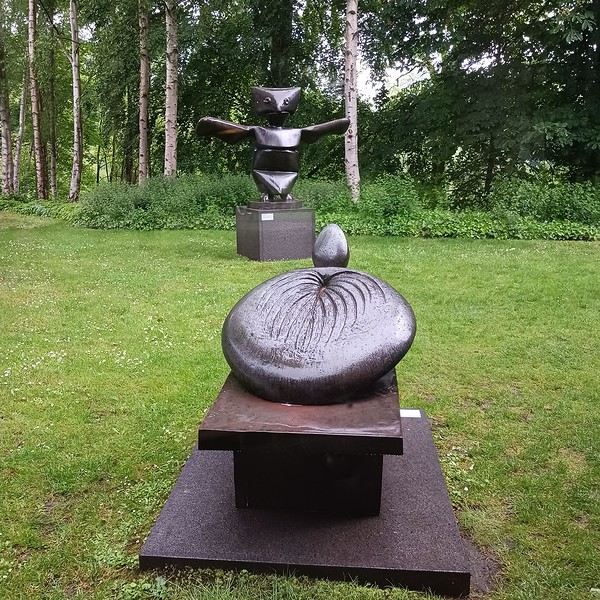
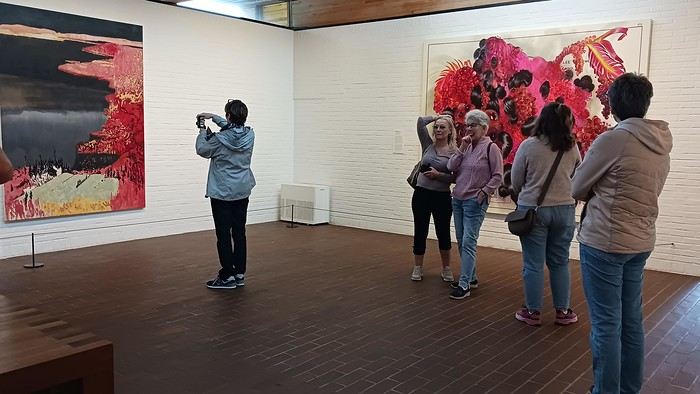
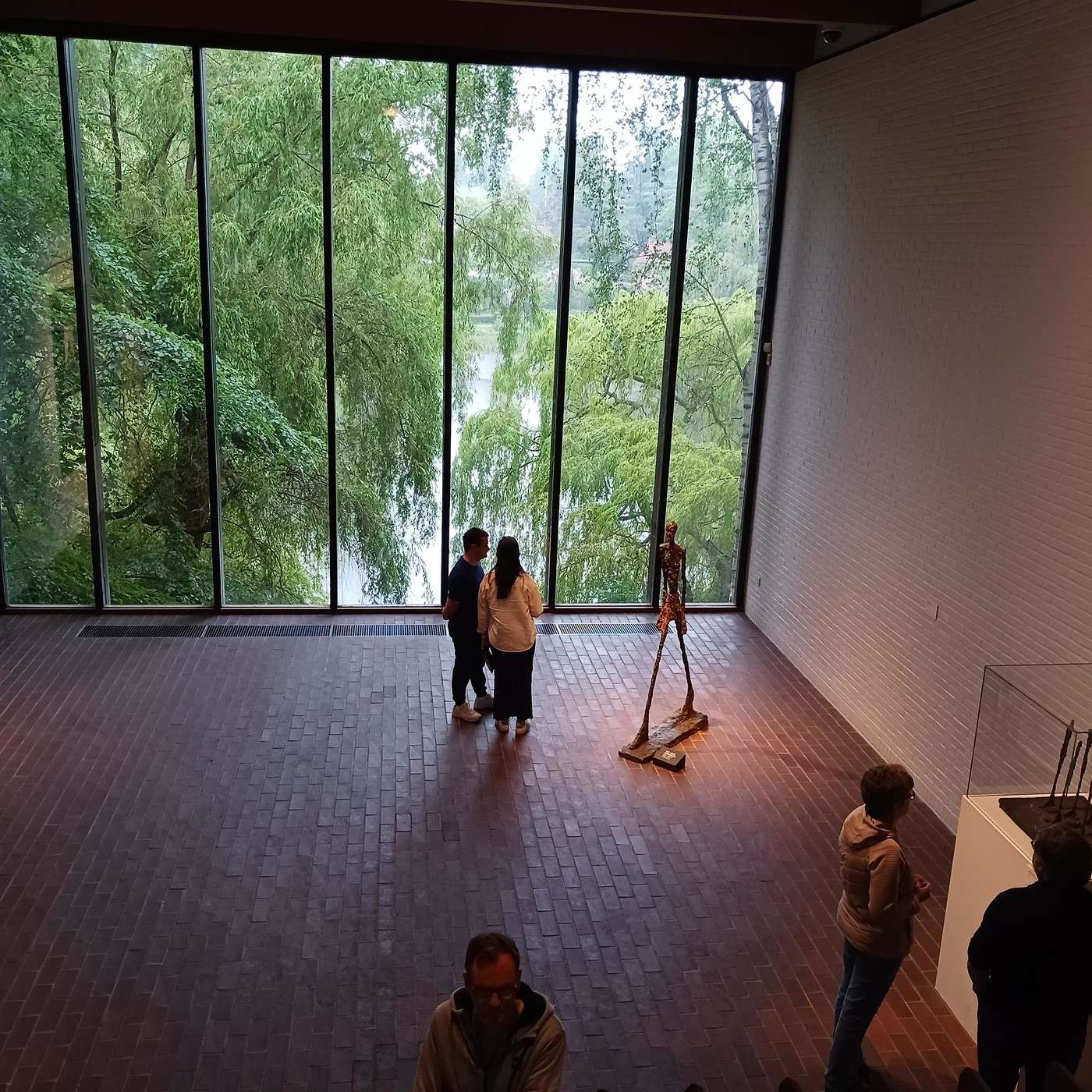
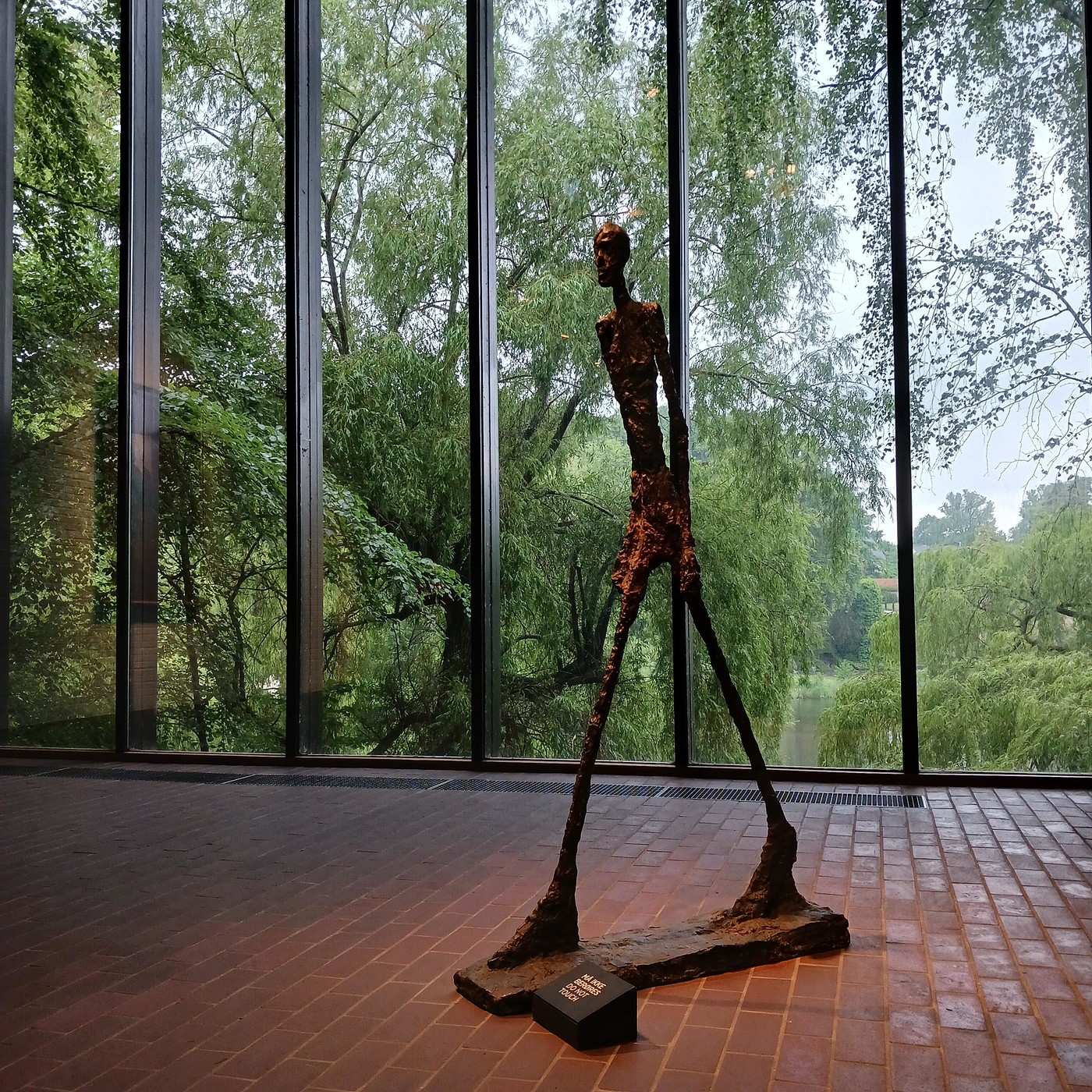
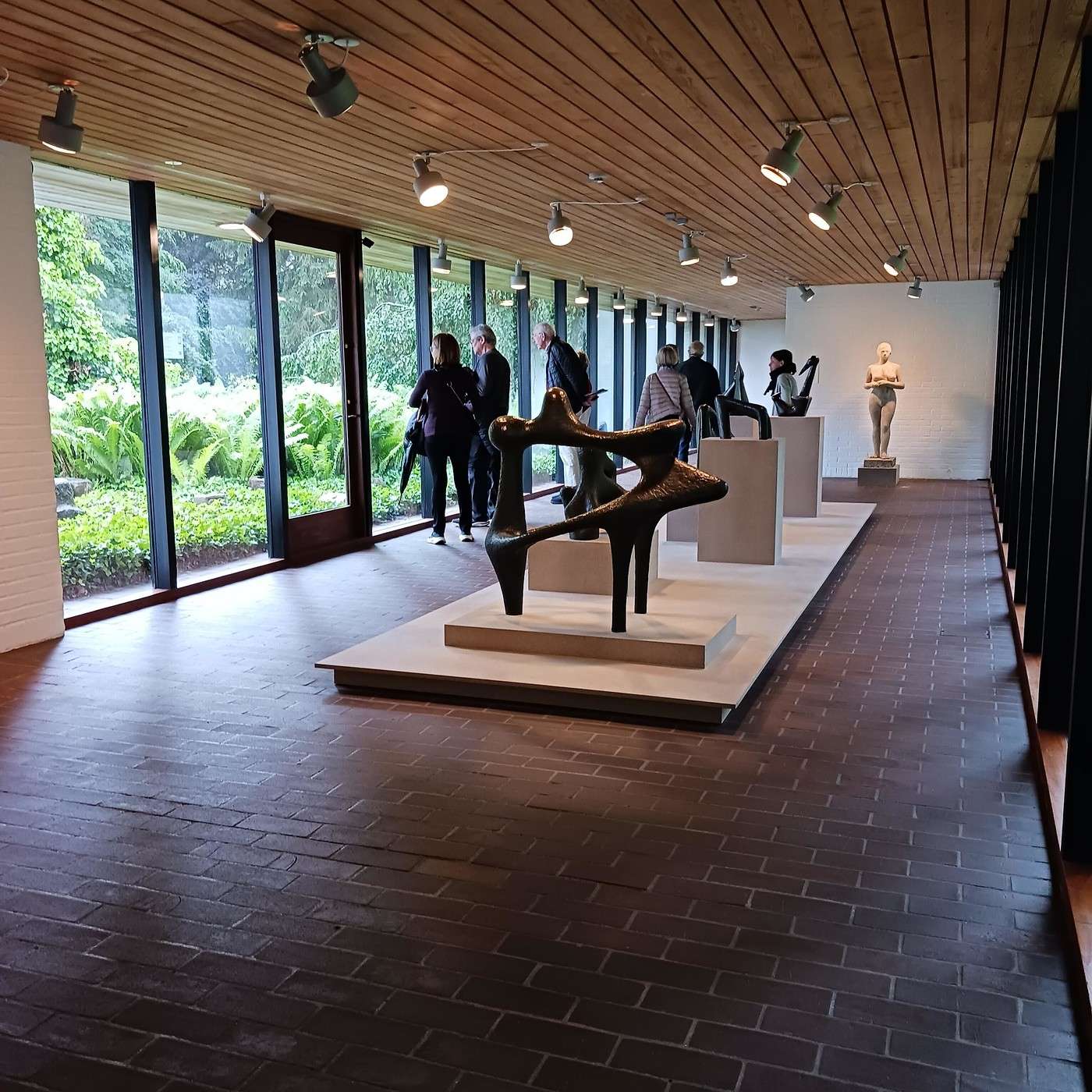
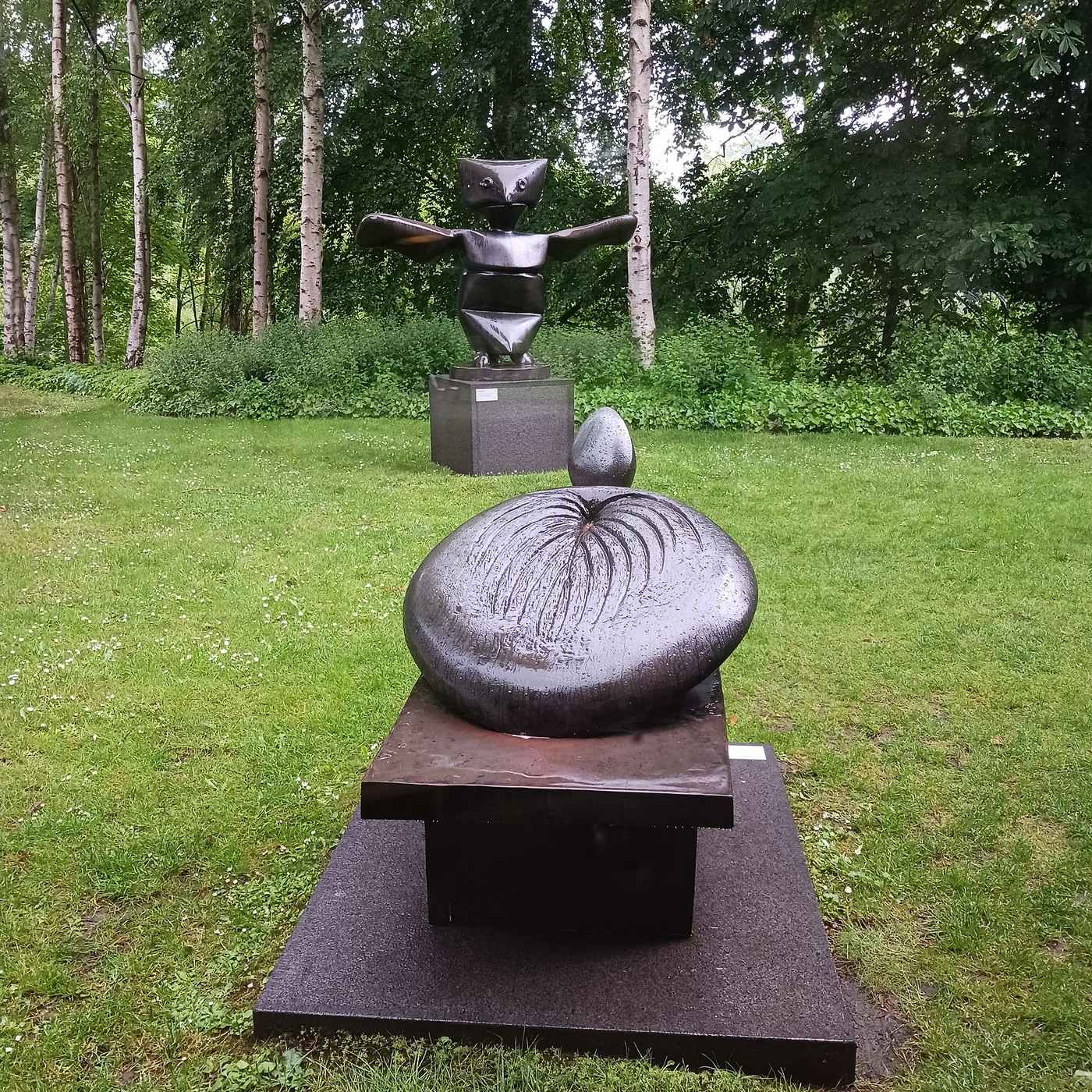
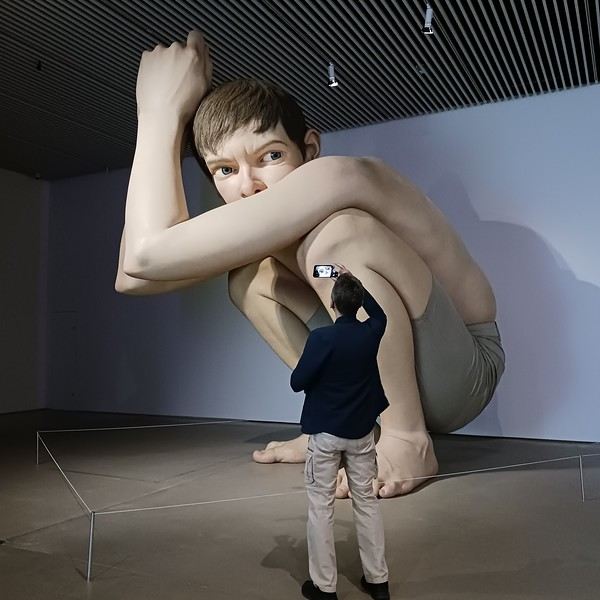
(Continued) Day 10 – Tuesday, June 10 – Louisiana Our day is dedicated to discovering the LOUISIANA Museum of Modern Art, located just 40 meters from our holiday spot. Here’s what you can read about this museum: "The Louisiana Museum is one of the most important international museums dedicated to modern and contemporary art. Situated on the northern coast of Zealand and overlooking the sea, it represents a balanced and elegant blend of landscape, architecture, and art."The Louisiana Museum of Modern Art is located in Humlebæk, a 35-minute train ride from Copenhagen, and typically hosts 6 to 10 exhibitions per year, as well as a permanent collection of 3,500 works (by Giacometti, Asger Jorn, Picasso, Oldenburg...). It was founded in 1958 by Knud W. Jensen, who wanted to create a museum where Danes could admire modern art—something that didn’t exist anywhere before. Over the following decades, through intense exhibition activity, Jensen helped teach Danes how to look at art objects."" It must be said that this museum provides a stunning setting for the works on display, with beautiful openings to the outdoors, allowing you to admire the garden and its sculptures from inside. Some of the indoor exhibits even seem to escape into the garden... This creates a magnificent effect and a perfect communion between art and nature. The museum boasts a collection of major works (Giacometti, Picasso, Asger Jorn, Oldenburg...). I’ve chosen to show you this famous Giacometti sculpture, which wouldn’t be the same without this incredible setting, designed just for it...


This gallery feels like an extension of the garden—or maybe it’s the garden that’s an extension of this glass gallery...


Everything seems designed to let you enjoy the works installed in the garden even on a rainy day, while staying sheltered—and that’s exactly the case today!


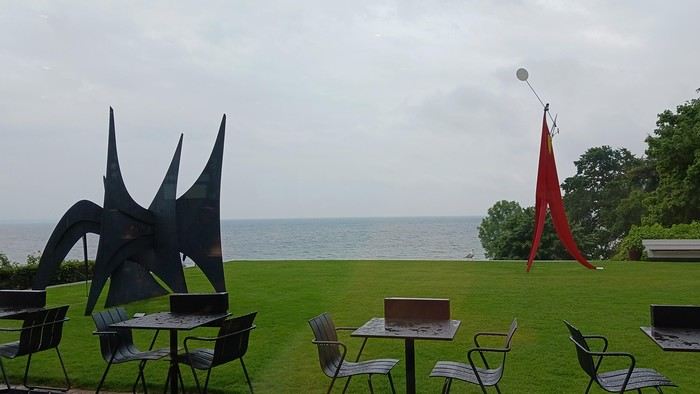
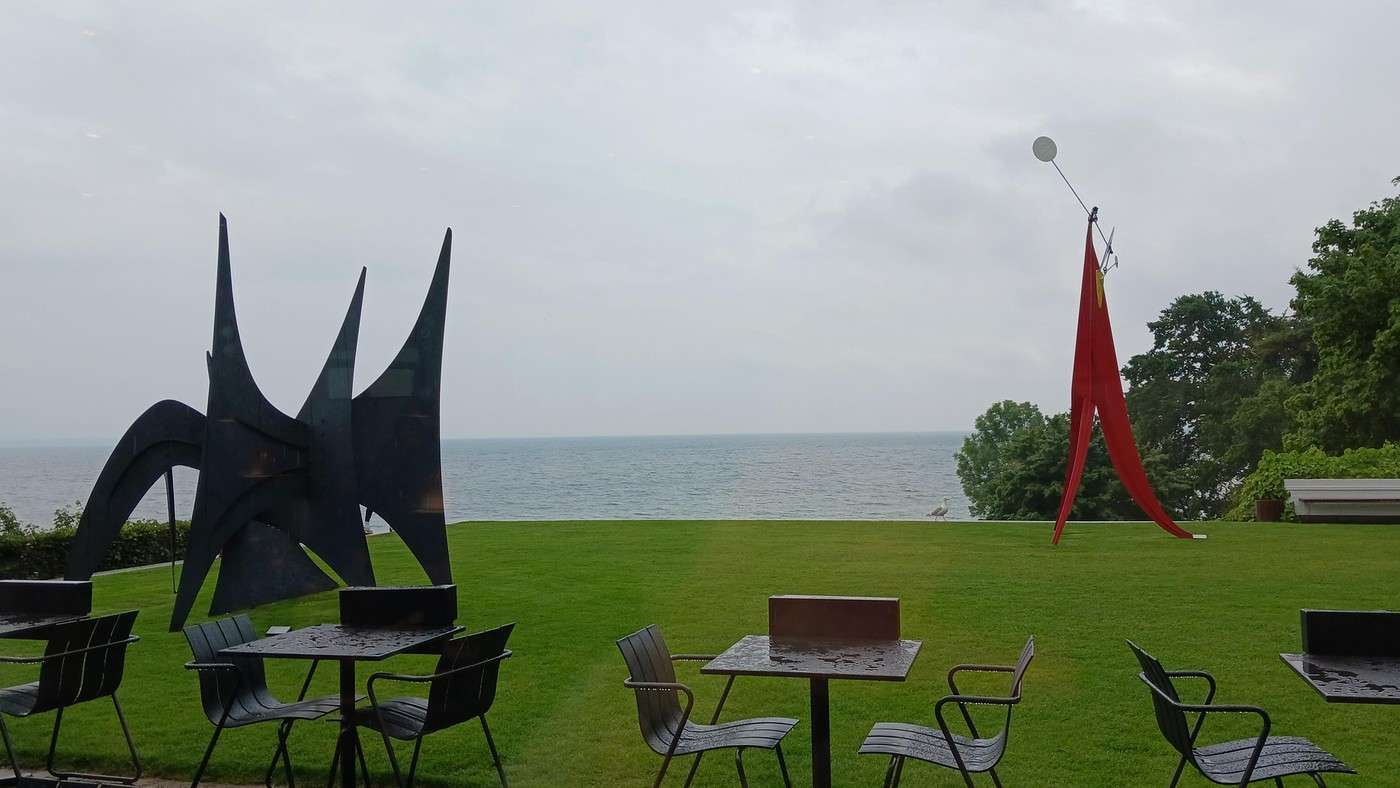
The cafeteria opens onto the sea... and Calder...


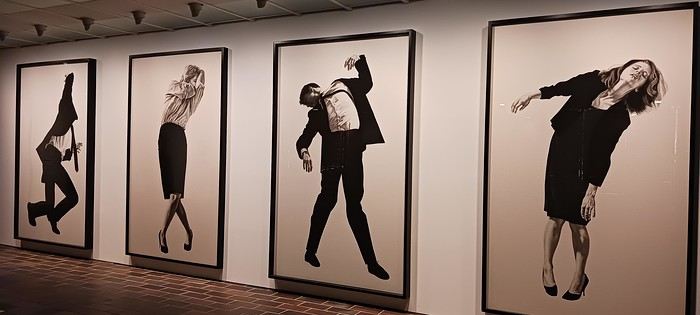
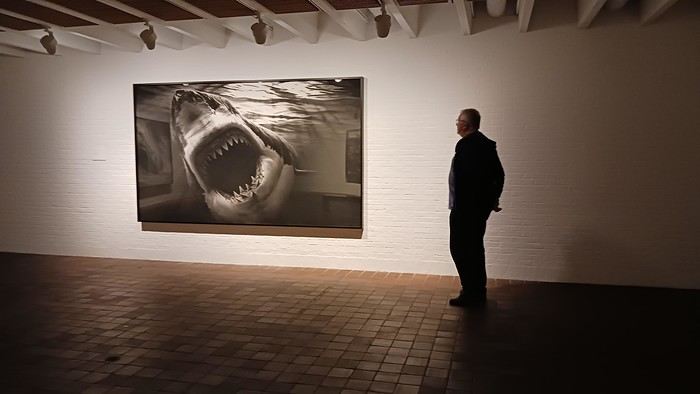
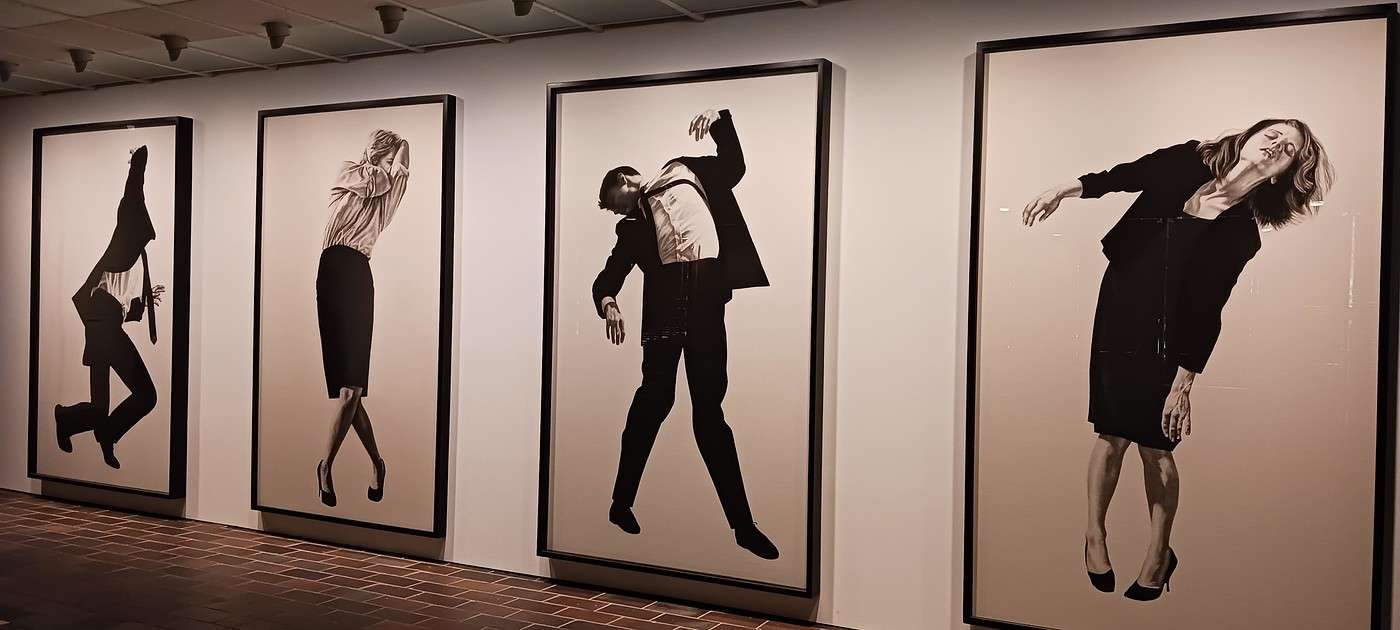
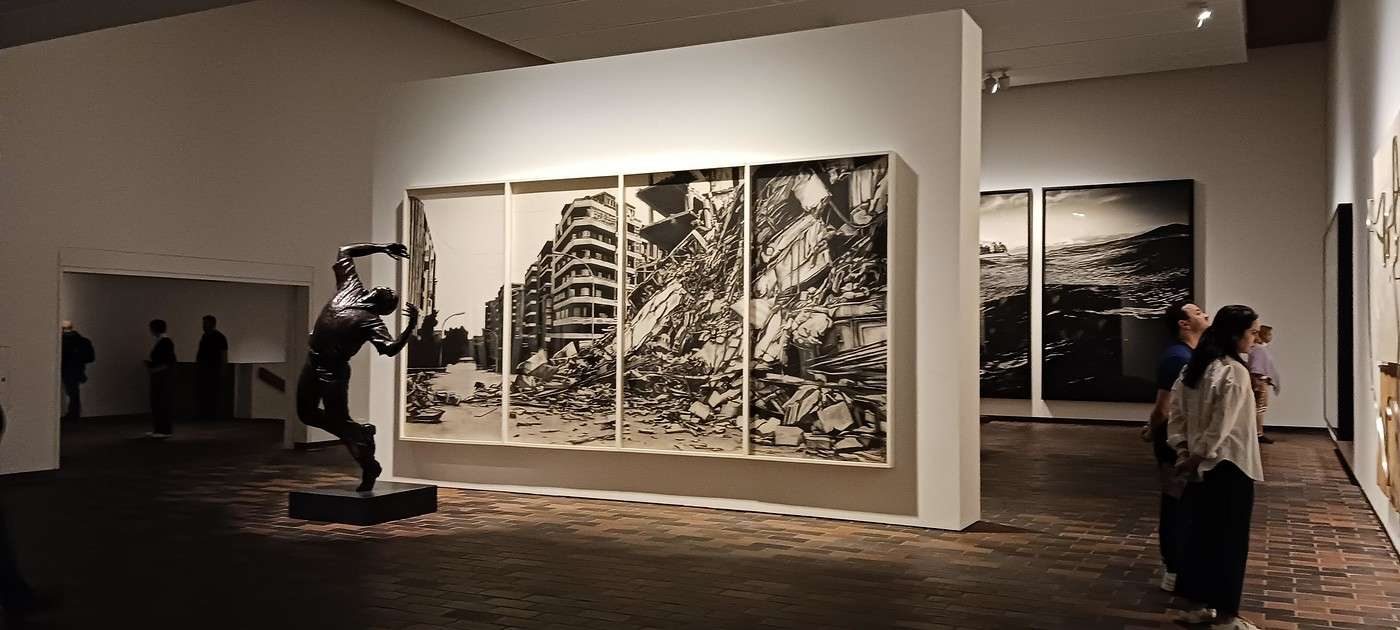
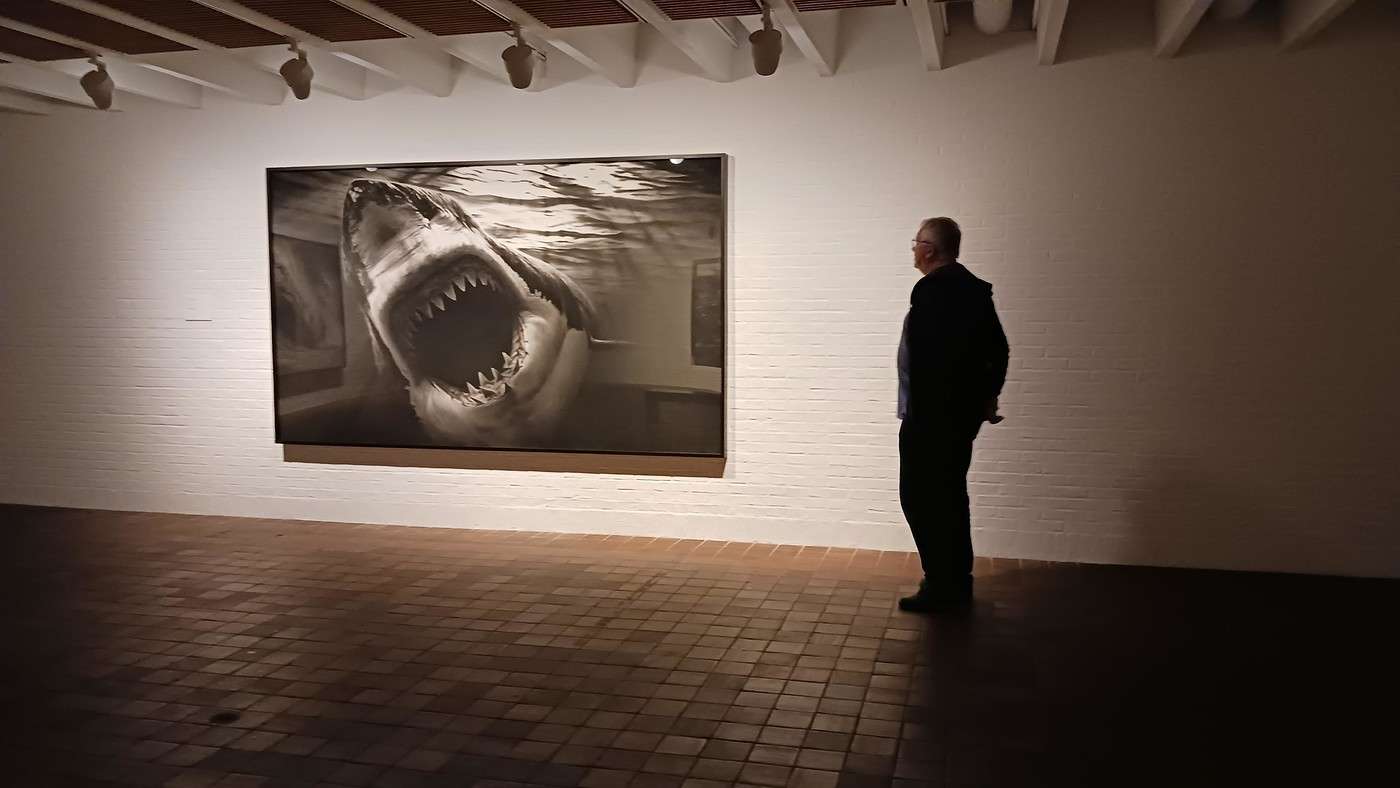
As you’ve probably gathered, Louisiana gives pride of place to contemporary sculptures. However, it also hosts temporary exhibitions, and the one that particularly impressed us was dedicated to Robert LONGO. This artist draws with charcoal on immense sheets of paper. Beyond the scale of his works, it’s the beauty of his line and the finesse of his art that totally won us over. Here are four of his early works, where you can see figures contorting...


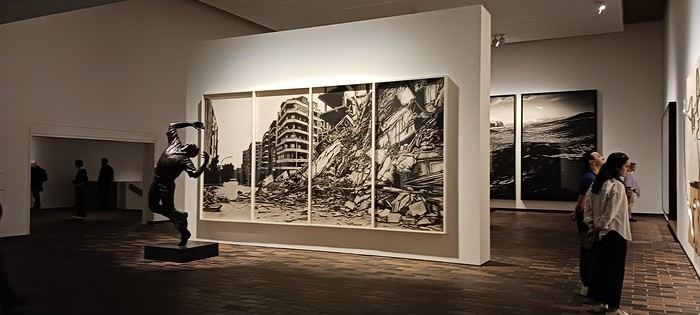
But what he drew afterward is enough to leave you speechless—the intensity of the representation is remarkable!


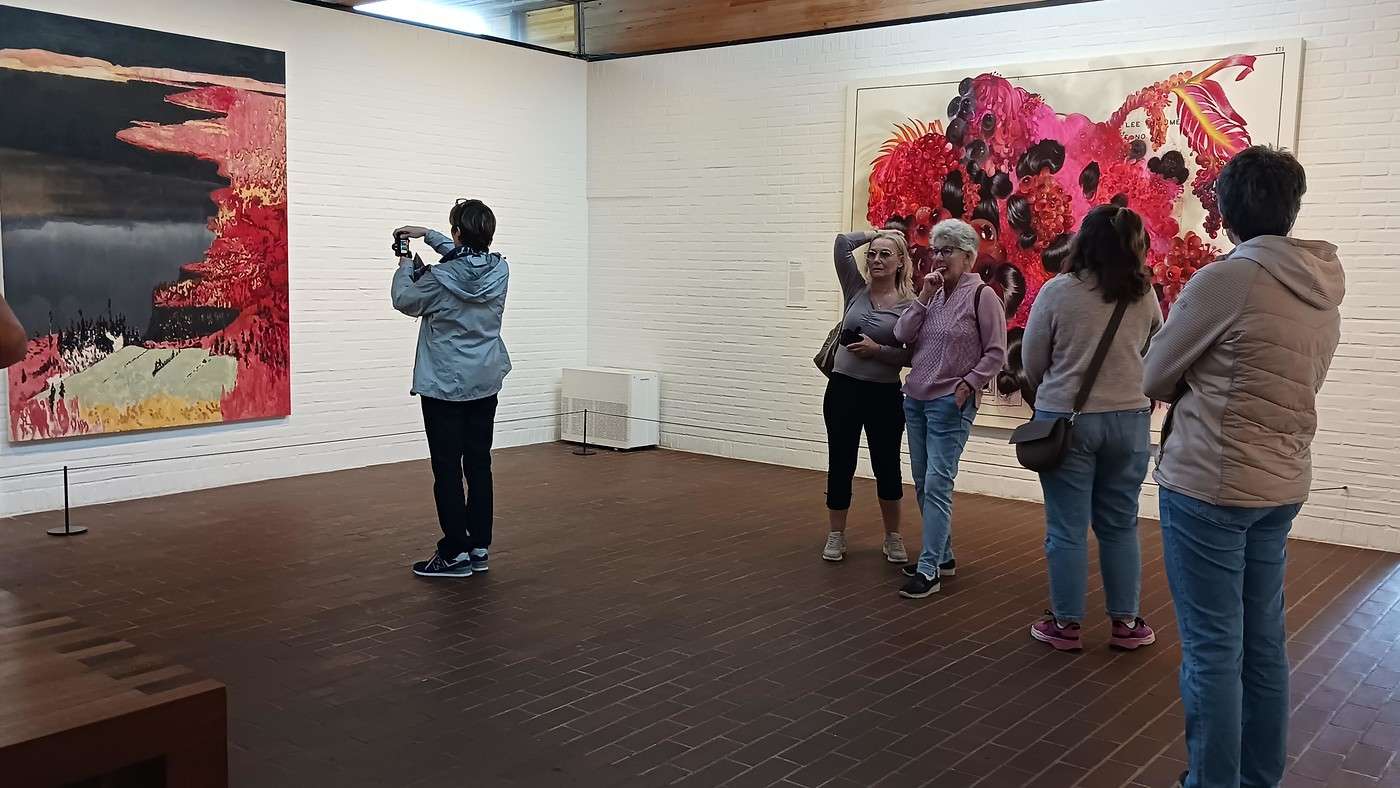
Unfortunately, I can’t post more photos here, but I encourage you to check out his exhibitions if you get the chance. After all, we do so much hype for a GIM’s concert! I won’t show you what I didn’t like, particularly the exhibition dedicated to Kaari Upson, where I once again wondered: "art or imposture?" And then there are those famous "installations." "Installation is a form of contemporary art that transforms spaces into three-dimensional works, often designed for a specific location (in situ). These works often involve interaction with the viewer, who becomes part of the artistic experience." Okay, sure, I get it—I’ve seen quite a few, but most of the time, it’s just a load of nonsense! And don’t come at me with "the artist meant this or that"... yeah, right, silly me, I just didn’t get it! No, sorry, there are very few "installations" that have provoked strong emotions in me... except maybe Yayoi Kusama’s (Gleaming Lights of the Souls), where you enter a dark room alone on a platform surrounded by hundreds of lights in all colors. Actually, the walls and ceilings are covered in mirrors. These lamps change color, and you feel like you’re in an infinite, beautiful space... except there’s no railing around the platform, and I wasn’t too reassured about falling into the void because I had no idea what was underneath. Apparently, it was just... water!


In the end, Louisiana is a magnificent place where contemporary artworks either repel or seduce, but in any case, they leave no one indifferent.


Kattegat Tour and Norway's Great Fjords - 32 Days (Denmark - Sweden - Norway)

Cendryon · 2025-08-08

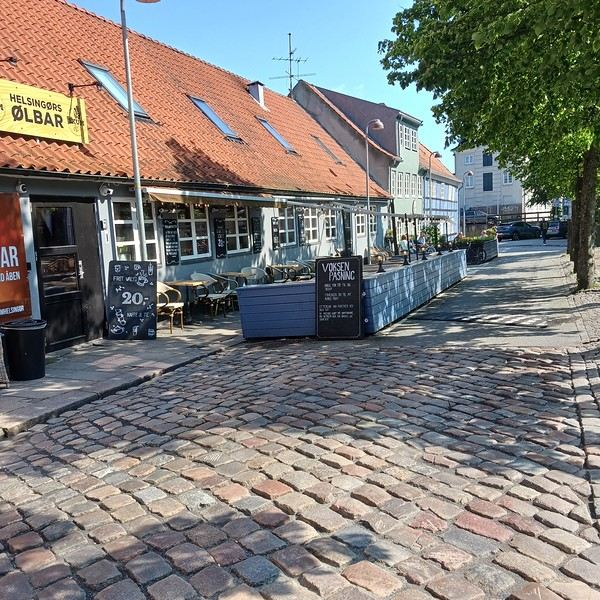
Day 11 – Wednesday, June 11 – Helsingør

Have you ever heard of Helsingør Castle? This is where William Shakespeare set his famous play *Hamlet*—you know, the one where the guy delivers that iconic line, "To be or not to be," about the meaning of life and death... and in 2025, he still doesn’t have the answer!

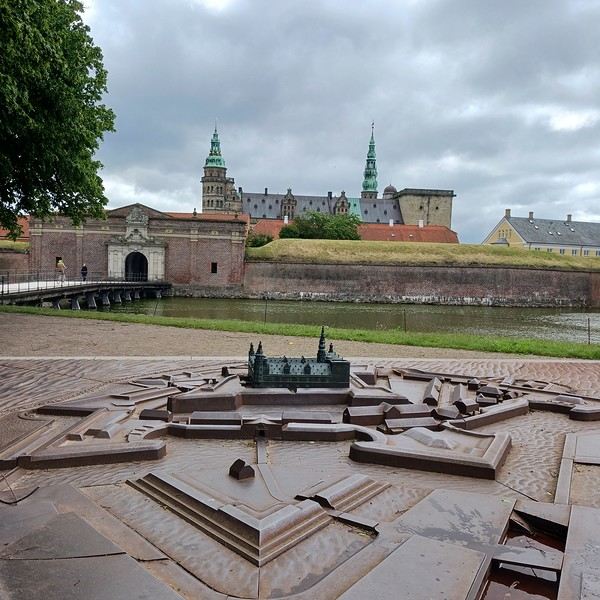
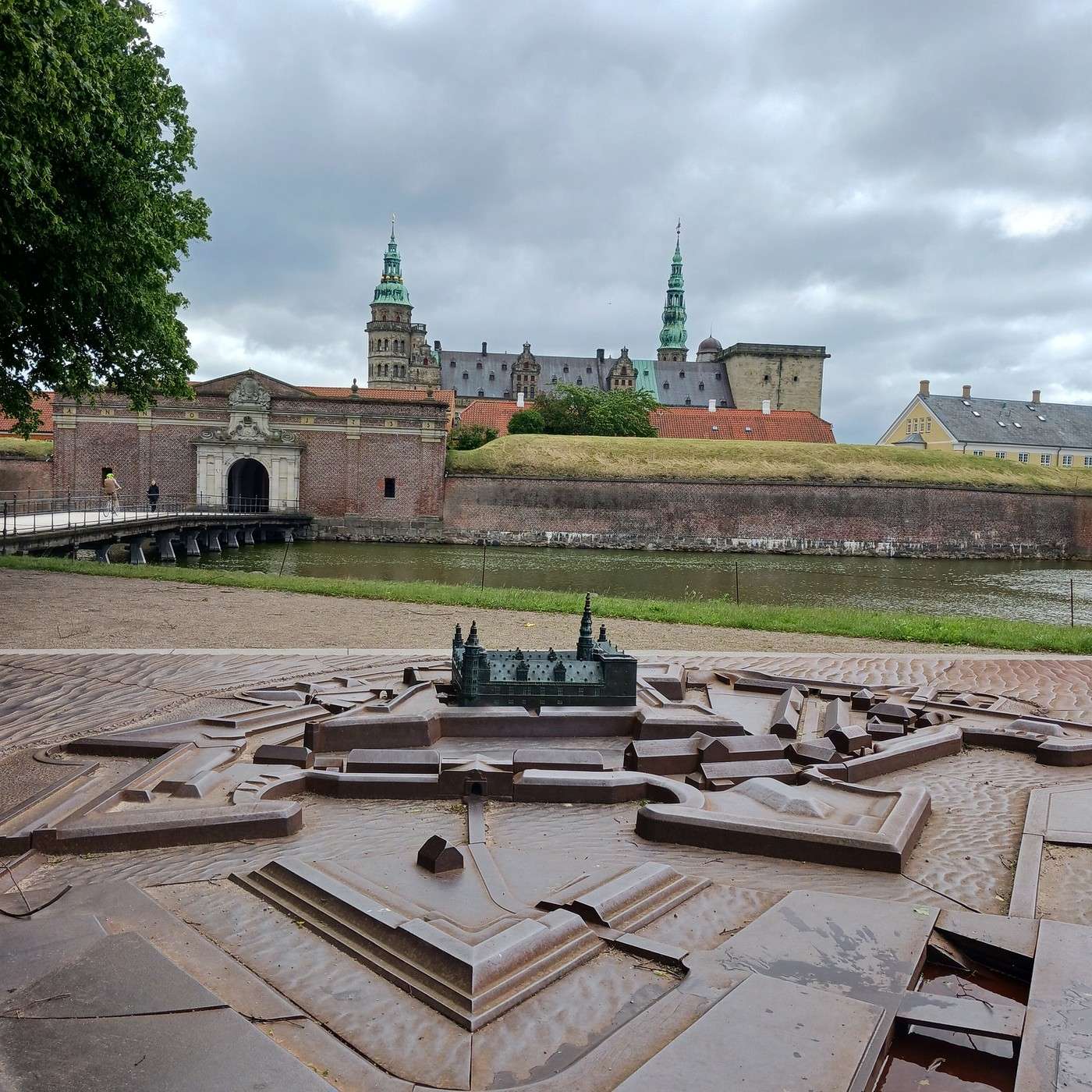
The town of Helsingør (Elsinore) is best known for Hamlet’s Castle, Kronborg Slot, but it also boasts some fantastic museums and a charming city center. It’s just 5 km from the Swedish coast, and when you consider the wars between the Danes and Swedes, its strategic importance makes sense.

Originally, I’d only planned to visit the maritime museum—a sleek, modern building that blends into the landscape—but given the opening hours, we started the day with the castle, which turned out to be full of surprises!


Built in Helsingør in 1420, Kronborg Castle was later destroyed and rebuilt, all while maintaining its strategic position on the Øresund Strait. Every ship passing through the Baltic Sea had to pay a toll to the castle, which is why Helsingør was one of Europe’s most important cities at the time.

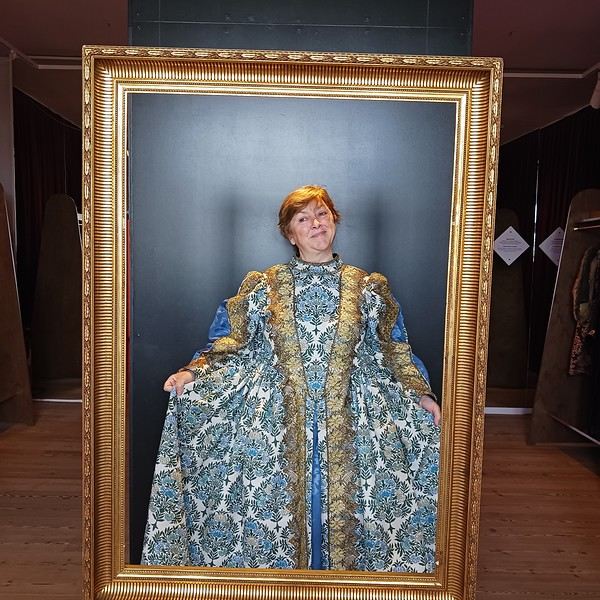
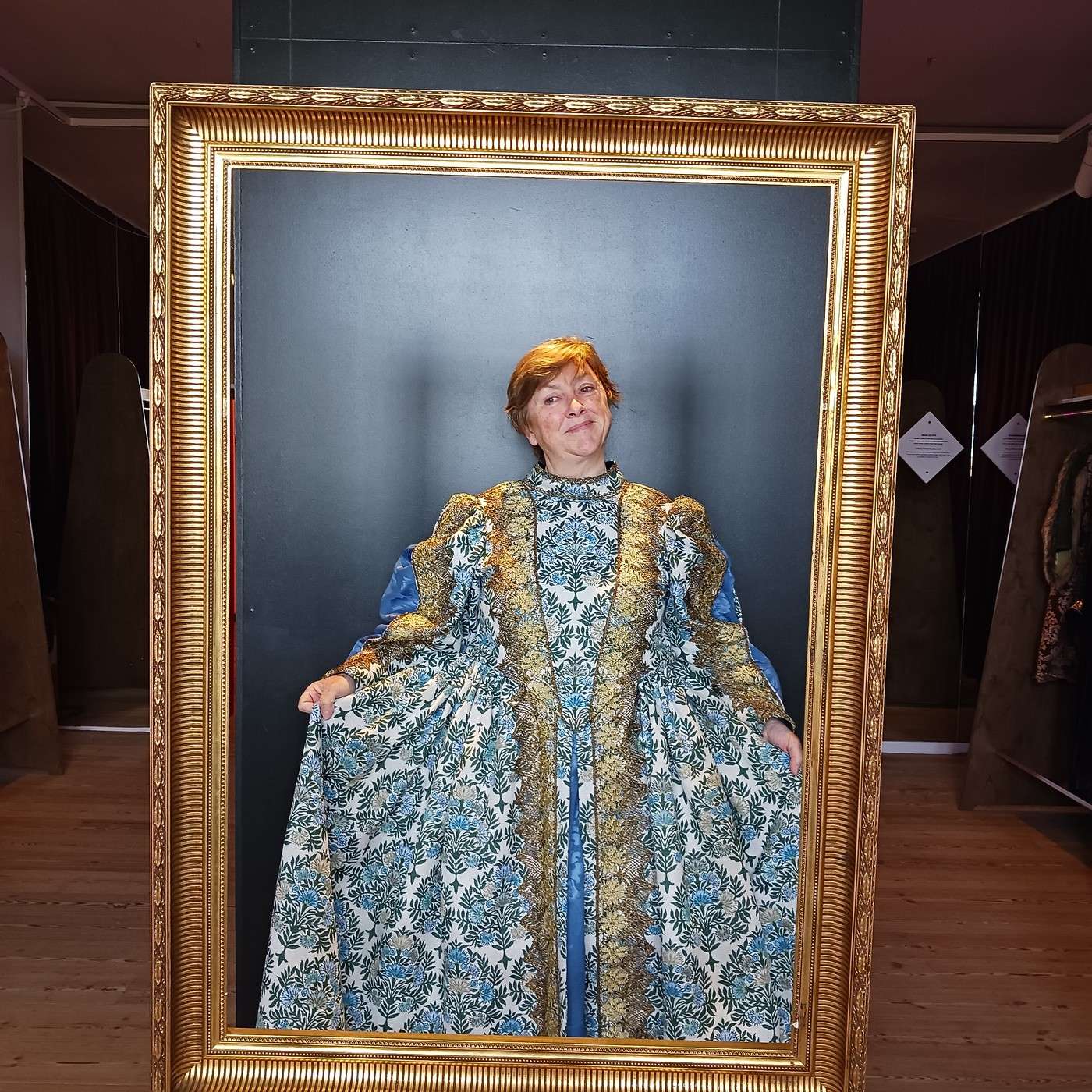
We first stepped into strange, immersive rooms—probably inspired by Shakespeare’s world—then the dressing room, where you can try on costumes. I didn’t hold back... we were in the theme!


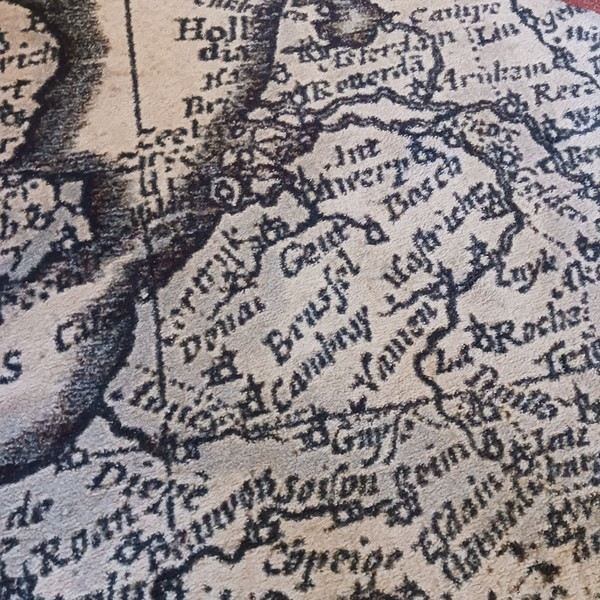
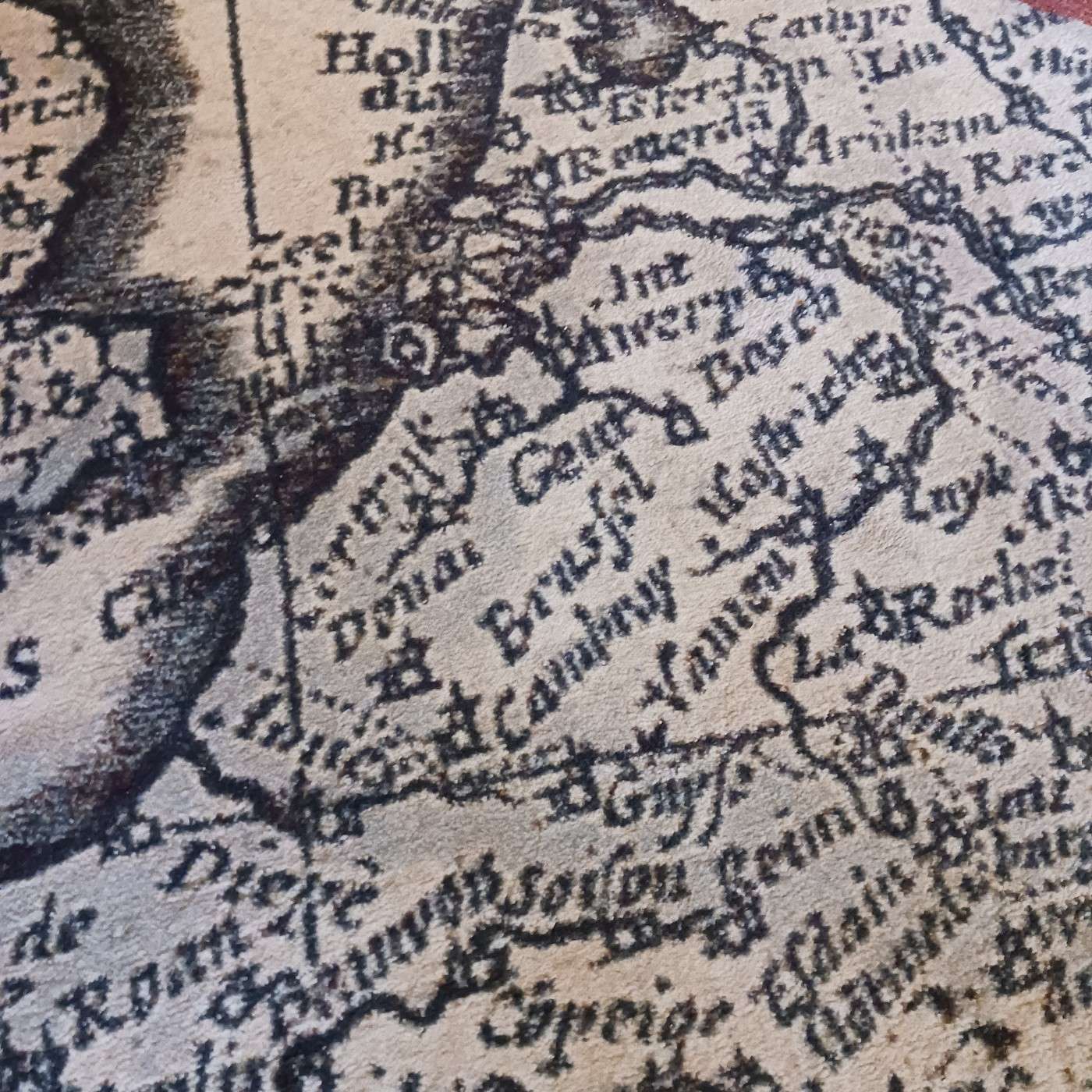
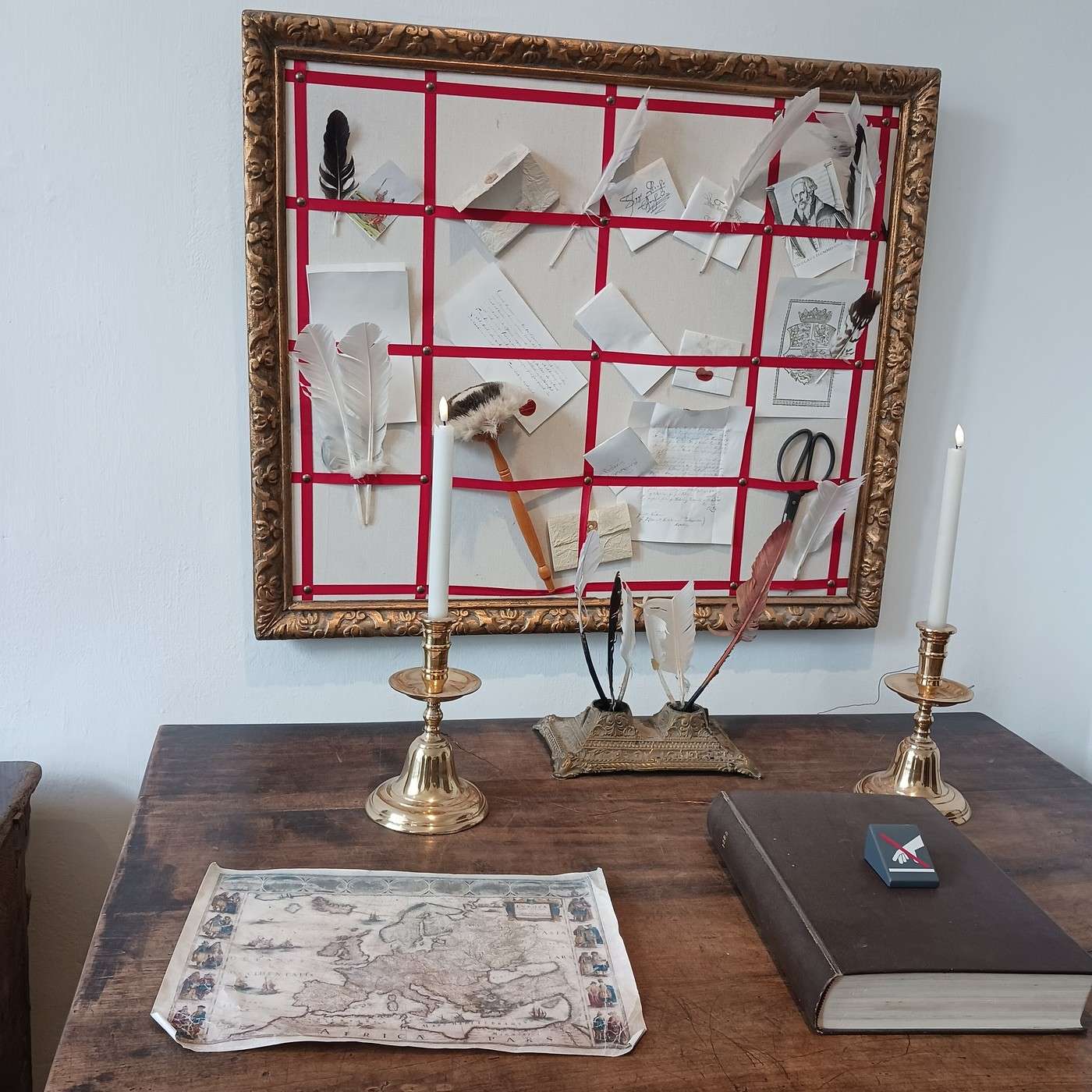
Next, we explored the castle’s historic rooms, most of which had interactive games for kids... and adults! This carpet with its old map of Europe is impressive. If you look closely, you can spot Brussels, Antwerp, Ghent, Douai, Cambrai, and even Kortrijk—but no Bruges. Odd, right?


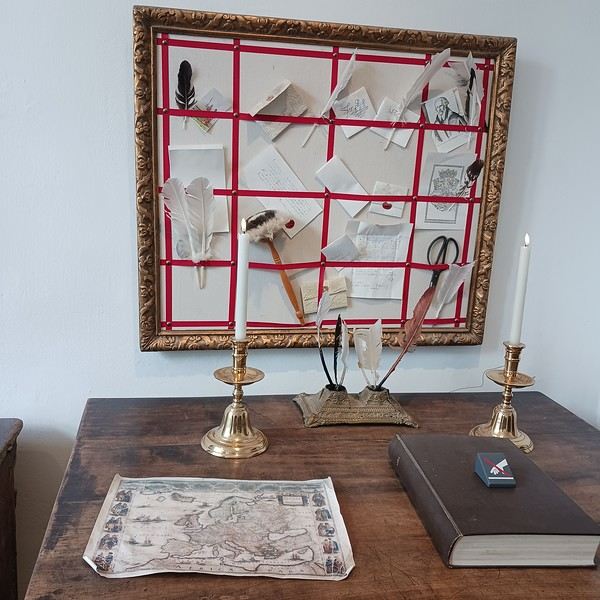
If you’ve been following our visits, you can probably guess who I’m referencing in this photo taken in a corner of the room*!


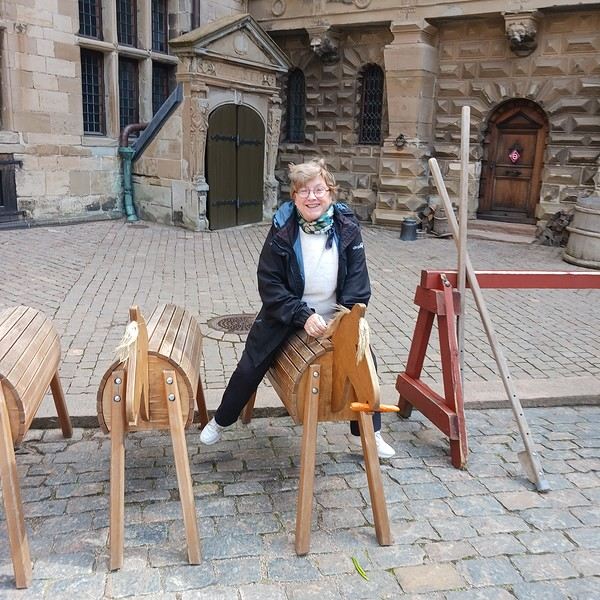
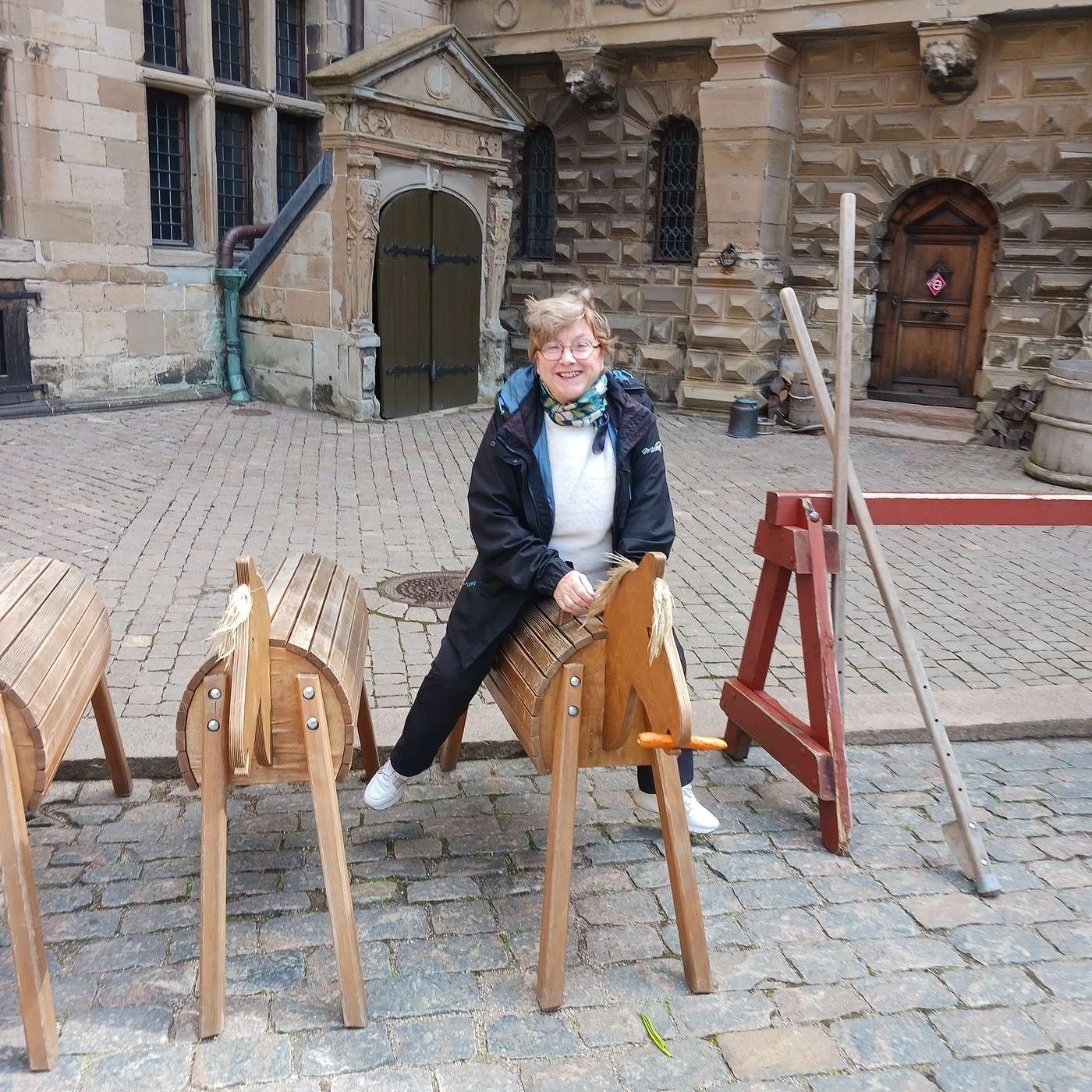
Proof that age is just a number:


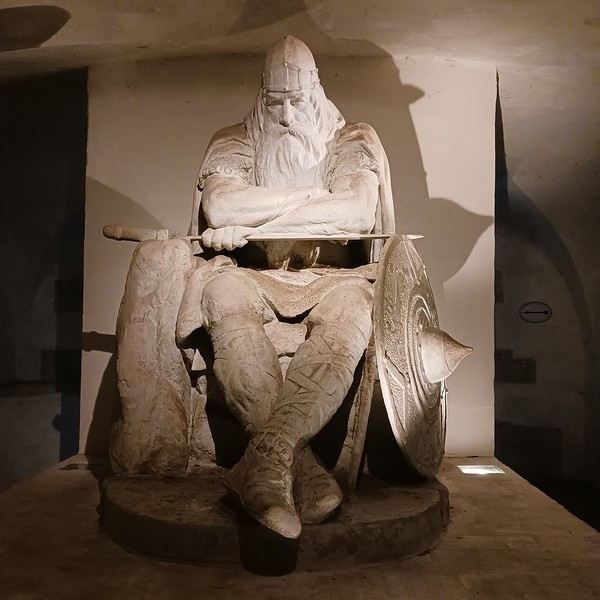
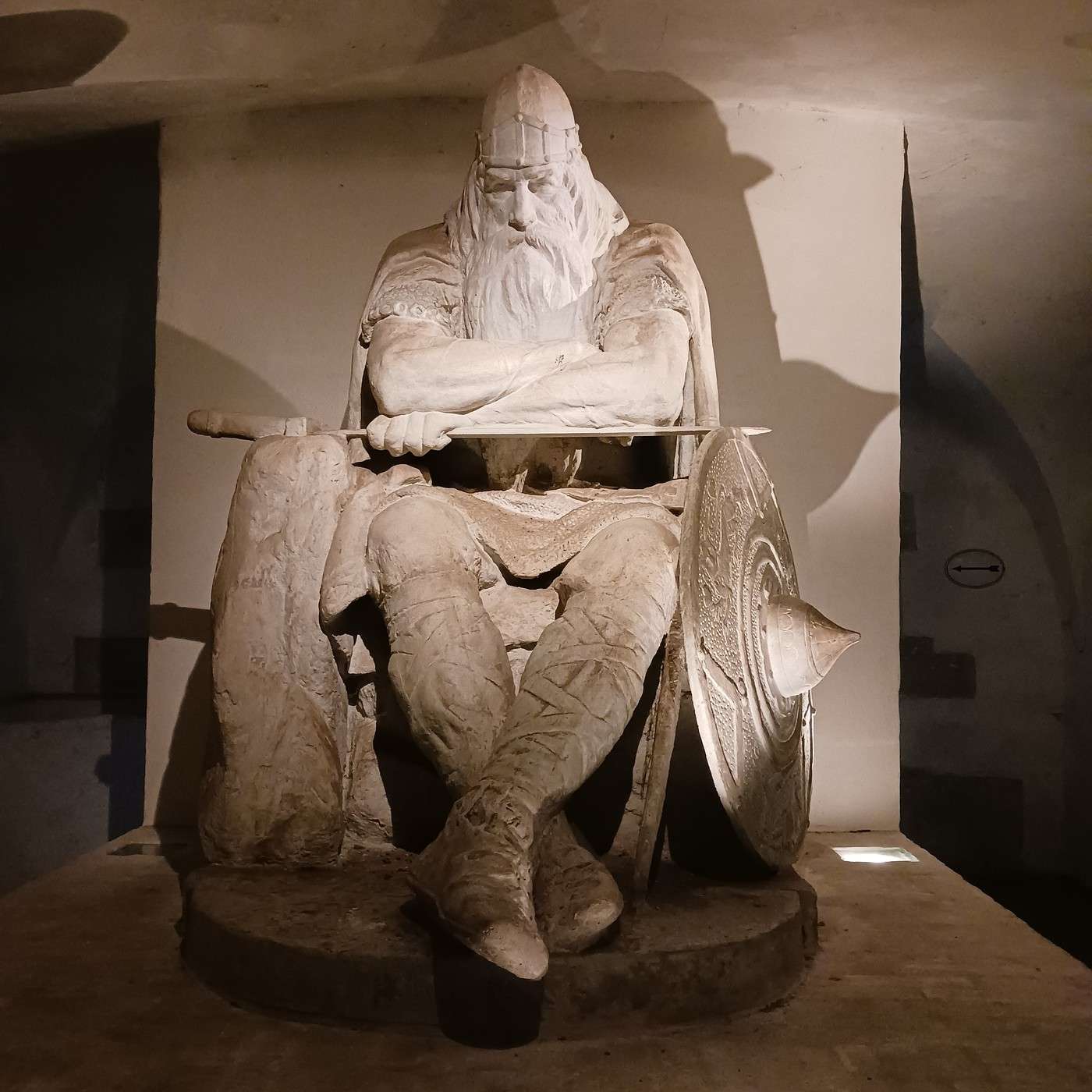
With all those cannons pointed toward the sea (and Sweden across the way), the castle’s defensive role is clear. The underground passages, though a bit creepy, are absolutely worth exploring. First, there’s the imposing statue of Holger the Dane:


In Denmark, children and adults alike know the legend of Holger the Dane, asleep in the casemates of Kronborg Castle—until the day he wakes to defend the motherland in times of great peril.

For centuries, Holger the Dane has been an important national symbol for the Danes.

Originally, the myth wasn’t Danish but came from *The Song of Roland*, a major work of medieval French literature.

Here’s the story behind the sculpture: In 1907, the Marienlyst Hotel in Helsingør commissioned a bronze statue of Holger the Dane. The plaster model was placed in Kronborg’s casemates and, over time, became far more famous than the bronze statue—until May 2013, when it was moved to the Marienlyst Hotel. The artist was Hans Pedersen-Dan.

In 1985, the plaster sculpture had to be replaced with a concrete one due to the damp climate of the casemates.

Then we ventured deeper into the darkness—some parts were pitch-black (thank goodness for phone flashlights!). A group of young boys was playing pranks, hiding and jumping out to scare each other. At one point, they messed up, and one of them lunged out of the dark screaming—right as I walked by. I was *so* scared I screamed... and then laughed about it afterward!

After all that excitement, we had a light lunch at the Cadet Café (Kadetten). The Royal Cadet School, founded in 1897, was originally located in the castle. The military left Kronborg in 1991, paving the way for its UNESCO recognition. After the military departed, the castle was restored and opened to the public, becoming a major tourist attraction.

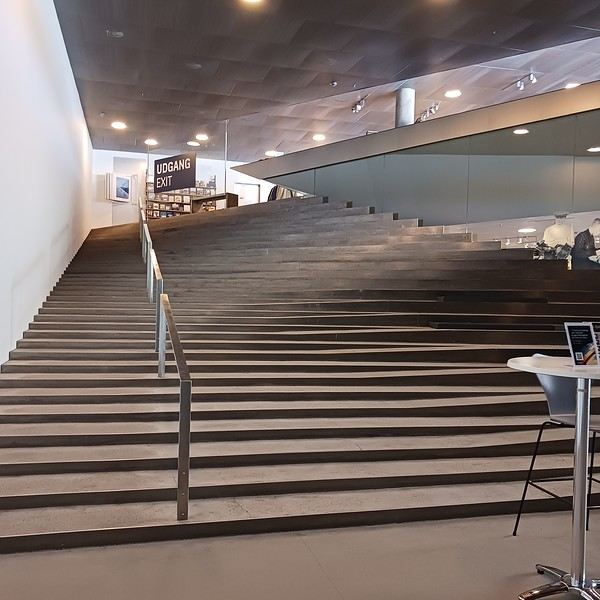
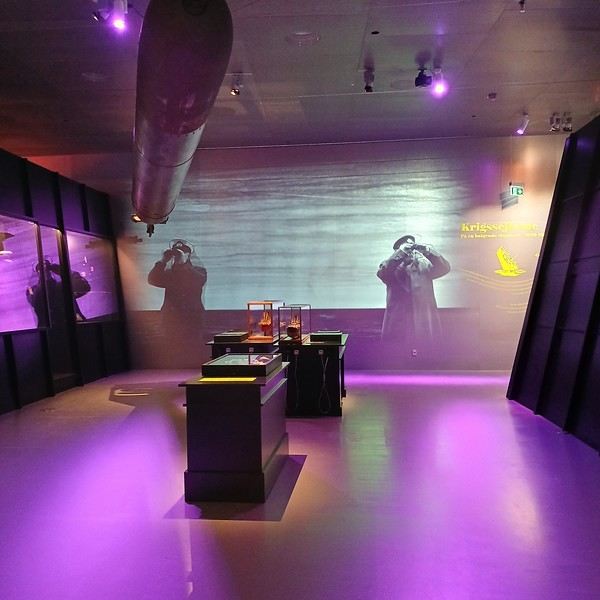
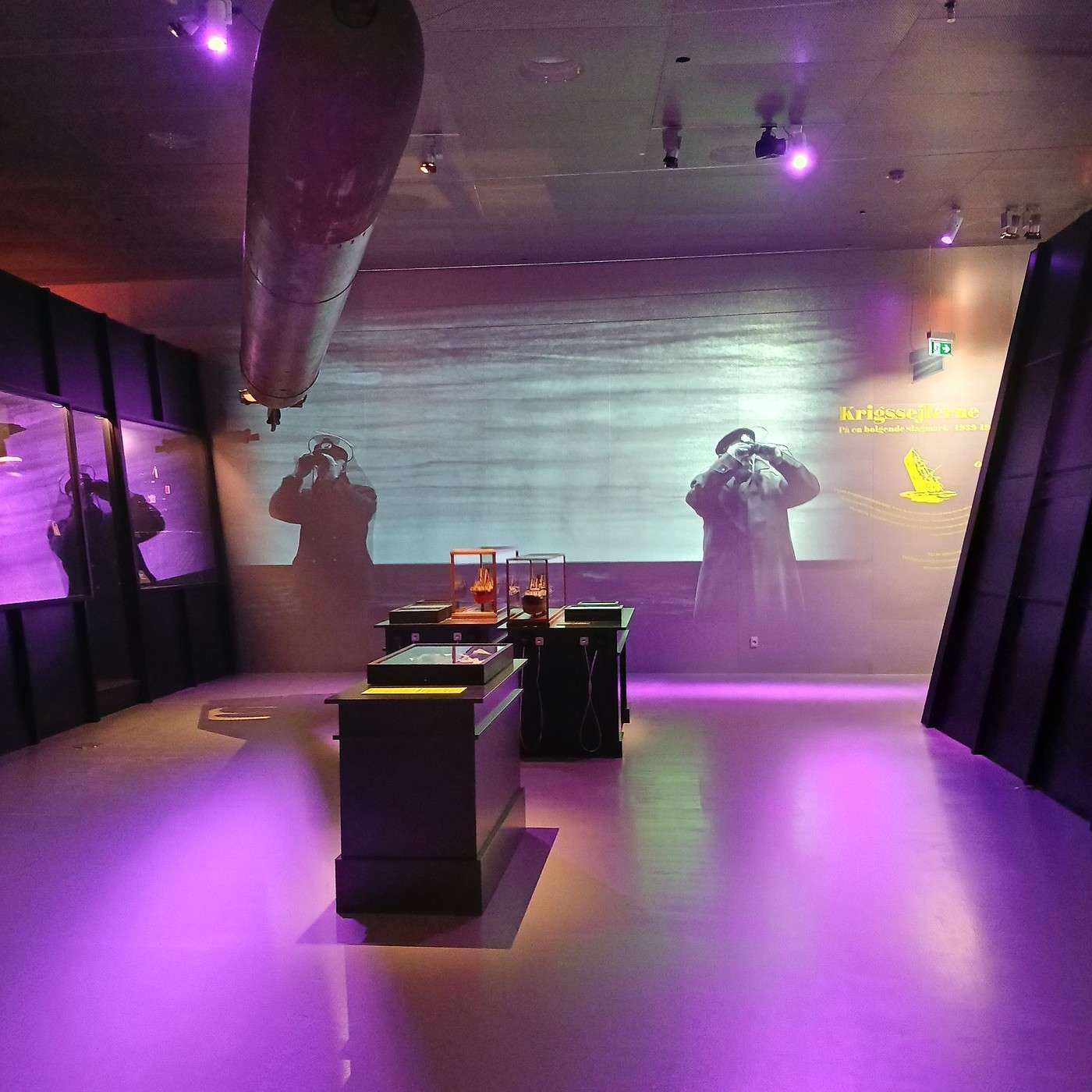
Now it was time to visit the maritime museum. While the building’s architecture is stunning, the exhibits are just as impressive.


Like all Scandinavian museums, there’s no chance of getting bored here—the displays are immersive and interactive, designed to engage visitors. It’s a beautiful place; you could easily spend hours there!


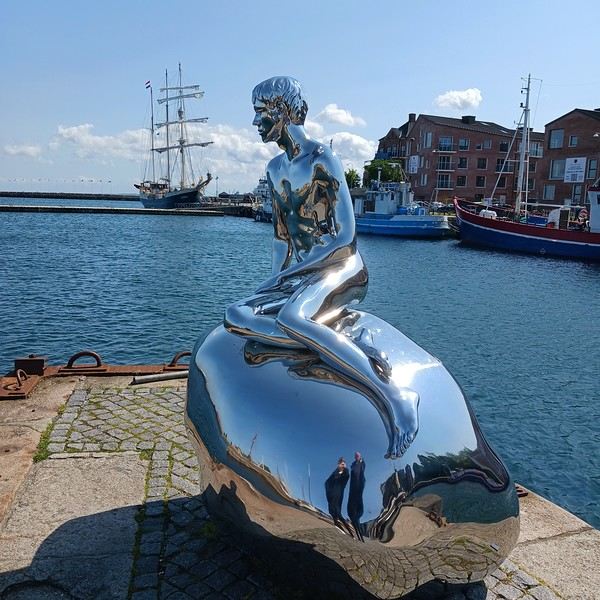
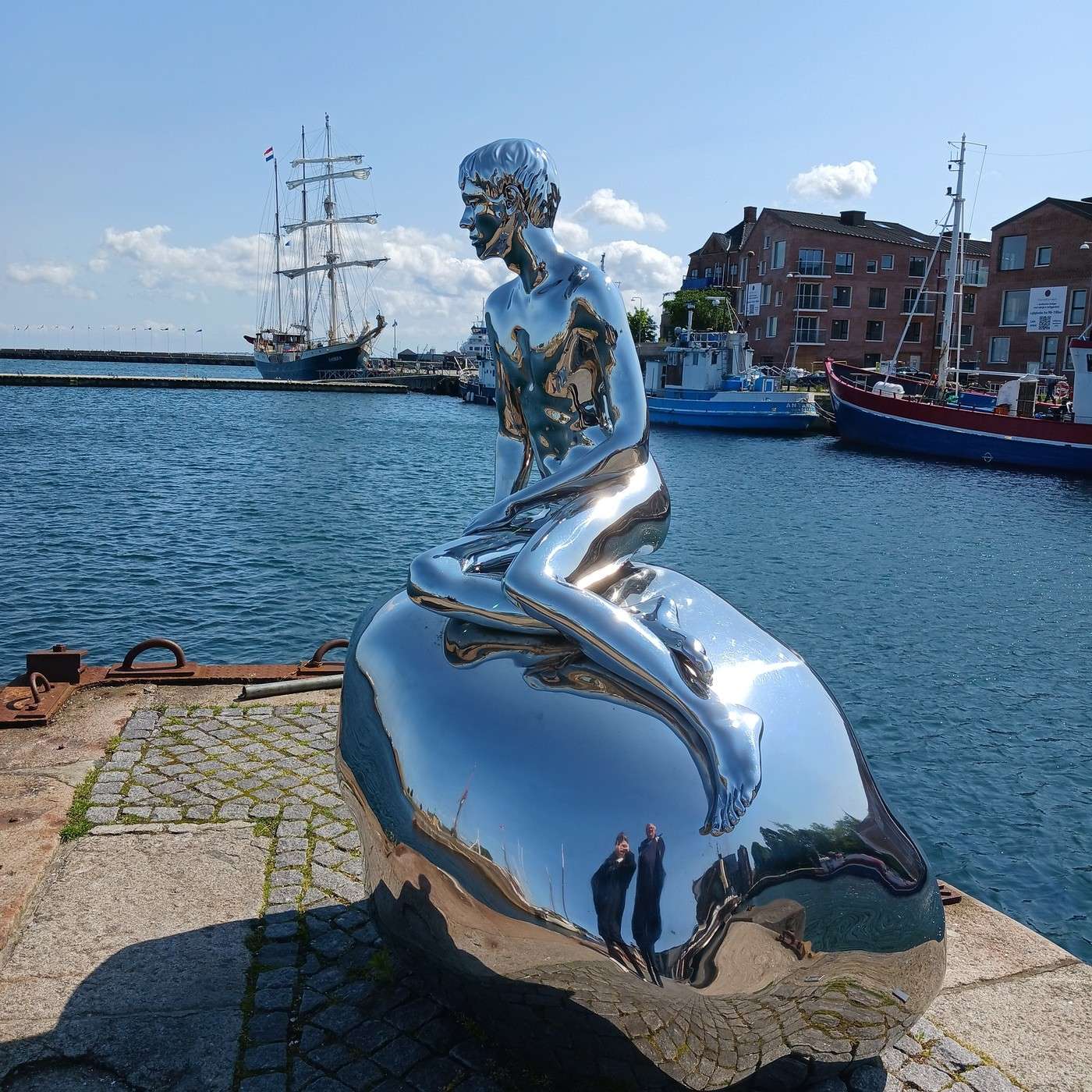
On our way out, we visited the Little Mermaid’s brother—a striking stainless steel sculpture by Michael Elmgreen and Ingar Dragset. It’s simple, elegant, and sits at the harbor entrance, framed by old sailing ships, just like in many Scandinavian ports...


The town is charming, with its old streets and half-timbered houses that have stood the test of time.


But it was time to head back to our "big house." After dinner, since the weather was nice, we decided to take a short digestive walk in the area we hadn’t had time to explore yet. Perfect timing, because tomorrow morning we leave. The paths are well-maintained, leading us from the river by the house to a pretty lake, winding through woods and marshes. It was a peaceful, nature-filled moment...

All in all, the day was a huge success. I was a little unsure about visiting Helsingør, and even more so about touring the castle, but I’m completely won over. Plus, the town is lovely—great for a stay or just a drink. Tomorrow, we’ll return to Helsingør to catch the ferry across the Kattegat to Sweden!

* Cornelis GYSBRECHTS (see visit from June 8)

Kattegat Tour and Great Norwegian Fjords - 32 Days (Denmark - Sweden - Norway)

Cendryon · 2025-08-09

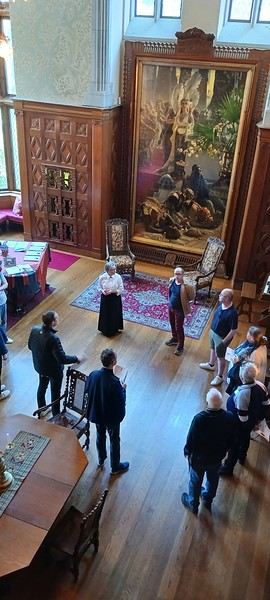
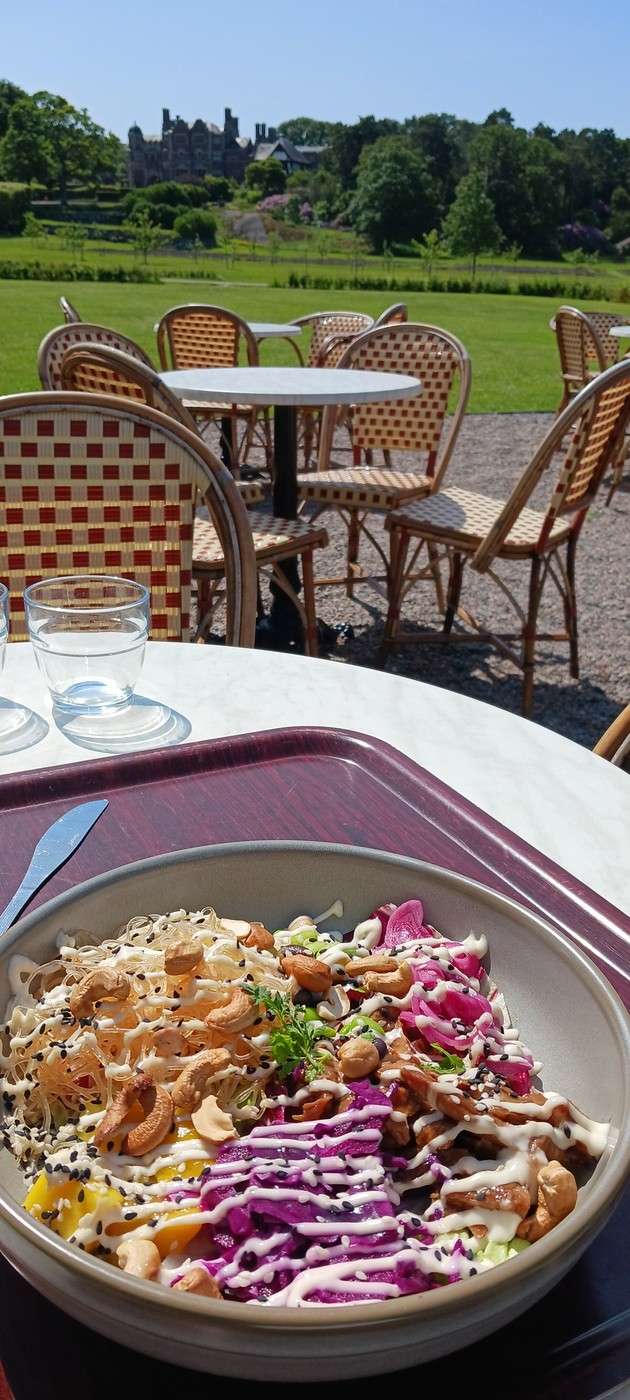
(Continued) Day 12 – Thursday, June 12 – Welcome to Sweden. We leave our spacious home to cross Zealand and its beautiful forests to reach Helsingør. I booked the ferry for 10:30 AM, and honestly, it’s not crowded at all. The crossing is quick, and there’s a duty-free shop on board that we barely have time to explore. After a quick customs check, we drive leisurely through a lovely rolling countryside. We arrive at Tjolöholm Castle and take time for a light lunch on the sunny terrace. The castle café is set near the old stables in a very trendy, chic, and eco-friendly style.


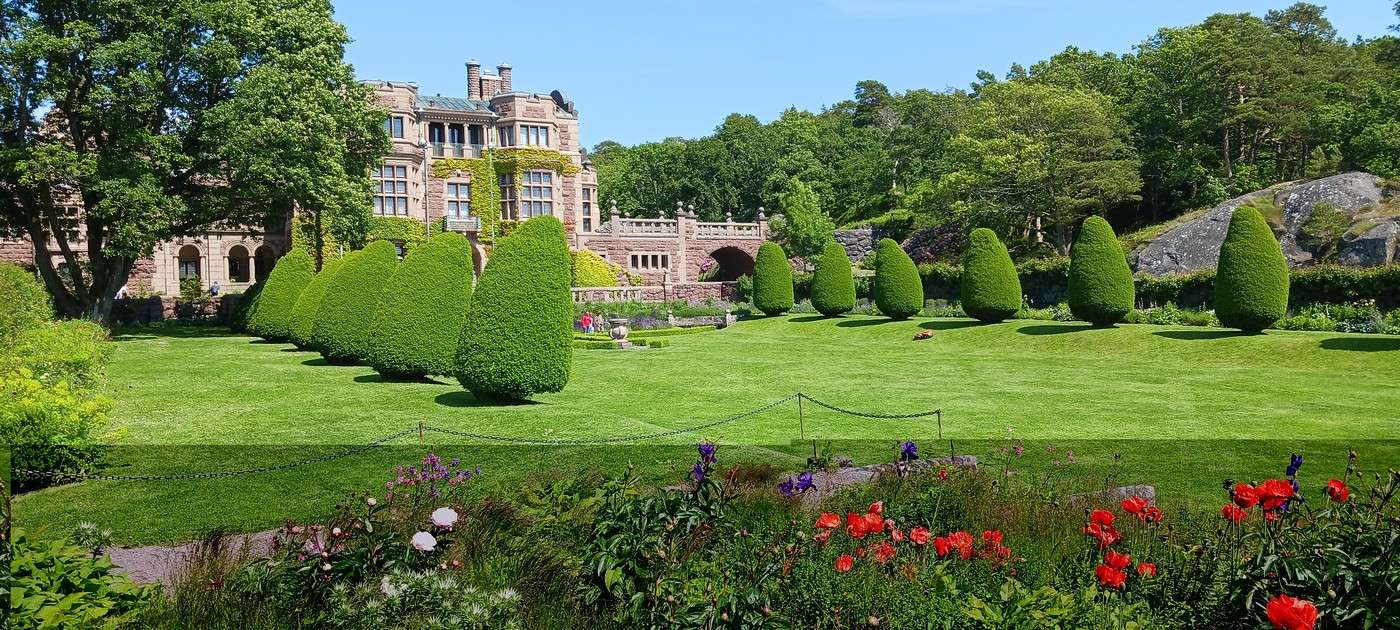
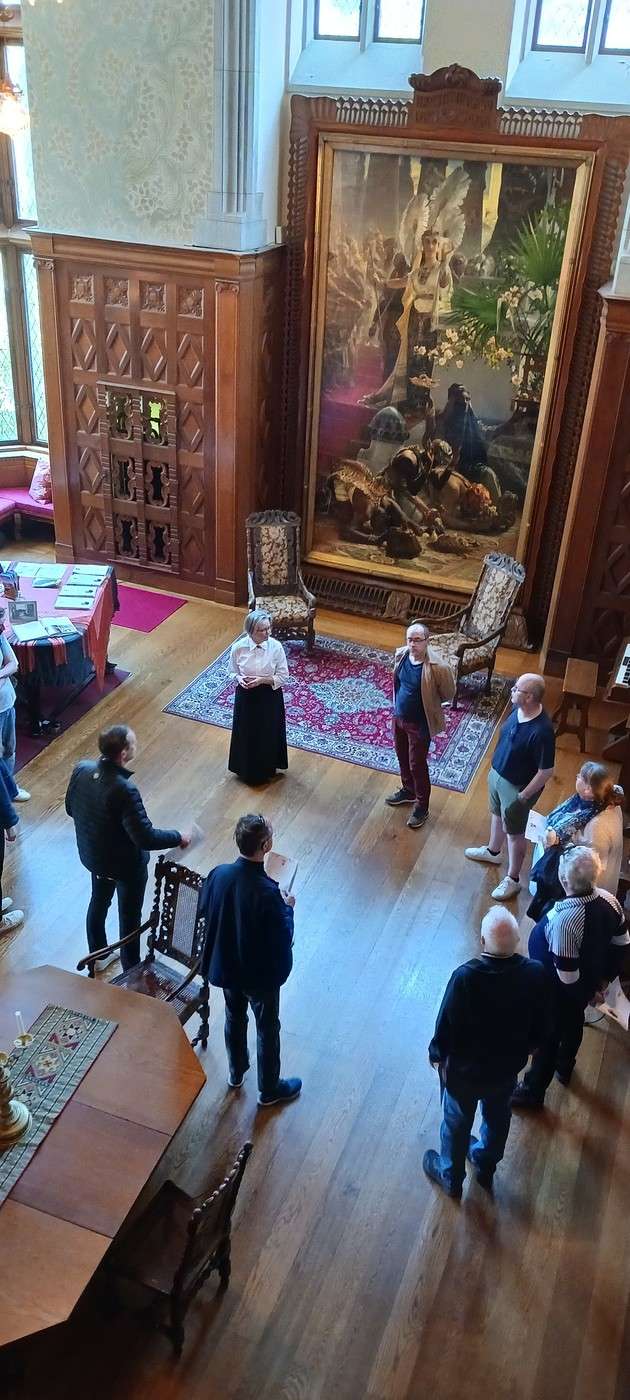
Here’s what Wiki says: The Tjolöholm Castle (Tjolöholms slott in Swedish) is located in Halland Province, Sweden. It sits on a peninsula facing the sea, in the Kungsbacka Fjord on the Kattegat coast. It was built for James Fredrik and Blanche Dickson between 1898 and 1904, based on plans by architect Lars Israel Wahlman, who designed it in a deliberately Anglicized style, blending neo-Tudor influences with the Arts and Crafts movement.


It feels like stepping into a Harry Potter set or an Agatha Christie-themed Cluedo game...


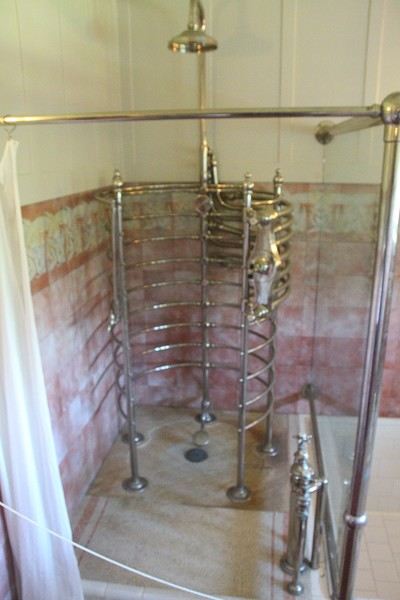
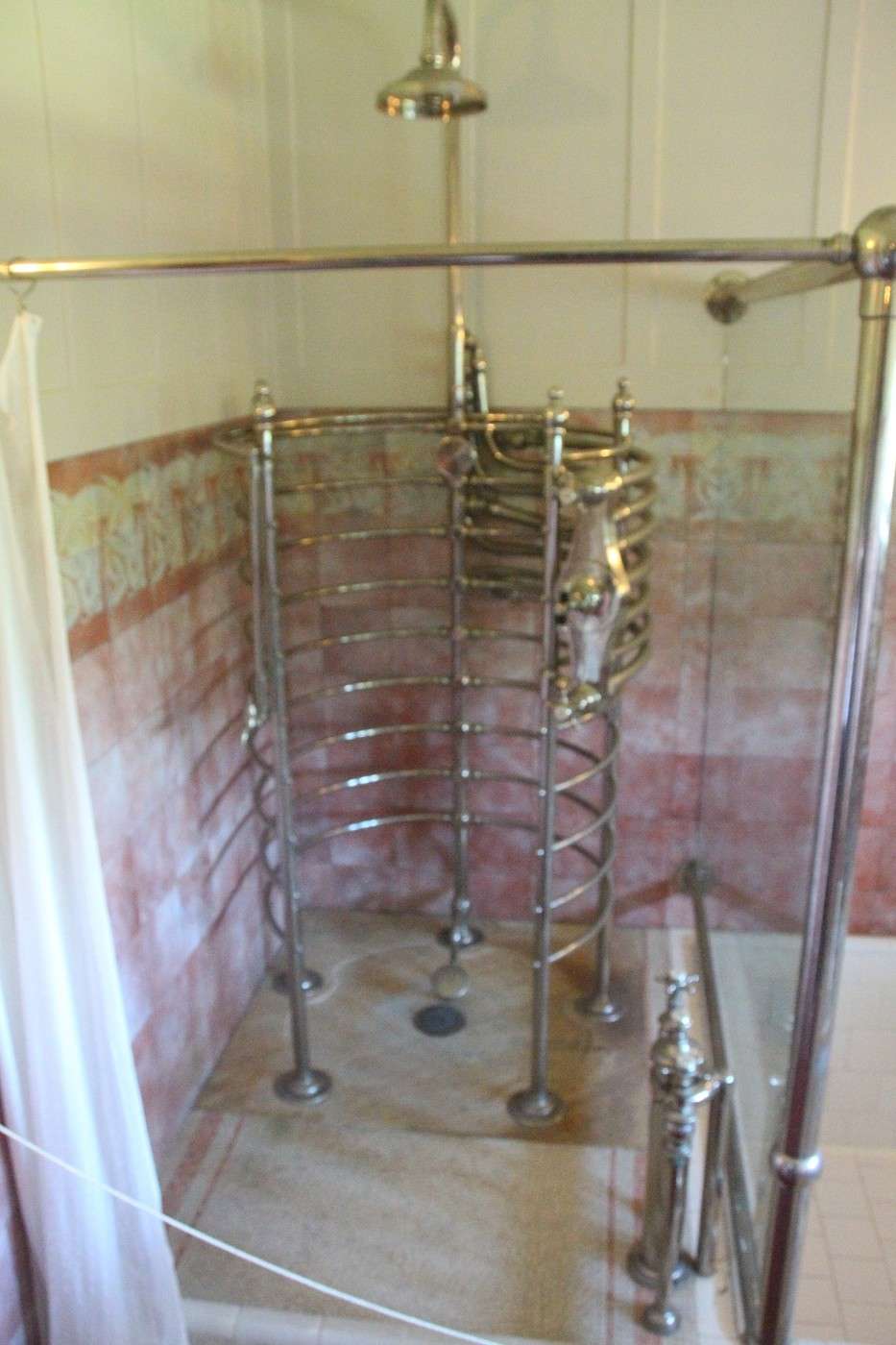
...but what’s surprising are the vast bathrooms with bathtubs integrated into the tiled floors and jet showers—definitely modern for the time!


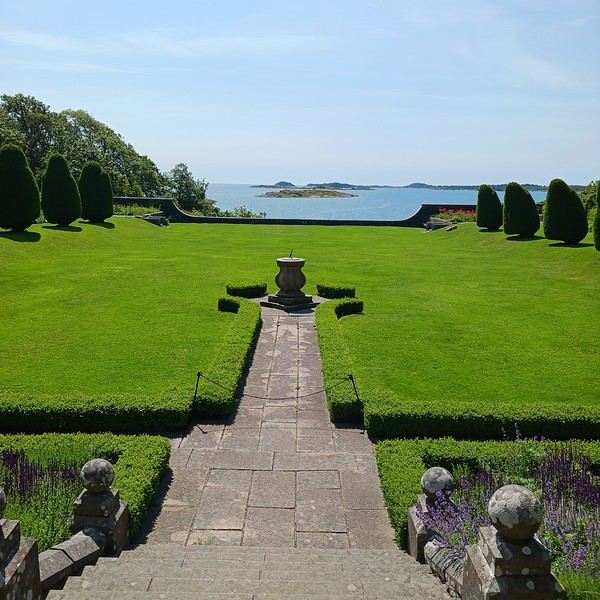
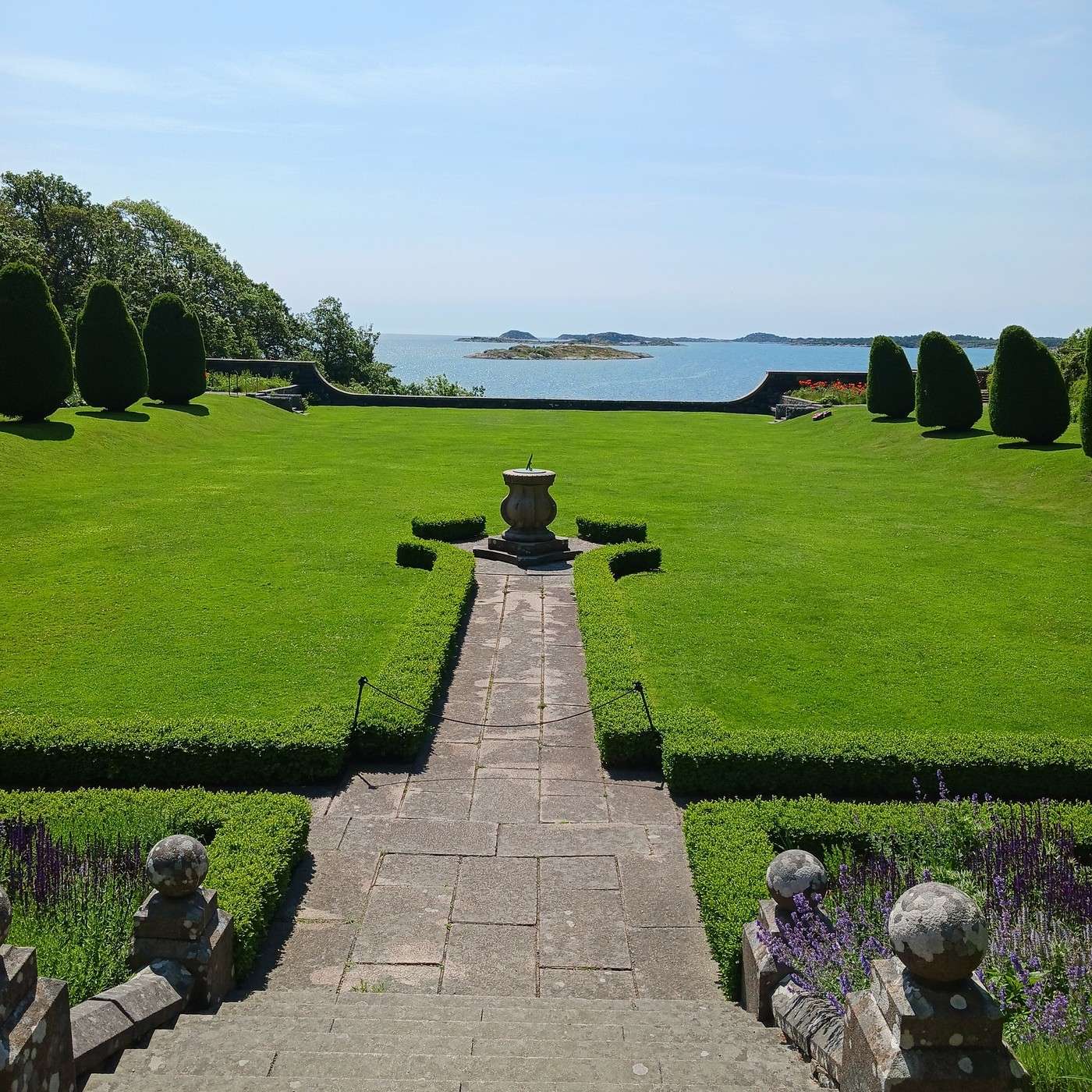
The garden is lovely and opens directly onto the sea.


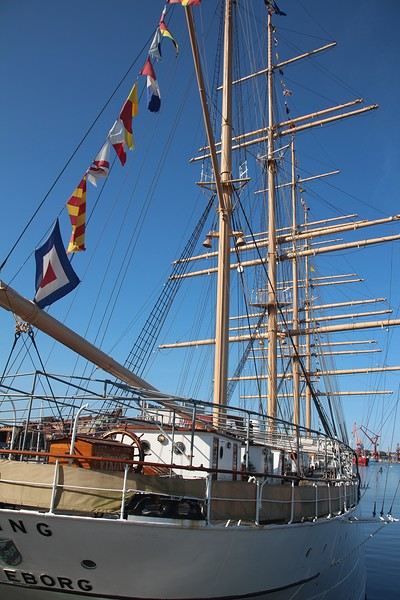
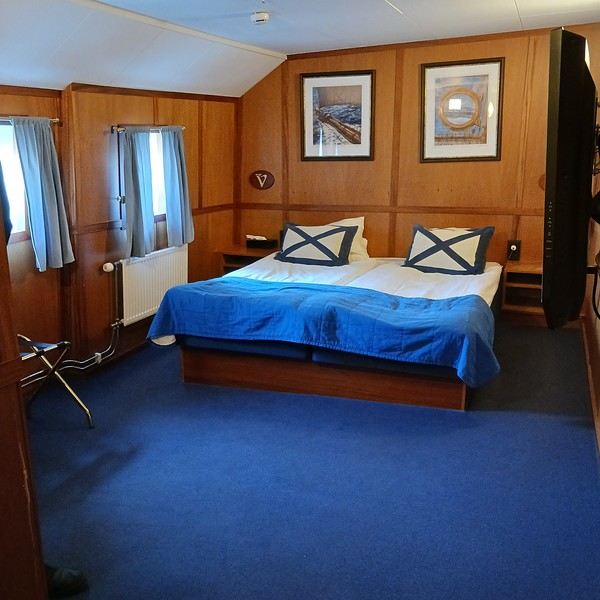
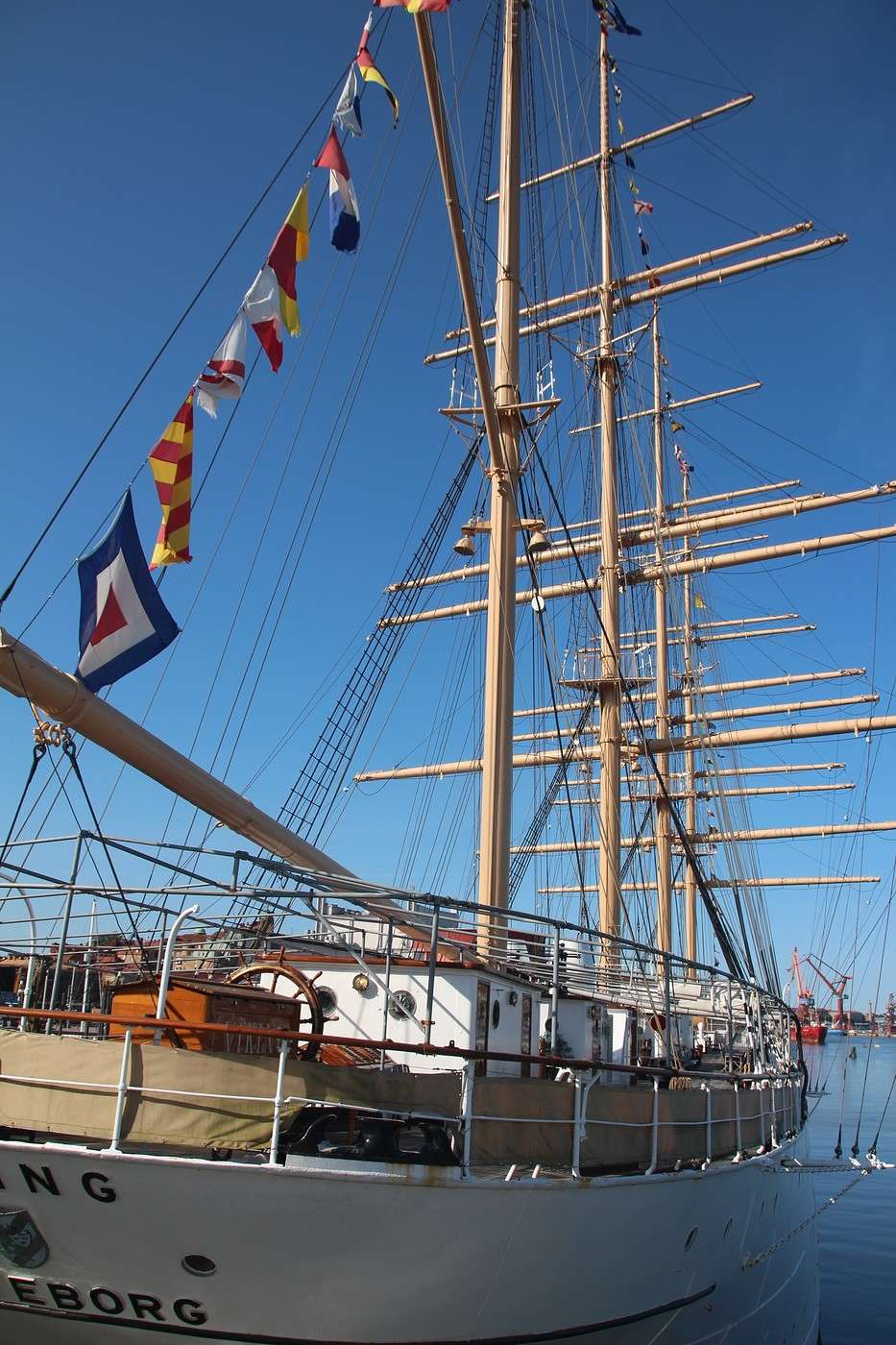
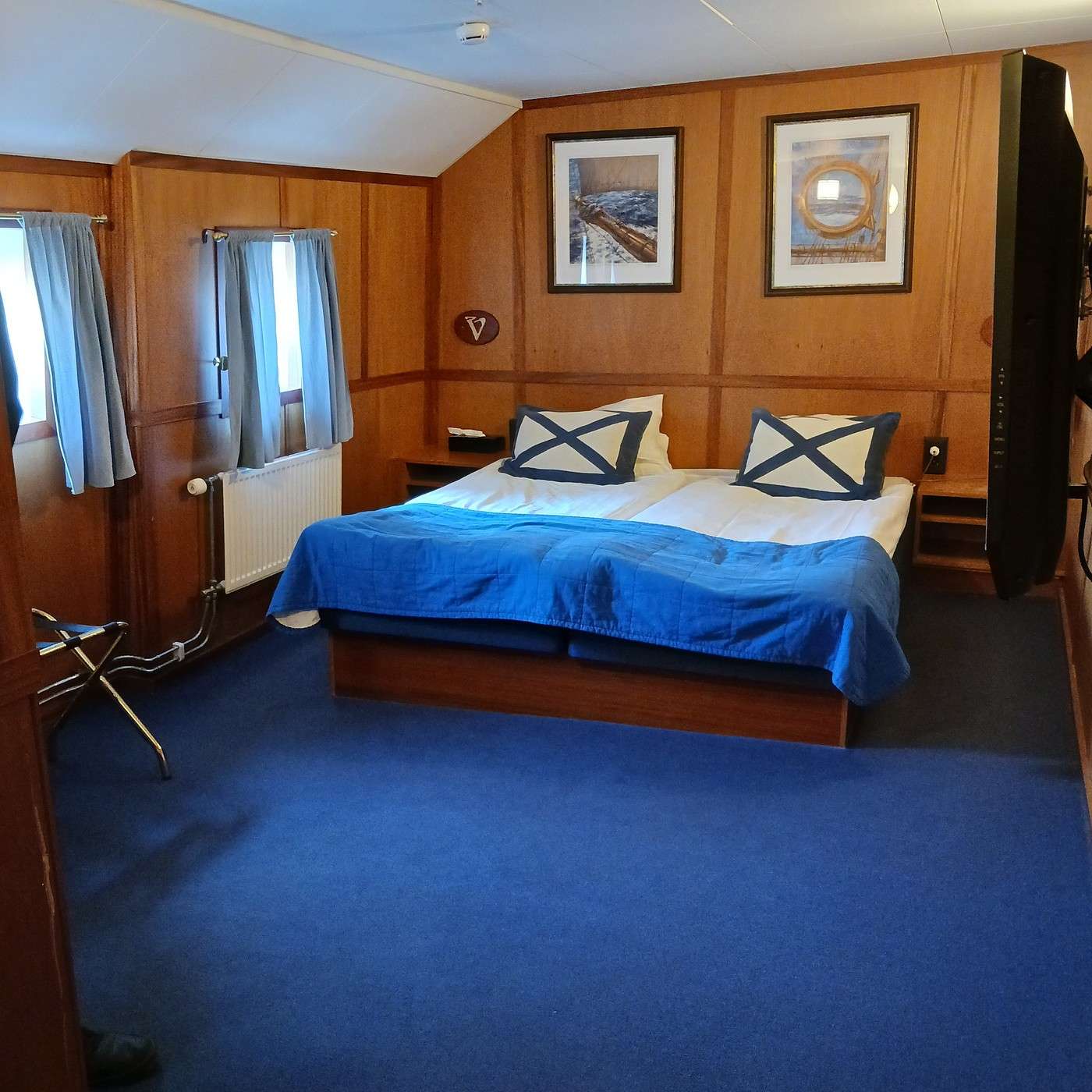
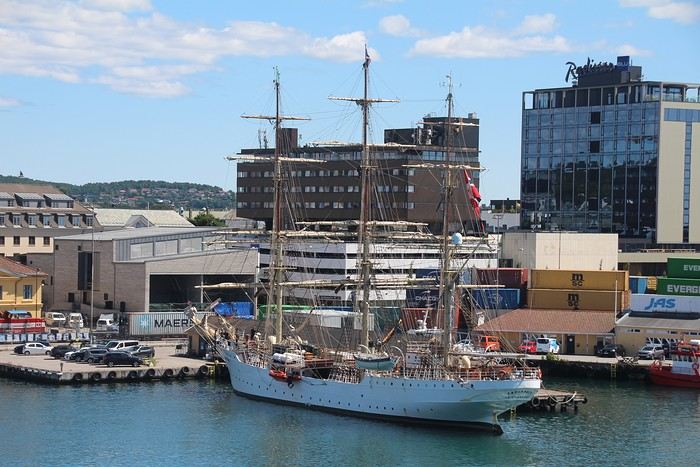
After this peaceful and relaxing visit, we quickly reach our next overnight stop—in Gothenburg, specifically at the Barken Viking, a charming four-masted sailing ship turned hotel.


Even though the room is charming, this stop leaves us wanting more because the ship isn’t open for tours. We’re confined to the deck with the bedrooms and breakfast room—it’s frustrating! We can only glimpse the deck from the quay.


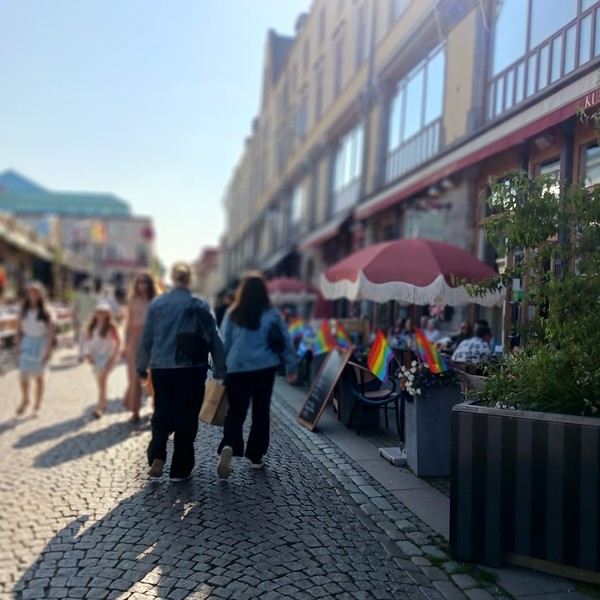
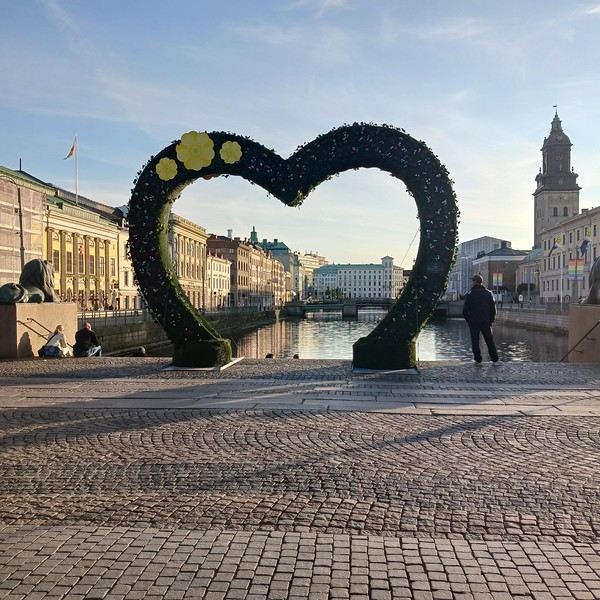
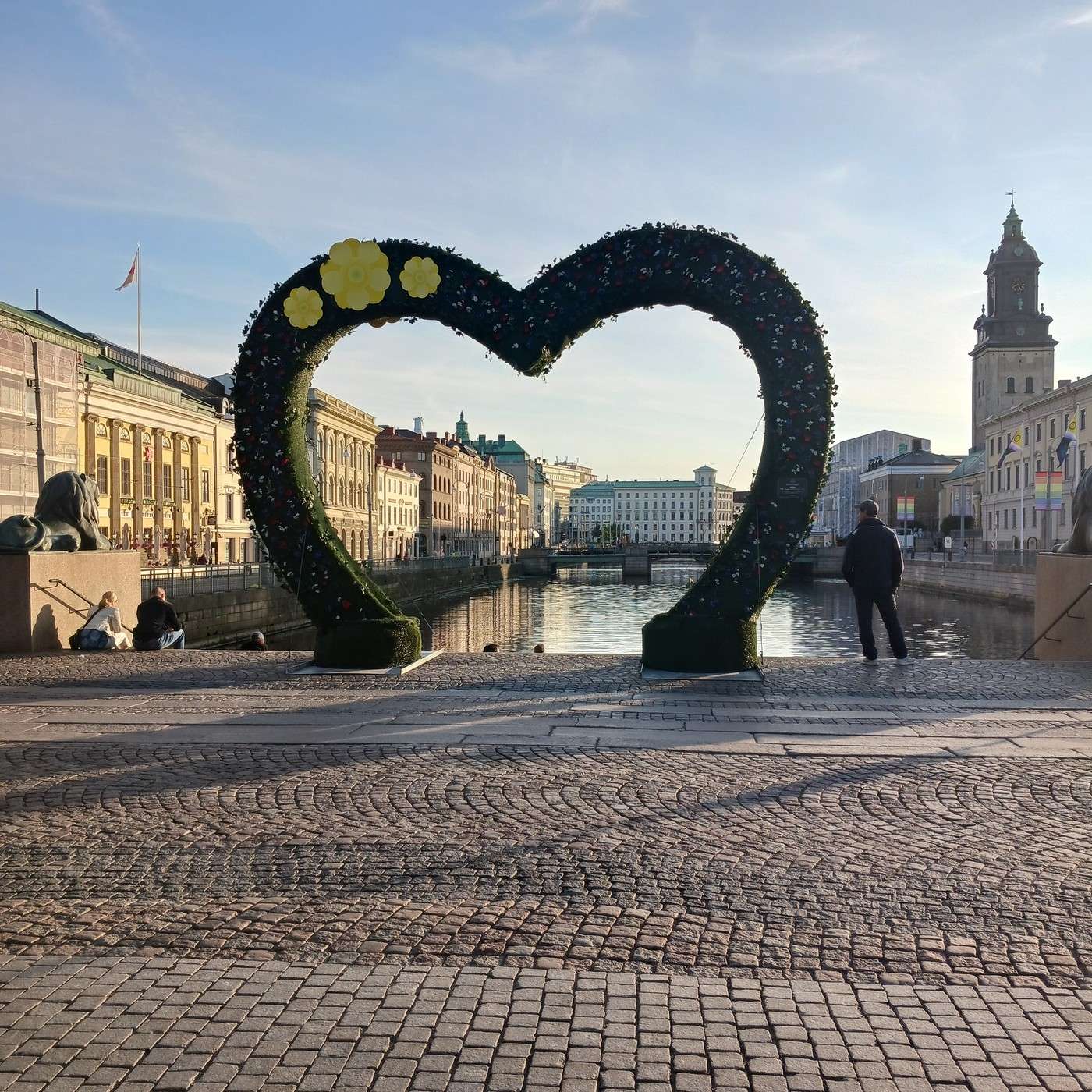
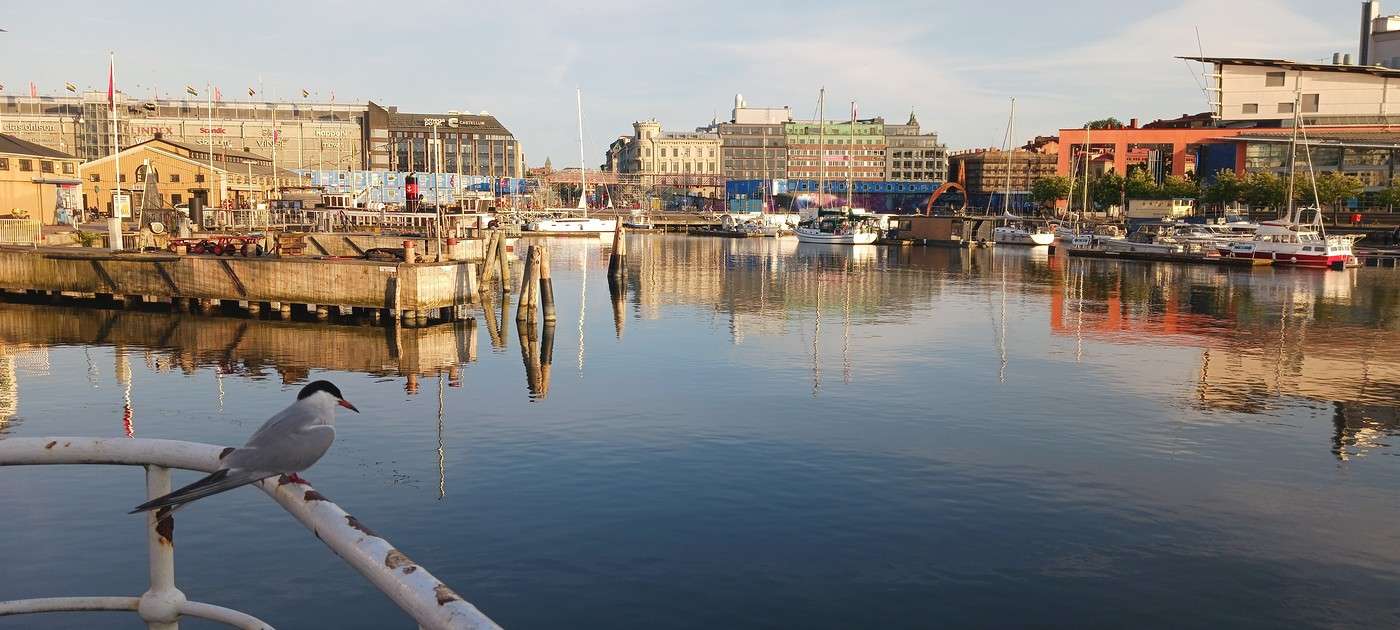
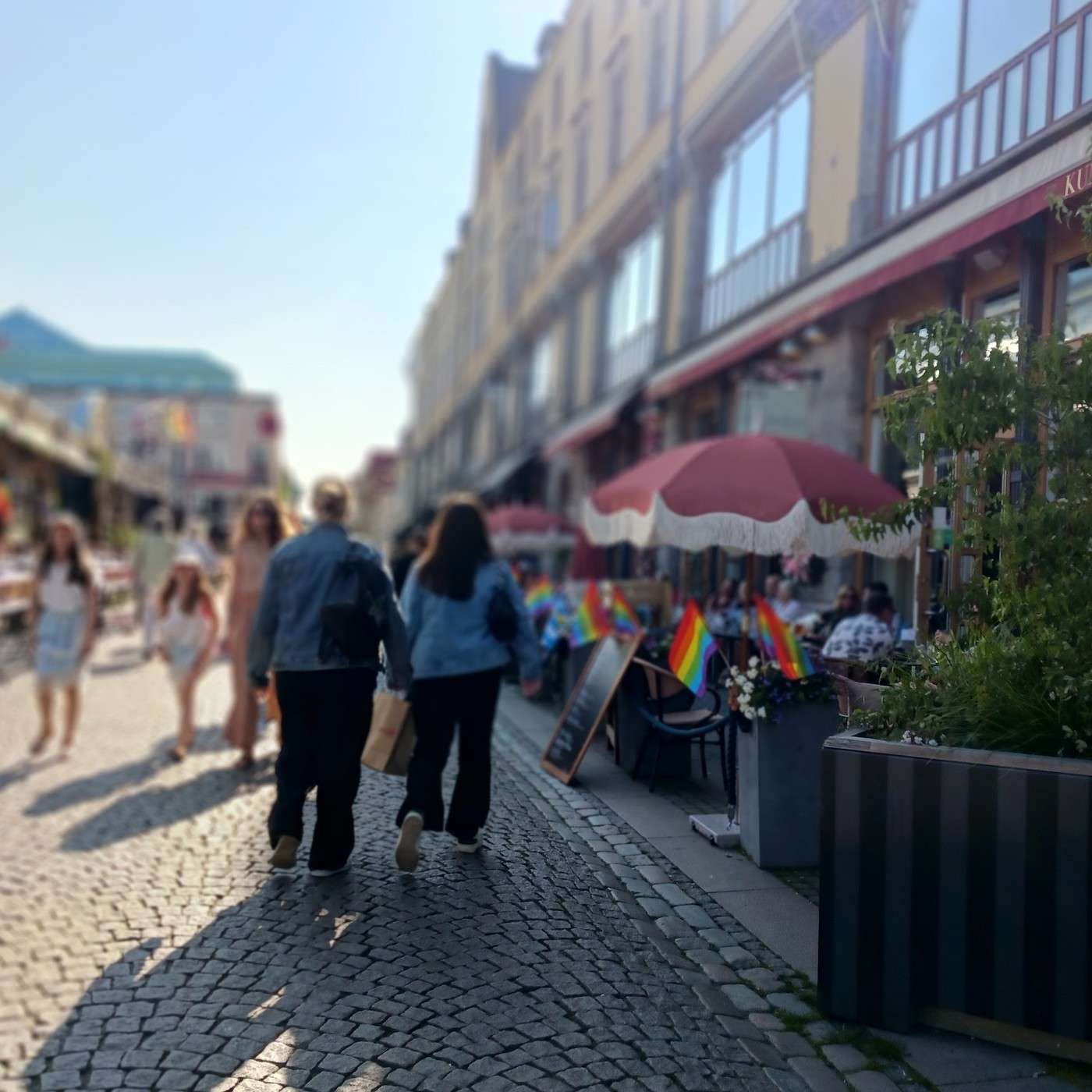
We head out to explore the city, which, let’s be honest, doesn’t leave us with an unforgettable memory. This port city, adorned with hundreds of LGBT flags, has modern pedestrian streets and friendly terraces.


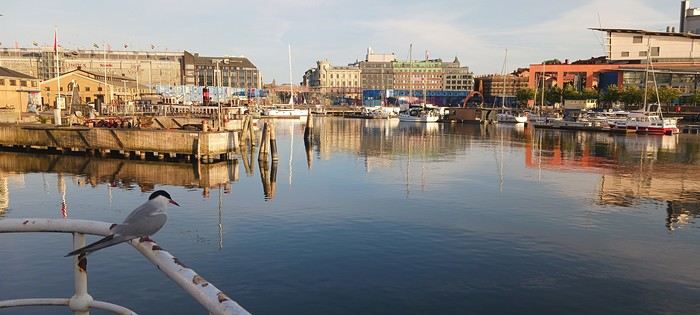
Maybe we’d need to stay longer to appreciate it, but tonight we return to our ship and savor the tranquility of the harbor.


(To be continued)

Kattegat Tour and Great Norwegian Fjords - 32 Days (Denmark - Sweden - Norway)

Cendryon · 2025-08-09

(Continued)

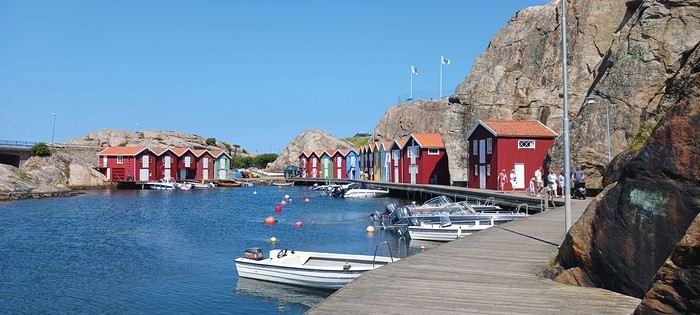
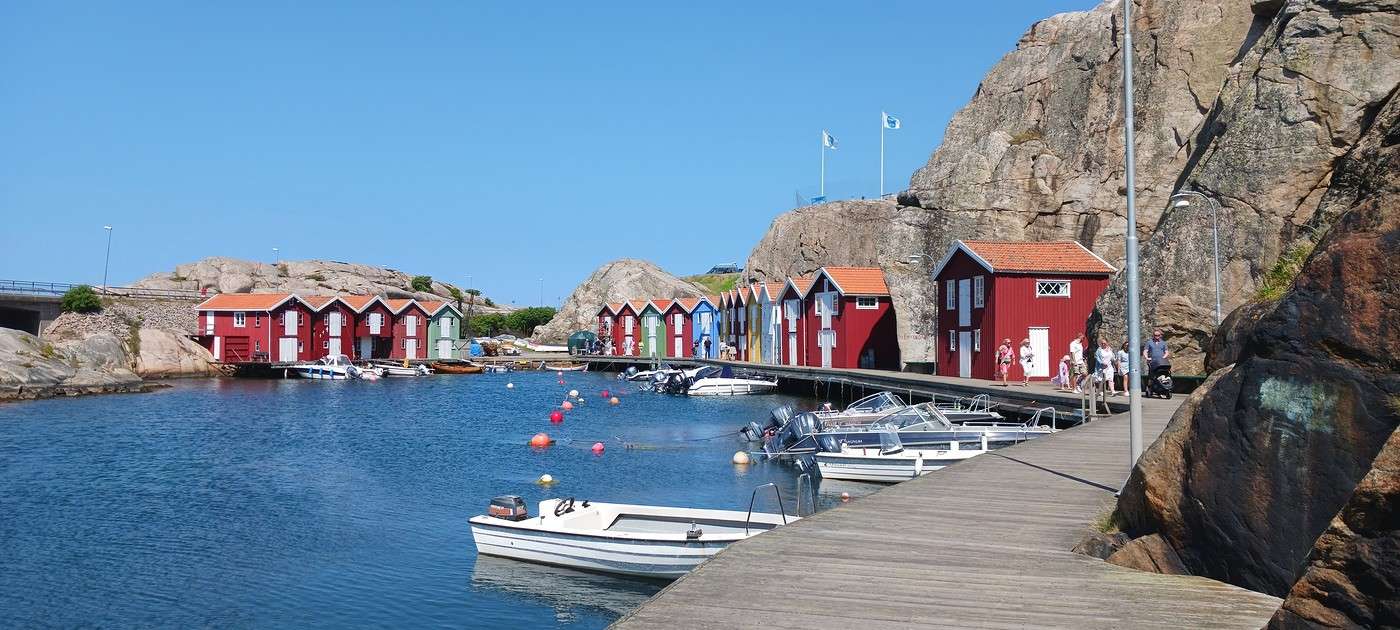
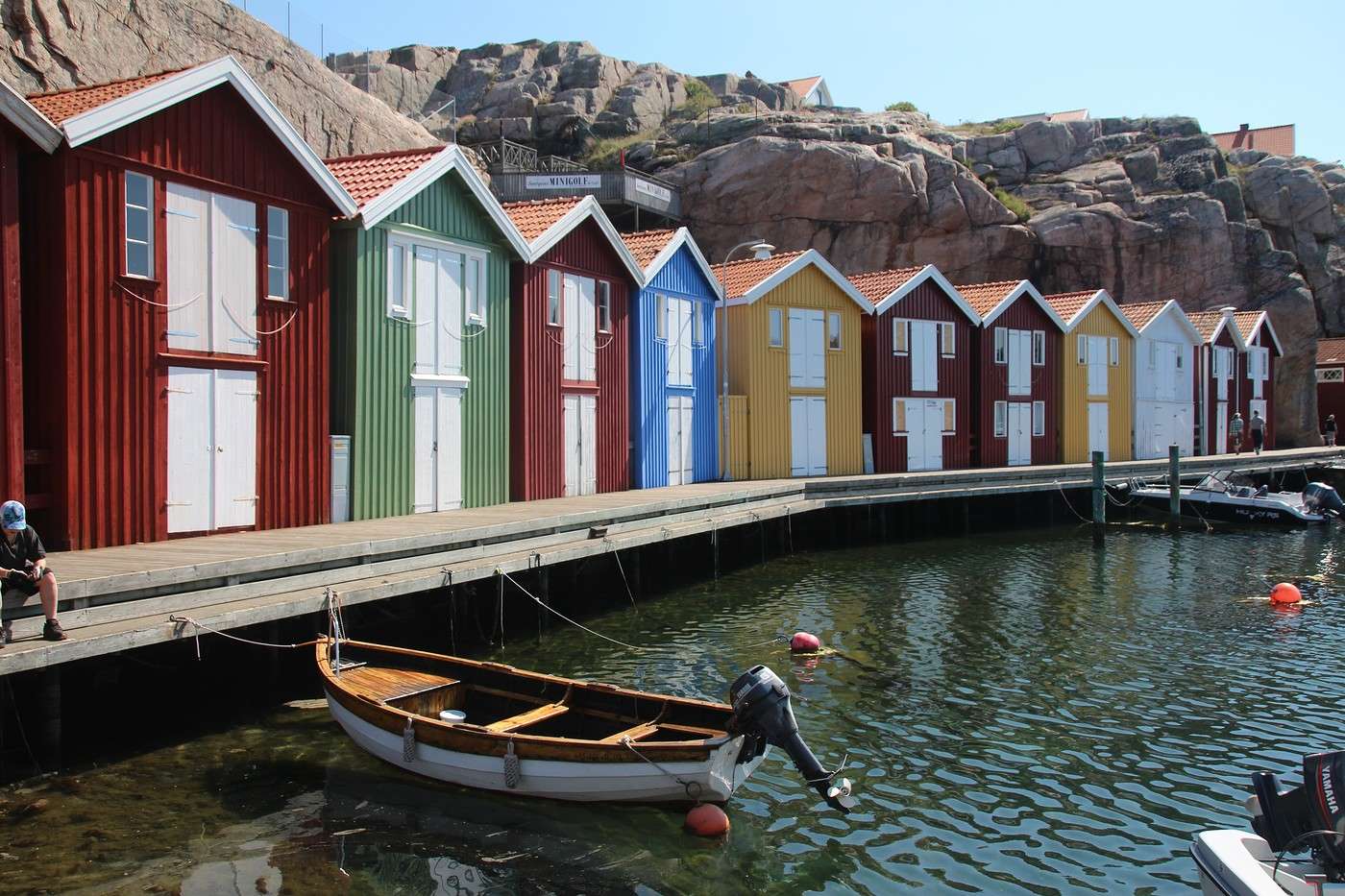
Day 13 – Friday, June 13 – Welcome to Norway Between Gothenburg and Oslo, the Swedish coast is famous for its charming little fishing ports with postcard-perfect scenery. We "drop anchor" in Smögen.


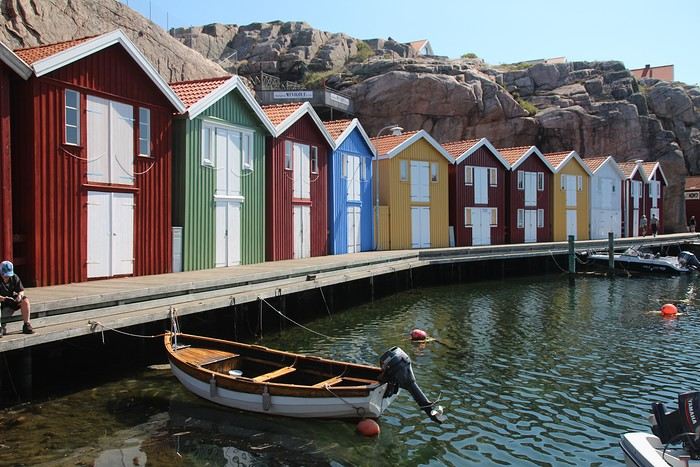
Grab your colored pencils!


The walk along the small harbor with its colorful cabins is really pleasant this morning since there aren’t many tourists...


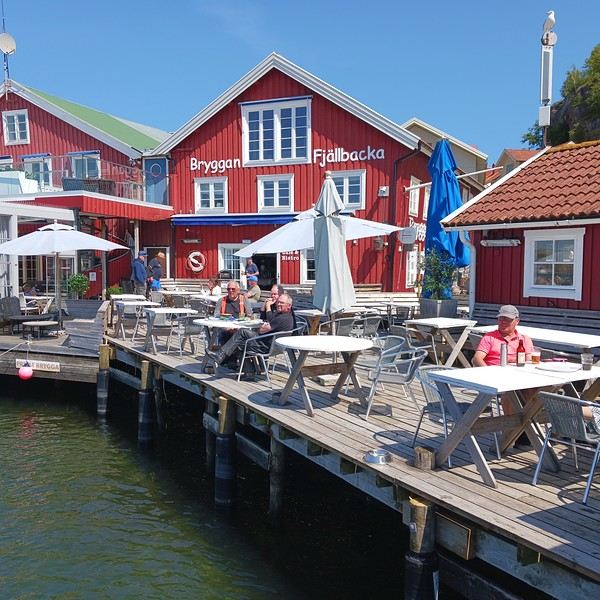
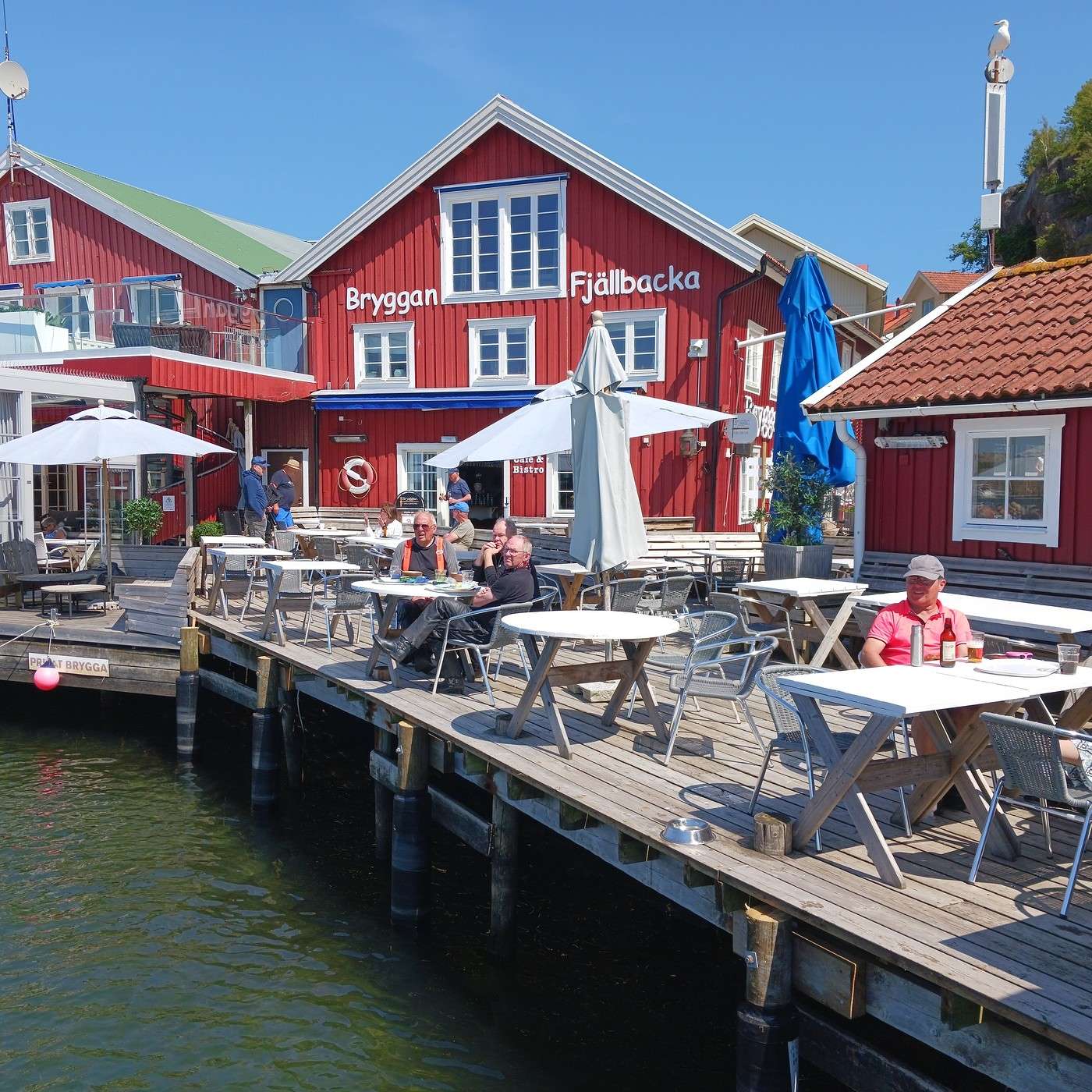
We’re now heading to Fjällbacka, another small touristy port town. The sun invites us to sit on a terrace by the water. Don’t we look comfy there?


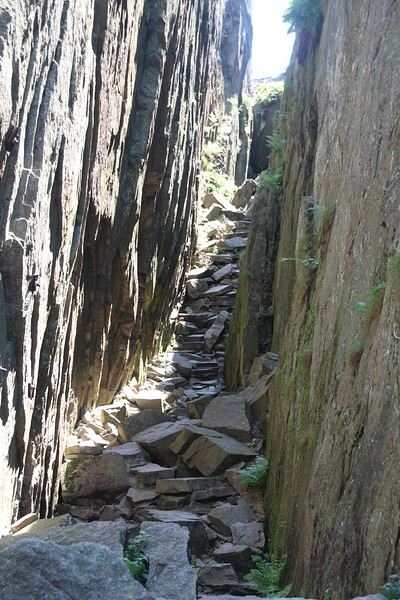
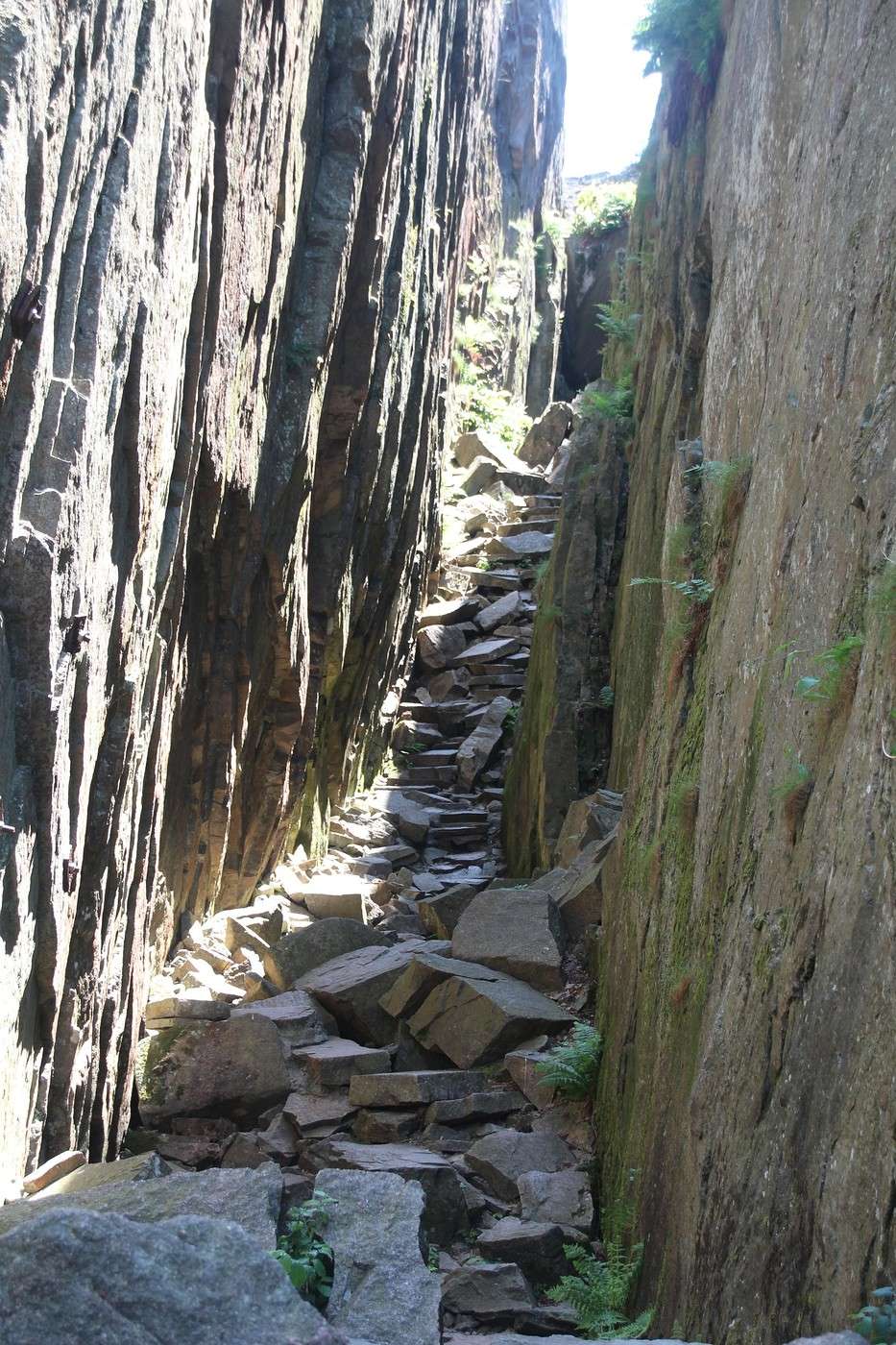
Patrick can’t resist a shrimp sandwich... neither can his wallet! After lunch, I really feel like taking the stairs to see the view from the top of the hill. Patrick doesn’t want to come with me. The stairs aren’t a problem, but the path continues over a rocky scree that’s not easy to navigate. I start climbing anyway, but since I’m alone, I’m afraid of falling and hurting myself. I’ve already taken two tumbles since the start of the vacation—better not push my luck! So, I give up this time!


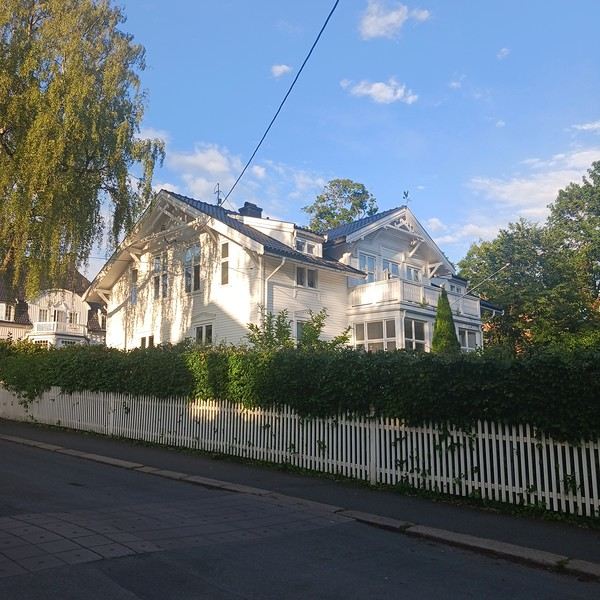
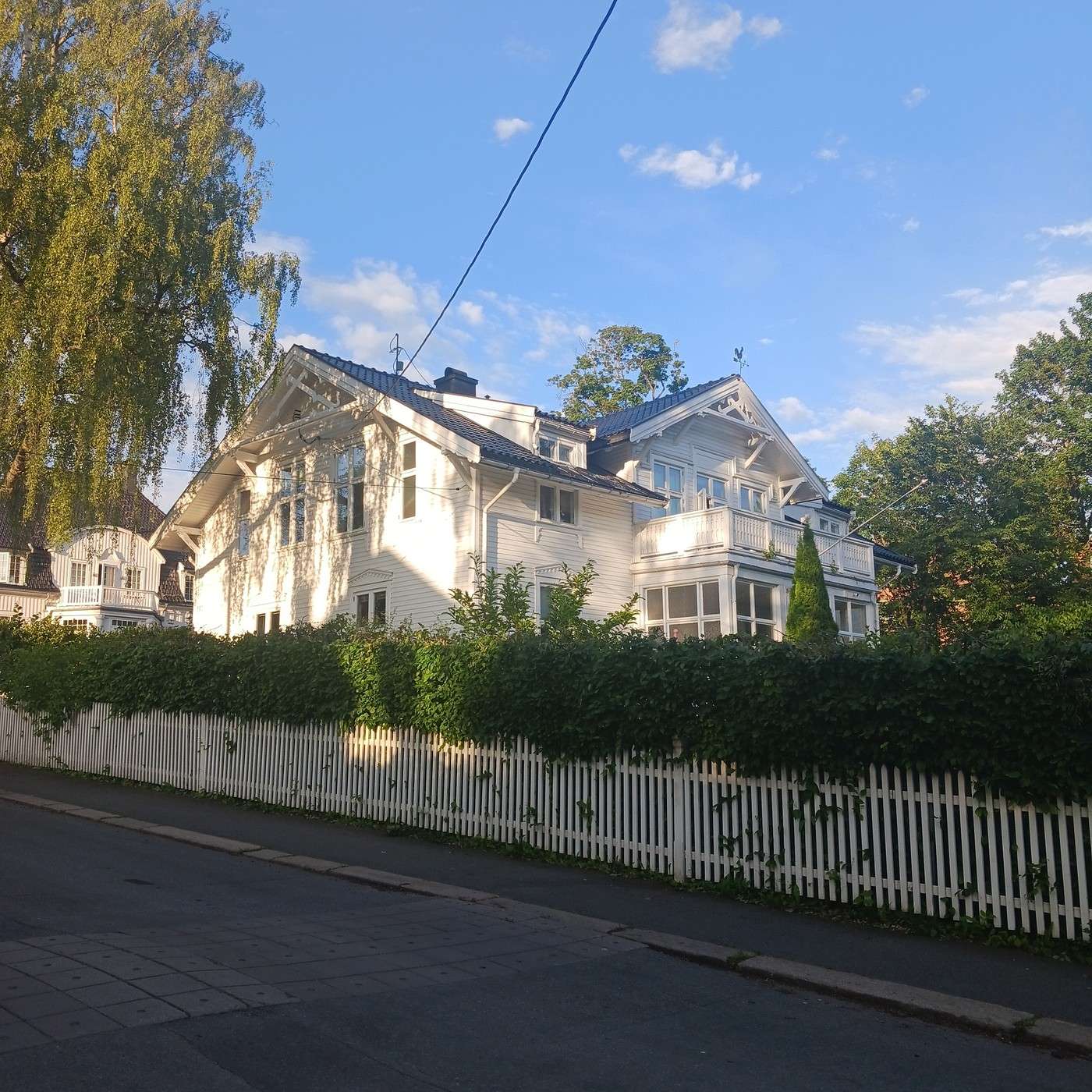
Between Sweden and Norway, there are no border checkpoints—just a sign telling vehicles with something to declare to take the right lane. We arrive in Oslo. Our accommodation for 3 nights is a guest room in a lovely all-white villa in an upscale neighborhood. When we arrive, several young people are at the house because they’ve organized a "garden party" to celebrate the end of exams. We meet our hosts a little later: Max is British, and his wife is Norwegian. Our room is very spacious, with another nearby room for breakfast. All the houses in this neighborhood are large and beautiful. You can tell we’re in one of Oslo’s posh areas!


Since the weather is still lovely this evening, we head out to eat nearby at a really nice Italian restaurant with a pretty terrace, Peloton Skøyen. Very trendy, upscale vibe.

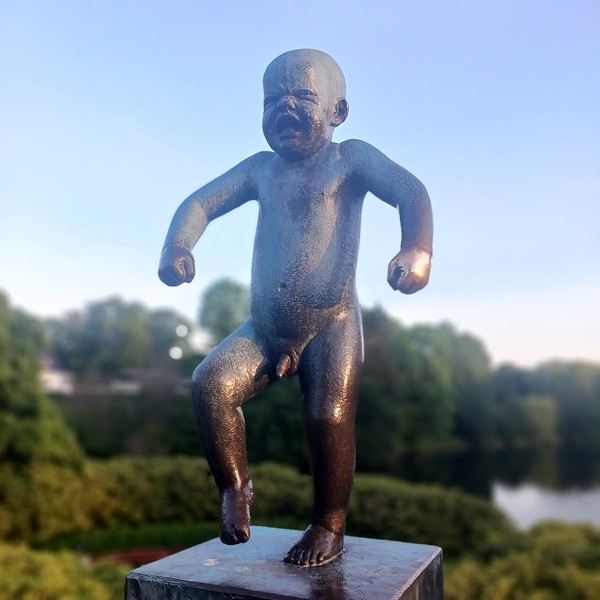
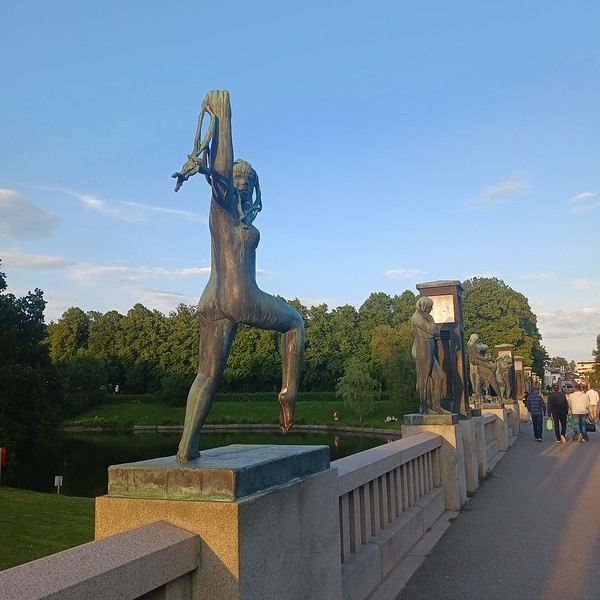
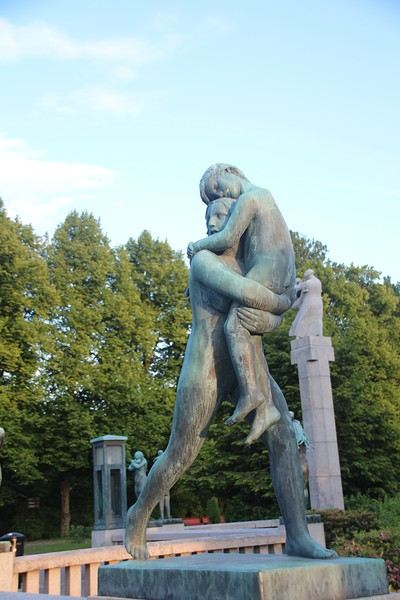
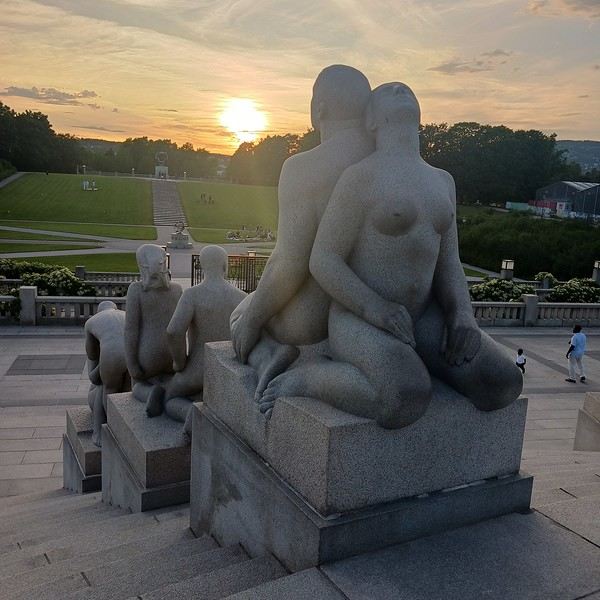
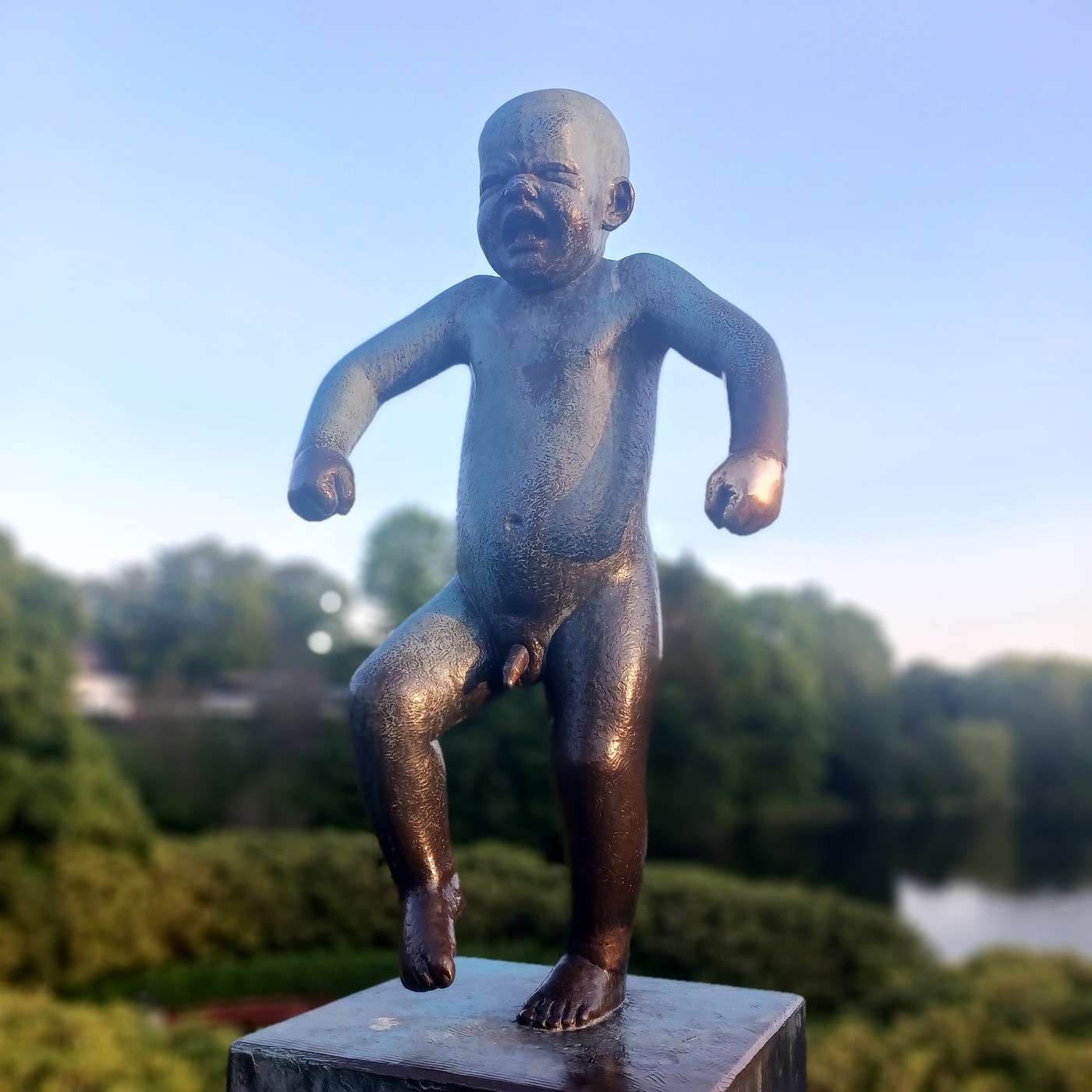
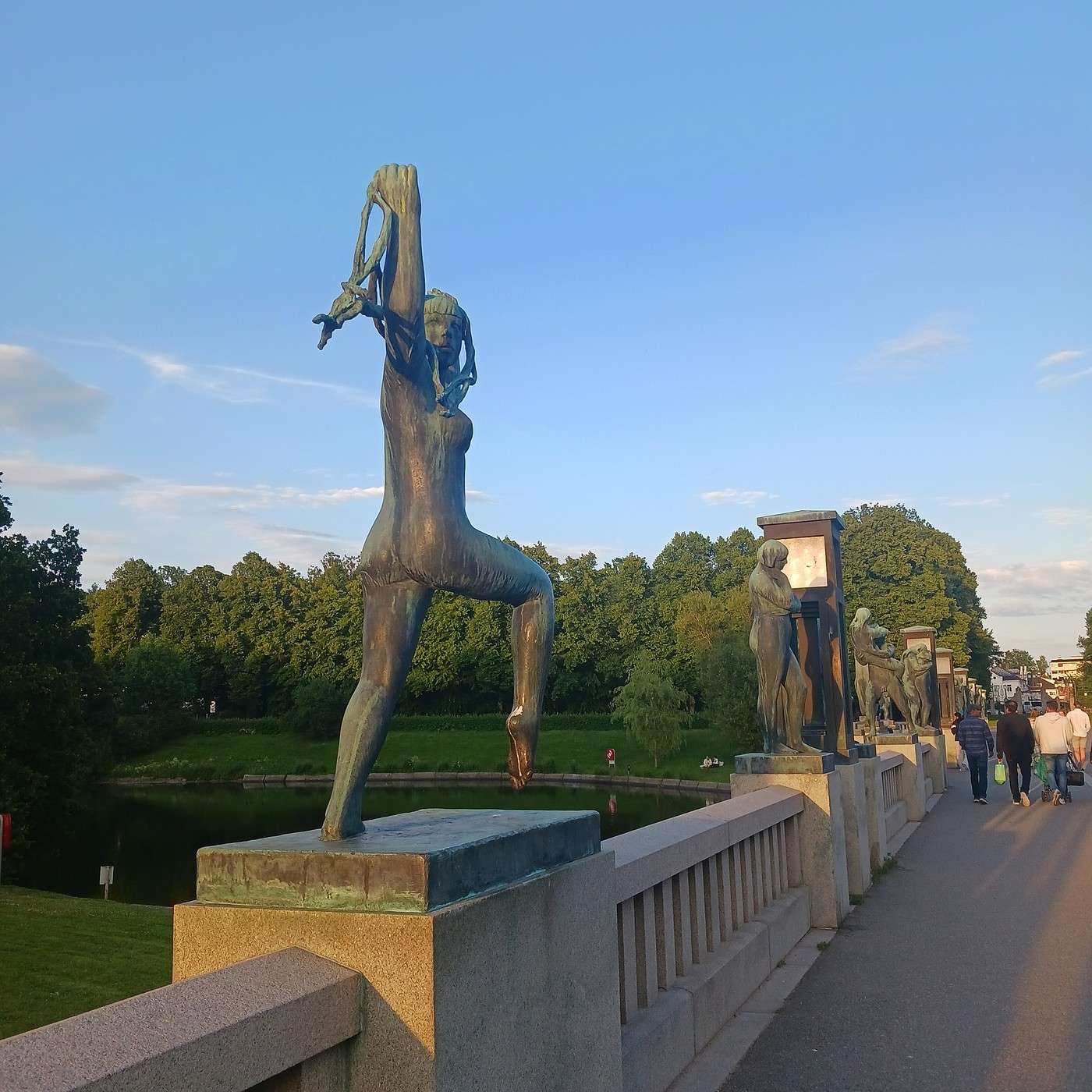
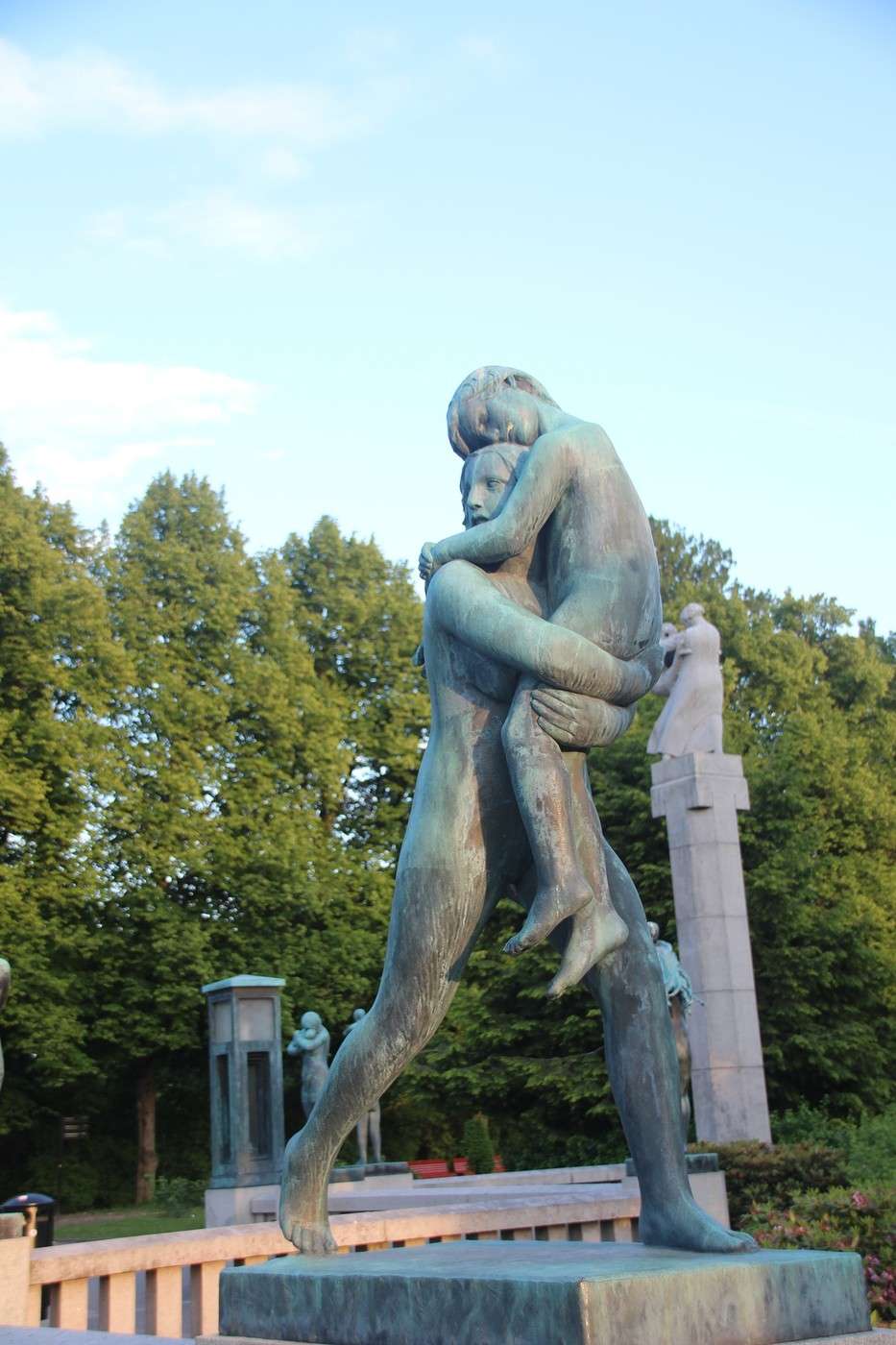
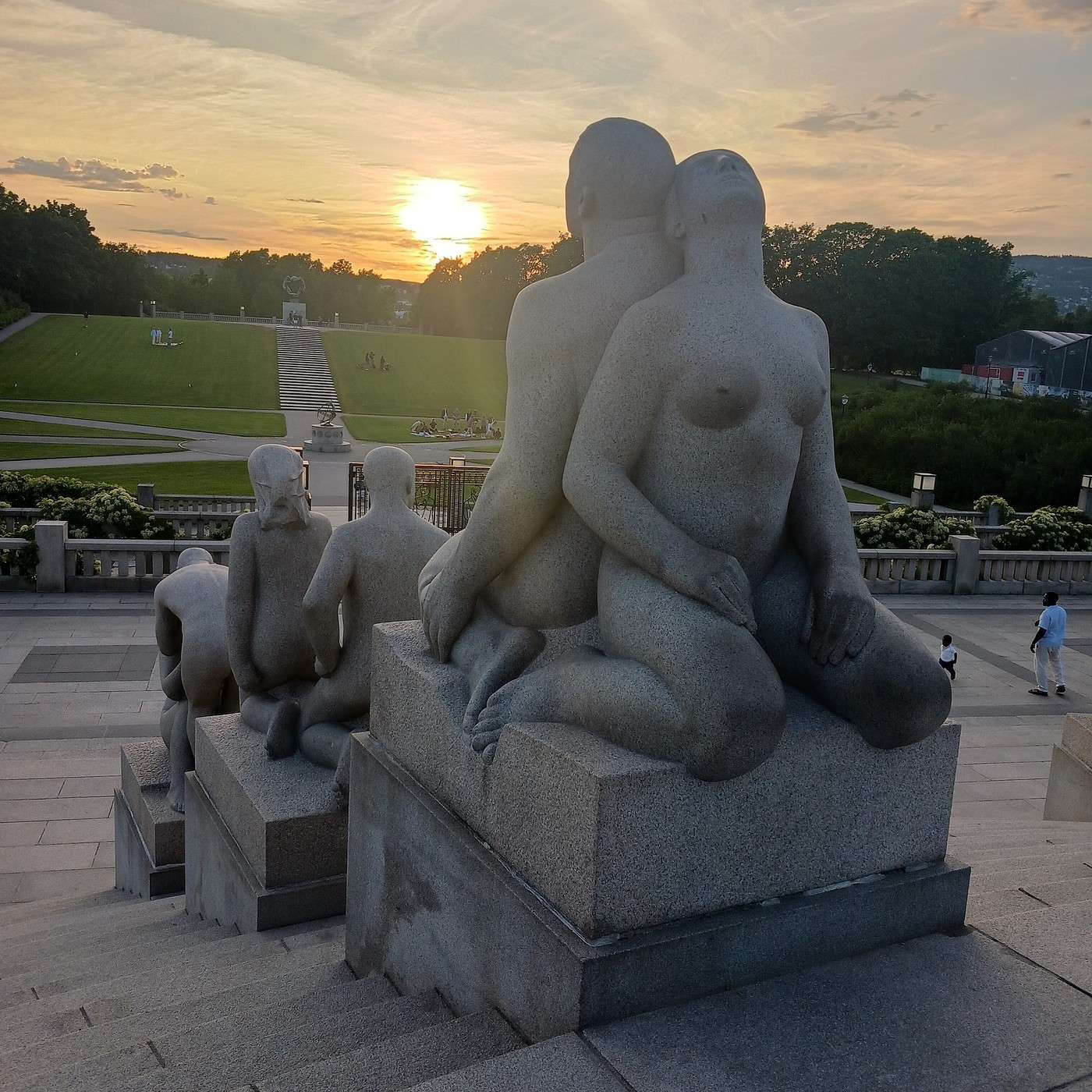
I chose this B&B for its proximity to FROGNER Park. Some call it VIGELAND Park because it’s also known for what’s called the "Vigeland Installation"—in other words, the entire park is dedicated to this Norwegian sculptor. The sculpture area covers 320 hectares and includes 212 bronze and granite statues, all designed by Gustav Vigeland. A friend told me these works both fascinated and creeped him out. He’s not wrong.


Some of the statues, especially the granite ones, are raw, without frills, and their expressions are quite solemn. What’s striking is that we’re used to seeing different "beauty standards" in Greek or neoclassical statues—very slim and elegant, with pretty girls and muscular men. Here, Vigeland depicts families, children, groups of people who look much more like real life, with women who aren’t super thin and stocky men, and of all ages!


Personally, I find it much more realistic and beautiful. In any case, it’s fascinating, and I can’t stop photographing them! My tip: You can’t visit Oslo without seeing this park! Go preferably at the end of the day in summer—the sunset on the statues makes them even more striking!


This wraps up a lovely sunny day—welcome to Norway!


To be continued...

Kattegat Tour and Norwegian Fjords - 32 Days (Denmark - Sweden - Norway)

Ellobo · 2025-08-10

Hi Sylvie, Just got back from Scandinavia not long ago, and I’m also writing up my travel journal while checking out yours. We’ve got some spots in common—it’ll be fun to compare notes. I had a good laugh at your "adventure" with the metro tickets in Copenhagen. Makes me feel less alone. See you,

Tour of Kattegat and the great Norwegian fjords - 32 days (Denmark - Sweden - Norway)

Cendryon · 2025-08-10

Thanks! I also checked out your travel journal. Could I suggest adding the dates? I read that it was during the summer, but still... that’s often what’s missing in these stories. Anyway, when I’m planning a trip, I always look for references like that to figure out the best time to go, even if the weather isn’t an exact science! 😉

Kattegat Tour and Norwegian Great Fjords - 32 Days (Denmark - Sweden - Norway)

Ellobo · 2025-08-10

Could I suggest you add the dates? I read that it was in the summer, but still... that’s often what’s missing from travelogues.

That’s a good point, I’ll do that! Thanks

Kattegat Tour and Norway's Great Fjords - 32 Days (Denmark - Sweden - Norway)

Cendryon · 2025-08-10

(Continued)

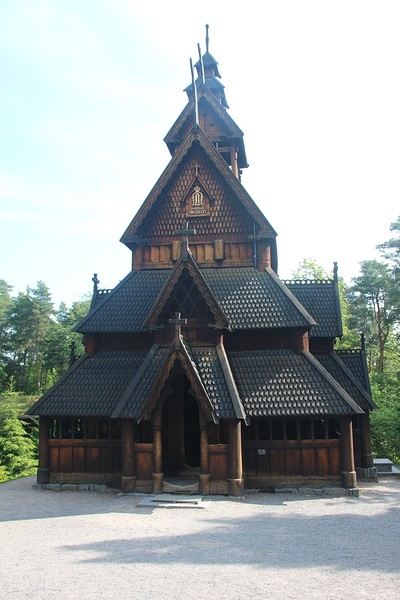
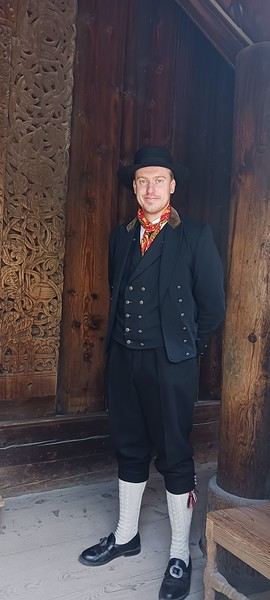
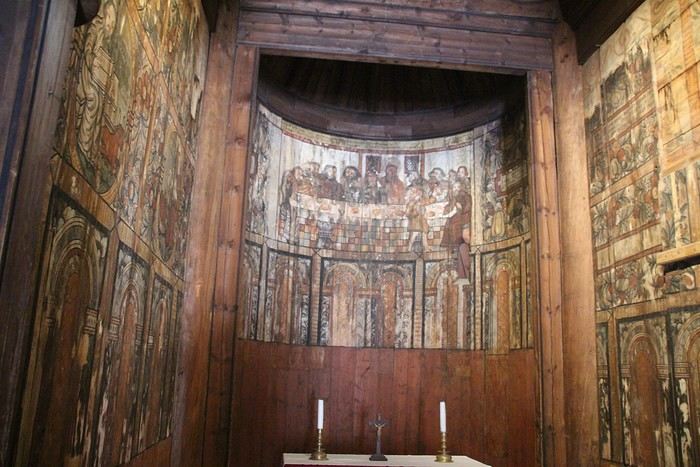
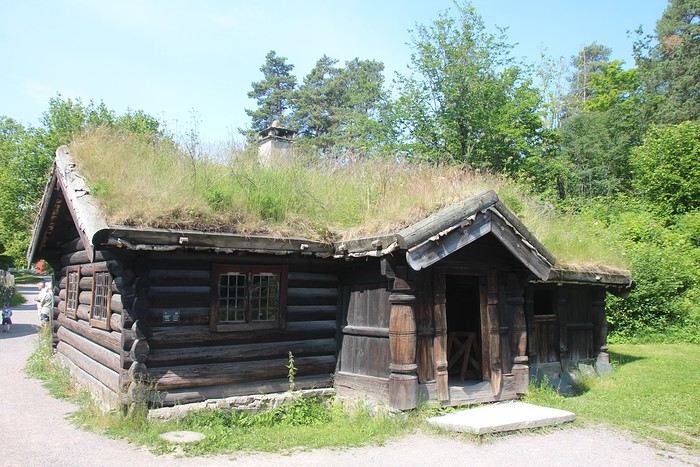
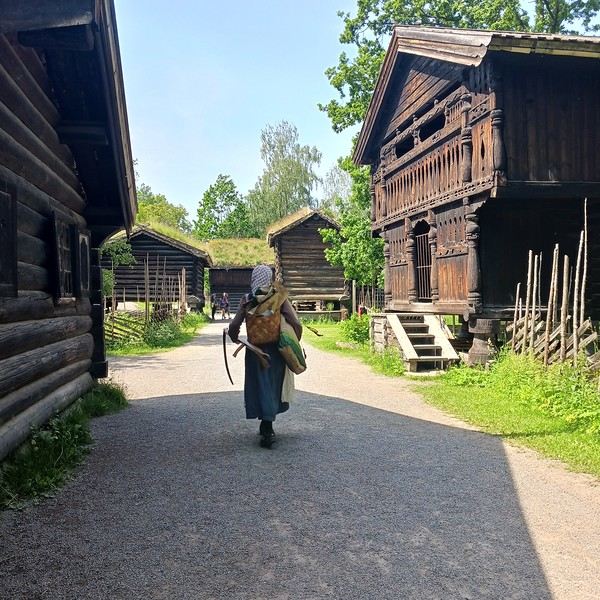
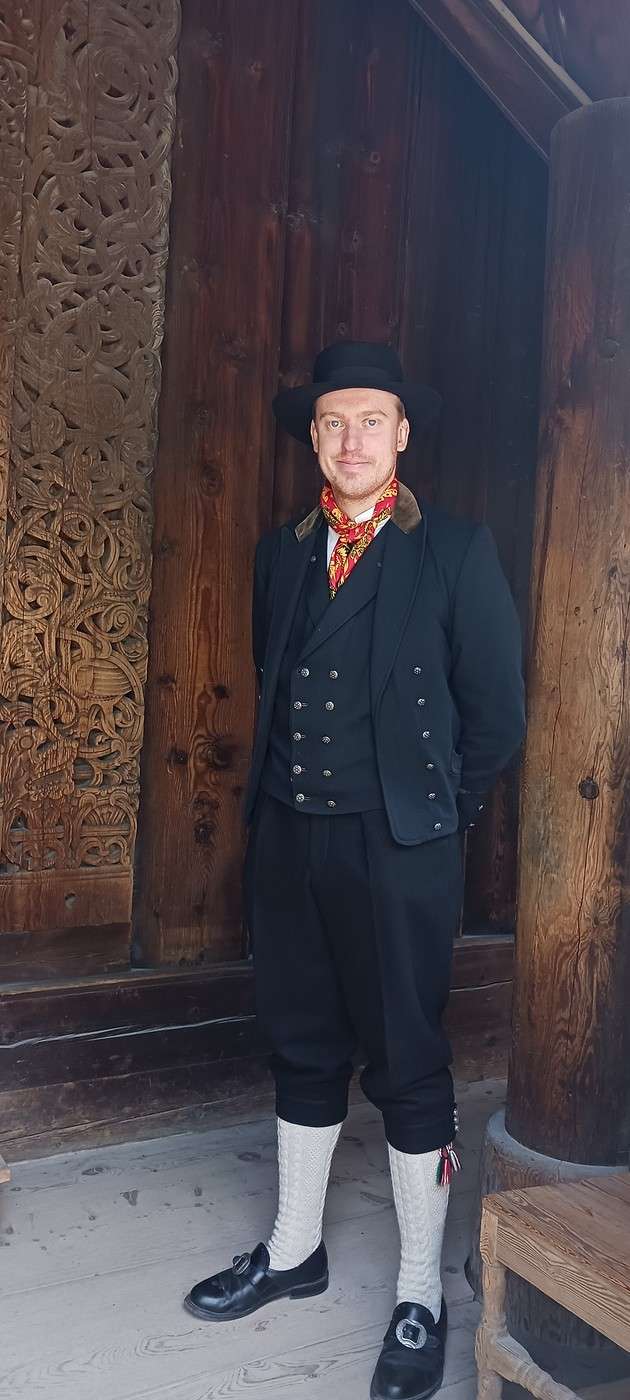
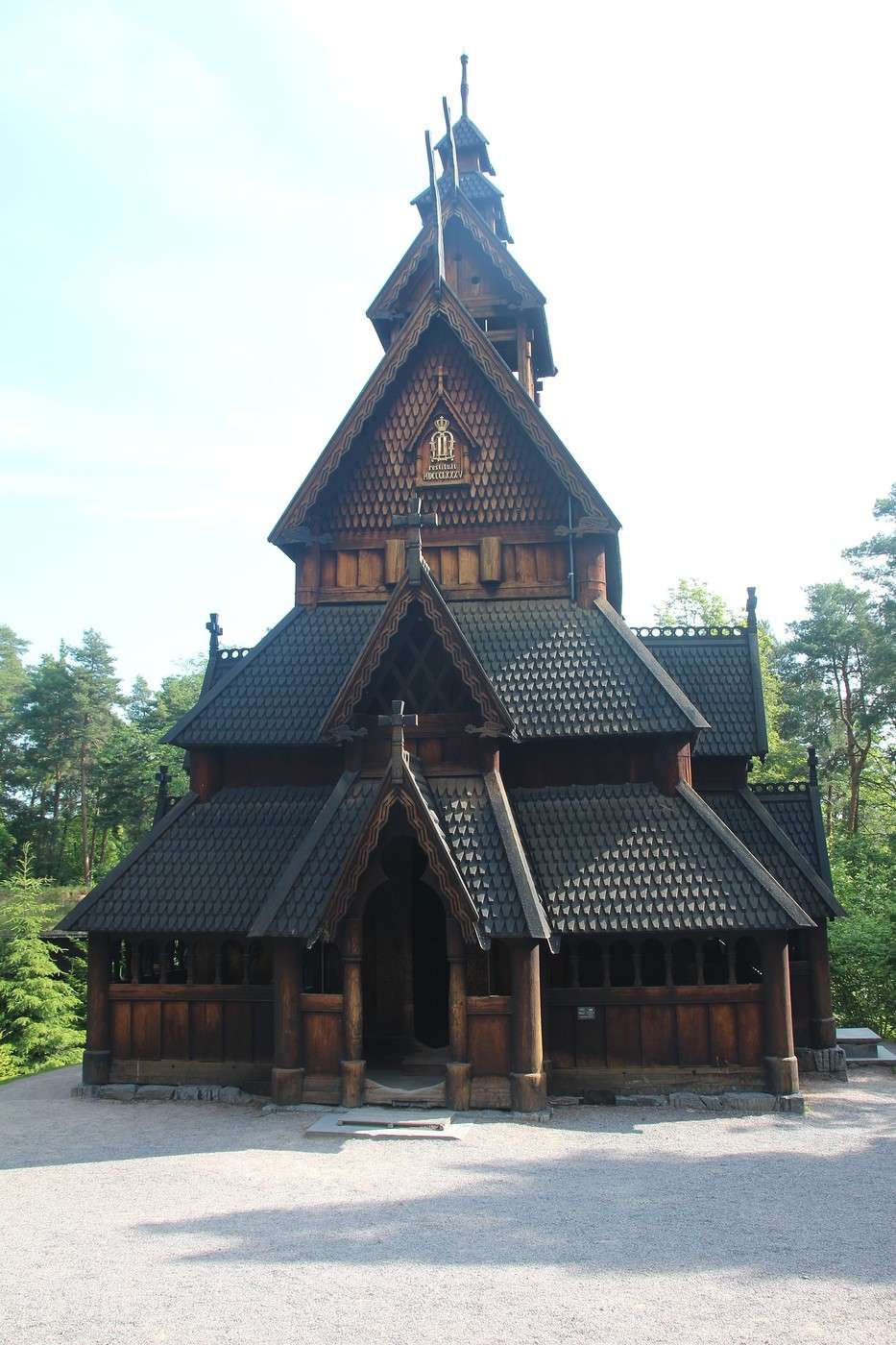
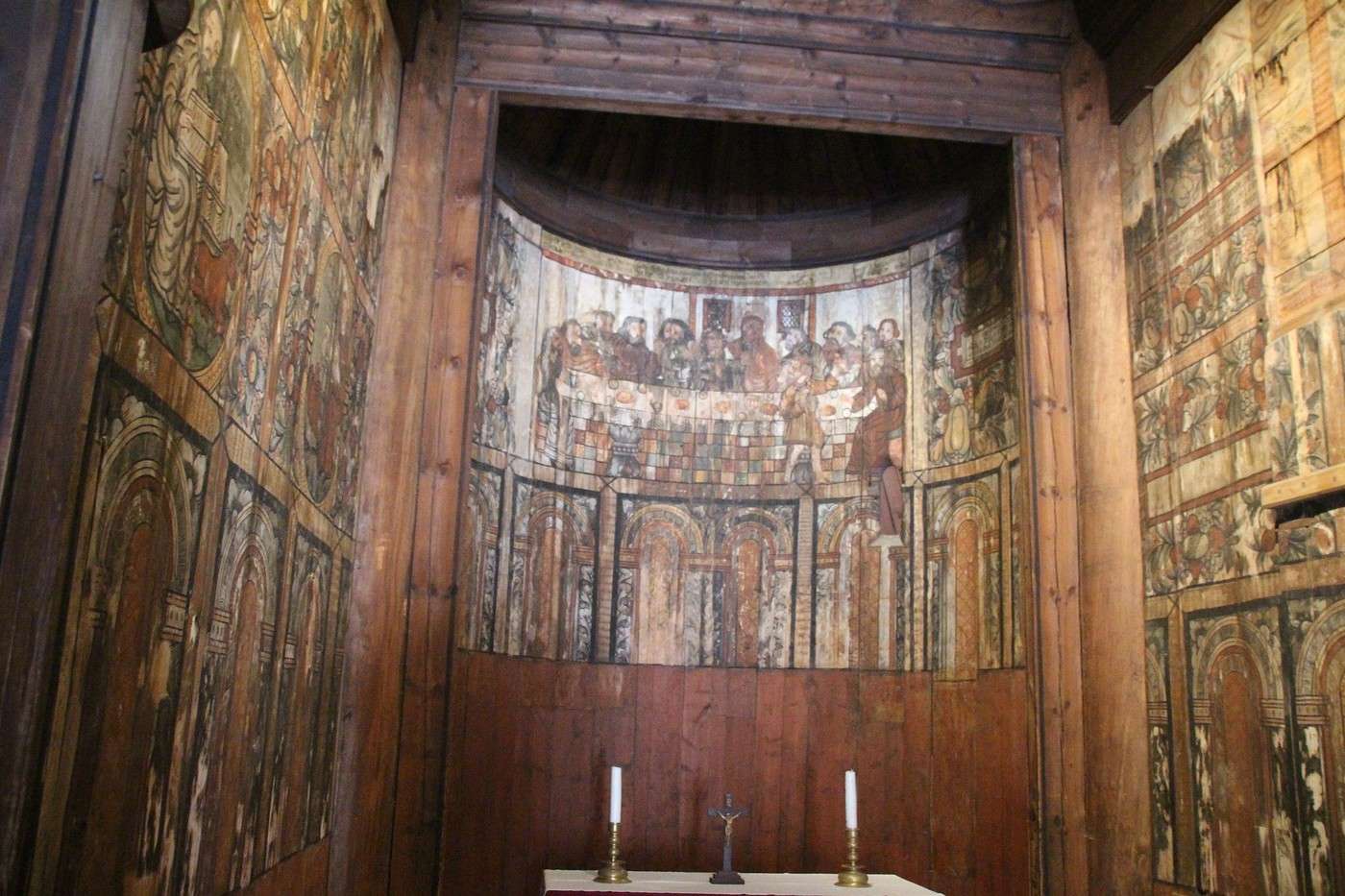
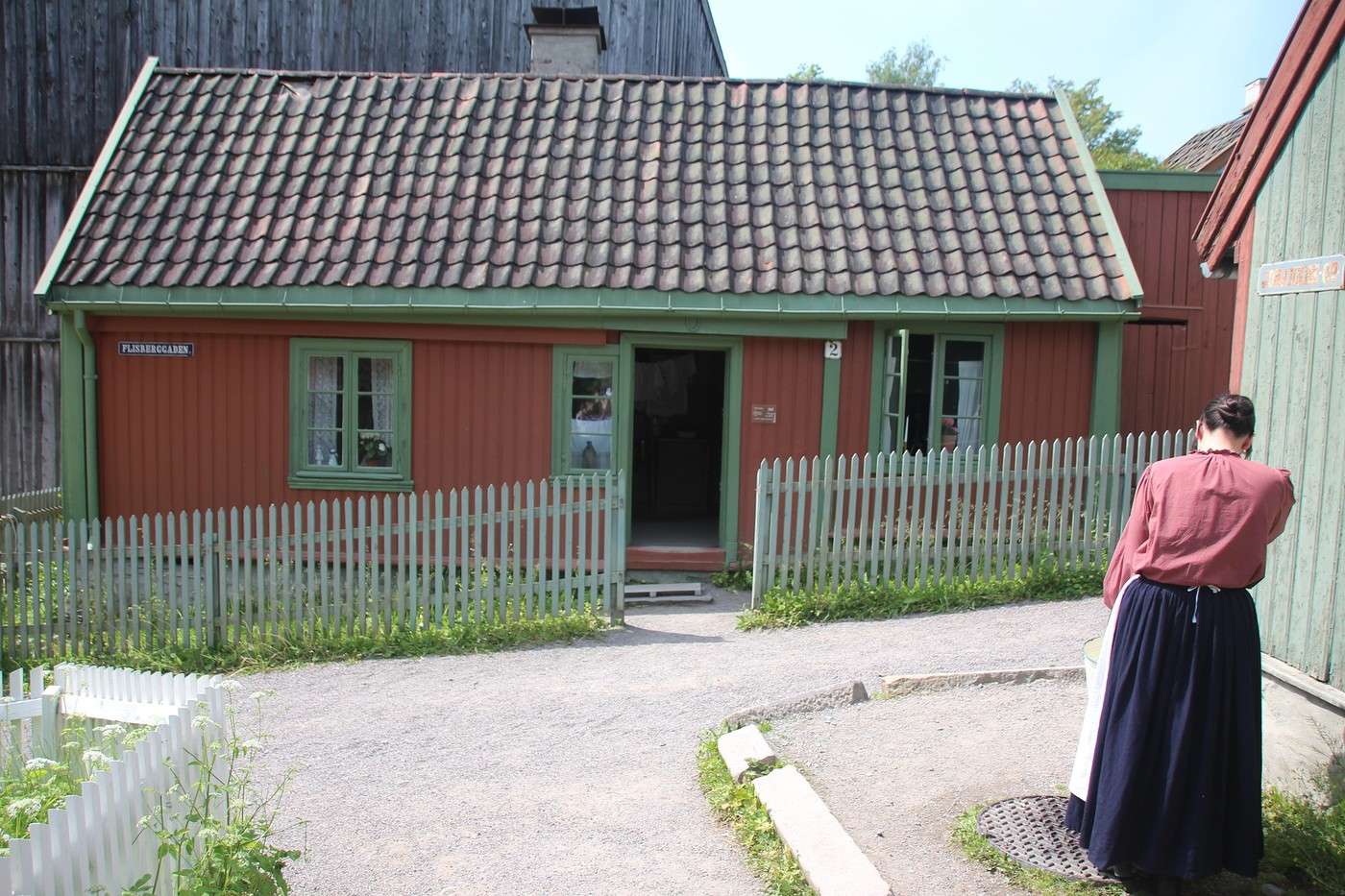
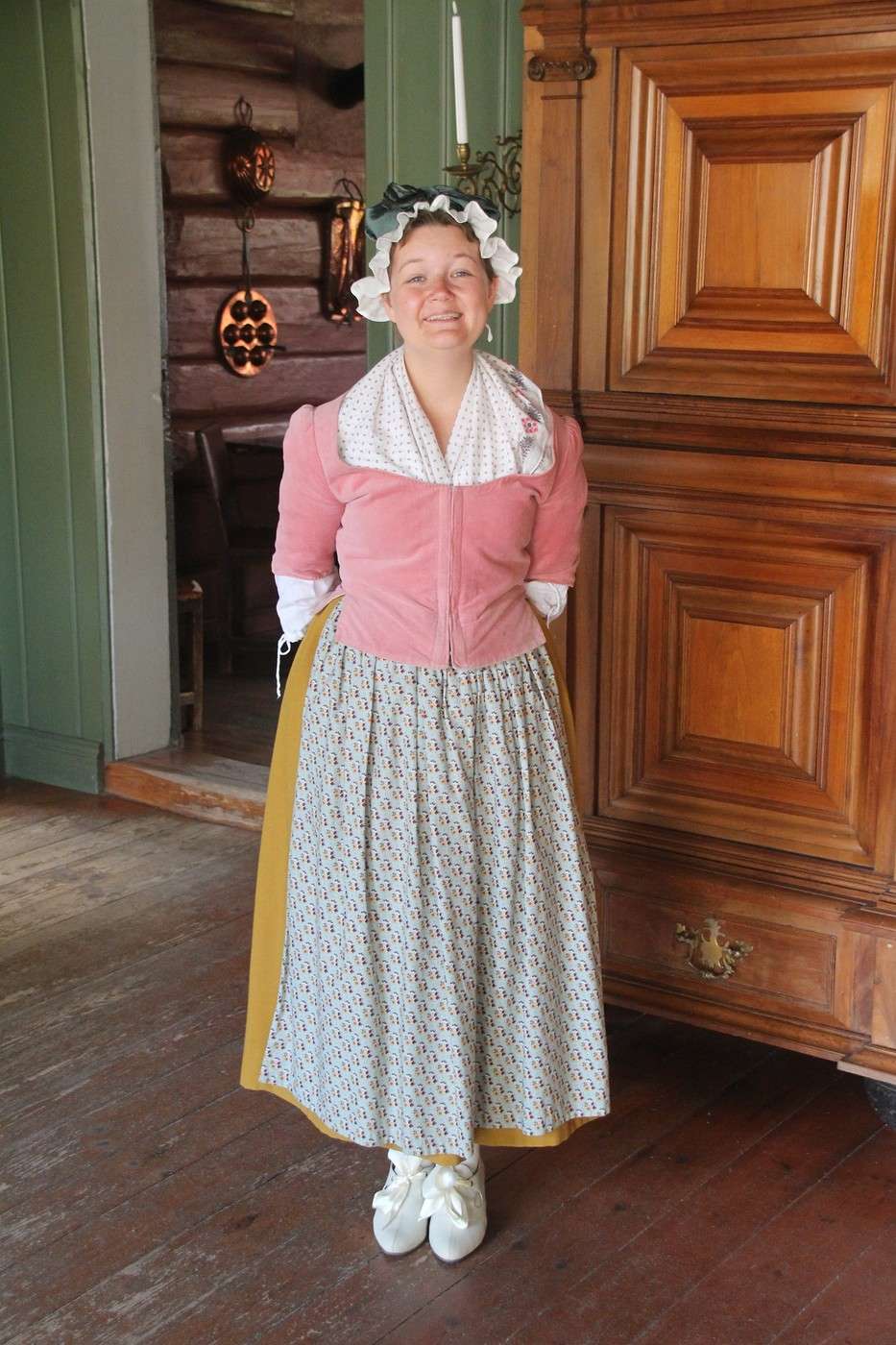
Day 14 – Saturday, June 14 - 3 museums! We got the Oslopass for 2 days. It includes entry to most museums and public transport, including the ferry from the port to the Bygdøy peninsula, where the main museums are located. In the end, we definitely got our money’s worth. Since the day promised to be very sunny, we headed to the open-air folk museum. We reached Bygdøy by bus because, in addition to being just a stone’s throw from Frogner Park, our guesthouse was close to public transport. When we arrived at the museum, it wasn’t open yet, but there wasn’t a crowd. So, we calmly made our way to the first buildings, though unfortunately, not all of them were open yet. Luckily, the beautiful stave church was, and a young man in costume welcomed us.


Inside the church, you can admire frescoes painted directly onto the wood.


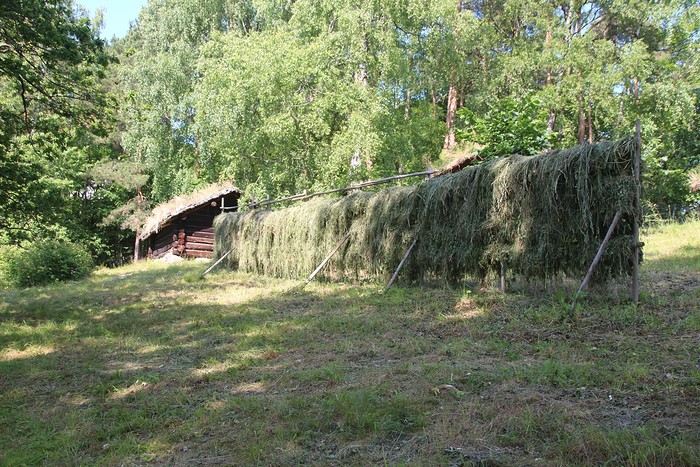
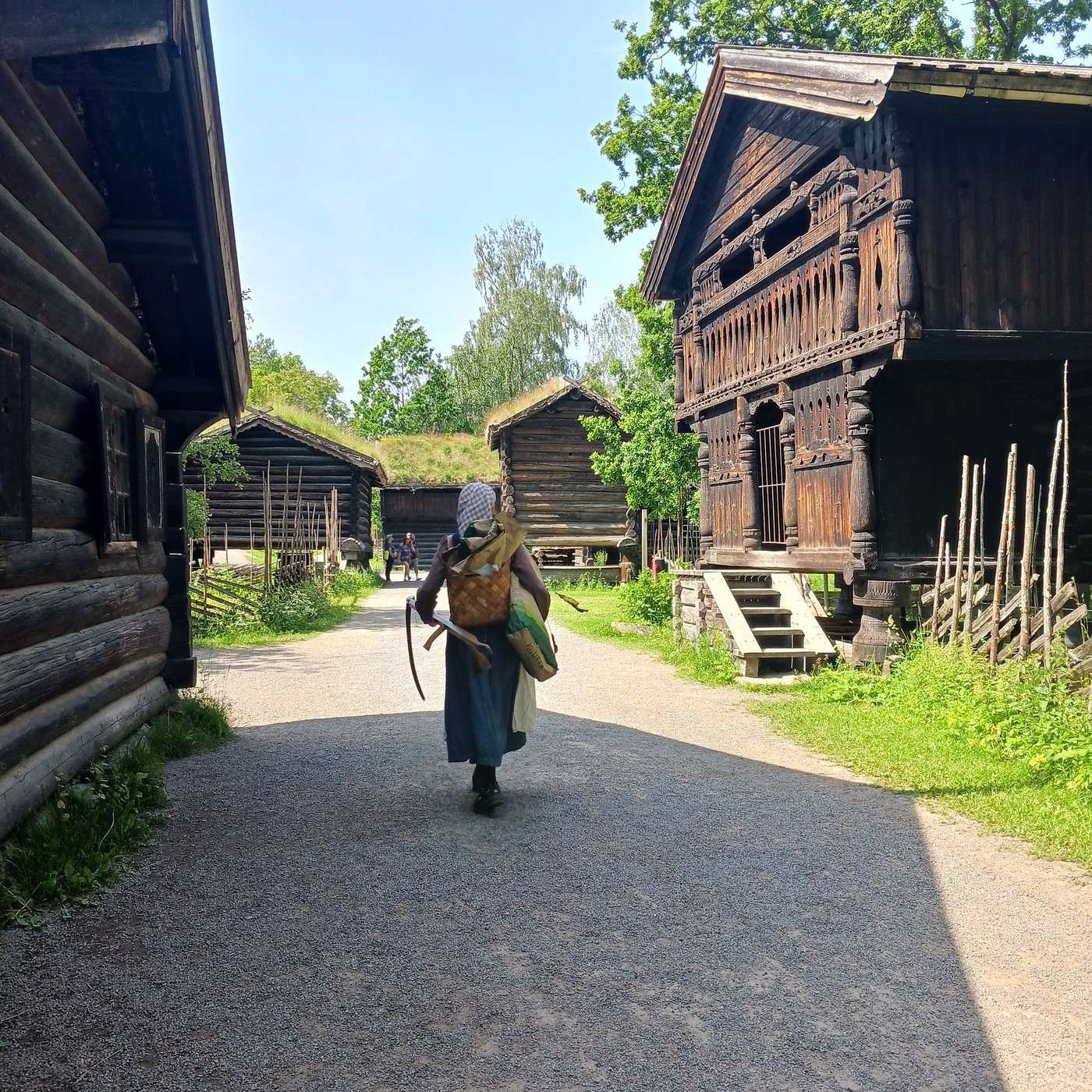
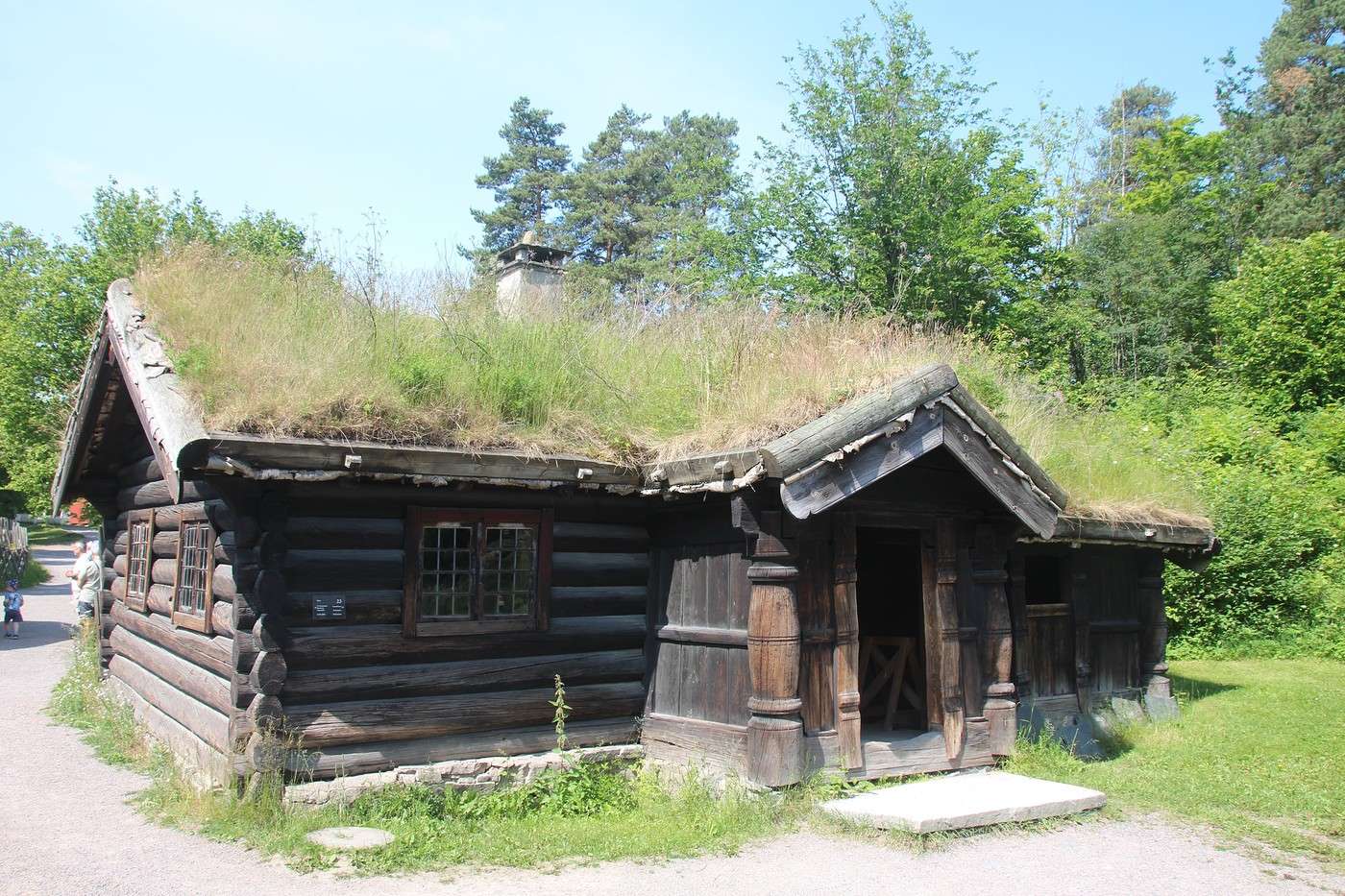
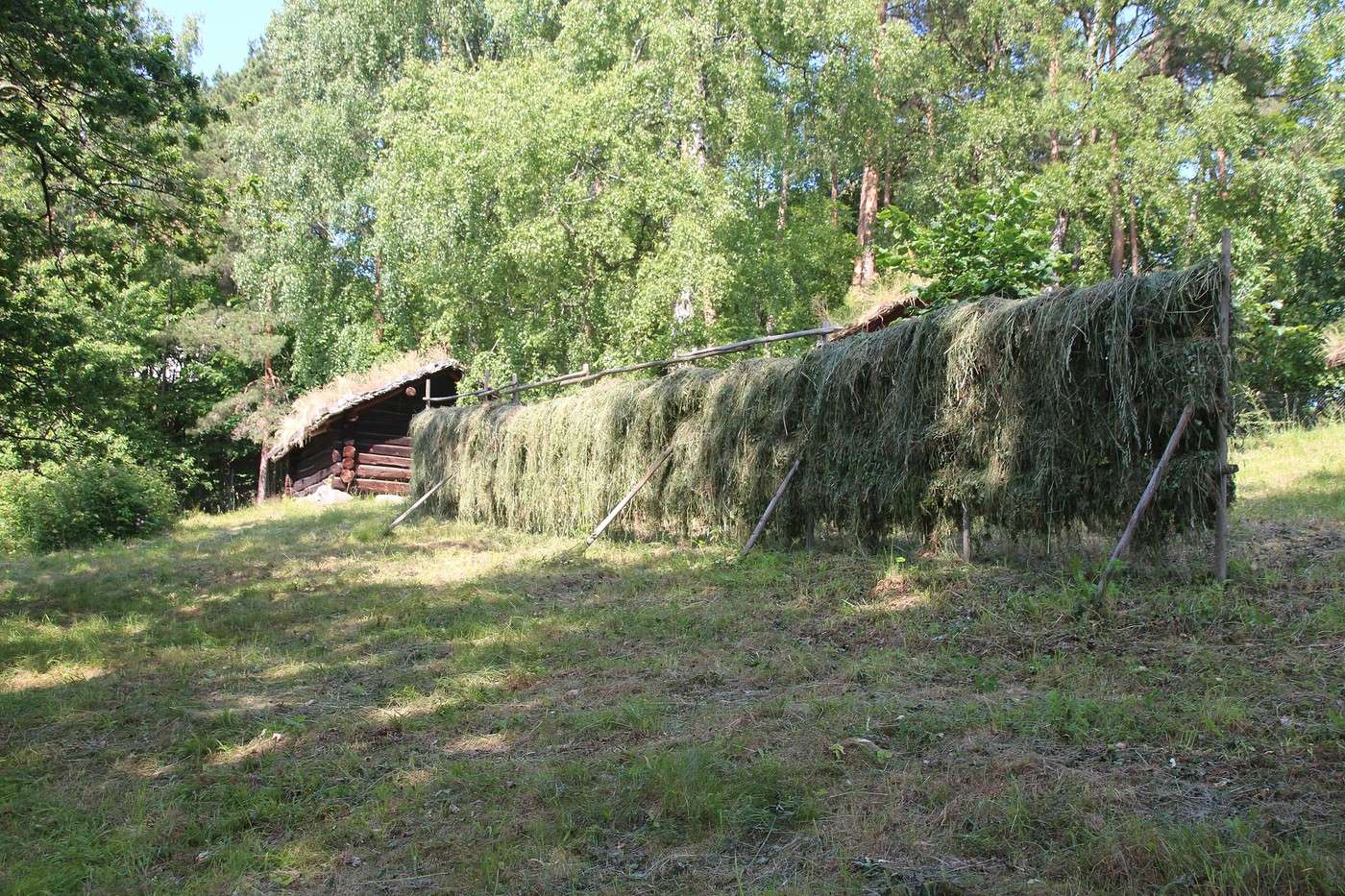
We continued exploring this rural setting, where most of the buildings are made of wood and often have green roofs.


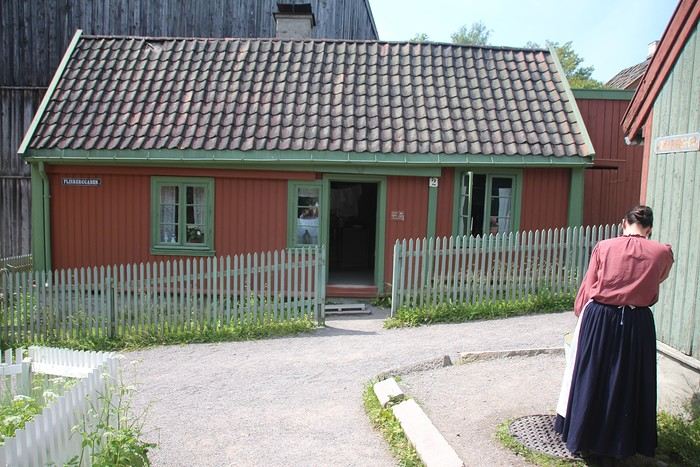
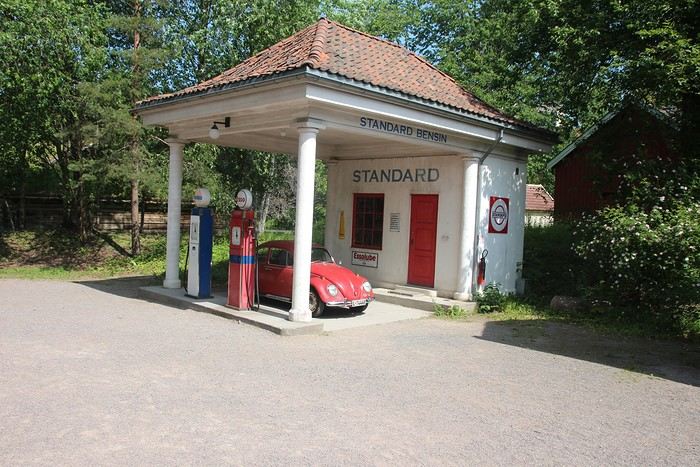
We finished with the most "recent" part—the 19th-century village and the gas station...


(to be continued)

Kattegat Tour and Norway's Great Fjords - 32 Days (Denmark - Sweden - Norway)

Cendryon · 2025-08-10

Saturday, June 14th (continued)

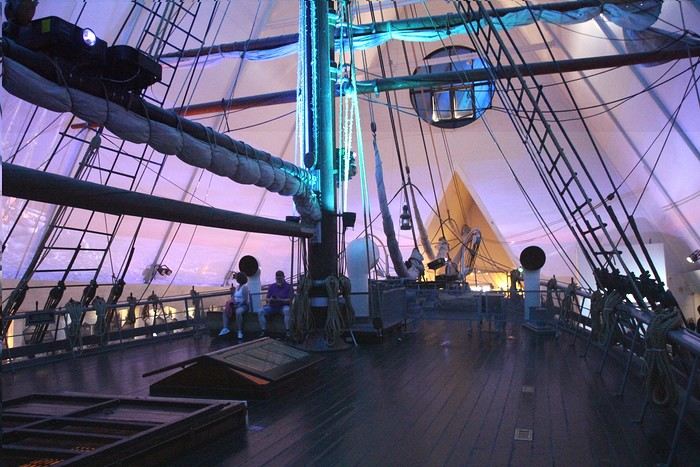
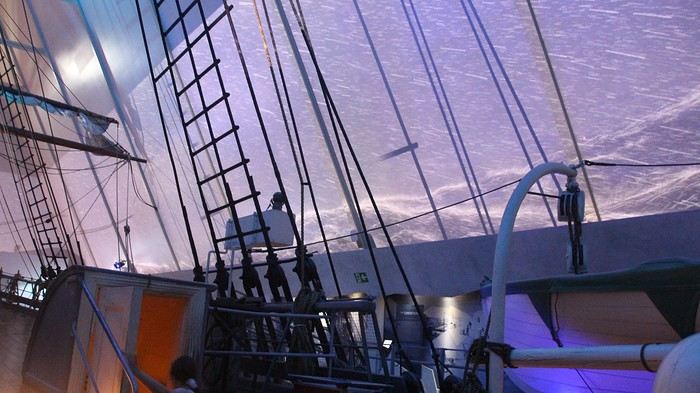
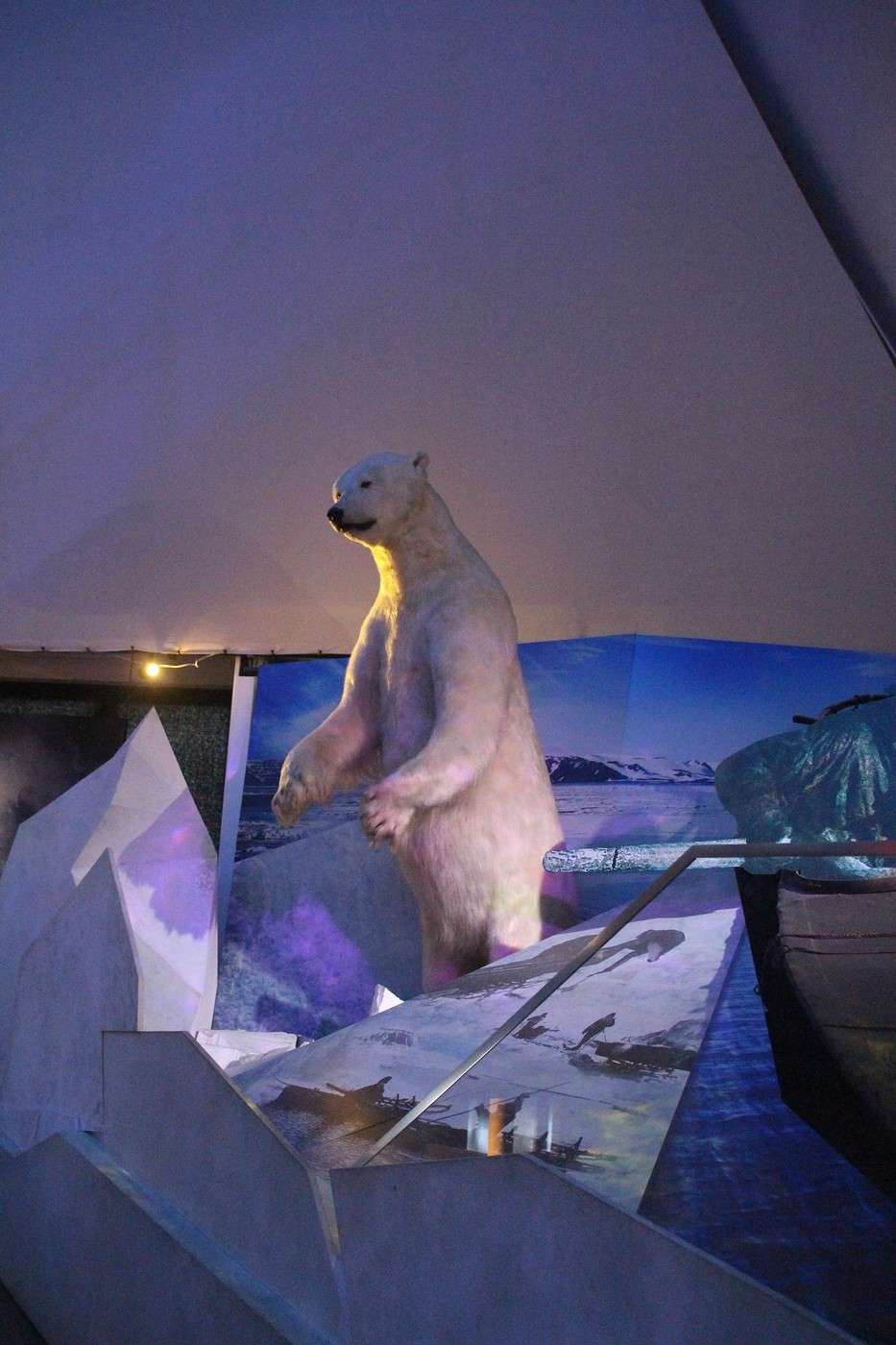
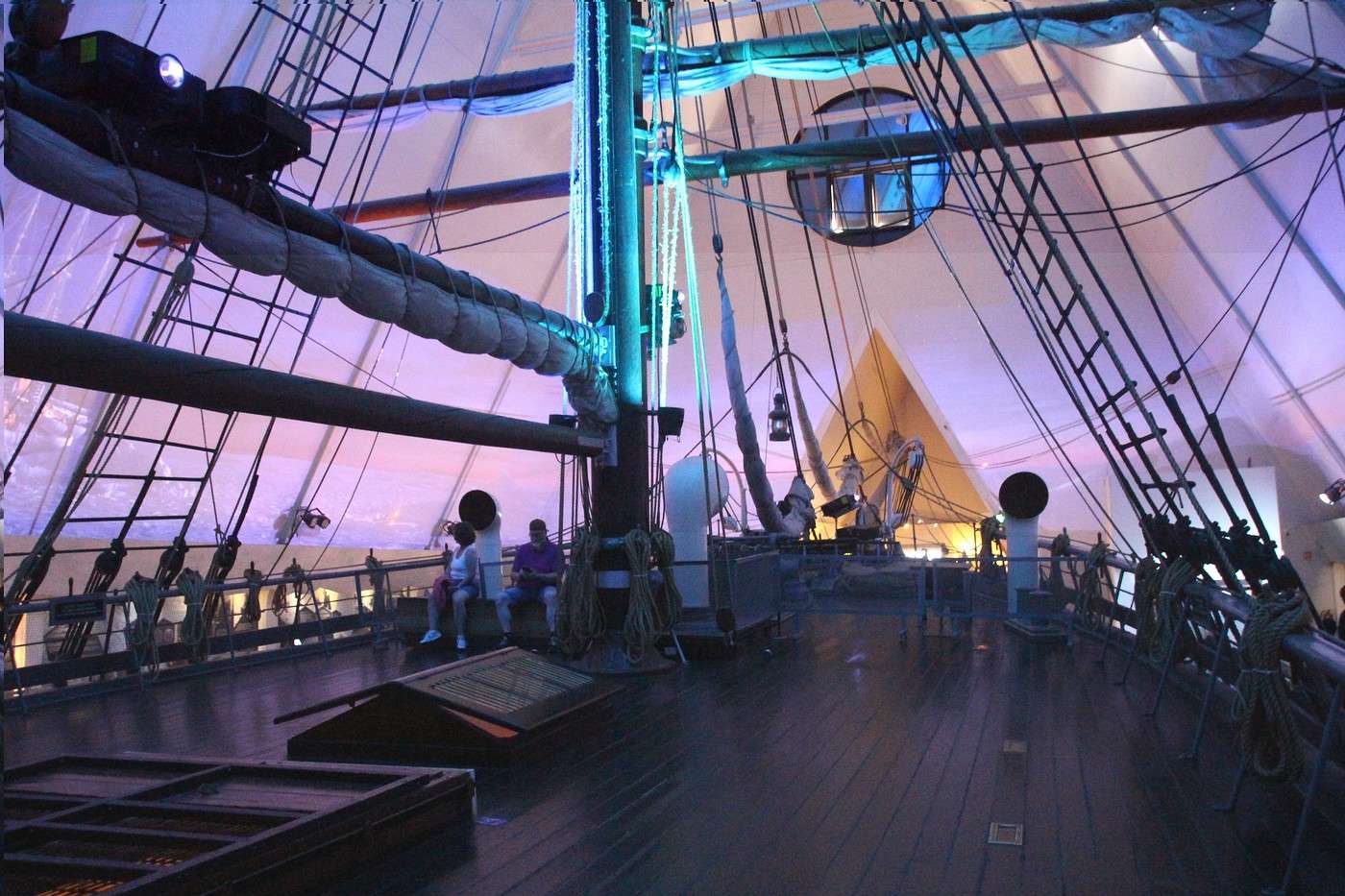
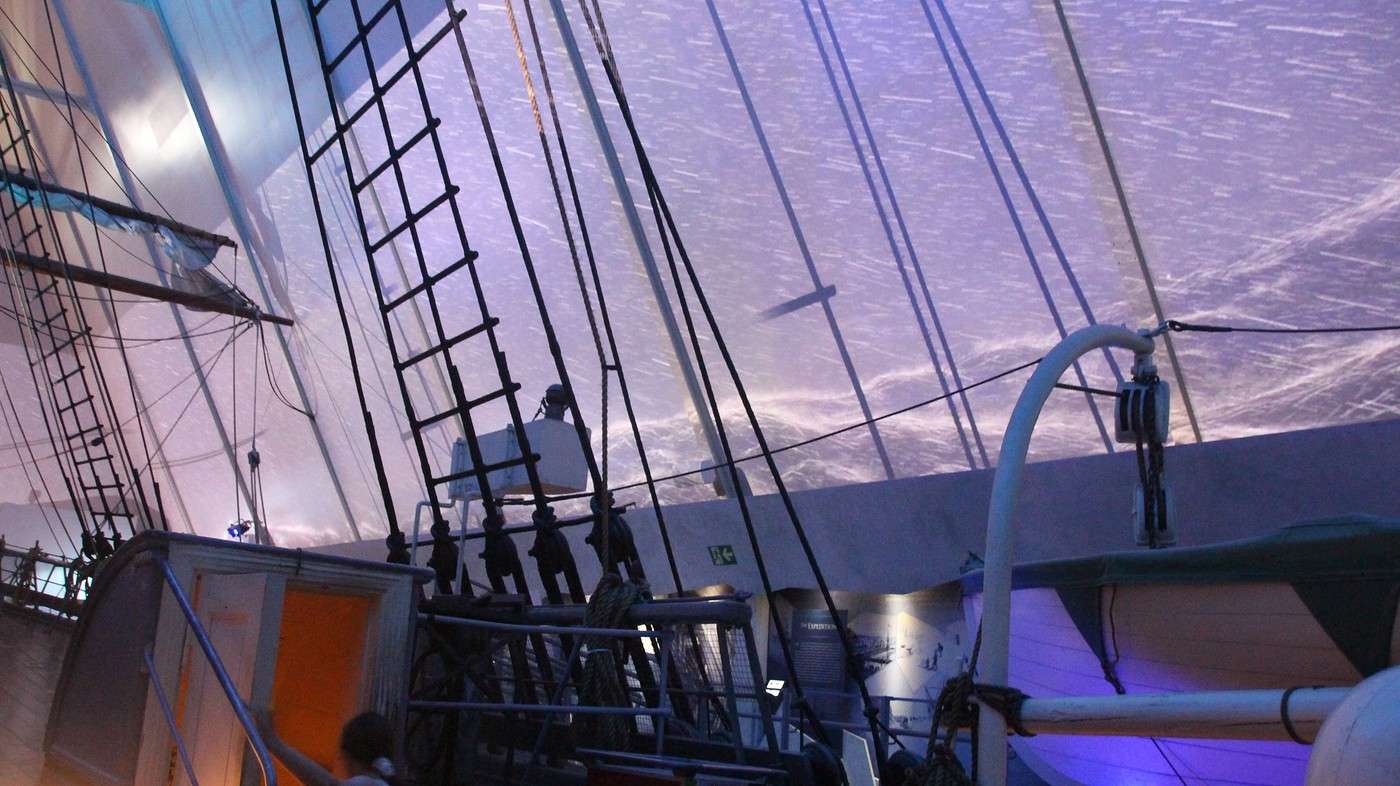
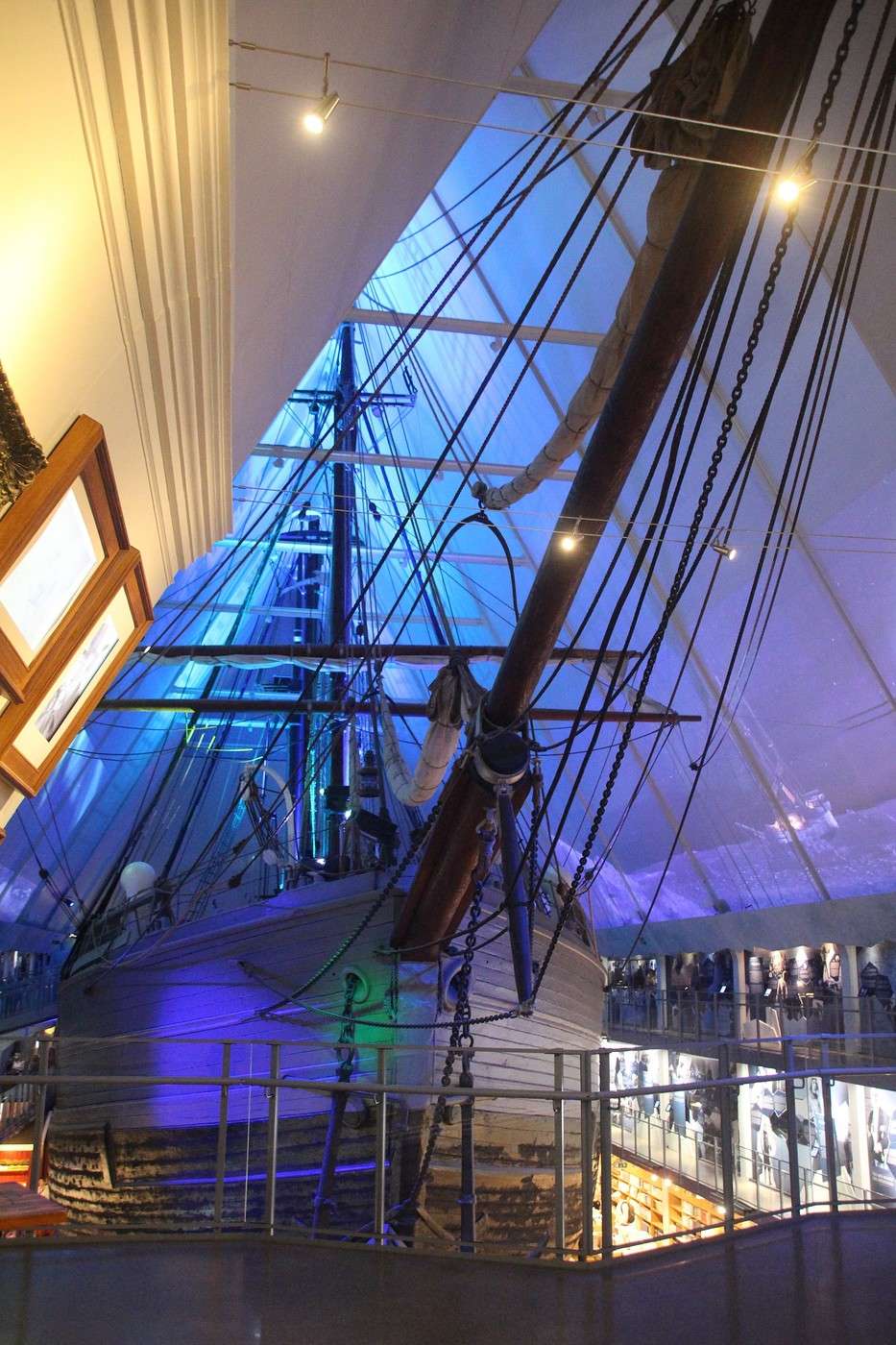
We take the bus again to head to the FRAM Museum, or in other words, the polar exploration museum that’s got rave reviews. And sure enough, this place is extraordinary in its staging and presentation—what could’ve been totally boring is anything but.


Let’s climb onto the ship’s deck and off we go on an adventure! The sea around us rages, then we reach the ice floe... there are even polar bears!


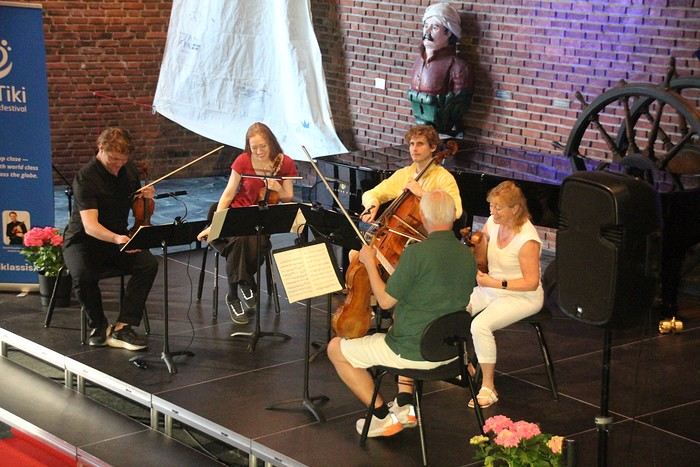
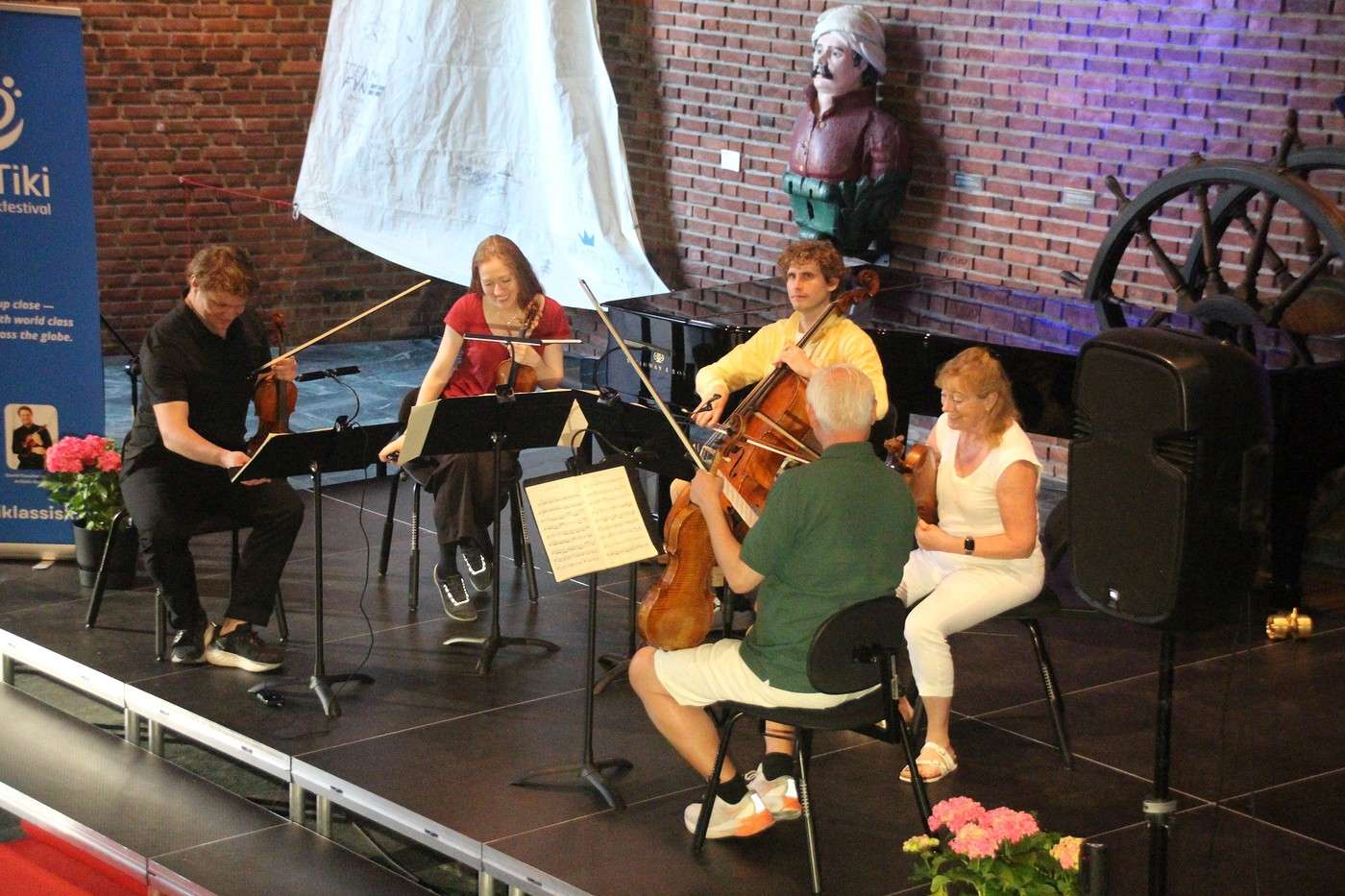
The museum café is closed, so we wrap up our "exploration" and head across to the maritime museum—the door right opposite—since there’s a cozy café there, and most importantly, it’s open! And why not continue the visit? In the museum hall, there are even musicians playing, though unfortunately, they don’t have an audience. What a shame—they’re really good at their classical repertoire!


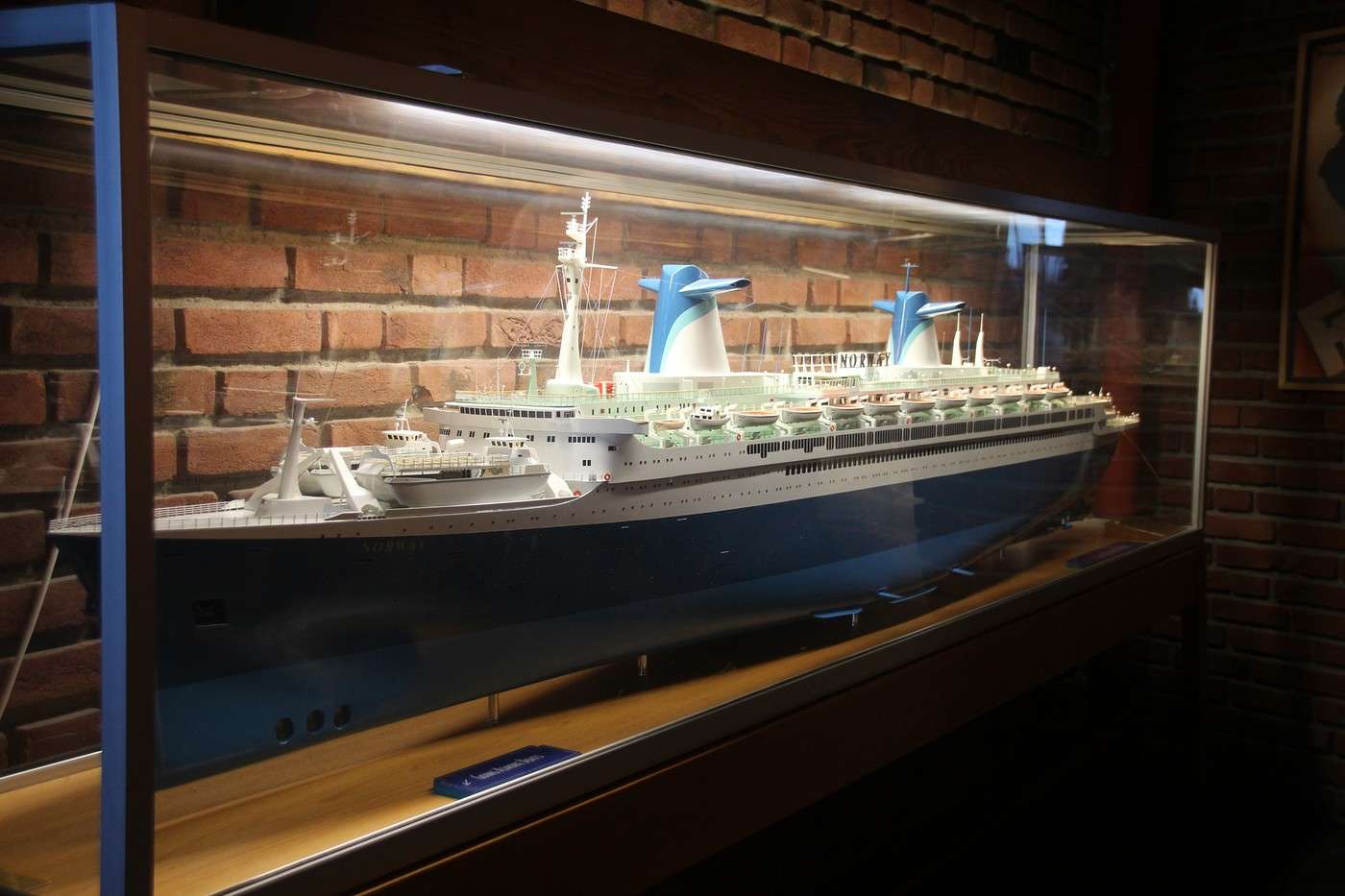
This museum is really cool too and offers lovely views of the Oslo Fjord.


Do you recognize it?


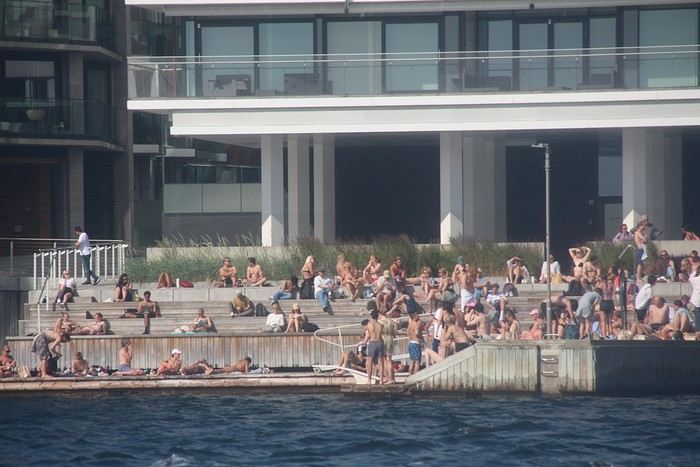
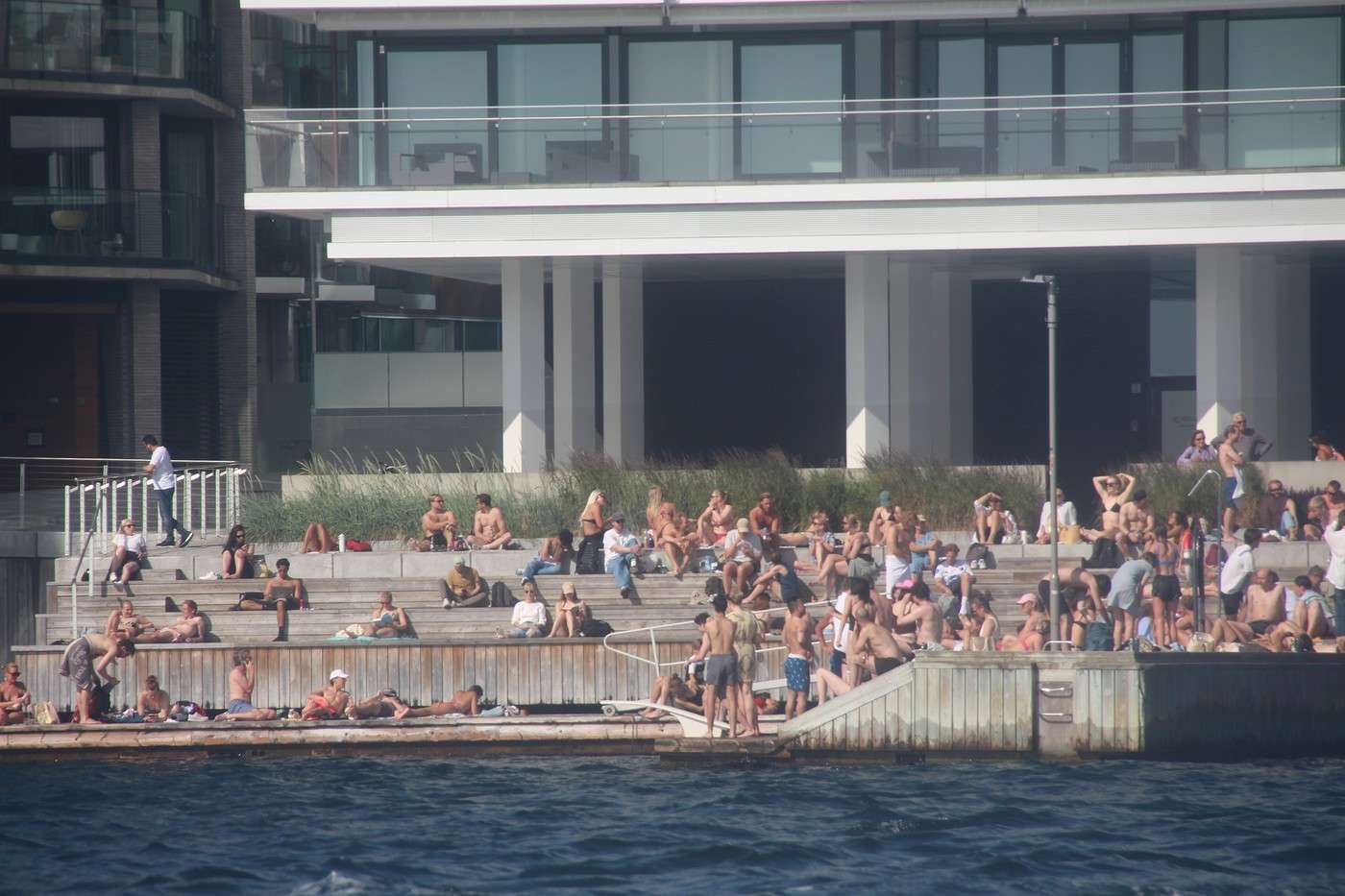
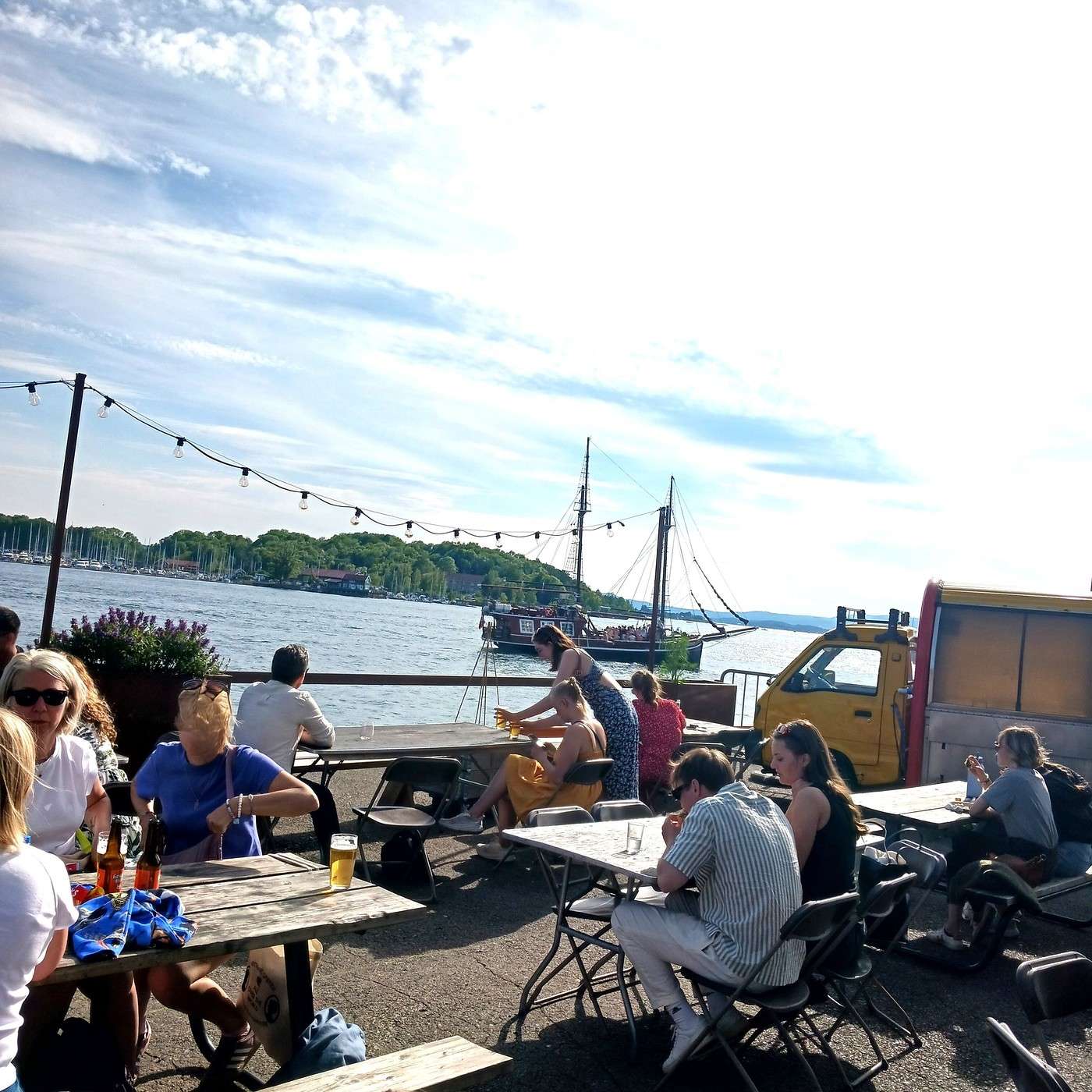
But it’s time to head back to the city center, which we haven’t explored yet. Of course, we didn’t have time to visit the Kon-Tiki Museum, but I read the book when I was young, so I know a bit about it. Plus, we’ve already visited three museums today—we’re "wiped out"! Our Oslopass lets us take the ferry shuttle from Bygdøy to the harbor, right in the city center near the city hall. From the water, we discover the city and Norwegian customs, like Oslo’s Tjuvholmen Badeplass—the beach—and since the weather’s nice...


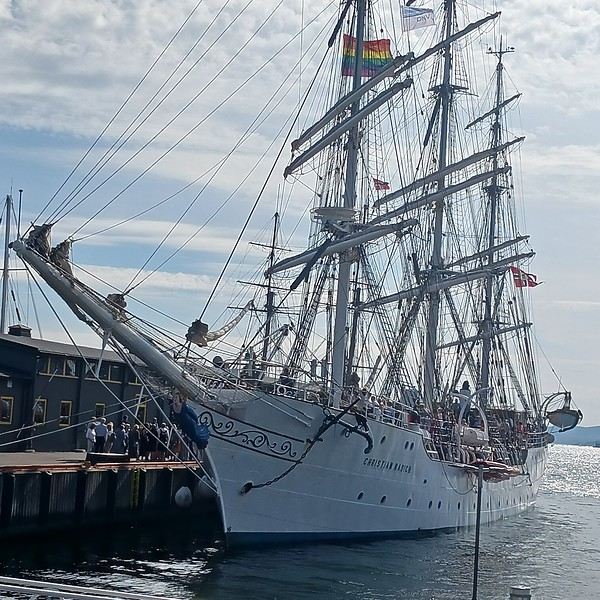
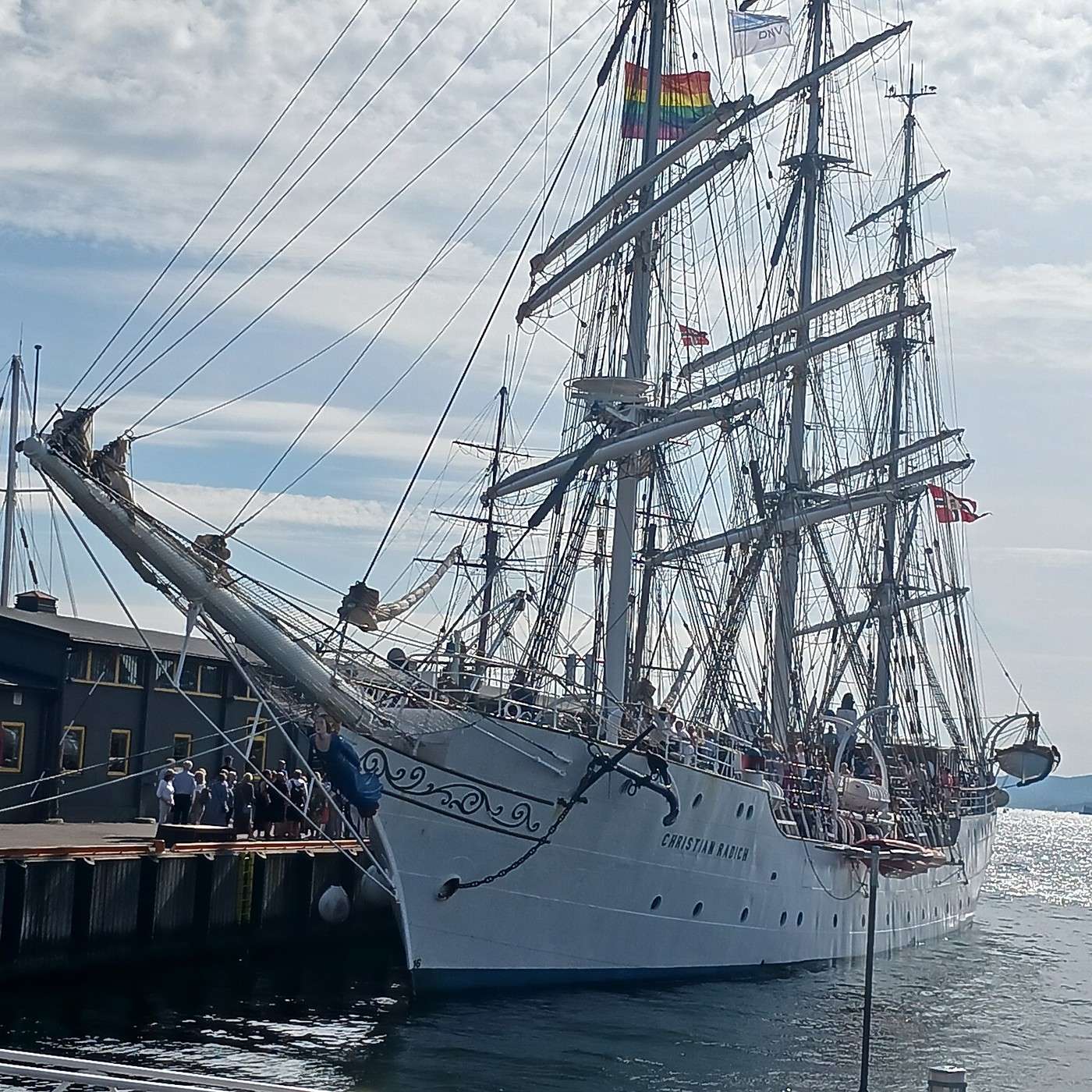
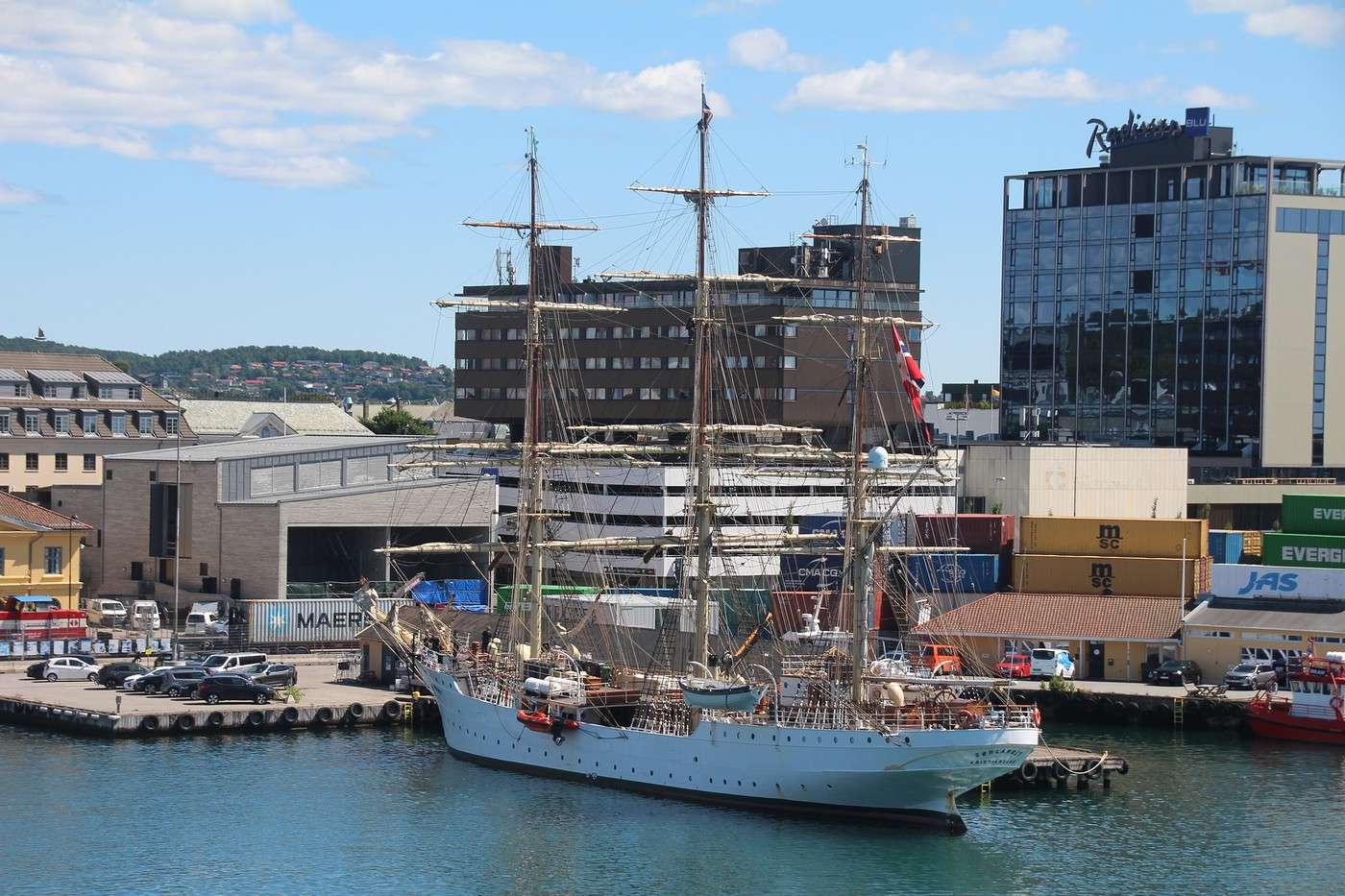
The docks are buzzing. Dozens of city workers are preparing for tonight’s event—a free concert in front of the city hall. Meanwhile, we walk along the harbor and Akershus Fortress. Along the docks, we come across more stunning ships, including the three-masted Christian Radich, the training vessel of the Norwegian merchant navy.


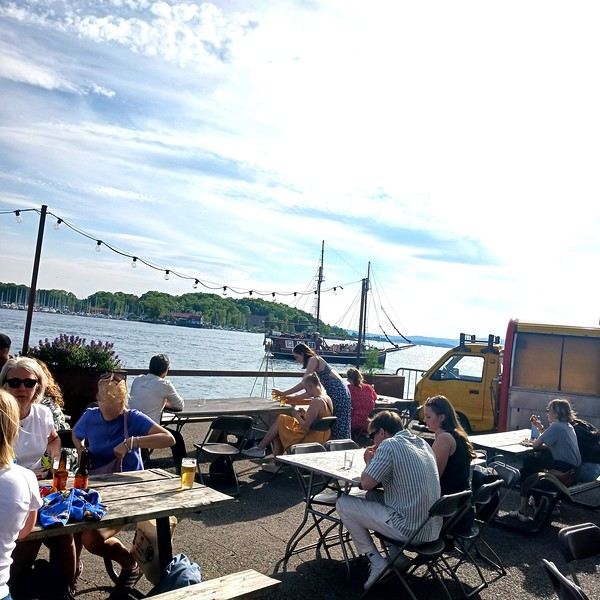
We reach VIPPA, Oslo’s street food temple, where we planned to grab a quick dinner... by the water. Not exactly cheap for street food, though!


Afterward, we head to the train station and the city’s main pedestrian street, which doesn’t hold much interest. The shops are already closed, but the terraces are packed thanks to the mild temperature of this beautiful spring evening, which also tempts us to stop for a drink. That way, we can watch all of Oslo’s youth "pouring in" toward the concert square. On our end, we head back quietly by tram to our accommodation, lulled by the sweet, melodic sounds of Norwegian pop! (To be continued)

Kattegat Tour and Norway's Great Fjords - 32 Days (Denmark - Sweden - Norway)

Cendryon · 2025-08-10

(Continued)

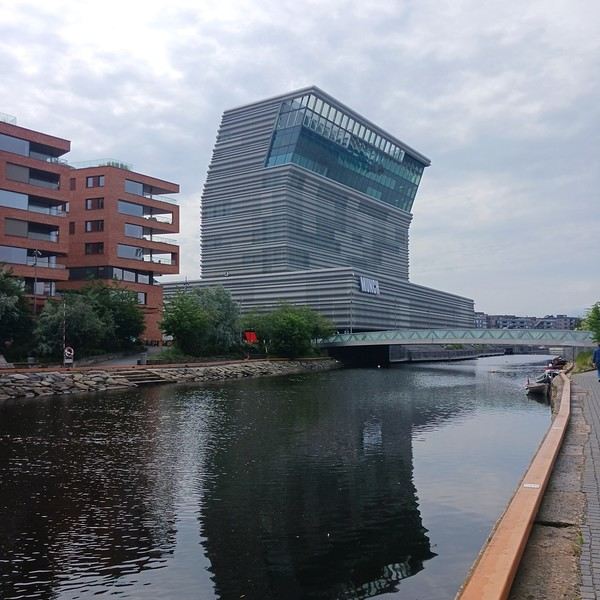
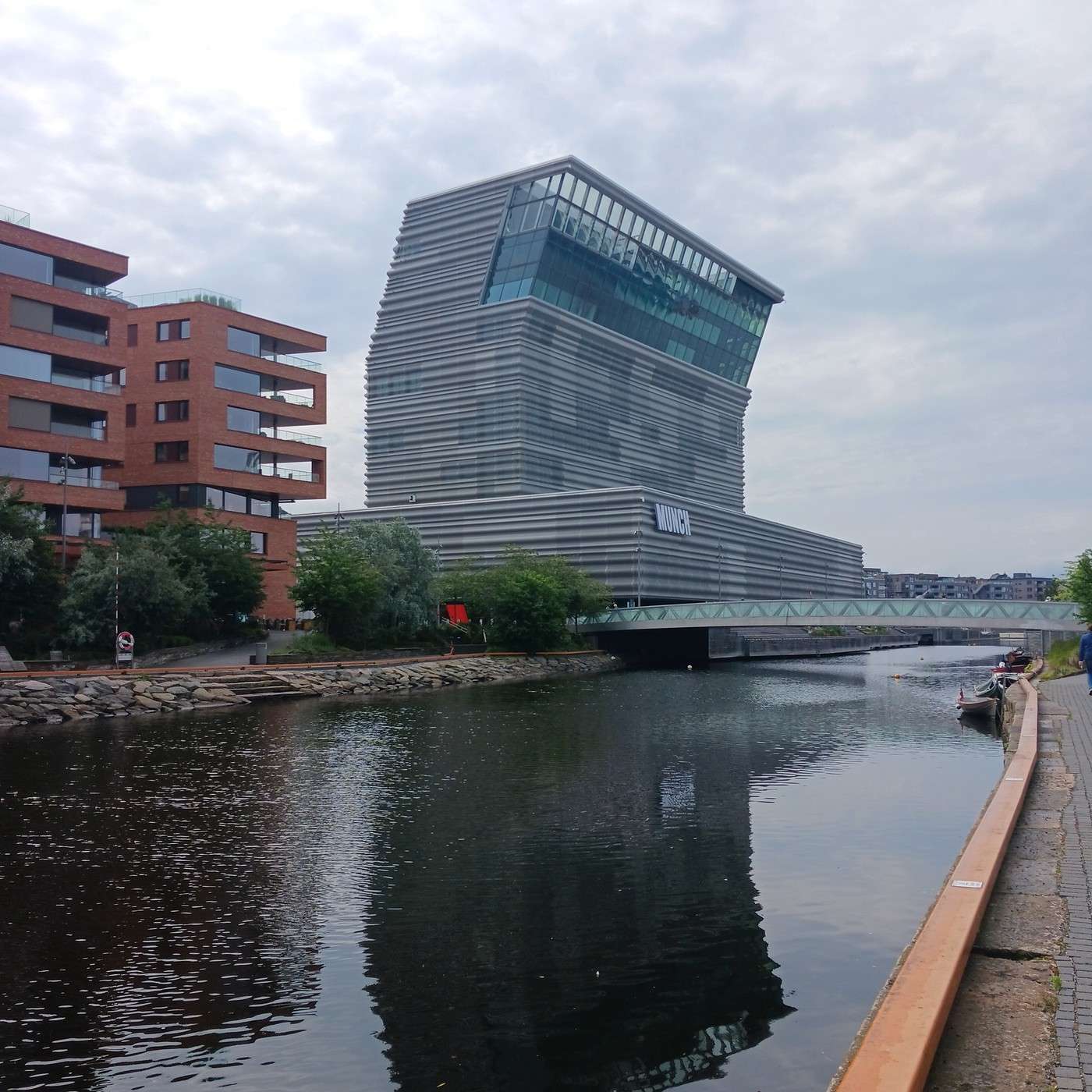
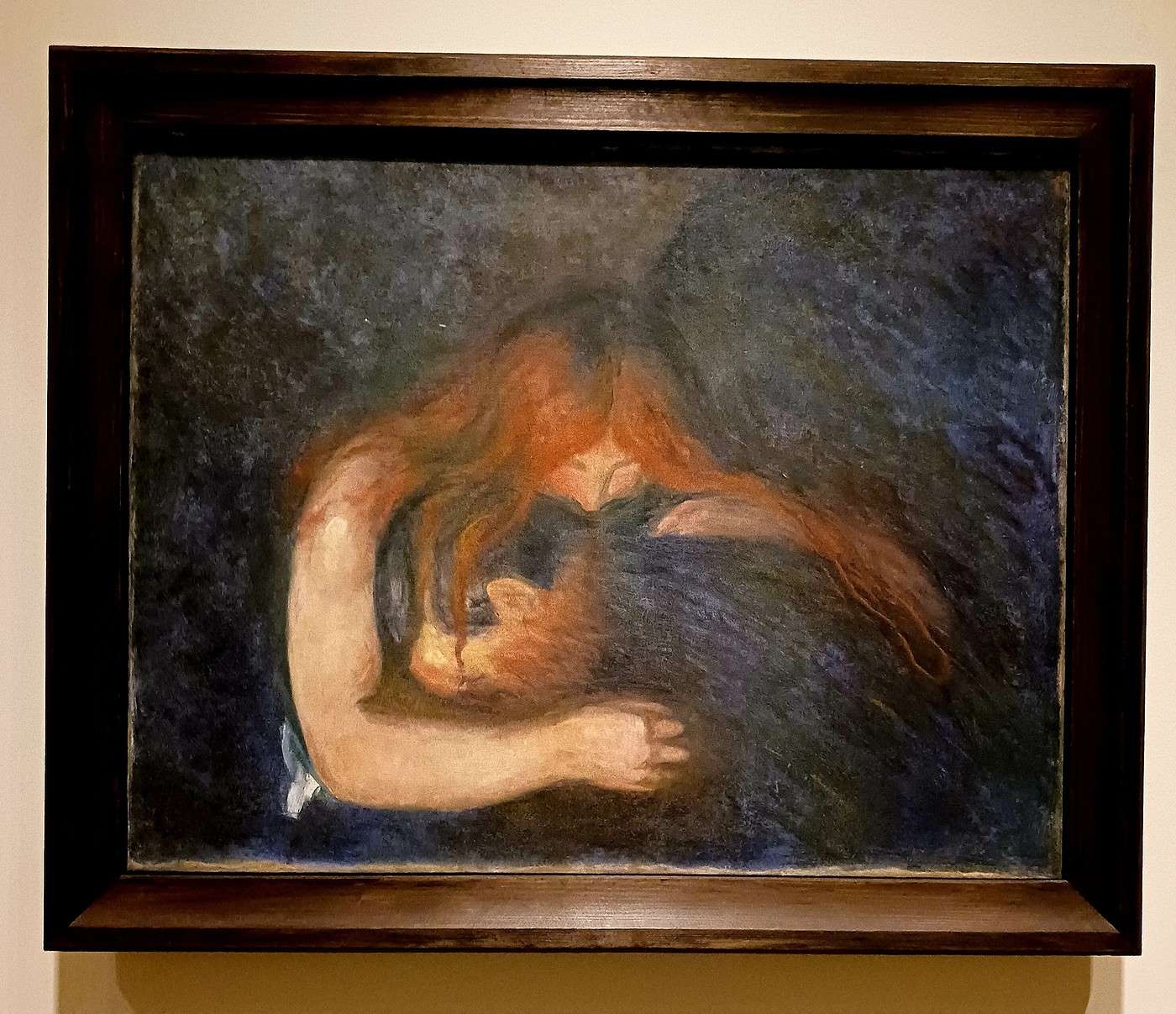
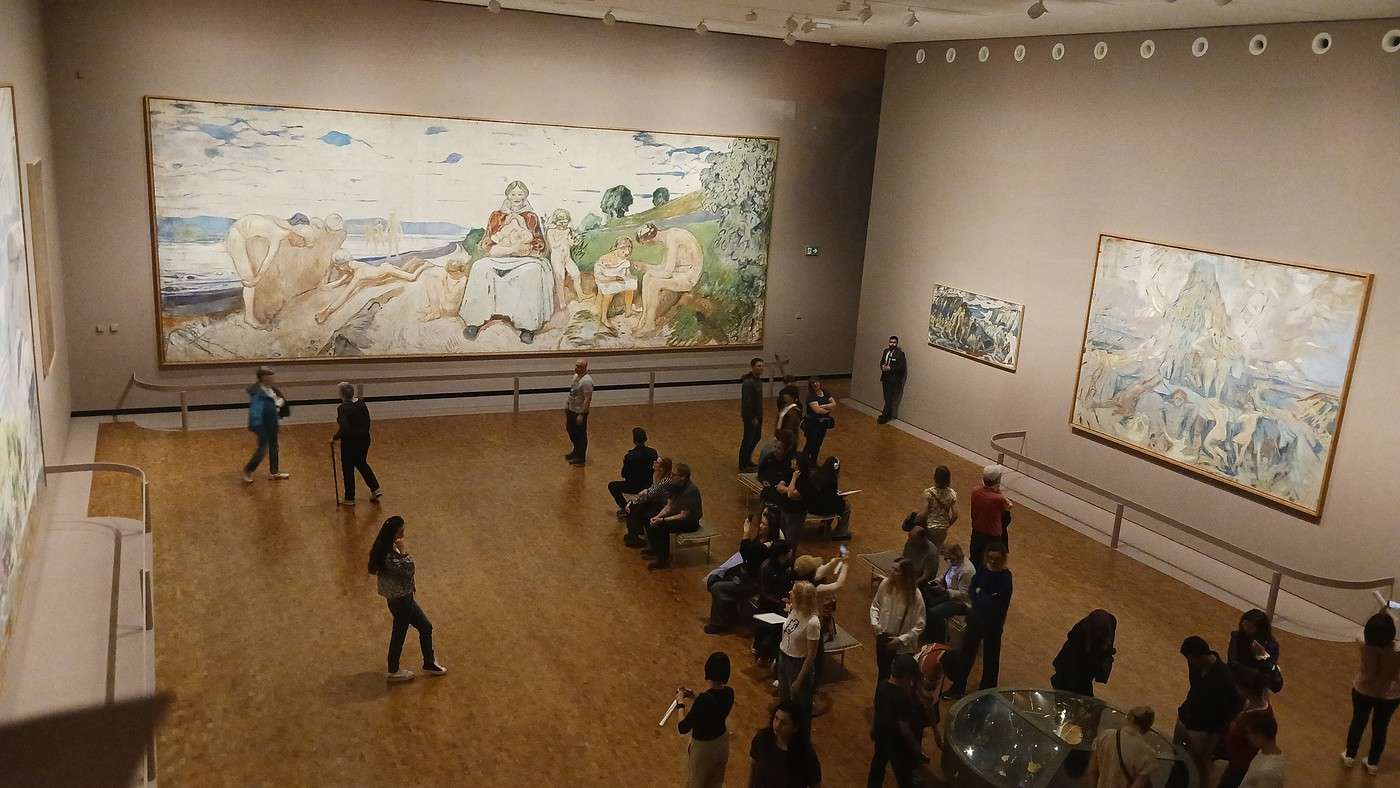
Day 15 – Sunday, June 15 – All Munch! I’d made sure to keep an eye on the weather forecast for these two days in Oslo. Since yesterday was sunny, it was perfect for visiting the open-air museum. Today, though, the forecast called for a rather gloomy day with some rain—so it was the perfect time to head indoors to the MUNCH Museum. At first, I hadn’t really planned to visit this museum. But the works I saw in Copenhagen eventually won me over. MUNCH (pronounced "MUNK") is a must-see in Oslo! Plus, the building’s architecture is a promise that won’t let you down! The museum was inaugurated on October 22, 2021, by King Harald V. It was designed by the Madrid-based architecture firm of Juan Herreros. It spans 26,300 m², rises 60 meters above the ground, and has 13 floors.


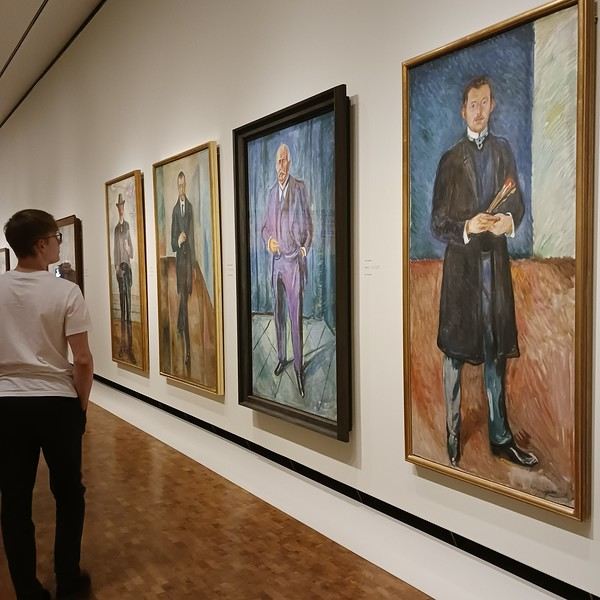
The museum houses over 26,000 works, including 18,000 prints by Edvard Munch. An entire room is dedicated to the famous painting *The Scream*, and three versions—tempera on cardboard (1910?), a lithograph (1895), and a pastel on cardboard (1893)—are on display. One of the three is always visible, while the other two are kept in dim light for preservation. I won’t show it here because it’s so overused that people always associate the artist with this one painting. It’s so reductive...


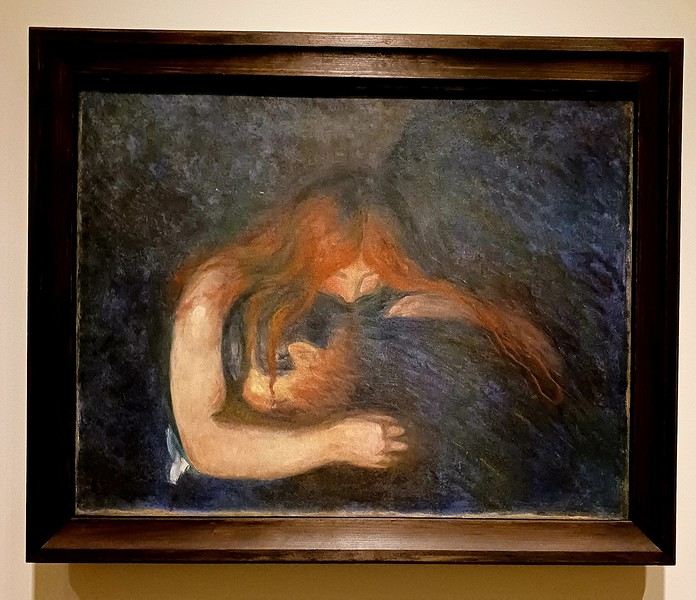
It’s hard to describe Munch’s painting, a pioneer of expressionism in modern art.

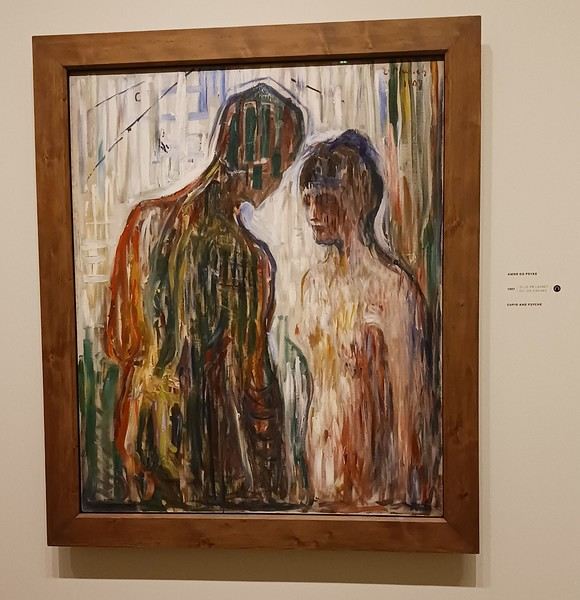
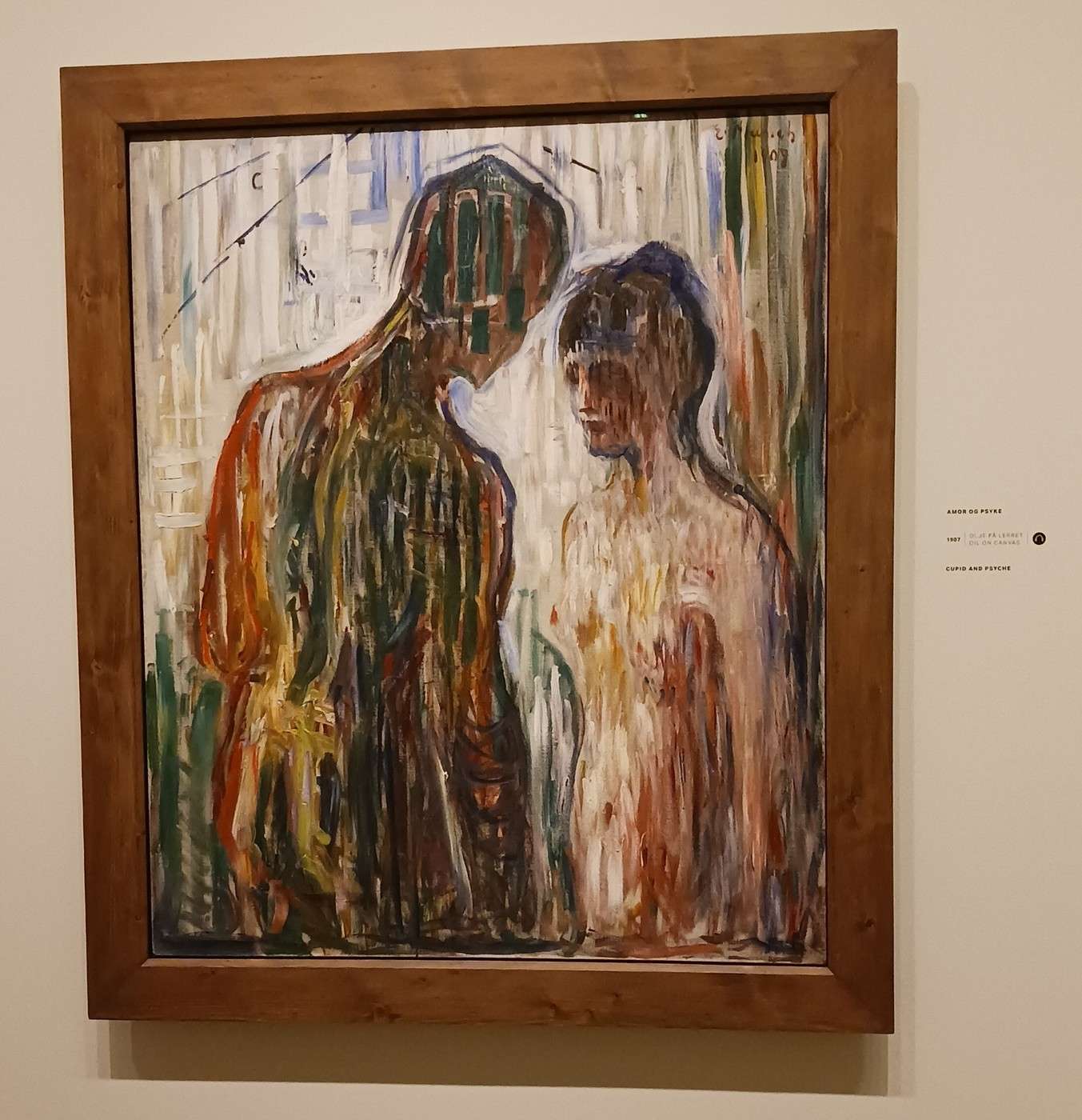
Cupid and Psyche

Some of his works, in my opinion, have an unfinished feel—unless that was intentional. We know he painted a lot. Was he unsatisfied with some pieces? Did he abandon them to create other versions, treating them like drafts or experiments? Or was he moving toward a kind of minimalism? We know he painted extensively. After his death, he donated around a thousand paintings, 4,500 drawings and watercolors, and six sculptures to the city of Oslo. Just like *The Scream*, some of his works exist in multiple versions, including the ones I saw in Copenhagen—a city where he actually stayed.

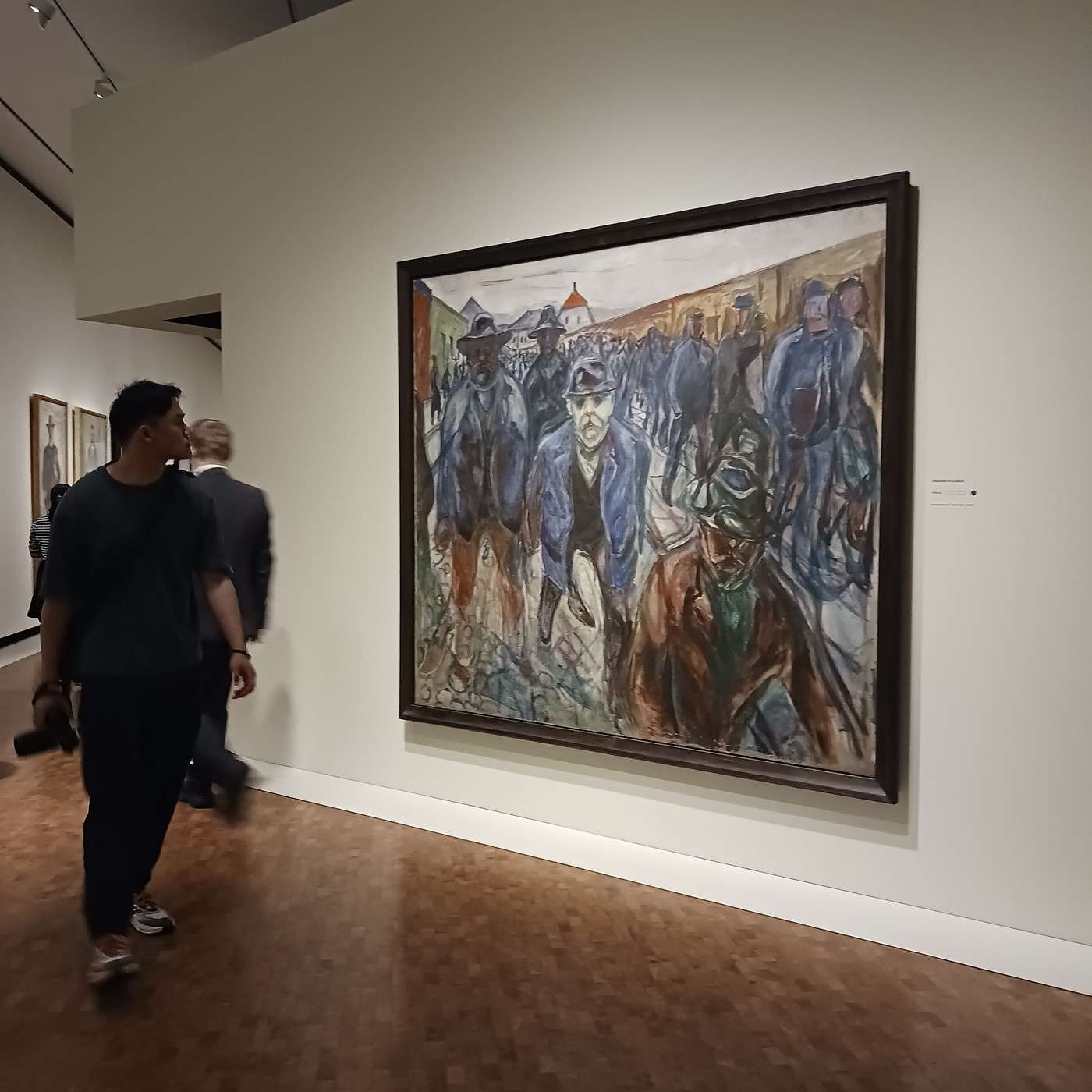
Workers Returning Home

Munch’s paintings aren’t exactly cheerful. We know he faced death and illness from a very young age, and his life was deeply troubled.


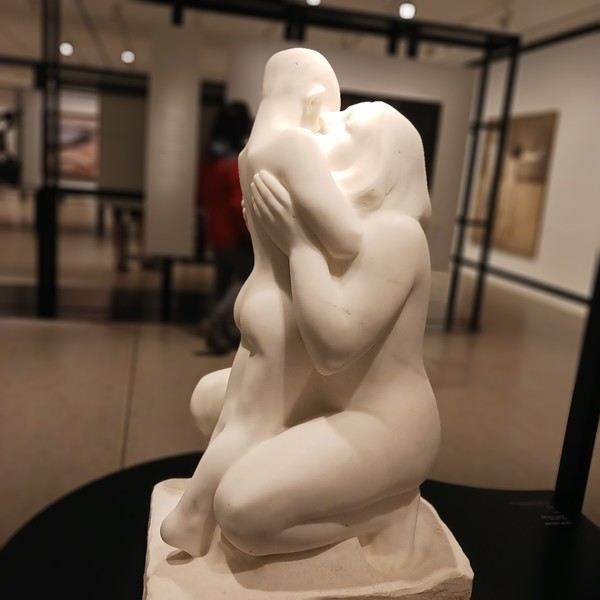
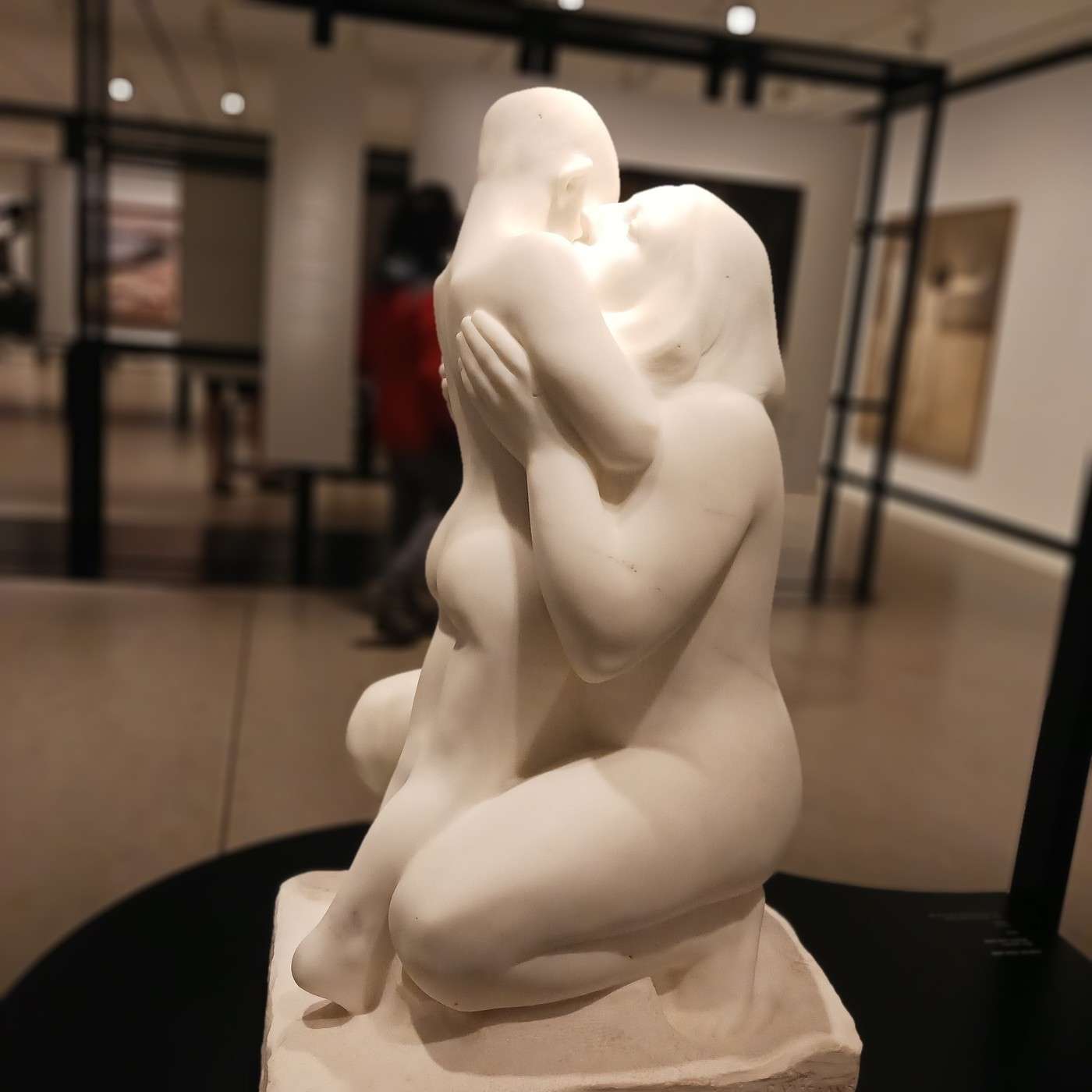
There’s a floor where Munch’s works are displayed alongside those of other contemporary artists like Raoul Dufy and Ludvig Karsten. Here, we also find Gustav Vigeland with a beautiful marble sculpture.

A marble work by Vigeland in perfect harmony with Munch’s universe

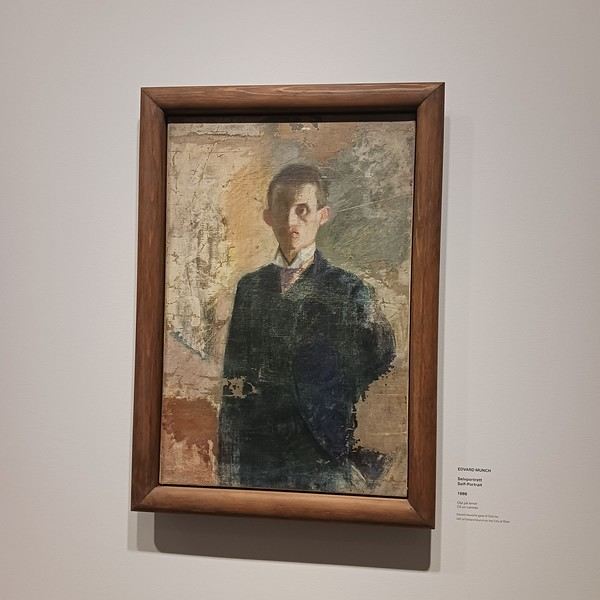
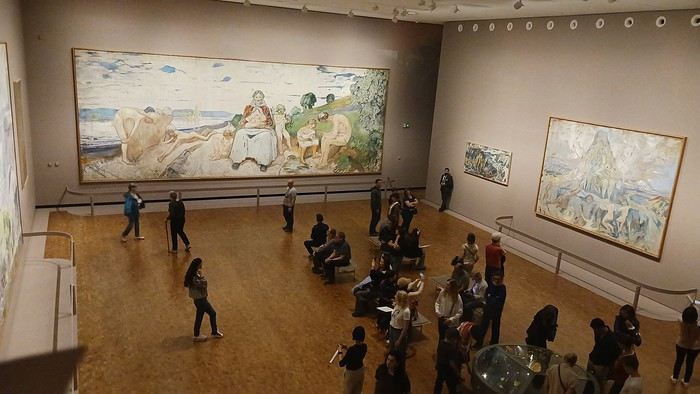
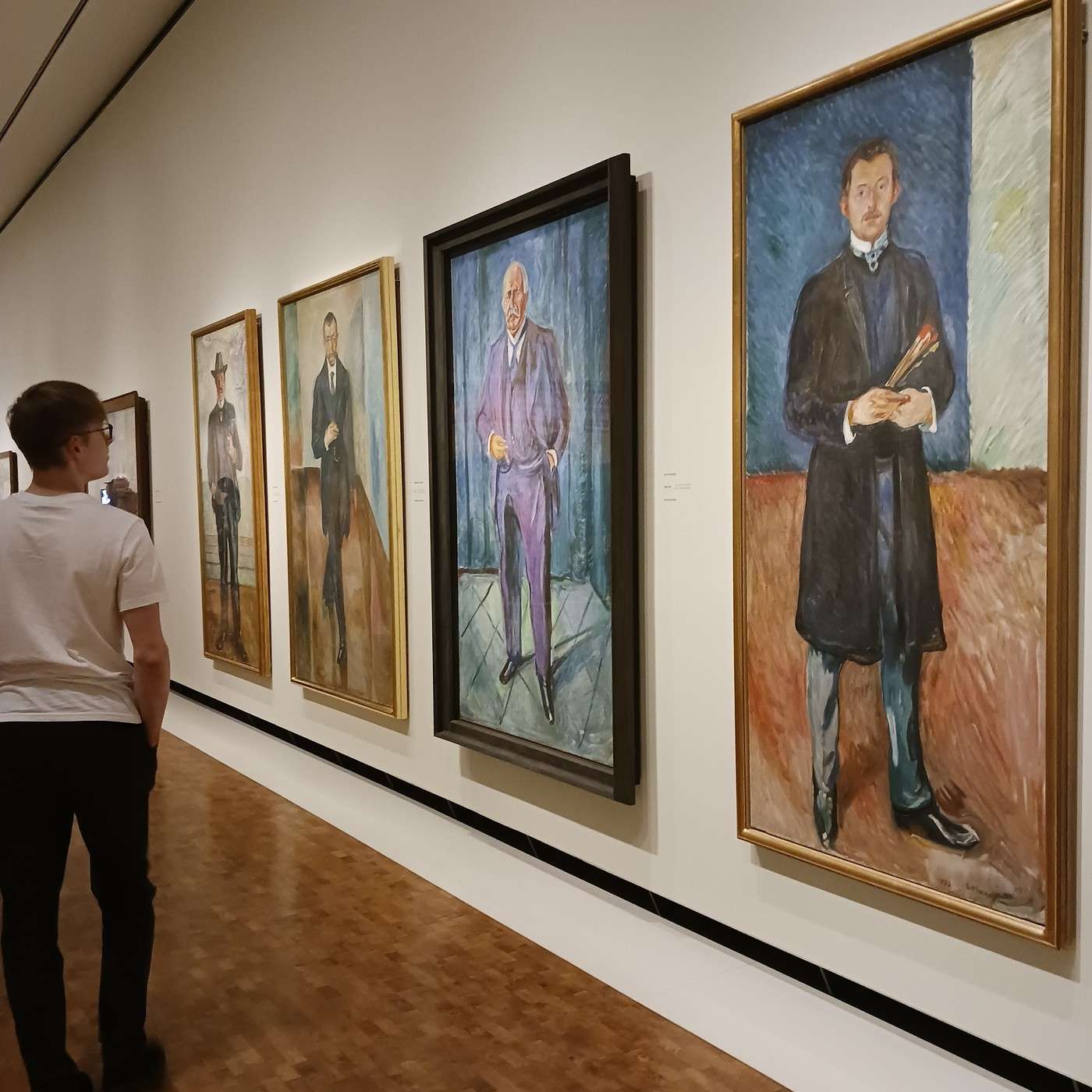
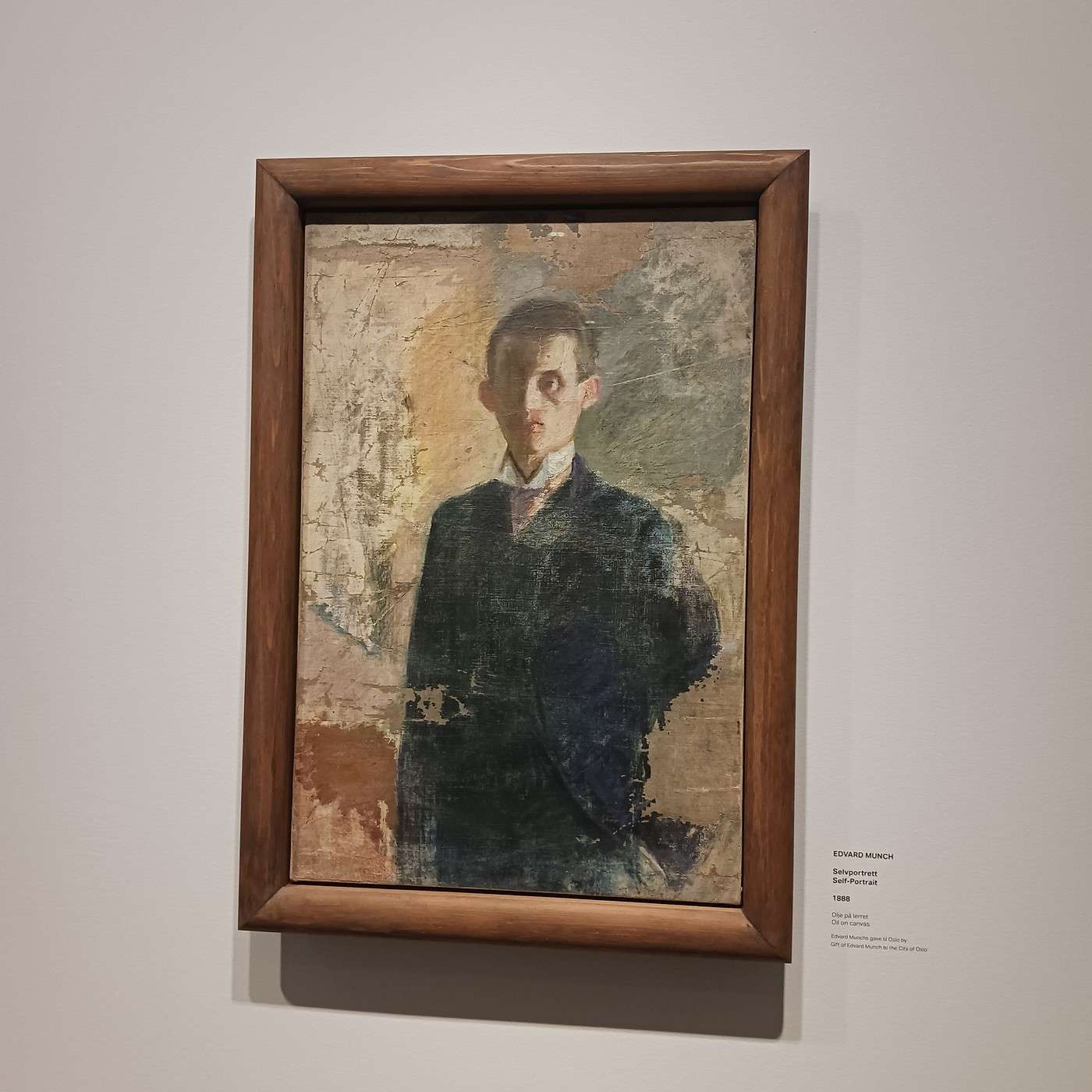
Self-Portrait of the Artist An entire floor is dedicated to Munch’s very large "Monumental" works.

Monumental

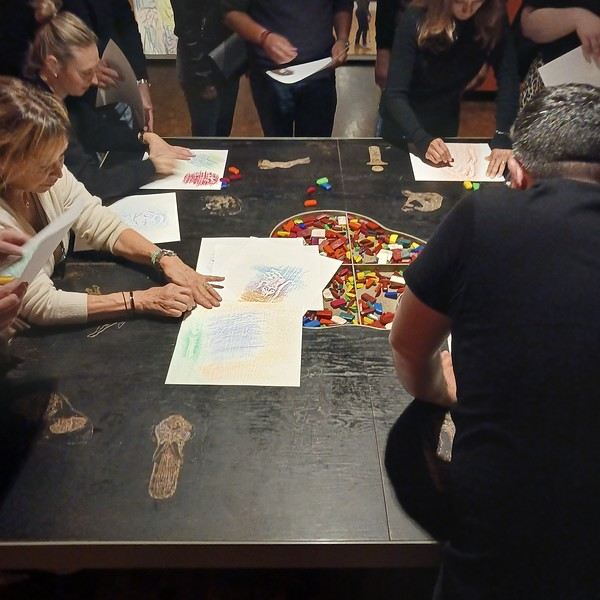
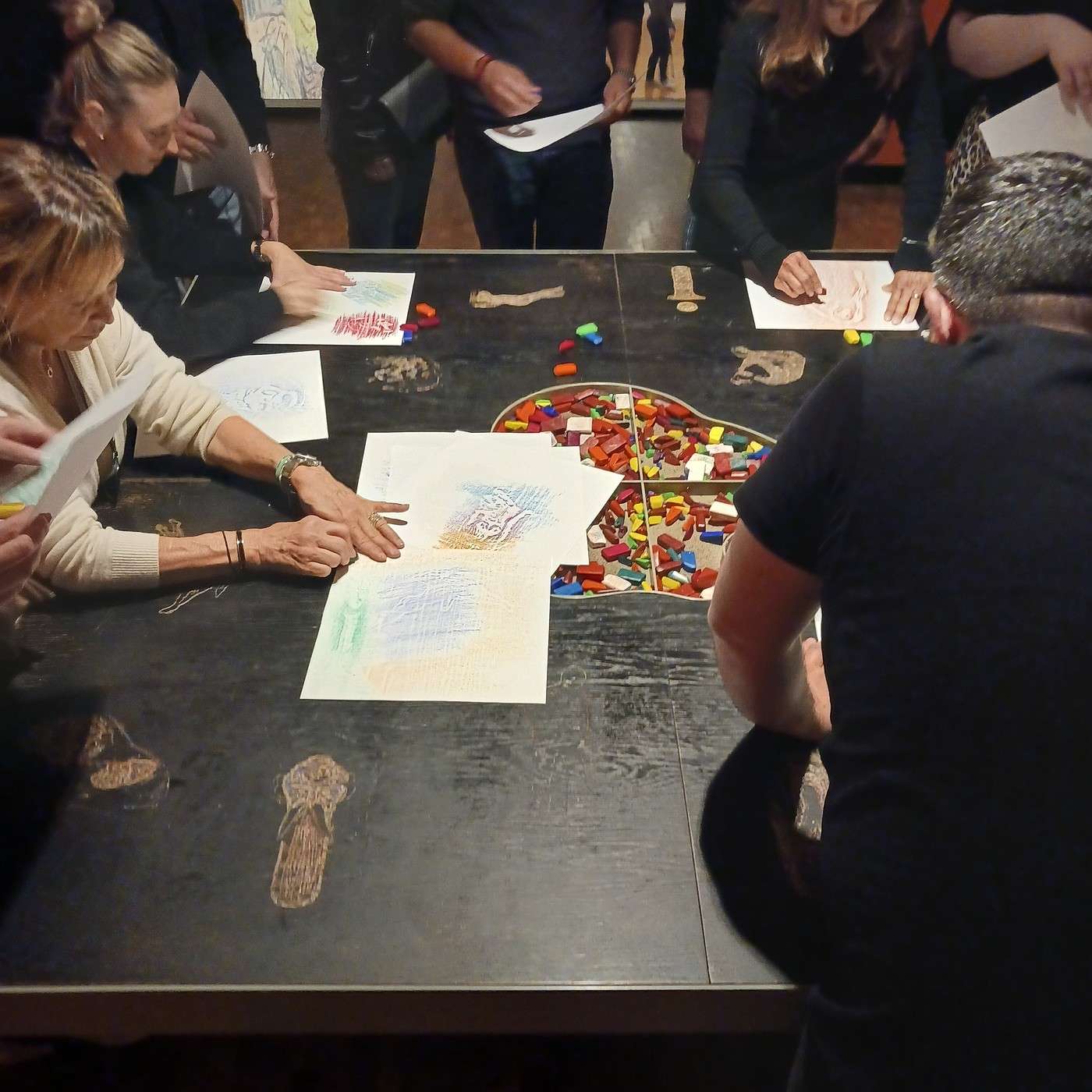
Understanding lithography, the process Munch used to make his works known

A very interactive workshop

Munch doesn’t bother with frills. His art goes straight to the essential—raw and instinctive. You might love it or hate it, but one thing’s for sure: it won’t leave you indifferent! (To be continued)

Tour of Kattegat and Norway's Great Fjords - 32 Days (Denmark - Sweden - Norway)

Cendryon · 2025-08-10

(Continued) The Munch Museum is designed across several floors where you can follow the evolution of the painter’s work.


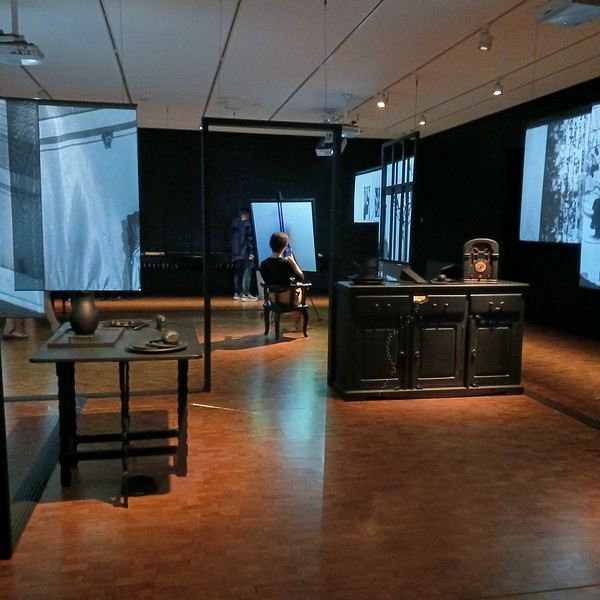
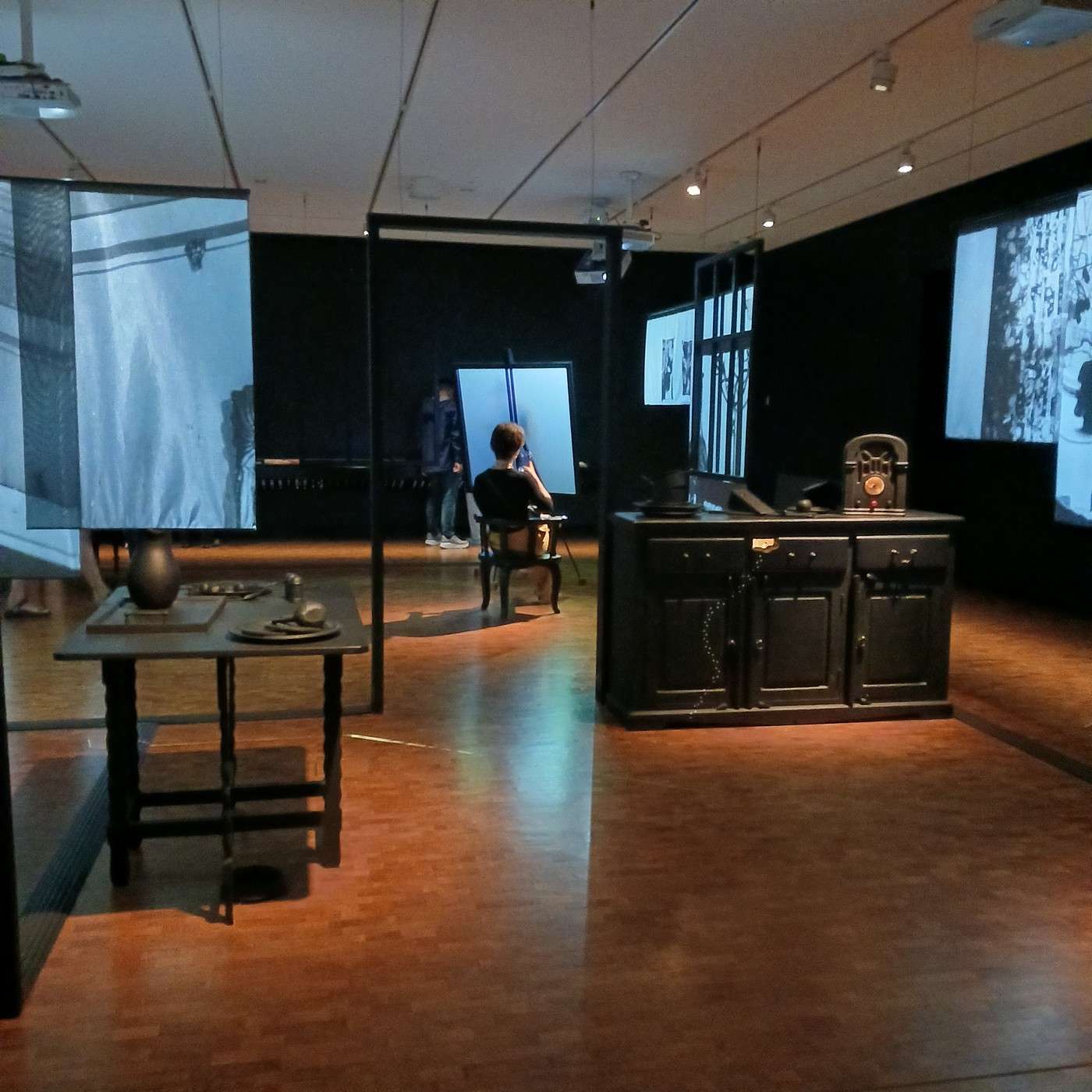
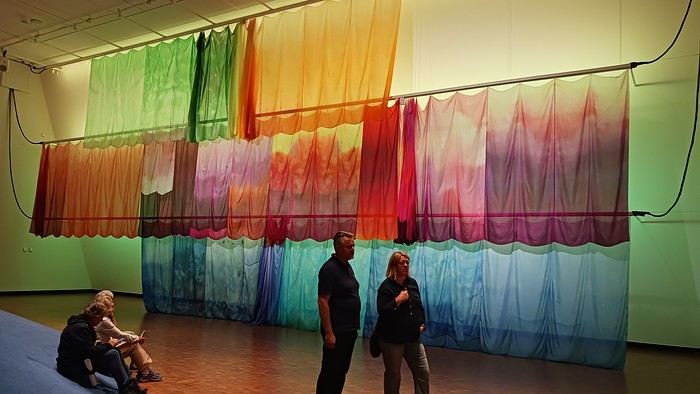
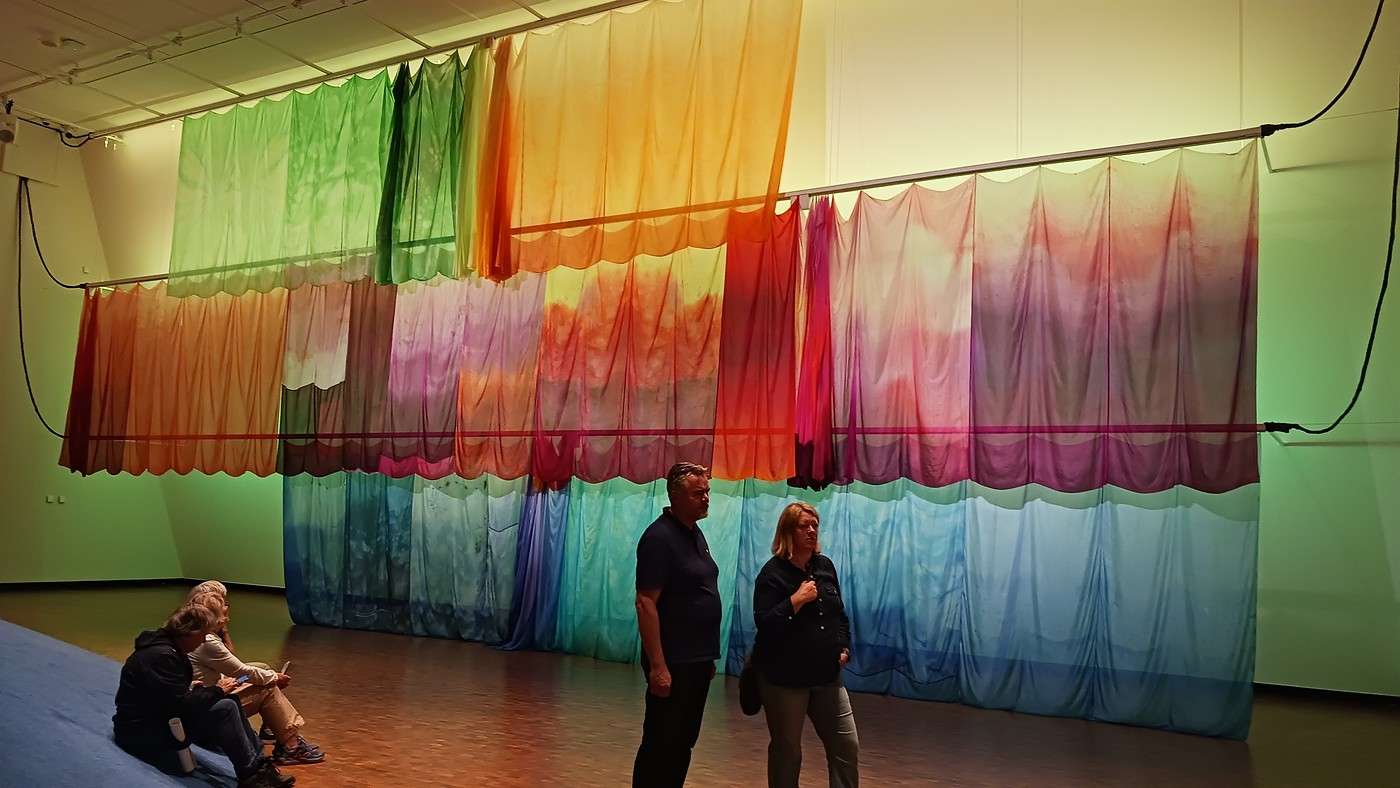
Some floors are dedicated to temporary exhibitions of contemporary artists and installations, which I often struggle with a bit. Note that I’m not finishing my sentence with "to understand" because there’s nothing to understand—it’s all about the feeling... For example, in this large space, there are colored curtains moving, a work by Kiyoshi Yamamoto titled "you are what you are"... well, sure!


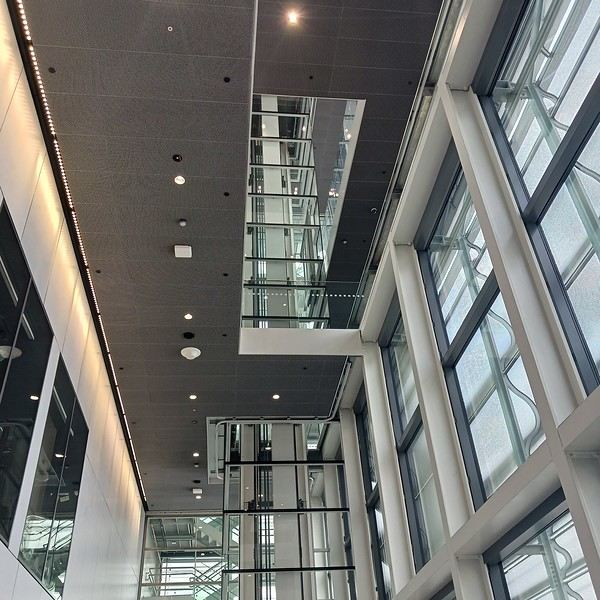
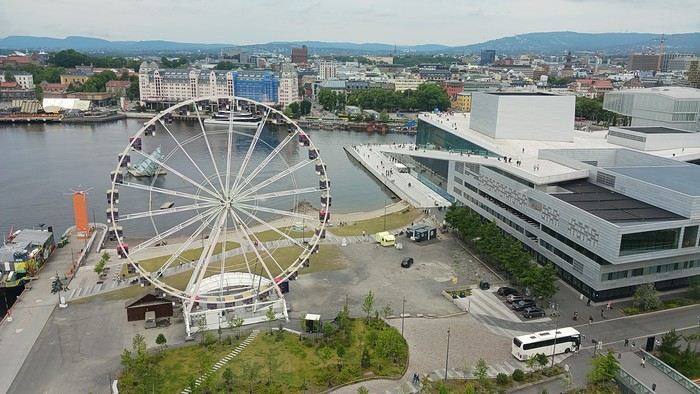
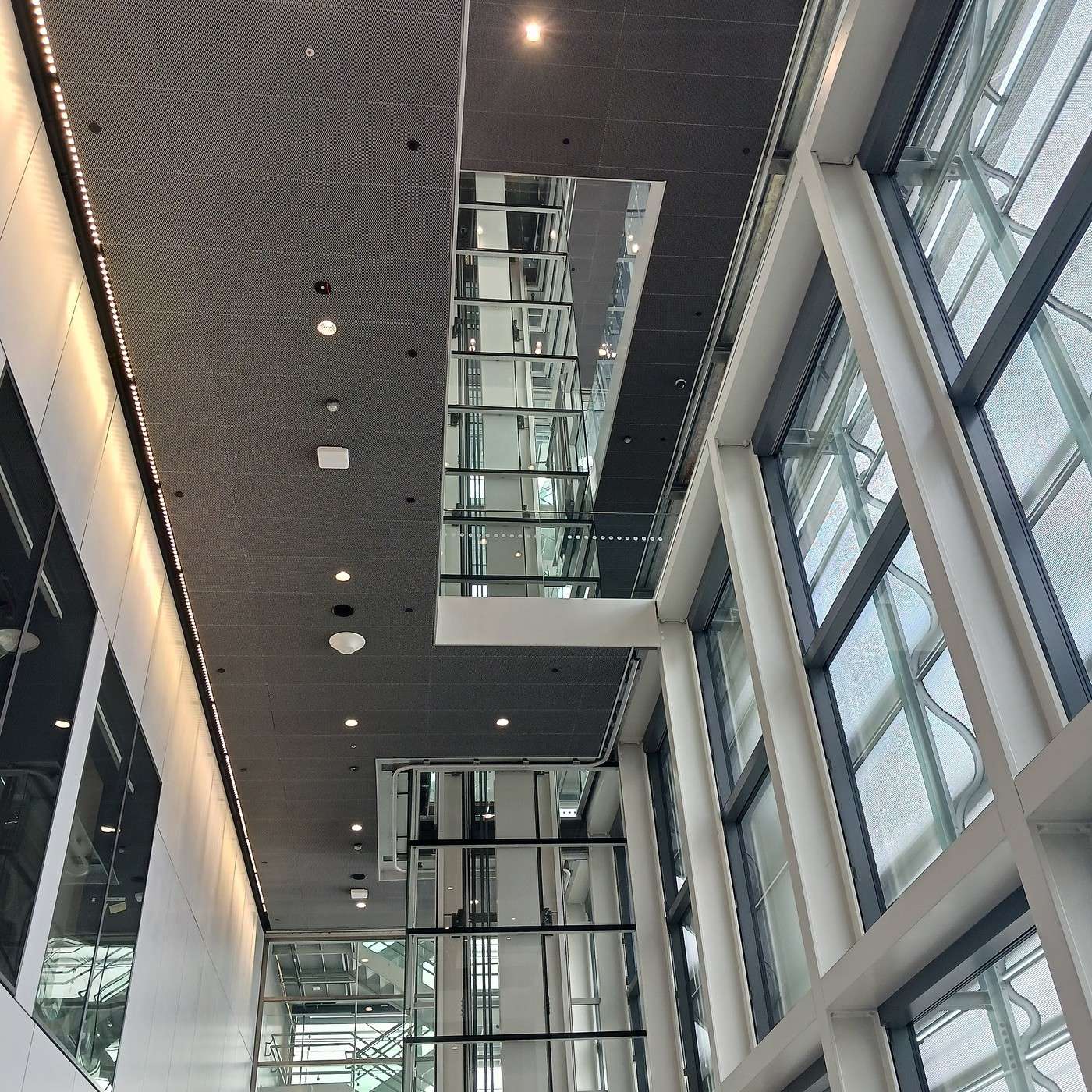
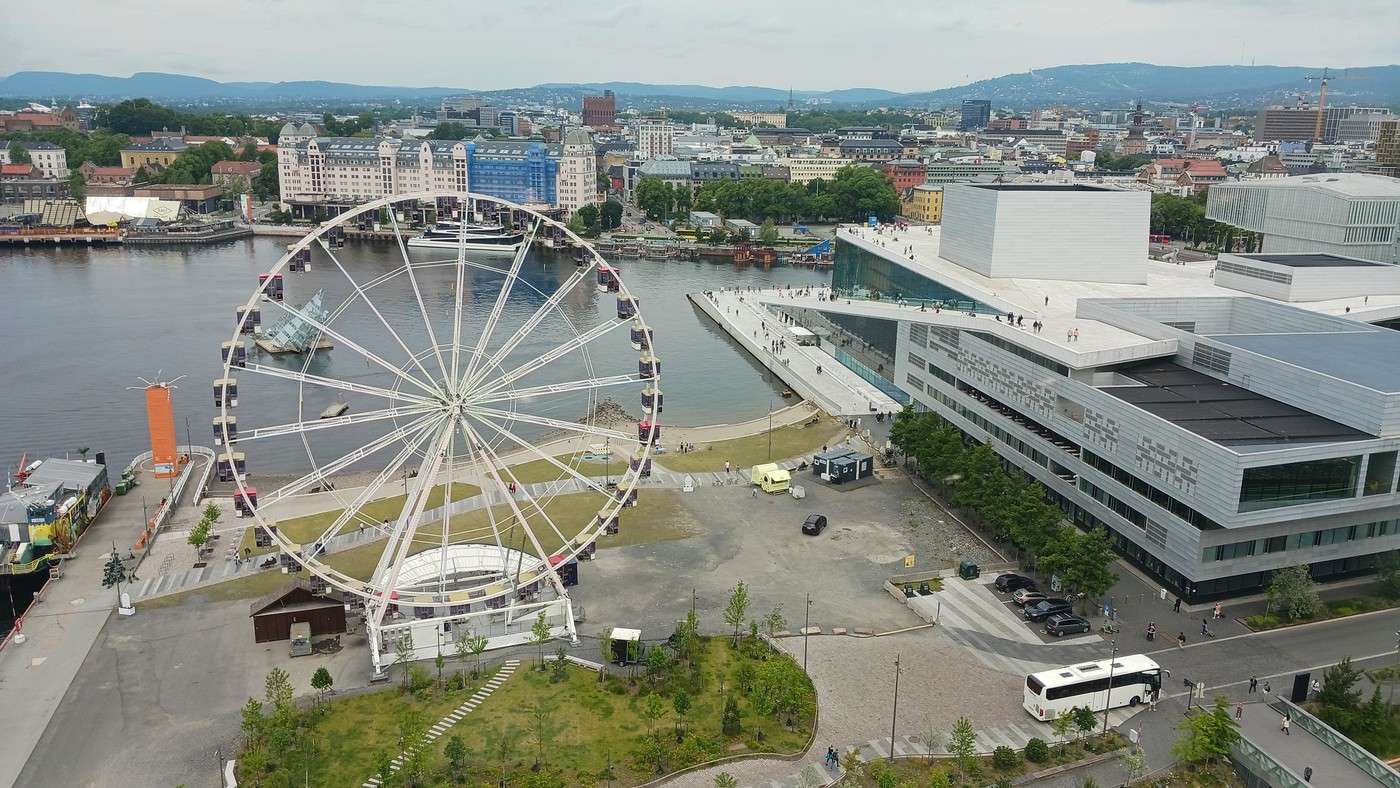
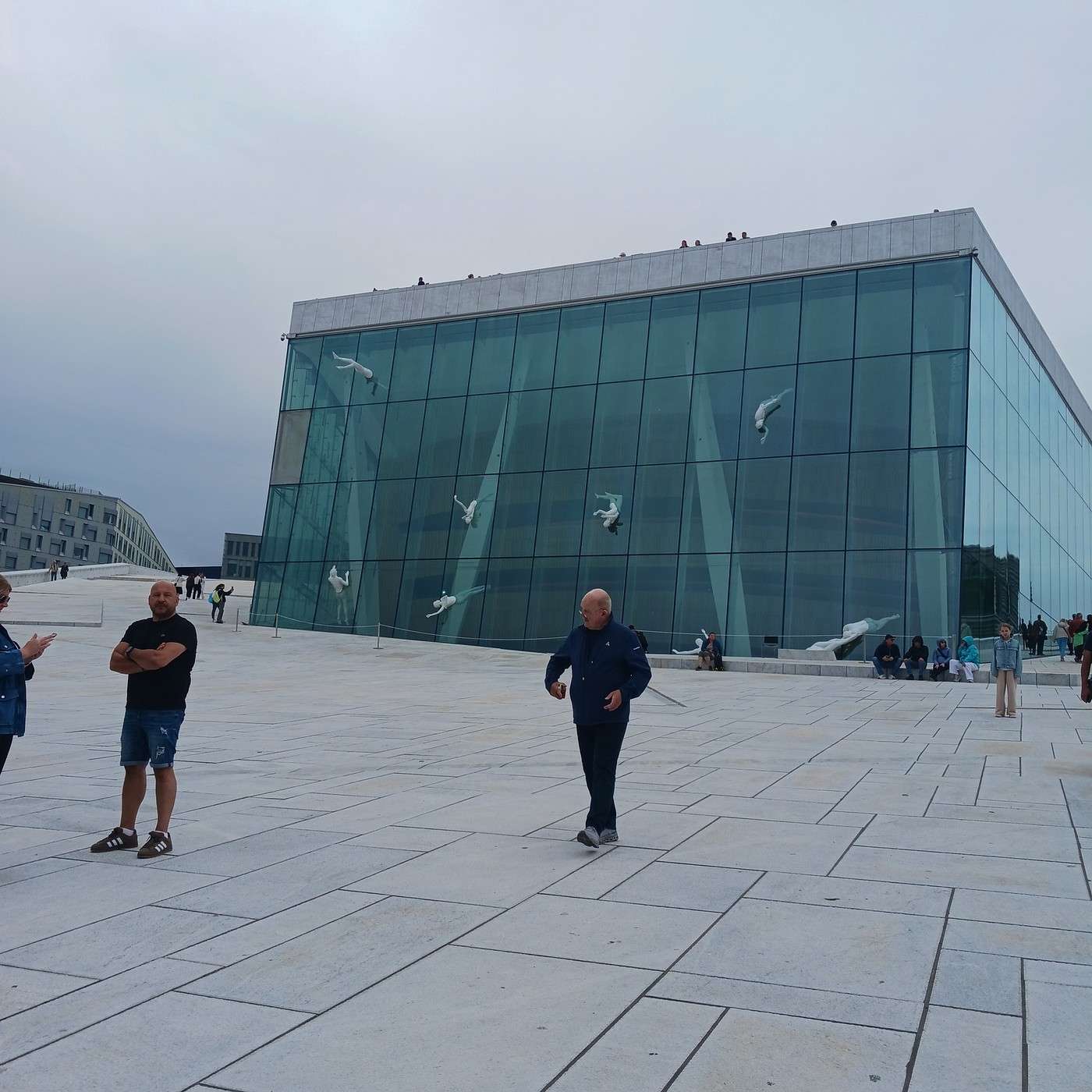
The upper floors offer a splendid view of the harbor and the nearby opera house.


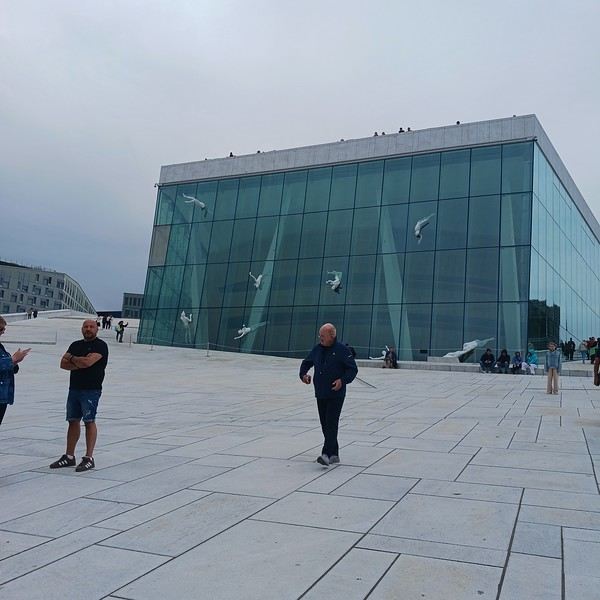
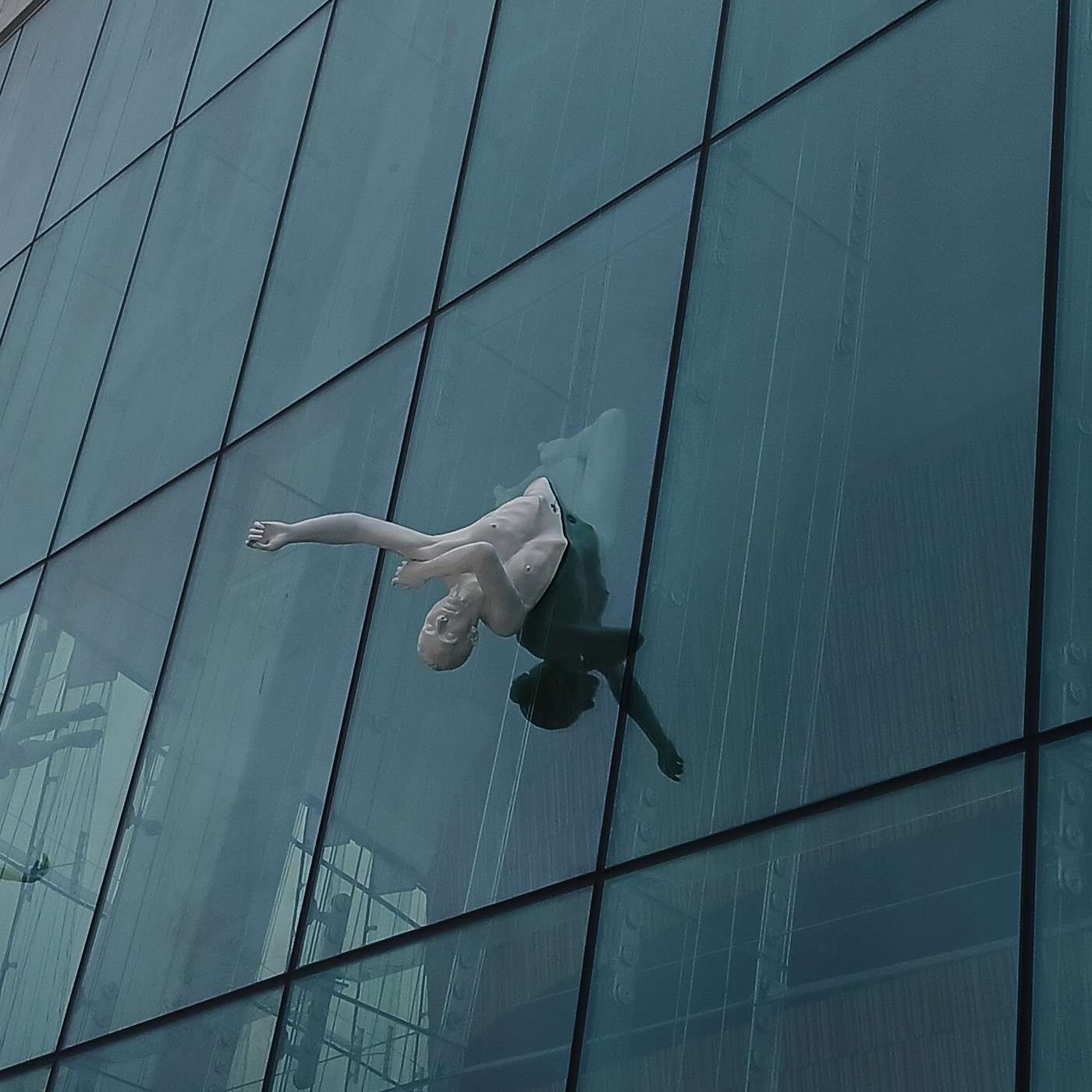
But let’s take a closer look at this amazing building!


Wow, that’s something else!

Now, I suggest we take a leap back in time. Our Oslo Pass lets us visit quite a few museums, and there are three on the Akershus Fortress site. First up, the castle. The first stone of Akershus Fortress was laid in 1299 by Håkon V, and it was completed during the 14th century. The medieval castle had a strategic position on Akersneset and endured numerous assaults over the centuries.

Under Christian IV (1588–1648), the castle was modernized and transformed into a Renaissance-style palace. The fortress fell into disrepair during the 18th century, and it wasn’t until 1899 that restoration work began.


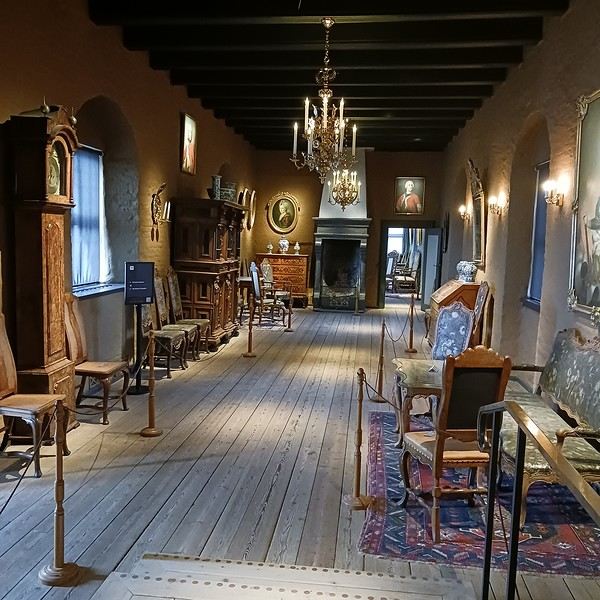
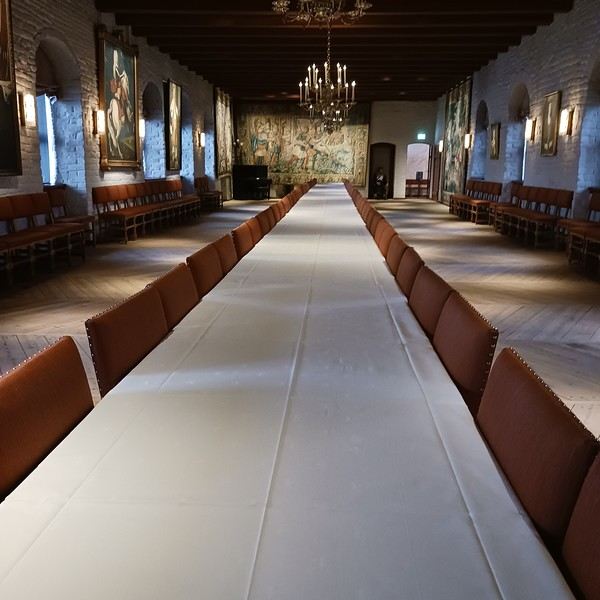
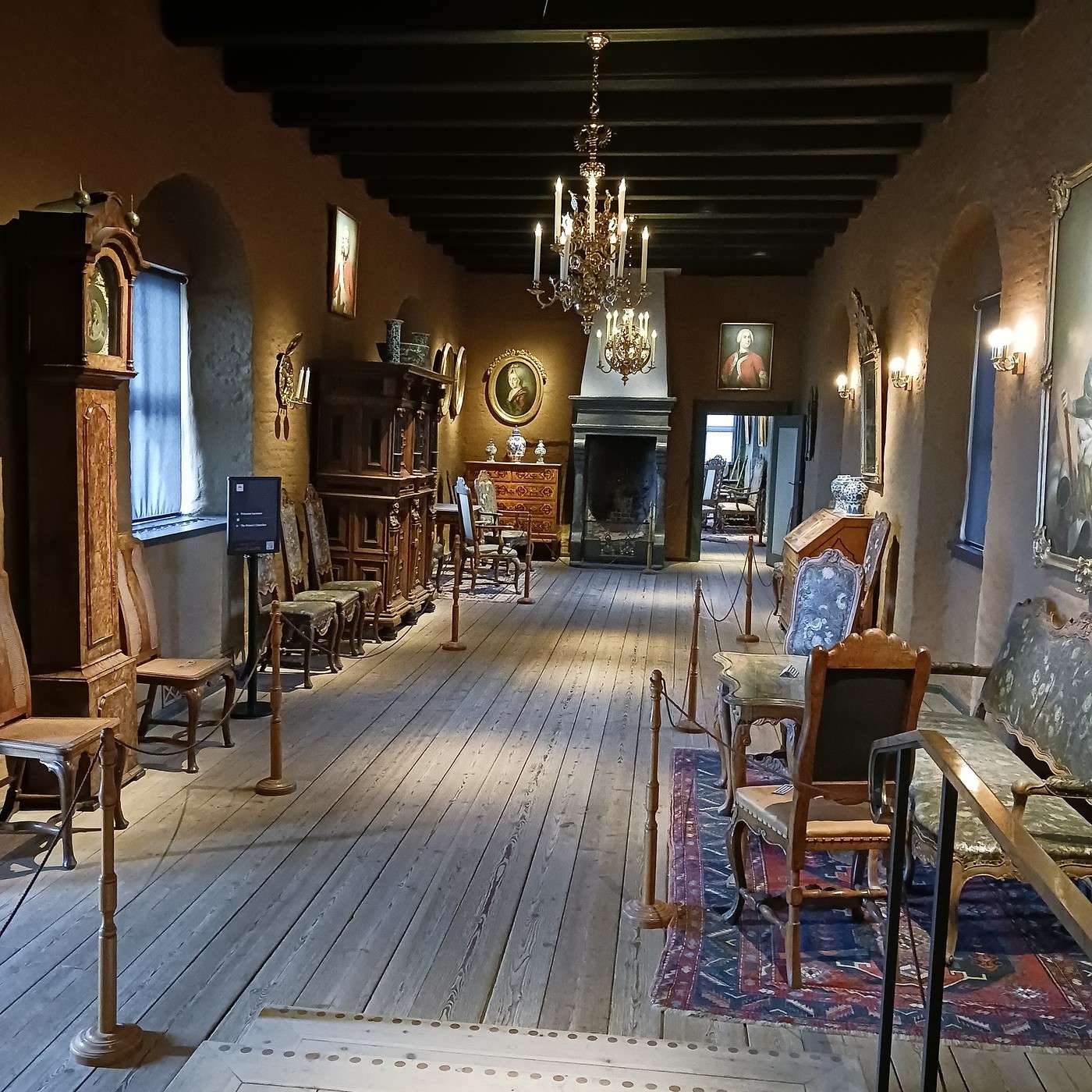
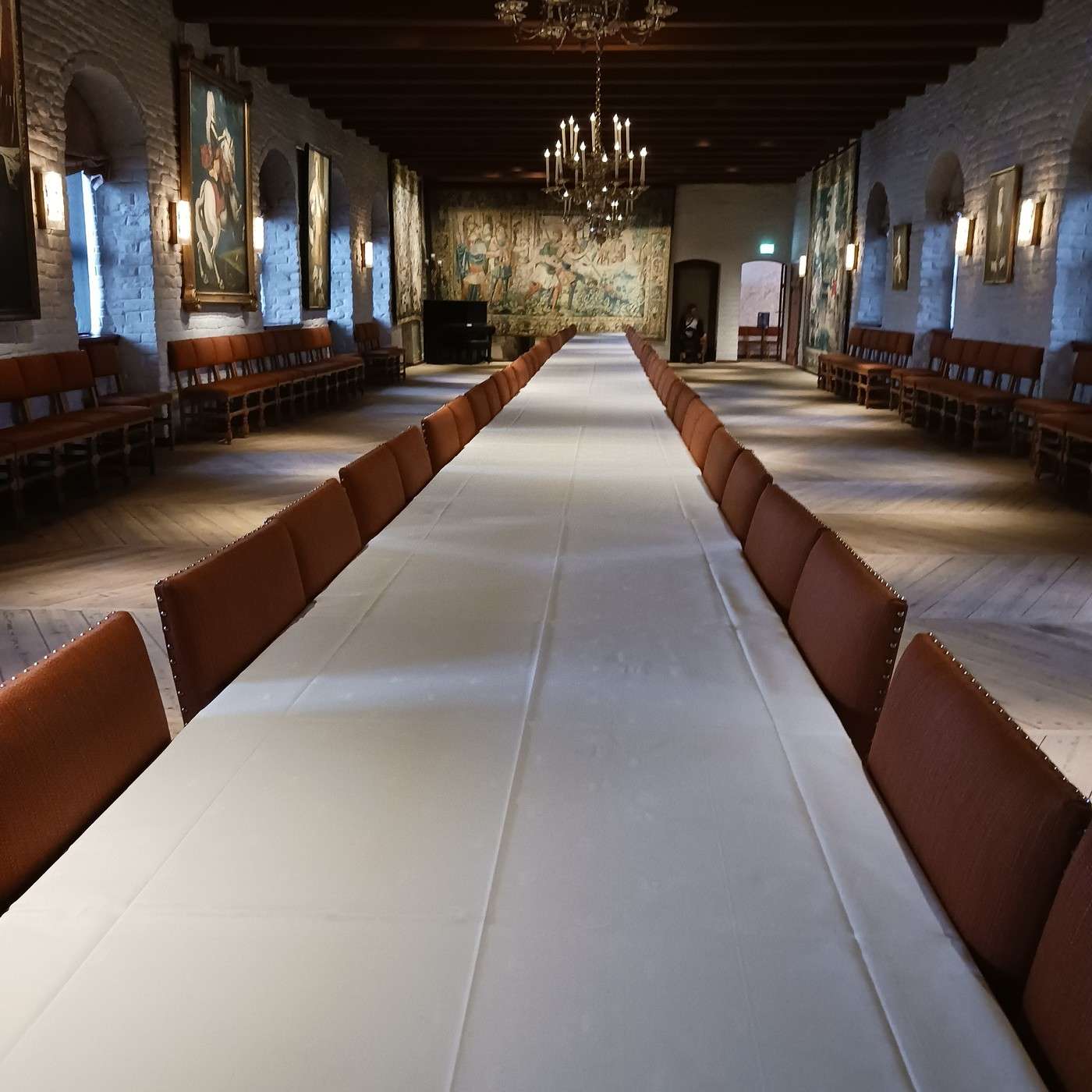
You can explore its original medieval remains (from 1300), rooms from the residence of the Danish-Norwegian kings, gloomy dungeons, narrow corridors, and magnificent furnished reception halls. No doubt you could feed a crowd at this table!

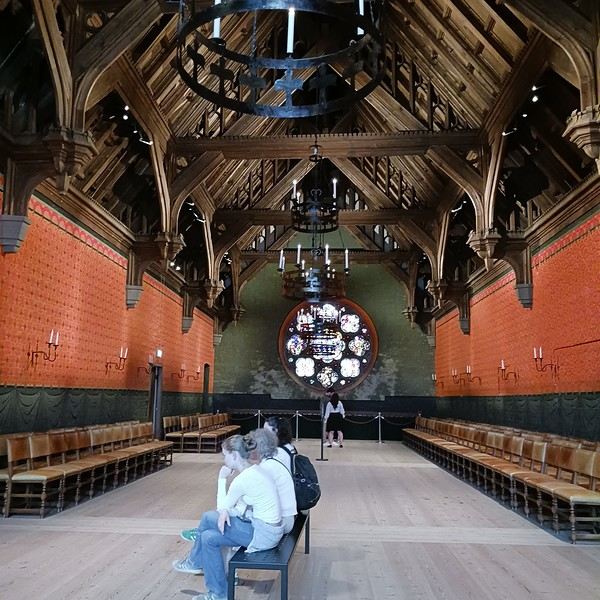
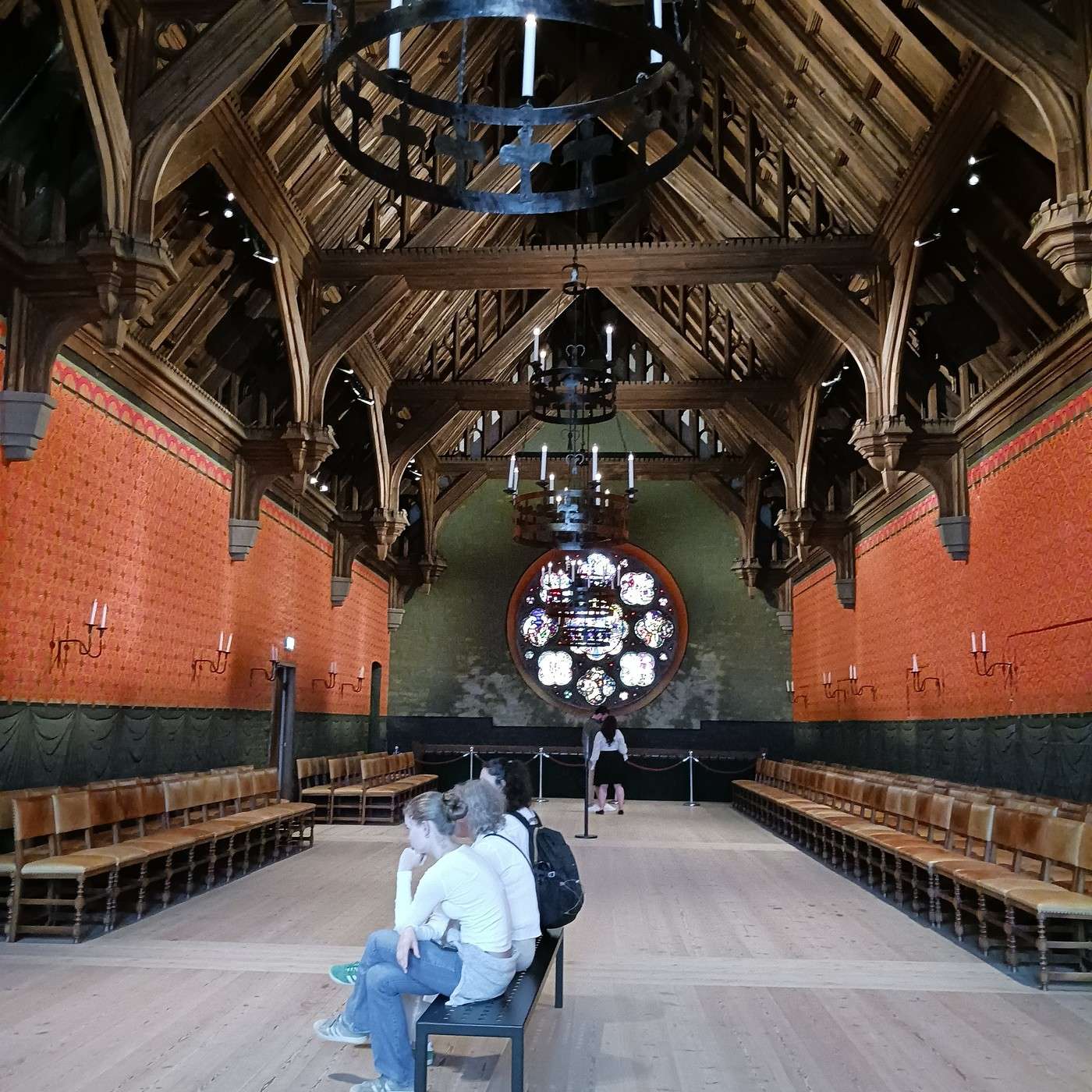
The chapel is remarkable.

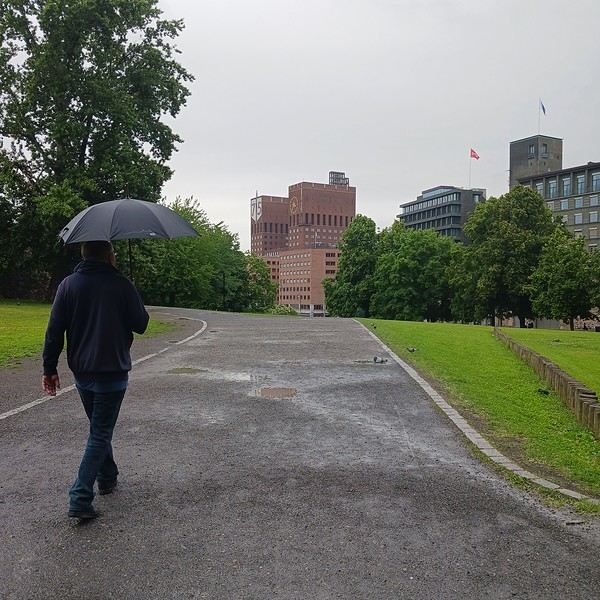
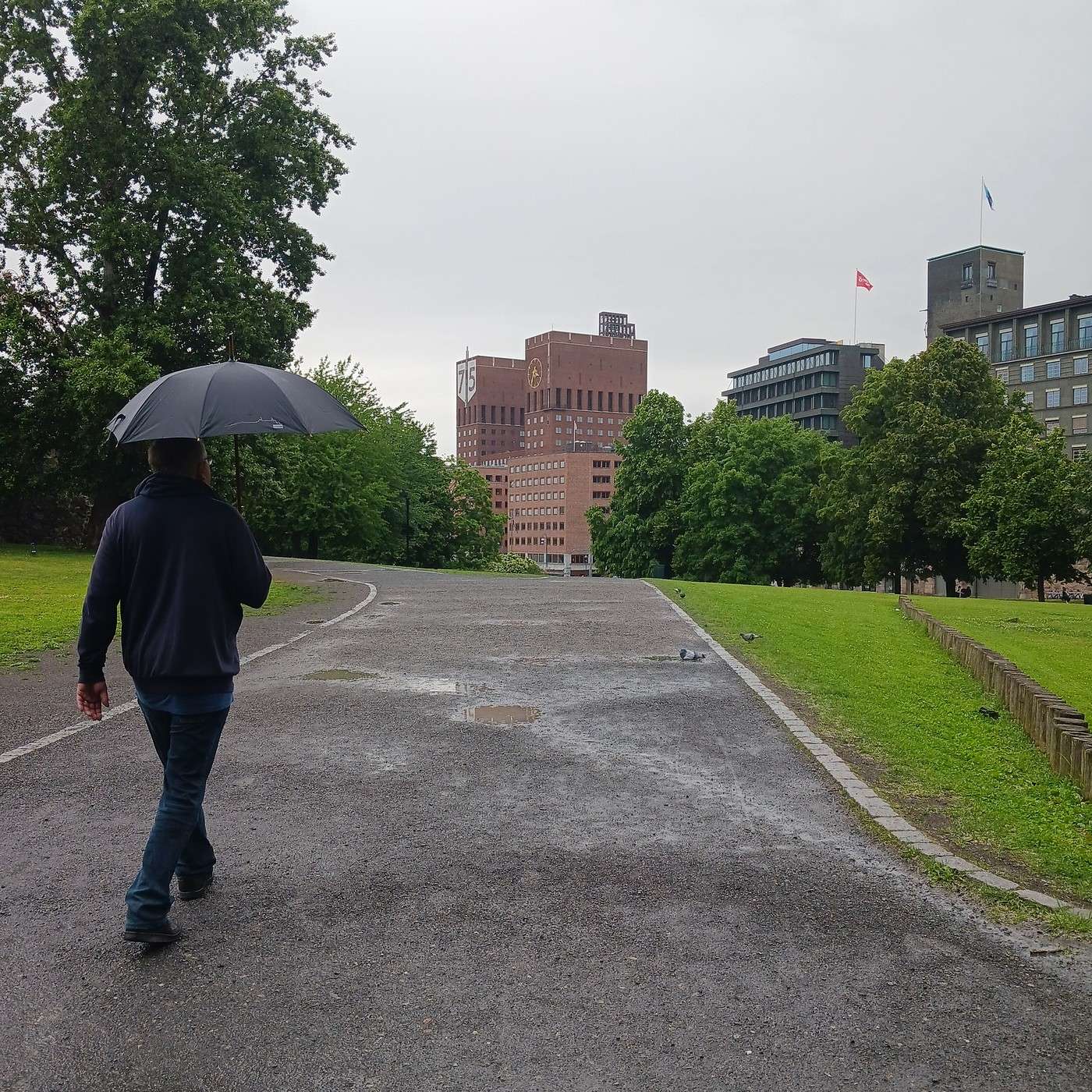
We skip the Defense Museum and head to the Norwegian Resistance Museum. Everything’s in Norwegian, so we don’t understand much—our visit is quick, but it’s probably great for... Norwegians! Now, let’s head to the City Hall square for a Viking experience, in the Norwegian rain!

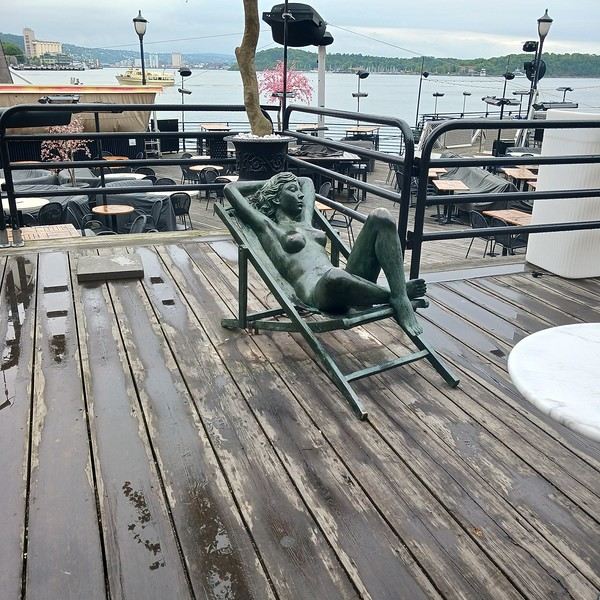
This private museum isn’t included in the pass, but I wanted to see it, especially the 3D experience. Well, helmets on—here we go aboard a longship. At first, everything’s fine, but then the boat is attacked by other Vikings, and we don’t make it... There are other interactive spaces and videos about the Vikings... It’s okay, but it could be better, especially for the entry price! Here we are on the docks, specifically in the modern Aker Brygge district. Apparently, it’s always busy here. There are plenty of restaurants, and Norwegians eat early. We opt for Jarmann Gastropub, a no-frills spot with classic food and really friendly service. This nicely wraps up a gloomy day where the weather forecasts kept their promises!

Kattegat Tour and Norway's Great Fjords - 32 Days (Denmark - Sweden - Norway)

Cendryon · 2025-08-12

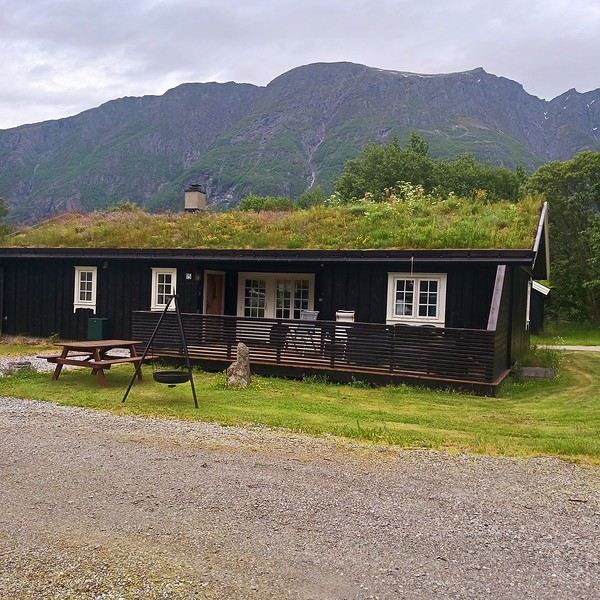
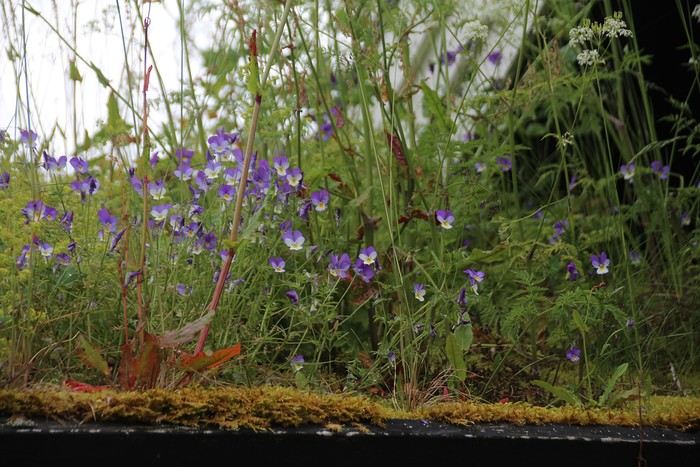
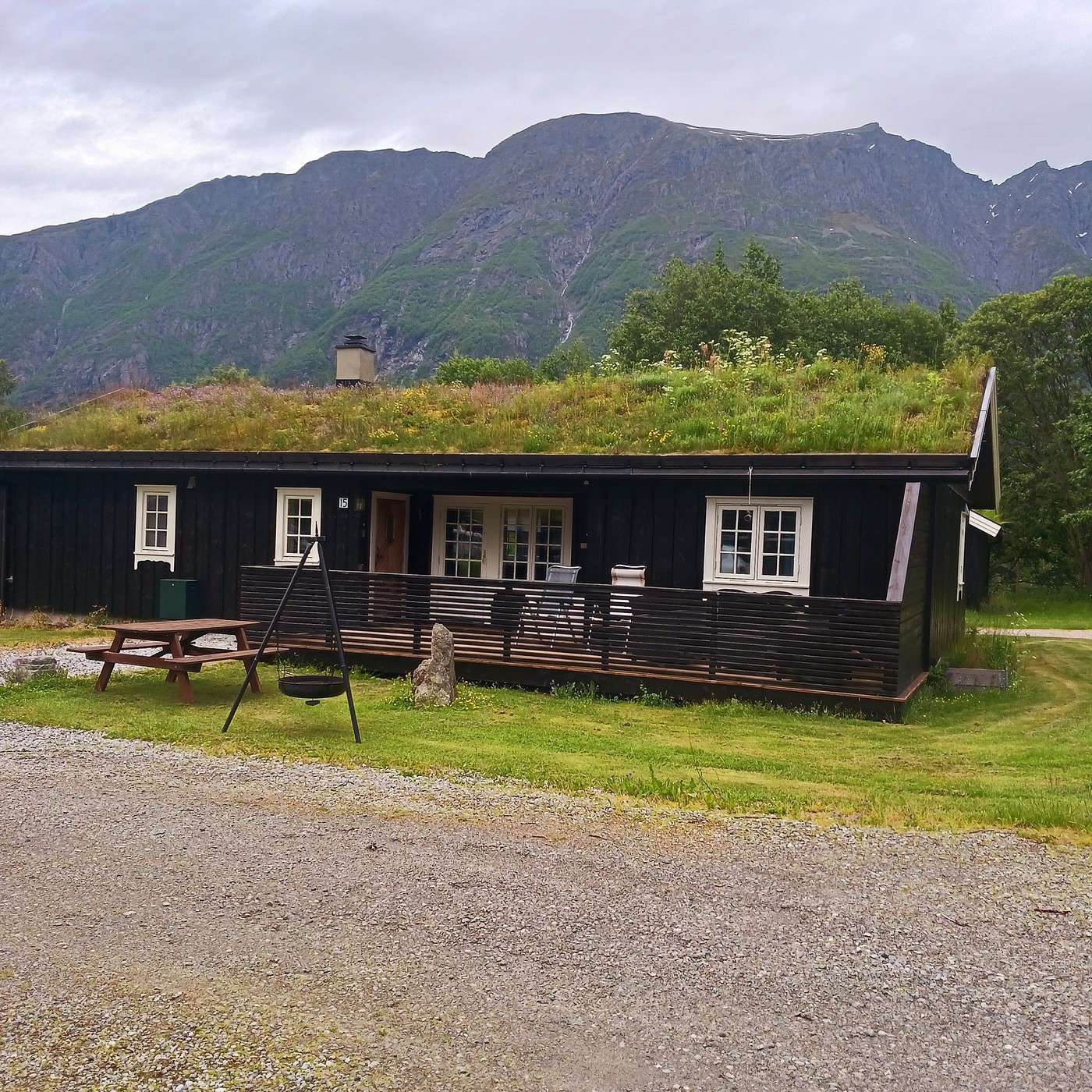
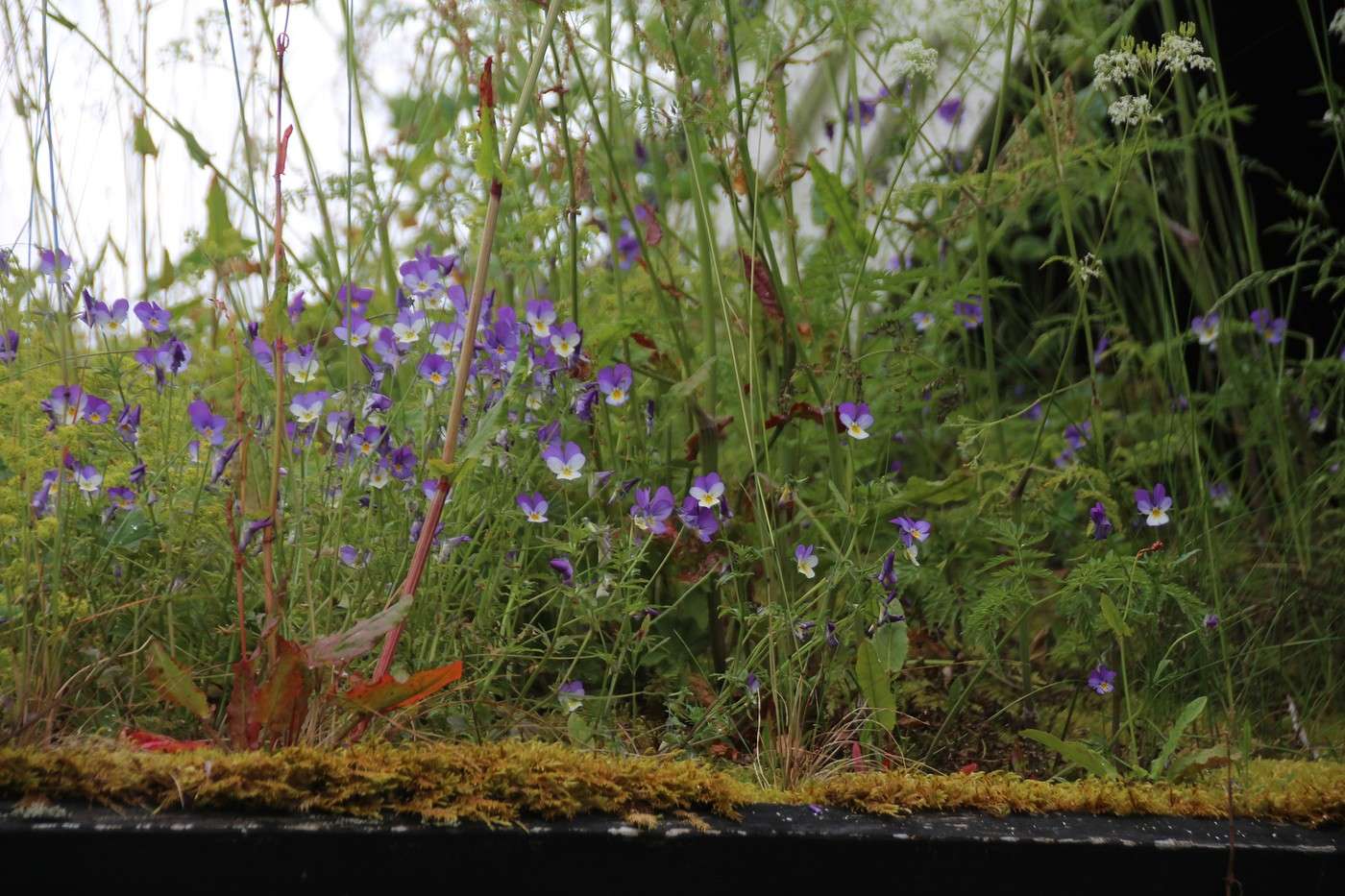
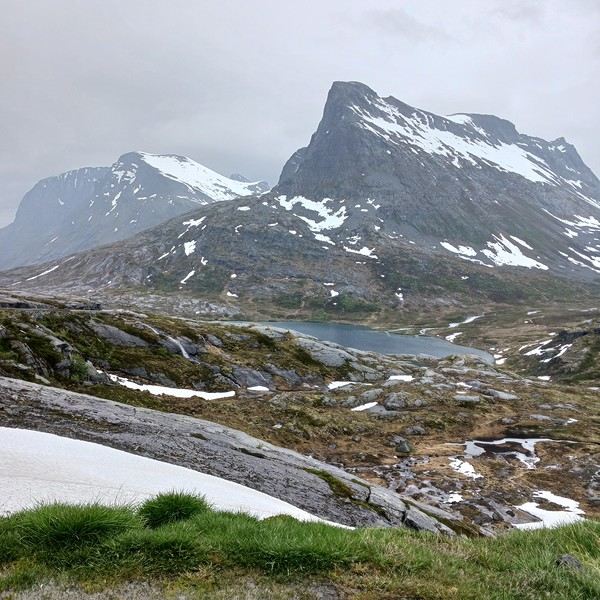
Day 16 – Monday, June 16Heading north. We’ve got a transition day ahead with 454 km to cover as we head north toward the great fjords. The road is pretty monotonous but sunny—at least until our picnic break, where I get to enjoy some delicious Norwegian strawberries! Then the weather takes a turn, and that’s when the mountains finally appear, their snow-capped peaks shining. Along the way, we spot massive waterfalls and "raging" rivers. There’s no shortage of water around here! We finally arrive at Trollstigen Resort, where we’ve rented a cabin. Surprise—they upgraded us to a bigger one than planned, with a wild grass roof and little flowers.


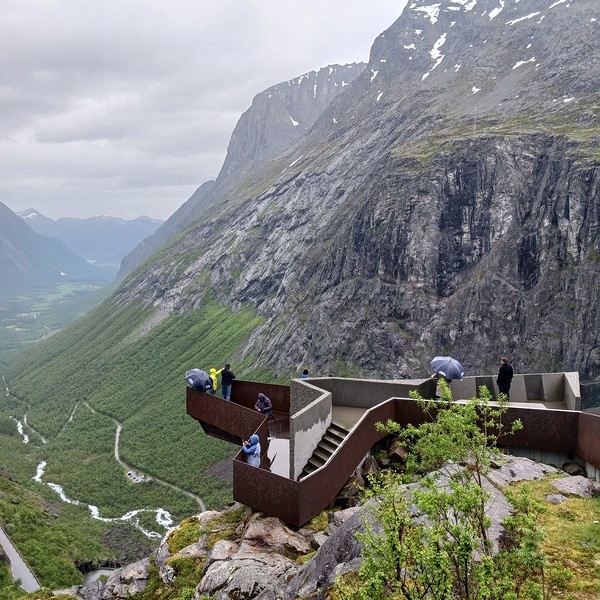
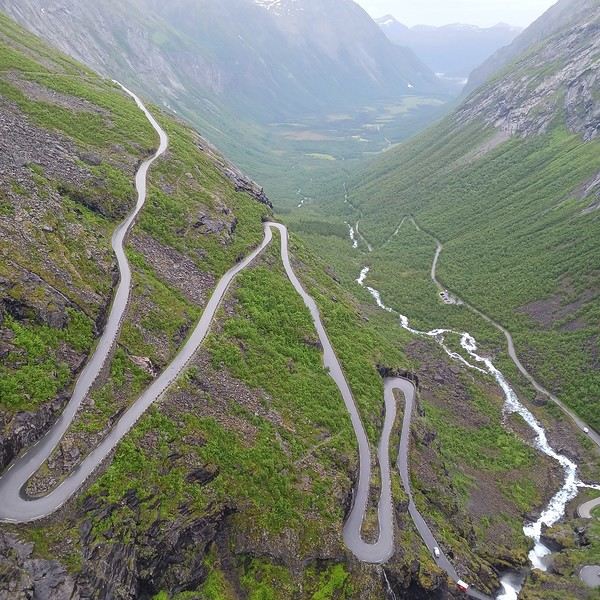
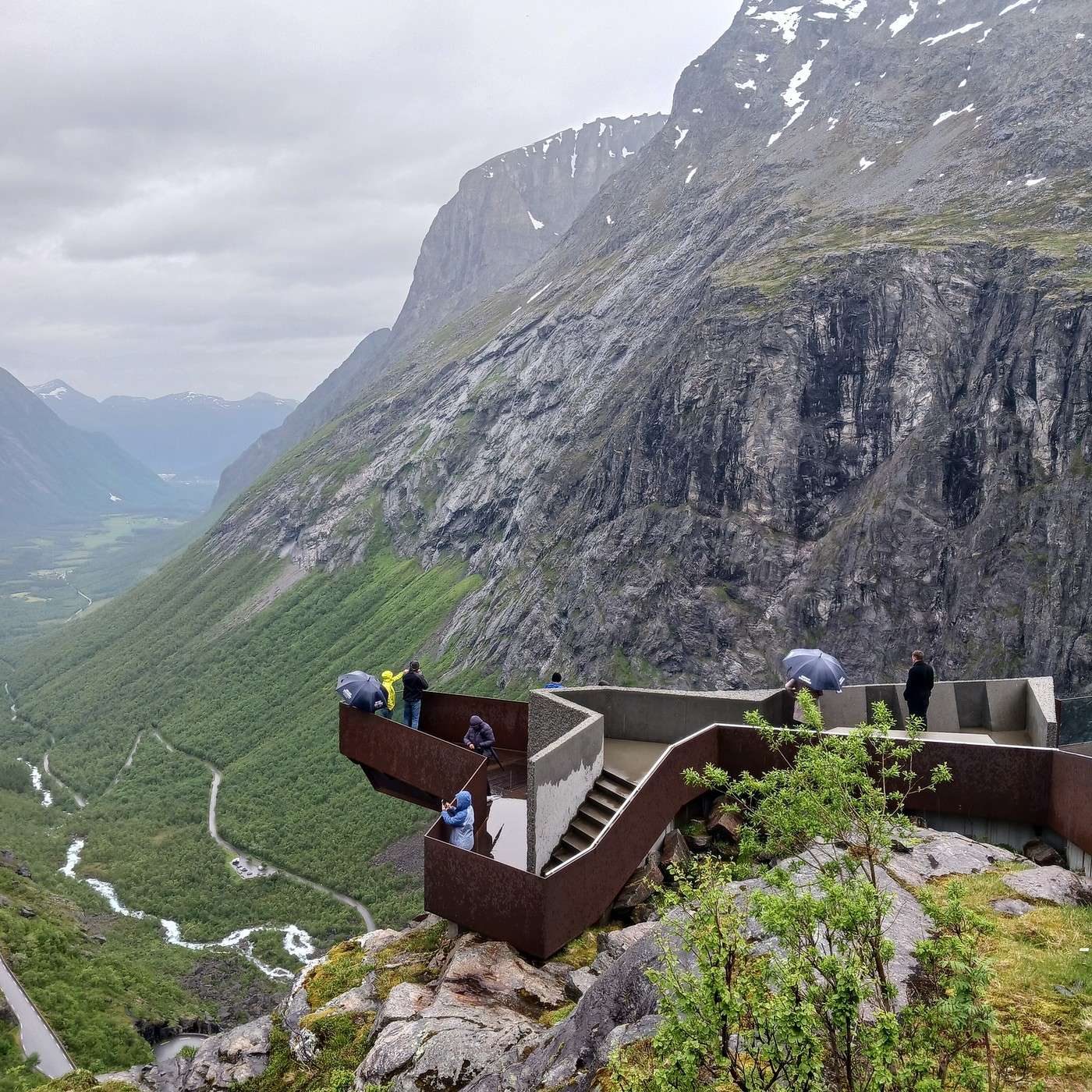
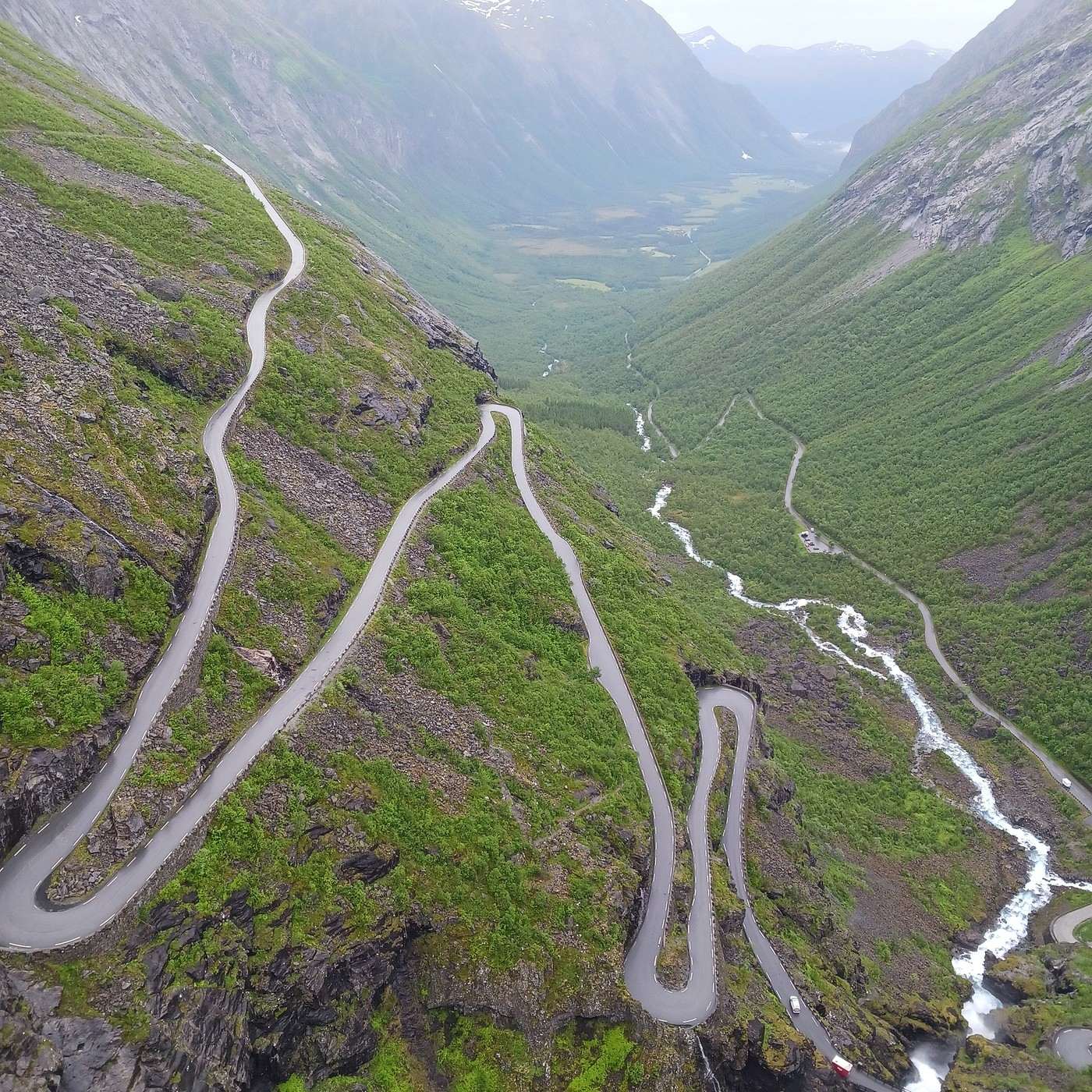
The bad news? Trollstigen Road has been closed since January 2024. Bummer, we missed it! It won’t reopen until July 14. So tomorrow morning, we’ll have to take a 144 km detour instead of the planned 13 km to reach the Trollstigen viewpoint… Hopefully, it won’t rain!

Kattegat Tour and Norway's Great Fjords - 32 Days (Denmark - Sweden - Norway)

Cendryon · 2025-08-12

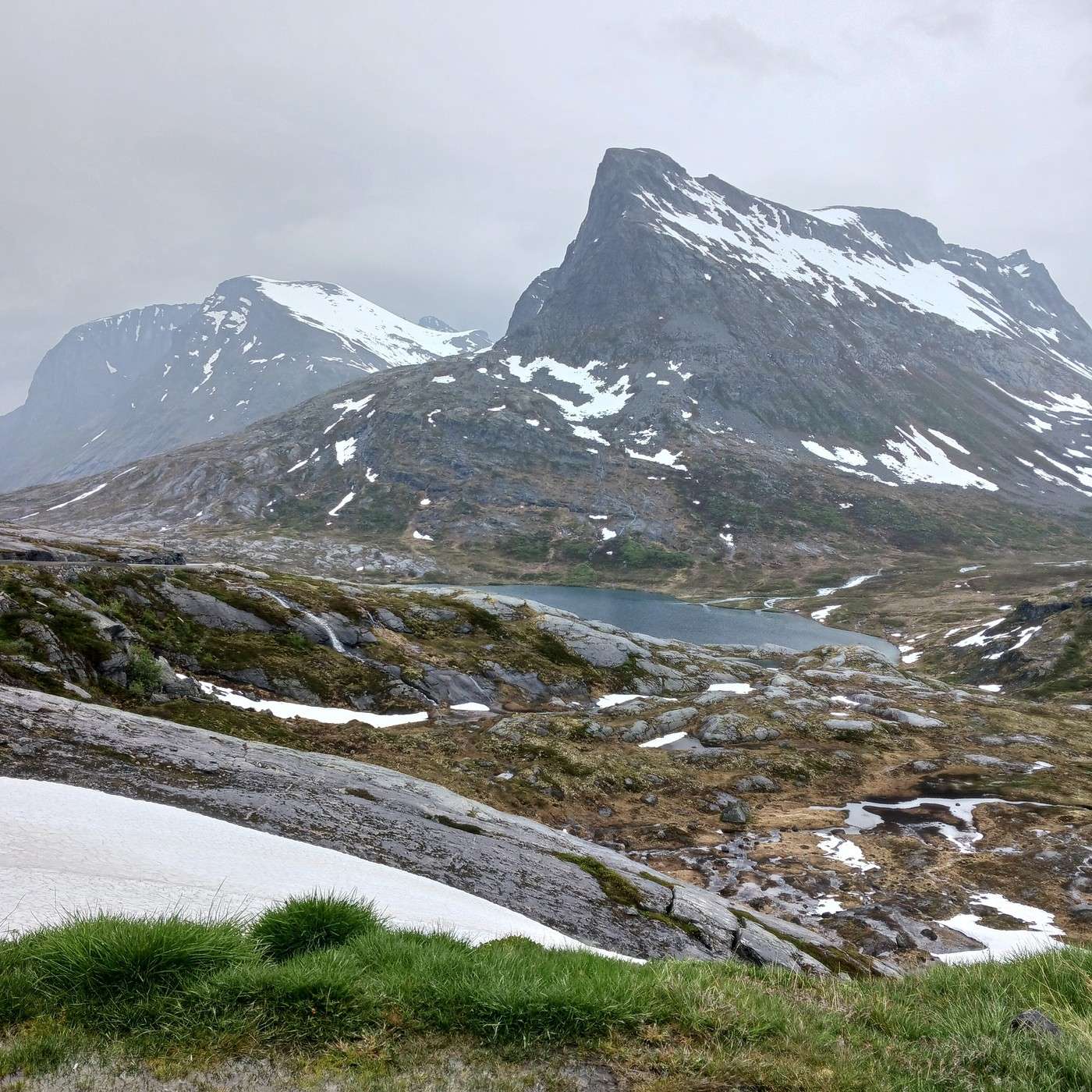
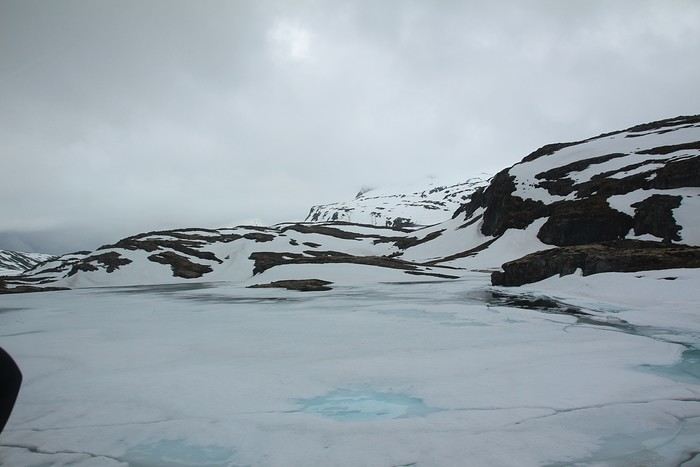
Day 17 – Tuesday, June 17 – A day to forget... How to put it, there are days when everything goes wrong, and you need at least one a month just to be average, right? This one was certainly the worst day of our trip: gray skies, rain, and on top of that, we had to take a 144 km detour through Reistaddalen and Stordal that wasn’t planned just to reach the famous Trollstigen tourist center. Still, we were happy to find snow along the way...


Here we are, finally at Trollstigen, the Troll’s Ladder, where you can see the road winding—this same road that’s closed. We even spot the construction vehicles hard at work.


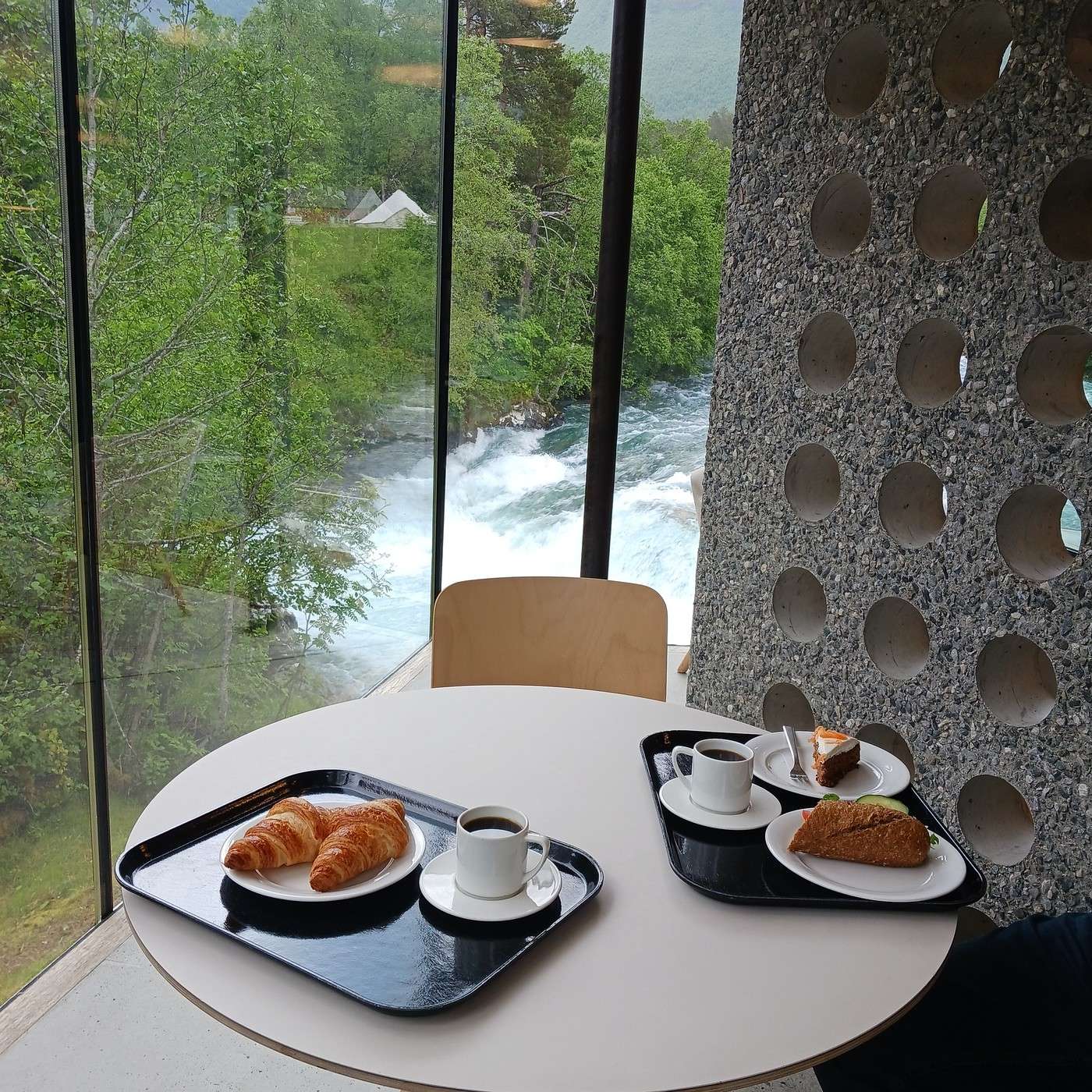
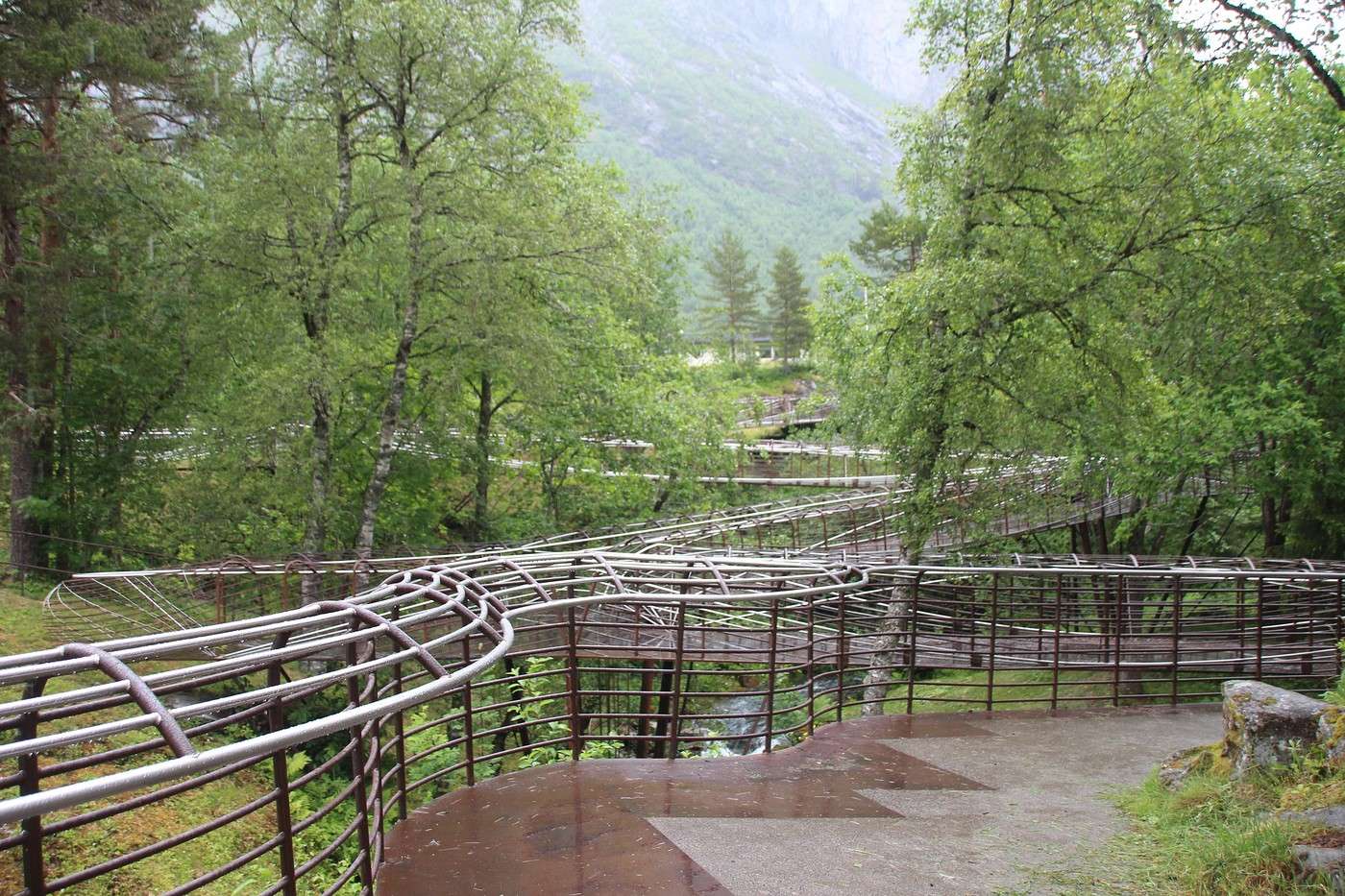
Even in the rain, it’s still impressive! On the way back, we stop at the Gudbrandsjuvet café, located near a raging river with paths set up so you can admire the power of the water and the waterfalls. A coffee, a croissant, and we’re off again...


...well, not quite, because I manage to slip on the path back to the parking lot—a nasty fall right near the waterfall! I land hard on my stomach and on the camera I’d carefully protected from the rain by tucking it inside my jacket, against my chest. The camera’s fine, but me... I’m in serious pain in my breast and I smash my thumb! At that moment, I’m only worried about the bleeding wound because I don’t feel any pain in my hand or wrist...


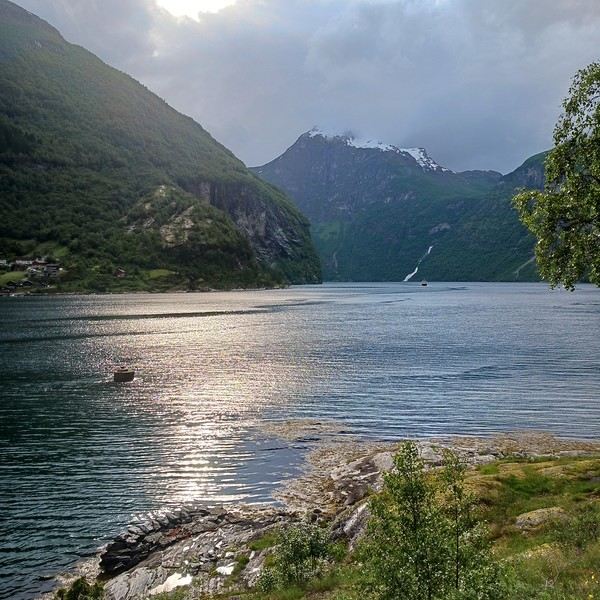
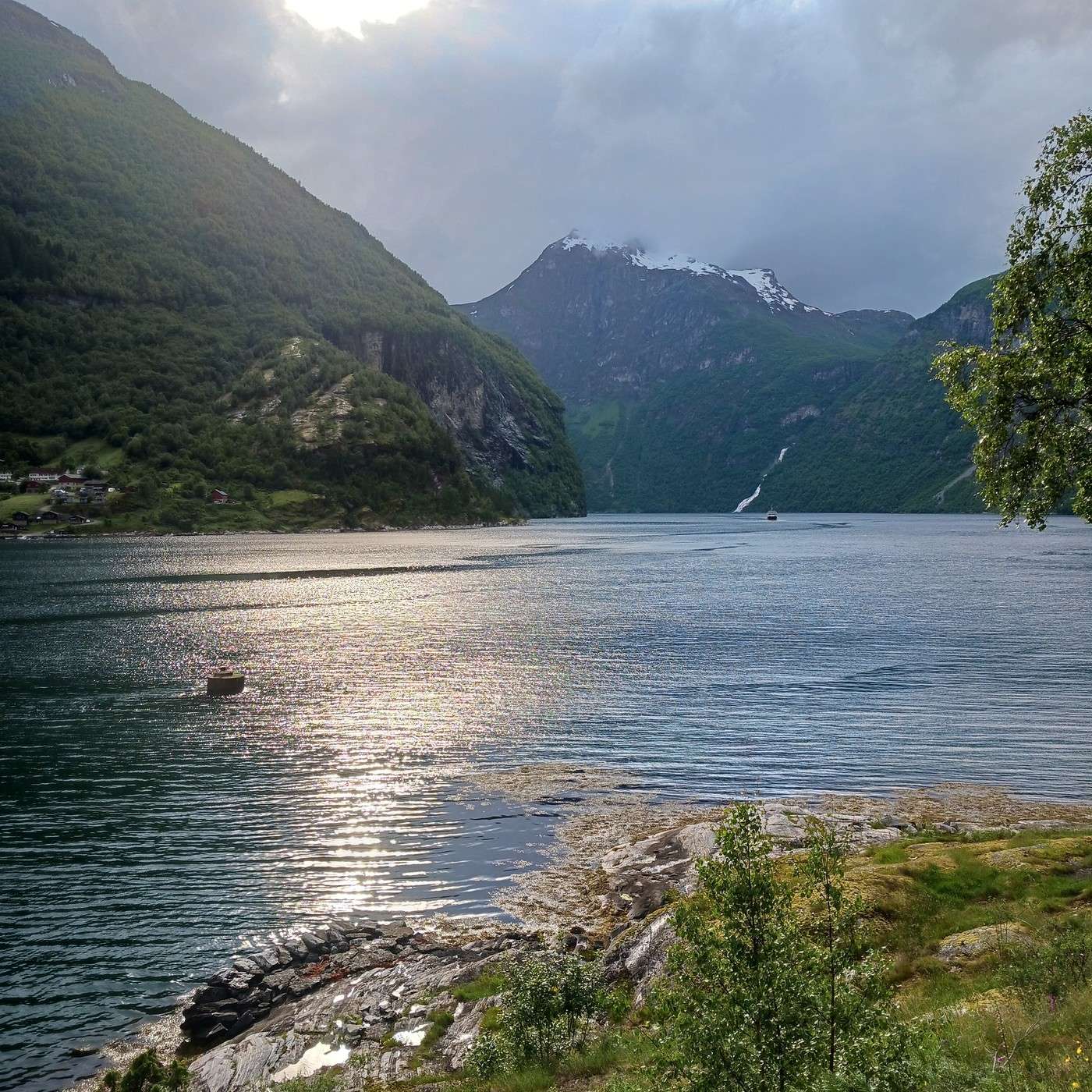
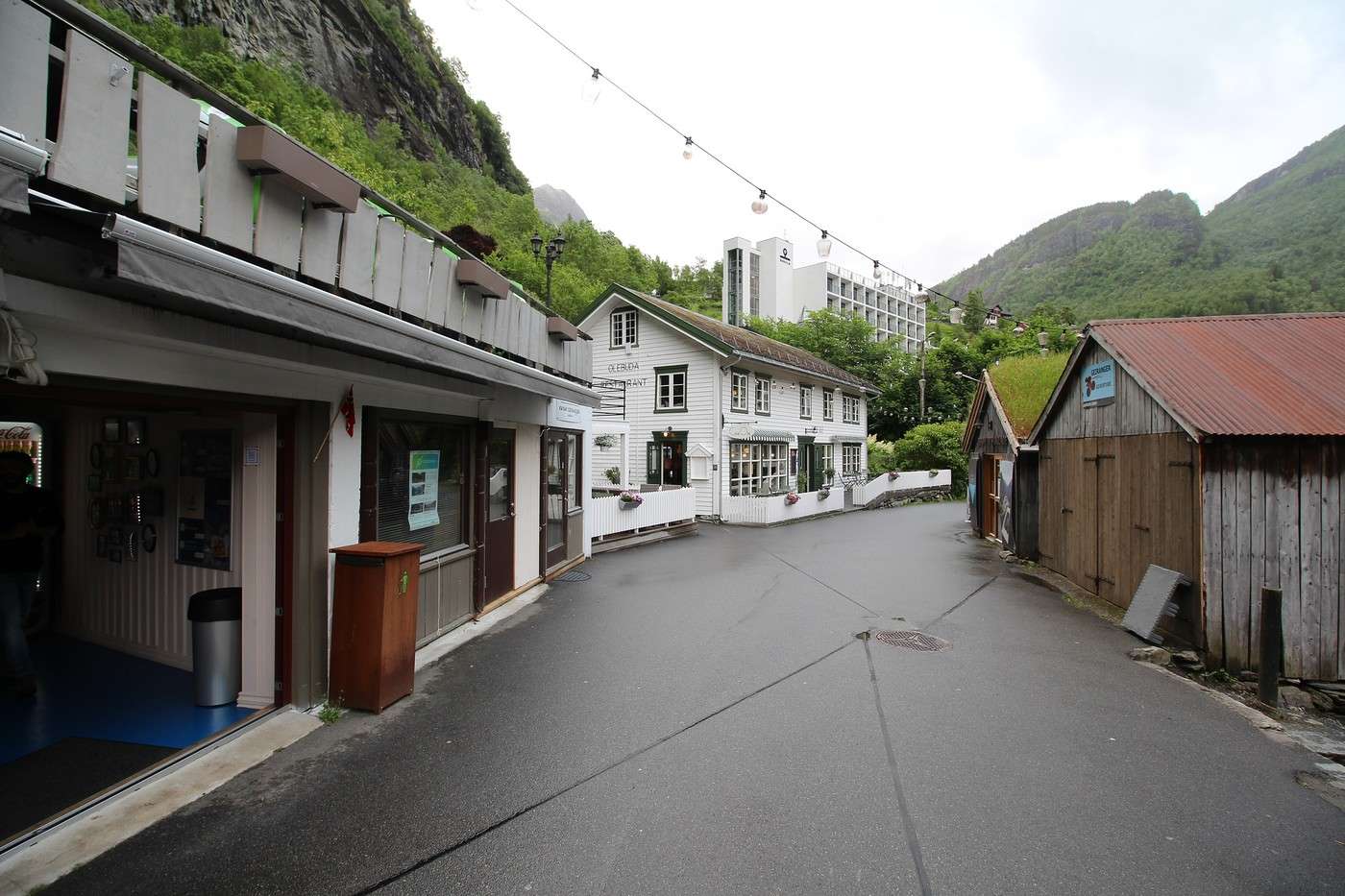
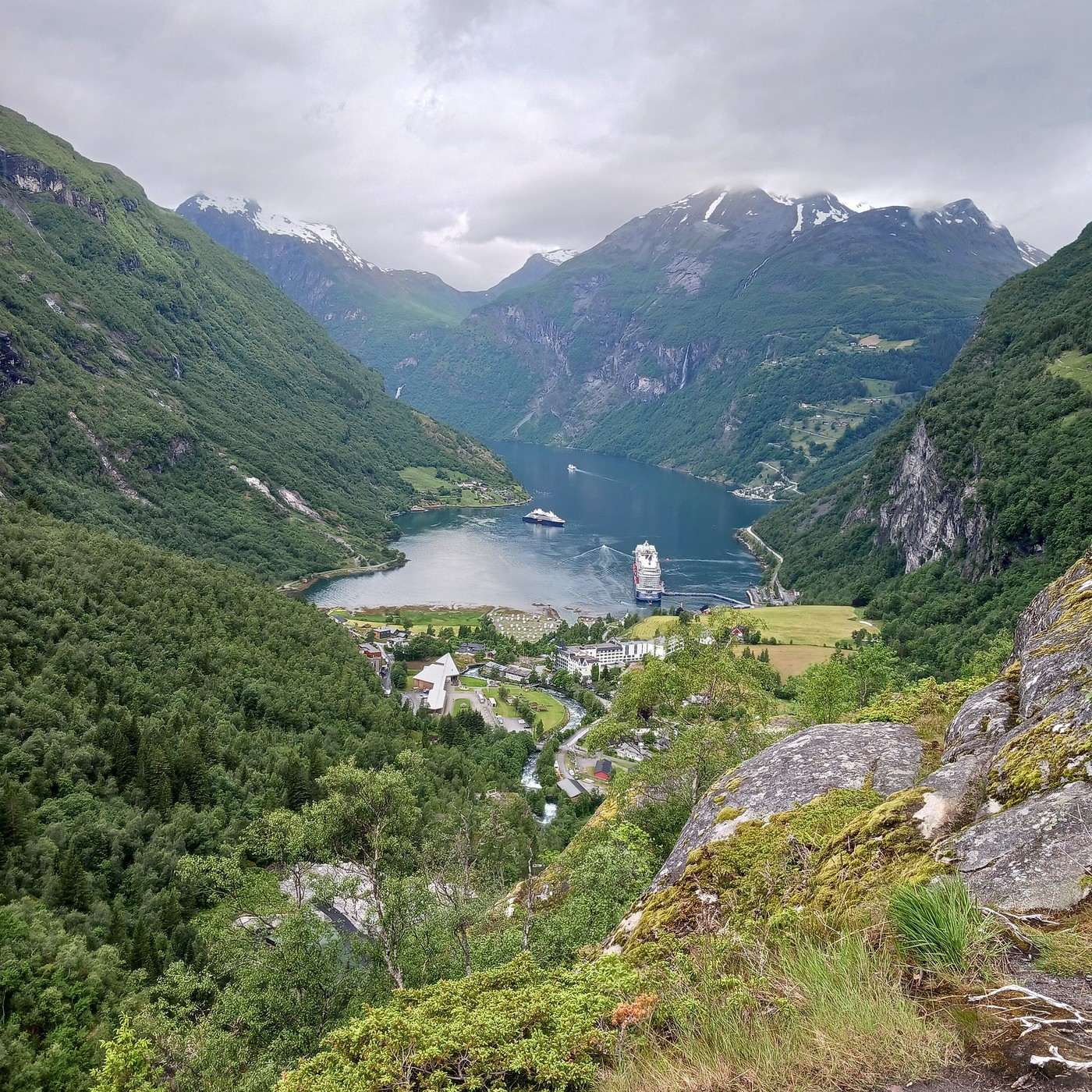
After all that drama and a bandage later, we arrive in Geiranger, where we settle in for the night at the Grande Fjord Hotel—a comfortable place right on the fjord. A quick stroll through the village center, where there’s not much to see except a few shops swarmed by the day’s thousands of cruise passengers...


Enjoying a shy ray of sunshine.


Tonight, it’s dinner at the hotel with a super tempting—and addictive—buffet. And Voltaren and ice for my wrist, which is really hurting now!

Kattegat Tour and Norway's Great Fjords - 32 Days (Denmark - Sweden - Norway)

Cendryon · 2025-08-12

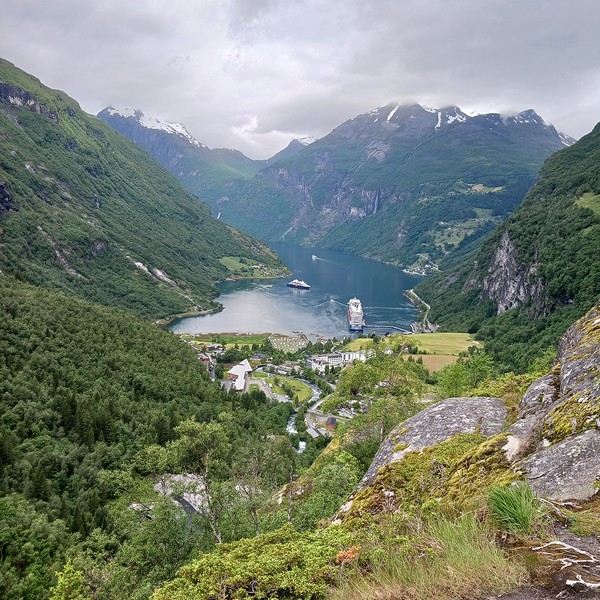
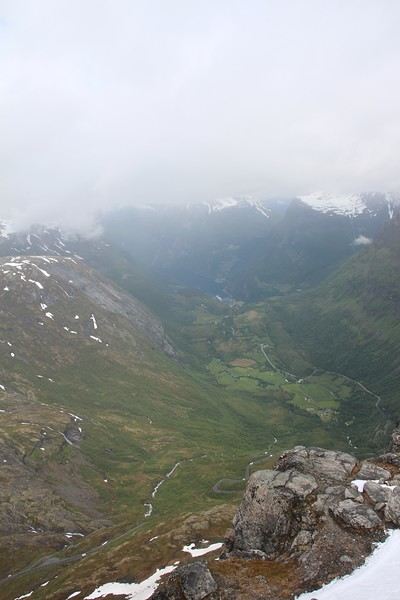
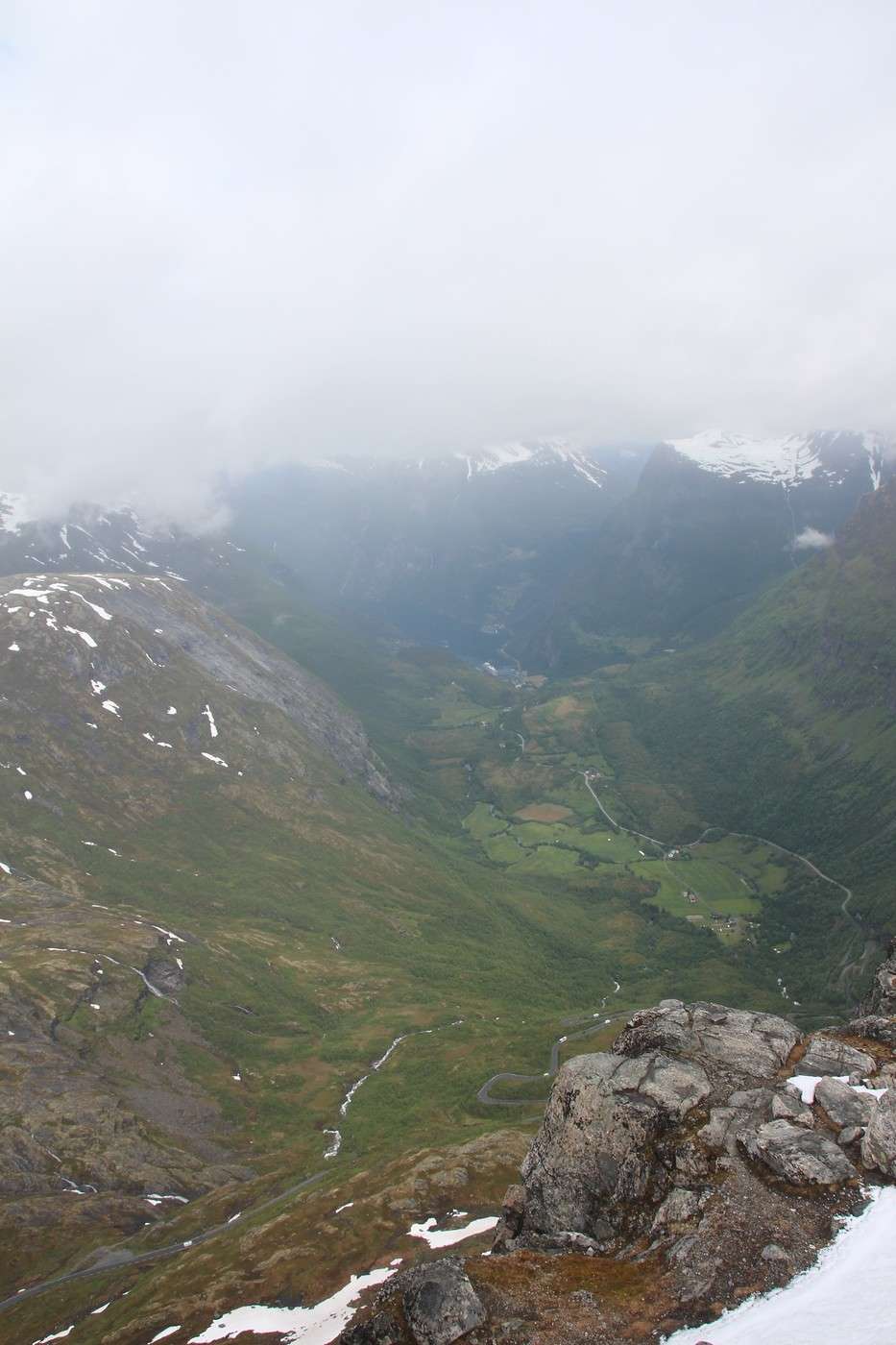
Day 18 – Wednesday, June 18 – Snow Falls... While a heatwave is settling over Belgium and southern Europe, our day is still looking chilly. The good news is it’s not raining in Geiranger this morning. We head up higher to admire the fjord in all its majesty and stop at the Flydalsjuvet viewpoint.


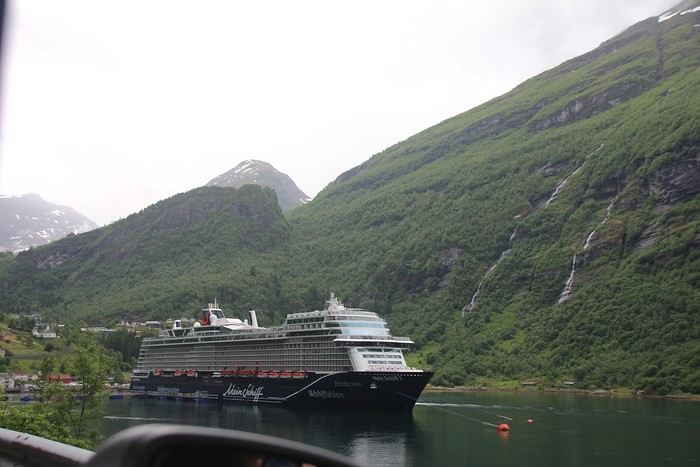
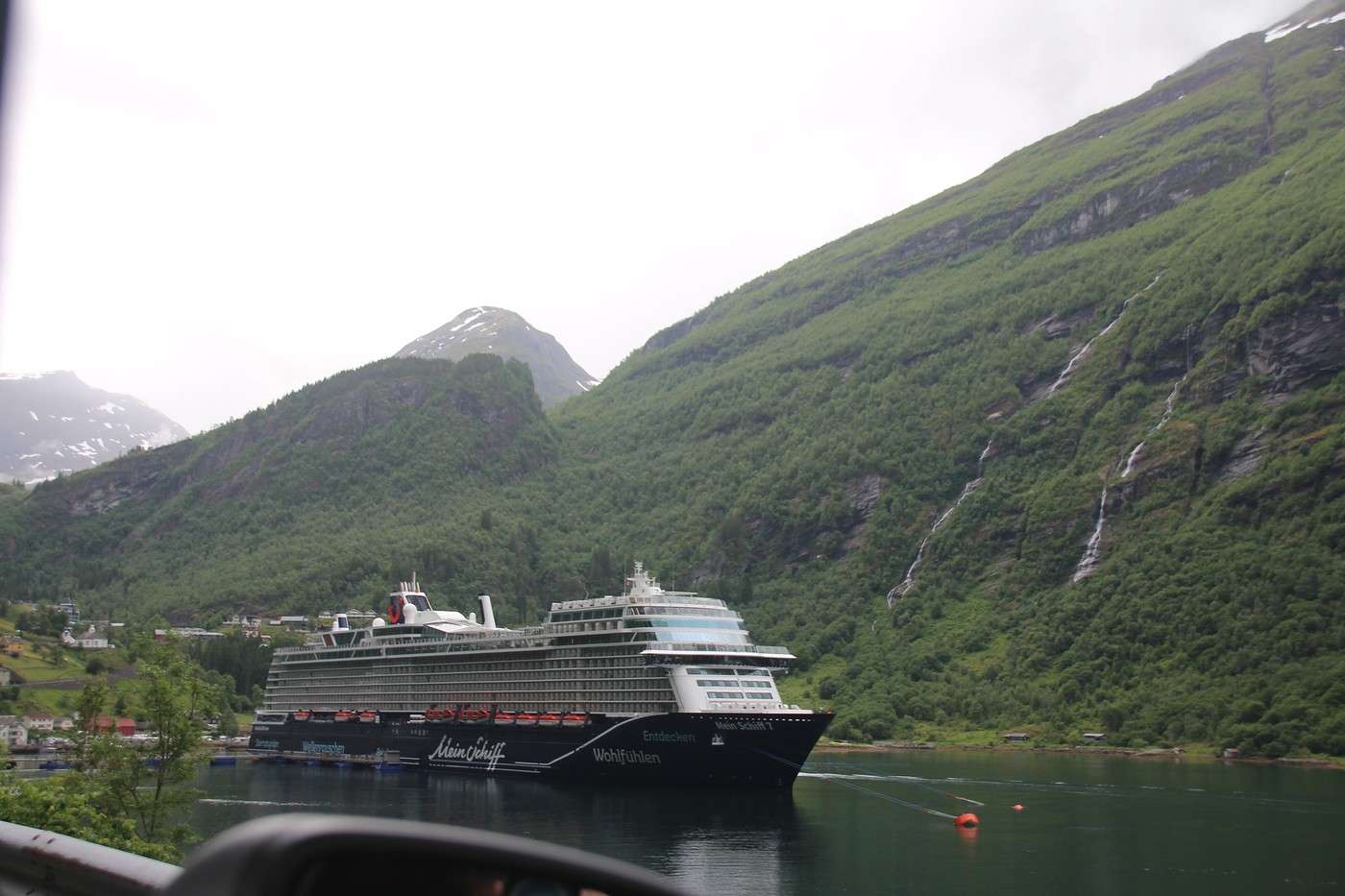
We continue toward Dalsnibba Viewpoint. The road to get there is toll-based. Once at the top, there’s lots of snow and little visibility over Geiranger. This is the only time we can say "luckily there’s a cruise ship docked below"—it helps pinpoint the location and gives a sense of scale...


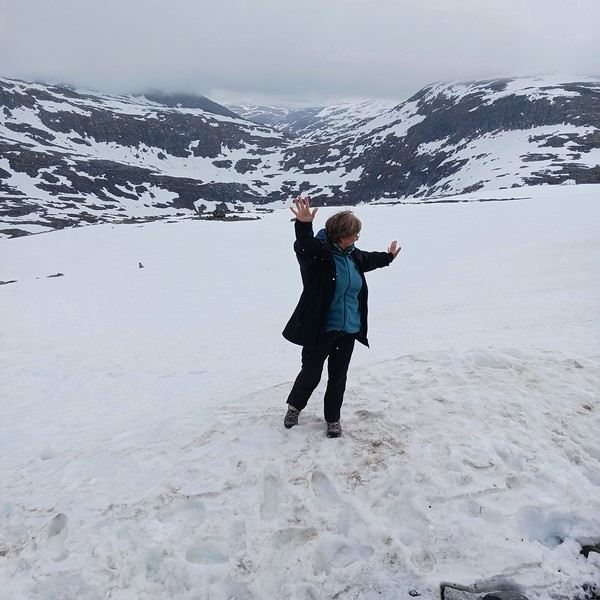
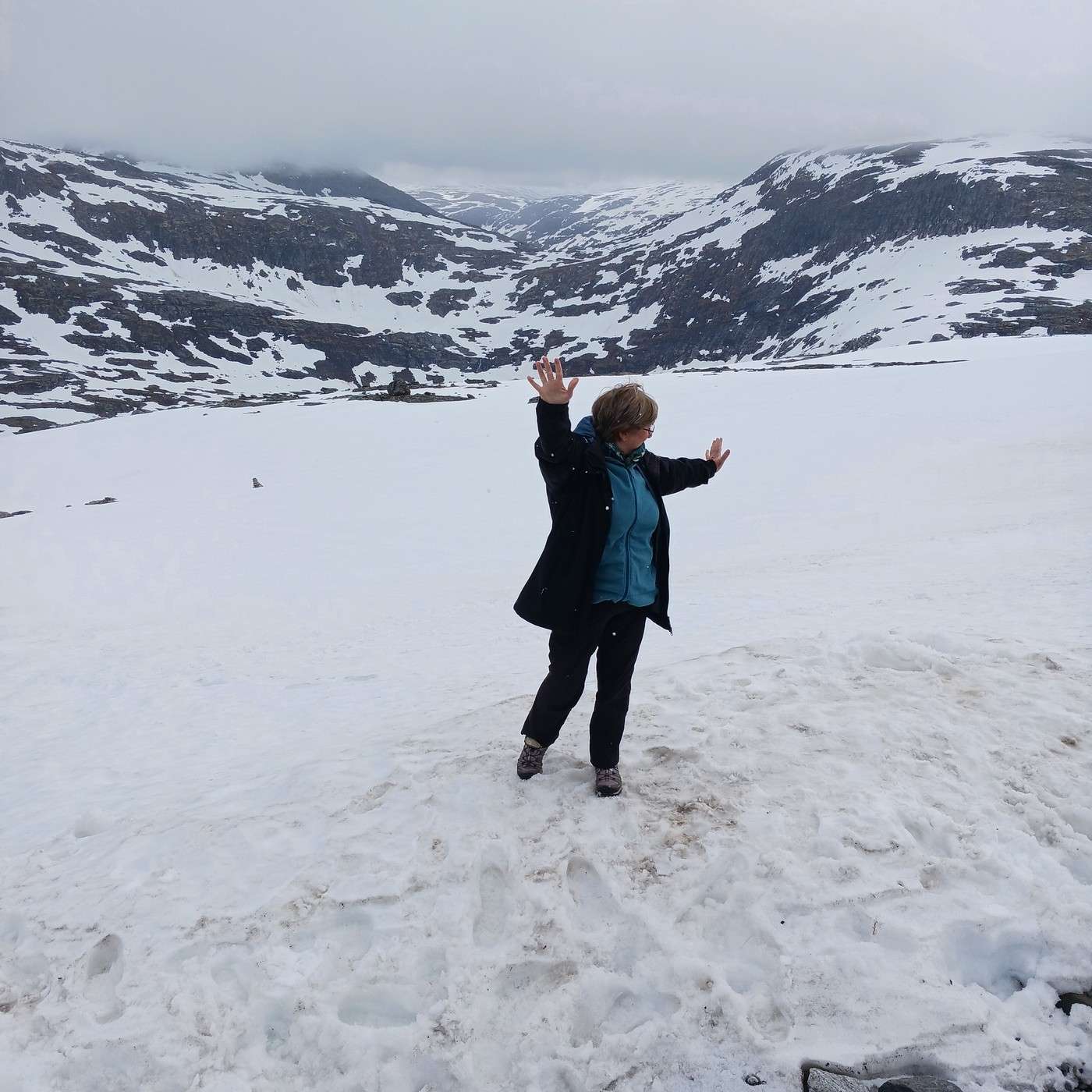
Anyway, I’m having fun with the snow! And just like that, it starts snowing for real!


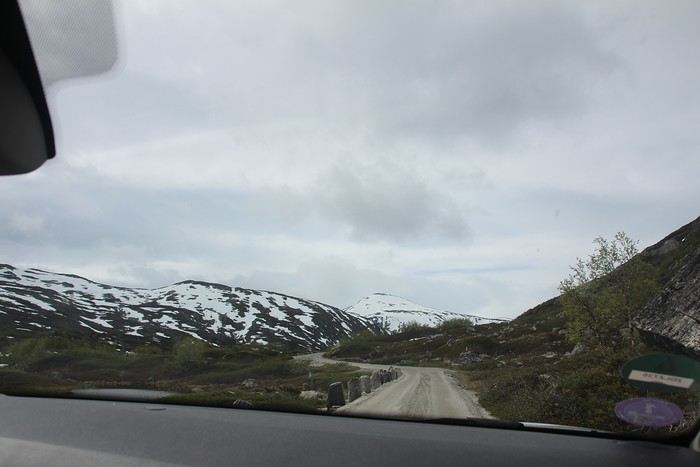
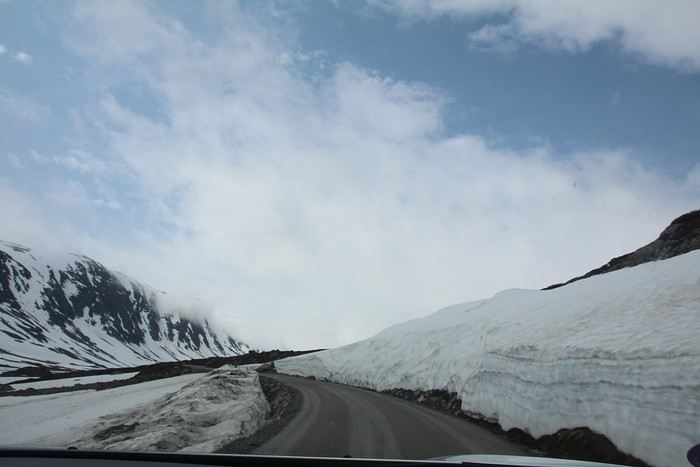
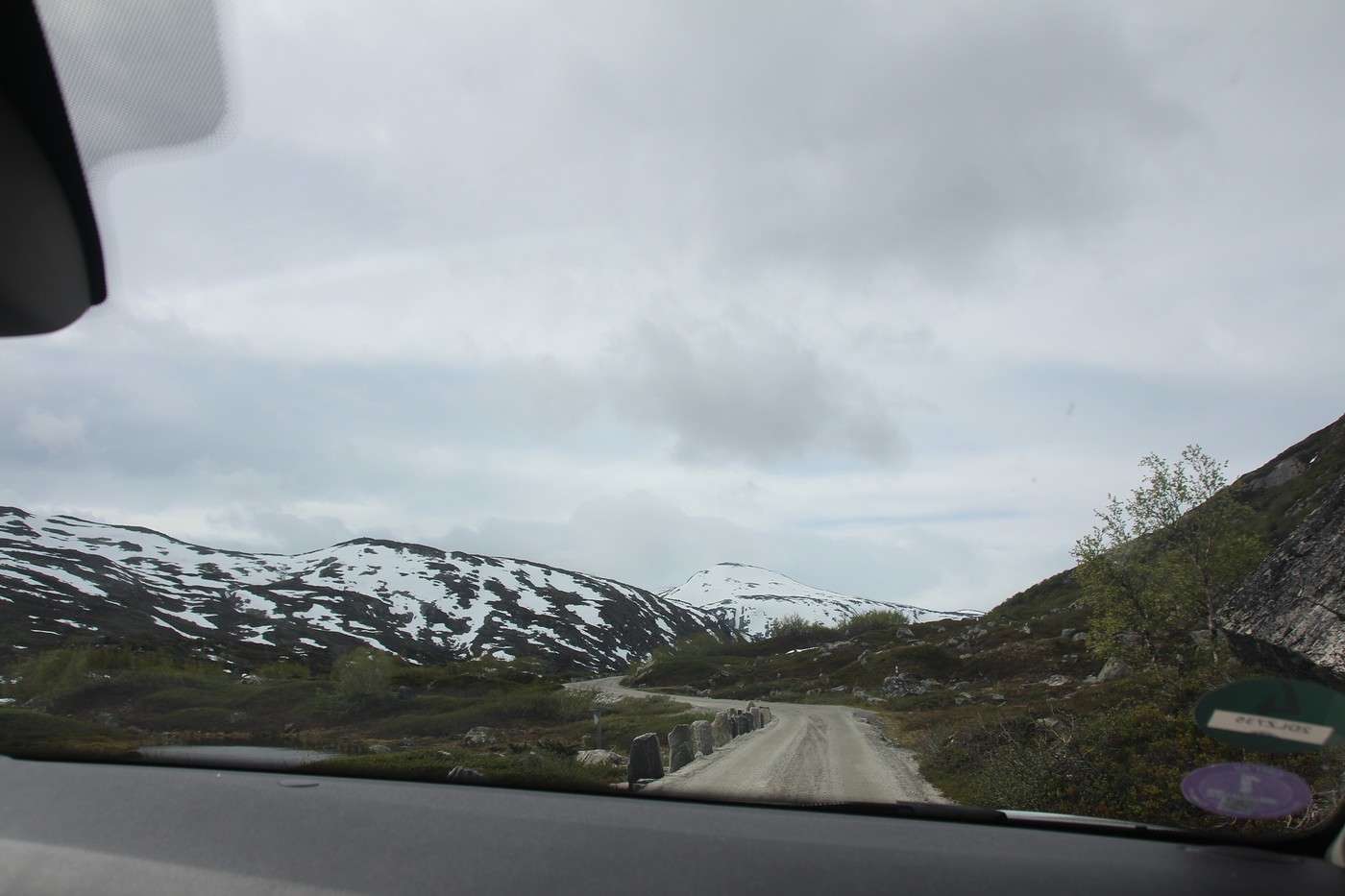
But the best is yet to come as we head toward Grotli to take the scenic Route 258, Gamle Strynefjellsveg. At first, this road feels more like a gravel track than a paved one with all its loose stones.


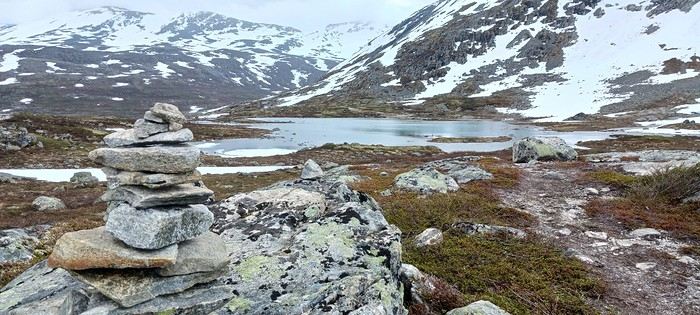
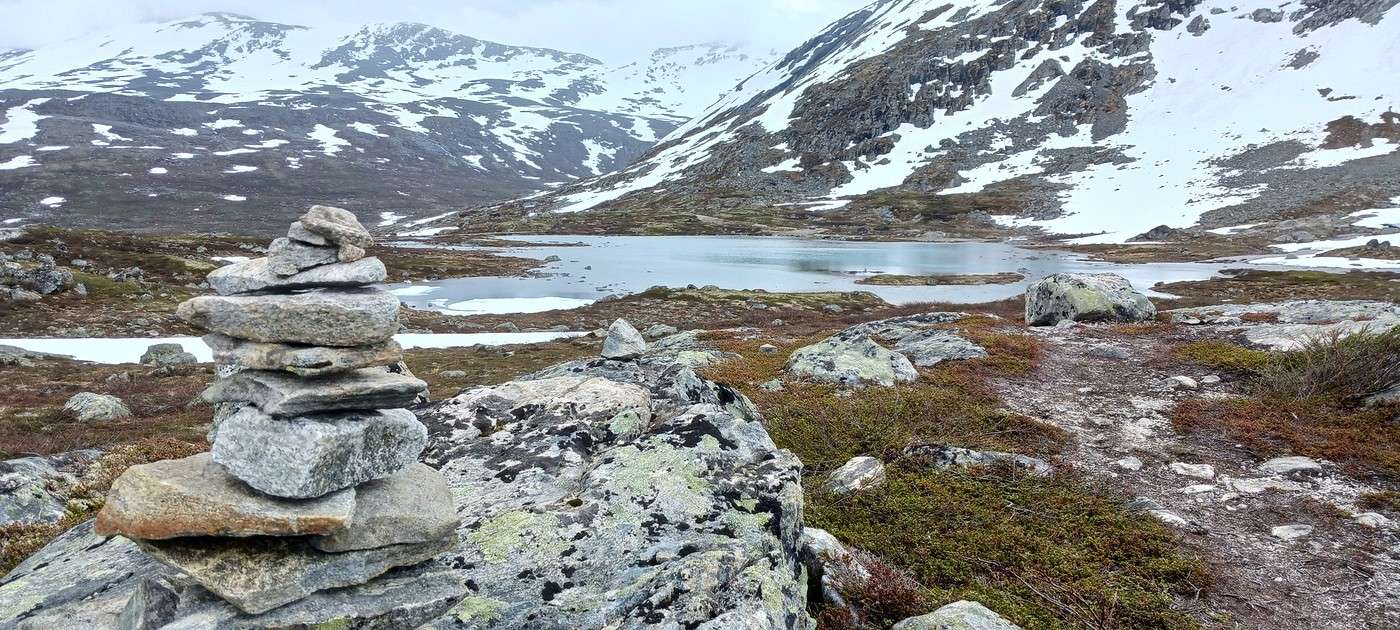
An ancient glacial valley, this road was the only way south before they built a tunnel. But admit it—it’s much nicer to drive under the open sky, especially since the landscapes are stunning, even in gray weather.


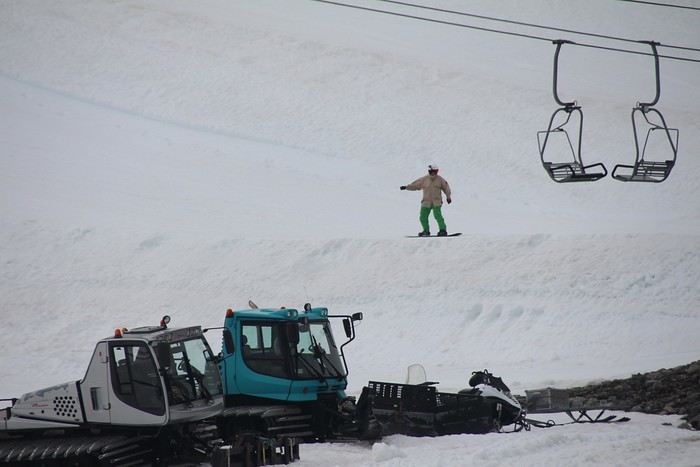
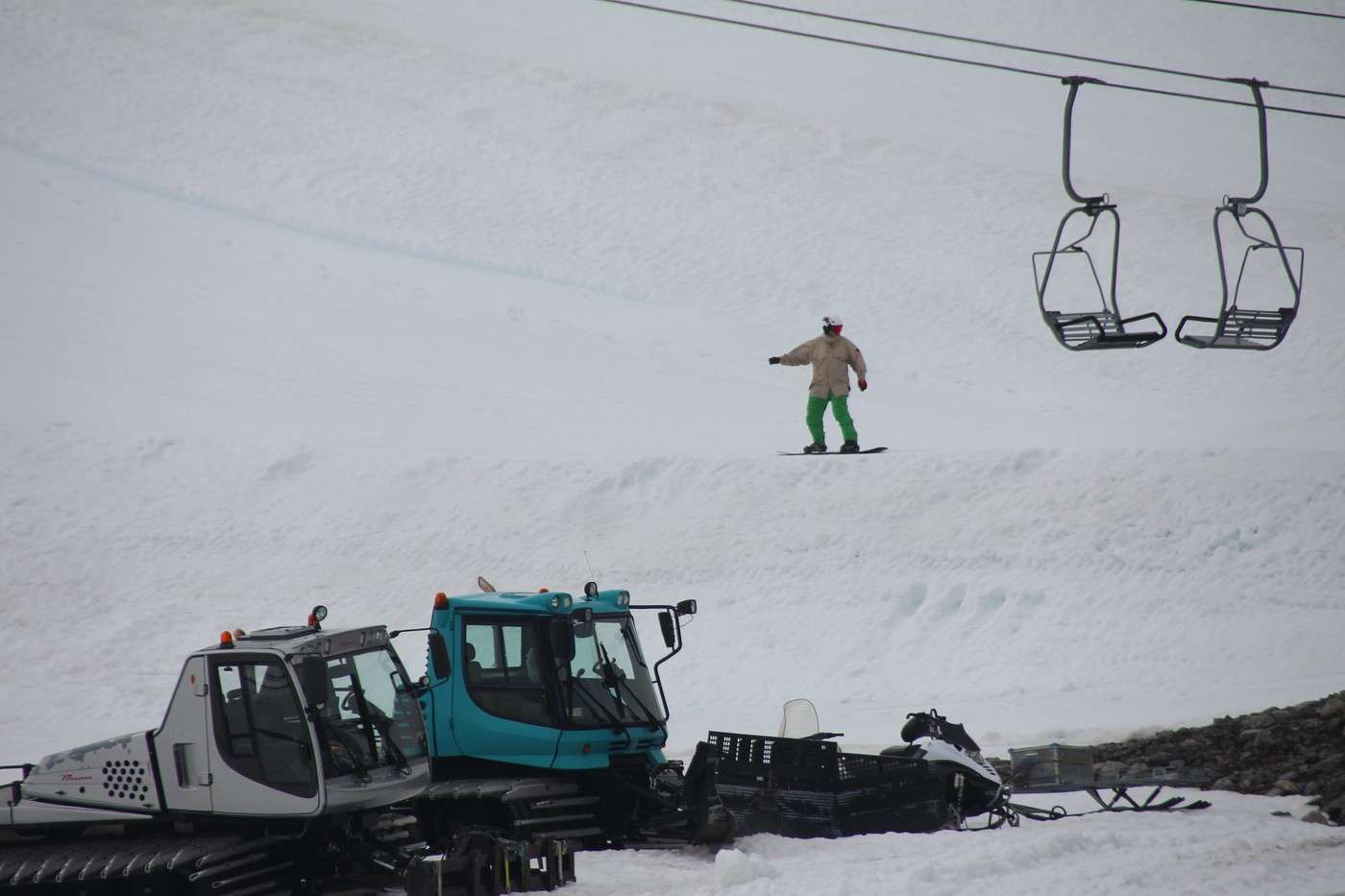
There’s even a ski resort with a chairlift and skiers—everything!


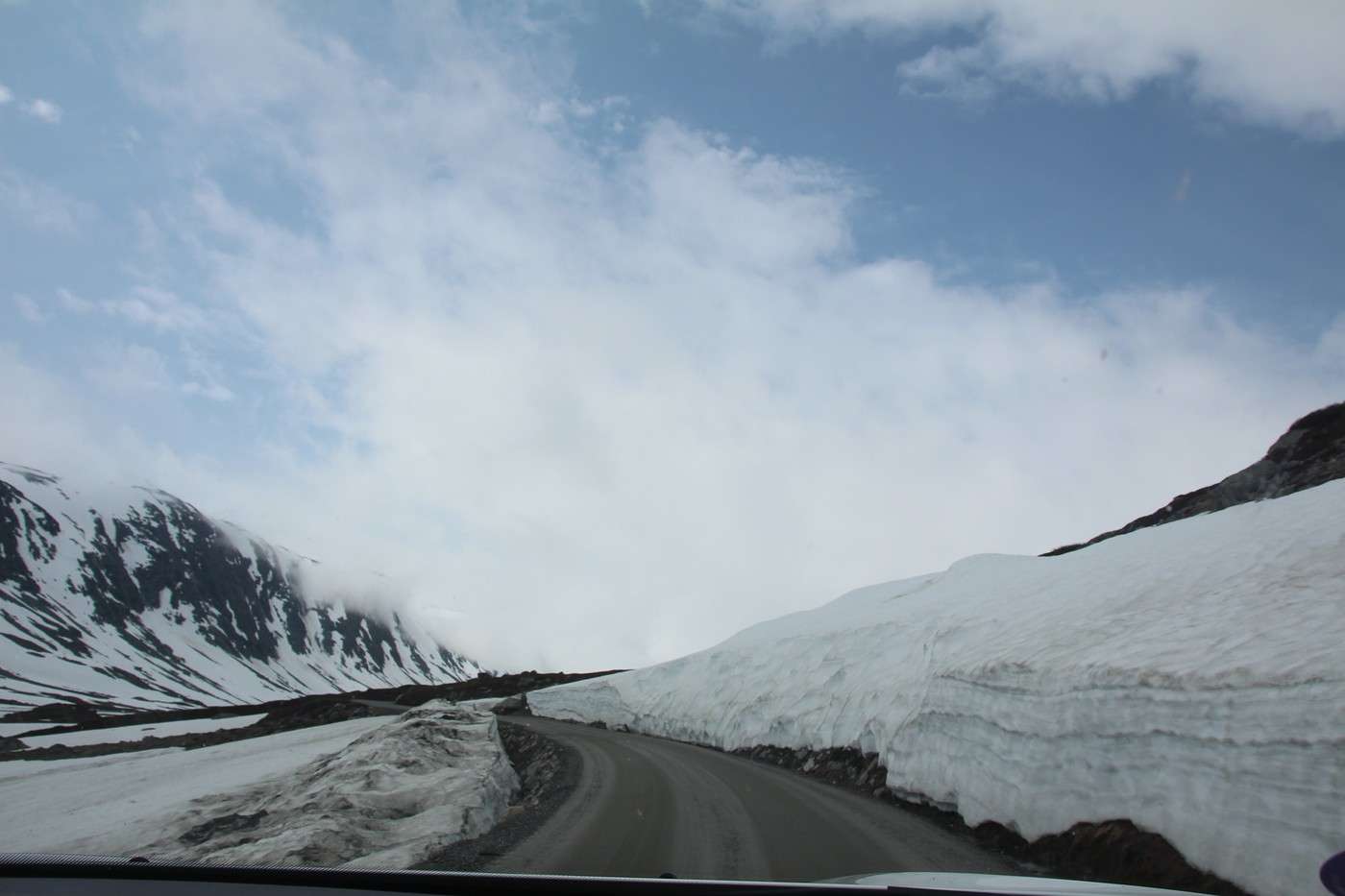
Snow walls


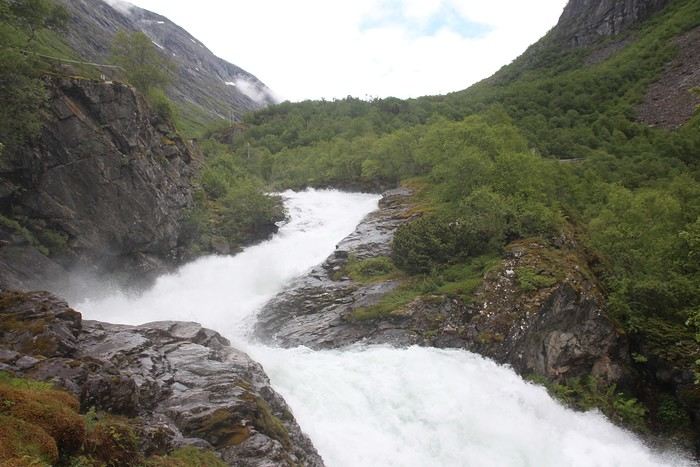
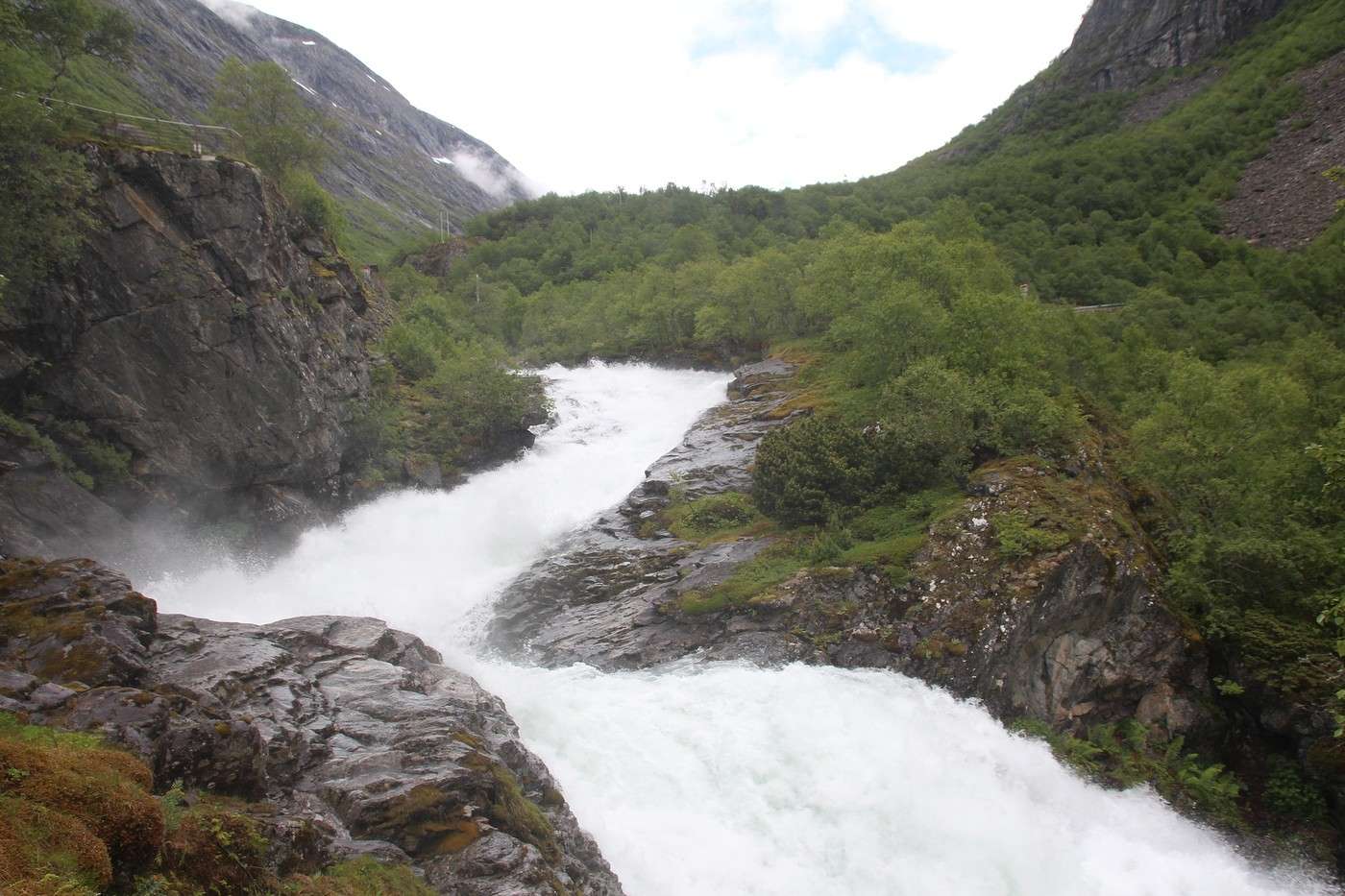
Quick stop at Øvstefossen, another waterfall (being careful not to slip)...


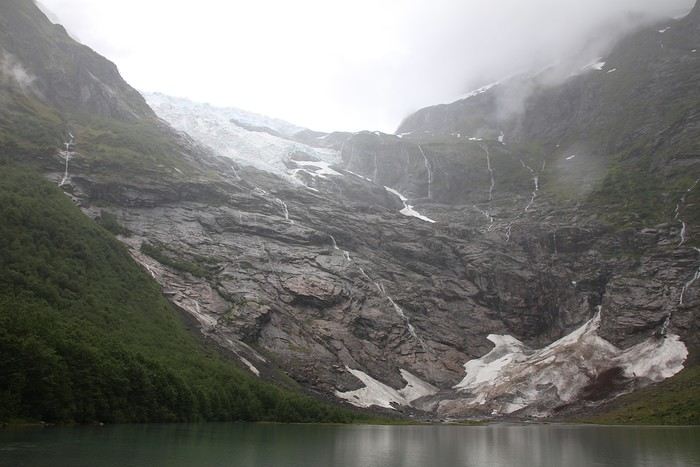
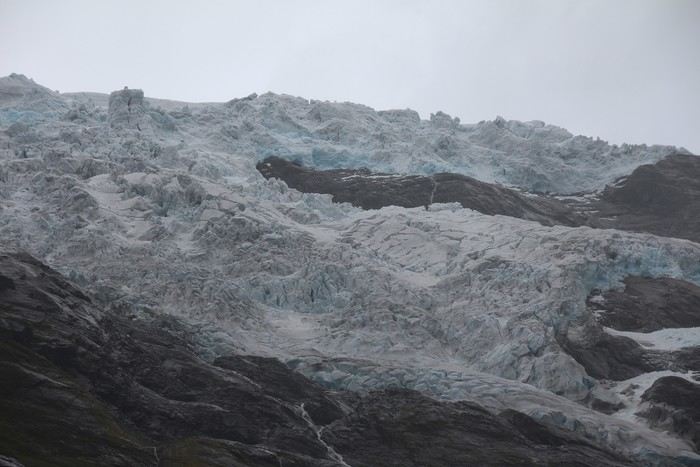
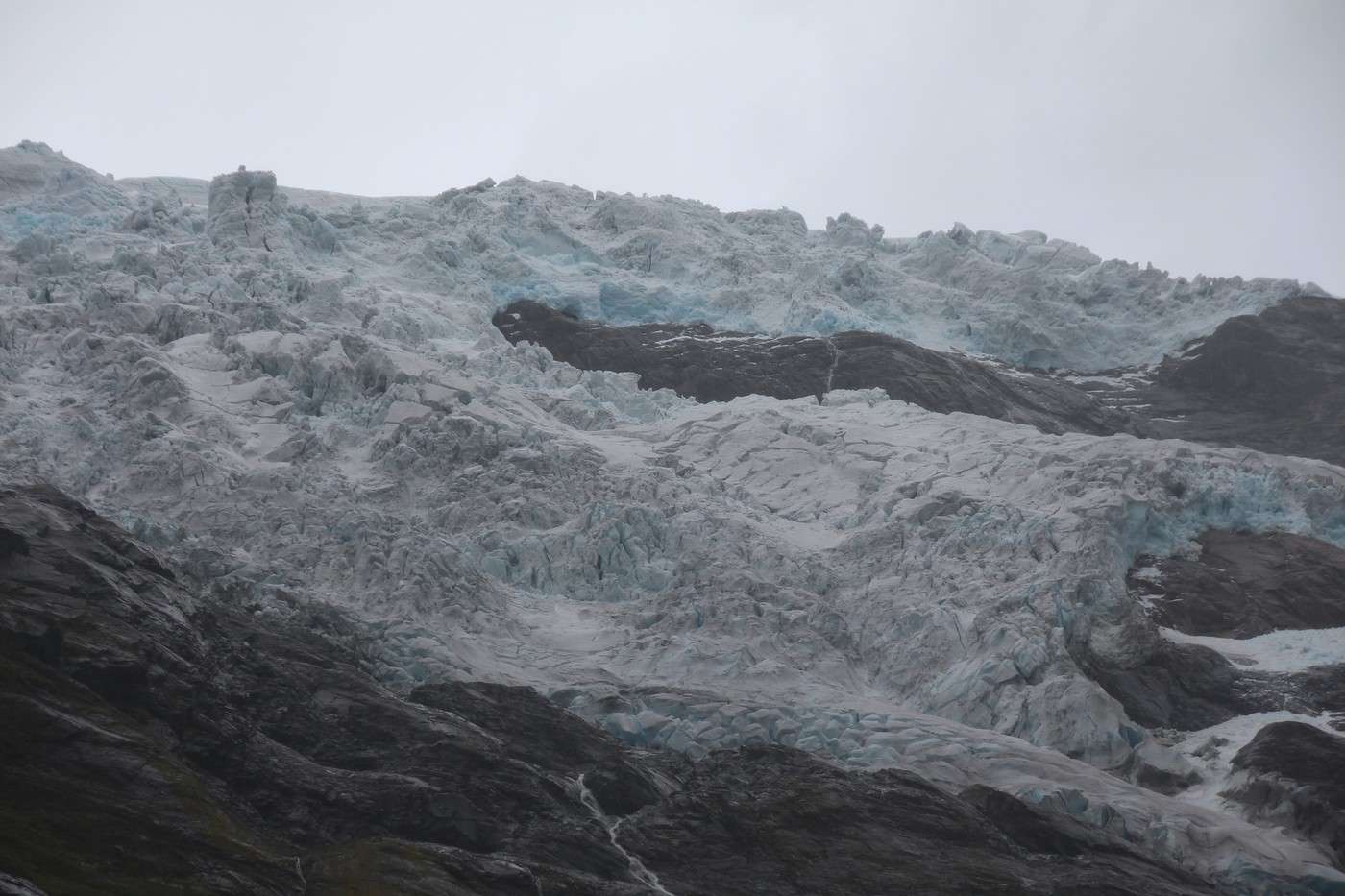
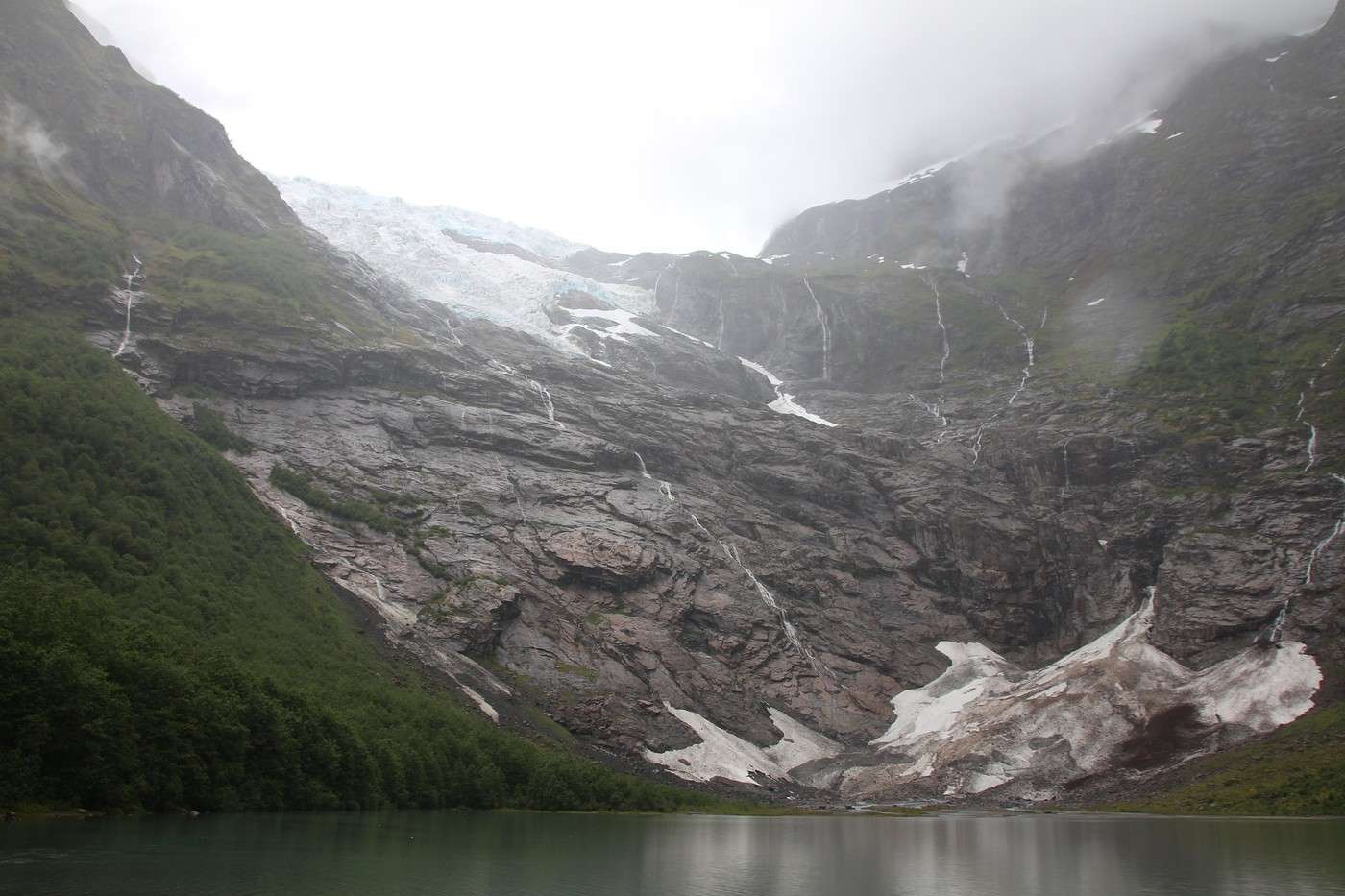
We stop for gas in Folva. There’s a small supermarket and picnic tables—perfect for us. I’d planned to detour to Briksdal Glacier (Briksdalbreen), but that adds about 1.5 to 2 hours, and we’re already running late. Plus, it’s a very touristy spot and a common cruise ship excursion. We opt for Bøyabreen Glacier instead—much easier to access and less crowded.


I’d let our next Airbnb host know we’d arrive between 5 and 6 PM. We pull in at 6 on the dot, and the cottage owner is waiting for us. As usual with all the Airbnbs we’ve booked in Scandinavia, everything’s spotless!

Kattegat Tour and Norway's Great Fjords - 32 Days (Denmark - Sweden - Norway)

Cendryon · 2025-08-13

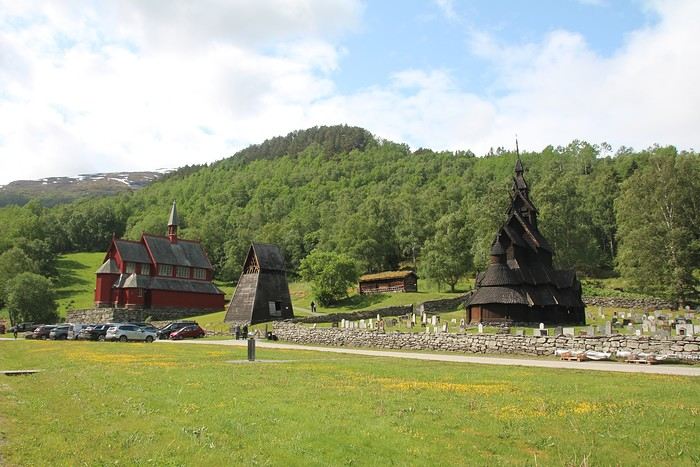
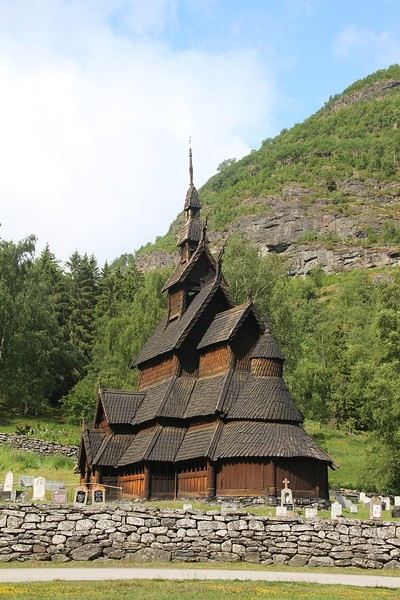
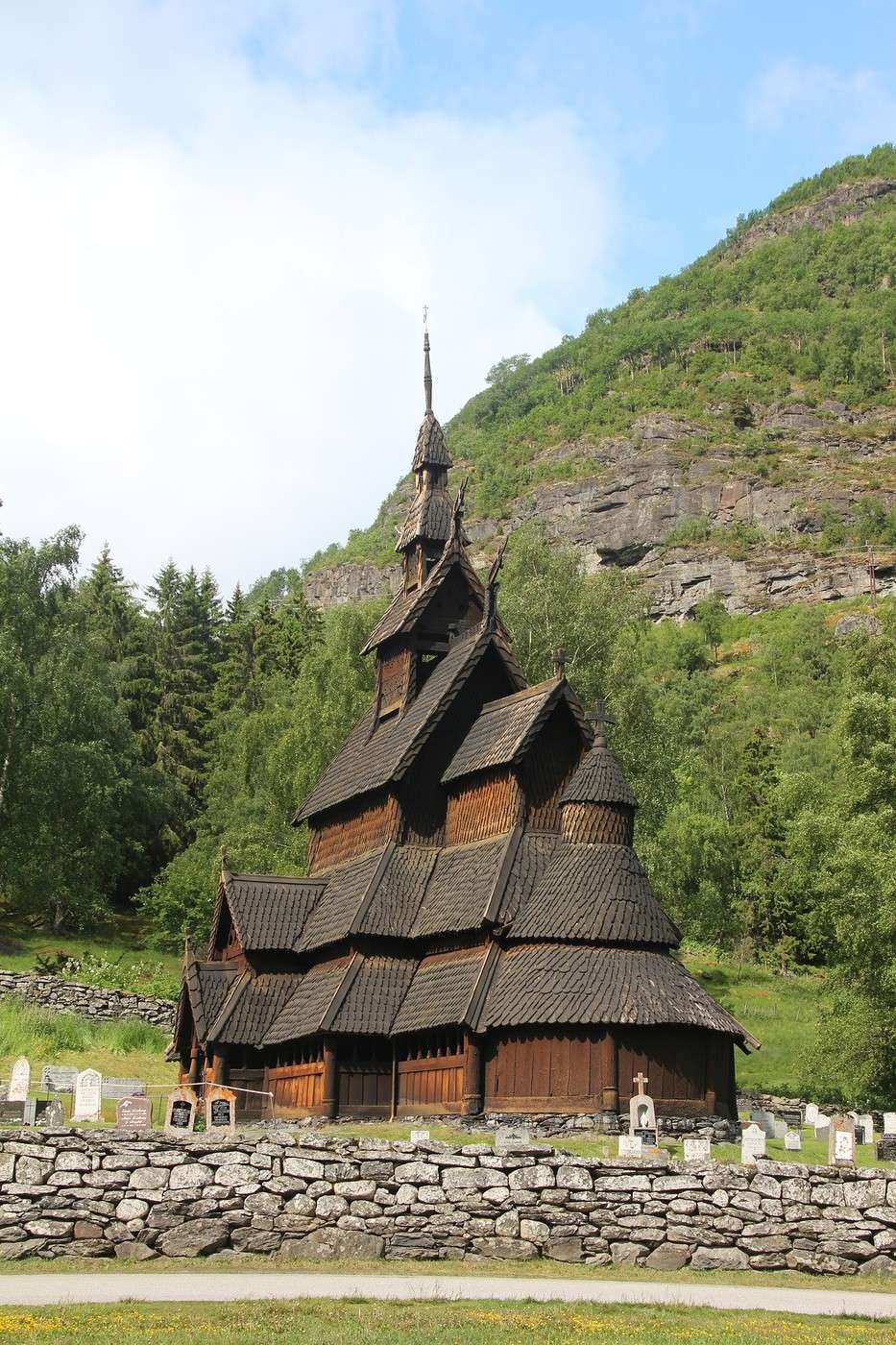
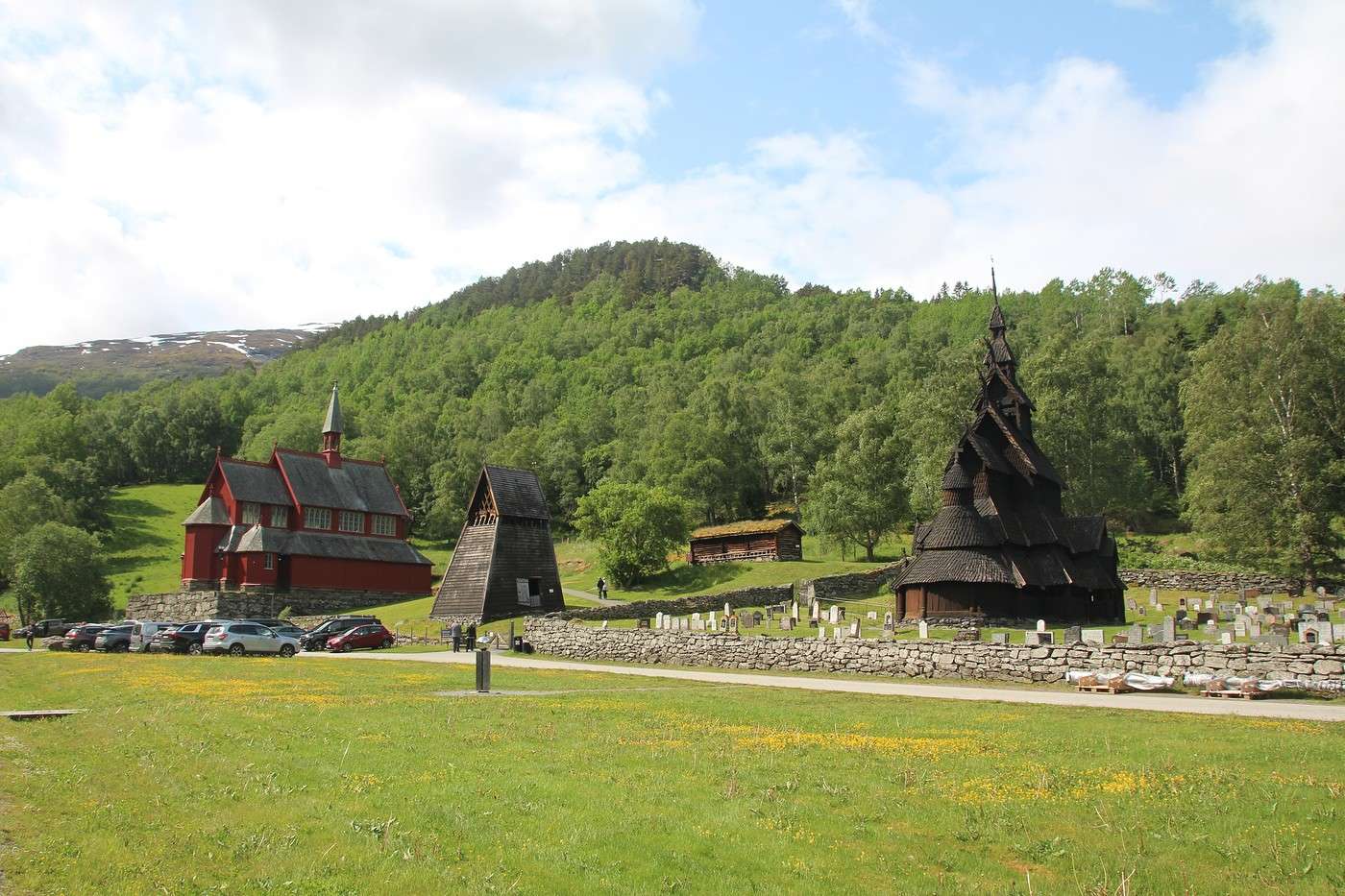
Day 19 – Thursday, June 19 – Snow and Sheep... This morning the weather seems milder, but you never know—we're in the mountains, and the forecast can change quickly. We take the Mannheller-Fodnes ferry, a short 15-minute crossing. Then we head to the Borgund Stave Church (Stavkirke de Borgund), or rather, the two churches.


Everything is well set up here with parking, a visitor center, restrooms, a café, etc.—except this morning, the site is exceptionally closed for a funeral. We can only admire it from the outside. So, we saved the entrance fee, because yes, in Scandinavia, many churches charge admission.


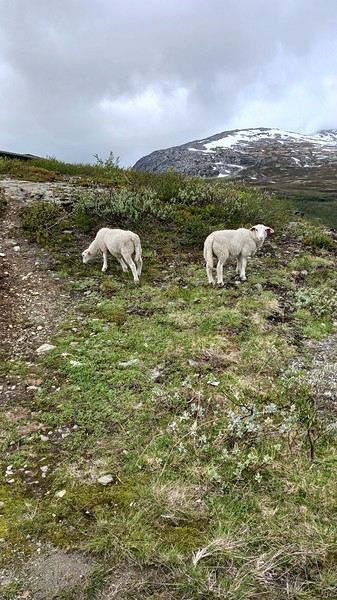
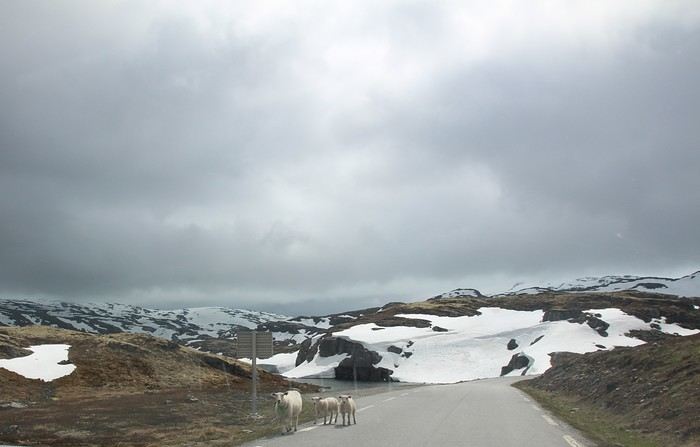
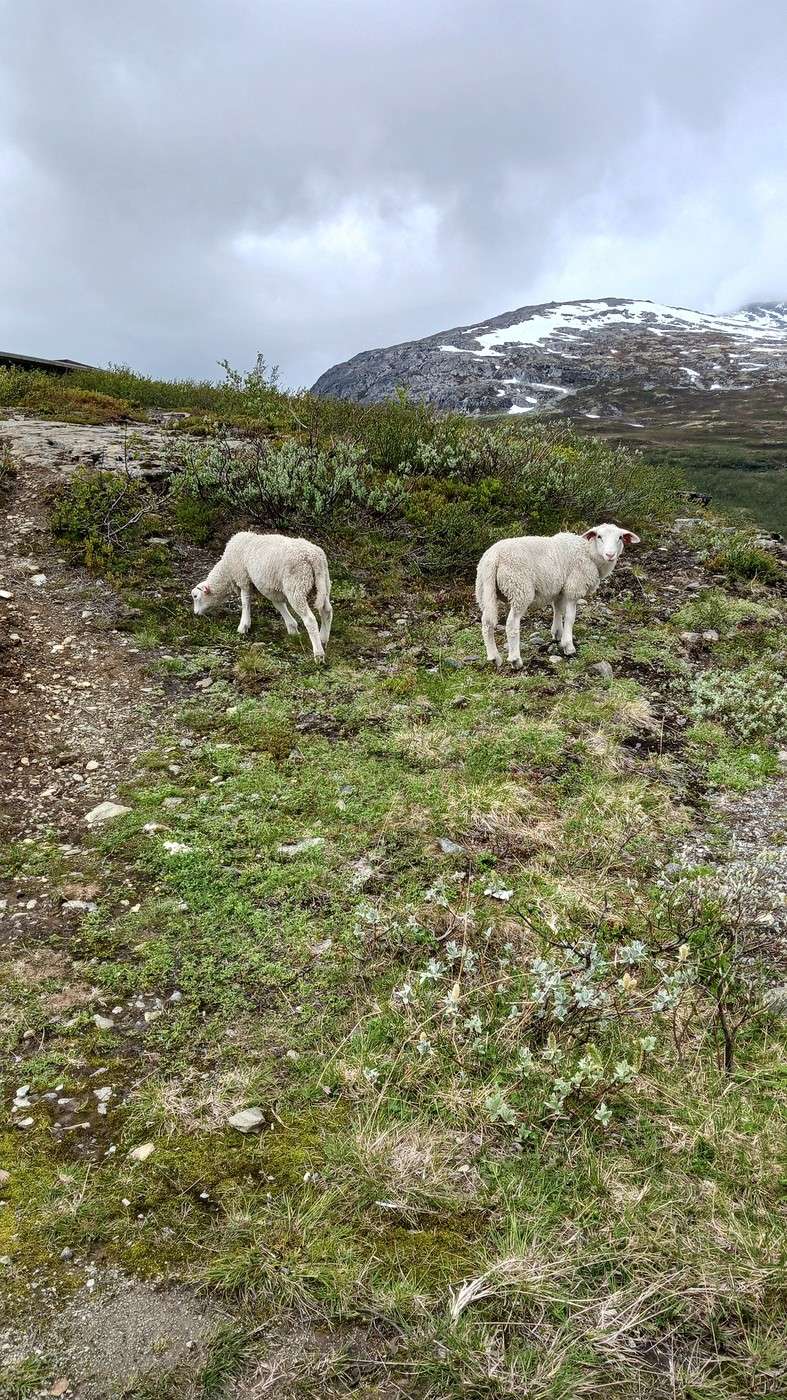
On the road to FLÅM. We then take the scenic Mannheller-Fodnes route, which is much prettier than... the tunnel: 47 km of bliss, sheep included!


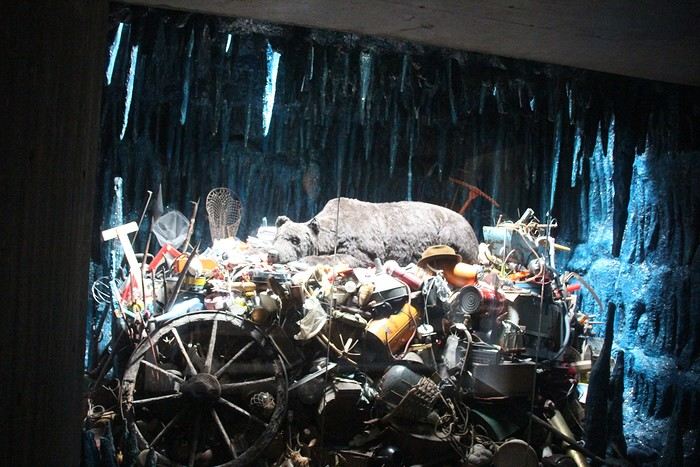
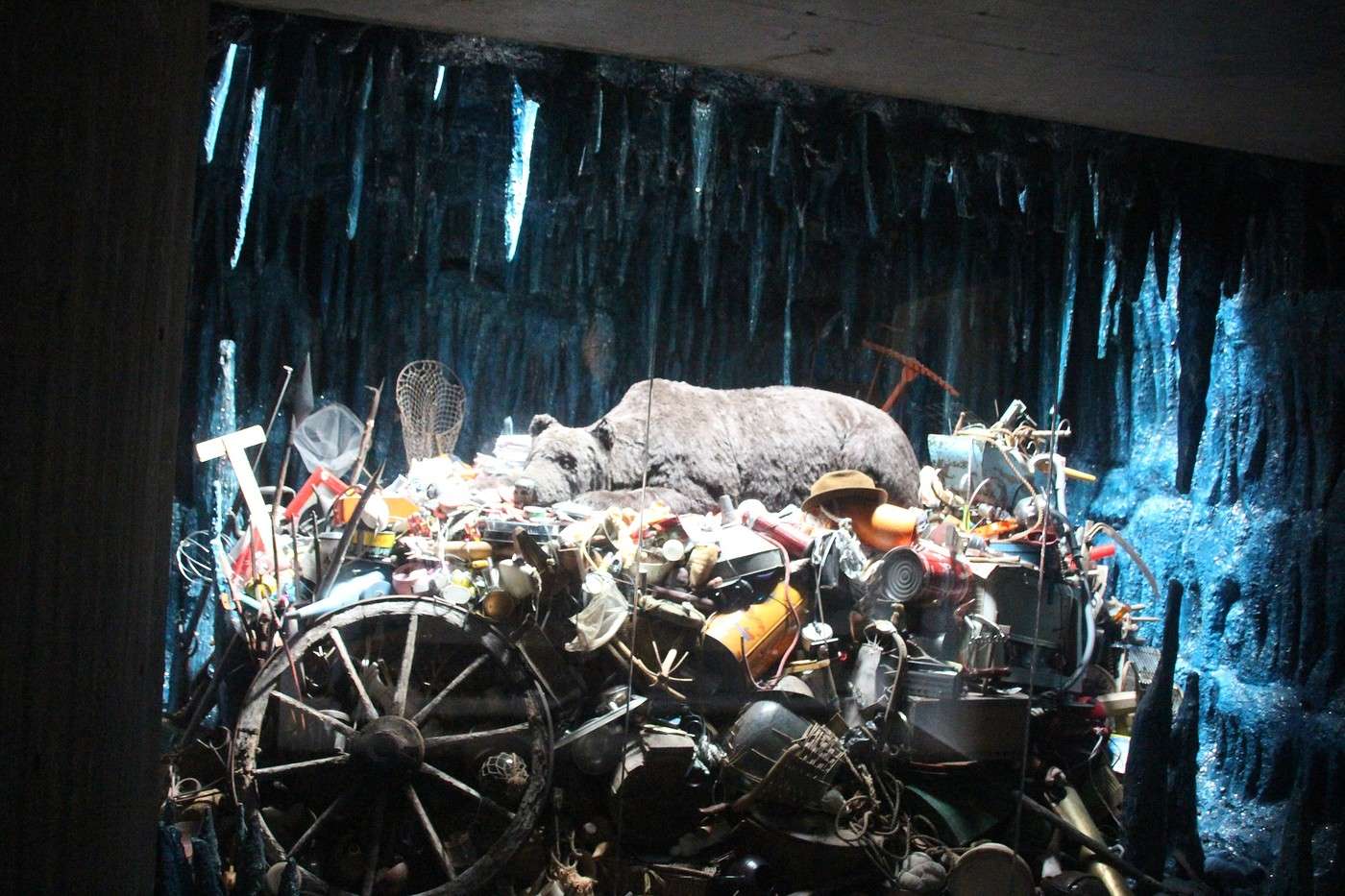
Stop at Vedahaugane, a rest area with toilets and... a cave. Here’s what it says: "A work by Mark DION: DEN is an artificial cave of stalactites housing a bear resting on a bed of objects found in flea markets in Norway and abroad. The stack of objects represents cultural history, with Viking-era artifacts at the bottom and contemporary objects on top. A bluish light escapes from the roof opening. Mark Dion draws our attention to the nature around us and the power struggle between humans and nature. Who will prevail: nature, represented by the bear, or culture, which has stolen its original environment and foundation of existence?"

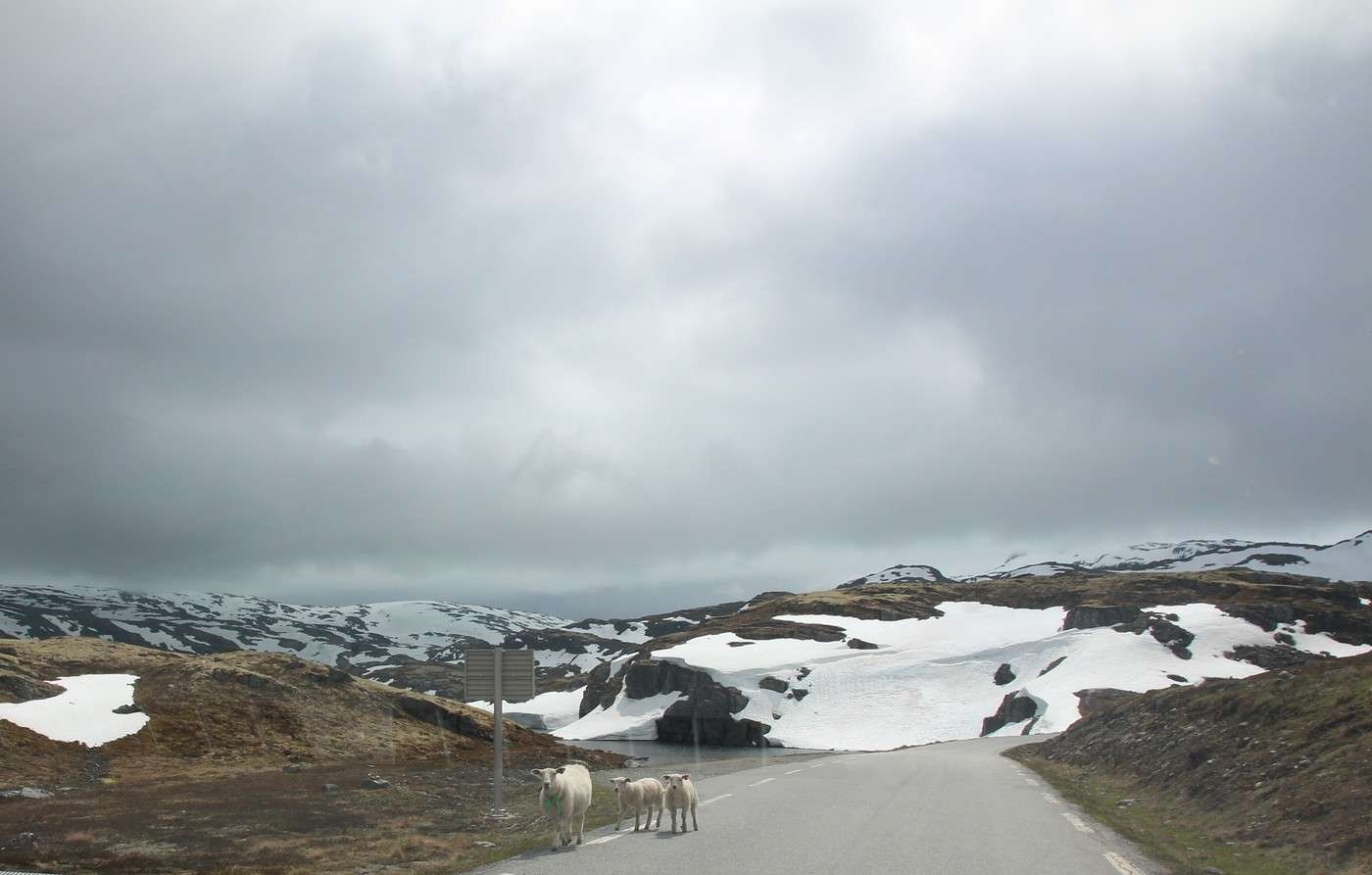
A few more sheep later, we cross snowy landscapes—I love it!


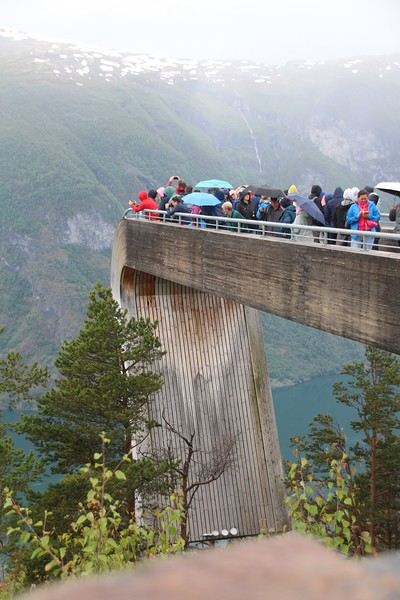
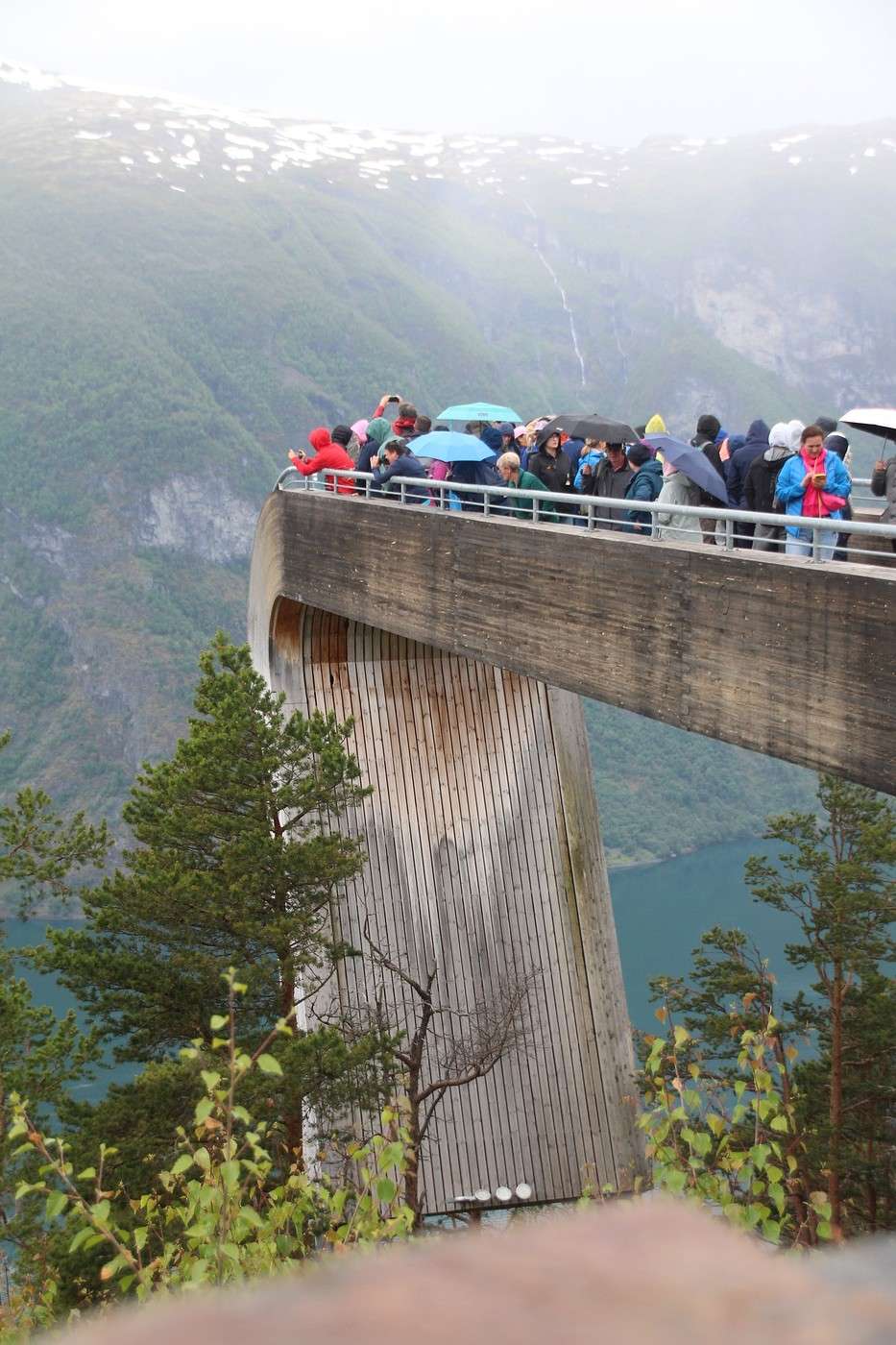
Watch out—there are also cows roaming freely along the way! Then we arrive at Stegastein, an iconic Norwegian tourist spot that blends design with breathtaking nature! This 30-meter panoramic platform sits 650 meters above the Aurlandsfjord. When we arrive, it’s raining, and a bus is unloading a group of Asian cruise tourists, umbrellas and all. What a contrast to the moorland we just crossed! It’s also quite different from the "super polished" photos you find online! Yeah, reality is more like this:


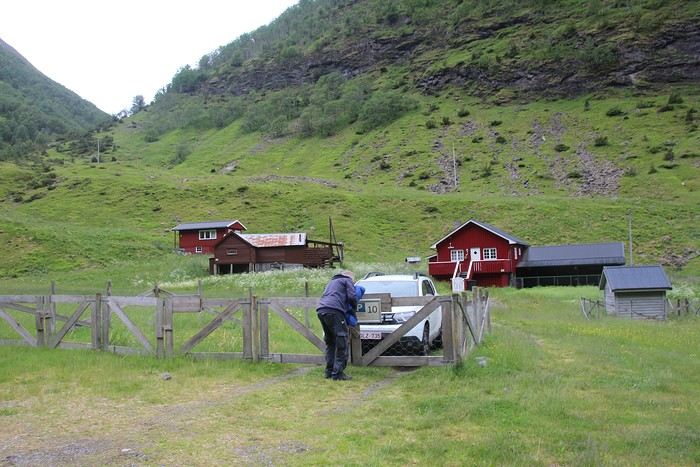
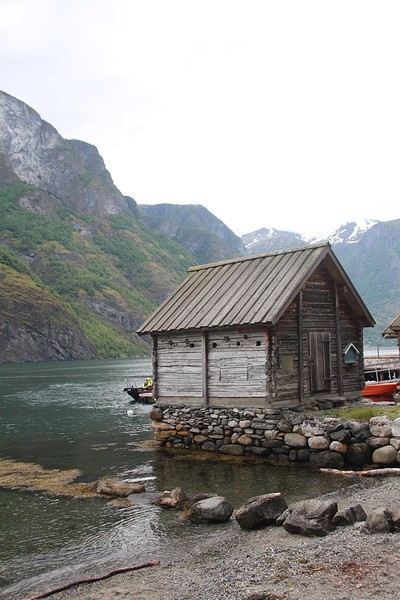
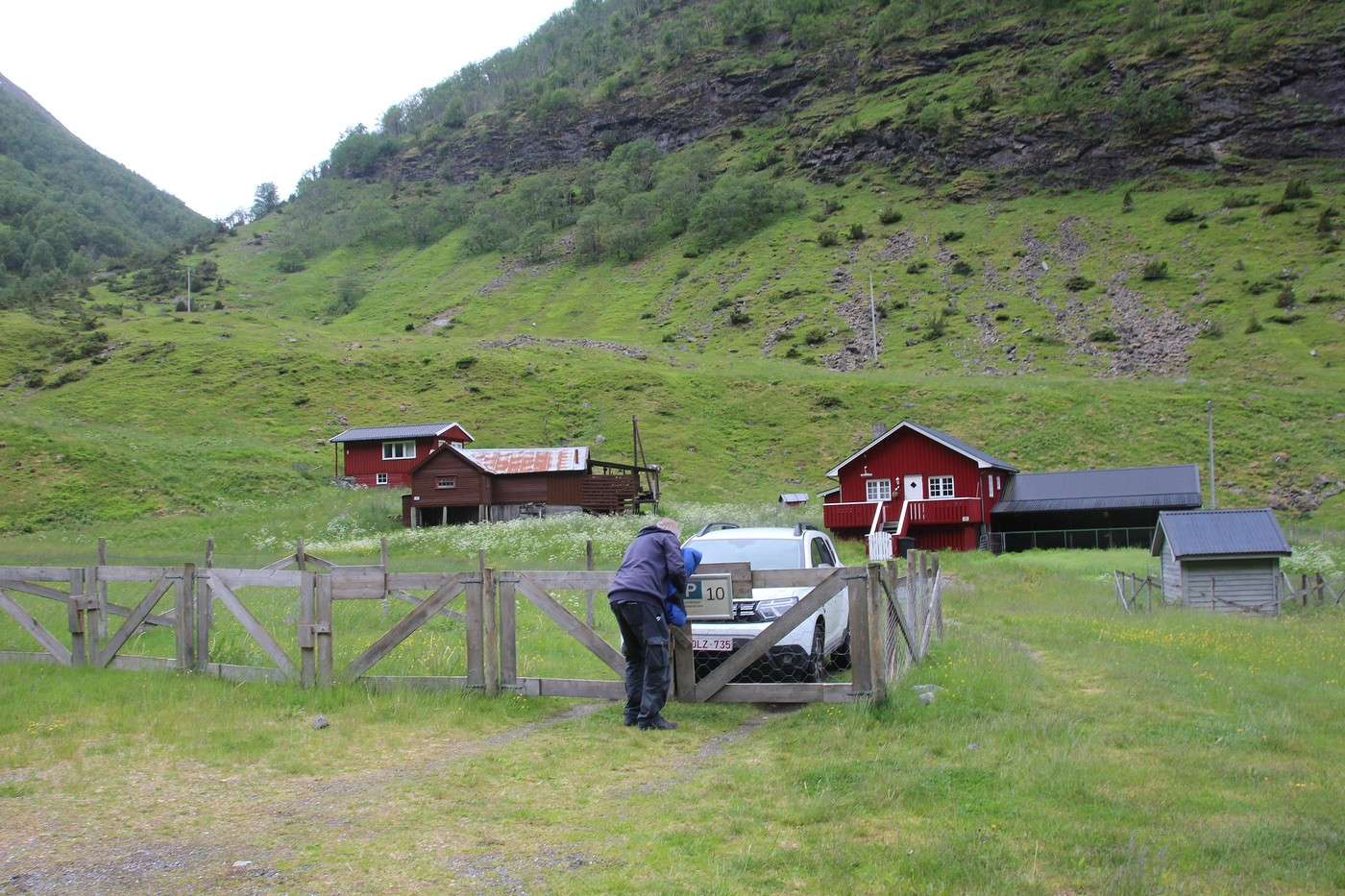
It’s also because we’re near FLÅM, a small village that lives mainly off cruise tourism, like Geiranger. We make a quick stop to scout the spot where we’ll take a boat tour tomorrow. A quick look around the shops, and we quickly realize they all sell the same products—mountain-ready clothing for mid-season. And where do you think these products are mainly aimed? Ah, that’s why there are mostly small sizes... So, back to the sender (and hello, carbon footprint), isn’t that funny? Time to head to our accommodation for the next two nights in the Undredal valley. It’s a charming red chalet. When we arrive, like most "self-check-in" Airbnbs, we follow the instructions to get the key, but we can’t open the door. After several attempts, we have to call the host, who arrives in 5 minutes and fixes it right away. Well, Norwegians might not be very expressive or smiley, but they’re efficient! There’s also an enclosure for the car to protect it from overly curious goats... We’ll later see there are quite a few wild goats in the area!


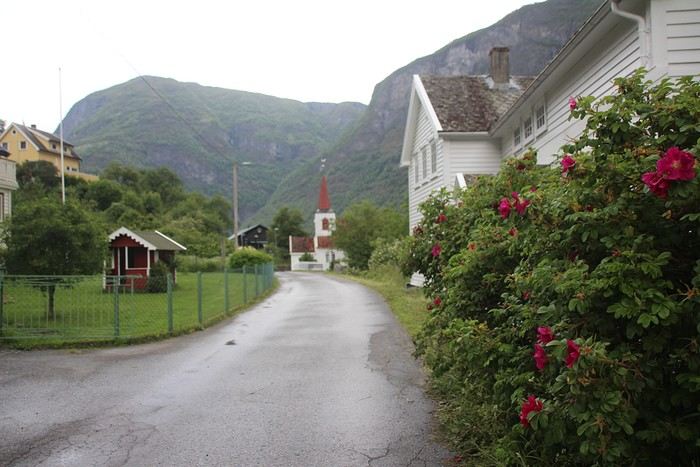
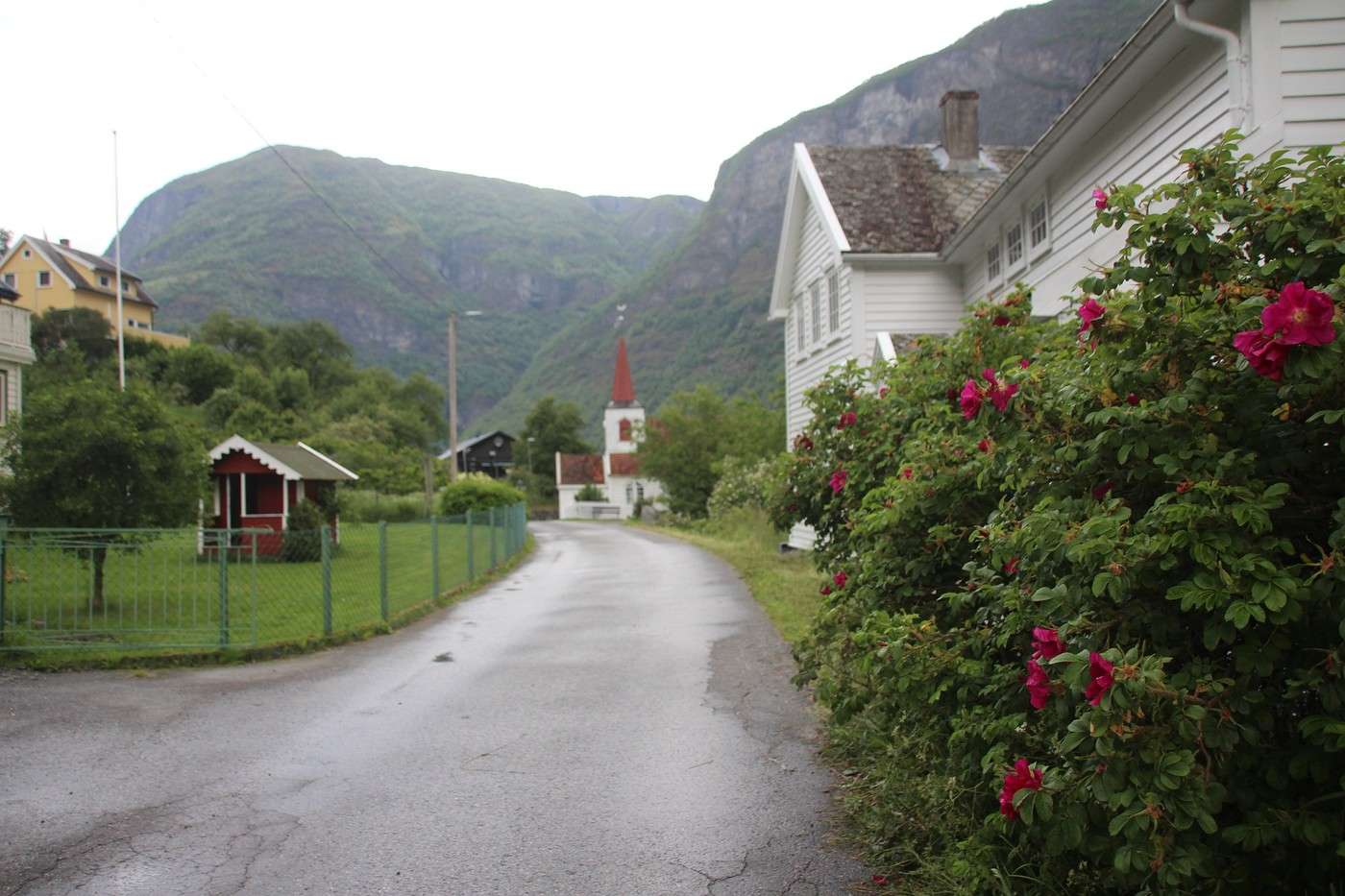
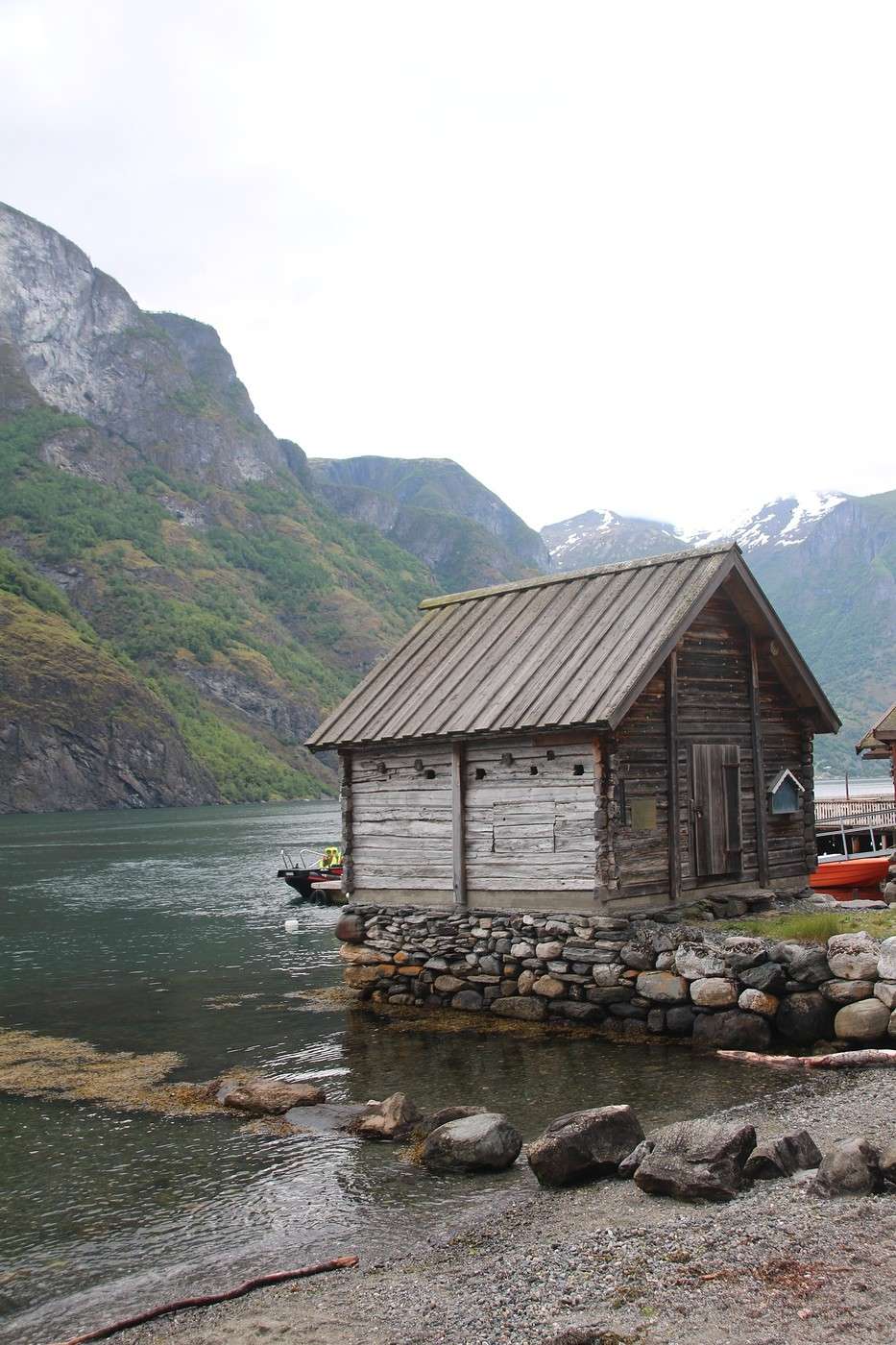
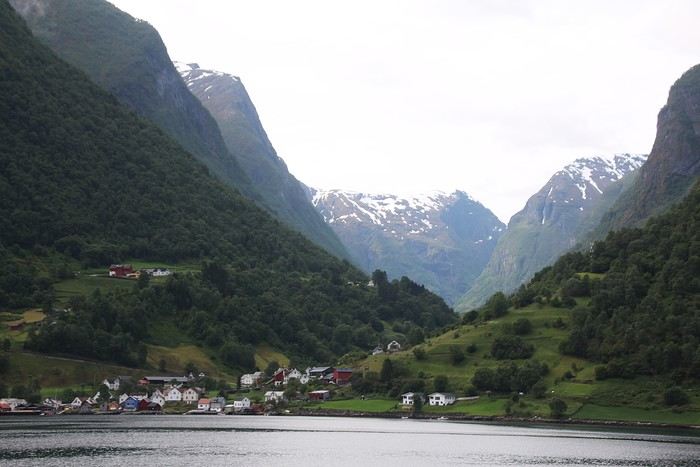
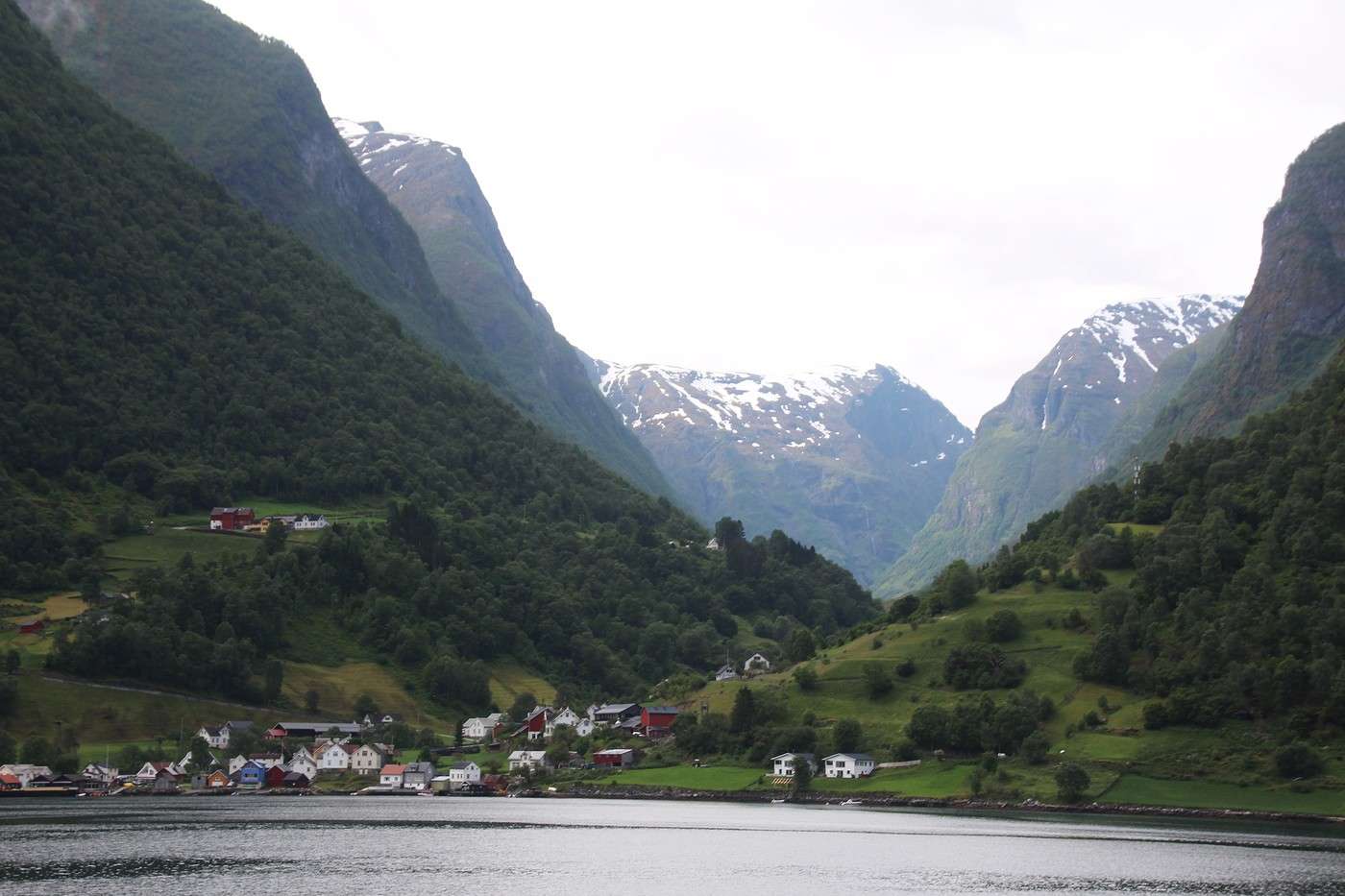
Otherwise, we still feel like we’re in a ghost town because the surrounding chalets aren’t occupied. We’re alone in this little hamlet lost in the middle of nowhere! Before locking ourselves in our "sweet home," we head to the end of the valley for a short walk, visiting the small village of Undredal and soaking in the tranquility of the place!


Kattegat Tour and Norway's Great Fjords - 32 Days (Denmark - Sweden - Norway)

Cendryon · 2025-08-13

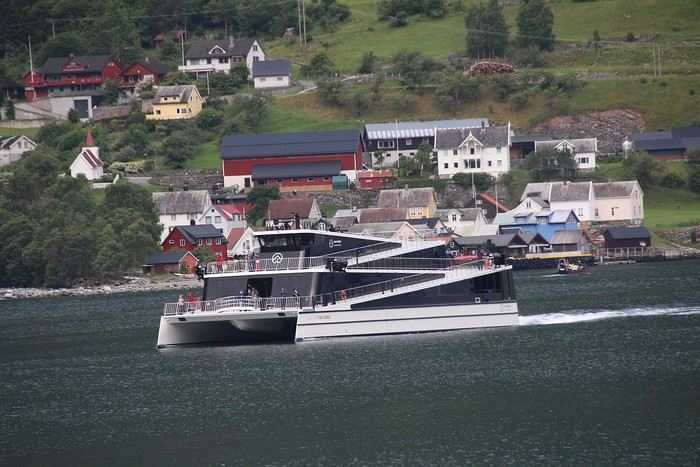
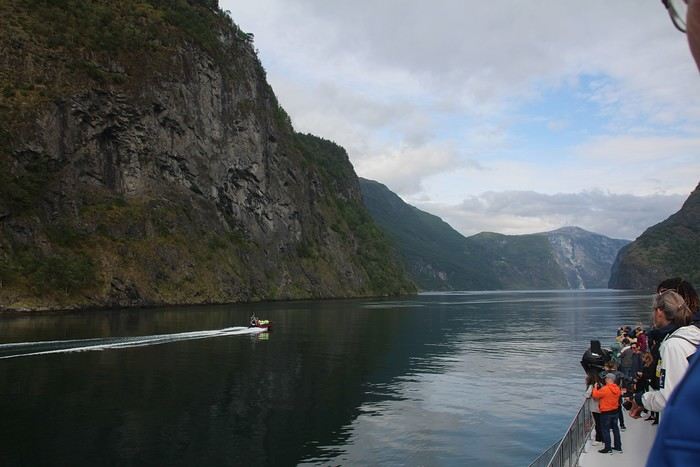
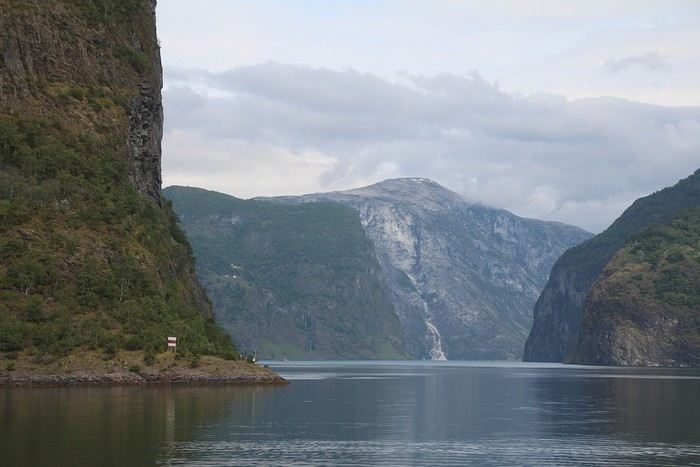
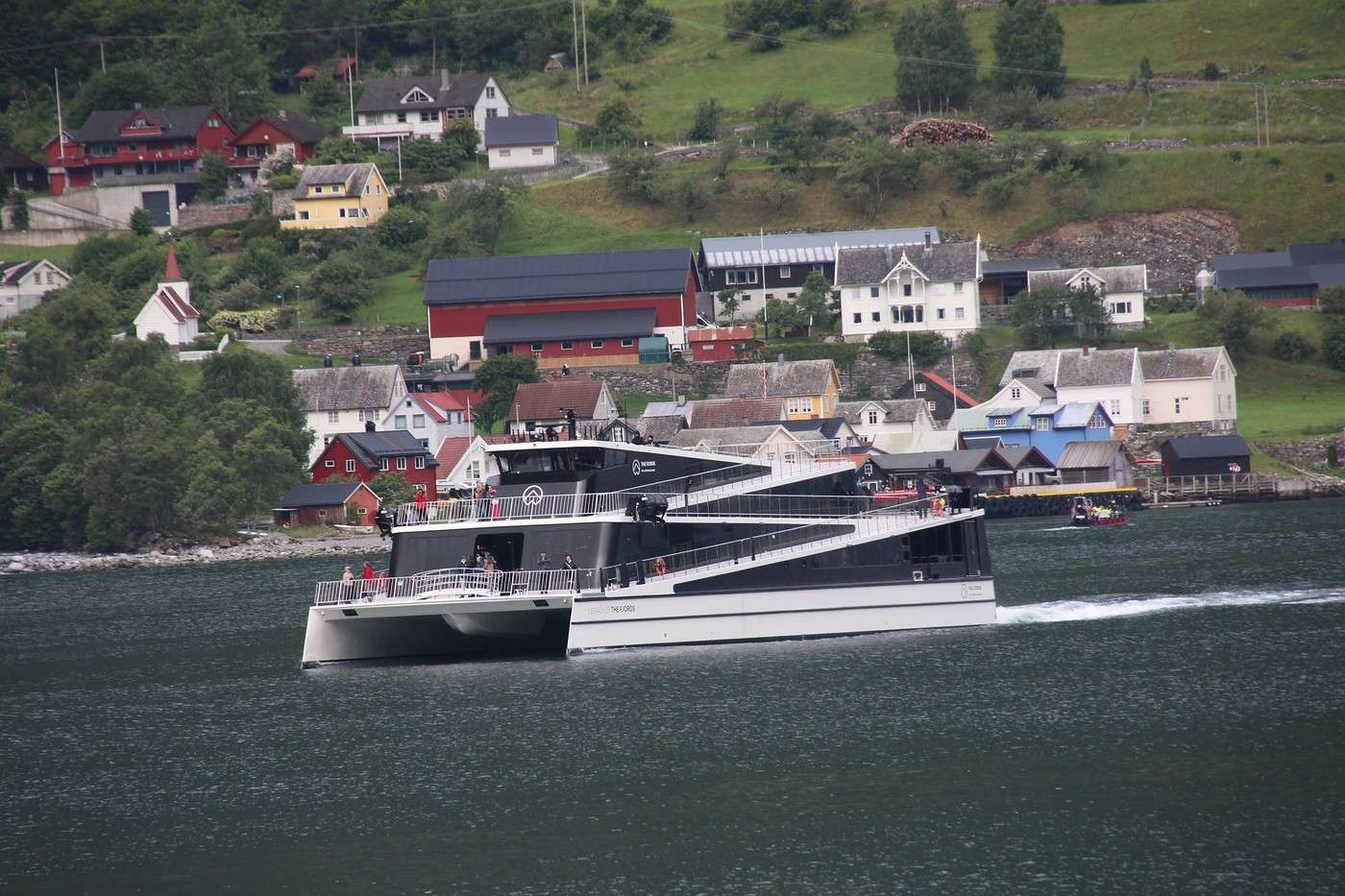
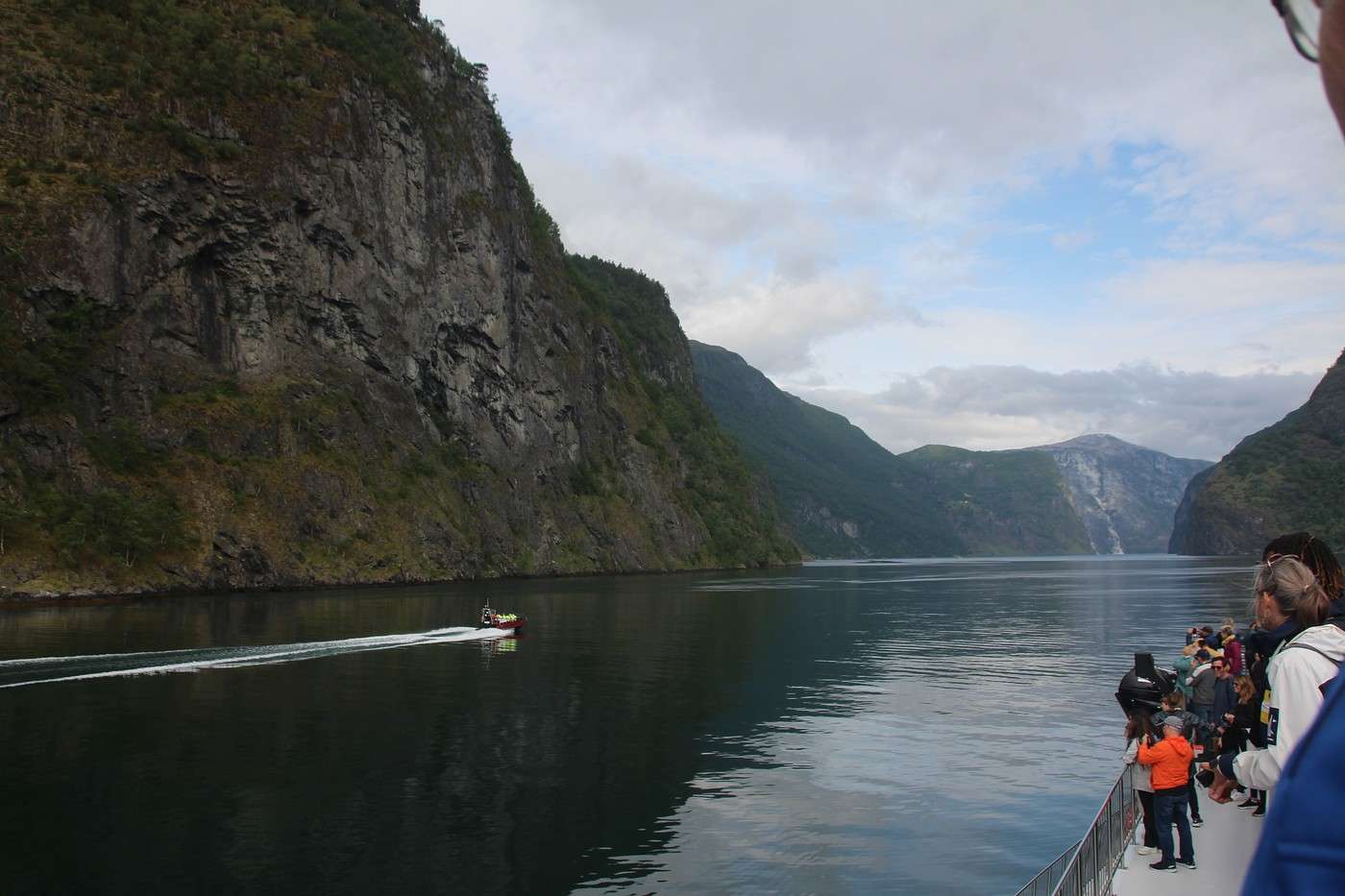
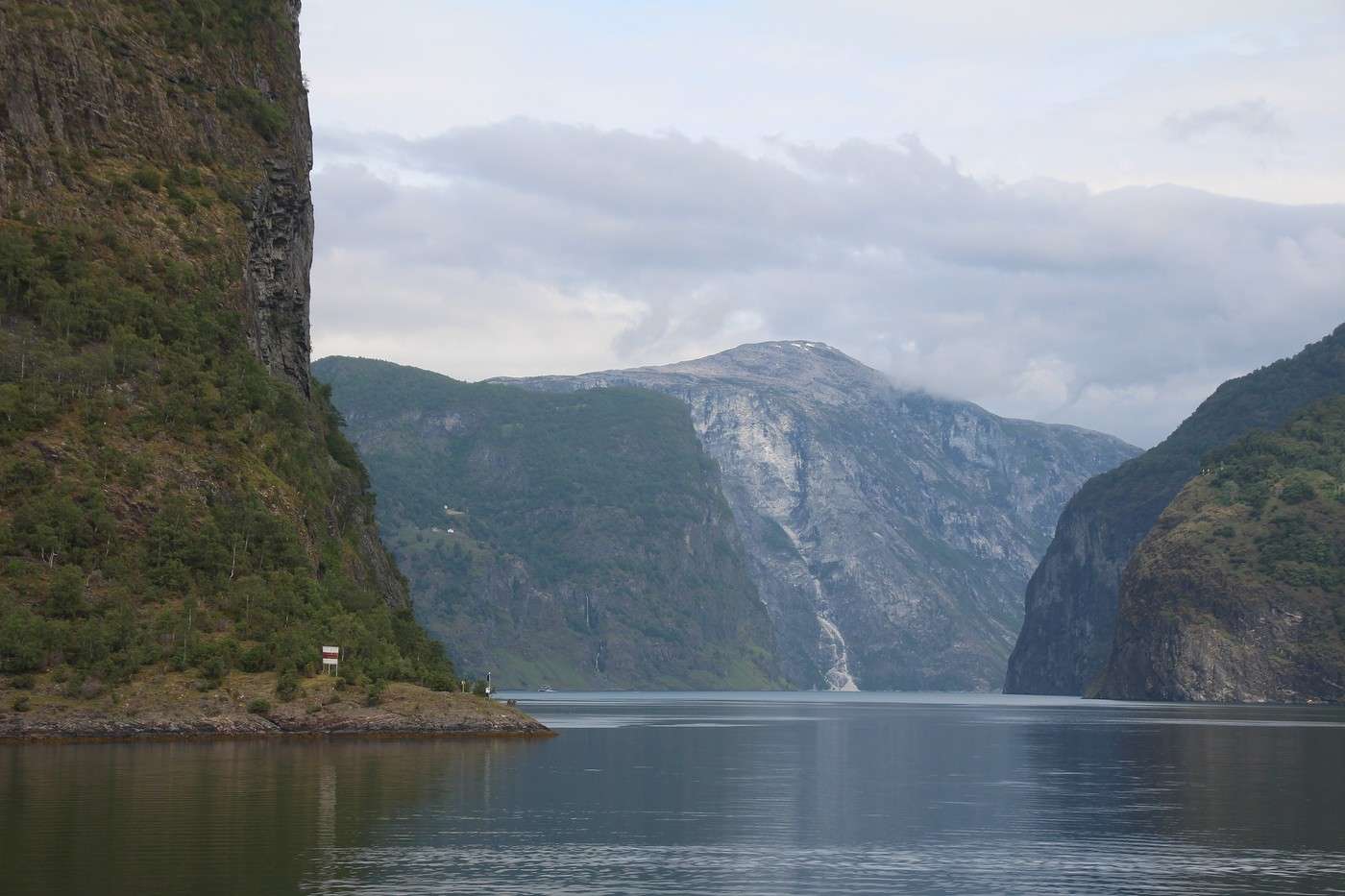
Day 20 – Friday, June 20Cruise on the Aurlandsfjord and Nærøyfjord We booked a peaceful ride on the aforementioned fjords (!)... It’s a silent boat (electric) that goes from FLAM to GUDVANGEN. However, what isn’t silent are the tourists on board. There are several ways to approach this. Either take the boat from FLAM and return by bus, take the bus from FLAM and return by boat, or do a round trip by boat. The same options apply from Gudvangen. Since we weren’t in a hurry, we chose to do the round trip by boat from FLAM, and we found it pretty cool because while there were quite a few people in the morning (including cruise passengers), it was much quieter on the way back.


We just glide along the water, between the towering rocky walls of the fjords...


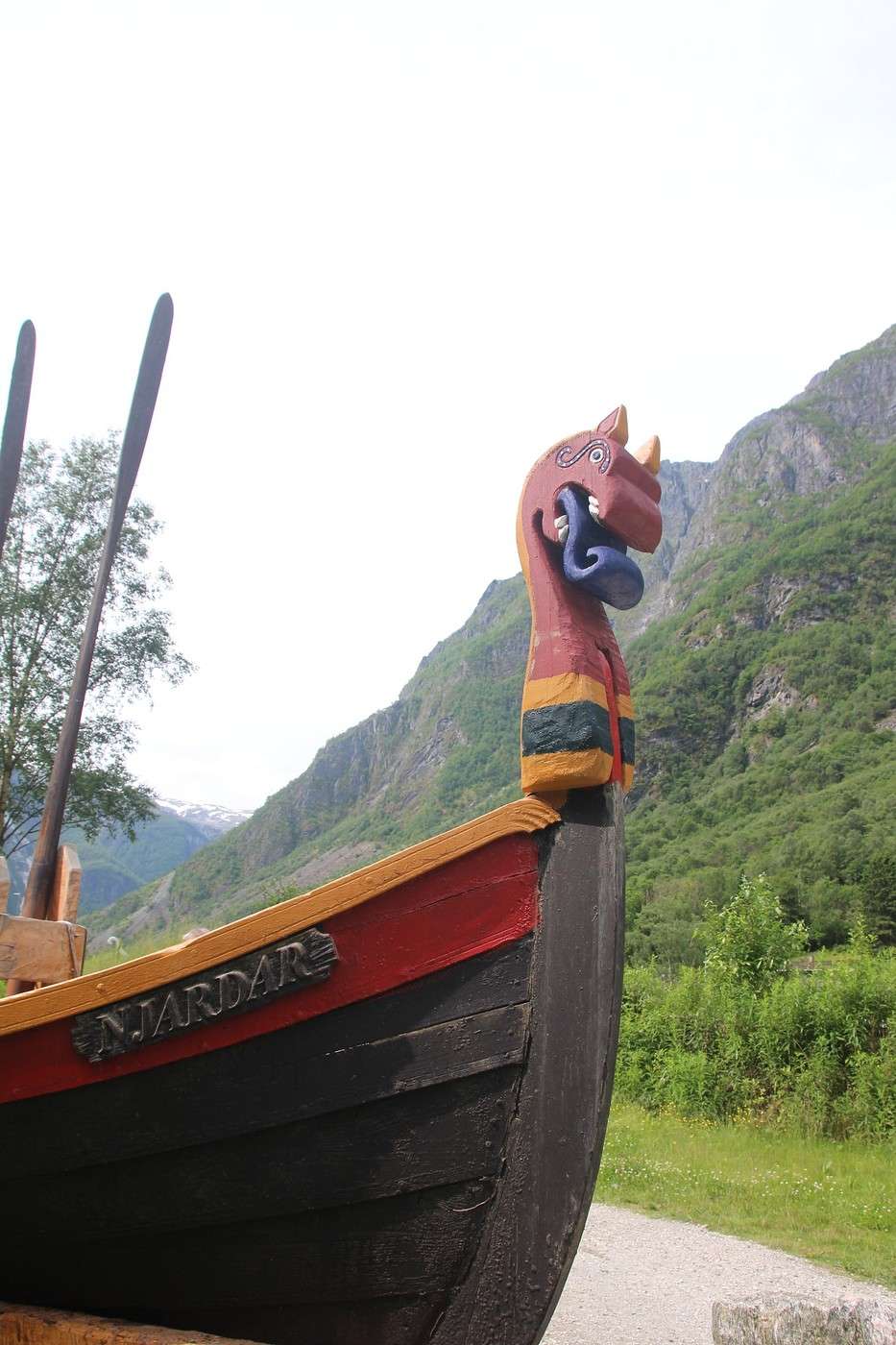
...we pass by Undredal, the small village near our cabin, and arrive in Gudvangen where there’s only one thing to see: the Viking Village.


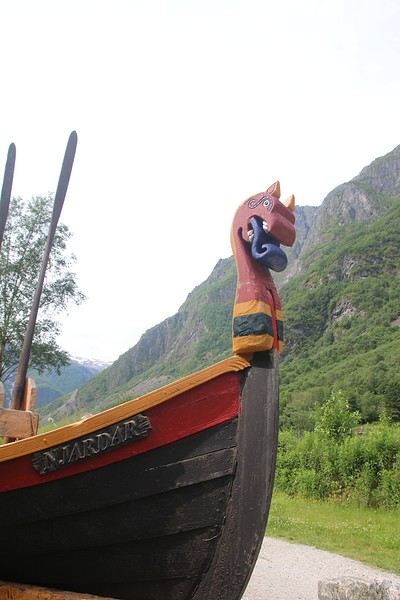
It’s a sort of Viking-themed attraction where houses have been reconstructed to give the feel of a village.

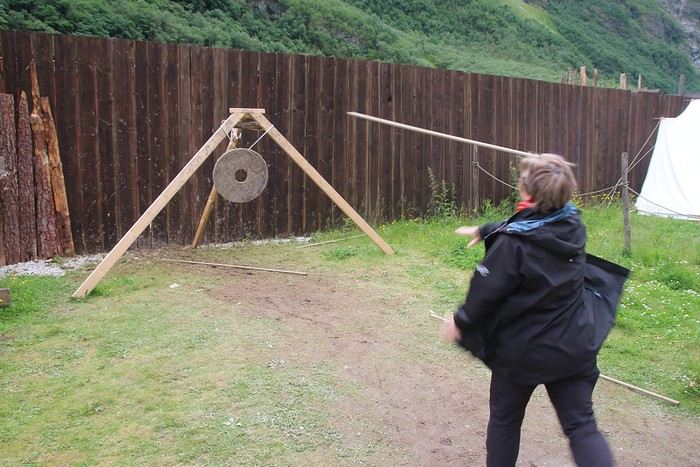
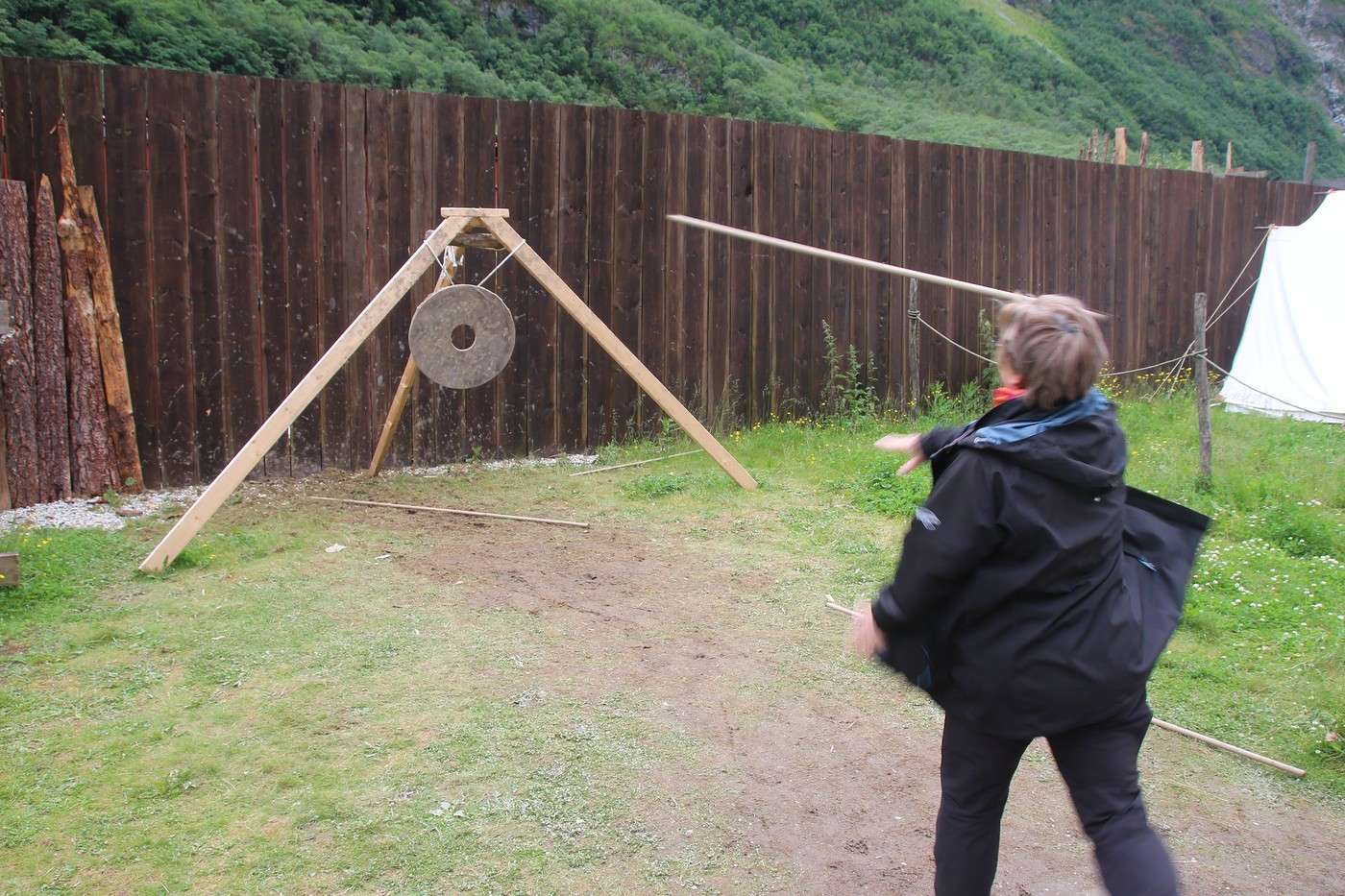
Entry is pretty expensive, but it’s the only thing to do here, and there are plenty of activities. We actually spent quite a bit of time there and didn’t get bored. We tried axe throwing, archery, and tossing a "broomstick" into a hole...


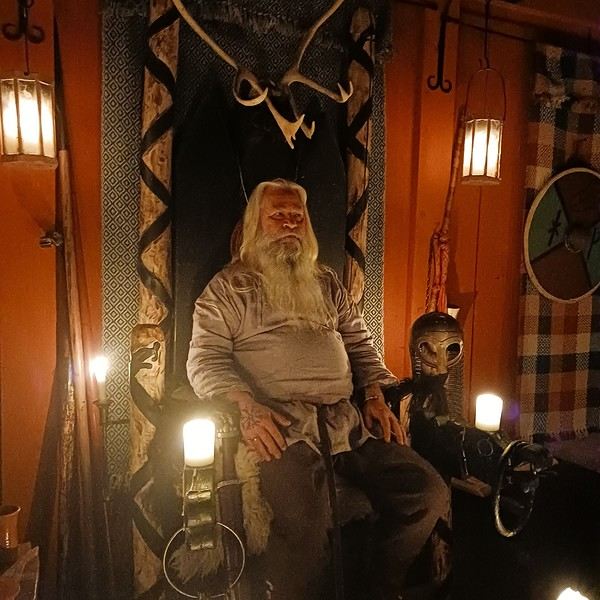
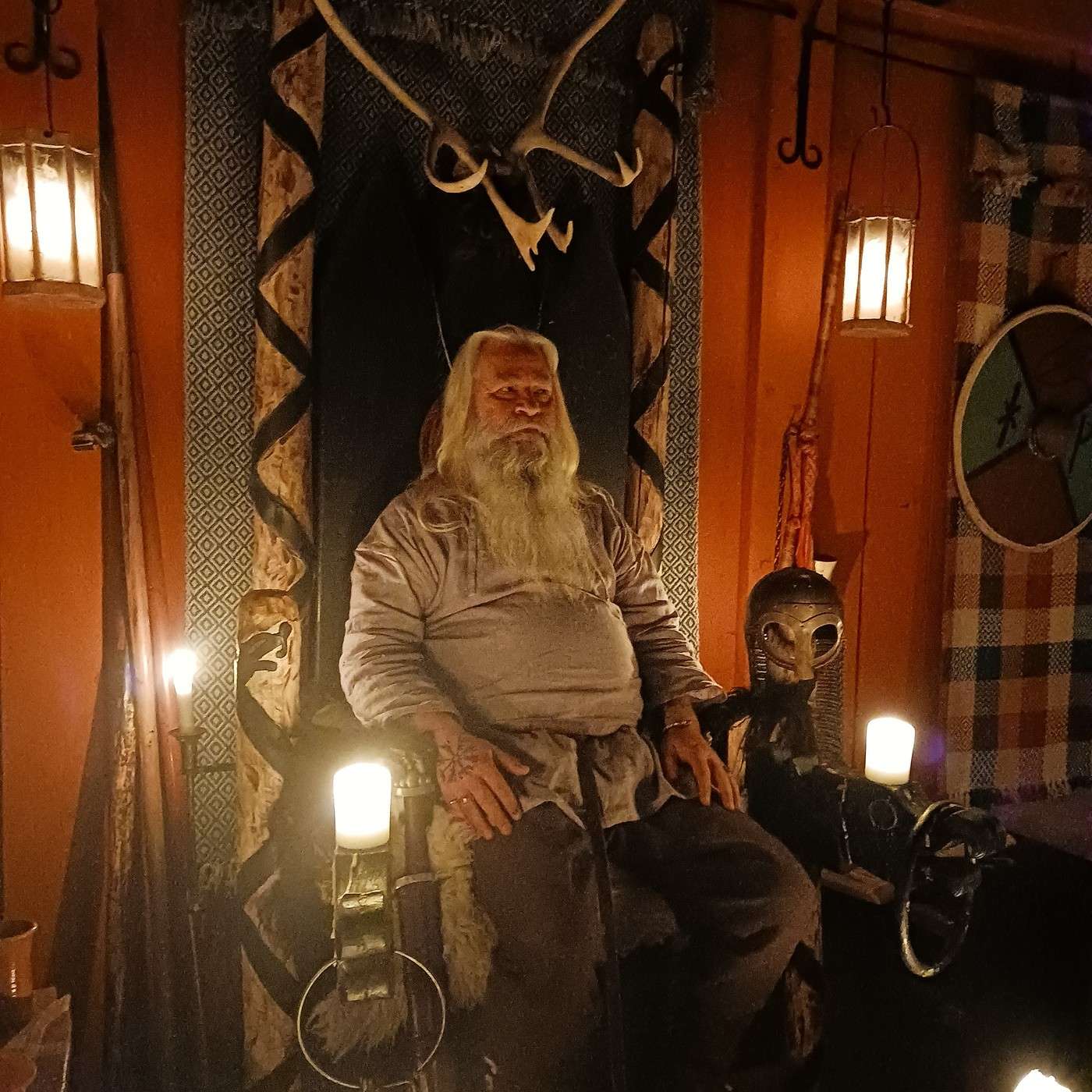
We enter the longhouse. You have to close the door behind you to stay in the dark. There, the village chief is seated. It took a moment for my eyes to adjust to the darkness, and I jumped when I saw him!


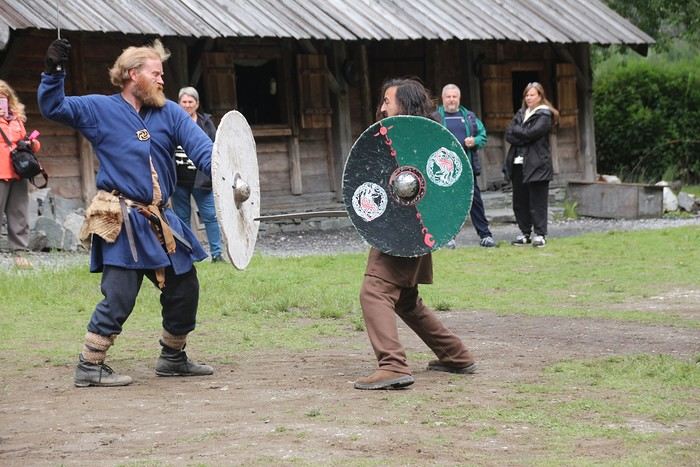
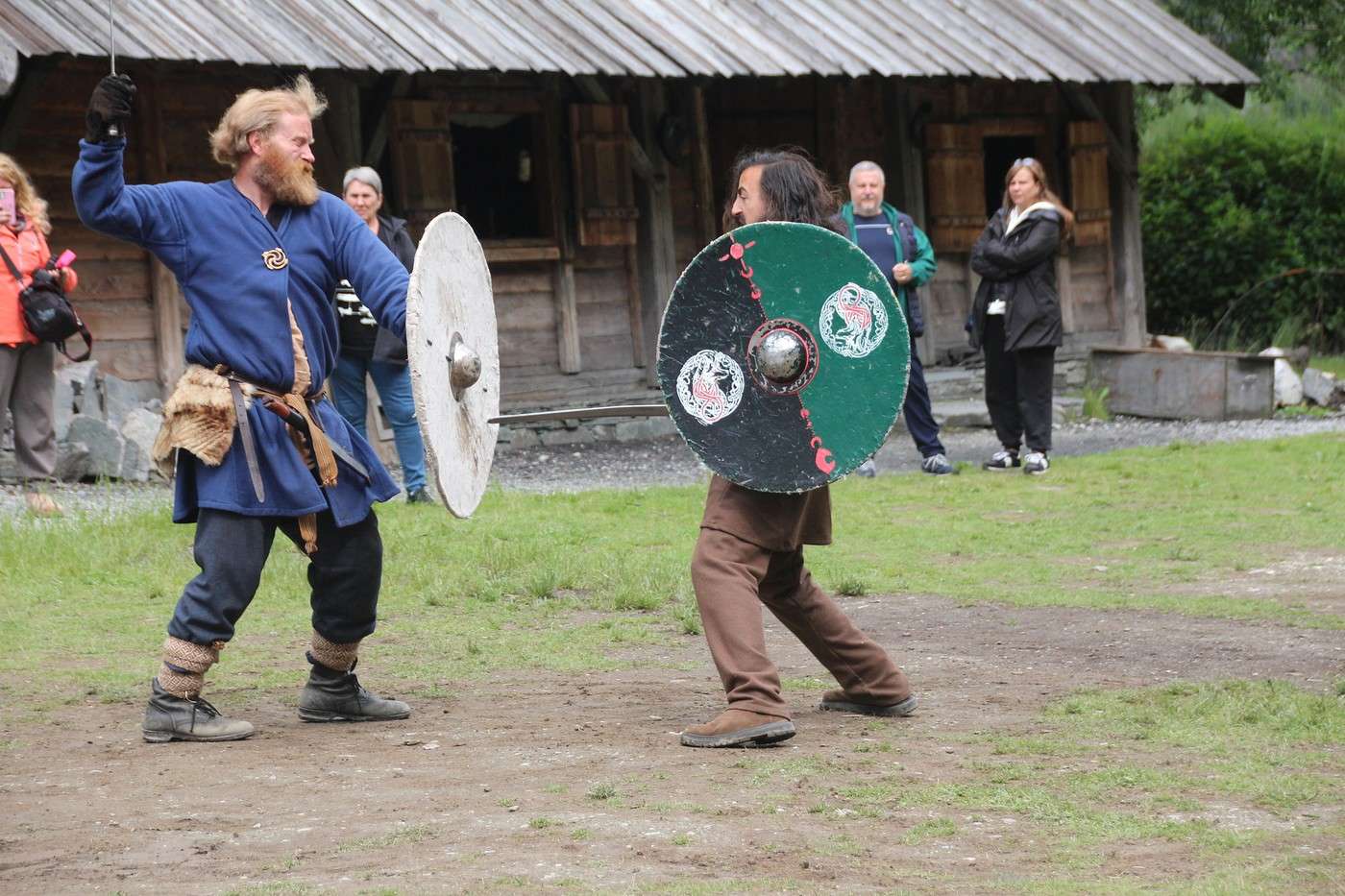
Next, we watch a Viking battle.


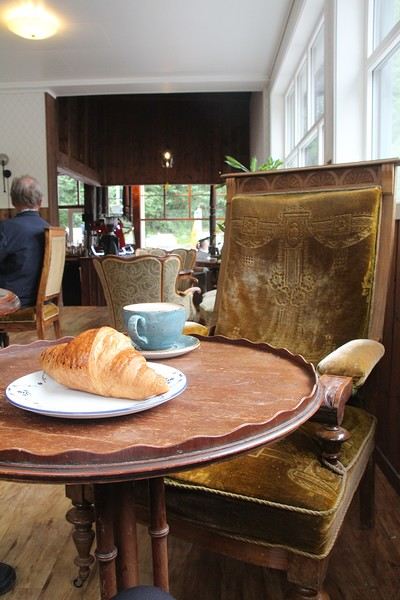
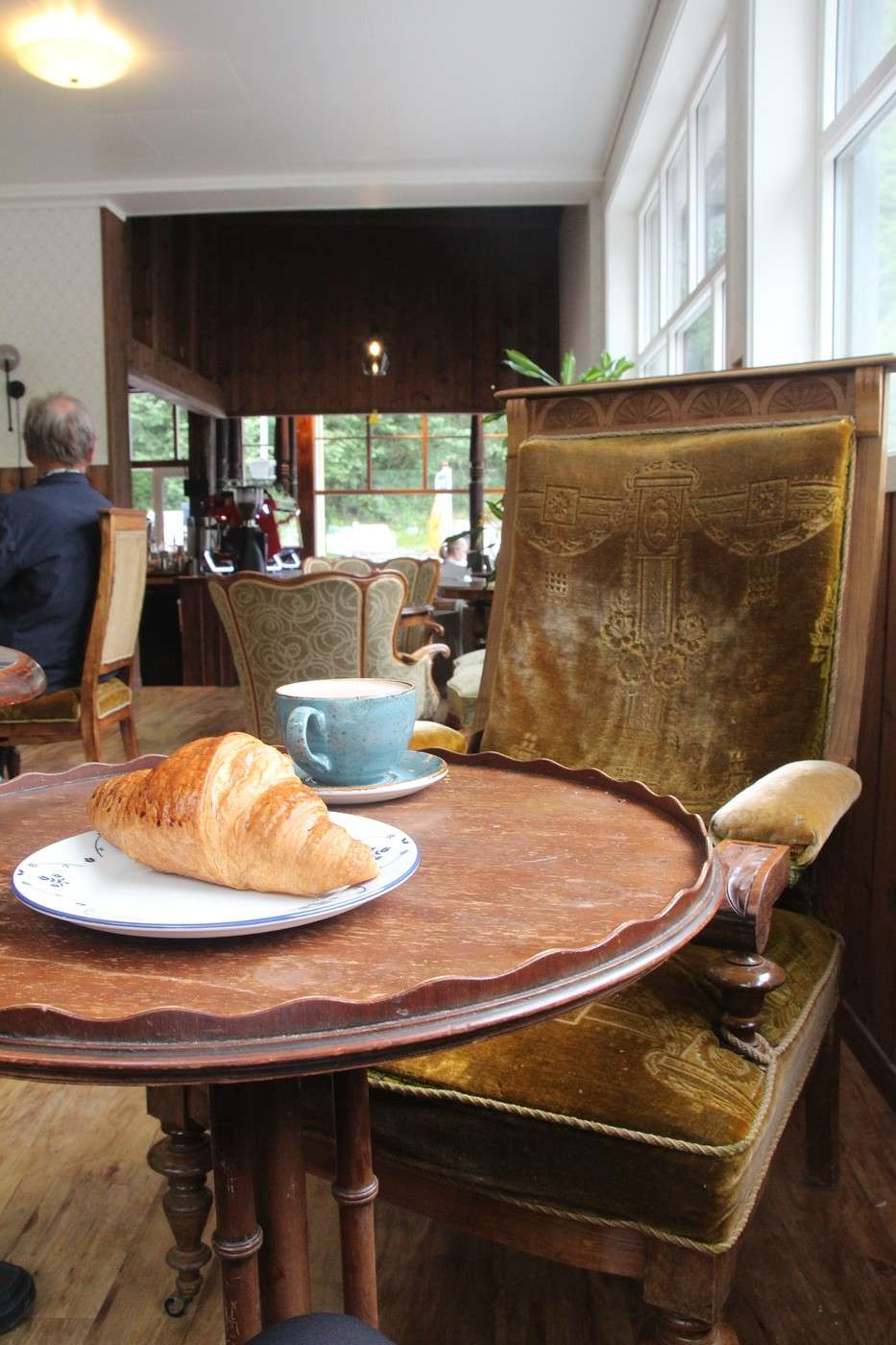
A quick coffee before heading back to the boat at a charming vintage café:


On the return trip, the boat approached a waterfall and then some wild goats. The crew had food for them, and it was clear they were used to it!


It was a rain-free, cool, pleasant, and relaxing day—sometimes you just need that!


Kattegat Tour and Norway's Great Fjords - 32 Days (Denmark - Sweden - Norway)

Ellobo · 2025-08-14

The Viking village and Nærøyfjord—I’ll be there soon! Nice to see places I visited not long ago. Though there’s way more snow compared to where I am! See you later!

Kattegat Tour and Norwegian Great Fjords - 32 days (Denmark - Sweden - Norway)

Cendryon · 2025-08-14

On the other hand, lots of snow compared to us!

Yeah, but that was in June and on small roads.

Kattegat Tour and Norway's Great Fjords - 32 Days (Denmark - Sweden - Norway)

Cendryon · 2025-08-14

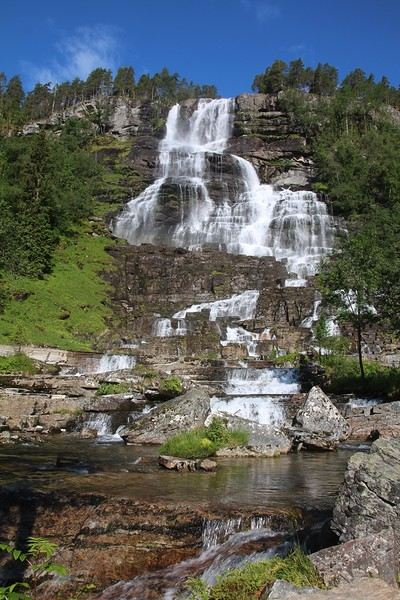
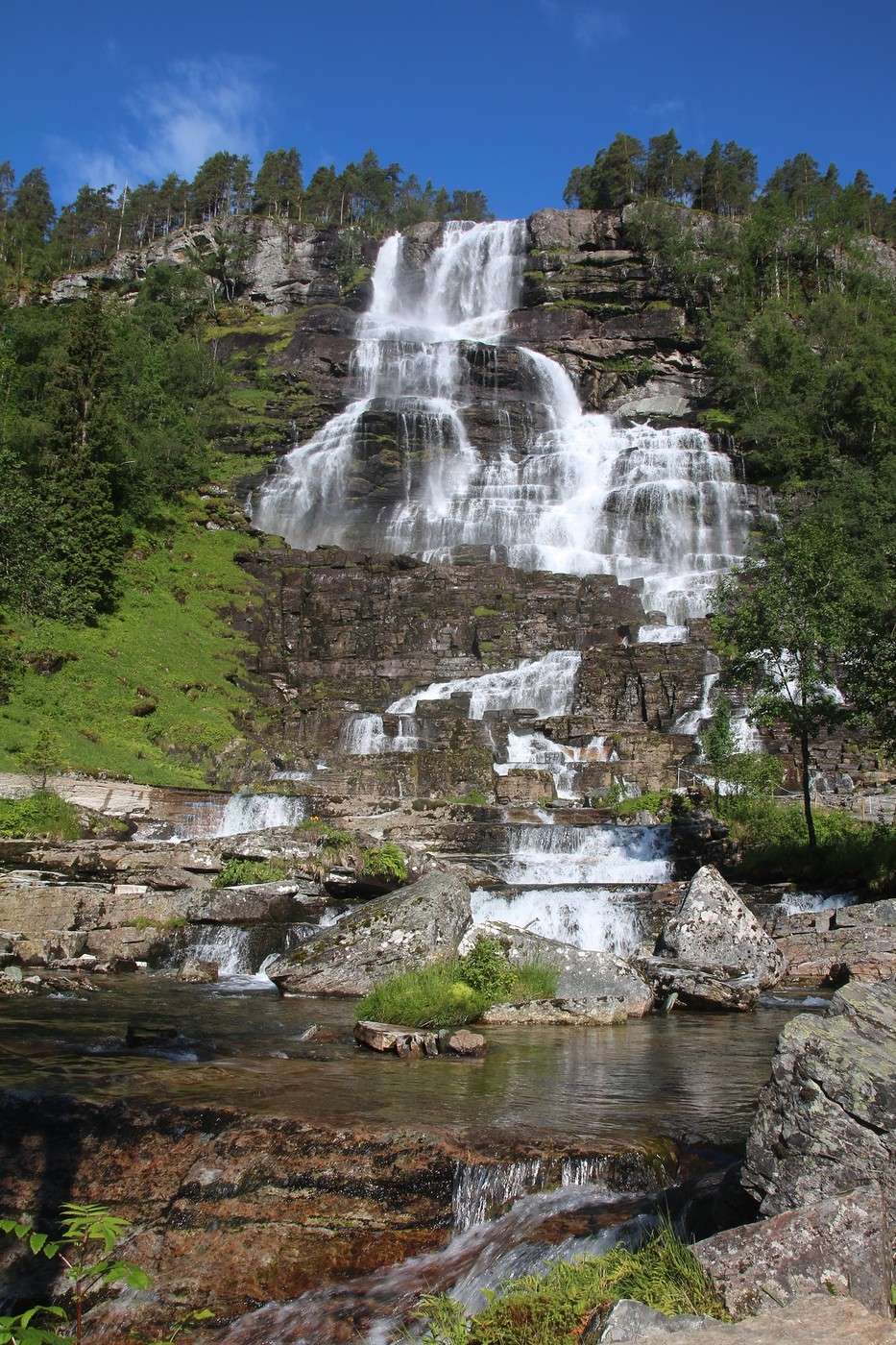
Day 21 – Saturday, June 21 – Bergen This morning, we head to Bergen. The road is beautiful under the sun! As usual, there are plenty of tunnels. We planned just one stop at Tvindefossen, a lovely waterfall that’s easy to access since it’s right by the road with a shop, restrooms, etc. When we arrive, there’s still no one around, but by the time we leave, the buses have arrived!


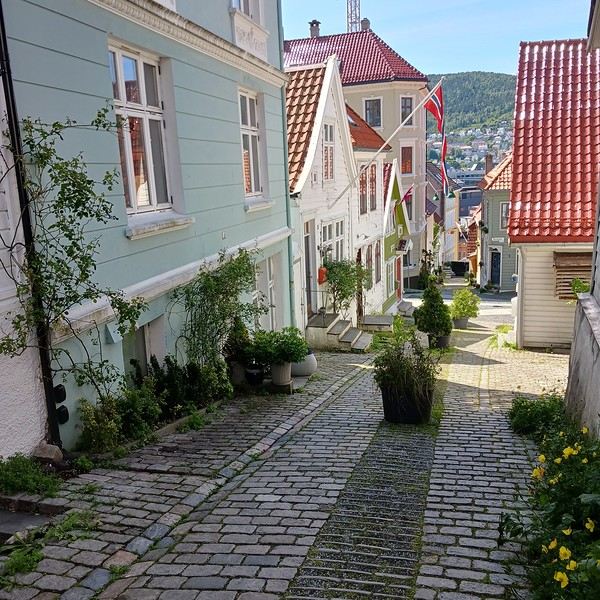
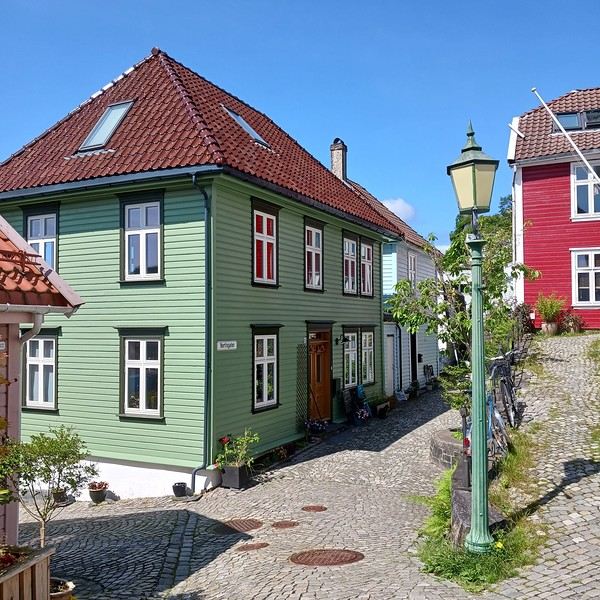
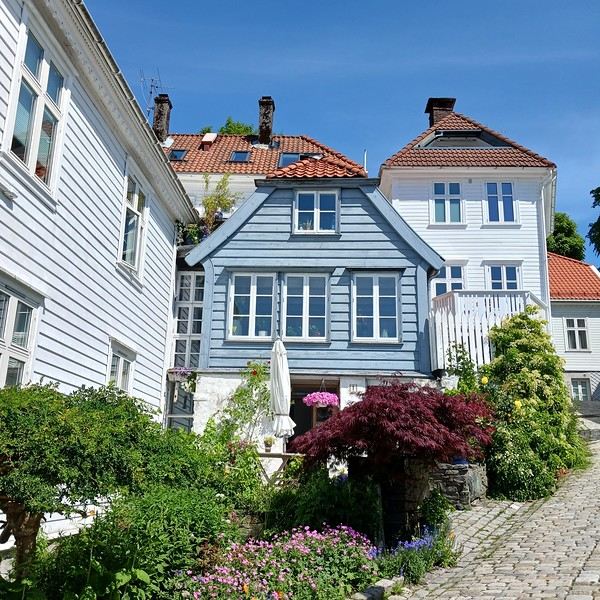
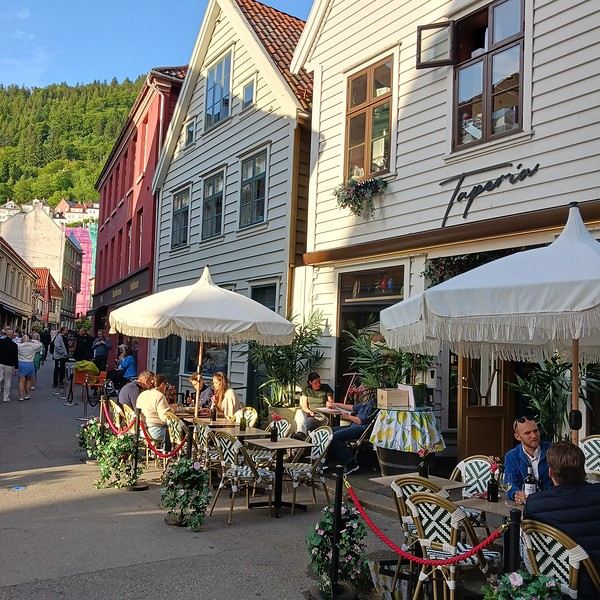
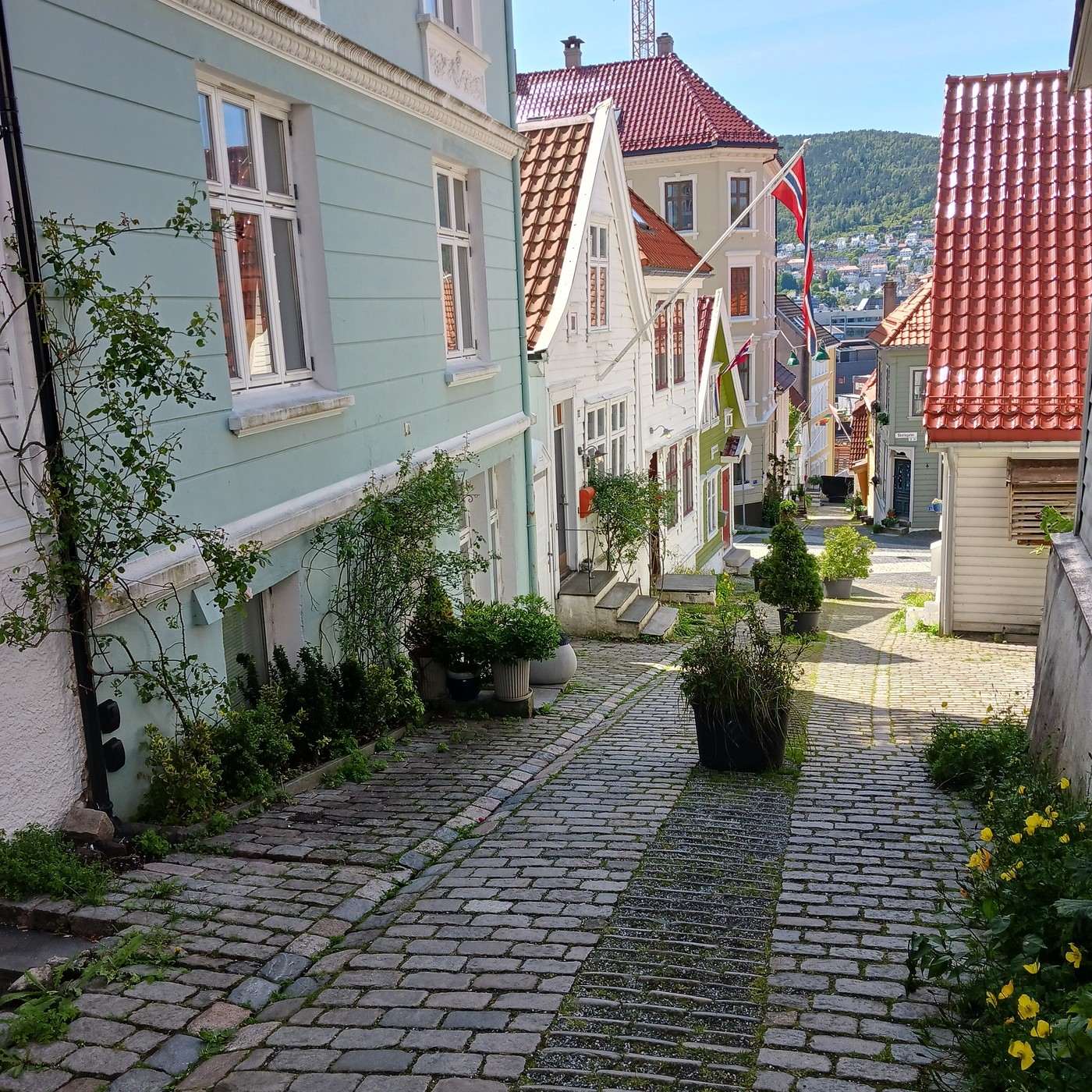
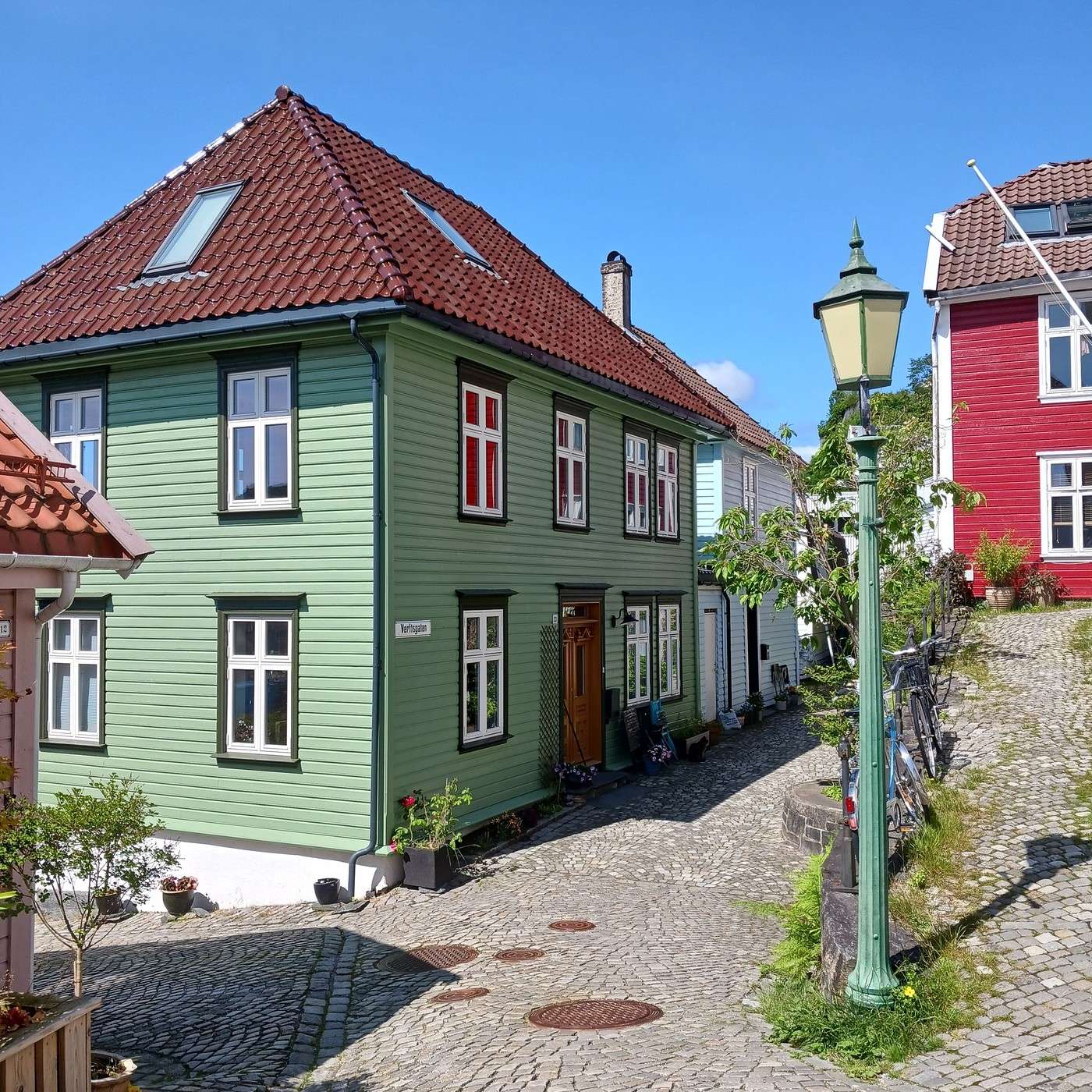
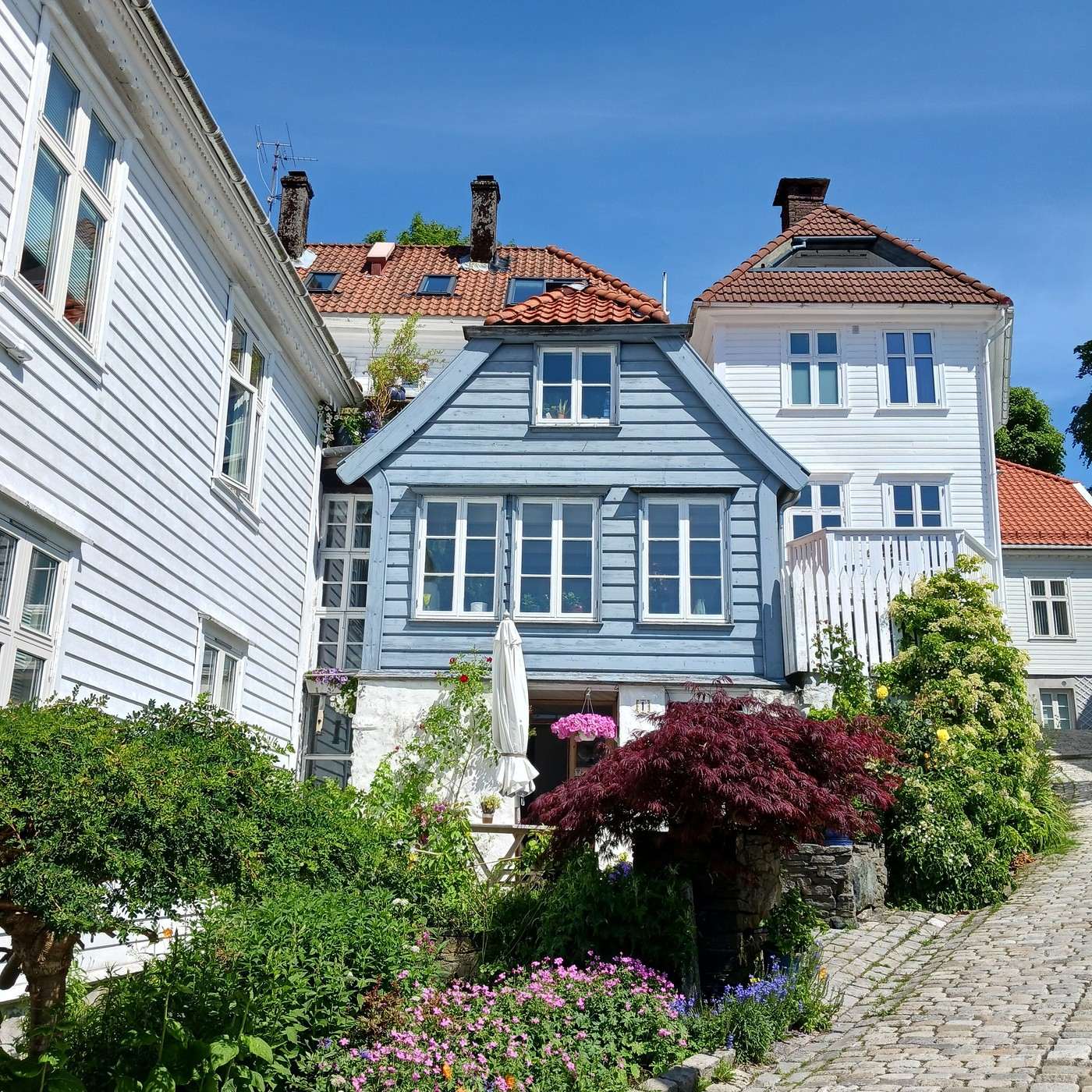
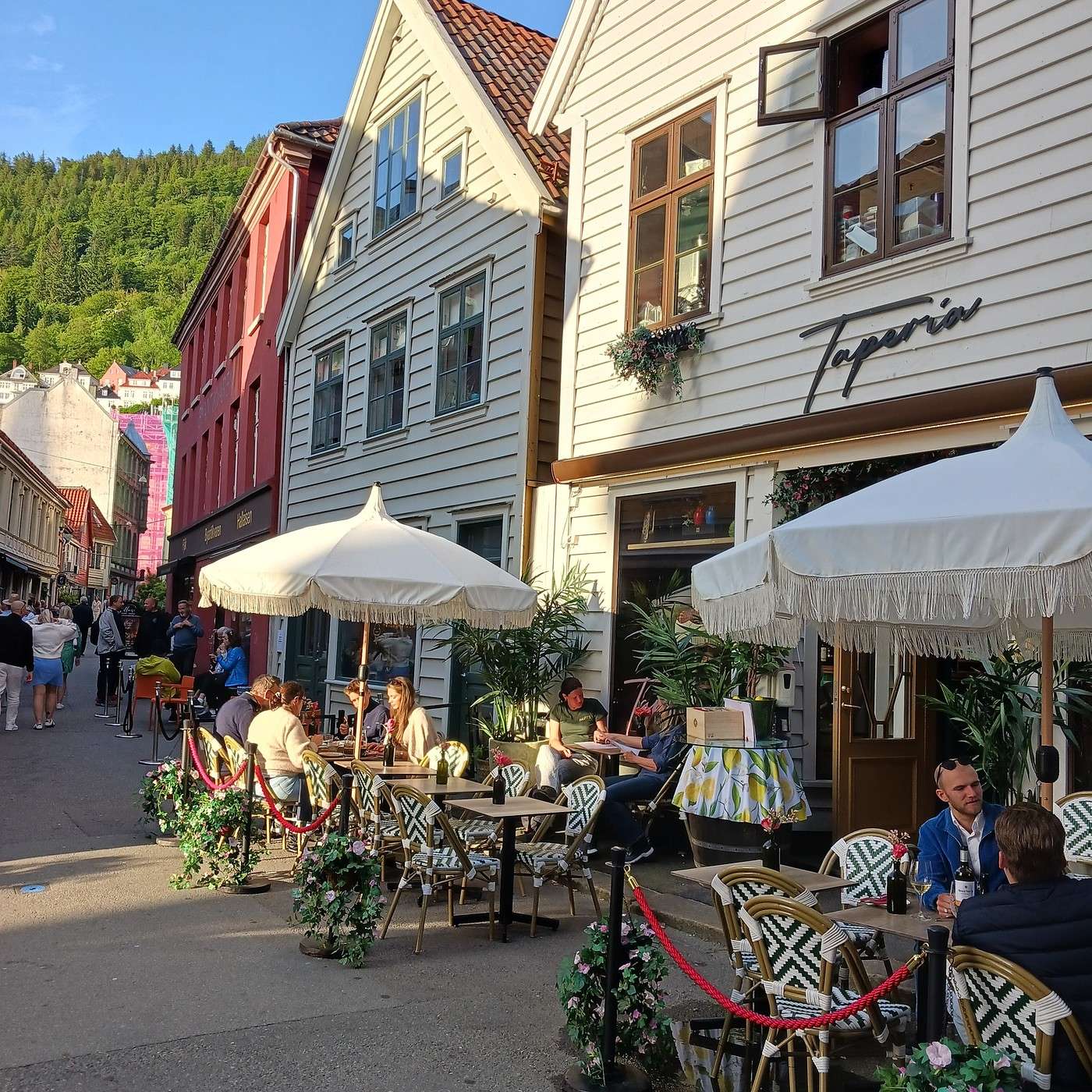
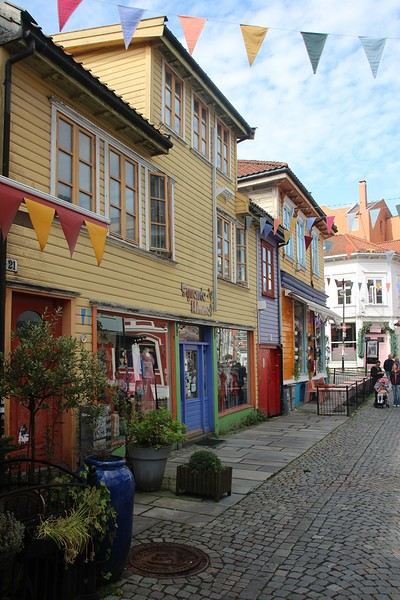
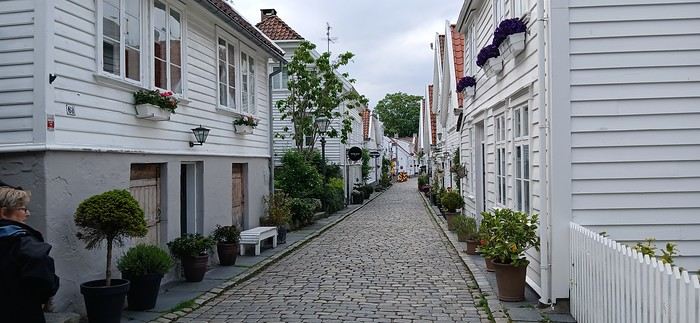
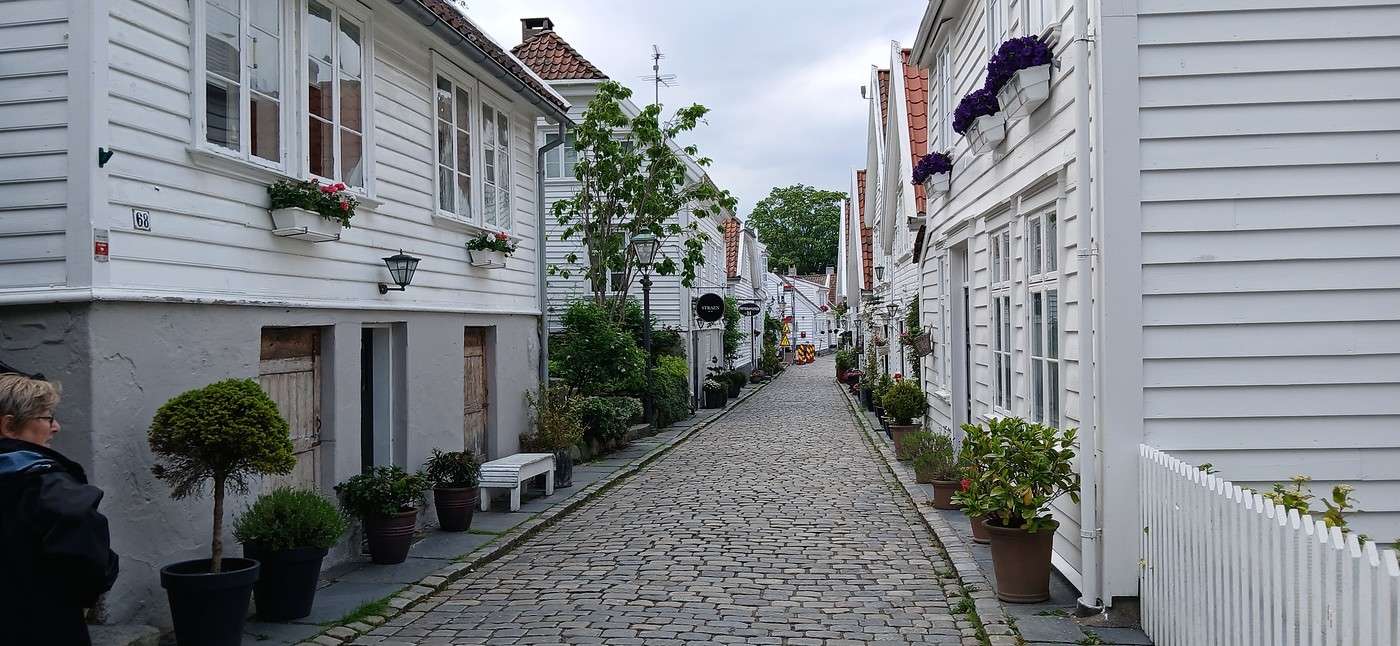
Our hotel for the night is the Scandic Neptun, perfectly located near the harbor, Bryggen, and Nøstet. We park the car at KlosterGarasjen, recommended by the hotel, and head to Café Pomme, a French patisserie run by French owners, where the pastries are excellent—not cheap, but absolutely worth it! We stroll through the charming Nøstet neighborhood. It’s exactly what I love: small white houses, old, neat, and beautifully flowered in narrow little streets...


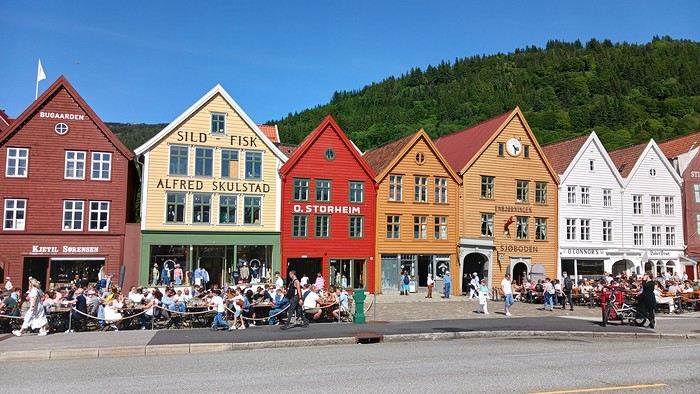
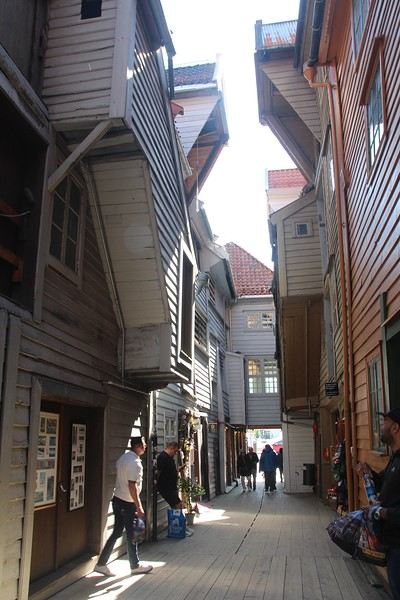
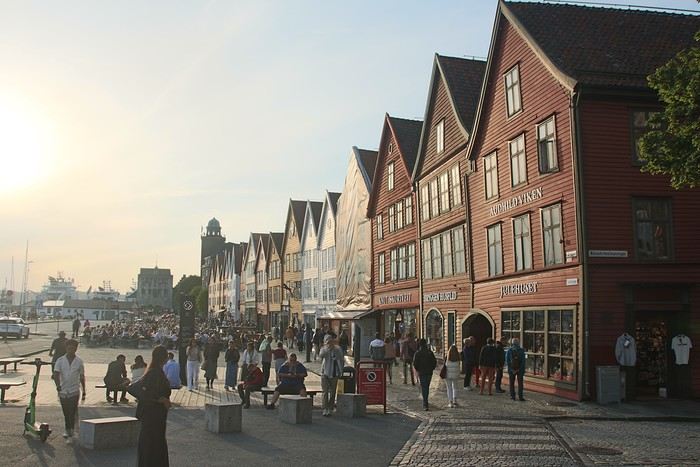
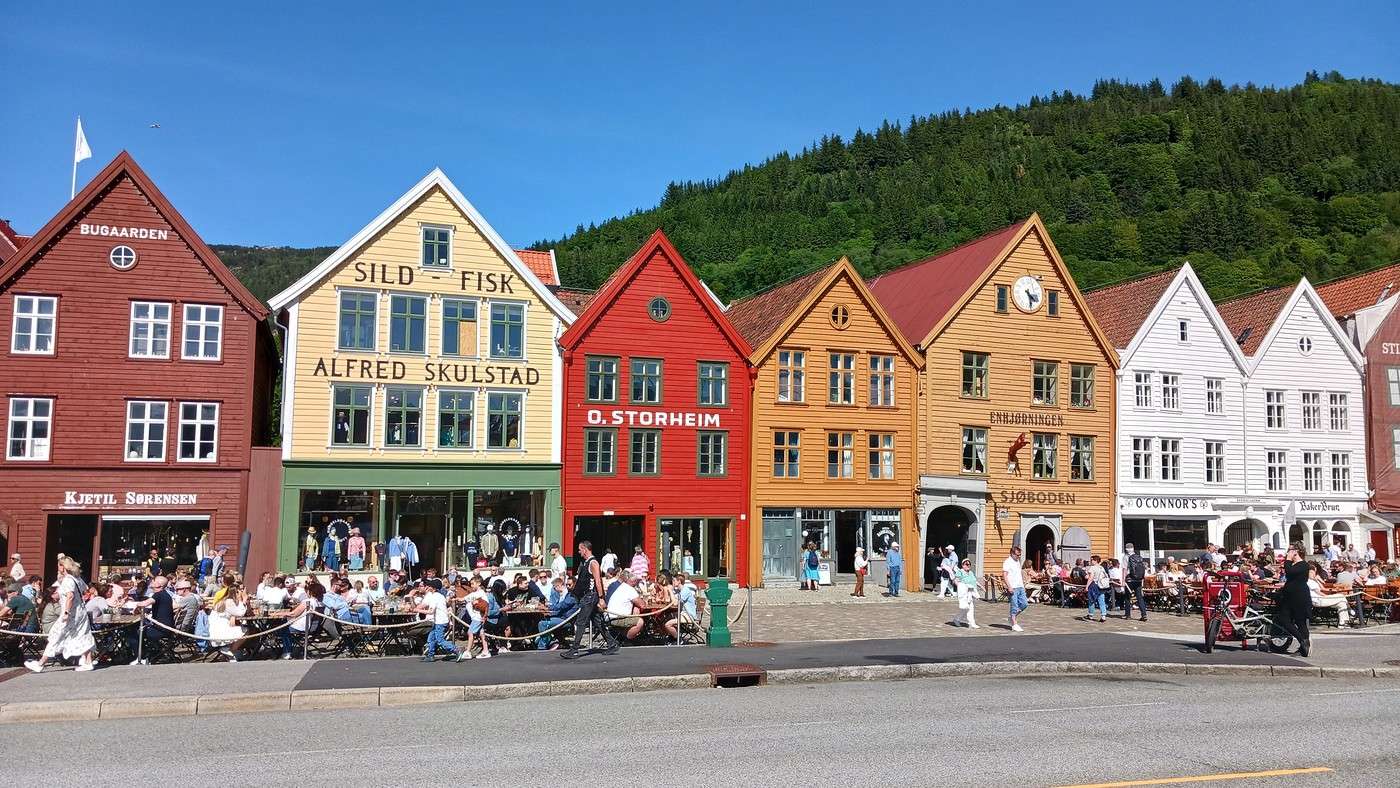
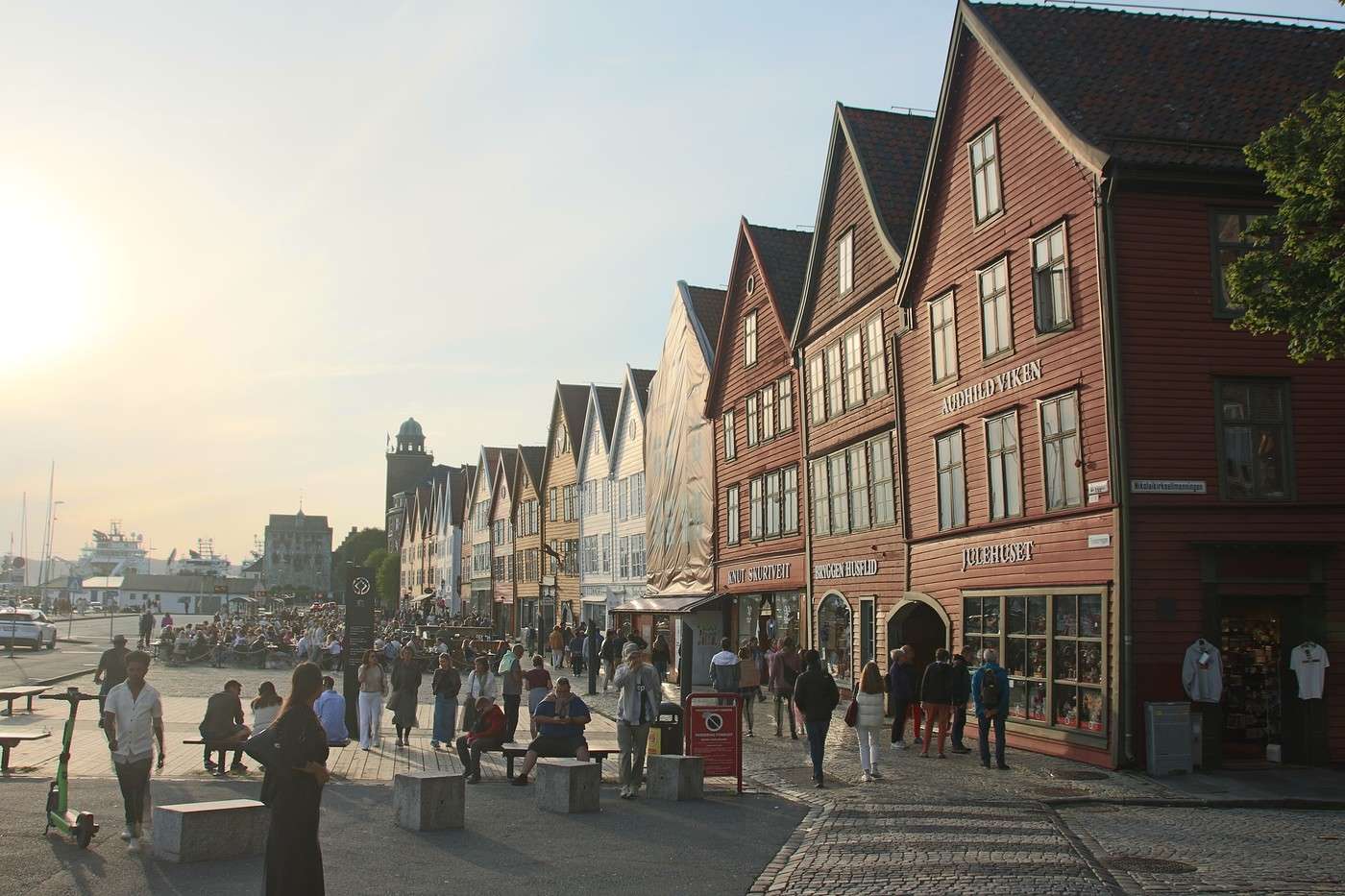
I’d planned to take a boat tour of the harbor, but it’s reserved for a wedding. So, we head to Bryggen, the most visited spot in the city with its Hanseatic wooden houses and narrow passages. It’s really very... old. A group of singers and dancers is performing in the street—they seem to have stepped out of another era and blend right into the scenery!


Bryggen’s origins date back to around 1070, shortly after the Viking Age. The town was well situated and easy to defend while being accessible to ships from the far north, Iceland, and the continent. It thus became a major hub for trade in the Nordic countries. Three hundred years later, the Hanseatic League established a trading post there and exerted enormous influence for several centuries. At the time, the sweet smell of tar coating the wooden buildings was probably overshadowed by the stronger scent of dried fish. Tons and tons of dried fish. In fact, the German trading post had monopolized the export of dried and salted cod, caught off the Norwegian coast, to the Nordic countries. In exchange, the Germans supplied seeds, grains, salt, and more valuable goods from the continent, which were then resold along the coast and inland. Bergen never officially belonged to the Hanseatic League, but the Germans had settled there, to the point that the old town center and city hall had to be moved. The same Germans also took over the venerable and charming St. Mary’s Church, where sermons were given in German until the 1900s. Over the centuries following Bryggen’s founding, the district continued to grow, eventually housing around 2,000 Germans who lived and worked there. The trading post existed until 1754, when the Norwegians finally took control.


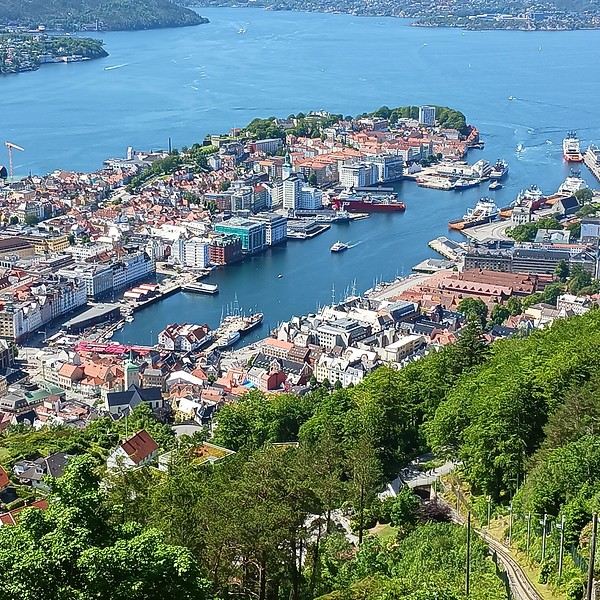
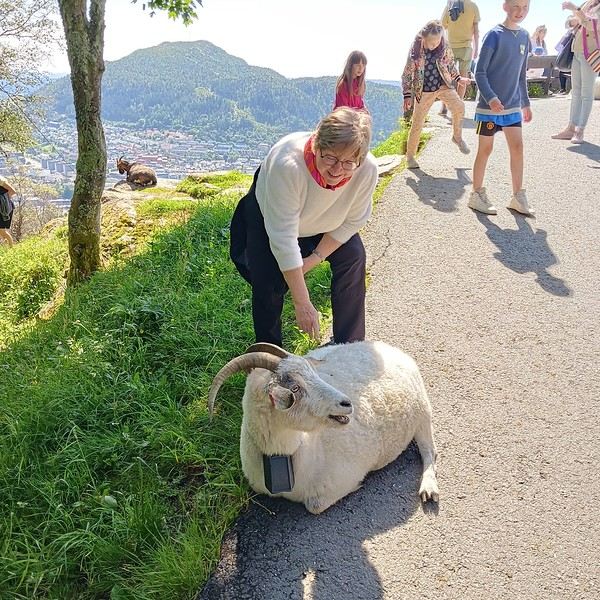
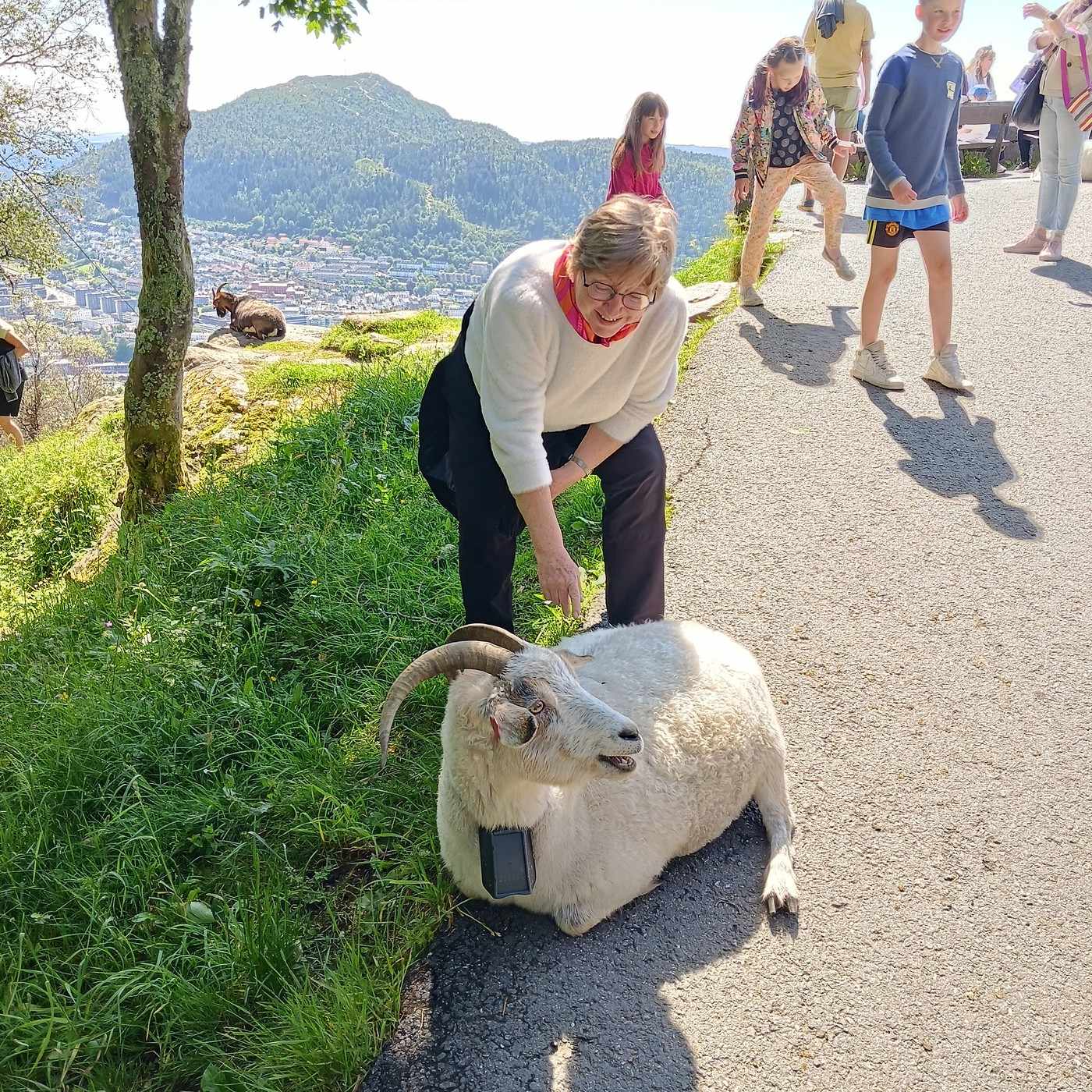
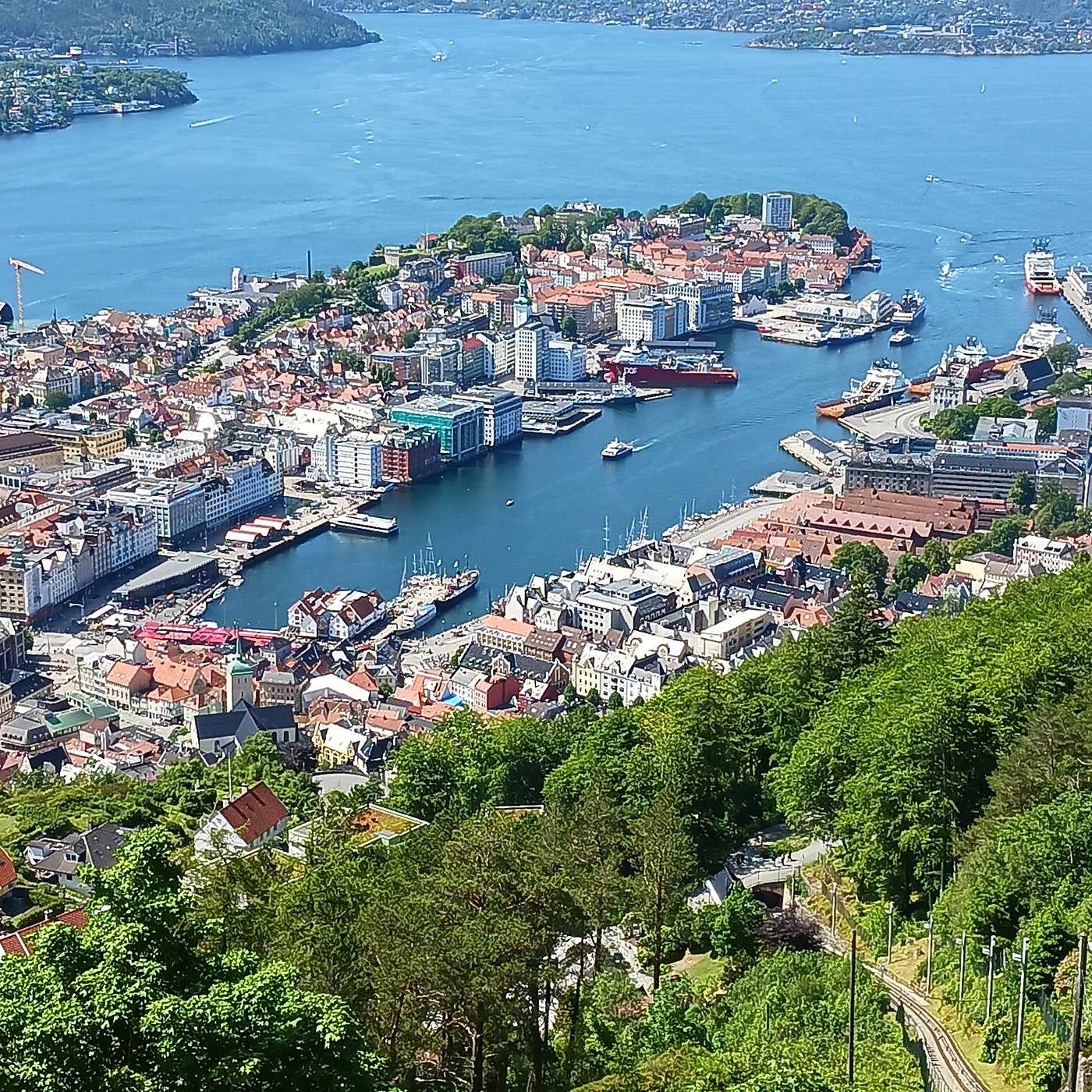
Since the weather is so nice, we continue with a ride up to Fløyen on the funicular. At the top, it’s crowded, so we settle for a drink on a terrace before admiring the view and saying hello to the goats, which are anything but wild.


After heading back down, we stop by the hotel to "freshen up" before dinner at Bryggeriet, a restaurant with a dining room right by the water. Mussels and fries for him, and a (very creamy) fish soup for me... After a digestive stroll by the cathedral and the city’s shopping streets, we return to Bryggen to soak in the unique atmosphere of the neighborhood one last time.


Bergen is really a fantastic city!

Kattegat Tour and Norway's Great Fjords - 32 Days (Denmark - Sweden - Norway)

Cendryon · 2025-08-14

Day 22 – Sunday, June 22 – Stavanger On the road between Bergen and Stavanger, there are ferries, including the one from Halhjem to Sandvikvåg, which takes 45 minutes to cross. There are tons of tunnels, including one with an underground roundabout that you definitely won’t drive over—it’s a rock wall. Pretty original, right? There’s also a museum that might appeal to Monsieur. "The Arquebus War History Museum in Tysvær offers a variety of exhibitions tracing the history of Norway’s occupation from 1940 to 1945. The focus is on wartime operations in Northern Rogaland and Sunnhordland, the role of the merchant navy in the war, the home front, and daily life during the war years. The latest exhibition, *‘Der Untergang,’* recounts the Allied victory in Europe and the German defeat in Berlin in 1945." The museum is named after Sverre K. Andersen, who operated an illegal radio station during World War II under the codename *‘Arquebus.’* The original *‘Arquebus’* radio transmitter is on display at the museum. Over 6,000 objects are exhibited across more than 2,000 m²." Bingo, the Arquebus Krigshistorisk Museum has everything to please. Even though I’m not usually a fan of war history, I’m won over (yet again) by the creativity of the Scandinavians, who really know how to make their museums smart and enjoyable. Right from the entrance, there’s a village scene set during the occupation. Then, the exhibits unfold...


We then head to STAVANGER and check into our Airbnb apartment, where we’ll spend two nights. Stavanger is a mid-sized city just as charming as Bergen. Since we’re within reasonable walking distance of the center, we set off to explore the city on foot.

First, we discover the harbor, its quays, and its historic boats...


...its shopping streets with colorful houses,


Then Gamle Stavanger, the historic district famous for its preserved white wooden cottages from the 18th and 19th centuries. It looks a lot like Bergen’s Nøstet, and there’s no one around—I love it!


For dinner, we spotted a rather *‘trendy’* Pakistani restaurant, ZOUQ... Yes, because we’re tired of Norwegian restaurants serving burgers or pizzas at outrageous prices. I thought I’d find excellent fish here, like in Iceland, but I’m really disappointed by their gastronomy. Zouq turned out to be a *‘great find.’* I don’t quite remember what we ate—a sort of mixed grill—but it was delicious, and the value for money was actually decent... for Norway!


Kattegat Tour and Norway's Great Fjords - 32 Days (Denmark - Sweden - Norway)

Cendryon · 2025-08-15

Day 23 – Monday, June 23 – Preikestolen and the Lysefjord This morning, I’d planned to hike Preikestolen, but it rained last night, and the locals warned the trail might be slippery. Since I’ve already fallen three times—pretty hard the last time—we decided it’s best to skip it. But there’s no way we’re just sitting around! Instead, we booked a boat tour of the Lysefjord—a much cooler (and safer) way to see the place. Even if it’s not as spectacular, at least it’s risk-free! We boarded the Rygerelektra—another electric boat! There weren’t too many people on board.


We glided out of the harbor, passed a salmon farm, and entered the Lysefjord.


The towering rock walls reminded us of the Nærøyfjord we’d visited a few days earlier. They rise at least 600 meters high.


We arrived at the famous Preikestolen, which translates to “the Preacher’s Pulpit.” It’s a cliff hanging over 600 meters above the Lysefjord. Accessible via a long hike, it’s one of Norway’s most stunning viewpoints—and also the most popular trail, meaning it gets *packed*.


See that guy taking a photo from Preikestolen?


You’d need a serious head for heights, but just so you know—in the last 10 years, there’ve only been 2 deaths here. That’s nothing compared to the tens of thousands of visitors who make the climb!


It was a beautiful, peaceful cruise, and we were lucky it stayed dry—though the sky looked pretty ominous in spots. Oops, almost forgot the goats and the waterfall! Apparently, they’re always part of the boat tour here. ;)

Back in Stavanger to soak up the charm of its old streets and Irish pub one last time...


Funny story: We were disappointed by the fish market at the harbor—just one shop with no prices listed. To avoid getting ripped off, we asked a local (the woman selling boat tour tickets at the dock) for advice. Without hesitation, she told us to head to MENY, a small supermarket in the city center’s shopping mall. It was well-stocked, and we found what we wanted at reasonable prices.


I love this photo taken on a street in Stavanger near our apartment. It really captures the Scandinavian way of life. Norwegians read *a lot*, especially during those long winter nights. They read and write novels—some of which become amazing films or series. Scandinavian (and broader Nordic) literature is hugely popular, especially their dark, gripping crime novels and thrillers. Authors like Stieg Larsson, Camilla Läckberg, and Jo Nesbo have won over international audiences with their work.

"Scandinavians are the world champions of reading. According to a 2010 survey by Norla, the Norwegian agency for promoting literature abroad, 93% of Norwegians read at least one book in 2009—a 2% increase from the previous survey (2005). On average, Norwegians read 16 books a year. 40% read more than 10 books annually, 14% read over 30, and 80% of parents read to their children daily or several times a week." Who does better? Iceland, which—on top of similar stats—boasts an unmatched ratio of writers to its population (just 320,000 people). In Iceland, "half the population writes so the other half can read," as Franco-Icelandic translator Henry Kiljan Albansson puts it. (Le Monde, 2011)

Kattegat Tour and Norway's Great Fjords - 32 Days (Denmark - Sweden - Norway)

Cendryon · 2025-08-15

Day 24 – Tuesday, June 24 – The Reason Why...
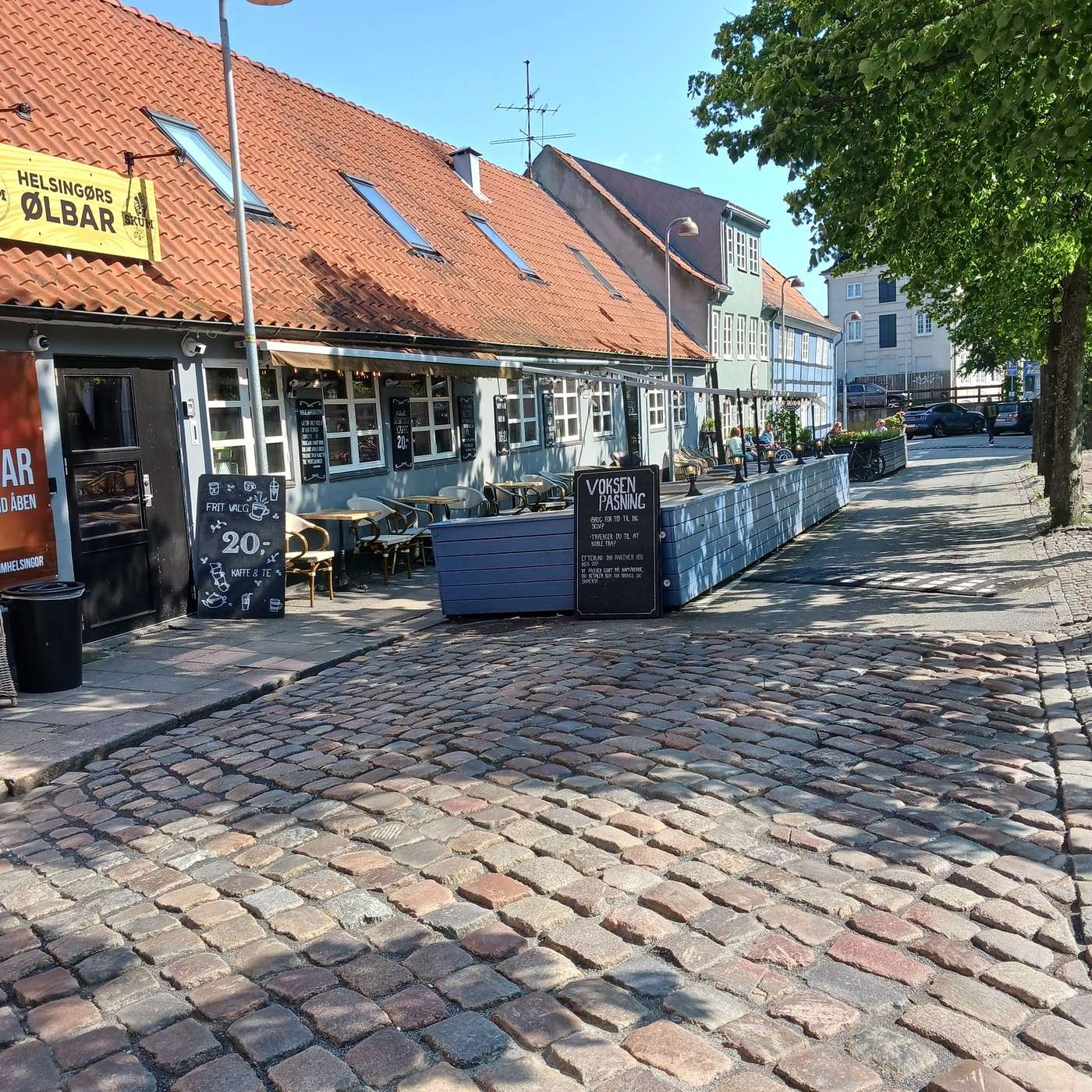
Ever wondered what’s behind that mysterious title? Well, in a trip—and especially this one—there’s sometimes a particular goal, an offbeat must-see, something that the whole itinerary revolves around and depends on to reach at just the right time... Why the Kattegat tour? Because tucked near the rocks in southern Norway, there’s an exceptional place, a spot known to foodies and gourmands, though it’s still pretty low-key. I wanted to discover it for myself. I broke the bank to experience this, but hey, it’s not every day you celebrate 40 years of marriage!
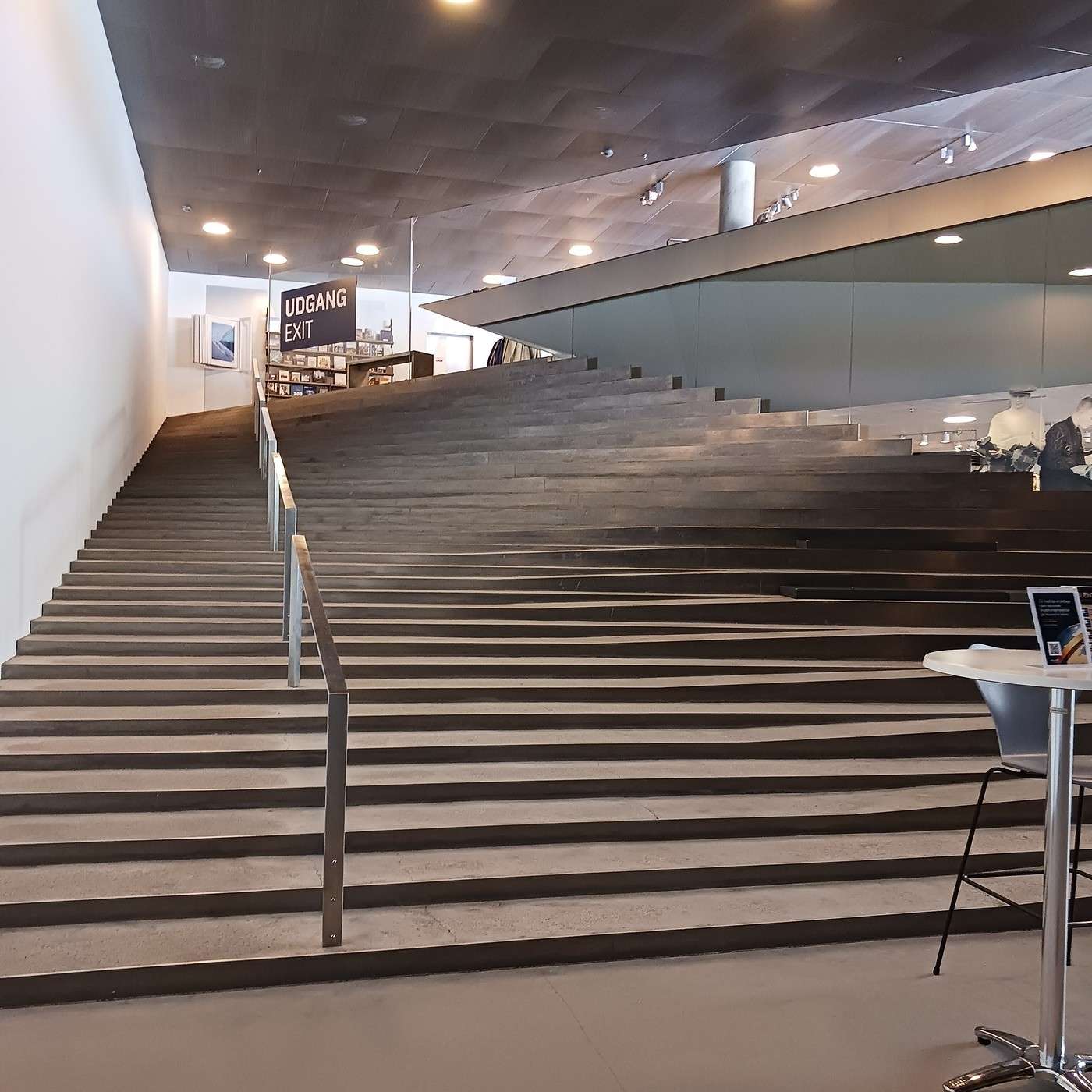
But let’s start the day at the beginning. We leave the lovely town of Stavanger heading south. We make a small detour to see the great Viking swords.

The monument features three swords embedded in the rock. The swords are made of bronze and stand nearly ten meters tall. It was designed by sculptor Fritz ROED and was inaugurated in 1983 by King Olav V to mark the 1,111th anniversary of the Battle of Hafrsfjord. The three swords symbolize the three kings who fought: the largest represents Harald Fairhair, who won the victory, and the other two his opponents. It’s also said that the monument is a symbol of peace, as the swords are now planted in the ground to never be used again. (Wiki)

I sometimes ask my husband to stand *in* the photo to give a sense of scale...
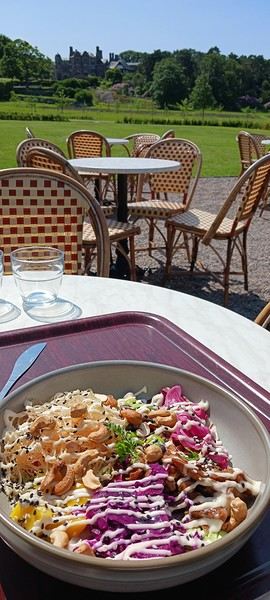


Stop in the quiet little village of Sogndalstrand, with its neat, flower-filled houses...
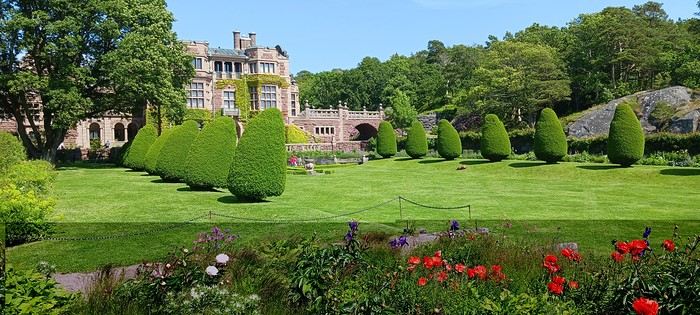


Books available for everyone, still and always...
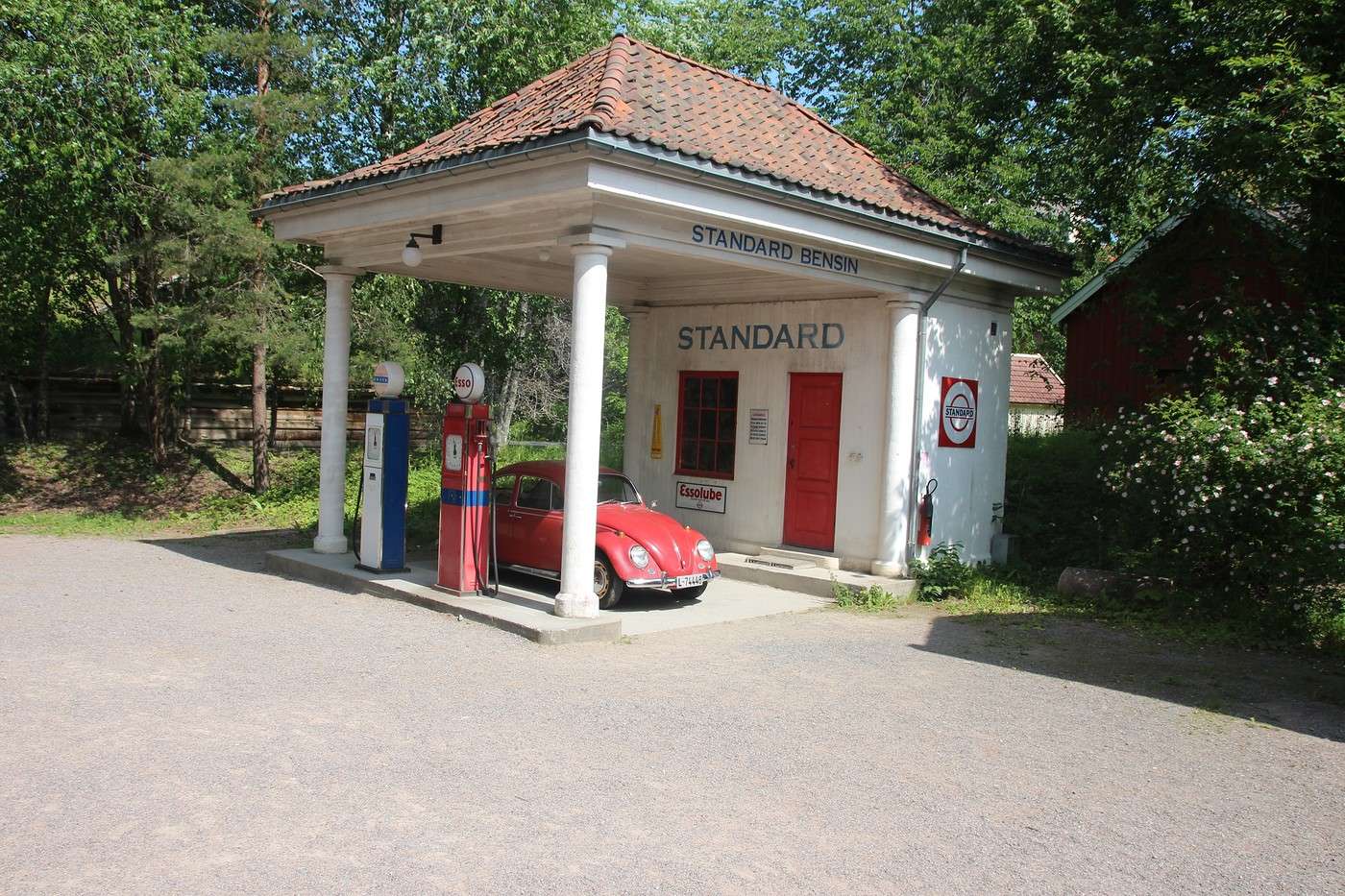


It’s all in the details...
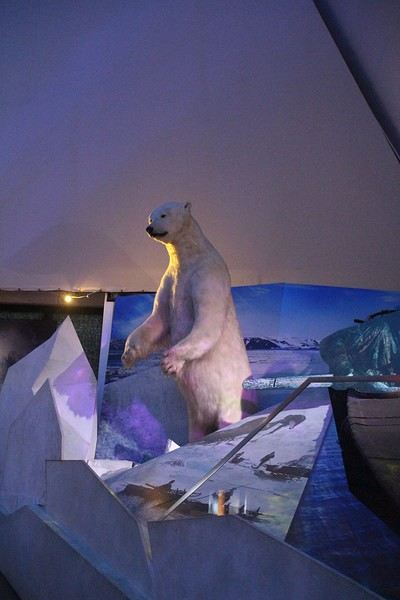


There are many charming villages nestled at the end of small fjords, and what’s more, the region isn’t very touristy. I’d planned to stop at Vinterstø and Oldemor’s Hage, but given the mediocre weather, we decide to "keep moving." Besides, we’ve already seen Sogndalstrand, and that’s not so bad since they all look a bit alike.
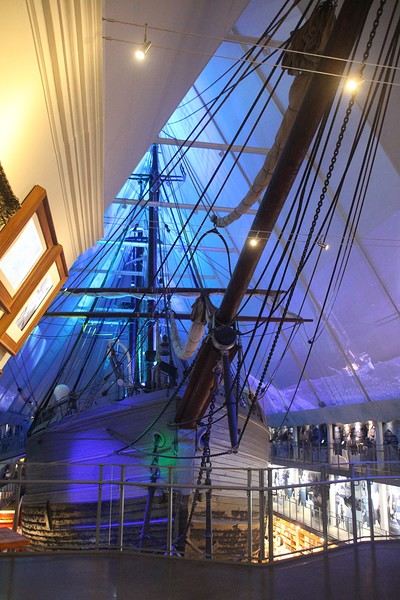


The sun finally comes out when we stop at the Lindesnes Lighthouse, where the sea is quite rough...


A lovely walk. We then head to our hotel for the night, the Lindesnes Havhotell. I chose this hotel because it’s right next to—you guessed it—our holy grail, the UNDER restaurant... and that’s where I booked a table for dinner... six months ago! Yes, because at this exceptional, Michelin-starred restaurant, you can’t just show up—tables are reserved months in advance!

(to be continued...)

Kattegat Tour and Norway's Great Fjords - 32 Days (Denmark - Sweden - Norway)

Cendryon · 2025-08-15

(Continued) Still day 24 - Tuesday, June 24, 2025 - UNDER

From the hotel, a small path leads to the restaurant, which we reach in 5 minutes. The setting is really pretty, peaceful, and relaxing.


And here’s what the place looks like. From the outside, it’s a concrete block perched on rocks...


...but inside,


WOW! I’m so happy.


Here’s the long-awaited moment. The welcome is super professional. You feel like you’re the only guests. They seat us right in front of the water! It’s magical! And I won’t even get started on the parade of dishes and desserts—all so refined and special—with hyper-attentive service. My partner hesitates to get up to go to the bathroom because, as we can see, whenever a guest stands up, a staff member accompanies them! We laugh about it, but when it’s our turn... we have to pinch ourselves to keep from laughing!


I didn’t dare take photos of the dishes—I figured in this temple of cuisine and the ocean, it wouldn’t be appropriate. I preferred to soak it all in... the depths... watching the fish dance... In short, we spent an exceptional evening in an exceptional place. Given the quality of... everything, we felt it was worth the price! No regrets, just satisfaction. A unique experience that lived up to all its promises. 🙂

Kattegat Tour and Norway's Great Fjords - 32 Days (Denmark - Sweden - Norway)

Ellobo · 2025-08-16

I really liked Stavanger too! Always nice to follow this travel journal. See you,

Kattegat Tour and Norway's Great Fjords - 32 Days (Denmark - Sweden - Norway)

Cendryon · 2025-08-16

Day 25 – Wednesday, June 25 – Return to Denmark Another transition day as we leave Norway for Denmark today. But before that, since we’re a bit early for the ferry, we stop to enjoy the sun one last time—it’s been playing hide-and-seek with us quite a bit in this country.


It looks like a beautiful beach in southern Europe, but it’s actually a beautiful beach in southern… Norway. The water is crystal clear… though not very warm. The beach is well-maintained, and there’s no one around. As we leave, we see a few families arriving—they’re already in their swimsuits!


Now heading to Kristiansand, where I booked the FJORD LINE ferry for the crossing to Denmark—it’s the safer option. Boarding is quick, and everything is well organized. We leave the port of Kristiansand, where a beautiful three-masted ship, the Sørlandet, is docked. This vessel currently hosts merchant marine trainees from all over the world for educational voyages across the North Atlantic and the North Sea. It also occasionally welcomes cadets from the Royal Norwegian Navy.


For the crossing, I chose the fast catamaran, which is smaller than the other boats. It makes the trip from KRISTIANSAND to HIRTSHALS in just 2 hours and 25 minutes. I also thought that with a catamaran, there’d be less rocking, since I’m very prone to seasickness. Big mistake! Despite a blue sky and what looked like a calm sea, the boat was moving quite a bit, and I forgot to take a "mercalm" pill. So, I settle into the cafeteria in the center of the boat and try to sleep… Well, that’s over! Time to disembark. This time, we’re in northern Jutland, and I’ve always dreamed of visiting SKAGEN, the northernmost town in Denmark. After a short drive through the green Danish countryside, we head straight to GRENEN, a hamlet north of the village of Skagen. It’s at Grenen that the Skagerrak and Kattegat straits meet. In other words, it’s the only place in the world where you can have one foot in the Baltic Sea and the other in the North Sea! This fascinating sight captivates both young and old: the two bodies of water meet but never mix. By late afternoon, there are quite a few people around. We climb the dune, just long enough to see that the tip of the country—a strip of sand where everyone seems to want to go—isn’t exactly within walking distance.


At that moment, we spot the local "public transport"—a tractor with a tourist trailer getting ready to make its last trip of the day to "the very tip." Since we’re not too early, we buy our tickets from the machine and hop on board…
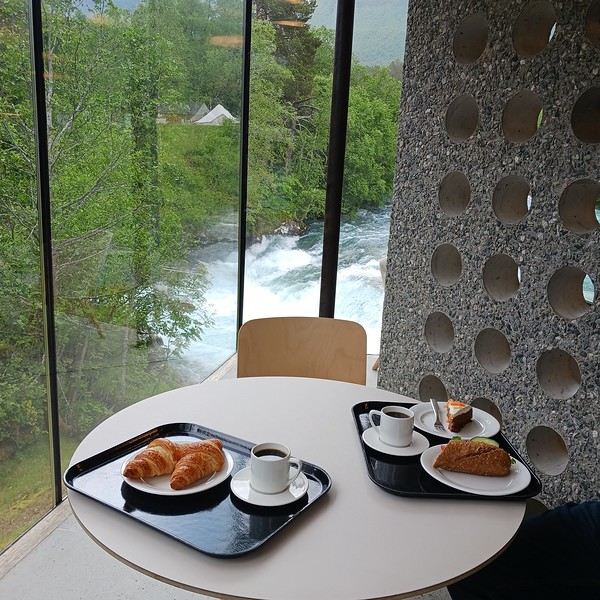


Okay, to get to the very tip, you’d have to get your feet wet, and since we’re not really up for that just for a photo, we’ll stay put, soaking up the sun, cool!


Plus, there are quite a few jellyfish!


Now heading to the center of Skagen. Goodbye to all-white Norwegian houses, hello to all-yellow Danish houses!


The Skagen Hotel, at the end of June, looks a bit like—without being pejorative—a retirement home where regulars gather to play cards! Watch out for walkers! "Skagen began as a fishing village in the Middle Ages and was particularly famous for its herring. Thanks to its unique location, offering breathtaking views of the meeting point between the Baltic Sea and the North Sea, the town quickly attracted the attention of many painters, including the Skagensmalerne, a group of Scandinavian artists from the late 19th century. Influenced by French Impressionists, these painters worked primarily outdoors, taking advantage of the region’s stunning natural landscape." Alright, we check in and hurry up a bit. Why, you ask? As I mentioned earlier in my story, Scandinavians eat early, so restaurants close early—and we’re hungry! Here, there are quite a few super touristy restaurants with prohibitive prices, so it’s best to be careful. Most are located on the main pedestrian street or by the harbor. After a quick look at Tripadvisor, we steer clear of those busy streets and head to Restaurant K, an establishment offering a great menu that’s a bit out of the ordinary, with impeccable service. A short digestive walk along the harbor leaves us impressed by the size of the trawlers.


"The port of Skagen is Denmark’s largest fishing port, both in terms of volume and value. In recent years, over 1 billion Danish kroner worth of fish have been landed here. In terms of value, the port of Skagen ranks among the top 10 fishing ports in Northern Europe.
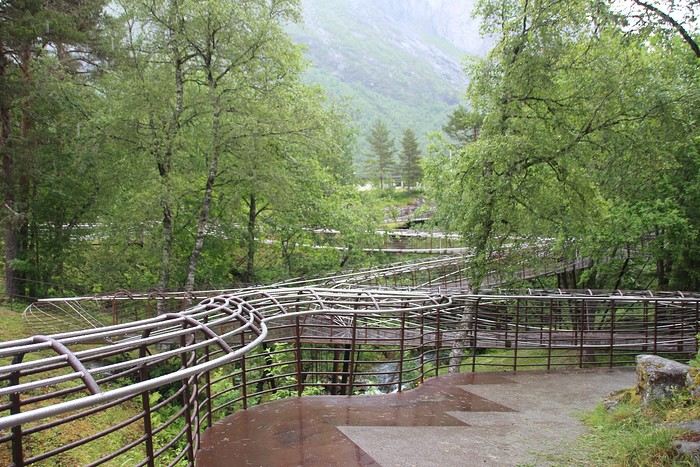
Most of the port’s landings are destined for consumption and the pelagic industry. Over 125,000 tonnes of fishmeal and fish oil are exported to more than 60 countries. Pelagic catches consist mainly of herring and mackerel, with herring accounting for over 100,000 tonnes per year. This makes the port of Skagen the most important herring landing port in Northern Europe."

Kattegat Tour and Norway's Great Fjords - 32 Days (Denmark - Sweden - Norway)

Bluequark · 2025-08-18

Thanks so much for this travel journal with great photos and loads of interesting info!

Kattegat Tour and Great Norwegian Fjords - 32 Days (Denmark - Sweden - Norway)

Cendryon · 2025-08-30

Day 26 – Thursday, June 26 – Aarhus We leave Skagen and its yellow houses to explore the nearby sights. First up is the buried church of Skagen: The buried church of Skagen is an old church where only the bell tower still stands, emerging from the dunes. The whiteness of the walls, just lit by a ray of sunshine against a backdrop of gray clouds, offers a lovely contrast.
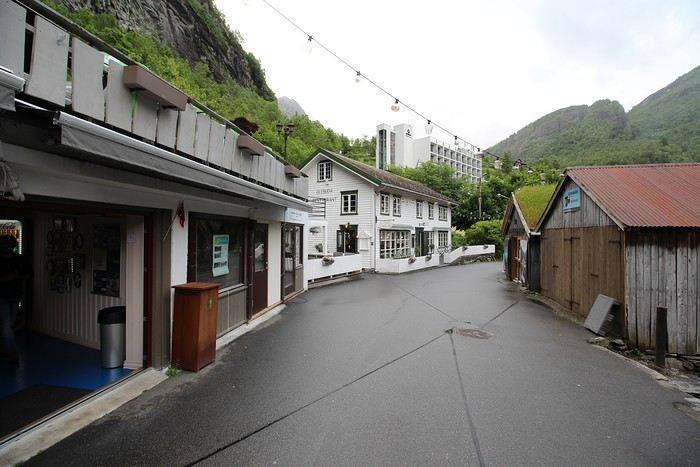


A few kilometers further on, we find Råbjerg Mile, a sea of sand—a shifting coastal dune. It’s the largest moving dune in Northern Europe, covering 1 km² with a maximum height of 40 m. The dune consists of 4,000,000 m³ of sand. The wind moves it up to 18 m per year toward the northeast. The dune leaves behind a thin, damp layer of sand, a trail stretching westward toward Skagerrak, where the dune formed three hundred years ago.


We then head toward AARHUS, Denmark’s second-largest city, located 213 km from where we are. We arrive in Aarhus and specifically at the ARoS Museum around 12:30 p.m., which is the perfect time to grab a quick lunch at the museum café.


It’s actually the only museum café that really disappointed us during this trip. Let’s be clear: there’s little choice. The salads are expensive, not very filling, and not very good. On the other hand, the architecture of this building is remarkable...
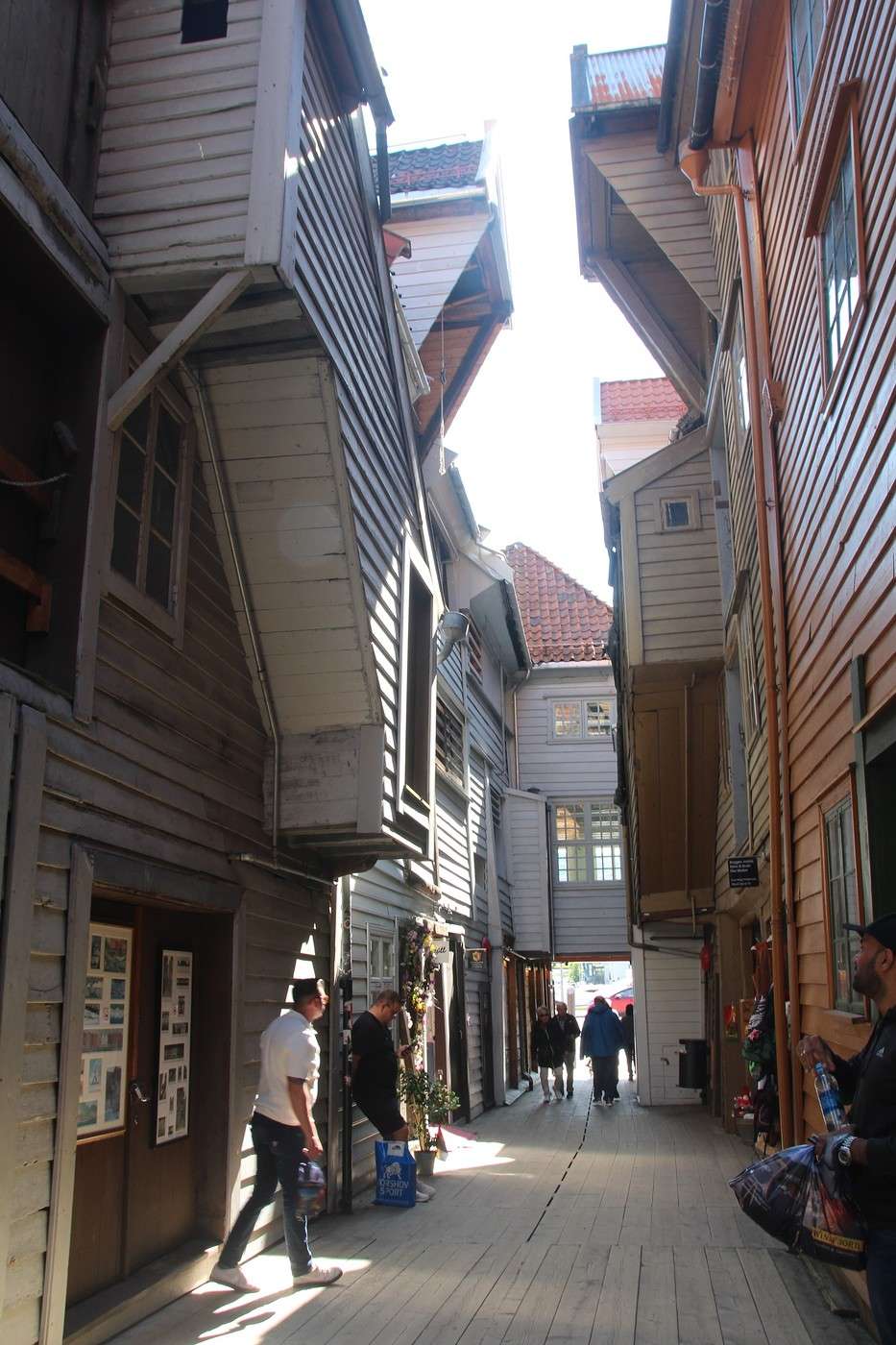


But anyway, we came to visit the museum and its modern art collections. We’re surprised to find a temporary exhibition dedicated to French modernists, including Fernand LÉGER, Georges BRAQUE, Bernard BUFFET, as well as MODIGLIANI, PICASSO, and MIRO.


All the works were loaned by the Lille Museum of Modern Art and the Centre Georges Pompidou in Paris, both of which are currently closed to the public for renovations.


Moving quickly past the other temporary exhibitions, we focus on the museum’s permanent collection... we like some, like Warhol, or not so much, but we can’t stay indifferent when we encounter the major piece, Ron MUECK’s *Boy*.
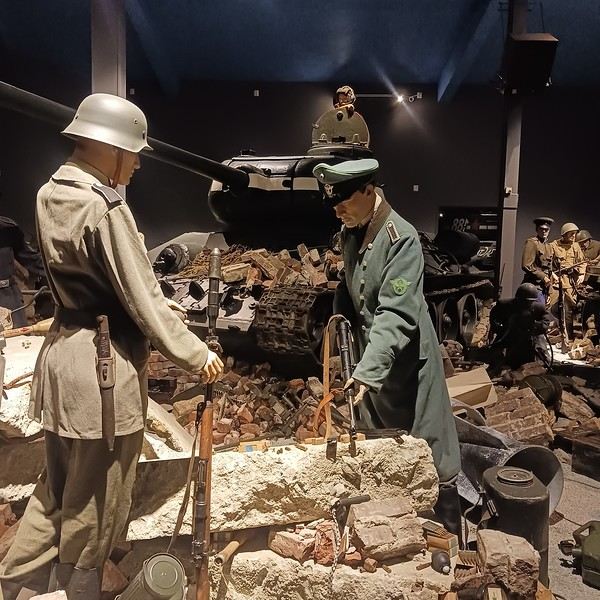


Ron MUECK (Hans Ronald Mueck), born May 9, 1958, in Melbourne, is an Australian hyperrealist sculptor. His monumental sculptures reproduce the human body in meticulous detail using silicone, polyester resin, and oil paint. Behind his clinical precision, a taste for the morbid shines through, with the decay of his obese and aging bodies accentuated by their abnormal dimensions.

And then there are the classic works, like those by Danish naturalist Georg Nicolai ACHEN, whose paintings remind us of Hopper or Vermeer... different eras, different settings, but always the same emphasis on the window... It’s beautiful!
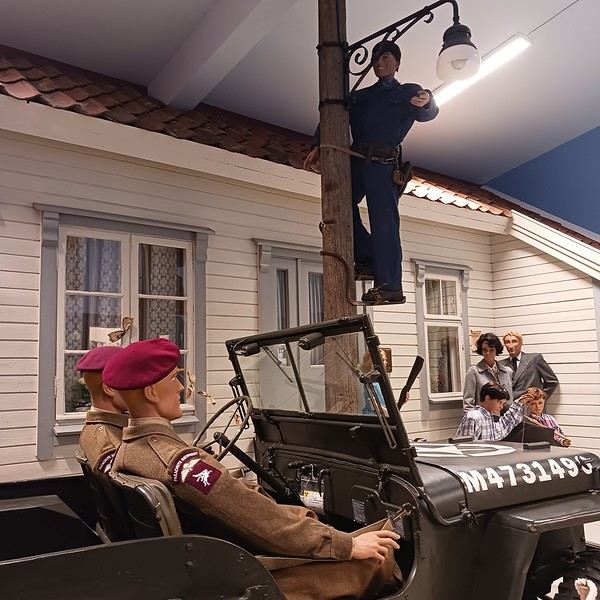
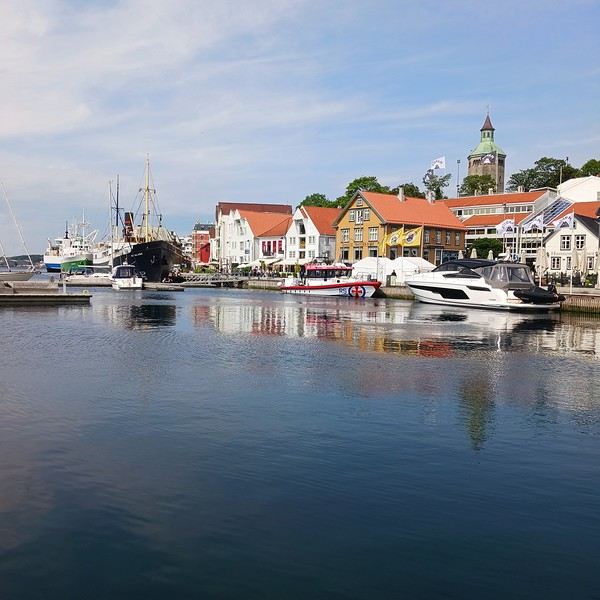


Edvard PETERSEN: *Emigrants at Larsens Square*, for which he received the gold medal: In the 1880s, Petersen painted several works depicting urban life in Copenhagen, influenced by French realism. His most famous paintings are *Emigrants at Larsens Plads* (1890) and *Return of the American Steamer at Larsens Plads* (1894).


There’s a work by Frants Peter Diderik HENNINGSEN that had struck me at the Copenhagen Museum. It was the eviction of a family from their home in the middle of winter. This painting (*Abandoned...*) confirms his tendency to illustrate unfortunate events in the lives of the middle class living in Copenhagen during difficult times.


We end with the rainbow view of the city from the ring of colors on the museum’s roof, but I won’t post photos here (post limit...). Our Airbnb is located in the countryside, about 15 minutes from Aarhus. As usual, our arrival is "self-check-in," and we won’t see the owners during our 3-night stay. Everything’s perfect.

Kattegat Tour and Great Norwegian Fjords - 32 Days (Denmark - Sweden - Norway)

Cendryon · 2025-08-30

Day 27 – Friday, June 27 – Den Gamle By Ever since planning this trip, I’d spotted one of Denmark’s most extraordinary places: "Den Gamle By," a name that might not sound too inspiring to us non-Scandinavians. But as I explored the Aarhus area a bit more, I quickly realized it wasn’t the only highlight in this city—that’s why we spent 3 nights here. Yesterday, we were in a resolutely futuristic building; today, we’re stepping back in time at Gamle By. Aarhus’s open-air museum isn’t just any open-air museum. First, it’s right in the heart of Aarhus. Second, it recreates entire urban landscapes spanning from the 17th century to the 1970s (our whole childhood, basically… nostalgia overload!)—and it even goes up to 2014! What’s also unusual is its longevity—it’s one of the oldest open-air museums in the world! Since then, many others have popped up around the globe, a sign of the desire to preserve the heritage passed down by our ancestors...


"Den Gamle By is an open-air museum founded in 1909 by the energetic schoolteacher and local historian Peter Holm, who realized that the merchant’s house ‘Den gamle Borgmestergård,’ located at the corner of Immervad and Lille Torv in Aarhus, was about to be demolished. Holm ensured the farm was rebuilt to serve as an exhibition building for the Aarhus National Exhibition in 1909. After the exhibition closed, Holm managed to raise funds to permanently reconstruct the farm. The Aarhus municipality provided land in what was then the ‘Jutland Garden Society’s garden,’ now the botanical garden. On July 23, 1914, the old town opened to the public for the first time. Besides Borgmestergården, there were two other buildings: a small belvedere from Vestergade and Frands Hansens Hus from Mejlgade. Initially, the museum’s scope was modest. For Aarhus’s designation as the European Capital of Culture in 2017, a new exhibition called *Aarhus Tells* about the city’s history was inaugurated in April." (Wiki) Here’s what else they say about it: From our era with the pizzeria and the rainbow family, through the well-being and liberalism of the 1970s and the modern times of the 1920s with the car dealership and Schous’ soap factory, all the way to the old merchant town with the grocer’s farm, the shoemaker, and the brandy distillery. In the old town, you become one with history—you can feel it, taste it, and try it out as you stroll through the streets and alleys, peek into people’s homes, and strike a deal in one of the historic shops. All around you, you’ll meet ‘people from the past’ happy to share their stories. It’s almost like you’re really there. After asking the first staff member we met for advice, we started our visit with the oldest section. I took tons of photos—it’s hard to choose! 1600–1900 The Old Merchant Town Visit a Danish town as it was in Hans Christian Andersen’s time—and before. Meet the people of the past, admire their living rooms and kitchens, and explore their gardens. Take a peek into the grocer’s courtyard and buy a vanilla crown from the baker. Pet the horses, tend to the geese, and try out stilts. The town’s half-timbered houses were moved from cities across Denmark. Look, listen, smell, taste, try, discover—and understand. It’s a fantastic immersion, and there’s even a funfair for the little ones!


1900–1927 Modern Times In the 1920s, the town becomes modern with sidewalks, streetlights, telephones, and colorful ads everywhere. In the 1920s, the town modernizes with its sidewalks, streetlights, telephones, and brightly colored facades. Shops dominate the urban landscape. Visit the hardware store, the bookshop, Schous, and the fashion store; try the telephone switchboard and admire the latest models at the car dealership. Modern Denmark is on the move. We got to see a demonstration of an old-fashioned telephone switchboard, but the most impressive part was definitely the visit to the car dealership, where a hologram salesman pitched us all the features of the vehicles on display!


1950–1974 The Welfare State and Liberalism An era defined by free spirit, the women’s movement, and experimenting with new ways of living. 1974 marks the peak of the welfare state. An era shaped by liberalism, feminism, and experimenting with new lifestyles—even if most things stayed the same. Admire the butcher’s shop, visit the supermarket, buy records at Pouls Radio, and enjoy a Sarah Bernhardt pastry with coffee at the bakery. Meet the gynecologist, the nuclear family, the commune, the retired couple, the hippie couple, and the Greenlandic student. Try out the kindergarten toys and flip through the risqué magazines at the bookstore.


Our Era 2000–2014 Queen Margrethe’s Street is a snapshot of the year 2014. It’s packed with shops, and you’ll also find a shopping center, a 7-Eleven, a bank, a Blockbuster, a pizzeria, and an old jazz bar that smells like smoke and beer. Meet Rikke, a single woman, and visit the rainbow family Isager. Tour their home and listen to interviews about their ordinary lives, juggling kids and work. There’s also a museum here with lovely posters, a collection of clocks and watches, and even… a locomotive!
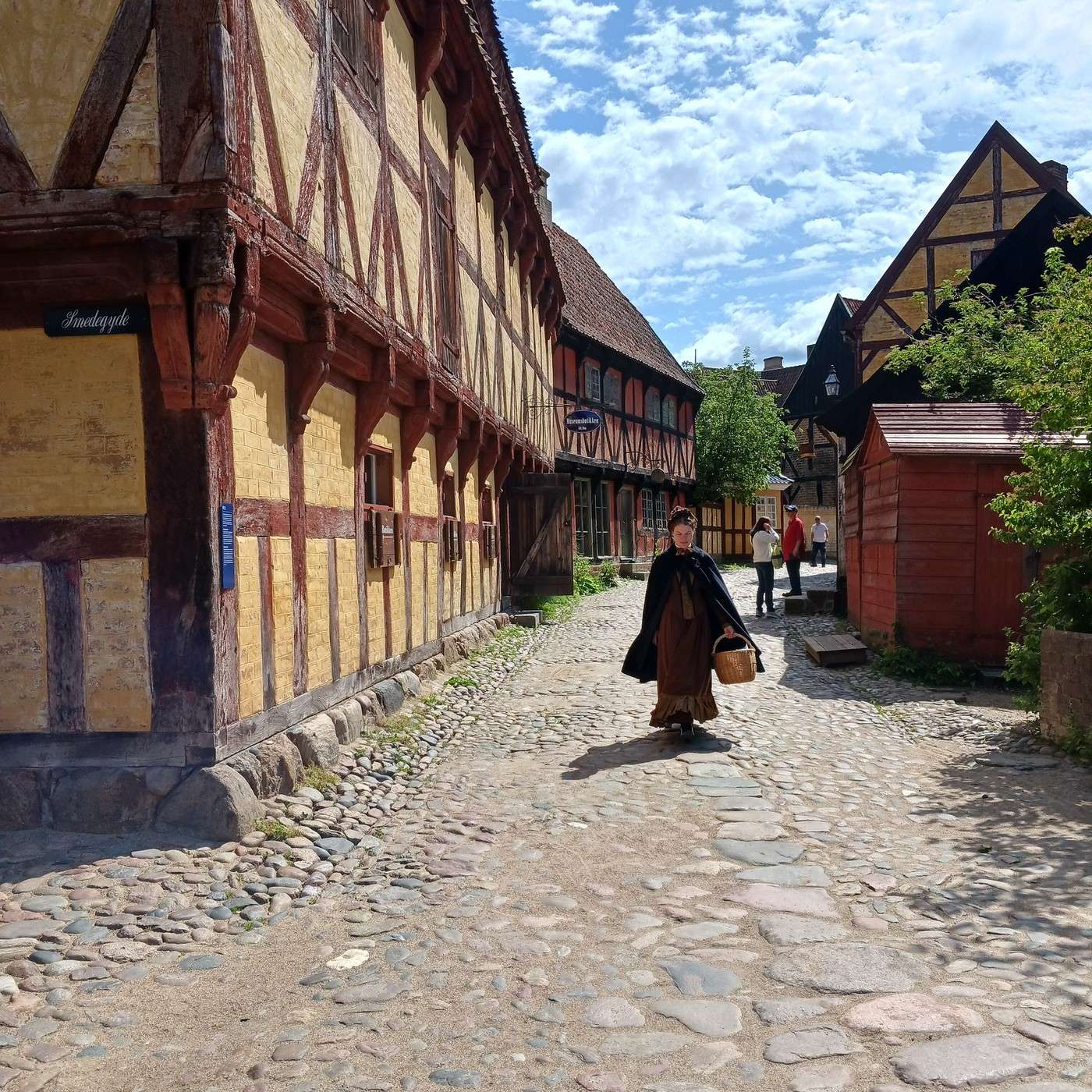
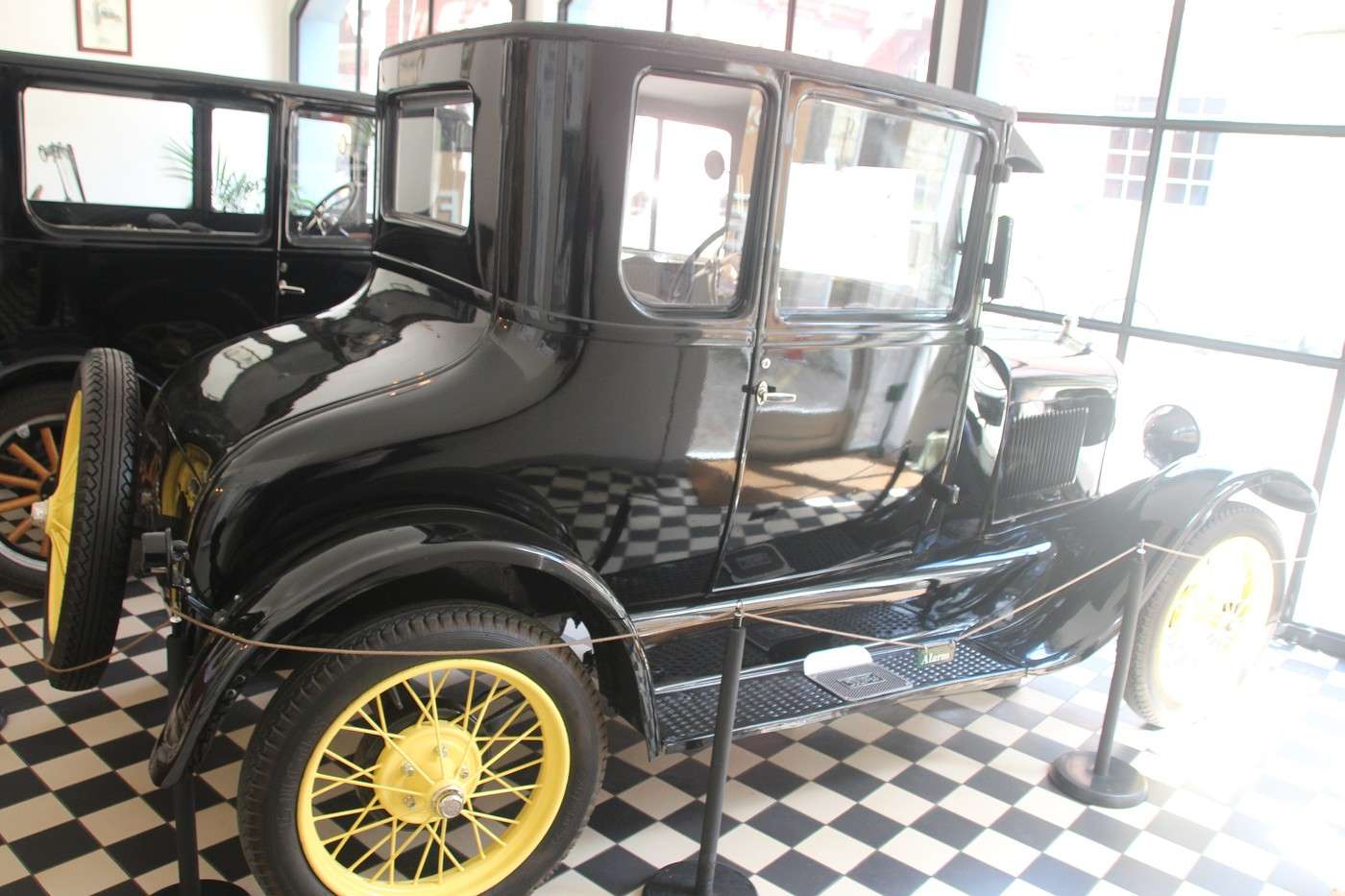
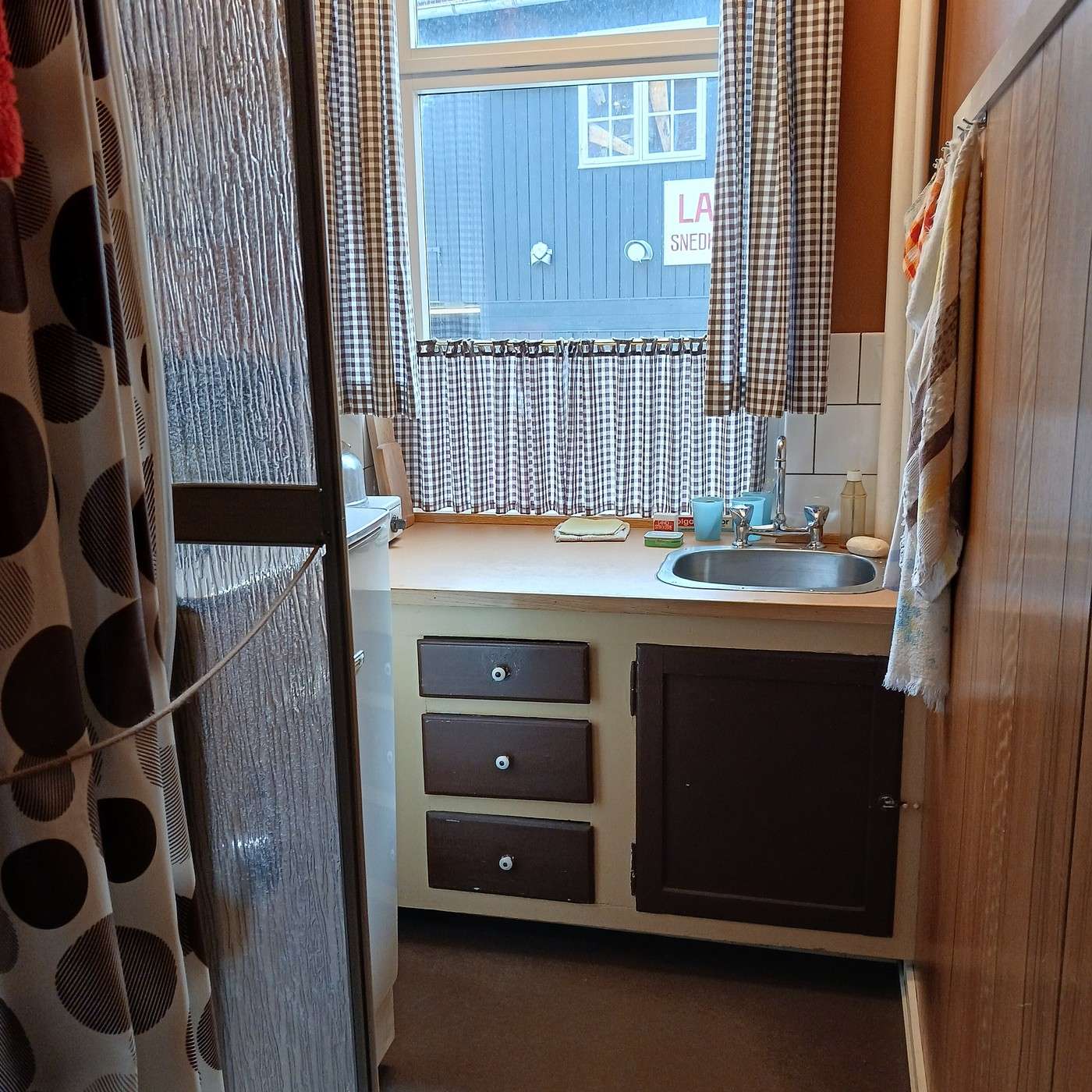
We spent almost the whole day in this museum and loved every minute of it. We had lunch at Gæstgivergaarden and couldn’t resist the pastries at Café Bonnich Petersen. Even though we were exhausted, I wanted to see Aarhus’s city center, since we wouldn’t have another chance to visit later. In the city streets, old half-timbered buildings mix with more recent ones. There’s a festival happening on the cathedral square—nothing particularly Scandinavian about it. The main shopping street is well-stocked. Aarhus left us with the impression of a very dynamic city, one that seems determined to stand out against the country’s capital, where the most innovative architects are leaving their mark on ultra-futuristic buildings.

VoyageForum — the largest community of French-speaking travellers.