Back to the discussion

in Entre deux voyages › Carnets de voyage

The Two of Us in Istanbul: A Turkish Blue Round

Discussion started by RichardXI on 2025-09-27

82 replies

This thread has been translated into English.


The Two of Us in Istanbul: A Turkish Blue Round

RichardXI · 2025-09-27

Hello everyone,

I’m not really a regular contributor to VoyageForum, but every time Kate and I travel, she encourages me to write a travel journal and publish it. And I must admit, it’s a very enjoyable intellectual exercise, though not always easy. As a VF contributor whose journals I’ve read once said, this retrospective work not only helps preserve memories but also provides a fruitful moment of introspection by bringing back emotions and feelings.

Kate and I spent a week in Istanbul. For her, who had already visited, it was a return; for me, it was a discovery.

As we’ve now made a habit of, I write the texts, and she posts her photos. We hope this illustrated story, crafted together, will revive beautiful sensations for those who know the city and inspire others to discover it. Here we go!


The two of us in Istanbul: a Turkish blue whirl

RichardXI · 2025-09-27

09/12. A chaotic arrival

I hate arriving in a big foreign city at night. The fading light—what the French call "between dog and wolf"—always triggers a kind of anxiety in me. The long ride from the airport in the back of a taxi with a usually silent driver whose face you barely glimpse, the endless concrete outskirts of the metropolis, the city center itself bustling with life but completely indifferent to our presence, separated from the world by the sealed windows of the vehicle—all of it can create a sort of psychological discomfort. We’re moving through a city we don’t understand at all. During the day, at least the light makes everything feel more accessible, friendlier, and I always tell myself that if we have trouble finding our accommodation, time isn’t an issue, and solutions will appear in the daylight.

But our nighttime arrival in Istanbul was more than chaotic due to an unbelievable string of small mishaps that piled up and eventually made our stomachs clench... After quickly exiting the airport, we waited for the taxi the apartment owner was supposed to send. Ten, twenty minutes... Kate calls. "Really sorry, I forgot to tell the driver, but just take another taxi—there are plenty." Queue... A driver picks us up. "Galata Mandirasi Sk 2,? Ok." Fifty minutes later, we finally arrive. The driver drops us off—thank you. The narrow, sloping street is poorly lit: number 1, number 3, no number 2. I have a doubt and check the street name, which is Mandir, not Mandirasi. Panic—we’re actually north of Taksim Square, 40 minutes from our accommodation in a neighborhood that seems very local, where a tourist probably hasn’t set foot in ages... The driver got it wrong.

Google Maps to the rescue—right, no, left, down, up—the little arrow on the app seems as lost as we are. A family sitting on their doorstep notices our confusion and calls out to us. Mixing a bit of English and Google Translate, we manage to explain the situation. When the man realizes we’re planning to walk to the Beyoğlu district, his eyes widen in shock—he looks almost alarmed, even worried. "No, no, no good, taxi, taxi!" I’m not sure if he’s warning us against walking because of the distance or safety, but we decide to take his advice. I mumble a rough teşekkür ederim and we start looking for a taxi in a neighborhood where there aren’t any. A yellow car! Galata, Beyoğlu? OK. Just as we get in, the car is stopped by heavy traffic. No possible, get out of the car please... The search continues, and we emerge onto a livelier, better-lit avenue.

Taxi, taxi! We hop into the car and show the driver the route. No, no, get out of the car please. What’s going on? Why does everyone keep saying that? I get the feeling our accommodation is on a small street, and the taxis don’t want to go there. A young man approaches us, and we explain the situation. He flags down a taxi and seems to give precise directions. Great, the driver agrees. We finally arrive at our apartment after a two-hour ordeal. The fare seems very reasonable—no scam. Conclusion: Istanbul taxi drivers are honest, but not very competent...

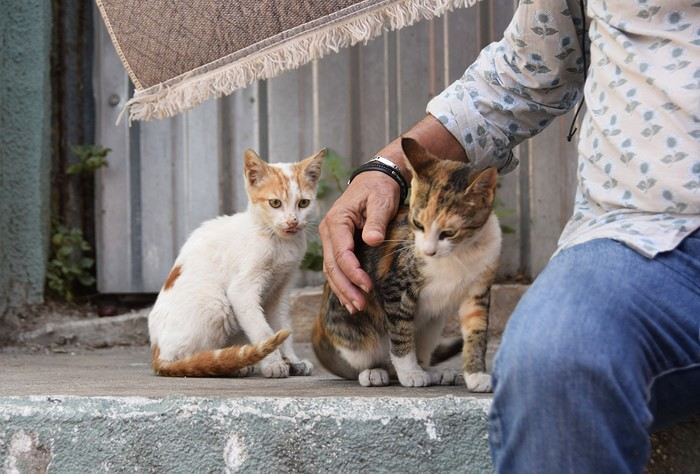
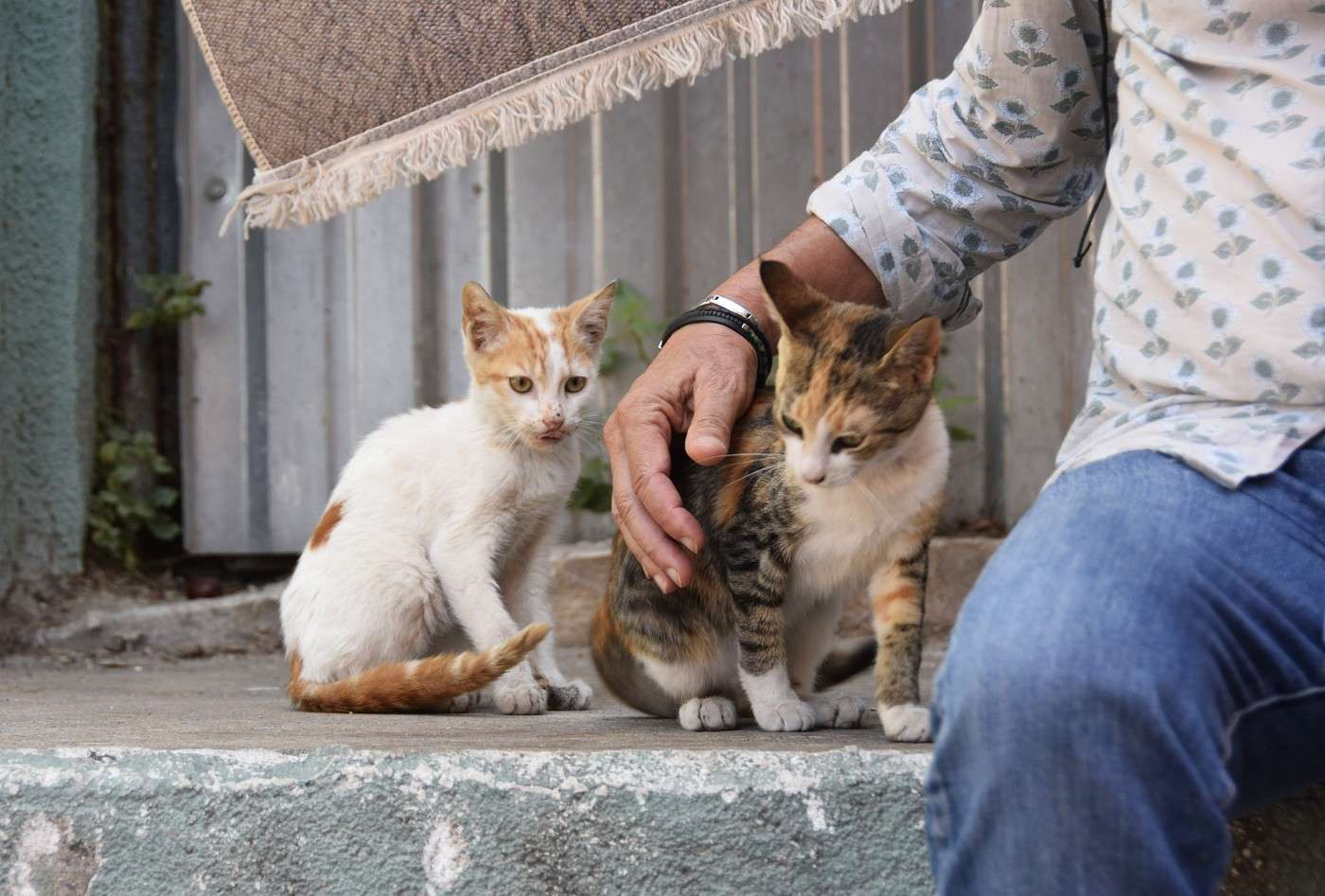
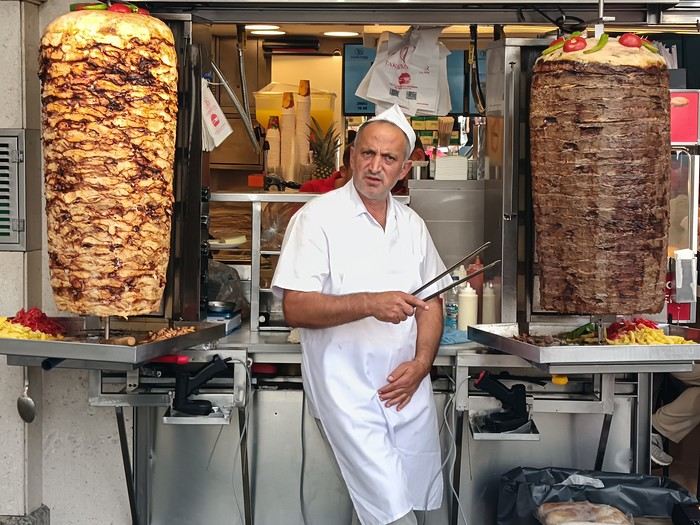
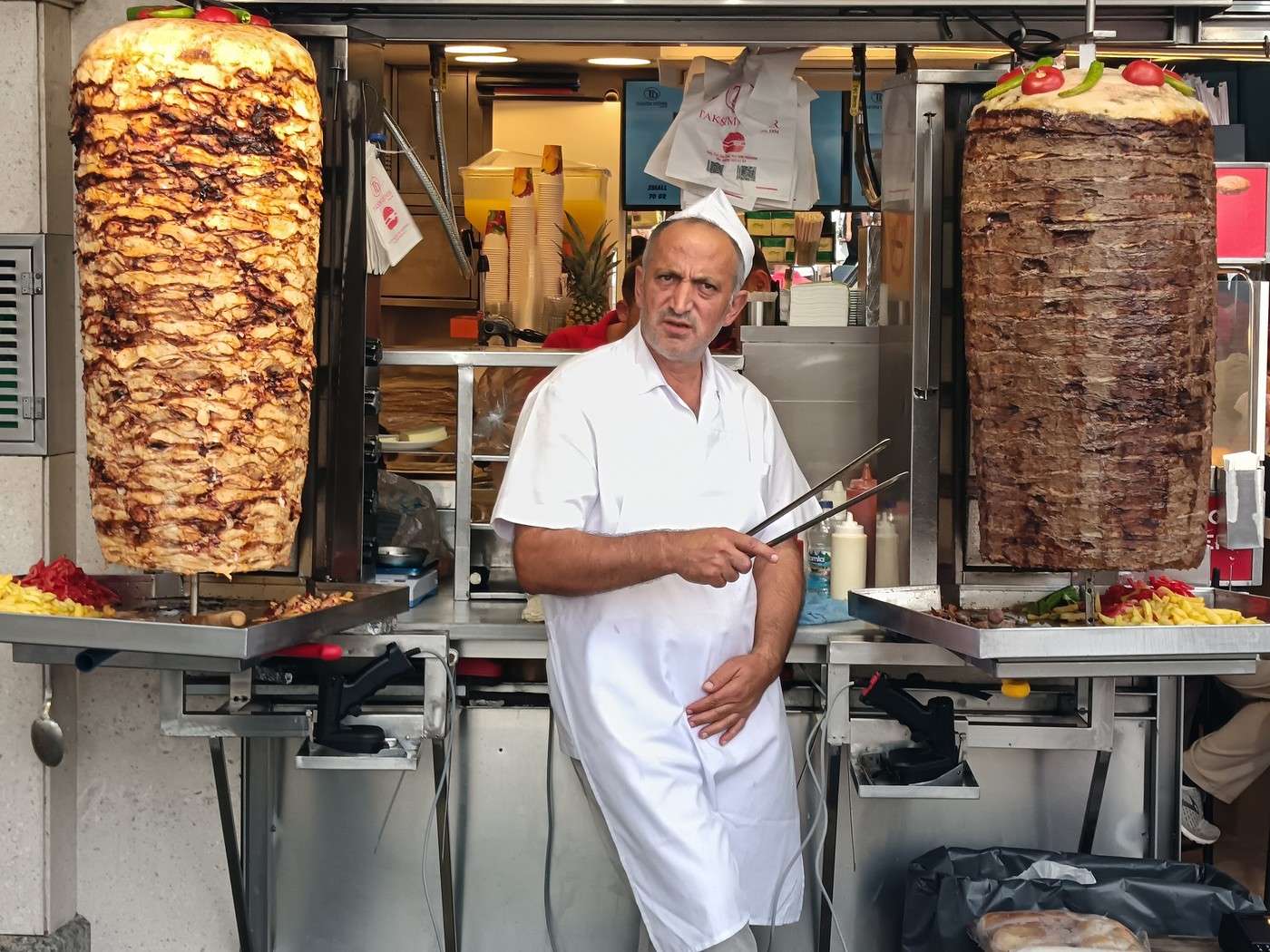
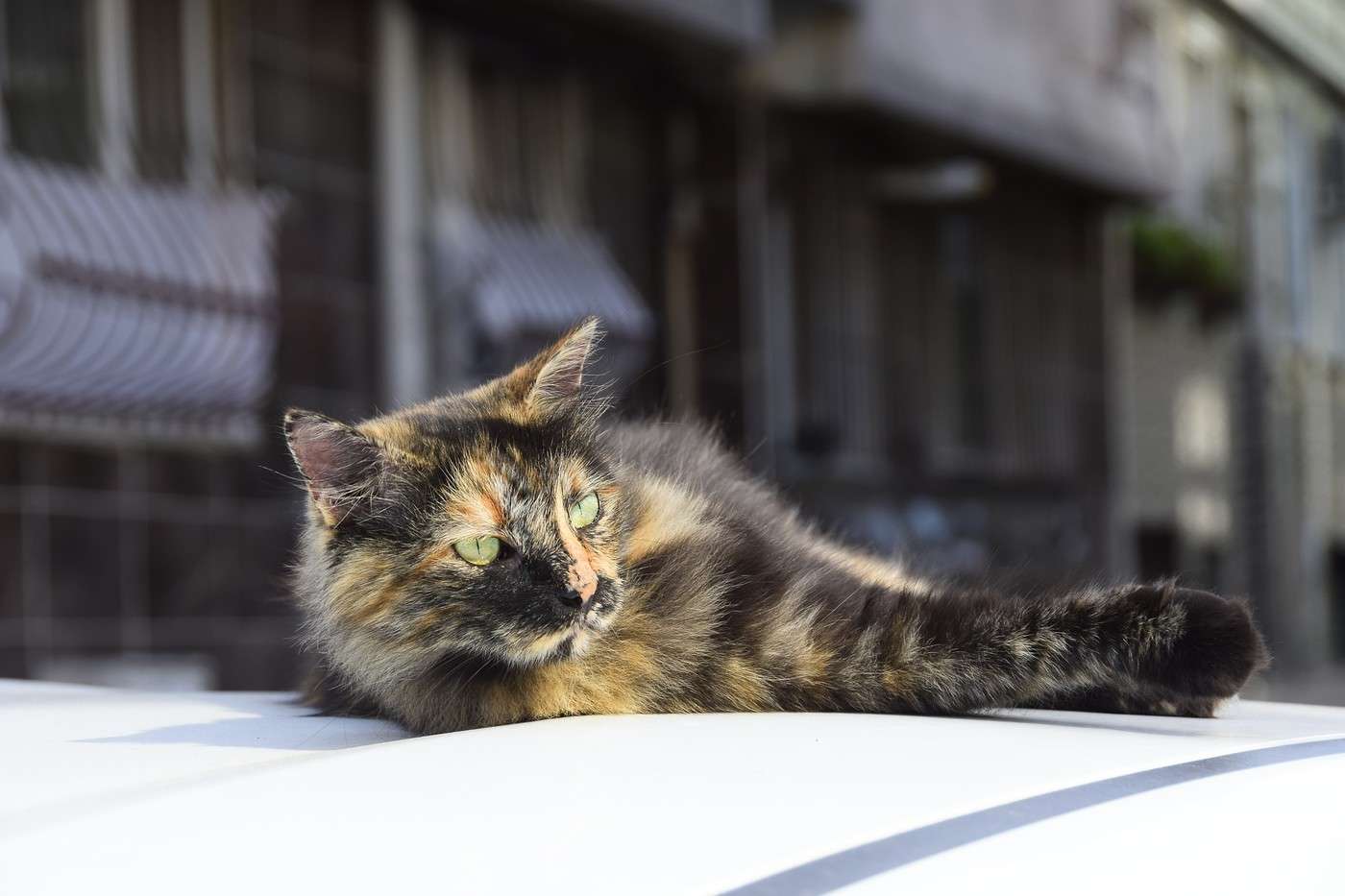
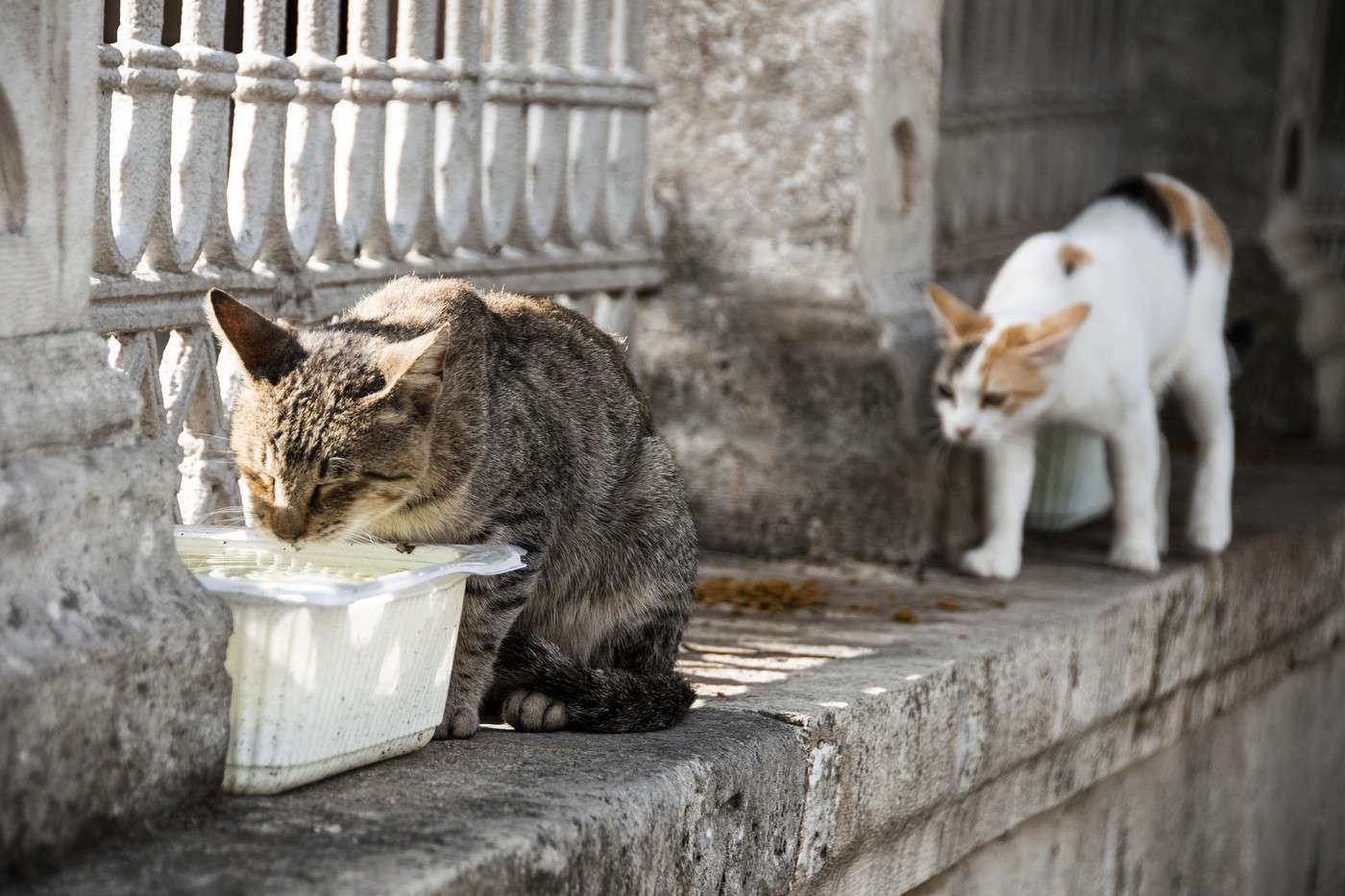
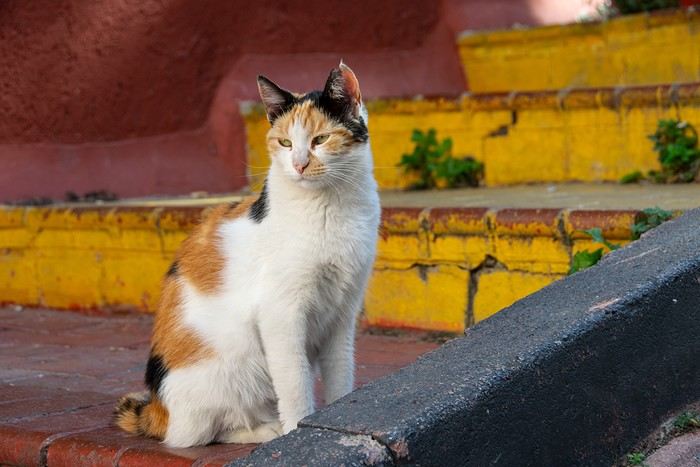
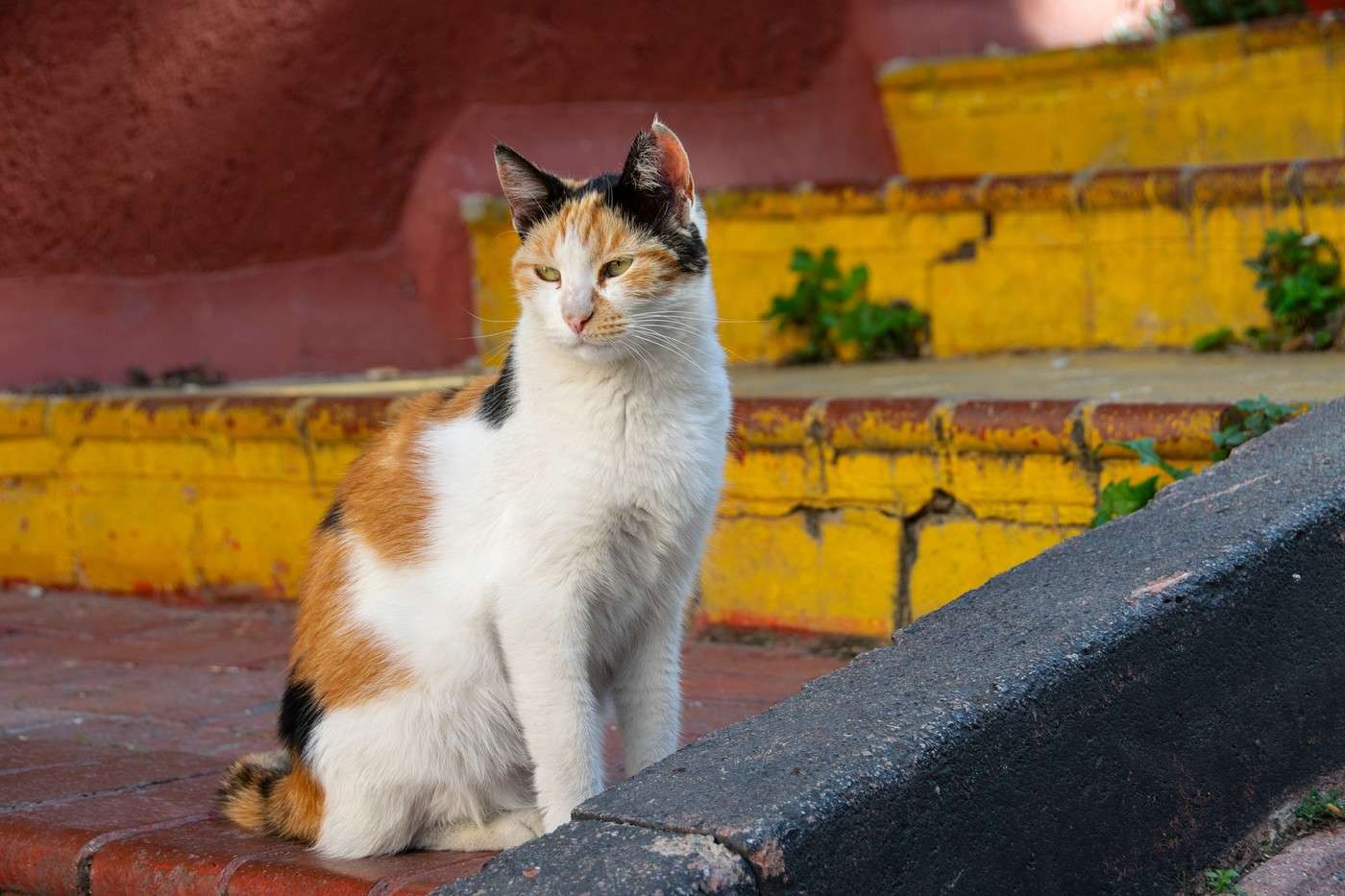
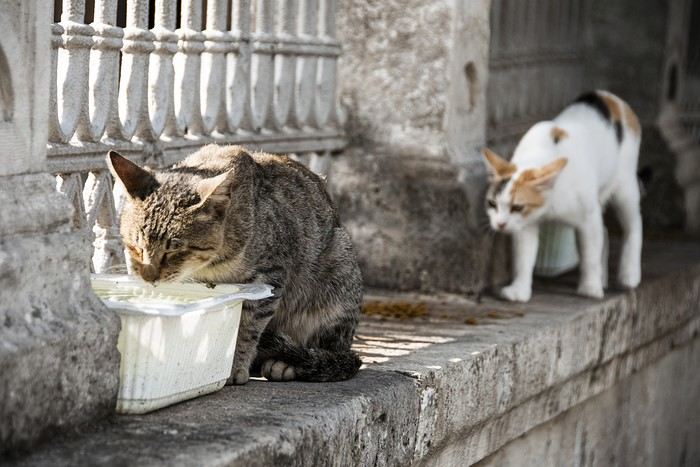
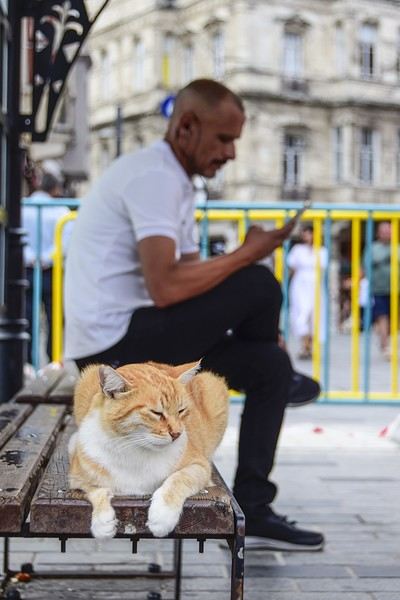
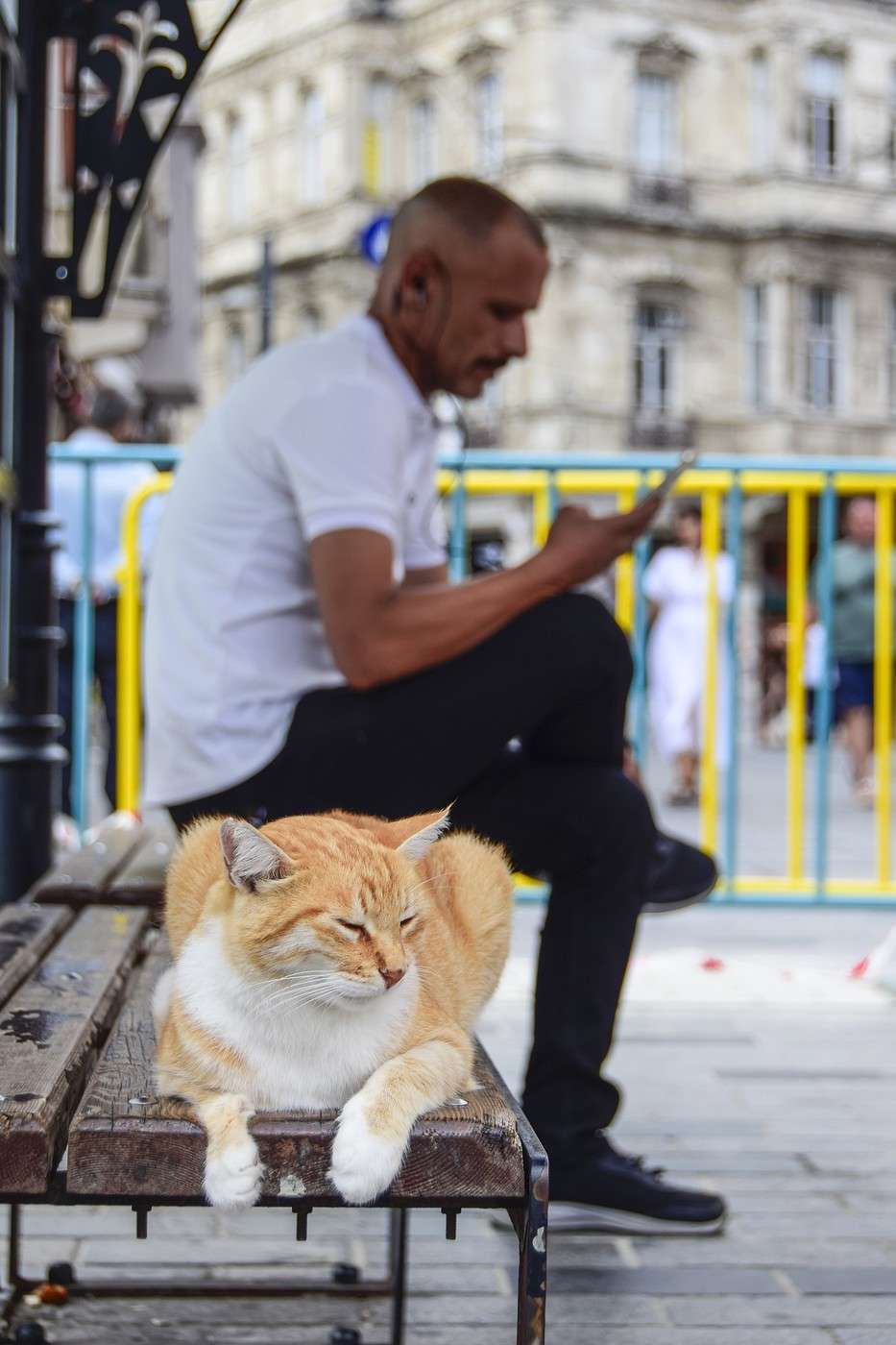
Our adorable lodging is located in the lower part of the Galata district (administratively Beyoğlu), in a lively area. Without looking too hard, we settle onto the terrace of a small restaurant offering kebabs, wraps, dürüm, pide, lahmacun... We can finally relax... The weather is pleasant, and the street atmosphere is nice. First encounter with the true locals of the city: Istanbul’s cats. Friendly, affectionate, elegant, and well-fed, they’re the recipients of attentive care from the locals and always delight tourists. Purr, purr, meow, meow—a little scuffle—around our table, they put on a charming show for us.

Time to head back—we’re exhausted. As I drift off to sleep, the last sound I hear in the depths of the night isn’t what I expected—the plaintive, modulated call of a muezzin—but the deep, nostalgic horn of a boat gliding on the waters of the Bosphorus...


The two of us in Istanbul: Turkish blue round dance

Kola · 2025-09-27

And first of all... Music, Maestros!

Nous deux

🎵 🎶 Since our souls wander, let’s go around the world The two of us!

Since our souls wander Let’s embrace close to the waves of the ocean of bad days The two of us!

And then, to our faithful loves In the heart of eternal snows, let’s lose ourselves forever The two of us! 🎵🎶

in Istanbul

https://youtu.be/dONIVqBarfE?feature=shared

Turkish blue round dance

https://youtu.be/FqPC-BkylxA

The two of us in Istanbul: a Turkish blue round

RichardXI · 2025-09-28

Nice catch with the "Maestra" reference! 😉 Thanks, and here’s to what’s next!

The two of us in Istanbul: a Turkish blue whirl

RichardXI · 2025-09-28

13/09. First steps in Beyoglu

The grand monuments of Sultanahmet can wait a few days—we decide to first make ourselves at home in the neighborhood where we’re staying. First steps... Like children learning to walk, we feel a bit clumsy, slightly disoriented, stumbling both literally and figuratively on the streets of this part of the city. Paper map and phone in hand, we try to get our bearings. Istanbul still eludes us; we need to be patient, open to the city, and wait for it to reveal itself to us.

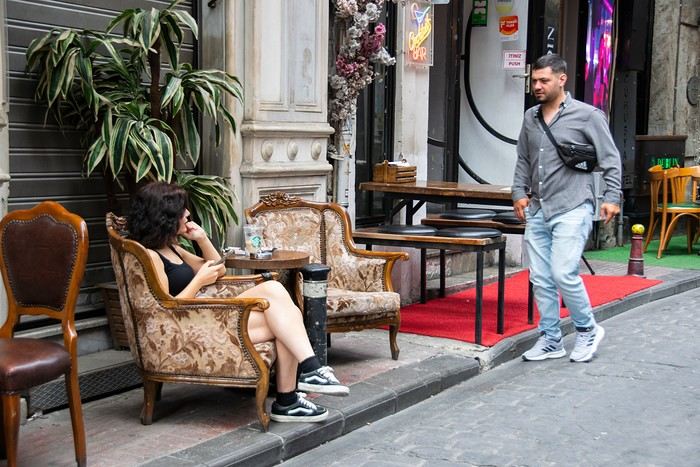
Administratively, we’re in Beyoglu, so on the left bank of the Golden Horn, but the area actually includes several neighborhoods: Galata near the tower, Independence Avenue (İstiklal), the antique dealers’ district, Taksim Square, Karaköy... These are all the places we want to take the time to explore throughout the day.

The Galata Tower looms above a very, very steep street. The sturdy, pot-bellied Genoese tower from the 14th century dominates the entire area. Not too many people around at this hour. Should we go up? Kate isn’t thrilled—35 euros to climb the monument? We’ll get plenty of stunning views of the city elsewhere. A cute bar on the square catches our eye. Off we go for our first Turkish coffee: 500 TL (over 10 euros) for two drinks! Outrageous—we feel like we’re in Montmartre! No big deal, though; we’ve learned our lesson and will find equally charming spots at more reasonable prices later.

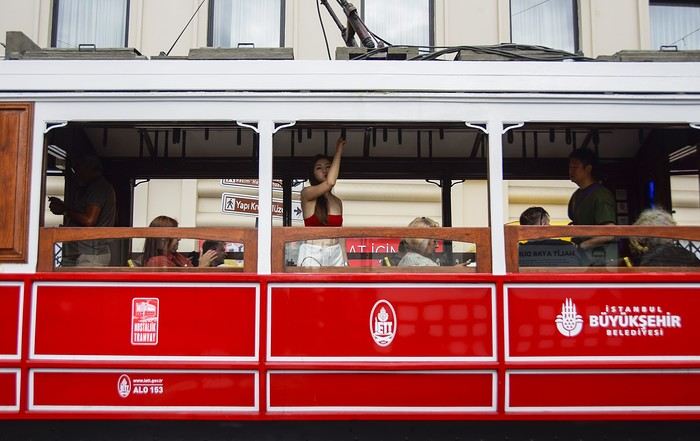
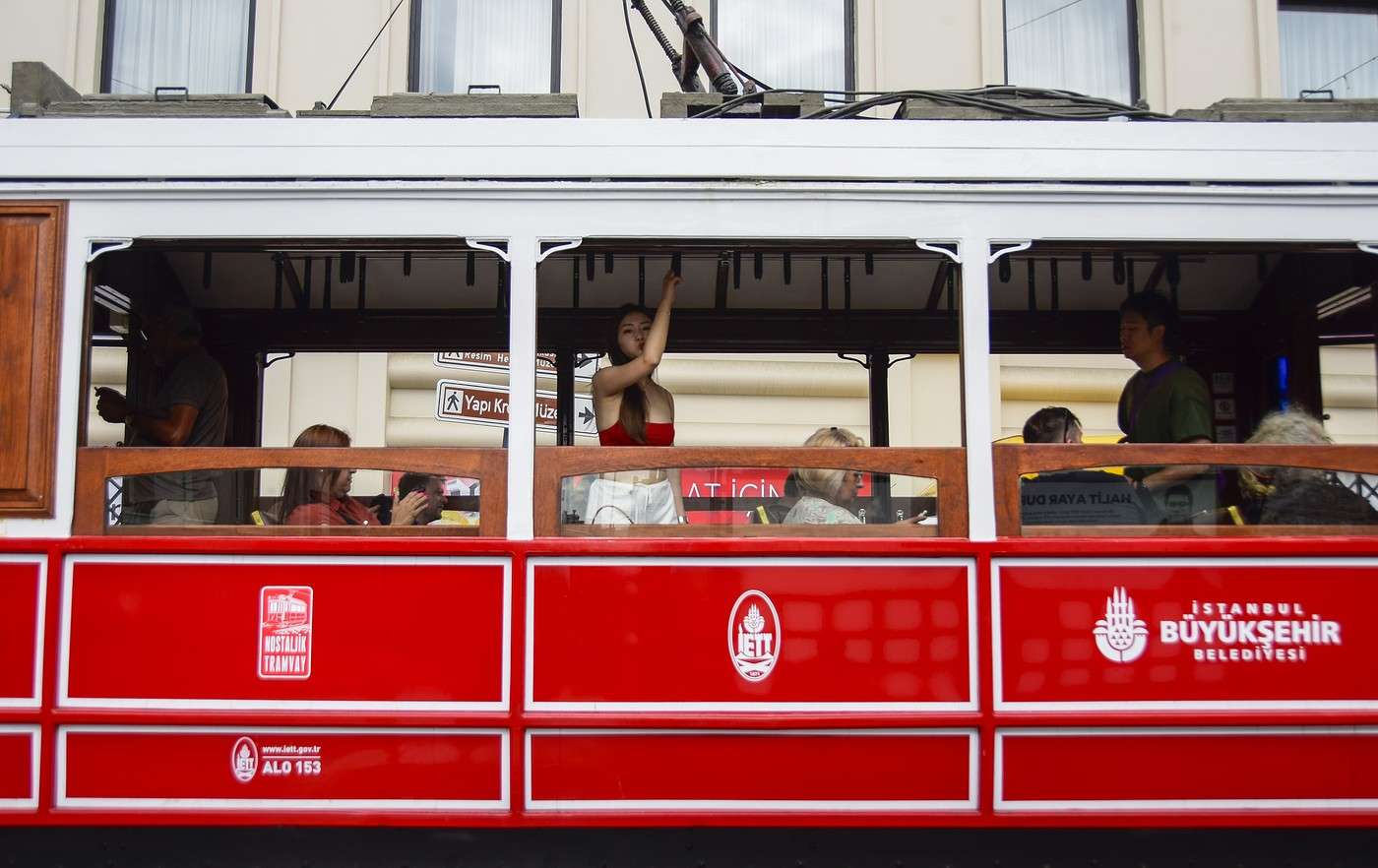
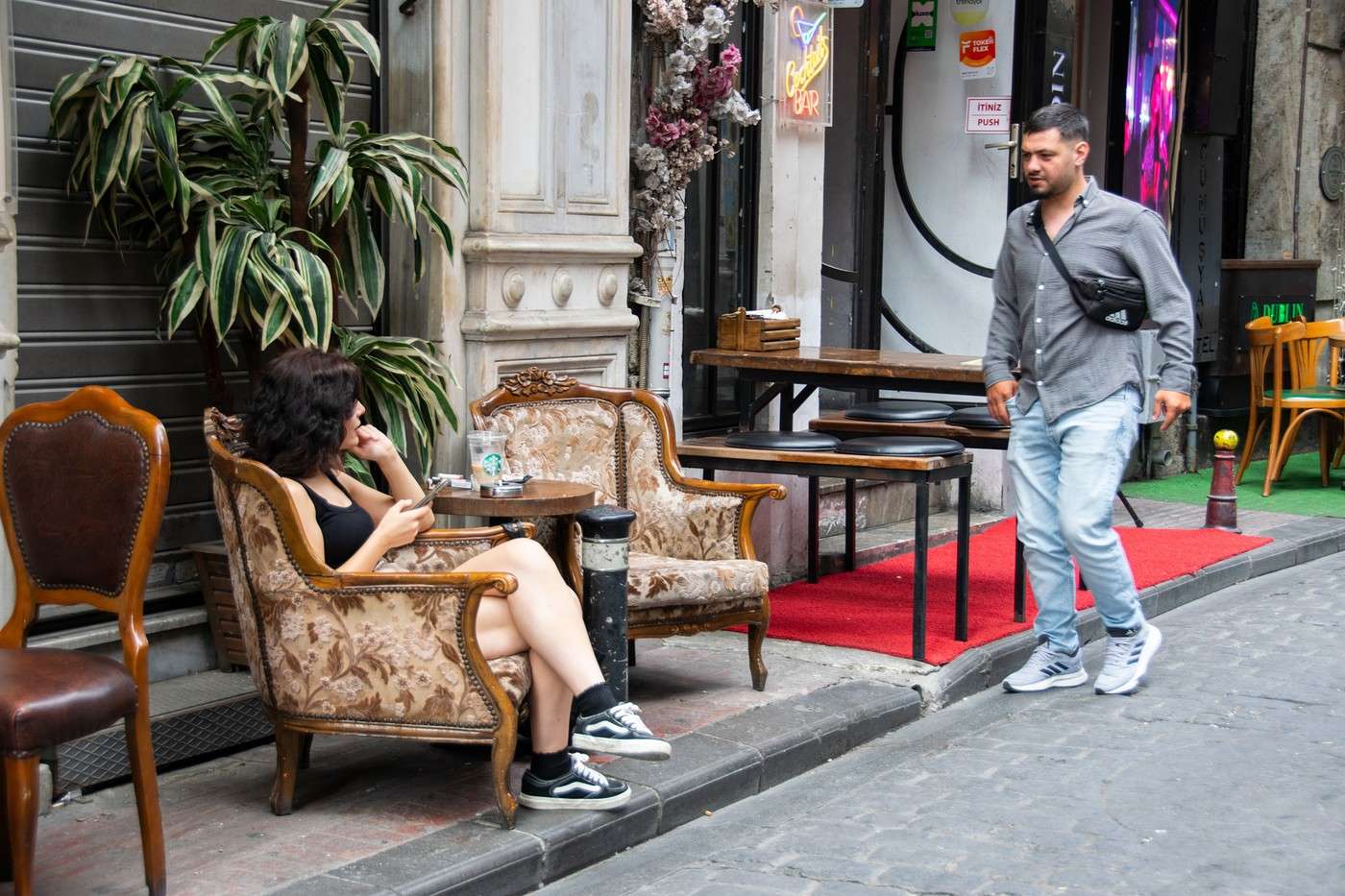
We keep climbing and arrive at Tünel Square, where the starting or ending point of the underground funicular connects the top of Galata to the bridge down below on the Golden Horn... But our eyes are immediately drawn to a small cherry-red tram with a Belle Époque vibe. It’s the famous T2 line, the oldest in the city, which takes you to Taksim Square in just a few minutes while following Independence Avenue. And here we are on Istanbul’s famous “Champs-Élysées,” this long, almost straight pedestrian avenue leading to Taksim. This is where Istanbul’s youth—both local and foreign—gather at night to party. The avenue itself is lined with luxury shops, clothing stores, jewelry boutiques, fine confectioners, offices, banks, hotels, European embassies... The often 19th-century facades, spruced up and neatly aligned, reflect real prosperity. Numerous perpendicular passages lead to elegant little streets with decorated facades, at the foot of which you’ll find an abundance of restaurants, bars, and art galleries.


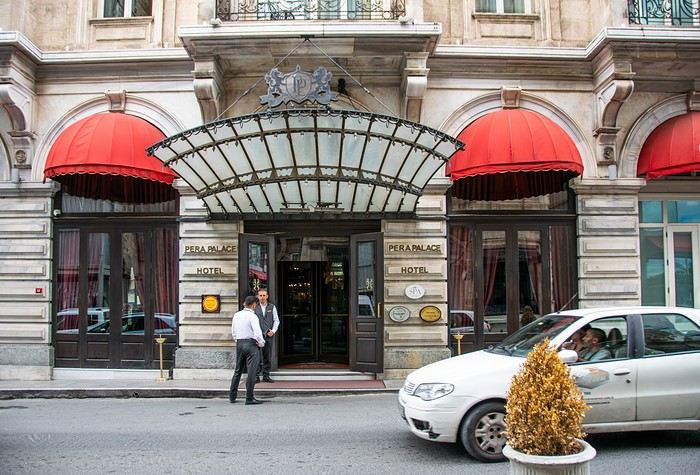
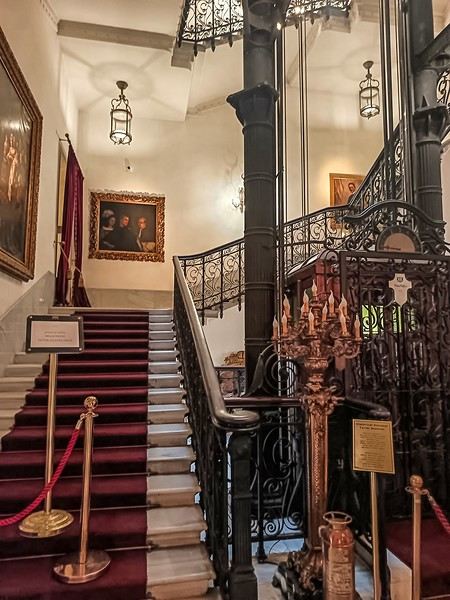
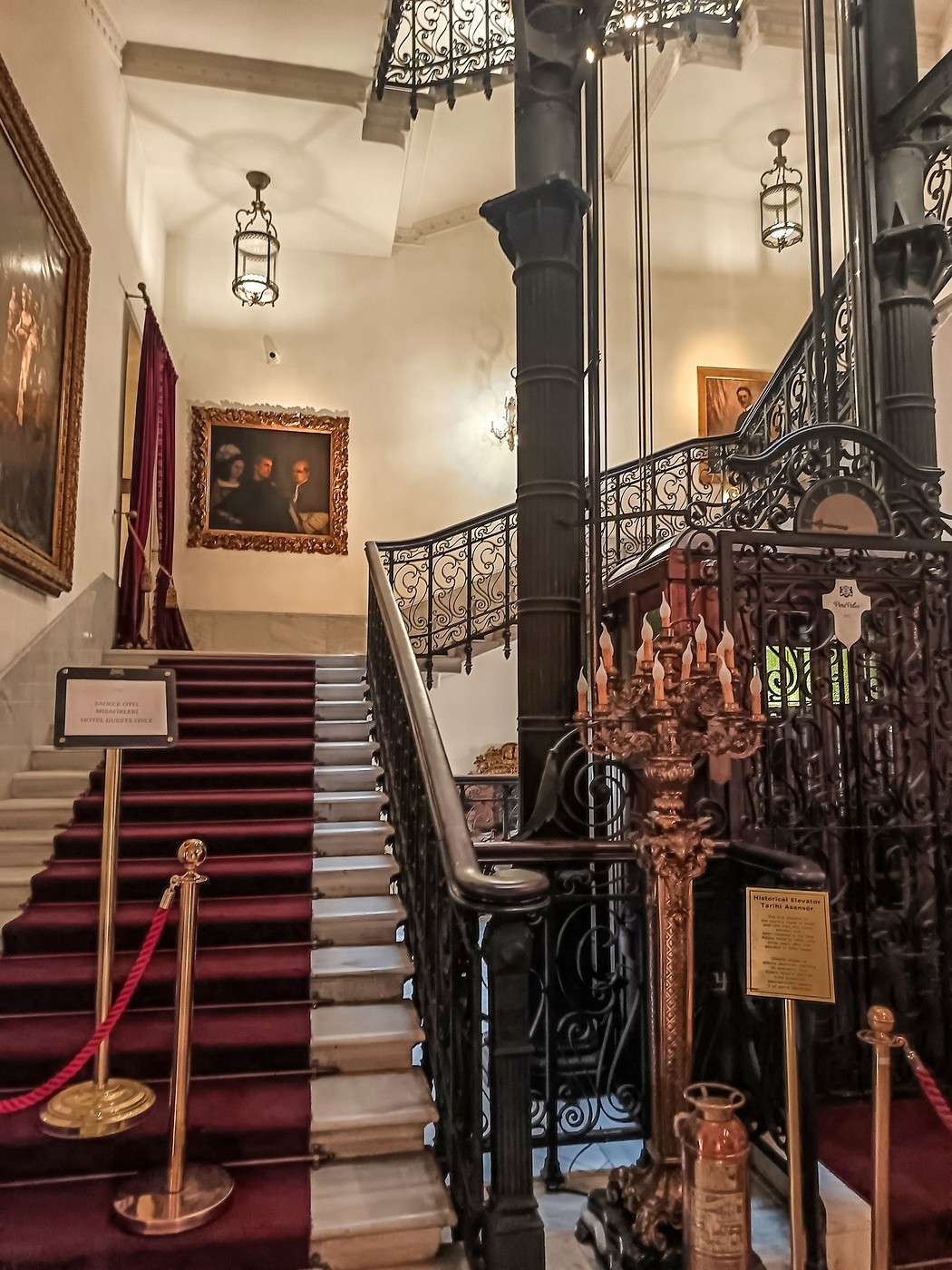
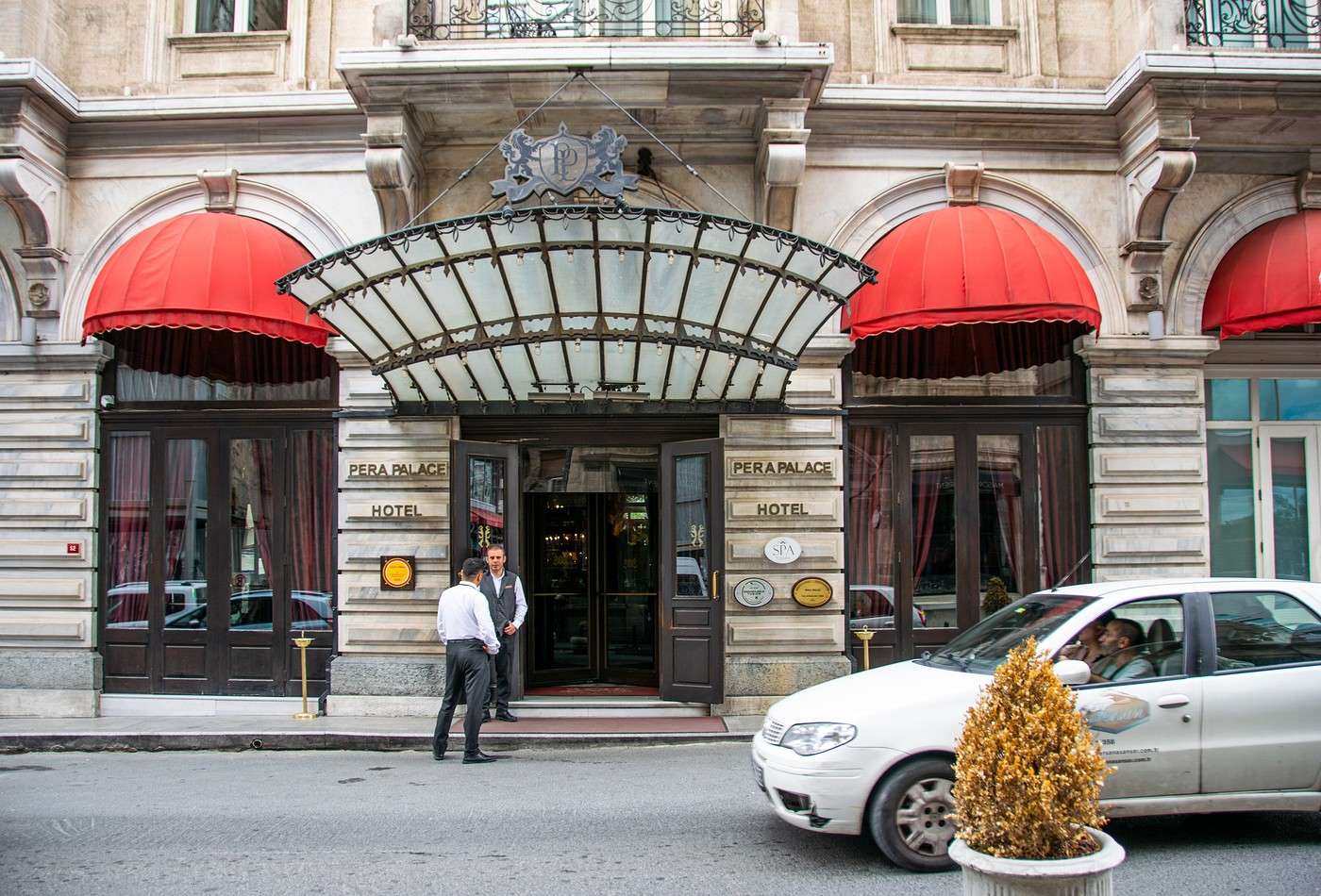
The walk is pleasant and full of interest, but I can tell Kate seems a bit off this morning, listless, as if she’s struggling to get into the trip. As for me, I’m a little thrown off—I expected to find a piece of the Orient, and instead, I’m smack in the middle of the West, even if it has the nostalgic scent of the “Orient Express” era. But really, what’s more normal? We’re in the old Pera, the Levantine quarter (Genoese, Venetian, Greek...) from the time when Constantinople/Istanbul was already a global city trading with the entire known world, and later in the 19th century when the Ottoman Empire had complex but intense relations with Europeans. So why should Istanbul be only Asian and exotic? As for nostalgia, it suddenly takes shape in front of the entrance to the Pera Palace, the mythical hotel of the Compagnie des Wagons-Lits for Orient Express travelers. The facade is nothing special, but the interior... Luxury, calm, and pleasure, along with all those famous names resurfacing from the past: Agatha Christie, Greta Garbo, Josephine Baker, Mata Hari, Atatürk himself.


We take a little detour into the quieter antique dealers’ district for a çay (tea), then head back up toward the massive Taksim Square, at the center of which stands a monument commemorating the Turkish War of Independence. The city’s nerve center, a place for gatherings but also sometimes for protests and demonstrations. It’s kind of like their Place de la République. Heading slightly east, we enter a more working-class neighborhood that fits better with what we imagined Istanbul to be, and we have lunch in a charming sloping alley under the protective shade of a small neighborhood mosque. The welcome is simple but warm, and we each enjoy an assortment of mezze. I start trying out some basic Turkish: Merhaba, teşekkür ederim—oops, no, sorry—te-şek-kür ederim, teşekkür ederim, there we go, I’ve got it.


The afternoon is well underway, and we decide to go breathe in the sea air around Karaköy and Tophane, where the Golden Horn opens up. In Tophane, we step into our first mosque, the 16th-century Kılıç Ali Pasha Mosque. Visiting mosques will be, for me—and I think for Kate too—one of the highlights of our trip; I’ll come back to that later. But oddly enough, I have no memory of this one. And I think I understand why. The fatigue from the journey, the events of the day before, this first day that’s left us a bit dizzy. Along with that feeling—not unpleasant, actually—when you start a long trip, of floating slightly above reality. Like a light intoxication. And then there are the preconceptions, even the well-meaning ones. Veil or no veil? Photo or no photo? Silence or not? A kind of awkwardness, shyness, excessive respect. Though I’m an atheist, I come from a Christian culture, and churches are familiar places for me. Mosques, obviously, are not. What should I look at? How should I look? What does it mean to visit a place of worship that’s both historical and still active when it’s not part of your own culture? I had a similar feeling in India with Hindu temples, but the spiritual proximity there was so distant that I felt more at ease, more detached. With my head full of these thoughts, I saw the mosque without really seeing it...


The rest of our stay in Istanbul will give me a chance to get better acquainted with this somewhat distant cousin and fully appreciate the beauty and spirituality it has to offer in later visits.

Come on, one last little walk to Galata Port to breathe in the sea air of the Bosphorus... or the Golden Horn? Kate and I are still getting our bearings, so let’s just say somewhere in between. The place has been completely renovated. The old warehouses have been transformed into a huge shopping gallery—very nice, actually—with boutiques, bar-restaurants, and a promenade along the docks, catering to the clientele of the massive cruise ships that dock here. The area is a bit sanitized, though. Time to head back...


As I mentally recap this full but contrasting day, I realize how much the qualities of a true traveler are open-mindedness and patience. Like in a romantic relationship, you have to give it time, let the desire build. Istanbul isn’t ours yet...


Just the two of us in Istanbul: a Turkish blue tour

Attila · 2025-09-28

35 euros to climb the monument?

Oops...🤪

I think I read somewhere that prices in Istanbul have skyrocketed.

Skyrocketed into the stratosphere...

I may have climbed this tower before, but I don’t remember a thing !

Just the two of us in Istanbul: a Turkish blue round

Kate · 2025-09-28

I think I read somewhere that prices in Istanbul had skyrocketed.

Yeah, I actually joined that discussion a bit. It’s not just a rise—it’s an orbital breakaway

Plus, suffering through 211 steps means you’ve gotta be a masochist! !

The two of us in Istanbul: a Turkish blue tour

Jojoone1 · 2025-09-28

The quality travel journals keep coming, and let’s bet this one won’t be an exception. It’s a bit like the release of a novel by an author you love—except here, you also get the photos.

Last year, another journal mentioned the staggering, jaw-dropping, mind-blowing entry prices for the Pamukkale site, and if I understand correctly, this has become the norm for the country. I didn’t pay an entrance fee for either Pamukkale or the Galata Tower, but then again, that was another century. Turkey has become much wealthier and modernized—so much so that prices seem to have gone Western. Well, for a capital city, it’s not that surprising. To think that in the late 80s, there were only one or two streets with any semblance of modernity and just one shop selling toilets that weren’t squat-style.

By the way, could you confirm that the local gastronomy is still as good?

The two of us in Istanbul: a Turkish blue tour

Kate · 2025-09-28

Thanks Jojo.

I hadn’t paid entry for either Pamukkale or the Galata Tower, but that was another century ago.

No need to go back to Greek calendars—on my first trip in 2019, climbing the stairs cost 25 TL!

By the way, could you confirm that the local gastronomy is still as good?

Good, but not exceptional 😕 I was expecting to find lots of *mezzé*, but few restaurants offered it, or it was really expensive. Or maybe we just didn’t find the right spots! The same options kept coming up: pizzas, kebabs, wraps, burgers—of course, Turkish-style, but still just mainstream. Sometimes there were nice surprises—Richard will tell you more.

Just the two of us in Istanbul: a Turkish blue whirl

Attila · 2025-09-28

I'm not sure I'd want to go back to Turkey.

Turks used to be pretty friendly overall.

I wonder if Erdogan hasn’t fractured this country.

But I’ll let Richard tell us about his take on this country straddling two continents. 🙂

The two of us in Istanbul: a Turkish blue loop

Rouquine38 · 2025-09-29

Thanks so much, Richard, for this travel journal—always a pleasure to read you. Kate, I see you’re still growing your feline collection 😺 Istanbul’s still on my destination list but never seems to happen.

Just the two of us in Istanbul: a Turkish blue loop

RichardXI · 2025-09-29

Istanbul, always on my destination list but never made it happen.

Thanks Isabelle. We’ll try to make you want to go. Plus, Istanbul is the city of cats—perfect for you since you love felines ;)

The two of us in Istanbul: a Turkish blue loop

RichardXI · 2025-09-29

14/09. On the other side, in old Istanbul: the Egyptian Bazaar, the Rüstem Pasha and Süleymaniye Mosques, Küçükpazar.

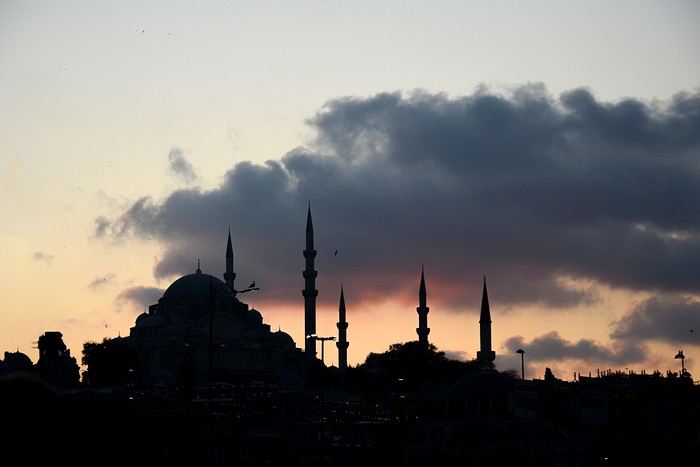
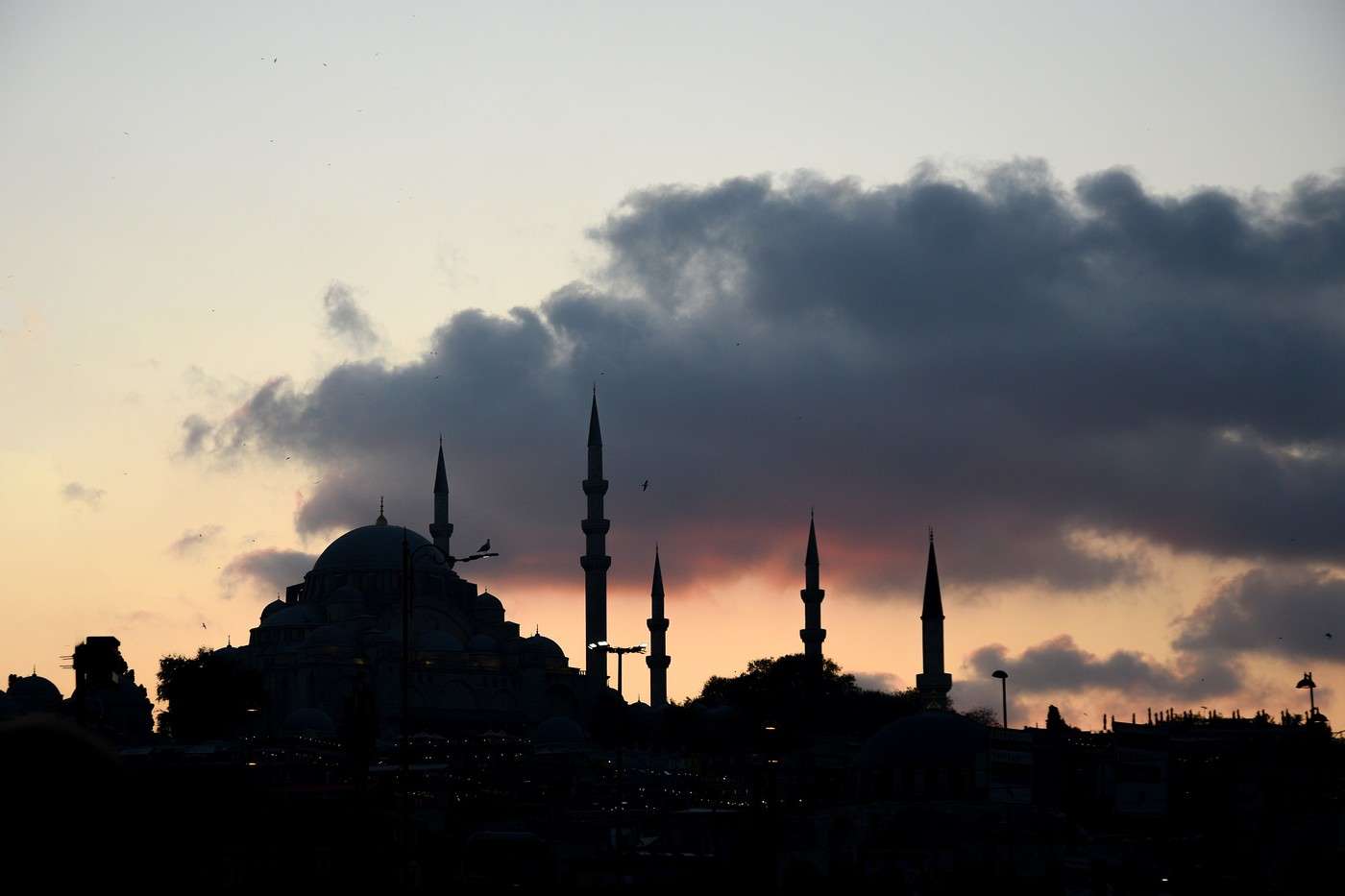
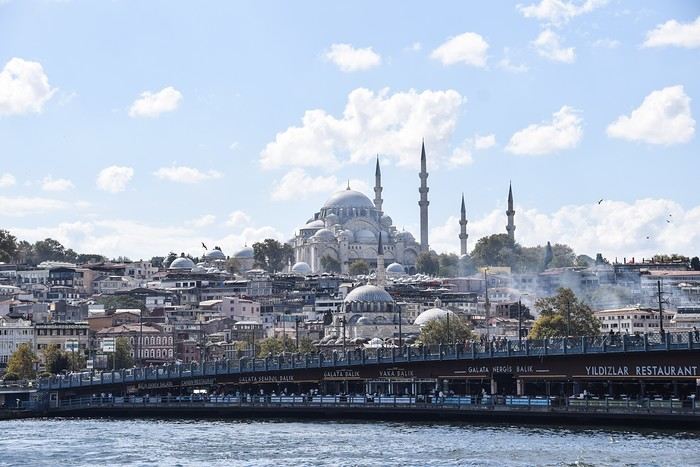
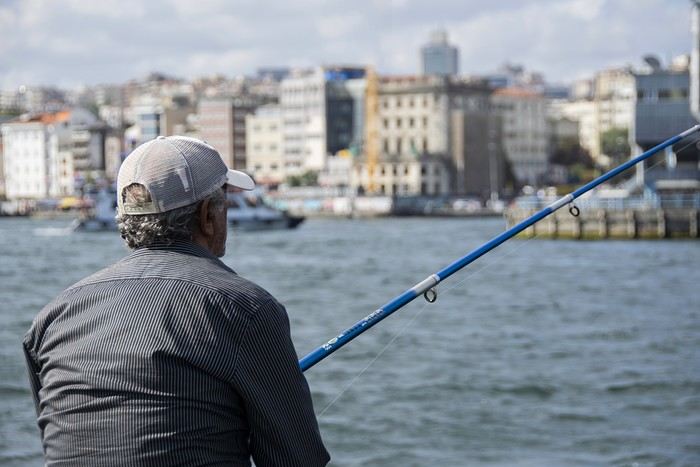
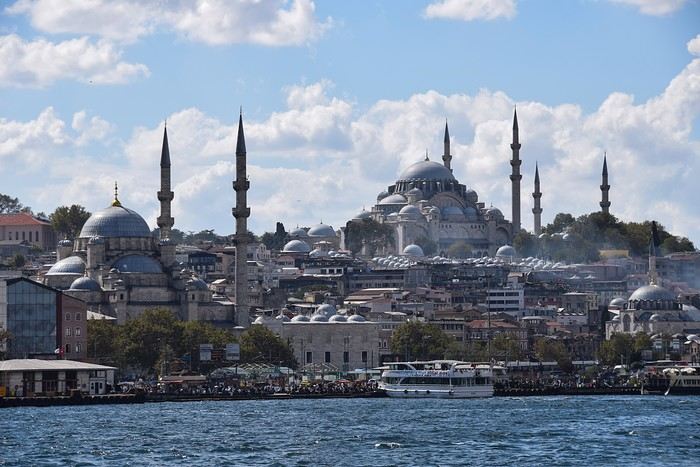
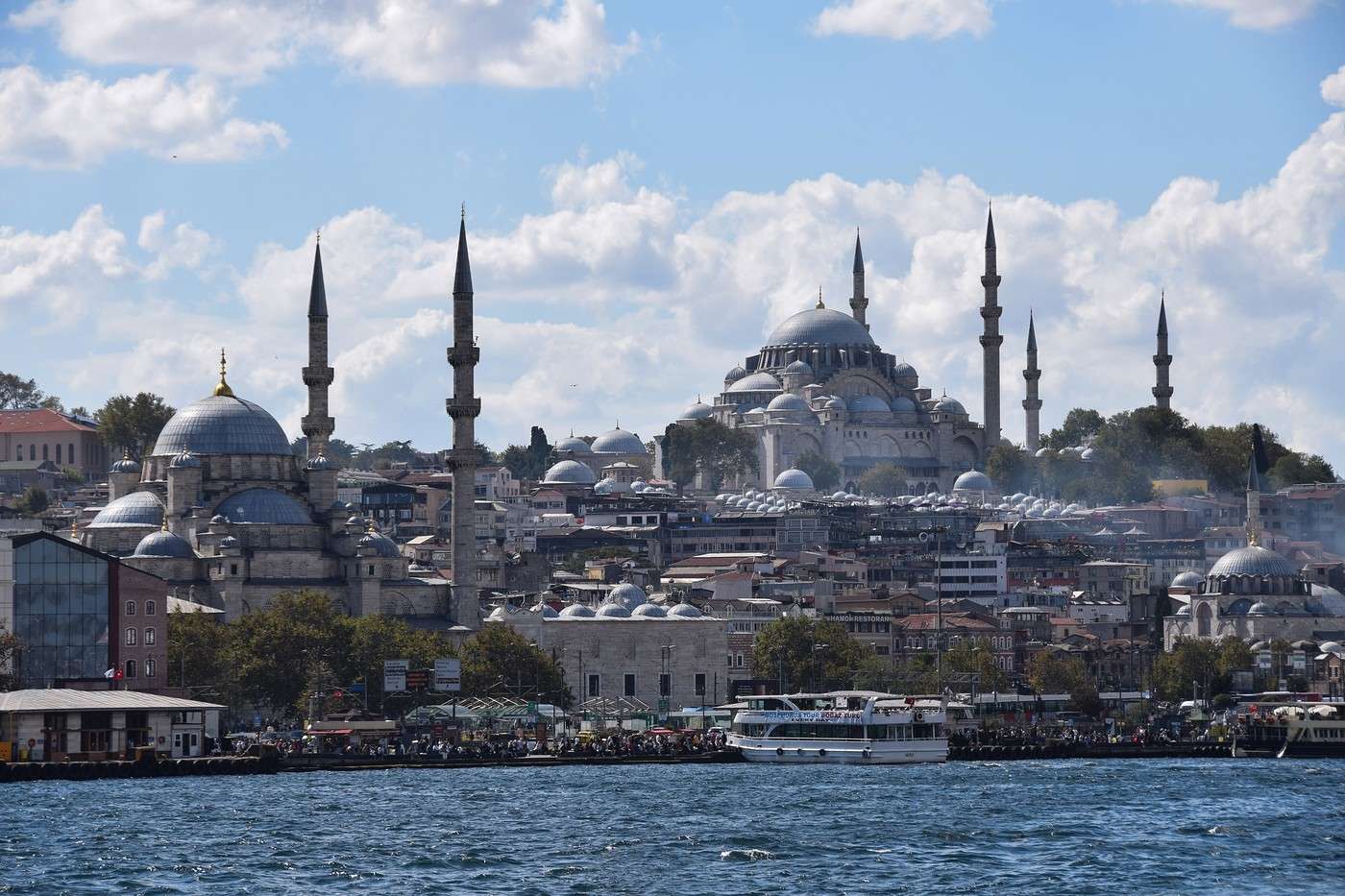
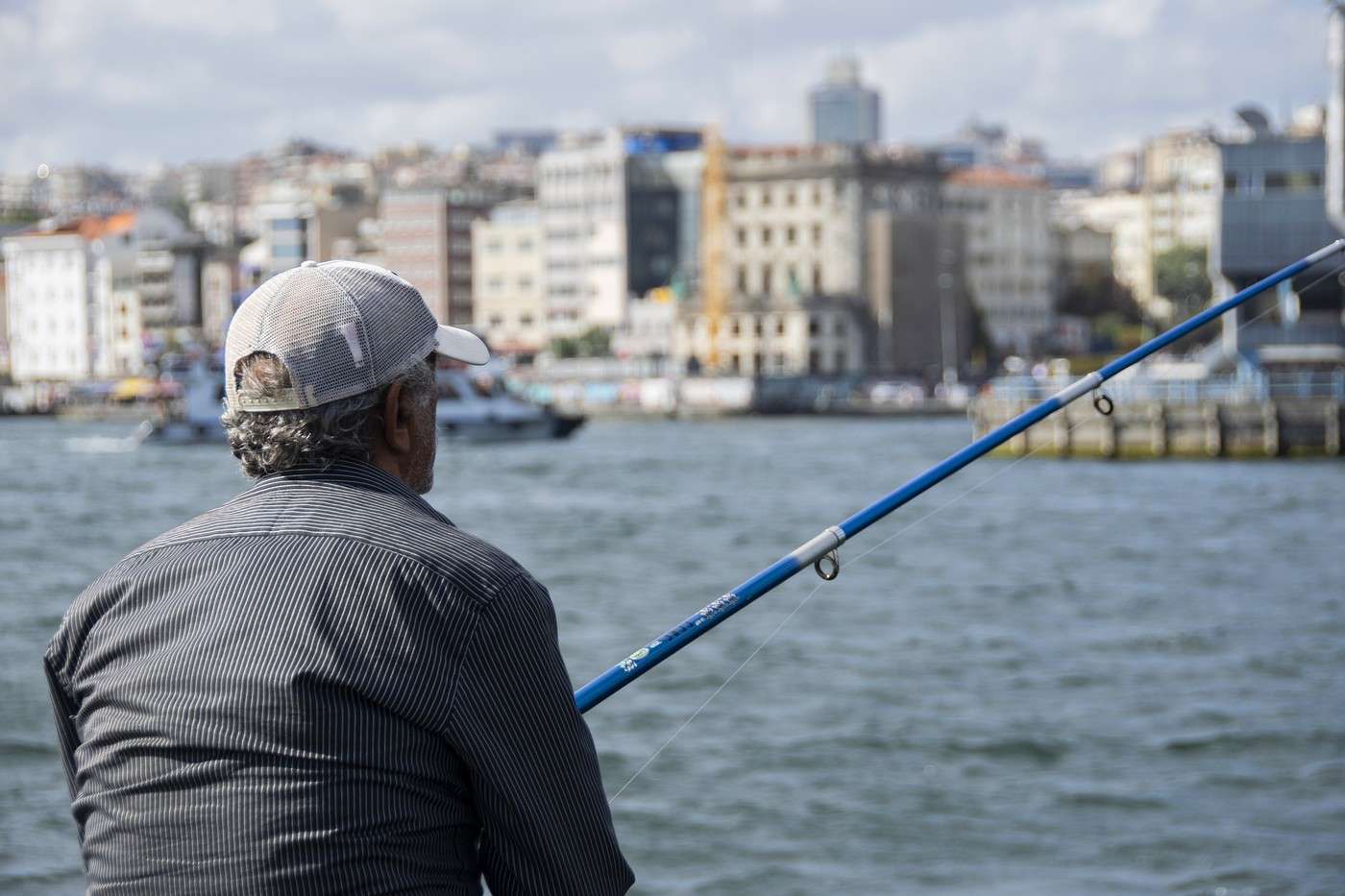
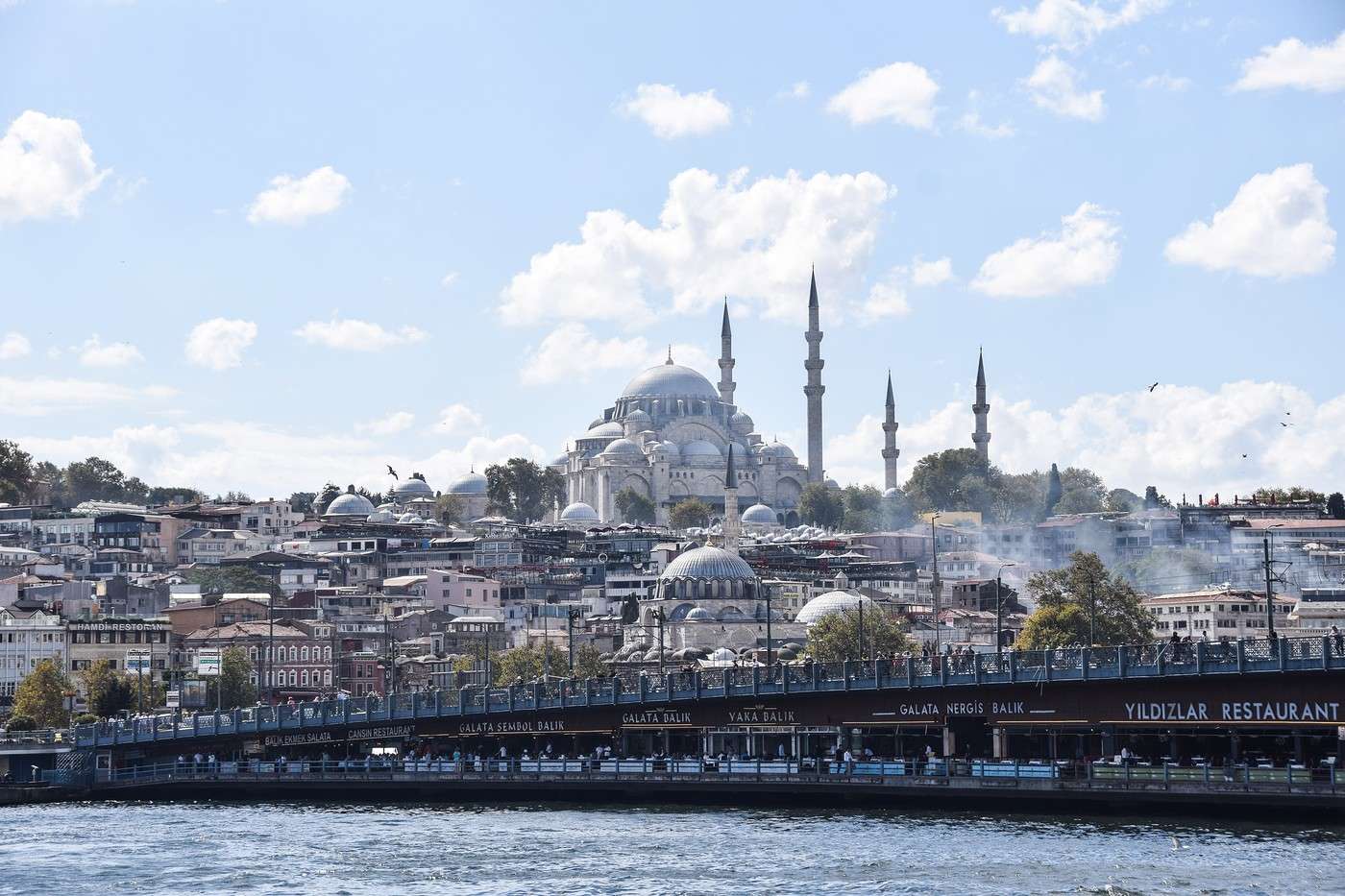
Kate’s grumbling because we still haven’t bought the famous "Istanbul kart" for public transport (really handy, I’ll find out a bit later). But from our accommodation, I want to cross the Golden Horn on foot via the Galata Bridge to get to the other side, what’s called old Istanbul. The bridge is packed with fishermen, squeezed in like sardines. I smile, thinking of Sète, my hometown. They seem a bit calmer than back home! In front of us, the old Mediterranean city sprawls in tiers from the hills down to the sea... Against the sky’s deep blue, facing the sun, I lose myself in the sight of those plump-domed mosques, their sharp minarets punctuating the urban landscape like exclamation points...


So, what now? Kate, who always takes the lead on our trips—handling transport, accommodation, all the paperwork (money, passports)—lets me plan the discoveries. I know she could do it without me, but that’s how we work; she trusts me. Plus, she has zero sense of direction—none at all! And she’s too busy worrying about the photos she’ll take with her precious, heavy Nikon. Okay, but I’ll have to step up anyway.

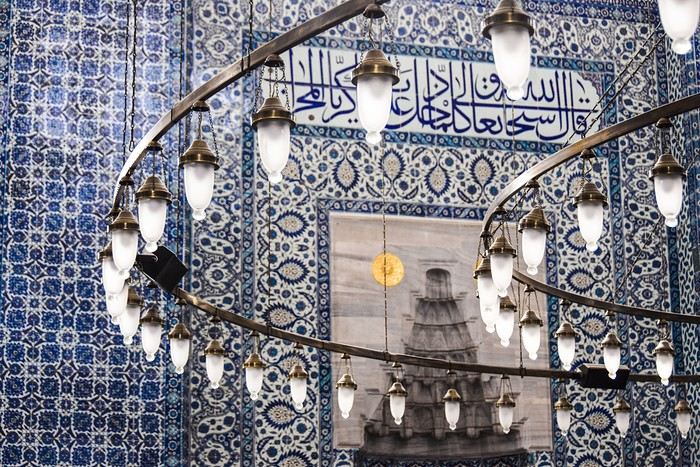
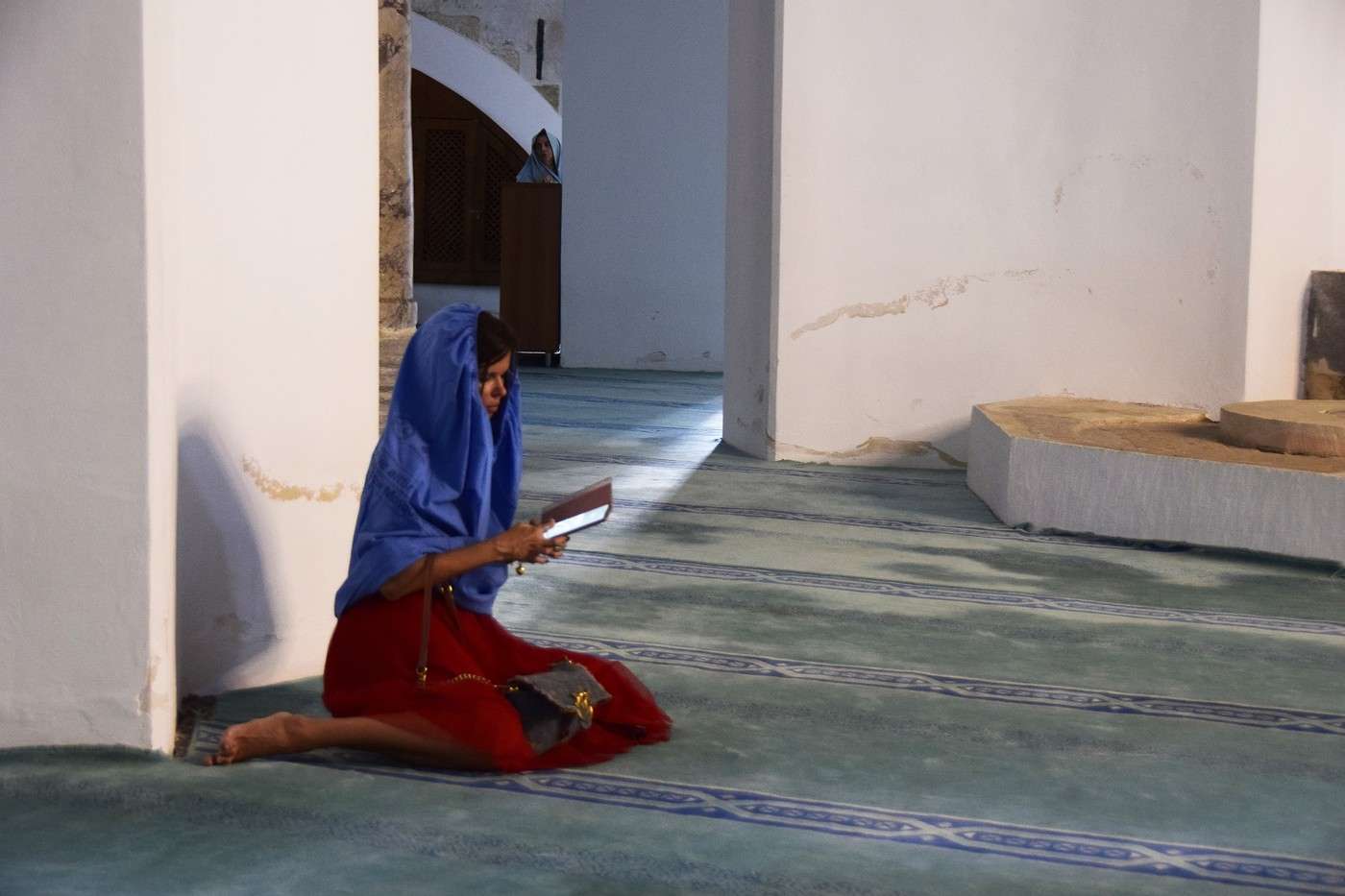
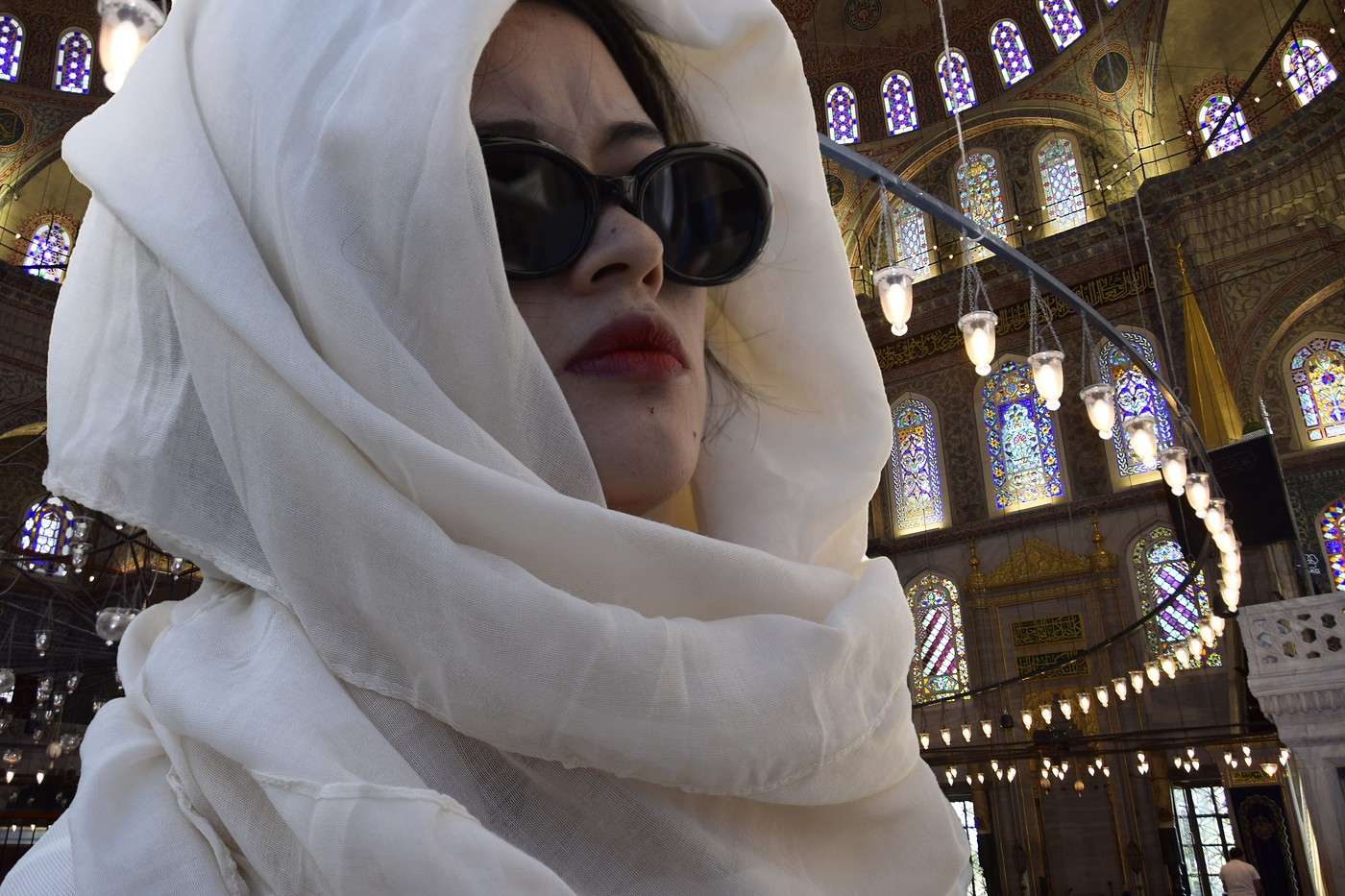
Yesterday’s first mosque visit left me frustrated. I’m in a Muslim country, in a civilization capable of creating magnificent places of worship, and I don’t want to miss out. From the Eminönü tram station, we head toward the Rüstem Pasha Mosque, right in the heart of the maze of shopping streets next to the Egyptian Bazaar. Still overly cautious, I ask, "Can we enter the mosque?" Of course, I hadn’t yet realized that in Turkey, at least in Istanbul, mosques are freely accessible except during prayer times. We climb a steep staircase to reach a terrace. The information signs are clear, with English text and drawings: appropriate attire (headscarves for women, no shorts for men), don’t enter the prayer area. The 16th-century mosque’s interior is stunning, clad in blue with Iznik tiles, its gentle rise toward the domes, the carpet so soft under bare feet. No worshippers at this hour, just groups of tourists awestruck and respectful of the beauty around them.


Diving into the "Egyptian Bazaar." Misnamed, really, since it was actually run by Ottoman merchants in the 17th century, who preceded the Venetians and Genoese. The beautifully restored building forms a covered quadrilateral, supported by broken vaults on bicolored arches. Originally dedicated to selling spices, perfumes, and medicinal plants, it’s now essentially a market for tourists—both Turkish and foreign. You’ll find everything: spices, sweets, scarves, "made in China" souvenirs. The artificial light from the ceiling, the vibrant colors of the spices, Turkish delight, and fabrics give the place a magical, exotic feel—though it’s not exactly authentic, since I don’t think many Istanbul locals shop here.

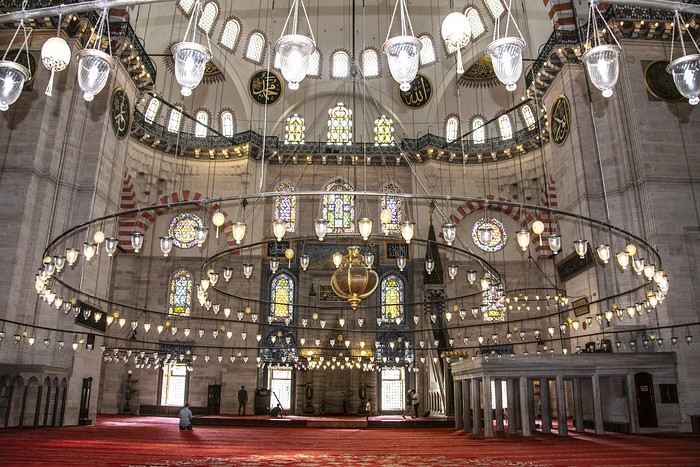
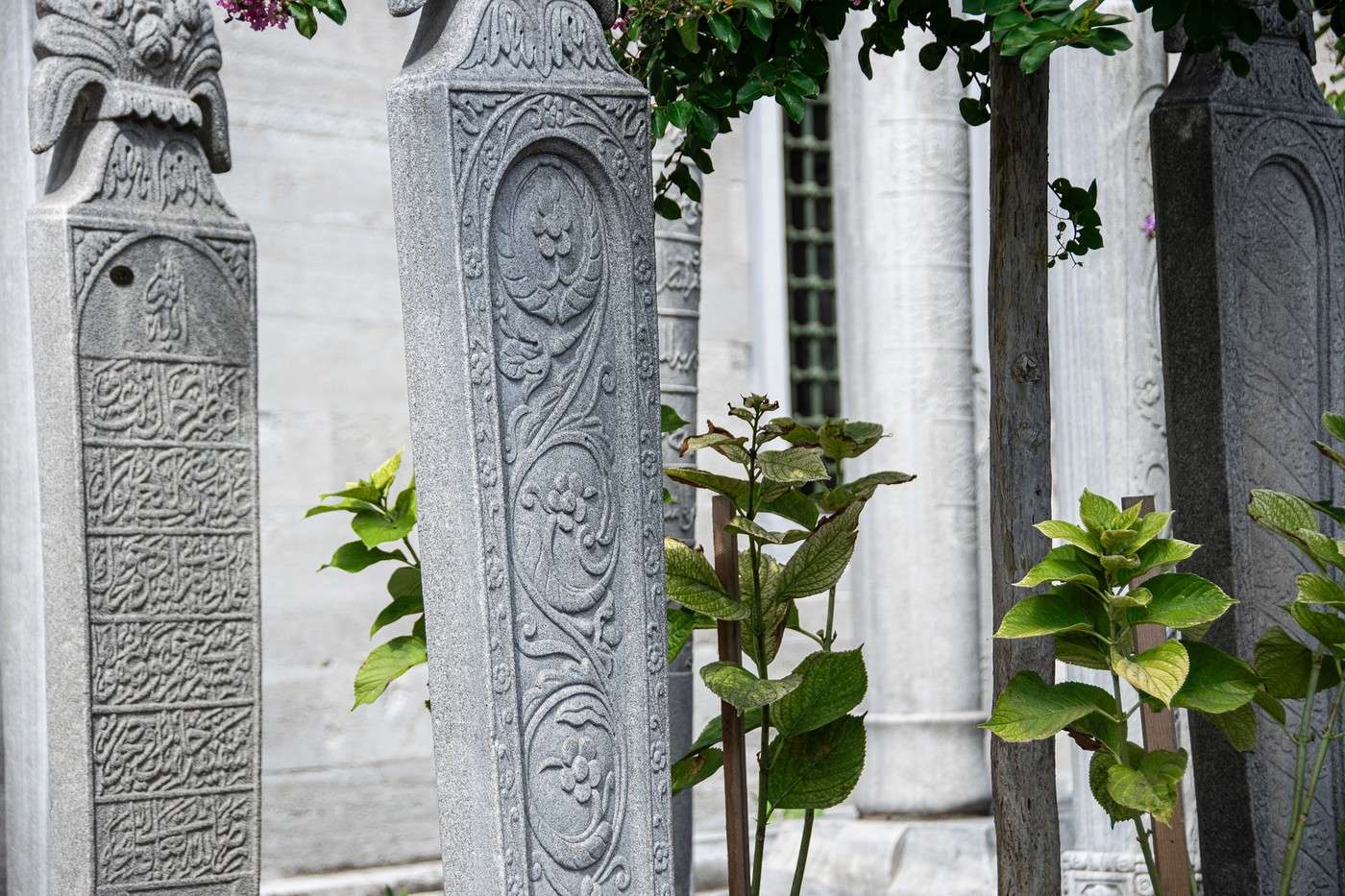
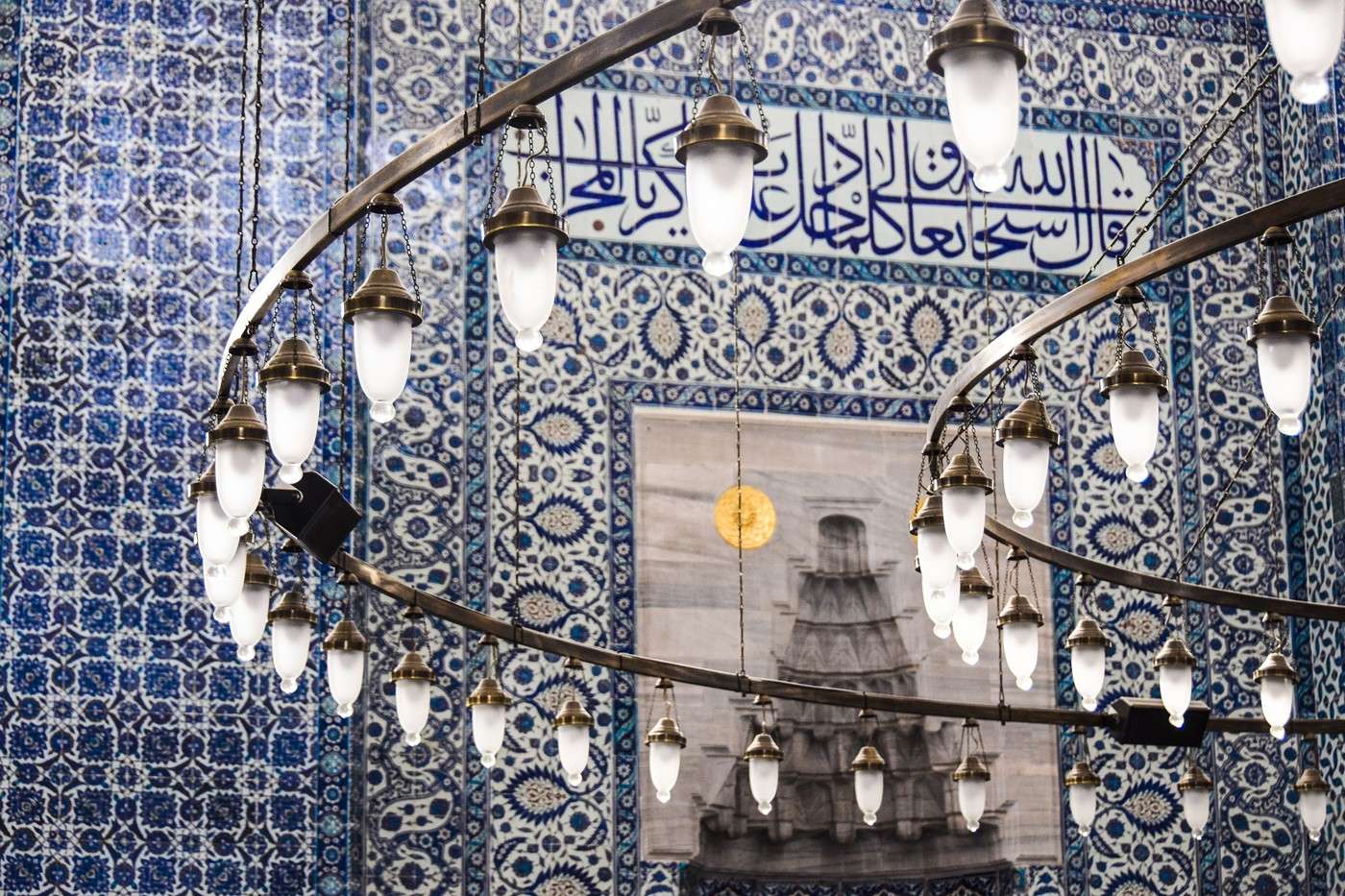
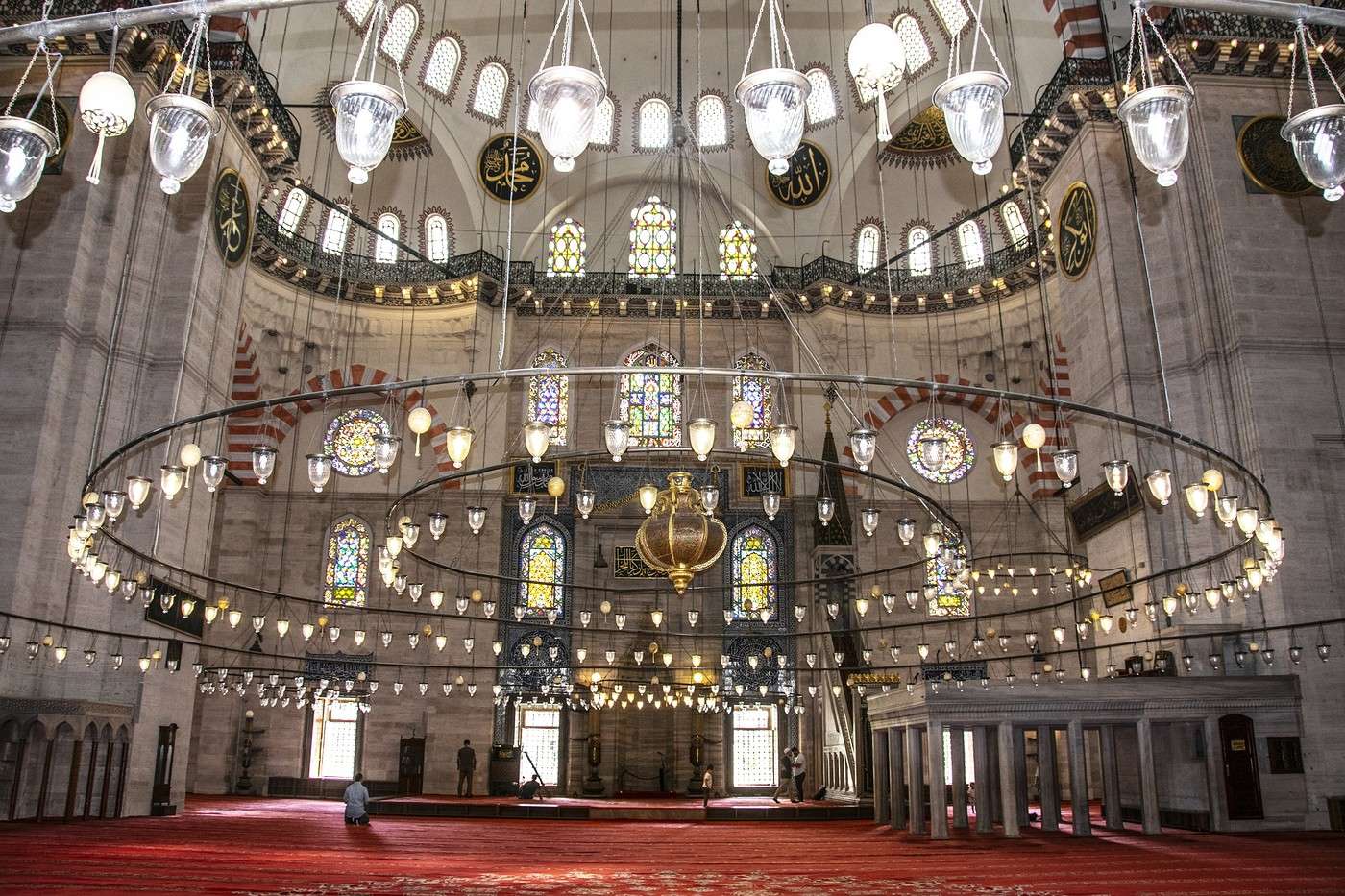
You can see it from far away on the Galata Bridge. The Süleymaniye Mosque, perched atop the hill, dominates the urban landscape. Süleyman— Suleiman the Magnificent, the powerful sultan of the Ottoman Empire during what was the Renaissance in Europe. Istanbul’s streets are steep, and the climb is tough. You’ve got to earn your way to the sky! We arrive at a vast esplanade offering a splendid view of the Golden Horn and the Bosphorus, the hills of Galata, and the Asian lands on the other side. From here, you really grasp the geography of this exceptional site. While the exterior of the monument leans toward gray-blue, inside it’s mostly red that dominates—the carpets and the voussoirs of the arched windows. The space is immense, flooded with light. No benches like in churches; the space is open, and nothing stops your gaze from naturally rising upward. And of course, like in all mosques worldwide, no images—just calligraphic or floral motifs as decoration.


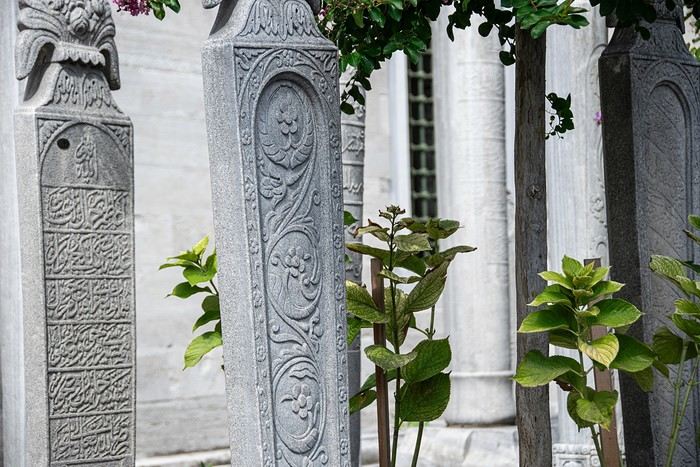
After spending a good while enjoying the tranquility of the place, we head toward a cemetery reserved for dignitaries, where the mausoleum of Süleyman, all blue and rounded, stands prominently.

A quiet lunch near the mosque along a row of small restaurants. A tout catches us. Normally, I hate that kind of behavior, but this guy is friendly and courteous, and his oddly empty terrace invites relaxation. We give in. I order kuru fasulye, a delicious stew made with white beans, a bit of meat, and tomato.

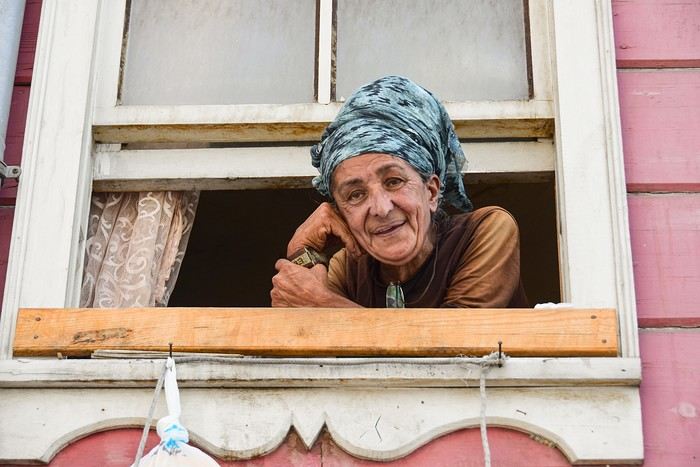
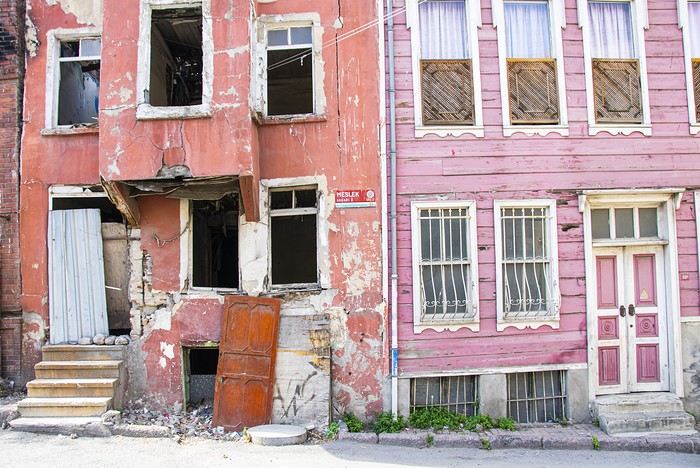
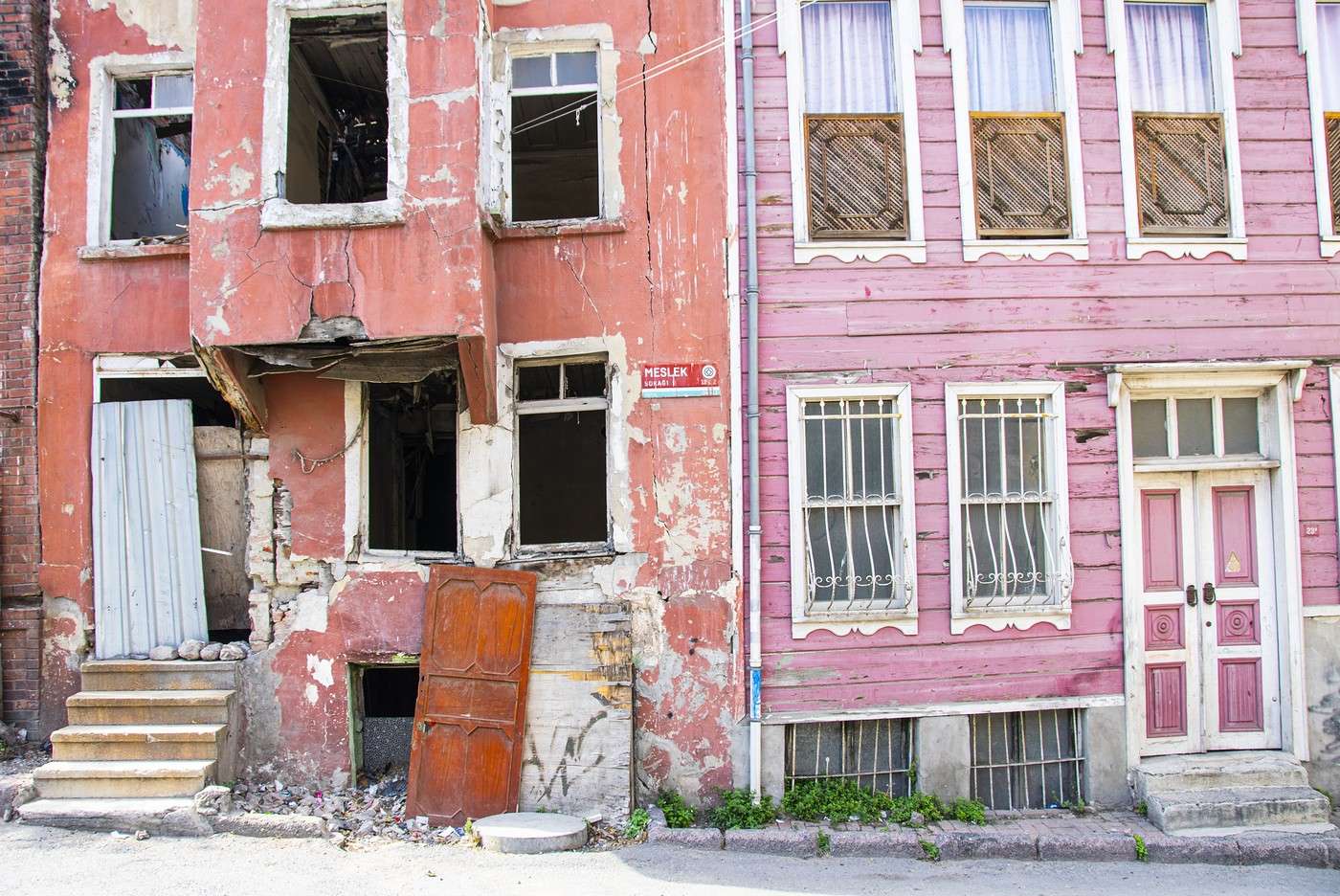
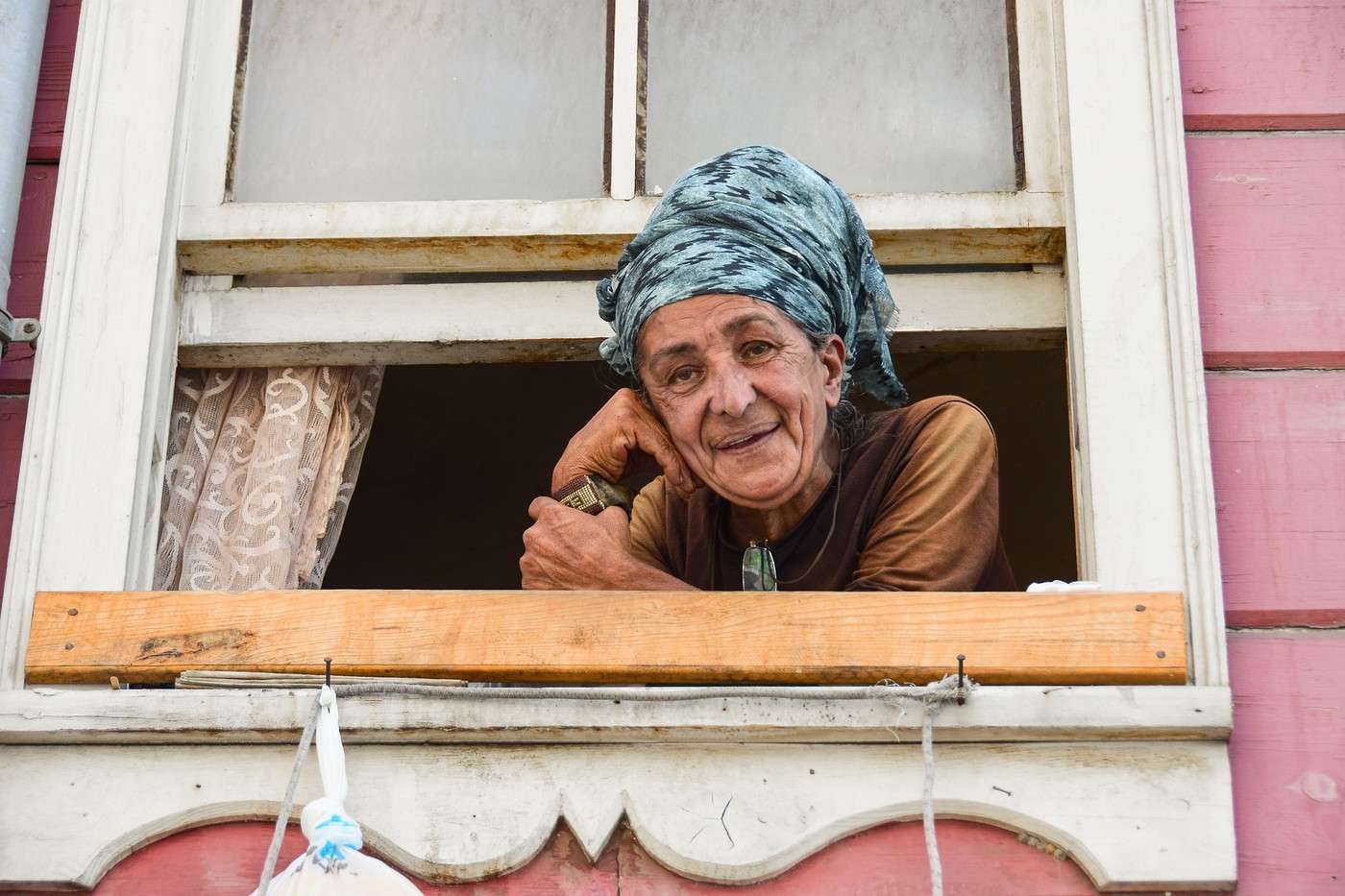
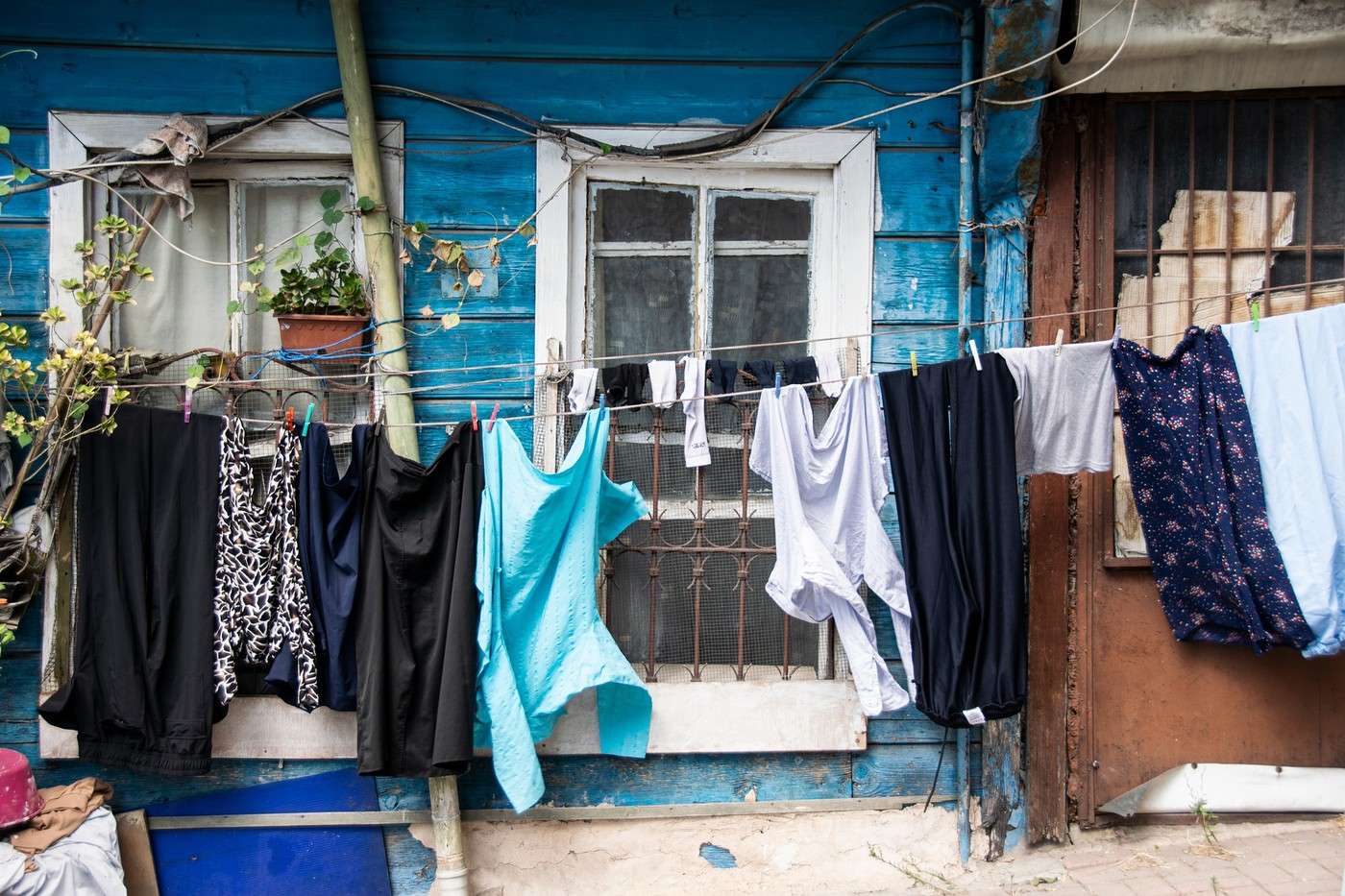
After the meal, we cross the Küçükpazar area, which slopes steeply from the foot of the mosque down to the Golden Horn. What a strange feeling. The upper part of the neighborhood is heavily run-down, pockmarked with vacant lots and crumbling houses, roamed by scrawny cats. Here and there, at the turn of a narrow street, a few colorful wooden buildings that must have been beautiful in their time. On a dusty square littered with trash, we spot a family looking destitute. The woman is crouched down, seemingly preparing soup cooking on a brazier. She’s not begging but puts her hand to her mouth to signal she’s hungry. Kate approaches and hands her a bill. The woman thanks her. I don’t understand. The neighborhood seems abandoned—maybe it’s being redeveloped, as urban planners would say? A woman leans out her window and greets us in Arabic: "Salam Aleikoum." Kate asks if she can take her photo; she smiles and agrees. From the bottom of the street, I look at her—she must have been beautiful in her time too.


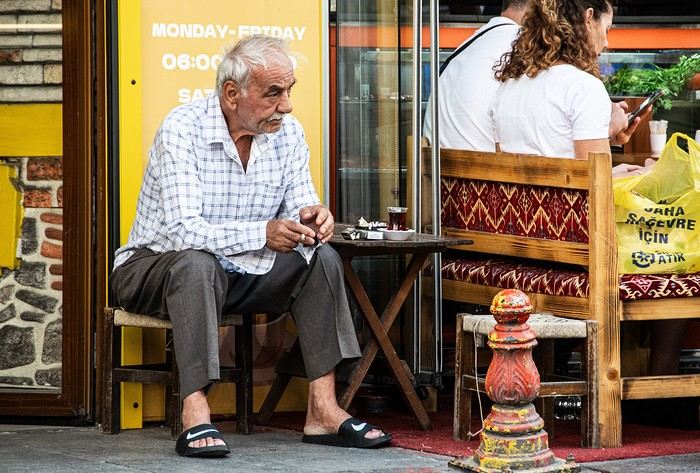
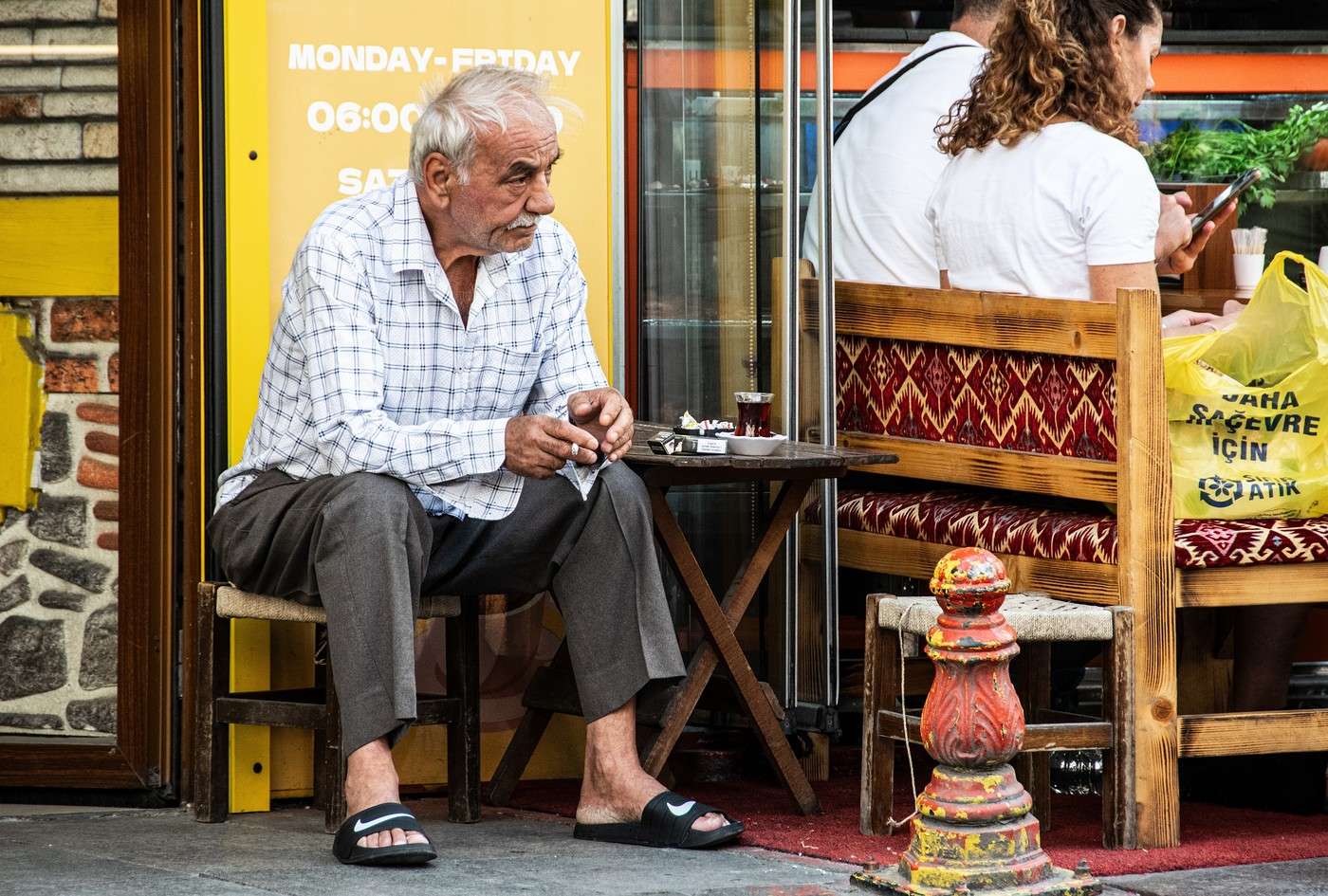
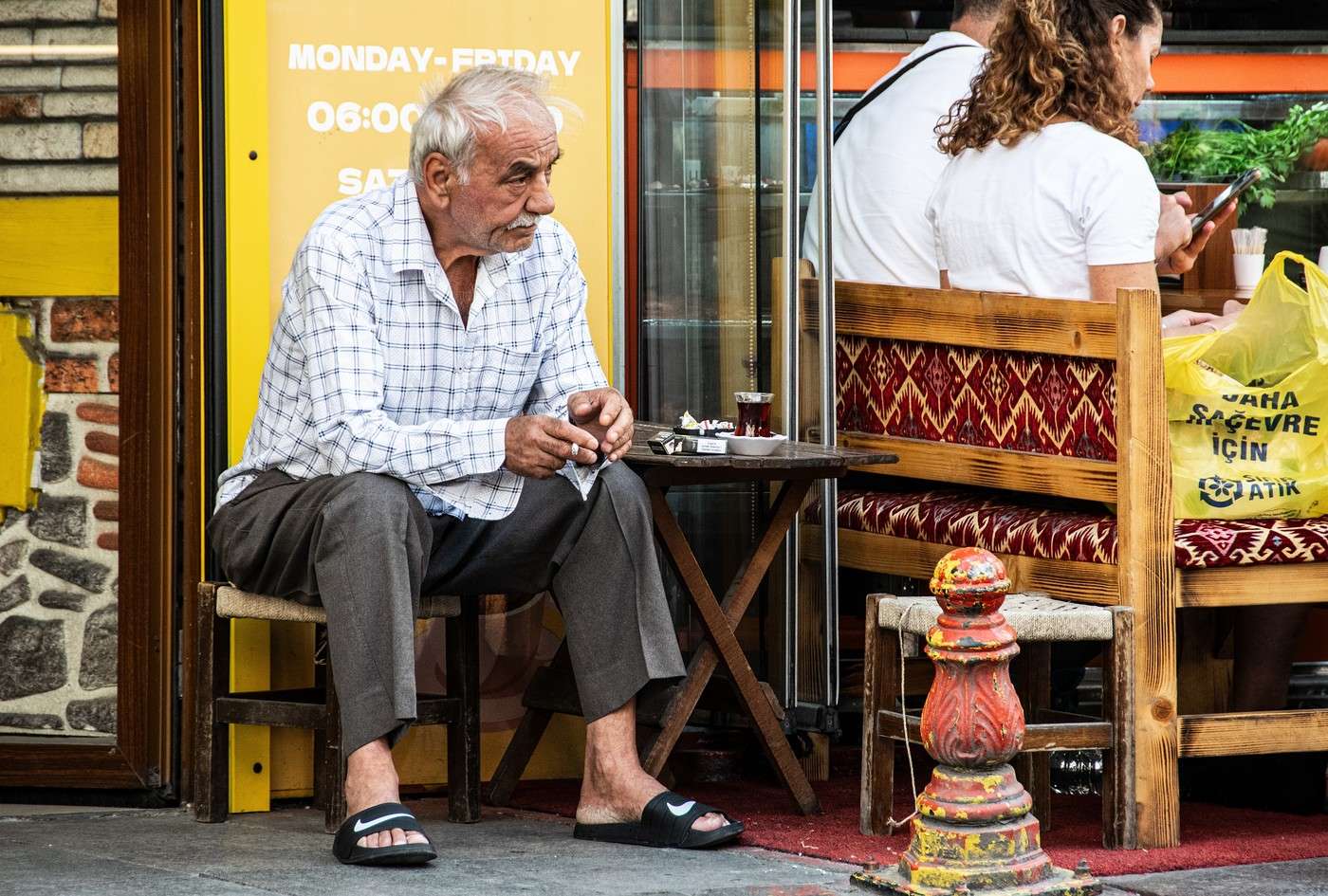
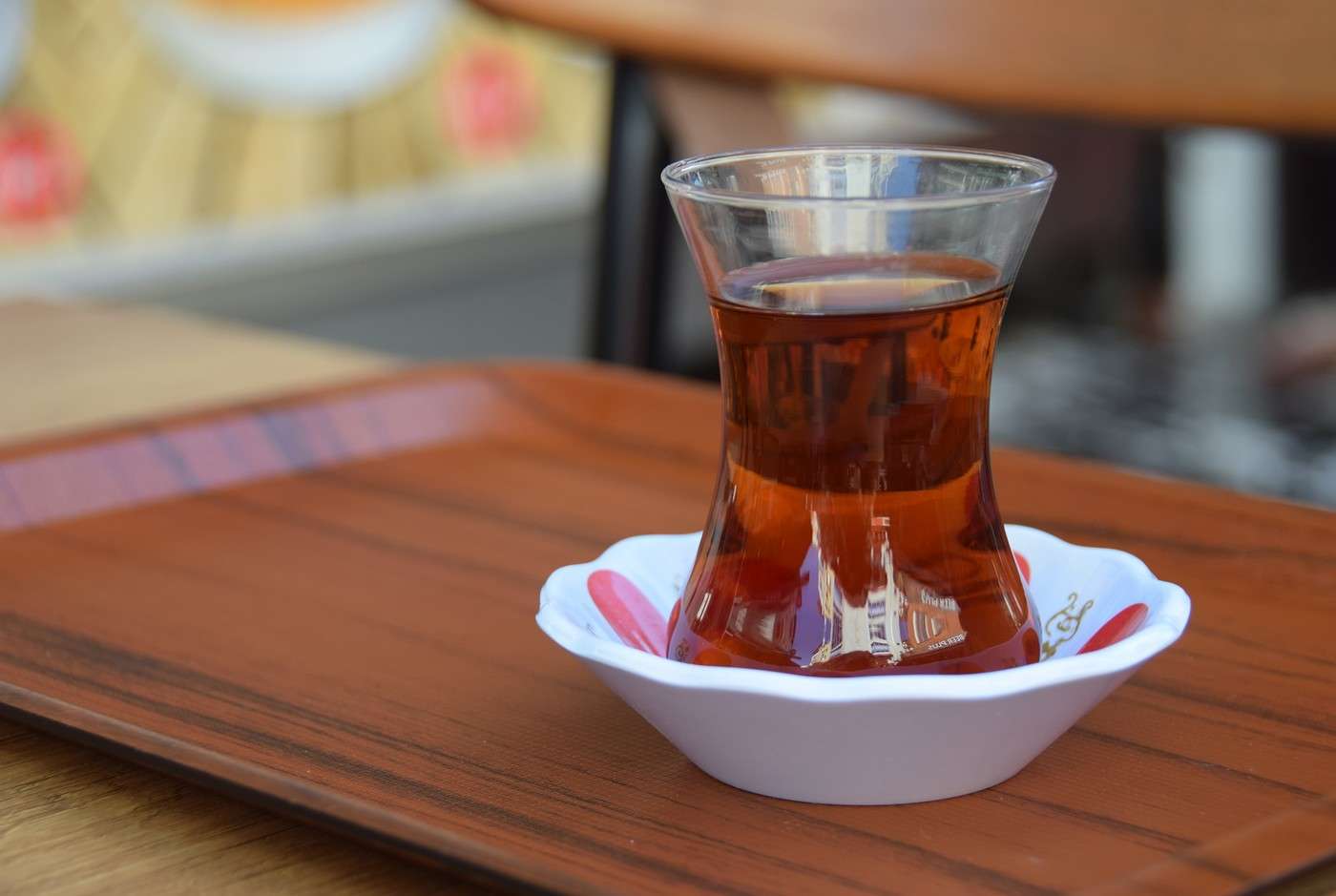
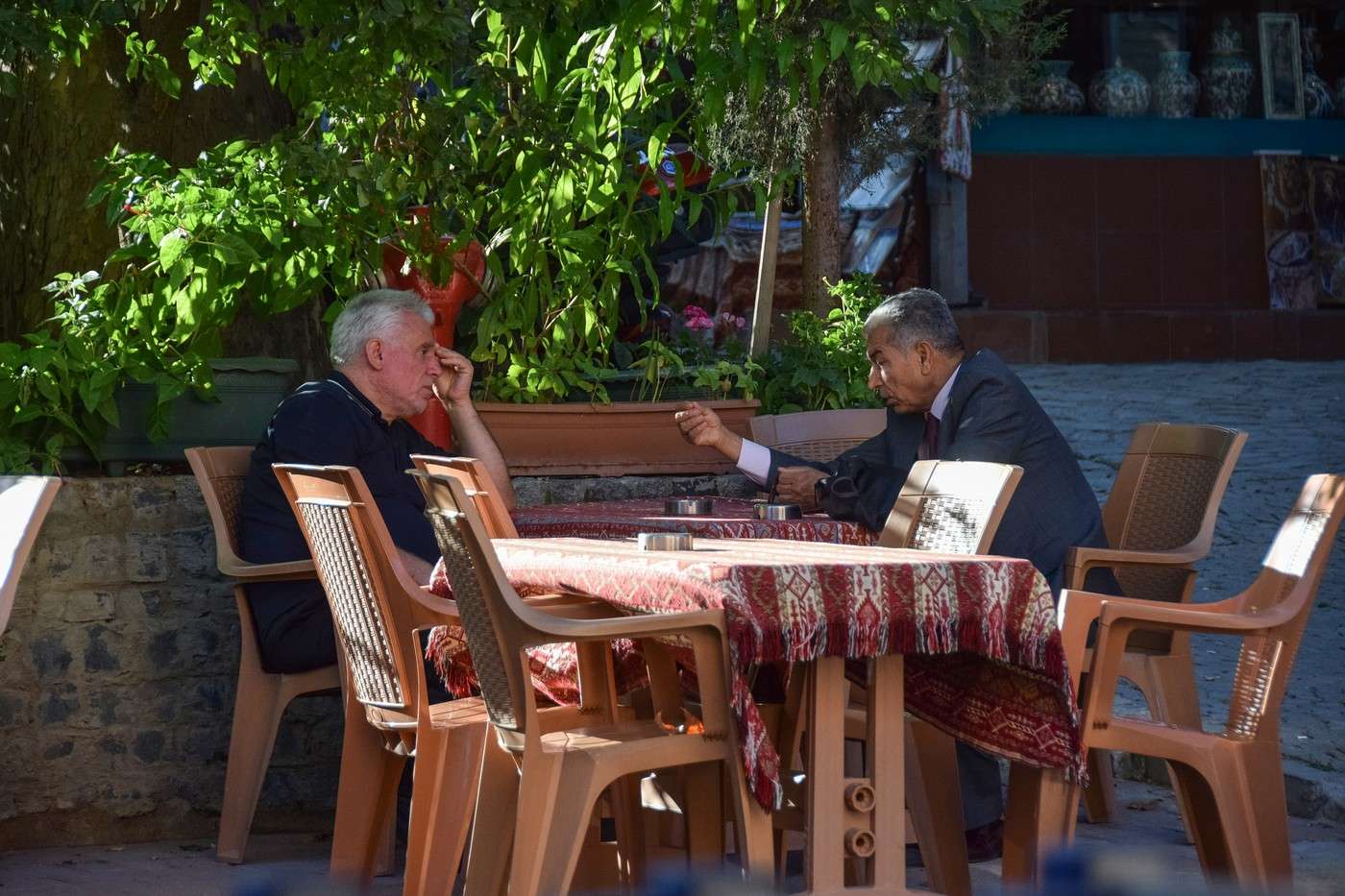
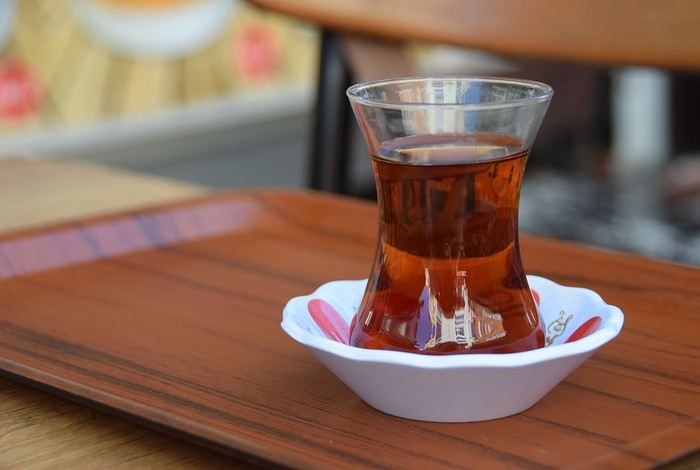
As we descend, the poverty gradually fades, and at the bottom, we cross a lively working-class neighborhood. Lots of men in the cafés. We decide to sit down for some çay to soak in the atmosphere. I love Turkish tea—their ruby color, their slightly astringent taste (I drink it without sugar), the way it’s served in translucent, flared glasses.


The day ends in the good-natured frenzy of the shopping district around the Egyptian Bazaar and the New Mosque.


Before heading back, we finally buy the famous "Istanbul kart" at the Eminönü station. A quick stop at the supermarket—tonight, we’re dining in. Tomorrow, Sultanahmet and its sumptuous monuments. Tomorrow, it’s Byzantium...

The two of us in Istanbul: a Turkish blue tour

Gaura · 2025-09-29

It’s such a pleasure to read your posts and follow along on your Istanbul adventure. So far, your photos look just like the ones I took about ten years ago. It was during an election period, and some parties were holding rallies with singing and mixed dancing (women weren’t veiled). And Hagia Sophia was still a museum where I saw a beautiful calligraphy exhibit.

I’m worried that with Erdogan’s iron grip, a lot of that might have disappeared... Looking forward to seeing what else you share in your travel journal!

The two of us in Istanbul: a Turkish blue tour

RichardXI · 2025-09-29

Hi Noëlle, thanks!

I’ll definitely touch on some issues related to Erdoğan’s presidency later in the travel journal (though I won’t turn my story into a political manifesto 😉)

The two of us in Istanbul: a Turkish blue tour

Montagnard74 · 2025-09-30

Hello. Of course I’m following your trip—still so well written, documented, and illustrated—in this city I only brushed through during a city break in autumn 2017.

The two of us in Istanbul: a Turkish blue loop

Kate · 2025-09-30

Kate, who always takes the lead on our trips, handles transport, accommodation, and thinks of all the formalities (money, passport...)

So impressive! A total multitasker...

And then, she has no sense of direction—none at all!

Still, thanks to me we get lost, and that’s when we discover all kinds of cool places! 😛

The two of us in Istanbul: a Turkish blue loop

Kate · 2025-09-30

Hi Bruno

Thanks for being here 😉 I’d read your travel journal back in 2017. I actually took another look at it before heading back to Istanbul. The city hasn’t changed fundamentally—just a bit more or a bit less of a lot of things. A few more tourists, a few more Chinese shops, a few more standardized restaurants, a few more hijabs, and—finally—a lot more expensive! But nothing that would really put us off. We adapt and work around it, like in so many places these days.


The two of us in Istanbul: a Turkish blue whirl

Montagnard74 · 2025-09-30

@richardXI Whether Kate is multitasking or just has no sense of direction, I can’t say. But we’ll need to keep an eye on her mental health because she’s talking about a travel journal that never existed 🤪. One she "leaned over again before leaving" 😮. Or maybe she’s referring to the DMs we exchanged while planning your trip... Or maybe I’m just overthinking it 😄

The two of us in Istanbul: a Turkish blue loop

Kate · 2025-09-30

On the other hand, we’ll have to keep an eye on her mental health because she’s talking about a journal that never existed

Uh... that’s rough I mixed it up with Vasyvite’s travel journal 🏴‍☠️ Sorry!

The Two of Us in Istanbul: A Turkish Blue Whirl

RichardXI · 2025-10-02

15/09. Ottoman Splendors in Sultanahmet (I): Topkapi, the Blue Mosque...

Sultanahmet... the district that tourists want to visit above all else. We come to Istanbul primarily for this—to discover the Byzantine and Ottoman splendors. The Topkapi Palace, Hagia Sophia, the Blue Mosque, the Basilica Cistern—so many heritage treasures gathered in one place, so many chapters of a brilliant, centuries-old history.... Three little backpacks from the *Routard*, three stars in the *Green Michelin Guide*, the must-sees from *Cartoville* (which, by the way, is really well done—I recommend it). The place is unanimously loved.

So how do we approach it all without being too bothered by the crowds? How do we find the right balance between a quick visit and an in-depth exploration? How do we avoid missing out, as sometimes happens in these situations? And most importantly—what on earth am I going to write in our travel journal without just copying and pasting from guidebooks?

Not too many people on the main square at this hour—it’s still early, visits start at 9 AM. We decided not to see everything at once to avoid feeling overwhelmed. Topkapi and the Blue Mosque for today, Hagia Sophia and the Basilica Cistern for our last half-day before departure.

I’ll visit the palace alone—Kate’s already seen it on a previous trip. We agreed to meet up in two and a half hours. I booked the visit online from France: a Harem/Palace ticket with skip-the-line access and an audio guide—69 € all the same! I have to go to a meeting point where a palace employee is waiting to let us bypass the line. There are about forty of us in front of the guide, who explains—in ultra-fast English—how he’ll lead the tour. I don’t catch everything, but I’ll follow the herd and its leader, who’s waving a purple umbrella like a banner.

We go through security and enter the palace gardens. I don’t lose sight of the purple umbrella glinting in the bright autumn sun of Istanbul. We cut ahead of everyone. Great! The guide takes us to the entrance of the harem and tells us the visit is now self-guided. We’re on our own—the palace is mine.

Two and a half hours exploring this sultan’s palace, continuously occupied from the 16th to the 19th century. I take my time, paper guide in hand, having ditched the audio guide to feel less dependent on technology. I’m guiding myself, sometimes walking ahead of the big groups or letting them pass to carve out moments of relative solitude. The visit enchants me—I dive into a history I actually know very little about, but I’m not trying to grasp everything. I let my gaze wander from room to room, courtyard to courtyard. The decor is sumptuous, often Baroque and Rococo in style. I try to imagine what daily life was like in this palace-city, especially in the harem, where all those women—wives, concubines, favorites—lived, served and closely watched by eunuchs.

Leaving the harem, I stroll through the palace’s four large courtyards, landscaped gardens dotted with pavilions and kiosks, each with a specific function—political, religious, scholarly, or recreational. From the vast terraces, I lose myself in the view below: the Bosphorus, the Sea of Marmara...

Crrr, crrr, a WhatsApp: “I’m at the café on the square.” Oops, it’s 12:30—I lost track of time. Kate’s waiting...


A pleasant lunch at a slightly out-of-the-way restaurant recommended by the *Routard*: *Palatium*. We’re comfortably settled on low banquettes in a lovely terrace surrounded by galleries, in the shade. The welcome was a bit stiff, but after my repeated teşekkür ederim, the waiter relaxed and even started smiling. We order a single dish—a very Mediterranean spread with şakşuka, hummus, yogurt sauce with herbs, grated beets, and stuffed vine leaves.

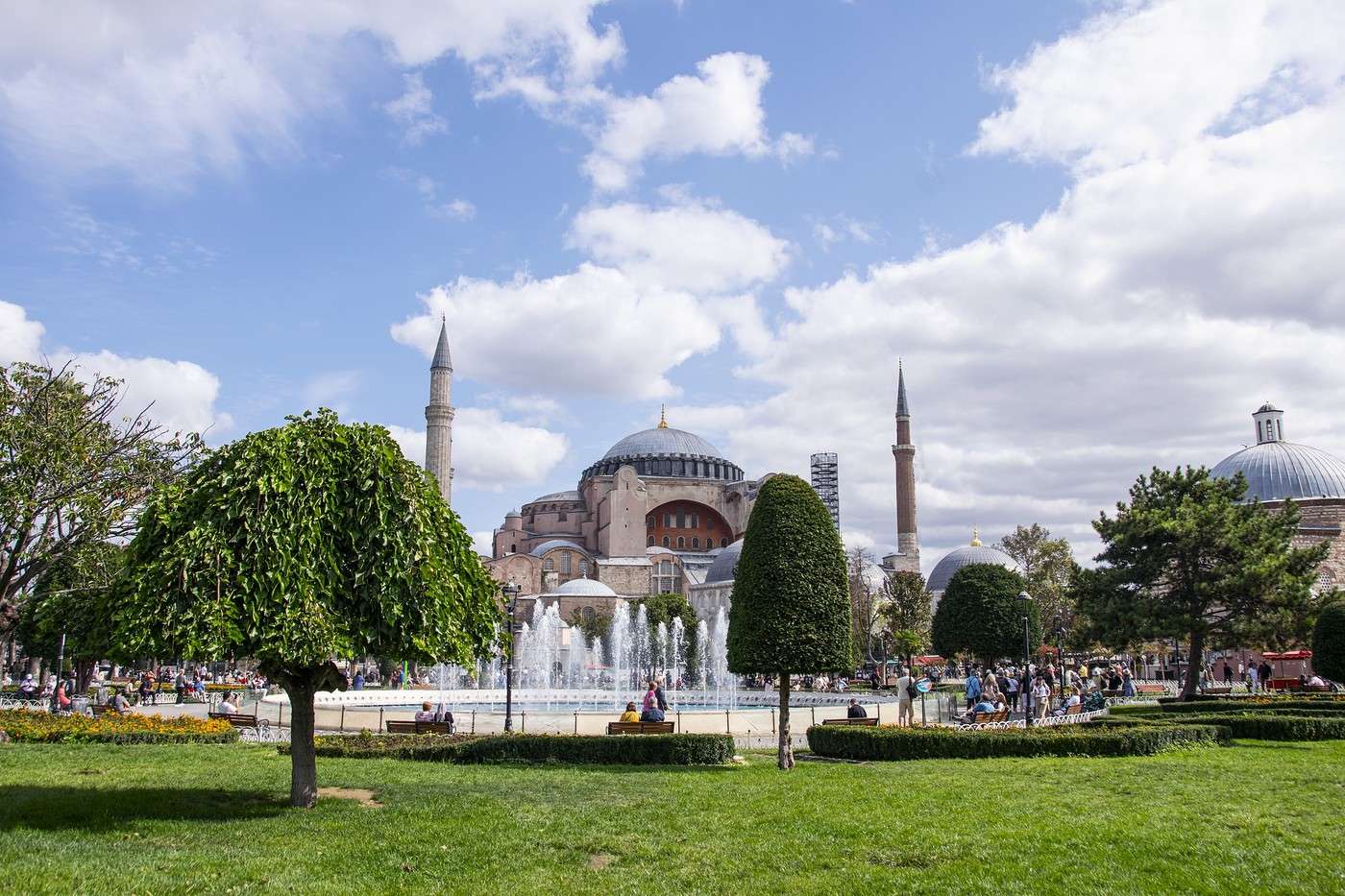
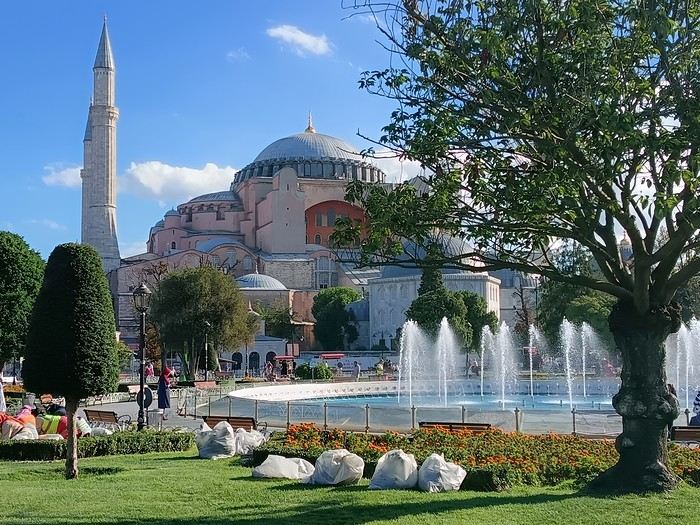
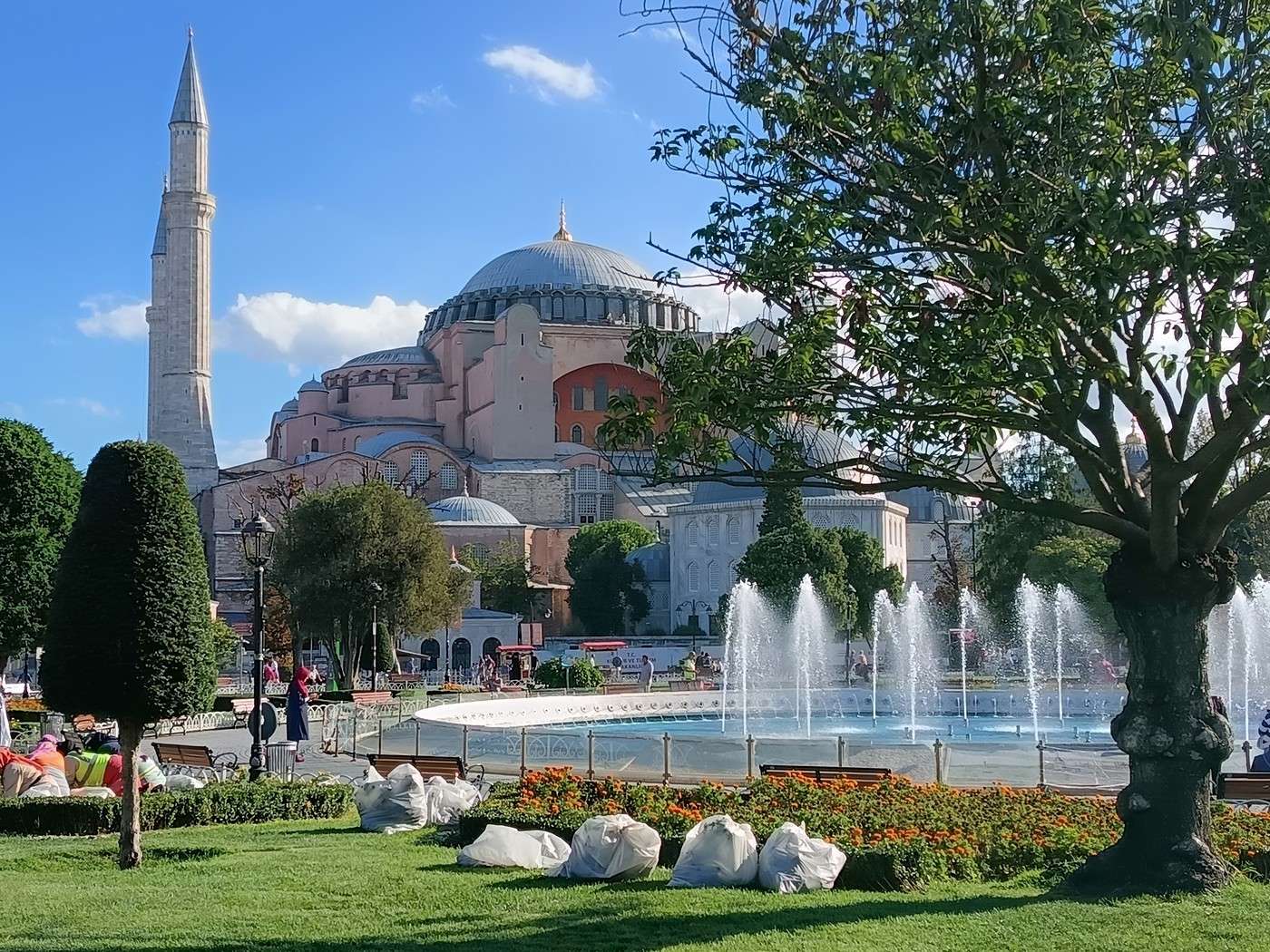
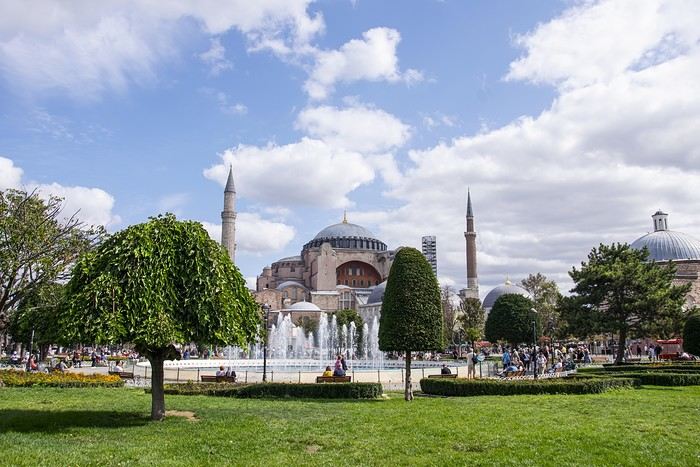
Before heading to the Blue Mosque, we wander around the main square, and Kate takes some lovely photos of Hagia Sophia, the magnificent Christian basilica built by Justinian, later turned into a mosque, then a museum, and now a mosque again by Erdogan’s decision. But as we’d planned, *Sophie’s Choice* will have to wait for another day.


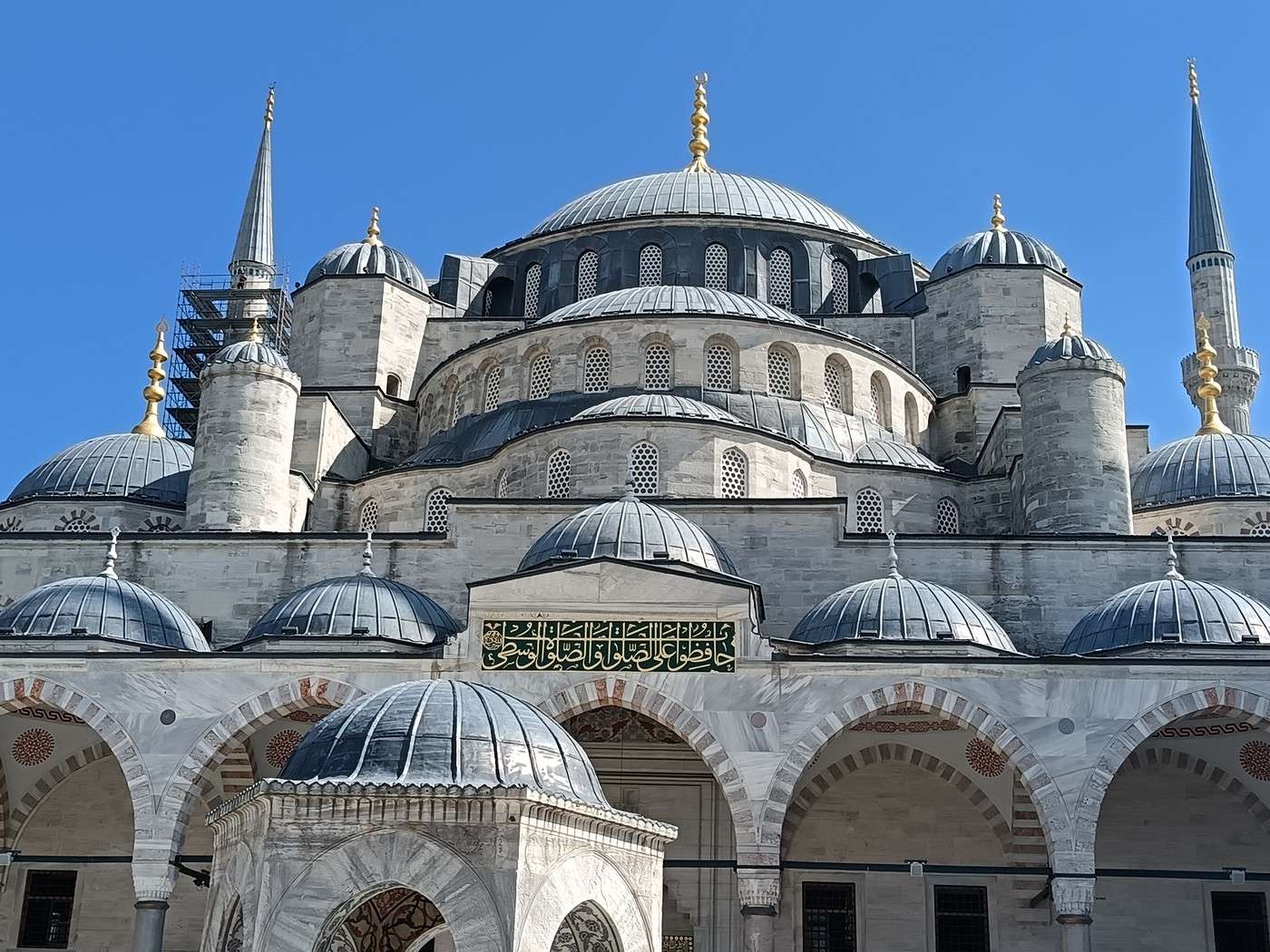
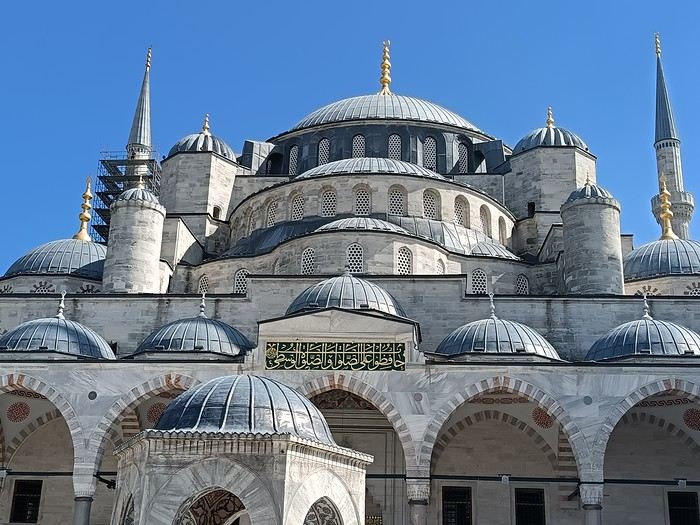
Now we’re heading to Sultanahmet Camii, also known as the Blue Mosque, built in the early 17th century by Sultan Ahmed I to rival Hagia Sophia across the way. You’ve got 4 minarets, Sophia? Bam! I’ll put up six! The audacity of man...

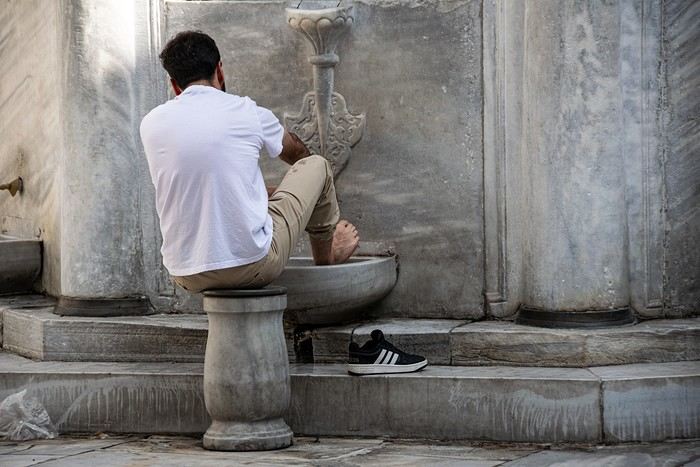
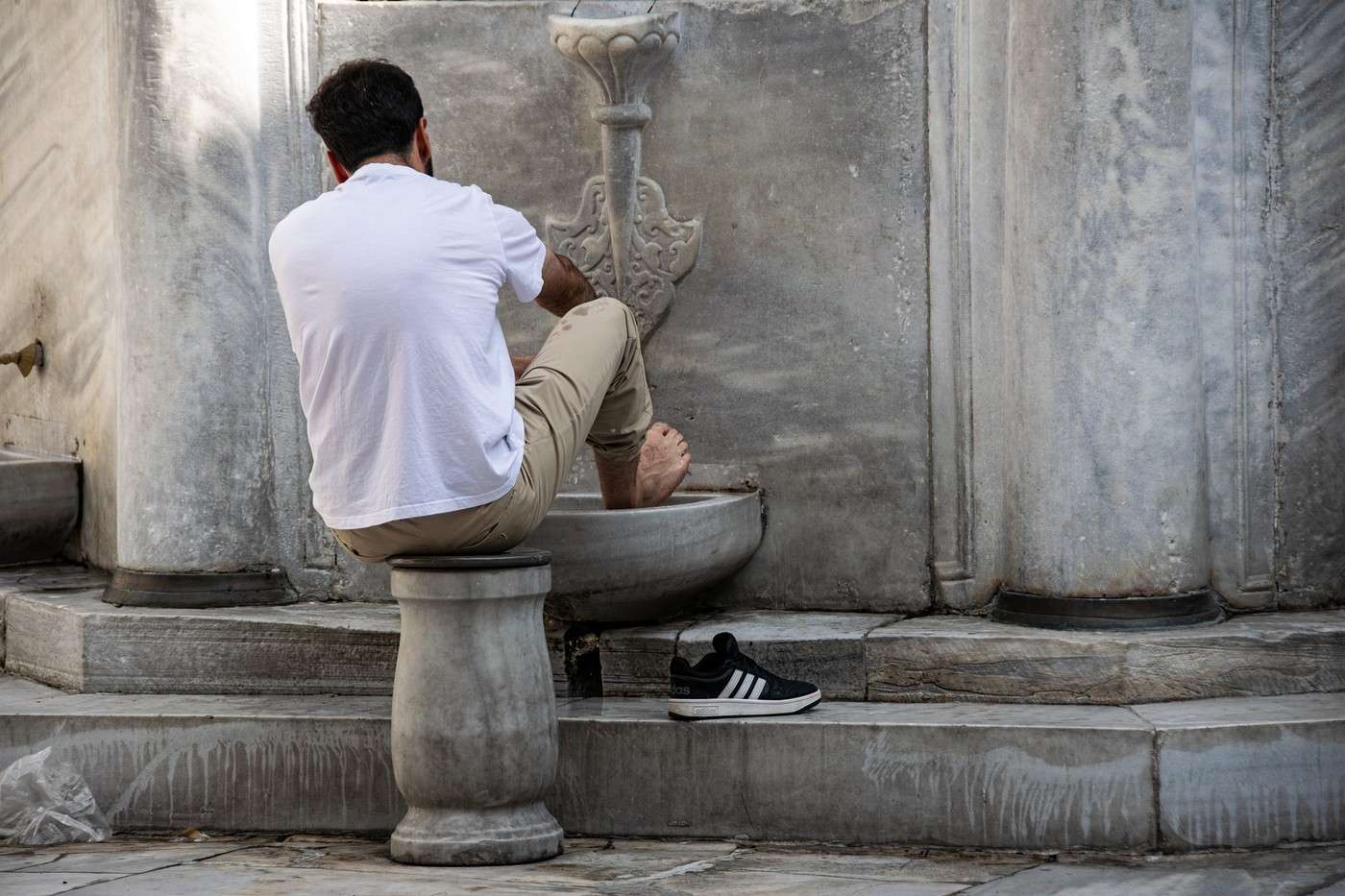
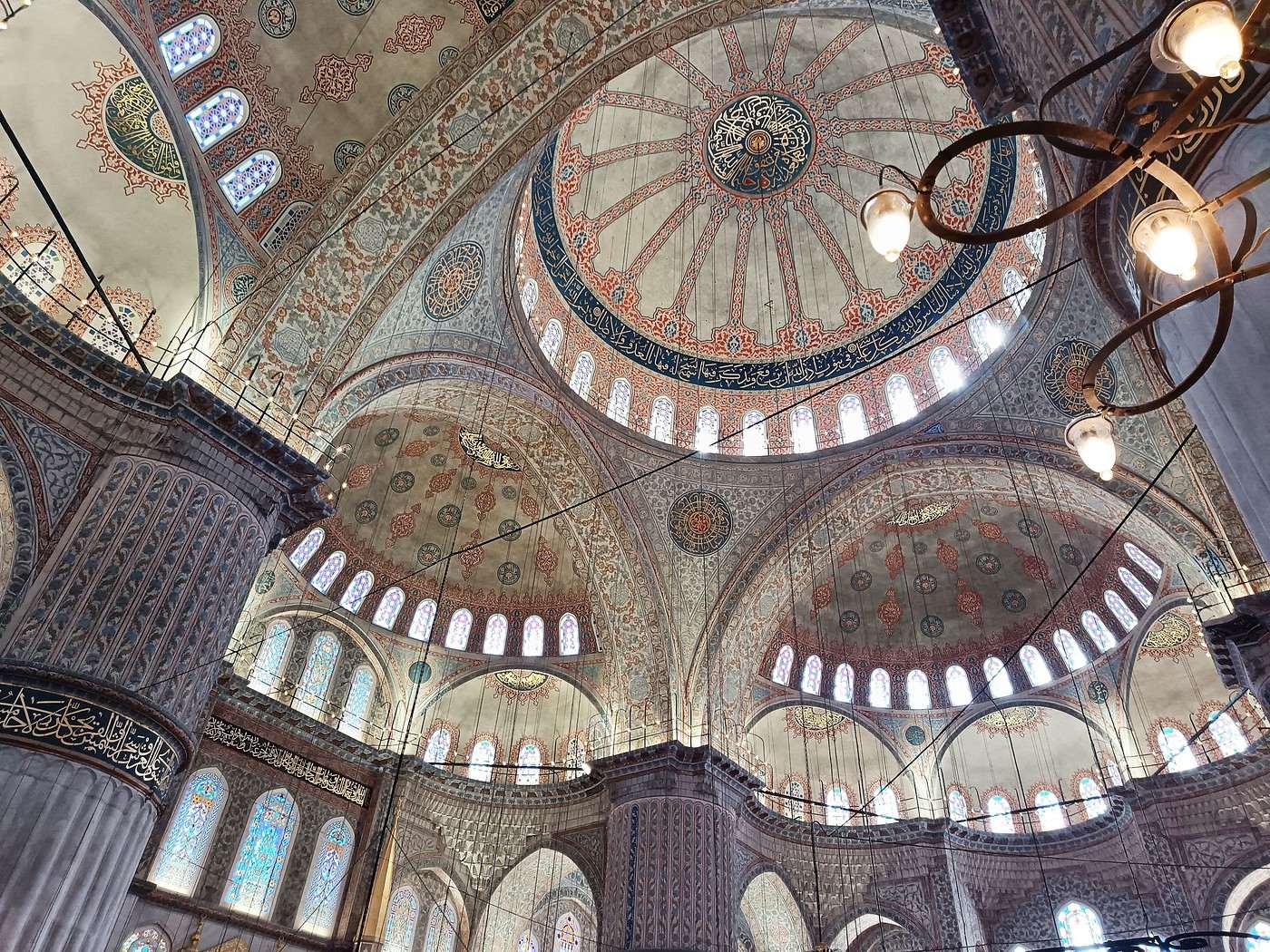
We enter the large ablution courtyard in front of the sanctuary. The mosque emerges into view. It’s a shock—an aesthetic emotion that stirs the whole body. I remember feeling something similar when discovering a work of art: Michelangelo’s Pietà in the Vatican, the view of the Grand Canal in Venice from the train station, the Taj Mahal in Agra...

The mosque, with its gigantic yet harmonious proportions, all curves and power, seems to both overwhelm and envelop us. We stand there, mouths agape, floating between dream and reality, deaf to the constant buzz of the courtyard.

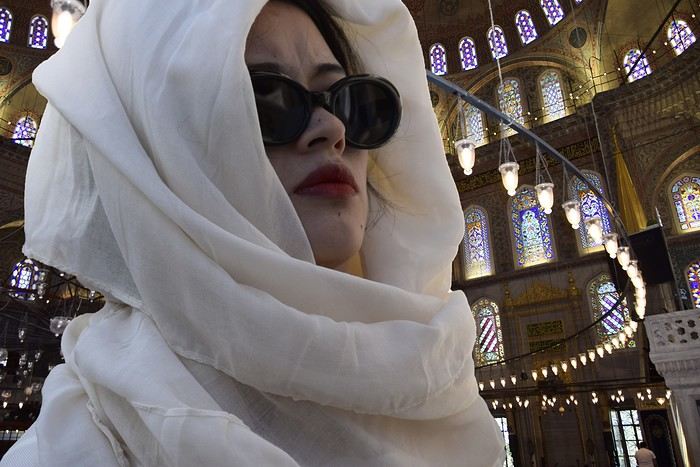
But reality quickly reasserts itself. Kate gets annoyed because some “old guy”—her words—planted himself right in front of her Nikon’s lens! Judging by appearances, he’s about our age...

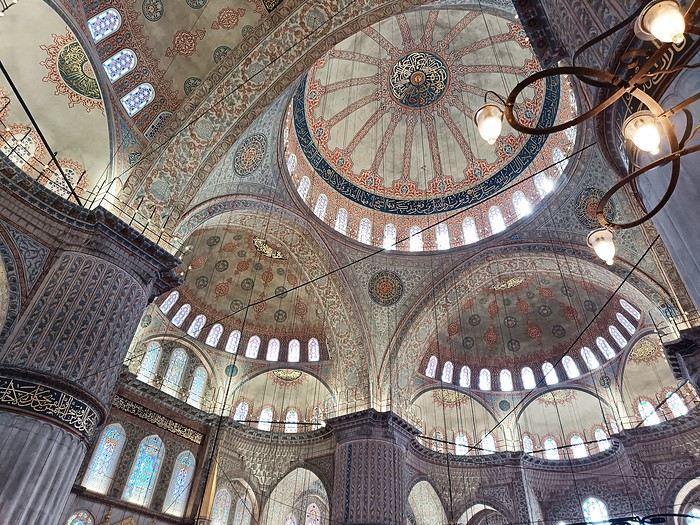
We now enter the place of worship. The space is immense, and despite the crowds, it’s easy to move around. The domes and semi-domes perforating the ceiling, all in a delicate pink, seem to swirl in a kind of mystical dance.

The visit comes to an end... Kate exits through the entrance (the mosque *is* vast, but still...). I call her back and gently steer her in the right direction.


I spotted in the guide a Byzantine church also turned into a mosque, which the Turks call “Little Hagia Sophia.” Before heading there, we take a stroll through the bazaar next to the main esplanade. Lots of souvenir shops, but also some luxury jewelry stores and artisan boutiques. I step into one of the latter to buy a small metal statuette of a whirling dervish, seemingly handcrafted by an artist. It’ll be for my son—he likes gifts with meaning...

One last effort—fatigue is starting to set in. Near the church/mosque, we spot a lovely shaded garden flanked by old buildings. It’s the former madrasa of the mosque, now a craft center and café. We sit down for tea and enjoy the tranquility of the place, far from the hustle and bustle of Sultanahmet.

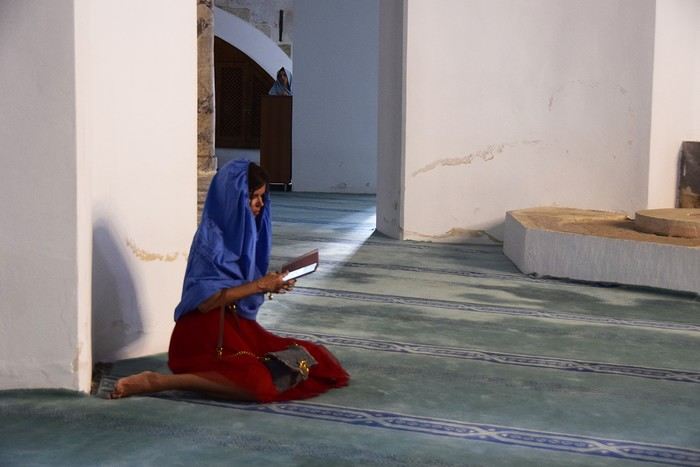
The little Byzantine church has kept its original octagonal layout, though the mosaics are gone. The atmosphere is soothing in this place, which *Cartoville* describes as having “discreet beauty.”


The day was more than packed—quite a few visits, I know, and Kate prefers immersing herself in street life. But it was a must, and I don’t regret a thing.

We’re tempted to dive into the youthful energy of upper Galata in the evening, but the “old folks”—much like the gentleman at the Blue Mosque, I suppose—are exhausted.
The two of us in Istanbul: a Turkish blue waltz

Voyajou · 2025-10-04

A blue that lights up stars in Istanbul’s seven nights and one. One that doesn’t return from the harem until you WhatsApp it. A cat-hunting huntress who evades the Grey Wolves (though I don’t want to start a political debate 😉). Like two parallel stories that merge into one. Two different ways of seeing and experiencing a place that are really just one. Brilliant!

(Since we’re talking colors: did you notice that for its first birthday, the new VF dressed up in baby green?)

The two of us in Istanbul: a Turkish blue whirl

Pagaljavab · 2025-10-04

Hey Richard (and Kate),

Back in 2017, during a 3-week trip to Turkey, I spent almost a full week in Istanbul, and even in just four days of my travel journal, I had way too much to say...

First, let’s talk about the present. We’re heading to Turkey in 3 weeks (a future travel journal?). Our initial plan was Istanbul—a sprawling, stunning city, one of my favorites in the world. But while doing some initial prep, I noticed that the economic crisis the country is going through, along with the latest devaluation of the Turkish lira, has led to skyrocketing inflation, which is even worse in Istanbul than elsewhere. I’ve seen the outrageous prices (even in Paris, they wouldn’t dare charge a third of that!) for visiting the "must-sees" (and there are *so* many). Bottom line, it’s a crazy budget if you want to do the city justice. Even in Norway, they wouldn’t dare charge those prices! Back in 2017, I remember a city where you could still eat well for 2 or 3 €, and where monument entry fees, though already pricey for Turkey, were still affordable. I think Istanbul has now decided to make tourists pay for its crisis. But let’s not forget that Turks are the ones hit hardest. I’ve read on forums that Turks say prices will drop and return to normal in 5 to 10 years, before another devaluation. It’s cyclical... So we boycotted and chose Ankara and Cappadocia instead, where inflation hasn’t been used to fleece visitors as much.

Anyway, I recognized your description of the dock where you see the Bosphorus and the Golden Horn. Your words captured the exact feeling I had in 2017 in that same spot. To me, that’s the place that symbolizes Istanbul. I *love* kuru fasulye—it was my "go-to" dish throughout my Turkish trip. I immediately perked up when you mentioned it. And please, stop with your "téchékoudérim" 😂 It’s phonetically "téchékûr édérim"!!

Anyway, I really relate to this style of storytelling—it’s totally my thing—so I’ll keep following with enthusiasm!

The two of us in Istanbul: a Turkish blue tour

Pagaljavab · 2025-10-04

(Since we're talking about colors: did you notice that for its first anniversary, the new VF went baby blue-green?)

Yeah, and it’s even a little shocking, isn’t it?

The two of us in Istanbul: a Turkish blue whirl

Jojoone1 · 2025-10-05

(Since we're talking about colors: did you notice that for its first anniversary, the new VF got dressed in baby blue?)

Yeah, and it’s even a bit shocking, isn’t it?

Let’s let this travel journal unfold without interfering, please

Just the two of us in Istanbul: a Turkish blue round

Tatra · 2025-10-05

Hello,

Do you see it as baby blue? To me, it's blue. That said, the green/blue distinction isn’t the same in Turkish as it is in French—and doesn’t even exist in Breton, for example. But you're right, let’s not make it a debate, even if *gök* and *mavi* are key to Turkey’s national imagery.

Michel

The two of us in Istanbul: a Turkish blue tour

Pagaljavab · 2025-10-05

Oh, shouldn’t I have chimed in? I didn’t know, sorry... I thought there were some good points to build on, but I’ll stop jumping in then...

PS: Should I delete my messages? Thanks in advance.

Just the two of us in Istanbul: a Turkish turquoise round

Masterpo · 2025-10-05

Did you notice that for its first anniversary, the new VF got dressed in baby blue-green?

The hex code is #32bcc5. If we ask AIs to define the color, here’s what we get:

Copilot Light blue-green (medium turquoise, light teal, soft cyan)

Perplixity Bright blue-green (between cyan and turquoise, lagoon blue)

Grok Bright blue-green (light cyan, aquamarine)

ChatGPT Soft cyan (between turquoise blue and light teal)

Claude Turquoise or turquoise cyan (between blue and green, with a cyan dominance, lagoon blue)

Gemini Shade of cyan and turquoise (aquamarine)

Deepseek Light cyan or turquoise (lagoon blue)

So basically, we can say it’s a blue-green.

The two of us in Istanbul: a Turkish blue tour

Pagaljavab · 2025-10-05

I would’ve loved some feedback on those interferences too 😉

The Two of Us in Istanbul: A Turkish Blue Round

Kola · 2025-10-05

“If I had but one glance to cast upon the world, it would be upon Istanbul.”

A travel journal immersed in this gaze of passing travelers/tourists, eyes wide open to every moment of a short week.

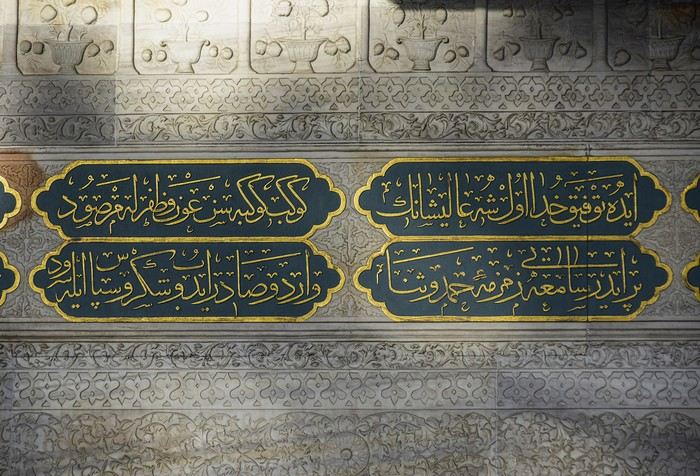
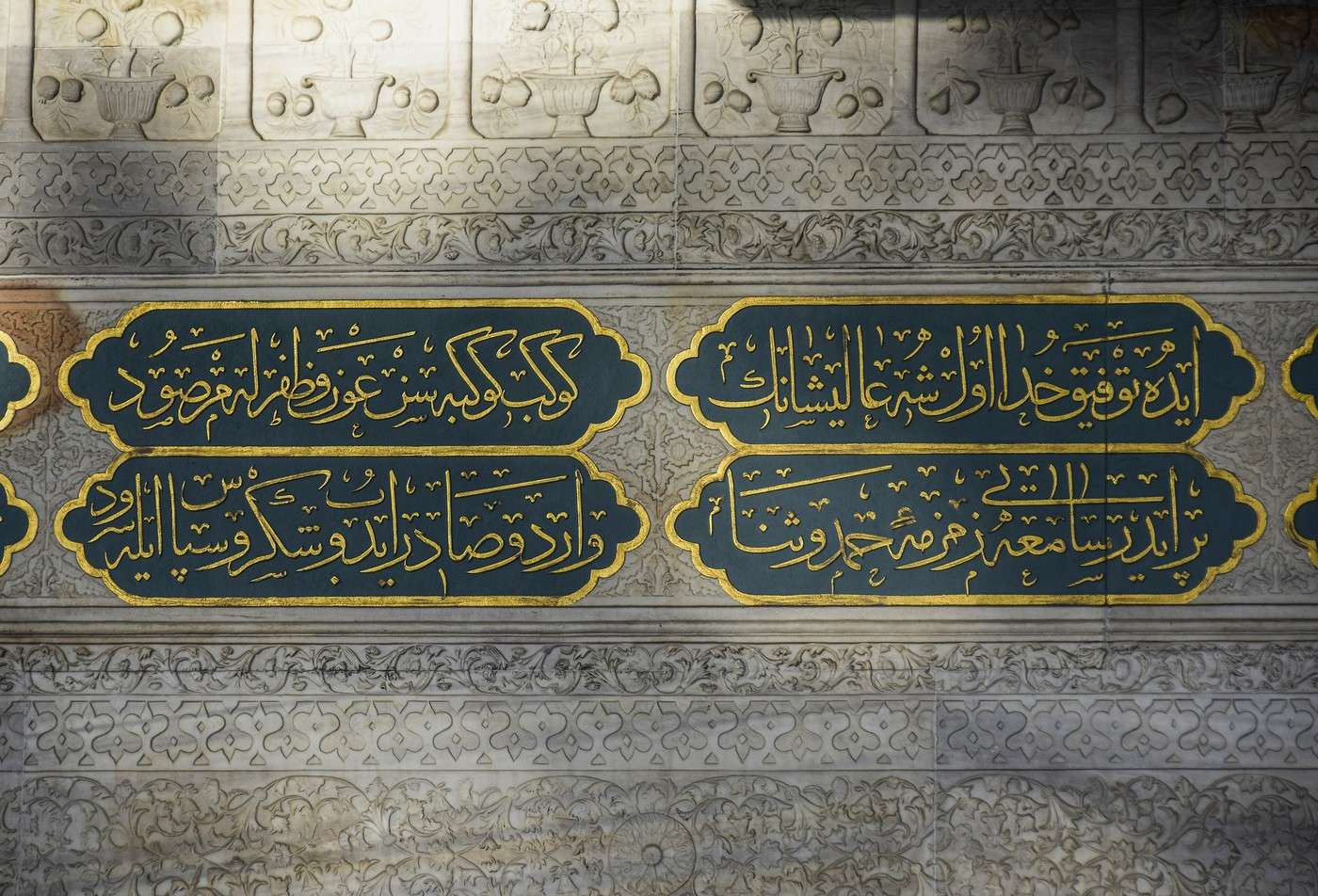
Neither pretentious, nor moralizing, nor naively candid, the account captures the colors, the alignments, the winding alleys, the street delicacies, the delicacy of the tiles, the finesse of the calligraphy... And the people! And the cats! with a lightness that surprises coming from something that weighs so heavy around the neck. No doubt the know-how of a well-made head sitting atop that neck.

Around these luminous images, the precise and erudite prose weaves like a silken ribbon, unfolding the dazzlement of first impressions while recounting this Orient that wavers between the West and a Thousand and One Nights... sketching feelings, brushing past tiny annoyances, highlighting the complicity—touches of humanity that give the story a soul and distance it from mere vacation memories. You did good buying new kicks! Don’t you wanna take the Nikon? My neck hurts. But I’m telling you it’s to the right! You go up alone, I’m out of breath. I know Bruno... but who the heck is this Vazyvite again?!!

Getting lost, understanding each other, disagreeing, finding each other again, sharing...

The two of us is a lovely mix, a charming alchemy, a beautiful novel, a beautiful story...

Every gal in Constantinople Lives in Istanbul, not Constantinople So if you've got a date in Constantinople She'll be waiting in Istanbul

(from the two of us)

The two of us in Istanbul: a Turkish blue loop

Kate · 2025-10-05

You did the right thing buying new kicks! Don’t wanna take the Nikon, my neck’s killing me. But I’m telling you, it’s to the right! You go up alone, I’m out of breath. Bruno I know... but who the heck is this Vazyvite again?!!

That’s so spot on! Feels like you know us well...

Alright, I’ll let Richard take the floor—he’s busy crafting his answers. Nothing’s left to chance, just like his exams—20 minutes for a high school senior paper! And here, we’re way above high school level

The two of us in Istanbul: a Turkish blue whirl

RichardXI · 2025-10-05

Voyajou and Pagaljavab

Thanks to both of you for your relevant and kind posts. I won’t say it in Turkish, since reading you, Pagal, I realize I’ve basically been linguistically lisping the whole trip without noticing. How embarrassing! 🤪 So I’ll continue my story in "blue that lights up stars"—borrowing your lovely phrase, Voyajou.

The two of us in Istanbul: A Turkish blue tour

RichardXI · 2025-10-05

16/09. Between bell towers and minarets: A stroll through the neighborhoods of Fener, Balat, and Fatih

Ding, dong! Ding, dong! From the shores of the Golden Horn, as I step off the tram, I hear the ringing of church bells. A sound that might seem almost incongruous. We’re in Fener, the former Greek Orthodox quarter of Istanbul. The community has dwindled to just a few hundred people today, but it’s in Fener that you’ll find the seat of the Ecumenical Patriarchate of Constantinople, a major religious institution for Orthodox Christians worldwide. In practice, it takes the form of a religious complex, with a place of worship, administrative buildings, and gardens. A mini-Vatican, if you will. We’re curious to explore it. While checking the map, we spot a crowd of visitors lining up. I ask, « Church? » « Yes, yes, mosque, mosque... » A bit skeptical, I then ask a young Turkish couple who seem better informed. Yes, this is the place. I sigh, thinking that this group of tourists on a guided tour doesn’t even know what they’re about to visit. The entrance to the site is paid but inexpensive. We step into a shaded courtyard surrounded by buildings. To our left, the Church of St. George is packed—we’ve arrived in the middle of a service. Oh well, at least it’s a chance to observe the Orthodox ritual up close.

After leaving the church, we decide to grab a coffee on a terrace in this sunny, flower-filled neighborhood. Then, a brain glitch—probably triggered by the identity of the previous place—I confidently order in English: « Two Greek coffees please! » ??? Are we heading for a diplomatic incident? My face flushes, and I laugh nervously. The young waitress gives a mischievous smile. Phew, no need to call the French embassy.


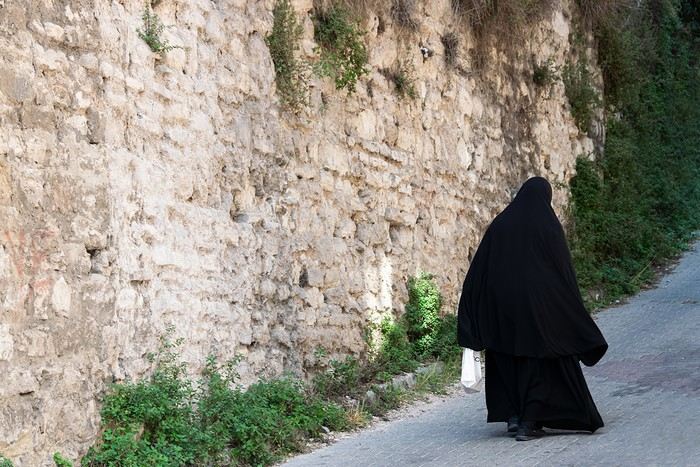
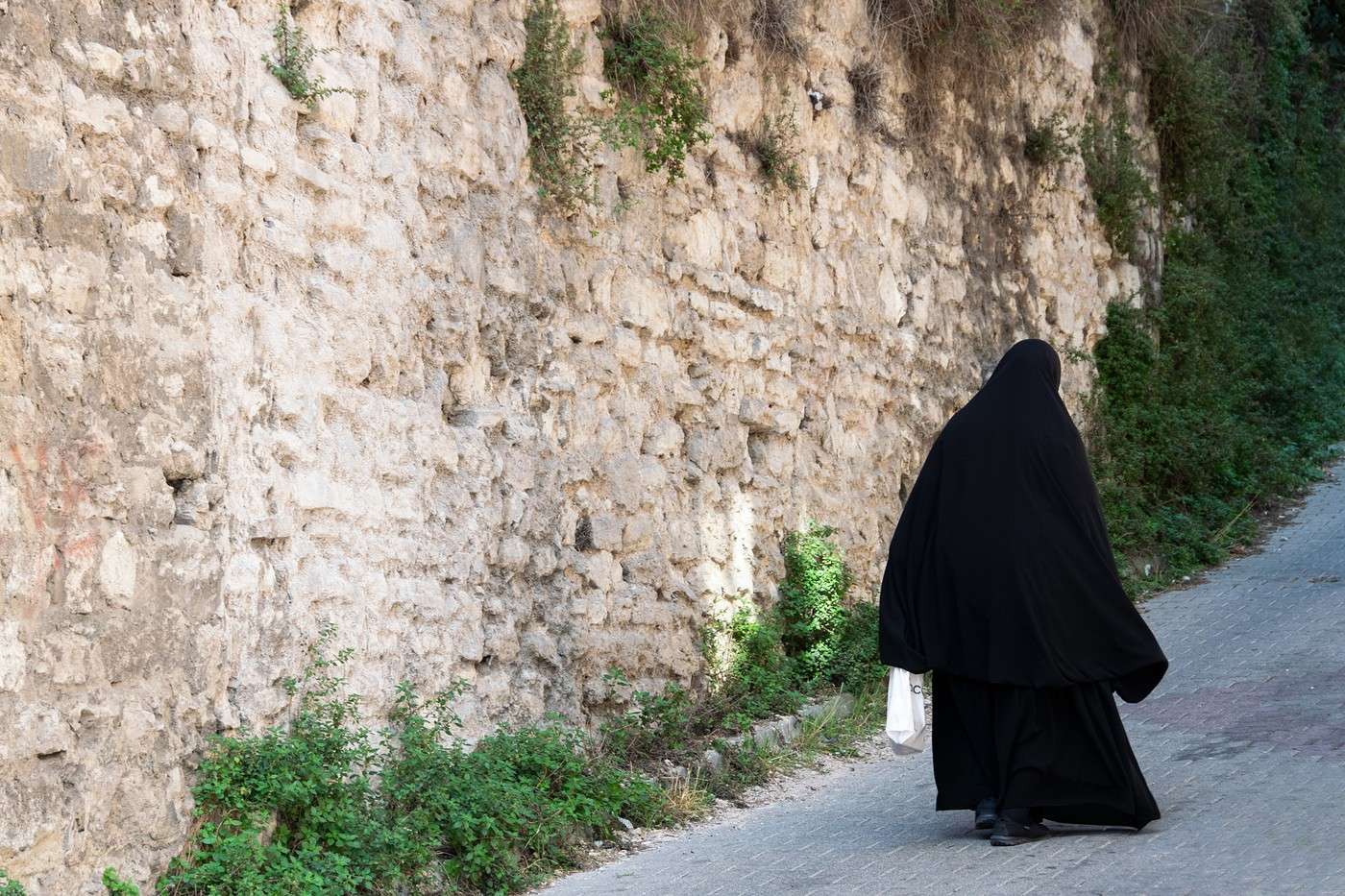
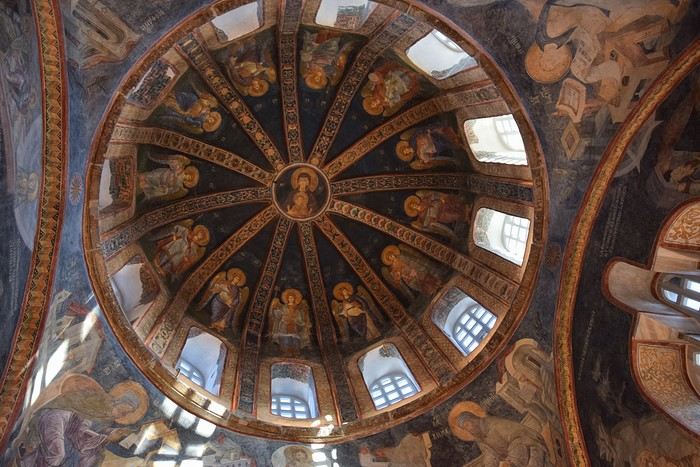
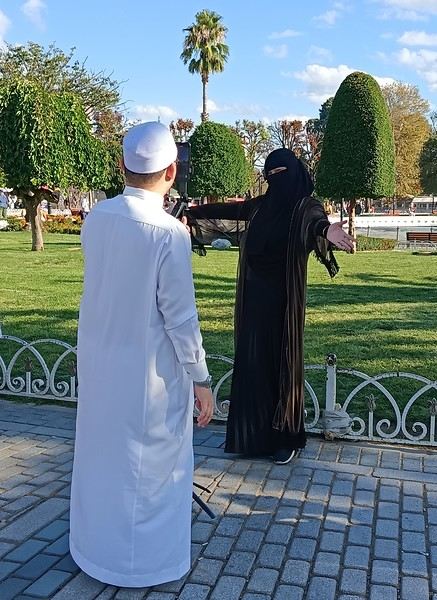
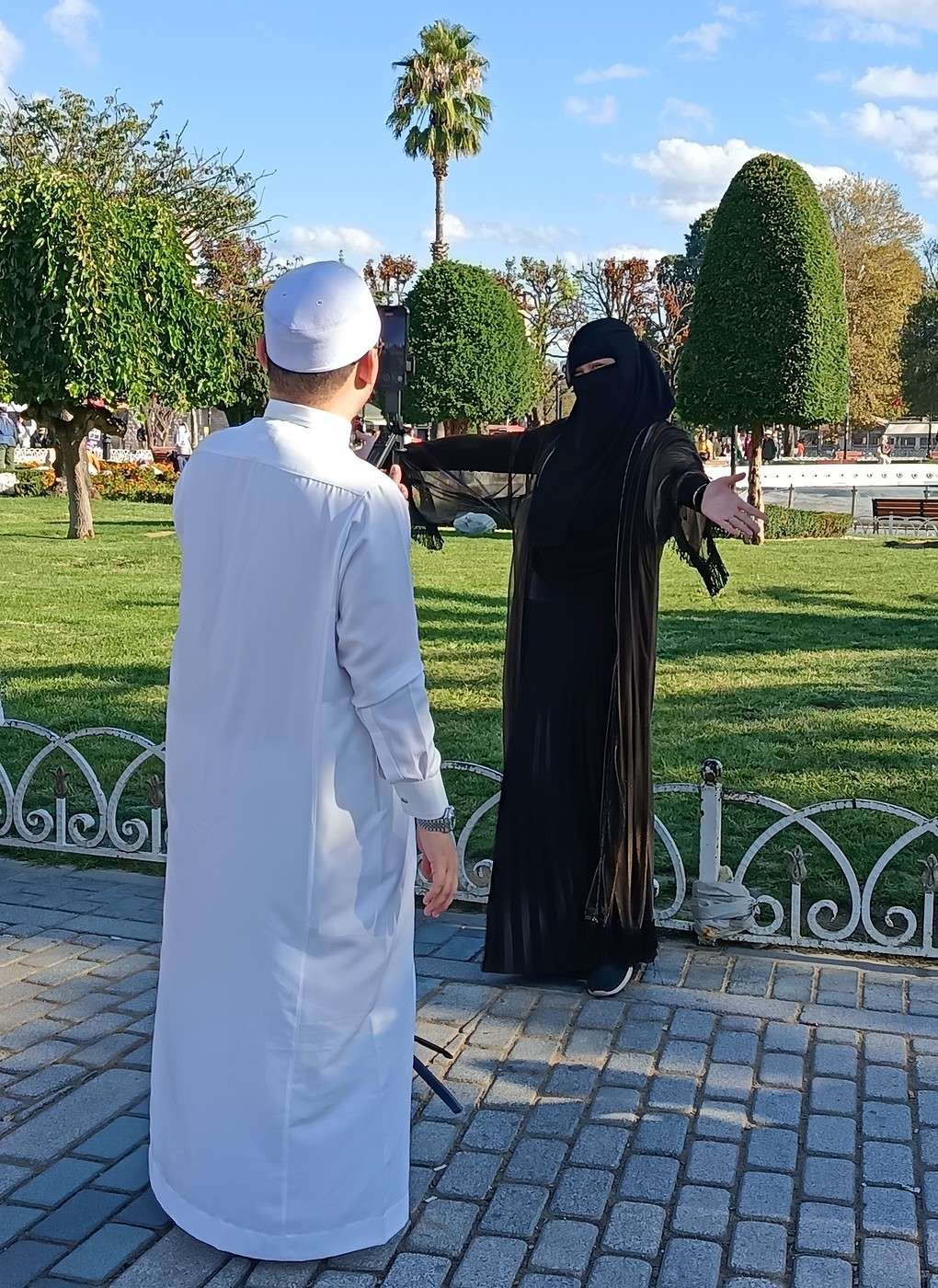
To stay on theme, I suggest to Kate that we visit the former Byzantine church of Pammakaristos, now a mosque, and its remarkable 13th-century mosaics. And as is often the case in Istanbul, we have to climb. We’re on the heights of Fatih. Gradually, the atmosphere changes, as does the sociology of the area. We’re in a fairly working-class neighborhood, much less gentrified than down below. But that’s not what strikes us. More and more black-clad figures are walking the steep streets of the district. Elderly women, but also many much younger ones. All are wearing the niqab, the full-face veil, some even have their faces completely covered. This is not at all a traditional Turkish Islamic garment, unlike the headscarf, the hijab. It’s the attire of ultra-conservative or very radical Islam, imported from Saudi Arabia or Syria. The emblematic dress of Salafism. We’re in a very religious neighborhood; the men wear beards, often very thick. The atmosphere isn’t exactly oppressive, but we don’t feel entirely at ease. It feels like an episode of *The Bureau*. And I’m struck by the stark contrasts in this Istanbul society, where the dark ghosts of Fatih coexist with the lip-injected bimbos of Galata.


Turkey is a secular country, even if the principle is applied a bit differently than in France, and its Sunni Islam of the Hanafi tradition is inherently very tolerant. But Erdogan’s rise to power has led to a re-Islamization of society, imbued with more conservative values. Sure, Turkey remains a republic based on civil law, but President Erdogan has gradually chipped away at the principles of secularism by, for example, allowing the wearing of headscarves in schools and the civil service—previously banned—by restoring Hagia Sophia and Chora Church to their original function as mosques. And regarding the niqab, there’s no explicit ban, unlike in France... We reach a plateau—the former church/mosque is closed. Disappointment. Oh well, no mosaics for us.

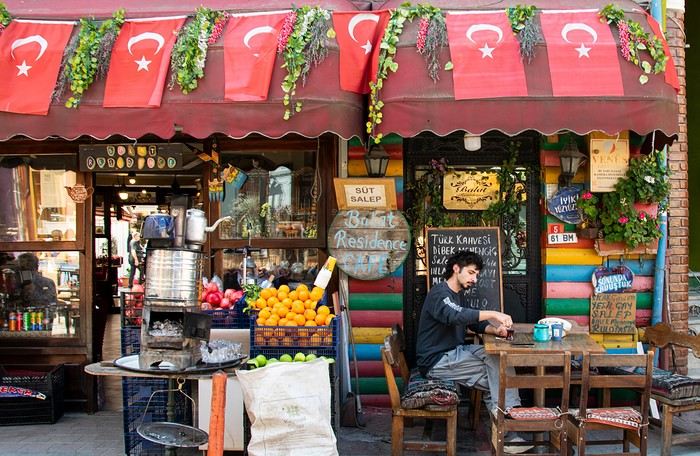
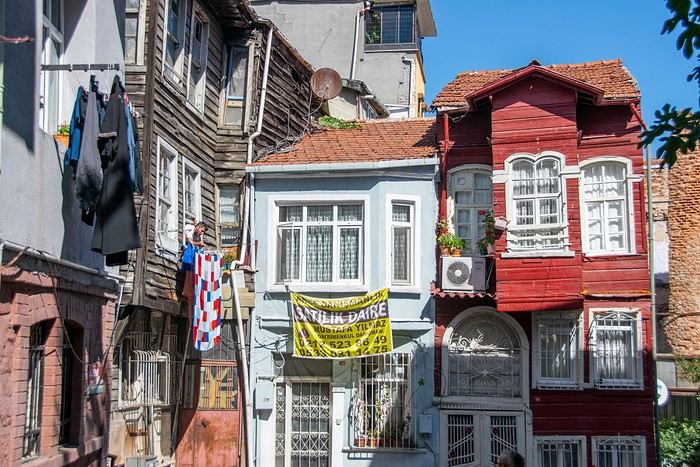
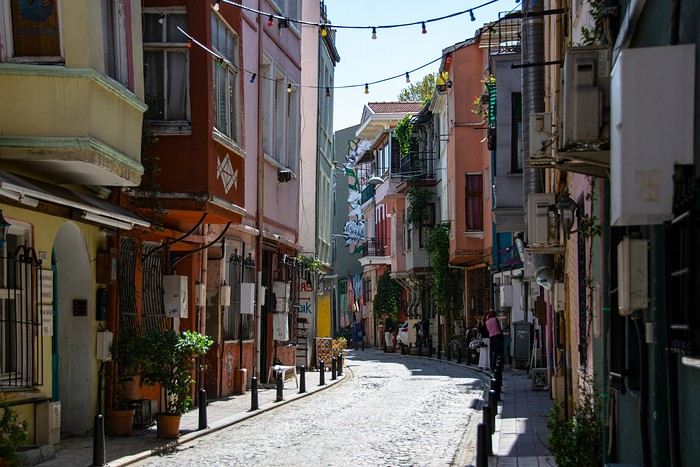
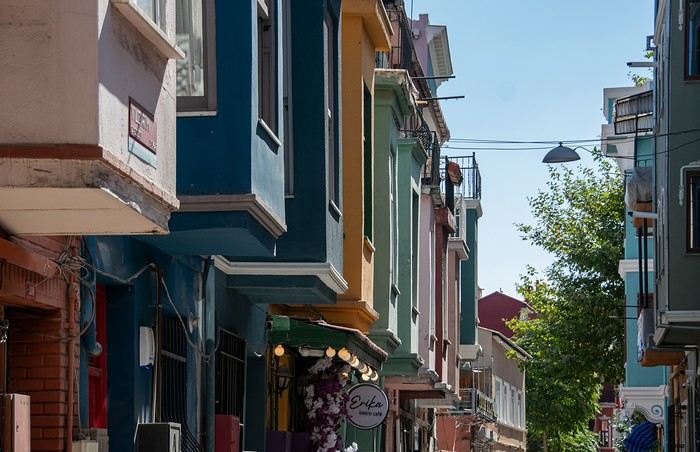
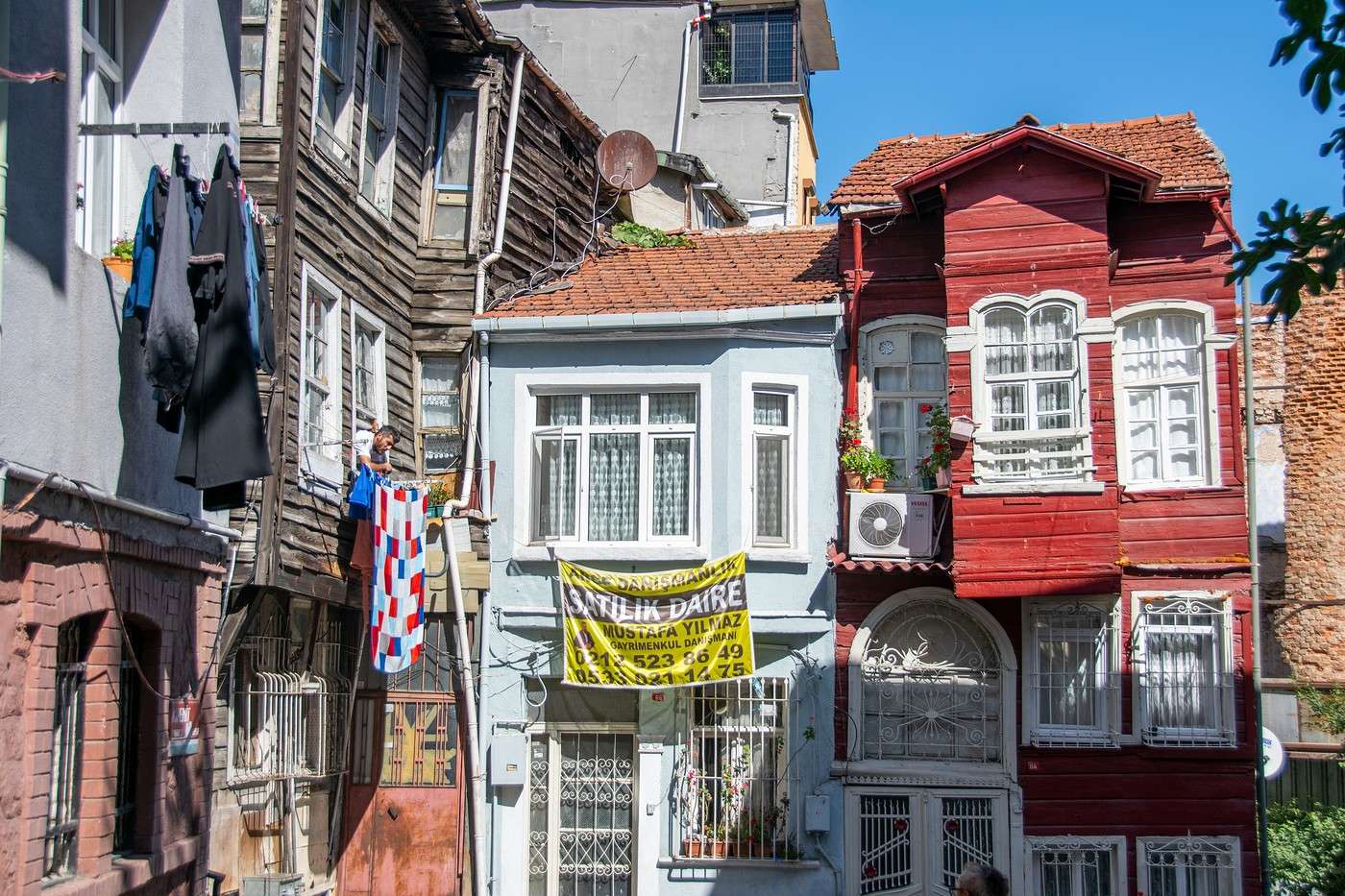
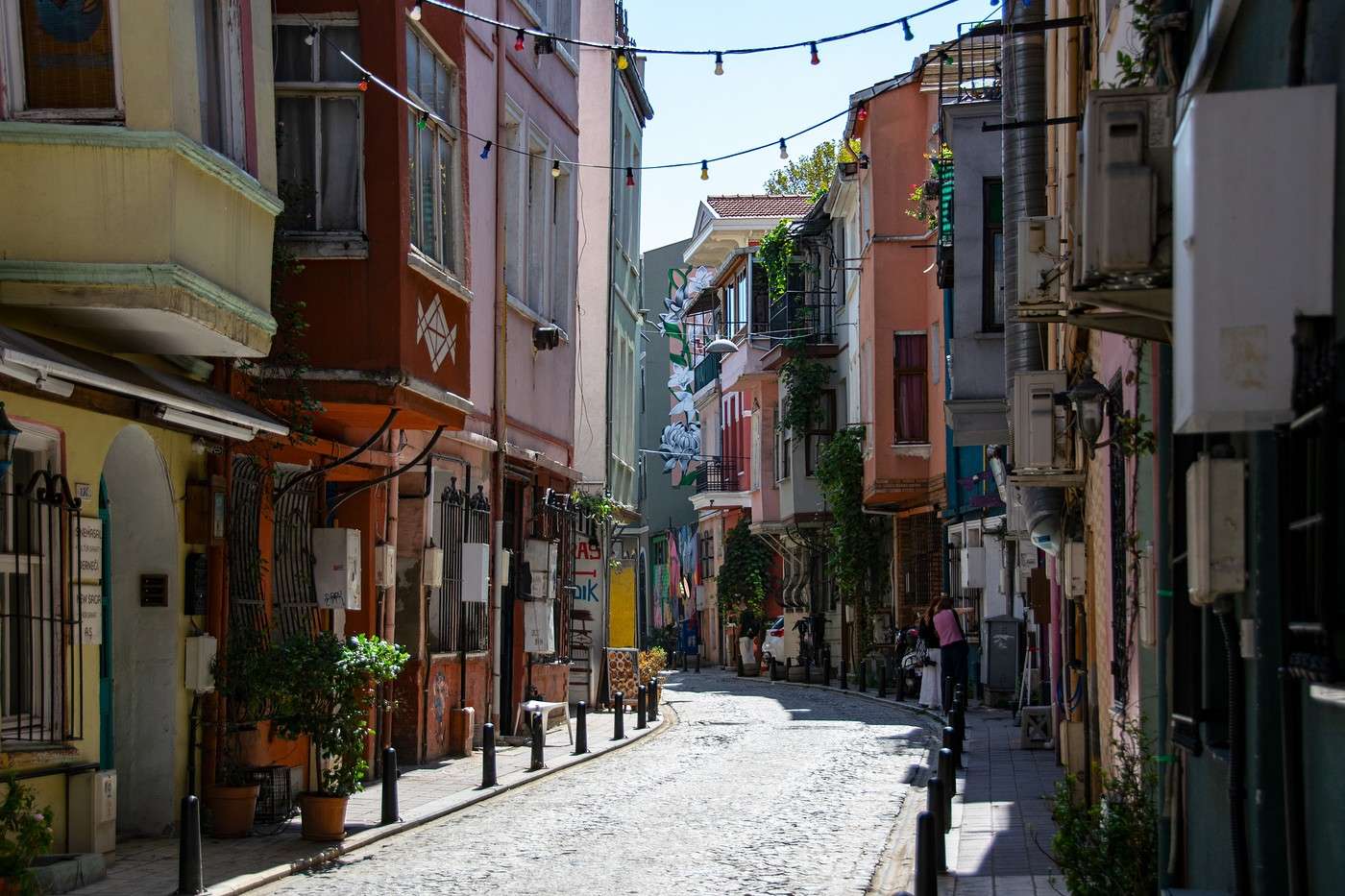
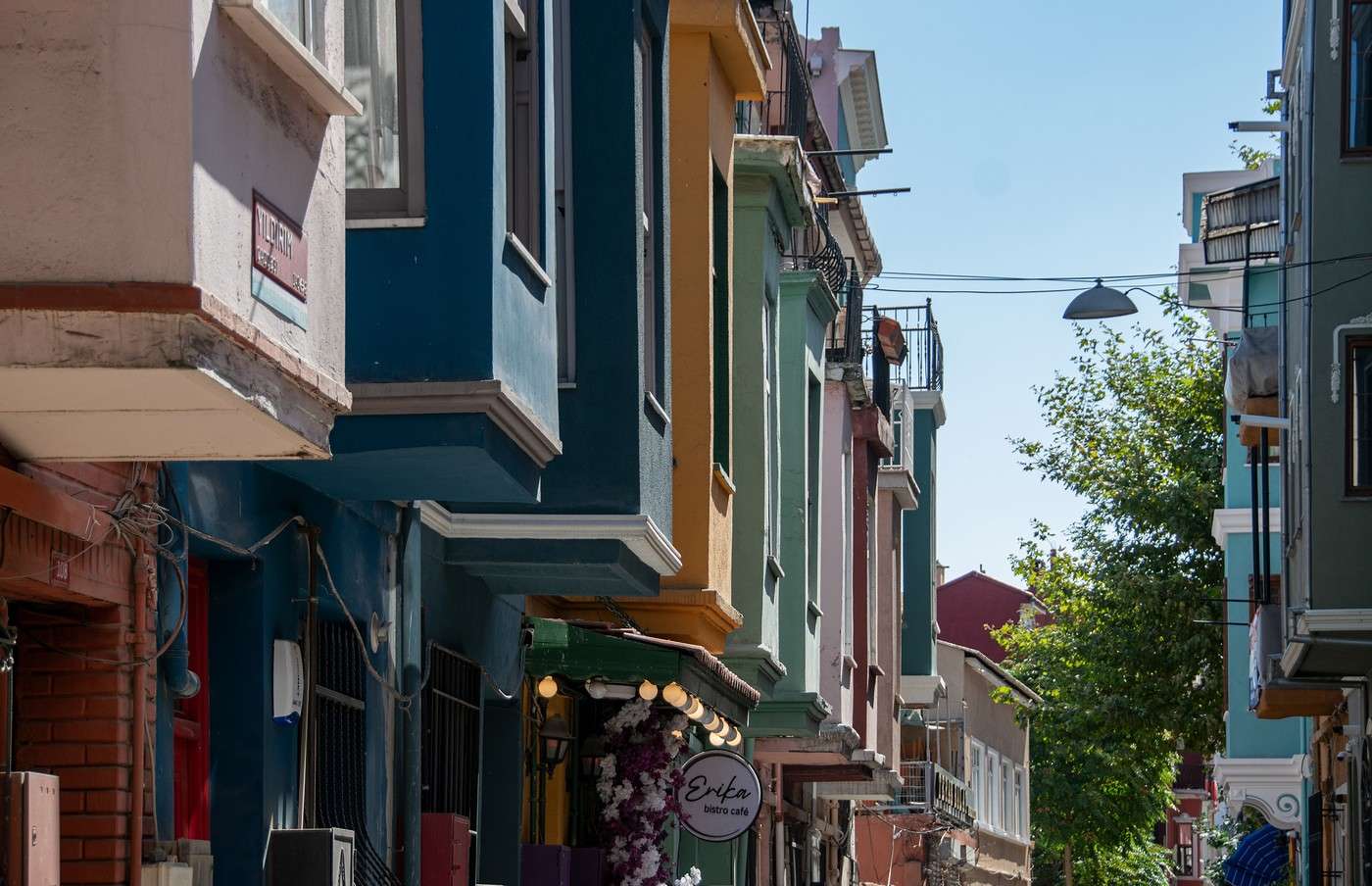
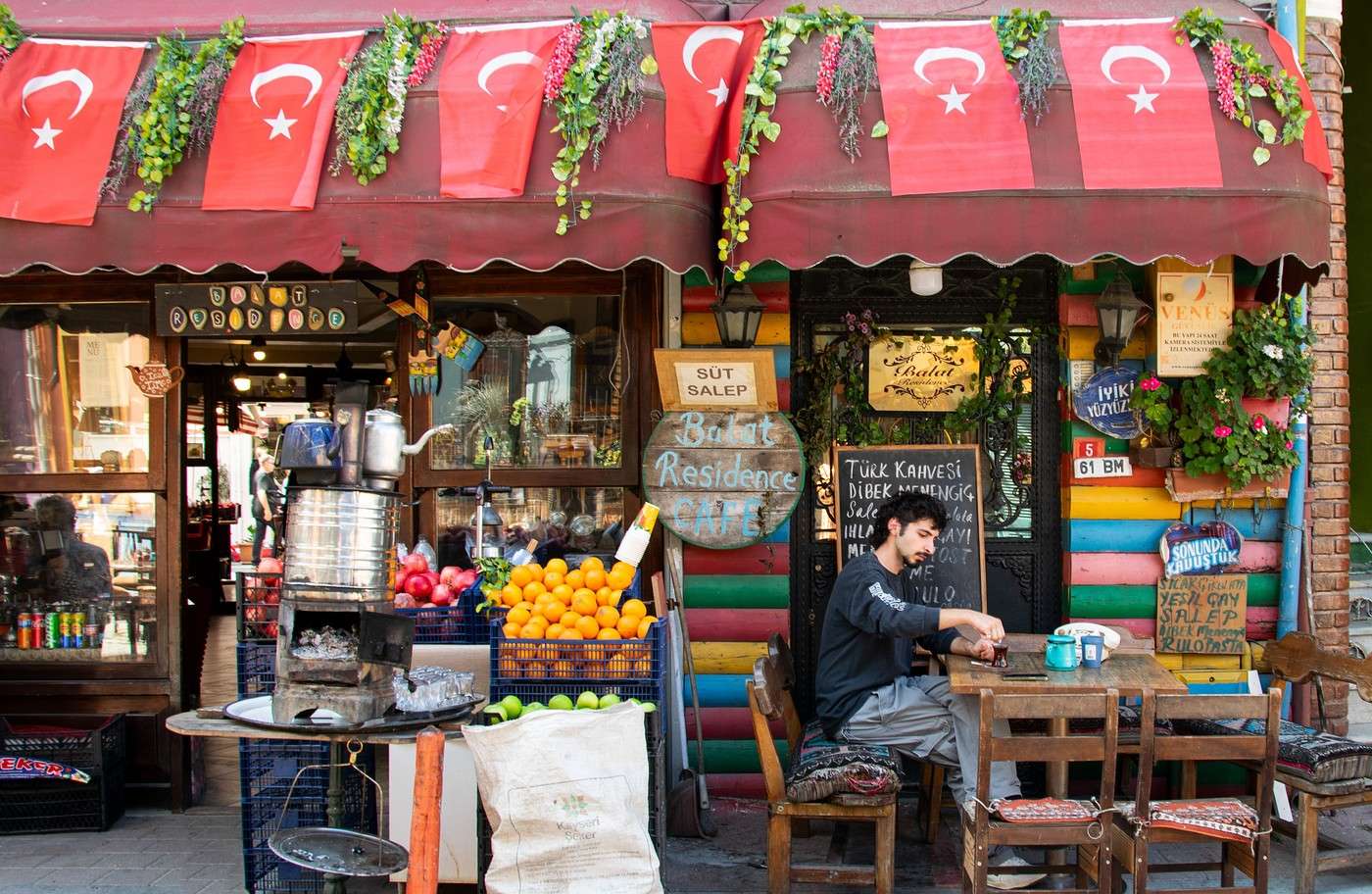
We head back down toward the Balat neighborhood, an extension of Fener. This was once the Jewish and Armenian quarter, but those communities, once deeply rooted here, have almost disappeared. Balat was first a fairly upscale commercial district in the 18th century, then it gradually became impoverished during the 20th century with the arrival of Anatolian populations. Now, it’s undergoing gentrification: renovated facades, designer workshops, bars and restaurants with flower-filled storefronts, and plenty of tourists. A fairly classic evolution for the historic centers of major cities. From the small terrace where we’ve settled to enjoy an excellent fresh orange juice, I admire the colorful row of beautiful overhanging houses, typical of 18th-century Ottoman architecture, called « Cumbalı evler » in Turkish. They belonged to the wealthy merchant families I just mentioned.


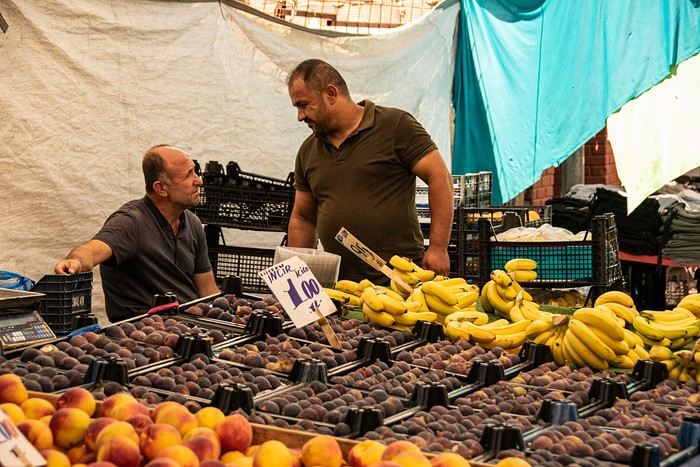
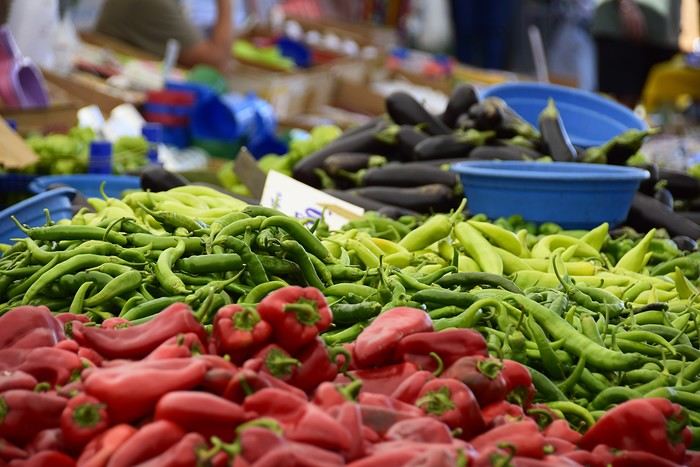
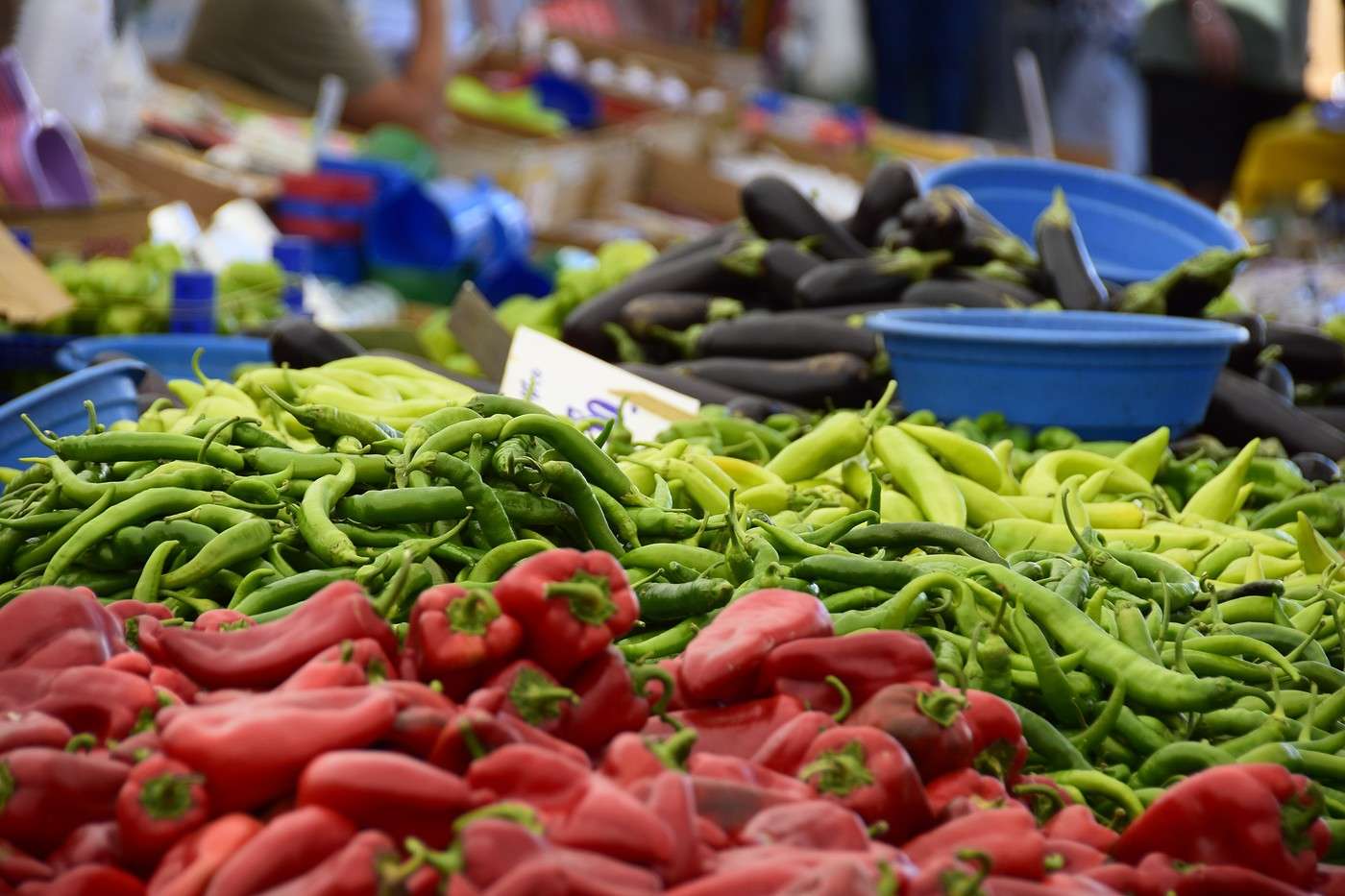
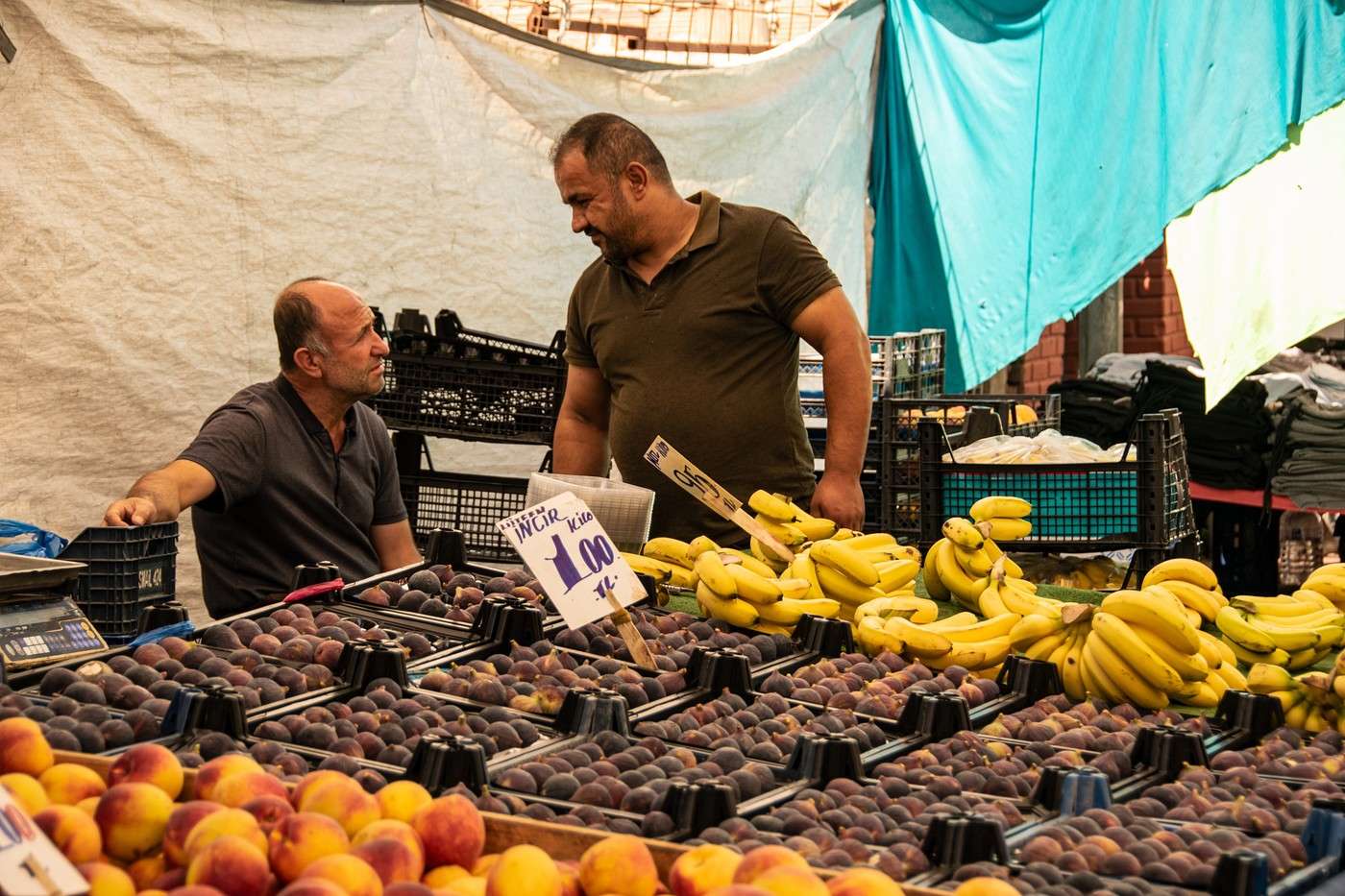
As we move deeper into the neighborhood, we pass through more working-class, less touristy areas, including a huge open-air market stretching its fragrant and colorful stalls along a narrow but seemingly endless straight street. The street is shaded by a clever system of canopies attached to pillars along the edges of the houses.


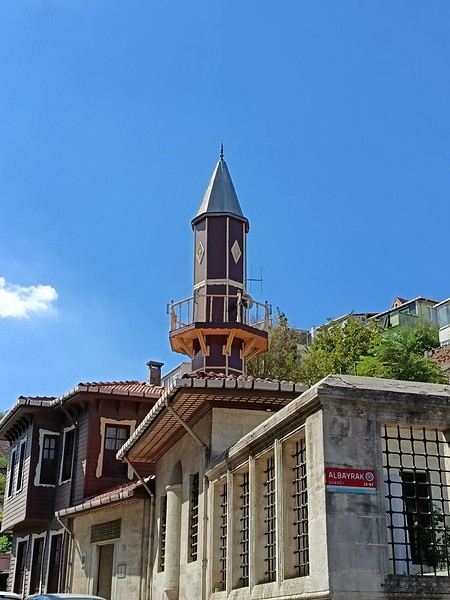
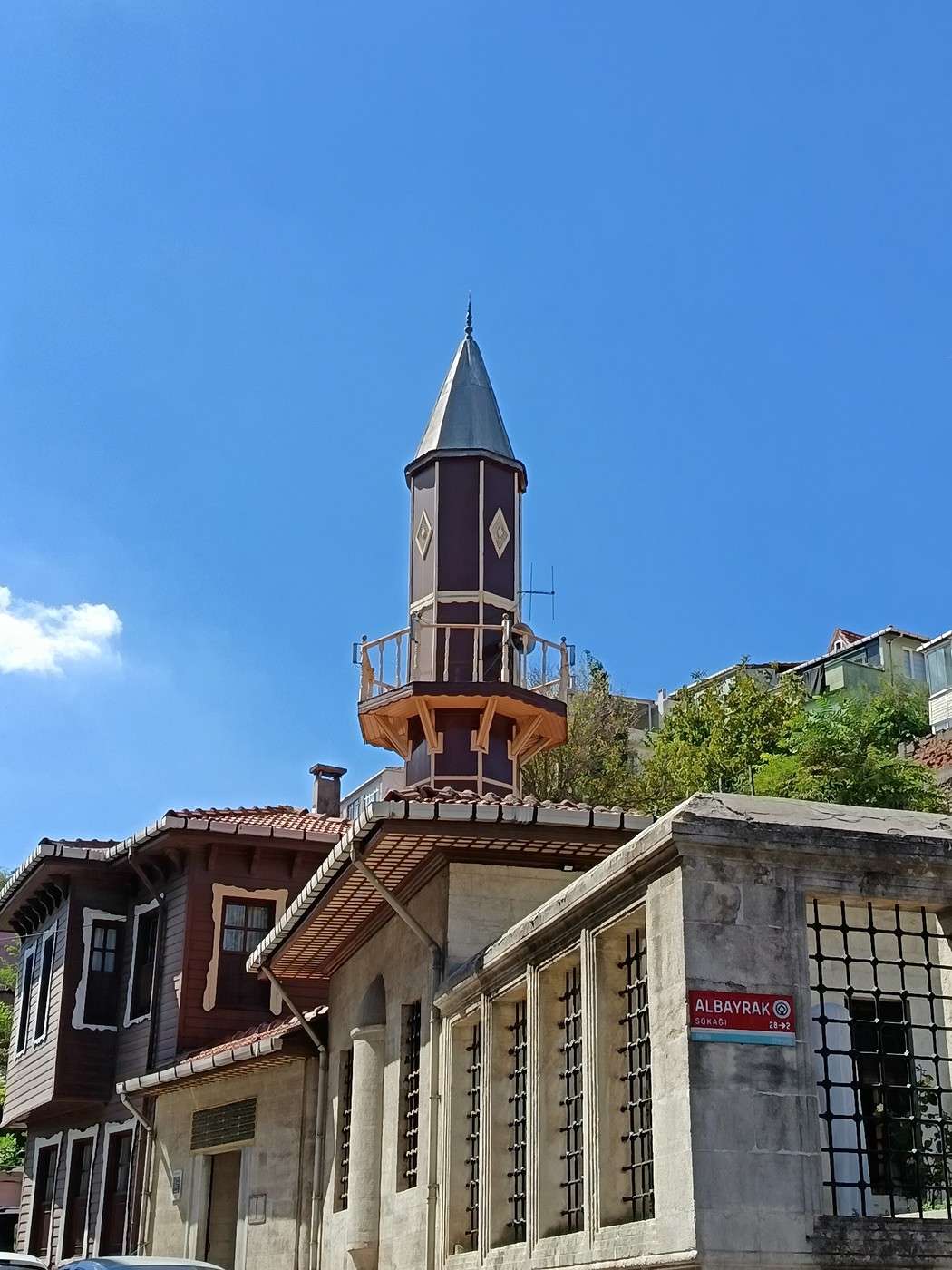
Just before lunch, a quick cat-stroking break during the call to prayer in front of a pretty little wooden mosque.


The two of us in Istanbul: a Turkish blue dance

RichardXI · 2025-10-05

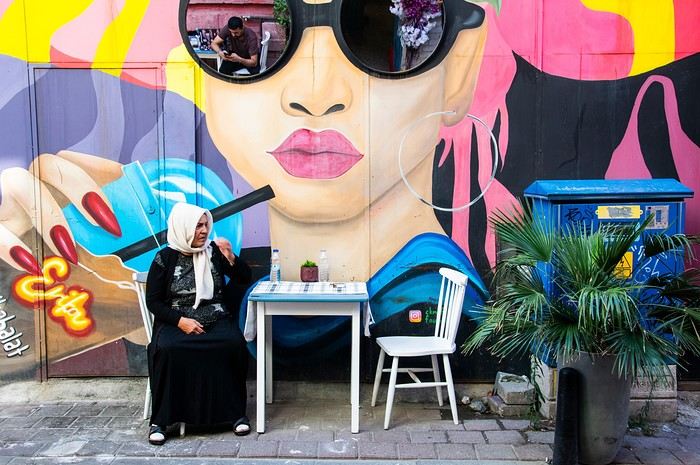
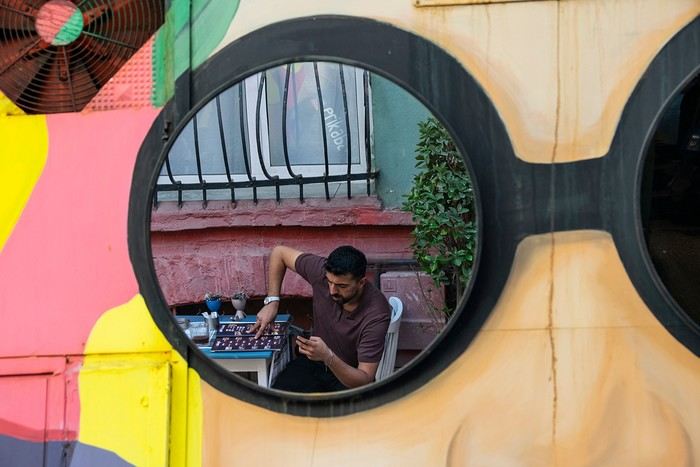
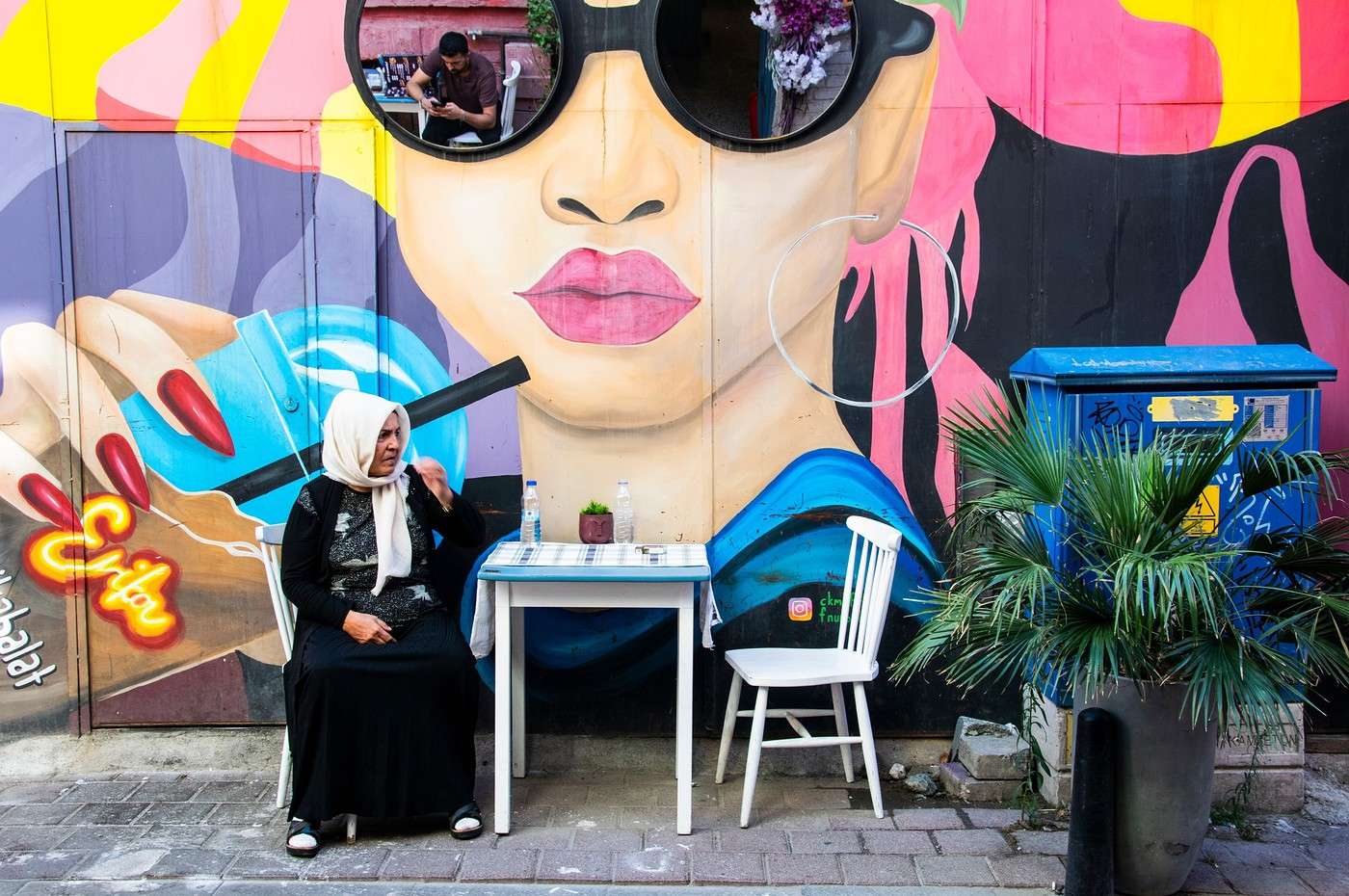
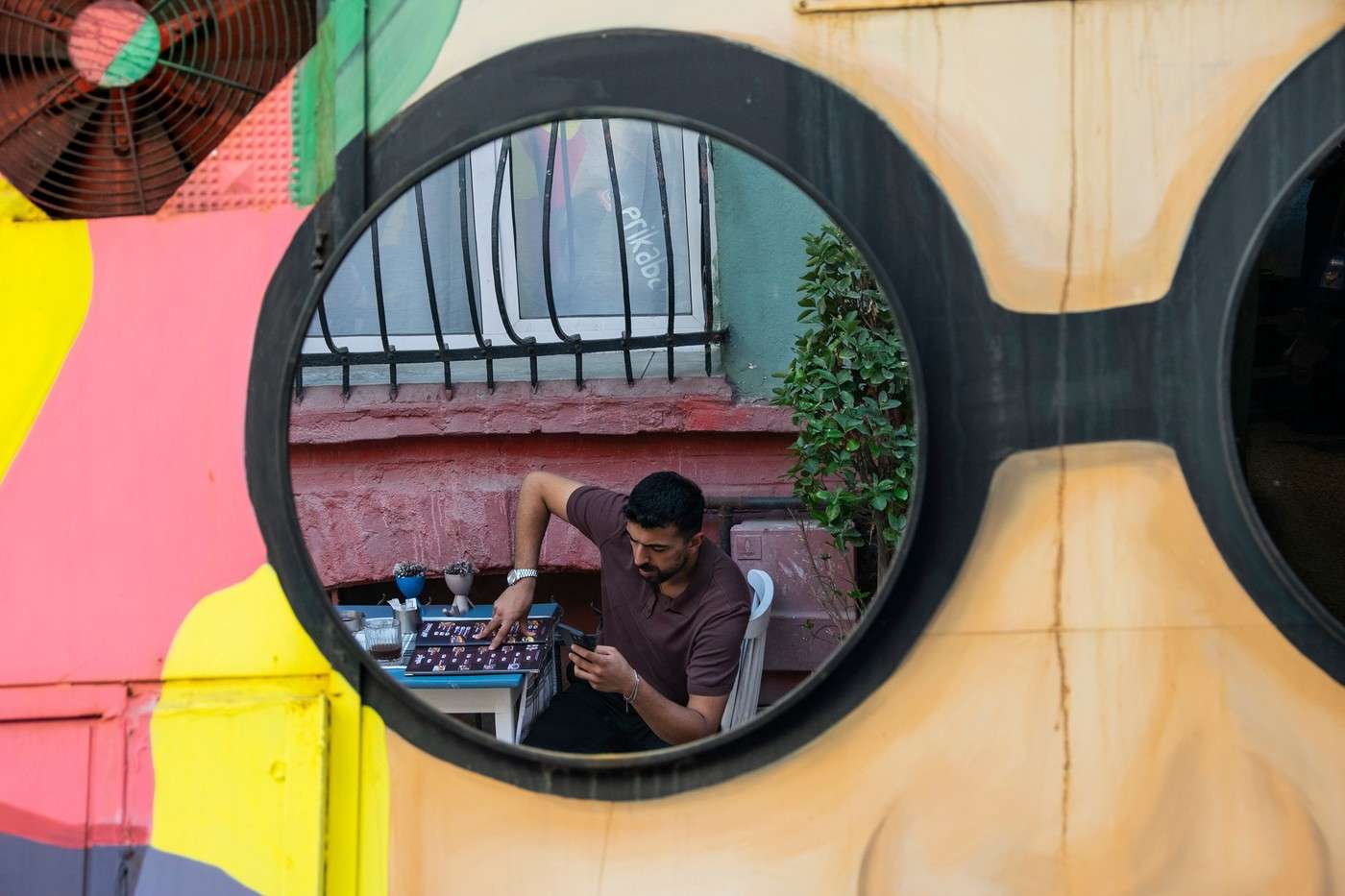
In the afternoon, Kate got it into her head to photograph the many "street art" pieces covering the neighborhood’s facades. We set off on the hunt. Settings, resets, presets. "It’s fine! No, it’s not fine! This camera’s useless, I’m not inspired!"

Traveling as a couple also means practicing the art of patience and compromise. And I can be just as annoying with my Byzantine mosaics, my mihrâb, and my overhanging houses. So I wait, I "compromise."


Especially since I’ve got my heart set on visiting the stunning former Byzantine church of Saint-Sauveur-in-Chora, which became a museum and has recently been turned back into a mosque by Erdogan’s decision. I’ll have to sell the idea to Kate because the afternoon is stretching on, and the site is a 20-minute walk up a hillside. Gorgeous mosaics and frescoes, a UNESCO World Heritage site, a place steeped in tranquility. It’s all good—she’ll "compromise" too.

As we climb the steep slope, we pass a young woman in a niqab, her face uncovered, who seems lost. She calls out to us and asks for directions to a mosque in English. I pull up Google Maps to locate the place. While I try to get my bearings, Kate chats with the woman and learns she’s Kurdish. Maybe she’s looking for accommodation, but our communication is too limited to find out more. I find the address and point her in the right direction. She thanks us warmly.

We arrive at Saint-Sauveur. The spot, nestled on a tree- and flower-covered hillside, is indeed peaceful and soothing. Entry isn’t cheap—20 €.


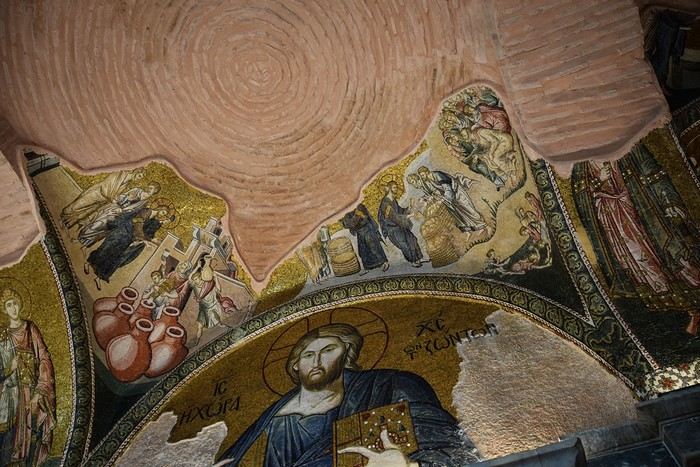
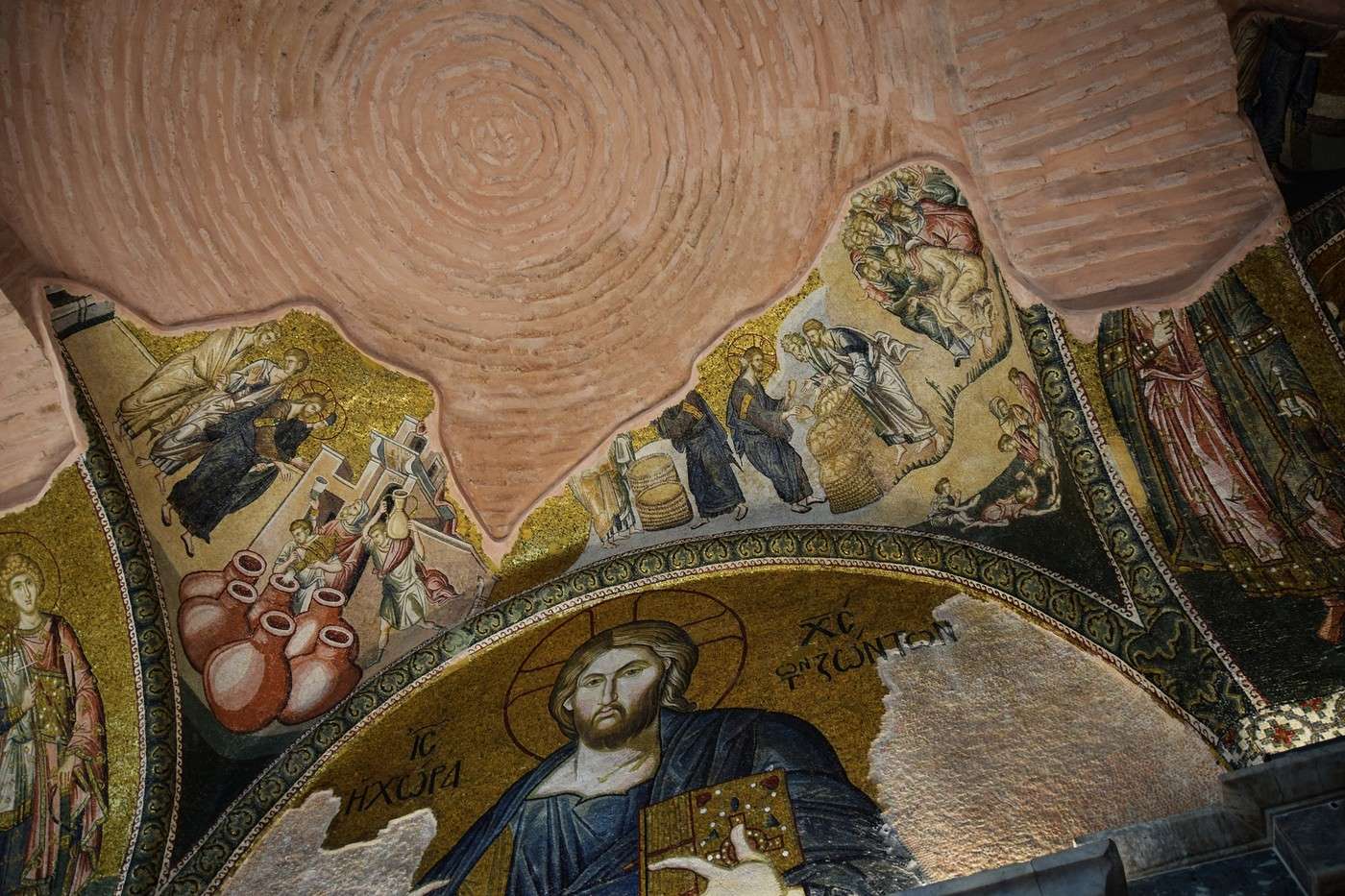
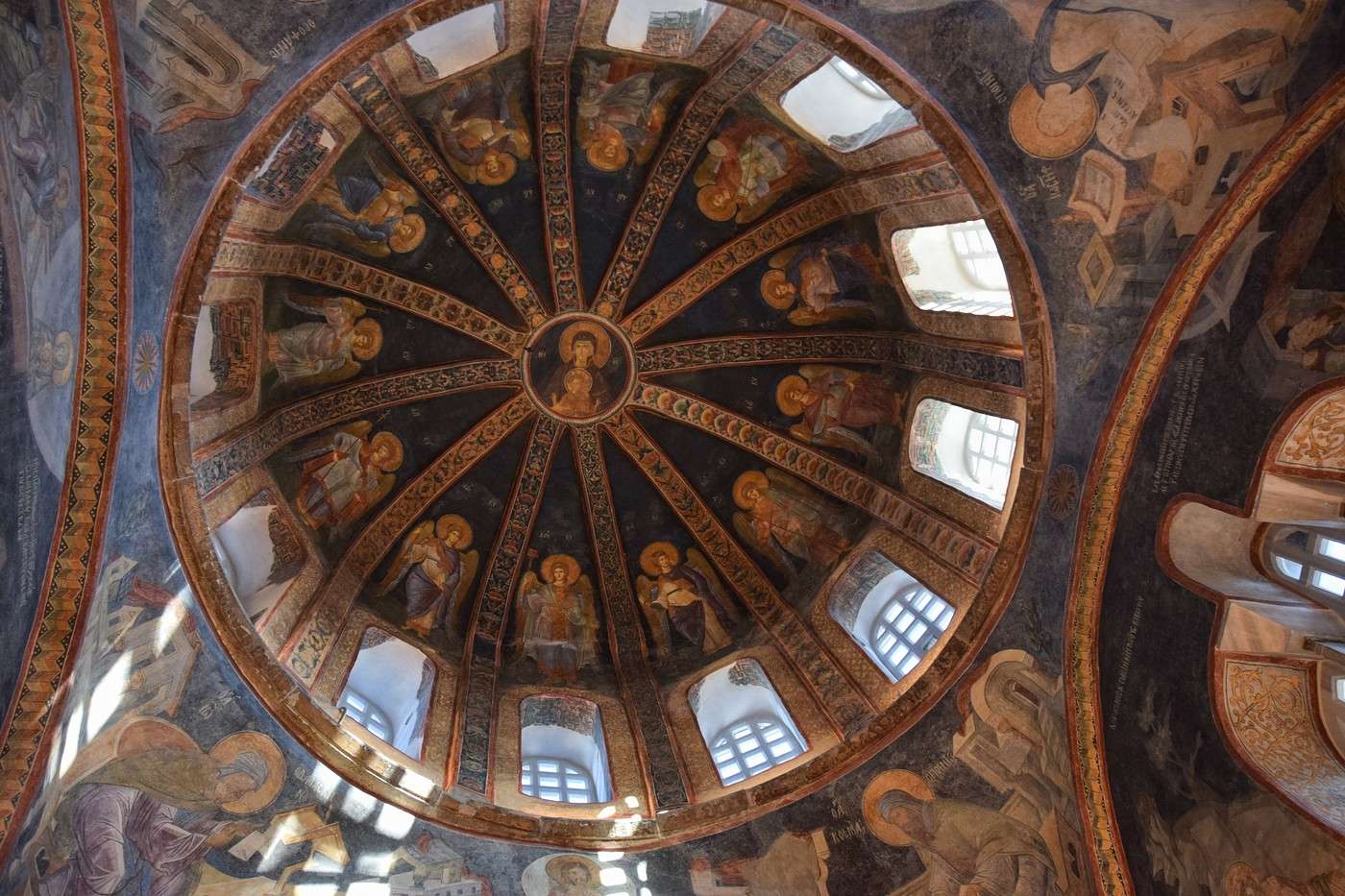
The brick-clad church/mosque is medium-sized and beautifully proportioned. We enter through the narthex. Absolutely stunning frescoes and mosaics depict scenes from the life of Jesus. I haven’t seen anything this beautiful since my trip to Greece ages ago. On the ceiling and walls, we’re in a world of imagery. A guide seems to be explaining the significance of these iconographic representations to a small group of Turkish tourists—each one a story to tell. As I wander around, head tilted up, I step into a large, well-lit room. This is the mosque’s prayer hall. A man is prostrating alone in front of the mihrâb. I notice two enormous mosaics on the side walls—one of Christ and, if I remember correctly, one of Mary—with a curtain system at the top, though they’re not drawn at this hour. I understand: during official prayer times, the curtains cover the images so worshippers aren’t distracted. Two religions, two ways of connecting with the divine—so close, yet so far apart.


Back to our cozy nest in Galata, now feeling like home. Tomorrow, we set sail—tomorrow, we’ll breathe in the sea air of the Bosphorus.

The two of us in Istanbul: Turkish blue tour

Pagaljavab · 2025-10-05

Thanks for these photos—they take me back a few years to Fener, where I used to stay. Fener and Balat are among my favorite neighborhoods in Istanbul, and they’re definitely quite conservative. And the Chora Church (Saint Savior in Chora) is one of the most beautiful monuments in the city.

The two of us in Istanbul: a Turkish blue tour

Kate · 2025-10-05

Fener and Balat are among my favorite neighborhoods in Istanbul

Me too! In fact, next time I might choose our accommodation there. I love its cobblestone streets, its little colorful cafés, its street art, its second-hand shops, its street life... It all has such charm.


The two of us in Istanbul: a Turkish blue tour

Kate · 2025-10-05

Traveling as a couple is also about practicing the art of patience and compromise. And I can be just as annoying with my Byzantine mosaics, my mihrâb, my overhanging houses...

I’ll keep it simple so your genius has room to shine ;)


The two of us in Istanbul: a Turkish blue whirl

Montagnard74 · 2025-10-05

Traveling as a couple also means practicing the art of patience and compromise. And hey, I can be annoying too with my Byzantine mosaics, my mihrâb, my corbelled houses...

I keep it simple so your genius has room to shine ;)


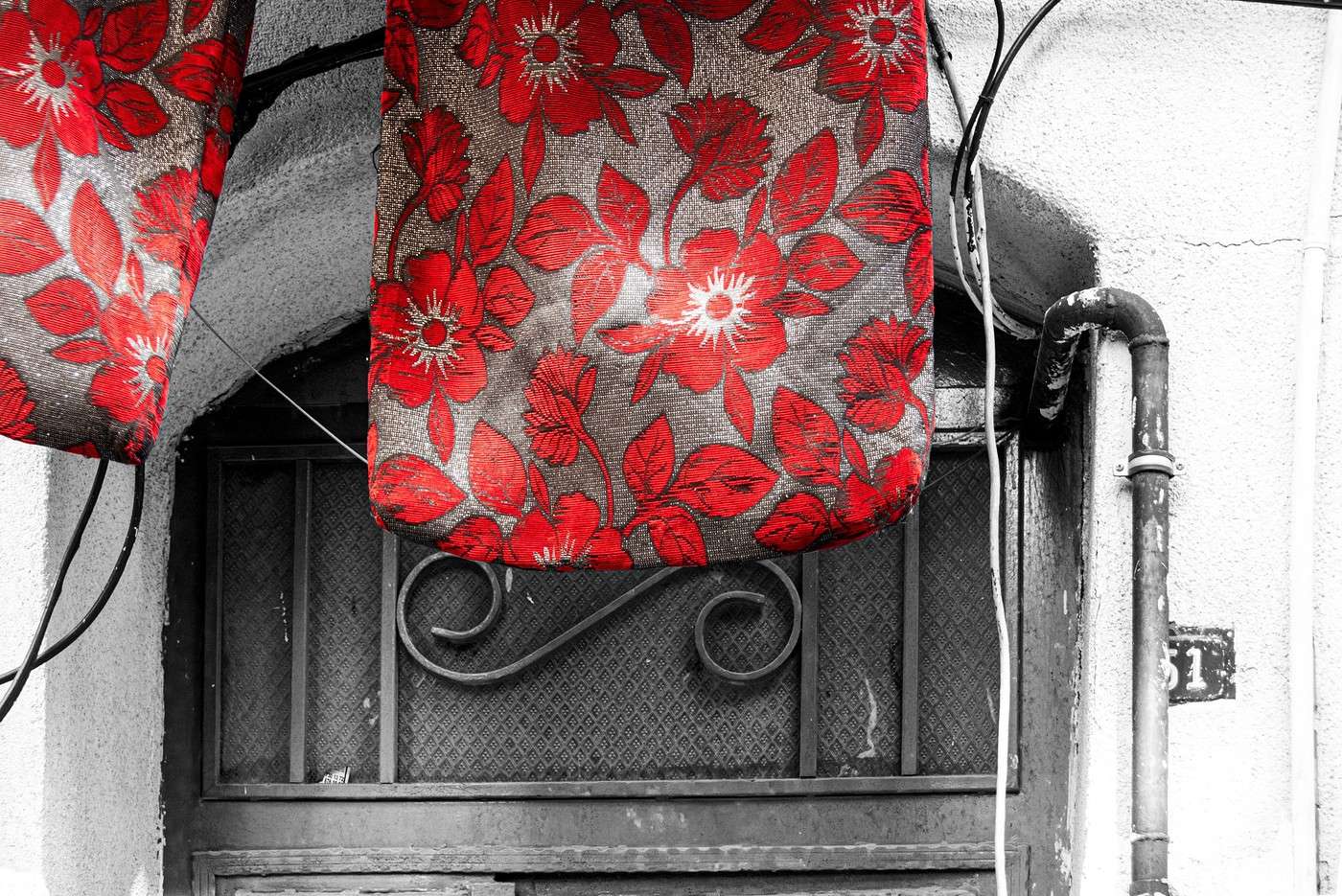
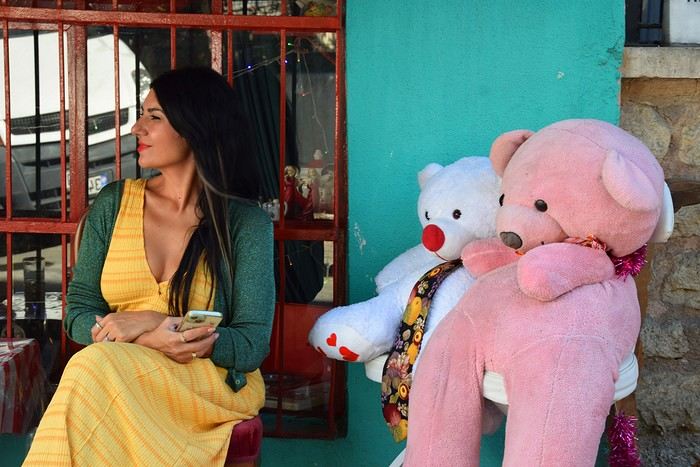
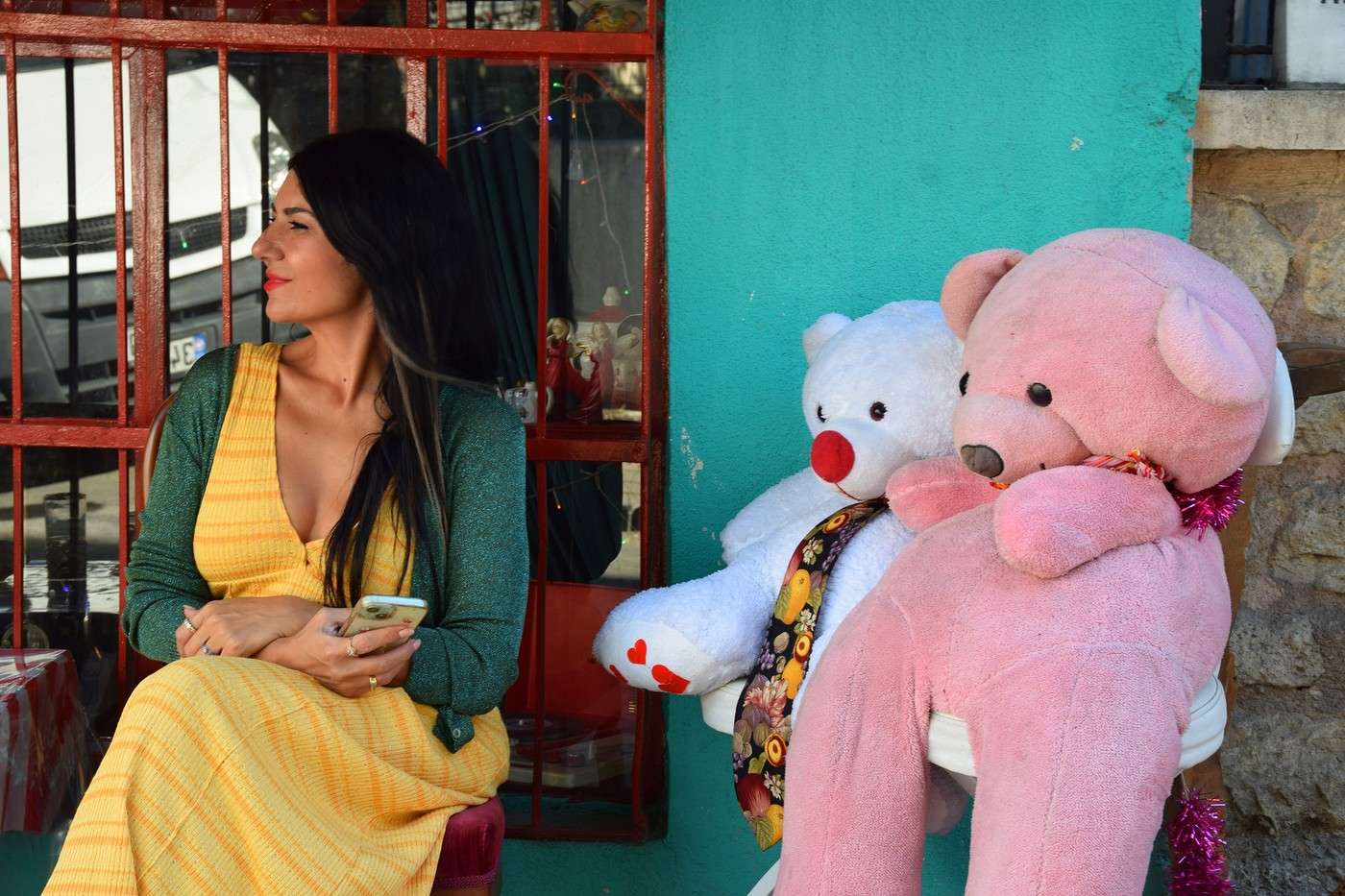
I NEED to know where we can score these kinds of plushies!! :p

The two of us in Istanbul: a Turkish blue tour

Pagaljavab · 2025-10-05

The one on the left?

The two of us in Istanbul: a Turkish blue loop

RichardXI · 2025-10-08

17/09. Along the Bosphorus: Beşiktaş, Ortaköy

I love the atmosphere of great maritime cities, their unique identities: Marseille, Venice, New York, Istanbul... They always take me back to the childhood memories of my hometown, Sète. The mingled scents of iodine and salt, the gentle breeze coming from the open sea, the horizon lines, the embrace of sky and sea, the mixed aromas of fish and diesel, the deep echo of boat sirens, the seagulls’ cries... For this reunion with the sea, we take the public ferry with our Istanbul kart. The idea is to do a bit of coastal hopping along the Bosphorus shores, on the European side toward the neighborhoods of Beşiktaş and Ortaköy, though we’re skipping the visit to Dolmabahçe Palace.


Before boarding, I watch the bustling parade of boats crowding the docks. While these ferries are certainly useful for tourists, they’re first and foremost a convenient way for Istanbulites to get around, easily reaching workplaces and homes spread along the Golden Horn, the Bosphorus, or on the Asian side. The ferry-bus is on time, and we step aboard. Kate settles into the passenger cabin to quietly adjust her settings. The weather is perfect: blue skies, sunshine, a light sea breeze. Encouraged by these ideal conditions, I take my place at the bow. The wind briskly but gently caresses my face and fills my chest. I go into "Jack Dawson" mode. I’m the master of the...! I smile—I may have exaggerated a little, of course—but the feeling is so pleasant, as if life itself is flowing into me.

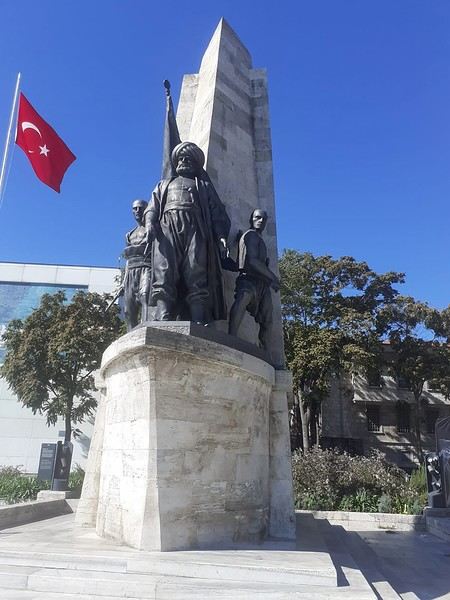
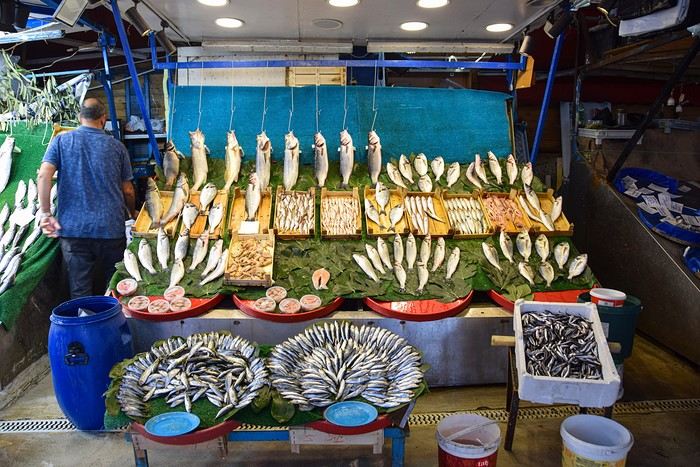
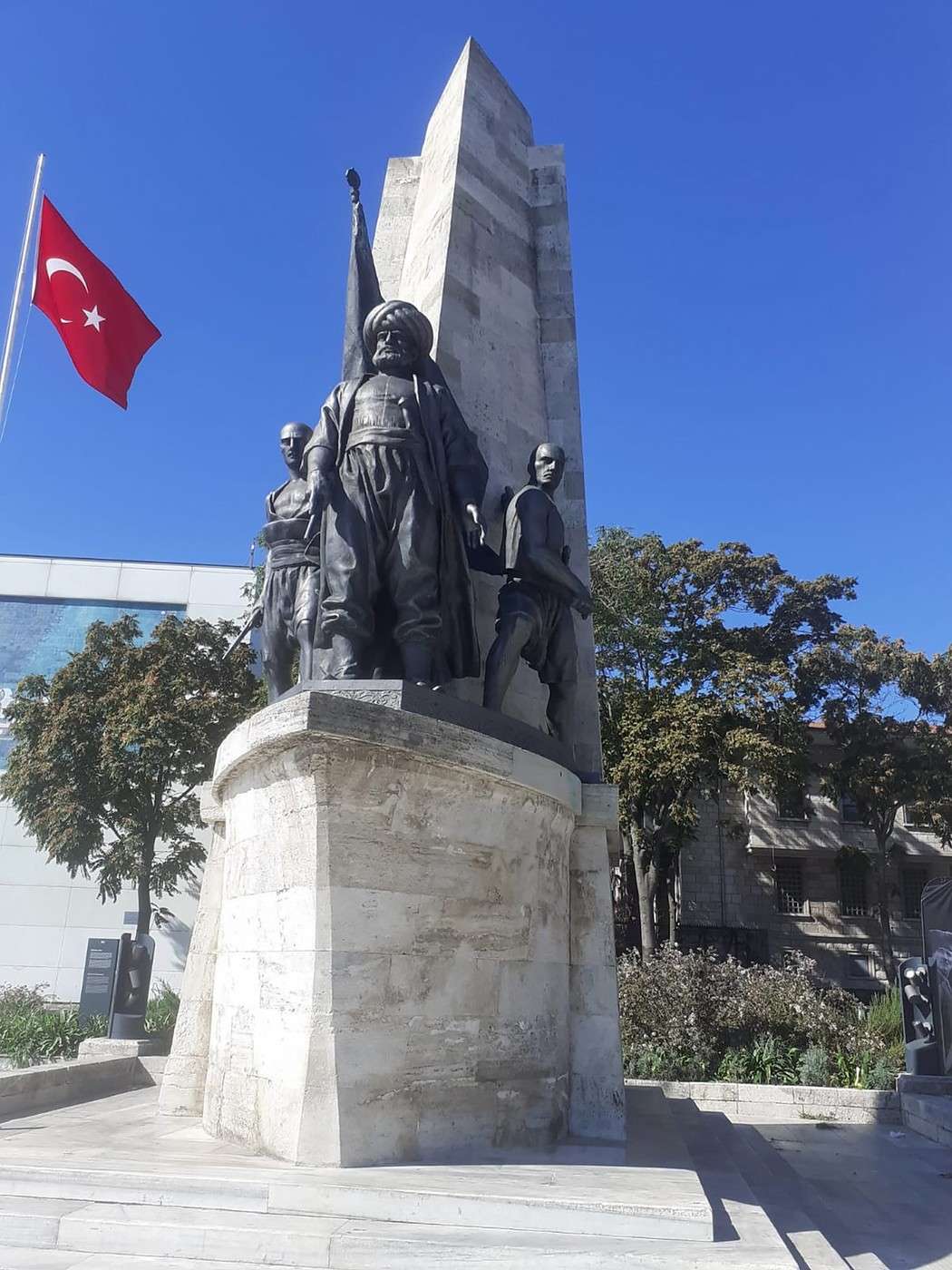
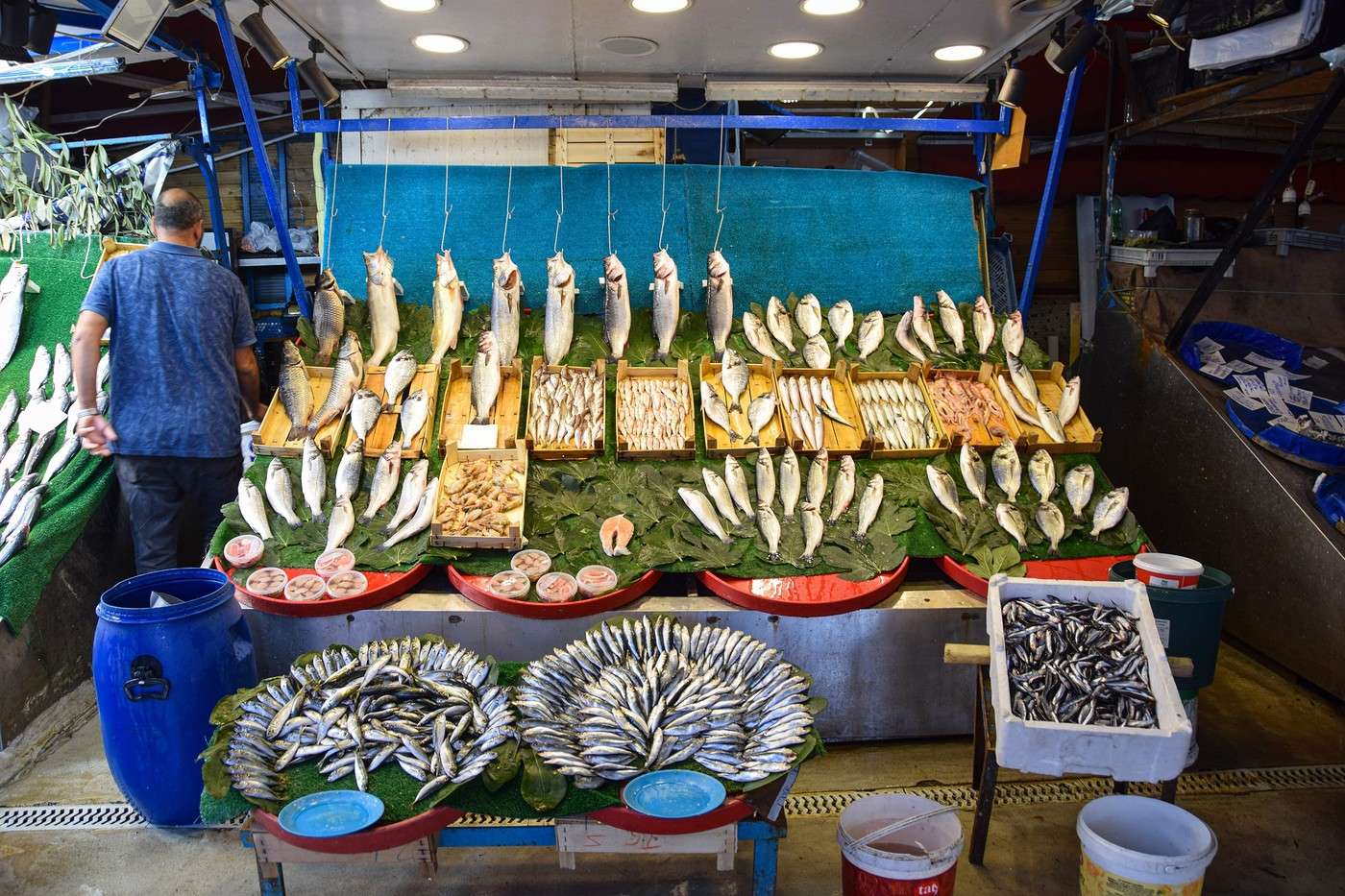
Docking at Beşiktaş. On the large esplanade along the quay near the naval museum stands a colossal bronze statue of Barbarossa, flanked by two fierce-looking warriors. A feared corsair who later became an admiral of the Ottoman fleet in the 16th century, he’s one of the legendary figures of Turkish history. In general, I get the sense that Turks are proud of their past, as well as their flag, which you see displayed at every street corner on the facades of both public and private buildings. We enter the neighborhood. The walk is lovely on this mild late morning, winding through the maze of tidy little streets with renovated facades. The area doesn’t seem very touristy, but the abundance of bars and terrace restaurants catches my attention. Turkish students? White-collar workers? It doesn’t appear to be a specifically working-class zone, but given the number of people carrying shopping bags, I can still sense a lively local life. We arrive just in front of a modern-looking hall housing a fish market with beautifully arranged stalls.


A charming little terrace beckons us. I order çay for myself and Türk kahvesi for Kate. I’d practiced the translation and must have mispronounced it because the server asks me to repeat. Okay, "Turkish coffee" then... But time is ticking, and it’s time to continue our coastal hopping. Back to the dock, now heading to Ortaköy.

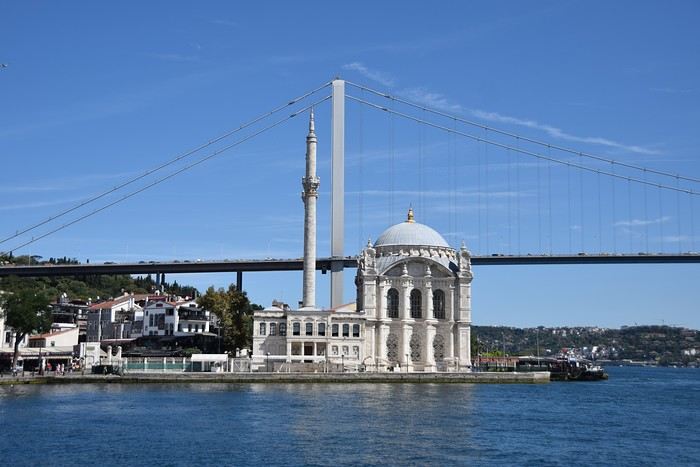
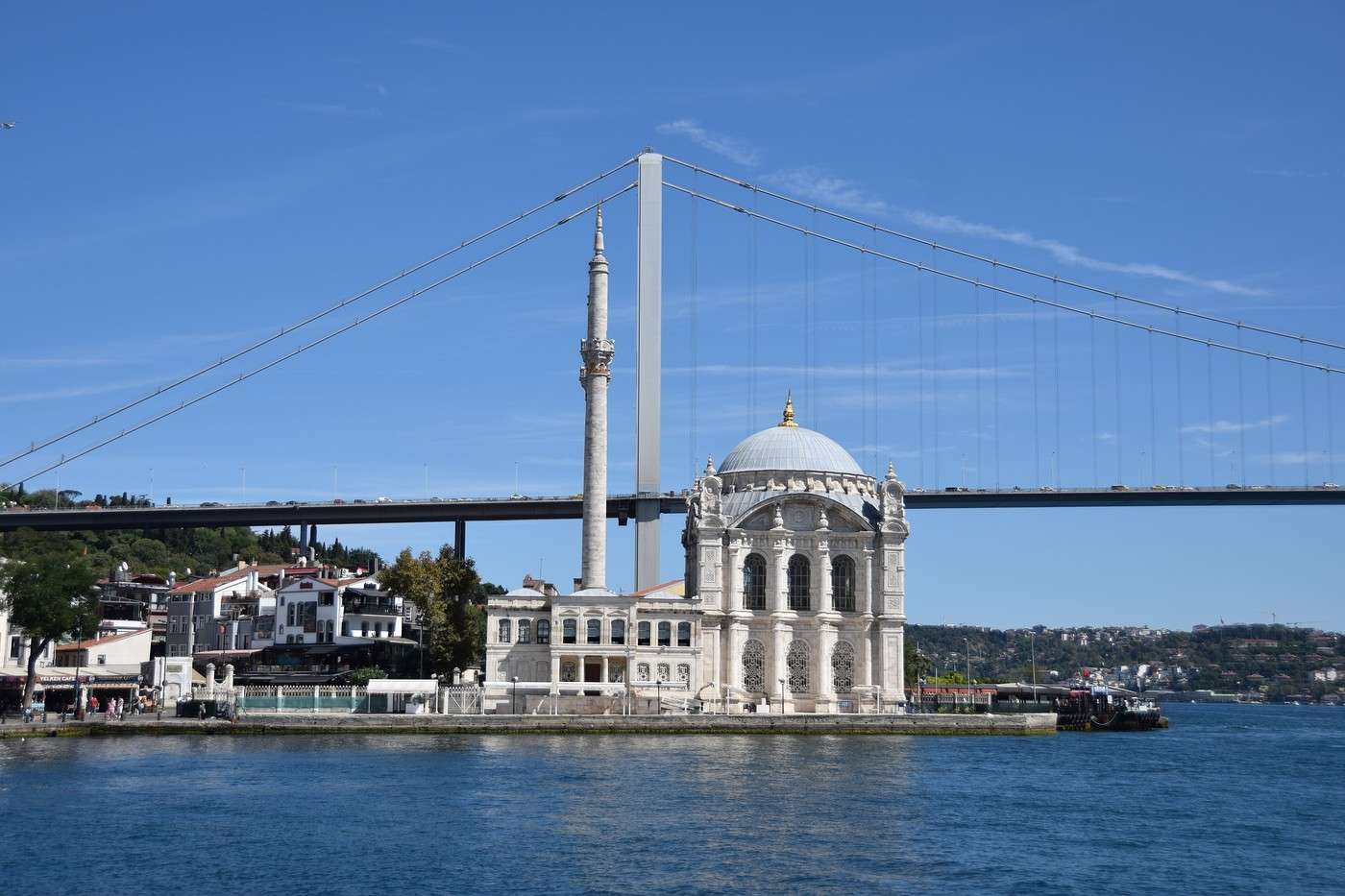
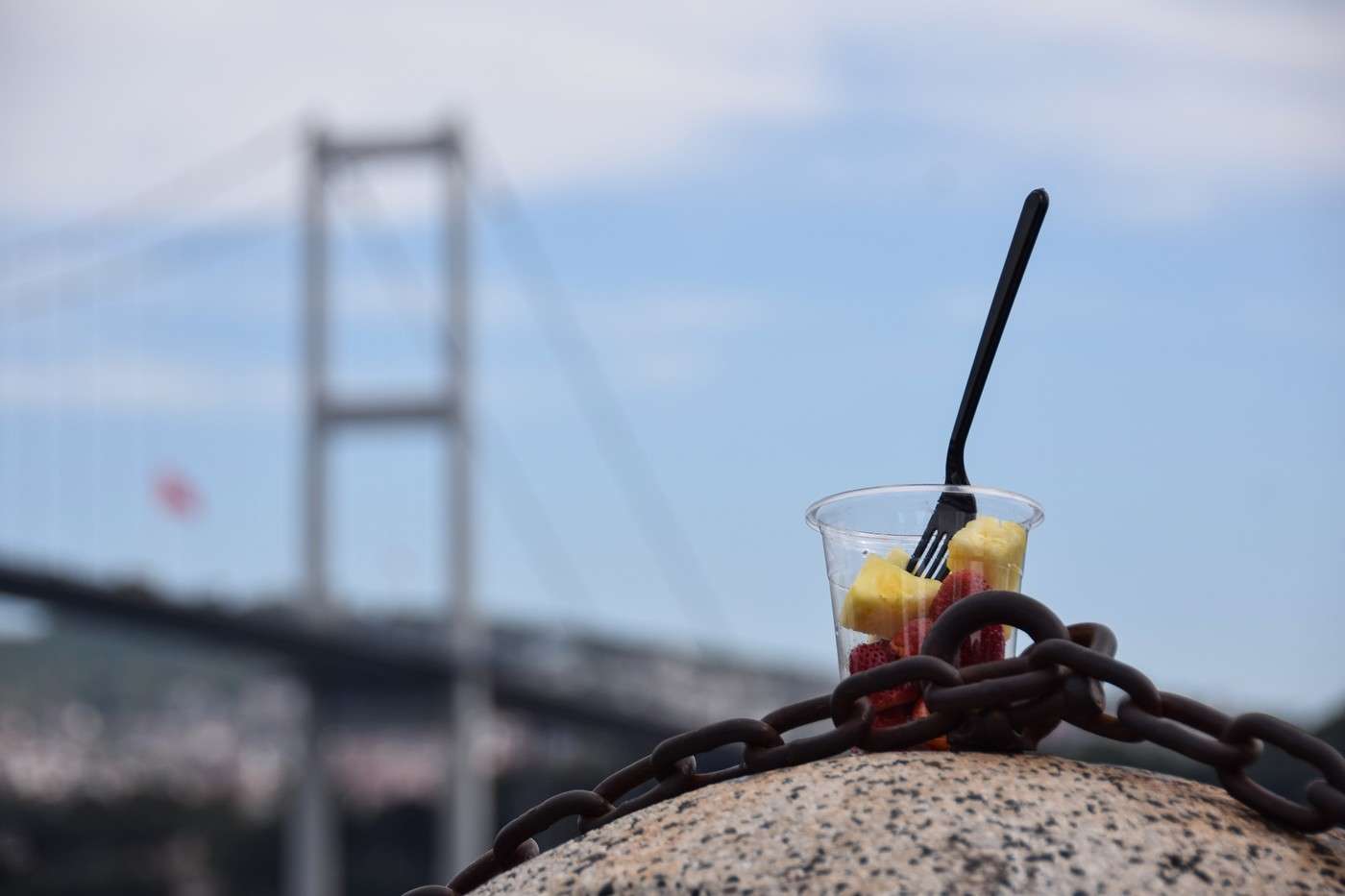
Nothing remains of the old fishing port. Ortaköy has become a fairly touristy spot, also popular with Istanbulites for their Sunday strolls. A few pretty terraces line the waterfront, offering views of the beautiful white mosque and the Asian side connected to Europe by the monumental Bogaziçi Bridge spanning the Bosphorus. Bars, restaurants, art and souvenir shops—everything is packed into a small perimeter along the quays. Not too crowded since it’s a weekday and the end of the season, but I can easily imagine the hustle and bustle of a Sunday in the heart of summer.


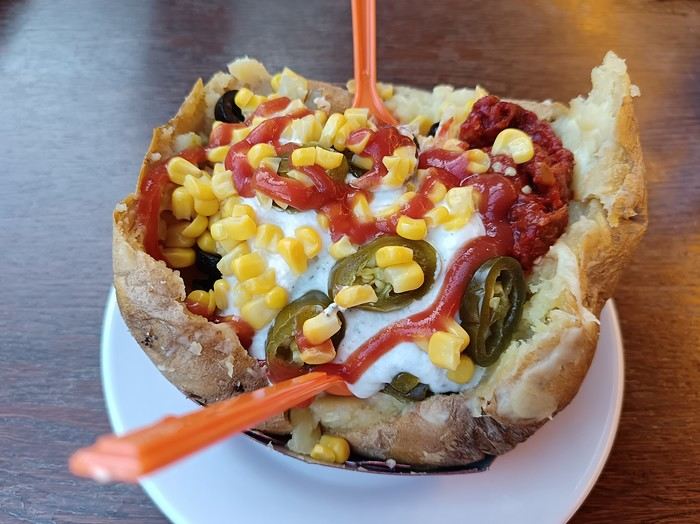
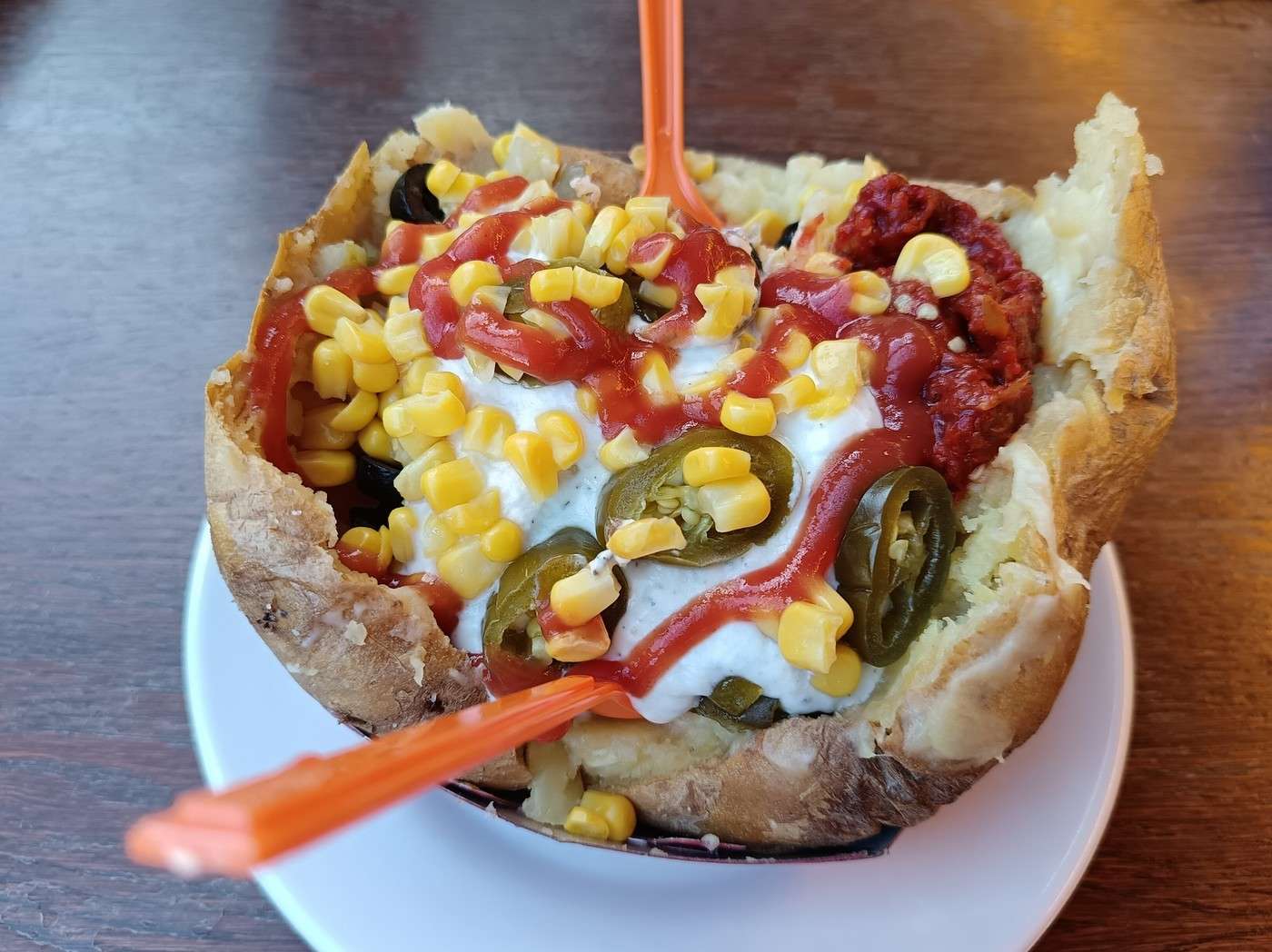
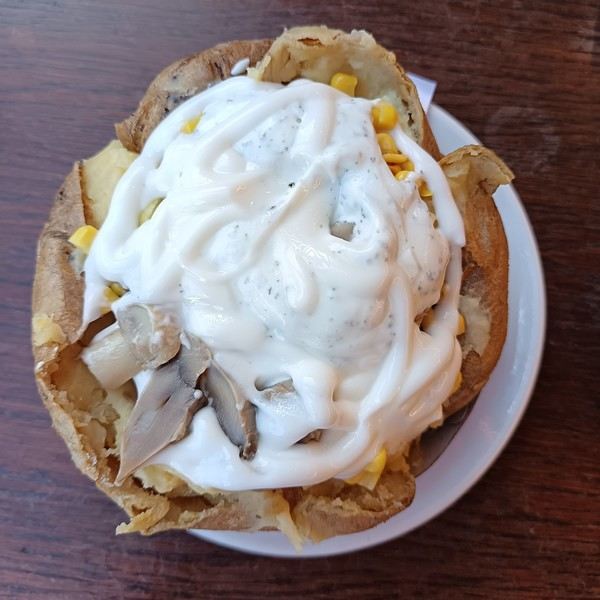
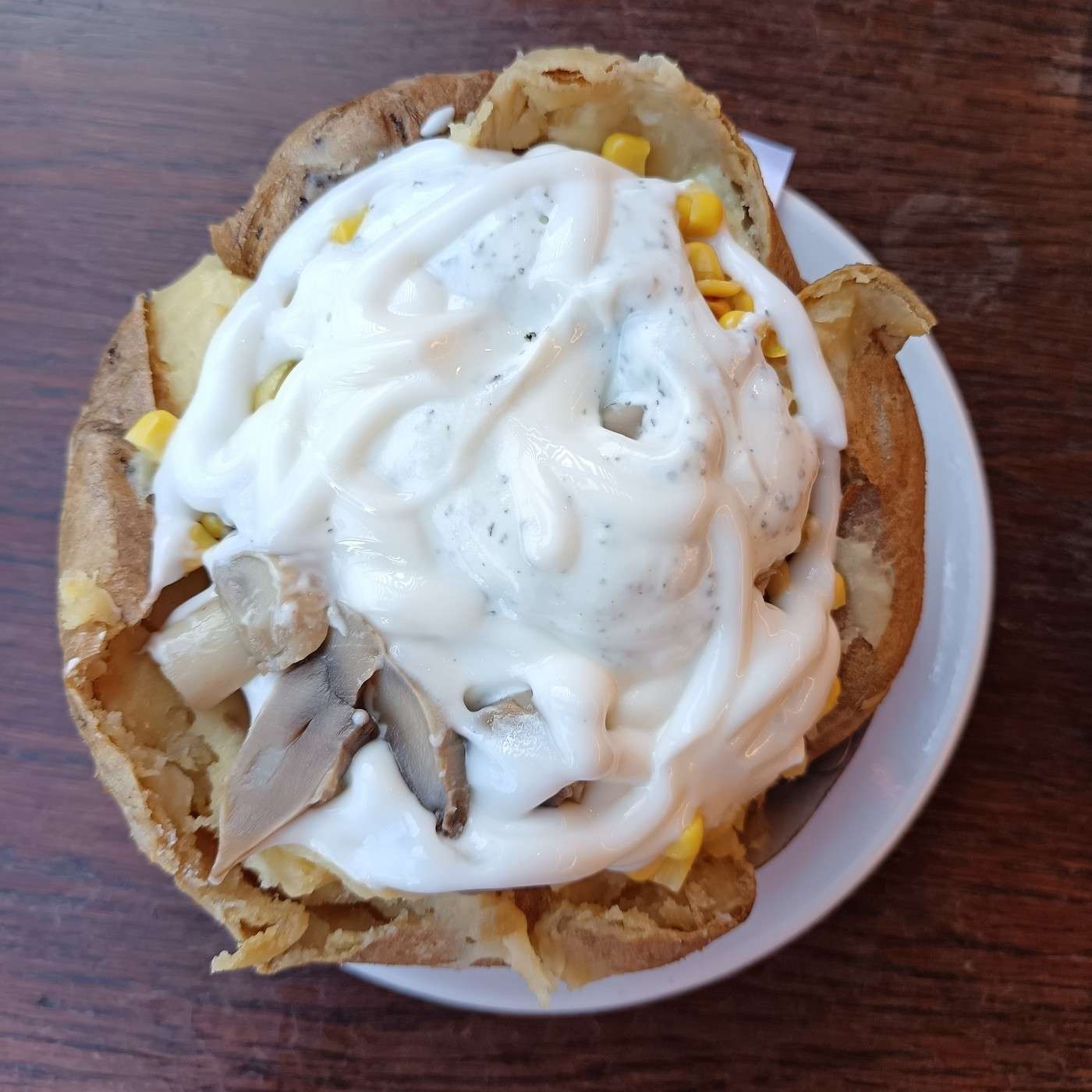
There’s a curious smell of baked potatoes in the air. Nothing unusual, really, since the neighborhood is famous for its Kumpir, a local specialty of baked potatoes stuffed with all sorts of ingredients (sauces, raw vegetables, olives, mushrooms, beans...) and eaten with a small spoon. One street leading up from the quay is lined with little stalls selling Kumpir to take away or enjoy on the spot. To try them, we prefer to sit down and choose a restaurant that doesn’t seem too touristy. The culinary experience is interesting, if not unforgettable...


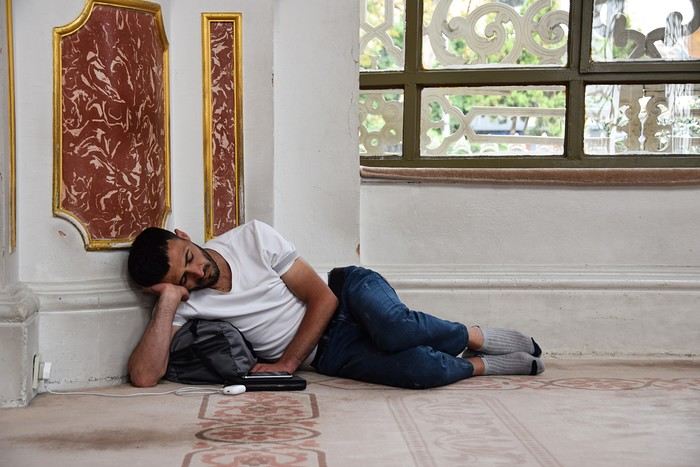
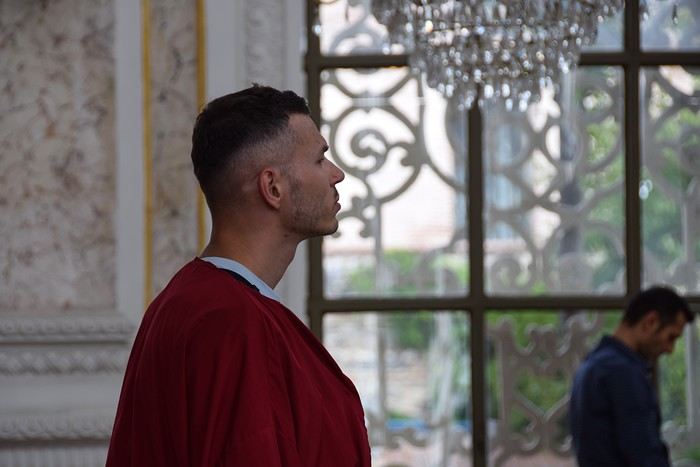
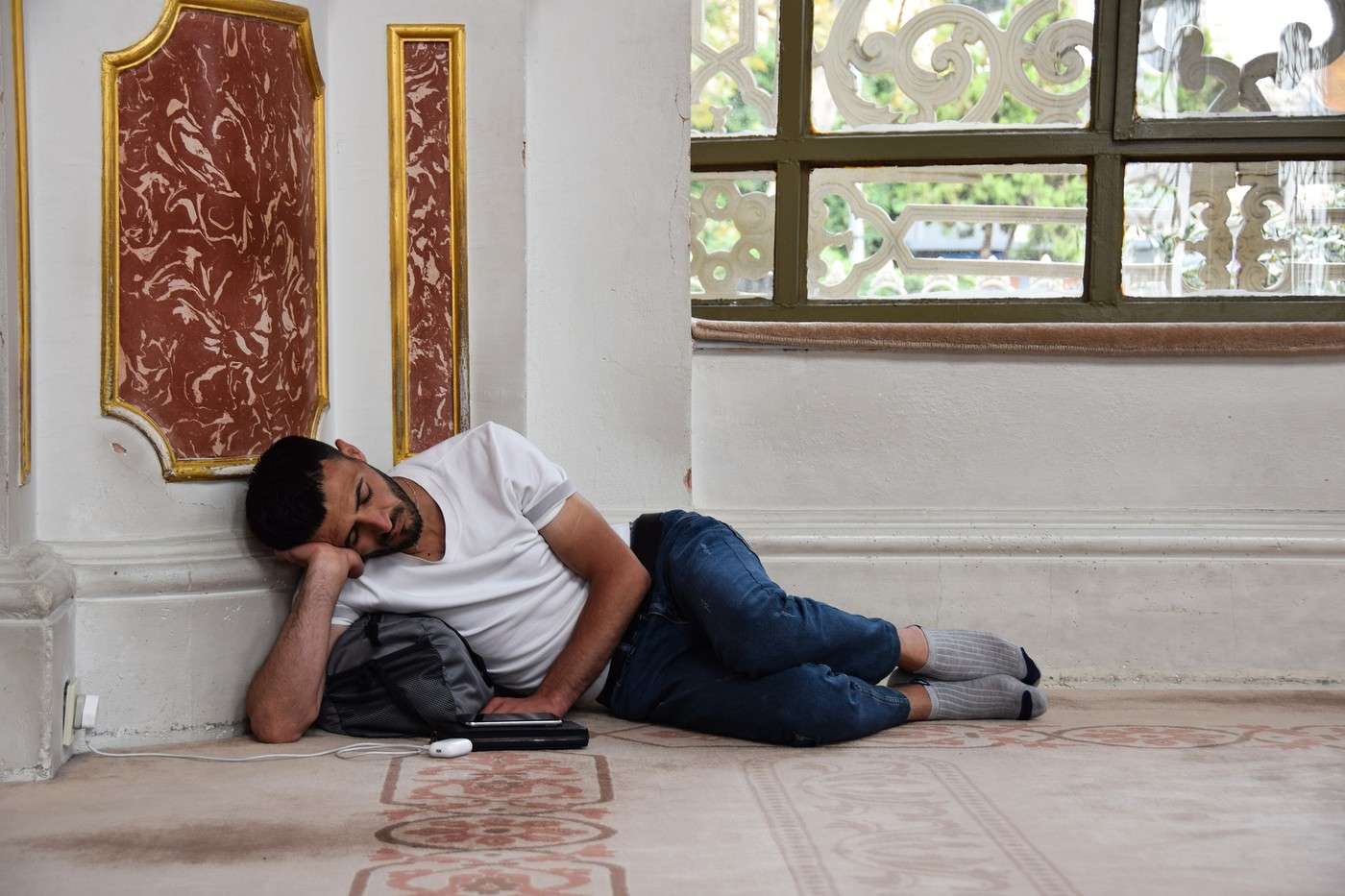
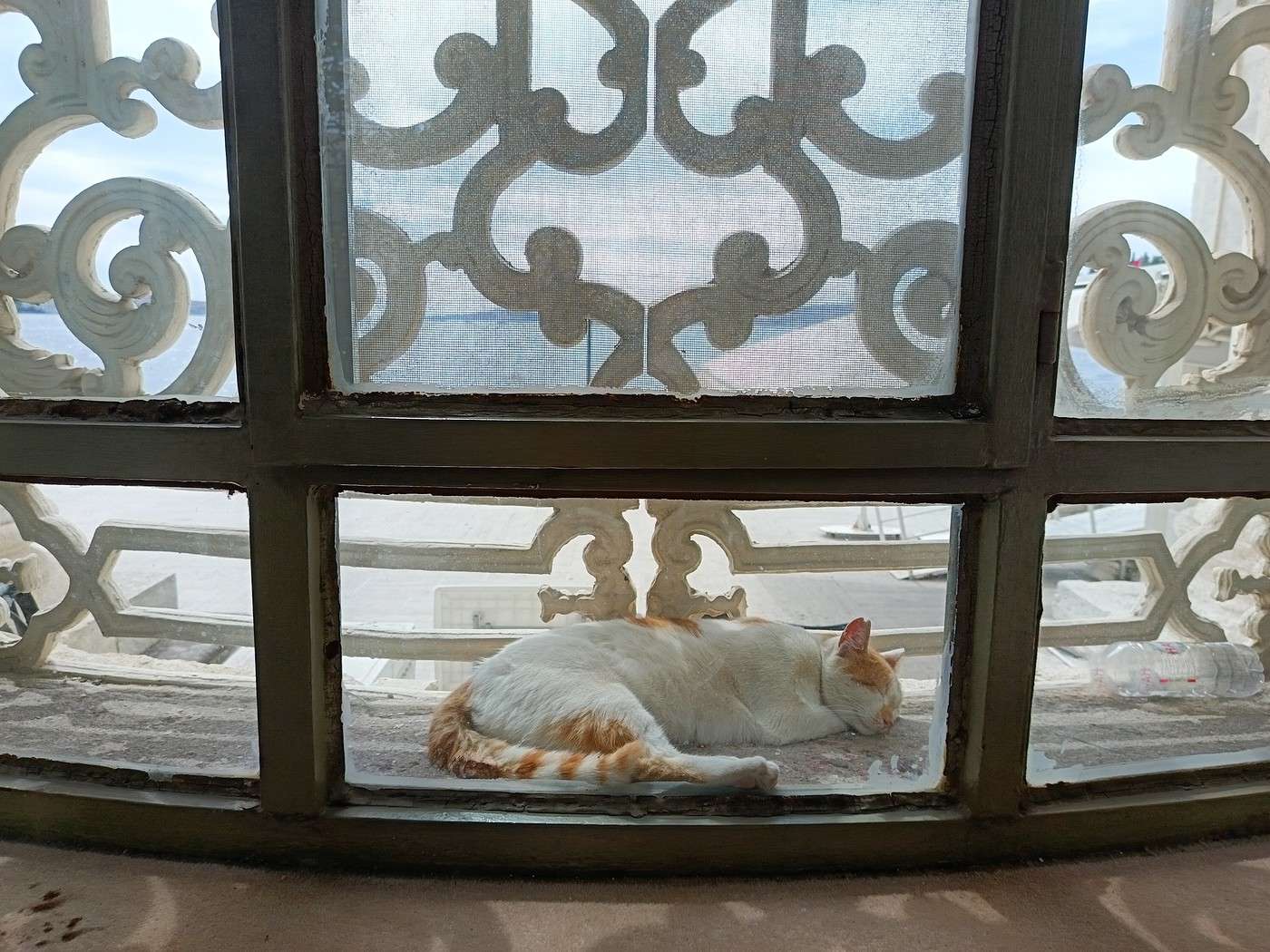
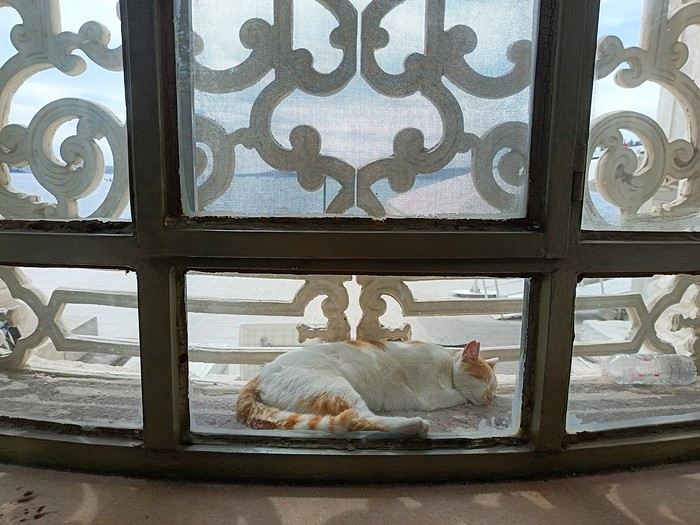
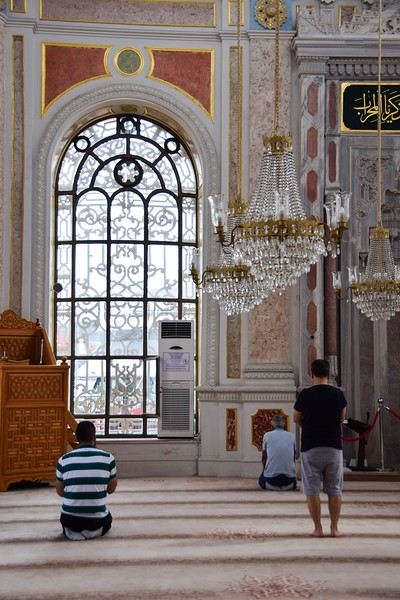
Perched on the water, Ortaköy’s little white mosque had caught my eye as soon as we got off the ferry. From a distance, if not for the elegant minarets surrounding it, you might mistake it for one of those Venetian churches on the lagoon. Baroque in style—actually neo-Baroque, since it dates from the 19th century—it has a graceful form. The interior doesn’t have the Oriental feel I’ve seen in other Istanbul mosques; it feels more like a Renaissance building. But what struck me most was the soft, white light filtering through the large windows. A place of tranquility, of rest. Comfortably stretched out on the carpet, a young man—jeans, white t-shirt, neatly trimmed beard—rests his temple on his forearm, his chest pressed against his bag, seemingly sleeping peacefully. Outside the mosque, on the other side of the window, a cat is doing the same.


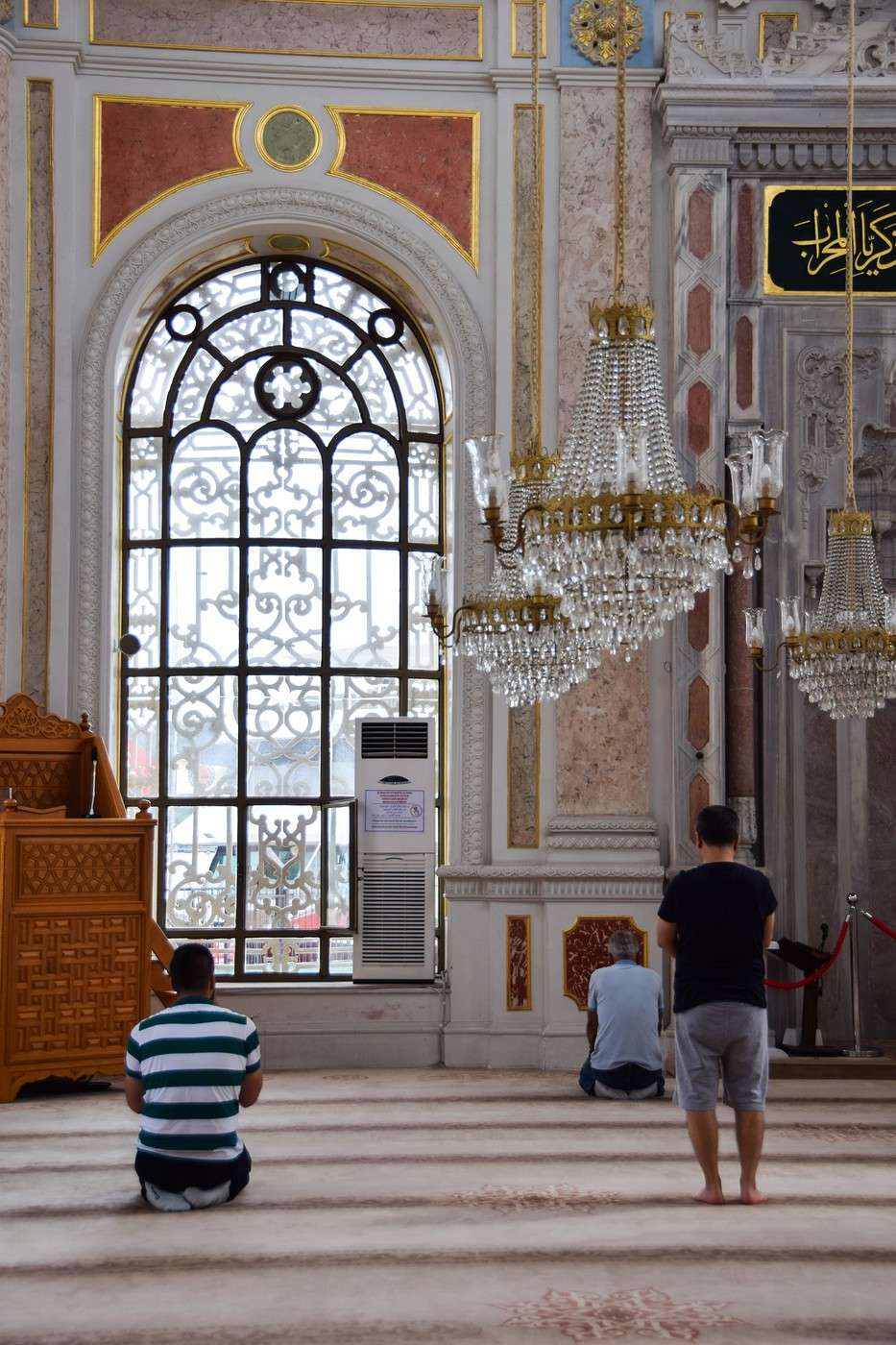
In the quiet of this early afternoon, a few worshippers come to pray. I discreetly observe the precise, harmonious movements of their hands, the way they bow in silence—first kneeling, then prostrating themselves face down on the floor. In front of the beautifully decorated but image-free mihrab, I reflect on Muslims’ ability to pray before an abstract divine principle, not embodied in any form. No value judgment on my part, no stance, nor any form of adherence to anything. But I remain sensitive, in churches as in mosques, to these restrained, unostentatious devotions imbued with spirituality...


Back to Galata. The ferry drops us off at Eminönü station, packed as usual. While Kate lingers near the bazaar, I sit on the steps of the New Mosque, on the large esplanade, to soak in the street scene. Here, everyone crosses paths in the bustling energy of a great metropolis. The day is ending, and I feel good in this city, which I’m slowly starting to make my own. I’m not naive, of course—I know how fleeting and somewhat superficial a tourist’s encounter with a city or country can be. But this trip to Istanbul was my gift, my birthday cake, and I intend to savor every last bite.


The two of us in Istanbul: a Turkish blue whirl

Kate · 2025-10-08

The culinary experience turned out to be interesting without being unforgettable...


I went to pick the ingredients myself since I didn’t understand the menu. I ended up with a nice colorful potato (okay, the mandatory corn in there 🤪). You didn’t want to move and just ordered randomly (yes, randomly because you don’t understand a word of Turkish) and got a disgusting mishmash 😈


The two of us in Istanbul: a Turkish blue whirl

Montagnard74 · 2025-10-08

LOL! The joys of a shared travel journal—we quickly put the mosque (in this case) right back at the center of the village! I really like his kumpir, though ;)

The two of us in Istanbul: a Turkish blue loop

RichardXI · 2025-10-08

Thanks, buddy! It really feels good to know someone’s got your back. 😄

The two of us in Istanbul: a Turkish-style blue tour

Pagaljavab · 2025-10-11

I have to admit, I've seen more appetizing kumpirs.

The two of us in Istanbul: a Turkish blue loop

RichardXI · 2025-10-11

18/09. On the vapur across the Sea of Marmara, heading to Kadiköy

Off to Asia today—well, the Asian side of Istanbul, to be exact. Our original plan was to take a long ferry ride across the Sea of Marmara to the Princes’ Islands, but the gloomy weather put us off. Instead, we decided to explore the Kadiköy district, one of the Routard’s favorites. We board the vapur (the ferry) at Eminönü station, and off we go for a 20-minute crossing.

On the starboard side, we first pass the hill of Sultanahmet, crowned by the two mosques of Ayasophya and Sultanahmet Camii, the orange and the blue, facing each other. A little further on, the skyline of the city’s main business district comes into view. Yes, many people don’t realize it, but Istanbul is also a major global metropolis, ranked in the top 10 of "global cities." As we approach the Asian shore, I observe the industrial port facilities of Haydarpaça and the imposing silhouette of Istanbul’s old main train station with the interest of a geography teacher.

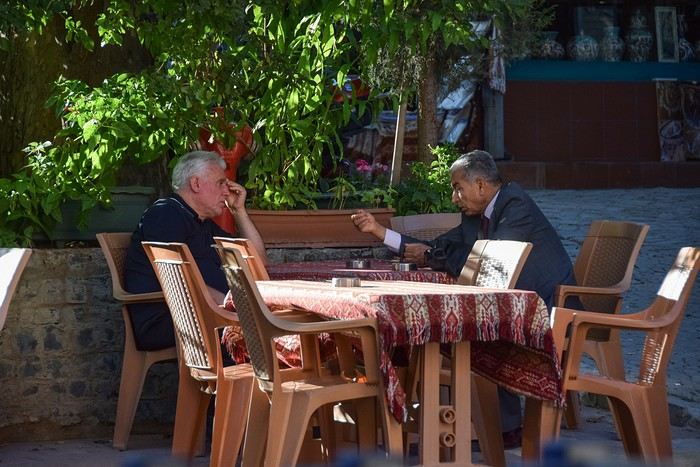
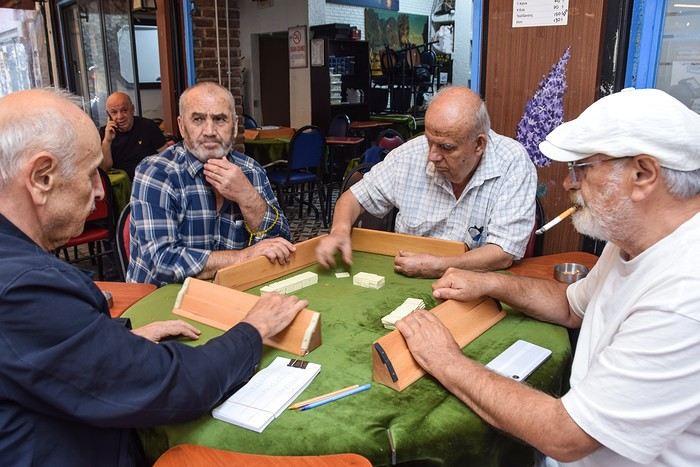
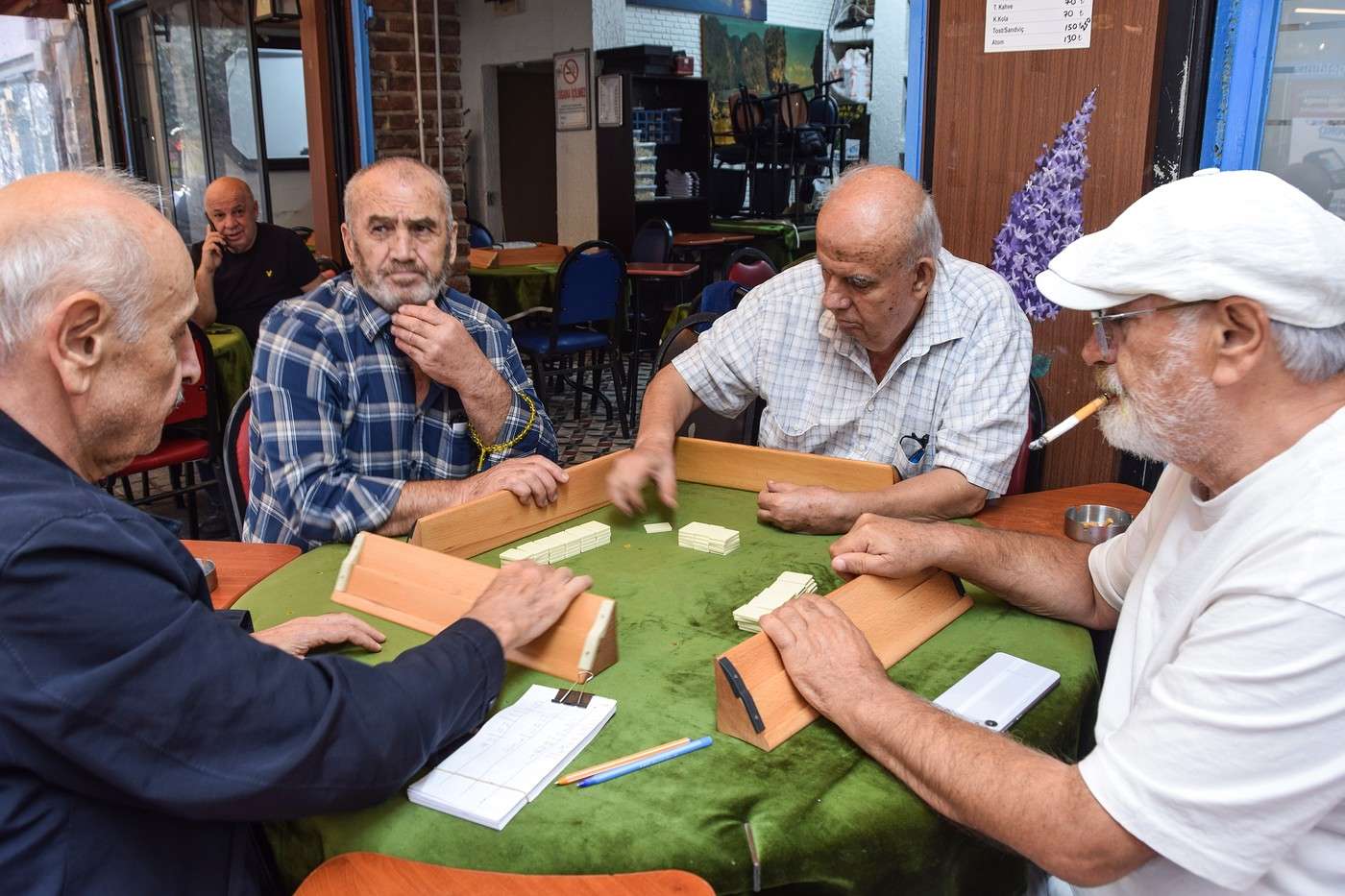
We arrive in Kadiköy. No specific plans for today—just wandering through the steep, cobbled streets of the neighborhood. Kate and her Nikon are on the hunt again, looking for beautiful images or street scenes to capture—snap?—on the fly. Around a corner, we stumble upon a small group of men sitting at a café terrace, deeply focused on manipulating what look like colorful, numbered dominoes. Some are placed on wooden stands, others scattered in the middle of the table. We ask if we can watch, and they nod without looking up from their game. I think there’s nothing more serious in the world than a man or woman playing a game! We stay for several minutes, watching them, while they remain completely indifferent to our presence. I would’ve been annoyed if someone loitered behind me like that—not them, though.


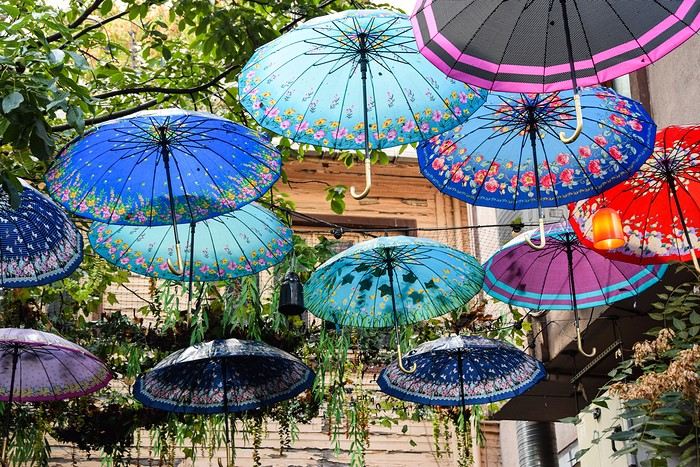
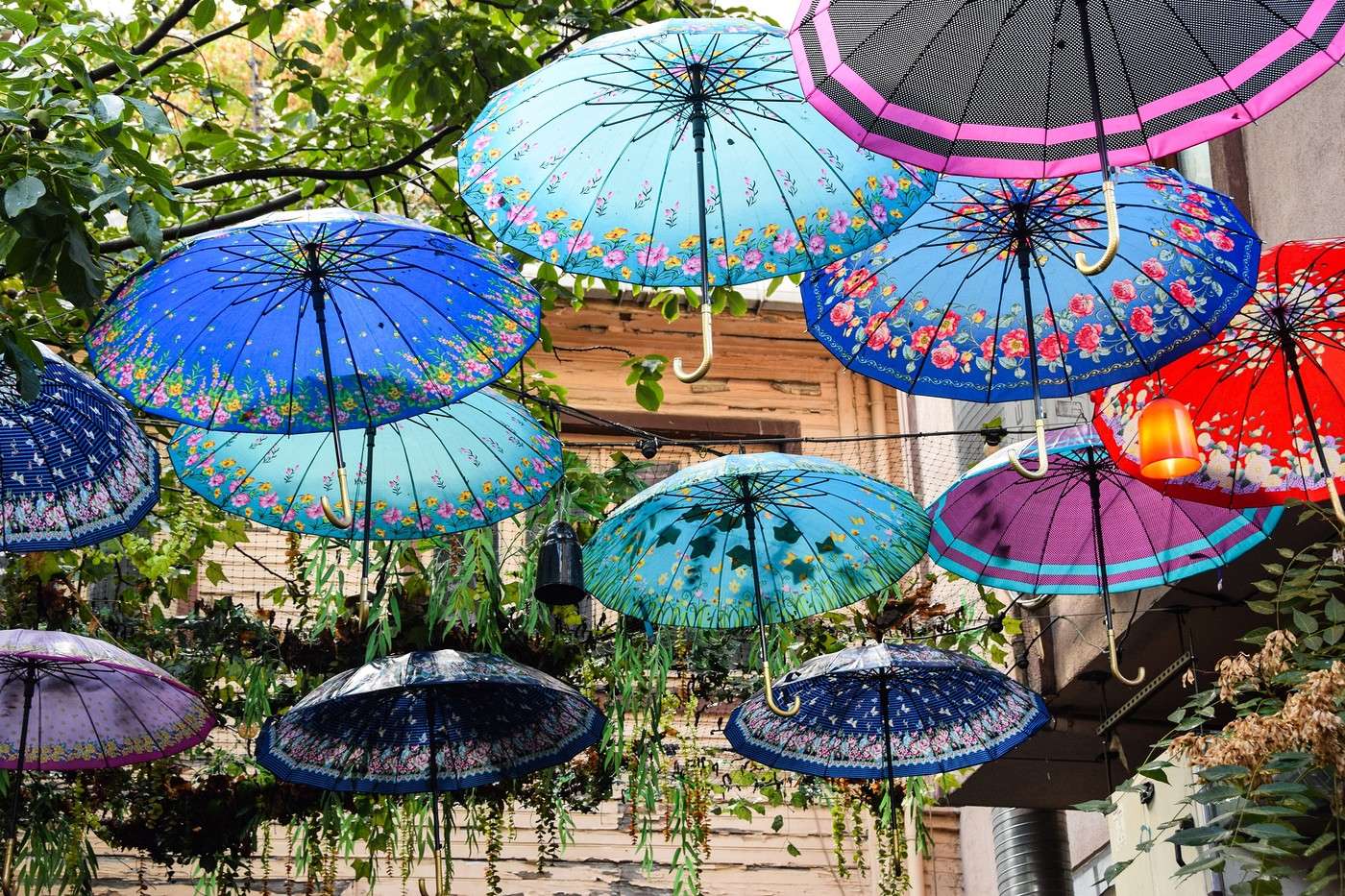
Turns out it’s a board game hugely popular in Turkey, Okey, often played in cafés for hours. It’s a bit like what belote was for us socially. I looked up the rules online but didn’t understand much—numbers and I don’t really get along. We say a quiet goodbye to the players, still absorbed in their game, and step into a charming alley decorated with colorful umbrellas hanging above our heads. A welcome omen. Moments later, a brief but heavy downpour forces us to find shelter.


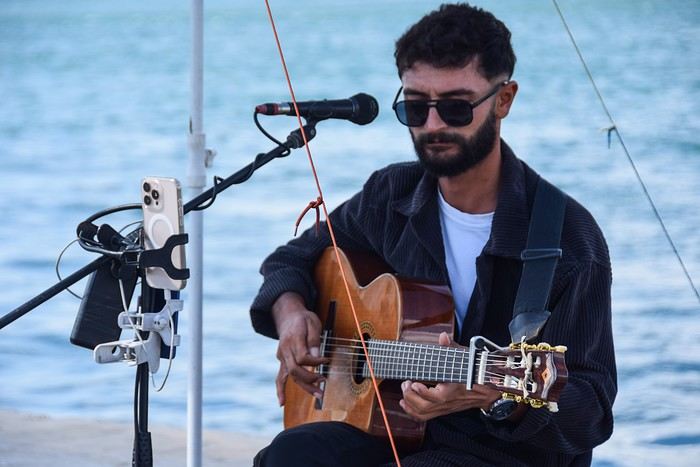
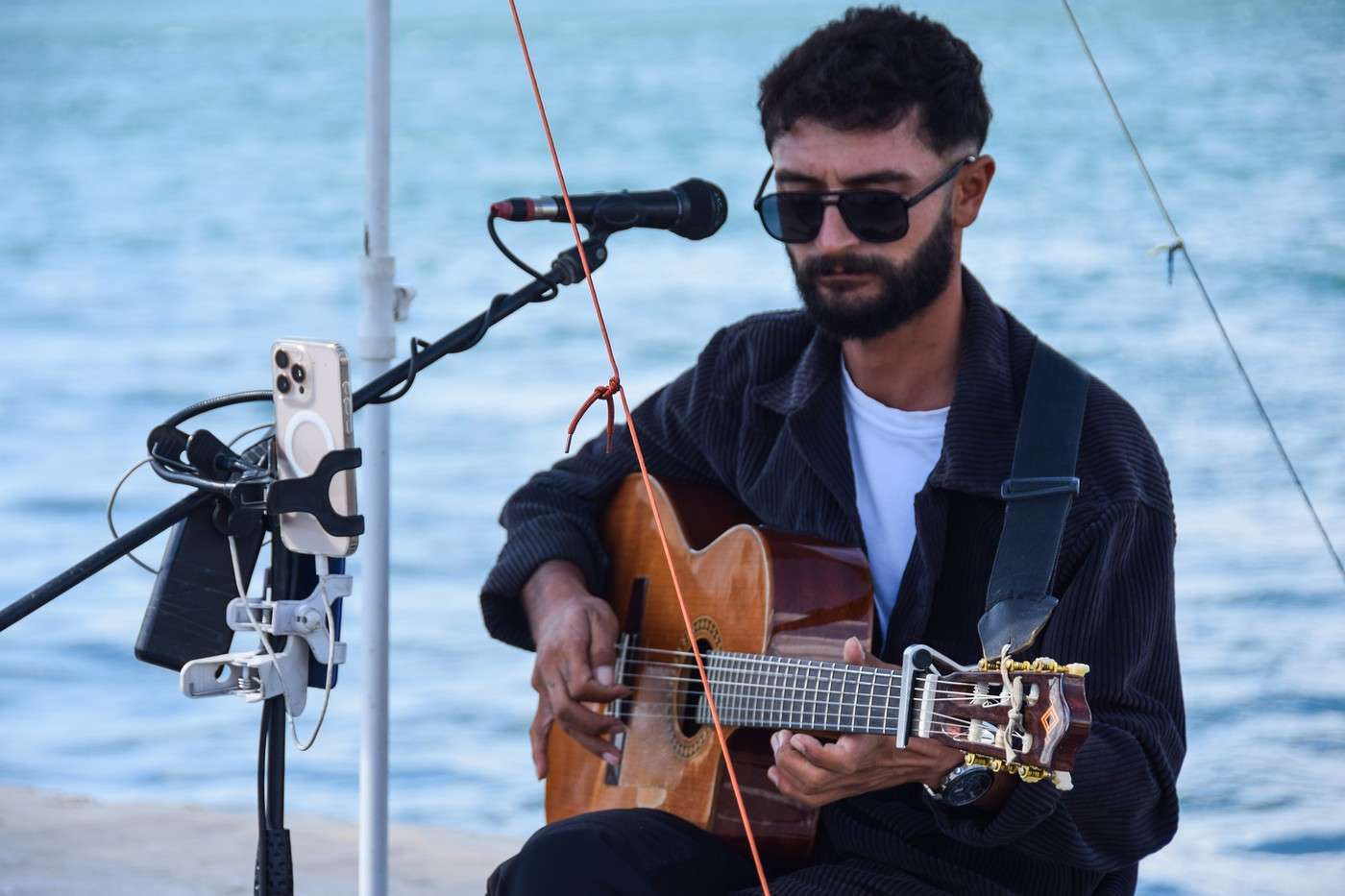
The weather’s really gloomy today, and by early afternoon, we’re hesitating about what to do next. Personally, I’d love to visit the working-class district of Usküdar by the Bosphorus, but Kate would rather dive back into the livelier atmosphere of Galata—and especially revisit the famous Camondo stairs, made iconic by Cartier-Bresson’s photos. Rock-paper-scissors… It’ll be Galata, then. Before reboarding the vapur, we pause on the esplanade by the dock to listen to a young guitarist singing a beautiful melody with Eastern influences. I think it’s his own composition. I love traditional Eastern music, as well as blends with modern influences like Oriental jazz or pop. It’s one of my few regrets about this trip to Istanbul—not having sought out or found places to listen to that kind of music.


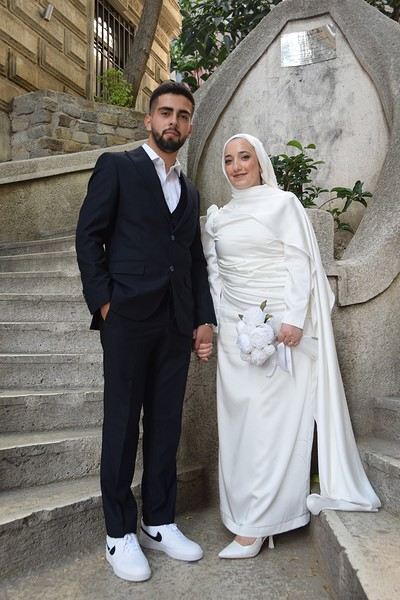
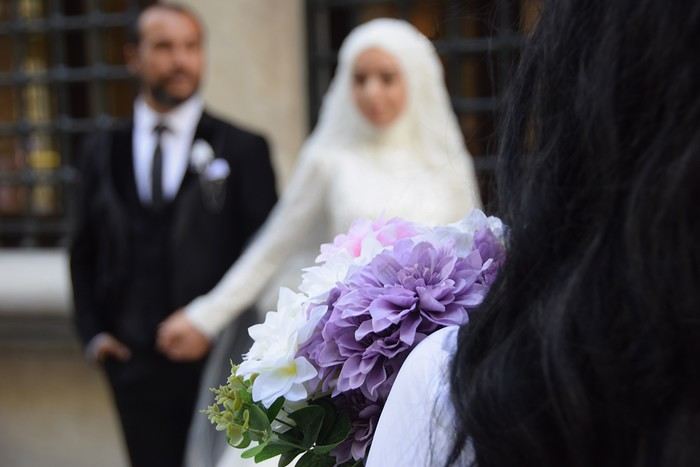
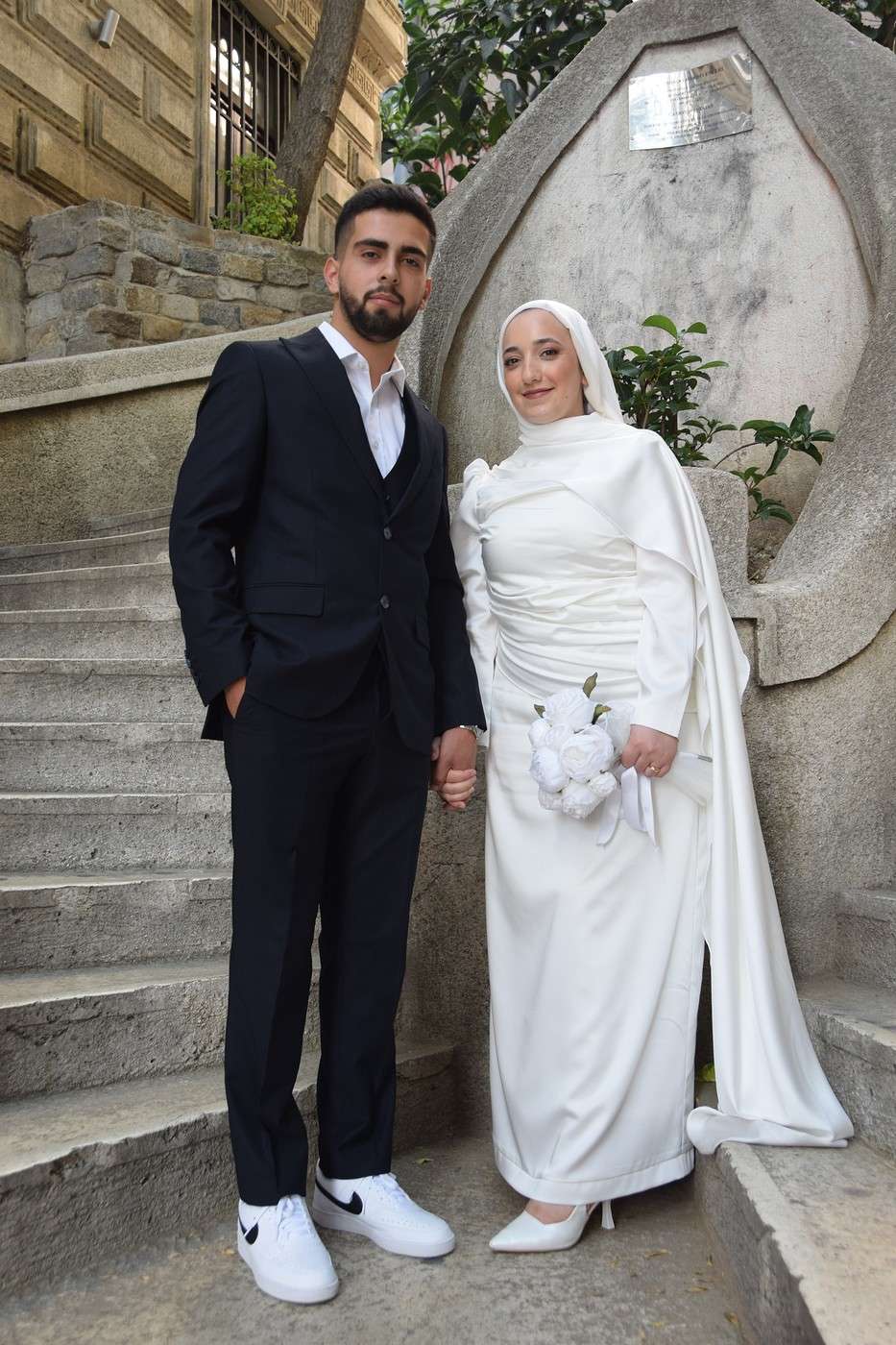
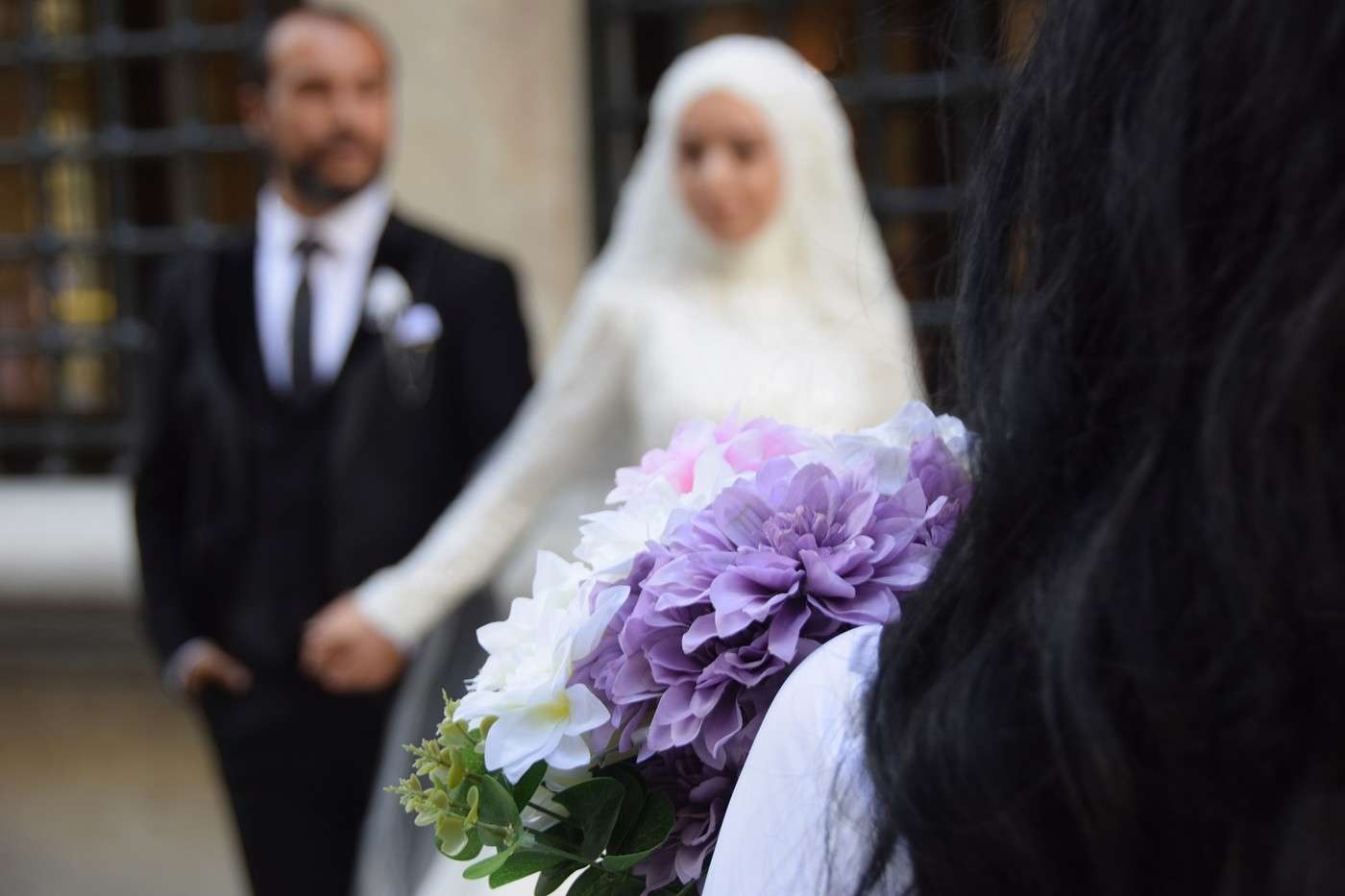
Back on the slopes of Galata, we arrive at the foot of the stairs. It’s wedding day, apparently! Several couples, in suits and white dresses, rush up the steps to capture their union in photos. With her big Nikon around her neck, Kate is mistaken for a professional photographer. Immediately, there’s a flood of requests: “Can you take a picture of us? We will give you our WhatsApp.” Click-click, click-click—the photos keep coming. Her partner waits patiently at the bottom of the stairs. The session lasts a good twenty minutes. Time to go enjoy a çay in a quiet little street away from the crowd...


For our last evening in Istanbul, we decide to soak up the festive atmosphere up in Galata. The streets leading to Istiklal Avenue are packed. Thanks to the Cartoville, we found a little place that’s more like a canteen. The concept is simple: you go to the counter and assemble your own plate. The vibe is relaxed, the crowd very young. We have a great time, then wisely decide to head back to our little apartment. We can feel the trip coming to an end. It’s always a bittersweet moment—satisfaction at having made the most of the stay, not missing out, but also the nostalgia that comes with saying goodbye to a place you’ve loved and may never see again.
Tomorrow, though, we’ll have a full morning before heading to the airport. Tomorrow, we have a date with Sophya, Ayasophya...

The two of us in Istanbul: A Turkish blue loop

Pagaljavab · 2025-10-11

As we approach the Asian shore, I observe with the curiosity of a geography teacher the industrial facilities of the Port of Haydarpaşa and the imposing silhouette of Istanbul’s old main train station.

We’re pretty much the only ones lingering over these industrial-port landscapes, these semi-abandoned suburban neighborhoods, these highway ramps under construction, and these borders between spaces 😊

The two of us in Istanbul: a Turkish blue tour

RichardXI · 2025-10-12

Old habits die hard, my fellow traveler. And it's true—a history/geography teacher on the road can be *dangerously* thorough! 😏 Okay, I'm posting my last update today, then I'll head back to your (all too familiar) Rajasthan.

The two of us in Istanbul: A Turkish blue waltz

RichardXI · 2025-10-12

19/09. Back to Sultanahmet: Missed meet-ups

Sophie stood me up! I spent part of the morning running after her, with no luck. And I’m really angry. Just like for the visit to Topkapi, I had bought a skip-the-line ticket online from the same site and under the same organizational conditions. Meet-up place and time (10 AM), welcome by a guide to get us through the checks and skip the line, self-guided visit. Everything should have gone smoothly. But obstacles kept piling up. First, it took me ages to find the meet-up point, which had changed from the previous time. Illogically, it was inside the palace gardens, after the security checks, near a ticket booth. I finally arrived on time. No one there. From the counter employee’s explanations, I understood I had to go back to the first meet-up spot. I ran through the palace gardens because time was ticking, and I risked missing the group. So I arrived at a second ticket booth on the square, explained the situation, and showed my QR code. The employee told me it wasn’t the same company that issued my ticket and therefore couldn’t tell me where my group was. But he advised me to queue in front of Hagia Sophia and go in alone with my QR code. Okay, I quickly headed toward the visitors' line. Luckily, it was early, and it wasn’t too crowded yet. I felt a bit reassured—I’d be able to get in. Security check before entering the basilica. Perfect. Then the automatic barriers. I scanned my QR code, “Beep!” I tried again, “Beep! Beep!” Couldn’t get through. I explained the situation to the welcome agent, arguing that they could at least let me in since I had paid for the entry ticket. No luck, “I am not authorized,” blah blah blah…

For a moment, I thought about calling a higher-up, but I was holding up the line, and my English wasn’t good enough to clarify the problem. So I turned around, head down, completely disappointed and furious. I told Kate, who had come to join me, “Sophie stood me up.”

What to do now? I would’ve liked to visit the Basilica Cistern, but the line in front of the monument was endless. It was already past noon, and the countdown to our return had started. We were afraid we’d run out of time. We gave up. I felt so frustrated. This last morning in Istanbul was all about missed meet-ups.
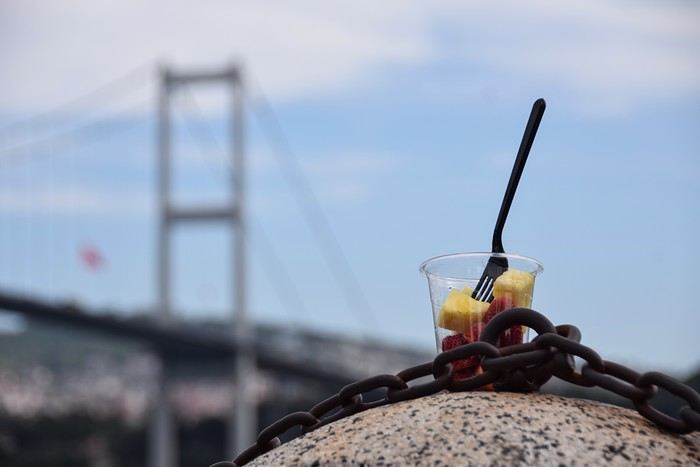


At lunchtime, we fortunately ended on a more positive note. The *Guide du Routard* pointed us to a place that seemed perfect. At the end of a small alley, very close to Hagia Sophia but away from the tourist crowds, we entered a lovely courtyard surrounded by vaulted galleries. We were at Caferaga Medresi. It’s a former 16th-century madrasa, now transformed into a cultural and tourist center with a restaurant, exhibition spaces, and art workshops. The place was charming and peaceful. In the background, oriental music added to the gentle tranquility. We had a quiet lunch… Back to Galata by tram to pick up our things and get ready to head to the airport. The “Turkish Blue Waltz” is coming to an end… It was a beautiful dance, a lovely pas de deux. And in the harem of my favorite cities, I think I’ll make Istanbul my top pick.

The two of us in Istanbul: a Turkish blue tour

Kate · 2025-10-12

Sophie stood me up! I spent part of the morning chasing after her, with no luck. And I’m really pissed off.

No rabbit for me—I visited the basilica back in 2019 and decided to skip it this time, especially with the 35 € price tag sealing the deal.

Here are some budget ideas for those interested:

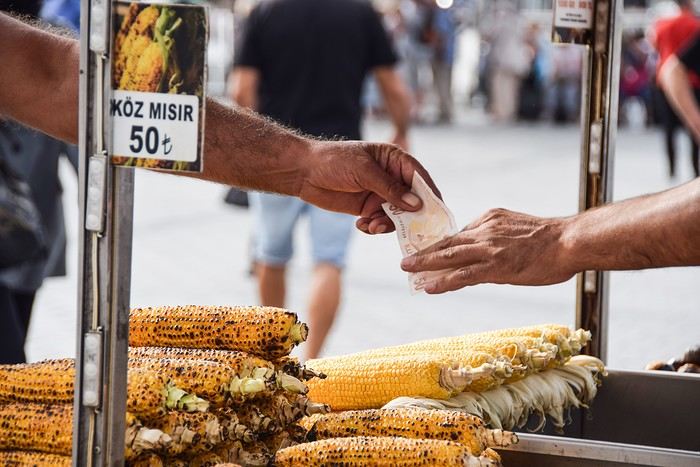
Round-trip flight Montpellier/Istanbul with Transavia: 116 € per person Apartment: one week (for 2): 346 € Visits (Topkapi, Hagia Sophia, Chora Church): 120 € per person Street restaurants: 6 € per person. Others are close to "French" prices Public transport (bus, tram, boat) with the Istanbulkart: max 10 € per person Taxi transfer airport/center (Galata): 30 € Coffee or tea: around 1.50 € (5.50 € per person for coffee in Galata 🏴‍☠️) Ice cream scam in the street: 9 € Groceries are pretty cheap.


The two of us in Istanbul: a Turkish blue tour

Rouquine38 · 2025-10-12

Thanks so much, Kate and Richard, for this walk around Istanbul! 😊

VoyageForum — the largest community of French-speaking travellers.