Day 2: Grand Palace, Samsen Road, Jim Thompson House
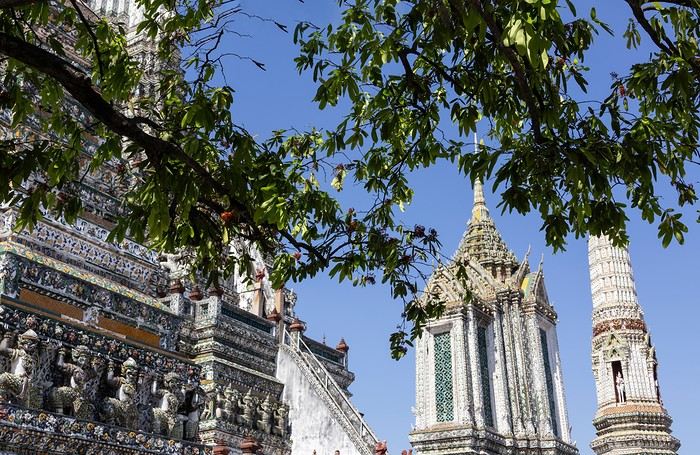
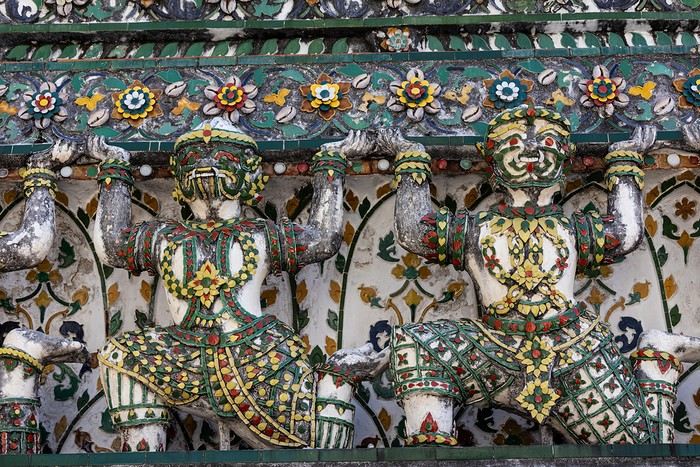
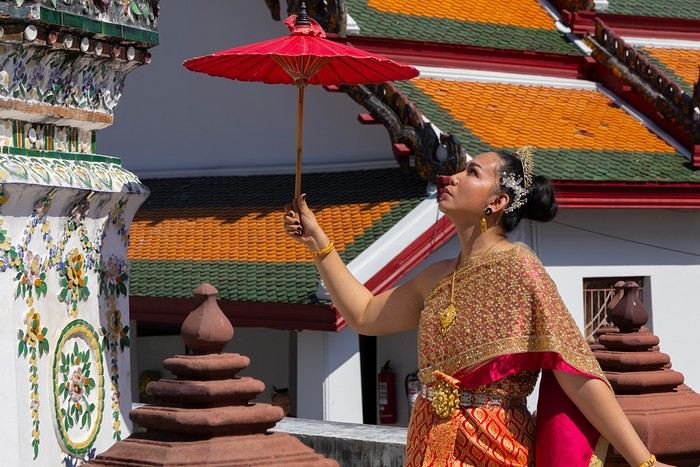
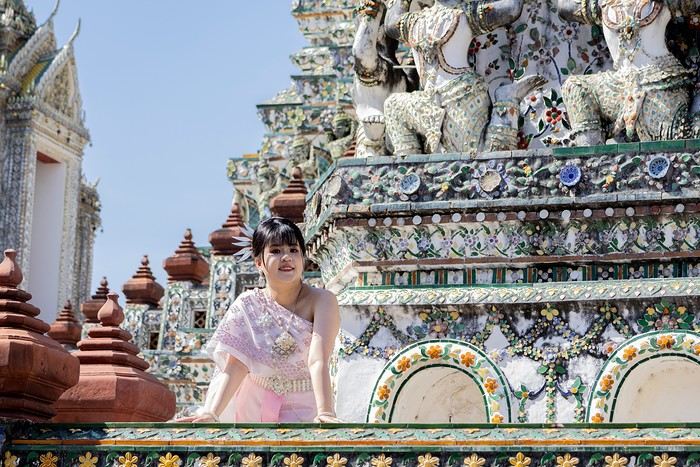
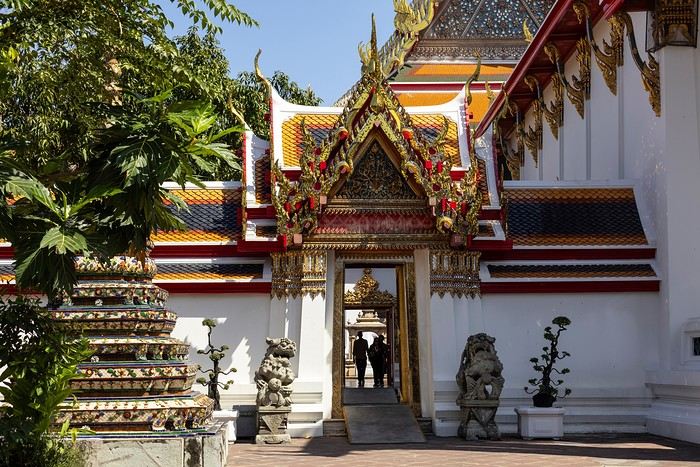
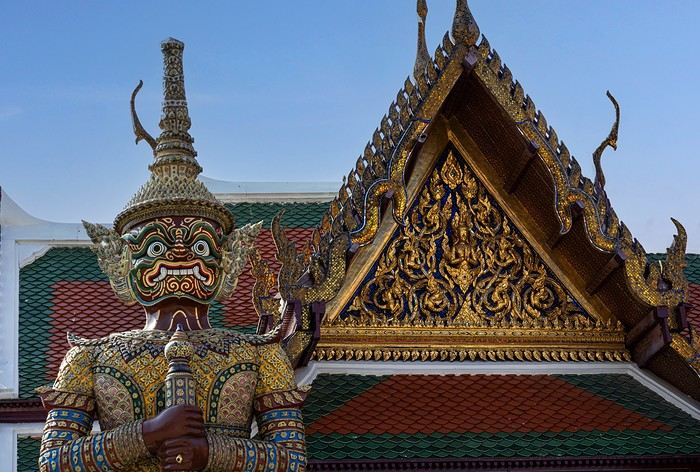
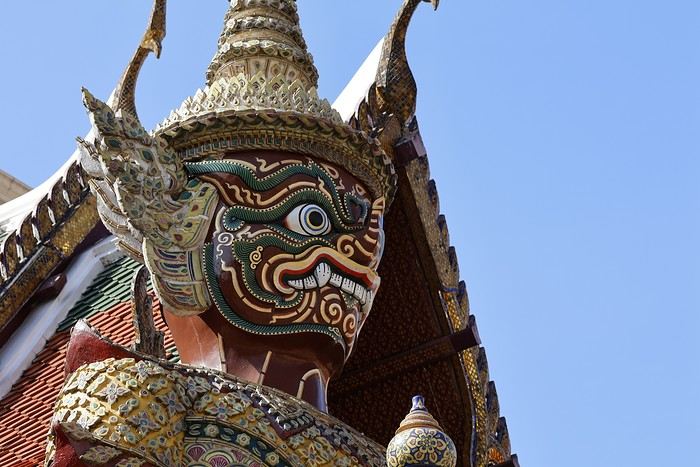
A long morning stroll to explore the Grand Palace, the Phra Borom Maha Ratcha Wang, the official residence of the kings of Siam for over 150 years, until the early 20th century. Under a soft light and a clear azure sky, we wandered for nearly two hours through this vast political and religious complex, under the watchful eyes of the colorful Yaksa. Each building, depending on its function and era, features a dominant color with symbolic meaning—blues, yellows, reds, greens. It’s a true explosion of colors and shapes. We didn’t have much info, of course, but we just let ourselves drift along the large inner courtyards planted with fragrant frangipani.
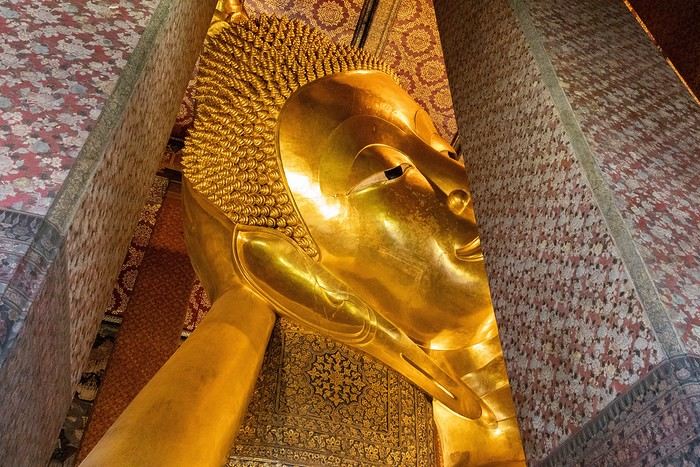
We also spent quite a while sitting cross-legged (obviously...) in the Wat Phra Kew hall, admiring the Jade Buddha.
Bruno and I were particularly drawn to the large mural that unfolds its story panel by panel under the covered galleries. It’s the Ramakien, the Thai adaptation of the Indian Ramayana. A real comic strip with exceptionally delicate drawings. It’s hard to follow the story, but Bruno, informed by his experiences in India, recognizes Hanuman, the monkey god. We spot demons, kings, princesses, and war elephants. It’s clearly an epic with strong symbolic and religious significance.
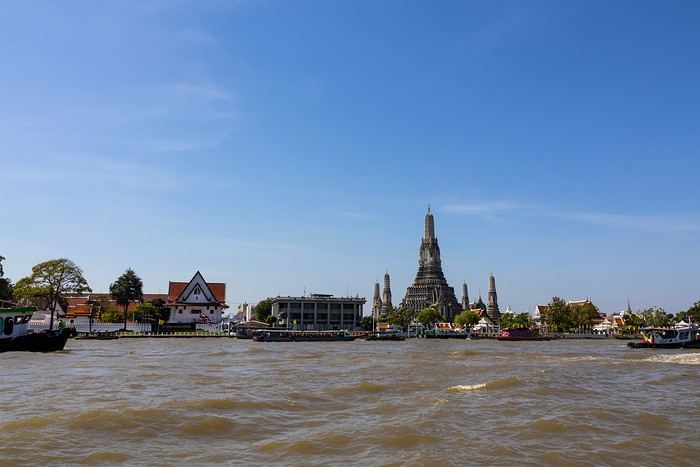
The visit comes to an end. We decide to grab a coffee by the Chao Phraya before heading to the Samsen Road neighborhood.
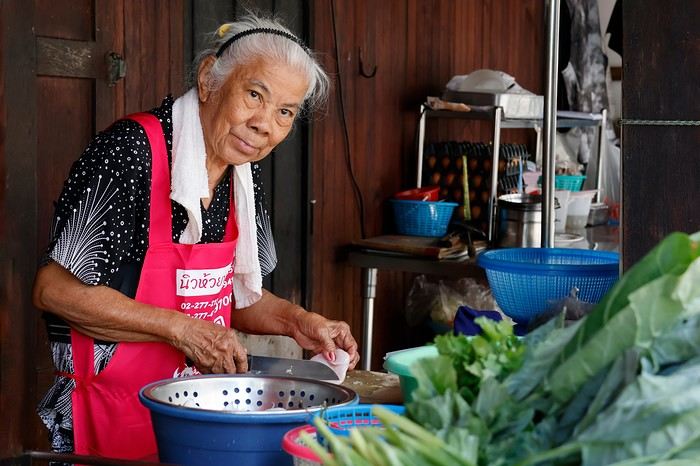
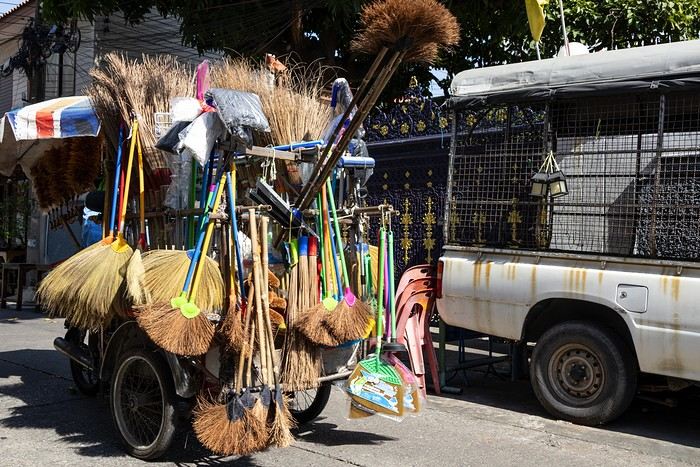
Out of the four of us, Kate is probably the most eager to connect with local life, especially through her photographer’s eye. She loves street scenes, small everyday gestures, portraits—a grandmother at her doorstep, a street food stall, kids playing, a man pulling a cart...
It was her idea to visit this neighborhood, far from the hustle of Khao San Road.
But surprise! As soon as we got out of our tuk-tuk, the girls decided to treat themselves to a Thai-style foot massage. Okay, Bruno and I went off to find a bar for a beer.
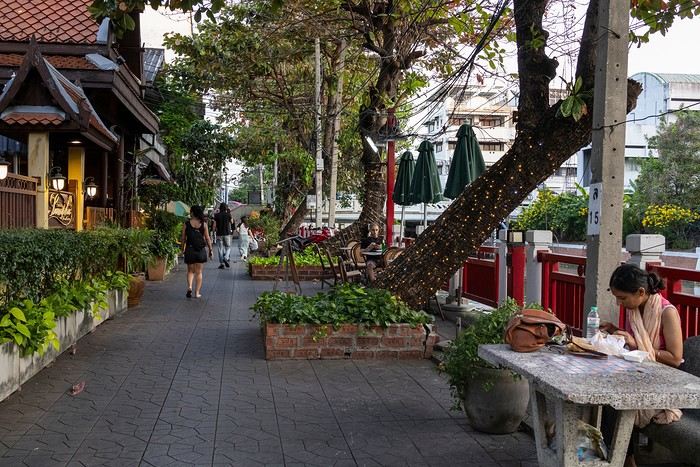
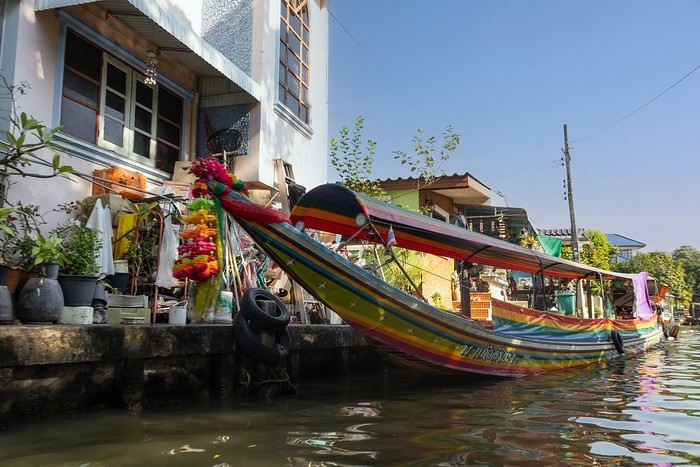
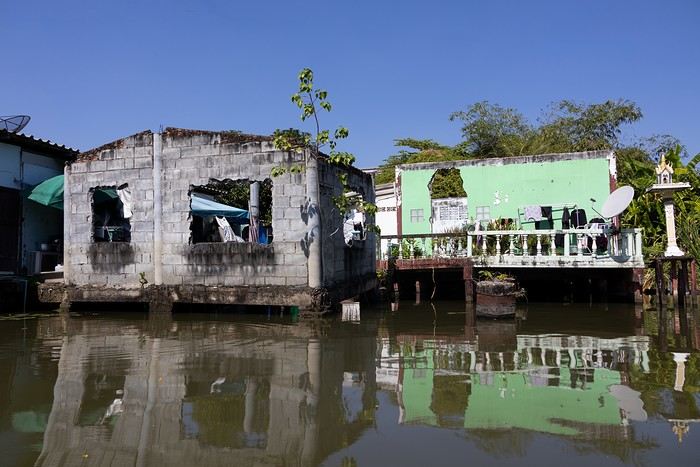
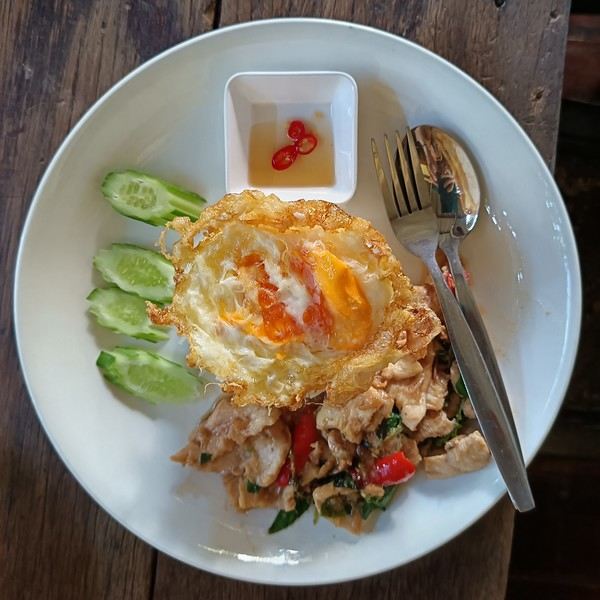
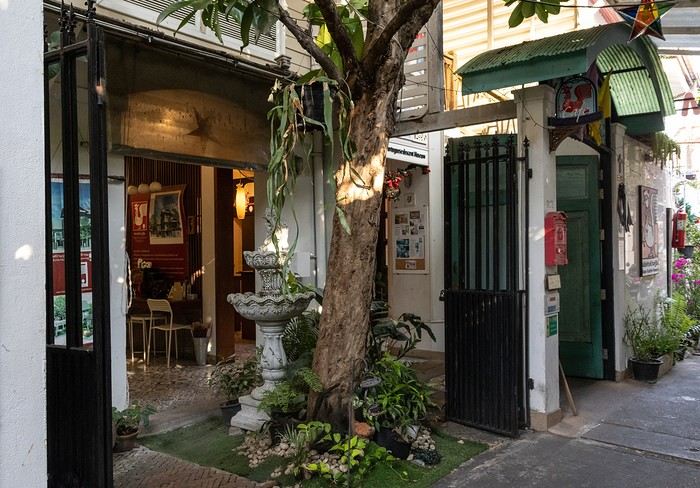
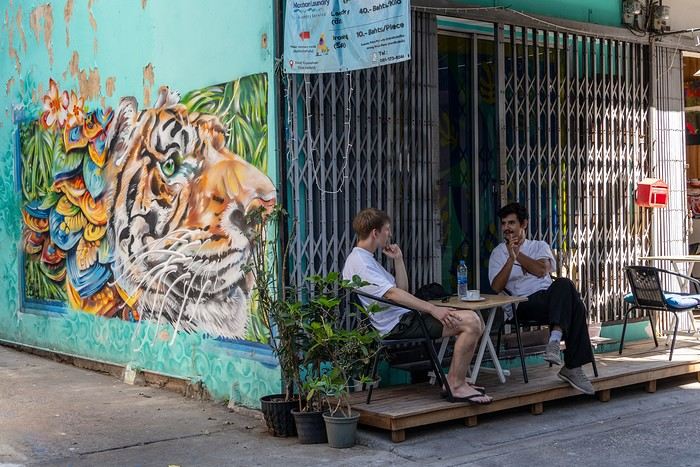
The neighborhood is indeed very quiet and peaceful. Small streets with modest houses, street restaurants, local shops. For lunch, we sat at the terrace of a tiny restaurant that served us delicious Thai dishes—not too spicy... but just enough to make our eyes water, noses run, and palates burn.
The day goes on, and the heat gets stronger, but we still have enough energy left to visit the Jim Thompson House, one of the city’s iconic spots.
Jim Thompson—a real-life novel character. An American, intelligence agent during World War II, architect, entrepreneur, businessman. He fell in love with Thailand and revived the Thai silk industry. He disappeared in Malaysia under mysterious circumstances—his body was never found.
For those interested, here’s a description of this fascinating place that I found online:
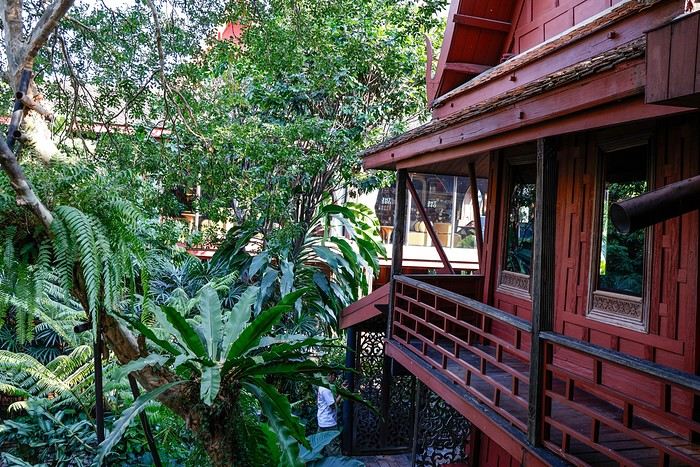
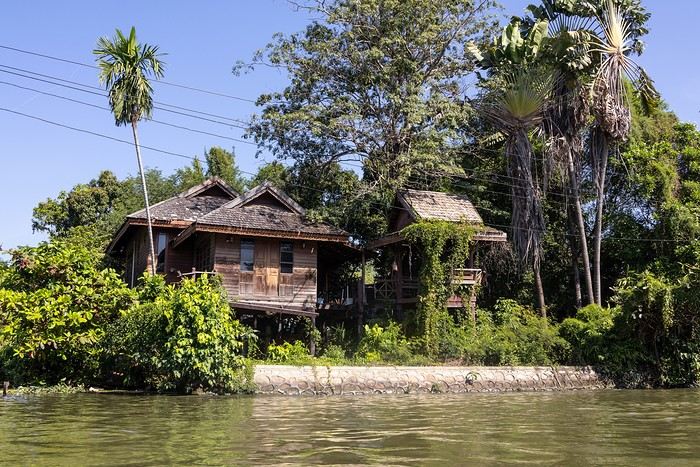
The Jim Thompson House isn’t an ordinary house but a collection of traditional Thai dwellings assembled to form a spectacular residence. It consists of six teak houses, some over two hundred years old, brought from different sites (including Ayutthaya) and dismantled then reassembled in Bangkok by Thompson himself in the 1950s. The whole structure is built on stilts, a traditional Thai technique that helps protect against floods and keeps the house cooler.
Very American, right? The houses are nestled in the heart of a lush, leafy park with a refreshing coolness. The guided tour is in English, but my companions and I listen to the commentary with only half an ear. We’re more interested in soaking up the atmosphere of this place, which feels a bit like a museum but still exudes serenity. I think teak wood, with its dark tones and ability to muffle sounds, can create that kind of feeling...
We head back to the hotel at the end of the day. The original plan was to spend the evening in Chinatown, but the online administrative formalities for our Laos entry form took up so much time and energy. So, we’ll have a quiet evening with dinner at a restaurant near the hotel, along the khlong. Tomorrow’s our last day in Bangkok before heading to Laos.