Back to the discussion

in Entre deux voyages › Carnets de voyage

Draw Me Your Japan...

Discussion started by Fabhyène on 2026-06-06

58 replies

This thread has been translated into English.


Draw Me Your Japan...

Fabhyène · 2026-06-06

Hi there!

I’m inviting you on a stroll through my drawings—a completely subjective, far from exhaustive, and totally personal take, since it’s based on my own sketches. I put this travel journal together after returning in late 2024, mostly using felt-tip pens and pencils, with a few collages thrown in. I worked from our personal photos.

Let’s start with the shotengai...
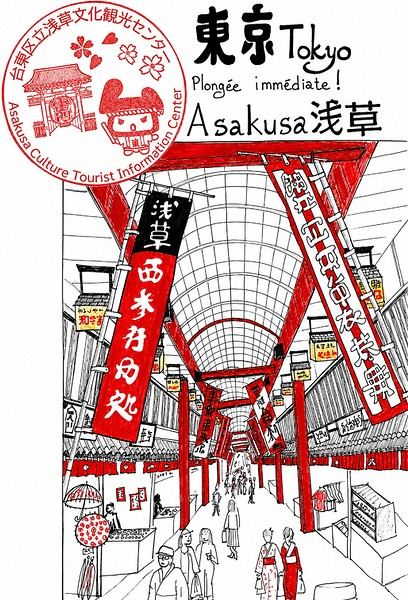


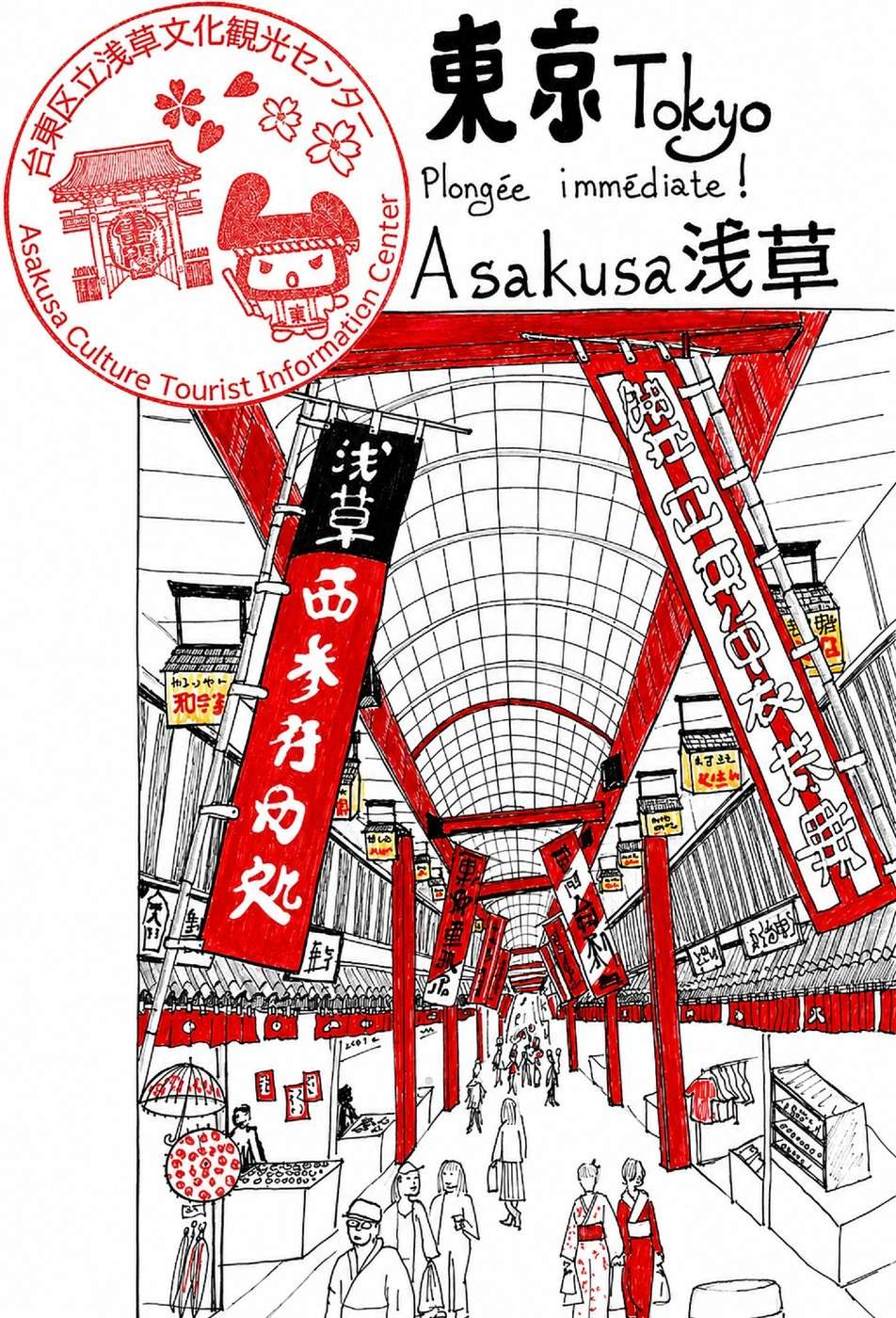
Our first "wow" moment came as we stepped out of the subway in Asakusa, the Tokyo neighborhood where we’d booked our hotel for our first five nights. Exhausted after our long flight, we finally arrived and took an exit that led straight into a shotengai—one of those covered shopping streets that pop up in city centers and flourished between the 1950s and 1980s.

It was an instant aesthetic shock, like a close encounter of the third kind between the modern city, a typical Asian market with its street stalls, the vintage vibe of the arcade, the sheer abundance of goods, and the bustling crowd—a mix of tourists, pilgrims (thanks to nearby Senso-ji Temple), and locals (it’s a very working-class area). In the end, it set the tone for a feeling we’d experience throughout the trip. Wherever we went, shotengai turned out to be fantastic spots for finding little restaurants, shops, or even fresh produce. Some are like real mazes, like in Kyoto, where we spent ages trying to relocate a restaurant we’d loved ;-)

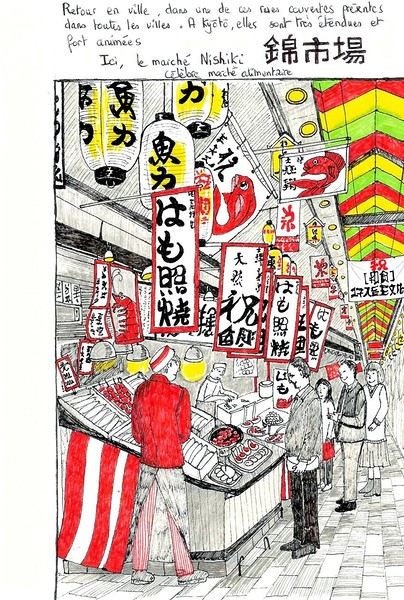
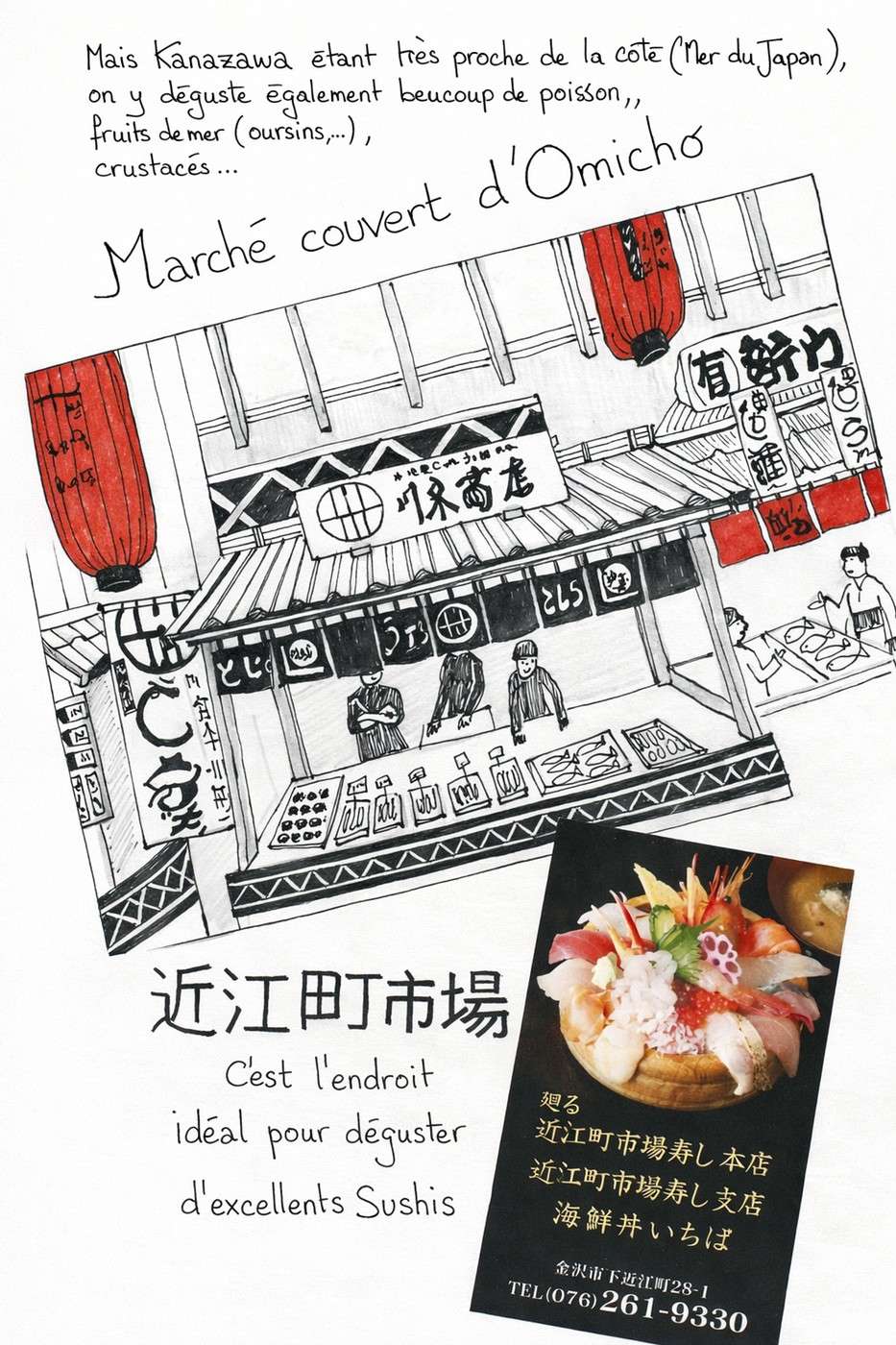
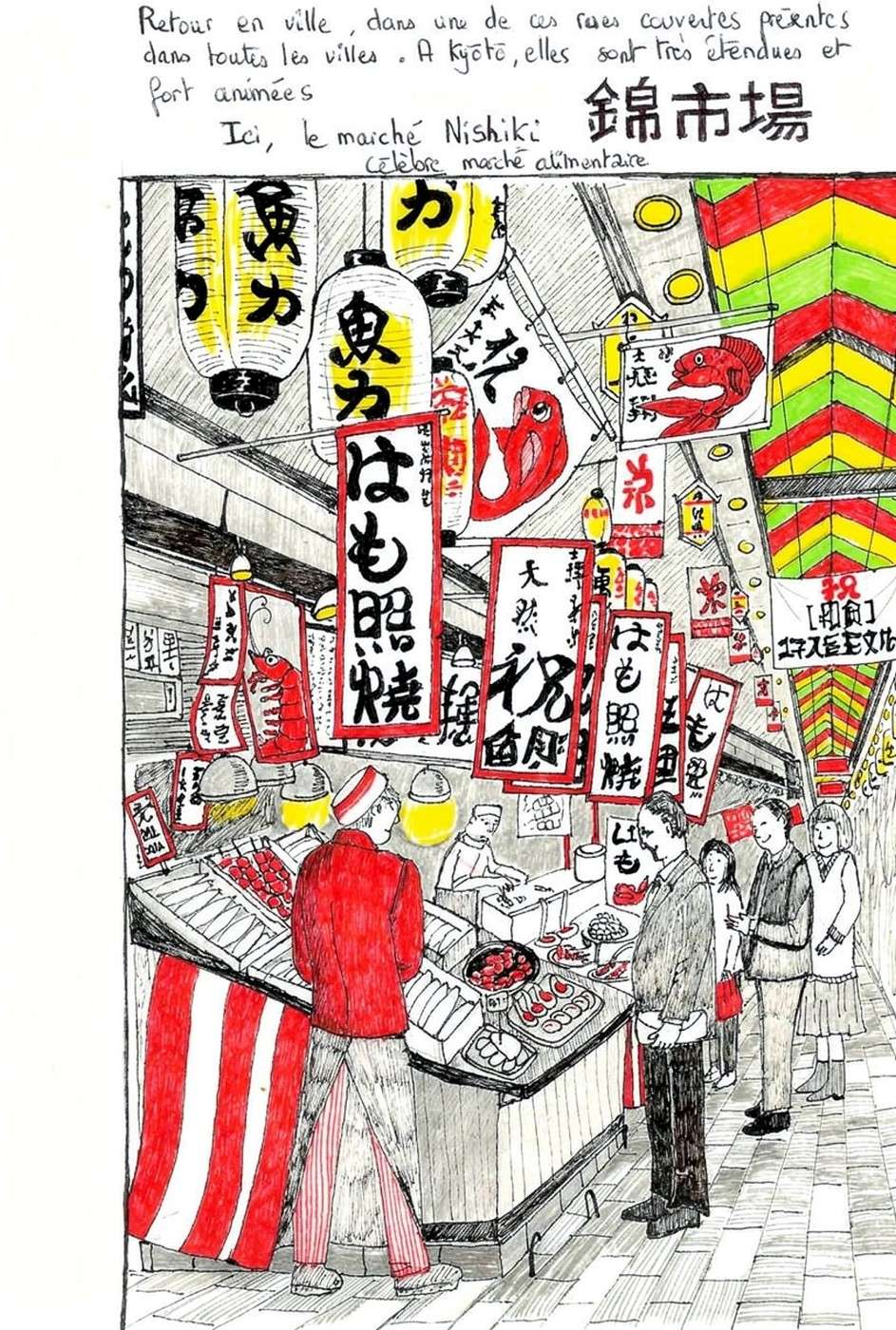
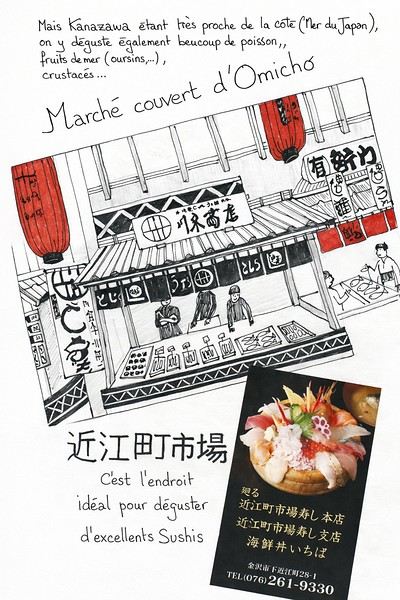
In Kanazawa, the Omicho Market: And in Kyoto, Nishiki Market:
To be continued...
Draw Me Your Japan...

VoyageForum · 2026-06-06

Nice! That’s really interesting. Can’t wait to read and see what’s next. Thanks for sharing!

Draw Me Your Japan...

Fabhyène · 2026-06-07

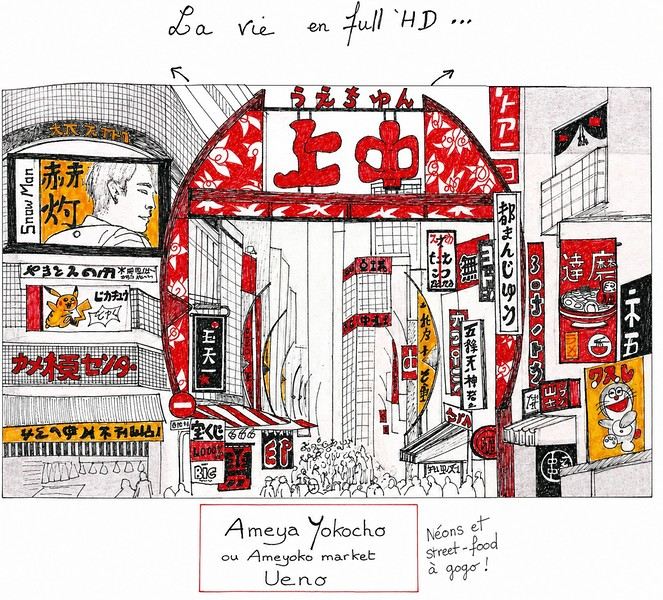
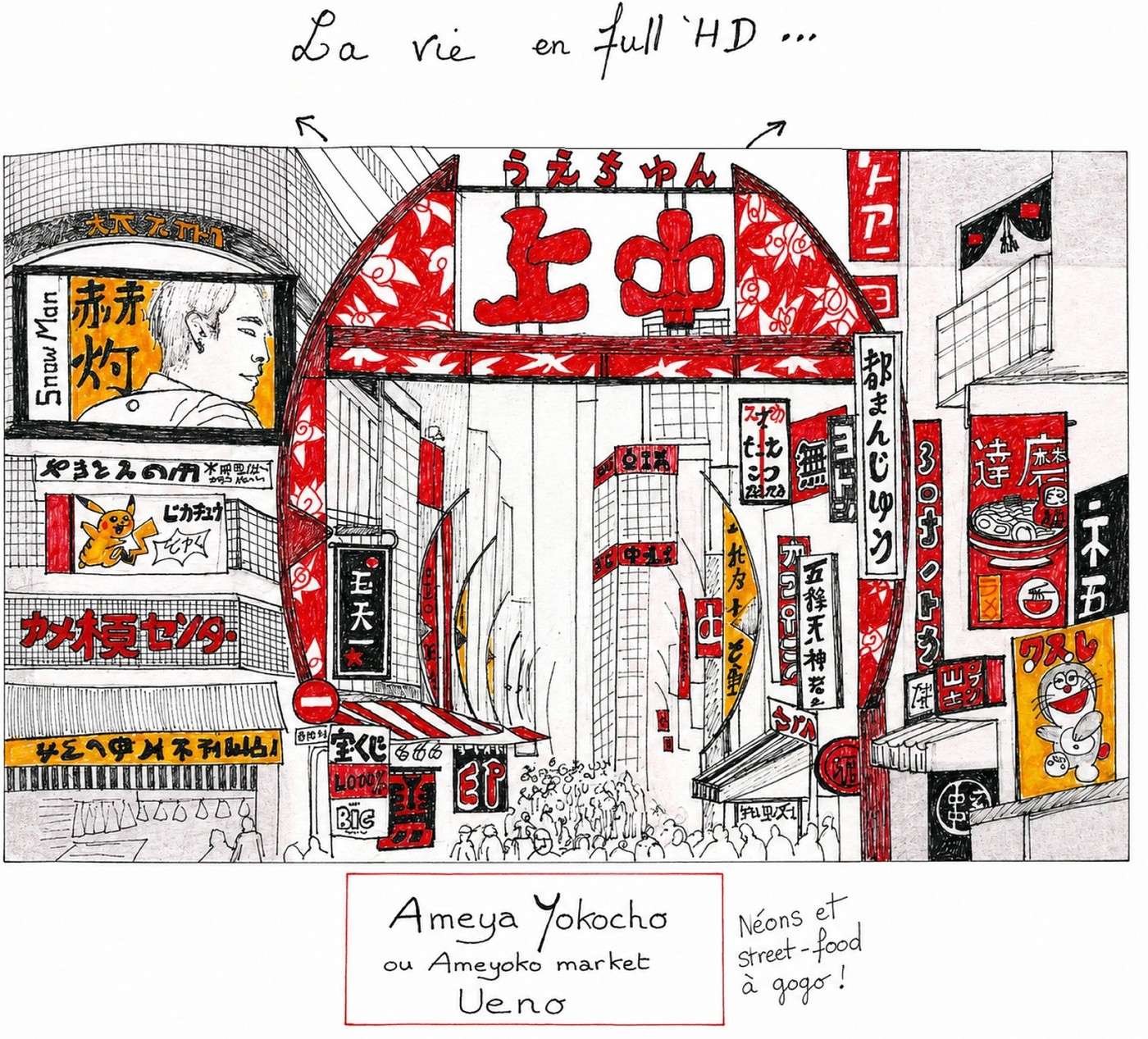
This immediately brings to mind this image, resonating with everything we’d seen of Tokyo long before arriving... Here we are in Ueno, at the entrance to the famous Ameya Yoko street, one of the gateways to the bustling Ameyoko market.


The entrance to the street looks like a giant screen. A great depth, with skyscrapers in the background and, in the foreground, a forest of neon lights and that large gateway marking the entrance to the street and the market (which continues into the adjacent alleys). Everything collides—visually and sensorially—eras, places (ultra-modern next to the Asian market and its street food), smells, colors. Again, that feeling of parallel worlds merging and blending, like some kind of giant shaker that leaves us both stunned, drained, and hypnotized...

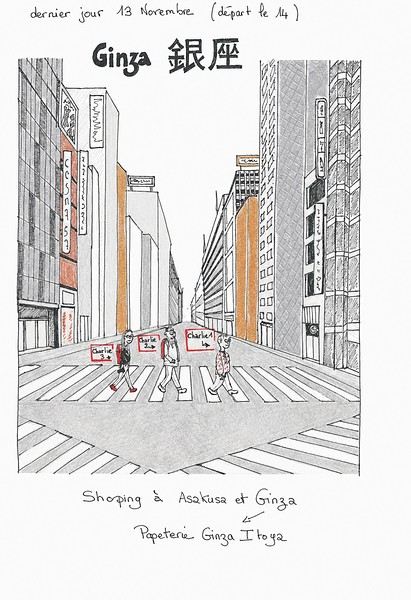
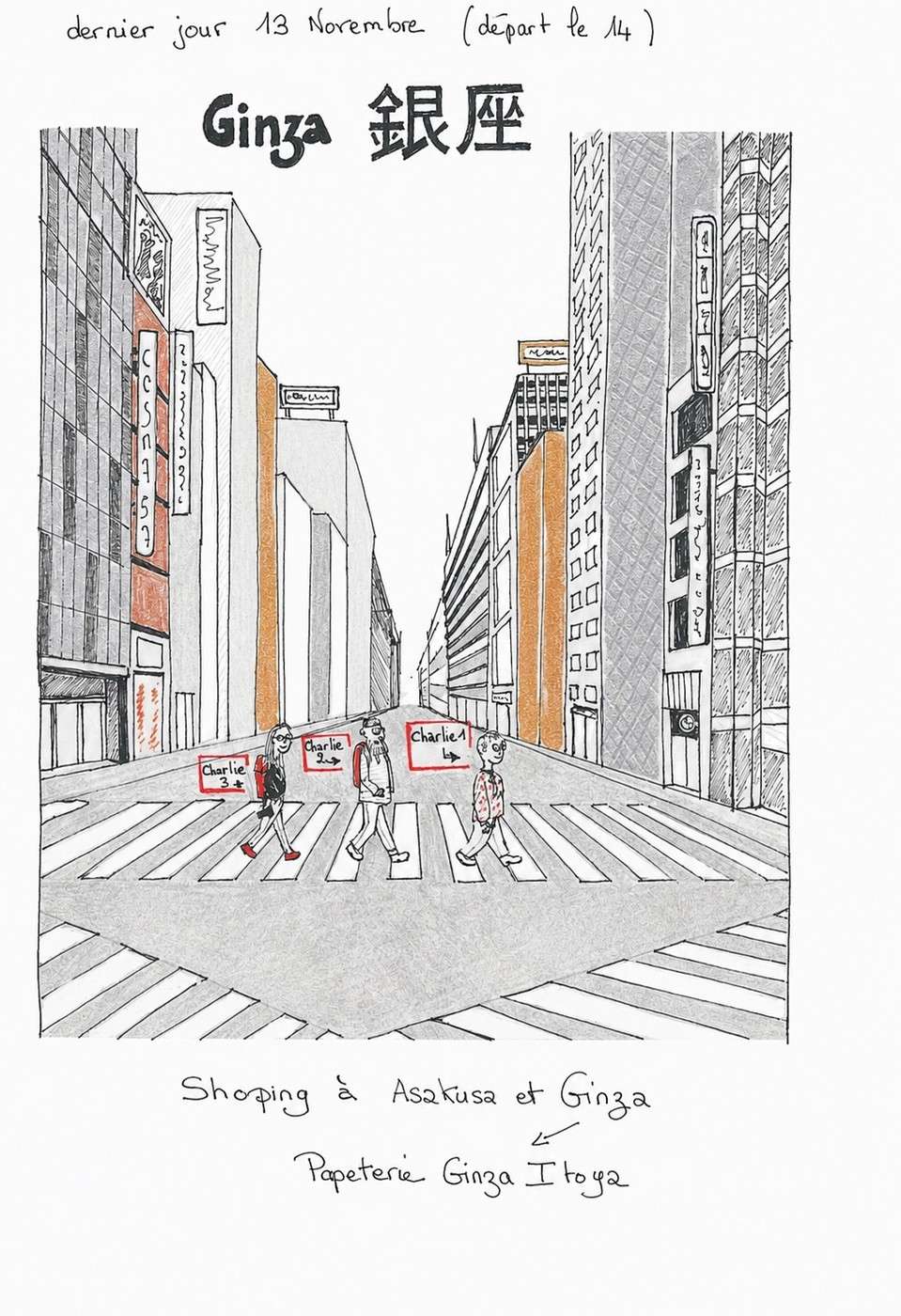
Change of scenery: here we are, all three of us in Ginza, in our usual formation—me in front (Charlie one), my daughter in the back (Charlie 3), and my husband in the middle (Charlie 2). Since I’m the one with the Wi-Fi router, I don’t let them out of my sight so easily 😉


Now, let’s talk a bit about traditional neighborhoods. In big cities, they’re receding more and more, except when they’ve become a tourist attraction that outweighs real estate developments. Of course, we all have photos of Kyoto and the Gion district in mind; the latter is now, at its heart, off-limits for photography due to the excesses of a certain type of tourist who treated the area like an open-air zoo.

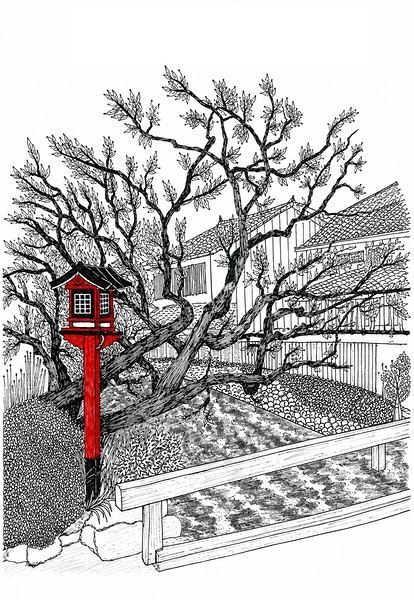
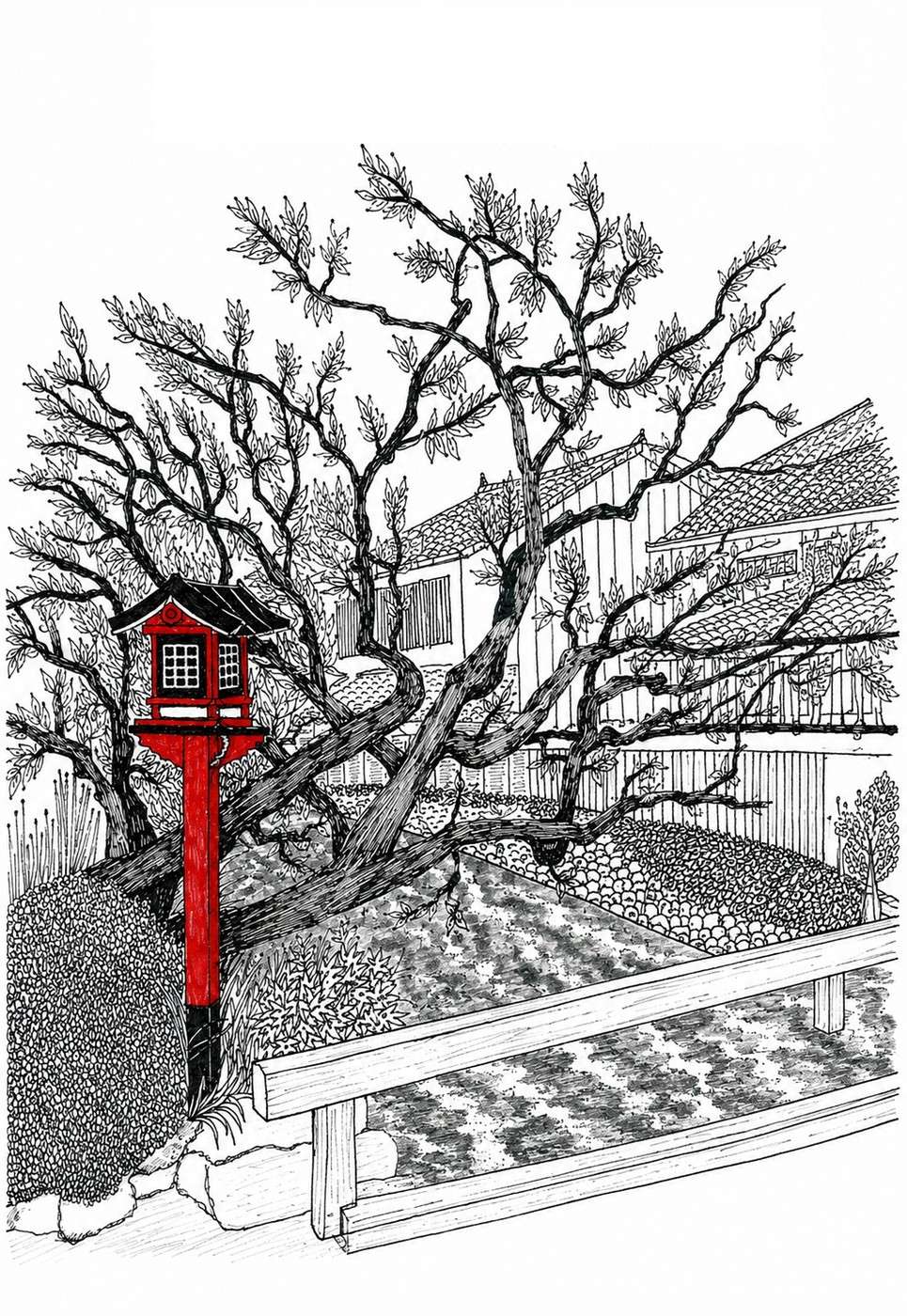
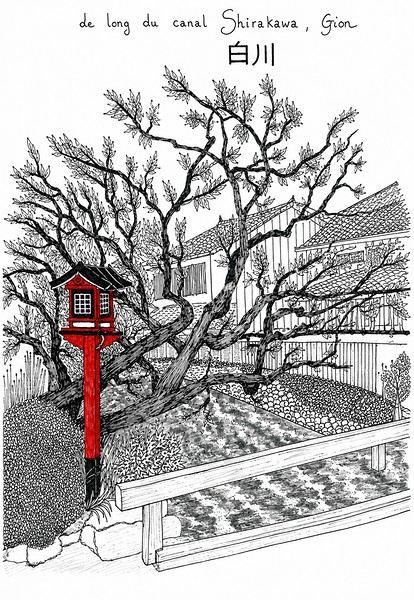
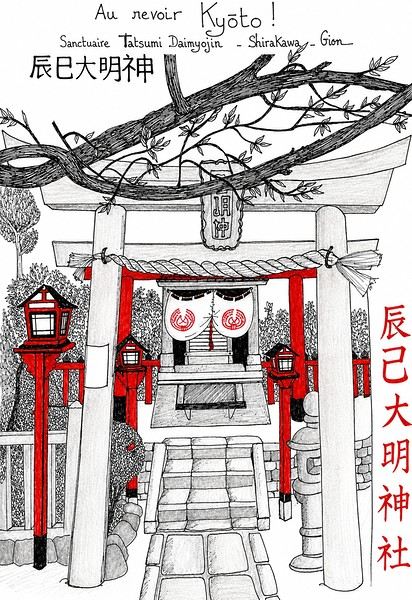
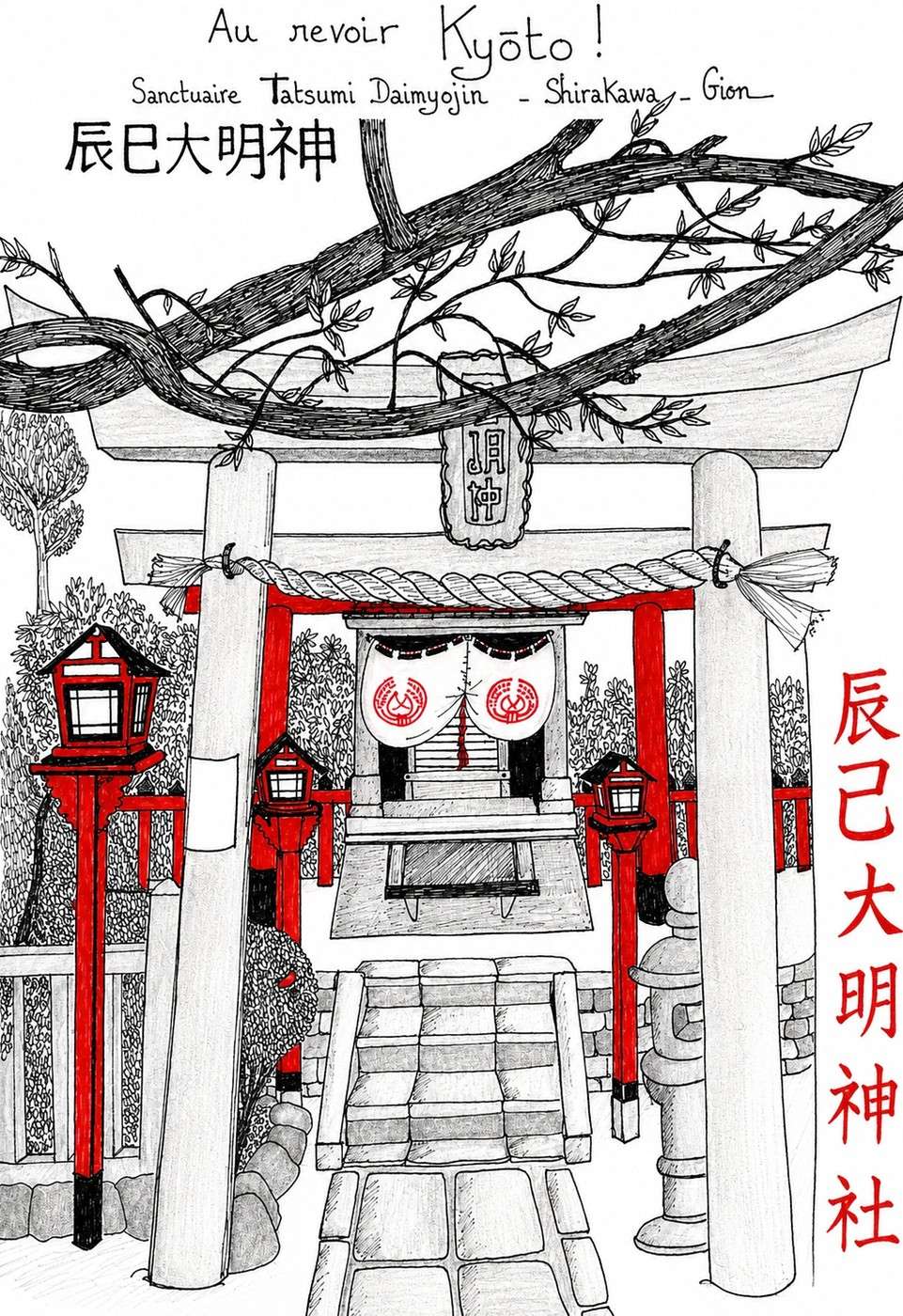
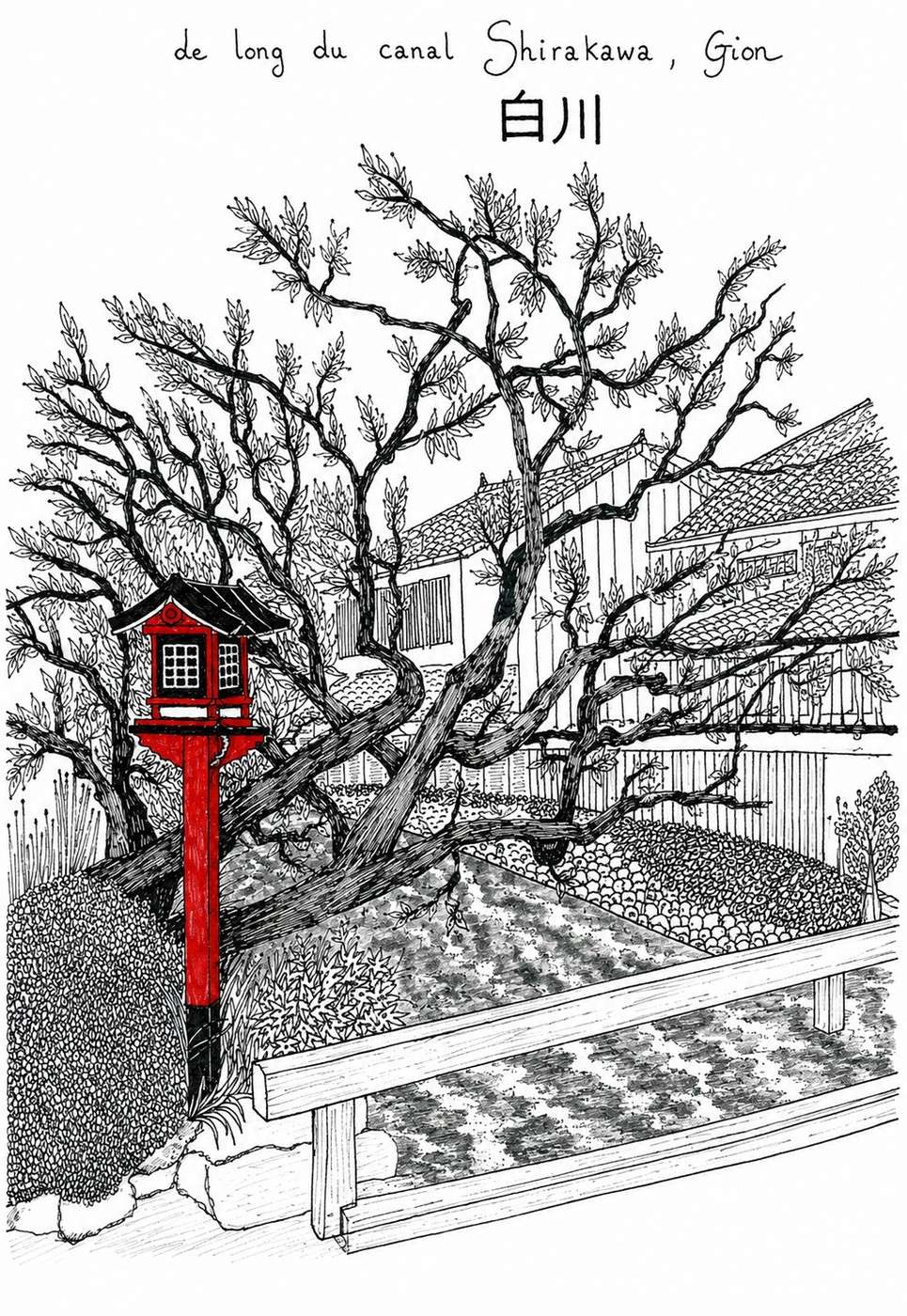
So, three antidotes to that: First antidote: Step away from the crowd and go "to the edges." For example, in Kyoto, on the outskirts of Gion, I recommend walking along the Shirakawa canal—it’s much quieter and even downright bucolic:


A tiny shrine at the corner of Shinbashi Street, the Tasumi-Jinja:

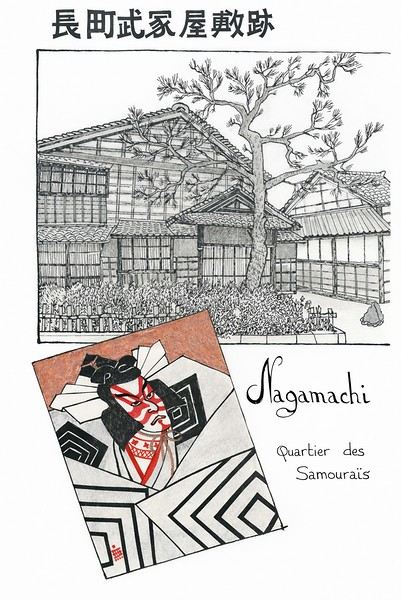
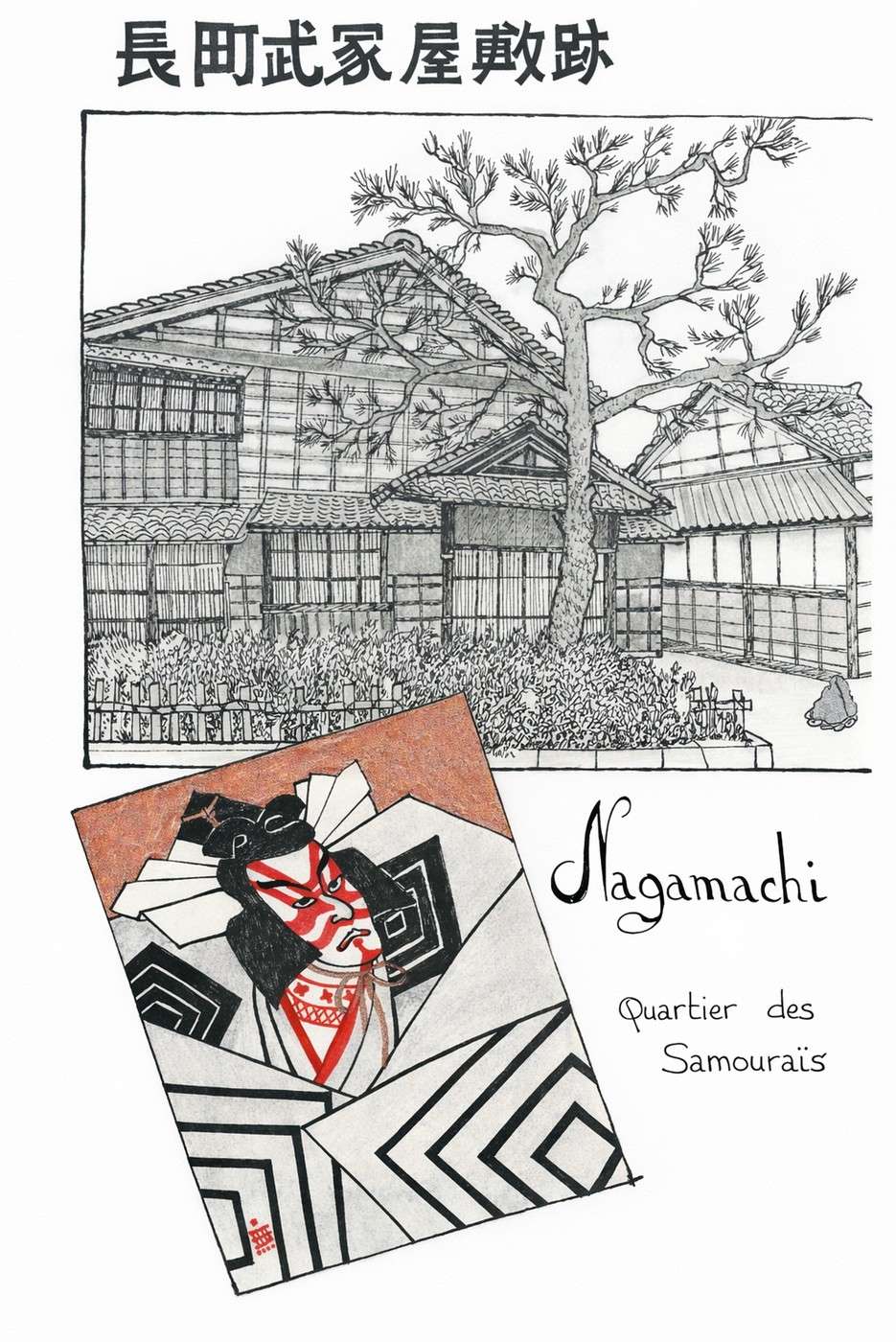
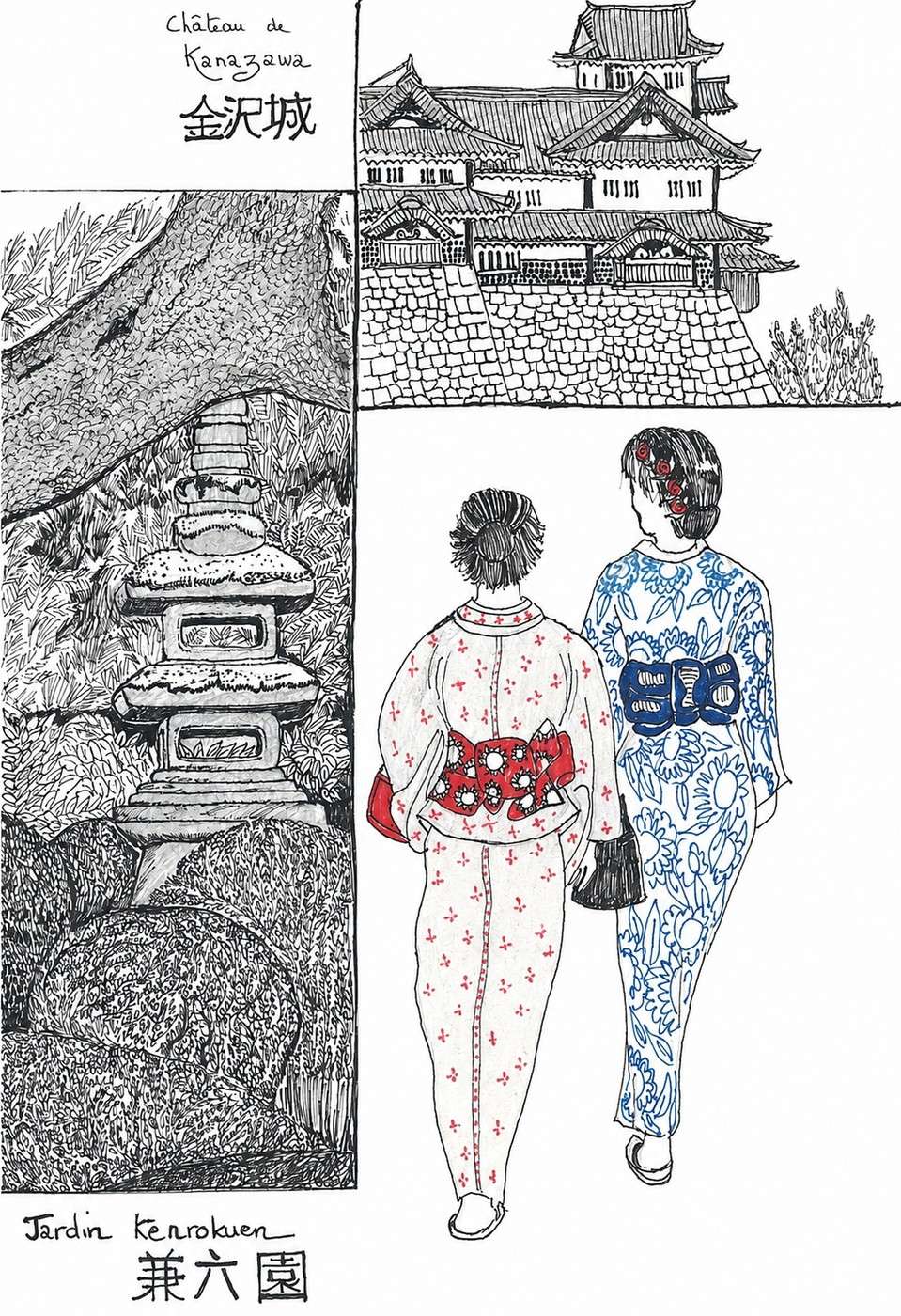
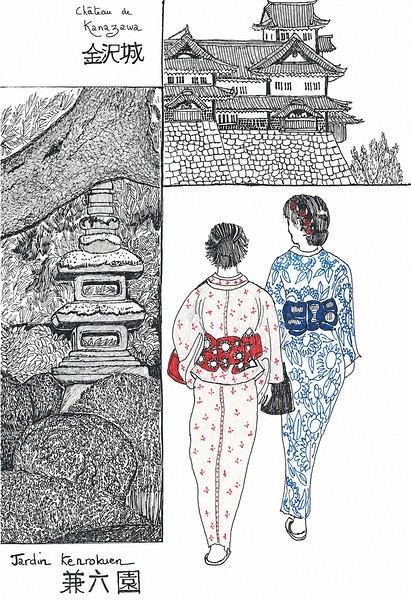
Second antidote: Visit cities that are still off the beaten path for mass tourism and frantic urban development, like a city that was my big crush: Kanazawa. It’s a city with impressive heritage and stunning traditional neighborhoods, like the samurai district below:

(The samurai is a drawing I reproduced) In the same city of Kanazawa, one of Japan’s most beautiful gardens, Kenroku-en, just steps from the castle:
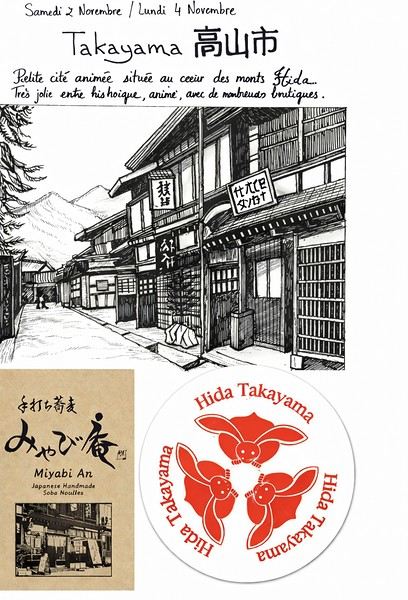
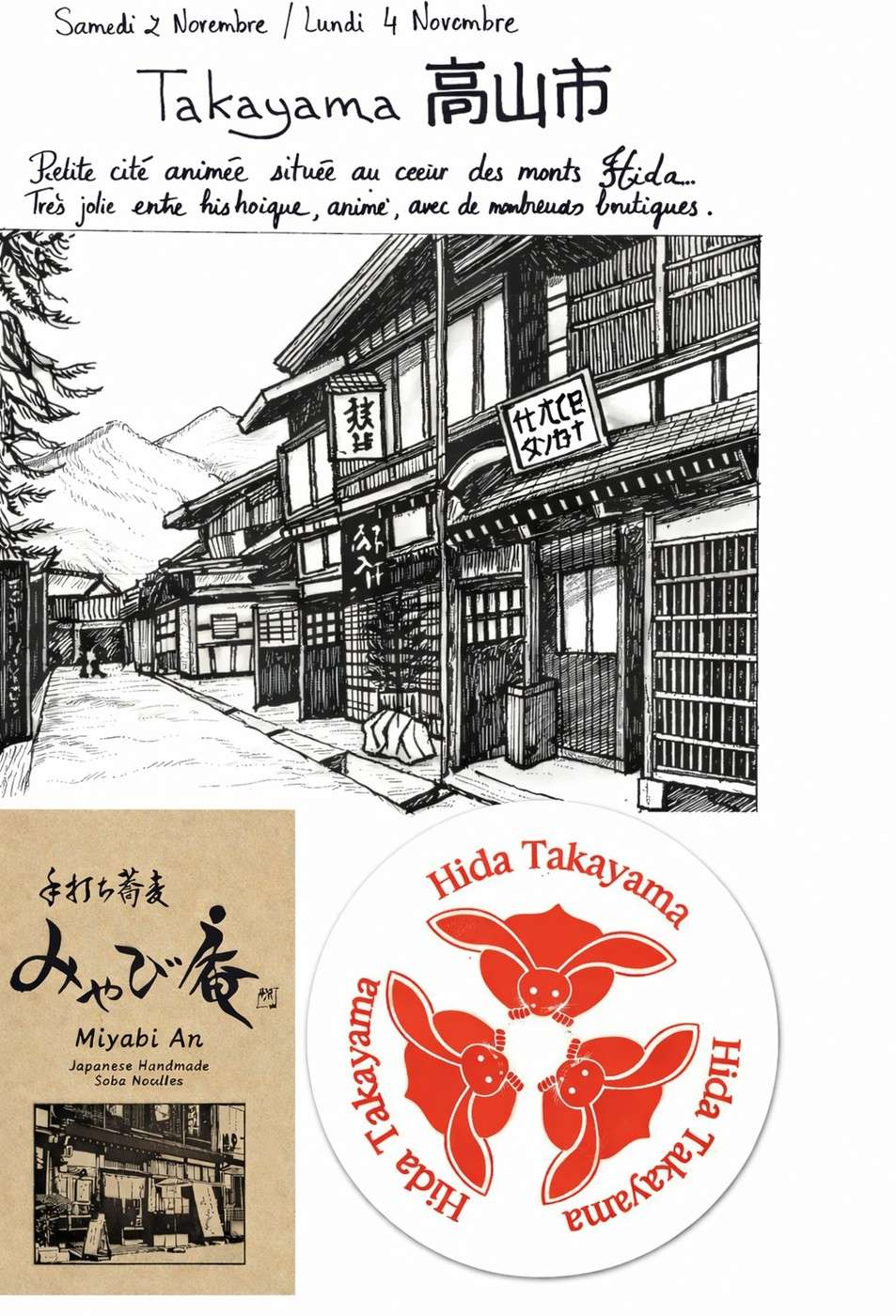
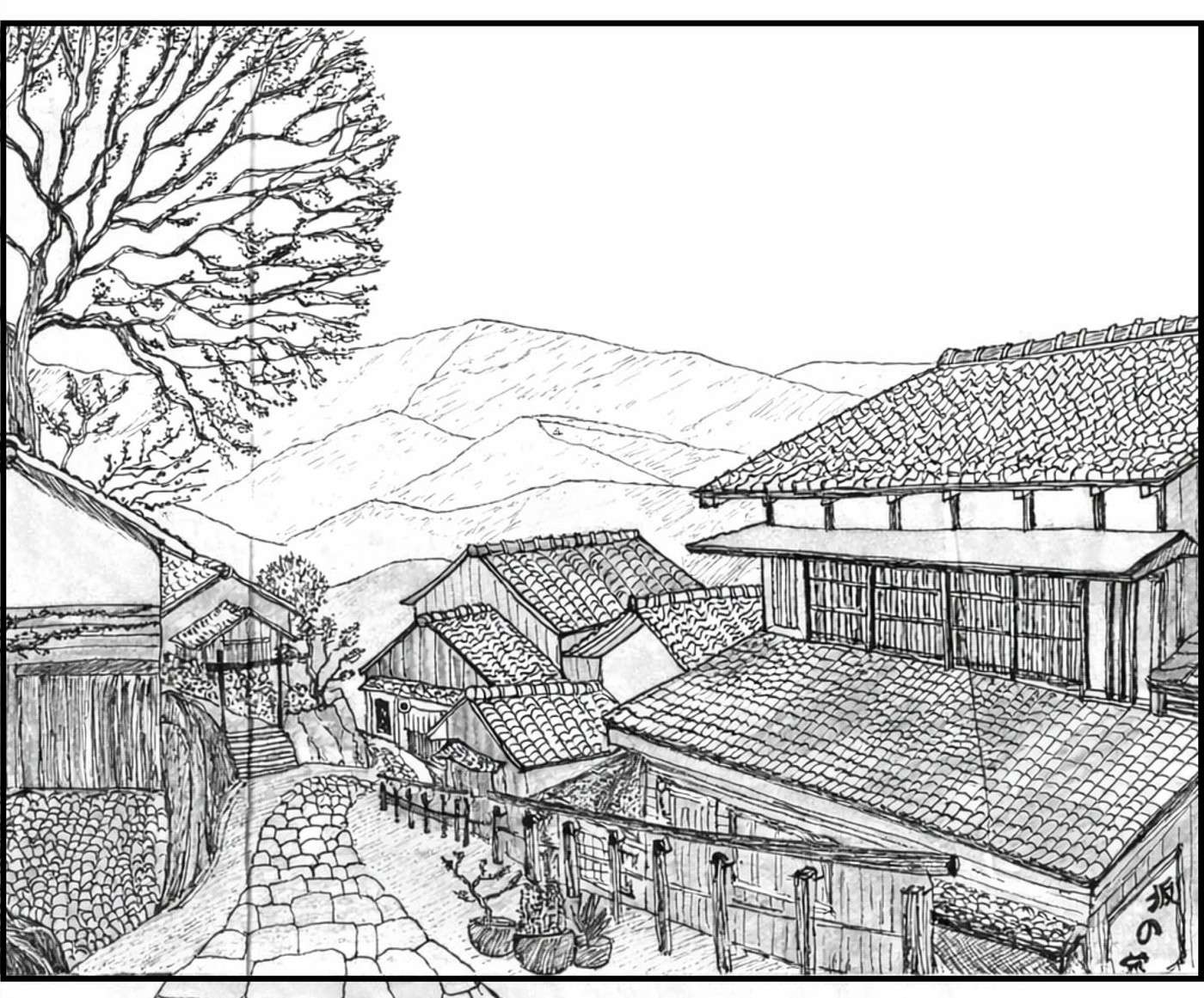
Third antidote: Small towns in rural areas, even touristy ones—here, the traditional district of Takayama in the Japanese Alps:

In Tokyo, a few pockets still remain, like in the Ningyocho district—Amazake Yokocho street, the Okannon-ji temple, and if you love daifuku mochi, don’t miss the Ginze Aakebono pastry shop nearby.
To be continued!

Draw Me Your Japan...

Fabhyène · 2026-06-07

The Taste of Japan

Going to Japan is also about experiencing a wonderful culinary adventure.

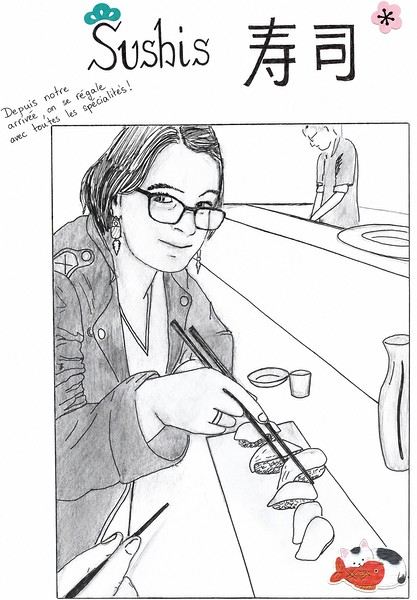
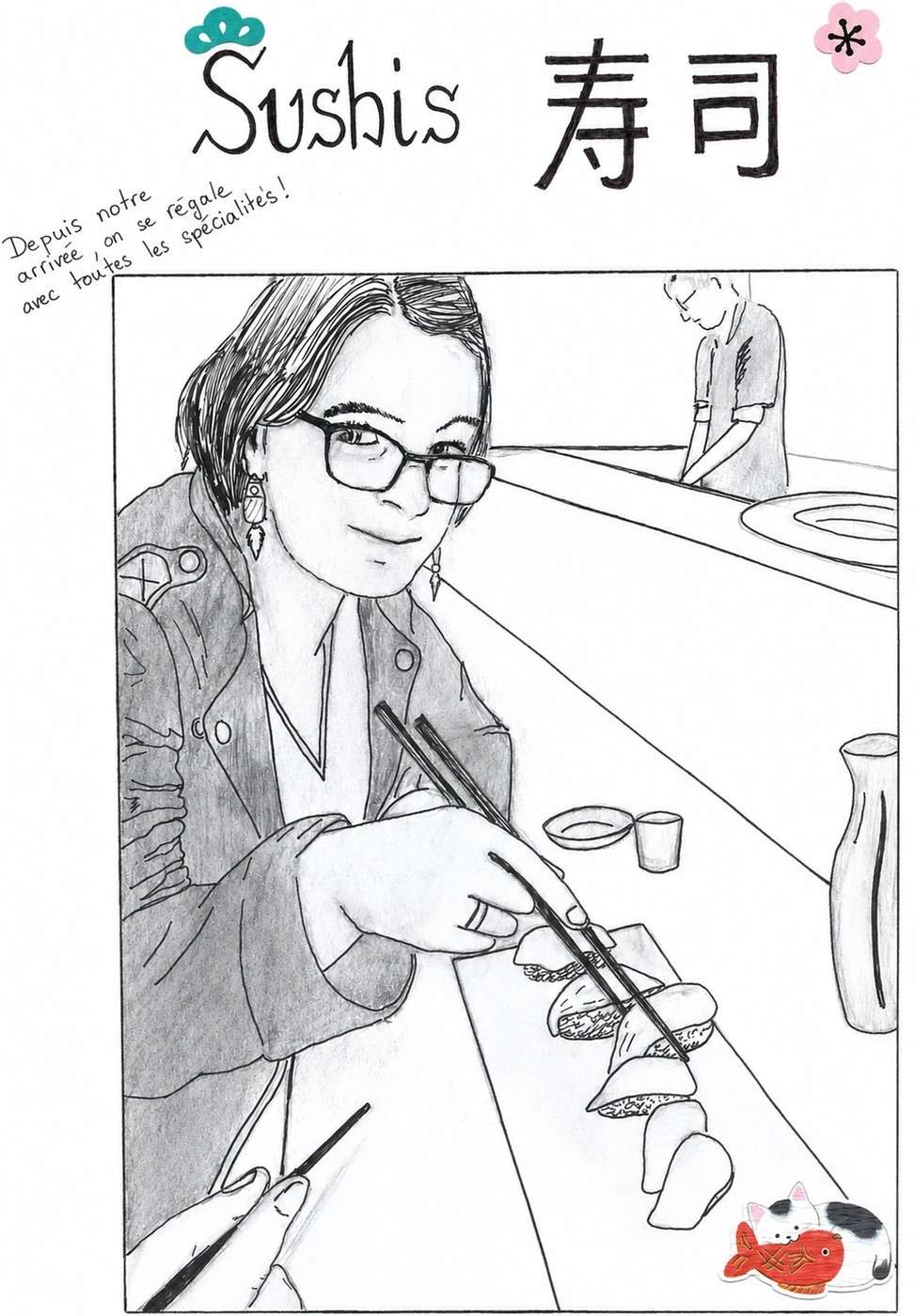
We delighted in (and were occasionally surprised by) the mosaic of Japanese cuisine and its hyper-specialized restaurants: when you go out with a group, you have to agree BEFOREHAND on what you’re going to eat! Of course, we paid homage to raw fish in all its forms (which, for simplicity’s sake, I’ll just call sushi), with a preference for tuna or other local fish. We try to avoid salmon, since it’s the result of a highly effective Norwegian marketing campaign that’s managed to make salmon a staple since the 90s, and we prefer other fish. We enjoyed ourselves everywhere, with a special mention for the ones we tasted in Kanazawa, right in the heart of Omicho Market.

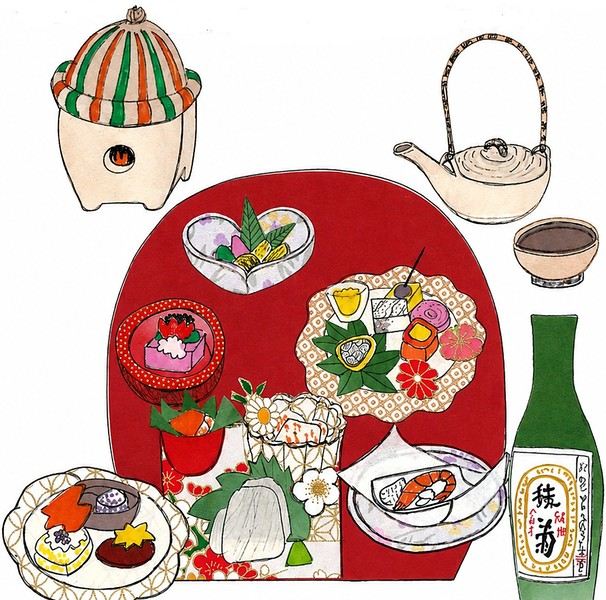
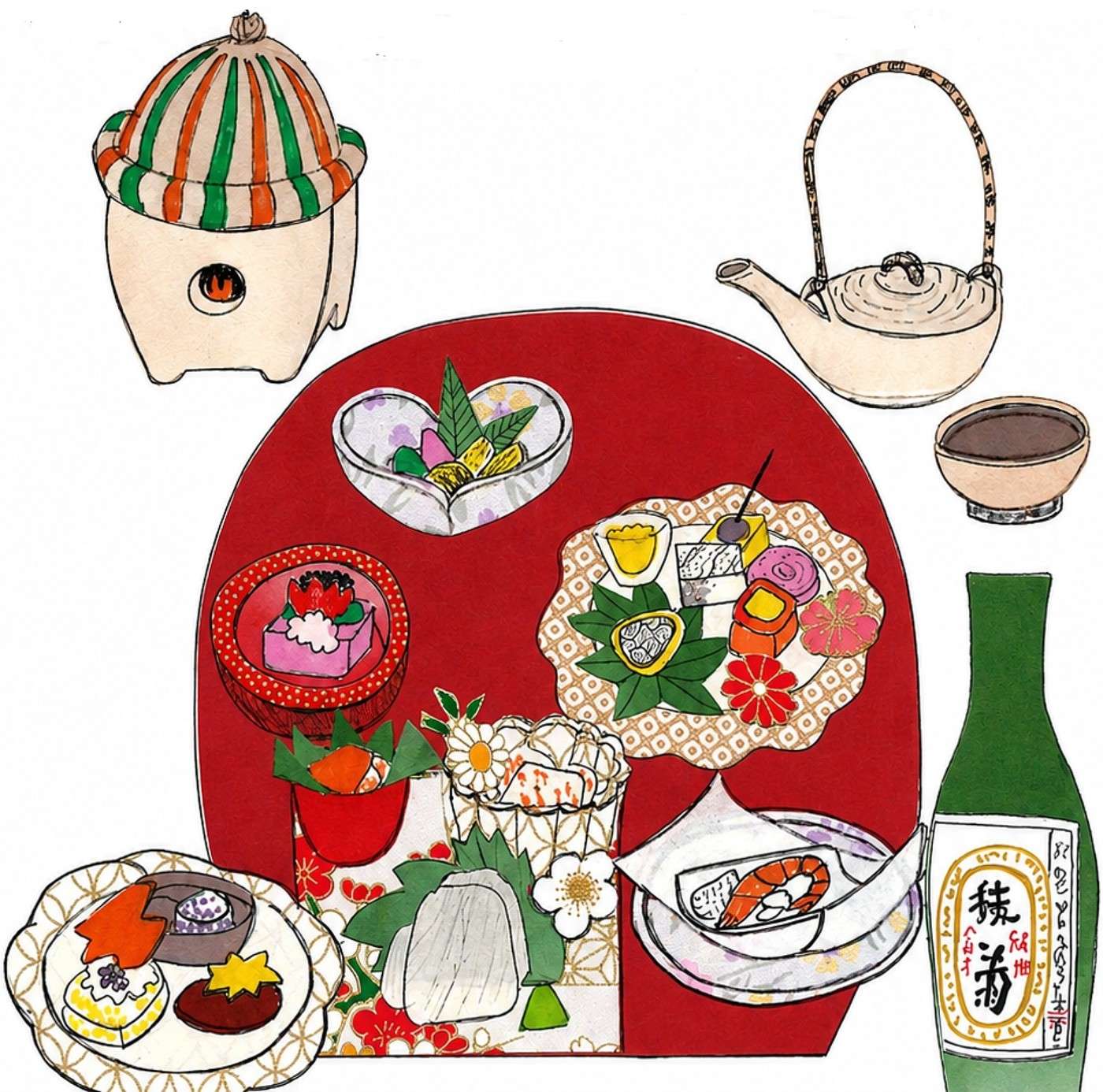
Next, it’s highly recommended to treat yourself to at least one traditional dinner at a ryokan, with its succession of small dishes served on adorable tableware. Your palate, sometimes bewildered, will appreciate (or not—but that’s part of the discovery) a mix of boiled, pickled, grilled, raw, steamed, fried, and marinated flavors. Our senses are fully engaged, and we encounter tastes we’re not used to. Below, a collage and drawing representing the traditional dinner we had at an onsen inn in Hakone. The service was impeccable, and the experience was elevated by good sake, sipped throughout the meal like wine. That night in Hakone, we dined in our traditional apartment, and the futon wasn’t far from the table—lucky for us! Before dinner, we’d soaked in the hot springs and each had a bottle of beer… not to mention the sake…
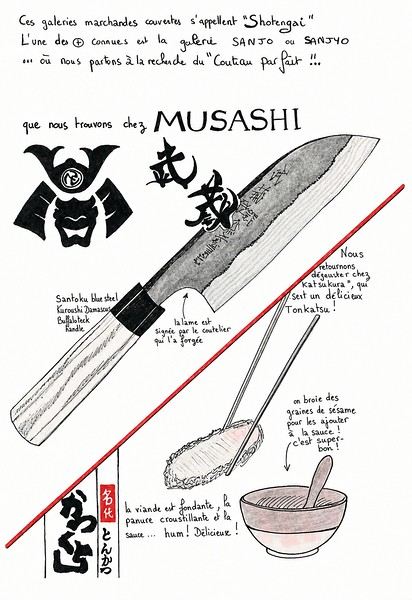
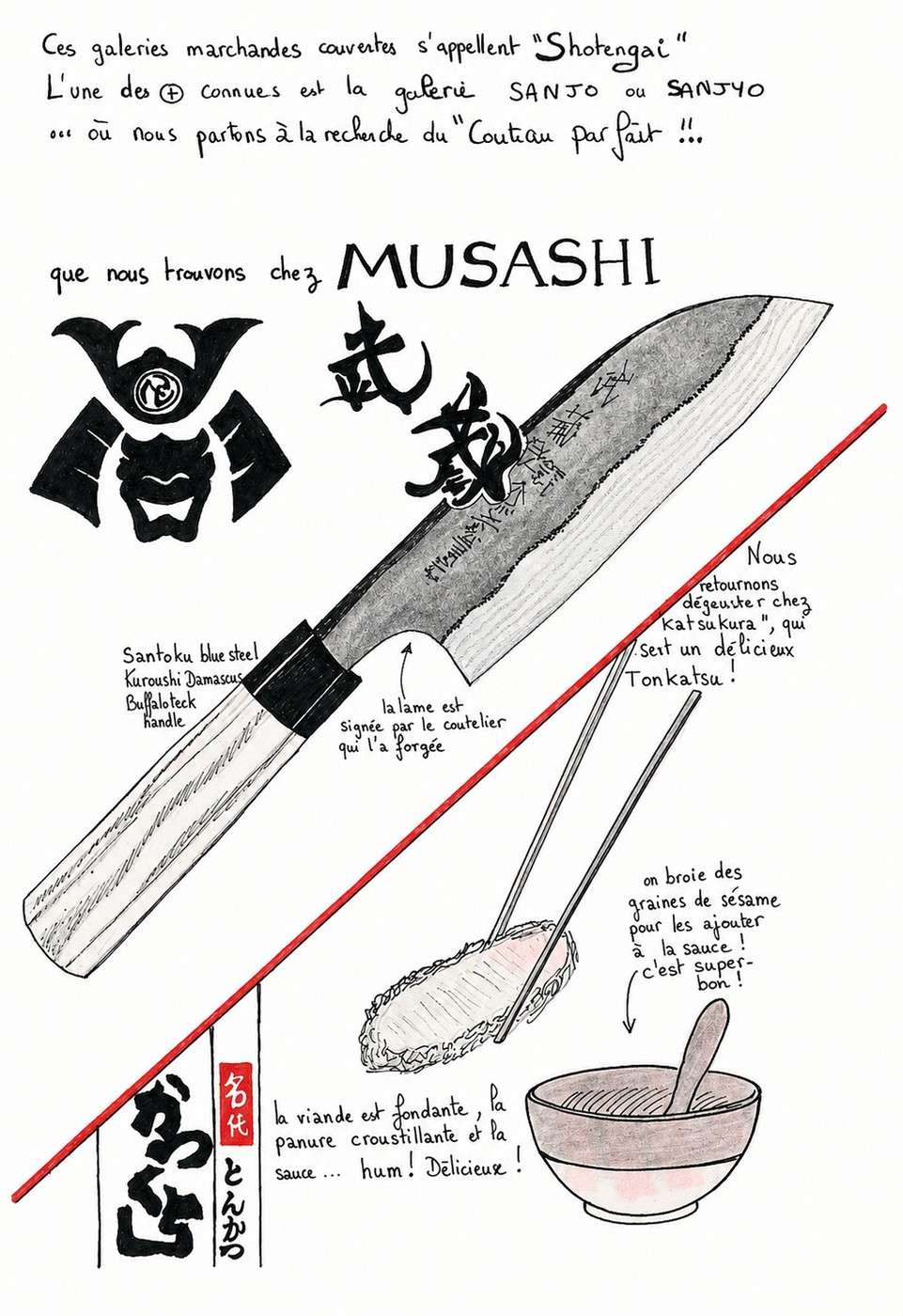
Moving on from those indulgences… I also discovered *tonkatsu*, which I’d never tried before. It’s a crispy fried cutlet served with a sauce topped with sesame seeds that you crush at the table in a special bowl with a wooden pestle (bottom of the image below; the top shows the gorgeous knife we treated ourselves to):

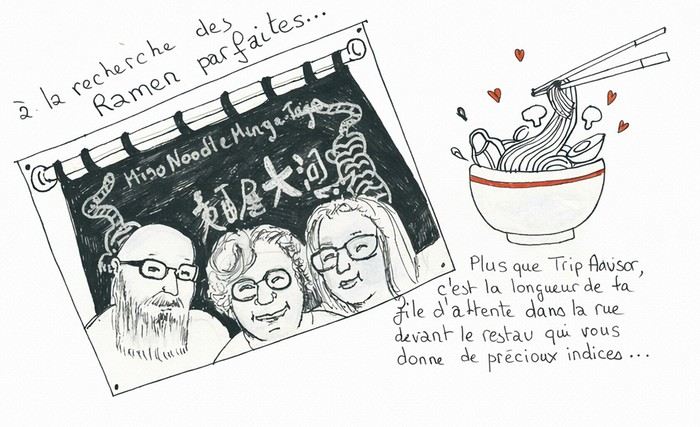
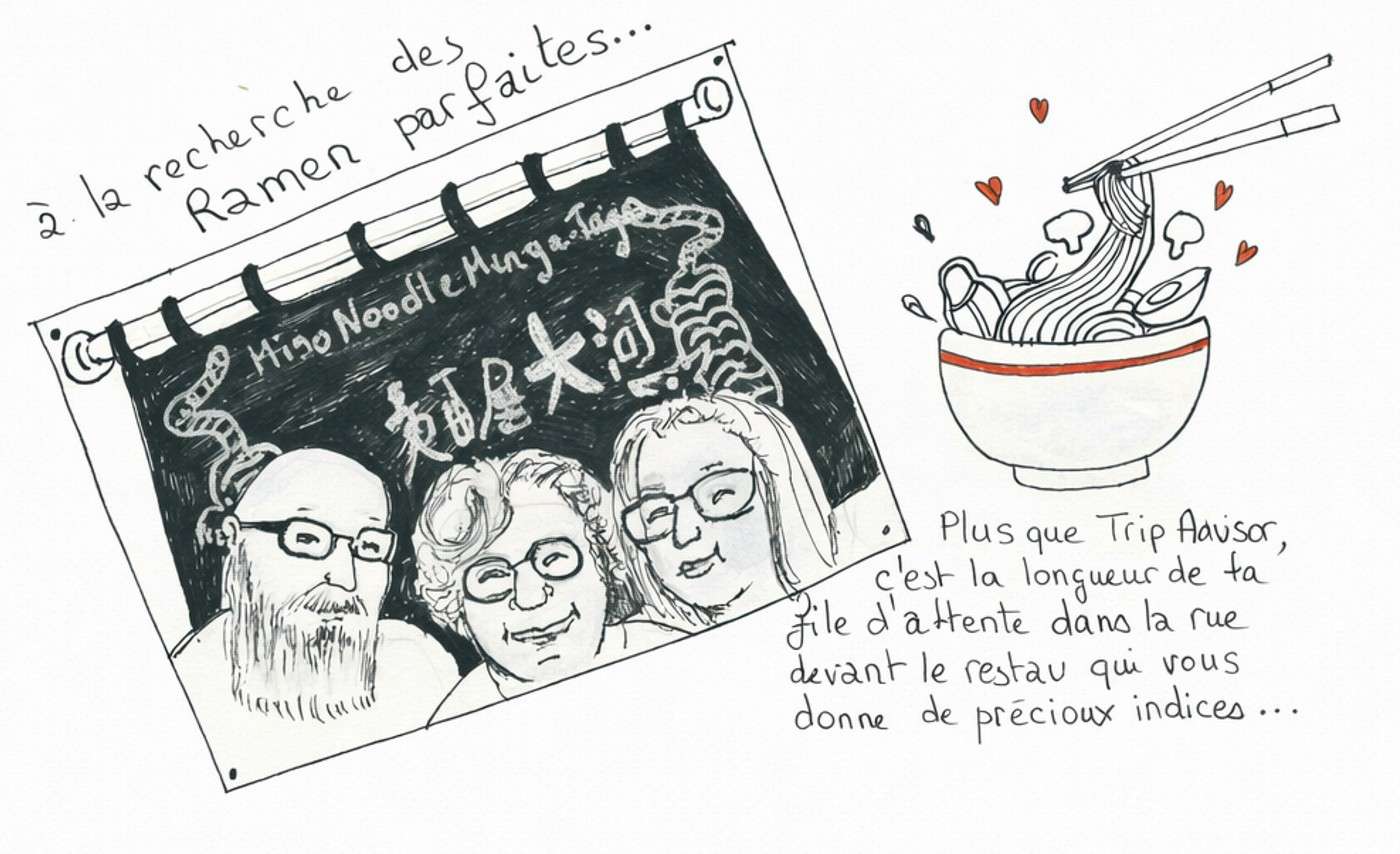
And of course, the different types of noodles, like the delicious buckwheat soba or ramen, which you often enjoy at the counter of tiny, packed restaurants… the length of the line outside is usually a good sign (especially if it’s not just tourists).
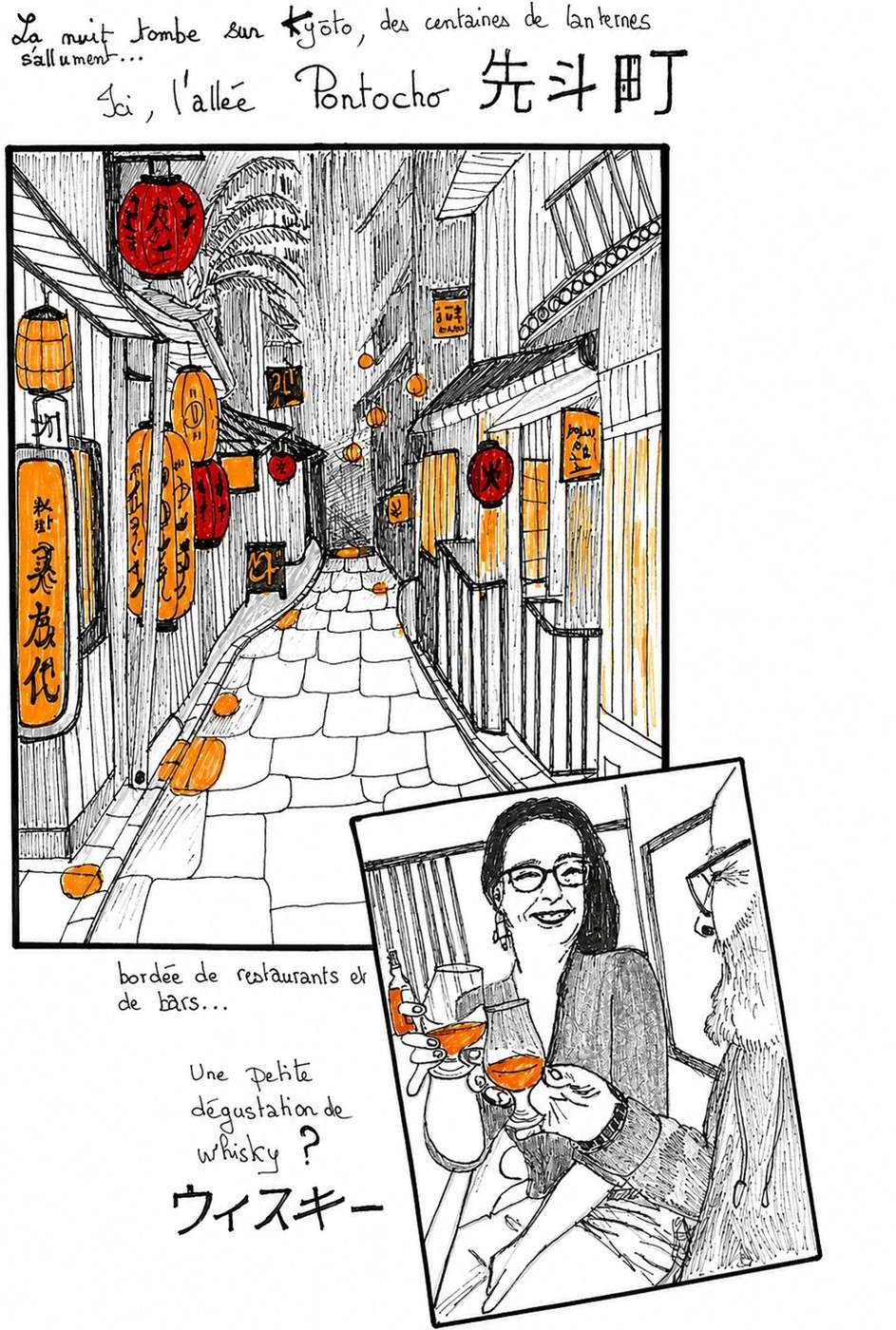
To wrap up, what’s better than a chill evening with music or a good whisky tasting?

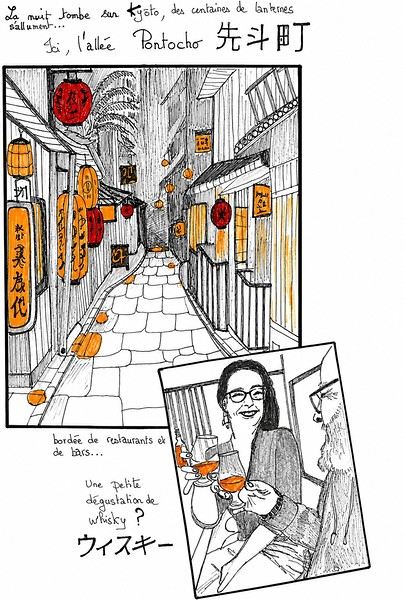


Travel is a kind of suspended moment, where, free from everyday worries and stress, you can make the most of these shared experiences for the greatest happiness with our daughter.
To be continued!

Draw Me Your Japan...

Fabhyène · 2026-06-07

You might think, dear reader, that nothing can stop me once I get started... And it's true—I just can't help it! Plus, I've wanted to share about Japan for so long that I'm thrilled to have finally found the thread to follow (even if it's a bit scattered—though I can make sense of it, and that's what matters).

For what will probably be my last post of the day (there *is* life outside Voyage Forum, after all ;)), I want to share my love for Japanese drawing and my admiration for their genius.

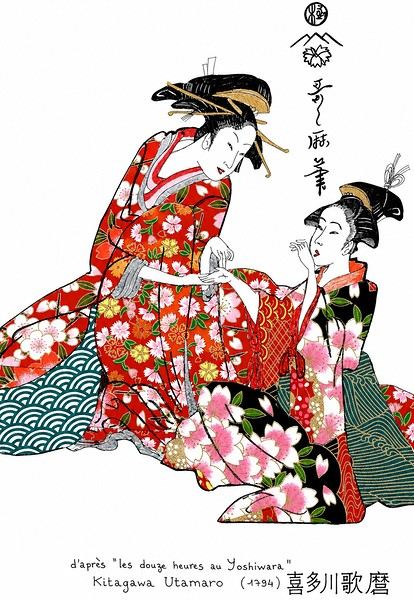
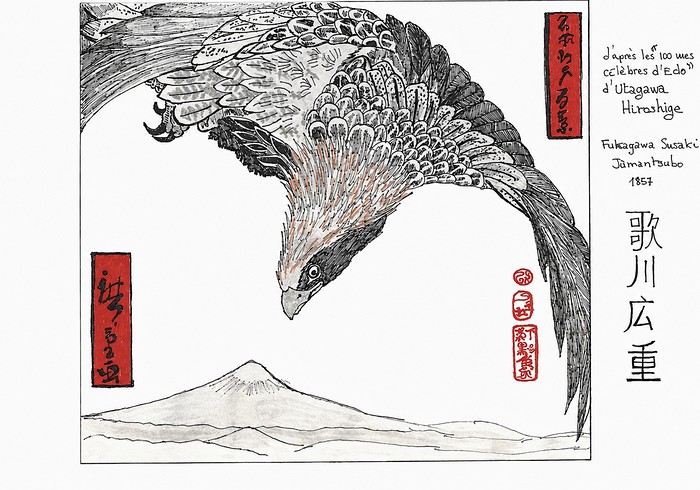
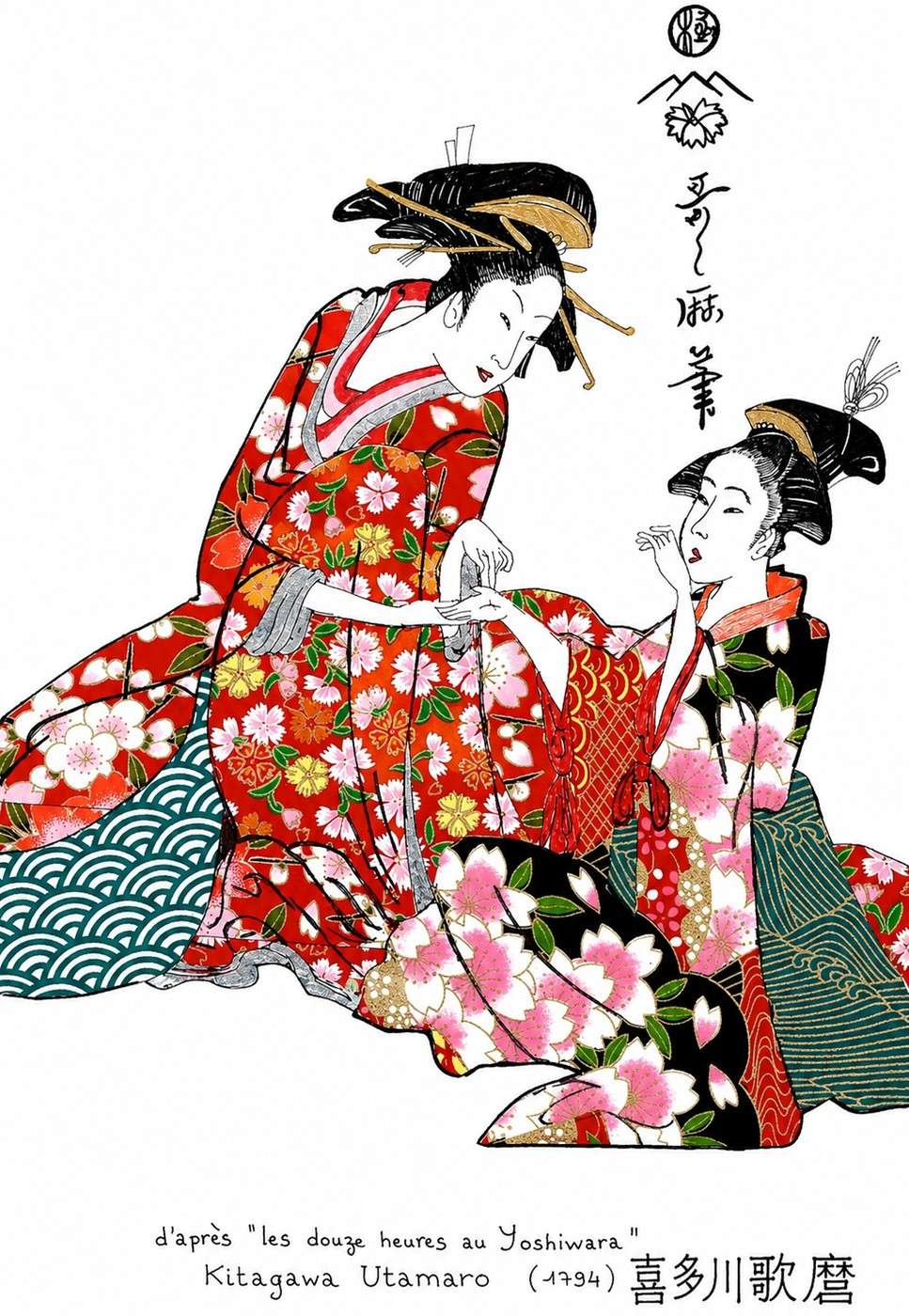
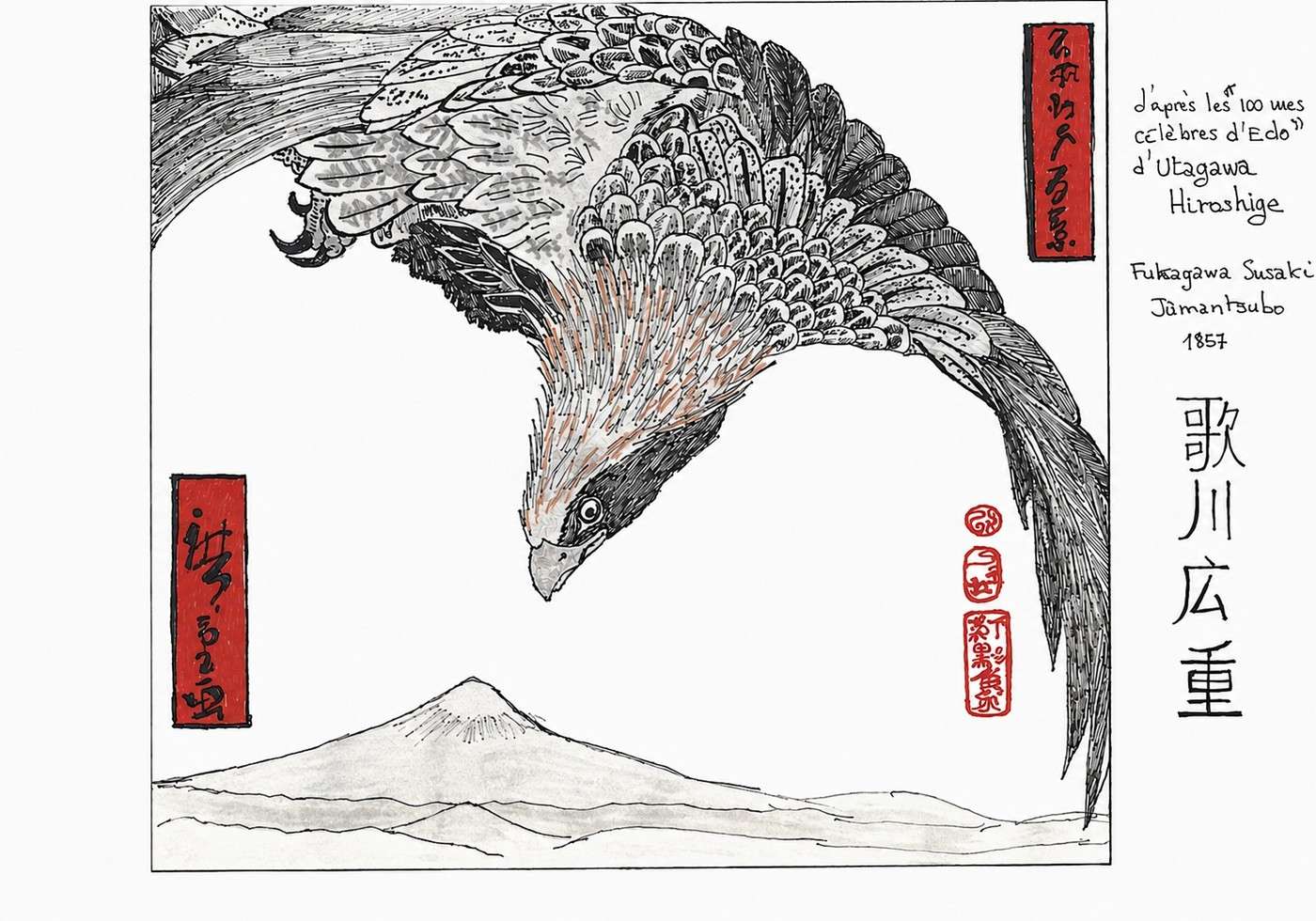
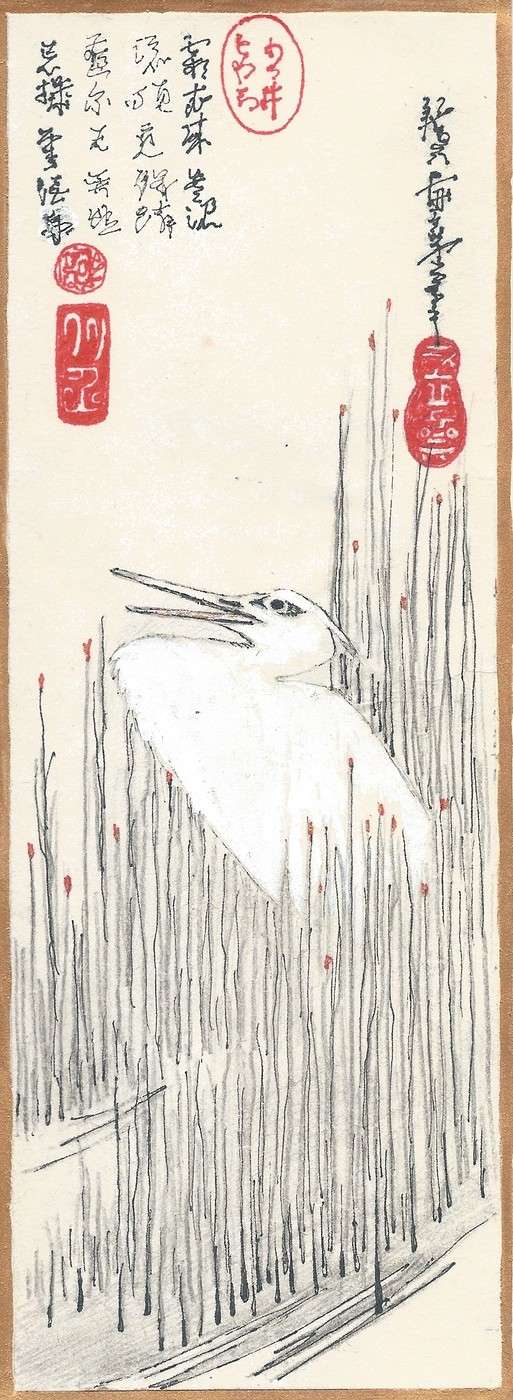
· This is without pretension, especially since during my first trip, I didn’t have the time to explore everything I wanted—particularly the full spectrum of modern graphic art. We’ll stick to the "classic" stuff for now, but since we’ve decided to return to Japan in autumn 2027, I’ll make sure to dive deeper then! Here, I’ll just pay tribute to some great "classic" artists, like Kitagawa Utamaro (first image, drawing and collage) and Utagawa Hiroshige (the next two). Of course, Katsushika Hokusai is a must, but sorry—I didn’t reproduce him in my travel journal. In the 19th century, Western artists were blown away by their discovery of these works, and they had a decisive influence on some of our great Impressionist painters.


(Above, I modified the original by adding Mount Fuji) I highly recommend visiting the Tokyo National Museum, where you can admire magnificent prints.
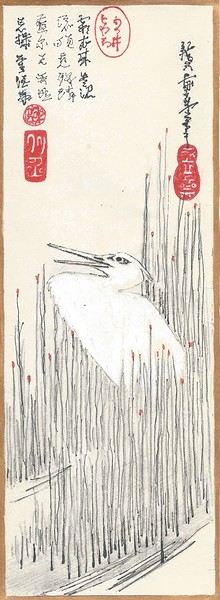
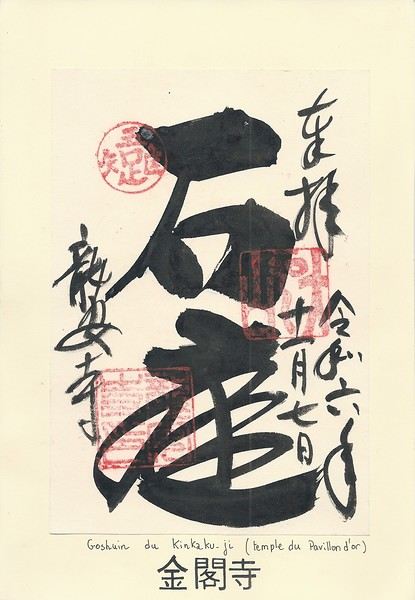
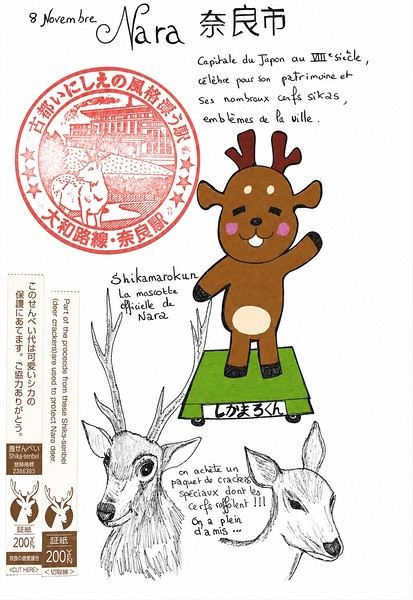
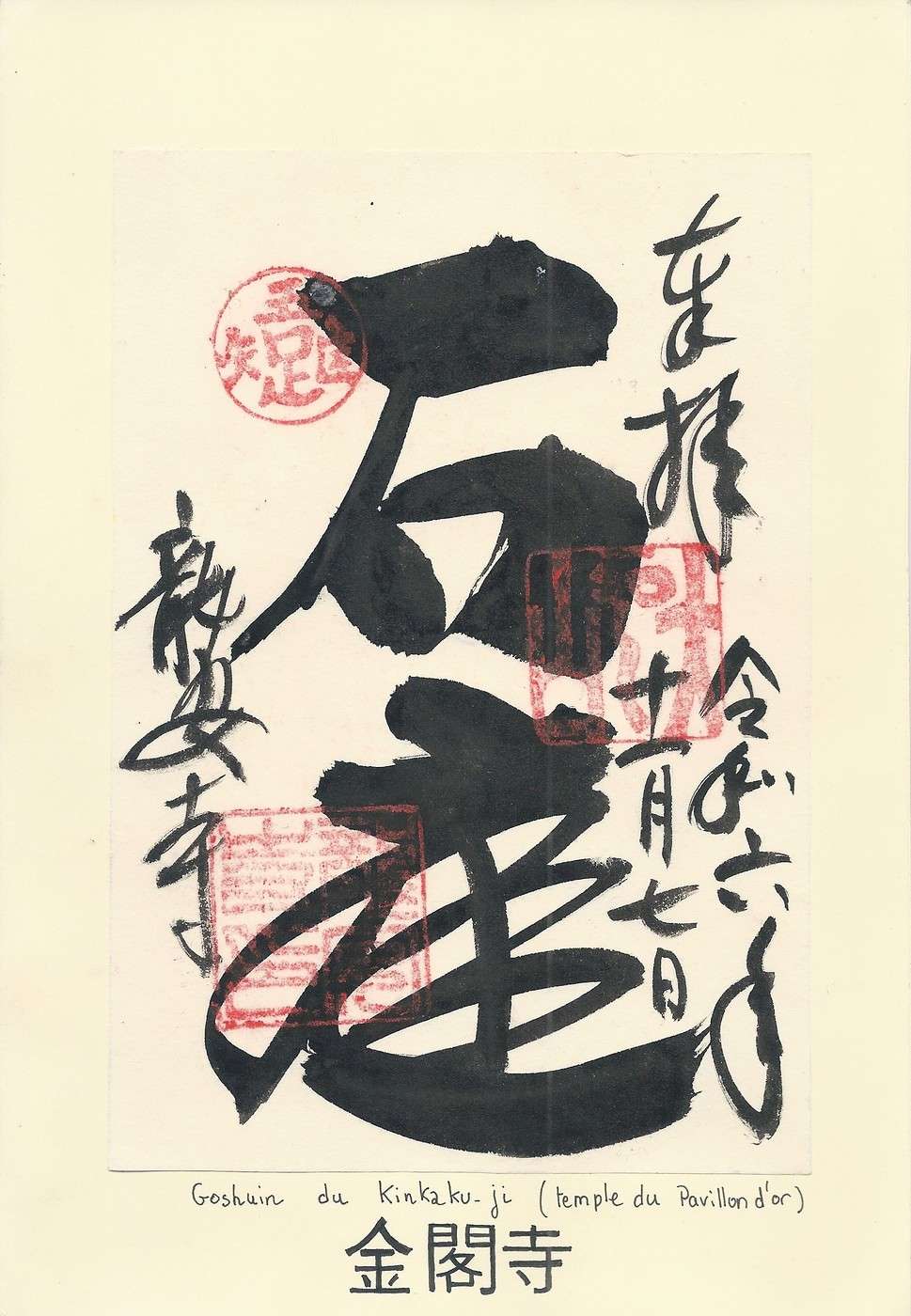
I’d also like to include calligraphy in this tribute. Below isn’t a reproduction by my hand but a *goshuin*—one of those seals you can get as an offering at a temple. In most temples, you’ll see the calligrapher at work, chanting as they move with a fluid, masterful wrist. The best part? Bring a notebook with the right kind of paper—one that absorbs ink well. You can buy them at temple shops.


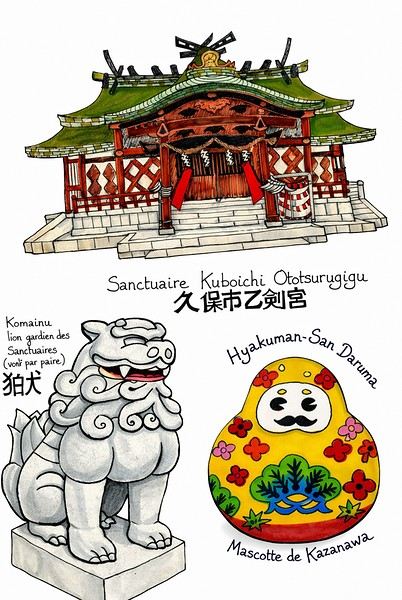
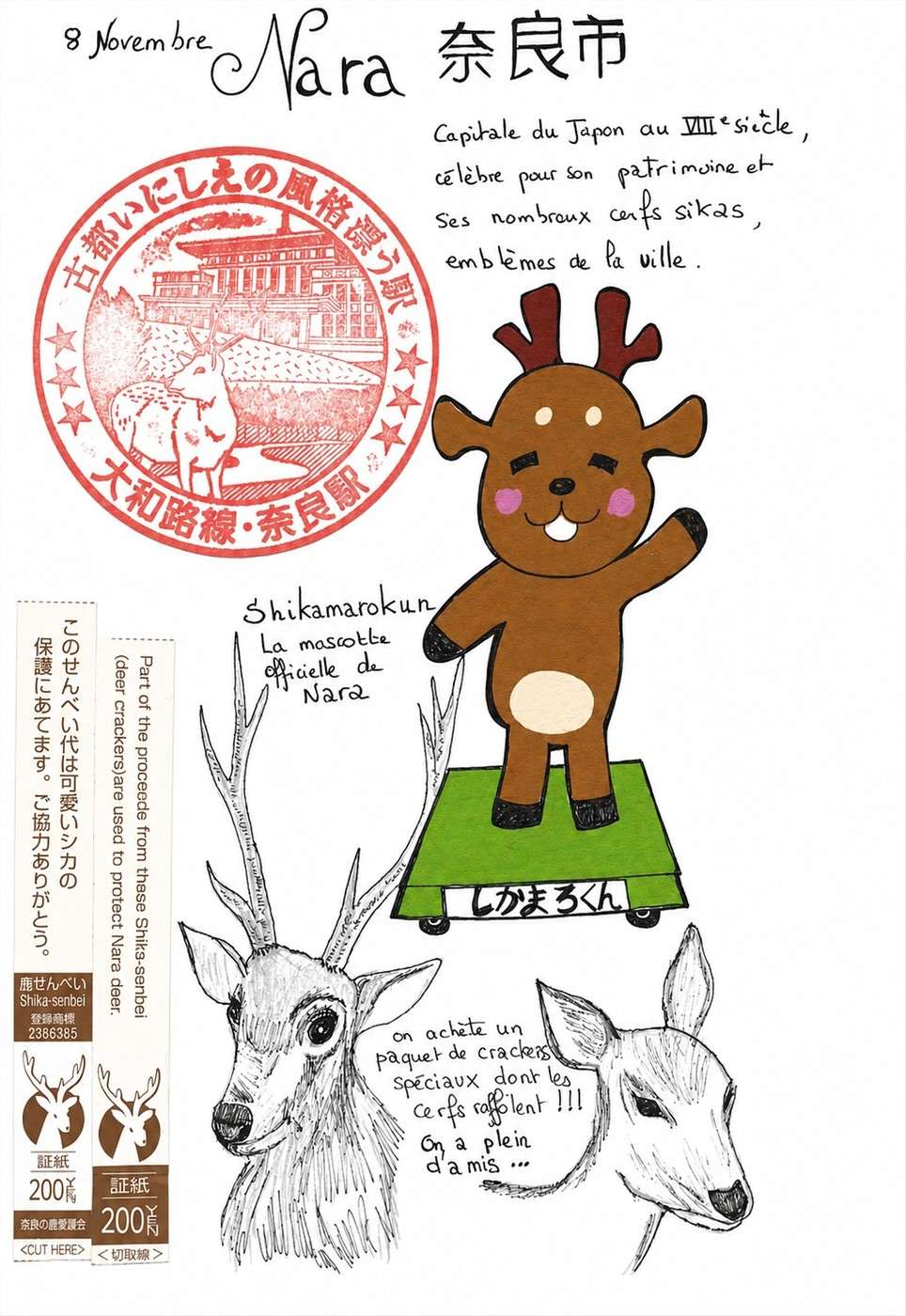
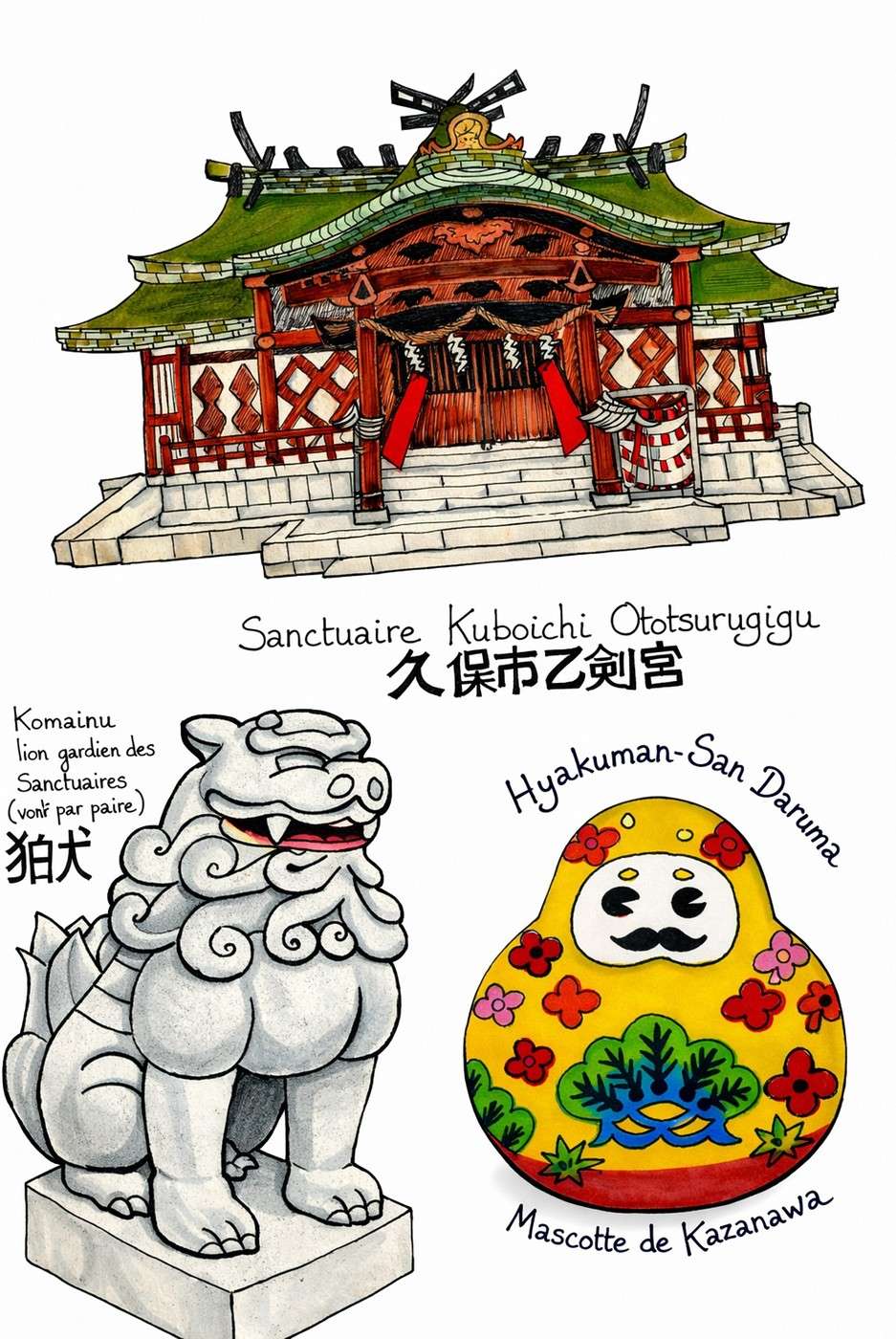
I think this heritage fuels Japanese talent for visual creation, design, animation, and even mascot-making—it’s practically a national sport! Below, you’ll see Nara’s mascot, followed by Kanazawa’s (that mustachioed ball-doll thing).


Finally, I think this also influences manga, as well as the way some young Japanese express themselves through fashion to stand out from the sometimes *very* conformist norms of Japanese society—like these girls we saw on Takeshita Street in Tokyo.


That’s all for this slightly rambling stroll—I hope you enjoyed it! Until next time.

Draw Me Your Japan...

Sinforosa · 2026-06-07

Hello,

Congrats on this AMAZING travel journal! Have you thought about publishing your awesome sketches?

I’ll be following along with interest—I’m thinking of heading to Japan in 2027 (this year it’s South Korea for me).

Keep up the great work! !

Draw me your Japan...

Fabhyène · 2026-06-07

Hello,

Congrats on this AMAZING travel journal! Have you thought about publishing your beautiful sketches?

I’ll be following along with interest—I’m planning to go to Japan in 2027 (this year it’s South Korea for me).

Bravo again!

Thanks, Marie, that really warms my heart. This journal is a modest project with two goals: 1) to bring *me* a lot of joy and satisfaction in creating it (I’m pretty proud of myself), and 2) to let me share with my friends in a simpler way than an avalanche of photos. I figured I could share it with the VoyageForum community too, but that’s it!

South Korea... Yes, we’ll add it to our list. Our daughter, who joined us on our trip to Japan, had previously traveled to Korea with her friends, and she loved it!

Best regards

Draw me your Japan...

Bluequark · 2026-06-07

Thanks for this really lovely and original travel journal. I love the drawings, I love your comments, I love the vibe it gives off... in short, I love it a lot! !

Draw me your Japan...

Xrctn · 2026-06-08

The wait was totally worth it! A gorgeous original travel journal, beautifully illustrated. Thanks! And here’s one more addict to this fabulous Japan!!! Welcome to the club.

Draw me your Japan...

Fabhyène · 2026-06-08

Thanks for this really lovely and original travel journal. I love the drawings, I love your comments, I love the vibe it gives off... in short, I love it a lot!

Thanks so much! 😎

Draw Me Your Japan...

Fabhyène · 2026-06-08

The wait was totally worth it! A gorgeous original travel journal, beautifully illustrated. Thanks! And here’s another addict joining the fabulous Japan fan club!!! Welcome to the club.

Thanks! Yep, we’re hooked now...

Draw Me Your Japan...

Muriel18 · 2026-06-08

I love this travel journal illustrated with amazing drawings instead of the usual photos. Can't wait for the next installment! 🙂

Draw Me Your Japan...

Fabhyène · 2026-06-08

I love this travel journal illustrated with gorgeous drawings instead of the usual photos. Can't wait for the next part! 🙂

Thanks Muriel! Glad you liked this share.

Draw Me Your Japan...

Fabhyène · 2026-06-08

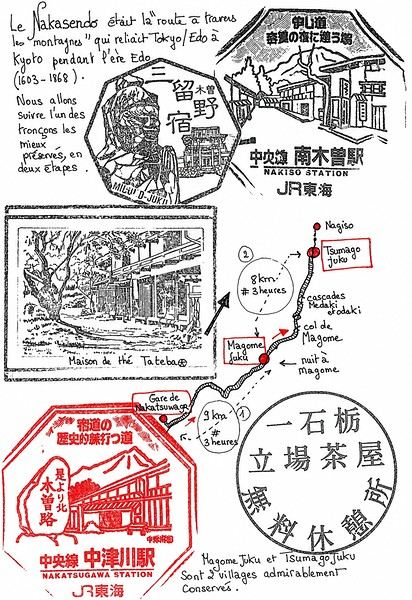
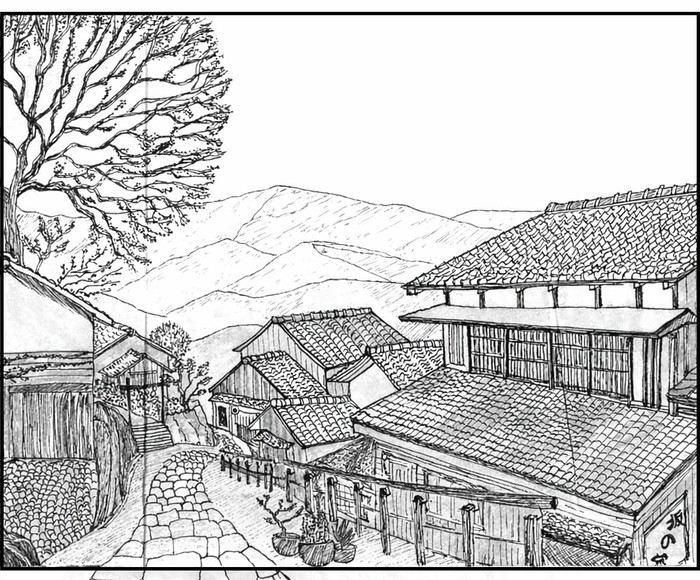
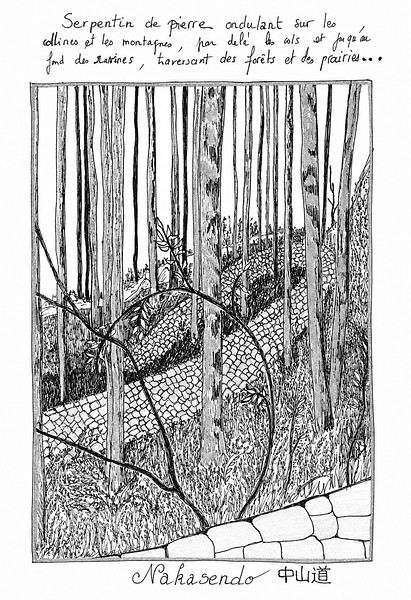
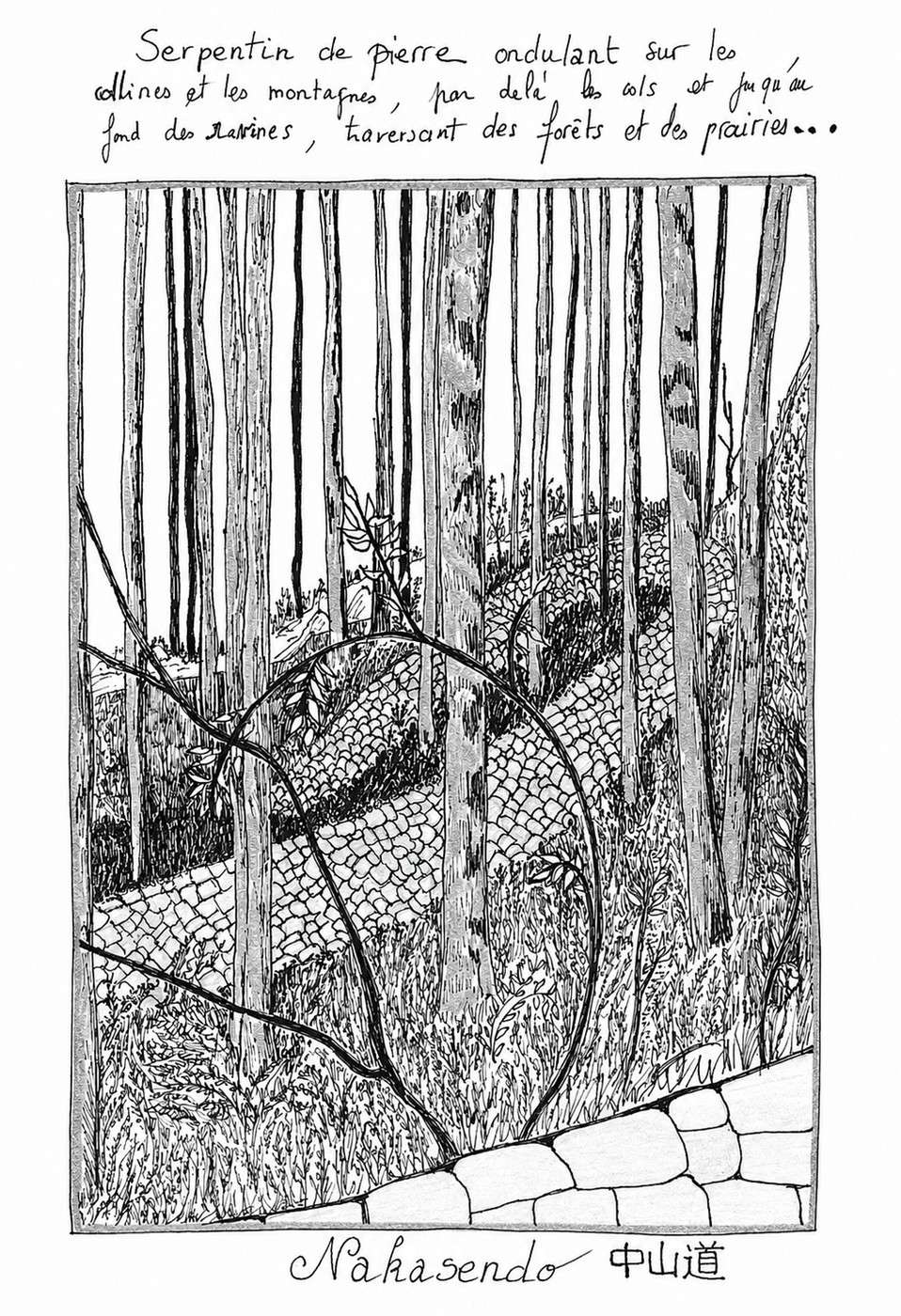
The Nakasendo “We want to see the wizard, the wonderful wizard of Oz,” sang Judy Garland. Some people won’t get the reference, oh well—but as I walked that paved path winding through the hills, that tune kept playing in my head, even though I wasn’t wearing ruby slippers.

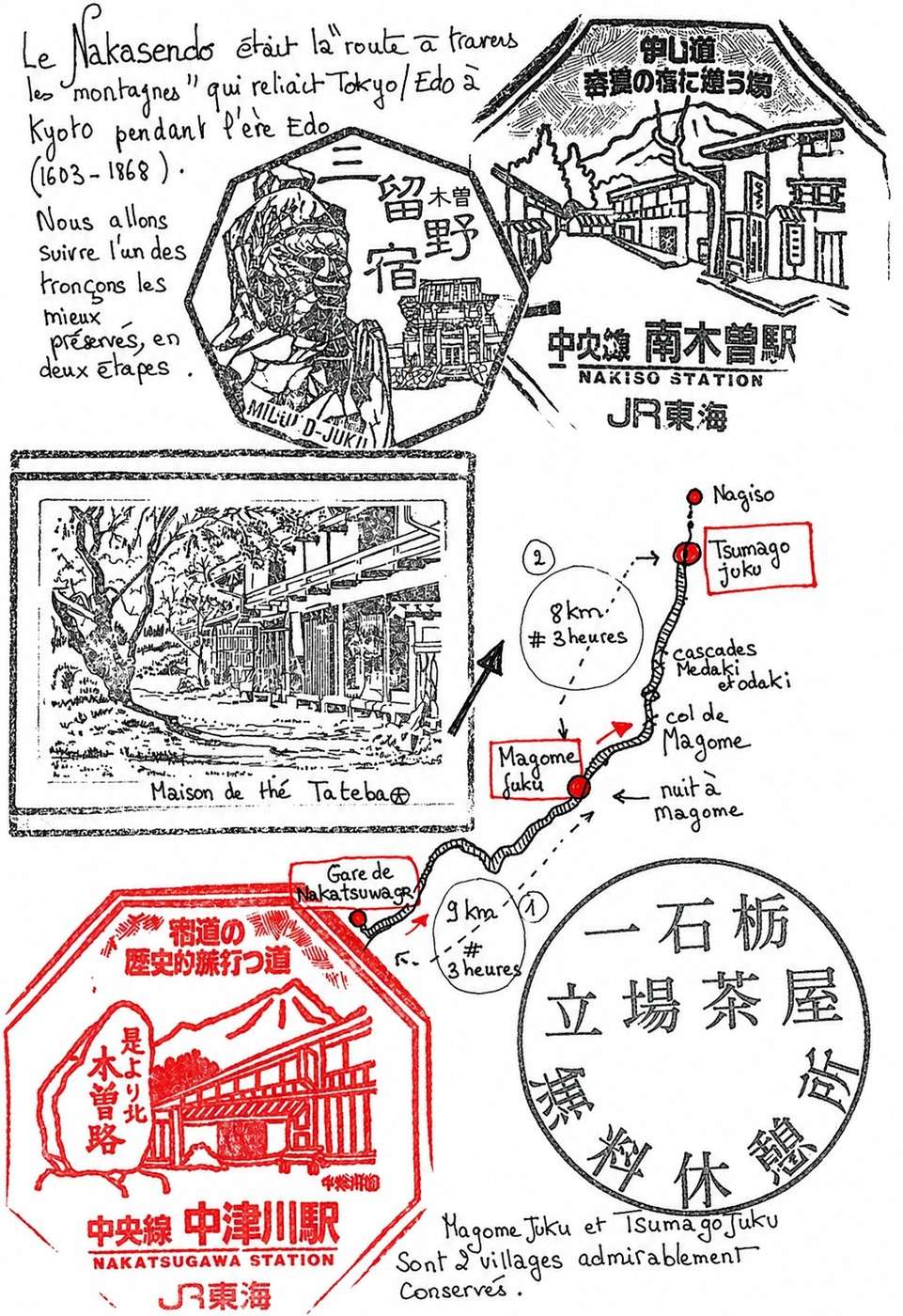
The Nakasendo was “the road through the mountains” that connected the old capital, Kyoto, to the city of Edo (now Tokyo) during the Edo period (17th–19th century). Only a few original sections remain, restored, where you can still hike today. That’s exactly what we did, and we loved every minute of it.

Below is the route we took—just under 20 km on foot, crossing hills, valleys, deep ravines with cascading waterfalls, and majestic forests. A stunning landscape with countless viewpoints. Experienced hikers could do it in a day, but we split it into two, with a lovely stopover in the beautiful village of Magome.

Our hike started at Nakatsugawa Station, where we arrived around 11:30 AM (coming from Hakone via Nagoya). After grabbing some picnic supplies, we quickly found the Nakasendo, which is very well marked. We were traveling light—our big bags had been sent ahead 24 hours earlier from Tokyo straight to Matsumoto, so we only had small backpacks for 3 days and 2 nights.

We left the inhabited areas behind and ventured into the countryside. We stopped here and there, passing a few hikers going the opposite direction. A group overtook us, but we took our time, enjoying the spring-like sun—even though it was October 31st! The scenery was breathtaking. What did it look like three centuries ago?

With all our stops and not being seasoned hikers, we arrived in Magome-juku around 4 PM. The village, straddling the Nakasendo as it climbs almost straight up the hill, was a prosperous post town during the Edo era before fading into obscurity when the Nakasendo was replaced by other routes (and the train). But its revival came decades ago, thanks to hiking tourism. It now appears just as it did in the 18th century, beautifully restored.

A perfect spot for an evening and overnight stay in a traditional inn. The next morning, we set off again under bright sunshine. The toughest part for us was the trail up to Magome Pass (though for experienced hikers, it’s a breeze).

After the pass, we crossed vast forests. The tall, slender trees let the sunlight filter through, making the paving stones glisten. The Nakasendo looked like a long silver ribbon (and yep, Judy Garland was back in my head).

The path was sublime. We stopped at the Tateba teahouse and took a detour to admire the waterfalls.

This is also where I should mention Tanuki. It’s when you’re walking that you notice the little details, and that’s when I really started spotting these ceramic figures. I saw them everywhere afterward—outside shops and restaurants, but also in the countryside, next to the gate of an isolated house, always strategically placed to welcome visitors and bring luck and prosperity to the business or household.

At first glance, Tanuki might not seem like much—it’s actually a real animal, the raccoon dog, which looks like a badger or raccoon but is a canid. It’s also a *yōkai*, a forest spirit. It’s depicted with comically oversized testicles (I’ll get back to that) and various attributes: a straw hat to ward off trouble, a sake flask (it’s a fun-loving creature), and an empty purse (it’s not always good at paying its debts).

Tanuki has some impressive magical powers: it can shapeshift (turning into objects or other animals), its round belly serves as a hypnotic drum, and—most importantly—its testicles have multiple uses. It uses them as weapons, tools, fishing nets, umbrellas, even parachutes! According to unverifiable sources, it can stretch them to cover an area of 8 tatami mats… or even 1,000. Not bad. Either way, I found it oddly endearing.

By early afternoon, we reached Tsumago-juku, another gorgeous village. Perfect timing, too—the sky had clouded over, and rain was threatening. We took a bus to Nagiso Station, then a train to Matsumoto. We couldn’t wait to explore the Japanese Alps!

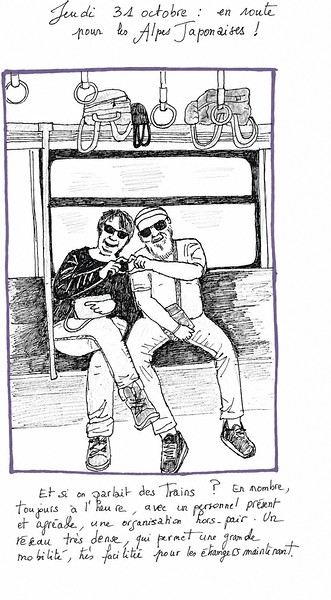
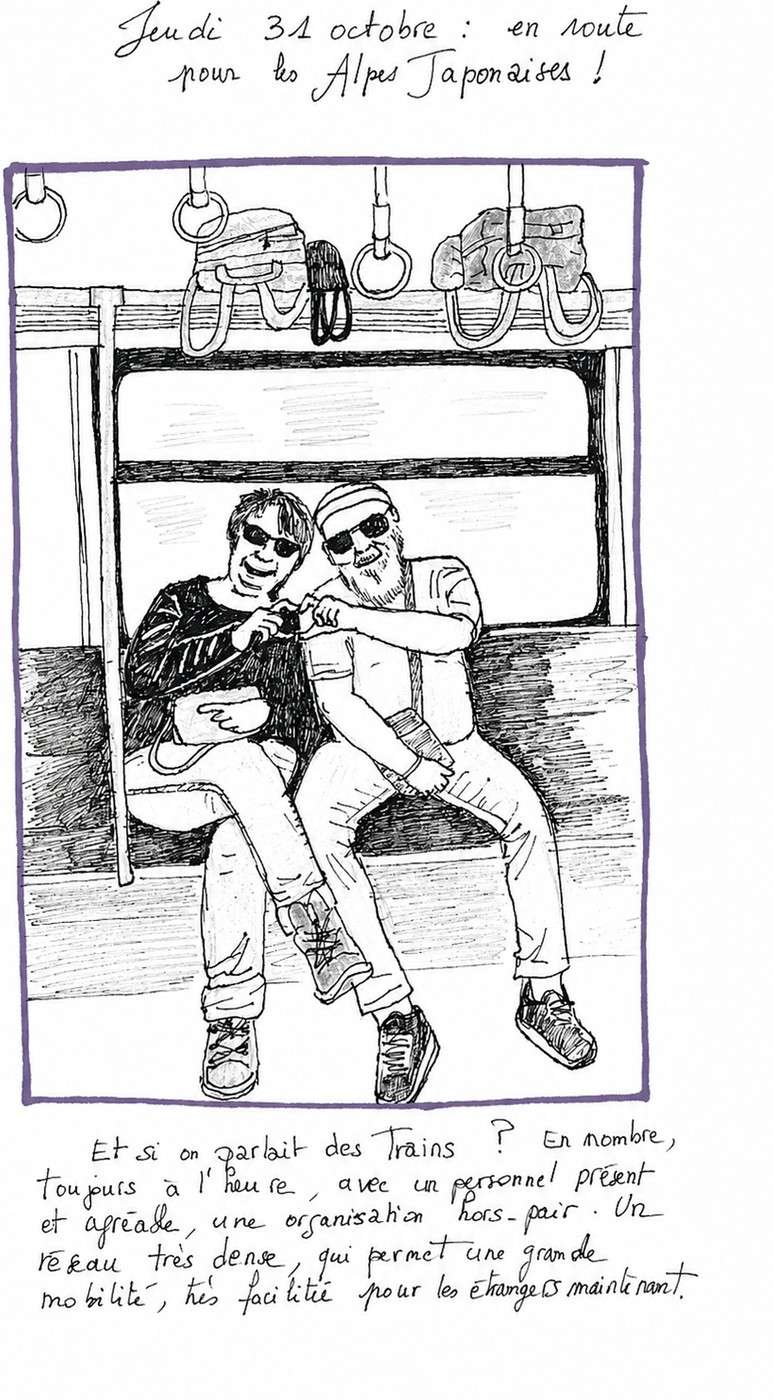
The high hills gradually gave way to mountains. Trains are often the best way to soak in the scenery, and we were spoiled—the autumn colors were just starting to take over the forests. We’re on the train, and we’re LOVING it. To be continued!

Draw me your Japan...

Fabhyène · 2026-06-08

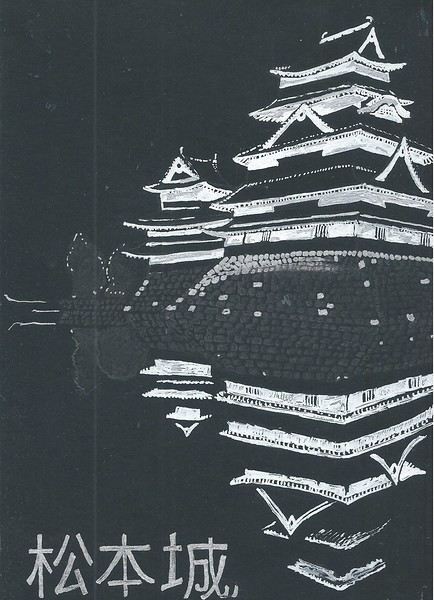
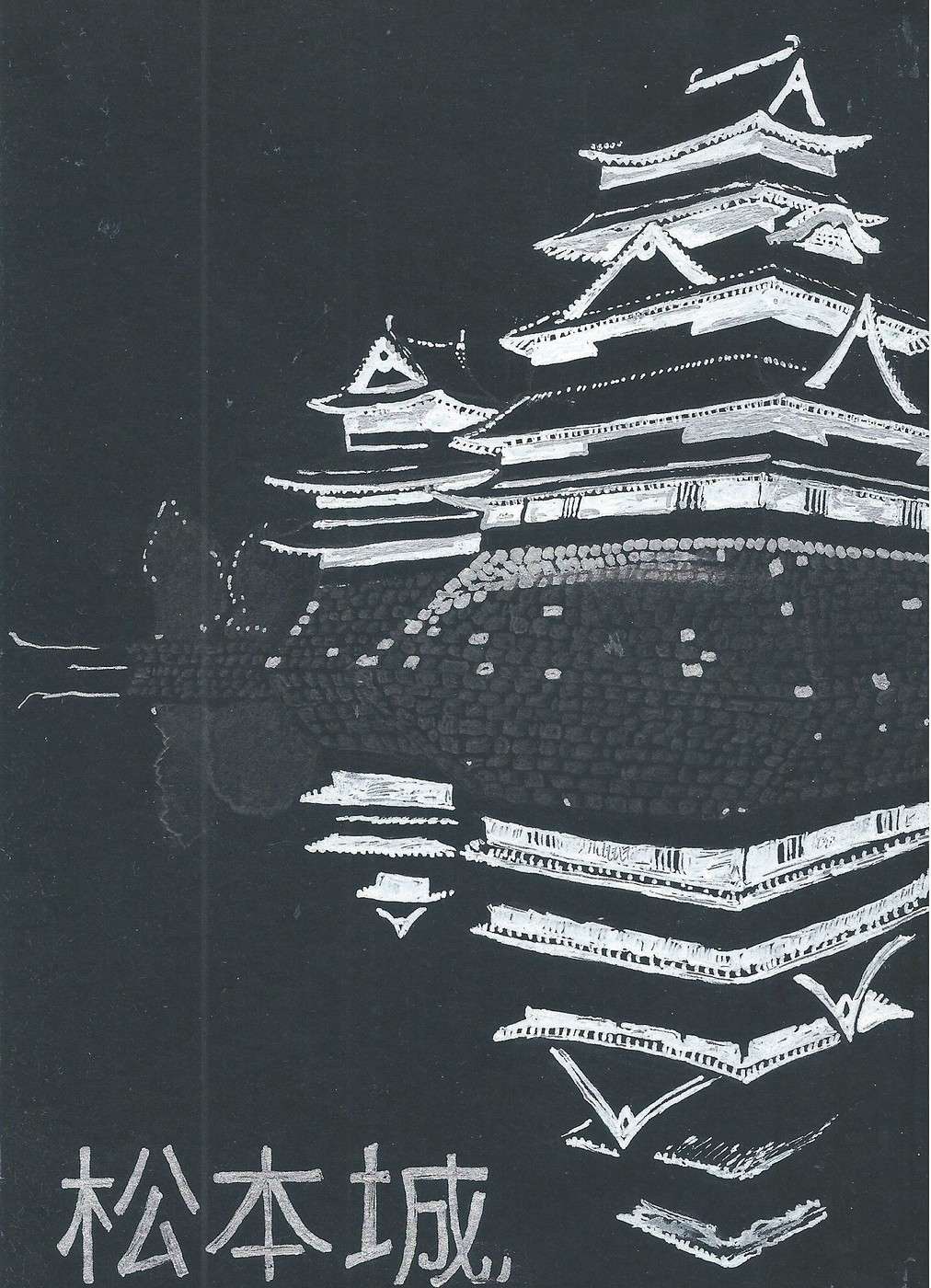
Matsumoto Castle, night. White marker and pencil on black paper. Some images stay etched in your memory for a lifetime. I think this one will be one of them, forever. Behind the scenes: we arrived in Matsumoto under pouring rain, famous for its castle but also for wasabi root, which is grown here in abundance. We head to our hotel and relax, hoping the rain will ease up. The rain stops as night falls, and we decide to walk to the castle—about 15 to 20 minutes away—before dinner. It’s already pitch dark when we arrive at the castle… and then I’m left breathless. The beauty takes my breath away. The "Black Crow," as it’s called due to the color of its wooden framework, is one of Japan’s "national treasures" because it’s one of the 12 original wooden castles still standing from the late 16th century. At night, the strategically placed spotlights illuminate only the whitewashed parts, like a giant negative, and the image is doubled by its perfect reflection in the moat. I feel like I’m INSIDE a magic lantern. We stand there, hypnotized, waiting for the black crow to take flight, like in a Miyazaki film.
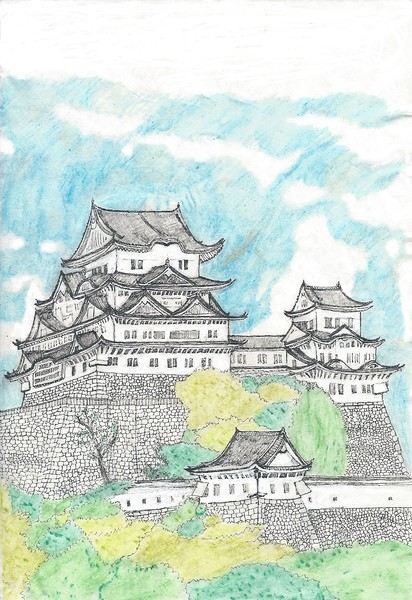
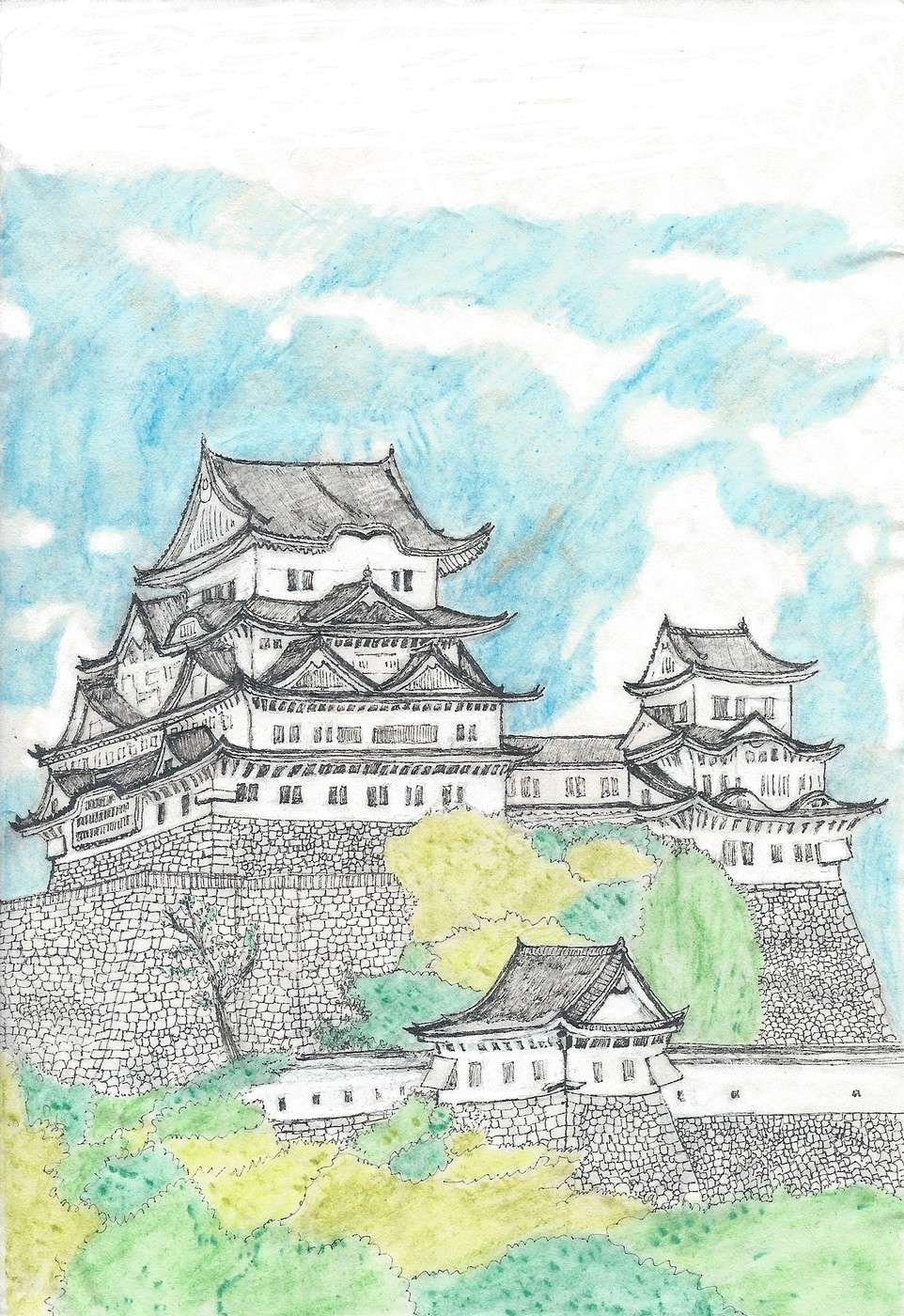
Another place, another moment... Himeji Castle, marker, pencil, watercolor
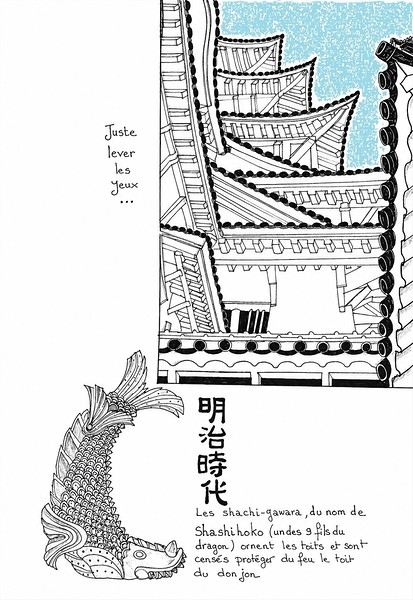
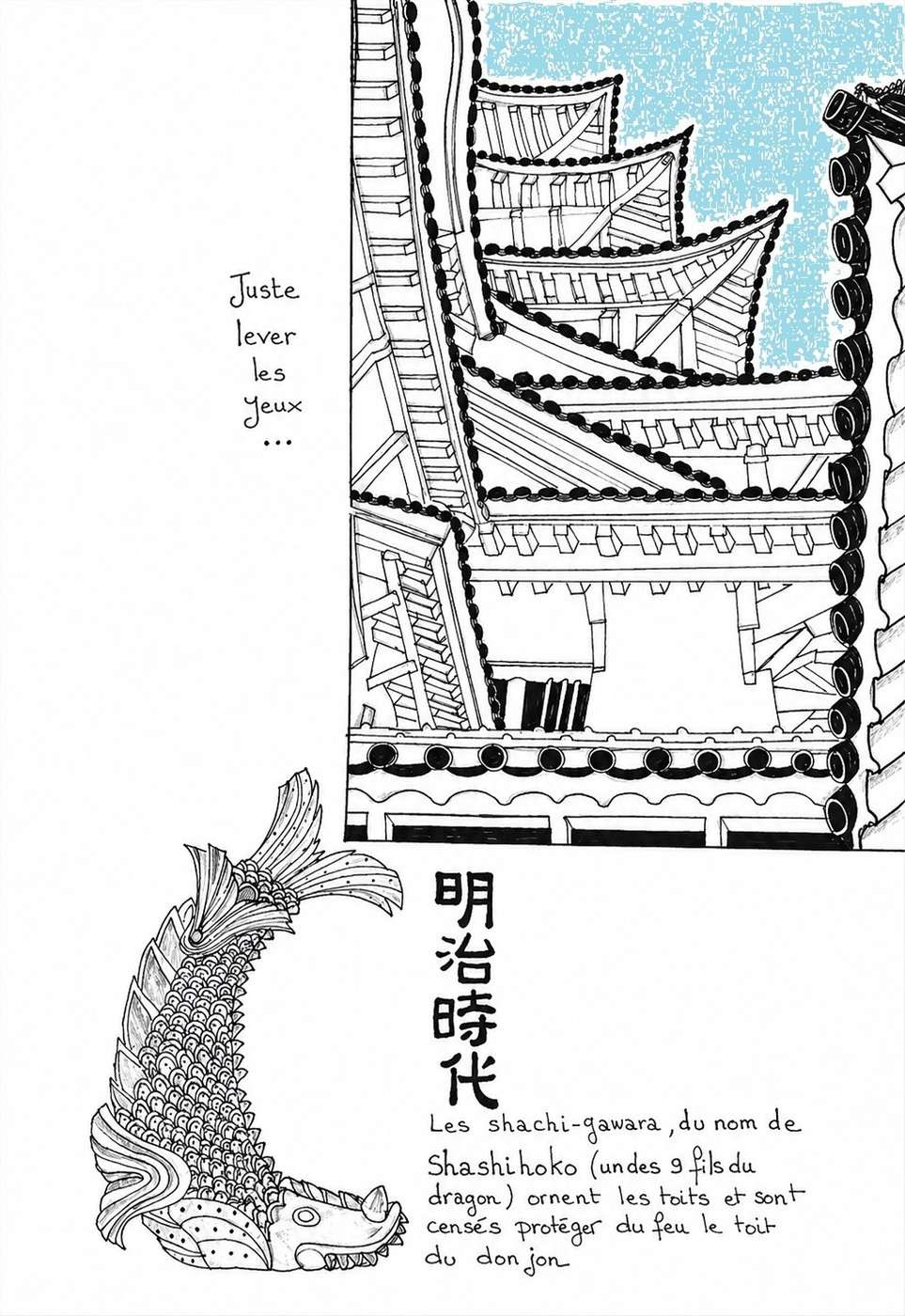
A little leap in space, here’s the "inverted twin" of the Black Crow—the "White Heron" in Himeji, which we’ll visit a week later. Its wooden framework is entirely whitewashed, gleaming under the bright sun. Another magical place, but with a few more tourists (though Matsumoto was already busy). It’s best to arrive early because just after us, the visit was temporarily halted to regulate the flow, and the top floor felt a bit claustrophobic (since each floor gets smaller). The castle is stunning from afar… and up close, it’s just as breathtaking. When you’re right underneath and look up at the succession of roofs and visible framework, you can’t help but be amazed by the builders’ genius and craftsmanship.


Draw Me Your Japan...

Mathews · 2026-06-08

Good evening Fabienne, I love these beautiful creations of yours. Are you going to publish them?

Draw me your Japan...

Fabhyène · 2026-06-08

Thanks Mathews for this feedback, it really makes me happy. Actually, I draw mostly for myself—it’s pretty rare for me to share like this. But it encourages me to do it more!

Draw Me Your Japan...

Mathews · 2026-06-09

I’m checking out your work again—it’s really amazing. And I mean that sincerely, even though I’m pretty picky myself.

Draw me your Japan...

Muriel18 · 2026-06-09

I was wondering if you draw during every trip, and if so, do you always use the same style or does it change depending on the destination?

Draw me your Japan...

Fabhyène · 2026-06-09

I’m checking out your work again—it’s really amazing. And I’m being totally sincere here, since I’m pretty picky myself.

Thanks Mathews, that means a lot. Even though I draw for myself, encouraging feedback really matters.

Draw Me Your Japan...

Fabhyène · 2026-06-09

I was wondering if you draw during every trip and, if so, do you always use the same style or does it change depending on the destination?

Time will tell ;-) since this was the first time I kept a travel journal. I was inspired by the paper I brought back from there, and of course by the country itself. Let’s just say I have a strong preference for black and white and ink.

Next up, I’ll soon start a journal to follow up on our trip to the Sultanate of Oman last February. It’ll have some similarities but probably some color differences since I plan to use lots of ochre, gold, and blue. We’ll see!

Draw Me Your Japan...

Fabhyène · 2026-06-09

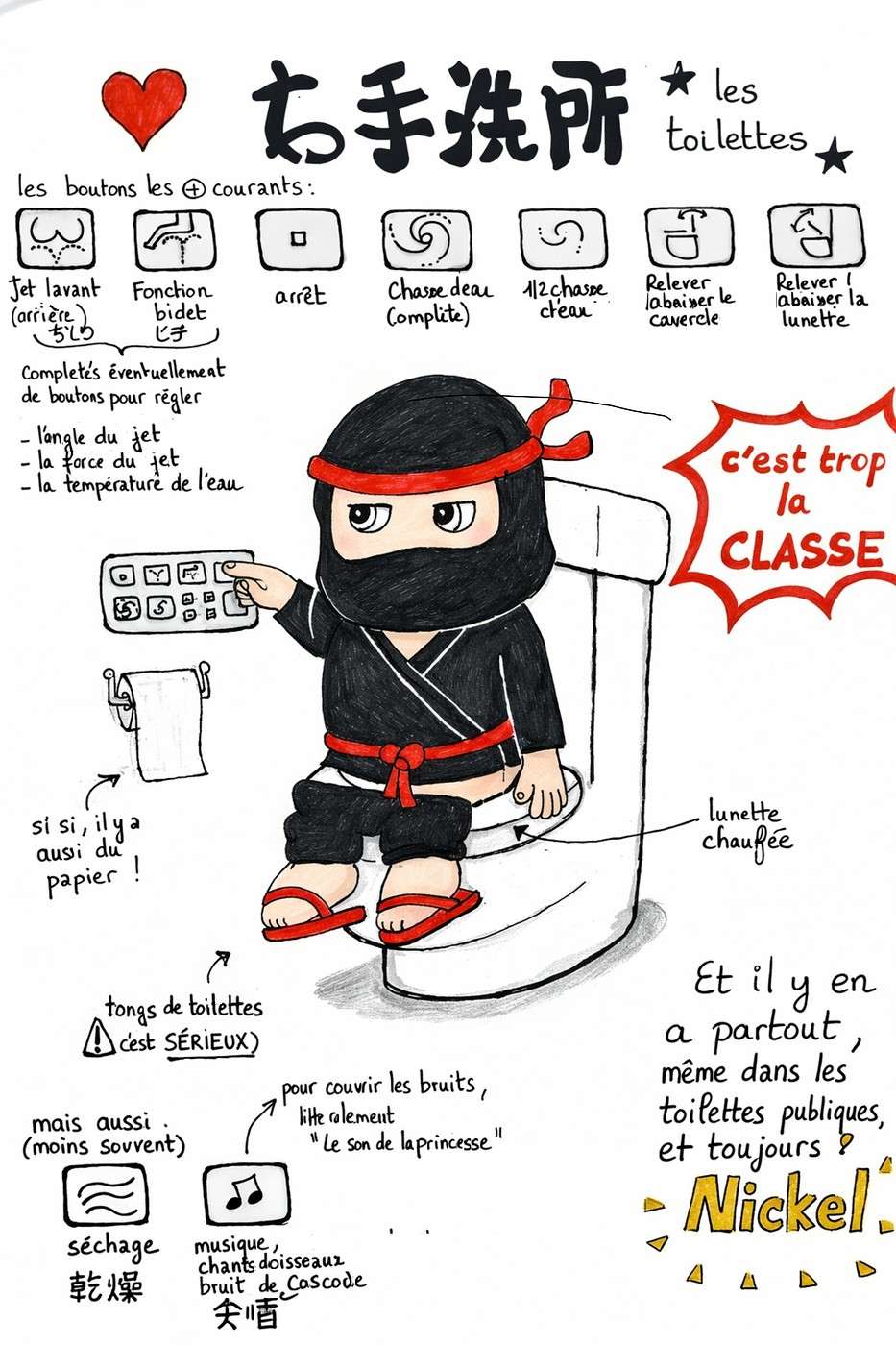
Without further ado: the toilets

Anyone who travels to Japan will return not only with a very clean behind but also a blissful expression at the mere mention of these toilets (well, if you know someone who says, "Well, Japanese toilets were a nightmare," introduce them to me).

Here, I’ve simply reproduced an illustration I found online, adding a few details, particularly the "toilet slippers." Indeed, in traditional hostels and likely many homes, you’ll find slippers (or plastic flip-flops) in front of the toilet door that you’ll put on before entering. And whatever you do, don’t walk around afterward wearing the toilet slippers—people will look away to avoid embarrassing you, but they’ll definitely be judging... To be continued!
Draw Me Your Japan...

Fabhyène · 2026-06-10

Yes, you guessed it—I love jumping from one topic to another...


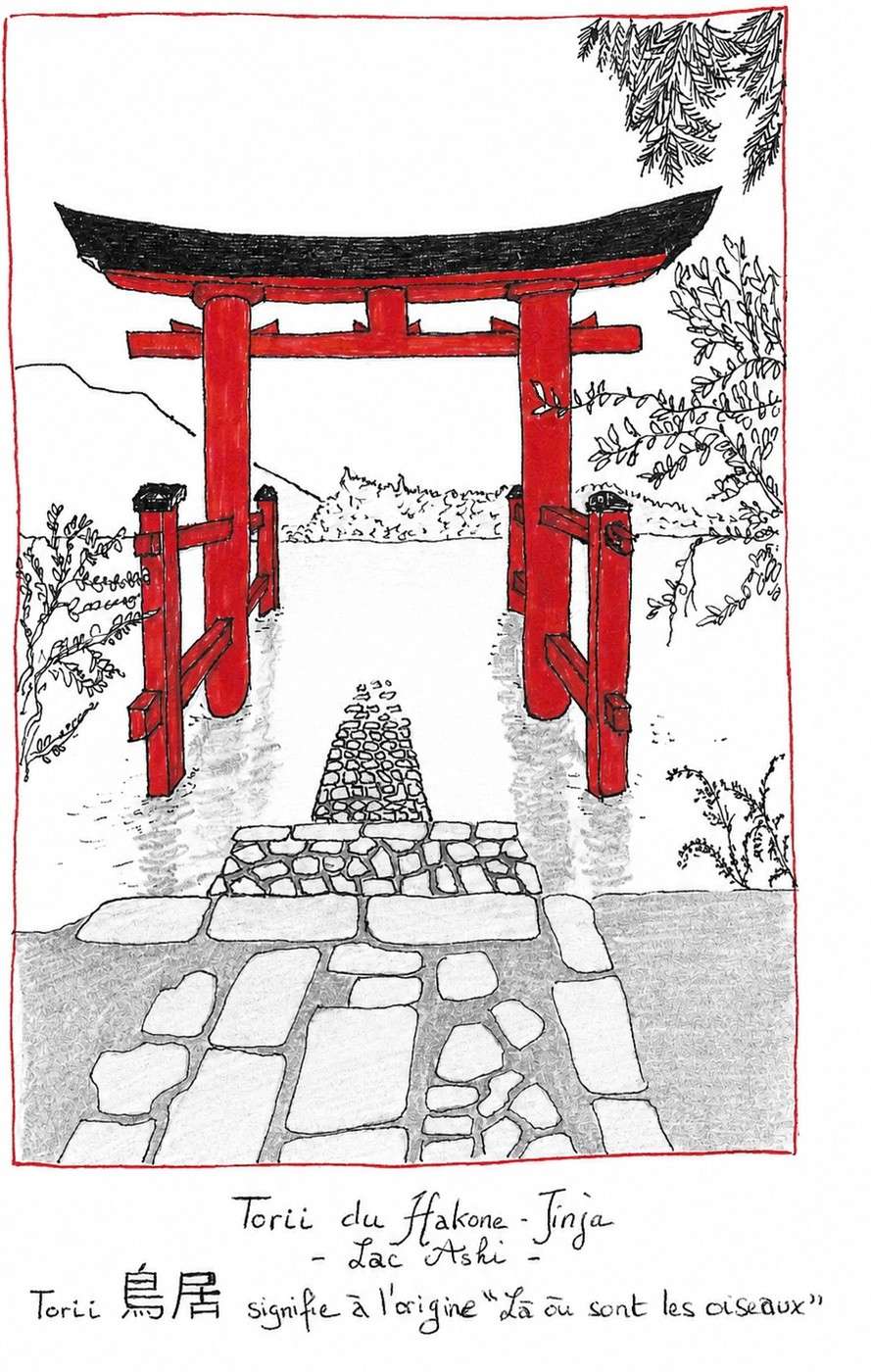
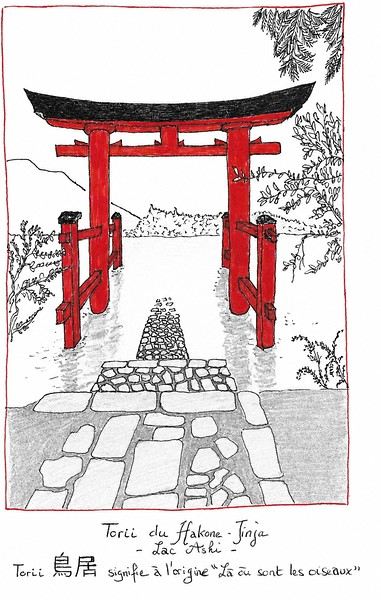
Here’s an iconic image of Japan, one you’ve seen countless times in photos. A torii rising from the water...

This one is located on the shores of Lake Ashi in Hakone, at the Hakone Jinja Shrine. With that paved path leading into the water, its meditative power is immediate (well, if you’re at all sensitive to beauty and harmony). There’s usually a bit of a queue, everyone taking their turn to have a moment alone in front of the torii—at least it helps manage the crowds.

In that timeless moment of contemplation, everything seems “in its place.” The earth, the water, the air... Though right after us, an American woman decided the best thing to do was step onto the paved path and ended up flat on her back—when I say everything’s in its place, I mean it!


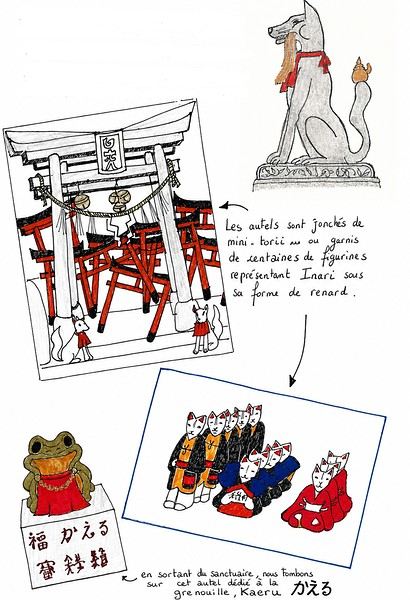
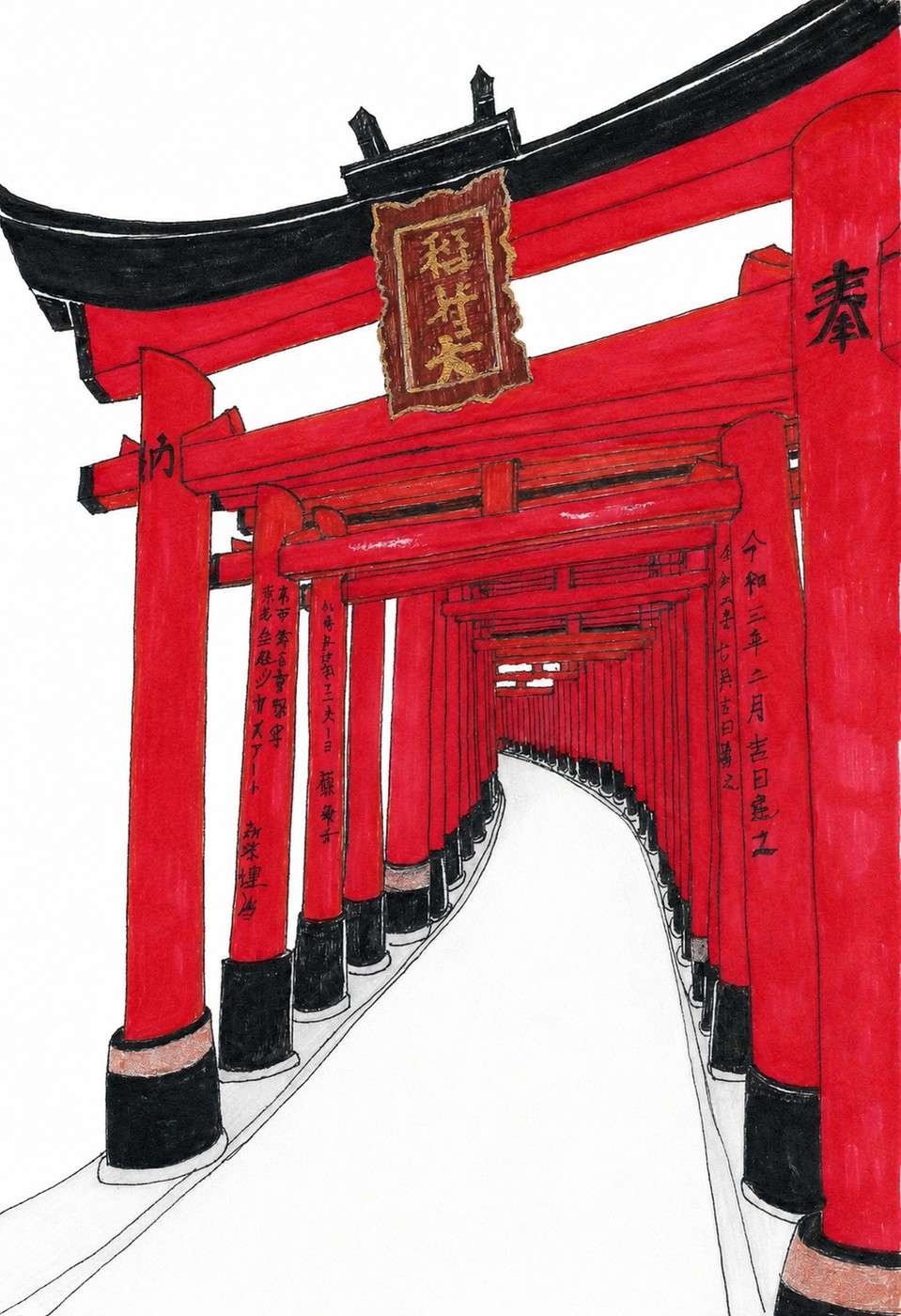
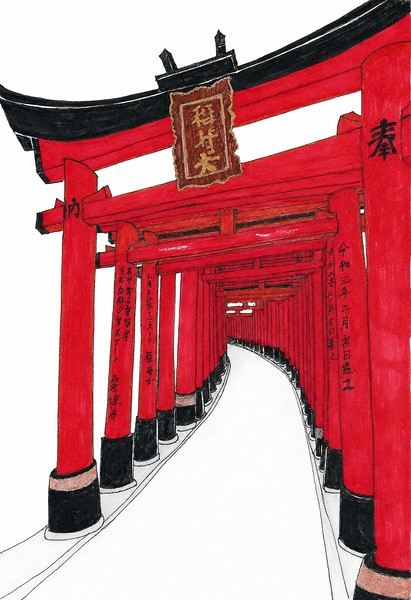
Now, a leap across space... I’m sure you recognize this image? It’s the famous torii tunnel at Fushimi Inari-taisha in Kyoto. The beauty of sketching it is that I can depict it empty, without hordes of tourists armed with their phones, selfie sticks, looking lost in their own egotistical bubble. This shrine, *extremely* “Instagrammable,” is swarmed like all the “must-see” spots in Kyoto.

But here’s some great news for you: the shrine stretches over 4 kilometers, all the way to the top of the large hill it winds around. If you go beyond the first kilometer, it gets much quieter, and if you make it to the top, you’ll almost have the place to yourself!

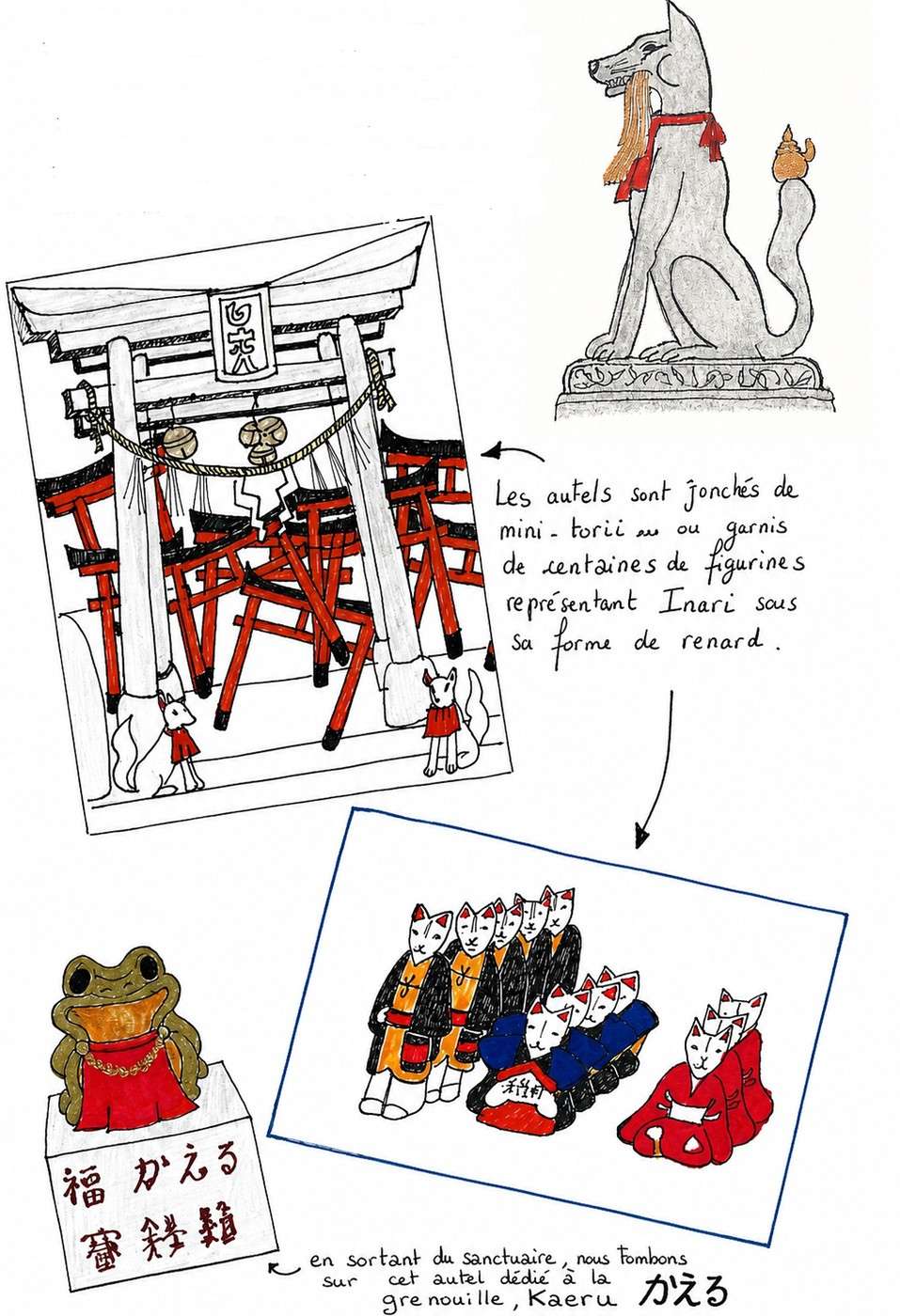
The Inari cult is very much alive—the climb is dotted with countless altars, and thousands of torii gates pile up, in all sizes (the most beautiful and largest ones require an offering of around 10,000 €). Fox representations of Inari are everywhere, and the altars are covered with battalions of small figurines.


All in all, the visit was amazing as long as you take the time to climb to the top and don’t get discouraged by the dense crowd in the first 500 meters...

To be continued!
Draw Me Your Japan...

Fabhyène · 2026-06-11

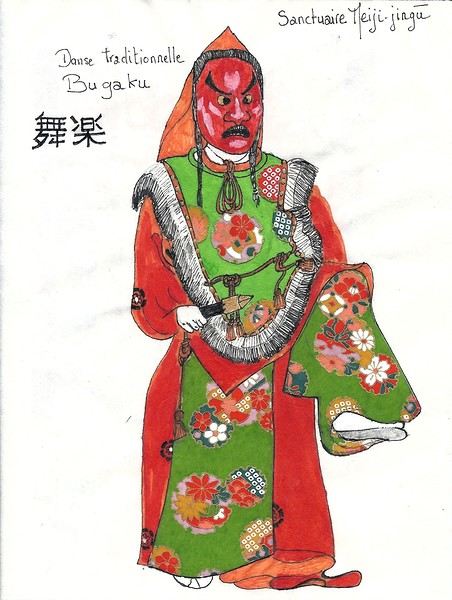
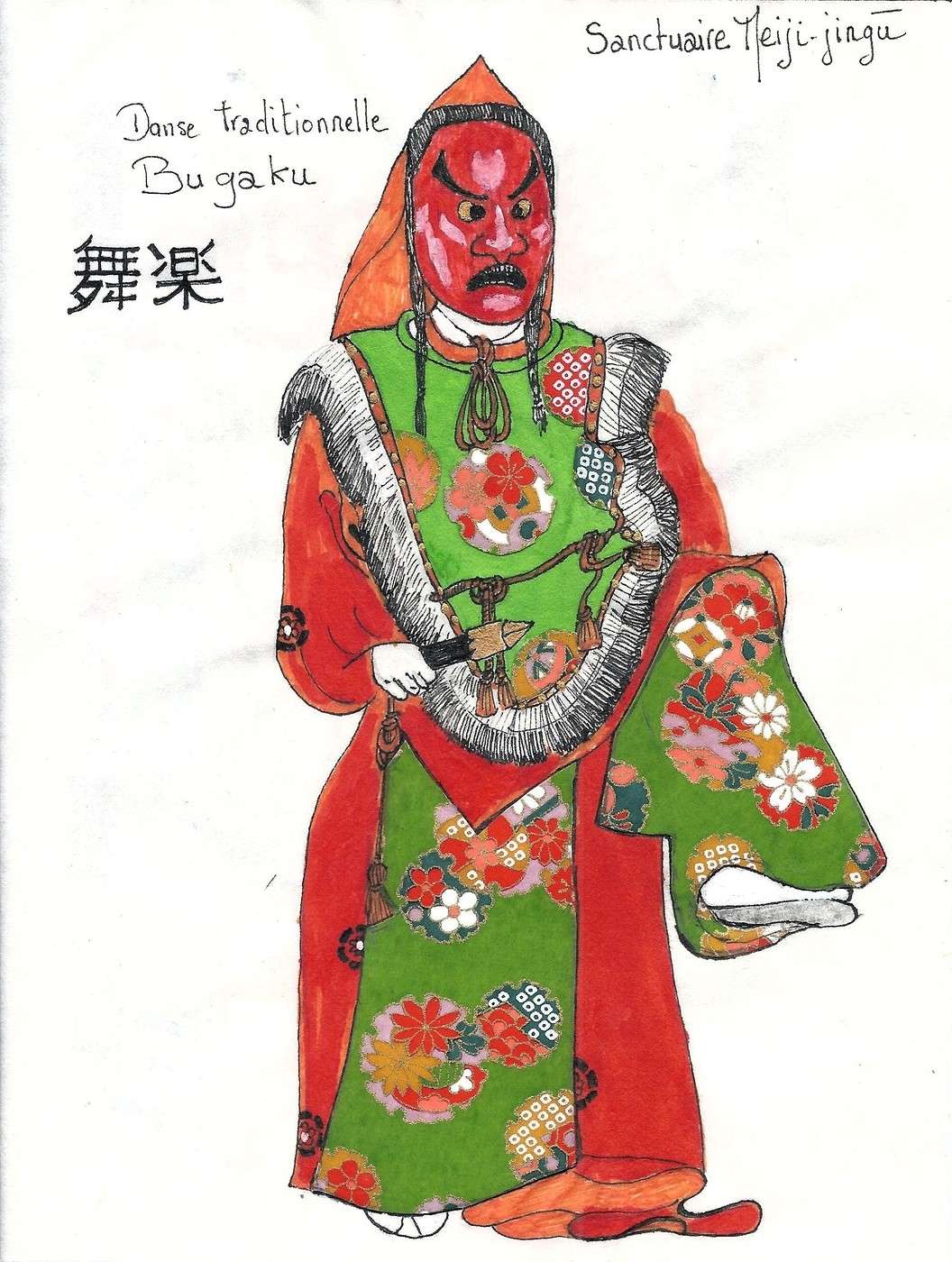
Hello, Following up on the previous post, I’m continuing with different snapshots related to places of worship: A Bugaku dancer at the Meiji Jingu Shrine in Tokyo (on the sidelines of wedding ceremonies) Ink and collage

And then:


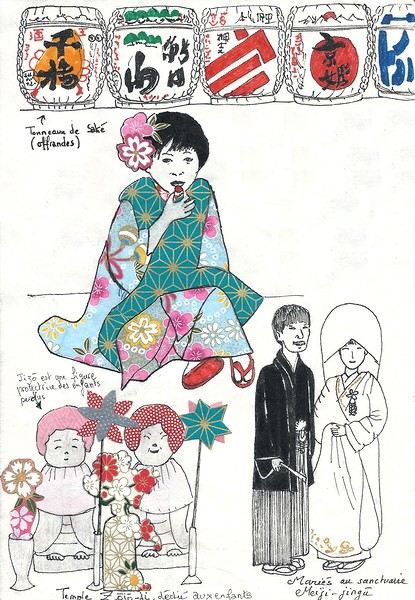
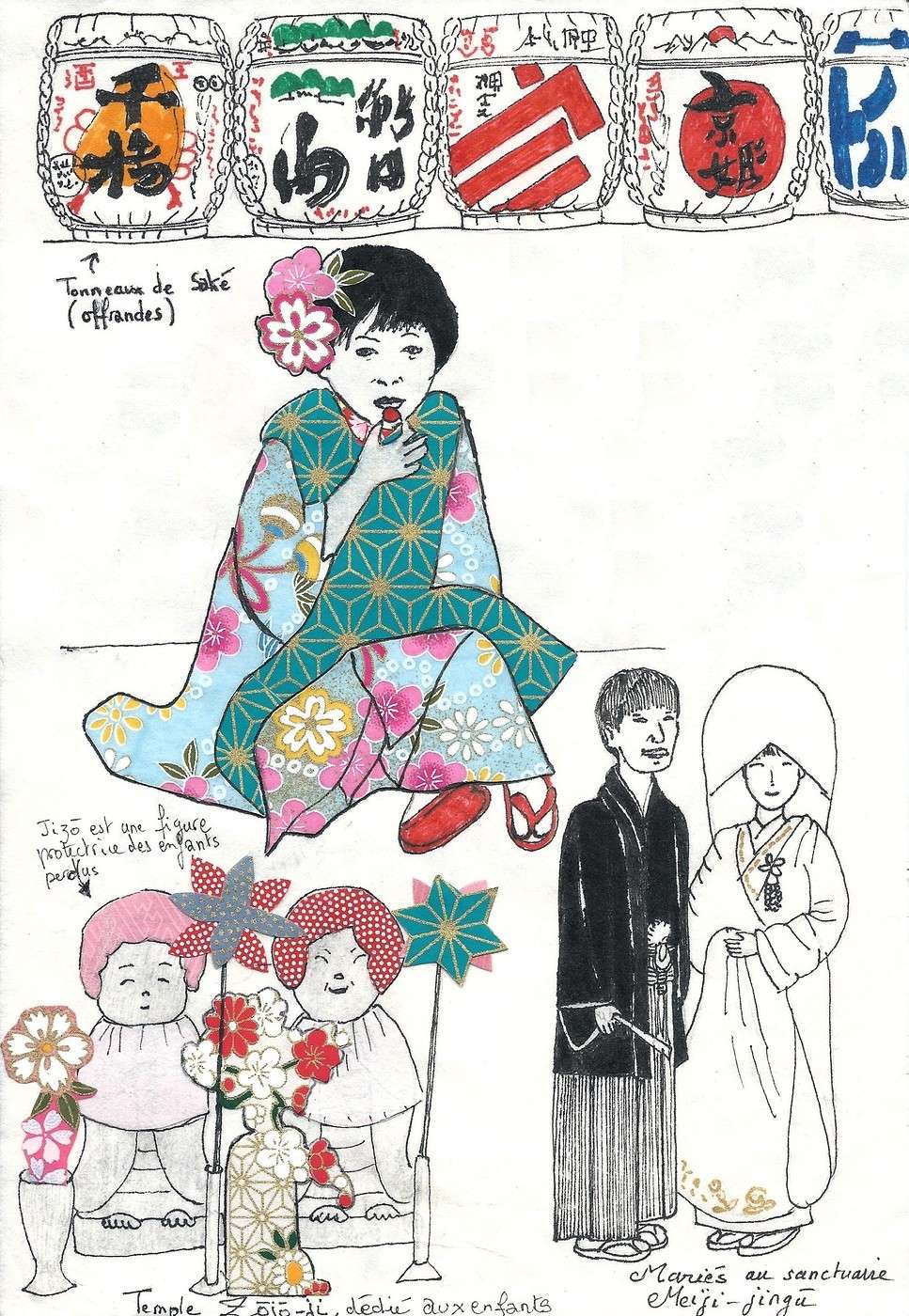
At the top of the illustration, you can see large sake barrels—offerings. Around 200 barrels form two large walls on either side of the path at one of the shrine’s entrances. They’re stunning! You can buy miniatures in shops to bring back from your trip!
On this page, you’ll also see a little girl in traditional attire. Masumi, the local guide who accompanied us on our first day in Tokyo, explained that parents come to "present" their child at the temple at 100 days, 3 years, and 5 years old, with their immediate family (grandparents, and sometimes uncles and aunts), all dressed in traditional clothing. We encountered families like this in places of worship throughout our stay, and if you politely ask for permission to take a photo, they often say yes. Young people also visit, but more often with friends for their 20th birthday, dressed in formal attire. You’ll also see a young married couple. The bride’s outfit and makeup remind me of *Star Wars*—Princess Amidala, to be exact!


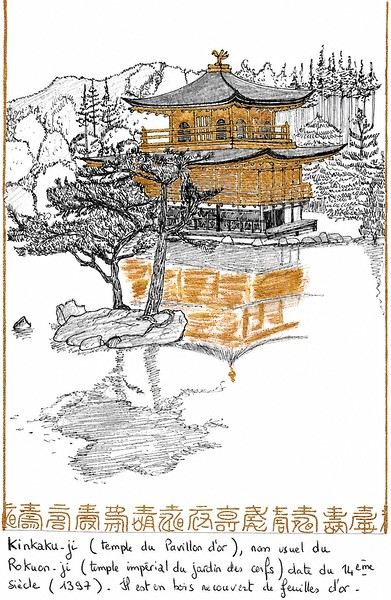
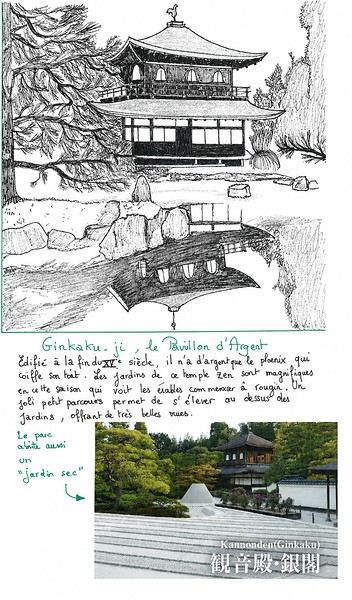
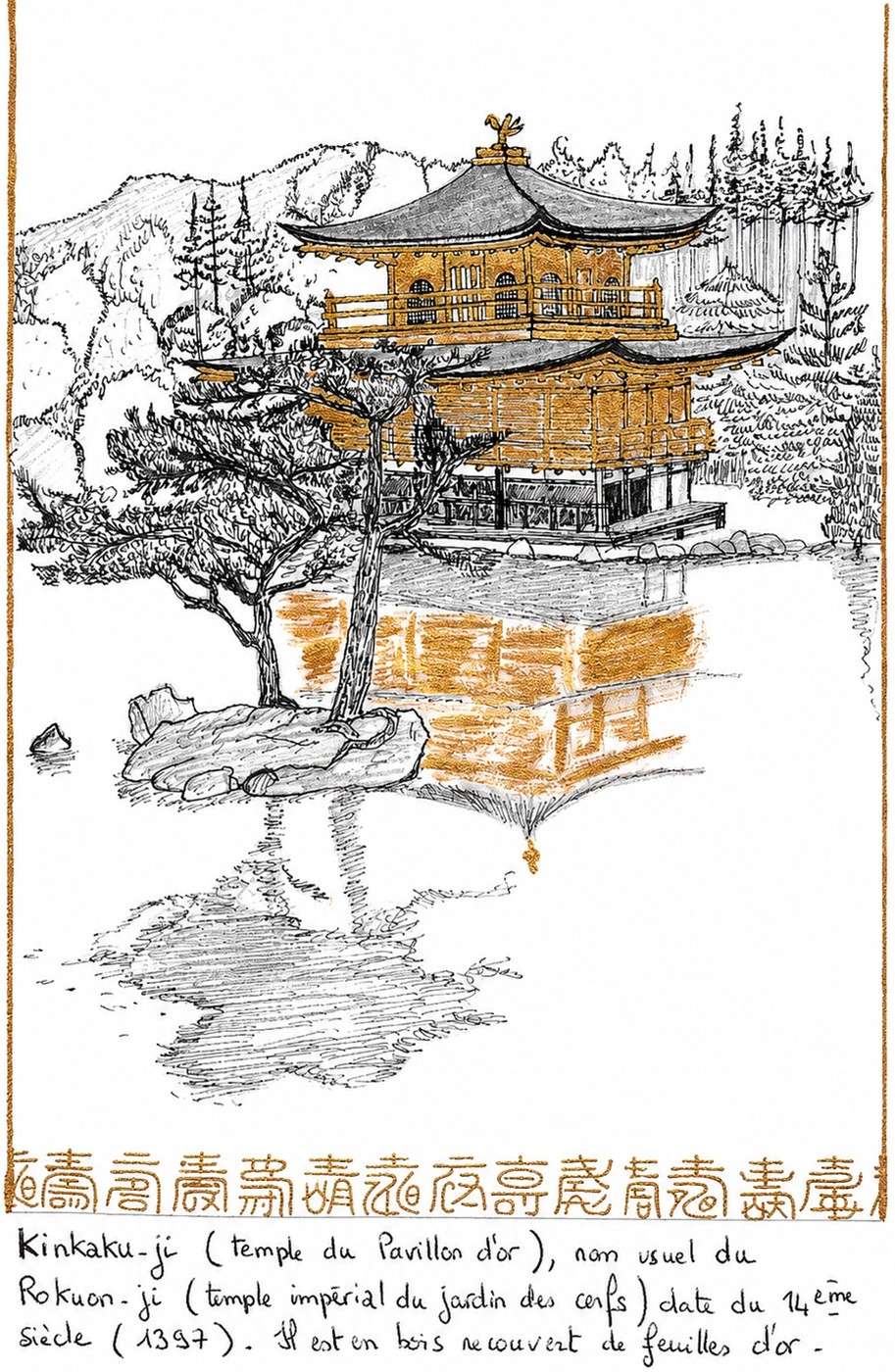
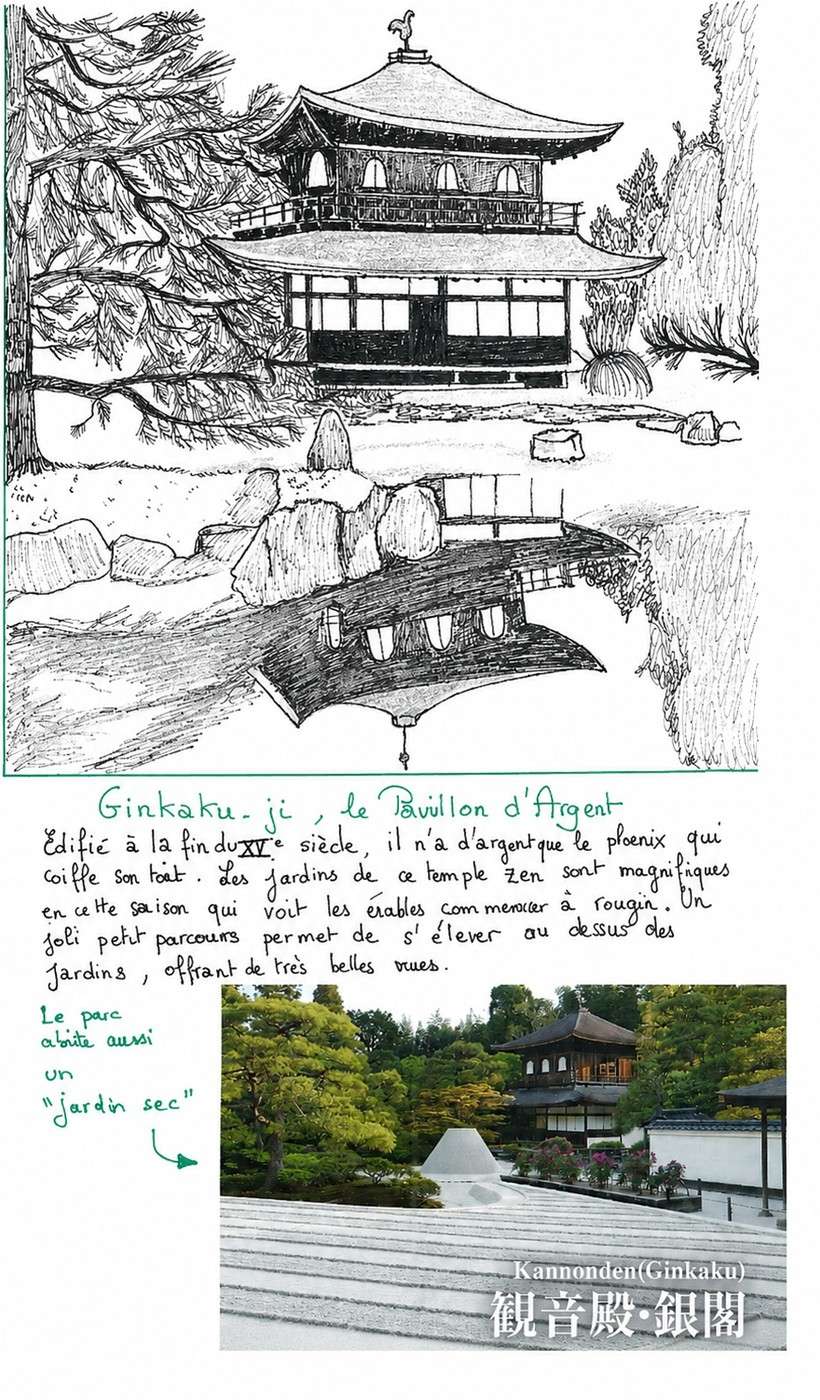
Above, Kinkaku-ji (the Golden Pavilion) in Kyoto, a wooden structure covered in gold leaf, dating back to 1397. It’s very popular, but the crowd spreads out along the paths bordering the small lake, offering sublime views of the pavilion, which stands alone and reflects in the water. And below, Ginkaku-ji, or the Silver Pavilion, still in Kyoto, which only has silver in the phoenix that crowns it. Built in 1482, it was meant to rival the Golden Pavilion, but war efforts drained the budget allocated to the building. The gardens of this Zen temple are gorgeous in early November—the maple trees are starting to turn red. A lovely little trail leads up above the gardens, offering stunning views of the pavilion.

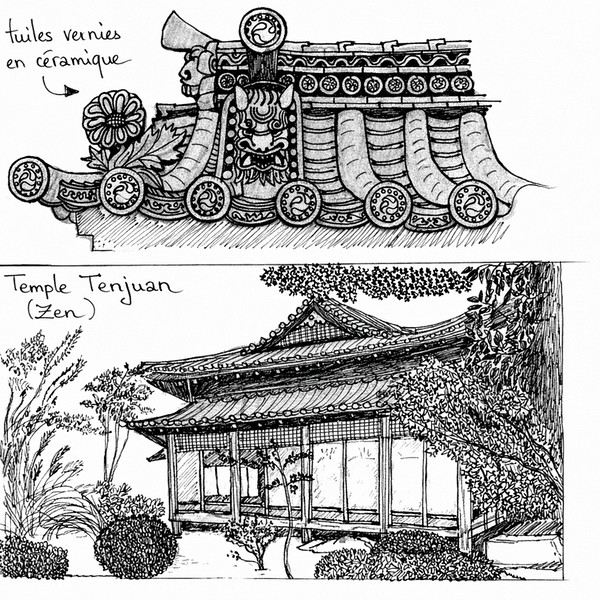
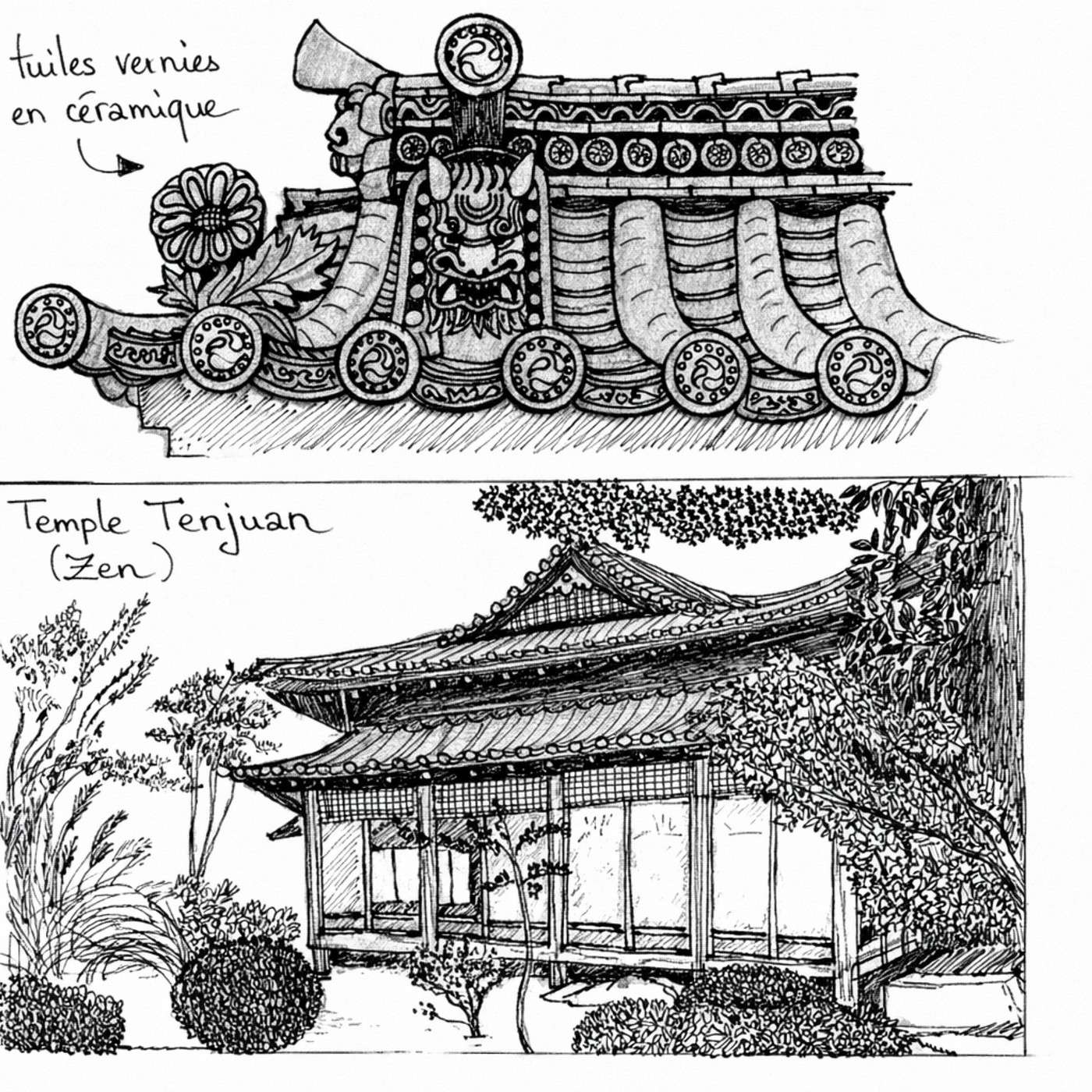
We’ve been lucky enough to visit several countries in East Asia (Vietnam, Cambodia, Laos, Myanmar) and have seen countless sites. Japan’s heritage is extraordinary. The architectural quality, construction techniques, building structures, materials, and finishes are remarkable—the landscaping, orientation... Harmony is everywhere. As an example, below is a detail of the beautiful ceramic tiles covering most temples, and Tenjuan Temple (Kyoto), a little gem among Zen temples.

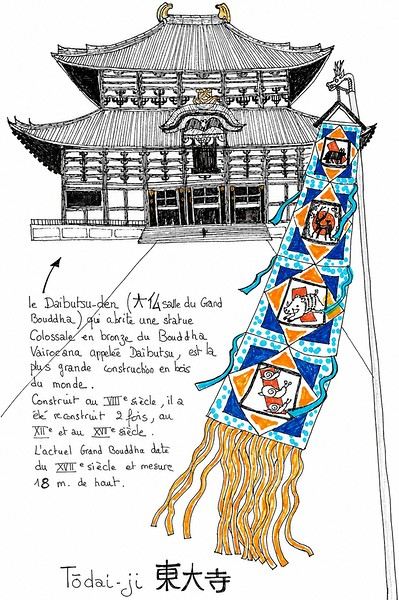
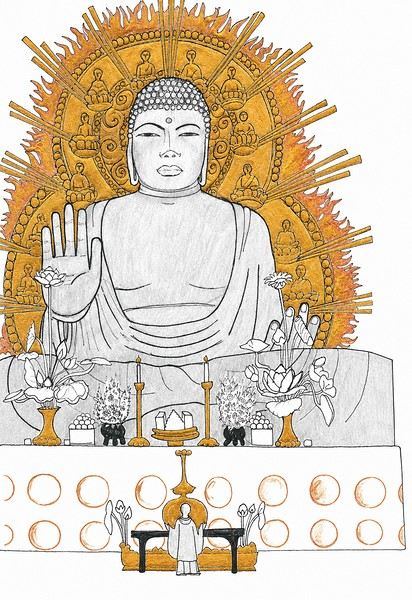
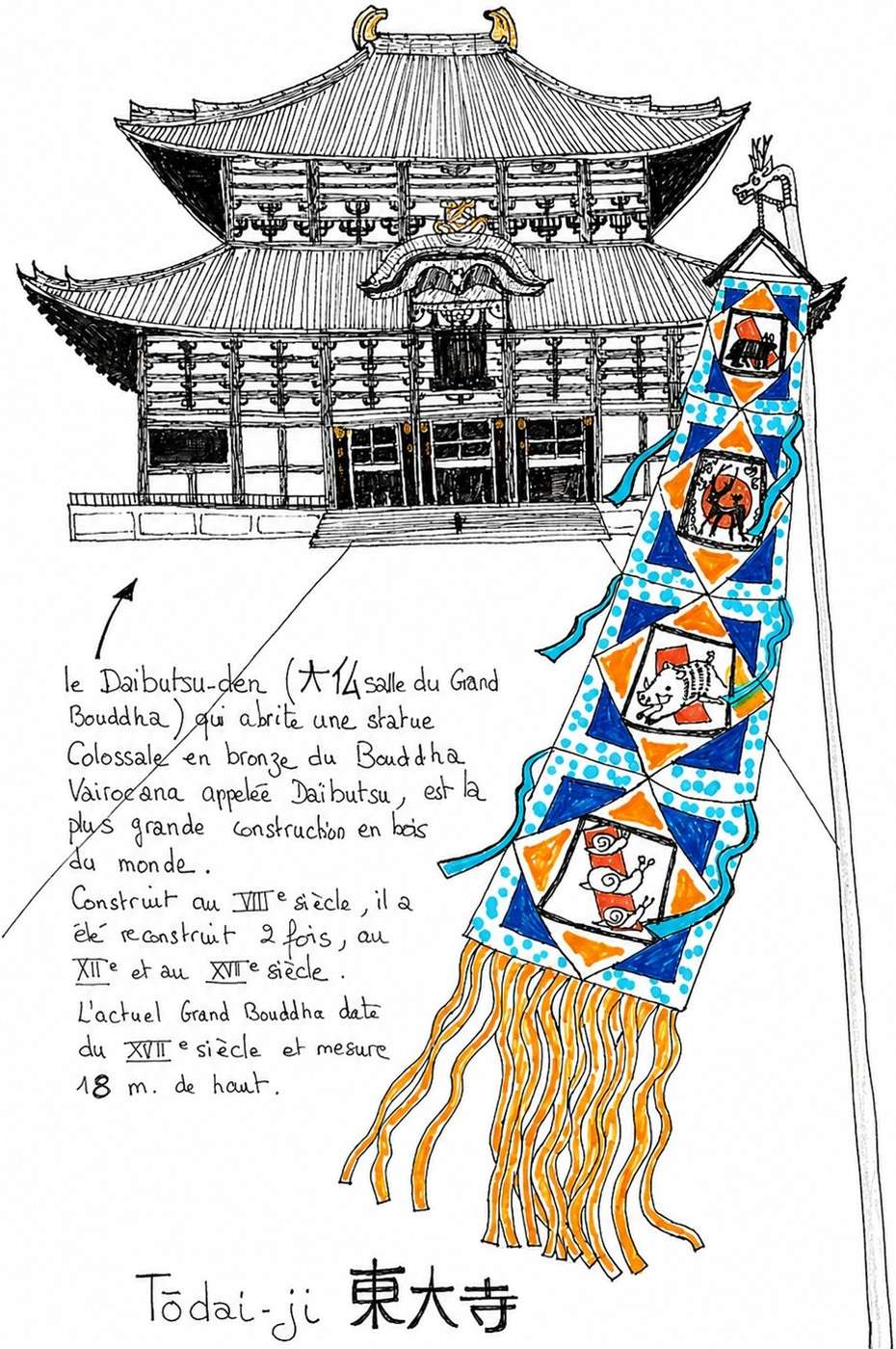
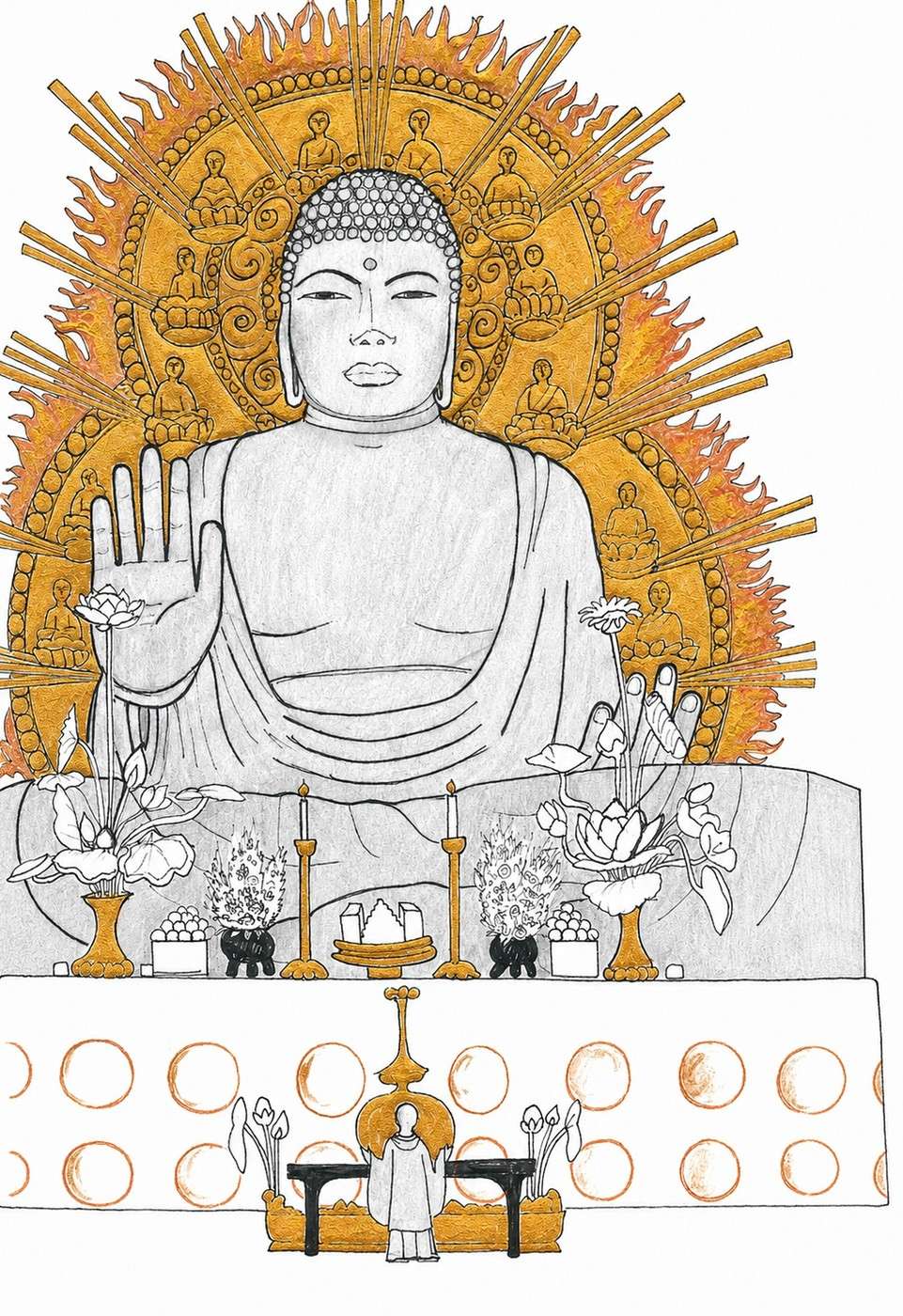
Sometimes, the scale is massive. Below, we’re in Nara (40 minutes from Kyoto by train), within the grounds of Todai-ji Temple, and here’s the Daibutsu-den (Great Buddha Hall), a monumental structure built to house a colossal Buddha.


This building is the largest wooden structure in the world. Originally from the 8th century, it’s been rebuilt twice. This version dates back to the 17th century, like the current bronze Buddha, which stands 18 meters tall. In the drawing, I included a priest so you can get an idea of the size of the "baby" (I’m talking about Buddha, not the priest).


That’s all for today! I’m almost done with this travel journal, but there are still a few beautiful moments left to share.

Draw me your Japan...

Voyajou · 2026-06-11

Ama... zing! 🙂

Draw me your Japan...

Fabhyène · 2026-06-11

Fab... ulous! 🙂

Thanks Jean Luc!

Draw Me Your Japan...

Fabhyène · 2026-06-12

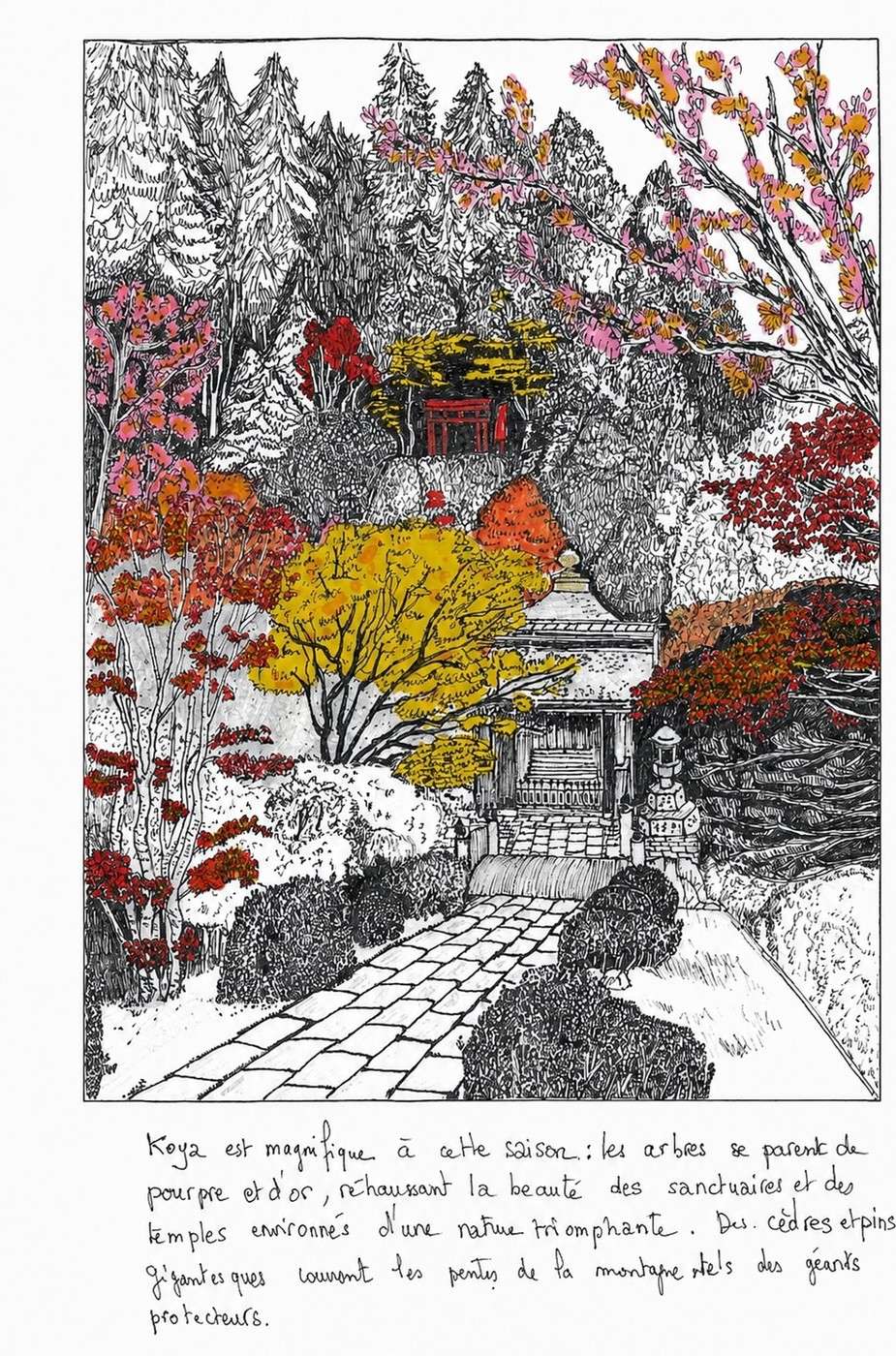
Sacred Stop: Mount Koya

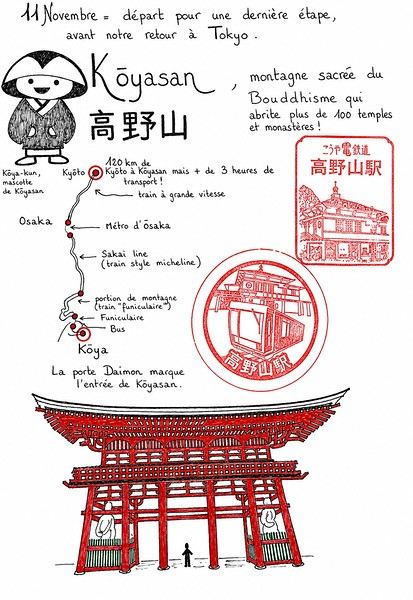
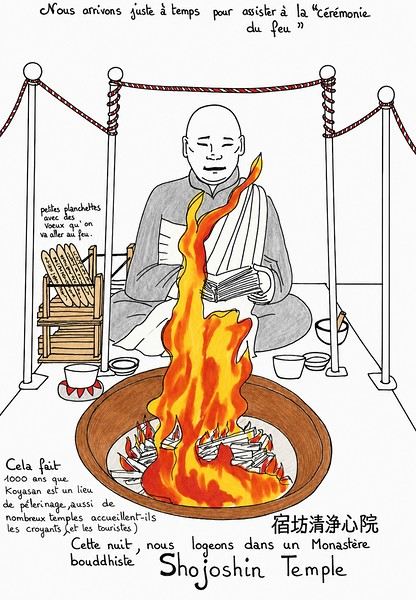
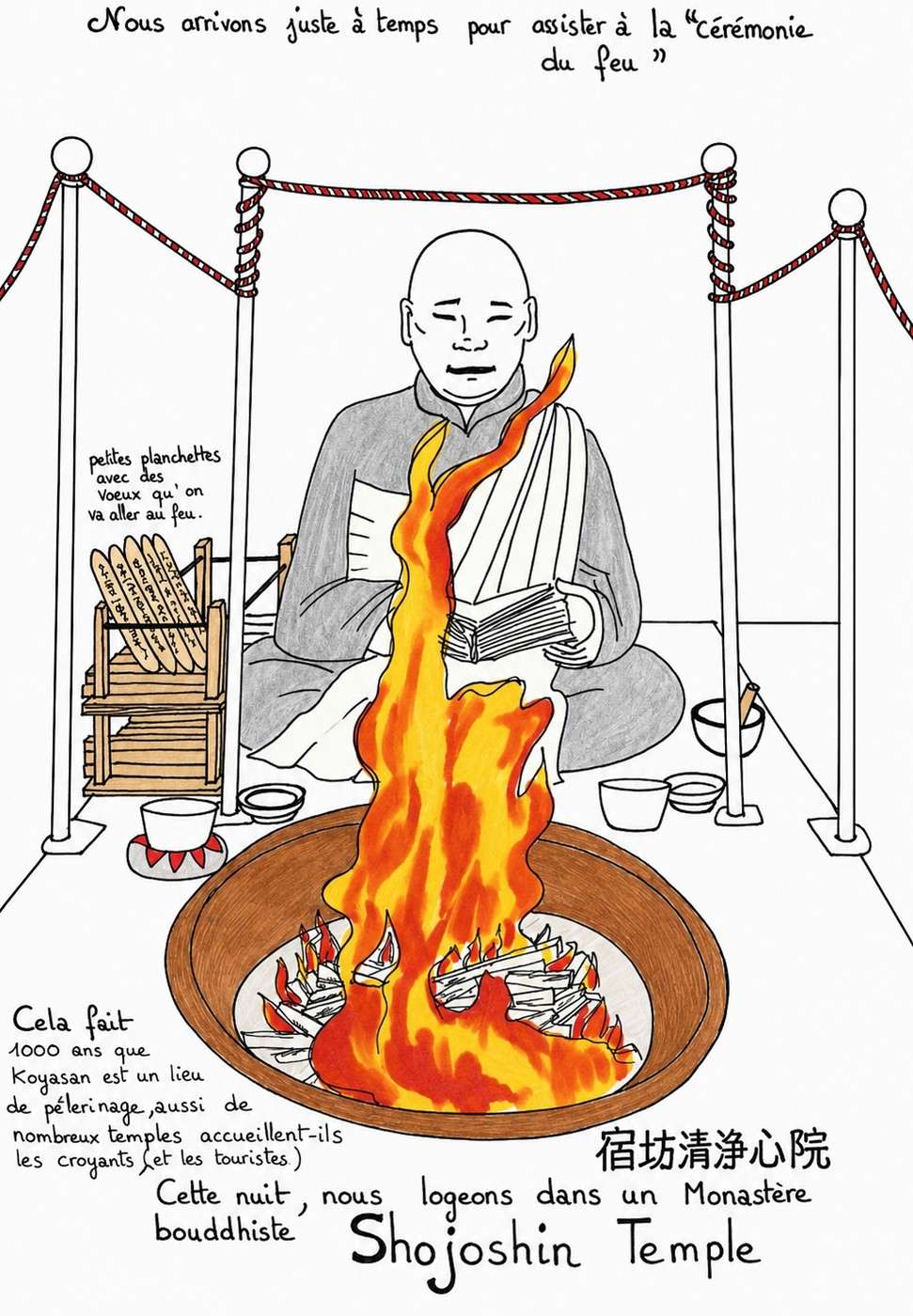
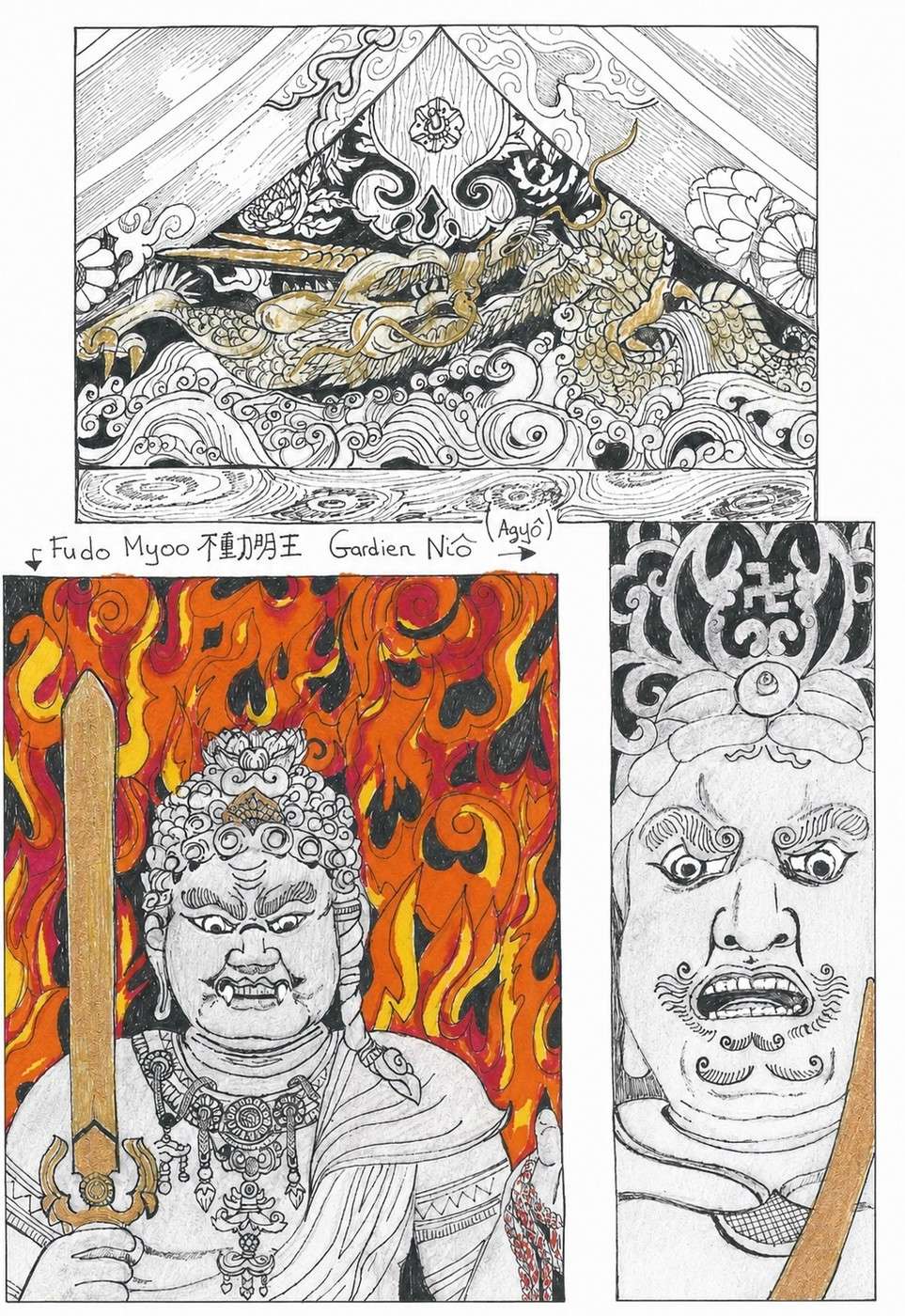
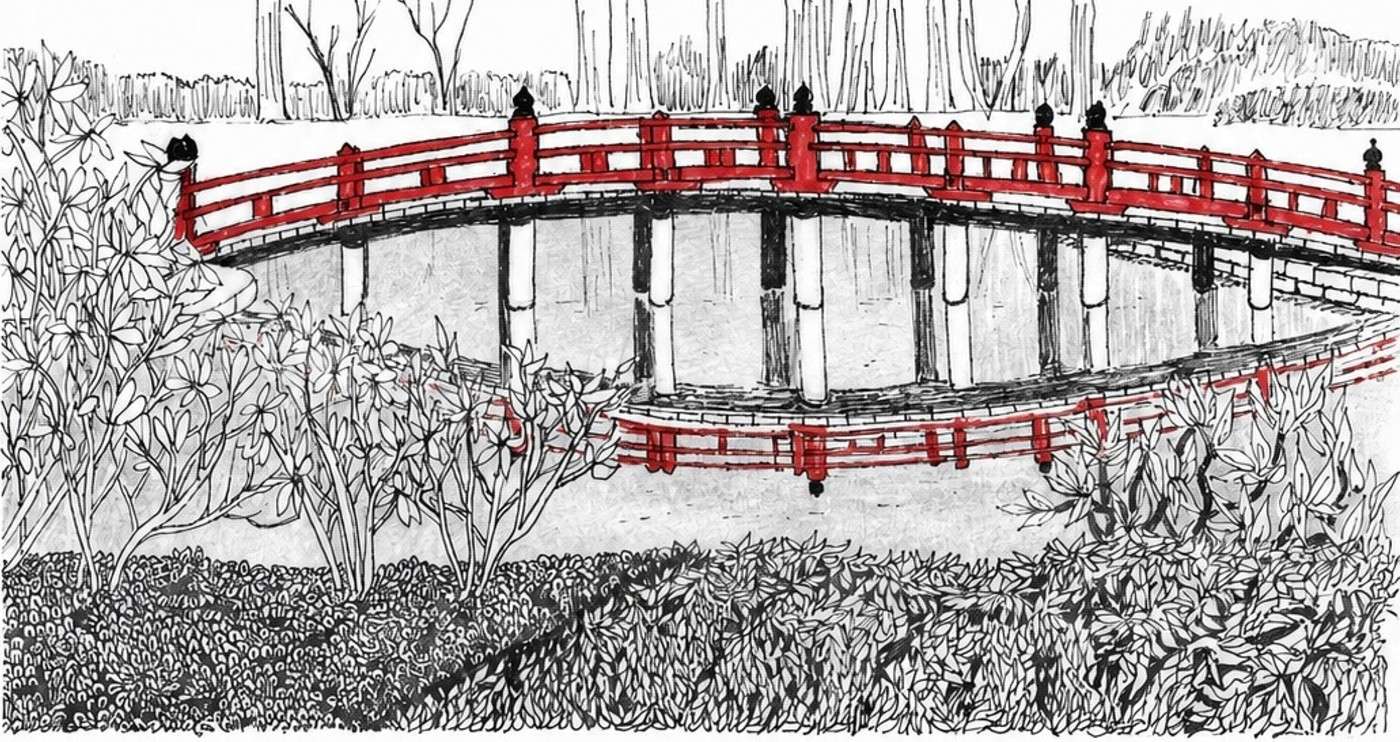
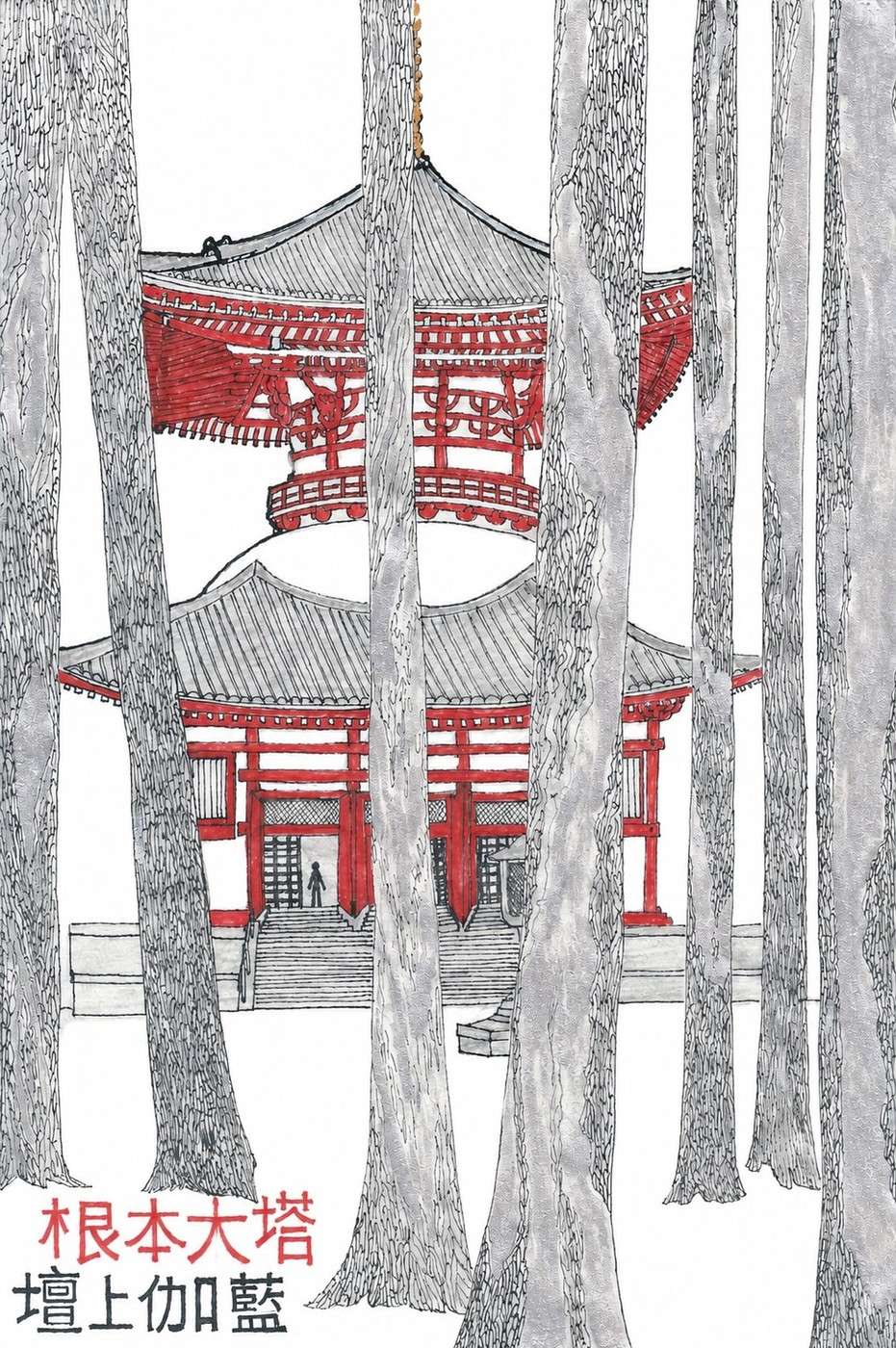
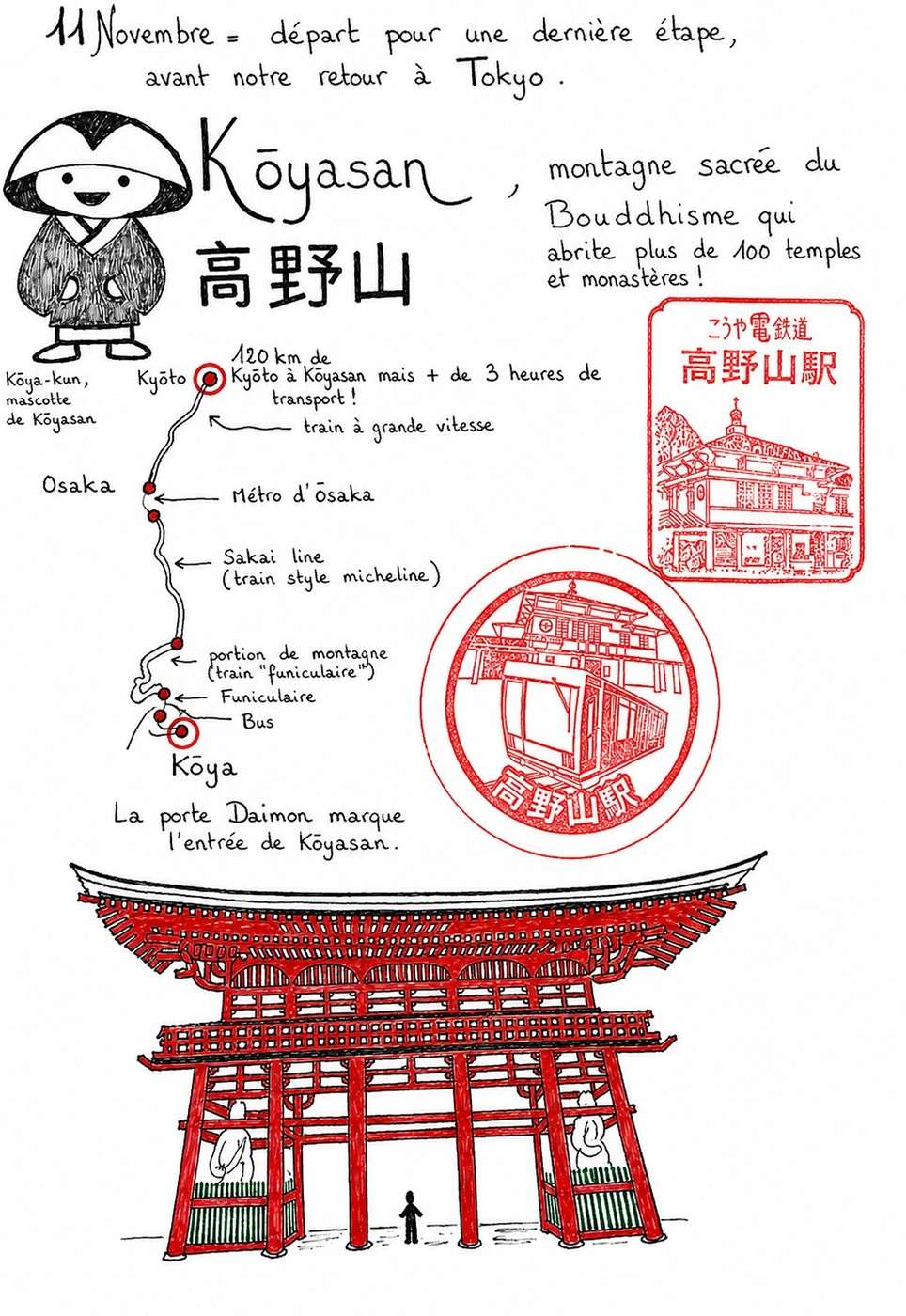
The final highlight of this travel journal: Mount Koya, a sacred mountain that’s home to over 100 monasteries and temples on a plateau at 1,000 meters above sea level. It’s been a pilgrimage site for over 1,000 years, which explains its deeply rooted tradition of hospitality—one that’s gradually opened up to tourism. You come here to spend a night in a monastery and take part in the various ceremonies (though the quality of welcome can vary; for us, Shojoshin was great).


As this page shows, getting there is an adventure: it’s only 120 km from Kyoto, but by public transport, you first take the train to Osaka, then the subway to catch the Sakai Line (a small railcar), followed by the funicular, and finally the bus. Everything connects seamlessly... but it still takes about 3 hours total. That said, the scenery makes the time fly. The Chumon Gate welcomes you before you finally arrive in the village of Koyasan, surrounded by mountains and forests. Upon arriving at the monastery hosting us, we attend the fire ceremony. The next morning, we join the morning service at 6 AM (autumn schedule—it’s earlier in summer).

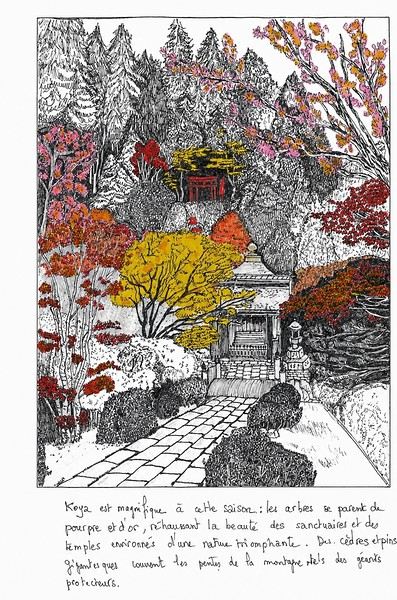
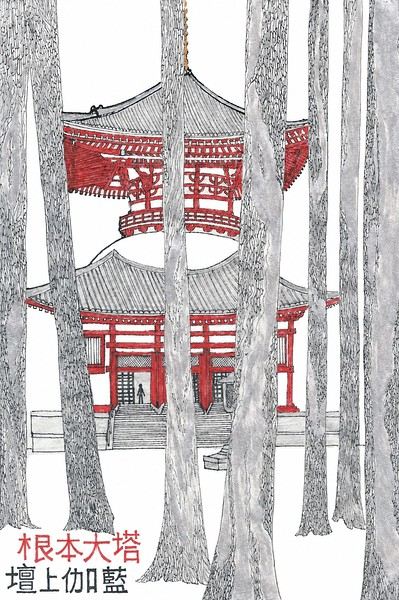
Then we set off to explore the 117 temples and monasteries... the setting is idyllic. Nature is everywhere. With nights growing colder at this altitude (1,000 meters), the maples and ginkgos burst into color. It’s breathtaking.


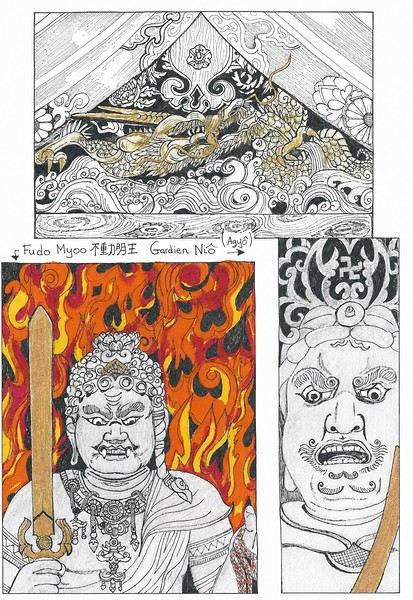
I’ll spare you the details of all the sights to see—117 buildings packed into one village means endless possibilities!!!


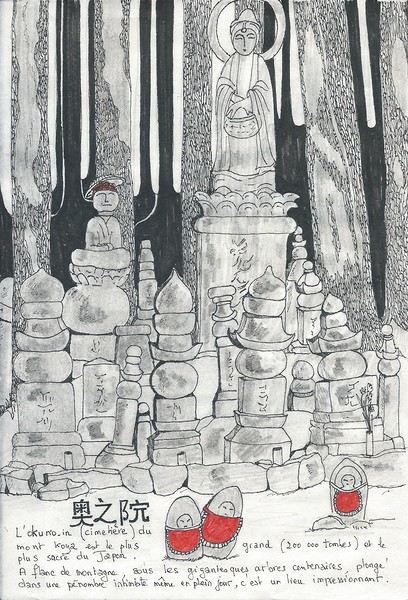
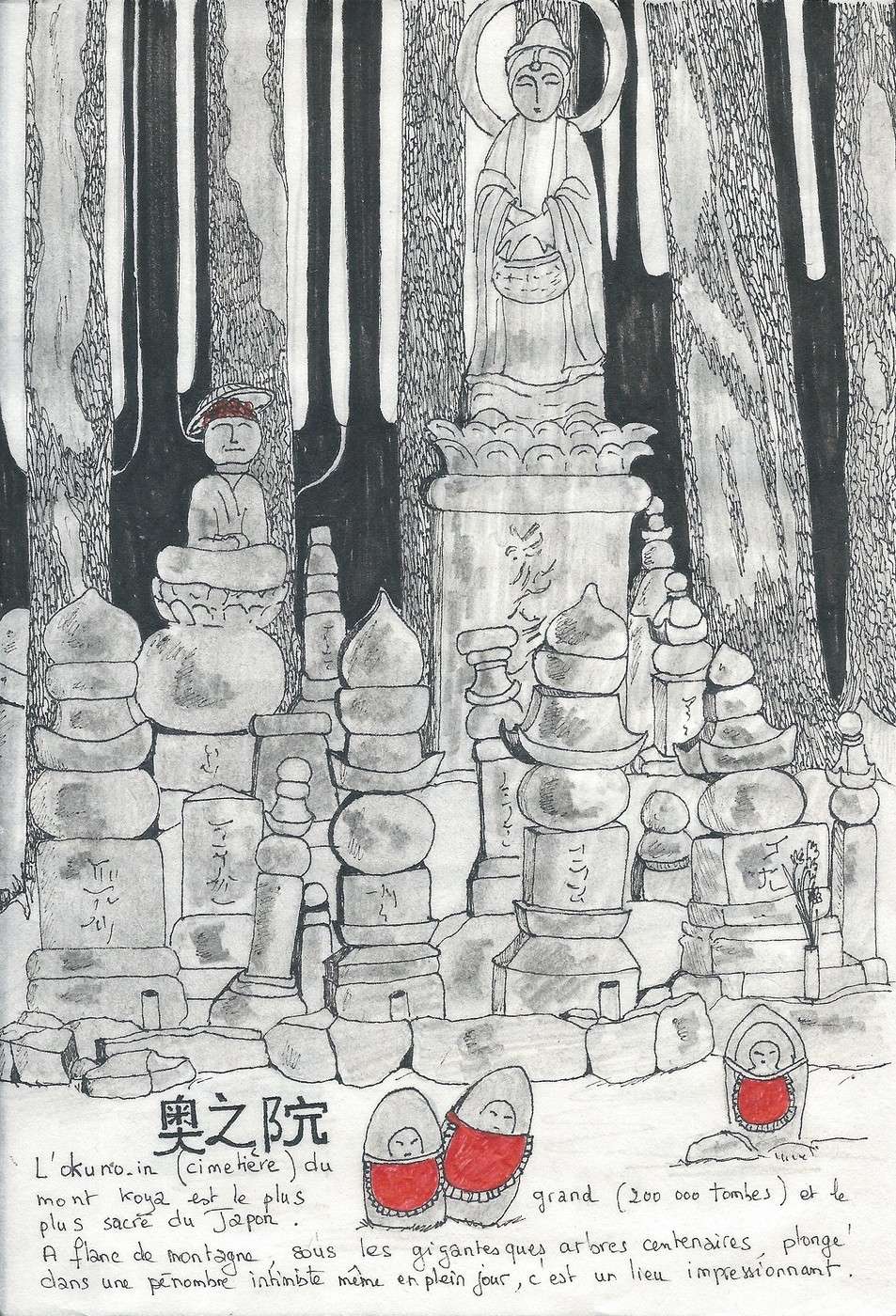
Tonight, we’re treated to a dinner in the purest tradition, served in a private room at the monastery. I try umeboshi—the famous pickled, vinegary plum—known for its countless benefits (though, for me, the taste is awful). It’s worth a shot... but I know what I *won’t* be bringing back from this trip! The next morning, we stroll through Okuno-in Cemetery, the most sacred in Japan. Beneath towering, centuries-old trees, it’s said to hold over 200,000 graves, including those of famous figures. It’s a mystical place—dark but not eerie, peaceful, where the sense of time fades away.

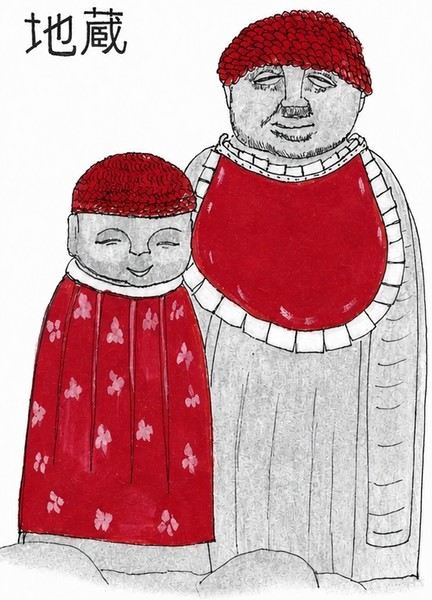
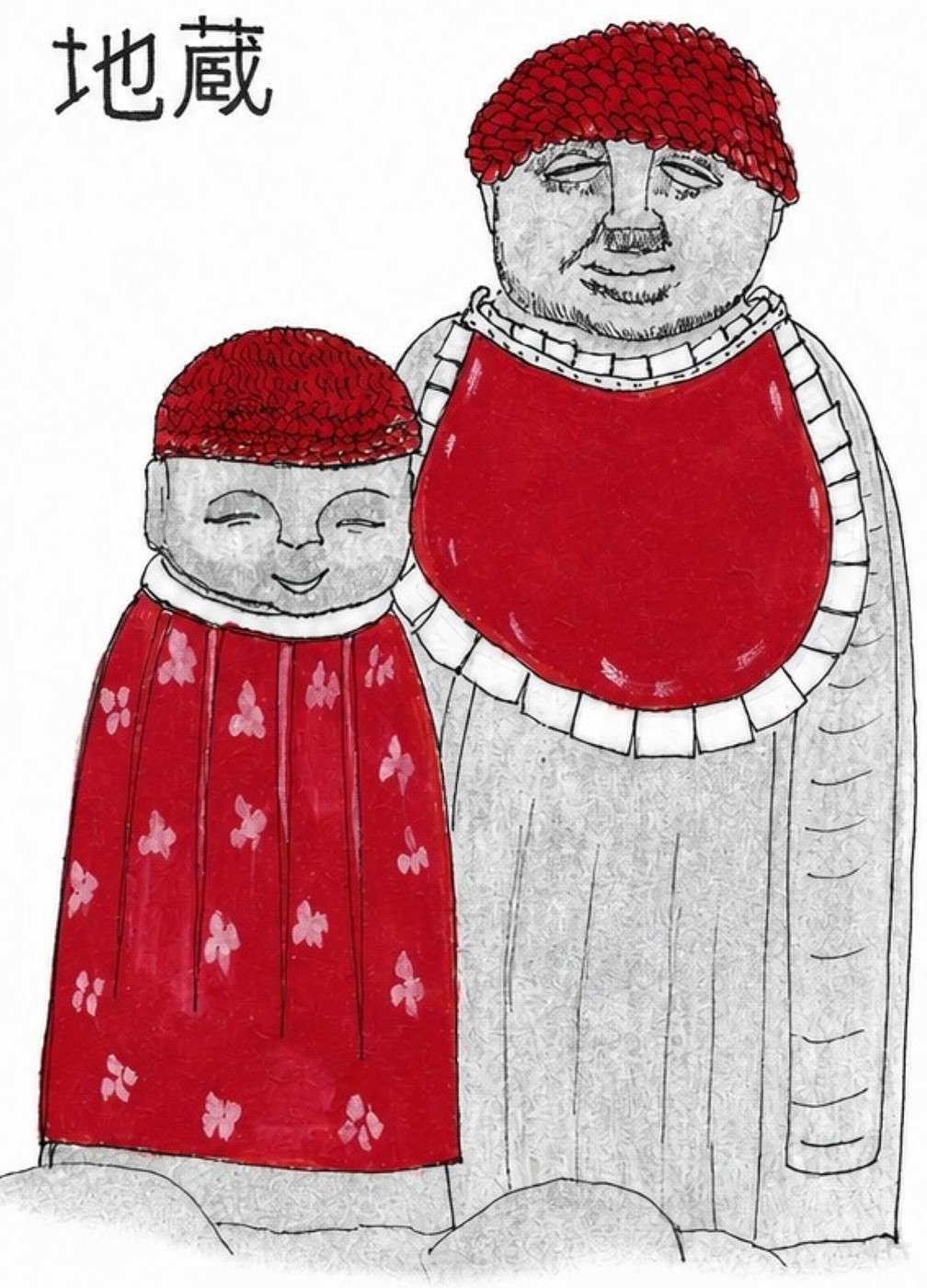
I’ll pause for a moment on the Jizo.


We’ve seen them throughout our trip. Small stone statues, often adorned with a knitted red hat or a sort of “bib,” sometimes a cape—these are benevolent deities, protectors of souls, especially those of children. In cemeteries, they’re everywhere, revered by parents who’ve lost a child for the protection they offer. More broadly, they symbolize compassion for all living beings. You’ll also find them along paths, watching over lost travelers.

Draw Me Your Japan...

Fabhyène · 2026-06-13

That’s the end of this travel journal!

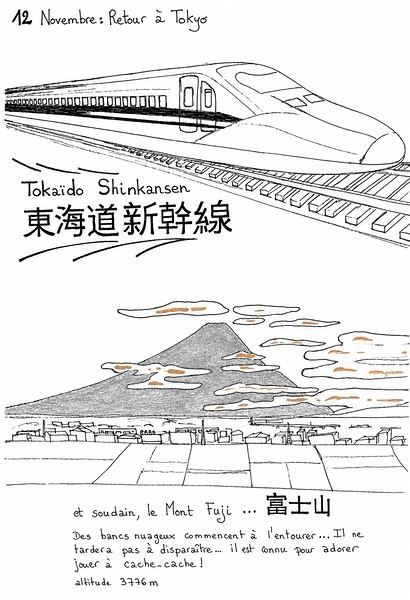
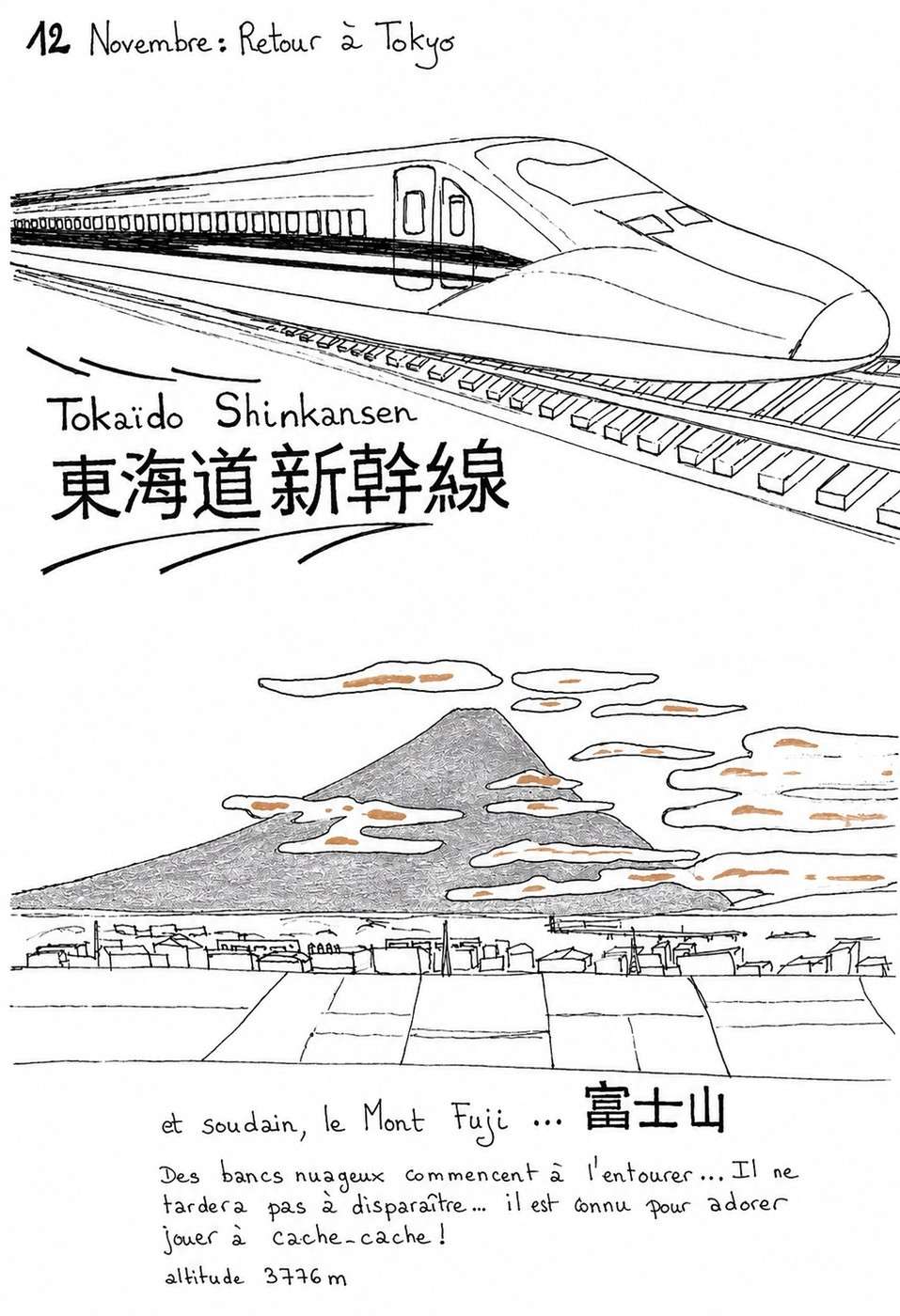
On the shinkansen taking us back to Tokyo for our last two nights, all the images from our trip are already racing through my mind. So many countries have delighted and touched me, and when I leave them, I feel a pang in my heart because I know there are so many places I’d still love to visit that I’m not sure I’ll return. But this time, I don’t feel that way—I already know I’ll be back.

And then, suddenly, on the horizon, a familiar silhouette... Mount Fuji... It played hard to get when we went to Hakone, but now it’s revealing itself to us, a teasing brown shape...

For a few minutes, it keeps us company, slowly wrapping itself in clouds. 🏴‍☠️


This final sketch, one of my favorites, is where I’ll leave you. It’s directly inspired by a photo we took in Asakusa, where we went back for some shopping. I hope you enjoyed this illustrated journey. Either way, I loved sharing it with you!

Draw me your Japan...

Tylassin · 2026-06-13

Awesome travel journal and gorgeous drawings. Well done! 🙂

Draw Me Your Japan...

Fabhyène · 2026-06-13

Great travel journal and amazing drawings. Bravo! 🙂

Thanks! 😉 Michel, glad you liked it.

Draw Me Your Japan...

Sinforosa · 2026-06-13

Thank you and well done! I hope you’ll make another illustrated travel journal with drawings for Oman, even though I know putting together a travel journal is really time-consuming.

I’d love to have your talent for drawing. Some time ago, I bought a book to learn how to draw and illustrate travel journals, but I never got around to it. So I make paper journals without drawings but with collages and a few photos.

Show me your Japan...

Kate · 2026-06-13

Your drawings are really beautiful, so delicate. They add so much originality to this travel journal. It’s so generous of you to share all of this! 🙂

Draw me your Japan...

Fabhyène · 2026-06-13

Thank you and well done! I hope you’ll make another illustrated travel journal with drawings for Oman, even though I know making a travel journal is very time-consuming.

Thanks so much, Marie. Oman—I think I’ll get started on it, yes! I just need to set aside some time...

I’d love to have your talent for drawing. Some time ago, I bought a book to learn how to draw and illustrate travel journals, but I never got around to it. So I make paper journals without drawings but with collages and a few photos.

Actually, I’ve been lucky enough to keep drawing since I was a kid, even if there were periods when I did it less. But journals with collages and photos are great too.

Draw me your Japan...

Fabhyène · 2026-06-13

Your drawings are really beautiful, so delicate. They add so much to the uniqueness of this travel journal. It’s so generous of you to share all of this! 🙂

Thanks, Kate. I think Japan kinda lived in me while I was drawing!

I just checked out your Laos-Thailand travel journal. It brought back such great memories, even if we didn’t necessarily love the same spots. It’s amazing how much little details can make a difference! It’s made me want to share my own experience from that trip here soon—VoyageForum wasn’t open for posting back then, so I shared it on another site. But this time, it’ll be photos, not drawings!

Draw me your Japan...

Frédérique85 · 2026-06-14

I’m really enjoying this beautiful travel journal—it’s extraordinary, original, and so informative. Bravo and thank you!

Draw Me Your Japan...

Fabhyène · 2026-06-14

I’m discovering this beautiful travel journal with so much pleasure: extraordinary, original, and insightful—bravo and thank you!

Hi Frédérique, thank you for your kind words. Positive feedback is really appreciated and so encouraging! :)

Draw me your Japan...

Kola · 2026-06-14

Pencil strokes, a few touches of color, flat ink, bold lines, fine details... vanishing lines that gracefully sketch a sensitive poetry. Here, gray is luminous, black is peaceful, red is vibrant. The slender (or rounded) silhouettes are elegant (or playful), the buildings majestic... A sharp eye that embraces the immense, the tiny, and captures life all around with a unique talent. A delicacy like a comfort for the soul.

Tell me, Fabhyene, in this lost century that offers only battles, couldn’t you lay down your silky inks, your precise brushes, your meticulous dots, your washed-out washes on the world’s chaos? Restore splendor to the wonders gradually buried under madness. Straighten the horizon... ...and redraw, just like here, the future to re-enchant it?

Draw Me Your Japan...

Fabhyène · 2026-06-14

Wow, Kola, your message really resonates with me! Thank you for your words.

Drawing is a way to capture the harmony of things—or at least to choose your own world, because you can also draw chaos and darkness, despair. Clearly, that wasn’t my choice here. It’s also a form of meditation, and I realize that almost unconsciously, I’ve put emotions and feelings onto paper too. That said, my power stops there... but hey, that’s not so bad...😉

Draw Me Your Japan...

Montagnard74 · 2026-06-15

Hi Fabienne, I already had a longing for Japan before reading this wonderful travel journal. Bravo and thank you for its originality and the serenity it exudes—a truly wonderful moment spent! !

Draw Me Your Japan...

Fabhyène · 2026-06-15

Hello Fabienne, I’d already been dreaming of Japan before reading this wonderful travel journal… Bravo and thank you for its originality and the serenity it radiates—a truly wonderful moment spent!

Thank you so much, Bruno! I’m so happy that’s the feeling it conveys. It’s a fascinating country, sometimes disorienting, but often rejuvenating (especially when you step off the beaten path).

Draw Me Your Japan...

Holigirl · 2026-06-20

Love your travel journal! 🙂

Thanks so much for sharing this with us—it’s so personal (and so well done!)

Draw me your Japan...

Dennis2 · 2026-06-21

Wow.

Just absolutely enchanting…

Was it easy for you to take trains/buses in this country where English isn’t widely spoken and communication isn’t always smooth?

Draw me your Japan...

Fabhyène · 2026-06-22

Bravo. Simply enchanting.....

Thank you so much. It really is—the reflection of what I felt 😉

Is it easy for you to take trains/buses in a country where English isn’t widely spoken and communication isn’t always straightforward?

Extremely easy. Actually, compared to what I’d been told 10 or 20 years ago, it’s become much simpler. The automatic machines for buying tickets are all bilingual in English (once you’ve figured out the reservation system). On all trains, you now have recorded messages in English (even on the little local lines). Almost all signs and destinations are also written in Roman letters. I didn’t go to "remote" regions, but I get the impression it’s easier everywhere. And Japanese pronunciation is pretty straightforward for French speakers, I find, so even at ticket counters, if you clearly pronounce the city name, everything goes smoothly. Internet coverage is excellent (even while hiking in the Japanese Alps), so with a Wi-Fi router or an e-SIM, you have access to all train and bus schedules, etc. You can even use translators if needed—they work well (though we didn’t end up needing them).

Nowadays, pretty much everyone in hotels knows at least basic English, and in many restaurants, the menus often have photos of the dishes.

Best regards,

Draw me your Japan...

Fabhyène · 2026-06-22

Your travel journal is one of a kind :)

A huge thank you for sharing this with us—it’s so personal (and so well done)

Thanks Pascale, that really warms my heart. It’s such a pleasure to share and get such positive feedback.

Draw me your Japan...

Dennis2 · 2026-06-22

Good to know that English is improving… I remember feeling really lonely (years ago now) in Tokyo station trying to find the right suburban train…

Draw me your Japan...

Fabhyène · 2026-06-22

Good to know that English is improving… I remember feeling really lost (years ago now) in Tokyo station trying to find the right local train…

Oh, that was kind of the apprehension I had, but like I told you, we didn’t run into any difficulties.

Draw me your Japan...

Bamboo17 · 2026-06-29

Wow, amazing. Some of the drawings really resonated with some precious memories. I’m also interested in the Oman travel journal, no pressure though 😉

Draw Me Your Japan...

Jojoone1 · 2026-06-30

We think we’ve seen it all on VF, but turns out, we haven’t. It’s pure magic. Hats off to the artist! !

Draw me your Japan...

Gaura · 2026-06-30

I just traveled to Japan through your eyes and your illustrating talent—what a joy! And I’m subscribing to your next travel journals that all of VF is asking for! I share your passion for drawing, especially Japanese-style, and I’ve always dreamed of creating travel journals. Since I don’t have enough talent, I settled for photos... classic and frustrating because they’re harder to personalize than a drawing. Keep drawing your travels—they’re unique and make us dream... Thank you!

Draw Me Your Japan...

Fabhyène · 2026-06-30

Thanks Raphael! Yep, yep, I’ll get started on it... I’m doing a few drawings to complete the Laos travel journal (it’s illustrated with photos). Estimated delivery 😉 of the Oman travel journal in drawings: September, I hope! !

VoyageForum — the largest community of French-speaking travellers.