Between this travel journal and Agnès's, I'll just have to pick ideas for my next trip to Morocco 😊
Hi Isabelle, and thanks for stopping by.
According to what Kate tells me, you’ll get different perspectives on some points, which will help you enrich your choices ;)
First day: Climbs and descents in the white city
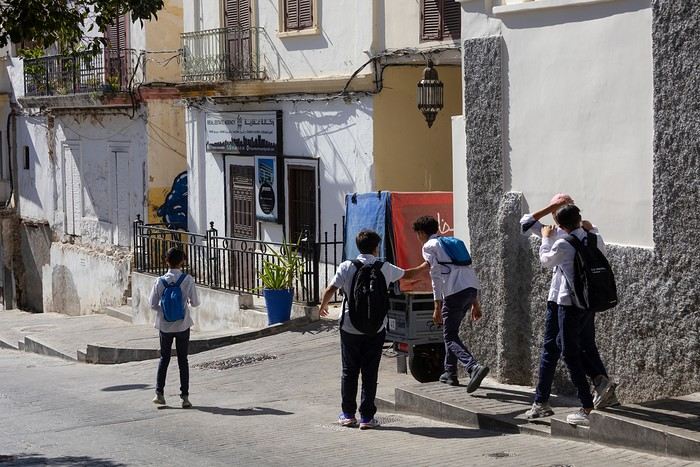
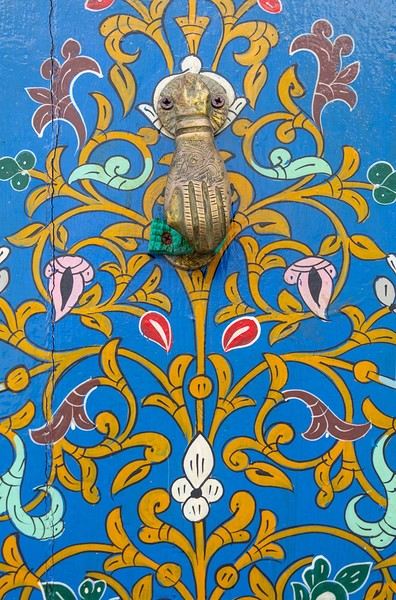
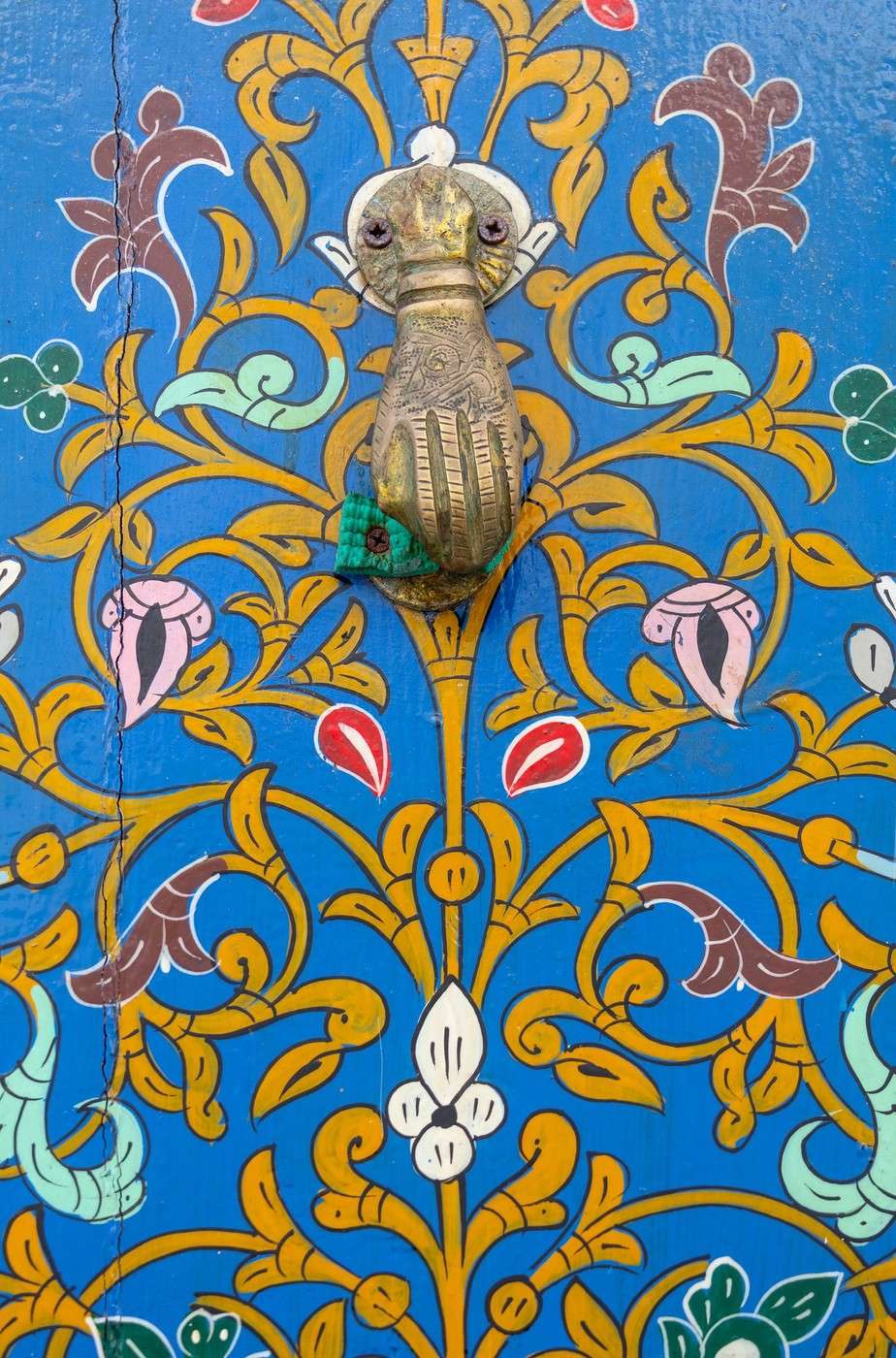
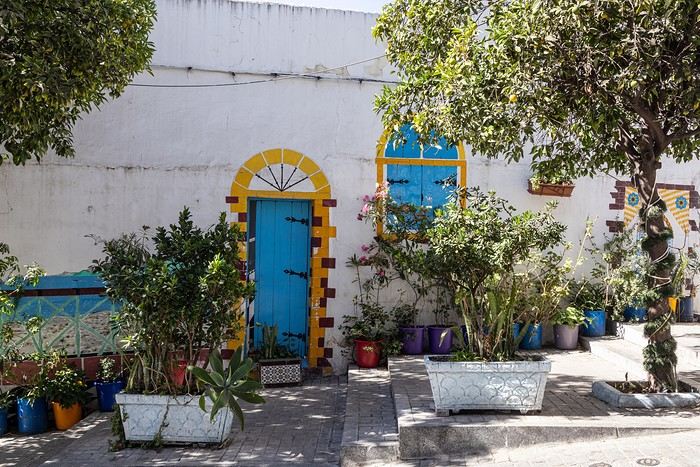
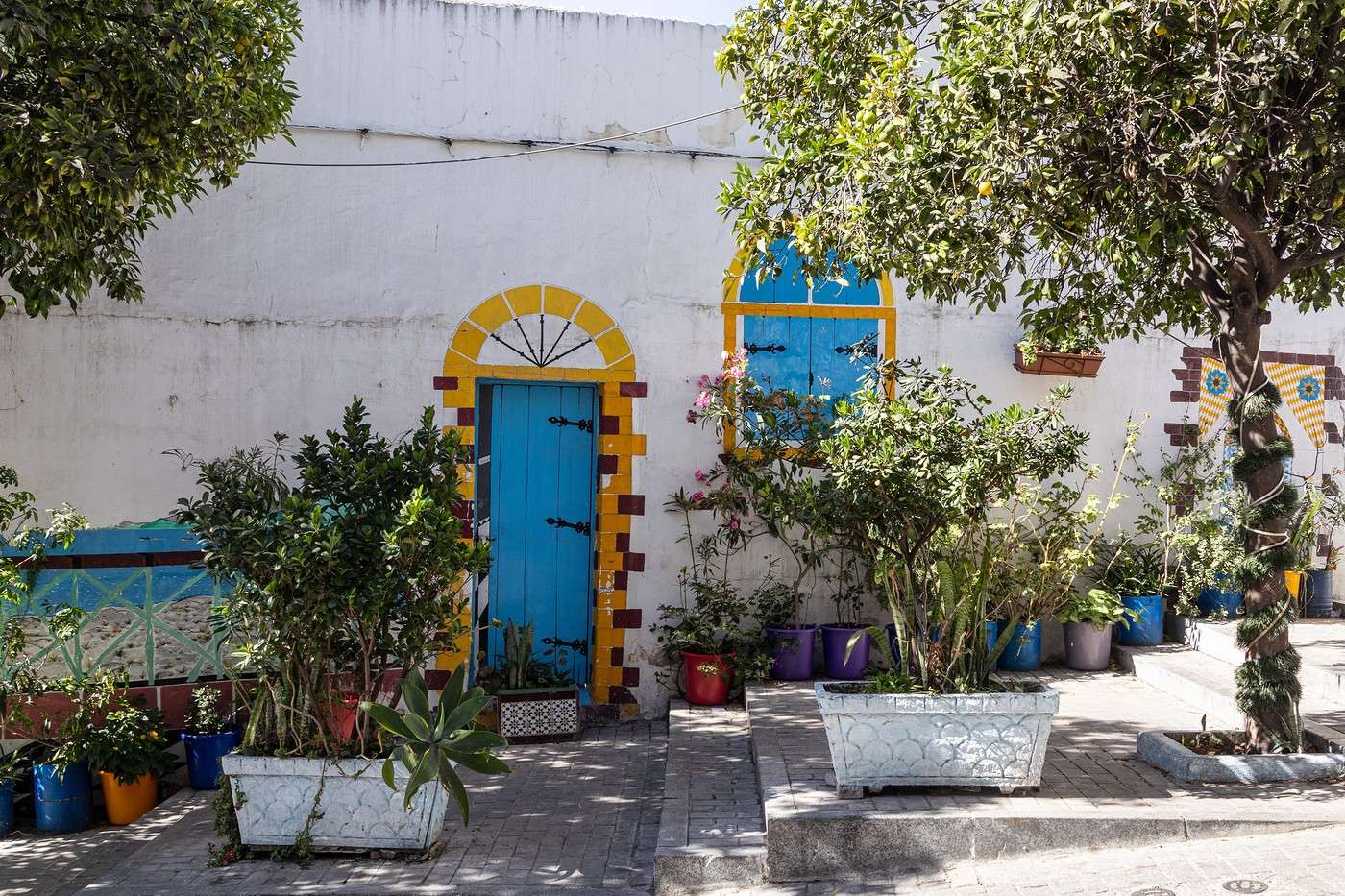
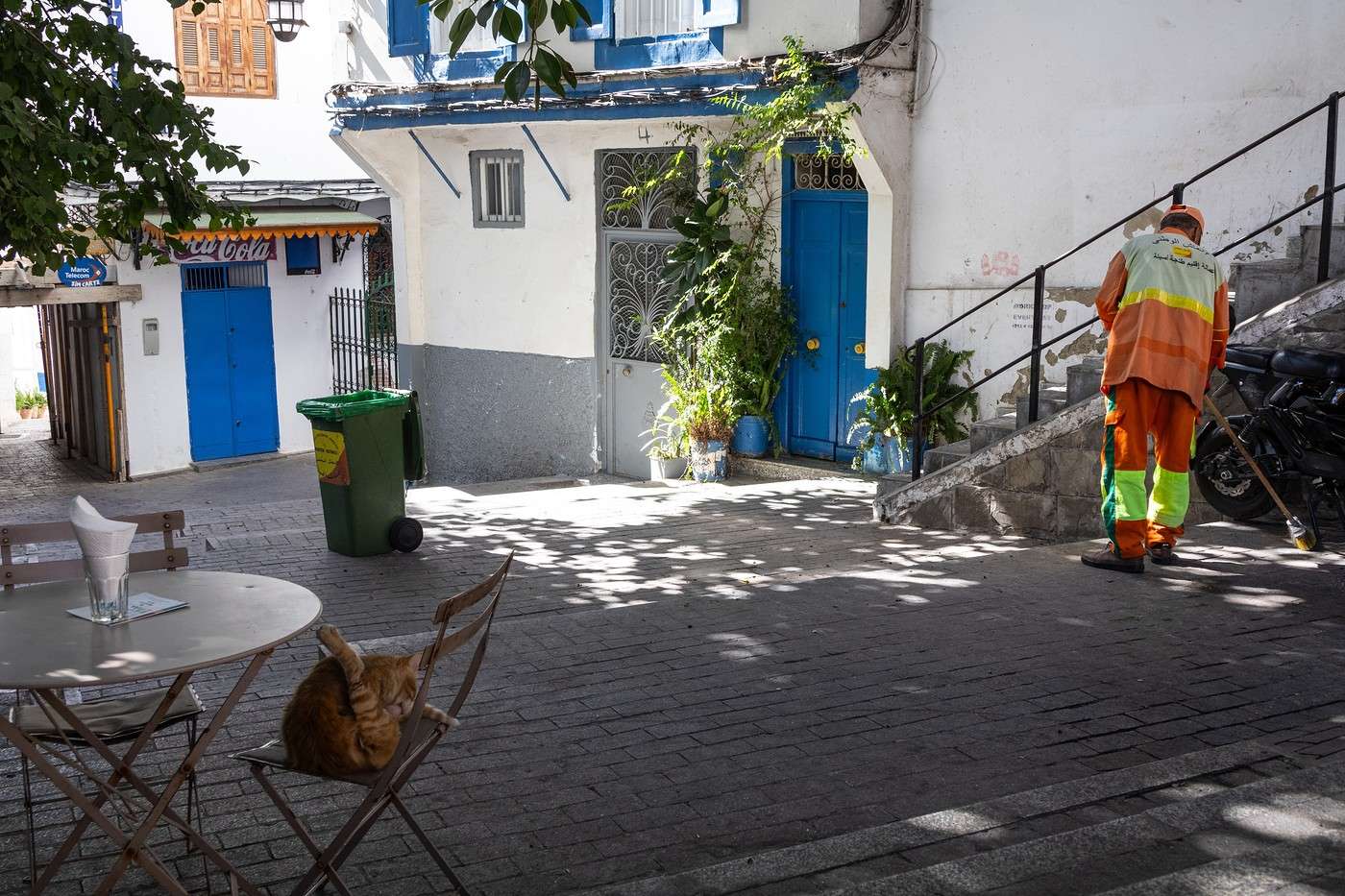
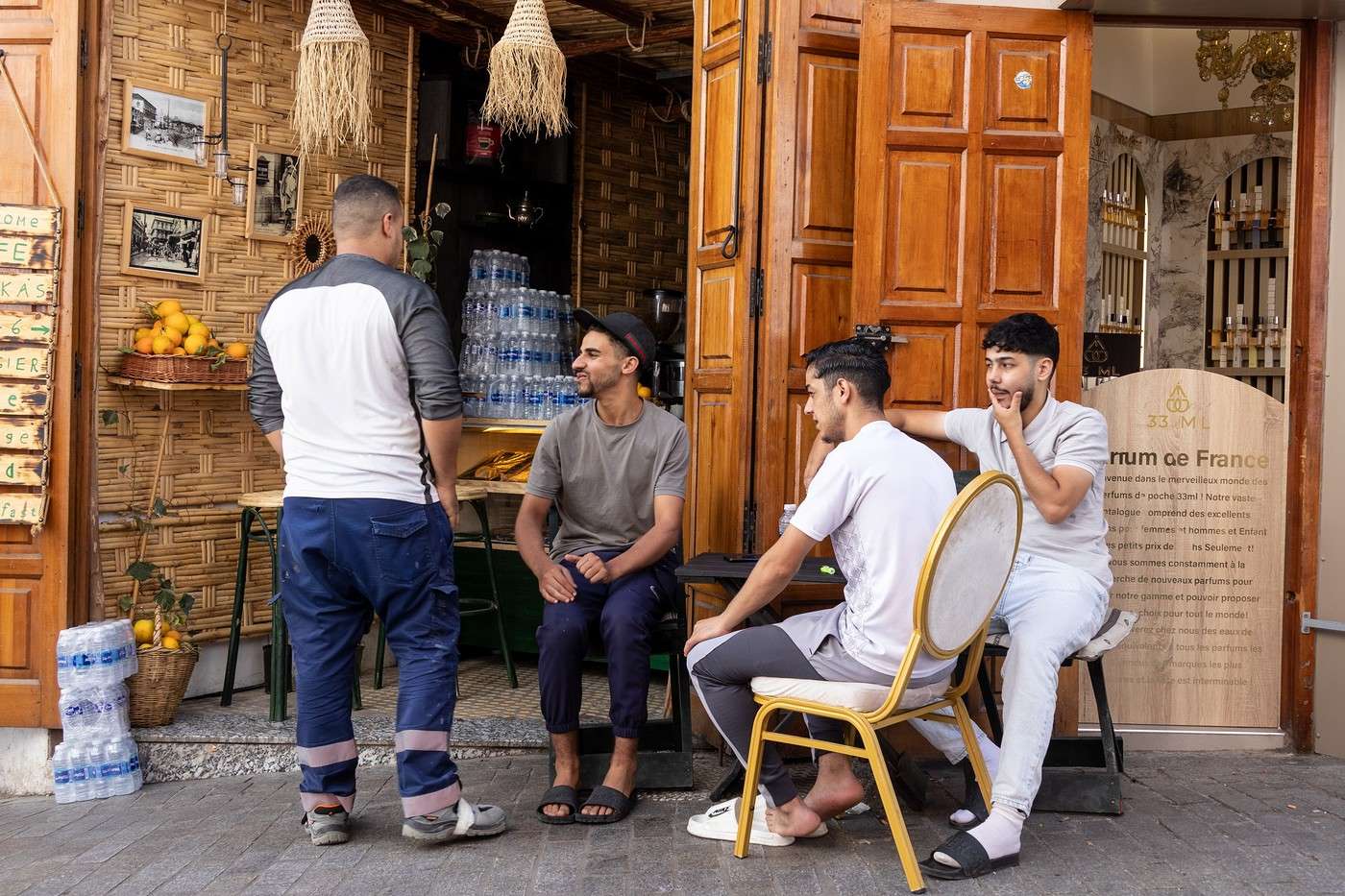
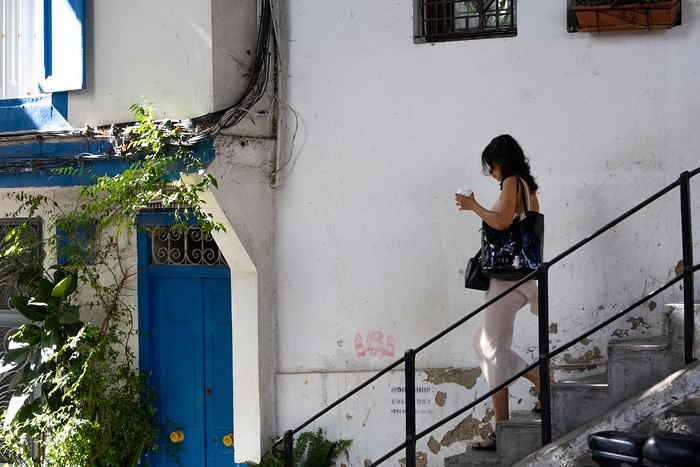
The climb up to the kasbah, the powerful fortress built in the 17th century by Sultan Moulay Ismail, is steep and tough on the legs. It’s that famous uphill trek typical of so many Mediterranean cities. But once we pass through the gate “Bab al-kasbah,” we emerge onto a charming square lined with whitewashed houses, their doors and shutters painted a bright blue. Just below, a small café spreads out its tables and chairs in the shade of a large tree. The perfect spot for a break after a 15-minute walk. Nothing’s urgent, after all—it’s the ideal place to soak in the peaceful atmosphere and fine-tune the day’s plans.
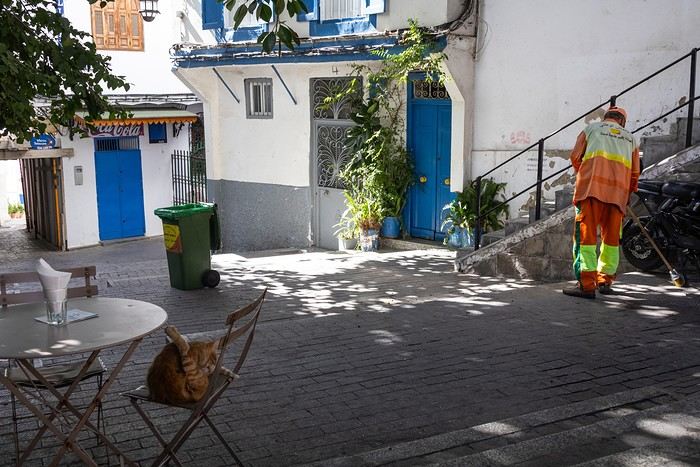
While I’m nose-deep in the *Routard*, a well-dressed European man of a certain age greets us warmly. We strike up a conversation, and he tells us that most museums are closed today since it’s Tuesday. He then shares bits of his life here in Tangier, where he’s lived for about twenty years. A well-traveled entrepreneur, now a “retired expat,” who chose Tangier for its quality of life—right in this spruced-up Kasbah neighborhood, which I immediately noticed was quite gentrified. His senior friends soon join him at the table, and we leave them to their peaceful morning.
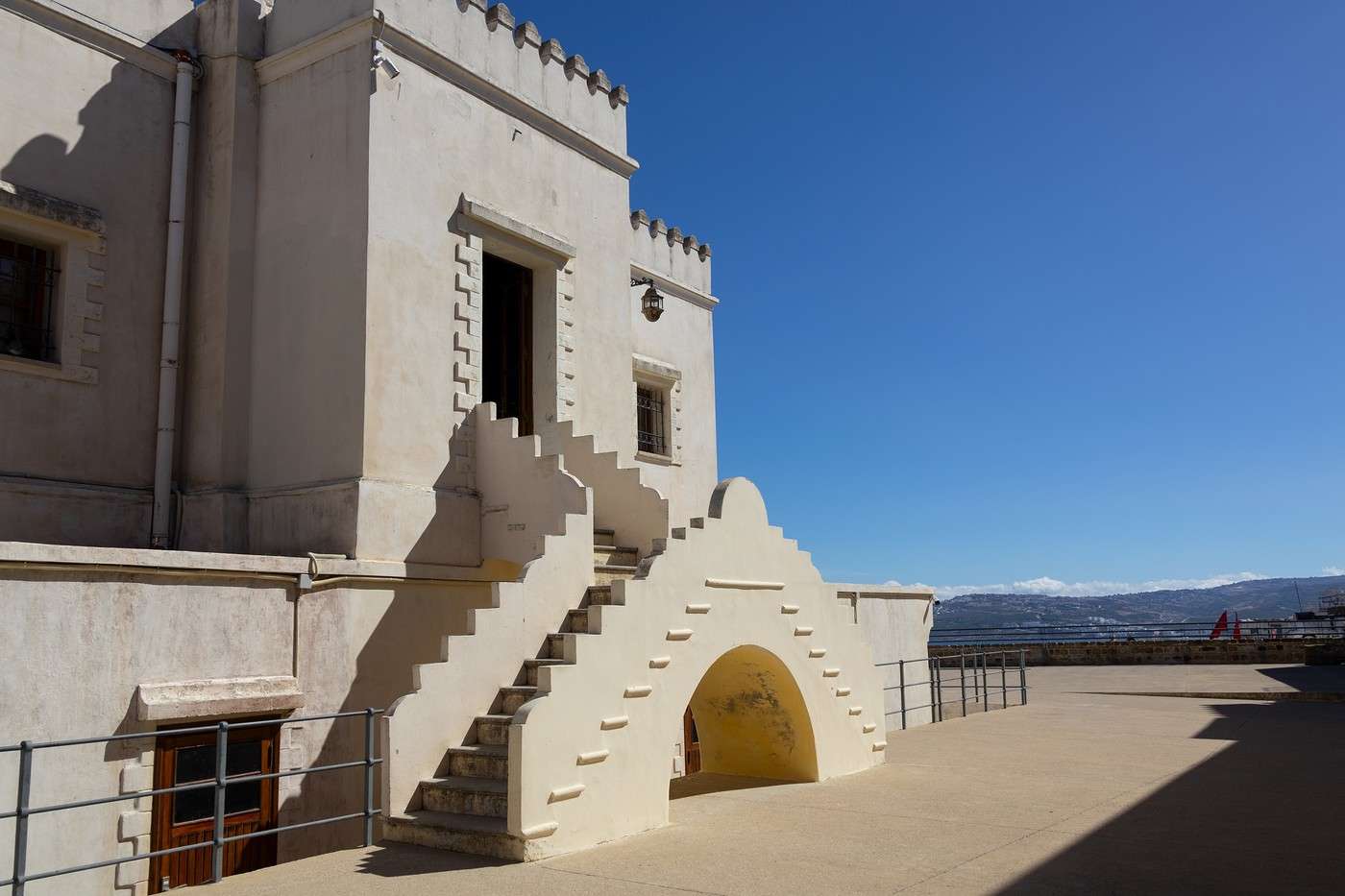
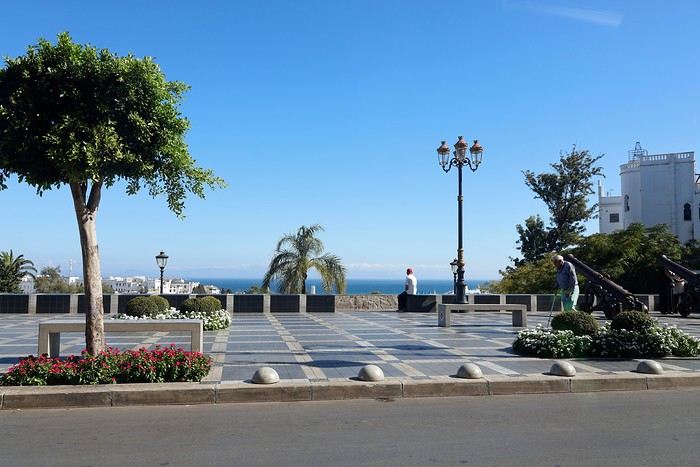
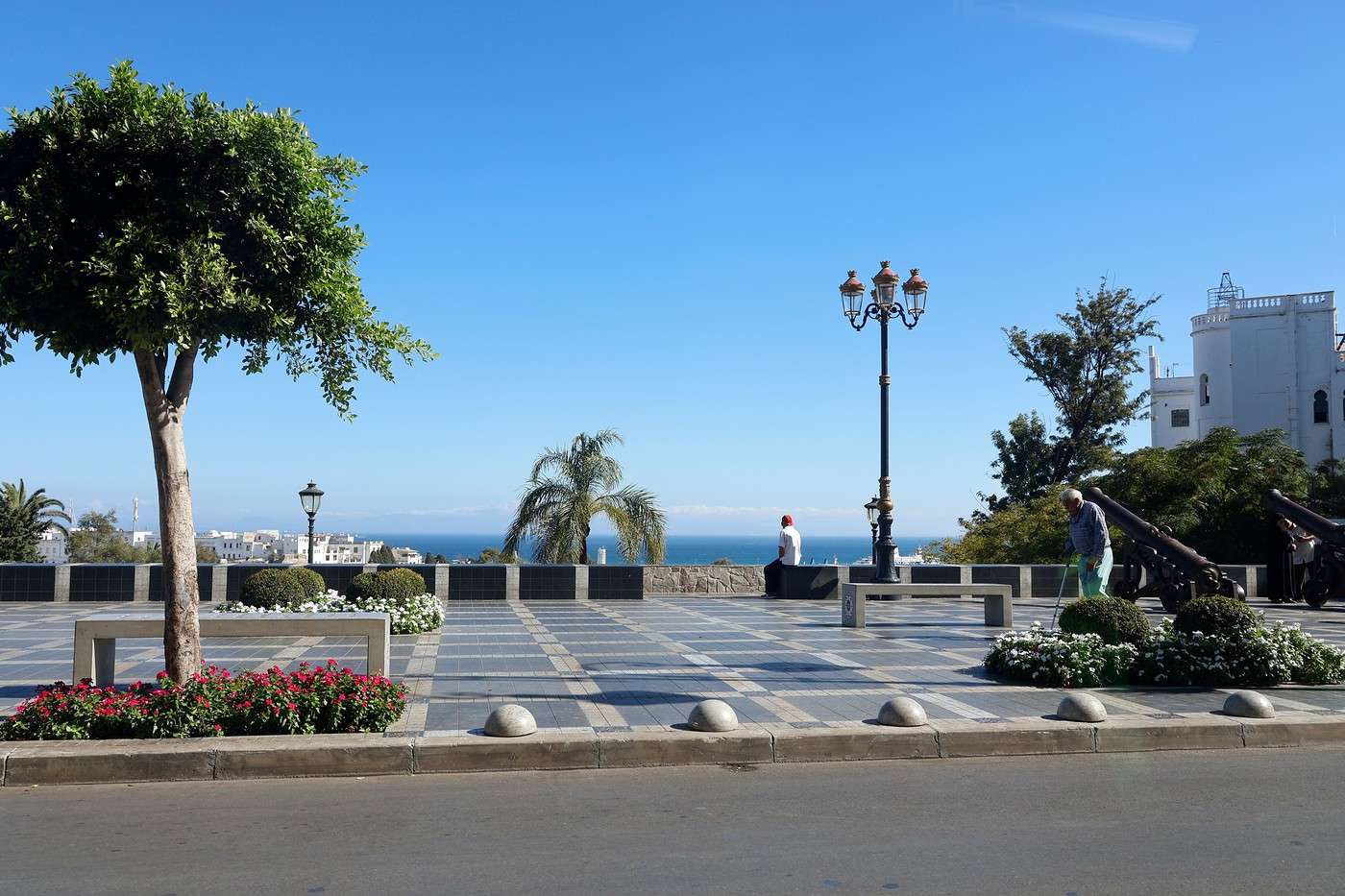
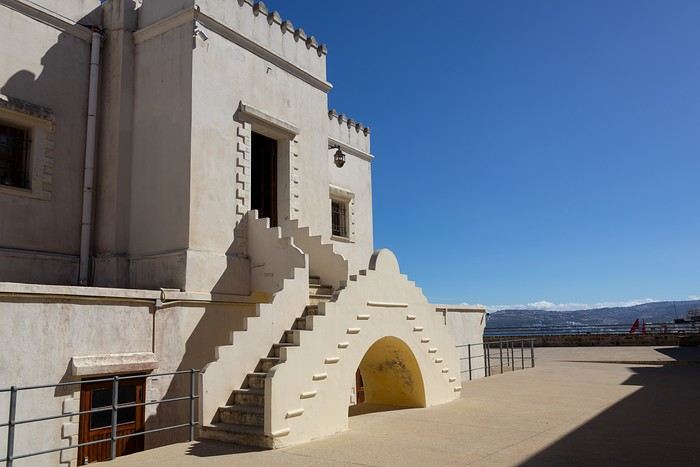
At the far end of the square, we enter the Bordj En-Naam, the military fort that once watched over the coast. I’m not a huge fan of military architecture, but the perfectly restored complex is impressive. At this early hour, we’re completely alone as we stroll across the vast esplanade, gazing up at the towers and ramparts standing out against the crisp blue sky. But when I turn left, my eyes land on a deeper blue and a sweeping horizon marked in the distance by a dark line. I call out to Kate, who’s always lagging behind, busy chatting with her Canon. “Come see! Gibraltar, the Mediterranean, Spain!” The view is breathtaking. We stand there for a moment in silence, our faces buffeted by the sea breeze, each lost in our own thoughts. In mine, words drift by: travel, conquest, migration, hope…
A little exhilarated, we leave the fort, but I realize as we exit that the entrance courtyard houses a museum dedicated to Ibn Battuta, the great 14th-century Tangier-born traveler. And it’s open. I hesitate to suggest a visit to Kate, but the weather’s so nice, and we’re so eager to keep exploring that we decide to skip it.
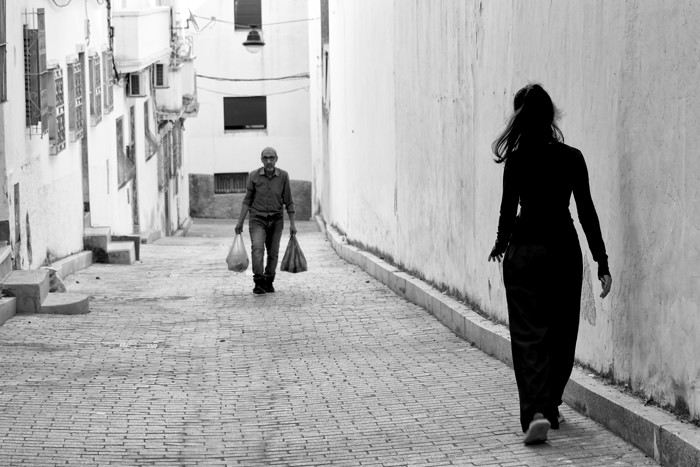
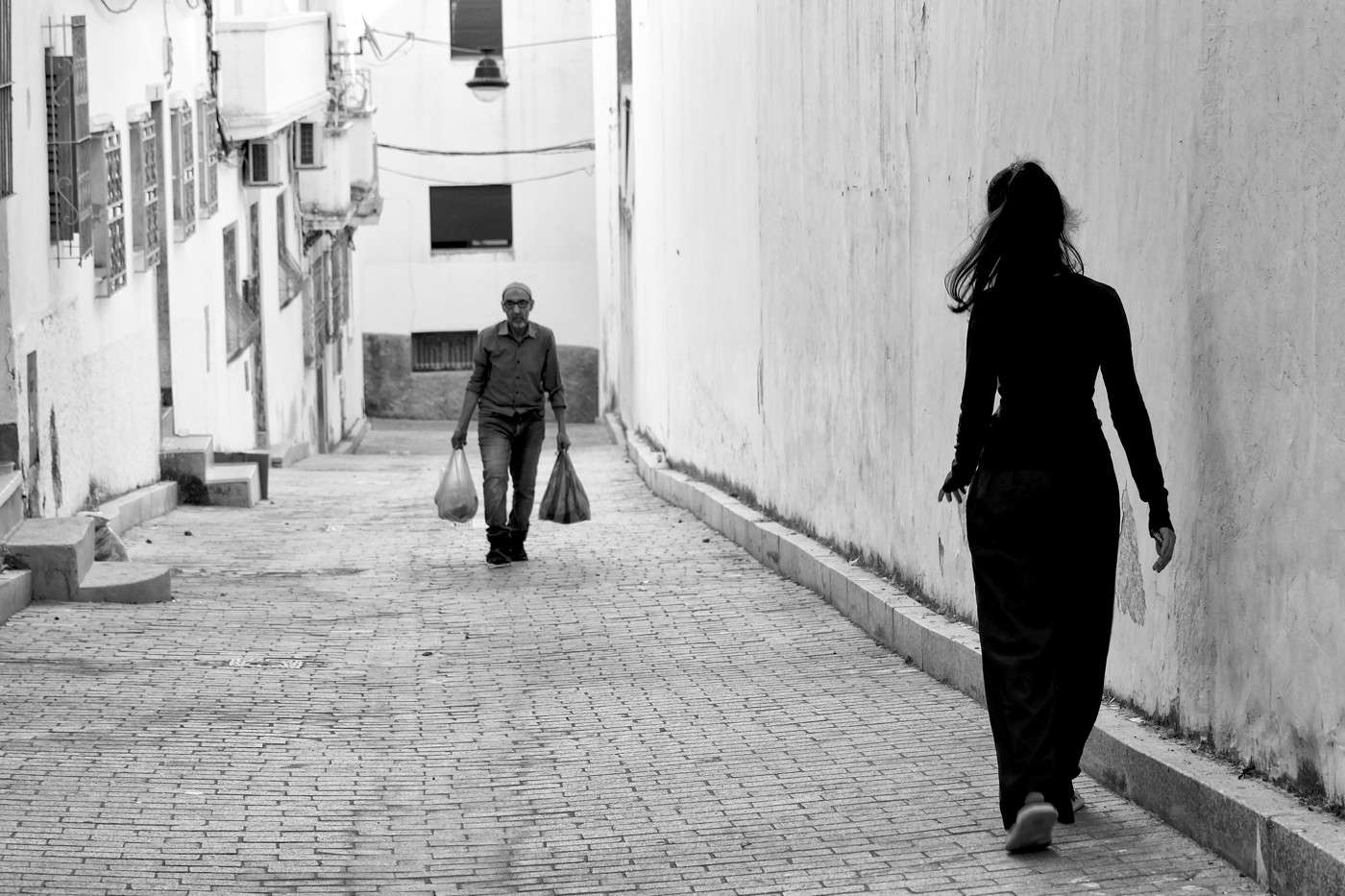
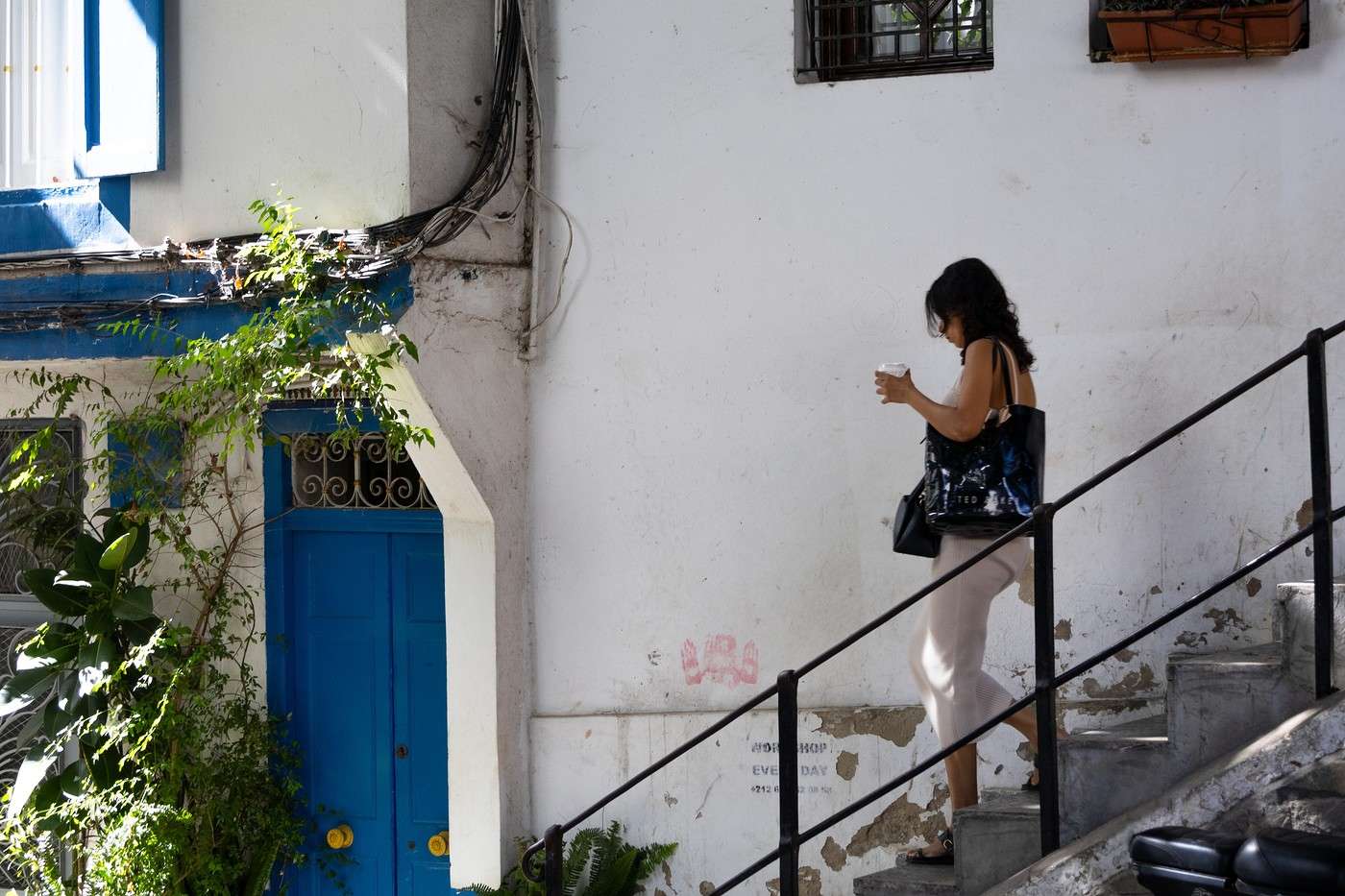
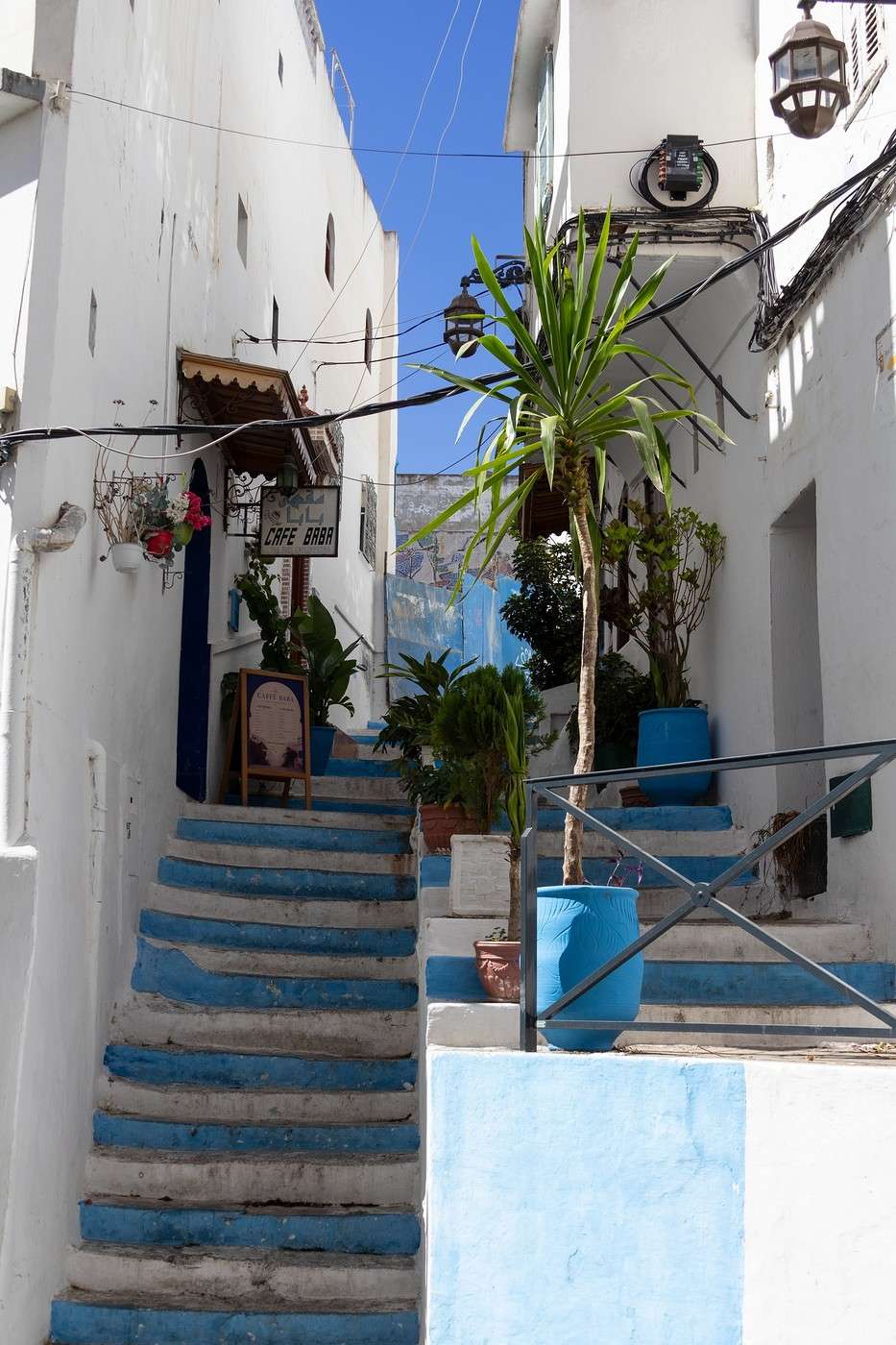
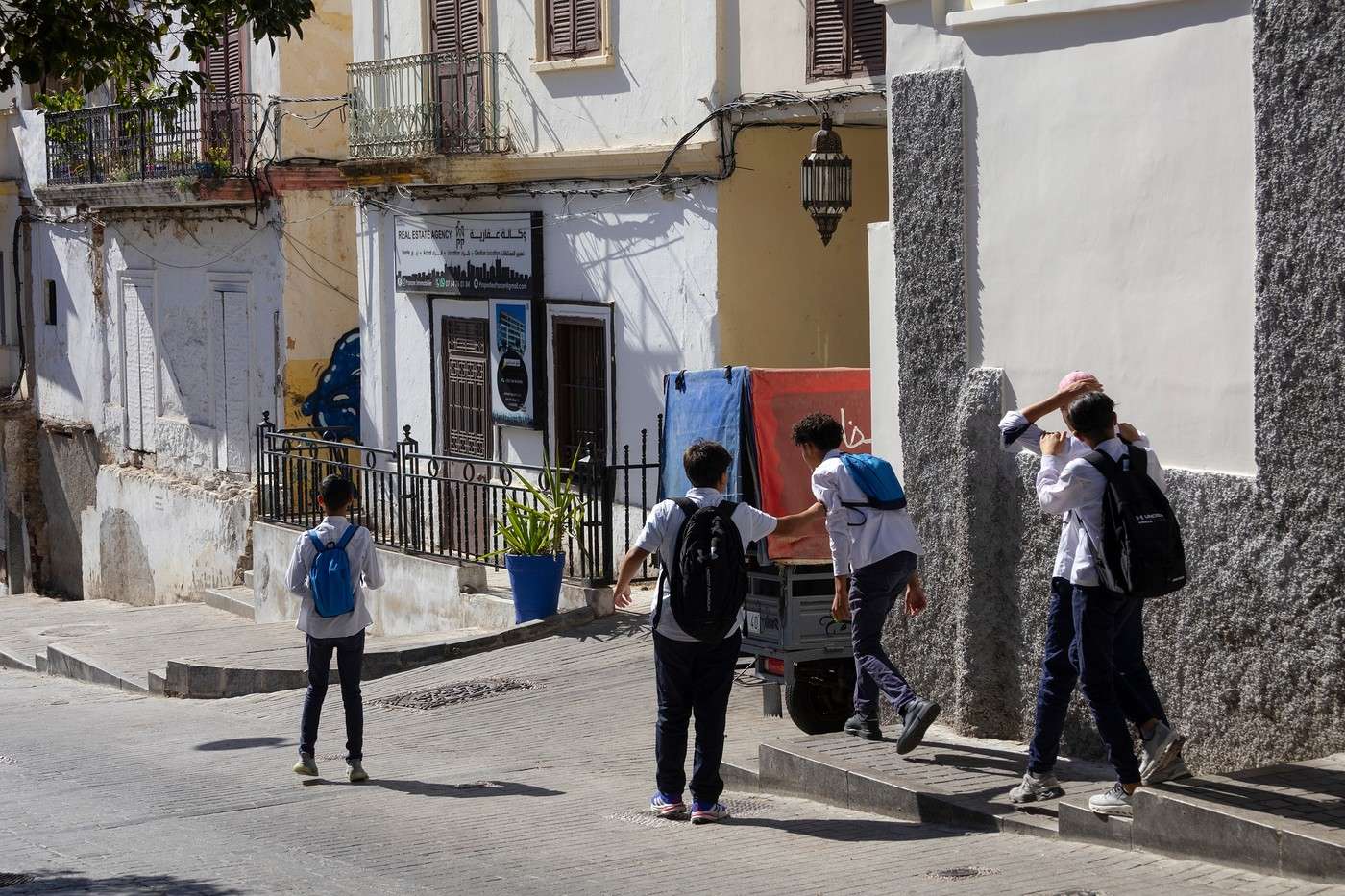
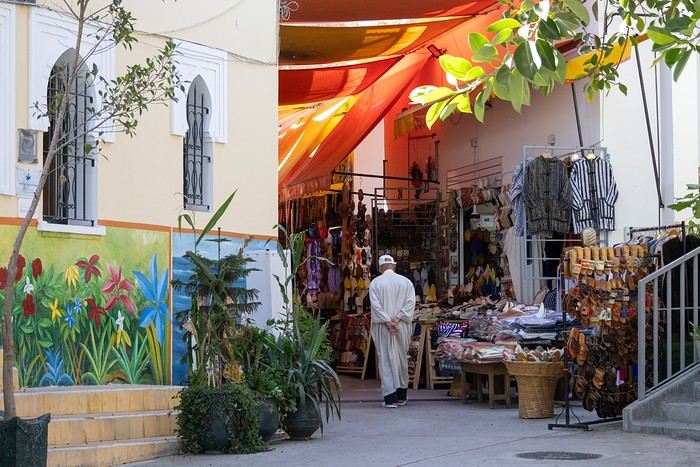
A gentle descent takes us out of the Kasbah. Through a gate, we now enter the medina. A maze of narrow alleys, a tangle of well-kept white and blue houses, tree-lined squares, and glimpses of staircases leading up or down. It feels like Spain, Portugal, or Greece. This medina, especially in its upper part, has been extensively restored. Less exotic, less authentic than the bustling one in Fez, but so pleasant to wander through.
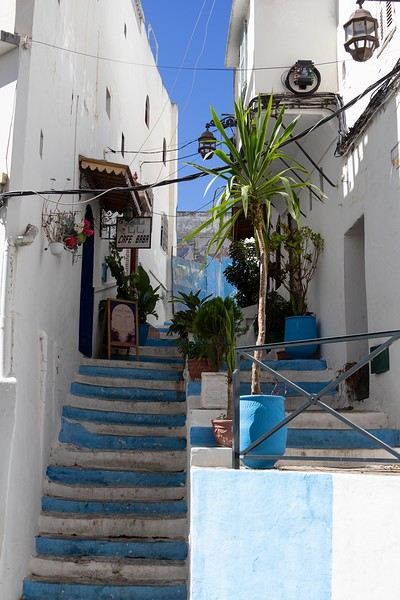
We emerge onto the Petit Socco square. What an odd name. It’s actually a Spanish distortion of the Arabic word souk. This is the historic heart of the old medina. The square isn’t very large, really. Surrounded by terrace cafés and buildings with wrought-iron balconies, it feels more like a European—specifically Spanish—square than a distinctly Moroccan one.
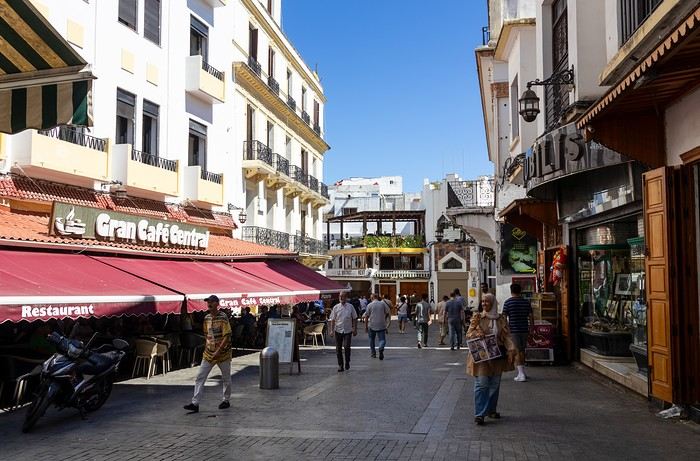
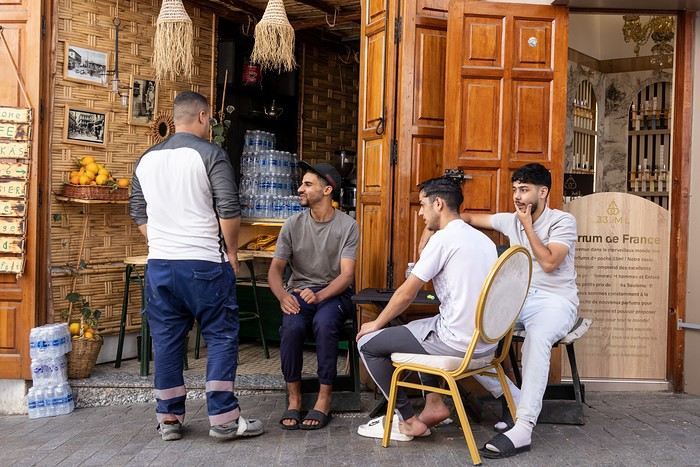
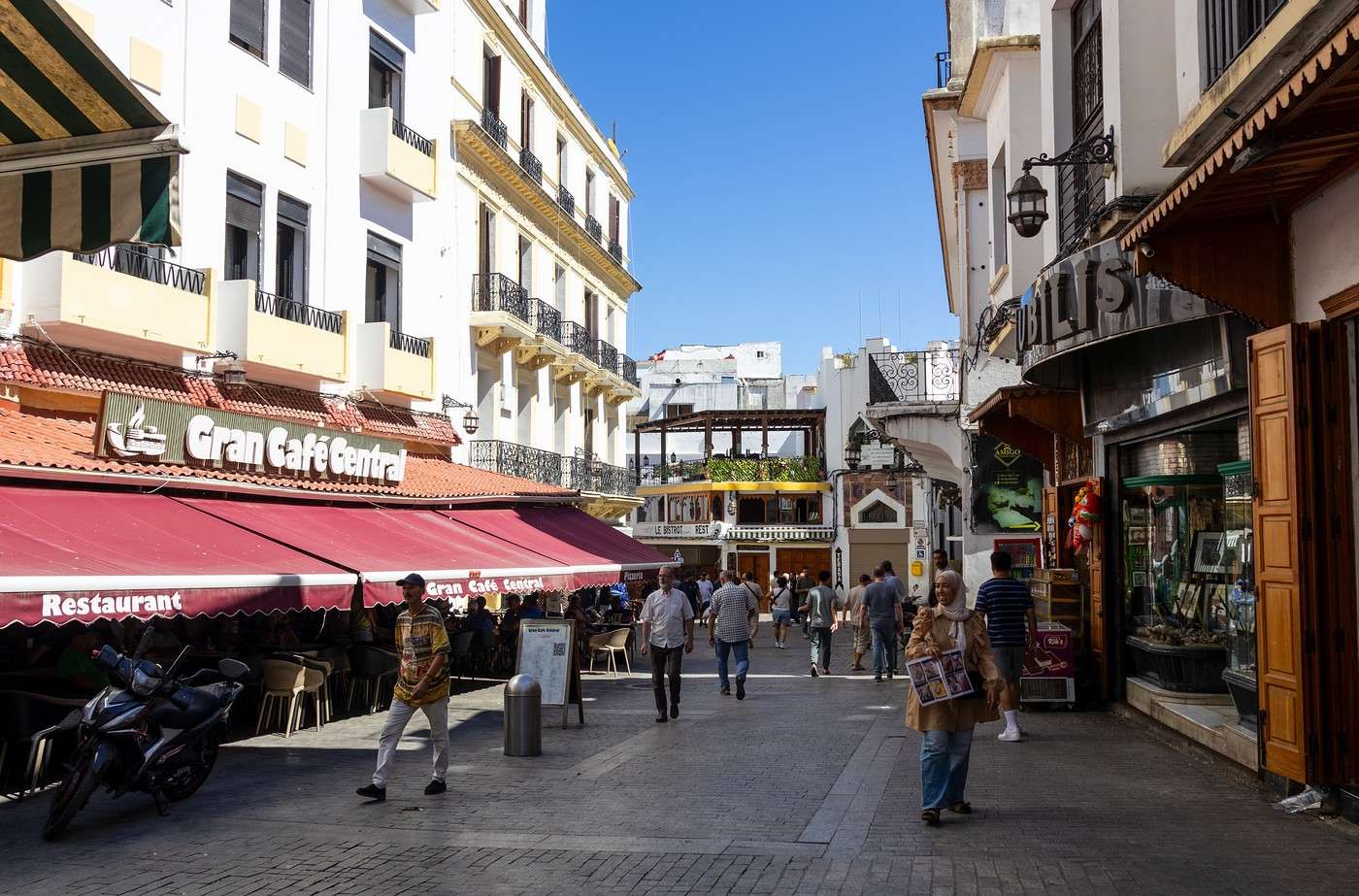
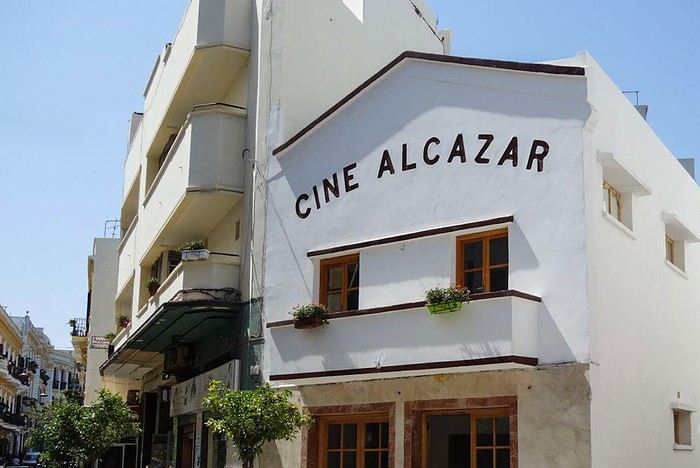
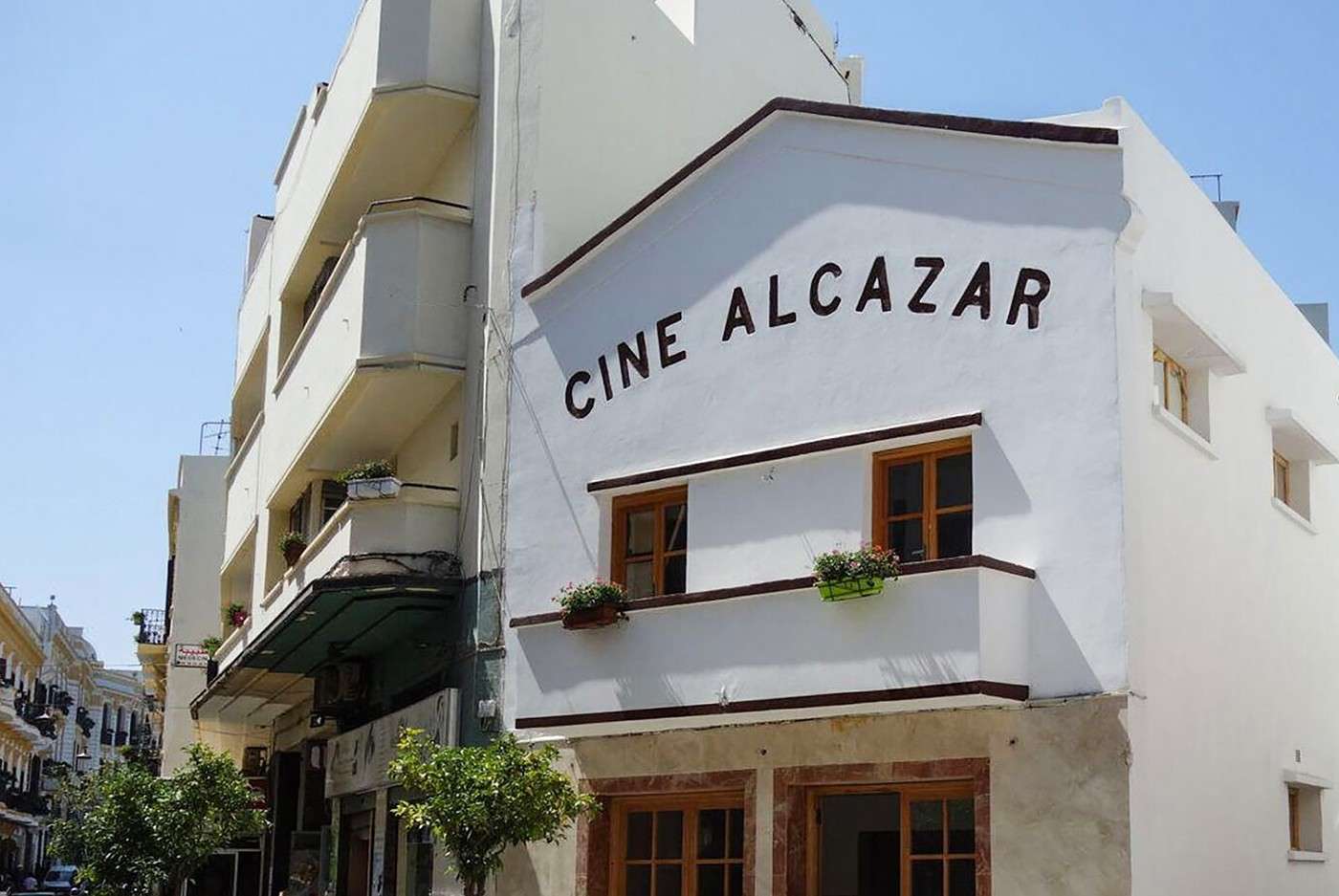
After a quick lunch at a snack bar, we head up Siaghine Street, the main shopping artery leading to the Grand Socco. Here again, to our surprise, the vibe isn’t exactly what you’d expect from a Moroccan medina. Instead, it’s a mix, a fusion of craft shops, bazaars overflowing with all sorts of goods, and luxury stores. All set against an architectural melting pot where mosque minarets stand alongside wrought-iron balconies and the white façade of the Spanish Church of the Immaculate Conception...