in Destinations › Afrique de l'Est et Australe
Masai Mara and Melting Pot Safari... So disappointed! (page 1 of 7)
Discussion started by Chiarafont on 2019-09-11
134 replies
This thread has been translated into English.
Masai Mara and Melting Pot Safari... So disappointed!
Chiarafont · 2019-09-11 · Message 1 of 135
Hello everyone,
I imagine many of you have been captivated by the Masai Mara park and/or your safari experience with Tony Crocetta/Melting Pot Safari. Still, I’d like to share my perspective.
First, I’m an avid traveler, especially in love with Africa, which my partner and I have explored a bit (Zambia, South Africa, Botswana, Kenya, Zimbabwe, Namibia...).
That said, I want to express my deep disappointment with both the Masai Mara and Tony Crocetta’s camp, Melting Pot Safari, where we stayed last year.
First, about the park: it’s stunning, no doubt. But what a highly touristy place! I can’t find the words to describe the horror of being among 30 4x4 vehicles lined up in front of a lioness hunt, let alone encircling her right after her kill while her prey is still alive in her jaws... no respect for wildlife. The same goes for surrounding a young leopard playing with its small prey, a moment when I counted over 50 vehicles, most with their engines running... sickening. I turned away, both my gaze and my camera. What a disaster to see this natural wonder of Africa turned into a tourist hotspot.
Yes, I loved this place on Earth, but no, I won’t "promote" it anywhere or to anyone.
Next, I also wanted to share my dissatisfaction with Tony Crocetta’s famous camp, Melting Pot Safari: where to begin? We booked a private vehicle for four with two friends, and I have no complaints about the vehicle itself (though it obviously came at a cost). The windows and the vehicle weren’t very photo-friendly, but let’s move on.
The trip between the sisters’ guesthouse (which was fine) and the camp went smoothly, except we arrived a bit too late. Result: "We’ll leave for the safari an hour later today because the driver has to respect his rest hours." Perfect—with park formalities, we only spent about an hour in the park that evening. The safari got off to a great start...
During our 12-day stay, we saw some amazing things. Tony wasn’t at the camp—I don’t know what the atmosphere is like when he’s there, but it was rather cold during our trip. Sylvie, his wife, barely looked at us, never asking how our day, night, or game drive went (I think she spoke to us once during the stay, plus the day we arrived, of course). We felt invisible... (if I were mean, I’d say the money had already been deposited into Melting Pot’s bank account.)
The evening meals, if I may say so, were a joke: not enough dessert (aside from fruit, but the few elaborate desserts—like 10 for 18 guests) for everyone, barely enough meat or sides. If you were unlucky like us and ended up with a group of 15 people who decided to skip the starter, you’d better hurry to get your main course, or there might not be any left—and no refills... We always ate our fill, but sometimes we had to serve ourselves in advance.
Finally, I want to correct something about the quality of the meals: seriously, this buffet was really mediocre and far from the culinary standards I’d read about in my pre-trip research (see their Facebook page).
Anyway, let’s move past the food—after all, the avocados were sublime, and we’re not there primarily to eat.
About the tent: the river views were beautiful, and the beds were very comfortable. No running water, individual showers outside the tent, and dry toilets—but it’s Africa, so we weren’t shocked. However, I’m disappointed that for this "modest" price, I wasn’t warned there’d be no soap (and no, I don’t travel with my own soap—and for the price, a little bar in the tent wouldn’t be a luxury). But let’s move on—the hippo views were fantastic. Oh, and to preserve the Masai Mara’s water (which makes sense) and for hygiene reasons, underwear isn’t washed by the camp staff—fair enough. But then what’s that little sign next to the bed? Oh right, for a hefty sum, underwear suddenly becomes "washable"...
Finally, my biggest gripe is about the essential part: the game drives. In France, they sell you a dream with a "photo safari" (what’s the difference, really? A room with a few more electrical outlets?). They promise guides especially suited for photography (not a given, sorry) and vehicles that can get close to animals and go off-road... but here’s the catch: the guides are bound by park laws and hounded by rangers looking to fine rule-breakers. Result: as soon as a white ranger vehicle is spotted, we have to abandon our spot for a wild chase through the grass. Fun once... The next day, we learned that another group’s guide got caught and had to pay $100 for breaking the rules—a sum he casually asked the travelers in his vehicle to cover... because of course, Melting Pot lures tourists with dreams, the poor rangers try to get close, all while breaking park laws... and they break those laws for Crocetta’s company, which, of course, won’t dip into its profits to pay the fines. Basically, it’s "keep the clients happy, but don’t get fined—or the fines are on you or you’ll have to ask the clients directly." Nice boss! Anyway, there were long discussions about this last year, especially among the guests in the fined vehicle. My partner and I found these practices unacceptable, and we were deeply disappointed by this attitude.
I know many people adore this park and/or this company—maybe you were luckier... or maybe you’re less demanding than we are when it comes to respecting rules, nature, and clients. But after traveling through much of southern Africa, I can tell you we personally came back frustrated from this experience and aren’t eager to return... You’ve been warned.
Masai Mara and Melting Pot safari... so disappointed!
Solene40 · 2019-09-12 · Message 2 of 135
Well, thanks for this realistic review, Claire. It really doesn’t make me want to go 😅.
You didn’t mention the price you paid, but given the astronomical cost in general, we can imagine how hard the "pill" was to swallow 🤪.
I’m just wondering why you posted this so long after.
Have a good evening,
Christelle
Masai Mara and Melting Pot Safari... So Disappointed!
Chiarafont · 2019-09-13 · Message 3 of 135
Because I never took the time to do it, quite simply! And a year later, I was thinking again about my need for Africa and unfortunately also remembering the things that went wrong for this trip... I'm such a travel-loving adventurer that I enjoy sharing my experiences and discovering those of others, other travel journals... Africa is pure bliss but also a real budget challenge, so if my post can be helpful to someone... but I understand if you'd rather form your own opinion! This is just mine :)
For info, we took the Simba Safari in the Masai Mara for 4 people for 12 nights, which came to a little over 3,200 € per person (including the Nairobi-Masai Mara trip as well as the night at Roussel Guesthouse on arrival and departure).
See you soon!
Claire
Masai Mara and Melting Pot Safari... so disappointed!
Pygmalion19 · 2019-09-13 · Message 4 of 135
Hi Claire,
Thanks for the contradictory feedback—though it’s not the only one. Other travelers have had the same experience as you in the Masai Mara, but others haven’t. Personally, I think you’re right about the crowds, having seen the same thing in Ndutu and the Serengeti (Tanzania). As for the vibe at MPS, it’s hard to respond to your point, but it’s good to clarify that off-roading isn’t acceptable since it only increases the disturbance. This rule applies to MPS too, so they don’t get a free pass. If there’s a clear violation, it’s unfair that the game drivers end up paying the price.
Masai Mara and Melting Pot Safari... So disappointed!
Pygmalion19 · 2019-09-13 · Message 5 of 135
PS – I also notice that not everything in my experience was negative 😉. A few good memories all the same?
Masai Mara and Melting Pot Safari... So disappointed!
Rjulie95 · 2019-09-15 · Message 6 of 135
Hi Claire,
Without wanting to stir up controversy, I have a completely opposite opinion to yours, and I’d like to share my perspective on what I experienced with them. I should mention that everyone (except self-drivers) goes off-road in the Masai Mara.
Regarding the fine, two situations came up during my stay:
Once, it was the clients who specifically asked the guide to stay when he wanted to leave, so they willingly paid the fine (which seems logical to me).
Another time, the guide didn’t see the rangers, and MPS paid the fine, not the clients.
I’ll share my overall impressions once my travel journal is finished.
Masai Mara and Melting Pot Safari... So disappointed!
Sylvie56 · 2019-09-15 · Message 7 of 135
First of all, thanks to Chiarafont—her account really helps understand how this type of camp works. After that, everyone chooses based on their own tastes. We don’t all travel the same way. Personally, when I go to Africa, it’s not to spend every evening with a group of French people.......
The welcome from the "Lady of the place" reminds me of those Parisian hoteliers/restaurant owners who aren’t always the friendliest with tourists😉
Rjulie95 says: "everyone goes off-road in the Masai Mara" and that’s exactly the problem!!!!!!!
Given how crowded the park is, it’s destroying it. How can people claim to care about conservation and still take part in that....... I just don’t get it.
In the region, the Mara Triangle has set very strict rules and enforces them—it’s the only smart way, in my opinion, to have even a small hope of preserving the wildlife in that area.
Sadly, it’s probably too late.
You can always tell your guide you don’t want to go off-road. I don’t see the point in taking tons of photos of an animal harassed by dozens of vehicles.
It’s also possible to visit Kenya in other ways than just going to the Masai Mara....
Masai Mara and Melting Pot Safari... So disappointed!
Rotsaka · 2019-09-15 · Message 8 of 135
I completely agree about the off-track issue. It shocks me all the more because this is a major and extremely touristy park.
I haven’t visited the most crowded parks, but just once I saw a guy leave the vehicle in Kidepo to look for a lion after a kill. He didn’t find it but just scared off a flock of vultures that were waiting. Stupid and disruptive. I don’t understand it either.
That said, regarding the camp, it’s just one opinion, and we shouldn’t draw definitive conclusions from it. Maybe the owner was having a bad day, etc. In short, things can go really well with one person and terribly the next week...
Masai Mara and Melting Pot Safari... so disappointed!
Blesl · 2019-09-15 · Message 9 of 135
Good evening Claire,
Your disappointment shines through in every line—I’m so sorry for you and your husband.
For the overbooked Masai Mara, it’s still possible to find some solitude: ask the driver not to use the radio or phone and make your own observations, even if it means missing out on a few spectacular scenes. If that’s not enough, you could skip the Masai Mara reserves and do your safari in the "motherland," the Serengeti on the Tanzanian side...
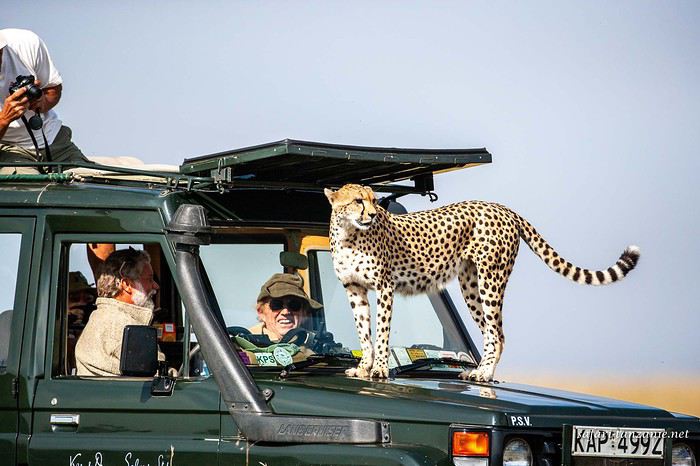
The sheer number of vehicles, if the drivers aren’t novices (and very few are), isn’t usually a problem for hunts—it’s even quite common for cheetahs to use the hood of a 4x4 as an observation post. That said, widespread off-roading is definitely a scourge for the soil, flora, and fauna. It should really be reserved for professional photographers and videographers. But drivers want to satisfy their safari-goers as much as possible, not just to guarantee a good tip—it’s up to us to curb their enthusiasm and not allow off-roading.
Personally, I’d just regret that rangers don’t put the same effort into stopping cattle and zebu herds from grazing in the Mara reserves. The fact that these herds belong to their relatives, friends, or even themselves isn’t unrelated to their leniency, which is actually harmful to wildlife—depriving herbivores of food and pushing predators out of their territories or even poisoning them.
With MPS, we’ve had four entirely satisfying Kenyan safaris between 2007 and 2015. I recommend MPS whenever someone asks for my opinion.
The vehicles’ adaptability for photography always seemed good to me—far better, in my opinion, than what open vehicles in Southern Africa allow. Based on my (admittedly limited) experience, MPS’s game-drive schedules are much better than what far more expensive lodges and camps offer. In particular, MPS’s pre-sunrise departures aren’t often practiced elsewhere. In that sense, reading Régis’s excellent travel journal is great advertising for MPS.
It’s very likely that if Tony had been there in person, the atmosphere would’ve been better and your experience less negative. Tony’s not just a friend—he’s very open and warm with everyone. You could try contacting him directly to share your constructive feedback. Logistics issues should be easy to fix.
I hope you and your husband still managed to add to your amazing photo gallery.
Have a good evening,
BL

Masai Mara and Melting Pot Safari... so disappointed!
Chiarafont · 2019-09-15 · Message 10 of 135
Thanks to everyone for your feedback. I don’t know if I was just unlucky, but my disappointment was indeed huge.
Yes, I’m really upset about the off-roading in this park in particular. You can’t claim to be passionate about wildlife and then behave like that: surrounding a lioness just 20 seconds after she caught her prey? To me, that’s unthinkable. Honestly, the way the park operates disgusted me—it’s nothing more than a tourist factory. That makes the disappointment even worse when you know how magical the setting is! But because of that, I’ve sworn never to promote this park, which has gone way off track in my opinion...
I don’t know what it’s like on the other side of the border since I’ve never seen the Serengeti. But from what rangers and some guides have told me, certain big cats (cheetahs in particular) have changed their hunting hours because they’re so disturbed by safari vehicles! What a disaster for the animal world and the ecosystem... I won’t play that game, especially since the Serengeti is another (very expensive) world, from what I’ve heard...
True, the game drive hours with MPS are quite flexible, and I should’ve mentioned that—it’s actually a really nice perk. My review wasn’t even that thorough because I forgot to say there was no fire at the camp, which for me in Africa is nearly intolerable (especially for a camp of that size). And yes, they *do* have the infrastructure to make one—after I complained one evening, they lit one that night! But it was quickly forgotten for the next 10 nights, which is just sad (in the truest sense of the word)... Anyway, moving on.
Thanks Blesl, we came back with some nice photos, but far fewer than we’d hoped—though it’s well known that game drives are still just games...
I found it frustrating that Melting Pot Safari/Tony Crocetta uses closed vehicles, because it means photographers on the “wrong” side during a scene have little (or no) lateral movement, or have to shoot from above... with the bad angle that comes with it. What a shame for a photo safari that claims to be a specialist. A fully open 4x4 offers so many more possibilities.
I think in the end, a French-speaking camp full of photographers with egos bigger than their skills wasn’t really for me. A “wild” national park with lines of 4x4s wasn’t either...
It’s heartbreaking because the beauty and purity of Africa are truly unique in the world...
Masai Mara and Melting Pot Safari... So Disappointed!
Rjulie95 · 2019-09-16 · Message 11 of 135
I even forgot to mention there was no campfire, which for me in Africa is almost unbearable (especially for a camp of that size). And yes, they had the infrastructure to do it since, after I complained one evening to a camp staff member, they made one that night! Quickly forgotten for the next 10 nights though—it’s truly disheartening (in the literal sense of the word)... Anyway, moving on.
Earlier, you mentioned biodiversity protection being supposedly ruined by "this tourist factory," but you find it abnormal that there wasn’t a campfire just for your personal comfort—wouldn’t that be a bit contradictory?
What I saw in this park, I’ve encountered in other African parks I’ve visited with high animal concentrations.
Masai Mara and Melting Pot Safari... So disappointed!
Chiarafont · 2019-09-16 · Message 12 of 135
Fire seems to be an integral part of the African world, and as it's generally practiced on these lands (until proven otherwise), it's not particularly harmful to wildlife...
As for tourist factories, you can explore parks that have a deep respect for wildlife and where you won’t feel like you're in Disneyland (it’s well known that Kenya is *the* tourist hotspot for safaris—ask anyone on the street, and most will say Kenya and Tanzania without ever having set foot in Africa!). I’m talking about Zambia (North Luangwa NP, South Luangwa NP... stunning!), Zimbabwe (Hwange NP, the gorgeous Mana Pools, of course)... Even in more tourist-heavy parks like Chobe NP (Botswana) or KTP (South Africa), you’ll feel less like a tourist in the middle of a crowd. Just to be clear, I’m not judging—I know I’m a tourist too—but you *can* have a full safari experience without leaving too big a footprint on wildlife and while doing your best to preserve it...
I *highly* recommend the parks I mentioned (and there are others!), you’ll have an incredible experience!
Masai Mara and Melting Pot Safari... so disappointed!
Blesl · 2019-09-16 · Message 13 of 135
Hi Claire,
I also really enjoy a good boma, even if the combustion does have a negative carbon footprint (I’ll skip over the microparticles—things aren’t yet critical in the parks and reserves, though they already are in big cities like Nairobi).
About your near-hatred of the Masai Mara, you explained the *why* well, but I think your experience could’ve been totally different with a more attentive and resourceful driver, a better camp atmosphere, more attention from the hostess, Tony or Simon being around, and more pleasant co-safarists—less full of themselves, less "superior" (especially since, looking at your photos on Instagram, it’s clear you were more than up to the task, even way better than that, but some idiots act like they own the place just because they’re "regulars" and pleased with themselves, even though there’s really no reason to be—thankfully, that species isn’t on the IUCN Red List, right?).
But I get it—no point rehashing the past, just like you won’t be going back to the Masai Mara...
Still, I’ve got a few points to soften your stance for the group.
If the Masai Mara is the favorite (photo) hunting ground for so many wildlife photographers and BBC filmmakers, there’s a very good reason: a concentration of big cats like nowhere else, even if the best years might be behind us. And this decline is more due to unfavorable climate conditions and, above all, the "encroachment" of the park by surrounding populations than to tourism excesses—even if those are very real—like overcrowding and not respecting reserve rules. Plus, the chances of seeing wildebeest crossings are better than in the Serengeti.
Last point, totally unbiased (Tony, same as usual—10% to the Cayman account), MPS isn’t cheap, but you’re not factoring in the value for money of their photo safaris. Sure, at the neighboring Governor’s Camp, you’d have had a decent buffet, and definitely no obnoxious French "Tartarin photographers" acting all arrogant, but instead well-mannered Anglo-Saxons (though I *did* manage to find one Neanderthal among them—rare, a once-in-20-years specimen) who are just as, if not more, interested in wildlife than in photography. But for a price four to six times higher and game-drive hours two to three times more limited.
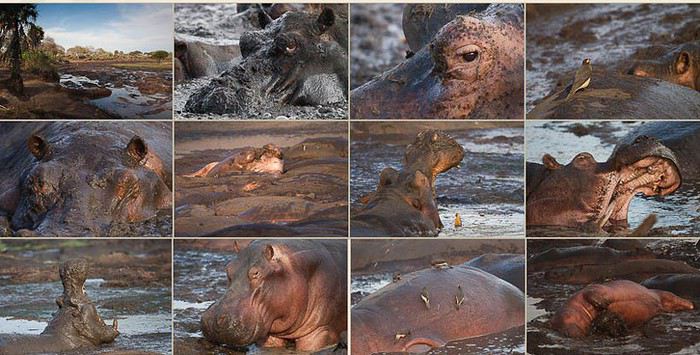
One last thing—since we’re among friends and you won’t tell anyone—I’ll let you in on the safari lover’s paradise for those seeking tranquility. A national park covering over 4,000 km² with fewer visitors in a year than the Serengeti gets in a day! The world’s largest concentration of hippos! Crocodile dens! The biggest buffalo herds in the world! Entire days without seeing more than one or two other vehicles—or sometimes none at all! The Brits say it’s the best-kept secret in the safari world. So, shhh—don’t breathe a word to anyone about Katavi National Park (best visited in late summer), okay?
Of course, every paradise has its downsides: it’s hot, *very* hot, *extremely* hot. And while there are roan antelopes, they’re very elusive. No cheetahs either. And worst of all, the beer is sometimes lukewarm. Oh, and last but not least, the prices aren’t exactly budget-friendly. But still...
Hope your post-safari days are going well!
BL

Masai Mara and Melting Pot Safari... So disappointed!
Jety34 · 2019-09-16 · Message 14 of 135
Good evening Bernard and everyone,
The Masai Mara is indeed being encroached upon by local herders who graze their livestock there, but it's important to know that this park—or rather, this reserve—isn't "National" but belongs to the local Maasai tribes, who believe they have the right to venture beyond its boundaries. This isn’t new; during my first two visits, I noticed this happening near the entrances back in 1974 and 1980—already!
No clusters of 4x4s around the predators, no off-roading either, and only 2 or 3 lodges, barely more in the neighboring Serengeti and Ngorongoro. How many are there today—100, even more?
We returned in 2018 under ideal conditions: Yolande for photography and me for contemplation (permission to leave the trails and wild camping = an amazing stay).
However, we noticed that while the wildlife was still rich, it had significantly decreased. Birds weren’t very numerous due to the disappearance of insects, and tracks were everywhere. Yet, that still wasn’t enough for people—they encouraged their drivers to go off-trail to get as close as possible to the animals.
On top of that, there were no longer any signs for orientation, likely to discourage "independent" visitors from exploring this sanctuary.
The worst part was the intense poaching of cheetah cubs, captured to satisfy a stupid trend that’s turned them into pets in Gulf countries and elsewhere. Rangers struggle to stop this trafficking, but maybe they spend more time chasing off-trail rule-breakers instead???
We’re preparing a short report with a few photos from our trip for two, with a driver, an amazing Maasai tracker, and our photographer guide—to fuel the discussion, of course, and maybe make poor Claire a little envious. I get it; when the price is high, the organizer can’t afford to make mistakes.
Best regards,
Jacky & Yolande.
"Do less to see more!"
Masai Mara and Melting Pot Safari... so disappointed!
Rotsaka · 2019-09-17 · Message 15 of 135
Thank you for this account and its historical depth, which sheds light on how things have evolved.
Regarding the herders' question, I share your views. I don’t know the details for the Masai Mara, but I’m much more familiar with Tanzania. I’d just add that the parks are still mostly on or in the middle of lands where herders graze their animals. Since they’re pastoralists, they move around and work with several ruminant species, so their environmental footprint is extremely low—even beneficial. Pastoral areas are actually much richer than agricultural ones. Plus, the Maasai and other local herders have lived alongside wildlife for centuries. Outside the parks, Maasai herders know how to coexist with animals just fine.
So I’m certain that most of the problems we see stem from, first, mass tourism reaching levels that will inevitably impact animals and ecosystems; second, non-tourism human pressures on the environment, like the expansion of farmland and settlements around park edges (which disrupt some domestic and wild migrations); and third, climate change altering previously stable balances. This should be addressed, for example, by limiting visitor numbers or easing pressure on certain areas with stricter measures. We also need to rethink the behavior of operators and tourists themselves, and ensure population growth doesn’t weigh as heavily on wild areas.
Herders are often blamed too easily and cheaply, since they’re the ones suffering from all this—their way of life and even their lands are slipping away.
When you see that in our own countries, we can’t even live with a few bears and wolves, and national parks usually allow human activities—including pastoralism—inside, it seems pretty unfair to say that herders in Kenya should just clear out of the parks for the sake of tourists.
Masai Mara and Melting Pot Safari... So disappointed!
Blesl · 2019-09-17 · Message 16 of 135
Good evening Din,
Here’s my take as a non-specialist who’s not well-informed:
Thank you for this account and its historical depth, which sheds light on how things have evolved.
Regarding the herders, I share your thoughts. I don’t know the Masai Mara situation in detail, but I’m much more familiar with Tanzania. I’ll just add that the parks are still largely located on or in the middle of lands where pastoralists graze their animals. Since they’re herders, they move around and manage multiple ruminant species, their environmental footprint is extremely low. In fact, the opposite is true—pastoral zones are far richer than agricultural areas. Plus, the Maasai and other local herders have lived alongside wildlife for centuries. Outside the parks, Maasai herders know how to coexist with animals.
You’re right—this is how things worked for hundreds of years: nomadic herders didn’t hunt, except occasionally to prove their courage or protect their livestock. They lived in perfect harmony with wildlife. The Maasai, rather than burying their dead, would even offer the remains to the savanna’s predators. And after coating them in fat—more eco-friendly than that, you’d die—well, no, that’s already been done...
But that was before. Now, nomadism has been reduced to almost nothing by authorities, transhumance lands have been banned, and the Maasai have been driven out—including from Serengeti National Park—either forcibly or effectively settled. Other territories bordering the park were later off-limits to them, and until recently, vast areas were leased as hunting concessions to wealthy (are there any other kind?) Emiratis.
At the same time, their population has still benefited somewhat from medical advances and has grown sharply, but on much smaller plots of land. Their livestock numbers have increased and are less affected by epidemics. And even more so with rising living standards, which have allowed them to buy what they’ve always wanted: cows. Every dollar earned as a driver, tracker, or even ranger is quickly converted into cows... Sometimes, even the little land they were given as (very meager) compensation for the land grabs they suffered is sold to farmers, and the proceeds? You guessed it—converted into cows...
I’m certain that most of the problems we see stem from, on one hand, mass tourism reaching proportions that will inevitably impact animals and ecosystems, and on the other, non-tourism-related human pressures on the environment—like the expansion of agricultural and residential areas around parks (which disrupt domestic and wild transhumance), and climate change altering previously established balances...
I think tourism is more protective than destructive in this case. Without tourism and its hard-currency revenue, we can fear that wildlife conservation would drop to the bottom of government priorities. No more salaries for rangers, no more bans on exploiting park resources, etc.
This should be reconsidered, for example, by limiting visitor numbers or reducing pressure on certain areas with stricter measures. Also by reviewing the behavior of operators and tourists themselves. And by ensuring demographic pressure doesn’t weigh so heavily on wild areas.
A tall order, as the General would say!
Ideally, only scientists and a few other relevant professionals (who’d better behave!) should have access to these endangered paradises. But that’s unrealistic, at least for now. The truth is, if there are no more tourists, the parks and reserves will disappear quickly.
Demographic pressure is growing exponentially, and only a significant rise in living standards will eventually slow it down. Tourism contributes to that rise. We’ve noticed that most of our drivers have only “a few” kids—two or three... Coincidence? I don’t think so.
Herders are being scapegoated and blamed too easily, since they’re ultimately the ones suffering from all this and seeing their way of life and lands slip away.
You’re right again—they’re victims, but even so, their current actions are often objectively harmful to wildlife, despite their best intentions. *Volens, nolens*, as they say... As for farmers, they’re monopolizing water resources, and not just for greenhouses...
When we see that even here, we can’t live with a few bears and wolves, and that national parks generally allow human activities—including pastoralism—within their boundaries, it seems unfair to say that herders should just leave Kenya’s parks for the sake of tourists.
You’re always right. It’s not about demonizing or blaming pastoral herders for all the problems—they were the first victims of the national park system, often brutally excluded from lands they’d used for centuries. But we have to acknowledge that the conditions and implications of their presence have changed, and we need to account for that. How can we do that while protecting their legitimate interests? Good question...
At our modest level, we can demand that our drivers strictly follow park rules: speed limits, no off-roading, respecting time spent near wildlife and distance requirements (a rule sometimes broken by the tourists themselves).
Food for thought, have a good evening.
BL
PS: I’m partly basing this on what we heard from one of the “relevant professionals” that Jack and Yolande know well. MDH has spent several months a year in the Masai Mara for the past thirty years and has observed significant degradation in the reserves, which he attributes to increasingly frequent and deep incursions by herds. This leads to grass resource depletion, disease transmission (rinderpest for livestock, rabies and distemper for carnivores), and the destruction of proven or potential predators, often through poisoning.
Masai Mara and Melting Pot Safari... so disappointed!
Sylvie56 · 2019-09-17 · Message 17 of 135
I share Jety34 and Rotsaka’s views.
Bernard says:
I think tourism is more protective than destructive in this case. Without tourism and its inflow of hard currency, we might fear that wildlife protection would drop to the bottom of government priorities. No more salaries for rangers, no more bans on exploiting wildlife and other park resources, etc.
In the case of the Masai Mara, I completely disagree. Over the past few years, the number of camps has multiplied, and the number of tourists has become excessive.
This reserve (which isn’t a national park) is poorly managed—just compare the Masai Mara with the Mara Triangle...
You’re always right. It’s not about demonizing or blaming pastoral herders for all the problems—they were the first victims of the national park system, often brutally excluded from lands they’d used for centuries. But we must recognize that the conditions and implications of their presence have changed, and we need to take that into account. How can we do this while protecting their legitimate interests? Good question...
In my opinion, we have no right to decide or intervene—it’s up to the local communities to find their own solutions.
Foreign investors should just be reasonable and avoid setting up where they’re already too numerous... but business is business...
Of course, we can support (mainly financially) projects led by local actors. For example, I’m thinking of the "Ewaso Lions" program in Samburu. Samburu warriors themselves educate their communities on the importance of wildlife protection and provide tools to avoid conflicts with wild animals.
Educating the younger generations, especially girls, will hopefully help address the tough challenges these communities will continue to face: population growth, climate change, deforestation, drought...
At our modest level, we can demand that our drivers strictly follow park rules—speed limits, no off-roading, respecting time spent near wildlife and distance requirements.
Exactly—we’re back to the initial observations: Rjulie95 told us that "everyone goes off-road" and that it’s normal at Melting Pot Safari. How can a camp that once, if I recall correctly, promoted the protection of certain big cats not require its guides to follow the reserve’s basic rules? Isn’t this a conflict of interest?...
More broadly, it seems important that tour operators don’t mislead safari-goers into thinking they’ll see the same scenes in 10–15 days as in a Nat Geo documentary or take the same photos as professional photographers who spend months on location and have artistic skills most amateurs won’t ever have (and that’s fine!).
No, just because you can afford nice gear and fancy destinations doesn’t mean you’ll take high-quality shots. That’s okay—it’s still a great personal memory, but it doesn’t justify going off-road.
When I’m on safari, I’m passionate too, but I prefer choosing parks or reserves where sightings might be a little harder but where wildlife isn’t under tourism pressure. Fortunately, in Kenya (and elsewhere in Africa), these places are still plentiful. Teaching guests patience and respect for the environment should be a good guide’s top priority.
In my humble opinion, if you love the Masai Mara even a little and want to protect it for future generations, you should discourage visitors from going there now (I know that’s not great for some people’s business... but it would also reduce the number of Maasai cows, since, if I understood Bernard’s reasoning—backed by MDH—they’re responsible for the reserve’s destruction... 😉)
Masai Mara and Melting Pot Safari... So Disappointed!
Rotsaka · 2019-09-18 · Message 18 of 135
Hello,
I share some of the points and what you’re saying. While it can be a bit exaggerated at times, there’s truth in much of what you’ve highlighted.
On the topic of tourism: it’s clear that tourism also plays a role in protecting the environment and wildlife. That said, between no tourism and too much tourism, there’s a huge gap. It seems to me—and I could be wrong—that with what’s happening in the most visited parks (overcrowding and inappropriate practices), we’ve crossed into excess, which ultimately leads to lasting changes in biotopes, especially for wildlife. On top of that, there’s a "zooification" of these regions and the idea of safaris where people chase after "iconic" species rather than seeking to discover and protect nature. You *have* to see the Big Five, the river crossings, a kill… You *have* to see the big cats… It’s a vicious cycle that everyone contributes to, since both tourists and safari operators reinforce this increasingly narrow view of nature centered around flagship species.
Given this, personally, I’d maybe charge more for fewer people to enter these parks, reserving certain zones for professionals. Otherwise, limit the areas accessible to the general public at a still-reasonable price and restrict larger zones from mass tourism. In the end, the revenue would stay the same, and nature would be far less impacted. Plus, there should be stricter enforcement of rules and fewer exceptions granted—because with overcrowding, some exceptions are becoming the norm. But here, I’m probably being a bit exaggerated myself, and honestly, I don’t have a ready-made solution.
As De Gaulle said, "A vast program"—indeed, a vast program.
That said, while MDH attributes the problems mainly to herds, I don’t think that’s entirely objective, and I don’t find it fair. The Maasai I know, who live around the parks, are knowledgeable and respectful of wildlife. They live among it and regularly lose cows to predators. Yet, I’ve never heard of poisoning or other deliberate practices to destroy wildlife in these areas. On one hand, they’re pushed out by the parks, and on the other, they’re increasingly squeezed by farmers taking over more land. I’m not sure which objectively harmful practices you’re referring to. In the parks, I don’t know of any places overgrazed by herders. I also remember pastoralists who were forced to stay around Queen Elizabeth National Park in Uganda when their livestock was dying, even though the park had plenty of forage. It’s possible they were responsible for the lion killings that happened around that time, though no one was caught.
Diseases already existed when herds were even more in contact with wildlife, and I wouldn’t want to remind anyone that rinderpest was brought to Ethiopia by Italian colonists.
What might need revisiting is this vision of animal protection that excludes humans from parks—a vision that doesn’t exist in our own countries but is easily imposed elsewhere through private actors, NGOs, and international institutions. This happened in Kidepo, where the Ik people were excluded and ended up lost in the surrounding mountains, far from their lands and cosmology. It’s happening with pastoral communities, Maasai and others, who often end up as the losers in a tourism industry they barely benefit from. Some might call this neocolonialism in this rather "detached" approach to conservation, and it’s a heated debate.
Farmers don’t just strain water resources—they privatize land, blocking both wild and domestic animal migration by closing off transhumance corridors and cultivating areas that were once pastoral and open to everyone. They also destroy the biodiversity of pastoral lands through monoculture and pesticide use, which isn’t the case with pastoralists. This land privatization is often the main reason for conflicts between herders and farmers in many African countries.
I don’t think we’ll be able to protect nature in the long run if we don’t also consider the interests of local people (and not just to be rangers or dancers in a cultural boma…). The coexistence of the Maasai with wildlife is real and still alive in several areas around the parks.
Okay, I’m straying from the topic and getting off track.
But I think tourism needs to regulate itself, too, and shouldn’t just ask others—especially pastoralists—to tighten their belts so it can keep racing toward ever more tourists.
Masai Mara and Melting Pot Safari... So Disappointed!
Jety34 · 2019-09-18 · Message 19 of 135
Good evening Din,
Thank you for your insightful response about the issues related to wildlife and herders, and for sharing my comments, which are merely observations of helplessness.
This phenomenon is even more dramatic in a country like Ethiopia, where the population has encroached on all the parks, even the most iconic ones in the country, funded by UNESCO, such as Simien, Balé, Gambella, and others where a few endemic species still survive.
You can feel that the battle for wildlife is already lost, and yet, there are no hordes of tourists here!
If authorities limit the number of entries by increasing prices, only the wealthy will be able to visit these sanctuaries—this isn’t really acceptable!
In your last sentence, I would’ve replaced the word "tourists" with "animals."
Best regards,
Jacky.
"Do less to see better!"
Masai Mara and Melting Pot Safari... So Disappointed!
Rotsaka · 2019-09-19 · Message 20 of 135
Too many tourists, too much encroachment by the surrounding population... Not enough animals anymore...
Nothing really exciting.
But sometimes, if I want a little boost of optimism or not too much pessimism, I like reading the annual reports from African Parks, a foundation that manages about fifteen parks in generally difficult areas and contexts. And from what I see, they’re getting some pretty decent results.
https://www.africanparks.org/sites/default/files/uploads/resources/2019-07/AFRICAN%20PARKS%20-%202018%20Annual%20Report%20-%20Digital%20-%20French%20-%20Final%20V3.pdf