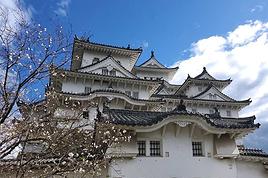
Hi everyone,
The idea of visiting Japan goes back a year now. I remember because I was looking for cheap flights to Europe from Paris. Surprisingly, the round-trip to Japan with Air China was just as affordable—if not cheaper—than many European destinations.
So, the tickets were booked. Three seats (including one for a 12-year-old), ten days over Easter 2018, AirBnB accommodation. Of course, in ten days, you visit without *really* visiting—you only scratch the surface. Just the classics: Kyoto, temples, moonlit rivers; the Shinkansen; and Tokyo, gardens, wandering, high-tech, and... maids.
I have to admit, we don’t know much about the country, and the thought of how we’d manage is a constant source of worry. What if this trip reveals my inability to open up to other cultures?
We board the first Air China flight with that question on our minds.
23 similar discussions in English
Hi everyone,
Let me introduce myself—I’m Christophe. I’m taking the plunge and planning my first trip to Japan for late February 2026. There’ll be five of us: my wife and I, and our three daughters, aged 12 and 15. Between the internet, travel agencies, and social media, there’s info coming from all directions, but it’s tough to find clear, objective, and relevant answers. I’d like this first trip to follow a classic route: 4/5 days in Tokyo 4 days in Kyoto (Nara) 2 days in Osaka (maybe Universal Studios) I’ve got a few questions—could you share your thoughts? 1. Is it better to return to Tokyo to catch our flight home, or is flying out directly from Osaka a better option? 2. For accommodation, would you recommend a hotel or an Airbnb? Since there are five of us, I think we’d like a small kitchen and a bit of space. 3. The famous JR Pass: is it worth it, or should we just buy tickets for each trip? I’ve read that the JR Pass has gotten more expensive and isn’t the ideal solution anymore, especially if you’re staying in the same cities for several days. 4. We’d like to have two phones—do you recommend eSIMs or a pocket Wi-Fi?
That’s it—I hope you can help shed some light on this. Thanks! Christophe
Hi everyone,
We’re planning a family trip to Tokyo for late October 2026, and I’d love your advice on organizing this stay. Here’s some info to give you a better idea of our situation: • There’ll be two adults (one with a mild mobility impairment, which makes long walks tricky) and a child who’ll be 13 at the time. • We’d like to spend around 15 days there to explore temples, traditional Japanese culture, and, of course, the world of manga and video games.
My questions: 1. Weather in October: What’s the climate like during that period? Should we pack any specific clothing? 2. Flight bookings: When’s the best time to book? And, in your opinion, is it better to fly from Paris or Brussels? 3. Accommodation: We prefer Airbnb-style rentals or similar. Which neighborhoods do you recommend for good location without too much commuting? 4. Trip duration: Are 15 days enough for a first trip? 5. Accessibility: Any specific tips for someone who struggles with long walks (accessible transport, routes, etc.)? 6. Other recommendations: Must-visit spots in Tokyo (or nearby) for a family that loves manga, temples, and Japanese culture?
I’m feeling a bit overwhelmed starting the preparations, so any advice or personal experiences would be super helpful. Thanks in advance for your help!
Looking forward to reading your replies, Sam
Hi there,
My daughter, wife, and I are starting to plan a two-week trip to Japan for... April 2026. My wife wants us to really treat ourselves, so we’re considering business class (we usually fly premium economy or even economy). Since we’re departing from Paris and want a direct flight, we have three options: JAL, ANA, or Air France.
I’ve flown Air France in business quite a bit for work, and I do find it very comfortable. But I wonder if I’m just defaulting to a national bias—maybe the other two airlines have advantages I’m not considering.
If I’m looking at criteria like: - Comfort (especially for sleeping) - Meals - Entertainment
Any advice? Personal experiences? Have any of the three airlines updated their business class on this route recently?
Thanks! !
Hi everyone,
I’m often in transit in Tokyo and I stay at the hotel because Japanese people speak little English and the signs are almost always in Japanese!
Any ideas for getting from Narita to a nice park or an onsen? I wanted to try Hokkaido, but apart from renting a car, it’s all trains! Any suggestions for a car with a driver? Or is it too expensive? Small group tours in Hokkaido? I read about the Explorator group’s offer—way too expensive!!!
I’ve got a maximum of 8 days. I’d just like a nice Japanese break.
Thanks for any tips you can share!
Fellow travelers,
Don’t they say "never two without three"? It seems so. Here I am again on the forum to share—and let’s be honest, indulge a bit of selfish pleasure—by recounting the story of this third installment in the Land of the Rising Sun.
Where? It’s all in the title. On the island of Kyushu in southern Japan, more precisely in the northwest between Fukuoka and Nagasaki. I hope to take you along with me for 19 nights and 18 full days this autumn of 2024. On the itinerary: gastronomy, crafts, festivals, waterfalls, encounters, and leisurely strolls in all simplicity.
A last-minute flight booked just 7 days before departure, and the route evolved regularly based on whims and accommodation availability, eventually settling on this:
- 5 nights in Fukuoka: Fukuoka city, Ukiha, Itoshima, Dazaifu, Yanagawa - 4 nights in Hasami, Nagasaki Prefecture: Okawachiyama, Arita, Takeo, Kashima, Yobuko, Karatsu, Kabeshima - 6 nights in Nagasaki: Ureshino, Higashi-Sonogi, Nagasaki city, Unzen, Sotome - 4 nights in Fukuoka: Karatsu, Fukuoka city
Most of the trip was done by car for practical reasons—easier access to certain places and freedom of movement—but also for the sheer joy of it. Despite slow traffic at times, driving in rural Japan is a delight.
If the program interests you, see you soon for the start of the journey.
I had to leave Thailand as my 60-day visa was coming to an end, and this time I opted for a 14-day visit to Japan. I’d already spent 3 days in Tokyo a few years ago on a business trip, which left me with a great impression. Y, my Thai partner, had never been there. That’s why we chose a fairly classic itinerary, including a few castles and Kyoto among other things.
Before diving into the details of our trip, I’d like to recap the expenses we incurred. This will be useful for some of you, and it’ll help us prepare for our next trip to Japan.
I’ve categorized our expenses into 5 groups: - Hotels: 1150 € (breakfast included) - Transportation: 278 € (trains, buses) - Big expenses: 487 € (souvenirs and a few necessary items) - Excursions: 116 € (museum visits, temples, castles) - Daily expenses: 1125 € (meals, small purchases) Total = 3194 €, or 228 € per day on average. I’m excluding flights, as those depend on everyone’s arrangements (departure location, travel dates, etc.).
Jpeg below: apologies for “hotel” without a circumflex—my software isn’t French!

For hotels, we always chose decent but not luxurious places, well-located to let us walk to and from transportation hubs. We systematically avoided taxis, which are notoriously expensive in Japan. We’ve also gotten into the habit over several trips of traveling with minimal luggage: one duffel bag each (7-8 kg) plus the small carry-on allowed on planes (2-3 kg). This lets us travel with three sets of clothes (what we’re wearing plus two changes). We add a checked bag for the return trip to accommodate the things we buy along the way.
‘Transportation’ and ‘Big expenses’: I’ll give more details in the day-by-day account.
We didn’t do any extravagant excursions, like safaris or sports activities.
Meals and food make up the bulk of our daily expenses. We often ate at izakayas, which offer great value—between 2000 and 6000 yen for two (about 11-12 to 33-34 € for two, usually around 20-25 €). We didn’t hold back, but we also didn’t go to high-end restaurants.
More to come while I gather my photos: General Remarks.
Before diving into the details of our trip, I’d like to recap the expenses we incurred. This will be useful for some of you, and it’ll help us prepare for our next trip to Japan.
I’ve categorized our expenses into 5 groups: - Hotels: 1150 € (breakfast included) - Transportation: 278 € (trains, buses) - Big expenses: 487 € (souvenirs and a few necessary items) - Excursions: 116 € (museum visits, temples, castles) - Daily expenses: 1125 € (meals, small purchases) Total = 3194 €, or 228 € per day on average. I’m excluding flights, as those depend on everyone’s arrangements (departure location, travel dates, etc.).
Jpeg below: apologies for “hotel” without a circumflex—my software isn’t French!
For hotels, we always chose decent but not luxurious places, well-located to let us walk to and from transportation hubs. We systematically avoided taxis, which are notoriously expensive in Japan. We’ve also gotten into the habit over several trips of traveling with minimal luggage: one duffel bag each (7-8 kg) plus the small carry-on allowed on planes (2-3 kg). This lets us travel with three sets of clothes (what we’re wearing plus two changes). We add a checked bag for the return trip to accommodate the things we buy along the way.
‘Transportation’ and ‘Big expenses’: I’ll give more details in the day-by-day account.
We didn’t do any extravagant excursions, like safaris or sports activities.
Meals and food make up the bulk of our daily expenses. We often ate at izakayas, which offer great value—between 2000 and 6000 yen for two (about 11-12 to 33-34 € for two, usually around 20-25 €). We didn’t hold back, but we also didn’t go to high-end restaurants.
More to come while I gather my photos: General Remarks.
Hi everyone,
I’m starting to think about a trip to Japan, though I haven’t yet decided on the exact duration or itinerary, and I have a few questions for those who know the country well or have traveled there recently.
First, about getting around: what do you think are the most economical and reliable ways to travel across Japan and move between cities? I’m thinking of trains, overnight buses, domestic flights, regional passes, etc. I’m not necessarily looking for the fastest option, but rather a good balance between cost, simplicity, and reliability.
I also have a question about the return ticket. Since I don’t yet know how long I’ll stay in Japan—or even if I’ll return directly to France (I might continue to another Asian country)—is it mandatory to have a return or exit ticket before entering Japan? Would a ticket to another Asian country suffice?
Regarding accommodation, I usually prefer staying in youth hostels rather than hotels. Are hostels easy to find all over Japan, including outside Tokyo, Kyoto, and Osaka? And what’s the average budget per night for something clean and well-located?
Finally, I’d like to get an idea of the overall budget for the trip. Is Japan still relatively affordable when traveling simply, or do expenses add up quickly? I’m mainly thinking about:
transportation between cities; local transportation; youth hostels; food; potential domestic flights.
My plan is to travel fairly freely, without necessarily booking everything in advance, so I can adjust my itinerary or stay longer in places I like.
If anyone has traveled this way in Japan, I’d love to hear about your experiences, tips, and maybe an idea of the daily budget to expect.
Thanks in advance!
From Southern Shikoku, between land and sea, to the blue waters of Miyakojima and finally Tokyo’s megacity
Hi everyone,
I have to admit, I really hesitated before deciding to write this travel journal... Writing one takes a lot of time and energy, and since this is my 4th trip, I wondered if it would actually interest anyone other than myself (both for the discovery and the writing). But after a few "Are you going to write a journal?" requests and especially the renewed pleasure from reading other travelers’ travel journals about Japan or elsewhere on this forum or elsewhere, I’ve decided to share this 4th installment in the Land of the Rising Sun here.
The itinerary: 27 full days, from late May to late June 2025, right in the middle of the rainy season, including:
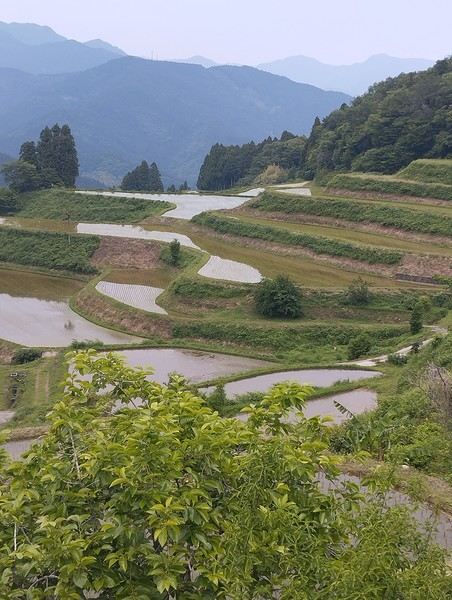
-->13 days in Shikoku, from Kochi (Kochi Prefecture) to Matsuyama (Ehime Prefecture)
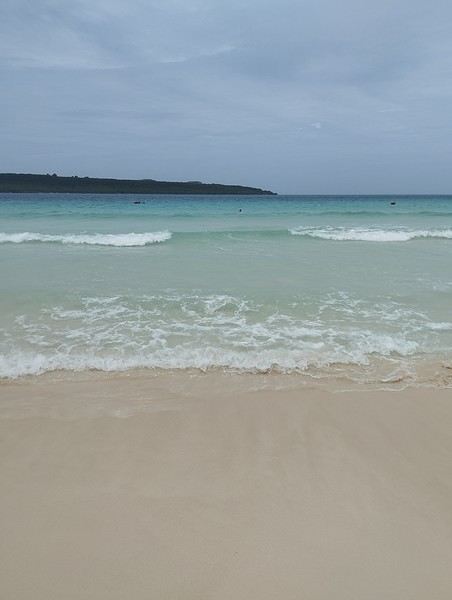
-->7 days in Miyakojima (Okinawa Prefecture)
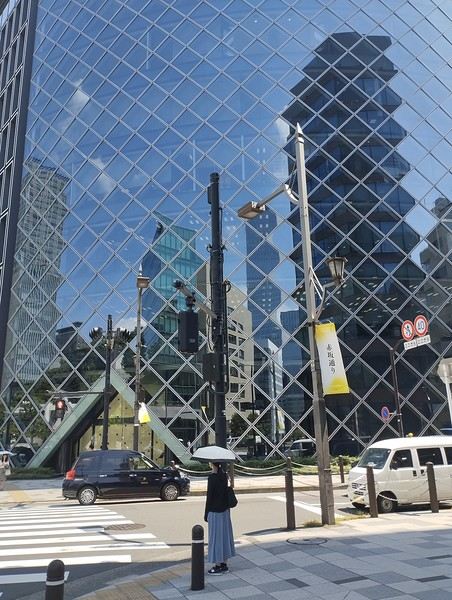
-->7 days in Tokyo
The trip was decided on fairly last-minute this year, as usual.
I regularly check flight prices to track fluctuations for this destination, even without concrete plans. Finding a slightly cheaper direct flight (900 €) than what I’d seen in previous months (around 1,200–1,400 € on average) for a Paris-Tokyo route with Japanese airline ANA was too tempting to resist the urge to return to this enchanting country. After long hesitations between exploring the San’in region (Matsue, Tottori, Yamaguchi) and southern Shikoku, the decision was made—I took the plunge! The tickets are booked: Paris to Kochi with a layover in Tokyo, all with ANA, the airline I’d been dreaming of... for 1,120 € per person. Okay, it’s not cheap, but it’s still better than in 2023.
We leave in 2 weeks!! Now it’s just a matter of getting everything ready!
Intense work ahead in these 2 weeks to:
finalize a more precise itinerary and reach an agreement—yep, because even though we both love Japan, our preferences differ slightly, and we have to choose between exploring new places or taking time to revisit beloved spots... decide how much time to spend in each selected area without rushing while still exploring research places that might interest us and watch videos about Japan book accommodations: yes, it’s possible to do this on the spot as we go, but last year, we noticed that last-minute options were pretty expensive, so we’re booking ahead—even if it means keeping a few options open while we decide or see if better deals pop up later reserve rental cars order yen check the weather regularly and wonder if choosing the *tsuyu* (rainy season) was really a good idea—and whether we’ll be stuck in non-stop rain???
What a tough job, right? Traveling to Japan for a month—such a hard life! Despite this being my 4th trip, the excitement is just as intense as the first time.
The only small downside is that when we booked the flight tickets, there were only a few seats left, so we’re only sitting together on the international return flight. Plus, on the outbound flight, we’ve got the middle seats. Another lingering question: what French-language films will be available? According to the internet, the selection seems limited. Oh well, these are just minor details—it’s almost time to fly!
PS: I’ll be posting slowly and irregularly... so for those interested, be patient or maybe set an alert...
Hi everyone,
I have to admit, I really hesitated before deciding to write this travel journal... Writing one takes a lot of time and energy, and since this is my 4th trip, I wondered if it would actually interest anyone other than myself (both for the discovery and the writing). But after a few "Are you going to write a journal?" requests and especially the renewed pleasure from reading other travelers’ travel journals about Japan or elsewhere on this forum or elsewhere, I’ve decided to share this 4th installment in the Land of the Rising Sun here.
The itinerary: 27 full days, from late May to late June 2025, right in the middle of the rainy season, including:
-->13 days in Shikoku, from Kochi (Kochi Prefecture) to Matsuyama (Ehime Prefecture)
-->7 days in Miyakojima (Okinawa Prefecture)
-->7 days in Tokyo
The trip was decided on fairly last-minute this year, as usual.
I regularly check flight prices to track fluctuations for this destination, even without concrete plans. Finding a slightly cheaper direct flight (900 €) than what I’d seen in previous months (around 1,200–1,400 € on average) for a Paris-Tokyo route with Japanese airline ANA was too tempting to resist the urge to return to this enchanting country. After long hesitations between exploring the San’in region (Matsue, Tottori, Yamaguchi) and southern Shikoku, the decision was made—I took the plunge! The tickets are booked: Paris to Kochi with a layover in Tokyo, all with ANA, the airline I’d been dreaming of... for 1,120 € per person. Okay, it’s not cheap, but it’s still better than in 2023.
We leave in 2 weeks!! Now it’s just a matter of getting everything ready!
Intense work ahead in these 2 weeks to:
finalize a more precise itinerary and reach an agreement—yep, because even though we both love Japan, our preferences differ slightly, and we have to choose between exploring new places or taking time to revisit beloved spots... decide how much time to spend in each selected area without rushing while still exploring research places that might interest us and watch videos about Japan book accommodations: yes, it’s possible to do this on the spot as we go, but last year, we noticed that last-minute options were pretty expensive, so we’re booking ahead—even if it means keeping a few options open while we decide or see if better deals pop up later reserve rental cars order yen check the weather regularly and wonder if choosing the *tsuyu* (rainy season) was really a good idea—and whether we’ll be stuck in non-stop rain???
What a tough job, right? Traveling to Japan for a month—such a hard life! Despite this being my 4th trip, the excitement is just as intense as the first time.
The only small downside is that when we booked the flight tickets, there were only a few seats left, so we’re only sitting together on the international return flight. Plus, on the outbound flight, we’ve got the middle seats. Another lingering question: what French-language films will be available? According to the internet, the selection seems limited. Oh well, these are just minor details—it’s almost time to fly!
PS: I’ll be posting slowly and irregularly... so for those interested, be patient or maybe set an alert...
Hi,
Just so you know, when you take the JR from the airport to central Tokyo, the company has introduced a baggage fee of 900 yen (5.50 €) per person for foreigners. There’s a dedicated line for this, and you’re directed by a JR agent.
If you take the Keisei network from Narita, there’s no fee for now.
As a reminder, the JR Pass has tripled in price since October 2023. It’s not essential if you’re staying less than 3 weeks—consider the bus instead, which is much cheaper. Sure, it takes longer, but it’s budget-friendly.
Since October 1, 2024, agents have been handing out flyers to tourists at airport arrivals with recommendations about theft in hotels. Over the past few months, there’s been a rise in stolen phones, laptops, and other electronics from rooms. The advice is to lock everything in a suitcase with a key or code when you’re not around to avoid issues. Japan’s economy isn’t doing well right now, and some locals are struggling financially, blaming tourists for rising prices. Of course, the current exchange rate is great for us—165 yen to the euro lets us eat ramen for next to nothing—but inflation has hit them hard.
Since October 1, 2024, agents have been handing out flyers to tourists at airport arrivals with recommendations about theft in hotels. Over the past few months, there’s been a rise in stolen phones, laptops, and other electronics from rooms. The advice is to lock everything in a suitcase with a key or code when you’re not around to avoid issues. Japan’s economy isn’t doing well right now, and some locals are struggling financially, blaming tourists for rising prices. Of course, the current exchange rate is great for us—165 yen to the euro lets us eat ramen for next to nothing—but inflation has hit them hard.
Hi there,
I’d like to travel to Japan with my son. I read that it’s cheaper to fly via Hong Kong to reach other Asian countries. I tried it, and it’s indeed much cheaper, with better flight times on Cathay Pacific, which is a great airline. In short, it’s better—even though I think if I miss a flight, I’d lose everything.
I’d like to know if it’s easy to get around Hong Kong Airport? Do you have to go through customs again in these cases? Do you need to pay for some kind of transit visa?
If the layover is long, is it easy to head into the city for a quick visit?
Thanks for your feedback!
Hi there,
A few friends and I are planning our trip to Japan for next autumn. This will be my first time traveling, which is why we’ve decided to go for a big trip of at least 2 months, maybe even 3.
So far, we’ve estimated the budget to be between 7,000 and 10,000 € per person for the stay. I’m not sure if that’s too high or too low, considering we’ll be moving around a lot.
Here’s a summary of the route we’d like to take:
First, we definitely want to visit the classics like Tokyo, Kyoto, etc. Then head toward Mount Fuji with Fujiyoshida and the surrounding area. We’d also like to visit some less touristy, more authentic spots like the Wakayama region. We’d like to check out some mountain or countryside villages like Shirakawa-go for a few hikes. We’re still debating whether to visit Miyajima and Hiroshima since we’re not sure we’ll have enough time. And we sadly had to cut Hokkaido from our list for the same reason.
I won’t go into every detail since we’ve mapped out over twenty places, but those are the main highlights.
As for our travel style:
We want to take our time. Not try to cram in as much as possible without any breaks or enjoyment. Most of the time, we’ll be staying in Airbnbs and youth hostels. For food, we’ll mix it up between restaurants, pre-made meals, and cooking our own. For transportation, we’re considering renting a car to reach villages in the countryside. (I’m a bit nervous about the road rules over there.) For activities, one or two a day seems reasonable. (Both free and paid ones.) But I have no idea how much souvenirs might cost. I’ve often read on forums that it’s between 200 and 600 €?
My questions:
So, that’s the plan. We’re not sure yet if we’ll go for two or three months. It’ll mostly come down to money. We want to be mindful of our budget but still treat ourselves—no regrets about missing out on an activity or restaurant we really wanted to try.
Do you have any advice or suggestions for us? What do you think of our itinerary? For flight tickets, I’m estimating between 650 and 900 € for a round trip. Does that sound about right? But I have no idea which airline to choose?
Thanks so much to anyone who replies—I’d really appreciate it!
Hi everyone, I’m Patrick, 67 years old, a seasoned traveler (already 22 trips outside Europe).
In autumn 2025, I took my first 3-week trip to Japan, with stops in Tokyo, Kamakura, Matsumoto, Kamikochi, Takayama, Kanazawa, Kyoto, Nara, Osaka, Koyasan, Tokyo again, and Nikko.
I wanted to go back in May 2026 and explore some lesser-known places to complement my first trip.
Last year, there were four of us traveling together to discover Japan (a fairly classic itinerary). This time, I’ll be traveling solo for part of the trip and with a couple of French friends for the rest.
The weather was gorgeous in May, averaging around 25°C, with two very hot days in Kyoto and only two rainy days.
As usual, I organized everything myself, gathering plenty of information from various sites, including this one.
Transportation: An ICOCA card is essential. I got a 5-day Kansai-Hiroshima pass because I took the shinkansen between Hiroshima and Osaka three times, and it paid for itself quickly.
Accommodations: Mostly through Booking. No issues at all. Average cost was 46 € per night.
Meals: For breakfast, I alternated between buying food at a konbini to eat in my room or on the train and grabbing something at local cafés. For lunch and dinner, I tried to vary my meals as much as possible—lots of sashimi, sushi, and ramen. Okonomiyaki in Osaka and Hiroshima. Oysters in every form (raw, grilled, fried) in Onomichi and Hiroshima. A variety of seafood (shrimp, shellfish) in Hiroshima and Matsumoto. Fish whose names often escaped me, but notably mackerel and eel (unagi). Tempura and gyoza. Chicken skewers (yakitori) and one teppanyaki meal. One omakase meal (9 different dishes). In the end, not much meat aside from a few yakitori skewers. No splurges on super expensive wagyu or Kobe beef. Average dinner cost: 4,800 yen, drinks included.
The Itinerary: Day 1: Departure from Brussels Day 2: Arrival in Osaka Day 3: To Himeji, then Kurashiki Day 4: To Fukuyama, then Tomo no Ura, then Onomichi Day 5: Cycling the Shimanami Kaido Day 6: To Takahara, then Hiroshima Day 7: To Kyoto to attend the Aoi Matsuri parade Day 8: To Miyajima Day 9: Hiroshima, then Kyoto Day 10: Southern Kyoto Day 11: Northern Kyoto Day 12: Final day in Kyoto, then to Nagatsugawa Day 13: Start of the Nakasendo Trail (Magome to Tsumago) Day 14: Second day of the trail (Kiso Fukushima) Day 15: Third day of the trail (Narai), then Matsumoto Day 16: To Mt. Fuji (Kawaguchiko) Day 17: To Tokyo Day 18: Excursion to Enoshima and Kamakura Day 19: Flight home, with a 10-hour layover in Hong Kong Day 20: Arrival in Brussels
Hi everyone,
I’ve been planning several itineraries for a trip to Japan with my wife but would love your insights before we start booking!
In short, we want to go during Golden Week, see late-blooming cherry trees, and have the freedom to get around with a rental car.
Here’s the plan:
18-day itinerary in Japan (April 25 → May 12)
Goal: freedom, late cherry blossoms, culture & nature
---
Days 1–3: Tokyo (April 25–27) Arrival and adjustment (no car needed yet). Neighborhoods to visit: Shinjuku, Asakusa, Meiji Jingu, Shibuya, Odaiba. Suggested activities: Ghibli Museum, Sumida River cruise, izakaya meals. Late cherry blossoms (yaezakura) possible at Shinjuku Gyoen. Pick up the rental car on the morning of April 27.
---
Days 4–5: Mount Fuji & Hakone (April 27–28) Route: Tokyo → Kawaguchiko/Hakone (~2 h).
Activities: Lake Kawaguchi, Chureito Pagoda (Fuji views + late cherry blossoms) Onsen baths, Hakone Open-Air Museum. Stay: ryokan with onsen and views of Mount Fuji.
---
Days 6–7: Takayama & Shirakawa-go (April 29–30) Route: Hakone → Takayama (~4 h).
Activities: Preserved old town, sake breweries, UNESCO village of Shirakawa-go. Stay: traditional minshuku (thatched-roof house). Cherry blossoms are finishing at this altitude — beautiful mountain/nature contrasts. ---
Days 8–10: Kyoto & Nara (May 1–3) Route: Takayama → Kyoto (~4 h 30).
Activities in Kyoto: Fushimi Inari (red torii gates), Golden Pavilion, Arashiyama, Gion (geisha district).
Day trip to Nara: Free-roaming deer in Nara Park, Todai-ji Temple, Kasuga Taisha Shrine. Stay: Kyoto (3 nights).
---
Day 11: Osaka or Himeji (May 4) Route: Kyoto → Osaka (~1 h) or Himeji (~1 h 30).
Option 1: Osaka → modern vibe, street food, castle. Option 2: Himeji → stunning UNESCO-listed castle. Stay: Osaka.
---
Days 12–13: Kanazawa (May 5–6) Route: Osaka → Kanazawa (~4 h 30).
Activities: Kenroku-en Garden (gorgeous in spring), Omicho Market, samurai district. Stay: Kanazawa.
---
Days 14–15: Northern Japan – Aomori / Hirosaki (May 7–8) Route: Kanazawa → Aomori (~7 h, possible to break via Sendai).
Activities: Hirosaki Castle Park (peak bloom early May). Northern onsen (e.g., Sukayu). Stay: Hirosaki or Aomori.
---
Days 16–17: Nikko (May 9–10) Route: Aomori → Nikko (~6 h).
Activities: Toshogu Shrine, Kegon Falls, Lake Chuzenji. Stay: Nikko.
---
Day 18: Return to Tokyo & Relax in Kamakura (May 11–12) Route: Nikko → Kamakura (~3 h) → Tokyo (~1 h).
Activities: Great Buddha, Zen temples, seaside at Enoshima. Final night: Tokyo before the return flight.
Thanks in advance for your feedback!
---
Days 1–3: Tokyo (April 25–27) Arrival and adjustment (no car needed yet). Neighborhoods to visit: Shinjuku, Asakusa, Meiji Jingu, Shibuya, Odaiba. Suggested activities: Ghibli Museum, Sumida River cruise, izakaya meals. Late cherry blossoms (yaezakura) possible at Shinjuku Gyoen. Pick up the rental car on the morning of April 27.
---
Days 4–5: Mount Fuji & Hakone (April 27–28) Route: Tokyo → Kawaguchiko/Hakone (~2 h).
Activities: Lake Kawaguchi, Chureito Pagoda (Fuji views + late cherry blossoms) Onsen baths, Hakone Open-Air Museum. Stay: ryokan with onsen and views of Mount Fuji.
---
Days 6–7: Takayama & Shirakawa-go (April 29–30) Route: Hakone → Takayama (~4 h).
Activities: Preserved old town, sake breweries, UNESCO village of Shirakawa-go. Stay: traditional minshuku (thatched-roof house). Cherry blossoms are finishing at this altitude — beautiful mountain/nature contrasts. ---
Days 8–10: Kyoto & Nara (May 1–3) Route: Takayama → Kyoto (~4 h 30).
Activities in Kyoto: Fushimi Inari (red torii gates), Golden Pavilion, Arashiyama, Gion (geisha district).
Day trip to Nara: Free-roaming deer in Nara Park, Todai-ji Temple, Kasuga Taisha Shrine. Stay: Kyoto (3 nights).
---
Day 11: Osaka or Himeji (May 4) Route: Kyoto → Osaka (~1 h) or Himeji (~1 h 30).
Option 1: Osaka → modern vibe, street food, castle. Option 2: Himeji → stunning UNESCO-listed castle. Stay: Osaka.
---
Days 12–13: Kanazawa (May 5–6) Route: Osaka → Kanazawa (~4 h 30).
Activities: Kenroku-en Garden (gorgeous in spring), Omicho Market, samurai district. Stay: Kanazawa.
---
Days 14–15: Northern Japan – Aomori / Hirosaki (May 7–8) Route: Kanazawa → Aomori (~7 h, possible to break via Sendai).
Activities: Hirosaki Castle Park (peak bloom early May). Northern onsen (e.g., Sukayu). Stay: Hirosaki or Aomori.
---
Days 16–17: Nikko (May 9–10) Route: Aomori → Nikko (~6 h).
Activities: Toshogu Shrine, Kegon Falls, Lake Chuzenji. Stay: Nikko.
---
Day 18: Return to Tokyo & Relax in Kamakura (May 11–12) Route: Nikko → Kamakura (~3 h) → Tokyo (~1 h).
Activities: Great Buddha, Zen temples, seaside at Enoshima. Final night: Tokyo before the return flight.
Thanks in advance for your feedback!
Hello,
I’m currently planning a trip to Japan with my two kids.
Before going any further, my main question is about the budget. While flights are pretty straightforward—just compare prices—when it comes to daily expenses, I have no idea what to expect.
We’re thinking of traveling between mid-July (around the 19th, give or take 2-3 days) and mid-August (returning by August 20th at the latest). Duration: 15 days (though we could stretch it by 2-3 days if it makes sense price-wise). Family of 4, including two kids aged 9 and 12.
Before we had kids, we used to travel pretty "rough" and book things on the spot (we often took basic flights), but this time, it might be trickier. That said, we’re not looking for luxury—just somewhere decent to sleep and shower so we can save money for as many activities and sightseeing as possible.
For those who’ve recently had a family trip like this or are familiar with Japan, I’d love any advice—especially what a reasonable daily budget might look like (or at least the absolute minimum to make the trip feasible).
Thanks in advance!
P.S.: I’ll admit I struggled a bit with the categories, so if this post needs to be moved, no problem! ;-)
Hi everyone,
It’s been a while since I last posted... so I’m jumping back in with this amazing trip we took in October 2025:
We’re doing this trip with fellow traveler friends who, like us, have already been to Japan. That means we can aim for a different side of Japan, away from the usual tourist circuits. That’s why I opted to rent a car instead of relying on trains. I was drawn to the castles and the samurai-novel atmosphere.
When I plotted the sites I wanted to visit on Google Maps, it suggested a return route via the island of Shikoku, so it turned into a nice loop around the Seto Inland Sea between Kyushu, Chugoku, and Shikoku.
The trip will be just the four of us, doing it all independently. I rented a car from Budget in Fukuoka. Before heading over, I watched several videos to get an idea of what to expect—road signs, parking, and general driving behavior. In Japan, they drive on the left, but that’s not an issue since in Southern Africa we also drive on the “wrong side of the road,” so I’m used to it. For accommodations, after checking with two agencies, I decided to handle it myself. It saved a significant amount of money, and I was able to choose exactly what I wanted. I know I can be picky about the type of lodging I want, especially in Japan where you can really treat yourself. We stayed in some stunning ryokans, once in little cabins run by monks next to a temple, and more.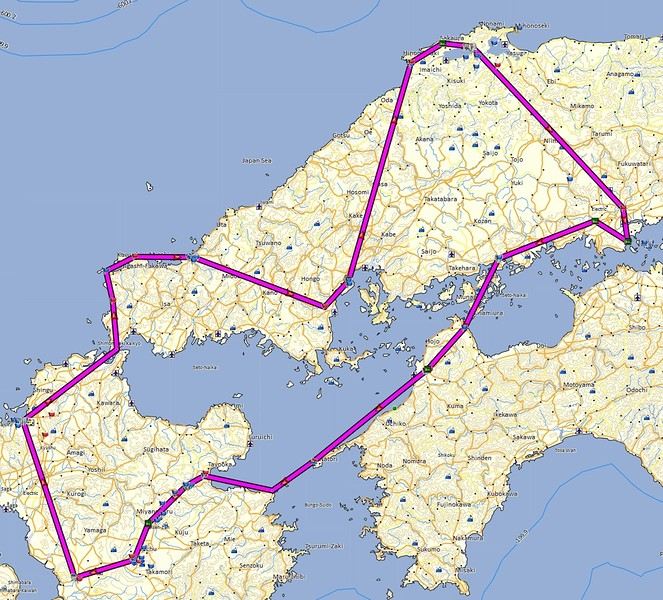
Here’s the route: Fukuoka - Hagi - Miyajima - Matsue - Okayama - Kurashiki - Matsuyama - Yufuin - Kurokawa - Kumamoto - Fukuoka
Here we gooo...
It’s been a while since I last posted... so I’m jumping back in with this amazing trip we took in October 2025:
We’re doing this trip with fellow traveler friends who, like us, have already been to Japan. That means we can aim for a different side of Japan, away from the usual tourist circuits. That’s why I opted to rent a car instead of relying on trains. I was drawn to the castles and the samurai-novel atmosphere.
When I plotted the sites I wanted to visit on Google Maps, it suggested a return route via the island of Shikoku, so it turned into a nice loop around the Seto Inland Sea between Kyushu, Chugoku, and Shikoku.
The trip will be just the four of us, doing it all independently. I rented a car from Budget in Fukuoka. Before heading over, I watched several videos to get an idea of what to expect—road signs, parking, and general driving behavior. In Japan, they drive on the left, but that’s not an issue since in Southern Africa we also drive on the “wrong side of the road,” so I’m used to it. For accommodations, after checking with two agencies, I decided to handle it myself. It saved a significant amount of money, and I was able to choose exactly what I wanted. I know I can be picky about the type of lodging I want, especially in Japan where you can really treat yourself. We stayed in some stunning ryokans, once in little cabins run by monks next to a temple, and more.
Here’s the route: Fukuoka - Hagi - Miyajima - Matsue - Okayama - Kurashiki - Matsuyama - Yufuin - Kurokawa - Kumamoto - Fukuoka
Here we gooo...
Hello,
I’m reaching out for your help because I’m struggling to figure out the best train and car route for a 25-night trip in Kyushu. Here are the cities I’d like to visit, along with my current itinerary, which doesn’t feel quite right. I’m also wondering where the best places to pick up and drop off the rental car would be. International flights from Osaka + the SL Hitoyoshi train ride are part of the plan.
Current (unsatisfactory) draft itinerary I’m trying to optimize: Day 1: Arrival in Osaka Day 2-3: 2 nights in Osaka Day 4: Osaka to Izumi (Kagoshima Prefecture) via overnight train to Izumi Day 5: Full day in Izumi, overnight in Izumi Day 6: Izumi to Hitoyoshi, stopping via Kumamoto (SL Hitoyoshi train) Day 7: Hitoyoshi Day 8: Ebino + overnight in Kobayashi or Takaharu Day 9: Cape Toi + overnight Day 10: Koshima + overnight near Obi or Miyazaki? Day 11: Nichinan Coast / Obi / Udo Jingu / Aoshima Day 12: Miyazaki Day 13: Aya + overnight in Miyazaki Day 14: Hyuga + overnight in Nobeoka Day 15: Around Nobeoka + overnight in Nobeoka Day 16: Shiiba + overnight in Shiiba Day 17: Shiiba + drive to Yamaga + overnight Day 18: Yamaga Day 19: Yamaga Day 20-22: Amakusa Day 23: Kumamoto Day 24: Kumamoto + overnight in Osaka Day 25: Departure for France
Does this seem balanced? Are there any ways to optimize travel times or the logical flow of the route? Where should I pick up and drop off the rental car?
Thanks in advance if anyone can help me think this through!
Hi there,
I’m looking for tips, opinions, or travel companions for a family trip.
Is it still possible to find competitive rates (flights, accommodation, guides, etc.)?
Best regards🙂
Hi there,
We’re heading to Japan for 34 days next summer with our 5-year-old daughter. We’ll be arriving and departing from Tokyo.
I’m currently planning our trip, and we’re constrained to head quickly to Okinawa because afterward, the prices for domestic flights rise significantly.
Here’s the rough outline of the route I’m considering. What do you think?
Thanks in advance!
1 night in Tokyo upon arrival. 7 nights in the Kyoto/Osaka area. 9 nights in Okinawa (+ Miyakojima or Ishigaki). 5 nights in the Kyushu region. 9 nights road-tripping through the Japanese Alps. 3 nights in Tokyo before departure.
Hello,
I’m currently in Japan, in Osaka, and we just avoided a scam I wasn’t familiar with.
We were in the tall tower in Tennoji when we were approached by two Japanese guys around 20 years old.
One, speaking broken English, asked us to make a video for his friend who’s in the hospital.
The scam involves distracting you to steal your phone or later asking for money for this so-called friend, while the other stays in the background and keeps an eye on our surroundings. We obviously refused, pretending we didn’t speak English, and they left. But after 10 minutes, they came back, this time translating with his phone. After looking it up online, they call this the "sick friend scam"—used to ask for money. I’ve been coming to Japan twice a year for 15 years and had never seen this before. Also, I’ve noticed some aggressive behavior from a few Japanese people toward tourists—shoving in stores, a 1000¥ fee for luggage when taking the train from the airport, and terrible service in some hotels.
Japan plans to require an ETA (Electronic Travel Authorization) in 2025 for entry, which will need to be applied for and paid for online, along with a surveillance app. The exact date isn’t known yet, and Europe is protesting, considering reciprocity if necessary. Let’s see if this gets canceled, as the new prime minister seems to be backtracking.
Hi there!
I’m planning to spend a few days in Hong Kong in April/May to visit my son, who’ll be doing an exchange program there. We’d also like to take the opportunity to spend a few days in Japan. Do you have any tips on airlines in the region? I’ve seen deals on Skyscanner for HK Express, which seems like the local Ryanair. But I have no idea what it’s like.
Thanks in advance!
Hi there,
We’re thinking of spending 3 weeks in Asia this fall to visit some of the major capitals on this vast continent. We’d like to get a (very rough) sense of just how fast Asia is moving compared to what we see in the West (we’re from Quebec). For now, our very preliminary list includes Tokyo, Hong Kong, and Singapore. There are obviously plenty of other options—Seoul, Shanghai, etc.
What do you think? Thanks in advance!
Autumn 2025 marks my 11th trip to Japan. I’ve neglected the south for too long, so like last year, it’s my main destination again.
We’ll revisit some familiar spots, but of course, we’ll also try plenty of new things. This trip feels a bit strange—no more of that initial magic, but on the other hand, we’ve really explored some off-the-beaten-path and private locations. The variety of regions, landscapes, and vehicles I’ve photographed is pretty remarkable. In search of vintage trains and threatened lines, I think my future trips will follow the same vibe.
After the 2017 and 2024 travel journals, it’s time to dive into Japan’s lesser-known side—all by public transport, of course. Day 1, arrival in Tokyo
The timing won’t be like other years since we arrive at Narita in the mid-afternoon after a layover in Hong Kong.
The only real mission for this afternoon is picking up tickets for the next day. And already, the first travel stress: I’ll have to rewrite the entire day because the Revaty Kinu 109 to Kinugawaonsen is fully booked, just like all the morning trains. So instead of a relaxed start exploring Ueno, I’m back to scrutinizing schedules. I manage to snag something last-minute after struggling for hours. Then, I wait for a message from Seiichi to meet up for dinner. Meeting friends on the first day and staying up late with jet lag—like I said, this trip isn’t like the others.
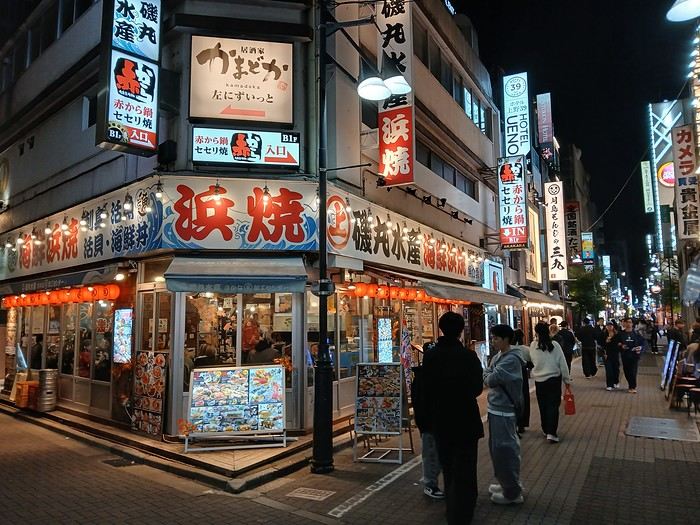
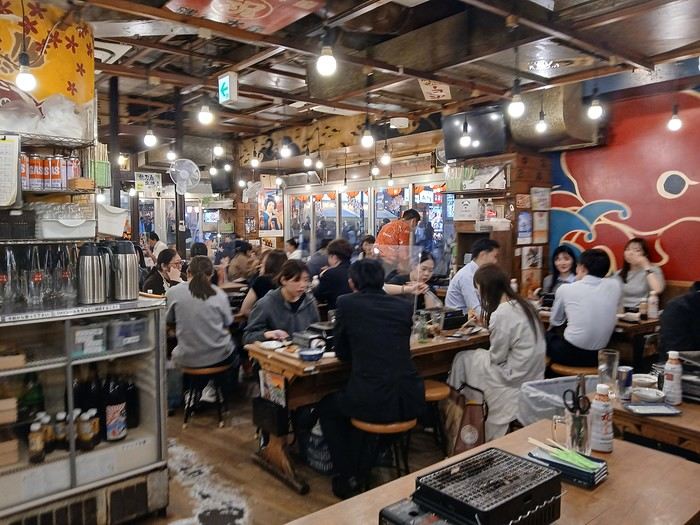
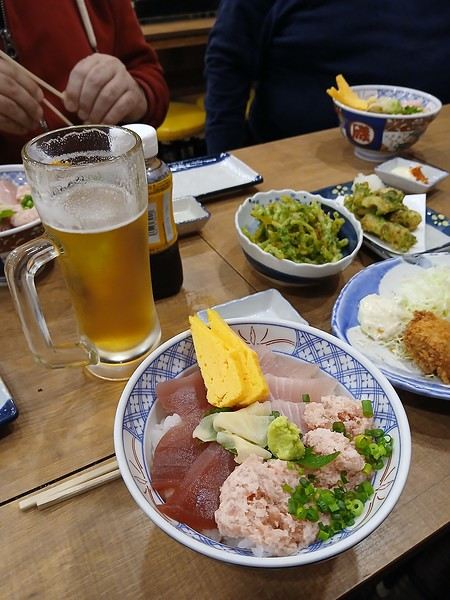
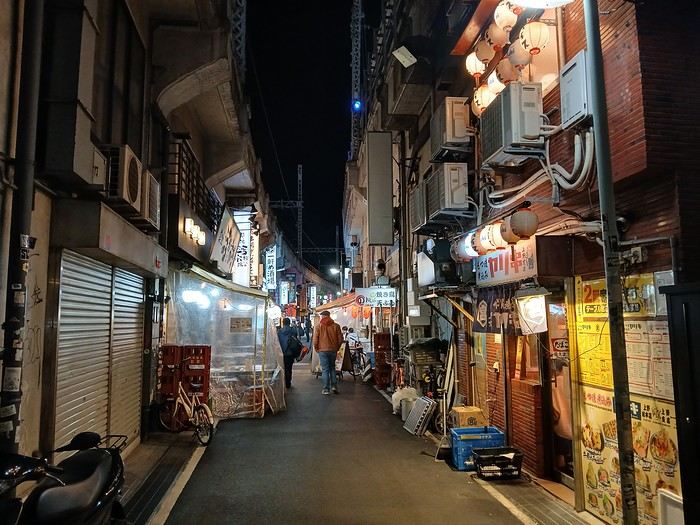
A great evening at a place I love.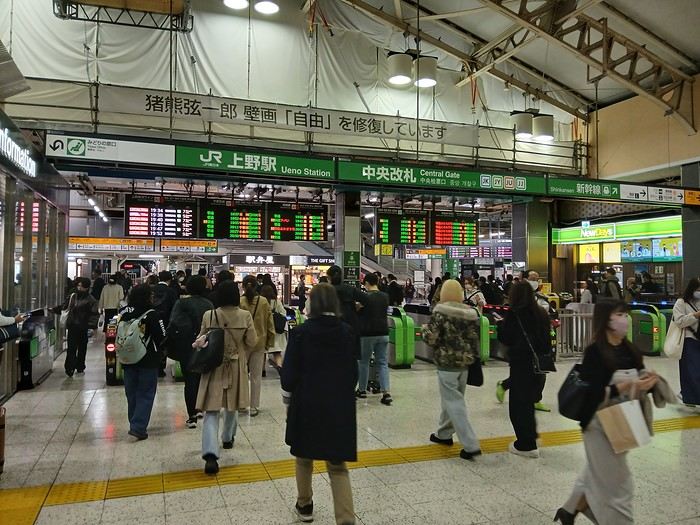
We’ll revisit some familiar spots, but of course, we’ll also try plenty of new things. This trip feels a bit strange—no more of that initial magic, but on the other hand, we’ve really explored some off-the-beaten-path and private locations. The variety of regions, landscapes, and vehicles I’ve photographed is pretty remarkable. In search of vintage trains and threatened lines, I think my future trips will follow the same vibe.
After the 2017 and 2024 travel journals, it’s time to dive into Japan’s lesser-known side—all by public transport, of course. Day 1, arrival in Tokyo
The timing won’t be like other years since we arrive at Narita in the mid-afternoon after a layover in Hong Kong.
The only real mission for this afternoon is picking up tickets for the next day. And already, the first travel stress: I’ll have to rewrite the entire day because the Revaty Kinu 109 to Kinugawaonsen is fully booked, just like all the morning trains. So instead of a relaxed start exploring Ueno, I’m back to scrutinizing schedules. I manage to snag something last-minute after struggling for hours. Then, I wait for a message from Seiichi to meet up for dinner. Meeting friends on the first day and staying up late with jet lag—like I said, this trip isn’t like the others.
A great evening at a place I love.