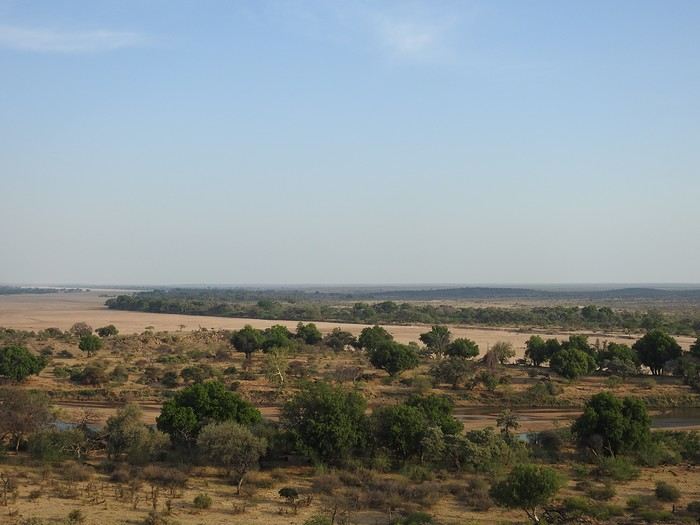
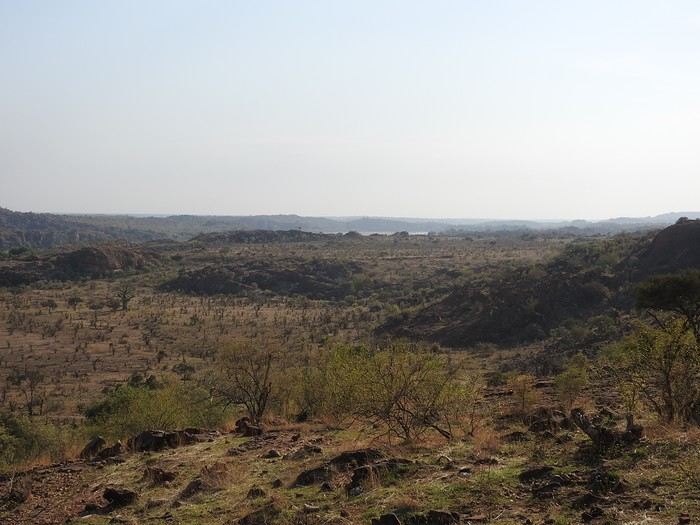
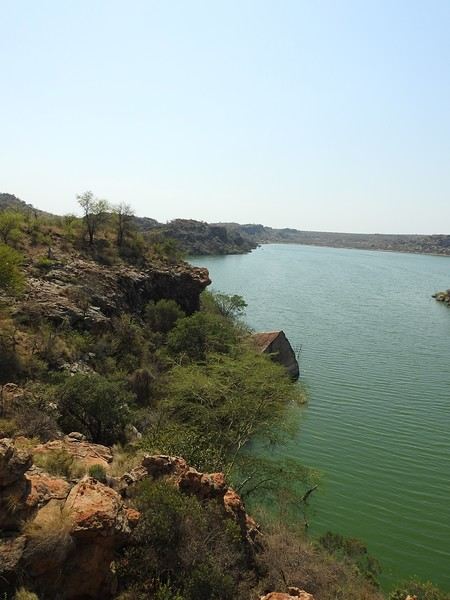
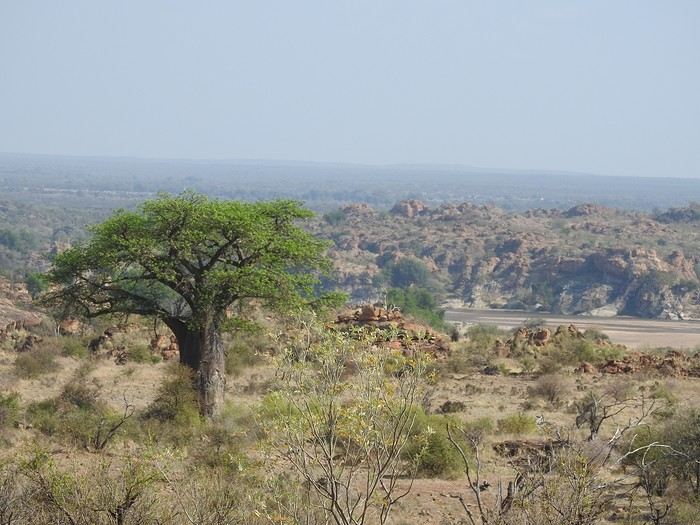
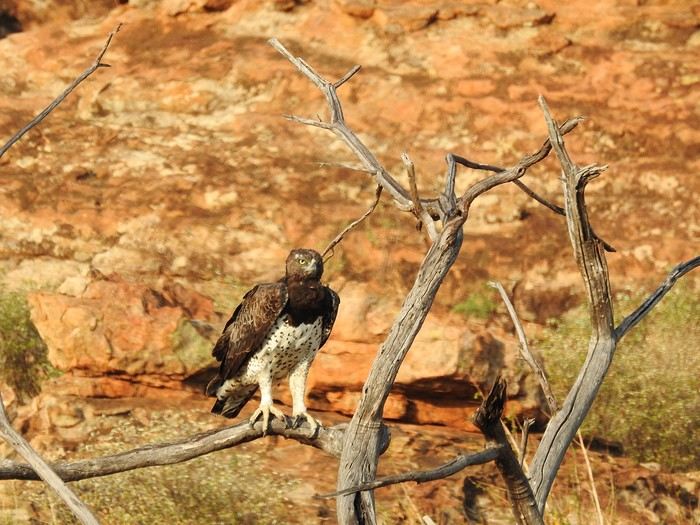
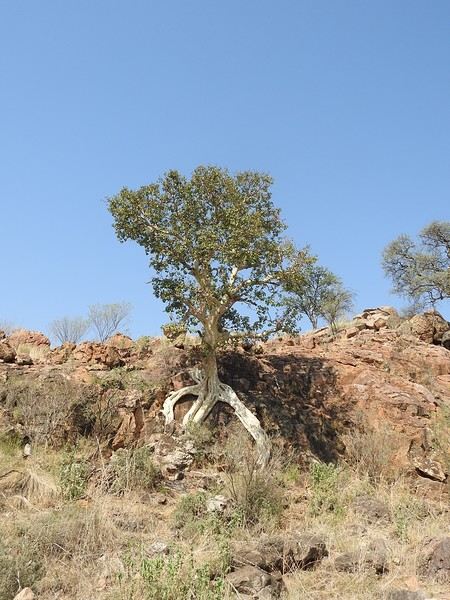
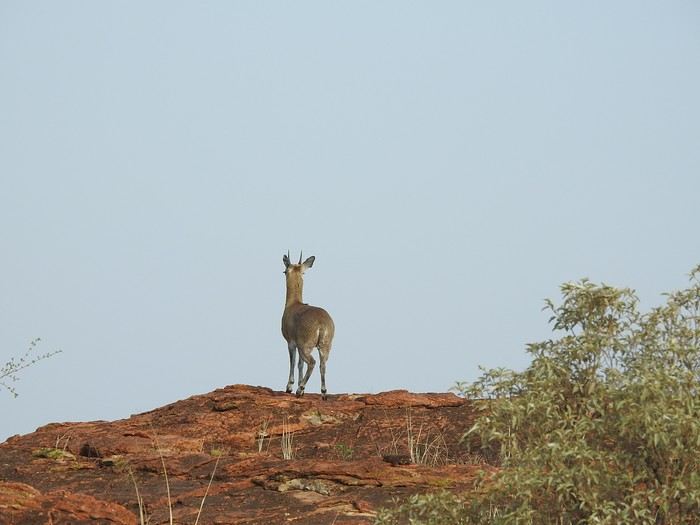
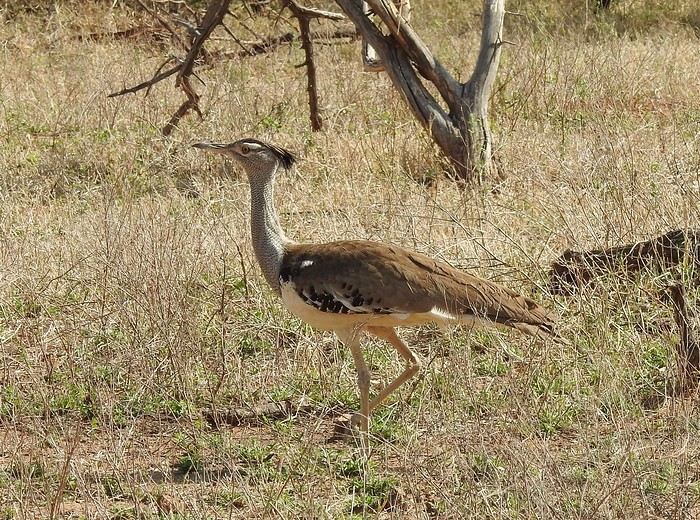
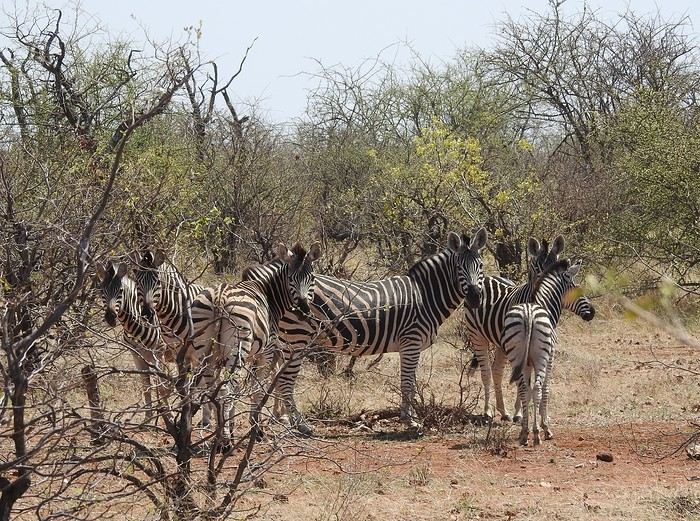
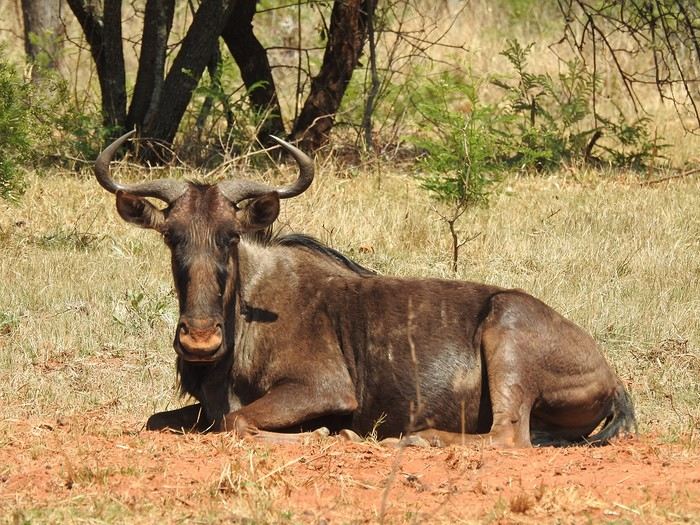
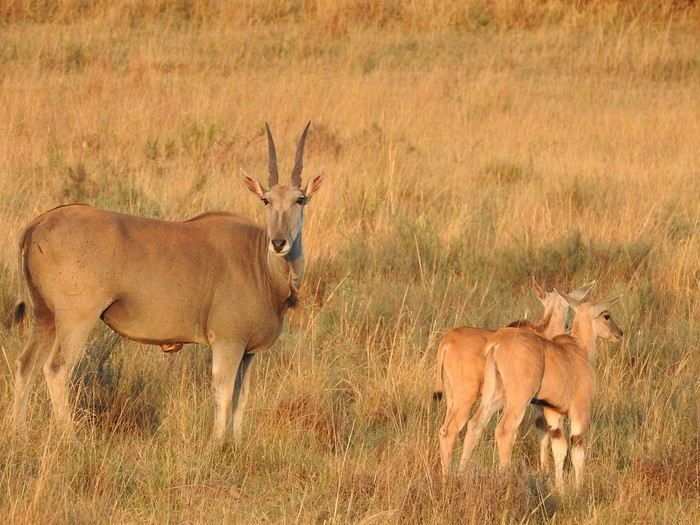
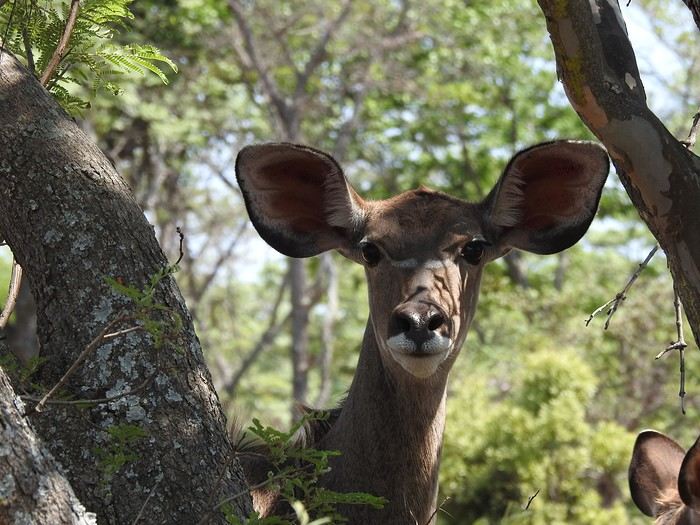
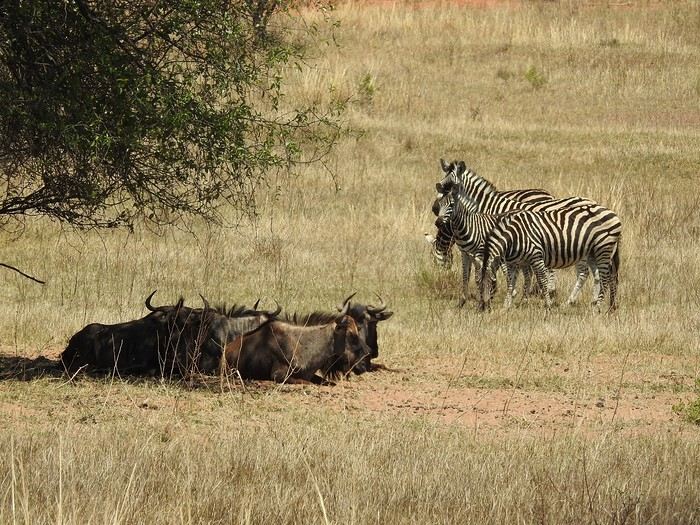
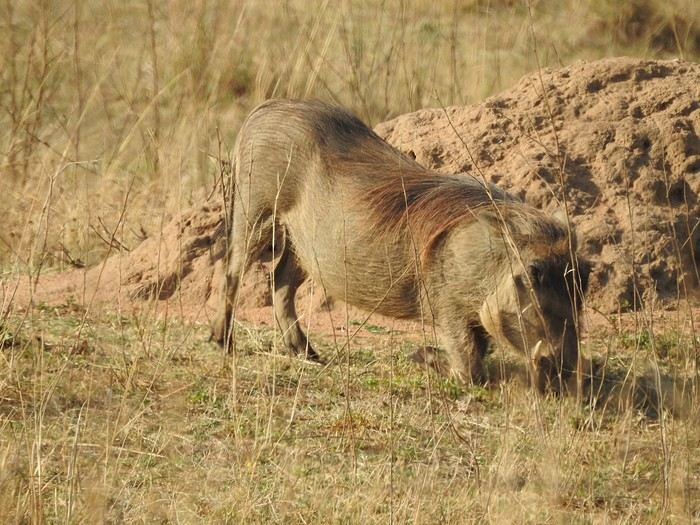
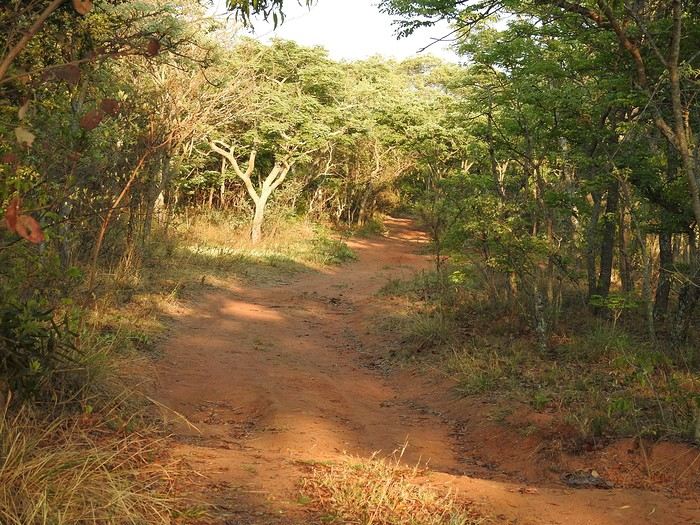
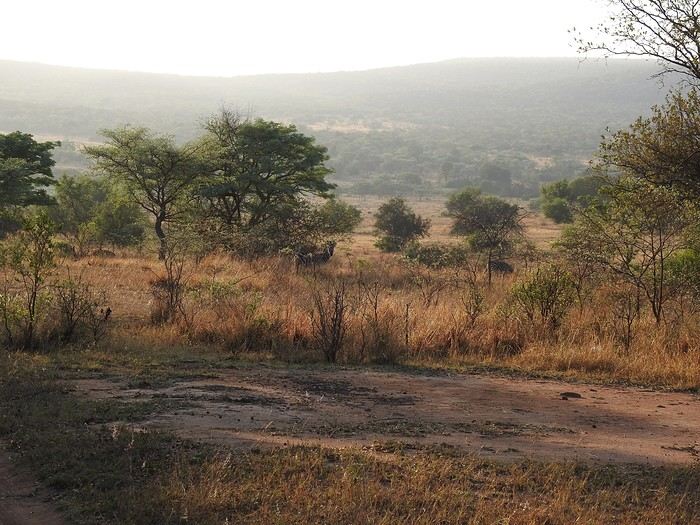
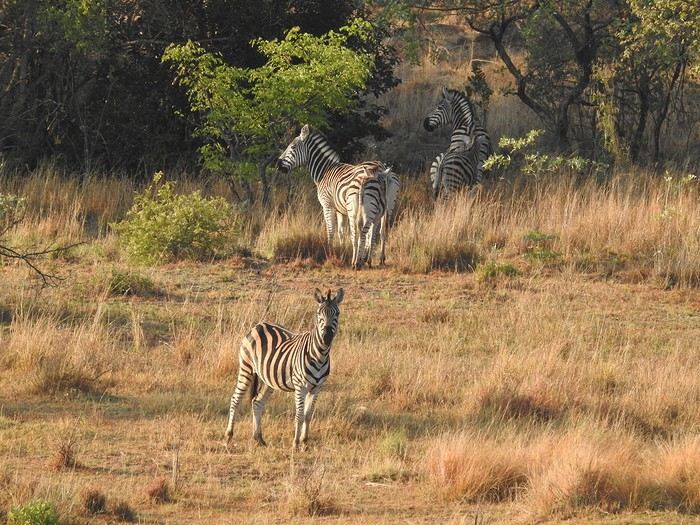
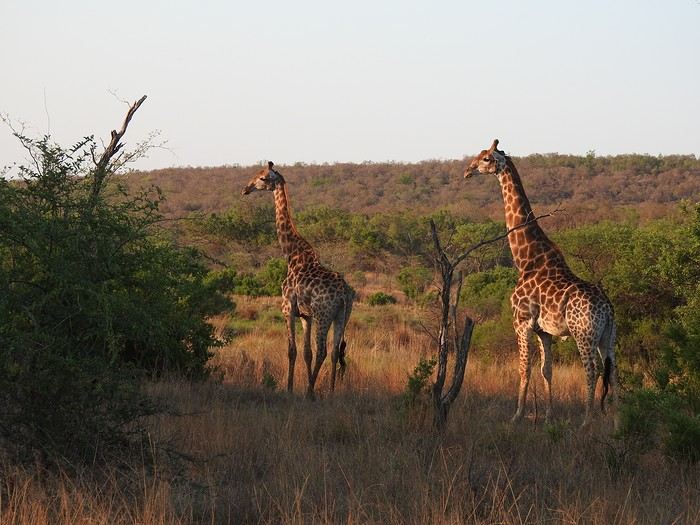
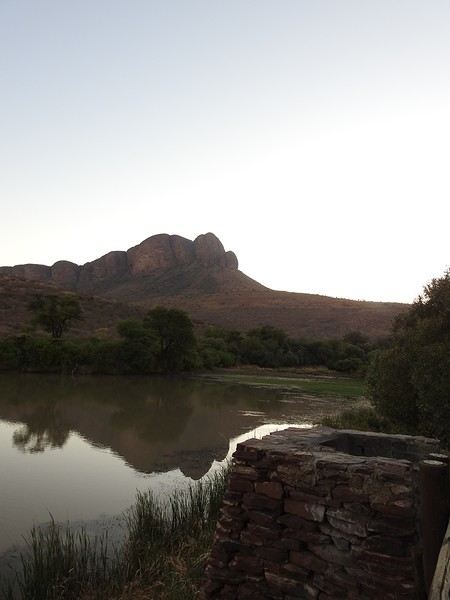
The roads in this area aren’t great. I should’ve taken the N1 and gone via Musina...
A massive storm on the road... 60 km away, hazard lights on...
Mapungubwe isn’t new to me, but I’d decided to try the western part, at Limpopo Tented Camp.
Upon arrival...
“Sorry, a tree fell on one of the chalets...” “We’ll put you up for the first night at Leokwe, in the eastern part.”
From what they said, it happened yesterday... but on-site, we saw it had actually been several months!
Sanparks’ management is still very much “outside usual standards.”
There’s constantly work being done “haphazardly,” shoddily, poorly...
And the welcome from staff really depends on the person and the day.
Oh well, no big deal—we’ll spend a night at Leokwe!
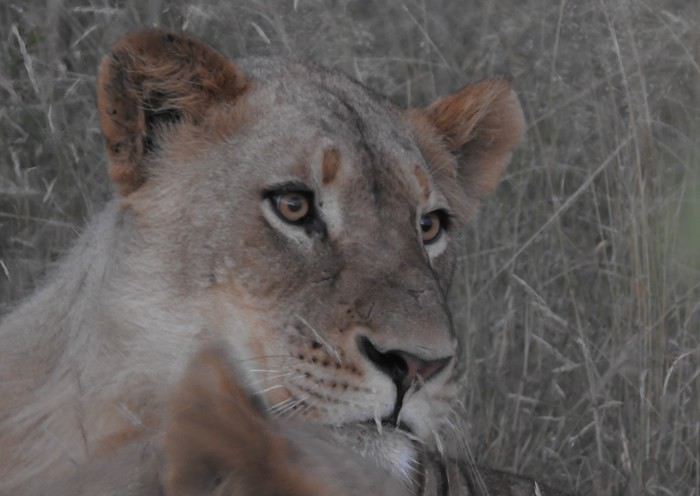
The eastern part “normally” doesn’t have lions... there are several spots where you can get out of the car...
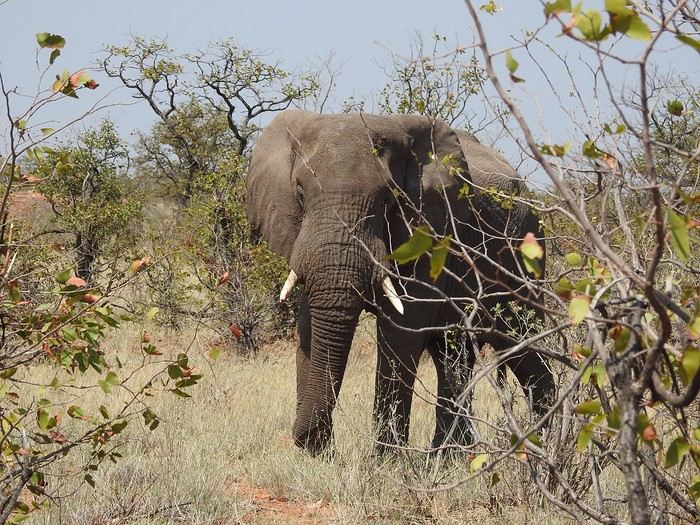
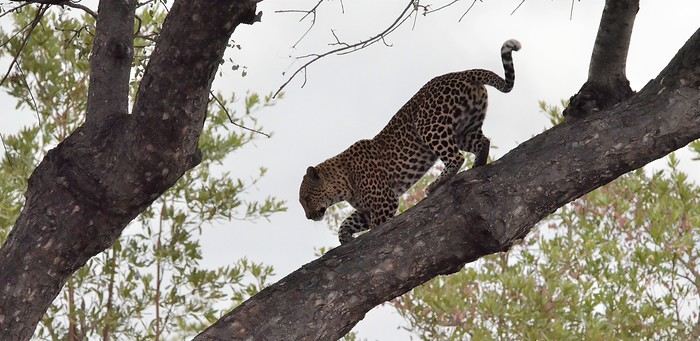
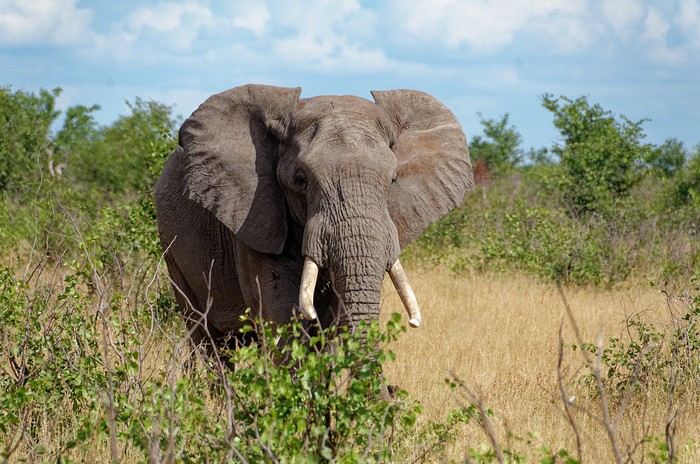
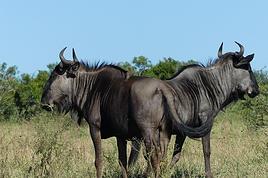
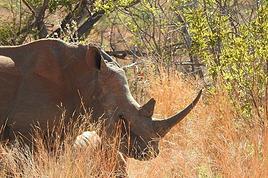
We saw general game, buffaloes, elephants... leopards (yes, see another travel journal), and now possibly cheetahs in the far eastern section.
Our friend Montagnard had asked me (following another discussion) if I knew any truly ethical associations...
I’d pointed him to a cheetah conservation group.
I can confirm—they’re the ones who released several cheetahs into this part of Mapungubwe.
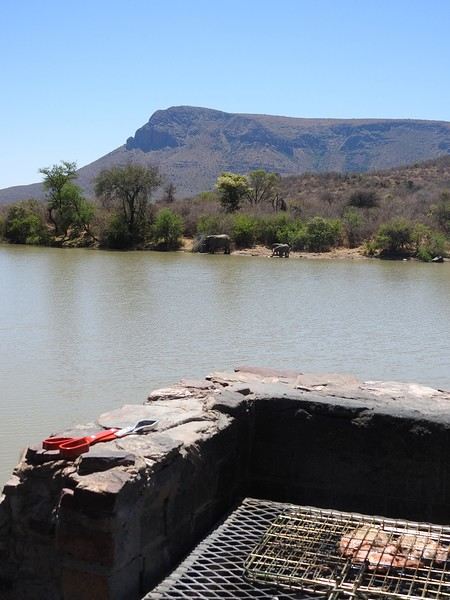
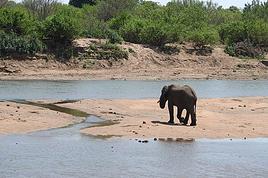
Leokwe is stunning, unfenced... with a pretty high chance of seeing elephants in the camp, drinking from the pool or brushing past the chalet terraces.
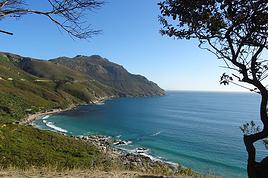
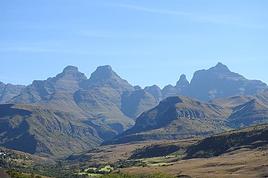
This area is still a fantastic spot for spectacular wildlife sightings and insane landscapes!
Last year, I accidentally discovered a "nature reserve" in the Waterberg by sheer chance.
Just one night, but I was so thrilled that I went back this year for 3 nights.
It was perfect for breaking up the trip between Marakele and Mapungubwe.
Last year, I stumbled upon a "nature reserve" in the Waterberg by sheer luck.
Just one night, but I was so thrilled that I went back this year for three nights.
It was perfect for breaking up the trip between Marakele and Mapungubwe.
The Waterberg is the Limpopo of game farms, hunting farms... and places trying to attract clients from Joburg and Kruger, with varying levels of ethics.
The roads aren’t always great, potholes are everywhere, and Google Maps is pretty unreliable.
But in my case, I found exactly what I was looking for...
As often happens, old farms have been grouped together to create a nature reserve that doesn’t sell you "wild" lions, has no rhinos (protecting rhinos is complicated), no elephants, and no buffalo.
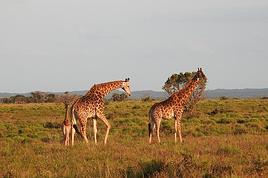
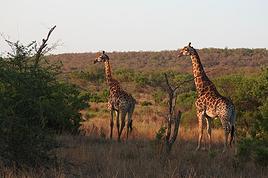
So, antelopes, elusive leopards, hyenas (didn’t see any), peaceful giraffes, warthogs, etc.—just general game!
What’s the point?
Well, you go for walks or hikes with game drives... you bike... you chill. You get out of the car.
For us this year, a gorgeous "house," fully equipped, on the edge of the forest, with wood for the fire and a plain as the view...
An unbeatable quality-to-price ratio in a natural setting!
A little photo dump for the vibe.
You’ve gathered that part of the exploration is by car (it’s big) and part on foot...
Back in 2009, I spent a day there, and since then... I’ve tried several times to go back.
The park isn’t very big—nowhere near as lush as Kruger—but it has a lot going for it.
Even back then, there was a split between the western section, where you wouldn’t find any “dangerous” animals like elephants or buffalo (though rhinos were around), and the eastern section, the Big Five zone.
Nowadays, the western part is open to mountain biking, and the campsite is completely unfenced, which pretty much confirms that the big animals aren’t there—no rhinos either (I didn’t see a single dung pile).
The western section didn’t seem all that interesting to me... with vervet monkeys everywhere in the campsite.
In the eastern part, there’s the Topli tented camp, right by a dam. It’s small but charming, with a great view and a loosely fenced perimeter (there are now lions and wild dogs in this area).
No facilities—no restaurant, no pool (except at the campsite), no shop, no fuel, nothing...
View from the “chalet” terrace... nice and relaxed...
So, a terrace with a view for the lucky ones...
Bedroom and bathroom, separate and equipped kitchen. It can get windy. It must be cold in winter... but it’s hot this October.
Some lovely little roads... though some sections are 4x4-friendly.
A viewpoint at the top—you’re supposed to see the vulture colony from there... still haven’t seen it, as far as I’m concerned.
I’m planning a trip to South Africa / Zimbabwe this summer—4x4 with camping gear... After some reading, I’ve put together this first draft of an itinerary:
D0 Johannesburg - arrive around 11 AM + visit Soweto?
D1 Vic Falls - arrive around noon
D2 Vic Falls
D3 4x4 familiarization + Hwange NP
D4 Hwange NP
D5 Hwange NP
D6 Bulawayo
D7 Bulawayo / Matobo NP
D8 Mapungubwe
D9 Mapungubwe
D10 Waterberg
D11 Waterval Boven
D12 Golden Gate Highlands NP
D13 Sentinel Peak
D14 Tugela Falls or another hike
D15 Additional hike to be determined
D16 Return to Johannesburg + drop off 4x4 - flight at 5 PM
Any thoughts on this itinerary? Ideas for improving it?
One alternative would be to visit Gonarezhou Park, which really appeals to me... But that would take more time and change the rest of the route: probably going back through Kruger. And I’m not sure I’d have enough time for the Drakensberg.
I still have other questions... But I’d rather finalize the general itinerary first to sort out the 4x4 rental...
Hello,
We’re a group of four seventy-something retirees and we’re planning a 4-week trip to South Africa. We’re seasoned "adventurers" used to multi-week stays (we’ve been to India seven times, Mexico, Thailand, Laos, Myanmar, Australia, etc.).
For South Africa, we’re thinking of covering most of the trip in a private vehicle and taking flights for inter-state transfers.
We’re interested in meeting people, learning about the country’s evolution, exploring major cities, visiting traditional villages, and seeing wildlife.
Here’s the itinerary we’re considering:
Johannesburg – 2 days (we’ll pass through again later)
Pretoria – 2 days
Blyde River Canyon and Graskop – 1 day
Acornhoek – 1 day
Letaba – 2 days
Lobamba – 2 days
Johannesburg – 1 day
Flight to Cape Town
Cape Town – 3 days
Cape of Good Hope – 1 day
Stellenbosch – 1 day
Hermanus – 1 day
Mossel Bay – 2 days
Oudtshoorn
Wilderness – 2 days
Knysna
Port Elizabeth – 2 days
Addo Elephant Park
Flight back to Johannesburg
Johannesburg – 1 day
Return to Paris
Could you share your thoughts on this itinerary? We’ll be renting a vehicle to explore both regions.
We can easily add 4–5 more days to the trip if needed.
We’re looking at traveling either between April and May 2026 or in October/November 2026.
I’ll follow up later to discuss the best safari options and get a rough budget estimate.
Thanks to everyone who takes the time to read this and share their thoughts!
Hi there,
It’s not always easy to pick where to stay in national parks... like Kruger, for example.
Below is an attempt to decode the different types and options...
Remember, to book in a national park, you do it through the Sanparks website, except in KwaZulu-Natal (KZN Wildlife).
Choosing the type of camp that suits you:
· Main Rest Camps, Satellite Camps, Bushveld Camps, Overnight Hides, Bush Lodges, Camp Site, Luxury Lodges
Main Rest Camps
These camps are usually quite large, even very large, like Skukuza. They have a fence! You can move around freely inside these camps at night with a torch. Staff are available, and there are security guards. Shops are more or less well-stocked but have the basics. You’ll find souvenir shops, restaurants, bars, and most often a pool. Depending on your choice, there are camping spots, chalets, huts, etc., with varying levels of comfort. Shared kitchens, shared bathrooms, or private facilities in each accommodation (see below).
This isn’t the "wild" version but rather the more luxurious and secure option.
Bushveld Camps
Smaller and more intimate, with some amenities, but no restaurants or shops. Check if there’s a fence.
Satellite Camps
Always close to the main camps (more or less). As a rule, you check in at the main camp. Comfort level is lower than the options above. Check if there’s a fence.
Camp Site + Overnight Hide
The wildest level. That says it all.
Bush Lodges + Luxury Lodges
Bush lodges: exclusive environment. Since I haven’t tried them, I can’t give any tips.
Luxury lodges: well, the name says it all. This is Kruger’s version of a private game reserve lodge. Game drives with a ranger in an open vehicle. Accommodation ranges from luxurious to very luxurious. Meals and lodging are of the same standard.
But even so, the game drive rules are the same. Sure, you get exclusive access to a small area, but you can’t leave the marked trails, and normally, the return time to camp is exactly the same.
The rule actually says that exceptionally, if there’s a great opportunity within x meters, they *might* go off-trail.
First case in the far south: a very flexible ranger and an amazing game drive.
Second case: a mediocre ranger and a boring game drive.
Note that some may only offer lodging.
Personally, I think the added value can be excessively expensive.
Choosing your accommodation within a camp.
This depends on the camp. Below is an attempt to decode.
Camp site: just a spot, that’s it. Access to facilities like toilets, shared kitchen, etc.
Huts: basic amenities, usually just a fan.
Safari tent: the name says it all. It’s already set up.
Bungalow: well, it’s a bungalow, and a guest house is a bungalow for a group.
Decoding:
AC = air conditioning. Fan = fan. Private or shared toilets. Private or shared bathroom. Equipped kitchen or shared. Terrace. Perimeter or not. View or not.
First 2–5 letters — the type of accommodation.
CK = Campsite
EH/EA/EB = Hut (AC, so air-conditioned)
ES = Hut (fan only)
CTT/ST= Safari Tent
LBVST = Safari Tent with bush view
LRVST = Safari Tent with river view
BD/BA = Bungalow with private (and equipped) kitchen
BG/BE = Bungalow with shared kitchen
F, G or CO = Guesthouse or Cottages (more than one bedroom)
Number after the letters — number of beds
2, 3, 4, or 6 beds.
The base price is for 2 people. There’s an extra charge for each additional person.
The last letter, if present, indicates a particular feature.
U = Perimeter — close to the camp’s edge
V = Perimeter + view (e.g., river)
Z = For disabled access
L = Large spot (camping)
D = DSTV (television)
E = Enclosed veranda
I found out that in Namibia, at a camp in the Hoanib River bed... a luxurious camp with no fences but all the comfort, including "facilities" inside...
If my information is correct.
An experienced "tourist" was killed by a lion at night.
This person had left their tent in the middle of the night to answer a call of nature (even though all the amenities were inside the tent; "tent" is actually an understatement for this kind of "accommodation").
The other "campers" and staff intervened, but it was too late.
In this region, there are desert lions. In such a hostile environment, these lions tend to look for the "easy option," so they attack livestock and get closer to humans (opportunity)...
There’s an entire program to protect lions, local populations, and their livestock, including fitting lions with tracking collars.
Why am I writing all this?
In Southern Africa (AFS), in many places, you can find yourself in areas with no fences or protections, whether in private or public camps.
There are safety rules that are clearly laid out.
Only get out of your vehicle in designated areas, and always keep in mind that... wild animals could still be nearby. Even at a picnic stop in Kruger National Park (KNP)...
Don’t leave your tent or the immediate area at night... and even during the day, stay alert.
That’s also why children under 8, 10, or even 16 are often not allowed.
Even if it seems safe... you never know!
Absolute and strict adherence to these rules is essential!
ESSENTIAL!
Personally, I’ve seen lions very close to the "lounge" of a lodge in Addo... with people having breakfast outside, completely unfazed.
I remember that lodge in Maputaland where a tourist who didn’t follow the rules was killed by a lion... (in this case, the lion was identified and killed because it might have returned and also shown its buddies how easy hunting there was).
Another case where a mom decided her child was old enough to sleep alone in their chalet... and the child wandered out at night...
Or those lodges where you’re escorted even for 20 meters by an armed ranger... and not just armed with a slingshot.
Lodges where... YOU DON’T GO OUT AT NIGHT... if you have a problem, you have a whistle, a foghorn, and you wait...
That lodge where lions approached the camp and all the staff were on high alert...
Those places where you could hear the lions’ long and short calls... and the hyenas’ laughter...
I could go on...
And this applies to other animals too...
Anyway,
This little note is probably too schoolmarmish or preachy, but it’s just to remind you that safety rules are there to protect you. Never take them lightly. Never be overconfident.
Ndlelanhle! !
Hi everyone, we're planning a trip for August (Drakensberg, St Lucia, Blyde, Kruger, Marakele). There will be 4 adults and an 11-year-old child. That’s the intro!
Our issue is choosing the right vehicle. With luggage plus food for picnics and breakfasts, we need space. And since we’ll be driving for several hours, I’d prefer not to be squished with 3 in the back.
So, what would you recommend? An SUV? A van? And where should we rent from if you have any great tips—I’m all ears.
My partner and I are planning a 21-day self-drive trip from Victoria Falls to Cape Town, flying from Montreal to Victoria Falls and renting a 4x4. I’d love to hear members’ thoughts on our itinerary and its feasibility, along with your recommendations for must-see spots, essential parks, lodges, etc.
Our ideal is to start our stay at the falls and head south to South Africa, finishing in Cape Town by the sea for two days of relaxation before returning to Canada. We’re big on photography, not so much on cities, and we usually book accommodations where we can prepare our own dinner. Is this itinerary too ambitious? I’ve read a lot of travel journals and sometimes it seems very doable, other times completely the opposite...
Proposed itinerary:
17 October: Montreal-Livingstone, Zambia (Z)
18-19 Oct.: Victoria Falls, Z
20 Oct.: Kasane, Botswana (BO)
21-22 Oct.: Chobe Park, BO
23 Oct.: Francistown, BO
24 Oct.: Khama Rhino Sanctuary, BO
25 Oct.: Palapye, BO
26 Oct.: Polokwane, South Africa (SA)
27 Oct.: Phalaborwa, SA
28-29 Oct.: Kruger Park, SA
30 Oct.: Malelane Gate, SA
31 Oct.: Winburg, SA
1 November: Bloemfontein, SA
2 November: Beaufort West, SA
3-5 November: Cape Town, SA
In these post-COVID years, South Africa (SA) has drawn me back again...
The long-time forum members will say I'm a bit obsessed (I've now surpassed 20 trips to this country, including 2 in Namibia)...
But new readers can find my old travel journals and enjoy this new installment.
So, three new trips... each lasting a month... always too short.
I’ll try to be pragmatic.
Let’s start with the basics!
You can plan your trip from your couch with complete peace of mind.
Through any Booking site or directly (sometimes cheaper), I’ve never had any issues with my direct bookings—they’ve always matched what was promised.
For national parks outside KwaZulu-Natal (where it’s KZN Wildlife), use the SANparks website, or Nature Reserve for that type of "accommodation."
Air France, Lufthansa, or KLM... depending on the year and circumstances.
Most flights are overnight, allowing you to arrive early in Joburg and... leave this city I don’t much like as quickly as possible.
KLM offers a daytime flight to Cape Town... just arrange your first night’s stay.
You drive on the left in SA (you knew that, right?)... you get used to it.
Passport: must still be valid for 6 months with several blank pages...
Car rental?
A car is pretty much essential, whether for short or long trips. It’s safer too. Aside from the secure Gautrain in Joburg and Cape Town (CT from now on), I don’t take the train.
Except for the red bus drop-off/pick-up in CT, I don’t take the bus. In this specific case, it’s practical because you can access all of CT’s spots—including the famous Lion’s Head—without worrying about parking or traffic.
These past three years, I’ve chosen Around About Cars as my rental company. I’m very satisfied with them.
What kind of car?
It depends on what you’re doing and your budget. The vast majority of roads don’t require a special vehicle.
In a park, the "high ground clearance" of SUVs lets you see animals better and helps avoid potholes (the SA version—ostrich-sized), speed bumps (our "sleeping policemen" with a big belly), and tackle the last few kilometers or 100 meters that can be a bit rough with complete peace of mind.
Do your research.
For me, it’s 4x2 or 4x4 depending on...
South Africans drive fast... and I feel safer that way.
International driver’s permit? Legally required! Never asked for by a rental company, only once by the police—but I stood my ground, confident, and it went smoothly.
Road checks? Yes, often—at least two every time, but they’re relaxed...
Note that if a police officer wants to give you a fine, it must be done at the police station—insist on going there... they’ll usually drop it.
If they suggest paying on the spot in cash to "make things easier"... it’s just for their pocket. There’s a special "police alert" number—remind them of it!
The rand is the South African currency.
Nowadays, cards work in many places. But note: a car rental company will ask for a credit card, not a debit card.
Be careful: cash is no longer accepted in SANparks camps and other places (entrances, etc.)! It’s card only!
I always carry some cash. I order it from Yeschange (sounds dodgy, but it’s very reliable).
Phew...
What an introduction!
By chance, a bit like Mrs. Attila, my route roughly followed the same paths I took 8 and 6 years ago...
I even thought of various travel journal titles like... "Where the grass has grown back!"
And then. People who know me (and some forum members) must be wondering:
"Why come back so often, almost every year since the 2000s, to this part of the world?"
Usually, I answer:
For the people, the landscapes, the animals.
Because it’s a big country, a very big one where the horizon feels even farther away.
A country with so much variety—deserts, mountains, oceans, cities...
Because it’s a country that’s quite easy for "average" Europeans to navigate in terms of hygiene, food, driving, and way of life...
Because you can plan your entire trip from your living room, all by yourself.
And because there’s still a pioneer spirit in the air.
And most of all, it’s a country that has turned toward the future without forgetting its past, giving the word "forgiveness" its full meaning.
Well, all that... those are just words.
Here comes, little by little, an example of a "classic" itinerary—simple, reliable, efficient, and balanced.
Three weeks of discoveries, a first taste of this country!
Hi,
I’m starting to plan a great trip for the last three weeks of January 2027 (my first time in South Africa).
After spending a few hours (!) browsing this forum, here’s a rough first draft of my itinerary:
D0 Arrival at JNB
D1, D2 Blyde River Canyon
D3, D4, D5, D6, D7: Kruger
D8, D9, D10: St Lucia and surrounding area
D11, D12, D13, D14: Drakensberg + Lesotho
D15 A very long driving day to the south (hope the AC doesn’t break down!)
D16, D17, D18, D19 southwest coast (so far I’ve noted Oudtshoorn, Robberg Nature Reserve, Wilderness NP, De Hoop Reserve, and a bit of the wine route)
D20, D21 Cape Town (peninsula and a bit of the city) + domestic flight and return flight (departure from JNB at 11 PM)
A few questions before refining this:
- Do you see any major issues with this itinerary?
- We don’t have a choice on dates, and personally, I prefer green landscapes to desert ones anyway, but do you really see far fewer animals in January than in the dry season? Five days in Kruger should give us enough time to spot plenty of different animals despite the tall grass, right? As for the heat, we’re from Réunion, so we’re relatively used to it, even though I know it’s not the same type of heat.
- Can I trust the distances and driving times given by Google Maps?
- Picking up the vehicle in Johannesburg and dropping it off in Cape Town: how much might that cost us? I’m thinking it probably won’t be worse (in terms of time or money, since there are five of us—2 adults + 3 kids) than going back to Joburg after Lesotho, taking a flight to Cape Town, and renting another vehicle... but maybe I’m wrong.
- Finally, wouldn’t it be better to focus on just one of the two regions (either the northeast or Cape Town and the south coast)? If it were up to me, I’d stick to the first part and extend a few stops... but not everyone agrees! And we’re thinking that since it’ll be really hot, a second part of the trip that’s a bit """cooler""" would be welcome.
I’m reaching out because I’ve already read tons of info from other forums (thanks a million, by the way!) and blogs, but now I’m overwhelmed with details and have so many questions. I’m really hoping you can help us figure this out! Here’s the plan:
We’re leaving France for Senegal in our camper van (with two kids, aged 4 and 7), then shipping the van to South Africa before heading to Namibia. We’re planning to leave this summer and should arrive in South Africa in early September. The goal is to reach Réunion by early December, which gives us 3 months to explore Southern Africa. Originally, we wanted to pick up the van in Cape Town, head up to Namibia, and visit the main parks and iconic spots, then go north to Botswana (Etosha Park) and Zimbabwe (Victoria Falls) before heading back down to South Africa to enjoy the milder temperatures while exploring the country. But now we’re wondering how to get back to South Africa. We’ve come up with three options:
- Head back down through Botswana: I’ve read everywhere that Botswana isn’t recommended for kids under 6 (most parks) because it can be potentially dangerous—few enclosures for animals (even though we have a camper van with "secure" beds), and the agencies we’ve contacted don’t recommend it. Plus, southern Botswana is tough to navigate in a camper van.
- Return from central Botswana (Maun) to Windhoek and drive back to Cape Town via Namibia.
- Cross Zimbabwe and potentially Mozambique to head down to Kruger Park and Johannesburg.
Anyone familiar with this region have any recommendations?
Also, is it necessary to book accommodations in advance? Is that only required in certain countries (maybe Botswana/Zimbabwe)? We’d like a mix of camping and lodges.
Hi,
We’re a young couple planning to travel to South Africa after spending about three weeks in Namibia. We’ll arrive in Cape Town around mid-December, with no fixed travel duration (though our budget will eventually set a limit).
After browsing through the forum, we’ve realized the country is packed with incredible spots, which makes choosing an itinerary tough. We’re looking for stunning landscapes, hikes, and so on. So, we’d love to hear your thoughts and experiences.
When we arrive in Cape Town, we’d like to settle in and take it easy until New Year’s, exploring at a relaxed pace. We know this period coincides with South African holidays—does that make finding accommodations (availability/prices) more difficult? Do you think it’s possible to stay in a nice place for about 15 days without aiming for the most upscale neighborhoods? Maybe somewhere a bit outside Cape Town, like Fish Hoek, and just visit the city occasionally.
After that, we’ll have plenty of time (about 2 to 2.5 months) to explore the country. We’d like to take our time. In your opinion, is it better to focus on the Cape Town region, or is it reasonable to consider more distant areas like the Drakensberg or Blyde River Canyon? Can everything be done by car if we take our time, or are domestic flights sometimes more practical?
Budget-wise, how much do car rentals cost? For accommodations, we usually look at Airbnb—are they affordable in South Africa? What’s the average nightly rate outside the biggest cities? Are there other platforms you’d recommend for saving on lodging?
Finally, regarding safety, are there any regions to avoid besides Johannesburg?
We know this is a lot of questions, but we’re still in the early planning stages!
Thanks in advance for your advice!
We’re planning to do this route as a self-drive trip. There’ll be six of us, so with a large car—is the drive between Durban and Johannesburg manageable? Thanks for your feedback!
Day 2: Cape Town
Day 3: Cape of Good Hope
Day 4: Hermanus, Cape Agulhas
Day 5: Wine Route
Day 6: Cape Town → Durban (flight) → St. Lucia
Day 7: St. Lucia
Day 8: Hluhluwe
Day 9: Mlilwane
Day 10: Sabi Sand
Day 11: Sabi Sand
Day 12: Kruger
Day 13: Panoramic Route
Day 14: Balule → Johannesburg
We’re traveling as a family to South Africa for the first time in July (two parents and our four young adult children).
We’ve planned a loop starting from Port Elizabeth for 13 days, followed by another loop from Johannesburg with 2 days at Blyde River Canyon and 5 days in Kruger NP.
We’re wondering about the Port Elizabeth loop. Here’s our initial idea:
Day 1: Early arrival in Port Elizabeth, morning walk in Tsitsikamma NP, night at Storm River Rest Camp.
Day 2: Continue visiting Tsitsikamma NP early in the morning, then Robberg Nature Reserve, night at Ebb and Flow Rest Camp.
Day 3: Visit the Wilderness area, night at Ebb and Flow Rest Camp.
Day 4: Drive to Hermanus. Several options: Bontebok NP or The Hoop and Cape Agulhas; night in Hermanus.
Day 5: Coastal trail, boat trip (?), night in Cape Town.
Day 6: Table Mountain, Bo-Kaap, Waterfront; night in Cape Town.
Day 7: Cape Peninsula, night in Cape Town.
Day 8: Karoo Desert National Botanical Garden, Matjiesfontein; night in the area.
Day 9: AM: Karoo NP; night in Beaufort West.
Day 10: Karoo NP; night in Beaufort West.
Day 11: AM: Camdeboo NP; night in Graaff-Reinet.
Day 12: Morning: Camdeboo NP; drive to Addo Elephant NP; visit depending on arrival time; night at Addo Elephant Rest Camp.
Day 13: Addo Elephant NP; night in Port Elizabeth.
Day 14: Early flight.
Does this seem balanced and suitable for July? It’s quite packed, but we’ve already had to skip quite a bit. Initially, would it be better to spend 2 nights in Tsitsikamma and just one in Wilderness? Or just one night at each to free up a day for something else?
For the car, is a minivan enough, or should we plan at least an SUV for the parks given the season?
Thanks in advance for your feedback.
Have a great evening
Hi,
We're traveling as a family with 2 kids (7 and 15 years old) in July 2025 for a road trip in South Africa. We have a round-trip ticket from Paris to Johannesburg and are considering taking 2 domestic flights: one between Johannesburg and Cape Town and another between Cape Town and Durban.
Do you know when it's best to book the tickets to get the best fares and which airline to choose? I'm currently finding tickets on Safair for 300 € for 4 between Johannesburg and Cape Town. What do you think?
Also, I have a slight hesitation. We're going for 18 days. Do you think it's better to focus on the northern part of the country, including Kruger, or is it worth visiting the Cape region as well (the kids dream of seeing whales!)?
Thanks so much for your advice. I’d really appreciate it!
Have a great evening,
Sophie
I’m really interested in traveling to South Africa in September 2020. My question is whether I should go on an organized tour or plan my own itinerary. Organized trips are pretty expensive $$$$, but the security aspect reassures me. I’d love to hear your thoughts on safety in South Africa and whether it’s easy to arrange activities like visiting vineyards, Cape Town, and going on a safari on our own. Which is better in terms of cost—booking an organized trip or doing it ourselves? It’s definitely less exciting to follow a group for 10 days. We’re a couple in our 50s who love nature.
😊🦁
Hi there, my wife and I are likely going to spend a week volunteering at the in Bela Bela, near Hatfield, during the third week of May 2027. After that, we’d like to rent a car and spend a week in Kruger Park. What do you think about the timing and the type of vehicle? Also, which spots are best for accommodation so we can experience the park’s different sides? Thanks.
Hello,
I’m taking advantage of the forum reopening to ask this question:
For her 70th birthday, my mom will receive—as a gift—a trip to South Africa at the end of May 2025.
We’ll arrive and depart (13 nights later) from JNB on Air France AF990/AF995. We’ll obviously rent a car for certain parts of the trip.
I’ve been to the Cape Town area and as far as Agulhas twice, but she’s never been to South Africa before. She might enjoy a day or two of safari, but it’s not a priority for her. I’m well aware that trying to pack in too much is risky, which is why I’m looking for your advice on itineraries, safety, and health (status of the Marburg virus).
So far, which combinations of these visits (in no particular order) would be doable and most enjoyable for her at a reasonable pace:
1-day excursion to Pilanesberg Park (+ Hartbeespoort on the way back if possible), self-drive or with a tour guide?
2 nights around the Panorama Route self-driving
Garden Route from/to George/PLZ for 5 nights (what are the must-sees for a first-timer with so little time?)
Wine region for 2 nights (is it worth doing both the Stellenbosch bus tour and the Franschhoek Wine Tram the next day, or vice versa)—she loves good wine!
Cape Town for 2 nights (is it worth stopping at the Cape of Good Hope if—only if—you’ve maybe already been to Agulhas?).
This would give a final itinerary like this:
Day 1: Morning arrival in JNB—rest day/to be defined
Day 2: Guided game drive excursion to Pilanesberg Park
Day 3: Flight JNB–Port Elizabeth, pick up rental car, drive to Tsitsikamma
Day 4–6: Garden Route: activities to be defined
Day 7: Transfer to Franschhoek: Wine Tram in the afternoon
Day 8: Taxi to Stellenbosch for the Vine Hopper bus tour
Day 9–11: Transfer to Cape Town: activities to be defined
Day 12: Flight from Cape Town to Hoedspruit or Nelspruit
Day 13: Visit the Panorama Route
Day 14: Flight from Hoedspruit or Nelspruit to JNB, then evening flight back to France
Given the time spent on the Garden Route, what are the must-sees? Same question for the Panorama Route?
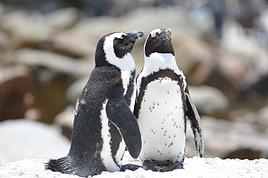
In general, she prefers beautiful walks with incredible landscapes/views and cultural visits over big cats, but it would be a shame not to see some local wildlife like meerkats, whales (I doubt it in May), or penguins during her stay!
There you go—feel free to critique (not too harshly, though😛)/advise/improve.
Thanks in advance! 🙂